Spring Sale: Get 1 Year, Save 58%

“It’s magic”: A sheep’s head like nonna used to make

“My grandmother used to make that, and I was terrorized as a young child sitting at the table, seeing this big head—these big black eyes staring at me. It’s not something that you ever forget.”

That’s Jody “Joe” Scaravella describing capuzzelle di agnello, a traditional sheep’s head dish, during a video interview. Scaravella is the owner of Enoteca Maria, the real-life Staten Island restaurant that inspired the new Netflix comedy “Nonnas,” released last week. 

In “Nonnas,” Vince Vaughn stars as a fictionalized Scaravella, who opens a restaurant that centers the food and lives of matriarchs. These women, often overlooked, are the kind of unsung culinary heroes who raised families with grit and grace, transforming humble ingredients into nourishing meals. In the film, a crew of Italian nonnas — played by Lorraine Bracco, Susan Sarandon, Talia Shire and Brenda Vaccaro — step into the kitchen, just like the real-life grandmothers who cook at Enoteca Maria every weekend.

One of the film’s funniest scenes features Roberta (Bracco) preparing capuzzelle, much to the horror of her fellow cooks. The enormous sheep’s head stuns the kitchen, sparking gags due to its smell and sheer presence. But Roberta anchors the moment with something deeper: “Capuzzelle is my identity,” she says. Her mother, raised in a poor Italian village, believed fiercely in using the whole animal —nothing wasted. The dish is rooted in cucina povera, or “poor kitchen,” a tradition of resourceful, heart-forward cooking that stretches across Italy.

Often cooked with breadcrumbs, garlic, herbs and wine, capuzzelle was (and is) a staple in many Italian and Italian-American homes. Scaravella says it’s still one of the restaurant’s most popular dishes. Why? Sometimes, he suspects, it’s the novelty. But more often, it’s something else.

Susan Sarandon as Gia, Brenda Vaccaro as Antonella and Talia Shire as Teresa in "Nonnas" (Netflix)

“One day, a young guy came in and ordered it. He was sitting by himself,” Scaravella recalls. “I asked him why, and he said, ‘My dad used to love this. I just lost him. I wanted to get to know him better through the things he loved.’ And that’s magic.”

At Enoteca Maria, food becomes a form of reverence. For those grieving, eating a beloved dish can become a bridge to memory. A spoonful, a smell — it can be enough to bring someone back to you, if only for a moment.

Scaravella sees that magic at play every day. Capuzzelle, in particular, carries layers of meaning: respect for the animal, gratitude for survival and love made visible. “It’s a poverty-driven dish from Southern Italy,” he explains. “Sometimes, people just didn't have enough money to buy a good cut of meat. So these throwaways were all offal that you were able to get for pennies and then feed your family.”

He’s drawn to dishes like this, born from necessity and made from the heart. So many cultures “all use the same animals,” he says, “but just prepare them with different spices.” 

We need your help to stay independent

That deep, connective power is central to both “Nonnas” and Enoteca Maria. “These ladies are the fabric that holds society together,” Scaravella says. “They pass culture forward. When my grandmother passed away, my family fractured in some way, because every Sunday, we would get together and celebrate. So now this person is gone and somebody else in the family has to pick up that torch and carry it. And it's not an easy lift.”

Scaravella founded the restaurant in grief, but it quickly became something bigger. He published a cookbook. He launched “Nonnas in Training,” a series of cooking classes taught by grandmothers from around the world. 

They started with Italian grandmothers, but Scarvella soon realized it was about all matriarchs, whom he refers to as the “original couriers” of a culture’s cuisine. Now, each weekend, the restaurant features two new guest chefs: one recent pairing brought Oxana from Ukraine, who made potato dumplings and beef goulash, and Yumi from Japan, who served yakitori and eggplant dengaku.

Enoteca Maria recently celebrated its 18th anniversary. Scaravella is already dreaming of what’s next: a sequel film, another book, more ways to share the stories behind the recipes. He’s often struck by just how deeply the restaurant resonates.

Vince Vaughn, Enoteca Maria owner Joe Scaravella, Bruno Tropeano and Joe Manganiello as Bruno on the set of "Nonnas" (Jeong Park/Netflix)

“There was this one moment,” he says, “when a customer came over to me, looked me in the eye, and said, ‘This is very important. Because this is real.’ And the hairs on my neck stood up.”

Watching “Nonnas” has been surreal for him. “The second time I saw it, my eyes filled up with tears,” he says. “At the premiere, my girl kept passing me tissues. They just nailed it.”

So while capuzzelle resonates for some, perhaps watching the movie will also make you wistful about your own family’s favorite dishes — a savory, heady aroma that immediately brings you back to childhood family gatherings. And that’s what it’s all about. 

Nonnas is now streaming on Netflix

One major part of Project 2025 is falling apart

If it’s not enough that Elon Musk’s DOGE has been taking a chainsaw to the federal labor force, about three weeks ago, the Trump administration announced that it is going to begin implementing “Schedule F,” the creepy huxleyan name for the Executive Order they produced at the end of the first term to make it easier to fire civil service employees deemed disloyal. President Biden threw it in the trash, but, as expected, it’s back. After all, it’s part of Project 2025 architect Russell Vought‘s tools of the trade, and now that he’s back at the Office of Management and Budget he’s been itching to use it.

Vought believes that we are in a “post-constitutional” time which explains a lot about how the administration is going about its work through the courts.

It’s estimated that 50,000 people will be subject to the law once they are re-classified from civil service protections to “at will” policy employees. It’s pretty obvious that a witch hunt for personnel that any rando MAGA appointee suspects of being a turncoat (or just a Democrat) will soon be fired. The whole idea was to fill the jobs with the kind of people Russell Vought thinks have America’s best interests at heart. That means white, Christian nationalists.

The Washington Post reported on this back in 2024, in anticipation of his expected influence in a Donald Trump second term:

Vought also embraces Christian nationalism, a hard-right movement that seeks to infuse Christianity into all aspects of society, including government. He penned a 2021 Newsweek essay that disputed allegations of bias and asked, “Is There Anything Actually Wrong With ‘Christian Nationalism?’”

Looking at immigration through that lens, Vought has called for“mass deportation” of illegal immigrants and a “Christian immigration ethic” that would strictly limit the types of people allowed entry into the United States.

Essentially Vought takes the same position as Trump adviser Stephen Miller but he comes at it from a Christian nationalist perspective. All roads lead to persecution of immigrants in the Trump administration.

Vought believes that we are in a “post-constitutional” time which explains a lot about how the administration is going about its work through the courts. In a piece he wrote back in 2023, Vought laid out his critique of what the MAGA types refer to as the “deep state” insisting that a federal government staffed with experts and bureaucrats had taken over the government and usurped the will of the people. It’s a bit confusing since he seems to also think that “the Left” has been degrading the Constitution for over a hundred years and that the Congress needs to have more power — but maybe not so much. In any case he concludes with this rousing cri de guerre:

But the long, difficult road ahead of returning to our beloved Constitution starts with being honest with ourselves. It starts by recognizing that we are living in a post-Constitutional time. Our need is not just to win congressional majorities that blame the other side or fill seats on court benches to meddle at the margins. It is to cast ourselves as dissidents of the current regime and to put on our shoulders the full weight of envisioning, articulating, and defending what a Radical Constitutionalism requires in the late hour that our country finds itself in, and then to do it. That and only that will be how American statesmanship can be defined in the years ahead.

A big part of Vought’s strategy, as with Miller’s, was to legally challenge the prevailing meaning of precedents, rulings and words themselves.

I was reminded of all this when I read this piece by Josh Marshall at Talking Points Memo about the coming implementation of Schedule F. As he rightly points out, “it’s absurd to think that Congress would create the Civil Service system in such a way that a President could simply reclassify people and suddenly the whole system of protections would disappear.” Why would they even have bothered to do it at all?

Marshall observes that such actions as Schedule F (or DOGE or the use of the Alien Enemies Act) rests on “the assumption (quite possibly right) that the federal judiciary would dispense with the plain meaning of the relevant federal workforce laws and substitute novel definitions of key phrases put forward by Trump administration lawyers.” I don’t think there’s any doubt that this is their intention. But Vought, at least two years ago, understood that it might not be that easy.

In that essay about radical constitutionalism, Vought wrote at length about immigration and how it should be understood as an “invasion,” which he believed should empower border governors to apprehend migrants and deport them according to Article 1, Section 10, Clause 3  of the Constitution. (It does no such thing.) Vought complained:

My point in bringing this up is that you would be surprised at how hard it has been to get conservative lawyers to see this for no other reason than its novelty. That is what has to change. This is where we need to be radical in discarding or rethinking the legal paradigms that have confined our ability to return to the original Constitution.

We need your help to stay independent

It doesn’t seem to be taking, at least not in the way Vought hoped. Ian Millhiser of Vox attended a Federalist Society gathering and found the conservative legal community “far more ambivalent about their president’s second term than one might expect after such a fruitful partnership.”

“They are going to have the same level of success they had in the last administration” with getting rid of long-standing rules and regulations, George Washington University law professor Richard Pierce told the conference, “which is virtually none.”

Implicit in this critique is a belief that the web of procedural barriers, bureaucratic trap doors, and paperwork burdens that prevent any presidential administration from changing too much, too fast will survive the second Trump administration more or less unscathed. Pierce predicted that many of Trump’s deregulatory efforts would simply be struck down in court.

Millhiser says that some of this can be attributed to a turf war — the conservative legal community is not happy with the cavalier treatment of the judiciary by the Trump people. Evidently, they are feeling a bit stroppy about all this unitary executive business now that it’s being wielded by an elderly con man and a car manufacturer with a chainsaw.

So far, most judges have been similarly unwilling to go along with Russ Vought and Stephen Miller’s mad schemes. But late Tuesday night a district judge in Western Pennsylvania did give them some succor. She held that the Alien Enemies Act had originally applied to pirates and robbers so it does apply to foreign gang members. (She did say they have to be given a hearing within 21 days so at least there’s no grant to just shoot them as one imagines would have been allowed in one of those 18th century pirate invasions.)

The case is headed to the Supreme Court where we will almost assuredly see at least two, probably three, of the justices uphold this cockamamie definition. And there are many more cases coming based upon Vought’s “radical constitutionalism” which rely on the Supreme Court throwing out the plain meaning of the English language and adopting MAGA extremists’ definition of the constitution. I wish I could say with confidence that they won’t. Perhaps we just have to hope that Millhiser’s observation that the conservative legal fraternity isn’t happy about Trump and company treading on their turf will get us out of this mess. For now anyway.

Higher prices, rolling blackouts: The Northwest is bracing for effects of lagging green energy push

Series: Power Struggle:What Stalled the Northwest’s Push for Green Energy?

More in this series

Electric companies in Oregon and Washington are hurtling toward deadlines to stop using power generated by coal, gas and other fuels that contribute to global warming. Yet the states are nowhere near achieving their goals, and the dramatic consequences are already being felt.

During a winter storm in January 2024, for example, the Northwest barely had enough power to meet demand as homeowners cranked up electric heaters and energy prices surged to more than $1,000 per megawatt-hour, or 18 times higher than the usual price. Power lines were so congested that owners of the transmission network made an extra $100 million selling access to the highest bidder.

Multiple utilities were operating in states of emergency during the storm, preparing for rotating power outages.

The storm “highlighted a tipping point and demonstrated how close the region is to a resource adequacy crisis,” the Western Power Pool, a regionwide organization of utilities, wrote in its assessment of the event.

Price spikes like this are one reason customers of major utilities in Oregon are paying 50% more on their power bills than they were in 2019. The number of utility customers disconnected last year for failure to pay soared to 70,000, the highest number on record.

Forecasters predict periods of extreme weather in the Northwest will only bring more trouble in the future: the threat of rolling blackouts within the decade if the region’s current energy trends continue.

Wind, solar and other renewables are the only forms of power that can be added to solve the problem, thanks to Oregon’s and Washington’s green energy mandates. Yet better transmission lines are needed to carry new energy sources in the windy and sunny eastern parts of the region to big cities west of the Cascade Mountain Range.

Experts say adding transmission lines in corridors that currently lack them would also enable utilities to keep power flowing when ice storms or wildfires threaten other parts of the grid.

The biggest owner of these transmission lines, the federal Bonneville Power Administration, has been slow to spend on upgrades — and slow to approve new green projects until upgrades are made.

"Senators and representatives like me, we cannot continue to believe our own PR, that we have been successful in promoting a renewable electricity future."

Bonneville’s parent agency, the Energy Department, declined to make officials available for an interview, but Bonneville answered written questions.

“The potential for blackouts in the Pacific Northwest is incredibly low,” the agency said. “Grid planners and operators will continue to ensure reliability.”

Washington and Oregon lawmakers failed to address the Bonneville bottleneck when they approved clean energy mandates in 2019 and 2021, as ProPublica and OPB reported recently.

Oregon Rep. Ken Helm, a Portland-area Democrat who was a sponsor of the 2021 legislation, said the failure to prioritize transmission lines wasn’t the only flaw with the legislation. He said the bill failed to provide accountability, having no penalties for when a utility did not reach certain deadlines for acquiring either solar or wind energy. Helm said now, House Bill 2021 is “dead letter law.”

“Senators and representatives like me, we cannot continue to believe our own PR, that we have been successful in promoting a renewable electricity future,” said Helm, a member of the House Committee on Climate, Energy and Environment. “We are not heading in that direction, and we’re going to have to take action to change that or nothing will happen.”

Some lawmakers tried to play catch-up this year. Legislators in each state drew up plans for state transmission authorities that could finance improvements independent of utilities and Bonneville. Those efforts failed.

“Oregon desperately needs to take some leadership here,” said Nicole Hughes, executive director of the group Renewable Northwest, which advocates for weaning the region off of fossil fuels.

The Northwest’s situation is only expected to get worse. The region’s electrical demand is forecast to double over the next 20 years, in large part because data centers, rewarded with tax breaks in both Oregon and Washington, are driving an increase in power use the region hasn’t experienced since the early 1980s.

Abandoning Oregon’s and Washington’s renewable energy laws wouldn’t help, Oregon’s Citizens’ Utility Board says, because new fossil fuel power plants would cost ratepayers more than wind or solar. Those plants would still have to contend with transmission lines that have no room for their power.

The region’s utilities, meanwhile, say they’d like to add 29,000 megawatts of generating capacity over the next 10 years — an unprecedented addition that would be roughly equivalent to all the electricity that the Northwest currently consumes at any given time. The projects on their to-do list are powered entirely by renewable energy.

Yet the utilities added only a little over half the power to their systems that they planned for last year. In fact, of the 469 projects that applied to connect to Bonneville’s grid in the past decade, the only one to win the agency’s approval was in 2022. Growth in green energy in 2024 came from projects that began seeking a connection to Bonneville’s grid prior to 2015 or that connected to smaller transmission networks owned by private utilities.

If the utilities continue to fall as short of their goals as they did in 2024, then projections from the Western Electricity Coordinating Council suggest residents will spend the equivalent of nearly a month annually under the threat of brownouts — the inability to power all the circuits in a household — or blackouts.

“In the next few years, we may start having to make some tough choices about the availability of electricity,” Hughes said.

Hughes has spent 20 years in the renewables industry.

For now, she said, her family decided to buy a gas generator for times when their house loses power.

ProPublica is a Pulitzer Prize-winning investigative newsroom. Sign up for The Big Story newsletter to receive stories like this one in your inbox.

Ben Shapiro is cracking under the pressure to shill for Trump

No one was more relieved than Daily Wire commentator Ben Shapiro when Donald Trump announced a 90-day “pause” on Chinese tariffs. Scare quotes around “pause,” because there will still be a 30% tariff on Chinese goods, which economist Paul Krugman characterized as “really, really high.” But Shapiro has been getting a lot of grief in recent days from his audience for ever-so-slightly acknowledging a reality everyone outside the MAGA bubble can see: Trump’s tariff impulses — which hardly rise to the level of “policy” — are both stupid and dangerous. 

The first rule of MAGA is, “Trump is never, ever wrong.” Understanding this, Shapiro tried to avoid blaming the president for his own decisions, instead focusing his ire on White House advisor Peter Navarro. Calling Navarro “a dotard and a fool” for supporting tariffs, Shapiro begged Trump to fire his beloved yes-man. Shapiro initially aimed his criticism directly at Trump himself, only to be overwhelmed with blowback from the audience. But even the MAGA-blind can see Shapiro’s “dotard and fool” characterization better suits Trump than Navarro, so the anger at Shapiro for saying something true wasn’t dissipating. 

Even for people who have years of practice declaring Trump a “genius” while he prattles on about bleach injections or pet-eating immigrants, it's getting harder to feign ignorance about basic realities.

Shapiro is smart enough to know that a 30% tariff is still wildly inflationary, but he caved to pressure to return to the North Korea-style praise of Trump as the ultimate genius. “Trump’s great strength? He lives in a world of results,” Shapiro gushed after the "concept of a plan" was announced. “When a policy doesn’t deliver, he adjusts.” This still wasn’t enough slobber for his audience, however. “He didn't adjust, that was the plan all along,” one fantasized in comments. Another accused Shapiro of having brain damage from vaccines. 

Shapiro is one of the most prominent and frankly hilarious examples, but his dilemma is felt throughout the massive world of professional Trump apologists. Even for people who have years of practice declaring Trump a “genius” while he prattles on about bleach injections or pet-eating immigrants, it's getting harder to feign ignorance about basic realities. That's especially true when Trump's actions, as with this pointless trade war, are so politically toxic they threaten the longevity of the MAGA movement. Trump has surrounded himself with flatterers who keep their position by only telling the boss that his every move is the smartest choice ever made. The only possible source for constructive criticism the narcissist-in-chief might hear is from the right-wing press — but they're hamstrung by audiences who don't want to listen to it, either. 


Want more Amanda Marcotte on politics? Subscribe to her newsletter Standing Room Only.


Shapiro barely had a chance to release posts and videos praising Trump for his infinite wisdom for temporarily rolling back some of the stupidest economic policies in American history, before Trump made another decision that is nigh-impossible for even his biggest boot-lickers to defend: accepting a $400 million bribe from Qatar's royal family, in the form of a highly photographable super luxury Boeing 747-8 jumbo jet known as the "flying palace." Especially since Trump defended his acceptance of this "gift" by insisting that only "a stupid person" would think that there might be strings attached. Even people with MAGA-decimated cognitive abilities can grasp that the opposite is true and that no one offers such a showy present without expecting something unpleasant in return. 

It's an especially tough look for Trump mere days after he went on the lecture circuit, scolding American children for wanting more than their allotted "two dolls," explaining that a miserly toy collection is a necessary sacrifice for the president's mysterious economic agenda. (So mysterious that he doesn't even seem to know what his goals are!) The news of Trump's luxury aircraft also coincides with an explosion of horror stories of air traffic failures and delays, which is exactly the sort of disaster that was predicted when Trump unleashed Elon Musk on federal workers, firing and bullying thousands from their jobs — including 400 crucial workers for the Federal Aviation Administration

Shapiro gets that it's a bad look for Trump to be kicking it on the world's fanciest airplane, as the voters watch endless news reels about his fancy new jet while they get morosely drunk waiting for their flight reports at an airport bar. So, even though he's already on eggshells with his snappish fanbase, Shapiro waded into Trump criticism again on Monday. "Define 'America first' in a way that says you should take sacks of cash from the Qatari royals," he complained on his show. "If you want President Trump to succeed, this kind of skeezy stuff needs to stop," he demanded, adding that it's already having a political impact. 

Shapiro isn't speaking truth out of the goodness of his heart, the existence of which is still debatable. He's very clear that his concern is the future of the MAGA movement. It may be that he understands better than his followers how fascism is not inevitable. His own company has been quietly struggling in recent months. In March, Will Sommer of The Bulwark reported that the Daily Wire CEO, Jeremy Boreing, had abruptly stepped down. The Daily Wire "has been bleeding talent," Sommer reports, and they seem to have flushed unseemly amounts of cash down the toilet on "Boreing’s 25-year passion project to film a book series about King Arthur," which now looks like it will never be finished. Shortly after Boreing was let go, the Daily Wire was hit with layoffs, a relatively rare event in the right-wing media world that is buoyed by cash infusions from far-right billionaires. 

But the gravy train of MAGA media depends on the viability of their political movement. Trump is threatening their futures by inflicting needless economic damage. The pitch for fascism is that voters can trade off human rights for prosperity. It was always a lie. Autocratic governments tend to underperform healthy democracies on economic metrics, precisely because corrupt leaders drain public coffers to benefit themselves. But Trump's speed and flash with his destructive agenda could sink the fascist ship before it even sets sail. Shapiro isn't the only MAGA media star who is worried that Trump's greed could destroy their fragile power base. Even Laura Loomer, one of the nuttier figures with real sway over Trump's addled mind, is griping that the Qatar plane is a bad look (though, as usual, she has racist reasons for her calculations). 

Shapiro's dilemma reflects a tension that is increasingly untenable for much of the right-wing media, including Fox News. They make a handsome living by telling Trump voters soothing lies, about how they were always right and the liberals were always wrong and Trump is actually a genius. It's an evil job, but undeniably has some difficulties, especially for those who haven't killed the lingering conscience telling them that lying is bad. But now the problem isn't just moral decay. There are increasing demands to make excuses for behavior so stupid that the rest of the GOP should consider it political malfeasance. Keeping the MAGA movement going may mean saving Trump from himself, but that's impossible to do when your central message is that Dear Leader can do no wrong. Here's hoping the cracks start showing from the pressure. 

The art of spoiling Trump’s deal: Sit back and wait

It seems to have been going on much longer, but it has been only one month since Donald Trump’s “Liberation Day,” when he did his big reset on the world’s economy by raising tariffs on goods exported to this country to 10 percent, with higher “reciprocal” tariffs of up to 50 percent on 57 countries. The tariffs were supposed to take effect on April 9, but Trump chose that day to suspend for 90 days all the reciprocal tariffs except those on China, which he raised to 145 percent, because, he said on Truth Social, China had been “ripping off the U.S.A.”  

Fifty-seven countries and the rest of the world had waited, and Trump caved, a grand total of seven days after stock markets around the world crashed and the dread “R” word, recession, began being uttered by cable news hosts and hitting newspaper headlines.  

It took only 30 more days for Trump to cave on his China tariffs. On Monday morning, Treasury Secretary Scott Bessent announced that the U.S. and China would be suspending the reciprocal tariffs of 125 percent the two nations had imposed on one another. The original 10 percent U.S. tariff would remain, with China maintaining its 10 percent tariff that had been imposed in answer to Trump’s “Liberation Day” tariff.  The U.S. is maintaining some kind of 20 percent “fentanyl” tariff on China, but that one is likely not long for this world, either.

What happened in the intervening month? China just waited. Reports of empty shipping berths at ports all along the West Coast began appearing. Talk of “empty shelves” started to hit the airwaves. Trump, pressed on what kind of Christmas American kids were going to have with all shipping from China at a standstill, began babbling about girls having to settle for “two” dolls rather than “thirty,” and “five” pencils instead of “250.”  Where the hell he came up with dolls and pencils and those specific numbers was never explained.

We need your help to stay independent

Over in China, in Xi Jinping’s office, no explanation was necessary. Trump was panicking. So Xi and his trade representatives sat by the phone. Last week, it rang. Who knows what Trump’s trade representative said, but it had to be some version of “can we talk, please?” 

I’ll give you two guesses who had the upper hand in Geneva.  I take that back:  one guess.  The answer should give you a hint why it took only two days for an agreement to be reached.  Let’s allow U.S. Trade Representative Jamieson Greer to explain: “It’s important to understand how quickly we were able to come to an agreement, which reflects that perhaps the differences were not so large as maybe thought,” he explained on Monday. 

Differences? There weren’t any differences before Donald Trump decided it was time to accuse China of “ripping us off” again. He used the same charge the first time he was in the Oval Office. China was ripping us off, so Trump made a new “deal” with them, which of course he later accused Joe Biden of screwing up. Let’s just listen to master-negotiator Trump describe what happened back then. “We had a deal where they opened up their country to trade with the United States, and they took that away at the last moment," Trump told reporters at the White House on Monday.

Just a brief note: China “opened up their country” to trade with the U.S., signing a bi-lateral trade deal in 1979, and trade has remained open since then.

“And then I canceled the whole thing,” Trump claimed, apparently forgetting that he had just accused China of canceling the deal “at the last moment.” He continued: “And then six months later, we ended up doing a smaller deal. But it was a big deal. It was $50 billion worth of product that they were going to purchase from our farmers, etc, and we agreed to that."

Trump wasn’t finished explaining the big trade deal he did in his first term:

People thought it was 15 because they were doing 15. We made it 50 because I misunderstood the 15. I thought they said — I said, you got to get 50 because when I asked — if you remember the story — when I asked, what are we doing with them? My secretary of agriculture at the time, Sonny Perdue, said, uh, sir, it's about $15 billion and we're asking for 15. And I thought he said 50. So, I said — so they came back with the deal at 15 and I said, no way, I want 50 because you said 50. They said, sir, we didn't say that. Anyway. Bottom line, I said, go back and ask for 50. And they gave us 50, and they were honoring the deal, and we would call them up a lot for the corn and for the wheat and for everything.

Do you see why Xi Jinping just sat in his office for 30 days and waited? He knew exactly who was on the other end of the negotiation, who had told one of his flunkies to call up and ask for a meeting in Geneva. He didn’t have to do anything more than wait.

Waiting will get you a lot when you’re dealing with Donald Trump. Just ask Vladimir Putin. Trump flapped his jaws for months on the campaign trail saying he would end the war in Ukraine on “day one.” Near the end of the campaign, he started saying he would end it before he was inaugurated. 

More than 10,000 Ukrainian civilians have been killed by Russian airstrikes, missiles and drone attacks over the last three years. On April 24, Russia launched an 11-hour missile attack on Kyiv, killing 12 people and wounding 90. After the attack, Trump declared himself “not happy” with the Russian assault on Kyiv. He was sufficiently disturbed that he went on Truth Social and posted, “Not necessary, and very bad timing. Vladimir, STOP!” Trump wrote on his Truth Social media platform, adding “Lets get the Peace Deal DONE!”

On Sunday, Russia answered that plea by sending more than 100 drones into Ukraine in a nighttime attack after rejecting calls for an unconditional 30-day ceasefire from Ukraine and members of the European Union.

Trump has not responded to Putin’s latest attack on Ukraine, but last week, Trump told a gathering of top donors at Mar-a-Lago that his attempts to end the war in Ukraine were “keeping him up at night,” according to a report in the Wall Street Journal. Trump said the problem he had with Putin was that he wants “the whole thing.”  The Journal reported that Trump was referring to Putin’s ambition to take all of Ukraine with his war.

Trump has admitted to having spoken to Putin on the phone several times since being elected last year.  Putin launched his war in February of 2022. The war has passed its third year since Trump took office in January. Putin’s forces have continued to make small gains in Eastern Ukraine and have pushed Ukrainian forces into a tiny defensive perimeter in the Kursk region of Russia, which Ukraine invaded and has occupied for months.  The war has turned into a bloody stalemate. Both sides have suffered a steady drumbeat of casualties with neither side making decisive gains against the other.

Trump’s efforts to broker a peace in Gaza have failed to produce movement as well. After telling the world that the U.S. would take over Gaza and turn it into a kind of Mar-a-Lago on the Mediterranean, last week, it was reported that Trump is frustrated with Israeli Prime Minister Benjamin Netanyahu. Trump began a four-day trip to the Middle East on Monday with no plans for a stop in Israel, which has been read as a signal of Trump’s displeasure with Netanyahu. Netanyahu has been waiting Trump out. So Hamas has taken to talking directly with the U.S., brokering the release of the last living American hostage on Monday in a deal that “largely circumvented the Israeli government,” according to the New York Times. But there is still no deal, as Israel announces a plan to take to Gaza with bulldozers, flattening the place even more than they had with bombing, while food aid to the war ravished region remains blocked.


Want a daily wrap-up of all the news and commentary Salon has to offer? Subscribe to our morning newsletter, Crash Course.


Trump has not even had luck with his campaign against the Houthis. Last week, he kinda-sorta declared victory, announcing that the U.S. was stopping its bombing of the Houthis because they had agreed to stop attacking U.S. warships in the Red Sea. Trump had declared at the start of his campaign against the Houthis that they would be “annihilated.” The Houthis knew better. They waited him out.

The Trump bombing campaign cost more than $1 billion. All the Houthis did was dig their weapons emplacements deeper into hills and mountainsides and wait for pauses in U.S. bombardment. Then they continued their attacks. It was reported last week that the U.S. had expended so much expensive munitions that senior American military commanders feared it was cutting into their munitions stockpiles intended for potential conflicts in Asia.

The Houthis fired one of their missiles at Israel on Friday, despite the putative ceasefire announced by Trump.  The U.S. lost two F-18 Super Hornet fighter jets of the type used to attack Houthi positions in Yemen, not to enemy fire, but because they accidentally slipped off an aircraft carrier. The F-18 jets cost $67 million each.

The Houthis, supported largely by Iran, just sat waiting in their fortified bunkers watching as “Signalgate” unfolded, exposing the use of an insecure communications app to discuss one of the top-secret F-18 attacks.  Not long afterwards, Trump declared victory and let the Houthis off. They were too expensive, and they took too long for the impatient American president. He wanted the Houthis taken care of in 30 days. It didn’t work. They outlasted the Prince of Impatience, and he moved on. 

After all, Ukraine, and Gaza, and the dregs of his trade war with China and the rest of the world await.

“Victory, truly”: Gérard Depardieu found guilty of sexual assault

Prolific French movie star Gérard Depardieu was found guilty of sexual assault on Tuesday, with a judge handing down a suspended sentence of 18 months. 

The charges against Depardieu stemmed from the testimony of two women, a set decorator and an assistant director, who worked alongside Depardieu on the set of 2022's "Les Volets Verts." Both women said that Depardieu, now 76, groped them on separate occasions. A judge ordered the actor to pay the two accusers between €14,000 and €15,000 and required Depardieu to register as a sex offender.

"For me, it’s a victory, truly," a victim who spoke to the New York Times shared. "We are moving forward."

Depardieu, who has been a megastar of French cinema for more than 50 years, has been publicly accused of sexual assault by more than a dozen women. During the trial, multiple women testified about their own alleged instances of assault at the hands of Depardieu. 

A former costume assistant named Lucile Leider said that Depardieu groped her multiple times in 2014, in a manner consistent with stories of Depardieu's two accusers.

“I remembered saying no with a low voice, but Gérard Depardieu does not know that word,” Lieder said. “This man is dangerous."

Depardieu maintained his innocence throughout the trial, though he also admitted to the court that he didn't view placing a hand on a woman's buttocks as sexual assault. The actor told the court that he was worried a reckoning with sexual assault could become "a terror" and that he was not cut out to work in a post #MeToo film industry. 

"I come from the old world, of course, and am not sure if this new world interests me," he said.

Depardieu has promised to appeal the verdict.

“A pope of the people”: The first American pontiff is no Marxist, but friends say he’s a reformer

Despite being the first pope from America, a country where the Catholic Church is known for its relative conservatism, Pope Leo XIV — who spent much of his adult life working in Peru — is expected to largely continue his predecessor’s progressive reforms, despite some past comments criticizing the acceptance of LGBTQ+ “lifestyle choices.”

James Martin, an American Jesuit priest and the founder of Outreach, a prominent Catholic LGBTQ+ organization, told Salon that the new pope’s background in Latin America “means that he understands the global south,” a fact that likely contributed to his being selected as pontiff.

“I think that gave him some appeal for a lot of the cardinals,” Martin said. 

On many issues, such as his advocacy for immigrants, Leo — who before this month was known as Cardinal Robert Prevost — is expected to act in line with the direction taken by Pope Francis, which might be expected given the high-ranking roles that Francis appointed him to. His choice of the name Leo has also drawn attention for his namesake, Pope Leo XIII.

Kristy Nabhan-Warran, a professor of Catholic Studies at the University of Iowa and an expert on Hispanic Catholicism, told Salon she took special note of this name, given that Leo XIII was known as an advocate for workers during the industrial revolution from 1878 to 1903. Leo himself made this connection, saying he chose the name to emphasize the social teaching the church offers in light of modern challenges, like artificial intelligence, that require a "defense of human dignity, justice and labor.” 

Nabhan-Warran said that while the new pope “has not been called a liberation theologian,” his work in Peru mirrors some of the values espoused by liberation theologians, “because among liberation theologians and liberation pastors, you have to walk the walk.”

“There are stories about him that are circulating, that are verified stories, carrying rice on his back to keep one's parish,” Nabhan-Warran said. “You could say that this pope, Pope Leo XIV, when he was a cardinal and bishop and just parish priest, and before that, he was very much a pope of the people.”

Others, like Leo’s longtime friend Mark R. Francis, the former president of the Catholic Theological Union in Chicago, point to his role in the Order of St. Augustine, which emphasizes bringing people together and building community. In the order’s own words, its roughly 2,800 members aim to “build community and serve the Lord's people.”

“I think he’s going to be concerned with bringing people together, and that’s part of the Augustian spirituality and something that I’m sure he’s going to follow through with,” Francis said. He told Salon that he expects Leo to follow in his predecessor’s footsteps but that he expects him to do so in a more deliberative and procedural way.

“He’s not going to be shooting from the hip in terms of issues,” Francis said. “He’s less extroverted and exuberant. He’s less spontaneous. He’s going to be more deliberative, and that's just his personality.”

Some comments from the new pope on LGBTQ+ issues, however, have drawn scrutiny and prompted speculation that he might lean more conservative. At the 2012 Synod of Bishops, a gathering where bishops convene to discuss church matters, he told the group he complained about how “alternative families comprised of homosexual partners and their adopted children are so benignly and sympathetically portrayed on television programs and in cinema,” according to the Catholic News Service.

“The sympathy for anti-Christian lifestyle choices that the mass media fosters is so brilliantly and artfully engrained in the viewing public that when people hear the Christian message, it often inevitably seems ideological and emotionally cruel by contrast to the ostensible humaneness of the anti-Christian perspective,” Leo said.

But Francis, who has known Leo since the 1970s, said that he expects the social justice aspects of his ministry to be “very important,” adding that he “wouldn’t place too much confidence in stuff he said in 2012.

"We all evolve on some of these more delicate issues," he said. And Leo is not perceived as representing the more conservative faction of the U.S. church. “As one of the cardinals said, he’s the least American of all the American cardinals,” Francis said, referencing Leo’s career of service in Peru.

We need your help to stay independent

Indeed, in more recent comments Leo has struck a different tone on LGBTQ+ issues than he did more than a decade ago. When Leo was made a cardinal by Pope Francis in 2023, Leo was asked whether his views had evolved under the influence of Francis.

“Doctrine hasn’t changed, and people haven’t said, yet, you know, we’re looking for that kind of change, but we are looking to be more welcoming and more open, and to say all people are welcome in the church,” he responded.

Michael O’Loughlin, executive director of Outreach, the LGBTQ+ Catholic organization, told Salon that he’s hopeful but still waiting to see how Leo acts as pope.

“The interpretation people are making seems to be based on one comment from 2012, which was admittedly a more conservative tone, but that was a year before Pope Francis was elected, so his views may have shifted,” O’Loughlin told Salon. “I’m also keeping an open mind because some of his comments yesterday seem to suggest he’s more in line with Pope Francis.”

O’Loughlin added that, in the days after Francis’ election, there was also discussion of several past comments that were seen as anti-LGBTQ+, “but he obviously took another direction.” 

If Leo is to follow his predecessor’s direction, it’s likely to put him at loggerheads with conservative Catholic leaders in the United States, who are broadly seen as more reactionary than their peers, particularly in Europe.

Leo’s career in Peru also seems to have been integral to his election as pope. Thomas Reese, a Jesuit priest and columnist at the National Catholic Reporter, was at the Vatican when Leo was elected pope. In his telling, that victory was powered by stalwart support from Latin American cardinals.

“What seems to have happened is that the Latin American cardinals were solidly united behind Prevost, and as a result, on the first ballot, he got a lot more votes than was expected, whereas some of the other people who were the supposed front runners didn't get as many votes as they thought they would,” Reese told Salon.

On potentially finding himself at odds with the American Church and the conservative faction within it, Reese cautioned that “Conservative Catholics in America have a very loud megaphone, but they don't have a lot of troops.”

He pointed to a Pew Research survey from April of 2024, which found that 75% of American Catholics had a favorable opinion of Francis, despite him becoming a political lightning rod among American conservatives in the last five years of his life.

“Any politician in Washington would kill for those numbers,” Reese said.

Reese compared the election to early presidential primaries, when a candidate's performance is often not just compared to how well other candidates did, but also to the expectations others had for them ahead of the election.

“Expectations of Prevost were low, and he exceeded them, and the cardinals started to say, ‘Who’s this?’ and they took a look at them and liked him,” Reese said. “The Latin American cardinals were totally on board with him. They didn’t see him as a Gringo, they saw him as a colleague. They felt that he may have been born in the United States but that his heart was in Latin America.”

Book review: A clear-eyed look at the risks of “diagnosis creep”

By the time neurologist Suzanne O’Sullivan met a patient she calls Darcie, the 20-year-old woman was experiencing daily seizures so disabling she had barely left her home for a year.

Darcie expected to add epilepsy to her already long list of other diagnoses: migraine, anorexia, irritable bowel syndrome, autism, depression, anxiety, attention deficit/hyperactivity disorder, a fainting and dizziness problem called postural orthostatic tachycardia syndrome, or POTS, and a joint condition called hypermobile Ehlers-Danlos syndrome.

O’Sullivan, who quickly ruled out epilepsy, came to suspect the young woman was actually suffering from another common malady: overdiagnosis.

In her new book, “The Age of Diagnosis: How Our Obsession With Medical Labels Is Making Us Sicker,” O’Sullivan contends most doctors who see a large volume of patients regularly encounter young people with at least some of Darcie’s diagnoses, often in combination with Tourette’s syndrome, dyslexia, and a few others. In fact, she sees an “overdiagnosis epidemic,” in which patients receive medical diagnoses that are technically correct but do not necessarily benefit them.

“I am constantly shocked that so many people in their twenties and thirties could have accrued so many disease labels at such a young age,” writes O’Sullivan, who practices in London’s National Health Services. “Older people too. Hypertension, high cholesterol, low-back pain and so on. It is becoming unusual for me to meet a patient who does not have a trail of prior diagnoses.”

Steep increases in diagnoses of cancer, dementia, chronic Lyme disease, and many other conditions may indicate that people are less mentally and physically healthy than in the past. Or perhaps physicians are better at recognizing medical problems, leading to treatment that improves their health.

O’Sullivan’s book explores another possibility: Are normal differences among individuals being diagnosed as medical conditions? By plopping modern medicine on the exam table, O’Sullivan offers a thought-provoking challenge to our common assumptions about the importance of early and accurate diagnosis. Among them, can test results be trusted as facts? Is early intervention the best way to deal with a medical problem? And fundamentally, is having a diagnosis always better than not?

“I am constantly shocked that so many people in their twenties and thirties could have accrued so many disease labels at such a young age."

“The Age of Diagnosis” reads like an update to “Overdiagnosed: Making People Sick in the Pursuit of Health,” a 2011 book by internist H. Gilbert Welch and two colleagues that presented compelling evidence that common conditions — hypertension, diabetes, osteoporosis, and several types of cancer — are routinely overdiagnosed.

Welch lays the blame on overdetection — screening programs, imaging scans, and genetic tests that detect abnormalities that would never progress to be problems — and O’Sullivan agrees. In her view, some responsibility lies with doctors and scientists who are seduced by technological advances that allow them to spot potential problems.

But she seems more interested in the role of patients — and parents of patients — who demand a diagnosis when life does not proceed the way they want. “An expectation of constant good health, success and a smooth transition through life is met by disappointment when it doesn’t work out that way,” she writes. “Medical explanations have become the sticking plaster we use to help us manage that disappointment.”

Do other doctors share her concern? O’Sullivan’s thesis — overdiagnosis is causing harm — would be bolstered if her book included other medical voices. She instead focuses on interviews with patients, many of whom took comfort in their diagnoses, although O’Sullivan worries that they might be overdiagnoses.

She extends her critique to conditions that used to be rare or even non-existent, but are now commonly diagnosed. In recent decades, these conditions have been redefined to include a wider range of symptoms, courtesy of something she calls “diagnosis creep.”

“This occurs when the dividing line between normal and abnormal slowly shifts, so that over time, people who would once have been considered healthy are drawn into the disease group,” O’Sullivan writes.

For example, ADHD first appeared in the Diagnostic and Statistical Manual of Mental Disorders in 1968, described as distractibility and restlessness in young children. Several DSM iterations later, ADHD can now be applied to people of any age and with a wide range of symptoms and severity. As of 2018, nearly 10 percent of U.S. children had been diagnosed with ADHD, according to government surveys of parents, compared with fewer than 6 percent two decades earlier. But the Centers for Disease Control and Prevention says that, for a number of different reasons, it is impossible to tell whether the increase reflects an actual change in the number of children with ADHD or simply a change in the number who were diagnosed.

In recent decades, these conditions have been redefined to include a wider range of symptoms, courtesy of something she calls “diagnosis creep.”

 Similarly, autism has become increasingly prevalent; 1 in 31 American children had the diagnosis in 2022, up from 1 in 150 in 2000. Some specialists think the rising rates of autism accurately reflect the true scope of the condition, while others are skeptical — but there is no way to know for sure because there is no blood test or scan that confirms autism. “The diagnosis depends entirely on a societal agreement on what normal behavior should look like,” O’Sullivan writes.

O’Sullivan does not doubt that ADHD and autism are real conditions, but questions whether they are subject to overdiagnosis. Young children and those who are severely affected by these conditions benefit from treatment, but for older people and those with milder symptoms, O’Sullivan finds “considerably less evidence” that interventions work.

“This is the biggest marker of overdiagnosis — much higher rates of detection of diseases but no substantial improvement in long-term health,” she writes.

 By contrast, she questions whether some relatively new physical disorders should even be considered diseases at all. One condition she points to is hypermobile Ehlers-Danlos syndrome, or hEDS, in which a person’s joints have an unusually large range of movement. It is one of 13 subtypes of Ehlers-Danlos syndrome; the other 12 subtypes cause biochemical changes in connective tissue, have a known genetic cause, are rare, and can be severe. Since hEDS was identified as a mild form of Ehlers-Danlos syndrome in 1997, it has become the most common form of the disorder, despite no proven pathology or genetic cause.

But hypermobile joints are common — one study estimates up to 30 percent of healthy people in their late teens and mid-20s have them — so O’Sullivan considers the diagnosis to be subjective. “The biggest difference between a healthy person with naturally hypermobile joints and somebody diagnosed with hEDS,” she writes, “is that the latter probably experienced joint pain and went to a doctor for advice.”

One danger of overdiagnosis is that it can lead to agonizing treatments that patients do not need. She cites one study that suggests a 30 percent overdiagnosis rate of breast cancer in women over age 70. “That means unnecessary mastectomies, radiotherapy and chemotherapy,” she writes.

An expert in psychosomatic illness (her 2016 book “Is It All in Your Head?” won a prize from the Royal Society of Biology), O’Sullivan is particularly concerned about the dangers of overdiagnosis in individuals who experience real physical symptoms for psychological reasons. “Now that we have a disorder label for almost every sort of physical variation and all levels of mental anguish, I fear that people who express their emotional distress as physical symptoms can all too easily have them conflated with disease,” she writes.

One of those patients is Darcie. Admitted to the hospital under O’Sullivan’s care, the young woman experienced convulsions, fainting spells, and dizziness so severe that she required the help of two people if she got out of bed. But monitors that measured her brainwaves, heart rate, blood pressure, and oxygen levels showed no biological cause for her suffering.

"I fear that people who express their emotional distress as physical symptoms can all too easily have them conflated with disease."

O’Sullivan determined that Darcie was suffering psychosomatic seizures and faints, very real but not caused by a physical problem. That made her question some of Darcie’s other diagnoses. Reviewing the young woman’s history, O’Sullivan speculates her “hypermobile” joints were within the normal range and that the school difficulties that led to her autism and ADHD diagnoses might have been caused from many medical absences. She believes Darcie, who first saw a specialist for headache at age 13, fell into “a trap of medicalization.”

“The more she was asked about symptoms, the more she looked for them,” O’Sullivan writes. “In seeking explanations, she received labels in return. All that did was heighten her health anxiety until she was so overwhelmed that she developed convulsions.”

Darcie rejected O’Sullivan’s thoughts about her other diagnoses, pointing out that a neurologist should stick to neurology. Nonetheless, O’Sullivan uses her case as Exhibit A for her argument that we should wonder why so many people have multiple seemingly unrelated diagnoses, many of which are uncertain in origin.

Ordinary experiences, imperfections, sadness, and anxieties are increasingly given the imprimatur of medical disorders, she concludes: “In other words: we are not getting sicker — we are attributing more to sickness.”

This article was originally published on Undark. Read the original article.

Nick Cave has been to hell and back, which is why his music sounds like heaven

About three-quarters through a performance by Nick Cave and the Bad Seeds on a Friday night in Columbus, Ohio, in a quiet moment between songs, a gentleman had a song request: “Release the Bats!” he yelled. But “Release The Bats” is a song from 1981 by Cave’s second band, the post-punk, grungy gothic noise merchants known as The Birthday Party. Cave — who, with the incredible stage presence that allows him to perceive everything that’s going on around him, onstage or in the audience — addressed the request: “Wrong band,” he said, noting that he’d had to think about whether the band that performed it hadn’t been the same ensemble he was onstage with. 

That was, of course, a joke, an example of Cave’s self-effacing wit mixed with his eternal unwillingness to suffer fools: this tour, supporting his 18th album with the Bad Seeds, "Wild God,"  is the absolute opposite of anything The Birthday Party ever did. The implied undertone was, of course, that if you looked at the 10 musicians onstage (including the four-person gospel choir) and thought that it would be a good time for two and a half minutes of industrial grunge and shrieking histrionic vocals, you had come to the wrong concert. 

If you were acquainted with Cave through his nihilism in the years of The Birthday Party or with the '90s version of the Bad Seeds, or perhaps through some of his quirkier noir-esque material in movies or television — his 1994 song “Red Right Hand” was in the opening titles of "Peaky Blinders," for example — you would be forgiven for thinking that this might seem a tad outdated or perhaps just not your kind of thing. 

Which is unfortunate, because the Nick Cave onstage (and on record) in 2025 is delivering a larger, brighter kind of transcendence than you would have experienced even 15 years ago. There is so much beauty and joy; there are sing-alongs, there is call and response, and there is also a robust amount of humor, sarcasm and self-deprecation. It happens because Cave does the work every night to deliver a night of redemption in a variety of shades and flavors. The chorus of the album’s title track, the second song in the set, declares, “Bring your spirit down,” and by that moment in the show, you will be willing to follow him wherever he goes. 

 The Nick Cave onstage (and on record) in 2025 is delivering a larger, brighter kind of transcendence than you would have experienced even 15 years ago.

Released in late 2024, "Wild God" is a vivid, lush, almost surrealistic collection of songs, and so the tour that presents them at its core is constructed to support that. The stage setup is vast and multi-level, with the four backing singers — clad in silver lame (or full black) and styled by Cave’s wife, Susie, the former proprietor of a line of clothing known as The Vampire’s Wife — arrayed at the top of the arrangement. On the second level, positioned dead center is percussionist Jim Sclavunos, who has worked with Cave since 1994, energetically and emphatically wielding a variety of instruments — watch him during “Red Right Hand” where he never stops moving. 

Nick Cave of Nick Cave and The Bad Seeds performs at BP Pulse Live on November 15, 2024 in Birmingham, England. (Katja Ogrin/Redferns/Getty)To his left is the rhythm section featuring drummer Larry Mullins (no, not that one) and bassist Colin Greenwood of “F**king Radiohead!” on one side, and keyboardist Carly Paradis on the right. Guitarist George Vjestica is on the bottom level, stage right, while the incomparable Warren Ellis holds down stage left. Cave’s grand piano is on the other side, off-center presumably to give him the room he requires. The staging is a practical arrangement, but it is also a presentation meant to convey gravitas and to ensure everyone can keep an eye on their mutable front man. What this ensemble has in common is a high degree of technical competence combined with the ability to flex as Cave’s needs dictate. Calling them “the Bad Seeds” appears to be more of a loose organizational construct that separates this tour from outings Cave does with Ellis or his solo piano tours that he has embarked on with Greenwood than denoting any kind of object permanence to this arrangement. 


Want a daily wrap-up of all the news and commentary Salon has to offer? Subscribe to our morning newsletter, Crash Course.


To Cave’s left onstage is his songwriting partner and co-conspirator, Ellis, sitting (or often, standing) on an ancient, tattered task chair, playing violin or electric guitar or some form of keyboard or other electronic wizardry. Ellis audibly counts the band in when required, and sometimes conducts or directs them with a nod or a wave of a violin bow. He is smaller in stature than Cave, adorned with a shaggy beard and long gray hair. (Cave has likened his appearance to John the Baptist.) 

Ellis appears slight, but he is absolutely vital, and he is also much beloved by the audience. In Columbus, Cave informed us that Ellis was under the weather — “don’t let him lick your face!” — and he was slightly more subdued, hydrating and/or vigorously toweling his head and face after every song, but for Ellis, “slightly more subdued” would likely be a normal energy level for any other artist. When Ellis gets the spotlight playing the violin, the crowd's reaction is the same kind of adulation given for a guitar solo. And when he does play electric guitar, the hair on the back of your neck will stand up from the menace of its tone. He founded an animal sanctuary for animals with special needs, and I would also choose him to be on my side in a bar fight.

Warren Ellis of Nick Cave and The Bad Seeds ( Katja Ogrin/Redferns/Getty)The venues on this outing have been a mix of theaters and arenas, with a general admission floor at the front of the stage and seating around that. This matters because the Columbus venue was a gorgeous old theater and was 100% reserved seating, and early in the evening, it seemed to lull the audience down front into a more passive reaction than Cave wanted to see. “You don’t know whether to stand . . . or kneel,” he commented. A gentleman with long, gray hair in the front row immediately knelt down, to Cave's amusement and approval. Cave would shortly thereafter wave at the crowd to come down and fill the aisles and the spaces and give him the heat and closeness he wanted. It’s the kind of thing that can go horribly wrong, but the audience seems to want to live up to the expectation of trust Cave extends to them.
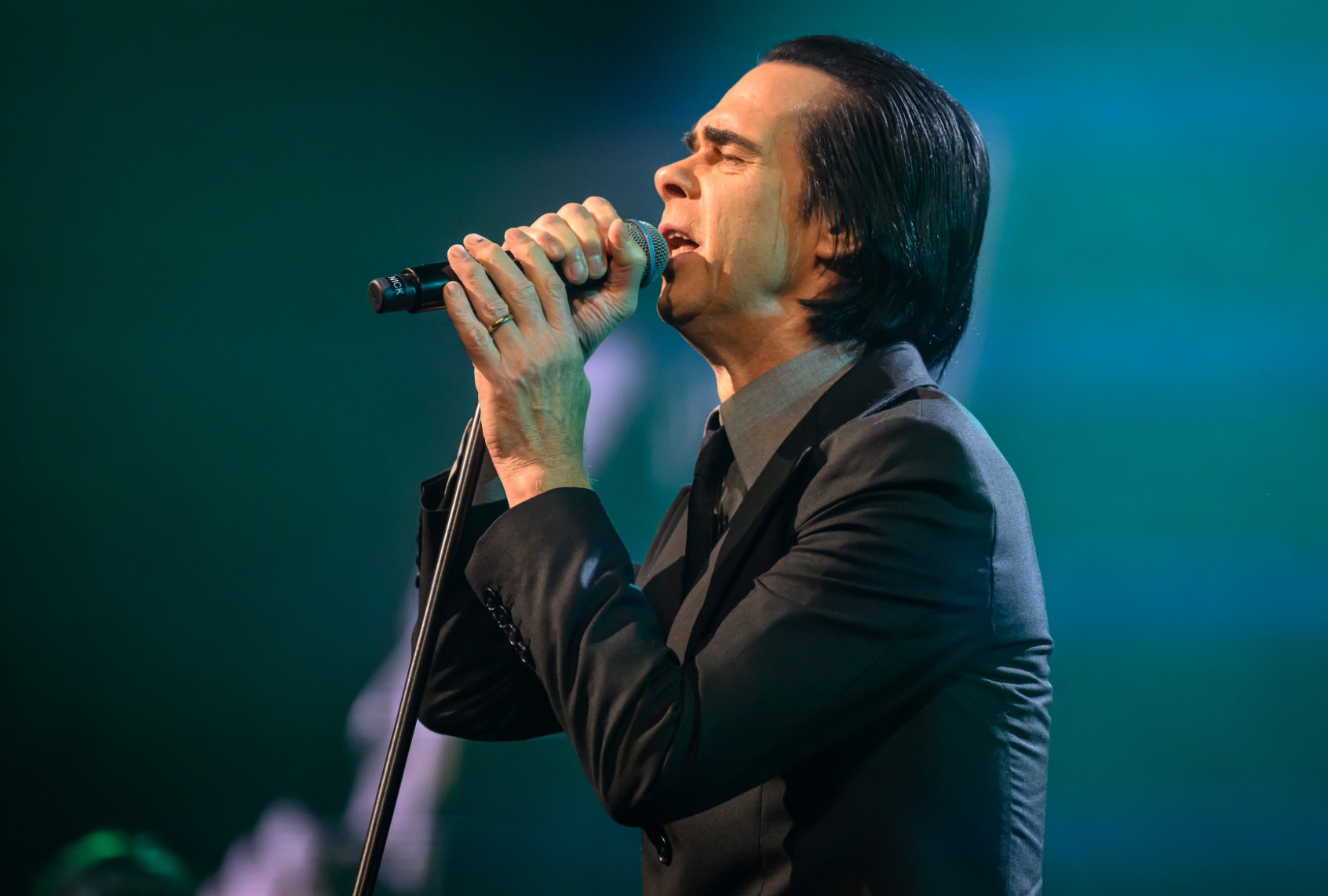
"You don’t know whether to stand . . . or kneel."

Cave wants the audience to be with him because he needs them for his particular version of musical alchemy. His performances have always been physical, but he has refined that over the years. He is this tall, lanky Australian man in his late 60s wearing dress shoes, a tie and a three-piece suit, his jet black hair slicked back. And yet, somehow, he is like a cat with a toy, except in his case, the toy is a ball of energy that he brings out and then bats around and shapes into different forms. 

Cave stands at the edge of the stage singing, and then tosses the hand microphone away to rush back to the grand piano. He plays a few bars, sometimes more, sometimes the whole song, only to then grab the mic on top of his piano and head to stage right, or stage left, where he perches on the speakers and sings, reaching out to the crowd — or sometimes, reaching into the crowd, or becoming part of it. In Columbus, in the middle of "Wild God"’s “Conversion,” he made his way up the aisle to the very center of the orchestra, where he perched on the arms of the seats, keeping his balance with the help of the crowd around him as he reprised the final refrain, declaiming,“You’re beautiful!” over and over and over. You will believe him by the time it’s over.

We need your help to stay independent

A favored gesture of Cave’s is to grab the arm of the tallest and burliest audience member closest to him, and to use their hand as a makeshift microphone stand so Cave can balance or gesticulate or emote as the spirit moves him. It is also a gesture of trust; the person holding the mic treats the responsibility as sacred and does not move until Cave retrieves the microphone a few bars later. It is simple, but it is touching; touching that he trusts us, touching that the audience wants to be worthy of the trust he has extended. Because it’s not just the dude holding the microphone that needs to be part of the circle of trust, it’s everyone in the vicinity. 

There is truly not a dead moment in the set, no song during which the crowd files out to get another beer. The beating heart, though, is the nine-song run that begins with “O Children” and runs through “Joy,” and it is a vast and complex routing through a variety of tones and emotions and volume. “Jubilee Street,” from 2013’s "Push the Sky Away," sometimes introduced as “a song about a girl,” (“They’re all songs about a girl, it’s kind of my – thing,” he’d deadpan in Detroit) is the moment when if you are not on the edge of your seat/on your toes he will make you get there. There is that emotional mix of anticipation from the people who know what can happen here, combined with a palpable, psychic battening down the hatches because no one knows what is actually going to transpire. 

On the outside, it seems like it’s a quiet, calm ballad as it opens; Ellis on guitar, a recitation of the story of "a girl who’s got no history / got no past." But even if you have experienced it before, you don’t know the exact color or shape of the coming sonic and energetic explosion on any particular night. In Detroit, it was purple; in Columbus, it was every color of the rainbow. It’s the nature of what energy the audience is picking up and circulating and sending back, and what Cave does with it when it completes that circuit. It goes from murder ballad to power ballad, from soap opera to hymn. Cave runs back to the piano, he overturns the mic stand, Ellis is a constant, but there is so much room even within that, and this is also when you will appreciate the rest of the musicians onstage because they are what is keeping this performance from spinning into orbit. 

There is that emotional mix of anticipation from the people who know what can happen here, combined with a palpable, psychic battening down the hatches because no one knows what is actually going to transpire.

“F**king COLUMBUS,” Cave will exclaim upon completion. That’s been one of his things this tour: when a city has earned it, he will append the f-bomb to the city’s name out of respect. Detroit got it pretty early in the evening, but Columbus had to earn it, and they did once he’d solved the problem posed by the reserved seating. But now it was time for “From Her To Eternity,” the oldest song in the set, from 1984, and while it used to feel like a switchblade, it is now vast and almost orchestral while still maintaining the same line of anguish and desperation. It doesn’t feel dated, though, it just feels deep and endless.

“Long Dark Night” and “Cinnamon Horses” lets Cave sit at the piano and the ensemble admirably replicates the vast landscape of those two songs — Ellis’ falsetto on the latter’s choruses are particularly gorgeous — before Cave is back at the front of the stage talking about Elvis Presley and everyone who’s sat down is standing up again, getting ready for what’s next. Cave talks about the night that Presley was born, and how we probably appreciate having an Australian tell us about Elvis, and he was born in a town called…”WHAT?” “TUPELO!” the crowd bellows back in anticipatory response. 

Nick Cave (Katja Ogrin/Redferns/Getty)Thunder and rain are simulated, the sinuous off-beat alternate Bo Diddley beat kicks off, the backing singers wave their arms in unison, and Cave continues the well-established convention of someone not from America being able to understand and explain American music better than we can ourselves sometimes. In the old days, this song live felt like evil; now it’s just ferocious and deeply satisfying. “Conversion” takes Cave out into the crowd, and he manages to get the crowd to raise their arms in unison as Ellis’ falsetto brings us into “Bright Horses.” 

The applause that acknowledged “There’s no shortage of tyrants/and no shortage of fools” seemed to surprise the audience, a moment of spontaneous reaction. It was different in quality from the cheer that arose in response to “We’ve all had too much sorrow, now is the time for joy” in "Wild God"’s “Joy.” (Even Bob Dylan acknowledged that line last fall.) By the time Cave returned to the piano for “I Need You,” it felt like the audience decided that we all needed a moment, because the entire theater was absolutely silent but still absolutely engaged and, honestly, entranced. It was a stunning and singular performance. 

The back third of the set, including the encore, is the space for the better-known songs, from the aforementioned “Red Right Hand” to “The Mercy Seat,” “The Weeping Song” and “Papa Won’t Leave You, Henry,” but also an unexpectedly gigantic “White Elephant,” where the backing singers come down to the front, making everything feel closer together. In Columbus, instead of “Skeleton Tree” being the last song in the first encore, we were gifted a slightly rough but rare and amazing performance of “Shivers,” a beautifully angsty ballad from Cave’s first band, The Boys Next Door, written by his former bandmate, the late Rowland S. Howard. 

The last song of the night is just Cave and the grand piano and the 3,400 occupants of the Palace Theater singing “Into My Arms.” It is beautiful and awesome, not the least because you’re not expecting a communal sing-along at a Nick Cave concert.  And yet here we all are, singing “Into my arms/o Lord” during a song that is 100% sincere and also mildly sarcastic at the same time (“I don’t believe in an interventionist god/but I know, darling, that you do”) alongside a man who should probably by all rights be dead or ruined. Yet he is still here in front of us in 2025, not trying to be someone he used to be, but yet 100% who he absolutely is. 

How “conservatives” became radicals — and learned to love big government

Beneath and beyond the Trumpian populist surge that captured the White House and Congress in 2024, American conservative thinking is taking some confusing turns. Some conservatives are sidelining their familiar dogmas about free trade, small government and the free market and moving instead to use the formerly dreaded "administrative state" to impose "order" and virtue on Silicon Valley technocratic elites, "radical lunatics" and other enemies within. 

Even Elon Musk and his so-called Department of Government Efficiency aren't really destroying the administrative state but rather reconfiguring it as a leaner, meaner tool for a dictator. This can only be confounding to old-line anti-government crusaders such as Grover Norquist, founder of Americans for Tax Reform, who said years ago, to widespread conservative acclaim, "I don't want to abolish government. I want to reduce it to the size where I can drag it into the bathroom and drown it in the bathtub."

Such libertarian-sounding pronouncements may seem bizarre to non-Americans who've lived with authoritarian state capitalism for decades, as in Singapore and China. But now Trumpian populism seems to be edging closer to a statist (and Catholic-tinged, for some of its champions) “common good constitutionalism,” as favored by Harvard Law professor Adrian Vermeule, or to an old-school Ivy League "good shepherd" administration of the republic.

But the Roman Catholic church itself is changing, and new Pope Leo XIV may seek to push American followers away from the ethno-nationalist welfare-state politics pioneered by Otto von Bismarck in the late 19th century, and then adapted by a well-known German political party under the label of "national socialism."  

America’s conservative sea change is complicated, but let me try to make it comprehensible. I explained some of this for the History News Network in 2022, when a Republican "red wave" seemed poised to win that year's midterm elections. It didn’t quite happen that way, but, since Trump’s return to power in 2024, that wave has been coming down hard upon all of us. People everywhere who need to deal with America as trading partners, visitors, immigrants or refugees need to know what they're getting into.

“We Need to Stop Calling Ourselves Conservatives,” warns John Daniel Davidson, an editor of the Federalist, a conservative publication (not affiliated with the right-wing Federalist Society). Davidson praises an argument by Jon Askonas, a professor of politics at the Catholic University of America, who writes at Compact, another rightward site, that “the conservative project failed” because it “didn’t take into account the revolutionary principle of technology, and its intrinsic connection to the telos [or over-determined trajectory], of sheer profit.” 

Davidson and Askonas want a conservative counterrevolution against a corporate technocracy whose fixation on maximizing profit has trapped Americans in a spiderweb of come-ons that grope, goose, track and indebt us, bypassing our brains and hearts on the way to our lower viscera and wallets. But are they truly rejecting “free market” conservatism, or is this just a tactical shift in their strategy to support the scramble for sheer profit and accumulated wealth, glossed over with religious rhetoric? 

Davidson, Askonas and their ilk have been warning that conservatives undermine their own republican virtues and freedoms by conceding too much to “woke” liberal efforts to redress income inequality, sexual and racial grievances, and markets’ amoral reshaping of society. They warn that not only liberals but also libertarians and free-market conservatives have disfigured civic and institutional order.

Once upon a time, Davidson explains, "conservatism was about maintaining traditions and preserving Western civilization as a living and vibrant thing. Well, too late. Western civilization is dying. The traditions and practices that conservatives champion… do not form the basis of our common culture or civic life, as they did for most of our nation’s history.”

In this reading, conservatives must seize power to restore moral and social order, even if that requires using big government to break monopolies and redistribute income a bit to some of the Americans they’ve claimed to champion while feeding the plutocracies that leave them behind. Davidson and Askonas blame fellow conservatives for buying into “woke” corporate capital’s intrusive, subversive technologies, which treat citizens as impulse-buyers whose “consumer sovereignty” suffocates deliberative, political sovereignty.

Conservatives can't reconcile their claim to cherish traditional communal and family values with their knee-jerk obeisance to conglomerate marketing and private-equity financing.

Yet profit-crazed conservative media, like Fox News and the rest of Rupert Murdoch’s empire, assemble audiences on any pretext — sensationalistic, erotic, bigoted, nihilistic — in order to keep us watching the ads and buying whatever they’re pitching. Even worse, conservative jurisprudence has declared that corporations that accelerate such manipulative marketing are merely exercising the First Amendment-protected speech of self-governing citizens. That hands the loudest and largest megaphones to CEOs and their PR flacks and leaves actual citizens with laryngitis from straining to be heard above the profit-making din.

Conservatives can't reconcile their claim to cherish traditional communal and family values with their knee-jerk obeisance to conglomerate marketing and private-equity financing. They've forgotten former Communist-turned-conservative prophet Whittaker Chambers' warning that "You can't build a clear conservatism out of capitalism, because capitalism disrupts culture," as Sam Tanenhaus, a biographer of Chambers, put it in a lecture to the American Enterprise Institute in 2007.

Neoliberal Democrats often serve such conservatives as convenient scapegoats because they, too, stop short of challenging capitalism’s relentless dissolution of civic-republican virtue. They celebrate breaking corporations’ and public agencies’ glass ceilings to install “the first” Black, female or gay chairman, but do nothing to reconfigure those institutions' foundations and walls. Former Facebook COO Sheryl Sandberg urged women to “lean in” against sexism in workplaces, but Donald Trump mocks such appeals by installing dubious leaners-in such as Attorney General Pam Bondi, Homeland Security Secretary Kristi Noem, Director of National Intelligence Tulsi Gabbard and Education Secretary Linda McMahon.

Neoliberal Dems who’ve broken glass ceilings have also repealed the Glass-Steagall Act, a key New Deal law of the 1930s that blocked socially and economically destructive rampages by predatory investment banks, private equity barons and hedge fund operators against millions of Americans’ equity and opportunities.

And conservatives, instead of offering viable alternatives to liberals' failures, have devoted themselves almost exclusively to assailing “wokeness” and “diversity” protocols, offering no constructive agendas beyond Trump’s whims. 

Some conservatives who've embraced Trump’s demagoguery have turned to religion for cover and perhaps succor, if not salvation. But the religious faithful should scourge them, as Jesus did when he drove the moneychangers out of the temple.

Some conservatives who've embraced Trump’s demagoguery, only to find themselves soulless, have turned to religion for cover and perhaps succor, if not salvation. But the religious faithful should scourge them, as Jesus did when he drove the moneychangers out of the temple.

New York Times columnist Ross Douthat, along with others who embrace religious doctrines to curb the telos of sheer profit in a fallen world, may well discover that if religion tries to seize political power, as some of Trump’s crusaders long to do, it becomes intolerant and intolerable. Genuine religious faith is often indispensable to resisting concentrations of unjust power in a republic, as it was in America's civil rights movement. But when it overreaches, it undercuts what it claims to encourage. Striking that balance requires a different kind of faith and sound judgment that Bible-thumping Trump loyalists lack.

Today's conservative convolutions are sometimes pathetic enough to make me almost sympathize with religious escapism. But none of that justifies Davidson’s claim that "if conservatives want to save the country, they are going to have to rebuild and in a sense re-found it, and that means getting used to the idea of wielding power, not despising it." He continues, "The left will only stop when conservatives stop them," so "conservatives will have to discard outdated and irrelevant notions about 'small government.'"

Davidson concedes that “those who worry that power corrupts and that once the right seizes power it too will be corrupted … have a point.” But when in history have conservatives shied away from wielding power, except when embarrassed or forced into relinquishing it by the civil disobedience of a Rosa Parks or by well-grounded progressive strikes, activist movements and electoral organizing? 


Want a daily wrap-up of all the news and commentary Salon has to offer? Subscribe to our morning newsletter, Crash Course.


If conservatives really wanted to use power virtuously, they’d do more to enable American working people to resist the “telos of sheer profit” that’s stressing them out and displacing their anger and humiliation onto scapegoats thanks to the ministrations of Trump and Fox News. How about adopting Davidson’s proposal that government offer “generous subsidies to families of young children” — a heresy to small-government conservatives? How about banishing vicious demagoguery from their midst, as they pretend to do by opposing antisemitism? How about disassociating themselves from The Claremont Institute, the hard-right think tank devoted to creating intellectual rationalizations for Trump’s 2021 coup attempt and the imperial presidency?

Davidson even proposes that “to stop Big Tech… will require using antitrust powers to break up the largest Silicon Valley firms” and that “to stop universities from spreading poisonous ideologies will require… legislatures to starve them of public funds.” (That part certainly sounds familiar right now.) Conservatives, he argues, “need not shy away from [big-government policies] because they betray some cherished libertarian fantasy about free markets and small government. It is time to clear our minds of cant.”

Conservatives need to look more carefully into the Pandora’s box that they’re opening. Those who crave a more-godly relation to power should ponder a warning from John Winthrop, first governor of the Puritan Massachusetts Bay Colony in 1630, in "A Modell of Christian Charity": "It is a true rule, that particular estates cannot subsist in the ruin of the public.” They certainly can’t subsist defensibly in a society that’s being disintegrated by capitalism. “Ill fares the land, to hastening ills a prey, Where wealth accumulates, and men decay,” warned the Anglo-Irish poet and novelist Oliver Goldsmith in 1777. Admonitions like his and Winthrop’s made sense to conservatives such as Whittaker Chambers in the 1950s. Conservatives are now flouting them at their, and our, peril.  

“Almost a Gestapo nation”: When ICE seized the mayor, his city showed up

NEWARK, N.J. — Last Friday, federal immigration police seized Ras Baraka, the mayor of this city, off a public street outside Delaney Hall, a controversial private prison operated by the GEO Corporation, formerly known as Wackenhut Corrections Corporation. This for-profit, publicly traded, multinational employs 18,000 people at over 50 sites here and abroad.  

The chaotic scene, captured on bystander video, shows three Democratic members of Congress, Rep. Bonnie Watson Coleman, Rep. LaMonica McIver and Rep. Robert Menendez Jr., encircling Baraka outside the GEO perimeter in an unsuccessful attempt to prevent his being taken inside by the armed, masked agents. 

That was a rational response in the age of the Trump/Musk junta, which is scooping people off the streets without due process and sending them to places like the now-infamous private prison in El Salvador.

It's a simple test for us all. When you see armed and masked law enforcement coming for someone you care about, do you stand aside? Do you slink away and count on the courts to sort it out? Or do you do what you can to slow it all down? 

Multiple news media organizations, including the BBC, led their accounts with quotes from Alina Habba, the acting U.S. attorney for New Jersey, as the foundation for their reporting, offering offered credence to the narrative that Baraka had "committed trespass and ignored multiple warnings" to leave Delaney Hall.

The BBC headline, "New Jersey mayor arrested in protest at migrant centre," no doubt pleased the Trump White House, but it downplays what Baraka and the three members of Congress were actually doing there. Even in 2025, for the corporate news media, if there are a sufficient number of faces of color it has to be a protest. It couldn't be that this was a delegation of duly-elected officials doing their jobs.

"I have been in situations that have been heartbreaking personally and professionally. I have never been afraid. I have never been so disheartened and I have never felt so helpless to get the right thing done as I was today," Rep. Coleman told WorkBites/WBAI. She insisted Baraka had done nothing wrong: "He wasn't even on [ICE] property," she added.

When asked how New Jersey's many blended households of U.S. citizens and migrants must feel, Coleman was direct. 

"I think they are scared to death and they have every right to be scared to death," she said. "I think this is almost a Gestapo nation right now — that people are going to take you out of your homes, out of your school, out of your jobs, whatever. This is not America."

Believe it or not, this all started out as a story about labor and law and order. It became a protest story when federal immigration officers took the mayor of New Jersey's largest city into custody and manhandled three members of Congress in the process. That was the headline.

"I think this is almost a Gestapo nation right now," said Rep. Bonnie Watson Coleman. "That people are going to take you out of your homes, out of your school, out of your jobs, whatever. This is not America."

These were elected officials attempting to fulfill their oath of office, which requires them to "support and defend" the U.S. Constitution. In the case of Coleman, McIver and Menendez, they were at Delaney Hall to exercise their right to inspect such sites. Remember, they are also required to "defend" the Constitution "against all enemies, foreign and domestic."

Friday's visit was only the most recent by Baraka, who has insisted that GEO should have a proper certificate of occupancy from his city, along with the fire inspection that would be required of any congregant care facility slated to house 1,000 people. Without those things, both the entire GEO workforce and the private prison population are at risk.

GEO and ICE don't have a fire department. And as Newark tragically learned with the July 2023 maritime fire that killed two city firefighters, when you can't hold entities like GEO or the Port Authority of New York and New Jersey accountable, people die and it's ordinary citizens and their city that pay the price.

“The GEO Group and ICE exhibit a nationwide pattern of discrimination, disregard for due process and attacks on the foundations of liberty, justice and democracy," Baraka said in a statement in the days before his arrest:

Here in Newark, they also ignored court direction to apply for a Certificate of Occupancy (CO) at Delaney Hall, and other deliberate acts of non-compliance that put detainees, as well as employees, at additional, unnecessary risk. As a city of immigrants known for caring for its own, this adds insult to injury. The city will continue to demand that the GEO Group provides full transparency of operations, that they submit a CO application to ensure compliance all around, and complete ongoing inspections for safety of all involved. Because in Newark, we uphold our laws and statutes with the same rigor that we uphold the rights of our people.

GEO was a major campaign donor to Donald Trump, and started to receive federal immigration detention contracts early in his first term, after Attorney General Jeff Sessions ended an Obama-era ban on the Department of Justice contracting with for-profit private prisons. GEO was subsequently awarded a $1 billion, 15-year contract to operate the 1,000 bed immigration detention facility.

We need your help to stay independent

The state of New Jersey is currently defending a law it passed in 2021 prohibiting companies like GEO from setting up private immigration detention centers and barring local or county governments from leasing out their jail cells for that purpose. In 2023, a federal judge struck down the prohibition on private immigration lockups, according to the New Jersey Monitor.

On Friday, federal officials held the mayor for several hours at their Frelinghuysen Avenue location. The crowd of Baraka's supporters outside the facility grew exponentially larger as twilight faded into night. 

It was a surreal, dystopian scene, not far from the dysfunctional air traffic control tower at Newark's Liberty International Airport. The same federal government that is having hair-raising difficulty with basic functions like air traffic control, is now looking to spend billions to double down on rounding up immigrants.

As the dozens of protesters swelled to several hundred on Friday night, the chants calling for Baraka's release grew louder and louder, echoing throughout this industrial corridor of Newark.

Amina Baraka, the mayor's 82-year-old mother, looked on with a mixture of pride and trepidation. While her biography includes being a poet, author, community organizer and performing artist, she is also a central figure — along with her late husband, the poet, playwright and novelist Amiri Baraka — in Newark's fractious and tumultuous history. 

* * *

On July 12, 1967, Newark police pulled over John W. Smith, an African-American cab driver, for an alleged traffic violation. Police contended that Smith cursed at them, and then assaulted them when they tried to take him into custody. They got him into a squad car, but according to the officers Smith continued to resist when they reached the precinct. Passersby who witnessed this altercation began to heckle the police, demanding they take the handcuffs off Smith.

Large crowds formed outside the precinct house where Smith was held. Community leaders demanded to see him and when they were granted access, they discovered he needed immediate medical attention. Smith was sent to the hospital for treatment for a skull injury and broken ribs. He was released late the following day, but the damage had been done. Rumors spread throughout the city that Smith had been fatally beaten.

Over the next 24 hours, Newark police tried to keep a lid on a highly volatile situation. Cab drivers mobilized to protest the treatment of their colleague, community members protested police brutality, and tensions on the street ran high. Police were pelted with debris and looting started to break out. That launched five days of violent unrest which led to 26 deaths, 23 of them from gunshot wounds. 

The tragic details are laid out in an official account compiled by the governor's Select Commission on Civil Disorder. This document, known as the Lilley Report after its chairman, then-AT&T President Robert D. Lilley, has slipped into undeserved obscurity. Over months of investigation, the panel took sworn testimony from more than 100 witnesses, ranging from the superintendent of the New Jersey State Police to Amiri Baraka, the current mayor's father, whose activism had made him a frequent target for local police. 

"This thing that's happening in America is wrong," Mayor Baraka told the crowd. "If you're not Blackfeet or Cherokee or Lenni Lenape, then somebody in your family was undocumented at some point."

After speaking with scores of Newark store owners and residents, the commission concluded that members of both the police and the National Guard, motivated by racial prejudice, had used “excessive and unjustified force” against Newark residents, and had specifically targeted Black-owned businesses for destruction. “These raids resulted in personal suffering to innocent small businessmen and property owners who have a stake in law and order and who had not participated in any unlawful act. It embittered the Negro community as a whole when the disorders had begun to ebb,” the report concluded.

According to the commission, National Guard troops and New Jersey State Police had fired some 13,000 rounds in all. No total was available for the Newark police, who reported killing 10 people, seven “justifiably” and three “by accident.”

* * *

On this spring night in 2025, the Newark Police and a large crowd of protesters were on the same side of history — and the same side of a chain-link fence topped with barbed razor wire. Inside the ICE/DHS compound perimeter, armed and masked federal officers were clearly outnumbered and hunkered down. 


Want a daily wrap-up of all the news and commentary Salon has to offer? Subscribe to our morning newsletter, Crash Course.


Baraka, who is running for governor of New Jersey and may have just become the leading candidate in the June 10 Democratic primary, addressed the crowd after his release as night fell.

"We have a right to be here. We struggled on these streets," he began. "I never thought I would be incarcerated for something I believe is my democratic right — to speak out against what I think was happening there, a violation of city and state laws and a lack of transparency. This thing that's happening in America is wrong. If you're not Blackfeet or Cherokee or Lenni Lenape, then somebody in your family was undocumented at some point."

Baraka referenced the idealized version of democracy "we all learn about in the fifth grade" and mentioned the background of Black Americans like him, whose ancestors arrived here enslaved and, he said, "were the first undocumented."

"We put up a statue that said, 'Give me your tired, your hungry, your poor masses.' We advertised it to the world," Baraka continued. "So the world has come here fleeing climate change, fleeing authoritarianism, to find that democracy in this country. … At some point we have to stop letting these people cause division between us."

On this night at least, Newark felt united. 

Home sellers are getting desperate — and throwing big perks at buyers

They say you can’t time the housing market, but as we are acutely aware, some times are better for buyers than others. Like now, as the market has softened, primarily because high interest rates put a monthly mortgage rate out of reach for many.

Real estate listing platform Redfin says 44% of sellers are granting concessions to buyers, and 13% of all sales in March were canceled due to jittery buyers in an uncertain economy with high interest rates.

According to Lawrence Yun, chief economist at the National Association of Realtors, inventory rose in March, homes are languishing longer on market and people are staying put. “Residential housing mobility, currently at historical lows, signals the troublesome possibility of less economic mobility for society,” he said in a statement. Still, prices stayed high. “In a stark contrast to the stock and bond markets, household wealth in residential real estate continues to reach new heights. With mortgage delinquencies at near-historical lows, the housing market is on solid footing. A small deceleration in home price gains, which was slightly below wage-growth increases in March, would be a welcome improvement for affordability.”

It may be a crazy time to buy, but home shoppers can do jiu-jitsu and use the soft market to their advantage. However, it's time to think past the paint job and cosmetic updates and ask for strategic concessions that will lower the costs of owning a home.

There may be room to ask for cosmetics concessions — such as updating the kitchen or painting the home — but those won’t return as much as the ones that save money month after month. You could even use the savings to fund those fixes. Miami-based Christina Pappas, regional vice president of NAR and president of the Keyes Co. real estate agency, says in the past few months, she’s been seeing an uptick in interest-rate buydowns to close deals. Instead of asking for a price reduction, a 2% to 4% buydown concession lowers the interest rate, which can amount to significant savings over the long haul. Buydowns can be temporary or for the life of the loan, and they typically cost 1% of the loan.

Here’s an example of how that would work on an $800,000, 30-year mortgage (without taxes and insurance included): At 6.5%, the monthly payment would be $5,056.54. If the seller buys down that interest rate to 4% at the cost of $20,000, the buyer pays $3,819.32 monthly. If the buyer instead asked for a $20,000 reduction in price instead, which would cost the seller the same amount of money, the monthly payment would be $4,930.13 — more than $1,000 difference without much help on the property tax end.

We need your help to stay independent

The second strategic concession buyers are asking for — and getting — is based on mitigating insurance costs. Pappas works in hurricane country, and “The age of the roof is one of the most important things for buyers these days,” she said. “Probably the number one request for a seller reduction to either fix the roof, replace the roof or get a monetary amount scored a credit at closing because of the roof. So anything that's going to affect the cost of insurance is a typical request from a buyer, and the easiest request after that inspection period is typically a credit at closing so that the buyer can complete it.”

This might look like fire abatement measures in wildfire-prone areas, or updating HVAC, plumbing and electrical systems, or earthquake retrofitting — which also improve home values when you’re ready to sell. For condo buyers, it’s not out of line to ask for HOA fees for a period of time. You could also get creative and ask for utility bill payments, soil and water testing, moving costs and whatever else might sweeten the deal.

"Anything that's going to affect the cost of insurance is a typical request from a buyer, and the easiest request after that inspection period is typically a credit at closing so that the buyer can complete it"

Negotiating is a brain game

Kalonji Foreman owns Foreman Properties, a Compass-affiliated real estate business in Washington, D.C. He says asking for a straight-up price reduction can put a buyer at risk of losing a sale. “It is just as much financial as it is psychological,” he said. It can be insulting to imply a seller has priced the home incorrectly, or that it’s not worth what they think it is. “I always advise clients to go after the actual selling concession to offset your clothing costs versus going after the actual price point.”

Another thing buyers can use to their advantage is seasonal timing. In spring, more homes are on the market, more people are looking to relocate before school starts and buyers will have competition. During the winter holidays, fewer homes are available but sellers may also be more motivated if they’re trying to close a sale by the end of the year.

“They always say the best time to buy is yesterday, and the second-best is today,” Foreman said. “If they are waiting, then they can essentially be priced out of the market, because that property is going to continue to appreciate in value.”

We can turn bugs into flying, crawling RoboCops. Does that mean we should?

Imagine a tiny fly-like drone with delicate translucent wings and multi-lensed eyes, scouting out enemies who won't even notice it's there. Or a substantial cockroach-like robot, off on a little trip to check out a nuclear accident, wearing a cute little backpack, fearless, regardless of what the Geiger counter says. These little engineered creatures might engage in search and rescue — surveillance, environmental or otherwise — inspecting dangerous areas you would not want to send a human being into, like a tunnel or building that could collapse at any moment, or a facility where there's been a gas leak.

These robots are blazing new ethical terrain. That's because they are not animals performing tasks for humans, nor are they robots that draw inspiration from nature. The drone that looks like a fly is both machine and bug. The Madagascar hissing cockroach robot doesn't just perfectly mimic the attributes that allow cockroaches to withstand radiation and poisonous air: it is a real life animal, and it is also a mechanical creature controlled remotely. These are tiny cyborgs, though even tinier ones exist, involving microbes like bacteria or even a type of white blood cell. Like fictional police officer Alex Murphy who is remade into RoboCop, these real-life cyborgs act via algorithms rather than free will.

Even as the technology for the creation of biohybrids, of which cyborgs are just the most ethically fraught category, has advanced in leaps and bounds, separate research on animal consciousness has been revealing the basis for considering insects just as we might other animals. (If you look at a tree of life, you will see that insects are indeed animals and therefore share part of our evolutionary history: even our nervous systems are not completely alien to theirs). Do we have the right to turn insects into cyborgs that we can control to do our bidding, including our military bidding, if they feel pain or have preferences or anxieties?

Making a cyborg animals can mean modifying animals with mechanical parts or otherwise enhancing them, or it can mean using the "entire animal body as a scaffold to manipulate robotically," as one 2022 paper put it.  There are endless possibilities to how a cyborg might work, what it could do, and how it could be powered and controlled, resulting in a tremendously creative discipline. Here are just a few examples: The energy to power a cyborg cockroach and control its behavior, regardless of what it would prefer to be doing, can be generated from the creature's own living body through enzymatic biofuel cells worn as a tiny backpack. It can even be rechargeable

"While this new era of living robots presents unprecedented opportunities for positive societal impact, it also poses a host of ethical challenges."

Or scientists can use the insect's own "blood," a liquid called hemolymph: biofuel cells implanted on the organism can consume the sugars in its very own hemolymph to generate electricity to power the cyborg. The algorithms used to make a cyborg cockroach navigate complex environments, such as obstacle-ridden sand or rock-strewn surfaces, might be derived from the insect's own natural behaviors, exploited to achieve human ends. 

Likewise, the boundaries that keep an insect — a hawkmoth or cockroach, in one such project — under human control can be invisibly and automatically generated from the very backpack it wears, with researchers nudging it with neurostimulation pulses to guide it back within the boundaries of its invisible fence if it tries to stray away.  

As a society, you can't really say we've spent significant time considering the ethics of taking a living creature and using it literally as a machine, although reporter Ariel Yu, reviewing some of the factors to take into account in a 2024 story inspired by the backpack-wearing roaches, framed the ethical dilemma not in terms of the use of an animal as a machine — you could say using an ox to pull a cart is doing that — but specifically the fact that we're now able to take direct control of an animal's nervous system. Though as a society we haven't really talked this through either, within the field of bioengineering, researchers are giving it some attention.


Want more health and science stories in your inbox? Subscribe to Salon's weekly newsletter Lab Notes.


Still, neither the philosophical framework nor animal welfare protections and regulations and laws have caught up to what we are learning about animal consciousness and sensation. Last year, a group of scientists argued that there is a risk that this collective inertia will lead to unexpected negative consequences as the technology advances while a complementary field of biohybrid robotics ethics does not.

"While this new era of living robots presents unprecedented opportunities for positive societal impact, it also poses a host of ethical challenges," they wrote, arguing that the evolving or nascent field of biohybrid robotics demands new governance frameworks.

Of course, the history of animals being used for human ends is biblically old. Prehistorically old, even. We use animals for industrial, medical, military and endless other purposes beyond their use for food, clothing and companionship. As humans, we set the agenda — even when you would imagine it's an agenda that peaceful porpoises turned into Cold War surveillance devices, or the rats risking their lives to disarm landmines, might not endorse if they were given a say. But literally turning an animal into a cyborg that we control not with (or not only with) the usual coercion, pain and rewards, but with a remote is a new level of co-optation of the natural world and animal autonomy for human ends.

There's also what Nicole Xu, a bioengineer and research scientist who runs the Xu lab at the University of Colorado Boulder, calls the "yuck factor" — the reflexive sense of revulsion many of us feel at the mere idea of an animal, even an insect, modified with mechanical parts and stripped of free will. In RoboCop, our yuck factor is carefully held at bay by the cyborg's tough, robotic exterior, but when Peter Weller, playing Adam Murphy/RoboCop, removes his helmet and we, and his partner Anne Lewis, truly see how his human body has been forcibly meshed with mechanical parts, it's not for nothing that he tells her "you may not like what you see." 

But Xu argues that the yuck factor is not a sound basis for deducing what's ethical and what's not.

Existing protections for the use of research animals by and large prevent the creation of vertebrate cyborgs of this kind. (The definition of cyborg might include a human with prosthetics, though obviously that's not what we're talking about here.) So the question of cyborg ethics is currently a question of the ethics of creating cyborgs from invertebrate animals. Insects are invertebrates, as are jellyfish and other marine animals like sea sponges and corals that have also been researched for their cyborg potential. 

"What these cyborg insect cases are doing, it looks like to me, is removing all agency from the animal.""

Xu is working on the development of moon jellyfish cyborgs that might eventually be used to explore the mysterious environment at the bottom of the deepest oceans, using their natural water filtering capacity to collect water samples, and perhaps incorporating pH sensors, temperature sensors, and cameras. Unlike fish, jellyfish don't have swim bladders to control depth; instead, their tissue naturally adjusts to the surrounding water, allowing them to safely reach any given depth. And moon jellyfish are found in a variety of environments at different temperatures, salt levels, and depths, with other species found as deep as the Mariana Trench, suggesting that this work may be applicable more broadly to other species of jellyfish and to other marine invertebrates.

"There's a variety of different opportunities for using these cyborg jellyfish in the real world, but the bottleneck that I see right now is we can't really control them, so we've got to improve that first," Xu said. With graduate student Charles Fraga, she's busy testing different possible mechanisms to make the cyborg turn.

Insect consciousness

Invertebrates make up the vast majority of animals, around 97% of all animal species. This is convenient, since while there are strict and extensive regulations around the use of vertebrates in scientific research, it's generally been considered ethical to do experiments on invertebrates with little regulation or oversight. This is based on the assumption that creatures without backbones are fundamentally different from us, unable to experience either pain or suffering, to communicate in a meaningful way or to even experience conscious awareness.

And yet research is increasingly challenging this assumption. Matabele ants engage in wound care of injured ant comrades. Octopuses are intelligent and even playful, and while they don't have all the same neurotransmitters as humans, we do share some of the brain chemicals that produce different emotions, as well as equivalents with similar functional roles. Bad experiences lead honeybees to develop pessimistic biases, just like humans do. Prozac can soothe anxiety in shore crabs and humans alike.

In 2022, the U.K. became the first country to formally incorporate the idea of sentience into animal welfare law through a bill to create an Animal Sentience Committee that would review government policies, although the concept plays an implicit role in other animal welfare legislation. The U.K. legislation called for increased protections for two groups of invertebrates that, accumulating research suggests, share consciousness with us in meaningful, if very different, ways. These are cephalopod mollusks, a group that includes squids and octopuses, and decapod crustaceans, a group that includes lobsters and crabs. In fact, the legislation also explicitly allows the possibility of amendments that could bring any invertebrate under the protection of the act by including them in its definition of an "animal."

That's already a fairly radical step, not because the evidence doesn't support this — it does — but because it's such an outlier (the E.U. and Australia do protect some invertebrates in animal research.) In the United States, the question of what you can do to an animal in a laboratory or experimental environment would mostly fall under the aegis of Institutional Animal Care and Use Committees established by academic institutions, each setting its own rules. Among invertebrates, only cephalopods like octopuses fall under IACUC guidelines at all, and even for them, we're talking about recommendations, not regulations requiring certain standards of care. 

Xu is lead author on a paper published last month that uses the jellyfish as a case study to explore ethical considerations that have been or should be applied to the creation of such machine-invertebrate hybrids, and she makes recommendations for future guidelines she and her colleagues believe should be developed. Xu told Salon that there are no applications of research with jellyfish she can think of that she'd see as unethical. Nevertheless, she argues for ongoing research into nociception in invertebrates and continual adaptation of guidelines in response to what we learn. And despite the lack of protection from IACUC or other entities, Xu believes researchers have an ethical responsibility towards their subjects, whether they are endowed with backbones and central nervous systems or not. This means it's important to minimize harm, and to take a precautionary approach, doing our best to avoid things that might cause harm even we don't have enough evidence to be sure.

"We know that the species of jellyfish [in question] don't have pain receptors, they don't have nociceptors, which are like noxious stimuli receptors, and so they don't have a centralized nervous system either," Xu said. "So, you know, we feel very confident that they're not experiencing a lot of this noxious stimuli that we might think of as pain. But even so, we want to make sure that we're allowing the animals to rest in between experiments."

When it comes to insect cyborgs, though, Kristin Andrews, York Research Chair in Animal Minds and Professor of Philosophy at York University in Toronto, thinks the research is already clear enough to go further. 

"So I think we are pretty safe at this point in time of the science to assume that all of these insects do feel something and so when we see them being used in these sorts of contexts for search-and-rescue or what-have-you, the question that arises for me has to do with the importance of agency and how the animals' agencies are being undermined by turning them into cyborgs that are then controlled by humans," Andrews told Salon in a video interview. She points to Drosophila, the fruit flies beloved of university research labs, which have been shown to exhibit a form of cultural learning, with females selecting mates of the same color as the males they've observed other females choosing, for example — a type of conformity motivation also seen, and considered significant, in monkeys. 

Andrews was a coauthor of the New York Declaration on Animal Consciousness, a declaration signed last April by a long list of animal consciousness, philosophy, neuroscience and cognitive science luminaries at New York University. The declaration says, in its second and third points:

"The empirical evidence indicates at least a realistic possibility of conscious experience in all vertebrates (including reptiles, amphibians and fishes) and many invertebrates (including, at minimum, cephalopod mollusks, decapod crustaceans, and insects)", and "when there is a realistic possibility of conscious experience in an animal, it is irresponsible to ignore that possibility in decisions affecting that animal. We should consider welfare risks and use the evidence to inform our responses to these risks."

Although she hasn't seen any changes in terms of actual legislation or policy yet, Andrews says that people are beginning to argue that insects should be taken under consideration in animal welfare law. It's not that, by acknowledging that an insect can be an agent — meaning that it has agency — we can't use insects in any way ever again, though. Andrews acknowledged that even human agency is constrained by cultural and moral norms and the factors. 

"The amount of agency one has always comes in degrees," she said. "But we think that there's a certain amount of agency that we need to be providing to agents, and that is to allow them to make their own kinds of choices within these constrained environments. So even when we're taking a lot of agency away from animals, in the case of farmed animals, laboratory animals or pet animals — and all these cases, we're limiting the things that they can do — but when there's positive welfare in those situations, it's because animals can make choices. What these cyborg insect cases are doing, it looks like to me, is removing all agency from the animal."

Andrews doesn't argue that it would never be possible ethically create cyborg insects, but that the trade-offs in terms of the value cyborgs might provide in terms of human health or environmental benefits for example, need to be carefully considered. So does positive welfare for animals in researchers' care, which should include offering choices and enrichment in laboratory environments, something Andrews says has also been found to result in better validated science using these animals. 

"If you want to do it to insects and not to humans, you need to find a morally relevant difference, and species membership isn't a morally relevant difference that's interesting," Andrews said.

Xu, meanwhile, says that decision-making or desire, hallmarks of autonomy, are not something her invertebrate subjects experience. "I think it's more sensory feedback and biological drive than anything else," with researchers' control over their actions being rather like the muscle or nerve stimulation you might get in physical therapy, she said. That doesn't mean there are no welfare considerations for them. 

We need your help to stay independent

"If the animals are in a stressful environment," Xu said of her jellyfish, "and they don't feel like… they're living in an environment that is conducive to reproduction, then they won't reproduce." Her team pays attention to other stress markers, such as that they secrete mucus when biologically stressed. "And we didn't see excess mucus secretions … so we also just immediately knew that we weren't stressing out the animals."

Xu further notes that we have ethical responsibilities not only to individual animals, but to species as well: minimizing harm by using as few individuals as possible, or by using more individuals for shorter, less stressful periods of time, is one aspect of that, as is doing everything possible to minimize ocean pollution from electronic parts.  

In a wider philosophical sense, there's something morally dubious about us viewing all organisms (from extremophiles to dogs) merely as vehicles for the enactment of human will and attainment of human goals. But, on a practical level, if we are to turn living creatures into little flying RoboCops, even as we destroy their habitats, should be allowed only when there is no alternative from the human perspective, in the sense that the good that can be achieved in environmental or human health terms really can't be adequately achieved in other ways: a decision that will never have an absolute answer, but will need to be hashed out as we go. 

That's why we all need to be more aware of how the technology is advancing, and what it's being used for. And then, as Xu has described, we owe what we might call a debt of care: animal welfare in the laboratory, applied to insects as to other animals, is one way we can attempt a responsible balance between human needs and respect for the autonomy and intrinsic rights of the life that surrounds us. Taking far more significant steps to protect the habitats of these creatures would be another way to pay the debt we owe them.

And finally, animal-inspired engineering continues to advance, with animal bodies and capabilities inspiring both biohybrids like cyborgs, and forms of biomimicry or biohybridism that don't require stripping animals of their autonomy. As soon as we have the ability to replace living creatures with actual robots inspired by those creatures, we have a responsibility to do so.

“Friendship” shouldn’t be this stressful

Back when the short video platform du jour was a little app named Vine, the wildly popular user Anthony Padilla posted a six-second video that became what we know today as a “load-bearing post,” a video that defines culture so succinctly it has become part of modern vernacular. From his hotel room, Padilla captured two men conversing in a hot tub. The catch? They were sitting so far from one another that they surely had to yell over the roar of the bubbles to hear anything the other person was saying. In the background, Padilla sings, “Two bros, chillin’ in a hot tub, five feet apart ‘cause they’re not gay!”

Aside from the inherent discomfort of filming two total strangers in public, the video’s instant, massive popularity indicated that Padilla captured something in the culture. (Though, something must be said about iPhone camera quality being so bad in 2016 that you can’t make out any faces. Perhaps these hot-tubbing gents were mere conduits for a message that begged to be delivered — vessels of God, if you will!) The fact is: Men have trouble pursuing friendships. And when they do, they fear vulnerability and judgment. Studies have shown that men have far more difficulty than women when it comes to forming close relationships, especially with other men. In 2021, the Survey Center for American Life found that 27% of men say they have six or more close friends, and even more shockingly, 15% of American men say they have no close friendships at all. This problem has been persistent for years. In 2013, friendship scholar Geoffrey Greif told Salon that, if men hang out, they’re more likely to do activities than have conversations; “shoulder-to-shoulder” relationships versus “face-to-face” bonds. 

When he talks about getting his own office at work, Craig boasts how it allows him to close the door and eat whatever he wants without being bothered. Like most unwitting victims of the male friendship recession, Craig sees his isolation as a point of pride. 

While the male friendship recession is no laughing matter, Andrew DeYoung’s new film “Friendship” explores the phenomenon to reveal all of its anxious, hysterical customs. Starring the brilliant pairing of Tim Robinson and Paul Rudd, the movie burrows into a burgeoning friendship between two adult men toiling in suburbia, planting a bundle of “Looney Tunes” dynamite in their dynamic. The explosion happens in slow motion, allowing viewers to gawk at all of DeYoung’s shrewdly constructed, cinematic shrapnel. “Friendship” is as much of a comedy as a horror show, a singular and vital cautionary tale for the modern age designed for real-life implications.

DeYoung wastes no time getting to the root of the issue. From the film’s opening sequence, he establishes that Robinson’s character, Craig, has a strongly entrenched problem with vulnerability. Craig and his wife Tami (Kate Mara) sit in a circle at a support group meeting, where Tami talks about her fear of jumping back into life after a recent battle with cancer. She speaks openly about her worries and how the experience has made her more in-tune with herself and her life, even if it means she's also staring at her anxieties head-on. When she expresses her primary fear, that her cancer will come back, Craig chimes in with a faux-doting reassurance. “It won’t come baaaccccckkkkkk,” he tells Tami. Tami just wants her husband to face the unknown alongside her. Instead, Craig brushes all of their mutual concerns under the rug. If something’s out of sight, it’s out of mind, enabling Craig to keep performing his idea of modern manhood.

Most things in Craig’s life function the same way. Despite fighting the city for months to get a couple of speed bumps in his neighborhood, he still agrees to work on a digital campaign for the mayor, who contracts Craig’s company that specializes in “making apps more addictive” for a re-election campaign. He pleads with Tami to see the new Marvel movie, and whenever anyone begins to talk about it, he chides them for spoilers instead of engaging in conversation. When he talks about getting his own office at work, Craig boasts how it allows him to close the door and eat whatever he wants without being bothered. Like most unwitting victims of the male friendship recession, Craig sees his isolation as a point of pride. 

Tim Robinson in "Friendship" (Courtesy of A24). That is, until a package for a neighbor is mistakenly left at Craig’s house. When he goes to return the parcel to its rightful owner, Craig meets Austin (Rudd), the mustachioed, smooth-talking evening weatherman who’s just moved in down the street. In their first meeting, Austin disarms Craig’s offense by throwing a few extra details and questions into what would otherwise be a brief interaction. Austin senses something in Craig and vice versa, though neither one quite understands what this feeling could be. 
I’ve experienced this in the past, as I’m sure everyone who identifies as a man has. A first-time interaction with another guy is a loaded incident. What are the right things to discuss, and how do you convey a platonic interest in another man without coming on too strong? When you’re a guy in the world, you’re constantly playing a game you never wanted to be part of, but that society demands you play. As someone who considers himself an open book, who likes to put all the cards on the table and zoom past niceties and small talk to defuse a potential new friend’s fears, playing mind-reader is a particularly exhausting task. Throw in being gay on top of that, and I’ve always got to assess how much code switching is necessary when meeting a straight guy for the first time. Other times, I can feel a straight man at a party pulling back from a great conversation because he’s worried the women in the room might think he’s not straight, single and available — or worse, worried what his other friends might think. I want to look them in the eyes and plead, “Open up to me. Just be a person! Why the hell are you acting so weird?” Men constantly wonder if they’re sharing too much or sharing too little. And in those moments, it’s hard to tell what’s worse: possible judgment or eternal loneliness.


Want a daily wrap-up of all the news and commentary Salon has to offer? Subscribe to our morning newsletter, Crash Course.


When Austin and Craig start hanging out regularly, Craig thinks he’s escaped that nagging choice. He’s enjoying their shoulder-to-shoulder bonding activities — watching Austin’s band play, or crawling through the city’s aqueduct and breaking into City Hall — but can’t quite figure out the vibe of the face-to-face interactions, especially when external forces are brought into the equation. When Austin introduces his new friend to his circle of buddies, Craig malfunctions. He wants to be aloof yet interesting; cool, but not so try-hard about it. After a few beers with the guys leads to a round of garage boxing, Craig tries his literal hand at impressing the room and sucker punches his new BFF. (Bro Friend Forever.) To his surprise, the boys do not respond by showering him with praise and admiring his strength and fortitude. The night ends early, and Craig is ostracized from the group.

We live in a time that commodifies attention, where actively choosing to spend time with someone, away from a phone, means so much more than it used to. Friendships can often feel like a competition between ourselves and a cellular device. “What if they get bored with me because I can’t always offer the same endless stream of dopamine that the phone in their pocket provides?”

Things go haywire from here, and DeYoung has the rare opportunity to punch as hard as he possibly can. His writing is lean and vigorous, and he packs the script full of outrageous scenarios that are more stressful and strange than any mainstream theatrical comedy in recent memory. For those who know Robinson from his Netflix sketch series “I Think You Should Leave,” the turns “Friendship” takes will prove familiar, but not monotonous. Robinson is extraordinarily adept at pushing bits to their limit and then skating past that boundary line. He yells, plots, spills coffee, turns dad jokes into gut-punch guffaws, and makes the entire auditorium fold itself into a ball, shaking with laughter as much as they shake with anxiety. And though DeYoung said that he wrote the film specifically for Robinson, it feels more in line with his years of work with comedians Kate Berlant and John Early, whose brand of comedy has been similarly heightened by DeYoung’s thoughtful direction and writing in short films and sketches. “Friendship” may be DeYoung’s feature debut, but you’d hardly know it from how confident he is in his vision. And though he’s tackling an extremely relevant topic, he does so with such outsized imagination and granular directorial precision that “Friendship” arrives as an instantly evergreen comedy classic. 

All great comedy rings with truth, after all. And there’s no denying that we’ll all be burdened with a certain level of narcissism when approaching new friendships in a digital world. We focus more on how people perceive us than on our interest in others. How often have you zoned out of a conversation, wondering if the person you’re talking to is enjoying spending time with you? In real, close friendships, this should rarely, if ever, be a question we ask ourselves. But we live in a time that commodifies attention, where actively choosing to spend time with someone, away from a phone, means so much more than it used to. Friendships can often feel like a competition between ourselves and a cellular device. “What if they get bored with me because I can’t always offer the same endless stream of dopamine that the phone in their pocket provides?” It’s never been so easy to get trapped feeling like a burden, and the worry that fear might become a reality keeps so many people as isolated as Craig.

Tim Robinson and Paul Rudd in "Friendship" (Courtesy of A24). While this brand of male isolation is amplified for the sake of “Friendship,” it has real-life effects and potentially lethal consequences. Right now, Nathan Fielder is doing groundbreaking, career-defining work over on HBO’s “The Rehearsal,” exploring one of the number one causes of airplane crash fatalities that no one has successfully addressed yet: antisocial behavior. In his thoughtful, rigorous testing process — hinged on high-concept recreations of real-life scenarios — Fielder has pointed to several instances where pilots actively avoid conversation, or settle for basic pilot jargon before dopily standing in silence together at a social function. When the male friendship recession is transformed from theorizing and studies and crafted into familiar situations like these, which DeYoung also does so skillfully in his film, it becomes horrifyingly recognizable. 
And, of course, we eventually learn how much of a narcissist Rudd’s Austin is, too. He’s not the perfect friend, or the ideal man. He’s another person struggling to appear faultless to maintain some societally manufactured idea of male coolness. His seemingly approachable masculinity is an amalgamation of characteristics chosen to give off an air of friendliness. It’s all a sham — even more than that: It’s a waste of time. And though “Friendship” is a completely unique, unforgettable comedy, it’s even more impressive that DeYoung can reach through the screen and shake the viewer by the shoulders. As rare as a great comedy is these days, it’s even rarer that anything besides a few one-liners will stay with the audience after the movie’s over. With “Friendship,” DeYoung hasn’t just called his audience to look at how they approach their own relationships; he’s created a film that men can see together that demands a discussion afterward. “Friendship” is a shoulder-to-shoulder activity that begets a face-to-face interaction, preferably not five feet apart.

In the apocalypse, good taste dies last

In the apocalypse, good taste dies last.

Or maybe it survives because it knows how to hide. In cellars and caches. In the stubborn memory of a perfect saucepan.

On “The Last of Us,” Jeffrey Wright’s Isaac Dixon is the hard-edged leader of the Washington Liberation Front, a rebel group fighting the Seraphites, a theocratic cult, for control of post-Cordyceps Seattle. He’s the kind of man who tortures for intel, slowly and with intention. In one scene, he does so in what looks like the husk of a fine dining restaurant. The kitchen is still beautiful — copper pots gleaming like trophies above the range, surfaces clean enough to suggest there’s still someone employed to do closing duties. 

Isaac moves through the space like someone who remembers how to cook. As he lights the pilot, he shares a story, not about strategy or vengeance, but about Williams Sonoma.

“You know, when I was a younger man and I wanted to impress a woman, well, you have to know your strengths. And I was kinda shy. I didn’t know how to talk to them. It made me nervous. So, what I would do is cook for them,” he said. “And I was good. Good enough to deserve quality tools, but did I have the money for that? No I did not. I would go into Williams Sonoma. It’s a cookware store, you wouldn’t know. And I would stare at these. Mauviel. Best of the best. French, of course.” 

The camera lingers on the pots. On the soft gleam of the stove’s flame. A man sits nearby, naked and bleeding. Isaac barely looks at him.

“I would think, ‘Thirty years to retirement and pension, but one day, I will own a Mauviel saucepan—with lid.’ And I was right. Just not how I planned. The strange benefits of the apocalypse.”

It’s absurd and heartbreaking all at once. A perfect saucepan, finally within reach, but only because the world has ended.

This scene taps into something strangely specific and deeply resonant: the way food — not just for survival, but for pleasure, for aesthetics, for longing — shows up in post-apocalyptic narratives. It’s a genre that has evolved past the blunt-force trauma of zombies and radioactive hellscapes to make room for grief, weirdness and even gourmet moments. Lately, we’ve seen a wave of these stories that stretch the form: the bleak whimsy of “Miracle Workers: End Times,” the stylized anarchy of “Fallout” and the dungeon-crawling culinary joy of “Delicious in Dungeon.” 

We need your help to stay independent

All of them, in one way or another, ask what it means to still have good taste in terrible times.

In “Fallout” — which, like “The Last of Us,” is based on a long-running video game series — taste becomes a kind of currency. The series takes place centuries after nuclear war turned most of the U.S. into an irradiated wasteland. The surface is now home to scavengers, soldiers, mutants, and ghouls, all doing their best to survive on spoiled food, brackish water, and whatever’s left in long-abandoned vending machines. But underground, in the Vaults—massive bunkers built by the pre-war corporation Vault-Tec—some people live in an eerie simulation of old American life: dinner tables set with linens, government slogans piped through loudspeakers, farms with video-projected sunrises. These Vault dwellers have held onto the dream of "reclamation," believing they’re the ones who will one day reemerge and rebuild society.

FalloutElla Purnell, Michael Emerson and Dale Dickey in "Fallout" (JoJo Whilden/Prime Video)When Maximus, a surface-dwelling soldier, is briefly taken in by the residents of Vault 4, they give him a welcome basket — an actual basket, complete with ribbon. Inside: Sugar Bombs cereal, BlamCo mac and cheese, deviled eggs, caviar, oysters and mixed nuts. It’s absurd. It’s exquisite. And it’s only possible underground, in a place where the apocalypse hasn’t dirtied the tablecloths. For Maximus, who’s spent his life on the surface choking down CRAM and water laced with radiation, it’s a glimpse into a different kind of survival, one that still believes in seasoning. The Vault dwellers may have chin-tentacles and sinister secrets, but they understand something essential.In the post-apocalypse, the ability to feign normalcy — and further, to curate pleasure — is a luxury.

Taste doesn’t just survive. It stratifies.

That same warped logic, where refinement survives disaster but only for those high enough on the post-apocalyptic ladder, shows up in “Miracle Workers: End Times.” In this particular dystopia, civilization has crumbled into a desertscape ruled by petty warlords and scavenger gangs. Yet Morris Rubinstein, Literal Garbage Person (played with slouchy aplomb by Steve Buscemi) has somehow secured himself a “McMansion” — in this case, a refurbished McDonald’s dining room — and an ersatz domestic life. 

When he hosts a dinner party for his underlings, it's a tour de force of grotesque aspiration: there’s a holographic Stepford wife, promises to retire to “le ball pit” after dinner and a main course of lovingly fried rat. Even the silverware is stratified. God forbid you mistake the cockroach fork for the rat fork.

It’s easy to sneer at Morris’s antics, but beneath the grotesquery is a real hunger. Not just for food, but for the comfort and control that a good meal can offer. There’s something powerful about the ability to craft pleasure out of scarcity, to insist that delight still matters, even when the world is falling apart.

In The “Last of Us,” Isaac finally gets that Mauviel saucepan, but there’s no civilization left to host a dinner party. In “Delicious in Dungeon,” a ragtag adventuring crew makes hot pot out of man-eating mushrooms. One vision mourns what’s been lost. The other insists: if we must eat monsters, let’s at least get the seasoning right.

Delicious in DungeonDelicious in Dungeon (Netflix)That’s the magic of “Delicious in Dungeon,” which often feels more like a food show than a fantasy epic. The catacombs beneath a crumbling city have cracked wide open, revealing a vast, spiraling dungeon teeming with strange beasts and stranger plants. Rumor has it, a mad mage waits at the bottom and whoever defeats him will inherit a long-lost kingdom. Adventuring parties pour in, lured by gold and glory, but quickly learn that success hinges less on brute strength than on how well you can cook a scorpion.
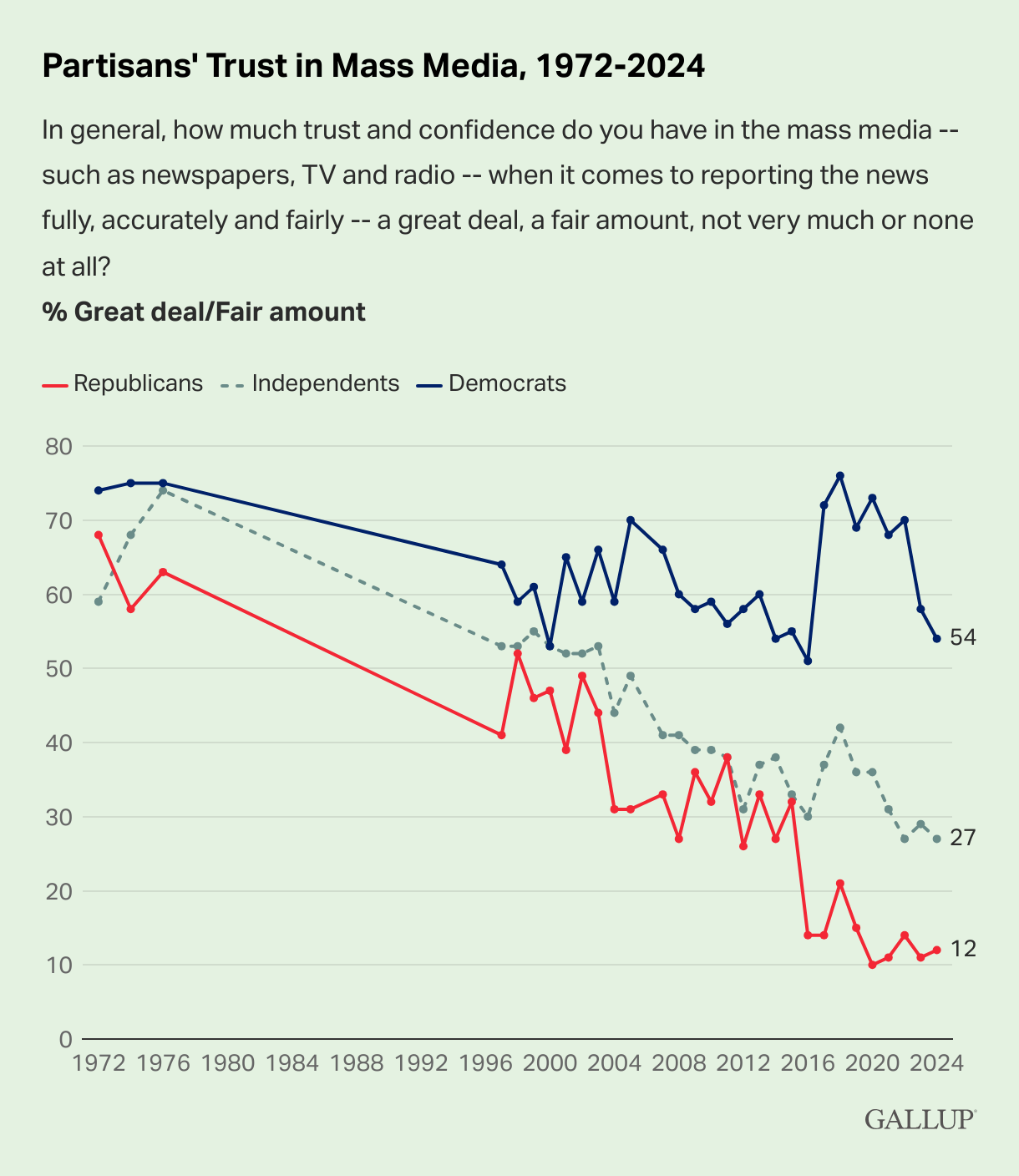
Of course, the idea of eating monsters takes some getting used to. The dungeon is full of weird, pulsing, half-sentient creatures — more slime than steak. For Marcille, the party’s elven mage, the thought is downright barbaric. Only the exiled, the desperate, or the criminally unsupervised would eat such things, she insists. But hunger has a way of softening one’s principles. And then, they meet Senshi.

Senshi is a dwarf with the demeanor of a kindly prep cook and the obsessive devotion of a Michelin chef. He’s spent a decade living underground, cataloging edible monsters and perfecting his techniques. He doesn’t just tolerate monster cuisine—he reveres it. He skins Walking Mushrooms with care, tosses their stubby feet into a hot pot with an eye for balance and umami. “Lose the butt,” he instructs, like he’s peeling a carrot. “Save the feet and throw ‘em in the pot. They’re delish.” 

In these stories, cuisine becomes a kind of spiritual resistance. To cook — well, thoughtfully, indulgently — is to assert that pleasure still matters. That even in the rubble, we deserve more than rations. Senshi doesn’t just feed his party; he steadies them. His recipes are practical, yes, but also tender, precise, almost reverent. And for viewers, they offer a kind of catharsis: a reminder that nourishment isn’t always about need. Sometimes it’s about remembering who we were, or imagining who we still might be.

Somewhere in a sunken kitchen, copper pans still hang above the range. Somewhere, there’s a man who finally got his Mauviel (with lid). And somewhere deeper still, a dwarf is gently stirring hot pot in a dungeon, seasoning monsters like it’s the most natural thing in the world.

Private prison firm CoreCivic sees Trump’s mass deportation agenda as “catalyst” for growth

On an investor call, executives at one of the largest private prison companies in the United States, CoreCivic, said that “it wouldn’t surprise us” if the GOP-controlled Congress and administration struck deals to ramp up capacity in ICE’s private detention even before the next budget is finished. 

As part Republicans’ mass deportation agenda, Trump administration border czar Tom Homan has said that ICE will need a minimum of 100,000 beds in detention centers around the country, more than double the current 46,000 that are available. 

Earlier this year, the House passed a continuing resolution that funded the government through the end of the current fiscal year. While some of the budget maintained spending at current levels, House Republicans included around $9.9 billion for ICE, around $485 million more than was previously allocated. While Republicans are expected to allocate more money in their budget this summer, money from the continuing resolution could pay for some of the additional beds. President Donald Trump has in the current budget negotiations requested a massive $65 billion increase to the budget for the Department of Homeland Security, of which ICE is a part. The department's current budget is $44 billion.

While Homan had previously told CNN that “It all depends on the funding I get from the Hill,” CoreCivic CEO Damon Hininger told investors on a May 8 call that “it wouldn’t surprise us if we get another letter contract or two prior to reconciliation.” Specifically, the CEO suggested that the company had opportunities in their Midwest Regional Reception Center in Leavenworth, Kansas, and the California City facility, north of Los Angeles.

“I think there's a chance to get these done before reconciliation,” Hininger said.

The discussion of pre-budget deals was only a small part of a larger, rosy report to investors from CoreCivic executives. The largest private prison contractor in the United States, CoreCivic's executives and investors were celebrating a better-than-expected first quarter of 2025. The conversation mostly revolved around increased utilization of facilities and the expansion of facilities, including potentially “soft-sided type” structures, and around military bases. 

“Based on cost management and increased bed utilization, particularly from U.S. Immigration and Customs Enforcement (ICE), we exceeded our internal expectations for the first quarter,” Hininger said in his quarterly statement to investors. “Additionally, we have begun to re-activate three previously idle facilities under multiple agreements with ICE.”

During the call, Hininger denied having any inside knowledge of Republicans’ machinations in terms of a budget reconciliation deal. He did, however, say that he thinks the deal “will be a catalyst” for their company’s future growth. In the first quarter of 2025, CoreCivic reported a net income of $25.1 million. The company operates 16 immigration detention centers, mostly scattered across the American south and southwest, as well as 43 private prisons across the country.

We need your help to stay independent

“I talked about our capacity in Tennessee and Oklahoma and Colorado will probably be the next round of most attractive capacity to ice. It feels like we'll get additional engagement on that again in the coming days and weeks. I don't think this reconciliation has to get done for them to engage with us again,” Hininger said. “I wouldn't be surprised to call us tomorrow and say ‘Hey, we're ready to do a letter contract on — name a facility – Diamondback. But we do feel like reconciliation will be a catalyst.”

The call also featured an investor question and answer session, in which one investor asked whether the company saw overseas prisons, like the one the Trump admin is planning to send immigrants to in Libya, as competition. 

“We don't see them as competition. And I think there's probably strategic and political reasons why some of those locations make sense. But again, for all the reasons we've talked about, you know — 42 years of business, highest quality, best audit scores, logistically more favorable, obviously, not only just location wise, but we can provide, provide transportation — and less likely to get challenged in the courts, which, you know, we're seeing that obviously play out more and more here in the last few weeks,” Hininger said.

According to Open Secrets, CoreCivic spent around $1.8 million on lobbying in 2024 and around $250,000 in donations to congressional candidates, with 96% of that money going to Republicans. 

Stephen Miller came prepared for war — and he won’t back down

There was a speculation boomlet a couple of weeks ago, after Donald Trump "promoted" national security adviser Mike Waltz to U.N. ambassador and temporarily tasked Secretary of State Marco Rubio with the job, that the name being floated as a permanent replacement was none other than Stephen Miller, Trump's trusted adviser and current deputy chief of staff. That seemed a bit strange, since Miller has never shown any particular interest in global affairs beyond immigration, but he has lately become a more public face commenting on a wide range of issues so perhaps he wants to expand his role. We haven't heard anything further much about that since it was first floated — maybe it was a trial balloon that fizzled.

It wasn't easy to imagine Miller giving up his lifelong mission of expelling as many nonwhite people from America as possible, and in this administration that's a full time job. In the wake of the shocking propaganda the administration put out to celebrate their deportation of alleged gang members to a notorious Salvadoran gulag, we are now seeing story after story all over local and national news, social media and influential podcasts about violent ICE raids of homes and businesses, ordinary people being snatched up when they show up for hearings, brutal vehicle stops even the arrests of judges and elected officials. Very few of the people being seized in these sweeps are gang members or accused of serious crimes.

All this is taking a toll on Trump's approval rating. The latest round of polls showed him underwater across the board on these policies. But it's also all part of Miller's plan, and he is undaunted. As I wrote a couple of weeks ago about his decision to use the Alien Enemies Act of 1789, Miller understood that what this administration intended to do had no precedent. They seriously intend to deport millions of people.

Stephen Miller has claimed that the plain words of a Supreme Court order mean the opposite of what they actually say, which is a highly disorienting thing to hear from a presidential adviser.

Miller was well aware that the courts were a significant barrier. He was the architect of the ill-fated travel ban early in the first Trump administration, which was first struck down (and later watered down) by the courts. He understood that the president was going to have to be both aggressive and provocative. Trump's team needed to assert presidential authority with total confidence, and ensure that the Supreme Court understood they would have to issue the final word on what the law says and how it will be enforced.

We're only partway through that process. So far, Trump's apparatchiks have not blatantly defied the courts, but they're working them around the edges. Miller is the most vociferous in claiming that the plain words of a Supreme Court order mean the opposite of what they actually say, which is a highly disorienting thing to hear from a presidential adviser. The best example came with his Oval Office rant his rant proclaiming that the high court had ruled 9-0 in favor of the administration's deportation of Kilmar Ábrego García when the exact opposite was true. (You can read the order here.)

In another case pertaining to the deportation flights to El Salvador, the Supreme Court ruled that actions on behalf of detainees must be brought in the districts where they are being held, and that intended deportees must be notified with enough time to petition for a writ of habeas corpus. In plain English, they must be allowed a hearing before they can be kidnapped and sent to the gulag.

So far, judges in three districts have ruled that the Alien Enemies Act, on which the administration's policy is predicated, has been inappropriately invoked to justify this policy because of the fatuous assertion that the U.S. has been "invaded" by foreign gang members. That is not the plain meaning of "invasion" under this law. You could just as easily claim that the Beatles should have been deported because of the "British Invasion" of 1964.

The Alien Enemies Act isn't the only trick Miller has up his sleeve, however. Last Friday he signaled that another, even more dangerous approach is coming. Despite the Supreme Court's clear ruling that potential deportees have a right to petition for a writ of habeas corpus, Miller is now pondering invoking the "Suspension Clause" of the U.S. Constitution, which reads:

The Privilege of the Writ of Habeas Corpus shall not be suspended, unless when in Cases of Rebellion or Invasion the public Safety may require it.

CNN reports that Trump has been involved in these discussions. He hasn't said anything specific about the question of habeas corpus, but when asked about he might do to counteract nationwide injunctions against his deportations, he said there were "very strong ways" to "mitigate" those: "There’s one way that’s been used by three very highly respected presidents, but we hope we don’t have to go that route." 

We need your help to stay independent

Miller and Trump love to demean judges who rule against them and Miller has veered especially far into outlandish insults, routinely calling them radicals or "communists." He may have miscalculated, however, in saying, "Look, a lot of it depends on whether the courts do the right thing or not." As law professor Steve Vladeck observes in a highly informative summary of the issue: 

[Miller is] suggesting that the administration would (unlawfully) suspend habeas corpus if (but apparently only if) it disagrees with how courts rule in these cases. In other words, it’s not the judicial review itself that’s imperiling national security; it’s the possibility that the government might lose. That’s not, and has never been, a viable argument for suspending habeas corpus. Were it otherwise, there’d be no point to having the writ in the first place — let alone to enshrining it in the Constitution.

One assumes that even if the judiciary is only operating out of an instinct self-preservation it might want to push back against that kind of direct threat. But you never know. 


Want a daily wrap-up of all the news and commentary Salon has to offer? Subscribe to our morning newsletter, Crash Course.


Law professor Leah Litman, whose book "Lawless: How the Supreme Court Runs on Conservative Grievance, Fringe Theories, and Bad Vibes" publishes this week, appeared on MSNBC recently. She observed that while Chief Justice John Roberts has recently said in public that the job of the judiciary is to check the "excesses" of the other branches, we also need to remember that he wrote the atrocious decision on presidential immunity and appears to be a longtime proponent of the "unitary executive theory," which holds that the president has virtually unlimited power.

So it's entirely possible that Miller won't have to go nuclear and compel Trump to suspend habeas corpus after all. The Roberts court could simply decide that right is optional, despite the plain language of the Constitution. But it's clear enough that Miller is prepared to keep raising the stakes, no matter what the courts do to stop him. Who knows what other cards he has left to play? He's ready to fight a long war.

Texas GOP wants to ban kids from playing dress-up: Yes, really

"This whole thing is just weird and, honestly, a little creepy." That comes from a debate in the Texas state legislature that was supposedly about "furries," a subculture of people who dress up as anthropomorphic animal characters. But it wasn't the furries that state Rep. James Talarico, a Democrat, was calling creepy.

That would be Republican state Rep. Stan Gerdes, author of the FURRIES Act, an embarrassing acronym that unpacks into the "Forbidding Unlawful Representation of Roleplaying in Education Act." Gerdes claims to believe that children in elementary schools are "identifying" as animals, and that the schools are indulging this supposedly dangerous delusion by letting kids eat out of dog bowls or use litter boxes instead of regular bathrooms. Absolutely no part of that true, and it is indeed "a little creepy" for Republicans to obsess over an entirely imaginary problem. 

The Texas bill purports to ban such "non-human behaviors" as "using a litter box," "barking, meowing, hissing" and "licking oneself." Also: No tails, no fuzzy ears, no fur, whether fake or real.

"Texas schools are for educating kids, not indulging in radical trends," declared Gerdes in an X post announcing the bill, which has the support of Republican Gov. Greg Abbott. The bill purports to ban "non-human behaviors" in school, a list that includes "using a litter box for the passing of stool," "barking, meowing, hissing, or other animal noises," "licking oneself" and an "outward display" of "features that are non-human." There's also a helpful list of such features, including fake tails, "animal-like" ears and fur, whether fake or real, which could certainly cramp the style of those who enjoy fuzzy outerwear in cold weather. 

Careful readers may already notice that wearing costumes, which is what Gerdes is trying to describe with this overwrought pseudo-legal language, is not "non-human behavior." Indeed, it is exclusively human behavior. Sure, some folks put little outfits on their pet cats and dogs, but that's not the animal's doing. At least on this planet, only members of homo sapiens are freaky enough to be entertained by a cat dressed as an avocado. I'll note that most cats look annoyed, rather than joyful, when forced to don human-made lewks.


Want more Amanda Marcotte on politics? Subscribe to her newsletter Standing Room Only.


Everything about this bill is based on false claims and absolute nonsense. Young children are not "identifying" as animals in school. The superintendent of the school that was accused of letting kids use litter boxes told the Houston Chronicle that no such thing was happening, and that she'd made an "extra effort" to investigate classrooms herself. "Furries" are real people, mind you, but they're adults — and they don't "identify" as animals, either. They are hobbyists who enjoy dressing up as cartoon characters and stuffed animals, create elaborate artworks involving anthropomorphic animals and sometimes attend conventions while wearing homemade animal costumes.

As for child "furries," that's not a thing because it's both impossible and redundant. Enjoying cartoons, playing games where you sometimes pretend to be an animal and sleeping with your "stuffie" are nearly universal interests for the playground set. "Furries," by definition, are people who still do that stuff after growing up. Yes, some adult furries engage in sexual activity wearing their animal costumes, which is a big part of the moral panic here. But let's get real: Consider the random woman (or man, or whomever) you saw dressed as "sexy cat" last Halloween. 

The notion that being trans is a "social contagion" has blossomed into a full-blown moral panic, widely accepted by credulous mainstream media. Now the "furry" urban legend is adding more fuel to the fire.

None of this, to be clear, is about animals or about the fiction that some people "identify" as animals. This nonsense is ultimately a backdoor assault on the rights of LGBTQ people. For decades, Christian conservatives have been pushing the myth that LGTBQ identities aren't real; they're just a "trend" pushed by nefarious forces onto gullible young people. That narrative isn't applied quite as loudly to gay people in recent years, but the notion that being trans is a "social contagion" has blossomed into a full-blown moral panic, widely accepted by credulous mainstream media, author J.K. Rowling and even the British Supreme Court. The "furry" urban legend just adds more fuel to the fire. The implicit message here is: "We let the kids be trans and now they think they can be animals." It's a reworked version of a scare tactic the right formerly used to demonize same-sex marriage, by claiming it opened the door to human-pet marriage

"They have to create more and more absurd examples in order to keep justifying the oppression," explained Imara Jones, a journalist who founded TransLash Media, which seeks to tell the truth about trans people's lives as a counterweight to nonsense like the "furry" narrative. The far-right's goal is to "eliminate trans people from public life completely," Jones argued, and maybe even to force trans people into institutions. With a goal that extreme, she added, "They have to transform trans people into an extreme threat to themselves and others." 

Jones compares this to the anti-immigration strategy used by Donald Trump's administration. Both during the campaign and in the White House, Trump and his staff have lied repeatedly about immigrants, claiming they eat pets, they're being used as bioweapons to spread disease, and they are secretly an invading army sent to destroy America. Vice President JD Vance has admitted that these stories are false, claiming that right-wingers are entitled to "create stories" to get the media to "pay attention." 

As Jones explains it, once the right has transformed all immigrants into "dangerous predators," that creates political justification to "do all sorts of things," including illegally arresting them and sending them to foreign prison camps with no pretense of due process. The "furry" hoax, she suggests, is a "parallel effort" to justify human rights abuses against trans people. So far, Republicans have not tried to use this ginned-up moral panic to arrest trans people en masse, but we're clearly seeing escalating attacks. Trump signed a series of executive orders meant to make it harder for trans people to move about in public, work, get an education or even use a public bathroom. So far, the biggest impact has been in the U.S. military, after the Supreme Court allowed Trump's ban on trans service members to remain in place. The Defense Department wants to discharge more than 4,000 trans service members who have done nothing wrong.

We need your help to stay independent

Despite their claims to be defending humankind from this imaginary animalistic incursion, Texas Republicans are being deeply anti-human with this "furry" bill. The behaviors that Gerdes' bill seeks to stigmatize are — as any person who has ever met a child or been a child could tell you — entirely normal forms of play. Kids love animals! The love to pretend to be animals, which is why so many children's books, movies, TV shows and toys feature human-like animal characters as often as human ones. Older kids and adults — even those who aren't furries — also love some animal-themed goofing off: Consider the mascots associated wity many college sports teams. Cultures from every corner of the planet have holidays and festivals where people dress up in colorful animal masks or costumes. 

Gerdes' bill includes some "exceptions" to his draconian ban on this universal human behavior, but those only serve to underscore the bizarre misanthropy of the MAGA movement. Schools are allowed to celebrate Halloween or "school dress-up or activity days" that feature costumes — but only if "there are not more than five such days in a school year." Exceptions are made for school plays and sports mascots. That's it, though. If a group of second-graders want to play "My Little Pony" during recess, or act out an episode of "Paw Patrol," they'd better do it on one of their allotted five days a year! This is an especially ludicrous example of how anti-trans panic serves as a pretext for stripping away creativity and free expression from virtually everybody, regardless of their gender or sexual identity. 

Pam Bondi escalates disturbing war on reporters – but the public is “choosing to look away”

The Trump administration’s unprecedented attack on the nation’s news media is proceeding on a very public, headline-grabbing level and also on a lower-key and potentially more dangerous level. The most recent public salvo came May 1, when the president signed an executive order (of questionable legality) banning funding for National Public Radio and the Public Broadcasting System. Other high-profile actions include banning the Associated Press from the White House, suing reporters for libel and demanding CBS lose its broadcast license — accompanied by Trump’s endless smears and threats on social media. 

Less well known is another lower-key effort to suppress reporting by seeking to collect the phone records of reporters and trying to force their testimony in court, all in pursuit of government “leakers.” Attorney General Pam Bondi announced this new policy which replaces a Biden administration rule restricting federal agencies from intimidating reporters in this manner. 

In 2021, Biden’s Department of Justice revealed that in 2017 the Trump administration had  secretly obtained the phone records of reporters from both the New York Times and Washington Post. It also tried unsuccessfully to obtain the reporters’ emails. The department  said no legal action was taken against the reporters. 

Trump appears eager to pick up where he left off in his first term. Reporters Without Borders described Trump’s current campaign as an attack on “the credibility, independence, and sustainability of the news media.”   

Despite this disturbing all-out war on the press, which goes directly against First Amendment protections of freedom of speech, most Americans do not seem to care. 

Public apathy 

A recent poll by the Pew Research Center found that just 36% of Americans reported hearing “a lot” about the Trump administration’s relationship with the news media. Nearly a fifth said they have heard “nothing at all” and 44% said they’ve heard only “a little” about it.

This contrasts with the public’s response eight years ago during the first Trump administration. A March 2017 report by Pew found that 72% of U.S. adults said they had heard “a lot” about the relationship between the Trump administration and the U.S. news media and most believed it was unhealthy for the country.

We need your help to stay independent

Although the public is relatively unconcerned now about Trump’s move against the press, the same recent survey showed that adults are following overall news coverage of the new Trump administration closely. The March 2025 poll found that 70% of adults are closely following news about the Trump administration— up from 66% in 2021 during the first months of the Biden administration. 

The Committee to Protect Journalists  warned that the Trump attack on the press is “happening rapidly, and, apparently, many Americans don’t know, haven’t heard, or are choosing to look away.” The group said one reason for the apathy is that the president and his cronies “are ‘flooding the zone’ with actions and information that can distract from the core of what is happening in the country.”  

Free speech advocates are particularly concerned about Bondi’s new policy. Her directive states the new measures are needed to protect “classified, privileged and other sensitive information.” By including the vague term “sensitive information,” the new policy potentially covers a wide range of government information; it goes far beyond the federal criminal code, which focuses on protecting classified information.


Want a daily wrap-up of all the news and commentary Salon has to offer? Subscribe to our morning newsletter, Crash Course.


Bruce Brown, president of the Reporters Committee for Freedom of the Press,  said that protections for journalists are important for all Americans. "Some of the most consequential reporting in U.S. history — from Watergate to warrantless wiretapping after 9/11 — was and continues to be made possible because reporters have been able to protect the identities of confidential sources and uncover and report stories that matter to people across the political spectrum,” he noted.

Trust high in 1972

The public’s trust in the news media peaked in 1972, when President Richard Nixon ran for re-election and the news of the Watergate break-in broke. At that time, a  Gallup poll reported that 72% of Democrats and 68% of Republicans had a “great deal” or “some” trust in the news media. 

After that, a 50-year war on the news media by conservative Republican leaders steadily wore down the public’s trust. 

Partisans' trust in media (Gallup)Nixon was caught on the infamous White House tapes on numerous occasions reminding his aides that “the press is the enemy.” He considered wiretaps on reporters, tax audits and contesting TV station licenses. He dispatched Vice President Spiro Agnew, who disparaged reporters as “impudent snobs” and called TV reporters and anchors a “tiny and closed fraternity of privileged men” with “vast power” and “no checks” on “their vast power.”

In 2008, Sarah Palin, accepting the vice presidential nomination, told the Republican convention: “Here’s a little news flash for all those reporters and commentators: I’m not going to Washington to seek their good opinion.” Marco Rubio, in a 2015 Republican debate, played to the MAGA crowd by declaring “the Democrats have the ultimate ‘super PAC’; it is called the mainstream media.” 

Attacks on government leakers are not just limited to Republicans; President Barack Obama prosecuted more journalistic sources for leaking than his Republican predecessor. 

An earlier Democratic President, John F. Kennedy, a former journalist, spoke out for press freedom and warned that "without debate, without criticism, no Administration and no country can succeed — and no republic can survive.

Is intelligence a human construct? “Octopus!” suggests its time to think differently about animals

In the new Prime documentary series “Octopus!” actress Phoebe Waller-Bridge spends an hour and a half narrating a story about an octopus named Doris that sets out on her own, falls in love and heroically sacrifices her own life to give her 30,968 children a chance at survival. But ultimately, the series takes a surprising turn to suggest that it might be time to stop anthropomorphizing animals — and instead get real about the risks they face. 

Anthropomorphism, or our tendency to ascribe human traits or behaviors to other species, can be traced back to Charles Darwin, whose theory of evolution by natural selection indicated that all species shared a common ancestor and therefore likely shared other traits and behaviors. Yet anthropomorphism was increasingly seen as a form of bias that did not align with the scientific method emerging in the 19th century.

Octopuses are having their moment under the sun, with a flurry of books and documentaries released about them in the past decade. I remember being moved by the close bond author Sy Montgomery forms with one of these cephalopods in “The Soul of an Octopus: A Surprising Exploration in the Wonder of Consciousness.” In the Netflix documentary, “My Octopus Teacher,” filmmaker Craig Foster documents the life and death of an octopus in the waters off Cape Town, South Africa. Then in 2022, “Remarkably Bright Creatures,” went viral, too.

It’s no wonder that these creatures have caught our attention. They can navigate mazes, use tools and unscrew jars — sometimes from the inside out. They can distinguish between different people and remember them over time. In “The Soul of an Octopus,” one octopus sneaks out of its cage at night to steal fish from a nearby tank, returns to its habitation and covers the lid back on it so as not to be discovered.

"Octopus!" (Courtesy of Prime)These characteristics are compared to human traits, leading many to conclude that octopuses are remarkably intelligent. But as Piero Amodio, an animal behavior and cognition researcher in Napoli featured in “Octopus!” says in the series, the idea of intelligence is a human one. 
The last ancestor humans have in common with the octopus is more than twice as old as the first dinosaurs. Humans have close to 100 billion neurons in their brain, but octopuses have 500 million neurons spread across their entire bodies, including in their eight tentacles that they use to taste the world around them.

Octopuses are simply different creatures. As Peter Godfrey-Smith writes in “Other Minds: The Octopus, the Sea and the Deep Origins of Consciousness,” they are “the closest we will come to meeting an intelligent alien.” 

“If we can connect with them as sentient beings, it is not because of a shared history, not because of kinship, but because evolution built minds twice over,” Godfrey-Smith wrote.

For decades, scientists could be laughed at for suggesting that dogs “smile” at their owner or chimpanzees “kiss” after a conflict to make up. After all, scientific studies are designed to eliminate as many potential biases that could influence what is being observed as possible — and our own human perception is inherently biased.

In a 2007 review on anthropomorphism, Clive D. L. Wynne, an ethologist at the University of Florida, concluded that “the study of animal cognition will only proceed effectively once it rids itself of pre-scientific notions like anthropomorphism.”

In light of the fact that we humans cannot entirely remove ourselves from our own subjective experiences, others have pushed back against the idea that anthropomorphizing limits our ability to understand animals and suggested that it could be used to our advantage. In a 2000 paper, behavioral ecologist Mark Bekoff argued that “anthropomorphism allows other animals’ behavior and emotions to be accessible to us.”

Could putting ourselves in another animal’s shoes — anthropomorphically speaking — actually help us understand them better?

We may be projecting our own behaviors onto animals in experiments like these, but doing so could ultimately benefit us and them.

In 1979, an important study by Frans de Waal demonstrated how using science to test for a human hunch could help further our understanding of animal behavior. Chimpanzees had been witnessed coming together to “kiss” after a conflict. To test what was going on in these interactions, Waal compared how body language changed between pairs of chimpanzees who had recently fought and others who had not. 

What he found was that chimps who had fought would come together afterward to touch mouths, extend a hand or touch their former opponent. In contrast, chimps who had fought could sometimes be “consoled” by other chimpanzees who had not participated in the conflict through different embraces.

Further studies showed how important this reconciling behavior is for primate health, reducing indicators of stress like an elevated heart rate. It also reduces the likelihood that individuals will fight again.


Want more health and science stories in your inbox? Subscribe to Salon's weekly newsletter Lab Notes.


In 2014, Waal said his career was largely dedicated to unwinding human exceptionalism, or the view that we are somehow different than other animals. "I’ve brought apes a little closer to humans but I’ve also brought humans down a bit," he said.

We may be projecting our own behaviors onto animals in experiments like these, but doing so could ultimately benefit us and them. Studies show that empathizing with animals influences human behavior and can motivate people to take action to protect them. This makes sense evolutionarily: Various species can recognize other individuals in their same species, and have developed protective mechanisms to enhance their survival.

Conservation efforts often rally behind “flagship species” like the giant panda, polar bear or bald eagle in order to save the entire habitat in which those species live. This doesn’t work all the time: Polar bears, along with almost half of the world's animal species, are still declining. But conservationists have successfully rehabilitated giant pandas and bald eagles, which are both still endangered but moving toward recovery. 

We need your help to stay independent

"Octopus!" features contrasting perspectives from Amodio, who cautions against anthropomorphism, and Sabrina Imbler, a writer who specializes in writing from the point of view of animals. Ultimately, the series lets viewers come to their own conclusions about how much or how little we should be projecting ourselves onto other species, falling in line with a new era of nature documentaries in which filmmakers seem to be increasingly aware of the character that the human gaze can play. Instead, they allow viewers to make their own conclusions about the animals featured.

Waller-Bridge seems to be disappointed when she discovers her beloved Doris is her own individual, who is not in fact living the fairy tale storyline she has constructed for her.

It's a natural human tendency to anthropomorphize other species, and, according to Darwin, there is something shared between all of us — even if it traces back tens of millions of years ago. Yet “Octopus!” challenges us to embrace a middle ground when studying the other species we share the planet with. Maybe, moving forward, we can learn to admire the characteristics species like the octopus have that are different from ours — just as much as the ones we share.

"Octopus!" is streaming now on Amazon Prime.

We’re pausing before purchasing in Trump’s tariff era

Diane Boden, a Columbus, Ohio-based mother of three, can’t remember the last time she lingered in the aisles of a department store

“I barely ever go to brick-and-mortar stores anymore, it's a very rare occasion that I do that,” she said, echoing a sentiment that’s become increasingly common.

Boden, who hosts the "Minimalist Moms" podcast, is part of a growing number of Americans quietly adopting new rules of consumption. Pandemic-era habits like curbside pickup and online shopping have stuck around — and for some, a new habit of simply buying less.

“A lot of people in my circles are just being a little bit more thoughtful about how they're spending money,” Boden said.

Retail sales picked up in April as consumers rushed to avoid price hikes from tariffs. But uncertainty over Trump's erratic policies has become a daily reality that is expected to shape the future. 

We need your help to stay independent

According to a report published by GlobalData on May 9, 56% of U.S. consumers say they are “extremely” or “quite concerned” about the impact of trade wars and import tariffs on product pricing, and three-quarters expect tariffs to drive up prices. 

There are reasons to be concerned: The U.S. economy contracted at an annual rate of 0.3% in the first quarter of 2025, marking the first decline since early 2022 and a sharp reversal from the 2.4% growth recorded in the previous quarter.

And consumer sentiment, as measured by the Michigan Consumer Sentiment Index, fell to 52.2 in April — its lowest level since July 2022 and the fourth consecutive monthly decline.

Nowhere is this shift more visible than in the retail landscape. Overextended pharmacy chains are shrinking or shuttering. Rite Aid, the Philadelphia-based pharmacy giant, announced its second bankruptcy on May 5 and said it would close or sell all remaining stores. Inventory shortages, a failure to adapt to new consumer habits and opioid crisis-related lawsuits contributed to its demise. 

Other retailers, from department stores to specialty chains, are struggling to keep pace with shoppers who have shifted online. Walgreens plans to close 1,200 stores across the U.S. over the next three years because of falling reimbursement rates for prescription drugs and increased competition from Amazon, Walmart and Target. CVS has closed hundreds of stores since 2022 and plans to shutter 270 more this year.

"There are definitely some indicators that the rise of consumerism in America is beginning to slow"

“Consumers now prefer online shopping, curbside pickup and delivery rather than shopping in person,” said Amanda Brownlow, founder of HelloBrownlow.com, a website that encourages frugality and minimalism. “By shopping online, consumers can get what they want when they want it.” 

While many consumers are shopping differently, others are trying to reduce. On TikTok and Instagram, the “underconsumption core” trend is less about deprivation and more about intentionality. Instead of flaunting massive hauls, creators like Angie Sun highlight mismatched bedsheets and decade-old towels, showing that it’s normal not to rush out to buy a new set. 

Joshua Becker, founder of the Becoming Minimalist blog, sees a broader cultural shift underway. “There are definitely some indicators that the rise of consumerism in America is beginning to slow,” he said, pointing to declining median home sizes and a pivot from buying things to spending on experiences. 

Beyond economics, environmental concerns are boosting this trend, with fast fashion’s environmental toll receiving more global attention. A recent ThredUp report found the global secondhand apparel market is projected to grow to $367 billion by 2029 — nearly three times faster than the regular apparel market.

“The minimalist and ‘no buy’ movements have further encouraged Americans to pause before purchasing, seeking ‘better’ rather than ‘more’ better for themselves, their wallets and the planet,” Brownlow said.

“I’m concerned about the whole airspace”: Transportation sec. says flight disruptions could spread

Don't be surprised if the delays, cancellations and safety concerns that have affected Newark Liberty International Airport in recent weeks spread to the rest of the U.S.

That's according to Transportation Secretary Sean Duffy, who on Sunday said "antiquated systems" at major airports across the country need a multibillion-dollar overhaul. 

For the second time in two weeks, air traffic controllers on Friday briefly lost the radar of planes flying into the New Jersey airport, The Associated Press reported. On Sunday, the FAA reported a “telecommunications issue” at a facility in Philadelphia that directs planes in and out of Newark. 

Duffy told NBC's "Meet the Press" he plans to reduce the number of flights at the airport over the “next several weeks."

“What you see in Newark is going to happen in other places across the country,” Duffy said. “It has to be fixed.”

“I’m concerned about the whole airspace," he added. 

The FAA has blamed equipment failures and staffing shortages for the issues at Newark. The agency warned travelers that some flights arriving there on Sunday were delayed by an average of two and half hours, The New York Times reported.

There have been headaches at other major airports. An equipment outage on Sunday prompted a ground stop for more than an hour at Hartsfield-Jackson Atlanta International Airport in Georgia, The Times reports. 

Duffy said upgrades to communication and technology are needed nationwide, along with six new air traffic control centers. To increase staff, he wants to raise the mandatory retirement age for air traffic controllers from 56 to 61 and offer a 20% bonus to keep working.

“These are not overnight fixes,” Duffy said. 

The strategy runs counter to the gutting of the federal government the Trump administration has preferred. United Airlines CEO Scott Kirby told CBS’ “Face the Nation” that FAA safety personnel have been protected from DOGE's chainsaw

“Safety is number one, and so I’m not worried about safety. I am worried about customer delays and impacts," said Kirby, whose airline has reduced flights at Newark. 

What “Barbarian” gets right about terrifying moms and twisted love

If you’re seeking a fun film to watch with mom this Mother’s Day, I would not suggest “Barbarian.” (Unless you and your mom are both big fans of horror movies where people have their heads split open by the sheer force of an unholy beast, in which case, start popping the popcorn.) But, then again, if you’re looking for a fun film to watch with your mom on Mother’s Day, you may not be the target audience for the loathsome, delightful metaphor for motherhood that writer-director Zach Cregger keenly wove into his 2022 horror film. 

Cregger's take on complicated parent-child dynamics has no trouble standing out in a movie so stuffed to the gills with heavy-handed, thinly executed social analogies. It’s one of the few elements of the film I had any lingering affection for after seeing it in a packed screening in the fall of 2022. Audiences hooted and hollered, gasped and guffawed. But through the whole movie, I was left unmoved. Call me crazy, but I don’t think being formally averse to good pacing is a bold directorial vision. Nonetheless, people's affection for “Barbarian” is intriguing, especially because so many people I know recognize that it’s not a very good movie by most standards, but they love it anyway. A strangely forgivable layer of charm can exist in even the most fraught relationships. 

“Barbarian” is hilarious and engaging for some. For others, it’s uncomfortable and exhausting. By provoking those symbiotic reactions, Cregger’s twisted tale of motherhood becomes a realistic picture of the tenuous yet loving relationships many have with their mothers. 

With Cregger’s follow-up, “Weapons,” due out in August, now seemed like as good a time as any to give “Barbarian” another try to see what merits I might have missed the first time around. As it turns out, I enjoyed the film even less on a second watch, but was all the more fascinated by its third act: a slapdash hodgepodge of tonal shifts and wacky reveals that both hinder the movie and give it its staying power. A bit of unforgettable gross-out horror between a “Mother” and her “child” strikes at cheap laughs, yet culls a deeply sad undertone that makes “Barbarian” impossible to ignore completely.

Strangely, that makes the film the perfect Mother’s Day watch. “Barbarian” is hilarious and engaging for some. For others, it’s uncomfortable and exhausting. By provoking those symbiotic reactions, Cregger’s twisted tale of motherhood becomes a realistic picture of the tenuous yet loving relationships many people have with their mothers. 

If you’ve never seen “Barbarian” or only seen a trailer, that might make absolutely no sense to you. To Cregger’s credit, his film (and its marketing team) do a great job of burying the lede. Perhaps too great, considering that the film’s three-act structure is so clunkily chopped up that its narrative pivots might as well come with brief intermissions to use the bathroom. But before the movie double-foots the gas and the brake, it starts exceptionally strong. A young woman named Tess (Georgina Campbell) arrives in a run-down Detroit neighborhood in the middle of the night, ready to check into her Airbnb before a big job interview. But Tess is surprised that her accommodations are already occupied by Keith (Bill Skarsgård), who booked the house on a different app. Keith invites Tess inside and out of the pouring rain so they can figure it out together, and after a healthy amount of speculation, she reluctantly accepts his offer. Tess’ initial uncertainty would indicate that she’s the thinking person’s horror protagonist, until Cregger puts her into a situation where rationality is null and void. 

Georgina Campbell as Tess in "Barbarian" (Courtesy of 20th Century Studios). Cregger knows the audience will undoubtedly suspect Keith is up to something, especially since Skarsgård has such a penchant for villain roles. But here, he’s one of the few good guys, caught up in dire circumstances when he and Tess discover a hidden doorway in the basement. Inside is a long passageway leading to a derelict room with a dirty mattress and a camera — not exactly a featured photo on the Airbnb listing. Against their better judgment, the two explore further and discover a system of tunnels beneath the house, where a giant, hostile beast awaits them, ready to smash Keith to bits. Just when things get going, Cregger flips the script and transitions to a seemingly entirely different plotline happening across the country, where an up-and-coming Hollywood tycoon, AJ (Justin Long), receives a call from his agent telling him his career is about to end.

For expediency’s sake, I’ll make this painfully long story short. AJ owns the Detroit house and uses it as a side hustle, but does not know about the labyrinth below its foundation. When he returns after a swift cancellation, he discovers the same ramshackle room and tunnels, only to be chased down by the same creature and locked in a pit alongside Tess. What’s really going on soon becomes clear when the monster lowers a baby bottle into the pit, asking them both to suckle from its rubber teat. When AJ refuses, the creature snatches him out of his enclosure and brings him to a makeshift nursing room, where she makes him drink from her breast while an instructional lactation video plays on a television nearby.

Upon first watch, I didn’t find this nearly as knee-slappingly funny as the throngs of people in the theater yukking it up around me. Cregger’s taste for shock schlock is far too force-fed for my taste — pun 100% intended. But knowing where the film would go during my rewatch, this scene conjured more anger than annoyance. In the context of the story, this gross-out bit becomes truly sad, and that’s something an audience watching the film for the first time likely won’t be able to connect with. What should elicit the movie’s strongest emotional reaction is played more for laughs and gasps. But in an ideal world, this sequence could be so disturbing that it commands viewers to watch a second time, or show the film to a friend. Knowing what’s coming, it’s easier to watch “Barbarian” with an open mind rather than through clamped-shut eyes.

A third and final narrative shift comes in the third act when we discover that this maze beneath the house was constructed by Frank (Richard Brake), a madman who kidnapped and raped women and forced them to carry their children to term, only to do the same thing with those children. It’s truly sickening to think about, which is why Cregger’s refusal to get into the grotesquerie of it all is grating. If you’re going to go there, go there; really explore the evil men do. 

Funnily enough, the blunt writing and hideous face of this cruel parent make sympathizing with a monstrous mother far simpler than a depiction that may be more complex. In his clumsy writing, Cregger pulls out one shining gem. 

Though he pulls that punch way back, Cregger does manage a heartbreaking story about motherhood. The beast toying with Tess and AJ is a severely inbred monstrosity, a “copy of a copy of a copy.” (That could be the film’s thesis statement, being lifted from other, better horror movies. Okay, I’ll shut up!) She was raised in captivity and knows nothing other than cruelty, mixing with the innocence of her innate maternal instinct like black dye. She’s a being who never asked for her fate, and her forced life leaves her violent with resentment. She’s a bad mother, but loves her “children” dearly. As Gillian Flynn so brilliantly wrote in “Sharp Objects”: A child weaned on poison considers harm a comfort.


Want a daily wrap-up of all the news and commentary Salon has to offer? Subscribe to our morning newsletter, Crash Course.


When Cregger tries his hand at expanding a commentary on cycles of abuse, “Barbarian” stumbles again. This is, unfortunately, not the venue for such a nuance. But it’s interesting how, watching this film a second time, I found myself wanting him to maintain focus on this Mother figure. In media depictions of cruel yet well-meaning mothers, it can be hard to empathize with the monsters who look like us. The familiarity of their distinctly human faces stings too much — a recognizable reminder that children deserve unconditional love, and that far too many grow up without it, resulting in a tenuous relationship with their parents in the years that follow. But funnily enough, the blunt writing and hideous face of this cruel parent make sympathizing with a monstrous mother far simpler than a depiction that may be more complex. In his clumsy writing, Cregger pulls out one shining gem. 

In the chaos that follows, Tess develops real sympathy for this creature, the same one that held her captive and tried to kill her, proof that you can be a survivor of your progenitor’s twisted form of love and still turn out to be a good person. When Tess looks at the Mother with understanding and compassion, her assailant’s temper eases. All the Mother wants is to be a good parent, free from the dark life she was forced into. Tess recognizes her pain, and the recognition releases the Mother from suffering. In their mutual honesty, there is forgiveness, resilience and healing — at least for a moment. Like all complicated mother-child relationships, things are never quite so simple, as much as both parties might like them to be. And though I dislike almost every last thing about “Barbarian,” Cregger’s skillful ability to make a dynamic that’s so complicated into something so easily identifiable and empathetic will never be one of them.

Trump’s new plane is “a flying palace” from Qatar royal family

President Trump, frustrated with the slow pace of upgrading the Air Force One fleet, wants a new plane this year —and the royal family in Qatar is set to deliver.

His administration is poised to accept a luxury Boeing 747-8 jumbo jet known as "a flying palace" that was previously used by the Qatar government, according to media reports. The aircraft is worth around $400 million, per ABC News — not including the communication and defensive upgrades that will be needed for presidential travel. The U.S. government has commissioned defense contractor L3Harris to refurbish it, the Wall Street Journal previously reported. 

Lawyers in the Trump administration say the plane poses no legal issues even though the Constitution forbids U.S. government officials from accepting gifts "from any King, Prince or foreign State," ABC reports. It could be the biggest foreign gift ever received by the U.S. government, per The New York Times.

Attorney General Pam Bondi says the plane will be given to the U.S. Air Force — not Trump — and will be donated to his presidential library when he leaves office, per ABC. Trump, who owns a much older 757 plane known as "Trump Force One," will be able to continue using the newer jet as a private citizen, The Times reports. 

“Even in a presidency defined by grift, this move is shocking,” Robert Weissman, co-president of ethics watchdog Public Citizen, told The Times. “It makes clear that U.S. foreign policy under Donald Trump is up for sale.”

Trump ordered two new planes for the Air Force One fleet during his first term, and Boeing won a nearly $4 billion contract to deliver them. But they are years behind schedule and billions of dollars over budget, and the latest estimate is they won't be ready until 2027. 

Trump toured the 13-year-old Qatar plane in February when it was parked at a Palm Beach airport and is scheduled to visit the Middle East country next week, ABC reports. Trump and his family also have business interests there — the Trump Organization struck a deal in April to build a luxury golf resort in Qatar, The Associated Press reports.

It's not the only way Trump is blinging out his second term. He's hung new portraits with gold frames in the Oval Office and added gold ornaments to the mantel of the fireplace where he meets with world leaders. There's a gold FIFA World Cup trophy on a table beside his desk, golden eagles on a side table and gold "Trump 47" coasters, NPR reports.

Trump plans to add a $100 million ballroom to the White House and pave part of the Rose Garden so that it resembles the patio at his Mar-a-Lago resort in Florida, The Times reports. And he wants to hang a grand chandelier from the Oval Office ceiling, per The Times.

NBC News reports the military parade Trump is planning next month in Washington, D.C. — set to be held on the U.S. Army's 250th anniversary and Trump's 79th birthday — could cost as much as $45 million. “Peanuts compared to the value of doing it,” Trump told NBC's “Meet the Press."