Spring Offer: Get 1 Year, Save 58%

How climate change could affect the microbes that ferment grapes and give wine its specific flavors

The far-reaching consequences of climate change inevitably include the production of foods and beverages, including wine.

In New Zealand, winemaking is an important business, with exports worth more than NZ$2 billion per year.

Earlier studies have already suggested that grapevine characteristics such as flowering and grape sugar ripeness may be linked to climatic changes. But so far, the microbes that ferment grapes have received little attention.

Our new research explores how yeasts, bacteria and fungi may be affected by changes in temperature and rainfall.


Microbes, wine and the coveted gold star

Without microbes, all we have is grape juice.

It is well established that individual strains of yeast (most commonly Saccharomyces cerevisiae) used to ferment grape juice into wine play a major role in the generation of a range of chemical compounds that influence the flavor, aroma and mouthfeel of wine. A "good" strain (or strains) can mean the difference between a gold award or a bottle of plonk.

Conventional commercial winemakers tend to use established strains from yeast suppliers to provide increased assurance for their production schedule and consistency of the final product. Nonetheless, inevitably every batch of juice will already possess its own diverse community of microorganisms, some of which will begin exerting their own influences upon the wine as it develops.

Some winemakers choose to eschew the addition of commercial yeast, relying on the native microflora in and on the grapes to do the job. This process can be referred to as either spontaneous or "wild" fermentation.

In such cases, the role and diversity of these microbes is critical in the development of the wine, and to its quality. Various studies have demonstrated that the microbial populations in a given winemaking region can be distinctive, contributing to the terroir of the wine.

But what if they change over time and in different climates?


Climatic factors and changing microbes

In collaboration with Greystone Wines, an organic winemaker in North Canterbury, we had the opportunity to explore how microbial ecosystems (yeasts, bacteria and fungi) in organic winemaking changed between vintages.

We set out to test this by analyzing must (grape juice sampled during fermentation). We also tested exposure of their Pinot Noir wines to wild microbes in their winery and vineyard during two different years of production, 2018 and 2021.

We then subjected these samples to a molecular genetic process called "metabarcoding". In this process, universal gene markers found in every single known example of bacteria, fungi and yeast are used to describe the diversity and distribution of microbes in the samples taken at different times of the wine production.

The results were striking. Samples taken from the 2018 vintage contained certain organisms that seemed to be completely absent in the 2021 vintage – and vice versa.

We found significant differences between vintages, most striking for bacteria (with 12 of 16 organisms present in one vintage but not the other). For fungi and yeast species, we found six of a total of 12 organisms fluctuating between harvests.

What could cause these differences? We suggest changes in temperature and rainfall play an important role.

Using publicly available climate data on humidity, temperature and rainfall to model climatic differences we determined that especially temperature, but also humidity, may be important factors in influencing the composition of different populations of microbes. The average rainfall during each of the production periods was also very different.

Temperature and moisture are well established elements that influence microbial growth, but to observe such stark differences between populations was a surprise to us.


Implications of climatic and microbial diversity for wines

Fermentative yeasts are the major agents converting grape fruit sugar into alcohol, the primary winemaking reaction. As mentioned above, they also help produce a range of other chemicals involved with the overall flavor and perception of the wine.

Different yeast strains will produce different compounds. Even at early stages of fermentation, certain yeasts may affect the overall quality of the wine. Most bacteria are not well adapted to the rather harsh environments of wine (ethanol is toxic, hence its use as a sanitizer); however several may proliferate, and some are known to spoil.

Like yeasts, any bacterium able to grow in grape juice (even for a short time) will secrete chemicals into the wine. Whether or not such chemicals are perceptible, favorable or undesirable to humans depends entirely on the individual chemical.

Some of the organisms observed are expected, with well-known adaptations to the wine environment. However, the dominance of a bacterium (Tatumella) previously found in winemaking regions abroad is especially striking in the 2021 vintage. Its role is unknown.

What does this mean for the New Zealand, and indeed international, wine industry? We don't know yet whether the changes in microbial diversity affect the flavor profiles of these two vintages. However, it is prudent to say that changes in microbial populations in winemaking are associated with differences in climatic factors.

It is therefore important we understand the full extent of climate change impacts on winemaking to be better prepared to protect the industry.

Stephen On, Professor of Microbiology, Lincoln University, New Zealand and Manpreet K Dhami, Senior Researcher, Manaaki Whenua – Landcare Research

This article is republished from The Conversation under a Creative Commons license. Read the original article.

“I wasn’t able to really do my job”: State Dept. official quits in protest of Biden’s Gaza policy

Saying her job at a State Department office that advocates for human rights in the Middle East has become "impossible" as the Biden administration continues to back Israel's assault on civilians in Gaza, foreign affairs officer Annelle Sheline resigned from her position on Wednesday in protest of President Joe Biden's policy in the region.

Sheline noted in an interview with The Washington Post that quitting her job in the Bureau of Democracy, Human Rights, and Labor was not something she took lightly, with "a daughter and a mortgage"—but said her day-to-day work on human rights had become ineffectual "as long as the U.S. continues to send a steady stream of weapons to Israel."

Despite the fact that U.S. law prohibits the government from arming countries that violate human rights—as Israel has long been accused by the United Nations of doing in its policy toward the occupied Palestinian territories—the Biden administration has approved the transfer of bombs and other weapons to the Israel Defense Forces (IDF) since the military began its relentless bombardment of Gaza and blockade on nearly all humanitarian aid.

Sheline told the Post that as the news out of Gaza has grown more dire since October—with at least 32,490 Palestinians killed, at least 74,889 wounded, and parts of northern Gaza now facing famine conditions due to Israel's blocking of aid—some of her bureau's partners in the Middle East have stopped engaging with the State Department.

"If they are willing to engage, they mostly want to talk about Gaza rather than the fact that they are also dealing with extreme repression or threats of imprisonment," Sheline told the Post of the activists and civil society groups her office routinely worked with to further human rights in the region before Israel's assault began. "The first point they bring up is: How is this happening?"

"I wasn't able to really do my job anymore," Sheline added. "Trying to advocate for human rights just became impossible."

Sheline is just the latest official to resign in protest of Biden's approach to Israel and Gaza.

In October Josh Paul resigned from his position as director of congressional and public affairs for the State Department's Bureau of Political-Military Affairs, where he oversaw weapons transfers to U.S. allies.

Paul told the Post that Sheline's decision "speaks volumes about the Biden administration's disregard for the laws, policies and basic humanity of American foreign policy that the bureau exists to advance."

A policy adviser in the Education Department, Tariq Habash, also stepped down from his role in January, saying he could no longer be "quietly complicit" in the killing of tens of thousands of Palestinian civilians.

The State Department's internal dissent channel has also been used by numerous officials to voice outrage over the Biden administration's continued defense of Israel's actions.

Stephen Walt, professor of international affairs at the Harvard Kennedy School, called Sheline's resignation "courageous."

Feds United for Peace, a group of government workers across nearly two dozen federal agencies which organized a daylong fast in January to protest the U.S.-backed slaughter of Palestinians, expressed solidarity with Sheline.

"That decision comes at a personal and real cost to her, and is a loss of a patriotic and deeply qualified employee for the Department of State," said the group in a statement. "Every arms shipment to Israel by the Biden administration and every one of the three vetoes of U.N. cease-fire resolutions has enabled Israeli impunity in its rampage across Gaza… Thousands of innocent lives are in President Biden's hands; the time has come to translate gentle requests for the protection of civilians into concrete action to stop the killing."

“I didn’t look at myself as ‘I’m the white lady’”: Why Lisa Ann Walter says “Abbott” feels like home

ABC's "Abbott Elementary" star Lisa Ann Walter wants the world to know that the sitcom's success is the result of creator and showrunner Quinta Brunson’s genius cocktail of brilliant TV writers and "top tier" comedy all-stars. “They are, top to bottom, the most talented group of people I've ever had the pleasure of working with,” Walter told me on "Salon Talks." “It's like being with the best repertory theater company.” 

"Abbott Elementary," which has won a Peabody, Emmy, Screen Actors Guild and NAACP Image Award, continues to soar in its third season. Walters stars as Melissa Schemmenti, a Philadelphia-born, possibly mob-connected, hard-nosed Sicilian who teaches second grade. She seems to never lose as she hilariously bulldozes her way through conflict. Schemmenti's toughness, reality checks and often harsh “I told you so’s” have made her a fan favorite. And for Walter, playing Melissa feels like coming home. "This may be the first time in my career where it wasn't my show, where I said, 'There is nobody in town that plays this or knows this character better than me,'" Walter said. "I am this character."

Walter has many similarities to Melissa. Her mother was a teacher, she comes from a Sicilian family and she grew up in Maryland and Washington, D.C. That's why she says she was pleasantly shocked when she first received pages from the original "Abbott" script.

It's not lost on Walter that Melissa sticks out on a show about an underfunded Black school with a predominantly Black cast. "The vibe that Quinta tells me that she got from me is probably because that's where I came up," Walter shared. "It wasn't odd for me to be in a room where I'm the only white person. That's the comfort level that I had. This felt like home to me. It's the set where I felt the most at home of any that I've ever been on. I didn't look at myself as, 'I'm the white lady'—although I am."

You can watch our full “Salon Talks” here or read our conversation below to hear Walter open up about her upbringing, nailing Melissa's accent, her friendship with Sheryl Lee Ralph and more.

The following interview has been lightly edited for clarity and length.

You're from Silver Spring, Maryland, which is close to D.C.

It is.

I was watching the interview and you mentioned Dundalk to get some crabs, and I was like, "Yo, what is she talking about going to Dundalk?"

[In accent] Come on, Billy. We're going to go bowling. We're going to knock down them pins, Billy. We're going to go get some crabs in Dundalk.

Coming from Silver Spring, you guys used to go to that area when you were growing up?

Well, you always went to where the crabs are good. Silver Springs is the city, it's D.C. I lived in Takoma Park. I lived in D.C. I lived on 3rd and C Street, downtown, northeast, and went to college in D.C. at Catholic University. 

When we were kids we would go, and that's where the Philly accent [on “Abbott Elementary” comes from]. Because that's how it sounded. I didn't realize that I had an accent until I went to college, and then I was like, "I don't have an accent. What do you mean?"

Well, that's how you find out. You get around a bunch of people and they look at you and you say things and they're like, "What are you talking about?" 

"Getting the hookup, being proud of the food you bring in and giving meatballs to people. That's our people, and I'm happy with it." 

Yeah, and then sometimes I would slip in, both my parents are from New York, so sometimes being around my mom's family, I'd say, "CHE-RHY." She would talk to her father and say like, "YEA, DA-DDY we're coming up." I didn't hear her talk like that at home. She was a school teacher in D.C. That's not what she sounded like, and then she went straight New York. It's wild. People will change what they sound like. I figured that's where Melissa's character on “Abbott” comes is a little bit of the New York mixed with the Maryland O's, and then Philly.

How did you work on that Philly accent? Was it just there?

Nah, I mean a little bit. I used to hear people from Philly talk and I'd say, "Are you from Baltimore?" Where my sister went to school, she went to nursing school in Baltimore. I was up there all the time and we'd go there to go to the inner harbor and to get crabs. There was a Phillips.

There was a Phillips. 

That's where you go.

Back in the day. If you like her and you really want to impress her, you take her to Phillips.

Yeah. You better not go to Red Lobster.

No, I never even heard of it. You know what's crazy though? I actually went on a date at Red Lobster. It was crazy because it was like a line at the Red Lobster in the county.

The biscuits. If you're from Maryland, you're not going to Red Lobster because . . .

No, not the seafood. You're lining up for biscuits.

It's like, now they get it in a box. You can make it at home. You don't have to pay Red Lobster money. Quinta likes the crab legs. She talks about some place in Philly where they have crab legs.

You got to bring her to Baltimore. 

That's not crab. Crab is bluefin, Chesapeake Bay. Those dried long Alaskan legs? I don't get it.

So, the accent came from a little bit of knowing that the people that I heard when I was in college that I thought were from straight-up Baltimore, were from Philly. Then you start hearing the difference. The O's are a little bit different. It's more in the front of your mouth. And then I watched video, a lot of video. I watched Bradley Cooper. I watched Bradley Cooper teaching people how to do Philly accents and picked it up that way.

Now you guys are in the third season and your cast is finally getting into a rhythm. Is there anything that surprises you even still?

Every day is a surprise because I'm working with what I consider to be the top-tier ensemble cast in half-hour television working today. They are, top to bottom, the most talented group of people I've ever had the pleasure of working with. It's like being with the best repertory theater company and every single week the writers throw something new, “Do this now.” 

We've got Chris [Perfetti] who comes from theater and will do a scene one way the whole way through, and then on the 12th take, he'll do a fall backwards on a chair or jump off something or exit through a different door. We've got three cameras going so our reactions are real. It is not like a writer came up — well, sometimes they do. Sometimes the writers will come up and be like, "Try this or do this line,” and then they forget to tell us and then we all respond to it because we never heard it before. But sometimes it's the actor's choices. 

Tyler James Williams is one of the most proficient comedy actors I've ever seen working, let alone got to work with. He is so small and so nuanced in what he does, but he will switch it up, like actors do. If I'm throwing you something different and every single time you're coming back at me the same way, there's nothing new, there's no surprises, but if I do something different, I'm saying the same thing to you, but I do this, then you're like, you're going to change, right? This is what it's like to work with these people. All of them. 

Quinta, who I'm so glad won the Emmy because I kept telling her, "I had nothing to do with you. I'm not your mother. I'm a mother. I have kids your age, but I'm not your mother." And I'm proud of her like she's my kid because she's unbelievably talented. And I love that she's getting all of these kudos for saving half-hour network television and for being this incredible writer and show creator. And she is. But I wanted to see her get the flowers for the acting because I do scenes with her and she's incredible. She's a gifted actress. I said the other day, "Why is she not doing a rom-com?" And then I remembered that she's really busy.

I'm sure it's coming.

Yeah, because she's cute too. Everybody, there's not a bum in the lot.

It's one thing I love about your show so much is how you guys love each other because show business is competitive.

It is. But here's one of the things that's really cool about our show, I think. Quinta put together a really good mix. It's why we won the SAG Award for best ensemble, which I really respect and honor because that's our peers who know the difference with good work. She also made the characters different enough so that there is not the same archetype going on anywhere. There's some overlap. I was saying to the EPs a month ago, every woman is an alpha in our cast. It's a cast of alpha women. Generally if you see, especially in a diverse cast, you'll have somebody who's meek, and in our show, Barbara's the one who's the lady. She's elegant. She's a queen. You call her Ms. Sheryl when you talk to her. When she's Barbara, she's Ms. Barbara. But she's not meek, at all.

Janelle [James] is the opposite of weak. I watched her yoke a guy in New Orleans when we were down there for Essence Fest because he grabbed her arm, and I was like, "Oh, there's going to be a fight. Oh OK, I guess we're doing this." But she didn't go off. She didn't go ham on anybody. She just was like, "Don't touch me." Grabbed her arm away. But everybody is strong, and yet it works because we're not the same type. So we don't have to be jealous because we're not doing what somebody else is doing. I'm not doing Mr. Johnson, who also just won an award, an Image Award. We're happy for each other.

I think “Abbott Elementary” is one of the most brilliant shows on television. As a writer, I do a lot of school visits, so I'm in public schools all of the time talking about writing, talking about craft, and these different things, and all of the teachers love “Abbott.” What kind of feedback do you get from teachers when you're out on the road and touring?

I do stand-up and I go to cities all over the country and get a lot of teachers that come to see the show, and I have jokes just for them. You have to come to see one of the shows to find them. But what they say is, some of them say it's like PTSD, watching it, because that's so real. But it's like the funny version of it because the show is not like, "And we're going to teach you a lesson and really make you think." One of the early episodes had a little, little storyline that had something to do with the school-to-prison pipeline, but they didn't hang a lantern on it. It was brushed on and it was in the story, but it wasn't slapped in your face. It just was there. 

It's told in a joke, so it makes the point without being pedantic about it or anything like that. I think that teachers appreciate that. It feels like where they live, where it's from. My mother was a public school teacher in D.C., that's how it was. You're struggling every minute to get books that are up-to-date, all that stuff that she's doing, but make it funny.

Did you lean on experiences with your mom a lot when you were learning Melissa? 

"Everybody should be worried about whoever's making the least amount of money in our profession, that's the one that we have to fight for."

Yeah. Sadly my mom passed before the show premiered, although she got to listen to, at least, the pilot episode before she passed because Quinta got it to me in time, within three minutes, when I said, “I want her to be able to know that her daughter's going to be OK.” I knew — we did not get the official pickup yet — but we knew. We all knew it was so good that ABC would be crazy not to pick it up. Luckily they're very smart.

But watching my mom struggle with bringing stuff from home to the school to help out in the classroom because there was not enough money to get the kids the supplies that they needed and being protective of them. 

You're one of our favorite characters. I don't want this lost on our readers and our viewers. The show is about a Black elementary school in Philly. You are a white woman, but you are not a punchline. You are not corny. You are a leader. You are Philly. You are raw. You are authentic. You are hilarious.

You're giving me chills. Thank you.

Did you meet Melissa on the page or was she already in you?

Not only did I know who she was because my family's Sicilian, but this may be the first time in my career where it wasn't my show where I said, "There is nobody in town that plays or knows this character better than me. I am this character." I had that confidence walking into the very first audition. The feedback was the minute they saw the first 10 seconds, when I'm talking to Janine and she's trying to tell me something, and I just pick up my purse and walk away and I come back into frame, and that's not in the script. I was just like, "I'm busy." And they were like “That's it. It's her.” 

The vibe that Quinta tells me that she got from me is probably because that's where I came up because these were my friends, because it wasn't odd for me to be in a room where I'm the only white person. That the comfort level that I had, I think it was just this felt like home to me. It's the set where I felt the most at home of any that I've ever been on. I didn't look at myself as, "I'm the white lady" —although I am. And Melissa takes great pride in being Italian American.

She runs things.

Right. “No, I got you. I got this.” I do that for Sheryl [Lee Ralph], too, in real life. For day one, she was like, "Oh, I need a car and somebody's running errands for me and I need to get a car." And I'm like, "Oh, I got your guy here, Ralph, Speedy Lane here. Look. All right, I'll call him. You don't want the number? All right. What you got for 5,000 or less? You got a Mercedes over there?" Getting the hookup, being proud of the food you bring in and giving meatballs to people. That's our people and I'm happy with it. I'm so glad that they wrote the character this way. I would've been thrilled to be part of the show even if they had written her corny.

You won “Celebrity Jeopardy!” which means you're the smartest celebrity ever, in the whole entire world.

I'm not as smart as Ike Barinholtz because he won last year and he went on the regular “Jeopardy!”

Take us to that moment. How did you even prepare for that?

You know, D, I didn't, if I'm going to be honest. I have a weird brain that remembers stupid s**t. I don't know why. I don't know where it comes from. Well, it comes from books, mostly. I love to read. My mother, teacher, when I was a kid, she said, "You could take a nap or you could read." What kid is like, "Oh, we'll sleep." So I read, from the time I was three years old. I read everything. I loved reading history, and my mother would never shut up about something on talk radio or from this movie or this time period, and then I'd get a whole teacher lecture about that thing, and if I was interested in it enough, I retained it. 

You got to give us an example. I'll go first. I think Buchanan may have been the last bachelor President.

Okay, so the War of the Roses was between the Plantagenets and the Yorks and it took place over about a 100-year period. Everybody at that time — this was in England — and everybody at that time was either trying to be a king of England, of the British Isles for 100 years. They were like, "The Plantagenets. No, it's the Yorks." And they kept killing each other and getting the wars, but at the same time, they were also trying to kill people in France because they said France was theirs, too. And they wanted France and a land called the Aquitaine, and then they fought over that. Then finally one of the Henrys, the original Henry, married Eleanor of Aquitaine who was married to King Louis in France and she ditched his a** as soon as she saw Henry because he was big and tall and looked like Richard Burton in the movie And then he snatched her back to England and now they stopped fighting.

Is it weird that when you said the War of the Roses is the first thing that came in my mind was like Michael Douglas hanging off a chandelier?

Not at all. What came to my mind, too.

And Danny DeVito picking up the pieces.

See that stuff, memorizing that — who memorizes who played this in a movie? That just stuck with you, so that's how it sticks with me is weird stuff. Then my friends say, "How do you know that?" And I say, "I have no idea."

The prize was a million dollars and you donated it to the Entertainment Community Fund, which was beautiful for actors, writers.

[And] teamsters.

People in our profession.

[And] hair and makeup [people].

You were also on the SAG-AFTRA negotiating committee. It sounds like you care deeply about your fellow actors and you show it.

Yeah, I do. I care about the profession. I think that, obviously, there's great money to be made in giant Marvel movies and I enjoy watching those, too. I'm not like a hater because it's pulp entertainment. I love it. But there's also little stories that need to be told. There's people that need to be supported. Maybe some of the people are getting inspired, right now, by “Abbott” that want to tell whatever their story is. Luckily, because it's streaming and high budget video on demand, we've got a regular video on demand, there's opportunity to tell more stories. I want to support that. 

"I talk about politics. I talk about what's going on in the world. There's a big hunk in my act that I do right now about reproductive rights."

A lot of people think if you're in the entertainment industry, you're rich. "Oh, I saw you on TV, so you must be [rich]." Your cousins come out of the woodwork, hit you up for money. It's like, no, I played a day role on a streamer, so I made $5,000, half of which went to my reps fees and taxes, so I made $2,500 and that was the one job that I got in that six months.

That's why I gave the money to that charity was because we were in a labor action, the people that are not making a negotiated wage, they're working for scale and they don't get to say, "Oh, I'm sorry that we're not doing most of our shows this year." Oh well, they still got to pay their bills, and the union stuff is just because everybody should be worried about whoever's making the least amount of money in our profession, that's the one that we have to fight for.

As a stand-up, you go everywhere with comedy. Does your set land differently when on the East Coast versus West Coast? How do you tweak certain shows based on city and region?

I do a whole bunch of material, not all of it, a lot of it's about dating in L.A. and kids and family. A lot of, a whole big bunch, about “90 Day Fiance,” a lot about stupid unscripted shows that I watch. But I talk about politics. I talk about what's going on in the world. There's a big hunk in my act that I do right now about reproductive rights. It's really funny, but it is pro-choice, so there were places I was worried about. Actually the bit starts with, “I was afraid to work in Texas . . ." and then it goes on from there. Again, you have to come to the show. 

There are places that I'm like, "I don't know if I need the smoke. I don't know, at this point in my life, I need to go to a place where I can roll the dice and probably 50% of the audience is going to be mad because I'm saying stuff that they don't want to hear." Now, those are probably the places that I need to say it the most, that need to hear it the most. But I'm trying to stay working on my TV show. 

I do have Austin scheduled and I played there before. It's Texas. But I did work there for their Moontower Festival. I'm going back there to work a comedy club and I played Nashville and had all five sell-out, standing room only, killer standing ovation shows. So you never know. You think it's going to be rough or whatever, and it turns out great. I will say Philly were probably my best shows.

Did your set change with the success of “Abbott”? Do you have to scale back on certain things because now you have this big television machine behind you?

No, I say what I have to say. The only reason I ever wanted to do comedy, when I started, was to say the things that I had to say, that I had to get out of my face or I was going to die. I think that's still what I'm doing. But stuff that's just fun for the people. I do a couple of fun little songs at the end now. I think what's different is that there's more people who feel like they know me. They feel like I'm family. Because I think people feel that way about “Abbott” to begin with. It's part of the success of the show.

I feel like I know you and I don't know you at all.

I'm like that. I'm not different. 

You're not different at all.

The success of the show is because people feel like they know the characters, and we have that, we're blessed with that. We have a whole Twitter-verse or X-verse or whatever we're calling it now, of people that are like, "No, you're our family." They claim us.

What some people don't know is that you have four kids that are grown people. It's rare in Hollywood to have a large family.

It is.

When you look back as being a working mom in the business, what are you most proud of?

Well, that I had all four of them and my stomach's still reasonably flat. No. I said, "Yes, I'm a mother of four" like I'm a Duggar. They're all accidents. They know. Happy accidents. It's not an easy place to raise kids.

"Every woman is an alpha in our cast."

Sheryl and I bonded and became great friends the first week when we shot the pilot because we were single moms raising our kids in LA, which is really expensive. We were talking about where we would shop for their clothes come school time and who had the best discount racks at the back of the store. It was not easy to raise kids there because there are a lot of kids also that have excess and then whenever there are kids that have too much excess and too much freedom and not any kind of control in the household, somebody's going to act the fool. If that kid's around your kid, your kid's going to go to jail because I can't afford that kind of lawyer. So it's not easy.

Luckily, all four of mine are doing great. They're great kids. I got one of them here in the city getting her PhD. I feel like I've done my job. The other three, no PhDs, but also really great kids and successful and working. One who still lives at home and the other one who just moved back because he broke up with a girlfriend. But you know what? I'm happy to have him there.

“He’s never prayed in his life”: Mary Trump torches Trump for hawking $60 Bibles as bills pile up

Former President Donald Trump’s niece on Tuesday mocked his latest venture: selling $60 Bibles on his Truth Social account.

Trump posted a video on Tuesday endorsing the “God Bless the USA Bible,” which costs $59.99.

"It's very important and very important to me," Trump said, holding up a Bible named after the Lee Greenwood song that often plays at Trump’s events. "I want to have a lot of people have it. You have to have it for your heart, for your soul,” Trump said in the video.

“He’s never prayed in his life,” tweeted Mary Trump, adding that if “that were a real bible, it would burst into a ball of flame.”

The hosts of “The View” also mocked Trump for “pandering” with the Bible sales in a clip flagged by Mediaite.

“The last time he was on his knees, he was picking up a french fry,” joked Joy Behar.

“I’m a Christian, and as soon as I heard that price tag, I think of the persecuted Christians around the world who risk their lives to have one page of the Bible to read scripture in places like China, Saudi Arabia, Syria where you can’t practice your faith openly and he’s using it to profit off of,” argued former Trump aide Alyssa Farah Griffin.

“It’s blasphemous!” co-host Sunny Hostin later declared.

Florida is about to erase climate change from most of its laws

In Florida, the effects of climate change are hard to ignore, no matter your politics. It’s the hottest state — Miami spent a record 46 days above a heat index of 100 degrees last summer — and many homes and businesses are clustered along beachfront areas threatened by rising seas and hurricanes. The Republican-led legislature has responded with more than $640 million for resilience projects to adapt to coastal threats. 

But the same politicians don’t seem ready to acknowledge the root cause of these problems. A bill awaiting signature from Governor Ron DeSantis, who dropped out of the Republican presidential race in January, would ban offshore wind energy, relax regulations on natural gas pipelines, and delete the majority of mentions of climate change from existing state laws. 

“Florida is on the front lines of the warming climate crisis, and the fact that we’re going to erase that sends the wrong message,” said Yoca Arditi-Rocha, the executive director of the CLEO Institute, a climate education and advocacy nonprofit in Florida. “It sends the message, at least to me and to a good majority of Floridians, that this is not a priority for the state.”

As climate change has been swept into the country’s culture wars, it’s created a particularly sticky situation in Florida. Republicans associate “climate change” with Democrats — and see it as a pretext for pushing a progressive agenda — so they generally try to distance themselves from the issue. When a reporter asked DeSantis what he was doing to address the climate crisis in 2021, DeSantis dodged the question, replying, “We’re not doing any left-wing stuff.” In practice, this approach has consisted of trying to manage the effects of climate change while ignoring what’s behind them.

The bill, sponsored by state Representative Bobby Payne, a Republican from Palatka in north-central Florida, would strike eight references to climate change in current state laws, leaving just seven references untouched, according to the Tampa Bay Times. Some of the bill’s proposed language tweaks are minor, but others repeal whole sections of laws.

For example, it would eliminate a “green government grant” program that helps cities and school districts cut their carbon emissions. A 2008 policy stating that Florida is at the front lines of climate change and can reduce those impacts by cutting emissions would be replaced with a new goal: providing “an adequate, reliable, and cost-effective supply of energy for the state in a manner that promotes the health and welfare of the public and economic growth.”

The bill, sponsored by state Representative Bobby Payne, a Republican from Palatka in north-central Florida, would strike eight references to climate change in current state laws.

Florida politicians have a history of attempting to silence conversations about the fossil fuel emissions driving sea level rise, heavier floods and worsening toxic algae blooms. When Rick Scott was the Republican governor of the state between 2011 and 2019, state officials were ordered to avoid using the phrases “climate change” or “global warming” in communications, emails and reports, according to the Miami Herald

It foreshadowed what would happen at the federal level after President Donald Trump took office in 2017. The phrase “climate change” started disappearing from the websites of federal environmental agencies, with the term’s use going down 38 percent between 2016 and 2020. “Sorry, but this web page is not available for viewing right now,” the Environmental Protection Agency’s climate change site said during Trump’s term

Red states have demonstrated that politicians don’t necessarily need to acknowledge climate change to adapt to it, but Florida appears poised to take the strategy to the extreme, expunging climate goals from state laws while focusing more and more money on addressing its effects. In 2019, DeSantis appointed Florida’s first “chief resilience officer,” Julia Nesheiwat, tasked with preparing Florida for rising sea levels. Last year, he awarded the Florida Department of Environmental Protection more than $28 million to conduct and update flooding vulnerability studies for every county in Florida.

“Why would you address the symptoms and not the cause?” Arditi-Rocha said. “Fundamentally, I think it’s political maneuvering that enables them [Republicans] to continue to set themselves apart from the opposite party.” 

She’s concerned that the bill will increase the state’s dependence on natural gas. The fossil fuel provides three-quarters of Florida’s electricity, leaving residents subject to volatile prices and energy insecurity, according to a recent Environmental Defense Fund report. As Florida isn’t a particularly windy state, she sees the proposed ban on offshore wind energy as mostly symbolic. “I think it’s more of a political kind of tactic to distinguish themselves.” Solar power is already a thriving industry that’s taking off in Florida — it’s called the Sunshine State for a reason.

Greg Knecht, the executive director of The Nature Conservancy in Florida, thinks that the removal of climate-related language from state laws could discourage green industries from coming to the state. (And he’s not ready to give up on wind power.) “I just think it puts us at a disadvantage to other states,” Knecht said. Prospective cleantech investors might see it as a signal that they’re not welcome. 

The bill is also out of step with what most Floridians want, Knecht said. According to a recent survey from Florida Atlantic University, 90 percent of the state’s residents accept that climate change is happening. “When you talk to the citizens of Florida, the majority of them recognize that the climate is changing and want something to be done above and beyond just trying to build our way out of it.”

This article originally appeared in Grist at https://grist.org/politics/florida-erasing-climate-change-laws-desantis/.

Grist is a nonprofit, independent media organization dedicated to telling stories of climate solutions and a just future. Learn more at Grist.org


“Not wise”: Trump goes after judge’s daughter one day after being hit with gag order

Former President Donald Trump lashed out at the judge overseeing his Manhattan criminal hush-money case and his daughter after being hit with a gag order on Tuesday.

Trump on Wednesday accused Judge Juan Merchan of issuing an “illegal, un-American, unConstitutional [sic]” gag order barring him from discussing jurors and potential witnesses in the case as well as court staff, the district attorney’s staff, and their families.

“This Judge, by issuing a vicious “Gag Order,” is wrongfully attempting to deprive me of my First Amendment Right to speak out against the Weaponization of Law Enforcement,” Trump wrote, claiming he has “done nothing wrong.”

Trump, who lashed at Merchan’s daughter on Tuesday, again targeted her in his posts Wednesday morning, claiming she “represents Crooked Joe Biden, Kamala Harris, Adam ‘Shifty’ Schiff, and other Radical Liberals” and “has just posted a picture of me behind bars, her obvious goal, and makes it completely impossible for me to get a fair trial.”

“So, let me get this straight, the Judge’s daughter is allowed to post pictures of her ‘dream’ of putting me in jail, the Manhattan D.A. is able to say whatever lies about me he wants, the Judge can violate our Laws and Constitution at every turn, but I am not allowed to talk about the attacks against me, and the Lunatics trying to destroy my life, and prevent me from winning the 2024 Presidential Election, which I am dominating?” Trump continued in another post.

“Maybe the Judge is such a hater because his daughter makes money by working to ‘Get Trump,’ and when he rules against me over and over again, he is making her company, and her, richer and richer. How can this be allowed?”

Trump last May in a court filing demanded Merchan recuse himself from the case, citing his daughter’s role as an executive at Authentic Campaigns, a firm that works for various Democrats including Biden. It’s not immediately clear if she still works there, according to CNBC. Merchan refused to step down from the case.

Georgie State University Law Prof. Anthony Michael Kreis noted that Trump is “free” to attack Merchan’s daughter under the gag order issues on Tuesday but “it is not wise to antagonize a judge.”

Hidden costs, public burden: The real toll of Walmart’s “always low prices”

Walmart is based in Bentonville, Arkansas, just a few miles from Sam Walton’s first Walmart store in Rogers. Although Walmart currently operates out of a nondescript building that doesn’t seem to match its power and scale, the company is in the midst of building a massive new corporate headquarters on the east side of town. The new offices are designed in the style of a college campus, with twelve buildings spread over 350 acres, and with a price tag estimated to be $1 billion.

Bentonville is sometimes called Vendorville because its economy is built around Walmart and all its vendors. I’ve visited Bentonville several times over the years. I first popped in on a whim in 2018 after attending an agriculture show in Little Rock. It’s a charming town of over fifty thousand people that struck me as something out of "The Truman Show." During most of the twentieth century, the town’s population hovered around two thousand to three thousand people, but it exploded in tandem with the growth of Walmart.

In an ironic twist, Bentonville captures the Main Street, USA imagery that Sam Walton’s Supercenters helped destroy in other towns across the country. Whereas most small-town squares in America are in a state of decay, Bentonville’s is the only one I’ve ever seen with James Beard finalist restaurants next to offices for national brands.

The family’s name and money are everywhere in Bentonville. That’s not surprising, given that the Waltons are not just the richest family in town, or in Arkansas, or even in the United States; they are the richest family on the planet, with a collective estimated net worth of $225 billion. They are so wealthy that members of the family own two separate NFL teams: the Rams and the Broncos.

The Waltons have poured a lot of that money into the town that their company calls home. The Walton name features prominently on the terminal of the region’s main airport as well as on a new medical school that is set to welcome its first students in 2025. The family also backs several restaurants and hotels, along with owning the local bank.

Alice Walton, Sam’s daughter, built the Crystal Bridges Museum of American Art, a world-class facility with a renowned collection featuring artists Andy Warhol, Norman Rockwell, and Georgia O’Keefe, among many others. The museum forms a nearly 360,000-squarefoot complex with a satellite facility recently completed and an expansion underway.

Sam’s grandchildren have made their own contributions to Bentonville’s cityscape. Steuart and Tom Walton financed a new art and music festival modeled after Austin City Limits. Both heirs also have a keen interest in biking. With their influence, the family has pushed to rebrand the town as the ”mountain biking capital of the world.” To claim that title, the family and the company have poured over $85 million into the region’s trails, hosted an international cycling event, and even convinced the national governing body of cycling to open a branch office in town.

But there’s a dark current running underneath that perfect cookie-cutter image. I’ve traveled to Bentonville a number of times since, and the town has felt a bit more eerie on each visit. I first noticed this odd vibe when visiting the recently renovated museum that Walmart built for itself on Bentonville’s town square. The museum suggests that the building housed the first Walmart, but that’s not entirely right. The first Walmart actually opened in nearby Rogers and is now a rundown building that’s only partly occupied by an antique mall. It’s fitting that the museum celebrating Walmart is situated in what’s basically a movie set even as the company’s actual birthplace illustrates the destruction that Sam Walton left behind.

We need your help to stay independent

The symbolism is telling, but I think the town’s underbelly is best captured in its inequality statistics. When one thinks of systemic poverty in America, the portion of Arkansas that’s located within the Mississippi Delta comes to mind. But a 2018 investigation by the Arkansas Advocates for Children and Families found that the number of children living in poverty in the Bentonville region was actually higher than in any county in eastern Arkansas along the Mississippi River. “Almost half of children in Northwest Arkansas—48 percent—are growing up in families with low incomes, or combined incomes that aren’t more than $41,560 for a family of three.”

The idyllic town square may reflect the success of the other end of the income spectrum; the top 1 percent of households in the region earned an average of $2 million annually. But this income disparity makes the region one of the most unequal in America. In fact, the Economic Policy Institute ranked it 15th out of 916 metro areas in terms of inequality.

Like the broader Gilded Age economy that Walmart exemplifies and has played a role in shaping, the wealth in Bentonville obscures the hardship surrounding it. After all, the Walton family has so much money to spend on museums and bike trails because they have extracted it from the communities in which Walmart operates—from shoppers but also from the company’s employees, the towns themselves, and even from taxpayers through a series of hidden government subsidies.

"Like the broader Gilded Age economy that Walmart exemplifies and has played a role in shaping, the wealth in Bentonville obscures the hardship surrounding it."

For example, as Walmart expanded its traditional stores into Supercenters, it would often construct a new, larger building nearby instead of simply adding on to the existing one. Those old stores frequently sat empty or underused, just like the original Walmart in Rogers. That may be why Walmart openings have been linked to declines in nearby home values.

Walmart and other major retailers have made the situation even worse by including restrictive covenants in the deeds of old buildings, which prevent other retailers from using the space for competitive purposes. These provisions perpetuate food deserts and tie the hands of communities struggling to figure out what to do with these ghost buildings. After all, it’s not easy to find a use for an old Walmart that doesn’t involve grocery or retail. One former Walmart Supercenter in Brownsville, Texas, became the center of a national debate when it was bought by a firm detaining migrant children

Limiting competition is apparently not enough for Walmart. The company understands what happens to communities when its stores are abandoned, and it uses this knowledge to leverage a tax break. The company often engages in what is known as the “dark stores” loophole, a tax dodge that lets it evade millions in property taxes by valuing its stores as if they were closed.


Want more great food writing and recipes? Subscribe to Salon Food's newsletter, The Bite.


These shenanigans further tilt the scales in Walmart’s favor and deprive local communities of needed tax revenue. They are particularly egregious in light of the fact that many of their stores were built with massive taxpayer subsidies in the first place. Of course, this isn’t the only tax loophole the family has exploited. In 2013, Bloomberg reported that the family pioneered an estate tax loophole that is now widely used by American billionaires.

As bad as Walmart is for communities as a whole, it creates conditions that are particularly damaging for workers. As labor historian Nelson Lichtenstein noted, Sam Walton built a company rooted in a “southernized, deunionized post-New Deal America.” Walmart has long been defined by transnational commerce, employment insecurity, and poverty-level wages, which is an ironic geographic twist on history given that the region was at the heart of the New Deal and the antichain movement.

Walmart employs about 1.6 million people in the United States alone, making it the nation’s largest private employer. In fact, more people are on the company’s payroll than the populations of eleven states. The company’s impact on the labor market is so big that it drives down wages in the areas in which it builds Supercenters. In the words of one academic, Walmart effectively “determine[s] the real minimum wage” in the country. That’s why it’s national news when the company decides to raise wages.

From its founding, Walmart has been notorious for its poverty-level wages; in its early years, the company exploited a loophole in order to pay the mostly female store employees half of the federal minimum wage. It took a federal court battle for the workers to receive the minimum wage. In 2021, Walmart employees’ median income was about $25,000, whereas CEO Doug McMillon took home $25.7 million that year.

Given this history, it should come as no surprise that Sam Walton hated unions. “I have always believed strongly that we don’t need unions at Wal-Mart,” he stated in his memoir. Over the years, the company has aggressively fought efforts to unionize, and it seemingly closes stores whenever they gain traction. For example, after deli counter workers in a Texas Walmart Supercenter voted to unionize in 2000, the company switched to prepackaged meat and closed the department. In 2015, Walmart suddenly closed five stores to deal with what it said were extensive plumbing issues, which it said would take six months to fix. Some speculated that the real reason it closed the stores was to let the employees go as retaliation for labor activism.

And it’s not just labor laws that the company has eluded. A 2017 report based on a survey of over one thousand Walmart employees found that the company was likely violating worker protections such as the Americans with Disabilities Act and the Family and Medical Leave Act, among others. According to the New York Times, the company “routinely refuses to accept doctors’ notes, penalizes workers who need to take care of a sick family member and otherwise punishes employees for lawful absences.” 

As the company’s power grew, it reshaped labor options and norms for millions of Americans. Gary Chaison, a labor expert, told the New York Times in 2015, “What you’re increasingly finding is that it’s the primary wage earners who work at Walmart, because a lot of workers have more or less given up on getting middle-class jobs.”  Meanwhile, many older Americans are working at the store past the normal retirement age because of their financial insecurity, a sad reality reflected by the recent TikTok trend of elderly Walmart employees asking for donations.

This power imbalance between Walmart and its employees explains the poverty-level wages for many of Walmart’s 1.6 million workers but also for employees of its competitors. Some unionized grocery stores have even used the opening of a Supercenter as an excuse to demand cuts to their own employees’ wages and benefits.

These low wages also obscure a generous hidden subsidy that the company receives from taxpayers. Many Walmart workers depend on government public assistance programs such as Medicaid (health care), the Earned Income Tax Credit (a low-wage tax subsidy), Section 8 vouchers (housing assistance), LIHEAP (energy assistance), and SNAP (food assistance), among others. In 2013, one estimate by congressional House Democrats found that taxpayers subsidized Walmart to the tune of more than $5,000 per employee each year through all of the government assistance programs that its workers need.

In effect, instead of paying a living wage to these employees, the Walton family shifts the burden onto taxpayers. Although many people may recoil at the idea of the public filling the gap between Walmart’s pay and the income its workers need to survive, not all policymakers see an issue with this sort of billionaire welfare. Jason Furman, former chair of the Council of Economic Advisers under President Obama, wrote a paper before joining the administration titled “Wal-Mart: A Progressive Success Story” that called for even more of these subsidies to Walmart’s bottom line.

"Although many people may recoil at the idea of the public filling the gap between Walmart’s pay and the income its workers need to survive, not all policymakers see an issue with this sort of billionaire welfare."

There is, of course, another way to address the issue. Walmart failed to establish dominance in Germany because of the country’s strong labor protections and antitrust guardrails.These market protections may explain why the company eventually threw in the towel and sold off its operations there.

In some instances, Walmart even receives a double subsidy. Its workers and shoppers frequently rely on SNAP, the Supplemental Nutrition Assistance Program, formerly known as “food stamps.” The program originated as part of the New Deal as a temporary measure and was made permanent by President Lyndon Johnson in a bill signed in 1964. This program and several smaller food assistance programs are now part of the Farm Bill. In fact, these food assistance programs make up more than 75 percent of the most recent Farm Bill

SNAP is in many ways a triumph of progressive social policy, with an average of 41.2 million people participating in the program each month in 2022. The use rate is so high because, unlike many other programs, SNAP was structured by the US Congress so that anyone who qualifies is guaranteed to receive assistance. As a result, the program is a lifeline for millions of Americans who might  otherwise struggle to put food on the table.

But because of Walmart’s dominance of the grocery sector, a very large portion of SNAP dollars now run through the company’s cash registers. In 2013, the company received $13 billion in sales from shoppers using SNAP. By comparison, farmers markets took in only $17.4 million of all SNAP spending that same year. The amount of SNAP money received by the company surged with the expansion of SNAP benefits in response to the COVID-19 pandemic. With some back-of-the-envelope math, I came up with a rough estimate that Walmart now receives somewhere around $26.8 billion each year from SNAP.

Unfortunately, more concrete numbers are not available because the US Supreme Court has ruled that the amount of taxpayer money that the company receives from SNAP can be kept secret. In 2019, the Court heard a case involving the USDA’s decision to deny a request by a South Dakota newspaper for this information. “Most of the time, the government tells the public which companies benefit from federal dollars earmarked for taxpayer-funded public assistance programs,” agriculture and food reporter Claire Brown noted. “We know which insurance companies make the highest profits from Medicare and Medicaid, for example, and those figures have been used to pressure them to offer better options to their clients.” But in this instance, the Court rejected this level of transparency, with Justice Elena Kagan joining the Republican-appointed members of the Court to uphold the USDA decision under the notion that it was “confidential” business information.

The program is important enough that it factors into Walmart’s operational decision-making. Many Americans enrolled in SNAP schedule their trips to the grocery store around the days when their funds get deposited. In fact, the company factors this bump into its ordering system.

One Arkansas reporter noted that sales of Hot Pockets triple on these days. Accordingly, Walmart worked with the company to ensure that its stores would not run out of these highly demanded items on cash infusion days.

Both Walmart and Amazon are working hard to increase their share of SNAP dollars. Echoing the company’s pivot to omnichannel sales, Walmart was one of the first retailers to begin taking part in the USDA’s online SNAP program. With the onset of the COVID-19 pandemic, online SNAP purchases increased twentyfold, and unfortunately, Walmart and Amazon hold a virtual duopoly on those sales

As a result, these programs end up subsidizing the fortunes of the Walton family and, by extension, Bentonville. Like barons of past eras, the Waltons have spent at least a chunk of their wealth on charity and public works. These contributions, of course, have aligned with the family’s personal interests, such as fine art and bike riding.

Journalist Jeffrey Goldberg illustrated this point when he traveled to Bentonville for the opening of Crystal Bridges. After touring the museum, he went to one of the Walmart locations in town to ask employees what they thought of it, but he couldn’t find a single one even contemplating a visit. “One worker I met in the parking lot said that the museum wasn’t meant for Wal-Mart workers,” Goldberg wrote. “Others were resentful. One middle-aged woman noted how odd it was that the Wal-Mart heirs could spend so much on paintings, but Wal-Mart workers couldn’t get health-care benefits. ‘Merry Christmas,’ she said.”

Alice Walton, the daughter who led the charge to build Crystal Bridges, has now focused her energy on health care. Her efforts led to the construction of the new medical school campus in Bentonville. In 2021, she told the Arkansas business publication, “We have a health industry that does not produce healthy outcomes because we do not have a system that addresses behavior change.”

Meanwhile Walmart, the company she controls alongside her family, is the country’s largest seller of junk food and continues to sell cigarettes and guns. In Walmart stores alone, there were 363 gun-related incidents resulting in 112 deaths between 2020 and the end of November 2022. And in 2022, Walmart agreed to pay over $3 billion to settle thousands of lawsuits over its pharmacies’ role in the opioid crisis

"So much of this wealth has been built on the backs of workers, supercharged by taxpayer-funded subsidies and, ultimately, extracted from the communities in which the company operates."

The family also created a think tank called Heartland Forward with the stated goal of working to “unleash the Heartland’s potential and improve the economic performance in the center of the United States.” The think tank hosts an annual extravaganza known as the Heartland Summit, which features thought leaders and celebrities engaging in “participatory conversations that explore topics important to the Heartland’s future.” “This is a very powerful room,” famed singer, songwriter, and producer Pharrell Williams said at a recent iteration of the Heartland Summit. “There’s a lot of energy in here tonight.”

Meanwhile, the family has harnessed this energy to spend over a billion dollars undermining public schools by underwriting academics and policy organizations that advocate for charter schools. As one national reporter noted, the Waltons have “subsidized an entire charter school system in the nation’s capital, helping to fuel enrollment growth so that close to half of all public school students in the city now attend charters, which receive taxpayer dollars but are privately operated.”124

And both the Waltons and Walmart itself have long made significant political contributions. Walmart promised after the January 6 riot at the US Capitol that it would indefinitely suspend donations to members of Congress who opposed the Electoral College certification of President-elect Joe Biden. But the following year, it contributed to sixty election deniers.

The Waltons have, without a doubt, brought wealth and prosperity to their company’s hometown. Between the high-paying jobs at the headquarters of a massive global corporation and the family’s significant contributions to the community, it’s very clear when you visit Bentonville that the city is having a moment.

But so much of this wealth has been built on the backs of workers, supercharged by taxpayer-funded subsidies and, ultimately, extracted from the communities in which the company operates. As Stacy Mitchell, co-executive director of the Institute for Local Self-Reliance, argued, “Communities dominated by global retail chains function in many respects like the colonial economies of the European superpowers, which were organized not to foster local development and prosperity but to enrich the colonizers.”

Steuart Walton, during a panel discussion on the future of Arkansas, recently remarked that “the communities that outperform are inevitably communities where resources are being reinvested.” Perhaps, then, every decaying heartland town just needs to recruit its own barons.

This is an excerpt from "Barons: Money, Power, and the Corruption of America's Food Industry" by Austin Frerick. Reproduced by permission of Island Press, Washington, D.C.

An eclipse for everyone – how visually impaired students can “get a feel for” eclipses

Many people in the U.S. will have an opportunity to witness nearly four minutes of a total solar eclipse on Monday, April 8, 2024, as it moves from southern Texas to Maine. But in the U.S., over 7 million people are blind or visually impaired and may not be able to experience an eclipse the traditional way.

Of course they, like those with sight, will feel colder as the Sun’s light is shaded, and will hear the songs and sounds of birds and insects change as the light dims and brightens. But much of an eclipse is visual.

We are a planetary scientist and an astronomer who, with funding and support from NASA’s Solar System Exploration Research Virtual Institute, have created and published a set of tactile graphics, or graphics with raised and textured elements, on the 2024 total solar eclipse.

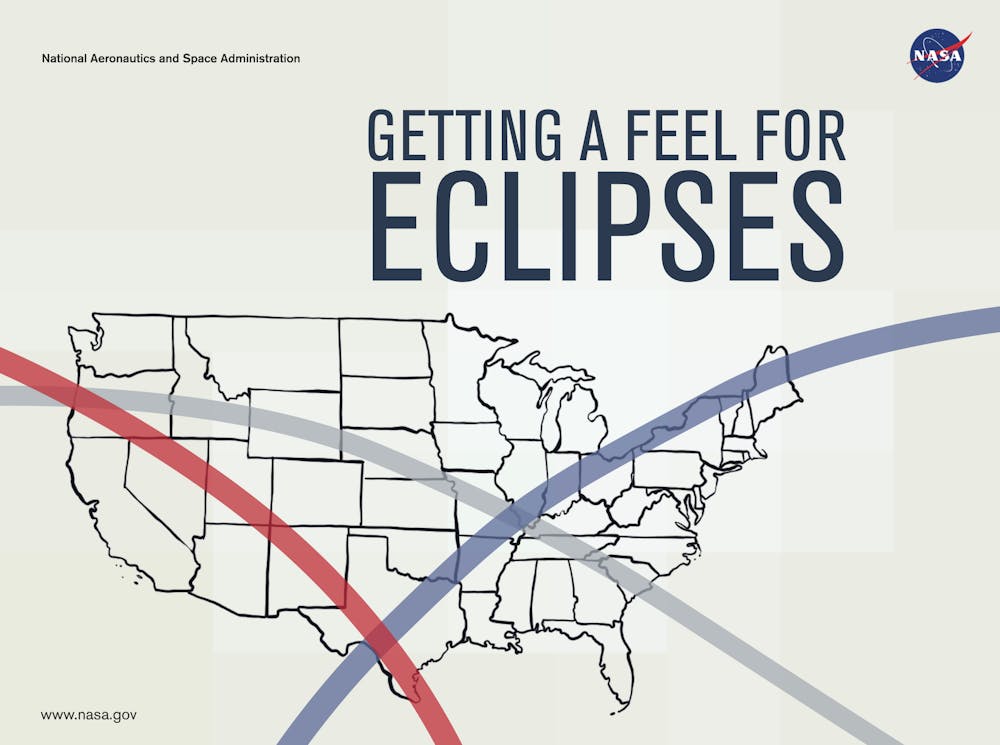
The guide, called “Getting a Feel for Eclipses,” illustrates the paths of the 2017 total, 2023 annular and 2024 total solar eclipses. In a total eclipse, the Moon fully blocks the Sun from Earth view, while during an annular eclipse, a narrow ring of sunlight can be seen encircling the Moon.

The tactile graphics and associated online content detail the specific alignment of the Earth, Moon and Sun under which eclipses occur.

To date, we have distributed almost 11,000 copies of this book to schools for the blind, state and local libraries, the Library of Congress and more.

A map of the US with three curved lines stretching across, indicating the eclipses of 2024, 2023 and 2017.

‘The Getting A Feel for Eclipses’ guide helps blind and visually impaired people learn about the eclipse. NASA SSERVI

Why publish a tactile book on eclipses?

NASA has lots of explanatory material that helps people visualize and understand rare phenomena like eclipses. But for people with visual impairments, maps and images don’t help. For tactile readers, their sense of touch is their vision. That’s where this guide and our other tactile books come in.

Over 65,000 students in the U.S. are blind or visually impaired. After working with several of our students who are totally blind, we wanted to find out how to make events like eclipses as powerful for these students as they are for us. We also wanted to help our students visualize and understand the concept of an eclipse.

These aims resulted in the three tactile graphics, which are physical sheets with textures and raised surfaces that can be interpreted through touch, as well as online content.

The first tactile graphic models the alignment of the Earth, Moon and Sun. The second illustrates the phases of an eclipse as the Moon moves in between the Earth and Sun to full totality, and then out of the way. The third includes a map of the continental U.S. that illustrates the paths of three eclipses: the Aug. 21, 2017, total eclipse, the Oct. 14, 2023, annular eclipse and the Apr. 8, 2024, total eclipse. We used different textures to illustrate these concepts.

Each book includes a QR code on the front cover, outlined by a raised square boundary. The code links to an online guide that leads the user through the content behind the graphics while also providing background information. With the online content, users may opt to print the information in large font or have it read to them by a device.

Although initially created to assist visually impaired audiences, these books are still helpful resources for those with sight. Some students can see but might learn better when able to explore the tactile parts of the guide while listening to the audio. Often it’s helpful for students to get the same information presented in different styles, with options to read or have the content information read to them.

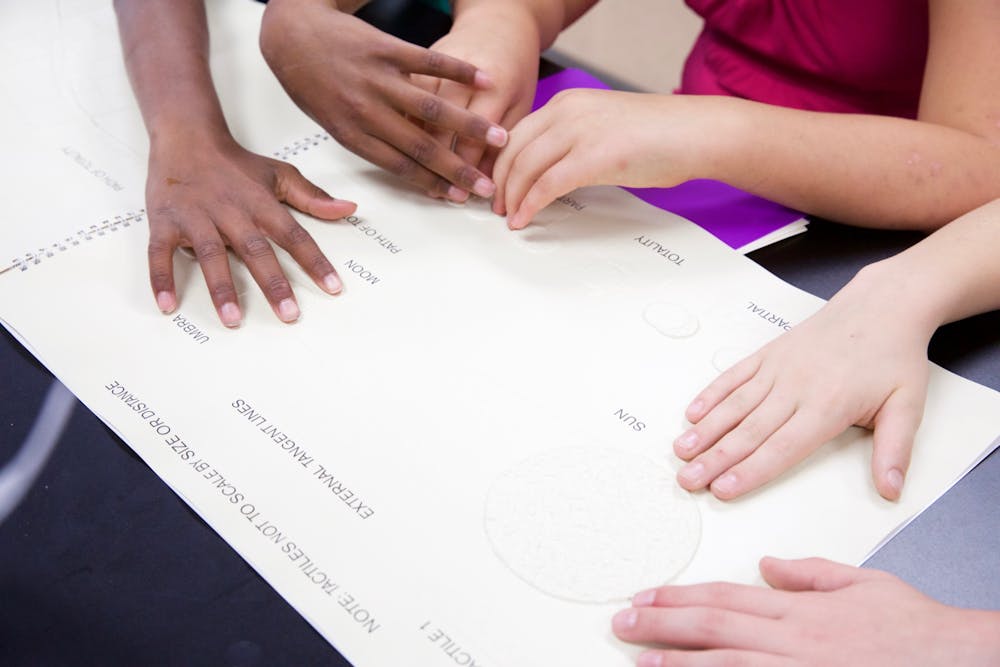
A sheet of paper with raised textures labeled Sun, Umbra, Moon and Totality, with three students touching the textures.

Students at Florida School for the Deaf and Blind in St. Augustine explore tactiles 1 and 2. Florida School for the Deaf and Blind

How are the books made?

We hand-make each book starting by identifying which science concepts the user will likely want to know, and which illustrations can support those concepts.

Once identified, the next step is to create a tactile master, or model, which has one or more raised textures that help to define the science concepts. We pick a set of unique textures to use on the master to signify different items, so the Sun feels different than the Earth. This way, the textures of the graphics become part of the story being shared.

For example, in a model of the Sun’s surface, we use Spanish moss to create the dynamic texture of the Sun. In past projects, we’ve used textures like doll hair, sand and differently textured cardboard to illustrate planet features, instruments on spacecraft, fine surface features and more. Then, we add Braille labels for figure titles, key features and specific notes.

A circle filled with moss.

The tactile master – Spanish moss – used for the Sun. Cassandra Runyon

Once we’ve finished making the masters and laying out each page, a small family print shop – McCarty Printing in Erie, Pennsylvania – prints the page titles and key feature labels on Brailon, a type of plastic paper.

Once printed, we place the masters and the Brailon sheets on a thermoform Machine, which heats up the sheets and creates a vacuum that forms the final tactile graphics. Then, we return the pages to McCarty Printing for binding.

Viewing and experiencing the eclipse

Like fully sighted people, people with partial vision should avoid looking directly at the Sun. Instead, everyone should use eclipse glasses. If you don’t have eclipse glasses, you can use an indirect viewing method such as a colander or pinhole projector.

As the eclipse approaches totality, take time to enjoy your surroundings, feel the changes in temperature and light, and note how the animals around you react to the remarkable event using another of your senses – sound.The Conversation

Cassandra Runyon, Professor of Geology & Environmental Geosciences, College of Charleston and David Hurd, Professor of Geosciences, Pennsylvania Western University

This article is republished from The Conversation under a Creative Commons license. Read the original article.

It’s not just the kids: “Quiet on Set” shows how parents of the abused stars were collateral victims

I’m not the same today,” Joe Bell says through tears. “The pain’s still there from the moment that I knew. I don’t wish this on any parent or child whatsoever. It’s just devastating.”

In “Quiet on Set: The Dark Side of Kids TV,” Joe Bell, the father of Nickelodeon's "Drake and Josh" star Drake Bell, is visibly distraught upon learning one of the worst things that a parent can ever hear — that his child was irrevocably harmed and that despite his best efforts, he couldn’t prevent it. 

Since airing earlier this month, “Quiet on Set” has cemented itself as one of the year’s most explosive investigative documentaries. Rife with allegations of rampant abuse by adults working in children’s entertainment — at a cultural kingpin like Nickelodeon, no less — Investigation Discovery’s docuseries unearths the dark underbelly that defined much of its legacy, perhaps more than any tangerine-colored blimp or semi-viscous neon slime ever could. 

Learning about the systemic abuse of minors, as it's presented in “Quiet on Set,” is undeniably difficult to watch. The docuseries is raw and harrowing, and does not mince words or attempt to shield its viewers from the reality of its subject matter: children working under the guise of safety were in actuality subjected to uncomfortable and sometimes criminal situations. 

The power balance between kids and adults is already stark — add employment into the mix, and the boundaries of what’s deemed ethical become even more nebulous, often creating the perfect conditions for catastrophe, first and foremost, for vulnerable kids. But as “Quiet on Set” reminds us through emotional testimony from the caregivers of those same kids, parents can also be hurt and be victims of that exploitation in their own right. 

Voicing a concern about a child’s safety was deemed taboo, as Joe was shunned and gaslit.

Among the most tragic revelations from “Quiet on Set” were the claims shared by former Nickelodeon actor Drake Bell, who spoke about being sexually assaulted by his former dialogue and acting coach Brian Peck while starring on “The Amanda Show.” Peck was ultimately arrested in 2003 in connection to the repeated abuse of a teenager, who at the time was only named in the criminal case as John Doe. “Quiet on Set” would mark the first time that Bell shared his story publicly, revealing himself as John Doe.

On the March 22 episode of “The Sarah Fraser Show” podcast, Drake reveals that he initially had reservations about participating in “Quiet on Set” after a previous experience in which he was shamed for not coming forth.

“Another documentary came out years ago that requested my involvement, and when I declined, the response I got was unbelievable,” the former “Drake and Josh” star said. “They said that I was — people like me were the problem, and 'This is why things aren’t gonna change in the industry because people like you won’t speak out and won’t come forward.'”

But “Quiet on Set” was different. Aside from a sensitive director who Drake said helped him feel a sense of “comfort,” the actor felt the experience would also be “cathartic and beneficial” for his father, Joe Bell, who features heavily in the docuseries. 

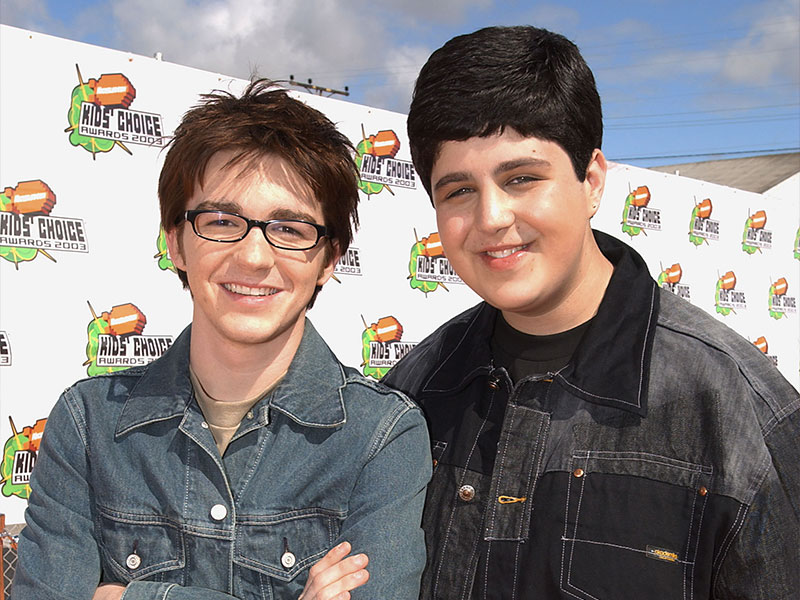
Drake and JoshDrake and Josh attend Nickelodeon's 16th Annual Kid's Choice Awards at the Barker Hangar, April 12, 2003 in Santa Monica, California. (Frank Micelotta/Getty Images)In the show’s third episode, viewers learn how, after divorcing Drake’s mother when Drake was a young child, Joe began helping his son book acting roles in various sitcoms and films such as “Home Improvement,” “Seinfeld” and "Jerry Maguire." Though he had little background in the entertainment industry, Joe could clearly see his son’s zeal for acting. Eventually, he would take on the role of Drake’s manager, which culminated in Drake’s first big break after being cast on “The Amanda Show” at 13 years old. 
“Him and I just became so close. It was just natural, and he loved [acting],” Joe recalls in “Quiet on Set.” 

It was this deep bond between father and son that Brian Peck would ultimately take advantage of. “The Amanda Show” series creator Dan Schneider (whose allegedly abusive and toxic behavior underpins the rest of “Quiet on Set”) hired Peck on previous projects, conferring on him a sort of power by association. Peck was so fully entrenched in Nickelodeon that he was even included as a featured on-screen character Pickle Boy in Schneider’s kids’ sketch comedy show “All That.” His likeability was not only firmly established, but he had also attained a degree of credibility that extended even beyond his dialogue coaching skills. 

Enticed by promises that Peck (who worked with the likes of Leonardo DiCaprio) would help propel his son’s career, Joe organized supervised home lessons with Peck. Soon enough, however, Joe became wary of Peck’s inappropriate interest in and interactions with his son, so much so that he eventually vocalized his concerns to the show’s producers. “I go: ‘I don’t see anything abnormal, but I don’t have a good feeling,” Joe says.

After being rebuffed as “homophobic,” Joe claims he was “ostracized” on set and effectively forced to back off. The reaction to Joe’s simple inquiry demonstrated the full extent of power Dan Schneider was wielding — voicing a concern about a child’s safety was deemed taboo, as Joe was shunned and gaslit. In contrast to Schneider and Peck, Joe was powerless, stymied by a steady stream of enablers who fell in line with the charming, powerful and/or manipulative abusers. 

This initial rift set in motion several entry points for Peck to not only continue ingratiating himself into Drake’s life but also enable him to drive a wedge between Drake and his father. Peck attempted to convince Drake that his father was misappropriating his money, ultimately persuading Drake and his mother to oust Joe from his role as manager. With Joe out of the picture, Drake was severed from his only safeguard. 

“I turned her over all kinds of paperwork she needed to be able to handle Drake’s career,” Joe said in “Quiet on Set. “But I did say to her — and I said this to her in person — ‘You never, ever leave Drake alone with Brian Peck and you never let him be around him unsupervised, period, whatsoever. And Brian just absolutely tricked her.” 

By manipulating the situation, Peck cut Drake off from the one person who saw Peck's behavior and intentions for what they truly were: predatory. Isolation of a victim is a common tactic employed by abusers — it leaves a victim especially vulnerable. Peck’s methodical actions, including obtaining the trust of Drake's mother, set the stage for the sexual assault to take place. Trusting parents who want to do the best for their children are not necessarily prepared to cope with that level of manipulation, nor do they expect it.

“I’m sure that my dad puts a lot of blame on himself,” Drake tells "The Sarah Fraser Show." “And I thought that this might be an opportunity for him to be able to realize that, you know, that it’s one person’s fault.”

Drake did not immediately disclose to Joe that he was the John Doe once news of Peck’s arrest broke, unable to share with his father that his suspicions about Peck had been well-founded. Drake recounts how he called his father to tell him Peck had been arrested for molestation, at which point Joe said, “You’re kidding. I knew it, I knew it.”

“My dad just goes, ‘I am so glad he was not able to get his hands on you,’” Drake said. “My dad’s very emotional. And we were just starting to rekindle our relationship and I just couldn’t.” 

“How did it make you feel when you finally found out?” a “Quiet on Set” producer subsequently asks Joe.

“I was — are you kidding? I’m not the same today,” Joe respondsthrough tears. “The pain’s still there from the moment that I knew. I don’t wish this on any parent or child whatsoever. It’s just devastating.”

Of all the emotionally imbued content contained within “Quiet on Set,” viewers have seized upon Joe’s affecting anecdotes with particular emphasis, taking to social media to share their thoughts. 

“Drake's dad really broke my heart,” one X/Twitter user shared. “He did everything he could to protect his son, and no one would listen to him.” 

“It’s sick how Brian Peck was able to manipulate Drake Bell’s mother to fire his Dad just so he could sexually [sic]  assault Drake,” another user wrote. “This man did everything he could to protect his son. He was the only one that seemed to care.”

Several days after the docuseries premiered, Drake shared an old photo of him hugging his father to his Instagram account, simply captioning the post, “Dad❤️.” 

“Lean on your dad,” one comment under the post read. “This man is what every parent should be. He tried and his intuition is spot on. His love for you is palpable.”

https://www.instagram.com/p/C4uVaS7AWcy/?utm_source=ig_embed&ig_rid=d630f50b-c9df-4e96-971b-8519d6de4f1b

While the most obvious thematic and factually important power structure at play throughout the entirety of “Quiet on Set” is that which exists between young stars and Nickelodeon employees, there’s a clear-cut hierarchical relationship amongst the adults as well. In the world of child stardom, insofar as this investigation defines it, parents are also often rendered powerless. 

In the world of child stardom, insofar as this investigation defines it, parents are also often rendered powerless. 

This is perhaps best illustrated by the fact that between 2003 and 2005, Nickelodeon saw three separate cases of pedophilia and molestation from active employees. In April of 2003, only a few short months before Peck would be arrested, 28-year old production assistant Jason Handy who was working on the set of “All That" was arrested for lewd acts with children. Handy’s role on the set of the comedy was primarily to guide kids around the set, often outside of parents' supervision, enabling him to develop close relationships with many cast members. As the docuseries explains, Handy was able to gain parents’ trust to the point that he exchanged phone numbers and emails with the kids, exploiting their want to further their children’s careers by keeping strong industry connections. 

It’s no surprise then that the title of the episode that focuses on Handy is titled, “Hidden in Plain Sight.” In “Quiet on Set,” a woman named only as MJ, shares how Handy had groomed her 11-year-old daughter and “All That” cast member Brandi, over email before eventually sending her a photo of himself naked and masturbating. 

“I went back and forth with, ‘Should I call the police?’” MJ recalls, becoming emotional. “They’re gonna think that I’m a bad parent because I allowed her to talk to this person.”

MJ, ostensibly feeling helpless and concerned that the incident would impact her daughter’s future, decided not to file a report with the police. “I struggled with this and I finally told myself, ‘I can’t call the police. All I can do is make sure I keep her far away from him.” 

Though Brandi would ultimately testify against Handy alongside another of his victims in court, she subsequently left the entertainment business and never returned. The harm Handy left was indelible — he traumatized a young girl, permanently damaging her dreams and altering the trajectory of her life. For MJ, there is a lingering of guilt and shame because Brandi was robbed of what would have surely been happy memories, now tainted by a fundamental loss of innocence, all under her watch.   

We can look to the ending of “Quiet on Set” for a powerful visual representation of how the parents it portrays, while not the direct victims of the abuse that befell their children, are themselves adjacent incarnations of the very same trauma. Throughout the four-part docuseries, Drake and Joe are filmed and interviewed separately. It’s not until the series’ closing moments that we see them standing together, arms draped over each other's shoulders under the gentle wave of California palms. The scene is interspersed with grainy photos of the father and son from their youth — embracing in front of a blue-grey mountain range cut through the middle by soaring pines; smiling while bundled in winter coats; a young Drake leaning into his father’s body while clutching a small dog. 

“It’s just really hard going back over these old memories,” Drake says.

“You know what? Better days ahead of us,” Joe replies.

“Yeah, I keep hearing that.”

“Yeah, well — keep listening to it.”

It’s no wonder Drake and Joe’s final exchange is the last thing viewers hear in “Quiet on Set.” In this moment, as Joe is trying to assure his son that there is hope for a better future, he’s also trying to convince himself of the same truth. After years of unimaginable pain, it’s conceivably the most important and most difficult hope each man can have. 

“This is insane”: RNC reportedly makes Trump’s false election claims a “litmus test” for new hires

The Republican National Committee is asking prospective job candidates if they believe the 2020 election was stolen in a “litmus tests of sorts” following the Trump-backed purge of the party committee, according to the Washington Post.

Trump advisers have “quizzed” multiple employees who worked in key 2024 states about their views on the 2020 election, according to the report.

“Was the 2020 election stolen?” one prospective employee recalled being asked in a room with two top Trump advisers.

The question has “startled” some potential employees who view it as “questioning their loyalty to Trump,” according to the Post.

“If you say the election wasn’t stolen, do you really think you’re going to get hired?” one former RNC employee questioned.

“Candidates who worked on the front line in battleground states or are currently in states where fraud allegations have been prevalent were asked about their work experience,” RNC and Trump spokeswoman Danielle Alvarez said in a statement to the Post on Tuesday. “We want experienced staff with meaningful views on how elections are won and lost and real experience-based opinions about what happens in the trenches.”

RNC staff was let go en masse in early March but employees could reapply for jobs, and the process has included an interview with Trump advisers.

“The problem with Trumpism is that despite bringing in very smart and very capable people, if you want to play Trump’s game, you have to back him up on everything he says. Claims about the election being stolen is kind of the last frontier of that,” GOP strategist Doug Heye, a former communications direct for the RNC, told the Post.

We need your help to stay independent

“This is insane even for a Trumpian RNC,” tweeted Democratic election attorney Marc Elias, who beat back numerous TrumpWorld lawsuits aimed at overturning his 2020 loss. “It means that everyone in the place — every researcher, lawyer, fundraiser, receptionist — is an avowed election denier. How does the Committee ever recover from this? Maybe the answer is it shouldn't.”

“How said,” wrote former Trump White House aide Alyssa Farah Griffin. “Lying that the election was stolen is now a prerequisite to work at the RNC. A generation of young operatives will have a choice to make: tell the truth or lie.”

Instead of having employees based in D.C., Trump’s advisers have told prospective employees they may be expected to move to Palm Beach, Fla., near the former president’s Mar-a-Lago resort.


Want a daily wrap-up of all the news and commentary Salon has to offer? Subscribe to our morning newsletter, Crash Course.


The process came about after Trump “grew disillusioned” with RNC leadership under former chair Ronna McDaniel. Trump has complained that the RNC did not focus enough on “election integrity” or boosting his false claims that the election was stolen.

Trump backed a takeover by longtime North Carolina loyalist Michael Whatley and daughter-in-law Lara Trump, who have since brought in attorney Christina Bobb, who pushed numerous false election claims, as senior counsel for election integrity.

Meanwhile, McDaniel was hired and quickly unhired by NBC News after multiple hosts complained on air that the network hired someone who backed Trump’s election lies.

“Wow! Ronna McDaniel got fired by Fake News NBC,” Trump wrote on Truth Social Tuesday. “She only lasted two days, and this after McDaniel went out of her way to say what they wanted to hear. It leaves her in a very strange place, it’s called NEVER NEVERLAND, and it’s not a place you want to be.”

NBC’s Ronna blunder: A failed attempt to appeal to MAGA voters — except they hate her too

I was a MAGA volunteer and activist from the beginning of the Trump campaign in 2015 right through to 2022. Here’s what you might not know: The MAGA faithful I knew loathed Ronna McDaniel, who led the Republican National Committee through most of that period, nearly as much as they (and I) loathed the Democratic Party and everyone else perceived as enemies of Donald Trump and his movement. 

To us, in fact, she was never Ronna McDaniel. As the niece of 2012 Republican nominee turned U.S. Sen. Mitt Romney, a well-known Trump skeptic, she was always Ronna Romney, with added emphasis on that name. It was something of a political scarlet letter, and like her uncle, Ronna was regarded as a Vichy-style quisling, a RINO who was worse than almost any Democrat, with the possible exception of Barack Hussein Obama.

In every conversation I had about her with my fellow MAGA countrymen and women, we poured our contempt and mockery on McDaniel; never was there a scintilla of pity or empathy. 

NBC News’ recent attempt to hire McDaniel, after Trump had driven her from the RNC chair, enraged Democrats, liberals and  several of the network’s pundits. From my former MAGA perspective, however, McDaniel’s since-terminated $300,000-a-year contract came as no surprise. 

When I first heard about McDaniel’s hire, I said out loud what I’ve been saying for a few years now: So many in the national press have never recovered from the shock of egregiously missing Trump’s grassroots momentum in 2016. Especially over the last year, the mainstream media has become obsessed with “saving” the Republican Party from the Dark Side of the Force, rapturously awaiting a GOP savior to seize control of the party from Trump. Maybe it would be former New Jersey Gov. Chris Christie. No? Maybe former Vice President Mike Pence. No? Fine, former South Carolina Gov. Nikki Haley — she was the one! Until she wasn’t. 

It was this infatuation that led NBC’s executives to employ McDaniel, seemingly overlooking that she had accused America’s media, writ large, of “stealing our faith in the election process.” 

The awkward NBC/Ronna dance was only slightly more intimate than a one-night stand: After massive internal pushback at the network, McDaniel’s contract was abruptly terminated on Tuesday, less than a week after her hiring was first announced. As journalist Aaron Rupar joked on X, McDaniel lasted “less than a Scaramucci,” referring to Anthony Scaramucci’s 10-day stint as White House communications director under Trump. 

So much for the “liberal media”

I won’t exactly claim that our legacy media wants Trump to win this year. But if he’s elected again, those journalists and editors want to be able to claim that they didn’t miss how many Americans wanted Trump back in the White House.

The myth of the “liberal media,” imagined as a monolithic bogeyman that colludes and conspires with Democratic leaders and left-leaning “elites” to suppress the voices and views of Republicans and conservatives, is one of the most pervasively held delusions within the MAGA community.  

I pay for content from several American media outlets (including, of course, Salon). Despite my criticisms of the press, I still think most legacy media produces net-positive work. I truly want to believe that NBC News had good intentions in hiring McDaniel; wisely, they aborted the mission before the sunk-cost fallacy hit the point of no return. 

The entire Ronna McDaniel episode was an unforced error, proving once again that leaders in mainstream media lack any understanding of the dynamics of loyalty between Trump, his voters and their perceived enemies. 

The network’s initial claim was that McDaniel was brought on to provide an “inside baseball” right-leaning perspective. Pray tell: A perspective for whom, exactly? MAGA Americans hold both McDaniel and NBC in equal disdain; put them together, and the hatred only multiplies. As the brief history of McDaniel’s TV career suggests, this was an unforced error, proving once again that leaders in mainstream media lack any understanding of the dynamics of loyalty between Trump, his voters and all their perceived enemies. 

McDaniel is no fool; she knows how MAGA Americans feel about her. She reportedly dropped the use of “Romney” as her middle name at Trump’s request before assuming her RNC post in 2017. Last weekend, she said on air that she disagreed with Trump’s promise to pardon those convicted of crimes related to the Jan. 6 riot if he regains the White House. In other words, she self-censored while at the RNC under the influence of cancel culture — the MAGA variant. As for the Republicans who will now claim that NBC canceled McDaniel, allow me to remind them that that’s how the free market is supposed to work; The right and left should be held to a consistent standard, and should support freedom of association even when they don’t like the outcome. 

Yes, all the world’s a stage, and for all their invective against Hollywood, MAGA and the far right are America’s premier political performers. McDaniel’s comments during her inaugural, one-and-done “Meet the Press” guest spot point at a poorly-concealed truth: The vast majority of GOP politicians, pundits and party officials don’t believe the pernicious myths that Trump peddles.

Old habits aren’t easily conquered, though: McDaniel admitted that Joe Biden won the 2020 election, but claimed there were “concerns” and “issues” that had eroded electoral “safeguards.” Those are essentially codewords for the Republican insistence that America is a “republic, not a democracy” and for Republican attempts to restrict voting access. 

Leaving MAGA: The long goodbye

I volunteered for the Trump campaign in both 2016 and 2020, and I never believed the election was stolen. I realize that many readers will recoil at this, but most MAGA adherents are good and decent people; I spent more than half a decade meeting or communicating daily with them. Many were and are intelligent, educated, urbane, successful and accomplished professionals.

My doubts about supporting Trump, Ron DeSantis and MAGA seriously began during the summer of 2021. What followed was what I call my “Year of Heaven and Hell.” I left MAGA for good a year later, in the summer of 2022. (If you want to know why, read this.) I recently formed a new organization, Leaving MAGA, aimed at building a community for those who have recently left, like me, or are in the nascent stages of remorse. 

I allowed myself to be duped. MAGA Americans have been exploited and traumatized into believing Trump’s falsehoods; they have been made to feel perpetually desperate and panicked, as I was. I neither defend my past or anyone’s current ignorance. But to say that MAGA Americans have been manipulated doesn’t mean they’re unintelligent, or morally turbid. That just reflects the GOP’s abject shamelessness in regurgitating lies about virtually everything, as I later came to discover after leaving MAGA. That infinite repetition eventually begins to win over many people who aren’t naturally or inherently right-wing; perhaps that’s the demographic NBC longs for.   


Want a daily wrap-up of all the news and commentary Salon has to offer? Subscribe to our morning newsletter, Crash Course.


Leaving MAGA hopes to foster reconciliation between MAGA Americans and their friends and family. It may be difficult for me to accept the supposedly reformed Ronna McDaniel; she has yet to show genuine penitence. While I remain steadfast in my belief that most MAGA Americans are not the caricatures of evil portrayed by liberals, it’s admittedly a challenge to reconcile that with their fervid devotion to a man who has done and said so many indefensible things.

McDaniel led a Republican Party that deemed an attempted coup-d’état, orchestrated by the world’s most powerful person, to be “legitimate political discourse,” and insisted that avoidable death and suffering — from the COVID pandemic and mass shootings, among other examples — was acceptable. McDaniel wasn’t the steward of a misguided party that meant well. No, the GOP was and is unequivocally on the wrong side of life-and-death issues, and while she is not uniquely culpable for that failure, she is nonetheless responsible.  

Ronna McDaniel wasn’t the steward of a misguided party that meant well. The GOP was and is unequivocally on the wrong side of life-and-death issues, and she can't dodge her responsibility for that.

In pursuit of some fantastical notion of journalistic impartiality, NBC News management created a precedent that, to their credit, they rapidly came to regret. They legitimized someone, at least briefly, who has led tens of millions of Americans astray with a series of increasingly outrageous and disingenuous lies, and continues to do so — all so it wouldn’t be labeled as “activist” or “biased.” 

I believe the day will come when many or most of the tens of millions of MAGA Americans will renounce the movement they so devotedly followed. We at Leaving MAGA will welcome them — yes, even McDaniel, if she is sincere. Her formal political career is likely over, and her next gig may be as a rotating guest on Fox News’ “The Five,” more or less the media equivalent of the late Jake LaMotta singing out of tune to the same audience nightly.  

I can only wonder if McDaniel’s uncle feels some guilt as well, as onetime standard-bearer of the GOP. Mitt Romney is leaving the Senate and leaving politics, having done much to rehabilitate his legacy. In this case, the apple seems to have fallen some distance from the tree. 

Don’t construe this prognostication as a reason not to vote, but Romney knows his party is terminally ill, and may well breathe its last gasp come Election Day this November. NBC will probably try to keep the dying party alive, stuck in a pre-MAGA yesteryear and scrambling to appeal to a nonexistent demographic, while the rest of America keeps at the work of perfecting our union and rebuilding democracy. 

Democrat wins Alabama special election in red district after campaigning on abortion rights and IVF

A Democrat who campaigned on abortion rights and I.V.F. access on Tuesday won a special Alabama state House election in a district long held by Republicans, according to The Washington Post.

Democrat Marilyn Lands, who in 2022 lost the election to represent Alabama’s House District 10 by seven points, on Tuesday defeated Republican Teddy Powell by a 25-point margin in the district.

Lands, a licensed mental health counselor, shared her own abortion story in ad, describing how she had terminated a nonviable pregnancy 20 years earlier and noting that women today would have to leave the state to get the procedure.

Though just about 6,000 people voted in the election, the race marks a shift in a district former President Donald Trump narrowly carried in 2020. Democrats have won numerous elections and ballot referendums by campaigning heavily on abortion access since the Supreme Court overturned Roe v. Wade. Lands found additional fuel by campaigning on IVF access after an Alabama Supreme Court ruling temporarily blocked the procedure in the state.

“From what I heard from the voters at the polls I was at, [reproductive rights] was a really big factor. And so many women came out. I had a woman with her young daughter wanting her to see history being made,” Lands told the Post.

Democrats hope to make IVF a access a key issue in other states as well.

“This special election is a harbinger of things to come — Republicans across the country have been put on notice that there are consequences to attacks on IVF — from the bluest blue state to the reddest red, voters are choosing to fight for their fundamental freedoms by electing Democrats across the country,” Heather Williams, who heads the Democratic Legislative Campaign Committee, said in a statement.

The Biden campaign touted the result as a “major warning sign for Trump.”

“Voters will not stand for his attacks on reproductive health care. This November will be no different,” Biden campaign manager Julie Chavez Rodriguez said in a statement.

Of course the lawyer trying to ban abortion pills is married to Josh “Run For Your Life” Hawley

Alliance Defending Freedom (ADF), the group that argued against the abortion pill before the Supreme Court on Tuesday, does not hide that its goal goes well beyond ending access to abortion, as they successfully overturned Roe v. Wade in 2022. Alan Sears, the head of ADF, explained as much to David Kirkpatrick of the New Yorker last year, arguing that "the birth control pill was a mistake" and expressing a belief that his group could destroy access to the pill. It was yet another reminder that ADF and their Republican allies aren't "pro-life," but simply misogynists who wish to roll back decades of women's progress. 

But they also know that's a bad look. So during Tuesday's Supreme Court arguments over the legality of the abortion pill, ADF used a favorite Republican trick to conceal misogynist intent: Have a lady say it. Erin Hawley was tapped to play the role of the snarling church lady pretending to "protect" the naughty sex-havers from having a say over their own bodies. Yep, that's the wife of Sen. Josh "Hauling A**" Hawley, R-Mo., infamous for cheering on Jan. 6 rioters before fleeing for his life after the insurrectionists breached the barricades around the Capitol. 

Hawley openly acknowledged in court that abortion bans are causing serious harm by keeping women physically distant from trusted doctors.

Erin Hawley is the latest in a long line of Republican women who have built successful careers by destroying the lives of other women. Hawley has been incredibly lucky in life, graduating from Yale Law and clerking at the Supreme Court. She is now using that impressive resume to deny the same opportunities to other women. She was part of the legal team that successfully argued to repeal Roe v. Wade, for example, allowing her home state of Missouri to undermine the futures of countless girls and women through forced childbirth. Tuesday, she took the fight even more national, pretending to believe abortion pills cause "harm." Her proposed remedy to this imaginary problem: more forced pregnancy and childbirth, processes she and the conservative judges pretended are a pain-free experience for all those who endure it. 


Want more Amanda Marcotte on politics? Subscribe to her newsletter Standing Room Only.


As usual with anti-choicers, Hawley's bad faith is breathtaking in its audacity. She loves to wax poetic in public about how she wants a culture "that values women’s lives." In court she argued against letting women have a safe, effective drug whose entire purpose is making the process of abortion less painful and dangerous. But truthfully, even she struggled to keep up the act of "caring" about women during arguments. Instead, most of her time was spent in maudlin complaint about anti-abortion doctors who were afraid that, one day, they may have a patient show up at an emergency room with an incomplete abortion. To prevent this hypothetical situation, she argued, it was important to ignore decades of research showing these drugs are safe and ban the FDA from allowing doctors to prescribe the pills for at-home use. 

Every word of her argument was disingenuous. The actual reason ADF wants to restrict access to abortion pills is for the same reason they oppose contraception and same-sex marriage rights: They are theocrats who want to end secular law and impose a far-right Christian nationalist agenda on all Americans. In the original brief Hawley wrote for Tuesday's case, she and the other ADF lawyers argued for a revival of the 1873 Comstock Act, a long-dormant (but never repealed) law that would make it a crime not only to ship abortion pills anywhere in the country, but, as written, would criminalize shipping contraception, or even just information about preventing pregnancy. 

Justice Clarence Thomas, who has previously called for a chance for the Supreme Court to overturn legal birth control, joined Justice Samuel Alito during oral arguments in suggesting the government should enforce Comstock again. Someone should tell him the law would also criminalize the film catalog of "Long Dong Silver," who, according to the impeccably persuasive Anita Hill, built up an oeuvre that Thomas was loudly and openly impressed by. 

In one especially chilling moment, Hawley argued that more women were seeking aftercare for abortions at emergency rooms instead of from the doctor who provided the abortion, raising the (still extremely slim) chances her clients might be asked to help a patient post-abortion. What she failed to mention is that she, personally, is largely to blame for this shift. She was part of the legal team that obtained the Dobbs decision that allowed states to ban abortion. This forced thousands of women to seek abortion from out-of-state providers. If those women return home and experience symptoms that concern them, they can't just go to the far-away doctor who first gave them the pills, but now have to go to the emergency room instead. 

The moment seemed to pass unnoticed in all the legalese, but it told the whole story of what a deeply dishonest actor Hawley is. She openly acknowledged in court that abortion bans are causing serious harm by keeping women physically distant from trusted doctors. And it's not hard to see how this problem will be compounded if women are denied even more access to doctors who can provide safe abortion care. The number of post-abortion emergency room visits will soar if women start taking pills without any medical supervision — or worse, if they are forced to resort to pre-Roe methods like the wirehanger or throwing themselves down stairs. 

Not, of course, that Hawley or any of her allies care if women are harmed or killed. On the contrary, the entire point of banning abortion is to inflict harm on women, as punishment for rejecting fundamentalist beliefs sex is only for procreation. Hawley herself stands to personally benefit from all the pain she's deliberately causing other women. Whether she wins or loses this particular case (and early signs suggest a majority of justices aren't ready to go there), she's raking in that right wing cash and burnishing her resume by arguing in front of the high court. She will have even more opportunities to be the smiling female face plastered over Christian right misogyny. All for the low cost of selling out the rest of American women who just want to be left alone to make their own decisions. 

How Trump’s trial delay strategy may backfire

Donald Trump has successfully delayed his several criminal trials via the appeals process. But his delay strategy may cause him maximum damage. At least one of the “major” cases could go to trial immediately before the election this fall. In that case, he probably would have been better off just having the trials and allowing himself and his surrogates time to pontificate and demagogue about his persecution and persuade dubious supporters who might be having second thoughts about voting for him..

With this strategy, his chances of a conviction before the election might have dropped to some degree overall, but his chances of a conviction within two months prior to the election, when most of the country starts paying close attention, has risen sharply. And even if he’s not convicted, the trials might be in process during the election, causing non-cultish supporters to have to at least think twice about the votes they are casting.

There are also other examples outside of the issue of delay that seem to be backfiring against Trump. And they’re simply the result of this knee-jerk reaction to argue against any procedural task or appeal any ruling that appears unfavorable to him in the hopes of delay.

The Florida Classified Documents Case

In the classified documents case before Judge Aileen Cannon, Trump recently argued that he should be able to see the identities of witnesses against him before the trial begins. A cynic might say that this is because he wants to intimidate and publicly discredit these witnesses before a jury is selected. And this cynic would be correct!

But during this process, as Cannon deliberates on the matter, the witnesses are apparently sweating this out and feeling immense pressure. One of them revolted on Monday, March 11. Known as “Trump Employee 5,” Brian Butler spoke out in the national media clearly and concisely about the damaging and inculpatory behavior he witnessed from the former president and some of his close employees regarding their handling of classified documents from the White House.

Butler correctly assumed it would be better for him to just come clean and be exposed on his own terms, rather than let the machinations of Trump and MAGA work their usual dark magic of inciting deep state conspiracy theories resulting in threats and intimidation. He probably will still be threatened and intimidated, but he mitigated them by coming out so publicly now. It took away the power of Trump to control the narrative and induce his own style of “discouragement”.

Trump can’t blame this on the prosecution leaking the information, one of his favorite strategies. The witness himself was on CNN explaining everything clearly in a matter-of-fact manner. There are no anonymous sources or prosecutorial misconduct to blame this on, as it was not from an investigative journalism piece. It was direct from the source itself, with a name and face, on a national television broadcast for all to see.

The result was it put out damaging information that the public otherwise wouldn’t have known before the election. Since this trial is being slow walked by Cannon so that it safely occurs after the election, it was likely the public would not be aware of the worst of the classified document mishandling until after their votes were cast. Since this behavior was probably similar to how a traitor might behave, it could have been disturbing enough to some non-cult Trump supporters to completely destroy his chances at being elected.

But now the public is aware of at least some of the damaging information and has some basis on which to calculate the pros and cons of voting for Trump. And if things keep going the way that they are in that case, with Judge Cannon helping to gum up the works and delay it, it seems likely that more witnesses will feel compelled to come forward to give the public the information they need on their terms, not Trump’s or his minions’ terms, which will apprise the country of even more examples of such behavior.

The NY Fraud Civil Judgment and Bond

Trump again utilized the strategy of appealing everything in sight, when he appealed the bond he was required to put up to allow for his appeal of the civil judgment that Judge Arthur Engoron issued in the NY business fraud case. It was understandable, as it was a huge amount; the judgment itself plus already-accrued interest was almost $500mil, so a bond for the same amount would have had to be posted for him to be able to appeal the judge’s decision. It’s hard to blame anyone for appealing the decision or the bond amount.

We need your help to stay independent

But Trump’s legal actions always come with highly charged political bluster, so he’s boxed himself into a corner. He has been portraying himself as a martyr who’s being persecuted so we don’t have to be— a true modern-day Jesus Christ. He even reposted something a fan sent to him comparing him to Jesus and citing a Bible verse. He’s been relentlessly posting on his Truth Social account almost every day all day about how excessive and unjust the verdict is, and how he has the money to pay it but it takes away from what he intended to contribute to his campaign, and election interference, and declining country, America First, etc.

But on Monday, March 25, the NY Appeals court inexplicably granted him more favorable terms on his bond. The original bond deadline was on that day, but he got 10 extra days, and the bond was reduced to $175mil (the judgment is the same, just the bond needed for him to not have to pay the judgment before the resolution of his appeal was reduced).

A logical person would have to assume that Trump will now gladly post the bond and start the appeals process. He won, after all, got his bond lowered to almost a third of what it was, and got extra time to secure it. If he’s right about the judgment being excessive, he has the opportunity to fix that upon appeal, and won’t be on the hook for the full judgment amount until the appeals process is finalized. Once again, he slips by unscathed, right?

Well, maybe. He still may not be able to post even this reduced bond amount. And what if that happens? He just won in court, after portraying the whole affair as excessive punishment and election interference, and promised that he has the money, no problem, but just doesn’t believe in paying into such an unjust system. So, what’s he going to do now, if he doesn’t just post the bond? Say that he should have won by more, and the corrupt NY judicial system is stacked against him, even though they just gave him a huge break?

The appeals court literally made it so that he still owns and controls his properties, as opposed to the Attorney General immediately taking them over, at least for the time being. It was a last-minute Hail Mary that worked in his favor. So it deflates his number one propaganda technique of victim grievance. And, if he can’t pay up now, he looks more like a desperate fool than he did before. If he had the previous bond amount available as he says, then surely he has the new amount as well, or at least the means to secure it.

As often happens when Trump and MAGA get their way, their bluff is called and they are exposed for the Machiavellian hypocrites they are. The political damage might be minimal for now, but this all adds up to more emotional and financial stress for Trump and his campaign that will be very challenging to overcome. The more he is seen as flailing around and deteriorating before our eyes, the worse it is for him and his election chances. And this constant legal obstructionist strategy, while understandable to some degree, when constantly applied to any unfavorable scenario, will continue to produce these unintended consequences from which it will be hard for Trump and his campaign to recover.

Supreme Court restricting mifepristone would be a “slippery slope” for future drugs

On Tuesday, the U.S. Supreme Court heard arguments in a case that could restrict access to mifepristone, one of two drugs used in medication abortions, nationwide.

The argument comes at a time where access to abortion across the country is under attack. Abortion is totally banned or partially banned in 21 states. At the same time, medication abortion accounts for 63% of abortions; an increase from 53% in 2020, in part due to changes that the Food and Drug Administration (FDA) made in 2016 and 2021 that removed some barriers to access mifepristone.

The FDA approved mifepristone, which has a well-established safety profile, for the medical termination of pregnancy over two decades ago. But a lawsuit filed by Alliance for Hippocratic Medicine in November 2022 has challenged the longstanding FDA approval, alleging it was based on incomplete data, and therefore, the FDA failed to protect patients.

In April 2023, a Trump-appointed judge named Matthew J. Kacsmaryk of the U.S. District Court for the Northern District of Texas ruled in agreement with the plaintiffs, an organization of anti-abortion activists backed by the Christian right-wing lobbying group Alliance Defending Freedom, kicking off nearly two years of litigation around access to the medication — leading to yesterday’s oral arguments. 

In a medication abortion, a patient takes mifepristone, which blocks pregnancy hormones, followed by another drug called misoprostol, which causes uterine contractions. During the hearing, much of the discussion centered around questioning whether the group of anti-abortion doctors and organizations had a right to challenge the FDA’s approval of mifepristone in the first place and that there appears to be a mismatch between the claimed injury of the plaintiffs and what they are seeking in return.

As experts have told Salon previously, the initial lawsuit and Kacsmaryk’s ruling were based on “junk science.” In fact, in February the peer-reviewed science publisher Sage Journals retracted two studies that Kacsmaryk cited in the April 2023 ruling for misrepresenting data.

"The court must reject this effort to restrict access to safe and effective abortion care."

“Mifepristone is safe and effective,” Alexis McGill Johnson, president of the Planned Parenthood Action Fund, emphasized in a media briefing after Tuesday’s hearing. “Since its approval over two decades ago, mifepristone has been used by more than 5 million people in the U.S. to end pregnancies through abortion or to support miscarriage care.”

McGill Johnson said “we shouldn’t even be here,” noting that the Supreme Court must reject “this politically-motivated effort" to undermine the FDA’s science and research-based approval process. “The court must reject this effort to restrict access to safe and effective abortion care,” she said.

However, legal and reproductive rights experts worry that the airtime alone for this case is harmful. During arguments, concerns were raised about the so-called adverse effects of mifepristone being prescribed via telehealth and being sent by mail. However, a recent study published in Nature Medicine found that medication abortions are just as safe through telemedicine as they are when a patient goes in-person to a clinic. The researchers of the study looked at data from more than 6,000 patients who obtained abortion pills from virtual clinics in 20 states and Washington D.C. between April of 2021 and January of 2022. They found there were no serious adverse events 99.8 percent of the time, and that abortions did not require follow-up care 98 percent of the time.


Want more health and science stories in your inbox? Subscribe to Salon's weekly newsletter Lab Notes.


During the discussion, the justices also brought up the topic of emergency room visits after a medication abortion. As Salon previously reported, emergency room visits after having a medication abortion aren’t a reflection of mifepristone’s safety — a concern that’s been cited by the plaintiffs. For instance, medication abortion patients will sometimes go to the emergency department to make sure that the medication worked. That’s because a pregnancy test won’t be accurate for at least four to five weeks after a medication abortion. 

A ruling in favor of the plaintiffs, Alliance for Hippocratic Medicine could result in eliminating access to mifepristone by telehealth and by mail and instead require in-person appointments. It would also shorten the timeframe that it could be used for in a pregnancy from 10 weeks to 7 weeks. It will also require the dosage of mifepristone in a medication abortion to increase, while decreasing misoprostol — essentially making medications and miscarriage management more miserable and less effective. As women’s health specialists and doctors have told Salon before, the effects of such restrictions will be "devastating,” and have far-reaching consequences beyond impacting reproductive health. 

"The current makeup of the court — and its failure in the Dobbs case to uphold abortion rights — does not bode well for a good outcome."

“SCOTUS’s decision to hear the case Alliance for Hippocratic Medicine vs. FDA has not blocked access to mifepristone during the court’s consideration of the case, but today’s arguments indicate that the justices are approaching a final ruling on this baseless case — one that could vastly impact access,” Elisa Wells, co-founder, Plan C Pills said in a media statement. “While we hope for a just ruling that would uphold the scientific authority of the Food and Drug Administration and the strong data supporting mifepristone’s safety, the current makeup of the court — and its failure in the Dobbs case to uphold abortion rights — does not bode well for a good outcome.”

At a press briefing after the hearing, Deirdre Schifeling, ACLU’s Chief Political and Advocacy Officer, emphasized a ruling that restricts the plaintiffs case would have a “slippery slope effect” on all kinds of drugs and medicine in the future from groups who have an ideological opposition to it.

We need your help to stay independent

“For instance, vaccines. So any group that opposes vaccines could take it upon themselves to sue the FDA and claim that those vaccines were not properly determined to be safe,” Schifeling said. “Or birth control, or gender-affirming care, you name it. Any kind of medication that some group of people have an ideological — not scientific, not medical, not legal — but ideological opposition to, could be subject to this kind of lawsuit.” 

This is precisely why so many mainstream medical groups, like the American Cancer Society Cancer Action Network, American Diabetes Association, American Kidney Fund and many others have publicly opposed the lawsuit. 

“It really opens the door to undermining science,” Schifeling said. “And undermining the FDA role in regulating what is safe for the American public.”

What happens next? In the next few days, the justices will likely cast tentative votes in private. Subsequently, draft opinions will be prepared and shared. It usually takes three months for the court to issue a decision. Experts believe we won’t hear about a ruling until late June of this year. 

Will and Jada Pinkett Smith charity closes down after decreasing donations post-Oscar slap

Will and Jada Pinkett Smith are closing down their charity after an abrupt decrease in donations and the absence of previous top-dollar contributors.

The celebrity couple founded their non-profit organization, the Will and Jada Smith Family Foundation in 1996. It focused on advocating for causes that the Smiths championed like mental health and wellness, arts education and sustainability — all through the lens of social impact. However, the infamous Chris Rock Oscar slap seen and heard around the world changed the Smiths' public perception.

According to Variety, after the 2022 Oscars, the Smiths' tax filings showed that high-profile donors, who had previously given to the foundation, had stopped altogether. This forced the couple to begin shutting down the nearly 30-year-old charity. Also, the tax records highlighted that the foundation's revenue dropped from $2.1 million in 2021 to a mere $365,870 in 2022. Their donations had dropped 83% with the departure of American Airlines, which donated $76,160 in 2021, and talent agency CAA, which contributed $100,000 in 2021.

However, a source told Variety that before the slap, the couple was already slowing down the foundation's operations. Instead, the couple will pivot to privately contributing to charities. A spokesperson for the Smiths declined to comment. The foundation's 2023 tax records will be released soon, Variety said. 

Even though Will faced repercussions for slapping Rock at the Oscars like resigning from the Academy and being banned from the Oscars and any related Academy events for the next 10 years, Will's career has rebounded somewhat. That actor is making $25 million on the upcoming sequel “Bad Boys 4.” 

Diddy’s homes in Los Angeles and Miami raided for sex trafficking investigation, source says

For billionaire hip-hop mogul Diddy, born Sean Combs, legal troubles continue to mount and show no signs of going away soon.

On Monday afternoon, federal law enforcement authorities searched Combs' estates in Los Angeles and Miami. According to a CNN high-level law enforcement source, Combs is at the center of a federal sex trafficking investigation by federal prosecutors in the Southern District of New York working in tandem with the Department of Homeland Security, which is responsible for investigating human trafficking cases.

A spokesperson for the Southern District declined to comment to the New York Times on the criminal inquiry. Combs was not at either of his estates during the federal raids. TMZ reported that the hip-hop mogul was seen at Miami-Opa Locka Executive Airport. A source said federal agents stopped and questioned Combs before he was able to fly out on his private jet.

Since the end of last year, Combs has been hit with multiple lawsuits including the bombshell lawsuit from Diddy's ex-partner and singer Cassie known as Casandra Ventura detailing allegations of years-long abuse, sexual assault and sex trafficking. A day after its filing, Combs and Ventura settled the lawsuit. Combs' attorney said the settlement was “in no way an admission of wrongdoing.” 

However, following Ventura's lawsuit, three more women and a male music producer, Rodney “Lil Rod” Jones, all filed separate lawsuits detailing similar accounts to Ventura's. Since the lawsuits, Combs has maintained his innocence and vehemently has denied the claims of sex trafficking, assault and other criminal activity.

California fast food workers have been hit with layoffs ahead of new minimum wage law

Several fast-food franchises in California are laying off workers in anticipation of a legally mandated minimum wage hike that is slated to take effect in April. A new minimum wage law will award fast-food workers a 25% hourly raise, increasing the previous $16 per hour rate by $4, reported Inc.

The forthcoming law is essentially a compromise between owners, unions, and negotiators following the state's decision to raise the minimum wage of local fast-food workers. Major restaurant chains opposed the initially proposed $22 per hour rate, but many say the soon-to-be $20 hourly pay still comes with possible financial consequences. Pizza chains, notably Pizza Hut and Round Table Pizza, have already begun cutting an estimated 1,280 delivery jobs this year, per a Wall Street Journal report. Southern California Pizza Co. announced layoffs in December of around 841 drivers across the state, FOX Business said.

Small restaurants are also doing the same. Two San Jose-based Vitality Bowls restaurants are currently being run by two employees instead of the typical four. The restaurants’ owner, Brian Hom, told the WSJ that he is “definitely not going to hire anymore.”

The wage law concerns fast-food chains with 60 or more locations around the country. Chains exempted from the new law include those that “prepare and bake bread on-site to be sold as a standalone menu item,” FOX Business explained. Panera Bread was initially exempted until in February, when California Gov. Gavin Newsom said the chain must now comply with the law. The change in decision came after Newsom allegedly pushed for the exemption on behalf of billionaire Greg Flynn, a longtime donor of the governor, who owns two dozen Panera locations across the state.

“Openly impatient”: Experts say “angry” judge put Trump’s lawyers on notice in brutal hearing

Donald Trump's latest apparent attempt to delay his New York hush-money trial over the federal government's evidence drop earlier this month did not go as his attorneys may have hoped. In fact, it may have backfired on the former president instead, legal experts suggested. 

During Monday's pre-trial hearing in the case, which revolves around hush money payments he made to an adult film actress ahead of the 2016 election, New York Supreme Court Justice Juan Merchan tore into Trump's defense team for crying foul over the around 200,000 pages of evidence federal prosecutors turned over this month. 

“The defendant has been given a reasonable amount of time to prepare,” Merchan declared, setting a start date of April 15 for the trial.

The judge declined to sanction attorneys for either party, and with Monday's proceedings, what legal experts have dubbed Trump's last-minute attempt to stall the proceedings went up in flames. It also provided another example of a "judge running out of patience with Trump's disruptive legal strategy," The Daily Beast reports

The court's "evident exasperation and scorn" for Trump's lawyers throughout the hearing is what most struck former New York prosecutor Bennett Gershman. 

"Judge Merchan showed yesterday that he is going to administer the trial firmly and fairly and is not going to permit Trump and his lawyers to distract, mislead, or play games," Gershman, a Pace University law professor, told Salon, adding that the judge was "openly impatient and intolerant at the way Trump’s legal team was litigating this case."

For more than an hour, Merchan probed the former president's attorneys over what he eventually described as a "misleading" tactic that threw the trial schedule off-kilter — leading to a 30-day delay — after the feds produced the evidence in response to a January request from Trump's team. 

The judge seemed perturbed that the defense didn't raise these concerns during what was supposed to be the last pre-trial hearing on Feb. 15. He zeroed in on defense lawyer Todd Blanche, admonishing him for not seeking records for his client earlier instead of waiting for the Manhattan district attorney's office to produce them and then complaining about it at the eleventh hour.

Merchan also pointed out that Blanche worked as a federal prosecutor for the U.S. Attorney's Office for the Southern District of New York, the office at the center of the document debacle, for more than a decade.

“You were there for 13 years. So you know that the defense has the same ability as the prosecution to obtain these documents. So when you received the people's first production, you could have very easily done exactly as you did in January, but for whatever reason you waited until two months before trial,” Merchan said.

He went on to fire back against Blanche's attempt to shift blame back to the district attorney. 

In another instance, Merchan, according to The Daily Beast, later appeared "almost enraged" when he discussed Trump's effort to fashion the document dump into a scandal and how it implicated the court in the process. Trump, he noted, in claiming the district attorney withheld evidence from them was painting him as "complicit" in an "unethical strategy." 

The judge outlined the district attorney's responsibilities and shredded Blanche when he failed to cite cases that indicated otherwise, the outlet reported. 

We need your help to stay independent

“If you don’t have a case right now, that is really disconcerting, because the allegation the defense makes in all of your papers about the people's misconduct is incredibly serious. Unbelievably serious,” Merchan said. “You are literally accusing the Manhattan DA's office… of engaging in prosecutorial misconduct—and of trying to make me complicit in it. And you don't have a single cite to support that position, that the people by not obtaining the documentation at the US Attorney's Office had somehow committed some sort of fraud on the court?”

Judge Merchan's handling of the Trump team demonstrated he is in "complete control" of the courtroom, Gershman explained, and showed that he will "not allow Trump's lawyers to make speeches, engage in theatrics, or misrepresent the facts" and will ensure that "Trump and his lawyers do not try to misuse the courtroom for political ends."

If, in the future, Trump's legal team attempts to employ "legal maneuvering that is not based in the fact and the law," as they did in suggesting the district attorney's committed prosecutorial misconduct, "they could find themselves in deeper trouble," Temidayo Aganga-Williams, a white-collar partner at Selendy Gay PLLC, told Salon. 

The judge, if forced to respond to those challenges, he added, has the power to impose sanctions and limits on the admissibility of evidence during trial, which "only hurts" the client.


Want a daily wrap-up of all the news and commentary Salon has to offer? Subscribe to our morning newsletter, Crash Course.


CNN legal analyst and Brookings senior fellow Norm Eisen, who was present in the courtroom, noted the contrast between Merchan's usual "even-tempered" nature and "extremely sharp" tone with Trump's legal team Monday, highlighting a moment when Merchan "lifted his eyes and glared" at Blanche while making his points. 

"He's angry, and that matters not only for today but because this is the man who is going to sit as the judge in this trial and — if Trump is convicted — who will sentence him. So Trump's lawyers burned a lot of capital in this futile effort to delay the trial further," Eisen told CNN.

Monday's proceedings made clear that Merchan has "no patience" for Trump's legal team and will "keep close reins on them in the upcoming trial," Laurie Levenson, a Loyola Law School professor who specializes in white collar crime, told Salon. 

"I don't think they have much credibility with him and that will hurt them when the court makes many discretionary calls during the trial," she said.

Gershman expects the upcoming trial to "go smoothly" with outbursts from the Trump team "negligible" and the judge controlling the trial "effectively" to allow for the jury to reach a verdict "sometime in May or early June."

Should Trump or his attorneys "break the rules" during trial, Merchan doesn't seem like he will hesitate to "call them out," Levenson added, noting that he "clearly will not allow a 'free-for-all.'"

And should Trump try to apply his usual approach to litigation — basically creating "a circus" in the courtroom — to his hush-money trial, he's on track "to be convicted," Aganga-Williams said, emphasizing Trump's "staggering" losses in his other recent criminal and civil trials.  

"If his lawyers have learned anything from this interaction with Judge Merchan, it's that they should conduct themselves, I think, in a more thoughtful, reserved way that is really based in creating a persuasive argument to the jury, and not a persuasive argument to the media," he said. 

Ex-prosecutor: NY judge shows he’s “all business” after imposing gag order on Trump

New York Judge Juan Merchan on Tuesday imposed a gag order of former President Donald Trump ahead of his Manhattan criminal hush-money trial next month.

Merchan granted Manhattan District Attorney Alvin Bragg’s motion to bar Trump from making public statements about jurors and “known or reasonably foreseeable witnesses concerning their potential participation in the investigation.”

Merchan also barred Trump from making public statements about the D.A.’s staff other than Bragg himself, members of the court’s staff and family members of any counsel of staff member “if those statements are made with the intent to materially interfere with” the case.

Merchan noted that Trump “does not deny” his prior “threatening, inflammatory, [and] denigrating” statements cited by the D.A.’s filing. “Such inflammatory extrajudicial statements undoubtedly risk impeding the orderly administration of this Court,” the judge wrote.

The judge who oversaw Trump’s New York civil fraud trial previously imposed a gag order on the former president following his attacks on the judge’s principal clerk.

The order came down on the same day that Trump attacked the judge and his daughter on Truth Social, though the D.A.’s motion was filed weeks earlier.

Merchan on Monday scolded the former president’s lawyers over their prosecutorial misconduct allegations and scheduled Trump’s trial for April 15.

“Judge Merchan is really all business in the upcoming voter deception trial,” former U.S. Attorney Harry Litman tweeted. “He imposes a substantial gag order on Trump. And as he showed yesterday, he will be very ready to back it up if Trump flouts it, particularly after a jury is in place.”

Trader Joe’s has raised its banana prices for the first time in more than 20 years

Trader Joe’s has hiked up the price of one of its most popular products: bananas. The national grocery chain recently increased the price of its banana from 19 cents to 23 cents — a major change in the sense that this is the first time the market has increased the price of the fruit in more than 20 years.

“We only change our prices when our costs change, and after holding our price for bananas at 19¢ each for more than two decades, we’ve now reached a point where this change is necessary,” a TJ’s spokesperson told CNN.

The 19-cent fruit has been a popular store item for years, with many consumers hailing it as the number one produce product in TJ’s annual Customer Choice Awards. TJ’s bananas — both the non-organic and organic options — have won the same award five times, making it a possible addition in the store’s Hall of Fame

According to the Bureau of Labor Statistics, the average price of bananas in the US has remained pretty constant from February 2023 to February 2024: 62 to 64 cents a pound throughout the year. Demand for bananas has largely been driven in part by the relative affordability of the fruits, according to a 2023 report by the Food and Agriculture Organization of the United Nations. The report added that banana prices remained “virtually unchanged” in 2023 due to the “fierce competition” in the national retail market and the role of bananas as a loss leader — a product that is intentionally sold at a low price to attract customers.

Although TJ’s raised its banana prices, the grocer said it lowered prices of other produce items such as romaine hearts, bell peppers and green onions.

Kermit the Proto-Frog? Scientists name ancient amphibian ancestor after the iconic Muppet

A recently-discovered amphibian ancestor has been named after Kermit the Frog, the ballad-crooning, pig-wooing lime green frog who headlines the Muppets. According to a new study in the Zoological Journal of the Linnean Society, Kermitops gratus was a proto-amphibian that lived 270 million years ago and possessed a skull that could fit in the palm of your hand. The fossilized bone is just over one inch long, containing well-preserved oval eye sockets. According to a press statement by researchers from the Smithsonian's National Museum of Natural History, the fossil was first discovered in Texas by their museum’s paleobiology curator, the late paleontologist Nicholas Hotton III. In 2021 postdoctoral paleontologist Arjan Mann found Hotton's skull and said that it "jumped out at me — this really well-preserved, mostly prepared skull."

The fossil was identified as a temnospondyl, a predecessor to modern amphibians that survived over a 200 million year duration spanning from the Carboniferous to the Triassic periods. K. gratus stands out in part because of its cartoonishly wide face and eyes, which reminded the scientists of the famous puppet. Yet the fossil also stands out because of the more delicate features that were preserved. As the researchers write at one point, despite losing part of the palate and braincase, "the remainder of the skull is well-preserved, even showing a full arrangement of palpebral ossicles in place." Palpebral ossicles are the tiny bones in an animal's eyelids, showing that even some of the smallest parts of the ancient Kermit's anatomy have been preserved.

“Using the name Kermit has significant implications for how we can bridge the science that is done by paleontologists in museums to the general public,” Calvin So, a doctoral student at the George Washington University and the lead author on the new paper, said.

“Less than a Scaramucci”: NBC News reportedly dropping Ronna McDaniel after on-air protests

NBC News is already planning to drop former Republican National Committee chair Ronna McDaniel amid on-air protests from the network’s hosts and pundits, according to Puck News’ Dylan Byers.

“Execs are deliberating over details; announcement pending. Meanwhile, McDaniel is seeking legal representation,” Byers tweeted on Tuesday.

“Ronna's NBC tenure lasted less than a Scaramucci,” quipped journalist Aaron Rupar, referring to former President Donald Trump’s ex-communication director’s firing 10 days after his appointment.

McDaniel’s hiring as an on-air contributor sparked rare on-air backlash from hosts on NBC News and MSNBC. NBC News’ Chuck Todd along with MSNBC’s Rachel Maddow, Joe Scarborough, Nicolle Wallace, Joy Reid, Lawrence O’Donnell and others were among those who publicly criticized the network on their air over the hiring.

MSNBC leadership reportedly vowed that McDaniel would not appear on the network after the backlash.

The hosts were particularly incensed over the hiring of a key individual in Trump’s efforts to overturn his 2020 election loss.

“You wouldn’t hire a made man like a mobster to work at a D.A.’s office, right? You wouldn’t hire a pick-pocket to work as a TSA screener,” Maddow said Monday. “So I find the decision to put her on the payroll inexplicable, and I hope they will reverse their decision.”

In “The Truth Vs. Alex Jones” a historic court win does little to repair the damage done to us all

Some costs can only be fully understood through numbers. In chronicling the two defamation lawsuits brought against Alex Jones and his website, InfoWars, “The Truth vs. Alex Jones” is, in the most basic sense, a story of historic damages.  

Nearly $1.5 billion in penalties was awarded to the families of the victims in the Sandy Hook Elementary School shooting by juries in Texas and Connecticut in 2022, rulings that were followed by Jones declaring bankruptcy.

These totals represent the largest defamation award in United States history. As things currently stand, the families haven’t seen a dime, and InfoWars is still spewing out misinformation daily. (This week Jones is recycling an old favorite: antisemitism.) Welcome to the American legal system if this outcome surprises you.

That missive is one of many guiding filmmaker Dan Reed in his methodical survey of what Jones’ shameless and shameful conspiracy grifting has done to these fathers and mothers, to Newtown, Conn., and our democracy.

Some his subjects recite, such as when the families’ lawyer Mark Bankston asks the Texas jury to focus on 24%, since that is the percentage of people in the U.S. who believe that the massacre at Sandy Hook was either definitely or partially staged.

By then we’ve learned that barely two hours passed between the shooting making national news and Jones telling his InfoWars viewers for the first time that the tragedy was a staged operation, a deep-state ruse to justify confiscating guns from private citizens. The day after the shooting he accused one of the grieving parents who made a televised statement on behalf of the families, Robbie Parker, of being a crisis actor. Parker, who was still in shock at losing his six-year-old daughter, nervously smiled before stepping up to a podium full of microphones. Jones and his followers have tortured him ever since.

“They are coming, they are coming, they are coming!” he fulminates in a clip the parents’ legal team plays for him during his 2019 deposition, at which he seems unmoved. The nonexistent “they” he refers to did not come for Second Amendment zealots. Instead, Jones’ followers descended on Newtown, including one he financially backed to harass them at public meetings and their homes. To this day the victims’ parents receive death threats. 

That ensures that the count that hits hardest isn’t displayed onscreen or said aloud. Reed makes us feel it instead – the anguish of 15 names of slaughtered children recited in succession, without pause, for 40 seconds.

These were the children whose teachers hid them in a bathroom, thinking they’d be safe, only to be murdered by the monster neither Reed nor Connecticut state police investigator Daniel Jewiss name, aside from referencing an evil that walked through the school’s front door. The strain in Jewiss’ voice all these years later is undeniable.

Compared with Reed’s previous work, which includes “Leaving Neverland” and “Four Hours at the Capitol,”  “The Truth vs. Alex Jones” is more sharply targeted and careful not to entirely rely on the audience’s empathy. Remember those numbers: one in four people believe Jones, and he’s right to assume some of them are watching.

That may have informed his more fastidious approach to presenting the scope of Jones’ injury.

The Truth vs. Alex JonesAlex Jones with his attorneys in "The Truth vs. Alex Jones" (HBO)Most people know Jones evolved from a fringe cable access nutcase into one of the most influential voices in far-right politics. Reed, though, strategically includes an anecdote from a former producer featuring him warning his audience that corporations were poisoning babies with fluoridated water before the Sandy Hook segment.
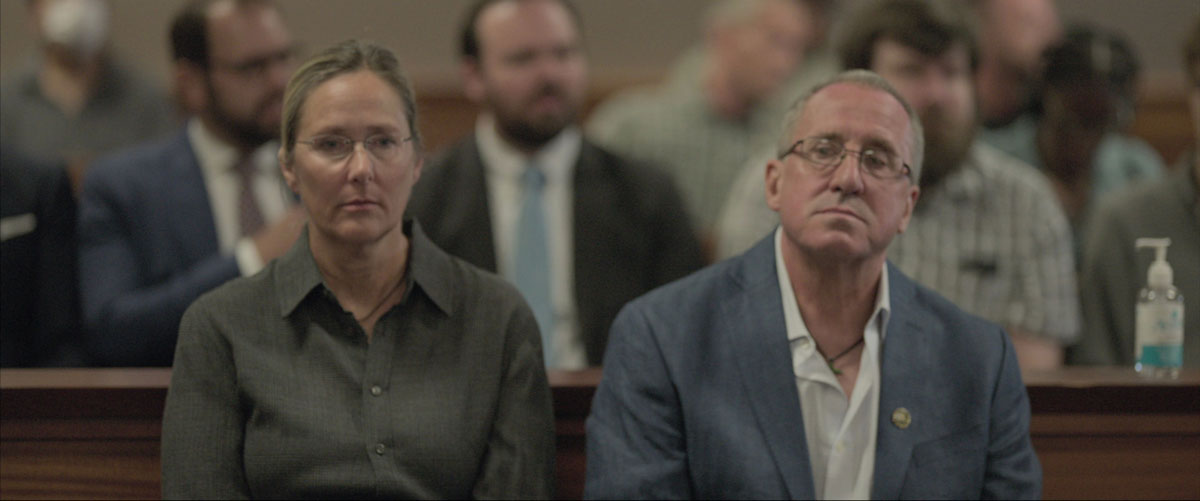
How a man who exploited the basic human impulse to protect infants evolved into a pundit who convinced nearly a quarter of all Americans that 20 six- and seven-year-olds weren’t murdered in December 2012 and demonized their parents, can only be explained by greed.

We need your help to stay independent

But even here Reed stops short of expanding on a point that one ex-InfoWars employee touches on, which is that he cooks up alleged geopolitical fairy tales and fever dreams to sell supplements. “Did we think he wanted us to lie?” one asks. “Yeah, it was obvious.”

That much any sensible person knows, but Reed could have hammered on that point with more precision. The greater value in “The Truth vs. Alex Jones” rests in scenes where Reed speaks with true believers in the Sandy Hook conspiracy.

Look into the eyes of Kelley Watt, and you can tell she is convinced Lenny Pozner is lying about his child Noah having been shot to death.

She informs Pozner that the only way she’ll believe him is if he agrees to exhume Noah’s body. “I watch a lot of true crime, and they exhume bodies all the time. It’s not unusual,” she blithely says. “That’s all you can do.”

The contemptible cruelty of this thinking, let alone the obscene presumption that Pozner is obligated to prove to her that his child is dead, isn’t even shocking. Rather, it validates suspicions concerning the devotion that Jones’ cult, which shares significant overlap with that of Donald Trump, has to this lie.

Within all this, Reed captures the essence of what makes Jones so darkly compelling, irritating, and dangerous.

The count that hits hardest isn’t displayed onscreen or said aloud. Reed makes us feel it instead.

The second of the film’s two hours walks the audience through the court cases, spending the preponderance of the runtime in the Austin, Texas courtroom where the InfoWars host does a bang-up job of working Judge Maya Guerra Gamble’s last nerves. When he isn’t mugging for Reed’s camera he vacillates between a stony-faced refusal to admit guilt and an approximation of remorse. You can see that part is false, and you can understand why the other face he wears sells a lot of overpriced snake oil.

When Gamble isn’t reminding him that the courtroom isn’t his show, she’s heroically maintaining her composure when, at various moments, the plaintiff’s legal team presents her with clips of what Jones has said about her or one of the parents on his show mere days before.

The Truth vs. Alex JonesParents Scarlett Lewis and Neil Heslin in "The Truth vs. Alex Jones" (HBO)And yet, when Scarlett Lewis, the mother of Sandy Hook victim Jesse Lewis, looks into Jones’ eyes from the stand, she shows us why this case has become an indicator of how lost so many people are.


Want a daily wrap-up of all the news and commentary Salon has to offer? Subscribe to our morning newsletter, Crash Course.


“Truth is what we base our reality on. And we have to agree on that to have a civil society,” Lewis says during her testimony.

Sandy Hook is a hard truth, she tells Jones, reminding him that he has children too. “Having a quarter of Americans doubt that Sandy Hook happened or doubt the facts surrounding Sandy Hook is not conducive to keeping our kids safe.”

Yet, she says, “You keep saying it. Why? Why? For money?” Jones pretends to look pained because the true answer is yes.

The civil trials achieved the significant win of getting Jones on record as saying he believes the 2012 shootings “100% happened.”  Through “The Truth vs. Alex Jones,” Reed shows us that more than a decade after the fact his saying it in court documents doesn’t matter. Lenny Pozner knows this, and so does Kelley Watt.

Lewis’ courtroom confrontation with Jones occurred not long after Jones called Jesse’s father Neil Heslin “slow” on his show. Still, she says while looking into her tormentor’s eyes, “I know you believe me. And yet, you’re going to leave this courthouse, and you’re going to say it again on your show.”

In response, Jones shakes his head pseudo-passionately.

“You’re saying no. You just did it,” she said. Later, he’ll apologize to Lewis and shake her hand, only to return to his studio and call the court proceedings a sham. That’s what his audience wants to believe, and they’re passionate about it to keep giving him money to lie with little regard for the high price we’ll all pay in the long run.

"The Truth Vs. Alex Jones" premieres Tuesday, March 26 at 9 p.m. on HBO and Max.