Spring Offer: Get 1 Year, Save 58%

Arizona GOP fake elector proposes bill to let politicians overturn elections

Republican Arizona state Sen. Anthony Kern recently filed a legislative proposal that would allow lawmakers to overturn elections.

Senate Concurrent Resolution 1014 would allow Arizona politicians to determine how electoral college votes are divvied up, stipulating that "the Legislature, and no other official, shall appoint presidential electors in accordance with the United States Constitution."

Kern is among a group of Republicans being investigated by the state's Attorney General, Kris Mayes, for reportedly serving as a "fake elector" for former president Donald Trump. He was also photographed at the Capitol at the deadly insurrection on Jan 6, 2021.

As noted by HuffPost, Kern's bill was not the first GOP-authored proposal in the state that suggests allowing legislators to overturn the certification of elections. In 2021, then-state Rep. Shawna Bolick, a Republican, proposed a bill that would have allowed the legislature to subvert a presidential election "at any time before the presidential inauguration." In 2022, then-state Rep. John Fillmore, another Republican, put forth a bill that would permit politicians to "accept or reject the election results” for any regular primary or general election. 

Turns out the viral ‘Sleepy Girl Mocktail’ is backed by science. Should you try it?

Many of us wish we could get a better night's sleep. Wouldn't it be great if it was as easy as a mocktail before bed?

That's what the latest viral trend might have us believe. The "Sleepy Girl Mocktail" is a mix of tart cherry juice, powdered magnesium supplement and soda water. TikTok videos featuring the concoction have garnered hundreds of thousands of views. But, what does the science say? Do these ingredients actually help us sleep?


Tart cherry juice

There is research to show including tart cherry juice in your diet improves overall sleep. Clinical trials show tart cherry juice increases sleep quality and quantity, as well as a lessening insomnia symptoms (compared to a placebo). This could be due to the presence of melatonin, a sleep-promoting hormone, in cherries.

Tart cherry varieties such as Jerte Valley or Montmorency have the highest concentration of melatonin (approximately 1.35 micrograms of melatonin per 100g of cherry juice). Over the counter melatonin supplements can range from 0.5 milligram to over 100 milligrams, with research suggesting those beginning to take melatonin start with a dose of 0.5–2 milligrams to see an improvement in sleep.

Melatonin naturally occurs in our bodies. Our body clock promotes the release of melatonin in the evening to help us sleep, specifically in the two hours before our natural bedtime.

If we want to increase our melatonin intake with external sources, such as cherries, then we should be timing our intake with our natural increase in melatonin. Supplementing melatonin too close to bed will mean we may not get the sleep-promoting benefits in time to get off to sleep easily. Taking melatonin too late may even harm our long-term sleep health by sending the message to our body clock to delay the release of melatonin until later in the evening.


Magnesium – but how much?

Magnesium also works to promote melatonin, and magnesium supplements have been shown to improve sleep outcomes.

However, results vary depending on the amount of magnesium people take. And we don't yet have the answers on the best dose of magnesium for sleep benefits.

We do know magnesium plays a vital role in energy production and bone development, making it an important daily nutrient for our diets. Foods rich in magnesium include wheat cereal or bread, almonds, cashews, pumpkin seeds, spinach, artichokes, green beans, soy milk and dark chocolate.


Bubbly water

Soda water serves as the base of the drink, rather than a pathway to better sleep. And bubbly water may make the mix more palatable. It is important to keep in mind that drinking fluids close to bedtime can be disruptive to our sleep as it might lead to waking during the night to urinate.

Healthy sleep recommendations include avoiding water intake in the two hours before bed. Having carbonated beverages too close to bed can also trigger digestive symptoms such as bloating, gassiness and reflux during the night.


Bottoms up?

Overall, there is evidence to support trying out the Sleepy Girl Mocktail to see if it improves sleep, however there are some key things to remember:

  • timing: to get the benefits of this drink, avoid having it too close to bed. Aim to have it two hours before your usual bedtime and avoid fluids after this time

  • consistency: no drink is going to be an immediate cure for poor sleep. However, this recipe could help promote sleep if used strategically (at the right time) and consistently as part of a balanced diet. It may also introduce a calming evening routine that helps your brain relax and signals it's time for bed

  • maximum magnesium: be mindful of the amount of magnesium you are consuming. While there are many health benefits to magnesium, the recommended daily maximum amounts are 420mg for adult males and 320mg for adult females. Exceeding the maximum can lead to low blood pressure, respiratory distress, stomach problems, muscle weakness and mood problems

  • sugar: in some of the TikTok recipes sugar (as flavoured sodas, syrups or lollies) is added to the drink. While this may help hide the taste of the tart cherry juice, the consumption of sugar too close to bed may make it more difficult to get to sleep. And sugar in the evening raises blood sugar levels at a time when our body is not primed to be processing sugar. Long term, this can increase our risk of diabetes

  • sleep environment: follow good sleep hygiene practices including keeping a consistent bedtime and wake time, a wind-down routine before bed, avoiding electronic device use like phones or laptops in bed and avoiding bright light in the evening. Bright light works to suppress our melatonin levels in the evening and make us more alert.


What about other drinks?

Other common evening beverages include herbal tisanes or teas, hot chocolate, or warm milk.

Milk can be especially beneficial for sleep, as it contains the amino acid tryptophan, which can promote melatonin production. Again, it is important to also consider the timing of these drinks and to avoid any caffeine in tea and too much chocolate too close to bedtime, as this can make us more alert rather than sleepy.

Getting enough sleep is crucial to our health and wellbeing. If you have tried multiple strategies to improve your sleep and things are not getting better, it may be time to seek professional advice, such as from a GP.

Charlotte Gupta, Postdoctoral research fellow, CQUniversity Australia

This article is republished from The Conversation under a Creative Commons license. Read the original article.

The most important ingredient in your kitchen is the one you most take for granted

For the longest time, I would be annoyed to see water as an ingredient in a recipe. I’d scoff and chortle and avoid it, thinking that water was superfluous, extraneous, not something that would “make or break” whatever it was I was cooking. To me, it wasn’t like a staple like oil, salt, pepper, or butter.

"If anything, this will just water down my dish!" I'd think to myself. This was until I came across Anne Burrell’s bolognese, which I’ve now written about a few times. Clearly, it was a formative moment in my cooking lessons. 

In the original recipe, the "water" is listed right in the middle of the ingredient list and is the only item listed without an amount besides "kosher salt" and "high quality extra-virgin olive oil, for finishing." 

After browning your mirepoix and meats, reducing red wine and adding tomato paste, the next step reads as such

Add water to the pan until the water is about 1 inch above the meat. Toss in the bay leaves and the bundle of thyme and stir to combine everything. Bring to a boil and reduce to a simmer, stirring occasionally. As the water evaporates you will gradually need to add more, about 2 to 3 cups at a time. Don't be shy about adding water during the cooking process, you can always cook it out. This is a game of reduce and add more water. This is where big rich flavors develop. If you try to add all the water in the beginning you will have boiled meat sauce rather than a rich, thick meaty sauce.

After the first time making the dish, I realized this couldn’t have been more impactful. 

A few months later, we had to make bolognese sauce in culinary school. I recall my classmates and I breaking up into groups and I took the lead in my group on our bolognese. After three hours, the teams presented their sauces. My classmates’ versions were watery, loose and poorly flavored, while mine was robust, thick and rich. Twenty minutes later, my bowl was wiped clean and my classmates’ pasta bowls were untouched, looking very much like “boiled meat sauce” rather than a cohesive, deliciously deep-flavored bolognese. 

I credit the bulk of this to Anne Burrell. Her lesson about the game of reducing-and-adding repeatedly — while very time-consuming produces the single best bolognese imaginable.

This also helped me to reimagine my understanding of water as an ingredient at large. It’s not something to discard or disregard; water can have major effects on the end results of many recipes and dishes. Everything from soups to salad dressings can be deeply affected by water, either by adding too much, too little, or by not properly cooking with it overall.


Want more great food writing and recipes? Subscribe to Salon Food's newsletter, The Bite.


Now, while I'm by no means a scientist, here’s how I see it: Reducing the sauce with extra water added allows the flavors to concentrate further, while also reducing the consistency of the sauce until it's thick and rich. In addition, this prevents the sauce (or the pan itself, let’s be real) from burning or scalding, while still allowing flavor to develop as the water evaporates, the spices bloom, and so on and so forth. This technique is also used in a slew of other dishes, such as soups, stews, gravies, pan sauces, purees, reductions, jams, jellies, chutneys and marmalades

Water deepens flavors, changes textures and influences consistency. It can help mitigate the bitter bite of raw onion, it can create a soup or stew that is softer in its flavoring and not as aggressive, it can cut the sharpness of a too-tart vinegar, and of course, it is necessary when it comes to steaming, boiling, blanching — and it should go without saying cooking pasta! 

It's necessary to "trap" the bright, verdant green of freshly cooked vegetables (an ice bath is a wild thing) and also the prime ingredient in brines. It's also something that permeates. Water, at its core, is flavorless and colorless. What you add to it will imbue your entire dish.

We need your help to stay independent

 Hence why you need to season your pasta water as Burrell herself says, "like the sea" — or, no matter how good your sauce is, you will be able to tell when you're eating unseasoned pasta. If you don't salt your water prior to cooking that noodle, it will be evident no matter what that pasta is served with or alongside trust me.  

It’s not just Burrell, either; many “big name” chefs are known to include water in their recipes, such as Alton Brown's "cold water pasta method," every recipe you've ever seen for perfect poached or boiled eggs,  and even many cake recipes. It’s also a necessity in many pasta recipes. I'm sure you’ve heard or read the term “starchy pasta cooking water” or its many iterations in recent years perhaps even in my own recipes! 

In some instances, it’s more of a vehicle, or even a vessel, than it is an ingredient in and of itself. That’s how important water can be to many, many recipes. Water, which may seem like something to easily take for granted, it’s a necessity in many instances. Look at stock or broth. Without water, it’s … bones? (cue that Brenda scene from “Scary Movie 2”). Clearly, water is not something to scoff at.

So, next time you spot water on an ingredient list, don’t be haughty and laugh it off like me a decade ago. Realize that maybe something you deem unimportant or nonessential is actually anything but and might actually be the thing that drives the flavor of your final dish forward more than any other ingredient. Well, aside from maybe salt, of course.

As part of “Food is Medicine” summit, Biden administration will announce partnership with Instacart

During Wednesday's bipartisan "Food is Medicine" summit, the Biden administration will announce three public-private partnerships to "promote healthier living." 

According to The Hill's, the White House will be partnering with Instacart, Feeding America and the Rockefeller Foundation. The summit is hosted by the The Department of Health and Human Services (HHS) in Washington, D.C, led by HHS Secretary Xavier Becerra. In a release, the HHS said, "Food is a powerful tool for preventing and managing health conditions, and HHS’s ‘Food is Medicine’ summit will examine the broad range of approaches that promote health … through nutritious food."

The Rockefeller Foundation is going to collaborate with the HHS "to identify how food-based programs can lead to better health outcomes in marginalized communities." Feeding America and the Biden administration will work together to provide further food bank access while "Insatcart will use its advocacy to expand access to healthy food." This comes on the heels of Congress allotting funds for the department's "Food is Medicine" effort, created in order to "develop a federal strategy to reduce nutrition-related chronic illnesses." 

LGBTQ+ foe joins National Prayer Breakfast board

A longtime foe of LGBTQ+ rights has joined the board of the group that runs the National Prayer Breakfast. The annual event is scheduled to take place on Capitol Hill on Thursday.

Former Rep. Phil Roe (R-TN) had a consistent record of voting against both LGBTQ+ and reproductive rights during his six terms in Congress. The website of the new National Prayer Breakfast (NPB) Foundation board identifies Roe as one of two new board members; the other is former Rep. Brenda Lawrence (D-MI).

On the site, Roe calls himself “an ardent supporter” of the breakfast, which he says is bipartisan, but which for years has been used by organizers to elevate right-wing, anti-LGBTQ+ networks.

Roe’s history with the breakfast includes secret meetings connected to the event while he was in Congress. He met at least twice in 2016 with Guatemalan politicians and breakfast insiders who were later instrumental in shielding that country’s anti-LGBTQ+ president from a UN corruption probe.

Last year’s interim chair of the NPB Foundation board, a trustee of the right-wing Concerned Women for America, has been replaced by former Sen. Heidi Heitkamp (D-ND), but apparently remains on the board. Other board members also have anti-LGBTQ+ track records.

The entire board remains Christian despite the event’s ostensibly non-sectarian nature. No member is known to be openly LGBTQ+.

International advocacy groups have warned Democrats for years that participation in the event helps make it an effective networking tool for right-wing insiders at the organization behind it, the Fellowship Foundation, popularly known as The Family.

Although The Family officially spun the event off last year, the group has worked to maintain ties with the new NPB Foundation board, which includes many Family insiders. The board responded to Democratic congressional concerns with vows of transparency last year, but those pledges remain unfulfilled.

In October, the 2023 NPB honorary co-chair, Rep. Tim Walberg (R-MI), traveled to Uganda’s National Prayer Breakfast on a trip paid for by The Family. In his keynote speech, Walberg urged Ugandans to “stand firm” behind their new anti-LGBTQ+ death-penalty law.

Last year’s American NPB on Capitol Hill, in February, was simulcast to The Family’s event, now called the NPB Gathering, attended just a few miles away by several proponents of severe anti-LGBTQ+ legislation in their countries. Also there was The Family’s point man in Uganda, a key player in that country’s annual prayer breakfast who supports the parliamentary prayer group behind the new death-penalty law. 

Pres. Joe Biden greeted The Family’s guests remotely from the new NPB.

Roe’s Record

Roe’s record in Congress included votes against transgender rights and same-sex marriage. 

He had a zero rating from the Human Rights Campaign when he left office in 2021. His track record includes voting against transgender rights, against enforcement of anti-gay hate-crime laws, and against making orientation and gender identity protected classes under the Civil Rights Act.

Like a number of Family leaders, Roe leans on a revisionist notion of religious freedom, one that even some Democrats have embraced. Historically, religious freedom has referred simply to the ability to practice one’s religion free from persecution targeting one’s beliefs.

In recent years, the right has expanded the concept to include special treatment under the law, carving out exemptions to anti-discrimination laws.

Roe is on record supporting this revisionist version of religious freedom, voting to allow anti-LGBTQ+ discrimination that would be illegal if not based on religious belief.

On the question of reproductive rights, Roe describes himself as “adamantly” anti-abortion, believing that human life — meriting full legal rights and protections —begins the moment a sperm cell fertilizes an egg.

As a longtime obstetrician-gynecologist, however, Roe does not join some of his more extreme Family insiders in opposing contraception. Although he’s hostile to government involvement in providing contraception, Roe told Politico, “I’ve doled out thousands of prescriptions for birth control over the years to women that needed it.”

Nevertheless, he got a zero rating from Planned Parenthood while in Congress.

Family Meetings

Neither meeting was public, but in 2016 Roe met twice with Guatemalan politicians and Family insiders at events connected to that year’s U.S. National Prayer Breakfast. Those insiders included American politicians — who would later save Guatemala’s evangelical president from prosecutors — and a civilian later revealed to have ties to Russian operatives.

One of the meetings was revealed in a Guatemalan politician’s Facebook post, which was archived before it was made private. In the post, Guatemala’s Paul Briere recounts traveling to Washington for the 2016 National Prayer Breakfast.

Briere ultimately balked at the direction his fellow Guatemalans took — and was ostracized from the breakfast for it — but several of the Guatemalans involved were Family allies who became key players in the successful right-wing effort to run a UN anti-corruption task force out of the country. 

As I reported, destroying the task force enabled then-Pres. Jimmy Morales to evade prosecution on suspicion he won office by violating campaign-finance laws. Morales was an evangelical who opposed LGBTQ+ and reproductive rights. His rich, right-wing donors had been drawn together at his country’s own prayer breakfast, which The Family had helped created.

Briere wrote about the Guatemalan delegation’s time in Washington for the breakfast and related events, naming several Family insiders. “We shared on a personal level,” Briere wrote in reference to Sen. Mike Lee (R-UT), Rep. Juan Vargas (D-CA), and then-Reps. Randy Hultgren (R-IL), Reid Ribble (R-WI), and Roe. Also named was former Gov. David Beasley (R-SC), a longtime Family leader.

Vargas has a history of participating in Family events — including prayer breakfast spinoffs overseas — that were run by anti-LGBTQ+ advocates and explicitly used to promote right-wing causes. Unlike Vargas, Hultgren was an active opponent of LGBTQ+ rights in Congress, and had an even more extensive record with The Family.

Hultgren was already on the board of the new NPB Foundation even before Roe’s arrival.

And Roe has another connection to The Family much closer to home. His district included Johnson City, TN, home to a Chick-fil-A owned by a longtime Family operative.

As I reported, Chick-fil-A franchise owner Tim Burchfield wasn’t just deeply involved with The Family’s Guatemala efforts, he was also tied to Russian operatives. In fact, just prior to the 2016 NPB, Burchfield was connected to both Maria Butina, later convicted of failing to register as a Russian operative, and her handler, Alexander Torshin.

The man who connected Burchfield to the Russians was Tennessee millionaire Joe Gregory, a donor to both Roe and the National Rifle Association, which was also involved in the Russia networking. Burchfield sits on the board of a charity — tied to anti-LGBTQ+ Christian organizations — that was started by Gregory’s brother, also a Roe donor.

And according to an internal Family document I obtained, it was Burchfield — along with another Family insider — who invited Guatemala’s chief justice to the 2016 U.S. NPB. The justice’s records show that on Feb. 2, 2016, two days before the breakfast, he had lunch with Family insiders including Burchfield, Roe, Lee, and then-Rep. Mike Doyle (R-PA).

Roe never publicly discussed any of these meetings. (My email with questions and a request for comment to Austin Peay State University, where Roe sits on the board, was not returned.)

But Roe’s connections to Family insiders have emerged on occasion. He and past NPB co-chair Rep. Louie Gohmert (R-TX) participated in National Day of Prayer events. Roe co-authored an op-ed with Walberg, who refers to Roe as his “friend.”

The campaign of Roe’s fellow Tennessean, then-Rep. Zach Wamp (R-TN), donated to Roe. Heitkamp’s post on the NPB Foundation website suggests that Roe is taking Wamp’s seat on the board.

She writes that Wamp “transitioned off in 2023.” It was Wamp, a longtime breakfast leader, who inadvertently confirmed The Family’s continued ties to the new event when he cc’ed me on an email last year in which he told the board’s then-president not to talk to me, writing, “I made it very clear you would be wise not to,” and calling me a snake.

The New Board

The NPB Foundation board president at the time was former Sen. Mark Pryor (R-AR), who had told me in an hour-long interview that the new board was committed to being nonpolitical and transparent. Pryor said that past right-wing Family donors — including anti-LGBTQ+ crusader Franklin Graham and right-wing Trump megadonor Ronnie Cameron — would be barred from donating to the new NPB.

Explaining last year’s revamp of the breakfast, Sen. Chris Coons (D-DE) said “[Q]uestions had been raised about our ability as members of Congress to say that we knew exactly how it was being organized, who was being invited, how it was being funded. Many of us who’d been in leadership roles really couldn’t answer those questions.”

Pryor said the new board would discuss what information it would release about its donors, but there’s been silence from the board since. 

According to Heitkamp’s post, Pryor “chose to resign last summer for professional reasons.” (Pryor’s work as an attorney includes guiding clients “through sensitive state AG matters and congressional investigations.”)

The board solicits checks online, but it’s not clear whether donors are vetted. And the new event rules announced by Pryor last year were violated by multiple members of Congress.

The new rules limited members of Congress to one guest, a constituent or family member. As I reported last year, multiple members broke those rules. In addition, a longtime Family insider got to go, as did lobbyists.

The office of Rep. Paul Gosar (R-AZ) justified him bringing Kari Lake, a non-constituent, because “At no time did Jesus ask where Kari Lake lived before accepting worship.” Lake reportedly used her attendance at the breakfast “to stay buzzworthy as a potential 2024 candidate.”

There’s no indication that the NPB Foundation took any steps in response to the rule violations, or implemented new measures to prevent them this year. I emailed questions for Heitkamp to the University of Chicago Institute of Politics, which she now oversees, but got no response.

Heitkamp writes that the board voted in October to make her chair, but doesn’t say exactly when. An archived version of the board’s site says that as of Oct. 15, the interim chair was still Caroline Aderholt, wife of Rep. Robert Aderholt (R-AL). Both are longtime Family insiders, and opponents of LGBTQ+ and reproductive rights.

Aderholt has also been chief of staff and trustee of Concerned Women for America (CWA). As I reported, her work there included overseeing lobbying for the group, which opposes LGBTQ+ and reproductive rights and espouses a theocratic vision of government.

I emailed both CWA and Aderholt on Oct. 17, asking about Aderholt’s role. My story detailing her anti-LGBTQ+ activism was published on Oct. 21. There was no public statement at the time of Heitkamp replacing Aderholt.

The NPB Foundation site still lists Aderholt as a board member and suggests she remains involved with The Family’s parallel event, the NPB Gathering. The site says, “Since 2012, she has served as committee co-chair for The Women’s Events for the National Prayer Breakfast.”

Also still on the board is Stan Holmes, a longtime Family insider and veteran operative of the breakfast movement, who has been close to Aderholt’s husband. The board’s bio for Holmes describes him as having “been connected to the US Senate and House Prayer Breakfast Groups since 1981.”

Warning Signs

Secular groups have opposed the breakfast on First Amendment grounds for decades. But in recent years, the concerns have broadened. So has the opposition.

Last year, the Freedom From Religion Foundation led a coalition of 30 organizations, including faith groups, asking Biden and Democrats to sever ties with the event.

The coalition wrote to Biden and members of Congress, calling the breakfast “an active marketplace of Christian nationalism, and … not the bipartisan event that it purports to be.”

Citing reporting by me and others, the FFRF coalition letter said the National Prayer Breakfast “has become a nexus for religious extremism, infiltration by Russian agents, and organized bigotry (anti-LGBTQ and anti-labor).”

LGBTQ+ advocacy groups have warned for years that even well-meaning Democrats are facilitating right-wing network-building by lending a bipartisan veneer to prayer breakfasts.

“[P]arliamentary prayer breakfasts, while superficially apolitical and multi-confessional, include speakers who echo extremist positions,” according to a 2021 report by the European Parliamentary Forum for Sexual and Reproductive Rights. Christian politicians, the report found, “socialised political elites onto regressive positions through prayer breakfasts.”

That same year, the European group Forbidden Colours sent an intelligence brief on the subject to congressional Democratic leaders and the LGBTQ+ Equality Caucus. The brief warned that “the international ultraconservative movement will try to find partners … within the Democratic Party. Therefore, they will use misleading terms such as ‘prayers breakfast’, ‘pro-family’ and ‘religious freedom’.”

Heitkamp’s stance on “religious freedom” was one reason she got only an 82% rating from the Human Rights Campaign while in office. She voted against preventing the Religious Freedom Restoration Act from being used to allow discrimination in the name of religious freedom.

The HRC also cited her votes to confirm then-Pres. Donald Trump’s Supreme Court nomination of Neil Gorsuch and her opposition to classifying so-called “conversion” therapy as fraud.

Before last year’s revamp of the breakfast, leading Democrats had begun fleeing The Family’s event. The office of Sen. Tim Kaine (D-VA) told me he’d no longer be attending. Then-Speaker Nancy Pelosi (D-CA) didn’t show up in 2022. Sen. Sherrod Brown (D-OH) gave me a  statement saying he’d no longer be going.

Even earlier, in light of the Butina scandal, Reps. Ted Lieu (D-CA) and Ro Khanna (D-CA) distanced themselves from the event.

Last year, after Coons vowed a reset, Pelosi and other top Democrats attended once again. But outrage over Walberg’s actions in Uganda is just one sign of lingering concerns.

Historically, the co-chair positions — one Republican and one Democrat — have rotated every year from House to Senate. On Thursday, however, the event will be chaired by House members for the second year in a row, raising the possibility that no Democratic senator would go along this time.

And the 2024 co-chairs, Reps. Tracey Mann (R-KS) and Frank Mrvan (D-IN), both have previous history with the breakfast, suggesting there may have been difficulties getting new faces from the House for the event. A White House pool report said the Capitol Visitor Center was “about ⅔ full” for last year’s breakfast.


Jonathan Larsen is a veteran reporter and TV news producer. He created Up with Chris Hayes at MSNBC and was a key part of the teams that launched Anderson Cooper 360 at CNN and led MSNBC’s Countdown w/ Keith Olbermann. Most recently he oversaw all original and investigative reporting at TYT.

“Alligator moats along the border”: Democrats derail “crazy” GOP impeachment hearing

The House Homeland Security Committee convened on Tuesday in a hearing to discuss the ongoing border crisis and House Republicans' efforts to advance two articles of impeachment against Secretary of Homeland Security Alejandro Mayorkas over a perceived failure to enforce U.S. immigration policies at the border, violating publics trust, and “willful and systemic refusal to comply with the law," per the Washington Post. 

“Secretary Mayorkas has put his political preferences above following the law,” Homeland Security Committee Chair Mark Green, R-Tenn., said in his opening remarks Tuesday. 

Though Mayorkas was not present at the hearing, he sent a letter to Green that highlighted his dedication to the public and refuted Republican claims that he has dodged their calls for security efforts. According to the Washington Post, Green described the letter as “inadequate and unbecoming of a Cabinet secretary."

"We have provided Congress and your Committee hours of testimony, thousands of documents, hundreds of briefings, and much more information that demonstrates quite clearly how we are enforcing the law,” Mayorkas wrote, per WaPo.

“I assure you that your false accusations do not rattle me and do not divert me from the law enforcement and broader public service to which I remain devoted,” he added. 

Democrats have vehemently objected to the impeachment proceedings, arguing that they are baseless and politically motivated. 

“Policy differences are not impeachable,” Rep. Bennie Thompson, D-Miss., said in his opening statement during Tuesday's hearing.

Rep. Robert Garcia, D-Calif., during the hearing underscored former President Donald Trump's erratic and ethically unsound border proposals, while also noting how GOP lawmakers have begun opposing bipartisan border-related legislation — which Senate Republicans and Democrats have attempted to negotiate for weeks — only after Trump recently spoke out against it. 

“I want to remind the public that Donald Trump and House Republicans also have their own ideas for the border,” Garcia said, using a graphic to illustrate his points. “So let’s review the majority’s border ideas that they’ve actually presented. Here they are. Donald Trump actually has said that he wants to build alligator moats along the border. That’s one of his incredible ideas," the lawmaker observed, referring to reports from 2019.

"Another idea that Donald Trump has promoted, is he actually wants to electrify the border fence and maybe even put some spikes on the border," Garcia added. "That’s another Donald Trump and MAGA majority border idea. Another idea, which I’m not sure how well it would go, is he wants to actually bomb northern Mexico with missiles. That’s another Trump idea. And finally, I think one of the ones that I think is the most grotesque is suggestions that instead, we should maybe just shoot migrants in the legs as they cross the border."

"So once again, the Donald Trump and MAGA plan is alligator moats, bombing northern Mexico, shooting migrants in the legs, and electrifying the fence, and putting spikes on them," Garcia continued. "That is the Donald Trump border plan. And so again, we are here today with these horrific ideas being presented constantly by the former president. This is all about trying to get Donald Trump reelected. Donald Trump himself is saying he wants no solutions this year out of the Congress. And Secretary Mayorkas and President Biden continue to offer solutions every day and are ready to actually talk about real immigration and border solutions in this country."

We need your help to stay independent

Rep. Dan Goldman, D-N.Y., also criticized Republicans on Tuesday for trying to blacklist Mayorkas, arguing that "he’s adhered to the law in every single way that he’s been required to do."

“What you are upset about is that Secretary Mayorkas rescinded prior executive orders that were working," Goldman added, referencing Mayorkas's reviving of Temporary Protected Status (TPS) for El Salvador, Nicaragua, Nepal, and Honduras, which Trump terminated. "And you have a right to be upset about that. And you have a right to talk about that. And you have a right to express your dissatisfaction in any way you choose.”

"But you do not have a right to demean this institution, to bastardize the impeachment clause of the Constitution, to belittle the standard of constitutional impeachment to such a degree, that you can’t even produce a legal memo in support of your articles of impeachment that do not exist in history, and do not exist in the law," Goldman continued.

"And if, in fact, as you allege here, there were false statements made to Congress or obstruction of Congress, those are crimes. You could’ve charged him with those, but you didn’t want to because you knew you couldn’t actually prove them. You just want to make the allegations and concoct some crazy breach of public trust which does not exist."


Want a daily wrap-up of all the news and commentary Salon has to offer? Subscribe to our morning newsletter, Crash Course.


Rep. Sheila Jackson Lee, D-Tex., defended Mayorkas, saying that he has never been equipped with adequate resources to detain all undocumented migrants. 

“I can’t for the life of me see why my colleagues do not understand that you are dealing clearly with the issue of a policy decision and a very wise secretary that is trying to do his job by protecting us in the narrow way that he’s allowed to do so,” Jackson Lee said, per the Washington Post.

At one point during the hearing, Rep. Tony Gonzalez, R-Tex., implied that Democrats' efforts to back Mayorkas were futile. 

“One of the most difficult things about Congress is it’s filled with nothing but lawyers, and they’ll talk all day about this, that or the other, which is … frustrating to many Americans,” Gonzales said. “This is what’s going to happen. The House of Representatives is going to impeach Secretary Mayorkas, and there is absolutely nothing anyone can do to stop it. That’s going to happen.”

On Wednesday morning, the House GOP voted 18-15 to advance the articles of impeachment against Mayorkas, with the intention of bringing the proceedings to the House floor next week. If House Republicans succeed, it would mark the first impeachment of a Cabinet member in nearly 150 years, at noted by WaPo. However, the Post added that "even if the full House impeaches Mayorkas, he is unlikely to be convicted in a trial in the Democratic-led Senate."

Legal analyst calls out “wacky things” Trump’s lawyer tried in bid for a “do-over” in Carroll case

Trump attorney Alina Habba on Tuesday walked back her claim of a potential conflict of interest by the judge in the E. Jean Carroll defamation case but signaled that the former president will seek a new trial in the case.

Habba on Monday raised questions about a potential conflict of interest stemming from the fact that Judge Lewis Kaplan and Carroll attorney Roberta Kaplan, who are not related, worked briefly at the same law firm in the 90s. Habba walked back her suggestion after Roberta Kaplan refuted the allegation and threatened to pursue sanctions over Habba’s “utterly baseless” claim.

"They've insinuated that they're gonna file a motion for a new trial," MSNBC legal analyst Lisa Rubin explained on Tuesday. "That's even in the letter where they've conceded that there actually isn't a problem between the two Kaplans. They drop a footnote saying, 'Of course, we're going to address this bias problem that the judge has with us in our post-trial motions, including, potentially under rule 59 — a shorthand for a motion for a new trial."

Rubin then pointed out that Trump’s legal team “tried a lot of these kinds of wacky things so far.”

“They've asked for a refusal recusal of Judge Kaplan, on the basis of his relationship with another of E. Jean Carroll's lawyers,” she said. “They've asked for a mistrial after E. Jean Carroll admitted to deleting death threats against her. So this is the third time they've tried for a do-over or cutting it short, based on bias or alleged improprieties because they know they don't have real substantive grounds for appeal."

Trump says he’s looking for new lawyers on Truth Social amid report he’s not “happy” after $83M loss

Former President Donald Trump on Tuesday announced on social media he's searching for a new law firm to represent him in an appeal against last week's jury verdict awarding $83.3 million to writer E. Jean Carroll.

He left a message to prospective hires in the Truth Social post, writing: "Any lawyer who takes a TRUMP CASE is either 'CRAZY,' or a TRUE AMERICAN PATRIOT." The former president's announcement follows his vow to appeal the jury's decision last Friday, predicated by the presiding federal judge's September ruling finding him liable for defamation.

“I am in the process, along with my team, of interviewing various law firms to represent me in an Appeal of one of the most ridiculous and unfair Witch Hunts our Country has ever seen – The defamation Sham presided over by a Clinton appointed, highly partisan, Trump Hating Judge, Lewis Kaplan, who was, together with certain other Radical Left Democrat Judges, one of the most partisan and out of control activists that I have ever appeared before,” Trump’s Tuesday night post began. He further bemoaned the rules the federal judge implemented barring him from denying he sexually abused and defamed Carroll, which a jury last spring found him liable for. "This entire HOAX is a disgrace to our American System of Justice," Trump added.

Representing Trump is a tough task, according to New York Times reporter Maggie Haberman.

"He's almost never happy with his legal team," she said during a Tuesday CNN appearance.

Trial attorney Joe Tacopina withdrew from Trump's counsel ahead of the trial, and lawyer Alina Habba assumed the role, often drawing sharp rebuke from Kaplan during the proceedings. 

"I don't know how winnable this case was for anybody, Alina Habba or not," Haberman added. "But, you know, Trump has certain things he wants from his lawyers and I think you see that."

MSNBC host Joe Scarborough on Wednesday joked that Trump had “83.3 million reasons” to ditch Habba, calling her “one of the most ill-prepared attorneys for a case of this magnitude, maybe in the history of the planet.”

“He's had bad lawyers but at least they knew their way around the courtroom,” he added, “and by the way, you either know your way around the courtroom or you don't, and speaking as a lawyer that didn't know his way around the courtroom, I can tell you, it can be a very frightening thing and you would not want to be in this type of case."

Republicans’ border battle at risk of blowing up

Generally, it's always fair to assume that the American right wing is 100% hypocritical in all things. They do not practice what they preach — and they preach a lot. So, I think we would all have thought that while they desperately want to give Donald Trump dictatorial power, it's the last thing they would want to grant President Joe Biden. And yet as these negotiations over immigration have played out, it's clear they want Biden to seize dictatorial powers as well, at least on that issue. I guess we can say that they have some consistency after all.

After years of insisting that Congress must act to "protect the border" and browbeating the Democrats for their alleged failure to do it, they are now giving Joe Biden the green light to use executive orders the way Donald Trump used them. They once railed against such supposed usurpation of congressional prerogatives when a Democrat was in the White House but now they argue that they have no role to play and it's all up to the president. (They say this, by the way, even as they whine incessantly over Biden's attempts to relieve Americans of their crushing burden of student loan debt, claiming that he's behaving like a tyrant.)

This is reminiscent of the budget negotiations back in 2011 when then-vice president Biden got involved in the delicate budget negotiations and agreed to give away the store on Social Security only to have the Tea Party refuse to take yes for an answer.

All of this is nothing but another right-wing kabuki dance, staged by the Republican Party whenever they come close to getting what they've asked for. For them, this is all a game in which they believe they can strongarm Democrats into total capitulation. They put on quite a show but it never works.

In the past they tended to play this hand around economic issues, rending their garments over the deficit, demanding that Democrats slash domestic spending to the bone or they will refuse to raise the debt ceiling or fund the government. In fact, they have done just that in the past year which resulted in the ouster of former House Speaker Kevin McCarthy by the right-wing when he negotiated a deal with the Democratic Senate and the White House to raise the debt ceiling and avoid economic catastrophe. This wasn't the first time they did this and it also resulted in the resignation of an earlier GOP speaker. This tactic doesn't hurt the Democrats, it hurts their own leaders.

We need your help to stay independent

The plan this year was to jam the White House in an election year over the budget to hammer home the allegedly terrible Biden economy in the run up to the election. But as it happens, the economy has made a robust recovery from the mess created by the pandemic so that issue doesn't look like it's going to be the big winner they expected it to be. So they've shifted their focus to immigration after having turned the issue into a roiling "crisis" by shipping migrants to Democratic-run cities around the country to own the libs and inflame the xenophobic right.

The idea of the legislation was to up the ante by combining funding for more border security with the vital need for military equipment to Ukraine and further support for Israel and Taiwan. The thinking was that the bipartisan desire to help Ukraine and Israel would push through the border part but it didn't turn out that way. When he finally started to see the writing on the wall, Senate Minority Leader Mitch McConnell dryly said last week, "the politics have changed." But actually, they really haven't.

The original concept that everyone would have something to love and hate in the bill and they'd all make their peace with it and move on is how negotiations are supposed to work, and there are members who still think that's how it should be, particularly in the Senate. The MAGA faction, however, like the Tea Party before them, thinks negotiating is for losers. So the Republicans got tough and told Biden that he was going to have to swallow a terrible border deal that offers nothing to the Democrats in return for not allowing Russia to prevail in Ukraine and supplying more military aid for Israel.

Biden capitulated and they got what they said they wanted. And, surprise, it turns out it wasn't what they wanted after all. Now they say they want Biden to unilaterally declare war on the border via executive order and are refusing to do any deal at all. They argue that the deal that's being discussed authorizes the president to "close the border" when the number of crossings reaches a certain threshold and that's just not good enough. Speaker Mike Johnson tweeted this utterly fatuous statement last night: "Any border "shutdown" authority that ALLOWS even one illegal crossing is a non-starter. Thousands each day is outrageous. The number must be ZERO."


Want a daily wrap-up of all the news and commentary Salon has to offer? Subscribe to our morning newsletter, Crash Course.


There has never been nor will there ever be "zero" migrant crossings on the US-Mexico border. Nothing could be more absurd. But that makes it very clear that they have no intention of doing any kind of deal. They have shifted the responsibility completely on to Biden and that's where they will leave it.

This is reminiscent of the budget negotiations back in 2011 when then-vice president Biden got involved in the delicate budget negotiations and agreed to give away the store on Social Security only to have the Tea Party refuse to take yes for an answer. We ended up with a Rube Goldberg sequestration compromise that ended up serving the Democrats better than the Republicans, thankfully. There were no cuts to Social Security and the Republicans lost badly in 2012, largely because the country was appalled by their antics.

The question today is whether the dynamic has changed in their favor or if this issue is more potent than government shutdowns and threats of economic catastrophe. This time, the real incentive for the Republicans to tank this negotiation is because Donald Trump wants them to. He has said so plainly, making it clear that doesn't want the Democrats to have a win on this issue.

The last thing any of them want is to stop the bleeding and that includes the horror of children drowning in the Rio Grande because Trump ally Texas Gov. Greg Abbott, joined by 25 other red state governors, is provoking a constitutional crisis by defying the Supreme Court and refusing to allow the Border Patrol to do its duty. And they are about to put on a full-fledged spectacle by impeaching DHS Secretary Alejandro Mayorkas over policy differences, which even their own legal allies say does not fit the definition of high crimes and misdemeanors. And, as we know too well, there can be no conviction in the Senate without a 2/3rd majority so it's just another exercise in futility.

The big question is whether or not this latest stunt will succeed for the GOP where all the others have failed. The ongoing chaos in the House and Trump's blatant demand to keep the issue for his election argue in favor of it ending with a whimper not a bang. But nothing can be taken for granted right now and we have to hope that somehow we find our way through this mess without too many people suffering and dying because of it. It's not looking very hopeful at the moment. 

“Begging for money”: Trump under “enormous financial strain” as report reveals massive legal costs

Former President Donald Trump’s PACs have spent about $50 million in donor money on his legal bills last year, sources told The New York Times.

The “staggering sum” spent by Trump on his legal fees and investigation-related expenses is about the same amount his lone remaining GOP primary opponent Nikki Haley raised across all her committees last year, the Times’ Maggie Haberman and Shane Goldmacher write. Federal Election Commission filings this week are expected to detail the full extent of Trump’s “enormous financial strain,” they added.

Trump, who has a penchant for relying on campaign donations to pay his lawyers if he actually pays them at all, has used his Save America PAC to cover his legal costs. When the PAC ran low on cash last year, Trump asked for an unusual refund of $60 million that had been transferred to the pro-Trump MAGA Inc. PAC. Trump has also been directing 10% of donations raised through Save America to a PAC that primarily pays his lawyers, according to the Times.

The MAGA Inc. PAC transferred about $42 million to the Save America PAC, nearly as much as the PAC spent on independent expenditures like television ads, according to the report.

“This is old, recycled news about a refund request that was reported on nearly a year ago,” Alex Pfeiffer, a spokesperson for the super PAC, told the Times. “The battle to defeat Joe Biden is here, and the time for everyone to step up and join this fight is now. Every dollar being raised by MAGA Inc. is going directly to defeating Joe Biden in November.”

Trump, who faces federal trials in D.C. and Florida, criminal trials in Manhattan and Atlanta and additional lawsuits in New York has also been paying the legal costs of some co-defendants, including former bodyman Walt Nauta and Mar-a-Lago worker Carlos De Oliveira. A separate legal defense fund has also raised $1.6 million.

Trump last week was ordered to pay $83.3 million to defamed writer E. Jean Carroll. New York Attorney General Letitia James is seeking $370 million in penalties in Trump’s fraud trial — where the judge is expected to issue a ruling as early as Wednesday.

Haberman in an appearance on CNN Tuesday called Trump’s legal bills “eye-popping.”

“Number one, he is not somebody, who historically has liked paying legal bills… Well, this isn’t his money. This is donor money. And so, it’s a lot easier to pay, when you’re paying with donor money, number one,” she said.

“But number two, this is, it’s a lot of money. It’s not just him. It’s also lawyers, for witnesses, as you know,” she continued, adding: “These numbers are not going to get smaller, as we go forward, because he has been indicted four times, and this number got exponentially higher, last year than it was in 2022. And if any case goes to trial, this year, it is going to go even higher.”

We need your help to stay independent

Anchor Kaitlan Collins asked Haberman if Trump’s donors know their money is going to his legal bills.

“Did his donors know this is what they were going to be paying for? No. Would they all mind? I doubt it, because some of them thought they were paying for some kind of legal fight,” Haberman said. “And I’m sure, in their mind, you know, the number of his supporters, who I talked to, in Iowa and New Hampshire, who described the legal cases against him, as illegitimate or something they didn’t believe in? I’m not sure they would care about that. But it is worth noting, it is not — it is not his money.”

While many of Trump’s donations come from small-dollar donors, hotelier Robert Bigelow told Reuters on Tuesday he gave Trump $1 million for his legal fees and agreed to donate another $20 million to back his campaign.


Want a daily wrap-up of all the news and commentary Salon has to offer? Subscribe to our morning newsletter, Crash Course.


"I was just sympathetic. They didn't solicit anything from me," said Bigelow, who feels Trump is being unfairly targeted.

Trump biographer David Cay Johnston, the author of the book "The Big Cheat: How Donald Trump Fleeced America and Enriched Himself and His Family,” said the reliance on donors raises questions about Trump’s self-professed wealth.

“Remember Donald used to tell us he was worth $10 billion? He should be rolling in money if that’s the case. And evidently, he has to depend on begging for money from people,” he told CNN on Tuesday.

“If you have $10 billion, this wouldn’t be a big deal,” said Johnston. “But if you don’t have $10 billion and you just claim it, that’s a whole other story.”

RIP Ingenuity: NASA’s space helicopter may be dead, but the agency’s next gen are nearing lift-off

Last week, one of the most innovative missions in space exploration came to a bitter end. NASA’s famously successful Ingenuity rotorcraft — the 3.5-pound helicopter-like robot collecting samples on Mars — finally came to a crashing end. But already NASA and the European Space Agency are looking ahead to the next generation of space helicopters.

More robust than its predecessor, with at least 66 test flights under its belt and a new dual-rotor system, and carbon-fiber blades that can nearly reach Mach 1 speeds — the heir to Ingenuity has been preparing to take over its predecessor’s mission inside the agency’s 25-foot space simulator at the Jet Propulsion Lab in Pasadena, California.

Ingenuity was the first aircraft to make a powered, controlled flight on another planet. And though it was originally planned for only five flights, the helicopter made it 14 times farther in distance than NASA thought it would, logging more than two hours of airtime in its 72 successful flights on Mars.

“It is bittersweet that I must announce that Ingenuity, the little helicopter that could — and it kept saying ‘I think I can, I think I can!’ — well, it has now taken its last flight on Mars,” said NASA Administrator Bill Nelson in a Friday appearance, who compared the craft’s historical flight achievements to those of the Wright brothers in 1903.

“What Ingenuity accomplished far exceeds what we thought was possible,” Nelson said. “And helped NASA do what we do best – make the impossible, possible. Through missions like Ingenuity, NASA is paving the way for future flight in our solar system and smarter, safer human exploration to Mars and beyond.”

Nelson said the fatal blow to Ingenuity came when the craft’s carbon fiber wings — fighting for lift through the planet’s exceedingly thin atmosphere, which is just 1% as dense as Earth’s — sustained damage during a landing. Nelson said the agency is investigating the possibility that the rotor blade struck the ground.

Now, hopes are high for the next generation of helicopters on the red planet. Called Sample Recovery Helicopters (SRH), NASA’s new craft are about the size of Ingenuity but have new dual, carbon-fiber rotors with a wingspan about four inches longer than Ingenuity’s. They’re stronger too, and designed with higher speeds in mind, having already undergone at least 66 test flights with the benefit of Ingenuity’s off-world data.

“Over three weeks, the carbon-fiber blades were spun up at ever-higher speeds and greater pitch angles to see if they would remain intact as their tips approached supersonic speeds. Longer and stronger than those used on NASA’s Ingenuity Mars Helicopter, the blades reached Mach 0.95 during the test,” NASA said in November.


Want more health and science stories in your inbox? Subscribe to Salon's weekly newsletter Lab Notes.


Tyler Del Sesto is NASA’s deputy test conductor for the SRH at the Jet Propulsion Lab. After seeing the SRH perform in the lab’s 25-foot wide, 85-foot-tall space simulator, he’s confident about the new fleet.

“We spun our blades up to 3,500 rpm, which is 750 revolutions per minute faster than the Ingenuity blades have gone,” he said in a November statement. “These more efficient blades are now more than a hypothetical exercise. They are ready to fly.”

“What Ingenuity accomplished far exceeds what we thought was possible.”

Powered by solar panels that charge its internal batteries, and equipped with grabber arms and ground-ready wheels, the SRH are being aimed at a landing site near the Perserverance’s rover’s own, in the Jerezo Crater. The rotorcraft would launch from Earth in 2028, arrive on Mars in 2030, and then — fortune prevailing — make it home with its Martial samples in tow by 2033.

“The Sample Recovery Helicopters would expand on Ingenuity's design, adding wheels and gripping capabilities to pick up cached sample tubes left on the surface by Perseverance and transport them to the Sample Retrieval Lander,” according to the the agency’s latest spec sheets.

To get the SRH on the surface safely, NASA is also aiming to premiere its beefy new lander. The Sample Retrieval Lander would be about “the size of an average two-car garage," weighing 7,440 pounds and currently slated to carry two of the SRH. The new lander would also be the first ever to bring along a rocket along for the ride, NASA’s Mars Ascent Vehicle. Once the lander arrives, NASA’s Perseverance rover would carry its collection of Martian sample tubes to the Sample Retrieval Lander. The SRH would take off and collect any Martian sample tubes that Perseverance left behind.

“Each helicopter would follow a four-day procedure to recover sample tubes. Day one: fly to an area near the sample tube. Day two: drive close to the tube and pick it up. Day three: fly back to an area near the Sample Retrieval Lander. Day four: drive close to the lander and drop the tube in the workspace of the lander's Sample Transfer Arm,” the agency said.

But the SRH aren’t the only craft in the works. And the greater leap of innovation among Ingenuity’s descendents may arrive much sooner, with the ambitious Dragonfly mission to Saturn’s moon Titan. The mission is approved for a readiness date in July 2028, and aims to send a “car-sized nuclear-powered drone” toward the icy surface of Titan, then land on its sands, which will be built and operated by Johns Hopkins Applied Physics Laboratory.

Dragonfly’s principal investigator, Elizabeth Turtle, recently said the mission is ready to move ahead after an impressive set of test results in the facility’s 3,000-cubic-foot Titan testing chamber.

We need your help to stay independent

“Dragonfly is such a daring endeavor, like nothing that has ever been done before,” she said in a statement. “We’ve demonstrated that we’re ready for the next steps on the path to Titan, and we’ll keep moving forward with the same curiosity and creativity that have brought Dragonfly to this point.”

Of course, 2028 is still some time away. If you want to make your own Mars helicopter, NASA’s JPL has a YouTube video that will walk you through building your own functional tribute to Ingenuity out of paper. Until then, you can watch the JPL crew give its final farewell to the small-but-mighty Martian-copter in their tribute video below.

Why MAGA fears Taylor Swift at the Super Bowl

Well, that spiraled rapidly.

On Sunday night, the Kansas City Chiefs beat the Baltimore Ravens, in a win that cinched a Super Bowl spot for the Chiefs. Much of the post-game celebration focused on the presence of pop star Taylor Swift, who smooched her boyfriend, Chiefs tight end Travis Kelce, and smiled winningly at the cameras. To normal people, this was a sweet moment and a chance for fans of both Swift's music and the NFL to coo over young (ish) love. To right-wing media and MAGA influencers, however, it was swiftly cemented as proof that white conservatives are under threat of annihilation from a deep state "woke" conspiracy to force a socialist revolution led by, uh, President Joe Biden. 

The hysterics kicked off shortly after the Chiefs victory, when failed presidential candidate and professional right-wing troll Vivek Ramaswamy tweeted, "I wonder who’s going to win the Super Bowl next month. And I wonder if there’s a major presidential endorsement coming from an artificially culturally propped-up couple this fall. Just some wild speculation over here, let’s see how it ages over the next 8 months.”

In case you're struggling to follow what he's saying, it's this: The Super Bowl is rigged in favor of a Chiefs win in February so that a "fake" celebrity couple gets even more attention, which they will then use to propel Biden to a win in November. Honestly, it makes Trump's conspiracy theories about a national cabal of election rigging sound lightweight. But the silliness of it did not stop the conspiracy from spreading rapidly through the right-wing media ecosystem. Nikki McCann Ramirez at the Rolling Stone documented how MAGA influencers kept claiming the Super Bowl is "the Democrats’ Taylor Swift election interference psyop" and the Super Bowl is "totally scripted" to "elect Joe Biden WW3 will likely follow in a 2nd Biden term and millions will die."


Want more Amanda Marcotte on politics? Subscribe to her newsletter Standing Room Only.


Soon, the nonsense manifested on Fox News, which knows how to validate the lunacy, but in a soft-pedaled way that can sound less delusional on its surface than the crap on social media. 

Fox competitor OAN, however, feels no need to sound more respectable. They aired a segment Monday with a host claiming that sports "are nothing but a psyop," to get "kids plugged into the cycle of going to public indoctrination camps, playing sports at their schools, and going to games." She used the word "brainwashed" repeatedly and complained that it was a distraction from following Jesus. 

Now Trump himself is getting involved, reportedly raging that he is "more popular" than Swift and has more followers. 

If that sounds like a cult leader feeling threatened by the outside world, well that's no coincidence. The Swift hatred resembles the argument that cults and other high-control groups make to their followers: cut off all contact with the outside world, abandon everything that gives you joy and pleasure, and dedicate your entire life to the cult's ideology. Trump and his henchmen sound like David Koresh or Warren Jeffs for a reason. The MAGA media system, wittingly or not, leans heavily on a favorite tactic of cult leaders: painting the outside world as a threat. Paranoia and alienation are a cult leader's best friends. After all, if the followers discover people outside the group are normal and happy, they might start questioning the cult leader and seeking ways to escape. So it's best to make them afraid to even look out of their own windows. 

MAGA media has been stoking hatred of both Kelce and Swift for a while now.

For the older white reactionaries who make up the bulk of the Republican base, the couple is a focal point for their outrage at younger white people for being more open-minded and progressive than their elders. The rage has gone into overdrive with the two hooking up, however, as if these young lovers have no right to be together. It's another way the MAGA media operates by cult logic. High control groups often take a negative attitude toward romantic autonomy. Leaders will tell disciples who they are and are not allowed to date. They often escalate to picking spouses for members or forcibly breaking up their relationships. So it's no surprise that attitude is being projected outward, onto these celebrities in a very public romance. 

Last year, for an investigative report on the impact of social media on right-wing conspiracies, one woman I spoke to about her conspiracy theorist husband brought up the NFL in our interview. "He tried to convince me that the NFL was run exactly like the WWE, in that it was entirely scripted," she said of her husband, who she was already planning to leave. She brought this up, she said, because it illustrated how these political conspiracy theories are rarely self-contained. Her husband was enmeshed in a web of delusions that reached into every corner of his life. 


Want more Amanda Marcotte on politics? Subscribe to her newsletter Standing Room Only.


That's why it's not a minor thing, the MAGA media pushing this idea that the NFL is "fixing" the Super Bowl. It's in the mix with the Big Lie and QAnon conspiracy theories, all part of the same tapestry of paranoia the MAGA leaders use to control the base. By telling adherents that everything around them is fake, rigged, or otherwise more sinister than what it seems, the leaders convince their disciples to distrust everyone and everything — except, of course the beloved MAGA figureheads.

The irony of this is that it inverts reality. Most of what MAGA calls "fake" or "rigged" is real. NFL games aren't fixed and neither are American elections. Swift's popularity is authentic, despite the MAGA crowd insisting it's made-up. There's no ulterior agenda to Kelce championing vaccines or Black Lives Matter. COVID-19 is not a hoax and Biden is not being puppeteered by Vice President Kamala Harris.

But the one person that the MAGA base puts their faith in — Donald Trump — is a lying sociopath, through and through. Which is why they insist that everything decent is corrupt and rotten. It's only in a topsy-turvy reality that they can convince themselves that Trump is the hero.

Trump’s mobilizing his “prayer warriors”: Religion scholar on what MAGA means by “spiritual warfare”

Donald Trump may control the Republican Party — but his power is not 100 percent absolute.

As shown in New Hampshire and Iowa – and throughout most of his time in public life – the ex-president is unpopular among “traditional Republicans” and many right-leaning independents. Public opinion and other data show that Trump’s popularity among those outside of the MAGAverse will likely continue to decrease in the months before the election in November.

But Trump and his neofascist MAGA movement have grown in popularity with one group: the Christian right. These White Christian Supremacists are among Trump’s most loyal group of voters and increasingly the base of power not just for him and his MAGA movement, but the Republican Party and American right-wing as a whole.

"Trump continues to enjoy unwavering support from a faction of Christian voters characterized by their adherence to spiritual warfare, dominion, modern-day prophecy, and conspiratorial ideas."

Democrats, centrists, mainstream liberals and progressives (and “the left” more broadly) are quick to mock, dismiss, and make fun of the Christian right and their plans to end multiracial pluralistic democracy by labeling it as “just” the “culture wars" and some type of sideshow distraction. In reality, today’s Christian right is a very real and very well-funded and highly organized institutional movement to end real democracy and create a White Christian theocracy in America and then around the world.

Their weapons to accomplish such a revolutionary project includes such things as “spiritual warfare” and “prayer warriors” who are fighting an existential battle between “good” (Republicans, "conservatives", Donald Trump and the Christian right) and "evil" (Democrats, “liberals”, “secularists” and those who do not believe in White Christian Supremacy). The Christian right (the Christofascists) also increasingly support the use of violence to advance their goals as seen on Jan. 6 of creating a White Christian authoritarian regime.  

In an attempt to better understand the relationship between the Christian right, Trumpism and the larger American neofascist movement, I recently spoke with André Gagné. He is Professor and Chair of Theological Studies at Concordia University in Montreal, Canada, and author of "American Evangelicals for Trump: Dominion, Spiritual Warfare, and the End Times."

Gagné explains the role of “prayer warriors” and “spiritual warfare” and “the Seven Mountains Mandate” in the imagination and mythology of the Christian right and how they understand power, politics and society. He also reflects on the role of White Christian nationalists and Christofascists in the horrible events of Jan. 6 and the larger coup attempt, and why it has not been more widely discussed by the American news media and political class.

Gagné warns that Donald Trump is viewed by many members of the Christian right as being a type of blessed and prophetic figure in their hopes and dreams of an End Times Armageddon and final battle that will then usher in “god’s kingdom” on Earth.

This interview has been lightly edited for clarity and length

How are you feeling given the country’s democracy crisis and other great problems?

In my view, the current era is fraught with peril, particularly with the looming prospect of a Trump re-election in 2024 posing a threat to democracy in the U.S. Trump's past actions offer unmistakable insights into his intentions. His eagerness to pardon individuals involved in the January 6 Capitol attack underscores a concerning disregard for the rule of law. Furthermore, his proactive pursuit of those who oppose him, whether politically or within the judiciary, is indicative of a vengeful disposition highlighted by his political slogan centered on "retribution." This vindictive nature, coupled with his apparent belief in being beyond legal constraints, undermines the foundations of democracy. 

Furthermore, the reverberations of Trump's 2016 election have been globally felt, leading to severe crises in numerous democracies. While the causes may be multifaceted, Trump's presidency has substantially catalyzed these challenges. Consequently, we must stay vigilant and proactively implement measures to avert any additional harm to the foundations of democracy. 

Given the anniversary of Jan. 6 and the continuing plot against democracy by Trump and his forces – which includes “White Christians,” to use scholar Anthea Butler’s term – what do you better understand now about that horrible day?

During Trump's presidential tenure, a discernible trend emerged among his staunch supporters, marked by an embrace of ideas centered around spiritual warfare. Notably, a significant portion of this demographic subscribed to Trump's unsubstantiated claim, commonly referred to as the “Big Lie,” alleging the theft of the election. This belief, perpetuated and endorsed by many, laid the groundwork for a narrative where divine intervention was intricately woven into political events. 

The fusion of spiritual warfare rhetoric and prophetic declarations predicting an imminent second American Civil War added a distinctive dimension to this ideological landscape. This amalgamation fostered a climate where fervent adherents felt compelled to resist the certification of the election results on January 6, driven by an unwavering conviction that Trump's defeat was inconceivable. The core tenet of their belief rested on the notion that Trump was divinely chosen, a sentiment fortified by many Neocharismatic-Pentecostal (NCP) prophets foretelling a second term for the former president. 

The credibility bestowed upon these prophets made it relatively straightforward for Trump's supporters to embrace the “Big Lie” wholeheartedly. The inherent trust in the prophetic messages rendered the idea of Trump's defeat incompatible with their worldview. Consequently, the incessant amplification of spiritual warfare rhetoric, coupled with the demonization of political adversaries, created a climate where certain Christians, swayed by the convictions of these spiritual warfare advocates, found themselves entangled in a plot to subvert the democratic process in the United States. The convergence of fervent beliefs and political machinations underscored the profound impact of these ideologies on the unfolding events surrounding the certification of the election results. 

Why has there still been such little sustained discussion by the mainstream news media and responsible political class – and I would even include the Jan. 6 hearings – about the role of Christian nationalists in the Jan. 6 attack on the Capitol and larger coup plot? 

In the aftermath of the Jan 6 hearings, there has been a concerning lack of coverage and political discussion about the role of White evangelicals in the events that unfolded. The reason behind this inadequacy is the highly privileged position that Christianity enjoys in the U.S. A significant portion of Americans, in one way or another, identify themselves as Christian, and many are part of the political class. 

We need your help to stay independent

The reluctance to hold accountable some of the influential Christian leaders who stoked the fires of spiritual warfare and promoted the “Big Lie” has resulted in the insufficient reporting of the events that took place on Jan 6. This issue calls for a more critical and inclusive approach to reporting and political discussions that can help bring more transparency and accountability to the political system. 

For too long these very dangerous forces have been treated as some type of curiosity or joke by those outside of that world and the larger “conservative” movement.  

Many people do not take some of the more exotic beliefs and practices of certain Christians seriously because they seem strange. For instance, ideas about demons and the type of spiritual warfare prayers made in public seem ridiculous to many people as they don't resonate with the way we generally perceive the world. 

The concept of spiritual warfare has always been a part of Christianity. It refers to the battle that Christians face against the forces of good and evil in their lives. Unlike the physical battlefields, this battle is mainly internal, against sinful attitudes and actions. It involves the idea of supernatural invisible evil forces, known as demons, who seek to inspire evil attitudes or actions. In early Christianity, spiritual warfare meant one was to resist the Devil by engaging in forms of ascetic behavior, mastering fleshly desires, and cultivating Christian virtues like humility, self-control, and love of enemies. 

However, some Trump-loving charismatic supporters engage in imprecatory prayers for the downfall of their political enemies. Many of these leaders prefer to uncharitably highlight the shortcomings of their political adversaries and discredit them. Didn’t Jesus say to pray for your enemies, not against them? Therefore, these spiritual warfare prayers that serve as a way to demonize political adversaries seem contrary to the spirit of Christianity. 

What is the role of “demons” and “Satan” and the supernatural and other fantastical forces in the thinking and belief system of the Christian right? For them, what does it mean to be a “prayer warrior” and to engage in “spiritual warfare”? 

The brand of spiritual warfare to which many of these NCP Trump-supporting leaders adhere was popularized by C. Peter Wagner, a missiologist and professor of Church Growth who passed away in 2016.  

Wagner promoted the idea that demonic forces were responsible for conflicts between people, daily life problems, political tensions in the world, etc. He devised a framework to describe what he believed to be demonic activity in society. According to Wagner, spiritual warfare is evidently present at three distinct levels of engagement. The first level, termed “ground-level spiritual warfare,” involves practices like exorcism and the empowerment of select individuals to expel demons. Wagner then introduced a second tier, labeled “occult-level spiritual warfare,” wherein he identified what he believed to be demonic influences in occult practices, including New Age rituals, yoga, sorcery, satanism, and shamanism. The third tier, conceptualized by Wagner, is known as “strategic-level spiritual warfare.” This level describes the battle against a hierarchy of high-ranking demonic spirits appointed by Satan, which are thought to exert control over nations, regions, cities, tribes, groups of people, neighborhoods, and influential networks worldwide. Among many Neocharismatic-Pentecostals (NCPs), these entities are referred to as “territorial spirits,” acting as chief demons overseeing the activities of lower-ranking demons in their designated territory with the aim of thwarting God's will. 

According to those who embrace this brand of spiritual warfare, malevolent spirits are believed to wield a substantial influence over a nation's political, social, and cultural spheres. These demonic forces are thought to exert a potent sway over the inhabitants of their designated territories, impeding the advancement of God's Kingdom. Practitioners of spiritual warfare contend that entire countries, regions, cities, and even political parties can be subjected to a process termed “demonization.” The practice of “territorial exorcisms” frequently involves the application of spiritual warfare prayers. 

Theological ideas can be powerful tools for understanding the world around us. However, we must be careful not to let it lead to the demonization of people, cultures, and political communities. Unfortunately, this can happen when some NCP Trump-supporting leaders engage in spiritual warfare against perceived demonic forces. In the process of translating spiritual entities into tangible entities, non-believers, and individuals from different political or cultural backgrounds, such as Democrats, Muslims or those identifying as LGBTQ+, become assimilated into evil spirits. It underscores the importance of scrutinizing spiritual beliefs critically, as uncritical acceptance can transform these beliefs into a weapon against certain groups of people. 

What of the End Times and its influence on how the Christian right views their role in American society?

The discourse around the "End Times" or eschatology can be quite varied among evangelical supporters of Trump. There are multiple scenarios that fall under the "End Times" category, and this can be confusing for those who are unfamiliar with the underlying theological language. In my book, I have dedicated an entire chapter to explaining some of the main eschatological ideas that are popular among Trump’s evangelical supporters. For example, some people still hold on to an interpretative framework known as dispensationalism, which includes the popular concept of the “Rapture.” According to this belief, Jesus will come back on the clouds and take all true Christians to heaven (hence the term “Rapture”), while God will punish those who refused to repent by sending judgment on Earth. On the other hand, some people, like the late C. Peter Wagner, the key leader of the New Apostolic Reformation, believe in another idea called “Victorious Eschatology.” According to this belief, the Church (i.e., Christians) will rise in power, unity, and glory before the return of Christ on Earth. Victorious Eschatology is about the visible expansion of God's Kingdom on Earth through the actions of Christians. 

For Wagner, this sort of eschatological outlook “fits Dominion Theology like a glove.” A good definition of dominionism is one by Frederick Clarkson, senior researcher at Political Research Associates. Dominionism “is the theocratic idea that Christians are called by God to exercise dominion over every aspect of society by taking control of political and cultural institutions.” For me, evangelical Trump supporters hold to “dominion” as their political theology of power. Now for Christians to exercise “dominion,” they need to be mobilized to action. This is the purpose of the “7 Mountain Mandate,” a marketing strategy popularized (but not invented) by Lance Wallnau, a Pentecostal Christian businessman, regarded as a prophet, an apostle, and a teacher, to mobilize Christians into action and occupy top roles in the spheres (or mountains) of government, education, business, family, arts & entertainment, media, and religion. Dominion will be implemented, when “kingdom-minded” Christians are positioned at the head of these cultural mountains. 

Now, spiritual warfare is another key component to “dominion” and the “7 Mountain Mandate.” In order to “occupy,” one needs to neutralize and displace “the enemy.” Practitioners of spiritual warfare are in the business of removing the obstacles to “dominion.” What exactly are these obstacles? They are primarily understood as demonic forces seeking to hinder God’s Kingdom through various means, such as politics. This potentially leads to the demonization of political opponents, individuals and social groups seen as obstacles to “dominion.”  

Many among the Christian right believe that Trump was “chosen by god”. Trump is now using that narrative to promote himself as some type of messiah and Chosen One who exists outside of human laws and the Constitution. How can someone like Donald Trump, who is clearly not a Christian role model, be “chosen by god”? How do these White Christians and others who believe in such absurdities make sense of Trump, the man and symbol?  

Wallnau emerged as an early proponent of the notion that Donald Trump was divinely chosen to lead the United States. He drew a comparison between Trump and Cyrus the Great, the King of Persia. Six months prior to the election, Wallnau forecasted Trump's triumph, attributing his conviction that God had disclosed to him Trump's role as a "wrecking ball" against the prevailing spirit of “political correctness” in America. Wallnau asserted that God had revealed to him a connection between the biblical passage Isaiah 45 and Donald Trump’s providential role as the 45th President of the United States. Isaiah 45, found in the Hebrew Bible, narrates the mission of King Cyrus of Persia, portrayed as a savior (a messiah) of the Jewish people. Wallnau connected the rise of Cyrus, a pagan king, to that of Trump's ascension to leadership. Trump would be a modern-day Cyrus figure on a mission to safeguard the American people and rejuvenate the nation to its past grandeur. 


Want a daily wrap-up of all the news and commentary Salon has to offer? Subscribe to our morning newsletter, Crash Course.


According to this way of thinking, there is no need for Trump to be an upstanding Christian, since God chose in the past sinful individuals to do his bidding. One other example is that of famous Christian preacher, Franklin Graham, who argued that God could use Trump like he used King David. Graham's rationale concerning Trump included references to biblical figures to highlight the concept that even revered individuals in Scripture had their flaws and sins. For instance, King David's adultery with Bathsheba and the subsequent murder of her husband, Uriah, as narrated in 2 Samuel 11–12. Despite these transgressions, God forgave David's sins (2 Samuel 12:13), and there are biblical passages that present David as “a man after (God's) own heart” (1 Samuel 13:13–14; 1 Kings 14:8; Acts 13:22). The problem with this example is that David repented from his sins; what can be said of Trump? 

In any case, Trump continues to enjoy unwavering support from a faction of Christian voters characterized by their adherence to spiritual warfare, dominion, modern-day prophecy, and conspiratorial ideas. One man and his supporters have been undermining the very foundations of American democracy. Has the U.S. reached a point of no return? The next election will determine if whether or not American democracy will survive the pressure of their aggression. 

What is “the rod of iron” in relation to spiritual warfare? How do spiritual warfare practitioners use this biblical imagery in the context of politics?  

One recent example of the use of this biblical imagery and its use in spiritual warfare was seen following Trump’s defeat in the 2020 elections. Most are familiar with Paula White-Cain, Trump’s spiritual advisor. After the election, she organized prayer gatherings, hoping God would overturn the election. During these meetings, imprecatory prayers were made against the enemies of God, a reference to Trump's political adversaries. During one of the meetings, prayers were directed at God asking that enemies be crushed with a “rod of iron.” The “rod of iron” is a means of divine judgment. In biblical terms, the "rod of iron" is a symbol of violence and force to subjugate God’s enemies. The biblical imagery is used in the context of a theocratic rule, where it is believed that one day Jesus and his followers will rule over nations with a "rod of iron" (see Revelation 2:26-27; 12:5; 19:15). The use of biblical language in the aftermath of Trump's defeat is alarming, as it implied a refusal to accept Biden's victory.  

What will it mean for those not deemed to be "the right type of Christians" and other non-believers, never mind Black and brown folks, the LGBTQ community and marginalized people more broadly, if Trump wins and the Christofascists are fully empowered under his dictatorship?

Those who adhere to this political theology of power are often vague when pressed about this question. They attempt to conceal the fact that the notion of "dominion" is centered around Christian dominance. Certain leaders of the New Apostolic Reformation which I discuss in my book try duplicitously to exchange the language of “dominion” for that of “influence.” For instance, they try to present the “Seven Mountain Mandate” as a strategy for “influence,” intended to find solutions to contemporary social problems. Any "dominion" they claim to have is supposedly a benevolent one, where the "light" of Christianity overcomes the "darkness." They even argue that people will rejoice when Christians exercise dominion! 

But there are people (Christians and non-Christians) who do not share the values and vision of New Apostolic Reformation leaders. Despite their claims of simply wanting to “influence” culture, their societal project differs significantly from the values of equality, pluralism, and tolerance typical of liberal and democratic societies. Their adoption of aggressive spiritual warfare language and vilification of political opponents is concerning. This strongly suggests that those who do not support their vision of a Christian-dominated America may be at risk. 

Amid recall crisis, Philips agrees to stop selling sleep apnea machines in the United States

Series: With Every Breath: Millions of Breathing Machines. One Dangerous Defect

Philips Respironics received thousands of complaints about a dangerous defect in its breathing machines but kept them secret for years as stock prices soared. The devices, including the popular DreamStation for sleep apnea, went to children, the elderly and veterans before the global giant announced a massive recall.

Reeling from one of the most catastrophic recalls in decades, Philips Respironics said it will stop selling sleep apnea machines and other respiratory devices in the United States under a settlement with the federal government that will all but end the company’s reign as one of the top makers of breathing machines in the country.

The agreement, announced by Philips early Monday, comes more than two years after the company pulled millions of its popular breathing devices off the shelves after admitting that an industrial foam fitted in the machines to reduce noise could break apart and release potentially toxic particles and fumes into the masks worn by patients.

It could be years before Philips can resume sales of the devices, made in two factories outside Pittsburgh. The company said all the conditions of the multiyear consent decree — negotiated in the wake of the recall with the Department of Justice on behalf of the Food and Drug Administration — must be met first.

The move by a company that aggressively promoted its machines in ad campaigns and health conferences — in one case with the help of an Elvis impersonator — follows relentless criticism about the safety of the machines.

“It’s about time. How many people have to suffer and get sick and die?”

A ProPublica and Pittsburgh Post-Gazette investigation found the company held back thousands of complaints about the crumbling foam for more than a decade before warning customers about the dangers. Those using the machines included some of the most fragile people in the country, including infants, the elderly, veterans and patients with chronic conditions.

“It’s about time,” said Richard Callender, a former mayor in Pennsylvania who spent years using one of the recalled machines. “How many people have to suffer and get sick and die?”

Philips said the agreement includes other requirements the company must meet before it can start selling the machines again, including the marquee DreamStation 2, a continuous positive airway pressure, or CPAP, device heralded by Philips when it was unveiled in 2021 for the treatment of sleep apnea. The settlement, which is still being finalized, has to be approved by a court and has not yet been released by the government.

The FDA said it could not comment until the agreement is finalized and filed with the court. The DOJ could not be immediately reached for comment.

It remains unclear how the halt in sales will impact patients and doctors. The company’s U.S. market share for sleep apnea devices in 2020 was about 37% — behind only one competitor, medical device maker ResMed, according to an analysis by iData Research. Philips has dominated the market in ventilator sales, the data shows.

One global market report on Monday referred to the agreement as “very punitive” and noted, “It will be very difficult for Philips to recover its U.S Respironics market position.”

After the announcement, the company’s stock prices plunged by 7% in early trading.

Philips did not address the safety of the recalled devices in its announcement, but the company has previously said that new testing shows the foam causes no “appreciable harm” to patients. The FDA has challenged those claims, saying the company’s tests are not “adequate.”

The settlement comes just weeks after federal lawmakers called for an immediate criminal probe of Philips by the DOJ, and the Government Accountability Office, the investigative arm of Congress, said it will launch an inquiry of the FDA’s oversight of medical device recalls for the first time in years.

ProPublica and the Post-Gazette identified thousands of reported cases of cancer, respiratory illnesses and liver and kidney conditions among users of the recalled machines, as well as more than 370 reports of deaths.

The news organizations found that scientists inside Philips repeatedly raised concerns about the foam and that the company’s own testing called into question its safety claims.

The news organizations also reported that a new and different foam used in the DreamStation 2 and millions of other replacement machines sent out by Philips in the wake of the recall was found to emit dangerous chemicals as well, including formaldehyde, a known carcinogen. The company has said the new foam is safe, but scientists involved in the testing have again raised alarms and the FDA has said additional safety tests are still needed.

In its announcement, the company said it would provide ongoing service and parts for machines already in the hands of doctors and patients and continue selling its devices outside the United States subject to requirements in the agreement.

“Resolving the consequences of the Respironics recall for our patients and customers is a key focus area and I acknowledge and apologize for the distress and concern caused,” said Roy Jakobs, CEO of parent company Royal Philips. “We are fully committed to complying with the consent decree, which is an important step and provides a clear path forward.”

The announcement was the latest in a series of developments at Philips since the recall prompted a global health emergency that sent millions of patients scrambling to find replacement machines and assess the risk of long term exposure.

Philips has discontinued some of the recalled devices, including ventilators and, just last week, the widely promoted DreamStation Go, a portable CPAP.

In an online update and email to U.S. customers, Philips said the decision to pull the devices off the market in the United States was a “strategic” choice that “streamlined” its portfolio. The email reignited anger and frustration among patients and doctors.

“They used to be one of the most respected industry leaders,” said Dr. Radhika Breaden, a sleep medicine specialist in Oregon. “They have lost the trust of many of our sleep patients and many professionals in the sleep field.”

ProPublica is a Pulitzer Prize-winning investigative newsroom. Sign up for The Big Story newsletter to receive stories like this one in your inbox.

Advocates demand halt to uranium mine near the Grand Canyon

The Grand Canyon truly lives up to its name, being the largest canyon on Earth and one of the most popular national parks in America. But due to uranium mining in the area, some advocates are warning it could become the site of a future environmental disaster, which threatens to make one Indigenous village "extinct."

More than 80 groups signed onto a statement on Monday — representing Indigenous communities, scientists and environmental nonprofits such as the Sierra Club and the Center for Biological Diversity — directed at President Joe Biden and Arizona Gov. Katie Hobbs, demanding they close the Pinyon Plain uranium mine, which is located near the Grand Canyon.

“We have a choice in front of us. Allowing the Pinyon Plain mine to proceed is subjecting this landscape and its interconnected waters to a legacy of devastation and disregarding the rights of the Indigenous peoples on the land,” Sanober Mirza, Arizona program manager for the National Parks Conservation Association, said in the statement. "Or we can choose a different path — one that holds a promise of protecting the Grand Canyon’s cultural sanctity, its people and natural resources.”

To understand why the mine's opponents feel so strongly, one can turn to Amber Reimondo, who work as energy director at a conservationist non-profit called the Grand Canyon Trust. Reimondo explained to Salon by email that, on the one hand, Biden permanently banned mining operations on nearly 1 million acres of federal managed lands by creating the Baaj Nwaavjo I'tah Kukveni – Ancestral Footprints of the Grand Canyon National Monument in August 2023. Yet the Pinyon Plain mine was exempt from this prohibition, and Reimondo argues that the impact on the region has been "several fold."

"What they've created here is a long-term, slow motion environmental disaster."

"The Grand Canyon region as a whole and especially the location of the mine, is deeply significant to Indigenous cultures and is a place where tribal members have conducted ceremonies, collected medicine, hunted, and more, for centuries," Reimondo said. "The mine also overlies critical and complex [and] not well understood groundwater systems. One aquifer in particular — the Red Wall Muav Aquifer — is the sole source of water for the remote Havasupai Village of Supai inside the Grand Canyon. The mine poses a contamination threat to these groundwater resources not just today, but importantly, after the mine's mere 28-month operational lifespan has concluded and the mining operator 'cleans up' and moves on."

Supai is so remote, it's only accessible only by helicopter or an 8-mile mule ride or hike, Reimondo explained, noting that if the newly-oxygenated groundwater comes into contact with nearby rocks, minerals like arsenic and uranium will be dissolved by the groundwater and enter aquifers used by the local community and essential to local ecology, including Havasu Falls. Taylor McKinnon, Southwest Director for the Center for Biological Diversity, expressed similar concerns.

"Ultimately, this mine is going to require political leadership," McKinnon told Salon in an interview, referring to both the Biden and Hobbs administrations. "Those administration's agencies have the authority to fix this problem if they so choose, and that's what they should do."

Grand Canyon Uranium MinePinyon Plain uranium mine, which is located near the Grand Canyon. (Photo courtesy of Bruce Gordon/Ecoflight)

"We have detailed strenuously for years that neither regulators nor industry can ensure against the permanent and irretrievable damage to Grand Canyon's aquifers and springs," McKinnon added. "This mine was approved originally in 1986, under a record of decision from the US Forest Service under a presumption that it was highly unlikely that the mine would encounter groundwater, and further unlikely that if it did, it had the potential to contaminate deeper aquifers in the springs that they feed. Subsequent state permitting from the Arizona Department of Environmental Quality has basically parroted those same assumptions."

Yet McKinnon alleges that in 2016 the mine punctured a perched aquifer, causing roughly 10 million gallons of water per year to drain into the mine workings. From there he asserts that a surface pond formed with water that has concentrations of uranium and arsenic far in excess of the Environmental Protection Agency (EPA)'s water quality standards. Not only does this threaten the local endangered and endemic species, but it also impacts the nearby Havasupai tribe.

Havasupai means "people of the blue-green water," McKinnon said. "It's their longstanding cultural identity, and it is the water they drink, they farm with and that provides for all of their tourism economy because it is this just a beautiful series of massive verdant waterfalls that flow through the village and down into a series of waterfalls and pools where people camp and they derive tourism dollars."

In a 2022 letter of opposition, the Havasupai Tribal Council, laid out what is at stake in the uranium mining controversy.

“Our identity as a people is intrinsically intertwined with the health of Havasu Creek and the environment to which it gives life,” the tribe’s letter explained. “We use this water for drinking, gardening and irrigating, municipal uses, and cultural and religious uses. If the water source becomes contaminated like we have seen in other areas of Arizona due to uranium mining, we will no longer be able to live in our homes and Supai Village will become extinct.”

These fears are based on precedent. The nearby Navajo Nation is scattered with old uranium mines — over 500, in fact — awaiting cleanup, exposing locals to risk of "lung cancer from inhalation of radioactive particles, as well as bone cancer and impaired kidney function from exposure to radionuclides in drinking water," according to the EPA. Likewise, members of the Ute Mountain Ute tribe in White Mesa, Utah have protested against uranium mines they say have contaminated local groundwater, air and even wildlife.


Want more health and science stories in your inbox? Subscribe to Salon's weekly newsletter Lab Notes.


"At a time when humanity faces increasingly apocalyptic conditions due to global warming, nuclear power is presented as an alternative that helps 'in reducing greenhouse gas emissions to address climate change.'"

Energy Fuels, Inc.​​, the American uranium mining and production company that owns the Pinyon Plain mine, as well as many in White Mesa, referred Salon to a FAQ sheet that (among other things) touted the nuclear energy powered by uranium as "the largest source of carbon-free electricity in the U.S. by a wide margin," concluding that "uranium is indispensable in the fight against climate change, as recognized in the recent COP28 Climate Summit in Dubai. Nuclear energy currently accounts for approximately 20% of all of the electricity generated in the United States and 50% of the country’s carbon-free electricity." The company's website states they have produced about two-thirds of all U.S. uranium for the past several years.

At a time when humanity faces increasingly dire conditions due to global warming, nuclear power is presented as an alternative that helps "in reducing greenhouse gas emissions to address climate change." Energy Fuels also referred Salon to the decision by the Arizona Department of Environmental Quality (ADEQ) to keep the mine open, with the ADEQ deciding that "the natural hydrogeologic protections at the mine site are expected to prevent any potential impacts to groundwater resulting from mining operations." Curtis Moore, the senior vice president of marketing and corporate development at Energy Fuels, claimed that the mine will not have an adverse effect on the environment.

"The vast majority of science clearly demonstrates that this small, 17-acre mine will have no adverse environmental or health impacts — and it is actually a clean energy resource as it will provide fuel for carbon free nuclear energy," Moore told Salon by email. "There are a few anti-nuclear activist groups who are engaged in what can only be called a disinformation and fear campaign. But their claims are easily debunked."

Referring to the executive summary from the Aquifer Protection Permit issued to the Pinyon Plain mine, Moore said that there are a "multitude of groundwater protections in place, both natural and man-made. Despite some people’s fears, there are no risks of adverse impacts to groundwater." Moore also said that there are government regulators and other experts "who have studied this mine extensively," including the geology and hydrology, and they agree with Energy Fuels that this mine is safe. He likewise dismissed the accusations that they pierced two isolated aquifers at the mine as an exaggeration.

"Our mine shaft didn’t 'flood' – as everyone expected, a little water from those isolated aquifers flows into the shaft – about 15-20 gallons per minute or the same amount as about 1.5 garden hoses – not that much," Moore explained. "However, if you left a garden hose on continuously for 6 years, you’d have 40 – 50 million gallons of water. It sounds like a lot to the lay-person, but it’s not much, and it is very easy to manage."

He said that the water was not contaminated, asserting that the water had naturally elevated levels of uranium because of its proximity to the uranium deposit. "We didn’t spray it into the forest," Moore said. "Early on, we used some evaporators (we have to evaporate all water at the mine) that allowed a little mist to drift across the fence-line on very windy days." Finally, Moore said that Red Butte — a hill four miles south of the mine that the Havasupai regard as sacred — will not be impacted by the mining activity.

"The mine poses a contamination threat to these groundwater resources not just today, but importantly, after the mine's mere 28 month operational life span has concluded and the mining operator 'cleans up' and moves on."

"All we can say is that we won’t impact Red Butte, and when we’re done mining, the land will be restored completely," Moore said.

However, McKinnon described the situation with the uranium mine quite differently. When asked about the scientific research used to justify continuing operations, McKinnon observed that the subject is controversial. "That directly contradicts peer-reviewed science saying that there is a risk… and if that happens, it will be impossible to clean up."

The broader point, as McKinnon put it, was that "at best, there is significant scientific disagreement about their allegations. Regulators should not be approving this mine and should not be taking these risks in the face of that disagreement and that uncertainty. At the very best, there's a significant, pitched scientific disagreement about industry and regulators' allegations."

McKinnon also refuted Energy Fuels' claim that Wii'i Gdwiisa or "clenched fist mountain" (the Havasupai name for Red Butte) will not be in danger by their operations.

"We are very concerned about the long-term impacts where the mine workings continue to flood," McKinnon explained. "What happens to those 10 million gallons a year that continue to pour into the mine workings? Who is going to monitor that? Who is going to maintain it? What they've created here is a long-term, slow motion environmental disaster."

"It is a fact that they pierced the Coconino aquifer," McKinnon said, pointing to his firsthand experience. "I've literally walked in the forest and been sprayed!"

We need your help to stay independent

Dr. Fred D. Tillman of the United States Geological Survey's (USGS) Arizona Water Science Center — who in 2021 co-authored an assessment of uranium in groundwater for the Grand Canyon region for the journal Nature — told Salon by email that he leads the water resources investigations in the area, with research involving more than 1,000 water samples analyzed throughout the region.

"To date, we have not found widespread contamination in either groundwater or streams that can be definitively related to uranium mining in the area," Tillman said. Although there are somewhat elevated uranium and arsenic concentrations in water, he said these were found to usually originate from natural sources (although he added studies near the abandoned Orphan Mine are ongoing). "Having said that, groundwater moves extremely slowly in many parts of the Grand Canyon area, so if there were water contamination from uranium mining activities, it may not have shown up yet at the spring and well sites that we are able to monitor."

Tillman later concluded, "USGS will continue our investigations in the region to provide information towards answering questions about the effects from uranium mining activities on water resources. In particular, we will continue to collect groundwater samples to provide the Havasupai people at Supai Village information on the status and change in groundwater quality in the area."

“Dance in heaven, my friend”: Broadway pioneer Chita Rivera dies at 91, remembered by theater world

Broadway's Chita Rivera  – star of productions like "West Side Story," "Chicago" and "Kiss of the Spider Woman" – has died, her family has confirmed. According to a statement from Rivera's daughter Lisa Mordente, her mother died Tuesday in New York "after a brief illness," NBC News reported. Rivera was 91.

In her seven-decade Broadway career, Rivera rose to prominence for her electrifying and scene-stealing breakout performance as the original Anita in the 1957 production of "West Side Story" for which she received critical acclaim. During the production and throughout her career, she worked with theater legends like Leonard Bernstein, Stephen Sondheim and choreographers Jerome Robbins and Bob Fosse.

Born and raised in Washington D.C. in 1933, Dolores Conchita Figueroa del Rivero later auditioned for famed choreographer George Balanchine and moved to New York City to attend the School of American Ballet. In the 1950s, Rivera was one of few Puerto Ricans and Latinas in the theater industry, when lack of diversity and inclusion was one of the theater industry's glaring  issues. Even now, there is a scarcity of Latino performers in the industry, with only 4.1 percent of Latinos being offered union contracts in the U.S., the Actor Equity Association reported.

However, despite all odds, Rivera began her famed and rich theater career with productions like “Guys and Dolls” and “Can-Can." Rivera also inhabited roles like Rosie, the girlfriend of a rock star’s manager in “Bye Bye Birdie,” the original Velma and later the ambitious murderess Roxie in “Chicago,” and former showgirl Lilane in “Nine.”

Rivera was said to dazzle in dance-heavy musical numbers like “America” in “West Side Story,” “One Boy” and “Spanish Rose” in “Bye Bye Birdie,” and “All That Jazz” in “Chicago.” Critics called her “only the greatest musical-theater dancer ever,” The New York Times reported.

Moreover, Rivera received 10 Tony Award nominations for her extensive roles in theater but won two Tonys for her performances in "The Rink," “Kiss of the Spiderwoman” and received a special lifetime achievement Tony in 2018.  

Reactions to Rivera's passing

Rivera's recent passing has shaken the world of theater with the loss of another legend who had helped shatter the glass ceiling.

"Seinfeld" star Jason Alexander – a Tony-winning Broadway star in his own right and friend of Rivera – posted a photo of the pair, writing, "This extraordinary woman, the incomparable. Chita Rivera was one of the greatest spirits and colleagues I’ve ever known. She set the bar in every way. I will cherish her always. Dance in heaven, my friend."

The account for the musical "Chicago" also honored Rivera, sharing, "We are heartbroken to learn Chita Rivera has passed away at 91. She was the original Velma Kelly and also played Roxie in Toronto, Las Vegas & London. Chita’s influence, warmth, and other-worldly talent will inspire us always. Tonight’s show is for her."

Outside of her historic contributions to theater, Rivera was also heavily involved in LGBTQ+ and HIV advocacy, partnering with nonprofits like Broadway Cares/Equity Fights AIDS. GLAAD tweeted on X, "Broadway legend Chita Rivera has sadly passed away at age 91. Rivera spent much of her long career advocating for LGBTQ people and people living with HIV and AIDS. Our hearts go out to everyone who loved her."

Experts: Trump may face “enhanced” penalties or criminal charges after monitor alleges fake loan

As New York Judge Arthur Engoron deliberates on Donald Trump’s civil fraud case, new allegations of uncovering potential tax fraud in his company may bolster the case against the former president and his family business, The New York Times reported

Barbara Jones, a former federal judge who was assigned as a special monitor in the Trump Organization fraud case, wrote a letter to Engoron, suggesting that Trump's team might have provided false information regarding the existence of a $48 million loan. 

"When I inquired about this loan, I was informed that there are no loan agreements that memorialize the loan, but that it was a loan that was believed to be between Donald J. Trump, individually, and Chicago Unit Acquisition for $48 million," Jones wrote.

Her report also highlighted other paperwork issues including incomplete disclosures, typos and math errors. The inconsistencies “reflect a lack of effective governance” at the company, she wrote.

“The allegations from the independent monitor's report could reinforce the judge’s previous findings of fraudulent practices within the Trump Organization,” trial attorney Tray Gober told Salon. “The report suggests a pattern of misleading financial representations, which would bolster the case against the organization. That explains why Trump’s attorneys have come out so hard against Barbara Jones.”

The report is “very important and potentially damaging” to Trump, David Schultz, a professor of political science at Hamline University, told Salon. It might also produce evidence that could lead to new criminal charges or evidence in his forthcoming criminal trial in New York. 

A lawyer for the Trumps shot back in a court filing Monday, calling Jones’ report on the family company a "demonstrable falsehood," adding that the monitor’s “deliberate mischaracterization casts further doubt on her competency and veracity” and “simply fails to support continued oversight,” according to documents obtained by Business Insider.

“The monitor now twists immaterial accounting items into a narrative favoring her continued appointment, and thereby the continued receipt of millions of dollars in excessive fees,” an attorney for Trump Clifford Robert wrote in a letter to Engoron, adding that she has earned over $2.6 million in 14 months on the job. 

James has requested Engoron to mandate Jones to oversee the Trump Organization for a minimum of five years as part of his judgment in the case.

The Trump team also recruited a public accountant, Jason Flemmons, to review Jones's report, who supported their claims, The Daily Beast reported

“Based upon my education and experience, my review of the various reports, and the express language contained in those reports, the Monitor did not identify any financial reporting misconduct, suspicious activity, or any suspected or actual fraud,” Flemmons wrote. 

Last month, Engoron criticized Flemmons for contradicting himself multiple times and appearing overly accommodating to the Trumps. Engoron expressed frustration with the accountant consistently defending the Trump family.

Jones’ report comes shortly before Engoron is expected to issue his decision on financial penalties in the civil fraud case brought by New York Attorney General Letitia James, who has asked that Trump be banned from doing business in the state and pay $370 million for inflating valuations on financial statements for personal gain. 

While Engoron has determined that the Trump organization committed fraud, he now has to deliberate on the appropriate penalty.

Unlike the trial phase focused on establishing liability, the rules of evidence are “not as strict” when determining “punishment or penalty,” Schultz said. The court has far more leeway to admit evidence or information that could be useful in determining an “appropriate penalty.”

“These new accusations are significant,” he continued. “They may speak less to the fine but more to a determination whether the Trump Organization retains or loses its right to do business in New York. If this report speaks to ongoing and continuous tax fraud or deception, the judge could conclude that the Trump Organization can no longer be trusted to do business in New York.”

On top of this, the report may “enhance” the financial penalty because of continued “bad behavior” by the Trump Organization, he added.

Trump, who was ordered last week to pay $83 million for defaming writer E. Jean Carroll in 2019, has often resorted to social media to frame his ongoing legal battles as a “witch hunt”

On Sunday, he targeted the attorney general’s accusations, writing on Truth Social: “I AM WORTH MUCH MORE THAN THE NUMBERS SHOWN ON MY FINANCIAL STATEMENTS,” adding that the banks were “paid back in full” and were not victims. 

The report could be “pivotal” in the judge's decision regarding the $370 million penalty requested by prosecutors, Gober said. The Trump Organization, a major player in New York City real estate, faces the possible dissolution of many parts of his business empire, all because of false statements to lenders. 

“But the lenders haven’t really cried foul, and Trump’s attorneys are saying it was a victimless crime,” Gober continued. “In that context, the independent monitor’s report is important because it highlights problems with the organization's financial dealings that may be systemic, which could justify a substantial penalty. However, the judge's decision will be based on the totality of evidence presented in the case.”

While Trump’s team initially had some “confidence in her,” they are now “comparing her to Javert, the villainous police inspector in ‘Les Misérables’ who wouldn’t cut a hungry thief a break. But everyone knows Trump is not a hungry thief, or at least he’s not hungry,” Gober said.

It will be difficult for Trump’s attorneys to convince the public that Jones is all that villainous because everyone expects a financial auditor to do their work by the book and not cut anyone a break, he added.

Trump and his lawyer’s attacks on Jones will serve as “further evidence” for his supporters to conclude that their candidate is being “persecuted,” Schultz said. However, for the rest of the public, the report and the complaints will “get lost in the noise” of the 2024 presidential election.

“They have a formula”: Why some of the Food Network’s original stars are moving on

For two decades, Rachael Ray had been an intrinsic part of the Food Network’s DNA. She was both prolific — one year she reportedly delivered a staggering 263 episodes to the cable channel — and versatile. With her easy-going on-air presence and an arsenal of accessible recipes, she joined the network in 2001 with her landmark program, “30 Minute Meals” along with several travel shows, including “$40 a Day” and “Rachael Ray's Tasty Travels,” which she eventually parlayed into her long-running CBS talk show “Rachael Ray.” 

Then, last May, Ray announced that she was moving on from “Rachael Ray” after 17 seasons. There was some industry chatter that she was leveraging the popularity of the show to negotiate a new blockbuster contract with the Food Network (one reportedly bigger than Bobby Flay’s multi-year $80 million deal), however, she instead announced that she was shifting into production by launching Free Food Studios, formed last year with longtime collaborators Brian Flanagan, Anthony Amoia and Sean Lee. 

On Tuesday morning, it was then announced that A+E Networks had acquired a 50% stake in the company and ordered 278 episodes of lifestyle programming. In discussing the deal with Variety, Ray spoke about the current state of the Food Network — and in doing so, potentially offered some additional insight into why some of the channel’s original stars are moving on.

“Food Network has a terrific formula — but they have a formula,” Ray said. “They like games, competitions, stuff like that. That’s not the type of programming I want. I want a little more freedom to be in charge of the actual content, rather than just hosting something. I don’t want to host anything. I just want to make shows."

Longtime viewers of Food Network get it. 

Especially over the last decade or so, much of the channel’s storied stand-and-stir food education programming has steadily been replaced with competition series — featuring chefs racing against the clock and parsing through baskets of secret ingredients — that are formulaic enough that sketch comedy series from “Key and Peele” to “The Iliza Shlesinger Show” have spoofed them to humorous effect. 

If you don’t want to make or host shows like that, it makes sense that you’re going to either have to build or find a new home, which is what Giada De Laurentiss did last February when she parted ways with the network after serving 21 years as a host and chef personality; she later revealed in an Instagram post that she had signed a multi-year deal for unscripted series production with Amazon Studios. 

We need your help to stay independent

In an increasingly mercurial streaming landscape, it also makes sense that one would want to be in the producer's chair in order to make and actually distribute the kind of culinary work they want to see out in the world. I look, for instance, at Alison Roman; her CNN program “(More Than) A Cooking Show” was indefinitely postponed after the network canceled much of their planned original programming last year, whereas her self-produced YouTube series, “Home Movies,” has hundreds of thousands of viewers for each episode, with her 2022 Thanksgiving special netting 1.2 million views. 

It looks like, at least in part, that Ray will be making a return to stand-and-stir programming as part of her new venture. Per Variety, some of the new series under the new partnership with A+E will include “Rachael Ray’s Meals in Minutes,” in which “Rachael demonstrates her creativity and flare from her personal home kitchen, cooking a complete meal in minutes from comfort food to sophisticated fare for entertaining”; and “Rachael Ray’s Tuscany” with the cook putting “her own unique spin on dishes from the region.” 

Future series are to be determined. All projects produced by Free Food Studios for A+E will be executive produced by Ray in addition to Flanagan, Amoia and Lee.

Cher’s bid for conservatorship of son Elijah Blue Allman is denied again but the battle is not over

Cher has been denied temporary conservatorship of her son Elijah Blue Allman, a judge on Monday ruled.

In December, the Oscar and Grammy winner filed for financial control over her 47-year-old son she had with musician Gregg Allman after concerns of addiction and exploitation of her son's finances by his estranged wife, Marieangela King. The Associated Press reported that the petition was struck down because the judge was not convinced that a conservatorship was urgently needed. However, the judge will still consider a long-term conservatorship in March.

This was the second decision denying Cher's petition of conservatorship from Los Angeles Superior Court Judge Jessica A. Uzcategui. Earlier this month, Uzcategui ruled that the singer's attorneys had not given Allman and his lawyers the necessary documents to give them sufficient time to make their case, and scheduled another hearing for Jan. 29.

During Monday's hearing, Allman's attorney acknowledged his client's struggles with addiction and mental health-related issues but said Allman is in recovery. The attorney added that Allman is attending meetings, getting treatment and reconciling with his wife.

“We are thrilled that the court saw that he does not need a temporary conservatorship,” Allman’s attorney said. “He’s got a lot of support, he’s doing great.”

However, Cher's attorney argued that Allman's support system is enabling his addiction, stating that his sobriety and mental health state were not real indicators of the extent of his issues like previous homelessness. If he has access to his trust fund, it may lead to Allman accessing drugs that could put his health at risk, Cher's repressentatives said.


DOJ probing Cori Bush over security spending: reports

The U.S. Department of Justice is conducting a criminal investigation into progressive Congresswoman Cori Bush for potential misspending of security money, Punchbowl News reported Tuesday.

As part of the probe into the Missouri Democrat and her member representation allowance, the DOJ sent a subpoena for documents to the House of Representatives Office of the Sergeant at Arms, according to Punchbowl and other outlets.

"I asked Cori Bush about the investigation directly last night," Punchbowl's Max Cohen said on social media. "She repeatedly declined to comment and reprimanded me for approaching her as she had a toothache."

Like other "Squad" members, Bush has faced harassment and death threats since entering Congress in 2021. She has not commented on the DOJ probe but has repeatedly faced scrutiny—particularly from right-wing media and groups—for her security spending, including for her campaign paying her husband, Cortney Merritts.

The Foundation for Accountability and Civic Trust last March filed a complaint with the Federal Election Commission after FEC records showed that Bush's campaign paid $571,856 for security services in 2022, including $62,359 to Merritts. Campaign funds may only be used to pay family members if they are "providing a bona fide service" and "payments reflect the fair market value."

After investigating the campaign's payments to Merritts in response to another complaint last year, the Office of Congressional Ethics in October cleared Bush of any wrongdoing.

Amid reporting on a private ceremony last February, Bush's chief of staff, Abbas Alawieh, confirmed her marriage, noting in a statement that "Mr. Merritts, a veteran of the U.S. Army and a security professional, has been Congresswoman Bush's partner since before her congressional tenure and is not employed by her congressional office."

"Those who know the congresswoman personally and have followed her inspiring story know that she is a survivor of multiple forms of violence, including intimate partner violence," Alawieh added. "That she has married someone who supports her in all that she does, including as representative of the incredible people of St. Louis, is cause for great celebration."

Team Russia to receive Olympic bronze medals despite Kamila Valieva disqualification

While Russia's all-star teenage figure skater Kamila Vaileva was banned for the next four years because of a positive doping test, the country will still receive bronze medals from the 2022 Beijing Olympics, a top sports court ruled.

NBC News reported that now the United States will snag the gold medal in the team event. Japan follows as they are upgraded from silver to bronze. Russia will hold the third-place spot even though the team was stripped of Valieva's earned points, edging out the fourth-place country, Canada.

Valieva was recently disqualified from the sport by Switzerland’s Court of Arbitration for Sport (CAS). They ruled that the then 15-year-old violated anti-doping rules when she tested positive for a heart medication called trimetazidine, which she claimed she accidentally ingested. The drug has been prohibited by the World Anti-Doping Agency since 2014. Valieva is now 17, and the ban will lift in time for the 2026 Italy Games.

However, the International Skating Union said since the ruling that there will be an amended scoring system from the Beijing competition. The ISU took Valieva's 10 points from two of her events. It also did not award extra points to the other teams that placed after her. The final decision on awarding medals will be made by the International Olympic Committee. And it is possible for Canada to legally challenge the decision.

“The ISU is in close contact with the International Olympic Committee and the relevant ISU member federations in regard to the implementation of this decision,” the sport's body said.

The stoics and the Sex Pistols: Philosophical roots of punk rebellion go back to ancient Greece

On January 31, John Lydon will turn 68. Perhaps better known as Johnny Rotten, the frontman for the Sex Pistols and Public Image Ltd may not be the most obvious choice for last man standing among the epically burnt-out inaugural class of punk rock stardom. After all, it’s hard to stay angry for seven decades. We should mull over the reasons for his success, which might begin with the fundamental question: Is it a requirement of the genre that a punk must be angry?

If we’re to go by the title of Lydon’s memoir, "Anger is an Energy," it’s perhaps true that most punks see their affinity through the lens of anger. As a countercultural movement in the 1970s, both the people and their music have often been characterized this way. The energy is raw, the music is aggressive, and the attitude is defiant. Lydon has even defied himself as of late. While the Sex Pistols had often seemed to favor left-wing political stances, over the past few years, Lydon has raised more than a few eyebrows on both sides of the aisle for giving a rather conservative thumbs up to Donald Trump, Brexit, and even Queen Elizabeth II. These endorsements call to mind that other famous Johnny, of the Ramones, who was a staunch supporter of the Republican Party and hailed Reagan as the greatest president of his lifetime.

Through their rebellious music, they channeled a form of stoicism that was tailored to their historical circumstances.

While Lydon’s turn toward conservatism seems designed to provoke outrage, it prompts a closer examination of the punk movement’s ethos, using Lydon and the Sex Pistols as archetypal examples. At first glance, Lydon’s controversy-stirring soundbites seem disconnected from the philosophical stance of stoicism, an ancient Greek ideology where the energy is controlled, the music is virtuous and the attitude is resilient. However, a closer look at Lydon’s punk life through the ages must acknowledge the evolving nature of countercultural political positions and their shifting meanings over time. This complex interplay sheds light on Lydon’s journey, suggesting a more nuanced understanding of his rebellion using the principles of stoicism to point the way toward Lydon’s fountain of youth.

A little over two thousand years before "Never Mind the Bollocks," around 300 BCE, a guy named Zeno of Citium founded the Stoic school of philosophy. He advocated for living in harmony with nature, focusing on only those things in life that we can truly influence and accepting hardships that cannot be changed. The school encouraged people to cultivate virtues that included temperance, courage, justice and wisdom. Well, the Sex Pistols were not exactly role models of moderation and restraint in their consumption habits, but don’t those three other stoic virtues sound a lot like punk values?

In the tumultuous era of the 1970s, the pioneering punks of the Sex Pistols emerged as a band from a backdrop of social unrest, economic hardship and political disillusionment. Their music and attitude became a voice for expressing the frustrations of their generation as it was caught in a rapidly changing world. Through their rebellious music, they channeled a form of stoicism that was tailored to their historical circumstances. Lydon contributed his unique personality to become an iconic music force that aligned with the stoic ideals of authenticity, resilience and a focus on what’s within one’s control.

First, punk rock encapsulates the stoic notion of living authentically and resisting societal pressures. Stoicism encourages people to be true to themselves and not simply give in to normativity, to mainstream social expectations. The punks rejected majoritarian culture and the constraints it attempted to impose, advocating instead for an individualism that included the freedom to express oneself without compromise.


Want a daily wrap-up of all the news and commentary Salon has to offer? Subscribe to our morning newsletter, Crash Course.


Second, stoicism emphasizes that adversity and struggle should be met with courage and resilience. In their lyrics and performances, the Sex Pistols often touched on societal and personal hardships. They address topics like unemployment, disenfranchisement and overall disillusionment with systems that seem indifferent to the challenges faced by young people. In doing so, they exhorted their audience to confront these issues head-on, echoing the stoic ideal of facing opposition with fortitude and resilience.

Third, stoic philosophy offers a prototype for a circle of influence versus circle of concern, or what we nowadays credit to Stephen R. Covey’s best-selling book, "The 7 Habits of Highly Effective People." While our thoughts, actions and responses to situations are within our control, other peoples’ actions and external events are beyond our control. Just like stoicism, the punk movement advocated focusing on acting where change can actually be made. Through their music and activism, the Sex Pistols undermined the status quo, took control of their own destiny, and fought for their rights.

The punks rejected majoritarian culture and the constraints it attempted to impose, advocating instead for an individualism that included the freedom to express oneself without compromise.

This essay will stage dive into the details of these three points, providing detailed examples from their one and only studio album to explain how Lydon and the Sex Pistols represent a stoic form of rebellion. These punks were determined to keep it real as a call to arms against perceived injustices and a rallying cry for each of us to maintain our inner strength when facing external chaos. At their core, the Sex Pistols relentlessly pursued their own principles, becoming an unexpected but fitting ally that brings modern momentum to the ancient philosophy of stoicism.

Authenticity and Anarchy

Stoicism, a school of philosophy that emerged in ancient Greece, emphasizes the importance of living a life of authenticity and resisting the pressures of conformity. The Stoics believed in aligning one's actions and beliefs with nature and reason, advocating for a life guided by virtue and wisdom rather than being swayed by societal expectations. This commitment to keeping it real and mustering resistance to conformity is deeply ingrained in Stoic teachings, as evident in works such as "Meditations" by Marcus Aurelius and "Discourses" by Epictetus.

In "Meditations," Marcus Aurelius, the prominent Stoic philosopher best known as an emperor of Rome, reflects on the pursuit of an authentic life. He emphasizes the notion that one should live in accordance with one's own principles and virtues, regardless of societal pressures. Aurelius encourages individuals to stay true to their beliefs, innermost values, and rationality. He suggests that external influences and opinions should not sway one's commitment to living a virtuous life, resulting in the kind of raw and genuine living that can only stem from inner conviction.

Epictetus, another influential Stoic philosopher, expounds on the idea of authenticity and resistance to conformity in his "Discourses." Epictetus is fairly punk in his own right. He was born a slave to the secretary of Roman Emperor Nero and became disabled after his master broke his leg. Yet he took what action he could despite all he suffered. Epictetus was permitted to study philosophy and in becoming gradually more educated he managed to raise his social status until he was eventually freed, from which point onward he paid it forward by teaching Stoicism in Rome. He argues that individuals possess the ability to exercise control over their own judgments and reactions, emphasizing the importance of aligning these with reason and virtue. Epictetus stresses the significance of living in harmony with one's inner principles, irrespective of societal expectations or external pressures. By doing so, he believes one can achieve a sense of authenticity that is more or less immune to any external influence.

Seeking authenticity and resisting conformity are fundamentally principled actions for leading a good and meaningful life. These commitments form the bedrock of Stoic philosophy and remain a timeless guide for purposeful living, which the Sex Pistols exemplified when they burst onto the music scene with their groundbreaking first (and last) studio album, "Never Mind the Bollocks, Here's the Sex Pistols." This iconic work, full of explicit language and an unapologetic rejection of societal norms, upended the music industry's status quo by encapsulating the ethos of authenticity and a vehement resistance to conformity.

This rebellion against the polished and controlled music of the time went beyond mere stylistic choice

Amidst a musical landscape dominated by polished and controlled sounds, these guys represented a breath of raw, unfiltered air. Their defiant stance disrupted the notion of music business as usual, opting for a visceral sound resonating with the frustrations and disillusionment of their generation. This rebellion against the polished and controlled music of the time went beyond mere stylistic choice. It was a rebellion of the highest order against the one size fits all artifice that had permeated the music industry. The album asserted that music should reflect genuine emotions and experiences, not a manufactured product designed to cater to the masses.

The track "Anarchy in the U.K." stands as a quintessential embodiment of this rejection of conformity and a resolute embrace of authenticity. Filled with dissatisfaction and rebellion, its lyrics declare disdain for a society characterized by hypocrisy and oppression. Phrases that celebrate anarchy and even the antichrist leave no room for ambiguity. They reflect a deep-seated desire to break free from the stifling expectations of society and to express true selves, regardless of how disruptive or unconventional that might be.

Lydon’s vocals unequivocally confront societal labels and norms imposed on his age group, embodying a fervent rejection of conformity that echoed Stoic philosophy's emphasis on living authentically. The Stoics and the Sex Pistols both believed that authenticity came from aligning one's actions and beliefs with their true self, irrespective of external expectations. As he repeatedly snarls "I wanna be anarchy," the song becomes a battle cry against the constriction of individuality, encapsulating the essence of the punk movement. emerging as a direct response to societal constraints and conventions.

Another track from their seminal album is "Submission." It is a defiant anthem against societal pressures to conform. The very title of the song challenges the prospect of bowing down to authority. The lyrics convey a sense of rebellion against being forced into submission. This refusal to yield or surrender aligns with Stoic ideals by emphasizing the importance of aligning one's actions with their true self against mainstream odds.

This willingness to challenge and question the status quo aligns with the Stoic idea of examining and challenging our beliefs and societal norms to ensure they align with reason and virtue.

On the track "New York," we see a similar resistance to conformity and an inclination to embrace the unorthodox. The song challenges conventional views, especially about cities and the glamor supposedly associated with them. The Sex Pistols, in their characteristic provocative style, demystify the allure of places like New York City and question the established narratives surrounding urban life. They metaphorize NYC as a crucifix, representing the burdens and pressures that come with big city life, challenging the more romanticized depiction of cities. In challenging conventional views of urbanity, the Sex Pistols demonstrate their willingness to break away from established norms and venture into uncharted territory, both musically and ideologically. This willingness to challenge and question the status quo aligns with the Stoic idea of examining and challenging our beliefs and societal norms to ensure they align with reason and virtue.

Throughout the album, the music of the Sex Pistols embodied punk’s rebellious spirit while inadvertently echoing Stoic philosophy. The ethos of punk and its echo of Stoic ideals extends of course to the band members themselves. Lydon was a prominent figure in the punk movement's rejection of societal norms and embrace of personal authenticity. His Stoic demeanor was evident in his resilience and composure in the face of immense criticism and adversity. Despite the backlash and controversies surrounding the band, he remained unwavering in his artistic vision, displaying the Stoic virtue of courage in pursuing his authentic path, regardless of external judgments and hardships. He was steadfast and determined to stay true to himself.

Resilience and Rottenness

Stoicism places significant emphasis on resilience and the confrontation of adversity. Stoic teachings encourage individuals to develop inner strength and fortitude in the face of challenges, promoting the idea that we can maintain equanimity and wisdom even amidst life's most difficult circumstances. The writings of Stoic philosophers such as Seneca and Epictetus highlight these themes, emphasizing the power of bouncing back from opposition with courage and wisdom.

Seneca, a prominent writer of tragedies and advisor to Emperor Nero, expounds on resilience and the confrontation of adversity in his work "Letters From a Stoic." Seneca advocates for building mental and emotional capacity by preparing for and flexibly confronting the challenges that life presents. He believes that hardships provide an opportunity to test our principles and develop the strength to endure struggle. Seneca's writings often encourage individuals to face trouble head-on, using it to cultivate wisdom and fortify the soul.

In a surprising intersection with Stoic philosophy, the music of the Sex Pistols often encapsulates these same principles by promoting inner strength and blunt confrontations with adversity.

Epictetus reinforces the theme of resilience and the confrontation of adversity in his "Enchiridion," a handbook of practical advice for Stoics, in addition to the "Discourses" we’ve already discussed. Epictetus teaches that individuals have control over their own reactions and attitudes toward external events, especially adverse ones. He emphasizes that we should accept what cannot be changed and focus on what can be controlled — our own thoughts and actions. Through this approach, one can engage in confrontation with a sense of inner peace and strength.

Another Stoic concept generally attributed to Epictetus is amor fati, or the love of fate, which also plays a vital role in resilience and confronting adversity. Stoics believe that accepting and embracing all facets of life, even the challenging parts, is essential to building resilience. By practicing the love of fate, we transform our perspective on suffering, viewing it as an opportunity for growth and a chance to demonstrate resilience in the face of life's trials. Stoicism emphasizes that the invaluable tool of true resilience comes from within each of us.

In a surprising intersection with Stoic philosophy, the music of the Sex Pistols often encapsulates these same principles by promoting inner strength and blunt confrontations with adversity. There are four tracks from "Never Mind the Bollocks" where Lydon’s rotten call-outs are particularly effective: "Bodies," "Holidays in the Sun," “Problems” and “Seventeen.” Let’s consider these potent examples of his rebellious streak of Stoicism.

In "Bodies," the Sex Pistols are tackling the highly controversial topic of abortion and the societal judgment that accompanies any decision to seek one. The lyrics are an unflinching confrontation of the social taboo surrounding this issue, presenting a brutal and often uncomfortable reality that forces listeners to face inconvenient truths. Lydon has said he used details that were given to him by an acquaintance who’d had several abortions. At the time of the song’s release, critics largely agreed that the song was anti-abortion. Later, Lydon would clarify that he was only seeking to demonstrate all the mixed feelings invested in the gravity of such a decision, and he considers the song neither anti- nor pro-abortion.

This confrontational approach in "Bodies," which also included five f-bombs in quick succession during the middle of the song, is a clear embodiment of Stoic resilience. The band does not shy away from addressing such a polarizing issue, even in the face of a predictable backlash from both sides of the political aisles. Stoicism teaches that adversity should be met with courage and a willingness to address uncomfortable truths, and "Bodies" does just that. The song's lyrics and the band's delivery force listeners to grapple with the complexities of the issue, regardless of their personal beliefs.

Turning to "Holidays in the Sun," this track offers a less graphic critique of unthinking behaviors than “Bodies,” instead using consumerist culture and social disillusionment for its targets. The song exposes how shallow it is to seek happiness through materialism, as if possessions are the key to successfully conforming to societal expectations. The song urges listeners to break free of the marketing cycle and find meaning in more authentic sources. By confronting the emptiness of consumerism, the Sex Pistols encourage listeners to get beyond object-oriented, acquisitive pursuits. This call to move beyond materialism and find enduring resilience echoes Stoic ideals by challenging the prevailing notion that material possessions and societal approval are the ultimate sources of happiness.

Songs like "Bodies" and "Holidays in the Sun" showcase a unique brand of Stoic resilience because they highlight a stance not defined by indifference but by a willingness to confront adversity openly and to point-blank reject societal normativity. They demonstrate that resilience is not always about unwavering composure but about challenging the status quo, addressing discomforts with candor, and urging listeners to find strength beyond the lures of capitalism. This Stoic resilience reflects the band’s confrontational approach, a hallmark of their music and philosophy. Two other tracks, “Problems” and “Seventeen,” provide a conduit for rebellion and a voice for those seeking to challenge the status quo.

To write so many tracks with this focus ultimately means that the Sex Pistols themselves remain a symbol of resilience and rebellion, resonating with both the punk movement and the timeless teachings of Stoic philosophy.

"Problems” is a direct confrontation of life's challenges, both personal and societal. The very title of the song demonstrates the essence of Stoic resilience in its unwavering capacity to confront challenges undaunted. The repetition of the word "problems" in the lyrics underscores the relentlessness of struggles that we face daily, both in our own hearts and in connecting to the wider, external world. The band discusses their challenges without being deterred or overwhelmed by their situation, enduring and surmounting life's trials and tribulations with unapologetic grace and determination. The song is an emblem of the band's ethos, demonstrating their fearless approach to life's issues.

In the song "Seventeen," we witness a depiction of the challenges and confusion associated with being a young person. Adolescence is a time of immense change and uncertainty, where social expectations often clash with personal identity. The lyrics of "Seventeen" capture this struggle, displaying a determination to confront issues related to the growing pains of young adulthood and the prospect of emerging stronger despite the chaos. The very act of addressing this youthful turbulence through music and lyrics is a Stoic act because it constitutes an assertion of control over one's narrative, irrespective of norms or societal expectations. Both “Problems” and “Seventeen” underscore the Stoic ethos of confronting life's challenges with courage, resilience, and an unyielding determination to live authentically in the face of systemic pressures. To write so many tracks with this focus ultimately means that the Sex Pistols themselves remain a symbol of resilience and rebellion, resonating with both the punk movement and the timeless teachings of Stoic philosophy.

No Lies, All Vacancy

Stoicism places significant emphasis on the idea of focusing on what is within one's control. This fundamental principle forms the cornerstone of Stoic teachings and plays a crucial role in how individuals approach life and make decisions. Stoic philosophers like Epictetus and Marcus Aurelius stressed the importance of distinguishing between what is within our control and what is beyond our control, advocating for a life centered on actions and attitudes that are within our sphere of influence.

Epictetus is well-known for articulating this concept in his "Enchiridion" and "Discourses." He repeatedly emphasizes the importance of recognizing what lies within our control and accepting what lies outside of it. According to Epictetus, the only things within our control are our own thoughts, opinions, desires and actions. He urges individuals to focus their attention and efforts on these aspects and to detach from any concerns beyond these, which include external circumstances and the actions of others. He proposes that by aligning our focus with what we can control, we attain a sense of inner peace and resilience. Our affect becomes less impacted by the precarity of external events and instead, we can concentrate on cultivating certain virtues like wisdom, courage, justice and temperance. These are qualities that are wholly within our control and contribute to our well-being and fulfillment.

Marcus Aurelius concurs with these sentiments in his "Meditations." He writes about the importance of directing our attention toward our own actions and attitudes, advising that we channel our efforts into fostering virtue and living in accordance with reason, even in the face of challenging external circumstances or the pressures of social expectation. By doing so, he suggests we can achieve a sense of tranquility and purpose regardless of the unpredictable nature of the rest of the world around us.

Stoicism emphasizes personal control and resilience in the face of external circumstances. It encourages individuals to take charge of their destinies, question authority, and challenge oppressive systems. The Sex Pistols used their music to express rebellion and defiance against societal norms. Songs like "God Save the Queen" and "Pretty Vacant" not only embody the spirit of punk but also resonate with Stoic philosophy.

"God Save the Queen" serves as a scathing critique of the monarchy and mainstream values or propriety, mirroring the Stoic sentiment of questioning authority and challenging power structures. This song debuted about two months after Elizabeth II’s Silver Jubilee, celebrating 25 years on the throne and a high-water mark for pro-monarchy sentiment in the UK. Lydon wanted to tear that down. The lyrics to “God Save the Queen” provoke listeners to take control of their destinies and not blindly accept oppressive systems like the English monarchy. By criticizing the systems and social pressures that prop up the Queen, the band urges listeners to reflect on their own values and question the authorities governing their lives. Perhaps an actual overthrow of the monarchy was not within the band’s control, but whether to show respect for the Queen within their own hearts and minds certainly was something they were empowered to decide on for themselves.

Similarly, "Pretty Vacant" conveys the emptiness of a conformist, consumer-driven society that is perpetually out to lunch. They criticize the shallowness of material pursuits and emphasize the need for genuine purpose instead of dismissive mainstream platitudes. The Sex Pistols encourage listeners to focus on what truly matters in life, aligning with Stoic principles of directing energy towards meaningful endeavors within one's control, as true contentment and fulfillment come from focusing on what is within our control.

Songs like “God Save the Queen" and "Pretty Vacant" channel Stoic philosophy's emphasis on focusing on what's within one's control. This music serves as a rallying cry for questioning authority and societal values, as well as for rejecting the emptiness of material pursuits. The songs of the Sex Pistols, whether critiquing authority or consumerism, inspire us as individuals to assert control over our beliefs and actions, ultimately steering our lives toward authenticity, purpose and resilience. Songs like "No Feelings" and "Liar" drill deeper into this notion by going beyond world politics and marketing to more intimate interpersonal territories, directly engaging with the challenges posed by deceit and emotion.

The songs of the Sex Pistols, whether critiquing authority or consumerism, inspire us as individuals to assert control over our beliefs and actions, ultimately steering our lives toward authenticity, purpose and resilience.

"No Feelings” expresses a lack of emotional connection or attachment. The lyrics push away love and its entanglements, encapsulating this detachment by rejecting emotional bonds that can often seem limiting or burdensome. The rejection of love and the desire to avoid being tied down defend and maintain the Stoic territory of what is within one's control. Emotions, being a product of our judgments and reactions to external events, fall within our sphere of control. By discouraging emotional entanglements, "No Feelings" embodies this Stoic ideal, urging individuals to exercise control over their emotional responses and attachments, ultimately leading to a sense of inner peace. The Stoics were not necessarily giving the thumbs down to any type of feeling, but they saw much of negative feeling as the byproduct of useless attachments.

In the song "Liar," the Sex Pistols accuse individuals of evasion and falsehood. The repetition of the word "liar" in the lyrics underscores the band's frustration with the proliferation of dishonesty in society. The song is a call for discernment and an urge to question what one is being told, aligning with the Stoic idea of focusing on the beliefs and judgments that are within one's control. Stoicism encourages individuals to scrutinize their beliefs, ensuring they measure up in the eyes of reason and virtue. By accusing others of lying and advocating for truthfulness, the Sex Pistols are calling for discernment and honesty in our judgments and interactions.

Lydon's life-long search for authenticity

In a world characterized by shifting norms and societal pressures, the quest for an honest rebellion is an enduring pursuit that finds echoes in both Stoic philosophy and the punk movement. The Stoics, with their ancient teachings emphasizing living in harmony with one's true nature and focusing on what is within our control, provide a timeless guide for leading a meaningful life rooted in authenticity. On the other hand, the Sex Pistols, pioneers of the punk rock movement in the 1970s, undermined social normativity and consumerist culture through their music, challenging individuals to break free from the shackles of mindless conformity, regardless of whether that conformity had its roots in liberal or conservative political ideology.

This essay has delved into the fundamental principles of Stoicism and the punk ethos, exploring how these seemingly disparate philosophies intersect in the realms of authenticity, resistance to conformity, resilience, and focusing on what is within control. But what is the enduring significance of authenticity, resistance to conformity, and the confluence of Stoicism and punk, especially in the life of old man Lydon? It remains for us to conclude by shedding light on how these principles remain relevant in today's world for us and for the birthday boy. We will explore the implications of these intersecting philosophies for individual well-being, societal transformation, and the pursuit of a more meaningful existence.

Our search for authenticity remains a profound and unceasing endeavor. Stoicism, with its emphasis on living in harmony with one's true nature, calls individuals to embrace their inherent rationality and moral compass, allowing them to make choices aligned with their highest values. Living authentically involves acknowledging one's true self, values and principles, while resisting the allure of conformity and external influences. The realization of the strength within our own minds and hearts is a powerful testament to the enduring relevance of Stoicism's call to focus on inner convictions, rather than succumbing to external pressures.

The punk movement, exemplified by the Sex Pistols, echoes this sentiment in provocative lyrics with a rebellious spirit that calls individuals to break free from the shackles of expectations, regardless of how disruptive or unconventional that may be. In a world filled with uniformity, authenticity becomes a powerful tool for self-discovery and the pursuit of genuine freedom. In today's context, authenticity remains a potent antidote to the pervasive culture of performance and the pursuit of external validation. Social media has amplified the pressure to conform to curated personas and projected ideals. We don’t have to imagine how the Sex Pistols would behave in the age of social media: Lydon’s official Instagram account has 24,000 followers. He follows no accounts besides his own band and has posted only once.

In today's context, authenticity remains a potent antidote to the pervasive culture of performance and the pursuit of external validation.

Resistance to conformity, another shared theme between Stoicism and punk, has profound implications for societal transformation and individual empowerment. Stoicism teaches us to resist the pressures of conformity by focusing on what is within our control, particularly our beliefs and actions. This resistance involves questioning societal norms and aligning our choices with our inner principles. In the case of Lydon, this includes sarcastically proclaiming to be an anti-Christ back in the 1970s and proclaiming himself a supporter of Donald Trump today. He provokes listeners to question any opinion achieving a critical mass that props up the status quo and asks us to assert control over our destinies. In today's world, Lydon’s resistance to conformity remains undeniable, from his formation of the successful anti-rock band ironically called Public Image Ltd to his refusal to attend the Rock and Roll Hall of Fame ceremony inducting the Sex Pistols.

Both Stoicism and punk philosophy advocate for resilience in the face of adversity. The Stoics believed that by focusing on our internal responses and maintaining inner virtue, we can navigate adversity with grace and wisdom. The Sex Pistols, often faced with self-created controversy and external opposition, exemplified resilience in their confrontational music and public image. They embraced the challenges and backlash that came their way, and their unapologetic stance against conformity and societal norms reflected a resilience that is emblematic of the rebellious punk spirit. In our contemporary context, resilience was probably the most frequently referenced virtue during the global crisis of the COVID-19 pandemic. For his part, John Lydon spent lockdown caring for his wife of more than 40 years, composing love songs for her, and trying to keep her spirits up before she passed away from Alzheimer’s complications in 2023.

The confluence of Stoicism and punk provides a compelling path to meaning and fulfillment in life. Stoicism offers a framework for individuals to act in accordance with their inner principles and values. The punk ethos encourages individuals to embrace their true selves and challenge societal norms. In a world where the pursuit of material success and external validation often obscures the path to genuine happiness, this call to live in accordance with nature and embrace authenticity stands as a timeless guide. The punk movement advocates for a life of meaning through self-expression, rebellion against the norms of the left and of the right, and a rejection of a conformist mindset. Lydon is a model for each of these three ideals.

The intersection of these philosophies invites us to reflect on the choices we make and the lives we lead. Lydon calls us to question whether we are living authentically, resisting conformity and facing adversity with resilience. He urges us to confront normativity and embrace our individuality. In doing so, we embark on a path toward a more meaningful and fulfilling existence, recognizing that true happiness is found in living in accordance with our inner principles and values. In today’s world, the lessons from Stoicism and the punk movement resonate deeply, offering hope for a future where we are truly free to be ourselves.

This salt alternative could help reduce blood pressure. So why are so few people using it?

One in three Australian adults has high blood pressure (hypertension). Excess salt (sodium) increases the risk of high blood pressure so everyone with hypertension is advised to reduce salt in their diet.

But despite decades of strong recommendations we have failed to get Australians to cut their intake. It's hard for people to change the way they cook, season their food differently, pick low-salt foods off the supermarket shelves and accept a less salty taste.  

Now there is a simple and effective solution: potassium-enriched salt. It can be used just like regular salt and most people don't notice any important difference in taste.

Switching to potassium-enriched salt is feasible in a way that cutting salt intake is not. Our new research concludes clinical guidelines for hypertension should give patients clear recommendations to switch.


What is potassium-enriched salt?

Potassium-enriched salts replace some of the sodium chloride that makes up regular salt with potassium chloride. They're also called low-sodium salt, potassium salt, heart salt, mineral salt, or sodium-reduced salt.

Potassium chloride looks the same as sodium chloride and tastes very similar.

Potassium-enriched salt works to lower blood pressure not only because it reduces sodium intake but also because it increases potassium intake. Insufficient potassium, which mostly comes from fruit and vegetables, is another big cause of high blood pressure.


What is the evidence?

We have strong evidence from a randomised trial of 20,995 people that switching to potassium-enriched salt lowers blood pressure and reduces the risks of stroke, heart attacks and early death. The participants had a history of stroke or were 60 years of age or older and had high blood pressure.

An overview of 21 other studies suggests much of the world's population could benefit from potassium-enriched salt.

The World Health Organization's 2023 global report on hypertension highlighted potassium-enriched salt as an "affordable strategy" to reduce blood pressure and prevent cardiovascular events such as strokes.


What should clinical guidelines say?

We teamed up with researchers from the United States, Australia, Japan, South Africa and India to review 32 clinical guidelines for managing high blood pressure across the world. Our findings are published today in the American Heart Association's journal, Hypertension.

We found current guidelines don't give clear and consistent advice on using potassium-enriched salt.

While many guidelines recommend increasing dietary potassium intake, and all refer to reducing sodium intake, only two guidelines – the Chinese and European – recommend using potassium-enriched salt.

To help guidelines reflect the latest evidence, we suggested specific wording which could be adopted in Australia and around the world:

           
Recommended wording for guidance about the use of potassium-enriched salt in clinical management guidelines.


Why do so few people use it?

Most people are unaware of how much salt they eat or the health issues it can cause. Few people know a simple switch to potassium-enriched salt can help lower blood pressure and reduce the risk of a stroke and heart disease.

Limited availability is another challenge. Several Australian retailers stock potassium-enriched salt but there is usually only one brand available, and it is often on the bottom shelf or in a special food aisle.

Potassium-enriched salts also cost more than regular salt, though it's still low cost compared to most other foods, and not as expensive as many fancy salts now available.

A 2021 review found potassium-enriched salts were marketed in only 47 countries and those were mostly high-income countries. Prices ranged from the same as regular salt to almost 15 times greater.

Even though generally more expensive, potassium-enriched salt has the potential to be highly cost effective for disease prevention.


Preventing harm

A frequently raised concern about using potassium-enriched salt is the risk of high blood potassium levels (hyperkalemia) in the approximately 2% of the population with serious kidney disease.

People with serious kidney disease are already advised to avoid regular salt and to avoid foods high in potassium.

No harm from potassium-enriched salt has been recorded in any trial done to date, but all studies were done in a clinical setting with specific guidance for people with kidney disease.  

Our current priority is to get people being managed for hypertension to use potassium-enriched salt because health-care providers can advise against its use in people at risk of hyperkalemia.  

In some countries, potassium-enriched salt is recommended to the entire community because the potential benefits are so large. A modelling study showed almost half a million strokes and heart attacks would be averted every year in China if the population switched to potassium-enriched salt.


What will happen next?

In 2022, the health minister launched the National Hypertension Taskforce, which aims to improve blood pressure control rates from 32% to 70% by 2030 in Australia.

Potassium-enriched salt can play a key role in achieving this. We are working with the taskforce to update Australian hypertension management guidelines, and to promote the new guidelines to health professionals.

In parallel, we need potassium-enriched salt to be more accessible. We are engaging stakeholders to increase the availability of these products nationwide.  

The world has already changed its salt supply once: from regular salt to iodized salt. Iodization efforts began in the 1920s and took the best part of 100 years to achieve traction. Salt iodisation is a key public health achievement of the last century preventing goitre (a condition where your thyroid gland grows larger) and enhancing educational outcomes for millions of the poorest children in the world, as iodine is essential for normal growth and brain development.

The next switch to iodized and potassium-enriched salt offers at least the same potential for global health gains. But we need to make it happen in a fraction of the time.

Xiaoyue Xu (Luna), Scientia Lecturer, UNSW Sydney; Alta Schutte, SHARP Professor of Cardiovascular Medicine, UNSW Sydney, and Bruce Neal, Executive Director, George Institute Australia, George Institute for Global Health

This article is republished from The Conversation under a Creative Commons license. Read the original article.

“A mixed review”: What experts say “The Iron Claw” gets right and wrong in depicting suicide

The trailer for Sean Durkin’s “The Iron Claw” touts a sports drama about the real-life Von Erich brothers: the feather-haired, Herculean muscled, cutoffs-wearing scions of National Wrestling Alliance legend Fritz Von Erich (Holt McCallany). It's clear that the four sons – with an exceptionally sturdy looking Zac Efron as the eldest – are inseparable, but also very much exist under the proverbial thumb (claw?) of their father’s influence. In this family, wrestling is non-negotiable, part and parcel of their everyday existence living in 1980s Texas. 

The film's gorgeous photography and nostalgic lens give the impression of a specific type of cinema offering – one that is saturated with familial drama, a couple tosses of the ol’ pigskin and fuzzy platitudes about hard work ethic and what it means to be a man. Not suicide.

"Suicide is complex, and we as human beings have this need to understand."

However, there's no denying that suicide is one of the most indelible aspects of the film because “The Iron Claw" chronicles the true story of the multiple tragedies that befell the Von Erich family. In real life, by the time patriarch Fritz Von Erich died of cancer in 1997 at age 68, five of his six sons had died. Three of them lost their lives to suicide. We see two of those in the movie.

Early on in "The Iron Claw," oldest brother Kevin Von Erich (Efron) tells his girlfriend Pam (Lily James) about the family's supposed multi-generational curse that claimed the life of Jack Jr., his parents' firstborn. The chain of tragic events that follows gives credence to this superstition. While on a wrestling tour in Japan, second-eldest David (Harris Dickinson) dies in his hotel room from enteritis. Then, at different points in the movie, brothers Mike (Stanley Simons) and Kerry ("The Bear's" Jeremy Allen White) take their own lives after each sustains major injuries. These actions are the culmination of major mental health issues, ostensibly brought on by unrelenting parental pressure and a family dynamic that seems hesitant, if not altogether allergic to the notion of speaking openly about emotions. 

The Iron ClawZac Efron as Kevin Von Erich in "The Iron Claw" (A24)
Suicide in TV and movies

Many might recall the controversy surrounding Netflix's high school drama “13 Reasons Why,” which stunned viewers in 2017 with its incredibly graphic depiction of the main character’s suicide. Though it was far from the first time suicide had been portrayed onscreen, the inclusion of that scene was so hotly debated that it was ultimately excised altogether more than two years after the episode it was featured in premiered. 

Given that research and data have previously demonstrated that fictionalized on-screen depictions of suicide can lead to an increase in suicidal ideation or suicide outright (“13 Reasons Why” was reported to have done so), why are we still seeing it in media? 

“Suicide is complex, and we as human beings have this need to understand,” said Scott Langenecker, Ph.D., a clinical neuropsychologist and a Professor in the Department of Psychiatry and Behavioral Health at The Ohio State University. “There’s an old saying that the movie is always worse than the book — and there’s a reason for that, right? Because the book has the ability to go through the complexities, to add details and different points of view. When you’re thinking about a movie or TV adaptation, there’s a storytelling element to it, and part of that loses the complexity of, ‘What is the reality of suicide?’”

Emily Lund, Ph.D., C.R.C, an assistant professor of counselor education in the department of educational studies in psychology, research methodology and counseling at The University of Alabama, noted, “We know it’s powerful cinematically,” despite the documented risk.

“I think for directors, from an artistic point of view, they want to have a powerful scene or they might not know the risk,” Lund added. “Or they might not consider what they’re doing if they’re thinking of it from an artistic, cinematic point of view and not so much from a psychological point of view.”

The Iron ClawStanley Simons as Mike Von Erich in "The Iron Claw" (A24)When it comes to mitigating potential risks associated with viewing a film like “The Iron Claw,” Langenecker, who volunteers with and is an advocate for the American Foundation for Suicide Prevention, said that trigger warnings or disclaimers about fictionalized depictions could be useful in clarifying certain complexities. After seeing the film himself, Langenecker concluded, “My take is that the writer had no intention to cross lines,” and felt the film’s meaning was to “portray the tragedy of the family story and then the redemption or recovery” of Efron’s character.

But is there any merit in including suicide in film and television? In the case of “The Iron Claw,” the seismic loss of Mike and Kerry (and in real life, another brother, Chris, whose death was omitted because Durkin felt the film "couldn't really withstand" a third suicide) is integrally braided with the rest of the film’s plot. For Lund, there is not much of a benefit. “I feel like there are ways to create a piece of media that is still authentically powerful and still conveys the story without adding in that additional risk that may be caused by having a graphic scene,” they said. “I feel like it’s hopefully possible to do that and portray suicide in a way that doesn’t create that temptation effect.”

How "The Iron Claw" depicts suicide

According to Langenecker, the movie oversteps several guidelines from the American Foundation for Suicide Prevention for what should and shouldn’t be discussed or depicted regarding suicide in media. In the film, viewers Mike leaves a note that indicates his intention to end his life before wandering off into the fields near the family home at night, only to be discovered the next day. Later, sometime after Kerry has lost his right foot in a motorcycle accident, he calls Kevin to tell him the Von Erich curse has become too heavy to bear. Shortly thereafter, Kevin finds Kerry dead in the family’s front yard. In both instances, the movie provides enough details to indicate the manner of death for each brother.

“Illustrating a method of suicide is generally viewed as crossing a line,” Langenecker said. “I think folks offhandedly think, ‘Well if they're gonna think about suicide, they're gonna think about methods anyway.’ But there's data showing that when methods are illustrated or depicted it can reduce some of the mental or emotional barriers around the desire to live.” 

The Iron ClawJeremy Allen White as Kerry Von Erich in "The Iron Claw" (A24)Langenecker also singled out the movie’s inclusion of suicide notes, which Durkin said he quoted verbatim from the real ones, per USA Today. “One of the strongest myths that still persists is that people have a logical reason for why suicide is considered,” Langenecker said. “Those of us who work in the field recognize that people are in a tremendous amount of emotional pain and they feel trapped and they feel like suicide might be a way out.
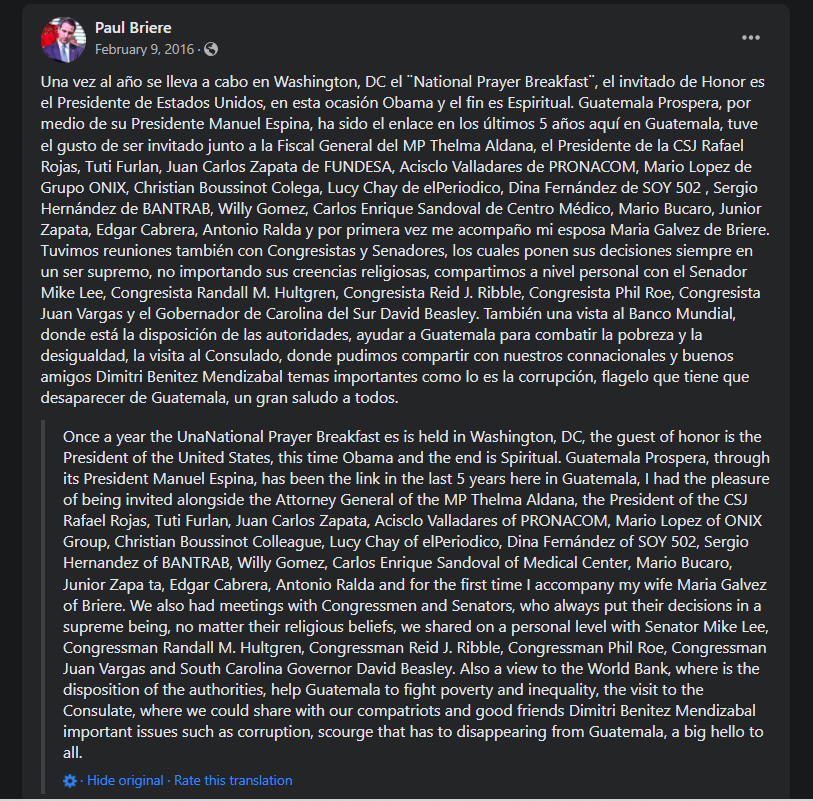
"People who are having suicidal thoughts will often try to communicate that with people in some way."

"But the data suggests that people who have attempts and survive come to view it in a different way, which is that their thinking was a little bit off — maybe from substances, maybe just because of the mental illnesses that were occurring at that time. And with time and clarity they realize that that wasn't a good option. It wasn't a good solution to the challenges that were facing them. And so I think an honest depiction of those things in media really should come at it from a perspective of, ‘Ten years down the road, how is this going to be viewed?’”

There is, however, a strong nugget of truth to how “The Iron Claw” illustrates Kerry’s reaching out to Kevin shortly before he dies. As Lund noted, “We do know that people who are having suicidal thoughts will often try to communicate that with people in some way."

“They may not say, ‘I’m thinking of doing this to myself, but they may say something like, ‘I’m feeling like I can’t get out of this,’ or ‘If anything happens, please make sure you take care of my relatives,'" Lund continued. "So people will often give indications, and that’s why it’s important for us to know what those indications are so we can pick up on them.”

It’s unfortunate then, that one of the most poignant and peaceful moments of the film also serves as perhaps its most ethically egregious. As Kevin sits with his brother Kerry's body— which is laid across the family dining table — the audience has a vision of a brotherly reunion in the afterlife. Mike and Kerry are joined by Jack Jr. and David. The scene is quiet and bucolic, a seeming panacea Kevin has constructed for the pain his brothers endured earlier on. 

But this is the crux of why the image is also somewhat problematic. “I think it made it seem as though suicide truly is an escape and everything's fine then,” Langenecker said, which is part of why he claimed he would give “The Iron Claw” a “mixed review” from a psychological standpoint. “I don't find that this movie glamorizes suicide. I don't find that this movie simplifies suicide. I think it shows it for the complexity.”

If you are in crisis, please call the 988 Suicide and Crisis  Lifeline by dialing 988, or contact the Crisis Text Line by texting TALK to 741741.