Spring Sale: Get 1 Year, Save 58%

“Almost pointless discussion”: Ex-Mueller prosecutor calls out Judge Aileen Cannon’s “snarky” order

Within minutes of each other, the judges overseeing the two federal criminal cases against Donald Trump in Florida and Washington, D.C. made two starkly different decisions on how classified records in their respective proceedings will be handled, The Messenger reports. In a ruling on a motion from prosecutors asking to provide only summaries of specific classified records during discovery, U.S. District Judge Tanya Chutkan, who is presiding over the D.C.-based election subversion case against the former president, agreed with special counsel Jack Smith. Chutkan decided that prosecutors in the case, in which Trump faces four felony counts, are "authorized to withhold from discovery the classified information specified in its motion, and to provide the unclassified summary substitution specified in its motion to the defense."

Moments earlier, U.S. District Judge Aileen Cannon filed a separate order on another classified records matter in the South Florida case, where Trump is accused of willfully retaining national security records post-presidency at his Mar-a-Lago resort club and attempting to thwart government efforts to retrieve them. In her decision, Cannon found that arguments from Smith's office "lack merit" and reaffirmed the protective orders regarding classified information that were previously in place in the case. "Judge Cannon’s decision goes straight for the capillaries," Andrew Weissmann, a former assistant U.S. attorney wrote on X, formerly Twitter. "Almost pointless discussion, when so many real issue are left undecided. And her language is far too snarky for a federal judge."

“The View” mocks Tucker Carlson’s career downfall following Fox ouster: “He cost them too much”

On Wednesday’s episode of “The View,” its hosts poked fun at Tucker Carlson’s career slide following his abrupt departure from Fox News earlier this year. The segment began with the panel discussing a preview excerpt from “Network of Lies,” the upcoming book by journalist Brian Stelter that will examine the messy aftermath of Fox’s historic $787 million Dominion settlement. Carlson was fired less than a week after Fox settled the defamation lawsuit by Dominion Voting Systems, an election technology company.

View co-host Sunny Hostin claimed Carlson got the boot because “he cost them [Fox] too much” in the wake of the settlement and in anticipation of the 2024 election. She added that Carlson was fired as “part of the deal” from the Dominion settlement, a claim that Carlson has also made and one that Fox News and Dominion have both denied. In his book, Stelter clarified that Carlson’s firing wasn’t a condition of the settlement. It was Lachlan Murdoch — the CEO of Fox Corporation and eldest son of media magnate Rupert Murdoch — who made the executive decision to fire Carlson, Stelter reported. Hostin’s fellow co-host Alyssa Farah Griffin said Carlson has the “unique privilege” of being the only cable news host who has been fired by three cable outlets — CNN, MSNBC and Fox.

“I’ve seen it happen to too many people. I’ve known him for a decade, and he used to be the future George Will,” Griffin said. “He wanted to elevate the discourse, he wanted the Republican Party to be the party of ideas. How the mighty have fallen.” Griffin continued, comparing Carlson to Bill O'Reilly, who left Fox in 2017 and launched his podcast “No Spin News” shortly after. “They end up in somebody’s basement with a podcast,” Joy Behar mocked.

Jonas Salk, the man who cured polio, “would be shocked” by anti-vaxxers, experts say

Polio is a highly infectious viral disease that invades the nervous system and can trigger total paralysis in a matter of hours. It mainly targets children under age 5, and at one time disabled and killed thousands of American children every year. Today, all that is a distant memory. The World Health Organization recently estimated that, thanks to polio vaccines, "More than 20 million people are able to walk today who would otherwise have been paralyzed. An estimated 1.5 million childhood deaths have been prevented through the systematic administration of vitamin A during polio immunization activities."

That breakthrough was largely the work of Dr. Jonas Salk, the American virologist who developed one of the first polio vaccines. A year before Salk died in 1995, polio was considered eradicated in North and South America and today cases have decreased by 99% globally. There were just six cases reported in 2021.

In 1955, when Salk was close to announcing his vaccine was successful, he famously said he didn't believe it would be right for any individual to patent such an essential drug. After being asked to explain who owned the vaccine, Salk stated that "the people" were the owners, justifying that fact with a famous rhetorical question: "Could you patent the sun?"

It was an iconic moment in the history of public health, particularly in an era when vaccine inequity makes it difficult for millions to receive life-saving inoculations. Perhaps it is even more so in the COVID-19 era, when anti-vaccine ideology has become a badge of identity for millions of conservatives.

"His liberality ended up with him being investigated by [FBI Director] J. Edgar Hoover at one point."

Yet the talk of Salk's wisdom is more complicated than it may first appear. As Stanford professor and Salk biographer Dr. Charlotte D. Jacobs told Salon by email, Salk's explanation has caused subsequent scholars to mistakenly claim that he personally gave away the polio vaccine — which he never owned in the first place. Salk was acknowledging the work of his many predecessor scientists, as well as expressing his individual belief that such drugs should be widely available. 

Salk's work "was supported by the National Foundation for Infantile Paralysis, better known as the March of Dimes," Jacobs told Salon by email. "Its director, Basil O'Connor, made it clear to all scientists that the foundation prohibited patents for all work performed under its research grants."

At the same time, Salk was a prominent liberal who cared about public health and believed that quality medical care should be widely available. As his son, Dr. Peter Salk of the University of Pittsburgh's School of Public Health, told Salon, there are lessons from his life that clearly apply to present conditions. Salk had no desire to become rich from his work, his son said, a stark contrast to the current era when most new drugs are developed by pharmaceutical companies frequently accused of exploiting public health needspredatory pricing, misleading marketing and deliberately stalling vaccine development to protect corporate profits.

"My father absolutely did not have any interest personally in in the vaccine being patented," Salk told Salon. Even after the March of Dimes hired an attorney to explore patenting the polio vaccine (which was unsuccessful), he said, "the thing that struck me was my father's absolute disinterest in getting together with that patent attorney. It was very rather frustrating for the attorney because my father was completely focused on the work that was in front of him."

There is another lesson in Salk's example — namely, his assumption that the public would almost unanimously welcome vaccines. This may be difficult to believe in our increasingly contentious era, but America in the '50s and '60s had no widespread anti-vaccine movement. Vaccines were viewed as a remarkable innovation that could save millions of lives by preventing potentially deadly diseases. 

Salk "would be shocked" by the rise of the contemporary anti-vaccine movement, said Dr. Paul Offit, director of the Vaccine Education Center at the Children's Hospital of Philadelphia. "He grew up at a time when diphtheria was a routine killer of teenagers and whooping cough would kill 8,000 to 10,000 people a year. Polio would paralyze 30,000 to 35,000 people a year and kill 1,500 people."

Remembering his own 1950s childhood, Offit said that his parents were terrified of polio and that his mother cried with joy when the polio vaccine was announced.


Want more health and science stories in your inbox? Subscribe to Salon's weekly newsletter Lab Notes.


"My father absolutely just did not have any interest personally in patenting and in the vaccine being patented."

"We saw vaccines for what they were, which were lifesavers," Offit said. "We didn't have this sort of level of distrust and division that we have today."

He cited the "Cutter incident" of 1955 as a "perfect example" of this widespread public trust in science. A private lab that was commissioned to mass-produce copies of Salk's vaccine accidentally sent out versions containing a live polio virus. Roughly 40,000 children developed active cases of polio, at least 200 were permanently paralyzed and 10 died. That disastrous outcome could certainly have shaken public confidence in vaccines — but that's not what happened

The Cutter incident "demonstrated the need for the U.S. government to take a stronger regulatory role in approving new vaccines," Dr. Daniel Wilson, a retired history professor at Muhlenberg College and author of "Living with Polio: The Epidemic and Its Survivors," told Salon in 2021. "It may also have helped move the government to more strongly finance medical and scientific research. Remember, the polio research and trials for the Salk and Sabin vaccines were almost entirely funded by the private philanthropy [of] the March of Dimes."

"I think it was probably the worst biological disaster in this country's history," Offit said, "and it in no sense had shaken the trust that people had in the government and the pharmaceutical industry and vaccine regulation. Not at all. If you looked at the exit interviews from those people who were jurors in the first trials, they trusted the companies.They saw what it was: a process of evolution."

Dr. Peter Salk said his father would be "really puzzled" by the emergence and spread of anti-vaccine ideology. "His whole commitment was protecting the population from infectious diseases," which did not stop him from also caring about "problems confronting humanity that were outside of the realm of infectious disease and physical illness." Peter Salk mentioned the books his father wrote later in life, including "World Population and Human Values: A New Reality" in 1981 and "Anatomy of Reality: Merging of Intuition and Reason" in 1983. "He was absolutely committed to the notion that humanity needs to do something to change their way of thinking and behaving if we're going make it through this transition — the period that we're still struggling with," Peter Salk added.

We need your help to stay independent

He added that in Jonas Salk's final years, he worked on efforts to develop an HIV vaccine. Although that was not successful, Salk said that his father was "deeply engaged in introducing HIV treatment programs in Africa and Asia, highly aware of the inequities and involved in the whole system [of improving] access to medications," and so on. 

"His liberality ended up with him being investigated by [FBI Director] J. Edgar Hoover at one point," Salk recalled, a note of rueful amusement creeping into his tone. But "they didn't come up with anything."

What is “fried rice syndrome?” A microbiologist explains

A condition dubbed "fried rice syndrome" has caused some panic online in recent days, after the case of a 20-year-old who died in 2008 was resurfaced on TikTok.

"Fried rice syndrome" refers to food poisoning from a bacterium called Bacillus cereus, which becomes a risk when cooked food is left at room temperature for too long.

The 20-year-old college student died after reportedly eating spaghetti that he cooked, left out of the fridge and then reheated and ate five days later.

Although death is rare, B. cereus can cause gastrointestinal illness if food isn't stored properly. Here's what to know and how to protect yourself.


What is 'fried rice syndrome'?

Baccilus cereus is a common bacterium found all over the environment. It begins to cause problems if it gets into certain foods that are cooked and not stored properly.

Starchy foods like rice and pasta are often the culprits. But it can also affect other foods, like cooked vegetables and meat dishes.

Certain bacteria can produce toxins. The longer food that should be refrigerated is stored at room temperature, the more likely it is these toxins will grow.

B. cereus is problematic because it has a trick up its sleeve that other bacteria don't have. It produces a type of cell called a spore, which is very resistant to heating. So while heating leftovers to a high temperature may kill other types of bacteria, it might not have the same effect if the food is contaminated with B. cereus.

These spores are essentially dormant, but if given the right temperature and conditions, they can grow and become active. From here, they begin to produce the toxins that make us unwell.


What are the symptoms?

The symptoms of infection with B. cereus include diarrhoea and vomiting. In fact, there are two types of B. cereus infection: one is normally associated with diarrhea and the other with vomiting.

Illness tends to resolve in a few days, but people who are vulnerable, such as children or those with underlying conditions, may be more likely to need medical attention.

Because the symptoms are similar to those of other gastrointestinal illnesses and because people will often get gastro and not seek medical attention, we don't have firm numbers for how often B. cereus occurs. But if there's an outbreak of food poisoning (linked to an event, for example) the cause may be investigated and the data recorded.

We do know B. cereus is not the most common cause of gastro. Other bugs such as E. coli, Salmonella and Campylobacter are probably more common, along with viral causes of gastro, such as norovirus.

That said, it's still worth doing what you can to protect against B. cereus.

How can people protect themselves?

Leftovers should be hot when they need to be hot and cold when they need to be cold. It's all about minimising the time they spend in the danger zone (at which toxins can grow). This danger zone is anything above the temperature of your fridge and below 60°C, which is the temperature to which you should reheat your food.

After cooking a meal, if you're going to keep some of it to eat over the following days, refrigerate the leftovers promptly. There's no need to wait for the food to cool.

Also, if you can, break a large batch up into smaller portions. When you put something in the fridge, it takes time for the cold to penetrate the mass of the food, so smaller portions will help with this. This will also minimise the times you're taking the food out of the fridge.

As a general guide, you can follow the two hour/four hour rule. So if something has been out of the fridge for up to two hours, it's safe to put it back. If it's been out for longer, consume it then and then throw away the leftovers. If it's been out for longer than four hours, it starts to become a risk.

The common adage of food safety applies here: if in doubt, throw it out.

It's also worth keeping in mind the general principles of food hygiene. Before preparing food, wash your hands. Use clean utensils and don't cross-contaminate cooked food with raw food.

Enzo Palombo, Professor of Microbiology, Swinburne University of Technology

This article is republished from The Conversation under a Creative Commons license. Read the original article.

Jenna Ellis’ lawyer says she rushed to land plea deal — and warns Giuliani “should be” worried

Fulton County prosecutors' huddle with lawyers for Jenna Ellis, a former Donald Trump attorney and co-defendant in his Georgia election subversion case, announcing that they could resolve her case with a guilty plea "was about a three-second conversation," Frank Hogue, one of Ellis' attorneys, told the Atlanta Journal-Constitution. “Long enough to say, ‘No, we’re not doing RICO.’”

Hogue and his wife and co-counsel, Laura, met with prosecutors on Oct. 23 and struck a palatable deal with them by mid-afternoon, a move Hogue said was prompted by the surprise guilty pleas of two other lawyers indicted in the case — Sidney Powell and Kenneth Chesebro — just before their speedy trial was set to begin. “I think what really accelerated it was Powell and Chesebro falling as they did, one right after the other,” Hogue said, declining to say who reached out first. “It looked like timing was of the essence for us.” He added that a priority during deal negotiations was to ensure that Ellis could retain her law license. 

Ellis pleaded guilty to one felony count of aiding and abetting false statements and writings. She was sentenced to five years probation and agreed to cooperate with prosecutors, making her a potential key witness against the former president and former New York City Mayor Rudy Giuliani, whom she worked closely with following the 2020 election. When asked if Giuliani, who is charged with racketeering and 12 other counts, should be worried, Hogue replied, "I think he should be.” He added: “I think there’s enough for Mayor Giuliani to worry about that wouldn’t have anything to do with Jenna Ellis. I mean, she wouldn’t be a help to him, I don’t think, if she was to be called as a witness. But I think his troubles extend far beyond her.”

Condemnation after Graham declares “no limit” of Palestinian deaths would make him question Israel

Sen. Lindsey Graham, R-S.C., claimed on Tuesday that no number of Palestinian deaths would make him waver on his support of the Israeli military's ongoing airstrikes on Gaza, which came as a response to deadly attacks carried about by Hamas on October 7. During an interview with CNN, host Abby Phillip asked the GOP lawmaker, “Is there a threshold for you, and do you think there should be one for the United States government, in which the US would say, ‘Let’s hold off for a second in terms of civilian casualties?’” Graham replied that he didn't: "If somebody asked us after World War Two, ‘Is there a limit what would you do to make sure that Japan and Germany don’t conquer the world? Is there any limit what Israel should do to the people who are trying to slaughter the Jews?’ The answer is no. There is no limit." He continued: "But here’s what you need to do. Be smart. Let’s try to limit civilian casualties the best we can. Let’s put humanitarian aid in areas that protect the innocent. I’m all for that. But this idea that Israel has to apologize for attacking Hamas, who’s embedded with their own population, needs to stop. The goal is to destroy Hamas. Hamas is creating these casualties – not Israel."

Graham faced widespread criticism from the left over his comments. "This is like what you hear in Russian media about Ukraine," tweeted Matt Duss, executive vice president of the Center for International Policy and a former adviser to Sen. Bernie Sanders, I-Vt. Former White House aide and co-founder of the National Black Justice Coalition Keith Boykin tweeted: "I guess now we can stop pretending that 'all lives matter.'" But activist Yonah Liebermann, the co-founder of IfNotNow, a Jewish anti-war group, also called out Democrats and those on the left who have similarly backed Israel's escalation in Gaza without any qualifications or preconditions. Graham's stance is "essentially, the policy of" the American Israel Public Affairs Committee, Democratic Majority for Israel, "and most of the Democratic Party," he wrote. Israel launched its military occupation after Hamas killed more than 1,400 people and abducted hundreds of others. The Gaza Health Ministry stated that the death toll among Palestinians has exceeded 8,000, many of them women and children.


“You knew there were civilians”: Blitzer stunned as Israeli official confirms refugee camp strike

CNN's Wolf Blitzer confronted an Israeli Defense Forces spokesman on-air about a Tuesday bombing of a crowded refugee camp in the northern Gaza Strip that Israel says killed a senior Hamas official who was involved in the Oct. 7 terror attack. 

The Times of Israel reported that the IDF indicated the strike had killed the commander of Hamas' Central Jabaliya Battalion, Ibrahim Biari, as well as “several other terrorists and caused underground terror tunnels to collapse, bringing down several nearby buildings.” The report also noted that "at least 50 people were killed in the strike and subsequent collapse" per Palestinian reports. 

Blitzer questioned Lt. Col. Richard Hecht of the IDF on the bombing's civilian death toll, asking if Israel still decided to go through with the attack on the Jabalya refugee camp to kill the Hamas official knowing that a number of innocent civilians would be killed in the process. 

"But even if that Hamas commander was there, amidst all those Palestinian refugees who are in there in that Jabalya refugee camp, Israel still went ahead and dropped a bomb there attempting to kill this Hamas, Hamas commander, knowing that a lot of innocent civilians, men, women and children presumably would be killed. Is that what I’m hearing?" Blitzer asked.

"That’s not what you are hearing, Wolf," Hecht replied. "We, again, were focused on this commander, again, who — you’ll get more data who this man was — killed, many, many Israelis. And we’re doing everything we can. It’s a very complicated battle space. There could be infrastructure there. There could be tunnels there. And we’re still looking into and we’ll give you more data as the hour moves ahead.”

"But you know that there are a lot of refugees, a lot of innocent civilians, men, women and children in that refugee camp as well, right?” Blitzer asked, pressing Hecht further.

“This is the tragedy of war, Wolf. I mean, we as you know, we’ve been saying for days, ‘Move south, civilians that are not involved with Hamas, please move south,’” Hecht responded.

“Just trying to get more information. You knew there were civilians there. You knew there were refugees, all sorts of refugees. But you decided to still drop a bomb on that refugee camp attempting to kill this Hamas commander. By the way, was he killed?” Blitzer continued.

“I can’t confirm yet. There’ll be more updates,” Hecht said of the civilian toll before addressing the commander's death.

“Yes, we know that he was killed and about the civilians there. We’re doing everything we can to minimize. I’ll tell you again, sadly, they are hiding themselves within the civilian population. And again, we are doing this stage by stage and we’re going to go after every one of these terrorists who was involved in that hideous attack on the 7th of October, Wolf,” Hecht added.

The Gaza Health Ministry, which is run by Hamas, and the director of Gaza's Indonesian Hospital said hundreds of people were killed or injured in the attack, the Washington Post reports. Palestinians carried away the injured and dead on blankets and mattresses, and the series of strikes left a deep crater in the area and toppled buildings.

A spokesperson for the Palestinian Civil Defense emergency services, Mahmoud Bassal, told the Post that about 20 buildings were destroyed by the blasts. The precise count of those wounded and dead was not immediately clear amid ongoing rescue efforts. 

Tuesday's attack reinforced fears that Israel's use of airstrikes and ground operations will put more civilians in the territory at a higher risk and worsen an already extreme humanitarian crisis. 

Though aid convoys have maintained a limited delivery of much-needed supplies, the deliveries fall short of satisfying growing demands. Egypt has been prepping hospitals to treat wounded Gazans, but a stalemate in border negotiations has kept wounded people from crossing. 

In a potential turning point, Hamas and Egypt said Tuesday that an agreement was brokered to allow 81 injured people from the territory to pass on Wednesday through the Rafah border, which is the only official route from Gaza that Israel does not control.

Israel's expanding push into Gaza has also become a point of contention for allies like the United States, which has asserted Israel's right to retaliate after the Oct. 7 Hamas attack that killed at least 1,400 Israeli civilians and soldiers but has increasingly pushed for ways to help civilians caught in the war. Secretary of State Antony Blinken, during a Senate hearing in Washington, D.C. Tuesday, said “humanitarian pauses must be considered.”

António Guterres, the secretary general of the United Nations, said in a statement that he was “deeply alarmed by the intensification of the conflict.” International humanitarian law “is not an a la carte menu and cannot be applied selectively," he added.

Sen. Elizabeth Warren, D-Mass., admonished Israel and said its attack on the Jabalya refugee camp is "horrible" in a post to X, formerly Twitter.

"Israel has an obligation to protect civilians under the laws of war," Warren wrote. "Hamas’s use of innocent Palestinians as human shields does not excuse bombing a location filled with civilians."

"This is a war crime," Rep. Cori Bush, D-Mo., tweeted of the attack. "This unspeakable violence must end. The U.S. government cannot keep funding these atrocities. There must be a #CeasefireNOW."

"Make no mistake: these human rights abuses are being carried out with U.S. weapons, U.S. funding, and with 'no red lines,'" added Rep. Ilhan Omar, D-Minn. "And now we are set to vote on an additional $14 billion with no restrictions or conditions. The United States Congress should not fund violations of U.S. and international law."

We need your help to stay independent

The director of the New York office of the U.N.'s human rights agency declared his retirement in a sharply worded letter pertaining to the war this week, according to the New York Times, accusing the U.N. of abandoning its principles and international law while failing to stop Israel's bombardment of the territory, which he called a "genocide."

"I write at a moment of great anguish for the world, including for many of our colleagues," Craig Mokhiber, the former director and a human rights lawyer, wrote in the Oct. 28-dated letter. "Once again, we are seeing a genocide unfolding before our eyes, and the Organization that we serve appears powerless to stop it.”

In the letter, which the U.N. confirmed was authentic, Mokhiber accused the U.S. and UK governments and much of Europe of being "complicit," describing Israel's offensive in Gaza and the West Bank — which has killed at least 8,500 Palestinians, including more than 3,500 children since Oct. 7 per the Gaza Ministry of Health, and damaged medical facilities, mosques, schools and residences — as "a textbook case of genocide."

He addressed the letter to Volker Türk, the U.N. high commissioner for human rights, who has called for an immediate ceasefire and criticized Israel for blockading Gaza and deploying airstrikes on the territory. Mokhiber, who has spent four decades investigating Palestinian human rights violations and genocides against the Tutsis, Bosnian Muslims, the Yazidi and the Rohingya for the U.N., further accused key parts of the organization of having "surrendered" to pressure from the U.S., the body's top donor,  and for fearing the "Israel Lobby."

In response to the letter, the spokeswoman for the U.N. human rights agency, Laura Gelbert Delgado, said on Tuesday, "These are the personal views of a staff member who retires today. The position of the Office is reflected in its public reporting and statements.”


Want a daily wrap-up of all the news and commentary Salon has to offer? Subscribe to our morning newsletter, Crash Course.


The Carter Center, founded by Jimmy Carter, the only U.S. president to call Israel's policies in Palestine apartheid, and former First Lady Rosalynn Carter, on Tuesday echoed international calls for a ceasefire in Gaza as the number of Palestinians killed in Israeli attacks since Oct. 7 reached 8,525, per Common Dreams

The organization, which was established to champion and fight for human rights globally, quoted the humanitarian and Democratic politician in its statement: "We will not learn to live together in peace by killing each other's children."

"We urge all parties to agree to a ceasefire," the Carter Center added. "We ask for the opening of humanitarian corridors into Gaza and the reinstatement of essential services to the area. We urge the immediate, safe return of all hostages, and we call on both sides to abide by international law."

The Center's call for the ceasefire came as a U.N. official cautioned that Gaza has devolved into a "graveyard" for children since Israel instituted the blockade, which cut access to fuel, electricity, water and food, and began its offensive attacks.

"Hamas is responsible for the horrific October 7 massacre of more than 1,400 innocent people in Israel and the taking of more than 200 hostages," the Carter Center said. "And the innocent people of Gaza are now unfairly suffering from the ongoing conflict and the acute humanitarian crisis that has unfolded."

"Collective punishment is contrary to international law," the organization continued. "So is the murder of civilians."

Hamas on Saturday called on Israeli Prime Minister Benjamin Netanyahu to agree to an exchange of the Israeli civilians the group took hostage when it launched its surprise attack and the Palestinians being held in Israeli prisons. Family members of some of the Israeli hostages have echoed that call. 

Netanyahu, however — boosted by the Biden administration and U.S. politicians, including former Secretary of State Hillary Clinton — has rebuffed calls for a ceasefire, which UNICEF said on Tuesday could save the lives of 1,000 children in Gaza in just 72 hours.

"The violence must stop now," the Carter Center said. "There is no military solution to this crisis, only a political one that acknowledges the common humanity of both Israelis and Palestinians, respects the human rights of all, and creates a path for both societies to live side by side in peace."

Since the start of the conflict, the U.N. has received widespread criticism from both Israel and Palestinians for what has been described as an inadequate response to the war, whether that be for not being clear enough about Israel's right to defend itself against Hamas or for not being able to protect Palestinian civilians in Gaza while the death toll mounts and thousands are displaced.

The U.S. government's stance on the conflict and steadfast support of Israel has also garnered mounting national pushback as more Americans call for a ceasefire in the region. 

A majority of Americans, both Democrat and Republican, believe the U.S. government should push for a ceasefire between Israel and Hamas, according to a Data for Progress poll conducted between Oct. 18 and 19 finding that 66 percent support that move.

While Democrats were the most in favor at 80 percent, the majority of Republicans and independents also supported a ceasefire at 56 percent and 57 percent, respectively. 

MSNBC host Chris Hayes noted Tuesday that, despite the results of the poll showing that overwhelming public support for the move, “calling for a ceasefire is still a distinctly minority opinion inside Congress as a whole.” 

“There’s only 18 members of Congress that have signed on to a resolution calling for a ceasefire. All of them are Democrats,” Hayes said, according to Mediaite, adding, “It does seem at least more popular with the American public than members of Congress.”

“RHONY” star Ramona Singer booted off BravoCon following recent racism accusations

It looks like Ramona Singer — the star of “The Real Housewives of New York City” and soon-to-be star of Peacock’s “Real Housewives Ultimate Girls Trip: RHONY Legacy” — will no longer be attending BravoCon alongside 30,000 fans this weekend. Singer was scheduled to attend this year’s showcase, but on Tuesday her name was no longer listed on the BravoCon app. Several sources later confirmed to Page Six and The Hollywood Reporter that Singer had been booted from the event.

The recent revelation comes after Singer reportedly used a racial slur in a text exchange with a Page Six reporter that took place earlier Tuesday. The reporter had asked Singer if she used the n-word while conversing with a Black crew member during production on RHONY’s 13th season in 2020 and 2021 — a major allegation made in a Vanity Fair story published Monday. Singer asserted that she said “NWord” instead of the actual slur. Singer then wrote the slur out in abbreviated form, typing its first three letters and an ellipsis.

Vanity Fair also reported that Singer allegedly asked a Black female staffer not to change her hair because “there’s so many of you guys now … I’m not gonna be able to remember anybody’s names.” Singer clarified the situation, saying her comment was “strictly a commentary on my inability to remember names.”

Singer also targeted her “RHONY” Black cast member, Eboni K. Williams, after the latter accused Luann de Lesseps of “white fragility.”

“This is why we didn’t need Black people on the show,” Singer allegedly said after Williams left the room, according to a source who was present at the scene. “This is gonna ruin our show.” 

Singer clarified that situation too, telling Vanity Fair that this “absolutely” did not happen. She added that she supported diversifying the cast “well before” Williams joined.

Happy Halloween? John Oliver spotlights the horrors of the chocolate industry

In anticipation of Halloween week, John Oliver had only one thing on his mind: chocolate. But instead of highlighting the joys that are associated with consuming the sweet treat, Oliver chose to touch on the dark side of the chocolate industry during his main segment of “Last Week Tonight.”

“You might be sitting at home thinking ‘Hold on, I’ve seen this show before, this feels like this could be one of those fun stories but is it about to take a turn?” Oliver said. “I’ve got a jumbo bag of fun-sized Snickers that I’m going to be handing out to tiny Elsas and Luigis in around 48 hours, are you gonna make that weird for me?’ Well, yes, yes I am.”

He then delved into the abuses within the chocolate industry, explaining that farmers who grow cocoa in the first place don’t get to revel in all “the money and happiness surrounding chocolate.” More than 80% of the total global output of chocolate comes from west Africa. Ghana and the Ivory Coast contribute more than 60% to the global output. However, around 30 to 58% of its residents earn a gross income below the World Bank’s extreme poverty line, The Guardian noted.

“There’s something a bit weird about a product so synonymous with spreading joy and giving babies what’s basically a cocaine rush, abandoning those who grow its key ingredient to grinding poverty,” Oliver continued. “Even if you had a sense that cocoa production had issues, the truth is, from the land it’s grown on to the workers who harvest it, it is worse than you may realize.”

Oliver explained the operation of the cocoa industry which, like many lucrative businesses, involves major companies taking advantage of its helpless workers in order to make huge sums of profit. Within the industry, there are several cocoa trading companies — like Cargill, Barry Callebaut and OFI — that collectively buy and process about 60% of the world’s cocoa. The processed cocoa is then sold to chocolate companies, notably Mars, Hershey, Mondelēz, Ferrero and Nestlé, which manufacture over half the world’s chocolate.

Although the industry is incredibly profitable, most of its financial benefits are only reaped by those major companies. The farmers and laborers, on the other hand, are given “just 6% of a chocolate bar’s value,” Oliver said.

On top of the wealth division, Oliver added that the industry is riddled with illegal farming, environmental consequences and, unfortunately, child labor. Although Congress attempted to pass legislation in 2005 to set a deadline for eliminating child labor within the cocoa supply chain, major companies continued to push back on it, thus rendering the initiative useless.


Want more great food writing and recipes? Subscribe to Salon Food's newsletter, The Bite.


“All these companies will say that they’re concerned about child labor and that they’ve spent a lot of money trying to fix it. But that’s over 18 years, and while they were collecting $103 billion in sales annually,” Oliver noted. “C’mon, M&Ms must have spent more than that fine-tuning how f**kable the green M&M is.”

Oliver concluded that child labor is “an open secret” in the supply chain and that getting rid of the practice for good is “really complicated.” That being said, companies can start by paying farmers more in order to remedy the issue, Oliver added.

“I know these are companies, not charities, whose job it is to make money, not save the world. But that means that they will only care about this problem exactly as much as they are forced to,” he said. “So if we are serious about getting child labor out of our chocolate, we can’t keep relying on pinky promises and the honor system. We need tough legislation that requires companies to do the right thing.”

Watch the full clip below, via YouTube:


How Keith Lee, a TikTok food critic for the new economy, guides us to eat well – and good

To hear some Atlantans talk about Keith Lee’s recent visit, you would think he burned the city’s restaurant scene to the ground. The TikTok creator embarked on a recent culinary tour of Georgia’s cultural mecca, hitting lesser-known joints along with higher profile places like Old Lady Gang, partly owned by “Real Housewives of Atlanta” star Kandi Burruss.

Since Lee primarily focuses on small businesses, many of them Black-owned, he might not have visited Burruss’ place if not for the insistence of someone imploring him to swing by. That’s what Lee did, employing his usual secret shopper-style methods.

Every few years . . . a prominent publication shares a deep-dive analysis of the critic's role.

Lee rarely dines in-person at the places he reviews because most of the places he highlights are independently owned takeout joints that are rarely, if ever, reviewed by major newspapers or magazines or epicurean-focused sites like Eater. Most don’t have a connection in the culinary world – i.e. they aren’t the so-called “secret” place where a notable chef, writer, or other celebrity eats. They’re spots opened by ordinary people who are confident cooks but lack a promotional budget and therefore, a steady clientele.

Old Lady Gang doesn't suffer from this problem, as Lee discovered when he sent his family into the restaurant as he waited curbside. Under normal circumstances, they would bring food to his car, where he films many of his “taste tests.” This time they were informed that the restaurant didn’t fill takeout orders on weekends and worse, there was an hour-plus wait to be seated. Upon hearing this Lee walked into the place to see if he would be treated any differently – and lo and behold, suddenly a table was available in five minutes.

“As always, I don’t want any special treatment. I want to be treated like everybody else,” he says in his video review, explaining why it didn’t feature the usual gustatory theater. “I pay for my food like everybody else. I’m a normal person. I’m a normal customer. Things like this is exactly why I do reviews the way I do.”

Old Lady Gang wasn’t the only place lightly charred by Lee’s surprise inspection. In his review of The Real Milk and Honey, Lee opens with his signature intro of, “I got it. Let’s try it, and rate it one through 10,” and immediately follows it with, “As you can see, I don't have any bag in my hands.” Again, the takeout ordering experience was the problem . . . until he showed up inside.

Atlanta Breakfast Club managed to get food into Lee’s hands but, as he termed it, “The customer service was interesting. While the people were nice, the rules they had set were interesting to me.” Among them? No takeout. No waiting area. And if anyone in a party is not seated when the waitstaff comes to take an order, nobody at the table gets water, coffee or anything. All that and, according to a family member's report, the place charged a dollar for a dollop of butter to go on a biscuit served without jelly.

@keith_lee125 Atlanta Food Tour Recap ? would you try it ? ? #foodcritic ♬ original sound – Keith Lee

Every few years, and with increasing frequency over five or so, a prominent publication shares a deep-dive analysis of the critic's role. Several of these pieces cite wisdom from two of the wisest voices in the field. One is the late Roger Ebert who, along with the late Gene Siskel, raised generations of film and TV reviewers with their popular weekly show “At the Movies.” Siskel and Ebert’s repartee on the latest movies helped consumers decide whether plunking down their hard-earned dollars at their neighborhood box office would be money well-spent.

“We are all allotted an unknown but finite number of hours of consciousness,” Ebert observes in his famous 2008 essay “ ’Critic’ is a four-letter word” which, unsurprisingly, is considered some version of the critic’s scripture. “Maybe a critic can help you spend them more meaningfully.”

If you’re wondering what a movie critic’s observation about criticism has to do with a TikToker, the answer is what inspired Ebert. He wrote this in appreciation of the Pixar classic “Ratatouille,” specifically its food critic Anton Ego, who earned the nickname of “the grim eater.”

Director Brad Bird wrote Ego in a way that seems to reflect the fear and mild disdain artists hold toward professional critics until, at the film’s climax, he crafts a review that both speaks to the low esteem in which critics are held and explains their social and cultural utility.

“In many ways, the work of a critic is easy. We risk very little, yet enjoy a position over those who offer up their work and their selves to our judgment,” Ego writes. “But there are times when a critic truly risks something, and that is in the discovery and defense of the new. The world is often unkind to new talent, new creations. The new needs friends.”

Fan culture is often cited as the reason for criticism’s alleged die-off, especially in the movie and TV space where review aggregators like Rotten Tomatoes can allegedly be gamed by studios soliciting positive reviews from fan sites.  

A positive review can result in what’s known as the Keith Lee Effect, with lines down the block in front of a restaurant that was struggling before his visit.

The culinary critic's supposed competition is vindictive Yelp reviewers and food influencers who post theatrical videos extolling a restaurant’s menu — some paid for by the people they're supposedly reviewing, and others creating content at the establishment's expense.

Lee does not do that, although old-school journalists may balk at describing him as a critic since he’s also transparent about leaving hundreds of dollars in a single tip – something that most food writers are frankly not in a position to do.  

But then, most food writers aren’t being flown out to Los Angeles by Kevin Hart, who sought an honest evaluation of his vegan restaurant despite Lee warning him that if he didn’t like the food, he’d say so. Lee also assured his viewers that he was predisposed to detest vegan food before he took a bite of its faux chicken sandwich and appeared to have an out-of-body experience.

“I don’t think I’m a food reviewer per se, or an influencer or a content creator. By definition that’s what I am,” Lee told Today in May when he was asked if he follows other food reviewers on social media. “I’m not in competition with anybody. I’m not in the same category with anybody. I’m in my own lane. There’s no traffic in my lane. There’s nobody over here but me.”

Well, yes and no. Lee has a critic’s ethos, but he’s also filling the gap between the democratization of opinion on social media platforms like Instagram, Twitter and TikTok and the elitist world in which many critics operate.  

Moreover, Lee’s tastes reflect those of people who like to eat well and eat good. Those terms can mean the same thing, but Lee’s 14.4 million TikTok followers understand the difference. Eating well at a top restaurant can be transformative but also prohibitively expensive; eating good is a stroke of good fortune that lives in the meeting place of flavor, fulfillment and affordability.

We need your help to stay independent

And like most of us, many of those will only get as close to a Michelin-starred dining experience as watching an episode of “The Bear.”  

That’s fine, since Lee goes to places most professional culinary arbiters will never visit, hitting up sandwich joints and strip mall restaurants, listing how much things cost and talking about the accessibility and customer service experience of each location. His reviews are concise, his delivery is fast-paced and he’s honest and kind, reminding his followers that his experience is his alone.

A positive review can result in what’s known as the Keith Lee Effect, with lines down the block in front of a restaurant that was struggling before his visit. Takes landing on the “not-so-good” side of the plate are accompanied by his passionate discouragement from leaving bad reviews based on his evaluations.

“I mean no harm,” he often says, “No malicious intent.” Neither does any professional critic, believe it or not.

Ego says something else that applies here: “Not everyone can become a great artist, but a great artist can come from anywhere." The culinary world is dominated and defined by acclaimed chefs and the people who work under them; a handful of James Beard award-winning writers who studied cuisine, and a few star food experts like Padma Lakshmi.

Lee is an MMA fighter who began posting videos on social media as a means of combating his social anxiety. When he’s not posting videos from his car, he conducts reviews at a low table in his Vegas home, where he sits in his child’s Paw Patrol-branded chair.

His rating scale isn’t codified, but that doesn’t matter – the meat of each review is his reaction.

Sure, he discusses the balance between acid and sweetness in a sauce and mouthfeel (without using the term), but the verity in his opinion is in how long he remains silent, a distant boom sound effect letting us know when the flavor hits, and the rare times his eyes roll back in his head. When he talks, it’s often with his mouth full, but he politely covers it with his hand as he talks about the flavors exploding on his tongue or notes where they should be but aren’t.

That’s why Atlanta’s reaction to Lee’s highlights of “the good and not-so-good” about their dining scene made such a splash that even Cardi B had to weigh in and co-sign his findings about Atlanta restaurants' aversion of easily accessible takeout.

“I feel bad for Atlanta residents,” she said in a recent Instagram Live response to Lee’s week of reviews. “It is extremely bougie. Like, eating in Atlanta is extremely bougie. And I just thought it was me. But now that I see that other people feel that way? HAHAHA! I knew I wasn't crazy. I knew it!”

This, naturally, led Burruss to posting a TikTok about the lack of takeout at Old Lady Gang in a more diplomatic fashion than other restaurants, one of which tried to downplay Lee's influence before posting an apology. 

@kandi Thanks for stopping by #OldLadyGang @Keith Lee ♬ original sound – kandi

"It is very unfortunate that we couldn't serve [Lee] and his family. We . . . would have loved to, OK?  But he's right, we don't take to-go orders on the weekends. And the simple reason is because we do love and appreciate the people who come and support our restaurant.

"So with that being said," she continued, "We don't want to overwhelm our kitchen by having to, you know, have such long times for the people who are actually at the restaurant, plus having to do to go orders, because obviously that will make the long the wait times even longer."

And now we know.


Want a daily wrap-up of all the news and commentary Salon has to offer? Subscribe to our morning newsletter, Crash Course.


“I believe a good critic is a teacher,” Ebert wrote in 2008. “He doesn't have the answers, but he can be an example of the process of finding your own answers. He can notice things, explain them, place them in any number of contexts, ponder why some ‘work’ and others never could.”

Ebert was talking about movies which, now more than then, people can take or leave or watch in a theater or at home regardless of what some critic has to say about them. Music and TV critics, given the onslaught of content available, are always missing some phenomenon the larger culture unearths or backing a show or a record that appeals only to other critics.

A bad album or show risks wasting one’s spare time, whereas a bad dining experience represents money lost and tangible resources wasted, two things few of us have in abundance. We all have to eat, though, which means the lesson in Lee’s success might in some way inspire consumers to reconsider criticism’s utility, that it’s less about loving or dismissing an effort than finding someone whose informed evaluation aligns with yours.

“I genuinely want to see what's my favorite,” Lee says in his ranking of Chicago’s chicken joints before making that point in a voiceover. “Keyword: My favorite. Before you come in the comments and tell me I'm wrong, I can't be wrong about my opinion. This is what I personally like.

“And let's be honest, there’s no right list here,” he adds. “No matter how I order, somebody’s gonna be upset.”


More than 50 officials call on the EPA to help local governments cut food waste in their communities

On Tuesday, more than 50 local officials penned a letter urging the Environmental Protection Agency to phase out food waste disposal in landfills by 2040 to cut emissions of the potent greenhouse gas methane, Reuters reported.The letter came in the wake of two reports from the EPA that spotlights America’s food waste crisis and its detrimental environmental consequences. More than one-third of the food produced in the U.S. is never consumed. Much of that waste ends up in landfills, where it generates astounding amounts of toxic methane.

Food waste causes 58% of the methane emissions that come from landfills, the EPA said in an Oct. 19 report that calculated those emissions for the first time. The U.S. Department of Agriculture and the EPA set a goal in 2015 to cut food waste in half by 2030. But very little progress has been made and the EPA has been criticized for “under-investing in the issue,” Reuters said.  

“Without fast action on methane, local governments will increasingly face the impacts of warming temperatures, sea level rise, and extreme weather events,” the officials said in their joint letter to the agency. They also called on the EPA to update landfill standards to “require better prevention, detection and reduction of methane emissions,” per ABC News. Landfills are responsible for about 14% of U.S. methane emissions, the EPA also found. Reuters added that compared to carbon dioxide, another powerful greenhouse gas, methane is 28 times stronger over a 100-year period.

The 6 most shocking fast fashion revelations from Hulu’s “IMPACT x Nightline: Unboxing Shein” doc

When it comes to major fast fashion companies, H&M, Zara, Forever 21 and Gap are just a few brands that come to mind. But in recent years, one brand has risen above the ranks, besting Nike to become the number one online retailer in the world.

That brand is Shein (pronounced SHE-in), the online fast fashion retailer founded in Nanjing, China, in 2008 as ZZKKO. During the height of the COVID-19 pandemic, Shein took off across social media and grew in popularity among Gen-Z consumers. By 2022, Shein became the world's largest fashion retailer — and it doesn’t seem like it’ll be losing that title anytime soon.

Despite its widespread success, Shein has found itself embroiled in controversy time and time again. The brand has been sued by several fashion designers for stealing original designs and profiting off of them. Shein has also come under fire for its shady business practices, which includes mistreating, abusing and overworking migrant factory workers in unregistered workshops.

Earlier this year, the brand attempted to redeem itself by inviting a few social media influencers on an all-expenses-paid trip to tour some of its manufacturing facilities in China. The plan worked, albeit briefly. Influencers raved about Shein’s pristine factory conditions and joyful workers. But critics attacked Shein for its alleged propaganda stunt, which conveniently took place after the brand’s labor abuses were exposed.

Shein’s epic rise and questionable business practices are all explored in “IMPACT x Nightline: Unboxing Shein,” an all-new docuseries on Hulu. Chronicled by ABC News journalist Selina Wang, the documentary features interviews with influencers, Shein ambassadors, fast fashion experts and former Shein factory workers.

Here are the 6 most shocking revelations from the showcase:

01
The ridiculously expensive and hefty Shein TikTok hauls
dress at Shein's storeA dress at Shein's store in Barcelona's Portal de l'Angel street on June 30, 2022, in Barcelona, Catalonia, Spain. (Kike Rincon/Europa Press via Getty Images)

Shein hauls, the ongoing social media trend on TikTok, first went viral in 2020. It involves young women showing off massive boxes filled with Shein apparel that amount to several hundreds of dollars. The cheapest hauls are anywhere between $100 to $200 while the pricier ones are $500 and beyond.


Today, Shein is the most visited clothing website in the world. Customers spend twice as much time browsing Shein than Nike, which is the second most popular clothing site, Wang noted. 


Adding to Shein’s shock-value is its celebrity collaborations. The brand has linked up with Katy Perry, Christian Siriano and most recently, the entire Giudice family from “The Real Housewives of New Jersey.”


“We have a very high-end designer collection, but I also do collections that are accessible and wearable and people can buy them,” Siriano said in a clip featured in the documentary. “Not everyone can have a very expensive dress and I know that.”

02
Despite Shein’s popularity, not much is know about its founder
Man in silhouetteMan in silhouette (Getty Images/Tim Robberts)
Wang was unable to retrieve a verifiable photo of Shein’s founder, who is allegedly a 39-year-old Chinese billionaire named Xu Yangtian. However, several media reports claimed the brand’s founder is Chris Xu while Shein itself maintained that its founder’s name is actually Sky Xu.


Wang added that when she and her team asked Shein for photos of its founder, the company said it had none to share.


“This company just seemed to come out of nowhere,” said Elizabeth Cline, a journalist, author and expert on sustainability and labor rights in the fashion industry. “There’s so many fashion companies out there, but we’ve never really seen one grow this quickly and take so much market share as quickly as Shein did.”

03
Shein’s business model isn’t like most major fast fashion companies’
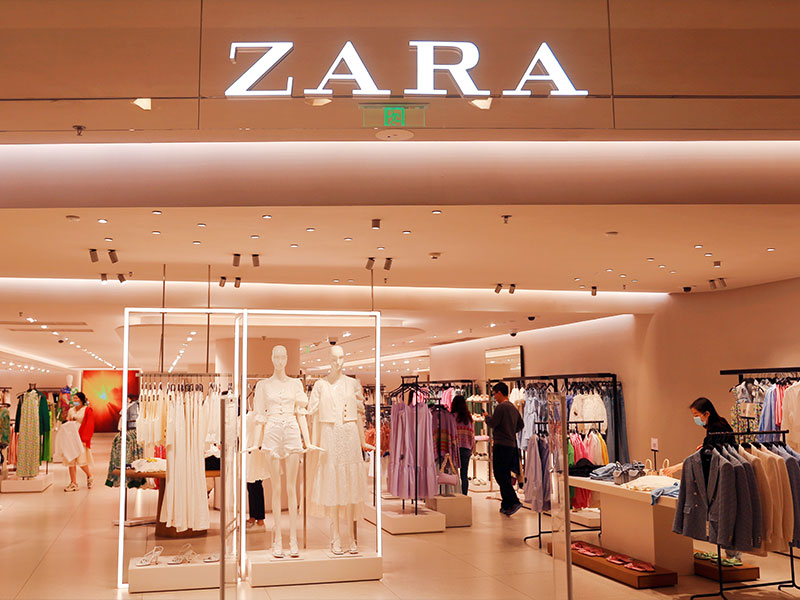
ZARA storePhoto taken on April 29, 2021 shows an offline retail store of fast fashion clothing brand Zara in Shanghai. (Costfoto/Future Publishing via Getty Images)

Unlike H&M and Zara — which predicts fashion trends weeks in advance before putting them on the market — Shein utilizes a unique data collection model that hyper-focuses on micro trends that will attract a greater volume of consumers.   


“What they do is they use data and algorithms to track trends,” Cline explained. “And when a trend emerges, they place an order and then they wait to see which product is gonna take off. Only then do they go back to their factories and say, ’This is selling, we need to make more of it.’”


Shein also assures its online consumers that it will “retain your personal data, including any correspondence you have with us only for as long as is necessary” for compliance and legal purposes.

04
Several major fashion brands have sued Shein over intellectual property
Models present creations during Shein 'Endless Summer' fashion showModels present creations during Shein 'Endless Summer' fashion show in Paris on June 8, 2023. (STEFANO RELLANDINI/AFP via Getty Images)
Many major fashion brands and small fashion designers accused Shein of copying their original designers and selling them as its own. Bailey Prado, an independent fashion designer from California, learned that Shein was recreating several of her designs and selling them for far cheaper. For example, an exact copycat version of Prado’s $100+ dress was sold for just $25 by Shein.


Although Prado never took legal action against Shein, several fashion brands — like Levi’s, Ralph Lauren and Dr. Martens — did. All of the cases have been settled, with the exception of Ralph Lauren’s.


“Most recently, Shein was named in a trademark infringement and unfair competition lawsuit by Ralph Lauren, with the American fashion brand accusing Zoetop Business Co. of offering up apparel that includes trademarks that are ‘substantially indistinguishable and/or confusingly similar to one or more of Ralph Lauren’s marks,’ namely, its famous polo player logo,” per a 2021 report from The Fashion Law.

05
Shein cuts its manufacturing costs by subcontracting Chinese migrant workers
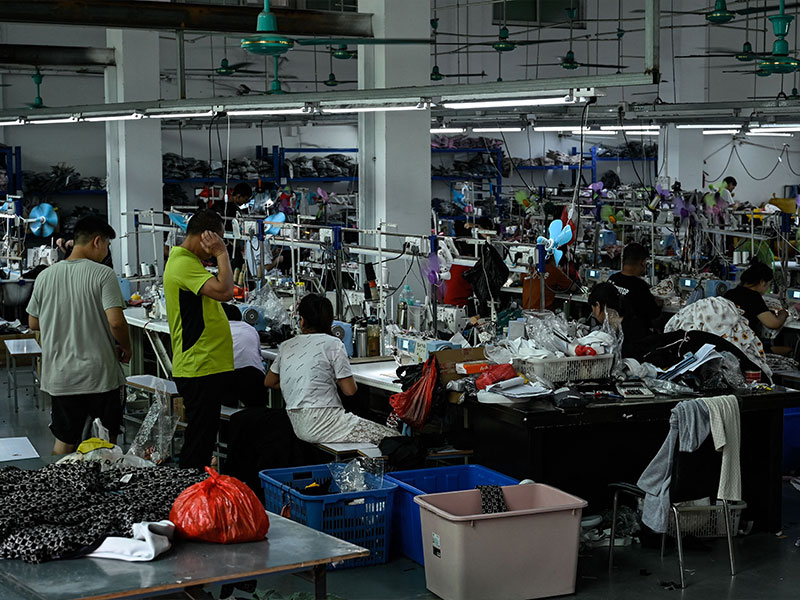
Shein garment factoryWorkers make clothes at a garment factory that supplies SHEIN, a cross-border fast fashion e-commerce company in Guangzhou, in Chinas southern Guangdong province on July 18, 2022. (JADE GAO/AFP via Getty Images)

To help increase production and keep its clothing costs low, Shein operates multiple unregistered workshops in Guangzhou, a large city in southern China. The small and packed workshops are housed in rundown “handshake buildings” — urban structures that are so close to one another that people can reach out and touch their neighbor’s hand.


Factory workers and Shein order pickers are obtained via dispatch agencies, “a controversial practice in China that can prevent workers from defending their rights,” as explained by Sixth Tone. These workers are also forced to do their jobs in unsafe work conditions. The workshops are considered a fire risk and “lack safety protocols like windows and emergency exits,” as reported by Time magazine earlier this year.


To make matters worse, many of these workshops are illegal businesses and have no formal contract with Shein. That means many workers are stripped of their rights, forced to work under strenuous circumstances and are scammed out of proper, viable compensation.

06
Shein taps into people’s love for fashion and “cheap stuff”
Shein storeShopper poses for her friend taking photos with their bags of Shein merchandise inside Forever 21 at the Ontario Mills Mall in Ontario Thursday, Oct. 19, 2023. (Allen J. Schaben / Los Angeles Times via Getty Images)

“We love convenience. We love having things shipped to our door,” Cline explained. “It’s like Shein’s tapping into our urge to consume and express ourselves and to do all of that really cheaply.”


She continued, “I see a lot of people coming together to hold the industry accountable, and I haven’t seen this kind of action, really in decades. It reminds me of some of the strongest social movements that gave us our first labor and environmental laws way back in the early 1900s. So I think it’s a hopeful moment. And I think people want to see change.”

“IMPACT x Nightline: Unboxing Shein” is currently available for streaming. Watch a trailer for it below, via YouTube:

Trump lawyer Alina Habba thinks Secret Service will protect Trump from being jailed

Former President Donald Trump's attorney Alina Habba on Tuesday dismissed concerns about him potentially being jailed, citing his Secret Service protection. During an interview with conservative network Newsmax, host Carl Higbie mentioned the ex-president's recently imposed partial gag orders in his New York business fraud case and D.C. election interference case. "How is this — Could they even possibly throw him in jail? What would that look like?" Higbie asked. "He's protected by Secret Service, period," Habba replied. "So I always tell people when they're panicked, listen, he's protected by Secret Service, number one. Number two, he did nothing wrong." 

"So, when people go to jail because they've done something wrong. Do we have crooked situations in and out of court?" the MAGA lawyer asked. "Absolutely. Could they try? Probably? But it won't work because there is still [a] trial process. There [are] still facts and unfortunately, they're not going to win on the facts. Secret Service will always protect President Trump. That's the truth. They have to. Wherever he is. But it's not — it's not even something we think to be honest, because this is all political. It's really not. There's no criminal acts that he's done. There's no civil wrongs that he's done unless making money for banks is a civil wrong. I mean that — that's — it's Trump derangement syndrome at its best. I'm not worried about him. He's not worried, and the American public shouldn't be worried."

Second person to receive experimental pig heart transplant dies

The world's second xenotransplant recipient, Lawrence Faucette, died Tuesday at age 58. As reported by CNN, Faucette received the experimental transplant six weeks ago after being admitted to the University of Maryland Medical Center with symptoms of heart failure and pre-existing conditions which made him ineligible for a traditional human heart transplant. Despite excellent heart functions reported after the first month and an experimental course of immunossuppresants applied to guard against organ rejection, UMMC said Faucette's transplanted heart began showing signs of rejection in recent days. 

“Mr. Faucette’s last wish was for us to make the most of what we have learned from our experience, so others may be guaranteed a chance for a new heart when a human organ is unavailable. He then told the team of doctors and nurses who gathered around him that he loved us. We will miss him tremendously,” said UMMC Cardiac Xenotransplantation Director Dr. Bartley Griffin

Faucette is survived by his wife, Ann Faucette. Several days before her husband underwent the surgery, she told reporters the couple had “no expectations other than hoping for more time together. … That could be as simple as sitting on the front porch and having coffee together.” UMMC doctors report that, following his experimental surgery, Faucette was indeed well enough to spend his final weeks with family. 

“Absurd”: Legal scholar torches Trump’s claim that he can’t be removed from the ballot

Former President Donald Trump on Tuesday shared a video haranguing efforts to have him barred from state ballots for attempting to subvert the 2020 election process. 

Trump took to his Truth Social platform to post a video claiming that cases seeking to keep his name off state ballots are "illegal."

"They Are Trying to ILLEGALLY Remove My Name From Your Ballot," the caption said on the video, in which he argues that a "fake trial is currently taking place to try and illegally remove my name from the ballot."

"I often say that 2024 is the most important election in American history," he added, stating that, if he loses, the 2024 election might be "the last election we ever have."

"Our country will not survive," he continued. "If Crooked Joe and the Democrats get away with removing my name from the ballot, then there will never be a free election in America again. We will have become a dictatorship where your president is chosen for you."

Earlier on Tuesday, Trump and his legal team filed a lawsuit against top Michigan election official, Secretary of State Jocelyn Benson, a Democrat, even though Benson already penned a September opinion piece for the Washington Post arguing that it was not up to her nor legislators to remove Trump from ballots.

"The appropriate forum for deciding whether a candidate qualifies to serve in office under the Constitution is the courts — and, in a case with national implications such as this one, the Supreme Court," Benson wrote. "Though it would be best for the country if that resolution came soon, it’s not a given that the court will pronounce on it before the 2024 primary season ends."

"In 2020, democracy prevailed against a historic effort to undermine it because people of integrity, on both sides of the aisle and in all three branches of government, enforced the guardrails and laws," she continued. "Not only state and local election officials but also lawmakers, judges, poll workers and attorneys worked to make sure that every vote was counted and democracy prevailed. Together we ensured the accurate vote totals were certified in each state, the correct elector certificates were submitted to the National Archives, and the transfer of power occurred in accordance with the law and the Constitution."

"We will succeed again if the courts continue to serve as the proper forum for determining legal issues such as the one now before us — and if secretaries of state remain focused on their role as champions, and guardians, of the democratic process."

Despite Benson confirming her separation from the ballot case, Trump's lawsuit alleges that Benson is “creating uncertainty” by not responding to a letter from his campaign imploring her to confirm that he will be on Michigan's ballot. Trump's attorneys in the suit, filed in the Michigan Court of Claims, seek to prohibit Benson from leaving Trump off the state's ballot and urge a court to deem Benson unfit to determine whether Trump can be ousted.

A trial opened at a state court in Denver, Colorado on Monday, after a group of Colorado voters filed a suit in September asserting that that Trump is ineligible to hold office again under Section 3 of the 14th Amendment, which disqualifies anyone who “engaged in insurrection or rebellion” against the Constitution, without a waiver from Congress. Similar lawsuits have cropped up in New Hampshire, Arizona, and Minnesota, per CNBC. 

Some Democrats argue that the section barring insurrectionists from the ballot is self-executing. 

"If someone showed up trying to run for president at 19 years old, their answer wouldn't be, well let's let the voters decide. They would say let's consult the Constitution," Rep. Jamie Raskin, D-Md., who served as an impeachment manager in Trump's second impeachment, told MSNBC.

Trump's attorneys have maintained that the ineligibility underpinning these lawsuits does not apply to the office of the president, a claim that Harvard Law professor Laurence Tribe called an "absurd argument."

"It is clear that Section 3 by itself says that anyone who 'engages in an insurrection or rebellion against the Constitution of the United States' — that's the phrase, not just against the government, but against the Constitution of the United States — is not entitled to another bite at that apple. Now, Donald Trump says that might apply to a county commissioner in New Mexico, but it doesn't apply to him, because it doesn't apply to the president. That is an absurd argument," Tribe said.

We need your help to stay independent

Tribe noted that in Trump's Michigan filing "he calls himself 'President Trump' 35 times — he seems to think that he won the election, but I have news for him. The Constitution says that you serve for only four years. And if you lose the Electoral College, that's the end of it."

"He argues, 'I never really took the kind of oath that Section 3 talks about,'" Tribe continued. "It talks about an oath to support the Constitution. 'I didn't take that oath. I took the oath that the president takes.' It's an oath to preserve, protect, and defend the Constitution. Now, that's how ridiculous the arguments get. The legal arguments are clear. But the political argument is not so clear. A lot of people say even though Congressman Raskin's examples are perfect, they wouldn't apply it to a 30-year-old or to someone not a natural-born citizen, but they say let the people decide, even if someone is not eligible. That's not the way that people who fought the Civil War decided we needed to handle it. They decided that you needed to disqualify anyone who basically is a traitor to the Constitution. That kind of person is dangerous. Dangerous as a person who might attempt to seize power and then never let go."

"That's the history of autocracies around the world. Somebody manages to make it into office, and then they decide they're going to stay. That's the danger against which this language is designed to protect us all."


Want a daily wrap-up of all the news and commentary Salon has to offer? Subscribe to our morning newsletter, Crash Course.


Tribe later tweeted that it is "an error" to focus on January 6, for which Trump denies responsibility.

"It’s what he ADMITS — ATTEMPTING TO STAY IN POWER AFTER OFFICIALLY LOSING  THE ELECTION— that DEFINES 'insurrection against the Constitution of the United States,'" he wrote.

J. Michael Luttig, a longtime prominent conservative judge who advised former Vice President Mike Pence ahead of January 6, argued that Tribe is "absolutely right."

"The events of January 6 are the critical final phases of the former president's plan to remain in power — in particular the interference with, and obstruction of, the official proceeding of the Joint Session to count the electoral votes," he wrote. "But it is the overall plan to overturn the election and remain in power in violation of the Executive Vesting Clause that, itself, disqualifies the former president from future office under Section 3 of the Fourteenth Amendment. For, it is that plan and attempt to remain in office notwithstanding that he had lost the election that constitutes an 'insurrection or rebellion against the Constitution of the United States.'"

Trump’s kids take the stand in N.Y. fraud trial — but only Ivanka matters

If all goes according to plan, Donald Trump Jr. will testify at the Trump Organization's fraud trial in New York on Wednesday, as the first of the Trump offspring to be called to the stand, Eric Trump is scheduled to appear on Thursday and Ivanka Trump will reportedly testify next week. Their illustrious father is himself slated to appear on Monday, which will actually be the second time Donald Trump has personally taken the stand in this case. The first of those was a brief appearance last week, when he was cited for violating the gag order imposed by the judge and ordered to pay $10,000. In any event, we can expect quite a show over the next week, with the Trump family band in full effect.

You may (or may not) recall a deeply strange Trump press conference after the 2016 election, when he claimed he was "turning over" the business to Donald Jr. and Eric, while insisting he didn't need to do it but wanted to because he "didn't like the way it looked." His tax attorney, Sheri Dillon, spoke at length about the arrangement, standing before a table piled high with documents that Trump had supposedly signed but wouldn't allow the press to examine. In fact, Trump never personally divested from the Trump Organization or his nested network of companies in any way, and continued to market his golf resorts and hotels from the White House — talking them up whenever he got the chance and staying in them wherever he traveled, often at significant cost to the taxpayers. Foreign agents and supplicants of all kinds filled the family coffers, spending millions of dollars at Trump properties to curry favor and gain access during his entire four-year term (and thereafter). It was the most flagrantly corrupt behavior of any president in American history.

But none of that is the actual subject of this fraud trial. Trump was a corrupt businessman for many decades before that, and New York Attorney General Letitia James has collected a massive amount of evidence, which the judge in this case has already determined to prove that Trump's company has defrauded investors, banks and insurance companies of hundreds of millions over the years, largely by placing much higher values on their properties and businesses than the actual numbers could justify. The trial now taking place will determine what penalty the Trumps should pay.

James is asking for a $250 million fine, and also seeks to bar Trump and his company from any commercial real estate deals in New York or loans from any New York bank for the next five years. Furthermore, she wants to permanently ban Trump and his two adult sons from running any companies in the state. Justice Arthur Engoron has already ruled that the Trumps should be stripped of control over their signature New York properties, although that order has been stayed until this trial is complete. In other words, it's a lot.

It's likely that Donald Trump Jr. will testify that he really didn't know much of anything about the company, and to be fair that's probably true. He's not the "smart one." It actually appears that Eric Trump, despite his dunderhead reputation, was far more involved in running the place. He took the Fifth more than 500 times during his pre-trial deposition and also testified, "I pour concrete. I manage properties. I don't focus on appraisals. It's just not what I do in my day-to-day responsibilities." But other testimony by Trump Organization employees has suggested he was highly involved and James has documents to prove it. And, please: There's no evidence to suggest that Eric spent much time with the concrete mixer. That's just ridiculous, even if the Trumps like to pretend that because they are in real estate they do construction work instead of sitting behind desks wearing nice suits like the pampered Richie Riches they've always been. 

We need your help to stay independent

But what about Ivanka, you ask? Where is she in all this? Well, Trump's favorite got lucky once again when the courts decided she wasn't a party to this case because her main involvement in Trump's schemes took place outside the statute of limitations. At first, it looked like she could skip all this unpleasantness, but James has now called her as a witness and Engoron agreed that her testimony was relevant. (Ivanka's lawyers have until the end of the day on Wednesday to appeal that decision.)

Honestly, if any family member knows the details of the Trump companies' inflated valuations, it would be Ivanka. She was the main reason Deutsche Bank agreed to work with Trump in the first place, and bank officials apparently understood her to be the heir apparent. Forbes magazine dealt with Trump's valuation problems for years, and Ivanka was right in the thick of it. As the magazine reported this week:

The attorney general will have plenty of questions for Donald Trump’s eldest daughter. Ivanka helped lead the acquisition of two assets at the center of the lawsuit, the Trump hotel in Washington, D.C. and the Trump National Doral golf resort in Miami. She also lived in another property caught up in the proceedings, a condo building named Trump Park Avenue in New York City.

The article describe a meeting Forbes staffers had with Donald Trump  in 2015 when he tried to convince them he was far richer than he actually was. After the meeting began, they were "spontaneously" joined by "little Ivanka," who proceeded to give them a totally bogus valuation on the National Doral resort mentioned above. She and Trump worked the room like a tag team, massively inflating the club's worth and insisting it had no debt when in fact there were liabilities of more than $100 million. Virtually every detail of the Doral deal they presented was fiction. 


Want a daily wrap-up of all the news and commentary Salon has to offer? Subscribe to our morning newsletter, Crash Course.


That, it would seem, was Ivanka's job. She did it with condo sales in the Caribbean and Mexico, she did it with investment banks and she did it with the financial press. Nobody in the family, except perhaps Donald Trump himself, knows more about the Trump Organization's systematic overvaluation of its businesses and properties than she does. It's possible that she wasn't intimately involved with the craptastic paperwork the Trumps submitted to the various entities that lent them money and sold them insurance, but her special relationship with Deutsche Bank would lead one to suspect she did.

If Ivanka were to take the stand and tell the truth, she could take down the company. She's not on trial so she has no personal exposure, and at this point her husband, Jared Kushner, is now wealthier than Trump, what with all his payoffs — sorry, his financing — from the Saudis and other foreign entities he got to know well while working in the White House. Ivanka doesn't need to inherit Trump's money. But of course that's not how it's likely to go. It's far more likely that Ivanka will have come down with the same case of amnesia that has afflicted her brothers. Through thick and thin, she's still Daddy's girl.

“Leave my children alone!”: Trump flails on Truth Social at 2 am ahead of Don Jr.’s testimony

Former President Donald Trump lashed out at New York Judge Arthur Engoron and Attorney General Letitia James early Wednesday morning ahead of his son’s fraud trial testimony.

Trump in a 2:28 am post on Truth Social listed a litany of complaints and allegations, calling it a “rigged trial” brought by a “racist” attorney general before a “Trump and developer Hating Judge.” Trump claimed that former lawyer Michael Cohen’s testimony that he lied to a judge in a different trial and testified he could not recall Trump telling him to inflate values on financial statements means that “this Fake Case should be dismissed.” Engoron already found Trump and his company liable for fraud and multiple witnesses have testified that financial institutions would have acted differently if they knew Trump’s financial statements were fraudulent.

Trump’s son, Donald Trump Jr., is set to testify on Wednesday.

“Leave my children alone, Engoron. You are a disgrace to the legal profession!” Trump fumed in the post.

“Judge Engoron is a political hack who ruled against me before the trial even started. He is doing the dirty work for the Democrat Party. I was not even given the option of a jury, This Rigged Case should have never been brought,” Trump wrote in another post at 7:43 am, claiming “this is his big chance, and he was not going to let it go.”

Trump Jr., will be the first of the Trump children to testify at the trial. Eric Trump is set to testify on Thursday and Ivanka Trump is set to testify next week. Trump himself is also expected to testify on Monday. Both Trump Jr. and Eric Trump are named as co-defendants while a judge earlier this year dismissed James’ allegations against Ivanka Trump, ruling that the statute of limitations in her case had expired.

James’ lawsuit alleged that Trump, Trump Jr., and Eric Trump, along with other top Trump Organization executives, conspired to exaggerate his wealth by billions on financial statements that were used to obtain loans and make deals. Trump and his sons have denied any wrongdoing.

Both Eric and Trump Jr. have criticized the trial.

“This is the corruption my father and our family is fighting! The system is weaponized, broken and disgusting!” Eric Trump wrote on Truth Social last month.

Trump Jr. has called the trial a “kangaroo court.”

“It doesn’t matter what the rules are, it doesn’t matter what the Constitution says, it doesn’t matter what general practices and business would be,” Donald Trump Jr. said Monday on Newsmax. “It doesn’t matter. They have a narrative, they have an end goal, and they’ll do whatever it takes to get there.”

CNN legal analyst Elie Honig warned that the Trumps face significant risks on the stand. Honig explained that they could all take the Fifth but under New York’s state law, since it is a civil trial and not a criminal trial, the judge “can consider that against them” and can “essentially say I’m going to assume the worst of what your testimony would have done.”

“It’s up to the judge. He can say, ‘I assume that your testimony would have been bad for you here in this civil case,’” Honig said on Tuesday, adding that “the risk of testifying could be even greater” because “anything they do say could be used against them in any future criminal prosecution.”

Honig noted that prosecutors could investigate further and bring additional charges.

“The biggest risk they are facing here is the potential of some kind of criminal liability,” he said.

We need your help to stay independent

Former prosecutor Glenn Kirschner told MSNBC that the Trumps “would be well advised to just plead the Fifth.”

"If they lie under oath, I would not put it past New York Attorney General Letitia James to charge them criminally with perjury,” he told host Nicole Wallace. "So it seems to me they have a lot to lose and almost nothing to gain."

Kirschner added that since the judge already ruled that fraud was committed, the main issue remaining is "how much money they're going to have to pay back at this point."

"I'm not sure what the upside is other than perhaps a perceived public relations upside to these four people, Don Jr., Eric, Ivanka, and Donald Trump himself, testifying substantively, you know, it seems like their attorneys would advise them, 'Listen, just plead the Fifth and let's get this over with because you can only hurt yourself,'" he said. "If they lie, Nicole, I'm not saying this is a perjury trap because the only thing you have to do to escape from a perjury trap is tell the truth."

How our roads have become an invasive species

Ours is a time of what environmental journalist Ben Goldfarb describes as an “infrastructure tsunami.” The automobile reigns supreme and civilization’s appetite for new roads appears insatiable. There are about 40 million miles of roadways in the world, Goldfarb writes, and our collective future will bring many more cars and the need for even more roads. But the environmental and social costs of this tsunami are almost unimaginable.

A few examples: Roadways have helped bring about an “insect apocalypse by squashing billions of pollinators on windshields each year; the misery and violence of countless roadkill; salmon population collapse by acting as impediments to migration; and the genocide of the Indigenous people in the Amazon by enabling logging and accompanying societal disruption.

One way people deal with these costs is to anesthetize themselves to reality. To Goldfarb’s credit, his absorbing, highly intelligent book “Crossings: How Road Ecology Is Shaping the Future of Our Planet gently shakes us awake from our ethical torpor and helps us confront the conservation problem we perpetrate each time we get behind the wheel, accept a package, or use public transportation.

Goldfarb details how roads have created a “vast cauldron of unintentional experimentation” by tinkering with both evolution and society. They also birthed a new scientific field known as road ecology, the study of how roads affect the lives of plants and animals. Starting in the 1920s, a handful of foresters and biologists pioneered the field when they took an interest in the impact of automobiles on wildlife, Goldfarb writes, traveling America’s new highway systems and counting the dead.

Roadkill is just one way that roads interact with ecosystems.

“This was the world into which road ecology was born: one where cars were both forces of progress and unholy terrors shredding society’s fabric,” writes Goldfarb. Alarmed by the similar terrors wrought on the country’s wildlife, biologists advocated for tougher speed limits before realizing that animals were likely going to be the cost of modernization and mobility.

But roadkill is just one way that roads interact with ecosystems. Over the course of last century or so, road ecologists have amassed data and studies showing how roads interrupt animal migration patterns, populations, and even soundscapes. “Road ecology was an act of interspecies imagination,” Goldfarb explains, “a field whose radical premise asserted that it was possible to perceive our built world through nonhuman eyes. How does a moose comprehend traffic? What sort of tunnel appeals to a mink?”

Roads also create novel ecosystems that are capable of harboring diverse plant life. Goldfarb cites the example of milkweeds, the exclusive feeding plant for monarch butterfly caterpillars. In the Midwest, the stretch of I-35 from Duluth to Laredo abounds with milkweed and was rebranded as the Monarch Highway during the Obama administration. Roadways are now understood to host habitat integral to the butterfly’s survival.

“How does a moose comprehend traffic? What sort of tunnel appeals to a mink?”

Goldfarb also dedicates an entire chapter to the fascinating necrobiome — the complex ecosystem of life associated with decay — created by roads: the ravens, coyotes, vultures, skunks, fire ants, and other insects who rely on roadkill for sustenance. “Roadkill is an unusually salubrious banquet,” writes Goldfarb. “Unlike gut piles, which are often peppered with bullet fragments, car-killed opossums and squirrels come lead-free, Whole Foods for the necrophagous set.”

Just as in his 2018 book, “Eager: The Surprising Secret Life of Beavers and Why They Matter,” Goldfarb is a jovial narrator. He seems to delight in wordplay and stoking his readers’ interest in the subject matter, yet doesn’t shy from the brutality of roadkill and environmental devastation.

He transforms such dark matters into inviting topics ranging from mule deer migration to marsupial rescues. Partly this is because his writing often has a genuflecting sense of humor, like when he creeps through the underbrush in Brazil “like Elmer Fudd on a wabbit hunt,” or returns from Denali National Park and writes: “Paging through my notes, I was appalled by their shallowness. ‘Birds,’ I’d written, unhelpfully — and ‘wind.’”

At one point, Goldfarb uses his own inability to pick up on the sounds of nature as an example of our general immersion and numbness to noise pollution and the way we are constantly exposed to the noise of cars and roads: the “transient muttering of an arterial and, below it, the sibilance of the interstate.”

Over the course of last century or so, road ecologists have amassed data and studies showing how roads interrupt animal migration patterns, populations, and even soundscapes.

In Denali, Goldfarb explores the way the park has tried to reduce the number of vehicles by forcing visitors to ride on public buses. This policy not only considers the anxious Dall sheep — “Pale pinpricks against distant outcropping, like grains of salt sprinkled across a tablecloth,” he writes — whose migration is interrupted by traffic; it also cuts down on noise pollution to such an extent that he describes the park as “one of America’s finest soundscapes.”

Goldfarb travels widely — to places like Tasmania and Alaska — to talk with those trying to make roads safer for all forms of life, from hedgehogs and cougars to salamanders and bears. And many of the solutions he encounters are surprisingly effective. In India, for example, an entire highway was built on concrete pillars so that tigers could move freely below. In Kenya, canopy bridges are built for monkeys. In a chapter devoted to Brazil, which hosts more road ecologists than any other tropical country, Goldfarb helps veterinarians collar anteaters for study and describes how road ecology has led to the development of underpasses for pumas and bridges for monkeys.

In the final chapter, Goldfarb writes movingly about the intertwined fates of human and non-human species, the ways that roads have literally divided communities while circumscribing our freedom of movement in ways both subtle and overt. The same salt that pollutes estuaries for wildlife also corrodes pipes for drinking water in Flint, Michigan, he points out. Highways that split mule deer or bobcat populations also cause social isolation, separating people from one another. How might we liberate ourselves and other forms of life from the tyranny of roads?

One of the places Goldfarb goes to answer this question is Syracuse, New York, where the construction of I-81 once forced Black families to leave their homes and created devastating losses in home equity and generational wealth accumulation. He talks to people who advocate removing the I-81 viaduct as a means of addressing this legacy of racism. The viaduct removal would not only help remedy a grave historical injustice, he notes, but would reconnect neighborhoods to one another, help people access services, create new housing opportunities, and jump-start economic growth at the community level.

Self-driving car technology, with its ability to reduce roadkill or even gather data relevant to road ecology, might potentially ease the catastrophic future of millions more cars and millions more miles of roads. So could bicycles and public transport investments. But Goldfarb emphasizes the need to focus on the roads themselves. We should demand that wildlife crossings and habitat preservation be central to every development proposal, he argues. Our approach to the next infrastructure tsunami should be framed as a massive “public works project, one of history’s most colossal.”

The best road, he concludes, would be one that “animals would never meet, a road the land would never notice.”

This article was originally published on Undark. Read the original article.

“A kind of Stepford wife”: It’s more than a prayer keeping Mike Johnson’s wife suddenly out of view

When Rep. Mike Johnson, R-La., was elected Speaker of the House, he made a remark about his wife that was both so odd and so gross that it immediately went viral: "She’s spent the last couple of weeks on her knees in prayer to the Lord. And, um, she’s a little worn out."

The "joke" was that he was explaining why she wasn't present when he took his new office. Of course, the actual joke was a double entendre equating oral sex and prayer. It's in line with one of the most nauseating trends in evangelical culture: The "smokin' hot wife" trope. As famously mocked in the movie "Talledega Nights: The Ballad of Ricky Bobby," evangelical men are expected to gush, at length, about how f*ckable their wives are. The husband is curiously cast in the position of being worshipped like a god, which is an implication that evangelicals usually try to deny: the ideology of wifely submission. Until they're joking about it, of course. 

It was also odd because no one would have noticed Kelly Johnson's absence if her husband hadn't drawn attention to it. Classic Streisand effect. It's a move that really suggests that the new speaker was feeling rather defensive about the choice to keep his wife out of the spotlight during this period of intense media scrutiny. Johnson's entire strategy from the second the GOP conference voted for him as their leader has been to do whatever he can to conceal his past and his views from the public eye, because he knows the more voters learn about him, the more they will reject him.

We need your help to stay independent

Keeping his wife out of the spotlight is likely part of that strategy. As I previously argued, Johnson is a viscerally creepy dude, which helpfully illustrates for people why he's so determined to use state power to police other people's sex lives. One thing that's really jumped out at folks is that he and his wife have a "covenant marriage," a special marriage license that makes it nearly impossible to divorce. (Almost no couples opt into this, because treating your wedding like a bear trap is anti-romance.) This factoid, along with the gross "on her knees" joke, quickly drew a great deal of attention to the Johnsons' marriage — prompting what appears to be a swiftly moving effort by the couple to scrub the record as quickly as possible. 

No one would have noticed Kelly Johnson's absence if her husband hadn't drawn attention to it.

The Johnsons have recorded a podcast since 2022, in which they talk about their far-right, fundamentalist beliefs. The website that hosted all 69 episodes has suddenly been taken down. Kelly Johnson runs a "counseling" service, called Onward Christian Counseling Services, and that site was also swiftly taken down. Unfortunately for the Johnsons, the internet is forever and the stuff they're trying to hide was still salvaged by journalists. Why they didn't want people to see this stuff is immediately evident. 

"There's a strong 700 Club vibe" to the Johnson podcast, as Josh Marshall of Talking Points Memo said on his podcast. "If you were of a mind to have a stereotypical vision of Johnson's wife, as a kind of Stepford wife," he continued, "the way she presents in the podcast is going to help you stereotype her in that way." Marshall notes that, in the episodes he listened to, Mike Johnson did most of the talking and his wife existed mostly as an amen-chorus.

On Kelly Johnson's own website, language that was scrubbed involved comparing anyone who has sex outside of marriage to people who rape farm animals: "We believe and the Bible teaches that any form of sexual immorality, such as adultery, fornication, homosexuality, bisexual conduct, bestiality, incest, pornography or any attempt to change one’s sex, or disagreement with one’s biological sex, is sinful and offensive to God."

The last in-depth study of the commonality of "fornication" — the loaded term for people who have sex outside of marriage — only documented behavior through 2003. Even two decades ago, however, researchers at the Guttmacher Institute found that premarital sex was "nearly universal," to the point where 95% of adults participate before age 44. Likely the number has just grown since then. Nearly three-quarters of Americans, according to Gallup, believe it's morallly acceptable for unmarried people to have sex. And most of the rest, as the Guttmacher statistics show, are liars and/or hypocrites. Needless to say, comparing LGBTQ people to sex criminals is especially hateful and the sort of rhetoric that contributes to violence. 

Further reporting on Kelly Johnson's "counseling" services from Business Insider reveals even more alarming details. She is "trained" through the National Christian Counselor's Association, which rejects state licensing of therapists. They claim it's because, "The state licensed professional counselor in certain states is forbidden to pray, read or refer to the Holy Scriptures, counsel against things such as homosexuality, abortion, etc."


Want more Amanda Marcotte on politics? Subscribe to her newsletter Standing Room Only.


All of which is a euphemistic way of saying they would rather engage in spiritual abuse of clients than actually try to help them. Especially when it comes to telling clients that their sexual identity or orientation is sinful and the equivalent of bestiality. As the American Psychological Association notes, these practices "commonly use an array of psychosocially harmful techniques, including public shaming or inducing adverse physiological reactions." 

Unfortunately for the Johnsons, the internet is forever and the stuff they're trying to hide was still salvaged by journalists.

To make it weirder, the association that trained Johnson bases their ideas on the teachings of the Greek physician Hippocrates, who died in 370 B.C., and believed that women's wombs could "wander" through their bodies. As Brent Griffiths at Business Insider explains, the "approach breaks people down into five types: Melancholy, Choleric, Sanguine, Supine, and Phlegmatic." In other words, it's a bunch of outdated and unscientific ideas from before the germ theory of disease. These are famously the ideas that led medieval doctors to believe blood-letting would help cure illness. "Counselors" from this association often practice exorcism, as well, believing literal demons cause mental health issues. 

As I wrote on Tuesday, a lot of the "beliefs" in evangelical circles should be understood more as functional than literal. Sincerity isn't the point — justifying their will to dominate others is. So it's not a big surprise that the Johnsons are busy trying to throw dirt over years of hateful rhetoric. Talk about demonic possession, bestiality and Noah's ark was all well and good when the goal was gaining power within the heavily evangelical environment of Louisiana politics. Now that he's on a national stage, Johnson's "deeply held" beliefs are being hastily memory-holed, because he knows full well that it's a bunch of indefensible nonsense. 

There's an argument, of course, that it's crude and gossipy to focus on the Johnsons' marriage, even as he himself has loudly argued against the right to privacy. But they spent years marketing their marriage for political and financial gain, weaponizing their supposed moral superiority to deny the rest of us basic rights. Fair game to those who offer their marriages for public consumption. In realpolitik terms, it matters, as well. Abstract discussion of sexual freedom and separation of church often doesn't resonate emotionally without concrete, human examples to look to. The Johnsons want to hide who they are from the rest of us.

because they know if people get a good look at them, they will be repulsed by what they see. 


Republicans manufactured a “crisis” — now they are ready to exploit it

Democracies get sick and then die from within. One of the main ways that this occurs is when mainstream conservative political parties and movements begin to form alliances with fascist and other authoritarian leaders and forces because of an incorrect belief that the latter can be controlled and used as a weapon against a common enemy on the so-called left.

In the end, that often does not happen. The right-wing extremists instead take control of the mainstream institutional “conservative” party. This can happen by conquering and coercion or through a marriage of convenience and (mostly) choice.

Why this pattern?

Conservatism, in most contexts, has a deep and inherent tendency towards authoritarianism and hierarchy. This dynamic is especially pronounced in a society that is undergoing changes that challenge the existing order of things, such as demographics or other challenges to “tradition” and the in-group’s perceived power. “We thought we could control them!” has been the epitaph of many democracies and societies that have succumbed to fascism and other forms of authoritarianism and illiberalism. In many ways, this is the story of how Donald Trump and his neofascist MAGA movement came to dominate today’s Republican Party. 

For more than seven years, however, the American mainstream news media has mostly refused to apply the correct analytical and historical lenses to explain these challenging and uncomfortable realities to the American people. Instead, the mainstream news media’s preferred narrative – contrary to the obvious and abundant evidence — remains one of “centrists” and “moderate” and “traditional” Republicans who in their various forms are somehow going to save the Republican Party and conservative movement — and by implication — American democracy from Trumpism and the larger neofascist movement. And when the mainstream news media does, however infrequently, correctly describe Trumpism and the larger white right as being existential dangers to the country’s democracy and society, it still refuses to take the next step of explaining how such forces are the symptom of much deeper problems that will far outlast any one leader or movement.

We need your help to stay independent

On this, political scientists Steven Levitsky and Daniel Ziblatt (who are co-authors of the excellent books “How Democracies Die” and the new “Tyranny of the Minority”) explained to PBS in a recent interview how "to be a party committed to democracy, you have to do three very simple things":

Number one, you have to accept election losses, win or lose. Number two, you have to not use violence to gain or to hold onto power. And then, number three, most critically, in some sense, for mainstream political parties is, you have to distance yourself and be explicit and open about condemning anybody who's an ally of your party that commits any of those first two types of acts.

To be a party committed to democracy, in order for democracy to survive, the political parties in a political system have to ascribe to all three of those principles. This applies to parties of the right and of the left.

And I think what is so concerning….is that over the last four years, we have seen a process of decay within the Republican Party where all three of those principles are violated, but, in particular, most recently among mainstream members of the Senate.

In many ways, the mainstream news media’s coverage of the Republican Party’s struggle to choose a new speaker of the House is a distillation of its larger failures in the Age of Trump. Instead of focusing in on how the various Republican candidates for speaker, both individually and collectively, embody how today’s Republican Party is an existential threat to the country’s multiracial pluralistic democracy, the majority of the coverage defaulted to an inadequate, obsolete and irresponsible narrative that emphasizes the horserace, winners and losers, characters and villains, complete with mockery, inappropriate humor, liberal schadenfreude and gossip.

America’s democracy crisis is not the fault of “both sides," it is a manufactured crisis. 

And even worse, too many journalists and members of the commentariat looked at the “disarray” among the Republicans in the House, and then declared a premature victory over the MAGA movement, and that Trump’s influence was most certainly waning. Of course, that was and is not true. With the rise of Speaker Johnson and Trump’s enduring power in the polls and influence over the Republicans in Congress, the MAGA movement continues to grow and metastasize across American political life. 

When the mainstream news media and its pundits and commentators make such grave errors, it drives the public’s lack of faith and belief in them as an institution, which are the very sentiments that neofascists and other malign actors use in their war on the truth and the legitimacy of the country’s democratic norms and institutions. If the mainstream American news media had followed through on either journalism professor Jay Rosen’s advice to consistently report “not the odds but the stakes,” or heeded political scientist Norm Ornstein’s warning that “elections have consequences, life and death ones and now a question of the life or death of the democracy,” the narrative would have been very different.

Louisiana Rep. Steve Scalise, who was briefly in the running to replace Rep. Kevin McCarthy, R-Calif., after his historic ousting as speaker, is a white supremacist who reportedly described himself as “David Duke without the baggage." He also supported Trump’s coup attempt on Jan. 6 and the Big Lie.

Ohio Rep. Jim Jordan, who failed numerous times to win the support of his GOP conference, is also an insurrectionist and supporter of Trump’s MAGA movement and the Big Lie. Jordan has also been credibly accused of ignoring the sexual assaults that were being committed by a team doctor when he was a college wrestling coach.

Louisiana Rep. Mike Johnson is a Biblical literalist, an unapologetic Christofascist who wants to impose a White Christian theocracy on American society. Of course, Johnson rejects pluralism and the societal progress made in this country since the 1960s. Johnson also believes that women are de facto chattel who should be subservient and submissive to their husbands (and men more generally). He and his wife view gays and lesbians as being deviants and monsters who need to be cured and/or removed from American society and life. Johnson also supported Trump’s coup attempt, the Big Lie, and the larger plot against democracy. He also believes in the basic ideas of the white supremacist "great replacement" conspiracy theory. Johnson was unanimously elected as the 56th Speaker of the House by the Republicans – including the so-called “moderates”.

In a new essay at the New Republic, Melissa Grant summarizes the danger that Speaker Johnson represents to American democracy:

How far of a leap is it from fake prosecutions to fake electors? The distance is considerably narrowed if you believe God wills you to go there. Johnson’s election denialism and his anti-LGBTQ politics emerge from the same ideological commitments. After all, if under democracy white Christians are being 'replaced' — by immigrants, by Muslims, by trans kids, by drag queens, by a whole litany of scapegoats — perhaps the only way to save the United States and white Christians is to end democracy. Democracy leads to abortions and gay sex. Democracy means that the candidate ordained by God can maybe lose an election.

Johnson’s tenure as Speaker will be another test (which they will predictably fail) of how the mainstream news media responds to a Republican Party that is radically polarized against American democracy and healthy consensus politics and compromise in the interest of the common good.

Will the mainstream news media continue its obsession with “centrist” Republicans, when few if any such Republicans now exist in the party and “conservative” movement? And what does it mean to be a “centrist” and “traditional” member of a neofascist political party and movement? “Moderate” and “centrist” fascist is an oxymoron.

In a new essay at Press Watch media critic Dan Froomkin intervenes:

Corporate media seems to lack the vocabulary to accurately describe the modern Republican Party.

The latest example, of course, is the election of a new Speaker of the House: Mike Johnson, an insurrectionist anti-gay right-wing extremist Trump proxy.

Those words accurately describe the little-known congressman from Louisiana. In fact, they’re quite restrained.

It would be even more accurate to call him a bigoted Christofascist member of the Trump cult willing to end democracy as we know it.

Any of those descriptions, of course, are way too blunt for the dignified editors of our top newsrooms — all of whom believe in balance more than accuracy.

But consider how poorly the words they choose describe the reality of the Republican Party and its current leadership….

The thing is, these political journalists know better. Every so often, they write about what a second Trump presidency would actually look like and it’s appropriately terrifying…. Each of those articles is worth reading. But it was one-and-done for each of those news organizations. Any mention of the actual stakes is routinely lost in the coverage of the incremental developments.

Ben-Ghiat encourages reporters “to think more thoughtfully about what is the aim in glamorizing people who enabled an attempt to overthrow the government, and have shown only scorn toward our democracy? What is gained by putting them in a flattering light?

“It only encourages them to do more of that. If even the Post is writing this kind of puff piece, then what incentive do they have to change their ways? Very little.”

America’s worsening democracy crisis is largely the fault, by design and intent, of today’s Republican Party and “conservative” movement. For decades they and other forces on the right wing have systematically undermined the country’s democratic and other governing institutions and then blamed the Democrats, “liberals” and “the Left” for the very problems they intentionally created. The solution to the problem is to further destroy democracy and then to replace it with a type of fascist-authoritarian regime in an American mold. In this case, that would be Donald Trump, America’s first de facto dictator.

In his essential 2004 book “The Anatomy of Fascism”, political scientist Robert Paxton explained how this strategy to delegitimate democratic institutions works in practice:

We are not required to believe that fascist movements can only come to power in an exact replay of the scenario of Mussolini and Hitler. All that is required to fit our model is polarization, deadlock, mass mobilization against internal and external enemies, and complicity by existing elites.

In the end, America’s democracy crisis is not the fault of “both sides," it is a manufactured crisis. 

America’s mainstream news media will not tell that basic story. Why?

As Upton Sinclair supposedly observed, “It is difficult to get a man to understand something when his salary depends on his not understanding it.”

Lawn equipment spews ‘shocking’ amount of air pollution, new data shows

Lawn care equipment — leaf-blowers, lawnmowers, and the like — doesn’t top most people’s lists of climate priorities. But a new report documents how, in aggregate, lawn care is a major source of U.S. air pollution. 

Using the latest available data from the Environmental Protection Agency’s 2020 National Emissions Inventory, the report found that the equipment released more than 68,000 tons of smog-forming nitrous oxides, which is roughly on par with the pollution from 30 million cars. Lawn equipment also spewed 30 millions tons of climate-warming carbon dioxide, which is more than the total emissions of the city of Los Angeles.

“When it comes to these small engines in lawn and garden equipment, it’s really counterintuitive,” said Kirsten Schatz, the lead author of the report and a clean air advocate at Colorado PIRG, a nonprofit environmental organization. “This stuff is really disproportionately causing a lot of air pollution, health problems and disproportionately contributing to climate change.”

Lawn equipment also contributed to a litany of other air toxics, such as formaldehyde and benzene, according to the report, which is titled “Lawn Care Goes Electric.” But perhaps the most concerning pollutant it releases is the fine particulate matter known as PM2.5. 

PM2.5 is far smaller than the width of a human hair and can lead to health problems ranging from cancer, reproductive ailments, and mental health problems to premature death. The report found that gas-powered lawn equipment belched 21,800 tons of PM2.5 in 2020 — an  amount equivalent to the pollution from 234 million typical cars over the course of a year.

Lawn equipment also contributed to a litany of other air toxics, such as formaldehyde and benzene.

That outsize impact comes because gas-powered lawn equipment runs on different types of engines than passenger cars. They are smaller — coming in two- and four-stroke versions, which reference the differences in the engines’ combustion cycles — and are generally less efficient, with two-stroke engines being particularly problematic because they run a mix of lubricating oil and gasoline.

“[This] really inefficient engine technology is pound for pound more polluting than the cars and trucks,” said Schatz. “Outdoor equipment generates a pretty shocking amount of pollution.”

Emissions also vary widely by state. California and Florida ranked highest for carbon dioxide emissions from lawn equipment, while Florida and Texas topped the list of PM2.5 pollution. While one might expect the sheer amount of lawn care in California, the most populous U.S. state, to rank it higher on PM2.5 pollution, it only comes in 29th. Lower two-stroke engine use accounts for the gap between the state’s carbon and particulate emissions, according to Tony Dutzik, a senior policy analyst at Frontier Group and contributor to the report.

He explained that nationally, two-stroke engines are responsible for 82 percent of PM2.5 from lawn equipment but in California it’s only 41 percent. Researchers are not exactly sure why the use difference is so stark, but one theory is that California’s history of regulating small engines is paying off. 

“California has consistently led on [small engine] emission standards since the mid-1990s,” said Dutzik. That leadership is ongoing: A statewide ban on small off-road engines, including lawn equipment, is set to go into effect next year. Schatz argues that the rest of the country should follow California’s lead and promote electric alternatives that run on rechargeable batteries.

“We have so many cleaner, quieter electric alternatives available now,” said Schatz. “Battery technology has come a long way.”

"We have so many cleaner, quieter electric alternatives available now. Battery technology has come a long way.”

Many states and municipalities offer rebates on battery-powered lawn equipment, and more people are making the switch. That’s true even in the commercial lawn-care sector, which is responsible for the bulk of emissions but is more difficult to electrify because companies often need more powerful machines, with longer runtimes, than residential users. 

Kelly Giard started the Clean Air Lawn Care company in 2006, at a time when he said the technology for commercial work was “limited.” But that’s rapidly changing and it’s helped his company grow. His franchisees now serve roughly 10,000 customers across 16 states. 

“At this point,” said Girard of the performance of his electric fleet, “it’s very comparable to gas.”

This article originally appeared in Grist at https://grist.org/technology/lawn-equipment-pollution-report/.

Grist is a nonprofit, independent media organization dedicated to telling stories of climate solutions and a just future. Learn more at Grist.org


Hidden danger: How much caffeine is actually safe to drink in a day?

“Don’t talk to me until I’ve had my coffee” has been a banal saying on mugs and t-shirts for a very long time, but what are we actually doing to our bodies when we consume caffeine? If you’re sipping a relatively small mug of joe at home, it may not seem like it’s worth considering, but in a world of triple-shot coffees and hyper-charged energy drinks, it’s increasingly important to understand the often hidden dangers of caffeine. 

This was tragically illustrated in the September 2022 death of college student Sarah Katz, whose family alleges in a recent lawsuit that Katz, who had a heart condition, died after drinking a heavily caffeinated energy drink at Panera Bread

According to the suit, Katz’s parents suggest that Sarah — who actively managed the symptoms of her heart condition by limiting her caffeine intake — may have believed the chain’s “charged lemonade,” which is marketed as plant-based and “clean,” was a regular lemonade, when in fact it contains 390 milligrams of caffeine, which is more caffeine than some energy drinks. As reported by Eva Rothenberg of CNN, the charged lemonade also includes sugar, coffee extract and guarana extract. 

As Salon Food recently reported, Panera's menu, website and app have been updated in recent days to better, and more clearly, reflect the true caffeine content in these lemonades. Salon Food reached out to the FDA for comment on the lawsuit, as well as reports that the agency is “gathering information” on the case, and representative Janell Goodwin provided this emailed statement: “The FDA is saddened to hear of the passing of a consumer and as always, takes seriously reports of illnesses or injury from regulated products. The agency monitors the marketplace of FDA-regulated products and takes action when necessary.”

But the question remains: How much caffeine is too much caffeine for the average adult? 

According to the FDA's own guidelines, about 400 milligrams of caffeine is the maximum amount a "healthy adult” should consume in a day (as a reminder, Panera’s large charged lemonade contains 390 milligrams). The guidance for maximum caffeine consumption fluctuates considerably depending on certain health issues, like heart conditions. Others who should generally avoid caffeine are children, people taking anti-anxiety medications, pregnant or breastfeeding people and people with heart disease or high blood pressure, as per the Cleveland Clinic.

The FDA also warns that beyond the 400-milligram threshold may be “dangerous, negative effects.” These could include insomnia, nervousness, restlessness, nausea and increased heart rate; larger amounts can result in headache, anxiety, chest pain and, in serious cases, death. It is possible to overdose from caffeine, especially when consumed in the form of concentrated caffeine products like energy shots and energy drinks. Caffeine does occur naturally in many ingredients, but can also be added as an additional ingredient to certain foods or beverages often marketed as “energy-boosting.” 

For some, morning coffee is a mere component of their daily consumption. It’s easy for one’s daily caffeine consumption to begin ticking up higher and higher without notice once you start adding supplements, energy drinks, teas, sodas and the like. A flippant "Oh, I'll have a soda" or "let me get an energy drink" might not seem too dangerous or concerning in the moment, but you never know how your body may react to such a stimulant.

You likely wouldn't haphazardly smoke a cigarette. You'd probably be mindful before swigging a glass of wine; there is a lot of messaging out there about the dangers of both. But there are almost no hazards or safeguards when it comes to the possible effects of consuming an especially caffeinated drink midway through your workday. This should change: Caffeine is a hidden danger to so many. 

In the case of Katz, she may have had multiple charged lemonades, or poured herself a self-serve refill before leaving the store. We don’t know. However, we do know that she certainly isn’t the only person who has consumed a beverage with hidden caffeine. And while disclaimers, disclosures and signs on delivery apps and in-store most definitely could help, I have to wonder if it might be even more beneficial for these astronomically caffeinated drinks to be disposed of for good and taken off of menus entirely. 

For something so potentially harmful to be sold broadly is perhaps a disservice to everyone.

Fox News host Laura Ingraham learns James Webb Space Telescope is a thing

The biggest name in sky-tech, the James Webb Space Telescope, has captured some of the world's most intricate images of distant celestial bodies — from new sights of swirling solar systems, to advanced analysis of exoplanetary atmospheres — since its famous launch on Christmas 2021. On Monday, nearly two years later, Fox News host Laura Ingraham finally heard the news. During his remarks on a new executive order aimed at regulating artificial intelligence, President Joe Biden mentioned AI's application in astronomy, noting it has enabled the Webb telescope to chart distant galaxies (and a coterie of bizarre, distant gas giants). But the mention of the Webb telescope seemed to puzzle Ingraham, who did not understand that the Webb telescope was indeed real, and then mocked Biden.   

 "Did he call it the ‘Webb telescope’? Isn’t it the Hubble? Is he thinking of Webb-Hubble? I don’t understand,” Ingraham said, laughing. That laughter withered, though, after the existence of the telescope was apparently confirmed for the Fox host. “There is a Webb telescope that I didn’t know about. … I stand corrected by Joe Biden.”

For more interstellar wonder from the indeed-quite-real James Webb Space Telescope, check out the 7 most spectacular images from the telescope's first year, and a hand-picked batch of one astronomer's personal favorite Webb photos.

A mysterious “devil comet” that looks like the Millennium Falcon will pass by Earth next spring

Though it's been nicknamed the "devil comet," there's no reason to fear Comet 12/P Pons-Brooks as it careens through space and nears a closer orbit of Earth. With a core of dust and gas, the comet is hurling toward us while spewing ice-clouds that, according to some, resemble horns — and that, to others, make the comet look like the famed Millennium Falcon from Star Wars. So mark your calendars: Next spring, a rare mix of conditions could allow us Earthlings to see the devil comet before it disappears from view for another 71 years. 

“By observing this more intensely we might resolve this question, and there is a community of observers who are studying this,” amateur astronomer and retired professor University of Arizona professor Eliot Herman told NBC News. "The NASA SOHO space probe captures images from space of comets close to the sun, many per year, but seeing one with the eye close to the sun is impossible unless there is an eclipse, and there will be. … I will be in Texas and hope to see it and photograph it."

Astronomers will be studying Comet 12/P Pons-Brooks' horns more closely when it swings past Earth before its slung back into the solar system. The comet's perihelion (its closest point of orbit to the sun, when the comet will be brightest) will happen on April 21, 2024. Between then and June 2, when the comet's orbit passes closest to earth, there will be a total solar eclipse on April 8, 2024. That means the devil comet will be close enough to the sun that it could bright enough — and close enough to the Earth that it could appear large enough — for humans to finally see the comet with the naked eye.