Spring Sale: Get 1 Year, Save 58%

A new X-ray telescope set to launch this weekend could unveil the structure of spacetime

The two space agencies of Japan and the United States are prepping for a major launch Saturday, August 26, that promises to fundamentally alter our perspective of the cosmos. Exploding stars, near-light-speed particle jets powered by black holes, wildly swirling galaxy clusters — humanity is about to get an unprecedented view of some of the hottest and most extreme objects in space thanks to the XRISM initiative (X-ray Imaging and Spectroscopy Mission, pronounced “crism”).

XRISM, a collaboration between NASA and JAXA (Japan Aerospace Exploration Agency), features a telescope named Resolve that is a microcalorimeter spectrometer, which is an instrument actually colder than the iciest known locations in the universe. It can measure the unique “fingerprints” of X-ray energies from observed objects, later creating visible color spectra out of the invisible, an astonishing range of X-rays (from 400 to 12,000 electron volts), which can unveil the evolution of the universe and the structure of spacetime, for example, by observing supermassive black holes at the center of galaxies.

“With current instruments, we’re only capable of seeing these fingerprints in a comparatively blurry way,” said Brian Williams, NASA’s XRISM project scientist at Goddard, in a NASA release. “Resolve will effectively give X-ray astrophysics a spectrometer with a magnifying glass.”

The enormous range of the telescope’s targeted cosmic temperatures appears in this fascinating NASA graphic. Its illustrated temperature scale actually tops out with the Large Hadron Collider at an eye-popping 9.9 trillion degrees Fahrenheit — the hottest temperature ever recorded — making our own sun’s 5.4 million-degree Fahrenheit solar corona seem quite chilly by comparison. If you need seven minutes of eye-bulging space wonderment in your life, you can hop over to NASA’s fascinating spectroscopy explainer on YouTube and indulge in the agency’s dazzling galactic imagery. Or you can take a cruise through some of the most stunning photos captured so far by the James Webb Space Telescope before pondering the mind-blowing possibilities of the “dark universe” space telescope known as Euclid. 

Rancho Gordo, a beloved heirloom bean brand, granted a new trial in Napa County

Rancho Gordo, the iconic bean company which has been all the rage in heirloom beans for years, is now being granted a new trial, courtesy of Napa county judge Cynthia Smith, according to Lauren Saria at Eater San Francisco.

The lawsuit, originally filed in 2021 by Martha Martinez, alleged that the company "discriminated against her on the base of sex, national origin and pregnancy," according to Saria, as well as wrongful termination and retaliation. In March 2023, a jury "granted Martinez nearly $252,000 in damages," Saria writes. A few months later, though, the judge overturned the jury's decision regarding the retaliation claim. Now, the same judge states that there's insufficient evidence in regards to the company's alleged pregnancy discrimination.

Arlo Uriarte, an attorney representing Martinez, told Eater San Francisco that he "expects both parties to appeal portions of the latest ruling, meaning the legal drama will likely drag on further." Separately, Rancho Gordo attorney Shane Anderie calls the motion a "temporary vindication" while also noting that the adding that the legal process has been "surprisingly daunting for a local small business to defend itself." A status conference is set for Aug. 25.


Federal judge says AI-generated art can’t be copyrighted in ruling that may impact Hollywood studios

In a decision that could have major consequences for Hollywood studios — especially amid the ongoing strikes — a federal judge ruled Friday that AI-generated artwork can’t be copyrighted, per The Hollywood Reporter. United States District Court Judge Beryl A. Howell oversaw a lawsuit brought against the U.S. Copyright Office after it refused a copyright to Stephen Thaler for an AI-generated image he made with Creativity Machine, Thaler’s own AI system. In the recent ruling, Howell upheld the Copyright Office’s decision to reject Thaler’s copyright application.

Howell said humans are an “essential part of a valid copyright claim” and “human authorship is a bedrock requirement of copyright.” She also cited past cases, including the famous “monkey selfie” case, in which photographer David Slater was sued for claiming copyright on an image a crested macaque took with Slater’s camera.

However, Howell also acknowledged that humanity is “approaching new frontiers in copyright,” especially as more creatives use AI as a tool to create new work. She suggested that future cases could become more complex and “will prompt challenging questions regarding how much human input is necessary to qualify the user of an AI system as an ‘author’ of a generated work.”

The recent ruling comes in the midst of an actors and a writers strike, where AI in entertainment is a main issue as Hollywood creatives fear that such new technology could replace their jobs in the near future.

LGBTQ ally killed after confronting man who “ripped down” her Pride flag: friend

LGBTQ+ rights advocates and allies have expressed heartbreak and outrage since Friday, when Laura “Lauri” Ann Carleton was fatally shot by a man who made disparaging comments about a pride flag displayed at Mag.Pi, her California clothing store.

The San Bernardino County Sheriff’s Department said in a statement that deputies found Carleton “suffering from a gunshot wound” at her Cedar Glen shop Friday evening and emergency medical personnel pronounced her dead at the scene. The 66-year-old is survived by a husband and a blended family of nine children, according to her website.

After fleeing the scene on foot, an unnamed male suspect “armed with a handgun” died in “a lethal force encounter” with law enforcement, the sheriff’s department said. “Through further investigation, detectives learned the suspect made several disparaging remarks about a rainbow flag that stood outside the store before shooting Carleton.”

As The New York Times reported Sunday:

Ms. Carleton’s daughter Ari Carleton, 28, said that her mother was “fearless” and put the needs of others ahead of her own. Ms. Carleton had been a pillar in the community, she added.

When a rare blizzard struck the area this year, Ms. Carleton and her husband, Bort Carleton, converted her shop into a relief center.

“She opened up a free shop where she and my dad just gave out supplies to those in need who had been impacted by the storms,” Ari Carleton said in a phone interview on Sunday, adding, “That really sums up who she was as a person.”

Ms. Carleton preached “love, acceptance, and equality,” her daughter said, and those values were reflected in her store, Mag.Pi, where she carried a collection of personally curated, high-quality, and ethically sourced clothes, and sometimes her own designs.

“I just want the world to remember her for who she was,” added Ari Carleton. “And that she passed away in a place that she cherished, doing what she loved and defending something that was so important to her.”

Carleton’s daughter also noted that multiple people have removed the pride flag outside her mother’s shop over the past two years.

Film and television director Paul Feig, whose work includes Bridesmaids and Freaks and Geeks, was a friend of Carleton. He explained on Instagram that she was killed by a “man who didn’t like that she had a large pride flag hanging outside of her shop. He ripped it down and when she confronted him about it he shot and killed her.”

“We are all devastated for her husband Bort and her family and the LGBTQ+ community, for whom Lauri was such a true ally,” Feig said. “Her alleged murderer was later shot and killed by the San Bernardino police and so no longer poses a threat to the community. But this intolerance has to end. Anyone using hateful language against the LGBTQ+ community has to realize their words matter, that their words can inspire violence against innocent loving people. Let’s all keep moving forward with tolerance and love. Let’s not let Lauri’s tragic death be in vain.”

The shooting sparked several other tributes from local and national organizations as well as rights advocates across the country.

“Lauri did not identify as LGBTQ+, but spent her time helping and advocating for everyone in the community,” Lake Arrowhead LGBTQ+ wrote on Facebook, describing Carleton as a friend and supporter. “She will be truly missed.”

Sharing photographs of pride flags and flowers left outside her shop, Mountain Provisions Cooperative said in part:

In loving memory of our dear friend, mom to many, ally, organizer, entrepreneur, founding member, and soul of our co-op Lauri Carleton.

Lauri was a pillar in our community, an immovable force in her values for equality, love, and justice. If you knew Lauri you know she loved hard, laughed often, and nurtured and protected those she cared about. She was a force, she loved to crack jokes, and wanted to live as joyful of a life as possible. We will continue to stand for the values she so selflessly stood for. Her death will not be in vain.

“The tragic, targeted killing of Lauri over the Pride flag displayed at her Lake Arrowhead store was senseless and, unfortunately, part of a growing number of attacks on LGBTQ people and our allies,” noted Sarah Kate Ellis, president and CEO of GLAAD, which along with the Anti-Defamation League has tracked over 350 anti-LGBTQ+ threats and attacks this year.

“No one should feel unsafe or be attacked for who they are or for simply supporting the LGBTQ community,” Ellis declared. “Lauri’s murder is the latest example of how anti-LGBTQ hatred hurts everyone, whether they are LGBTQ or not. We know a supermajority of Americans support LGBTQ people, and this horrific act of violence is not indicative of American values.”

National Center for Transgender Equality executive director Rodrigo Heng-Lehtinen said Monday that “the rainbow flag is a symbol of freedom, love, and hope in the LGBTQ community. In a time when our people are being attacked with anti-LGBTQ laws, rhetoric, and violence around the country, allyship from our non-LGBTQ neighbors is a powerful declaration of love. It should not be dangerous to love your neighbors.”

“This is, unfortunately, what we mean when we say that anti-LGBTQ extremism hurts all of us, whether you are LGBTQ or not. Schools lose their teachers. Cities and towns lose their doctors. Families lose their loved ones. Communities lose their friends and neighbors. All of us are harmed whether we realize it or not,” the campaigner continued. “Our hearts are with Laura’s family and friends, and the LGBTQ community of San Bernardino County.”

Many mourners connected rising attacks on the LGBTQ+ community to right-wing media and MAGA Republicans—referring to members of the GOP who have rallied behind former President Donald Trump’s “Make America Great Again” slogan and policies.

“As attacks on LGBTQ+ rights have increased from the right-wing media and MAGA Republicans, so have hate crimes,” the gun violence prevention group Giffords said on X, formerly known as Twitter. “Laura should still be here.”

Education historian Diane Ravitch took aim at Republican Florida Gov. Ron DeSantis—one of Trump’s challengers for the GOP’s 2024 presidential nomination—and Moms for Liberty, a group that opposes LGBTQ+ and racially inclusive school curriculum.

“Homophobic rhetoric by DeSantis and Moms 4 Liberty has deadly consequences. Hate kills,” Ravitch wrote on X.

Congressional Equality Caucus Chair Mark Pocan (D-Wis.), who is gay, also weighed in: “Hey GOP lawmakers. Want to know why all your rhetoric about cloth is dangerous? A woman was killed for displaying a pride flag as you fan the flames of hatred to get the votes of extremists. You should be ashamed. Blood is on your lips. Anti-woke is hate.”

Democratic California Gov. Gavin Newsom said: “This is absolutely horrific. A shop owner has been shot and killed by a man after he criticized the pride flag hanging outside her business. Lauri leaves behind her husband and nine children. This disgusting hate has no place in CA.”

Oxford study shows that “heat can lead to food insecurity in a matter of days”

People impacted by extreme heat can struggle to put food on their tables after just a few days—and not months as previously thought — research published Monday revealed.

The study, published in Nature Human Behaviour by Carolin Kroeger of University of Oxford’s Department of Social Policy and Intervention (DSPI), shows for the first time how quickly food insecurity can hit households impacted by very hot weather.

“Usually, research focuses on a country level and the fact that heat damages crops, which can lead to food insecurity in months.” Kroeger wrote. “But this research, at the household level, shows heat can lead to food insecurity in a matter of days.”

“Rising temperatures are expected to stall progress on food insecurity by reducing agricultural yields in the coming decades,” she added. “But hot periods may also increase food insecurity within days when it gets too hot to work and earn an income, thus limiting households’ capability to purchase food.”

Kroeger surveyed families in 150 countries “to show that heat is associated with higher food insecurity within days of exposure and that this increase is mediated by reductions in income and health with stronger effects in countries with lower incomes and higher shares of agricultural or precarious employment.”

According to the study, if a country with the population of India — nearly 1.41 billion — “were to experience a particularly hot week, an additional 8.07 million people would be likely to experience moderate-to-severe food insecurity.”

“The analyses suggest that these effects are mediated by worse health, declining local job markets and tighter household budgets with stronger effects in regions with higher agricultural or vulnerable employment and lower incomes,” the publication states.

“The results underline the importance of labor market disruptions and socioeconomic factors, such as precarious forms of labor, for food security and climate impact modeling,” the study adds. “With the frequency, duration and intensity of extreme heat days rising across the world due to climate change, researchers and policymakers across sectors should consider how the socioeconomic links between heat, health, income and food insecurity can be integrated into research, heat action plans, food programs and labor regulations.”

DSPI professor Aaron Reeves said in a statement that “this paper greatly advances our understanding of the impacts of extreme heat on the lives of people subjected to it and will provoke important discussions about how to protect people in the climate emergency.”

“Such research could not be more timely as the world experienced its hottest month on record in July,” Reeves added.

According to the United Nations Food and Agriculture Organization (FAO), up to 828 million people — more than 10% of humanity — were considered food insecure last year. The U.N. World Food Program (WFP) estimates that over 345 million people in 79 nations are facing elevated hunger levels in 2023.

Earlier this year, FAO and WFP warned that “acute food insecurity is likely to deteriorate further in 18 hunger hot spots” in 22 nations from June to November.

“There is no magic legal wand to make Trump go away”: Experts split on whether Trump is disqualified

A growing number of prominent legal scholars have concluded that former President Donald Trump, who is facing two indictments related to his efforts to overturn the outcome of the 2020 presidential election, is disqualified from the presidency under the U.S. Constitution

J. Michael Luttig, a former federal judge who was an adviser to then-Vice President Mike Pence, and longtime Harvard constitutional law scholar Laurence Tribe on Saturday published a piece in The Atlantic arguing that the 14th Amendment disqualifies the former president from returning to the Oval Office.

Referring to Section 3 of the 14th Amendment, they wrote that “any person who has taken an oath to support and defend our Constitution and thereafter rebels against that sacred charter, either through overt insurrection or by giving aid or comfort to the Constitution’s enemies,” is “automatically” excluded from “future office and position of power in the United States government.”

The reasoning of these “originalist” legal scholars is “deeply researched and solid,” James Sample, a Hofstra University constitutional law professor, told Salon

“But law on such questions is never strictly a matter of law apart from politics,” Sample continued. “Judges don’t decide legal questions in a vacuum. The answer to the question of whether, as a practical matter, Trump is barred from the presidency is itself another question: would five Supreme Court justices say that he is?  And the answer to that question is a mixture of the political, legal, and the unknown.”

Two members of the conservative Federalist Society, professors William Baude of the University of Chicago and Michael Stokes Paulsen of the University of St. Thomas, recently came to the same conclusion as Luttig and Tribe. The pair studied the question for more than a year and is set to publish an article next year in the University of Pennsylvania Law Review, according to The New York Times.

After digging into the question, Baude said that they concluded Trump “cannot be president — cannot run for president, cannot become president, cannot hold office — unless two-thirds of Congress decides to grant him amnesty for his conduct on Jan. 6”

Even though a law review article may not halt Trump’s pursuit of the presidency, it has the potential to bolster lawsuits seeking to disqualify the former president from state ballots.

Last year, Couy Griffin, a county commissioner in New Mexico, was removed from his elected position for his role in the US Capitol attack.

This verdict was issued as a response to a lawsuit filed by Citizens for Responsibility and Ethics in Washington, which alleged that Griffin violated a clause in the 14th Amendment of the Constitution by participating in an “insurrection” against the US government. The nonprofit government watchdog plans to initiate a similar lawsuit targeting Trump.

But some constitutional scholars are not sold on the argument.

“I am not persuaded that the riot on January 6, or the events leading up to it, amount to the type of ‘insurrection’ or ‘rebellion’ sufficient to disqualify a candidate from holding office,” Dale Carpenter, a constitutional law expert at Southern Methodist University, told Salon. “I think their understanding of those terms is too capacious.”

We need your help to stay independent

Even if the former president’s conduct met the constitutional standard, Carpenter added, he would have “serious institutional concerns” about having courts bar a major-party candidate from the ballot. This would effectively deny tens of millions of Americans from voting for the candidate of their choice. 

“Short of an adjudicated determination that he was engaged in insurrection or rebellion, Trump should not be judicially barred from holding office for his conduct leading up to January 6,” Carpenter continued. “There would be serious institutional dangers in allowing partisan state election officials to begin disqualifying their political opponents. Even if these disqualifications faced judicial review, the further damage and chaos they would inflict on faith [of] our political system would be intolerable. There is no magic legal wand to make Trump go away.”

Baude and Paulsen also contended that individuals who currently hold or previously held public office and were involved in orchestrating efforts to overturn the election results in favor of Trump should also be “stringently scrutinized” under the Constitution, especially if they intend to run for future public positions.


Want a daily wrap-up of all the news and commentary Salon has to offer? Subscribe to our morning newsletter, Crash Course.


Those who supported the attempt to overturn the 2020 election should face specific criminal charges in state and federal court, get fair trials with the usual presumption of innocence, and if convicted, face fines and or jail time, Carpenter told Salon. 

“Ideally, at least one of the trials related [to] those efforts would get to trial before the election so that Americans can make a fully informed political choice,” he said.

But the way to hold Trump accountable for his “inexcusably dangerous conduct” is to defeat him in the November 2024 election and send him “into history as the only major party candidate to lose the popular vote three times,” Carpenter said.

Former federal prosecutor Adam Kamenstein pointed out that there are five ways to hold Trump accountable for his 2020 election crimes: politically, constitutionally, criminally, democratically, and historically.

“We failed to hold him politically accountable when he was not convicted of impeachment shortly after the insurrection,” Kamenstein said. “To hold him accountable Constitutionally would require the Supreme Court to rule he is ineligible under Section Three of the 14th Amendment, and it is highly unlikely that the Supreme Court will have the courage to wade into that argument and jeopardize its perceived legitimacy among nearly half the American people, should it even have the opportunity. To hold him accountable democratically, of course, will depend on how people vote. So, we are down to our two final chances for practical accountability: the election or a criminal conviction.  After that, all that is left is whatever accountability history ascribes.”

Time, food and money: With hunger on the rise, here are ways to actually help

Hunger is on the rise in America. Food insecurity experts have predicted this surge for months, starting as soon as expanded pandemic-era supplemental nutrition benefits were cut earlier this year. According to the USDA, more than 34 million people, including 9 million children, in the United States are food insecure, while the pandemic increased food insecurity among families of color who already experienced disproportionate rates of hunger. 

However, as Feeding America reports, many households that experience hunger do not qualify for federal assistance. Unfortunately, there is no one-size-fits-all solution, but there are a lot of ways to help beyond just digging a few cans out of the back of the pantry during holiday drives. 

Whether you have time, food or money to donate, here are some ways to make an immediate and lasting impact on food security in your community. 

Donate time 

Learn about legislation that impacts food security 

One of the best ways to become an advocate for food security in your community and nationwide is to read up on legislation that impacts hunger, both directly and indirectly. A great place to start is by taking a look at the bills supported by the Food Research & Action Center, a D.C.-based nonprofit that is working to eradicate poverty-related hunger and undernutrition in the United States. Some of these include: 

  • The Healthy Meals Help Kids Learn Act (H.R.1269): Introduced in March by Representative Jim McGovern (D-MA), this bill would permanently increase the federal reimbursement rates for the school lunch and breakfast programs
  • Improving Access to Nutrition Act of 2023 (H.R.1510): This bill would end the three-month time limit on SNAP benefits for certain unemployed and underemployed adults who do not document sufficient hours of work each month.
  • The American Family Act (H.R. 3899): Reps. Rosa DeLauro (D-CT), Suzan DelBene (D-WA) and Ritchie Torres (D-NY) introduced this bill on June 7, 2023. It would restore the expanded monthly, fully refundable Child Tax Credit.

Read through the legislation — and then maybe read through statements given by its sponsors and detractors —and, if you support it, spend a little extra time taking action. Write to your lawmakers (resistbot, which helps you draft a letter to your representatives in under two minutes, is a solid resource). Then, talk to friends and family about why it matters to you and maybe inspire them to do the same. 

Help deliver meals to the elderly 

Rising food costs, limited transportation to the supermarket and a fixed income can all limit older Americans’ access to household items and fresh groceries. One solution, employed by both organizations like Meals on Wheels and smaller, city-led nonprofits, is to deliver meals and groceries to elderly members of the community instead. 

Depending on which organizations operate within your area, there are several different ways to volunteer your time — from preparing boxes for delivery to actually dropping them off at someone’s door. 

Reduce food waste in your community 

According to the USDA, between 30 and 40% of the nation’s food supply goes to waste. While limiting one’s own food waste — or “source reduction” as experts call it — is a great first step, consider looking into food-recovery groups in your community. Food-recovery groups rescue safe-to-eat but unsellable food from restaurants, grocery stores and institutional kitchens.

This is made possible under The Bill Emerson Good Samaritan Food Donation Act; signed into law in 1996 by President Clinton, the legislation protects businesses from civil and criminal liability when donating unserved, surplus food or grocery products to 501(c)(3) nonprofits in good faith.

If you are a college student, university staff or an alumni, consider seeing if your school is a member of the Food Recovery Network, which recovers food from dining halls and campus restaurants and then donates it to agencies fighting hunger. If they are not, perhaps see about starting a chapter. 

Donate food

Start or stock a community fridge 

You’ve probably seen Little Free Pantries, an offshoot of the Little Free Library movement, pop up around your city. Those are a fantastic resource, but they don’t offer the ability to keep perishable items like dairy, fruits and vegetables fresh (the same items that aren’t available at many food pantries for that same reason). That’s where community fridges come in. 

Various groups across the country, from Chicago’s Love Fridge to the Los Angeles Community Fridges, have installed refrigerators in their communities in locations that are accessible to the public and stocked with fresh groceries. The two biggest ways to help are by donating groceries to the refrigerator — and then donating and maintaining refrigerators. Debating whether you actually need that extra “drink fridge” out in the garage? Maybe it would be a good fit for a community fridge in your neighborhood. 

You can check out if your city has community refrigerators and where they are located by consulting the Freedge map; the organization also provides a tutorial for starting your own community fridge. 

Get creative with food pantry donations 

While all non-perishable items are great to donate to your local food pantry, I want to encourage you to think a little differently about the types of items you donate. Many donors default to the basics: jars of peanut butter, canned vegetables, beans and rice. 

But open up your own pantry and think about the items you actually reach for most on a day-to-day basis. It’s probably going to be things like cooking oil, spices, salt and pepper. Food banks and pantries are in need of those items, too, and they don’t get donated super often. 

We need your help to stay independent

Donate money

Sponsor a family 

If your family is in a situation where it is financially feasible, sponsoring another family through either community initiatives or national programs like Family-to-Family is a meaningful way to help alleviate food insecurity. 

Family-to-Family is a national program that was launched in 2003. Participants donate a monthly amount  ranging between $18.50 and $55  to sponsor a family, a veteran or their Holocaust Survivor Sponsorship Program. “By connecting donors one-to-one with specific families in need, Family-to-Family’s mission is to bring a large and seemingly intractable problem – poverty – into personal focus, making concrete and meaningful results possible,” the organization writes. “One family at a time.” 

Host a charity livestream 

Technology has changed the face of fundraising, meaning that there are way more options for raising money for causes you care about than going door-to-door or sending batch emails to family members. Feeding America, for instance, offers options for those who want to host a charity livestream to raise money for the organization, including overlays to brand the stream, unique campaign links and scripted talking points to discuss food insecurity and the impact donations make. 

“Use your battle royale skills, host a cooking tutorial, or showcase your speed running abilities, all to engage your community in the fight to end hunger,” they write. “It’s easy to fundraise across Twitch, YouTube or Facebook Gaming – set your charity streaming fundraising goal, make it your own with fun rewards and milestones and start streaming! Every $1 you raise helps provide at least 10 meals for families in need, so be bold with your goals!” 


From “Barbie Girl” to Girl Dinner and beyond: What’s behind our obsession with the girl-ish label

According to the internet, the life of a hot girl goes something like this: Wake up and log on to a Lazy Girl Job, during lunch take a Hot Girl Walk, listen to Sad Girl Music (hello Phoebe Bridgers), come home and eat a Girl Dinner — don’t forget to Go Piss Girl! — and then work on either your Tomato Girl, Coastal Cowgirl or Clean Girl moodboard.

This linguistic trend isn’t a step back for feminism — it’s a reclamation of girlhood.

If this all sounds like gibberish to you, then you’re probably not chronically online or on TikTok (lucky you). In that case, let me translate. Over the past couple of years, trends like Lazy Girl Job and Tomato Girl have emerged that describe a mundane phenomenon that is, unlike the name suggests, not really specific to girls or women and is itself nothing new. (The meme, Go Piss Girl, is literally just about . . . needing to pee.) The Lazy Girl Job trend, begun by content creator Gabrielle Judge, speaks to a desire to have a remote job, with chill management, pays enough to live comfortably and sustains itself when you do the bare minimum. Basically, it’s Quiet Quitting but reframed for “girls.”

Tomato Girl refers to a micro-aesthetic, which Slate describes as “aspirational Italian leisure chic.” Drinking Aperol spritzes, summering in any destination where tomatoes are part of the common diet and reading by the beach are all foundational to this aesthetic and lifestyle. 

Perhaps the most popular trend among them right now is the Girl Dinner, which refers to when people are too tired to cook a proper meal and end up eating a bunch of snacks for dinner. The trend, which has over a billion views on TikTok, began when user Olivia Maher shared a video of her dinner composed of bread, cheese and grapes. 

Fresh Mediterranean platter on a tableFresh Mediterranean platter on a table (Getty Images/Alvarez)There’s not much that unites these disparate trends that have popped up over the years except for the fact that they’re labeled for girls — even when they were started and predominantly practiced by 20-somethings and grown women. The omnipresence of these trends make it easy to see how the word “girls” has grown in its usage since the 2000s and is currently at its zenith, according to Google Ngram. It may seem weird, even infantilizing, for so many women to refer to themselves as such, but this linguistic trend isn’t a step back for feminism — it’s a reclamation of girlhood.

Because what does it really mean to be a girl, anyway? When the word entered the English language in the 13th century, it was used to refer to children of any gender. In the 14th century, the word evolved to refer specifically to female children. Oxford Dictionary notes it even referred specifically to prostitutes around the 1600s. Two centuries later, it was used as a condescending way to refer to women of any age, which can still be true today. If a man were to call a 30-year-old woman a girl in a workplace setting, for instance, well . . . it wouldn’t be good.

Now, the word is taken to mean “a young or relatively young woman.” This, like all its past definitions, falls short for two reasons. First, its meaning is typically defined by what others call women or young women — not what they call one another. The dictionary’s example quotes, like “my girl,” uses the word from a man’s perspective, almost as if the word exists for the sake of others to classify women. 

We need your help to stay independent

Second, the definitions reveal the inherent misogyny found in language. As explained by Harvard Professor of Anthropology Susan Greenhalgh, “For college-aged ‘males,’ we have the helpful term ‘guys,’ which allows us to avoid both ‘men’ and ‘boys.’ For ‘females,’ there is no similar term (the comparable term, ‘gals,’ having gone out of fashion a long time ago), forcing us to choose between ‘girls’ and ‘women.'” Hence, the conundrum we find ourselves in now. There is no word to describe a woman who is not quite a full adult but not a child. While men are afforded a name, and thus space, to figure things out and come of age, women are not. Women are stuck being “girls” (read: immature, innocent, inane) until they essentially get married. 

What does it really mean to be a girl, anyway?

But that’s where the recent trends come in. The growing usage of the word girl in our lexicon speaks to the desire to acknowledge that awkward transitory phase and to divorce the word from the male-centered and toxic ways girl culture is so often depicted. The early aughts is when the word girl began rising in usage, and it’s here one can see how the term began to more specifically reference this 20-something stage in life. By the 2010s, TV shows like “Girls,” “New Girl” and “2 Broke Girls” reflected our concept of the word as young women attempting to adjust to adulthood. 

On screen and IRL, 20-something women referring to themselves as girls define a new period of girlhood. What was once commonly referred to as a time of adolescence is now a time for quasi-maturity. It’s also fitting that a new word wasn’t invented to speak about Girlhood 2.0, because they’re alike in a lot of ways. At 13, a young girl is adjusting to a new body, how that body is now being perceived by others and coming to grips with how to navigate this new world. At 23, a girl enters a new world that is the workplace and tax forms and now has to figure out again who she wants to be at this age. 

For many women, OG Girlhood was the dark ages. As Melissa Febos, author of the book of essays “Girlhood,” notes, it is in this time that women endure the transformation from subject to object. It’s here where they confront their bodies, or rather confront other people recognizing their bodies. When they are first forced to swallow their “no” in fear of the consequences. When they learn that they are desired and feel desire for sex but are shamed for acting on it. When they learn that consent is an empty aspiration. Girlhood is a time when, as one interview subject tells Febos, “patriarchy colonizes our brains like a virus.”

OG Girlhood is a time of innocence lost which makes its second coming that much more empowering. To do it over again, at least in name, is to reclaim the transformation that was forced upon you. A variation of the meme, “I’ll be a teenage girl until I’m 27” makes the rounds every so often online, and it makes sense. Under this new linguistic trajectory, a girl isn’t just a child, she’s a young adult somewhere along her journey of self-discovery. This time, on her own terms. No, it’s not the plot of “Barbie,” but its familiarity makes the movie’s success make all the more sense. What better testament to our desire to use “girl” as a reference to a more mature coming-of-age is there than this year’s blockbuster, which not only speaks to Girlhood 2.0 but is also directed by Greta Gerwig whose work often goes hand in hand with the subject?


Want a daily wrap-up of all the news and commentary Salon has to offer? Subscribe to our morning newsletter, Crash Course.


Turns out we’re all a “Barbie Girl” in the end. When we participate in trends like Girl Dinner and Hot Girl Walk, we speak to this same desire to redo girlhood. Rather than coming of age under the direction and fear of the male gaze, the trends create a new context for the word girl that is concerned with the commonality between women, even if it’s in the universal need to go for a walk (or, uh, pee). This year’s onslaught of girl trends creates a language that operates between women and girls, reaching for a communal interiority divorced from straight male desire. 

To name something is to have power over it. It acknowledges and affirms an identity. So when a 34-year-old woman refers to herself as a girl or eating a girl dinner, it negates the idea that girlhood is merely a time when we stare shamefully at the mirror. Instead, it asserts girlhood as a shared space between other young women who are free to be lazy and unkept. It seems to say, “Yes, girl. You do you.”

“I surely made a mistake”: Spanish soccer chief apologizes for kissing World Cup winner on the lips

Royal Spanish Football Federation (RFEF) President Luis Rubiales has apologized for kissing Spanish soccer player Jennifer Hermoso after the 33-year-old star was awarded a gold medal for her team’s World Cup victory over England on Sunday. Rubiales embraced Hermoso on the podium before grabbing her head in his hands and kissing her on the lips.

Rubiales has faced widespread backlash for the incident, with many labeling his behavior as “unacceptable” and “simply disgusting.” Although he initially said those who condemned his inappropriate gesture are “idiots,” Rubiales later acknowledged the hurt he’s caused in a video statement uploaded Monday.

“I made a mistake, for sure,” he said. “I have to accept it. In a moment of such emotion, without any bad intention or bad faith, what happened, happened, in a very spontaneous way. [There was] no bad faith from either side. 

“Here we saw it as something natural and normal. But on the outside it has caused a stir, because people have felt hurt by it, so I have to apologize; there’s no alternative. I have to learn from this and understand that a president of an institution as important as the federation — above all in ceremonies and that kind of thing — should be more careful.”

Rubiales continued, “There are also some things which I said where, within this context, I said it seemed like idiocy. On the inside, nobody had seen it as important, but on the outside they had. So I want to apologize to those people. I’m sure they’ll have their reasons. I’m also saddened, because this is the biggest success in our history in women’s football, the second World Cup that we’ve won, and this has affected the celebration.”

“Ted Cruz just fell for Twitter’s oldest hoax”: Republican mocked after being duped by fake meme

Sen. Ted Cruz, R-Texas, on Monday fell for an obvious hoax by a troll who posted a 12-year-old fake photo of a shark swimming on a highway and claimed it was a photo from Los Angeles amid tropical storm Hilary. “Holy crap,” Cruz wrote on X, formerly Twitter, sharing a satirical post by Barstool Sports host Big Cat. Readers appended a fact-check to the post, explaining that the fake photo first appeared online in 2011 after Hurricane Irene hit Puerto Rico and has since made the rounds following subsequent hurricanes. “I’m told this is a joke,” Cruz tweeted after coming under fire for sharing the obviously fake photo. “In LA, you never know.”

“Ted Cruz just fell for Twitter’s oldest hoax: the shark on the highway,” mocked NBC News reporter Ben Collins. “This man is a senator,” wrote columnist David Weissman. “If he falls for this think of all the other things Ted Cruz falls for,” added columnist Molly Jong-Fast.

Ozempic, the “miracle drug,” and the harmful idea of a future without fat

The headlines squeal with delight: Latest wonder drug will “cure” obesity.

We’ve encountered these headlines before. Time and again, dubious and ineffective solutions for obesity gain prominence. Pills, tonics, elixirs, Zumba, Noom and now Ozempic.

The latest wonder drug is a semaglutide drug invented to help diabetics regulate blood glucose levels, but has the notable side-effect of severe weight loss. It has been heralded by many to culminate in the elimination of fat bodies.

The fatphobia that undergirds such a proclamation isn’t new.

What makes this moment different from the others, however, is the dangerous rhetoric in which it is lodged. This rhetoric elevates the banal and commonplace fat-shaming that fat people must endure and resist to an unprecedented level.

Even before this, fat people have been seen as having disposable lives not worth saving. For example, during the height of the COVID-19 pandemic amid fears of bed shortages for COVID patients, the Ontario government drew up draft triage protocols that prioritized people assumed to be more likely to survive COVID-19.

The move sparked an outcry from hundreds of organizations, led by ARCH Disability Law Centre. Given the history of discrimination experienced by fat people in environments that are supposed to provide care, fat communities also mobilized globally to sound an alarm about the potential for discrimination against them.


Fat-haters

Following news of Ozempic’s ability to help its users lose weight, it did not take long for fat-haters to surface.

Two weeks ago, National Post columnist Barbara Kay proclaimed the death of obesity politics (a.k.a. the fat liberation movement). The arrival of these drugs, she wrote, will lead to the conquering of obesity once and for all, putting an end to fat activism.

Ozempic is being likened to what eyeglasses are to near- or far-sighted people. But, its promise of a fat-free future is unsustainable.

It is steeped in fat-hatred that could further damage our relationships to our bodies and food.


The language of the ‘miracle cure’

Let’s start with language.

The language used around Ozempic is about ending the so called “obesity epidemic.” The very description is laced with the idea of eradicating fat people.

First, Ozempic does not cure obesity. Certain users of the drug have lost significant weight, but they will need to take this costly medication in perpetuity.

If you come off the drug or if the drug changes, you will, just like 97 per cent of all dieters, gain that weight back and more.

Also, restricting or suppressing caloric intake — or your body’s natural urges — is dangerous. These urges can come back with a vengeance after being quieted down for so long in the form of the ghrelin hormone, which increases one’s appetite.

Ozempic could drop one from the requisite weight associated with the danger zones of obesity or morbid obesity. Yet, in a world marked by scientific uncertainty, the promise of “a cure” as a magic elixir is the ultimate expression of science vanquishing the bad enemy.


Then there is the other ‘O’ word: Obesity

Obesity talk pervades society.

The latest news is that medications to address obesity, like Ozempic and other semaglutide drugs at higher doses, are transforming health as we know it.

Governments are intent on stamping out obesity. Individuals are exhorted to do everything in their power to avoid becoming or being “obese.” This, even though the measure of obesity, the Body Mass Index (BMI), is widely regarded as a flawed measure of health.

Pressure is mounting for governments to provide these medications as part of a universal basket of health care. Social media is abuzz with Ozempic talk and the hashtag #Ozempic has garnered a staggering 1.2 billion views on TikTok.


Distorted picture of side-effects

The crusaders are half right. Ozempic is indeed transforming how we understand health.

The bad news is that it paints a grossly distorted picture of patients whose lives will be purportedly transformed if only they could shed that weight. While initial concerns were expressed that these injections are for diabetes only and should not be used strictly for weight loss, those concerns seem to have dissipated. Ozempic manufacturer Novo Nordisk is warning a shortage of the drug is expected in Canada.

One notable side-effect of Ozempic is suicidal ideation. However, when you are in the midst of an obesity epidemic, side-effects are, well, secondary.


The message in the marketing of Ozempic

What other messages can we read from the marketing of Ozempic as a weight-loss drug?

Journalist Rachel Pick argued recently in the Guardian that the use of these weight-loss drugs encourages a myopic view of self: “It does not ask us to work on how we regard and treat others, it only asks us to feel better about ourselves. It is purely self-love, with an emphasis on the ‘self’: the ultimate exercise in navel-gazing.”


Obesity biopolitics: selling ‘fat-free futures’

Drugs such as Ozempic can be understood as a form of “pre-emptive obesity biopolitics,” a term used by United Kingdom geographer, Bethan Evans, to describe policy interventions that seek in the present to prevent fat futures.

Noom, the cognitive behavioural therapy-powered weight-loss company, has similar aspirations of helping what they call pre-chronic patients, candidates in waiting.

All of these approaches seek to create new markets of anxious consumers obsessed with their weight. Everyone can hop on the bandwagon that tramples over fat people in the pursuit of wealth and market share, even if it means pushing unrealistic and unattainable beauty and size ideals.

Although Post columnist Kay was quick to celebrate the so-called end of “obesity politics” occasioned by the arrival of Ozempic, perhaps we are instead witnessing the dawn of a politics engaged in contesting fatphobia and fat hatred in all of its forms.

A future without fat is a dystopian aspiration. And it’s one that fails to acknowledge the essential role fat plays in our bodies and in the body politic.

Fady Shanouda, Assistant Professor, Critical Disability Studies, Carleton University and Michael Orsini, Professor, Institute of Feminist and Gender Studies | School of Political Studies, L’Université d’Ottawa/University of Ottawa

This article is republished from The Conversation under a Creative Commons license. Read the original article.

Mary Trump: “Donald is going to regret” having cameras in the courtroom

Former President Donald Trump’s niece on Sunday predicted that her uncle would regret having cameras in the Fulton County courtroom. Trump is expected to appear in a Fulton County court for his formal arraignment on racketeering and other charges over his effort to overturn the 2020 presidential election in Georgia. Unlike the Manhattan and federal courts where Trump has been arraigned, Georgia courts allow cameras with a judge’s approval.

“I think it’s going to have an enormous impact, because even for people who are his supporters and who think that this is a miscarriage of justice, this will be must-see TV,” Mary Trump told MSNBC. “And Donald has always told them not to believe their lying eyes ― only to believe him,” she added. “However, when he’s the one they’re looking at, it’s going to be very difficult for him to spin away from what’s actually happening in front of our eyes.”

Trump attorney John Lauro has called for cameras to also be in the courtroom for Trump’s D.C. trial,” she pointed out. “I think it’s going to be monumentally important that there be cameras, at the very least in the Fulton County courtroom,” she added. “I also think that it’s going to be something that Donald himself is going to regret. And I think pretty quickly they’re going to find out that that’s really not something that they wanted after all.”

Legal experts warn Trump’s “ludicrous” proposed 2026 trial date request could blow up in his face

Former President Donald Trump’s bid to push his D.C. federal trial to 2026 could backfire, two former federal prosecutors warned in an op-ed at the conservative outlet The Bulwark. Trump’s proposed April 2026 trial date threatens his legal team’s credibility before U.S. District Judge Tanya Chutkan as pre-trial proceedings begin, wrote former federal prosecutors Frederick Baron and Dennis Aftergut.

“Trump’s past pattern is that his lawyers lose credibility by kowtowing to his absurd, uninformed demands. Then he tosses them like bad pennies,” they wrote, adding that Trump’s attorneys’ “tissue-thin pretext for their ludicrous trial date request was the volume of discovery materials they need to read.” But the former prosecutors argued that “entire firms exist to tackle discovery jobs like this” and records are digitized to simplify the process. “An experienced judge like Chutkan has seen many teams of lawyers prepare competently for trial in more legally and factually complex cases involving databases larger than in Trump’s case—and do it in far less time than Trump has requested,” they wrote.

“Trump’s laughable 2026 trial date proposal will lose Judge Chutkan’s trust for his lawyers faster than a bullet fired at someone standing in the middle of Fifth Avenue,” they continued. Though special counsel Jack Smith’s proposed January trial date is “plausible but ambitious,” they added, by proposing “a date on the far side of bonkers, Trump has encouraged Judge Chutkan to ignore his papers as she picks the earliest date that gives him adequate time to prepare.”

A serial killer working in real time: Deborah Norville on Gilgo Beach murders and what happens next

“I wouldn’t have put a big bet that it would ever have been solved,” Deborah Norville admits. It’s just a few weeks after architectural consultant Rex Heuermann was arrested in Manhattan and charged in connection with one of the most chilling murder cases in this century, the Gilgo Beach killings. The “Inside Edition” host has been following the story closely since the first set of bodies was uncovered on Long Island 13 years ago, both on her nightly news magazine and as executive producer of the Lifetime movie “The Gilgo Beach Killer.” “This case was ongoing,” she recalled during a recent “Salon Talks” episode, “but wasn’t getting anywhere.” 

Norville talked to me about the “mom with a mission” whose determination led to the discovery of the first set of bodies back in 2010, the corruption in Suffolk County that slowed the investigation and why she wasn’t surprised when she learned the details about the suspect.

Watch the “Salon Talks” episode with Deborah Norville here to hear the Emmy Award-winning journalist talk more about the case and why covering the sometimes bleak crime beat never gets her down. “I’ve been doing this forever,” she told me, “and I’m still just as jazzed about it.” 

This conversation has been lightly edited for clarity and length.

This story has been going on for 13 years now. When the first bodies were found, you had been covering true crime for so long. When did you realize this was a story that you wanted to follow and chase after?

It’s interesting. It was definitely a story that we were covering at “Inside Edition” because it was compelling. First it was just the four bodies, that we now call the Gilgo Four, found on Gilgo Beach. Then more bodies were found, and ultimately 11 bodies were found, clearly the work of a serial killer, or killers — plural. But no one knew. For all these years, the crimes went unsolved. We were covering the story from our base here in New York City, but it was really a national story just because of the enormity of it; we don’t have a whole lot of serial killings that we know about as they’re happening. 

This case was ongoing but wasn’t getting anywhere, and that’s what made it so interesting. You had 11 dead bodies. You’ve got the Suffolk County Police Department, which is a huge entity, and they couldn’t get anywhere. Ancillary to their investigation of these murders, there was all kinds of fraud and corruption going on in the Suffolk County Police Department. Fast-forward to a year ago in February of 2022, there’s a new sheriff in town, literally a new guy in charge of the Suffolk County Police Department. He did something that they’d never done before: He put the police agencies together.

They formed a task force with the Suffolk County PD, with the FBI, with the New York State Police, and within six weeks, they had developed enough information that led to the break in the case that happened just a couple of weeks ago. That was the arrest of Rex Heuermann as the suspect in three of the Gilgo Beach murders, and believed to be linked to a fourth. 

This is a story that wasn’t getting traction, because it doesn’t start with those Gilgo Four. It starts with someone who may not even be part of this story. It’s her story, and it’s her mother’s story, that really are the catalyst for all of this.

Absolutely. She’s ground zero, if you will. Her name is Mari Gilbert. I like to call her a mom on a mission. She’s the protagonist of the film we have on Lifetime. Mari’s daughter, Shannan, occasionally worked as an escort, as a sex worker, and she had a date and she didn’t come back. 

“A mom on a mission is unstoppable, and this lady, Mari Gilbert, was a mom on a mission.”

After about five or six days, Mari starts to get understandably concerned, and she goes to the Suffolk County Police. She knew where her daughter’s date was. It was in Suffolk County. She’d come all the way from New Jersey to go to this end of Long Island. She goes to the cops and she said, “My daughter hasn’t come back,” and that begins the story. It was really this one woman pressing the cops. “You got to investigate. You got to investigate.” She wouldn’t take no for an answer.

That, to me, as a storyteller, was such a compelling way to tell this story. Personally, I believe a mom on a mission is unstoppable, and this lady, Mari Gilbert, was a mom on a mission. What we do in the Lifetime movie is we tell her story. We show how she was hitting roadblock after roadblock and just refusing: “No, it’s my daughter. I’ve got to find the answers.”

Before they found Shannan Gilbert’s body, they started finding the other bodies first. These four women who were wrapped in camouflage burlap — and what’s interesting is we only now know that the burlap was camouflage colored. They never released that one fact in the beginning when these bodies were first found in 2010. Now that the case is moving forward in the prosecutorial realm, we’re learning more that they’ve known for a very long time but [which] is only now coming out in public.

This case feels like a turning point in how we process and absorb these stories. This is the first time I can think of where the focus really did turn to the victims and their families, and this cipher, this boogeyman, became less of a player in it. It has been so much about these women who were marginalized for so long and their stories.

That’s a really good point. These women were throwaways. They were sex workers. The investigators at the time that these bodies turned up actually said in press conferences, “The people of Long Island can take comfort in the fact that these women were prostitutes.” Help me understand, as a woman, why that’s supposed to make me feel good? At the time this was being said, it was obviously well before #MeToo, but there was the beginning of a change in attitude. [It] was like, “No, we’re not going down that road anymore.”

Now we do have a suspect. Since you heard about the arrest and you heard about the suspect, Rex Heuermann, has anything that has come out that has surprised you?

No, not at all. They’ve released only the smallest amount of evidence to make their case for the arrest, to achieve the indictment. They did it very quickly because the investigators had reason to believe that he was onto them, that he knew that something imminent was going to happen, so they had to move him pretty quickly.
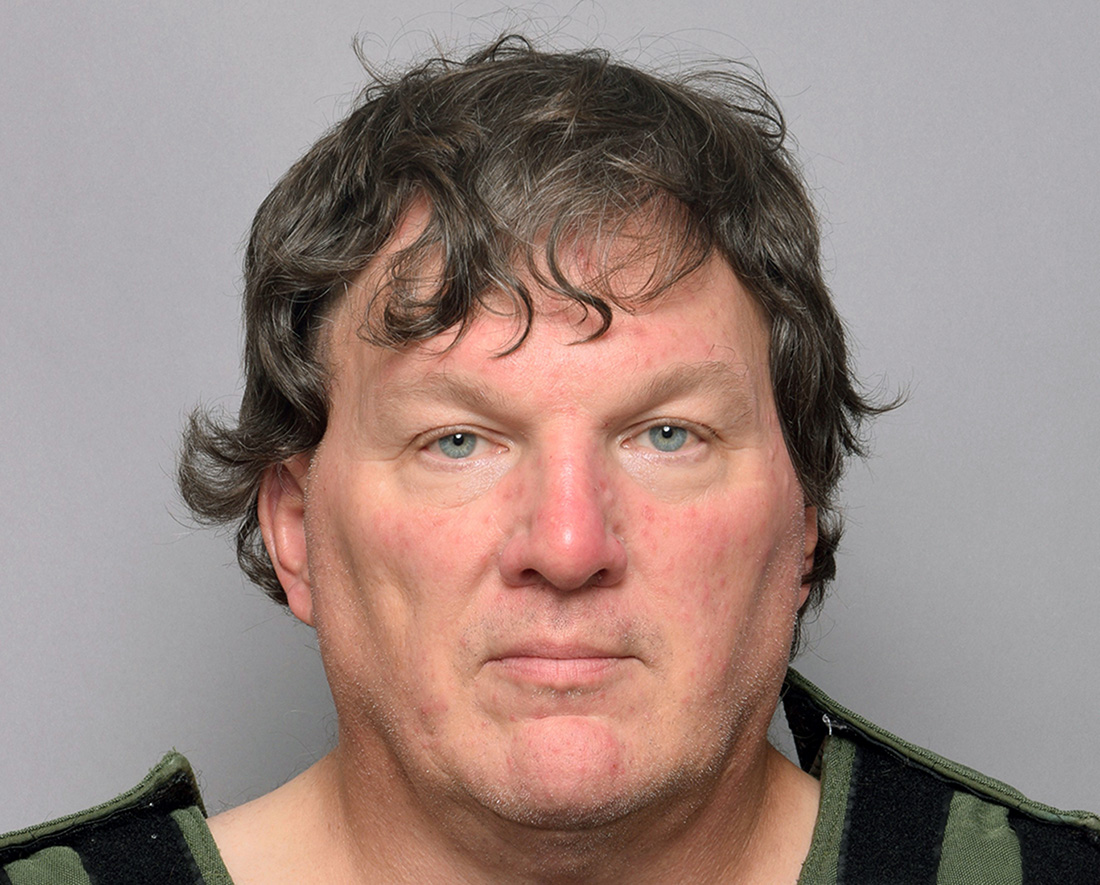
 Rex Heuermann

In this handout provided by the Suffolk County Sheriff’s Office, Rex Heuermann poses for his booking photo on July 14, 2023. (Photo by Suffolk County Sheriff’s Office via Getty Images)Rex Heuermann is a big, hulking guy. He’s 6’4″, 6’5″, and he’s a big, stout fellow. There was an eyewitness who saw a big, hulking person. That eyewitness account was basically buried under pages and pages and pages of documentation in this thing. There was a vehicle in which this big, hulking person was seen, a particular type of Chevrolet truck, a new model truck at that time. Rex Heuermann owned that kind of truck. He actually deeded it over to his brother who lives in South Carolina.

“Ultimately 11 bodies were found, clearly the work of a serial killer or killers — plural. But no one knew.”

Rex Heuermann, they now know, had access to ultimate burner phones, and that’s one of the things we’ll have in the Lifetime movie. We really wanted to [show], here’s Mari Gilbert’s story, and you’re going to watch all that happen. Then after the film, we’re going to walk the viewer [in] broad strokes [through] what happened to lead to the arrest of Rex Heuermann. 

Imagine how many people travel every day from Long Island, New York, here into Manhattan to work. Yet they were able to, out of the thousands and thousands and thousands of people who do that every day, parse it down to one individual using telephone technology to triangulate the burner phones and his locations. 

After using new DNA technology, there was some DNA evidence degraded on the victims, but two pieces of evidence in particular really nailed this case. There were female hairs found — not belonging to the victims — on some of the victims. That hair belonged to Rex Heuermann’s wife. Transfer evidence, off of his person onto the victims. In the burlap bag in which one of the victims was found was a single male hair.

Now, at the time, DNA technology did not allow them to do a deep dive, if you will, on what that DNA evidence said. Newer technology that’s been developed in the last 13 years enabled them to make a precise link. Using that information from this new technology, they got pizza crusts from a pizza box that Heuermann had thrown out as his office in New York City where he worked as an architect, matched the two up and bing, bing, bing. We’ve got our guy. Obviously, this goes to court. It has to be proven, but this is what the evidence indicates.

Did you think an arrest would ever come? This case went so cold for so long and it was mired in corruption and incompetence for so long. 

I wouldn’t have put a big bet that it would ever have been solved. I’m one of these people: The glass [is] always half full. That’s just the way I am. So I’m always hopeful that this would be a case that would be solved. 

“Four families appear to now have those answers, but there’s still six or seven families that don’t.”

There were a couple of things, though, that led one to think that maybe there could be. There had been no evidence for over a decade, and then about two years ago, there was this belt buckle that was revealed at a press conference out in Suffolk County. It was either “HW” or “HM,” depending on which, and who knows what that means. That may have no bearing on the case whatsoever, but that was the first evidence in years.

Then the formation of the task force — [that] was like, well, OK. It’s about time. Let’s see if political pressure — because by that point, people were going, “Wait a minute. You’ve got this corrupt entity. You’ve thrown these people in jail from the Suffolk County Police Department. You’ve cleaned house, you say. How about looking at some of your cold cases?” I think there was reason on the part of the victim’s families to hope that maybe they would get some answers. Four families appear to now have those answers, but there’s still six or seven families that don’t.

There are still a lot of open questions, and more families, because we don’t know if this suspect may be tied to other crimes.

And they’re investigating that. Because of his connection to his brother in South Carolina, they’re actually looking in that state and in a couple of other locations for any possible unsolved crimes.

I want to take a moment now to talk about you and how you’re doing, because doing this kind of work for as long as you’ve done it, covering the kind of stories you’ve done, takes a toll.

Oh, no. It doesn’t take a toll at all. Are you kidding? It is so interesting.

I attribute my entire career to my fourth-grade teacher, Mrs. Eddings. I was that obnoxious child constantly raising her hand: “How come? How come?” Finally, Mrs. Edings couldn’t take it anymore. She said, “You know what, Debbie? That’s a really good question.” She sent me to the library. She said, “Why don’t you look it up, do a report, and come back and tell the whole class so we’ll all know the answer.” It took me about three or four reports for me to realize if I would just shut up, she was going to get there in her presentation.

Later I realized Mrs. Eddings gave me the tools for my career. As a journalist, I wonder, how come? And I get to go ask those questions and find out and do a report for the whole country. How great is that? I mean, sometimes you have an assignment that lasts crazy long and your kids don’t get to see you or whatever, but no, it’s so great. Look, I’ve been doing this forever and I’m still just as jazzed about it.

The last few years have changed the way that we look at true crime. For those of us who are following these stories, it can take a toll. It can make you worried. It can make you scared.

Yes.

How do you think we can create these boundaries? 

How do we not go through life fearful when we know there are serial killers who can pick you up?

Especially as women.

It’s funny. My older son says, “Mom, I was the boy in the bubble.” I said, “What are you talking about?” He said, “Mom, everything I ever wanted to do, you guys had done a story at ‘Inside Edition’ about why it was dangerous.” You can’t have Heelys. I forget why. You couldn’t wear Crocs, because those got caught in the escalators and you would lose your foot. Every single thing he wanted to do … I wrote a book about not doing video games, like that’s going to give you bad dreams.

“As a journalist, I wonder how come? And I get to go ask those questions and find out and do a report for the whole country.”

So yes, you can absolutely grow up fearful and cowering at the prospect of everything. I prefer: Knowledge is power. When you know these things exist, when you know and you follow these cases, you learn how these women ended up in these situations. For instance, if you were working as a call girl, you would know the things not to do because of the bad experiences that other people have had. I think [the reason] a lot of people gravitate toward true crime just as something that they like to listen to in podcasts or watch the movies on Lifetime or wherever, is we all want to try to figure it out.

If the story is told well, they’re dropping those little breadcrumbs, and if you pick up the right breadcrumbs, maybe you can solve the crime. I think people get excited for that reason. But also, as a reporter on “Inside Edition,” one of the things that we very consciously try to do is share information on how you can not be a victim. For instance, you’ve probably never talked to anybody who, in one of the many interviews you’ve done here on Salon, told you that if you are a kidnap victim and you get thrown in the trunk of the car, what you need to try to do. Whatever way they’ve got your body in the car: Pull the brake light wires. Because eventually, those brake light wires are going to mean that the lights are not working and the car may be pulled over. That is one way to help save yourself if you were a kidnap victim. Did you know that?

I didn’t. I know about trying to kick out the tail light.

See? Kick out the tail light. And newer cars — but my luck is if I were to get kidnapped, I wouldn’t have a kidnapper with a new car — the new cars have a thing that you can pull. It lights up in the dark, you can pull it, and it pops the trunk open. But I don’t think I’ll be lucky to have that kind of a kidnapper.

Deborah, I like that you aspire to a higher class of kidnapper.

Give me the kidnapper with the new model car.

Fox News hosts: Trump may be ducking debate to avoid incriminating himself but it’s “helping” Biden

Fox News host Steve Doocy suggested on Monday that former President Donald Trump may inadvertently help President Joe Biden by skipping the Republican primary debates. Trump on Sunday declared that he will not participate in any debates, citing his massive lead in GOP primary polls. Trump last week also lashed out at Fox News, alleging they “purposely show the absolutely worst pictures of me, especially the big ‘orange’ one with my chin pulled way back” and complaining that “then they want me to debate!”

“By skipping the debates, though, Donald Trump may actually be helping Joe Biden because he’s giving Joe Biden an excuse for not debating Donald Trump,” Doocy warned on Monday’s edition of Fox & Friends, according to Mediaite. “That’s one of the things that Ronna McDaniel told the former president when she was trying to get him to do the first debate. But he said, ‘nope, not going to do it.'”

Co-host Ainsley Earhardt later suggested that Trump’s legal team may have talked him out of participating. “He’s also being indicted four times. He might not want to get on stage because his lawyers might say you can’t talk about it,” she said. Fellow co-host Brian Kilmeade noted that Trump also scrapped a planned press conference to present his election fraud report after warnings from his attorneys. But Doocy warned that if Trump later changes his mind and participates in future debates, “it will look like he’s jumping in because he’s losing.”

Rudy Giuliani claims he has new “scientific evidence” of fraud to prove his innocence

Former Trump attorney Rudy Giuliani claimed on Sunday that he has “scientific evidence” to support his debunked claims about election fraud in Georgia. A caller to Giuliani’s WABC radio show asked the former New York City mayor how he plans to defend himself against racketeering and other charges handed up by a Fulton County grand jury last week in a segment flagged by Raw Story.

“The first thing is, I don’t think I’m giving anything away, I’m just going to tell you my strategy. I’m going to follow Mark Meadows and file as soon as I do the arraignment, I’m going to file a motion for removal to federal court, which I would say almost virtually will be granted,” Giuliani claimed, even though Meadows’ motion is based on the fact that he was a federal official and Giuliani had no formal government role. Legal experts have expressed skepticism that Meadows, much less Giuliani, will be able to remove the case to federal court. Giuliani then vowed to prove the baseless fraud claims. “There are things we didn’t present then [in 2020] because over the next couple of years, a lot of people did a lot of work and have been able to produce more witnesses and what I would call scientific evidence that is very persuasive,” he said.

Trader Joe’s alerts customers to another recall, its fifth within four weeks

Trader Joe’s is alerting customers to yet another recall.

On August 17, the company announced that their Trader Joe’s Multigrain Crackers with Sunflower and Flax Seeds “may contain metal.” The batch potentially affected has the “Best If Used By” dates of March 1, 2024 through March 5, 2024. If you’ve purchased any products that fall within that range, Trader Joe’s “urge[s] you to discard the product or return it to any [of their locations] for a full refund.” 

This is the fifth recall in only four weeks, as Zoe Strozewski reports for Eat This Not That. There have been issues with cookies, which potentially contained rocks, then soups, which might contain insects. Since then, their falafel was also recalled for potential rocks. TraderJoe’s has states that “all potentially affected items had already been removed from sale and destroyed,” according to Strozewski. There are have been no reported injuries or issues in accordance with these issues. 

In a statement, Trader Joe’s said: “These recalls were a result of issues in the manufacturing processes. We pulled the product from our shelves as soon as we were made aware of the issues. Once we understood the issue, we notified our customers.”

Experts: Leak shows Meadows “tried to cover up for Trump” — now he’s being thrown “under the bus”

Former White House chief of staff Mark Meadows told special counsel Jack Smith’s team that he could not recall former President Donald Trump ordering or even discussing declassifying large swaths of classified documents before leaving the White House, contradicting Trump’s repeated defense in the Mar-a-Lago case, according to ABC News.

Meadows told prosecutors he had no recollection of what Trump described as a “standing order” automatically declassifying documents he took from the Oval Office, multiple sources told the outlet.

Meadows also told investigators that he was not involved in packing the boxes that Trump took to his Mar-a-Lago residence from the White House and that he did not witness Trump himself packing the boxes. He also said he was unaware that Trump had taken any government records, including classified documents, sources told ABC News.

Meadows also told Smith’s team that he offered to go through Trump’s boxes and return official records after the National Archives first raised the alarm in 2021, though Trump did not accept his offer, sources told the outlet.

While Trump’s lawyers have yet to make the argument that he declassified the documents he took home in court, Meadows’ reported statements significantly undercut the former president’s claim.

Former Vice President Mike Pence on Sunday echoed Meadows, telling ABC News that he was “never made aware of any broad-based effort to declassify documents.”

“Meadows’ testimony would make it very difficult for Trump to put forward his ‘declassification’ defense,” tweeted former federal prosecutor Renato Mariotti. “He was the White House Chief of Staff, and it’s hard to imagine that he was unaware of an actual standing order declassifying broad swaths of documents.”

Jonathan Turley, a professor at the George Washington University Law School, added that the report “only strengthens the case further for Smith.”

“As Chief of Staff, Meadows would be the most likely to know of such an intent or action to declassify,” Turley wrote, calling the documents case “the greatest threat to Trump.”

But some legal experts questioned the source of the leak.

“A leak from Meadows camp to make him seem more useful to Smith as a cooperator WITHOUT having to plead guilty,” wrote former federal prosecutor Andrew Weissmann, a former member of Bob Mueller’s team, warning that Smith “won’t bite and will insist on a guilty plea if he is to be a cooperating witness.”

“Not sure what is going on with Meadows, but standing with one leg on either side of a fence is extremely risky. Easy to get impaled that way,” agreed former federal prosecutor Elizabeth de la Vega.

We need your help to stay independent

ABC News also reviewed an early draft of the prologue to Meadows’ book, “The Chief’s Chief,” that included a description of Trump keeping a classified war plan “on the couch” at his Bedminster, N.J. office at a meeting with Meadows’ ghostwriter and publicist but not Meadows himself. The reference to the document in Trump’s possession was deleted before publication.

Meadows acknowledged to investigators that he asked for the section to be changed because it would be “problematic,” multiple sources told the outlet. Meadows told investigators he did not discuss making the changes with Trump.

Trump was recorded discussing a four-page Iran war plan he claimed was produced by chairman of the Joints Chiefs of Staff Mark Milley after complaining about a report that Milley sought to prevent Trump from attacking Iran after losing the election.

“Wait a minute, let’s see here. I just found, isn’t that amazing?” Trump says in the recording. “This totally wins my case, you know. Except it is like, highly confidential. Secret. This is secret information. Look, look at this. This was done by the military and given to me. As president I could have declassified, but now I can’t.”


Want a daily wrap-up of all the news and commentary Salon has to offer? Subscribe to our morning newsletter, Crash Course.


The final version of Meadows’ book says Trump during the interview “recalls a four-page report typed up by Milley himself.”

“It contained the general’s own plan to attack Iran, deploying massive numbers of troops, something he urged President Trump to do more than once during his presidency,” the book’s prologue said.

But the earlier draft that was changed was more detailed in its description.

“On the couch in front of the President’s desk, there’s a four-page report typed up by Mark Milley himself,” the draft said. “It shows the general’s own plan to attack Iran, something he urged President Trump to do more than once during his presidency. … When President Trump found this plan in his old files this morning, he pointed out that if he had been able to make this declassified, it would probably ‘win his case.'”

Meadows told investigators that he personally edited it out because he didn’t believe Trump at the time would have possessed a document like that at his golf resort, sources told ABC News, adding that if he did, it would be “problematic” and “concerning.”

“Meadows had the language edited. He tried to cover up for Trump,” wrote national security attorney Bradley Moss, adding that “I don’t see him admitting that to Smith without a deal.”

“This feels like a dust-up between the ghostwriters and Meadows,” Weissmann tweeted, “with the former explaining why damning Trump evidence was not in Meadows’ final book: throwing Meadows rightly under the bus for that deletion.”

One MAGA juror can ruin it all

Over the weekend Florida Governor Ron DeSantis may have sealed his political fate with one recklessly dumb comment. Failing to follow the cardinal rule that a Trump opponent can say a lot of things but must not ever insult Trump supporters, DeSantis told The Florida Standard:

The movement has got to be about what are you trying to achieve on behalf of the American people and that’s got to be based in principle, because if you’re not rooted in principle, if all we are is listless vessels that’s just supposed to follow … whatever happens to come down the pike on Truth Social every morning, that’s not going to be a durable movement.

The so-called “listless vessels” were not amused.

DeSantis and his people soon scrambled to defend themselves, saying that he was referring to Trump’s congressional supporters, not Real MAGA Americans. But referring to members of Congress as a “movement” seems very sloppy, even if he was actually whining about elected officials. He also said:

I think that we have a stream in our party that views supporting Trump as whether you are a RINO or not. And so you could be the most conservative person since sliced bread, unless you’re kissing his rear end, they will somehow call you a RINO.

I guess sliced bread isn’t “woke.” The Pillsbury doughboy must be so relieved. 

We need your help to stay independent

DeSantis should have known better than to go there even if he did mean to target members of Congress. They’re Trump supporters too and they are very popular with the voters he seems determined to woo. He might as well have called them all deplorable and then dropped out of the campaign. It’s only a matter of time before somebody starts selling coffee mugs and T-shirts that say “Proud to be a Listless Vessel” on them.

And anyway, if there was ever a group of people, whether in Congress or among the American people, who are anything but listless, it’s MAGA Republicans. They may be “vessels” but they are as energetic and enthusiastic a political faction as we have ever seen. They’re in it for the fun!

In fact, they’re having so much fun that they are living in a full-fledged, delusional fantasy that makes “Barbie” look like “The Sorrow and the Pity.” These results from the latest CBS Poll are from another dimension:

Trump far and away leads the GOP field among voters who place top importance on a candidate being “honest and trustworthy.”

61% for Trump to the next candidate, DeSantis, at 17%. And it gets even weirder:

More generally, Trump’s voters hold him as a source of true information, even more so than other sources, including conservative media figures, religious leaders, and even their own friends and family.

This is classic cult follower behavior. And this isn’t some small group, tens of millions of Americans feel that what Donald Trump, one of history’s greatest liars, tells them is true even compared to the clergy.

Almost no Republicans have said the indictments have made them less likely to support him.

61% of primary voters also believe that Trump would definitely beat Biden, which the pollsters acknowledge is likely due to the fact that they believe he won the last election and has the advantage of a Bizarro World form of incumbency. They believe his lies that the Trump presidency was the most successful of all time and they want more of it. (His overall record is actually very mixed and his handling of the pandemic, his greatest challenge, was a historic failure.)

77% believe that the indictments against Trump are politically motivated and 62% say they plan to vote for him in the primary. His closest rival is DeSantis at 16%. But according to this article in The Atlantic by Russell Berman, there is some evidence that a change in the way that question is worded challenges the conventional wisdom that Trump is actually being helped by the indictments. Still, taking that into consideration only adds up to about 1.6% points which is trivial considering Trump’s lead.


Want a daily wrap-up of all the news and commentary Salon has to offer? Subscribe to our morning newsletter, Crash Course.


More relevant is the finding by Sarah Longwell, a Republican strategist who holds frequent focus groups, that GOP primary voters in the main just don’t care about Trump’s indictments. Almost no Republicans have said the indictments have made them less likely to support him. He is their leader and they believe he’s telling the truth when he says he did none of it. I’m afraid that if any of these trials end up with one or more of these fun-loving Trump followers on the jury, it’s going to be very hard to shake them out of their belief that he can literally do no wrong.

Trump responded to this poll on his Truth Social platform:

New CBS POLL, just out, has me leading the field by “legendary” numbers. TRUMP 62%, 46 Points above DeSanctimonious (who is crashing like an ailing bird!), Ramaswamy 7%, Pence 5%, Scott 3%, Haley 2%, Sloppy Chris Christy 2%, “Aida” Hutchinson 1%. The public knows who I am & what a successful Presidency I had, with Energy Independence, Strong Borders and Military, Biggest EVER Tax & Regulation Cuts, No Inflation, Strongest Economy in History & much more. I WILL THEREFORE NOT BE DOING THE DEBATES!

He has instead agreed to do a pre-taped interview with former Fox News celebrity Tucker Carlson to be aired on X, formerly known as Twitter, at the same time as the Fox News debate. He’s miffed at Fox News for not reporting his best poll numbers and using the “big orange” pictures of him so this is obviously his idea of a clever slap in the face.

The fact that it’s pre-taped is interesting for two reasons. If Carlson insisted on it, it may be because he wants to control it instead of letting Trump run off at the mouth as he does in live interviews. If Trump demanded it, it’s possible that he has other plans. Apparently, Fox isn’t sure that he won’t just crash the debate anyway so they’ve got plans in place to accommodate him in case he does. It is not beyond the realm of possibility.

It’s also possible that he’ll be sneaking in the back door of the Fulton County Jail to turn himself in for arrest at that time. It’s open 24/7. He’s got to do it sometime before Friday, and if he’s on Twitter and the debate’s on Fox, then perhaps he hopes he can keep his “listless vessels” from seeing it live. But he needn’t worry. As he said before, he could shoot someone on 5th Avenue and not lose any votes. For once he wasn’t lying. 

Interview: Treating gun violence as a public health crisis

Each year, nearly 49,000 lives are lost in the United States due to gun violence, of which more than half are suicides. More Americans died as a result of gun violence in 2021 (the most recent year for which complete statistics are available) that in any other year on record — though due to the nation’s growing population, the rate of gun deaths has remained lower than its peak in the 1970s. Youth gun violence, in particular, appears to be on the rise.

For decades, the question of how best to confront the epidemic of gun violence — with policy, law enforcement, education, public health, or a combination — has been fiercely debated and politically contentious.

In 1996, under pressure from the gun lobby, Congress enacted the so-called Dickey Amendment, which prohibited federal money from being used to “advocate or promote gun control,” effectively blocking the Centers for Disease Control and Prevention from using federal money to conduct research into gun-related violence. But in 2019, lawmakers brokered a deal that clarified the amendment’s intent, approving $25 million in annual funding for the CDC and the National Institutes of Health to study gun violence through the lens of public health.

Now revived, the field is still in its early stages, and so far there is little evidence of common ground between public health advocates and gun rights activists, and others who don’t see gun violence as a public health problem. But there are signs of traction: The American Public Health Association, the Association of American Medical Colleges, and the National Institute for Health Care Management have all adopted a public health approach to the nation’s gun violence crisis.

“Almost half of our gun stock now is handguns. And we also have all these military weapons that are easy for anyone to get. Then we have by far the weakest gun laws.”

David Hemenway, a professor of health policy at Harvard University and director of the Harvard Injury Control Research Center, advocates for the public health approach, which he explored in his 2004 book, “Private Guns, Public Health.” “Public health is about prevention,” he says, while acknowledging the crucial role of law enforcement. “It’s not a fight about finding fault. It’s not about finding who did something wrong. It’s about trying to figure out ways to prevent the problem from occurring.”

While Hemenway is eager to see more research, databases like the National Violent Death Reporting System, which combines police and medical examiner information on all violent deaths across all 50 states and Washington, D.C., and the Web-based Injury Statistics Query and Reporting System, have already proven to be vitally useful, he wrote in an email to Undark. (Both are maintained by the CDC.)

Our interview was conducted over Zoom and by e-mail, and has been edited for length and clarity.

Undark: The United States has a high rate of gun violence and gun deaths compared to other industrialized countries. Why?

David Hemenway: The big reason is the guns and the gun laws. Evidence indicates that we are really an average high-income country in terms of non-gun violence and crime. So if you look at our overall rates of burglary, or robbery, or sexual assault, or car theft, we do better than some of the other high-income countries and we do worse than others.

But where we are different is we have lots, lots more guns; much greater household gun ownership; and also the types of guns we have. Canada has a fair number of long guns, but we have so many handguns; almost half of our gun stock now is handguns. And we also have all these military weapons that are easy for anyone to get. Then we have by far the weakest gun laws.

NEWZ

UD: You’re known for supporting a public health approach to combating gun violence. What does that entail?

DH: If you ask me for a one-sentence description of the public health approach, it would be: Let’s make it really difficult to get injured, or to injure someone, and let’s make it really easy to be safe. So for example, I do some work about obesity, and the public health approach to obesity would be, let’s make it really easy for people to get healthy food, and make it harder for people to get junk food; let’s make it really easy for people to get healthy exercise and make it harder for them to be couch potatoes. And we do just the opposite in the United States.

The public health approach is about prevention. It’s not about individuals; it’s about the population.

We now have a good national system about violent deaths. Every time now that there’s a violent death in the United States, a homicide or suicide, there’s about 120 pieces of information collected, consistently and comparatively, across all the states and over time.

“The evidence in the United States that a gun in the home increases the risk of suicide in the home is overwhelming.”

So we’re starting to understand more and more about what is happening, what might work, what might not work. And then we try things; you’re going to be able to tell, did this really work or didn’t this work? So having good data really matters.

UD: It’s been difficult in the United States to get federal gun legislation passed. Are there things that can be done at the state or local level?

At the local level, there are so many interesting, exciting initiatives that we think work. Hospitals are having these — it used to be always at level-one trauma centers — somebody would get shot, they’d fix them up and they’d send them back out. And those people are at very high risk for getting shot again or for shooting somebody else. And now what you do is, you have designated entities in the hospital who says, “Oh, someone came in for a shooting; what can we do to make sure to help them so that it’s less likely that they will go back and get shot, less likely that they will retaliate and shoot somebody else?”

We have initiatives in Boston trying to reduce the likelihood that women will get involved in gun violence. In the United States, one way that the wrong people get guns is with “straw purchasing.” So a straw purchaser, basically, you’re buying a gun for someone else who won’t pass a background check. When a woman buys a gun, she is disproportionately likely to be a straw purchaser, to buying a gun for her boyfriend who shouldn’t have a gun.

And what’s been happening in Boston is to try to work with women’s groups, and women in the inner city and other places, to try to convince them that, look, you should know, and everybody else should know — it should become the social norm — that if your boyfriend asks you buy by a gun for them, illegally, or to hold a gun for them, illegally, you’re going to be at real risk. Because if you get caught, you have nothing to trade, because you don’t know what’s going on, and they can put you in jail — and have put people like that in jail — for many years. And you’re also hurting your own community.

So it should be the social norm, that you and everybody else knows, if your boyfriend asked you to do that your response should be “Get rid of that boyfriend,” because that’s really a horrible, horrible thing that they’re doing.

UD: How would a public health approach help reduce gun suicides?

DH: The evidence in the United States that a gun in the home increases the risk of suicide in the home is overwhelming. There are case control studies, there are ecological studies, there are longitudinal studies — they’re dangerous to everyone in the house.

Having guns lying around when someone’s at risk for suicide is a terrible, terrible thing. We’re working now to try to make sure physicians understand that. So if you’re a psychiatrist, and somebody comes in, and they’re talking [about] suicide, you should ask not only about their mental health and try to help out, but you should talk directly about guns, and try to get the guns out of the house. And if not, I would argue that that’s like malpractice, not to do that now, with what we know.

Ten or 15 years ago, nobody in the in the gun area was talking about suicide. They believed, completely incorrectly, that if you want to commit suicide, you’ll commit it no matter what, that no one’s going to stop you. So my colleague Cathy Barber spent a lot of time working with gun shops, working with gun ranges, working with gun trainers, to try to make a difference about suicide, and has had a lot of success.

Let me talk about the trainers, since that’s the most interesting. She got herself invited to this association of gun trainers who were teaching about gun carrying. And you should recognize that Utah is a very red state; it has lots and lots and lots of guns, and very conservative. And she said to these trainers, “You know, you’re trying to do a really good job talking about gun accidents, but did you realize that for every accidental gun death, there are 85 gun suicides in Utah?” And they said, “What? That can’t be right!”

And then she said, “Raise your hand if you know someone who accidentally killed themselves with a gun,” and a couple of hands go up; “Raise your hand if you know someone who killed themselves with a gun in a suicide” — and every hand goes up, because they’re all these old White guys, and that’s who’s the biggest risk for suicide.

Then she said, could we work on this, to try to do something, maybe have a module that you might use, because how many people here are talking about suicide? Nobody. And they said, “Alright, let’s work together.” And they work together, and they create this module. And they love it — they think it’s the best thing.

UD: You’re a scientist, you talk about these datasets and policy based on evidence. So, is it working? You’ve given some very positive examples, but I wonder if the issue is just that when we turn on the TV, the news is terrible.

DH: No, things have gotten worse in the United States. More people are carrying guns, there’s more military weapons out there, gun ownership rates have increased a little bit. A lot of bad things are happening. Politically, it’s been very hard because one of our two parties is aligned with the gun lobby. So it’s hard. But what I would say, from a public health standpoint, is that there’s a lot of good things happening, but also, that there’s been so many successes in public health over the last 150 years.

From the sanitation revolution in the 1800s, to immunizations, to the United States reducing smoking, you name it — there are so many good things. But all of these things took a long time. Even getting physicians to wash their hands took about 20 years before they would do that.

But people who believe in public health have pushed and pushed and pushed until suddenly things tip. It’s three steps forward, two steps back, but it’s always been, overall, this incredible movement toward having richer, happier lives.


If you or someone you know are in crisis, please call the National Suicide Prevention Lifeline at 1-800-273-TALK (8255), or contact the Crisis Text Line by texting TALK to 741741.

This article was originally published on Undark. Read the original article.

Florida abortion clinic volunteers launch fundraiser to save center from state’s ‘targeted attack’

Volunteers who regularly help protect patients from pro-forced pregnancy protesters at an abortion clinic in Orlando, Florida are pushing to save the facility from being fined “out of existence” by the state, following a $193,000 penalty that was levied against the clinic by the state Agency for Healthcare Administration.

In just four days, as of this writing Stand With Abortion Now (SWAN) of Orlando has so far raised more than $112,000 to help Center of Orlando for Women pay the fine, which the state is demanding it pay because of alleged violations of Florida’s 24-hour waiting period rule for abortion patients.

The law requires people to have two medical appointments 24 hours apart in order to obtain abortion care, and went into effect after a judge approved it in April 2022 following a yearslong legal battle.

One SWAN volunteer told Business Insider that the clinic had tried unsuccessfully to contact the state “multiple times to see when exactly that law was going into effect because it was made very unclear, and that’s done pretty intentionally.”

The AHCA alleges that the center violated the law 193 times and last Monday announced the fine of $1,000 for each violation.

With a strong social media presence on TikTok and Twitter, SWAN started a fundraiser and quickly began spreading the word about the fine, warning abortion rights supporters that the penalty could bankrupt one of only two abortion clinics in Orlando.

U.S. Rep. Anna Eskamani (D-Fla.), the Orlando chapter of the Democratic Socialists of America (DSA), and pro-abortion rights author and advocate Jessica Valenti have all amplified the fundraiser, with the DSA accusing the AHCA of a “targeted attack” against the clinic.

“Florida Republicans haven’t been able to totally ban abortion yet, so they’re working to bankrupt clinics in the meantime,” said Valenti. “We CANNOT let that happen.”

Abortion is currently banned after 15 weeks of pregnancy in Florida, and Republican Gov. Ron DeSantis—a 2024 presidential candidate—signed a new six-week ban earlier this year that is under review by the state Supreme Court.

The SWAN volunteer who spoke to Business Insider said that small donations have made an enormous difference in pushing the fundraiser toward its goal.

“Opponents of abortion rights can only win in the face of an apathetic majority. We are confident that we can save our clinic if folks remain dedicated to the initial, valid feelings of shock and rage we all felt when our rights were initially stripped from us by an unelected body,” said SWAN in a statement, referring to the U.S. Supreme Court’s overturning of Roe v. Wade last year. “This is another instance of an unelected body trying to deny a community access to abortion, and we hope it will instill the same motivation to help.”

Let’s pour one out for Mike Lindell: MyPillow Guy wasn’t important enough to get his own indictment

One week ago, when Fulton County District Attorney Fani Willis read out this list of 19 people indicted for a plot to steal Georgia’s presidential election, many of the names were familiar from the two-and-a-half years of fallout from Donald Trump’s attempted coup. Rudy Giuliani, John Eastman, Jeffrey Clark, Kenneth Chesebro, Sidney Powell and others: Willis read a seemingly exhaustive list of every buffoonish character who signed onto a conspiracy to install a TV game show host as dictator. In addition, there were 30 other unindicted co-conspirators, who were unnamed in the document but whose identities have likely been uncovered by reporters at the Daily Beast: people like Bernie Kerik, Phil Waldron, Tim Fitton, and Boris Epshteyn. Truly, a stunning array of the biggest scumbags in America. 

But there is one name that eagle-eyed observers who have closely followed this story will note is missing: Mike Lindell, the comically self-important maniac who founded the second-rate linens company MyPillow.

Mike Lindell wasn’t even cool enough to be a real member of the clown car coup.

Kanye West’s old publicist, Trevian Kutti, got to be listed as part of what the charges describe as Trump’s “criminal enterprise,” but poor old Mikey boy didn’t rate a mention in the 98-page document. Same story with the hefty indictments filed against Trump in federal court by special prosecutor Jack Smith. Reporters quickly figured out who the six unnamed co-conspirators in the 2020 election interference and Capitol riot indictment were, but the MyPillow founder was not one of them. I guess Mike Lindell just wasn’t important enough to the Big Lie conspiracy to rate a mention, much less a pile of indictments of his own. It certainly wasn’t for lack of trying on his part. Throughout the attempted coup and in the many months since, Lindell has been among the most eager beavers of the Big Lie gang. At the time, he always made sure to be seen going in and out of the White House as though he was participating in the scheming. As late as January 15, 2021, he was showing off for the cameras, letting White House reporters see a stack of papers he was dramatically touting that suggested last-ditch plans for Trump to order a military coup. 

We need your help to stay independent

Since then, Lindell has spent untold millions of dollars pursuing various harebrained ideas to claw back President Joe Biden’s electoral victory and somehow “reinstate” Trump to the White House. Much, if not most, of that money has thankfully been pocketed by fraudsters taking advantage of Lindell’s delusional belief that he can simply spend his way into the fascist dictatorship of his dreams.

It’s been over two years since the coup, and while Lindell’s fellow conspirators are facing the prospect of jail, he’s mostly coasting along, still hyping the Big Lie and still being exploited by grifters. On Wednesday, he had another embarrassing event, billed as an “election crime” summit, in which he would supposedly offer the big breakthrough to “fix the elections.” Instead, the event was a confusing flop, and unsurprisingly, continued to advance no evidence of the “stolen” election.

But hey, he got Steve Bannon to give a nasty speech, because Bannon will always reliably show up where fools are being parted from their money. 

The yawning lack of law enforcement interest in Lindell has got to smart. It really underscores a suspicion many have had about Lindell’s role in the coup: The plotters were keeping him around for his money but didn’t actually take him seriously enough to involve him in the criminal conspiracy. Lindell is like one of those creepy adult men who hangs out with high school kids: They only tolerate him because he buys them beer. And like those men, he’s pathetic on two levels: in the company he wanted to keep, and the fact that he was too lame even for them. 

The plotters were keeping him around for his money but didn’t actually take him seriously enough to involve him in the criminal conspiracy.

As the indictments from both Willis and Smith show, the people involved in Trump’s coup aren’t just fascist, they’re big old dorks who almost seem to be play-acting, even as their crimes are quite real. One of the long-standing questions hanging over this debacle has been why all these people went along with Trump’s preposterous and dangerous plan to steal the election. Reading the indictments, one gets the impression that, for a lot of them, a not-small aspect of it is that they were bored. Most of them are wealthy, privileged people living coddled lives. Joining up with a coup seems like it was a thrilling adventure, so very different from their otherwise beige-colored Republican golf-playing lives. Of course, the risk-taking was especially stupid and reckless because, unlike inexperienced criminals, these folks — many of them lawyers — should have had a good idea of what they were getting themselves into. 

We also saw this phenomenon with the people who stormed the Capitol on January 6. It became the most well-documented crime in history, because the insurrectionists themselves photographed and videoed every moment of it. They seemed to think they were tourists at an amusement park, like storming the Capitol is a Disney exhibition instead of a violent attack. But, of course, their fantasy role-play led them to commit very real crimes, and many of them are paying for it in prison. 


Want more Amanda Marcotte on politics? Subscribe to her newsletter Standing Room Only.


Indeed, another connection between the fake electors scheme plot and the Capitol riot was exposed last week. CNN broke the news that Kenneth Chesebro, a lawyer who was indicted in Georgia and one of the unindicted co-conspirators in the federal case, was part of the Capitol riot on January 6. Using the ample footage from that day, CNN found that Chesebro was shadowing conspiracy theorist Alex Jones, who had used his popular online show to rally Trump supporters to D.C. in an effort to halt the electoral vote count. It’s not clear yet if Chesebro can be charged for his participation in the riot, but the story underscores how, from top to bottom, Trump’s coup was manned by a bunch of knuckleheads propelled into real trouble after trying to act out their power fantasies. 

But poor Mike Lindell wasn’t even cool enough to be a real member of the clown car coup. These folks let wild-eyed Sidney Powell and hair dye-sweating Rudy Giuliani into their inner circle. No wonder Lindell thought he had a chance to get in — yet no cigar. He’s hit a level of bumbling crazy so off-the-charts that even these people knew to keep him at arm’s length. This is more humiliating than being turned away from a stamp collecting convention for being too nerdy. For most people, not being indicted for organized crime is a good thing. For Lindell, it’s just one more reminder that he sucks so much that he couldn’t even be friends with the worst people in the country. 

Donald Trump’s last line of defense: Ramp up the “transactional antisemitism”

They are going to attack.

Donald Trump is under siege. He faces 91 criminal charges and potentially hundreds of years in prison for his many alleged crimes in connection with Jan. 6 and his coup attempt. Trump and his forces will respond to this challenge to his power and authority. Just when their targets are tired and exhausted, they will attack — again and again and again.

The attacks will consist of racism, antisemitism, misogyny, disinformation, misinformation, violence, stochastic terrorism, fearmongering, white victimology and conspiracy theories. They will involve brute force.

The plans are open and public, lacking subtlety and guile.

The use of conspiracy theories and paranoia is one of the right wing’s most powerful weapons in the campaign to keep Trump out of prison and take back the White House in 2025 with the goal of ending the country’s multiracial pluralistic democracy. These conspiracy theories, and what Richard Hofstadter described in his seminal 1964 essay as “the paranoid style,” have become much more complex and dangerous in the Age of Trump and this time of democracy crisis and ascendant neofascism.

In a 2019 interview with the Economist, Nancy Rosenblum and Russell Muirhead, authors of the book “A Lot of People Are Saying: The New Conspiracism and the Assault on Democracy,” explained that:

What we’re seeing today is something different: conspiracy without the theory. Its proponents dispense with evidence and explanation. Their charges take the form of bare assertion: “The election is rigged!” Yet the accusation does not point to any evidence of fraud. Or take Pizzagate, the claim that Hillary Clinton is running a child sex-trafficking ring in a pizzeria in Washington, DC. It doesn’t connect to a single observable thing in the world — it’s sheer fabulation. And in America, this new conspiracism now comes directly from the president, who employs his office to impose his compromised sense of reality on the nation….

The new conspiracism obliterates nuance and judgment and replaces it with a distorted unreality in which some things are wholly good and others (say, Hillary Clinton) wholly evil. This is its appeal. And something with such political force will be taken up everywhere by those who seek to abandon regular processes and disrupt established institutions, and especially by those who reject the idea of a “loyal opposition.”

As I detailed in a recent series of essays here at Salon, because Trumpism, like today’s Republican Party more broadly, is fueled by racism and white supremacy, antisemitism is quite predictably playing an increasing role in the right-wing’s conspiracism and related fantasies of white victimhood and persecution. We see this in the right’s obsession with nebulous forces such as “globalists” and “the deep state.” Terms like “cultural Marxism” and concepts like “Critical Race Theory”, “Black Lives Matter” and “Wokeism” are frequently demonized. Democratic Party fundraiser George Soros (who is a Holocaust survivor), is at the center of the QAnon conspiracy, which is a 21st-century version of Blood Libel against Jewish people.

We need your help to stay independent

To that point, Donald Trump’s campaign sent out a series of emails in rapid succession last week that are rife with such dangerous lies and messaging:

The pattern is undeniably clear.

The Deep State has done everything in their power to try and paint me as a villain – all while the REAL villains, nestled deep within the Washington, D.C. swamp, quietly get away with bleeding our country dry.

And now, it’s being reported that I could potentially face 1,000 YEARS in prison.

The Deep State wants to make an example out of me…

…They want to show the nation that these are the consequences of choosing to put a political outsider in the White House.

This is ultimately about instilling FEAR in the public.

The fear that if you stand in the way of their Marxist agenda, then YOU could be INDICTED, ARRESTED, or IMPRISONED for your beliefs.

The fear that if you give the forgotten, hardworking men and women of this country a voice, then YOU could be made their Public Enemy #1.

Together, we will PEACEFULLY show the Deep State that their intimidation tactics cannot work on the American people.

No matter how much they attack our movement, we will NEVER SURRENDER our mission to MAKE AMERICA GREAT AGAIN!

Here is another example from later in the day on Thursday:

You may even be asking yourself, after FOUR unjust indictments, why do Crooked Joe and his Deep State accomplices continue to concoct these phony witch hunts when it only BACKFIRES?

Well, the sad truth is that these crooks, thugs, and Marxists truly believe America is not YOUR country, but theirs.

Ever since I rode down the Golden Escalator and promised to restore America’s greatness and cast off the political ruling class that hates our country, the rabid Left has justified anything – truly, ANYTHING – in the name of “getting Trump.”

And that’s why they sincerely believe that they will get away with attempting to JAIL their leading opponent for LIFE despite committing NO CRIME.

To them, transforming America into a Third World tin-pot dictatorship is just part of the plan.

Because they are TERRIFIED to lose their grip on power like they did in 2016…

Friend, the America that you and I know and love is gone, and in its place now stands a country more like Stalinist Russia or Maoist China than our once free Republic.

But while Crooked Joe and the radical Left believe this is their country for the taking, I’m willing to bet there are more than 74 MILLION freedom-loving patriots ready to stand right by my side and tell them that WE WILL NEVER SURRENDER our country to tyranny! 

Last Friday, this Trump fundraising email emphasized the old right-wing McCarthyite (and antisemitic) trope of “the enemy within”:

The United States government has recently condemned other countries for imprisoning their political opponents.

They’ve called those regimes threats to the core values of democracy.

But now, the United States is becoming one of those Third World dictatorships that criminalizes opposition to the ruling regime.

That’s why I will continue to say that the greatest threat to America comes from within.

No one else in the world is doing as much damage to the bedrock principles of our Republic than the left-wing tyrants entrenched within the Deep State who are trying to interfere in our elections….

The following recent Trump fundraising email encapsulates his and the larger neofascist movement and white right’s antisemitic attacks (“George Soros” and the “globalists”) and how they leverage paranoia, projection, victimology, and the Big Lie.

So far, disloyal Republicans (RINOs) have only PLEDGED to spend $370 MILLION on their plot to sabotage us in the primary.

But that all changed at the July end-of-month fundraising deadline.

Right before the deadline, a nefarious group of RINO globalists officially raised $78 million to begin turning that plot into a reality.

They’ve shown that their $370 million plot is not just a threat. They are truly willing to spend more money than even George Soros to defeat us.

This news came just as Biden’s weaponized Department of “Justice” issued yet another unlawful INDICTMENT of me as a completely innocent man.

Friend, we’re being attacked from every side.

RINOs. Democrats. Globalists. They’re all just one big UNIPARTY that’s united behind a common goal of stopping YOU from having power in your own country.

That’s why RINOs are willing to spend MORE THAN GEORGE SOROS to try and take me down.

Every dollar Republicans spend attacking me is a dollar given straight to the Biden campaign.

The truth is: they know that and simply do not care. . . 

. . . Because, at the end of the day, they’d rather see Crooked Joe in the White House than a political outsider who puts the people of our country FIRST.

These special interest globalists have made a fortune off of putting YOU dead last and selling out our nation to foreign countries like China.

These RINOs love to call themselves defenders of liberty – and yet, they choose to side with a corrupt president who has once again weaponized the legal system in an attempt to JAIL his single biggest opponent for a lifetime.

But fortunately for us, our movement is packed with over 74 MILLION patriots who will peacefully defend our God-given liberty and justice.

I asked Jennifer Mercieca, who is an expert on political rhetoric and speech, for her thoughts about Trump’s emails and how they fit into his political project. She explained that Trump “relies on “us versus them” polarization appeals to separate Trump’s followers from the rest of the country”: 

He uses the rhetoric of conspiracy to accuse his opposition of corruption. He frames his opposition as enemies and hate-objects, who can and should be destroyed through violence. It is a very dangerous and very anti-democratic rhetorical strategy that has historically led to war and genocide.

He uses these strategies because it binds him to his base and makes them think that he is fighting their shared enemies. He also uses these fascist strategies because they enable him to dominate the political conversation.

That we’re seeing an increased use of these kinds of fascist appeals shows how weak he is as a candidate and how scared he is of prosecution. On the one hand, a strong candidate would use the democratic language of persuasion, not the fascist language of coercion. On the other hand, if he were really the Ubermensch he pretends to be and he really was able to rid the country of corruption and destroy his enemies, then why hasn’t he done so—eight years later? When Trump talks like a strongman, it just shows how weak he actually is.

Federico Finkelstein, who is the author of “A Brief History of Fascist Lies,” made this intervention in response to Trump’s fundraising attempts and their antisemitic and fascist messaging:

In fascism, extreme, almost pathological, paranoia was justified as a defense of the nation and the leader against an imagined conspiracy of existential enemies. From paranoid extreme ideas of the enemy within to the projection onto others of what Trumpism is truly about: an attack against democratic institutions and ideas.

Trumpism represents an alliance between conservative, populist and even fascist sectors and ideologues. We should expect this dangerous propaganda to continue if it is constantly normalized as a functioning part of American democracy. It is not.

I also asked John Roth, who is co-author (with Leonard Grob) of the book “Warnings: The Holocaust, Ukraine, and Endangered American Democracy” to share his thoughts about Trump’s fundraising emails and their repeated use of antisemitic themes and tropes:

Speaking to the United Nations General Assembly on September 24, 2019, then-US president Donald Trump pronounced that “the future does not belong to globalists. It belongs to patriots.” Four years on, Trump’s dichotomy between globalists and patriots has become darker and more divisive because it increasingly ramps up Trump’s transactional antisemitism. Play the antisemitic card when its helpful to him personally.  Hold back when it’s not.

Trump rails against “the globalist warmonger donors backing our opponents.” Hitler was blunter.  He alleged that “international Jewish financers” would provoke world war. Trading off the Nazi trope that Jews seek world control and domination, the term globalist is conveniently general, vague, and ambiguous.  It does its work without mentioning Jews explicitly.  That’s what makes globalist work well in Trump’s dog-whistling vocabulary. Using it permits him both to deny and to advance the antisemitism that the canard conveys. 

Jews such as George Soros are Trump’s emblematic globalists. What’s more, Trump contends that Joe Biden is their servant.  The “quiet part” is all but said out loud: A Jewish conspiracy aids and abets Biden, who, in turn, betrays the heritage that properly puts America first by making the United States a White Christian nation.  It’s nonsense, but dangerous, nonetheless.

Trump repeatedly says that he’s the least racist or antisemitic person “you’ve ever encountered.” That’s a lie, but from Trump’s lips to God’s ear, what else is new?  

As “the walls close in” on Donald Trump, he and his agents and followers will only become more violent, racist, and antisemitic. Such an outcome is very predictable and in no way surprising or climactic; that makes it no less dangerous to the future of the country and its democracy and the lives and safety of the American people. To save American democracy, Donald Trump and the larger neofascist movement must be defeated at the polls, in the courts, and through direct corporeal politics across the country.

From fatal eyedrops to mislabeled melatonin, why the FDA is failing the public

If you want to get a sense a sense of how vast and concerning the problem with the U.S. Food and Drug Administration is, where do you start? 

A 2022 investigation by the journal The BMJ declared that FDA oversight of clinical trials, including those for Pfizer and Moderna’s mRNA Covid-19 vaccines, was “grossly inadequate,” from not conducting enough inspections to failing to alert scientific journals or the public when violations were flagged.

In December, the results of an 18-month congressional investigation into the FDA’s conduct, allegedly “rife with irregularities” approving the Biogen costly Alzheimer’s drug Aduhelm were released. The report assessed that the agency’s actions “raise serious concerns about FDA’s lapses in protocol” in its “atypical collaboration” with the drug maker and advised that the FDA “must take swift action to ensure that its processes for reviewing future Alzheimer’s disease treatments do not lead to the same doubts about the integrity of FDA.’s review.”

The efficacy of the drug is still debated, and it is not approved in Europe.

But the issues here are not confined to behind the pharmacy counter. In February, the FDA announced a voluntary recall from Global Pharma Healthcare on their Artificial Tears Lubricant Eye Drops “due to possible contamination.” In a confusingly worded statement, the agency warned of “the risk of eye infections that could result in blindness,” but also noted there had been “a death with a bloodstream infection.” In the weeks that followed, other eye drop brands were added to the list of potentially contained products, and the toll rose to “14 patients with vision loss, an additional 4 patients with enucleation (surgical removal of eyeball), and 4 deaths.”

And as Peter Robison and Priyanka Pulla explained recently for Bloomberg, these were drops that “were made in India and sold by two US distributors in boxes stamped with the drug inventory numbers that the Food and Drug Administration issued.”

Why is the system that’s supposed to protect us from unsafe prescription and over-the-counter medications seemingly so broken?

There’s more. In April, a research letter published in JAMA raised issues over the “Quantity of Melatonin and CBD in Melatonin Gummies Sold in the US.” Examining 25 readily available brands of melatonin gummies, researchers found “nearly all of the products had more than 10% more melatonin than advertised.” One product contained 347% more. Another contained none, but did contain cannabidiol, also known as CBD, a drug derived from cannabis, yet another medication that the FDA has been pushed by lawmakers to regulate.

The regulatory framework for supplements is broken,” study coauthor Dr. Pieter Cohen told CNN at the time. “The manufacturers are not complying with the law, and the FDA is not enforcing the law. So what that means is that we have a lot of poor-quality products out there.”

You get the idea. How did we get here? Why is the system that’s supposed to protect us from unsafe prescription and over the counter medications seemingly so broken? There is no single, simple answer, but you can see the cracks more clearly in a few places.


Want more health and science stories in your inbox? Subscribe to Salon’s weekly newsletter The Vulgar Scientist.


Dr. John Abramson, author of the recent book “Sickening: How Big Pharma Broke American Health Care and How We Can Repair It,” traces the roots of issue back decades. “In 1992, when what turned out to be effective HIV drugs were stuck in the bottleneck of the FDA, they didn’t have enough staff to get them through quickly enough. Many people were dying, and it was a real crisis,” he explains. “The solution was that the Prescription Drug User Fee Agreement was passed. The drug companies started to pay a user fee with that was due upon application for new drug approval. And now roughly 65% of the FDA budget for overseeing human products comes from the drug and device companies. This comes with rigid timelines, and as I see from the outside, some degree of influence and obligation to the drug companies that derives from this agreement.”

The numbers here vary — Forbes puts that budget figure as high as 75%. But the question, as C. Michael White asked for UConn Today in 2021, remains, “Why is the FDA funded in part by the companies it regulates?”

“Roughly 65% of the FDA budget for overseeing human products comes from the drug and device companies. “

Another similar conflict of interest that concerns Abramson is what he calls “the revolving door that goes between FDA and the drug industry.” For example, he says, there’s the agency’s former commissioner, Stephen Hahn. “He was calling the shots through Trump’s presidency,” Abramson notes. And then, “Five months after leaving government, Hahn went to work in a high position at Flagship Pioneering, a biotech private investment firm. They actually own a significant chunk of Moderna. Hahn going from the FDA to Flagship Pioneering is a perfect example of the revolving door that is likely to give Flagship Pioneering a leg up as it goes forward in its investments in new biotech products.” 

But Arthur Caplan, PhD, NYU Grossman School of Medicine’s Department of Population Health, thinks that consumer and patient demand have also led us down this path.

“The FDA is getting told more and more by Congress to speed up approvals, to listen harder to what I’ll call weaker evidence,” he says. “They’re trying to swim upstream against a movement that began with the Right to Try movement, which basically said, ‘We want to have less worry about risk, less worry about safety and more right to access what we, as patients or patient families, want to do.'”

Caplan thinks “The culture has shifted so that there’s much more emphasis on personal choice and autonomy. You see it all over our politics, but it’s cascading over the FDA too to say, ‘Stop trying to be protecting us. Your job is to let us get access to what we want, because we as citizens should have the right to take the risks we want to take to pursue the options we want to pursue.'”

We need your help to stay independent

There’s a certain circularity to Abramson’s and Caplan’s perspective. Thirty years ago, public demand spurred a major shift in drug development and in the FDA. Now, it seems to be a factor in its current controversies and concerns over its competence. And Arthur Caplan is not optimistic the situation is going to get any better.

“It used to be the FDA’s job was watch closely on safety, to listen hard to panels of experts about their opinions, based on best available evidence,” he says. “Now, the message is clear from politicians, from patient advocacy groups, even the general public, ‘We don’t want paternalism; we want individual choice. We want liberty. We are less interested in what experts tell us. I don’t think this is anything to do much with the pharmaceutical industry, or positions that are being taken by scientists. I think,” says Caplan, “it’s about much bigger cultural change in America.”