Spring Sale: Get 1 Year, Save 58%

Trump finally indicted for Jan. 6 plot: Here’s why this is the big one

This is the big one. It is tempting to say that today’s indictment is significant mainly because it is the third time Donald Trump has been indicted — an extraordinary record for a former leader. Some will instead argue that these three indictments are piling on by partisan prosecutors. These are precisely the wrong frames.

Here’s why today’s indictment is so important: This is the big one because Donald Trump has been criminally charged for attempting to stop the peaceful transfer of power, and the charges come from the very government he tried to take over by force.

Donald Trump committed the ultimate offense against our republican form of government when he attempted to keep himself in power after the American people voted him out, ultimately inciting a violent mob to attack the Capitol to facilitate this plan. Had he succeeded, it would have been effectively the end of our almost two-and-a-half-century experiment in democratic self-governance.

Trump has thus far largely managed to escape real accountability for this historic crime, despite an impeachment and a devastating report and series of hearings from the House select committee that investigated the Jan. 6 uprising. He is free and in charge of his businesses. More importantly, he remains the de facto leader of one of our major political parties and a likely presidential nominee, and he has made the false claim that he won the last election and the denial of the insurrection he incited a central tenet of his political movement. It is hard to contemplate a more significant offense, and this lack of accountability — indeed this celebration of his crime — is untenable.

The charges come from the very government he tried to take over by force.

Each of the indictments of Donald Trump is significant. His lies to cover up a hush-money scheme and his outrageous retention of dangerous classified documents — and obstruction of the subsequent investigation — all demonstrate his pursuit of his own power and whims with no regard for the law. But this one is different. 

If Donald Trump were to avoid real consequences for his schemes to keep himself in power, we would risk not only having the criminal attempt to overturn an election be forgotten or normalized, but actually having it become a part of our political identity and a template for future action by a significant segment of our population. We risk endorsing the destruction of our democracy in the near future.

We need your help to stay independent

Today’s indictment starts the process of pulling us back from that precipice. It makes clear that Trump’s attempt to keep himself in power contrary to the decision of the American people was not a reflection of deeply held beliefs or the start of a political movement, but a criminal act, pure and simple. These charges strengthen the coming litigation to enforce the 14th Amendment’s disqualification of Trump from any future office because he engaged in insurrection, one of the key ways of securing our democracy moving forward. And, if validated by a jury — a likely outcome, based on the evidence as we understand it — this indictment can lead to sentences that can help prevent Trump and his closest allies from engaging in future attacks on our democratic system precisely because of their past attacks on that system. 

Just as significantly, this is a strong case, charged in a way that will maximize its chance of success. From my experience as a federal corruption prosecutor, I know that juries are deeply skeptical of prosecutions of prominent people that seem like technical charges premised on paperwork and bureaucracy. They don’t want to convict leaders even for clear violations of the law unless they see that the conduct involved is wrong, harmful and deserving of punishment.

The stakes are crystal clear in this current indictment. The charges filed by special counsel Jack Smith make clear that Trump is not being charged with minor election or paperwork offenses, but rather with a scheme to install himself as president in violation of the law and the votes of the American people and to overthrow our democracy — a scheme that resulted in at least seven deaths and countless injuries. There could be no more clearly justifiable indictment of a former president.

Challenges remain. A jury pool will surely include many Trump supporters who see the events of the 2020 election and the Jan. 6, 2021, insurrection through the distorted lens Trump has worked hard to create. They will be skeptical of the indictment and the motivations behind it. The indictment itself is a masterful attempt to push past the propaganda to demonstrate not just the facts, but the stakes. It will be incumbent upon Smith’s team to make that case at trial in a way that is incontrovertible even for those who start out skeptical. That is a tall order, but I believe Smith can do it, and today’s indictment was a crucial start.

Nothing could be more important for the future of America.

Indictment: Trump charged with four felonies in 2020 election probe — 6 un-indicted co-conspirators

This is a breaking news story and will be updated.

Former President Donald Trump was indicted on Tuesday by the federal grand jury investigating efforts to overturn the 2020 election and the deadly Jan. 6 Capitol riot. 

Trump was charged with conspiracy to defraud the United States, conspiracy to obstruct an official proceeding, obstruction of and attempt to obstruct an official proceeding, and conspiracy against rights — a civil rights law related to the alleged attempt to disenfranchise voters by trying to overturn the election.

The indictment listed six un-indicted co-conspirators. 

He was summoned to appear before U.S. District Judge Tanya Chutkan, an Obama appointee, on Thursday.

In a statement Tuesday evening, special counsel Jack Smith said the indictment describes the attack in the capitol on Jan. 6 as “fueled by lies,” although he made no specific mention to Donald Trump. 

“The attack on our nation’s capitol on Jan. 6, 2021 was an unprecedented assault on the seat of America democracy,” Smith said. “Lies by the defendant,” Smith said, were aimed at “obstructing a bedrock function of the U.S. government and the nation’s process of collecting, counting and certifying the results of the presidential election.”

Attorney General Merrick Garland also made public comments after the indictment was handed down on Tuesday. Smith, Garland said, “followed the facts of the law.” 

Prosecutors allege Trump was “determined to remain in power” and engaged in conspiracies that targeted a “bedrock function of the United States federal government: the nation’s process of collecting, counting and certifying the results of the presidential election.”

The indictment marks the third set of criminal charges filed against the former president this year and the first charges pertaining to his conduct while in office. 

Trump teased the indictment on Truth Social minutes before it was announced.

“I hear that Deranged Jack Smith, in order to interfere with the Presidential Election of 2024, will be putting out yet another Fake Indictment of your favorite President, me, at 5:00 P.M,” he wrote. “Why didn’t they do this 2.5 years ago? Why did they wait so long? Because they wanted to put it right in the middle of my campaign. Prosecutorial Misconduct!”

His campaign in a statement called the indictment “nothing more than the latest corrupt chapter in the continued pathetic attempt by the Biden Crime Family and their weaponized Department of Justice to interfere” in the election, even likening his prosecution to “Nazi Germany in the 1930s.”

The indictment follows Trump attorneys John Lauro and Todd Blanche’s meeting with Smith’s team seeking to avert the charges and days after the Justice Department expanded its charges against him in the Mar-a-Lago classified documents case, also headed by the special counsel’s office. 

Several associates of Trump reportedly met with the special counsel’s office or testified before the grand jury in the case in recent months after being subpoenaed in the probe, including top Trump advisor Boris Epshteyn, former Vice President Mike Pence, former White House chief of staff Mark Meadows, and Trump’s son-in-law and former White House senior advisor, Jared Kushner. Georgia Secretary of State Brad Raffensperger, the top election official in the state who received Trump’s infamous January 2021 phone call, was also expected to meet with prosecutors. 

Smith first issued dozens of subpoenas to officials from multiple states who were targeted in Trump’s and his allies’ failed attempts to overturn the 2020 election in November of last year, signaling that his ensuing investigation would be sprawling. According to a copy of the subpoena obtained by ABC News, the Justice Department sought any and all records regarding communications from June 1, 2020 to Jan. 20, 2021 between officials from six states with Trump or his allies and advisors, including Kenneth Chesebro, Justin Clark, Joe DiGenova, John Eastman, Jenna Ellis, Epshteyn, Bernard Kerik, Bruce Marks, Cleta Mitchell, Matthew Morgan, Kurt Olsen, William Olsen, Stefan Passantino, Sidney Powell, Bill Stepien, Victoria Toensing, James Troupis and Lin Wood.

The subpoenas covered 18 separate categories of information, The Washington Post reported, indicating that the Justice Department was interested in three main areas related to the origins, fundraising and underpinnings of the alleged attempt to prevent the peaceful transfer of power to President Joe Biden in early 2021: the effort to replace earned, Biden electors with false pro-Trump electors before the congressional tally of the 2020 election outcome on Jan. 6, 2021; the rally that preceded the deadly attack on the Capitol, which Trump had tweeted on Dec. 19, 2020 would “be wild”; and the fundraising and spending of the Save America political action committee, which raised more than $100 million in the aftermath of the 2020 election due, in large part, to the Trump circle’s “Stop the Steal” campaign.

We need your help to stay independent

Those areas of the Justice Department’s interest, however, did not cover the other important aspects of its investigation into the insurrection, in which more than 870 people had been arrested for alleged violence, trespassing and — in the case of two far-right extremist groups prosecutors said played key roles in the riot — seditious conspiracy.

Oath Keepers founder Stewart Rhodes was sentenced to 18 years in May for seditious conspiracy in connection to his role in the deadly attack — a prison term that prosecutors have appealed in a signal that they were dissatisfied with the term — alongside several other members of the group who received lesser sentences for their participation in the riot. Four members of the alt-right Proud Boys, including leader Enrique Tarrio, were convicted on charges of seditious conspiracy that same month.


Want a daily wrap-up of all the news and commentary Salon has to offer? Subscribe to our morning newsletter, Crash Course.


This federal probe runs parallel to a similar inquiry being undertaken by Fulton County, Ga., District Attorney Fani Willis, who is investigating Trump and his associates’ efforts to overturn the results of the 2020 election in the state. Willis is expected to deliver a charging decision in the coming weeks. 

The former president maintains he committed no wrongdoing in any of his cases. He pleaded not guilty to the charges brought against him in June in the special counsel’s other investigation into his handling of classified documents after leaving office. 

Read the full indictment below:

Trump indictment by Igor Derysh on Scribd

Here’s how wastewater facilities could tackle food waste, generate energy and slash emissions

Most Australian food waste ends up in landfill. Rotting in the absence of oxygen produces methane, a potent greenhouse gas. While some facilities capture this “landfill gas” to produce energy or burn it off to release carbon dioxide instead, it’s a major contributor to climate change. Valuable resources such as water and nutrients are also wasted.

Composting food waste is the most common alternative. In the presence of oxygen, microbes break down food and garden organics without producing methane. The product returns nutrients to farms and gardens. But composting facilities are limited and struggling to cope with contamination from plastic.

We analysed the capacity of three wastewater facilities in Sydney to process organic wastes from surrounding households and businesses.

We found processing at the wastewater treatment plants could cut 33,000 tons of emissions and capture 9,600 tons of nutrients. All 14 wastewater facilities in Sydney could be modified to accept food waste, reducing emissions and producing renewable energy.


Why process food waste at wastewater facilities?

Most wastewater facilities in Sydney use “anaerobic digestors” to treat sewage. Along with producing energy, this type of processing produces nutrient-rich biosolids that can be used for soil conditioning and as fertilizer.

Wastewater facilities are normally built with excess capacity to meet future demand and so could be used to handle food waste.

When the New South Wales government recently assessed the infrastructure needs to process food waste for the Greater Sydney Area by 2030, it identified an additional 260,000 tonnes per year of anaerobic digestion capacity is needed, on top of additional new composting infrastructure.

Currently, there is only one commercial anaerobic digestion plant in Sydney with a processing capacity of 52,000 tonnes per year.

Our study  estimated just three wastewater facilities could fill 20% of the identified anaerobic digestion capacity gap required for Sydney by 2030.

Overseas, it is common for wastewater facilities to handle food waste and in some cases generate more electricity than needed for their operation. These facilities give the excess electricity to the communities from which the food waste is collected and the nutrients back to local farms, creating a circular economy.

While industrial-scale composting facilities are normally located on the outskirts of Sydney, wastewater facilities are distributed throughout the city. This provides an additional benefit as food waste can be processed closer to where it is made, saving on significant transfer infrastructure and transport costs.

Although some changes are required to enable wastewater facilities to accept and process food waste, there are great returns on investment. As a recent economic study for Western Parkland City has shown, upgrading facilities brings wider economic benefits and creates jobs, along with the environmental benefits.


Separate food waste at the source

To maximize anaerobic digestion at wastewater facilities, food waste needs to be separated from other wastes. This is because contamination and non-compatible materials in the waste stream can hinder the microbal processes driving anaerobic digestion.

NSW targets require all businesses making large amounts of food waste to separate it from other waste by 2025. Similarly, all households will need to separate food waste by 2030.

Currently most councils in Sydney offer a garden waste collection service. Only a few provide food waste collection and mostly in FOGO bins (combined Food Organics and Garden Organics waste service). However, the garden organics component of FOGO cannot be easily digested with sewage and would need significant additional pre-treatment before it can be processed.

Urban food organics are normally collected by trucks. This waste stream could potentially be piped to the wastewater treatment plant, with or without sewage. But piped networks were not considered for food waste collection in this study. It’s an interesting area for future research, especially in dense urban areas.


Achieving net zero targets while reducing waste

The three wastewater facilities we studied could generate an estimated total of 38 billion liters of methane a year. This could replace the natural gas used by 30,000 households.

The bioenergy potential of the organic wastes from the study areas was estimated to be 126,000MWh. That is four and a half times more than the energy generated from solar panels installed in the area.

This study shows methane generated by anaerobic digestion can play an important role in the renewable energy mix. It can be used to generate electricity, as transport fuel or as a natural gas replacement.

The wastewater facility at Malabar in Sydney is the first project in Australia injecting biogas into the gas network, demonstrating its feasibility.  

The waste, energy and water sectors are all expected to achieve net zero targets. Reducing food waste and redirecting to more beneficial use works towards these targets.

Harnessing the full potential of anaerobic digestion of food waste at wastewater facilities will require collaboration between these sectors. But as we have shown, it will be worth it.

Melita Jazbec, Research Principal at the Institute for Sustainable Futures, University of Technology, Sydney, University of Technology Sydney; Andrea Turner, Research Director, Institute for Sustainable Futures, University of Technology Sydney, and Ben Madden, Senior Research Consultant at the Institute for Sustainable Futures, University of Technology Sydney

This article is republished from The Conversation under a Creative Commons license. Read the original article.

From #GentleMinions to Barbiecore, here’s why we should be dressing up for the movies more often

Pop culture’s biggest moment in fashion isn’t taking place on the Oscars red carpet, at the NYFW runway or on the steep steps of the Metropolitan Museum of Art. Rather, it’s taking place in a more humble arena: the movie theaters.  

They may be devoid of major designers, swanky press and an appearance from Anna Wintour, but free fashion shows have been on display at our local AMC, Regal and favorite indie theaters. It’s an ongoing trend in which people dress up thematically in anticipation of watching their favorite films on the big screen. That could mean re-creating certain outfits of prominent characters or just embodying certain themes and concepts. Outfits can range from simple to extravagant, with some die-hard fans making their outfits and accessories all from scratch.

Now that theaters have opened their doors again, moviegoers are looking to celebrate togetherness.

Take for example last summer’s phenomena, in which countless teenagers and young adults showed up in droves to watch “Minions: The Rise of Gru,” wearing coats and full-length suits akin to the ones worn by the film’s felonious protagonist Gru. The trend, known formally as GentleMinions (a play of gentleman and the franchise’s yellow minions characters), was harmless for the most part (aside from a few wild instances). But most of all, the practice underscored the overall fun of going to and enjoying the movies. Those who took part in the trend also made TikToks of themselves strutting up to the theaters with their fellow Gru besties in tow, purchasing snacks from a bewildered concession worker and cheering and clapping during certain scenes from the film. It’s all so juvenile and, quite frankly, ridiculous and absurd. But that’s also what made the trend all the more appealing — so much so that #GentleMinions exceeded 24 million views on TikTok.

We also saw a similar trend amongst Marvel fans, albeit with less of the puerile, rowdy energy. Several fans celebrated the premiere of “Black Panther” by showing up to their theaters, decked out in traditional African clothing and character costumes. For them, dressing up was a way to showcase their excitement for a film heralded as a cultural movement. 

“[I] will be among the millions of Black Panther fans around the world celebrating the release of what may be the blackest, most brilliant superhero movie to ever hit theaters,” wrote Amira Rasool for Teen Vogue. “And much like every Black and brilliant event that has ever existed, the dress code must properly reflect the spirit of the occasion.”

People dressed up for the latest “Spider-Man” films, notably wearing MJ’s signature outfit of black Chucks, cropped jeans and a graphic tee with a sweater or blazer-style jacket thrown on top. People also wore their own renditions of Miles Morales’ and Gwen Stacy’s individual spidey suits to go watch the highly anticipated “Spider-Man: Across the Spider-Verse.”

Outside of Marvel, people donned fake mustaches along with Mario-themed hats and shirts in anticipation of watching “The Super Mario Bros. Movie.” And most recently, moviegoers flocked to their local theaters to watch “Barbie,” the Greta Gerwig-directed romp, in ensembles that Barbie would approve of. That consisted of outfits with several shades of pink, bows, ruffles, patterns and, of course, sparkles. Some eager viewers took it a step further by recreating a few of the Mattel character’s signature looks. Others even dressed up as Ken, Barbie’s charismatic counterpart who’s best known for wearing a pair of beach shorts along with a beach shirt.

Dressing up for the movies also creates a special event from an accessible, ordinary and everyday activity.

Like many have said before, fashion has the power to unite us and celebrate all that makes us unique. So it makes sense why dressing up for the movies has been so appealing lately, especially after a ruthless pandemic temporarily shut down and even closed many local theaters for months. Many were forced to bid adieu to their sole place of comfort. Many lost their communities and fandoms. Now that theaters have opened their doors again, moviegoers are looking to celebrate togetherness. And what better way to do it — and feel it — than play “dress up” with like-minded fans and enthusiasts.


Want a daily wrap-up of all the news and commentary Salon has to offer? Subscribe to our morning newsletter, Crash Course.


Dressing up for the movies also creates a special event from an accessible, ordinary and everyday activity. Call it the People’s Met Gala if you will. Not everyone has the opportunity to walk the red carpet and attend swanky film premieres, fashion events or major concerts (like ones for Beyoncé or Taylor Swift). However, showing up to your local theater in your favorite fit does not have to be costly, and it allows both cinephiles and fashionistas the chance to openly express themselves, making the experience all the more special.  

It goes without saying that such fashion trends are just incredibly fun. That’s why people have been doing it for years and more people should engage in it for future film premieres. I don’t think we ever outgrow playing dress-up. That same childhood joy lives in us forever. It’s why cosplay — a portmanteau of “costume play” — is so appealing. And it’s why Halloween remains a profitable holiday, even though trick-or-treating may not be appropriate for all ages.

Dressing up for the movies is certainly here to stay, and it will be fascinating to see how moviegoers will get creative with it in the future. People already have plans to dress up for “Teenage Mutant Ninja Turtles,” which hits theaters Aug. 2, and “Five Nights at Freddy’s,” which comes out in October. So, perhaps, we’ll be seeing a ton of turtle and animatronics costumes very soon?

Meet Euclid, the powerful space telescope that is helping expose the “dark universe”

The so-called “dark universe,” as its nickname indicates, is that region of the universe which is so distant from Earth that it is extremely difficult to observe. However — thanks to the European Space Agency’s new powerful telescope, Euclid — the dark universe is now a little less dark than it was before. Indeed, thanks to Euclid’s very first test images ever sent back to Earth, humanity can now see the dark universe not as a mysterious void, but as a place brimming with stars and other celestial objects.

The images revealed hundreds and hundreds of glittering stars, cosmic rays and a series of fuzzy blobs that the Euclid’s operators explain are galaxies.

Specifically the images revealed hundreds and hundreds of glittering stars, cosmic rays and a series of fuzzy blobs that the Euclid’s operators explain are galaxies. The European Space Agency (ESA) plans on investigating those galaxies as part of its larger plan to create a detailed map of the universe.

“Ground-based tests do not give you images of galaxies or stellar clusters, but here they all are in this one field,” Reiko Nakajima, an instrument scientist involved in operating Euclid, said in a statement. “It is beautiful to look at, and a joy to do so with the people we’ve worked together with for so long.”

Nor are these the only amazing images produced by Euclid. Another revealed the stars after processing them through something known as a “grism” filter. This filter splits cosmic light into its full spectrum of wavelengths before sending back the data. This information can later be used to determine important scientific details like the distance and chemical compositions of various distant galaxies.

“We’ve seen simulated images, we’ve seen laboratory test images,” William Gillard, an instrument scientist for Euclid’s Near-Infrared Spectrometer and Photometer, said in the same statement. “It’s still hard for me to grasp these images are now the real universe. So detailed, just amazing.”


Want more health and science stories in your inbox? Subscribe to Salon’s weekly newsletter The Vulgar Scientist.


“I have full confidence that the team behind the mission will succeed in using Euclid to reveal so much about the 95% of the universe that we currently know so little about.”

Despite these advances, the Euclid scientists still have their work cut out for them. Among other things, the researchers hope to crack the mysteries behind so-called “dark matter,” the substance or substances that appear to hold the universe together, as well as so-called “dark energy” responsible for the universe’s ongoing expansion. These are ambitious tasks, as 95% of the universe is “dark” precisely because it is so unknown. Yet the Euclid researchers say they are up to that task.

“I have full confidence that the team behind the mission will succeed in using Euclid to reveal so much about the 95% of the universe that we currently know so little about,” ESA director, General Josef Aschbacher, explained in the statement.

“We see just a few galaxies here, produced with minimum system tuning,” Giuseppe Racca, Euclid’s project manager at ESA, also promised in a statement. “The fully calibrated Euclid will ultimately observe billions of galaxies to create the biggest ever 3D map of the sky.”

The Euclid telescope is the ESA’s counterpart to NASA’s James Webb Space Telescope (JWST), which unveiled its first images last year. Those images included distant galaxies and nebulas, as well as later unprecedentedly detailed images of familiar and comparatively closer objects like the planet Jupiter. Astronomers have utilized the JWST images and data to learn about the universe in unprecedented ways — but as one NASA astronomer told Salon last month, there are still objects so far away that JWST struggles to capture their images.

We need your help to stay independent

“But the reason these things look like splotches is they are unbelievably far away,” Dr. Michelle Thaller, a NASA astronomer, told Salon at the time. “These are some of the farthest objects we’ve ever seen. By far away in terms of the Webb telescope, we’re talking something on the order of 13 billion years of light travel time. We’re looking at objects where the light that’s coming to us now had to travel through space for such a huge distance that we’re looking at the universe as it was 13 billion years ago. The Big Bang was only about 13.8 billion years ago. So we’re looking back to the very, very early youngest galaxies here.”

Read more

on astronomy


“He’s going to get drubbed”: Fox News legal analyst says “Trump doesn’t have a prayer” in 2024

Fox News legal analyst Andrew McCarthy in a recent article for the National Review had grim predictions about former President Donald Trump’s ability to win the 2024 election. “I persist in the conviction that Trump doesn’t have a prayer of being elected president again,” McCarthy wrote, citing the former president’s “unfavorability” that “hovers around 60 percent.”

“The problem for Trump is he has no upside,” McCarthy wrote. “He is as known a quantity as has ever sought the presidency. In a normal race, the 46 percent of Republicans who do not favor Trump could be expected to ‘come home’ in droves in the general election if he is the nominee. That is not true of Trump.” He continued by arguing that while “chances are better than ever” that President Joe Biden will not be the Democratic nominee, blue voters, “unlike the Republicans — are not going to have a quarter of their base refuse to support the nominee.” McCarthy claimed that Democrats would even likely push for a Biden re-election if push came to shove, as they care “a lot more about retaining the presidency than his character — or lack thereof.”

McCarthy closed his op-ed by urging GOPers not to remain “mesmerized by today’s polling, which reflects understandable voter angst against Biden,” but instead focus on “what the chessboard is going to look like a year” from now. “I simply don’t see how Trump gets to 42 percent of the electorate,” he continued. “The country has already made up its mind about him. From here, there’s no up, only down. If we nominate him, he’s going to get drubbed.”

“Not admissible in court”: Ex-US Attorney says Trump’s defense won’t work unless he risks testifying

Former President Donald Trump denied that he had Mar-a-Lago surveillance footage deleted after he was charged last week with ordering aides to delete security footage when he was hit with a subpoena. 

In a heated Truth Social post, Trump claimed that the Mar-a-Lago tapes were “voluntarily” handed over to the Justice Department “thugs,” and that he didn’t even attempt to go to court to stop the Department of Justice from getting the tapes. 

“I NEVER TOLD ANYBODY TO DELETE THEM. PROSECUTORIAL FICTION & MISCONDUCT! ELECTION INTERFERENCE,” he claimed.

But the new charges filed against the ex-president and two of his aides tell a different story. They include obstruction charges based on allegations that the Mar-a-Lago employees pressed the IT director at Trump’s Florida club to delete surveillance video footage to prevent a federal grand jury from accessing them. 

“Trump’s self–serving claims in the media are not admissible in court,” former U.S. Attorney Barb McQuade, a University of Michigan law professor, told Salon. “The only way he can deny it in court is by testifying under oath, which would be very risky for him because it would subject him to cross-examination about all of his prior admissions.”

Trump, who pleaded not guilty last month to 37 criminal counts related to his handling of classified materials, has denied any wrongdoing in the ongoing investigation. His campaign has dismissed the new charges as “nothing more than a continued desperate and flailing attempt” by the Biden administration to “harass” Trump and those around him.

Legal experts aren’t surprised by the former president’s claims on social media, declaring his innocence and demanding that the DOJ be prosecuted for misconduct.

“Trump’s litigation playbook consists of merely a few pages,” James Sample, a professor at Hofstra University’s School of Law, told Salon. “He makes sweeping boasts in the court of public opinion. His filings whisper narrowly when he is governed by the rules of evidence. This scenario was best illustrated by his election challenges. Court after court found that his public boasts were the evidentiary equivalent of bounced checks.”

Former federal prosecutor Kevin O’Brien added that Trump’s denial that he ever told anybody to delete footage is “predictable” and “a sound strategy” since the conversation in question hasn’t been recorded or memorialized, leaving Trump free to deny it happened.

“These claims may not be very persuasive given the circumstantial evidence laid out in the indictment, but all Trump needs to do at trial is create reasonable doubt,” O’Brien said. “One other fact that may be useful to Trump: the server, in fact, was not deleted, so at worst, he could say, the conversation was idle chatter.”

On the other hand, if the government can “flip” Carlos De Oliveira, the employee who allegedly asked the IT director how to delete surveillance video, then their “case on deletion is all but airtight,” O’Brien pointed out. 

We need your help to stay independent

Former federal prosecutor Neama Rahmani agreed that the Justice Department would try to flip De Oliveira and Walt Nauta, Trump’s longtime valet who is also facing charges in the classified documents case.

“Trump has a First Amendment right to talk about the case, but he shouldn’t be attacking the lawyers or the judge, or commenting on evidence that isn’t admissible,” Rahmani said. “The question is, will Judge Cannon actually hold him accountable and in contempt? No judge so far has held Trump accountable for the things he says outside of court. If Trump continues to be given free rein to disparage prosecutors and the evidence, potential jurors will see and hear his comments and it will color their view of the case. Trump would in effect be entering the trial at an advantage.”

Rahmani added that Trump’s lawyers have tried to get prosecutors on their cases disqualified, pointing to the examples of New York attorney general Letitia James and Fani Willis, the Fulton County district attorney investigating Donald Trump’s attempts to overturn the 2020 election in Georgia.


Want a daily wrap-up of all the news and commentary Salon has to offer? Subscribe to our morning newsletter, Crash Course.


“I expect to see the same with Jack Smith,” Rahmani said. “That’s the tactic his attorneys will take, which works in tandem with the bombastic statements Trump makes outside of court attacking the prosecutors who are coming after him.” 

However, no judge is likely to remove the prosecutors on any of Trump’s cases or dismiss any charges against the former president, he added. 

“From a legal perspective, the strategy won’t work and is nothing more than a delay tactic, which benefits the defense,” Rahmani said. “On the campaign trail, it’s a different story. Trump is using the prosecutors as a foil to create an image of himself as a martyr for the MAGA base.”

“Bizarre” and “unusual”: Legal experts raise concerns that Fani Willis and Jack Smith aren’t talking

Legal experts raised concerns after Fulton County, Ga., District Attorney Fani Willis revealed that she and special counsel Jack Smith are not coordinating in their investigations into former president Donald Trump and efforts to challenge the results of the 2020 presidential election. In a Saturday interview with WABE, Willis said, “I don’t know what Jack Smith is doing, Jack Smith doesn’t know what I’m doing. In all honesty, if Jack Smith was standing next to me, I’m not sure I would know who he was. My guess is he probably can’t pronounce my name correctly.”

New York University Law Prof. Ryan Goodman told CNN that the dynamic is “most unusual” since federal and state prosecutors typically “coordinate, compare notes, maybe even share information about what witnesses have said” so they are not at a disadvantage against a certain defendant. “It’s bizarre, in a certain sense, because they’re not serving their own interests,” Goodman said. “Each one of them, their best interests should probably be in some level of communication. So one wonders is ego what’s going on here? Why is one keeping a distance from the other? That doesn’t quite make sense for what their true self-interests should be for pursuing justice.”

Former federal prosecutor Andrew Weissmann, who served on special counsel Bob Mueller’s team, agreed that it was “not good practice” for Willis and Smith to not be talking. “There are so many reasons they need to coordinate, on witnesses and discovery among other things,” he tweeted. “Put your egos aside, and do what is right for the cases and country.”

What is food protein-induced enterocolitis syndrome or FPIES? And are more babies getting it?

Parents, carers and childcare settings are much more aware of food allergies than they once were. Precautions are taken and emergency plans can be developed for each child at risk of a reaction. But fewer people have heard of food protein-induced enterocolitis syndrome (FPIES).

FPIES is a poorly understood food allergy that mostly affects infants. It can be caused by a variety of foods including some not usually associated with food allergies like rice, oats and vegetables. Other causes are more typical of food allergies, like cow’s milk and egg. The most common symptom is profuse, repetitive vomiting one to four hours after eating the food.

Reactions can be dramatic and worrying for parents, with infants becoming pale, lethargic (sleepy) and floppy. In severe cases, infants develop dehydration and low blood pressure. The diagnosis is often not made the first time a reaction occurs, because of the wide range of diseases which can cause these symptoms and the time delay between when a trigger food is ingested and the onset of symptoms.

Until recently, FPIES was thought to be rare, but new evidence suggests it is more common than previously thought. The past decade has also seen significant research efforts trying to identify what part of the immune system is responsible for causing FPIES reactions, to identify better tests for diagnosis and management.


What is it that causes symptoms?

We don’t currently know much about the immune dysregulation that causes FPIES.

FPIES is classified as a non-IgE mediated food allergy, differing from other types of more common food allergy like peanut allergy, where reactions are caused by allergy antibodies that can be detected in the blood.

That also means medications used for treatment of these types of allergies (such as EpiPens and antihistamine) do not work in FPIES. Recent studies suggest another part of the immune system, called the innate system might be involved. This system is the body’s first line of defence against potential invaders. It includes bacteria that fights off bugs or injuries, rather than cells that adapt to respond to threats.


Missed cases?

Symptoms of FPIES can be mistaken for other conditions such as gastroenteritis (“gastro”), twisted bowel or serious blood infections. This can delay diagnosis.

Unlike most other types of food allergies, which have reactions caused by allergy antibodies, there is no blood test to diagnose FPIES. Diagnosis relies on careful clinical history and may require a specialized oral food challenge. This can involve removing foods suspected of causing a reaction from the diet and then reintroducing them one-by-one in planned stages under medical supervision.


How common is FPIES and is it becoming more common?

Because it is under-recognized and difficult to diagnose, estimates of FPIES prevalence vary considerably — between 0.015% to 0.7% of infants.

Although data is sparse, some studies report an increase in rates of FPIES. A study of Australian and New Zealand hospital data reported hospital admissions had tripled for infants with symptoms consistent with potential FPIES between 1998 and 2014.

An increasing awareness of FPIES, as well as improvements in diagnosis, mean FPIES diagnoses may increase without a true increase in the condition. Different estimates of FPIES rates between countries (for example 0.15% in Australia and 0.7% in Spain) may be due to true differences or variations in diagnosis and reporting. More research is needed to understand these differences.


What foods trigger FPIES?

Different foods appear to commonly cause FPIES in different countries. In Australia, rice is the most reported FPIES trigger, with cow’s milk, soy and eggs also common. Cow’s milk is the most common reported trigger in the United States and Europe. Fish is a common trigger reported in Mediterranean countries and increasingly reported as a cause of FPIES in older children and adults. It is unclear what causes these differences, which may only be partially explained by differences in infant feeding and weaning practices between countries.  

Reactions often occur for the first time in infancy with the introduction of a new food, either on the first exposure or after the first few exposures. Most affected babies only react to a single food, although some foods cross-react. This means infants have a similar response to related foods such as with grains (rice and oats); cow’s milk and soy; fish and shellfish. Those with FPIES need to avoid the foods that trigger FPIES reactions, but there is often no need to avoid other non-related foods.

Most children will outgrow FPIES in their first few years of life. There appear to be differences in how quickly FPIES resolves depending on the trigger food, with cow’s milk and grains FPIES resolving more quickly than egg and seafood FPIES. Adults can also develop FPIES, however this is less common.


What to do if you suspect you or your child has FPIES

If you think that you or your child may have FPIES, talk to your doctor. They may recommend a referral to an allergist for assessment.

The next step may be developing an action plan for a FPIES reaction. For severe reactions, such as when an infant becomes dehydrated or floppy after vomiting or diarrhea, seek specialist care at your closest hospital emergency department.

Jennifer Koplin, Group Leader, Childhood Allergy & Epidemiology, The University of Queensland; Dianne Campbell, Professor, Child and Adolescent Health, Faculty of Medicine and Health,, University of Sydney, and Eric Lee, Department of Allergy & Immunology at the Children’s Hospital at Westmead, University of Sydney

This article is republished from The Conversation under a Creative Commons license. Read the original article.

Warner Bros. apologizes after “Barbenheimer” memes cause controversy in Japan

Warner Bros. has apologized for engaging in “Barbienheimer” social media marketing after the company’s Japanese branch posted a statement criticizing the headquarters for feeding into the craze online. Numerous online users in Japan have started a #NoBarbenheimer petition against the joint-double feature’s insensitivity to the atomic bomb attacks on Hiroshima and Nagasaki.

“Warner Brothers regrets its recent insensitive social media engagement. The studio offers a sincere apology,” the company said in a statement to Variety on Tuesday.

Concerns began when the U.S. “Barbie” Twitter account replied to a fanart poster of Barbie sitting on the shoulders of Oppenheimer in front of an atomic mushroom cloud, the “Barbie” U.S. Twitter account read, “It’s going to be a summer to remember.”

Then the Japanese language “Barbie” Twitter account responded with a statement: “We consider it extremely regrettable that the official account of the American headquarters for the movie ‘Barbie’ reacted to the social media postings of ‘Barbenheimer’ fans. We take this situation very seriously. We are asking the U.S. headquarters to take appropriate action. We apologize to those who were offended by this series of inconsiderate reactions.”

Oppenheimer” has yet to be released in Japan because there is no scheduled release date. The film’s delayed release is in response to its delicate subject matter which explores Oppenheimer’s creation of two atomic bombs dropped by the U.S. on Hiroshima and Nagasaki in 1945 that killed as many as 250,000 people.


Trump’s rape trial deposition comes back to haunt him in Manhattan hush-money case

Manhattan District Attorney Alvin Bragg is seeking to use former President Donald Trump’s rape trial deposition against him in the upcoming trial over his alleged hush-money payments. In his May trial testimony, Trump stated via video before a federal courtroom during his civil trial with writer E. Jean Carroll that prominent media personalities like himself were capable of evading prosecution for sexual harassment. “Historically that’s true with stars. If you look over the last million years, that’s largely true, unfortunately — or fortunately,” he said, referring to his now infamous line about groping women: “Grab ’em by the p*ssy.”

Bragg asked the judge overseeing the case to use Trump’s video deposition in his own probe to demonstrate how the former president “dealt with allegations of a sexual nature,” thereby hopefully showing how he was urgently trying to stifle news of an affair with adult film star Stormy Daniels during the 2016 presidential campaign, coverage which could have sullied his public image. The Daily Beast reported Bragg has described Trump’s trying to pay off Daniels as a “catch and kill” scheme intended to shield Americans from other allegations he had been hit with. 

New York Supreme Court Judge Juan Merchan now must decide if Bragg’s team of prosecutors can have access to the video deposition. He issued a July 7 ruling that the prosecutors’ request was “not overbroad or otherwise inappropriate,” but did ask U.S. District Judge Lewis Kaplan for “clarification,” per the Daily Beast. 

CNN data guru: Trump is in a “historically strong position” as new poll shows him tied with Biden

New York Times/Siena poll of registered voters published on Tuesday found that President Joe Biden and former President Donald Trump are tied at 43% each, despite Trump’s spate of legal issues and Democrats’ favorable performance in the midterm elections last year. Both candidates have faced several blows to public image, with only 41% of voters indicating that they have a favorable opinion of Trump and Biden “unable to capitalize on his opponent’s profound vulnerability,” with a lagging 39% approval rate. 

The Times reported that the survey’s findings suggest “that the electorate remains deeply divided along the demographic fault lines of the 2020 presidential election, with Mr. Trump commanding a wide lead among white voters without a college degree, while Mr. Biden counters with an advantage among nonwhite voters and white college graduates.” Additionally, the survey indicates that a closer race in 2024 might be the result of “Trump gains among Black, Hispanic, male and low-income voters,” groups the former president has previously succeeded in winning over. 

In an electoral analysis published over the weekend, CNN data analyst Harry Enten examined the numbers influencing the Republican presidential primary and explained why he feels Trump remains a formidable opponent for Biden. “Trump is not only in a historically strong position for a nonincumbent to win the Republican nomination, but he is in a better position to win the general election than at any point during the 2020 cycle and almost at any point during the 2016 cycle,” Enten said. “No one in Trump’s current polling position in the modern era has lost an open presidential primary that didn’t feature an incumbent. He’s pulling in more than 50% of support in the national primary polls, i.e., more than all his competitors combined,” he added.

Barbie has become an asexual icon, and we should all learn from her

From the ashes of the explosive box office debut of Greta Gerwig’s “Barbie,” think pieces have emerged about who the titular figure really is. Some argue that she’s a subversive feminist. Others have even made the case that she’s a communist. But now, the movie has stirred up a new conversation that Barbie is in fact an asexual icon.

 Barbie doesn’t have sex. And, more importantly, she’s not driven to seeking it.

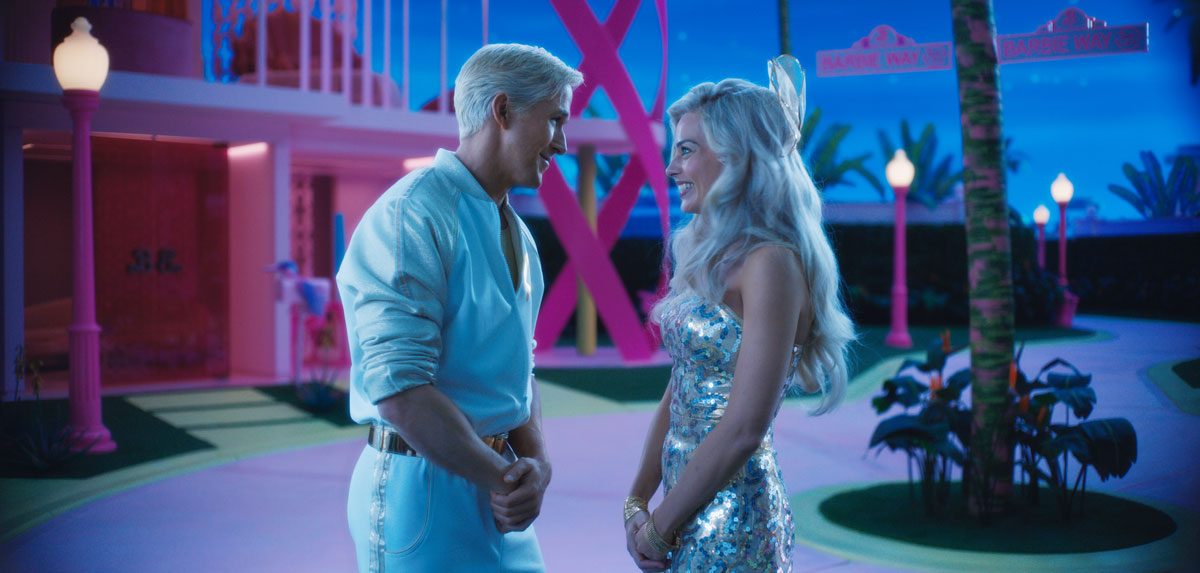
As the movie follows its titular figure from Barbieland into the real world, and thus her eventual transition from doll to human, Barbie (Margot Robbie) remains consistently disinterested in Ryan Gosling’s Ken. She neither wants to sleep with him nor be anywhere near him for that matter. In the beginning of the movie, he asks if he can sleep over (and presumably with) Barbie to which she refuses, saying, “Why? What for?” before happily enjoying a girls night. The punch line lands because they are children’s toys with no reproductive organs. Why would they know what sex is? But this scene also hammers home a crucial point: Barbie doesn’t have sex.

And, more importantly, she’s not driven to seeking it. There’s a distinct lack of attraction to sex within Robbie’s character, hence why asexual Barbie truthers believe the character is ace (which, for the uninitiated, is someone who does not have an attraction to sexual activity). Despite being boyfriend and girlfriend (at least according to Ken) in the first half of the movie, Barbie has no desire to sleep with him or anyone for that matter, content to sleep by herself in her Dreamhouse where every night is girls night. She never kisses Ken or holds his hand. In fact, his very presence seems aggravating to her; she’s often sighing at his appearance or having to make sure he’s not getting into trouble. By the end of the film, she makes clear that she just wants to be friends with Ken. It’s all very unromantic. Some may even say aromantic. (Though, to be clear, not all asexual people are aromantic, aka not attracted to romantic relationships.)

There is also of course the matter of Barbie being smooth down there, a point Gerwig makes explicit throughout the story. When Robbie and Gosling, decked in shiny matching rollerblade costumes, find themselves in the real world, they skate over to the construction workers where Barbie experiences the all too relatable catcall. “Are your pants made of mirrors?” one of the workers shouts. Actually, Barbie points out, “I don’t have a vagina.”

“If she doesn’t have organs, she doesn’t have reproductive organs. If she doesn’t have reproductive organs, would she even feel sexual desire? No, I don’t think she could,” Robbie said in an interview with Vogue. While the movie may not outright say Barbie’s sexual orientation, Robbie’s comment lends credence to the idea that the figure is asexual as her attraction to sex is completely nonexistent.

BarbieRyan Gosling and Margot Robbie in “Barbie” (Warner Bros.)For Barbie, an enduring commercial icon in what is likely to be the biggest movie of the year, to be asexual is significant visibility for the ace community, especially as asexual representation on screen is few and far between. To date, there’s only been a handful of asexual characters entertainment, like Todd Chavez in “Bojack Horseman,” Peridot in “Steven Universe,” Alastor in “Hazbin Hotel” and even Spongebob in “Spongebob Squarepants.”
No one condemns Barbie for not wanting to sleep with or have an attraction to physical intimacy with Ken. It’s quite the opposite.

But even when asexuality is finally depicted on screen, it often perpetuates harmful notions that asexuality is something that needs to be fixed. We see this in the 2012 movie “The Olivia Experiment,” a comedy that follows the titular character as she comes to realize she’s asexual only to then try to clear her “issues” by accepting a friend’s offer to have sex with her boyfriend. A similar narrative runs throughout Season 8, Episode 9 of “House,” when a patient (Corri English) tells the show’s grumpy doctor House (Hugh Laurie) that she’s asexual only for it to come out that she was lying in order to marry an asexual man who also turns out to not be asexual but merely had a tumor in his brain that made him believe that.

We need your help to stay independent

These depictions perpetuate the idea that asexuality is something that can be corrected like conversion therapy, asserting that asexuality is not a “real” sexuality. As Lauren Jankowski writes for Bitch, “The dangerous message that comes out of ‘fix-it’ narratives is that sexual orientation and consent is something people can debate. Convincing or shaming an asexual person into having sex even though they say they don’t want to isn’t a fun game — that’s corrective rape, with the goal of ‘fixing’ asexuals.”

As is often the case in pop culture, media representation has real life consequences. Because of fix-it narratives, many people who are asexual have a greater fear of coming out, particularly to medical professionals who often view a “low sex drive” as a symptom of a larger issue. Telling a doctor you’re asexual is a quick way to be prescribed medication, as if this sexuality means there’s something wrong with you. 

“Barbie” thankfully diverges from this depiction. No one condemns Barbie for not wanting to sleep with or have an attraction to physical intimacy with Ken. It’s quite the opposite. The movie celebrates how Barbie wants to become her own person, to become a real human with feelings and a job. Perhaps this is why Barbie ends up cheerfully going to the gynecologist by the end of the film, as someone who was never bullied into being sexual in Barbieland, she has no reason to fear the medical world. 

Her journey to self-empowerment noticeably excludes a boyfriend or any significant other. Instead, the more Ken tries to press the issue of them being together, the more enamored with the patriarchy he becomes, the more annoying he becomes. The experience of being cajoled and convinced into conforming to default relationship standards is one asexual people know all too well. Margot sums this up nicely, continuing to tell Vogue that Barbie “is sexualized. But she should never be sexy. People can project sex onto her” — Just as people project fix-it narratives onto asexual people.


Want a daily wrap-up of all the news and commentary Salon has to offer? Subscribe to our morning newsletter, Crash Course.


Asexuality theory, like queer theory, seeks to create a view outside heteronormativity. If the latter focuses on romantic, monogamous love, the former asks you to rethink how you prioritize relationships, be they romantic, platonic, familiar or of the self. While the media likes to drive home this idea that women in particular should find The One, Barbie is a fabulous break from this narrative. Completely unattracted to sex or men, Barbie has her own Dreamhouse, her own car, her own life — and she’s thriving. Ken, as the movie won’t let you forget, is just . . . there. 

It’s right where he belongs because this Barbie is asexual, and life is still fantastic.

GOP Rep. Ronny Jackson “briefly detained” by cops at rodeo but spox insists he “was not drinking”

Sign up for The Brief, The Texas Tribune’s daily newsletter that keeps readers up to speed on the most essential Texas news.


U.S. Rep. Ronny Jackson, R-Amarillo, was “briefly detained” by law enforcement while trying to help with a medical emergency at a rodeo Saturday night outside Amarillo, according to his office.

A spokesperson for the representative said in a statement that Jackson was detained amid a “very loud and chaotic environment” and was released as soon as law enforcement realized he was trying to help. Jackson, a physician and retired Navy rear admiral, is best known for having served as the White House doctor for presidents Barack Obama and Donald Trump.

The local sheriff, Tam Terry, said in a statement that one person was “temporarily detained” while authorities responded to calls during a concert at the rodeo Saturday night, but Terry did not release the person’s identity. Terry said his department was “reviewing the incident” and would withhold any names until the review was complete. The sheriff declined to comment further.

The incident happened at the White Deer Rodeo, an annual event in a town by the same name about 40 miles outside Amarillo.

Both Jackson’s office and the sheriff released statements Monday in response to questions about the incident from The Texas Tribune.

The statement from Jackson’s office said he was attending the rodeo when he was “summoned by someone in the crowd to assist a 15-year-old girl who was having a medical emergency nearby.” When Jackson responded to the scene, he found a relative, who was a nurse, already helping the girl. Jackson asked if she needed help and she said yes, according to the statement, which noted there were “no uniformed EMS providers on the scene at the time.”

“While assessing the patient in a very loud and chaotic environment, confusion developed with law enforcement on the scene and Dr. Jackson was briefly detained and was actually prevented from further assisting the patient,” the statement said. “He was immediately released as soon as law enforcement realized that he, as a medical professional, was tending to the young girl’s medical emergency.”

The statement noted Jackson was sitting “in the stands during the entire rodeo, in full view of the assembled crowd, and was not drinking.” The statement was attributed to a “spokesman from congressman Jackson’s office” and provided by his communications director, Kate Lair.

It is unclear who detained Jackson. In addition to the Carson County sheriff’s office, EMS for White Deer and neighboring Gray County responded to the calls that led to the person being detained, according to the sheriff’s statement.

Carson County EMS deferred comment to the sheriff. Gray County EMS said only that it could confirm that it responded to multiple calls at the rodeo from Saturday night to early Sunday morning.

A spokesperson for the Texas Department of Public Safety said the agency had no comment.

Jackson was first elected in 2020 to represent the 13th Congressional District, a deeply conservative district in the Panhandle. He is one of Trump’s staunchest allies in Congress and a vocal booster of his 2024 comeback campaign.


More than 200 speakers are now confirmed for the 2023 Texas Tribune Festival in downtown Austin from Sept. 21-23. Each year, the Festival engages, challenges and surprises attendees with unexpected talent mashups, must-see interviews and more, curated by the award-winning journalists at The Texas Tribune. See the lineup and get tickets today.

This article originally appeared in The Texas Tribune at https://www.texastribune.org/2023/07/31/ronny-jackson-detained-amarillo-rodeo/.

The Texas Tribune is a member-supported, nonpartisan newsroom informing and engaging Texans on state politics and policy. Learn more at texastribune.org.

“Hemorrhaging cash”: Trump PAC “nearly broke” after lawyer bills and may have violated election law

Former President Donald Trump’s leadership PAC is running low on cash after shelling out millions on legal bills amid his mounting indictments and court cases.

The New York Times reported that Trump’s PAC, Save America is now “nearly broke” after reporting less than $4 million in its account. The PAC began last year with more than $105 million in the bank.

The struggling PAC has even requested a refund of a $60 million donation previously made to pro-Trump super PAC, Make America Great Again Inc. Federal records showed that Make America Great Again Inc has sent back nearly $13 million to the group covering Trump’s legal fees, closely mirroring the amount the super PAC raised from donations in the first half of 2023. 

The Republican frontrunner has seen his legal costs balloon in recent months. The ex-president has been twice indicted, found liable of sexual abuse and defamation, and likely faces other impending criminal charges in connection to the Jan. 6 Capitol insurrection and efforts to overturn the 2020 election in D.C. and Georgia.

Save America had also seemingly found its way around a loophole stipulating that it could not directly spend money on Trump’s campaign when it donated the $60 million to the super PAC, which is permitted to spend on his candidacy. The Times reported that though it is not evident when Save America requested the refund, filings show that the super PAC sent it back in installments, several of which were timed to Trump’s various legal debacles. A person close to the matter told The Times that another sum was sent back to Save America in July, implying that the super PAC’s continued refunds could be covering Trump’s legal fees as they bubble up. 

“I don’t know that calling it a refund changes the fundamental illegality,” said Adav Noti, a former lawyer for the Federal Election Commission’s litigation division and leader of watchdog group, Campaign Legal Center. As the Times noted, “the pro-Trump super PAC and Trump-controlled PAC must be independent entities and are barred from any coordination on strategy.”

“So for the super PAC and the Trump PAC to be sending tens of millions of dollars back and forth depending upon who needs the money more strongly suggests unlawful financial coordination,” Noti added.

We need your help to stay independent

Trump spokesperson Steven Cheung denied Noti’s implication.

“Everything was done in accordance with the law and upon the advice of counsel. Any disgusting insinuation otherwise, especially by Democrat donors, is nothing more than a feeble attempt to distract from the fact that President Trump is dominating this race — both in the polls and with fund-raising — and is the only candidate who will beat Crooked Joe Biden,” he told the Times.

But CNN’s Phil Mattingly noted that the filings underscore that Trump’s “political operation has significant money issues.”


Want a daily wrap-up of all the news and commentary Salon has to offer? Subscribe to our morning newsletter, Crash Course.


“To put context on this, last year at the start of the year, it had $105 million. That’s a ton of money. The beginning of this year, $18.3 million. What does he have right now? As of the latest filing that came out last night, less than $4 million. That’s hemorrhaging cash,” he said.

“While they’re trying to get around this by calling it a refund, there’s no precedent for a … refund being this large,” he added. “Trump’s campaign says they’ve done everything according to the law, everything legally, but this is new, this is different and this is very clearly an effort to try to add liquidity when they have a very clear crunch despite the fact it’s never really been done before.”

Through Pee-wee Herman, Paul Reubens reminded Gen X to stay true to our immature inner children

Our culture’s inability to contend with mortality places artists like Paul Reubens in a domain that was uniquely his, where he maintained the illusion that benevolent childishness defies aging.

This is the eternal gift Reubens leaves us through signature character Pee-wee Herman, cemented in the Generation X Hall of Fame by the CBS children’s show “Pee-wee’s Playhouse,” which ran from 1986 through 1990.

That may inform why the actor chose to keep his six-year cancer battle to himself. People like Reubens, who died Sunday at the age of 70, aren’t merely aware of their image. They assume the heavy responsibility for what they mean to us.

“Please accept my apology for not going public with what I’ve been facing the last six years,” Reubens said in a statement posted Monday on his Instagram account along with his death announcement. “I have always felt a huge amount of love and respect from my friends, fans and supporters. I have loved you all so much and enjoyed making art for you.”

That art encouraged people to remain connected to the part of us that stays pure, a little puerile and always kind. Pee-wee looks ageless and behaves as if maturity never occurred to him, allowing Reubens to sustain the character over four decades in movies and on TV. The 2016 Netflix movie “Pee-wee’s Big Holiday” represents his final onscreen outing as “the luckiest boy in the world.”

That was pleasant, but could never top his big-screen debut in Tim Burton’s 1985 now-classic “Pee-wee’s Big Adventure” with its hero’s quest to recover his stolen and highly customized Schwinn Western Flyer. For a time the movie’s best quotable moments were inescapable, mainly on playgrounds.

But “Pee-wee’s Big Adventure” performed other services too, like revealing the Alamo doesn’t have a basement and that a sufficiently hilarious dance to The Champs’ 1958 hit “Tequila” can disarm an angry motorcycle gang.

Above all, Reubens’ worldwide introduction to Pee-wee earned the lifelong affection of millions thanks to the hero’s wit, sweetness and arch juvenility.

“I always viewed Pee-Wee Herman as somebody with a really good heart, but like, you know didn’t have a clue about a lot of things,” Reubens told NBC reporter Stone Phillips in a 2004 interview. “Somebody who was truly naive and was trying to do the best he could do, but it didn’t always come out like that.”

Indeed. In Pee-wee, Reubens created a timeless, ageless friend you can’t help but love — asexual, bawdy and queer in one package, whose tastes are both cutting edge and retro vaudevillian. That was true of Pee-wee when we first visited his Puppetland house in the 1980s as it was almost 25 years later when Reubens revived him for a Funny or Die sketch skewering the iPad.

Reubens was born Paul Rubenfeld on August 27, 1952, in Peekskill, N.Y., but grew up in Sarasota, Fla. After high school he spent a year at Boston University before transferring to the California Institute of Arts at Valencia in 1971.

He soon shortened his surname to Reubens and made many efforts to score his big break. One of the earliest is an appearance on “The Gong Show” with his Groundlings collaborator John Paragon featuring a very early performance of that famous dance. (Paragon, who died in 2021, went on to play Jambi the Genie in “Pee-wee’s Playhouse.”)

In Pee-wee, Reubens created a timeless, ageless friend you can’t help but love.

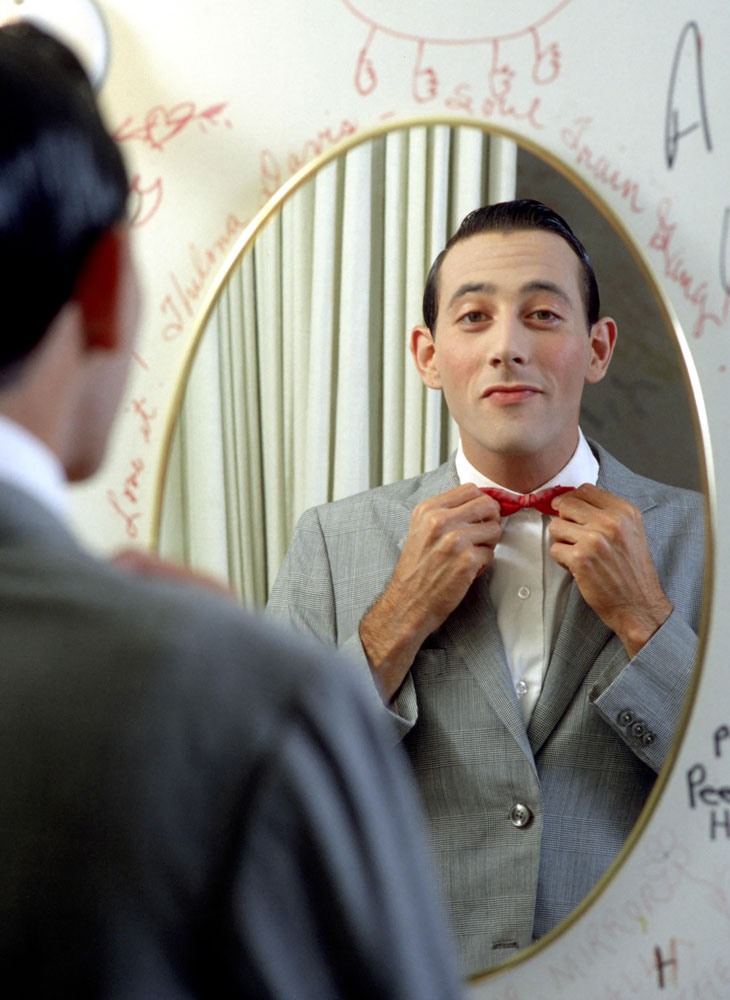
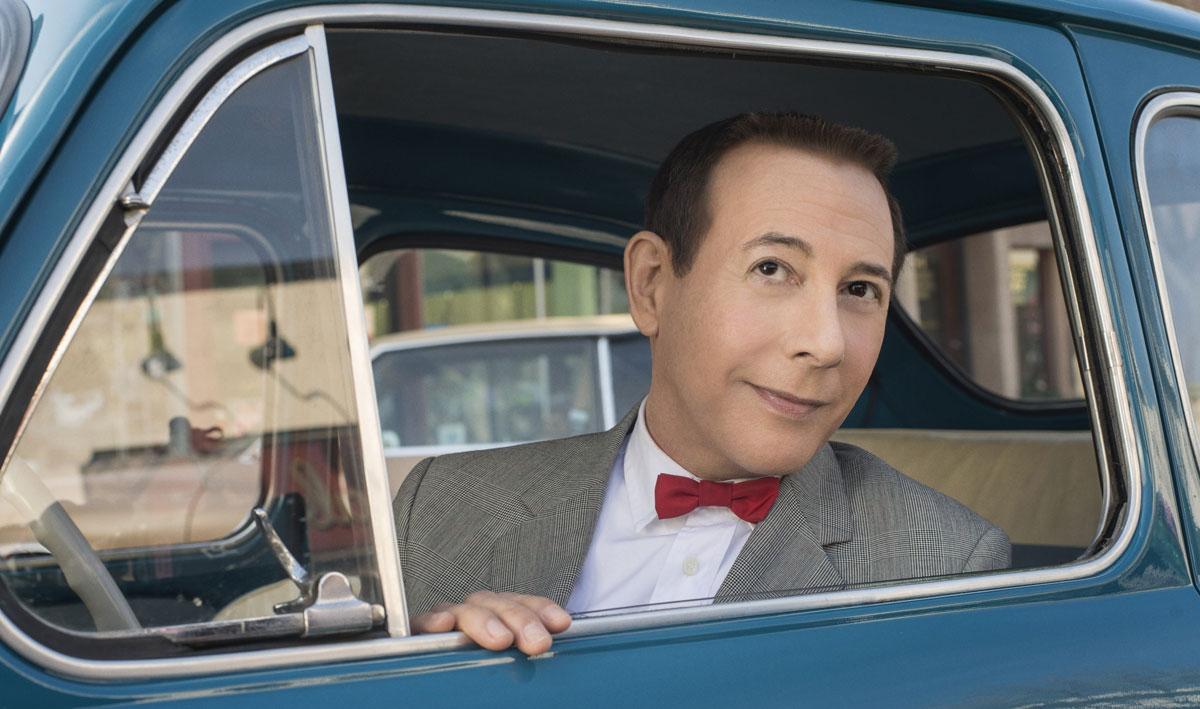
“Pee-wee’s Playhouse” was a pastiche of ’80s-era UHF tastes, catering to latchkey kids raised on after-school cartoons and reruns of old TV shows and movies while also inviting adults to remember a better version of when, one that never was but could have been much nicer. Its star adopted the whimsical style of children’s show hosts like Howdy Doody and the type of brainy humor woven through classic Jay Ward cartoons like “Rocky and Bullwinkle,” wrapping himself in a tight gray suit with pants that were too short. Pee-wee’s gleaming white shoes heightened the ridiculousness, but his red bow tie completed the look, becoming Reuben’s version of a clown’s nose.

Clowns are creepy though. Pee-wee should have been but never was, existing in a fantastical house where breakfast is cooked and served using a Rube Goldberg contraption surrounded by a friendly robot, a talking globe, a clock shaped like a map of the United States named Clocky and a talking chair named Chairry.

Honors student mischief-makers may have picked up another message from Pee-wee’s getup, which is respectable clothes make it easier to say and get away with nearly anything.

Reubens certainly did that through Pee-wee. He introduced the character in the late 1970s as part of a Groundlings stage performance, but Pee-wee was a creature of TV. Reuben’s rejected audition for “Saturday Night Live” inspired him to create “The Pee-wee Herman Show,” which debuted at the Groundlings Theater in Los Angeles Los Angeles in 1981 and became an HBO special that same year.

We need your help to stay independent

“Pee-wee’s Playhouse” arrived on CBS a few years later and merged the live variety show’s magical puppet characters into a G-rated format for the Saturday morning cereal crowd. Even so, Reubens managed to slide in plenty of naughty winks with each episode, like one classic scene featuring Laurence Fishburne’s Cowboy Curtis. One can’t help but appreciate the casual genius of understanding how something can sound different from how it reads or looks, which is why each of Pee-wee’s double-entendre lands with feathery innocence, no matter how bawdy and despite the jokester knowing exactly what he’s doing.

Fishburne is one of many eventual superstars who passed through the “Playhouse” early in their careers. “Pee-wee’s Playhouse” became many people’s first introduction to “Law & Order” regular S. Epatha Merkerson, who played Reba the Mail Lady. And it gave “Russian Doll” star Natasha Lyonne her big break as a member of the Playhouse Gang in Season 1, which also featured “Saturday Night Live” legend Phil Hartman as Captain Carl.

“Pee-wee’s Playhouse” viewers had no idea who these castmembers would become. What mattered more is that they represented a multiracial world of belonging where, for example, two Black film actors few people had ever heard of, Gilbert Lewis and William Horace Marshall, played the King of Cartoons.

“Pee-wee’s Playhouse” invited adults to remember a better version of when, one that never was but could have been much nicer.

In 1988 the “Pee-wee’s Playhouse Christmas Special” took that idea to the next level with surreal cameo parade enlisting appearances by anybody interesting who was anybody at that time. That includes Annette Funicello, Joan Rivers, Dinah Shore, Oprah Winfrey, Magic Johnson, Little Richard, Whoopi Goldberg and . . . Grace Jones? Yes, her too.

Few people can muster a gathering like that in the same place as the Del Rubio Triplets, Charo and K.D. Lang. Reubens could, along with enlisting musicians like Mark Mothersbaugh, Danny Elfman, the Residents and Dweezil Zappa to provide the show’s soundtrack.

Reubens was beloved on a level that enabled him to recover to an extent from two scandals, the first stemming from a 1991 arrest at an adult movie theater in Sarasota, a year after production ceased on “Pee-wee’s Playhouse.” In the wake of that arrest, CBS stopped airing the show’s reruns.

A second occurred in 2002, when Los Angeles detectives raided Reubens’ home and confiscated his collection of vintage erotica, resulting in the city attorney bringing an obscenity charge against him that carried the stain of child pornography accusations. The Los Angeles County district attorney at the time reviewed the same materials and declined to bring felony charges.

“One thing I want to make very, very clear, I don’t want anyone for one second to think that I am titillated by images of children,” he told NBC in 2004. “It’s not me. You can say lots of things about me. And you might. The public may think I’m weird. They may think I’m crazy or anything that anyone wants to think about me. That’s all fine. As long as one of the things you’re not thinking about me is that I’m a pedophile. Because that’s not true.”

Both ordeals were heavily covered in the national news and protested by his fans and celebrities. Only the first became something he could joke about, famously opening the 1991 MTV Video Music Awards with this unforgettable one-liner: “Heard any good jokes lately?”

Paul Reubens; Pee-wee HermanActor Paul Reubens poses for a portrait dressed as his character Pee-wee Herman in May 1980 in Los Angeles, California. (Michael Ochs Archives/Getty Images)Between then and his second bout of legal troubles, Reubens pulled back on his public appearances for most of the 1990s beyond taking small roles in films such as Burton’s 1992 movie “Batman Returns,” where he made a cameo as The Penguin’s father and a scene-stealing part in 1992’s big-screen “Buffy the Vampire Slayer.”
He also signed on to “Murphy Brown” for a recurring guest role on “Murphy Brown” which earned him an Emmy nomination in 1995, accelerating a comeback that led to larger parts in the 1999 comedy “Mystery Men” and 2001’s “Blow,” a swaggering feature about a prolific cocaine dealer. That year he also briefly hosted ABC’s adaptation of the PC trivia game series “You Don’t Know Jack” —  playing a character named Troy Stevens, not himself . . . or Pee-wee.

Following the 2002 arrest, and after his charges were downgraded to a lesser obscenity charge, Reubens took guest roles on an array of TV shows including “30 Rock,” “The Blacklist” and “What We Do in the Shadows.”


Want a daily wrap-up of all the news and commentary Salon has to offer? Subscribe to our morning newsletter, Crash Course.


Each non-Pee-wee appearance required the audience to recalibrate our expectations and remove Reubens from the glen plaid suits and pomade-slicked hairdo for which we came to know him.

Pee-Wee's Big HolidayPaul Reubens in “Pee-Wee’s Big Holiday” (Netflix)Nevertheless, Reubens never tried to put the character who made him internationally renowned behind him, relaunching “The Pee-wee Herman Show” on Broadway in 2010. Its success resulted in a second HBO special that aired in 2011, earning him another Emmy nomination and reasserting his dedication to glorious oddity, weirdness and humor. But it was probably more important to him that it made the people who grew up with Pee-wee happy to reacquaint themselves with him as adults, if they hadn’t already.

“Love you so much, Paul. One in all time,” Lyonne tweeted on Monday in response to the news of his passing. “Thank you for my career & your forever friendship all these years & for teaching us what a true original is.”


“Truly stunning”: Republican admits hyped Biden witness “didn’t know anything” about alleged bribe

Rep. Andy Biggs, R-Ariz., acknowledged that the Republicans’ widely-hyped witness in their probe of the Biden family’s business dealings “didn’t know anything” about unverified allegations that President Joe Biden and his son Hunter Biden had accepted millions in bribes.

House Oversight Chairman James Comer, R-Ky., and fellow Republicans had hyped a closed-door session with former Hunter Biden business partner Devon Archer as part of their growing Biden probe that has yielded no actual proof.

Archer during the nearly five-hour testimony said that President Biden was not party to any of his son’s business deals and that Hunter had merely tried to sell the illusion that he was providing access to his father, Democrats on the panel said according to The New York Times.

Archer also said President Biden met and spoke with his son’s international business associates several times as Hunter Biden tried to boost his business but did not discuss any business. He said Hunter Biden put his father on speakerphone to talk to business partners about 20 times over a decade, members of the panel told the Times.

Comer said that Archer testified that President Biden was put on the phone to sell the family “brand.”

“Devon Archer’s testimony today confirms Joe Biden lied to the American people when he said he had no knowledge about his son’s business dealings and was not involved,” Comer said in a statement.

The Times noted that Archer’s testimony also underscored that Biden falsely claimed during the 2020 campaign that no one in his family received money from China even though Hunter and his business partners received millions from a Chinese firm. He also repeatedly claimed in 2019 that he had “never discussed” his son’s business dealings.

Legal experts were unimpressed with the findings.

“That’s the best they got?” tweeted national security attorney Bradley Moss.

Democrats on the panel say Archer testified that President Biden’s interactions were brief and casual and focused on topics like the weather.

Archer “was unequivocal and stated very clearly that they never discussed any business on that phone conversations that were niceties. And there was a hello. And there was talk about the weather or whatever it was, but it was never any business,” Rep. Dan Goldman, D-N.Y., told reporters.

Goldman added that Archer testified that Biden spoke to his son frequently after his other son Beau died in 2015.

We need your help to stay independent

“The witness describes in vivid detail about how devastating that was to both Hunter Biden and to Joe Biden, and how their communications picked up dramatically in the aftermath,” he said. “Because Joe Biden was calling his son to check on him and Hunter Biden was calling his dad to check on him. It had nothing to do with business. And that is the sum and substance of what the testimony was.”

Goldman also said that Archer “categorically” denied the Republicans’ bribe allegation.

Biggs, who is pushing for an impeachment inquiry, also acknowledged to reporters that Archer had no information on the unverified claims from an anonymous informant that the Bidens accepted bribes.

“He didn’t know anything about it,” Biggs told reporters after the session.


Want a daily wrap-up of all the news and commentary Salon has to offer? Subscribe to our morning newsletter, Crash Course.


That did not stop Republicans from using the testimony to push for an impeachment inquiry into President Biden.

“When Congress moved toward impeachment with Richard Nixon, it was because they had proof that Richard Nixon lied,” Rep. Marjorie Taylor Greene, R-Ga., said after the interview. “When Congress moved toward to impeachment with Bill Clinton, it was because they had proof that Bill Clinton had lied about sexual relations with Monica Lewinsky. Today, with Devon Archer’s testimony, we have proof that Joe Biden has lied.”

But the White House fired back, arguing that the GOP’s own witness had debunked their core allegations.

“It appears that the House Republicans’ own much-hyped witness today testified that he never heard of President Biden discussing business with his son or his son’s associates, or doing anything wrong,” White House spokesman Ian Sams said in a statement to Mediaite. “House Republicans keep promising bombshell evidence to support their ridiculous attacks against the President, but time after time, they keep failing to produce any. In fact, even their own witnesses appear to be debunking their allegations. Instead of continuing to waste time and resources on this evidence-free wild goose chase, House Republicans should drop these stunts and work with the President on the issues that actually impact Americans’ daily lives, like continuing to lower costs, create jobs, and strengthen health care.”

Goldman on Monday night said the investigation “needs to end now because what we’re doing is badgering a private citizen, and there’s no legitimate legislative purpose at all.”

“It’s truly stunning to me,” he told CNN. “This is the taxpayer-funded defense and political arm of Donald Trump.”

“They need us. We don’t need them:” The fall of Twitter is making the trolls and grifters desperate

The grifters that make up the troll-industrial complex are not okay.

One can see the sheen of desperation in the world of self-identified conservatives who make a living by “triggering” the liberals. The usual dose of outrage bait isn’t working as well any longer, so the right-wingers are escalating the provocations. Tucker Carlson, for example, gave a glow-up interview with manosphere “influencer” Andrew Tate, who is being held in Romania on charges of sex trafficking and rape. Daily Wire anti-trans provocateur Matt Walsh is selling plushies of himself clad only in a diaper, which he encourages people to give to children. Daily Wire founder Ben Shapiro, on the other hand, made a nearly hour-long video tantrum about “Barbie,” complete with setting the dolls on fire. The clawing need to get attention from progressives seems to be driving these engagement farmers a little nuts, as they up the weird-and-evil ante, hoping to get those precious clicks and plays. 

And it’s not just those who openly align themselves with the right who seem more unhinged than usual. The “contrarian” class of trolls is, if anything, acting even more frantic. These are the people who claim not to be partisan Republicans or MAGA sympathizers, but whose online existence is largely, often exclusively, built around baiting liberals with reactionary opinions or disinformation. Some, like former New York Times writer Bari Weiss and former psychology professor Jordan Peterson, pretend they are being canceled for intellectual independence that invariably reads like standard right-wing talking points. Some, like fake presidential candidate Robert F. Kennedy Jr. or faux journalist Michael Tracey, repackage far-right disinformation as leftist politics. And some, like journalists Freddie deBoer or think tanker Matt Stoller, brand themselves as “socialists,” mainly by discouraging people from backing Democratic candidates in elections. 

Whatever flavor they come in, there are two things both Republican and not-a-Republican trolls have in common: First, their “professional” existence is defined by drawing negative attention from liberals. Second, by profiting off liberal outrage, they are giving Donald Trump and the MAGA movement a boost. 

We need your help to stay independent

These folks, by design, are annoying all of the time, but lately, things seem to be getting worse. After being captured on tape spouting an anti-semitic conspiracy theory, Kennedy doubled down with an incoherent gripe about not getting Secret Service protection, which mainly appeared to be an excuse to dog whistle “14” and “88,” which are understood as coded signals of support to neo-Nazis. 

Tracey also leveled up the trolling over the weekend by repackaging Holocaust denialism as a “leftist” critique of the American military. 

Less vile but still in the desperate-for-attention category: Stoller trying a “Gov. Ron DeSantis, R-Fla. is a leftist ally because he hates Disney” troll at Politico and deBoer snatching eye rolls and dunks with “Rep. Alexandria Ocasio-Cortez, D-N.Y., is a traitor to progressives” hot take at New York magazine. Neither opinion was worth the electricity needed to publish them, but both no doubt succeeded at the main goal of generating traffic through hate clicks. Weiss’ latest gambit for attention, meanwhile, is even more cringeworthy: A “debate” over whether “the sexual revolution has failed” between a group of fake feminists and faux-socialists titled “A Clash of the Female Titans.” (Well, at least the word “female” is accurate.) Sure, all three examples are technically off-Twitter, but it’s hard to imagine they’d exist but for trying to get those “look at these assholes” social media shares. 

“What Musk has proven through his actions and his statements is that he’s committed to serving the trolls and the fraudsters first and the ordinary good faith users second.”

The escalation of shock value tactics, on both the right and the pretending-not-to-be-right political classes, are likely rooted in the same cause: The slow motion collapse of Twitter, now rebranded “X,” under the leadership of Tesla CEO Elon Musk. While these folks have various outlets, both in the media and social media, ultimately their business model of trolling depends heavily on Twitter. 

“Grifters need people to harass and a mainstream discourse to counter. As traffic takes a nosedive and Twitter becomes less a part of the conversation, it’s going to be harder for these folks to make money,” Melissa Ryan, a strategist who helps counter online disinformation, told Salon.


Want more Amanda Marcotte on politics? Subscribe to her newsletter Standing Room Only.


“What Musk has proven through his actions and his statements is that he’s committed to serving the trolls and the fraudsters first and the ordinary good faith users second,” explained Brian Hughes of American University, who is the co-founder of the Polarization and Extremism Research and Innovation Lab (PERIL). But, he noted, Musk is “blinded by his own ideology” and can’t see how this is backfiring. 

“As normal people, for lack of a better term, continue to leave Twitter, that’s actually going to cause probably a reduction in the use of the platform by these trolls and these fraudsters. They don’t have their audience of targets that they need,” he continued. 

All this, Ryan said, explains why the trolls “are getting more extreme and desperate.” The pool of people available to get attention from is shrinking, so the only way to keep the engagement rates as high is to say wilder and nastier things. But eventually, there will be so few people on Twitter left to aggravate that even white nationalist dogwhistling and Holocaust denialism won’t work. 

By profiting off liberal outrage, they are giving Donald Trump and the MAGA movement a boost. 

Even before Musk, Twitter was, in sheer numbers, a relatively small platform, with a user base a mere fraction of what Facebook, TikTok, or even Reddit enjoy. But to focus strictly on numbers misunderstands why the troll-industrial complex relied so heavily on Twitter. As Hughes told Salon, “Twitter was very important for what we call ‘agenda-setting’ in media studies.” Because Twitter was the favorite platform of journalists, politicians, and other politically important figures, getting attention on there meant getting your message amplified, even (and often especially) if only by people mocking or arguing with you.

Hughes pointed to Kennedy as an example. With the pandemic fading in the rearview mirror, it’s much harder for Kennedy, who made his name as an anti-vaccination conspiracy theorist, to keep getting media coverage. But by dishing out regular provocations on Twitter, Kennedy can keep his name in the media. “Otherwise,” Hughes said, “he becomes more irrelevant.” 

Musk may feign confidence about his strategy on Twitter, but there are strong signs he’s worried that the site’s reputational decline is driving off the everyday users he needs in order to keep his beloved trolls active. The New York Times reports that Musk has been threatening to sue the Center for Countering Digital Hate for reporting on the prevalence of bigotry on the platform. In response, the group’s leader, Imran Ahmed, said that Musk wants “stem the tide of negative stories and rebuild his relationship with advertisers.” It’s a sign that Musk has run out of ideas. The reason people are leaving Twitter is not because they read a report on a non-profit’s website. It’s because they can see for themselves that Twitter is increasingly a ghost town dominated by a handful of trolls who get increasingly vile to make up for declining engagement numbers. 

While it’s a good thing to interrupt the supply chain of liberal outrage fueling the trolling-industrial complex, Hughes did caution that there are dangers from Twitter becoming the right-wing echo chamber. Some people get a “charge” out of “rallying against a scapegoat” or “getting high off of a sense of persecution or of persecuting others,” he said. Pointing to QAnon as an example, he argued that these communities “don’t need an audience of liberals to troll. They really just need each other.” Trump’s Twitter rip-off, Truth Social, shows that social media networks that cater only to this right-wing bubble may not scale to the point of profitability, but they are unfortunately good at radicalizing people. 

Still, it’s hard not to feel some joy, watching the Musk takeover of Twitter undermine the reach of the very trolls he was trying to empower. “It has to come as quite a shock” to “folks like Tracy, RFK Jr., and Weiss,” Ryan said, “since Musk’s Twitter was supposed to be a far-right paradise.”

Hughes points out that some Twitter alternatives like Bluesky have revived that sense of joy some remember from Twitter in its days before professionalized trolling. “Political liberals, people on the left, centrists, moderates, people who are just hobbyists, they all have a lot more fun when the trolls and the propagandists aren’t there to harass and defraud them,” he said. Trolls, however, “can’t have a good time at all if we’re not there.”

As Hughes notes, “They need us. We don’t need them.” 

“Trump has no way to escape at this point”: Ex-DOJ prosecutor says new charges spell real trouble

It would be an ironic form of justice if Donald Trump was brought down suddenly and unexpectedly and then pushed out of public life. Given the many criminal trials Trump is facing – and the indictments that are imminent — such an outcome appears, at least for now, increasingly more likely than not.

In an interview last weekend, Georgia’s Fulton County District Attorney Fani Willis told CNN that her investigation into Trump and his cabal’s attempts to rig the 2020 presidential vote in Georgia has concluded and she would announce an indictment decision by September. Days earlier, the Department of Justice (DOJ) released superseding indictments in the Mar-a-Lago classified documents case, this time ensnaring yet another low-level Trump employee in legal jeopardy. In support of those new charges, there is a video recording of Trump’s employees discussing how “the boss” wanted the evidence of his alleged crimes destroyed to keep it from federal investigators. This recording is potentially a kill shot for any claims by Trump that he was ignorant or otherwise did not know that possessing classified and top secret documents was illegal. 

Trump will likely also soon be indicted and arrested by the DOJ and special counsel Jack Smith and his team of prosecutors for alleged crimes connected to the Jan. 6 coup attempt and nationwide conspiracy to end multiracial democracy by overturning the results of the 2020 election. And there is still a third impending trial in Manhattan for financial crimes and fraud related to his affair with adult film star Stormy Daniels. 

To make better sense of all of these charges against Donald Trump and what is likely to happen next, I recently spoke with Kenneth McCallion, a former Justice Department prosecutor who also worked for the New York State Attorney General’s office as a prosecutor on Trump racketeering cases. As an assistant U.S. attorney and special assistant U.S. attorney, he focused on international fraud and counterintelligence cases that often involved Russian organized crime.

In this wide-ranging conversation, McCallion explains how the legal walls are quickly closing in on Trump and that he now has few means of escape. McCallion also reflects on his personal experience investigating Trump and his businesses and how he believes that the ex-president, for a variety of emotional and psychological reasons, does not really understand the seriousness (and personal consequences) of the criminal charges he is facing trial for.

This interview has been lightly edited for clarity:

I almost always start my conversations here at Salon with a question about emotions and the human dimension of this time of great troubles here in the United States with the Trumpocene and how we got here. I will break that rule and start with an observation. Given the legal developments of the last week or so it certainly appears that Donald Trump is in real big trouble.

The last nails in his legal coffin are being hammered home by Jack Smith and his colleagues in the Justice Department. They’re being exceedingly thorough, which is what you have to do when you are investigating an ex-president. But as a former federal prosecutor, I know all too well that stretching out the timeframe of an investigation doesn’t necessarily lead to a stronger case. But in this particular case involving Trump, it looks like Special Counsel Smith and his colleagues hit the jackpot when the managed to force or induce several cooperating witnesses to come forward. They were also able to get some key additional pieces of evidence to support their obstruction of justice charge, particularly the attempt to destroy the security tapes there at Mar a Lago.

The main significance, as I see it, of the most recent indictment on the classified documents is that Trump can no longer protest or claim innocence, and the argument that he honestly believed he had a right to keep them has been completely vaporized. When you hide boxes of classified documents after being put on notice by the government that they should be returned, this is called “consciousness of guilt” and you are guilty of obstruction of justice in addition to the underlying crime of illegal possession of classified documents. Also, the voice recordings also conclusively show that Trump had clear, conscious intent and state of mind to obstruct justice, to keep the documents, to hide them, and then lie about them to law enforcement and other government agents.

We may never really know what Trump’s psychological motivation may have been to hold onto the documents even while risking everything if his scheme was uncovered (which it was). But his motivation is not really important now. Maybe he wanted to keep them because he is obsessed with having the documents as some type of memorabilia to stroke his ego. Alternatively, Trump’s motivations may have been more nefarious. Some of these documents are purported to show US weaknesses and battle plans for a war against Iran, and he may have wanted to sell them. In the final analysis, however, the tape recordings showing that Trump was bragging to visitors about having these top secret documents is more than enough to convince a jury that he is guilty on all counts  

What took Attorney General Merrick Garland and the Department of Justice so long given the obvious and abundant evidence of Trump and his cabal’s alleged criminality and what is a de facto conspiracy?

Merrick Garland dithered away valuable time in the Trump investigation before doing what he should have done in the first place, which was to appoint a special prosecutor of Jack Smith’s caliber. Garland, even as a former federal judge, unfortunately, has his finger up testing the winds of public opinion and waiting for it to swing in favor of government prosecution. That shouldn’t be a consideration. You don’t take public opinion polls when you catch a criminal; you don’t wait for the public opinion polls to come in as to whether you proceed or not. Prosecutors are obligated to file a criminal complaint when they have more than sufficient evidence to charge and successfully prosecute the target of an investigation.

“They carefully built their case witness by witness, brick by brick. That’s why Trump has no way to escape at this point. All he can do now is run around in circles in a closed room that is quickly becoming smaller and smaller.”

In Trump’s case, the evidence is overwhelming with regard to both the classified document charges and the January 6 investigation into the broad-ranging conspiracy to overturn the November 2020 election results. Given the fact that the investigation was such a complex and many-headed Hydra involving so many states, I can see how the complexity of that could have led to a longer timeframe for the prosecution. But the Mar a Lago document case is completely straightforward. It’s the equivalent of catching the bank robber as he’s leaving the bank with a sack full of cash. There are really no excuses for any delay. Donald Trump is indicted, and the legal process should move swiftly forward.

I will admit that given Jack Smith’s investigations, and especially the Jan. 6 imminent indictments and the new obstruction charges, even I am starting to lean more towards optimism than pessimism — at least about Trump being put in prison or otherwise removed from public life. My optimism makes me nervous. Please help me modulate those feelings.

Well, I’m feeling the same way.

When the Manhattan DA came down with his indictment, as meritorious as it was, it’s still kind of a toss-up. It’s anybody’s guess how that’s going to ultimately play out. And we don’t fully know what’s happening down in Atlanta. We are waiting for the imminent Jan. 6 indictment. But what we do have concretely are at least two iterations of an indictment relating to the top secret records. Those indictments are nailed down tight, Trump can bob and weave and try and bluff, but he’s really cornered at this point. I have to think that to the extent that there are any swing voters left in the US, that they have to really be doubting the wisdom of putting Trump back in office given that he has been such a disgrace and threat to the republic.

We need your help to stay independent

I hope that there are even some Trump MAGA voters who won’t vote for Trump again given all that we now know about him as revealed by the federal and state indictments pending against him The 2024 Election may turn out to be close, but when push comes to shove and the chips are down, and as crazy as this country might be, the American people are not going to reelect Trump.

The new charges against Trump and his underlings include allegations of obstruction of justice and trying to conceal and/or destroy evidence. On a surveillance recording, Trump’s underlings describe him as “the Boss.” It sounds like a mafia movie. As a former federal prosecutor, help me parse through that detail. What does that language indicate or not?

I think that those few words on the voice recordings speak volumes about how the Trump organization really operates.  As you know, I was a prosecutor with the organized crime section of the Justice Department for many years. We put away a number of mafia bosses that we didn’t have a lot of direct evidence against. But we did have some tape recordings and some cooperating witnesses who were lower lower-level members or associates of the crime family. These witnesses and tape recordings confirm that the orders came from the top – from the boss or the capo, or the consigliere of the family. The Trump organization is no different. Donald Trump is the boss and runs his organization like any organized crime group.  Jack Smith and other federal prosecutors are going to put aside any of the political implications of their prosecution of Trump, and they will be able successfully sell a narrative to the jury that the Trump organization is just like another organized crime operation that needs to be taken apart from the top down.

What is the approach to taking down an organized crime operation? Where do you start? What is going on with the underlings and lieutenants in the “Trump crime family”?

When you have the consiglieres or attorneys starting to flip and offer their cooperation with the government prosecutors, you know that the organization is full of holes and starting to sink. No lawyer wants to go to jail or lose their license and face criminal prosecution just to help a client. At this point, Trump has no idea as to who he can trust. The government slowly but surely has brought a number of key witnesses over to its side, either through plea deals, immunity deals, or whatever it took. They carefully built their case witness by witness, brick by brick. That’s why Trump has no way to escape at this point. All he can do now is run around in circles in a closed room that is quickly becoming smaller and smaller.

You have had these conversations. How do you approach one of Trump’s underlings such as Rudy Giuliani for example? What do you say to get them to “flip” against Boss Trump?

Unfortunately, appealing to their sense of duty or responsibility for the public good and society doesn’t work. You must have a very tight case against these underlings and co-conspirators before they will finally “flip” against the Boss. And then you have a conversation with them and their lawyers, which is called a “proffer.” The witness must convince the prosecutors that their testimony will be sufficiently valuable to justify a grant of immunity or a favorable plea deal. The government prosecutor’s approach is pretty standard: They tell the witness: “You have everything to gain and nothing to lose by cooperating with us. On the flip side, if you don’t cooperate with us, you have everything to lose and really nothing to gain because Donald Trump is notoriously disloyal to those who are the most loyal to him. “The major weakness in the Trump Organization is that the relationships within the organization are completely transactional, with no real sense of loyalty or honor. This is and that is why the prosecutors have been so successful in converting Trump’s co-conspirators into cooperating witnesses.  


Want a daily wrap-up of all the news and commentary Salon has to offer? Subscribe to our morning newsletter, Crash Course.


The most disturbing thing about the federal investigation is that Rudy Giuliani might be given a free pass. I used to work with him, and he was an excellent federal prosecutor who’s gone completely rogue. Now he’s become such an embarrassment to the legal profession, and his conduct has been so shameful, that it would be a gross miscarriage of just if here were to get off completely Scot free.

How did Giuliani go from being “America’s mayor” to being targeted in an investigation of Donald Trump for being part of a de facto coup?

I saw this when I was a prosecutor. Giuliani’s one big flaw was that he was a publicity hound. He also had a bad history of leaking indictments before they were actually issued by grand juries; he was an off-the-record source to a lot of key people in the media. He played a very dangerous game as a prosecutor in order to get that level of publicity that in turn launched his political career. The problem is that Giuliani’s craving for public attention never died. When he was out of the limelight, after being “America’s mayor” and after showing his leadership qualities during the 9/11 crisis, he was unwilling to go into the semi-shadows and lay low like many former public officials choose to do. He made certain attempts to run for higher political office that didn’t quite pan out. But when Trump came along, he saw an opportunity to gain the public attention and spotlight by being Trump’s consigliere and being willing to do anything in that role to stay in the limelight.

The reporting indicates that the Georgia case against Trump will focus on a multistate racketeering operation. In terms of the law, what does that actually mean and involve? What should the public be expecting there?

The Atlanta investigation will probably have some overlap with Jack Smith’s January 6 investigation. The original focus of the Atlanta case was on Trump’s attempts to find another 12,000 or so votes in Georgia and his unlawful attempts to lean on Georgia public officials to deliver those votes with the help of Giuliani and others. But what the Georgia grand jury and district attorney are finding, and Jack Smith and the other federal grand juries are finding as well, is that this was a multistate conspiracy to swing the election because Georgia wouldn’t have been enough in and of itself. The plan to steal the election also required recruiting fake electors and phony experts on voter fraud. In all, it was a very complex endeavor.

I’ve been involved with a number of racketeering cases. When you have an organization, which is otherwise legitimate, like the Republican Party or the Trump presidency, and when it’s really being perverted and being used for unlawful or illegal uses, the acts of racketeering are basically civil or criminal actions that are of a continuous nature or over an extensive period of time. The RICO laws basically broke the back of Italian-American organized crime back in the 80s and 90s. Given how the Trump Organization is similar to those organized crime groups and the large number of people that willingly participated in the attempt to overturn the 2020 Election, the RICO statutes are an appropriate prosecution tool and a highly effective weapon in bringing a powerful crime “boss” to justice.

The RICO statutes are the equivalent of a nuclear legal weapon. It will be very hard for Trump and his underlings and co-conspirators to avoid the legal consequences of their ambitious conspiracy to undermine America’s democratic institutions by overturning the results of the 2020 Election.

What types of conversations are Trump’s attorneys having with him right now? Is a person such as Donald Trump given his personality and other issues, capable of even understanding the gravity of what is happening?

I’ve directly dealt with both Donald Trump and his first lawyer, the notorious Roy Cohn. Trump’s current lawyers or unlikely to be telling him the full extent of his legal predicament at this point because he wouldn’t listen to them and would probably fire them for trying. The truth is that in order for Trump to avoid doing hard jail time is that he has to cut a deal. Trump’s predicament is much like that of Vice President Spiro Agnew during the Nixon presidency. Both of them were caught red-handed – Agnew for bribery and Trump for hiding secret documents. Agnew and his lawyers cut a deal with federal prosecutors whereby he agreed to resign the Vice Presidency and never to run for public office again, in return for a plea deal where he would plead guilty to certain charges but would never do jail time. This is the best kind of deal that Trump could hope for. He just doesn’t know it yet. But this is what I expect will happen during jury selection in Trump’s first criminal case to actually go to trial.  

At present, however, Trump is in a very dangerous position because his instincts are telling him that he should just double down and keep screaming “Witch Hunt.”  A great part of Trump’s success in life has been his ability to create his own reality and to deny the existence of anything that doesn’t conform to his own personal vision of reality. My instincts and experience tell me that Donald Trump and the Justice Department and the prosecutors are on a collision course, and this will either be settled on the courthouse steps with a lenient plea deal, or it will have to be decided in the courtroom by a jury.

Are we going to wake up one day and it will be “breaking news” on all the news networks announcing that Donald Trump has cut a deal out of the blue because he doesn’t want to go to jail and our “long national nightmare is over”. Alternatively, does Trump go down swinging and fighting to the end? Because right now he is only amplifying his attacks. What do your instincts tell you?

Trump will take it down to the wire. Spiro Agnew did the same thing. The prosecutors were ready to start, they were picking a trial date, and then Agnew blinked.  So that’ll be the moment when Trump either blinks or does not. I don’t think Trump can withstand a trial. Only when Trump’s first trial is imminent will Trump’s ego permit him to even consider entering a guilty plea in return for no jail time. My guess is that Trump will never be wearing an orange jump suit, to the great disappointment of many of us.  

What would a deal potentially look like?

Trump will have to agree not to run for public office. He wouldn’t get jail time. There would be a period of time where Trump would be confined in a gilded cage such as Mar a Lago.

As much as it should happen, and Trump most certainly deserves to be punished for his crimes to the fullest extent of the law, I just don’t see an American president being put in prison.

I would like to see Donald Trump in prison too. The younger prosecutors likely want their pound of flesh from Trump. That is likely not going to happen. Ultimately, if the prosecution gets a guilty plea that would be a big deal and a major victory. Trump would have to enter what is known as “allocution” where he, in his own words, admits to what he did in terms of engaging in a conspiracy to overthrow the results of the election. In my opinion, for Trump and his supporters such as admission would be as good as him doing prison time. For security reasons, Trump cannot be put in the general prison population. An admission of guilt by Donald Trump to at least one or more of these crimes should be sufficient to put the Trump era behind us.

We have heard some version of this phrase repeatedly throughout the Age of Trump: “the walls are closing in!” Are the walls finally closing in on Donald Trump? Have they already closed in, and he just doesn’t realize it yet?

The final nails are being put in the coffin and Donald Trump is trapped inside. Trump can bang away all he wants, but he is not getting out of this one. All of his crimes have been “unforced errors” brought on by his inflated ego and monumental hubris. He has been doing this his whole life, and always managed to a Houdini-like escape. But justice has finally caught up with him, and if he doesn’t realize this, he will very soon.

“My favorite meat”: Mitt Romney goes viral in an alien-like ode to hot dogs

Do you remember in the mid-2000s when liking bacon became a whole personality? Bacon-wrapped everything dominated menus as dudes with handlebar mustaches and a spritz of ironic bacon-scented cologne collectively got pork bellies tattooed on their forearms. Well, it seems that Bacon Dudes walked so that Utah Senator Mitt Romney could run — towards making hot dogs a perplexing, if distinguishing, part of his public persona. 

In a video that was filmed last Wednesday (ahem, National Hot Dog Day, per the National Hot Dog and Sausage Council), but went viral on social media over the weekend, Romney exits his office, wearing a ball cap emblazoned with an illustration of a hot dog and holding an actual hot dog in his hand. 

“Well, as you all know, today is National Hot Dog Day,” he said to the camera. “Perhaps you also know that hot dog is my favorite meat. I love hot dogs. I love ’em in buns. I love them outside of buns. I love them in baked beans. I just like hot dogs.” 

He continued: “It’s the best meat there is, without question.” 

As a Chicagoan, I won’t comment on his decision to dress his hot dog with a serpentine squirt of ketchup, though I will point you to the National Hot Dog and Sausage Council’s official etiquette guide, which states: “Don’t use ketchup on your hot dog after the age of 18. Mustard, relish, onions, cheese and chili are acceptable.” 

However, it was the tone of the video that many viewers classified as truly unsettling. Despite the script ostensibly being a love letter to the ballpark favorite, Romney’s delivery is pretty low-key. Unenthused, even. 

Some commenters said that it seemed like the senator was being held captive by Oscar Mayer; others said that it seemed like another example of Romney acting almost like an alien trying to fit in on earth, much like in 2019 when a video of his unorthodox method for blowing out birthday candles also went viral. At the time “Late Show” host Stephen Colbert said:

“Just like Twinkies, Mitt Romney doesn’t age and he’s even whiter on the inside. But the weird part is Romney blew out the candles by picking them up and blowing them out individually. … Everything he does is like an alien Googled ‘How to do a normal.?'”

We need your help to stay independent

In this case, a viewer commented on Romney’s video: “I often enjoy one of those hot meat dogs while attending a game of sport with other humans.” 

But when I watched the video, I was struck by something else. It’s the same thing that prompted me to watch the video enough times over the weekend that, when a colleague asked on Monday morning if I had seen the “hot…” I didn’t even have to wait for them to finish their sentence before responding, “The Mitt Romney hot dog video? Yes, several times.” 

What strikes me about this clip is that it feels like Romney is shilling for someone — but I’m not quite sure whom. Some important context: This also isn’t the first year that Romney has made this public declaration about hot dogs. 

“Everything he does is like an alien Googled ‘How to do a normal?'”

In 2018, the former Massachusetts governor was interviewed by the Washington Examiner, who classified him as “not a complicated person, with simple tastes that can seem out of place with a man worth hundreds of millions of dollars.” At the time Romney was running for a Senate seat in Utah and the profile described a scene in which his campaign organized a casual dinner for supporters. During the meal, Romney told them, “My favorite meat is hot dog, by the way. That is my favorite meat.” 

“My second favorite meat is hamburger,” he continued. “And, everyone says, ‘Oh, don’t you prefer steak?’ It’s like, I know steaks are great, but I like hot dog best, and I like hamburger next best.”

In 2019, Romney posted a video of himself celebrating National Hot Dog Day in which he, again, declared: “This is National Hot Dog day and, as you know, hot dog is my favorite meat.”

Going back to the Bacon Dudes for just a moment, as Salon’s Joy Saha wrote, bacon’s cultural come up was grounded in politics. Amid the 1980s and early 1990s, consumers refrained from eating bacon or other processed pork products due to anti-fat and anti-nitrate scares. In response, the National Pork Board launched the “Pork: The Other White Meat” campaign in hopes that consumers would purchase more pork products and abandon the misconception that pork was just a “fatty protein.” They also pushed for more lean cuts of meat, specifically chops and tenderloins, which, in turn, caused the price of fattier cuts to drop significantly.

“While most food trends tend to trickle down from the gourmet market into the mouths of mass consumers, that wasn’t the case with bacon,” wrote Bloomberg Business Week’s David Sax. “‘Bacon mania’ was sparked not in the kitchens of fancy restaurants in New York or Chicago, but in the pork industry’s humble marketing offices in Iowa.”

Is Mitt Romney in the pocket of Big Sausage? That seemed a plausible enough explanation for his years-long campaign to establish hot dogs as “the best meat.” As a result, I spent way too much time this weekend researching the National Hot Dog and Sausage Council’s lobbying efforts over the last decade. There were some interesting tidbits along the way. For instance, in 2012, the council became enraged when the Physicians Committee for Responsible Medicine erected a billboard in Chicago declaring that “Hot Dogs Cause Butt Cancer: Processed meats increase colorectal cancer risk.” 

At the time, the council responded that hot dogs were a part of a healthy, balanced diet and the “group’s claims [were] on a collision course with the facts.” 

A few years later, the council was back in the media, although for a more cheerful reason. In November 2015, the group released a press release weighing in on whether a hot dog was, in fact, a sandwich. They voted “no,” declaring it “more than a sandwich.”

“Limiting the hot dog’s significance by saying it’s ‘just a sandwich’ is like calling the Dalai Lama ‘just a guy,'” the release read. “Perhaps at one time its importance could be limited by forcing it into a larger sandwich category (no disrespect to Reubens and others), but that time has passed.” 

Is it hyperbole? Yes, but I suppose that goes along with the job. Part of the mission of the trade organization is “celebrating hot dogs and sausages as iconic American foods.” And while Romney and Big Sausage may not be politically tied, they do share that mission in common. 

Before he closed out his viral video last week, Romney said to his viewers, in a tone more earnest than the preceding script, “May there be many, many more hot dogs served in our wonderful land.”


Profiteers of armageddon: Oppenheimer and the birth of the nuclear-industrial complex

Unless you’ve been hiding under a rock for the past few months, you’re undoubtedly aware that award-winning director Christopher Nolan has released a new film about Robert Oppenheimer, known as the “father of the atomic bomb” for leading the group of scientists who created that deadly weapon as part of America’s World War II-era Manhattan Project. The film has earned widespread attention, with large numbers of people participating in what’s already become known as “Barbieheimer” by seeing Greta Gerwig’s hit film Barbie and Nolan’s three-hour-long Oppenheimer on the same day.

Nolan’s film is a distinctive pop cultural phenomenon because it deals with the American use of nuclear weapons, a genuine rarity since ABC’s 1983 airing of The Day After about the consequences of nuclear war. (An earlier exception was Stanley Kubrick’s Dr. Strangelove, his satirical portrayal of the insanity of the Cold War nuclear arms race.)

The film is based on American Prometheus, the Pulitzer Prize-winning 2005 biography of Oppenheimer by Kai Bird and Martin Sherwin. Nolan made it in part to break through the shield of antiseptic rhetoric, bloodless philosophizing, and public complacency that has allowed such world-ending weaponry to persist so long after Trinity, the first nuclear bomb test, was conducted in the New Mexico desert 78 years ago this month.

Nolan’s impetus was rooted in his early exposure to the nuclear disarmament movement in Europe. As he said recently:

“It’s something that’s been on my radar for a number of years. I was a teenager in the ’80s, the early ’80s in England. It was the peak of CND, Campaign for Nuclear Disarmament, the Greenham Common [protest]; the threat of nuclear war was when I was 12, 13, 14 — it was the biggest fear we all had. I think I first encountered Oppenheimer in… Sting’s song about the Russians that came out then and talks about Oppenheimer’s ‘deadly toys.'”

A feature film on the genesis of nuclear weapons may not strike you as an obvious candidate for box-office blockbuster status. As Nolan’s teenage son said when his father told him he was thinking about making such a film, “Well, nobody really worries about nuclear weapons anymore. Are people going to be interested in that?” Nolan responded that, given what’s at stake, he worries about complacency and even denial when it comes to the global risks posed by the nuclear arsenals on this planet. “You’re normalizing killing tens of thousands of people. You’re creating moral equivalences, false equivalences with other types of conflict… [and so] accepting, normalizing… the danger.”

These days, unfortunately, you’re talking about anything but just tens of thousands of people dying in a nuclear face-off. A 2022 report by Ira Helfand and International Physicians for the Prevention of Nuclear War estimated that a “limited” nuclear war between India and Pakistan that used roughly 3% of the world’s 12,000-plus nuclear warheads would kill “hundreds of millions, perhaps even billions” of us. A full-scale nuclear war between the United States and Russia, the study suggests, could kill up to five (yes, five!) billion people within two years, essentially ending life as we know it on this planet in a “nuclear winter.”

Obviously, all too many of us don’t grasp the stakes involved in a nuclear conflict, thanks in part to “psychic numbing,” a concept regularly invoked by Robert Jay Lifton, author of Hiroshima in America: A History of Denial (co-authored with Greg Mitchell), among many other books. Lifton describes psychic numbing as “a diminished capacity or inclination to feel” prompted by “the completely unprecedented dimension of this revolution in technological destructiveness.”

Given the Nolan film’s focus on Oppenheimer’s story, some crucial issues related to the world’s nuclear dilemma are either dealt with only briefly or omitted altogether.

The staggering devastation caused by the bombings of Hiroshima and Nagasaki is suggested only indirectly without any striking visual evidence of the devastating human consequences of the use of those two weapons. Also largely ignored are the critical voices who then argued that there was no need to drop a bomb, no less two of them, on a Japan most of whose cities had already been devastated by U.S. fire-bombing to end the war. General (and later President) Dwight D. Eisenhower wrote that when he was told by Secretary of War Henry Stimson of the plan to drop atomic bombs on populated areas in Japan, “I voiced to him my grave misgivings, first on the basis of my belief that Japan was already defeated and that dropping the bomb was completely unnecessary.”

The film also fails to address the health impacts of the research, testing, and production of such weaponry, which to this day is still causing disease and death, even without another nuclear weapon ever being used in war. Victims of nuclear weapons development include people who were impacted by the fallout from U.S. nuclear testing in the Western United States and the Marshall Islands in the Western Pacific, uranium miners on Navajo lands, and many others. Speaking of the first nuclear test in Los Alamos, New Mexico, Tina Cordova of the Tularosa Basin Downwinders Consortium, which represents that state’s residents who suffered widespread cancers and high rates of infant mortality caused by radiation from that explosion, said “It’s an inconvenient truth… People just don’t want to reflect on the fact that American citizens were bombed at Trinity.”

Another crucially important issue has received almost no attention. Neither the film nor the discussion sparked by it has explored one of the most important reasons for the continued existence of nuclear weapons — the profits it yields the participants in America’s massive nuclear-industrial complex.

Once Oppenheimer and other concerned scientists and policymakers failed to convince the Truman administration to simply close Los Alamos and place nuclear weapons and the materials needed to develop them under international control — the only way, as they saw it, to head off a nuclear arms race with the Soviet Union — the drive to expand the nuclear weapons complex was on. Research and production of nuclear warheads and nuclear-armed bombers, missiles, and submarines quickly became a big business, whose beneficiaries have worked doggedly to limit any efforts at the reduction or elimination of nuclear arms.

The Manhattan Project and the Birth of the Nuclear-Industrial Complex

The Manhattan Project Oppenheimer directed was one of the largest public works efforts ever undertaken in American history. Though the Oppenheimer film focuses on Los Alamos, it quickly came to include far-flung facilities across the United States. At its peak, the project would employ 130,000 workers — as many as in the entire U.S. auto industry at the time.

According to nuclear expert Stephen Schwartz, author of Atomic Audit, the seminal work on the financing of U.S. nuclear weapons programs, through the end of 1945 the Manhattan Project cost nearly $38 billion in today’s dollars, while helping spawn an enterprise that has since cost taxpayers an almost unimaginable $12 trillion for nuclear weapons and related programs. And the costs never end. The Nobel prize-winning International Campaign to Abolish Nuclear Weapons (ICAN) reports that the U.S. spent $43.7 billion on nuclear weapons last year alone, and a new Congressional Budget Office report suggests that another $756 billion will go into those deadly armaments in the next decade.

Private contractors now run the nuclear warhead complex and build nuclear delivery vehicles. They range from Raytheon, General Dynamics, and Lockheed Martin to lesser-known firms like BWX Technologies and Jacobs Engineering, all of which split billions of dollars in contracts from the Pentagon (for the production of nuclear delivery vehicles) and the Department of Energy (for nuclear warheads). To keep the gravy train running — ideally, in perpetuity — those contractors also spend millions lobbying decision-makers. Even universities have gotten into the act. Both the University of California and Texas A&M are part of the consortium that runs the Los Alamos nuclear weapons laboratory.

The American warhead complex is a vast enterprise with major facilities in California, Missouri, Nevada, New Mexico, South Carolina, Tennessee, and Texas. And nuclear-armed submarinesbombers, and missiles are produced or based in California, Connecticut, Georgia, Louisiana, North Dakota, Montana, Virginia, Washington state, and Wyoming. Add in nuclear subcontractors and most states host at least some nuclear-weapons-related activities.

And such beneficiaries of the nuclear weapons industry are far from silent when it comes to debating the future of nuclear spending and policy-making.

Profiteers of Armageddon: The Nuclear Weapons Lobby

The institutions and companies that build nuclear bombs, missiles, aircraft, and submarines, along with their allies in Congress, have played a disproportionate role in shaping U.S. nuclear policy and spending. They have typically opposed the U.S. ratification of a Comprehensive Nuclear Test Ban treaty; put strict limits on the ability of Congress to reduce either funding for or the deployment of intercontinental ballistic missiles (ICBMs); and pushed for weaponry like a proposed nuclear-armed, sea-launched cruise missile that even the Pentagon hasn’t requested, while funding think tanks that promote an ever more robust nuclear weapons force.

A case in point is the Senate ICBM Coalition (dubbed part of the “Dr. Strangelove Caucus” by Arms Control Association Director Daryl Kimball and other critics of nuclear arms). The ICBM Coalition consists of senators from states with major ICBM bases or ICBM research, maintenance, and production sites: Montana, North Dakota, Utah, and Wyoming. The sole Democrat in the group, Jon Tester (D-MT), is the chair of the powerful appropriations subcommittee of the Senate Appropriations Committee, where he can keep an eye on ICBM spending and advocate for it as needed.

The Senate ICBM Coalition is responsible for numerous measures aimed at protecting both the funding and deployment of such deadly missiles. According to former Secretary of Defense William Perry, they are among “the most dangerous weapons we have” because a president, if warned of a possible nuclear attack on this country, would have just minutes to decide to launch them, risking a nuclear conflict based on a false alarm. That Coalition’s efforts are supplemented by persistent lobbying from a series of local coalitions of business and political leaders in those ICBM states. Most of them work closely with Northrop Grumman, the prime contractor for the new ICBM, dubbed the Sentinel and expected to cost at least $264 billion to develop, build, and maintain over its life span that is expected to exceed 60 years.

Of course, Northrop Grumman and its 12 major ICBM subcontractors have been busy pushing the Sentinel as well. They spend tens of millions of dollars on campaign contributions and lobbying annually, while employing former members of the government’s nuclear establishment to make their case to Congress and the executive branch. And those are hardly the only organizations or networks devoted to sustaining the nuclear arms race. You would have to include the Air Force Association and the obscurely named Submarine Industrial Base Council, among others.

The biggest point of leverage the nuclear weapons industry and the arms sector more broadly have over Congress is jobs. How strange then that the arms industry has generated diminishing job returns since the end of the Cold War. According to the National Defense Industrial Association, direct employment in the weapons industry has dropped from 3.2 million in the mid-1980s to about 1.1 million today.

Even a relatively small slice of the Pentagon and Department of Energy nuclear budgets could create many more jobs if invested in green energy, sustainable infrastructure, education, or public health – anywhere from 9% to 250% more jobs, depending on the amount spent. Given that the climate crisis is already well underway, such a shift would not only make this country more prosperous but the world safer by slowing the pace of climate-driven catastrophes and offering at least some protection against its worst manifestations.

A New Nuclear Reckoning?

Count on one thing: by itself, a movie focused on the origin of nuclear weapons, no matter how powerful, won’t force a new reckoning with the costs and consequences of America’s continued addiction to them. But a wide variety of peace, arms-control, health, and public-policy-focused groups are already building on the attention garnered by the film to engage in a public education campaign aimed at reviving a movement to control and eventually eliminate the nuclear danger.

Past experience — from the Campaign for Nuclear Disarmament that helped persuade Christopher Nolan to make Oppenheimer to the “Ban the Bomb” and Nuclear Freeze campaigns that stopped above-ground nuclear testing and helped turn President Ronald Reagan around on the nuclear issue — suggests that, given concerted public pressure, progress can be made on reining in the nuclear threat. The public education effort surrounding the Oppenheimer film is being taken up by groups like The Bulletin of the Atomic Scientists, the Federation of American Scientists, and the Council for a Livable World that were founded, at least in part, by Manhattan Project scientists who devoted their lives to trying to roll back the nuclear arms race; professional groups like the Union of Concerned Scientists and Physicians for Social Responsibility; anti-war groups like Peace Action and Win Without War; the Nobel Peace prize-winning International Campaign to Abolish Nuclear Weapons; nuclear policy groups like Global Zero and the Arms Control Association; advocates for Marshall Islanders, “downwinders,” and other victims of the nuclear complex; and faith-based groups like the Friends Committee on National Legislation. The Native Americanled organization Tewa Women United has even created a website, “Oppenheimer — and the Other Side of the Story,” that focuses on “the Indigenous and land-based peoples who were displaced from our homelands, the poisoning and contamination of sacred lands and waters that continues to this day, and the ongoing devastating impact of nuclear colonization on our lives and livelihoods.”

On the global level, the 2021 entry into force of a nuclear ban treaty — officially known as the Treaty on the Prohibition of Nuclear Weapons — is a sign of hope, even if the nuclear weapons states have yet to join. The very existence of such a treaty does at least help delegitimize nuclear weaponry. It has even prompted dozens of major financial institutions to stop investing in the nuclear weapons industry, under pressure from campaigns like Don’t Bank on the Bomb.

In truth, the situation couldn’t be simpler: we need to abolish nuclear weapons before they abolish us. Hopefully, Oppenheimer will help prepare the ground for progress in that all too essential undertaking, beginning with a frank discussion of what’s now at stake.

Planting trees is critical to fighting climate change, but we don’t have enough baby trees: study

By 2030, the World Economic Forum is planning on planting a trillion trees around the world in an international effort to combat climate change. Tree planting has long been hailed as a potentially powerful way to reduce carbon emissions by pulling carbon from the air and releasing oxygen into the atmosphere. Hence, there have been many efforts to double down on tree planting. But a study published in the journal Bioscience today raises concerns about a potential barrier that could endanger these efforts in the United States: tree nurseries don’t have the species diversity needed or even enough trees to meet such ambitious plans. 

A team of researchers at the University of Vermont studied 605 plant nurseries across 20 states and found only 56 grow and sell seedlings in the volumes needed for successful reforestation efforts, and only 14 are government-operated. In the study, the team of researchers emphasize that a massive increase in seedling production and diversity at U.S. nurseries are necessary for any successful tree planting campaigns to happen.

“The world is thinking about a warming climate — can we plant towards that warming climate? We know we’re losing ecologically important species across North America and around the world. So, the goal is: can we restore these trees or replace them with similar species? It’s a powerful idea,” Peter Clark, the lead author on the new study, said in a news release. “But — despite the excitement and novelty of that idea in many policy and philanthropy circles — when push comes to shove, it’s very challenging on the ground to actually find either the species or the seed sources needed.”


Federal judge blocks Arkansas law criminalizing librarians

A federal judge on Saturday temporarily blocked the implementation of an Arkansas law criminalizing librarians and booksellers who provide access to materials deemed “harmful to minors.”

U.S. District Judge Timothy Brooks—an appointee of former President Barack Obama—issued a preliminary injunction against two sections of Act 372 (also known as S.B. 81), a censorship bill introduced by Arkansas state Sen. Dan Sullivan (R-20), passed by the Republican-controlled state Legislature, and signed into law by GOP Gov. Sarah Huckabee Sanders in March.

The law—which would have gone into effect on Tuesday—makes it a Class A misdemeanor punishable by up to a year in prison to provide to a minor material “that to the average person, applying contemporary community standards, the dominant theme of the material taken as a whole appeals to prurient interest.”

The legislation also allows parents and legal guardians to access minors’ library records.

Brooks’ temporary injunction against Act 372 applies to Section 3—which criminalizes librarians and booksellers for providing access to materials deemed “harmful to minors”—and Section 5, which requires libraries to establish material review processes and empowers courts to compel libraries to remove materials that may be protected by the First Amendment.

“If merely having a book accessible on the shelf where a minor can reach it will potentially subject librarians and booksellers to criminal penalties, such books may simply be removed,” Brooks wrote in his 49-page ruling. “As a result, these patrons claim their First Amendment right to access non-obscene (i.e., constitutionally protected) reading material will be dramatically curtailed.”

In May, the Central Arkansas Library System (CALS) led a lawsuit against the legislation. CALS executive director Nate Coulter said he is “extremely pleased and gratified” by Brooks’ ruling.

“I’m relieved that for now the dark cloud that was hanging over CALS’ librarians has lifted—they will not be threatened with jail for making books available to our patrons,” Coulter told the Arkansas Advocate.

ACLU of Arkansas Executive Director Holly Dickson also welcomed the ruling, saying in a statement that “we commend the court’s decision to stop the enforcement of Sections 3 and 5 of Act 372, which would have jeopardized the essential First Amendment rights of all residents of Arkansas.”

“It’s regrettable that we even have to question whether our constitutional rights are still respected today,” Dickson added. “The question we had to ask was, do Arkansans still legally have access to reading materials? Luckily, the judicial system has once again defended our highly valued liberties.”

Earlier this year, the American Library Association said that a record-breaking 2,571 unique titles were challenged by people or groups seeking bans in 2022, a 38% increase from the previous year.

Paul Reubens, best known for playing Pee-wee Herman, dies at 70, leaving a message for fans

Comedian Paul Reubens — most well known for his iconic children’s character Pee-wee Herman — died Sunday at 70 after six years of dealing with cancer, his team revealed posthumously on Instagram.

Reubens wrote in a message to fans prior to his death: “Please accept my apology for not going public with what I’ve been facing the last six years. I have always felt a huge amount of love and respect from my friends, fans and supporters. I have loved you all so much and enjoyed making art for you.”

His team posted on Instagram Monday: “Paul bravely and privately fought cancer for years with his trademark tenacity and wit. A gifted and prolific talent, he will forever live in the comedy pantheon and in our hearts as a treasured friend and man of remarkable character and generosity of spirit.”

The beloved comedian was most recognizable from his Pee-wee Herman character and the countless Emmy-winning television shows and films that the character starred in across many decades, NBC reported. Ruebens also starred in “Batman Returns,” the “Buffy the Vampire Slayer” film and the critically acclaimed “Blow.” His other credits include “What We Do in the Shadows,” “30 Rock,” “The Blacklist” and “Gotham.”