Stephanie Zacharek

"Our Family Wedding": Say, "I do!"

It may look cliched, but this culture-clash comedy is an example of what's missing from mainstream American film

America Ferrera and Lance Gross in "Our Family Wedding."

Rick Famuyiwa's "Our Family Wedding" is one of those movies — like those made by Tyler Perry — that are not supposed to need critics, which is barely a problem, since most critics who consider themselves "serious" won't bother to see it anyway: It's the kind of picture that, on a newspaper at least, is generally doled out to a second or third stringer, or a freelancer. Many of those who do write about it will likely use words like "clichéd" and "formulaic" to show they've seen it all before. This is, after all, a culture-clash comedy in which a young couple who have decided to marry, Lucia Ramirez and Marcus Boyd (America Ferrera and Lance Gross), must introduce each other to their respective families. Lucia's parents, played by Carlos Mencia and Diana-Maria Riva, don't yet know that their daughter's boyfriend is black. Coincidentally, Marcus' father (Forest Whitaker) has just had his car towed by Lucia's father, and the two have spent some time exchanging mild racial epithets.

But sometimes the very movies that critics aren't supposed to bother with — and act blasé about when they do — tell us more about what's missing from American mainstream movies than about what's in them. "Our Family Wedding" is a breezy, uncomplicated, unapologetically broad comedy that isn't trying to be the next "Knocked Up" or "The Hangover"; that features a number of appealing actors who don't show up in movies as often as they should (chiefly because they're not white); and that shows us a world in which people of color aren't necessarily struggling financially or dealing with drug problems or trying to stay out of jail.

The major point of conflict in "Our Family Wedding" — that the families are wary of each other because of cultural differences and their unshakable awareness of stereotypes — is exaggerated. But then, exaggeration is often a major ingredient of comedy, and "Our Family Wedding" never pretends it's striving for nuance. That means there are elements of slapstick (including a goat who's intended to be part of the wedding feast but who wreaks havoc on the stacked glassware and elegantly laid tables instead) and sequences in which the Latino guy and the black guy circle each other warily. When Whitaker's character begins to boast, "Once you go black...," Mencia's character counters, under his breath, with "your credit goes bad." The joke itself isn't funny; what is interesting is the way each of these guys has so much invested in proving who's lower on the totem pole, not just in terms of color but in terms of class. In fact, "Our Family Wedding" may have more to do with class than it does with color. Marcus is a physician who's about to go to Laos with Doctors Without Borders, and he wants Lucia to go with him — hence the hasty marriage. Lucia has dropped out of Columbia Law School for reasons of her own, although her father, a mechanic who runs a lucrative towing business and garage in Los Angeles and who's also highly skilled at restoring vintage cars, doesn't know that yet. Marcus' dad is a smooth-talking Los Angeles DJ (Whitaker's smooth, purring voice is put to good use here) who's been footloose and fancy-free for so long that he can't see that his longtime best friend, a successful entertainment lawyer played by the charming, sly Regina King, is perfect for him. This isn't a movie about disadvantaged people who want their children to do better than they've done; it's about people who have worked hard and who want their kids to do at least as well as they've done.

But those are just undercurrents: "Our Family Wedding" isn't a social tract but a comedy, and in places it gives in to rampant silliness. There's a food fight involving wedding cake, and a straitlaced grandmother (played by the wonderful comic actress Lupe Ontiveros) who falls to the floor in shock and dismay when she sees her granddaughter walk through the door with a black guy. (When he politely tries to help her up, she slaps at him with the inefficiency of a baby seal.)

There are some weak links in "Our Family Wedding": Mencia is a little stiff with his lines, and the picture (which was written by Wayne Conley, Malcolm Spellman and Famuyiwa) features not just one but two Viagra jokes, which is two too many. And the movie loses steam when, inevitably but of course temporarily, the two lovers are torn apart by their families' differences. But Famuyiwa (who directed the 2002 romantic comedy "Brown Sugar") gets us through that patch quite swiftly, and almost all of the performers here — including Ferrera, who's characteristically appealing and fresh-looking — are completely in tune with the movie's good-natured vibe.

Those words I mentioned earlier, "clichéd" and "formulaic," are often used by critics and moviegoers to describe works that are a variation on things we've seen many times before. But what's the difference between a cliché and a convention? Conventions are ideas — visual, musical, philosophical, whatever — that resurface in culture again and again, for reasons that we can't always explain. Sometimes they're merely convenient shorthand; other times they represent a deeper kind of shared language. And sometimes a convention is simply something that a lot of us can relate to: For example, the silly, frustrating things that can happen when two families are thrown together by a marriage. (Lord knows that never happens in families in which everyone is white.)

At the end of "Our Family Wedding," the mariachi band hired by the bride's family plays Babyface's "Soon as I Get Home." Is it a cliché to show Mexican guys in big embroidered sombreros performing an unlikely song, in this case one that supposedly "belongs" to black people? Maybe. But I think the larger point is that the song belongs to everybody.

"Green Zone": Matt Damon's Iraq war thriller

The "Bourne" star reteams with director Paul Greengrass to play a soldier on a futile mission to find WMD

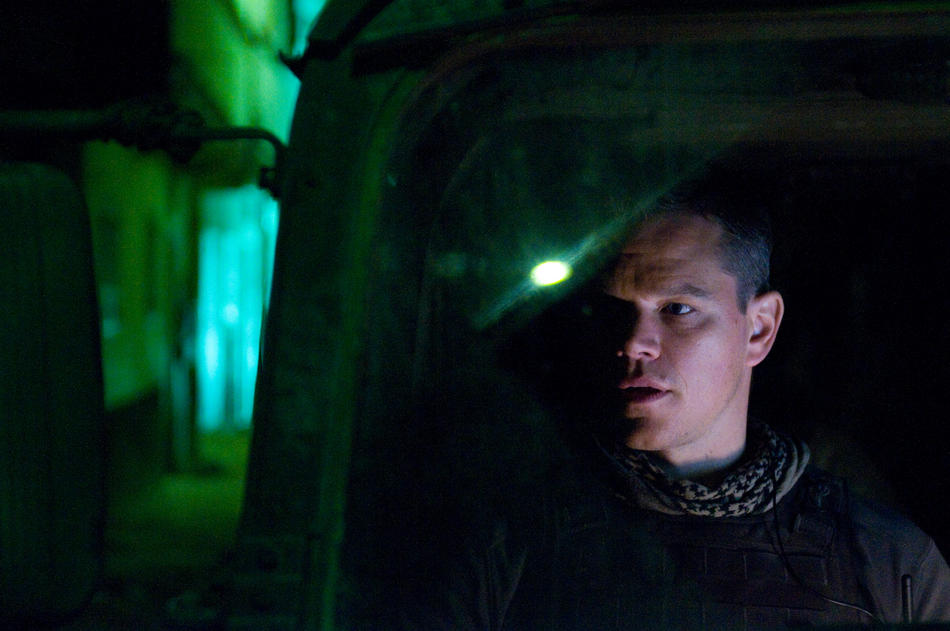
Matt Damon as Chief Warrant Officer Roy Miller

Early in "Green Zone," a fictional movie teased from the tangle of facts, almost-facts and squelched facts surrounding the search for weapons of mass destruction in the early days of the Iraq war, Matt Damon, as a soldier in charge of finding those WMD, has one line of dialogue that sums up the heartsickening reality of the whole enterprise. During a briefing in which a couple of higher-ups announce with bravado that someone they completely trust has told them exactly where the WMD are located, Damon's Chief Warrant Officer Roy Miller speaks up with the demeanor of a polite schoolboy: "There's a problem with the intelligence, sir." Damon and his team have already checked out many of the sites at which those WMD were supposedly stashed and come up with zilch. (One of the alleged locations has turned out to be a toilet factory.) He's not being disrespectful; he's merely pointing out a fact.

The thanks he gets amounts to a blank gaze and a muddy restating of the nonfact in question. But Miller won't be lulled into the becalmed state of believing everything he hears: He presses forward, to the point of disobeying orders, trying to uncover a truth that no one around him much cares about, simply because it threatens to disrupt their own ambitions and plans. His dogged earnestness is what gives "Green Zone" its sense of wayward, zigzaggy momentum: This is a movie that recognizes there's no straight line to the truth, which is part of what makes it vaguely unsatisfying -- though it's also what keeps it honest.

"Green Zone" is fiction, a jittery, idealistic thriller adapted -- by screenwriter Brian Helgeland -- from elements of Rajiv Chandrasekaran's 2006 exposé "Imperial Life in the Emerald City." The director is Paul Greengrass, a filmmaker who has divided his time and attention between "serious" pictures (like the extraordinary "Bloody Sunday," about the 1972 Derry massacre, and the beautifully crafted but excruciating "United 93") and intelligent crowd-pleasers (like "The Bourne Supremacy" and "The Bourne Ultimatum") that, whatever their flaws might be, at least feel like movies made for grown-ups. Similarly, "Green Zone" comes off as a picture made by a person with a brain as well as a conscience, though the movie's big flaw may be its unblinking insistence that we've been lied to -- you don't have to read too much between the lines to see how adamant Greengrass is about that fact, though he isn't telling us anything particularly new.

But I think the value of "Green Zone" lies less in what Greengrass is telling us than in the mood of helpless dread he takes so much care in building. Miller is an honest and good soldier, not a loose cannon: He's completely willing to look for those WMD, even though he's also become a bit ground down by the fact that he hasn't been able to find any. His mistrust of a slippery-eel government lackey (played by Greg Kinnear, in yet another one of those slippery-eel roles he was born to play) leads him to get into bed -- not literally, of course -- with a CIA analyst (Brendan Gleeson) who fears that the United States' plan to outlaw Saddam Hussein's Baath party will lead to a bloody civil war. As he searches for what he hopes will be the truth -- that note of uncertainty is intentional, the eternal question mark around which the whole movie revolves -- he presses an Iraqi citizen, Freddy (Khalid Abdalla), into service. Freddy insists he only wants to help his country; the complication is that no one -- least of all the U.S. military -- knows what his country really needs.

Woven into a plot that's often murkier and more convoluted than it needs to be is a journalist (Amy Ryan) who's something of a stand-in for Judith Miller (except for the fact that this one actually has principles). Greengrass' methods of visual storytelling aren't as sharp as usual: He's chosen to tell this story in faux-documentary style, which means he uses lots of "Bourne"-style shaky cam and jitterbug cutting. Greengrass generally takes extreme care to craft clear action sequences, in which it's always possible to tell who's coming from where. But the action in "Green Zone" is sometimes uncharacteristically wayward and confusing. And while Greengrass may have been, up to this point, one of the most skillful users of the hand-held camera, there's nothing particularly interesting or effective about its use in "Green Zone." Keeping the camera stationary would have been a far more surprising and suitable choice.

Still, "Green Zone" shows an emotional rawness that's likely to hit home for anyone who still feels shafted by the U.S. government's ineptitude in Iraq. This is a movie made up of exposed nerve endings; it never capitulates to the idea that it's OK to smooth out the facts. In his forward to the recent paperback edition of Chandrasekaran's book, Greengrass writes, "Sometime in early 2004, I began work on a film set in Iraq. I wanted it to be a thriller -- urgent, contemporary, filled with intrigue: A movie that would hopefully take some of the huge audience that had enjoyed the Bourne series to a real-world setting and encourage them to consider whether the mistrust and paranoia that characterized Bourne's world was so far-fetched after all." And while I find myself repeatedly asking myself if Matt Damon really is all that good an actor, watching him in "Green Zone" reminded me that there's a particular type of guileless, principled guy that he often plays perfectly. In that respect, his Roy Miller is a lot like Jason Bourne, a man who's been trained to be a tool of the system but who insists on thinking for himself -- not to be contrarian but as a way of staying true to some standard of decency he's set for himself. Near the end of "Green Zone," we see Damon's Miller, weighed down by full combat gear, getting ready to leave the luxury room, located in an appropriated palace, where he's temporarily set up operations. Damon, with his all-American honest-lad good looks -- not to mention his sand-colored fatigues and combat boots -- looks out of place amid all that grandeur. And somehow -- even though his face wears the dutiful blank expression of a good soldier -- he also looks disgusted by it.

Oscar's biggest stars: Look closer

Slide show: We zoom in on the nominated performances to find out what makes them great -- or not so great

In the weeks leading up to this year's Academy Awards, I put the spotlight on each of the 10 performances nominated in the best-actor and best-actress categories in a series called "Oscar 2010: The Performances." My aim was not to predict who would win, or even to make pronouncements about whom I want to win (though reading between the lines is always encouraged). I wanted to spend a little time looking under the hood of each of those performances, to get a sense of what might be going on there. My methods were highly unscientific, my views wholly subjective. My hope was to get closer to the heart of what makes a good performance good or, when applicable, a bad one bad. At the very least, this series offered a few snapshot assessments of what it is about actors that keeps us going to the movies in the first place, a small window into the pleasure that actors, at their best, are capable of bringing us.

The following slide show offers excerpts of each essay, along with a link to the original.

View the slide show.

Jeff Bridges' redemption song

How the actor turned the stock tale of a has-been crooner into an Oscar-nominated marvel

This is the 10th and final essay in a series about Oscar nominated performances.

In "Crazy Heart" Jeff Bridges -- who has never won an Oscar, despite the pleasure he's given audiences in a film career that's spanned more than 40 years -- gives a performance that's so comfortably lived-in, it makes you forget there's even such a thing as technique. All performances consist of two basic components: the things an actor does consciously and -- usually the magic ingredient -- the things that emerge as the result of not trying. With Bridges' performance here, as with perhaps nearly every performance he's ever given, it's impossible to locate the seams between the two. Bridges may be acting, but he always makes it look like living.

Is a seemingly casual performance harder to pull off than a mannered or highly stylized one? The answer to that question has as many variations as there are actors, but the fact that Bridges' "Crazy Heart" performance feels so breezy and natural shouldn't cause anyone to underestimate it. This performance doesn't come out of left field for Bridges -- it comes out of the field, which is to say it springs from a lifetime spent giving terrific performances in good movies as well as mediocre ones, as Bridges has done. Bridges has been great in many terrific movies ("The Fabulous Baker Boys," "The Fisher King," "The Big Lebowski"), but it's hard to think of even a bad movie in which he's been bad. His presence has elevated otherwise lousy pictures -- "Starman," for instance -- into works that can't be wholly dismissed. There are few other actors who have been so consistently good and also, strangely, so consistently invisible.

I don't mean that audiences have been blind to Bridges' gifts: In the month since the Oscar nominations have been announced, I haven't run into a single person who openly hopes he doesn't win. (I'm sure that person is out there, but I don't want to meet him.) But Bridges is so understated as an actor that perhaps it's been easy to take him for granted, which is why it's fitting that he should make the biggest splash of his career in a small picture that arrived practically out of nowhere. "Crazy Heart," written and directed by first-timer Scott Cooper (and adapted from a novel by Thomas Cobb), was hustled into a quick pre-Christmas release by its studio, Fox Searchlight. Obviously, some execs there saw the strength of Bridges' performance and thought it might attract Oscar consideration.

Heartfelt appreciation of the actor's craft or crass marketing decision? Who cares? It doesn't matter, as long as he wins. In "Crazy Heart," Bridges plays Bad Blake, a sozzled has-been who meets Jeannie (Maggie Gyllenhaal), a journalist and single mom who coaxes him, without even trying, into straightening his life out. I've heard, as you probably have, "Crazy Heart" described as your typical "washed-up performer saved by the love of a good woman" narrative. But even though the story told in "Crazy Heart" is quite simple, I don't think there's anything typical about it. For one thing, it doesn't stoop to giving us a sappy ending. And Gyllenhaal, as a romantic match for Bridges, isn't a boilerplate character. You can look at this woman and think you've seen her before, but Gyllenhaal -- in the way she here and there shows a flicker of exasperation, or shifts between guardedness and wholehearted openness within the space of a few frames -- plays Jeannie with a searching forthrightness that always feels honest.

She also challenges Bridges, pushes against him, giving him a range of actions and believable emotions to respond to. I marveled the first time I watched Bridges' performance, but I couldn't even begin to parse what he was doing to shape the role. The second time I watched, I had even worse luck -- whatever it is Bridges is doing here, it keeps slipping through my fingers like water. In some scenes, his enunciation is intentionally lousy: Explaining to Jeannie why he quit one of his earlier enthusiasms, playing baseball, he says, "Figured I'd stick with the guitar, sumbitch stayed where it's supposed to." You can understand him perfectly -- this is hardly a drunken slur -- and yet the line has a slippery-graceful texture, like a garden snake darting behind a stone wall. With just a line, Bridges clues us in to what makes Bad an artist and not just a drunken lout who's had a few lucky breaks. He's the hard-living manifestation of Warren Beatty's mumbly frontiersman line from "McCabe and Mrs. Miller": "I got poetry in me!"

This is also a performance with no vanity. Time and again Bridges' Bad will plunk himself down on a couch, or sprawl on a hotel bed, his threadbare shirt left open to reveal a somewhat soft-looking, whitish belly. That belly isn't sexy, and it's not unsexy: It's just there, an unself-conscious declaration -- "This is where I'm at now." This is acting, of course -- by now we've all seen how sweet and well-groomed Bridges looks when he shows up for an awards event -- but here he's so fully slipped into the character's skin that it's indistinguishable from his own.

And Bad's rubbery smile -- a smile that sometimes comes out of nowhere, like a naughty secret -- is killer. That smile is what makes one of the movie's darker moments -- when Bad, after a night of drinking, pukes into the toilet and then curls up on his bathroom floor, whimpering in self-loathing -- so anguishing. To see Bad that miserable is pain itself; he's got to get that smile back, or we'll be the ones to suffer. That's the secret, maybe, of "Crazy Heart": On its most base level, it probably is your stock redemption story. But this is Jeff Bridges we're talking about, an actor who makes every gesture, every offhanded expression, so effortlessly believable that to watch him in anguish is almost unbearable. Late in "Crazy Heart," Bridges -- who does his own singing throughout the movie, in a voice with the hearty, mellow quality of barbecue smoke -- performs a song with the line "This ain't no place for the weary kind." It's a song about not stopping, even when you think you're through, a staple idea in the country-music canon. Bridges' work in "Crazy Heart" is just one astonishing performance among the many he's already given. But maybe it's the one that best pulls together all of the things so many of us love about him -- the way the poetry in him seems so plainspoken, even though it has no words.

Tim Burton's Alice in Underland

The director plays his best cards: Visual splendor, darkness, Johnny Depp. But has he fallen down a rabbit hole?

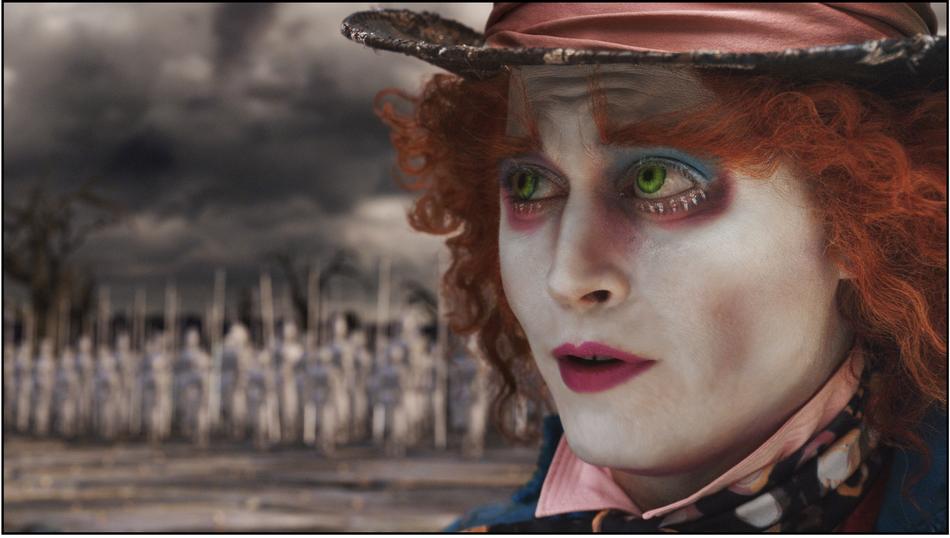
Johnny Depp as the Mad Hatter

It's disappointing enough that a movie whose title contains the word "wonder" should hold so little of it. It's even more disheartening that that movie should come from Tim Burton, a filmmaker whose imaginativeness -- working in tandem with his dark heart - - has given moviegoers so much pleasure over the years that even at the relatively tender age of 51, he's earned his own Museum of Modern Art retrospective. "Alice in Wonderland" is hardly a total disappointment: Burton has put the expected level of care into its production and character design, and the picture is a far more low-key affair than either of his last two live-action films, "Sweeney Todd, the Demon Barber of Fleet Street" and "Charlie and the Chocolate Factory." Unlike the former, "Alice" doesn't groan under the weight of thunderous pretentiousness, and unlike the latter, its garishness is, at least, of the muted sort.

But I found myself trying so hard to like "Alice in Wonderland" that the process of watching it exhausted me. Burton, working from a screenplay by Linda Woolverton, isn't even attempting a faithful adaptation of Lewis Carroll, and that's probably a wise move. Carroll's "Alice's Adventures in Wonderland" -- coupled with its sequel, "Through the Looking-Glass" -- is a marvel of dream-logic storytelling, a perfect articulation of the way our minds reinvent the rules of life during sleep: Carroll -- or the Rev. Charles Lutwidge Dodgson, if you prefer -- understood how a conversation with a rabbit in a waistcoat can be a matter of life and death while you're dreaming it and seem like a silly, dismissible trifle once you're up and awake. Carroll's books have a beautiful structure, but a movie needs more narrative drive, and Burton and Woolverton seem to know that. They've framed their story as a sort-of sequel, in which Alice (played by the ethereal-looking Mia Wasikowska) is now grown-up enough to be betrothed, and she needs to make a good match owing to her family's constrained financial situation. The problem is, she doesn't much like the husband who's been chosen for her. And so, when the prospective groom puts her on the spot by asking publicly for her hand in marriage, she slips away from the gawking crowd and escapes -- from him and from the responsibilities of adulthood -- by tumbling into a rabbit hole.

In Burton's vision, that world isn't "Wonderland," but "Underland," a mildly witty play on words that makes sense in the context of his reimagining of the story (though, apparently, when you're making a movie for the Walt Disney Co., it would be messing too much with tradition to call it "Alice in Underland"). In that world, Alice meets the cast of characters so familiar from Carroll's book, although they generally serve different purposes here. Johnny Depp's Mad Hatter is a sensitive, wild-eyed, gap-toothed scatterbrain who hasn't been the same since the benevolent yet frightening-looking White Queen (Anne Hathaway) was dethroned by her power-mad and very big-headed (literally and figuratively) sister, the Red Queen (Helena Bonham Carter). The Red Queen rules her kingdom with a tiny iron fist: Her chief henchman is Stayne, Knave of Hearts (Crispin Glover, borrowing a page from Laurence Olivier's film version of Richard III, a spindly, black-clad figure with a charred, corrupted soul). The Red Queen takes pleasure in cutting off people's heads, willy-nilly; she likes to rest her feet on the backs of fat, ottoman-shaped pigs. In short, she's not a very nice person at all.

Alice, who is alternately too big or too small depending on what she's most recently had to eat or drink, moves through this strange world -- one in which giant, jewel-toned toadstools sport furry spots and, curiouser and curiouser, hookah-puffing caterpillars sound just like Alan Rickman -- with a mixture of trepidation and sure-footedness. She's been transported to Underland for a reason, and although she doesn't yet know what that is, we of course can see it coming a mile away.

Foreseeing the ending of a story isn't necessarily a problem; particularly in fairy tales, getting there is supposed to be most of the fun. But the problem with Burton's "Alice in Wonderland" is that it's all production design and no storytelling. There's no compelling thread to follow here. Burton doesn't build a universe in which we have any real reason to fear some characters and to feel protective of others. There's nothing at stake in this Wonderland/Underland: When the action gets droopy, Burton cuts back to the Red Queen's castle, where we get to watch her toddling about and spewing her highly amusing self-important twaddle. (Her silliest riffs are spun from the fact that she herself knows her head is enormous, and so what of it?) The Red Queen, as Carter plays her -- her head has been enlarged and glued, via CGI, onto a twig-size body -- is the most entertaining character here, and her makeup alone is both fascinating and repellent: Her lips have been painted into a tiny heart-shaped pout; her eyelids are coated with a magnificent color I can describe only as old-lady Maybelline blue.

But this tiny prima donna isn't enough to carry a movie, and so Burton has to come up with activities to occupy the other characters. Depp, in particular, gets lost in the shuffle. The Mad Hatter, as Burton has reimagined him here, with a matted puff of red hair and perpetually dilated crazy-ass eyes, is something of a lost soul, the very type of character that Depp is generally so wonderful at playing. But it's hard to see anything genuinely moving behind his tics and mannerisms. Even though Burton and Depp have done some wonderful work together -- in movies like "Edward Scissorhands" and "Sleepy Hollow" -- it's gotten to the point where I prefer to see Depp in performances where he's not hidden under "Look at me!" makeup. There's a point at which perpetual collaboration between a filmmaker and an actor becomes a liability, and Depp and Burton may have reached it, at least for now.

"Alice in Wonderland" does offer its share of slender pleasures: Wasikowska plays Alice as bright and unassuming, and watching her is never a chore, even when the story devolves into a "Girls can do cool stuff, too!" empowerment tale. And the sequence in which she takes her first swig from that little bottle marked "Drink me!" -- followed by her nibbling on that adorable "Eat me!" petit four -- is ingeniously designed and staged, taking place in a warped-perspective room that appears to be all corners. Alice's costuming here is particularly clever: She's dressed in a billowy, translucent blue gown that she can both shrink out of and grow into. I also loved looking at, and listening to, the Cheshire Cat (voiced by Stephen Fry), a creature whose iridescent teal-blue stripes have been carefully coordinated with his enormous, glowing eyes.

But as lavish-looking as this "Alice in Wonderland" is, it still feels cobbled together, albeit painstakingly. It's not at all shallow to care about the look of a film. Visual seduction is part of the reason we go to the movies. But maybe Burton is working too hard at being visually impressive: In the end, "Alice in Wonderland" comes off as manufactured instead of dreamy. Burton delivers all the wonder money can buy; what's missing is the wonder it can't.

My love-hate relationship with Meryl Streep

She's predictably mannered and fussy. She can also be pretty great

This is the ninth in a series of essays about the Oscar-nominated performances.
Getty Images/Kevin Winter
Actress Meryl Streep accepts the Female Actor in a Leading Role award for "Doubt" during the 15th Annual Screen Actors Guild Awards held at the Shrine Auditorium on January 25, 2009 in Los Angeles, California.

I don't think it's possible, or even desirable, for moviegoers -- and that includes critics -- to be objective about actors. One of the deepest and most abiding pleasures of moviegoing is responding to performers, and so it makes sense that we often have intense and conflicted personal responses to them. That's what troubles me about the lockstep view of Meryl Streep as the consummate actor's actor, a performer who deserves our lifelong adulation simply because she works so hard at mastering accents. There is no religious tablet -- as far as I know -- that decrees we all need to be in constant awe of Meryl Streep. She can be as dull or as mannered as any other actor currently working, whether she's playing a frayed-at-the-edges modern do-gooder in "The Hours" or a bitchy, power-mad nun from the Order of the Sunbonnets in "Doubt." The former was a performance shaped around a big breakdown moment, the kind of show that's designed to make people say, "Brava!" but doesn't necessarily cut deeply; the latter was a triumph of primly pursed lips and glowering eyes, the kind of turn that makes admirers throw around words like "discipline" and "restraint" -- though when I look at a performance, the last thing I want to be noticing is the discipline.

But if, too much of the time, I find Streep predictably mannered and actressy, there are also times when I fully succumb to adoring her, when all my conflicted and annoyed feelings about her are temporarily erased. I felt that way about her performance, as one-half of a sister-sister singing duo (opposite Lily Tomlin), in Robert Altman's final film, "A Prairie Home Companion." And I feel that way about her rendering of Julia Child in Nora Ephron's "Julie & Julia," which is my favorite of the Oscar-nominated actresses' performances this year.

It's easy to think you know a person when you've seen her often on TV, particularly if it's someone you grew up watching. In "Julie & Julia," Streep builds on that familiarity: In some ways I think her performance riffs on the idea that we don't know the real Julia Child, even if we think we do. Streep creates her version of Julia Child from a magpie's collection of bits and bobs: She captures Child's trilling vocal mannerisms and her habit of resting her hands on her hips like a jolly fishwife, which are so familiar from Child's TV appearances over the years. She captures Child's easygoing affection for her husband, Paul (here played, beautifully, by Stanley Tucci, who was clearly nominated this year for the wrong role), in a manner that mirrors the way Child herself wrote about their marriage in her wonderful posthumously published 2006 memoir, "My Life in France." And, most thrilling of all, she slips right into the embrace of Child's big-gal sense of humor. When Streep re-creates the famous broadcast in which Child nearly flipped an omelet right out of the pan, she pauses awkwardly at the wonder of her own clumsiness, and then goes on to explain the mishap with the sensible approach of a good-natured scientist: In that split-second when the omelet is supposed to take momentary flight, she just didn't have the courage of her convictions. But, she assures her audience, such a mishap is hardly the end of the world: "You can just sort of -- put it together," she says, nudging some stray bits of broken omelet back into the pan. Child gave her audience permission to be imperfect, a quality Streep channels beautifully.

In my review of "Julie & Julia," I wrote, "Streep isn't playing Julia Child here, but something both more elusive and more truthful -- she's playing our idea of Julia Child." And in some ways, it may be harder to play the idea than the person. That's partly because Child is so easy to impersonate. (Exhibit A is Dan Ackroyd's "SNL" "Save the liver!" skit.) But Streep goes beyond impersonation into a realm of pure affection and openheartedness. I don't think you can successfully play Julia Child -- and you certainly can't play the idea of Julia Child -- just by learning a specific accent or physical mannerism. Streep gives shape and dimension to that abstract quality we call joy. When she tucks into a piece of fish sautéed in butter, the smile that lights up her face is one of pure, sensuous pleasure; when she proves, after much practice, that she can chop an onion faster and more meticulously than her snooty male cooking-school compatriots, she radiates pride along with just a touch of understandably human "I showed you guys, didn't I?" self-satisfaction.

Streep also has a great deal of fun with the role's physicality. Child was a tall, strapping woman who, in the late '40s, found herself living with her new husband in France, the land of tiny girls in ballet slippers. In showing that contrast, Streep is helped along here by clever production design: At one point Child stretches out on a French bed, her big American feet dangling off the end. But Streep also makes Child's stature a metaphor for her outsize capacity for delight. Her Julia strides through Paris with a sense of wonder: Being a giantess, as well as a gleeful and enthusiastic mangler of Français, makes her an outsider. But it also gives her license to explore and discover, to appreciate aloud things that blasé Parisians might take for granted, and she does so without hesitating or second-guessing. Streep's performance in "Julie & Julia" is among the best she's ever given, a turn so flirtatious and light that some might be tempted to dismiss it as being less than serious. But Streep -- who is wonderful, and underrated, as a comic actress -- may be at her best when she's freed from the constraints of proving how serious and worthy she is. She doesn't earn our love and admiration in "Julie & Julia." She instead shapes a character we find ourselves falling in love with, just as Julia herself found the second love of her life -- after Paul -- in the nation and the food of France.

Page 1 of 219 in Stephanie Zacharek Earliest ⇒

Movies in the news

Loading...

Currently in Salon

Other News