Stephanie Zacharek

"Amelia": What becomes a legend most?

Hilary Swank has the face, and the swagger, to play Amelia Earhart. So why does this ambitious biopic stall out?
Amelia (Hilary Swank)

Mira Nair's "Amelia" purports to tell the story of a grand American legend, that of Amelia Earhart, whose plane disappeared in the Pacific in 1937 as she attempted to finish a record-breaking 'round-the-world journey. It's a big story, and a rich one, particularly when you factor in the complexities of Earhart's relationship with her publicist husband, George Putnam, and her extramarital affair with Gene Vidal (father of Gore), the director of the Bureau of Air Commerce under FDR. Then there's the fact that "Amelia" has perfect casting in its favor: There's no current actress better suited, in terms of appearance or temperament, to play Earhart than Hilary Swank.

But the last person we need to tell the story of a famous aviatrix who tragically lost her way is a filmmaker with a lousy sense of direction. "Amelia" is a stunted epic, an ambitious and handsome-looking picture that tells its story in the dullest, most confusing way possible: This is a movie about an on-the-go heroine who symbolizes a new era of freedom and mobility, which means people move around, a lot. But it's often hard to tell exactly where the major players are and what, exactly, they're doing there. The movie isn't just about rootlessness; it's lost in the clouds itself. The filmmaking is vague when it needs to be specific and aggressively expository when it needs to be understated. This Earhart feels the need to talk about her love of flying incessantly, lest anyone think the first aviatrix to fly solo across the Atlantic is somehow lacking in passion. When a journalist asks her if she plans to quit flying after her 'round-the-world journey, she replies, "Not while there's still life in me. I fly for the fun of it." Elsewhere, she proclaims she wants to be "free, a vagabond of the air." Later, during the course of her ill-fated final trip, she announces in voice-over, "I am on my shining adventure." Watching "Amelia," you'd think Earhart was a talker, not a doer.

Nair and the screenwriters (Ronald Bass and Anna Hamilton Phelan, who drew partly from Susan Butler's "East to the Dawn" and Mary S. Lovell's "The Sound of Wings") begin Earhart's story near the end, as she's about to leave Miami on her ill-fated journey. They revisit Earhart during various points on that journey: She and her navigator, Fred Noonan (Christopher Eccleston), share some laughs, with a goat, in the desert; while airborne, she points out a herd of running beasts below, marveling, in just one more example of the movie's typical "tell, don't show" approach, "Look how free they are!" Nair hops around the landscape of Earhart's life, covering with schoolbookish zeal her major achievements and alighting briefly on her merchandising and moneymaking efforts. (Earhart had her own line of luggage, and at one point in the movie, she hawks a waffle iron.)

Nair also tries to delve into Earhart's unconventional love life: In the movie's vision, this freedom-loving explorer reluctantly agrees to marry her longtime friend and publicist Putnam (Richard Gere), and even though she's happy in that marriage, she can't resist the brainy, dashing Vidal (Ewan McGregor). Nair treats the love triangle, wisely, as if it were a delicate dance whose steps can't be diagrammed -- there's no moralism or judgment in her approach. But these intertwined love stories never ignite; they don't even glow with comfortable domestic warmth. At best, Earhart's love life is examined in a way that's serviceable but inert -- and who wants that in a biopic that admits, by its very look, to being a romanticized vision?

Because for all its flawed storytelling, "Amelia" is certainly beautiful to look at. Cinematographer Stuart Dryburgh ("The Painted Veil") gives the picture a lush period look -- even the puffy clouds have an art-deco vibe. It's also a terrific movie for vintage-fashion lovers: Earhart's clothes (as put together by costume designer Kasia Walicka-Maimone) range from soft but utilitarian cognac leather jackets to drapey around-the-house kimonos -- they're the smart, liberated girl's idea of luxury.

And Swank wears those clothes well: She gives a wonderful physical performance here. In fact, she tells us more about Earhart's life through her body language than she does in the dialogue. Swank's Earhart has a broad but slow-burning smile; her gait suggests a person who's gangly-graceful, generous and approachable -- as Earhart, Swank's very limbs seem to call out, "Howdy!"

But as perfect as Swank is for this role, the dialogue sounds stiff and overwritten as it emerges from her lips. Swank has strong, marvelous features, yet she's an actress of remarkable delicacy -- that combination is part of what generally makes her so pleasurable to watch. But in "Amelia" she comes off as awkward and uncertain, as if she were trying to underplay the movie's too-obvious dialogue and not fully able to bring it into focus. She's best in her scenes with Gere, perhaps because he knows exactly what to do with this material. As a young actor, Gere was gorgeous and, for the most part, numbingly dull. But sometime around the era of Garry Marshall's "Runaway Bride," he began to loosen up and liven up. (And he is still, of course, gorgeous.) Gere doesn't have a '30s movie-star face, exactly. Yet somehow his face speaks of a time older than our current age, which is why he's perfect for '20s and '30s characters. Late in "Amelia," Gere has what is, on paper, one of the corniest lines of movie hokum imaginable. But because he understands the heritage of movie romance intuitively, he turns this potentially stale little nugget into something alive and thriving, and he momentarily brings the whole enterprise to a new level of passion and integrity.

Nair -- whose last picture was the Jhumpa Lahiri adaptation "The Namesake" -- is a frustrating filmmaker. The final sequence of "Amelia," which gives us an imagined view of the pilot heroine's increasing frustration as she realizes she can't communicate with the naval vessel on whom her life depends, is admirably restrained: Nair's instincts must have told her that this was a place to ease up on the dramatic suspense rather than put a chokehold on it, and the approach works -- the tension of the scene is sustained beautifully. But not even this intelligently emotional ending is enough to erase the tedium of what came before. Amelia Earhart's disappearance is one of the great mysteries of the 20th century. "Amelia" clips its wings.

"Cirque du Freak": Not freaky enough

Salma Hayek makes one sexy bearded lady, but she can't put hair on the chest of this good-natured kiddie horror pic
Salma Hayek

"Cirque du Freak: The Vampire's Assistant" has one of the most beautiful, and most promising, opening-credits sequences I've seen in ages, an extended animated reverie in which wandering vines and assorted creepy-crawlies drift across the screen in silhouette, the sort of thing Saul Bass might have dreamed up for Tim Burton if they'd ever worked together. Those credits (the designer is Garson Yu) aren't completely wasted: "Cirque du Freak" -- which is based on the series of kid-horror books by Irish novelist Darren Shan -- has a good-natured, spooky-fun spirit, and features some bright, clever visual touches, including a fuzzy-looking neon spider who skitters along on eight delicate, spindly legs.

But "Cirque du Freak" is only halfway there as a movie, which is frustrating considering how many potentially entertaining actors show up in it: John C. Reilly is a vampire showman who's half dapper Victorian, half Vaudeville clown; Salma Hayek is a bearded lady given to falling into sudden trances and making dire pronouncements, only to snap awake immediately afterward to ask ditzily, "What did I just say?" Those are just two denizens of the "freak" community that the movie's spider-loving teen hero, Darren (Chris Massoglia), falls in with. Darren is a good student whose parents nonetheless continue to overload him with their expectations. For that reason, he enjoys hanging out with his bad-influence best friend, vampire aficionado Steve (Josh Hutcherson), and one day the two receive a strange invitation, beckoning them to the world's oldest freak show. There, they're awed by Evra the Snake Boy (Patrick Fugit), who's kind of a shy snake (he just wants to play sensitive songs on his guitar); Alexander Ribs (Orlando Jones), whose digestive organs are on full view (luckily, they're artfully shot, so we don't really have to look at them); and Corma Limbs (Jane Krakowski), for whom losing a limb is no problem -- she can grow it right back, before our eyes.

It's a pretty colorful bunch. But "Cirque du Freak" is disjointed and disorganized, and it meanders when it needs to gallop. The director (and co-writer, with Brian Helgeland) is Paul Weitz, one-half of the directing team behind "American Pie" and "About a Boy," but also the director of the underrated Bush-era satirical fantasy "American Dreamz." In some ways, the movie shows the mischievous Weitz spirit: Its opening sequence features a cross-section view of an undead teen lying in a coffin -- texting away. "Cirque du Freak" doesn't take itself too seriously, which is a blessing. But maybe it doesn't take itself seriously enough: It feels rushed and indistinct; the plot is only barely worked out. And these actors -- including Willem Dafoe, in a slim role and an even slimmer, John Waters-style mustache -- wander around as if they're not sure what they're supposed to be doing.

"Cirque du Freak" might have been a pleasant corrective to the current "Twilight" madness, stoked by the impending release of "New Moon." I enjoyed the first "Twilight" picture, and admired it for not trying to be more than what it should be: A Goth soaper-romance for tweens and their slightly older sisters. But I've had enough of "New Moon" fever, and I admit those opening credits for "Cirque du Freak" raised my expectations to a perhaps unrealistic degree.

Maybe I'm not the only one. In an interview posted on the Scholastic Books blog, "Cirque du Freak" author Shan himself says that the credits sequence is his favorite part of the movie -- though he hastens to add that he likes the picture overall. Those credits belong to a film that was not to be; they wander the movie netherworld like a restless spirit, with nowhere to sink their fangs.

Where the wild things aren't

Spike Jonze and Dave Eggers turn Maurice Sendak's woolly kids' book into a shoe-gazing exercise
A still from "Where The Wild Things Are"

There has been a great deal of chatter, on the Web and elsewhere, about the target audience for Spike Jonze's elaborate adaptation of Maurice Sendak's "Where the Wild Things Are," a book that has been loved to dog-eared tatters by many, many children since its publication in 1963. Is Jonze's movie for people who currently happen to be children, or for people who used to be children? And if it's chiefly for the latter -- as Jonze himself pretty much confirmed in a recent New York Times Magazine profile -- the next question might be, Is it OK for kids, or is it too scary?

If your kids get all wide-eyed at the prospect of listening to grown-ups' self-absorbed reflections on the fears, anxieties and frustrations of childhood, or if they've ever clambered onto your lap and begged for a civics lesson on the dangers of totalitarianism, then by all means run, don't walk, to Fandango and get your tickets for "Where the Wild Things Are."

In that Times Magazine profile, Jonze -- who co-wrote the movie with Dave Eggers -- said, "Everything we did, all the decisions that we made, were to try to capture the feeling of what it is to be 9." That should set off the warning bells. And sure enough, "Where the Wild Things Are" is filled with the aggressively childlike sense of wonder that only adults can feel. As Annie Dillard wrote, "Young children have no sense of wonder. They bewilder well, but few things surprise them. All of it is new to young children, after all, and equally gratuitous."

In other words, children may be too sophisticated -- too busy being actual children -- for "Where the Wild Things Are." This isn't a straight adaptation of Sendak's book, which would be impossible, given that it consists of 10 sentences of text. Instead, Jonze uses the source material as a springboard to explore the insecurities and the freeing pleasures of being a child. As the movie opens, young Max (played by serene-looking child actor Max Records), dressed in a furry monster jumpsuit, chases the family dog with a fork. Shortly thereafter, we see that he's a confused, lonely child who talks to fences. He's enormously proud of the igloo he's built in the family's snowy yard -- then his sister (Pepita Emmerichs) and her friends destroy it in what starts out as a good-natured snowball fight. Jonze clues us in, subtly, that Max's parents are divorced; his mother (Catherine Keener) appears to be dating someone she likes (played by Mark Ruffalo, in a blink-and-you'll-miss-it performance). Max sees them snuggling on the couch, and shortly thereafter acts out when she starts to get his supper ready. He stands on the table in his sneakered feet and roars, "Woman, feed me!" an open acknowledgment of the savagery of children, and the ways in which they're aware of gender roles even before they really know what the heck gender is.

Then Max bites his mother, and she screams at him. He runs from the house, fast and far in the darkness, leaving the best part of the movie -- a framing device that actually does get at some of the simmering anger of childhood -- behind him. He finds a boat and sets sail into the night, eventually reaching a forest where he comes upon a group of shaggy, mammothy creatures lumbering about, arguing and destroying stuff.

Max persuades these curious beasts that he's a king with special powers. And then he gets to know them, even though their personalities seem somewhat interchangeable. There's the devoted, kvetching couple, Ira and Judith (Catherine O'Hara and Forest Whitaker); KW (Lauren Ambrose), the girl-beast who has committed heresy by going outside this tight-knit circle to make friends with some owls (whom she at one point stones, playfully, on a beach, explaining that they like it). Other gruff fuzzy-wuzzies speak with the voices of Paul Dano and Chris Cooper. But the wild thing to whom Max becomes closest is Carol (James Gandolfini), a shy, bright, idealistic behemoth given to confused, jealous tantrums.

These are all somber, sensitive creatures, with low self-esteem and low expectations -- EMOnsters, perhaps. Max develops a half-warm, half-uneasy relationship with them (they occasionally hint that under normal circumstances, they'd have long ago eaten him), and he suggests that together they build their own Utopia, and if anyone they don't like dares to enter, he or she will have his or her brain cut out automatically.

At this point you may be wondering how Sendak's compact, joyously freeing and slightly scary tale gave birth to such a wriggly nonstory, and it's a valid question. This is Jonze's first picture since his pretentious and self-indulgent meta-movie "Adaptation," and only his third altogether. (The first was the intriguing but not necessarily deep "Being John Malkovich.") Warner Bros., the studio behind "Where the Wild Things Are," was reportedly unhappy with the results of an early test screening, in which some of the little tykes in the audience cried and begged to be removed from the theater.

That right there is enough to make me urge any filmmaker to stick to his vision. It isn't, unfortunately, enough to make me like his movie. "Where the Wild Things Are" may be a childlike picture, but it isn't an innocent one. The movie is so loaded with adult ideas about childhood -- as opposed to things that might delight or engage an actual child -- that it comes off as a calculated, petulant shout, the kind of trick kids play to guilt-trip their parents into paying attention to them. It appears to be a movie made by, and for, members of a generation who feel it's unfair to have to grow up. Jonze isn't channeling the feelings of 9-year-olds so much as he's obsessively fingering his own, like the silky edge of a blanket. "Who cares about the children?" is Jonze's sulky rhetorical question. "What about me?"

That would be OK, if "Where the Wild Things Are" had any dramatic momentum, or any real emotional core. Often, the best movies are deeply personal for the people who've made them. But there's a difference between a personal work and one that stammers and shuffles and looks down at its shoes, now and then making a muttering, sideways observation about the tragedy of childhood. Jonze tries to give the movie a bigger social context -- characters utter deep truths about rulers not being able to keep all the people happy all of the time -- but mostly, his vision is just a jumble. He and Eggers have etched out a story that's probably supposed to be charmingly primitive but is mostly just tedious. If this were a storybook and not a movie, one page might read "And then they all ran through the forest, hooting and hollering," followed by another that reads "And then they all ran to the cliff by the sea, hooting and hollering," followed by the slightly more exciting "And then they all threw dirt clods at one another, hooting and hollering." The hooting and hollering is aided and abetted by rambunctious, raucous little songs by New York's downtown darling Karen O. of the Yeah Yeah Yeahs; the quieter moments get introspective, ghostly melodies by Carter Burwell. But Jonze is too obviously using the music to alternately rev us up and slow us down, instead of letting the movie's images, and its action, set the pace.

There's no doubt about the grand ambitions of "Where the Wild Things Are." The production design (by K.K. Barrett), the cinematography (by Lance Acord) and the creatures (made by the Jim Henson Co.) succeed, to a degree, in evoking the glorious, scritchy-scratchy crosshatching of Sendak's illustrations. But these costly beasties and expensive special effects are too often put to ill use, in scenes that are pointless or simply boring: At one point Carol and Max wander through a desert, having an existential conversation about whether or not the sun might someday die. Why not just borrow an outtake from Gus Van Sant's "Gerry" and be done with it?

Jonze grasps at many wispy truths in "Where the Wild Things Are": Families are, to an extent, dictatorships, and that's just the way it is. No one can be responsible for making everyone happy. It's frustrating to be a kid, which is why kids need to run and yell and get their ya-yas out. But Jonze's ideas, visual and otherwise, spill out in a faux-philosophical ramble that isn't nearly as deep as he thinks it is; at best, it's a scrambled tone poem. Even the look of the picture becomes tiresome after a while -- it starts to seem depressive and shaggy and tired, as if Sid and Marty Krofft had forgotten to take their meds. Jonze has said that he was thinking of Cassavetes movies as he wrote the dialogue for "Where the Wild Things Are." A child is waiting, and he wants his money back.

"Couples Retreat" is marital hell

Vince Vaughn and Jon Favreau costar in a flaccid comedy about couples desperately trying to keep it together
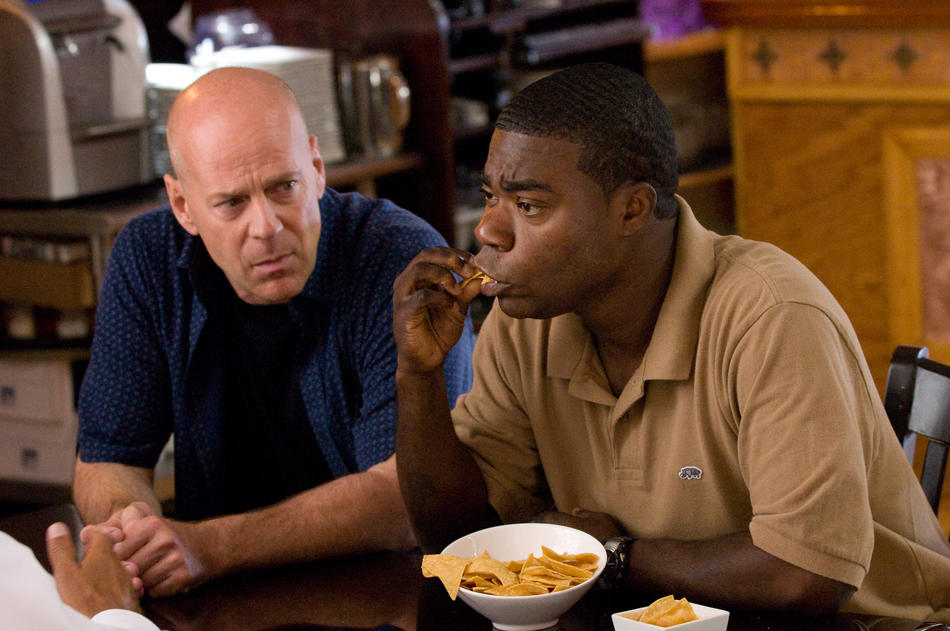
Still from "Couples Retreat"

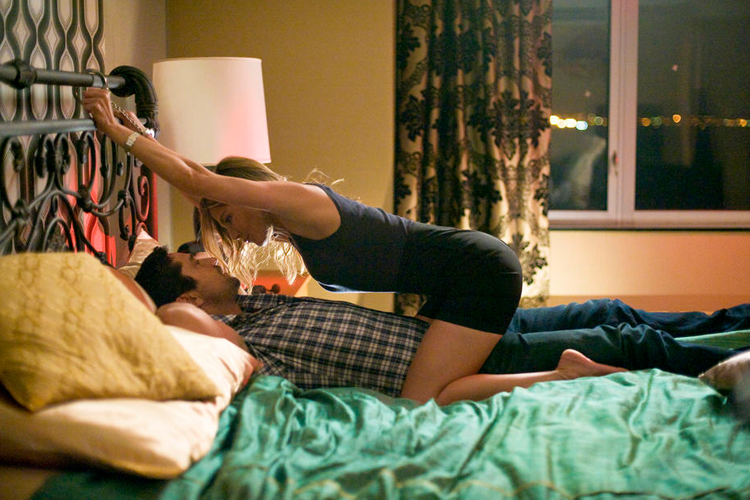
"Couples Retreat" begins with an adorable blond tyke peeing the bed and ends with the same kid taking a dump in a home-remodeling store. In between, four couples, including the exhausted parents of the aforementioned hellion, squabble (or don't), wrestle with their problems (or don't), and have sex. No, scratch that one -- no one in "Couples Retreat" is getting his or her groove on, which is one way the movie strives for a semblance of realism even as it reaches, desperately, for laughs.

But "Couples Retreat" is neither funny nor honest. The exact opposite of a retreat, it's merely exhausting. The director is actor and former child star Peter Billingsley (he played Ralphie in "A Christmas Story"); the script is by Jon Favreau, Vince Vaughn and Dana Fox -- Favreau and Vaughn star in the picture as well. The story alone sounds promising enough: A couple that's been having trouble conceiving (played by Jason Bateman and Kristen Bell) find themselves on the verge of breaking up. As a last-gasp effort, they book themselves and three other couple-friends into a swanky tropical resort that offers "couples skill building" as a supposedly optional activity. One couple (Vince Vaughn and Malin Akerman) is reasonably happy; another (Jon Favreau and Kristin Davis) is desperately unhappy; and one set (Faizon Love and Kali Hawk) isn't even married -- she's the 20-year-old rebound girlfriend he recently started dating after his divorce.

The setups are fairly predictable, which doesn't mean they don't have the potential to be funny: Vaughn, during a "couples skill building" exercise, is almost bitten by a shark and uses this faux drama as a way to get extra attention; Favreau, desperate to have sex (it's been ages), tries to manufacture excuses to get himself over to the "singles" side of the resort, where everyone is drinking and partying and having a grand old time. But the gags go nowhere, sputtering out before they even get going. And while the women are appealing enough, they don't have much to do here. Even Davis, who was one of the best reasons to watch "Sex and the City" in its later episodes, is wasted (though she does have some silly moments with a salacious, Fabio-look-alike yoga instructor, played by Carlos Ponce).

One of the problems with "Couples Retreat" is that we know at the very beginning how it's all going to end: Each member of each of these couples is going to realize that he or she already has the perfect mate. That would be OK, if all of these couples consisted of people who actually seemed to like each other. At least two of these couples are so filled with bitterness -- either on the surface or teeming beneath -- that it's easy to believe they might be better off splitting up. Instead, the movie has to manufacture facile resolutions for all of them. And sometimes real life is funny, even when it stings. But "Couples Retreat" doesn't have the courage to head down that road.

The funniest people in the movie are the supporting players: Jean Reno shows up, wrapped in flowing robes, as the resort's marriage guru -- his self-serious swanning about is good for at least one laugh. Then there's Peter Serafinowicz, as the resort's official greeter and taskmaster. When the guests first arrive, he addresses them somberly in a note-perfect, upper-crusty English accent that's at odds with his pastel-blue Sta-Prest safari shirt. "My name is Stanley," he informs them, before adding the kicker, "spelled with a 'c.'" That's one of the few moments "Couples Retreat" cuts loose and feels free. The rest of the time, it's the comedy equivalent of a ball and chain.

"Good Hair" gives it to us straight

Burning relaxers, expensive extensions, African-American identity: Chris Rock covers it all, and keeps us laughing
Screenshot from "Good Hair"
Michelle Obama

Chris Rock's "Good Hair" is one of those rare documentaries that works on two seemingly incongruous levels at once: It's both social commentary and pure delight. For African-Americans -- and that can include men as well as women -- hair is a fraught issue. Historically in black culture, the idea of black hair being "bad" hair isn't even an unspoken one: Hair that's smoother, shinier and silkier -- in other words, more like white hair -- is often the goal. It can take dangerous, potentially blinding chemicals, expensive extensions and time-consuming, inconvenient maintenance to straighten out the kinks, and, as Rock discovers, some parents start their offspring out on not-so-gentle "Kiddee Perms" when they're barely toddlers.

The director of "Good Hair" is stand-up comic and writer Jeff Stilson. Rock is the tour guide through this maze, exploring not just what it takes to get "good" hair, but what it means to want it. Rock explains that his own small daughters have already expressed dissatisfaction with their hair, and he wonders where that comes from. To find out, he visits the headquarters of Dudley Hair Products, in Greensboro, N.C., one of the country's largest producers of hair relaxer (or, as one of his interviewees calls it, "creamy crack"): Wearing a plastic hair covering and peering through giant, goofy goggles, he stirs a huge vat of the stuff with exaggerated exertion, proclaiming, "This'd last Prince a week!" He stuffs a clear plastic bag with tufts of African-American hair and peddles it around to various beauty-supply shops. (No one wants to touch the stuff.) And he quizzes the Rev. Al Sharpton about his own suave coif: Sharpton tells the story of how James Brown introduced him to the world of the conk (and also helped him get a national holiday named in honor of Martin Luther King).

Rock also interviews a number of actresses and performers -- including Nia Long, Tracie Thoms and Eve, as well as Cheryl James and Sandra Denton (aka Salt-n-Pepa) -- coaxing them into discussing the amount of time, care and money they've put into their hair over the years. Hair extensions can cost more than $1,000 for the labor alone (the price of the actual hair is extra), and the connection points at which the new hair is attached to the old can be delicate. That means hair-tugging (especially during sex) is a no-no. Stilson often turns the camera back on Rock as he's interviewing his subjects -- he listens carefully, with glowing eyes, taking in these revelations as if he were being entrusted with the greatest secrets of life itself. When actress Melyssa Ford explains, good-naturedly, that her hair is "a decoration -- leave it alone!" Rock processes the information and adds his own interpretation: "Like plastic fruit?"

That's just one measure of how Rock makes his points without scolding. He explains that the black hair-care products industry is dominated by white people and Asians -- they're making an awful lot of money off black people's anxiety over their hair. (He also travels to India, to trace the source of most of the human hair that's used for extensions in this country. What he finds is fascinating, and the getting there is pretty funny, too: At one point he rides, like a potentate, in a "taxi cab" that consists of a rickety wheeled platform being pulled by a bony bovine.) But Rock also points out that beauty and barber shops are viable sources of income for black businesspeople, as well as gathering places for gossip and conversation. And Sharpton reminds us that hair straightening itself is simply a part of black culture. If it's true, as one interviewee suggests, that white people feel less threatened by relaxed black hair, there's also the concurrent truth that everyone, regardless of color, likes to feel good about his or her hair. And if you have the time and money to get the hair you want, why not?

One thing Rock, as a guy, might not understand is that not all curly-wavy-kinky hair, regardless of the race of the person it belongs to, is the same. And keeping any hair "natural" can take a bit of work: Rock interviews actress Tracie Thoms (who appeared in Quentin Tarantino's "Death Proof"), who has the most beautiful head of tiny, perfectly formed corkscrew curls I've ever seen. Thank goodness she doesn't straighten it -- but I suspect she takes great care keeping it conditioned, too.

Regardless, Rock isn't out to chide people for the choices they make. And he allows himself to be the butt of a joke, too. When Maya Angelou, who is in her early 80s, tells him she didn't have her hair relaxed until she was about 70, he murmurs something about how she went "her whole life" without doing so. She counters mischievously, "Not my whole life, I'm still alive!" Rock laughs, a lot, during "Good Hair," which suggests he's having a great time. It also suggests that while he won't be dictatorial with his own daughters, he wants them to be happy with the hair they've got -- at least to the point of recognizing that good hair lies in the eye of the beholder.

"An Education": Romance with an older man

Carey Mulligan shines as a teenager exploring the minefield of love -- and sex -- in a film written by Nick Hornby
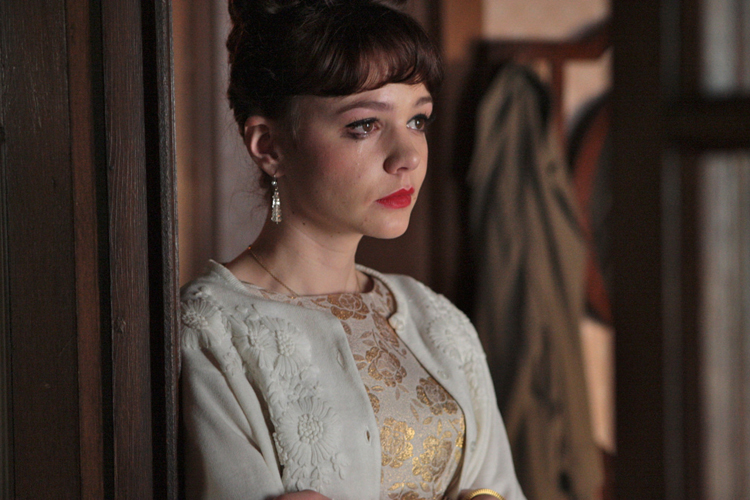
Jenny (Carey Mulligan)

Even when we're not talking about outright child molestation, the idea of a sexual relationship between a young woman and a much older man is likely to freak people out. Statutory rape is itself a vague term, with the specifics varying from state to state (and from country to country). And even if the sex is consensual, the question of "How young is too young?" invariably comes up.

One of the best things about "An Education" -- in which the superb young actress Carey Mulligan plays a teenager in early '60s Britain who has an affair with a much older man, played by Peter Sarsgaard -- is that it never gets hung up on that question, even as it acknowledges the emotional consequences that either party might suffer in this kind of affair. The picture, made by Danish director Lone Scherfig ("Wilbur Wants to Kill Himself"), and adapted by Nick Hornby from a memoir by Lynn Barber, is for the most part refreshingly nonjudgmental: It prefers to treat a woman's entree into the world of adult love as a saga of mystery, adventure and possibly heartbreak, not as an event that needs to be scripted or legislated by her elders. The picture tacitly accepts that when it comes to first love, someone always gets hurt -- not necessarily because one party is taking unfair advantage, but because sex leaves us vulnerable, period.

Mulligan plays 16-year-old Jenny, a bright student who lives with her mother and father (played by Cara Seymour and Alfred Molina) in the suburbs of London. Her parents, as well as one of her teachers, Miss Stubbs (Olivia Williams, of "Dollhouse"), have high hopes for her: The plan is that she'll go to Oxford, and her father, in particular, orchestrates her life with that goal in mind. He doesn't even want her to practice the cello too much, seeing it as a diversion that isn't wholly necessary for academic success. Jenny finds solace lounging alone in her room, listening to French pop music -- the enormous, romantically sooty eyes of Juliette Greco stare out from one of the album covers scattered about her room -- and dreaming of a sophisticated, cultured life that's far beyond her reach.

And then she meets David (Sarsgaard), a fellow music lover who takes what is at first a rather harmless interest in her, even though it's clear he's approximately twice her age. He charms her parents into letting him take her to a concert. Before long, he's also taking her out to nightclubs with his upscale friends, Helen and Danny (Rosamund Pike and Dominic Cooper). David has money (although, it turns out, his line of work isn't particularly savory), and he knows how to enjoy it. Jenny thrives under his tutelage and in the glow of his attention. And to Jenny's delight, Helen, a cool blonde with a taste for fitted brocade and snowy furs, remakes her into a sophisticated gamine: Jenny loves flitting about London -- and, at one point, Paris -- in trim sheath dresses and Audrey Hepburn updos, a far cry from her usual schoolgirl gear.

Eventually, of course, there will be a crisis, and we'll learn that David isn't exactly what he seems -- or maybe the point is that he is exactly what he seems, and Jenny just can't see it. Either way, Scherfig treats the affair as a real relationship, not as a schoolgirl fantasy; she doesn't patronize her lead character by making her seem foolish or flighty. The point is that Jenny's desires are real -- they may be shallow or misguided, but that doesn't diminish their hold on her, and she's the one who has to work them out of her system.

Scherfig and Hornby understand that, which also frees the actors. Sarsgaard, in particular, has a challenging role. He's a handsome question mark; we know he's too good to be true, and deep down, Jenny probably does, too. The movie doesn't quite know what to do with him, and in the end, it makes him into the worst kind of coward -- when, really, he needs to be only a minor coward to make the story believable. Even so, he isn't an easy figure to pin down. David is Jewish, and he knows how to make money: The movie is clear about that fact. But that may not be so much a mark of anti-Semitism as it is of plainspoken emotional logic. The idea, I think, is that being Jewish in 1961 Britain is enough to put a chip on your shoulder. No wonder David is a social climber, aspiring to prove himself worthy of a certain class of people, or of a certain kind of girl who has more innate class than he does.

The love scenes between David and Jenny are sweet: David doesn't seem predatory so much as perpetually confused, and Jenny, despite her romantic expectations, is in many ways more realistically grounded than he is. The two do sleep together, and the sequence is handled delicately and intelligently -- Jenny may be inexperienced, but she's not a pushover. Scherfig takes care to make it clear that Jenny's choices are risky for the time in which she's living -- she doesn't frame Jenny as an anachronistic, pre-sexual-revolution heroine. At the same time, she doesn't pretend shock and dismay that young people actually had sex in the days before sexual liberation. Her approach doesn't treat sex as a novelty, but as a fact of life. And the movie is compassionate toward nearly all its characters: Helen, as the crisp and wonderful Pike plays her, looks like a class act, but she's dismayed by Jenny's attempts, awkward as they are, to speak French -- it's clear she doesn't have anything close to Jenny's smarts, and she hides her insecurity with a veneer of coolness.

Scherfig makes it easy to see why Jenny would be seduced by the life of culture and glamor that David offers. The movie, shot by John de Borman, shows London and Paris as beautiful, lavish playlands. It's pleasurable to watch Jenny enjoy herself in this newfound paradise: Mulligan has just the right blend of coltish awkwardness and ageless common sense. And although Jenny is clearly enjoying David's attentions, Mulligan makes us see that the character is always working hard to read the people around her. She wants to be in love, and she wants it to be easy; but there's always a shadow of uncertainty in Mulligan's eyes -- as inexperienced as Jenny is, she knows deep down that love can never be easy. And while the movie's conclusion may be a little too facile, it doesn't hold even a whiff of "I told you so" lecturing. Scherfig allows Jenny both her youthful joy and her dignity. And it allows that one of the bittersweet gifts of sexual adulthood is the freedom to make your own mistakes.

Page 1 of 210 in Stephanie Zacharek Earliest ⇒

Entertainment news

Loading...

Currently in Salon