Spring Sale: Get 1 Year, Save 58%

New York state appellate judge presses pause on dissolution of the Trump Organization

In a ruling on Friday, Associate Justice Peter H. Moulton temporarily paused the September 26 summary judgment decision by New York Supreme Court Justice Arthur Engoron that set in motion a receivership process and the dissolution of the Trump Organization and related entities, according to The Washington Post. Per the outlet's reporting, "Trump lawyer Christopher Kise argued at an emergency hearing at the New York Supreme Court Appellate Division’s First Department that several entities not named in the lawsuit were ordered dissolved and that it was unconstitutional." 

“We are very pleased the First Department upheld New York law and put a halt to any cancellation of business certificates, receivers or dissolution,” Kise said in a statement regarding the ruling. “The trial court’s attempt to reach issues, entities and assets beyond the scope of this case has been suspended.”

Stepping in front of any claims of victory from Trump, New York Attorney General Letitia James issued a statement of her own after the court arguments, saying, “Unsurprisingly, [Trump] is twisting this ruling and falsely claiming victory for a resolution we proposed." 

That being said, Trump did share the sentiments of a supporter whose social handle is @DC_Draino to Truth Social, which called the ruling "humiliating" for James.


Taylor Swift could beat Trump in the 2024 election, according to ex-aide Alyssa Farah Griffin

During an episode of "The View: Behind the Table" podcast this week, ex-White House staffer Alyssa Farah Griffin jokingly — but not 100% jokingly — suggested that Taylor Swift should enter the presidential race against Donald Trump in 2024 on the basis that the singer has a better chance at beating him that anyone else. And being that Trump seemed like a far-fetched candidate when he first ran for office, now would be a perfect time to invoke the expression "stranger things have happened."

“This ends in one way," Griffin said on the pod. "We are all Taylor Swift fans and, to be honest, if Donald Trump looks like he’s going to win, she’s just going to need to get in the race and defeat him once and for all because she’s probably the only person who can.” 

Back in April, Griffin declared that she'd never vote for her former boss again, to which Trump fired back, calling her a "sleazebag" and a "loser." And while she makes a solid case for Swift as a candidate, executive producer Brian Teta steered the conversation elsewhere after she made her comment about her chances in the election, offering only, “There you go, there you go.”

Climate change has already displaced more than 43 million children: U.N. report

A new report from the United Nations Children's Fund (UNICEF) revealed that more than 43 million children were displaced due to weather events — all of which were linked to climate change — in the years from 2016 to 2021. This amounts to roughly 20,000 child displacements every single day.

The climate change-linked weather events included storms and floods (which comprised 95 percent of the incidents), followed by droughts and wildfires. The trend existed as part of almost 135 million overall internal displacements during this same period. In absolute numbers, the three countries with the most child displacements were the Philippines, India and China. However the United States appeared on one notable list: It topped those nations for child displacements caused by wildfires, followed by Canada and Israel.

"The reality is that far more children are going to be impacted in [the] future, as the impacts of climate change continue to intensify,” Laura Healy, a migration specialist at UNICEF and one of the report’s authors, told the Associated Press. This is because, as humans continue to emit greenhouse gases that unnaturally warm the planet, extreme weather events both in isolation and combined will make it harder for humans to survive. Indeed, so-called compound drought and heatwaves (or CDHW events) are expected to happen roughly twice a year, each one lasting approximately 25 days, from eastern North America and the American southwest to eastern Africa, Central Asia and Central Europe. They occur when one extreme weather event triggers others, such as a heatwave resulting in a tropical storm.

Why do some celebrities pretend to have struggling, working-class backgrounds?

We're living in a world that is rife with inequality, widespread labor issues plaguing the country and a growing gap between the uber, incredibly wealthy and the poor, working-class person. It's also a world in which our biggest celebrities, the most visible people in our society with heaps of wealth, have turned to embellish their backgrounds to sound like they have lived a struggling Cinderella rags-to-riches, humble and traumatic life.

The latest Netflix docuseries about soccer star David Beckham has one such example that's been making the social media rounds. In the clip, Victoria Beckham of Posh Spice Girls fame and Beckham's wife was discussing that she and David have come from incredibly hard-working middle-class backgrounds . . . before he peeks through the door, hilariously interjecting her to "be honest." He pesters her with the question "What car did your dad drive you to school in?” Victoria puts up a bit of a fight, and the couple go back and forth before she admits defeat: "OK, in the ’80s my dad had a Rolls Royce.” 

It's ridiculously ironic that a woman named "Posh Spice," was claiming that she grew up working-class. Who is she fooling? It almost strips the words of their entire meaning and purpose. And let's not forget that that couple is worth an estimated half a billion dollars from their abundant levels of fame and success. Regardless of their seemingly "working-class" backgrounds, it's kind of hard to empathize with people who have world-building amounts of wealth.

Victoria's embellishment is just a symptom of a glaring issue in the industry — rich people's fascination with being self-made. Other celebrities who have also lied about their backgrounds range from Hilaria Baldwin, Alec Baldwin's wife, who literally has a whole subreddit dedicated to documenting all her white lies about her background. Baldwin said she was born in Spain but was born and raised in Boston and is bilingual but neither of her parents have Spanish heritage. She's also claimed that she was Latina — even though she is not from a Latin country. Speaking of Latin actresses, "Queen's Gambit" Anya Taylor-Joy is a nepo-baby of elite levels. The British-American-Argentine actress said that she left school in the U.K. at 14 to New York to enroll in a director's program and that she used her savings to support herself. But internet sleuths found that the actress went to a prestigious prep school, Queen’s Gate School, one of the most elite in the county. And Taylor-Joy's grandfather is a British diplomat and her father is a former British-Argentine investment banker. More internet sleuthing will show that the actress also comes from a long line of European aristocrats and lords. 

Another celebrity and musican, Lady Gaga grew up in one of New York City's most expensive neighborhoods, the Upper West Side. In an interview with New York Magazine, she said her some in her family had extreme wealth family "others were on welfare and scholarship, and some were in the middle, which was my family." But the pop star did go to school at an expensive, all-girls Catholic school in her UWS neighborhood, Sacred Heart.

Next up is disgraced actor, Shia LaBeouf. The longtime actor made the film "Honey Boy" an autobiographical tale of his abusive father and how they struggled while he was a Disney Channel childstar. Turns out most of the story behind "Honey Boy" wasn't real. LaBeouf said that he wrote a narrative that was "nonsense," admitting that his dad was troubled but "never was not loving, never was not there." He continued: "I’d done a world press tour about how f***ed he was as a man. Here’s a man who I’ve done vilified on a grand scale. I turned the knob up on certain s**t that wasn’t real. My dad never hit me, never. He spanked me once, one time. And the story that gets painted in ‘Honey Boy’ is this dude is abusing his kid all the time."

All of this to say, celebrities assume there is some sort of gold star sticker they receive when they concoct easily disprovable lies about their supposedly humble and traumatic begins. Maybe we live in an age where people no longer empathize with the idea celebrity because our lives have become significantly more challenging as cost of living shoots up and wages remain the same while theirs just becomes easier as they are afforded access and excess that we can only dream of touching. Maybe the only way they can appeal to us anymore is through fictionalizing a shared experience in marginalization whether that means, lying about their ethnic backgrounds or their parents supporting them at the start of their careers or just straight up fabricating domestic abuse for monetary and artistic gains and praise. It's troubling that celebrities who are almost above all societal and economic constraints because of their power, influence and status are trying to play the Oppression Olypmic games with us normies. It's a game they will never win or shouldn't even be participating in because most of them started their lives with advantages; we aren't even playing on the same field.

It's like the nepo-baby conversation all over again. People like Daisy Ridley, denying her privileged background when her family members were connected to the BBC, or Ben Platt, who completely shut down when he was asked about being included in New York Magazine's nepo-baby profile. Some rich people have so much shame surrounding their privilege when any working-class person would revel in the privilege that celebrities want to pretend they don't have. They want to claim that they've reached the height of their fame because of their own merit not because they have a father who is a film producer. If they actually lived their lies, they'd find no joy in being a struggling, tortured artist always on the come-up. At the end of the day, their need for validation that they are "normal" will never be affirmed as long as they continue to fly on their private jets and sit pretty in their fifth mansion or like Posh Spice, be driven around in an '80s Rolls Royce.


Trump lawyers file to block dissolution of companies — argue judge “does not comprehend” own ruling

Donald Trump's attorneys asked a New York appeals court to halt his civil fraud trial while they battle a court ruling that last week ordered the dissolution of some of the former president's real estate empire's key holdings, including Trump Tower. According to the Associated Press, Trump's attorneys made the request of the state's intermediate appellate court to prevent the ruling on his businesses from being enforced.

New York Supreme Court Justice Arthur Engoron "clearly does not comprehend the scope of the chaos (his) decision has wrought," lawyers for the former president wrote in the 41-page appellate brief. Shuttering Trump's businesses "will unquestionably inflict severe and irreparable harm" on not only Trump and the other defendants in the suit, but also the employees and others "who depend on the affected entities for their livelihoods," they added.

Last week, the appellate court rejected the defense's last-ditch attempt to delay the trial before it began Monday. On Thursday, Trump's legal team also dropped the lawsuit they filed against Engoron as part of that effort. The appellate court has yet to rule on the latest appeal. The office of New York Attorney General Letitia James, who filed the suit against Trump and the other defendants, said it was willing to discuss delaying enforcement until after the trial concludes and a decision on the six remaining matters in the suit arrives, but only if the trial proceeds as scheduled, senior assistant Solicitor General Dennis Fan wrote in a letter to the appellate court. "The defendants can continue to try to delay and stall, but the evidence is clear, and our case is strong. We are confident justice will prevail," James said.

Fox News’ Greg Gutfeld suggests “civil war” because “elections don’t work”

Fox News host Greg Gutfeld erupted with dark rhetoric during Thursday's broadcast of "The Five," appearing to advocate for a new American civil war because “elections don’t work” and the nation is in “peril and chaos," the Daily Beast reports. The host, whose takes have grown more extreme in recent years, made the remarks during a discussion on the recent looting in Philadelphia. Gutfeld bemoaned how some looters received lesser consequences than participants in the Jan. 6 insurrection, who he claimed received harsher sentences because of their race and political affiliations. He went on to allege they were being "driven out of cities by the oppressed" and compared the political tensions of the moment to the turmoil around slavery that gave birth to the Civil War. “Doesn’t that feel that way now?” Gutfeld rhetorically asked. “That this defiant refusal to reverse this decline argues against the survival of a country. What does that leave you with? It leaves you with ‘you need to make war to bring peace’ because you have a side that cannot change. Because then that means the admission that their beliefs have been corrupt all the time.”

Liberal co-host Harold Ford Jr. responded by suggesting an election, but Gutfeld disagreed. “No, elections don’t work,” he retorted. “We know that.” After Ford countered that they do work, Gutfeld went on a tirade insisting democracy is no longer a possibility. “Look what we have! We had a moderate president, and we have crime exploding everywhere,” he shouted. “We had a Democrat president promise that he was going to be moderate, promise that he was gonna unite the country and now we have a terrible education system. We have no border. We have crime everywhere. Every facet of society is in peril and in chaos because our elections don’t matter!”

“Menace II Society” to “The Continental”: Albert Hughes on “two responsible ways” to film violence

While navigating all of the chaos, uncertainty and madness in the world, we also deserve to have fun. Award-winning director Albert Hughes identified the need for art to offer a means of escape and finding joy on a recent episode of "Salon Talks."

Albert Hughes — one half of the Hughes Brothers — is known for putting out classic films that exposed the many social ills in America, like "Menace II Society," "American Pimp" and "Dead Presidents." His body of work also includes thought-provoking thrillers such as "From Hell" and "The Book of Eli." As a solo director, Albert has worked on the hilarious Raid on Harpers Ferry parody "Good Lord Bird," "Alpha" and now, "The Continental: From the World of John Wick."

"The Continental: From the World of John Wick" is a spin-off from the blockbuster Keanu Reeves film series. This three-part series, currently streaming on Peacock, gives the background story of how Winston Scott became the proprietor of the New York branch of The Continental chain of hotels — safe havens for legal assassins where no murderous business is allowed. 

You can watch my "Salon Talks" episode with Albert Hughes here or read a Q&A of our conversation below to learn more about developing the action scenes in "The Continental," why he moved to Prague and the difference between working alone versus collaborating with his brother. 

The following conversation has been lightly edited for length and clarity.

How's it going?

Good, man. How are you doing?

I'm great. Man, is "Menace II Society" like 30 years old?

People have been telling me that the last few weeks. I'm like, Oh my God, I'm old. I'm old now.

That means I have to be a grandpa.

You look young. You can't be as old as me.

Young man, tell us how the project came about.

It was offered to me by the producers of the "John Wick" film series, Basil Iwanyk and Erica Lee. At the time we were all in the midst of COVID, and you're speaking of my old projects, if you look at "Dead Presidents," "Menace" and a couple other things, even "American Pimp," we were dealing in inner city violence, generational trauma, all that kind of stuff.

Heavy stuff.

Heavy stuff. I didn't realize what a stress it is, even if it's fun making it. We had a ball making "Menace." We were laughing every day. But there's that subconscious stress going on 'cause you're dealing in the real life drama, that I just wanted to have fun. During the time of COVID, I go, I think the audience just wants to escape. Those movies look fun. I want to have fun, so I'm going with this and just going to take a chance. It ended up being the most fun I've ever had on a project, basically because you're not dealing with anything that's related to real life, politics, gender, religion and you have this space open just to play, basically.

Take our readers through the world of "The Continental."

It's basically an origin story. If you're a "John Wick" fan, you know that it's based on the hotel, The Continental here in New York. 

Is that where you're staying right now?

I was actually supposed to stay across the street from that real building. 

"I think the audience just wants to escape."

It's a hotel, the manager of the hotel, Ian McShane, his name is Winston, and they have a particular set of rules in the "John Wick" universe, where assassins can stay here, but no business can be done in hotel grounds, which means no killing. Our story basically is the origins of how he got to be the manager of that hotel. Our origin story is a guy named Cormac, who's not that great of a guy, who's running the place and it's kind of morally bankrupt, let's put it that way. That doesn't have anything about code. The "John Wick" films have code and honor, honor among thieves, honor among assassins, basically. 

What's cool about the series is, I feel like you don't have to know the "John Wick" world to kind of get into it.

Yeah. If you watch the "John Wick" world or you're a fan or a deep fan, you can see the Easter eggs and where things are headed basically, but if you have no relation to it, you can watch it fresh and not have any issue or bump at all, because it truly is kind of an origin story. The interesting thing about doing that is, you can reverse engineer from the "John Wick" movies and it's placed in the '70s, so that gives you a whole other vibe of playfulness with the music and whatnot.

Could you talk about the format, because I felt like I was watching three films?

That's what they wanted. It's interesting, and that's part of the thing that excited me about it, was in traditional TV, you have many directors for 10 episodes and there's no prep time. This one, there's prep time between each episode, and they're 90 minutes long. I do one and three. This very experienced director, Charlotte Brändström did two, and you just have the time for quality, basically. That's partly what attracted me to it. In TV, they just go into the next episode the next week with a new director and it just keeps going and you can feel it. TV lends itself more to writing and not kind of a cinematic take, so this setup was great for giving it a fighting chance for a cinematic take.

It's a TV show, but John Wick makes killing look very artful and smooth and fun. Could you just walk our viewers through how you shoot those scenes? How do you choreograph that?

Well, the "John Wick" people, Chad Stahelski is the director of those films and David Leitch is his partner, they co-directed the first "John Wick." They own a company called 87Eleven, which is a stunt group, and it's a think tank of stuntmen that created all these spectacular fight and action scenes for other movies, even before they did "John Wick." We used the same company. All the stunt guys that were working with us worked on all the "John Wick" movies. Chad Stahelski anointed and blessed Larnell Stovall, who's our action director, fight coordinator, and they're very creative about using the room. So you have the DNA because we're using the exact same guys. I'm not necessarily an action director, even though some people who watch "Dead Presidents" think my brother and I are action guys, and some people saw "Menace" and think that Hollywood was offering us action movies after that. It's like, no, we were reflecting real life.

Absolutely.

In the "Wick" thing, which you're alluding to a little bit, it's like having fun with violence. When you see it stylized, kind of parallel universe, it's a subculture of assassins and it's more winking and nodding at the audience of throwback John Woo type stuff.

It's funny because even when you look at it, you think about reality and imagine me and you walking into a bar and it's like 40 guys with guns, and we take them out. I'm grabbing a gun and I'm switching it around and taking it and then I'm kicking your ankle and s**t.

That's when you know it's fantasy. It's kind of fantasy. What is the chance you're going to walk in and shoot up a whole club? In one of the movies, he's shooting up, he's having a battle with a guy, and people are still dancing. Those motherf**kers, they just clear out.

A lot of the projects that you've just worked on in the past, like you already said, you dealt with heavy issues, even "Good Lord Bird."

Oh, yeah. Oh, yeah.

Which is a parody on a slave and slavery.

Yeah, a satirical taken literally.

The only slave that wanted to remain a slave 'cause he figured out how to work the system, little Onion, right?

Yeah. Yeah.

But at the end, you're getting at those deep issues. How do you feel like "The Continental" fits in with your whole body of work in general?

That's actually a good question. You're going to make me pause. I think it's a reaction, like I said earlier, to the earlier work, and the reaction is, I don't want to be — and I'm sure you're the same way — the thing about being in America is you're constantly reminded if you're a minority. In the press, the way you get treated, you're constantly reminded of it. I just don't want to be reminded of it. For one project, let me just go in and be a man, and let me have fun and let the audience have fun.

"This setup was great for giving it a fighting chance for a cinematic take."

I think because of COVID and the climate and politics and the divided nature of what's going on nowadays, people just want to check out. We'll get back to doing some serious stuff, and I do enjoy portraying real-life issues realistically, especially when it comes to violence. That was one thing my brother and I were always about on those first movies. It's like if you're going to have somebody get shot in your movie, show the audience really what happens to the victim. Sometimes they pee on themselves, sometimes they're shaking. Don't make it look pretty.

And then there's a side of all of us that love the Hong Kong action. Back in the '90s, loved John Woo and kind of the hyper-stylized violence, which "John Wick" is very much influenced by.

Maybe even the '80s.

He started definitely in the 80s, but "Hard Boiled" and "The Killer." 

When I grew up, every Saturday, "Black Belt Theater" came on at three o'clock.

That's what I'm talking about, yeah.

They even had the John Saxon one. He hosted something like that, and they'd show all the Bruce Li movies, not necessarily the Bruce Lee movies. You remember Bruce? You ever grow up with Bruce Li? Yeah. Oh, yeah. I mean, depending on the project, if the question is how do you treat violence. There's two responsible ways. One is very realistically and one is to let the audience know you're winking and nodding, and this is not to be taken seriously. It's there for fun. 

And then we're in a culture where things get perceived a certain way. Whereas in Japan, it's not perceived the same way. Or in Korea, when you look at hardcore Korean movies, they don't have a violent society, but they can make a violent movie and know that it's a movie.

So you've been at this since you were 12?

Yeah. You're reminding me again how old I am.

Can you speak to that? 'Cause it's like you had it figured out? 

We didn't know then 'cause back then, if you're given a home video camera, even if you were given it, you're going to go shoot with your friends. Subconsciously in your mind, you're never thinking, I'm going to be a director 'cause you never see anybody that looks like you, that's a director.

Then later, I think we were 14, 15, 16, we saw Spike, and then we saw Robert Townsend's "Hollywood Shuffle," which we love. I'm in love with that movie. And also subconsciously you're going to go, "Oh my God, I see someone like me," and then that's when it started to click. Even though we had the camera at 12, we were just taking it as a hobby, having fun and imitating Bruce Lee, Rambo. We even did a Johnny Carson, "The Tonight Show." Me and my brother would set up an interview situation, we'd play with our GI Joe's, set them on fire, but we never imagined that we would have a career in it. God bless my mother because she was like, "Here's the camera."

Are there going to be any more Hughes Brothers collaborations? 

"For one project, let me just go in and be a man, and let me have fun and let the audience have fun."

There could be. I can see he producing me or me producing him because we have two different opinions on directing. We agree on a lot about directing, but he believes it should be a one person job. I'm into partnerships. I love the Coen brothers. I love the anonymity of the partnership for me, because my personality is an introvert. He's an extrovert, so that's what worked in that system. He was the mouthpiece for us. 

I preferred to it more for anonymity. I don't want the attention. I understand his theory of one captain that everybody looks at 'cause I've done it, and it is a different experience. It feels great, but because I'm a twin, I'm just inherently built for a partnership. He inherently, because he comes from a performing background, my brother, he's more like an actor. He was on stage at 16 doing comedy. He had a talk show at our high school that was like a Donahue talk show, so he is a performer. Sally Jessy Raphael, Oprah, whoever you want, but he has a performer's soul. So a one man performer too. So he's wired differently. My wiring is, I like to make it. I can do it in a partnership. And by the way, we both, even though we don't work together directly now, we find partners. It's inherently first nature to us to do that.

Right. It's a big collaborative business.

Yeah. But on this project, the showrunner and writer, Kirk Ward, this big 6'3" white dude with a mohawk, I bonded with him right away because I'm built for a partnership. He's the writer, he's the showrunner. I'm the filmmaker and it's a natural thing for me. My brother bonded on "Dear Mama" with his editor Lasse [Järvi], and before that with Doug Pray, who did "American Pimp" for us. So we're built for partnerships.

What's next for you?

I'll go home. [Laughs.] I don't know. I think there is a dream project. I won't mention a name, and it was based off of a Iceberg Slim book. You know about Iceberg Slim, right?

I know more about Iceberg Slim than any one person should.

It's not the book that everybody would think it is. 

"Black Widow?" "Trick Baby?" "White Folks?"

Did you ever see the Blaxploitation movie?

Yeah, but the audio was so bad.

You can get it now. It was actually well-made for the time. The thing I love about it, it's like "Good Lord Bird" in a way. If you really look at it and you make it right, it's a satire in America. It had race, religion, politics, gender identity, all kinds of stuff. It's about the American dream really being the American scheme.

These Crocs boots were made for walkin’ . . . comfortably?

'Tis the season to invest in some of your very own . . . Crocs cowboy boots? Yes, you heard that right. Crocs has combined its very popular signature plastic, squeaking shoes with a classic cowboy boot to create the mind-bending cross-hybrid Crocs cowboy boots, honing in on the resurgence of cowboy aesthetics in fashion in the last few years.  

The shoe company announced on Oct. 5 that it was officially launching a month-long celebration of Crocs called Croctober with the new boot. It said that it's opening Crotober with the reveal of the limited edition Crocs Classic Cowboy Boot — a design that fans of the brand have been asking about for years. (Wait, really?)

Additionally, the all-black boot will be released on Oct. 23 which has been deemed Croc Day. The shoe is said to have a "high shine croc-embossed texture and bold western-inspired stitching." The most interesting and personal part about wearing Crocs is that a person can customize them with little Jibbitz charms. This boot will allow a person to add their own flair to Crocs like usual but also it has "a first-of-its-kind spin-able spur charm attached to the backstrap of the shoe." In typical Crocs fashion, the shoe will have the same ventilation so your feet can air out all the sweat. Prepare to be a "Croc star" in these new shoes.


“Already an embarrassment”: Legal experts shred Judge Aileen Cannon for granting Trump “delay”

The federal judge presiding over Donald Trump's classified documents case on Friday temporarily paused a series of significant pre-trial deadlines pertaining to prosecutors' sharing of sensitive materials that the former president is entitled to while building his defense, The Messenger reports.

U.S. District Court Judge Aileen Cannon authorized a paperless order delaying the deadlines she'd previously set for October 2023 through May 2024, when the trial for Trump and his three co-defendants in the case is scheduled to start in Fort Pierce, Florida.

Though Cannon's order doesn't address the May 20 start date for the trial itself, it does state that all of the scheduled deadlines connected to classified information are on hold "pending consideration and resolution" of a Trump motion proposing a new timeline that was filed last month.

That Sept. 22 filing accused special counsel Jack Smith's team of making  "unjust efforts…to foist rushed CIPA litigation on the Court, President Trump, and his co-defendants."

A separate motion filed Wednesday night by Trump's legal team has, however, made the trial schedule a point of contention as the GOP frontrunner has requested a delay of at least six months in the start date of the trial until "in or after mid-November 2024," pushing it past Election Day. 

The motion cited ongoing legal litigation over the sensitive evidence alongside scheduling conflicts with Trump's other federal criminal case in Washington, D.C. — of which he filed a motion to dismiss late Thursday — regarding alleged election obstruction. 

"The March 4, 2023 trial date in the District of Columbia, and the underlying schedule in that case, currently require President Trump and his lawyers to be in two places at once," Trump's attorneys wrote in the Wednesday filing. 

Some legal experts questioned Cannon's Friday order and suggested that it could pave the way for Trump to delay the trial date.

We need your help to stay independent

"Judge Cannon puts CIPA deadlines on hold until she rules on Trump’s pending motions," national security lawyer Bradley Moss wrote on X, formerly Twitter. "Now the real question becomes how long it takes her to make a ruling."

"Not a good sign for those who want a trial in May. We haven’t even reached the point in CIPA where the court has truly difficult decisions to make," tweeted Brandon Van Grack, a former Justice Department official who served on special counsel Bob Mueller's team.


Want a daily wrap-up of all the news and commentary Salon has to offer? Subscribe to our morning newsletter, Crash Course.


"Realistically, delays can sometimes be necessary to accommodate issues involving classified discovery, but this seems over much," former U.S. Attorney Joyce Vance added. "This is a judge who is happy to see the case move slowly."

"She is going to delay and delay. She has already been an embarrassment and it’s going to get much worse," predicted Georgia State Law professor Eric Segall.

Trump was first federally indicted in June over his alleged illegal retention of national security documents after leaving office. The special counsel brought a superseding indictment against him in late July, adding charges related to alleged obstruction of government efforts to retrieve the materials and bringing the total number of counts against Trump in the case to 40. The former president has pleaded not guilty to all charges. 

“Didn’t want to answer questions under oath”: Trump abruptly drops Cohen lawsuit ahead of deposition

Former President Donald Trump has voluntarily dismissed the $500 million federal lawsuit he brought against his former attorney Michael Cohen, according to court records.

The notice, filed Thursday, states that the lawsuit will be thrown out "without prejudice," a distinction that provides Trump the option to refile it later.

Days after his first criminal indictment came down in April, Trump sued Cohen — the key witness in his New York hush-money case and ongoing fraud trial — for a half billion dollars in the Southern District of Florida. He had been scheduled for a deposition by Cohen's lawyer, which he had pushed back twice, on Monday.

The deposition was first scheduled for Sept. 6, but Trump postponed it. After a judge rescheduled it for Oct. 3, Trump pushed back the date again on the grounds that he had to attend court for his civil fraud case in New York.

U.S. District Court Judge Edwin Torres then rescheduled the deposition for a second time for Oct. 9, which is now void.

Cohen's attorney E. Danya Perry said in a statement to  The Messenger that Trump dropped the case to avoid facing her questioning.

A spokesperson for Trump referred to the deposition in explaining the former president's decision to "temporarily" dismiss the lawsuit, also noting that the date falls on Columbus Day, a federal holiday on which Trump is scheduled to be in New Hampshire.

"Once President Trump has prevailed in dealing with the witch hunts against him, he will continue to pursue his claims against Michael Cohen, who rightfully deserves to, and will be, held accountable for his unlawful words and actions just as the Southern District of New York held him accountable for numerous non-Trump related acts and crimes, making Cohen a 'proud' felon," the spokesperson said.

Cohen pleaded guilty to a range of crimes, including a campaign finance violation pertaining to hush-money payments made to adult film actress Stormy Daniels. Federal prosecutors said the former Trump lawyer committed the act with his then-boss' "coordination" and "direction." Cohen, in a guilty plea, also admitted to lying to Congress in testimony about Trump's business interests in Russia. 

Cohen told the Messenger that the reversal validates his belief from the start that Trump only filed the case to scare him away from acting as a star witness in his civil and criminal battles.

"As I said from the beginning: this case was nothing more than a retaliatory intimidation tactic, and his attempt to hide from routine discovery procedures confirms as much," Cohen said. "Mr. Trump's cowardly dismissal spells the end of this latest attempt to deter me from providing truthful testimony against him."

He added that his attorneys will look into "holding Mr. Trump accountable for his latest abuse of the legal system."

We need your help to stay independent

Trump's lawsuit dismissal notice came just before another for his aggressive lawsuit against the New York judge overseeing his civil bank fraud trial, which Trump dropped late Thursday night and many perceived as a last-ditch effort to avoid the potential downfall of his real estate empire, according to the Daily Beast.

That effort fell flat after Manhattan Supreme Court Justice Arthur Engoron last week ordered the dissolution of some of Trump's key businesses in a summary judgment that found the former president had defrauded banks and insurers for years by inflating and deflating his assets. 

Defense lawyers indicated that the lawsuit was also dismissed "with prejudice" in the filing, which comes near the end of the case's first week of trial slated for three months where Engoron will decide whether the Trump family should fork over the $250 million requested in the suit.


Want a daily wrap-up of all the news and commentary Salon has to offer? Subscribe to our morning newsletter, Crash Course.


Legal experts speculated online that Trump axed his lawsuit against Cohen to avoid speaking under oath during the deposition.

"Of course right before his deposition on Monday, no less. I guess Trump didn’t want to answer questions under oath…" MSNBC host and legal analyst Katie Phang wrote on X, formerly Twitter.

"This is so Trump didn’t have to sit for a deposition, which he kept putting off," added Andrew Weissmann, a former assistant U.S. attorney who served on special counsel Bob Mueller's team.

"With 4 pending indictments and an ongoing trial that could cost him hundreds of millions & control of his real estate portfolio, he can’t afford another video deposition," MSNBC legal analyst Lisa Rubin said on X.

"Trump filed this lawsuit to generate press attention, not to pursue a legitimate claim," added former federal prosecutor Renato Mariotti. "It’s no surprise that he dismissed it once he got the attention he wanted."

The 8 biggest David Beckham revelations from’s Netflix docuseries “Beckham”

David Beckham takes pride in the fact that he didn’t have many friends growing up. He wasn’t particularly keen on socializing. And he wasn’t all that interested in going out and partying. Beckham’s one true love as a child was football (or soccer, if you insist), an innocent hobby that soon became his profession and the reason for his fame. 

Today, Beckham is no longer a common sight on the pitch. But his career as a world-famous athlete remains one for the history books. During the ‘90s, he joined Manchester United and wowed his teammates, coaches and the public with his sheer talent. He became known for his signature skill “bending,” in which he kicked the ball in a way that it would curve upwards and swiftly go inside the goal. He played in World Cups and enjoyed a four year stint with Real Madrid. He also won six Premier League titles, two FA Cups, a Champions League title, two MLS Cups in the United States, a Ligue 1 title in France and a LaLiga title in Spain.

On top of that, Beckham was a pop culture icon, revered for his looks, his impeccable taste in fashion and his relationship with Spice Girl Victoria Adams. Plenty of admirers wanted to be with him. And plenty of fans wanted to be him. Beckham was just that cool.

Now, years after his prime, Beckham is opening up for the first time ever about his professional career (both the highs and lows) and his personal life in Netflix’s documentary “Beckham.” The four-part series chronicles Beckham’s early beginnings, career highlights, career downfalls and family life through interviews with Beckham and old footage. There are also interviews with Victoria and Beckham’s parents along with his former coaches, managers, teammates and rivals.   

Here are the eight biggest revelations from the docuseries:

01
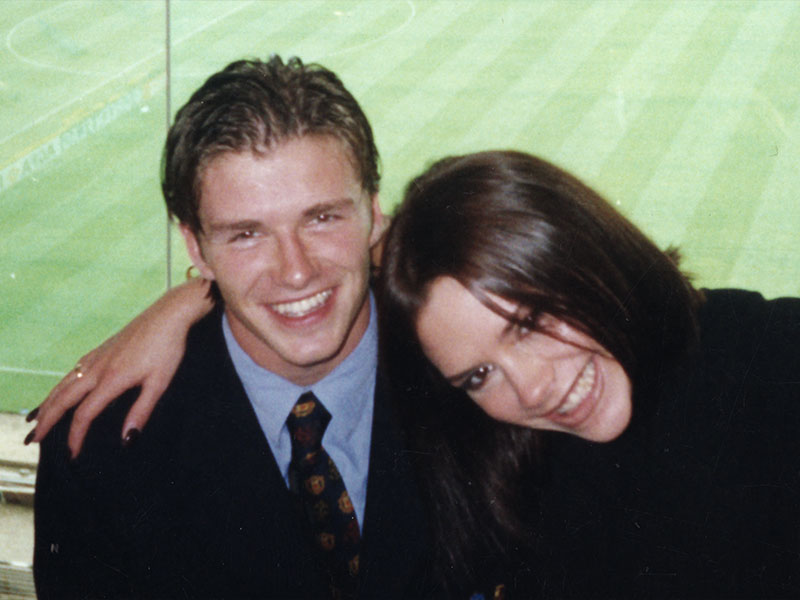
Beckham was set on marrying Victoria when he first saw her in "Spice World"
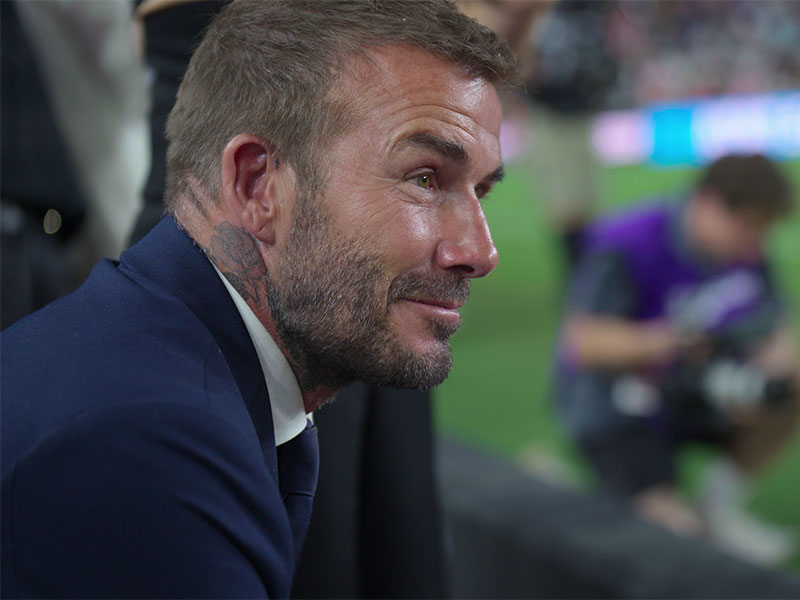
BeckhamDavid and Victoria Beckham in “Beckham” (Photo courtesy of Netflix)
Beckham revealed how he was first introduced to Victoria not through a mutual friend or celebrity acquaintance, but rather the television. It was while watching the film "Spice World" with his teammate Gary Neville that Beckham set his mind on putting a ring on Posh Spice's finger.    


Beckham recalled the moment, saying he told Neville, "'See that one there? I'm going to marry that one.' And we were laughing and joking, and I'm like, 'No, I'm going to marry that one — the posh one, in the black dress.'" 


The couple's romance soon became a reality in 1997, when Victoria and fellow Spice Girl Mel C, aka. Sporty Spice, attended a Manchester United game. Beckham learned of Victoria's attendance while in the locker room:


"In the changing room before the game, one of the players came in and was like, 'There are two Spice Girls here,'" Beckham said. "I was like, 'Which one?' And he said, 'The sporty one, and the posh one.' And I was like, 'Great.'" In an attempt to impress Victoria, Beckham played his absolute best that day.


As for Victoria's take on the relationship, she said she was smitten by Beckham's looks, even though she's "not into football at all." 


"I wasn't into football then, I'm not into football now," Victoria added. "But I'd seen pictures of him in magazines, and he was obviously a very good-looking boy . . . the fact I went to the games was, some would say 'stalk' him — I would say see him."


"I just fancied him. It was as simple as that."


Beckham and Victoria initially kept their relationship a secret, often meeting in car parks and sharing their first kiss in a BMW. Once word got out about their escapades, the couple famously became known as "Posh and Becks" — a title they still cherish today.

02
Beckham calls out Victoria for saying she grew up "working class"
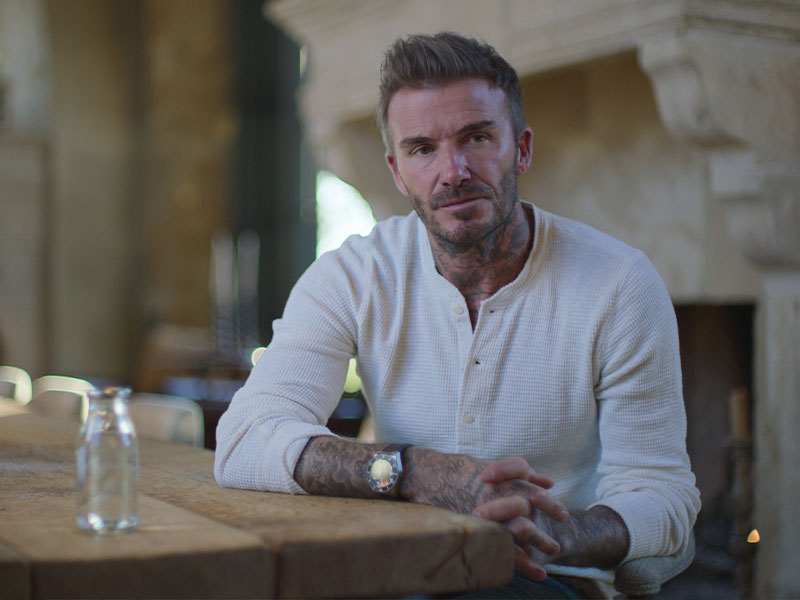
BeckhamDavid Beckham in “Beckham” (Photo courtesy of Netflix)
While talking about her relationship with Beckham, Victoria mentioned that it was their families' shared "working class" backgrounds that initially drew her to him. Beckham, however, sternly interrupted her interview and told her to "Be honest!"


"I am being honest," Victoria replied before Beckham asked her to share what car her dad drove her to school in. A hesitant Victoria first said, "It's not a simple answer" and "It depends." After enduring some more pestering questions from Beckham, she admitted, "OK, in the '80s my dad had a Rolls Royce."

03
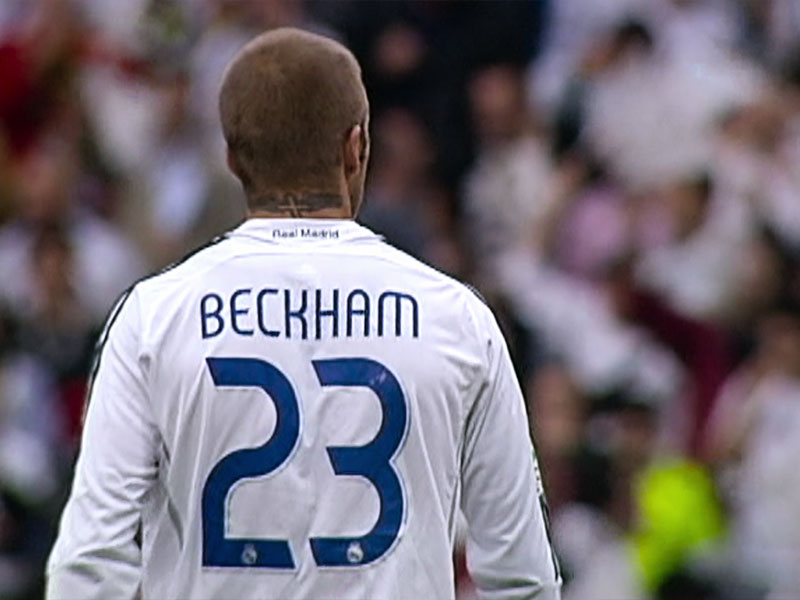
Beckham still "beats himself up" about 1998 World Cup red card
BeckhamDavid Beckham in “Beckham” (Photo courtesy of Netflix)
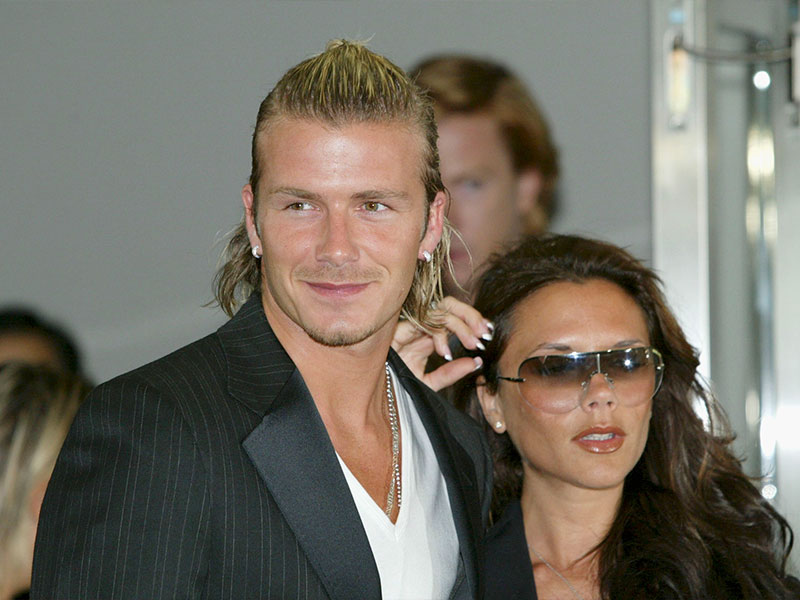
Beckham's controversial red card during the 1998 World Cup took place amid the round of 16, when England played Argentina. The highly anticipated game was also a bitter one for both teams, who had a decades-long rivalry with one another. In 1966, the two teams butted heads in the World Cup quarter-finals, which ended with England winning 1-0. Their victory, however, has since been dubbed "the theft of the century" (el robo del siglo) in Argentina due to claims that England's sole goal was allegedly offside. The two teams met again in the quarter-finals of the 1986 World Cup, which was held four years after the Falklands War. Argentina ultimately won 2–1 and later went on to win the overall World Cup. 


Twelve years later, England was hellbent on overtaking their Argentine competitors, but that didn't happen. When the score was tied 2-2, Beckham received a red card for kicking Argentina's Diego Simeone. England went on to lose the game after a penalty shoot-out.


Beckham, then just 23 years of age, was subsequently blamed for England's devastating loss. He faced immense backlash, hate comments and death threats, including a disturbing image of his effigy hanging from a building. Although Beckham redeemed himself during the 2002 World Cup, he still struggled to erase the painful memories of 1998.


"Now, at 48 years old, I beat myself up about it," Beckham said in the documentary. "I made a stupid mistake. It changed my life. I felt very vulnerable and alone."


Beckham said rival fans would abuse and spit at him in the street. Paparazzi would stop him and ask, "How do you feel about letting your country down? You are a disgrace." The torment got so bad at one point that Beckham's friends had to escort him to the bathroom and protect him in public.


"I don't think I have ever talked about it just because I can't," Beckham admitted. "I find it hard to talk through what I went through because it was so extreme. The whole country hated me. Hated me."


Victoria also spoke on the bullying her husband endured, saying, "He was broken. He was absolutely broken. He was in pieces. He was depressed, absolutely clinically depressed. It pained me so much. I still want to kill those people."

04
The "hurtful" graphic chants that directed at Victoria
English footballer David Beckham and wife VictoriaEnglish footballer David Beckham and wife Victoria arrive at New Tokyo International Airport on June 18, 2003 in Narita, Chiba-Prefecture, Japan. (Koichi Kamoshida/Getty Images)
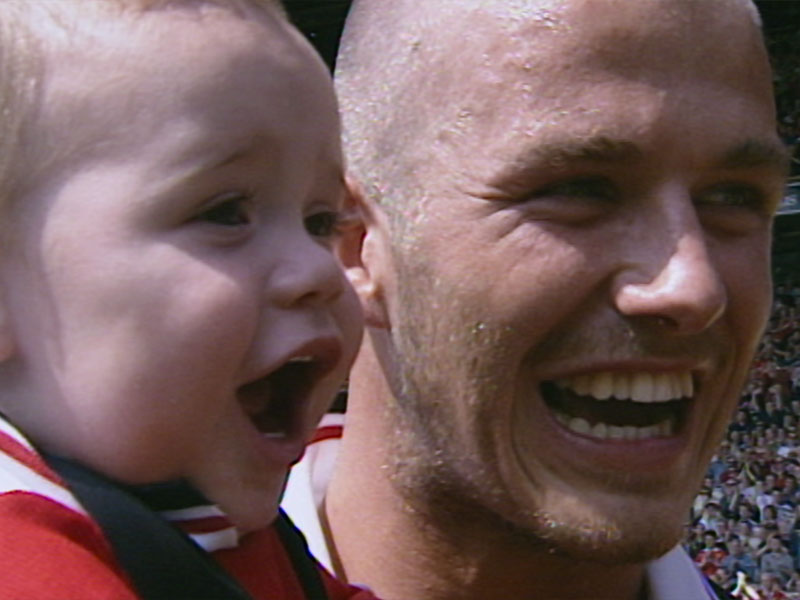
Amid the public vitriol against her husband, Victoria also became the subject of vulgar chants by football fans who weren't afraid to say them in her presence. Beckham and Victoria recalled there was one song in particular that every football fan sang following the 1998 World Cup match:


"Posh Spice takes it up the a***! Excuse my language, not very lady-like. 75,000 people were singing that," Victoria said. "It's embarrassing, it's hurtful. I remember sitting down and the lady sitting next to me turning to me. She said, 'Do you want a polo?'


"She didn't know what to say! Do I want a polo? What do you say when you're sat next to someone and 75,000 people say you take it up the a***! We did not know what to do, it felt like we were drowning."


As for Beckham, he said the hurtful chants directed at his wife only drove him.


"As hard as it was looking up to the stands and seeing Victoria, it was the one thing that spurred me on," he said. "When fans felt like they could get to me by singing hurtful things about my family, I would score a goal."

05
Beckham learned Victoria was pregnant before 1998 World Cup match
BeckhamDavid Beckham in “Beckham” (Photo courtesy of Netflix)
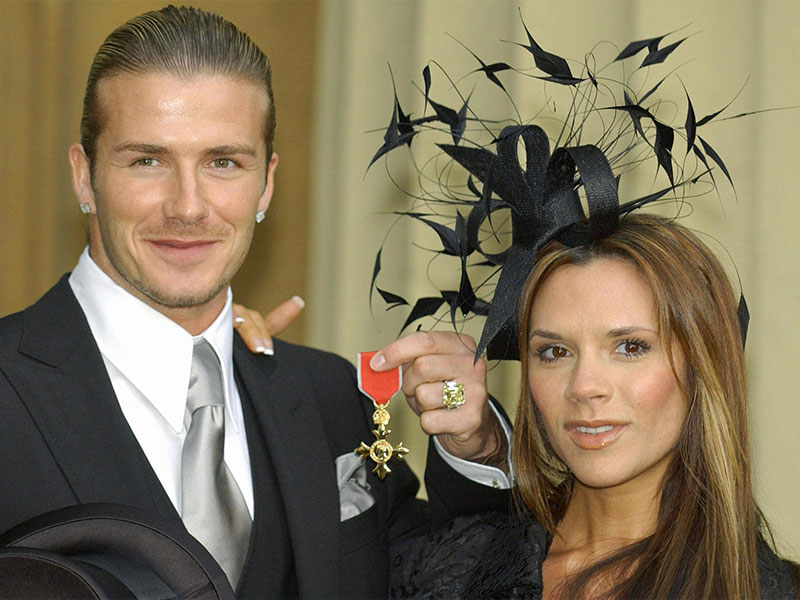
Victoria said she told her husband the night before the infamous 1998 match that she was pregnant with their eldest child, Brooklyn. She added that her husband wanted to be with her after hearing the good news, but couldn't.  


"I told Beckham the night before the game. He was so, so happy, we both were, and there was never any doubt in my mind that I should tell him," Victoria said. "I mean, it was what we wanted and he could not have been happier."

06
Beckham and Victoria address 2003 cheating rumors
David Beckham stands with his wife, VictoriaDavid Beckham stands with his wife, Victoria, as he shows off the OBE he received 27 November, 2003, from Britain's Queen Elizabeth II at London's Buckingham Palace. (FIONA HANSON/AFP via Getty Images)
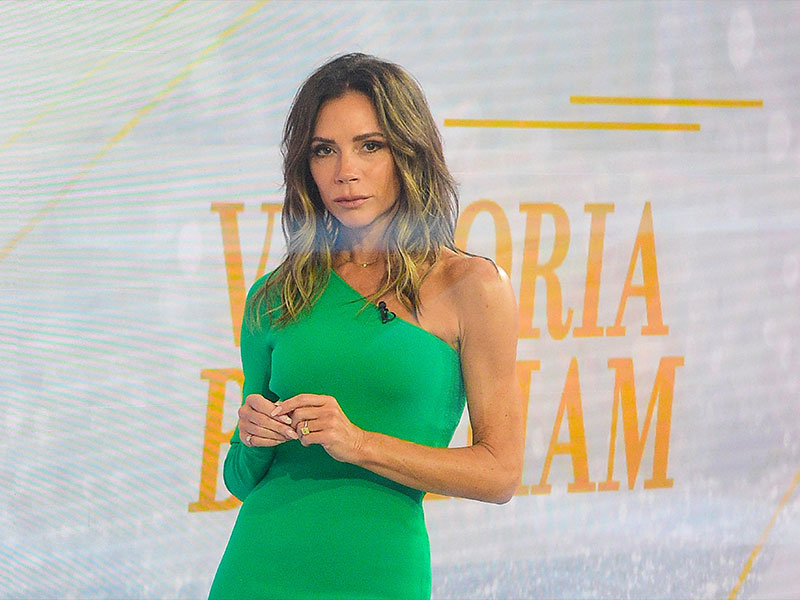
"It was the hardest period because it felt like the world was against us," Victoria said of her husband's alleged affair, which supposedly took place while he played in Spain after transferring from Manchester United to Real Madrid. Both Rebecca Loos and Sarah Marbeck claimed they had an affair with Beckham in 2003. At the time, Loos was employed as the athlete's personal assistant.


The couple refrained from naming names in the documentary. 


"You know, up until Madrid, sometimes it felt like us against everybody else but we were together, we were connected, we had each other," Victoria continued. "But when we were in Spain, it didn't really feel like we had each other either. And that's sad. I can't even begin to tell you how hard it was and how it affected me. 


"It was a nightmare. It was an absolute circus — and everyone loves it when the circus comes to town, right? Unless you're in it."


Although Beckham vehemently denied cheating claims in the past, he addressed the affair in the documentary, saying, "There [were] some horrible stories which were difficult to deal with. It was the first time that me and Victoria had been put under that kind of pressure in our marriage."


When asked how his marriage "survived" amid the inflammatory press, Beckham said he and Victoria "felt at the time that we were not losing each other but drowning.


"But ultimately, it's our private life," he added. "There were some days I thought, 'How am I going to go to work? How am I going to go on that training pitch and look as if nothing is wrong?' I felt physically sick every day when I opened my eyes. How am I going to do this?"

07
Victoria was livid Beckham almost missed birth of son for a celebrity photo shoot
Victoria BeckhamVictoria Beckham is seen at the "Today Show" on October 13, 2022 in New York City. (Raymond Hall/GC Images/Getty Images)
In 2005, Victoria was on bed rest while doctors scheduled a c-section to deliver her and Beckham's son, Cruz. Beckham, however, told doctors that he had to miss the birth because he had to shoot a Pepsi ad with Jennifer Lopez and Beyoncé. Of course, that upset Victoria: 


"What do you mean a shoot?" Victoria said while recalling the incident. "I was like, 'Seriously, I'm about to burst. I'm on bed rest! Are you kidding me? You've got a damn photo shoot with Jennifer Lopez, who is gorgeous and not about to have a baby?'"


The photoshoot eventually got rescheduled and Beckham was able to attend the birth. But still, Victoria wasn't satisfied because images from the shoot were released immediately after she gave birth.


"So I had my C-section, and I remember lying there, don't feel at my most gorgeous, let's just say. And I remember someone showing me the front page of the newspaper, which was a gorgeous picture of Beckham between Jennifer Lopez and Beyoncé, and the headline was, 'What would Posh say?'" she recalled.


Victoria continued, "Let me tell you what Posh would say. Posh was pissed off!"

08
Beckham is an avid beekeeper and sells his own honey
BeckhamDavid Beckham in “Beckham” (Photo courtesy of Netflix)
The former soccer player now tends to his own colony of bees, a hobby he picked up in 2021 amid lockdown. He also bottles and sells his own honey, even though the name of his business is still a work in progress:


"There's a bit of an argument in the house at the moment," Beckham said. "I think it should be Golden Bees. Victoria likes DB's Sticky Stuff."


When asked what other hobbies he has that are like beekeeping, Beckham simply replied, "Legos."

"Beckham" is currently available for streaming on Netflix. Watch a trailer for it below, via YouTube:


“Dicks: The Musical” puts two narcissist bros under a joyous, filthy spotlight

The first extended sequence of “Dicks: The Musical” is a memorable opening statement. True, that’s the case for most movies, and exponentially more true for musicals. “Dicks” is a still-more-extreme case because it sends its two stars Aaron Jackson and Josh Sharp unleashed on screen like they’ve each been loosed from some demented jack-in-the-box. They, like the A24-released movie they also co-wrote, make an instant impression, are unafraid to provoke, and summon deep laughs from unexpected places. 

After a text prologue that proclaims “Dicks” as a straight story written by two gay men, we see the product of that cheekily self-described “bravery.” Trevor Brock (Jackson) and Craig Tittle (Sharp) arrive as ultimate corporate bros, rival aspiring business execs drowning themselves in as much sex and arrogance as they can handle. A song that puffs up their insatiable ego and appetite soon gives way to the realization that these two are not just competitors at the same job. They’re twins, their separate childhoods the product of a split marriage that separated them at birth.  

There’s an ongoing running joke about Trevor and Craig being identical twins is that purest form of movie magic: the thing spoken into existence just by confidently stating it to be so. Despite having similar entitled, fatally confident personalities, there’s plenty separating them, from the way they deliver odd punchline emphasis to their hairstyles (one has flowing shoulder-length locks while the other has Lloyd Christmas’ bowl cut).

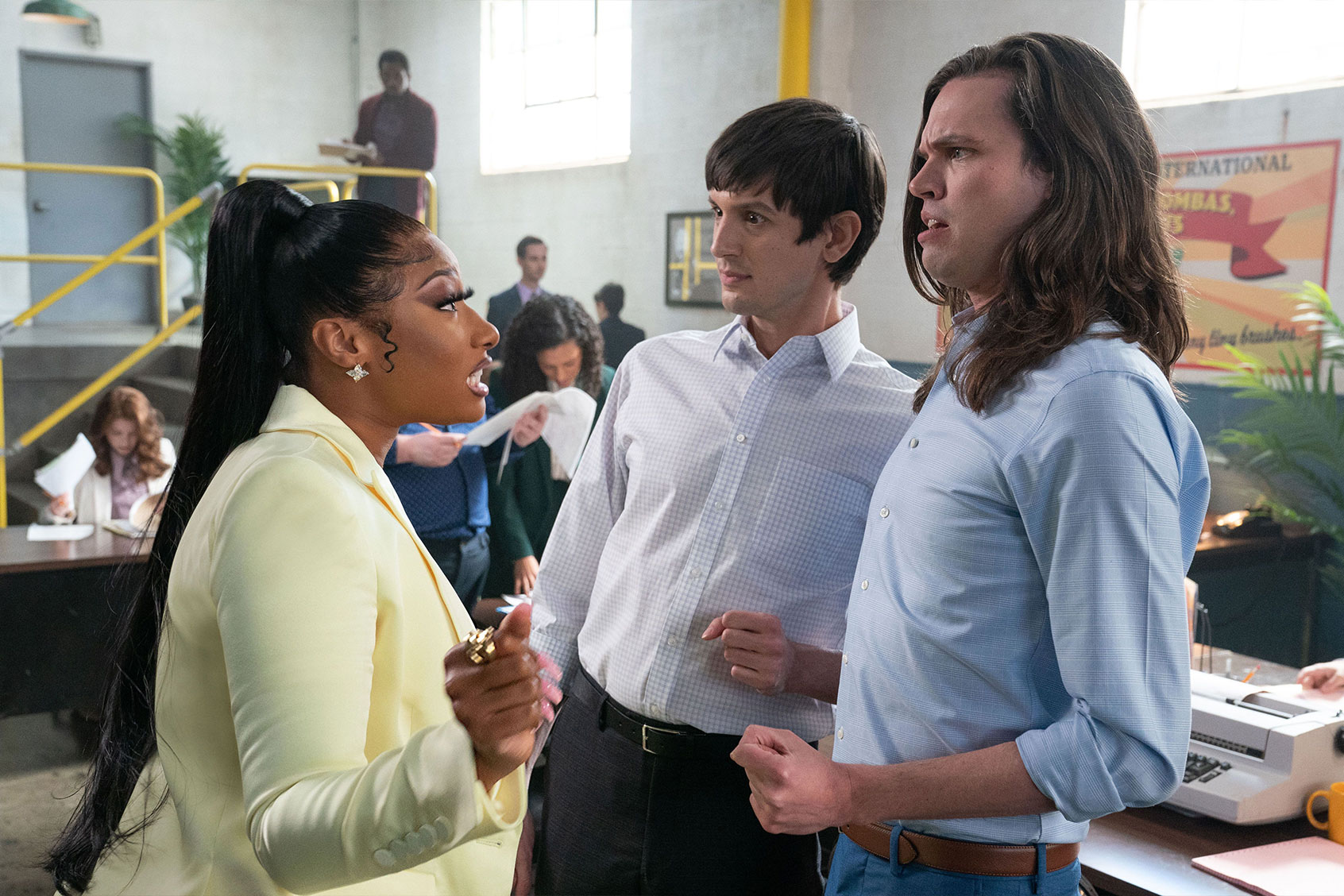
Dicks: The MusicalMegan Thee Stallion, Josh Sharp and Aaron Jackson in “Dicks: The Musical” (A24)
Through a stroke of sheer coincidence, Thomas and Craig now occupy the same job as salesmen at a floor vacuum manufacturer. (The company’s jingle is early in a steady stream of out-of-nowhere gags that keep the laughs coming at a decent clip.) Their new boss Gloria (Megan Thee Stallion) soon finds ways to use the two’s competitive natures to increase widget sales, tracked on a ’90s-style video scoreboard in the office’s main warehouse. 

Jackson and Sharp are very effective at pushing buttons, often loudly.

Trevor and Craig also have different parents. The boys (c’mon, that’s what they really are when we meet them: adult boys) have a dissociating, agoraphobic mother Evelyn (Megan Mullally) and a heretofore-closeted father Harris (Nathan Lane), each with their own . . . complications about where they direct their attention and affection. Soon, the two sons do their own form of private investigating — just one of many alternate definitions of the movie’s title explored here — to find that a family reunion might just be the thing to soothe everyone in this idiosyncratic quartet. 

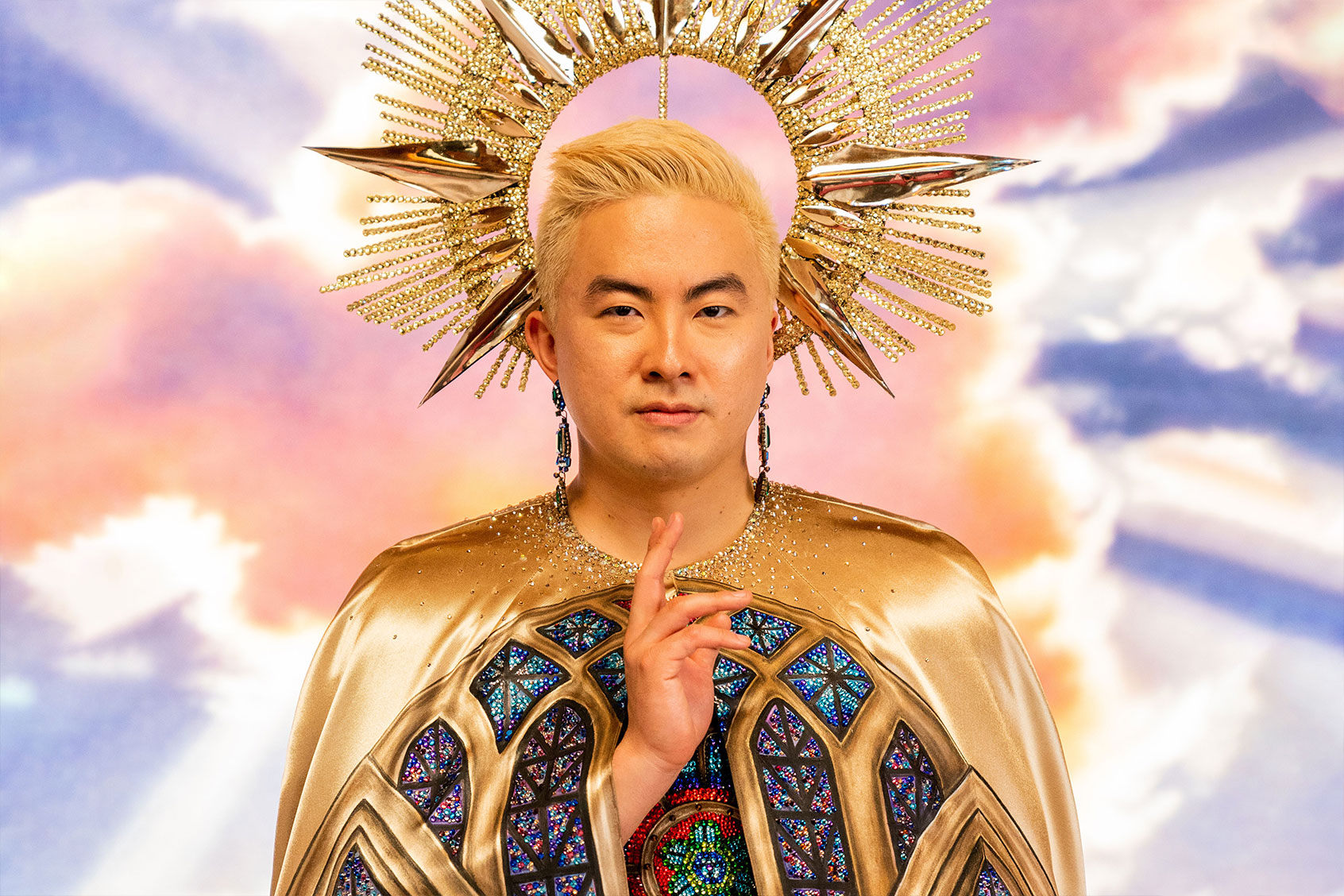
The songs that each of these five named characters use to shade in their emotions are less designed to be hummed on your way out of the theater/living room and more designed to tap into the level of unrestrained id that’s on display for so much of “Dicks.” However irreverent things can get (yes, that’s Bowen Yang playing God, both as omniscient narrator and presence in front of a green-screened heaven of sorts), this is more a send-up of office ambition culture and general prudishness than a parody of anything from the stage. 

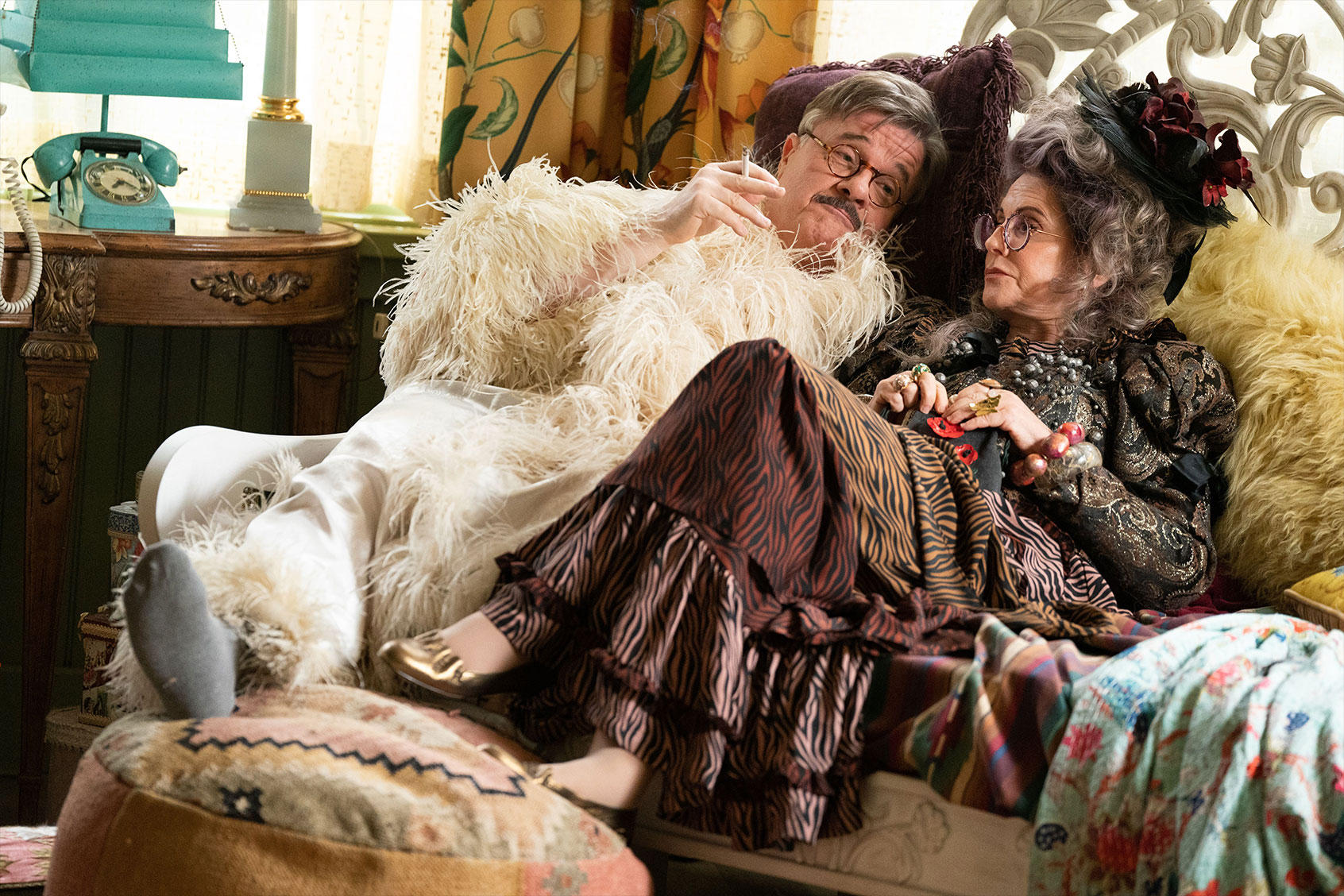
Dicks: The MusicalNathan Lane and Megan Mullally in “Dicks: The Musical” (A24)
None of these numbers are self-sustained barnburners (though Jeff and Rick Kuperman’s choreography does always give you something energetic to look at), yet they still point to this cast’s ability to continually sell the madness underneath. Megan Thee Stallion takes an otherwise pat workplace anthem about female empowerment and gives it the energy it needs, including a late verse that lets her capitalize on her own flow. Not only does Lane’s role make for an odd complement to his stellar work in “Beau Is Afraid” earlier this year, it ends up being a perfect showcase for his skills as a musical theater technician, complete with all the deadpan timing and falsetto breath control needed to make Harris both a riotous and tender character. 

We need your help to stay independent

“Dicks: The Musical” truly comes alive when its rapid-fire joke factory is churning out punchlines that feel specific to this particular movie. This is a story of escalation, surprising considering how highly things are pitched by the end of the opening song. That doesn’t leave Trevor and Craig much room to be anything other than instigators, which ends up relegating them to the sidelines for a decent chunk of the film’s back half once everything else is set in motion. Whenever Evelyn and Harris take center stage instead, the film gets a perverse joy out of pushing Mullally and Lane (no strangers to outrageousness) closer and closer to their potential breaking points, leaving damaged psyches and property in the on-screen couple’s wake. 

Though the movie isn’t filled to the brim with elaborate visual inventiveness, there are still plenty of chances for “Borat” director Larry Charles to play around with this story’s presentation. The opening number has plenty of seized opportunities to go for jokes that wouldn’t work on stage. There’s a combo of practical models, playfully retro stock footage, and lo-fi visual effects touches throughout that add to the jarring, dreamlike nature of it all.

Dicks: The MusicalBowen Yang in “Dicks: The Musical” (A24
“Dicks: The Musical,” with its origins on the Upright Citizens Brigade stage, has retained that theater’s energy in one key way. Like a musical improv show, “Dicks” operates on its own set of logic. That’s not just in selling vague lookalikes as identical twins, but in characters who flit in and out precisely/only when needed. At its foundation, this is a storybook tale with a pair at the center being agents of chaos slowly infecting everything they come across. Workplaces, theater marquees, pillows, municipal services: everything starts to absorb their prankish tendencies until the ending sequence combines it all into a kind of over-the-top, technicolor uneasiness. 

It’s all nakedly frivolous, and proudly so.

So the culmination of all this high-strung, high-wire on-screen havoc does make good on its intro. Jackson and Sharp are very effective at pushing buttons, often loudly. (Trevor shouting at full volume at one particular unhinged revelation is a strong contender for the Biggest Laugh of 2023.) This is all while being able to cede the floor to fellow mischief makers, even if they do save the biggest provocations for themselves as “Dicks” hurtles to a close. The film’s closing swings do have a hint of the stretched, repetitive nature that threatens to drag the film down at points, yet it’s all done with the same level of commitment and conviction that brings about enough jokes to fuel the engine. When presented with a neat and tidy possibility of wrapping things up, “Dicks: The Musical” opts to keep one-upping itself, all the way through its end credits sequence. 


Want a daily wrap-up of all the news and commentary Salon has to offer? Subscribe to our morning newsletter, Crash Course.


The outgoing “Dicks” message isn’t exactly nihilism, but somehow a more colorful, exuberant cousin of nihilism. It’s all nakedly frivolous, and proudly so. If the opening of “Dicks” is a pure joke delivery device and the middle bits present people grappling with what it means to actually care about someone other than yourself, then the real power of the ending is confronting you with whether it’s necessary to make a distinction between those two modes in the first place. When “Dicks” does manage to do both at the same time, it’s more than enough to make you look forward to what everyone involved sets their joyous, squirm-inducing sights on next.

“Dicks: The Musical” releases in select theaters Oct. 6 and nationwide on Oct. 20.


“He will be destroyed on cross-examination”: Experts trash Trump’s doomed “Richard Nixon” defense

Attorneys for Donald Trump on Thursday requested that a federal judge axe the entirety of special counsel Jack Smith's criminal indictment accusing the former president of attempting to overturn the 2020 presidential election.

Trump's 52-page motion to dismiss the charges hinges on an untested legal argument that he had "presidential immunity" shielding him from any criminal charges connected to his actions while in office, The Messenger reported.

"Breaking 234 years of precedent, the incumbent administration has charged President Trump for acts that lie not just within the 'outer perimeter,' but at the heart of his official responsibilities as President," Trump's lawyers wrote in the filing. "In doing so, the prosecution does not, and cannot, argue that President Trump’s efforts to ensure election integrity, and to advocate for the same, were outside the scope of his duties."

Trump faces four federal felony counts in the case, which alleges he obstructed the 2020 election in a series of events, including the Jan. 6 Capitol attack. He has pleaded not guilty to all charges. The trial is slated to begin on March 4, 2024 in Washington, D.C.

Thursday's motion represents the latest attempt from the GOP frontrunner to undermine the criminal charges against him and stall his trials as he carries out his 2024 bid for the Oval Office.

In South Florida, where the special counsel brought 40 charges against Trump over his retention of national security documents post-presidency, Trump's lawyers late Wednesday night requested a postponement for the federal trial until after the 2024 election. Jury selection in that case is currently scheduled for May 2024, but the former president's legal team has argued that date conflicts with the D.C. criminal case that he's now pushing to have thrown out. 

Trump is also seeking the dismissal of his criminal charges in Fulton County District Attorney Fani Willis' sprawling racketeering indictment. In that case, the former president's attorneys have taken to piggybacking onto the motions from some of the 18 other co-defendants charged in the case. 

We need your help to stay independent

The latest Washington, D.C. filing also suggests Trump's legal team may try to move the case beyond U.S. District Court Judge Tanya Chutkan's bench as the arguments follow months of signals from his lawyers that they believe they can succeed in getting the criminal charges thrown out on appeal before the Supreme Court.

One facet of that defense appears in a claim Trump's attorneys are putting forward that presidential immunity has a foundation in the U.S. Constitution. They contend that "impeachment and conviction by the Senate provide the exclusive method of proceeding against a president for crimes in office."

"Here, President Trump was acquitted by the Senate for the same course of conduct," they write in the filing, referencing the early 2021 Senate trial following the Jan. 6 insurrection that concluded with a 57-43 vote against Trump but fell short of the two-thirds majority needed to convict.

"No court has addressed whether such Presidential immunity includes immunity from criminal prosecution for the President’s official act," the attorneys said, adding, "In addressing this question, the Court should consider the Constitution’s text, structure, and original meaning, historical practice, the Court’s precedents and immunity doctrines, and considerations of public policy."


Want a daily wrap-up of all the news and commentary Salon has to offer? Subscribe to our morning newsletter, Crash Course.


Legal experts poured cold water on Trump's latest bid, likening his argument to that of disgraced former President Richard Nixon.

"This is the big one folks," national security lawyer Bradley Moss wrote on X, formerly Twitter. "Trump really did it: he is arguing that a president is immune from criminal prosecution. Ever."

"Just a reminder that Nixon's lawyers tried arguing before the Supreme Court that an *incumbent* president is essentially a King for 4-8 years," Moss added. "The Supreme Court disagreed."

"The cover page of Trump's motion to dismiss the DC prosecution says it all, revealing the weakness of his position," former U.S. Attorney Joyce Vance tweeted. "Presidents don't get immunity from prosecution for trying to steal an election any more than the next guy. Shorthand: no man is above the law."

Watergate prosecutor Jill Wine-Banks smacked down Trump's presidential immunity argument during a Thursday appearance on MSNBC, asserting that the former president would be “destroyed on cross-examination” if he were to use it at trial.

The argument, she noted, would only work if the former president “was doing something presidential, something within his job description” when he did what he's alleged to have. 

"We've already seen an example of a court saying, 'It's not within your job description to defame E. Jean Carroll. It just isn't," Wine-Banks said. "I think [a court] would say that the conduct alleged in this particular indictment goes well beyond anything that is part of his job as president. It was his job as a candidate, and candidate is a different thing.”

Wines-Banks added that Trump can't claim he was “acting as president when he was trying to take down the election.”

“That is a question of fact that will have to be determined,” she continued. “The jury will say, ‘Yes, he was trying to take it down.’ He’s saying, ‘No I wasn’t, I was trying to protect election integrity.’ There is no evidence that supports that, and if he testifies that, he will be destroyed on cross-examination.”

But former U.S. Attorney Harry Litman cautioned that unlike Trump's other "slapdash quality" court filings, this "relatively polished" filing appears to be aimed at convincing the Trump-packed Supreme Court.

"Its intended audience is conservative judges," Litman wrote.

Girls Scouts cookie fans mourn the loss of this cult-favorite cookie

Much to the disappointment of Raspberry Rally fans, per Jordan Valinksy at CNN, the "cult-favorite Girls Scouts cookie" is being discontinued. 

“Last year, Raspberry Rally cookies were introduced as part of a pilot online-only sales strategy," a Girl Scout spokesperson told Joseph Lamour at TODAY. "This was a fun and new way to teach girls omnichannel business skills and expand our cookie portfolio by introducing an exciting new flavor profile to the Girl Scout Cookie Program."

As Salon Food's Joy Saha wrote back in March, though, this online-only approach inadvertently caused some wild reselling across the internet, particularly a frenzy on eBay, with asking prices that were astronomically higher than the original sale price. Some boxes even went for a whopping $400. In a statement, Girls Scouts of the USA said: "While Raspberry Rally was extremely popular last year, we are taking a pause this season to prioritize supplying our classic varieties." 

As Saha also noted earlier this week, this news comes as Girls Scouts cookies are going up $1 in many locations (to $6 per box) for this upcoming season to offset the cost of inflation. 


“Tip of the iceberg”: Experts sound the alarm after Trump blabbed nuclear secrets at Mar-a-Lago

Former President Donald Trump allegedly discussed potentially sensitive information about U.S. nuclear submarines with an Australian billionaire member of his Mar-a-Lago club who then shared it with at least 45 others, according to ABC News and The New York Times.

Special counsel Jack Smith’s team and the FBI have interviewed the billionaire, Anthony Pratt, at least twice, according to ABC News. Pratt is among more than 80 potential witnesses that may testify against Trump in the classified documents trial, according to the Times.

Pratt, the owner of US-based packaging company Pratt Industries, shared the information with more than a dozen foreign officials as well as employees and journalists, sources told the outlet.

Pratt told investigators that he brought up the U.S. submarine fleet, which they had discussed before, sources said.

Via ABC News:

According to Pratt's account, as described by the sources, Pratt told Trump he believed Australia should start buying its submarines from the United States, to which an excited Trump — "leaning" toward Pratt as if to be discreet — then told Pratt two pieces of information about U.S. submarines: the supposed exact number of nuclear warheads they routinely carry, and exactly how close they supposedly can get to a Russian submarine without being detected.

After meeting with Trump, Pratt shared the information with at least 45 others, according to the report. Pratt told investigators he could not determine whether what Trump told him was true but investigators cautioned him not to repeat the numbers Trump allegedly told him, underscoring the potentially sensitive nature of the information, sources told the outlet.

Another witness who previously worked at Mar-a-Lago also told investigators that he heard Pratt relaying the information to others within minutes of his meeting with Trump. The ex-employee told investigators that he was “shocked” and “bothered” that Trump provided seemingly sensitive information to a foreign citizen, according to the report.

Pratt told investigators that Trump did not show him any government documents and insisted that what he told others was to show them that he was advocating for his country in the U.S., according to ABC’s sources. Some of the officials who were told were involved in negotiations with the Biden administration to purchase nuclear submarines from the United States at the time.

The incident was not included in Smith’s indictment of Trump, who was charged with illegally retaining national security documents and obstructing government efforts to retrieve them.

A Trump spokesperson told ABC News that the report lacks “proper context and relevant information.”

"President Trump did nothing wrong, has always insisted on truth and transparency, and acted in a proper manner, according to the law," the spokesperson said.

Joe Hockey, a former Australian ambassador to the U.S., downplayed the information that was shared.

“If that’s all that was discussed, we already know all that,” he told the Times. “We have had Australians serving with Americans on U.S. submarines for years, and we share the same technology and the same weapons as the U.S. Navy.”

But the Times also noted that Trump has been known to share classified information with others, including at an infamous 2017 White House meeting with two Russian officials shortly after he fired then-FBI Director James Comey.

We need your help to stay independent

New York Times reporter Maggie Haberman told CNN on Thursday that prosecutors will likely use Pratt’s testimony to “establish a pattern of Trump being cavalier with sensitive information and the government’s secrets.”

“There was an infamous Oval Office meeting with two Russian officials where he is said to have spilled some sensitive information that upset Israeli officials,” she said, according to Mediaite. “He tweeted out a classified picture of an Iranian launch site, I think it was in 2019. This is something he has done for a while. This is the kind of behavior that added to why President Biden cut off Trump’s briefings that ex-presidents get to sensitive information and classified briefings, because according to the current president, you know, what could happen other than that Trump would slip up and say something?”

“Hard to envision a trained, well-funded foreign intelligence service not taking advantage of this personality trait,” former FBI counterintelligence official Pete Strzok tweeted.

Columnist David Rothkopf predicted that the report was just “the tip of the iceberg.”

“He didn't keep all those classified docs because his inner archivist demanded it. It was because he saw value in them…and the value came from sharing the information with people who shouldn't have it,” he wrote.


Want a daily wrap-up of all the news and commentary Salon has to offer? Subscribe to our morning newsletter, Crash Course.


CNN legal analyst Norm Eisen predicted that the incident would be used by prosecutors to show Trump’s “culpability.”

“It also sheds light on his intent. In any criminal case, you have to prove state of mind, and so it’s relevant on that ground,” he said, according to Mediaite. “But we do have to caution, of course, it’s a media report now. It does not appear to be in the case, certainly is not in the existing charges. We’ll see if it enters the case, but very damaging, even if it turns out not to have been strictly accurate.”

Former Defense Secretary William Cohen blasted Trump over the reported revelation.

“He’s given away secrets in the past ― will do so in the future. In this case here, he’s being given the benefit of the doubt ― how much more evidence do we need of his misbehavior in terms of attacking our institution?” he told CNN. “The military, he thinks those who give life and limb for service to the country, are ‘losers’ and ’suckers.’ He’s throwing the intelligence community under the bus in Helsinki. Everything he has done has been to undermine respect for this country of ours.”

“This is just one more example why we should never allow, never vote, to allow him to get his hands on classified information in the future,” Cohen added. “He shouldn’t be anywhere near the Oval Office ever.”

The hidden casualties of the GOP’s civil war

It's been quite a week in the House of Representatives with MAGA superstar Matt Gaetz, R-Fl., leading a small band of incoherent revolutionaries to topple Speaker of the House Kevin McCarthy, R-Calif., just to show they could. Then all day Thursday the media was overwhelmingly excited at the rumor that Donald Trump was going to heroically run to the rescue of the House Republicans and save them from themselves by stepping in as the House Speaker. A faction led by Rep. Marjorie Taylor Greene, R-Ga., enthusiastically endorsed him and it was announced that he would be traveling to the Capitol for the first time since January 6, 2021 within days. Sadly, late last night, Trump himself stuck a shiv in that trial balloon by announcing that he was endorsing Rep. Jim Jordan of Ohio for the job, likely assuring his victory.

Before McCarthy was defenestrated he managed to get an extension on the budget deadline passed, averting another government shutdown, but with all the fireworks around his ousting and the jostling to replace him, not to mention the enormous ill will Gaetz and his friends have stirred in the caucus, it appears that clock may tick all the way down again without much being resolved before the next deadline. House Republicans have a long wish list of extreme policies they want to pass in this new budget and nobody seems to have told them that they don't have a majority in the Senate nor do they have the White House, which means that their dream agenda is dead on arrival anyway.

They want radical cuts in spending, process changes that are unconstitutional and a total reversal of American foreign policy, and they seem determined to hold their breath until they blow up the country if they don't get their way. There's little reason to believe that Trump's endorsee Jim Jordan will be able to deal with this insoluble problem any better than McCarthy did and even less reason to believe he wants to. He may not have joined the rebels in this instance but he's just as extreme as they are.

The most pressing of all the issues on the table is the continuation of American aid to Ukraine. There is still a bipartisan majority in Congress that supports the policy but a large and growing faction of the GOP is against it. With that small number of hard-right troublemakers determined to have their way, McCarthy was apparently only able to get the extension passed by eliminating that funding.

So why are these right-wingers, who not so long ago were ready to send American troops abroad at the drop of a hat, suddenly refusniks when it comes to helping Ukraine?

That was a huge victory for McCarthy's favorite wingnut, Marjorie Taylor Greene, who has made the defunding of Ukraine aid her signature issue. According to this voluminous fact check, she is very confused about the recent history of the region and seems to have absorbed a lot of Russian talking points to back up her opinions. Last spring she spoke at a white nationalist event where they cheered the Russian invasion with chants of “Putin, Putin, Putin!” so perhaps that's where she got some of her ideas on the subject. But the most likely influence is former Fox News celebrity Tucker Carlson, who has been leading the American opposition to Ukraine.

Russia has shown its appreciation by featuring him heavily on its state-owned propaganda media:

https://youtu.be/_rBEpVz0J20?si=KsqF7Y7w3sXT3hIJ

As a result, there has been a non-stop drumbeat coming mostly from the right, but also some voices on the left, suggesting that the U.S. should withdraw support for the Ukrainian war effort. It's said by some that we can no longer afford it because we need the money to start a war with Mexico while others believe that it would be more compassionate to allow Russia to take over the country in the hopes that they will stop bombing, committing war crimes and abducting Ukrainian children. Some think the U.S. caused the problem by promoting NATO expansion so it's wrong for it to help Ukraine, the logic of which is still obscure to me.

We need your help to stay independent

Public opinion has shifted a bit as a result of these arguments. According to the Reuters/Ipsos poll, six months ago 46% supported sending arms to Ukraine while 29% opposed and the rest were unsure. As of this week, only 41% support it, 35% disagree and the rest are unsure. It's not exactly a groundswell but the opposition is growing among Republicans especially and it's giving oxygen to people like Greene in the House and Senators like Tommy Tuberville, R-Al., and Missouri's Josh Hawley who parrots Trump' tiresome line that Europe is freeloading (which is not true at all) and insists we need the money for our own border war.

At the moment it's just a handful in the Senate but last week 117 members of the House voted against training and equipping the Ukrainian military. As Greene reminded everyone, the Hastert Rule (named after the disgraced, Republican pedophile speaker Dennis Hastert) requires that no bill can be allowed to come to the floor if it does not have a GOP majority. Since Jim Jordan was one of those who voted against it, it's hard to see how this funding is going to happen if he does become Speaker. (He told the media that he wouldn't support bringing it to a vote but his office "clarified" it later, so who knows?)

Those of us who oppose military invasions of other countries, whether it's by Russia or the United States, are morally clear on America's obligation to help Ukraine. It's not even a hard call. And the stakes of allowing an emboldened Vladimir Putin to successfully expand Russia's borders by force in the region are enormous. As the New York Times' Paul Krugman points out the amount the U.S. is spending on humanitarian aid and military equipment is nominal and the positive consequences of doing so are already being felt.


Want a daily wrap-up of all the news and commentary Salon has to offer? Subscribe to our morning newsletter, Crash Course.


So why are these right-wingers, who not so long ago were ready to send American troops abroad at the drop of a hat, suddenly refusniks when it comes to helping Ukraine? Some of it is an affinity with Vladimir Putin and the Russian system he currently oversees. It's an authoritarian, white, Christian regime that has no use for gays or racial minorities or dissent. It's their kind of place.

And it also springs from a trollish pretense that fatuously declares that Democrats are the warmongers while they just want to give peace a chance. (It's not the first time they've done this. They did it in the 1990s during the Balkan War as well. )It's nonsense of course. They're more bloodthirsty today than they've ever been. Whatever the motives, at this moment it's hard to see how anyone can thread this needle and it's particularly difficult to see how Jim Jordan can do it. He's an ideologue, not a deal maker.

Perhaps the best hope those of us who don't want to abandon Ukraine have is that Donald Trump will tell Jordan and Greene and the rest of his House sycophants that they need to fund Ukraine until the election. He has a secret plan to end the war, you know, and it's the best plan in the history of secret plans. They should at least keep things going until the very stable genius can get back in the White House and fix the whole thing up properly, don't you think? Not even Marjorie Taylor Greene could object to that.

Psychedelics plus psychotherapy can trigger rapid changes in the brain. Here’s how

The human brain can change – but usually only slowly and with great effort, such as when learning a new sport or foreign language, or recovering from a stroke. Learning new skills correlates with changes in the brain, as evidenced by neuroscience research with animals and functional brain scans in people. Presumably, if you master Calculus 1, something is now different in your brain. Furthermore, motor neurons in the brain expand and contract depending on how often they are exercised – a neuronal reflection of "use it or lose it."

People may wish their brains could change faster – not just when learning new skills, but also when overcoming problems like anxiety, depression and addictions.

Clinicians and scientists know there are times the brain can make rapid, enduring changes. Most often, these occur in the context of traumatic experiences, leaving an indelible imprint on the brain.

But positive experiences, which alter one's life for the better, can occur equally as fast. Think of a spiritual awakening, a near-death experience or a feeling of awe in nature.

Social scientists call events like these psychologically transformative experiences or pivotal mental states. For the rest of us, they're forks in the road. Presumably, these positive experiences quickly change some "wiring" in the brain.

How do these rapid, positive transformations happen? It seems the brain has a way to facilitate accelerated change. And here's where it gets really interesting: Psychedelic-assisted psychotherapy appears to tap into this natural neural mechanism.

Psychedelic-assisted psychotherapy

Those who've had a psychedelic experience usually describe it as a mental journey that's impossible to put into words. However, it can be conceptualized as an altered state of consciousness with distortions of perception, modified sense of self and rapidly changing emotions. Presumably there is a relaxation of the higher brain control, which allows deeper brain thoughts and feelings to emerge into conscious awareness.

Psychedelic-assisted psychotherapy combines the psychology of talk therapy with the power of a psychedelic experience. Researchers have described cases in which subjects report profound, personally transformative experiences after one six-hour session with the psychedelic substance psilocybin, taken in conjunction with psychotherapy. For example, patients distressed about advancing cancer have quickly experienced relief and an unexpected acceptance of the approaching end. How does this happen?

glowing green tendrils of a neuron against a black background

Neuronal spines are the little bumps along the spreading branches of a neuron. Patrick Pla via Wikimedia Commons, CC BY-SA

Research suggests that new skills, memories and attitudes are encoded in the brain by new connections between neurons – sort of like branches of trees growing toward each other. Neuroscientists even call the pattern of growth arborization.

Researchers using a technique called two-photon microscopy can observe this process in living cells by following the formation and regression of spines on the neurons. The spines are one half of the synapses that allow for communication between one neuron and another.

Scientists have thought that enduring spine formation could be established only with focused, repetitive mental energy. However, a lab at Yale recently documented rapid spine formation in the frontal cortex of mice after one dose of psilocybin. Researchers found that mice given the mushroom-derived drug had about a 10% increase in spine formation. These changes had occurred when examined one day after treatment and endured for over a month.

diagram of little bumps along a neuron, enlarged at different scales

Tiny spines along a neuron's branches are a crucial part of how one neuron receives a message from another. Edmund S. Higgins

A mechanism for psychedelic-induced change

Psychoactive molecules primarily change brain function through the receptors on the neural cells. The serotonin receptor 5HT, the one famously tweaked by antidepressants, comes in a variety of subtypes. Psychedelics such as DMT, the active chemical in the plant-based psychedelic ayahuasca, stimulate a receptor cell type, called 5-HT2A. This receptor also appears to mediate the hyperplastic states when a brain is changing quickly.

These 5-HT2A receptors that DMT activates are not only on the neuron cell surface but also inside the neuron. It's only the 5-HT2A receptor inside the cell that facilitates rapid change in neuronal structure. Serotonin can't get through the cell membrane, which is why people don't hallucinate when taking antidepressants like Prozac or Zoloft. The psychedelics, on the other hand, slip through the cell's exterior and tweak the 5-HT2A receptor, stimulating dendritic growth and increased spine formation.

Here's where this story all comes together. In addition to being the active ingredient in ayahuasca, DMT is an endogenous molecule synthesized naturally in mammalian brains. As such, human neurons are capable of producing their own "psychedelic" molecule, although likely in tiny quantities. It's possible the brain uses its own endogenous DMT as a tool for change – as when forming dendritic spines on neurons – to encode pivotal mental states. And it's possible psychedelic-assisted psychotherapy uses this naturally occurring neural mechanism to facilitate healing.

A word of caution

In her essay collection "These Precious Days," author Ann Patchett describes taking mushrooms with a friend who was struggling with pancreatic cancer. The friend had a mystical experience and came away feeling deeper connections to her family and friends. Patchett, on the other hand, said she spent eight hours "hacking up snakes in some pitch-black cauldron of lava at the center of the Earth." It felt like death to her.

Psychedelics are powerful, and none of the classic psychedelic drugs, such as LSD, are approved yet for treatment. The U.S. Food and Drug Administration in 2019 did approve ketamine, in conjunction with an antidepressant, to treat depression in adults. Psychedelic-assisted psychotherapy with MDMA (often called ecstasy or molly) for PTSD and psilocybin for depression are in Phase 3 trials.The Conversation

Edmund S. Higgins, Affiliate Associate Professor of Psychiatry & Family Medicine, Medical University of South Carolina

Why your brain is hungry for more play, according to a child development expert

Every waking moment, billions of neurons bustle across the highways of our brains, choreographing the body's thoughts, movements and communications. Newborns come into the world with 100 billion neurons and develop over one million new neural connections every second during their first years of life as they begin to experiment with the world around them — rolling in the dirt, sticking nearly everything in their mouths and observing how the power of their cries can manipulate the adults around them. 

Through these experiences, children start to develop patterns that have implications for their adult lives. An infant learns that in most cases, crying will get their caregiver's attention. They start to reach for sweets instead of sand when they want a snack and learn to talk so that they can better communicate their needs. Over time, the brain develops patterns that help its executive functioning operate more efficiently — but research shows that breaking those cycles and entering a state of play can have just as many beneficial impacts, helping children improvise and respond creatively to new experiences as they grow up.

For the past decade, Jacqueline Harding, Ph.D., a child development expert at Middlesex University, has observed thousands of hours of play, monitoring children's posture, body language and facial movements change the moment they lose themselves in a game. Harding's new book, "The Brain That Loves to Play," is a starter guide in fostering play. We talked with her about what's going on in the brain when the mind plays, how that shapes a child's future self and how adults can tap back into a sense of playfulness if they feel they've lost it. 

This conversation has been edited for length and clarity.

Can you explain what's going on in the brain on the inside, when play is going on on the outside? 

"When I talk about quality play experiences, I'm talking about sensory-driven experiences like sand, mud, water — all the stuff that's really dirty and grungy that most of us, as parents, run away from."

Imagination can turn genes on or off inside the nerve cells, which then creates proteins that change the structure, the architecture, of the brain. Humans are open systems, particularly when they're young. They want to engage, they want to explore, and they use their senses [to do so]. It's all about the sensory pathways.

When I talk about quality play experiences, I'm talking about sensory-driven experiences like sand, mud, water — all the stuff that's really dirty and grungy that most of us, as parents, run away from. But actually, this is what children really need, they need to get out into the world and experience it for themselves through their eyes, through their hearing, through the smell, through the taste. The brain is hungry for that. Those are nutrients for the brain. 

Many chapters of the book are dedicated to specific ages of development. How does play change over time? Can you describe the "play history," and how that shapes our adult lives?

Play histories are personal and unique to all of us. They impact us as we mature in very subtle ways. This is the downside: It's very difficult to put right, as time goes, any deficit in play, or prevention or absence of something they particularly need. I had a friend who was super bright and helped [build body scanning technology]. To this day, he resents his job, because when he was younger, his parents wanted him to study in order to become a scientist. But he didn't get what he needed. Yes, he's super bright. But his play history was so depleted that it didn't meet an emotional need in him, and he's still looking for that today. That's kind of what I mean by how it's almost like a history book of your life. It's very unique to each of us. Is it kind of a diary, if you think of it like that.

"Solo play starts at the beginning and continues for life."

Your question to me around how does play change as children develop, that's really about their developmental stage, it's about what they can understand and what they're interested in at that time. We have schemas where children may be interested in tipping things out and putting them back in again, or it could be that they have an enclosure schema where they're going through a fascination of hiding or building something. That meets a particular need at that time. Their interests change as time passes, and of course, their ability to connect with others will determine how they play. 

Solo play starts at the beginning and continues for life. Then you have the onlooking play, where they're beginning to think, "Hm, I wonder what somebody else is doing." And then parallel play when they're playing alongside someone else. Then you get cooperative play, where they're going, "Okay, you and I are in this together." Then you get the complex cooperative play where they're assigning each other's roles to each other, and that will continue for life.

I guess when you're zero days old, everything is new, and over time, it gets less new. How does that change or influence the way that we play, and does that make us less playful as adults?

It's more of a mental attitude. If we become bored with life, if we're not willing to see the new, if we're not willing to engage in the novel, if we're not willing to do something different, we'll be bored. You can shake up your own brain by walking backward. If you do that, just once a day walk backward, it begins to jolt the brain into a different place where it's thinking, "Life can look different." Or you stand on your head and you see something different, or you try a new hobby, you see the world from a different point of view, you have a different smell, you cook something different. 

"As we age, we absolutely need to keep up that childlike view of the world."

As we age, we absolutely need to keep up that childlike view of the world. Because the ability to develop new neurons, we need that throughout life. We can prevent some of the aging process by being engaged, staying engaged, staying childlike, staying playful, staying with humor and laughing a good belly laugh. If you have a problem one day, you put it aside, watch your favorite comedian on television, have a laugh, and then look at the problem that you had before, you'll find that you see it in a slightly different light because the brain becomes more open, more receptive and more keen to solve problems. 

Now, one of the most important points I think I'm making in the book is that our generations and generations before us have caused significant problems for the world. What sort of child would you want to develop? What skills would you want children to develop in the future? You'd want them to be problem solvers, you'd want them to be creative. You want them to be resilient. Creative pursuits right from birth are going to be the kind of nutrients for the developing child to help humanity. We can go on the internet and learn facts. What we can't learn from the internet is the ability to be problem solvers, so that's something that we need to help young children develop.

Sometimes children "play" with video games online or with smartphones. In the book, you call this "digital play." Does that activate some of the same things as some of these tactile things that you're talking about? How does digital play affect development?

The jury's out, to be honest, around the negative impacts of digital play. Now, there's no doubt that the majority of digital play is sedentary. … If children are sitting in front of television programs and video games for hours on end, it's not going to do anybody any good. However, we're still researching, we still need to know much more about how it's impacting the developing brain. Some of that interaction they're getting from screens and games, if they're well-researched, as some of the children's TV shows are … they can help. 

Is it the same as children outdoors, feeling the sand and water? Absolutely not. Is it a different experience? Yes. Can it be novel and exciting, challenge their thinking, and help teach things like vocabulary? Absolutely. But we're talking about limited amounts of time, and my emphasis will always be on sensory development. Children should be hands-on, smelling, seeing, interacting.


Want more health and science stories in your inbox? Subscribe to Salon's weekly newsletter Lab Notes.


Some of the things that you're saying really remind me of the "flow state," which I'm sure you're familiar with. What are some differences or similarities between this flow state and play? 

You're talking about Mihály [Csíkszentmihályi's] work. It's just a beautiful state of timelessness, a bubble, where you're absorbed in this space. That happens to adults as well as children. When children enter that state where everything sort of slows down and they're much less aware of anything else that's going on around them. 

What happens, and this is when I built on [Csíkszentmihályi's] work, there comes this "aha" moment. What we observed is that at that moment, the child will want to share the experience, and time and time again, when we caught it on film, this child would be absorbed in making a model out of paper [or something like that], they've risen to that "aha" moment and they want to share it. The child would rush to an adult: "Let me show you what I've done."

How would you recommend that adults kind of tap back into that sense of playfulness, if they feel like they've lost it?

Do something different every single day. Challenge yourself. Walk backward. Go and see something you've never seen before. Lie on the floor in the forest and look up and see things differently. Take up a new hobby, nothing expensive. Use paint in a different way. It just moves you into a different space in your thinking and kind of pushes everything else aside. It's as though you clear the way for a better mental state. 

if you're a parent, it's going to be good for you and it's going to be good for the child as well. Because it brings with it that optimism. We all know what it feels like when somebody comes into a room and it's almost like they come in with this heaviness. Nobody wants that. What children want from adults is for their eyes to light up when that child comes into the room. That communicates self-worth, and you can't give that to someone unless you've had that moment of self-worth and self-belief by engaging in creativity and the novel and the new. Stay interested. Stay curious. Keep wondering. 

We need your help to stay independent

There's a lot of research showing how adverse childhood experiences can have lasting effects on the body. If you start playing in communal settings, and you start to get a negative self-image, for example, how does that get rooted into the brain, and what power does the brain have to reverse it?

Norman Doidge says it so beautifully: "The brain can change itself." I'm certainly not of the belief that, if there are negative play experiences, you're stuck with that for life. What you do need when you're young are sensitive adults who notice these things and go, "Tell me about what happened. How are you feeling today?" You need adults to help guide the child towards a place where they can begin to think differently about themselves.

I believe the same as Doidge. We can regenerate. If you've got to 10 years of age, and you've had a lot of negativity, it's just going to be tougher. Not impossible, just tough, and that's not what we want. We really want adults who are tuned in watching and understanding. If you change the beginning, you can change the whole story. 

How has play been studied in other species, and what can that tell us about our own development? 

It's very difficult to tell whether [other animals] can experience the same level of imagination and creativity as humans. I think we don't really know [other species'] ability to imagine, to dream, to create. There's definitely evidence of problem-solving and play that prepares for survival. Humans also play for survival, but they also play for play's sake. We definitely see animals just playing for play's sake, just the same as children as well.

So play is a means of survival, in that it relaxes the neural network, and is evolutionarily advantageous?

Absolutely. But I don't want it to be reduced just to something that is survival or preparation for adulthood. Why can't we value play for play's sake? Yes, it's a biological drive. But isn't it pleasurable too, most of the time? Reducing play to something that's just preparation for adulthood, seems terribly disappointing, doesn't it? I suppose we're talking about survival, and in a way, you're talking about what it's doing to the body but I kind of still feel that it has a value of its own, and that it's unique, and that it's not just all down to preparation for adulthood. 

What's delightful about children is, that children live in the moment. When we look back, we don't remember days, we remember moments. We remember those little bits with color and texture. It is that in-the-moment experience that children are able to do moment by moment by moment. And that is something that we can recapture as adults as well.

“The Donald Trump show is over”: Trump’s attempt to turn his trial into a campaign spectacle fails

The civil trial to determine how much Donald Trump will be punished for decades of fraud in New York kicked off this week, and one thing became immediately clear: The former reality TV host really thought he'd be able to turn this into a campaign spectacle.

Even though he had no obligation to show up in court, Trump appeared with great fanfare Monday morning, luring a bevy of cameras to the hallway outside of the courtroom. Every chance he got, he held forth at length into the microphones, clearly expecting rapt audiences to hang onto his every word, swooning at the great injustice of watching a lifelong con artist finally face the music. After three days, however, even Trump quietly concluded that this was less "Apprentice: Season One" and more the season where Leeza Gibbons beat Ian Ziering for the prize of never having to talk to Donald Trump again. (I'm assuming. Like nearly every American, I didn't watch it.) Unable to generate interest in his incoherent ravings outside the courtroom doors, Trump turned tail and fled back to Florida. Hopefully, his body being ejected from New York is a precursor to the end of all his commercial business in the state. 

"The Donald Trump show is over," New York Attorney General Letitia James told reporters Wednesday. "This was nothing more than a political stunt."


Want more Amanda Marcotte on politics? Subscribe to her newsletter Standing Room Only.


Trump's already severe narcissism has been intensified through years of cheering MAGA crowds and powerful people kissing his ass. The result was that he actually seemed to believe he would look tough and cool for the cameras. Instead, America was treated to a series of photos of him looking like a sulky child in court, accompanied by reports that he acted like a fidgeting, impatient toddler throughout the proceedings. During recess, he ranted at cameras, ping-ponging between racist and sexist vitriol towards James and endless whining about in-the-weeds details that even the biggest legal junkies don't care about. 

Unable to generate interest in his incoherent ravings outside the courtroom doors, Trump turned tail and fled back to Florida.

James, meanwhile, has been winning the media war by projecting the effortless confidence that Trump imagines he brings. Though it does help that, unlike Trump, she can speak in complete sentences and also get to the point, instead of rambling on about boring minutia. Trump seems to understand that the impression left, at the end of the week, is that she ran his sorry ass out of town. We know this because he's unleashing protest-too-much posts on Truth Social, claiming that he's the one who rejected New York, not the other way around.

"Companies are Fleeing! It" he wrote of New York City, calling it a "rat's nest" and screeching "MURDERS & VIOLENT CRIME HIT UNIMAGINABLE RECORDS."

Obviously, he's setting himself up to pretend that, when his businesses are shuttered, that it was a voluntary action on his part, as opposed to a court-ordered liquidation. But it is worth taking a moment to note that crime in Manhattan was exponentially worse in the 1980s when Trump first started using fraud and shell games to build up his real estate empire on the island. In the era when Trump was riding high in Manhattan, the murder rate was over five times what it is now.  So no, he's not "Fleeing!" a crime-ridden city. He's getting the boot. 

No doubt, the argument will be that Trump's failure to get the attention he desired is due to the circus in the House of Representatives. It's unquestionable that the historic ouster of Speaker Kevin McCarthy, R-Calif., did pull mainstream media attention, and it certainly was more of a riveting drama than witness testimony about bookkeeping games Trump used to bamboozle tax assessors and bankers. I wouldn't be surprised if Trump is lashing out right now at Rep. Matt Gaetz, R-Fla., for stealing Trump's thunder by filing the motion to vacate McCarthy from his seat. 

It's a testament to how his narcissism has swollen like a tick full of blood that he hung in for three whole days, even though it was clear in the first few hours that this wasn't going to be the theatrical experience he was imagining.

But the truth is that Trump's efforts to hijack the court proceedings were failing even before Gaetz made his move. I watched the cable news coverage Monday morning, as Trump made his way to court. Initially, the networks were game to turn this into a 3-ring circus. CNN even had the drone camera following Trump's motorcade to court. There was breathless commentary as various players walked by the camera banks into the courtroom, with Trump's people clearly under instructions to grin for the cameras if this were a red carpet at an awards show. 

Then the supposedly big moment of Trump's arrival came, and the whole pageant fell apart. Trump only got a minute or two into his diatribe, when both MSNBC and CNN realized it was brutally boring TV. So they cut his sound and talked over him. Fox kept the audio feed live, but almost certainly to avoid future Trump tantrums. Listening to Trump prattle on about himself is tough on a good day, even for his own followers. But it's impossible to pay him any mind when he's whining about how his net worth is [fill in lie] and not [what it actually is] and how he wants a jury (even though he waived the right) and how everyone is out to get him. He didn't even really bother, at least in the brief parts that went live on-air, to pretend his supposed victimhood is about his supporters. It was just an extended, hard-to-follow crybaby sesh. 


Want more Amanda Marcotte on politics? Subscribe to her newsletter Standing Room Only.


It's a testament to how his narcissism has swollen like a tick full of blood that he hung in for three whole days, even though it was clear in the first few hours that this wasn't going to be the theatrical experience he was imagining. But a good sign Trump knew, on some level, that this wasn't going well was in his pathetic effort to start a conspiracy theory about Justice Arthur Engoron's law clerk having an affair with Senate Majority Leader Chuck Schumer, D-N.Y. 

It's not especially mysterious what happened here. The law clerk, Allison Greenfield, has been sitting next to Engoron on the bench as he presides over the case. Trump, who has been squirming and glowering, almost certainly fixated on this pretty young woman and seethed that anyone of the female persuasion has any power over him. Since he can't corner her in a Bergdorf dressing room, Trump found another way to give in to his urge to attack any woman who makes him feel small: lying about her sex life. Whether he or some shameless staffer nabbed the photo of her with Schumer at some meet-and-greet, it's obvious that he was being impulsive, in sharing the picture with the accompanying lie pulled directly out of his rear. 

No doubt it was a mixture of boredom and misogyny that drove this "decision." It also suggests Trump was getting anxious about his inability to turn this trial into a freakshow. Even by his low standards, attempting to titillate his elderly fanbase with clearly false gossip about a woman they've never heard of was a stretch. Fox News, deferential to Trump's every dumb whim, tried to make something out of the spontaneously generated Trumpian sexual fantasy. But the main result was the judge putting a gag order on Trump and making him take down the post. The news cycle became less "look at this crazy thing Trump did!" and more "turns out it isn't impossible to tell Trump to STFU." 

In the end, Trump tried to pivot to more familiar bait for his small-dollar suckers, er, donors: anti-semitic conspiracy theories. 

The pivot suggests Trump's team just wasn't getting very far with the "look at Trump in court!" gambit. Even his supporters are bored and just want to hear more about how George Soros is out to get them. 

It is, of course, a great relief that Trump decided it wasn't worth sitting for hours in hair and makeup every day to rant at cameras while no one is listening. It certainly doesn't mean Trump is over. His base continues to be endlessly gullible, forking over cash to the alleged "billionaire" so he can pay his legal bills, and they really loved giving him money because he got a mugshot in Georgia. But this week was a welcome reminder that Trump's tactics of lying, threatening, and creating a spectacle have limited value in the courtroom setting. Courts require sitting still and being quiet, two skills that any 2-year-old can easily best Trump at. There's a good chance this is the first sign that Trump will find rapidly diminishing returns in trying to turn the various trials that await him into political opportunities. 

One nation on two divergent paths

Political leaders are teachers. This is true even if they do not intend it. They are role models, both good and bad, for the public. Political leaders also educate the public about specific policy issues and matters of national concern.

Healthy societies produce healthy leaders; unhealthy societies produce unhealthy leaders. In that way, the leader as a type of teacher is a way of judging the values, collective beliefs, and future direction of a community. Several American presidents, for example, were former schoolteachers. Of note, President Lyndon Johnson was a public school teacher in rural Texas. His experiences there inspired him to support such landmark legislation as Project Head Start.  

As exemplified by their recent behavior, President Biden and Donald Trump are two very different types of leaders and teachers.

Biden is a humane teacher who values reason, critical thinking, intelligence, human empathy, and patience. He believes in American democracy and in the nation’s ability to rise to the challenges we are facing through dialogue and compromise. Last week, President Biden channeled those values and beliefs in a type of national civics lesson during a speech marking the creation of a library honoring Senator John McCain at Arizona State University. Biden said the following about the democracy crisis:

“I have made the defense, the protection, and the preservation of American Democracy the central cause of my presidency.

“From Gettysburg to my Inaugural Address, to the anniversary of the January 6th insurrection, to Independence Hall in Philadelphia, and Union Station in Washington, I’ve spoken about the danger of election denialism and political violence and the battle for the soul of America.

 “Now today in Phoenix, Arizona, at an institute devoted to the defense of democracy named in honor of a true patriot, I’m here to speak about another threat to our democracy that we too often ignore: the threat to our institutions, to our Constitution itself, and the very character of our nation.”

“As I’ve always been clear, democracy is not a partisan issue. It’s an American issue.

“We know how damaged our institutions of democracy — our judiciary, the legislature, the executive — have become in the eyes of the American people, even the world, from attacks within, the past few years…

“We should all remember: Democracies don’t have to die at the end of a rifle. They can die when people are silent — when they fail to stand up or condemn threats to democracy.”

The president also focused specifically on the threat to democracy represented by Donald Trump, the MAGA movement and ascendant neofascism:

“But there is something dangerous happening in America. There is an extremist movement that does not share the basic beliefs of our democracy. The MAGA Movement.

“Not every Republican – not even the majority of Republicans – adhere to the extremist MAGA ideology. I know because I’ve been able to work with Republicans my whole career. But there is no question that today’s Republican Party is driven and intimidated by MAGA extremists.  Their extreme agenda, if carried out, would fundamentally alter the institutions of American Democracy as we know it.”

“As I’ve said before, we’re at an inflection point in our history – one of those moments that only happens once every few generations. Where the decisions we make today will determine the course of this country – and the world – for decades to come.

“So, you, me, and every American who is committed to preserving our democracy carry a special responsibility. We have to stand up for America’s values embodied in our Declaration of Independence because we know MAGA extremists have already proven they won’t. We have to stand up for our Constitution and the institutions of democracy because MAGA extremists have made clear they won’t. History is watching. The world is watching. Most important, our children and grandchildren are watching.”

We need your help to stay independent

In total, Biden’s Arizona speech is one of the most important in American history and will be studied in the future (assuming that Trumpism and neofascism do not triumph and then install an Orwellian Thought Crime Regime) as a landmark document in the country’s struggle in the 21st century to remain a democracy.

The second lesson was President Biden’s Sunday interview with ProPublica, during which he continued to teach about the fragile nature of American democracy and what must be done to preserve and protect it. Biden explained to ProPublica that Trump and the MAGA movement are enemies of democracy who are willing to do anything – including using violence – to get and keep power:

I think that this is the last gasp, or maybe the first big gasp, of the MAGA Republicans, and I think Trump has concluded that he has to win. And they’ll pull out all the stops.

President Biden also shared his worries about a Supreme Court that is dominated by right-wing extremists who place party and power over the law, the Constitution and the well-being of the country. Biden also emphasized the dangers that disinformation and conspiracy theories and other lies that are circulated online (and especially throughout the right-wing propaganda echo chamber) represent to democracy and civil society. He also cautioned against how third-party candidates in this time of democracy crisis could empower Donald Trump and the MAGA movement’s return to the White House.

During his ProPublica interview, President Biden also explained why he is the best option to defeat Trump and the Republican fascists and MAGA movement in the 2024 Election:

“I’m not the only Democrat that can protect it. I just happen to be the Democrat who I think is best positioned to see to it that the guy I was worried about taking on democracy is not president.”

President Biden also offered this important teaching about how a healthy democracy and civil society are dependent upon respectful discourse across lines of reasonable political difference:

Get in a two-way conversation. I really do believe that the vast majority of the American people are decent, honorable, straightforward. … We have to, though, understand what the danger is if they don’t participate.

By comparison, Donald Trump is a type of cruel teacher, a political sadist, a fascist and a demagogue, who teaches through meanness, lies, bullying, and threats of violence and by rejecting reason, intelligence, dialogue, the facts, hard work, kindness, goodness, empathy, reason and contemplation. Trump’s “teaching” style is in keeping with how mental health professionals have warned that he has a primitive personality, a diseased mind, and a pathological character.

In his role as a type of evil leader-teacher, Trump recently threatened the life of Chairman of the Joint Chiefs, General Mark Milley. Trump also recently went to a gun show in South Carolina and posed with a pistol that was engraved with his image. Trump is continuing to publicly support the Jan. 6 terrorists. Trump is also escalating his threats against Special Counsel Jack Smith, Attorney General Garland, and the prosecutors, attorney generals and other members of law enforcement who are attempting to hold him responsible for his obvious crimes. Trump and his followers are also intimidating and harassing prospective jurors, witnesses, and members of law enforcement that the ex-president has designated as “enemies” of the MAGA political cult and neofascist movement.

Trump is also giving a master lesson in what political theorists and philosophers describe as a type of “anti-politics”: he is teaching his followers (and the American people) that the rule of law, the Constitution, democracy, and civil society are not to be respected or have any legitimacy. Instead, Trump and his MAGA movement are the real authorities and power in American society. To that end, right-wing violence, and corrupt power – which are antithetical to a healthy democracy – are to be normalized. This would mean the end of America’s multiracial pluralistic democracy.

As seen on Jan. 6, and in mass shootings and other violence targeting Black and brown people and other “enemies” of the MAGA movement and white right, assassination attempts and threats against President Obama and President Biden, a recent apparent politically motivated shooting by a MAGA cultist in New Mexico, a Republican fascist party that is increasingly extreme as it wholeheartedly rejects real democracy, and a social environment where right-wing violence and terrorism are now the greatest threat to public safety, Trump’s teachings and example(s) are being enthusiastically embraced by his tens of millions of followers.

The American people, the news media in their role as the Fourth Estate and guardians of democracy, and the responsible political class and other elites have a choice to make as the 2024 election rapidly approaches. Will they listen to and follow President Biden’s teachings and examples about the importance of engaged citizenship, democracy, and freedom, or will they instead choose to embrace Donald Trump and his cruel teaching and fascism, authoritarianism, demagoguery, and other anti-democracy and anti-human values? The future of the country depends on that choice.

Ex-prosecutor: Trump lawyers using classified document process to “try to delay” Mar-a-Lago trial

Former President Donald Trump’s legal team has requested that a judge delay his classified documents trial until after the 2024 election, arguing that they haven’t received all the necessary records to review and prepare his defense.

Trump’s lawyers filed a motion late Wednesday urging U.S. District Judge Aileen Cannon to postpone the trial from May 20 to at least mid-November 2024. His lawyers argued that the delay was necessary due to scheduling conflicts and not receiving all evidence as part of the discovery process.

Another federal trial is set for March 2024 in Washington and one of Trump’s attorneys, Christopher Kise, is also representing him in an ongoing civil fraud trial in New York, where he is facing charges for inflating the values of his properties, according to The Associated Press

“As far as the discovery process is concerned, everything depends on Judge Cannon’s willingness to make Trump toe the line regarding the schedule she already has set,” former federal prosecutor Kevin O’Brien told Salon. 

Trump’s team also mentioned delays in getting access to all classified evidence, particularly to nine of the 32 classified documents, referred to in the indictment by special counsel Jack Smith. They stated concerns with only having “access to a small, temporary facility in Miami” to view the highly classified records. 

His team complained about being required to physically visit this facility while simultaneously managing the hearing dates for Trump’s trial.

“The March 4, 2023 trial date in the District of Columbia, and the underlying schedule in that case, currently require President Trump and his lawyers to be in two places at once,” Trump’s attorneys wrote in the filing.

The defense team has the “bulk” of the restricted materials relevant to the case O’Brien pointed out, which “should give Trump plenty of time to prepare for a May 2024 trial.”

We need your help to stay independent

Special counsel prosecutors indicated last week that they believed Trump’s legal team was pursuing unreasonable delays in the case. But they acknowledged that some procedural steps were taking slightly longer than expected and refuted the claim that they were intentionally causing delays in producing evidence for the case.

The prosecutors noted that Trump’s lawyers had lacked the “necessary read-ins to review all material” provided by the government.

“Trump’s lawyers are using CIPA to try to delay the trial, saying the Special Counsel hasn’t produced all the discovery and that they want to review all the discovery before they engage in the CIPA litigation process,” former federal prosecutor Neama Rahmani told Salon. “They may also try to force the government to disclose classified materials at trial, a strategy known as ‘graymail.'”

This isn’t the first time the former president has attempted to delay a trial, in which he is charged with illegally retaining classified documents after leaving the White House in 2021 and repeatedly obstructing government efforts to recover these records. 


Want a daily wrap-up of all the news and commentary Salon has to offer? Subscribe to our morning newsletter, Crash Course.


In their initial request for a trial delay, Trump’s legal team argued that he couldn’t receive a fair trial while actively campaigning for office, The New York Times reported. However, the recent proposal to postpone the proceedings didn’t explicitly reference the election. 

Should the trial be postponed, and if Trump is to secure victory in the election, he could potentially tell his attorney general to dismiss the charges against him, according to The Times. 

“Trump’s best defense has been and continues to be delay,” Rahmani said. “If he wins the election next year and regains the White House, his criminal problems go away. A sitting president can’t be prosecuted. And if another Republican wins, they may try to fire Special Counsel Jack Smith for cause.”

Trump has pleaded not guilty and has consistently denied any wrongdoing. The charges of unlawfully retaining classified documents is among one of the four criminal cases the leading contender for the Republican nomination is facing.

The ex-president has also been charged in state indictments of falsifying business records in New York relating to his alleged 2016 hush-money payment to adult film star Stormy Daniels and for interfering with the results of the 2020 election in Georgia.

Experts: Supreme Court increasingly puts Christians’ First Amendment rights ahead of others’ rights

When the Supreme Court ruled in 303 Creative v. Elenis in 2023 that a businessperson could not be compelled to create art that violates their religious beliefs – specifically, a wedding website for a same-sex ceremony – supporters of the decision celebrated it as a victory for freedom of religion and expression.

On the day the ruling was issued, the conservative Family Research Council called it “the latest in a trend of victories for free speech and religious liberty,” while the Foundation for Individual Rights and Expression hailed “a resounding victory for freedom of expression and freedom of conscience.”

But contrary to these claims, the Supreme Court’s decision does not protect the freedoms of all Americans. Rather, it represents the culmination of a decadelong strategy by conservative Christians – known sometimes as the Christian right – to use the courts to limit the freedoms of groups of Americans of whom they disapprove. On issues where the Christian right’s First Amendment claims directly threaten the equal citizenship of sexual minorities, for example, the court left no question about which side it was on.

As experts on religion and politics globally and in the United States, we think the effectiveness of this strategy has the potential to degrade both the quality of American democracy and freedoms of religion and expression.

The First Amendment protects a cluster of core rights and freedoms: religion, speech, press, peaceful assembly and petitioning the government.

The 303 Creative decision threatens to undermine this crucial set of rights by privileging a particular group’s version of what it means to exercise speech and religion. We believe that will have harmful consequences for sexual minorities’ pursuit of inclusion and full citizenship across a range of domains, from intimate behavior and expression to inclusion in the commercial and economic realms.

Lower courts that ruled against 303 Creative argued that the state has a compelling interest to protect the “dignity” of members of marginalized groups that has been a cornerstone of previous Supreme Court decisions securing gay rights.

By overturning these lower court decisions, the Supreme Court’s ruling upends this standard of human dignity as central to liberty. It may also encourage other groups to seek exemptions from anti-discrimination laws, thus depriving the government of a crucial tool to protect those who face intolerance.

‘Moral majority’ builds a movement

The Christian right emerged during the 1970s in response to a range of cultural and political upheavals in American society, including the civil rights movement, the sexual revolution and Supreme Court rulings that struck down public school prayer and guaranteed rights to contraception and, later, abortion.

Some scholars have argued that the Christian right’s growth benefited American democracy by mobilizing millions of Americans who had previously felt alienated from the political system, incorporating them into the democratic process.

The movement’s claim to represent a “moral majority” animated its efforts, both legislative and in the courts, to seek political change consistent with its religious convictions on issues like abortion, public school prayer and homosexuality.

Its embrace of traditionalist conservatism – support for school prayer, outlawing abortion, opposition to gay rights – did not always yield concrete successes, but the movement played an important role in the political process and grew influential within the Republican Party from the 1980s into the 21st century.

By the early 2000s, the Christian right focused its efforts on countering the growing public support for same-sex marriage on both the federal and state levels.

Strategy shifts

By the mid-2000s, the limitations of this strategy were becoming apparent, including a stark rise in support for same-sex marriage and an equally stark decline in religiosity among Americans.

These changes were reflected in Supreme Court decisions like United States v Windsor in 2013, which struck down the Defense of Marriage Act, which had banned federal recognition of same-sex marriage, and Obergefell v Hodges in 2015, which guaranteed same-sex couples the right to marry.

So the leaders of the Christian right decided on a different strategy. Rather than seeking to change laws or policies that conflicted with their religious views, conservative Christians sought to be exempted from following them.

While the movement’s leaders had earlier attempted to secure legislation or court rulings consistent with their moral positions, it now sought exemptions to anti-discrimination law based on their religious opposition to the groups being protected.

Substantively, they moved away from solely invoking their rights to free exercise of religion under the First Amendment. They began, instead, emphasizing their right to creative expression and free speech, also protected by the First Amendment, as the foundation of their claims to exemptions.

This shift can be seen most starkly when 303 Creative is viewed in light of two other recent cases – the Hobby Lobby case in 2014 and the Masterpiece Cakeshop case in 2018. All three cases present legal arguments based on religious grounds, but they present them in different ways.

In Hobby Lobby, the plaintiff claimed that providing employees with insurance that included access to contraception violated the corporation’s right to religious exercise. In Masterpiece Cakeshop, the defendant instead grounded his refusal to bake a cake for a same-sex couple’s wedding on his right to free speech and creative expression. As in 303 Creative, the argument relied on the “compelled speech doctrine,” which prohibits the government from forcing individuals to express ideas with which they disagree.

In ruling for Hobby Lobby, Masterpiece Cakeshop and 303 Creative, the Court endorsed the exemption-based strategy and the transition from religion to speech as justification for those exemptions.

Snowballing threats

The success of this strategic shift, from seeking to overturn objectionable policies to seeking exemptions from them, threatens to upset the delicate balance among the cluster of core-related rights and freedoms – religion, speech, press and assembly –protected by the First Amendment.

These core rights and freedoms are placed at risk when anyone is exempted from the constitutional requirement to treat their fellow Americans as equal citizens under the law.

The emphasis on free speech in these Supreme Court decisions, moreover, has obscured the crucial role played by religion as the basis for objecting to anti-discrimination laws. The objection to compelled speech in 303 Creative is about religious convictions – evident in the plaintiff’s complaint that “the state of Colorado told me that I couldn’t speak consistent with my beliefs .”

The Supreme Court’s decision in 303 Creative has another potentially serious consequence for American democracy: It undermines the force of anti-discrimination law, depriving the government of a crucial lever for protecting those who face religiously based hostility while disregarding the burdens that such exemptions place on others.

As Justice Sonia Sotomayor’s dissent in the 303 Creative case makes clear, these burdens include one group of Americans being denied access to goods and services that are otherwise publicly available, and consequently, a loss of dignity for that group.

Sotomayor provides several concrete examples, including one about a gay man going to a funeral home and not being able to bury his husband. Thus his grief is compounded by humiliation based on his sexual orientation.

We are, of course, not the first to point out the tensions between religious freedom and democracy in American history. Anti-discrimination laws are one way to address these tensions because they can level the playing field among citizens of different faiths and between those with and without faith. Liberty pertains to both freedom of and freedom from religion.

But it is increasingly clear from the nation’s highest court that religious objections can invalidate these protections and provide popular intolerance with an end run around the law. Writing before the 303 Creative decision, one observer predicted a Pandora’s box of religious exemptions. That box now seems to be wide open.


Pauline Jones, Professor of Political Science, University of Michigan and Andrew Murphy, Professor of Political Science, University of Michigan

This article is republished from The Conversation under a Creative Commons license. Read the original article.

MTG fantasizes about Trump as speaker, saying it would be “the House of MAGA”

Following the right-wing coup that ousted Rep. Kevin McCarthy, R-Calif., on Tuesday, there has been much talk of who will take his place, with Donald Trump's name thrown almost immediately into the mix.

Rep. Marjorie Taylor Greene, R-Ga. jumped on this with fervor, stating earlier in the week that Trump is the only candidate for Speaker she is currently supporting. And she doubled down on that on Thursday, fantasizing about just what it would look like to have him in that position.

"If Trump becomes Speaker of the House, the House chamber will be like a Trump rally everyday," she wrote to X (formerly Twitter.) Adding, "It would be the House of MAGA!!!"

To this, Senate Majority Leader Chuck Schumer replied quickly after, giving that a hard pass by way of a real zinger, writing, "No thanks, we’re good. We’ve seen a Trump rally at the Capitol already."

As Politico points out, "The former president on Wednesday seemed to brush aside the idea of throwing his name into the speakership race, saying he was more focused on the race for the White House. But by Thursday, he was considering making a visit to the Capitol, where he would be open to pitching himself for the role." In his back and forth on this, he even shared an image to social media of him with the gavel.

Vera pulsar pouring out 200 times more energy than thought possible, scientists discover

Pulsars are what is leftover after supernova explosions demolish stars. Although these dead stars measure just about 20 kilometers across in size, they rotate super fast and are extremely dense, with a teaspoon of a pulsar's mass weighing in at about a billion tons if we could somehow transport it back to Earth.

These dead stars emanate rotating beams of electromagnetic radiation called gamma rays like a lighthouse, which we can observe from our vantage point on Earth as a light flashing on and off. The so-called Vela pulsar, which is about 1,000 light years away and can be observed from the Southern hemisphere, has the brightest gamma-ray emission of any pulsar known. A new study published in Nature Astronomy today found the amount of energy the Vela pulsar puts out is far greater than once thought. Researchers at the H.E.S.S. observatory in Namibia found the gamma rays emitted 20 tera-electronvolts, which is 10 trillion times the energy of visible light and 200 times higher than any other radiation ever detected from the Vela pulsar.

“This result challenges our previous knowledge of pulsars and requires a rethinking of how these natural accelerators work,” said study author Arache Djannati-Atai, Ph.D., from the Astroparticle & Cosmology (APC) laboratory in France in a press release.