Spring Sale: Get 1 Year, Save 58%

Oscars 2025: No politics, no sparkle, no courage — until the winners spoke up

For all the hype and confusion surrounding the 97th Academy Awards, the actual ceremony was ultimately rather timid. The weeks leading up to Sunday’s show saw Hollywood’s Biggest Night shaping up to be Hollywood’s Biggest Mess, after a string of controversies big and small tarnished some of the ceremony’s glitzy sheen. Two best actress nominees were embroiled in racist scandals, a best picture frontrunner was shuffled around pundit scorecards after some use of technical AI, and the conversation around intimacy coordinators became far more complicated than it ever needed to be. And that’s not even mentioning the wildfires that ravaged Los Angeles for weeks at the beginning of 2025, making the Oscars seem like an inauspicious and even tone-deaf tradition persisting in the face of tragedy.

The Oscars ceremony was far less surprising than the nominated films, creating a dissonance between forward-thinking filmmaking and an honorary institution stuck in a holding pattern.
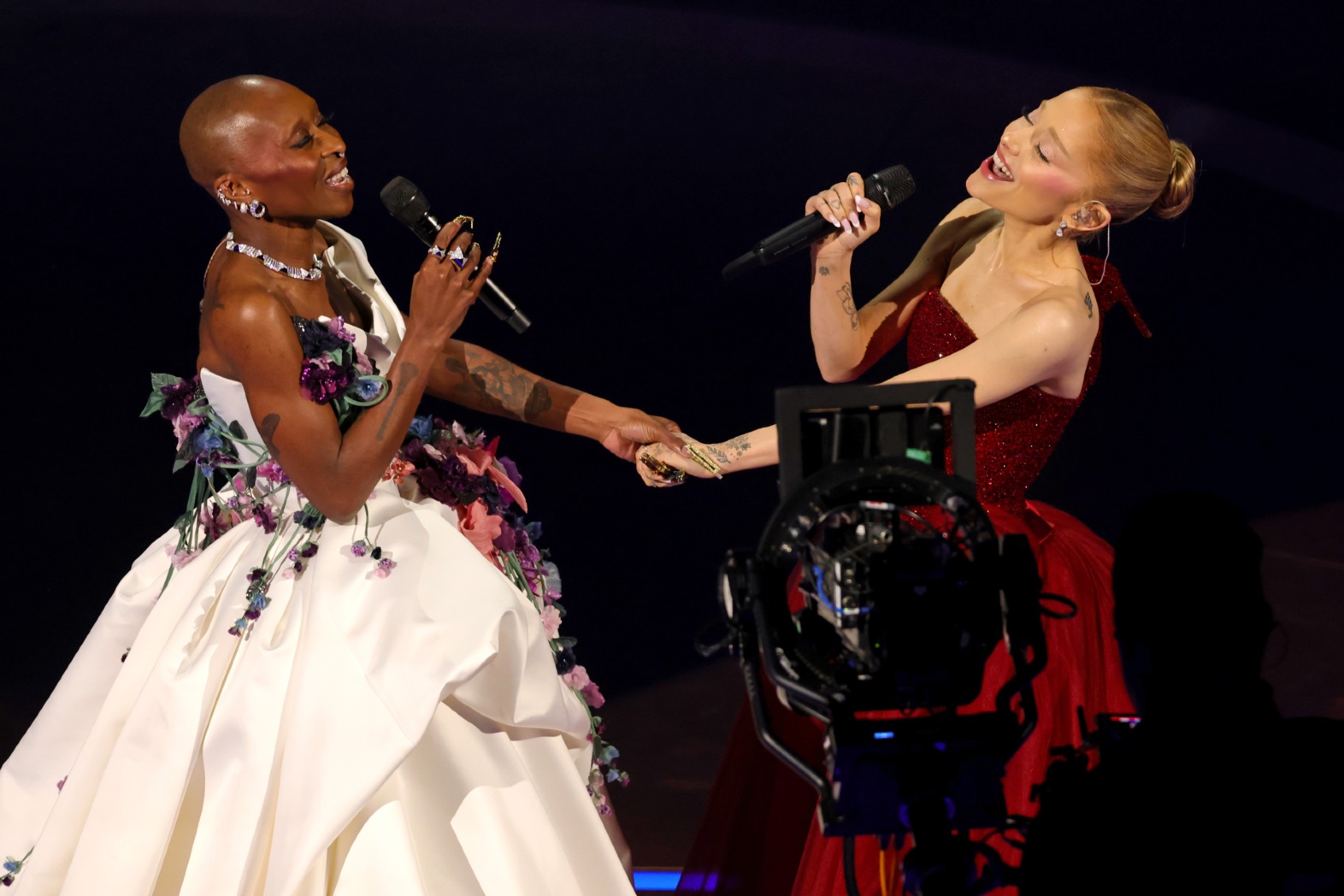
But the show gently yet cleverly pushed back against any detractors, opening with “Wicked” stars Cynthia Erivo and Ariana Grande singing a medley of three songs from the “Wizard of Oz” musical universe about persevering. After a brief montage of clips from Los Angeles-set films, Grande serenaded audiences with “Somewhere Over the Rainbow” before handing the spotlight to Erivo, who performed a beautiful rendition of “Home” from “The Wiz.” For their final song, Grande joined Erivo for “Defying Gravity,” recreating one of the biggest blockbuster sequences in any film from 2024. That malleable song — which has taken on its own life to mean many different things to many different people — was the perfect choice to open a show that, by and large, avoided any clear-cut statements about America’s political climate or roiling tensions worldwide. Instead, the Oscars kept things tame, using its opening medley to push for unity and celebrate the tenacity of the Los Angeles people and the city’s most famous industry.

But if humble tenacity was the show’s main message, it was also the telecast’s most prominent theme. Much of the 2025 Oscars felt like the show was just trying to make it across the finish line without any more sudden aspersions or disasters. In a year where renegade films like “The Substance,” “No Other Land,” “The Seed of the Sacred Fig,” “Nickel Boys” and “The Brutalist” were nominated for the industry’s biggest awards, the Oscars chose to play it safe, letting the winners do the difficult work in their speeches. While avoiding politics almost entirely allowed the Oscars to stay out of trouble, it also caused the show to be humdrum and bland. And though there were some admirable attempts to switch up the ceremony’s structure and a couple of bits of levity, the 97th Academy Awards were far less surprising than the nominated films, creating a dissonance between forward-thinking filmmaking and an honorary institution stuck in a holding pattern.

(L-R) Cynthia Erivo and Ariana Grande perform onstage during the 97th Annual Oscars at Dolby Theatre on March 02, 2025, in Hollywood, California. (Kevin Winter/Getty Images)The evening’s host, Conan O’Brien, seemed just as uncertain. O’Brien delivered monologue jokes with his typical confident expertise, but the routine would’ve been better suited for a late-night talk show than the Oscars. That’s not to say that O’Brien’s jokes weren’t funny, only that they were predictable in their content and delivery style. O’Brien took affectionate jabs at the nominees without trying to land any sucker punches. His best bit was a roundabout gag that sent up “Emilia Pérez” star Karla Sofìa Gascón, whose firestorm of vehemently racist tweets uncovered in the weeks before the ceremony undoubtedly jeopardized her chances of winning. 

“‘Anora’ uses the F-word 479 times,” O’Brien began, pausing for effect. “That’s more than the record set by Karla Sofìa Gascón’s publicist.” Cameras cut to Gascón who smiled and folded her hands to bow toward the camera in recognition before O’Brien added, “If you’re going to tweet about tonight’s show, remember: My name is Jimmy Kimmel.” This was the most controversial the show — at least as planned by its producers — ever became. O’Brien even lobbed a few lowball jokes about AI and Amazon into the crowd, but nothing that left the audience doubled over in laughter. The gags were mild and inoffensive, the perfect way to portend the remainder of the show, which felt the same way.


Want a daily wrap-up of all the news and commentary Salon has to offer? Subscribe to our morning newsletter, Crash Course.


But an interesting moment occurred toward the end of O’Brien’s monologue when the comedian stopped and told the audience he was getting serious for a moment. “The people of Los Angeles have been through a devastating ordeal,” he said. “But I want us all to remember why we gathered here tonight. … the Oscars shines a light on an incredible community of people you’ll never see: craftspeople, artisans, costumers, hard-working men and women behind the camera who have devoted their lives to making film. For almost a century we have paused to elevate and celebrate an art form that has the power to unite us.” It was a touching tribute, if also a backdoor way for the academy to say that, even in times of strife, the tradition of the annual telecast would not go away anytime soon. 

The structure of how each award would be presented and announced changed from category to category. While some, like the supporting acting categories, had last year’s winners speak fondly about this year’s nominees, other groups got to have more fun. The Oscars for cinematography and costume design brought back the fan-favorite “fab five” format, now revamped to have five cast members from each nominated film gush about the craftspeople up for the win. It was lovely to see the show give ample time to these artists, who are critical to a film’s success but aren’t as widely known as actors and directors. The time allotted to these craft awards should be considered an example of producers putting their money where their mouths are, making good on their promise from the top of the show to prove that properly celebrating film is not self-indulgent, but important. When costume designer Paul Tazewell won for his remarkably detailed work in “Wicked,” the award felt special. Not only did viewers around the world get to see Bowen Yang rave about Tazewell’s stunning work, which boasted looks that audiences everywhere will covet for decades to come, but Tazewell also celebrated being the first Black man to win the trophy for costume design. It was a historic win in the middle of a show that was otherwise unconcerned with anything but the here and now.

With Tazewell’s speech, the night shifted into the hands of the winners and the perspective turned toward the future. By that point in the show, it was clear that a handful of surface-level quips about the reality we’re living in would be the extent of the Oscars’ commentary on any divisive subjects. But the Oscar for best documentary had yet to be given out, and with all pundits (Salon’s included) predicting a win for “No Other Land” — a documentary about the occupation and destruction of Gaza’s west bank — the Oscars had no way of avoiding the complex subjects the show had danced around.

(L-R) Basel Adra, Rachel Szor, Hamdan Ballal, and Yuval Abraham accept the Documentary Feature Film award "No Other Land" onstage during the 97th Annual Oscars at Dolby Theatre on March 02, 2025, in Hollywood, California. (Kevin Winter/Getty Images)When “No Other Land” did win, the Oscars became vital again. Electricity filled the room; it was palpable even through a television screen. The film’s Palestinian co-director Basel Adra started his portion of the acceptance speech by saying that, two months prior, he became a father. “My hope to my daughter [is that] she will not have to live the same life I’m living now, always fearing settler violence, home demolitions and forced displacement that my community faces under Israeli occupation” Adra said, causing the audience to erupt in applause. “‘No other land reflects the harsh reality that we’ve been enduring for decades and still resist as we call on the world to take serious actions to stop the injustice and stop the ethnic cleansing of Palestinian people.”

Adra’s words, soft yet resolute, encompassed the idea of tenacity in a way that no medley of songs or montage of movies could ever do. His pleas carried on the message of “No Other Land,” which had a banner festival run yet never picked up a distributor, floating between screenings at arthouse theaters. A film winning one of the biggest awards at the Oscars without any proper theatrical distribution is a rarity. But it doesn’t just speak to the grim fact that many distributors balk at the film’s knotty subject matter, it also suggests that academy voters can still recognize great, revolutionary cinema when they see it. 

It’s difficult to imagine (though sadly no less possible, I’m sure) anyone coming away from “No Other Land” feeling anything less than horrified and hollow. Films aren’t just here to comfort us, they also exist to tell important stories that give a voice to those being silenced. Adra’s speech came just days after Donald Trump posted a stomach-churning AI video of what a Trump “resort” in Gaza might look like. Having just seen the darkest, computer-generated depths of malevolent apathy, Adra’s words were a moving display of fortitude and courage. They echoed “The Zone of Interest” director Jonathan Glazer’s sentiments last year, and brought the quickly developing conversation about Gaza’s future to a place of necessary immediacy that should be at the front of everyone’s minds. It was a truly history-making moment, the kind that the Oscars were once known for

Moviegoing isn’t just about appreciating films, it’s about resisting isolation. We can’t understand the people we see in movies or the world they inhabit if we don’t go out into that world ourselves.

The show was so desperately trying to meet the world at the moment it's in, but it took the winners to give this year’s Oscar ceremony a point. The show didn’t want to actively address the collective unease in the air, only gesture at it while telling viewers that, no matter how much worse things get, the Oscars will persist. These awards aren’t about honoring the best movie nominated, they’re about signaling to the public where the academy sees cinema heading — and, surely, how they’d like us to perceive their institution now. If we’re to trust what the Oscars told us practically verbatim, this show would like its viewers, voters and winners to dictate that conversation. So, let’s dictate it. 

“Anora,” which swept almost all of its nominated categories, including best picture, might’ve stirred up its fair share of controversy. Although, what film isn’t causing some kind of discourse these days? And besides, a little bit of zest is exactly what this Oscars needed, and when the movie won for best director and best picture, director Sean Baker brought the show to a lively close in its final minutes. “Watching a film in a theater with an audience is an experience,“ Baker began.” We can laugh together, cry together, scream in fright together, perhaps sit in devastated silence together. In a time in which the world can feel very divided, this is more important than ever.”
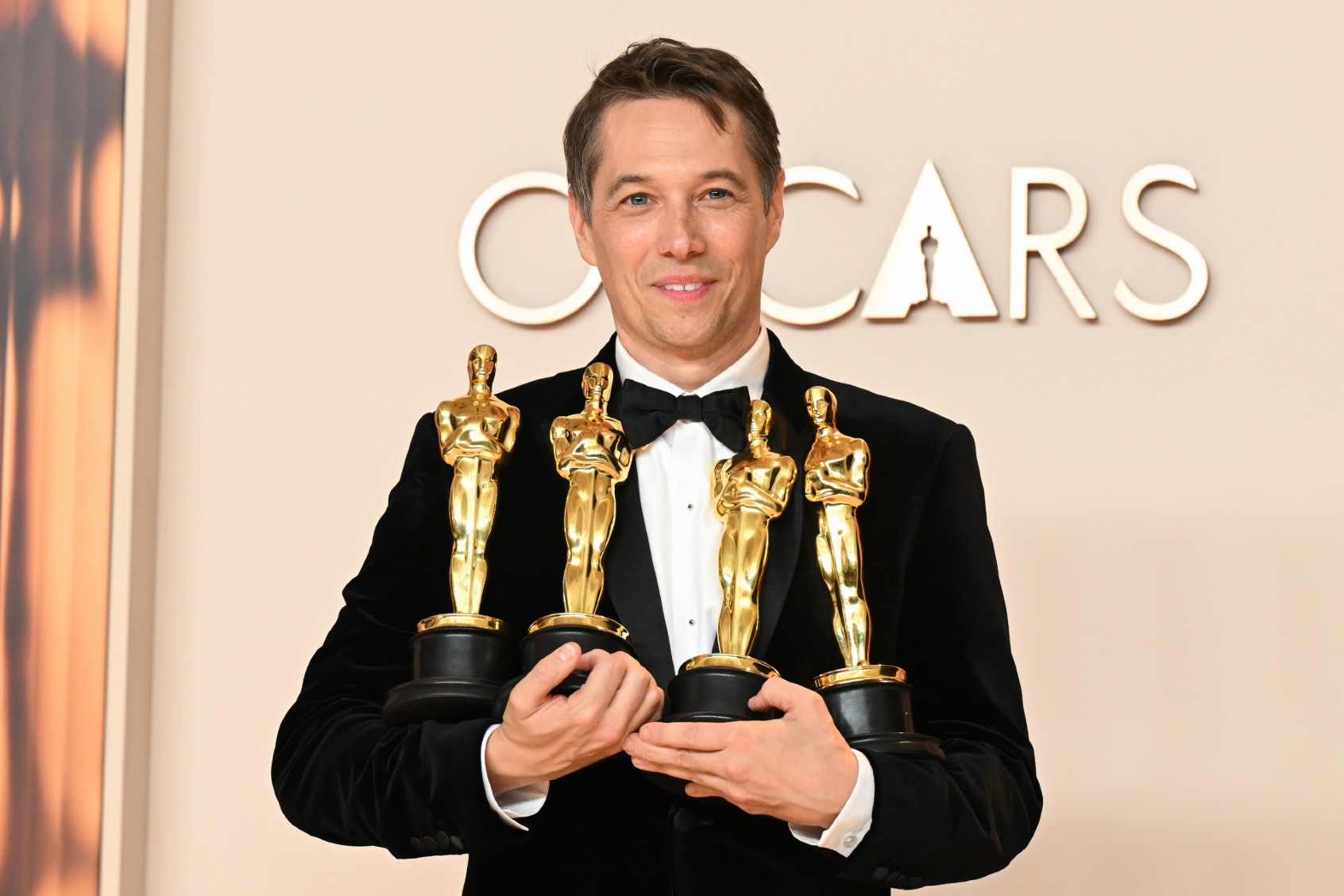
Sean Baker at the 97th Oscars held at the Dolby Theatre on March 2, 2025 in Hollywood, California. (Gilbert Flores/Penske Media via Getty Images)“It’s a communal experience you simply don’t get at home,” Baker continued. “Right now, the theatergoing experience is under threat. Movie theaters, especially independently owned theaters, are struggling, and it’s up to us to support them. During the pandemic, we lost nearly 1000 screens in the US, and we continue to lose them regularly. If we don’t reverse this trend, we’ll be losing a vital part of our culture. This is my battle cry. Filmmakers, keep making films for the big screen. Distributors, please focus first and foremost on the theatrical releases of your films. Parents, introduce your children to feature films in movie theaters, you’ll be molding the next generation of movie lovers and filmmakers. For all of us, when we can, please watch movies in the theaters and let’s keep the great tradition of the moviegoing experience alive and well.”

Baker’s words read like a manifesto, but their message is hardly radical. Whether it’s a Marvel movie, an independent film like “Anora,” or a documentary with no distributor like “No Other Land,” supporting films at the theater is critically important. The movie theater is a place where we foster respect for each other and a love of the arts, even if we don’t actively realize it when we’re sunken into our seats, gazing up at the majesty of a massive screen. Moviegoing isn’t just about appreciating films, it’s about resisting isolation. We can’t understand the people we see in movies or the world they inhabit if we don’t go out into that world ourselves. The Oscars telecast existed out of time, removed just far enough away from reality to wave at it. But the rest of us are still here. Moviegoers turned films like “The Substance” and “The Brutalist” into massive word-of-mouth hits. They made “Wicked” a box office blockbuster respectable enough to be an Oscar contender. They made a documentary about Gaza into a decorated piece of history. They disliked “Emilia Pérez” so much that they ensured its awards season narrative would be tarnished through nobody’s fault but the film’s own star! When we go to the movies, we have power. When we talk about movies, we have power. If the Oscars are going to step back and let the moviegoers take the reins, it’s our responsibility to show the academy that we know exactly what we like by showing up every time.
Who benefits from Donald Trump’s revenge diplomacy? Putin

Last Friday, before President Donald Trump met with Ukrainian President Volodymyr Zelenskyy in the Oval Office and proceeded to embarrass America before the entire world, I happened to publish a piece here in Salon about how Trump's anger and resentment were driving him and, in some cases, were making him lose control. Trump has always had a short temper, but since he's been back in the White House he's been lashing out in public more aggressively than in the past and it's most often when someone fails to show what he deems to be proper deference.

For instance, he imperiously cut off UK Prime Minister Keir Starmer in a joint press conference last week as Starmer was talking about Canada. He also rudely chastised the governor of Maine in a room full of other governors over her decision to follow state and federal law relating to transgender citizens and anti-discrimination protections. But his unhinged behavior toward Zelenskyy in that White House meeting on Friday was nothing less than a verbal beat down staged for the media, as Trump more or less admitted at the end when he said "this is going to be great television."

The meeting began normally enough despite the fact that Trump had been insulting Zelenskyy nonstop for days, calling him a dictator and daftly claiming that Ukraine had started the war. He'd even ordered the U.S. to vote with North Korea and Iran against a UN resolution calling for a secure and lasting peace because it blamed Russia for the war. Nevertheless, Zelenskyy gamely flew to Washington on the heels of earlier visits by the French and UK leaders trying to calm Trump down, agreeing to the "minerals deal" (or the "raw earth," as Trump insanely refers to them). He hoped to convince Trump that he needs some kind of security guarantee with any peace deal or cease fire because the thuggish war criminal Putin can't be trusted to keep his word so Ukraine would be a sitting duck.

Trump and Vice President JD Vance obviously had other plans. Vice presidents never jump into photo-ops and press events to berate a foreign leader — but JD Vance did just that, rudely interrupting to make as shallow comment about America being a good country because it engages in diplomacy. That prompted Zelenskyy to politely ask if it was OK to respond.

Clearly taken aback by Trump's repeated insistence that Russia had suffered just as much as Ukraine in the war, Zelenskyy spoke about all the earlier agreements for ceasefires that Russia had signed since 2014 and then promptly broke. "What kind of diplomacy, JD, are you speaking about?" Zelenskyy pressed. Like the nasty junior high mean girl he is at heart, Vance snapped back that "it's the kind of diplomacy that's going to end the destruction of your country." It was at that point that he claimed Zelenskyy was disrespectful and should instead thank the president for his generosity.

Vance then proceeded to go after Zelenskyy for forcibly conscripting soldiers (something the Trump administration has been telling them they have to do) and when Zelenskyy said that he should come to Ukraine to see what it's like, Vance was forced to admit that he'd never been but had seen "the stories" of Zelenskyy's "propaganda tours." That's what JD Vance likes to call diplomacy apparently.

Trump then entered the chat to berate Zelenskyy for saying that the U.S. would be affected by Putin's aggression, screaming in his face like a drunk real housewife, "don't tell us how to feel! We're strong!" He then went on to tell him that he "has no cards" and he's "gambling with WWIII" whining that Zelenskyy wasn't being thankful enough and he didn't think that was "nice." He said Zelenskyy's hatred for Putin (for invading his country and killing hundreds of thousands of its citizens) was the problem in getting to a deal. He also repeated his fatuous insistence that he could trust Putin because they had both been persecuted by the "Russia hoax," after which he proceeded to rant incoherently about Hunter Biden's bathroom.

We need your help to stay independent

That performance was hailed by all the GOP sycophants as a "master class" in diplomacy.

As he has pretty much been insisting from the day Putin invaded and Trump called it a "genius" and "savvy" move, Trump clearly believes Putin is entitled to take what he wants and that America supplying Ukraine with arms to fight him is a waste of money and a waste of time. His refusal to even talk about a security guarantee translates to surrender since we know that Putin will not keep his word. This is all theatre and that weird meeting was clearly a set-up to give Trump the excuse he needs to withdraw completely. Perhaps the sickest part of it was that he wanted Zelenskyy to lick both his and Putins' boots in public while he did it.

If Europe is unable to fully support Ukraine and Russia finally overruns Ukraine and commits more atrocities like they did in places like Bucha, Trump and his henchmen will simply say that Zelenskyy was asking for it. Trump now hands out a red hat that says "Trump was right about everything" and as long as he can blame someone else for the carnage he creates the people around him are willing to let him believe it.

The Europeans called an emergency meeting in London over the weekend and invited Zelenskyy to attend. They all ostentatiously embraced him and each other in a show of total unity.

(He even had a meeting with King Charles which I'm sure irritated Trump.) There seems to be some idea that maybe things with the U.S. can be patched up, perhaps just long enough for them to gather the necessary support to Ukraine which may very well include troops on the ground. But there is little doubt that the U.S. is now out. They have accepted it. The question is whether they are going to go along with Trump and his minions throwing their weight around at NATO, the G7 or the G20 anymore. Why should they?

For Europe this isn't theatre and Zelenskyy isn't a plaything to entertain themselves as they perform for Vladimir Putin. Forcing Ukraine to surrender because Trump has withdrawn his "cards" isn't really an option for them. Putin is knocking on their door and unlike Trump they know what he is and they know what he wants.

Zelenskyy was right when he said that just because there's an ocean between us and them, we will still feel the reverberations of what is happening. Trump may stupidly think that he and Putin have a bond but Putin thinks Trump is a joke. He's played Trump perfectly from the moment he met him and his efforts are bearing fruit. The whole world sees that America is now a paper tiger run by a fool and that's a very bad position for a fading superpower to be in.

JD Vance’s bombast tells us where MAGA is going 

After I watched Donald Trump and JD Vance try to pressure Ukraine’s President Volodymyr Zelenskyy into surrendering to Putin I felt sick. Trump wants Zelenskyy to agree to a ceasefire with no security guarantees and to “trust” Putin to honor his word. Zelenskyy knows Putin can’t be trusted, because Putin proved it with his 2014 invasion of Crimea and his 2022 invasion of Ukraine, and at all points in between when he murdered critics and disappeared rivals. When Zelenskyy tried to explain this basic history to Trump andVance, they accused him of “being disrespectful” and “trying to relitigate” the morals of the war for the cameras—cameras Trump arranged.

Putin has made his imperial ambitions clear. He is trying to rebuild the Soviet Empire, which includes not only Ukraine but Belarus, and possibly Poland. Any child can understand that a ceasefire with no U.S. security guarantees will  give Putin time to replenish his military and attack again, which means a bad deal for Ukraine would be more deadly than no deal.

Instead of discussing these facts in good faith, Trump and Vance tag teamed each other for the cameras, hurling outrageous insults at Zelenskyy based on deliberate disinformation. I’ve never been so sorry. For Ukraine, for NATO, Europe, Taiwan and for America.

Only a bully kicks a man then makes him say thank you 

Friday’s meeting was arranged to discuss Trump’s demand for Ukraine’s minerals, ostensible “payback” for US military support. Embracing full mafia braggadocio, Trump tried to extort Zelenskyy for the second time, demanding payment for past protection, and brought in the media to watch.

Vance relished his role in the melee. When Zelenskyy mentioned Russia’s aggression going back to 2014, Vance pistol whipped him with, “I think it’s disrespectful for you to come into the Oval Office to try to litigate this in front of the American media…You should be thanking the president for trying to bring an end to this conflict.” 

As Zelenskyy tried to respond, Vance, incredibly, asked, “Do you think that is respectful to come to the Oval Office of the United States of America and attack the administration that is trying to prevent the destruction of your country?” then demanded, “Have you said thank you once?” The only thing missing from the scene was a box of fingers.

How is this not treason?

Before Friday’s meeting, world leaders were aghast that Trump called Zelenskyy—rather than Putin— a “dictator” and accused Kyiv of starting the war. Then Trump set up talks with Russia about ending the war, but didn’t invite Ukraine.

During Friday’s meeting, when Zelenskyy urged Trump not to trust Vladimir PutinTrump flew into a rage. Like a torturer to a tape-bound victim, Trump thundered, “You don’t know that. Don’t tell us what we’re going to feel. You’re in no position to dictate that.”  

Trump later demanded that Zelenskyy “accept” that Kyiv “had a weak negotiating hand.” 

The entire world can see that the main reason Kyiv now has a weak negotiating hand is because of Trump’s dangerous loyalty to Putin. How stupid does Trump think Fox viewers are? Meanwhile, leaders of the free world recoil in horror from an America that turned overnight from a beacon of liberty to a mouthpiece for Nazis and the KGB. Ukraine has already lost 100,000 people to Putin’s butchery. Now they will lose more, because the President of the United States is giving aid and comfort to the enemy.

Trump’s bombast tells us where he’s going 

The whole scripted episode was another gift to Putin. As Daniel Fried, former U.S. ambassador to Poland put it, the rupture plays right into the Russians’ hands. “I see no U.S. interest served by this blowup and fighting with Zelensky,” Fried said. “Who benefits? Putin benefits.” But Trump doesn’t care about that. He posted after the meeting that, “(Zelenskyy) disrespected the United States of America in its cherished Oval Office. He can come back when he is ready for Peace.”

We need your help to stay independent

Trump, aided by right-wing media, may be able to convince his base, but the rest of the world is clear-eyed. Trump appears to have no concern for how the world sees him, which should frighten everyone. As I see it, Trump’s disregard for public opinion and the fate of the Republican Party suggests he’s planning to stay in power by force. He tried it once and failed, but he has now politicized the military with loyalists who will execute his unconstitutional orders.  

Look for Trump to declare consistent “national emergencies” so Hegseth can get the lay of the land and learn who Trump can trust. Look for Fox News to embellish the threats Trump manufactures or deliberately worsens, to generate widespread fear. Look for Trump to tap that fear to encourage MAGA goons to engage in street violence, which will trigger Trump’s declaration of martial law. Look for Trump to cancel the midterms, citing the unrest he created.

The flip side to shame is revulsion. Watching Trump and Vance kick Zelenskyy for the cameras was like watching a neighbor starve his dog, then kick it for looking at his food bowl.  There are no words to capture such evil.  

Shame competes with outrage competes with sorrow for what Zelenskyy and the Ukrainian people have gone through and will continue to go through. And America! Trump is dissolving 80 years of the greatest military alliance the world has ever known, and aligning America instead with one of the world’s most brutal dictators. Humanity is in a dire situation, and anyone who doubts where this is going is being deliberately obtuse or lied to.

Trump supports Putin’s invasion of Ukraine and his client-state relationship with Belarus because Trump, also fixated on imperialism from the 1800s, eyes Canada, Panama and Greenland. China may well feel emboldened to take Taiwan while U.S. resources are tied up pursuing Trump’s hemispheric expansion, which might prompt Trump and Putin to offer Xi a “deal.” 

The three dictators will meet to share a meal as they carve up the world’s spoils for themselves.

A primary motivation: Democrats due for a reality check on priorities

The Capitol’s phone lines have been overwhelmed this month, and some Democrats are complaining about the deluge of calls from voters who implore them to fight the Trump administration. Too often the responses to the calls have amounted to passing the buck rightward. 

“It's been a constant theme of us saying, ‘Please call the Republicans,’" Virginia Democratic Rep. Don Beyer explained. Rep. Ritchie Torres, D-N.Y., is offended by what he’s hearing from constituents. “I reject and resent the implication that congressional Democrats are simply standing by passively,” he said

Such reactions are political copouts. Those two congressmembers represent deep-blue districts, and both of their states are represented by Democratic senators. Responding to outraged constituents by telling them to “call the Republicans” is a way of dodging responsibility and accountability.

While Trump’s forces are setting fire to the basic structures of American democracy, Democrats in Congress are widely perceived to be wielding squirt guns.

It's easy enough for Torres, Beyer and others in the Democratic caucus to gripe about the volume of irate calls to their offices. And at first glance, telling constituents to contact Republicans instead might seem logical. But that’s actually a way of telling an angry Democratic base not to be a nuisance to Democratic lawmakers. 

What’s more, as a practical matter, their constituents often have no way to message GOP members of Congress. The congressional email system doesn’t allow non-constituents to send a message to a representative or senator. And the first thing that a staffer wants to confirm on the phone is whether the caller is in fact a constituent.

Fully half of the nation’s citizens — and a large majority of Democrats — live in states with two Democratic senators. And so, routinely, when Democratic officeholders say that their agitated constituents should leave them alone and “call the Republicans,” it amounts to a brushoff that can be translated from politician-talk as “Stop bugging us already.” 

But in primaries next year, some are liable to be held accountable. Few serving Democrats with blue electorates will face tight races in the 2026 general election — but if they’re perceived as wimps who failed to really put up a fight against President Trump, Vice President JD Vance and Elon Musk, incumbents risk facing primary challenges propelled by grassroots anger.

The anger might seem overheated inside Capitol Hill bubbles. But it’s real for millions of engaged activists — the ones who volunteer in droves and can get behind insurgency campaigns with plenty of fundraising, canvassing power and social-media impacts.

Mere shrugs from Democrats that they’re in the minority won’t wash. “The rules of the Senate are designed to protect the rights of the minority, and Democrats have tools to grind Senate business to a halt to delay and defy the Trump-Musk coup,” the activist group Indivisible points out. “The three biggest weapons? Blanket opposition, quorum calls, and blocking unanimous consent — parliamentary guerrilla tactics that can slow, stall, and obstruct at every turn.”

The needed opposition goes way beyond procedural maneuvers. The tenor and vehemence of public statements every day, from the hundreds of Democrats in the House and Senate, set a tone and convey messages beyond mere words on paper and screens.

The week after Trump’s return to the Oval Office, House Minority Leader Hakeem Jeffries (D-N.Y.) traveled to California and met with donor powerhouses in Silicon Valley, where he reportedly “said Democrats were reaching toward the center, while Trump will swing harder right.” Here we have the prospective next House speaker pledging to move in the direction of a president whom Gen. Mark Milley has described as “fascist to the core.”

We need your help to stay independent

Jeffries’ goal of hugging “the center” may play well with rich tech executives, but it shows notable indifference to the large bulk of Democratic voters. Early this month, CBS News reported that its polling shows “the nation's rank-and-file Democrats are increasingly looking for more opposition to President Trump from their congressional delegation.” The trend has been emphatic. Only 35 percent want Democrats in Congress to “try to find common ground with Trump,” while 65 percent want them to “oppose Trump as much as possible.”

A rally last Thursday at Jeffries’ central Brooklyn office drew hundreds of protesters. One of them, Molly Ornati, an activist with the group 350 Brooklyn Water, told Salon: “He’s acting as though this is a normal part of the political process, when this is a completely never before seen violation of the Constitution, of federal laws, separation of power, democratic principle — all of the key American values. He’s not standing up with the level of outrage that people meant to see, that Democrats want to see.”

The next day, on his latest California trip, Jeffries spoke in the Bay Area and generated headlines like “Hundreds Protest Outside Event With House Minority Leader” and “Oakland to Hakeem Jeffries: Do Your Job!” One of the local TV news reports summed up a theme of the demonstration this way: “Democratic Party has been paying lip service to the working class.”

To most registered Democrats, there’s nothing more important for lawmakers with a “D” after their names to do than battle tooth-and-nail against the Trump-Musk agenda for gutting the government while enriching the wealthy at everyone else’s expense. While Trump’s forces are setting fire to the basic structures of American democracy, Democrats in Congress are widely perceived to be wielding squirt guns. That’s no way to prevent tyranny or win the next elections.

Need your tax refund ASAP? A loan can help

If you're one of the millions of people who get a tax refund every year, you probably want it sooner rather than later. Depending on whether you file your taxes electronically or through the mail, it can take weeks or even months to get your refund.

That’s where tax refund advance loans come in. Tax prep companies will prepare and file your return and provide your tax refund amount as a loan that you can access almost instantly.

These companies use your tax refund as collateral, which lets you access those faster than if you had to wait for the IRS to process your return. But before you sign up for one of these services, be aware there are downsides to getting your refund early. 

What is a tax refund advance loan?

When you take out a loan, the lender usually wants some sort of collateral. In the case of a tax refund advance loan, the lender uses the promise of your future return as collateral.

Most companies have a limit on how much they will lend you, which also depends on the amount of your anticipated tax refund. For example, if you’re only supposed to receive $100, then you may not even be eligible for a tax refund advance loan. Most companies have a minimum amount that you must receive as a refund to qualify. Jackson Hewitt’s website states, “To be eligible for the $1,500 ETRA, your expected Federal refund, less authorized fees, must be at least $4,600, and most approved applicants get $300.”

We need your help to stay independent

Terms and rates for tax refund advance loans vary widely. For example, Intuit TurboTax does not charge interest and can provide up to $4,000. They also claim that you can receive the money within a minute after the IRS accepts your return.

However, you will have to open a checking account with Credit Karma Money to receive your advance. Also, residents of Connecticut, Illinois or North Carolina aren’t eligible for this program.

What are the downsides?

Before you start applying for one of these loans, you should know how the fees and rules work.

For example, Jackson Hewitt charges a 35.96% APR financing fee on loans between $100 and $1,500. They also have a no fee loan option that comes with 0% APR. Unfortunately, the fine print says “NFTRA Loan amounts are determined by your expected Federal refund, less authorized fees and underwriting.” Another downside? You have to file your taxes with Jackson Hewitt to apply.

“Thus, I really doubt there is no cost involved — even if they offer no fee and no interest, there is always a catch or an upsell,” said tax expert Crystal Stranger, enrolled agent and CEO at Optic Tax Inc.

"Even if they offer no fee and no interest, there is always a catch or an upsell"

H&R Block requires that you get your advance loan on a prepaid card and charges a $42 fee to transfer your refund to another bank account. That may be inconvenient, especially if you want to stash the funds in a savings account or use it to pay off another loan or credit card balance. For others, particularly people without a bank account, a prepaid card may be a suitable option.

“For the unbanked, being able to get a prepaid card with the tax refund on it may be worth the expense, especially when waiting for a check to cash that may take many weeks or months to arrive, and then still often facing fees to cash the check,” Stranger said. 

Plus, these options are only available in January or February. If you file your taxes in March or April, then you’re not eligible for a tax refund advance loan. 

Another important aspect to consider is that tax refund advance loans are only offered by the big tax prep companies. Your local CPA or accountant likely doesn’t provide these services. 

And many big box stores aren’t capable of filing your taxes if you’re self-employed or run your own business or have another complicated tax situation. In this instance, you might be better off hiring a professional accountant to do your taxes to maximize your refund, even if they don’t offer any kind of refund advance. 

If you need money now, then a tax refund advance loan is probably better than a payday loan or a title loans that have exorbitant interest rates, often up to 300% APR.

If you can wait a few weeks, using a credit card may be better because you might get your refund before the bill’s due date. Or if you have good credit, you can qualify for a 0% APR credit card offer. 

Michelle Trachtenberg missing from Oscars in memoriam segment

Although Sunday night's Oscars in memoriam segment made sure to include Shelley Duvall — who died in July 2024 and was noticeably absent from the Emmys tribute that year — and made a last-minute inclusion of Gene Hackman — whose death was announced on Thursday — they forgot to pay their respects to a young actor who died less than a week ago and spent the majority of her life working for the industry, Michelle Trachtenberg.

Trachtenberg, best known for her roles in "Gossip Girl," "Buffy the Vampire Slayer" and her breakout role in the book-to-movie adaptation of "Harriet the Spy," where she starred alongside Rosie O’Donnell, Eartha Kitt, and J. Smith-Cameron, had a total of 62 acting credits to her name when she died on February 26 at the age of 39, which her fans were quick to point out, taking to social media to express their anger over the Academy's slight.

"The Oscars not honoring Michelle Trachtenberg in the memoriam is absolutely disgusting," one fan wrote in a post to X, along with a montage of clips showcasing the actor's talent.

"Feels like a major oversight the week that a 39-year-old who grew up in the industry suddenly died," another fan commented in a post to the platform.

In addition to Trachtenberg, the segment left out a number of other recent deaths in the industry, including Shannen Doherty, Tony Todd, Linda Lavin and documentary filmmaker Morgan Spurlock

“Wicked”‘s Paul Tazewell becomes first Black man to win Oscar for costume design

It's only fitting that shortly after Cynthia Erivo and Ariana Grande opened the 97th Academy Awards with an emotional rendition of "Defying Gravity" from "Wicked" — resulting in a roar of standing applause from attendees — that the stars themselves would find occasion to leap to their own feet to congratulate the film's costume designer, Paul Tazewell, who had a large hand in making their characters come to life.

Awarded a trophy for best costume design by presenter Bowen Yang — outfitted in his character's ensemble from the film — Tazewell made mention at the top of his acceptance speech that he's the first Black man to win in the category at the Academy Awards although, as Variety points out, his was an expected win, having swept the season by snagging the BAFTA, Critics Choice and Costume Designers Guild awards for his work on "Wicked."

"This is absolutely astounding," Tazewell said from the stage, notably wearing a suit that put most other suits in the audience to shame. "I'm so proud of this."

As People highlights, Tazewell's win is on the heels of Ruth E. Carter becoming the first Black person to go home with the best costume design award, which she won for 2018's "Black Panther," winning again for 2022's "Black Panther: Wakanda Forever."

"I want to touch hearts, I want to change lives, I want to make a difference and my power, my medium in doing that, is costume design and I'm passionate about it," Tazewell said to ABC affiliate KABC earlier this awards season, reflecting on the recognition he's getting for his work. "I hold to that, and I know that I'm good at doing that, and that makes me feel good."

The 2025 Oscar winners list

The 97th Academy Awards on Sunday, March 2, caps the end of a controversial year in film. 

The Academy has given comedian Conan O'Brien his first opportunity to host the prestigious night in film at the Dolby Theatre in Los Angeles, following Jimmy Kimmel's four-time hosting run.

This year's nominees illustrate stories of loss, perseverance and regaining one's sense of identity and power, whether you're Paul Atreides (Timothée Chalamet) on the planet of Arrakis or Elphaba (Cynthia Erivo) in the magical world of Oz. Best picture nominees like "Anora," "The Brutalist" and "Nickel Boys" illuminate personal, intimate stories of struggle and the human experience. The crime musical “Emilia Pérez, from French director Jacques Audiard, dominated nominations with 14 nods, the most ever for a non-English language film. But a soaring Oscar campaign has taken a sharp nosedive because of unearthed offensive tweets from lead actress Karla Sofía Gascón, who is the first trans actress to be nominated for best actress.

Los Angeles also took a critical hit in January after the raging Southern California fires destroyed thousands of properties and displaced countless people in the LA area, including numerous people who work in the industry and Academy members. The catastrophic fires disrupted Hollywood during the awards season, postponed Oscar events and extended the Oscars voting period.

Despite such tragedy, the "Emilia Pérez" controversy and conversations on disclosing the use of artificial intelligence and intimacy coordinators, at least Chalamet had an Oscar campaign run of whimsical, epic proportions for the Bob Dylan biopic, "A Complete Unknown."

Here are the 97th Academy Award winners in full:

 
Best picture
"Anora" WINNER
"The Brutalist" 
"A Complete Unknown"
"Conclave"
"Dune: Part Two"
"Emilia Pérez"
"I’m Still Here"
"Nickel Boys"
"The Substance"
"Wicked"
 
Best actor 
Adrien Brody, "The Brutalist" WINNER
Timothée Chalamet, "A Complete Unknown"
Colman Domingo, "Sing Sing"
Ralph Fiennes, "Conclave"
Sebastian Stan, "The Apprentice"
 
Best actress
Cynthia Erivo, "Wicked"
Karla Sofía Gascón, "Emilia Pérez"
Mikey Madison, "Anora" WINNER
Demi Moore, "The Substance"
Fernanda Torres, "I’m Still Here"

Want a daily wrap-up of all the news and commentary Salon has to offer? Subscribe to our morning newsletter, Crash Course.


Best supporting actor
Yura Borisov, "Anora"
Kieran Culkin, "A Real Pain" WINNER
Edward Norton, "A Complete Unknown"
Guy Pearce, "The Brutalist"
Jeremy Strong, "The Apprentice"
 
Best supporting actress
Monica Barbaro, "A Complete Unknown"
Ariana Grande, "Wicked"
Felicity Jones, "The Brutalist"
Isabella Rossellini, "Conclave"
Zoe Saldaña, "Emilia Pérez" WINNER
 
Animated feature 
"Flow" WINNER
"Inside Out 2"
"Memoir of a Snail"
"Wallace & Gromit: Vengeance Most Fowl" 
"The Wild Robot"
 
Documentary feature
"Black Box Diaries"
"No Other Land" WINNER
"Porcelain War"
"Soundtrack to a Coup d’Etat"
"Sugarcane"
 
International feature
"I’m Still Here" WINNER
"The Girl with the Needle"
"Emilia Pérez"
"The Seed of the Sacred Fig"
"Flow"
 
Best director
Sean Baker, "Anora" WINNER
Brady Corbet, "The Brutalist"
James Mangold, "A Complete Unknown"
Jacques Audiard, "Emilia Pérez"
Coralie Fargeat, "The Substance"
 
Cinematography
Lol Crawley, "The Brutalist" WINNER
Greig Fraser, "Dune: Part Two"
Paul Guilhaume, "Emilia Pérez"
Ed Lachman, "Maria"
Jarin Blaschke, "Nosferatu"
 
Best original screenplay
Sean Baker, "Anora" WINNER
Brady Corbet and Mona Fastvold, "The Brutalist"
Jesse Eisenberg, "A Real Pain"
Mortiz Binder, Time Fehlbaum and Alex David, "September 5"
Coralie Fargeat, "The Substance"
 
Best adapted screenplay 
James Mangold and Jay Cocks, "A Complete Unknown"
Peter Straughan, "Conclave" WINNER
Jacques Audiard, "Emilia Pérez"
RaMell Ross and Joslyn Barnes, "Nickel Boys"
Clint Bentley and Greg Kwedar, "Sing Sing"
 
Film editing
"Anora" WINNER
"The Brutalist"
"Conclave"
"Emilia Pérez"
"Wicked"
 
Original song
“El Mal,” "Emilia Pérez" WINNER
“The Journey," "The Six Triple Eight"
“Like a Bird," "Sing Sing"
“Mi Camino," "Emilia Pérez"
“Never Too Late," "Elton John: Never Too Late"
 
Original score
"The Brutalist" WINNER
"Conclave"
"Emilia Pérez"
"Wicked"
"The Wild Robot"
 
Sound
"A Complete Unknown"
"Dune: Part Two" WINNER
"Emilia Pérez"
"Wicked"
"The Wild Robot"
 
Production design
"The Brutalist"
"Conclave"
"Dune: Part Two"
"Nosferatu"
"Wicked" WINNER
 
Visual effects
"Alien: Romulus"
"Better Man"
"Dune: Part Two" WINNER
"Kingdom of the Planet of the Apes"
"Wicked" 

We need your help to stay independent

 
Makeup & hairstyling
"A Different Man"
"Emilia Pérez"
"Nosferatu"
"The Substance" WINNER
"Wicked"
 
Costume design
Arianne Phillips, "A Complete Unknown"
Lisy Christl, "Conclave"
Janty Yates and Dave Crossman, "Gladiator II"
Linda Muir, "Nosferatu"
Paul Tazewell, "Wicked" WINNER
 
Best animated short
"Beautiful Men"
"In the Shadow of the Cypress" WINNER
"Magic Candles"
"Wander to Wonder"
"Yuck!"
 
Best documentary short


"Death by Numbers"
"I am Ready, Warden"
"Incident"
"Instruments of a Beating Heart"
"The Only Girl in the Orchestra" WINNER
 
Best live action short
"A Lien"
"Anuja"
"I’m Not a Robot" WINNER
"The Last Ranger"
"The Man Who Could Not Remain Silent"

The songs of “Wicked” aren’t Oscar-eligible, but they’re the reason for its magic

"Wicked" has bewitched even its most reluctant fans, enticing them to overstay their welcome in the magical world of Oz.

Months after its release, I can still hear the faint echo of Cynthia Erivo's earth-shattering "Defying Gravity" riff ringing in my ears. I'm still holding space for the lovely friendship between stars Erivo and Ariana Grande during their global press tour. And Jonathan Bailey's endless charm both on and off screen still very much has me under a spell. "The Wizard of Oz" prequel has made an indelible mark on culture in the last year, telling the mystical tale of a green-skinned social outcast, Elphaba (Erivo), and popular mean girl Glinda's (Grande) unlikely friendship at Shiz University. 

The Jon M. Chu adaptation of the Tony-winning 2003 Broadway musical has made $700 million worldwide and its cultural influence will only grow when the sequel, "Wicked: For Good," is released later this year. "Wicked"'s success has garnered ten Academy Awards nominations, including nods for best picture and its lead and supporting actresses, Erivo and Grande. "Wicked"'s music, the backbone of the musical, has also been recognized by the Academy but only in the score category, due to its lack of original music, which deems it ineligible for consideration. 

While "Wicked" cannot compete in this category against songs from "Emilia Pérez," "Sing Sing," or "The Six Triple Eight," its songs are among the most captivating audiences have experienced this awards season.

The beloved music is the result of a collaboration between the original composer and lyricist, Stephen Schwartz, and composer Jon Powell. According to Schwartz, of all the Elphabas and Glindas he has worked with over the past 20 years, Grande and Erivo "both bring enormous recording skills with them. They can kind of do anything vocally in a recording studio, and they're both extremely game to try things," he said in a Grammys interview. 

"We would experiment, and Cynthia would try various riffs that came out of the performance," he explained.

While Grande was "tentative about her soprano," Schwartz recalled, "those sessions were really fun because, as they went on and she could hear how well she was doing, it became exciting and fun for her."


Want a daily wrap-up of all the news and commentary Salon has to offer? Subscribe to our morning newsletter, Crash Course.


Schwartz noted that Erivo and Grande's extensive Broadway experience is a "great advantage," especially since "they could do live performances when filming as well."

This raw talent and expertise shine through in Grande and Erivo’s grand musical numbers, "What Is This Feeling?" and "Popular." We already know they can belt high notes and deliver powerhouse performances—Grande from her mega pop music career and Erivo from her celebrated Broadway and West End roles—but "Wicked" unlocked something new in these accomplished performers.

Their electric dynamic is especially evident in their playful yet combative duet, "What Is This Feeling?" Watching them spar vocally as Elphaba and Glinda is a joy, as they navigate their loathing-filled relationship and its impact on the social hierarchy at Shiz University.

This performance, specifically, sets "Wicked"'s music apart from any other nominee this year. Even as their characters stand on opposing sides, Grande and Erivo’s vocal and acting performances remain perfectly in sync, blending seamlessly.

It’s impossible to ignore the immense star power behind these performances, yet Grande and Erivo fully disappear into their roles. Their musical chemistry drives the film forward, creating a distinctive tone that hinges on their vocal mastery. As Schwartz noted, the actresses sang live on set—something cinematographer Alice Brooks said "affected the entire mood of the set."

Sound mixer Simon Hayes said the live singing shifts further past just the aural experience attached to their performances.

“I want to see the emotion in the way they’re singing,” Hayes told Playbill. “There is emotion in that delivery, in seeing the muscles of their throat—it’s part of the performance. When we take that away, we’re stealing from the audience if we can’t give them every single bit of real performance that exists.”

We need your help to stay independent

This palpable emotion reverberates in Erivo's nearly eight-minute rendition of the musical's most popular song, "Defying Gravity," originally sung by Idina Menzel in the Broadway production. In the movie's grand finale, Erivo's take on the classic transforms the meek Elphaba into a deviant young woman railing against Glinda and the system created by the duplicitous Wizard (Jeff Goldblum) and Madam Morrible (Michelle Yeoh). 

The lengthy sequence slightly differs from the original, allowing Erivo's voice and acting ability to breathe and build to a resolution even when Elphaba is being physically and emotionally pulled in various directions. Grande really steps up as Glinda attempts to convince Elphaba to fall in line with her, but Elphaba refuses. The pair shed beautiful tears while singing their final goodbyes.

"I was lucky because the composer and our music supervisor gave me the space to do with the notes — not as I pleased — but to make them mine, make them me so that they fit my voice. I'm really proud of it," Erivo said about her "Defying Gravity" performance.

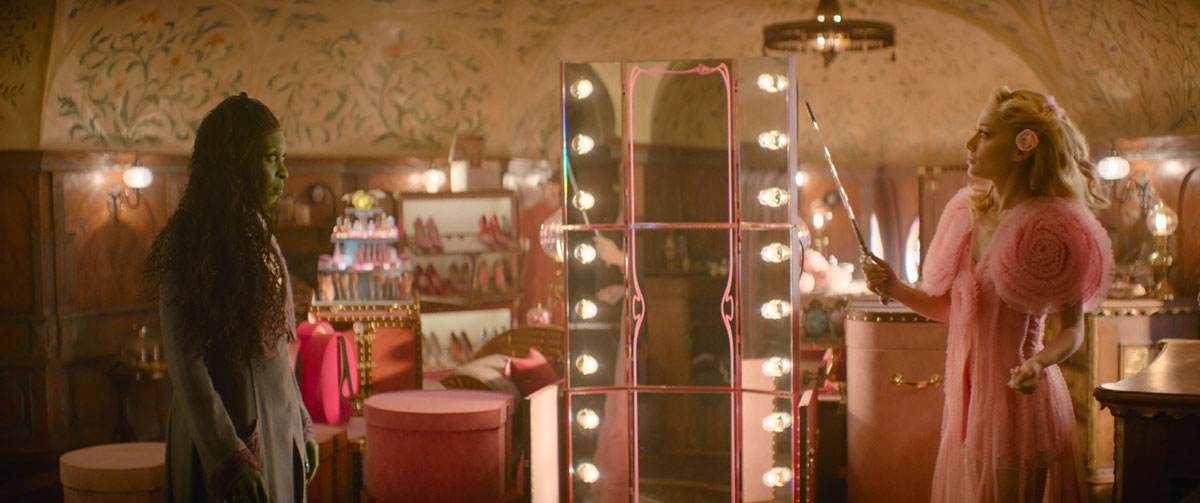
WickedCynthia Erivo as Elphaba and Ariana Grande as Glinda in "Wicked" (Universal)Flying on her magical broomstick, wearing her black witch hat and matching cape synonymous with the Wicked Witch of the West, Elphaba emerges as her most empowered self and so does Erivo. Her soprano voice shows such control and dynamic range as she transitions from soft, vulnerable moments to rebellious growls in anger against the Wizard. Finally, Elphaba lets loose, belting a formidable and unforgettable riff that sets her free from control — it is the most in command that Erivo has sounded throughout the two-hour film.
"Wicked" doesn't need to prove that its musical performances are worth gold because audiences already know their profound musical impact. Even the suave Bailey, who plays Prince Fiyero, put in the work, filming "Bridgerton" season two, the limited series "My Fellow Travelers" and "Wicked" at the same time. His sheer dedication and work ethic paid off as he enchanted audiences and critics alike with his solo number, "Dancing Through Life."

Although a technicality kept "Wicked"'s music from receiving recognition in the way it deserved on Oscar night, it doesn't strip Erivo, Grande and even Bailey's originality in their star-making performances. Of course, the Academy may already know this, which is why it announced that Grande and Erivo will be on stage Sunday evening, performing songs from "Wicked" during the prestigious night in film. At least, we will once more witness the defying vocal abilities of two powerhouses born to play Elphaba and Glinda.

Should we be afraid of seed oils?

In his efforts to Make America Healthy Again (better known as the MAHA campaign), Robert F. Kennedy Jr. is rioting against seed oils. The movement has gained significant attention across social media, with influencers, podcasters (namely, Joe Rogan) and, even, restaurant chains slamming on seed oils.

“Seed oils are one of the most unhealthy ingredients that we have in foods,” Kennedy claimed in an interview with Fox News last fall, adding that they’re “associated with all kinds of serious illnesses including body-wide inflammation which affects all of our health.”

The term seed oils is fairly new and refers to cooking oils extracted from the seeds of various plants that are then refined using chemicals like hexane and tertiary-butylhydroquinone (TBHQ), a synthetic preservative. In recent years, supporters of the MAHA movement have taken issue with eight specific seed oils: corn, canola, cottonseed, grapeseed, soy, sunflower, safflower and rice bran — collectively dubbed the “hateful eight.” Their main argument is that seed oils are high in omega-six fatty acids, which aren’t detrimental to human health but can lead to inflammation when consumed in excess.

“First, while seed oils do contain high levels of omega-six fatty acids, that's not a bad thing,” per the American Heart Association. “Omega-six is a polyunsaturated fat the body needs but cannot produce itself, so it must get it from foods. Polyunsaturated fats help the body reduce bad cholesterol, lowering the risk for heart disease and stroke.”

The Standard American Diet (SAD) is typically high in omega-6 fatty acids than omega-3s, which are obtained through diet or supplementation and help promote heart, brain, eye, joint and skin health. In that regard, omega-3s are known as “healthy fats,” but that doesn’t mean omega-6s are necessarily “unhealthy fats.” In fact, dieticians and doctors recommend a healthy balance of omega-six to omega-three fatty acids in one’s diet.

“The first thing to remember is that something can be safe but still be unhealthy, and that is where I think we need to be careful about how we talk about these oils, because they're not inherently unsafe, but depending on what you're doing with them, they can be very unhealthy,” said Dr. Brintha Vasagar, a board-certified family medicine physician and the chief medical officer of Progressive Community Health Centers.

We need your help to stay independent

She explained that within the Western diet, seed oils are typically found in ultraprocessed foods (UPFs): “We're talking about things that are deep fried, things that come out of a box or a can or are meant to stay on the shelf for months or years. Those have so many other things in them that we know are unhealthy — high sugars, high fats, high carbs — that it's hard to tease apart whether that is truly the seed oil itself or these other things that are affecting our health.”

Indeed, there’s still limited scientific research and evidence proving that seed oils are harmful to health. The MAHA movement promotes the use of beef tallow (a saturated fat) in lieu of seed oils (an unsaturated fat). Saturated fats can raise cholesterol levels, hence why seed oils grew in popularity over the past century.

“Just because something has less influence on your cholesterol doesn't mean that it has less influence on your risk of heart disease or death from heart disease,” Vasagar said. “That’s the part where scientific researchers are really trying to drill down what's better for your health.”


Want more great food writing and recipes? Subscribe to Salon Food's newsletter, The Bite.


She continued, “The unsatisfying answer is that it really depends on the oil. Each of the ‘toxic eight’ seed oils has a different concentration of omega six fatty acids to omega three fatty acids. And that's where we think the distinction lies in the overall heart risk.”

In the United States, the most commonly sold seed oil is soybean oil, which is actually healthier than beef tallow when it comes to overall heart risk, Vasagar said.

The ongoing seed oil discourse underscores the growing distrust regarding food safety, food production and food processes. A 2024 trend report conducted by Gallup found that 57% of U.S. adults have a “great deal” or “fair amount” of confidence in the government to keep the food supply safe. That statistic is down 11 percent from Gallup’s prior reading in 2019. Additionally, 28 percent of Americans do not have much confidence and 14 percent have “none at all.”

As for whether we should be afraid of seed oils, the simple answer is no. Vasagar recommended oils derived from fruit, such as olive oil, as a healthier alternative to seed oils. But that doesn’t mean seed oils should be cut out from diets entirely. It’s best to consume them in moderation and limit one’s intake of UPFs.

Dunkin’ follows Starbucks, ditches nondairy milk surcharge nationwide

As more coffee drinkers opt for nondairy milks, Dunkin' is making a long-overdue policy change: starting March 5, it will no longer charge extra for nondairy milk at locations nationwide. This move follows a growing trend among coffee chains, including Starbucks, which dropped its surcharge after facing backlash and legal challenges.

As Salon's Joy Saha pointed out in May 2023, coffee shops have been slow to stop charging more for nondairy options, but many have since caught up. In October 2024, Saha highlighted Starbucks' decision to eliminate the extra charge, quoting CEO Brian Niccol, who emphasized the importance of customization in the Starbucks experience. “Core to the Starbucks Experience is the ability to customize your beverage to make it yours,” Niccol said.

Saha’s articles also referenced a 2024 lawsuit against Starbucks, where customers sued over the nondairy milk surcharge, arguing it was discriminatory, particularly toward people with allergies. Dunkin' faced a similar lawsuit around the same time.

Nicolette Baker, writing for Food & Wine, notes that Dunkin's decision to drop the surcharge was influenced by guest feedback, while Starbucks' shift aligns with the company’s broader return to basics under Niccol’s leadership.

Whether for allergies, taste, or ethical reasons, it's a positive step for customers to see the two largest coffee chains in the U.S. eliminate these unnecessary surcharges.

UK Prime Minister Starmer stands firm on Trump’s state visit amid Ukraine tensions

British Prime Minister Keir Starmer has rejected calls to cancel a planned state visit for U.S. President Donald Trump, despite mounting criticism over Trump's recent clash with Ukrainian President Volodymyr Zelenskyy . The row erupted after Trump accused Zelenskyy of lacking gratitude for U.S. support, casting doubt on America’s commitment to Ukraine.

The invitation, extended by King Charles and delivered by Starmer during a high-profile meeting at the White House on Friday, would make Trump the first elected leader to receive two British state visits. However, opposition voices, including Scottish National Party leader John Swinney and Conservative lawmaker Alicia Kearns, have urged the government to reconsider. A petition against the visit has already garnered nearly 70,000 signatures.

Starmer, however, insists that maintaining ties with Washington is paramount, especially at a moment of “real fragility” for European security, according to Reuters. He has deliberately avoided direct criticism of Trump, despite tensions over Ukraine, Gaza and trade policies.

In the wake of Trump and Zelenskyy’s heated exchange, Starmer met the Ukrainian president in London, welcoming him with a warm embrace. The British leader has since launched an urgent diplomatic push, speaking with Trump, Zelenskyy and French President Emmanuel Macron to rally European efforts for a peace plan. He argues that a "coalition of the willing" must act swiftly, rather than waiting for consensus across all European nations. Britain and France, he noted, have already signaled willingness to deploy peacekeeping troops.

"Rather than moving at the pace of every single country in Europe, which would in the end be quite a slow process, we've got to probably get to a coalition of the willing now," he told the BBC. Meanwhile, Russian Foreign Minister Sergei Lavrov praised Trump’s stance, accusing European nations of prolonging the conflict by backing Zelenskyy.

While according to Reuters, Starmer found the Oval Office dispute “uncomfortable viewing,” he remains committed to bridging the gap between Europe and the U.S. as the war in Ukraine continues to test international alliances.

In “Harriet the Spy,” Michelle Trachtenberg was the sleuth who understood how hard it is to be a kid

I don’t have any tomatoes and it’s a crisis. 

Well, that’s not exactly true — at least the former part isn’t. I’m specifically out of red globe tomatoes. In a frantic search through my kitchen and cupboards, I find several cans of Trader Joe’s tomato paste, and some cherry tomatoes are sitting on my counter. But neither of those will do. On a normal day, a tomatoless household wouldn’t be a problem. But in a grief-stricken panic, trying to use the 20 remaining minutes before a meeting to make myself a tomato sandwich for lunch in honor of Harriet M. Welsch, not having any juicy, red fruits on my counter is a disaster.

“Harriet the Spy” opened my world. It's unlike any other children’s movie I’ve seen, brutally honest in the way that so much media made for kids is not.

After hearing of actress and millennial icon Michelle Trachtenberg’s untimely passing Wednesday afternoon, a tomato sandwich was one of the first things that popped into my mind. In Trachtenberg’s 1996 film debut, “Harriet the Spy,” the titular character fixes herself a nasty-looking sandwich for lunch. The camera holds on a tight shot of a tomato being butchered by a dull kitchen knife, juice and seeds spilling out as the fruit splits down its sides. “Just give me the big knife and this will all be over!” Harriet protests to her mother. But Harriet can’t be trusted with the big knife. She can barely be trusted with her composition notebook, which she uses on spy missions where she stalks unsuspecting characters around the city and writes down her thoughts about each and every one.

I had a lot of hyperfixations as a child: Lindsay Lohan’s British accent in “The Parent Trap,” the board game Pretty Pretty Princess and the things that my older sister was allowed to do that I wasn’t. But none came close to “Harriet the Spy.” It was the first movie I ever saw in theaters. My father took off work in the middle of the day to take me to the multiplex, where it must’ve been playing as a special matinee selection for kids, given that I would’ve been two years old when it was originally released in the summer of ’96. Plenty of movies have changed my life, but “Harriet the Spy” opened my world. Seeing it on the big screen was a revelation, the closest I had ever come to religion despite attending Lutheran Sunday School every week. 

But it wasn’t just the enormity of the theater screen that dazzled me, it was the movie itself. “Harriet the Spy” is unlike any other children’s movie I’ve seen to this day. It’s brutally honest in the way that so much media made for kids is not. The film never once talks down to its young viewers, or believes that they can’t understand complex themes and difficult scenarios. Harriet herself is as three-dimensional as it gets. Some early reviews described her as a brat. Others thought the movie — which deals with divorce, loss, poverty, depression, child psychoanalysis, you name it! — was too progressive. But what those adult critics failed to see was that, no matter how much a parent tries to shield their kid from the world’s hardships, they will inevitably experience them anyway. And when viewers met Trachtenberg’s steely, prying gaze, millions of children and their parents learned an invaluable lesson: Just because kids are young doesn’t mean that they don’t see and feel everything that adults do.


Want a daily wrap-up of all the news and commentary Salon has to offer? Subscribe to our morning newsletter, Crash Course.


When I heard that Trachtenberg had passed, Harriet M. Welsch was my first thought; the defiant, headstrong kid with a precocious sense of humor to match. Those traits, paired with her knack for snooping, made Harriet just like I was as a child: too curious for my own good, and prone to making mistakes because of it. After I saw “Harriet the Spy” in theaters, I became obsessed with the movie, watching it as often as I could until I threatened to wear out the bright, Nickelodeon-orange VHS tape, itself a standout memory from my childhood. For Christmas, “Santa” brought me a spy belt with toy binoculars and other silly, plastic gear. You’ve got to hand it to my parents, for as many times as they were forced to watch and hear “Harriet the Spy” playing in our house, they never perceived Harriet’s questionable antics as a detriment to their son’s spongy mind.

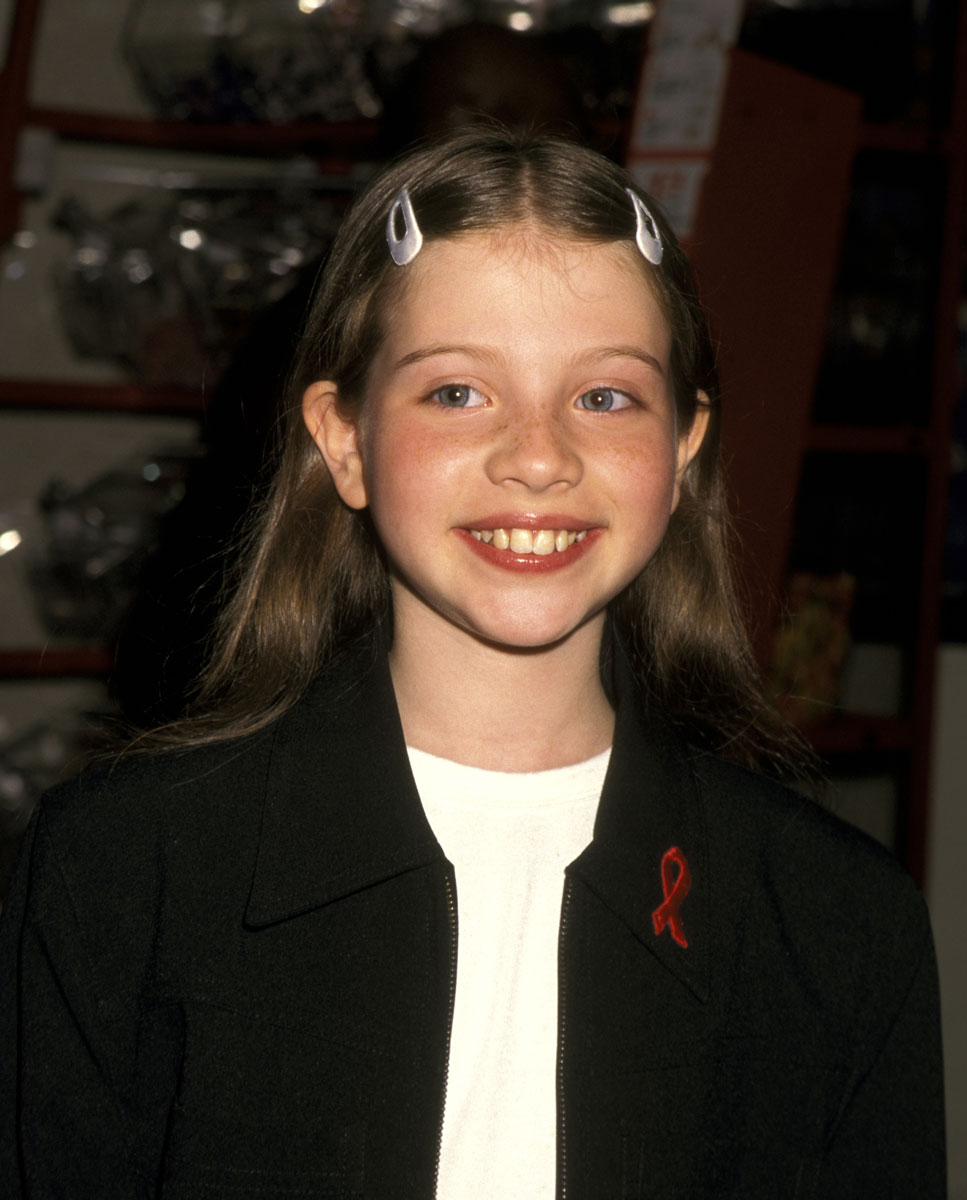
Michelle TrachtenbergMichelle Trachtenberg at the premiere of "Harriet the Spy" July 9, 1996 in New York City. (Ron Galella/Ron Galella Collection via Getty Images)
But for other households, that wasn’t the case. In a 1996 piece in the Tampa Bay Times, one mother called the movie vindictive, saying it was filled with revenge. (That’s not totally untrue, but more on that in a second.) Debby Beece, the former president of Nickelodeon Movies, argued otherwise. “We wanted something that families could see and talk about and that would spark some interest, not just be a mindless movie that had a lot of toilet humor and violence in it,” Beece said in the same article. “It doesn’t pander in the same way a lot of entertainment does. It shows what really goes on with kids . . . these are kids fighting with other kids, and it may not be real physical violence, but it’s emotional violence, which in some ways is worse and can be more damaging.”

Beece is completely correct, “Harriet the Spy” doesn’t pander to kids one bit. In fact, this is a kids movie written and shot like any film made for adults. The film is stylish and intelligent, but what’s most impressive is that it trusts its audience; there’s no hand-holding, or overexplanations of its narrative to water down its themes into palatable baby food. “Harriet the Spy” is a film that believes kids will recognize themselves, their peers and their parents. Maybe that’s what some parents were so afraid of. 

In the film, Harriet’s mother and father (played by J. Smith-Cameron and Robert Joy, respectively), are largely absent from her life. They’re both wealthy psychologists who spend all day at the office and all night at swanky dinners with their colleagues. In their place, Harriet is left with her beloved nanny, Golly (Rosie O’Donnell, in the role of a lifetime), who knows Harriet’s interests and tastes far better than her parents, a sad reality that inevitably comes between them when Golly accidentally leverages the truth against Harriet’s folks. Harriet’s spying is partly the product of her parents’ truancy and partly a result of her deep affection for the world around her and all those who inhabit it. In her notebook, she jots down suspicions about strange people on her spy route between observations about her two closest friends, Janie (Vanessa Chester) and Sport (Gregory Smith). 

We need your help to stay independent

This unusual hobby makes Harriet a target of the popular kids at her elementary school, where she’s vying against Queen Bee Marion Hawthorne (Charlotte Sullivan) for the coveted role of editor of the sixth-grade newspaper. Spying is Harriet’s gateway to journalism, and it’s here where I can once again connect all of the dots between Harriet and myself. How could I not fall head over heels for this character and this movie? Not only am I a journalist, but I’m a film critic, and I’m both of those things because I’m extremely nosy and because I want to make the world a better, more beautiful place. As Golly tells Harriet in the film: “Knowing everything won’t do you a bit of good unless you use it to put beauty into this world.” That’s a line everyone should get to hear, and a dream that every child should grow up to fulfill. 

Trachtenberg knew what it was like to be a kid who wants to be seen, who is aching to be understood. And in “Harriet the Spy,” she gave a voice to every single child who felt the same way.

Of course, being a kid is full of trial and error, especially when you’re a know-it-all. When Harriet loses her notebook and Marion reads it in front of their entire class, Harriet’s life as she knows it falls apart. Her friends don’t just abandon her, but team up with the popular kids to make Harriet’s life a living hell. Harriet’s sadness is compounded by Golly’s recent departure — a scene that has made me weep ever since I was five and has got my chin quivering right this moment — and without anyone to rely on, Harriet has to face the consequences of her actions. She exacts her revenge, yes, but it only makes her feel hollow. She’s become someone just as cruel, self-possessed and inconsiderate as Marion. Suddenly, Harriet understands that the people she spies on act the way that they do because they’re all struggling. In real-time, we watch as Harriet learns she isn’t the center of the world, but just one small part of it, and that knowledge instills in her a critical empathy that all kids need to learn as they grow up.

But despite the clever plotting and the beautifully written characters, Trachtenberg holds the entire film together. She was just nine years old when she filmed the movie, but Trachtenberg’s Harriet has visible wisdom well beyond her years. There is immense depth behind her sparkling eyes, which she can turn sullen in a second. “Harriet” was one of her very first roles, but onscreen, Trachtenberg displayed the talent of an industry veteran. She held the camera and demanded its attention. Even as a child, nobody could steal a scene from her. She knew what it was like to be a kid who wants to be seen, who is aching to be understood. And in “Harriet the Spy,” she gave a voice to every single child who felt the same way. 

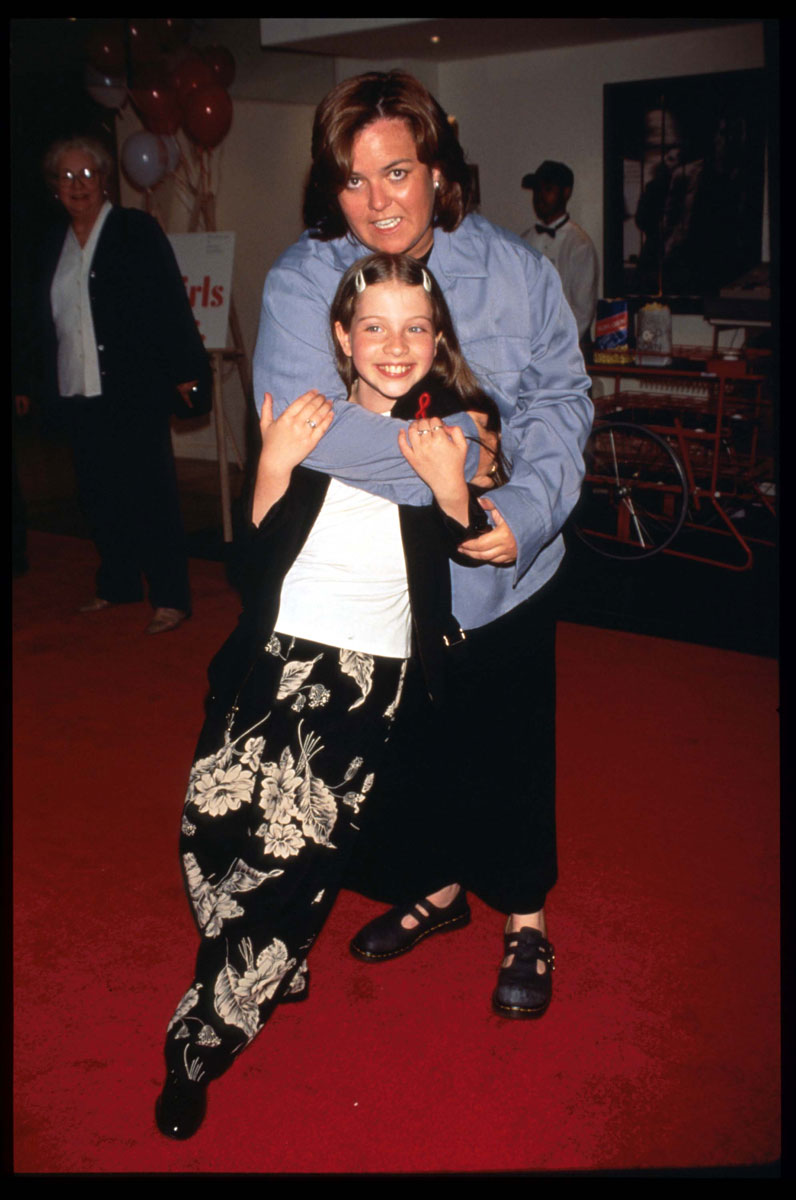
Rosie O''Donnell; Michelle TrachtenbergTalk show host Rosie O''Donnell embraces Michelle Trachtenberg at the premiere of "Harriet the Spy" July 9, 1996 in New York City. (Evan Agostini/Liaison/Getty Images)Because of my childhood obsession with “Harriet the Spy,” I followed Trachtenberg’s work closely throughout my life, admiring the humanity she gracefully instilled in all of her characters — even the devilish ones like Georgina Sparks, who turned “Gossip Girl” from a teen soap into a must-watch drama. Watching “Buffy the Vampire Slayer” for the first time as a teenager was like catching up with an old friend. I always loved seeing Trachtenberg pop up in something, and I hoped she would again soon. 
And yet, the legacy she’s left behind is indelible, something that was confirmed to me when I attended a repertory screening of “Harriet the Spy” in the summer of 2023. The matinee was just a few days before my birthday, and I couldn’t imagine a better way to spend it than watching Harriet on the big screen, just like I did when I was a kid. To my delight, it wasn’t just nostalgic millennials who showed up; there were kids there with their parents, too. In the middle of the movie, one randomly asked, out of nowhere, “How old do you have to be to drink wine?” No one in the movie was drinking any wine, but mature kids have mature questions on their minds when they see this film!

On the way out of the theater, as James Brown’s “Get Up Offa That Thing” played over the end credits, I remembered what it was like seeing the movie for the first time when I was a kid. Everyone else had left the theater, but my dad and I stayed until the lights went up, dancing in the aisle while the music filled the room. It’s one of the earliest, fondest memories I have. 

After the screening a couple of years back, I looked around the room to see kids holding hands with their parents, jiving to the music and talking about the movie as they made their way to the exit. They were connected to the film, and they forged that connection together, perhaps even able to understand each other a little better after seeing it. If that’s not a sign that Michelle Trachtenberg and Harriet put beauty into this world, exactly like Golly said, then I don’t know what is.

Oval Office dustup shows the power of Trump’s hyper-public presidency

President Trump’s early presidency has brought unprecedented transparency to the White House. More than any other president, he wants the American people to see what he is doing in real-time.

That is why the press has been allowed to witness him signing executive orders, meeting with his Cabinet, and having an intense disagreement with a foreign leader. This accessibility is one vehicle with which President Trump is forging his own distinctive relationship with the American public.

The president is comfortable going directly to the people and positioning himself as their true spokesperson. It is remarkable how much he is willing to put on display.

On Friday, during a press availability at the start of a scheduled meeting with Ukrainian President Volodymyr Zelenskyy , President Trump allowed the cameras to roll and the press to see what was a startlingly acrimonious meeting in the Oval Office. As the New York Times reported, “No president in memory has ever erupted at a visiting foreign leader in such a vituperous way on camera, not even enemies of the United States, much less a putative ally.”

But creating such a shock may have been the point. That quality compels attention.  

As the meeting became more and more heated, Vice President JD Vance, who was also in attendance, accused the Ukrainian president of being ungrateful for American assistance and criticized him for litigating his version of events in front of the American media. The president had a different view. 

He turned to Vance and said, “I think it is good for the American people to see what is going on. I think it is very important. That’s why I kept this going so long.”

That line, “It is good for the American people to see what is going on,” captures the essence of President Trump’s embrace of a hyper-public presidency. 

That doesn’t mean that  the administration won’t do anything in secret. It does mean that  the president will be in almost constant  communication with the public. Thus, in addition to his use of social media, during his first term, he averaged more exchanges with the press per year than any president in modern American history.

Even though he now wants to determine which members of the press will have  access to the White House and other venues, President Trump craves constant press attention. The New York Post reports that “Trump has answered more than 1,000 press questions in the first month of his second term— 7 times more than Biden in the same period.”  

On February 24, The National Journal’s George Condon observed that Trump started answering questions “inside the U.S. Capitol, less than an hour after taking his oath of office, when he was asked if he had any reaction ‘to the pardons President Biden did at the last minute.’ The last question—No. 1,009—(as of that date) came more than 3,000 feet above North Carolina at 9:14 p.m. … as he returned to Washington after five days in Florida.”

Condon quotes David Greenberg, professor of history, journalism, and media studies at Rutgers University, “’the president’s accessibility “clearly shows a comfort level with being his own spokesman. … He enjoys it. He thinks of himself as a persuasive personality or he enjoys the attention—or both. And he may not be wrong. He has demonstrated that he can command a following for the way he puts his ideas.’”

Scolding Zelenskyy and giving him a public dressing-down fits that profile. It projected a version of the  strength that Trump thinks pleases the American public.

So what might have been just another l meeting about  Ukraine instantly grabbed international headlines. Everyone is now talking about what Trump said to Zelenskyy. 

Some of that talk is favorable, but much of it is unfavorable. What matters in the hyper-public presidency is that the focus is on  Trump.Politico got it right in 2016: “(T)he idea, unprecedented at this level of politics, is at the heart of one of the most remarkable mechanisms of Trump’s rise—the conviction that mistakes, flagrant provocations, and the attendant bad publicity genuinely don’t matter, so long as they serve the goal of owning the spotlight.”

“On the short list of Trump’s most guiding, abiding beliefs,” it continued, “this is one that ranks near the top: that bad publicity doesn’t have to be avoided, and doesn’t have to be endured—that it should be embraced, and even stoked.”

What happened on Friday with Zelenskyy is just the latest example.

Since he came on the national stage, the president has shown unusual political bravado, letting the public see him, warts and all, swearing, mocking people, delighting in exacting retribution from his enemies, and violating the conventions of polite society. Some write this off, attributing it to his personality and what they see as a pathological need to stay in the limelight.

But that is a mistake. Trump’s willingness to be seen is more than that; it is deeply political.

The fact that the president does not hide from the press reveals a conception of political power in which a political leader needs to be seen to create an unusual and powerful connection with the public they serve. 

Trump’s actions are part  of an effort to change American democracy into what political scientists call “plebiscitary democracy.” They use this term “to describe those systems wherein a leader is elected but once elected has almost all of the power.” 

Plebiscitary politics is “politics without intermediaries.” Its appeal is its immediacy. So is its danger. Plebiscitary politics is often a tool of the autocrat.

We need your help to stay independent

President Trump understands plebiscitary politics as well as anyone. He knows that “the current political culture now demands the president to be a popular leader, with ‘a duty constantly to defend themselves publicly, to promote policy initiatives nationwide, and to inspirit the population.’"

MSNBC’s Chris Hayes dubs President Trump the master of the “attention economy.” As Hayes puts it, “He is the political figure who most fully exploited the new rules of the attention age. He seemed to sense intuitively – born of a combination of his experience with the New York City tabloids and his own psychological needs – that attention is all that matters.” Hayes explains that “Trump’s approach to politics ever since the summer of 2015, when he entered the presidential race, is the equivalent of running naked through the neighborhood: repellent but transfixing.” 

The Washington Post captured this approach when it called Friday’s exchange between the leaders of two countries “a striking breach of Oval Office comity, where even tough exchanges have typically happened with calm voices and diplomatic language…which shocked global leaders.”

But creating such a shock may have been the point. That quality compels attention.  

The Oval Office dustup was a well-prepared trap for the Ukrainian President. Republican Senator Lindsey Graham suggested as much when he “told reporters after the heated meeting that he had warned Zelenskyy to proceed carefully…. ‘I talked to Zelenskyy this morning…. Don’t take the bait.’” 

The trap was set and sprung for all the world to see. Zelenskyy took the bait and created another transfixing moment for Donald Trump’s hyper-public presidency.

As the meeting drew to a close, the president made that clear when he crowed: “This is going to be great television."

Can this guy really save Europe from Elon Musk?

Ten or 15 years ago, Friedrich Merz would have seemed a wildly unlikely candidate for the role of savior to Europe’s liberal democracy. Spoiler alert: He still does. 

But the internal decay of European politics has reached a critical stage, whose stakes were made abundantly clear by the ludicrous spectacle of Donald Trump and JD Vance berating Volodymyr Zelenskyy in the Oval Office for insufficiently groveling before the Orange Throne. This was not the historical moment Merz expected, and it definitely isn’t the one he wanted. But for better or worse, he looks to be Europe’s last man standing.

If we flash back to the bygone days of the late 2000s, Merz’s future looked to be in the past: He was Angela Merkel's defeated right-wing rival in the Christian Democratic Union, the mainstream conservative party that has dominated German electoral politics since the fall of the Nazi regime, first in the former West Germany and then, less convincingly, in post-1990 reunified Germany. Merz left politics and racked up millions in the private sector as a corporate lawyer, including a five-year stint as board chairman at BlackRock Germany, a major branch of the world’s largest asset management firm. 

He returned to the CDU in 2018 as the anti-Merkel, vowing to spice up the party’s usual agenda of pro-business fiscal “austerity” and free trade with staunchly pro-American foreign policy and a dash of hard-right anti-immigration policy. Even amid the continent-wide political chaos caused by the Syrian migrant crisis and the rise of fascist-flavored parties in one country after another, it still took three tries for Merz to get himself elected party leader after Merkel’s retirement. 

After “winning” Germany’s recent federal elections, in what may be remembered as a textbook example of Pyrrhic victory — the CDU finished first with 28.5 percent of the vote, slightly better than its worst-ever result in 2021 — Merz will now be forced to preside over an awkward coalition of center-right and center-left parties, whose primary purpose (at least on the home front) will be to fend off further advances by the not-quite neo-Nazi Alternative for Germany party, or AfD. If you want to find a silver lining to the German elections — and frankly, that isn't easy — it would be this: While the AfD finished second with 20.8 percent of the vote, basically doubling its 2021 total, there’s no evidence that Elon Musk’s enthusiastic endorsement (or Vance’s slightly less overt endorsement) did them any good. 

Merz is a black box, an untested leader who has never held a position in government. His entire career seems mismatched to this perilous fork in history's road. But at least he seems to grasp the magnitude of the current crisis.

On the international front, as last Friday’s contretemps in the White House threw into sharp relief, Merz will become the leader of the largest and most important member of the European Union at precisely the moment when it must “achieve independence from the U.S.,” to use his own words from a post-election press conference. On one hand, Merz is something of a black box, an untested leader who has never held a position in government and whose entire career seems mismatched to this perilous fork in history’s road. On the other, he appears to grasp the magnitude of the current crisis, and has so far given no indication that he will seek accommodation with either Germany’s far right or their MAGA pals in Washington. 

Merz has described the attempts by Musk and various other Yank interlopers to meddle in Germany’s elections as “no less dramatic and drastic and ultimately outrageous than the interventions we have seen from Moscow,” and suggested that under Trump the U.S. appeared “largely indifferent to the fate of Europe.” This marks a startling reversal for the man described by German journalist Jörg Lau as the most pro-American politician in Germany and “a lifelong believer in the transatlantic security alliance” (i.e., in NATO, which Trump seems determined to demolish). That may also reflect a sense of injured pride and betrayal: Clear back to Konrad Adenauer in the 1950s, the CDU has always presented itself as a staunch American ally, largely aligned with what we’d now have to call the vanished orthodoxy of the pre-Trump Republican Party.

We need your help to stay independent

At the same time, Merz has described the startling surge of the AfD as “the last warning to the political parties of the democratic center” to reach consensus on immigration policy, economic reforms, a shared European defense strategy and numerous other thorny issues. Germany found itself under “massive pressure from two sides,” he said — presumably meaning the U.S. and Russia — along with significant internal divisions: The AfD dominated in the economically struggling states of former East Germany, while Merz’s party won in the more prosperous west. (The rapidly fading Social Democrats won in Berlin, and almost nowhere else.) In historical terms, Merz concluded, it was “five minutes to midnight for Europe.”

So, damn! Will this acrid-tongued, 69-year-old multimillionaire, a child of the rural Catholic haute bourgeoisie — he was raised in the house his mother’s family built in 1752 — turn out, against all odds, to be the statesman the world needs now, ideology and partisan affiliation aside? Is he a latter-day Churchill standing astride the tides of history, ready to push back Vladimir Putin on one side and Trump on the other? 

Will this acrid-tongued, 69-year-old multimillionaire, a child of the rural Catholic haute bourgeoisie, turn out to be a latter-day Churchill, standing astride the tides of history? I mean, probably not.

Of course the real answer is that no one can see the future and it’s likely to surprise us: Maybe! It’s just about conceivable that Merz, now liberated from his previous pro-American views and in a forced marriage with his domestic political opponents, will reveal that kind of strength. But honestly, that scenario requires a world-historical level of wishful thinking. 

For one thing, as Lau observes in the Guardian essay quoted above, Merz was effectively for Donald Trump before he was against him. He ran as an overtly MAGA-curious candidate during his failed campaign for CDU leadership in 2018, and only weeks ago pushed a harsh non-binding resolution on migrant policy through the Bundestag with the AfD’s support. That Trump-style political maneuver, meant to shame outgoing Chancellor Olaf Scholz by capitalizing on a series of violent attacks committed by immigrants, did not technically violate the “firewall” that prohibits Germany’s mainstream parties from forming coalitions with the far right. But as Lau suggests, it may have led normie voters to wonder whether Merz could be trusted.

Merz isn't the only mainstream European conservative to turn bearish on America; it's starting to look like a trend. Former French prime minister Dominique de Villepin is an old hand, having made world headlines back in 2003 by opposing the U.S. war in Iraq in an eloquent U.N. address. He's now considering a 2027 presidential campaign, in hopes of fending off rising far-right candidate Marine Le Pen. In a recent interview with the Swedish newspaper Dagens Nyheter, de Villepin outdid Merz, proclaiming that "America can no longer be considered an ally of Europe" and that the world now finds itself divided between "three illiberal superpowers: Russia, China and the U.S."


Want a daily wrap-up of all the news and commentary Salon has to offer? Subscribe to our morning newsletter, Crash Course.


Both Merz and de Villepin see the opportunity, in the latter's words, for "a European awakening of democracy." That's an inspiring phrase, but one that avoids the larger historical question: Can the existing European order that elite political leaders like them are so eager to defend actually be saved, in anything like its current form? You don’t have to be a Trumper or an ultra-leftist to observe that the so-called Western alliance has been decaying for some time; one of Putin’s guiding principles, which has yet to be falsified, is that if he jabs it in the right spot it will collapse altogether. Rethinking the relationship between Europe, America and the rest of the world shouldn't be left to JD Vance and his buddies in the nationalist new right. 

It’s difficult to imagine that Merz — by all accounts a person of highly conventional ideas, atop a fragile coalition with a narrow political mandate — is ready to seize that portfolio. Even a cursory reading of German history suggests darker parallels: Merz looks and sounds an awful lot like the pro-business upper-crust German conservatives of the early 1930s, who assumed they could dominate the radical upstart with the dopey mustache and his dimwit followers. Those guys were astride the tides of history too, but not in a good way.

Of course the past does not predict the future; it shapes it. That cautionary tale still has considerable resonance for Germans of Merz’s generation, even if many people in that country and elsewhere around the world have grown tired of hearing it. Those who fail to learn from history, as Salon contributor Mike Lofgren said to me recently, are doomed to repeat famous quotations. Whatever Friedrich Merz does with his improbable starring role on the world stage, let’s hope his lessons are in order.

Why people with ADHD and autism fear stigma will get worse under Trump and RFK Jr.

As an angel investor, Peter Shankman has made millions investing in startups, yet it wasn’t easy getting to the top of the ladder. He’s also a person with attention deficit hyperactivity disorder (ADHD), and as such still bears the psychological scars of navigating a society that punishes people who aren’t neurotypical.

“Growing up, I spent my entire life being told I talked too much,” Shankman told Salon. “My middle name was ‘sit down, you're disrupting the class.’ I scraped by in school and college through the skin of my teeth, and have spent the last 25 years in therapy trying to undo the damage that constantly being told I was broken my entire childhood did to me as an adult.”

Despite starting five companies, selling three, and becoming quite successful, Shankman says “not a day goes by where I don't believe that it's all bulls**t, and I'm a complete fraud.”

While Shankman has put together a decent life for himself despite these stigmas, he is concerned that the policies being pushed by America’s newly-elected leaders will make life even harder for neurodiverse people today than it was for him growing up.

For every story of excellence in neurodiversity there are those that play into unflattering stereotypes — such as attorneys for alleged quadruple murderer Bryan Kohberger considering introducing his autism into his defense. Systematic reviews in scientific journals repeatedly find that stigma against autistic people is prevalent and causes real-world harm, with one scholar concluding that policymakers who want to help neurodivergent people should start by “identifying active ingredients of interventions, measuring reliable changes in behaviors and attitudes, and targeting structural stigma.”

"‘You're different, and that's wrong’ doesn't help people, doesn't help our country, and doesn't help us heal."

By contrast, President Donald Trump and his new Secretary of Health and Human Services, Robert Kennedy Jr., are stirring controversy among disabled people through executive orders targeting supposed initiatives related to diversity, equity, inclusion and accessibility. They are also slashing social programs like Medicare and the Department of Education, which many disabled people require for health care and other important social services.

Kennedy has repeatedly mischaracterized autistic people by falsely claiming autism is caused by vaccines while attacking life-saving medications like antidepressants, insisting that instead people with mental illness would benefit from “healing” farms.

“How dare RFK Jr. punish people for being different, instead of helping them understand that their differences are what make them better?” Shankman said. “It's the last thing we should be doing. ‘You're different, and that's wrong’ doesn't help people, doesn't help our country, and doesn't help us heal.”


Want more health and science stories in your inbox? Subscribe to Salon's weekly newsletter Lab Notes.


According to experts who specialize in autism, ADHD and other neurodiverse conditions, the traditional, and invariably reactionary, approach to neurodiversity embraced by the administration reinforces and exacerbates pre-existing stigmas that have long made life painful  for neurodivergent individuals. These stigmas are not simply harmful — they are also unscientific.

“Scientific evidence shows these conditions are not ‘threats’ but rather neurological differences that can lead to positive outcomes when given appropriate support,” Dr. Eliza Barach, a cognitive psychologist and ADHD coach and consultant, told Salon, adding that ADHD is one of the most easily treatable conditions in the DSM-5, the handbook for diagnosing psychological conditions approved by the American Psychiatric Association.

“While individuals with ADHD/autism face unique challenges, they can thrive when their traits are properly understood and supported,” Barach added. “The true threat is in failing to recognize and support neurodivergent folks,” especially as the scientific community moves toward viewing autism, ADHD and similar conditions as natural variations in human brain development. This means, inevitably, moving away from lenses that depict neurodivergent conditions as pathologies.

“A ‘clinical’ diagnosis typically occurs when someone experiences significant difficulties functioning in environments designed for neurotypical minds,” Barach said. “Research has revealed that these neurotypes often come with distinct strengths, including exceptional pattern recognition, hyperfocus abilities, creative problem-solving, and innovative thinking.”

"It's exhausting to wear a mask all the time and be told that who you are is not enough."

By contrast, the reactionary approach to neurodivergent conditions seems destined to increase prejudices which downplay or ignore these nuances. This strategy highlights so-called “weaknesses” that (quite often) are nothing more than manifestations of societal intolerance. Dr. Monique Botha, a professor of psychology at Durham University, argued that people who advocate cutting services for neurodivergent people and removing legal protections usually doubt or deny the underlying reality of those disabilities.

“Autism and ADHD are heritable disabilities, and both communities do not pose a threat to anyone by virtue of being autistic or having ADHD,” Botha told Salon. “It is a group of people, however, who have been demonized and stigmatized, and RFK is clearly choosing to endorse some of the most reckless and negative beliefs about the group because they do not have easily recognizable disabilities. This means that it's a group where it's easier to doubt the veracity of the claims about disability, in favor of a narrative of pulling yourself up by the bootstraps and ‘getting over it.’”

Botha explained that there is already extensive evidence demonstrating that by and large anti-depressants and ADHD medications are safe, that access to medication for ADHD can prevent early mortality for diagnosed patients and that vaccines do not cause autism. In fact, molecular biologists believe that neurodivergent conditions arise due to a combination of heritable and environmental factors.

“We are coming to terms with the wide variation amongst autistic people, the fact that more than white boys can be autistic,” Botha said. “To pretend that we've been held back by a lack of funding on biological research ignores the reality of the vast majority going on it (as per actual research on this topic) and it ignores that autistic people and their families couldn't often care about the biology of it all — they want access to evidence-based care and support, both of which are drastically underfunded.”

In addition to studying autism and ADHD, Barach has ADHD and Botha has both conditions. Each of them reflected on how the new government’s philosophy toward neurodiversity intersects with their own lived experiences.

“My own research tackles the disparities facing neurodivergent people,” Botha told Salon. “Both disabilities run in my family. I've worked with teams in the U.S. and attend a big autism conference that is most years, held in the U.S.” Instead of being able to tout her country as a forerunner in research or practice, the anti-science resurgence has forced Botha to ask whether it is even safe to attend American conferences.

“Personally, as someone who is both a researcher, and neurodivergent, I also wonder about it,” Botha said. She observed that autistic people are an easy group to stigmatize, and “are more likely to have negative judgments made about them based on small interactions.”

Barach, who has a PhD in psychology, told Salon that the revival of anti-ADHD stigmas has caused her and other patients with ADHD to feel as if they must “mask” their behavior in public.

“Myself and my clients have often walked through life hiding and masking our neurodivergence in order to fit in and avoid exclusion and judgment,” Barach said. “It's exhausting to wear a mask all the time and be told that who you are is not enough — that you need to fundamentally change in order to be accepted. While it's understandable to make modifications to behavior to promote success, it's entirely different when we're asking people to modify their entire being and self, instead of offering environmental accommodations in conjunction with behavioral adaptations.”

Becca Lory Hector, an autistic speaker and researcher and author of "Always Bring Your Sunglasses,” told Salon that her work bringing belonging and equality to the lives of neurodivergent individuals has been directly undermined by Kennedy’s efforts.

“I’ve seen how rhetoric like this leads to harmful policies, whether in education, employment, or healthcare, where support is cut, services are denied, and Autistic people are further marginalized,” Hector said. “His statement isn't just offensive; it's a call to action for those of us fighting for the right to exist without being treated as a threat.”

Sol Smith coaches people with both autism and ADHD, running support groups for them and is the author of the upcoming book “Autistic’s Guide to Self- Discovery: Flourishing as a Neurodivergent Adult.” He said that the current culture of contempt for autistic individuals directly and negatively impacts their lives.

“My whole job is to increase the public’s education about autism and ADHD, to reduce stigma, and to help autistics and ADHDers find themselves in this society,” Smith said. “How ADHDers and autistics feel about themselves is downright awful; they’ve lost touch with themselves as they’ve tried to hide in a society not made for them. They struggle with the very social constructs that define our culture — and that’s without politicians suggesting they be wiped out as some kind of internal threat.”

IngerShaye Colzie, an ADHD executive leadership coach and founder of the ADHD Black Professionals Alliance, observed that as a Black woman with ADHD, she knows that prejudices against people with disabilities can easily intersect with other forms of bigotry, including racism and misogyny.

We need your help to stay independent

“For years, I internalized the idea that my brain was ‘wrong’ and that I had to work twice as hard, overcompensate and mask my symptoms to be taken seriously in professional spaces,” Colzie said. “This led to burnout, imposter syndrome, and deep self-doubt.” People already held her to a higher standard because of her race and sex; when her ADHD caused her to struggle with basic organization and time management, people wrote her off as lazy and unprofessional regardless of the creative solutions she brought to the table.

“I found myself in a confusing situation where my ideas were celebrated, still my work style was criticized, leaving me feeling simultaneously valued and deeply flawed until I finally understood what was really going on,” Colzie said. “Masking is exhausting. It means constantly monitoring yourself, trying to fit into a world that wasn’t built for you, and hiding your struggles, even when it’s costing you your mental and physical health.”

If America wants to help its neurodivergent citizens, advocates like Smith believe they need to accept that the disabilities are social, not medical — that is, “we are disabled by our social climate and the expectations that we will think and work in the same ways that neurotypicals do.”

Instead of encouraging society to broaden its perspective about acceptable behavior, Smith believes the current trend is to move in the opposite direction, with “people kindling our ancient fears is a powerful political move that distracts us from real social reforms that we should be addressing.”

This is in stark contrast to the RFK Jr. approach.

“Why the hell is a non-doctor unilaterally deciding to rip this lifeline away from people who rely on it to thrive?” Shankman asked. “It’s mind-boggling, reckless and if enacted, will devastate countless lives — many of whom will never fully recover.”

“I have made more money renting”: Why buying is not always best

It’s good to hold on to your dreams, but for now, it may be time to pivot from the one about the house: Homeowners spend an average 37% more overall than renting.

According to a Bankrate study published in 2024, “It’s cheaper to rent than to buy in all of the top 50 metros. The typical monthly mortgage payment of a median-priced home ($412,778, per Redfin) in the U.S. is $2,703, while the national typical monthly rent is $1,979 as of February — a 36.6% difference.”

Personal finance expert and TV host Ramit “I will teach you to be rich” Sethi, has been famously railing against wasting money on homeownership and takes it on in his new book, Money for Couples.

He often gets pushback on his position and implores would-be buyers to do the math before diving in. “You just have to run the numbers, and you have to realize there are lots of ways to build a rich life, whether you own or whether you rent.”

“In America, when you even suggest that maybe buying a house is not the best financial decision, that seems to attack American number one religion, which is homeownership,” he said.

“Instead of buying a house, which meant I had to go to fix things and repair things and put money inside, I just simply invested the money, and I have made more money renting for the last 20 years in superior locations with zero maintenance than I would have by owning a place.”

We need your help to stay independent

The key is to invest the money you’re saving by renting, Sethi said.

"What about equity?"

Sethi continually ruffles feathers when he talks about renting vs. buying. “This is like telling people the sky is green — they simply cannot compute it, and they use the same argument. What about equity? Well, I have equity, too. It just happens to be in the top 500 companies in America.”

While real estate can be a solid investment over time, the stock market regularly outperforms the housing market.

Paying all cash for a home eliminates interest and mortgage interest payments, but you’ll still need to insure and maintain it, pay taxes and possibly HOA dues. If you put down 20% ($100,000) and sign a 30-year loan at 6% on a $500,000 property, your monthly payment is $2,706 — without even factoring in taxes and insurance. Over 30 years, you’ll have paid an additional $328,833 in interest.

If you’d rented a place for the same $2,706 a month and invested your initial down payment in the stock market, business or other vehicle that assumes a modest 6% return with daily compounded interest, you’d end up with $604,875.26 at the end of 30 years without having to add another dime to the principal — quite a nice portfolio to pass down as a form of generational wealth, to help with retirement or to buy a home in cash.

"We have a very distorted view of housing in America, because deep down we believe successful people own housing and poor people rent"

There’s also a cultural component. “We have a very distorted view of housing in America, because deep down we believe successful people own housing and poor people rent," Sethi said. "Not only is that wrong, that actually makes many people, particularly young people and people of color, feel ashamed that they cannot compete in today's housing market.”

"But my grandparents bought a home on one salary"

The American Dream did make sense long ago, when housing was relatively less expensive and even a one-income family wasn’t spending 30% or more of its income on housing. 

What happened? People often point fingers to corporate holding companies that buy homes in bulk and create scarcity, forcing prices up, but Sethi says that even corporate landlords must adhere to a realistic market strategy. You may know and love the real culprits behind the housing shortage.

“It's actually your neighbors and parents who have conspired to rig local governments across every city in America to make it incredibly hard to build housing. It's as simple as that,” he said. People who already own homes put incredible amounts of pressure on their local and state governments to keep development at bay — they show up at meetings and create petitions to stop growth. Their NIMBYism (“not in my backyard”) in aggregate ends up becoming BANANA, “build absolutely nothing anywhere near anything.”

It’s changing, but not quickly enough. Federal mortgage financing enterprise Fannie Mae recently reported that vacancy rates are staying low in most of the country, except for places where there’s been a deliberate expansion of multifamily housing supplies, notably, in the South and southwestern cities of Austin, Phoenix, San Antonio and Raleigh.

“Amongst comparable major countries, the United States is the only one in which the housing stock grew more slowly than the population between 1995 and 2020. … fewer new homes were built in the 10 years ending 2018 than in any decade since the 1960s,” the study says.

"But I want to paint my living room purple"

Still, there are compelling reasons to purchase a home that have little to do with money — being in a certain school district, staying near friends and family, the ability to renovate and decorate as you want, having control over when you move and being able to budget with a set monthly payment are just a few. 

“I don't think buying a house is, on its own, a bad idea,” Sethi said. “I’m sure I’ll buy a house, and when I do it will be a horrible financial decision, but not everything has to pencil out on a spreadsheet.”

Andrew Cuomo launches bid for New York City mayor

Former New York Gov. Andrew Cuomo entered the race for New York City mayor on Saturday, attempting a comeback from a decade-long tenure that ended in scandal in 2021.

The New York Times reported that Cuomo is expected to be the frontrunner in a crowded Democratic primary in June due to his name recognition and wealthy donors. The candidates include Mayor Eric Adams, whose term also has been marked with scandal since he took office in 2022. 

Cuomo, 67, resigned as governor following a string of sexual harassment accusations that he denied and has been fighting in court since. Because the alleged actions occurred while he was in office, state law requires taxpayers to foot his legal bills, which totaled over $25 million as of last September, The Times reported. The Justice Department said last year Cuomo and his staff created a "sexually hostile work environment" for female employees. 

In a 17-minute video announcing his mayoral run, Cuomo did not speak directly about the allegations but said, "Did I make mistakes, some painfully? Definitely, and I believe I learned from them and that I am a better person for it and I hope to show that every day," NBC News reported.

He tried in the video to position himself as a moderate Democrat with the leadership skills needed for New York City, which he said "feels threatening, out of control, and in crisis."

"I know what needs to be done and I know how to do it, and I will give it my all to get the job done," he said.

Following his announcement, some of his rivals urged voters to consider a new approach. Beyond pointing to the scandals, they criticized Cuomo for cutting city services, neglecting the subway system and only recently becoming a full-time resident after decades of living elsewhere, The Times reported.

At least five other Democrats are running for mayor, including Adams, who was indicted on corruption and fraud charges last September. He pleaded not guilty, and the Trump administration has asked that the charges be dropped

A political action committee launched by Cuomo supporters aims to raise $15 million for the race, The Times reported. 

They do not include the current governor of New York, Kathy Hochul, or Attorney General Letitia James, whose office concluded that Cuomo sexually harassed 11 women. Both have tried to find another candidate to block his return, per The Times. 

This year’s Oscar-nominated documentary shorts are thrilling, important and very easy to watch

There’s something incredible happening in the documentary short film category at this year’s Oscars, something you’ll want to pay attention to. 

In recent years, the group of nominees has been stacked with worthy contenders, save for one short that’s glaringly out of step with the rest of the recognized films. Last year, “The ABCs of Book Banning” presented surface-level facts that did little to move the needle on the important topic of books that are being prohibited in school libraries. In 2023, “Stranger at the Gate” took a well-meaning but misguided approach to a story about a man who intended to terrorize a Muslim community center, only for the local Islamic population to welcome him into their fold. 

Given that accessibility isn’t an issue, there’s no excuse not to take in as many of these films as possible before Sunday night’s Oscar ceremony.

But this year, all five of the nominees for documentary short film are not just well-made, incisive and expectedly important, they’re also in conversation with one another. They are extremely timely, heavy films, but still wildly compelling, oscillating from three different kinds of institutional violence to two distinct films about the power of music and the arts. It might not sound like these shorts are all linked, but they are united by the urgent themes they explore. Think of this handful of short films as five fingers stretching out from one palm, all a bit different from each other but connected nonetheless. 

The documentary short category is a unique one because it presents the opportunity for audiences to see films that wade through a variety of topics in bite-sized installments, easily digestible for anyone who still hears the word “documentary” and starts nodding off. (If that’s you, expand those horizons! There are docs out there for everyone, and at least one of the films below will confirm that.) It’s also unusual because, for the most part, the nominated films can usually be found on YouTube or seen on a streaming service. Given that accessibility isn’t an issue, there’s no excuse not to take in as many of these films as possible before Sunday night’s Oscar ceremony — if only to school your friends in the Oscar pool when you pick the winning short with more knowledge than they did by just guessing a winner, buzzed off of “Brutalist” Bloody Mary's and “Conclave” Cosmos.

Below, you’ll find our run-down of all five of the shorts nominated for documentary short film, where to watch them and which one of the shorts should take home the gold. This race is the tightest in some years, so let’s not waste any more time.

 
“Death by Numbers”

It has been just over seven years since a gunman opened fire at Marjorie Stoneman Douglas High School in Parkland, Florida, and those years have been both a blip in time and an eternity for Sam Fuentes, a survivor of the deadliest mass shooting at a high school in American history. Unlike most of these devastating events, where killers die during or shortly after a massacre, Fuentes’ assailant Nikolas Cruz survived. In Kim A. Snyder’s “Death by Numbers,” Fuentes laments that reality. “I just wish he had died that day so that there was no trial, so that nobody would have to go through this,” she says. 


But as Snyder and Fuentes beautifully stress in the short, trauma is never quite that simple. The trial is impossibly difficult, but it also presents Fuentes and the other survivors with a rare opportunity to, should they so choose, look Cruz in the eye and stand firmly in the power of their existence. This part of the process is called a victim impact statement, and Fuentes’ statement is the film’s stirring emotional core. Because Fuentes’ own words are potent enough, “Death by Numbers” doesn’t need any of its extra visual flourishes, which appear in clips from relevant movies and animations of Fuentes’ writings. But although the film is a bit overproduced for a story that needs no extra flair to be gripping, “Death by Numbers” is easily one of the most emotionally impactful documentary shorts in this year’s lineup. It’s not a story about overcoming trauma but a scorching look at what it takes to muster enough energy to move through it.


Where to watch: “Death by Numbers” is in theaters as part of Oscar-nominated short film presentations nationwide. Find local screenings here.

 
“I Am Ready, Warden”

While none of this year's shorts are as paltry as the odd ducks from the last two years of nominees, “I Am Ready, Warden” is the closest any 2025 documentary shorts come to abject exploitation. The film follows John Henry Ramirez, an inmate on death row in Texas, who was convicted after stabbing convenience store worker Pablo Castro 29 times over less than two dollars. After three stays of execution, Ramirez has run out of opportunities to appeal, and despite having shown evidence of reformation, the pleas by those in Ramirez’s corner go unheard. 


Initially, the film is a fascinating firsthand exploration of state-sanctioned murder, and how inmates who have been on death row for years, like Ramirez, have the opportunity to recognize the severity of their horrific actions and how they’ve impacted the lives of their victims. Ramirez doesn’t ever pity himself, acknowledging the harm he’s inflicted on the world in thoughtful, often quite moving ways. It’s when director Smitri Mundhra chooses to film Ramirez’s last phone conversation with his teenage son Israel, as well as the response to Ramirez’s death from Castro's adult son Aaaron, that “I Am Ready, Warden” walks into murky territory. These scenes are emotionally manipulative, presenting a hard shift in tone that pivots from the sincerely affecting details about Ramirez’s life after his conviction — which would make a more convincing argument for proponents of the death penalty — to mawkish attempts at viewer persuasion. A good documentary doesn’t need to be objective, but it should tell its story gracefully, and that’s the test “I Am Ready, Warden” doesn’t pass.


Where to watch: Stream “I Am Ready, Warden” on Paramount+

I Am Ready, WardenI Am Ready, Warden (MTV Documentary Films)
 
“Incident”

Two viewer warnings appear before “Incident.” One alerts viewers that there are graphic images to follow; another signals that some of the film is completely silent. But the lack of sound in Bill Morrison’s documentary makes the events of “Incident” all the more chilling, especially when it eventually kicks in with shots ringing out and screams of terror filling the air.


The film uses police body camera footage, dashboard cam recordings and local CCTV to reconstruct the events surrounding a 2018 Chicago area police shooting that resulted in the death of local barber Harith “Snoop” Augustus. Despite never drawing a weapon, an officer shot Augustus multiple times until he was dead in the street, a chillingly familiar image of a Black civilian killed by police force. Morrison’s film is difficult to watch, but it’s critical viewing for every American. “Incident” pieces together the crucial minutes before and after Augustus’ death in a split-screen view, allowing viewers to watch as the offending officers pat each other on the back for “doing the right thing” and concoct stories that are different from the real-time events we see in the film to cover their tracks. It’s harrowing to watch, yet bleak and unsurprising. Morrison’s crude style and experiments with sound make “Incident” a haunting yet pertinent short to seek out, and one of the best films nominated in this year’s category.


Where to watch: “Incident” is available on YouTube.


Want a daily wrap-up of all the news and commentary Salon has to offer? Subscribe to our morning newsletter, Crash Course.


“Instruments of a Beating Heart”

You might not think that a film about kids learning to play “Ode to Joy” would elicit as many tears as some of the other nominated shorts in this list. But simplicity gives “Instruments of a Beating Heart” an upper hand, making this modest short deceptively layered and just as poignant as any other film in the documentary short film category. The film is set at the end of the term for an elementary school in Japan, and exiting first graders are preparing a special welcome song for the next class in their grade. Each student can audition for different, small parts in the program: drums, cymbals, the triangle — all things that would widen any child’s eyes when they walk into a music class. 


One of these first graders, Ayame, is determined to get a major part in the performance. We watch as Ayame grapples with her feelings after losing out on the instrument she wants, only to score another big role in the song. But Ayame is having trouble learning her part, falling behind some of the kids in her grade. As the performance draws closer, Ayame learns valuable lessons about conquering her nerves, handling constructive criticism and working hard to achieve her goals. Ema Ryan Yamazaki’s film is a heartwarming saga that takes the viewer back in time, encouraging us to remember how difficult it felt to be kids in a similarly scary position. And when Ayame and her class inevitably succeed, their triumph conjures the kind of joy and pride that are shining examples of why even the simplest documentaries can have the biggest impact.


Where to watch: “Instruments of a Beating Heart” is available on YouTube

 
“The Only Girl in the Orchestra”

“The Only Girl in the Orchestra” is the most easily palatable of all five films nominated in this category, but that doesn’t mean that it’s any less striking. Director Molly O’Brien trails her aunt Orin O’Brien — esteemed double bassist and the first woman member of the New York Philharmonic orchestra — as she prepares for retirement after decades of playing and teaching. Orin reflects on her array of accomplishments and all of the barriers she broke, setting the record straight about the headlines she made when she joined the orchestra in 1966 to play under Leonard Bernstein. Now in her late 80s, Orin is still a classic New York broad with a sharp sense of humor and the ability to connect with just about everyone she meets. She’s a joy to watch, but Orin is not quite as candid as one might expect. Sometimes that allows the viewer to get an idea about what she’s not saying, other times, the other O’Brien behind the camera knows not to probe her aunt any further. While “The Only Girl in the Orchestra” isn’t superficial, it is lighter and therefore less immediate than the other four entries in the category. Still, it’s a worthy contender nonetheless. 


Where to watch: Stream “The Only Girl in the Orchestra” on Netflix.


Now, which documentary short should win?

This year, the best of the bunch isn’t so obvious. All of these films have the relevant calls to action or emotional framework that Academy voters seek. But in terms of which film should take home the gold, it’s a toss-up between “Incident” and “Instruments of a Beating Heart.” These are two films that, on their face, seem totally different, but they share an inspiring message of empathy and community at their core. 

In “Incident” we see residents of the greater Chicago area gather to mourn the loss of a community figure and hold power to account. And in “Instruments of a Beating Heart,” we see how these seeds are planted early in life. Teachers offer kindness and encouragement to their students, while kids provide each other with the compassion they need to foster mutual success early in life. These shorts emphasize fellowship and patience. They are stunning reminders that, in this life, we have to look out for one another. But if you’re trying to pull ahead in an Oscar pool, the Academy loves a heartwarming short, so “Instruments of a Beating Heart” is your safest bet. Either way, these two films from this year’s lineup are the ones you simply cannot miss.

Trump’s restriction of gender-affirming care for trans youth hits another hurdle

President Trump's executive order that ends federal funds for health providers who treat transgender youth has been blocked by a federal judge in Seattle.

Judge Lauren J. King on Friday issued a preliminary injunction blocking the government from withholding funds from hospitals in Washington, Oregon, Minnesota and Colorado, the states that sued over the order. The ruling follows a temporary restraining order King had issued in February that sided with the plaintiffs' claim that the plan is unconstitutional. 

Trump's executive order targets hospitals that offer gender-transition treatment for people under 19, The New York Times reported. The plaintiffs had also challenged its protections against female genital mutilation, but King said “no credible threat of prosecution exists” in such cases, The Associated Press reported.

"The court's holding here is not about the policy goals that President Trump seeks to to advance; rather, it is about reaffirming the structural integrity of the Constitution by ensuring that executive action respects congressional authority" King wrote, per The Times. "This outcome preserves an enduring system of checks and balances that the founders considered to be 'essential to the preservation of liberty.'"

Trump's executive order has been paused for providers nationwide as the result of a separate lawsuit. The temporary restraining order, issued by a judge in Maryland, is set to expire next week. 

King's ruling is the second preliminary injunction that has granted in response to Trump trying to block the support of gender transition. In February, another judge blocked his plan to stop medical treatment related to gender transitions and to house transgender women with male inmates at federal prisons.

“Top Chef” Joe Flamm wants you to taste the Adriatic: Where Italian and Croatian flavors meet

Few “Top Chef” winners have clawed their way back from elimination to claim the title, but Joe Flamm did just that—cooking his way through Last Chance Kitchen before emerging victorious in Season 15.

Set against the sweeping landscapes of Colorado, that season remains one of the most memorable in recent history, thanks to its high-level competition and standout personalities. Chief among them was the late Chef Fatima Ali, whose warmth, humor and sheer talent left an enduring mark on the world.

Since his 2018 win, Flamm has made his mark on Chicago’s dining scene, weaving his Italian and Croatian heritage into celebrated restaurants like Rose Mary — where he serves what he calls “Adriatic drinking food” — and the newly opened il Carciofo, a love letter to Rome’s soulful, no-frills cuisine. Now the culinary director of the Day Off Group, Flamm has built a career on balancing bold, comforting flavors with an unpretentious approach to hospitality.

Salon caught up with the chef to talk about his “Top Chef” journey, his time with Fati and what’s next.

Joe FlammJoe Flamm (Photo by Kelly Sandos)

The following interview has been lightly edited for clarity and length. 

The menu notes that Rose Mary specializes in what you call "Adriatic drinking food." Can you speak a bit to that? 

The menu speaks to the fun and community aspect of our food and hospitality.  We cook both Italian and Croatian food, using techniques and ingredients from both places to create dishes that are approachable, but also tell a unique story from the region. 

il Carciofo sounds amazing. Can you tell our readers a bit about it? 

il Carciofo is our new Roman-inspired restaurant that opened in Chicago’s Fulton Market in December. I fell in love with Rome when I staged there in 2017: The simplicity and elegance of the food, the grit of the city, the history, the markets, all of it. So with il Carciofo, I'm trying to bring that to Chicago, to offer true-to-form Roman cuisine and Italian hospitality.

We need your help to stay independent

I'm super intrigued by some of the items on the menu currently: lepinja, avjar, kajmak, djuvec, pašticada, paški and sir. How do you usually go about menu development, planning and sourcing?  

We work with local Midwest vendors to bring in what we can to create our own takes on Croatian staples like the ajvar, kajmak and djuvec. We also have several importers who bring us oil, vinegars and cheese (such as paški sir) from Croatia and other Balkan regions.

For those unfamiliar with Bakan or Croatian culture or foods, how would you describe them? How do they differ — and how are they similar — to Italian and Italian-American cuisine? 

It's similar in a lot of ways, but I feel like you see a lot more Eastern and Hungarian influences in Croatian cuisine than you do in Italian. But both cuisines are rooted in tradition and focused on using the best of what is available around you, which I love.

You're one of three "Top Chef" winners to win the crown after emerging from Last Chance Kitchen. What was that experience like? 

It's a wild road. Honestly, I think it helped going through Last Chance kitchen because it took some of the pressure off. By the time I got back on I had already been eliminated, so I was able to cook very loose and have fun.

Chef Fatima Ali is one of my all time reality TV competitors and I'm sure it was wonderful to compete alongside her. Could you speak a bit about what it was like to work with and know her? 

Fati was an absolute star. She was kind, talented and absolutely magnetic. I miss her every day.

For those unaware of your journey since winning "Top Chef," can you break it down for them? 

I've since opened Rose Mary, my first restaurant, taken over BLVD Steakhouse, become the Chef/Partner of Day Off Group, and as well as my third restaurant in Chicago, il Carciofo.

Carciofo alla guidaCarciofo alla guida (Photo by Matt Hass)

On your season of "Top Chef," do you think there was a particular standout dish that really "sealed the deal" for you? 

It’s hard to say. It's all a blur at this point.

Of course, Buddha is the only US winner to have won the crown twice. If another All Stars were to be planned, would you be open to competing? 

I don't know. Never say never I suppose, but I am pretty happy at home and running my restaurants with my crew. 

What was the biggest lesson or takeaways you gleaned from competing in — and winning — "Top Chef"? 

Enjoy the journey, win, lose or draw. It's an incredible experience and the people and places I got to meet and see along the way were very special.

What stands out for you as a formative moment that got you into cooking or food at large? 

I've always loved food, traditions and cooking. It wasn't an “aha” moment for me, just a culmination of where my life went. 


Want more great food writing and recipes? Subscribe to Salon Food's newsletter, The Bite.


What would you say are your three most used ingredients?  

Olive oil, Parmigiano Reggiano and cured meats

What is your favorite cooking memory? 

Cleaning squid with my Mom and Grandma in her mudroom on newspapers for Christmas Eve when I was a little kid.

What’s your biggest tip for cutting down on food waste? 

Plan ahead [and] use it all.

Rose Mary ExteriorRose Mary Exterior (Photo by Matt Haas)

How do you practice sustainability in your cooking and in your restaurants?  

Knowing your purveyors and farmers, and treating the people who make your food the same way you treat the people who cook your food.

Why do you cook? 

Because I can't imagine waking up tomorrow and doing anything else. 

What's next for you? 

The opening of my third restaurant, il Carciofo, back in December has been the big focus for me. After that, who knows. I would like to get back to Italy though . . . 

In the midst of a coup, can we create dialogue and heal division? Kurt Gray says yes

The midst of a coup might not seem like the best time to publish a book on creating dialogue. But Kurt Gray's "Outraged! Why We Fight About Morality and Politics" doesn't exactly fit that generic description. Gray is a social psychologist who’s played a leading role in redefining our understanding of moral cognition, or how we come to see things as right or wrong. Most of "Outraged!" is about that new understanding and how it fits into the larger framework of our ever-growing understanding of ourselves as a species. But the final third builds on that to point toward what we can do with this better understanding, and specifically how we can find ways to bridge our enormous social and political divides. 

To talk about doing that in today’s toxic environment is morally questionable, and might serve to normalize a highly abnormal state, one aimed at ending America’s liberal democracy by subverting or uprooting the institutions of government and civil society. That’s not what “Outraged!” is about. It’s trying to lay the groundwork for a bottom-up peace and reconciliation process, something like what South Africa went through — if, that is, we can get through the current crisis, so that such a process becomes possible. And it does so by telling stories, and sharing them, to model what that might look like.

“The argument of this book is simple," Gray writes: "We have a harm-based moral mind. Our evolutionary past makes us worry about harm, but people today disagree about which threats are most important or most real, creating moral outrage and political disagreements.” His book, he adds, covers three big ideas, first, “why harm drives our minds,” going deep into our evolutionary past and our similarities and differences with other species; second, “how harm fuels morality,” even when that's not obvious; and third, “the practical takeaways of our harm-based mind — what can we do to better manage moral conflict?” 

Each of these is explored in separate sections, and paired with the myths that Gray argues have blocked our understanding. First is the myth of humans as apex predators. Gray discusses the key archaeological find supporting that myth — Raymond Dart's 1924 discovery of the Taung child — an early bipedal human from about 2.8 million years ago — whom he assumed had butchered by another prehistoric human. But later investigations revealed that the site was littered with eagle eggshells — the child had likely been taken by birds of prey, not an uncommon fate for mammals of small stature. 

Why does our evolutionary past matter for morality? “If we are predators, then morality might have evolved to make sure that the spoils of the hunt were evenly distributed," Gray argues, but a "prey-based morality would focus more on preventing [other] people from exploiting our vulnerabilities.”

“If humans are predators," he later continues, "then in modern life, when someone roars their moral outrage at us, it is because they are aggressive and trying to be threatening." But if we are by nature prey animals, "then modern moral outrage is just people trying to protect themselves from threats.” 

"We have a harm-based moral mind. Our evolutionary past makes us worry about harm, but people today disagree about which threats are most important or most real."

It appears that for the overwhelming majority of people, this evolutionary foundation holds. As is typical of prey species, we banded together in groups, underwent a social transition and developed brains suited to our social environment — one where we could be harmed by other people — and then a sense of morality in response to those harms. Much more recently, and especially over the last 100 years or so, humans underwent what could be called a "safety transition," in which many childhood diseases and other threats to life have been greatly reduced. 

Ironically, even as that has occurred, we’ve grown more sensitive to new threats, creating the widespread illusion that the world has grown more dangerous, when literally the opposite is true. This has created new divisions, as some people perceive new harms in different ways, while others dismiss them entirely. This is the origin of many of today's moral disputes. 

The second myth is the concept known as "harmless wrongs." The classic example here is a single example of sibling incest: It's fully consensual, safe sex is practiced, it only happens once, no one else ever finds out. In lab studies by psychologists, most people will still say that was wrong, even with all obvious harms removed. Our moral sense is grounded in intuition, not reason, Gray argues, and in perception rather than objective reality. Our intuition reflects the social reality that incest is harmful, no matter what, and removing all harms in a thought experiment doesn't change that. 

Liberals and conservatives differ in terms of harm perception, Gray finds. His research identifies four clusters of moral concern where this happened: around the environment, the divine, the powerful and the "othered." Liberals, as you might expect, see the environment and the othered as significantly more vulnerable to harm, with the powerful and the divine significantly less so. Conservatives see less difference, but in fact agree that the environment and the othered are more vulnerable to harm. So there's considerable common ground as well as notable differences than the powerful and the divine. But the differences were much smaller. So there’s common ground as well as differences.

"Stories of harm can help us bridge divides in part because they make us seem vulnerable. But actually sharing these stories — becoming vulnerable — is hard."

Gray's third myth is that facts are the best way to bridge our moral divides. That reflects, in large part, the Enlightenment heritage of Western democracy — but it turns out that facts are largely useless in this context. What can bridge divides is storytelling, which humans have used to explain and understand the world for tens of thousands of years. If you want to understand someone with a different moral perspective or a different sense of who or what is most vulnerable to harm, listen to the stories they tell.  

“Stories of harm can help us bridge divides in part because they make us seem vulnerable, providing evidence of our humanity,” Gray explains. “But actually sharing these stories — becoming vulnerable — is hard.” His final chapter describes a framework for doing that. “For better discussions about morality and politics we need to connect, invite, and validate," Gray writes, and before describing what’s involved in each of those steps, along with supporting evidence. All of his ties into my previous writings about creating "deliberative spaces," which can be seen as the next logical step in translating civil dialogue into civic action.  

It's undeniably jarring to read Gray's book, with all its encouraging evidence, in the midst of an ongoing coup attempt shaped by elites who seem to play by a different set of rules. Grappling with that disconnect was what I felt I had to do in interviewing Gray recently. 

This transcript has been edited for clarity and length.

This is a bizarre situation, because I think your work is great, and I’ve been waiting to see it in book form for some time, and it's coming out as there’s a running coup underway in this country. It can feel like a book out of time, yet it’s literally grounded in millions of years of human history. Your basic argument is simple: Our evolutionary past makes us sensitive to harm, but people don't agree about the threats we see today.  

It strikes me that the "liberal" harms you cite as are well grounded in empirical reality, while the conservative harms are less so. Conservative elites have a long history of ginning up harms and instigating moral panics, while liberal elites often try to deal with real-world problems and bring people together. So I see a different dynamic unfolding among political elites than among common folk, who are the primary subject of your book. Does that make sense? 

Yes, it does make sense. Increasingly, when I'm on podcasts or fireside chats I emphasize the role of "conflict entrepreneurs." There's a distinction between elites and pundits and politicians, folks like Elon Musk, and what everyday people are trying to do. So the book's framework is to ultimately understand where everyday people are coming from and why they vote the way they vote. 

"There's a subset of people, like 1% of the population, who are psychopaths, who are not worried about the vulnerable, who are worried first and foremost about cementing power and gaining status."

But there are bad actors who understand the power of threats and fear to drive mass mobilization. In some ways the book is trying to address the good guys, the people on both sides who genuinely trying to connect and make sense of other people. The elites have known this since the time of Machiavelli and even ancient Rome: Here's a chance to bring the insights of the power of fear and the power of threats to people who want to connect and want to understand across divides. 

What can you say about how elites differ from ordinary people? You talk about some elements of that in your book, and I’ve written about related research into why lies and conspiracy theories may confer a coalitional advantage. 

I think there are many politicians who are genuine in their perceptions of threats: the average state legislator, even the average member in the House, maybe most senators. But there's a subset of people, there's like 1% of the population, who are psychopaths, who are not worried about the vulnerable, who are worried first and foremost about cementing power and gaining status. Stories can mislead, like if there's a story that's not true or not statistically common, but that story is emphasized as truth and now it has the feeling of truth, even though it's not supported by the facts. I think of, like, Haitian immigrants eating pets.

I see there a combination of elite power to gain material advantage and construct narratives that distract people from what's really going on. So that ties back to a question of elite control of discourse.

Absolutely right. “Outraged!” needs a companion book about how these are leveraged by elites to create a reality around everyday people, whose feelings of threat are genuine, their perceptions of threat are built on the evolutionary legacy and the power of stories in our minds. But people don't exist within a vacuum. If you grow up Christian and you believe there's a soul, you believe you go to hell if you sin, so those things make sense. But those worldviews are not just endogenous to groups. They're given by elites, many of whom are interested in creating division and maintaining their wealth at the expense of poorer folks. 

You note that there's a whole literature about alpha males, and about coalitions forming against them when they get out of control. That seems to tie into your reference to psychopaths, as well as extreme narcissists. They are not necessarily oriented by harm, they are oriented by dominance — they are trying to threaten people. There’s some evidence there are more of them in the business world, and in politics, too, presumably. I wonder how they fit together.

It's a very good question. I don't think anyone has collected the data. You can imagine, if you grew up super elite and you see the world in a particular way, maybe you're still attuned to threat, but your moral circle has shrunk to where who is seen as a legitimate victim is just a small group. So you're still motivated by threat, but if you see most of America as suffering because of their own actions or inactions, or you legitimately see trickle-down economics as being the best — if you're rich, that's good for everybody — you could still be motivated by genuine threats. So I wonder if most elites are indeed still motivated by perceived harm. 

Oh, I agree. I think most of them are. But there’s a gradient: Psychopathic tendencies have a greater hold the higher up you go, because of those factors that you talk about, a shrinking sense of the moral circle, of who's deserving and who's not.

There's super interesting work in the organizational behavior space about how having more power makes you have less theory of mind for people who are lower status. Like a CEO has less theory of mind for their employees.

Theory of mind — explain what that means. 

In general, the more power people have the less they have the perspective to take what other people think seriously, or to worry about what other people feel. Because they control the resources so they don't need to make sense of how people are thinking or feeling, because they don't need to build coalitions. They don't need to appeal to someone or appease someone. They can just act and those actions get carried forward. 

"The more power people have, the less they have to take what other people think seriously, or to worry about what other people feel."

You can even manipulate this with undergraduates. If I’m the CEO and you're the worker — Adam Galinsky has a study asking both people to write an "e" on the desk or on your forehead. If I'm high-powered, I write the "e" so that it reads correctly to me. But if you're lower-powered you write the "e" so it reads correctly to me. So if I'm super-powerful, I don't need to think about your feelings and thoughts and that allows my moral circle to shrink. It's not because I wish ill on people who are lower status. I just don't need to think about them. They're functionally invisible. 

So, not to be an apologist for elites, I still think there is like more humanity and genuine thought and feeling among them, and that if any of us were put into that position we might be similar, even if there's still a difference between us and Elon Musk.

Oh, sure. I see a combination of two things. There are gradations of difference,  and there are tipping points that you cross. Like with the psychopathy scale: It's a continuous scale with no sharp cutoff point, but you can see the different life trajectories. You have the ones who end up in prison and you have the ones in the C-suites. 

Exactly. A similar point can be made about the tendency for interpersonal victimhood. People who are narcissists really see themselves as victims, even though they're powerful, I think that's a really interesting point. You can be incredibly powerful and yet see yourself as a victim. I think that licenses some of these things. You don't have to perceive the suffering of other people if you are suffering, right? So if you're a powerful rapper, or a senator or whatever, the vice president, then you don't have to think about other people's thoughts. 


Want a daily wrap-up of all the news and commentary Salon has to offer? Subscribe to our morning newsletter, Crash Course.


So what can you add to the present moment to help us navigate it better? I guess one thing I can draw from your argument is that even people who are in violent disagreement may have some way to connect. So what can we do to accomplish that? 

Especially in light of all these cuts that are happening. There are farmers who aren't getting reimbursed [with federal funds] and they're hurting. There's a reaction on social media about how "leopards ate my face," like, you're an idiot and it serves you right for voting for Trump. But I think these moments of shared suffering are a real opportunity to build respect and compassion across the other side. That's how you get people on your side and build coalitions. 

If you want to build more of a class-based movement that helps wages increase and reduces inequality, then the way to do that is to recognize that the suffering is genuine. These people didn't necessarily know the impact of these policies, because who could guess? So there’s a chance to listen to their stories, validate that suffering and then maybe share your own stories. I think that guide map in the last third of the book is how you should act with people, for example, who are worried about Medicaid and Medicare. 

With cuts already happening and on the horizon in so many different fields, is there a way to get ahead of that? As you just said, we're all in this together.

Shared suffering builds connection as long as you don't deny other people's suffering or blame the victim. I think there's a powerful tendency to blame the victim, especially if you think that they really deserved it. I think the left needs to not mock people who are suffering. We have data that shows what makes people the most pissed, basically, is when you deny the harms that people see and feel, and you mock them in their time of need. 

A big part of right-wing propaganda is to paint liberals as scornful elites, which — sometimes there is some of that, it’s part of human nature. But what’s much more characteristic of liberal politics is programs like Social Security and Medicare that helped to lift everyone, without judging people. But liberals get painted as, "Well, they're the elites," as if Elon Musk isn't elite. 

I know, like a man of the people! There's a broader conversation about how you get people to recognize that elites are actually elites, especially when they paint themselves as victims of the world order that maybe doesn't exist, except in their minds. But I think there's a way to get ahead of that. People need to genuinely understand people's fears, meet them where they are. 

"These moments of shared suffering are a real opportunity to build respect and compassion across the other side. That's how you get people on your side and build coalitions."

I often have this conversation, "Well they repeat all these things — how do I convince them that they're wrong?" It's like every liberal is asking: How do I get conservatives on my side? Well, have you ever listened to a conservative and figured out where they're actually coming from? I was in the Commonwealth Club in San Francisco, talking to the moderator. I, as a Canadian, was like, "Everyone is better off with higher taxes in general." And she was like, "Well, that's a very Canadian perspective, but conservatives distrust the government being able to spend that money. They're going to spend it on nefarious things. They want small government because they don't want government to have power to do bad things." I guess I never really thought about that, and I appreciated that point. But I think liberals are like, "Well, I know it's true. I know the facts. So let me educate them." No one wants to be educated by people on the other side.

Yes, even when it's actually true. It's irrelevant that climate change is a reality if all they ever hear is, "You're lecturing me."

Right, because no one likes moral superiority. We all like to feel like we are good people. If you come in like, "You're wrong, and that means you're morally bankrupt," people are going to push back against that. I wrote a substack about this, about taking an Uber with a Christian nationalist. You need to make sure that people feel heard and that they're rational and reasonable people. And then you can actually push back on them, you can challenge them. But you need to spend time first making sure that you build rapport and make them feel seen. 

What’s a concluding thought you’d like to leave us with?

I'd like to leave with a hopeful thought, which I talk a little bit about, in the book. Sure America's democracy is under threat, but we're still far from Rwanda. We're still far from actual civil war along ethnic lines, where there's genocide. Yeah, people are real nasty on social media, and there's uncertainty about how much the executive branch is going to respect the judicial branch, or the judicial branch is going to uphold the separation of powers. 

But for everyday people, you can still have a conversation on the subway and you can still  talk to your relatives at Thanksgiving, so long as you follow some good steps and observe good norms. You can even have reasonable civil discourse with someone who's far away from you in Iowa who's struggling to make ends meet as a farmer. We're further than we were when it comes to democratic instability, but there's like a lot further we can fall, so let's think more gain-focused instead of about being lost. Because when people are are in the domain of losses, than they're super risk-seeking, they're almost like "Burn it all down." I don't think that's where people are in general.

What we need here in America is this: There's hope because you can still talk to people, you can still build allies, you can still build coalitions to affect change. You can still lean on people's better angels of their nature — maybe not as much as you could, but it's not fully gone, you know. So let's remember that.

Only Putin is still smiling after Trump and Zelenskyy squabble

Vegas odd makers say after Friday that it’s a safe bet President Donald Trump will never get that Nobel Peace prize he’s always wanted. Meanwhile, it is rumored there will soon be a new sign posted on our country’s borders: Abandon Hope All Ye Who Enter Here! 

The week ended with a historically horrendous exchange Friday in the Oval Office among Trump, Vice President JD “Eyeliner” Vance and Ukrainian President Volodymyr Zelenskyy regarding a rare-earth deal for continued American support of Ukraine in its ongoing battle against a decade-long Russian invasion. The meeting began with statements and a few ridiculous questions from pool reporters, one of which was why Zelenskyy, dressed in black pants, shoes and a pull over shirt wasn’t wearing a suit. Zelenskyy responded that he’d wear a “kostyum,” the Ukrainian word for suit, after the war was over. The president of the White House Foreign Press Group later noted that Zelenskyy usually wore “an olive green military style pants and sweater,” but opted for a “more formal black outfit with a national symbol of Ukraine: the Trident” for his visit to the White House.

It mattered little. Trump mocked his attire when he arrived and prompted some members of the press, myself included, to wonder why no one asked that stupid question of Elon Musk when he showed up to a formal Cabinet meeting this week similarly dressed — OK, Musk wore a jacket and a black MAGA baseball cap so there was a slight difference.

More stupidity ensued after some awkward moments of congeniality. Trump said Zelenskyy had a “tremendous hatred” for Russian President Vladimir Putin and that Putin had similar feelings about Zelenskyy. “I’m aligned with the world,” the president said with no sign of sarcasm. Not mentioned by Trump, Vance or any of the reporters was the fact that Russia invaded Ukraine. Why would Zelenskyy have anything but contempt for Putin? After all, The United States and its leader at the time, President Franklin Roosevelt, had a great hatred of Japan after the Pearl Harbor attack.

I have covered presidential politics for 40 years. I can say with certainty that the collective behavior of Trump and Vance in the Oval Office Friday was the most juvenile display by a president and vice president I have ever seen.

Trump, who obviously looks at Zelenskyy as someone he can easily bully into submission, also said no one could be tougher than him; “I can be so tough, but you’re never going to get a deal that way,” he said. Zelenskyy bristled at that, but said nothing even as Trump tried to sound magnanimous for taking Ukraine’s natural resources in exchange for helping the country survive the unwanted invasion from Russia. Stuck between a rock (Putin) and a hard place (the Oval Office) Zelenskyy was not in an enviable position.

Then JD Vance had to weigh-in to offer a ceremonial and very public planting of his lips on Trump’s exposed buttocks. 

On the one hand, you have to forgive him. Trump has been surgically attached to Elon Musk since the inauguration while he’s treated Vance as if he’s Don Jr.  The vice president has received very little attention of late and apparently needs it like a junkie needs a needle and a spoon. So, Vance wanted to show he’s still the loyal son. He defended Trump’s “diplomacy” and laid the blame for the Ukraine war on former president Joe Biden. He said the war in Ukraine never would have started had Trump been in office, a lie often spoken by Trump himself.

No reporter called him out for that — but Zelenskyy did. 

Uncomfortable with the turn from conversation to lecture, Zelenskyy noted that the war actually began in 2014 when Russia invaded Crimea. It’s an important distinction because it means that Trump did nothing to stop the war when he was in office the first time. But, by conveniently changing the beginning of the war to when Putin decided to invade the rest of Ukraine, Trump and his allies can conveniently blame it on Biden.

Zelenskyy politely asked to speak and then pointed out the error Vance made and thus exposed the lies Trump and his team continue to repeat about Ukraine. That’s all it took for the meeting to go off the rails. Vance either purposely set Zelenskyy up, or in his effort to fellate the president did so accidentally.

That’s when the cordial meeting devolved into Trump telling Zelenskyy “You either make a deal or we are out.” Vance chimed in that Zelenskyy hadn’t said “thank you” once (though he had)  and Trump said Zelenskyy was “not in a very good position. You’ve allowed yourself to be in a bad position,” he said as he pointed a finger at the Ukrainian leader. Then he accused him of gambling with millions of lives and possibly starting World War III.

Imagine being accused of possibly starting World War III merely by defending yourself from a foreign invader who actually risks triggering a global conflagration by killing your citizens and taking your land. If that makes no sense to you, imagine how Zelenskyy felt. He has done nothing but try to defend himself and his country. Trump merely repeats Putin’s lies. Remember, at one point Zelenskyy was offered a free trip out of his country to safety. He decided to stay and fight for his people and his country. 

We usually applaud such behavior. In fact, we did. 

We need your help to stay independent

After Zelenskyy left the Oval Office, Trump declined to say whether he asked him to leave. “I don’t have to tell you that,” he responded when asked by a reporter. Both presidents backed out of a joint press conference, and the Ukrainian leader left without signing a deal for the natural resources Trump wants.

A short time later, Trump posted on Truth Social, “President Zelenskyy is not ready for Peace if America is involved, because he feels our involvement gives him a big advantage in negotiations.” If Trump means it increases the chances of Ukraine not having to bow and scrape and surrender, then I follow what he’s saying. Then Trump added about Zelensky, “He disrespected the United States of America in its cherished Oval Office. He can come back when he is ready for Peace.” I guess that translates to “when you’re ready to surrender to me instead of Russia.”

Of course the fire in the Oval was only inflamed by the president’s rhetoric on social media, so that’s when the White House damage control kicked into overdrive. 

Senator Lindsey Graham, the president’s favorite collared congressional pet, showed up at the sticks on the North Lawn a short time later and barked reverentially: "Somebody asked me, am I embarrassed about Trump? I have never been more proud of the President. I was very proud of JD Vance standing up for our country. We want to be helpful. What I saw in the Oval Office was disrespectful, and I don't know if we can ever do business with Zelenskyy again. I think most Americans saw a guy that they would not want to go in business with. The way he handled the meeting, the way he confronted the president, was just over the top.”

Graham then walked about a 100 feet down the paved walkway away from the West Wing, ducked into the Fox News tent and then showed up on live television declaring that Trump’s interaction with Zelensky was the best television he has ever seen. “I think that Moscow is more afraid than ever,” he effortlessly offered. 

Sure, Lindsey. Putin looks at Trump the way real vampires look at Count Chocula, but go ahead, kiss Trump’s posterior. The MAGA faithful will believe anything. The rest of the world knows better.

Trump says Zelenskyy isn’t ready for peace. That’s a lie. Unlike Vance and Trump, I’ve spent some time in Ukraine. The people in that country are ready for peace.

Obviously Graham wasn’t enough, so then a short time later, the White House issued a statement of support from 50 members of the GOP who offered brief hymns of praise for Trump – some complete with harmony. 

The very last endorsement the White House offered from a supporter was actually no endorsement at all. Rep. Joe Wilson (R) from South Carolina said on “X” before the meltdown in the Oval, “I agree with President Trump that Ukrainian soldiers have been unbelievably brave! Critical Minerals Deal a major step forward toward ending the war responsibly. More sanctions on Russia & arms for Ukraine create maximum leverage for FULL land swap Art of the Deal!” We all now know that Trump can’t master that art and there are no more sanctions on Russia.


Want a daily wrap-up of all the news and commentary Salon has to offer? Subscribe to our morning newsletter, Crash Course.


There is little doubt that the Friday meltdown is bad news for Ukraine, and as former Lt. Colonel Alex Vindman explained to me Friday, the only one profiting from the exchange is Putin. During the first Trump administration, Vindman was the director for European Affairs on the National Security Council. 

“Ukraine wants to join the West. Russia has already declared that they want to fold Ukraine and rebuild some empire, so why don't we start to harden them so they don't look like such an easy target?” He asked. 

According to Vindman the United States has made horrible strategic decisions regarding Ukraine since the George Bush era, but prior to the blow up in the Oval Office, Vindman still expressed some hope that a natural resources deal could be signed with Ukraine. 

“Right now we continue to muddle through where we're not completely siding with Russia. We're not completely cutting off Ukraine. We're kicking the can down the road. And that to me is a good thing. It gives us time for the Ukrainians to continue to wear down the Russians. It gives us time for the Europeans to step up in a bigger way and support Ukraine, which is what they're doing. And it gives us time for Trump to recognize that no matter how much he wants it, he'll never normalize relationships with Russia. Every administration has this hubris that they could be the ones to fix things with Russia. But at the same time, you should be learning the lessons of the past. ”

One high-ranking DOD member that wasn’t fired in the recent Trump purge has told me repeatedly that it is obvious Russia is a “Paper Tiger,” and the war in Ukraine is exposing that on a daily basis. “They’ve had to use North Korean and Iranian help. Their economy is a tenth of the size of ours. They’re in trouble and only about a year from collapse. We should stay the course with Ukraine,” I was told.

I have covered presidential politics for 40 years. I can say with certainty that the collective actions of Trump and Vance in the Oval Office Friday was the most juvenile display by a president and vice president I have ever seen. Other presidents treated their enemies with more respect that Trump and Vance treated a friend and ally. This is a low point and a dark day for the US. It lacked both diplomacy, and responsibility. Rather than a President and Vice President, Trump and Vance more closely resembled a cheap mob boss and a low-browed capo.  

While the GOP cheered Trump’s antics in the White House and said Zelenskyy showed him no respect (making Trump sound like a knock-off Rodney Dangerfield), the rest of the world sees things differently; Trump is THE ugly American. The United States, some say, is now as large of an enemy as Russia — and far more dangerous.

Friday’s actions in the Oval Office, some have argued, could lead to European soldiers on the ground in Ukraine and that would really be the beginning of World War III. Honestly, I wouldn’t be surprised if Trump put boots on the ground to support Russia.

There are others who think calmer heads will prevail, Zelenskyy will come back and sign a deal with Trump and, in Vindman’s words – “kick the can” down the road perhaps long enough to ensure a Ukrainian victory.

Trump says Zelenskyy isn’t ready for peace. That’s a lie. Unlike Vance and Trump, I’ve spent some time in Ukraine. The people in that country are ready for peace. They are not ready to surrender to Putin and never will be. That’s the fact that Trump either doesn’t want to or can’t understand.

Democrats are lawyering themselves into political oblivion: Time to change that

I'm a lawyer. When I look at Democrats today, I see myself. That's not a good thing.

Let's consider the 2024 presidential campaign. Democrats appeared to adopt the classic lawyer tactic of saying, "My client didn’t do anything." There’s good reason this has become a cliché: You win in court by showing that your client followed the law and the other guy didn’t. Which is why as a lawyer, you do everything in your power to make it seem like your client was off flying kites with his kids or staring out the window at pretty clouds while the other guy was doing the most.

In other words, you try to make your client seem like Kamala Harris and the other guy seem like Donald Trump.

As a lawyer, you also always put the focus on the opposition. If you talk too much about your own client, that might encourage people to look too closely and begin to notice their flaws. So you make your client’s story all about the person across the aisle: It’s hardly ever about "my client did good" and almost always about "my opponent did bad." That’s exactly what the Democrats did last year, seeking to undermine the opposition’s case ("Here are all the reasons Trump is bad") instead of building their own case ("Here are all the reasons Harris is good"). 

There was a moment in the campaign — right after Joe Biden backed out of the race — when that dynamic shifted and Democrats actually kept the focus on themselves. For one brief, brilliant month in the summer of 2024, as Harris commanded the media’s attention and united the delegates and the party insiders at once, we watched as her apparent political awkwardness suddenly revealed itself to be far-thinking craftiness, and her “kooky” demeanor transformed from a liability into a surprisingly effective tool to paint a vision of America that was thrillingly non-apocalyptic. For one exhilarating moment, the campaign felt upbeat and exciting — "Make America Fun Again!” — and the story was all about her.

But like any good lawyer — and Harris is unquestionably a good one — she then put the focus back on her opponent. And the Democrats’ vision of the future once again became negative — in other words, all about what it wasn’t, rather than what it was or what it might be. And to be fair, that’s not a bad courtroom strategy against an opponent who is almost pathologically predisposed to putting his foot in his mouth. 

Here’s the funny thing about voting, though: It doesn’t happen in court.

The similarities didn’t stop there. Democrats seemed intent on avoiding policy specifics, while also pronouncing a series of vaguely progressive policy goals. That was another classic lawyer move: Keep your positions just specific enough to point out the other side’s flaws, and just vague enough that it’s hard to attack them in court. 

Democrats seemed intent on avoiding policy specifics, while also pronouncing a series of vaguely progressive policy goals. That was a classic lawyer move.

When you’re a lawyer, you also never want to make it sound like you’re saying something dramatically different from what people have said before, because you win with a judge by showing that what you’re asking for is consistent with existing law. In a campaign, that line of argument almost makes itself when your candidate for president is also the current vice president. 

And no matter what, as a lawyer, you stick close to the facts. You don’t say anything unless you have the evidence to back it up. Because if you can’t point to that evidence when the judge asks you for it, you lose. Democrats did this at a highly professional level, building their messaging almost entirely around facts that not even Republicans would dispute (e.g., Trump says wild things, many of which aren’t true). It didn’t make a lick of difference.

Here’s the bottom line: In 2024, the Democrats ran a campaign out of a lawyer’s wet dream, and Kamala Harris seemed like the perfect client, painting a picture of a future that didn’t offend anyone. And it changed absolutely nobody’s mind. Trump was a client who would give any good lawyer nightmares (and surely has done so). His vision of the future was chaotic and offensive. And he won. 

We need your help to stay independent

The thing about lawyers is that we’re great at being lawyers and terrible at virtually everything else. This is partially by design: Lawyering is a specialized profession that requires a real depth of knowledge. But some of it is also by circumstance, since lawyers often work in environments that consist roughly 99% of other lawyers. While there are certainly benefits to this kind of specialization, there are drawbacks too: an inherently narrow viewpoint; an unwillingness to take the opinions of non-lawyers seriously; and a reluctance to acknowledge that the letter of the law is not the only thing that matters.

These drawbacks are particularly glaring when it comes to running, and winning, a presidential campaign.

As a lawyer, I buy what Democrats are selling. But as a voter, I don’t. Because as a voter, I want to feel like my vote has power. And you don’t demonstrate power with dry, technical arguments; you demonstrate power by making people feel. Even now, I don’t really know what it would feel like to live in the Democrats’ world, except that it’s not Trump’s. And even though that “not Trump” vision certainly has its appeal, on an emotional level, it’s  hard to get excited about not going somewhere. 

By contrast, what Trump did better in this election was painting an affirmative vision of what the world could be like, and making people feel like it was real. That’s why I can understand why people voted for him (even if it’s a separate question entirely whether they’re getting what they hoped for). Because if you want to feel like your vote has the power to change the world, you vote for the person who makes you feel like they can do that And it’s hard to dispute that Trump makes you feel like he’s changing the world. 

In litigation, the existence of the courtroom itself is not at stake. But in a presidential election like the one we just had, and likely the next one as well, the existence of the system is exactly what's at stake.

Moreover, unlike Biden — who, despite significant policy accomplishments, was rather lackluster at making me feel the scope of those accomplishments — Trump will never let us forget what it feels like to have him in charge. The first month of his administration has made that obvious: It is difficult to do literally anything without being reminded of him. That feeling will be a big part of American life for the next four years — and that is exactly the point. 

Democrats, who now understandably appear to be overwhelmed, seem to be taking refuge in the facts. In other words, they’re falling back on the real legal weakness behind much of what’s been happening in Washington since Jan. 20. They are accurately pointing out that many of Trump’s executive orders constitute a dramatic overreach of the executive branch’s constitutional authority; that the judiciary is already issuing injunctions against some of his more egregious initiatives; that in spite of the inarguable erosion of political norms over the last decade, there are still checks and balances left in American government that can and should be leveraged to stop him. 

They’re not wrong about any of that. But they’re also missing the point. 

Facts are great when you’re a lawyer in court or when you’re a wonk writing policy briefs and refining legislative language. But when you’re trying to convince people to buy into a possible future, facts don’t really matter. What matters is offering people an affirmative story — not a reactive one, not a story whose climax is “at least we’re not him” — and being able to sell it. Facts and policy can certainly serve as proof-points for that story, but they can’t be the story itself. And while Trump’s initiatives are unquestionably flawed from a legal standpoint, from a storytelling standpoint, they are flawless. This isn’t about the next four years anymore — it’s about the years after that, in this country and elsewhere. That’s what Trump seems to understand instinctively.


Want a daily wrap-up of all the news and commentary Salon has to offer? Subscribe to our morning newsletter, Crash Course.


Good governing takes good lawyers. But good politics — and especially good presidential campaigns — takes bad ones. Governing and campaigning are fundamentally unrelated skills. Like too many lawyers, Democrats seem to believe that only the governing part matters, and that the kinds of lawyerly arguments that work well in courts are also going to work well with the public. 

In normal litigation, the existence of the courtroom itself is not at stake. The courtroom’s presence is physical and immutable, and no matter what happens on any given day in the course of a lawsuit, lawyers from both sides will have to walk into that same courtroom the following day and play by the same rules. But in a presidential election like the one we just had, and likely the next one as well, the existence of the system itself is exactly what’s at stake. It’s not about which side leaves the courtroom with a win; it’s about what the courtroom will look like the next time around, or whether that courtroom will still be there at all. That’s why being a good, risk-averse lawyer — where, by definition, you  take the law as a given — is an incredibly risky strategy in a presidential campaign, particularly one where both sides have ratcheted up the stakes to existential levels. Because if you’re telling people that the future of the courtroom itself is in doubt, you also need to tell them what the new one should look like, or they’re going to vote for the person who does.

Trying to create a new future takes boldness. It takes risk. It takes imagining a world that does not yet exist and making it feel like it does. In other words, it takes a whole host of qualities entirely alien to the lawyerly mind. If Democrats want people to start buying into the future they’re selling, they’ll have to become worse lawyers and better storytellers. If they can’t do that, the party of lawyers might have no future at all.