Help keep Salon independent

“Only Murders in the Building” overkills on the stunt-casting, yet remains one of TV’s best comforts

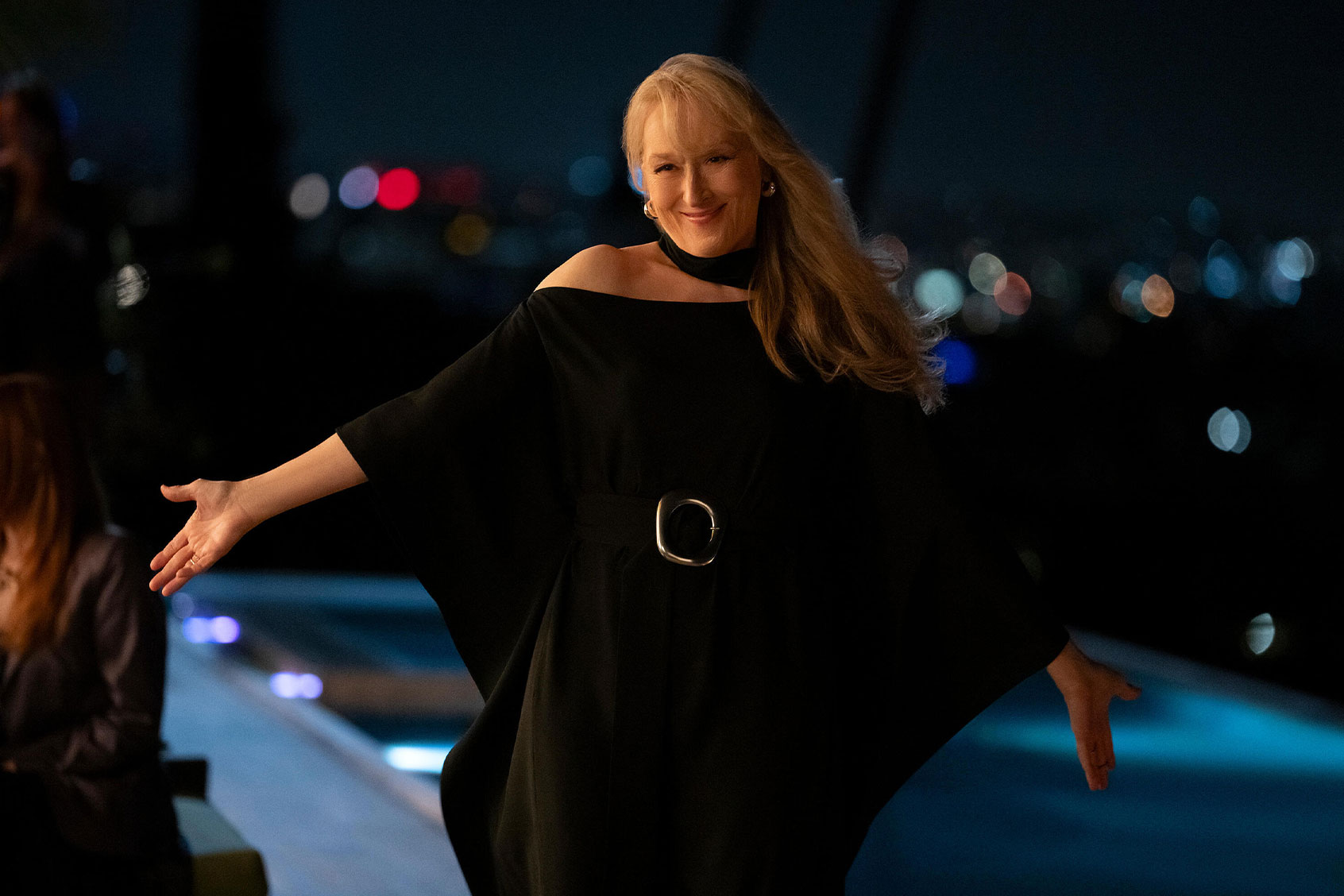
Remember how exciting it was when Meryl Streep joined “Only Murder in the Building”? Just when we thought the show couldn’t do better than the core cast’s chemistry and extraordinary guest star roster – with Sting coming out of nowhere in Season 1, and Tina Fey and Shirley MacLaine blessing the second season – the producers land one of the most respected and awarded actors in entertainment. And Paul Rudd besides!

When you’ve watched as much TV as yours truly has, though, a score of that caliber makes you nervous. After Streep, where else is there to go? The fourth season answers that with a concentrated formula of Hollywood stunt-casting overkill.

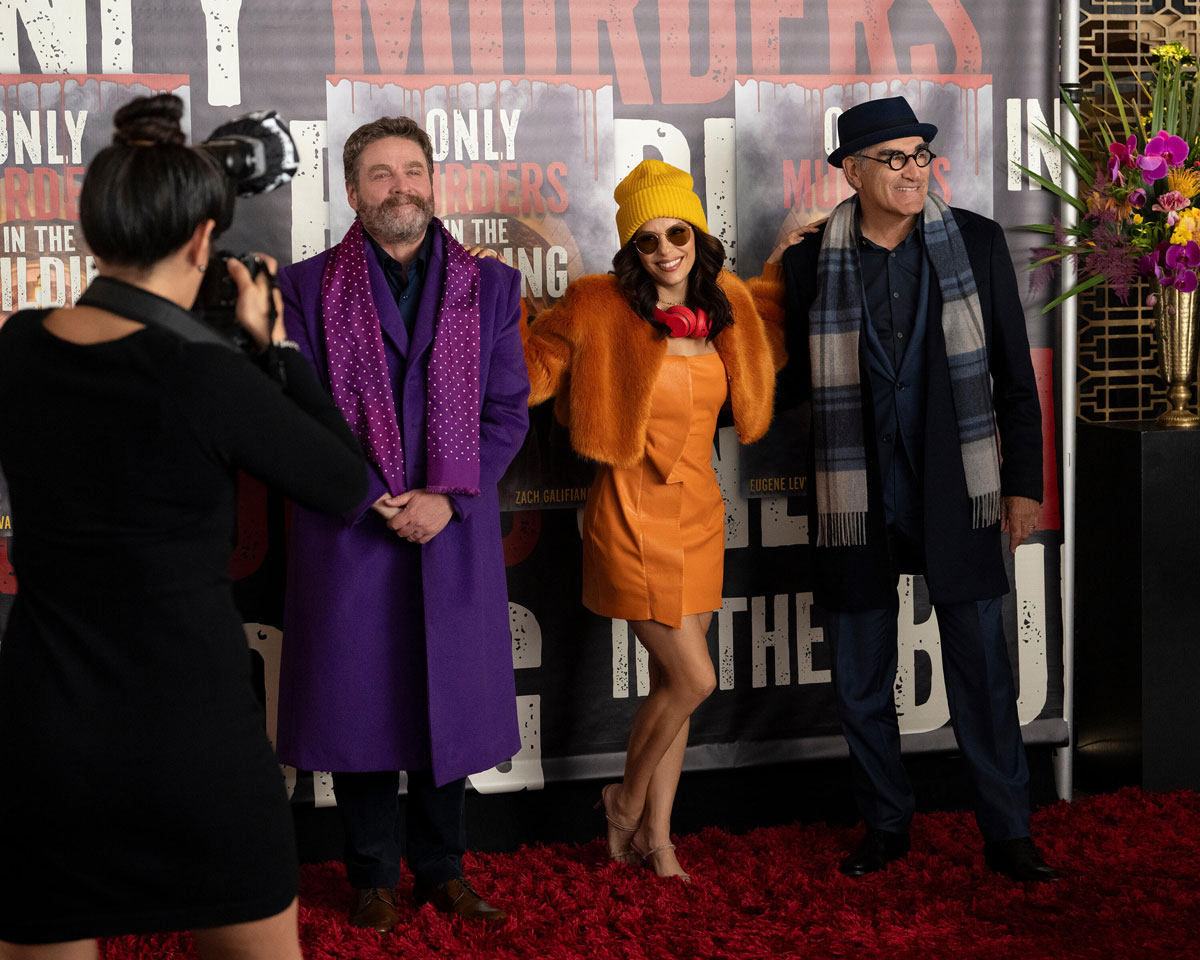
No doubt you’ve seen the promo trailer’s galaxy of stars – Eva Longoria! Zach Galifianakis! Eugene Levy! Richard Kind! Ladies and gentlemen, this show will see your Kumail Nanjiani and raise you Melissa McCarthy and Molly Shannon. It’s a who’s who of anyone that John Hoffman could kinda sorta fit into the Arconia within reason, budget and schedule availability.

Celebrity hounds might say that’s a good thing. Murder mystery connoisseurs are right to be concerned. Famous faces are distracting, especially on top of the show’s power trio of Selena Gomez, Martin Short and Steve Martin. And since it’s this show we’re talking about, every actor is having a stupendous time topping what they would normally do.

The net effect is to remove some of the cozy community sweetness and soul infused throughout “Only Murders” and replace it with shallow sparkle.

Don’t misunderstand – “Only Murders in the Building” is still a very good time and, if not as lovable as prior seasons, highly likable.

Gomez’s Mabel Mora, Martin’s Charles Haden-Savage and Short’s Oliver Putnam remain unchallenged in the realm of TV platonic odd throuples thanks to a chemistry that somehow prevents their quirks from exhausting their welcome.

Mabel, Charles and Oliver are winning because they can’t share their underdog insecurities regardless of how much their little podcast has grown in so little time. Concurrent to that exploding popularity is the rapidly expanding ambition of the show itself, upgrading from two hyperlocal murder mysteries involving longtime residents – hence, the podcast’s name – to tracking the homicide of a Hollywood star who happens to sublet for a while.

Only Murders in the BuildingOnly Murders in the Building (Hulu)Helping to extend their shelf-life this time around is the blizzard of side characters competing for the camera’s attention and ours, and at times ham-fistedly saying or doing things that are obvious meant to draw attention away from clues we should be paying attention to.  Another peril of veteran murder mysteries is that the creator’s whodunit patterns become easier to trace.
Even with all that to juggle, series co-creator John Hoffman, who directed and co-wrote the season premiere along with Joshua Allen Griffith, sticks a light-on-his-feet landing from last season’s cliffhanger.  

After piecing together the puzzle of who killed Hollywood’s barely talented Ben Glenroy, the mystery circles back to the first season feeling by tapping Charles’ longtime best friend, buddy and stunt double Sazz Pataki (Jane Lynch) to take her place on the slab. Any mourning over Lynch’s loss to the series is premature, although you might have already guessed that.

This series loves its flashbacks, “what if” fantasies and traipses through its characters’ memories and subconscious as much as its true crime amateur detectives love a good murder board.

But the satirical quips and zany swipes at auteur filmmaking, celebrity self-aggrandizement and Hollywood executive bluster mute the intimacy of what is the closest-to-home death to hit these three so far.

Sazz, more than Charles’ stand-in, lived an alternate version of his life. Their running joke is that she dated all of his exes, and yet somehow remained his closest friend. The third season closes with Hollywood calling and Sazz taking a bullet shot from somewhere outside of Charles’ apartment.

Its angle and Arconia’s layout means the assassin was also in the building – possibly a resident of the “weird” West side of the place, but in a city as big a New York and in a building with secret passages, who can say?

We need your help to stay independent

Before they can begin assembling their case, Mabel, Oliver and Charles fly to the other coast to take a meeting at a studio that's hot on making a movie based on their podcast. It’s a relief to report that the stories saying the show set up shop in Los Angeles aren’t entirely accurate. They visit, and that’s all they need to realize where home is and be blindsided by L.A. following them home.

You may be knocked for a loop too when the star-powered farce starts to thickly ooze into every corner of each episode, reducing the screentime for lovable regulars like Jackie Hoffman’s building grump Uma Heller. The good news is Michael Cyril Creighton’s Howard has more of a presence and yet Sevelyn is mighty scarce.

Such a fluster of jazz hands takes away from the show’s heart, which always returns to the notion that Oliver, Charles and Mabel are still finding themselves through each other.

Once the season gets underway the reason why becomes apparent, although the jury’s out as to whether that’s a suitable defense. Let’s just say Howard spends much of his screen time in the seven episodes made available for review (out of 10 total) as a vehicle to move clues from one square to the next.

Da’Vine Joy Randolph’s Detective Williams is in similar “also appearing” mode, likely due her being in much higher demand than in previous seasons.

But so is “Only Murders,” and the new season appears to take for granted that, tonally speaking, it can get away with the very thing it’s about.

Things get a bit too cutesy when Longoria shadows Mabel while tweaking her persona into a glamorous, aged-up day drinker – her version is a “a tableau of vices,” she says – alongside Levy stepping into Charles’ loafers, and Galifianakis begrudgingly taking on Oliver.

Only Murders in the BuildingOnly Murders in the Building (Hulu)These heightened takes of themselves playing fictional versions of other extremely famous people’s alter egos has a little too much “dude playing a dude disguised as another dude” energy.  
Maybe that’s all to draw a glaring contrast between plastic-fantastic L.A. and New York’s in-your-face honesty, or to make the pair of alleged twin auteur filmmakers look extra weird and Shannon’s extravagantly awful executive especially clownish. (Although her obligatory late-in-the-season meltdown is a true highlight.)

Even in Manhattan, the show finds ways to stuff in a cameo or two for their own sake —sprinkles on sprinkles, like the Westies crowd.  Nanjiani’s Christmas-obsessive and Kind’s eyepatch guy are a part, along with Desmin Borges and others, take the shape of a MacGuffin family that’s all scowls and weirdness signifying very little. For the most part.


Want a daily wrap-up of all the news and commentary Salon has to offer? Subscribe to our morning newsletter, Crash Course.


Such a fluster of jazz hands takes away from the show’s heart, which always returns to the notion that Oliver, Charles and Mabel are still finding themselves through each other. That’s truer of Gomez’s character this time around than Oliver, who’s still figuring out what he and Streep’s Loretta are to each other.

Mabel’s certainly more introspective than Charles, who's immersed in figuring out the how and why of his dearest friend being killed.  But as she reckons with imposter syndrome so, too, does this “greatest hits” of a season.

Having said all that, with precious little else on to lift our moods at a time we so badly need a boost, “Only Murders in the Building” is still one of TV’s best comforts. It may take a while to find its stride (which it does, by the seventh episode) and lack any addictive hooks like last season’s surprise Broadway banger “Which of the Pickwick Triplets Did It?”  

But it still gives us plenty of motive to stick with it, overwhelmed though we may be by its amplified dazzle. Oliver seized on that very thing to make his Broadway death rattle into a singing triumph. There’s little reason not to believe this season isn’t capable of pulling off a similar turnaround in the end.

The fourth season of "Only Murders in the Building" premieres Tuesday, Aug. 27 on Hulu. New episodes stream on Tuesdays.

Republicans invent “desperate” and quickly debunked conspiracy theory about Tim Walz’s dog

On Monday, several prominent Republicans launched their latest attack on Tim Walz, this time coming after not his background or his policy, but his dog Scout. 

“This is Tim Walz tweeting about his dog Scout. Only problem is that these are two completely different dogs,” right-wing columnist Dustin Grage wrote on X. 

He shared two photos Walz had previously posted. One photo is from June 2022 and shows Walz with his dog Scout, who is a black labrador mix, and is captioned: “Sending a special birthday shoutout to our favorite pup, Scout.”

The other photo is from October 2022 and shows Walz petting a different dog at a dog park. “Couldn’t think of a better way to spend a beautiful fall day than at the dog park. I know Scout enjoyed it,” the caption reads.

Republicans falsely claimed the photos showed Walz was lying about the dog he’s very much had since 2019

Sen. Eric Schmidt, R-Mo., wrote that Walz's dog posts were “creepy” and “weird.”

“Wait so Walz is even lying about his dog?” wrote Kimberly Guilfoyle, a former Fox News host and the fiancee of Donald Trump Jr. 

The rumor was quickly debunked by video of Scout and the other dog pictured running around the dog park together on that same day. 

This is just the latest attack from Republicans on Walz. From questioning his military background to his relationship with his son, none of their criticisms have landed, argued MSNBC host Jen Psaki. They’ve now gotten so “desperate” they’ve come after his dog, Psaki said. “Better luck next time, guys."

With only gloves to protect them, farmworkers say they tend sick cows amid bird flu

GREELEY, Colo. — In early August, farmworkers gathered under a pavilion at a park here for a picnic to celebrate Farmworker Appreciation Day. One sign that this year was different from the others was the menu: Beef fajitas, tortillas, pico de gallo, chips, beans — but no chicken.

Farms in Colorado had culled millions of chickens in recent months to stem the transmission of bird flu. Organizers filled out the spread with hot dogs.

No matter the menu, some dairy workers at the event said they don’t exactly feel appreciated. They said they haven’t received any personal protective equipment beyond gloves to guard against the virus, even as they or colleagues have come down with conjunctivitis and flu-like symptoms that they fear to be bird flu.

“They should give us something more,” one dairy worker from Larimer County said in Spanish. He spoke on the condition of anonymity out of fear he’d lose his job for speaking out. “What if something happens to us? They act as if nothing is wrong.”

Agricultural health and safety experts have been trying to get the word out about how to protect against bird flu, including through bilingual videos on TikTok showing the proper way to gear up with respirators, eye protection, gloves, and coveralls. And Colorado’s health and agriculture departments have offered a free month’s supply of protective equipment to any producer who requests it.

But so far, many farms aren’t taking them up on it: According to numbers provided by the state health department in late August, fewer than 13% of the state’s dairies had requested and received such PPE.

The virus is known to infect mammals — from skunks, bears, and cows to people and house pets. It began showing up in dairy cattle in recent months, and Colorado has been in the thick of it. Ten of the 13 confirmed human cases in the U.S. this year have occurred in Colorado, where it continues to circulate among dairy cows. It isn’t a risk in cooked meat or pasteurized milk but is risky for those who come into contact with infected animals or raw milk.

Weld County, where the farmworker event was held, is one of the nation’s top milk producers, supplying enough milk each month this year to fill about 45 Olympic-size swimming pools, according to U.S. Department of Agriculture data. Neighboring counties are notable producers, too.

Public health officials fear the havoc a new form of the flu could wreak if it spreads among people.

Concerns are growing about undiagnosed illness among farmworkers because of a lack of testing and safety precautions. One reason for concern: Bird flu and seasonal flu are capable of gene trading, so if they ended up in the same body at the same time, bird flu might end up with genes that boost its contagiousness. The virus doesn’t appear to be spreading easily between people yet. That could change, and if people aren’t being tested then health officials may be slow to notice.

Strains of seasonal flu already kill some 47,000 people in the U.S. a year. Public health officials fear the havoc a new form of the flu could wreak if it spreads among people.

The Centers for Disease Control and Prevention recommends that dairy workers don a respirator and goggles or a face shield, among other protections, whether they are working with sick animals or not.

A recent study found that not all infected cows show symptoms, so workers could be interacting with contagious animals without realizing it. Even when it is known that animals are infected, farmworkers often still have to get in close contact with them, sometimes under grueling conditions, such as during a recent heat wave when Colorado poultry workers collected hundreds of chickens by hand for culling because of the outbreak. At least six of the workers became infected with bird flu.

One dairy worker in Weld County, who spoke on the condition of anonymity for fear of losing his job, said his employer has not offered any protective equipment beyond gloves, even though he works with sick cows and raw milk.

His bosses asked the workers to separate sick cows from the others after some cows produced less milk, lost weight, and showed signs of weakness, he said. But the employer didn’t say anything about the bird flu, he said, or suggest they take any precautions for their own safety.

He said he bought protective goggles for himself at Walmart when his eyes became itchy and red earlier this summer. He recalled experiencing dizziness, headaches, and low appetite around the same time. But he self-medicated and pushed through, without missing work or going to a doctor.

“We need to protect ourselves because you never know,” he said in Spanish. “I tell my wife and son that the cows are sick, and she tells me to leave, but it will be the same wherever I go.”

He said he’d heard that his employers were unsympathetic when a colleague approached them about feeling ill. He’d even seen someone affiliated with management remove a flyer about how people can protect themselves from the bird flu and throw it in a bin.

The dairy worker in neighboring Larimer County said he, too, has had just gloves as protection, even when he has worked with sick animals — close enough for saliva to wipe off on him. He started working with them when a colleague missed work because of his flu-like symptoms: fever, headache, and red eyes.

“I only wear latex gloves,” he said. “And I see that those who work with the cows that are sick also only wear gloves.”

He said he doesn’t have time to wash his hands at work but puts on hand sanitizer before going home and takes a shower once he arrives. He has not had symptoms of infection.

Such accounts from dairy workers echo those from farmworkers in Texas, as reported by KFF Health News in July.

“Employers who are being proactive and providing PPE seem to be in the minority in most states,” said Bethany Boggess Alcauter with the National Center for Farmworker Health, a not-for-profit organization based in Texas that advocates for improving the health of farmworkers and their families. “Farmworkers are getting very little information.”

But Zach Riley, CEO of the Colorado Livestock Association, said he thinks such scenarios are the exception, not the rule.

“You would be hard-pressed to find a dairy operation that isn’t providing that PPE,” he said. Riley said dairies typically have a stockpile of PPE ready to go for situations like this and that, if they don’t, it’s easily accessed through the state. “All you have to do is ask.”

Producers are highly motivated to keep infections down, he said, because “milk is their life source.” He said he has heard from some producers that “their family members who work on the farm are doing 18-to 20-hour days just to try to stay ahead of it, so that they’re the first line between everything, to protect their employees.”

Colorado’s health department is advertising a hotline that ill dairy workers can call for help getting a flu test and medicine.

Project Protect Food Systems Workers, an organization that emerged early in the covid-19 pandemic to promote farmworker health across Colorado, is distributing PPE it received from the state so promotoras — health workers who are part of the community they serve — can distribute masks and other protections directly to workers if employers aren’t giving them out.

Promotora Tomasa Rodriguez said workers “see it as another virus, another covid, but it is because they don’t have enough information.”

She has been passing out flyers about symptoms and protective measures, but she can’t access many dairies. “And in some instances,” she said, “a lot of these workers don’t know how to read, so the flyers are not reaching them, and then the employers are not doing any kind of talks or trainings.”

The CDC’s Nirav Shah said during an Aug. 13 call with journalists that awareness about bird flu among dairy workers isn’t as high as officials would like it to be, despite months of campaigns on social media and the radio.

“There’s a road ahead of us that we still need to go down to get awareness on par with, say, what it might be in the poultry world,” he said. “We’re using every single messenger that we can.”

KFF Health News correspondents Vanessa G. Sánchez and Amy Maxmen contributed to this report.

Healthbeat is a nonprofit newsroom covering public health published by Civic News Company and KFF Health News. Sign up for their newsletters here.

KFF Health News is a national newsroom that produces in-depth journalism about health issues and is one of the core operating programs at KFF—an independent source of health policy research, polling, and journalism. Learn more about KFF.

Subscribe to KFF Health News' free Morning Briefing.

Higher prices, lower turnover, more workers: The reality of California’s $20 fast-food minimum wage

When California governor Gavin Newsom signed AB 1228 — legislation which raised the state hourly minimum wage for fast-food employees from $15.50 to $20 — into law last September, members of the fast-food industry were left with a lot of questions before the bill officially went into effect on April 1. 

To address some of these, the State of California’s Department of Industrial Relations set up an FAQ board. Their material ranged from broad topics, like what constitutes a “fast-food” restaurant under the new law (the state defines it as a “limited-service restaurant” that sells food or drink for immediate consumption, and has more than 60 locations nationwide ), to the more obscure, like whether employers could simply increase the amount of meal or lodging credits administered to employees to count against the minimum wage (no).  

However, it didn’t address one of fast-food employers’ biggest questions: How would they actually pay for their workforce under the new law? 

While the decision was lauded by many labor activists as part of broader efforts to improve working conditions and address wage disparities, some California franchise owners began preemptively cutting employees’ hours in advance of the minimum wage hike. 

For instance, two days after the bill went into effect, Business Insider reported that two Pizza Hut franchisees in the state said they “planned to scrap in-house delivery” and instead rely on third-party services, resulting in around 1,200 workers being laid off. A few days before that, in March, Alex Johnson, who owned 10 Auntie Anne’s Pretzels and Cinnabon restaurants in the San Francisco Bay area, laid off his office staff and told the Associated Press he would now rely on his parents to help with payroll and human services. 

“I try to do right by my employees,” Johnson told the publication at the time. “I pay them as much as I can, but this law is really hitting our operations hard.” 

Many economists and franchisees predicted AB 1228 would cause the fast-food industry in California to unequivocally crash, however, according to new state and federal employment data, California’s fast-food industry has actually added jobs every month this year — including 11,000 new jobs since the wage increase officially went into effect in April. In a release, Newsom’s office reported that since raising worker wages, every month this year has seen consistent fast-food job gains, and nearly each month has seen more jobs than the same month last year.

We need your help to stay independent

“What’s good for workers is good for business, and as California’s fast food industry continues booming every single month our workers are finally getting the pay they deserve,” Newsom said in a written statement. “Despite those who pedaled lies about how this would doom the industry, California’s economy and workers are again proving them wrong.”

This isn’t exactly unexpected. Michael Reich, professor of economics at the University of California-Berkeley, said history didn’t support a lot of doomsday predictions about the future of fast-food in California. 

"The knock is that a minimum wage increase would lead to businesses closing, workers getting laid off, and much higher prices," Reich told Public News Service. "That's been the knock on every minimum wage increase since 1938. Indeed, a large number of studies have found that minimum wages do not reduce employment in fast food."

Yet despite the positive job growth, the implications of AB 1228 have also proven to be complicated. As expected, higher wages have contributed to an increase in menu prices across fast-food chains, with many companies passing on the cost to consumers. 

"Indeed, a large number of studies have found that minimum wages do not reduce employment in fast food."

This summer, the nonprofit Employment Policies Institute surveyed the owners or managers of 182 limited-service restaurants in California and 98% reported they had already raised menu prices, with 93% anticipating they will have to raise menu costs again next year to accommodate rising costs. Relatedly 92% of owners think that “raising menu prices will adversely affect customer foot traffic.” 

It’s important to note that this phenomenon isn’t entirely unique to California—fast-food giants nationwide have been adjusting their pricing strategies to cope with rising labor costs, sparking what some have dubbed the “value meal wars.” Companies are fiercely competing to offer the most affordable meal deals, balancing the need to maintain profitability while attracting cost-conscious customers.

On the flip side, the higher wages have had an unexpected benefit: lower employee turnover. With a $20 per hour wage, fast-food jobs in California have become more attractive to higher-quality applicants, reportedly leading to a more stable and skilled workforce. 

Joseph Bryant, the executive vice president of the Service Employees International Union — which was a major proponent of AB 1228 — recently told NBC Bay Area that the industry has not only added jobs, but “multiple franchisees have also noted that the higher wage is already attracting better job candidates, thus reducing turnover."

This stability could allow some franchises to streamline operations and improve service quality, potentially offsetting some of the increased costs. However, the pressure on franchise owners remains intense, as they navigate the fine line between staying competitive and managing new operational expenses. 

From “10” to “Victor/Victoria,” PBS’ delightful Blake Edwards doc honors the lover of slapstick

PBS' “Blake Edwards: A Love Story in 24 Frames” is an affectionate cinematic portrait of the actor, writer, director and artist. The documentary chronicles Edwards’ career chronologically, from his difficult childhood in Tulsa, Oklahoma, to his move to California, where he started working in the entertainment industry, with radio, television and film productions, culminating with his honorary Oscar in 2004. Director Danny Gold traces Edwards’ personal and professional highs and lows, features home movie footage and family photographs, and also wrings laughs with film clips from several of the director’s classic comedies, including “Breakfast at Tiffany’s,” “10” and “Victor/Victoria.”  

While his adult children, Jennifer and Geoffrey Edwards, remember their father fondly, Julie Andrews, along with several comedians, including Patton Oswalt and Jay Chandrasekher, provide commentary about highlights from Edwards’ career. When filmmaker Rian Johnson recalls, “As a kid, there was nothing better than the opening sequence of the ‘Pink Panther’ films,” it is hard for viewers of a certain age racing down memory lane not to agree with him.

“Blake Edwards: A Love Story in 24 Frames” opens with Andrews describing the “silly but elegant” waterfowl sculpted by her late husband, and it is an apt symbol for him. Edwards was classy, but also slapstick-y. His daughter confirms that Laurel and Hardy were her father’s muse, leading Paul Feig (“Bridesmaids”) to explain that Edwards’ genius was his ability to inject lowbrow humor, gags and physical comedy into a highbrow setting. 

Case in point: “The Party,” where Hrundi V. Bakshi (Peter Sellers), wreaks havoc at a fancy Hollywood insider’s dinner table with a chicken and a woman’s hairpiece, as well as in a bathroom with a broken toilet, a painting and a roll of toilet paper. These hilarious scenes beautifully illustrate Edwards’ “magic,” recounted in an archival interview, about doing a joke, topping that joke and then topping the topper. It may be cute that Feig and other interviewees are seen watching the clips but their annotations feel like overkill. 

The discussion of “The Party” does allow Jay Chandrasekher to talk about Sellers playing a character in brownface, acknowledging that at the time, Sellers was the hero of the film and gets the girl, which was rare, practically excusing the performance. Critic Leonard Maltin adds that “what was acceptable in the late '60s, no longer is,” which feels like a balanced if equally forgiving response. This discussion echoes an earlier conversation in the documentary about Mickey Rooney’s problematic and controversial performance in yellowface in “Breakfast at Tiffany’s,” and Edwards is seen expressing regret about the racism in a 2006 interview. 

There are other low points in Edwards’ career, from going overbudget on “Darling Lili” (1970), the first film he made with Andrews, to fighting with a studio head over the final cut of “Wild Rovers” (1971). These failures contributed to his ongoing depression and even prompted him to move to Europe and away from the industry. However, after he had a box office hit with “Return of the Pink Panther,” (1975) he was able to continue his comeback and create two personal films, “10” (1979), and “S.O.B.” (1981).

We need your help to stay independent

The documentary suggests that Edwards wanted control of his projects. It was why he shifted from acting in films in the 1940s, to writing — his TV series “Peter Gunn” (1958) was a huge hit — and eventually directing. “Blake Edwards: A Love Story in 24 Frames” shows how his work influenced him; he reportedly stopped drinking and smoking after making the drama “Days of Wine and Roses” (1962) about an alcoholic. But it was his art imitating life where Edwards was most successful. 

His blockbuster hit “10” featured a “lived in” bedroom scene between George (Dudley Moore as Edwards’ alter ego) and his patient girlfriend, Samantha (Julie Andrews), where she reprimands him for his sexist talk and behavior. Moreover, it is quite different from the bedroom scene between George and his fantasy girl, Jenny (Bo Derek), which occurs in the end of the film where George sees that Jenny may not be who (or what) he wants after all. Derek remarks in the doc that Edwards “loved women” and created strong female characters, while Patton Oswalt unpacks the “terror George has meeting a truly liberated woman.” These impressions enhance the appreciation of the film. 

The success of “10” may have allowed Edwards to make “S.O.B.,” his vitriolic satire of Hollywood, where Felix Farmer (Richard Mulligan as Edwards alter ego) is a suicidal filmmaker. Andrews and others effuse about the film, which has its moments — including a famous eight-second sequence involving Andrews bearing her breasts — but “S.O.B.” feels overpraised. Likewise, hearing that “Darling Lili” is being rediscovered now also feels like a stretch despite Rob Marshall and others gushing about its fabulous opening sequence.

Edwards had another hit, arguably his last, with “Victor/Victoria,” (1982) but the documentary focuses equally on the Broadway production and Andrews declining her Tony nomination because no one else in the cast and crew were recognized. Actress Lesley Ann Warren, who received an Oscar nomination for her role in the film version, gets a sound bite with her insightful comment about the film’s depiction of gender. One wishes she had been featured more prominently. 


Want a daily wrap-up of all the news and commentary Salon has to offer? Subscribe to our morning newsletter, Crash Course.


Gold includes one more passion project, “That’s Life!” (1986), which is known as Edwards’ “cathartic home movie” as it was filmed in Edwards and Andrews’ home and starred the couple’s friends and family members. Harv (Jack Lemmon as Edwards alter ego) is a self-pitying, self-involved man whose wife (Andrews) on his 60th birthday secretly awaits the results of a cancer biopsy. It’s a bittersweet if atypical Edwards film, so nice that it was included. Many of the director’s subsequent film, such as “Blind Date,” “Sunset,” “Skin Deep” and “Switch” are ignored.

The documentary ends with footage from a 2009 exhibition of Edwards’ paintings and sculptures, as well as a poem Andrews reads aloud about her husband. There is certainly no discussion of the director’s last theatrical feature, the execrable “Son of the Pink Panther” which has Roberto Benigni playing Inspector Clouseau’s son. That is probably for the best. “Blake Edwards: A Love Story in 24 Frames” is a loving tribute to the filmmaker, designed to prompt fans to reevaluate if not revisit his work.  

“Blake Edwards: A Love Story in 24 Frames” premieres on “American Masters” on PBS on Aug. 27.

In anti-Trump letter, 230 former GOP staffers say “we’re voting for Vice President Kamala Harris”

Over 200 Republicans who worked for former President George W. Bush, Sen. Mitt Romney and the late Sen. John McCain have endorsed Vice President Kamala Harris, warning in a letter that a second Donald Trump presidency would be an "untenable" threat to American and the world order, USA Today reported

The letter, which as of Monday had amassed 238 signatures, includes several high-profile GOP staffers. Signatories include Bush’s former chief of staff, Jean Becker; two of McCain’s former chiefs of staff, Mark Salter and Chris Koch; Romney's 2012 campaign finance chair, David Nierenverg; and Bush’s undersecretary for energy, David Garman.

The alum of Republican presidential campaigns claim that if the GOP candidate were to win the 2024 election, it “will hurt real, everyday people and weaken our sacred institutions,” The Washington Post reported.

The effort builds on a 2020 campaign by anti-Trump Republican staffers who announced in a similar letter that they would vote for President Joe Biden. 

"We reunite today, joined by new George H.W. Bush alumni, to reinforce our 2020 statements and, for the first time, jointly declare that we’re voting for Vice President Kamala Harris and Gov. Tim Walz this November," the alumni wrote, USA Today reported.

In the pro-Harris open letter, the GOP alumni wrote that they would vote for Harris and her running mate, Minnesota Gov. Tim Walz, despite policy differences and “ideological disagreements” because the alternative — Trump — would be “simply untenable.” 

The Republican alumni warn that Trump and his running mate, Sen. JD Vance, “kowtow to dictators like [Russian President] Vladimir Putin while turning their backs on our allies. We can’t let that happen.”

They also wrote that “moderate Republicans and conservative independents in key swing states” played an essential role in securing Biden’s 2020 presidential win and that these individuals must again “take a brave stand” by supporting Harris over Trump.

Former President Trump’s spokesperson Steven Cheung responded to the letter in an email, claiming that the group “would rather see the country burn down than to see President Trump successfully return to the White House.”

Starbucks will give new CEO his own corporate private jet to fly between Seattle and California home

New Starbucks CEO Brian Niccol won’t be relocating to the company’s Seattle headquarters in anticipation of starting his new role next month. According to Niccol’s offer letter, Starbucks Corporation is allowing the Chairman and CEO to commute weekly from his residence in Newport Beach, California, to Seattle.

“During your employment with the Company, you will not be required to relocate to the Company’s headquarters (currently in Seattle, Washington),” the letter, dated Aug. 11, specified. “You agree to commute from your residence to the Company’s headquarters (and engage in other business travel) as is required to perform your duties and responsibilities.”

As for how Niccol will be traveling, Starbucks is providing him with his own corporate jet to commute from one city to another at his own convenience. Niccol will be eligible to use the company aircraft for “business-related travel in accordance with the Company’s travel policy” and “travel between your city of residence and the Company’s headquarters in Seattle, Washington,” the letter added. The jet can also be used for his “personal travel” as long as it’s “up to a maximum amount of $250,000 per year,” according to company policy.

Niccol’s transportation perk has faced backlash from a handful of critics who pointed what some believe to be Starbucks’ blatant hypocrisy. The company, which branded itself as an environmentally sustainable business, recently redesigned its cold drinks cups to use less plastic and eliminated plastic straws. Starbucks also set a multi-decade commitment to reduce its carbon, water and waste footprints by half by 2030.

Jet travel is a major source of carbon emissions, especially compared to commercial flights. A 2023 study by the Institute for Policy Studies found that private jets emit at least 10 times more pollutants per passenger than commercial planes. Carbon emissions from aviation have also reached “80% of their pre-pandemic peak,” according to statistics from the International Energy Agency.

Rachel Maddow mocks latest Trump rallies for “getting a little bit weird”

MSNBC host Rachel Maddow on Monday called out former President Donald Trump's recent campaign rallies, invoking a heavily favorited adjective amongst Democrats describing the GOP: "weird."

Maddow kicked off her Monday monologue by underscoring some of the key differences between the former president's campaign and that of Vice President Kamala Harris, noting how MAGA events have been altogether strange. Harris had seen surging popularity ever since President Joe Biden chose to withdraw from the presidential race. The veep's campaign has raised $540 million since its launch in July; her campaign manager, Jen O’Malley Dillon, wrote in a memo that the money raised is "the most for any presidential campaign ever.”

Yet, Maddow cautioned her viewers to remember that the race is still a narrow one despite Harris' strong polling. 

“When it is this close, little differences between the candidates and their campaigns can make a very interesting, not only for an interesting contrast but can make a big difference,” the host said. 

Still, Harris' ballooning funds and energized base of supporters are compounded by reports that Trump is "terrified" to face her on the debate stage on September 10. On Sunday night, the ex-president on his Truth Social platform teased that he would not appear for the debate, which ABC will host. Trump wrote that he had watched ABC's Sunday show, which featured a “so-called Panel of Trump Haters."

“Why would I do the Debate against Kamala Harris on that network?" he asked. 

Maddow argued that Trump's team “may try to get all the way to the election without a single debate.”

“Also worth noting that Trump’s campaign events are getting a little bit weird,” she continued, before citing a recent rally in Glendale, Arizona, in which Republican Senate candidate Kari Lake — a fervent MAGA supporter — spoke for much longer than her allotted time onstage. The MSNBC host displayed images taken from behind where Lake was standing to illustrate how the GOP-er was repeatedly told to exit the stage to clear the way for Trump.

“As you see there, it says minus 5:35, meaning you are five minutes and 35 seconds over your allotted time," Maddow explained. "And then it says underneath, ‘please get off the stage.’ But then look almost a minute later, there’s this other shot. Now let’s see 6:23, so she’s now six minutes and 23 seconds over her allotted time. And now the instruction to her says, ‘Please get off stage Trump waiting.’”

We need your help to stay independent

Maddow continued by noting how Trump at the same event got an endorsement from an Arizona police union.

"While the union president was making his pro-Trump remarks, basically giving the endorsement, it seems like Trump got bored or annoyed," Maddow observed. "He just kinda crept up on the guy and was looming over his shoulder and frowning at him while the guy was speaking."

Trump eventually told the speaker, Justin Harris, "gotta go," leading Harris to gather his speech papers and depart the stage awkwardly. 

“That’s a nice way to receive an endorsement," Maddow added. "And now today, that same police union announced that they’re endorsing the Democratic US Senate candidate in Arizona, the guy who’s running against Republican Kari Lake."

“I mean, they had already given [Trump] his endorsement, so presumably, that one couldn’t be reeled back in. But you know, if this situation here, if this was Trump trying to turn on the charm to also get this union’s endorsement for the Republican Senate candidate he was ostensibly there to support. Well, we all know how good he is at sharing the glory,” she concluded. 

Collapse of snow crab populations due to climate change, study finds

The Bering Sea was once full of snow crabs (Chionoecetes opilio), providing an abundant food source worth more than a quarter-billion dollars. But a few years ago, the crab populations crashed, with more than 90% disappearing, an estimated 47 billion animals vanishing. In 2022, crab fishing season was cancelled. Scientists hypothesized at the time that climate change was the culprit; now a recent study in the journal Nature Climate Change has confirmed it.

Marine biologists from the U.S. National Oceanic and Atmospheric Administration analyzed temperature at the bottom of the sea, algae bloom levels under the sea ice, ice cover and the makeup of Arctic snow crab communities from 1972 to 2022. In the process, they determined that the snow crab population has dramatically decreased as a result of heating from burning fossil fuels.

"The warming and loss of Bering Sea sea ice that caused the snow crab collapse wasn't natural climate variability, but instead was the consequence of human-caused climate change," lead author and NOAA scientist Dr. Michael Litzow told Salon. Although the negative impact on snow crab fisheries is short-term for now, that may not remain the case.

"The chance of getting very Arctic conditions in the traditional fishing grounds has gone from about 56% every year in the preindustrial climate to about 8% in the current climate," Litzow said. "At the same time, the odds of getting very subarctic / ice-free conditions have increased about 200-fold. So the time to plan for the loss of Arctic conditions in the traditional area for this fishery is now."

The study noted that as snow crabs struggle to adapt to Arctic sea conditions becoming more similar to sub-Arctic conditions (a process known as borealization), the business interests that invest in crabbing will likewise need to evolve — or go extinct.

"The rapid borealization we demonstrate here highlights the need for adaptation planning by fisheries managers and stakeholders," Litzow said. "By placing this fishery collapse in the context of a human-induced, wholesale ecosystem transition, our results may give managers and stakeholders a new framework for recognizing and adapting to the speed and magnitude of change that is occurring in one of the most productive fisheries ecosystems in the world."

Fox News’ Jesse Watters says generals will “have their way with” Harris, prompting on-air pushback

Fox News personality Jesse Watters was forced to walk back an ill-landing comment on Vice President Kamala Harris during a panel discussion on Monday, Mediaite reported.

Waters, a prime-time anchor for the network, was met with some resistance when he claimed that, if Harris is elected president, generals in the Situation Room will “have their way with her.”

This sexually suggestive comment came during a discussion of the third anniversary of the U.S. withdrawal from Afghanistan and the killing of 13 U.S. service members and 170 Afghans in 2021 suicide bombings. Republicans have long criticized President Joe Biden’s handling of the withdrawal.

“She was the last in the [Situation] Room [on] Afghanistan, she was the border czar, and she was the deciding vote on trillions in inflationary spending,” Watters said, Mediaite reported. “On those three most popular Joe Biden items, she’s basically like a conjoined twin. You cannot separate the two.”

Harris was never the "border czar," but was instead charged with helping Central American nations address the conditions causing people to flee. Contra Watters, Harris' vote for the Inflation Reduction Act was followed by a steady reduction in inflation.

But it was Watters' comment about the generals that prompted on-air pushback.

Jeanie Pirro was the first to react, reprimandeing Watters for his sexually suggestive comment. “I don’t like that. Take it back,” she said. Her colleague Dana Perino followed by condemning the comment calling Watters out using his full name.

Without apologizing, Watters tried to downplay the sexist nature of the comment.

“Figuratively, again: Have their way with her! Control her. Not in a sexual way,” he replied.

Don’t look back in anger: The long road that led to the Oasis reunion

The band of brothers is back together.

After years of fans begging for brothers Liam and Noel Gallagher to reconcile and reunite their band — it looks like some fan-driven dreams do come true. On Monday, the beloved British rock band Oasis' official X account tweeted a video that showed the date "27.08.24" before it flicked and transitioned to "8am." Following the cryptic message the band announced on their website Tuesday, "Oasis today end years of feverish speculation with the confirmation of a long-awaited run of UK and Ireland shows forming the domestic leg of their OASIS LIVE '25 world tour."

But long before Oasis was planning a reunion tour, they were constantly, the members had an infamously tumultuous relationship. At the center of the band's conflict was the feud between brothers Liam and Noel.

During the band's global success with hits like "Wonderwall" and "Don’t Look Back in Anger," behind the scenes and in front the world, the brothers struggled with their relationship. The band was never the same after Noel left the group in 2009 after a brawl at the Rock en Seine festival in Paris. Liam and the two remaining members stayed in the group under a new name, Beady Eye, until it disbanded in 2014. Noel had split off for his own band, Noel Gallagher's High Flying Birds.

Salon dives into how – from breakups to public spats and bitter animosity brewing for decades – 15 years later, the Gallagher brothers have come together for a surprising reunion:

Liam and Noel's strained relationship throughout Oasis

Much has been reported about the brotherhood or lack thereof between Liam and Noel. The brothers were born six years apart in Manchester, England with Noel being the oldest. Their longstanding beef began as early as their childhood. However, this sibling animosity didn't come to a head until they were in Oasis together. They've both famously taken sharp jabs at each other over the last three decades with outlandish comments like Noel saying Liam is “a man with a fork in a world of soup."

In the band's 1994 debut with "Definitely Maybe," the band's rapid success pushed them to try and replicate that formula in the U.S. But that dream took a detour when the band performed in Los Angeles allegedly high on crystal meth and played a reportedly terrible set. This led to Liam hitting Noel with a tambourine and walking off the stage before the performance was over. Not long after, Noel quit the tour but rejoined the group on another date in the U.S.

Another historic piece of lore in the brother's very public squabbles is the release of an audio recording of an interview the brothers did before their debut release. The audio labeled "Wibbling Rivalry" is 14 minutes of the Gallaghers leveling insults at each other. Liam can be heard telling Noel "You can stick your thousand pounds right up your f***ing a**e ’til it comes out your f***ing big toe."

In 1995, the band's success in the U.S. also threatened the Gallaghers' already fraught relationship. Under the influence of drugs like cocaine, the brothers were set to perform at MTV Unplugged in London but Liam who claimed he had laryngitis missed the performance. He heckled Noel from a balcony while "chain-smoking and guzzling beer," Rolling Stone reported. Liam then decided he would not tour in America. Noel called this decision the move that “killed [Oasis] stone dead in America."

Other volatile moments between the brothers include Noel quitting again during the band's 2000 world tour because of a fight where Noel questioned the legitimacy of Liam's daughter. Noel said of the incident to the magazine Q, "I’ve never forgiven him because he’s never apologized." 

While he rejoined the band later that year, their relationship had entirely frayed even though they continued to record music and tour together for the next nine years. Most of their grievances were revealed through press interviews. 

Noel leaves Oasis for good in 2009

However, the musical partnership between the brothers would end after two decades of constant fighting. Minutes before the band was supposed to play a concert in Paris, the brothers physically fought backstage, leading to Liam eventually smashing one of Noel’s guitars and "wielding it like an axe." This spiraled into Liam suing Noel over what he said was Noel's "false" account of the events.

In a statement, Noel said, "It's with some sadness and great relief to tell you that I quit Oasis tonight. People will write and say what they like, but I simply could not go on working with Liam a day longer."

But even the breakup couldn't slow the venom between the brothers. Starting in 2009, Noel and Liam have famously took to Twitter to relentlessly drag each other.

In 2016, Liam tweeted out a picture of Noel with the caption “POTATO.” He also said in an interview, “Lots of people say I need to chill out about Noel. Not until they stop Twitter. That c**t will always get it from me.”

Noel said about the tweeting, "I guess it was about him staying relevant. If you’re him, what else is there to tweet about?" 

We need your help to stay independent

Oasis reunited?

Even though the online beef devolved into what Noel called "ugly" hate projected onto his family — the band is reuniting. 

At the time, Noel said of their online feud that Liam's messages "only heightens my resolve that I’ll never walk the stage with that band again for that reason."

The rumblings of a reunion came as the Sunday Times reported that industry sources are "adamant" that the brothers will reunite for high-profile concerts in the summer of 2025. Liam had also been dropping hints to people online. In a thread about the Sunday Times article on X, he responded to a comment, "See you down the front."

He also tweeted a cryptic tweet: “I never did like that word FORMER.”

On Tuesday, the band's website stated that Oasis will be touring across the U.K. and Ireland specifically hitting, "Cardiff, Manchester, London, Edinburgh and Dublin in the summer of 2025." Tickets will be available to purchase on Aug. 31.

Oasis said of their bitter feud ending, "The guns have fallen silent. The stars have aligned. The great wait is over. Come see. It will not be televised."

Democrats sue to block new Georgia election rules that they say will invite “chaos” in November

Democrats filed a lawsuit Monday against the Georgia State Election Board to block two new rules that would allow local election officials to delay the certification of election results, arguing that the rules invite post-election “chaos.”

Earlier this month, the election board, which is dominated by pro-Trump Republicans, voted to give local election officials the power to conduct a “reasonable inquiry into election results” before certification and to require that county officials be given “all election related documentation” beforehand.

The suit, filed by the Democratic Party of Georgia and the Democratic National Committee, argues that the rules imply that local election officials can use their own personal judgment when deciding whether to certify election results. 

“According to their drafters, these rules rest on the assumption that certification of election results by a county board is discretionary and subject to free-ranging inquiry that may delay certification or foreclose it entirely. But that is not the law in Georgia,” the suit reads.

Democrats argue that the Republican-led election board is now exceeding its legal authority. The suit asks that the court to invalidate the rules and affirm that any claims of election fraud should be handled by the courts, not by the election board.

“The three members Donald Trump called his ‘pit bulls’ for ‘victory’ disagree, and they’re determined to establish a new power of not certifying an election result should their preferred candidate lose — as he did in 2020,” Rep. Nikema Williams, chair of the Democratic Party of Georgia, said in a statement.

In 2020, President Joe Biden won Georgia by just over 12,000 votes, breaking a 30-year Republican hold on the state in presidential elections. The loss sparked a months-long fight, led by former President Donald Trump, to overturn the election results, eventually leading to Trump’s indictment by Fulton County District Attorney Fani Willis.

With just over two months to go until the 2024 presidential election and Georgia proving to be a key battleground state, pro-Trump Republicans in Georgia argue the rules will “benefit all Georgians” and ensure a county election board thoroughly examines election results before they are certified. 

“In no way, do these rule changes interfere with anyone’s right to vote or cause undue burdens on election workers,” Josh McKoon, chairman of the Georgia GOP, said in a statement. “But these steps will ensure transparency, accountability, accurate reporting and reconciliation, and preservation of the right for both parties to observe the processing of ballots.”

“Devastating”: Legal experts say Jack Smith’s appeal could lead to dismissal of Judge Aileen Cannon

When U.S. District Judge Aileen Cannon dismissed the classified documents case against Donald Trump, the man who nominated her, she didn’t address whether or not the former president was entitled to store top-secret national security documents in a bathroom at Mar-a-Lago. Rather, she argued that the case was illegitimate because the prosecutor, special counsel Jack Smith, was unlawfully appointed — a ruling that rejected prior Supreme Court precedent as non-binding while at the same time citing conservative Justice Clarence Thomas as if he were the ultimate authority on how and when the attorney general might delegate his powers.

Smith’s response, filed Monday, boils down to this: Dude, come on.

In an 81-page filing with the U.S. Court of Appeals for the Eleventh Circuit, which has already twice reversed Cannon’s decisions in the case, the special counsel’s team points out that, since at 1974, no other court has denied the right of an attorney general to appoint an outside prosecutor to handle a case. That right, the filing notes, is acknowledged in four separate statutes and was recognized by the Supreme Court in the case U.S. v. Nixon, which upheld the appointment of a special prosecutor to investigate a sitting president.

Aside from Cannon, “every court to consider the question” has considered that case to be binding precedent, the filing notes. In other words, while Justice Thomas is entitled to his opinion — in the Trump immunity case, he included a section in his personal opinion separately challenging Smith’s appointment as unlawful — Cannon is not entitled to treat that opinion as more consequential than 50 years of precedent.

Smith’s appeal is highly unlikely to result in the case against Trump resuming anytime soon. As Politico reported, “the special prosecutor has not asked for expedited treatment of the appeal, meaning it will likely stretch for months before it is resolved by a three-judge panel of the Atlanta-based appeals court.” That panel’s decision can in turn be appealed, possibly landing the question back before the Supreme Court.

That’s not the only omission.

“The most interesting thing about Jack Smith's brief to the 11th Circuit is perhaps what's not in it: a request for Judge Aileen Cannon's removal from the case,” noted Lisa Rubin, a legal analyst with MSNBC.

Smith not asking the court to remove Cannon doesn’t mean he actually wants her on the case. As the appeals court well knows, Cannon has made several curious rulings that have strongly suggested a bias in favor of Trump, including a previously-overturned decision to appoint a “special master” to review whether the former president could claim executive privilege over documents, including classified military plans, that he took from the White House.

We need your help to stay independent

But asking a court to remove a judge from a case altogether is “very rare,” even if that’s what a prosecutor hopes the court will do, according to Elie Honig, himself a former federal prosecutor.

"That said, sometimes courts of appeals will remove a district court judge on their own. It's extraordinarily rare,” Honig told CNN. But if the same court overturns Cannon again, it’s “a whole new playground,” he said. “That is something that very rarely happens. So if they reverse her again, it’s possible, in my mind, they remove her as well.”

What is exceptionally unlikely to happen is that the 11th Circuit panel upholds Cannon’s dismissal, according to Neal Katyal, who served as acting solicitor general under former President Barack Obama.

“Jack Smith could go into court, the 11th Circuit, blindfolded with his hands tied behind his back, and he would still win this, every day of the every week,” Katyal said on MSNBC. “There are some things in the law that are open to debate and reasonable disagreements and others that are not. This one is not. Every method of interpretation of the law, whether it is text or history or precedent, all is devastating to Judge Cannon’s decision.”

Hack-proof your finances: How to protect your personal data like a cybersecurity expert

You've read the headlines: Millions of Social Security numbers have been leaked in a massive data breach. Once again, your personal data is vulnerable. 

And that isn't the only sensitive information that was compromised in the breach of National Public Data, a Florida-based credit and criminal background check company, which included individual names and addresses.

As cybercriminals enhance how they discover and exploit weak spots in our digital infrastructure, even purportedly secure systems are at risk. At the same time, as cyberattacks become increasingly commonplace in the daily news cycle, these repeat headlines may prompt either complacency, fatalism or both.

“Many small businesses accept the status quo that they can potentially be attacked, but they focus more on the profit margin versus investing in their cybersecurity," said Kyle Aquino, former U.S. naval officer and CEO of NVIS AI. "They don’t realize that this places a glass ceiling on how large their business can grow . . . let alone exposing themselves to irrecoverable damage to their reputations and bank accounts when attacked. If they conduct business with larger enterprises, they also become an easy and ideal attack vector.”

Malicious actors can use your Social Security number (SSN) to steal your identity, drain your bank account and ruin your credit.

"People are usually their own worst enemy in security, and it’s often their actions that cause systems to fail," said Dominic Vogel, president of Vogel Cyber Leadership. "A common example is how using weak passwords can quickly open the door to trouble."

What, exactly, is the best course of action to protect your data? You can do what cybersecurity experts do — here’s how.

Lock down your SSN

What a professional does: Cybersecurity experts use advanced monitoring systems. They detect any suspicious activity linked to their SSNs.

What you can do: You can lock your SSN via the Social Security Administration or E-Verify's Self Lock. Locking your SSN prevents anyone from using your SSN to open new accounts, even if they have the number.

Why it's important: Your SSN is a master key to your financial life. A stolen SSN can lead to identity theft, fraudulent accounts and damaged credit. Locking your SSN is like freezing that universal key.

Create strong, unique passwords

What a professional does: Experts use advanced password managers. This software generates complex passwords for each account.

What you can do: Create a robust and unique password for each online account. A strong password is long, uses a combination of characters and numbers and avoids personal information. The use of a reputable password manager software is invaluable, as it creates and stores hard-to-crack passwords. Well-regarded password managers include BitWarden and 1Password.

Why it's important: Weak or reused passwords are like using the same key for every lock. If a hacker cracks one password, they can access all your accounts. Unique, complex passwords make it challenging for hackers to break in.

Enable multi-factor authentication (MFA)

What a professional does: Pros always enable MFA. They often use physical security keys for extra protection.

What you can do: Enable MFA on all your accounts. When possible, use an authenticator app or hardware key instead of email or text messaging (SMS).

Why it's important: MFA is like having a deadbolt in addition to your regular lock. Even if a hacker has your password, they can only get in with a second factor. It's usually a random code on your cell phone. Authenticator apps and hardware keys are more secure than codes sent via SMS, which hackers can intercept.

We need your help to stay independent

Regularly monitor your accounts and credit score

To detect issues early on, it's important to track accounts and credit closely. This includes verifying transactions and reporting suspicious activity to prevent fraud.

What a professional does: Pros use tools to detect suspicious activity on their accounts or credit reports. They receive instant alerts.

What you can do:

  1. Check bank and credit card statements for unfamiliar charges periodically.
  2. Review credit reports every year from all three credit agencies: Equifax, Experian and TransUnion.
  3. Set up alerts for transactions over certain amounts.

Why it's important: Monitoring your accounts and credit is like guarding your financial house. The sooner you spot a break-in attempt, the faster you can shut it down and minimize damage. Alerts and regular checks help you catch issues early.

Destroy confidential data to prevent unauthorized access

What a professional does: Pros dispose of sensitive documents and data using top shredders and secure erasure methods.

What you can do: Shred any documents with personal information before throwing them out. Use data-wiping software before disposing of old computers or phones.

Why it's important: Your trash and old devices can be gold mines for identity thieves. Shredding and wiping ensures that malicious actors don’t grab your data after the fact.

Stay informed and prepared

What a professional does: Pros leverage their networks and threat intel. They stay updated on the latest threats, breaches and security best practices.

What you can do:

  1. Stay informed about significant data breaches by following trusted news sources.
  2. If a security breach occurs with a company you use, change your password immediately.
  3. Create a plan of action in case someone compromises your data.

Why it's important: It's like knowing the latest break-in methods in your neighborhood. Stay informed about breaches and best practices. This knowledge helps you adjust your defenses and react if you're affected. Having a plan prevents panic and minimizes damage.

Ultimately, you may lack the tools and skills of a cybersecurity professional, but you can boost your security by installing these measures and staying alert to new threats.

“In today’s world, where cyber threats are dynamic, being informed is your best defense," Vogel said. "By understanding the digital world, its inherent risks and how to handle them, you can have more control of your own safety.”

Democrats snatch a major political football away from Republicans: freedom

The uplifting pageantry of the Democratic National Convention is over, leaving a national hangover of possibility. Judging from mainstream media headlines, a sense of relief is spreading, the page is turning — and not just for Democrats

Ever since a certain indulged heir rode down his golden escalator, the nation’s been in a funk. Encouraged to hate our neighbors, a good chunk of the country did it. Coaxed to see bizarre conspiracies, many of us saw them. Pumped up on political violence, too many of us went there

It’s been a nearly 10-year slog, an emotionally draining chapter in American history that made many wonder, in earnest, whether our democracy could survive. Maybe Ben Franklin’s wry quip about a “Republic, if you can keep it,’ was more prescience than cynicism. 

Last week’s Democratic National Committee rejoinder was that we will not only keep our republic, we’ll eventually fulfill its promise. 

Democrats are reclaiming ‘“freedom’” and the American flag

As both Harris and Walz stressed their commitment to all Americans regardless of how they vote, Kamala Cowboys, country music, and football players on center stage proved that the Harris comms team knows the importance of iconography.

Democrats are embracing unabashed flag-waving patriotism once again, after what felt like a forced hiatus. Too many images of Trump weirdly caressing the flag were a turn-off, a revered American symbol cheapened into a prop. Just as Christians refusing to feed the poor screams hypocrisy, waving the flag after Trump’s January 6 mob beat police officers with it just felt wrong. 

Not anymore. Harris-Walz are reclaiming flags and “freedom” as the language of patriotism, displayed in giant block letters behind many speakers who talked about how Republicans have bastardized both. 

Freedom, as a construct, has been Republicans’ political football, a gaslighting catchphrase to describe the opposite of freedom. The misleadingly named Freedom Caucus, for example, strives to restrict personal rights like voting, gay marriage and abortion, while the Freedom Foundation exists to bust worker organizations and unions. House Speaker Mike Johnson, an anti-gay, anti-science, anti-abortion Christian nationalist, calls his legislative agenda “Individual Freedom.” Trump has gone so far as to appropriate Harris’ authorized campaign use of Beyoncé’s “Freedom” soundtrack, a move that earned the Trump campaign a cease and desist threat.

At last week’s DNC, when he accepted the nomination for vice president, Tim Walz dad-splained the difference:  

(W)hen we Democrats talk about freedom, we mean the freedom to make a better life for yourself and the people that you love. Freedom to make your own health care decisions. And yeah, your kids’ freedom to go to school without worrying about being shot dead in the hall.

In contrast, Walz said, “When Republicans use the word freedom, they mean that the government should be free to invade your doctor’s office. Corporations [(should be]) free to pollute your air and water. And banks [(are]) free to take advantage of customers.”

About the Minnesota law providing breakfast and lunch every day, Walz said, “So, while other states were banishing books, we were banishing hunger.

Trump-Vance amplify division; Harris-Walz reach across the aisle 

In selecting J.D. Vance as his running mate, Trump signaled that he is doubling down on his culture wars.  Instead of expanding the MAGA base to include moderates, Trump remains focused on a relatively narrow swath of the electorate., He says they doesn’t need voter outreach because Harris will “steal” the election anyway. Trump is obviously setting up Stop the Steal 2024 with the same stolen election lies he’s spread since 2020. 

Harris and Walz are signaling the opposite. They don’t want to insult or malign MAGA voters. With their decidedly more centrist message, Harris and Walz are offering an olive branch and permission structure to leave a man who has shown in words and deeds that he will harm them.  

We need your help to stay independent

The Trump-Vance culture wars, as advanced by Republicans in Congress, are but a ruse, a public relations beard to disguise the GOP’s true raison d'etre: the protection of wealth. Trump punches down on immigrants and vulnerable people with his right hand to distract supporters from what he’s doing with his left: robbing the till. He’s admitted on record that political contributions, as he sees them, are made to secure favors in return.  He fulminates hatred — a strong psychological addiction —- so his base won’t notice how he’s enriching his wealthy donors at their expense.  

Competing economic policies: help the rich vs. help the common man

Trump’s top billionaire donors — corporate CEOs, oligarchs and trust fund recipients of inherited wealth — are spending hundreds of millions to elect Trump because he has promised to cut their taxes again and tank federal safety regulations that cost them money. According to Forbes, many dozens of billionaires have already given more than $1 million dollars each to help re-elect Trump.  

Fossil fuels, big pharma and predatory corporations know Trump will protect them, but fear (not without reason) that Harris will hold them accountable.

The GOP’s us vs. them selfish political paradigm follows the malignancy of the Supreme Court’s Citizens United decision and lays bare its destructive force of unlimited money in politics: The extremely wealthy aren’t dependent on free supplies of clean water, they can import private tanks and install their own desalination equipment if it comes to that. They don’t worry about climate change, because they can afford to build lux retreats high in the Swiss Alps, complete with vertical farms for growing their own produce. 

But the middle class can see floods, droughts, and increasingly extreme weather with their own eyes, and even the most skeptical know now that climate change is no hoax.


Want a daily wrap-up of all the news and commentary Salon has to offer? Subscribe to our morning newsletter, Crash Course.


The Trump-Vance campaign also keeps telling voters that President Joe Biden caused the price of bread and gas to go up, even though current prices reflect factors beyond any president’s control including the Federal Reserve, foreign wars, and post-pandemic adjustments. 

When Biden took office, the Trump economy was in shambles. Under Biden-Harris, the U.S. staged the strongest COVID-era economic Covid comeback among all advanced economies in the world. Spiraling inflation was carefully reined in, prices are still decreasing, and we got the soft landing Biden promised.  

Will our better angels prevail?

The stakes this November are exceedingly high. It’s not hyperbole to say the outcome of this election could forever bend the trajectory of the greatest human experiment ever undertaken. Despite the MAGA base enabling a man who would do them — and us — harm, Harris-Walz are modeling President Barack Obama’s advice on national grace: 

(I)f a parent or grandparent occasionally says something that makes us cringe, we don’t automatically assume they’re bad people. We recognize that the world is moving fast, that they need time and maybe a little encouragement to catch up. Our fellow citizens deserve the same grace we hope they’ll extend to us.

With 71 days to go, they are spreading joy and a renewed commitment to freedom and the American flag. They are also staying on message that economic policies, in the right hands, can benefit the common man. 

Here’s hoping the common man will listen. 

“The gloves are off”: Democrats face post-convention challenge to keep their fight “cheerful”

Eight weeks ago, the Democratic Party was basically holding a political funeral for itself after Joe Biden’s disastrous performance against Donald Trump in their first and only debate. The polls, the public mood, the news media and the party’s senior members and base voters had turned against the president. Defeat in the 2024 election and, at least potentially, the end of America’s experiment with multiracial pluralistic democracy seemed a fait accompli. Matters almost instantaneously changed when Biden made the wise, difficult and selfless decision to step aside as the party’s 2024 nominee and hand the torch to Vice President Kamala Harris. Less than two months later, Democrats were celebrating at their exuberant Chicago convention.

Harris and her running mate, Gov. Tim Walz of Minnesota, formally accepted their nominations. Democrats, no longer on the perpetual defense, embrace the themes of joy and being happy warriors in defense of democracy against the meanness, fascism, cruelty and, yes, evil, of Donald Trump, the MAGAfied Republicans and the larger neofascist movement. 

But embracing “joy” and calling Trump and the Republicans “weird” is not a political strategy. Either alone or together such words and emotions will not defeat the MAGA movement. But as John Blake articulates in an essay at CNN, using the emotion of hope to power a resistance campaign in the tradition of America's Black freedom struggle will be essential to defending or redeeming democracy in the face of the neofascist, racial authoritarian tide. 

In a recent email describing its new ad campaign, the Lincoln Project (founded by anti-Trump conservatives and former Republicans) describes the momentum and energy coming out of the Democratic National Convention this way:

Like all old stars, Trump's fading into oblivion with even Fox News hanging up on him. Meanwhile, Vice President Harris is clearly the stronger candidate since she's crushing him in the ratings, the polls, and the money. She's burning bright and capturing attention while Trump struggles for relevancy.

Polls released after last week’s convention suggest that Harris is leading Trump by a significant margin, but we must remember that a post-convention bump is the norm and that Harris is still enjoying a honeymoon period in terms of news media coverage while Trump and his agents are groping for an effective counterattack. One crucial fact has not changed: This election will be decided by a relatively small number of voters in the key battleground states.

With those qualifiers (and others having been noted), these last eight weeks have been some of the most eventful in recent American political history. Something has changed. On Election Day, the American people and the world will find out what it all means for their collective future and their shared freedom.

To make better sense of last week’s Democratic National Convention, how to understand the current political terrain, our emotions in this tumultuous time and what may happen next, I recently spoke to a range of experts. You can read the first part of these conversations here.

Cheri Jacobus, a former Republican, is a political strategist, writer and host of the podcast "Politics With Cheri Jacobus."

This was the best convention by either party that I've ever seen. I've been to four in my lifetime, so I can be a hard sell and a bit cynical. MAGA Republicans long ago left patriotism, freedom, American exceptionalism, and Reaganesque optimism on the table. Kamala Harris, Tim Walz and the Democrats scooped it up, cleaned it up, found a lot of Joe Biden in it, and repurposed it for the shiny new Democratic Party coalition to make history and to lead us safely out of this nightmare era of Trump.

"Trump underperformrf with middle-class, educated Republicans in the primary against Nikki Haley. Yet in a politically polarized country where partisan loyalties are nearly impossible to dislodge, turning Republicans into Democrats is a herculean task."

The production value was top shelf, but the content, speakers, authenticity, hope and, yes, "joy" were most welcome and needed. It began with Biden, who led as the most consequential president of our times, and doing it while the MAGA fascist movement was in full swing — no easy task.  His vice president incorporated Biden's pragmatic competency into her own vision for the next leg of healing our nation and restoring our position on the world stage. That she had the stellar judgment to name Gov. Tim Walz as a somewhat out-of-the-box choice for her vice-presidential running mate has rightfully earned Kamala Harris high praise. Biden and Harris seem to be turning the traditional assumption that vice presidents don't much matter on its ear, with both making VP running mate choices to indeed be important. Kamala Harris seems to know us better than we know ourselves. She knew we needed Tim Walz before we knew we needed Tim Walz!

The race is still close, and there are voter groups that Harris-Walz need to focus on in the coming weeks to fill those gaps. The barnstorming of the past few weeks covered almost all of it, and now the campaign can be more surgical and strategic closing in on early voting and Election Day.

But one thing is clear from this Democratic National Convention — the gloves are off. Democrats showed they can hit convicted felon Donald Trump hard, while still presenting a cheerful vision of a future that is a modern day "Morning in America." The experienced prosecutor is showing us how it's done, and Trump appears to have noticed, as he executes and documents his meltdown on social media for all to see.

We need your help to stay independent

There is still a long way to go, and a lot of work to be done to win this race. This campaign is no longer "just" about defeating Trump. We are still smarting over the inelegant manner in which President Biden was pushed out of the campaign. But his grace and leadership, and Harris' respectful, energetic and brilliant acceptance of the torch passed to her, give us something to embrace beyond just defeating Trump. That is what made this Democratic convention likely the most impactful and successful in history.

Reece Peck is an associate professor at the Department of Media Culture at the College of Staten Island and author of the book "Fox Populism: Branding Conservatism as Working Class."

The conventional wisdom is that conservatives are effective at creating universal narratives and Democrats, having a more diverse coalition, appeal to specific issues and various group interests. Where broad ideological principles draw in conservatives, Democrats are known for supporting their arguments with numbers and policy minutiae to attract their wonky, college-educated base. The most significant difference I see between the 2016 DNC and the 2024 DNC is the party has largely abandoned this technocratic approach and has instead decided to fight fire with fire, wielding the weapons of narrative and style against the Republican opposition.

"The Harris campaign has taken the rhetoric of freedom and patriotism, narrative themes that have historically defined conservatives. I can’t recall when a DNC convention crowd chanted 'USA' more than at this convention."

One could not draw a starker contrast than the one between the Republican National Convention’s dry, procedural roll call in Milwaukee and the DNC’s DJ-led, Coachella-esque roll call in Chicago. Just imagine a split screen with the dour, puritanical face of House Speaker Mike Johnson on one side and Atlanta rapper Lil Jon blasting “Turn Down for What” on the other. At least, at this juncture of the race, Democrats seem to be winning on the terrain of narrative and “vibes,” political fronts that usually favor the Republican Party’s tabloid leader. More interestingly, the Harris campaign has taken the rhetoric of freedom and patriotism, narrative themes that have historically defined conservatives. I can’t recall when a DNC convention crowd chanted “USA” more than at this convention.

The “freedom” trope is powerful, especially when attached to the issue of reproductive rights. Still, by itself, it is not enough to combat the MAGA movement’s white working-class identity politics. One of the greatest threats to the Democratic Party is allowing the Trump-Vance ticket to depict itself as the one who will stand up to corporate power and the military-industrial complex. In my opinion, day one was the most effective at thwarting the Trump-Vance playbook as it featured union leaders like UAW president Shawn Fain, who attacked Trump as a “scab,” and Democratic politicians like Rep. Alexandria Ocasio-Cortez and Sen. Raphael Warnock, who folded an economic populist message into the larger “freedom” narrative about gender and minority rights and peace for Israelis and Palestinians.

However, with each passing day, the convention seemed to slip back into its old ways, prioritizing speakers with high rank in the party but with little narrative power (e.g., Leon Panetta in prime time — really?) and appeasing group interests that are ultimately irreconcilable (e.g., big business vs. labor, “bear hugging” Netanyahu while “hearing” protesters). And like always, the DNC flaunted its A-list celebrities, a move that can do more to paint Democrats as aligned with America’s overdogs, not its underdogs. This incoherence offered comedic fodder for "Daily Show" host Jon Stewart, who lampooned Democrats, saying, “At their convention, they had union leaders and CEOs. …They had a guy yelling 'Screw the billionaires' [Bernie Sanders] followed immediately by a very happy billionaire [Illinois Gov. J.B. Pritzker].” These contradictions do not exist in the Harris-Walz ticket itself, with Harris being a biracial daughter of middle-class Oakland and Walz a white, working-class Midwesterner. I just wish the Harris-Walz team had had more influence over the DNC’s speaker selection and the convention themes. On the campaign trail, the ticket has exuded far better populist messaging and a more strategic use of younger, non-middlebrow celebrities.

I suppose independents and non-politically engaged Americans only tuned in to hear Harris and Walz’s speeches. In that case, the DNC convention probably helped the Democratic cause (though I wish Harris would not have backed away from her anti-price-gouging proposal). What keeps me up at night is white working-class voters in Pennsylvania, antiwar Arab-American voters in Michigan and Gen Z men of all ethnicities in Nevada, Arizona and Georgia. Judging by the speakers and themes of the DNC convention — notably the Obamas and former Republican Rep. Adam Kinzinger’s speeches on bipartisan unity — it seems Democrats are making a play to disaffected, suburban Republicans over the aforementioned voting demographics I’m worried about.


Want a daily wrap-up of all the news and commentary Salon has to offer? Subscribe to our morning newsletter, Crash Course.


Trump did, in fact, underperform with middle-class, educated Republicans in the primary against Nikki Haley. Yet in a politically polarized country where partisan loyalties are nearly impossible to dislodge, I find the strategy to turn Republicans into Democrats a more herculean task than persuading a small but critically significant amount of working-class voters in the swing states. Repeating Hillary Clinton’s anemic numbers with non-college-educated voters will repeat an automatic Trump victory. The Harris and Walz campaign must do more to bridge the diploma divide. I’d recommend they stick to their pre-convention messaging strategy of reproductive freedom and labor populism and disregard the Democratic Party’s usual “please everyone and say nothing” approach to politics.   

D. Earl Stephens is the author of “Toxic Tales: A Caustic Collection of Donald J. Trump’s Very Important Letters." His website is Enough Already.

The Democratic National Convention was brilliant, and Kamala Harris delivered a speech worthy of America. I prepared for four days of liberal-porn nonsense, and what I got was a four-part documentary explaining how and why the Democrats are ready for this moment. And it’s about time the party started leaning on patriotism. I have been writing about this relentlessly: Republicans can’t pretend to love this country by literally attacking it, and our fundamental right to vote. 

Harris punched down on the traitor Trump, and stood up for America. It was a fearless, hopeful speech. 

I feel oddly hopeful, and less worried than I have in eight years. To quote Joe Biden: “No kiddin’.” I wasn’t crazy about dumping Biden because while it was easy for everybody to holler for change, nobody seemed to know what that change looked like. An open convention would have been a complete disaster. Turns out, Democrats’ Plan B was an A-plus. 

Nobody will ever know exactly what happened to ultimately change Joe’s mind, but Nancy Pelosi’s fingerprints were all over the scene of the switch. The most powerful politician in the world the past 20 years made it as clear as mud following the infamous debate that she didn't think Biden was our best bet to beat the despicable Trump. Well, there might be people who respect Pelosi’s political craft as much as I do, but nobody respects it more, so her tepid support for Biden was telling. 

Sure, it was messy for a few weeks there. And sure, it would have been nice if Pelosi had joined Biden for tea on the patio of the Rose Garden and he came around to her thinking. Then they could have had a tight little press conference announcing to the world that after a sweet chat they were total buds now, and Joe would be stepping aside for the good of the party. Politics are not a smooth roll in the best of times, and certainly not when democracy and the future of America are hanging in the balance.

So Pelosi ran cover for presidents Obama and Clinton, who were also muted in their support for Joe. Either one of those men could have weighed in and given Biden the rousing endorsement that would have slammed the door shut on any talk of replacing him. They didn’t.

I had sources close to Obama telling me he wanted Biden out. Pelosi injected herself into the fray, and did what she has always done: She handled this.

My No. 1 fear going forward is our bought-off Supreme Court, which decided they are OK with kings and queens. It terrifies me every other minute. Everybody knows Trump will literally do anything — I mean anything — to avoid losing and going to jail. There was a time, many years ago, when I would have expected our working press to expose warn of this kind of pathetic, dangerous behavior, but everybody knows that won’t happen either. 

I fully expect the mainstream media to do everything in its power to keep this race close. There’s just too damn much money in it for them not to. When you throw in the fact that they are completely incompetent and incapable of pointing out the glaring differences in what this country would be like under an authoritarian Trump presidency, and a democratic Harris presidency, I expect the next 70-plus days to be far more turbulent than they need to be.

Democrats undeniably have all the momentum. If the next two months are anything like the past month, I believe they will roll. Then it invariably starts going to the courts, and the majority of America begins holding its breath. It is just so terrible we've gotten to this place. 

And a bouquet of flowers to Harris’ communications team. They have been positively knocking it out of the park, by doing what our media should be doing — fact-checking the hell out of Trump and posting about how unhinged (weird) he is in real time. 

Matthew Dallek is a professor at George Washington's Graduate School of Political Management and author, most recently, of “Birchers: How the John Birch Society Radicalized the American Right.”

This Democratic National Convention was arguably one of the boldest, more inspiring political events that many Americans are likely to witness in their lifetimes. The speeches, music and nonstop dance party felt interspersed with serious ideas and memorable messages, from Michelle Obama’s powerful call to arms to the wild state-by-state, song-by-song roll call, demonstrating that modern conventions aren’t dead. They can matter and they do matter. This one did many things at once. It featured a tribute to the power of mothers to instill values that live on in the life of the nation. The convention emphasized ideals such as hard work, community and opportunity, along with an updated vision of American freedom that speaks to threats in our current politics. And with the appearance of varied voices and diverse individuals that amounted less to a crass exercise in identity politics than tapping the best in a pluralistic America, the convention offered a vision of uplift, tolerance and unity. The specifics were bold, patriotic and, in the word of our time, “joyous.”

The Harris-Walz presidential campaign sounded as if it had a clear idea of what it wanted to say to the country and how it wanted to convey its ideas, and it effectively balanced the power of pop culture with moments of policy discussions and somber intonations about the election’s stakes.

I’ve attended two conventions. I’ve watched others on television. It’s hard to recall any as dynamic and riveting as 2024 Chicago. And yet its end poses an obvious, vexing question: Did this event sway voters in seven battleground states still unsure who they will support or whether they will even bother to vote? In the last 24 hours, the New York Times featured a handful of “swing” voters who mostly were unmoved by the reintroduction of Harris to the country, and sounded as if they were still sitting on the fence. In contrast, CNN held one of those focus groups of undecided voters who raised their hands to show their newfound support for Harris.

Whether the appearance of celebrities (Oprah!) drew working-class skeptics to Harris' side or turned off the kinds of voters she needs to win is hard to say. Perhaps the party should have focused more on the economy and attacking inflation in their policy and messaging. There’s only one way to judge this event's impact: A Harris victory will probably seal the convention as a moment that helped introduce her to the electorate and vault her to the White House. Defeat will generate endless amounts of second-guessing. The proof of its success will be on Election Day.

America’s first post-pandemic political party: COVID made the Democratic convention different

Much has been written about the joy and hope that lit up the Democratic convention. Little, however, has connected the festivities in Chicago to a basic human need to which the speeches, the music and, yes, the “vibe” touched off within us.

One of our most fundamental longings as social beings is to belong, especially to a community. Community is “our survival,” Francis Moore Lappe, author of Democracy’s Edge, has written. “It isn’t a luxury, a nice thing; community is essential to our well-being.” 

In Vice President Kamala Harris’ nomination acceptance speech were recurring themes speaking to Americans’ yearnings to feel their country as one of “common unity”: 

I see an America where we hold fast to the fearless belief that built our nation. . .  An America where we care for one another, look out for one another, and recognize that we have so much more in common than what separates us. 

She struck this parallel note:

Our nation, with this election, has a precious, fleeting opportunity to move past the . . . divisive battles of the past, a chance to chart a new way forward . . . Not as members of any one party or faction. But as Americans. 

Note the duality here: The Vice President was urging a way to the future that revives a time still fresh in memory —the “fearless beliefs” of the pre-Trump era. At the convention, you heard that echo as Barack Obama picked up the crowd chant,  “Yes, SHE can,” reminding us of the powerful meme in electing 44: “Si, se puede” . . . Yes WE can.”

The “WE” remains the forceful message of community. Joining with family, neighbors and fellow Americans matters to both our personal and national well-being. In recent years, we've seen the opposite effects that can come from invasive nature or our adversaries’ attempts to weaken us.

As to nature, the 2020 – 2022 pandemic exacted terrible human costs by isolating us from one another. As writer Jade Warner put it in November 2022: “Losing our ability to interact and socialize freely” took a serious toll, because “belonging to a community, being able to engage with others, and forging authentic relationships are all critical parts of being human.” 

As to our adversaries, recall how divisiveness was fed by Russian President Vladimir Putin, Trump’s hero and foreign meddler in our elections. His goal in unleashing Russian troll farms and bots on the electorate in 2016 was not only to help elect Trump, but also to “sow discord” and “spread distrust,” as Special Counsel Robert S. Mueller’s indictment of 13 Russian intelligence agents testifies. Russian state media continues to “amplify political divisions” in the United States today. He understands that a house divided cannot stand.  

Likewise, Trump’s ongoing message is that what separates us is far more important than what we have in common. (Note the mirror image of the Vice President’s theme.) Look no further than the former president’s clearly rehearsed “shock statement” to the National Association of Black Journalists on July 31 that Kamala Harris had only recently “turned black.” For whites, that statement sought to cast her as “other.” For Indian American and Black voters, the statement sought to separate her racial identity from theirs.

We need your help to stay independent

Kamala Harris knew exactly what Trump was doing. That night, she called him out: “We deserve a leader who understands that our differences do not divide us — they are an essential source of our strength.”

That message resonates with the evolutionary history inside our DNA. As neurologist and psychologist Dr. Stephen Braren has described:

Humans have survived for thousands of years through our ability to connect, communicate, and cooperate with each other. . . . Put simply, there was strength and safety in numbers. . . . Being connected in groups permitted the growth of the extended family to help one another parent and raise children, promoting survival. 

It takes a village.

No one should mistake the resonance of the vice president’s message with an election already won. As Peter Baker just reminded us in the New York Times, “History is littered with presidential candidates who roused their partisans at conventions only to fall short come November.” A presidential campaign is won on the ground by actual volunteers getting out the vote in the weeks to come.

Still, Kamala Harris’ convention smartly and capably planted energizing joy and hope firmly in the firm soil of our human need to come together — especially after a catastrophic pandemic like COVID turned the earth on its head. There is more than momentum in that planting. There is power.

MAGA attacks on Kamala Harris’ stepdaughter threaten to backfire on Donald Trump

MAGA thought leaders can't stop proving that they are weird, just as Vice President Kamala Harris and her running mate, Gov. Tim Walz of Minnesota, have described them.

Last week, Ann Coulter and other Republican bottom-feeders grossed normal people out by mocking Guz Walz for getting emotional during his dad's speech at the Democratic National Convention. The insults didn't just prove that the self-appointed protectors of "family values" wouldn't know a loving family if they saw one. It was a reminder that the Trump campaign's strategy continues to be appealing to ugly, bitter people with a message of resentment. 

They want to win over the worst men in the nation by appealing directly to their controlling, misogynist desires.

But the Walzes aren't the only family whose evident happiness infuriates the extremely online MAGA movement. Harris' family has drawn ire, as well. Especially her stepdaughter, 25-year-old model and designer Ella Emhoff, whose creativity, beauty and easygoing love for her family has sent many on the right into paroxysms of rage. The daughter of Harris' husband, Doug Emhoff, triggers the incel-minded online right by being a Brooklyn hipster who rejects the tiresome conservative rules for how women are allowed to dress or behave. In response, Donald Trump's fanboys are in a total meltdown, unable to accept the existence of a woman who doesn't care what they think of her. And they can't hide that they're furious that she looks great doing so. 

In the real world, Ella Emhoff, who graduated from Parsons School of Design and has a modeling contract with IMG, is being declared "a fashion icon" for her effortless pairing of high fashion with her quirky tastes. 


Want more Amanda Marcotte on politics? Subscribe to her newsletter Standing Room Only.


To normal people, Emhoff's choice to wear a goofy "Harris/Walz" trucker hat with an elegant Helmut Lang top is fun and keeping with the high spirits at the DNC. To the MAGA right, however, her self-presentation is unacceptable. Richard Hanania, whose rise as a conservative "intellectual" was stymied by the revelation that he writes neo-Nazi-level white supremacist stuff under a pseudonym, angrily snarled that "this is pretty much the nightmare scenario for most people with a daughter."

It's yet another sign of how out of touch and frankly weird the MAGA right is. No, most Americans would not find it a "nightmare" to have a daughter who is successful, popular and confident. Most parents would feel how Doug Emhoff appears to feel: proud of the smart, independent woman he helped raise.

But all this "daughter" talk is hand-waving. The message to the bitter men of MAGA is about something else entirely. "This is why you don't have a wife" is the subtext of this grievance. "Because the cute girls would rather move to Brooklyn and cuddle a cat than have anything to do with you." 

Despite his pretense of speaking for the majority, Hanania, a major contributor to Project 2025, is yet another MAGA weirdo. In the past, he's denounced "race-mixing" and sneered about the "ugly, secular and barren White self-hating and Jewish" women he believes are betraying their feminine duties to be obedient helpmeets whose only ambition is having lots of children. “Women simply didn’t evolve to be the decision makers in society,” he wrote in one piece, arguing “women’s liberation = the end of human civilization.” His comments echo the much-panned, repeated griping of Trump's running mate, Sen. JD Vance of Ohio, that childless women are "miserable cat ladies" and "sociopaths." 

Hanania is not an outlier in MAGA, but typical of a demographic Trump and Vance have geared their campaign around attracting: Bitter men who would rather gripe about "wokeness" than take responsibility for their personal failings.

As the Associated Press reported earlier this month, Trump's team thinks he can win big with male voters under 50 with a message of unapologetic misogyny and toxic masculinity. Aja Romano at Vox wrote Friday that Trump has been doing the rounds on bro-centric podcasts, some of whom also give airtime to accused rapists and white supremacists. (Both terms also fairly describe Trump.) Max Read wrote at his newsletter, Trump's campaign has a "commitment to d*ps**t outreach." 

"This is why you don't have a wife" is the subtext of this grievance. "Because all the cute girls would rather move to Brooklyn and cuddle a cat than have anything to do with you." 

That's why it's wrong to think the Trump campaign picked Vance without vetting. Vance was chosen as part of this strategy. His near-constant opining on the reproductive status of strangers is about appealing to crappy dudes. Same with his agreement that "the whole purpose of the post-menopausal female" is to help raise a man's kids so he doesn't have to. It's about openly appealing to men like Hanania, who think women exist to clean up after men and have their babies — and who are furious when women insist they have value outside of being unpaid servants for men. 

It's because Trump's campaign has cultivated this fanbase of malcontents that we're seeing such an unhinged reaction to Ella Emhoff. She is the opposite of the imaginary "tradwife" peddled on social media to profit off the sad fantasies of right-wing men. She's got tattoos and dresses more to please herself than to pander to the outdated tastes of MAGA men. Even more frightening is that she presents as intelligent and self-possessed. Worst of all is that she looks good doing all of it, disproving MAGA claims that independence leaves women as "miserable cat ladies" who will never attract attention or love. 

We need your help to stay independent

MAGA can't stop bagging on this young woman for the sin of just being herself. As Media Matters documented, a chorus of conservative commentators like Tucker Carlson and Charlie Kirk lost their minds at the sight of this young woman. They complained that she's "covered in tattoos," which is held out as proof that Doug Emhoff "messed up." (Real men, to the MAGA right, control their daughter's body from her skin to her hymen to how she dresses. Not weird at all!) They said she wore a "man's suit" and looked like "something out of a horror film." They were especially incensed that her father showed affection for his fun, fashionable daughter, and freaked out that he gave his daughter a fatherly side hug during the convention.

Perhaps they're mad he's not more like Trump, who's publicly fantasized about dating his daughter, Ivanka. "Aides said he talked about Ivanka Trump's breasts, her backside, and what it might be like to have sex with her, remarks that once led John Kelly to remind the president that Ivanka was his daughter," one former aide of Trump wrote

Vance's catastrophic poll numbers, however, show there are real risks to the Trump campaign of pandering so heavily to creeps. The majority of Americans find it weird when men have an unhinged loathing of women who diverge from their "tradwife" fantasies. As Sarah Longwell discovered for her "Focus Group" podcast, most voters are repulsed by Vance's constant griping in years past about "cat ladies," suggesting there's something wrong with him that he cares this much about the personal choices of strangers. The attacks on Emhoff only add to the weirdness. The protesting-too-much quality suggests her critics can't admit to themselves that she's cute. Their misogynist ideology cannot allow that it's attractive when a woman has a personality and isn't just a docile helpmeet. 

Vance is still scrambling to justify his "miserable cat ladies" comments. On "Meet the Press" Sunday, he insisted his fixation on the uterine activity of strangers makes him "a normal human being." He falsely insisted it was a one-time joke, ignoring that there were at least 14 clips of various public appearances where he complained, at length, about women not making enough babies to suit his tastes. (And that's not even counting the "postmenopausal females" weirdness.) But he continued to insist he was in the right to bash the private childbearing decisions of strangers. As the Emhoff attacks show, it's a trap that the Trump campaign built for themselves. They want to win over the worst men in the nation by appealing directly to their controlling, misogynist desires. In the process, however, they're creeping everyone else out. 

Excess fluoride linked to cognitive impairment in kids, massive study finds

Fluorine is perhaps one of the most controversial elements on the periodic table. Its fluoride form is commonly added to drinking water as a way to prevent tooth decay, yet has become the source of numerous conspiracy theories, spread by people who question the government's true motives behind a public health initiative. In fact, such doubts were sown almost as soon as fluoridation programs began rolling out in the 1940's, with The John Birch Society peddling a crackpot theory that fluoride transforms people into communists.

There are some potentially negative health effects from ingesting too much fluoride — just as there are risks to drinking too much water or taking too much vitamin C. As the saying goes in toxicology: dosis sola facit venenum — the dose makes the poison. But without going off the deep end, how serious are these risks really? And are they outweighed by the close connection between dental health and the health of the rest of your body?

The National Toxicology Program (NTP) released a long-awaited fluoridation report last week, reporting that fluoride levels at twice the recommended limit are linked to lower IQs in kids. This is a long way from confirming the anti-fluoride conspiracy theories made famous by classic movies like "Dr. Strangelove," in which Gen. Jack D. Ripper says "Do you realize that fluoridation is the most monstrously conceived and dangerous communist plot we have ever had to face?"

It's probably safe to say that fluoride doesn't possess such extreme properties. Nonetheless, the new systematic review raises a provocative question: How concerned should people be about mass fluoridation?

"Fluoridation within the limit is good for dental health with no (known) negative health effects – at least not IQ."

After reviewing the scientific literature about connections between fluoride exposure and possible neurodevelopmental and cognitive consequences, the NTP scientists — who ultimately work for the Department of Health and Human Services — concluded that eight of the nine high-quality studies on cognitive and neurodevelopmental ailments and fluoride found "reported associations with estimated fluoride exposure."

Out of 19 high-quality studies examining links between fluoride exposure and child IQs, "18 reported an inverse association between estimated fluoride exposure and IQ in children." Those 18 studies were conducted in five different countries, including three prospective cohort studies (or studies that follow a group of people over a long period of time) and 15 cross-sectional studies (or studies that analyze data from a large population during a single point in time).

Overall the NTP report included studies of varying quality from Canada, China, India, Iran, Mexico and Pakistan, with dozens of papers being flagged as "low-quality" for methodology flaws or lacking sufficient rigor in their data. The NTP concluded that drinking water with more than 1.5 milligrams of fluoride per liter is consistently linked with children having lower IQs. Although the report did not specify how many IQ points can be lost due to excess fluoride exposure, some of the reviewed studies suggested the drop would fall between two and five points.

What the report does not do, according to the authors, is "address whether the sole exposure to fluoride added to drinking water in some countries (i.e., fluoridation, at 0.7 mg/L in the United States and Canada) is associated with a measurable effect on IQ." That means correlation does not always equal causation and they further state that they can't "provide a quantitative estimate of the number of IQ points lost for a given increase in fluoride exposure measures." It's not as clear cut it being that if a person drinks a certain amount of fluoride, they will get a worse report card in school.

"The NTP monograph concluded that higher levels of fluoride exposure, such as drinking water containing more than 1.5 milligrams of fluoride per liter, are associated with lower IQ in children," NTP Director Dr. Rick Woychik said in a statement. "The NTP review was designed to evaluate total fluoride exposure from all sources and was not designed to evaluate the health effects of fluoridated drinking water alone. It is important to note, however, that there were insufficient data to determine if the low fluoride level of 0.7 mg/L recommended for U.S. community water supplies has a negative effect on children’s IQ."

Dr. Mattias Öhman, an economist and researcher at the Institute for Housing and Urban Research at Sweden's Uppsala University, praised the study to Salon and said it is consistent with other research on fluoride use. Notably, Öhman's past research has found that fluoride use has a positive effect on dental health.

"Based on the results from our study, as far as I know still the largest sample with reliable data with good identification/methodology, one should not be concerned with levels below 1 mg/l (and most likely as far as it is below 1.5 mg/l)," Öhman said. "We did not find negative effects even for higher levels, however for these levels our sample is scarce and should be interpreted with caution."

Öhman emphasized that people should not respond to the NTP report by becoming anti-fluoridation. "Fluoridation within the limit is good for dental health with no (known) negative health effects – at least not IQ," Öhman said. "However, 'too much' is never good and would not be good for dental health, etc."


Want more health and science stories in your inbox? Subscribe to Salon's weekly newsletter Lab Notes.


"With the advent of fluoridated toothpaste, other countries without fluoride in the drinking water have similar caries occurrence as the US."

Dr. Philippe Grandjean, a scientist of environmental medicine at the University of Rhode Island, has also done extensive research into fluoridation but he believes that the NTP report was "unusually modest and fails to recognize the substantial and negative public health impact of fluoride."

The report mentions some of Grandjean's research, criticizing a 2012 study he co-authored for excluding "studies with individual-level measures of exposure" and not being "able to perform a formal dose-response analysis. Although software used for the meta-analysis was reported, the study lacked a predefined protocol." Grandjean told Salon that, among other things, fluoridation is unnecessary because people can access fluoride through other methods.

"Fluoridation is an outdated method to prevent caries, as the beneficial effect is in the oral cavity, i.e., on the surface of the teeth," Grandjean said. "Fluoridated toothpaste (and similar local treatment) is a much better solution, but don’t swallow the toothpaste!"

Grandjean argued that fluoride is toxic to humans' central nervous systems, particularly in small children and fetuses because their brains are experiencing critical stages in their development.

"Pregnant women and those who prepare milk substitute for babies should therefore avoid fluoridated drinking water and waters with high 'natural' fluoride content, including some types or bottled water," Grandjean said. "Certain types of black tea are also high in fluoride and should be avoided by pregnant women." When Salon questioned the NTP's use of IQ tests to monitor brain health, given how IQ tests are widely viewed as unscientific, Grandjean pointed to research by the Environmental Protection Agency (EPA) on IQ scores and overall success in life. He argued that higher IQs correspond to higher incomes and better performance in schools, although it remains unclear whether that is due to cause-and-effect or entrenched class differences.

"The U.S. EPA considers a loss of 1 IQ point to be a 'critical' effect," Grandjean said. "Comparisons between children exposed to high and low fluoride levels in drinking water have shown an average of 6-7 lower IQ levels in the highly exposed children. This was our conclusion in our report from 2012, which is essentially confirmed by the NTP report. The EPA has previously regulated other toxic substances, such as lead and mercury, due to their adverse effects on brain development. Allowing fluoride addition to drinking water therefore questions the governmental reasoning in regard to the protection of the next generation’s brain health."

Grandjean added that "public authorities have prevailed for decades in recommending fluoride intake from drinking water, despite the increasing evidence that fluoride is toxic to the brain. With the advent of fluoridated toothpaste, other countries without fluoride in the drinking water have similar caries occurrence as the U.S. So the dental health advantage of fluoride addition is, at best, minimal and certainly questionable and cannot overrule the well-documented neurotoxicity."

We need your help to stay independent

By contrast, Öhman pointed to his own research as well as studies conducted by the military, all of which underscore the efficacy of fluoride in protecting dental health.

"In Aggeborn & Öhman (2021), we know that the reliability of the test used in the military is of very high quality and is regularly used in research and confirmed by psychologists," Öhman said. "And as you may know, we didn’t find negative effects in our study." He argued that a lot of the studies finding evidence of negative effects from fluoride use were low quality "which was one of the reasons that we conducted our study, and I recognize many of these studies in the systematic review. I am a bit surprised that our study was not included."

One glaring omission from the report is the supposed mechanism behind fluoride's potential harm. If fluoride in high doses is harmful to the brain, how does it cause this damage?

"Human mechanistic studies were too heterogenous and limited in number to make any determination on biological plausibility," the authors state, essentially saying we don't know yet. "The body of evidence from studies on adults is also limited and provides low confidence that fluoride exposure is associated with adverse effects on adult cognition."

The underlying question, when it comes to fluoridation, is whether the kooky claims about "bodily fluids" lampooned by Stanley Kubrick in "Dr. Strangelove" bear any relationship to the more sober assertions from scientists. A critic can express valid reservations about fluoridation without being on the fringe, yet at the same time the NTP's systematic review itself acknowledged that the vast majority of the studies linking fluoridation to neurological problems are low-quality. In the end, the NTP report leaves much of the fluoridation question open to debate, although it at least reaffirms that fluoride use is good for your teeth. The question which remains regarding exposure limits, underscoring the need for more research.

All the musicians opposed to Trump using their songs for his campaign this year (so far)

Donald Trump can't stop playing music he doesn't have permission to use during his campaign to be president.

In this regard, the former president and current Republican nominee is no stranger to legal action taken against him especially cease and desists. Since Trump's 2015 campaign, he has been hit with numerous complaints from the music industry's most successful artists. Some of the biggest bands in rock like the Village People, Journey, The Rolling Stones, Aerosmith and Linkin Park have all had incidents with Trump using some of their most popular works during his rallies and campaign advertisements. Each of these artists either filed complaints or threatened to pursue legal action against Trump. The GOP nominee has even used pop songs like Rihanna's 2007 hit “Don’t Stop the Music,” which was played at a rally in 2018. The singer swiftly issued a cease and desist soon after the song was used. 

However, despite all the long-running music legal troubles, that hasn't stopped Trump from using the music from some of the popular names in music for this 2024 election. 

Here is the list of artists this year that have threatened legal action or have taken legal action against Trump for the use of their music:

01
Johnny Marr of The Smiths
Johnny MarrJohnny Marr performs on stage at the Eventim Apollo on April 12, 2024 in London, England. (C Brandon/Redferns/Getty Images)

Earlier in the year, Smiths star Johnny Marr responded to a video of a Trump rally in Rapid City, South Dakota. In the video, the Smiths song "Please, Please, Please, Let Me Get What I Want" was played at the campaign event in September 2023. The video was in response to another campaign reporter stating that a Smiths song was playing at a rally in New Hampshire in January. 


Marr said, "Ahh . . . right . . . OK. I never in a million years would’ve thought this could come to pass. Consider this s**t shut right down right now.”
 

02
Sinéad O’Connor’s estate 
Sinead O'ConnorIrish singer and songwriter Sinead O'Connor posed at her home in County Wicklow, Republic Of Ireland on 3rd February 2012. (David Corio/Redferns/Getty Images)

During Trump's spring campaign in states like Maryland and North Carolina, the former president used “Nothing Compares 2 U,” the single written by Prince but popularized by late Irish singer Sinéad O’Connor.


In a statement to Variety, O'Connor's estate stated, "It was with outrage therefore that we learned that Donald Trump has been using her iconic performance of ‘Nothing Compares 2 U’ at his political rallies,” the statement reads. 


It continued, "It is no exaggeration to say that Sinéad would have been disgusted, hurt and insulted to have her work misrepresented in this way by someone who she herself referred to as a ‘biblical devil.’"


"As the guardians of her legacy, we demand that Donald Trump and his associates desist from using her music immediately," the statement concluded.

03
Isaac Hayes' estate
Isaac HayesIsaac Hayes performs at Chronicle Pavilion on August 1, 2004 in Concord, California. (Tim Mosenfelder/Getty Images)

The family of late soul singer-songwriter Isaac Hayes has escalated their legal pursuits against Trump. For months, the singer's family has alleged that Trump had used the song "Hold On, I’m Coming,” which was penned by Hayes, over 100 times at his rallies in the last two years.  


On Aug. 11, the family sued Trump to immediately halt playing Hayes' music and compensate them $3 million for all the times he has played it so far. The complaint stated that despite the estate's repeated demands, Trump has continued to use the song


Hayes' son, Isaac Hayes III said on Aug. 23 on X, that the federal court granted an emergency hearing about the lawsuit.


"Donald Trump, the RNC, Trump, Trump for President Inc. 2024, Turning Point and The NRA are required to appear in court September 3rd, 2024 at the Northern U.S. District Federal Court in Atlanta. See you in court," he stated.


04
Celine Dion
Celine DionSinger Celine Dion performs on the stage in concert at Cotai Strip Cotai Arena on June 29, 2018 in Macau, China. (Visual China Group via Getty Images)
Following the Hayes song being played at a rally, a song from the Canadian pop powerhouse, Celine Dion, was also played at a rally in Montana in August.


Dion's team took to social media after videos of the song being played at the rally circulated online.


"Today, Celine Dion’s management team and her record label, Sony Music Entertainment Canada Inc., became aware of the unauthorized usage of the video, recording, musical performance, and likeness of Celine Dion singing 'My Heart Will Go On' at a Donald Trump / JD Vance campaign rally in Montana," the post said.


"In no way is this use authorized, and Celine Dion does not endorse this or any similar use," the statement added, before concluding, ". . . And really, THAT song?"


https://www.instagram.com/p/C-gBkwBRyec/

05
Beyoncé
BeyonceBeyoncé accepts the Innovator Award at the 2024 iHeartRadio Music Awards held at the Dolby Theatre on April 1, 2024 in Los Angeles, California. (Michael Buckner/Billboard via Getty Images)
Unlike Vice President Kamala Harris who received permission to use Beyoncé's "Freedom" to launch her campaign, Trump's campaign did not have such rights when spokesman Steven Cheung posted a clip of Trump walking off a plane, backed by "Freedom" on Aug. 20.


According to Rolling Stone source, Beyoncé, her record label and publisher had threatened a cease and desist against the former president. The source said she did not give the former president the permission to use the 2016 song posted online.


The video posted by Cheung has now been deleted. The singer has not made an official statement about the matter.

 
06
Foo Fighters
Foo FightersDave Grohl performs with the Foo Fighters at Fenway Park. (Matthew J. Lee/The Boston Globe via Getty Images)

The latest artist to threaten to take legal action against Trump is the Foo Fighters. During a rally in Arizona on Aug. 23, Trump brought out Robert F. Kennedy Jr. using "My Hero" by the Foo Fighters as his walkout song.


The band was later tagged in a video of the rally. A fan asked the band, "Did you let Trump use 'My Hero' to welcome RFK Jr. on stage?"


The band responded, "No."


In a statement to Billboard, the band's spokesperson confirmed that “Foo Fighters were not asked permission, and if they were, they would not have granted it.” 


The statement continued, "appropriate actions are being taken." The spokesperson also said that any royalties the band has received because of the usage of the song will be donated to the Harris/Walz campaign.


On Aug. 24, Trump's spokesperson Steven Cheung told the Independent, "We have a license to play the song." 


But in a statement to Entertainment Weekly on Aug. 26, the band did not back down from their previous comments and legal complaint. The band reiterated, "Foo Fighters were not asked permission, and if they were they would not have granted it."


07
Jack White of the White Stripes
Jack WhiteJack White performs onstage at the 2023 iHeartRadio ALTer EGO Presented by Capital One at The Kia Forum on January 14, 2023 in Inglewood, California. (Jeff Kravitz/Getty Images for iHeartRadio)

Trump has angered yet another musician by using their songs in a promotional campaign video. On Thursday, Trump‘s Deputy Director of Communications Margo Martin posted on X a video of Trump walking into his plane to the song “Seven Nation Army” by the White Stripes.


However, the song's usage has spurred singer Jack White into pursuing legal action against Trump. The White Stripes musician posted a screen recording of Martin’s video on Instagram. The caption said, "Oh . . . Don't even think about using my music you fascists. Lawsuit coming from my lawyers about this (to add to your 5 thousand others.)"


White continued, "Have a great day at work today Margo Martin. And as long as I'm here, a double f**k you DonOLD for insulting our nation's veterans at Arlington you scum. You should lose every military family's vote immediately from that if ANYTHING makes sense anymore."


https://www.instagram.com/reel/C_Q6is_SO4z/?igsh=MTJ0MWR4MXJmdHBndw%3D%3D


08
ABBA
ABBAABBA performing October 19, 1976 in Los Angeles, California (Michael Ochs Archives/Stringer/Getty Images)
ABBA does not want Trump to take a chance on them. The Swedish pop band said they've asked Trump to stop using their music at his campaign rallies but the former president's spokesperson said they were granted permission.
 
In a statement to The Associated Press, the band stated "ABBA has recently discovered the unauthorized use of their music and videos at a Trump event through videos that appeared online."
 
“As a result, ABBA and its representative has promptly requested the removal and deletion of such content. No request has been received; therefore, no permission or license has been granted,” the spokesperson said.
 
However, the Trump campaign tells the AP a different story: "The campaign had a license to play ABBA music through our agreement with BMI and ASCAP."


“I ain’t going anywhere”: Bruce Springsteen quiets retirement rumors at Philadelphia concert

Bruce Springsteen set the record straight regarding rumors of his potential retirement from touring. At a recent concert at Citizens Bank Park in Philadelphia, The Boss proclaimed, “We’ve been around 50 f**king years and we ain’t quitting!"

“We ain’t doing no farewell tour bulls**t! Jesus Christ! No farewell tour for the E Street Band!" Springsteen said, per videos from the event that circulated on social media. 

“Hell no . . . Farewell to what? Thousands of people screaming your name? Yeah, I wanna quit that,” the "Born to Run" singer jested. “That’s it. That’s all it takes," he added in response to the cheering crowd. "I ain’t goin’ anywhere.” 

Last September, the 74-year-old New Jersey musician postponed a number of shows in order to receive treatment for peptic ulcer disease (PUD), a fairly common condition in which sores accumulate in the lining of the stomach or upper part of the small intestine. Springsteen at the time wrote on his website that he and the E Street Band were "heartbroken" to take a pause. "Thank you for your understanding and support. We’ve been having a blast at our U.S. shows and we’re looking forward to more great times. We’ll be back soon," the statement added. 

The rest of Springsteen's North American tour will run through November, before pivoting to Europe next summer to complete previously postponed shows, as noted by Entertainment Weekly. 


Arizona judge sets 2026 trial date for pro-Trump “fake electors”

Allies of former President Donald Trump who tried to subvert the 2020 election results in Arizona will go to trial in Jan. 2026, a judge announced at a hearing on Monday, CNN reported.

In April, an Arizona grand jury indicted 18 Republicans, including Trump’s chief of staff Mark Meadows and lawyer Rudy Giuliani, on charges including fraud, forgery and tampering with public records, among other charges. Most of the defendants have pleaded not guilty to the charges.

Other defendants in the case include conservative attorney John Eastman and Republican National Committee lawyer Christina Bobb. Because they were charged with multiple felonies on the same occasion, a conviction would likely include time in prison.

The defendants are accused of orchestrating or otherwise taking part in an effort to fraudulently promote pro-Trump activists as Arizona's legitimate electors. Though scheduled for 2026, Arizona state Judge Bruce Cohen said Monday that the actual trial date is a “moving target” and could be changed in the future. 

Though Trump himself was not charged in the case, jurors who indicted his allies also wanted to indict the Republican nominee, CNN reported earlier this month. In court filings, Trump is described as “unindicted co-conspirator 1.”

Michigan, Georgia and Nevada have also pursued charges against Trump allies involved in 2020 election subversion efforts.

The announcement comes as Democratic nominee Kamala Harris has gained momentum in swing states. She currently leads Trump, by five percentage points in Arizona, according to a recent New York Times/Siena College poll. She also leads in North Carolina while Trump leads in Georgia and Nevada.


Latino civil rights group LULAC asks Justice Department to investigate Texas “voter fraud” raids

The League of United Latin American Citizens (LULAC), one of the nation's oldest Latino civil rights organizations, is asking the U.S. Department of Justice to investigate a series of raids ordered by Texas Attorney General Ken Paxton that have targeted Latino voting activists and political operatives, The New York Times reported.

Paxton, a Republican who sought to overturn the results of the 2020 election, ordered the raids be carried out as part of a larger inquiry against alleged voter fraud. In a statement last week, he said that the raids were part of an “ongoing election integrity investigation” into allegations of election fraud and vote harvesting, a specter raised by former President Donald Trump as an excuse for his 2020 loss.

Republican officials, following Trump's cues, have sought to pass restrictive election laws and purge voter rolls, despite experts noting that voter fraud is exceptionally rare.

But LULAC and other civil rights organizations and activists said that the raids disproportionately targeted Democratic leaders and volunteers, suggesting that they are meant not to uncover actual fraud but to suppress Latino voters.

Officers conducting the raids seized cellphones, computers and documents from people's homes, including the cellphone of Cecilia Castellano, a Democrat running against former Uvalde Mayor Don McLaughlin for a state House seat. Castellano told the Times that the raid on her home last Tuesday was "very frightening" and she did not know why she was targeted. “This is all political,” she said.

Another raid brought officers to the home of Manuel Medina, a consultant for Castellano and the chair of Tejano Democrats, a group that advocates for greater Latino representation in the Democratic Party. “I have been contacted by elderly residents who are confused and frightened, wondering why they have been singled out,” Rosales told the Times. “It’s pure intimidation.”

The Times interviewed one of those residents, Lidia Martinez, an 87-year old retired educator from San Antonio and LULAC member, whose home was searched by nine police officers, some of them armed, right before 6 a.m. last Tuesday. According to Martinez, the officers said they came because she had filled out a report saying that older residents were not getting mail ballots and were looking for voter cards residents had filled out that might have been stashed in her house.

“I told them, I don’t have them here,” she said, recounting how the officers asked her about her entire life and whether she knew other LULAC members and local Democratic officials.


Jenna Ortega deleted X/Twitter after seeing “dirty edited” AI content of herself as a minor

Actor Jenna Ortega revealed in a new New York Times interview published over the weekend that she deleted the social media platform X/Twitter several years ago after seeing pornographic AI-generated images of herself when she was a minor.

"I hate AI," Ortega, now 21, told The Times, while also conceding that the technology "could be used for incredible things." 

"Did I like being 14 and making a Twitter account because I was supposed to and seeing dirty edited content of me as a child? No," she said. "It’s terrifying. It’s corrupt. It’s wrong."

The "Beetlejuice Beetlejuice" star likened AI to Pandora’s box, saying, "It's out there now. We're gonna have to deal with the consequences."

"I used to have that Twitter account and I was told that, 'Oh, you got to do it, you got to build your image,'" Ortega continued. She also shared that the surge in unsolicited "absurd images and photos" she received after her show "Wednesday" aired in 2022 prompted her to terminate her X account altogether. "It was disgusting, and it made me feel bad. It made me feel uncomfortable," she said. "Anyway, that’s why I deleted it, because I couldn’t say anything without seeing something like that. So one day I just woke up, and I thought, 'Oh, I don’t need this anymore.' So I dropped it."