Spring Offer: Get 1 Year, Save 58%

Tyra Banks expands her ice cream business with new Smize & Dream pop-up in the nation’s capital

Tyra Banks is stepping away from the runway to pursue a new venture: ice cream. 

The supermodel and former “America’s Next Top Model” host just opened her own ice cream store in Washington, D.C., aptly named Smize & Dream, according to Today. The word “smize” was coined by Banks in 2009 and is a sort-of portmanteau of “smile with your eyes.”

Banks founded her ice cream brand in Los Angeles amid the COVID-19 pandemic. In addition to the nation’s capital, the store touts locations in Dubai and Abu Dhabi and is slated to have more across Asia and Australia. Smize & Dream also offers a delivery service for its gourmet “smize cream” flavors, which include unique offerings like purple cookies & cream and Strawberry BirthYAY! Cake to classics like vanilla and brownie-loaded chocolate.

The store’s D.C. location officially opened on Friday, July 19. Banks served free ice cream to the first 202 visitors, according to The Washington Post. Among Banks’ visitors was Vice President Kamala Harris, who stopped by with her two grand-nieces.

In addition to Smize & Dream, Banks hopes to start an education program located in the District to help underprivileged children learn more about entrepreneurship and hospitality, per The Post.

“Our team feels that D.C. is a place for change,” Banks told D.C. News Now. “So we want these underserved youth to be the future leaders of tomorrow.”

Netanyahu slammed for “pinkwashing” conspiracy theory tying protestors to Iran

Israeli Prime Minister Benjamin Netanyahu criticized American protesters and promoted conspiracy theories that Iran paid demonstrators to criticize his regime in a controversial address to Congress on Wednesday.

Thousands of demonstrators flooded the streets surrounding the Capitol to peacefully protest Netanyahu’s invitation and speech before members of Congress, while dozens of members refused to attend the event in protest of his war effort, with the Prime Minister baselessly promoting a theory that the protests weren’t organic responses.

“For all we know, Iran is funding the anti-Israel protests going on right now outside this building,” Netanyahu baselessly claimed. “Well, I have a message for these protesters: When the tyrants of Tehran, who hang gays from cranes and murder women for not covering their hair, are praising, promoting, and funding you, you have officially become Iran’s useful idiots.”

The divisive speech was blasted by representatives — even staunch supporters of Israel — including Speaker Emerita Nancy Pelosi, who called his address “by far the worst presentation of any foreign dignitary” before Congress in a post to X.

Demonstrators outside the building pushed for an end to the humanitarian crisis created by Netanyahu’s military actions, while demonstrators inside, including Rep. Rashida Tlaib and family members of hostages taken by Hamas ripped Netanyahu as a war criminal and for scrambling multiple deals to free hostages. 

There is no evidence to suggest they, or any other American demonstrators since Israel began its assault on the Gaza strip in October of last year, were tied to Iran.

Additionally, despite the illegality of same-sex marriage within Israel, Netanyahu attempted to use queer identities to justify his regime’s brutal response to Hamas’s attack on Israel, killing nearly 40,000 Gazans and displacing two million more, a move that critics called “pinkwashing.”

“Absolutely amazing. Some of these protesters hold up signs proclaiming gays for Gaza,” Netanyahu said. “They might as well hold up signs saying ‘Chickens for KFC."

The remarks immediately garnered scrutiny from social media users, who pointed out that the deaths of innocent civilians in Gaza were not justified by the beliefs held by members of Hamas.

“It is Hamas specifically that homophobically persecutes gay Palestinians. In other words, to be accurate, the 'KFC' in the joke should be HAMAS, not Palestine or Gaza,” Palestinian peace activist John Aziz wrote in a post to X.

Others pointed to the seemingly indiscriminate bombing campaign that’s killed countless LGBTQ+ Palestinians, deriding Netanyahu for weaponizing queerness against them.

“Netanyahu [is] up there making fun of gays supporting Palestine calling them 'chickens for kfc' like he’s not killing innocent gay civilians in Gaza,” one X user wrote.

A delicious history of the apple – from the Tian Sian mountains to supermarket shelves

Reading labels in the supermarket, you may have wondered where your apples come from – but have you ever thought about why you're eating apples in the first place? Author Sally Coulthard's new book gives you the answer to this question – and to many more you'd never thought to ask.

From the birthplace of the apple in the Tian Sian mountains of Kazakhstan to the modern mass-production of popular varieties like Pink Ladies, Coulthard gives a step-by-step account of how apples became one of the best-known fruits in the world.

Apples might seem a typically British fruit but, like rhubarb or commercial strawberries, the apples we eat today are not native to Britain. They are actually the result of global trade and migration going back thousands of years.

The earliest apples in Britain were the wild crab variety, which are too small and sour to bring much pleasure – although they were later used for making cider and verjuice (a highly acidic juice). We have the Romans, Normans and medieval monks to thank for our sweet apples. They carefully brought over cuttings and saplings of their favorite fruit, and from there they spread across the globe.

If there's one thing that defines the history of the apple, it's variety. Ever heard of an Early Julien, or maybe a Teuchat's Egg? How about a Flushing Spitzenburgh? By the late 19th century, nearly 1,500 varieties were recognized in Britain alone. Throughout history, gardeners went mad for finding and creating different kinds, crossbreeding hundreds of new apples across the world.

Unfortunately, if you want to try a Bedfordshire Foundling or a Catshead today, you're out of luck. Through steady commercialization, most of these varieties have been lost to history, and today's consumers have at best seven types to choose from in British shops.


A loss of biodiversity

In 1618, gardener William Lawson wrote about an apple tree "which I have knowne these forty yeeres, whose age before my time I cannot learne, it is beyond memory, tho I have enquired of divers aged men of 80 yeeres and upwards". Lawson's story would be familiar to most people in his time, for whom centuries-old apple trees were a normal sight.

For us, the landscape is very different. The hardest part of Coulthard's history to swallow is the loss of diversity over the past hundred years. A shocking 80% of traditional orchards have been destroyed in this time, which a recent National Trust study has described as an equivalent landmass to Isle of Wight.

While the Trust has promised to plant 4 million blossoming trees by 2030 to provide food for pollinating insects, the fate of British apples very much hangs in the balance.

Painting of apples in a basket

Ribston Pippins in a Rush Basket with Mistletoe Sprig by Eloise Harriet Stannard (1895). Norfolk Museums Service, CC BY-NC

Coulthard shows that our orchards are actually a casualty of post-world war attempts at increasing food security; with old trees making way for vegetable and grain crops. Ironically, it's meant that today less that 40% of the apples bought in the UK are produced here, which is costing the environment through transport emissions.

The recent election brought promises of increased food security from all parties, although it remains to be seen how this will play out.

Still, The Apple reminds us that nothing is new under the sun, as four-time prime minister William Gladstone (1809-98) once pleaded with British farmers to grow more apples when faced with the same issue of foreign apple imports overtaking in the market. There was even a Gladstone apple named after him – maybe there'll be a Starmer next?

If we do return to British-only apple production, we might also regain some of the seasonal food habits and traditions which made apples special in the first place. The apple tree only produces fruit from early autumn to winter in the northern hemisphere, which is why so many of our winter traditions centre around apples. Some of these we still have, like apple-bobbing around Halloween, while others are mostly forgotten, like the traditional "lambswool" drink of ale mixed with roasted apples.

Even to me, a historian of tomatoes (coincidentally first called "love apples" in English) the idea of a 300-page book on just apples seemed a little daunting. Thankfully, Coulthard's lively and engaging style makes it a real treat, and an easy read for any history lover.

Even if you know nothing about British history, The Apple makes sure to provide plenty of context for each twist and turn. And as each chapter ends with a deeper history of 12 apple recipes – from homely apple pie to powerful applejack liquor – it leaves you with plenty of food for thought.


Looking for something good? Cut through the noise with a carefully curated selection of the latest releases, live events and exhibitions, straight to your inbox every fortnight, on Fridays. Sign up here.


Serin Quinn, PhD Candidate, Department of History, University of Warwick

This article is republished from The Conversation under a Creative Commons license. Read the original article.

FBI uncertain whether Trump was hit by a bullet or struck by shrapnel during assassination attempt

The FBI isn’t quite sure if Trump got shot in the ear after all.

FBI Director Christopher Wray told representatives during a committee hearing this week that the former president’s injuries could have been caused by shrapnel related to the shooting. He did not conclusively rule out the possibility that Trump was hit by a bullet. 

Though conspiracy theories initially ran rampant in the immediate aftermath of the shooting, most were debunked as new information came to light. But, one detail that Trump himself clarified is still seemingly unclear.

“With respect to former president Trump, there’s some question about whether or not it’s a bullet or shrapnel that hit his ear,” Wray testified before the House judiciary committee. “As I sit here right now, I don’t know whether that bullet, in addition to causing the grazing, could have also landed somewhere else.”

Thomas Matthew Crooks fired eight shots at the former president, injuring two rally attendees and killing Corey Comperatore. A bullet that seemingly passed behind Trump was even captured in a photo by a New York Times photographer.

While some reporters initially claimed that the former president was struck by glass fragments, citing Pennsylvania law enforcement sources, those allegations were quickly dismissed as Trump and law enforcement confirmed that he had been shot.

“I was shot with a bullet that pierced the upper part of my right ear. I knew immediately that something was wrong in that I heard a whizzing sound, shots, and immediately felt the bullet ripping through the skin,” Trump claimed on Truth Social shortly after the shooting.

The FBI has taken the lead in an investigation of the incident, including the botched security measures that have already resulted in Secret Service Director Kimberly Cheatle’s resignation after a disastrous congressional hearing. 

Wray shared other details in the hearing, including that Crooks had searched for details on Lee Harvey Oswald’s assassination of President John F. Kennedy before his attempt.

AP yanks fact-check on raunchy but false claims that JD Vance had an amorous encounter with a sofa

The Associated Press retracted a fact-checking article about droll internet rumors that Sen. JD Vance, R-Ohio, former President Donald Trump's running mate, had sex with a couch during his college days. To rebut the false claims, AP had conducted a comprehensive search of Vance's memoir, "Hillbilly Elegy," for any mentions of couch coitus — it found none — but by Thursday morning the story had been pulled.

In a statement to Salon, an AP spokesperson confirmed that the article had been retracted.

"The story, which did not go out on the wire to our customers, didn't go through our standard editing process," the spokesperson said. "We are looking into how that happened."

AP posted the fact-check on Wednesday as social media users circulated claims that Vance had mentioned an intimate knowledge of couches in his bestselling book. The rumor apparently started when X user @rickrudescalves posted on his now-private account: "Can’t say for sure but he might be the first vp pick to have admitted in a ny times bestseller to f***king an inside-out latex glove shoved between two couch cushions (vance, hillbilly elegy, pp. 179-181)."

The story quickly gained traction.

“In his dreadful novel, ‘Hillbilly Elegy,’ JD Vance described having sex with a rubber glove secured between cushions on his couch," another user posted on social media. "Republicans chose him to be one heartbeat away from becoming POTUS. Voters in NC, the U.S. furniture capital, should be particularly horrified.”

AP's fact check found that "Hillbilly Elegy" does indeed mention "couch" or "couches" 10 times, but only in reference to them being used for mundane reasons, such as sitting or sleeping. The words "glove" or "sofa" do not appear anywhere in the book, the AP noted.

A fact-check by Snopes, which is still up, states that one of the originators of the claim signaled that they were joking by posting a meme: "Go on the Internet and Tell Lies."

Neither Vance nor the Trump campaign have commented on the allegations.

7 things you need to know about the Paris Olympics

After months of anticipation, the 2024 Summer Olympics Games are nearly underway. Beginning on Friday, July 26 in Paris, France, this year’s Olympics mark a return to normalcy. Postponed to 2021 due to the COVID-19 pandemic, the 2020 Tokyo Olympics were framed by stringent public health guidelines that barred spectators from attending. The 2022 Winter Olympics in Beijing took place under similar restrictions. 

Now, Paris has become the second city ever (after London) to host the Olympics three times, having previously served as the venue in 1900 and 1924. The last century has seen notable changes. In 1924, only 3,089 athletes (and only 135 women) participated in the Games, compared to this year’s sizeable roster of 10,500 competitors evenly split among the sexes participating in 32 different sports. 

If you’re based in the U.S., you can tune in to the Olympics on cable TV networks (NBC, USA, Golf Channel, CNBC, and E!) or streaming services like Peacock, NBCOlympics.com, NBC.com, the NBC App or the NBC Olympics App.

From varied venues in and around Paris to key Team USA athletes to follow, check out Salon’s list of everything you should know about this summer's Olympic Games before you tune in.

01
The opening ceremony will be held in the Seine River
Seine River Paris 2024 Olympics opening ceremony rehearsalsBoats cross the Seine River during the Paris 2024 Olympics opening ceremony rehearsals, which is to be held on July 26, in Paris, France on July 23, 2024. (Mustafa Ciftci/Anadolu via Getty Images)

For the first time in the history of the Olympic Summer Games, the Opening Ceremony will take place outside of a stadium. Instead, the ceremony will be waterborne across nearly four miles of Paris’ famous Seine River, ushering in athletes on a parade of boats designated to reflect each respective country. According to the Olympics' official website, the boats will be fitted with cameras to provide fans watching online and via television with a close-up view of the athletes. 


Starting at 7:30 p.m. CET (10:30 a.m. PST and 1:30 p.m. EST), the procession will depart from the Austerlitz Bridge near the Jardin des Plantes and will end in front of the Trocadéro Gardens, where the remaining elements of the ceremony will unfold.


Superstars Celine Dion and Lady Gaga are reportedly slated to perform a duet rendition of Édith Piaf’s "La Vie en Rose" at the opening ceremony, marking Dion's first public performance since she was forced to stop touring after revealing to the world that she had been diagnosed with Stiff Person Syndrome (SPS), a rare autoimmune neurological disorder. 


The Paris 2024 Opening Ceremony will be the largest in Olympic history, as noted by the official site. With 80 super-sized screens and “strategically placed speakers,” it will also be accessible. 

02
The freedom-loving Phryge mascot
Les Phryges mascots Paris Olympics 2024The mascots for the Paris 2024 Olympic (R) and Paralympic (L) Games 'Les Phryges' in Saint-Denis, north of Paris. (FRANCK FIFE/AFP via Getty Images)

This year’s Olympic mascots are the Phryge and the Paralympic Phryge, small creatures that resemble a Phrygian cap, a slightly drooping, cone-shaped hat typically associated with themes of liberty in European and colonial cultures. Per the Olympic website, Phrygian caps “are a common reference for French people, including in the world of art (as a metaphor for freedom) and as a symbol of the Republic in French institutions . . . They are also an international symbol of liberty worn by freed slaves in Roman times and appearing on different emblems in North and South America.


“As Paris 2024’s vision is to demonstrate that sport can change lives, the mascots will be playing a major role by leading a revelation through sport,” the site adds. 


The Phryges are red, white and blue to reflect France’s tri-colored flag and wear the gold Paris 2024 logo — including the Olympic symbol of five interlaced rings — on their chests. The motto of the Olympic Phryges is “Alone we go faster, but together we go further,” echoing a sense of global solidarity.

03
Breaking makes its Olympic debut
Breaking Arc de Triomphe Paris Olympics 2024B-Boy Mounir of France poses in front of the Arc de Triomphe during a portrait session on May 16, 2023 in Paris, France. (Ryan Pierse/Getty Images)

Breaking, otherwise known as breakdancing, will make its inaugural entrance to the Olympic stage in Paris. With roots in New York’s Bronx borough during the 1980s, breaking is the only new sport to be added to the rotation of events. As reported by The Washington Post, there will be two breaking events — one for men and one for women — over two days with 16 dancers (known as B-Boys and B-Girls) taking part in each session. 


Per NBC, a panel of nine judges will evaluate the dancers based on creativity, personality, technique, variety, performativity and musicality. The dancers are unaware of what music will be played during their routine and must improvise their performance.  Breaking made its debut at the 2018 Youth Olympic Games in Buenos Aires before being selected for Paris. It will not return for the 2028 Olympics in Los Angeles, according to NBC. Four of the sports that were introduced during the Tokyo Olympics – including 3×3 basketball, surfing, sport climbing and skateboarding – will make a reappearance this summer.

04
The Games will take place at 35 different venues overall
Lyon Stadium Paris 2024 Olympic GamesGeneral view of the Lyon stadium on July 23, 2024 in Lyon, France. (Photo by (Claudio Villa/Getty Images)

While the height of the Olympic action — and some of the most popular events, like swimming and gymnastics — will transpire in central Paris, many other sports will take further afield. The Roucas-Blanc Marina in the coastal city of Marseille, located in the south of France, will serve as a home base for the sailing competition. According to the Olympic website, “the quality of the water conditions off the coast of Marseille, with relatively constant winds and a coastal configuration that is correctly oriented in relation to the dominant winds, without any currents or tides, will ensure ideal tactical and strategic conditions for the competitors.”


Soccer matches will also be held in Marseille at the Stade Vélodrome arena and at various stadiums in Bordeaux, Saint-Étienne, Lyon, Nantes and Nice, as noted by CNN

05
Surfing will take place in Teahupo'o, Tahiti
Surfing Olympic Games 2024Caroline Marks of Team United States rides a wave during a Surfing Training Session ahead of the Olympic Games Paris 2024 on July 24, 2024 in Teahupo'o, French Polynesia. (Sean M. Haffey/Getty Images)

The surfing competition won't even take place in the same hemisphere. Instead surf's up in Teahupo’o, a village off the southeastern coast of Tahiti in French Polynesia in the middle of the Pacific Ocean. At 9,800 miles away from Paris, Teahupo’o is the most distant venue from a host city in Games’ history, according to Washington Post.


Known as “The End of the Road,” Teahupo’o is infamous for its idyllic surfing conditions, notoriously heavy waves and shallow shelf of coral, making it a deeply challenging surf venue.

06
Russian and Belarusian athletes are barred from participating
Anzhela BladtcevaRussia's Anzhela Bladtceva performs during the senior individual springboard final women competition of the 5th ALBA Games at the Jose Maria Vargas Sports Center in La Guaira, Venezuela on April 29, 2023. (YURI CORTEZ/AFP via Getty Images)
The International Olympic Committee (IOC) elected to keep the majority of Russian and Belarusian athletes off the Paris ticket, a decision stemming from the Kremlin’s ongoing war in Ukraine.


Eligible — and formally invited — Russian and Belarusian athletes will be permitted to compete as Individual Neutral Athletes, or AINs. Per USA Today, the “AIN classification means that Russian and Belarusian flags, national anthems and uniforms will be absent from the Paris Games.”


Instead, these athletes will compete under a designated green flag. Ahead of appearing in Paris, they were mandated to prove that they do not support Russia’s invasion of Ukraine and had never served in the Russian or Belarusian armed forces. According to the IOC, "Participation in the Olympic Games Paris 2024 is subject to the athlete’s acceptance of the individual invitation and signature of the Conditions of Participation applicable to all participants. The form contains a commitment to respect the Olympic Charter, including 'the peace mission of the Olympic Movement.'"


"The Olympic Movement is united in its sense of fairness not to punish athletes for the decisions of their government if they are not actively participating in them," the IOC said in February of 2022, around the time Russia launched its invasion. "We are committed to fair competitions for everybody without any discrimination."


There are 15 athletes from Russia and 18 from Belarus set to compete in the 2024 Summer Games.

07
U.S. athletes who are poised to break records
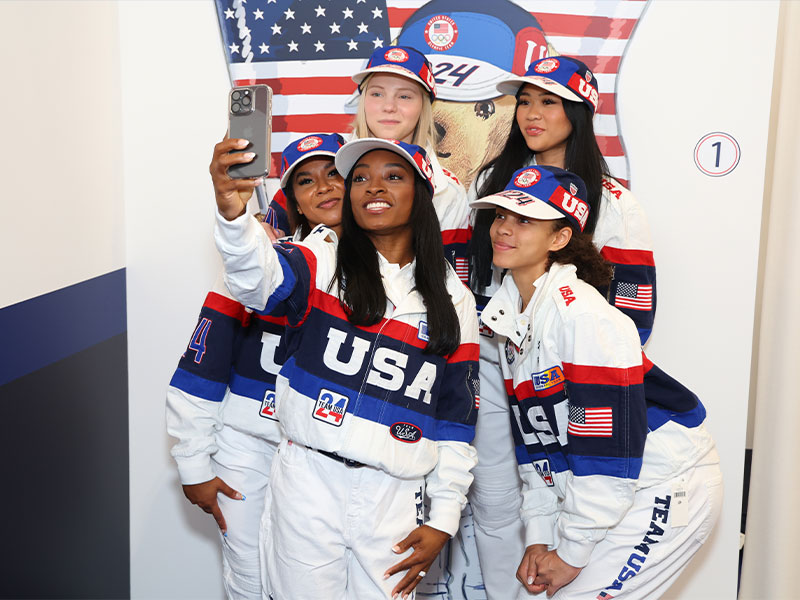
Team USA Paris Olympics 2024Jade Carey, Jordan Chiles, Simone Biles, Sunisa Lee and Hezly Rivera try on clothes at the Team USA Welcome Experience Ahead of Paris 2024 on July 22, 2024 in Paris, France. (Joe Scarnici/Getty Images for USOPC)
Team USA has a litany of podium appearances throughout the history of the Olympic Games. Several American athletes who will be in Paris this summer are poised to bring home more than just medals; they could be the faces behind record-breaking moments. Here are just a few of the big names who could further cement their names as all-time Olympic greats:

  • Simone Biles, already the most decorated Olympic gymnast of all time, could raise her gold medal tally to 12 in Paris.
  • NBA standout and Phoenix Suns power forward Kevin Durant could become the first male athlete to garner four gold medals in any team sport if the U.S. men’s basketball team secures its fifth consecutive gold medal.
  • Seven-time gold medalist and swimming phenom Katie Ledecky could become the all-time women’s leader in Olympic swimming medals. Ledecky is heavily favored to win the 1500m freestyle, in which she holds the current Olympic and world record.
  • Sha’Carri Richardson was barred from competing in Tokyo over a positive marijuana test. Now, the dynamo 100-meter runner — who clinched a victory at the World Championships in Budapest last August — poses a serious threat to her Jamaican opponents. With a personal best of 10.71 seconds, Richardson could be the first American woman to win a gold medal in the 100m since Gail Devers was crowned champion in the 1996 Games in Atlanta, Georgia.

Harris immediately closes the gap with Trump in new polls, outperforms Biden in crucial swing states

Polls taken after President Joe Biden dropped out of the race on Sunday show that Vice President Kamala Harris has made up much of the ground lost in the past few disastrous weeks for Democrats, excitement over her candidacy resulting in her now pulling roughly even or better against former President Donald Trump in national and swing-state surveys.

A poll by Morning Consult, released Thursday, gives Harris a 1-point lead over Trump, compared to Biden's 4-point deficit in the last Morning Consult survey, taken when president was still in the race.

Thanks to the Electoral College, November's election will be decided by a number of swing states along the Rust and Sun Belts where Harris, while still generally trailing Trump, has made a significant advance from Biden's collapsing position.

A poll conducted by Emerson College and The Hill, released Thursday, shows Trump leading Harris by 5 points in Arizona (49-44), 2 points in Georgia (48-46), 1 point in Michigan (46-45), and 2 points in Pennsylvania (48-46); the two candidates tied in Wisconsin (47-47). That a significant improvement for Democrats, with Harris outperforming Biden by 5 points in Georgia, 4 points in Arizona and Wisconsin, and 3 points in Michigan and Pennsylvania.

A Reuters/Ipsos poll released earlier this week, meanwhile, found that Harris enjoys a 2-point lead over Trump, nationally, a marked improvement from Biden, who was 2 points under, although both were within the survey's margin of error. The poll found that most voters believe that Harris is "mentally sharp," a concern that had hovered over Biden for years and then was vastly amplified following his debate with Trump in June.

Harris has more work to do, but the trends are pointing in the right direction. She may be helped by a so-called "honeymoon" period amid positive media coverage and relief by some voters over Biden stepping aside for a younger, more energetic candidate.

Even the Trump campaign is acknowledging that it's losing ground.

“Given what has happened over the past couple of days and her impending VP choice, there is no question that Harris will get her bump earlier than the Democratic Convention,” Trump pollster Tony Fabrizio wrote in a memo this week that was shared with reporters. “And that bump is likely to start showing itself over the next few days and will last a while until the race settles back down.”

“I wasn’t being authentically me”: Wayne Brady paints a portrait of pansexuality through reality TV

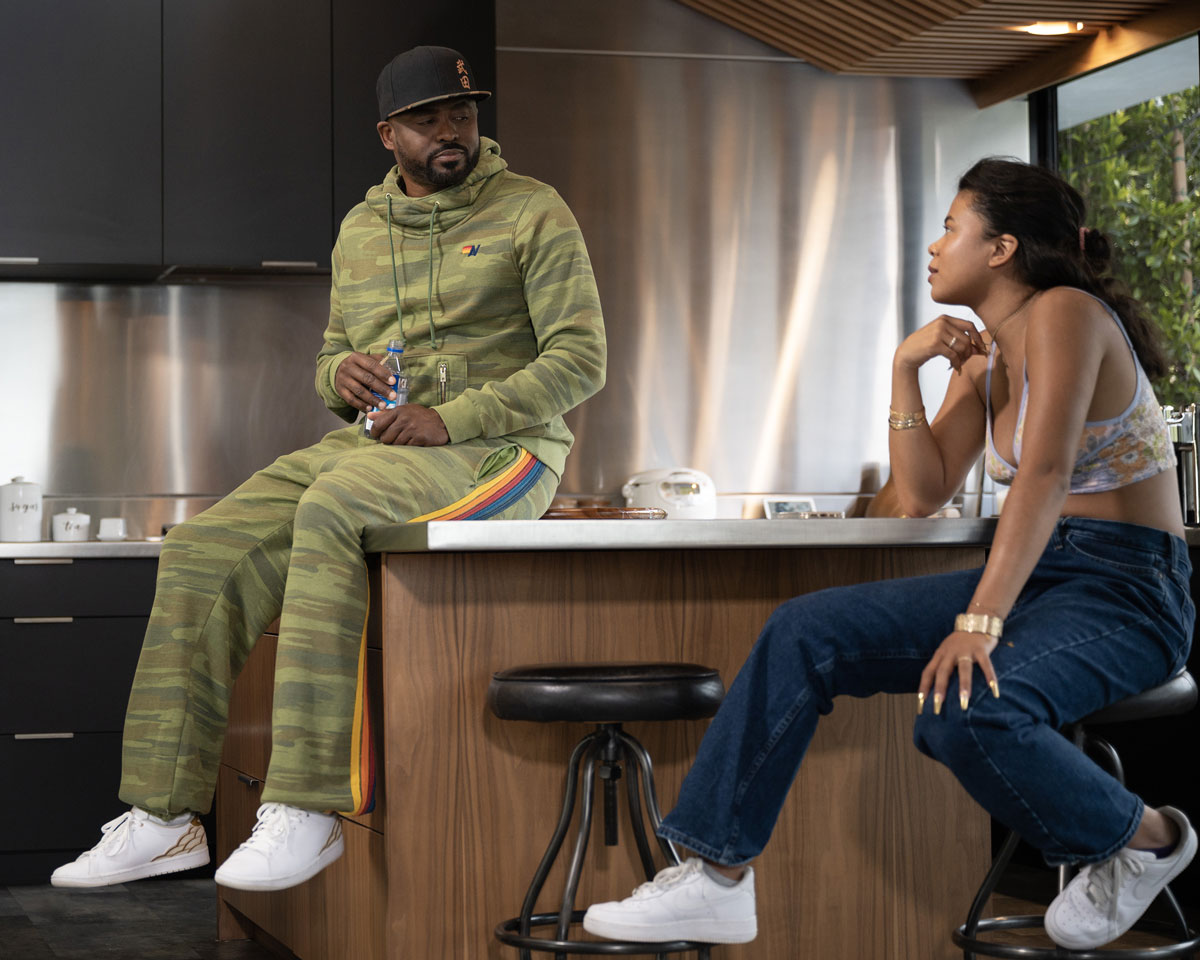
Gentle, velvety soft tension is the defining vibe of “Wayne Brady: The Family Remix.” Some would call that on-brand for an entertainer whose claim to fame is his niceness. Since the late '90s Brady has been the guy you picture when you think “avuncular TV guest star or host.” Before he became the new face of “Let’s Make a Deal” in 2009, he hosted Fox’s “Don’t Forget the Lyrics” and was the musically blessed member of the “Whose Line Is It Anyway?” ensemble. Playing against that portrait on “Chappelle’s Show” only made him more likable.

"Family Remix” is consistent with that depiction, showing Brady in his element as an engaged and understanding father who is committed to his family. With a few modifications.

Brady and his ex-wife Mandie Taketa, who remains his best friend despite their marriage ending in 2008, lovingly co-parent their 21-year-old daughter Maile as she prepares to strike out on her own. Brady takes pride in that, along with the unconventional development of welcoming Taketa’s life partner Jason Michael Fordham into their family.

The “core four,” as they call themselves, collaborate on TikTok videos, hash out problems over dinner and consult each other in making major decisions. They are, in effect, the quintessentially functional household. And their aggressive normalcy accompanies the life-changing subplot of Brady’s coming out as pansexual in 2023.

“Family Remix” captures that process in the docuseries, starting from his first inklings of wanting to chronicle each step through his first-person account in People magazine. That revelation is old news by now. What we haven’t seen is the emotional and psychological work that went into the 52-year-old performer’s decision.

“You can show the world whoever you want on Instagram or TikTok,” Brady said at a recent Television Critics Association press conference held in Pasadena. “I think the difference for us is the reality show . . . was my weird way of holding myself accountable and making me do it.”

That is no small thing. “Family Remix” begins with the star mulling the real possibility that coming out would end his career and cost him fans. “Maybe after hearing what I have to say, you won’t want me to be in your family or be in your homes anymore,” he says in the show. “And that is a fear.”

Wayne Brady: The Family RemixWayne Brady: The Family Remix (Freeform)

Is it unfounded? Queer actors and characters are now commonplace on TV.  “Family Remix” streams on Hulu, home to three seasons of its original queer YA dramedy “Love, Victor.” 

Many ensembles feature queer characters – “Heartstopper,” “The Umbrella Academy,” “Sort Of” and “One Day at a Time,” to name a few, along with ABC’s “Modern Family,” which ran for 11 seasons. One of CBS’ biggest hits, “Tracker,” showcases Robin Weigert and Abby McEnany as Teddi and Velma Bruin, the title character’s married handlers.

RuPaul Charles still reigns over reality TV, thanks to the ubiquitously popular “RuPaul’s Drag Race,” although his Emmy title may be challenged by Alan Cumming’s genius turn on the American edition of “The Traitors.”

Television isn't lacking for series that acknowledge queer people exist and enjoy stable, entirely boring long-term relationships. Fewer popular TV shows are willing to explore what it means to embrace that journey from first flickering to fully living as one is meant to.

We need your help to stay independent

Recently “Bridgerton” drew mixed reactions by announcing that its fourth season would focus on Benedict (Luke Thompson), the second Bridgerton son who, in Season 3, enjoyed a tryst with a woman and man. Later, he notes that gender does not matter to him, making Benedict pansexual.

“Bridgerton” honors the tone established by the sensual novels that inspire it, and some hope the series might cash in the currency it has built with its fanbase to write a thoughtful romance that honors the sexual awakening of Thompson’s character. According to the official announcement, the person setting Benedict's heart aflutter is “a captivating Lady in Silver at his mother's masquerade ball."

“I wasn't being authentically me."

But these are all fictional figures or performers playing caricatures of themselves. Brady is a widely beloved celebrity walking us through every step of a process that he finds frightening but necessary. When he comes out to two close male friends, we get to watch them process that information. One's immediate reaction is entirely reasonable: he blurts out in so many words that he doesn’t know what “pansexual” means. 

Other members of his extended family weren’t aware of his sexual orientation during filming, and Brady's concerns about having them drop from his life are perceptible.

Wayne Brady: The Family RemixWayne Brady: The Family Remix (Freeform)

This is not necessarily foregrounded in every episode. The boring, workaday tasks of running his career and mindfully negotiating parenthood with Taketa are among the episodic A-plots leading the season. But the matter of Brady’s pansexuality is always floating just outside the frame of each scene. The toll of holding it in also affects his mental health which, in turn, affects his interactions with Taketa, their daughter and Fordham, who Brady calls his brother.

“I wasn't being authentically me,” Brady explained to critics before "Family Remix" premiered. "I can walk onstage and be charming and affable and make you laugh . . . I could make millions of people happy, but I would go home, and I'd feel like a piece of [expletive], and I couldn’t do that anymore.”


Want a daily wrap-up of all the news and commentary Salon has to offer? Subscribe to our morning newsletter, Crash Course.


Celebrity docuseries tend to be self-serving plays to increase fandom and burnish brands. “Family Remix” doesn’t entirely break free of this. Brady has a career to maintain, having recently wrapped his time with “The Wiz,” and these episodes show Maile polishing a new pop single (“Gotta Have It,” which dropped in January).

And he says factors are part of what inspired him to do “Family Remix.” For most of his professional life, Brady told reporters, he subscribed to the old showbiz approach of wowing the public and refraining from talking about himself. As the world has changed, what he needs to be happy has evolved as well.

In the show, Brady reiterates that all he desires is what his ex-wife and her partner have, which is to find his person. Be they a man, a woman, a non-binary person, whomever – he wants the freedom to walk around with that person and love them freely.

Therefore, he said, “I'm just going to show you warts and all, not because I crave internet fame but because if you like me, you like me. If you don't, you don't. I'm still the same guy, doing the same thing. And hopefully after decades of doing it, I've still got a couple more decades in me. But now, you'll see the person behind the work.

“And I think that sometimes that's a good thing,” he added, “especially if you're trying to inspire others just in the sense of, hey, even if I make you laugh, we all have bad days, and this is how you go through them, as long as you've got people that'll have your back.”

"Wayne Brady: The Family Remix” airs at 10 p.m. Wednesdays on Freeform on Wednesday, July 24, streaming Thursdays on Hulu.

As a teen with an eating disorder, Richard Simmons showed me I could exercise with joy and hope

After panning over New York City, swooping from bridge to train, the camera drops to calf-level, looking out from a shoe store shop display. On the sidewalk, a man pauses, raising a leg to try on the pair in the window. The leg is bare, tan, and toned, not poured into jeans; the shoes aren’t black leather, they’re blizzard-white trainers. It’s not “Stayin’ Alive” throbbing but a Gibbsian falsetto droning, “Get on down.”

The "Saturday Night Fever" homage continues, the man strutting into a Brooklyn home. He flicks through a closet's rainbow of tank tops, picks out a halo of tawny curls, and enters a nightclub (Brooklyn Disco) to a chorus of “how you doin’s.”

By that point, not yet two minutes into the video, I was marching. Keeping time with the beat in my socks, a scant six feet from the looming media cabinet in our cramped living room. It was the only room with a TV, and for "Disco Sweat" I’d endure my self-consciousness about exercising a hallway away from my mom, in the kitchen. I was 15. Three years out from an anorexia diagnosis, post-relapse number two, any physical exertion was suspect. And was I going to exert! I’d boogie to “Boogie Fever,” clap to “Born To Be Alive” and sashay to “I Will Survive,” inches from shimmying into the La-Z-Boy or Travolta-armsing our Airedale. Reflexively, I smiled at the TV. I was about to spend 70 minutes with Richard Simmons.

Simmons, who died on July 13 a day after his 76th birthday, was as recognizable as the golden arches of McDonalds. There was no discovering him. When I was growing up in the '90s, he’d already become an icon. The fusilli hair, the oiled skin (subject of familiar jabs about the source of his signature glisten…Pam?), the spangle, the voice. The voice! Gleeful, giddy, earnest and encouraging, adamant yet never authoritarian. It was a voice apart from others, flouting the dire, eroticized militancy of gyms like those then-ubiquitous ads for Bally Total Fitness (“Firm arms, rock hard abs, for less than a $1 a day”).  

Richard’s voice was a reprieve from my dour, cynical toxic self-talk.

Simmons was a tonic to those who found those creatine temples intimidating or inaccessible. Who found that rhetoric overbearing or off-putting. Who didn’t want to build muscles while being belittled. Watch any of Simmons’ videos — and I watched all of them, borrowing them from the library again and again, pledging my allegiance to "Sweatin’ to the Oldies Vol. 2" (“Windy”!) over Vol. 1 (too slow) — and you’ll see a cast of real-life folks, people who’ve lost weight with Richard. At the end of "Disco Sweat," those backup dancers run toward the screen, accomplishment quantified on screen: “David Jacobs, 107 pounds.”

As a teenager, anxious about three or five pounds, I jogged in place during those last minutes, sometimes tearing up, sometimes clapping. I never found these numbers triggering, never left "Disco Sweat" determined to outpace another’s loss. Instead, I left hopeful; someday, I might be as embracing, as joyous, as a light-hearted as Richard.

Perhaps because I was in the grips of my own eating disorder, I understood that that sunny affect must’ve been hard-won. It was. After spending approximately two hundred hours Disco Sweating, I read Simmons’ memoir, "Still Hungry—After All These Years." Unlike the subjects of most eating disorder memoirs I devoured, Simmons had lived a varied, wanderlusty life. He was a musical theater nerd, an actor, a makeup rep and the most charismatic waiter in LA before becoming an entrepreneurial smash: actor, author, studio owner, teacher, infomercial sensation with products like Deal-a-Meal. But catch his cameo in "Satyricon"; you’ll see the haunted gauntness in his eyes and know that, for two decades, he was also killing himself with food.

What stuck with me was his recounting of the period he spent in Italy in his 20s. While working as a commercial actor, he receives an anonymous note (“RICHARD—YOU’RE VERY FUNNY BUT FAT PEOPLE DIE YOUNG. PLEASE DON’T DIE”) stuck to the windshield of his Fiat. He feeds lire into a public scale and, shocked by the number, embarks on a starvation diet so extreme he winds up passing out near the Uffizi Gallery. He wakes up in Santa Maria Nuova Hospital, having lost 112 pounds in less than three months. His organs were failing.

Who would want to be uptight when you could be irrepressible?

“I had been on both sides of the ruler,” Simmons writes. “I had been on the overweight, obese side, and then I had quickly seesawed to the very, very thin side—too thin. At this point in my life I was no better off, no more intelligent, and had no more knowledge than I did when I took that first diet pill in the sixth grade. Now it was time for me to try to find some balance, some middle ground, for the first time in my life.”

Balance. You couldn’t have said a nastier word to teenage anorexic me. Balance was for the undriven and the ordinary, people too weak to sacrifice everything in pursuit of their goal. Balance didn’t promise flat abs or jutting ribs. And yet, reading Richard, I wept. I couldn’t admit it yet, but I recognized it: my bleak, stupid mission.

I wish I could say that Richard Simmons fast-tracked my recovery from anorexia, but then that would be as cliché and saccharine as one of the skits in his workout videos, minus the camp. (And he was campy from the get-go, goofing and jestering: his first book titled, "Never-Say-Diet.") Instead, Richard’s voice was a reprieve from my dour, cynical, toxic self-talk. Richard’s voice—so puckish and irreverent, singing “burn baby burn,” even talking about burning calories—was so unserious that it was infectious. Who would want to be uptight when you could be irrepressible? He was a cross between Puck and the Energizer Bunny, and yet he was an utter original. That’s the sort of thing David Letterman would say to him, when he made a late-night appearance, always using his name with that parental admix of bafflement and fatigue: “Richard.”


Want a daily wrap-up of all the news and commentary Salon has to offer? Subscribe to our morning newsletter, Crash Course.


His voice didn’t proselytize, either, and so I’m grateful that Richard was in the back of my mind, when the body positivity movement swept and seemed a new kind of dogma. I was grateful for Richard when I began doing another exercise video on repeat, one led by a frigid ballerina who never flubbed or joked. Yes, the Simmons oeuvre prizes weight loss but not at the cost of self-judgment.

In the last decade, Simmons retreated. He stopped leading classes at the Richard Simmons Slimmons Studio. He wanted to live a quiet life. There was speculation—was he being held prisoner, was he dying—but I prefer to imagine he had simply relaxed into existence, a state of satiation. Not worried about worrying about his fans (he was a compulsive fan-mail responder), not worried about numbers: likes, follows, revenue, pounds.

In the years I did "Disco Sweat," I often forgot I was working out. Sometimes, babysitting my little sister, I roped her into doing the video, too. We laughed a lot: Richard’s cherubic smile, his costumes, his charms and puns. Unlike running or my herky-jerky stints on the Nordic Machine strider in the basement, there was no specter of calories. Who could know how many calories I burnt during those 72 minutes? Sweaty, happy, I’d rewind the tape.

Meal kits fail because they are boring

It’s been a rough year so far for the meal-kit delivery industry. 

After seeing a brief surge in demand during the pandemic as customers sought convenient, home-cooked meals amid lockdowns, some of the biggest players and pioneers in the sector are struggling financially. Blue Apron, the New York City-headquartered meal-kit company (and seemingly perpetual podcast sponsor), reported a net loss of over $109 million for 2022; a year later, the company sold itself to Wonder Group for $103 million after selling its operational infrastructure to California-based meal provider FreshRealm for $50 million and laying off significant swaths of its workforce, as CNBC reported

Market analysts are also increasingly negative about the financial outlook of HelloFresh. In March, the German company’s shares plunged 42% after it warned its earnings for 2024 and 2025 would fall below expectations, citing a "very different operating environment” than anticipated. The environment is certainly different than when meal-kits first took off in the United States in the mid-2010s. For one, it’s significantly more crowded. 

In 2023, the Wall Street Journal reported there were 3823 meal-kit delivery companies operating on both a local and national scale in the United States. In 2013, there were 13. 

While it's tempting to attribute the financial struggles of the meal-kit industry's stalwarts solely to the plethora of alternatives available, the true cause is simultaneously both more straightforward and more multifaceted: Meal-kits fail because they are boring. 

While Reddit posts about big-brand companies can often quickly become an echo chamber of anonymous complaints, some of the more specific subreddits also serve as an interesting microcosm of consumer behavior. Take for instance, r/MealKits, a 22,000-member online community for people to “discuss and compare all meal kit services, from Blue Apron to Plated to Marley Spoon to GreenChef and more.” 

The posts vary. On the homepage today is a picture of the Home Chef shrimp campanelle primavera someone made last night, a question about what meal kits are “reliable,” a few people griping about the amount of calories in Factor meals and a complaint from a Marley Spoon customer saying that they didn’t receive recipe cards in their latest box. 

However, one of the most consistent types of posts on a day-to-day basis is from members who are weighing whether the cost of meal-kits is worth it in order to make recipes that have lost their novelty, a problem only amplified by reports of diminishing ingredient quality (another constant on the subreddit is a steady stream of photos of subpar box inclusions, like some dull, wispy carrots from Hello Fresh, or Italian sausage from Everyplate that allegedly contained shards of plastic). 

Some customers, initially enticed by the promise of curated ingredients and step-by-step instructions, report eventually finding themselves in a repetitive cycle. Maybe they started as an inexperienced cook and learned the ropes thanks to one of these kits, but the allure of experimentation wanes as the available dishes become familiar, stripping away the excitement that once distinguished meal kits from mundane meal planning. Now, how much of this is in customer perception versus reality is really up for debate. 

We need your help to stay independent

HelloFresh has over 2,500 recipes in their archive and, depending on location, allow users to choose from dozens of potential meals per week, while Blue Apron offers nearly 70 rotating recipes to try from on a week-to-week basis. Even with that amount of variety, though, some subscribers end up dropping the service because the types of ingredients, and the techniques used to prepare them, eventually become repetitive — a problem many grocery sellers like Kroger, Whole Foods and Target are seeking to solve by now offering one-off meal kits for purchase

“We've reached a point where the novelty aspect has worn off,” Android-and-Ale, a member of the r/MealKit subreddit, wrote when the topic of canceling services came up in a recent post. “These boxes have been around long enough that folks who enjoy surprise/subscription boxes have soaked up all the dopamine they're going to get from grocery kits and moved along to something new. No shade. I love shiny new things, too!” 

To better understand the customer behavior at play here, it helps to compare the meal-kit industry to how streaming services operate because they mimic each other in several key ways. While streaming initially started with only a few big players, like Netflix and HBO Now, there are now actually over 200 services available worldwide, meaning that there is now a lot of varied competition for customer attention.

"However, retention is always a challenge — especially with more people becoming experts in the art of trial-hopping, or shifting from one paid service to another with a trail of canceled free trials in one’s wake."

To address this, many of the paid services offer steep discounts or free trial periods in hopes that viewers will like what they see enough to eventually keep paying the monthly cost (or at least forget to cancel their subscription before being charged again). 

However, retention is always a challenge — especially with more people becoming experts in the art of trial-hopping, or shifting from one paid service to another with a trail of canceled free trials in one’s wake. Even after the free trials run out, with advertisement-free plans for Netflix and Hulu now over $14, it’s also really common to see customers sign up for a service for a single month in order to binge an exclusive series or two, cancel and then move on to another. 

This behavior has definitely infiltrated the meal-kit industry — which is somewhat notorious for its very hefty new subscriber discounts — and while some level of churn is certainly accounted for in a company’s financial predictions, a business can only take so much. As the Wall Street Journal reported in 2023, approximately 90% of new subscribers to major meal-kit delivery services cancel within the first year.

Returning to r/mealkit, there are hundreds of posts with titles like: “I’ve been rotating meal kit subscriptions to score insanely cheap food,” “Slowly working through trial boxes of meal kit companies to find the best fit for our family” and “How many people here try to churn out the most discounts/promotions?”. These offer a little more insight into the trend. 

“I always cancel after the discount ends,” one commenter explained in response to a question about whether people in the subreddit “have a systematic way of getting all the discounts from every company out there.” 

“I like to do a meal kit for a bit every now and then, but don’t want to actually do them year-round, so the 4-5 discounted weeks a few times a year is perfect for my partner and I,” they continued. “We keep the recipe cards and remake the recipes we liked on our own all the time, so for us it’s just a fun way of trying new recipes we may not have thought to try on our own.” 

"I’ve been rotating meal kit subscriptions to score insanely cheap food."

Another commenter wrote on a separate post: “I use them to diversify my menu. When we get in a rut eating the same stuff month after month we order a week or so of blue apron or hello fresh and the recipes we like we add to the rotation. We haven’t done it in a while. We'll do it again soon!” 

This is where streaming services have a real advantage over meal-kits. If, for instance, someone wants to watch “The Sopranos,” they can only do that by subscribing to Max (formerly HBO Max, the successor of HBO Now). The series is not currently offered on any other streaming services and, while there are some series and films that occasionally migrate from service to service, original content is one way these streamers attract and retain customers. 

Most meal kits come with recipe cards — or even have an archive readily available online — which means subscribers can simply go to the supermarket and remake those recipes, often at a cheaper cost. Does it address the convenience aspect of pre-portioned ingredients being sent directly to one’s door? No, but based on the financial situations of the former darlings of the meal-kit industry, some customers decided the cost of the service wasn’t worth the convenient meals that have also become boring. 

So, what’s next for the industry? Recent months have shown that meal-kit companies can’t survive mass exodus after mass exodus of churn-and-burn customers with any kind of financial sustainability, which means those who want to thrive will need to find their niche. 

That potentially means rethinking who their customer base is; rather than “everyone with a coupon code,” it might be time-strapped families who need more flexible options for picky eaters, neurodivergent cooks who value really clear step-by-step recipes and pre-measured ingredients, or working professionals who will pay for a higher-priced meal-kit if it comes with luxury or non-traditional ingredients.

Gavin Newsom, citing the Supreme Court, tells California authorities to clear homeless encampments

Gov. Gavin Newsom, D-Calif., is using the legal shield provided by a recent Supreme Court decision to formally grant legal authorities the right to clear homeless encampments from public spaces, The New York Times reported Thursday

In an executive order, Newsom instructed California officials to begin dismantling thousands of such homeless encampments, according to officials in his administration, instructing state and local authorities to act on the recent Supreme Court decision.

“We must act with urgency to address dangerous encampments, which subject unsheltered individuals living in them to extreme weather, fires, predatory and criminal activity, and widespread substance use, harming their health, safety, and well-being, and which also threaten the safety and viability of nearby businesses and neighborhoods, and undermine the cleanliness and usability of parks, water supplies, and other public resources," Newsome wrote.

In June, the Supreme Court considered whether authorities can criminalize people without homes from sleeping and camping in public places, NPR News reported. In a 6-3 ruling, the court's right-wing majority decided that homelessness can indeed be defined as a crime and people punished for sleeping outside, even when there are no available alternatives for those experiencing extreme poverty.

At the time, Newsom released a statement praising the court's ruling: “This decision removes the legal ambiguities that have tied the hands of local officials for years and limited their ability to deliver on common-sense measures to protect the safety and well-being of our communities.”

Newsom's praise contrasted with liberal Justice Sonia Sotomayor's take on what she termed an "unconscionable" decision.

“It is possible to acknowledge and balance the issues facing local governments, the humanity and dignity of homeless people, and our constitutional principles," Sotomayor wrote in her dissent. "Instead, the majority focuses almost exclusively on the needs of local governments and leaves the most vulnerable in our society with an impossible choice: Either stay awake or be arrested."

Homeless encampments have been a persistent issue in California for quite some time. The state has the highest unhoused population in the country, with about 180,000 people sleeping on the streets last year. A recent count showed that approximately, 123,000 people were unsheltered on any given night, the Times reported.

In his State of the State address on Thursday, Newsom addressed the issue of homelessness and said he remains committed to providing the state's unhoused population with alternatives to living on the street.

“No state has done as much as California in addressing the pernicious problem of homelessness that too many politicians have ignored for too long,” he said. “While the causes of homelessness are indeed complex, the solution is rather simple: housing and supportive services.”

Jennifer Aniston “cannot believe” JD Vance’s “childless cat ladies” comment

Jennifer Aniston is hitting back at Sen. JD Vance over his derogatory comments about “childless cat ladies."

In a 2022 speech, Donald Trump's vice presidential pick said that the Democratic party is run “by a bunch of childless cat ladies who are miserable at their own lives and the choices that they’ve made,” Variety reported.

He continued to mention Vice President Kamala Harris, Secretary of Transportation Pete Buttigieg and Rep. Alexandria Ocasio-Cortez, saying, “The entire future of the Democrats is controlled by people without children. And how does it make any sense that we’ve turned our country over to people who don’t really have a direct stake in it?"

The "Friends" actor responded to the comments in an Instagram story, stating, “I truly cannot believe this is coming from a potential VP of the United States."

“All I can say is . . . Mr. Vance, I pray that your daughter is fortunate enough to bear children one day. I hope she will not need to turn to IVF as a second option. Because you are trying to take that away from her, too,” she said.

In the past, Aniston has at length spoken about her struggles to conceive children with IVF and her frustrations around speculation about pregnancy rumors. Vance has voted against the Right to IVF Act, which aims to protect access to IVF services nationwide. He also opposes abortion rights and praised the Supreme Court's decision to repeal Roe v. Wade.

Republicans are going on summer break early, risking a government shutdown later this year

House Republicans, stumbling over demands from the right-wing Freedom Caucus, have failed to get even half of the 12 must-pass spending bills across the finish line, while the spending legislation that has passed is full of extreme provisions that Democrats in the Senate are certain to reject out of hand. Instead of working overtime, however, GOP leaders are canceling the remaining votes and sending House members away on summer recess — a week early — as the September deadline to avoid a government shutdown edges closer.

The decision to go on break is a reversal of Speaker Mike Johnson's earlier pledge to pass the bills that would fund the federal government through the 2025 fiscal year before the summer recess. Initially, it looked as if House Republicans might succeed — GOP appropriators managed to get all 12 bills onto the House floor and strip an abortion pill ban amendment from an Agriculture bill that doomed its passage last year.

But the string of good fortune could not last, as Johnson now faces the same intra-party fighting that toppled his predecessor, former Speaker Kevin McCarthy.

Far-right Republicans have vowed to vote against bills they argue do not sufficiently advance conservative priorities, forcing Johnson to pull several of them from the floor, including a bill to fund the legislative branch; the Energy and Water bill was also yanked away Tuesday, mere moments before a scheduled vote. Others, like an Interior Department and Environmental Protection Agency bill that would strip the latter's funding by 20 percent, passed by the narrowest of margins due to largely united Democratic opposition and GOP defections.

Those bills have satisfied most of the House Republican Conference by including partisan riders and steep cuts to federal agencies that will face certain opposition in the Democratic-controlled Senate, where 60 votes are required to pass most legislation. The prospect of stalled negotiations and a shrinking timeline has given heartburn to many Republicans who want to wrap things up before campaign season begins in earnest.

"We need to get back to the things that matter, like what bills that need to be passed between now and election time and get the hell out of here to let these people go home and campaign versus members in critical districts having to throw up stupid votes against worse amendments,” Rep. David Joyce, R-Ohio, complained to The Washington Post.

We need your help to stay independent

One bill meant to fund the departments of Labor, Health and Human Services, and Education, as well as related agencies like the Social Security Administration, would reduce their collective budget by 11%, which Democrats say will impoverish millions of Americans. Three spending bills for the departments of Defense, State and Homeland Security would prohibit paid leave for Pentagon employees who get an abortion and strip the Secretary of State and Secretary of Homeland Security of their salaries.

Even House GOP leaders acknowledge that such measures, which already passed with almost no bipartisan support in the House, will be rejected by the Senate. When the House returns from recess, Congress will have one more month to send all the government funding bills to President Joe Biden's desk or punt negotiations until after the election. Otherwise, the well dries up on September 30 and will lead to a government shutdown.

Plant-based meat needs government support to scale up, but a culture war stands in the way

Just a few years ago, the alternative protein industry promised to revolutionize the way people eat burgers: They would still sizzle and bleed, they'd taste great, but they wouldn't actually contain any meat. Today it seems that, if that revolution is still coming, its arrival has been more than a little delayed. Sales of plant-based meat and seafood have fallen over the last two years, and a recent bevy of headlines suggest that this latest wave of imitation meat was just that: a passing fad.

A new report suggests that if the alt protein industry has any hope of scaling, it will take robust funding from a number of different sources — including, crucially, the public sector. The report compares plant-based meat imitations to electric vehicles, a powerful climate solution that has benefited from government support, such as direct purchase subsidies. 

But like the EV industry before it, alternative meat has a culture war problem to sort out before it can grow — with or without government investment.

Despite some obvious differences, there's a major parallel between electric cars and alternative meat: They're designed to be a one-to-one replacement for their predecessors. Buying an electric vehicle "doesn't require consumers to make extensive behavioral changes" like forgoing a car completely, said Emma Ignaszewski, one of the authors of the report. Similarly, consumers can simply choose to buy burgers that aren't made from animal protein rather than burgers that are. "You can enjoy your burger, but it can be produced with far lower greenhouse gas emissions than conventional meat is," said Ignaszewski, who is a senior associate director at the Good Food Institute, or GFI, a think tank that promotes alternative proteins. 

Research has shown that animal agriculture is responsible for 11 to 20% of greenhouse gas emissions. The development of plant-based foods — meat substitutes that don't contain meat — could help reduce these emissions and lead to less deforestation and land degradation. One study found that a vegan diet produced about 75% less planet-warming gas emissions than meat-rich diets.  

Ignaszweski acknowledges that the comparison of alt meats to EVs has its limitations. "The average American buys a car once every eight years," she said, while "purchasers of meat buy 60 packages at the grocery store every year. Over the course of a decade, that's one decision point versus 600."

But the broader point of the report, which was published by GFI, the Boston Consulting Group, and Synthesis Capital, a venture capital fund that invests in new food technologies, is that meatless meats could take off in the same way EVs have if more public dollars were invested in the industry. (The report touches on plant-based meat and seafood, as well as cultivated or "lab-grown" meats, which are produced directly from animal cells, and substitutes that utilize the fermentation process to enhance the nutritional value or flavor of plant ingredients.)

In 2022, the alternative protein industry received $635 million in government support globally. The Environmental Working Group, or EWG, found last year that, since 2001, the U.S. Department of Agriculture has only put $124 million towards subsidizing alt proteins. By comparison, the USDA gave at least $59 billion in various subsidies to livestock operators from 1995 to 2023. 

More public investment in plant-based meat would not only help drive research and development of new technologies and help scale manufacturing, according to GFI, it would also be a signal to private capital markets that the alternative protein space is worth taking seriously.

"If the U.S. is serious about technical solutions to address climate change, the food system is a really important piece of that puzzle," said Ignaszweski. 

Other experts agree, with caveats. David Zilberman, a longtime professor at the Agricultural and Resource Economics Department at UC Berkeley, believes it's "a little bit exaggerated" to compare meatless meat to EVs. He cites, for example, the employment opportunities created by EV manufacturing as one of the reasons that the two industries are different. But he agrees the sector sorely needs more support. He described alternative proteins as having "huge importance, especially in terms of food security, but most importantly in terms of climate change." Greater investment would help drive the kind of innovation that would help alternative proteins reach taste parity with conventional meats. "In the long run, if you were able to develop things that taste better, consumers would like it," said Zilberman. 

Still, for the U.S. to back alternative proteins in the same way it has helped to spur the adoption of EVs would require a political sea change. Fears of climate policies eliminating meat from the American diet loom large over the conservative movement. A 2023 study found that Republicans said they were less likely to vote for a hypothetical candidate who said, "It's time for us to work together as a nation to reduce our reliance on meat and dairy and focus on solutions like plant-based foods and artificial meats instead." In 2018, Senator Ted Cruz memorably warned that, "If Texas elects a Democrat, they're going to ban barbecue across the state of Texas." He later explained it was a joke, but the message was instantly clear: Climate action means sacrificing precious ways of life, especially for men who view eating meat as a tenet of masculinity. This fear has resulted in a backlash against alternative proteins: In May, Florida and Alabama banned the manufacture and sale of lab-grown meat.

Crafting an effective narrative to counter entrenched beliefs about meat versus plant-based foods will be key to the industry's success, said Samantha Derrick, the founder of Plant Futures, an interdisciplinary program at UC Berkeley that aims to train students for careers in alternative proteins. "I think, as well organized as Big Ag is, even though they have a lot of money and resources, there's a lot of potential on the alt protein side," said Derrick. And she believes that the generation of entrepreneurs entering the workforce now can help develop a new, more compelling narrative. 

"Ultimately at the end of the day, the information, the data, the research, the climate argument, it's all on our side," said Derrick. "And that's one thing that Big Ag does not have that we have."

This article originally appeared in Grist at https://grist.org/food-and-agriculture/plant-based-meat-needs-government-support-to-scale-up-but-a-culture-war-stands-in-the-way/.

Grist is a nonprofit, independent media organization dedicated to telling stories of climate solutions and a just future. Learn more at Grist.org

"This story was originally published by Grist. Sign up for Grist's weekly newsletter here."

“We choose freedom”: Kamala Harris launches first campaign ad, set to Beyoncé

Kamala Harris' campaign has unveiled its first ad since the vice president became the presumptive Democratic nominee.

“In this election, we each face a question,” Harris says in the 79-second ad. “What kind of country do we want to live in?”

Set to Beyoncé’s 2016 hit song “Freedom,” the ad frames Harris' agenda as positive and forward-looking, in contrast to former President Donald Trump's vision of "fear and hate."

"We choose something different," Harris says in the video, which was posted to her social media channels Thursday morning. "We choose freedom.:

The ad comes after Harris raised $81 million within the first 24 hours of her run and quickly secured over the delegates she needs to become the Democrats' formal nominee.

The ad opens with Harris smiling and cuts away to the American flag, followed by a crowd of supporters holding signs with her name, “Kamala.”

In it, Harris defines her vision for the country as "the freedom not just to get by, but to get ahead." She continues: "The freedom to be safe from gun violence. The freedom to make decisions about your own body. We choose a future where no child lives in poverty. Where we can all afford healthcare.

As headlines from Trump's criminal trial flashes on the screen, Harris adds: "Where no one is above the law.”

“We believe in the promise of America," Harris concludes, "and we’re ready to fight for it. Because when we fight, we win."

Maybe the Almighty weighed in: Joe Biden passes the torch — but won’t say why

The great thing about America is here, kings and dictators do not rule. The people do. History is in your hands. The power is in your hands. The idea of America lies in your hands.
— Joe Biden

On Wednesday night, at his first public appearance in nine days, President Biden spoke from behind the Resolute Desk in the Oval Office. It was a short but historic speech.

Biden told the American people what we already knew: He is giving up his bid for re-election and stepping away from the biggest bully pulpit in the free world. It was obvious, as he stared at a teleprompter and occasionally swallowed hard, that he was taking a victory lap but was not entirely happy about it. He never once mentioned his health as a reason for this decision. 

“The defense of democracy is more important than any title,” Biden said. “I draw strength, and find joy, in working for the American people. But this sacred task of perfecting our Union is not about me. It’s about you. Your families. Your futures. It’s about ‘We the People.’” 

He stumbled over his words occasionally and appeared to be battling with his emotions. In short, he looked like a man trussed up and carried before the camera to tell his family that his kidnappers were treating him well. Biden said he was stepping down to make peace with his party, unify it and move forward to fulfill our ideals. He fell on his sword.

What he said rang true. Our nation has been one built on hope. As the president said, we’ve never quite lived up to our creed that all people are created equal, but we haven’t backed away from that ideal either. But if you were waiting for Biden to offer a decisive explanation, I will suggest that you shouldn’t hold your breath.

Meanwhile, across the political divide, the last old man left in the race was building a fire in hopes of roasting Vice President Kamala Harris, who appears certain to be the new Democratic nominee for the office of president. Donald Trump was dancing like one of Satan’s imps, taunting and insulting Biden for leaving, mocking Harris as the new frontrunner, and attacking anyone else he could with his fetid rhetoric.

Joe Biden is absolutely right about one thing: America faces an inflection point, and the choices voters make this fall will shape our world for decades to come.

Vegas will give you great odds against Trump ever saying anything close to what Biden said Wednesday night: “I have decided the best way forward is to pass the torch to a new generation. That is the best way to unite our nation.” He said he would continue to do his job for his last months in office, calling for Supreme Court reform as “critical for our democracy.” 

Trump, in the meantime, was espousing opinions based on the Heritage Foundation’s Project 2025, while also disavowing any knowledge of the damn thing. Nonetheless, he is perfectly happy with the Heritage Foundation, which vows to keep women in their homes subservient to their masters — little more than breeding stock in lipstick and pantyhose, if they are allowed that much.

Harris, a former prosecutor and attorney general in California, must now prosecute the case against Trump and what’s left of the Republican Party. Her Democratic supporters say we are finally entering a new age of enlightenment, and she will bring the energy needed to finish the job Biden started. Trump appears happy with technological feudalism, vowing revenge against those who stand against him.

Biden is absolutely right about one thing: America faces an inflection point, and the choices voters make this fall will shape our world for decades to come. It is the ultimate fork in the road. One road has a sign that says, “Here there be dragons.” Each side is convinced that sign hangs over their opponent’s path. This is only July. Imagine where we will be in three more weeks. Imagine where we’ll be after the Democratic convention. Imagine where we will be on the 6th of November, the morning after this election.

We need your help to stay independent

Biden once swore he wouldn’t back out of the race unless God himself told him to do so. So far, none of us in the reporting corps has asked what the Almighty said to make him move so quickly from “I’m in it to win it” to “I’ve decided to pass the torch.”

And while Biden said nothing about his health during his speech, nor about his debate performance against Donald Trump in Atlanta last month, he did talk about the future and his faith in his vice president — the same one who, just a few months back, some in the party said should be replaced.

Harris now sits atop that party, and so far is scaring the crap out of Trump and his lollipop kids in team MAGA. Some in that guild of miscreants have openly spoken of suing to keep Biden on the ballot. As laughable as that is, one has to wonder if the Supreme Court would back that move. Others have spoken of impeaching Harris, in a desperate effort to sully her reputation — while others, including Trump, toss around terms like “crooked” and “liar” to describe her. Pure projection, and par for the course in a party built entirely upon fear and division. 

Still, despite Democratic euphoria, not everyone in the party is convinced Harris can win the presidency. “Well, Biden was dead in the water,” one source told me. “Maybe she can bring some energy and give us a shot.”

Others, like Democratic leaders in Kentucky, Arizona and Pennsylvania, describe Harris as “a great candidate,” saying, “She can handle Donald Trump and she brings a great deal of energy to the race.” 

In case you hadn’t noticed, some of the Democrats on Harris’ short list of possible running mates hail from those states. 


Want a daily wrap-up of all the news and commentary Salon has to offer? Subscribe to our morning newsletter, Crash Course.


A little more than a day after Harris said she wanted to earn the Democratic nomination, the Associated Press and other news organizations announced she had wrapped up enough delegates to make that a sure thing.

In other words, in a single weekend she earned what takes most winning candidates months on the campaign trail.

It is not hyperbole to say we are in uncharted waters — and July isn’t over yet.

The best part of the past week is that the Trump camp, which prides itself on telling us very little but does it loudly and with boisterous, venomous enthusiasm, seems upended by the Biden announcement. Now it is Trump, one hopes, who will have to answer questions about his age and explain some of his unhinged rants about electric boats, sharks and fictional serial killers. I guarantee you someone is going to be asking those questions. 

I only hope it will be actual members of the press — those that Trump will allow near him, anyway. Otherwise, I ask it now. I don’t expect answers, of course, from a man who still denies he lost the last election and believes the American public exists to serve his private needs. 

Now it is Trump, one hopes, who will have to answer questions about his age and explain some of his unhinged rants about electric boats, sharks and fictional serial killers.

Biden told us during his speech on Wednesday that in his office he has an inscription with Ben Franklin’s most famous saying. Reportedly, when asked by Elizabeth Willing Powel, "Well, Doctor, what have we got, a republic or a monarchy?" Franklin replied, “A republic, if you can keep it.”

That has been the central challenge since this country began. Sometimes it seems like decades go by without a serious challenge, and sometimes it seems like decades pass in a few weeks where we are under siege. We’ve been in that state of flux ever since Trump walked down that golden escalator and announced his candidacy for president. It made me want to vomit then, and still does. 

Oh, excuse me: It makes me want to engage in an involuntary, partially liquid protein spill. (Apologies to George Carlin.)

I hope what I’m seeing right now is the bookend episode of a bad dystopian novel that began in Chicago during the 1968 election campaign. President Lyndon Johnson, after watching a documentary on the Vietnam War hosted by Walter Cronkite, decided to bow out of his own re-election bid. His vice president, Hubert Humphrey, eventually took the reins of the Democratic Party at a convention in Chicago riddled with violent protest. That followed the assassinations of Robert F. Kennedy, one of his opponents, and the Rev. Martin Luther King Jr., who preached peaceful coexistence and equality. Democrats failed to heal their differences and thus America went to the dark side, by way of Richard Nixon.

The biggest difference between then and now is that in 1968, we were mired in the Vietnam War. We saw images of Americans in body bags every night on television and every day in our newspapers. Biden pointed out on Wednesday that for the first time in this century, America is not at war. That happened under his watch.

After Nixon we got Ford, Carter, Reagan, Bush, Clinton and Bush “the Lesser” (or “Shrub,” as Molly Ivins called him) before we got Obama, Trump and Biden. The last half-century of American history reads like a horror story set in “Midnight in the Garden of Good and Evil,” punctuated by violence, greed, despair and now, according to Joe Biden, hope. I hope he’s right.

In his bid to pass the torch, Biden said, “Our republic is now in your hands.”  Ultimately, that’s where it always has been — even as millions of us look to Trump as our savior. Then there are those who believe Biden was forced out, that the republic is not in our hands and never has been, and the actions of his party show it. 

Members of the press and the public at large, and indeed people across the globe, may speculate on the reasons why Biden stepped aside. Obviously he’s lost a step. He’s 81 years old. He has also accomplished quite a bit, and he let us know that even as he stepped aside.

Ultimately, consider this: Biden speaks of progress, of moving forward. Donald Trump continues to talk about making America “great again.” But what does that mean? Great for whom? When you ask Trumpers, they have in their minds some mythical place of serenity that never existed. If pushed, they almost always say that it was during the 1950s or thereabouts.

Who was it great for then? Minorities? LGBTQ folks? Women? Children? No. Just the average American white male. MAGA is simply racism, misogyny and nostalgia for slavery, all wrapped in a shoutable slogan. 

Biden understands that, and told us on Wednesday night he has faith that most Americans also understand it.

His faith will be tested in November. 

Apparently the Almighty has already spoken to Joe Biden. 

Maybe we’d better listen to Joe a little while longer.

Why it matters Kamala Harris isn’t afraid to say the word “abortion”

Vice President Kamala Harris isn’t afraid to talk about and say the word “abortion.” 

Unlike President Joe Biden, whose lack of use of the word has spurred news articles about the topic and websites tracking it, Harris has been notably more frank in her discourse about abortion (a detail that anti-abortion advocates have recently called out). The Vice President’s candid use of the word abortion and how she articulates what’s at stake is a welcome change, pro-abortion advocates say. It could energize voters who have felt hopeless in a post-Roe world. 

“Kamala Harris is leading the most unapologetic campaign on abortion rights in history, and she's consistently been a leader in ensuring that abortion remains a central issue in this campaign,” Emily Martin, the chief program officer of National Women's Law Center Action Fund, told Salon. “And that's not only a winning strategy we've seen since the Dobbs decision, but it's also essential to destigmatizing this essential care.”

There have been several public efforts over the years to destigmatize abortion, including the Shout Your Abortion and the Abortion Out Loud campaigns. Yet there are many ways in which abortion stigma continues to persist in our culture. As outlined by the Guttmacher Institute, many women follow the “implicit rule of secrecy” and are expected to stay quiet about their abortions. A study in 2010 found that 58 percent of women who had abortions felt they needed to keep it a secret from friends and family. There also seems to be a perception in society that there are “good abortions” that are more widely accepted in our culture, like terminating for medical reasons, or “bad abortions.” Shame and stigma trickle down and infiltrate politics though.

"Kamala Harris is leading the most unapologetic campaign on abortion rights in history."

“Shame is the enemy of power building and so speaking clearly about what's at stake makes it much more possible to organize and win around this issue,” Martin said. “And it's also important for the real world impact of ensuring that more people have access to abortion care – talking about abortion care, making clear how this is essential health care, that's part of ensuring that people have access to care.”

Harris has been the leading voice of the Biden Administration on abortion access, especially since the Supreme Court Dobbs decision overturned Roe v. Wade in June 2022. Last spring, the vice president became the first to visit an abortion provider at a Planned Parenthood clinic. While in the clinic, she met with about two dozen healthcare workers and applauded them for their work.

“I’m here at this health care clinic to uplift the work that is happening in Minnesota as an example of what true leadership looks like,” Harris said at the time. “In this environment, these attacks against an individual’s right to make decisions about their own body are outrageous, and in many instances just plain old immoral.”


Want more health and science stories in your inbox? Subscribe to Salon's weekly newsletter Lab Notes.


In the clinic lobby, Harris emphasized that the U.S. needs to be a nation that “trusts women.” When Florida’s six-week abortion ban went into effect, Harris quickly condemned it, saying, “Starting this morning, women in Florida became subject to an abortion ban so extreme it applies before many women even know they're pregnant, which by the way, tells us the extremists who wrote this ban either don't know how a woman's body works or they simply don't care."

Josie Urbina, an OBGYN and complex family planning specialist at the University of California-San Francisco, told Salon it’s “refreshing” to not only have a presidential candidate who isn’t afraid to say the word “abortion,” but one who can speak so accurately about in a time when so much misinformation surrounds it.

"Shame is the enemy of power building and so speaking clearly about what's at stake makes it much more possible to organize and win around this issue."

“Having VP Harris say abortion so nonchalantly is exactly what people in this country needed, specifically, half the population that is capable of pregnancy,” Urbina said. “This helps normalize abortion within communities, and although abortion is a very safe and normal thing to do, minoritized communities still deal with abortion being taboo in our culture.”

Urbina added that Harris being a Black and Southeast Asian woman, being able to speak and discuss abortion “speaks volumes.”

“It lets those communities know that abortion is common and it's acceptable,” Urbina said. “That what they're doing is OK, especially for young people.” 

According to a Pew Research Center poll published in May 2024, 63 percent of Americans believe abortion should be legal in all or most cases. Using euphemisms like “reproductive rights” to avoid saying abortion, advocates say, can do more harm than good. 

“One reason folks say ‘reproductive rights’ is because there are a range of rights that are very much under attack right now, but it also can be a euphemism to avoid talking about abortion,” Martin said. “And that suggests that there's something to be ashamed of when people seek abortions.”

As WeTestify found in their campaign, “Did Biden Say Abortion Yet?” the Biden Administration first used the word “abortion” in a press statement 224 days into Biden’s presidency in response to Texas’ six-week ban going into effect. While Biden vowed to restore Roe v. Wade if re-elected, it’s been difficult for him to be removed from past actions and statements on abortion as a practicing Catholic. He has written that despite his religious beliefs, he wouldn’t “impose” them on other people, and he did take some executive action to protect access to reproductive health care.

We need your help to stay independent

“I think Joe Biden has generally been right on policy, but I think he has personal discomfort around the issue, which made it hard for him to make the case in ways that were clear to people and inspired people,” Martin said. “I think on the flip side, Kamala Harris is good at naming the centrality of abortion rights to gender equality, she's really good at identifying the connections between the attacks on abortion access to the range of attacks on women, on freedom and autonomy.” 

When Harris debates Trump, Martin said, she believes Harris will be able “to make the stakes clear and mobilize voters.”

Elizabeth Schoetz, chief campaigns and advocacy officer of Reproductive Freedom for All agreed. 

“Vice President Harris has been there from the beginning on abortion, destigmatizing talking about it and making it a front-and-center issue in this campaign,” Schoetz said in a statement to Salon. “There’s no doubt her candidacy has supercharged the reproductive freedom movement to defeat Donald Trump and J.D. Vance with abortion as a top motivating issue for voters.”

Louisiana reclassifies drugs used in abortions as controlled dangerous substances

Louisiana lawmakers have added two drugs commonly used in pregnancy and reproductive health care to the state’s list of controlled dangerous substances, a move that has alarmed doctors in the state.

Mifepristone and misoprostol have many clinical uses, and one use approved by the FDA is to take the pills to induce an abortion at up to 10 weeks of gestation.

The bill that moved through the Louisiana Legislature this spring lists both medications as Schedule IV drugs under the state’s Uniform Controlled Dangerous Substances Law, creating penalties of up to 10 years in prison for anyone caught with the drugs without a valid prescription. Gov. Jeff Landry, a Republican, signed the bill into law in May. It takes effect Oct. 1.

The new law is the latest move by anti-abortion advocates trying to control access to abortion medications in states with near-total abortion bans, such as Louisiana. The law is the first of its kind, opening a new front in the state-by-state battle over reproductive medicine.

Republican-controlled states have passed various laws regulating medication abortion in the past, said Daniel Grossman, an OB-GYN and a reproductive health researcher at the University of California-San Francisco.

But after the Dobbs v. Jackson Women’s Health Organization decision in 2022, in which the Supreme Court ruled there was no constitutional right to an abortion, scrutiny of medication abortions escalated as clinics in certain states shuttered completely or were required to stop offering in-clinic procedures.

“It’s not surprising that states are trying everything they can to try to restrict these drugs,” Grossman said. “But this is certainly a novel approach.”

Before the Louisiana bill passed, more than 250 OB-GYNs and emergency, internal medicine, and other physicians from across the state signed a letter to the bill’s sponsor, state Sen. Thomas Pressly, a Republican, arguing the move could threaten women’s health by delaying lifesaving care.

“It’s just really jaw-dropping,” said Nicole Freehill, a New Orleans OB-GYN who signed the letter. “Almost a day doesn’t go by that I don’t utilize one or both of these medications.”

Mifepristone and misoprostol are routinely used to treat miscarriages, stop obstetric hemorrhaging, induce labor, or prepare the cervix for a range of procedures inside the uterus, such as inserting an IUD or taking a biopsy of the uterine lining.

Bill Born From a Family’s Misfortune

The proposal to reschedule the drugs as controlled dangerous substances was introduced as amendments to Pressly’s original bill creating the crime of “coerced criminal abortion” — where someone “knowingly” gives abortion pills to a pregnant woman to cause or attempt to cause an abortion “without her knowledge or consent.”

Pressly’s sister, Catherine Pressly Herring, testified at the hearing on the bill that she had been given abortion drugs without her knowledge by her former husband. Pressly said his sister’s story prompted the legislation.

In a statement, Pressly said that he added the new amendments to “control the rampant illegal distribution of abortion-inducing drugs.” He did not respond to requests for comment.

“By placing these drugs on the controlled substance list, we will assist law enforcement in protecting vulnerable women and unborn babies,” Pressly wrote in this statement.

Louisiana Right to Life, the state’s most influential anti-abortion group, helped draft the bill. And the group’s communications director, Sarah Zagorski, said that claims that rescheduling the drugs as dangerous could harm women’s health are “fearmongering.”

The real problem, she said, is that mifepristone and misoprostol are too accessible in Louisiana and are being used to induce abortions despite the state’s ban.

“We’ve had pregnancy centers email us with many stories of minors getting access to this medication,” Zagorski said.

Studies have shown a surge in the ordering of abortion pills online in states that have severe restrictions on abortion.

In the Louisiana Legislature committee hearing on the bill, anti-abortion advocates said that physicians would still be allowed to dispense mifepristone and misoprostol for lawful medical care, and that women who give themselves abortions using the medications would be exempted from criminal liability.

“Under this law, or any abortion law, in Louisiana we see the woman as often the second victim,” testified Dorinda Plaisance, a lawyer who works with Louisiana Right to Life. “And so Louisiana has chosen to criminalize abortion providers” rather than women who use the medications for their own abortions.

Move ‘Not Scientifically Based,’ Doctors Say

The U.S. Drug Enforcement Administration and individual states have the power to list drugs as controlled dangerous substances.

State and federal regulations aim to control access to drugs, such as opioids, based on their medical benefit and their potential for abuse, according to Joseph Fontenot, executive director of the Louisiana Board of Pharmacy, the agency that monitors drugs listed as controlled dangerous substances.

Like other states, Louisiana tracks prescriptions in databases that include the name of the patient, the health provider who wrote the prescription, and the dispensing pharmacy.

Physicians need a special license to prescribe the drugs — in 2023, there were 18,587 physicians in Louisiana, 13,790 of whom had a license to prescribe controlled dangerous substances, according to data from the Louisiana State Board of Medical Examiners and the Board of Pharmacy.

“Every state has a prescription drug monitoring program. And they really are designed to identify prescription drug mills that are hawking fentanyl and opioid painkillers,” said Robert Mikos, a professor of law and a drug policy expert at Vanderbilt University.

What happened to Pressly’s sister — being tricked into taking mifepristone or misoprostol — is a form of drug abuse, said Zagorski of Louisiana Right to Life, which is why the drugs should be more strictly controlled.

But Fontenot, of the Louisiana Board of Pharmacy, said that under Louisiana’s law, abuse refers to addiction. Jennifer Avegno, a New Orleans emergency physician and the director of the New Orleans Health Department, agrees. “There is no risk of someone getting hooked on misoprostol,” Avegno said.

Under the new law, mifepristone and misoprostol will be added to a list comprised of opioids, depressants, and stimulants. “To classify these medications as a drug of abuse and dependence in the same vein as Xanax, Valium, Darvocet is not only scientifically incorrect, but [a] real concern for limiting access to these drugs,” Avegno said.

Doctors worry that the bill could set a dangerous precedent for state officials who want to restrict access to any drug they consider dangerous or objectionable, regardless of its addictive potential, Avegno said.

Fears Over Delays in Care

In their letter opposing the reclassification, doctors said the “false perception that these are dangerous drugs” could lead to “fear and confusion among patients, doctors, and pharmacists, which delays care and worsens outcomes” in a state with high rates of maternal injury and death.

The increased scrutiny could have a statewide chilling effect and make doctors, pharmacists, and even patients more reluctant to use these drugs, the doctors wrote.

The state database allows any doctor or pharmacist to look up the prescription history of his or her patient. The data is also accessible by the Louisiana State Board of Medical Examiners, which licenses physicians and other providers, and by law enforcement agencies with a warrant.

“Could I be investigated for my use of misoprostol? I don’t know,” said Freehill, the New Orleans OB-GYN.

Pharmacists could become more reluctant to dispense the medications, Freehill said, exacerbating a problem she and other OB-GYNs have been dealing with since Louisiana banned nearly all abortions. That reluctance could lead to patients miscarrying without timely treatment.

“They could be sitting there bleeding, increasing their risk that they would have a dangerous amount of blood loss” or risking infection, she said.

Before the bill passed, Freehill routinely phoned in every prescription for misoprostol when her patients were miscarrying so she could explain to the pharmacist why she was prescribing it. Once the bill goes into effect in the fall and the drug becomes a controlled dangerous substance, that will no longer be possible because those types of prescriptions must be written on a pad or sent electronically.

In hospitals, the drugs will also have to be locked away. That could potentially cause delays getting the drug when a patient is hemorrhaging after childbirth.

Doctors worry some patients might be afraid to take the medications once they’re listed as dangerous, Avegno said.

In a written response to the Louisiana physicians who signed the protest letter, Pressly said the doctors whom he’s spoken with feel the bill “will not harm health care for women.”

Criminalizing Support for Abortions

Louisiana’s abortion ban already makes it a crime to provide an abortion, including by giving someone medications used to induce abortion. And a 2022 law added up to 50 years in prison for mailing mifepristone or misoprostol.

Because the new law explicitly exempts pregnant women, opponents like Elizabeth Ling believe it is meant to isolate those women from others who would help them. Ling, a reproductive rights attorney at If/When/How, is particularly concerned about the prison penalties, which she believes are intended to frighten and disrupt underground networks of support for patients seeking the pills.

Pregnant patients might worry about ordering online or enlisting a friend to help obtain the pills: “Is my friend who is simply just providing me emotional support going to somehow, you know, be punished for doing that?” Ling said.

Ling added that there’s concern that the law could also be used to target people who aren’t pregnant but who want to order abortion pills online and stock them in case of a future pregnancy. That practice has become increasingly popular in states with abortion bans.

This article is from a partnership that includes WWNO, NPR, and KFF Health News.

KFF Health News is a national newsroom that produces in-depth journalism about health issues and is one of the core operating programs at KFF—an independent source of health policy research, polling, and journalism. Learn more about KFF.

Subscribe to KFF Health News' free Morning Briefing.

The clarity of Joe Biden’s legacy-defining choice

President Biden has been under siege since his disastrous performance during his first (and now only) debate with Donald Trump several weeks ago. The news media swiftly piled on the president, appearing to delight in the opportunity to question his health, age, state of mind, and capacity to fulfill his myriad of responsibilities both as leader of the country and as the Democratic Party’s presumptive nominee after years of quiet speculation. The mainstream American news media, trained by the Republicans and larger right-wing for decades to be Pavlovian dogs, cowed by the fear of being smeared with the accusation of “liberal bias," has so far demonstrated no such enthusiasm for doggedly discussing Donald Trump’s state of mind and behavior.

Trump is a man who is an existential danger to the country, an aspiring dictator and coup plotter, a convicted felon and sexual assaulter as confirmed by a court of law, not much younger than President Biden, and who has repeatedly and publicly demonstrated a pattern of behavior in terms of his speech, memory, behavior, and cognition which suggest that he may be experiencing challenges with his mind, thinking, and emotions.

President Biden, for his part, would conduct a series of press conferences, TV interviews, and speak at rallies and other events. This did little to nothing to satisfy the news media and successfully push back against a larger narrative that President Biden was too old and needed to step down. Then Biden fell ill with COVID, which was another reminder of his age and mortality.

Senior members of the Democratic Party, including former President Barack Obama and Nancy Pelosi, were reportedly alarmed by President Biden’s debate performance and what it may signify about his capacities more broadly. They too, first in private and then as a growing public chorus, turned against President Biden and voiced their desire for an alternate candidate as they feared not just losing the 2024 presidential election but the House and Senate as well. The big money Democratic Party donors also signaled their desire to move on from President Biden by turning off the money spigot. As quoted by Axios last week, one of President Biden’s close friends summarized his increasingly tenuous position as follows, “His choice is to be one of history's heroes, or to be sure of the fact that there'll never be a Biden presidential library. I pray that he does the right thing. He's headed that way.”

The American people are tired and disgusted with the overall state of the country’s politics and the choice between Biden and Trump (two aging candidates in a rematch from 2020, which featured an attempted coup by Trump and all of the national trauma it caused). This includes a majority of Democrats who want President Biden to pass the torch of leadership to another candidate.

In all, President Biden’s reelection campaign became increasingly untenable. By comparison, during the same time period, Donald Trump survived an assassination attempt, was elevated to the level of God King at the Republican National Convention, and was only gaining momentum in what increasingly looked like an inevitable landslide victory in November.

President Biden had a legacy-defining choice to make: He could lead, follow, or get out of the way. But the dividing lines between those choices are not easy and neat for most people, never mind the president of the United States during a time of democracy crisis and existential danger to the future of the country.

As a leader, the decision to “get out of the way” is usually not easy or simple because it involves one’s ego, peace of mind, and internal narrative. In the worst instances, the decision to get out of the way can be a form of narcissistic injury. For Biden, would he write his own narrative, or have it written for him by others? Is he the Comeback Kid from Scranton or something less than? Does one horrible debate performance negate all that he has accomplished as president? What if he is in fact the best chance to defeat Donald Trump and by doing so to save the country’s democracy (at least for another four years)?

On Sunday, President Biden made the very difficult choice to withdraw his nomination. On Wednesday, he spoke from the Oval Office to explain his decision. “I revere this office. But I love my country more,” he told the nation.

“It’s been the honor of my life to serve as your president. But in defense of democracy, which is at stake – and is more important than any title. I draw strength and I find joy in working for the American people.”

What about President Biden’s decision to follow?

The answer here is also not a simple or easy one. Where is President Biden following the leaders of his own party, its voters, and the mainstream news media and commentariat to? Specifically, what if by following their wishes, the country ends up at a worse destination where Donald Trump defeats Kamala Harris and becomes the country’s first dictator? What if in hindsight President Biden, for a variety of reasons (here: hostile sexism and racism and white supremacy against Kamala Harris) would have had a better chance of victory?

What of President Biden’s role as a leader in this history-defining moment?

In the end, President Biden decided to be a great leader by making the difficult decision to follow and get out of the way for the good of the Democratic Party, specially, and most importantly for the American people and the future of their democracy. As seen on Jan. 6, Donald Trump and the other MAGA neofascists and other such demagogues and enemies of democracy most certainly would never do such a thing.

We need your help to stay independent

Writing in the Atlantic, Tom Nichols praised President Biden’s decision and leadership: "President Joe Biden has chosen to put his country over his own ego, a heroic decision that shows the difference between a political party and a cult of personality. Now that Biden is stepping down, perhaps all the false equivalency can end. Biden is a good man, and he’s been a good and consequential president with a first-term record most of his predecessors would envy…."

Also at the Atlantic, Peter Wehner wrote:

It was a very hard thing for President Joe Biden to do, and it was the right thing for him to do…. Coming to terms with mortality is never easy. We rage against the dying of the light. Many elderly people face the painful moment of letting go, of losing independence and human agency, when they are told by family they have to give up the keys to the car; Biden was told by his party to give up the keys to the presidency. Of course this proud man would fight to hang on.

But in the end, and to his credit, Joe Biden got to where he needed to be, and not a moment too soon. Staying in the race would have been an act of monumental selfishness. As it is, what he did will be seen as an act of impressive selflessness.

It’s not clear whether Trump can be beaten. Democrats have dug themselves into a deep hole. But at least they now have a fighting chance.

The Editorial Board of the Philadelphia Inquirer also praised President Biden’s leadership: “In the end, President Joe Biden did the right thing for the country…. Biden’s departure removes the focus about his age from the race. It is not easy to give up power. But Biden did the right thing for the country. Now is the time for everyone who believes in democracy, the rule of law, and the Constitution to come together and stop Trump from ruining the United States.”

Robert Reich is sincere and warm in his appreciation and praise for President Biden’s act of leadership in withdrawing from the 2024 presidential election:

Let me add my words of gratitude to Joe Biden for doing something Donald Trump is incapable of doing — putting his country over ego, ambition, and pride.

Biden bowed out with grace and dignity.

It would have been better had he done so three weeks ago, after the debate revealed him to be much frailer and weaker than most of America had assumed. Or better yet, had he not sought a second term to begin with.

But ultimately, Biden made the right decision….

The elite agenda-setting American news media also praised President Biden’s act of leadership.


Want a daily wrap-up of all the news and commentary Salon has to offer? Subscribe to our morning newsletter, Crash Course.


Historian Jon Meacham said the following about his dear friend in an essay at the New York Times:

Mr. Biden has spent a lifetime trying to do right by the nation, and he did so in the most epic of ways when he chose to end his campaign for re-election. His decision is one of the most remarkable acts of leadership in our history, an act of self-sacrifice that places him in the company of George Washington, who also stepped away from the presidency. To put something ahead of one’s immediate desires — to give, rather than to try to take — is perhaps the most difficult thing for any human being to do. And Mr. Biden has done just that….

Character, as the Greeks first taught us, is destiny, and Mr. Biden’s character is both a mirror and a maker of his nation’s. Like Franklin Roosevelt and Ronald Reagan, he is optimistic, resilient and kind, a steward of American greatness, a lover of the great game of politics and, at heart, a hopeless romantic about the country that has given him so much.

Nothing bears out this point as well as his decision to let history happen in the 2024 election. No matter how much people say that this was inevitable after the debate in Atlanta last month, there was nothing foreordained about an American president ending his political career for the sake of his country and his party. By surrendering the possibility of enduring in the seat of ultimate power, Mr. Biden has taught us a landmark lesson in patriotism, humility and wisdom.”

The New York Times Editorial Board also applauded President Biden, “[His] decision to exit the 2024 presidential election is a fitting coda for a man whose life has been devoted to public service. Mr. Biden has served the nation well as its president. By agreeing to step down when his term ends in January, he is greatly increasing the chance that his party is able to protect the nation from the dangers of returning Donald Trump to the presidency.”

At the Washington Post, Jennifer Rubin supports President Biden’s decision to withdraw his nomination while also wondering how he and the country arrived at this point:

In an extraordinary act of patriotism and self-awareness, President Biden announced Sunday he would step away from his own reelection campaign. Although he had seemingly cut himself off from seasoned voices in his party and was portrayed as huddled in his bunker, in the end he did listen to the overwhelming number of senior Democrats, donors and ordinary voters. He put his party and country first…. There will be plenty of time to recount his immense accomplishments. However, for now, we can ask: How did it come to this?…

In sum, Biden had gotten to this unsustainable position largely because of his own history and outlook and the understandable defensiveness of aides and family. However, Biden and his inner circle eventually managed to recognize that the potential consequences of maintaining a faltering campaign — a devastating November loss, permanent damage to democracy, crushing down-ballot losses — could irreparably mar his legacy and endanger America.

Biden therefore stands to go down as not only one of the most accomplished modern presidents but also one of the most selfless. Instead of a tragic demise, this episode might be seen as his finest hour. He already began the smooth transition by endorsing Vice President Harris. Now, she and the party can come to together to defend democracy. Nothing is more important.

Given his decades of public service, Biden deserved much better than the poor treatment he received from the news media and the Democratic Party’s senior leaders and donor class these last few weeks. But here we are. The president made the choice to withdraw his nomination for what he believes is the good of the country.

If Kamala Harris wins, Biden’s act of leadership will be praised, and he will be rightfully elevated as one of the country’s best presidents. If the horrific happens, and Dictator Trump “wins” and takes power, President Biden will be blamed, made into a scapegoat, for giving in to those forces who wanted him out. Great leaders are willing to take great risks. President Biden did just that by stepping aside. We will soon find out if that was the best decision or one of history’s great mistakes.

“License to steal”: Donald Trump’s history of fraud emerges as a new threat with SCOTUS decision

Donald Trump is a fraud and a con artist. This isn't an opinion, but adjudicated fact, proved by a New York court that found Trump liable for nearly half a billion dollars for his decades of business fraud. Or another court, which accepted Trump's settlement of $25 million for years of defrauding customers of his fake "Trump University." Or the jury in Trump's criminal case, which convicted him on 34 felony charges for defrauding voters by paying hush money to an adult film actress. 

What can still be hard to wrap one's mind around, however, is how a man so shamelessly criminal, who openly treats his supporters like wallets to be picked, is the GOP nominee for the third presidential election in a row. But perhaps it's not so surprising, argues Joe Conason. In his new book, "The Longest Con: How Grifters, Swindlers, and Frauds Hijacked American Conservatism," the journalist and editor-in-chief at The National Memo traces the long marriage between right-wing politics and con artistry. Trump is no anomaly in this history, but the natural result of decades of snake oil salesmen bamboozling the Republican base for political gain and profit. 

Conason spoke with Salon about why this history matters for the 2024 election.

This interview has been edited for length and clarity

We have the Supreme Court's immunity decision. Donald Trump keeps making violent threats and promising retribution. With Project 2025, he's going full fascist. In the pantheon of terrible things about him, one of the least alarming things to most people is that he's a criminal and a fraud. The fraud case he lost fell off most people's radars because everything else about him feels so scary. So why should people care about the fraud angle?

It's all part of a larger whole, right? This is a hugely dishonest person who can't be trusted with the presidency. I don't want to sound Pollyannish about this, but I don't necessarily believe that the armed forces or even most law enforcement officials would carry out the worst kinds of abuses that he may think he wants to perpetrate, in terms of violence against Americans. Now the deportation plan is very bad and I don't want to minimize that. But I still find it hard to believe — and I could be proved wrong — that our military and most law enforcement agencies will seek to perpetrate physical violence on other Americans.

At the same time, the immunity decision gives him license to steal. I think that is what he's most interested in. He really wants to get as much money as he can possibly get his hands on. If he's president. and can use the powers of the presidency without fear of criminal prosecution to enrich himself and his family, I believe he's going to do that in ways that will astonish everyone. He can do whatever he wants in terms of bribery and corruption and foreign emoluments.  The sky is the limit. So I do think people should be concerned about that too.


Want more Amanda Marcotte on politics? Subscribe to her newsletter Standing Room Only.


To this day there's a tendency in much of the press to talk about Trump as an anomaly in Republican politics It doesn't seem Republican voters or politicians care that he's a grifter and a fraud. Tell me how your books explain their indifference. 

He is the logical conclusion of what Republicans have been doing for a long time, and it's been growing worse. He is the epitome of a way of doing politics that is all about defrauding people. What Rick Perlstein said in the article in the Baffler that inspired this book is that the scam and the ideology are now inseparable. They're part of one continuous loop. Those Americans who are susceptible to it are in this loop. The ideology, the belief systems, the paranoid ideas, the prejudices are all used to induce them to send money or to buy gold, to buy penny stocks, to buy fake cancer cures. There's an anti-science part to it, too.

I tried to show that it started quite a long time ago. The moral decay of the right began in the fifties. It accelerated in the early sixties with the anti-communist crusades that were all about milking people out of money to assuage their paranoia about communism. It's taken different forms since then. The Tea Party was one form. The prosperity gospel is another form. The religious right had aspects of this. Trump has been part of lots of them. He has qualities that make him like a prosperity gospel preacher. And those were the evangelicals who surrounded him in 2016 and lifted him up as their candidate. The reason is he's a lot like them as a grifter, as a con man, and as someone who preys on weaker people. He's also been in multilevel marketing, in a couple of cases I examined in the book. Trump University was a real estate seminar scam.

"The Apprentice" created this illusion of Trump as a "genius billionaire," you know, the "greatest businessman." He used that to market these scams to the audience. That was also the way he got elected president. It was the insight of Roger Stone and other people around him who saw this as a way to market a candidate, and it was actually something new.

The prosperity gospel is such an illustration of how fraud is integrated into the religious right. Tell me a little bit more about like the kind of history of religious fraud and how it influenced Republican politics.

Richard Viguerie was the great direct mail fundraiser of the right and pioneered all these techniques for inducing people to send their money to right-wing causes. He came to Jerry Falwell and said the evangelical churches can be milked of money if we start a religious right organization. Initially, Falwell didn't believe him. He was skeptical that you could get the evangelicals into political organization because it was too worldly. But they did a poll and they found out that there was some potential there. So they started the Moral Majority. 

In the beginning, it was not as blatant as the prosperity gospel. And in fact, Jerry Falwell positioned himself as an opponent of the prosperity gospel. He conflicted with Jim and Tammy Faye Baker, and the reason he gave at the time was the prosperity gospel, which they were identified with. He called it a heresy and an abomination. And yet, you flash forward and the prosperity gospel is now a dominant mode within the evangelical right.

There's a pastor named Paula White, who is the one who's closest to Trump. She's a prosperity gospel millionaire. Same with Kenneth Copeland and Benny Hinn. There are a lot of pastors who have gotten very rich by fleecing their parishioners of their money in megachurches on television. Some evangelical leaders find this appalling and despicable even now, but they are powerless to do anything about it. The premise is that, if you tithe to these preachers, they will insure that you are blessed by God, and you will yourself become wealthy. It's incredible that anybody believes it, but they do. At the same time, the pastors are telling them how to vote. They come pretty close to worshiping Trump at this point. 

We need your help to stay independent

In cases where the victims go to faith healers or prosperity gospel pastors promising relief from debt, they victims are sympathetic. The people that Trump sucked in with Trump University are sympathetic, people who were just looking for better career options. But a lot of the people that get sucked into right-wing scams are not sympathetic victims. The fraud emails they fall for play on their racism or misogyny. I recently wrote about John McEntee from Project 2025. He also runs a "dating" site called The Right Stuff that, as far as I can tell, barely has any female users. It's marketed entirely to incels and sad MAGA dudes and plays on their desire to be jerks. For a lot of people, it's hard to care about a grift when the victims are so unsympathetic.

Everybody has a story. I'm reluctant to judge people that harshly, even when I despise their politics and their attitudes. There's something in their background that made them that way. You have to think something has happened to turn people in the bad direction and hold out hope that they can change. My friend George Conway wrote the forward to this book. He's a very different person than he used to be. I mean, I had a lot of conflict with him back in the Clinton days and I don't think I would have liked him. Now he's a different person.

You're right that a lot of the appeals that are used in these right-wing scams and fundraising operations are designed to appeal to bigotry. The homophobia goes way back in this world. Racism has been a part of it since the very beginning. Viguerie put his mailing list together from the 1964 Goldwater campaign, which only won in Confederate states. You can imagine what kind of a list that was and the appeals that they made. So you're right. Still, some unsympathetic people are also victims at the same time.  There are illusions that they live under and the way they were raised. I try to reserve some compassion for all of them.

This book goes back decades and shows the sort of way that grift has been interwoven with right-wing politics for decades. But how should we think about going forward? We have an election coming up. A lot of characters who come from this world of grifting and con artistry are involved in the Trump campaign. How should we think about our future with them in power, if Trump gets back into the White House?

They would all be stealing with both hands. Look at Steve Bannon, who is currently in prison. Bannon was involved in this "build the wall" scam, he will go on trial for those offenses in October. And I believe he's likely to be convicted. If he gets out of prison, he will go right back to these scams and cons. That's what they do. The first Trump administration was full of crooks,

These are people who are going to loot the government to the greatest extent they possibly can. At the same time, they would like to cut every program that helps working people and working families. This would be like living in a country run by gangsters. That's my hope in writing the book is that people will think harder about their political choices. This has been a grift and a con and a deception. I hope they make a choice that reflects that understanding.

“Not good for you, JD”: Whoopi Goldberg slams Vance for “childless cat lady” comments

Vice presidential nominee JD Vance’s comments that “childless cat ladies who are miserable at their own lives” run the country earned a scathing tear-down from “The View” co-host Whoopi Goldberg.

The comments, made in a segment on Tucker Carlson’s Fox News program in 2021, instantly inspired backlash when they resurfaced online. In a segment of her show this week, Goldberg joined discussions on whether Vance’s odd and unpopular past comments on women make him a liability for Trump.

“There are people that have chosen not to have children, for whatever reason. There are people who want to have children who cannot. How dare you! You never had a baby. Your wife had a baby, but you never had a baby, so you know nothing about this,” Goldberg said after playing a clip of Vance. “Women, you heard how he thinks of you. This is not good for you, JD.”

Vance, whose unpopularity as a candidate is historic amongst vice presidential nominees, has also been criticized for his comments against divorce, even in the case of violence, and his assertion that exceptions for rape or incest in an abortion ban were “inconvenient.”

Co-host Joy Behar, who quipped that Vance was “mean to the cats,” asked what the GOP’s problem with animals was, referring to once-Veep-frontrunner Kristi Noem’s killing of her dog.

Behar also questioned whether, amid reports that Trump is already regretting his pick in Vance, the former president could ever get over Vance’s past remarks that Trump was “America’s Hitler.”

Cohost Sara Haines also slammed the comments, asking why Vance suggested that politics should only be viewed through the lens of children when adults grapple with policy outcomes, too.

“He thinks by the fact that you have children, that’s how you look through the lens of politics. I have children, and I can assure you that that’s not my first thought when I think about politics,” Haines said. “My kids are gonna, obviously, be affected by that, but anybody with a heart will look at the moral clarity of the decisions we’re making here.”

Watch the full segment here:

Biden addresses decision to “pass the torch,” in Oval Office address

President Biden made a rare Oval Office address on Wednesday evening, explaining his decision to quit the race for reelection just months ahead of a would-be rematch between him and former President Trump, urging Americans to consider the stakes of the race.

“I revere this office, but I love this country more,” Biden said. “The defense of democracy is more important than any title.”

Biden, emphasizing the choice between “forward or backward, hope and hate” in November, explained his decision as one that prioritized beating Donald Trump, though not mentioning him by name.

“This sacred task of perfecting our union is not about me, it’s about you,” the president said, sharing that he hoped to unite the party and country behind a stronger candidate in the campaign against Donald Trump

Biden touted his record and vision for the country, including metrics that “all merited a second term,” but concluded that “nothing can come in the way of saving our democracy. That includes personal ambition.”

“I’ve decided the best way forward is to pass the torch to a new generation,” Biden said, still harkening back to his own accomplishments.

In the address — only the fourth of Biden’s presidency — he focused not just on his administration’s successes in repairing the economy after the pandemic, taking on Big Pharma, and taking America out of war, but on his and the country’s path forward.

The president shared his ambitions for his final six months in office, including pressing sweeping reforms to the Supreme Court, pushing for a ceasefire in Gaza, fighting against gun violence, and battling the climate crisis.

President Biden, who quit the race via a letter shared to social media on Sunday, has stayed quiet since his Wednesday COVID diagnosis. His endorsement of Vice President Kamala Harris quickly brought the party in line around her as the presumptive nominee, but his speech from the Oval Office is his first spoken address on her candidacy.

“I’d like to thank our great Vice President Kamala Harris. She’s experienced, she’s tough, she’s capable. She’s been a great partner to me and a great leader to America,” Biden said.

“Whether we keep our Republic is now in your hands,” Biden said, referencing Benjamin Franklin’s 1787 declaration that Americans have “a republic, if you can keep it.”

Fred Trump says former president thought that disabled people “should just die”

Fred C. Trump III, the nephew of former President Donald Trump, revealed the damning comments his uncle shared on disabled Americans, in an excerpt of an upcoming book. 

In a passage from “All in the Family: The Trumps and How We Got This Way,” the son of Donald Trump’s brother, Fred Trump Jr., alleges that his uncle callously suggested that Americans with disabilities, including the former president's grandnephew, should "just die," in two separate conversations.

Fred, who was working with his uncle’s administration’s Committee for People with Intellectual Disabilities, detailed an Oval Office meeting during the COVID-19 pandemic he attended in which Donald Trump demonstrated an utter lack of respect for disabled Americans.

“Those people,” Fred recalled then-president Donald Trump saying in the White House, “the shape they’re in, all the expenses, maybe those kinds of people should just die.” 

But former President Trump’s apathy for the lives of disabled individuals extended even to his own family members, Fred added. Describing a later encounter, when he asked his uncle to support his son William’s medical expenses, Trump wrote that his uncle repeated a similar sentiment. 

“‘I don’t know,’ he finally said, letting out a sigh. ‘He doesn’t recognize you. Maybe you should just let him die and move down to Florida,’” the passage read.

Donald Trump, who mocked a reporter with a disability in 2015, launched multiple attacks on legal protections for people with accessibility needs during his presidency, including threatening Social Security benefits for disabled people.

Fred Trump, who in 2020 slammed his sister Mary Trump for her book which was critical of the then-president, shared other bombshell allegations against his uncle in the memoir, including that he had once used the n-word in a racial tirade.

The book, “All in the Family: The Trumps and How We Got This Way,” will be released next week.

Netanyahu invites Elon Musk to attend his speech to Congress

Tesla CEO and right-wing billionaire Elon Musk attended Israeli Prime Minister Benjamin Netanyahu’s address to the U.S Congress, reportedly on Netanyahu's guest list.

According to Bloomberg News, the billionaire and X Corp executive was an attendee for the Israeli leader’s speech by special invitation, which comes amid a devastating assault on Gaza that’s killed nearly 40,000 Palestinians.

Musk has previously faced allegations of severe antisemitism and reportedly exempted a handful of far-right X accounts, including the Trump War Room and Libs of TikTok, from rules against the use of anti-Jewish slurs. 

Still, the prime minister invited Musk to tour Israel in November of last year, despite Musk’s endorsement of a Tweet earlier that month that suggested that Jews push “hatred against whites.” 

At least 120 members of Congress and Vice President Kamala Harris skipped the address, as the Netanyahu government faces internal pressure for its handling of hostages captured by Hamas on October 7th and international criticism, including charges of genocide, as nearly two million residents of Gaza have been displaced.

As pro-Palestinian and pro-hostage release demonstrators faced police crackdowns, Netanyahu slammed American protestors, including demonstrators on college campuses, who Musk previously signaled he would support deporting.

Musk, who tried to walk back a pledge to donate $45 million to Donald Trump, also lost billions in personal net worth on Wednesday as Tesla shed nearly 13% of its valuation amid falling earnings.

“I don’t prescribe to a cult of personality,” Musk, who recently deadnamed his transgender daughter, said, despite adding pro-Trump features to his X platform last week.