Spring Offer: Get 1 Year, Save 58%

How mussels made a Michelin-starred chef

When Sergio Herman was growing up, escaping mussels was almost out of the question. 

The Michelin-starred chef was born and bred in Oud Sluis, the now-defunct but world-renowned seafood restaurant situated right on the Oosterschelde estuary in the Netherlands; Herman’s parents, Ronnie and Ans, took over the restaurant in the sixties and soon earned a reputation for delectable mussels.  

“From my earliest memories, our home was filled with the bustling atmosphere of a restaurant open six days a week,” Herman told me. “The constant activity, people working, and, oh, the smell – that's the most vivid memory. The aroma of mussels simmering with garlic, onions, and celery permeated everything, even our skin." 

Despite, or perhaps because of, his childhood, Herman made a commitment to himself to never work with mussels. Now, decades later, he is publishing, “Mussels: An Homage in 50 Recipes,” a cookbook that also doubles as an ode to the simple bivalve and, as Herman puts it, “a moment when I reconciled with these exquisite creatures.” 

Though, as Herman tells it, once he got into the restaurant industry as a teenager, falling in love with mussels was really inevitable. He spent some time working with Dutch chef Cas Spijkers at his then two Michelin-starred restaurant De Swaen, as well as doing a stint at El Bulli, but when he turned 21, his father passed the Oud Sluis baton to him. That’s when he realized he "couldn't resist the allure and variety” of mussels, eventually endeavoring to gain “a deep understanding of why my parents dedicated their lives to it."

Mussels An Homage In 50 Recipes by Sergio HermanMussels An Homage In 50 Recipes by Sergio Herman (Photo courtesy of Tra Publishing/Simon & Schuster)

His book, which was released in November from Tra Publishing, chronicles this journey through a series of recipes and anecdotes. It becomes quickly apparent — both in reading the book and in speaking with Herman — that he has very definitive opinions on the ways to approach cooking them. For Herman, a raw mussel is pristine.

"I learned to eat mussels in its purest form in France, on the many road trips that my parents took to the great restaurants of those days, and where I got the spark that ignited my ambition,” Herman said. “Moules Parquées [as they] are called, just a pure, simple, and raw preparation with a little squeeze of a lemon. To keep the meat of the mussel intact you need quite some skills to open them because you don’t want to hurt them.”


Want more great food writing and recipes? Subscribe to Salon Food's newsletter, The Bite.


He continued: “There’s no masking anything, just pure freshness from the sea.” 

Herman compares the taste of a raw mussel — "like a tsunami in the mouth, deep and briny and incomparable to anything else” — to that of a cooked mussel, which is “full, sweet and deep.” The book contains recipes for both. Some of these are devastatingly simple, like basic steamed mussels. 

“I can't think of any other dish that is faster and more flavorful than steamed mussels,” Herman said. “When you have the vegetables peeled, cut, and sliced then the preparation will take you even less than five minutes!" 

Herman is also a big fan of what he calls “the juice,” or the leftover cooking liquid that comes with cooking mussels. ". . . do NOT throw away the liquid. NEVER. Keep it because there is nothing else that comes close to a better base for a sauce than this juice. You can freeze it for later when you make a sauce for fish, scale- and shellfish, a true and honest powerbomb!"

When I asked Herman about some of the more imaginative, unique offerings in the cookbook, like mussels Cannelloni or mussels bearnaise — and one particular cooked dish that stood out to me which was essentially a tiny, pan-fried mussel cutlet — he responded: "Once I understood how to handle this specific product, when I knew everything about it’s season and which method brings the best out of them, I simply cannot go wrong with this beautiful product. The product is leading me."

No matter how you're preparing them, though, Herman warns that the "key to preparing mussels is not to cook them too long."

We need your help to stay independent

Perhaps it’s only fitting then that cooking with mussels tends to lead Herman back home. His favorite method, which he "holds dear," is his father's recipe that he calls Ronnie Herman's mussels in white sauce à la crème. 

"This is an emotional dish because it brought me and my family everything we have and it led the Sergio Herman Group to where we are today,” Herman said. “It all stems from the time that people were lining up for restaurant Oud Sluis to have a taste of the simple, but extremely flavorful preparation with garlic, butter, thyme and a little bit of cream. My father served them with crispy fries and mustard mayonnaise." 

Herman is confident that his father would be happy with his adoration for the mollusk, now chronicled in this beautiful cookbook. 

"Regrettably, I never had the chance to share this revelation with my dad, but I'm confident he smiles down at me from above,” he said. 
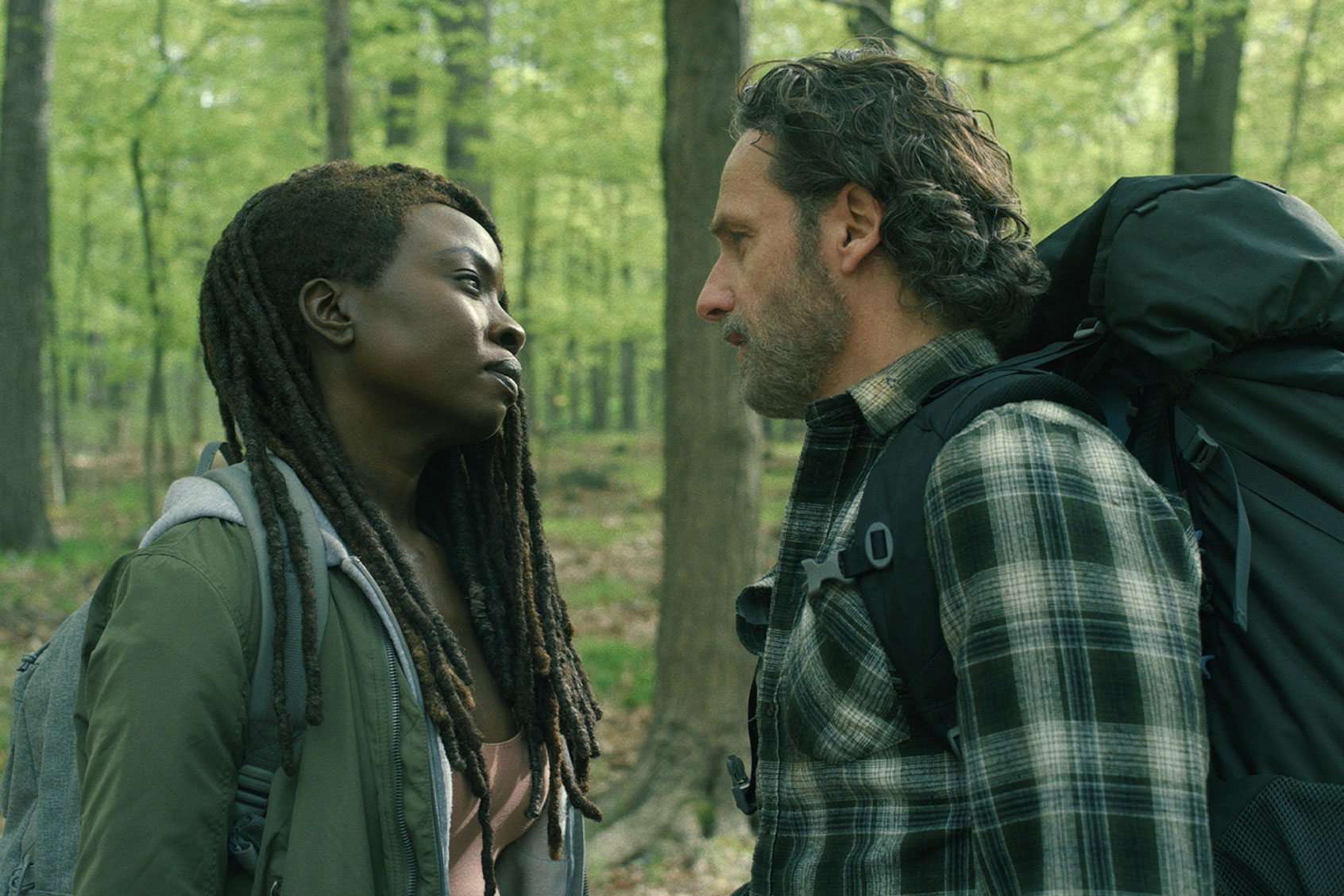
In “Love Lies Bleeding,” the only character with any sense is a cat

"Love Lies Bleeding," director Rose Glass' second feature film through A24 after the release of the feminist body horror epic "Saint Maud" in 2019, is a violently queer thriller that heartbreakingly, terrifyingly and hornily shows the many ways people can justify bad behavior because of love. It also provides a great example of how so much of life's easily doled out pandemonium could be better navigated or avoided altogether by being more like a cat via minding one's own business and adapting that perfect level of low-key that allows you to stay out of the mess while still getting your needs met. 

More often than not, there's a cat somewhere in their home living an unbothered life.

Celebrated by critics and fans all over the world for its focus on the female gaze and steamy, although brief, sex scenes — which led one man at a screening in Detroit to land on the decision to make love to himself in the theater, resulting in his arrest — the film, once experienced firsthand beyond the hubbub, can be appreciated for so much more when you absorb its core message: women have a seemingly ingrained bad habit of being in chaos and calling it romance. And, more often than not, there's a cat somewhere in their home living an unbothered life, judging them through all of it and leading by example, although their lessons are usually ignored or otherwise disregarded.   

Somewhat hard to describe due to the fact that the film's subject matter is fairly straightforward but plays out in a pulpy dream-like fashion, my attempt at a quick synopsis would look something like this: In 1989 New Mexico, Kristen Stewart plays Lou, a gym manager living in a dump apartment with her cat even though her degenerate father (Ed Harris) has mansion money. She unclogs poopy toilets with her bare hands, smokes cigarettes while listening to smoking cessation tapes, and lives to be what feels like an aggressively intentional small life until she meets an aspiring bodybuilder named Jackie (Katy O'Brian), who she falls in love with and asks to move in just days after she rolls into town. Even though, prior to this, Jackie sleeps with her brother-in-law J.J (Dave Franco) who regularly beats on Lou's sister, Beth (Jena Malone). Once Jackie – unbalanced from steroid use – starts just randomly murdering people, it's easy to look back at the days before she arrived, when it was just Lou and her cat, and how peaceful that must have been, in retrospect. But that's how it goes. And that's where this film goes. When the opportunity for sex and love presents itself, a person's own sensible comfort is often the first thing to get thrown out the window in a self-imposed bargain that never, actually needs to take place.

Again, I say, a cat would never. 


Want a daily wrap-up of all the news and commentary Salon has to offer? Subscribe to our morning newsletter, Crash Course.


When I was finally able to see "Love Lies Bleeding," days after its official release in mid-March following a festival run, the theater I sat in with my wife was filled with women of all queer varieties. Even my local nemesis was there. It felt complete. 

Seeing [the cat] was like the visual equivalent of a whiff of lavender.

For comfort and pettiness, I insisted on sitting behind my nemesis, rather than in front of them. This, unfortunately, placed us a row in front of the only straight-seeming man in the theater, who was seated in the very back, leaving us to conclude that he put himself there to freely masturbate with ease. I bird-eyed him through the whole movie. Shooting glances over the back of my seat and through the space between my seat and the next like a "you better not" peek-a-boo. I could sense others doing the same. We were on it.

Crunching on my go-to mix of greasy popcorn and Reese's Pieces as Kstew delivered lines like, " I want to stretch you out, see how far you can go," and Dave Franco's character was getting beat so badly that his jaw falls off, I kept noticing this cat in the background. Seeing it was like the visual equivalent of a whiff of lavender. Calming. A return to the normal. Others in the theater felt the same, and I know this for a fact because every so often, audible even through the booming soundtrack, I'd hear, "Awwww, the cat!" I think, in a way, many of the women were familiar with the emotional stress playing out on screen. And equally familiar with turning to a pet for comfort in similar situations.

In one scene, after Jackie shoots a character named Daisy (Anna Baryshnikov) — a townie lesbian obsessed with Lou who knows a bit too much — Lou gets to work cleaning up yet another mess caused by her new love just as she receives a knock on the door from the FBI. Stuffing the bloody remains of Daisy behind the couch, wrapped in a dirty rug, her cat nearly draws eyes to the blood that's beginning to seep out back there. After taking a few laps of the gore, it gets shooed away. Cats can, obviously, catch the drift more than people. There's a theme here.

In a video in which Rose Glass, Kristen Stewart and Katy O’Brian take turns reading Letterboxd Reviews for the film, Glass answers a question from the host regarding whether or not the cat in the movie was a good actor. She describes him as being “very food motivated” and “pretty obedient.” It's also revealed in this video that the cat is named Happy Meal in the film, but goes by Queso in real life. A foodie across the board. I'm into it.

By literally keeping its paws clean in the scene mentioned above, and in general by not adding to Lou's chaos, but soothing her during it, Happy Meal gets taken along at the end of the film when the lovers flee town. And while, yes, ditching a cat in a movie such as this one would have caused severe backlash from queer viewers, showing it being included in the getaway lends to my point here. Even when mixed in with characters that Stewart describes as being "morally defunct," it made it through in a way everyone could have learned from if they weren’t busy being losers. It kept its bowl full by avoiding all the mess around it, rather than running towards it. Aside from one fleeting curiosity. Which, in this instance, went against that famous saying because in "Love Lies Bleeding," curiosity kills almost everyone. But not the cat. 

“Loud and principled objections”: Rachel Maddow rips NBC News for “inexplicable” Ronna McDaniel hire

MSNBC host Rachel Maddow on Monday blasted NBC News for hiring former Republican National Committee chair Ronna McDaniel.

“I want to associate myself with all my colleagues, both at MSNBC and at NBC News, who have voiced loud and principled objections to our company putting on the payroll someone who hasn’t just attacked us as journalists, but someone who is part of an ongoing project to get rid of our system of government,” Maddow said in her monologue. “Someone who still is trying to convince Americans that this election stuff, it doesn’t really work. That this last election, it wasn’t a real result. That American elections are fraudulent.”

Maddow noted that MSNBC leadership did not initially object to McDaniel’s hiring.

“But when the hiring was announced, and MSNBC staff essentially unanimously and instantly expressed outrage, our leadership at MSNBC heard us, understood, and adjusted course. We were told this weekend in clear terms Ronna McDaniel will not be on our air. Ronna McDaniel will not be on MSNBC,” she said.

Maddow said McDaniel being on the payroll at NBC News is “inexplicable.”

“You wouldn’t hire a made man like a mobster to work at a D.A.’s office, right? You wouldn’t hire a pick-pocket to work as a TSA screener,” she said. “So I find the decision to put her on the payroll inexplicable, and I hope they will reverse their decision.”

Maddow joined a growing chorus of MSNBC and NBC News hosts criticizing the move.

“NBC News is, either wittingly or unwittingly, teaching election deniers that what they can do stretches well beyond appearing on our air and interviews to peddle lies about the sanctity and integrity of our elections,” MSNBC host Nicolle Wallace said Monday.

Fellow host Mika Brzezinski on Monday said she welcomes conservative Republican voices “but it should be conservative Republicans, not a person who used her position of power to be an anti-democracy election denier.”

NBC News host Chuck Todd during an appearance on Sunday’s “Meet the Press” following an interview with McDaniel, told anchor Kristen Welker that “our bosses owe you an apology for putting you in that situation.”

“Intimidating the judge”: Expert says Trump Truth Social post put a “target” on judge’s daughter

Former President Donald Trump on Tuesday attacked the judge overseeing his Manhattan criminal hush-money case and his daughter.

“Judge Juan Merchan, a very distinguished looking man, is nevertheless a true and certified Trump Hater who suffers  from a very serious case of Trump Derangement Syndrome,” Trump wrote on Truth Social. “In other words, he hates me! His daughter is a senior executive at a Super Liberal Democrat firm that works for Adam ‘Shifty’ Schiff, the Democrat National Committee, (Dem)Senate Majority PAC, and even Crooked Joe Biden.”

Trump’s post came a day after Merchan took his lawyers to task for claiming prosecutorial misconduct in the case and set his trial to begin on April 15.

“Trump puts a target not only Judge Merchan in the criminal case in Manhattan but on his daughter,” tweeted former U.S. Attorney Joyce Vance. “This is a rank effort at intimidating the judge by threatening his family. It merits a gag order but also serious pushback from GOP leadership—which we know won't come.”

Manhattan District Attorney Alvin Bragg already asked Merchan to impose a partial gag order to prevent Trump from publicly discussing jurors, witnesses, or others involved in the case as well as court employees and their families. Trump was previously hit with a gag order in his New York fraud trial after targeting the judge's clerk in online attacks. 

Jon Stewart blasts pundits calling Trump’s fraud a “victimless crime”

As former President Donald Trump and his company face looming pressure after he has been ordered to pay a whopping $464 million to a New York court or post a bond that was recently reduced to $175 million to appeal the judgment, Jon Stewart skewered conservatives pundits who have sought to spin the case as a “victimless crime.”

On Monday's episode of "The Daily Show," Stewart mocked Trump's inability to come up with the money as New York Attorney General Letitia James threatens to seize his assets. 

"RIP the Trump Organization. It died as it lived — fraudulently," he said. Saving a confetti blaster since 2016, Stewart popped open the canister with a grin. Despite the early celebration, Stewart was let down due to an appeals courts giving the former president a 10-day extension to pay the debt or post a bond, which was reduced to $175 million.

Stewart explained that Trump is now paying this penalty he would inflate the size of his real estate to secure favorable loan deals but when it came time to pay taxes, the former president "undervalued the very same properties." 

"It was all a part of a very sophisticated real estate practice known as lying," he said.

However, media pundits from Fox News' Sean Hannity to "Shark Tank" judge Kevin O’Leary saw the fraud as a "victimless crime."

"Who's next?" O'Leary questioned, suggesting the government would come after other real estate developers.

"Ah 'who's next?' The persecuted minority of the investment community," Stewart joked. "But I am surprised to hear this from Kevin O'Leary, a guy who is such an a*****e that the other people on 'Shark Tank' think he's an a*****e."

In another clip, O'Leary was told that Trump was found liable for falsifying business records, issuing false financial statements, insurance fraud, and conspiracy. But in response, O'Leary said “Everything that you just listed off is done by every real estate developer everywhere on Earth in every city. This has never been prosecuted.” 

O'Leary's statement set off Stewart: “I don’t know if you know this, but most people just can’t commit fraud and expect to face no repercussions, even if everyone’s doing it."

He continued to explain fraud committed by struggling working-class Americans.

"Try getting a car loan by saying you have ten times as much money as you really do. Or claim 20 dependents when you have no children. Or say you make slightly less money to qualify for food assistance. I will guarantee you, there are not just financial consequences for those lies, but criminal ones,” he said.

“But don’t tell that to the investment community, because in their minds, in pursuit of profit, there is no rule that cannot be bent, there is no principle that cannot be undercut, as long as you and your f******g friends make money," Stewart said. "Apparently, the only immoral practice in the capitalist system is to use that money for people who may need it.”

“Stealing is only justified when you already have too much,” he strongly stated.

"The Daily Show" airs Monday through Thursday at 11 p.m. on Comedy Central and streams on Paramount+.

Republican fears Democratic speaker as Fox News reporter reveals GOPers eyeing exit for “big payday”

More House Republicans may quit before the end of their terms, which could potentially allow Democrats to regain control of the chamber before the elections.

The early departures of Reps. Ken Buck, R-Colo., and Mike Gallagher, R-Wis., dropped the Republican majority’s margin to just one vote. Gallagher’s planned departure on April 19 is immediately after a date that would trigger a special election to fill his seat, meaning it is expected to stay empty until in the election.

But “other Republicans are angling to get out as soon as they can,” Fox News’ Chad Pergram reported. “A big payday in the private sector could lure some members to cash in their voting card early.”

Pergram reported that some House Republicans are “fed up” and “just exasperated.”

“Control of the House has never changed in the middle of a Congress. But if it’s going to happen, the 118th Congress is as ripe for that possibility,” Pergram added.

Rep. Claudia Tenney, R-N.Y., expressed concerns about such a possibility on Fox Business Monday, urging Gallagher to “stay.”

“We can get a special election. It’s a very safe Republican seat. We’ll add to our majority. We don’t have the other special [election] to fill Kevin McCarthy’s seat until April 30th. And we’re perilous. We could end up being– having a Speaker Hakeem Jeffries in the interim here while we’re waiting for special elections,” Tenney said.

“Personally, if you’re going to make a commitment to the people that elect you, that you’re going to serve for two years unless you have a really good reason not to serve, then why would you do that? And aren’t we team Republican?” she asked.

U.K. court puts Julian Assange extradition on hold until U.S. provides assurances

The United Kingdom's High Court ruled Tuesday that WikiLeaks founder Julian Assange cannot immediately be extradited to the United States and gave the Biden administration three weeks to provide "assurances" that the publisher's First Amendment rights will be protected and that he won't face the death penalty.

If the U.S. does not provide the requested assurances, Assange will be allowed to pursue a limited appeal of his extradition. Should the U.S. submit assurances by the April 16 deadline, a hearing will be held on May 20 to determine whether they are "satisfactory."

Assange, whose health has deteriorated badly during his five years in a high-security London jail, faces 17 counts of violating the Espionage Act and a possible 175-year prison sentence in the U.S. for publishing classified information—a common journalistic practice. WikiLeaks disclosures exposed grave U.S. and U.K. war crimes in Iraq and Afghanistan.

Press freedom and human rights groups say the extradition of Assange to the U.S. would set a dangerous precedent and pose a dire threat to journalism everywhere.

Trevor Timm, executive director of Freedom of the Press Foundation, said in a statement Tuesday that "we are glad Julian Assange is not getting extradited today."

"But this legal battle is far from over, and the threat to journalists and the news media from the Espionage Act charges against Assange remains," said Timm. "Assange's conviction in American courts would create a dangerous precedent that the U.S. government can and will use against reporters of all stripes who expose its wrongdoing or embarrass it. The Biden administration should take the opportunity to drop this dangerous case once and for all."

The U.S., which has been aggressively pursuing Assange's extradition for years, previously provided the U.K. government with assurances that Assange would not be held at a supermax prison that's notorious for its inhumane treatment of inmates.

Human rights groups have said such assurances from the U.S. government are "inherently unreliable" and should not be taken seriously by British authorities.

Jameel Jaffer, executive director of the Knight First Amendment Institute at Columbia University, said in response to Tuesday's ruling that "prosecuting Assange for the publication of classified information would have profound implications for press freedom, because publishing classified information is what journalists and news organizations often need to do in order to expose wrongdoing by government."

"It's long past time for the U.S. Justice Department to abandon the Espionage Act charges and resolve this case," said Jaffer.

Republicans would rather boycott Tyson Foods than acknowledge how essential immigrant workers are

When Tyson Foods revealed earlier this month they would be closing one of their plants in Perry, Iowa, which employed over 1,000 people in a town of under 8,000, it was a devastating blow to the community, though one that wasn’t necessarily a surprise. 

Between a wildly difficult 2023 for pork producers, where lower hog prices and higher feed costs led to an average loss of $32 per hog, and previous announcements regarding the closure of other plants in Arkansas, Indiana and Missouri after reported third quarter losses, it seemed like just another casualty of a difficult year. According to local reports, Tyson invited Perry plant employees to apply for other jobs at their remaining plants in Iowa (in Waterloo, Storm Lake and Columbus Junction) and it could have ended at that — until Bloomberg ran a story that same day with the headline “Tyson Is Hiring New York Immigrants for Jobs No One Else Wants.” 

This is when the flames of conservative-driven disinformation were really fanned. When speaking with the publication, the head of Tyson’s social efforts division, Garret Dolan, said the company would “like to employ another 42,000 [immigrants] if we could find them,” referencing how the company already employs about 42,000 immigrants among its 120,000-member workforce.

Quickly, right-leaning talking heads and leaders, including Ohio senator and potential Trump running mate JD Vance, took the news of the Perry plant closure and that select quote from Dolan and spun a different narrative, one in which white Americans are being replaced by undocumented immigrants in the workforce. "All we know is that they are firing American workers and hiring illegal aliens to replace them,” Vance said in an interview on Fox’s “Jesse Watters Primetime.” 

He continued:“This is the entire point of illegal immigration, and Republicans, we've got to hammer this point home."

Tyson Foods quickly responded, telling Salon Food “any insinuation that we would cut American jobs to hire immigrant workers is completely false.” However, that hasn’t stopped Republicans from continuing to call for a boycott of the company — and a conservative investment firm to split from Tyson. In addition to pushing harmful “Great Replacement” rhetoric, albeit with varying levels of subtlety, these arguments willfully disregard a key truth about our country: immigrant workers, both documented and undocumented, are an integral part of our food system. 

According to data from Farmworkers Justice, there are an estimated 2.4 million farm workers employed on American farms and ranches, the large majority of whom are immigrants. Foreign-born workers make up 68% of the workforce (the USDA cites a slightly lower number at an estimated 60%) and approximately 36% lack authorized work status under current U.S. laws. 

“Much of our agricultural system, and frankly, much of our country, has been built by immigrants,” wrote Jessica Kurn for Farm Aid. “But what led us down this specific road? There are many factors; including a program called Bracero, which ramped up the nation’s fruit and vegetable sector to a point that was only sustainable with supplementary labor.” 

We need your help to stay independent

The Bracero program was a bilateral agreement between the United States and Mexico, initiated during World War II in 1942 to address labor shortages in American agriculture caused by the war effort. Under the program, millions of Mexican laborers, known as braceros, were recruited to work on temporary contracts in various sectors, primarily agriculture, but also in railroad construction and other industries. According to the Library of Congress, the program was presented as a solution to address both the wartime labor shortage and provide economic opportunities for Mexican workers. However, it soon became mired in controversy due to reports of labor exploitation, poor working conditions and violations of workers' rights. 

Despite these criticisms, the program continued until 1964, shaping the demographics and labor dynamics of both countries and leaving a lasting legacy on the history of immigration and labor relations in North America. ”Ultimately, the program resulted in an influx of undocumented and documented laborers, 22 years of cheap labor from Mexico, and remittances to Mexico by Braceros,” according to the Library of Congress 

Beyond agriculture, immigrant workers play a key role in the entire American food supply chain. Data from the Migrant Policy Institute shows that immigrants are: 25% of workers in food production, 18% of food transportation workers, 22% of grocery and farm wholesalers and 16% of grocery retailers. These roles were highlighted as heroic during the pandemic, largely in part because early COVID-era supply chain disruptions forced Americans to actually consider just how much it actually takes for food to work its way from farm to table.

"Beyond agriculture, immigrant workers play a key role in the entire American food supply chain."

“Immigrants are deeply involved in this complex journey from seed to plate,” wrote Jessica Kurn for Farm Aid. “They are an essential link in the chain of our food system, and are an indelible part of rural America, contributing to the economic and cultural fabric of these communities. It’s hard to picture our food system without them.”

This is especially true when one considers the kinds of roles immigrant workers tend to fill in the United States. Studies have shown that the vast majority of Americans — regardless of cultural or political background — overwhelmingly agree that immigrant and migrant workers mostly “do not work in jobs that U.S. citizens want,” as Pew Research Center put it. These include jobs like hand-picking produce, canning fish and working the line at a meat-packing plant. 

This also isn’t region-specific; for what it’s worth 65% of California’s agricultural workers are immigrants, as are 69% of Alaska’s seafood processing employees and 64% of Nebraska’s meat processing workers, per the Migrant Policy Institute. These roles are often tough to fill. For instance, even before the pandemic, the meat and dairy industries struggled to hire enough workers, but that has only gotten worse in recent years. 

From 2017 to 2021, the number of unique online job postings for meatpacking workers increased by 86.4%, a number that the American Immigration Institute says points to a significant uptick in need. 

However, instead of facing these realities, it seems Republicans would rather ignore the facts and call for a boycott of Tyson for courting needed immigrant labor — seemingly disregarding the fact that if they were to extend that boycott to every corner of the American food system, they’d be left with very little to eat. 


Baltimore Key Bridge collapse plunges vehicles into the water after container ship collision

A portion of Baltimore’s Francis Scott Key Bridge collapsed early Tuesday morning after a container ship collided with one of the bridge supports, according to Fox 5 DC.

The cargo ship Dali hit the support at around 1:30 am, causing the span of the bridge to plummet into the Patapsco River. Several vehicles were seen falling into the water.

Baltimore Fire Chief James Wallace said at a press conference that two people had been rescued but others are believed to still be in the water, where the temperature was about 47 degrees.

The number of missing is believed to be between seven and 20, according to the report.

"Never would you think that you would see, physically see, the Key Bridge tumble down like that. It looked like something out of an action movie," Baltimore Mayor Brandon Scott told reporters, calling it an “unthinkable tragedy.”

Baltimore Fire Department spokesman Kevin Cartwright called it a “dire emergency” and a “developing mass casualty event.”

"Our focus right now is trying to rescue and recover these people,” he told the Associated Press.

The Dali was headed from Baltimore to Sri Lanka and was flying under a Singapore flag, according to the report.

Maryland Gov. Wes Moore has declared a state of emergency and is working to deploy federal resources.

"I’ve spoken with Gov. Moore and Mayor Scott to offer USDOT’s support following the vessel strike and collapse of the Francis Scott Key bridge," Secretary of Transportation Pete Buttigieg said on Tuesday. "Rescue efforts remain underway and drivers in the Baltimore area should follow local responder guidance on detours and response."

How to unlock Instagram’s political content settings in 3 easy steps

Instagram and Threads have begun limiting political content in user feeds and some members are less than amused with parent company Meta's new feed changes, criticizing the move as potential censorship by the social media giant during an election year. As changes begin rolling out across Meta's properties, here are the basics you need to know — plus a quick and easy way to get political stories back in your feeds so can keep up with basic news about government, elected officials and the social movements you care about. 

We need your help to stay independent

What happened to political posts on Instagram? 

The same thing that happened to the ones on Threads and which is expected to happen to Facebook — Meta's new policy will reduce the amount of news that its algorithm automatically serves to you if that news has to do with government, elected officials or (as Instagram announced on Feb. 9) "political topics that affect a group of people/society at large." That limitation of political content will also effect you if you have a Threads account. The same post informs readers that Facebook's news feeds will be limited soon also. 

In an updated Help article, the platform listed several topics that would be making fewer appearances in the Reels it recommends to users.

"We aim to show you less reels that focus on political issues," the company said. All other bullet points in the list of content limitations are photo-moderation rules addressing illegible or copyrights images. 

To do that, a new Instagram update has changed a single default setting in the apps' content control screens. But it's one that can be changed back quickly. 

Why is Instagram limiting political content? 

In its Feb. 9 blog post, Instagram told users it would be building on its previous political content policy by rolling out new limits on how political stories are filtered out of users' feeds via Meta's artificial intelligence -enabled algorithm. 

"If you decide to follow accounts that post political content, we don’t want to get between you and their posts, but we also don’t want to proactively recommend political content from accounts you don’t follow," the company said last month.

"We won’t proactively recommend content about politics on recommendation surfaces across Instagram and Threads. If you still want these posts recommended to you, you will have a control to see them," Insta said, adding that pro-level accounts would be able to monitor their Account Status page to find out whether or not their posts are "eligible" to qualify for "content recommendation."

Currently, Instagram's information article directs users to a page with more information about recommendation eligibility but the page, "Recommendations on Instagram", makes no mention of political, government or election news.

"We also try to not recommend accounts that are associated with offline movements or organizations that are tied to violence," the company says on its page, linking to a Meta blog about QAnon content moderation

If you're looking for a quick way to unblock political Instagram posts and restore your news feed, look no further. 

01
First, head to your main Insta menu.
When you open up the Instagram app on your smartphone, you'll see the three-dash menu icon in your top-right corner. Tap on that to open your main Instagram menu. 
02
Next, find to your privacy controls.
With the three-dash menu open, scroll down until you see "settings and privacy" — tap to select it. In the new menu that appears, tap "content preferences" which will bring you to a new menu. 
03
Finally, check the political menu and hit the switch.
Once you're in the "content preferences" menu, scroll down until you see "political content." Tap once to open this menu and — finally — you'll see some options. You're looking for the one that says "Don't limit." Turn that one on.
 
And — just like that — you're done. You should be able to back out of the menu screens altogether or tap the home icon to return to your main feed. Your feed preferences should update themselves automatically and you should be able to see all your normal political news as before. If you have any issues seeing the posts after hitting the switch, you may want to completely close down the app and re-open it to retrieve a fresh spate of posts and stories about elections and government. 

Trump loves to play the victim — NY appeals court bailout shows he’s the most coddled person alive

As anyone who listens to him can attest, Donald Trump may be the most self-pitying person on planet Earth. Pretty much all the man does is whine and cry about how he's the victim of an imaginary "witch hunt." In reality, his list of transgressions is staggering. If he were any other person, he would have been sentenced to prison many times over with no real hope of release: Sexual assault. Decades of fraud. Attempted extortation of a foreign leader. Stealing classified documents. Flagrant acceptance of what very much looks like bribes. Attempting to overthrow democracy. Inciting a violent riot that got people killed. I'm sure readers can list a dozen more, but let's get to the point: It's absolutely bananas that Trump isn't in prison yet.

On Monday, right before Trump finally got the tiniest taste of the justice he deserves for committing decades of criminal fraud in New York, he got bailed out by the state's appeals court.

The concept of "privilege" is treated with great skepticism in conservative circles, and regarded by MAGA types like a made-up hoax. But no one alive proves the truth of the concept more than Donald Trump. He's proudly ignorant. The only talent he bothered to learn is cheating the system so that you "win" without ever having to be good at stuff. The only real skill he's developed in his 77 years is utter shamelessness, and frankly, it seems that might be more of a genetic defect than anything he's worked at. The man can't even bother to get good at golf, a sport he does seem to like, because he prefers to lie about it instead

And yet, simply because he was born a white guy with inherited wealth, the world conspires to endlessly provide Trump with all the breaks. Not only is this spoiled brat shielded from the consequences of his actions, but his privilege continues to catapult him into a world of luxury and flattery, even as all he does is leave a trail of ruin in his wake. 


Want more Amanda Marcotte on politics? Subscribe to her newsletter Standing Room Only.


The latest "are you kidding me" example: On Monday, right before Trump finally got the tiniest taste of the justice he deserves for committing decades of criminal fraud in New York, he got bailed out by the state's appeals court. The judgment against Trump was nearly half a billion, due to a court case that demonstrated he wouldn't have two nickels to rub together but for his lifetime of fraud. In order to appeal the case, Trump had to first put up the full amount as a bond, which is standard. So Trump went on Truth Social to petulantly claim he had $500 million in cash (even though his legal filings said otherwise). Then in a stunningly undeserved act of mercy, the appeals court reduced the amount of his bond to $175 million and gave Trump 10 more days to find a benefactor to pay it for him. 

MAGA people pity a man with a private jet because he might have to give up a golf course or two.

Once again, Trump gets bailed out by people he would happily feed to a pack of ravenous wolves for a penny. The unfairness of it is staggering. He's not repentant. On the contrary, Trump famously spent the entire trial throwing childish tantrums in court, outraged at the very idea that he should be treated like ordinary people, who tend to face punishment when caught committing crimes. He was already let off easy for that, as well. Most people who make scenes and unsubtly threaten court staff would find themselves cooling off in jail for contempt, but the judge backed off in the face of the force field of rich white boy protection that has surrounded Trump his whole life. 

Trump's entire life has been defined by the willingness of other people to coddle the rich white boy. Right now, that's manifesting in legal leniency, as most prosecutors and judges have hesitated to show Trump even 1/100th of the justice that would face anyone else who acts like him. This is most obvious, of course, when looking at the attempted coup and the Capitol riot. Over 1,200 people have faced federal charges for Jan. 6, but Attorney General Merrick Garland dragged his feet for years on charging Trump. Yes, Garland eventually hired special prosecutor Jack Smith, and he brought charges, but it's looking like it's way too late to get the trial done by the election. 

Even before Trump enjoyed first-class treatment from the justice system, he enjoyed a series of benefactors who wanted to keep him in a rich man's lifestyle, for no reason that makes sense to normal human beings. First, of course, was his own father, who fed his worthless offspring about half a billion dollars over the years, even as Donald Trump wasted it all on bad business deals. After his father died, Trump got a new sugar daddy, in the form of NBC producer Mark Burnett. Even though Trump was a failed businessman with multiple bankruptcies under his belt, Burnett tapped him to host "The Apprentice," a reality show built on the deeply false premise that Trump has business acumen. Through the show, Burnett funneled another half-billion to Trump, which Trump promptly lost on more bad investments. Soon, Trump's debts dramatically mounted, estimated to be up to a billion dollars. Bankers, like the elder Trump and Burnett, just love giving this guy money so he can keep pretending he's a "success" without ever having to be one. 

Simply because he was born a white guy with inherited wealth, the world conspires to endlessly provide Trump with all the breaks.

Just this week, we saw another example: Billionaires and other rich investors are buying up Truth Social for ungodly billions, in a deal that will make a a fortune for Trump. The site is tiny compared to social media networks valued at much less than that, and it's widely believed that this "investment" will show no real returns. But Trump is a black hole that other rich people love to pour money into.  

One of the great mysteries of our time, and likely to history, is why the MAGA masses fall for Trump's claims to be a victim when he is the most coddled person alive. Yes, most of them have their share of unearned privilege, being mostly white people, and share Trump's enthusiasm for self-pity every time those privileges are questioned. But ultimately, most of them only have a taste of what Trump enjoys. Most are well aware, for instance, that if they don't pay their bills, they could lose their house or their car or their job. Most don't have an endless series of fairy godfathers ready to bail them out of every bad decision they make.  Most know that if they get fined by a court, they can't get out of it simply by whining a lot. 

We need your help to stay independent

And yet, MAGA people pity a man with a private jet because he might have to give up a golf course or two. Indeed, the MAGA masses are yet another group of people rescuing Trump from himself. Whether or not he can pay his legal bills out of pocket, he doesn't have to. The little guys are paying it for him, emptying out their retirement accounts to donate money to Trump's "campaign," which is largely devoted to funding his legal defense. He's somehow managed to convince them he's the victim, even though no one else could ever get away with so much without having to pay so little for it. 

As infuriating as this is, there are some tendrils of hope that Trump's seemingly infinite well of impunity may be starting to sputter. As New York Attorney General Letitia James pointed out, this is only about the bond. If Trump loses on appeal, he still owes the "$464 million judgment – plus interest." And she has already proved that she can beat him in court. On the same day, Trump got the reprieve on the bond, he lost another court battle, as Judge Juan Merchan rejected efforts to delay Trump's criminal fraud trial any longer, setting the trial start date for April 15. 

Trump's privilege is a social construct, not a law of nature. All it takes is a willingness to buck the pressure to give him the red carpet treatment. Hell, you don't even have to treat him fairly. As the original fraud trial showed, even when Trump is given lots of handicaps and perks, his guilt is so immense that it overwhelms his protective bubble. But it clearly takes courage to hold the line against this baffling assumption that Trump should be able to do whatever he wants. Too bad this appeals court didn't have the spine, but there are still plenty of people in the mix who aren't getting wobbly. 

“Hastening his deterioration”: Dr. John Gartner on impact of court trials on “Trump’s fragile brain”

Donald Trump’s already abominable behavior has been getting much worse in these last few weeks – and there may be a physiological component to it. In a series of conversations here at Salon, Dr. John Gartner, who is a prominent psychologist and contributor to the bestselling book "The Dangerous Case of Donald Trump: 27 Psychiatrists and Mental Health Experts Assess a President", has been warning that Trump appears to be suffering from serious cognitive challenges as manifest by his speech, memory, and other behavior. In an attempt to raise public awareness about Donald Trump’s apparent cognitive challenges and the extreme danger they represent to the nation if he were to take back the White House, and in essence be a type of mad king dictator, Gartner has started a petition at Change.org called “We diagnose Trump with probable dementia: A petition for licensed professionals only.”

Unfortunately, the American mainstream media – especially the elite agenda-setting news media – has largely continued to ignore Donald Trump’s apparent cognitive and other mental and emotional health challenges. The Washington Post appears to be slowly creeping towards a more direct engagement with Trump’s apparent cognitive challenges. Last week, the Post featured a story about Donald Trump’s father who was afflicted with Alzheimer’s:

Trump’s long fixation on mental fitness followed years of watching his father’s worsening dementia — a formative period that some associates said has been a defining and little-mentioned factor in his life, and which left him with an abiding concern that he might someday inherit the condition. While much remains unknown about Alzheimer’s, experts say there is an increased risk of inheriting a gene associated with the disease from a parent.

“Donald is no doubt fearful of Alzheimer’s,” said a former senior executive at the Trump Organization, who worked for years with Trump and saw him interact with Fred Trump Sr., and who spoke on the condition of anonymity to describe a confidential relationship. “He’s not going to talk about and not going to admit to it. But it’s relevant because every day he is hitting Biden with whether or not he is capable mentally of doing the job.”

Trump’s father’s condition also drove a wedge into his family, which fell into years of lawsuits that alleged in part that Donald Trump sought to take advantage of his father’s dementia to wrest control of the family estate — litigation that introduced reams of medical records detailing Fred Trump Sr.’s condition.

This failure to consistently and boldly speak truth to power about Donald Trump's apparent cognitive challenges contributes to the larger crisis in credibility that the American news media as an institution is experiencing. Any reasonable person can see that something is wrong with Donald Trump’s behavior. Many Americans have direct experience with relatives, friends, and other people they care about who have been or are afflicted with some type of brain disease related to aging. For the American news media and other gatekeepers and agenda-setters to deny the obvious about Donald Trump is a willful decision to ignore the facts and reality.

"Trump gives the appearance of strength with his hypomanic bluster and braggadocio, but he is cognitively weak and closer than you might think to being completely disabled."

Continuing with our ongoing conversation about Trump’s apparent cognitive challenges, I spoke with Dr. Gartner several days ago via email about the failures of the American news media, the MAGA people and their devotion to their Dear Leader, and what will likely happen next if Trump’s behavior continues to trend in the same direction.

This interview has been lightly edited for clarity and length

At a rally in Ohio, Donald Trump again exhibited symptoms of something apparently being wrong neurologically. Trump ties to turn it all into a joke by claiming he is being intentional and it is part of his performance. But at this point such deflections have no credibility, even given the ex-president’s “challenging” relationship with the truth and reality. You and your colleagues’ warnings and predictions appear to be proven correct almost every week.

Our Trump dementia-watch weekly round-up is becoming a regular ritual for one simple reason: Trump can’t go a full week without displaying gross signs of what appears to be dementia. This week he said “Joe Biden beat Barack Hussein Obama. Ever heard of him?” Donald Trump is disoriented. He doesn’t know who the president is, who he’s running against in the primary, or whether E. Jean Carrol is his wife. (I’m not trying to be funny, but it reminds me of the Oliver Sacks book, “The Man Who Mistook his Wife for a Hat.”) In my opinion, this is brain damage. There is no medically credible explanation for these occurrences that doesn’t not involve brain damage, most probably dementia. These telltale signs used to be more intermittent, but his apparent dementia is progressing at an accelerating rate, as is normal for the illness. But at some point, these patients fall off a cognitive cliff and become suddenly incapable of independent living. Given the accelerating rate of Trump’s apparent decline, it’s almost certain he would become incapacitated while in office. The man with the nuclear codes would be wandering around the White House in an angry agitated fog of confusion.

We need your help to stay independent

We’d like to believe his vice president and Cabinet would step in and invoke the 25th Amendment for the good of the country should this occur. But would they? The kind of corrupt officials Trump attracts, including those representing foreign interests, would benefit from a demented president they could wheel around in public and manipulate in private.

I thought electing a malignant narcissist who idolizes dictators and appears to be loyal to Vladimir Putin was the worst conceivable outcome for our country, but I was wrong. A demented malignant narcissist who basically works for Russia is a hundred times worse. In the Middle Ages they had a saying: “A bad king is better than no king. And no king is better than a child king.” We would have a child king, or at least one with the brain and character of a child.

Your petition at Change.org is gaining momentum. What is happening?

This subject was once forbidden in the press. If you searched online for Trump and dementia, as I began to do ten times a day, you wouldn’t find one article asking, Does Trump have dementia? The words dementia and Trump never appeared in the same sentence, anywhere. Instead, there were articles about President Biden’s memory and whether he was “too old.” Or pieces that quoted doctors saying we can’t know anything about either candidate’s cognitive health from what we see on TV.

But thanks to the petition, we’re breaking through. Newsweek has reported on it. And for the second week in a row, Jennifer Rubin praised Salon in her Washington Post column for breaking this story: “Salon, one of the few outlets to take Trump’s cognitive decline seriously, displayed this headline: “‘Experts are desperate to warn the public’: Hundreds sign Dr. John Gartner’s Trump dementia petition.” The article’s description reads, “They see the signs of Trump’s cognitive decline through the eyes of years of training and experience.” That succinctly spelled out the basic facts surrounding a petition signed by hundreds of mental health professionals, pointing to obvious signs of Trump’s mental dysfunction.”

"The White House may become a kind of nursing home where they need to medicate him at sundown."

The petition has filled a desperate unmet public need to hear from experts about Trump’s cognitive health. We’re up to 500 validated licensed professional signers: But far more persuasive than the numbers are their voices. I put together a tweet thread of their comments, that I add to daily, because I want America to hear in their own words, they offer their credentials and experience, explain the diagnostic criteria for dementia, give examples from Trump’s behavior, and explain why they felt compelled to sign. The petition, despite the risk to their careers or personal lives, to say in public: “our diagnostic impression of Donald Trump is probable dementia.”


Want a daily wrap-up of all the news and commentary Salon has to offer? Subscribe to our morning newsletter, Crash Course.


The public is desperate to hear the truth from real experts about the state of Trump’s cognitive health. Don’t they deserve that? Especially when all of our lives may depend on it. As people of conscience, we are defying this absurd professional gag order, to speak the truth about Trump’s probable dementia before it’s too late.

Given what we know about Trump’s personality, how will he respond if and when he is confronted by the obvious facts about the apparent problems with his brain and thinking?

It is important that people understand that dementia worsens all personality disorders, including malignant narcissism, which is one of the worst personality disorders a human being can have. It’s difficult for us to even imagine a Trump ten times more paranoid, agitated, and impulsive than he already is. His judgment was always terrible, but Trump is heading towards a cognitive cliff where he will lose the capacity to form a coherent judgment of any kind. The White House may become a kind of nursing home where they need to medicate him at sundown.

If Donald Trump’s behavior continues to decline in an obvious way to the point where it can no longer be denied, will his MAGA followers leave him? Will seeing their personal superhero and god made mortal break the psychological adhesion?

I don’t think it will separate him from his followers. Their cultish idealization of him is an addictive drug. As long as Trump can spew hate, and do a funny little dance on stage, his followers will be satisfied, even if he’s so disoriented that he doesn’t actually know where he is. The people who can be influenced are independents and Republicans who voted for Nikki Haley. The election may come down to their gut feeling about which candidate is “stronger.” Trump gives the appearance of strength with his hypomanic bluster and braggadocio, but he is cognitively weak and closer than you might think to being completely disabled.  

What do you think happens next with Donald Trump given all the pressure he is under, and specifically with his property potentially being seized in New York and elsewhere? 

Every bit of stress is going to deepen the cracks in Trump’s fragile brain, hastening his deterioration. If the press deigns to show them to us, we’ll see evermore flagrant displays of cognitive decline, and more often. He can’t get through a single rally without displaying a tell that looks a lot like a symptom of dementia. I’m sure this time next week, they’ll be more fodder for discussion. But will you read about it in the New York Times or see it on CBS News? Likely not.

Poor dental health is linked to the heart disease and dementia. So why do we neglect it?

A new study published in The Journals of Gerontology Series A finds that if you don't take care of your teeth, you are more likely to suffer inflammation, reduced brain size and damage to your heart. At first glance, this may seem like a reach — what do teeth have to do with the brain and heart? But as one of the researchers, Dr. Benjamin Trumble, told Salon, our culture errs when "the way we think about health is that we split the body into two parts," with the mouth in one category and everything else in the other.

"Somewhere along the line we lost this understanding when it comes to overall health and dental health."

In fact, the health of your mouth profoundly impacts other areas of your body. The scientists behind the recent paper learned this by examining more than 700 sets of teeth — all among members of a little-known South American tribe.

The Tsimané, an Indigenous people of lowland Bolivia, lead much simpler lives than the vast majority of humans. While the rest of us flourish/wallow in our world of post-industrial technology, this community leads a traditional lifestyle of foraging and growing their own food. They are not as exposed to the problems of pollution, low physical activity and poor diet that cause epidemic levels of heart and brain disease in industrialized societies. As a result, when researchers drew links between each individual's oral health and their cardiovascular and brain health, they could feel more comfortable that the findings were not confused by unrelated variables.

The study found that though this community has generally poor oral hygiene, it also had low rates of dementia and cardiovascular disease. Nevertheless, individuals who had large amounts of damaged teeth possessed higher rates of inflammation, brain tissue loss and aortic valve calcification. By contrast, damaged and lost teeth were not associated with coronary artery calcium or thoracic aortic calcium.

"I think that this really highlights the importance of oral health in overall health," Trumble, a professor at Arizona State University's Center for Evolution and Medicine, told Salon by email. Trumble pointed to the famous expression "don't look a gift horse in the mouth" as proof that people have always suspected a connection between health and examining an animal's teeth. Yet humans often culturally fail to apply the same logic to themselves that they do to horses.


Want more health and science stories in your inbox? Subscribe to Salon's weekly newsletter Lab Notes.


"We are essentially living outside of the manufacturer's recommended warranty for our bodies."

"Somewhere along the line we lost this understanding when it comes to overall health and dental health," Trumble said. "Now we differentiate health insurance from dental insurance, but really they both impact our health and aging."

So why do we arbitrarily divide dental into its own separate form of health care, one that isn't covered equally by insurance? Indeed, teeth are often treated as a "cosmetic" problem, despite clear evidence to the contrary. In fact, the website for Covered California, the largest state-based health insurance marketplaces in the U.S., spells it out plainly: "Dental coverage for adults is not considered an essential health benefit, so dental coverage for adults is offered separately from health insurance plans. No financial assistance is available to purchase these dental plans."

Yet even before this study, scientists had established strong links between oral health and inflammatory, cardiovascular and brain health. The new paper adds more clarity to that connection, however, by showing that it exists in a population that is free not only from the environmental scourges of industrialism and factory farming, but also its social injustices — particularly those that negatively impact oral health.

The Tsimané "have far less of a socioeconomic gradient, and very little access to modern dentistry at all," Trumble said. "This makes it possible to actually examine associations between oral health and chronic disease without confounding social factors" — namely, the fact that industrialized societies like the United States tend to provide inferior dental care to people in lower socioeconomic conditions.

"That is what really sets this paper apart — we can assess the association between dental health and cardiovascular and brain health independent of any confounding from socioeconomic status," Trumble said.

The new paper also provides useful context to research done into how oral health is connected to other forms of health. A January paper in the journal BMC Oral Health found that dental cavities decrease the cerebral cortical thickness of the BANKSSTS, a region of the brain crucial for language-related functions and the most affected area in Alzheimer's disease.

Similarly, a January paper in the European Journal of Preventive Cardiology determined that people who use dentures are more likely to have coronary artery disease, strokes, myocardial infarctions, heart failures and type 2 diabetes. And a 2022 paper in the International Journal of Dentistry also determined that people with significant tooth loss and diabetes mellitus, as well as those with just significant tooth loss, were more likely to have elevated levels of serum C-reactive protein (CRP), a liver enzyme that indicates inflammation. It also found that people who regularly floss are more likely to have lower CRP levels.

There is plenty we just don't understand about how our mouth and the rest of our health are intertwined. Just last week, researchers at the Fred Hutchinson Cancer Center in Seattle reported in Nature that a bacterium that lives in our mouths, known as Fusobacterium nucleatum, is linked to an increase in colorectal tumors.

We need your help to stay independent

However, much of this previous research exists with the possibility of some outside factor, such as diet or environment, that could explain the link between the mouth and these conditions. Because of Trumble and the extensive research team that joined him — including anthropologists, cardiologists, neurologists, radiologists and dentists — researchers can now look at a study with a large cohort in which post-industrial society simply does not exist.

The experience wasn't just educational — Trumble found it inspirational.

"It has been one of the great honors of my life to get to work with the Tsimané for the last decade and half," Trumble said. "Modern urban life is evolutionarily novel — we were hunter gatherers for 99% of human history. The sedentary lifestyle we live today is very different from the rest of the human past."

Because post-industrial city life is so unusual compared to what our physiology was designed to do, "we are essentially living outside of the manufacturer's recommended warranty for our bodies," Trumble said. "Most of human evolution occurred in traditional subsistence populations, but nearly all health research is done in urban centers, so we really don’t have a great idea of what health was like before electricity, cars and grocery stores."

Trumble added, "Getting to work with a population like the Tsimané is an amazing experience, and gives a better idea of the health issues that people had prior to city life."

Tammy Murphy’s exit from New Jersey Senate race is a win-win

Tammy Murphy’s exit from the race for the U.S. Senate seat that’s held by three-time indicted Senator Robert Menendez marks the end of a counterproductive feud between the First Lady’s campaign and Andy Kim that had swallowed up all of the air.

The contest was framed as a battle between the Murphy Democratic Party machine and Kim as the leader of a reform movement pushing back on the obvious nepotism that the corrupt elevation of the First Lady to the U.S. Senate would so represent. Lost in this narrow casting was any consideration of the deteriorating circumstances of the nation’s millions of financially struggling families with children who were sent into a kind of freefall when the federal government on President Biden’s watch pulled the plug prematurely on a myriad of COVID-era social supports.

Perhaps now, with a race that includes Larry Hamm, social justice advocate, Dr. Patricia Campos-Medina, a labor educator and the former national legislative director for the AFL-CIO, and Patrick Merrill, who wants to “bring a working class voice to Washington” we might get around to debating why our nation is not working for so many families with children.

At the top of the list of post-COVID hits to the poor was multi-millionaire Sen. Joe Manchin, D-WVA,  decision to join Senate Republicans to end the Expanded Child Tax Credit. In its brief 12 months it was implemented it helped drive down the percentage of children living in poverty to 5.2 percent, the lowest level recorded. Once that lifeline was withdrawn, five million children fell back into poverty almost overnight and the percentage of kids in desperate straits shot up to 12.4 percent.

And as social policy experts will tell you, federal poverty data excludes the lived reality of tens of millions of Americans that are captured in the United Way’s ALICE [Asset Limited-Income Constrained & Employed] state-level studies that track the regional variations of cost of living, housing and childcare that are excluded from the federal poverty criteria.

In much of America, as well as in counties in New Jersey like Cumberland, when you add the percentage of families living in poverty to the ALICE cohort having trouble making ends meet, you have the majority of households. In New Jersey, six counties Cumberland, Passaic, Essex, Hudson, Atlantic, and Salem have poverty rates that exceed the nation’s 20.7 percent threshold. According to the United Way’s New Jersey analysis, out of the 202,000 households headed by a single woman, 143,600 are either living below poverty or in the ALICE cohort struggling week to week to get by.

This disturbing reality is largely missing from our 2024 campaign debate at the top of the 2024 ticket with Trump vs. Biden, and so far in the New Jersey Democratic U.S. Senate primary to replace Sen. Bob ‘Gold Bar’ Menendez. Several states, including New Jersey, passed their version of the Expanded Child Tax Credit.

And while there was bipartisan support for rebuilding America’s infrastructure, the White House couldn’t muster sufficient support for his proposal to extend universal pre-K nor to keep Biden’s campaign promise to raise the federal minimum wage from $7.25 to $15 an hour.

We need your help to stay independent

When the Biden White House decided to end the COVID emergency the federal government directed the states to end the pandemic-era practice of automatically re-enrolling Medicaid participants. This so-called “unwinding” cleared the way for more than ten million people including 4.2 million children to be kicked off the health insurance program.

Across the country, there was a wide range of responses. In states like New Jersey and New York there was a concerted effort to limit the damage and maintain some continuity of coverage but people were still dropped. In Texas alone, one million were tossed off the rolls.

Even as COVID continues to take lives, the nation regressed back to the fractured healthcare model forgetting the hard lessons that the closer we get to universal health care the easier it is to track infectious disease in the first place and to maintain infection control across zip codes once a pandemic is underway. It’s just common sense. When you have health insurance coverage you are more likely to seek care.

The end of the pandemic emergency also brought an end to the moratorium of evictions and foreclosures at a time when greed-inflation was at its most ferocious and vacancies were at an historic low. Now, foreclosures and evictions are on the rise with PBS reporting that some cities saw a 50 percent spike in evictions from their pre-pandemic levels as rents continued to spiral.

This largely underreported story is a consequence of a lack of local reporting on social conditions, lagging data collection as well as reporting, and an overarching American disdain for the working poor whose existence raises troubling questions about our 21st-century version of winner-take-all capitalism.

This also accounts for the beltway blind spot when Biden partisans express bewilderment that more Americans don’t feel better about the President’s post-pandemic ‘economic miracle’ that’s based on 10,000 feet aggregate data points like the Gross Domestic Product. Nobody votes or raises their children in the aggregate.

Let’s make 2024 about the actual circumstances of all of the American people, and how we can most effectively uplift those who are doing all they can for their children but still come up short at the end of the month.

It was only a matter of time before Piers Morgan dragged Meghan and Harry for comforting Kate

Piers Morgan is staying true to form in his latest criticism of Prince Harry and Meghan Markle, trying to make something out of nothing as he continuously endeavors to sully their reputations. 

The British media personality, known for his oft-inflammatory remarks about the Duke and Duchess of Sussex, has once again taken the opportunity to paint them in a negative light, following the recent news that Kate Middleton has been undergoing chemotherapy after being diagnosed with cancer. Middleton late last week shared the announcement via a video statement, effectively quelling the deluge of rumors and conspiracy theories that fanned across the internet when she disappeared from the public eye in January following a planned major abdominal surgery.

Morgan's gratuitous sensationalism … builds upon a pattern of Morgan's ongoing obsession with slandering Markle.

A recent report from PEOPLE indicated that Harry and Meghan had privately reached out to the Prince and Princess of Wales, with whom they have a somewhat tense relationship, to express their support during an undoubtedly difficult time. "We wish health and healing for Kate and the family, and hope they are able to do so privately and in peace," Harry and Meghan said in a statement shared with the outlet. 

Despite the seemingly innocuous nature of Harry and Meghan's message, Morgan on Sunday took X/Twitter to respond to the news, in an apparent attempt to cast doubt on their efforts to be kind to a family member (albeit an estranged one) and spur baseless gossip by implying that they had leaked the report. "If it was done ‘privately’ then how do you know?" the commentator asked in a quote tweet of PEOPLE's report, tacking on a skeptical-looking emoji wearing a monocle and a single, raised eyebrow.

The well-wishes, aside from simply serving as an extension of kindness to a relative during a difficult time, could also be understood as an effort to ameliorate previously fraught relations between Prince William and his younger brother. From Harry and Meghan's stepping back from their role as senior members of the royal family in 2020, to their tell-all 2021 interview with Oprah — which delved into allegations of racism toward Markle and tabloid bias, amongst other things — to the couples' bombshell six-part Netflix docuseries, to Harry's revealing memoir, "Spare," which largely detailed royal infighting, it's safe to say the brothers have not been particularly close as of late.

Instead, Morgan's gratuitous sensationalism not only detracts from the more pressing matter at hand — a woman and mother's serious illness that she was effectively forced to share with the world in what has been characterized as a massive PR bungle — but also builds upon a pattern of Morgan's ongoing obsession with slandering Markle. 

In 2021, Morgan left the set of "Good Morning Britain" in a huff, ultimately departing from ITV altogether, after he was called out for making callous comments about Markle. During Harry and Meghan's sit-down with Oprah, Markle disclosed that she had experienced persistent suicidal thoughts and was ultimately rebuffed by a senior royal when she sought inpatient care on the grounds that "it wouldn't be good for the institution." 

"Who did you go to? What did they say to you? I'm sorry, I don't believe a word she said, Meghan Markle," Morgan said on the show. "I wouldn't believe it if she read me a weather report." 

Morgan later returned to the show to make clear his "position on mental illness and on suicide." 

"These are clearly extremely serious things and should be taken extremely seriously and if someone is feeling that way they should get the treatment and the help they need every time," he said. "And if they belong to an institution like the Royal family and they go and seek that help they should absolutely be given it.

"My real concern was a disbelief frankly," he continued. "That she went to a senior member of the Royal household and told them she was suicidal and was told she could not have any help because it would be a bad look for the family. If that is true a) that person should be fired and b) the Royal family have serious questions that need to be answered."

In March of 2021, Morgan published a lengthy opinion piece for The Mail to bemoan his unfounded hangups with the "delusional Duchess" and affirm that he believed Markle to be lying about having faced racism during her role as a member of the royal family. 

"Meghan's had no worse media treatment than other Royal brides such as Diana, Fergie, Kate, Camilla or even that other Monarchy-rattling American divorcee, Wallis Simpson," Morgan wrote. "But she's the first to claim negative press has been motivated by racism, and it's a very dangerous charge to make with so little to back it up." 

"She's just one of many whiny, privileged, hypocritical celebrities who now cynically exploit victimhood to suppress free speech, value their own version of the truth above the actual truth, and seek to cancel anyone that deviates from their woke worldview or who dares to challenge the veracity of their inflammatory statements," Morgan added. 

"No, it's about a far bigger issue than one delusional Duchess . . . As Winston Churchill said: 'Some people's idea of it [free speech] is that they are free to say what they like but if anyone else says anything back, that is an outrage.'"

In 2022, Morgan hosted ex-president Donald Trump on his show, "Piers Morgan Uncensored," during which time the two conservative figures discussed their shared distaste for Harry and Meghan. "I won't use the full expression, but Harry is whipped like no person I think I've ever seen," Trump said at the time. "I'm not a fan of Meghan, I'm not a fan, and I wasn't, right from the beginning. I think poor Harry is being led around by his nose."

Regardless of Morgan's motivations in taking shots at Markle this time around, it's clear that it's unwarranted. By misconstruing and intentionally maligning the extension of a metaphorical olive branch from one beleaguered royal couple to another, it's all the more likely that he only sought to add on to and exacerbate the already unfortunate and bleak legacy of #KateGate with his own agenda. 


What your fruit bowl reveals about climate breakdown

Spring arrived in style on March 26 2021 in Kyoto, Japan, as cherry trees reached the peak of their bloom. This marked the earliest recorded date when most flowers have opened in a series of annual records dating back to 812 AD – over 1,200 years.

The culprit is climate change. Milder, wetter winters and warmer springs coupled with increasingly variable weather have caused blossom dates to advance across growing regions and a variety of fruit trees.

While this might scupper the travel plans of those hoping to catch a glimpse of the famous cherry blossom in Japan, changing blossom dates are causing a much larger headache for those in charge of over 40 million hectares of fruit orchards worldwide.

Fruit trees have a complex relationship with the climate. In winter, trees need a period of cold weather (known as chill accumulation) to exit their dormant winter state and resume growth. This is followed by a period of warm weather (known as heat accumulation) which is necessary to produce blossoms in spring.

The amount of cold and warm weather required varies depending on the fruit and variety, but failure to fulfil either can damage fruit yield and quality.

Higher average temperatures and greater swings in temperature across both seasons have caused chaos for fruit trees, with increasingly frequent and severe heatwaves and cold snaps disrupting the once stable cycle of seasons.


Do the seasons feel increasingly weird to you? You're not alone. Climate change is distorting nature's calendar, causing plants to flower early and animals to emerge at the wrong time.

This article is part of a series, Wild Seasons, on how the seasons are changing – and what they may eventually look like.


Despite warming winters, many fruit trees are still comfortably meeting their requirement for chill accumulation in temperate realms like Europe and North America. But the same trees are fulfilling their heat accumulation requirement earlier because of warmer springs.

As a result, apples, pears, cherries, plums and apricots are all flowering earlier – by as much as a fortnight in some cases.

You will notice these changes too, most vividly, in the quality and availability of fruit you can buy. Here's how the contents of your fruit bowl will change to reflect the distorted seasons.


How earlier blossoms affect fruit

Changes in blossom dates have major consequences when the time comes to harvest.

In areas where blossom dates are advancing, experts are warning of an increased risk that delicate blossoms will be exposed to damaging frosts. Even relatively short cold snaps when trees are in blossom can devastate fruit production. A single frosty night in April 2017 caused a 24% drop in the European yield of apples and a 12% drop in pear production.

Many fruit trees are also self-incompatible. This means they need cross pollination from a different variety to set fruit. Much of this pollination is carried out by insects, particularly wild bees, and, during my PhD, I have found that the climate is also affecting the timing of wild bee lifecycles.

Some species of bee are emerging at the wrong time to pollinate fruit blossoms, partly because bees and blossom respond differently to the climate. Not enough pollinating insects can be costly. Research from the University of Reading highlighted an estimated £5.7 million (US$7.3 million) a year in lost production of Gala apples due to too few insect pollinators.

Lack of pollination can slash crop yield and change dry matter content (a good indicator of sugar content and eating quality) and reduce the ratio of potassium to calcium in the fruit, which reduces the chance of fruit developing diseases post-harvest.

Earlier blossom dates have even been linked to changes in the taste of fruit. Research into Fuji and Tsugaru apples in Japan uncovered falling acid concentrations and increases in soluble sugars, resulting in sweeter-tasting fruit. Early indications suggest that, in temperate regions, these changes may be beneficial to fruit quality.

But in regions that are already considered warm, such as the Mediterranean, northern Africa and Brazil, growers face different challenges as their orchards aren't getting enough cold weather.

This means trees may not reach their chill accumulation threshold, resulting in slower growth and lower production. The UK is importing more fruit than ever from such climate-vulnerable countries, including 18.5% of apple and pears in 2022.

This includes imports from South Africa and Brazil, where winter chill is already limited and predicted to shrink further under future climate conditions. Existing varieties with high chill requirements may need to be replaced by those with lower chill requirements, such as Granny Smith or Pink Lady, which could become more prevalent on UK shelves as a result.

Even in countries not classed as particularly vulnerable to climate change, Widespread changes in the varieties and fruits that farmers grow may be necessary if orchards are to persist. By the end of the 21st century it is predicted that the necessary chill accumulation will be unattainable for many selectively bred varieties of apricot and peach in California, prompting dramatic declines in yield and making large changes in crop selection necessary.


A bitter harvest

Any changes to orchards will inevitably mean changes on the shelves of supermarkets. In the UK, experts are warning that traditional apple varieties such as Pippin or Nonpareil, grown in the country since at least 1500, are likely to be replaced by apples more suited to warmer climates, such as Fuji and Gala, bred in different parts of the world but grown in the UK.

In the not too distant future, you may find your favorite varieties of many fruits increase in price, or simply become unavailable, should climate change continue on its current trajectory.

Uncovering changes in blossom dates and their effect on fruit yield and quality requires a lot of data, often painstakingly collected by researchers at universities and horticultural research stations. The advent of smartphones and their ability to share photos has made it possible for members of the public to get involved in this crucial area of research.

FruitWatch in the UK and Bloom Watch in the US are appealing to the public to submit records of where and when they see fruit trees blossoming, to help scientists better predict when trees will blossom under climate change and provide growers a vital early-warning system for the risks posed by climate change to their livelihoods.

Chris Wyver, PhD Candidate, Pollination and Climate Change, University of Reading

This article is republished from The Conversation under a Creative Commons license. Read the original article.

“I will not be bullied”: Rebel Wilson claims Sacha Baron Cohen is threatening her over memoir

Rebel Wilson has disclosed that comedian and actor Sacha Baron Cohen is the Hollywood figure trying to halt the upcoming release of her memoir, "Rebel Rising," over claims she made about him. In an Instagram post from March 15, Wilson previously referred to a then-unidentified "massive a**hole" she had worked with in the industry, stating that person had threatened to take action after she said she would dedicate an entire chapter to outing his behavior. 

https://www.instagram.com/reel/C4ikheULuRA/?utm_source=ig_web_copy_link&igsh=MzRlODBiNWFlZA==

On Monday, Wilson posted an Instagram story formally naming the "Borat" actor, writing, "I will not be bullied or silenced with high priced lawyer or PR crisis managers. The ‘a**hole’ that I am talking about in ONE CHAPTER of my book is Sacha Baron Cohen.” 

The two starred together in the 2016 comedy, “The Brothers Grimsby.” Variety reports that on a radio show in 2014, Wilson had said Baron Cohen tried to pressure her to "go naked" in the movie because it would be "hilarious." She refused. Instead, Wilson says that when they got around to filming the "Grimsby" scene, Baron Cohen decided to go off script and told her, "I’ll just pull down my pants, you just stick your finger up my butt, it’ll be a really funny bit.”

On Tuesday, a spokesperson for Cohen responded to Wilson's allegations. “While we appreciate the importance of speaking out, these demonstrably false claims are directly contradicted by extensive detailed evidence, including contemporaneous documents, film footage, and eyewitness accounts from those present before, during and after the production of 'The Brothers Grimsby,'” the spokesperson said, per CNN. 


Is there a link between intermittent fasting and heart disease?

Intermittent fasting has gained popularity in recent years as a dietary approach with potential health benefits. So you might have been surprised to see headlines last week suggesting the practice could increase a person's risk of death from heart disease.

The news stories were based on recent research which found a link between time-restricted eating, a form of intermittent fasting, and an increased risk of death from cardiovascular disease, or heart disease.

So what can we make of these findings? And how do they measure up with what else we know about intermittent fasting and heart disease?


The study in question

The research was presented as a scientific poster at an American Heart Association conference last week. The full study hasn't yet been published in a peer-reviewed journal.

The researchers used data from the National Health and Nutrition Examination Survey (NHANES), a long-running survey that collects information from a large number of people in the United States.

This type of research, known as observational research, involves analysing large groups of people to identify relationships between lifestyle factors and disease. The study covered a 15-year period.

It showed people who ate their meals within an eight-hour window faced a 91% increased risk of dying from heart disease compared to those spreading their meals over 12 to 16 hours. When we look more closely at the data, it suggests 7.5% of those who ate within eight hours died from heart disease during the study, compared to 3.6% of those who ate across 12 to 16 hours.

We don't know if the authors controlled for other factors that can influence health, such as body weight, medication use or diet quality. It's likely some of these questions will be answered once the full details of the study are published.

It's also worth noting that participants may have eaten during a shorter window for a range of reasons – not necessarily because they were intentionally following a time-restricted diet. For example, they may have had a poor appetite due to illness, which could have also influenced the results.


Other research

Although this research may have a number of limitations, its findings aren't entirely unique. They align with several other published studies using the NHANES data set.

For example, one study showed eating over a longer period of time reduced the risk of death from heart disease by 64% in people with heart failure.

Another study in people with diabetes showed those who ate more frequently had a lower risk of death from heart disease.

A recent study found an overnight fast shorter than ten hours and longer than 14 hours increased the risk dying from of heart disease. This suggests too short a fast could also be a problem.


But I thought intermittent fasting was healthy?

There are conflicting results about intermittent fasting in the scientific literature, partly due to the different types of intermittent fasting.

There's time restricted eating, which limits eating to a period of time each day, and which the current study looks at. There are also different patterns of fast and feed days, such as the well-known 5:2 diet, where on fast days people generally consume about 25% of their energy needs, while on feed days there is no restriction on food intake.

Despite these different fasting patterns, systematic reviews of randomized controlled trials (RCTs) consistently demonstrate benefits for intermittent fasting in terms of weight loss and heart disease risk factors (for example, blood pressure and cholesterol levels).

RCTs indicate intermittent fasting yields comparable improvements in these areas to other dietary interventions, such as daily moderate energy restriction.


So why do we see such different results?

RCTs directly compare two conditions, such as intermittent fasting versus daily energy restriction, and control for a range of factors that could affect outcomes. So they offer insights into causal relationships we can't get through observational studies alone.

However, they often focus on specific groups and short-term outcomes. On average, these studies follow participants for around 12 months, leaving long-term effects unknown.

While observational research provides valuable insights into population-level trends over longer periods, it relies on self-reporting and cannot demonstrate cause and effect.

Relying on people to accurately report their own eating habits is tricky, as they may have difficulty remembering what and when they ate. This is a long-standing issue in observational studies and makes relying only on these types of studies to help us understand the relationship between diet and disease challenging.

It's likely the relationship between eating timing and health is more complex than simply eating more or less regularly. Our bodies are controlled by a group of internal clocks (our circadian rhythm), and when our behavior doesn't align with these clocks, such as when we eat at unusual times, our bodies can have trouble managing this.


So, is intermittent fasting safe?

There's no simple answer to this question. RCTs have shown it appears a safe option for weight loss in the short term.

However, people in the NHANES dataset who eat within a limited period of the day appear to be at higher risk of dying from heart disease. Of course, many other factors could be causing them to eat in this way, and influence the results.

When faced with conflicting data, it's generally agreed among scientists that RCTs provide a higher level of evidence. There are too many unknowns to accept the conclusions of an epidemiological study like this one without asking questions. Unsurprisingly, it has been subject to criticism.

That said, to gain a better understanding of the long-term safety of intermittent fasting, we need to be able follow up individuals in these RCTs over five or ten years.

In the meantime, if you're interested in trying intermittent fasting, you should speak to a health professional first.

Kaitlin Day, Lecturer in Human Nutrition, RMIT University and Sharayah Carter, Lecturer Nutrition and Dietetics, RMIT University

This article is republished from The Conversation under a Creative Commons license. Read the original article.

Chick-fil-A is ditching its “no antibiotics ever” label due to projected chicken supply shortages

Chick-fil-A is officially abandoning its decade-old “no antibiotics ever” pledge, which assured consumers that no antibiotics of any kind were used in raising chickens that are served by the fast-food chain. Starting in spring 2024, Chick-fil-A will embrace an industry standard known as “no antibiotics important to human medicine,” often abbreviated as NAIHM. The forthcoming change restricts the use of antibiotics that are commonly used to treat people, and allows the use of animal antibiotics “only if the animal and those around it were to become sick.”

“Chick-fil-A has been dedicated to quality since the beginning,” the fast-food chain wrote in a statement. “Our commitment to the high-quality chicken you expect from us is rooted in three simple things.” They include serving high-quality chicken (with no added fillers, artificial preservatives, steroids or hormones), maintaining high animal wellbeing standards and evaluating their approach to animal wellbeing.

Chick-fil-A’s recent announcement comes after Tyson Foods, the world's second-largest meat processor, said last summer that it would stop using a “no antibiotics ever” label on its packaging. The company began using a “no antibiotics important to human medicine” label at the end of 2023. A Tyson Foods spokesperson told CNN in a statement that the company bases its decisions on “sound science and an evolving understanding of the best practices impacting our customers.”

In the same vein, Pilgrim’s Pride — one of the largest chicken producers in the nation — says it uses some antibiotics. Perdue Farms, however, still says it does not.

About half of US poultry farmers use some form of antibiotics to ensure that their chickens are healthy, per Tyson. Chickens are often raised in close quarters and unsanitary conditions, which makes them prone to various diseases. Amid a ruthless avian-flu outbreak that affected poultry supplies worldwide, many farmers who previously vowed against using antibiotics have turned to them in an effort to preserve their chickens.

Pressure to limit the use of antibiotics in livestock production remains high — especially as more evidence reveals that they’re contributing to drug resistance and reducing the effectiveness of treatment against certain diseases in humans. In 2006, the European Union (EU) banned the use of antibiotics for growth promotion purposes. And in 2013, the United States Department of Agriculture (USDA) issued “final guidance implementing voluntary plans” to discontinue the use of “medically important antibiotics” in livestock for production purposes.


Want more great food writing and recipes? Subscribe to Salon Food's newsletter, The Bite.


Chick-fil-A and Tyson aren’t the only major corporations loosening their food standards. Reuters reported that Panera Bread loosened its standards for “animal welfare and so-called clean ingredients in its food” prior to a planned IPO, per internal company documents. In late February, stores nationwide began removing signs and artwork that feature phrases like “No Antibiotics Ever,” “Vegetarian Fed,” “Grass Fed Pasture Raised,” “Animal Welfare,” or any mention of “Hormones,” according to the documents. The work is set to be completed by March 27.

The fast-food chain’s new internal policy allows the use of "some antibiotics” in pork and turkey products, and allows chicken and cattle to be fed with feed containing animal products.

Experts: Fani Willis’ conduct just dealt a “terrible hit” to “credibility” of Trump RICO case

The "train is coming" in the Fulton County, Ga. prosecution of Donald Trump and his 14-co-defendants, District Attorney Fani Willis told CNN over the weekend.

Willis, who narrowly escaped disqualification in the former president's election subversion case following hearings over the romantic relationship she had with her former lead prosecutor, told the outlet that she continued to prepare for and work on the case during the two months of related court action and said that the disqualification effort did not slow her down. 

“While that was going on, we were writing responsive briefs, we were still doing the case in a way that it needed to be done. I don’t feel like we’ve been slowed down at all. I do think there are efforts to slow down this train, but the train is coming,” Willis said Saturday at an Atlanta-area Easter event.

“We’re not going to miss or skip a beat because of all the noise or distraction on one case. We’re going to continue to do our work,” she added.

While Willis' weekend remarks are unlikely to cause any hubbub in the case over Trump and his co-defendants alleged efforts to overturn his 2020 electoral defeat, the district attorney "should not" be making them, Atlanta defense attorney Andrew Fleischman told Salon.

Prosecutors announcing at the outset of a case who they're indicting, the charges being brought and why is "fine," he explained. But they should not make public statements that have "no legitimate law enforcement purpose even in the context of a political campaign."

"They strengthen arguments for gag orders and disqualification, and they harm the public's trust that this trial is about holding people accountable for crimes they have committed, rather than as part of an overall political strategy," Fleischman said. 

The district attorney's comments to CNN primarily sounded like "campaign remarks" that "were really addressed to an audience of voters for the upcoming primary and general election," Georgia State University law professor Clark Cunningham told Salon, noting that Willis is up for re-election in Fulton County this year. 

The Georgia prosecutor told the outlet that she doesn't feel that she needs to restore her reputation among Fulton County residents, adding: "I’m not embarrassed by anything I’ve done. I guess my greatest crime is I had a relationship with a man, but that’s not something I find embarrassing in any way. And I know that I have not done anything that’s illegal.”

Going forward, she said, the attention should be on "the charges, the facts and the law" and leaving "all the drama behind.”

“I am not a perfect human being, but what I am is a hard-working human being, and a human being that loves the community I serve and who understands this seat does not belong to me, it belongs to the people," Willis later added, telling CNN she feels "more loved" by the community following the intense scrutiny over her relationship with ex-special prosecutor Nathan Wade. "And as long as I’m here, I’m going to try to do the job in a way that’s honorable."

We need your help to stay independent

Asked whether she would consider a plea deal with the former president or any of the remaining co-defendants after reaching guilty pleas with four people originally charged in the indictment, Willis told CNN she is "always open-minded and reasonable" and that her office "will listen to those explanations.”

She also emphasized she will now oversee and negotiate any potential plea deals following Wade's resignation, adding, “I hope that was good for everyone.”

That nod from Willis regarding any future guilty pleas comes with "the obvious implication" that the "'price' of a plea deal has gone up for defendants who sought to disqualify" her, former federal prosecutor Renato Mariotti said on X

Fleischman noted that remark in particular appears to butt up against a Georgia prosecutorial ethics rule that forbids prosecutors from "making extrajudicial comments that have a substantial likelihood of heightening public condemnation of the accused."

"Saying that the 'train is coming' and implying that the defendants will now get less favorable plea deals because of a motion that was filed seems like it is meant to heighten condemnation of the accused," he said.

Even then, Fleischman and Cunningham agreed that Willis' Saturday comments aren't likely to "have any effect" on the future of the case.

The statements do, however, increase the likelihood of the court granting a gag order on the district attorney if one is requested, Fleischman added. "On the other hand, the defense may prefer that she keep talking, and may ask to submit clips of her interviews as evidence at trial."


Want a daily wrap-up of all the news and commentary Salon has to offer? Subscribe to our morning newsletter, Crash Course.


Willis' office also still faces the potential legal hurdle posed by Fulton County Superior Court Judge Scott McAfee, who oversees the criminal case, granting requests from Trump and his co-defendants last Wednesday to appeal his decision allowing Willis to remain on the case if Wade stepped down, according to CNN.

The Georgia Court of Appeals has up to 45 days after the filing date to determine whether it will hear the case. The defendants have argued that the romantic relationship between Willis and Wade created a conflict of interest that should lead to both prosecutors' disqualification.

The appellate court seems less likely to take up the appeal than McAfee was in granting the certificates of immediate review — and is more likely to affirm the judge's ruling than reverse it to resolve the issue so it doesn't arise post-trial if it does decide to hear the case, Cunningham said.

But he still believes that Willis should take a temporary leave of absence from the case and allow a chief deputy in her office to oversee it.

There's "absolutely no doubt, in my mind that it's better for the case for her to take a temporary leave," Cunningham said, explaining that the district attorney doing so makes the probability of the appellate court accepting the appeal or potentially granting a stay on further proceedings to hear the appeal — as was done in Trump's Washington, D.C. federal case — "much less likely."

"I do think that the credibility of the case has taken a terrible hit because of her conduct," he continued, arguing that the "odor of mendacity" that Judge McAfee wrote in his decision earlier this month remains over the prosecution "dissipates if she takes a leave." 

But, based on Willis' weekend remarks, it doesn't appear "at all" that she's thinking taking a temporary leave would better the case, Cunningham added. "I guess one should wonder whether she is thinking about what's best for the case, rather than what's best for her. But she, of course, would say she's thinking about what's best for the case."

“See you on the 15th”: Judge shoots down Trump’s bid to delay criminal hush-money trial

New York Judge Juan Merchan on Monday rejected all of former President Donald Trump’s motions for a delay and set the date of his Manhattan criminal hush-money trial for April 15, according to The New York Times.

Merchan rejected Trump’s argument pushing for a delay after federal prosecutors at the Southern District of New York turned over thousands of pages of documents.

"The district attorney of New York county is not at fault for the late production of documents from the U.S. attorney’s office," Merchan said. "The Manhattan district attorney’s office made diligent, good-faith efforts."

Trump looked at his attorney Todd Blanche and shook his head as Merchan ruled from the bench, according to the Times.

Merchan said that jury selection for the trial would begin on April 15.

“See you all on the 15th,” he said.

Trump vowed to appeal the ruling.

It is the only Trump trial that currently has a set date. The trial dates for Trump’s other cases in Florida, D.C. and Fulton County, Ga., are all still up in the air.

Can love on “The Walking Dead: The Ones Who Live” turn our hatred for a villain into something else?

When the writers put their backs into it “The Walking Dead” can spin decent relationship tales. That’s easy to forget with all the marauders and rotting flesh stumbling around, unless love is the point, as it is in “The Ones Who Live.”

I’m not just talking about Rick (Andrew Lincoln) and Michonne (Danai Gurira), the franchise’s exemplary couple. “Become,” the spinoff’s fifth episode, proves they can spend years apart and sync up again in no time flat.  

A montage set to Tony Bennett’s rendition of “The Good Life” shows them happily taking a road trip to reconnect, kill zombies and discover of a hoard of ramen – a brand called Tasteful Noods, no less – before saving a clumsy trio in a national park, only to beat them down when they turn on the couple instead of thanking them.

Rick and Michonne are golden heroes who stand for something more than themselves. Michonne hints at that when she pauses to consider a sign outside the park ranger’s station that reads, in part, “Protect the People From the People.”

Ultimately, though, what their nemesis Jadis (Pollyanna McIntosh) has with Father Gabriel Stokes (Seth Gilliam), who unexpectedly resurfaces in this episode, ends up being just as pivotal to the survival of Rick, Michonne and their family.

Jadis has always been out for herself. Before she saved Rick's life (as in, when Lincoln left "The Walking Dead" in 2018) and handed him over to the Civic Republic Military in exchange for better status, she and Gabriel had a brief relationship. Back then he knew her as Anne.

Years later Jadis is a high-ranking CRM officer, and this spinoff's main villain, neither of which gain her a decent stylist. Payment for her sins? You be the judge. As Anne she was cursed with a terrible fringe. Instead of growing that out she leaned in and now sports an “Oops, All Bangs!” edition of a haircut that makes her look like Moe’s evil sister from “The Three Stooges.”

Despite that, Father Gabriel still loves her. The Lord forgives but honestly, you'd think he'd bless his followers with better taste. Anyway, “Become,” the fifth episode of “The Ones Who Live,” brings him back on the scene to round out her villain arc, opening with a surprise shot of him walking through a forest. A helicopter buzzes overhead, and he looks surprised, but we know it belongs to Jadis.

This happens in the present, but as the story progresses we see they’ve been meeting up for at least three years in the same location. In their first encounter, Gabriel offers Jadis forgiveness, then apologizes for losing his faith in her.

They settle on some oblique version of mutual confession, during which she tells him that she’s keeping Alexandria a secret, just like she refuses to tell him anything about the CRM, including that Rick is still alive. “You weren’t even here, Anne,” he says.

Jadis is a high-ranking CRM officer, and this spinoff's main villain, neither of which gain her a decent stylist.

This looks like an unrequited love . . . but maybe not. After all, as part of her new identity, Jadis assumed Gabriel’s last name: Stokes. In her meetings with him, she allows her old self to surface – Anne, the woman who made art from trash and traded that life for the conveniences of the CRM’s restored Philadelphia, which she earns with violence.

“The Walking Dead” and “The World Beyond” reveal Anne was supplying the CRM with people designated as A's and B's. Those classified as B are put to work in the CRM compound. Class A people are considered threats and either used for lab experiments or put to death.

The Walking Dead: The Ones Who LiveDanai Gurira and Andrew Lincoln in "The Walking Dead: The Ones Who Live" (AMC)Jadis allowed Rick to survive by handing him over as a Class B person although the higher-ups in the CRM quickly realized he’s an A, but decided to enlist him instead of killing him. To ensure she maintains her power over Rick, especially after Michonne reappears, Jadis lets him know she's created a dossier on Alexandria that the CRM’s top brass would become aware of if he were to escape or if she dies.
Puts a serious pall over Rick and Michonne’s lovebird getaway, doesn’t it? Not as much as Jadis interrupting their “lost weekend” bliss at a cabin by waking them at gunpoint. In a classic villain’s monologue, she informs them that Anne doesn't live here anymore, and that by killing them in that cabin Alexandria will remain a secret.

But in the same way that Rick and Michonne overpowered the three hikers who ineptly tried to mug them, they outmaneuver Jadis. Michonne even lands a hatchet blow to her gut before she runs away.

We need your help to stay independent

Flashing back to her meeting with Gabriel two years before, Gabriel reveals that he meant to marry Rick and Michonne, and even found a ring for them, “but what happened happened.” She expresses regrets about the cruel things she has to do, and Gabriel asks if, since she has doubts, then she knows what she’s doing is wrong. She replies that she knows she has to be terrible for the new world to survive.

Then Gabriel reveals that his settlement’s walls have been compromised and the children are going hungry. He asks for help, and she denies him. “Please know that my remorse is real,” Jadis says. “As you do cruel and difficult things,” he says bitterly before apologizing. Then he offers her the ring meant for Rick and Michonne.

“You’ve been questioning things. This is a symbol of faith. Of love,” he says. “Maybe it’ll give you something you need. Giving it to you is giving me something that I need.”

They agree to meet at the same place next year. “If I’m alive,” he tells her.

Gabriel has better odds than she does after crossing swords with Rick and Michonne. They drive her into a ditch to end a high-speed car chase, but she escapes and enlists the assistance of those same three dumb hikers Rick and Michonne let live. With their help/interference, she tries to trap the couple in the park’s nature museum.


In the obligatory haunted mansion hunt that follows, Rick and Michonne gain the upper hand and the hikers end up being munched by roving zombies. But the mortally wounded Jadis evades them, grazing Rick with a gunshot.

A year before all this, with Gabriel confesses he still has feelings for her and begs her to return with her to Alexandria. At this, she apologizes for turning him into a loose end as she points a gun at him. But she relents, realizing Gabriel is the only genuine human relationship she has. She's a slippery eel, deceiving no one more consistently than herself. Gabriel says that the fact that she can’t kill him proves it.

She's a slippery eel, deceiving no one more consistently than herself.

Back in the present, Rick and Michonne make the same argument as a wounded Jadis tries to bait Rick to return to Philadelphia with her. She tells Rick that he was on the verge of receiving the Echelon briefing which would have brought Rick into the CRM’s inner circle.

Not only did he blow that chance, Jadis says, but he imperiled Alexandria since the moment she dies, CRM will find her file. Of course, in trying to get Rick and Michonne to surrender, she fails to account for her three new wilderness buddies becoming walkers.

One rips a chunk out of her neck before Rick and Michonne can put them down. It isn’t enough to kill her immediately. In her dying moments, Jadis confesses Gabriel was right. Throwing in with the CRM never stopped her from vacillating back and forth between her identities: Jadis and Anne, Alexandria and the authoritarian military.

Gabriel, she realizes, was her one true relationship. Then Jadis tells Rick and Michonne that they'll find the dossier at the base in the Cascades base and asks them not to go after the CRM.

The Walking Dead: The Ones Who LiveDanai Gurira in "The Walking Dead: The Ones Who Live" (AMC)Michonne refuses to give her that assurance. After the two of them destroy the dossier, she says, Rick is going to get the Echelon briefing to make everything public. “The city I saw won’t stand for what they are, and we’re going to help the city stop them,” she says, “because Anne, the CRM is not the answer. And they must end.”

Jadis is a character written to be hated. People loathed her double-crossing, despised her blind self-serving moves and they really, really hated her hair.


Want a daily wrap-up of all the news and commentary Salon has to offer? Subscribe to our morning newsletter, Crash Course.


Her last moments are written as amends, less to the character than to the audience. She’s still hateworthy but one can't help feeling sorry for her as she's dying and realizes how shortsighted her crusade for stability and power was.

“I wish I’d died an artist. It was never about survival in that life. It was just about truth,” she said, as scenes flash back to the times she created things for and with the Alexandria community. “This is mine, the end of my story. My peace.” She hands Gabriel’s ring to Rick and tells him what Gabriel wants for them.

Then she asks Rick to do what he said he would do, and Rick shoots her in the head.

Instead of tears “Become” ends with Rick and Michonne exchanging wedding vows.  “It’s a broken world, Michonne, and you’re the only thing that puts it back together. To my last breath, I am yours,” he says, getting down on his knees.

“I could never have imagined this, but it could only ever have been you,” she says, joining him on her knees. “I am yours.” 

Elsewhere, Gabriel shows up at the appointed meeting place to wait for Anne, but she’s buried near a shallow stream that Rick and Michonne fly over, on their way to tear down Jadis' work.

"The Walking Dead: The Ones Who Live" airs 9 p.m. Sundays on AMC and AMC+.

“Travesty of justice”: Expert decries court for giving Trump “last-minute” break on $454M bond

A New York appellate court on Monday partially granted former President Donald Trump’s request to stay the $454 million fraud judgment against him as he faced a Monday deadline to pay up or post bond.

A five-judge panel of appellate court judges lowered Trump’s bond requirement to $175 million to appeal the ruling and gave him an additional 10 days to post the bond.  

Trump’s lawyers previously asked for the bond to be lowered to $100 million and told the court last week that it has proved “impossible” for Trump to attain a bond in the full amount required even after approaching 30 different underwriters.

“Donald Trump is still facing accountability for his staggering fraud," New York Attorney General Letitia James said in a statement. "The court has already found that he engaged in years of fraud to falsely inflate his net worth and unjustly enrich himself, his family, and his organization. The $464 million judgment – plus interest – against Donald Trump and the other defendants still stands.”

Longtime Harvard legal scholar Laurence Tribe called the “unexplained reduction” in Trump’s bond a “travesty of justice” and accused the court of granting the former president “preferential treatment.”

“We had anticipated this possibility given that court's pro-business reputation, but they certainly waited to the last minute to do it,” tweeted former U.S. Attorney Harry Litman.

Conservative attorney and frequent Trump critic George Conway said he was “not surprised” by the ruling.

“I had a feeling they’d split the baby somehow,” he wrote. “Still, a $175m bond is a pretty substantial undertaking.”

“You don’t have a case”: NY judge “furious” with Trump’s lawyers at critical hearing

New York Judge Juan Merchan on Monday scolded former President Donald Trump’s legal team over their push for a delay in his Manhattan criminal hush-money trial.

Trump was in court on Monday “eyeing Merchan intently” as his team pushed to delay his looming trial. Trump’s attorneys asked for an adjournment of at least 30 days. Merchan has yet to set a trial date but it is expected to begin next month, according to NBC News.

After describing Trump’s filings over the last several weeks, during which a document release by federal prosecutors at the Southern District of New York prompted a delay to the trial, Merchan said: “This court is of the opinion that there are really not significant questions of fact to be resolved."

Trump attorney Todd Blanche argued that not only did SDNY turn over new documents but it also notified both sides last night about new documents related to adult film star Stormy Daniels.

Merchan told Blanche that he appreciated being informed of the development. “I don’t think it’s related to the hearing, but thank you,” he added.

Merchan questioned why Trump’s lawyers hadn’t asked for more time during a hearing last month even though they likely knew the materials existed last spring.

“Why didn’t you bring any of this to my attention? Why didn’t you tell the court or anyone in the courtroom at that time that you had made this request, that it was taking a little longer than you expected?” Merchan asked. “So how come you didn’t bring them up?”

We need your help to stay independent

Blanche appeared to be “caught off guard” by Merchan’s harsh questioning and seemed “frazzled” by the questions, according to NBC News. Trump during the hearing appeared to “relay messages through his lawyers,” according to the report.

Merchan grew “uncharacteristically furious” during the hearing, according to NBC.

“That you don’t have a case right now is really disconcerting,” he told Trump’s lawyers. “You are literally accusing the Manhattan DA’s office and the people assigned to this case of prosecutorial misconduct," he added, arguing that Trump’s lawyers did not provide a single example to back up their allegation.

Trump stood and scowled as Blanche was getting dressed down by the judge, according to The New York Times.

“As the judge grilled Todd Blanche on his interpretation of documents and prosecutors’ conduct, Trump stared intently at his lead attorney, sizing up his ability to stand up to the judge,” The Times’ Wesley Parnell reported. “Trump has a history of picking bulldog-style lawyers who can both handle heat and deliver a Trump-campaign-style message at the same time. Trump’s eyes were trained on Blanche, as he struggled to answer standard legal questions.”