Spring Offer: Get 1 Year, Save 58%

“The issue was never plagiarism”: Right-wingers “signaled their intentions” before Harvard scandal

The recent resignation of Harvard President Claudine Gay has stirred concern among academics across the country about the inconsistent application of standards — but it has also elevated a new threat for academic leaders: conservatives are now employing plagiarism as a tool to further their crusade to reshape higher education.

The plagiarism allegations surfaced as part of a coordinated campaign aimed at discrediting Gay, Harvard’s first Black president whose six-month tenure is the shortest of any president in the institution’s history. Her resignation came after weekslong calls for her ouster from prominent conservatives including Rep. Elise Stefanik, R-N.Y., billionaire hedge fund manager and Harvard donor Bill Ackman and conservative activist Christopher Rufo, who popularized critical race theory as a conservative rallying cry.

"She was called DEI hire from the very start"

These efforts are part of a larger initiative to suppress pro-Palestinian speech on college campuses, Khalil Gibran Muhammad, professor of history, race and public policy at the Harvard Kennedy School, told Democracy Now.

“This is a terrible moment for higher education,” Muhammad said in the interview. “Harvard and the University of Pennsylvania are just the beginning.”

Last month, University of Pennsylvania President Liz Magill was also forced to resign amid widespread backlash resulting from her testimony at the congressional hearing led by Stefanik – a prominent Trump supporter and Harvard alumna. Magill struggled to provide a clear answer to a question on whether calls for genocide against Jewish people would violate Penn’s code of conduct. Four days later she stepped down from her position. 

The viral video of questioning by the New York Republican and the resulting uproar leading to Magill's ouster ignited discussions regarding the extent to which educational institutions can or should limit free speech.

But in conservative circles, the departures of Gay and Magill have turned into a cause for celebration. Rufo, who led the campaign for Gay's resignation, wrote “SCAPLED” on X, formerly Twitter, soon after her exit.

Rufo and journalist Christopher Brunet initially levied plagiarism accusations against Gay in a Substack post, The Harvard Crimson reported. The conservative website the Washington Free Beacon published additional plagiarism accusations following their post.

One of the allegations included Rufo accusing Gay of plagiarizing her thesis adviser, Gary King, who has rejected the claims, telling The Daily Beast, "There’s not a conceivable case that this is plagiarism.” Gay’s work underwent extensive review, he told the outlet.

Even as Harvard's initial examination of Gay's work identified instances of "duplicative language," it did not rise to the level of misconduct. The university issued a statement saying that “Gay has acknowledged missteps and has taken responsibility for them” and has “shown remarkable resilience in the face of deeply personal and sustained attacks,” manifesting in the form of offensive and even racially charged vitriol directed at her through emails and phone calls.

But the accusations of plagiarism continued, leading Gay to end her term as Harvard president – a move that academics warn has dangerous implications suggesting to powerful individuals that they can sway universities in making important decisions about their institutions as a result of repeated backlash. Gay's supporters argue that these specific accusations were made in bad faith and had racist roots too.

“The issue was never plagiarism, it was always her personhood,” Davarian Baldwin, a historian at Trinity College who writes about race and higher education, told Salon. “She was called DEI hire from the very start… We all know that Gay was a top scholar in her field when recruited from Stanford and there have been many white men to hold the presidencies that were mediocre scholars at best. So, the price of admission changes depending on who wears the crown, and this attack wouldn't have been possible without the silence of our so-called liberal allies.”

Rufo as well as others “signaled their intentions” from the very beginning, Baldwin said. They have been "very transparent" about using this “plagiarism charge” as a way to take greater control over higher education and what they see as the “dominance of DEI, anti-racist principles, caricatured as Woke and CRT.” 

“If this text mining is going to be the approach for verifying excellence, then let's deploy it not just in academia, but in all work sectors with the same criteria,” he said. 

This confirms that the evidence of “duplicative language and improper quoting” are at best, things that can be found in the writing documents of all specialized fields and at worse a mistake that should have been adjudicated within the bounds of higher education, Baldwin continued. But this plagiarism charge was never about integrity. 

We need your help to stay independent

“If the plagiarism accusations didn't stick, they would’ve dropped them and moved on to something else,” Irene Mulvey, President of the American Association of University Professors, told Salon. 

There's something “illegitimate” about these accusations, mainly because of the way they were entered into the “public sphere,” she added. The unfairness of what happened to Gay is visible for everyone to see, but faculty of color have always navigated extra challenges in academia.

Nikole Hannah-Jones, Pulitzer Prize-winning journalist and the co-founder of the 1619 Project, faced similar scrutiny and racism while undergoing a rigorous tenure process at the University of North Carolina’s Hussman School of Journalism. Hannah-Jones was offered a five-year, nontenured appointment following public and private pressure from conservatives, which she ultimately turned down. 

In addition to that, Hannah-Jones has remained a “victim” of similar campaigns akin to what Gay faced, the journalist shared on X.

“Groups with no respect in the field and no real standing but with very official sounding names can make accusations that all of a sudden seem legitimate or at least sow doubt," Hannah-Jones wrote. "This is how propaganda works. This is what we’re seeing now.”

The accusations made against Gay were made by “anonymous actors,” published by right-wing media, amplified on right-wing social media platforms leaving the public sphere filled with “disparaging and misinformed comments,” Mulvey said.


Want a daily wrap-up of all the news and commentary Salon has to offer? Subscribe to our morning newsletter, Crash Course.


The irony here is that Gay was very minimally an ally or advocate for the kinds of politics for which conservatives assigned her, Baldwin explained. 

“She failed to protect pro-Palestinian students from doxing, harassment, and even one student's eviction from housing,” Baldwin said. “She advocated for outlawing, even criminalizing the language of ‘river to the sea’ even though we all know that it is not a call for Jewish genocide but a call for the freedom of Palestine from colonial control, ‘from the river to the see.’ In short, she was actually an administrative tool for Zionism in Black face.”

However, the “larger and more pervasive” issue here is the white conservative anxiety around a Black woman's presence in the leadership position as such a “so-called esteemed institution,” Baldwin said. 

“We all know that there are presidents in Harvard's recent past that didn't even hold Ph.D.s. We know that once someone moves on the administrative track their primary focus is on fundraising and vision planning,” Baldwin added. “And yet they focused on Gay, as a scholar to suggest, to explicitly say, that she was ‘unqualified’ and that as a Black woman, ‘this is what happens when you make Affirmative Action hire or prioritize race over merit.’”

These attacks on higher education are driven by "authoritarianism" as it is perceived as an "engine of social mobility," Mulvey said. She expanded on the idea, highlighting that higher education serves as "a ladder into the middle class," and "a driver of our economy." Despite contributing to progress in "every aspect of human experience," the right wing seeks to convince its base that higher education is the "enemy."

Conservatives who led the campaign against Gay were able to “capitalize” on the fact that most people don't understand how higher education works, Baldwin explained. When opponents didn't get rid of Gay after the hearings, they amplified the plagiarism charge. 

He added that while Gay made mistakes, there was “no nefarious intent," but the "tail is wagging the dog." Because conservatives don't want her in this position, the evidence of duplicative language, something that could be found in many dissertations, is the “smoking gun” for pushing her out of a position that does not even require scholarship.

“I think the big picture here is that American higher education is the envy of the world as a result of the bedrock principles of academic freedom and shared governance on which it's built, ” Mulvey said. “And I feel like that's where we should begin. Why is a system that is globally preeminent and the envy of the world being attacked?”

American oligarchy: The fight for democracy is just the first step

Historians have been having a field day setting the records straight, thanks to the likes of Republican presidential candidates like Donald Trump, Ron DeSantis, and Nikki Haley. 

Most recently, at a Berlin, New Hampshire town hall, Nikki Haley’s holiday-season gaffe or more accurately her attempt at whitewashing slavery when asked by an audience member about the origins of the Civil War, is a case in point. 

Not wanting to offend the white racist base of the GOP, the former governor of South Carolina, while omitting slavery as part of her answer, had this to say about the first state to secede from the Union in 1860. basically it was about “how the government was going to run” and “freedoms and what people could and couldn’t do.” This was not the first time Haley omitted slavery as part of her explanation. On the campaign trail for governor in 2010 she maintained the Civil War was about “tradition vs. the future.” 

This allowed Thom Hartmann, radio and television commentator, businessman, and prolific author to trot out one of his recent titles, The Hidden History of American Oligarchy, where he has argued that the South had ceased to be a democracy by the 1830s primarily due to the invention of the cotton gin and mass production by Eli Whitney. Moreover, at the time the Civil War broke out the South was already “a full-blown police state run by a few thousand morbidly rich families who lived and acted like the feudal lords of ancient Europe.” And when the pro-slavery South seceded from the anti-slavery Union and the Civil War began it was because the former wanted a nation comprised only of slave owning states.

As Hartmann wrote in a Raw Story commentary on January 2, 2024: “The simple reality is that the pro-slavery South is still very much with us, and is still—after 163 years—trying to make the case that democracy should be replaced with a strongman white supremacist oligarchy.”

He continues, “Just as the agricultural revolution birthed humanity’s first documented oligarchies, the invention of the cotton gin and its widespread use by 1820 birthed the first American oligarchy, one that eventually rose up and challenged democracy itself in a bloody Civil War.” 

Flash forward to the present. In an interview with The Guardian newspaper about his latest book, It’s OK to Be Angry About Capitalism (2023), Senator Bernie Sanders informs us that “oligarchs run Russia. But guess what? Oligarchs run the United States as well.” 

Sanders also claims that oligarchs run Europe, the UK, and the rest of the world where “we’re seeing a small number of incredibly wealthy people running things in their favor. A global oligarchy.” Under “uber” capitalism, governmental rule by the rich (plutocrats) or rule by the few (oligarchs) has become one and the same. Nowadays, those richest few that are ruling – the governments whether democratic or autocratic – are simply referred to as the oligarchy of the rich.

We need your help to stay independent

Uber-capitalism, laissez-faire markets, unfettered and unregulated capitalists, and regressive tax systems are epitomized by oligarchs like Jeff Bezos and Amazon.com, Inc in the United States. Though there are plenty of other examples from the Kochs to Walmart to Starbucks to Elon Musk. The issues are always the same: unlimited greed, opposing the rights of workers to organize, and abusing power that hurts people and injures nations. 

In 2017 and 2018, Amazon paid no taxes. In 2021, Amazon had revenues of almost $470 billion and made a record-breaking $36 billion—a 453 percent increase from where it was before the pandemic. While some Amazon essential workers were literally catching COVID and dying during the first year of the pandemic, Bezos became $65 billion richer or a 57 percent increase in his fortune. his net worth of$170 billion made him the second wealthiest human being on the planet behind Musk who had a net worth of $186.9 billion as of March 2023.

Known on Wall Street as the Big Three, BlackRock, Vanguard, and State Street investment asset managers controlled more than $20 trillion or the equivalent GDP of the USA at the beginning of 2023. Their portfolio consists of banks, transportation, health care, media, and real estate. Taken together these investment firms are the largest shareholders in the biggest banks in America, such as JPMorgan Chase, Wells Fargo, and Citibank. 

They are among the top owners of the four major airlines in the US—American, Southwest, Delta, and United. They are also among the largest stockholders in Comcast, Disney, and Warner Brothers. On average they own 20 percent of the major US drug companies, and about one-third of the homes purchased in the nation in 2022. 

In short, these oligarchs control the U.S. democracy as they “spend tens of billions of dollars on campaign contributions to both major political parties” for the purposes of buying “politicians who will do their bidding. They spend billions more on lobbying firms to influence governmental decisions at the federal, state, and local levels.”

Modern day oligarchies are associated with the dissolution of the USSR in the early 1990s, the destruction of the Communist Party and the KGB networks, and the rise of competitive politics and post-Soviet market economies came the formation of the national states of Eastern Europe and northern Eurasia under the strong influence of oligarchic groups.  

At the beginning of the 21st- century governments of post-soviet nations tried to end oligarchies in one of two ways: democratically or by systems of pyramid-like power. In the former, oligarchical corruption was fought in the public sector by strengthening the rule of law and calling for a clear division between the public and private sectors. In the latter, pyramid-like power systems were of two kinds: single-pyramid autocracies or multi-pyramid hybrid regimes with both democratic and nondemocratic political elements. 

For example, the success of the single-pyramid model in Azerbaijan, Belarus, and Russia gave birth to the current autocratic regimes in those countries. Multiple attempts, on the other hand, to “fight corruption have kept Georgia and Ukraine as hybrid regimes interpolated by many oligarchic groups and repeatedly oscillating between more and fewer political and economic freedoms.”

After Russia’s invasion of Ukraine’s Crimea region in 2014, sanctions from the U.S., Switzerland, and the U.K were imposed on “businessmen and officials believed to be in Mr. Putin’s inner circle.” The U.S. expanded its “sanctions in 2018 to Russians indicted by special counsel Robert Mueller for alleged interference in the 2016 U.S. election, and several other oligarchs and officials the U.S. government allegedly had been involved in various forms of ‘worldwide malign activity’.”

When Russia invaded Ukraine again in early 2022 the U.S., the U.K. and the European Union ratcheted up their sanctions on several of Russia’s richest and most politically connected elites: “Western governments are chasing down the yachts, jets, and bank accounts of an expanding list of Russian billionaires and Kremlin elites, hoping to use them to pressure Russian Vladimir Putin to pull back from his country’s invasion of Ukraine.” 

As it turned out, those sanctions were not enough to make Putin rethink his course of warfare with his much smaller neighbor. Similarly, federal prosecutors had been quietly issuing a series of subpoenas to seize U.S. assets held by Russian oligarchs pretty much to no avail. So the Justice Department in late November “asked Congress for a new law that would streamline the process after delaying tactics by defense attorneys” were stymying their efforts.

Oligarchies are not necessarily good or bad, however, where “rule is by the few,” they tend to rule in favor of themselves. The term oligarchy varies or is amorphous and somewhat subjective. Globally, people argue about which countries should be listed as oligarchic and which should not. The World Population Review has recently identified China, Iran, Saudi Arabia, North Korea, Russia, Turkey, Ukraine, United States, Venezuela, and Zimbabwe as oligarchic.  

The USA constitutes a multi-pyramid hybrid regime as Americans traditionally enjoy many features of a democratic government. However, over the past two decades powerful corporations and affluent individuals have had a significantly larger influence on policymaking than ordinary citizens due to changes in the campaign finance laws. 

Oligarchs, as well as kleptocrats who use their power and money to buy or bribe politicians or to corrupt and/or steal from governments, come from many other countries besides the ones listed. These may include African despots as well as someone like Jean-Claude Duvalier, better known as Baby Doc, from the Caribbean nation of Haiti. In 1983, Baby Doc became Trump’s first landed kleptocrat but not his last by any means.

Twelve years earlier, Baby Doc at just 20 years of age had ascended to the presidency of Haiti, following the death of his autocratic father. After smothering talk of reform and democratization, he spiraled into crimes against humanity. For example, he housed “political prisoners in jails dubbed the ‘triangle of death’ where many suffered unspeakably painful deaths.” At the same time, his “regime supporters made sure any critical journalists were tortured or exiled for their reporting.” 


Want a daily wrap-up of all the news and commentary Salon has to offer? Subscribe to our morning newsletter, Crash Course.


After looting state coffers, pillaging local populations, and pocketing Haiti’s national wealth to the tune of upwards of $800 million, Baby Doc, with the help of a few friends, opened an American bank account. Soon becoming, on a smaller scale, like the great kleptocratic American client of that era, the Philippines’ Ferdinand Marcos, whose looted wealth had been estimated to be worth between $5-10 billion. 

Back in those days, folks in Washington, DC happily embraced dictators like Duvalier and Marcos because of their strong stances against communism. Back then, banks did not have to concern themselves over matters of servicing dictators’ monies dripping in blood in places like Saudi Arabia like they allegedly do today. 

Today, as Casey Michel lays out in a special edition of Mother Jones, the United States is “one of the world capitals of kleptocratic cash.” 

Michel tells the story of Kingdom Trust, a small company headquartered in South Dakota servicing individual retirement accounts (IRAs) with a focus on maintaining slow and steady growth. Then in the mid-2010s, the firm began soliciting a much different class of clientele—"shadowy companies based in notorious offshore heavens that were having trouble opening US accounts.” 

While there is nothing technically illegal in this strategic shift, what drove Kingdom Trust, which now goes by Choice, into the crosshairs of federal regulators was not any crime per se, but the egregious lack of due diligence. In the words announced last spring by Himamauli Das, acting director of the Treasury Financial Crimes Enforcement Network (Fincen), Kingdom Trust “had virtually no process to identify and report suspicious transactions.” The investigation not only spotlighted the lapses of Kingdom Trust but also how anonymous shell companies and secret trusts are money-laundering enablers. This is American oligarchy.

Obama continues to cheerlead Biden’s campaign in an effort to strengthen his chances

It's no secret that President Joe Biden has remained in close contact with his former boss, Barack Obama, but the extent to which he relies on him as a source of guidance when it comes to his ongoing campaign for a second term in 2024 is still unfolding.

During a private lunch at the White House recently, Obama encouraged Biden to empower his campaign "to make decisions without clearing them with the White House," according to The Washington Post. In a feature by the outlet published on Saturday morning, they source three people familiar with the conversations had during that lunch, who further that "Obama noted the success of his reelection campaign structure in 2012, when some of his top presidential aides, including David Axelrod and Jim Messina, left the White House to take charge of the reelection operation in Chicago," pointing out the ways in which that contrasts from "Biden’s approach of leaving his closest aides at the White House even though they are involved in all the key decisions made by the campaign."

According to The Washington Post's sources, Obama is making sure that Biden's team has a sense of urgency when it comes to moving aggressively against Trump, who has the Republican nomination pretty much in the bag. 

Cher’s request for conservatorship of son Elijah Blue Allman denied by judge

On Friday, Los Angeles Superior Court Judge Jessica A. Uzcategui denied Cher's filing for temporary conservatorship of her son Elijah Blue Allman, stating that the singer's attorneys had not given Allman and his lawyers the necessary documents to give them sufficient time to make their case, according to NBC News

Per previous Salon coverage, Cher's initial petition — put into motion in late December — stated that Allman would be entitled to regular payments from his trust fund but “given his ongoing mental health and substance abuse issues,” she is “concerned that any funds distributed to Elijah will be immediately spent on drugs, leaving Elijah with no assets to provide for himself and putting Elijah’s life at risk."

Allman currently receives money from a trust left by his late father, musician Gregg Allman, and with a payment from that trust pending, Cher’s attorney Gabrielle Vidal argued on Friday that the conservatorship is “a life-and-death proposition," but the judge was not persuaded.

In a court filing before the hearing, Allman spoke on his own behalf in regards to his mom's request, saying, “While I understand that my mother, the proposed conservator, believes she is looking out for my best interests and I appreciate her love and support, I do not need her unsolicited help or support at this time." 

Another hearing has been scheduled for January 29. 


Yes, men and boys are in crisis — but traditional masculinity won’t help them

I'm tired of toxic masculinity. I mean, I'm tired of its existence in general, particularly in the corrosive radicalization of our boys and young men. But I'm also tired of how the phrase has become synonymous with masculinity in general. I'm tired of the ways in which the suffering of males — especially the ones who aren't white or straight or from a privileged socioeconomic background — is dismissed, marginalized and misunderstood.

And while I agree with my colleague Amanda Marcotte that "Healthy men draw their self-esteem from inside, by cultivating their own talents and good qualities," I also think that our culture is doing a terrible job of defining and encouraging that healthy masculinity.

"We have so much work to be done," says Jennifer L.W. Fink, author of "Building Boys: Raising Great Guys in a World that Misunderstands Males" and a mother of four sons. "Gender affects boys lives, too, how they're treated and how they're limited. And they need and deserve our help and support."

"Gender affects boys lives, too, how they're treated and how they're limited."

The statistics are dismaying. Boys are 7% more likely to drop out of high school than girls, a gender gap that Fortune last year noted "has gone largely unaddressed by schools." They have higher rates of unemployment, have shorter life expectancies, and are four times more likely than females to die by suicide. They are significantly less likely than females to seek mental health treatment or assistance for intimate partner violence. 

Just as it doesn't help any of us, anywhere on the gender spectrum, to take the advancements of girls and women as a threat to boys and men, it's likewise lazy and simplistic to use the damage wrought by the patriarchy to let ourselves off the hook for what's going on with our guys. So, how do we reframe the conversation from a zero sum game to one in which we all can thrive?

"Men feel judged, blamed, and devalued merely because of their biological status."

We have to start with nonjudgmental curiosity and attention. "In my office in private practice and on college campuses, I've seen a sort of reverse 'anatomy is destiny' where men feel judged, blamed and devalued merely because of their biological status," says Michael Alcee, Ph.D., a clinical psychologist in Tarrytown, N.Y. "Worse yet, they feel unwelcome to talk about these issues because of their historic privilege in society. Some of them have even sheepishly said to me, 'Are we really allowed to talk about our own challenges? Shouldn't we be focusing on those who have really been marginalized?'"

And those feelings of shame and stigma can be deeply isolating — and dangerous. Jennifer Fink observes that often, "Boys feel alienated in a lot of spaces. Boys feel accused before they've done anything. They feel like they don't really have safe places to talk about what they're feeling, what they're seeing, what they need. In the internet connected age, when it's very easy to go on your phone, in privacy, it becomes very easy to go down that rabbit hole."

Fink says that we can remedy some of this through an intersection of culture, parenting and educating that listens to our boys.

"We have to let them know, through both our actions and our words, that we're interested in what you think," she says. "We need to give them room to talk through some of what they're experiencing, and what they're seeing, so that they can make sense of it. If we just shut down conversations, essentially, we're sending them to the dark corners of the internet."


Want more health and science stories in your inbox? Subscribe to Salon's weekly newsletter Lab Notes.


We also need to encourage them emotionally. "Boys are socialized, in school if not also in the home, to disconnect from their ability to be connected with themselves or others," says Dr. Daniel Boscaljon, director of research and co-founder of the Institute for Trauma Informed Relationships. "This often results in a form of emotional illiteracy that recognizes only one emotion — anger. Our civic and religious institutions spread false information about what it means to be a man, and each generation of boys has grown up with fewer examples of men who embody a character forged through becoming responsible for their own emotional regulation."

But, Boscaljon says, there's an alternative. "Positive masculinity is achieved with a sense of gentleness and grace. There’s a sense of invitation, rather than imposition. These are social skills that accomplish a robust sense of interdependence and connection, skills that acknowledge that we are all in it together and that nobody can succeed unless everyone does."

He adds, "The best way to encourage a better, healthier masculinity is through education. The more institutions invest in demonstrating the advantages of a balanced and wise masculinity, the more culture will be able to begin to change."

We need your help to stay independent

Andres Portela, board chair of Boys to Men Tucson, concurs. "It is imperative for society to champion healthy masculinity," he says, noting that his organization "takes a proactive approach, focusing on the specific needs of masculine-identified youth in Pima County, collaborating with local experts in domestic violence, job placement and second chance programming." He says, "Our collective responsibility lies in creating environments where men and masculine individuals feel safe discussing their emotions, embracing aspects perceived as feminine and actively disrupting toxic patterns. Honestly, that’s how we support it."

And Claire Law, a teacher,  relational psychotherapist and  senior contributor at Holly Dog Blog offers a similar — and similarly hopeful — perspective as an educator. "Some approaches I've found promising through my research and counseling work include promoting positive role models who integrate traditionally masculine and feminine qualities, such as courage, strength and vulnerability. Mentorship programs pairing boys with male mentors can provide guidance." And, she adds, "Reframing help-seeking as a sign of character, not weakness, is important." 

"There has to be a space between a man ruling with an iron fist and having all of his agency stripped from him."

It's not just young boys who need help and encouragement. "While much of the discourse on toxic masculinity is timely and needed, it can be weaponized in unhealthy ways to silence men's opinions and viewpoints," notes Ashera DeRosa, a licensed marriage and family therapist in Buffalo. "I see some emotionally healthy men who are nervous to take leadership within their families for fear of being toxically masculine. There has to be a space between a man ruling with an iron fist and having all of his agency stripped from him."

DeRosa observes, "While within leftist circles, there is an understanding that we cannot talk about groups as a monolith, men are frequently not offered this same grace. Interpersonally, approaching people with genuine curiosity and compassion helps create far more safety than a quick clapback."

Masculinity isn't going to detox itself. It takes thoughtful work, work that is as integral to dismantling the patriarchy as anything else we've got going on. We can get there. "Finally, boys' and mens' issues are a topic of national discussion, and some action is happening," notes Jennifer Fink, "like, the recent founding of the American Institute for Boys & Men. In Washington state, a bipartisan group of lawmakers (of diverse genders and races) is close to establishing a Commission on Boys & Men, to complement the state's Women's Commission."

And though it sounds simple, Fink reminds us, "I really think that we need to look at boys as human first, as humans who deserve care, and nurturing and protection. And because we've all been socialized in this environment, that takes some deliberate action." 

“The Sixth Sense” turns 25 and more: The biggest pop culture anniversaries to look out for in 2024

A new year means new anniversaries to look forward to, and 2024 promises many.

In addition to being a leap year, this year features several major pop culture events — related to film, television, music, entertainment and more — to reminisce on. Take for example M. Night Shyamalan’s 1999 hit film “The Sixth Sense,” which will celebrate turning 25 in August.

The psychological thriller was nominated for six Academy Awards, including best picture, best director, best original screenplay, best supporting actor for Haley Joel Osment (who, at 11 years of age, became a household name following his acclaimed performance) and best supporting actress for Toni Collette. “The Sixth Sense” was the second-highest-grossing film of 1999, behind George Lucas’ “Star Wars: Episode I – The Phantom Menace,” which will also turn 25 in May.

Other notable anniversaries include the 25th anniversary of Woodstock '99, arguably the most infamous festivals in music history; the 10th anniversary of Ellen DeGeneres’ viral Oscars selfie, featuring several big names in Hollywood; and the 30th anniversary of “Forrest Gump.”

Here’s a growing list of all the major pop culture anniversaries to look forward to:

01
January
The Sopranos Lorraine Bracco James GandolfiniLorraine Bracco And James Gandolfini of "The Sopranos" (Getty Images)
  • Jan. 10: “The Sopranos” made its debut 25 years ago
  • Jan. 11: 25 years after Jon Stewart took over “The Daily Show”
  • Jan. 15: “Varsity Blues” turns 25
  • Jan. 22: “Broad City” made its debut 10 years ago
  • Jan. 23: “The Butterfly Effect” turns 20
  • Jan. 27: Cyndi Lauper’s “Time After Time” turns 40
  • Jan. 29: “Sleeping Beauty” turns 65
  • Jan. 29: "Dr. Strangelove" turns 60
  • Jan. 29: “She’s All That” turns 25
  • Jan. 31: “Family Guy” made its debut 25 years ago
02
February
Janet Jackson Justin Timberlake Super Bowl Halftime ShowJanet Jackson and Justin Timberlake performing at the Super Bowl XXXVIII Halftime Show (KMazur/WireImage/Getty Images)
  • Feb. 1: 20 years after Justin Timberlake accidentally ripped off a piece of Janet Jackson's costume, exposing her right breast, during their performance at the Super Bowl XXXVIII halftime show
  • Feb. 2: 10 years after Philip Seymour Hoffman’s death
  • Feb. 4: Facebook (now known as Meta) turns 20
  • Feb 7 – Feb 23: 10 years after Sochi Winter Olympics

  • Feb. 8: 20 years after Beyoncé won five Grammy awards for her debut solo album, “Dangerously In Love”

  • Feb. 10: “The Fly II” turns 35
  • Feb. 12: “Creature from the Black Lagoon” turns 70
  • Feb. 13: 20 years after Barbie and Ken split up. Barbie left him for an Australian surfer named Blaine.

  • Feb. 17: “Footloose” turns 40

  • Feb. 17: “Bill & Ted's Excellent Adventure” turns 35

  • Feb 17: 10 years after Jimmy Fallon took over “The Tonight Show”

  • Feb. 19: “Office Space” turns 25

  • Feb. 22: “It Happened One Night” turns 90

  • Feb. 24: 25 years after Lauryn Hill took home five Grammy awards for her solo studio album “The Miseducation Of Lauryn Hill”
03
March
Sarah Michelle Gellar Ryan Phillippe Cruel IntentionsSarah Michelle Gellar passed out on top of Ryan Phillippe in a scene from the film 'Cruel Intentions', 1999. (Columbia Pictures/Getty Images)
  • March 2: 10 years after Ellen DeGeneres’ iconic Oscars selfie went viral
  • March 3: “Lean on Me” turns 35
  • March 3: “Stagecoach” turns 85
  • March 5: “Cruel Intentions” turns 25
  • March 9: “Splash” turns 40
  • March 9: Barbie turns a very stylish 65
  • March 11: 10 years after Obama appeared on Zach Galifianakis' talk show "Between Two Ferns with Zach Galifianakis"
  • March 18: 15 years after Natasha Richardson’s death
  • March 21: “Divergent” turns 10
  • March 23: “Police Academy” turns 40
  • March 28: “Futurama” made its debut 25 years ago
  • March 29: “Some Like It Hot” turns 65
  • March 31: “10 Things I Hate About You” turns 25
  • March 31: “The Sugarland Express” turns 50
  • March 31: “The Matrix” turns 25
  • March 31: 10 years after “How I Met Your Mother” aired its series finale
  • March 31: 30 years after Madonna dropped 14 f-bombs on CBS' "Late Show with David Letterman" 
04
April
Kurt Cobain of NirvanaKurt Cobain of Nirvana (Jeff Kravitz/FilmMagic/Getty Images)
  • April 1: 20 years after Google launched Gmail — as a limited beta release. Many people thought the announcement was a joke because it was made on April Fools' Day.
  • April 4: “Captain America: The Winter Soldier” turns 10
  • April 5: 30 years after Kurt Cobain’s death
  • April 13: 10 years after King Joffrey's death on “Game of Thrones," aka The Purple Wedding
  • April 26: “Seven Samurai” turns 70
  • April 30: “Mean Girls” turns 20
05
May
Michael Jackson Lisa Marie PresleyMichael Jackson & Lisa Marie Presley attending a children's charity event in Los Angeles April 1995 (Vinnie Zuffante/Getty Images)
  • May 4: 15 years after Dom DeLuise’s death
  • May 4: “Sixteen Candles” turns 40
  • May 5: 10 years after Solange and Jay-Z fought in an elevator following a Met Gala after party
  • May 6: Prince Archie of Sussex turns 5
  • May 6: 20 years after “Friends” aired its series finale. The finale was watched by 52.5 million American viewers making it the most watched episode of the 2000s 
  • May 7: “The Mummy” turns 25
  • May 14: Wham!’s “Wake Me Up Before You Go-Go” turns 40
  • May 16: “Godzilla” turns 10
  • May 19: “Star Wars: Episode I – The Phantom Menace” turns 25
  • May 19: “Shrek 2” turns 15
  • May 23: “Indiana Jones and the Temple of Doom” turns 40
  • May 24: “Indiana Jones and the Last Crusade” turns 35
  • May 25: “Alien” turns 45
  • May 26: 30 years after Michael Jackson married Lisa Marie Presley
  • May 30: Disney’s “Maleficent” turns 10
06
June
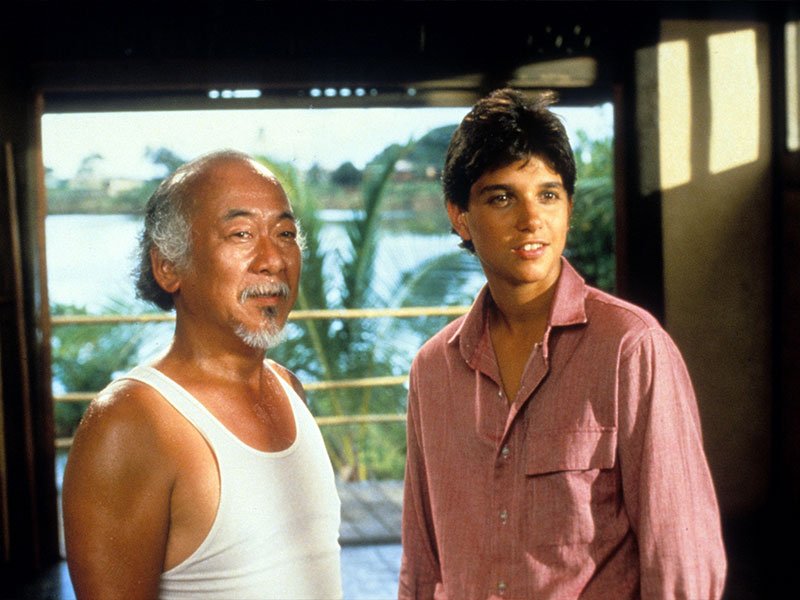
Pat Morita Ralph Macchio The Karate KidPat Morita and Ralph Macchio in a scene from the film 'The Karate Kid', 1984. (Columbia Pictures/Getty Images)
  • June 1: Jhumpa Lahiri’s debut collection of short stories “Interpreter of Maladies” turns 25
  • June 1: “Star Trek III: The Search for Spock” turns 40
  • June 2: “Dead Poets Society” turns 35
  • June 4: “Harry Potter and the Prisoner of Azkaban” turns 20
  • June 6: “The Fault in our Stars” turns 10
  • June 8: “Gremlins” turns 40
  • June 8: “Ghostbusters” turns 40
  • June 9: “Star Trek V: The Final Frontier” turns 35
  • June 10: “Speed” turns 30
  • June 11: “Napoleon Dynamite” turns 20
  • June 15: “The Lion King” turns 30
  • June 16: “Ghostbusters II” turns 35
  • June 17: “Wolf” turns 30
  • June 21: “Toy Story 4” turns 5
  • June 22: “The Karate Kid” turns 40
  • June 23: “Honey, I Shrunk the Kids” turns 35
  • June 23: “Batman” turns 35
  • June 25: Prince’s sixth studio album "Purple Rain" turns 40
  • June 25: 15 years after Michael Jackson’s death
  • June 25: 15 years after Farrah Fawcett’s death
  • June 25: “The Notebook” turns 20
  • June 29: “Bachelor Party” turns 40
  • June 30: “The Karate Kid Part III” turns 35
  • June 30: “Spider-Man 2” turns 20
  • June 30: 30 years after Tonya Harding was banned for life from the United States Figure Skating Association. She was also stripped of her 1994 U.S. Champion title.
  • June 30: 10 years after the ALS Ice Bucket Challenge went viral
07
July
The Blair Witch ProjectHeather Donahue in "The Blair Witch Project." (Artisan Entertainment/Getty Images)
  • July 6: “Forrest Gump” turns 30
  • July 9: “American Pie” turns 25
  • July 12: “I Love the '90s” made its debut 20 years ago
  • July 13: “Dracula” turns 45
  • July 13: “The Muppets Take Manhattan” turns 40
  • July 14: “When Harry Met Sally…” turns 35
  • July 14: “The Blair Witch Project” turns 25
  • July 16: “Eyes Wide Shut” turns 25
  • July 18: “Entourage” made its debut 20 years ago
  • July 20: “The NeverEnding Story” turns 40
  • July 22 – July 25: 25 years after the notorious Woodstock '99 disaster. The festival was marred by poor venue facilities, riots, vandalism, assault, rape, death, destruction and corporate greed, making it one of the most infamous festivals in music history
  • July 27: “Purple Rain” (film) turns 40
  • July 28: “Turner & Hooch” turns 35
  • July 28: “Deep Blue Sea” turns 25
  • July 29: “The Mask” turns 30
  • July 29: 10 years after Nathan Fielder opened up Dumb Starbucks as a bit for his hit reality comedy series “Nathan for You”
08
August
Who Wants To Be A MillionaireBig Winner From "Who Wants To Be A Millionaire," Doug Van Gundy, From Marlinton, West Virginia. (Getty Images)
  • Aug. 1: “Guardians of the Galaxy” turns 10. It was the biggest film of 2014. 
  • Aug. 6: “The Sixth Sense” turns 25
  • Aug. 11: 10 years after Robin Williams’ death
  • Aug. 12 — Aug. 14: 30 years after Woodstock ’94
  • Aug. 13: “Alien vs. Predator” turns 20
  • Aug. 15: “The Giver” turns 10
  • Aug. 15 — Aug. 18: Woodstock turns 55
  • Aug. 16: “Who Wants to Be a Millionaire” made its debut 25 years ago
  • Aug. 19: Nicki Minaj’s music video for “Anaconda” turns 10. It was one of the most talked-about videos of 2014. 
  • Aug. 22: “If I Stay” turns 10
  • Aug. 25: “The Wizard of Oz” turns 85
  • Aug. 25: “My So-Called Life” made its debut 30 years ago
  • Aug. 25: 40 years after Truman Capote’s death
  • Aug. 31: 10 years after hundreds of celebrity nudes were leaked on 4chan.
09
September
Jimmy Stewart Rear WindowJames Stewart watches Raymond Burr through a camera lens in Alfred Hitchcock's "Rear Window" (1954) (Getty Images/Bettmann)
  • Sept. 1: “Rear Window” turns 70
  • Sept. 4: 10 years after Joan Rivers’ death
  • Sept. 9: U2’s “Songs of Innocence” (album) turns 10
  • Sept. 15: “American Beauty” turns 25
  • Sept. 19: “The Maze Runner” turns 10
  • Sept. 21: 20 years after the original Star Wars Trilogy was released on DVD for the very first time
  • Sept. 22: “Friends” made its debut 30 years ago
  • Sept. 22: “Lost” made its debut 20 years ago
  • Sept. 23: “The Shawshank Redemption” turns 30
  • Sept. 30: “The River Wild” turns 30
10
October
Pulp Fiction posterProp Store employees hold a US "Lucky Strikes" One-Sheet from the 1994 film 'Pulp Fiction' (est. £1,000 – £1,500) during a preview at their auction house in Rickmansworth, Hertfordshire. (Andrew Matthews/PA Images via Getty Images)
  • Oct. 1: “Shark Tale” turns 20
  • Oct. 2: 10 years after “Real Housewives Of New Jersey” stars Teresa Giudice and her husband, Giuseppe “Joe” Giudice, were sentenced to prison for conspiracy, bankruptcy fraud And tax offenses
  • Oct. 3: “Gone Girl” turns 10
  • Oct. 3: “Desperate Housewives” made its debut 20 years ago
  • Oct. 5: 25 years after “Dogma” screening spurred Catholic protests
  • Oct. 11: “The Texas Chain Saw Massacre” turns 50
  • Oct. 11: “Black Christmas” turns 50
  • Oct. 13: “Look Who's Talking” turns 35
  • Oct. 14: “New Nightmare” turns 30
  • Oct. 14: “Pulp Fiction” turns 30
  • Oct. 15: “Fight Club” turns 25
  • Oct. 16: 10 years after comedian Hannibal Buress bluntly called Bill Cosby a rapist. The Cosby scandal took off shortly afterwards.
  • Oct. 20: 15 years after Jay-Z and Alicia Keys released “Empire State of Mind.” It was the No. 1 song in 2009.
  • Oct. 26: “The Terminator” turns 40
  • Oct. 27: “Godzilla” turns 70
  • Oct. 27: 10 years after Taylor Swift dropped her album “1989.” It was the biggest-selling album of 2014
  • Oct. 29: “Saw” turns 20
11
November
Judy Garland Meet Me In St. Louis Margaret O'Brien and Judy Garland in "Meet Me In St. Louis" (FilmPublicityArchive/United Archives via Getty Images)
  • Nov. 11: “The Santa Clause” turns 30
  • Nov 11: 10 years after Kim Kardashian bared her butt on the cover of PAPER Magazine's 2014 winter issue
  • Nov. 12: “Finding Neverland” turns 20
  • Nov. 16: “A Nightmare on Elm Street” turns 40
  • Nov. 17: “The Little Mermaid” turns 35
  • Nov. 19: “Sleepy Hollow” turns 25
  • Nov. 18: “Star Trek Generations” turns 30
  • Nov. 18: “Miracle on 34th Street” turns 30
  • Nov. 21: “Supergirl” turns 40
  • Nov. 21: “The Hunger Games: Mockingjay – Part 1” turns 10
  • Nov. 21: Nintendo DS turns 20
  • Nov. 22: “Back to the Future Part II” turns 35
  • Nov. 23: World of Warcraft turns 20
  • Nov. 23: 15 years after Susan Boyle released her debut album “I Dreamed A Dream.” It dominated the Billboard top 200 for almost an entire month in 2009.
  • Nov. 24: “End of Days” turns 25
  • Nov. 28: “Meet Me in St. Louis” turns 80
12
December
Barack Obama Interview The Colbert ReportU.S. President Barack Obama is seen on a television screen as he guest hosts during a taping of Comedy Central's "The Colbert Report" in Lisner Auditorium at George Washington University On December 8, 2014 in Washington, DC. (Andrew Harrer-Pool/Getty Images)
  • Dec. 1: “National Lampoon's Christmas Vacation” turns 35
  • Dec. 3: “Jersey Shore” made its debut 15 years ago
  • Dec. 7: “Star Trek: The Motion Picture” turns 45
  • Dec. 10: “The Green Mile” turns 25
  • Dec. 11: “A Single Man” turns 15
  • Dec 11: 15 years after Tiger Woods announced his “indefinite break” from golf following cheating scandal 
  • Dec. 15: “Young Frankenstein” turns 50
  • Dec. 15: “Gone With the Wind” turns 85
  • Dec. 16: “The Towering Inferno” turns 50
  • Dec. 16: “Dumb and Dumber” turns 30
  • Dec. 17: 10 years after Stephen Collins admits on tape to sex abuse charges
  • Dec. 18: 10 years after “The Colbert Report” came to an end. Host Stephen Colbert left to take over for David Letterman on “The Late Show.”
  • Dec. 18: “Avatar” turns 15
  • Dec. 20: “The Godfather Part II” turns 50
  • Dec. 20: 15 years after Brittany Murphy’s death
  • Dec. 21: “Tillie's Punctured Romance” turns 110
  • Dec. 22: “Man on the Moon” turns 25
  • Dec. 23: 15 years after Amy Winehouse was charged with assault for reportedly lashing out at a theatre manager and disrupting a performance of Cinderella at Milton Keynes theatre
  • Dec. 25: “Sherlock Holmes” turns 15
  • Dec. 31: 25 years after the Y2K panic

Here’s why afternoon tea is officially the new happy hour

In 2022, Pinterest Predicts, an annual report looking into growing trends on the social media platform, announced that “afternoon tea is the new happy hour.” The famed pastime, which is steeped (pun intended) in English tradition, had garnered widespread fascination across the United States — amongst both younger and older generations.

According to Pinterest data published at the time, searches for vintage tea parties were up by 70%. An online survey, consisting of 444 million Pinterest users worldwide, also found that many preferred getting “tea with a friend” over “drinks after work.”  

“In 2022, people will choose Darjeeling with a friend over drinks after work,” the report outlined. “Afternoon tea is more than a meal — it’s a moment, an aesthetic, a pose. Searches for ‘tea party aesthetic’ and ‘drinking tea pose’ are climbing across all age groups.”

Today, afternoon tea remains a popular affair that’s beloved for its inherent Instagramability. On Instagram, the hashtag #afternoontea revealed a whopping 7.1 million posts, compared to 6.2 million in 2022. Many afternoon teas are hosted in distinctive locations, like swanky five-star hotels and historic inns complete with sprawling gardens and beautiful architecture. There’s Washington D.C.’s Seasons Restaurant at the Four Seasons Hotel, where guests can enjoy an assortment of fancy pastries fit for Buckingham Palace, an Earl Grey fruit cake (a Prince Philip favorite!) and petit fours. There’s also the French Room at the Adolphus Hotel in Dallas, which touts a three-course menu of tea sandwiches, caviar and more; Le Salon at the The Windsor Court Hotel in New Orleans, where attendees can feast to the serenade of harpists and pianists; and the Raleigh Room in The Historic Cavalier Hotel in Virginia Beach, where esteemed guests like F. Scott Fitzgerald, Elizabeth Taylor, and Judy Garland once dined.

Afternoon teas also offer an opportunity to get dressed up. To attend tea at The Ritz-Carlton, men are expected to wear a jacket and tie, while women have more freedom to choose their outfit, whether that’s a dress or a matching pantsuit (just no sneakers, shorts, sportswear or jeans). Places like The Savoy, the Willard Hotel and Waldorf Astoria are less strict on dress codes, but still ask their guests to arrive in smart casual attire.

https://www.instagram.com/p/Cy5e66oRRAb/?utm_source=ig_web_copy_link&igsh=MTdlMjRlYjZlMQ==

“Afternoon tea isn't just a chance to sip on a hot beverage,” Alana Peters of the Historic Cavalier Hotel told Southern Living. “It's very much an experience.”

We need your help to stay independent

It’s also an inclusive affair, allowing people of all ages to partake in the joys of sipping on a warm beverage and savoring scones and sandwiches galore. For those who don’t drink or are vowing to go sober (especially during Dry January), afternoon tea still awards them a sense of celebration in a sociable atmosphere. A 2023 Gallup analysis found that the percentage of young adults who say they drink has declined 10 points over the past two decades. The Tea Association of the USA also noted that more than 87 percent of Millennials drink tea.

In the wake of the pandemic, several teahouses, tea cafes and afternoon tea rooms were forced to shut down. Specifically, more than 11 percent of afternoon teas in the United States closed amid COVID’s peak, Angela Renals, the founder of Destination Tea, an online directory for all things afternoon tea, told The Boston Globe. Many tea spots, however, made their comeback in 2022. As of 2023, 76 new afternoon tea rooms opened up nationwide, Renals said, thus proving that the business is here to stay.

https://www.instagram.com/p/Cs80-aYK40Q/?utm_source=ig_web_copy_link&igsh=MTdlMjRlYjZlMQ==

A huge part of afternoon tea’s ongoing success can also be attributed to a greater desire for experiential dining — dining that’s unique and unlike “traditional” restaurant experiences. Yelp’s June 2022 State of the Restaurant Industry Report revealed that experience-focused dining is “seeing a pop in new business openings as people look to find more unique dining options when they do go out.” Yelp saw growth in dining experiences like conveyor belt sushi (which was up 500%, compared to January – April 2021), supper clubs (which was up 200%), and themed cafes (which was up 75%). 

That’s all to say that the future of afternoon tea looks promising – and one that's inherently social like happy hour. With the new sober boom, this allows friends to eat, chat and drink – all without alcohol. It’s an experience for the senses — and certainly one for the camera too. If you’re planning on attending your first afternoon tea this year, there are a few things to be mindful about. First, be sure to stir your tea gently — splishing & splashing or clinking are absolute no-nos. And second, whatever you do, please don’t mistake your tea for high tea!

Trump presents interesting theory on how magnets work during rally in Iowa

During a "Commit to Caucus" rally at the North Iowa Events Center in Mason City, Iowa on Friday, Donald Trump still had a great deal of energy left after spending most of the afternoon railing against E. Jean Carroll in dozens of messages posted to Truth Social. In one such post, the former president writes, "Except for a Fraudulent Case against me, I had no idea who E. Jean Carroll was. She called her African American Husband an “ape,” and named her Cat “Vagina." These exact words were then re-posted in a steady stream along with a cherry-picked assortment of screengrabs from E. Jean Carroll's social media archive.

Pausing that busy work to take the stage in Iowa, Trump then regaled attendees with a fresh take on how magnets work, while also finding occasion to loop in John Deere.

On the subject of magnetic elevators, Trump said, "Think of it, magnets. Now all I know about magnets is this, give me a glass of water, let me drop it on the magnets, that's the end of the magnets. Why didn't they use John Deere? Why didn't they bring in the John Deere people? Do you like John Deere? I like John Deere." After a bit more along these same lines, Trump did a little dance and left the stage.

Watch here:


How mobile home co-ops provide housing security — and climate resilience

This story was supported by the Economic Hardship Reporting Project.

As mobile home owners fight rising housing costs, some of them have hit upon a solution that also helps in the fight against climate change — by banding together and buying the land underneath their homes.

This model of collective ownership, also called resident-owned cooperatives or ROCs, is on the rise. In 2000, there were little more than 200. Today, there are more than 15,000, according to a 2022 study from researchers at the University of California Berkeley, Cornell and MIT. 

When residents own the land, they can move more quickly to upgrade infrastructure. That’s where climate change comes in. Renewables — especially solar —  work uniquely well with these types of places, according to Kevin Jones, director at the Institute for Energy and the Environment at the Vermont Law and Graduate School. 

“There’s nothing more perfect than these resident-owned communities because they already have a cooperative structure and, generally, commonly own the piece of land,” said Jones.  “[They] are just kind of natural communities to be able to bring the benefits of solar to more low to moderate-income people.”

Mobile home parks — often a misnomer because many homes are anchored to the ground — house more than 22 million Americans and provide a vital form of housing amidst a nationwide housing crisis. 

Often, private landlords will delay vital upgrades but continue to collect lot rents, which pay not for the actual property which the resident could rent or own but for the land underneath it. This can result in a system where many owners invest thousands of dollars into paying off their home, but are still beholden to the park owner for lot rents and other fees. 

Often, private landlords will delay vital upgrades but continue to collect lot rents.

The problem of displacement has been exacerbated in the past decades by private equity’s foray into mobile home park ownership, which often leads to higher increases for  rent, utilities, and other fees while conditions either stay mostly the same or worsen. 

Nonprofit organizations like ROCUSA have been essential to providing communities with resources such as low or interest-free loans, grants, and the essential planning knowledge needed to create a co-op. 

The organization does more than help individual co-ops, it also helps connect people in a vast network of co-ops so they can share resources and knowledge. This process can help immensely when considering for example, the prolonged process of acquiring a permit for a solar array or which contractors to use to install heat pumps in residences. 

Ronald Palmer knows all about the process of installing solar in a co-op. As board president for Lakeville Village in Geneseo, New York, he helped his community navigate the lengthy process. It was one of the first solar projects in the upstate town of Geneseo, with a population around 7,000 people.

That community, which comprises 50 homes for people 55 and older, has had a solar array for just over two years now. The benefits from it don’t just help Lakeville Village residents, but also local businesses and other sites.

A large majority of these co-ops are concentrated in the Northeast and Pacific Northwest. One of the reasons for the high number of them in states like New Hampshire is access to state-specific resources, according to Jones. 

“The Northeast, you know, clearly is an area where there’s a lot of interest in solar,” said Jones. “We don’t necessarily have the best solar resource in the country, but we have generally good public policies toward solar.”

This allows communities in those areas, including people who live in resident-owned mobile home co-ops to access the resources needed to set up solar. 

In New Hampshire, ROC-NH helps connect co-ops with state resources and helps prioritize the needs of co-op members. These needs are usually related to financial stability, according to Sarah Marchant, Vice President of ROC-NH. 

“Our goal when talking about community solar, with residential communities, is not just to reduce their carbon footprint,” said Marchant. “But the way this works is it has to reduce their costs and has to reduce their bills as well.” 

This is vital for communities where members might be working two or three different jobs just to stay afloat, according to Marchant. 

While the process of forming a co-op and investing in climate-friendly projects is time-consuming, there are many benefits.

In South Texas, a resident-owned cooperative called Pasadena Trails, located just outside of Houston, found a solution to chronic flooding. The predominantly Latino community installed drainage systems, which helped significantly when Hurricane Harvey hit and drenched the Houston-area in 60 inches of rain. In the wake of Harvey, Pasadena Trails fared better in comparison to neighboring areas. 

Back in New York state, the residents of Lakeville Village are pleased with their solar project, which reflects the values of the older residents, most of whom are grandparents. For them, this solar project was their way of taking care of their own and ensuring a small step in the right direction for future generations.

”We want to reduce our carbon footprint, and one of our concerns was for our grandchildren and their children,” said Jones. “And we saw this as a way of contributing to that and being responsible grandparents.”

This article originally appeared in Grist at https://grist.org/equity/how-mobile-home-co-ops-provide-housing-security-and-climate-resilience/.

Grist is a nonprofit, independent media organization dedicated to telling stories of climate solutions and a just future. Learn more at Grist.org

Making sense of Gypsy Rose Blanchard’s celebrity status, while overlooking glaring issues

Most of Gypsy Rose Blanchard’s waking life has been spent in some state of performance. Her mother Clauddine “Dee Dee” Blanchard persuaded family, friends and neighbors that Gypsy Rose suffered from an array of afflictions — from muscular dystrophy to leukemia to extreme developmental disabilities — that left her with the psychological capacity of a young child.

Until one day in 2015 when Gypsy Rose's former boyfriend, Nick Godejohn, stabbed Dee Dee to death, her neighbors, friends and their local community in Missouri took Gypsy Rose to be a wheelchair-bound angel who loved Disney fairy tales and bravely battled an onslaught of diseases.  

Once police tracked her and Godejohn down at his parents’ Wisconsin home, the world found out that Gypsy Rose was something else entirely. Many things, actually. Gypsy could walk and was older than she presented – not in her teens, but 23. She was mentally competent. Bright, even.

Further media coverage of her case reframed Gypsy as one of the most extreme cases of Munchausen syndrome by proxy ever presented, a victim of severe abuse whose world was misshapen by a profoundly disturbed mother. Murder conspirator, battered innocent, unwitting fraudster, trauma survivor – Gypsy Rose is true crime’s equivalent of an EGOT superstar.

That comes across as a flippant or heartless summation, admittedly. This is a woman who existed in a state of fear and torture for most of her stunted life and bounced from a prison-like life with a sinister parent into the clutches of a deranged stranger who lured her into an online relationship with BDSM fantasies. Given all she's been thorugh, Gypsy is not to be reviled or feared but empathized with.

Lifetime's “The Prison Confessions of Gypsy Rose Blanchard,” however, tests one's charitable sentiments. Between the corny theme song with its refrain of “But you can never take my so-o-ul!” and the tearful clip of Gypsy Rose sharing her fear she’ll never find love, the overwrought three-night, six-hour tabloid series makes you appreciate the stylistic nuance that “To Catch a Predator” once employed. But it also lays the groundwork for the recently paroled 32-year-old to reenter society on a plush runway of understanding.

Gypsy is not a dangerous girl, but one whose relationship with reality was exceptionally muddled.

Gypsy Rose says her entire time in Chillicothe Correctional Center was devoted to earning early release, and that over the past decade, she’s experienced more freedom than she ever had in her life. Chillicothe, where she served 85 percent of her 10-year sentence for her part in her mother’s murder, was her promised land.

Sounds ironic, she says, but from the time she was born, her mother controlled everything Gypsy Rose said or did.  And from the moment her case made national news, a rapt segment of the public gobbled up every wild, grisly detail about her life that emerged from police reports and family interviews.

Gypsy Rose Blanchard’s case fueled a 2017 HBO documentary, “Mommy Dead and Dearest,” drew Dr. Phil McGraw to Chillicothe as part of an episode about her that same year and was the basis of Hulu’s 2019 limited series “The Act,” in which Joey King played Gypsy Rose to Patricia Arquette’s Dee Dee. The horrific nature of Gypsy's upbringing negates any debate as to why that is.

The Prison Confessions of Gypsy Rose BlanchardThe Prison Confessions of Gypsy Rose Blanchard (Courtesy of the Blanchard family/Lifetime)Dee Dee had a closet filled with pills and other other medical implements she forced on her daughter, along with hiding her real age from Gypsy Rose. Her mother was also masterfully manipulative, making sure that her daughter was never entirely certain how old she was and convincing her father, Rod Blanchard, that Gypsy couldn’t walk.

Dee Dee compelled Gypsy Rose to use a wheelchair in public – although she was always ambulatory – with threats of neglect or physical abuse if she didn’t obey. Gypsy Rose was so convincing at playing up her infirmities that doctors subjected her to numerous unnecessary surgeries, including having her salivary glands removed and installing a feeding port in her stomach.

Munchausen syndrome by proxy, which the Diagnostic and Statistical Manual of Mental Disorders also refers to as “factitious disorder,” is defined by its perpetrator inducing or coercing another person to fake physical and psychological symptoms expressly to obtain attention and sympathy.

Without intending to (as far we know) Gypsy Rose Blanchard has drawn a surfeit of both. We will never know whether Dee Dee would be insanely jealous of that or extremely proud. That is said with nary a mote of sarcasm.

We need your help to stay independent

The public’s extreme engrossment with this case is astounding but not entirely baffling, especially if you watch “Mommy Dead and Dearest,” which was produced when the headlines were fresh and the violently emancipated main character told her part of the story before serving her sentence. As Erin Lee Carr’s measured documentary concludes, Gypsy is not a dangerous girl, but one whose relationship with reality was exceptionally muddled. 

Regarding her eventual release from prison Carr told Salon in 2017, “I just hope that she can experience happiness, can experience driving, putting on makeup.” Just shy of seven years later, she and the rest of us can watch that wish be fulfilled via what may be one of the world’s longest exit interviews doubling as a society debut.

Gypsy Rose shows up on Lifetime with new and expanded versions of previously told chapters, hair coiffed, lips glossed, smile bright. In a Hollywood Reporter interview and Lifetime's series, she expresses her enthusiasm for therapy and her determination to live a normal life, claiming not to have seen all the TV shows about her.

There is no way someone could be as connected to a manipulator on Dee Dee’s level and not either actively or passively pick up a few of her behaviors.

Thus she may be shocked to discover that the world views her as reality TV platinum – part wholesome girl next door, part Anna Delvey. Probably not, though. Asked by THR whether she’d answer any hypothetical Hollywood calls, she noncommittally says, “Sometimes opportunities arise and it depends if I want to take it on or not. So, I’m just taking it day by day and we’ll see, whatever opportunities come up, we’ll see if I want to go through with it.”

A fair response. Also a cannily coy one. There’s nothing wrong with wanting the best for someone who has gone through hell, even one who killed their way out of it and paid for their crime. But one of the many frustrations about Lifetime’s treatment of Gypsy Rose’s story is its meager effort to address what the first person to extensively report on this case, Michelle Dean, implies several times throughout Carr’s documentary: this woman is an extremely unreliable narrator.


Want a daily wrap-up of all the news and commentary Salon has to offer? Subscribe to our morning newsletter, Crash Course.


Part of this is a completely understandable result of spending more than two decades at the mercy of the extremely abusive Dee Dee who warped her daughter's perception of reality and carved up her body. The adult Gypsy Rose fully admits at various times that she doesn’t remember certain events and questions others. One she is firm about is a heretofore unrevealed revelation of being sexually abused by a relative. The interviewer confronts that relative with her accusation on national TV, and their response is disturbing.

The Prison Confessions of Gypsy Rose BlanchardThe Prison Confessions of Gypsy Rose Blanchard (Courtesy of the Blanchard family/Lifetime)And yet, as Dean says, there is no way someone could be as connected to a manipulator on Dee Dee’s level and not either actively or passively pick up a few of her behaviors, lending additional squeamishness to this revelation and others. I believe Gypsy Rose, or I really want to, while holding real concerns as to whether the producers handled this extremely serious allegation responsibly. And that sickens me.

One of the grimmer clips featured in both “Mommy Dead and Dearest” and “Prison Confessions” shows her when she's younger, and pretending to be younger than she really is, playing up her innocence for a local news station’s camera. She rhapsodizes in her high-pitched, childish voice that her mom told her "happy endings aren't just in fairy tales, they're real." This saccharine display is an example of Gypsy Rose playing her part to help Dee Dee convincingly scam a home out of Habitat for Humanity.

In “Prison Confessions” she’s resolute to make the crux of that line honest. She’s engaged, she teases, explaining that it's a secret nobody knows "untitl now." Of course, when Ryan Scott Anderson picked her up from prison when she was released on Dec. 28, he'd already been identified as her husband.

Gypsy Rose's new refrain is that that she wants to stand on her own, pull her weight and earn her way in the world. How she achieves that is entirely up to her. How we perceive her effort is another matter and an open question. No one should expect the world to give Gypsy Rose a Disney "ever after," on a platter, but she may be thrilled to keep the book open on her life for as long as there's a demand for those details, and the audience accepts they may never be solidly categorizable as unscripted.

"Prison Confessions" airs over three nights Friday, Jan. 5-7 on Lifetime. 

I was betrayed by the GOP after Jan. 6

For 1,095 days, right-wing Congress members have been telling me that I didn’t see what I saw on January 6, 2021. The GOP is whitewashing the American tragedy caused by Donald Trump before our eyes. 

In an effort to support Trump’s 2024 presidential bid, the Louisiana Republican House Speaker Mike Johnson recently released deceptively edited videotapes to the public, sparking condemnation from even his own party. Former GOP Illinois congressman Joe Walsh called it “aiding and abetting criminal activity.” Johnson demanded “transparency” while hypocritically blurring faces of January 6 rioters to protect them from the American justice system, pushing revisionist history. Trump and Johnson keep attempting to deceive the country with misinformation to prove the Jan. 6 rampage on the Capitol was a peaceful protest. It wasn’t. I was there — as the newly released footage of me shows. 

These lawmakers went home to their families unharmed that night and then to their white collar jobs the next day as Trump fled to his multi-million dollar Mar-a-Lago estate, while nine people lost their lives.

They used the images of me standing upright on the evening of January 6, after I’d been bludgeoned by rioters for six hours, to disprove my sworn testimony.  As a police officer defending the Capitol, I fought off the mob of Trump supporters in what resembled a medieval battle. I feared I’d lose my life, as five others did that day. Yet I kept showing up to work —shocked and on adrenaline – for weeks afterwards. In excruciating pain, I didn’t know the extent of multiple injuries I’d suffered. After doctors insisted I have X-rays and MRIs (whose results I released on social media) I learned I’d need two surgeries, one on my shoulder and another that left a metal plate with 8 screws in my foot. They’d both required months of  physical and mental therapy to treat my PTSD. It ruined my career. 

We need your help to stay independent

Speaker Mike Johnson witnessed firsthand the violent insurrection three years ago. Yet he still supports the former president who was indicted on 91 counts, including inciting the mob that stormed the Capitol and almost killed me.   If Trump is reelected, he’s vowed to give full pardons and a government apology to the rioters who attacked law enforcement officers like myself to stop the peaceful transfer of power.  

Mike Johnson knows the truth. On January 7, 2021, he went on the radio to describe the capitol riot as “a bad dream” and “chaotic scene” that unfolded as he was swiftly escorted into a secure area during the lockdown. “We heard gunshots and screaming…It was crazy, people were banging on the doors…” he said at the time, calling the president’s whipping the crowd into a frenzy and handling of the situation “terrible,” and expecting Trump to stop it.   

Then Johnson joined Trump’s minions in downplaying the siege to imply nothing bad happened.  To whom? These lawmakers went home to their families unharmed that night and to their white collar jobs the next day as Trump fled to his multi-million dollar Mar-a-Lago estate, while nine people lost their lives. Four of my brothers in blue were so damaged by what they experienced that they died by suicide, leaving widows and fatherless children. More than 700  riot participants  instructed by Trump to “fight like hell” to uphold his fraud were convicted of assault, battery, destruction and obstruction. Some are locked up with 20-year sentences. 

Trump’s henchman Rudy Giuliani was ordered to pay $148 million for doing his boss’s bidding in defaming election workers. Yet Trump has faced no consequences for inciting the riot.  The front-runner for the upcoming election, he’s being rewarded for it, emboldened by the members of his supposed “law and order” party who don’t care that he lawlessly endangered our liberty. 

Senator Minority Whip John Thune — who can be seen on the new tapes — criticized Trump,  tweeting on January 7 that the insurrection was “inexcusable” and “disgusting.” Now he insists that January 6 is “in the past,” as if we could easily move on.  But for those of us who stood our ground and did our job protecting our country, January 6 never ended.  There are hundreds of ongoing court cases where we’ve been called to testify, magnifying our traumas and injuries. 

Unlike Johnson, Thune and their lackeys, I never wavered about the violence I witnessed, as I told the FBI, district attorneys and January 6 Committee. Two brave Republican members — Liz Cheney and Adam Kinzinger —thanked me for protecting them that day.   They published an 845-page report holding Trump responsible for the riots, recommending criminal charges.  In it, I reported what I saw as one of 140 officers hurt by the armed mob, beating us with furniture, swords, flagpoles and using poisonous sprays.  

Following in most of his party’s feckless footsteps, Johnson took back the truth, acting as a Trump apologist and abettor.  Maryland Democratic Rep. Jaime Raskin called him “an insurrection esquire” and Republican Representative Ken Buck of Colorado called out his party’s hardliners, declaring that anyone saying the 2020 election was stolen or that the insurrectionists  didn’t commit crimes is “lying to America.” 

As an immigrant of color and U.S. Army veteran I worked for 16 years on the DC force, rising to Sergeant and passing the test for lieutenant. The wounds I sustained on January 6 meant I could no longer pass the physical tests for my job at 42. Yet after violating his duties, Trump is allowed to run for office again at 77, even if he’s found guilty of all crimes he’s accused of and put in jail. He pretends to be a loud supporter of the police — just not the officers who are suing him for the peril he put us in on January 6.  


Want a daily wrap-up of all the news and commentary Salon has to offer? Subscribe to our morning newsletter, Crash Course.


Johnson should release videos of my fellow officers defending the Capitol as elected officials like himself and Thune fled in fear. He should show our efforts to get U.S. representatives into secure rooms while we stayed, taking the blows to fend off Trump’s mob.  Since so many insurrectionists proudly filmed themselves, the world can see what Trump’s unscrupulous MAGA P.R. campaign seeks to hide. 

I’ll never forget how that day rioters called me a traitor and disgrace who should be executed. It’s infuriating to still hear some of the people I protected spewing conspiracy theories. They’ve referred to the rioters as Antifa, Black Lives Matter supporters, FBI agents, political prisoners or hostages, changing their story daily, distorting reality. 

If the truth sets you free, deception keeps you mired in chaos and darkness. Many officers like me lost our health and livelihoods enforcing laws that these immoral politicians keep violating. Instead of allowing us to heal, their subterfuge is further harming the Democracy they were elected to serve.  Three years later, the only moral coda for January 6 is to demand accountability, and follow Colorado and Maine’s court rulings banning Trump from running in 2024 under the Constitutional provision that disqualifies people who engaged in insurrection from holding public office. Trump should be prosecuted to the full extent of the laws that he desecrated. Otherwise, he’ll do it again.  

Enough with the Big Lie

This country has not progressed, politically at any rate, since the January 6, 2021 insurrection at the U.S. Capitol. Nine deaths are linked to the attack. More than 700 people have gone to court for their roles in it. More than 450 people have been found guilty and sentenced to prison.

Donald Trump urged his supporters on that day, telling them at a speech in the Ellipse south of the White House, to “fight like hell.” If they didn’t, he told them, “You’re not going to have a country anymore.” I know, because I witnessed it.

Former New York Mayor Rudy Giuliani, standing with Trump, urged “trial by combat.” Trump’s supporters did just that.

President Joe Biden is beginning his re-election campaign this week reminding everyone of the terror inflicted upon the country three years ago on that day and the fact that it was orchestrated by and for the sole benefit of former president Donald Trump. 

“At this hour our democracy is under an unprecedented assault,” Biden said at the time of the insurrection. He’s never wavered from that, and launched his re-election bid reminding everyone how foolish, dangerous and anti-American the insurrection was. His campaign kicked off with a 60-second ad on national television.“There’s something dangerous happening in America,” Biden says while images from the insurrection appear.“There’s an extremist movement that does not share the basic beliefs of our democracy . . . all of us are being asked right now, what will we do to maintain our democracy.” 

Biden has previously called Trump a “dagger at the throat of America,” and said there was “no question” Trump supported the insurrection. Biden is now asking us not only to give him our vote, but to stand up for the principles of our Constitution – even as Trump rallies the GOP around him.

We need your help to stay independent

Friday, appearing at Valley Forge, Biden was stark. He described Jan. 6 as the day, “we nearly lost America — lost it all.”  

Biden’s ace up his sleeve appears to be reminding everyone how damnably delusional Trump is, and how seriously dangerous he remains to the country – and Biden is banking that we are now paying attention – or at least will when we go to vote this November. But I’m concerned that this may be merely wishful thinking on his part. And I’m truly concerned about the security of the election.

Trump, on the other hand, is also using the January 6 Insurrection in his campaign. “Joe Biden and his allies are a real and compelling threat to our democracy,” Trump senior campaign advisers Chris LaCivita and Susie Wiles wrote in a memo this week. Trump himself, at recent rallies, has continued to lie about losing the 2020 election and conveniently omits the fact that he lost 60 court challenges to the results.

On Friday, Trump repeated his lies and sent out an email to supporters which said, “The Radical Left Democrats, Now Led By Joe Biden, Are The Greatest Threat to Democracy the United States of America Has Ever Faced.”

Trump’s disinformation has been so successful, that despite the well-known and publicized facts, a recent Washington Post-University of Maryland poll shows that 25 percent of Americans say it is “probably” or “definitely” true that the FBI instigated the attack on the U.S. Capitol, Jan. 6, 2021.

This horse crap has spread even though Trump and his allies – including former Attorney General Bill Barr, controlled the Justice Department and the FBI at the time of the insurrection. Another way of looking at it is that a quarter of the people in this country – according to that poll – believe that the government-run by Trump started the insurrection, and yet they don’t think Trump had anything to do with it.

If that makes your head hurt, you’re not alone.

But, my head also hurts for another reason. On that day I joined dozens of other reporters at the White House who walked into the press office and demanded Trump say something to stop the insurrection. We waited for hours while he did nothing. We knew what was going on and every reporter there that day knew we had a responsibility to the rest of the country to get our facts straight.

I witnessed Trump’s speech and Giuliani’s. I spoke with the insurrectionists as they marched to and eventually broke into the Capitol – some of them spreading human feces on the wall. I personally watched as the Confederate Flag was carried inside our Capitol – a feat that did not occur even during the Civil War. 

I saw my colleagues harassed and threatened simply because they were reporters. I was one of them. For the first time since 1814, the Capitol was breached. More than 200 years ago it was red coat British troops who invaded during the war of 1812. In 2021, it was American seditionists, many of them wearing red “MAGA” t-shirts who did it. They were not peaceful. I never thought in my life I would see what I witnessed Wednesday, Jan. 6, 2021 at the U.S. Capitol. I have covered wars and conflicts in developing countries, and on that day I felt once again I was standing on foreign soil in a shithole nation devoid of democracy.

And my head hurts because many reporters to this day continue to mince words about what happened. This isn’t time for equivocation. There aren’t two sides to this story. Just like there isn’t two sides to the Holocaust or the moon landing – both of those things actually happened. So did the insurrection. We have to call that day out, factually, for what it was: an attempt to overthrow the United States government by the man who still ran it, but was upset that he’d lost the election and knew he had only two weeks left in the Oval Office. That’s the fact jack. 

The day started off with a crisp wind blowing and as I walked to the White House from a nearby parking garage before eight a.m., I saw the streets begin to fill as protesters gathered to hear Trump speak just outside the White House grounds. 

I heard him say, “This year they rigged an election.” The MAGA crowd cheered to the false claim. “They rigged it like they’ve never rigged and election,” Trump said enthusiastically. As I watched this narcissistic fear-monger preach his lies I told another reporter standing nearby, “Trump calls himself the law-and-order president. But he’s encouraging his followers to break the law so he can issue the orders.”

When Trump told his followers to fight, he said, “We will never give up. We will never concede,” and he pushed the mob even further. “We will not take it anymore.” He justified his call for violence because “this year, using the pretext of the China virus and the scam of mail-in ballots,” Trump told us, “Democrats attempted the most brazen and outrageous election theft and there’s never been anything like this. So pure theft in American history. Everybody knows it.”  

Trump used the same words he used six weeks earlier when he told me at a press briefing that he wouldn’t necessarily accept a peaceful transfer of power. He was claiming voter fraud six weeks before the election, claiming there was problems with the ballots that had not yet been cast and that “everybody knows it.”

If that makes your head hurt, I’m right there with you. As I wrote for Playboy Magazine two days later, that was the moment I knew the genie was out of the bottle. 

Donald Trump would never accept a defeat then because he didn’t want to. He can’t do so now because regaining the presidency is his only hope of not spending the rest of his life in prison. He has bullied, cornered, cajoled, bribed and threatened most of the rest of the GOP into following him into despotism. They are either so frightened or so enamored of the power they can’t resist him.

Oddly enough, it was Republican Senator Mitch McConnell, a bloviating bile of human excrement who nailed it. “The voters, the courts and the states have all spoken. If we overrule them, it would damage our Republic forever,” McConnell said during the joint session to certify Biden’s win. Republicans must “muster the patriotic courage,” he said, to accept Trump’s defeat, adding that senators must “respect the limits of our own powers.” A vote on overturning the election was madness, he said. “I will not pretend that such a vote is a harmless protest gesture while relying on others to do the right thing.”

At the end of the day, Biden, remembering those words from his old colleague McConnell, is hoping our desire for a democracy will count for more with voters than the price of gas. But, he should wake up to the fact that for some, that isn’t the issue and making this a cornerstone of his re-election bid – while it definitely should be done – will not sway Trump voters.


Want a daily wrap-up of all the news and commentary Salon has to offer? Subscribe to our morning newsletter, Crash Course.


Veteran Republican strategist Alice Stewart told the Associated Press this week that Trump voters will continue to stand with Trump. “A lot of Republican voters don’t love Jan. 6, but they’re not obsessed about it either” and may support Trump because they oppose Biden’s economic policies, Stewart explained. “Republican voters can hold two consecutive thoughts and say, ‘Jan. 6, that wasn’t great, but that doesn’t affect my bottom line,’” she added. I think she meant “concurrent” or “contradictory” but that’s another story.

Biden’s campaign strategy must include something other than the insurrection if he hopes to appeal to those members of the GOP. Trump gets a pass from the hard core supporters if women are enslaved if the rich get richer and the poor get poorer. Nor do they care to notice that it takes two parents and even teenage children working in a household in some cases these days to pay the rent each month.

These people are frightened. They vote out of fear, but they do vote – hoping to hold on to something they’ve never really had and at the same time not understanding that Trump will not deliver what it is they really need – liberty. They won’t mind an autocratic government or a despot, if they can just be assured they have a place to live and can exist from paycheck to paycheck.

For them, democracy is not the voting cry that it should be. They want peace. They want quiet. They are worn down and have no energy left for courage. As the musician sang, freedom of choice is what they’ve got and freedom from choice is what they want. A guarantee of a safe life that cannot be delivered is the ultimate aphrodisiac for some.

I do not believe there’s any way Biden can reach those people. But he’s betting that a majority of Americans can be reached. Last time out Biden won by about a mere 45,000 votes scattered across a handful of states. It should not be that close this time. Biden is rolling the dice and hoping he won’t crap out.

I don’t know the Vegas odds on it, but I hope he’s right. The country cannot take any more of Donald Trump. The invasion of the Capitol building was an act of domestic terrorism and an armed insurrection. Donald Trump called for it and loved it. 

Trump proved himself a traitor to everything this country stands for. He damaged our standing internationally and made the world a far more dangerous place in which to live. Trump deserves prison. He does not deserve the White House, and all the charlatans in the Republican Party who support him deserve nothing less than to join him in prison – or at the very least minimum wage jobs in a sweaty fast food franchise. They too are traitors to democracy, common sense, critical thinking, education, liberty and civil rights.

So Biden damn well better get this race right – because our country is riding on his bet.

“Flood” of anti-LGBTQ bills shows GOP wants to “eradicate trans people from public life”: advocate

A bill that would have restricted healthcare access for transgender and gender expansive youth in Ohio was vetoed by the governor last week. Now, after cutting their winter recess short, Republican lawmakers in the state are flocking back to the capital to override the decision — a move representative of the larger GOP crusade against LGBTQ rights nationwide.

Last Friday, Republican Ohio Gov. Mike DeWine struck down House Bill 68, which would have prevented doctors from providing puberty blockers, hormones and gender affirmation surgeries to patients under the age of 18, and barred transgender girls and women from playing on female sports teams in high school and college, according to The Columbus Dispatch. In contrast, the bill would also have permitted physicians to perform surgeries on intersex children, a procedure advocates flag as often medically unnecessary and nonconsensual. 

DeWine blocked the bill just minutes before he was set to publicly announce its fate. He told the media that he came to the conclusion after convening with medical providers of gender-affirming care at children's hospitals, speaking with families and young people who have sought and had varied experiences with that care, and reviewing testimony supporting and opposing the legislation. 

“Were I to sign House Bill 68, or were House Bill 68 to become law, Ohio would be saying that the state, that the government knows better what is medically best for a child than the two people who love that child the most: their parents," DeWine said during the press conference.

While trans activists and LGBTQ rights advocates lauded the decision as a victory, the Republican governor's veto upset party members in the state legislature and across the country, even drawing rebukes from former President Donald Trump, Florida Gov. Ron DeSantis and Vivek Ramaswamy, a 2024 presidential candidate and Ohio native.

On Tuesday, Ohio GOP representatives, who weren't expected to return until the end of the month, scheduled a session for Jan. 10 to begin the override effort, News 5 Cleveland reported. Given that the bill cleared the Republican-dominated Ohio House and Senate with a supermajority — 62 of the 99 representatives and 24 of 33 senators — the legislators could garner the three-fifths vote necessary for an override, though it is unclear if they will retain all the support. On Friday, DeWine also authorized an executive order prohibiting hospitals from providing gender-affirmation surgeries to patients under 18 to "take this issue off the table." But advocates have deemed such a move unnecessary because no Ohio hospitals perform the procedures on minors. 

HB 68 "actively harms trans, non-binary, gender expansive and intersex youth and young adults across Ohio," Rhea Debussy, a lecturer of Women's, Gender and Sexuality Studies at The Ohio State University at Newark, told Salon. "And by attempting to overturn Governor DeWine's veto, the Ohio Legislature has essentially shown, yet again, that they don't value these young Ohioans and their rights."

These legislators' apparent enthusiasm to make the anti-trans bill become law reflects the greater push by GOP lawmakers across the nation to strip rights from LGBTQ Americans through legislation targeting their protections, freedom of expression and access, a campaign signified by the record number of anti-LGBTQ proposals advanced — and passed — in the United States in 2023.

The American Civil Liberties Union recorded more than 500 proposals progressing and over 80 passed in 2023 targeting LGBTQ Americans, particularly trans and gender expansive youth, a rate previously unseen in the organization's nearly eight-year history of mapping the legislation. 

Per the ACLU's tracker, 510 bills advanced across all but three states — New York, Illinois and Delaware — and Washington, D.C. in 2023, taking aim at LGBTQ civil rights broadly, trans people's access to accurate identity documents and the community's free speech and expression protections as well as healthcare, public accommodations and education provisions.

Eighty-four of the anti-LGBTQ bills became laws across 22 states last year, ACLU data shows, a huge spike compared to the 17 proposals signed into law in 2022 and the six or fewer enacted in 2020, 2019 and 2018

Missouri and Oklahoma saw the largest number of bills in their legislatures, coming in at 48 and 35 proposals, respectively, while Tennessee and North Dakota passed the greatest number of policies, with each state signing 10 into law.

"Back in 2022, the total number of bills was somewhere south of 300," ACLU Communications Strategist Gillian Branstetter told Salon. "We were not expecting at all the flood of bills that we faced last year, and certainly this year is likely to be as — if not more — horrendous."

Most significant about the bills isn't just how they've grown in number but how they've escalated in their extremity and impact, she added. 

The vast majority of the proposed legislation sought to limit trans kid's access to healthcare by way of gender-affirming care bans and restrict student and educators' rights by barring trans students from participating in gendered school sports, forcing teachers to out students or censoring in-school discussions about LGBTQ people and issues. Of those 370 bills, 26 healthcare restrictions and 34 student and educator rights limitations passed.

"It's very easy to lose the forest through the trees when looking at these bills," Branstetter said, explaining that the public often discusses trans rights through narrow, individualized frames. "That is all distracting from the full impact that these laws are having because, viewed together, they represent an effort to, in so many words, eradicate trans people from public life."

Gender-affirming care bans exacerbate physical health disparities among gender expansive youth and young adults, while other targeted legislation threatens their mental health as well as that of LGBTQ people overall, explained Debussy, who also serves as the external affairs director of Equitas Health, an Ohio-based healthcare system catering to LGBTQ patients. 

A recent study also shows that transgender youth, who the CDC says have a higher likelihood of experiencing mental health problems and suicidal thoughts than the rest of their peers, have lower rates of depression and suicidal ideation when provided access to gender-affirming care. 

Most of the anti-trans and anti-LGBTQ bills advanced in 2023 were defeated, while another 14, according to the ACLU tracker, are being contested in court via civil lawsuits. But the proposals' presence in state legislatures still causes harm to LGBTQ youth, especially trans, intersex and nonbinary children, Debussy told Salon.

We need your help to stay independent

A 2023 poll by the Trevor Project found that 86 percent of trans and nonbinary youth say that debates around anti-trans bills had negatively impacted their mental health. Policies prohibiting doctors from providing gender-affirming medical care to gender expansive youth made 74 percent of respondents feel angry, 56 percent feel sad, 48 percent feel hopeless and 47 percent feel scared, while policies barring trans children from playing on a gendered sports team in line with their gender identity made 64 percent of trans and nonbinary youth feel angry and 30 percent feel hopeless, the survey found.

The volume of anti-LGBTQ legislation progressing in the U.S. last year even prompted the Human Rights Campaign to declare a national state of emergency for LGBTQ Americans, marking a first for the advocacy organization. 

"We have states where governors have turned their own trans constituents into refugees in search of health care, and good education, basic rights and freedoms," Brandon Wolf, the HRC's national press secretary, told Salon,

The state of emergency is not just one large danger, he added, quoting HRC President Kelley Robinson, "it's millions of individual moments of crisis that happen every single day."

Those crises contradict the views of anti-trans-bill supporters, who believe gender transitions are harmful to children and young adults, and argue patients should wait until they're older before making the decision to begin transitioning. Republican Georgia Gov. Brian Kemp referenced such a claim when announcing that he signed a bill barring doctors from beginning hormone therapy for trans minors in March. 

But those beliefs, Debussy said, are deeply rooted in misinformation about what gender-affirming care is or what it looks like in reality, and Republican lawmakers take advantage of that lack of understanding to push anti-trans legislation and their political agendas.

"Anti-trans legislation has become such a target for some lawmakers because they view it as a way to score easy political points," she told Salon, adding: "At the same time these bills are fueled by misinformation, the misinformation also allows these bills to perpetuate themselves."

Prior to the spike in the number and range of legislation targeting trans Americans, some of the most prominent anti-trans policies were bathroom bills, according to Christy Mallory, the legal director of UCLA's Williams Institute, which researches gender identity law and public policy. House Bill 2 in North Carolina, a 2016 bill that prohibited transgender people from using bathrooms in certain spaces based on their gender identity and instead forced them to use facilities according to their sex assigned at birth, was one of the earliest examples of those discriminatory policies, she said.

Coupled with the rollback in protections for LGBTQ people at the federal level under the Trump administration, including preventing trans people from serving in the military, the North Carolina law set the groundwork for state lawmakers' current campaign to advance legislation of their own. 


Want a daily wrap-up of all the news and commentary Salon has to offer? Subscribe to our morning newsletter, Crash Course.


"That bill, which ultimately passed but now is no longer in effect, provided a model for and paved the way for other legislation that limited trans people's access to certain facilities, whether that be, again, bathrooms, other school facilities, sports, athletics," Mallory told Salon. "And then we started to see these bans around gender affirming care come later within really the last couple of years."

But just as the policies have arisen in droves, legislation supporting trans youth and adults — as well as the broader LGBTQ community — has also cropped up in 2023. Eleven states and D.C. enacted "shield" laws and policies providing protections to medical providers and parents who prescribe or seek access to medical care for trans minors, according to a recent Williams Institute report. Four states — Arizona, Michigan, Minnesota and Utah —also banned or restricted conversion therapy practices in 2023, the report found. 

Democratic California Gov. Gavin Newsom signed into law in September a spate of bills strengthening protections for LGBTQ Californians, while four Democrats in Congress reintroduced The Equality Act, a measure intended to protect LGBTQ Americans from discrimination on a federal level, amid a boom in homophobic and transphobic sentiment and a subsequent increase in threats against the community, ABC News reported.

The defeat of 228 anti-LGBTQ bills in 2023 also suggests that most Americans aren't buying into the conservative paranoia and right-wing rhetoric that stokes the anti-trans legislative movement, Wolf told Salon. 

Right-wing activists in America "promised the power-hungry politicians who signed up for their agenda that anti-LGBTQ+ hysteria would be a political slam dunk," Wolf said. "They promised that it would deliver election wins, that it would help usher in an area of authoritarian power, where democracy is no longer regarded as a shared value but seen as simply an obstacle. And by and large, they failed."

Part of that pushback arose from efforts to broker understanding, Branstetter notes, pointing to DeWine and Republican, ex-Arkansas Gov. Asa Hutchinson's meetings with trans people and their families when deciding to veto gender-affirming care bans. (Hutchinson's 2021 veto was overridden.)

Activism within the community, Branstetter added, and staunch defense of and advocacy for trans freedoms from outside of it ensure that more cisgender Americans see trans and gender expansive rights as intrinsically tied with their own. 

"This is about a fundamental fight for self-determination, which after all, rides shotgun with self-governance," she said, explaining she wants others to understand "there really is no such thing as freedoms that only belong to other people, that when you allow one group of people's rights and freedoms to be restricted, you're really just laying the groundwork for the same to be done to your own."

Despite legislators' "incredible attacks" on the LGBTQ community in 2023, "there's still such beautiful joy and resistance happening every single day" within it, Wolf added. "And that gives me hope for what's possible in the days, months and years to come."

Former Colorado police officer gets 14 months for death of Elijah McClain

Former Aurora, Colorado police officer Randy Roedema was sentenced on Friday for his involvement in the 2019 death of 23-year-old Elijah McClain, making him the first of five men — including two other Aurora Police Department officers and two Aurora Fire Rescue paramedics — who were prosecuted in relation to the tragic event to receive a sentence. 

According to The New York Times, McClain’s mother, Sheneen McClain, gave an impassioned address to the court before the sentence was delivered, asking where Roedema's humanity was when her son's life was stolen away, and expressed her opinion that the ex-cop deserved jail time for picking up her son and slamming him to the ground on the night in question. McClain was unarmed at the time and later died at the hospital from ketamine toxicity after being injected with enough of the drug by paramedics to sedate a much larger man, according to the results of an independent probe.

Convicted of criminally negligent homicide and third-degree assault, Roedema was sentenced by Adams County District Judge Mark Warner to 14 months of jail with work release and four years of probation. According to Warner, Roedema has “rehabilitative potential” and his sentencing decision factored in the former officer's "good character."

“I want the McClain family to know the sadness I feel about Elijah being gone,” Roedema said in court, via reporting by The Hill. “He was young.”

“I often think about what happened on that evening Elijah was taken to the hospital,” he said. “I cannot help but to contemplate all the different scenarios that could have taken place that evening that may have resulted in a different outcome.”

The other two officers prosecuted in McClain's death, Jason Rosenblatt and Nathan Woodyard, were both acquitted. Two paramedics, Jeremy Cooper and Peter Cichuniec, will be sentenced in March.

Supreme Court to decide on Trump’s Colorado ballot appeal

After appealing Colorado's decision to ban Donald Trump from the 2024 presidential ballot, his team of attorneys are now awaiting a final verdict on the matter from the Supreme Court, with arguments to be held in February as the clock is ticking on Trump's campaign.

According to AP News, "the justices acknowledged the need to reach a decision quickly, as voters will soon begin casting presidential primary ballots across the country," highlighting the significance of the court "considering for the first time the meaning and reach of a provision of the 14th Amendment barring some people who 'engaged in insurrection' from holding public office." This will be the first time the high court has found cause to intervene in a presidential election since Bush v. Gore in 2000 after the Florida Supreme Court ordered a statewide recount of all undervotes, over 61,000 ballots, that the vote tabulation machines had missed. When the Bush campaign called upon the Supreme Court in that instance, asking for the recount to be halted, Justice Antonin Scalia urged his colleagues to grant the stay (which they did) under the belief that all the manual recounts being performed in Florida's counties were illegitimate.

“In our system of ‘government of the people, by the people, [and] for the people,’ Colorado’s ruling is not and cannot be correct,” attorneys for the former president wrote in their petition to the court.


NRA executive vice president resigns days before civil corruption trial in Manhattan

Wayne LaPierre, the executive vice president of the National Rifle Association, has announced his resignation days before the start of a civil corruption trial in which he's being accused of "gross negligence for allegedly diverting millions from the NRA for personal use, including for designer clothes, private planes and luxury goods," according to ABC.

"With pride in all that we have accomplished, I am announcing my resignation from the NRA," LaPierre said in a statement, citing "health reasons" as being his cause for stepping down effective January 31. "I've been a card-carrying member of this organization for most of my adult life, and I will never stop supporting the NRA and its fight to defend Second Amendment freedom. My passion for our cause burns as deeply as ever."

New York Attorney General Letitia James, who is overseeing LaPierre's trial after a three-year investigation into the NRA in August 2020, issued a statement of her own on the curiously timed resignation, saying, "While the end of the Wayne LaPierre era is an important victory in our case, our push for accountability continues. LaPierre's resignation validates our claims against him, but it will not insulate him or the NRA from accountability. All charities in New York state must adhere to the rule of law, and my office will not tolerate gross mismanagement or top executives funneling millions into their own pockets."

Gypsy Rose Blanchard on abuse as victim of Munchausen by proxy: “I was brought to a breaking point”

Gypsy Rose Blanchard is opening up about her abusive childhood since her recent release from prison, after serving a seven-year sentence for the murder of her mother, Clauddine Blanchard. 

The recently paroled 32-year-old told CNN in a sit-down interview that she believes that the abuse she experienced by her mother would've continued if she was still alive.

“If my mother were still here, I would still be under this abusive medical abuse that I was going through,” she said. “I don’t think that there would have been an end in sight for me.”

Blanchard was a longtime victim of Munchausen syndrome by proxyMedline Plus defines the disease as a rare physiological disorder where a caretaker makes up or exaggerates illnesses to make it look like a person is sick so they can garner attention or sympathy from them.

For most of her childhood and a part of her adulthood, Gypsy Rose Blanchard believed she suffered from leukemia, muscular dystrophy and asthma because of her mother. Blanchard was kept in a wheelchair even though she could walk. She suffered through surgeries she didn't need, and it kept her isolated from the world, she said.

Blanchard suffered quietly as doctors and her mother convinced her she had a chronic illness. She said she saw no other way out of the abuse but to get rid of her mother and in an act of desperation, she convinced her then-boyfriend Nicholas Godejohn to kill her mother in her sleep. In 2016, Blanchard pleaded guilty to second-degree murder and was sentenced to 10 years in prison. Godejohn received life in prison for murder.

She said, “I think it’s very important for people to understand that I was brought to a breaking point. Me as I am, as an individual, I could never kill someone.”

Because Munchausen is difficult to identify in people, Blanchard's case and life story is a rare one. There are no reliable statistics on how many people in the U.S. suffer from the disease. But the Cleveland Clinic reported that a rare 1 percent of people have Munchausen syndrome and two in 100,000 children are thought to be the victims of Munchausen by proxy.

While many cases of the disease and the children affected by it are undetected, it is estimated that about 1,000 of 2.5 million child abuse cases reported to the government are related to Munchausen's, the Cleveland Clinic found.

We need your help to stay independent

When these cases have been reported and investigated, the child should be treated for any real medical problems they have. But most importantly, they need to be protected and removed from any further abuse. So that means removed from the caregiver and given psychological treatment.

After years of abuse, Blanchard said she now knows her mother was mentally ill. Most importantly, she is on a path of healing and forgiveness for her mother.

“It's a journey, but I'm starting to feel more forgiveness in understanding that it is something that maybe was out of her control,” Blanchard told People Magazine. “Maybe it was like an addict with an impulse, and that it was not consciously malicious. And I think that helps me with coping and accepting what happened.”

New York Attorney General seeks repayment from Trump for “ill-gotten gains”

New York Attorney General Letitia James is seeking more than $370 million from Donald Trump and his co-defendants, arguing that their intent to defraud while preparing the former president’s financial statements was “inescapable,” according to CNN, whose reporting highlights that the hefty payment in disgorgement, or “ill-gotten gains,” is a considerable increase in the original $250 million tied to this civil case.

“The myriad deceptive schemes they employed to inflate asset values and conceal facts were so outrageous that they belie innocent explanation,” the attorney general wrote in a post-trial brief filed Friday, including along with the payment request an ask for a five-year state business ban for Donald Trump Jr. and Eric Trump.

In response to this, Trump’s attorneys argue that Judge Arthur Engoron should reject the allegations against Trump, saying, “There is no evidence in the record that the terms or pricing of any of the subject loans would have been different based on the purported misstatements alleged by Plaintiff. Not a single witness from any bank (or anywhere else) testified to this at trial.”

In a statement on Truth Social written on Friday afternoon, Trump rails against the AG's filing, saying, "Letitia James is doing this to me, No Victims, No Crime, Great Financial Statements, yet Murder and other Violent Crime is RAGING OUT OF CONTROL in New York, as People and Businesses flee, in Record Numbers, to other States!"


Utah bills itself as “family-friendly” even as lawmakers have long neglected child care

ProPublica is a Pulitzer Prize-winning investigative newsroom. Sign up for The Big Story newsletter to receive stories like this one in your inbox.

For nearly a year, Melanie Call struggled to balance working from home full time with caring for her new baby.

Her job as a project manager for a Salt Lake City health care staffing agency required spending hours in video meetings. If her son was awake, she would turn off her camera. When he woke from a nap while she was already occupied in a meeting, she would feel her guilt grow as she heard him cry through a baby monitor.

Call, who is married to an architectural designer, had an older daughter in elementary school and a younger daughter already in day care, and wasn’t sure she could afford to send another child.

Having two children in day care would have consumed nearly 20% of her family’s take-home pay, despite her and her husband making six figures combined. Eventually, she put her son on three waiting lists for day care, but before she could find an opening she reached a breaking point and quit her job. A week later, a day care slot opened up.

“I wanted to work but I just didn’t have enough support,” Call said, describing a “layer cake” of challenges: unaffordable and scarce day care and a workplace that was unwilling to accommodate her circumstances as the mother of three young children.

Utah, with the nation’s highest percentage of children, has faced a decadeslong day care crisis. A larger proportion of Utahans live in areas with few or no licensed child care facilities than in any other state, according to a 2018 analysis of census and licensing data by the left-leaning Center for American Progress, the most recent available. A 2020 report by the state’s Office of Child Care found that Utah’s child care capacity was meeting only 35% of its needs.

Federal pandemic relief funding eased the shortage by helping day care owners cover basic expenses like rent and supplies. After Utah received nearly $574 million in aid during 2020 and 2021, the number of licensed child care slots rose by about 30% from March 2020 to August 2023, according to a report by Voices for Utah Children, an advocacy group. The funding also provided child care subsidies to more lower-income families.

But on September 30 most of that federal funding expired, and Utah legislators have rejected proposals to replace it with state dollars — continuing decades of local opposition to expanding and improving outside-of-home care for young children.

The result, according to working parents and child care providers who spoke to ProPublica, is that a state billing itself as the most “family-friendly” in the nation does too little to ensure that care for children of working parents is accessible and affordable.

The child care providers who spoke to ProPublica said the federal funding kept them in business. Now, with the loss of that money, most said they are being forced to raise their rates or let employees go and care for fewer kids while working longer hours for less pay. Some said they are considering closing their doors and changing careers.

An estimate by the Century Foundation, another left-leaning think tank, projected that Utah is one of six states where nearly half of licensed programs could close.

“I see teachers burned out. I see parents leaving the workforce,” said Brigette Weier, an organizer with Utah Care for Kids who works with Voices for Utah Children. “I see parents sobbing when they find child care. I see parents sobbing when they can’t find child care.”

Legislatures in other conservative states have provided their own taxpayer money to help compensate for the loss of federal funding. The Utah Legislature, which convenes this month, has a long track record of opposing such assistance.

ProPublica spoke to three dozen people involved in child care in Utah, including parents, child care providers, policymakers and advocates, about the impact of the funding loss. They attributed lawmakers’ resistance to subsidizing child care, in part, to the makeup of the Legislature — 74% of lawmakers were male as of 2023, and an even bigger share are Republicans. Some older lawmakers haven’t dealt with the current economic and caregiving realities confronting young parents, they said, or view child care as a personal, not societal, problem that shouldn’t require government intervention.

Johnny Anderson, a Republican state legislator from 2009 to 2016 and president of Utah’s largest private child care provider, ABC Great Beginnings, said among lawmakers there’s still that sense that child care “is a choice rather than a necessity.” And conservative legislators view providing state funding “as a way to manipulate the free market,” he said. “But we all know that child care is a failed market: Child care is not able to charge enough tuition to cover the costs” of providing quality care.

In addition, those who spoke to ProPublica noted that most Utah state lawmakers are members of the Church of Jesus Christ of Latter-day Saints, which emphasizes women’s role as the primary caregivers for their children and has historically discouraged mothers from working outside the home. This religious and cultural influence, while typically going unspoken in public debates, creates added resistance to state child care assistance, some advocates told ProPublica.

Call, who is a member of the church, said she was taught that it is her divine duty to care for her children. That adds to the pressure for her to stay home with them. But she doesn’t believe it prevents her from being ambitious in pursuit of a career. She said she would like to see state and church leaders acknowledge that.

“Why do we have to choose between having our careers and raising children?” she asked. “Why can’t we have both?”

“A Gut Punch for Child Care”

Parents placing their kids in day care can choose in-home care, which typically involves smaller groups of children at a provider’s residence; or center-based care, larger group settings where classrooms sometimes separate children by age. Regulations dictate the number of staff per child based on the age group. Because of the demands of caring for infants and younger children, the ratio of caregivers to children is lower for those ages.

Utah child care operators and workers, who are overwhelmingly women, have for years been pinched by uncertain enrollment and low pay, causing perpetual staffing shortages. People who work in child care in Utah are about four times more likely to report having multiple jobs than those in the overall workforce, according to a 2022 survey of 10,000 child care workers by the state’s Department of Workforce Services. Benefits such as health insurance and paid sick leave are not available to most child care workers in the state.

Labor costs make up a majority of a day care’s expenses. But it’s impossible for providers in the U.S. to charge enough tuition to pay significantly higher wages while keeping child care affordable without government aid, according to a 2017 U.S. Department of the Treasury report on the economics of child care.

Federal policymakers have attempted to address this with subsidies for lower-income families. In Utah, a family of three qualifies for a subsidy if their annual household income is less than $71,940.

Last year, the state child care office raised the income limits to receive a subsidy. If a family receives a state subsidy, their co-payment is capped at 7% of their household income. If the family is slightly above the income requirements and doesn’t receive a subsidy, they could spend as much as 38% of their income on child care, according to a 2020 Utah Office of Child Care report.

In 2022, the average pay for child care workers in the state was $13.10 an hour, compared to the national average of $14.22, according to the U.S. Bureau of Labor Statistics. To receive the federal pandemic grants, providers were required to pay a majority of their employees at least $15 an hour.

Annette Wasden, an in-home care provider in Clinton, north of Salt Lake City, said she used the grants to hire two additional employees, who she can no longer afford. She plans to close her day care and leave the state. Wasden, a second-generation child care provider, said the work is her passion but she doesn’t feel respected.

“They don’t fight for us, our Legislature. They don’t have my back,” she said. “We do not have a voice in this line of business, or even in Utah.”

In September, Anderson, the ABC Great Beginnings president and former legislator, sent two letters to his customers. One detailed why the company needed to raise its rates by an average of about 5% after the relief funding ended. The other urged parents to contact their state representatives and “tell them that the Legislature needs to provide additional and adequate funding for child care” to avoid program closures and tuition increases.

ABC Great Beginnings’ payroll costs rose by about 50% after receiving the stabilization grants, according to the letter. Recently, Anderson has also seen vacancies in his classrooms, which could be due to the state’s expansion of all-day kindergarten. Anderson also wonders if raising rates has led families to turn to child care that is unpaid or unregulated, which is difficult to track. Enrollment at his 15 Salt Lake City area centers has declined 6% compared to last year.

“It’s a gut punch for child care,” he said of the funding loss. But any state response would require families and teachers to engage in “a humongous campaign to make legislators more aware of it.”

“Most of Us Would Qualify for Food Stamps”

As director of the Utah Women & Leadership Project at Utah State University, Susan Madsen has traveled around Utah over the past two years asking hundreds of women and girls about their biggest concerns. Child care is “an issue in every single county,” she said, but “rural counties are really struggling.”

The U.S. Department of Health and Human Services considers child care to be affordable if it consumes no more than 7% of a family’s income. An October report by Voices for Utah Children found some counties where families spend more than 17% of their income on child care — all but one of them rural. And licensed child care is scarce in rural areas of the state, with capacity for only 36% of the children under six whose parents work.

Aleatha Child runs a home-based day care in northern Utah’s Box Elder County, which has one of the worst shortages of licensed child care spots in the state, according to the Voices for Utah Children analysis. The bright blue walls of her basement classroom are full of art by the children she cares for, along with notes bearing inspirational messages: “We are all different! But together we are strong and look beautiful” and “You are enough just as you are.”

She said the federal grants paid for an additional staffer, as well as supplies and toys and replacing aging carpet in the classroom.

As the funding ended, Child considered closing her day care and working at her son’s elementary school, either in the cafeteria or as a teacher’s assistant. She’d still be around children, she reasoned. But for now she is keeping her day care open, raising her rates and cutting expenses where she can. She said she’s begun selling blood plasma to make ends meet.

“It hurts me thinking about” closing, she said. “I have so much joy with these children that I have in my program. I have such a strong bond and connection with their families, with them.”

Sharon Miller, the only day care provider in the central Utah town of Helper, has reduced her hours and enrollment since the grants ended. The money had allowed Miller to hire help, but she recently returned to working alone.

“Every penny I make is just to survive,” said Miller, who in 2019 was named a Provider of the Year by the Professional Family Childcare Association of Utah. Miller, who has provided day care since 1999, said most years she doesn’t make a profit, even when she has gone without a salary. In 2019, before the stabilization grants arrived, she reported a $17,000 loss from her business, according to tax returns she shared with ProPublica.

Miller fractured her lower spine in a fall from a ladder in July and wears a back brace during her 10-hour-plus workdays. On a recent afternoon, she watched children as they rode tricycles around her backyard, which she has transformed into a colorful playground with a sandbox, garden, stage for performances and space for creating art projects. The children dropped toys at her feet, but she avoided bending down for them because of the lingering pain in her back.

Miller said she wishes state lawmakers could see firsthand what it takes to provide good child care. Legislators say they support small businesses, she said, but don’t seem to consider that her day care is a small business. House and Senate leadership did not respond to requests for comment.

“We’ve always just taken whatever we can get and just keep going,” she said. “And I think people are to the point where they’re done doing that. It’s really not fair to ask us to keep doing that just because most of us would qualify for food stamps on our incomes.”

“Farmed Out”

Some conservative states have stepped in to help child care operators as federal funding dwindles. Alaska set aside an additional $7.5 million for day care owners. Louisiana made its largest investment in more than a decade to its child care subsidy program for lower-income families. North Dakota added $66 million in new funding to its budget for child care.

In Utah, state Rep. Andrew Stoddard, a Democrat, last January requested $216 million to pay for a one-year extension of the stabilization grants. He told the Legislature’s Social Services Appropriations Subcommittee that this would “prevent the collapse of the system” and cited figures from the U.S. Chamber of Commerce Foundation estimating the child care shortage costs Utah’s economy $1.36 billion a year. “That amount that we’re losing in tax revenue is more than this ask,” he told the committee.

The committee’s chair at the time, Sen. Jacob L. Anderegg, a Republican, said, “If I’m a betting man I’d give you almost next to no odds of getting $216 million.” Anderegg instead recommended a “more balanced” approach — a $5 million request — that went nowhere.

Indeed, even modest child care measures have consistently faced resistance.

In 2020, Rep. Suzanne Harrison, a Democrat, proposed a tax credit for businesses that subsidized or provided licensed child care for employees. She argued the bill would help businesses attract workers and increase access to care.

During a hearing, Rep. Mark Strong, a Republican, questioned whether it was the government’s role to provide such assistance. “I struggle with taxing people, all people, some to cover these for everyone.” Strong, who is a sales representative, acknowledged his wife had been able to stay home and care for their six children.

“It was really disappointing that a modest tax credit to support working families was not more favorably considered,” Harrison, now a member of the Salt Lake County Council, told ProPublica. She didn’t propose any child care legislation during the remainder of her term, which ended in 2022.

Last summer, child care advocates presented to the Legislature’s Economic Development and Workforce Services Interim Committee a report on the economic impact of the state’s lack of affordable child care, the same report Stoddard cited in his funding request.

Strong, a member of the committee, said in response that no one can “provide parenthood like a parent” and that the Legislature shouldn’t incentivize “farming” out children. “What is the ongoing economic impact of a child that is raised in a stable safe home by parents, not being farmed out?” he asked. Strong did not respond to a list of questions from ProPublica.

Advocates said Strong reflects the attitudes of some in the Legislature who view bolstering child care as contributing to the erosion of families.

Rep. Susan Pulsipher, a Republican, sponsored and helped pass legislation in 2022 to increase the number of children an unlicensed provider is allowed to care for. The change was criticized by some child care providers as unsafe.

Pulsipher also sponsored another successful piece of legislation that established a tax credit of $1,000 for families with a child between the ages of one to three. Pulsipher, a homemaker with 20 grandchildren, said the credit allows families to pay for the kind of child care they want, whether at home, at a center or at an in-home provider. But because the tax credit is nonrefundable, meaning it can only be used if a family owes taxes, and limited to lower-income families, only an estimated 1.4% of state taxpayers would benefit from it, according to an analysis by the Institute on Taxation and Economic Policy.

“I don’t think it’s enough,” Pulsipher acknowledged. “But it’s a start. And we need to start and we need to keep going.

“Her Place Is in the Home”

Some child care operators and policy advocates say the teachings of Mormon church leaders contribute to lawmakers’ reluctance to support child care. Forty-two percent of Utah adults consider themselves members of the faith, according to a recent study.

Colleen McDannell, a professor of religious studies at the University of Utah, said church leaders have long encouraged women to pursue an education but have not dealt with the notion that women in the church are transitioning from having part-time jobs to having careers.

While Utah ranks last in the nation for the share of children under six with both parents in the labor force, the percentage of mothers who are working has in the past five years increased to 64%.

“One of the ways that the LDS church deals with difficult things is just to not talk about it — it just disappears from the public conversation,” McDannell said. “So if you add that, along with the notion of a red, Republican individuality — that if you want to work, that’s fine, you should just go and figure out how to do it yourself — that means you’re going to have a difficult time with child care.”

Spencer W. Kimball, the church president from 1973 to 1985, preached that husbands should support the family and “only in an emergency” should wives work. “Her place is in the home, to build the home into a heaven of delight,” said Kimball. He attributed the rise in divorce rates to women increasingly working outside of the home.

His successor as church president, Ezra Taft Benson, gave a 1987 address in which he said that “among the greatest concerns in our society are the millions of latchkey children who come home daily to empty houses unsupervised by working parents.” Benson also encouraged young couples to not delay having children and reiterated that a “mother’s calling is in the home, not in the marketplace.”

In 1995, as the church became an increasingly global organization, its leadership issued “The Family: A Proclamation to the World,” which summarized teachings on gender roles, among other things. It called for egalitarian relationships in the home but designated women as “primarily responsible for the nurture of their children.”

Today, there’s a “gentle recognition” among church leadership that many women must work, said Patrick Mason, a Utah State University professor specializing in Mormon history: “It’s not really a retreat from the ideal; it’s just kind of an acknowledgement of economic realities.” Yet, he added, “the church has never repudiated those former views — you won’t find statements like that. So it’s marked mostly from an argument from silence.”

The result, Mason said, is that older lawmakers may hold on to earlier teachings and “create policies that incentivize the ability of mothers or possibly fathers, but primarily mothers to stay home with the kids.” The church declined to comment for this story.

Rep. Ashlee Matthews, a Democrat who campaigned on improving child care, is a mother of two young boys and an office manager. She said she has had “hard” conversations with legislative colleagues, explaining that the economic realities have changed since older lawmakers raised their kids. Most households need two incomes, she tells them, and child care isn’t a “mom” issue, it’s a parent issue.

Advocates have succeeded with local approaches in places like Park City, where the City Council recently voted to add $1 million to its budget for early childhood education and child care, including scholarships for lower-income families. Park City launched the assistance program this year. It might be the only city in Utah to provide such funding, said Kristen Schulz, the director of the Early Childhood Alliance at the Park City Community Foundation.

In arguing for the proposal, Schulz said, she framed it as an investment in children rather than a city expenditure: The money would help the economy and community and increase equality. “Depending on what people are really concerned about, I feel like there’s a lot of good arguments,” she said.

“Life Is About Choices”

During its 2024 session, the Utah Legislature will consider a variety of proposals to boost public investment in child care. One would extend the expiring stabilization grants for two years at 50% of the federal level, at a cost of $120 million annually. Another would expand Pulsipher’s child tax credit. And yet another, backed by Sen. Luz Escamilla, the Democratic minority leader, would create a pilot program to retrofit vacant state buildings into child care facilities.

Gov. Spencer Cox’s proposed budget supports Escamilla’s plan and expansion of the tax credit.

Escamilla said that for many years ”child care wasn’t even part of the conversation in the Legislature” but the issue has gained some traction as more female lawmakers have been elected.

Call, who left the workforce because of her inability to find affordable child care, said the year since then has been “healing.” She’s looking to start a business and has been involved with organizations advocating for increased support of Utah’s working mothers, including subsidies to lower the cost of child care. She has contacted lawmakers and become more outspoken at church about women’s dual roles as caregivers and professionals.

Last October, Call, with her toddler son and then-12-year-old daughter, traveled to the state Capitol for a “stroller rally” in support of child care. From a podium in the Hall of Governors, she shared her story about leaving the workforce.

“Life is about choices,” she said. “So we must ask ourselves: What choices are we providing to Utah’s women, parents and caregivers?”

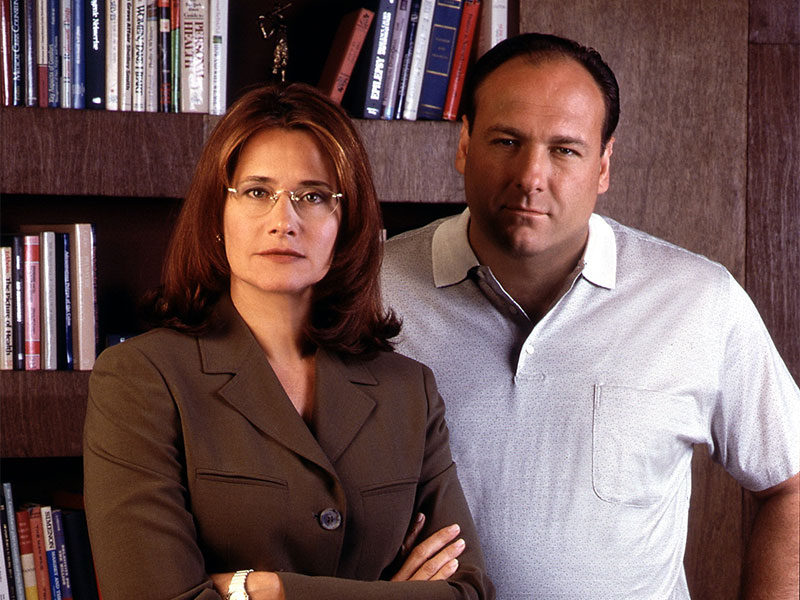
$8.5 trillion in untaxed assets: Data shows why “we need a billionaire income tax”

An analysis released Wednesday shows that in 2022, the wealthiest people in the United States collectively held a "staggering" $8.5 trillion in wealth that is not—and might never be—subject to taxation.

Examining recently released data Federal Reserve data for 2022, Americans for Tax Fairness (ATF) found that the roughly 64,000 U.S. households with at least $100 million in wealth—less than 0.05% of the population—controlled more than one in every six dollars of the country's "unrealized gains," profits that aren't taxable until the underlying asset, such as a stock position, is sold.

"But the ultra-wealthy don't need to sell to benefit: They can live off low-cost loans secured against their growing fortunes. And once inherited, such gains disappear completely for tax purposes," ATF's Zachary Tashman and William Rice explained in the new analysis. "While most Americans predominantly live off the income they earn from a job—income that is taxed all year, every year—the very richest households live lavishly off capital gains that may never be taxed."

That small, ultra-rich fraction of U.S. society is sitting on more unrealized capital gains than the bottom 84% of the country—roughly 110 million households—combined, Tashman and Rice noted.

Most of the typical U.S. household's unrealized capital gains are in the form of their homes, which face state and local property taxes. But 93% of the unrealized gains of America's wealthiest are tied up in businesses, stock portfolios, and mutual funds, ATF found. As a result, mega-rich individuals such as Tesla CEO Elon Musk—the wealthiest man on the planet—wind up paying little to nothing in federal income taxes.

Between 2013 and 2018, leading U.S. billionaires paid an average federal tax rate of just 4.8%, according to a previous ATF analysis.

"This is why we need a billionaire income tax," the group wrote on social media Wednesday, pointing to legislative proposals reintroduced late last year in both chambers of Congress.

Sen. Ron Wyden's (D-Ore.) Billionaires Income Tax would tax the tradable assets of individuals with more than $100 million in annual income or more than $1 billion in assets for three consecutive years, according to a summary released by the Oregon Democrat's office.

In the House, Reps. Steve Cohen (D-Tenn.) and Don Beyer (D-Va.) unveiled a bill that mirrors President Joe Biden's call for a minimum income tax for billionaires. The legislation would require ultra-wealthy households to pay a 25% annual tax rate on their income, including unrealized gains.

Last month, the U.S. Supreme Court heard oral arguments in a case backed by right-wing groups aiming to preemptively outlaw any tax on unrealized gains. The justices—with the notable exception of Samuel Alito, who was urged to recuse from the case due to his connection to a lawyer representing the plaintiffs—appeared unlikely to issue the kind of sweeping ruling demanded by right-wing organizations such as the U.S. Chamber of Commerce.

ATF's analysis found that the wealth of America's billionaires and centimillionaires has exploded in recent years as Republicans have enacted massive tax cuts for the rich while wealth tax proposals have languished in Congress.

"The cumulative $8.5 trillion of unrealized capital gains held by America's billionaires and centi-millionaires in 2022 has jumped by more than half–or $3.2 trillion–just since the last Fed survey year of 2019," Tashman and Rice wrote. "That increase continues a decades-long upward trend among the richest households in the United States."

To begin reversing the trend and addressing the extreme and dangerous stratification of U.S. society by wealth, Tashman and Rice argued that Congress must "curb the economic and political power of the richest households by annually taxing their investment gains–whether realized or not–just as workers' wages are taxed now, every year, all year round."

"Without this necessary reform to our system of taxation," they warned, "the growth of untaxed income at the very top of our economy will continue to accelerate, to the benefit of a tiny few and the detriment of everyone else."

“She loves to defy”: CNN untangles “The Many Lives of Martha Stewart” in new original series

Domestic lifestyle innovator and media maven Martha Stewart is the focus of an upcoming documentary series, courtesy of CNN Originals. Titled “The Many Lives of Martha Stewart,” the four-part original series “traces Stewart’s explosive rise to success, her staggering fall from grace and her momentous comeback to the limelight, establishing herself as one of the country’s most fabled figures."

"Her brand became one of the most profitable, yet polarizing, in the world — and that was before she was investigated for insider trading."

The series will chronicle everything from Stewart’s early beginnings as an ambitious stockbroker on Wall Street in the 1960s to her highly publicized March 2004 trial, in which she was found guilty of conspiracy, obstruction of justice and lying to federal investigators. Stewart’s story will be told through archival footage, including never-before-seen images from her past, and exclusive interviews with Stewart’s former colleagues and employees . . . and even her fellow inmates.

Restaurateurs Daniel Boulud and David Chang and chefs Claire Saffitz and Carla Hall also give interviews. "I think our standards are higher because of Martha," Hall says in the series trailer.

“The Many Lives of Martha Stewart” will stream live via CNN.com and CNN-connected TV and mobile apps. The first two episodes will air Sunday, Jan. 28 at 9 p.m. and 10 p.m. ET/PT, while the final two episodes will air the following Sunday, Feb. 4 at the same times.

You can watch the series trailer below via YouTube:

George Conway questions Trump “mental health” over 47-post Truth Social meltdown at E. Jean Carroll

Conservative lawyer George Conway questioned Donald Trump's mental health on Thursday following the former president's deluge of social media posts about writer E. Jean Carroll, who previously won a sexual abuse and defamation lawsuit against him. "Can anyone explain to me exactly why we’ve never had a serious national discussion about Donald Trump’s mental health?" Conway asked on X, formerly Twitter, in response to a social media post saying the former president had made 47 posts about Carroll by around 9 p.m. eastern Thursday night. "Trump’s criminality, his authoritarianism, and his malignant narcissism and psychopathy inextricably intertwine," Conway wrote.

Trump captioned more than two dozen of the posts with the same message, The Messenger reports. "Except for a Fraudulent Case against me, I had no idea who E. Jean Carroll was," the text read. "She called her African American Husband an 'ape,' and named her Cat 'Vagina.' Look at her Tweets, Stories, and the CNN Interview about her. The Judge on the Case is another Highly Partisan Clinton-Appointed Friend. He should have recused himself long ago!" In those posts, Trump added different screenshots of Carroll's social media posts or videos intended to undermine her credibility. 

Trump's Truth Social spree came a day after the U.S. Court of Appeals for the Second Circuit rejected his bid to delay the trial of a second defamation lawsuit Carroll brought against him, which is slated to begin in two weeks. Conway participated in a conversation about Trump's mental health in 2020, informally, and without any professional expertise, diagnosing Trump with narcissistic personality disorder. Allen Frances, a psychiatrist who helped create the 1978 Diagnostic and Statistical Manual of Mental Disorders, disputed that notion. "Confusing Trump’s behavior with mental illness unfairly stigmatizes those who are truly mentally ill, underestimates his considerable cunning, and misdirects our efforts at future harm reduction," Frances wrote in 2017.

CNN admits it runs all Gaza coverage through bureau monitored by Israeli military censor

CNN has long been criticized by media analysts and journalists for its deference to the Israeli government and the Israel Defense Forces in its coverage of the occupied Palestinian territories, and the cable network admitted Thursday that it follows a protocol that could give Israeli censors influence over its stories.

A spokesperson for the network confirmed to The Intercept that its news coverage about Israel and Palestine is run through and reviewed by the CNN Jerusalem bureau—which is subject to the IDF's censor.

The censor restricts foreign news outlets from reporting on certain subjects of its choosing and outright censors articles or news segments if they don't meet its guidelines.

Other news organizations often avoid the censor by reporting certain stories about the region through their news desks outside of Israel, The Intercept reported.

"The policy of running stories about Israel or the Palestinians past the Jerusalem bureau has been in place for years," the spokesperson told the outlet. "It is simply down to the fact that there are many unique and complex local nuances that warrant extra scrutiny to make sure our reporting is as precise and accurate as possible."

The spokesperson added that CNN does not share news copy with the censor and called the network's interactions with the IDF "minimal."

But James Zogby, founder of the Arab American Institute, said the IDF's approach to censoring media outlets is "Israel's way of intimidating and controlling news."

CNN staffer who spoke to The Intercept on condition of anonymity confirmed that the network's longtime relationship with the censor has ensured CNN's coverage of Israel's bombardment of Gaza and attacks in the West Bank since October 7 favors Israel's narratives.

"Every single Israel-Palestine-related line for reporting must seek approval from the [Jerusalem] bureau—or, when the bureau is not
staffed, from a select few handpicked by the bureau and senior management—from which lines are most often edited with a very specific nuance," the staffer said.

Jerusalem bureau chief Richard Greene announced it had expanded its review team to include editors outside of Israel, calling the new policy "Jerusalem SecondEyes." The expanded review process was ostensibly put in place to bring "more expert eyes" to CNN's reporting particularly when the Jerusalem news desk is not staffed.

In practice, the staff member told The Intercept, "'War-crime' and 'genocide' are taboo words. Israeli bombings in Gaza will be reported as 'blasts' attributed to nobody, until the Israeli military weighs in to either accept or deny responsibility. Quotes and information provided by Israeli army and government officials tend to be approved quickly, while those from Palestinians tend to be heavily scrutinized and slowly processed."

Meanwhile, reporters are under intensifying pressure to question anything they learn from Palestinian sources, including casualty statistics from the Palestinian Ministry of Health.

The Ministry of Health is run by Hamas, which controls Gaza's government. The United Nations agency for Palestinian refugees said in October, as U.S. President Joe Biden was publicly questioning the accuracy of the ministry's reporting on deaths and injuries, that its casualty statistics have "proven consistently credible in the past."

Despite this, CNN's senior director of news standards and practices, David Lindsey, told journalists in a November 2 memo that "Hamas representatives are engaging in inflammatory rhetoric and propaganda… We should be careful not to give it a platform."

Another email sent in October suggested that the network aimed to present the Ministry of Health's casualty figures as questionable, with the News Standards and Practices division telling staffers, "Hamas controls the government in Gaza and we should describe the Ministry of Health as 'Hamas-controlled' whenever we are referring to casualty statistics or other claims related to the present conflict."

Newsroom employees were advised to "remind our audiences of the immediate cause of this current conflict, namely the Hamas attack and mass murder and kidnap of Israeli civilians" on October 7.

At least 22,600 people have been confirmed killed in Gaza and 57,910 have been wounded in Israeli attacks on Gaza since October 7. Thousands more are feared dead under the rubble left behind by airstrikes. In Israel, the death toll from Hamas' attack stands at 1,139.

Jim Naureckas, editor of the watchdog group Fairness and Accuracy In Reporting, noted that the Israeli government is controlling journalists' reporting on Gaza as it's been "credibly accused of singling out journalists for violent attacks in order to suppress information."

"To give that government a heightened role in deciding what is news and what isn't news is really disturbing," he told The Intercept.

Meanwhile, pointed out author and academic Sunny Singh, even outside CNN, "every bit of reporting on Gaza in Western media outlets has been given unmerited weight which not granted to Palestinian reporters."

"Western media—not just CNN—has been pushing Israeli propaganda all through" Israel's attacks, said Singh.

NYPD whistleblower on why so-called “bad apple” cops are really guided by “incentives of the system”

Plenty of people who live in impoverished communities feel like they get no respect from law enforcement. And police officers who patrol those places feel like they don't get any respect from those same community members. As a result, the two sides remain twirled in what seems to be a never-ending conflict. Activist Edwin Raymond explained the danger of toxic police and community relations, and why we desperately need change, on a recent episode of "Salon Talks."

Raymond, recipient of the Commanding Officer’s Award for exceptional duty, is a 15-year veteran of the New York Police Department. Known for his appearance in the Hulu documentary "Crime and Punishment," Raymond has become one of our nation’s leading voices on criminal justice reform, encouraging his fellow officers to put community first, emphasizing that the department would not exist without people to serve.

While Raymond enjoyed success during his career, he eventually realized that his mere presence as a change advocate was not enough. This led to Raymond risking his life by publicly calling out the racist practices of the NYPD and becoming a whistleblower. Raymond did what was right, even though it cost him his career. Raymond's inspiring rise, fall and rebirth is documented in his memoir, "An Inconvenient Cop: My Fight to Change Policing in America."

You can watch my "Salon Talks" episode with Edwin Raymond here or read a Q&A of our conversation below to learn more about his true vision of what police reform in America should look like and what life is like for a nationally known whistleblower.  

The following conversation has been lightly edited for length and clarity.

What's an "inconvenient cop"?

Basically, a cop who's not blinded by patriotism and tribalism, a cop that's able to see the detriments despite being in the system. That's very inconvenient to the status quo and the leadership that is very stubborn in keeping things the way they are, minus being visionaries and shifting policing to what we need.

You cover a lot in this book. Can just give our readers some of the basics on the premise?

There are many books written by cops, former cops, some written about the detriments, but they kind of jump right into what the issues are and what should be done. I thought because what I'm doing is so different, I thought it was crucial that the reader understands how I got to this point. This is why it's a memoir instead of just an instructional book. It goes back and it alternates between contemporary and flashback, walking the reader through what's happening when I start the police academy, and then the next chapter, I'm three years old and my mother's dying. Chapter Three, I'm back in the police academy. Chapter Four, my father's dealing with the reality of having to bury his wife and the poverty and everything else. It alternates like that for the first part of the book because I thought it's essential that the reader understands how I became the man that I am today.

You're the highest-ranking whistleblower in NYPD history. Break down the levels of whistleblowing.

I blew the whistle before even reaching the high rank, and there have been high-ranking folks, even higher-ranking folks, who have contributed to fights. But the way that I'm doing it, rising through after blowing the whistle especially, that's where you've never really seen that before.

Police officers are terrified to tell on other police officers or make statements against other police officers because it does ruin your career. Other cops, they don't want to work with you if you get out there and tell the truth. So how does one rise in the middle of that?

What I did is I studied whistleblowers before me. As far as Frank Serpico, who's like the godfather of police whistleblowing, to one of my heroes, Adhyl Polanco, who I essentially jumped on the lawsuit and became the lead plaintiff. One of the things that they didn't have was the community support, because the thinking is once you expose this information, people are going to take it and they're going to do what they need to do with it, apply pressure where it's necessary. But especially after, as we see what social media has done to attention spans, you got to hold people's hands a little bit. 

"The people that were normally protesting police were standing shoulder to shoulder with me in press conferences."

What I decided was the community support that I hoped would happen, I met with them before I blew the whistle. I explained to them who I am, what I've been doing, what I'm trying to accomplish. Some of them were like, "Yeah, nah, we're good." Others were like, "We'll see." And others were on board immediately. 

When I became a whistleblower officially through a New York Times article, as much as the police department — as much as the leadership — wanted to excommunicate me and destroy my career, too many people were watching. The people that were normally protesting police were standing shoulder to shoulder with me in press conferences. There's nothing in the playbook to deal with that.

Your dad recommended you join this profession, and even when you were younger, you were like, "Really?"

Yeah.

What was that like?

It was after school. It was so random. Unfortunately, he's no longer here. I don't know where that came from. Maybe he just thought, it's a good job, it has good benefits. But I thought he was crazy at the time. Just a few years later, I'm in the police academy. It's crazy.

How do you feel about your journey now when you get a chance to pull back a little bit and look at the 15 years you spent and the work you're doing now. What are some of the things you think about when you reflect on that whole experience?

One, wow, I can't believe we're here. I can't believe I've survived what I've survived with the retaliation and everything else from speaking out. Even before being a whistleblower, I spoke out internally and it was a nuisance to the leadership in the command that I worked in. I'm glad that there were some results. Again, not deeply planted enough, but there were some results. I do miss being there for my community, especially as a lieutenant.

That's what I wanted to know. When you talk about the conversation around what needs to be fixed and changed is so heavy, but then there has to be some other things about the profession you miss. If I was a cop, I would never be at a red light. 

Oh, those perks.

I'd be walking in a bodega, "Give me two egg sandwiches."

Yeah, it's kind of corruption. 

At a lot of stores, cops eat free, right? It's like that in the state of Maryland. They literally get it free.

It used to be that way, but that's kind of frowned upon. But there was a time if a restaurant did charge a cop you just ruined your whole business because they'll sit and ticket everyone that pulls up. They'll make sure you feel it. But those days are thankfully mostly behind us. 

"What I found is so much of the behavior coming from cops can lead to someone dying needlessly."

But responding to an emergency, especially as a lieutenant, it meant a lot to certain communities, especially marginalized communities who don't see policing as a public good, a tax-funded service. They see police as people who harass them and violate their rights. But when Lieutenant Raymond shows up, for many folks, it's the first time they feel the true service aspect of policing. That actually hurt me because it shouldn't be this way. 

I remember as a rookie being temporarily assigned to South Brooklyn in the white community, and as I'm standing on the corner, kids, adults passing by, [saying] "Thank you for your service." I was like, "Well, that's the thing to say to cops?” That's not how I was in the hood where I was from. But it makes sense for them to say that because they get the true service.

They get the full benefits.

Exactly, what it's supposed to be. So being able to be in charge and delivering that to a demographic that unfortunately doesn't really feel that, that's something I definitely missed.

Chris Rock has a cop joke where he's talking about police officers and he's talking about a few bad apples and he says, "Some jobs can't have bad apples." He said, "What if you went to the United or Delta and they said, 'Well, most of our pilots land planes, but we have a few bad apples.'" I think you do such a good job in the book at talking about that bad-apple conversation. Could you touch on that?

A lot of the response to the issues we see with policing, it's centered on the individual, the so-called bad apple. And I saw it that way somewhat, but I have a look under the hood, a real look behind the curtain. What I found is so much of the behavior coming from cops can lead to someone dying needlessly. The behavior is not their own autonomy. They're essentially responding to the incentives of the system. That's where the focus needs to be. It's closer to the root of the problem. We can't go too far downstream. We have to get as close as possible, focusing on the system and challenging, asking ourselves, “Why did that cop make those decisions to do that?" Instead of thinking we have the answer, "Because it's who they are."

What I've learned is the system — because I watched people who I was in the police academy with for six months who I know are not terrible people — but when I would back them up out on patrol, I don't recognize them. I would pull them over later and say, "Yeah, what was that earlier?" It was like, "Oh, I'm on vacation this month. I got vacation this month. So I got to just quickly get my activity out the way." This is when I really start to understand how the demands of the leadership, what's incentivized those numbers — arrest, summons, and stop and frisk — is much more a determining factor to why police behave the way they do than what their own biases are.

This is why that conversation is so important, because if we really pull back, there are bad guys in every profession. I think people get frustrated when they have the conversation with police officers because there are so many cops who won't say, "Yo, I got a partner or a coworker who's out of control. I don't know what's wrong with them." I think that's part of the problem. When you go back and look at the numbers like stop and frisk and things like that, and when you're talking about how Black and brown people are more affected when it comes to drug laws and all of these different things, then we're having a real conversation about the system and we're taking it away from individual people.

Exactly. Don't get me wrong, there's a few individuals where it matters — the leadership. One thing I wasn't prepared for when I first became a whistleblower was all of the support from officers, especially those high up in the ranks. When we would have these conversations, it was like, "Yeah, man, the job, you know how the job is." And I'm like, "You a chief. You are the job." You know what I mean?

But they were scared to do what you did.

Exactly. But it's like they didn't understand their own power. I always think about the movie "Coming to America" … King Jaffe had come to New York, he realized that his son did not agree with an arranged marriage, and as they're going back to Africa, he's basically saying, "These have been our traditions. Who am I to do anything about it?" And his wife goes, "You're the king."

Understand the power that you're in when you are a chief. They don't understand their own power. It's a handful of individuals that actually keep the wheels turning, but they have been indoctrinated to believe that this is what policing is. This is how policing needs to operate. Especially because, let's be honest, in certain communities, we do have serious issues with crime, but the response is not what it should be. Sadly, the diversity thing isn't the answer either, because the system has a way of making sure the people of color who ascend are those who are not going to upset the apple cart.

How did you feel when you found out that it was going to be your last day? What was going through your mind when you started to leave?

It was bittersweet. On one end, I'm ready to take on this new initiative, but it did hit me like, "Wow, this is it. This uniform will never come on again.” Fifteen years. I became a man in this position. I was 22 when I joined the police department, 15 years. This is unbelievable, but I'm ready for this other part of the journey.

What was your mindset like? You weren't on the street, you were a lieutenant.

Yeah, it was just like, "Wow, it's all about to happen. It's about to happen." There's risk involved because I retired five years earlier than I'm supposed to.

That's the rule in New York? You do 20?

Twenty, yeah. You don't get a pension if you retire early. You have to wait until what would've been your 20th year. I have no health benefits.

You get partial.

You don't get 50, you get like 43% instead of 50% of what your final salary was. So I'm not losing everything.

But you're losing a lot.

Oh, it's a lot. I think about it every now and then, but I'm going to be OK. I have to be OK. I'm a man on the mission since I was a teenager really, you think about it. And I'm getting it done.

There are a lot of young people of color entering the profession right now, and they feel the same way you felt. They're young. They don't maybe necessarily understand the dynamics of everything that you've learned throughout your years wearing a badge. What do you think they should know coming in or what kind of message do you have for them right now?

You have to stand firm in who you are and don't compromise your integrity. If it doesn't make sense, that's your intuition talking. Do it in a way that you're not going to, it's within legal parameters, of course, but don't lose yourself in this. Don't get sucked into the system forgetting who you are and where your own personal values are. 

"In policing, people have a repetitive task, but they don't see the bigger picture of what they're contributing to."

I watched colleagues who I knew from the academy were not terrible people. Some of them won't say anything to me. Today most of them are supporters and when we have conversations about the way that they used to police, they're like, "Listen man, I signed up for a job. I wasn't thinking like you. I was just trying to pay my bills. This is what they wanted of me. I didn't think I was violating anyone because it's not like I was making it up. They were committing the infractions. I wasn't paying attention to the fact that in Park Slope, three miles away, the same infraction wouldn't be enforced."

It's just littering. It's just not paying for the subway. But I'm not sitting here thinking about the fact that other folks don't get treated like this. I'm just knowing you did it technically. So I'm a cop. I have every legal right to stop you and arrest you. I wasn't basically connecting all the dots. 

One of the analogies I used in the book is an assembly line. If we're building the Model T Ford, you put on the windshield, I put in the transmission. Despite our individual repetitive tasks, we know what the final product is: the vehicle. In policing, people have a repetitive task, but they don't see the bigger picture of what they're contributing to. They just keep doing their repetitive task. When you zoom out and see the picture for what it is, you realize the mission statement of what policing is supposed to be, theoretically, is not what Black and brown communities are getting.

What's the perfect system look like for you?

You know what's crazy? Some people might say perfection is impossible. I would agree with that, but the fact that there are people who already receive the system that I think is needed is more than enough proof that we can do it. Marcus Garvey said, "What a man has done, man can do again." The fact that white communities get that type of policing, there's no reason why…

That's a perfect system for me.

It's literally what the white people already get, as crazy as that sounds.

Before I got promoted to Sergeant, I was working at Barclays. It was my job to scan the station. I'm watching movement, I'm chitchatting with my colleagues, but I noticed this young Asian young boy and he's standing by the turnstiles and he's on the pay side so he could go and take the train, but after about 45 minutes, I walk over to him and says, "Is everything all right?" He says, "I'm lost." I said, "I made eye contact with you at least 30 times. You didn't think you can come to me?" That hurt, man. He didn't think that when he saw me and my colleagues, he didn't think of help. He didn't think of safety. He didn't think we were someone to help him solve the issues and that really bothered me, man. 

"I can't believe I've survived what I've survived with the retaliation and everything else from speaking out."

But at the same end, in the very same station on another day, another lost kid. Coincidentally, I made the connection that were both lost kids. We were helping him. But then there was on the adjacent side of the platform, there was a crowd forming with cameras. So I'm like, "What's going on?" And they're like, "We just want to make sure he's safe." And I'm like, "The kid is lost, man." I get it. That's how untrusting people are of the system. So the kid that should have come up and said, "We need your help." He didn't see me there and saw me as help. That burns, but then the kid that we were helping bystanders were like, "What does this cop do with this kid?" Imagine that limbo.

What's next for you? Politics?

Man, listen, I ran for office based on what the people were asking of me. Also, a lot of what I am putting forward, we need brave elected officials to actually make happen in legislation. So I figured I didn't wait to be the good cop, the cop that people needed. Why should I wait to try to find the elected officials? I'll be that elected official.

The election didn't go in my favor, but now I'm thinking, would it have limited me? In the larger picture of what I believe I can accomplish it might've limited my potential. So what's next exactly? I don't know, but what I do know is I want to empower others because over 2,000 cops have reached out from all over the country, some even from other nations, and the type of guidance that they need, I'm like, "Somebody has to be there to guide this fight," so just stay tuned and you'll see me out there.