Spring Sale: Get 1 Year, Save 58%

“Big Brother” houseguest evicted for racial slur; dad denies he’s racist because of Black family

A “Big Brother” houseguest was removed from the house for saying the N-word this week. However, he’s deemed not a racist by his family because of his ties to Black family members, TMZ reported.

Luke Valentine was evicted from the “Big Brother” house earlier this week for violating the show’s “code of conduct,” host Julie Chen Moonves said during a Thursday evening broadcast of the reality television show before showing the exact moment Valentine used the racial epithet.

Valentine’s father told TMZ that he was surprised and disappointed in his son’s behavior because Valentine has many family members who are Black, including his stepmother, siblings and biracial cousins. His father said Luke is not a racist and was not raised in a racist family.

Valentine used the slur while the show’s live feeds were running and in front of three other cast mates, one of whom was Black. The group of contestants seemed to be appalled at his usage of the slur. 

After the incident, two of the houseguests walked out of the room but the Black contestant Jared Fields stayed and joked with Valentine. Field told the cameras: “My reaction in the moment, being the only Black male in this house, I don’t know what to say. Anything I do or say can come off aggressive.” He later told Valentine, “That should’ve made you feel uncomfortable. Like, whoa, bro, what’d you just say?”

CBS and the show’s producers said, “There is zero tolerance in the house for using a racial slur.”

GOP cries “cover-up” after Garland appoints Hunter Biden special counsel — that they called for

Attorney General Merrick Garland announced on Friday that Delaware U.S. Attorney David Weiss, an appointee of former President Donald Trump, has been named as the special counsel in the Justice Department’s investigation into Hunter Biden, the Associated Press reports. The move follows the collapse of Biden’s plea deal as prosecutors are now saying that the case will likely head to trial, according to a Friday court filing

Despite advocating for the appointment of a special counsel in the investigation and acknowledging Weiss’ request to ascend to the role earlier this year, House Republicans are now turning their backs on the federal prosecutor. A spokesperson for House Judiciary Committee Chairman, Jim Jordan, R-Ohio, told Fox News Friday that not only do they not believe Weiss is the right person to handle the job, they don’t “believe he can be trusted.” 

In a lengthy statement, House Oversight Chairman James Comer, R-Ky., dismissed Garland’s appointment of Weiss as “part of the Justice Department’s efforts to attempt a Biden family coverup in light of the House Oversight Committee’s mounting evidence of President Joe Biden’s role in his family’s schemes selling ‘the brand’ for millions of dollars to foreign nationals.” He went on to accuse the Justice Department of misconduct in the investigation into Biden by refusing to pursue certain evidence, “tipping off” Biden’s lawyers and attempting to strike the “sweetheart” plea deal. “The Biden Justice Department is trying to stonewall congressional oversight as we have presented evidence to the American people about the Biden family’s corruption,” he added before vowing to continue his probe into the Biden family. 

Not so private room: Zoom’s AI privacy fiasco exposes how vulnerable we are to Big Tech’s whims

If there’s been one topline tech story this week that feels synecdochal of the United States’ entire tech-politik zeitgeist, it’s got to be Zoom’s latest privacy fiasco. The video conference software-maker caught heat this week over a Terms of Service (ToS) change allowing it to harvest private user meeting data for artificial intelligence training. And, yes, once again it was the internet’s privacy vanguard which sounded the alarm and unleashed a deafening roar of pushback.

In the midst of this public-relations nightmare, Zoom’s response to its estimated 800 million customers wasn’t an apology or course correction, but an unctuous “clarification” doubling down on the new ToS. The move drew only more ire as calls for federal investigation grew.


An already fed-up remote workforce began realizing something disturbing. From now on, whenever our bosses hold a mandatory meeting using Zoom — or our professors, physicians, attorneys, accountants, government agencies or therapists require us to use it — there’s a real chance that we could be cornered into giving Zoom the legal right to record our every word and deed in those meetings. And then to use, manipulate and distribute those recordings and associated metadata however Zoom pleases within the widest interpretation of the law. Forever.

By Wednesday, Zoom’s stock had fallen from a prior Friday high of $71 to $65 a share.

The entire eruption was sparked by Zoom’s new AI-powered product features. Combining tech from OpenAI and Anthropic, Zoom IQ was soft-launched in March with a quiet ToS change and is currently offered on a free trial basis. Basically, Zoom IQ spits out AI-generated summaries of your meeting video and chat logs. The Zoom account owner can turn these features on or off. If turned on, they’ll need to manually deselect Zoom’s on-by-default data sharing option after solving a pop-up maze of sub-menus. 

If administrators or account owners turn the features on, Zoom says they will “be presented with a transparent consent process for training our AI models using your customer content,” according to the company’s latest blog post.

The Zoom account owner will need to manually deselect Zoom’s on-by-default data sharing option after solving a pop-up maze of sub-menus.

As a mere participant, you’ll be notified of the meeting host’s choices via pop-up. But that’s all you get from a company with an embarrassingly long rap-sheet of security issues. If your boss, for instance, insists on using the AI features as a matter of convenience during one of those mandatory “cameras on!” meetings — and can’t be bothered to navigate Zoom’s sub-menus to deselect data sharing — then your only choice is to either agree to let Zoom surveil and forever-use your face and voice, or leave the meeting and tell your employer to kick rocks.

Some choice, huh? 

“For AI, we do not use audio, video, or chat content for training our models without customer consent,” wrote Chief Product Officer Smita Hashim in the blog post. “These terms of service work together with our privacy statement and in-product privacy notices, which in turn aim to ensure that usage of customer content is based on your consent.”

Notably, though, Zoom has a history of using AI, and many of its AI-driven features had uses that were known back in early 2021: Pornography and fraud detection, virtual backgrounds, video compression, background audio muffling, live transcription, Zoom Rooms with auto-tracking, integration with AI assistants and letting Google read your Zoom traffic so it can prioritize that part of your internet connection for faster speeds.

A Tuesday LinkedIn post from Zoom CEO Eric Yuan used similar language as Hashim’s blog post.

Zoom might as well say it won’t use recordings of you to train AI “unless you use Zoom” since, in order to use the product at all, you have to consent to Zoom’s ToS.

“It is my fundamental belief that any company that leverages customer content to train its AI without customer consent will be out of business overnight,” Yuan wrote. “Given Zoom’s value of care and transparency, we would absolutely never train AI models with customers’ content without getting their explicit consent.”

If you find yourself doubting whether a more duplicitous and insulting use of the word “consent” could be possible in consumer tech, come sit by me. I’ve been to frat parties that show more respect for my consent and recorded image than this. Zoom might as well say it won’t use recordings of you to train AI “unless you use Zoom” since, in order to use the product at all, you have to consent to Zoom’s ToS.

As Damien Williams opined for Wired, “coerced consent is no consent at all.” That point is meticulously explicated by TechCrunch’s Natasha Lomas in her surgical analysis. As she details at length, this ham-fisted attempt to redefine consent from something given freely by the individual user to a choice made on the user’s behalf by another person (the account holder) is poised to become a significant legal liability to Zoom under European GDPR laws (General Data Protection Regulation). 


Want more health and science stories in your inbox? Subscribe to Salon’s weekly newsletter The Vulgar Scientist.


It’s important to also notice Zoom’s specific word choice preceding the list of data types — “do not use” is meaningless and completely impotent in this context. It is an expression of the company’s current policies or state of operation, not a promise. “Do not use” is a phrase that specifically avoids any language that would allow the company to be held accountable if it changes its mind tomorrow — as opposed to a future-tense “will not use,” the phrase later appearing in both the blog post above and the ToS following public outcry.

But that’s also basically meaningless and no one should be impressed, since the Zoom ToS includes in section 15.2 that “you agree that Zoom may modify, delete, and make additions to its guides, statements, policies, and notices, with or without notice to you.”

That’s a rather polite rider compared to 15.1 which strips you of even more rights by letting you know that “changes to this Agreement do not create a renewed opportunity to opt out of arbitration (if applicable). If you continue to use the Services after the effective date of the Changes, then you agree to the revised terms and conditions.”

It’s particularly galling to see Zoom’s anti-judiciary nose-thumbing in these clauses given the company’s history of being called to court over users’ privacy and security concerns.

Just because most of us are so beat down by tech-surveillance bootheels on our necks that we no longer have the energy to be pissed off about companies which demand you waive constitutional rights for the privilege of even looking at their stupid products — it doesn’t mean forced arbitration clauses like those in Zoom’s sections 27.1 through 27.12 are any less dystopically banal and insulting. It just means I’ve got to recommend that you — after consulting with your lawyer, of course — follow the instructions of 27.11 and email opt-out@zoom.us within 30 days of creating a new account so you can reject the arbitration agreement that Zoom never should have included in the first place.

It’s particularly galling to see Zoom’s anti-judiciary nose-thumbing in these clauses given the company’s history of being called to court over users’ privacy and security concerns.

By late 2020, the Federal Trade Commission announced a settlement with Zoom which cornered the company into beefing up security practices and being more clear about user privacy misrepresentations. The FTC alleged that these misrepresentations included Zoom holding cryptographic keys that would allow the company to access the full contents of any Zoom meeting and that any recorded meetings stored on the company’s cloud storage would be immediately encrypted. The FTC says, however, the files were stored unencrypted on Zoom’s servers for up to 60 days before being transferred to secure cloud storage.

Then there was the $86 million class-action lawsuit that Zoom settled in August of 2021 over privacy invasion allegations after it shared users’ personal data with Facebook, Google and LinkedIn. The suit included another privacy-security dovetail, calling the company to the floor for falsely saying it offered end-to-end encryption (which it introduced in April 2020 after the suit was filed) while allegedly not doing enough to prevent those once-notorious Zoom-bombing intrusions by hackers.

If Zoom wanted to be taken seriously about the integrity of its corporate motives regarding its use of your data — whether that’s the actual videos it keeps of you, or the telemetry-like “Service Generated Data” on your use of the software — it would first need to take the proverbial knives out of our backs. It would need to drop these wretched arbitration clauses and the “we can change our minds any time” clauses out of its ToS.

They’re the equivalent of crossing your fingers behind your back while shaking hands on a deal.

Zoom could instead go the opposite direction if it wants to prove its self-proclaimed “commitment to transparency and user control.” It could answer the questions it left hanging when it invited Hacker News readers to engage then dodged critical concerns. Clunky lay-writer as I might be, Zoom could not only remove the offending clauses, it could add further language saying it “does not and will not retain the right to use, now or in the future” any of the ridiculous list of data types in the new changes.

“This is another example of why we need strong federal data privacy legislation that will actually protect us from corporate surveillance and stop companies like Zoom from harvesting and abusing our data.”

Sections 10.1, 10.2, 10.4 and 10.6 — the specific bits at the center of the uproar — are an odious and self-evident grab for rights to control users’ image and data. The company’s handling of your Customer Content, as Zoom calls it (your video, text, and files uploaded), appears in 10.4.

The section reads more like the plan for a bank heist than the ToS of some (let’s be honest here) annoyingly bloated corporate software:

“You agree to grant and hereby grant Zoom a perpetual, worldwide, non-exclusive, royalty-free, sublicensable, and transferable license and all other rights required or necessary to redistribute, publish, import, access, use, store, transmit, review, disclose, preserve, extract, modify, reproduce, share, use, display, copy, distribute, translate, transcribe, create derivative works, and process Customer Content.”

In bold-faced type, Zoom has now grafted on a single line: “Notwithstanding the above, Zoom will not use audio, video or chat Customer Content to train our artificial intelligence models without your consent.”

In a petition, digital rights advocates Fight for the Future have taken up the push for more change.

“Zoom is trying to mislead users, hiding significant privacy concerns within confusing policy language and conflicting statements. This is another example of why we need strong federal data privacy legislation that will actually protect us from corporate surveillance and stop companies like Zoom from harvesting and abusing our data for profit. But we also need Zoom to address these issues, and publicly state that it will not use our data to train its AI,” the group writes.

I’m not a doomer. I don’t think you can have any sort of life in journalism without the belief that good change can be won as much in the margins as it can in the main. But I am a realist who sees no evidence that we have ever obtained any victory for US digital rights by politely asking for them to be benevolently bestowed upon us by tech companies, billionaires and the congress members who cash their lobbying checks.


We need your help to stay independent


Rather, all evidence points to the contrary: The Big Tech privacy grab is only going to get bigger as AI use spreads. It’s not going to stop until federal privacy and digital rights protections are in place. As generative AI grows, the shoggoth has to be fed on user data, which companies can squeeze more cheaply from you via commandeering your consent than they can by paying you for your data.

Until we have rights enshrined in law, all we can do is cross our own fingers and hope Zoom doesn’t have any of our saucy skin vids laid aside from the days of COVID-safe virtual dates, and that some future breach of its cloud storage doesnt turn the company into a de facto dark web porn dealer.

In the meantime, whither Bellingcat goeth, so go I. And luckily, there are still some admirable virtual meeting rooms open that provide their hosting company an excellent view of exactly nothing.

Las Vegas food service workers are demanding better pay and benefits

Thousands of Las Vegas food service workers are set to rally Thursday as they demand higher pay and better benefits amid ongoing negotiations for a union contract, the Associated Press first reported. The Culinary Workers Union said in a statement that servers, dishwashers, cooks and bartenders who work at T-Mobile Arena are slated to assemble on the iconic Vegas Strip. The workers have been locked in contract negotiations for nearly a year with their employer, Levy Premium Food Service. They are asking for a fair contract that will ensure “one job is enough to provide for their families.”

The rally is the union’s second gathering on the Strip in recent months and comes just two weeks after members voted 97% in favor of commencing a strike if a contract isn’t reached soon, per the AP. In a separate statement, Levy said it will continue to work with the union, despite several months of negotiations:

“We remain committed to working diligently with the Union to reach a fair agreement that shows our team members how much we value them,” the statement said, “and we look forward to returning to the bargaining table soon.”


Megan Thee Stallion’s victory: A rare win in 50 years of hip-hop, violence and misogynoir

Hip-hop turns 50 this year. Since its creation and growth to one of the leading genres of music with cultural and social influence, hip-hop has remained hyper-masculine and exclusionary. In this cauldron, women in hip-hop have nevertheless pushed the genre into a female-dominated space, often while being victims of the violence perpetrated on them by their male counterparts. 

Rapper Megan Thee Stallion has helped spearhead this modern surge of female voices, transcending into a household name since her accession to superstardom in the last several years. Yet her success hasn’t shielded her from the same inescapable pattern of violent misogynoir rampant in hip-hop. In 2020, Megan, whose real name is Megan Pete, was shot multiple times in both of her feet by rapper Tory Lanez as she left a pool party at the home of reality star Kylie Jenner. Megan eventually accused Lanez of being her shooter. Lanez, whose real name is Daystar Peterson, was arrested and charged with three felonies including assault with a semiautomatic firearm. He was found guilty in Dec. 2022 and was sentenced to 10 years in jail on Wednesday.

During the three years between the shooting, the trial and this week’s sentencing — Megan’s believability as a victim has been questioned. Misinformation campaigns from Lanez’s camp fueled defenses of his innocence and attempted to lay doubt to Megan’s credibility. High-profile hip-hop stars like Drake and 50 Cent cruelly poked fun at Megan’s very public trauma.

More theatrics ensued during sentencing which stretched over two days. The judge read aloud statements from both Lanez and Megan. Lanez’s attorney gathered 70 plus letters of support from his friends and family members, including Iggy Azalea, a female rapper from Australia. Azelea’s letter was publicly released this week and drew major backlash. Critics online questioned her female rapper solidarity. In a now-deleted tweet, Azalea said she had no idea the statement would be made public: “I am not in support of throwing away ANY one’s life if we can give reasonable punishments that are rehabilitative instead. I support prison reform. Period.”

It stings that for Black women the aftermath of justice and victory will still leave an indelible scar of trauma.

In Megan’s victim statement, she said that Lanez’s “tried to position himself as a victim and set out to destroy my character and my soul. He lied to anyone that would listen and paid bloggers to disseminate false information about the case on social media. He released music videos and songs to damage my character and continue his crusade.”

After Lanez’s sentencing, he posted to Instagram maintaining his innocence despite the guilty conviction: “Regardless of how they spin my words, I have always maintained my innocence.” Lanez’s post was liked by fellow Canadian rapper Drake. 

Ultimately, Lanez was facing up to 22 years in jail but the prosecution was asking for 13. The judge sentenced Lanez to 10 years. So, Justice was served, right? Megan’s perpetrator is headed back behind bars for the foreseeable decade. Some say the sentence was too light and others are reveling in the fact that an abuser has finally been put in jail for his crimes especially since there seems to be a regression with the #MeToo movement with the rehabilitation of outed abusers.

I wish justice was as simple as someone doing the crime and the time but it’s not — especially when the victims of the abuse are Black women.

We need your help to stay independent

Megan’s statement says it all. Even though she has received justice — the justice I’m certain she needs to bury and put this chapter of her life to rest — it seems like even justice doesn’t rectify the damage that has been done. “I have been tormented and terrorized,” she said. “Slowly but surely, I’m healing. But I’ll never be the same.”

Trauma perpetrated onto Black women by Black men is compounding and layered because of the gendered intra-community violence. It isn’t just Megan who has faced violence at the hands of someone in the Black and hip-hop community. Hip-hop artists like Dr. Dre and Chris Brown have all been accused by Black women of abuse. In Dr. Dre’s instance, he was accused by multiple Black women, hip-hop journalist Dee Barnes, a singer and Dre’s former girlfriend Michel’le and rapper Tairrie B. 

In 2015, Dr. Dre apologized for his abusive behavior in the ’90s after he was called out by critics for ignoring his abusive past. Following the apology, Barnes said she accepted it but noted that regardless of his apology she became a punchline over the years “including being ripped on in an Eminem song that Dr. Dre released and produced.”

Black women who usually go public with their abuse are typically met with the same vitriolic response from the public. They are never met with an outpour of support and empathy. The first instinct from the public is to pounce, attack and defame — rinse and repeat. This is exactly what happened to Megan and to another legend, Lil’ Kim in her relationship with the late The Notorious B.I.G. Other high-profile Black women have been through the same ridicule but haven’t received justice to balance out the unequal scales.

Justice will never look like a balanced scale for Black women — there will always be a bittersweet tinge to it. Megan and other victims of violence will always have to reckon with the misogynoir that is dedicated to silencing and gagging Black women for their experiences with intra-community violence. It stings that for Black women the aftermath of justice and victory will still leave an indelible scar of trauma. 50 years later, with women consistently atop the hip-hop charts and a Black woman receiving some semblance of protection on a public stage, it’s time to start counting down the days of a poison like misogynoir. 

“Not amused”: Judge sent Trump a “clear message” that he risks early trial if he keeps up attacks

The federal judge presiding over former President Donald Trump’s criminal case in connection to his efforts to overturn the results of the 2020 election on Friday set the guidelines for handling evidence ahead of trial.

U.S. District Court Judge Tanya Chutkan agreed with Trump’s attorneys to only issue a protective order regarding “sensitive” evidence in the case but rejected their bid to allow Trump to publicize details about interviews from witnesses in the cases, deeming them “sensitive.”

“You start releasing interview transcripts, what do you think is going to happen to those witnesses?” she asked Trump’s attorney John Lauro during the proceedings.

Chutkan also narrowly delineated the potential pool of people who can view the sensitive evidence, ultimately dismissing a proposal from Trump’s defense team to permit consultants and unpaid volunteers to see the materials.

“I live in Washington: Anyone is a consultant,” Chutkan said.

National security attorney Bradley Moss noted the “irony of Trump’s team getting their preferred version of the protective order is that Judge Chutkan is now designating a lot of stuff as sensitive under that order.”

“So they won the battle but are losing the war,” he tweeted.

In establishing the rules, Chutkan said she struck a careful balance between Trump’s constitutional rights with other concerns for ensuring a fair trial and an untainted jury pool. She made clear that she had no intention of unilaterally acquiescing to federal prosecutors’ demands, or showing Trump any special treatment as both a former president and GOP primary frontrunner, noting at the start of the hearing that while Trump has a right to free speech, “that right is not absolute.”

Her order resolves some disagreements between Trump’s defense and special counsel Jack Smith’s team regarding the scope of a protective order governing how evidence is shared before trial, which is a routine feature of criminal cases. 

“What the defendant is currently doing — the fact that he’s running a political campaign has to yield to the orderly administration of justice,” Chutkan told Lauro. “If that means he can’t say exactly what he wants to say about witnesses in this case, that’s how it has to be.”

Though prosecutors and defense lawyers often reach an agreement on the terms of the protective order to facilitate the evidence-sharing process, that outcome was not the case in Friday’s hearing. Trump’s attorneys, Lauro and Todd Blanche, characterized the government’s proposal as “overbroad,” an insult to the First Amendment and a formula to fashion the court into a “censor,” emphasizing those concerns over the backdrop of Trump’s presidential bid.

Chutkan, however, dismissed the latter concern.

“I cannot and I will not factor into my decisions how it will factor into a political campaign on both sides,” she asserted, later adding that she intends to “keep politics out of this.”

Andrew Feinberg, The Independent’s White House correspondent who was tracking the hearing, reported that Chutkan was “not amused” as Trump’s attorney repeatedly cited his campaign.

We need your help to stay independent

Federal prosecutors challenged the defense’s argument by countering that the former president aims to try the case in the media rather than in the courtroom. They were also concerned with Trump’s potential to use the information they provide to attack witnesses, citing a post he made on Truth Social the day after his arraignment in D.C. vowing to “come after” any foes who go after him.

But, when assessing the government’s request to restrict the release of “non-sensitive” materials, Chutkan questioned why prosecutors would designate information as such if it could potentially be used to harm witnesses.

Prosecutor Thomas Windom said that the Justice Department is seeking to skirt “endless litigation” over the materials’ designations, therefore establishing that Trump would have to get permission from the court if he wanted to share any evidence.

Trump’s team, however, pushed back, arguing that without more specificity, the protective order would become a “contempt trap,” referencing how violations of the order could be punished with contempt of court, a sanction that could result in jail time.


Want a daily wrap-up of all the news and commentary Salon has to offer? Subscribe to our morning newsletter, Crash Course.


“I intend to ensure the orderly administration of justice in this case as I would with any other case,” Chutkan reportedly declared to close out the hearing. “Even arguably ambiguous statements from parties or their counsel … can threaten the process.”

“In addition, the more a party makes inflammatory statements about this case which could taint the jury pool … the greater the urgency will be that we proceed to trial quickly … I will take whatever measures are necessary to safeguard the integrity of these proceedings,” she concluded.

National security attorney Bradley Moss cited that comment as a “warning” that if he keeps t, the “DOJ might get their early trial date.”

“I think the judge has seen through their delay tactics and she’s not going to take any of it,” Watergate prosecutor Nick Akerman told MSNBC. “And I think this is a clear message to Donald Trump that he is going to be in the dock in January or February, and a jury is going to be listening to the evidence.”

CNN legal analyst Norm Eisen argued that the “single most important moment” in the hearing was Chutkan’s warning that she “will not factor” Trump’s campaign into her decisions.

“If she applies that rule to the scheduling order we are going to trial in Jan. 2024,” he predicted.

MSNBC legal analyst Katie Phang predicted that “Lauro’s promise to Judge Chutkan that Trump will follow the ‘precise letter of the court’s order’ will come back to haunt him. Guaranteed.”

“You’re not serious people”: Congress called out for ignoring Jared Kushner’s “huge scandal”

House Oversight Committee Chairman James Comer, R-Ky., on Thursday said that he believes former President Donald Trump’s son-in-law, Jared Kushner, “crossed the line of ethics” by accepting a $2 billion investment from Saudi Arabia.

The Republican Kentucky representative, who is leading a congressional probe into President Joe Biden’s eldest son Hunter’s overseas financial dealings, acknowledged the transaction in response to former New Jersey Gov. Chris Christie’s comments accusing Kushner of “grifting,” according to The New York Post

“I have been vocal that I think that what Kushner did crossed the line of ethics,” Comer told CNN’s Jake Tapper, pointing out the differences between the business dealings of Hunter Biden and Kushner, who served as an adviser to Trump in the White House.  

“But what Christie said, it happened after he left office. Still no excuse, Jake, but it happened after he left office. And Jared Kushner actually has a legitimate business,” Comer continued.

“This money from the Bidens happened while Joe Biden was vice president, while he was flying to those countries. He – look, days after he left Romania, his family started receiving wires from a corrupt Romanian foreign national, days, Jake, like four days after he left, including his granddaughter. What’s his granddaughter doing getting a wire from a Romanian foreign national?” he added. 

Kushner reportedly received the $2 billion investment, which included an expected $25 million in annual management fees, from Saudia Arabia’s sovereign wealth fund six months after his father-in-law left the White House.

During his tenure in the Trump administration, Kushner was tasked with managing Middle East policy, resulting in him building a relationship with Saudi Arabia’s Crown Prince and leading efforts to create the Abraham Accords, which established Israel’s diplomatic relations initially with Bahrain and the United Arab Emirates, and later with Morocco and Sudan.

Kushner’s private equity firm, Affinity Partners, went forward with the investment deal despite a Saudi Public Investment Fund review panel citing concerns about the “inexperience of the Affinity Fund management” and a due diligence review that deemed the transaction “unsatisfactory in all aspects” among other considerations, according to meeting minutes obtained by The New York Times. But Crown Prince Mohammed bin Salman, who chairs the fund, dismissed and overruled the panel’s objections.

Comer announced on Thursday that he aims to subpoena members of the Biden family after the committee published a third bank record memo on Wednesday that said the Biden family and Hunter Biden’s associates had received $20 million in payments from sources in Russia, Kazakhstan and Ukraine.

We need your help to stay independent

“What drives me crazy about this is the blinking red light around Jared Kushner,” former Sen. Claire McCaskill, D-Mo., told MSNBC Thursday after declaring the “appearance of impropriety” in Hunter Biden’s scandal. “Why does the Senate not start hearings?”

“This is a huge scandal. I do not understand why the Senate is not doing a hearing on all of the Trump grift. And I’m not even talking about the money they netted off foreign governments while they were in office,” the former prosecutor said after walking through the extent of Kushner’s relationship and dealings with Saudi Arabia, and comparing the situation to former Treasury Secretary Steve Mnuchin outcome when trying to get an investment from the Saudi government.

Democrats’ failure to launch an investigation into Kushner, she added, is “a good way to make every headline about Hunter Biden and make everyone forget about what the Trump family did: massive grift while they were in office and even bigger grift trading off the influence of the name Trump after they got out of office. I really think that what Hunter Biden did — I disagree what he did, I don’t know if his father disagreed what he did. I know that he was tormented by the death of his other son and the addiction of Hunter. But I do know this. I know that the more we give them an open playing field to try to pretend like Joe Biden did something wrong because of Hunter, the bigger mistake we make.”

“We need to explain to the American people, first, that Joe Biden did nothing wrong, we have no evidence he did anything wrong, and secondly, don’t look over here, look at the real sleaziness that occupied the White House the last time Republicans were in charge,” McCaskill concluded.

Progressive ethics watchdog Citizens for Responsibility and Ethics in Washington agreed with McCaskill Thursday, writing on X, formerly known as Twitter, that Kushner “should not get a free pass for his special relationship with Saudi Arabia.”

“Talk all you want about nepotism and conflicts of interest, but you’re not serious people if you don’t want to investigate Jared Kushner,” the watchdog added in another tweet.


Want a daily wrap-up of all the news and commentary Salon has to offer? Subscribe to our morning newsletter, Crash Course.


On Friday’s edition of “Morning Joe,” MSNBC host Joe Scarborough mocked Comer and the other Republican legislators piling on Hunter Biden instead of probing the Trump children’s transactions while working in the White House, his comments also in response to Christie’s comparison of Hunter Biden’s laptop controversy to Kushner’s $2 billion investment at a New Hampshire campaign event Thursday.

“Let’s see, $2 billion, laptop. I don’t think it’s the same,” Scarborough began, raising his hands to weigh the value of Jared Kushner’s scandal with that of Hunter Biden’s in jest.

“You know, you can’t control family members, and you want to, but you can’t,” he continued before comparing both to former President Jimmy Carter’s brother, Billy Carter’s, contentious relationship with Libyan dictator Muammar Gaddafi in the 1980s. “There’s a big difference between that and people having to be pulled in line when Billy starts showing up next to Muammar Gaddafi in parades and having somebody working inside the White House doing White House business and coming out the other side $2 billion richer.”

“I mean, the comparison, again. I’m not talking about [Christie] here so much as I’m talking about all the Republicans that are freaking out over Hunter Biden, when they don’t look at all the things Donald Trump’s children and in-laws got, who actually worked inside the White House,” Scarborough added.

“[They] got these sweetheart deals from Saudi Arabia and China while they were inside the White House, working inside the White House,” he said, adding, “Talk about pay to play.”

“Sound of the Police” filmmaker tells his son, “No good can come from a police encounter”

The timely and chilling new documentary, “Sound of the Police,” codirected by Stanley Nelson (“Attica“) and Valerie Scoon, is a scathing indictment that shows why the Black community has long had justified reasons to fear the police. Opening with scenes of Amir Locke’s funeral — Locke was killed by Minneapolis police officers who entered his home while he was sleeping — the film traces the history of law enforcement officials killing and abusing Black people from the era of slavery, through decades of lynchings, to the present day. Various talking heads, including Rev. Al Sharpton and Salon’s Editor at Large D. Watkins, comment on the examples.

“I had a cop put a gun to my head on the subway pretty much for no reason.”

The case studies presented by Nelson and Scoon show how systemic racism has developed over centuries as fugitive slave laws and Stop and Frisk policies were designed to keep Black citizens from living freely. There are discussions of  so-called Karens — white women who call the police on Black men framed as threatening, as in the Central Park birder case — and how cop TV shows, starting with “Dragnet,” reinforced positive images of policemen. Meanwhile, members of the Black community experience fear and insecurity, as they feel unserved and unprotected by the police. 

Moreover, video footage of police brutality, from Rodney King to Eric Garner, Breonna Taylor, and Freddie Gray (among so many others) not only position Black victims as criminals, but also result in cases where the police are assaulting and killing these unarmed Black men and women and are not held accountable. 

“Sound of the Police” connect the dots in its examinations of riots that have inflamed Black communities since 1919, and how an “us vs. them” mindset has developed as members of the Black community experience police interactions where they cannot fight back. Nelson and Scoon spoke with Salon about their powerful new documentary.

“Sound of the Police” shows many fraught interactions Black citizens have had with the police. Can you describe a personal encounter you have had with the police? 

Stanley Nelson: I have had a number of encounters all my life with the police. Being stopped for no reason, being thrown up against the wall, raiding the neighborhood and searching everybody and handcuffing folks. I had a cop put a gun to my head on the subway pretty much for no reason. I’ve also had experiences with what we are now calling Karens. I had an argument over nothing in a movie theater and [was] told, “We’re going to call security on you.” It was clearly a threat. When they call security, you know what side they are going to take. It’s a constant, especially when you are younger. As you get older it peters out a little bit, but when you are in your teens, 20s, and 30s, it’s constant. 

Valerie Scoon: I’ve been pulled over two or three times and asked, “Why are you here?” I said, “I live in that building,” and they let me go. It’s happened.

How did you decide what case studies to include? What criteria did you have for inclusion? 

Nelson: One thing we wanted to do was to include case studies where there was video, and not just someone’s word. Another thing we wanted to do was if we are taking about Karens or Stop and Frisk, that we have to show multiple, multiple, multiple instances. So you can’t just think this was a one bad cop or one bad day. It happens over and over and over again. The film’s structure was to go to the historical segments and flash to present and go back and forth, so we wanted things that would echo what we were talking about in the past.

Scoon: We were looking for lived experiences and that’s what we represented when we found them.

Sound of the PoliceOfficers search a Black man for arms at a police station – Chicago, 1922 photo seen in “Sound of the Police” (Hulu/ABC News Studios)

There is shocking and exasperating and infuriating footage of Black men and women being abused by police incorporated throughout your film. Can you discuss presenting this content? Your film uses these examples to effectively prove each point and compel viewers to ask: How can this happen? Why does this keep happening? When will things change? 

Scoon: The idea of how and why this is happening, and how did we get here, was the question I was asking myself as I was talking with historians and experts. With the long view of looking at the history of policing, we see how it is tied into slavery and tied into the history of race relations in this country. It was important to follow that thread. When you get to the moments of violence in the documentary, they are disturbing to watch. It was important to show that reality. We are not making it up. That’s why we felt it was important to show it. It reflected reality and a trend that has persisted since the time of slavery. 

You present some positive images of the police, from “Officer Friendly,” who visits schoolchildren, to TV cop shows that make policework look cool; they serve as recruitment tools. This is the flip side of the abuse — images that make the cops look appealing. What can you say about the image of the police in public consciousness?

Nelson: A couple of things were important to us. Visually it was stunning when you see the cop show intros cut together and you realize that during all our lives, we’ve seen hundreds of different cop shows, and the cops are good guys and concerned for doing the right thing for citizens. And for so much of the African American community, and other communities in the United States, that’s not what the police represent. We tell our kids to avoid the police as much as you possibly can. I tell my son, “No good can come from a police encounter.” It was important to show that, and it was also arresting visually.

We need your help to stay independent

“The important thing is to get out of the situation alive.”

You also indicate that Black police officers do not necessarily have the opportunity to help their community. They often toe the line because of how they are trained. I can’t imagine the mental toll it takes on these Black officers. What observations do you have about this? 

Nelson: One of the things we are trying to say is that it is the institution of the police, and not the individual officers — not the individual African American officers or the white officers — but the culture of policing in the United States that is the issue. You can’t be a cop without being part of that culture. At some point, African American officers join in. There is the thought that if we get more African American officers, it will become better, but that’s not case. All of the statistics show that they join the police department, and the culture of that police department is already there.

Scoon: I would agree. I think what we are looking at, and what the experts point out in the documentary, is that it’s the system that allows for a lack of accountability. That does not mean that all cops take advantage of the lack of accountability. This is not an indictment of Black cops or white cops; this is looking at the system. We do have [Black police officer] Chief Armstrong in the film, and he spoke about being stopped by the police many times and that was why he wanted to become an officer — to try to improve things. 

Why does it feel things are getting worse? With every case, the situation seems more hopeless.

Nelson: I hope that is not the way the film makes people feel. There is hope. One of the things the film says is that things have to change. We don’t say, “Go out and do this or that . . .” because that doesn’t work. But if people start realizing there is a problem, that is the first step towards change. I thought about the Civil Rights Movement. Who thought things would change drastically in the Deep South? Who thought Apartheid in South Africa would end with Nelson Mandela becoming President, except for a few people? But that’s all it takes. Change is possible. We have to recognize it as a problem and have to work towards change. And I think that change will be better for everybody. One thing a cop wrote was, “Can you imagine what It feels like to get out of your car in a Black neighborhood and everyone around you is radiating hate towards you and you face that every day?” It is soul-numbing. No one wants to sign up for that. There is a better way.

Scoon: I agree. Hopefully the documentary serves as a conversation starter in their communities with law enforcement. The people I spoke to in law enforcement do want things to be better. It is hard for them as well. It’s stark and holding a mirror up to what’s going on but hopefully, that would motivate people to find solutions.


Want a daily wrap-up of all the news and commentary Salon has to offer? Subscribe to our morning newsletter, Crash Course.


You show footage of Martin Luther King, of Black Lives Matter protests around the world. These nonviolent protests are contrasted with fighting back and riots as well as Black men and women seen on camera resisting being touched by the police, as well as harassed and abused. Every action seems wrong and situational. What is an appropriate response to this injustice? 

Nelson: I agree with someone in the film who explains what he said to his kid, which is, “You just have to get out of situation as whole and alive as you possibly can. You’ll have time afterwards to take some legal means. But you want to live through that situation.” At those times, cops in this country have your life in their hands. If you are a police officer, you are carrying a gun. The important thing is to get out of the situation alive. And that’s not exaggerating. That is how dire it is. That’s why there is a call for change in policing. It is not any one situation, it is the totality of things in the country. We believe in change. It would be horrible if we didn’t. We’d all be miserable. Hopefully, the film is the first baby step towards understanding. 

Scoon: Looking at the history, I agree what our experts in the documentary say that you should do. But the idea of understanding the history allows, hopefully, to make it a less fraught encounter until people move forward and understand all the context. If you understand the history and relationship, you have a better tool to improve things for all of us. We are better than this. We can do this. 

“The Sound of the Police” premieres August 11 on HULU.

Damn right, I come from Alabama: The symbolic and historic importance of the Alabama Sweet Tea Party

As a Native Son of Alabama, I would like to pull back the veil that surrounds the Black experience and provide insight into why the event that has been dubbed the Alabama Sweet Tea Party is my own personal flashpoint in Alabama history.

For context, it was not until I entered Howard University in Washington, D.C., coming from Birmingham, Alabama, that I first became aware of the misconceptions, and ultimately the stereotypes, about me from being born in a city known for dog bites and dynamite blasts, for killing four little girls and critically wounding another on Sunday morning in a house of worship, a day of dedicated peace and spirituality. Even at Howard, that great mecca of higher learning, there was always a formulaic assumption about Black Southerners: that we were countrified hicks, docile, unaware of the social constructs that bind us to a way of living, incapable of resistance — our drawl, the way we said mane and gull instead of man and girl, made us different, a sorta sideshow, an oddity within the fabric of Blackness.

At Howard, students from Alabama were often referred to as Bamas.

The underlying sentiment of these assumptions almost always came with pity for being born inside the cradle of the Confederacy. I must assume these statements emitted from a catalog of memory handed down by parents, grandparents, friends and the larger public perception in major urban centers of what it meant to be Black, to be Southern and to be from Alabama. I often found myself having to address Northern and East Coast ignorance when students made backward comments like, “Where are your bellbottoms?” or “How come you don’t look like a country Bama?”

I am a proud Alabamian. I love the way I grew up in a cocoon of Black love, never once questioning what it meant to walk in my own skin within the contours of American life.

As a poet, a writer and a college professor, one who deals with language in an intimate way, I’ve forever been interested in — or perhaps obsessed with — Alabama as the setting of many of my nonfiction, poetic and social justice endeavors. My very first book, a collection of poetry called “The Definition of Place,” was from a historical perspective of Black life in Alabama, the strong lineage of family resistance that began in 1902 with a shootout in a covered wagon, when my relatives, Wiley and Percy Fennel, were coming home from church in a covered wagon in Guntersville, Alabama, with their wives. They were confronted by a white man named Major King and an unnamed white accomplice riding horseback. After not giving up the women to be molested and raped, a shootout occurred between the covered wagon and the white men.

We need your help to stay independent

At the same time as lead bullets pierced through thin air, approaching the gun battle from another direction were my great-great-great-uncles Bud and Dennis Merrill, who had been out all night drinking moonshine at a juke joint. Consequently, my kinfolk let buckshot flow freely from their gun barrels until Major King and his accomplice ceased to breathe and walk upright. Ultimately, it is a story that could never be repeated during Bud and Dennis’s lifetime, as the assailants who fired the buckshot have never been identified in a court of law.

Then, too, my mother was president of the Alabama Education Association for four years and her main office was in Montgomery. When we integrated Gardendale Elementary in Jefferson County as part of the first wave of integration in 1972, my mother gave me one mandate: “If someone white hit you and call you n***er, you knock the ___ out them.”

It took exactly one year from me entering Gardendale Elementary to do exactly what my mother told me to do, and then I demanded to leave and be placed in an all-Black school.

I am a proud Alabamian. I love the way I grew up in a cocoon of Black love, never once questioning what it meant to walk in my own skin within the contours of American life.

Because of my personal experiences of how people view Black Alabamians, I’ve always wanted to celebrate Alabama as writers often do with geographical locations near and dear to them. The joys and resilience of Black life I’ve tried to highlight have often been overshadowed by ignorant stances that the state has taken, from ultra-right-wing conservatism that believes Donald J. Trump is godlike to the national embarrassment that is Sen. Tommy Tuberville, and I refuse to give either space in this writing. Alabama is always — and I repeat, always — the butt of the joke on racism and its systemic oppression of people of color.  

I need for you to understand there is always a silent dialogue within the Black collective.

These are the private conversations people outside the culture are not privy to. This dialogue comes from those who live or feel invisible within the fabric of the American flag, the ones beaten, shot and maimed, not only by the police but by citizens of the state too. They speak of a different America, one barely recognizable in daily media and news cycles. They watch intently as political figures get away with obstruction of justice, sedition and insurrections against the United States because the government is afraid of the backlash, while their brothers, sisters, friends and family members are locked up doing prison time for much, much less.

They understand the distribution of justice and fairness is unequal.

On Aug. 5, 2023, in Montgomery, Alabama, about 65 miles south of my hometown of Birmingham, the narrative of Alabama, in my opinion, changed through one single event. The scene unfolded in great cinematic fashion at Riverfront Park on a dock as the Harriott II, an elegant 19th-century riverboat that is the centerpiece of Montgomery’s entertainment district, was being steered portside to dock in its designated space that features the Riverwalk Amphitheater in the background, except that it could not dock because a pontoon was blocking entry. One of the co-captains of the Harriott II, Damien Pickett, had to take a smaller boat to the dock to sort out the problem so the riverboat could moor. On the dock, after multiple tries to get the owners to move the pontoon, Mr. Pickett took the initiative, as was his job to solve the problem, to move the pontoon that the occupants refused to move. If the Harriott II was to pull in portside, that needed to happen.

I need for you to understand there is always a silent dialogue within the Black collective.

Apparently, the pontoon party was not happy about having its boat moved and behaved as if this was the worst insult they could have ever gotten in life: being shown up by a Black man in public.

Empowered by the sum of Alabama history, a preconceived notion about Alabama Blackness and an ignorance of Black culture, members of this clandestine clan of everything that continues to contribute to the backward representations of Alabama decided to jump Pickett in plain view, presumably to teach hima lesson. To put him in his place. Meanwhile, the occupants of the Harriott II, along with Pickett’s fellow crew members (some who have known him all his life), were watching their co-captain fight for his life as the Harriott II steadily pulled in. It all unfolded in slow motion, in cinematic sequence. There are literally dozens of points of view of this event. The overwhelming number of cellphone videos documenting what happened can be found on various social media platforms in extensive detail. In other words, this ain’t 1963 but 2023, and thank whoever you believe in for the cellphone.

I wish it weren’t so, but this was totally about race, the complexion of one’s skin, white privilege and living in a state that condones and consistently attempts to subvert, demean and oppress the Black experience every chance it gets.

The symbolism within the Alabama Sweet Tea Party is too rich to ignore, especially when we live in a climate where American citizens believe there were benefits to slavery, that teaching Black history creates white guilt and that Black people should feel guilty for the guilt. Also, we cannot ignore another overarching theme of this event: the appearance of Donald J. Trump in Montgomery one day after being arraigned on federal charges in a Washington courtroom. Evidently, the former president feels his racist tendencies have a lifecycle in Sweet Home Alabama. I cannot verify this, but I’m willing to bet money that some, if not all the people involved in attacking this Black co-captain at least wished they were at that Trump event too.

When it became clear the white boaters intended to jump Pickett in an unfair fight, he did a move, throwing his hat straight up in the air before the fight began. No, that was not the Wakanda call, as some have claimed. Anybody familiar with Black Alabama culture will tell you the symbolic hat-throwing is always a preface to the fight, as in, OK, now it’s on, let’s get it on.

This brings us to the 16-year-old crew member on board the Harriott II, and his place in my canon of Alabama history.

If any piece of that white privilege on the dock had read the poem “Shine,” about a subversive mythological character in African literature said to be a crew member on the Titanic, “in the boiler room eating blackeye peas/ when water came damn near up to his knees,” who displayed an unbreakable will to swim across the ocean while the white folks drowned in their own privilege, that might have dispelled the idea that Black folks can’t swim. The 16-year-old saw his colleague in trouble, understood the assignment when the hat went in the air and hit a swan dive from the Harriott II into the river, and then commenced to freestyle across the channel, moving through rugged water like wet butter, fully clothed, which is not easy to do at all.

The symbolism of that dive, those against-all-odds-purposeful strokes, the determination to reverse the narrative of Black people in Alabama while understanding history, proved to be a galvanizing force that has captured the imagination and hearts of Black people all over this country.

A 16-year-old Black kid did that.

Throughout the weeks ahead you will read several takes on what happened in various media outlets, and at some point you will read the phrase: I do not condone violence. For the sake of not sounding cliché, I will not do that. Instead, I will offer that the call and response to protecting Damien Pickett may have ignited a Black love that often seems lost while disrupting or perhaps destroying the stereotypical idea of what it means to be a Bama, or to be for Alabama. I, for one, am thankful for that.

From this day forward, please: Call me Bama.

CORRECTION: An earlier version of this story positioned Montgomery to the north of Birmingham instead of south. The story has been updated. 

“Star Trek” Strange New Worlds” closes an emotions-driven second season with action – and feeling

Each second-season episode of “Star Trek: Strange New Worlds” displays its awareness of history, whether that pertains to the franchise’s lineage and the characters’ places and roles within it or the overall tendencies and expectations we have of TV. That’s a long way of explaining why each muscular swing was a surprise, particularly its musical episode “Subspace Rhapsody.”

Broadway tributes are notoriously tricky for the best of shows, most of which get a few years under their belts before tossing those dice.  “Strange New Worlds” mapped out its sophomore run and not only committed to a song-and-dance hour, but made it the season’s penultimate episode.

That speaks to showrunners Akiva Goldsman and Henry Alonso Myers’ confidence in the story and the audience’s loyalty, certainly. It also acknowledges the industry’s realities. While there isn’t any viewership data to determine whether the show is a hit, Trek fans love “Strange New Worlds.” Still, given the unpredictable state of TV right now, it could vanish tomorrow.

The undercurrent of “if not now, when?” driving its arcs makes sense, then. That attitude propelled the second season plots to invigorating destinations while doubling down on the emotional components that have enriched the overall journey.

It makes “Strange New Worlds” distinct from the original “Star Trek” and even “The Next Generation” by establishing it as the Trek that’s unafraid to be in its feelings. And every relationship leap is a paving stone leading to its action-heavy finale, “Hegemony,” and the U.S.S. Enterprise NCC-1701’s crew’s third deadly confrontation with the Gorn, a carnivorous reptilian species whose ships are tougher and deadlier than Starfleet’s.

The Enterprise barely survive their initial run-ins with these predators in Season 1, and only because security officer La’an Noonien-Singh (Christina Chong) has firsthand knowledge of the Gorn as a rare survivor of one of their colony raids. But the second season premiere hinted that the show isn’t finished with the Gorn when officials mention a worrisome gathering on the edge of Federation space.

Every hour between the premiere and finale fortifies our understanding of all the Enterprise crew stands to lose if the Gorn were to defeat them. That makes “Hegemony” more than another send-up of James Cameron’s “Aliens” – although it recreates that classic’s claustrophobic agita very well. The hour’s higher function is in paying off this season’s overt relationship focus, only to leave us in a frantic but delicious “To Be Continued . . .” limbo.

Cliffhangers are a polarizing device, which explains why the original series only uses it once – in “The Menagerie, Pt. 1,” which officially introduces Pike to the “Trek” universe. (The character starred in the original and unaired “Star Trek” pilot.)

Star Trek: The Next Generation” and other “Star Trek” spinoffs had a laxer attitude toward the gimmick and better reasons to employ it. “TNG” and “Deep Space Nine” were syndicated series, and in the age of scripted syndication, cliffhangers were insurance beckoning a wandering audience to return. Streaming series have abused that old ploy to the extent that it’s both expected and lightly detested.

Star Trek: Strange New WorldsStar Trek: Strange New Worlds (Paramount+)“Strange New Worlds” earns its precious second season dangler by presaging everything that has happened to and around Captain Christopher Pike (Anson Mount) through his storyline and others.

Pike is a profoundly empathetic leader who takes the most important missions personally. And he doesn’t like to fail his people, which is different from failing a mission. This has been telegraphed from the series’ start; Pike’s foreknowledge of a terrible fate he can’t avoid, one that will leave him lingering between life and death, informs his overall joie de vivre. He loves cooking for himself and his deck officers; he shows palpable despair when he loses someone; and he goes to extreme lengths to protect them.

At times he’s barely able to mask his anguish or relief. When his Number One, Una Chin-Riley (Rebecca Romijn) returns to the ship following her exoneration, he breaks professional protocol by hugging her as if she nearly escaped death. (In a real way, she did – losing her trial would have killed her Starfleet career and reputation.)

We need your help to stay independent

Pike’s emotive transparency makes him a great leader but, as the finale leaves open to debate, it may not make him the best captain to negotiate brinksmanship.

“Strange New Worlds” is far from singular in integrating its characters’ vulnerabilities into its overall plot, but out of the franchise’s recent series – aside from the third season of “Picard” – it is the most effective in persuasively presenting the Enterprises crewmembers’ passions and abilities to empathize as assets instead of potential pitfalls.

A romance between Spock (Ethan Peck) and Nurse Chapel (Jess Bush) becomes a means for Spock to examine his humanity and a way of explaining why the version of the character Leonard Nimoy presents is nearly devoid of behavioral spikes. The ironclad loyalty that Chapel shares with Dr. Joseph M’Benga (Babs Olusanmokun) is explained in two episodes that reveal them to be veterans contending, with varying degrees of success, with post-traumatic stress disorder, as is La’an.

By having the stoic security officer taste a reality where she and Captain James T. Kirk (Paul Wesley) fall in love, only to lose him, we better appreciate the weight on her shoulders as she balances caring for her crew with remaining strategically detached.

As all this is happening, Pike confronts his shortcomings as a fully present partner for Marie Batel (Melanie Scrofano), the Captain of the U.S.S. Cayuga – the only Federation vessel orbiting an unaffiliated colony when the Gorn attack it.

Rewinding to “Subspace Rhapsody” for a moment, the central concern that episode galactic anomaly posed was that compelled sentient beings to sing private information about themselves to anyone who could hear, a premise the showrunners modeled on the bar-setting 2001 episode of “Buffy the Vampire Slayer” titled “Once More With Feeling.” 

As La’an points out to Pike, this presents a security concern for both the ship and Starfleet more broadly.

Presumably, she was talking about the possibility of an officer broadcasting tactical secrets, but as we see in “Hegemony” there’s also danger in placing individual affections over the common good. Although Pike has orders from Starfleet not to cross the Gorn-established line of demarcation after destroying the Cayuga, the chance to save Captain Batel – and Chapel, who happened to be with Batel during her mission – is more important. So Pike forms a volunteer strike team that miraculously finds Batel and a few other survivors, including one plucky engineer named Montgomery Scott (Martin Quinn).

Star Trek: Strange New WorldStar Trek: Strange New World (Paramount+)Meanwhile Spock, in a lucky accident, stumbles upon Chapel while manipulating the Cayuga’s wrecked saucer to crash into a machine the Gorn is using to jam communications and transport ability. As soon as that mechanism is destroyed the Enterprise beams its people aboard – and Scotty, who will make a fine comedic foil to Carol Kane’s mischievous Pelia – but isn’t able to save the colonists before the Gorn claim them.

Worse, Marie reveals to Pike that she is infected, relegating her to a fate similar to the xenomorphs’ human hosts in “Aliens.”

As Pike is processing all this, more Gorn warships blink into orbit and turn on the Enterprise.

Trek timeline purists have already noted that incorporating this underutilized adversary into “Strange New World” contradicts a history established in the original series’ “Arena” episode, where William Shatner’s Captain Kirk describes his confrontation with a reptilian race as an instance of first contact.

Yes; also, who cares? “Strange New Worlds” has already demonstrated its facility with retconning messy time inconsistencies (in the episode “Tomorrow and Tomorrow and Tomorrow“), making this a piddly concern next to where we’re left as the series goes dark for what could be a year.


Want a daily wrap-up of all the news and commentary Salon has to offer? Subscribe to our morning newsletter, Crash Course.


Pike and the Enterprise survived the Gorn the first time by putting aside their fear and gambling with the ship’s integrity, and the second, during an away mission confrontation, amplifying their fear and rage to draw out their monstrous younglings.  “Hegemony” closes with the realization that not only is the ship overwhelmed, but so is its captain, and in large part because Pike and his crew heeded their humanity instead of strictly following orders.

And this presents the other side of the franchise’s unspoken debate concerning the value and vulnerability of expressiveness in its captains, especially in the face of an enemy that lacks empathy.

There’s no reason to lose too much sleep over this deep space Dunkirk since both we and Pike know that this incident won’t be the one that kills him – or, for that matter, Spock, Uhura, Chapel, M’Benga, Number One or Scotty. In fact, it may be the reason Pike’s birthday becomes an official holiday in the late 24th century – thank you, “Lower Decks” crossover episode!

The pain is in the waiting, for however long that may be, to see how “Strange New Worlds” wriggles the Enterprise out of this bind. That we feel such longing validates the writers’ choice to more aggressively draw their bows across our heartstrings, allowing “Strange New Worlds” to maintain the course of its greatness – even as the Enterprise feels its way into trouble now and then.

All episodes of “Star Trek: Strange New Worlds” are streaming on Paramount +.

“That’s his problem”: George Conway blasts Trump complaints about proposed trial before Iowa caucus

If former President Donald Trump’s court timeline ahead of the 2024 election conflicts with his campaign schedule, the fault solely lies with him, conservative attorney George Conway told CNN’s Erin Burnett Thursday in response to a question regarding Trump’s social media rant about the special counsel’s requested trial date of Jan. 2, 2024, in the election interference case. In a post to Truth Social Thursday evening, the current GOP frontrunner decried the proposed date as another attempt at interfering with his presidential bid.

“Well, that’s his problem and not the court’s and not the Justice Department’s and not the public’s,” Conway said during the segment, adding that “the fact of the matter is if he’s so confident that he’s so far ahead, I think he is far ahead, I don’t see why he needs to campaign that much. He could save his money and save his energy and work on defending himself.” Though the conservative attorney recognized the special counsel’s suggested trial date is “aggressive,” he also believes the proposal is a strategy for negotiations like “bidding for a house.” Conway added, “You come in with a low bid, the other side’s gonna come in with a sky-high bid, and [Judge Tanya S. Chutkan will] probably do something in between, probably early next year or definitely no later than the summer.”

“Rattled” Trump melts down on Truth Social over Jack Smith’s proposed trial date

Former President Donald Trump took to social media Thursday evening to bemoan the accelerated timeline special counsel Jack Smith requested in his 2020 election interference case, ultimately writing the trial date off as “election interference” itself. Smith filed a motion to Judge Tanya Chutkan earlier on Thursday, proposing a Dec 11, 2023, date for jury selection and Jan. 2, 2024, date for the trial because of the “gravity and historic nature of the charges” as well as the immense public interest in the proceedings, according to The New York Times.

“Deranged Jack Smith has just asked for a trial on the Biden Indictment to take place on January 2nd., just ahead of the important Iowa Caucuses. Only an out of touch lunatic would ask for such a date, ONE DAY into the New Year, and maximum Election Interference with IOWA!” the GOP frontrunner wrote on Truth Social, referencing the Iowa Republican caucuses slated for Jan. 15, 2024. “Such a trial, which should never take place due to my First Amendment Rights, and massive BIDEN CORRUPTION, should only happen, if at all, AFTER THE ELECTION. The same with other Fake Biden Indictments. ELECTION INTERFERENCE!”

“That January 2 trial has really got him rattled,” former federal prosecutor Elizabeth de la Vega tweeted of Trump Thursday night. The trial date for Smith’s other case against the former president, regarding his retention of national security documents post-presidency, was set by the presiding judge for May 20, 2024.


Cats first finagled their way into human hearts and homes thousands of years ago – here’s how

A few years ago, I had the opportunity to go on safari in southern Africa. One of the greatest thrills was going out at night looking for predators on the prowl: lions, leopards, hyenas.

As we drove through the darkness, though, our spotlight occasionally lit up a smaller hunter – a slender, tawny feline, faintly spotted or striped. The glare would catch the small cat for a moment before it darted back into the shadows.

Based on its size and appearance, I initially presumed it was someone’s pet inexplicably out in the bush. But further scrutiny revealed distinctive features: legs slightly longer than those of most domestic cats, and a striking black-tipped tail. Still, if you saw one from your kitchen window, your first thought would be “Look at that beautiful cat in the backyard,” not “How’d that African wildcat get to New Jersey?”

As an evolutionary biologist, I’ve spent my career studying how species adapt to their environment. My research has been reptile-focused, investigating the workings of natural selection on lizards.

Yet, I’ve always loved and been fascinated by felines, ever since we adopted a shelter cat when I was 5 years old. And the more I’ve thought about those African wildcats, the more I’ve marveled at their evolutionary success. The species’ claim to fame is simple: The African wildcat is the ancestor of our beloved household pets. And despite changing very little, their descendants have become among the world’s two most popular companion animals. (Numbers are fuzzy, but the global population of cats and dogs approaches a billion for each.)

Clearly, the few evolutionary changes the domestic cat has made have been the right ones to wangle their way into people’s hearts and homes. How did they do it? I explored this question in my book “The Cat’s Meow: How Cats Evolved from the Savanna to Your Sofa.”

Why the African wildcat?

Big cats – like lions, tigers and pumas – are the attention-grabbing celebrities of the feline world. But of the 41 species of wild felines, the vast majority are about the size of a housecat. Few people have heard of the black-footed cat or the Borneo bay cat, much less the kodkod, oncilla or marbled cat. Clearly, the little-cat side of the feline family needs a better PR agent.

In theory, any of these species could have been the progenitor of the domestic cat, but recent DNA studies demonstrate unequivocally that today’s housecats arose from the African wildcat – specifically, the North African subspecies, Felis silvestris lybica.

Given the profusion of little pusses, why was the North African wildcat the one to give rise to our household companions?

In short, it was the right species in the right place at the right time. Civilization began in the Fertile Crescent about 10,000 years ago, when people first settled into villages and started growing food.

This area – spanning parts of modern-day Egypt, Turkey, Syria, Iran and more – is home to numerous small cats, including the caracal, serval, jungle cat and sand cat. But of these, the African wildcat is the one that to this day enters villages and can be found around humans.

African wildcats are among the friendliest of feline species; raised gently, they can make affectionate companions. In contrast, despite the most tender attention, their close relative the European wildcat grows up to be hellaciously mean.

Given these tendencies, it’s easy to envision what likely happened. People settled down and started raising crops, storing the excess for lean times. These granaries led to rodent population explosions. Some African wildcats – those with the least fear of humans – took advantage of this bounty and started hanging around. People saw the benefit of their presence and treated the cats kindly, perhaps giving them shelter or food. The boldest cats entered huts and perhaps allowed themselves to be petted – kittens are adorable! – and, voilà, the domestic cat was born.

Where exactly domestication occurred – if it was a single place and not simultaneously throughout the entire region – is unclear. But tomb paintings and sculptures show that by 3,500 years ago, domestic cats lived in Egypt. Genetic analysis – including DNA from Egyptian cat mummies – and archaeological data chart the feline diaspora. They moved northward through Europe (and ultimately to North America), south deeper into Africa and eastward to Asia. Ancient DNA even demonstrates that Vikings played a role in spreading felines far and wide.

What cat traits did domestication emphasize?

Domestic cats possess many colors, patterns and hair textures not seen in wildcats. Some cat breeds have distinctive physical features, like munchkins’ short legs, Siameses’ elongated faces or Persians’ lack of muzzle.

Yet many domestics appear basically indistinguishable from wildcats. In fact, only 13 genes have been changed by natural selection during the domestication process. By contrast, almost three times as many genes changed during the descent of dogs from wolves.

There are only two ways to indisputably identify a wildcat. You can measure the size of its brain – housecats, like other domestic animals, have evolved reductions in the parts of the brain associated with aggression, fear and overall reactivity. Or you can measure the length of its intestines – longer in domestic cats to digest vegetable-based food provided by or scavenged from humans.

The most significant evolutionary changes during cat domestication involve their behavior. The common view that domestic cats are aloof loners couldn’t be further from the truth. When lots of domestic cats live together – in places where humans provide copious amounts of food – they form social groups very similar to lion prides. Composed of related females, these cats are very friendly – grooming, playing with and lying on top of each other, nursing each other’s kittens, even serving as midwives during birth.

To signal friendly intentions, an approaching cat raises its tail straight up, a trait shared with lions and no other feline species. As anyone who has lived with a cat knows, they use this “I want to be friends” message toward people as well, indicating that they include us in their social circle.

Evolution of a master manipulator

Household cats are quite vocal to their human companions, using different meows to communicate different messages. Unlike the tail-up display, however, this is not an example of their treating us as part of their clan. Quite the contrary, cats rarely meow to one another.

The sound of these meows has evolved during domestication to more effectively communicate with us. Listeners rate the wildcat’s call as more urgent and demanding (“Mee‑O‑O‑O‑O‑O‑W!”) compared with the domestic cat’s more pleasing (“MEE‑ow”). Scientists suggest that these shorter, higher-pitched sounds are more pleasing to our auditory system, perhaps because young humans have high-pitched voices, and domestic cats have evolved accordingly to curry human favor.

Cats similarly manipulate people with their purrs. When they want something – picture a cat rubbing against your legs in the kitchen while you open a can of wet food – they purr extra loudly. And this purr is not the agreeable thrumming of a content cat, but an insistent chainsaw br-rr-oom demanding attention.

Scientists digitally compared the spectral qualities of the two types of purrs and discovered that the major difference is that the insistent purr includes a component very similar to the sound of a human baby crying. People, of course, are innately attuned to this sound, and cats have evolved to take advantage of this sensitivity to get our attention.

Of course, that won’t surprise anyone who’s lived with a cat. Although cats are very trainable – they’re very food motivated – cats usually train us more than we train them. As the old saw goes, “Dogs have owners, cats have staff.”

Jonathan Losos, William H. Danforth Distinguished University Professor, Arts & Sciences at Washington University in St. Louis

This article is republished from The Conversation under a Creative Commons license. Read the original article.

Why the Justice Department must prosecute the lawyers who conspired with Donald Trump

If Shakespeare had been born Jack Smith, then perhaps in “Henry VI, Part 2,” the character Dick the Butcher would not have said, “First, let’s kill all the lawyers,” but rather, “First, let’s name them all unindicted co-conspirators.”

Smith’s Aug. 1 indictment of Donald Trump lists six – six! — co-conspirators, and all have been identified as attorneys. This is a dark stain on the profession, but it should not completely blot out the light.

Two sides of the story of lawyers and American democracy have long co-existed. 

On one side, lawyers have the same vulnerabilities as any other citizen. As Alexis de Tocqueville, the unrivaled chronicler of 19th-century America, observed, “like most other men,” lawyers “are governed by their private interests, and especially by the interests of the moment.” But Tocqueville also recognized another side of the story. Indeed, he was more emphatic in noting the indispensable role that lawyers could, and he hoped would, play in the American story. 

“Men,” he wrote, “who have made a special study of the laws derive from this occupation certain habits of order .” Tocqueville said that “When the American people are intoxicated by passion or carried away by the impetuosity of their ideas,”they are checked and stopped by the almost invisible influence of their legal counselors.”

History has proved him right in both his worries about, and his hopes for, the legal profession. Lawyers have often been a bulwark of the American constitutional system. But when they, of all people, give in to “the interests of the moment” and betray that system, the wound is a deep one. 

We need your help to stay independent

Americans learned this lesson during Nixon’s Watergate scandal when lawyers aided and abetted the disgraced 37th president’s crimes. As John Dean, Nixon’s former White House counsel, once said, “I prepared a list of who was likely to be indicted. … I put a little asterisk beside each lawyer, which was Mitchell, Strachan, Ehrlichman, Dean, Mardian, O’Brien, Parkinson, Colson, Bittman, and Kalmbach.”

“[H]ow in God’s name could so many lawyers get involved in something like this?”

Dean’s fear that many of the lawyers who aided Nixon would be indicted proved to be well founded. Indictments of those people were brought by special prosecutors Archibald Cox and Leon Jaworski and their staffs, who, in Tocqueville’s words, “valued legality” and vindicated it.

Lawyers have often been a bulwark of the American constitutional system. But when they, of all people, give in to “the interests of the moment” and betray that system, the wound is a deep one.

Sadly, it seems like déjà vu all over again as the nefarious role of lawyers in Trump’s Big Lie campaign leaps from the pages of the Washington, D.C., grand jury’s Aug. 1 indictment of the former president. Yet for good reason, the indictment did not charge the co-conspiring lawyers: to speed the trial of the alleged kingpin, Donald Trump. Indicting and trying the others as co-defendants with Trump would have complicated the trial, slowing a slugfest to a snail’s pace.

But the unindicted conspirators are smart enough to see that their days in the docket are just over the horizon. For now, being named as participants in the alleged crimes is sure to have those six lawyers in a kind of mental purgatory.


Want a daily wrap-up of all the news and commentary Salon has to offer? Subscribe to our morning newsletter, Crash Course.


And we already have a good idea of what they will say when their indictment day comes. On Aug. 2, Harvey Silverglate, the lawyer for John Eastman, one of Trump’s unindicted counsels, wrote that Eastman had “acted in the highest traditions of the legal profession to advise his client, even if some of his theories were at the very boundary of the law.”

Eastman far exceeded the boundary of lawfulness, ignoring his lawyer’s oath to support the Constitution. He did so when he wrote two memos claiming that Vice President Mike Pence, as presiding officer of the joint session of Congress, was “the ultimate arbiter” in deciding whether to accept or reject presidential electors’ votes. 

Indeed, in March 2022, federal district court Judge David Carter found it more likely than not that Eastman had gone beyond merely offering legal advice and moved into a conspiracy with Trump to obstruct congressional proceedings. 

It both helps redeem the legal profession and is a rule of law nation’s necessary antidote to ensure that other attorneys stay on the path of integrity.

Constitutional scholar Steve Vladeck has explained specifically why any claim that Eastman’s advice was lawful will not pass muster. Under the 12th Amendment, Vladeck has emphasized, “There’s no discretion on [the vice president’s] part, nor has any Vice President previously claimed the power to reject any properly formatted certificates.” 

Inside the White House on Jan. 4, 2021, Eastman himself admitted, according to testimony given by Pence lawyer Greg Jacob to the House Jan. 6 committee, “we would lose 9-nothing” in the Supreme Court.

The unlawful and unethical schemes in which other unindicted conspirators allegedly participated could put them in the same boat as Eastman. For example, co-conspirator No. 5 (identified as attorney Kenneth Chesebro) wrote an email to Eastman proposing that Supreme Court Justice Clarence Thomas declare the Georgia election in doubt. Co-conspirators No. 1 (identified as Rudy Giuliani) and No. 6 (identified as Boris Epshteyn) were reportedly allies in running the Trump campaign’s fake elector campaign in seven states. 

Here again, if a member of the bar encourages others to sign fraudulent electoral certificates claiming to be official, they are not acting as a lawyer but someone who is, as Tocqueville said, “governed by their private interests.” Because the conspiring attorneys’ wanted to curry favor with Donald Trump, they apparently became aiders and abettors of crime — subverting, not protecting, the constitutional order.

In parallel today, for the lawyers now in Trump’s orbit, trouble almost certainly lies ahead. His legal team, according to the New York Times, “is marked by a tangled web of potential conflicts and overlapping interests.”

Jack Smith’s classified document and obstruction of justice case that is unfolding in Florida federal court has highlighted those conflicts in a motion questioning lawyer Stanley Woodward’s representation of Trump co-defendant Walt Nauta and at least seven other witnesses in the case. Woodward previously represented Yuscil Taveras, who is expected to be the key witness against Nauta.

In the short run, Woodward may not be disqualified from representing Nauta. Trump’s valet is free to state that he understands the potential conflicts and wants Woodward to stay on as his lawyer. After all, Trump’s Save America super PAC is reportedly paying Woodward’s fees. But should convictions later occur, clients can change their mind and attack their lawyer’s representation: “Oops, when I waived the conflict there was something the lawyer failed to tell me.”

That is among many reasons behind a recent Boston Globe headline: “The most dangerous job for lawyers is being on Trump’s legal team.”

For the rest of us, Trump has taken a blowtorch to Americans’ faith in elections, and he’s now aiming it at “anyone who goes after me,” including the legal system and the legal profession itself. 

This brings us back to the primary reasons why the Aug. 1 indictment matters. It is a striking reminder that on one side of Tocqueville’s two stories lies skilled and vigilant lawyering in pursuit of accountability. It both helps to redeem the legal profession and is a rule-of-law nation’s necessary antidote to ensure that other attorneys stay on the path of integrity. 

The lawyers in the special counsel’s office are not alone in vindicating Tocqueville’s hope. Attorneys from nonpartisan groups like Lawyers Defending American Democracy (with which co-author Aftergut is affiliated), the States United Democracy Center and the 65 Project have also done a real service to the legal profession and the country as a whole by initiating professional accountability via disciplinary complaints naming most, if not all, of the D.C. grand jury’s unindicted conspirators.

Stay tuned. Criminal accountability is soon to follow.

“Immediate disqualification”: Conservative legal scholars say Constitution bars Trump from office

Two prominent conservative legal scholars determined that former President Donald Trump is ineligible to be president under a provision in the Constitution barring people who engaged in insurrection from office.

Professors William Baude of the University of Chicago and Michael Stokes Paulsen of the University of St. Thomas — both members of the conservative Federalist Society — studied the question for more than a year and detailed their findings in an article set to be published next year in the University of Pennsylvania Law Review, according to The New York Times.

“When we started out, neither of us was sure what the answer was,” Baude told the outlet. “People were talking about this provision of the Constitution. We thought: ‘We’re constitutional scholars, and this is an important constitutional question. We ought to figure out what’s really going on here.’ And the more we dug into it, the more we realized that we had something to add.”

The professors’ conclusion, he said, is that Trump “cannot be president — cannot run for president, cannot become president, cannot hold office — unless two-thirds of Congress decides to grant him amnesty for his conduct on Jan. 6.”

While a law review article is not going to stop Trump’s campaign for the White House, it could boost lawsuits arguing that he is ineligible for office under the U.S. Constitution. A New Mexico judge last year removed a county commissioner, Couy Griffin, after finding that he was disqualified under Section 3 of the 14th Amendment, which bars any person who took an oath to support the Constitution and then “engaged in insurrection or rebellion” or gave “aid or comfort” to insurrectionists. The ruling came in response to a lawsuit from Citizens for Responsibility and Ethics in Washington (CREW), which plans to file a similar suit seeking to bar Trump.

“There are many ways that this could become a lawsuit presenting a vital constitutional issue that potentially the Supreme Court would want to hear and decide,” Paulsen told the Times.

Noah Bookbinder, CREW’s executive director, explained that disqualification under Section 3 of the 14th Amendment is “not a punishment.”

“The constitution sets out qualifications for the good of our republic,” he tweeted. “Just like a 30-year-old would be disqualified from being president, Donald Trump disqualified himself when he incited insurrection.”

The article similarly notes that Section 3 is “self-executing, operating as an immediate disqualification from office.”

The article argues that there is “abundant evidence” that Trump engaged in an insurrection, citing his efforts to change vote counts through threats and intimidation and urging his supporters to march on the Capitol.

“It is unquestionably fair to say that Trump ‘engaged in’ the Jan. 6 insurrection through both his actions and his inaction,” the article said.

We need your help to stay independent

Steven Calabresi, a law professor at Northwestern and Yale and a founder of the Federalist Society, called the 126-page article a “tour de force.”

But James Bopp Jr., an attorney who represented members of Congress whose candidacies were challenged under the provision, told the Times that the scholars “have adopted a ridiculously broad view.”

Bopp successfully defended Rep. Marjorie Taylor Greene, R-Ga., in a case where a judge found that she had not taken part in or encouraged the Jan. 6 attacks after she took her oath of office on Jan. 3. But a federal appeals court ruled against a key argument in his defense of Rep. Madison Cawthorn, though that case was rendered moot after he lost his 2022 primary.

The article argues that the “full legal consequences” of Section 3 “have not been appreciated or enforced.”

“It can and should be enforced by every official, state or federal, who judges qualifications,” the article says.


Want a daily wrap-up of all the news and commentary Salon has to offer? Subscribe to our morning newsletter, Crash Course.


“Section Three covers a broad range of conduct against the authority of the constitutional order, including many instances of indirect participation or support as ‘aid or comfort,'” the article’s abstract said. “It covers a broad range of former offices, including the Presidency. And in particular, it disqualifies former President Donald Trump, and potentially many others, because of their participation in the attempted overthrow of the 2020 presidential election.”

Calabresi told the Times that election administrators must act.

“Trump is ineligible to be on the ballot, and each of the 50 state secretaries of state has an obligation to print ballots without his name on them,” he told the outlet, adding that they may be sued if they refuse.

Trump is also facing prosecution for his role in the post-election scheme but that case and Section 3 address “completely separate questions,” Baude told the Times.

“The question of should Donald Trump go to jail is entrusted to the criminal process,” he said. “The question of should he be allowed to take the constitutional oath again and be given constitutional power again is not a question given to any jury.”

Not just the coup: Trump used the “aspirational” defense in the E. Jean Carroll rape lawsuit

In the torrent of bad faith, illogical, and simply weird defenses being floated by Donald Trump’s defenders, one stood out this week as especially appalling: His crimes were merely “aspirational.”

Trump’s latest in the constant churn of defense lawyers, John Lauro, is absolutely in love with the word “aspirational.” On Sunday, he hit five separate political talk shows, repeating the word like a parrot

“Every single thing that President Trump is being prosecuted for involved aspirational asks – asking state legislatures, asking state governors, asking state electoral officials to do the right thing,” Lauro told Fox News. (The “right thing” is GOP code for “steal the election.”) 

“What President Trump didn’t do is direct Vice President Pence to do anything,” Lauro falsely claimed on CNN, calling the repeated badgering of Mike Pence merely “aspirational.” He used the word again to describe Trump’s taped phone call to Brad Raffensperger, in which Trump demanded that the Georgia Secretary of State “find” him enough votes to beat President Joe Biden. 

Lauro tied “aspirational” to his claim that Trump’s relentless efforts to strongarm election officials were merely “free speech.” Taken together, one can see the defense forming: Trump’s relentless pressure on people at all levels of government to steal the election for him wasn’t what it looks like. There was no conspiracy to overturn the government. Trump is just a delusional old man babbling at people! And empty chatter ain’t no crime! 

We need your help to stay independent


Trump himself is leaning hard into the argument that he’s too big of an imbecile to take seriously as a threat.

In an interview with Newsmax Wednesday night, Trump rambled, “I believe I won that election by many, many votes, many, many hundreds of thousands of votes,” emphasizing repeatedly, “that’s what I think.” Even by Trump standards, the performance of idiocy was over-the-top. Newsmax indulged his “gosh, I’m too big a moron to be a criminal” act by running a disclaimer immediately after his interview aired: “Newsmax has accepted the election results as legal and final.”

Taking Trump literally when he said he likes to “grab ’em by the pussy” turned out to be the best bet.

This is hardly the first time that Trump’s clownishness has been used as a shield to deflect attention from his malevolence. There’s the infamous Trump apologist Salena Zito scolding the press in 2016 for taking Trump “literally but not seriously,” framing his pathological lying as merely an endearing quirk. Or the anonymous Republican official who excused the Big Lie in November 2020 by asking, “What is the downside for humoring him for this little bit of time?” and insisting, “It’s not like he’s plotting how to prevent Joe Biden from taking power on Jan. 20.” (As the indictments filed by special prosecutor Jack Smith show, plotting to overthrow an election is exactly what Trump was doing.) And, of course, there’s Trump’s infamous claim that a tape of him bragging about sexual assault was merely “locker room talk” and not a description of his actual behavior. 

Taking Trump literally when he said he likes to “grab ’em by the pussy” turned out to be the best bet, as demonstrated by the over two dozen women who stepped forward to describe everything from forced kisses to outright rape at Trump’s hands. The most famous of these, of course, is E. Jean Carroll, who was awarded $5 million by a jury that found Trump had sexually assaulted her in a department store in the 90s. 

Trump then retaliated against Carroll by suing her for defamation when she said “yes he did” when asked if he raped her. The lawsuit was on another version of the “aspirational” defense that Lauro is rolling out for the coup. Trump is claiming he isn’t a “rapist,” because the jury did not conclude that he had successfully penetrated her with his penis, only his hand. As with the coup defense, Trump’s “innocence” rests on claims of incompetence. He’s bad at seeing his crimes to completion, the argument goes, so really, is he a criminal? 


Want more Amanda Marcotte on politics? Subscribe to her newsletter Standing Room Only.


The grossness of this argument really comes into focus when discussing sexual assault. The jury found that Trump cornered Carroll and shoved fingers in her vagina. Trump is acting like this is exoneration, but in any normal person’s mind, that behavior makes you a rapist, even if you didn’t quite finish the crime. Luckily, the judge dismissed the case, pointing out, albeit in lawyerly language, how preposterous it is to get into a quibble fight over the difference between a successful rape vs. what you might call an “aspirational” rape.

As a friend pointed out to me in response to Lauro’s “aspirational” comments, this is just the “Sideshow Bob” defense, where one demands a mulligan because you failed at the crime you set out to commit. 

Crucial here is that these distinctions between rape and borderline rape don’t really matter that much to the victim, Carroll, who experienced years of lingering trauma because of the attack. The same is true when it comes to the attempted coup. No, Trump didn’t succeed. But that doesn’t mean his “aspirational” crime didn’t cause serious injuries. Many people were seriously harmed by his behavior, from election officials who endured abuse to the people injured or dead because of the Capitol riot. 

Trump has yet another federal hearing today, as his defense team resists a basic protective order limiting how Trump can use evidence gathered for trial in his inevitable efforts to intimidate witnesses. They seem to be using what would usually be a minor paperwork issue as practice for the “aspirational” defense, or, put more bluntly, the “clownasses can’t be criminals” defense.

If he succeeded, he certainly would want us to take our new Trump dictatorship seriously. But since he didn’t, he wants to act like it wasn’t real.  

Their pre-hearing documents complain that in limiting Trump’s ability to threaten people, “the government seeks to restrict First Amendment rights.” Once again, Trump’s defenders are pretending that it’s all just “locker room talk,” ignoring the action that is associated with it, in this case, Trump prompting his unhinged followers to murder people. We were reminded again this week that Trump is not just some babbling moron no one listens to when a 75-year-old man in Utah died after getting into a shootout with the FBI after he threatened to assassinate Biden on Trump’s behalf. 

Trump is not the only person associated with the coup who wants to have it both ways: To be taken seriously if they succeed, but also to pretend it’s all just an elaborate role-playing game if they fail. Earlier this week, the lawyer John Eastman — known as “Co-Conspirator 2” in the indictment — released a video interview where he defended his part in the coup by claiming the Declaration of Independence entitles people “to alter or abolish the existing government,” if they feel it’s become “intolerable.” 


Want more Amanda Marcotte on politics? Subscribe to her newsletter Standing Room Only.


It’s a ludicrous argument, as the “intolerable” situation Eastman is describing is “ordinary Democrat elected with a healthy majority of votes.” But even if you set that aside, Eastman is full of it. The founders Eastman cites as justification, as Josh Marshall of Talking Points Memo wrote, “knew full well” that if “they lost they would all hang.” They accepted that risk. Eastman, however, is arguing that he should have a risk-free shot at overthrowing democracy. If he succeeded, he certainly would want us to take our new Trump dictatorship seriously. But since he didn’t, he wants to act like it wasn’t real.  

Similarly, nine Michigan Republicans who were arraigned Thursday on state charges for forging documents in Trump’s “fake elector” scheme are also using the “aspirational” defense. On MSNBC, the lawyer for one of the defendants, Clifford Frost, sneeringly argued that “no one in their right mind” would believe that the forged election documents “would trump the certificate of an election that was rightfully sent.” Instead, he claimed that the document was merely about registering an “objection” to the election results. 

That, of course, isn’t true. As Michigan Attorney General Dana Nessel explained when announcing the charges, these people “met covertly in the basement of Michigan GOP Headquarters and knowingly and of their own volition signed their names to multiple certificates stating that they were: ‘…the duly elected and qualified electors for President and Vice President of the United States of America for the State of Michigan.'” This wasn’t just some vague “objection” to the results of the election, but out of “the hope and belief that the electoral votes of Michigan’s 2020 election would be awarded to the candidate of their choosing, instead of the candidate that Michigan voters actually chose.”

Which is to say: Not one of these people would be saying they were just kidding around, if the plan had actually worked. But it failed. Now they are trying to escape justice by pretending it was, well, locker room talk. Aspirational. Not literal. Just jokes. There are a million variations of the same Trumpian tapdance: Take them seriously only when doing so benefits them, but otherwise, let’s all just pretend that the assault on democracy is just idle chatter. Unless, of course, they finally succeed in destroying democracy. Then we find their “aspirations” were deadly serious indeed. 

Televising Trump’s trials will hurt — that’s why it must happen

Last week, Donald Trump was finally indicted by the Department of Justice for his attempted Jan. 6 coup and larger plot to end American democracy by nullifying the 2020 Election. On Thursday, special counsel Jack Smith announced his preferred timeline for a trial, beginning early January 2024. 

The media are already ballyhooing about how Trump’s indictment for the crimes of Jan. 6 is truly “historic” and “unprecedented” in American history and that the “walls have closed in” on the reprobate ex-president. As a basic factual matter, the observation that Trump’s Jan. 6 indictment and upcoming criminal trial are “historic” is correct. No president of the United States has ever attempted a coup against his own government and the country’s democracy. But how “historic” are these indictments really when almost all the horrible things Donald Trump has done during his presidency and beyond, including seeking to take back the White House as a de facto fascist dictator, are unprecedented in American history?

Donald Trump with his dark charisma is a human predator; too many people continue to deny that fact because it is too frightening; their fear does nothing to change that fact or to save them.

How is this third indictment, which follows two previous “unprecedented” and “historic” indictments for federal crimes (now totaling 78 individual felony charges) – and an imminent fourth criminal indictment in Georgia – more “historic” than the ones prior? It too often feels like “historic” and “unprecedented,” as applied to Donald Trump, have lost their power and weight; one of the defining features of societies that are succumbing to fascism and other anti-democracy forces is a sense of disorientation and confusion where nothing really matters anymore.

We need your help to stay independent

When Trump was indicted and arrested in Washington D.C. last Thursday, I decided that I would not watch the “breaking news” or any other live commentary and politics as sporting event play-by-play coverage. I would just read about it later that night or the next day. I am already too familiar with Trump’s evil. I do not need to watch him in real-time to understand it. Despite my best efforts, however, I could not escape his presence.

While I walked around my neighborhood that Thursday, I happened to look through the window of a local deli. There he was, Donald Trump, on the screen of a huge television, talking to reporters after his arraignment and arrest in Washington D.C. Trump played the victim, of course. He complained that D.C. is filthy and horrible because of “the Democrats” (by which he means Black and brown people). He vowed to return to the White House and clean up the mess.

I surrendered. I walked inside the deli to watch more. As the ex-president spoke, I felt my hands turn into fists inside of the big pockets of my army utility pants. I then felt the urge to yell at the TV and to take my hands out of my pockets and point and gesticulate at that horrible man who has caused so much harm to America and the world. In my mind, I listed Donald Trump’s crimes and other evils:

  1. Democide which killed at least 1 million people due to willful negligence in response to the COVID pandemic
  2. Jan. 6 coup attempt and attack on the Capitol
  3. Mass shootings and other widespread violence: Charlottesville, the Tree of Life Synagogue, Buffalo, El Paso
  4. Puerto Rico and Hurricane Maria
  5. Widespread corruption and criminality
  6. Treason
  7. Even more white supremacy and neofascism 
  8. Concentration camps and family separation of migrants and refugees
  9. MAGA, the cult 

I eventually calmed myself down, inhaling and exhaling deeply, and began to walk quickly towards the door of the deli. But I paused and looked at the dozen or so people eating in that deli. They were stuffing their maws with food like pigs at a trough. Most of the people didn’t look at the TV, the food in front of them was more important. I made eye contact with an older Black woman who was watching Trump as she scratched off her lottery tickets. We both shook our heads in a shared moment of dread and disgust.


Want a daily wrap-up of all the news and commentary Salon has to offer? Subscribe to our morning newsletter, Crash Course.


Like my mother, and so many other Black and brown folks of a certain age and life experience, we know that so many white Americans just want to be done with Donald Trump and for the whole ugly mess to be over, wished away without lots of hard work and struggle. Unfortunately, the real world does not work that way. Trump, and his Republican fascists and MAGA followers are not even close to being done yet. (In a development that should not be at all surprising, one of Trump’s followers who was threatening to assassinate President Biden, Vice President Harris, and law enforcement officials who were involved in investigating the ex-president’s alleged crimes was killed early Wednesday morning by the FBI during a raid in Salt Lake City, Utah.)

I so desperately wanted to yell at the people eating in the deli. To tell them that it stinks like sh*t in here, the smell of food mixed with sewage from the broken toilet in the back, and they are disgusting human beings for eating in a place that is full of such stink. I decided that would be mean to them and the nice couple who own the deli.

Donald Trump with his dark charisma is a human predator; too many people continue to deny that fact because it is too frightening; their fear does nothing to change that fact or to save them. Trumpism, like other forms of fascism, is a form of collective emotional, physical, intellectual, moral, and spiritual trauma and harm. Such a claim and observation are not matters of metaphysics; we know this empirically from public health researchers and other experts.

I know that I am not alone in what I felt as I watched Donald Trump last Thursday and so many other times during these last seven years and longer. I asked Dr. Mark Goulston, a leading psychiatrist and author whose advice has been of great help to me personally throughout these last seven years, to help me better process my (and our) negative emotions and feelings:

There is a phenomenon I have named the “Outrage Enrage Bifurcate”. Most civil people have trouble becoming enraged and verbally violent when someone abuses and outrages them verbally. That’s because becoming violent and enraged is so against their core identity that after they have become outraged, they smile to bifurcate away from becoming enraged and cover up their murderous rage. Trump uses this frequently to cause his targets to use most of their energy to suppress their impulse to come back verbally violent at Trump, because doing so would cause them to feel out of control. Trump pushes people to the edge of a cliff and he never falls off it, but causes others to feel so off balance that they “neuter” themselves.

Privately you wanted to eviscerate him and then some. You could do this in the privacy of your home but not in public because Trump has the ability to further infuriate you which might push you even more out of control and that is something you wouldn’t want the public to see or even know that you have in you.

Dr. Goulston continued:

In my book, “Just Listen,” I introduced an intuitively correct, empirically but not evidence-based concept called the Mirror Neuron Gap (MNG). Mirror Neurons were discovered in macaque monkeys and first called “monkey see, monkey do mirrors” and were later discovered in human beings and are associated with imitation, learning and empathy.

The MNG occurs when how you feel and communicate in a caring manner towards others is not reciprocated. Empathy, compassion, being non-judgmental and caring close the MNG. Sarcasm, ridicule, criticism and verbal abuse widen the MNG. The wider the MNG, the more stress, the more stress the higher your cortisol (stress hormone) level. The higher the cortisol the more likely to triggers something called an Amygdala Hijack, which the “emotional point guard” in our brain and when overstimulated will shunt blood flow away from our prefrontal cortex and thinking brain into our lower “fight or flight or freeze” non-thinking, survival brain.

Verbal abusers get the best of us by widening the MNG, raising cortisol and then triggering an Amygdala Hijack.

The best way to deal with abusive relationships is to recognize them early and avoid or leave them. On the other hand, many abusive people are not bad. They just can’t control themselves. In such cases, such people may not be teachable, but they may be trainable. What that means is when they start acting up, simply say, “I’ll talk about this when you’re calmer,” and then pick up and leave, allowing them to have the last word. The training comes from doing a “rinse and repeat” and quickly moving towards just picking up and walking away without saying anything.

After meditating on Dr. Goulston’s insights, I looked at my copy of Bessel A. van der Kolk’s book “The Body Keeps the Score: Brain, Mind, and Body in the Healing of Trauma”, and reread some of the chapters and passages that I have bookmarked and highlighted:

“We have learned that trauma is not just an event that took place sometime in the past; it is also the imprint left by that experience on mind, brain, and body. This imprint has ongoing consequences for how the human organism manages to survive in the present. Trauma results in a fundamental reorganization of the way mind and brain manage perceptions. It changes not only how we think and what we think about, but also our very capacity to think.”

“Being traumatized means continuing to organize your life as if the trauma were still going on—unchanged and immutable—as every new encounter or event is contaminated by the past.”

“The greatest sources of our suffering are the lies we tell ourselves.”

Donald Trump, his followers, enablers, allies, sycophants, and defenders have been and continue to abuse and traumatize the American people. The above advice and wisdom apply not just to traumatized individuals but to the American people as a whole in the Age of Trump and beyond.

To begin to heal and find some justice and healthy normalcy, Donald Trump needs to be defeated both in court and at the ballot box. One of those outcomes alone is insufficient and will only give more life to American neofascism and Trump’s successors and pretenders. Part of that healing and finding justice also demands that Donald Trump’s upcoming criminal trials, especially for the crimes of Jan. 6, are televised.

On this, Jim Braude writes as the Boston Globe:

Televising the proceedings may be one thing that both Americas can agree upon. The anti-Trumpers, with dreams of orange jumpsuits dancing through their heads, don’t want Trump to be able to walk out of the courtroom each day and lie about what happened without themselves knowing what really happened in order to combat his lies.

The pro-Trumpers, with dreams of a second inauguration dancing through theirs, will find a live broadcast hard to resist, even if they need to change the station from the only cable network they watch. They can hope that Trump’s lawyers will rip the loyalists-now-turncoats limb by limb. Some may even watch for the chance to see courtroom Trump show the same contempt for this Black woman judge that he’s shown for two Black prosecutors in New York and one in Atlanta, all of whom he’s called racist.

Then maybe, just maybe, some of those Fox News-only viewers, a mere 5 percent of whom told The New York Times they believe Trump committed serious federal crimes, will let a few real facts replace the alternative ones.

Even if that’s the stuff of pipe dreams, there’s a far more unassailable argument for letting the public in: It’s the United States v. Donald J. Trump — a former president is being prosecuted in our name. We have a right to be there.

Donald Trump and his regime caused great harm to hundreds of millions of Americans and the nation as a whole. Trump’s victims will not be able to confront him individually in court. But they can vote to keep him out of office again and have a moment of collective therapy, collective witnessing, and some degree of closure – or terror if he is somehow found “not guilty” – by watching his criminal trial(s).

We “the Americans” demand and deserve at least that much as we try to finally escape Donald Trump and the Trumpocene.

From Hawaii to Greece, the planet is broiling from wildfires. How much is climate change to blame?

This week, social media has been flooded with tragic images of a freakish wildfire that leveled a Hawaiian town, leaving at least 53 people dead and destroying more than 270 buildings, according to county officials August 10. The fires are still not completely out.

Meanwhile, on the other side of the planet, wildfires are blazing through the Mediterranean island of Cyprus, while Portugal and Greece are on high alert for wildfires due to the intense heatwave settling over Spain. July 2023 has officially been designated the hottest month in recorded human history, and thousands of temperature records have been obliterated worldwide. All of this came on the heels of late June 2023, when a massive Canadian wildfire blanketed much of the midwestern and eastern United States in smoke.

“There could not be a more urgent time for us to recognize how climate change will impact some of our most protected lands.”

Despite these developments, a stubborn minority of Americans continue to ignore the conclusive evidence that human activities like burning fossil fuels which emit greenhouse gases, which in turn overheat the planet. According to a recent Pew Research survey, slightly over half of American adults view climate change as a major threat (54%) in large part because of a partisan divide in which only 23% of Republicans and Republican-leaners recognize this to be so. By contrast, 78% of Democrats and Democrat-leaners recognize climate change as a major threat.

Yet when Salon reached out to scientific experts regarding the recent series of wildfires, they all said the same thing: Without question, human-caused climate change is a major factor — albeit not the only major factor — in the 2023 wildfires.

“It’s no secret that wildfires are related to climate change, as are hurricanes,” Sarah Barmeyer, Deputy Vice President for the National Park Conservation Association’s Conservation Programs, told Salon by email. “Wildfire seasons have expanded, and fires have increased in frequency and size, especially in the western United States. More frequent and intense hurricanes fan the flames of wildfires.”

“Ultimately, the wildfires in Greece and Canada are related to the conditions inevitable in a quickly changing climate, and we cannot decouple those effects from carbon emissions which have caused global temperatures to rise.”

At the same time, Barmeyer noted that it was not merely humanity’s emissions of greenhouse gases (primarily from fossil fuels) that led specifically to the Maui wildfires. There are other human-caused factors that also contributed to the Maui event, such as the introduction of invasive plant species — although Barmeyer concluded that “climate change remains the largest factor. Ultimately, the wildfires in Greece and Canada are related to the conditions inevitable in a quickly changing climate, and we cannot decouple those effects from carbon emissions which have caused global temperatures to rise.”

Elaborating on the non-climate change variables that played a role in the Maui wildfires, Hugh D. Safford — a fire and vegetation ecologist at the University of California Davis, as well as the chief scientist at Vibrant Planet, a company that works to mitigate wildfire and drought risk in fire-prone landscapes — explained that while it is important to recognize the role played by global heating in the wildfires, that should not obscure the other factors which also contributed to this catastrophe.

Maxar satellite imagery Lahaina fireMaxar satellite imagery showing total destruction of the Lahaina square and outlets after the Lahaina Wildfire, with one building still actively burning. (Satellite image (c) 2023 Maxar Technologies / Getty Images)

“It’s actually not surprising to me that this sort of event happened in Hawaii,” Safford explained, noting that the islands have been experiencing climatic drying for some time, with predictions for only more drying and warming. This gives fire a lot of highly flammable fuel. As Safford observed, this is clear in the way that “human actions have reduced forest cover, brought in introduced grasses — very often African grasses that were associated with grazing practices — and that this is exactly what happened in Hawaii. And then they’re introduced shrubs as well. All of them are very, very flammable.”

While it is tempting to try to ascertain exactly what percentage of the blame for the wildfire rests with climate change, and what percentage rests with the introduction of invasive plant species and other human activities, such undertakings are notoriously challenging. Crystal Raymond Ph.D., a climate adaptation specialist at the University of Washington’s College of the Environment, illustrated how this is the case by comparing the ease of attributing heatwaves to climate change with the comparative difficulty of doing likewise for wildfires.

We need your help to stay independent

“Factors that affect the fire such as temperature, fuel aridity, relative humidity, and wind leading up to and during the fire can be compared to historical conditions,” Raymond wrote to Salon. “How frequent have these conditions been in the past? How rare are they? 99 percentile, 99.9 percentile, unprecedented in the historical record? That is relatively easy to calculate. Then climate modeling can show how much more likely those conditions are given the climate warming that has already occurred and will continue in the future.”

With that information, a person can deduce the degree to which the conditions that caused a given wildfire were produced by a warming climate — but only up to a point. “For fires though, it is less direct than heatwaves because other factors also matter, like the cause of the ignition and the efforts to stop the fire,” Raymond said. “These factors aren’t an issue when attributing heatwaves to human-caused climate change.”


Want more health and science stories in your inbox? Subscribe to Salon’s weekly newsletter The Vulgar Scientist.


“At least in the western US, and in sub-tropical regions of the globe, it is the potential for more and longer-lasting droughts that has a climate change connection.”

At the same time, according to Nicholas A. Bond — climatologist for the state of Washington — there are ways that one can with certainty specify that climate change has created particular conditions essential for causing wildfires.

“Certainly different weather patterns are responsible for dry weather on extended time scales and high winds on shorter time scales,” Bond told Salon by email. “The latter are necessary for extreme wildfire behavior — the former tend exacerbate fire size and intensity. And at least in the western US and in sub-tropical regions of the globe, it is the potential for more and longer-lasting droughts that has a climate change connection.”

This is a big reason why scientific experts agree that humanity must undertake efforts to mitigate the negative impact of climate change. Their point is not that climate change alone causes these wildfires, as everything from winds to other man-made behaviors likewise play a role, but rather that wildfires are far more likely to occur — and to be more intense when they occur — as a result of climate change.

We need your help to stay independent

“Multiple lines of scientific evidence show that warmer and drier conditions in the future due to man-made climate change will increase the potential for wildfire,” Raymond explained. “The more warming we have if we don’t meet Paris goals, the greater that potential for wildfire is and we will see more wildfires in the future.”

Even after acknowledging the role that winds play in spreading these wildfires, Raymond still concluded that “climate change sets the stage for more wildfires, but wind delivers the event.”

Barmeyer, meanwhile, explained that although wildfires “are a part of life,” the reality is that “with drier, hotter conditions related to climate change, we will see more disastrous wildfires. Like the wildfires in Canada, this will have major implications for wildlife, ecosystems and air quality. In addition, fire swirls and other phenomena are becoming the new normal for wildfires.”

Even if humanity meets the Paris climate accord goals, “we will still have to learn effective place-specific ways to handle and extinguish fires,” Barmeyer said. “If we do not, these fires will only continue to worsen and become a more common occurrence across larger swaths of the United States.”

Barmeyer also pointed out that Haleakalā National Park has been closed to the public indefinitely because of the Maui wildfires. “There could not be a more urgent time for us to recognize how climate change will impact some of our most protected lands,” Barmeyer wrote, later adding that President Joe Biden announcing park projects related to the Inflation Reduction Act earlier this week “illuminate how $700 million will be allocated to national parks throughout the country. While the Inflation Reduction Act allocated resources to fight climate change, we must continue to consider climate change in our funding for public lands and curb carbon emissions at their source.”

Voters rejected an anti-abortion measure. State GOP lawmakers passed a similar bill anyway

In the months following the Supreme Court’s 2022 decision that gave states the power to ban abortion, voters in a half-dozen states spoke on the issue — and, in every case, chose to uphold abortion rights or reject an attempt to restrict them.

Most recently, Ohio voters on Aug. 8 rejected a Republican-led effort to make it more difficult to change that state’s constitution, which would have set a higher bar for an abortion rights ballot initiative this fall.

But the will of the electorate didn’t stop Republican lawmakers in one state, Montana, from passing a version of the anti-abortion proposal that voters rejected only months earlier. When Republican Gov. Greg Gianforte signed the bill in May, Montana became the only state to pass a law that directly contravened voters who said “no” to an anti-abortion ballot measure in 2022.

Last fall, 53% of Montana voters rejected a referendum that said care could not be denied to any infant or fetus that draws breath, has a heartbeat, or has voluntary muscle movement after an attempted abortion or any other delivery. Under the proposal, any health care provider violating the law would be committing a felony punishable by up to 20 years in prison.

But while Montana voters rejected the so-called “born-alive” measure, they also expanded big GOP majorities in the state legislature, which promptly passed a similar bill. The bill is different than the ballot initiative in two significant respects: It reduces, but doesn’t eliminate, the criminal penalties against providers; and it adds a provision that if a newborn is likely to die soon, the parents can choose to deny care and hold their child, providing “comfort care,” before it dies.

Lauren Wilson, a Missoula physician and president of the Montana Chapter of the American Academy of Pediatrics, said she’s glad the new language allowing parents to refuse medical care in those rare situations was included.

“We can live with the bill,” she said. “I don’t think it will land anyone in jail.”

However, she added, the bill, like the ballot initiative before it, is unnecessary and won’t change how health professionals practice medicine.

“This law is made to perpetuate a false narrative that there are babies out there who are going without care. It doesn’t happen,” Wilson said.

While Montana may be the only state where GOP lawmakers overruled voters on a specific abortion question this year, Republicans lawmakers in Kansas and Kentucky haven’t exactly backed off after being dealt ballot-measure defeats.

The new law says any health care professional who “knowingly” denies care to a newborn commits a felony.

Last year, voters in those two states rejected constitutional amendments that would have said their respective constitutions contained no protection for abortion rights. Meanwhile, voters in California, Michigan, and Vermont approved referendums to constitutionally protect abortion access in those states.

The GOP-led legislatures in Kentucky and Kansas passed more anti-abortion bills this year, including, in Kansas, a “born-alive” bill similar to Montana’s.

Republican lawmakers in Kentucky introduced another constitutional amendment, to be placed on the ballot again, saying no constitutional right to abortion exists in the state. But this time, the proposal failed to make it out of the legislature.

The new Montana law passed on almost strictly party-line votes, with all but three of the legislature’s 102 Republicans voting for it and all 48 Democrats against.

Democratic state Sen. Andrea Olsen of Missoula said when it comes to abortion, Republican lawmakers clearly are ignoring a huge swath of their constituents.

“It’s our job to listen to the voters, their concerns, and solve problems, not use government as a tool for a political agenda of a few,” she said.

Supporters of the measure, sponsored by Rep. Kerri Seekins-Crowe, a Billings Republican, said some infants do survive attempted abortions. While such circumstances are extremely rare, those infants deserve protection in the law, they say.

The new law says any health care professional who “knowingly” denies care to a newborn commits a felony, although the maximum penalty was reduced from 20 years in prison to five years.

It also says violators can be subject to civil fines of at least $5,000, imposed by the state Department of Justice, and civil malpractice suits, with punitive damages.

The Montana referendum passed in 44 of the state’s 56 counties, most of which include districts represented by GOP lawmakers. It failed statewide on the strength of big opposing margins from the urban centers of Missoula, Bozeman, and Helena.

Jeff Laszloffy, the president of the Montana Family Foundation, which opposes abortion, testified in February that the lack of language protecting parents who refuse care to their dying infant is what caused the referendum to “barely fail” at the ballot box.

That allowed opponents to create the narrative “that children would be ripped from their parents’ arms that had no chance of survival anyway, and parents would not be able to spend those final moments with their child,” he said.

“This bill makes clear that that will never be the case,” Laszloffy added.

Clinics that provide abortions in Montana have said the new law doesn’t affect them, because infants would not be born during any procedure they perform. So far, no abortion rights group or individuals have stepped forward to challenge the law in court.

The conservative nonprofit Americans United for Life, which created model legislation similar to the Montana referendum, said 35 states have passed some form of “born-alive” infant protection.

The Montana Supreme Court upheld abortion access in 1999 under the state constitution’s right to privacy and reaffirmed that ruling earlier this year. The state’s high court is expected to rule on a challenge to three abortion restrictions passed by Republicans during Montana’s 2021 legislative session.

KFF Health News is a national newsroom that produces in-depth journalism about health issues and is one of the core operating programs at KFF—an independent source of health policy research, polling, and journalism. Learn more about KFF.

Subscribe to KFF Health News’ free Morning Briefing.


How Israel occupied itself

On July 24th, the Israeli Knesset passed a measure forbidding the country’s High Court of Justice from in any way checking the power of the government, whether in making cabinet decisions or appointments, based on what’s known as the “reasonability” standard. In the Israeli context, this was an extreme act, since right-wing parliamentarians were defying massive crowds that had, for months on end, demonstrated with remarkable determination against such radical legislation. And that measure was only one part of a wide-ranging redesign of the court system unveiled by Prime Minister Benjamin Netanyahu in January, which deeply alarmed his critics.

As exemplified by prominent world historian Yuval Noah Harari, such protestors warned that limiting the functions of the highest court, in a land with a parliamentary system largely lacking other checks and balances, represented a big stride toward a future autocracy. After all, dangers abound in a nation with a one-chamber legislature, lacking the equivalent of a Senate, that elects the prime minister as the instrument of its will.

The central motivation for that legislation, however, lay not in domestic politics but in the desire of extremists in the cabinet to ensure that the courts won’t be able to interfere with their plans to vastly increase the number of Israeli squatter-settlements on Palestinian land on the West Bank and perhaps someday soon simply annex that occupied territory. Under such circumstances, members of the far-right Religious Zionist Party were recently excoriated by Tamir Pardo, a former head of Israeli intelligence, as Israel’s “Ku Klux Klan.”

Reasonability, Fraud, and Occupation

The Israeli supreme court had invoked what’s called “the reasonableness doctrine,” rooted in British common law, to strike down Netanyahu’s January appointment of Aryeh Makhlouf Deri as Minister of Health and the Interior in his ever more extreme cabinet. Deri, a Moroccan-Israeli, leads the ultra-Orthodox Shas Party, largely comprised of Mizrahim, or Jews of Middle Eastern ancestry, like himself. Deri has often been in trouble with the law. He was, in fact, given a three-year jail sentence in 1999 for fraud and bribery. In 2022, he was facing a possible conviction for tax fraud by the High Court of Justice, which could have resulted in jail time and a seven-year ban on political activity. According to the justices of that court, Deri promised to retire from politics to avoid being sentenced, a vow on which he later reneged.

Netanyahu managed to keep Shas in his current coalition despite its loss of that important cabinet seat. Indeed, he still needs its support to stay in power. Over time, the Shas Party has swung far to the right on the Israeli political spectrum, while taking an ever-harder line in favor of expanding Jewish settlements in the Palestinian West Bank, which Israel seized in 1967. It is now inhabited by some three million stateless Palestinians whose land continues to be usurped. The Shas leadership has shifted to ever stronger support for Jewish settlements on the West Bank in large part because of the increasing proportion of Israeli squatters there who hail from the Haredim or Ultra-Orthodox religious tradition. They had already become about a third of all West Bank settlers by 2017.

In the Israeli system, the Ultra-Orthodox pay little in taxes, are subsidized to study the Bible, and are exempted from military service. Moreover, as a group, thanks to their tendency to have large families, they have grown to about 13% of the Israeli population. They place a substantial burden on the state, which, in recent years, has responded by giving them inexpensive housing on Palestinian land.

At the left-leaning +976 Magazine, journalist Ben Reiff recently pointed out that Minister of Justice Yariv Levin, a long-time factotum in Netanyahu’s Likud Party and a driving force behind the recent attack on the judiciary, justified his actions primarily in terms of the Palestine issue. He singled out High Court decisions that prevented the blackballing of individuals who supported the Boycott, Divestment, and Sanctions (BDS) on Israel movement for the country’s apartheid-style policies toward the Palestinians or who backed “refuseniks,” Israeli soldiers who decline to serve as part of an occupation force in the Palestinian West Bank. Levin also complained bitterly about court rulings requiring that Palestinians be treated in accord with the Geneva Conventions. One conclusion from Reiff’s reporting is that there will be ever more blackballing of critics of the occupation by the present government.

The High Court (Sometimes) Recognizes the Rights of Palestinians

Another step Netanyahu has said he would like to implement is to allow a simple majority in the Knesset to overrule any High Court rulings striking down legislation as inconsistent with the country’s basic laws on human rights, passed in the 1990s. Among the grievances of the particularly extremist Greater Israel faction in the cabinet is that court’s dependence on international law in some of its rulings against “Illegal settlements” — those established by militant vigilantes on West Bank land owned by Palestinian families for centuries.

Over the years, the High Court has, in fact, ruled in favor of numerous settlements, while drawing on aspects of Ottoman, British, and international law to do so. Ottoman law, for instance, permitted the state to assume ownership of fallow land. On that basis, the court has, in the past, allowed the Israeli state to declare swathes of the Palestinian West Bank “state land.” It mattered little that an occupying state settling its citizens on such territory gravely breached the Geneva Convention IV and the 2002 Rome Statute that acts as a charter for the International Criminal Court.

In other words, all such settlements should be illegal. Palestinians often protest, to no avail, that land designated by authorities in Tel Aviv as ownerless and fallow is, in fact, private property and has even been recently cultivated. Once it officially becomes state land, however, the court has indeed permitted Israeli citizens to build on it, which is how most Israeli settlements on the West Bank came to be. The court considers such Jewish-only housing projects “legal” under Israeli law.

Although those settlements on the West Bank are often depicted as a volunteer and private activity, the Israeli government has long provided subsidies and other incentives to people moving into such remarkably low-rent settlements and continues to do so to this day. Because so many Ultra-Orthodox men, with their limited educations (and incomes), are unemployed, they are especially open to such obvious opportunities.

Although once upon a time many illegal Israeli settlements were swiftly dismantled by the Israeli army, some survived and began lobbying the government for recognition. In 2017, the Knesset took a radical step, passing a law that allowed the Israeli state to expropriate Palestinian land at will and used that power to legalize 16 previously illegal squatter-settlements. In 2020, the High Court shocked Knesset right-wingers by striking down that very law and explicitly stating that Israeli sovereignty simply didn’t apply to West Bank Palestinians who were under occupation and must be treated in the context of international law on military occupations. The Court even cited Article 27 of the Fourth Geneva Convention, which guarantees occupied persons respect for their dignity and family rights.

“Sovereignty and Settlement”

That ruling, with its explicit denial of Israeli sovereignty over the Occupied Territories, proved a genuine shock to the political right and underlies its ongoing Knesset campaign to neuter the courts. Extremist Bezalel Smotrich, now both minister of finance and responsible for the Palestinian West Bank, was deeply angered by that High Court ruling. He insisted that the only acceptable response would be “passing the bill allowing the Knesset to override the courts immediately.” As it happens, his own home was built on private Palestinian land just outside the municipal limits of the “legal” settlement of Kedumim. The left-leaning Israeli newspaper Haaretz also reported in June 2020 that then-speaker of the Israeli parliament, Yariv Levin, lashed out, claiming the High Court had “once again today trampled, as is its unacceptable tradition, Israeli democracy and the basic human rights of many Israeli citizens.” As for Netanyahu, at the time he suggested that the problem of illegal settlements would best be resolved by a formal Israeli annexation of a large area of the Palestinian West Bank.

The way the High Court held that Israel has no sovereignty over the West Bank deeply offended the members of the extremist Religious Zionism bloc led by Smotrich, including its coalition partner, the Jewish Power Party led by extremist Itamar Ben-Gvir (who is now Israel’s minister of national security). Under the circumstances, you undoubtedly won’t be surprised to learn that their platform for the November 2022 parliamentary election centered on “sovereignty and settlement” — that is, sovereignty over and settlement of the Palestinian West Bank. Indeed, they claimed that Palestinian agricultural and building projects in their own villages were “expansionist” and vowed to act quickly to curtail them.

Having joined Netanyahu’s ruling coalition since that election, they have now acquired substantial power to pursue the goal of halting Palestinian economic life. Smotrich even called for a Palestinian village to be wiped off the map of the West Bank. Though he later backpedaled under pressure, the lawless extremity he and a significant part of Netanyahu’s coalition today represent should be all too obvious.

Given that the High Court stands in the way of such lawlessness, despite its own frequent betrayal of Palestinian rights, the extremists are determined to gut it. Significant numbers of those who responded to the recent mass demonstrations against Netanyahu’s court decision with counterdemonstrations were bussed in from the squatter-settlements, many of them Haredim.

The Imperiled Rights of Women, LGBTQ+, and Minorities in Israel

Although the right wing’s primary motivation for eviscerating the authority of the courts had to do with the urge to take fuller control of the Occupied Palestinian Territories, the changes already implemented and still contemplated by Prime Minister Netanyahu and crew have dire implications for all too many Israeli citizens as well. As a start, more than 20% of them are persons of Palestinian heritage. Think of them as Palestinian-Israelis (on the model of “Italian-Americans”), though they are called “Arab Israelis” in Hebrew. Some 60 laws and administrative decrees have already ensured that they remain second-class citizens. In 2018, in fact, the Knesset explicitly deprived them of “sovereignty,” reserving it for Jewish Israelis alone (while stripping Arabic of its previous designation as an “official language”).

Admittedly, on occasion, the High Court has ruled in favor of equal rights for Israelis of Palestinian heritage. It did, for instance, allow government funding of their religious communities and school administration. In most other instances, however, it repeatedly rebuffed their demands for equal treatment under the law, which helps explain why they have largely been absent from the enormous demonstrations that have shaken the country every week since January. Still, Palestinian-Israeli community activists are alarmed that the Knesset’s removal of court oversight when it comes to the reasonableness of administrative appointments could prove a carte blanche for far more active discrimination against Muslim and Christian Palestinian-Israelis.

Despite a distinct lack of concern for Palestinian rights, centrist and secular Jewish Israelis are in no doubt about the serious impact the Netanyahu government’s gutting of the judiciary could have on their lives. That explains why a quarter of the country has participated in those huge, ongoing demonstrations and 58% of all Israelis want the government to stop trying to curtail the power of the courts.

Haaretz reports that women fear such power could lead the present right-wing government to put authority over alimony and child support in the hands of all-male rabbinical courts, block the government from signing onto the Istanbul Convention for the Prevention of Violence against Women, and increase gender segregation at beaches, parks, and the Wailing Wall. It might even move to reduce any commitment to their very presence on governmental bodies.

Similarly, LGBTQ+ Israelis, who had, through their activism, secured ever more rights in Israel since the repeal of the country’s “sodomy laws” in 1988, feared that their freedoms might be reversed by the most homophobic government in the country’s history. That self-described “proud homophobe” Bezalel Smotrich typically supports a law that would exempt religious people from being charged with discrimination if they decline to provide a service on the basis of their religious beliefs.

Corruption

Although the rights of women, the LGBTQ+ community, and minorities are obviously on the line, another pressing concern for those protesting the limits being imposed on judicial authority is the growth of government corruption, which could have a striking impact on the country’s future. Netanyahu is already on trial for accepting bribes (a trial he’s tried to legislate away). He also wanted to make the notoriously corrupt Aryeh Makhlouf Deri his deputy prime minister and may now proceed with that plan.

A Netanyahu government unconstrained by the courts could engage in favoritism in contracts, licenses, and legislation of all sorts. The fear of such things has led 28% percent of Israelis, including a surprising number of young married professionals, to admit that they are at least considering leaving the country. Many claim they fear that “the government is going to take their money.” Although 600,000 to a million Israelis are typically out of the country at any time, studying or working elsewhere, they usually do come home sooner or later. Now, however, relocation agencies report that such returns are plummeting. There has also been a 20% drop in immigration to Israel this year and that shortfall would undoubtedly be even more serious were it not for the Russian Jews fleeing their ever more unstable, war-embroiled country. Reuters reports that investors in the usually vibrant Israeli high-tech sector that accounts for about 14% of the country’s $500 billion gross domestic product are now keeping about 80% of their new start-ups abroad. Many tech companies have also moved both their bank accounts and some of their assets out of the country.

Meanwhile, the protests — with hundreds of thousands of people in the streets every Saturday evening — continue, with demonstrators experiencing increasing police brutality. Masked cops are arbitrarily beating them up and aiming water cannons at their heads, sometimes using “skunk water” — a putrid chemical that sticks to your clothing and skin — to disperse them.

Once upon a time, such tactics were honed to a kind of grim perfection to repress Palestinians on the West Bank. Now, the Israeli opposition is discovering that such brutalization of indigenous West Bank villagers has boomeranged and the government has begun to deal with them as it once did with stateless Palestinian demonstrators. Consider this the new Israeli reality: the 56-year-long brutal occupation of the Palestinian Territories has come home to roost and Israel is now occupying itself.

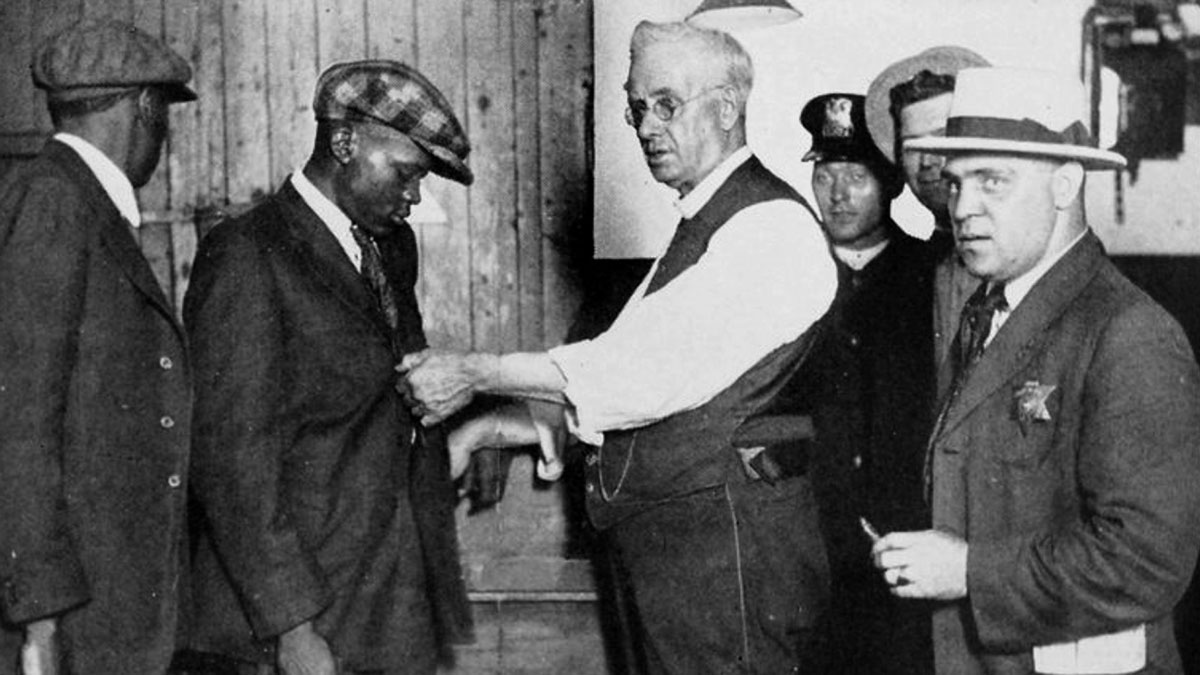
Mike Pence pretends to pump gas in strange new campaign video

Mike Pence released a new campaign video this week in which the presidential hopeful outlines his new energy expansion plan, but the takeaway is likely not what was intended. In the clip, he pretends to pump gas into a bright red pickup truck for a full minute, leaving viewers puzzled in a “has he done this before?” sort of way.

“Hey, everybody, Mike Pence here,” he says at the beginning, commencing his fuel-pump routine. “Remember $2-a-gallon gas? I do. And then Joe Biden became president of the United States and launched his war on energy.” On Pence’s website, which details his energy initiative in full, it’s stated that his goal is to overtake China as the world’s number one energy producer so that “by 2040, the United States can meet the energy demands of our own country while becoming the world’s top supplier of energy.” Using Biden as an example of how to do things the wrong way, the site furthers that “energy is vital to our national security. As the war in Ukraine and energy crisis in Europe have demonstrated, energy is a geopolitical weapon. While President Biden is unilaterally dismantling American energy production, countries around the world are looking for American energy leadership. Under Biden, China is gaining a critical energy foothold around the world while America recoils from the stage. We must produce and export every type of energy to maintain our influence around the world.” Watch Pence’s new video below:

Jack Smith requests trial date for Trump’s 2020 election interference case

In a motion filed to Judge Tanya S. Chutkan on Thursday, Special Counsel Jack Smith laid out a plan for Trump’s 2020 election interference case, requesting Dec 11, 2023 for jury selection and Jan 2, 2024 for trial. According to The New York Times, “the rapid pace they suggested was needed given the gravity and historic nature of the charges.” From here, Trump’s legal team will get to suggest their own timetable for the case next week, which the outlet predicts they will surely have a difference of opinion on.

“It is difficult to imagine a public interest stronger than the one in this case, in which the defendant — the former president of the United States — is charged with three criminal conspiracies intended to undermine the federal government, obstruct the certification of the 2020 presidential election and disenfranchise voters,” Molly Gaston, one of the prosecutors, wrote in a statement obtained from NYT. “Trial in this case is clearly a matter of public importance, which merits in favor of a prompt resolution.”

Trump faces indictment in a fourth case in Fulton County, Georgia next week, also pertaining to his efforts to tamper with election results. 


Legal scholars reject Trump complaints: Prosecutors treating him “a lot better” than most defendants

Former President Donald Trump often complains that he is being treated unfairly by the prosecutors charging him with crimes.

Trump is now the subject of three federal and state criminal cases – and it is true that he is being treated unlike other criminal defendants.

The prosecutors are treating Trump a lot better than the average criminal defendant.

We are law scholars who have defended clients in criminal and civil cases, and we wish that our clients received the advantages that prosecutors are giving Trump.

Donald Trump is seen pumping his fist in the air, benefath a Trump Tower sign in gold, and standing among other men in suits,

Former President Donald Trump leaves Trump Tower ahead of his arraignment in New York in April 2023. Scott Olson/Getty Images

Early warnings

Trump’s unique treatment began before he was even charged with any crime. First, he had ample warning of the investigations because he got letters from the Justice Department saying he was a target of each investigation. These letters were sent to Trump a few weeks before his two federal indictments in June and July 2023.

Especially in white-collar cases, criminal defendants sometimes receive target letters that warn them of an impending indictment and sometimes give them the chance to testify.

But target letters generally lack detail and are far from the norm across all criminal cases. Target letters are not legally required. The Justice Department spells out various reasons why its prosecutors do not need to send them, including risks of a defendant destroying evidence or endangering witnesses.

The difference freedom makes

After Trump was charged with crimes in each of his three pending cases, his lawyers negotiated dates when he could submit to authorities for processing.

And after Trump’s brief arraignments in court, judges found he was not a flight risk and released him.

Most criminal defendants are just arrested and taken to jail, where they may sit for months or even years while they await trial, unless they plead guilty. Three-quarters of federal criminal defendants are locked up to await trial.

It is hard for detained defendants to recover lost wages and from the humiliation they experience while in jail, even if they defy the odds and later win their case.

Pretrial detention has also been shown to result in a higher chance of being convicted and receiving longer sentences.

Indeed, defendants in courts across the country plead guilty to crimes even if they are innocent, in part because pleading guilty gets them home sooner. For some defendants, the pretrial detention is longer than their actual punishment will be, so pleading guilty resolves the case with credit for time served. But the stain of a conviction stays on their record forever.

Benefits of time and freedom

Because Trump is not sitting in jail, he is well positioned to ask that his trials be postponed far longer than would an ordinary criminal case. Federal law generally requires “speedy” trials, which are considered a right to protect defendants.

Trump got a lengthy delay, though it’s not as long as his legal team requested. Trump asked that his classified documents trial be held after the November 2024 election, but his trial is scheduled to begin in May 2024. Federal prosecutors pushed for a December 2023 start date. These kinds of compromise decisions are common in legal decisions like deciding court dates.

This timing gives Trump’s lawyers nearly a year to prepare arguments in his favor. They can easily meet with their client to do so, something that would be difficult if Trump were incarcerated.

Most criminal defendants face a very different experience.

For example, after federal prosecutors charged Air Force reservist Jack Teixeira in June 2023 for revealing classified information, he asked for provisions similar to those that judges made for Trump.

He argued that he, too, should be released to await trial. Teixeira did not have Trump’s wealth and easy ability to flee.

Nonetheless, the court determined that Teixeira poses a national security threat and must remain in jail. The case is still pending.

Other criminal defendants spend years in jail before pleading guilty or perhaps going to trial.

A treasure-trove of information

The differences do not stop there.

Prosecutors in all three of Trump’s cases have explained, in great detail, the allegations against him.

The classified documents indictment recounted several text message conversations between Trump aides and transcribed a conversation in which Trump disclosed the contents of classified documents and acknowledged their classified status.

The indictment regarding Trump’s alleged plot to overturn the 2020 election results was 45 pages long and included a play-by-play description of his plan.

Early in the documents case, federal prosecutors publicly disclosed key information about their investigation that could have helped Trump’s legal defense.

In contrast, criminal defendants typically do not know the precise allegations facing them this early in a case.

Prosecutors often withhold documents until the eve of trial or wait until after key witnesses have testified, all of which is legal. In some cases, they fail to disclose the information.

The other side of the coin

Prosecutors’ decision to treat Trump differently from other criminal defendants could serve a few purposes.

The Justice Department is prosecuting a former president. That puts the department in a delicate, high-profile position, where it has the “Herculean task of putting an ethical rope through a needle,” as one former federal prosecutor has said.

So, prosecutors’ detailed indictments help inform the public about the breadth and depth of the allegations made against Trump.

Their approach could add legitimacy to the prosecution’s and the Justice Department’s goal of maintaining accountability and independence while countering Trump’s perception that the cases are “a witch hunt” and rooted only in politics.

People wear neon green signs and hold up large letters spelling out the word 'justice' on a city street, in front of a building that looks similar to the U.S. Capitol.

Demonstrators hold a sign outside of the federal courthouse in Washington, D.C., where former President Donald Trump was arraigned in August 2023. Probal Rashid/LightRocket via Getty Images

What would fairness look like?

Those looking for fairness in the criminal justice system may wish to see Trump treated like an ordinary criminal defendant. But instead, what if everyone else accused of a crime were treated more like Trump?

In that world, perhaps most importantly, pretrial detention would be used quite sparingly and would not provide leverage to coerce guilty pleas. People who are charged with a crime have not been proven guilty, and pretrial detention inflicts serious harm on defendants, their cases and their loved ones.

Prosecutors would tell defendants from the earliest stage of the case the detailed allegations against them so that defendants can prepare a meaningful defense.

The U.S. legal system aims at the truth, and robust procedures serve that goal.

In our view, the more thorough the judicial process is, the more confident people can be that it reaches the right outcome – whether the case regards Trump or not. Looking at Trump’s special treatment offers a good place to start in thinking about how the criminal legal system should treat all people accused of a crime.


Christopher Robertson, Professor of Law, Boston University and Russell M. Gold, Associate Professor of Law, University of Alabama

This article is republished from The Conversation under a Creative Commons license. Read the original article.

Summer grocery costs continue to spike while restaurant prices are finally cooling down

Grocery prices went up 0.3% in July, after remaining relatively steady in the month of June. The rising prices are largely driven by the high cost of beef. From June to July, the price of uncooked beef roasts increased 6.5%, according to data released by the Bureau of Labor Statistics Thursday. The price of uncooked beef steaks rose 2.3% while the price of uncooked ground beef rose 1.5%. Altogether, beef and veal got 2.4% more expensive last month. 

Major meat processing companies explained that the rising beef prices are due to a contraction in beef supplies as a result of extreme drought conditions in recent years. More expensive feed costs also made it near impossible to maintain cattle herds, CNN reported.

On the flip side, menu prices increased only 0.2% this month. Last month, menu prices rose 0.4% and in May, prices spiked up 0.5%. Menu prices went up 7.1% over the course of the year, per CNN. Dine-in restaurants raised prices about 5.8% for the year, while fast food and fast casual chains hiked up menu prices 7.1%.