Spring Sale: Get 1 Year, Save 58%

This is the scientific research Ted Cruz calls “woke”

A few months ago, Sen. Ted Cruz announced that he had uncovered $2 billion of science grants funded by former President Joe Biden’s administration that prioritized “radical political perspectives” or “neo-Marxist theories.’’ His aides on a congressional committee assembled the list by searching the project descriptions for 699 key terms like “women,” “diversify,” “segregation” and “Hispanic culture.”

When Cruz released the database of this allegedly “woke” research earlier this month, we decided to run our own experiment. We asked one of the models powering ChatGPT, which can sift through large amounts of data, to evaluate all 3,500 grant descriptions in the database as if it were an investigative journalist looking for Marxist propaganda, “woke ideology,” or diversity, equity and inclusion. The model tried to give us descriptions of how each project might fit those themes. We were particularly interested in the grants where it came up blank. We then read through the researchers’ full summaries of those and many other grants, including each one described in this story, looking for references to some of the keywords on the list.

We found that Cruz’s dragnet had swept up numerous examples of scientific projects funded by the National Science Foundation that simply acknowledged social inequalities or were completely unrelated to the social or economic themes cited by his committee.

Among them, for example, was a $470,000 grant to study the evolution of mint plants and how they spread across continents. As best we can tell, the project ran into trouble with Republicans on the Senate Committee on Commerce, Science and Transportation because of two specific words used in its application to the NSF: “diversify,” referring to the biodiversity of plants, and “female,” where the application noted how the project would support a young female scientist on the research team.

Other projects our AI assistant led us to included:

  • Developing a device that could treat severe bleeding. It seems to have caught the committee’s attention for using the words “victims” — as in gunshot victims — and “trauma.”
  • Creating biosensors to detect infectious diseases. The grant appears to have been tagged for the repeated use of “POC,” an acronym often used for “people of color” but in this context meaning “point of care” — that is, the place where people receive medical treatment — and “barrier,” referring to a part of the biosensor itself.
  • Designing eye-tracking technology for diagnosing and treating concussions. It appears to have gotten flagged for referencing “traumatic” brain injuries and the “status,” meaning the condition, of patients.

It’s “very frightening,” said Charlotte Lindqvist, a biology professor at the University at Buffalo who is conducting the research on mint plants.

Lindqvist spends hours a day grinding up plant samples and analyzing their DNA to identify genetic differences between species. Studying plant diversity, she said, could help secure more resilient food systems. “We are really trying very, very hard … to move our world forward, understanding it better through our sort of foundational, sometimes groundbreaking research,” she said, “and then you get flagged and blacklisted because there is a word like ‘female’ in your project.”

Staff for the Republicans on the Senate committee assembled their report by examining all NSF grants awarded to projects that began between January 2021 and April 2024. Using their list of keywords, they flagged those earmarked for research that they said was “often based on neo-Marxist theories that identified merit by physical or ethnic attributes, not one’s talent, work ethic, or intellectual curiosity.”

Evaluating the merits of these awards would require a deep understanding of dozens of scientific fields, from gravitational waves to DNA methylation. But the report describes a crude approach; while staffers did attempt to account for the different ways their keywords can be used, they did not manually review all grants. The report also failed to acknowledge that the NSF has a legal mandate to make science more inclusive of women, racial minorities and disabled people.

The lack of precision in the committee’s methodology is “obviously laughable.”

Cruz released the full database just as the Trump administration’s NSF said it was examining research grants to make sure they complied with the president’s executive orders terminating diversity, equity and inclusion initiatives. Cruz said he requested “significant scrutiny” of the grants in his database. At the time, the NSF was using a similar list of keywords for its review.

Neither Cruz’s office nor a spokesperson for Republicans on the committee responded to requests for comment.

It’s not clear if approved projects that are still waiting for payments will get their money. A federal judge ruled last Friday that the administration can’t cancel or freeze grants for supporting diversity, equity and inclusion programs. When asked how it would respond to the judge’s preliminary injunction, an NSF spokesperson directed ProPublica to an agency webpage, which had not been updated with information about the court ruling at the time of publication.

“NSF is working expeditiously to conduct a comprehensive review of our projects, programs and activities to be compliant with the existing executive orders,” a spokesperson told ProPublica in response to questions about its review process.

The Senate committee’s list includes words like “diversify” and “biases,” which have technical meanings unrelated to social issues. Although the report’s authors worked to remove grants flagged for those reasons, some, like Lindqvist’s, slipped through.

The lack of precision in the committee’s methodology is “obviously laughable,” said Kim Lane Scheppele, a professor of international affairs at Princeton University who studies the rise and fall of constitutional governments. But she also worries about what might happen if lawmakers take a more serious approach, such as trying to ban research on racial inequality, similar to how Congress severely limited studies on gun violence.

The NSF evaluates grant proposals based on two factors. The first is intellectual merit. Every application is reviewed by a panel of experts — often other academics — who specialize in the same topic. They pore over detailed applications that include data, references and researchers’ qualifications, far more information than the brief summaries evaluated by the Senate committee.

The other factor is “broader impacts,” which could include how the research might benefit societal well-being or make science more inclusive.

Currently, federal laws require the NSF to support research at historically Black colleges and universities and other institutions that serve groups who are underrepresented in science. Congress also ordered the NSF to fund efforts “designed to increase the recruitment, retention, and advancement” of members of these groups in scientific careers.

“All of that is hard-wired into federal funding,” Scheppele said. “If anyone was ‘woke,’ it was Congress.”

Laws passed by Congress have more legal weight than executive orders, so the NSF shouldn’t prioritize Trump’s order over its mandate to support underrepresented people in science, Scheppele said. The White House, she said in an email, is “literally asking the NSF to violate the law!”

The committee report singled out some projects for simply acknowledging that people from certain demographics face unique challenges. That includes a University of Houston study of maternal mortality that examines why Black, Indigenous and other people of color in the U.S. are nearly three times as likely as white women to die during pregnancy or within the first year after childbirth. Another project, which involved using drones to deliver defibrillators to people suffering cardiac arrest, appeared to be flagged because it noted that emergency response times are slower in low-income and minority neighborhoods.

In other cases, the keywords that caught the committee’s attention may have come from outreach efforts meant to broaden the impact of the research. A $6 million nuclear astrophysics project to study the origins of the universe includes a reference to attracting a “diverse group” of students interested in the subject and a summer school program for increasing interest in nuclear-science careers, “especially among women and minorities.”

That’s in line with a 1998 law that ordered the NSF to develop “intellectual capital, both people and ideas, with particular emphasis on groups and regions that traditionally have not participated fully in science, mathematics, and engineering.”

Congress recognized “you’re going to get better science” that way, said Melissa Finucane, vice president of science and innovation at the Union of Concerned Scientists. When you get different perspectives interacting and thinking about complex problems, she said, you’ll get different and new ways of solving a problem.

The report’s “sledgehammer” methodology ignores the substantial scientific merit of these projects, many of which address “critical national needs in areas such as aerospace, agriculture, and computing infrastructure — as well as the need to broaden the talent pool,” a spokesperson for Democrats on the Senate committee said in an email. The email said that ranking Democrat Sen. Maria Cantwell of Washington “understands that there is no way the United States can compete” with the rest of the world on innovation “without ensuring that NSF funding emphasizes the participation of women and minorities in STEM,” a reference to science, technology, engineering and mathematics.

Rice University professor Vicky Yao has seen firsthand how efforts to broaden participation can increase excitement and interest in science.

When Yao applied for a research grant in 2022, she included outreach to community college students, many of whom are from underrepresented populations and don’t have access to research opportunities.

When ProPublica informed Yao her $610,000 project was on the Senate committee’s list, she found it bizarre that such technical work on DNA methylation — a process that can affect cancer and neurological diseases — could be labeled as “woke.”

The committee’s choice of keywords is so sweeping that shutting down the research that uses those terms would end not just diversity programs but also vast fields of research on social science (“Black communities,” “racial inequality,” “LGBT”), climate change (“net zero,” “climate research,” “clean energy”) and medicine (“white women,” “victims,” “trauma”).

If any research related to women or minority populations is under fire, then “we’re talking about maybe 65% of the American population. So at that point, what’s left?” said Dominic Boyer, an anthropology professor at Rice University whose project on reducing flood risk was flagged by the committee. “Under what authority, or according to what philosophy, can a government invalidate or discredit research that’s focusing on two-thirds of the population?”

Boyer received an award of $750,000 to use nature-based solutions like rain gardens to reduce flooding in Houston, where Hurricane Harvey displaced tens of thousands of people in 2017. His team has begun collaborating closely with residents from three neighborhoods: two lower-income communities where the residents are mostly Hispanic, Black or Asian, and a middle-income neighborhood with mostly Hispanic and white residents.

He initially assumed that’s why his research was flagged. But it turned out that the triggering keywords may have come from boilerplate language that describes the specific NSF program that funded Boyer’s work: Strengthening American Infrastructure. The portions of the grant’s program description containing those keywords were written by the NSF during Trump’s first term. It used the words “socioeconomic” and “equal opportunity” to explain why infrastructure is important to society. The same description is found in more than two dozen other grants on the committee’s list.

Boyer said it speaks to a kind of “Orwellian absurdity” that “these words can only have one meaning, and it’s the meaning that they would like to politicize.”

Sharon Lerner contributed reporting and Brandon Roberts contributed data reporting.

ProPublica is a Pulitzer Prize-winning investigative newsroom. Sign up for The Big Story newsletter to receive stories like this one in your inbox.

Study uncovers source of Mars’ redness — a key indicator the planet (maybe) once had life

The first thing most people think of when they consider Mars is its deep red color. The Romans associated the planet with their god of war because it reminded them of blood while ​​the Egyptians called it "Her Desher," meaning "the red one." The planet didn’t get such a distinctive, rosy color by accident of course — but for the first time researchers have identified a single mineral they believe is responsible for Martian redness — and that mineral’s presence also indicates the potential presence of life.

A new study in the journal Nature Communications reveals that Mars is red for very much the same reason it may have once been home to life — namely, that it was a wet planet. This is in line with research from last year that detailed how Mars was covered in bodies of water in its distant past.

“Mars once had liquid water on its surface in rivers, lakes and possibly oceans,” Dr. Michael Manga, the chair of the University of California — Berkeley’s Department of Earth and Planetary Science, told Salon at the time. “We knew that the liquid water being buried deep in the subsurface was one possible solution to the question of where Mars' ancient liquid surface water went.”

"The presence of ferrihydrite tells us something specific about Mars' past environment."

Mars lost most of that liquid water, which is considered an essential ingredient for life anywhere in the universe. But importantly, this study notes that Mars' redness happened before the water left. So how did a wet planet become so red? 

It all comes down to ferrihydrite, a poorly crystalline mineral, or a substance where the atoms or molecules are not arranged in well-defined and repeating patterns. It contains iron oxide, a chemical compound humans traditionally associate with a different reddish-orange substance: rust. Indeed, this mineral exists on our planet, often in volcanic settings such as lava caves. Using state-of-the-art equipment, as well as firsthand analyses of Martian dust from the red planet’s surface, the researchers found that “ferrihydrite remains stable under present-day Martian conditions, preserving its poorly crystalline structure.”

This in turn suggests that the ferrihydrite “formed during a cold, wet period on early Mars under oxidative conditions, followed by a transition to the current hyper-arid environment.” In contrast to the conventional wisdom that Mars was continuously dry while its surface oxidized (or was exposed to oxygen), the new study suggests “ancient Mars experienced aqueous alteration before transitioning to its current desert state.”


Want more health and science stories in your inbox? Subscribe to Salon's weekly newsletter Lab Notes.


Dr. Adomas Valantinas, the paper’s lead author and a postdoctoral fellow at Brown University's Department of Earth, Environmental and Planetary Sciences, explained to Salon that the research team performed extensive spectral analyses on both orbital and rover data in their laboratory.

“We can now be quite confident that ferrihydrite is the dominant iron-bearing mineral causing Mars' distinctive ochre color,” Valantinas said. “Our research demonstrated that ferrihydrite provides significantly better fits than other iron oxides like hematite, goethite or akaganeite. We also employed Mars simulation experiments and theoretical calculations to show that ferrihydrite is thermodynamically stable on the Martian surface.”

Mars Dust StormMars Dust Storm (Getty Images/MARK GARLICK/SCIENCE PHOTO LIBRARY)Similarly, Valantinas explained that the prevalence of this ferrihydrite proves that Mars was once covered in enough water that it was quite wet. That strengthens arguments suggesting Mars was once home to life.

“The finding is relevant to inferring the conditions of early Mars as the composition of minerals on the Mars surface tell us about the past climate,” Dr. Geronimo Villanueva, the associate director for Strategic Science of the Solar System Exploration Division at NASA’s Goddard Space Flight Center, and co-author of this study, told Salon. “Importantly, the new findings suggest a wetter and potentially more habitable past for Mars because ferrihydrite forms in the presence of cool water, and at lower temperatures than other previously considered minerals, like hematite.” 

Villanueva added that scientists already knew Martian dust contains a number of minerals, including iron oxides; this study narrows down the number of potential iron oxides that could cause the distinctive red color to just one, ferrihydrite.

“The presence of ferrihydrite tells us something specific about Mars' past environment,” Valantinas said, describing the cold and pH neutral waters that must have existed to oxidize the soil. “This suggests that rather than warm conditions, early Mars experienced a cold and wet environment.”  

To learn this, scientists at the University of Arkansas recreated the arid conditions which exist on Mars, in particular the average temperature of −70 °C and very low water vapor content. Over the course of 40-day laboratory experiments involving dehydration, the scientists learned that ferrihydrite loses some absorbed H2O while maintaining its poorly-crystalline structure. In addition to ferrihydrite the researchers used various quantities of iron oxide phases like magnetite, hematite, feroxyhyte and schwertmannite.

Dr. Avi Loeb, a Harvard University astronomer not associated with the study, emphasized the significance of discovering ferrihydrite.

“This material likely formed during water activity on early Mars,” Loeb said. “Subsequently, Mars became as dry as we see it today, preserving this mineral phase over its surface. The widespread presence of ferrihydrite in the Martian surface materials was not interpreted this way before, and was thought to be the result of dry oxidation late in Mars history.”

Loeb, who has long advocated that scientists seriously explore the possible existence of extraterrestrial life, added that he is impressed with the study’s potential implications on that question.

“On Earth, the majority of atmospheric oxygen is derived from biological activity, making the nature of surface oxidation important for understanding the potential for past life on Mars,” Loeb said.

Despite these impressive findings, Valantinas emphasized that more research needs to be done on this subject.

We need your help to stay independent

“Science always leaves room for testing and refinement, so we'll be able to test this hypothesis when the NASA-ESA Mars Sample Return mission brings actual dust samples back to Earth in the 2030s,” Valantinas said.

He added that scientists “still don't know the original source location of the ferrihydrite before it was distributed globally through dust storms, the exact chemical composition of Mars' atmosphere when the ferrihydrite formed, or the precise timing of Mars' oxidation.”

In addition to encouraging professional scholars to do research, Valantinas urged ordinary citizens to take a crack at looking at the Martian surface.

“The Mars rover and orbiter data is fully available to the public,” Valantinas said. “Anyone with access to the internet can download and view the images for themselves under NASA's Planetary Data System.”

Filing your taxes with a big-box chain has benefits, risks

They say that only two things in life are certain: death and taxes. And those are also two of the things that people are scared of the most.

If the idea of filing your taxes fills you with as much dread as contemplating your own mortality, then you may consider outsourcing that work. 

But before you step into a brightly-lit tax corporation, you should understand what you’re getting in return. Here’s what you should know before hiring one of the big places to handle your taxes.

What are big-box tax prep companies?

Companies like H&R Block, Jackson Hewitt and Liberty Tax are as ubiquitous as McDonald’s or Burger King. 

And, like those popular fast food chains, many of them are franchises, meaning they’re individually run and managed. This also means that your experience at one chain might be dramatically different than your experience at another.

And like the cheeseburger you might order, the quality can differ greatly. There can be excellent tax preparers at one branch and inexperienced ones at another.

We need your help to stay independent

“Chains tend to use general approaches to tax filing, which means they can overlook strategies tailored to your specific situation,” said Arron Bennett, chief financial officer and founder at Bennett Financials.

Should you use a big-box chain?

When you’re deciding where to go to file your taxes, some people like the idea of visiting a place in person, handing over all their documents and then walking out with a completed return. Plus, many of these companies have dozens of chains, making it easy to find a location near you. Jackson Hewitt even offers tax filing services at 5,200 local Walmart stores.

“If you have a very simple tax return, a big box chain might work,” Bennett said.

Simple tax returns include those that only have one W-2, mortgage interest, daycare expenses and student loan interest. 

“However, if you're self-employed, own a business, or have more complex finances, these chains often miss opportunities,” Bennett said. “They’re focused on volume, not maximizing your tax savings.” 

Filing your taxes through one of the main chains can cost less than $100 for just a federal return. And some even have a guarantee to get you the biggest refund — or your money back.

Could using a big chain cost you money?

When you’re filing taxes, there are two numbers you should care about: how much you’re paying the preparer and the total tax due. 

Often, the big chains might have lower tax prep fees than individual preparers. Also, they may be willing to deduct their fee from your refund. 

"The extra money spent on a professional accountant often results in bigger tax savings"

Let's say an individual accountant charges you $500 to file your taxes, but finds you an extra $1,000 in tax refunds. In this case, it would be worthwhile to hire the individual, even if it feels more expensive in the short term. 

“Those savings can disappear quickly if you’re missing out on deductions or credits that a specialized accountant would catch,” Bennett said. “The extra money spent on a professional accountant often results in bigger tax savings.”

Another issue with big chain accounting firms is that it’s tricky to find the right preparer for your situation. You will likely have to use the person who is available when you walk into the store. And there’s no guarantee of their skills.  

What an individual accountant can do for you 

A qualified accountant can also help you in other areas, like financial planning. For example, if you have kids, an accountant can suggest other ways to minimize your taxes, like saving in a Dependent Care FSA. You may not receive that level of proactive thinking with a large chain.

If you’re self-employed, hiring an individual accountant can be worth it for other reasons. They may be able to assist you in determining the appropriate business structure (S corp, LLC, etc.) and can even assist in filing paperwork.

“For anyone who owns a business or has more complicated investments, or any international income, then you definitely want an individual tax preparer who is an expert in that type of tax return as there are many nuances and best practices that just aren't discussed or known to generalist preparers,” said Crystal Stranger, enrolled agent and CEO at Optic Tax Inc.

Can’t I file my taxes by myself?

If your tax documents only include a W-2, mortgage interest and student loan interest, then you may be able to file your taxes yourself without any hiccups. 

If your tax documents only include a W-2, mortgage interest and student loan interest, then you may be able to file your taxes yourself without any hiccups

The IRS has free tax software for those whose Adjusted Gross Income is below $84,000 annually. However, you can file your taxes for free with the IRS at any income limit — you just won’t have access to the free guided software.

Also, your local library may be part of the Volunteer Income Tax Assistance tax program. This program has qualified volunteers to help those who make $67,000 or less, have disabilities or speak limited English.

Some United Way centers may also provide tax return assistance for those who earn below $60,000 a year.

Hackman’s pacemaker reveals actor may have died over a week before he was discovered

Actor Gene Hackman and his wife, Betsy Arakawa, may have been dead for more than a week before their bodies were discovered in their Santa Fe home. 

That news comes via Santa Fe County Sheriff Adan Mendoza, who revealed in a Friday press conference that the legendary actor's pacemaker last recorded an "event" on Feb. 17. Hackman and Arakawa were found in their residence on Wednesday. 

"Both individuals tested negative for carbon monoxide. An initial interrogation was conducted of Mr. Hackman’s pacemaker. This revealed that his last event was recorded on Feb. 17, 2025,” Mendoza said, per The Wrap. "According to the pathologist, I think that is a very good assumption, that that was his last day of life."

Authorities have not determined whether Arakawa and Hackman died at the same time. Foul play is still not suspected in the couple's deaths.

At the Friday press conference, Mendoza noted the difficulty of stitching together two timelines: the one leading up to their deaths and the one between their deaths and their discovery.

“In an investigation, we try to piece a timeline together, usually [from] before the event happens, and that gives us a lot of information. But in this case, it seems like we’re doing a reverse timeline. We’re doing the timeline from the time of death and the autopsy and the results, and we’re going to start working our way backwards,” Mendoza said. “We’re going to do both."

Due to the state of Hackman and Arakawa's bodies, Mendoza said the couple may have been dead for "several days, possibly even up to a couple weeks” by the time they were found.

“His people are dying”: Trump asks Zelenskyy to be less “negative” about Putin

President Donald Trump is ready to end the war in Ukraine, but not until Ukrainian leader Volodymyr Zelenskyy plays nice with the country that invaded.

Following a disastrous summit between Trump and Zelenskyy in the Oval Office on Friday, Trump told reporters that the Ukrainian president is simply too "negative" about Russian President Vladimir Putin

"He's gotta say, 'I want to make peace.' He doesn't have to stand there and say 'Putin this, Putin that.' All negative things," Trump said. "His people are dying."

The statement from Trump was merely the latest attempt to ice Ukraine out of the peacemaking process. The Trump administration has been engaged in peace talks in Saudi Arabia that notably don't feature any representatives of Ukraine. Zelenskyy has promised to reject any deal that comes out of those talks. 

After Friday's meeting, in which Vice President JD Vance accused Zelenskyy of disrespecting Trump and the United States, Trump said that American aid is keeping Ukraine away from the negotiating table.

"It’s amazing what comes out through emotion, and I have determined that President Zelenskyy is not ready for Peace if America is involved because he feels our involvement gives him a big advantage in negotiations," Trump wrote on Truth Social. "I don’t want advantage, I want PEACE. He disrespected the United States of America in its cherished Oval Office. He can come back when he is ready for Peace."

Speaking to reporters, Trump continued to stress that Zelenskyy did not have the advantage in negotiations.

"You can't embolden somebody that doesn't have the cards," he said.

In an interview with Fox News's Bret Baier, Zelenskyy admitted it would be "difficult" to fight Russia without U.S. support. However, he said he's not willing to say "Putin is a great guy" after years of war.

"We can't lose our people. We can't lose our freedom," he said. "Russia came to our territory. Russia came to our houses…They killed so many people. [You expect us] just to forget?"


“Complete, utter disaster”: Graham “devastated” by result of meeting between Trump, Zelenskyy

Sen. Lindsey Graham didn't mince words about the heated Oval Office meeting between President Donald Trump and Ukrainian leader Volodymyr Zelenskyy.

The Republican from South Carolina told reporters that the torched minerals deal between the United States and Ukraine was a "complete, utter disaster" and called for Zelenskyy to resign based on his conduct during the meeting. 

That meeting, which has been described as an "ambush" and a "bad day" by politicians and commentators, went south after Vice President JD Vance accused Zelenskyy of being both "disrespectful" of the president and ungrateful for U.S. support.

“Do you think that it's respectful to come to the Oval Office of the United States of America and attack the administration that is trying to prevent the destruction of your country?” Vance said, shortly before the meeting's abrupt end. “Have you said ‘thank you’ once?”

After the leaders had left, Graham told reporters that he warned Zelenskyy not to get his dander up while talking to Trump.

"I talked to Zelenskyy this morning. [I said,] 'Don't take the bait,'" he shared. "At the end of the day, I was hoping that this minerals deal, which would be transformative in the relationship, would go over well."

Graham, who has split from Trump in some of his early policy decisions, was in the president's corner on Friday.

"I have never been more proud of the president. I was very proud of JD Vance standing up for our country," he shared. "We want to be helpful. What I saw in the Oval Office was disrespectful and I don't know if we can ever do business with Zelenskyy again."

Graham went on to say that Zelenskyy was "a guy that [most Americans] would not want to go in business with." 

"Zelenskyy either needs to resign and send someone over that we can do business with or he needs to change," Graham said.

Several Republican lawmakers backed Trump and Vance's actions on Friday. Sen. Bill Haggerty, R-Tenn., thanked the president on X.

"The United States of America will no longer be taken for granted," he wrote. "The contrast between the last four years and now could not be more clear." 

Rep. Ralph Norman, R-S.C., praised Trump's "strong leadership" and thanked the administration for "standing up for our nation."

“Time for Europe to step up”: Contentious Trump-Zelenskyy meeting stuns politicians, world leaders

The White House meetup between nominal allies President Donald Trump and Ukrainian President Volodymyr Zelenskyy on Friday was an unmitigated disaster, and its abrupt and shocking end sent shockwaves across the world. 

The planned joint press conference was meant to end in a mineral rights deal between the United States and Ukraine. It was quickly called off after Trump accused the Ukrainian leader of escalating the war with Russia and Vice President JD Vance attacked Zelenskyy for being "disrespectful." 

“Do you think that it's respectful to come to the Oval Office of the United States of America and attack the administration that is trying to prevent the destruction of your country?” Vance said. “Have you said ‘thank you’ once?”

The breach in decorum, against the backdrop of ongoing war in Europe, shocked American politicians, commentators and world leaders alike.

Rep. Don Bacon, R-Neb., called the meeting "a bad day for America's foreign policy."

"Ukraine wants independence, free markets and rule of law. It wants to be part of the West," he shared in a statement. "Russia hates us and our Western values. We should be clear that we stand for freedom."

Rep. Eric Swalwell, D-Calif., said he had "absolute admiration for President Zelenskyy" after the meeting.

"He went into the Oval Office and stood up to Russia’s best negotiators," Swalwell shared on X.

Former Republican Ohio Gov. John Kasich called the meeting "shameful."

"President Zelenskyy represents a nation whose citizens have sacrificed their lives and shed blood for the freedoms they cherish," he wrote on social media. "He deserves respect, not humiliation."

CNN's Kaitlan Collins said the scene inside the White House was like nothing she had "ever witnessed in my eight years covering the White House." While former RNC head and current MSNBC host Michael Steele called the meeting an "ambush" and "one of the most embarrassing Oval Office meetings with a head of state ever" on X.

After the meeting, European leaders quickly shared their support for Zelenskyy. Spanish Prime Minister Pedro Sánchez and Polish Prime Minister Donald Tusk threw in behind Ukraine.

Estonian Foreign Minister Margus Tsahkna called their country's support for Ukraine "unwavering." 

"It is time for Europe to step up. We do not need to wait for something else to happen," Tsahkna shared. "Europe has enough resources, including Russia’s frozen assets, to enable Ukraine to continue fighting."

“Have you said ‘thank you’ once?”: Trump and Vance attack Zelenskyy at White House meeting

President Donald Trump and Ukrainian President Volodymyr Zelenskyy’s White House sit-down got off to a rocky start on Friday when the American leader blamed his counterpart for escalating the war in his country, prompting a testy back-and-forth and the cancellation of a joint press conference.

Vice President JD Vance joined the tense conversation to accuse the Ukrainian leader of being “disrespectful” ahead of a planned signing of a deal on Ukrainian mineral rights.

“Do you think that it's respectful to come to the Oval Office of the United States of America and attack the administration that is trying to prevent the destruction of your country?” Vance said. “Have you said ‘thank you’ once?”

Zelenskyy, who has repeatedly thanked Americans for supporting his country, tried to sound the alarm on Russia's aggression, days after the president suggested that Ukraine, rather than Russia, was to blame for its invasion.

“During the war, everyone has problems. Even you, but you have a nice ocean, don’t feel [them] now,” Zelenskyy said.

“Don’t tell us what we’re gonna feel. Because you’re in no position to dictate that,” Trump said. “You’re not in a good position. You don't have the cards right now. With us, you start having cards… You're gambling with the lives of millions of people. You're gambling with World War III.”

“I’m not playing cards,” Zelenskyy responded.

The meeting came weeks after US-Russian talks on the war in Saudi Arabia which excluded Ukraine. Trump later called Zelenskyy a "dictator," which he later denied, and said he was left out of peace talks because he wasn’t important.

Trump defended his recent coziness with Russian President Vladimir Putin as an important step towards peace. This, after Zelenskyy urged Trump to make “no compromises” to Putin.

“If I didn’t align myself with both of them, you’d never have a deal,” Trump said. “You want me to say really terrible things about Putin and then say, ‘Hi Vladimir, how are we doing on a deal?’ That doesn’t work that way.” 

Trump went on to claim the “tremendous hatred” Zelenskyy had for Putin was “very tough.”

“You want me to be tough, I can be tougher than any human being you've ever seen,” Trump added. “But you're never going to get a deal that way.”

In a statement after the meeting, Trump claimed that Zelenskyy was not ready for peace.

“We had a very meaningful meeting in the White House today… It’s amazing what comes out through emotion, and I have determined that President Zelenskyy is not ready for Peace if America is involved,” Trump wrote. “He disrespected the United States of America in its cherished Oval Office. He can come back when he is ready for Peace.”

Watch the exchange here:

“At least nobody sued”: Bruce Vilanch on the hilarity and chaos of writing for the Academy Awards

During the last writers’ strike, a friend of mine posted a message on social media, or as it is known at my man cave, keyboard warfare, saying how it would be fine with him if all awards shows were done without writers, thus sparing us all the “witless banter and egregious propagandizing” that is “inevitably” a part of such proceedings. I immediately blocked him and his agent, who had undoubtedly pitched him to write on one of my awards shows.

I then realized that in some quarters, awards shows are considered the bad ideas of all time. It follows that the Academy Awards, the biggest of them, would therefore be the worst. It doesn’t really follow, but please play along.

The Oscars are the awards show that started it all. They’re creeping up on one hundred years of thanking the little people, and even in a world of diminished ratings, they still pull in more eyeballs than any of the others.

I have been officially credited on twenty-five of them and unofficially involved with a dozen more. Sometimes I was the head writer, sometimes I was on the team that wrote for the host, sometimes the team that wrote for everyone but the host, sometimes straddling the two teams like Yakima Canutt driving a runaway stagecoach. Also sometimes phoning it in as a favor to a friend who needed a rewrite.

Translation: uncredited.

I’ve won two Emmys for cowriting two of the Oscar shows hosted by Billy Crystal, was nominated for the Steve Martin–Alec Baldwin show, and probably should have been nominated for a few others, but the writers who nominate suffer from Oscar fatigue just like everybody else, and it’s difficult to compete with a popular comedian who’s written a terrific stand-up special. My mother got confused now and again on whether I won an Oscar for writing the Emmys or was it the other way around. You can’t win an Oscar for writing the Emmys, and you can’t win an Emmy for writing the Emmys, either, because even the Television Academy recognizes how infra dig and crazy meta that would be.

I’m back. Had to lie down after that paragraph.

You can’t win an Oscar for writing the Emmys, and you can’t win an Emmy for writing the Emmys, either, because even the Television Academy recognizes how infra dig and crazy meta that would be.

The first Oscar show I got to have my name on is the most infamous: the Snow White show, 1989. The same Allan Carr who fired me off the Village People picture came to me ten years later and asked me to write the Academy Awards, which he was entrusted to overhaul with his big-time showman ways. Allan could sell something like nobody else. He sold me on writing the show — previously written by several teams of writers — by myself. Never having done an awards show before, I had no idea what a foolhardy proposition that was. And I didn’t remain alone for long. We roped Hildy Parks, writer of many great Tony Awards shows, to partner with me.

Allan also sold the Academy on a few other things. He had them sit down with the L.A. municipal government and formulate a strategic traffic plan so that the parade of limos heading for the Shrine Auditorium could coexist with Los Angeles rush hour traffic. Allan loathed seeing a star in traffic-produced distress.

He engaged Fred Hayman, grand pooh-bah of Giorgio, the toniest dress shop in Beverly Hills, as “fashion consultant,” and organized a preshow fashion event to whet everyone’s appetite. The Oscars are as much about dresses as movies, why not admit that? He got some corporations to design and cater the greenroom backstage so overdressed divas could canoodle in comfort before their appearances onstage.


Want a daily wrap-up of all the news and commentary Salon has to offer? Subscribe to our morning newsletter, Crash Course.


Instead of a host, he came up with the creative theme of presenters who had a reason to be onstage together, either as real-life couples (Jeff Goldblum and Geena Davis, Melanie Griffith and Don Johnson), movie pairs (Kim Novak and James Stewart, Sammy Davis Jr. and Gregory Hines), or colleagues (two James Bonds, Sean Connery and Roger Moore, with Michael Caine, all three of whom would later be knighted, but not for this).

The Oscars are as much about dresses as movies, why not admit that?

To beef up the marquee, he added clips of the five nominated best pictures, each introduced by a movie star. At the suggestion of the new director, Jeff Margolis, he changed “The winner is . . .” to “And the Oscar goes to . . .”—a kinder, gentler way of covering the strained expressions of goodwill that form on the faces of the people who don’t win.

Allan knew he could sell better than anyone. Unfortunately, he also thought he could write better than anyone, direct better than anyone, edit better than anyone and design better than anyone. He believed that passing judgment on other people’s work was the same as creating that work. This was unfortunate, as it alienated other people, even his own management client, Marvin Hamlisch, who was the music director for the show and finally had to say to him, “Allan, I know what I’m doing.”

Bruce VilanchBruce Vilanch (Photo by Rick Stockwell)I had not reached that level with him, but he didn’t give me too much of a hard time, because he was so busy marketing the event. And that was something he could do better than anybody else. In his non-Oscar life, he drove around in a yellow Mercedes convertible that was a gift from Universal for showing them how to sell "The Deer Hunter" (1978), which they had more or less given up on as a lost downer. Allan saw a screening of it and was profoundly moved and laid out a marketing plan that worked beyond all of their dreams. In the smoke of what has been written about Allan, his real talents have become invisible.

Meanwhile, I was getting to write for giants I had worshipped: Jack Lemmon and Walter Matthau, Lucille Ball and Bob Hope. It was the last appearance Lucille made before her startling death a month later. She and Hope introduced a number that was so strange it made people almost forget their appearance a minute before.

It happened because, in Allan’s view, the entries that were eligible for the Best Original Song award were so uninteresting to him, and so unheard (not a good thing for a song), that he got the music branch to institute a minimum number of votes a song had to get in order to make the top five. Only three songs reached it, so only three were nominated. One by Phil Collins, one by Carly Simon, and one by Bob Telson. I know, I haven’t come across that last name lately, either, but it was the song from the West German dramedy "Bagdad Cafe," sung by Oleta Adams.

We need your help to stay independent

Phil Collins was, we heard, pissed at the Academy for not asking him to perform his nominated song in a previous year, turning it instead into an interpretive ballet for Ann Reinking. So Phil was out. Carly Simon was in a period of not performing live, so that was two strikes. Oleta Adams, who is a gorgeous vocalist, was not the draw Allan was looking for, and no one else was interested in performing either of the other songs, so the music branch allowed Allan to, for the one and only time, cut the original song performances altogether.

Instead, Allan had two unrelated musical numbers up his sleeve, one of which became the modern definition of infamy. It was the other one that Hope and Lucille introduced. These two famous movie partners and stratospheric television stars liked what I wrote for them, and I remember after they rehearsed it, Lucille said to me, “I like it and I’ll do it just like that, but he’ll do whatever he wants to do, you know that, don’t you?” Ultimately, it didn’t matter—the crowd ate them up. They feasted on the number that followed, but for all the wrong reasons.

Allan, starstruck to a fault, decided it would be great fun to do the ultimate nepo-baby production, and that term would not be invented for thirty more years. He made a list of all of the kids of all the famous Hollywood people he could think of and canvassed the bunch to see who could sing, who could dance, who could do neither but looked pretty. It was an eclectic group. Connie Stevens’ two daughters by Eddie Fisher — Joely Fisher and Tricia Leigh Fisher — came along, as did Tyrone Power Jr., Keith Coogan (grandson of Jackie), Carrie Hamilton (daughter of Carol Burnett), Tracy Nelson (daughter of Ricky and granddaughter of Ozzie and Harriet!), and Patrick O’Neal, son of Ryan but not an Oscar winner like his half-sister Tatum, who wisely passed. Less intuitively, participants also included Chad Lowe (brother of Rob more to come on him), Patrick Dempsey and Corey Parker (Patrick was married to Corey’s mother Rocky, his much older manager), Corey Feldman (an unrelated Corey), Ricki Lake and Savion Glover (I was never sure of their status in the theme of things), Christian Slater (mother was in casting), Holly Robinson (mother was a manager), and Matt Lattanzi (wife was Olivia Newton-John). Forgive me if I’ve left out any member of Young Hollywood. The number, written by John Kander and Fred Ebb (also not in the Broadway production of their New York, New York) and arranged and conducted by Marvin Hamlisch, was called “I Wanna Be an Oscar Winner,” and, to date, none of them has become one.

It was a very elaborate production on one of those enormous staircases you’ve seen in every old Hollywood musical ever, and solos flew by as you tried to identify who everybody was. The only spot I remember was Patrick Dempsey’s; he proved to be an adept Gene Kelly dancer, lithe and graceful and totally in control of his hat.

Many times, San Francisco show biz types have said to me, “In this town, if it ain’t flashin’, they don’t see it.”

The other number that Allan came up with was the one that has the distinction of being the Titanic of TV production numbers, the one that sank on its maiden voyage and remains a subject of passionate interest thirty-five years later. To date, nobody has made a movie about it, but streaming has a hearty appetite that must be appeased, and I wouldn’t rule it out.

It started, as the Village People movie started ten years earlier, with Allan seeing a performance. I wasn’t there for this one, but he called, abrim with enthusiasm, to tell me about it. It was in San Francisco, and it was called "Beach Blanket Babylon."

The "Beach Blanket" shows started in 1974, created by a dynamo named Steve Silver and maintained by his wife, later widow, Jo. Many times, San Francisco show biz types have said to me, “In this town, if it ain’t flashin’, they don’t see it.” The "Beach Blanket" shows flashed like the beacon on Telegraph Hill, beckoning all the ships at sea. Stuffed into the top floor of a union hall, or something like it, in North Beach, the haunt of beatnik poets and filmmakers, it told the story of Snow White’s trip around the world in eighty ways.

This mock Disney Candide-ette met every bizarre experience, including impersonations of famous people dead and alive, with wide-eyed innocence and lunatic happiness. Many of them featured mammoth headdresses they could just keep from plummeting into the ringside patrons. Snow wound up in San Francisco, of course, with a massive gondola on her head containing the entire city skyline, the Golden Gate Bridge, that beacon, everything but Kim Novak, Jeanette MacDonald and Carol Doda. It was quintessentially San Francisco, risqué but innocent, satirical but fun-loving, the message being Come here and be yourself, whatever you are. It was the kind of thing that local audiences embraced and tourists enjoyed for its uniqueness. It never really worked anywhere else. They tried it in London and Vegas. But it was a fish out of water wherever it went . . . as Allan Carr was about to demonstrate on global television. 

Allan’s bad idea was to take Snow White to Hollywood and the Oscars. This, of course, took her out of her context. What reason did Snow White have to return to Hollywood? Steve Silver had never considered featuring it in her world tour, maybe because he planted Hollywood characters in all the places she visited. Also, the show was San Francisco–centric. So to have Snow White come back to Hollywood would beg the question: Why? Having her dance down the aisle at the Shrine would be a real disruptor. Iceberg, dead ahead.

To add to the confusion, Snow would wind up at a reincarnation of L.A.’s Cocoanut Grove nightclub, and to further add to the incongruity, the room would be stacked with stars from Snow White’s own golden age. Allan made up a list of stars who would be seated there. What he failed or willfully refused to take into account was that his memory of the stars he loved as a teenager did not stack up with the condition they were in today, 1989. Lower all boats.

He plunged ahead with the number. As it was set at the Cocoanut Grove, Merv Griffin was enlisted to pretend he was the boy singer on the bandstand, as he once had been, singing “I’ve Got a Lovely Bunch of Coconuts,” which may have been the moment that caused one homophobic critic to write that the number simulated a gay nightclub. Maybe it was the other bits from "Babylon" that were peppered throughout the thing.

One wholly original piece never made it past dress rehearsal: an unlikely trio made up of Mayim Bialik and the Nicholas Brothers. Mayim at the time was a child actress with her "Big Bang Theory" and "Jeopardy!" days far ahead of her. At the moment, she was noted for playing Bette Midler as a little girl in "Beaches." Harold and Fayard Nicholas were a dance team noted for coming down a staircase by doing a split on each step and for flying across the stage in superhuman style. As old as they were—sixty-eight and seventy-four—they could still do it, and with relative ease. The routine that had been cooked up for them and young Mayim was a knockoff of the things little Shirley Temple did with Bill “Bojangles” Robinson in musicals of the ’30s, things that younger viewers only knew from Carol Burnett sketches. It was fun to watch these three carry on, but as the whole opening shebang was heading toward thirty minutes of airtime, something had to go, and the axe wound up falling on them. They got off the boat just in time.

The thing that stayed, and stayed, and stayed was not that trio but another trio, the trio that would not die . . . Snow White and Rob Lowe and “Proud Mary.” Rob has written and spoken and podcasted about this calamity, and Michael Schulman, in his excellent book "Oscar Wars," unearthed Eileen Bowman, the young performer who played Snow White and had quite a story to tell, but here’s what I know.

Some were pros and played along, some were too nervous, some couldn’t quite put together what was happening. None had been warned. Some faces reflected a common feeling: I am nominated for an Academy Award and I’m suddenly a day player in somebody else’s movie? The terror was only beginning.

First off, Hildy Parks and I had nothing to do with the number. It was crafted by Steve Silver and Allan Carr and all we could do was offer opinions that, if they didn’t concur with Allan’s, were dismissed after ten seconds like the pasties on Carol Doda.

As it finally turned out, the number began at the end of the red carpet arrivals, which had yet to blossom into the full-scale “What are you wearing?” fashion parade that now upstages the movies. As tradition dictated, Variety columnist Army Archerd conducted a series of mini interviews with legends and newcomers, the last one being something of both: Snow White, in the person of Miss Bowman, playing her as directed, just like she would be played in the "Beach Blanket" show. But she wasn’t there. She was at the Academy Awards and coming down the aisle seeing and talking to famous people who were not exactly ready to see and talk to her. Some were pros and played along, some were too nervous, some couldn’t quite put together what was happening. None had been warned. Some faces reflected a common feeling: I am nominated for an Academy Award and I’m suddenly a day player in somebody else’s movie? The terror was only beginning.

She mounted the stage and the curtain rose to reveal the Cocoanut Grove and Merv, and several tables of . . . who are they, exactly, I’m not sure I recognize them? There was Cyd Charisse, looking great, and Alice Faye, looking well, and Roy Rogers and Dale Evans, in full cowboy drag, smiling up a storm. But when Dorothy Lamour was gingerly moved downstage by two chorus boys manfully holding each arm, it was not a good look. These were not the golden stars we remembered, and this was not the glamorous Hollywood look Allan had been going for.

He watched it in his office, in tears. He idolized these people so. And he had gotten his wish, but he had deluded himself into thinking he had pulled it off. Then along came Mary.

As an antidote to the admitted antiquarian head count onstage, a young, hot presence was needed to perform with Snow White, and after a number of people politely declined, the good-natured I’ll-try-anything Rob Lowe stepped in. Not famous for singing or dancing but for being pretty, which was an overriding qualification here, Rob grabbed a microphone and launched into “Proud Mary.” The song had nothing to do with Hollywood, nothing to do with anything nominated that year, nothing to do with Rob Lowe or Snow White, but there it was, opening the greatest show on earth and your TV.

People had very strong reactions, one of which we will get to in a moment, but while they were forming them, it was left to my friend and colleague Lily Tomlin to welcome everyone, in the absence of a host.

Lily and I had sat watching the dress rehearsal with a small bunch of people who, when the song finished, all looked at each other like the stagehands high above Citizen Kane’s mistress when she sang grand opera. We knew the ship of show was very much down at the head and taking water.

Lily asked, “How do I follow that?” I told her it would be funny if, coming down the giant staircase, one of her shoes came off and she had to limp downstage. There was no time for her to rehearse that safely, so instead we got a stagehand to place a stray shoe on the stairs as if it had come off someone’s foot during the number, and then had another stagehand crawl down from the top of the staircase to get it as if hoping nobody would notice, while Lily made her welcoming remarks. We thought it would take the audience’s mind off what they had just seen and give her something to play with. All the lines we wrote about what a spectacle we had all just witnessed were as double-edged as a Delphic sword. I think Lily emerged unscathed, and we were into a commercial, about which more in a minute.
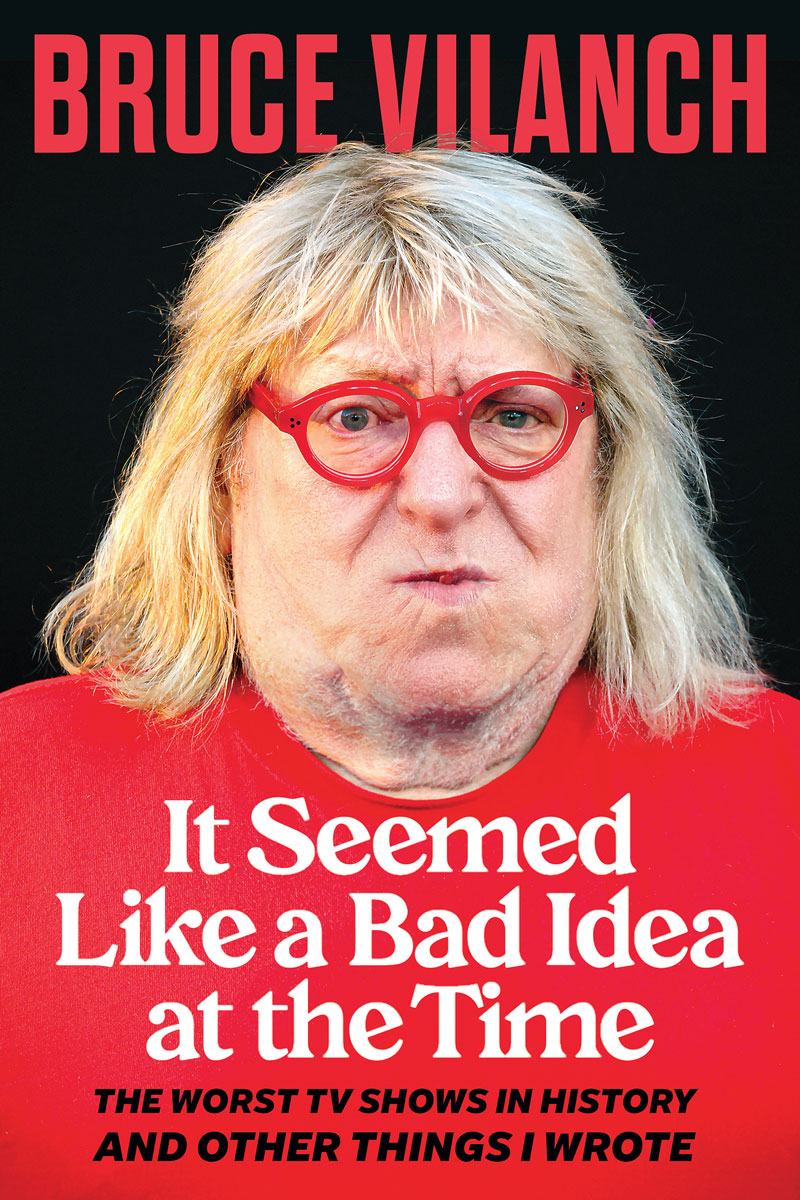
It Seemed Like a Bad Idea at the Time; Bruce VilanchIt Seemed Like a Bad Idea at the Time by Bruce Vilanch (Courtesy of Chicago Review Press)The show resumed with the president of the Academy making the speech that you can’t seem to talk presidents of the Academy out of making. You know, film is the universal language, those beautiful people out there in the dark, more people are watching this show than there are on this or any neighboring planet, and so on.

And then the first presenters came out, Melanie Griffith and Don Johnson, and did a very funny bit giving the Supporting Actress award to Geena Davis for "The Accidental Tourist." The show ran pretty well after that.

There were a couple of bits that I liked that other people pointedly didn’t. Bruce Willis and Demi Moore, presenting Cinematography, showed home movies of their new baby as an example of bad cinematography. Martin Short and Carrie Fisher showed up each wearing the same dress (“Carrie, you have hundreds of dresses. I have four”), and Kurt Russell went off the printed script to do a bit where he sort of proposed to an allegedly unprepared Goldie Hawn. This last became a tabloid favorite in the pre-internet universe; it made covers all over the world.

The James Bonds were charming, and Jimmy Stewart and Kim Novak had fun giving the Sound award, with Jimmy exaggerating his drawling speech, which he said drove the sound people crazy. Candice Bergen and Jackie Bisset introduced the Foreign Film award partly in French, then were joined by Jack Valenti, Hollywood’s ambassador in Washington, who admitted he didn’t speak it. Billy Crystal did a hilarious piece, and Patrick Swayze did a tender tribute to his inspiration as a kid, the big Hollywood musicals.

Watching all this from home was the titular head of the Walt Disney Company, one Frank Wells, an old Hollywood corporate hand, and Frank was not amused. The outcome of his non-amusement has echoed through the corridors of gossip. Here is what I know, or was told, by several sources at the time.

[Allan] looked out the window at the freeway and quietly said, “I burned a lot of bridges on this one.”

At the time, the Academy had a policy of not allowing commercial spots for movies to be a part of the broadcast, thinking that it would imply endorsement by the Academy, especially since so many commercials used phrases like “Oscar winner,” “Oscar nominee,” etc. For reasons no one has explained to me, this fiat had been expanded to include such things as theme parks run by members of the  Academy. Disney was about to open what was then called the Disney-MGM Studios at Walt Disney World, now known as Disney’s Hollywood Studios. They wanted to advertise it on the Oscars, but they apparently got a no. So they made a deal with Chevrolet to film their introduction of a new-model Chevy at the new park, in the forecourt of its imitation Grauman’s Chinese Theatre. They wanted to show us how big the car was, so guess who popped out of it . . . Snow White and the Seven Dwarfs. Frank Wells went ballistic. He started calling people during the show to complain.

I’m guessing he was mad because our Snow White made his commercial’s Snow White look like sloppy seconds . . . who may have been the eighth dwarf, by the way. The wheels went into motion. I don’t think he knew beforehand about our opening number, but here’s who did: the lawyers at Disney, who, even though Snow White is in the public domain and they have no rights in the matter, signed off on the look of our Snow. Also the lawyers at the Academy and at the network that aired the show, ABC, both of whom were consulted. There was a Snow White Cafe on Hollywood Boulevard that everyone in Hollywood had been to or at least knew about, and it remained in operation until 2024, and nobody ever blasted them publicly for copyright infringement.

The Academy was, of course, loath to get into a copyright or trademark dispute with one of its own members, especially as the Oscar trademark is its prime, heavily defended asset. So the next day they issued an apology, cut the number from the archival tape, and thought it was settled. For the moment, peace was on the land.

While all this was hatching, I accompanied Allan in his limo to the shindig being thrown by Irving Lazar, known as Swifty to the world, the legendary power agent whose Oscar-night viewing party at the old Spago restaurant was the annual hot ticket (it has been replaced by the Vanity Fair party and an explosion of other parties around town). Allan thought the show had gone well, and after the opening number, it had, in the theater. The nation had not yet checked in. But he was a little despondent and at a disturbingly low energy level, for him. He looked out the window at the freeway and quietly said, “I burned a lot of bridges on this one.”

And then, only two months later, just when we were all beginning to put the show behind us, came the Rob Lowe Sex Tape.

He was right, starting with the people who had produced previous shows, whom he’d dumped all over in the press and trash-talked around town in the run-up to the show. Then there were the people who assumed they would be on the show but were not asked—or, even worse, were asked and then unasked because the network had told him he had to “young up” the proceedings. The day after the show, a couple of those people wrote a letter to the Academy about the show they were not asked to be on. They got many famous people to sign the letter, which a lot of them turned out to have never read. These were all friends of Allan’s, at least in his mind.

The press, who had not been in the room where it happened, did not care for the show either, and gave Allan a major shellacking. This was the same press he had spent his entire career lavishly courting, the press who he also thought were his friends. Allan never recovered. As producer Gil Cates, with whom I did a lot of subsequent Oscar shows, put it, “All a producer really has is his taste. When that’s invalidated, the game is over.”

And then, only two months later, just when we were all beginning to put the show behind us, came the Rob Lowe Sex Tape.

Rob, who has long owned his mistake and has publicly called himself the poster child for bad choices, had taped himself having sex with a sixteen-year-old girl in a hotel room in Atlanta, where he was in town for the Democratic National Convention that nominated Michael Dukakis in 1988. Before viral was invented, this went viral. And every time it was mentioned, it was this: “Rob Lowe, most recently seen dancing with Snow White in a number on the Oscars that drew a lawsuit from the Walt Disney Company . . .”

The combination of the lawsuit and the letter and the sex tape sealed the show’s fate in the Ninth Circle of Show Business Hell.

For all this, the show did exceptionally well in the Nielsen ratings and people continue to tell me how, opening number aside, they enjoy watching it on YouTube—where the opening number exists, by the way.

The following year, the Oscars did a housecleaning, bringing in Gil Cates to replace Allan. I was persona non grata as well, but after a year of penance, Gil and host Billy Crystal brought me back into the fold, where I remained for . . . another book . . . this one about the shows that worked!

Salon’s totally (possibly) infallible 2025 Oscar predictions: Who will win? And who should?

After what feels like about 200 years of waiting, Oscar Sunday is finally on the horizon, and if there were ever an awards season race that needed to be a relay, it was this one. Between a collection of industry controversies and devastating natural disasters, a chance to catch our breath would be welcome. 

As last year’s holiday movie season wrapped up and conversations focused on certain contenders, it initially looked like we were in for a pretty fun, if a little boring, Oscar race. The Academy held tight to its recent pattern, aiming for diversity in its nominations — both in terms of the performers nominated and the types of films it acknowledged — while still issuing some massive snubs. (Some of us were counting on hearing Trent Reznor and Atticus Ross’ “Challengers” score blaring through the Dolby Theater to jolt them back to reality Sunday night, but the only place that’ll be heard is from the Bose speaker in my living room.) Even without the freaky flavor of “Babygirl” or the chance to see Marianne Jean-Baptiste pick up her first Oscar, the nominations were exciting enough to surmise that the Academy is still chugging ahead into a forward-thinking era. 

And then came the calamities. The nominations were pushed back multiple times due to the Los Angeles wildfires, which skewed pundit prediction patterns when award shows that would typically air before the Oscar nominations were delayed by weeks. Then, “The Brutalist” was taken to task over the use of AI software to perfect Adrien Brody’s Hungarian pronunciation. And if things weren’t precarious enough, the best actress race turned into a minefield. Karla Sofía Gascón’s vehemently racist tweets were blasted across the web for all to see, videos of Fernanda Torres doing blackface resurfaced, and people were very unhappy about Mikey Madison’s comments about intimacy coordinators. 

Yet, despite the Oscar race being mired by seemingly endless mishaps, the big show will continue, and the varied nominees suggest that it could be one for the ages. While “Anora” has regained its lead in major categories thanks to a late-season push and some critical wins at the Critics Choice Awards and BAFTAs, “The Brutalist” is hot on its tail in several slots. Those two small movies have made a big splash, but don’t count out blockbusters like “Wicked” and “Dune: Part Two” just yet, especially in below-the-line technical awards. And then there’s the gonzo anti-Cinderella story “The Substance,” which rose from B-movie to a worthy rival, with enough push behind it to make the best actress race a nail-biter up until the very last second.

With Hollywood buzzing and the stench of controversy in the air, Sunday night’s ceremony could be a wild one. Below, you’ll find one of Salon’s critics Coleman Spilde going toe-to-toe with our resident film buff and video producer Russell Root to make the final guesses. Who will win, and who should? Read on to find out.

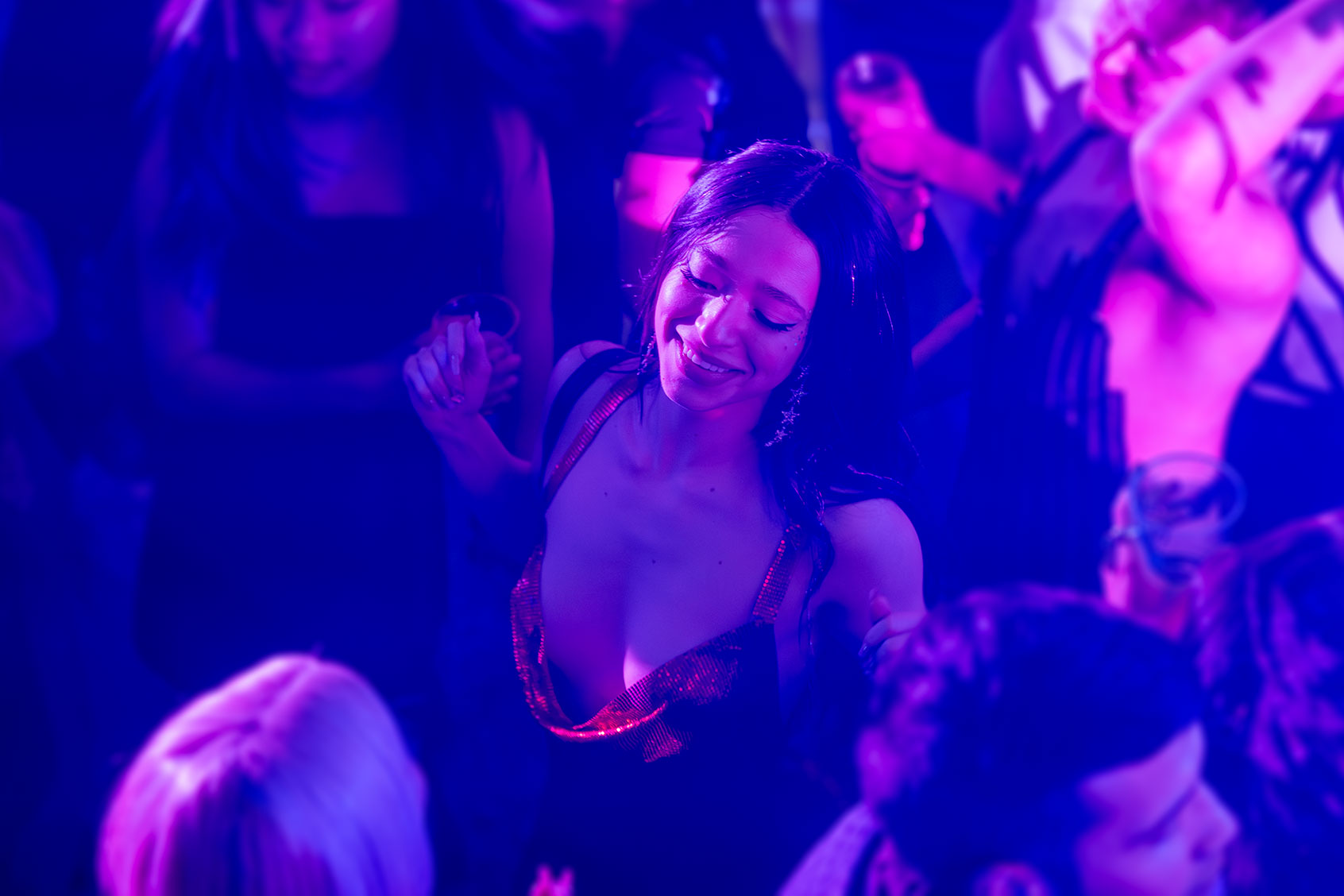
AnoraMikey Madison as Ani in "Anora" (Courtesy of NEON)
 
Best picture

“Anora”

“The Brutalist”

“A Complete Unknown”

“Conclave”

“Dune: Part Two”

“Emilia Pérez” 

“I’m Still Here”

“Nickel Boys”

“The Substance”

“Wicked”


Will Win: “Anora”


Unlike last year’s awards season, which saw “Oppenheimer” emerge as an early best picture frontrunner and maintain its lead, this year’s race for the top prize has been harder to divine. While “The Brutalist,” “Conclave,” and “Emilia Pérez” have all won important precursors, “Anora”’s wins at the PGA, DGA, WGA and Critics Choice Awards earlier this month give the film cachet with both industry and critics associations. Some serious contenders this season have also become embroiled in heavily publicized controversies, from AI usage in “The Brutalist” to an “Emilia Pérez” star’s offensive tweets, which may allow “Anora” to rise above the fray and collect the Oscar.


Should Win (Coleman): “Nickel Boys”


While the part of me that craves a renaissance for freaky original cinema would love to see “The Substance” pull off a surprise win, it’s “Nickel Boys” that really deserves the top prize this year. Director RaMell Ross being left out of the directing category is a heinous snub on the Academy’s part. Ross’ adaptation of Colson Whitehead’s novel should be considered one of the great films in contemporary American cinema for its blisteringly beautiful view of a bleak world, turning our past and present into poetic cinema that longs for a better future.


Should Win (Russell): “Conclave”


“Conclave” isn’t just the most well-crafted and entertaining nominee, it’s also the most relevant film of the bunch. Its behind-the-scenes examination of papal politics mirrors the painful election season that American filmgoers were subjected to in 2024, and the film’s focus on the divide between the Catholic church’s liberal and conservative blocs likely feels all too familiar to many viewers. “Conclave” offers a cynical take on the electoral process at times, yet it also extends a sincere plea for compassion in times of crisis, a lesson that feels valuable to our country today.

The BrutalistAdrien Brody in "The Brutalist" (A24) 

 
Best director

Sean Baker, “Anora”

Brady Corbet, “The Brutalist”

James Mangold, “A Complete Unknown”

Jacques Audiard, “Emilia Pérez”

Coralie Fargeat, “The Substance”


Will Win: Brady Corbet, “The Brutalist”


Common Oscar wisdom holds that where best picture goes, best director must follow, although recent ceremonies have bucked the trend; in the 15 ceremonies since the Academy widened the best picture pool to 10 nominees, six shows have seen the two awards split between different films. (In many cases, the larger spectacle beats out the smaller-scale film.) The more expansive scope of “The Brutalist” compared to “Anora,” plus Brady Corbet’s wins at the Golden Globes and the BAFTAs, give Corbet a solid chance going into Oscar Sunday.


Should Win (Coleman): Brady Corbet, “The Brutalist”


As lukewarm as I was on Corbet and Mona Fastvold’s screenplay, it’s impossible to deny the awe Corbet conjures with every frame of “The Brutalist,” and at a much smaller scale than some of his peers. Even when the story lacks, the visual splendor captivates, and Corbet brings intimate and layered performances out of his actors. While this vision of the rotting American dream isn’t my favorite of Corbet’s, it is undoubtedly his most visionary work to date.


Should Win (Russell): Brady Corbet, “The Brutalist”


Corbet’s distillation of the immigrant experience into a soaring epic that uncovers the corruption behind the American dream is nothing short of magnificent. In three-and-a-half hours and for less than $10 million, Corbet reconstructs post-war America from the ground up, proving his sweeping artistic vision to be just as impressive as László Tóth’s. “The Brutalist” is a film, in part, about the perils of unbound creativity, but Corbet manages to prove his own film wrong by assembling the most monumental achievement of any of the five nominees.

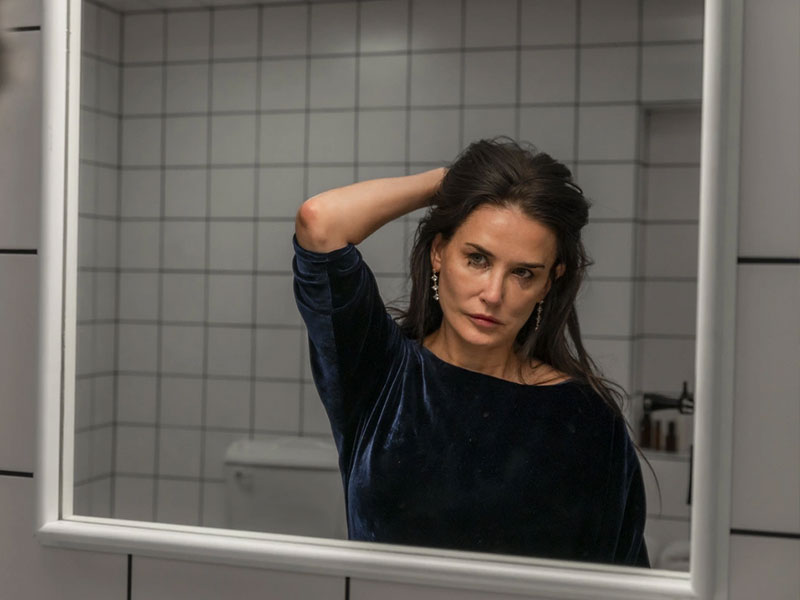
The SubstanceDemi Moore in "The Substance" (Courtesy of Mubi)
 
Best actress

Cynthia Erivo, “Wicked”

Karla Sofía Gascón, “Emilia Pérez”

Mikey Madison, “Anora”

Demi Moore, “The Substance”

Fernanda Torres, “I’m Still Here”


Will Win: Demi Moore, “The Substance”


Awards seasons are all about constructing a winning narrative, and nobody in the best actress category has done so better than Demi Moore, for her career-defining role in “The Substance.” Moore’s story this season has centered on her decades of work within the industry and the surprising lack of critical recognition that has followed; one producer dubbed her a “popcorn actress,” as Moore herself mentioned in her Golden Globe acceptance speech. This stirring narrative, as well as Moore’s wins at the Golden Globes, SAG and the Critics Choice Awards, make her a clear frontrunner for the Oscar.


Should Win (Coleman): Mikey Madison, “Anora”


For as many controversies have plagued “Anora” — the lack of an intimacy coordinator, the multitude of views on its depiction of sex work, the accounts Sean Baker follows on Instagram — Mikey Madison’s star-making performance transcends them all. Madison’s turn is boisterous and bubbly, an achievement in physical comedy that we haven’t seen in some time. But it’s when she turns inward that Madison’s performance starts to sing, revealing the great depth behind her character’s hardened exterior without the need for any showy dramatics.


Should Win (Russell): Fernanda Torres, “I’m Still Here”


In this chilling film about forced disappearances under Brazil’s former military dictatorship, Fernanda Torres plays Eunice Paiva, the real-life wife of former Brazilian congressman Rubens Paiva. Torres navigates two worlds as Paiva: one as a mother trying to keep what remains of her family safe, the other as an unexpected activist fighting for the truth of her husband’s whereabouts. Torres captures a paradoxical mix of motherly strength and unspoken terror, and her performance provides a fascinating look at the brutal impact of authoritarianism on the individual.

 
Best actor

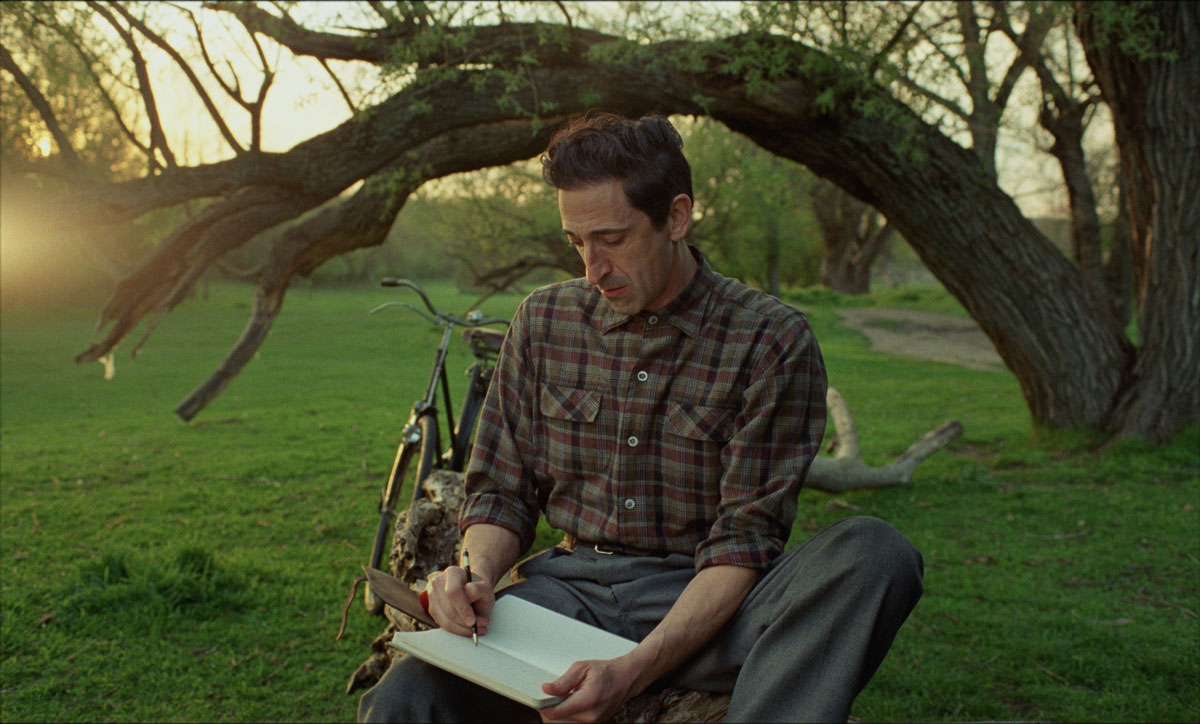
Adrien Brody, “The Brutalist”

Timothée Chalamet, “A Complete Unknown”

Colman Domingo, “Sing Sing”

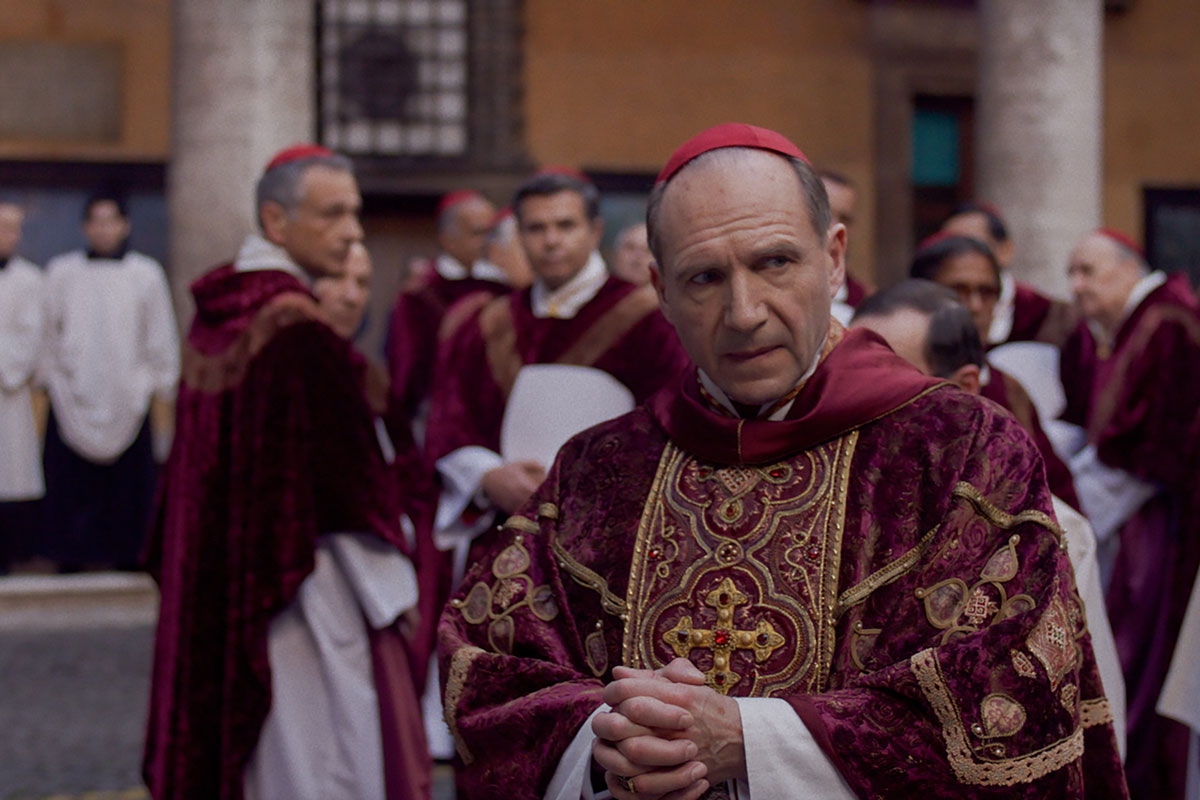
Ralph Fiennes, “Conclave”

Sebastian Stan, “The Apprentice”


Will Win: Adrien Brody, “The Brutalist”


22 years after he became the youngest person ever to win the Academy Award for best actor, Adrien Brody is all but sweeping this awards season on his way to scoring another Oscar. Brody has already snagged a Golden Globe, a BAFTA and a Critics Choice Award for portraying architect László Tóth in “The Brutalist,” so unless Brody ends up on the other side of a shocking upset, the Oscar is his to lose. Let’s just hope he doesn’t kiss anyone this time.


Should Win (Coleman): Ralph Fiennes, “Conclave”


There are few moments in “Conclave” that stand out as obvious showcases for Ralph Fiennes’ sensational performance, and that’s exactly why Fiennes should win the trophy this year. The way Fiennes’ Cardinal Lawrence navigates his crisis of faith quietly and dutifully is mesmerizing to watch. It speaks to the type of kind-hearted nature that used to be the standard definition of human good, while revealing that ego and greed have become unnervingly worthy adversaries to compassion, left to battle it out behind the closed walls of a papal conclave.


Should Win (Russell): Ralph Fiennes, “Conclave”


Both Adrien Brody in “The Brutalist” and Ralph Fiennes in “Conclave” suffer similar struggles with their faith; whereas Brody’s László Tóth loses faith in America, Fiennes’ Cardinal Lawrence loses faith in the church. As Cardinal Lawrence, Fiennes is pulled between his desire for positive change in the church, his duty to preside over the election of a new pope, and his doubts about the order to which he’s devoted his entire life. Fiennes blends these contradictions beautifully, creating a riveting portrait of a man forced to redefine his faith.

 
Best actress in a supporting role

Monica Barbaro, “A Complete Unknown”

Ariana Grande, “Wicked”

Felicity Jones, “The Brutalist”

Isabella Rossellini, “Conclave”

Zoe Saldaña, “Emilia Pérez”


Will Win: Zoe Saldaña, “Emilia Pérez”


One of the few constants this award season has been Zoe Saldaña, who has managed to take home the Golden Globe, the BAFTA, the Critics Choice Award and the SAG award for her role in “Emilia Peréz.” Part of this may be her extended screen time; at 57 minutes and 50 seconds, Saldaña appears onscreen for more of the film’s runtime than Karla Sofia Gascon, who is contradictorily nominated in the Best Actress category. No matter the reason, it’s a safe bet to assume Saldaña will continue her winning streak on Sunday night.


Should Win (Coleman): Felicity Jones, “The Brutalist”


While the second act of “The Brutalist” divided audiences, its introduction of Felicity Jones’ Erzébet was its saving grace. Reuniting with her husband László after years apart, Erzébet finds it easier to adapt than he ever did, but that poses new challenges for a couple relearning how to be married, and if their love has changed along with everything else surrounding them. Jones is soft yet strong, and her performance provides the necessary character foil to send “The Brutalist” to the depths of the soul that Corbet is aiming for.


Should Win (Russell): Ariana Grande, “Wicked”


Despite “Wicked”’s many problems, one clear bright spot is Ariana Grande, who manages to bring humor, charm and impeccable vocals to the role of Galinda. Like Saldaña, Grande might be more fairly considered a co-lead, but her comedic talent is undeniable in this film, as she commands attention in every beat she appears onscreen. The fact that Grande has wanted to play Galinda since childhood shows clearly in her performance, and it truly seems to be a role she was born for.


Want a daily wrap-up of all the news and commentary Salon has to offer? Subscribe to our morning newsletter, Crash Course.


Best actor in a supporting role

Yura Borisov, “Anora”

Kieran Culkin, “A Real Pain”

Edward Norton, “A Complete Unknown”

Guy Pearce, “The Brutalist”

Jeremy Strong, “The Apprentice”


Will Win: Kieran Culkin, “A Real Pain”


Like Zoe Saldaña, Kieran Culkin has been a regular on the stage during all the major precursor awards, sweeping the Golden Globes, the BAFTAs, the Critics Choice Awards and SAG. His nomination in the supporting instead of the lead category is also questionable. But the undeniable strength of his comedic performance — combined with the momentum coming off his award-winning role on “Succession” — only solidifies Culkin’s chances to win the award.


Should Win (Coleman): Jeremy Strong, “The Apprentice”


Post-”Succession” Jeremy Strong might get a lot of flack for his method approach to roles, but his brand of severity works perfectly for the sickening depiction of Roy Cohn in “The Apprentice.” Sure, the movie is timely — perhaps even too obvious — but Strong’s performance as the Svengali behind Donald Trump’s rise to power is an important chronicle of how evil is forged. Strong doesn’t just nail the impression of Cohn, he’s got Cohn’s slippery air down to a wicked science.


Should Win (Russell): Guy Pearce, “The Brutalist”


Pearce’s performance as American industrialist Harrison Lee Van Buren is not only the highlight of “The Brutalist,” it’s also the highlight of his already accomplished career. With careful precision, Pearce weaves layer upon layer of arrogance, stupidity, insecurity and cruelty in every scene, whether it be a conversation he finds “intellectually stimulating” or one of the most horrific moments put to film this year. In a year full of fantastic performances, Pearce’s may be the best.

 
Best original screenplay

“Anora,” written by Sean Baker

“The Brutalist,” written by Brady Corbet and Mona Fastvold

“A Real Pain,” written by Jesse Eisenberg

“September 5,” written by Moritz Binder and Tim Fehlbaum; cowritten by Alex David

“The Substance,” written by Coralie Fargeat


Will Win: Sean Baker, “Anora”


Best original screenplay is one of the year’s most wide-open races, with three of the nominees winning at one of the major precursors: “A Real Pain” at the BAFTAs, “The Substance” at the Critics Choice Awards, and “Anora” at the WGA. (The Golden Globe for Screenplay went to “Conclave,” in the adapted category, providing no elucidation on a frontrunner here.) Still, “Anora”’s considerable strength in best picture compared to its two main competitors may give the film that extra push to take home the Oscar.


Should Win (Coleman): Coralie Fargeat, “The Substance”


There’s no nominated film this year as original as “The Substance,” and despite the film occasionally veering on a pastiche of other body horror commentaries, Fargeat’s confident screenplay sets the film apart from any comparison. It’s not just her blend of humor and horror that resonates, but rather every minute decision that other writers might not consider. A French writer naming every series on American television some version of “The Show” is inspired enough that Fargeat would, in an ideal world, have this in the bag.


Should Win (Russell): Sean Baker, “Anora


Sean Baker’s screenplay for “Anora” offers one of the freshest and most thrilling narratives written for the screen over the last year: a frenetic love story capped off with a 24-hour chase around Manhattan that leaves its titular protagonist in the hands of three barely competent gangsters. The pace is relentless, the dialogue is playfully combative, and our access to the characters is intimate and authentic, creating a wholly unique and remarkably moving screenplay among this year’s nominees.

ConclaveRalph Fiennes as Cardinal Lawrence in "Conclave" (Focus Features)
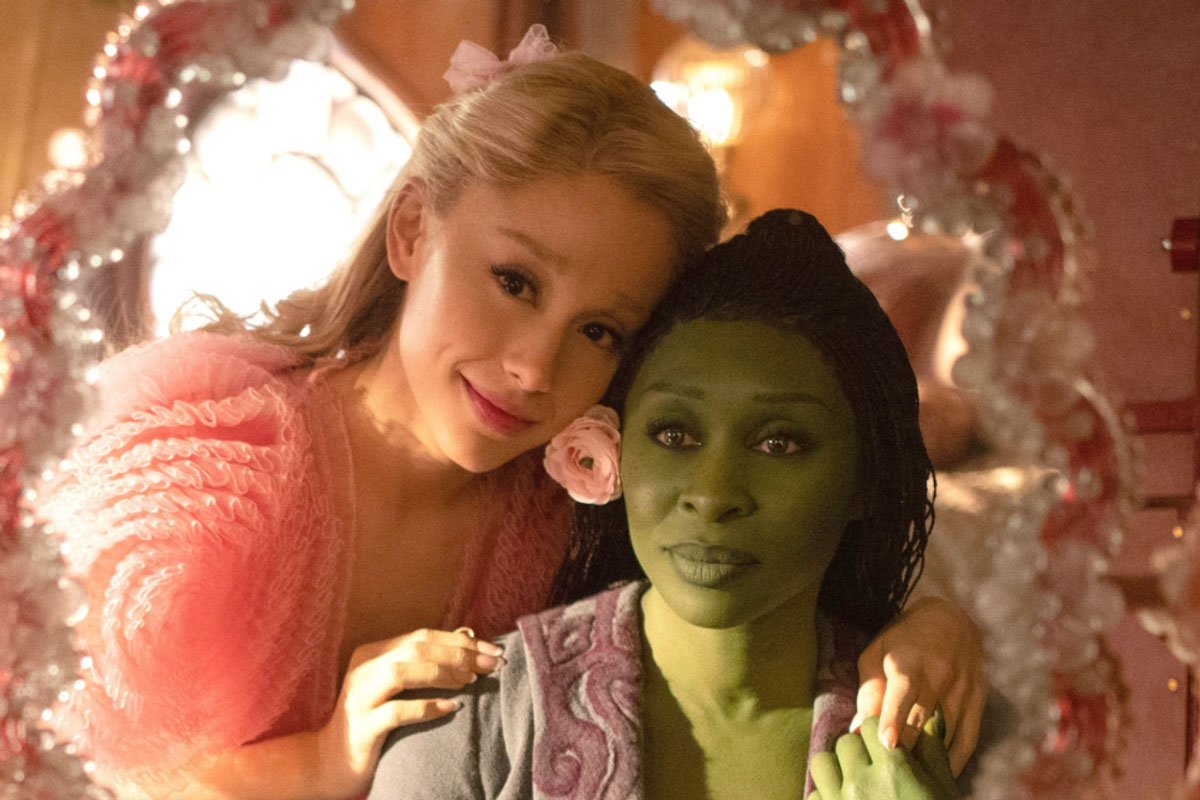
 
Best adapted screenplay

“Conclave,” screenplay by Peter Straughan

“A Complete Unknown,” screenplay by James Mangold and Jay Cocks

“Emilia Pérez,” screenplay by Jacques Audiard; in collaboration with Thomas Bidegain, Léa Mysius, and Nicolas Livecchi

“Nickel Boys,” screenplay by RaMell Ross and Joslyn Barnes

“Sing Sing,” screenplay by Clint Bentley and Greg Kwedar; story by Clint Bentley, Greg Kwedar, Clarence Maclin, and John “Divine G” Whitfield


Will Win: Peter Straughan, “Conclave”


Unlike the race for original screenplay, the adapted screenplay Oscar is essentially a forgone conclusion. “Conclave” has raked in the precursor awards — the BAFTA, the Critics Choice Award and that elusive aforementioned Golden Globe — and has maintained its lead as the category frontrunner. The film’s only weakness may be at the recent WGA awards, where it failed to pick up a nomination for adapted screenplay, but this is likely just a small speed bump on the movie's journey to picking up the Oscar.


Should Win (Coleman): Peter Straughan, “Conclave”


Considering Peter Straughan’s excellent screenplay, it’s no surprise that “Conclave” grew from a theatrical thriller aimed at an older demographic to a crossover hit that captivated viewers everywhere. Straughan’s writing deftly considers the moral crises we’re steeped in today without feeling preachy, which is a considerable achievement given that a film about faith is the perfect excuse to be sanctimonious. 


Should Win (Russell): Peter Straughan, “Conclave”


“Conclave” excels as a film primarily on the strength of its screenplay, which manages to turn perhaps one of the duller events imaginable — a conclave comprising scores of aging archbishops — into an intelligent and heart-pounding thriller. The screenplay combines secret stairwell negotiations, the art of political backstabbery, and sincere conversations about faith and doubt into a film quite like no other this year, and deserves its honors.

 
Best documentary

“Black Box Diaries”

“No Other Land”

“Porcelain War”

“Soundtrack to a Coup d’Etat”

“Sugarcane”


Will Win: “No Other Land”


Reliably predicting this race has been complicated by the fact that the big winner at BAFTA, PGA and the Critics Choice Documentary Awards, “Super/Man: The Christopher Reeve Story,” is not among the five listed nominees. With that in mind, “No Other Land” has a slight edge in this category after winning the Independent Spirit Award, the Gotham Award and the International Documentary Award. The film’s focus on the Israeli occupation of the West Bank may pose a problem for some in the industry that has punished actors for speaking in support of Palestine, but its chances on Sunday night seem promising.


Should Win (Coleman): “No Other Land”


“There is no other movie like ‘No Other Land.’” That’s both a clean headline and a true statement. Of all of the timely films nominated at this year’s Oscars, none of them come close to being as affecting as “No Other Land,” the kind of radical documentary filmmaking that history will remember whether awards voting bodies honor it or not. But for the sake of getting as many eyes on this film as possible, let’s hope that they do.


Should Win (Russell): “No Other Land”


What makes “No Other Land” a superb documentary is more than its explosive subject material. Its daring footage—shot mere feet away from Israeli soldiers demolishing villages and schools — lays bare the devastation of forced expulsions in the West Bank, while its unlikely partnership between a Palestinian activist and an Israeli journalist raises thought-provoking questions about whether true understanding can ever exist between the oppressor and the oppressed. 

 
Best animated feature

“Flow”

“Inside Out 2”

“Memoir of a Snail”

“Wallace & Gromit: Vengeance Most Fowl”

“The Wild Robot”


Will Win: “The Wild Robot”


Ever since it captured the hearts of children and adults alike over the summer, “The Wild Robot” has maintained its lead in the Oscar race with wins at the Critics Choice Awards and PGA. Its biggest competition is “Flow,” which not only scored an upset win at the Golden Globes but earned a second Oscar nomination for best international feature, but it seems more likely that Academy voters will honor the American film that many of their children remember fondly over the foreign indie film that only saw a limited release.


Should Win (Coleman): “Flow”


Who knew all you needed to create the most nerve-shattering climate crisis film of the year were PlayStation graphics and some adorable, realistic animals to root for? Gints Zilbalodis’ “Flow” uses those two features to pierce the heart and reach the deep well of nostalgia that lives inside us before turning the film on its head. “Flow” is an intricate, beautifully animated film unlike anything else in the category, and rewarding innovative animation like this will pay dividends as time goes on.


Should Win (Russell): “Flow”


“Flow” transports its audience to a fantastical apocalyptic landscape, and while it shares many of the same themes of “The Wild Robot,” from personifying animals to impending ecological collapse, “Flow” is much more delicate in its execution. The character and world design are breathtaking, and despite featuring no dialogue throughout its 85-minute runtime, it provides one of the most emotionally resonant stories put to film this year.

 
Best international feature

“I’m Still Here,” Brazil

“The Girl With the Needle,” Denmark

“Emilia Pérez,” France

“The Seed of the Sacred Fig,” Germany

“Flow,” Latvia


Will Win: “Emilia Pérez”


The inclusion of more international films into the best picture category has unfortunately eliminated some of the drama behind the race for best international feature; whichever film finds itself in both categories will win in the latter, without fail. This year’s race has shaken up the formula by nominating two films in both categories — “Emilia Pérez” and “I’m Still Here” — but the unstoppable success of “Emilia Pérez” at the Golden Globes, BAFTA and the Critics Choice Awards has all but crowned it as the clear winner.
 

Should Win (Coleman): “I’m Still Here”


Walter Salles’ film is, by all standards, a rather standard dramatic biopic and the kind of movie that the Academy loves to award. But the gently moving “I’m Still Here” surpasses its contemporaries thanks to its well-paced screenplay and its ability to buck conventions in what would otherwise be a timeworn story of perseverance. Fernanda Torres’ stunning performance holds the film together with matriarchal love, but it’s the film’s two codas that have left it lingering in my mind for months.


Should Win (Russell): “The Seed of the Sacred Fig”


Mohammad Rasoulof’s searing indictment of the Iranian government’s brutality during the country’s 2022 protests is one of the most shocking films of the year, even prompting the Iranian government to sentence Rasoulof to eight years in prison for the film. “The Seed of the Sacred Fig” is a stunning achievement, using real footage captured during the nationwide protests and positioning its intimate family story as a microcosm of the ongoing social unrest. The film provides a stellar examination of blind loyalty to authoritarian governments and the inherent abuse within patriarchal systems of power.

 
Best cinematography

“The Brutalist,” Lol Crawley

“Dune: Part Two,” Greig Fraser

“Emilia Pérez,” Paul Guilhaume

“Maria,” Ed Lachman

“Nosferatu,” Jarin Blaschke


Will Win: “The Brutalist,” Lol Crawley


While this season’s precursor cinematography awards are rather evenly split between “The Brutalist,” “Nosferatu” and “Maria,” Lol Crawley’s work on “The Brutalist” has the stronger narrative going into Oscar night. The film’s use of VistaVision — a widescreen format that was all but abandoned in the early 1960s — spawned countless articles and explainers detailing exactly what VistaVision is, shining a spotlight on the details of cinematography that audiences typically ignore. Plus, “The Brutalist” has major nominations in above-the-line categories, where “Nosferatu” and “Maria” are severely lacking, which will likely give Crawley that extra momentum he needs to win.


Should Win (Coleman): “Nosferatu,” Jarin Blaschke


The only way that Robert Eggers’ remake of “Nosferatu” could compete with the terrifying images found in F.W. Murnau and Werner Herzog’s earlier versions would be to craft a distinct cinematic palette unlike any other version of the vampire story. The exquisite images that Jarin Blaschke constructs in Eggers’ “Nosferatu” are unparalleled. The sickly gray of a plague-stricken Europe is rivaled only by Blaschke’s navy nightscapes, which boast some of the most breathtaking sequences all year.


Should Win (Russell): “The Brutalist,” Lol Crawley


If the two-and-a-half minute-long opening shot of “The Brutalist,” which transports the audience from the bowels of a crowded steamship to a striking upside-down image of the Statue of Liberty, isn’t enough to convince you of Lol Crawley’s towering cinematographic achievement, you need only continue watching. “The Brutalist” is filled with beautifully composed landscapes and static interiors that reflect the rigid geometric style adopted by the film’s architect László Tóth, bringing his fictional work to life on the screen.

WickedCynthia Erivo as Elphaba and Ariana Grande as Glinda in "Wicked" (Universal Pictures) 

 
Best production design

“The Brutalist”

“Conclave”

“Dune: Part Two”

“Nosferatu”

“Wicked”


Will Win: “Wicked”


While “Wicked” faced plenty of criticism about how the finished film looked, its admirable production design never gave it trouble. Even if the film’s practical set pieces had a layer of CGI smoothing slapped over them, the sprawling production design made “Wicked” feel like a throwback to classic-era musicals. Though “Dune” scooped up a trophy in this category a few years ago, and “The Brutalist” and “Nosferatu” had some impressive constructions, bet on the Academy following the BAFTAs by awarding this mainstream home run.


Should Win (Coleman): “Conclave”


Perhaps an unexpected choice, but I was unexpectedly blown away by the production design in “Conclave,” so it’s fitting. While the film’s cinematography and direction do the heavy lifting to make each shot look good, “Conclave” wouldn’t be half as interesting to look at without its team of production designers. Between recreating the centuries-old architecture of the Vatican to the dreary overhead lighting of the religious residences, there’s always some element tying a frame together in a way that transcends aesthetics to enhance the story — even if it’s a well-placed Nespresso machine.


Should Win (Russell): “Dune: Part Two”


“Dune: Part Two” creates a world that is somehow richer than its predecessor, unlocking new corners of its universe from the black-and-white coliseum of Geidi Prime to the stately capital planet of Kaitain to the severe southern hemisphere of Arrakis. Every locale in the film is characterized by its own distinct environment and culture, as alien to one another as they are to the viewer, yet “Dune: Part Two” manages to make all of these worlds appear at once exotic and authentic. As the most remarkable spectacle to hit theaters last year, “Dune: Part Two” deserves high praise for its one-of-a-kind production design.

 
Best costume design
“A Complete Unknown”

“Conclave”

“Gladiator II”

“Nosferatu”

“Wicked”


Will Win: “Wicked”


After a strong showing at the BAFTAs, the Critics Choice Awards, and the Costume Designers Guild, it’s hard to imagine a film other than “Wicked” snagging this win. Costume designer Paul Tazewell widened the stage show’s scope to design for hundreds of extras while creating distinct looks for not only the movie’s two leads, but an assortment of tertiary characters as well.


Should Win (Coleman): “Wicked”


Paul Tazewell had the difficult task of emulating looks from both “The Wizard of Oz” and the “Wicked” stage musical while designing costumes that could be unique to a new blockbuster. He rose to the occasion by creating costumes so eye-popping that they became character trademarks. You couldn’t look anywhere without seeing pink and green last fall, but the finer details in Tazewell’s garments were some of a flawed film’s most infallible features.


Should Win (Russell): “Wicked”


One hallmark of truly remarkable costume design is the memorability of its outfits, which should be just as visible in the viewer’s imagination even after the credits roll. Of the nominees, only “Conclave” and “Wicked” accomplish this feat. While the deep red cassocks that fill nearly every frame of “Conclave” are extraordinary, the sheer variety of iconic costumes in “Wicked — from Galinda’s assortment of pink dresses to Elphaba’s stylish twist on the classic witch hat — is essential to constructing the magical world of Oz.

 
Best makeup and hairstyling

“A Different Man”

“Emilia Pérez”

“Nosferatu”

“The Substance”

“Wicked”


Will Win: “The Substance”


More than any other nominated film in this category, “The Substance” hinges on makeup and hairstyling to make its grotesque thrills an unforgettable sight. But even before the balance goes unrespected, the team behind “The Substance” elevated the beauty of its stars to make their mutual descent into frightful abominations all the more jarring.


Should Win (Coleman): “The Substance”


If you’ve made it through the final act of “The Substance,” this is a no-brainer. The hair and makeup team effectively subvert Demi Moore’s movie star to make her the centerpiece of the most literal hagsploitation film in decades. Every wrinkly finger, bedraggled wig and lipstick-smeared visage are a sight to behold. And as if those weren’t enough, there’s the world-class beauty we meet in the climax known as Monstro Elisasue, an incredible accomplishment that is entirely the work of these below-the-line artists. Taking a curling iron to a single dangling piece of hair on a bald head? Brava!


Should Win (Russell): “The Substance”


While part of me would love to see the criminally under-nominated  “A Different Man” win in its one eligible category, “The Substance” deserves the award for its brilliant and imaginative take on body horror. The film's slow descent into prosthetic-laced chaos cleverly uses the genre’s conventions to make a provocative point about the supposed “expiration” of feminine beauty, punctuated by the most gratuitous gross-out scene to grace the Academy’s ballot since “Triangle of Sadness”’s vomit cruise. Without the film’s talented makeup team, there is no third-act monstrosity spontaneously growing and shedding body parts — and who wants that?

 
Best editing

“Conclave”

“Anora” 

“The Brutalist”

“Conclave”

“Emilia Pérez” 

“Wicked”


Will Win: “Conclave”


Because The Academy bafflingly shut out Luca Guadagnino’s “Challengers,” which took the editing prize at a bevy of Oscar run-ups, expect a similarly safe decision for the winner in this category. The tension mounting throughout “Conclave” thanks to its tight editing will likely affect Academy voters just as much as it did mainstream audiences.


Should Win (Coleman): “Conclave”


For a film that’s essentially cinematic catnip for the CBS crowd, “Conclave” is, shockingly, never boring. That’s all thanks to Nick Emerson, whose work helps the film’s tone bounce between taut thriller and shocking drama as he examines the quickly shifting allegiances that dictate the future of modern religion. What’s more, his editing keeps the film’s pace at a steady stride, never letting the air out of the room until the credits roll. With the modern thriller on life support thanks to waning attention spans, holding an audience’s focus is no small feat.


Should Win (Russell): “Conclave”


​​Nick Emerson’s editing work on “Conclave” helps the film walk the strange line between absurd comedy and tense drama, creating an entirely different beast. Disorienting shots of competing papal candidates add urgency to the reveal of election results, while an accusatory confrontation between two cardinals is punctuated by the anachronistic reveal of an espresso machine. The editing in “Conclave” is a constant reminder that the film’s frequently serious tone is just one possible interpretation of its story. There is strange hilarity in every aspect of this outdated ritual.

 
Best sound

“A Complete Unknown”

“Dune: Part Two”

“Emilia Pérez”

“Wicked”

“The Wild Robot”


Will Win: “Dune: Part Two”


This is a neck-and-neck category, with “Dune: Part Two” pulling ahead after its first installment won this award in 2022. It's also a franchise synonymous with its all-consuming theatrical soundwork. It also picked up the BAFTA in this category a couple of weeks back. But “A Complete Unknown” won for its sound work at the Cinema Audio Society, which could shake the table for “Dune.”


Should Win (Coleman): “Dune: Part Two”


One of the great things about being a critic is the chance to use your knowledge to find new and interesting ways to describe why a film is great. But the expertise is physically shaken out of me when surrounded by the impeccable sound work in one of Villeneuve’s “Dune” films. With the metal in colliding knives, the foley work of sand beneath a boot and the glottal roaring of a sandworm, I am reduced to a slack, muttering, awe-struck child. Frankly, that feeling is so rare these days that “Dune: Part Two” should take this home on wonder alone.


Should Win (Russell): “Dune: Part Two”


As with its nominations in many of the below-the-line categories, the sound in “Dune: Part Two” is vital to establishing the film’s epic scope, rendering it more than deserving of winning the Oscar. Imagine the Battle of Arrakeen without the deafening blare of the sandworm emerging from the dust, the spilling of sand down the fronts of Fremen as they emerge from the ground, or the buzzing of ornithopter wings over the city. “Dune: Part Two” needs to be seen in theaters for many reasons, and chief among them is the impeccable sound design.

 
Best original score

“The Brutalist”

“Conclave”

“Emilia Pérez”

“Wicked” 

“The Wild Robot”


Will Win: “The Brutalist”


The Academy tends to favor forceful, capital-S scores over productions that blend seamlessly into the atmosphere of the film they’re a part of. One would think that would’ve made “Challengers” a surefire nominee here — combined with its winning streak at other shows—but it was shockingly snubbed, so “The Brutalist” is the next best bet. 


Should Win (Coleman): “The Brutalist”


More than its cinematography, direction or performances, Daniel Blumberg’s score makes “The Brutalist.” The composer’s stunning brass and vital percussion push against the confines of his overtures, grabbing the audience by the collar and bringing them in close to hear every plodding, silvery note. No theatrical score this year was as exhilarating as Blumberg’s as it built toward and settled into Corbet’s well-earned intermission.


Should Win (Russell): “The Brutalist”


“The Brutalist” requires a score that evokes mid-century America, and luckily, Daniel Blumberg’s score is mid-century America. Blumberg’s mix of Copland-esque brass fanfare, frenetic nightclub jazz, and sparse avant-garde compositions creates a broad melodic and tonal palette borrowing from many dominant musical styles of the period, making architect László Tóth’s work feel even more connected to innovative post-war aesthetics. Plus, the film’s central three-note motif stirs in the viewer a primal hope and unease, the perfect accompaniment to Toth’s journeys in America.

 
Best original song

“The Journey” from “The Six Triple Eight”

“Like a Bird” from “Sing Sing”

“El Mal” from “Emilia Pérez”

“Mi Camino” from “Emilia Pérez”

“Never Too Late” from “Elton John: Never Too Late


Will Win: “El Mal,” “Emilia Pérez”


With “Emilia Pérez” snatching up awards left and right for its songs, it’s hard to imagine that Diane Warren’s 16th nomination for “The Journey” from “Six Triple Eight” could pull out a surprise win. Even with the air of scandal still wafting around “Emilia Pérez,” bet on “El Mal.”


Should Win (Coleman): “El Mal,” “Emilia Pérez”


Hear me out and put the tomatoes away. If “Emilia Pérez clinches this win, then at least the next time a French person wants to make a comically regressive movie, maybe they’ll camp it up so there’s one redeeming quality. To be fair, “El Mal” is one of the film’s best (and least offensive) songs, with Zoe Saldaña singing words like a silver-tongued viper as she spits scathing accusations. The mixing of the song in the actual film isn’t as strong, but the standard version isn’t an unworthy contender.


Should Win (Russell): “Like a Bird,” “Sing Sing”


While nobody could accuse this year’s best original song race of having the same excitement as last year’s nominees, the clear best choice out of the bunch is “Like a Bird” from “Sing Sing.” Its laid-back R&B beat and its mellow production style help the song stand out among the typical assortment of overproduced ballads (and Emilia Pérez's atypical dance numbers), and it is the only song among the five nominees that I have chosen to listen to more than once. 

 
Best visual effects

“Alien: Romulus”

“Better Man”

“Dune: Part Two”

“Kingdom of the Planet of the Apes”

“Wicked”


Will Win: “Dune: Part Two”


Once again, the winning history of “Dune” in this category combined with “Part Two” scooping up a recent BAFTA puts “Dune” in the lead, especially against “Wicked” which did not leave audiences so … obsessed with its visual effects.


Should Win (Coleman): “Better Man”


It’s not that “Dune: Part Two” isn’t a worthy contender in this category. If anything, it objectively deserves the gold here. But I can’t get the Robbie Williams CGI monkey out of my head! “Better Man” has genuinely great CGI, and what’s more, it’s for a highly original biopic that isn’t a sequel.


Should Win (Russell): “Dune: Part Two”


This award is really no contest. The other four nominees provide a range of impressive special effects, including an assortment of various CGI monkeys, but no film matches the impact of “Dune: Part Two.” With its ambitious battle sequences on the sands of Arrakis, its array of otherworldly science-fiction contraptions, and yes, its sandworms, “Dune: Part Two” is a blockbuster that lives or dies by the scope of its visual effects—and does not disappoint.

 
Best documentary short

“Death by Numbers”

“I Am Ready, Warden”

“Incident”

“Instruments of a Beating Heart”

“The Only Girl in the Orchestra”


Will Win: “Instruments of a Beating Heart”


For the short film categories, which are notoriously tough to predict, trust the patterns you find from past years. The last two years of documentary shorts have seen crowdpleasers about elephant sanctuaries and instrument repair shops taking home the gold, so this heartwarming short about Tokyo schoolchildren learning to play “Ode to Joy” seems most likely to resonate with voters.


Should Win (Coleman): “Incident”


While “Instruments of a Beating Heart” made me weep with joy, “Incident” made me roil with fury. The short is a crude yet easy-to-follow look at police violence in real time using bodycam footage and CCTV, and reveals how systems of power are stacked against those they oppress. It’s gripping and informative without sermonizing — everything a great documentary should be.


Should Win (Russell): “Incident”


“Incident” is certainly less polished than its fellow nominees, forgoing interviews or resounding scores in favor of low-resolution security camera and body-cam footage to recount the police shooting of Harith “Snoop” Augustus. Yet where the documentary shines is in its editing of this rough footage, stacking scattered pieces of footage in and around the crime scene to reproduce the chaotic aftermath of an officer-involved shooting and to show how a cover-up unfolds in real-time. While the footage itself is haunting, the more frightening moments occur when the images and sound disappear, when the officers collectively shut off their body cameras to avoid any further incrimination.

 
Best live-action short

“A Lien”

“Anuja”

“I’m Not a Robot”

“The Last Ranger”

“The Man Who Could Not Remain Silent”


Will Win: “Anuja”


All of the live-action shorts nominated in this category stand a fighting chance, particularly “The Man Who Could Not Remain Silent” and “A Lien” but “Anuja” has the accessibility of Netflix behind it and features Mindy Kaling’s star power as a producer, which voters are likely to favor.


Should Win (Coleman): “I’m Not a Robot”


The thing about all of the shorts categories is that they’re often where you’ll find timely, necessary films that don’t shy away from taking on politics and power. That’s great, and I want that, but sometimes I want entertainment, style and originality too, and all of those things exist in this exciting, economical tale of a woman who can’t get past a CAPTCHA.


Should Win (Russell): “A Lien”


“A Lien”’s title tells it all; the film’s main character, an undocumented immigrant, and his family are treated as little more than property to be repossessed by the government. This harrowing short follows a couple appearing for the husband’s green card interview, only for ICE agents to use this necessary step in the immigration process as a trap to arrest the husband. The film is superbly shot and edited, and highlights the absurd horror of the United States’ deportation practices, which are likely set to ramp up under this new administration.

 
Best animated short

“Beautiful Men”

“In the Shadow of the Cypress”

“Magic Candies”

“Wander to Wonder”

“Yuck!”


Will Win: Yuck!


Just like in documentary short, history has proven the animated short award to favor crowd-pleasing films, and this delightfully immature French film about kissing is sappy enough to score the votes.


Should Win (Coleman): “In the Shadow of the Cypress”


The scope of this story — about an old ship captain suffering from PTSD and his beleaguered daughter — is admirable for any short, but the beautifully rendered flat animation style has a lovely nostalgic quality that pairs with the narrative perfectly. A short that you can get lost in, even just for 20 minutes.


Should Win (Russell): “Beautiful Men”


Fans of delightfully weird claymation are spoiled with this year’s animated short category, from the sweets-filled fantasy of “Magic Candies” to the feral survival story of “Wander to Wonder.” The most compelling short, though, is “Beautiful Men,” about three middle-aged brothers traveling to Istanbul for a hair transplant. Their relationships soon fracture into compounding insecurities, yet their brotherly affection persists, making this short one of the most endearing nominees in any of the shorts categories.

White House prepping executive order that purports to make English the official language: report

President Donald Trump is preparing to sign an executive order making English the official language of the United States, ending the nation's 250-year record of respecting linguistic diversity.

The order, first reported by the Wall Street Journal, will rescind a Clinton-era mandate requiring agencies to provide language assistance and accommodation to non-English speakers.

According to 2020 Census Bureau data, nearly 68 million Americans speak a language other than English at home, representing roughly 20% of the nation’s population.

Since the nation’s founding, the U.S. has never had an official language. One linguistics expert told CNN in 2018 that the country's founders had good reason to avoid mandating English and to prioritize the mult-iethnic values of the nation. 

“The founding fathers didn’t see a need to declare one,” Purdue University language and literacy professor Dr. Wayne Wright told CNN. “They didn’t want to offend their fellow Americans who helped fight for independence.”

Still, the White House reportedly said in a memo that the proposal would “promote unity, establish efficiency in the government, and provide a pathway to civic engagement.” The Trump administration has yet to officially announce the order or its signing.

On the campaign trail, Trump called for reining in America’s linguistic freedom. In a February 2024 speech at CPAC, Trump complained that immigrants were bringing new languages with them.

“We have languages coming into our country,” Trump said last year. “These are languages — it's the craziest thing — they have languages that nobody in this country has ever heard of. It's a very horrible.”

Oops. Citigroup credits $81 trillion to customer’s account

You might be having a bad day, but you’re probably not doing worse than investment banking company Citigroup, which accidentally transferred roughly three times the United States gross domestic product into a client’s bank account.

The customer was only meant to receive $280, but Citi instead credited their account with $81 trillion last April — which not only dramatically exceeds Citigroup’s market valuation of $150 billion, according to The New York Times, but also the combined GDP of the top 10 richest countries. 

The transfer was initially missed by an employee and a second monitoring official, according to The Financial Times. It was caught 90 minutes later by a third employee and reversed several hours later. Citi described the incident as a “near miss” — incidents where banks authorize the wrong amount of money, but are able to recover everything — marking the latest accident in a string of errors at the company.

Last year, an internal report at Citi described 10 "near misses," each involving $1 billion or more. The bank has come under scrutiny for the integrity of its internal controls ever since it accidentally wired $900 million to creditors involved in a fight with beauty company Revlon five years ago.

The Revlon incident led to the resignation of then-CEO Michael Corbat. Jane Fraser, who took over, has said fixing regulatory controls and managing risks is her “top priority,” but Citi still faced a $136 million fine for risk control and data management issues last year.

For now — to the relief of Citi and the likely disappointment of its customer — the bank says everything is under control.

“Despite the fact that a payment of this size could not actually have been executed, our detective controls promptly identified the inputting error between two Citi ledger accounts and we reversed the entry,” the company said in a statement. “While there was no impact to the bank or our client, the episode underscores our continued efforts to continue eliminating manual processes and automating controls.”

“Fair and transparent”: DoorDash to pay its drivers nearly $17 million for pocketing their tips

On Monday, the New York attorney general’s office announced a nearly $17 million DoorDash settlement after the popular delivery platform “[misled] both consumers and delivery workers” by pocketing its workers' tips to subsidize their pay.

In a press release obtained by TODAY, New York Attorney General Letitia James said an Office of the Attorney General (OAG) investigation found that DoorDash “used customer tips to offset the base pay it had already guaranteed to workers, instead of giving workers the full tips they rightfully earned” between May 2017 and September 2019. 

James added that DoorDash misled customers into thinking their tips would be given to delivery drivers, better known as Dashers. In actuality, DoorDash pocketed those tips, adding the funds to the driver's base pay instead of giving them the full tips they earned.

“This is just fundamentally unfair,” James said during a news conference in Manhattan, per USA Today. “Customers had no reason to believe that these tips were being used by DoorDash to reduce its costs . . . They knew it wasn't right and they did it anyway.”

A DoorDash spokesperson said in a statement to TODAY.com, “We remain committed to making sure that Dasher earnings are always fair and transparent, and the allegations settled were related to an old pay model that was retired in 2019. To be clear: Dashers always keep 100% of tips from orders on the DoorDash app.”

“While we believe that our practices properly represented how Dashers were paid during this period, we are pleased to have resolved this years-old matter and look forward to continuing to offer a flexible way for millions of people to reach their financial goals,” the spokesperson added.

Under the settlement, DoorDash “will pay $16.75 million in restitution for Dashers and up to $1 million in settlement administrator costs to help issue the payments,” TODAY reported.

“A whole new level of cruelty”: Health experts decry “devastating” cuts to HIV treatment programs

How did Anja Giphart learn that more than 350,000 people who depend on her organization to treat their HIV would be denied that life-saving care, effective immediately? An email announcing that the work was “being terminated for convenience and the interests of the U.S. Government,” all but ensuring that, among other things, scores of women will give birth to children who then die of AIDS. The notice, obtained by Salon, ended with the sign off: “Thank you for partnering with USAID and God Bless America.”

The Elizabeth Glaser Pediatric AIDS Foundation, where Giphart serves as acting president, is named after its founder, who in 1981 contracted HIV from a contaminated blood transfusion and then unknowingly passed it to her infant daughter. She died in 1994 after creating the foundation to help stop the spread of HIV from mothers to their children.

In several countries across Africa, that work — which includes testing and providing antiretroviral drugs — will no longer be conducted; not by EGPAF or, in the immediate future, anyone else. In the Feb. 26 email from an address at the U.S. Agency for International Development, the government body all but eliminated by billionaire Elon Musk and his Department of Government Efficiency, informed EGPAF that it was nixing contracts for its work in Lesotho, Eswatini and Tanzania, in an instant suspending care for nearly 10,000 children and 10,000 HIV-positive mothers. According to Giphart, the group also is being forced to suspend work in Mozambique and the Democratic Republic of Congo, where its partner organizations have just lost funding.

“To suddenly pull out, it will mean that there will be people not able to access their treatment and, ultimately, that will result in people dying,” Giphart said. “It will also result in treatment resistance,” she said — strains of HIV that evolve to make medication ineffective — “and, as we all know, that will not just stay in those countries where it develops, that will also reach the United States.”

That the Trump administration is canceling contracts that help prevent the spread of HIV came as a surprise not just to aid organizations but, perhaps, to anyone who listened to and believed Secretary of State Marco Rubio. In a Feb. 10 radio interview with conservative pundit Scott Jennings, Rubio assured listeners that he was a supporter of such initiatives, funded under the U.S. President’s Emergency Plan for AIDS Relief, an effort launched by former President George W. Bush and better known as PEPFAR.

“I’m a supporter of PEPFAR. I have been in Congress. I am now as secretary of state,” Rubio said of the $7.5 billion program, credited by the State Department with providing treatment to more than 20 million people and preventing at least 5.5 million babies from being born with HIV. “It’s a program we want to continue.”

“We've made so much progress. To see this happening overnight is just really devastating.”

About two weeks earlier, Rubio had issued a statement promising that he would issue waivers to protect “life-saving humanitarian assistance” from Musk and Trump’s efforts to suspend and ultimately curtail foreign aid. A subsequent waiver for PEPFAR allowed the distribution of HIV treatment drugs to resume for women and children, but continued to bar efforts aimed at preventing HIV transmission among sexually active adults. (The Washington Post reported that some programs approved by Rubio were nonetheless manually blocked by DOGE operatives with control over the U.S. government's finances.)

At the same time, Rubio pledged to conduct a 90-day review of all such assistance, his State Department now charged with taking over — illegally, critics say — the work of USAID.

That review is apparently over, resulting in the cancellation of thousands of contracts with humanitarian organizations working to prevent the spread of disease, from HIV to tuberculosis, news that was first leaked to right-wing media: the Free Beacon, a conservative outlet, obtained a State Department memo that rationalized the cuts in MAGA-friendly terms.

"Every dollar we spend, every program we fund, must be justified with the answer to three simple questions: Does it make America safe? Does it make America stronger? Does it make America more prosperous?" the memo stated.

We need your help to stay independent

In light of Rubio’s previous comments, groups that provided HIV treatment, in particular, were surprised to learn — the same curt email was sent to scores of NGOs — that their work is now deemed at odds with the fortunes of America.

“We were mostly caught by surprise because we felt those programs, at least our programs that were terminated, clearly fell under the PEPFAR waiver and therefore we did not expect this to happen,” Giphart said.

It’s not clear why EGPAF’s work was targeted for elimination, but it is clear that it will have broad implications.

Beatriz Grinsztejn, an infectious disease expert and president of the International AIDS Society, told Salon that the cancellation of such contracts will have ripple effects, impacting every aspect of the global effort to stop the spread of HIV. “The US funding cuts are dismantling the system,” she said. “HIV treatment is crumbling.”

The State Department did not respond to a request for comment. But right-wing critics of PEPFAR have targeted the program on anti-choice grounds, with a group of Republican lawmakers in January complaining that nurses at some clinics that received PEPFAR funding in Mozambique provided a total of 21 abortions over four years.

"People will die if there is no treatment available; children will get infected again.”

The Heritage Foundation, the conservative think tank behind Project 2025, likewise accused the Biden administration of using PEPFAR to promote a “radical social agenda overseas,” namely “the LGBTI agenda,” noting that Democrats had argued that it should promote contraception to prevent the spread of infection (in the past, Republicans required PEPFAR recipients to promote abstinence-only education). Social conservatives have taken particular issue with the distribution of condoms and pre-exposure prophylaxis, or PrEP, which prevents HIV transmission and is cast as enabling promiscuity, particularly among the LGBTQ+ community.

That still does not really explain why EGPAF, in particular, would be targeted, according to Mitchell Warren, executive director of the AIDS Vaccine Advocacy Coalition, or AVAC.

“The single most effective organization for 20-plus years in the area of mother-to-child transmission is the Elizabeth Glaser Pediatric AIDS Foundation,” he said in an interview. “If Secretary of State Rubio really were honest about supporting PEPFAR and believing it was life saving and wants it to continue, he wouldn’t have canceled the major contracts that EGPAF currently leads.”

As it stands now, PEPFAR, despite the rhetoric, “is not just limping along — it is crippled,” Warren said.

The actions taken by the Trump administration so far point to a PEPFAR that will continue to exist but only in a limited capacity, if not name only, perhaps restricted to preventing mother-to-child transmission (despite such efforts also being curtailed right now). The ever-present culture war is part of it — the idea that preventing HIV transmission among adults enables promiscuity — “but I think it’s more insidious that that,” he said: “It is clearly the complete dismantlement of the foreign assistance apparatus,” and a “trial balloon” for slashing government not just abroad but at home, where medical assistance for the poor is next up on the chopping block.


Want a daily wrap-up of all the news and commentary Salon has to offer? Subscribe to our morning newsletter, Crash Course.


If Republicans wished to phase out foreign aid, Congress could pass a budget doing so and groups that rely on it could at least try to phase out their assistance or find alternative sources of funding. That assistance is being suddenly ripped away, leaving the most vulnerable without an alternative for treatment, suggests that those doing so do not care either about those affected or how the actions will be perceived by former allies and the broader world.

“Take the chaos and confusion that has grown each day for five weeks — what’s transpired over the last three or four days just takes it to a whole new level of cruelty and inhumanity and, frankly, a whole new level of stupidity in doing this is the most non-strategic way,” Warren said.

An orderly cancellation of EGPAF’s contract — any sort of heads up — might have allowed others to step in and fill the void. But in the developing nations where this work is so necessary, the group’s president told Salon that local governments and NGOs do not have the capacity of a global superpower and cannot easily replace it; not now and perhaps not ever. “Definitely not at such a short notice,” Giphart said. “Changing this overnight, they are not prepared to take this on.”

That means mothers and their children will immediately stop receiving treatment, and that, in turn, means many will be killed, and soon.

“Ultimately, if there is no HIV treatment available for pregnant women, their viral load will go up, and there is an increased risk again that they will transfer the virus to their infants,” Giphart, a medical doctor and public health expert, told Salon. “If the child is infected during pregnancy, labor or delivery, the child has a 50% chance of dying before their first birthday if they are not put on treatment. So the time element, I think here, is also important: People will die if there is no treatment available; children will get infected again.”

“We've made so much progress,” Giphart said. “To see this happening overnight is just really devastating.”

Rick Steves, mild-mannered travel expert, wants to radicalize you

If you could take a road trip with your younger self, how well do you think the two of you would get along? Would you have an admiration for each other? Would you even recognize each other? 

Rick Steves, the one-man brand behind a European tour company, dozens of travel books, and some of the most soothing content on PBS, has, of late, been getting reacquainted with the person he once was — and the fork in the road that set him on a path he’s remained on ever since. Before marriage, before children, before divorce, before cancer, before becoming, in his words, “filthy rich,” Steves was just a 23-year-old heading off on an adventure with a buddy. 

But like generations of pilgrims, dropouts, and merry pranksters before him, what he discovered on that journey was his mission.

Steves is in New York today to launch the tour for a book he describes as both his latest and his first — the travel journal he wrote during a galvanizing journey in 1978. “On the Hippie Trail: Istanbul to Kathmandu and the Making of a Travel Writer,” is an unvarnished peek into the notes Steves kept and the photos he shot traveling with his friend Gene Openshaw along a beloved backpacker route of the '60s and '70s. 

Rick Steves in Afghanistan, 1978Rick Steves in Afghanistan, 1978. (Photo credit Rick Steves' Europe)When I meet Steves at Salon’s studio, he is every bit the elder statesman I recognize from PBS, soft spoken, gracious yet authoritative. But as soon as he starts talking about his time on the hippie trail, the t-shirt-clad kid who once wrote about discovering the pleasures of "Shiva's favorite weed" emerges. "When I left Istanbul with my buddy heading east, I remember thinking, ‘I don't know a single soul between here and Seattle,” he recalls with a smile. “We were heading off into the unknown. We never knew we were going to lay our heads the next night. We never knew how sick we'd get.”
Watch the video version of this story here:

Along the way, he soaked in the public baths in Tehran, visited temples in Nepal, and smoked marijuana for the first time in Afghanistan. And while he admits there were moments he considered bailing for the more touristy pleasures of Greece, he says, "I cannot think of a more productive use of two months of my life than to take a trip like that. It was the time of my life." 

As his old friend Gene Openshaw, still hewing close to the vernacular of the time, tells me, “After experiencing a strange new world of beggars, bandits, bearded holy men, a living goddess, and the mecca of freakdom, Kathmandu — our minds were, like, totally blown, man.” 

Steves knew he had to capture it all. "It was like all these experiences fluttering by me," he says, "and I was netting them with my pen and writing them down, so I could always have a memory of them." His book is, on one level, a relic of a lost moment — a time before the Iranian revolution, when Afghanistan was a place a young traveler could "wander down a dreamy side street." It's also, for anyone else who's ever pored over their early diaries with a mixture of embarrassment and wistfulness, a study in how much a person changes over time, and how much one remains exactly the same.

"My mission is to let people know that the world is real." 

There's no doubt a fair segment of Steves's loyal fanbase that associates him exclusively with fairytale castles and scenic boat rides, as the genial television host who describes Iceland as a "dang popular" destination. But Steves is also a staunch advocate for drug law reform, a man who peppers his videos with warnings about the looming threat of fascism, who has said, "I believe if you’re going to bomb a place, you should know its people first." 

He has devoted his entire career to sneaking the vegetables of his values into the creme brûlée of European travel. Recently, he wrote on Facebook, “Palestine is my Valentine,” and called on his followers to help him raise $200,000 by Valentine’s Day to rebuild a bombed-out school in Gaza. He replies with his gratitude to nearly every comment.

"My whole mission," he tells me, "is to equip and inspire Americans to venture beyond Orlando." 

It’s a daunting task. His eye has long been fixed not toward bold, backpacking students, but on the Disney and Vegas tourists who want guidance with just enough jolt. "I never want to steer people away from culture shock," he says. "I want them to see it as a way to become more comfortable with the world and less fearful."

That Steves would ever have attempted such an ambitious quest is a testament to his eclectic background. He still lives and works in the Washington state town he grew up in. His appetite for travel sparked while journeying around Europe with his family, where his father, a piano importer, scouted for inspiration. 

In college, he earned degrees in both European history and business administration. His first career was as a piano teacher. But after returning from the hippie trail, he was galvanized. He turned his recital hall into a lecture hall, as he describes it, and started offering travel courses and self-publishing his first book, "Europe Through the Back Door." 

His approach was distinctive — a call for fellow travelers to become what he calls a temporary local, laden with advice on how to do it. By the early '90s, and already an industry unto himself, Steves launched his long-running PBS travel series. Today, in addition to his guidebooks and tour company, he has a radio show, a YouTube channel with nearly 2 million subscribers, and an array of advocacy projects. His company takes over 30,000 people a year, from seniors to children as young as 8, around Europe.

The hippie trail did for Steves what he wants travel to do for everybody — it gave him purpose.

"It awakened a right-leaning Rick to an eventual life of political activism, cannabis reform, and philanthropy."

"Every year since, I've spent a hundred days in Europe making mistakes, taking careful notes," he says. "When I get ripped off, I celebrate because they don't know who they ripped off. I'm going to come home and tell everybody about that scam." He looks absolutely delighted at the thought.

It's that ebullient zest for discovery that's kept Steves such a durable resource in a field now glutted with dubiously qualified influencers. Steves’s publisher, Avalon Travel’s Jaimee Callaway, puts it simply. "He truly, deeply cares,” she says. “He is pounding the pavement four months a year, collecting this information for travelers. That's why he has such staying power. He's really doing all this, and people have learned over the years that they can trust him." 

That trust is built on his acumen to educate, but also, his talent to radicalize you. 

I carried an edition of “Europe Through the Back Door” in the 1990s when my college roommate and I set out with our youth Eurail passes and no plan beyond a starting point in Rome. And I carried the lessons from that book and that experience with me a year ago when I lived a few months in France, spending my weekends in off-the-beaten-track towns rich in history and scant on tourists. It was Steves who first gave me the confidence to get lost, to strike up conversations, to stand still for a while in one place rather than tickling off landmarks on a list. These are skills you’re never too young, or old, to develop.

"The world's a beautiful place to be a part of," Steves says. "I'm just trying to get Americans to venture beyond our borders, and Europe is the wading pool for world exploration. I want to be the go-to guy for Americans who are out of their comfort zone to have a great time in Europe — so that they can then use that to go swimming in the deep end."

For him, the deep end means places in the world that push you a little harder. His favorite destination is India, though he says, "I don't even write about it. I don't teach it. It's too personal." 

For one, as a music lover, he honed in on how different the music sounded. “I know Mozart, I know Beethoven, I know meter and I know mode. And in India they have music without that same concept of meter and mode. It was fascinating to me the way they treat time is totally different — let's just play with it." 

Rick Steves & Gene Openshaw consult Hippie Trail mapRick Steves and Gene Openshaw consult their map of the Hippie Trail, 1978. (Photo credit Rick Steves' Europe)
His first trip to India on the hippie trail and each subsequent trip there has humbled his self-assuredness, he says. “If you want to be stimulated, if you want to be inspired, if you want to be humbled, if you want to get over your ethnocentrism, go to India."

Steves's imperative to help Americans get over their ethnocentrism feels especially urgent in our current era of increasingly alarming isolationism. "Who are the most frightened people in our society?" he asks me. "I would bet it's people with no passports, whose worldview is shaped not by personal experience but by commercial TV, fear-mongering news." 

Getting past the fear means travel that is not merely transactional or feeding into overtourism. "People want to convince their friends that they're having fun and that they're successful and exciting," Steves says when I ask him about tourism in the Instagram age. “My mission," he says, "is just to let people know that the world is real."

Steves uses the word "mission" a lot. It appears frequently in his writing and comes up often today in conversation. His mission to "take good, or at least mindful, trips." His mission that "Good business is good business." Steves is a lifelong Lutheran, a Christian who, during our Salon photo shoot, scribbles a postcard to his Grandma Grace on "Long Gone Ave., Heaven."

 Rick StevesRick Steves signs postcards at Salon's New York studio (Salon)

He was galvanized early in life by liberation theology, a logical philosophy for someone who recognizes Jesus as the altruistic, peace-loving hippie he is depicted as in the New Testament. It's an ideology so far afield from the radical evangelicalism of the contemporary American right that I have to ask him what he thinks about what Christian identity looks like in our country right now. 

Steves pauses to think before he responds. Then he gets going. "There's nothing Christian nationalist about Jesus," he says firmly. "Jesus is not, 'Put a flag next to your altar.' Jesus is not about, 'Make your country great again.' Jesus is, 'Love thy neighbor.' I've got to say, the most outspoken Christian voices in our society have nothing to do with 'Love thy neighbor.' So it haunts me," he continues, "to think that in the privacy of the voting booth, the typical American, Christian or otherwise, votes for 'What's good for me.'" 

"I'm pretty perplexed right now how many people are filthy rich like me and aggressively trying to get richer."

Running counter to the American worship of self-interest doesn't mean that Steves doesn't embrace success. But unlike scores of other mediagenic entrepreneurs, he's always resisted selling off his brand and his name, preferring to remain independent in a world of conglomerate consolidation. 

"I'm so thankful I don't have to answer to a bunch of people who own pieces of my business," he says, "because likely in our corporate world, they would own pieces of that business to make money in a frantic short-term sense.” 

The strategy has been lucrative for him. In 2019, his company had an estimated annual revenue of $100 million. But it's also been a resolutely counterculture choice. 

David Preston, Steves’s longtime friend and VP of Member and Viewer Services at Twin Cities PBS, cites his "earnest helpfulness" as a key element of his success. He cites the charities that Steves backs and how he kept his staff employed during the pandemic and paid them out of his pocket. “They're all just signs of a really good person," Preston said.

“Our business world is being powered by this frantic need to get the money now at all costs. We've conned ourselves into thinking this is the way for us to make America great, and I think it makes America sad, frankly. I'm pretty perplexed right now how many people are filthy rich like me," Steves observes, "and aggressively trying to get richer, compromising all their values, selling out entirely so they can be richer." 

Anyone who's ever been young and idealistic has probably had their own reckoning with the notion of selling out. When does someone first ask you about your backup plan? When do you stop chasing the dream and recalibrate your moral compass? 

"People are generally surprised to learn that Rick is a regular marijuana smoker."

In many ways, Steves seems to have found the best of both worlds, becoming the CEO of a business with his name on it while staying close to his belief in, as the title of one of his books puts it, "Travel as a Political Act."

He admits there have been tradeoffs. "I have been workaholic to the point that I don't have as many friends as I should have," he acknowledges, "and my marriage lasted for 25 years. Two wonderful kids, a great part of my life, but I've got to be honest, this work did not help. I've had loved ones say, 'You're family to strangers and a stranger to family.'" 

Still, he has no regrets. "This is why God put me here, to do this work."

Rick StevesRick Steves (Salon)

"This work" includes his outspoken support for reforming America's marijuana laws and for wider drug reform. He first got high on the hippie trail, in Afghanistan, and today, he's on the board of directors for NORML (The National Organization for the Reform of Marijuana Laws), where his respected reputation aligns with the organization's longstanding goal of destigmatization. 

"People are generally surprised to learn that Rick is a regular marijuana smoker," Randy Quast, fellow board member and Acting Executive Director of NORML tells me, "and his clean-cut public persona serves to overcome the traditional negative impression of those who smoke." 

Steves affirms this. "If I work hard all day long, and want to go home and smoke a joint and just stare at the fireplace for three hours, that's my civil liberty," he says. "It's also a practical fight for efficient use of law enforcement and to take racism out of the equation, because something that powers me in this whole discussion is I'm a privileged white guy." 

But even the most privileged white guys in the world are still subject to the constraints of aging and illness. In 2024, Steves went public that he was in treatment for prostate cancer. 

When he was diagnosed, he remembers, "I said, 'I've been on a lot of trips. This is a new trip.' So I learned a lot about prostate cancer, and I was a good traveler. I got through this storm, and now I'm on the open sea." 

This month, Steves announced that his doctors had declared him cancer-free. He used the news as an opportunity to open up about the humbling experience of having “lots of pee problems” and an “ED situation,” and to affirm that “efficient, affordable, and accessible medical care is a civil liberty.”

As a cancer survivor on the cusp of turning 70, Steves acknowledges that his role as an active travel leader is evolving. "When I can't do it anymore, I can't do it anymore," he says matter-of-factly. "I'm totally cool with that." But he admits, "I'm starting to think now about legacy. How long will this last beyond me? Having said that," he interjects, "I love what I do. I spend a hundred days a year in Europe, and I can hardly wait to get on the plane and go over there again." 

It’s a love affair of his lifetime, one that ignited somewhere in the space between Turkey and Nepal, between youth and adulthood. Looking back on that hippie trail trip, Gene Openshaw says, "It changed our lives completely. Rick went on to start a completely unconventional travel business and I pursued the path of the bohemian artist. It awakened a right-leaning Rick to an eventual life of political activism, cannabis reform, and philanthropy."

"I got through this storm, and now I'm on the open sea."

Steves's activism and philanthropy have not been compromised by his becoming a celebrity and a multimillion-dollar brand. Instead, they’ve become a tool for exercising his principles. It's a business model that runs counter to our notions that individual prosperity is only possible if somebody else is suffering, and it's a rebuke to a message that 23 year-olds have been hearing since time immemorial — that growing up means selling out. 

It's also made Steves probably the least frightening rich Christian in America today, one who understands that experiencing the world makes you want to take better care of it. "We're all children of some heavenly creator," he tells me. And his job, his mission, is just to help us "get to know the family."

Could federal upheaval erase student loan debt? Not so fast

For student loan borrowers, the latest social media rumor sounds alluring: that the Elon Musk-led dismantling of the Department of Education and ensuing breaches of private data could cancel the debt they owe

Creators argue that the Family Educational Rights and Privacy Act, passed in 1974 to protect the private of students’ educational records, gives borrowers grounds for dismissal. Their videos on TikTok have attracted hundreds of thousands of views in just a few days.

But experts say eliminating the debt is likely not that easy. The law was originally written with minors in mind, and its legal basis is untested, according to Katherine McKay, associate director at the Aspen Institute Financial Security Program. "It might be a challenge to look at being able to get the loans discharged that way," McKay said. 

“This is something that has never been tried in this particular way,” McKay said.

The viral videos highlight a period of financial insecurity for 43 million borrowers who owe about about $1.64 trillion in outstanding federal student loans, according to U.S. Department of Education data. 

“There is a lot of uncertainty about their repayment options, including knowing the benefits/consumer protections available to them in the future,” said Nicholas Hillman, professor at the School of Education at the University of Wisconsin-Madison. “This uncertainty creates financial insecurity when programs change or have unclear guidance for where they’re going.”

About half of current borrowers were not making payments before the Nov. 5 election, according to data compiled by the Aspen Institute. 

And their fate is not clear-cut: About 8 million enrolled in the Biden-era SAVE income driven repayment plan have been waiting for months to find how their monthly payments will change under Trump’s policies, Hillman notes. Loan forgiveness under the SAVE plan remains blocked amid a legal challenge to the program. 

Student loans could see a shift under the Trump administration. One of the ideological pillars of the second Trump term — the Heritage Foundation’s Project 2025 — calls for “privatizing all lending programs, including subsidized, unsubsidized, and PLUS loans.” The authors argue this would allow for “market prices” to enter the equation, “introducing consumer-driven accountability." 

“Whatever Congress chooses to do with future loans, there is still the question of the government’s responsible stewardship of the existing student loan portfolio — a substantial taxpayer asset,” according to the Project 2025 authors. “The [Biden] administration has recklessly engaged in the policy fetish of forgiving and canceling student loans with abandon.”

As of late 2024, federal student loan defaults stood at nearly 5%, while private student loan defaults were at almost 2% as of early 2024. Advocates for borrowers’ rights argue that privatization could open the door to higher prices and predatory lenders.

Currently, student loan borrowers have about $140 billion in private student loans, according to nonprofit advocacy group Student Borrower Protection Center.

“These loans often carry high interest rates and contain fewer rights and protections for borrowers than federal student loans,” they said in a report. “This market also lacks basic transparency and reporting requirements.  For these reasons, borrowers face a substantially heightened risk of harm as predatory actors are allowed to flourish.”

“Does not have any authority whatsoever”: Judge rules Trump admin’s mass firings likely illegal

A federal judge weighed in on the Trump administration’s mass firings of probationary employees across the federal government, ruling on Thursday that the actions to let go of thousands of federal workers were likely illegal.

U.S. District Judge William Alsup granted temporary relief to a group of labor organizations representing federal workers, ordering the Office of Personnel Management to inform agencies that it lacks the authority to fire probationary employees.

“OPM does not have any authority whatsoever, under any statute in the history of the universe,” Alsup said in court, per The Associated Press. “Probationary employees are the lifeblood of our government.”

Probationary employees, federal workers with less than a year in their posts, are an early target of DOGE’s plan to slash the federal workforce. OPM ordered federal agencies to axe probationary workers earlier this month, as President Donald Trump and Elon Musk derided the size of the national bureaucracy.

Many of the roughly 200,000 probationary workers across the government were let go via a template email from OPM based on “performance.”

The layoffs targeted workers inside the Department of Defense, the National Parks Service, the National Weather Service and other agencies.

Union leaders celebrated the ruling, though Alsup suggested the labor organizations likely lacked standing in the case, per the AP.

“We know this decision is just a first step, but it gives federal employees a respite,” AFSCME President Lee Saunders said in a statement. “While they work to protect public health and safety, federal workers have faced constant harassment from unelected billionaires and anti-union extremists whose only goal is to give themselves massive tax breaks at the expense of working people.”

The Clinton appointee set an evidentiary hearing for March 13.

“Total liar”: MAGA loyalists melt down over Trump admin’s “fake release” of Jeffrey Epstein files

MAGA World isn’t happy with the half-hearted and overhyped release of files related to convicted child sex trafficker Jeffrey Epstein.

The Trump administration’s plan to slowly trickle out files surrounding the late billionaire’s sexual exploitation of hundreds of children and the unserious nature of the rollout have some longtime allies of President Donald Trump wondering what’s really going on.

In a Thursday event within the White House complex, Attorney General Pam Bondi’s office distributed a 200-page binder containing “phase one” of the files to a select group of right-wing social media influencers.

The made-for-X launch of evidence against America’s most notorious pedophile didn’t sit well with every MAGA-worlder, with Trump sycophant Laura Loomer complaining on X that the influencers “posted selfies with prop binders.”

“I hate to say it, but the American people can’t trust the validity of the Epstein files released today,” Loomer posted. “It was released in an unprofessional manner with paid, partisan social media influencers to curate their binders for us.”

Loomer slammed the “fake release,” while others likened the influencer rollout to a “managed disclosure.”

Prominent conservative influencer Candace Owens called out the rollout on X, raising questions about the slow release of information and the lack of a public, open-source database of the files (though the DOJ later released the files online).

“Something about this Epstein release doesn’t feel authentic,” Owens posted. “Why do we need ‘phases’ of the release and why not just release it to the entire public at large to comb through?”

Trump, who Epstein claimed was a close friend, has yet to comment on the release of the documents.

Others took issue with a post to X made by the House Judiciary Committee, chaired by former OSU wrestling coach and Congressman Jim Jordan, leading users who clicked a link purportedly to the Epstein files to a music video from Rick Astley. The post has since been deleted.

Rep. Anna Paulina Luna, R. Fla., condemned the “joke” in a post to X.

“The amount of people hurt by Epstein is not a joke. Whoever posted this is going to get fired. Disgusting behavior,” Luna wrote.

Luna also criticized the content of the Trump administration’s report on X, claiming the “phase one” binder contained no previously unrevealed information and that the White House didn’t offer her House task force on declassification a copy.

“THIS IS NOT WHAT WE OR THE AMERICAN PEOPLE ASKED FOR and a complete disappointment,” she said. “GET US THE INFORMATION WE ASKED FOR!”

We need your help to stay independent

The controversy came as the Attorney General accused the FBI of withholding documents related to Epstein. In a letter to FBI Director Kash Patel, Bondi suggested the bureau was holding out for some reason.

“I received approximately 200 pages of documents,” Bondi wrote. “I repeatedly questioned whether this was the full set of documents responsive to my request… Late yesterday, I learned from a source that the FBI Field Office in New York was in possession of thousands of pages of documents related to the investigation and indictment of Epstein.”

Bondi demanded the full set of files by Friday morning, further directing Patel to “conduct an immediate investigation into why my order to the FBI was not followed.”

Patel responded to the letter on X, promising accountability from the department and the transfer of more documents without addressing Bondi’s claims.

“If there are gaps, we will find them. If records have been hidden, we will uncover them. And we will bring everything we find to the DOJ to be fully assessed and transparently disseminated to the American people as it should be,” he wrote.

Not everyone was ready to let Bondi pass the buck, though. Loomer called for the Attorney General to resign in a post to X.

“She went on Fox News and said the files were on her desk. Then she went on Fox News last night and said we would have files today,” she said. “She is a total liar.”

Elon Musk is Trump’s method of punishment

The maelstrom of the first few weeks of Donald Trump's second presidency doesn't show any signs of winding down. Each day brings another atrocity, whether it's randomly firing massive numbers of workers, purging the Department of Justice and the Pentagonslashing the FAA and the National Weather Service, rolling back civil rights regulations, eviscerating the scientific research infrastructure of the country or destroying our health and safety organizations. The entire nation is reeling from the wrecking ball Elon Musk has taken to the federal government. Meanwhile, Trump himself is busily tearing up the global order and working hard to blow up the economy with his daft misunderstanding of how things actually work.

A case in point is his continued insistence that a country's businesses and consumers do not pay for tariffs.

It's a lot. One of the main questions I get about what's going on is a simple "Why are they doing this?" It seems inexplicable that anyone would think such a chaotic, disorganized, slipshod assault on necessary government functions makes sense in a complex world in which millions of lives are dependent upon them working. There is nobody in America, even the most fervent Trump voters, who could have expected that he would essentially turn the government over to Elon Musk and allow him to take it apart with a chainsaw in the first months of his presidency. So why are they doing it?

Trump's campaign was based upon restoration. He was going to finish the job he started before the Democrats "rigged" the 2020 election and stole the White House from him. His issues weren't much different than the first time he ran. Immigration topped the list, tariffs were going to solve every economic problem, foreigners were going to pay up and he was going to end whatever the fever swamp culture war issue of the day happened to be, in this case "DEI" and transgender people. He said he'd bring costs down with "drill, baby, drill" and would initiate the usual GOP roll back of regulations and tax cuts. And he somehow convinced millions of Americans that they were rich when he was in office before and vowed to make them prosperous and happy once more.

Many of us were aware that there was another agenda, a very detailed one, called Project 2025, which Trump said he hadn't read and disavowed. I think we knew that it was likely going to be at least attempted because many of the people involved were Trump insiders, but it was unclear whether they'd be able to accomplish their goals, especially since Trump didn't seem particularly interested in massively cutting government. Whenever he was asked about the deficit or downsizing government services, with a few exceptions, he waved it away and argued he would bring in so much money with the tariffs that it would all be taken care of. He believed voters weren't all that interested in details, and he was right.

Elon Musk's wrecking crew is really a way of punishing America for failing to love him the way he believes he should be loved: unambiguously and unanimously.

Yes, he originally wanted to become president again to stay out of jail but the Supreme Court took care of that last summer so it became a moot point. And of course he wants to accumulate as much money as possible and is quite successful at doing that as president. So far, he's shown that he no longer cares at all about the appearance of corruption and is openly trading in Crypto schemes and foreign investment partnerships as president. So it's not making money that's making him do what he is doing and it certainly isn't ideology because he has none. No, the motive that is driving him to do everything he's doing is simple: vengeance.

That was the one issue that Trump never failed to bring up on the campaign trail and it's the one, I believe, that motivates everything he is doing today. I've written about his philosophy of retribution extensively over the years because he's never tried to hide it and it clearly is one of the single greatest clues to his character. But it's now gone far beyond his desire to hurt individuals — he's intent upon seeking revenge against the country itself, maybe even the whole world.

Trump is seething with anger and resentment at having been officially exposed as a sexual predator, a fraud, a coup plotter and a thief. He's still upset about the Russia Investigation, which he even brought up again on Thursday, explaining that he and Vladimir Putin were bonded over it so he feels he can trust the Russian dictator. Imagine the fury and frustration he feels at people knowing, no matter how much he says otherwise, that he lost the 2020 election and couldn't admit it. The damage to his fragile psyche is overwhelming and all he wants now is to wreak revenge on his enemies.

We need your help to stay independent

And this goes beyond his well-known desire to go after the Department of Justice and the FBI. This week he signed an executive order pulling security clearances from a private law firm that is representing former Special Prosecutor Jack Smith. He couldn't be more clear about his motives. Note the steely ire in his voice as he talks about how he's been "targeted."

For example, he's angry at the leaders of the military for refusing to carry out his illegal and unprincipled orders so he installed a gadfly with no respect for them or military traditions as the Defense Secretary and he's fired anyone who would attempt to thwart him in the future. He doesn't like Canada Prime Minister Justin Trudeau because he's young and good looking so he's pushing the inane idea of annexing his country as the 51st state. He's abandoning Ukraine, which he irrationally hates, probably because he associates it with his humiliating first impeachment.

Here he says that the European Union was formed to screw the United States so he's going to screw them back with huge tariffs. But in reality on some level he knows that he's in over his head and that they know it too.

Trump: "The European Union was formed in order to screw the United States, that's the purpose of it. And they've done a good job of it. But now I'm president."

[image or embed]

— Aaron Rupar (@atrupar.com) February 26, 2025 at 12:35 PM

Even his allowing the violent, misogynist brothers, Andrew and Tristan Tate back into the country is a metaphorical slap in the face to all the women who spoke up about his assaults, affair with Stormy Daniels and the enduring humiliation of being caught on that "Access Hollywood" tape as a predatory creep.

Finally, consider that Elon Musk's wrecking crew is really a way of punishing America for failing to love him the way he believes he should be loved: unambiguously and unanimously. If his own MAGA supporters have to pay as well, that's their own fault for not working harder on his behalf.

Donald Trump is 78 years old and he's been frustrated his whole life that he couldn't ever seem to get the respect he believed he deserved. Now, having been restored to this position of power with no one to stop him, he's settling accounts.  

Our progress in ending the HIV/AIDS epidemic shows the importance of federal support

It is almost unimaginable how far we have come from the earliest days of the AIDS epidemic in the United States. The first cases of AIDS were reported in 1981, and the mortality rate increased every year until it peaked in 1995. In that year, more than 40,000 people died from complications related to AIDS. To date, more than 700,000 Americans have died from AIDS. The good news is that there has been a steady decrease in HIV deaths. Today, HIV medications have made it possible to live a long, healthy, and productive life with HIV.

We now have the tools we need to end the epidemic — antiretroviral therapy (ART) medications that can reduce a person’s viral load to undetectable, meaning they will never develop AIDS and they can no longer transmit HIV to their sexual partners or unborn children. We also have pre-exposure prophylaxis (PrEP) which, if taken regularly, prevents a person from acquiring HIV. 

These are biomedical miracles. We have a strong public health infrastructure to prevent HIV transmissions and deaths by reaching people who are most disproportionately impacted by HIV. This progress would not have been possible without investments from the U.S. government.

However, this whole system is in jeopardy. A federal funding freeze – or any cut to HIV funding in an attempt to align with recent executive orders – could be devastating. Any lapse or reduction in funding for life-saving HIV programs will not only threaten this progress but have negative economic impacts throughout the country.

Federal support for HIV/AIDS has always been bipartisan. In 1990, Congress passed the Ryan White CARE Act, named after a teenage boy living with HIV from Indiana who faced stigma and discrimination. The CARE Act invested federal funds necessary to develop lifesaving services for people living with HIV to access HIV treatment, care, and support. The Care Act has also been enthusiastically supported by both sides of the aisle since 1990. Republican administrations have a long history of developing HIV/AIDS programming — such as President Trump’s Ending the HIV/AIDS Epidemic (EHE) initiative and President Bush’s President's Emergency Plan for AIDS Relief (PEPFAR).

"Any lapse or reduction in federal funding for HIV programming jeopardizes our progress in addressing HIV."

The Trump administration’s EHE initiative directed the U.S. Department of Health and Human Services (HHS) to reduce new HIV transmissions in the United States by at least 90% by 2030. The initiative focuses on the 57 jurisdictions with the highest rates of HIV transmission and provides additional resources to these areas for them to develop and implement local plans to end the HIV epidemic. States, counties, and territories that have received EHE funding saw a 21% lower HIV transmission rate than non-EHE jurisdictions.

Federally-funded HIV programs also have a positive economic impact across the nation. Between 2012 and 2022, approximately 27,900 new HIV transmissions were prevented, which saved over an estimated $15 billion in lifetime medical costs. While cases averted provide cost savings, approximately 31,800 new HIV transmissions took place in the U.S. in 2022, leading to lifetime treatment costs of $15.9 billion just for those new cases. These are costs that our economy can no longer afford. Yet the 1.2 million people in the U.S. who are already living with HIV, who reach an undetectable viral load, can live long, productive lives in the American workforce and as thriving members of their communities. Investing in the health of people living with HIV and in preventing new transmissions would generate significant savings and potential growth for our economy.


Want more health and science stories in your inbox? Subscribe to Salon's weekly newsletter Lab Notes.


Funding for HIV prevention, treatment, and care also supports a vast infrastructure of more than 300,000 public health first responders to the HIV epidemic. This includes doctors, nurses, pharmacists, phlebotomists, clinical staff, laboratory technicians, and community health workers across the nation especially at the state and local levels. There is a growing public health workforce shortage in the U.S. and the continued funding of HIV programs will help maintain critical staff to continue doing their lifesaving work.

Any lapse or reduction in federal funding for HIV programming jeopardizes our progress in addressing HIV, and transfers the burden of HIV prevention, care and treatment to overwhelmed state governments. Most of the 57 EHE jurisdictions are in the South, which has the greatest burden of HIV transmission and deaths of any U.S. region. Those states rely heavily on federal funding to implement their programs because their state does not have the infrastructure to support them.

We need your help to stay independent

The end of the HIV epidemic – something that we could not even imagine in the 1980s and 1990s – is in sight. The health care infrastructure that has made this all possible has strengthened our nation and developed our public health workforce. Continuous investment is needed to prevent the hurt of disease and the cost to our economy. We must ensure that we sustain the progress that we have made in ending the HIV epidemic in the United States. The health of our people and economy depends on it.

Women might not be safe without the penny

The U.S. Treasury, under the direction of President Donald Trump, has halted the production of new pennies, citing rising costs. According to the U.S. Mint’s 2024 Annual Report, producing a single Lincoln cent now costs 3.69 cents — up from 3.07 cents in 2023 and 2.72 cents in 2022. The cost of minting a nickel has also surged to 13.78 cents per coin. Given these costs, many argue that eliminating low-denomination coins is a fiscally responsible step.

But the disappearance of the penny is not just about cost-cutting — it may be an early move toward a broader shift away from physical currency altogether. And when financial access is restricted, history shows that women are often among the first to suffer.

The consequences of eliminating the penny

At first glance, eliminating the penny might seem trivial. Businesses could round prices up or down, and digital transactions could replace cash. But the transition to a cashless economy carries significant risks, especially for women, who have historically had to fight for financial independence.

Today, women still face barriers in the financial system. They are more likely to be unbanked or underbanked, particularly single mothers and women of color. They also have a higher reliance on cash-based income, including in lower-wage jobs, caregiving roles and informal economies. If pennies disappear, what follows? Nickels? Dimes? Eventually, all physical cash? And when cash is gone, who will be most vulnerable?

We need your help to stay independent

The risks of a cashless society for women

While digital transactions offer convenience, the risks of a fully cashless economy are often overlooked. The "SONAR 2023: New Emerging Risk Insights" report warns that digital payment systems are vulnerable to cyberattacks, power outages and systemic failures. If cash disappears entirely, financial access will be entirely dependent on electronic systems — controlled by banks, tech companies and government institutions.

For women, this is particularly concerning. Financial dependence has historically been a tool of control, used to limit women’s autonomy and decision-making. Even today, economic abuse —where one partner restricts another’s financial access — is a key element of domestic violence. If all transactions are digital and trackable, women trying to leave abusive situations could find themselves monitored, blocked from accessing money or unable to make anonymous purchases for their safety.

A cashless society also raises concerns about privacy and surveillance. Without cash, every transaction is recorded, meaning that women’s spending — on reproductive health, contraception or even emergency shelters — could be tracked, putting their privacy at risk. In places with restrictive laws on women’s rights, financial surveillance could be used as a tool of control, limiting their autonomy and blocking access to essential services. Without cash, women may find themselves unable to make discreet purchases for their own health and safety, leaving them more vulnerable to financial restrictions imposed by partners, financial institutions or even governments.

Financial control as a means of oppression

History has shown that restricting financial access can be an early step toward broader forms of control. In Nazi Germany, Jewish citizens’ bank accounts were frozen before other forms of persecution escalated. Under apartheid South Africa, financial restrictions were used to reinforce systemic oppression. Even in the U.S., redlining and banking discrimination have historically been used to exclude marginalized communities from wealth-building opportunities.

The erosion of financial independence often begins with small, seemingly logical steps

Fiction, too, has explored this danger. In "The Handmaid’s Tale," Margaret Atwood imagines a dystopian America where the first step toward totalitarian rule is freezing women’s bank accounts and preventing them from working. The women in Atwood’s world dismissed early warning signs— until it was too late.

We may not be on the verge of a dystopian future, but the erosion of financial independence often begins with small, seemingly logical steps. Eliminating the penny may not, on its own, lead to oppression — but it is part of a broader trend toward a world where financial access is increasingly dictated by those in power.

Why the penny matters for women

The debate over eliminating the penny isn’t just about small change — it’s about who controls financial transactions and how easily economic access can be revoked. Women have fought for generations for financial independence, from gaining the right to open bank accounts without a male co-signer to securing access to credit. But progress is fragile, and financial autonomy is only as strong as the systems that support it.

A fully digital economy is not just about efficiency; it’s about power, control, and who gets left behind. Before we dismiss the penny as obsolete, we should ask: What happens when cash is gone? 

Trump’s second term is worse. So why do I feel better?

Despite the horrors we experienced under Trump's first presidency from his cruel Muslim bans, to his insulting rhetoric about African nations, to his deadly mishandling of the COVID-19 pandemic, Trump was elected president once again. This time, however, Trump has arrived in the presidency well prepared and supported by some of the richest and most powerful individuals including Elon Musk, as well as most members of the Republican Party, who are essentially giving him carte blanche for his mass destruction of federal government and undermining of democratic processes. 

In his first few weeks, he has already wreaked chaos with a slew of vicious executive orders, a slate of Cabinet appointees who share his distrust and disdain for government, and the shuttering and decimating of federal agencies which provide lifeline funding to millions of Americans for vital support services including medical care, housing, and education.

Strangely, it is precisely for this reason that I feel better.

Finally, the resistance is not being waged only by the small, under-resourced, and overtaxed yet committed group of activists who have been sounding the alarm and fighting the fight in lonely trenches for years. 

Before I became a full-time writer twelve years ago, I worked in social change and racial justice for close to fifteen years. During Obama's second term, I served as the marketing and communications director at a racial justice organization working to humanize undocumented immigrants, draw attention to the indiscriminate killing of Black men and boys, and ultimately, to underscore the fact that despite electing our first Black president, we were not, in fact, a post-racial society. I viewed my role as bringing as many people into the fight for greater equity and racial justice by helping them realize that irrespective of their background or experiences, we are all better if we collectively fight for equity. When I became a full-time writer, I continued to address social issues, now using my words rather than an organizational position, to illuminate and create greater awareness and action.  

So when Trump ran for president and won against Hillary Clinton in 2016, I wrote pieces exploring the denialism on the left that contributed to ignoring the danger he posed and latent issues in Hillary's campaign and candidacy that continue to plague the Democratic Party. Given the shock of white liberals and mainstream Democratic voters, I couldn't shake the feeling that I hadn’t done enough to get more people to understand the danger Trump and white nationalists posed to all of us. 

To make matters worse, I watched as many in mainstream media struggled with how to report on Trump and his administration, making excuses for his hateful rhetoric and policies, refusing to call his lies, lies, and him a liar. While liberals publicly mocked Trump for his bombastic statements, they believed it to be empty rhetoric, with little bearing on their lives. Amidst this pervasive denialism, I felt utterly unseen, unheard, and alone in my rage and frustration.

Now, a month into Trump’s second presidency, despite the undeniable and widespread damage he has wrought across every sector — or rather, because of this — I feel more assured and less isolated than in 2016. The fact that Trump’s corrosive, corrupted vision is touching every aspect of life, from scientific research to public education, from equity on race to inclusivity on gender, from worker rights to consumer protections, has sparked the dawning collective realization about not just the perils he and his ilk pose, but the necessity that we collectively respond and resist, and support and stand up for each other, including for those whose lives and identities are different from our own. 

For the first time, I see my family, friends, neighbors, and individuals from every walk of life, doctors, teachers, writers, scientists, members of the police and armed forces expressing their concern and getting involved in pushing back against his oppressive rhetoric and policies. Finally, the resistance is not being waged only by the small, under-resourced, and overtaxed yet committed group of activists who have been sounding the alarm and fighting the fight in lonely trenches for years. 

We need your help to stay independent

Just a few weeks after Trump's election, I had a preview of the cruelty that was to come. Conservative maelstrom Libs of TikTok conducted a social media campaign against a basic gender affirming curriculum that had been in place for five years in my child's public elementary school. Within hours, the campaign unleashed hate-filled public rants and private threats against school administrators and teachers. In an effort to keep students and teachers safe, the school was forced to beef up security and cancel important school activities and services.

We had only moved here a little over a year ago, searching for a town commutable to New York City yet that had a small-town vibe and an inclusive public school system. I joined fellow concerned and committed parents, teachers, students, administrators, and other members of the community in coming together in speaking up, pushing back, and showing our support for those most vulnerable amongst us and championing diversity, equity, and inclusion, – the very principles under siege by Trump’s administration. This experience, while alarming, made me feel less alone, and relieved to belong to a community where we understand no one is free unless everyone is free. 

America has long espoused values like equality, fairness, and justice, without fully upholding them for all its citizens. Because of this, Trump has been able to disrupt and expose that they are merely skin-deep. The bad news is that every part of our society will be impacted by his destructive dystopian vision that wants America’s bounty to be reserved for the privileged few. The good news is this moment presents an urgent, insistent call for us to come together, forming novel and unlikely partnerships and solidarities, modeling a society of mutual aid, collaboration, and regard. A society where our values are felt in the bedrock of our bones.

Saving democracy takes practice: Practical skills you need to survive Trump’s second term

On Monday, it was unseasonably warm here in Chicago. There were lots of people outside. I was sitting on a bench near Lake Michigan, and one of the people I see almost every day was slowly walking towards me. I was reading a book. I looked up when I heard the distinct sound, the cadence of his cane.

He and I always nod at each other, the type of acknowledgement one gives to those people that they see often and whose absence they would feel even if they were strangers and don’t know other’s names.

I decided to finally say hello. He smiled and quickly replied, “How are you?”

I said, “One day at a time, one day at a time.” I have been saying some version of those words for at least the last 2 years — and likely longer.

“That is a good way to live young man. It is really a good way to live given all the bad things that are happening to our country”. He emphasized “good” and “our country.”

The following words just fell out of me, and I wondered if I should have shared such thoughts with a stranger, even if he is a person I see almost every day. I was reading about how people who live in authoritarian countries quickly learn to speak in code, obliquely, and who to trust (or not) during conversations at parties or when making small talk with strangers. We aren’t there yet in America, but we will be very soon.

“Do those people who did this to us all, do they really know what they did and what it all means? That countries and societies and peoples and communities have rules and institutions and norms and ways of doing things that took decades and centuries to build? That those things aren’t permanent, and they can be torn down very quickly?” I then channeled Alfred in Nolan’s Batman film, “There are people, lots of them who just want to watch it burn.” I am quoting movies now with strangers? What a damn cliche! How sophomoric, I thought to myself. I am tired. We are all tired.  

The man paused for a few seconds before speaking. “I am 90 years old. I was a history teacher for a long time. I would tell my students that those things that happened over THERE can easily happen right here in this country if we are not careful. My students thought I was exaggerating or just trying to scare them. I wish more of them had listened. So, here we are.”

We talked some more about the weather, what he had seen in his 90 years, and the importance of reading and walking and other such inoffensive, banal, and common things one talks about with a relative stranger.

“Until next time?” I asked him.  

He replied, “Of course.”

At the time of this writing, Trump has only been president for 37 days. It feels much longer. If Trump serves his entire second term, he will be president for 1,461 days. Trump is signaling, in violation of the Constitution, that he will seek a third term in office. This would make Trump ruler for the rest of his life. The Republicans in Congress have already indicated their enthusiastic support for a third Trump term.

In all, what Trump and his MAGA movement have already broken in terms of the country’s democratic norms, institutions, traditions, and the American people’s expectations of normal, will take a very long time to fix. Moreover, it may be near-impossible to restore what has already been broken if not destroyed. Unfortunately, too many Americans do not yet realize what they have lost.

The revolutionary right-wing project to end multiracial pluralistic democracy is not something abstract. As seen with Trump’s executive orders and other diktats and commands, this project will negatively impact the literal lives and futures of hundreds of millions of Americans. This will be immediate in the form of mass layoffs of government workers, a deep recession, pandemics from the destruction of public health, and an extreme escalation in political violence, specifically hate crimes, as well as other great harm. The danger and harm will be more long-term and existential for the planet from policies that escalate global climate disaster. President Trump’s foreign policy of militant nationalism and a new American Manifest Destiny will also cause more wars and other armed conflicts as the existing rules-based international order crumbles.

The sum effect of Trump’s shock and awe campaign and the type of trauma it is causing by design is to mentally, emotionally, physically, and spiritually drain not just those individuals and groups who are being targeted, but the American people as a whole. This will create a state of learned helplessness and despair where instead of rejecting Trump and his successors’ strongman rule, many Americans will seek and yearn for it because he and his spokespeople promise stability and easy solutions.

I have been warning about Trump’s imminent return to power and the rise of American autocracy and fascism for more than nine years. During that time, I have had the opportunity to learn from and dialogue with leading experts and political change agents from all over the world. With Trump’s return and claims of king-like power, the effectiveness of his shock and awe offensive, and the weakness of the Democrats and the so-called Resistance, matters are deteriorating very fast. Here are what I hope are some helpful day-to-day suggestions for surviving America’s collapse into autocracy and competitive authoritarianism — or perhaps something far worse. Resistance is not futile. However, those Americans and their leaders who believe in real democracy must move from a reaction frame and passivity to an action frame and exercising their agency and rights very quickly. They are running out of time.

****

Follow Darlena Cunha’s advice at WhoWhatWhy, “The flood of executive orders and information is meant to overwhelm you, confuse you, distract you, and make you feel helpless. Don’t let it work.” Instead, establish, maintain and nurture authentic human relationships. Loneliness and alienation are the fuel for authoritarian populism and other unhealthy and antisocial movements, groups, and mass behavior(s) in their various forms. 

Disconnect from the experience machine of being constantly online, looking at some type of screen, and/or obsessively consuming news and other forms of digital and electronic media.

Exercise. Engage in physical forms of activity such as long meditative walks. Remove the earbuds and headphones and take your eyes off the screen(s). Listen to and observe what is going on around you. If your physical mobility is limited, find other ways to exercise your body and mind. If your vision or other senses are impaired, develop the senses you do have in service to the same goal of being more engaged with the world (and people) around you.

Do those healthy things that bring you joy and pleasure. Laugh every day. Work on improving your “sleep hygiene.”

We need your help to stay independent

Find creative outlets for one’s energy — especially anxiety, dread, fear, and feelings of powerlessness. Learn new skills and hobbies. Develop your interior life through meditation, contemplation, and deep thinking. Learn how to sit with and in the silence; cultivate inner peace. Boredom is not your enemy; FOMO and the attention economy are.

Learn how to sit with discomfort. Learn how your own body and mind uniquely respond to anxiety, fear, and stress. Then learn how to process, contextualize, and work through those feelings. Durability and endurance are skills to be learned and maintained.

Talk to strangers. Be kind to one another. Empathy is a skill, almost like a muscle, that must be learned and practiced. Learn and live the difference between being a bystander, an ally, and a collaborator.

Join organizations and groups that are creating positive change in your own neighborhood and community. These organizations do not have to be engaging in explicitly “political” work or activism. Remember, you are not alone. Finding each other, engaging in collective action, and creating formal and informal networks of mutual aid and support not just for the “bad times” but more generally are fundamental for a healthy society and social democracy. Reach out to others. Seek community. As Ernest Hemingway wrote in his novel “To Have and Have Not”: “No matter how a man alone ain’t got no bloody chance.”

Many Americans are already in survival mode because of extreme economic precarity and other forms of marginalization. Loneliness and social atomization are a public health emergency in the United States and other late capitalist societies. The uncertainty, stress, and feelings of isolation are going to become much worse. If America is like other societies that have succumbed to autocracy and authoritarianism, there will be mass disinhibition. People’s behavior is going to become much uglier.

Democracy is something you do, practice, and nurture. It is not something abstract.

Read books. Even better: read print books and other print media. Develop reading as a habit. For example, read a book, magazine, newspaper, comic book, graphic novel, or some other print media while you commute. You will be role-modeling that practice for others. Readers find other readers. Keep a written journal because reality, the truth, and (public) memory are under siege. This journal will help to orient you in a time of increasing chaos, confusion, and great loss and pain. Deep reading and literacy are skills that must be practiced. (here, “literacy” is more expansive than print and includes culture and the arts more broadly). Neuroscientists have shown that the human brain processes, retains, and relates to information differently when it is in print vs digital form. In many fundamental ways, the global democracy crisis is a crisis of literacy and critical thinking.

Support independent news media and the arts and other creative workers. If you have the means and ability donate money and time to causes that help the poor and other vulnerable people and communities, animals, and the natural world. We are all connected.

Things will change a little bit at a time then suddenly. Your sense of what is normal and expected from day-to-day life and society will radically change. To the best of your ability try to prepare yourself both for the reasonable and imaginable and what is at present unimaginable and horrific.

Seek out experts and their wisdom and knowledge. Other people in other countries and societies and places have endured and triumphed over autocracy and authoritarianism. Learn from them.

Remember, the elites will not save you.

Remember, the centrists are not your friends or allies. How does one “reasonably accommodate”, “triangulate with”, “find consensus”, or “try to understand” and “empathize” with people who support autocracy, authoritarianism, and/or fascism?

Remember, there are people who delight and find joy in pain and destruction.

Remember, your dystopia and suffering are their heaven and paradise.

For too long, many Americans believed incorrectly that they could ignore politics. Politics was and is not ignoring them or you.

If voting didn’t matter, they wouldn’t try so hard to keep you from doing it.

Listen to journalist Masha Gessen: Believe the autocrat. They mean what they are saying and threatening.

Listen to historian Timothy Snyder: Do not obey in advance.

Milton Mayer’s book “They Thought They Were Free: The Germans 1933 – 1945” contains the following account:

“You see,” my colleague went on, “one doesn’t see exactly where or how to move. Believe me, this is true. Each act, each occasion, is worse than the last, but only a little worse. You wait for the next and the next. You wait for one great shocking occasion, thinking that others, when such a shock comes, will join with you in resisting somehow. You don’t want to act, or even talk, alone; you don’t want to ‘go out of your way to make trouble.’ Why not? — Well, you are not in the habit of doing it. And it is not just fear, fear of standing alone, that restrains you; it is also genuine uncertainty….

“But the one great shocking occasion, when tens or hundreds or thousands will join with you, never comes. That’s the difficulty. If the last and worst act of the whole regime had come immediately after the first and smallest, thousands, yes, millions would have been sufficiently shocked…. But of course this isn’t the way it happens. In between come all the hundreds of little steps, some of them imperceptible, each of them preparing you not to be shocked by the next. Step C is not so much worse than Step B, and, if you did not make a stand at Step B, why should you at Step C? And so on to Step D…."
 

Read and reread and learn from Mayer and the other witnesses to history and their lessons and warnings for us today in this age of authoritarian populism and revolt against liberal democracy.

Beware the hope peddlers and other such leaders and public (and private) voices who tell you that everything is going to somehow be okay because “America….” and “the American people are fundamentally decent…” and “democracy…” etc. etc. It is not going to magically be okay. Seek out those leaders and voices who emphasize that substantive hope demands deeds and sacrifice and hard work. Be a hope warrior.

None of this is normal. America is rapidly succumbing to a state of malignant normality and moral inversion. You are not suffering from “Trump Derangement Syndrome” if you are feeling and know that something is very wrong and aberrant in America today — and in the years and decades that brought us to this horrible place. Your negative feelings are a healthy response to an unhealthy situation. To be normal in an abnormal and sick society is to succumb to and accept it. Do not allow yourself to believe that what is happening in America in the Age of Trump is normal or routine. It is the opposite.

There is nothing wrong with righteous rage and anger at injustice. Such energy must then be directed towards productive ends.

Your friendships and other relationships will be tested by the stress, peril, and great challenges of these years. Some of these relationships — including with close family members — will not survive. You will likely experience betrayal and other great disappointment(s) from some of the people you care about the most. Prepare for this as best you can. This is especially true if you are an American of conscience and honor who believes in real democracy and a humane society and is working to protect it.

People you know and are close to will be in profound denial about the state of this country and society and the growing danger. They will get angry at you when you tell them the truth and try to warn them. You will become the focus of their anger because they feel powerless to confront reality.

Practice moral accountability. Engage in critical self-reflection on a daily basis. Per the truism: we decide each day the type of person we are going to be. Societies in crisis will challenge our morality and humanity. Unfortunately, many Americans will fail (and are failing) this test. As the United States Holocaust Memorial Museum warns, “The ideas and symbols of fascism also became part of citizens' physical and emotional experiences of everyday life. These encounters changed how they interacted with their environment and one another.”

There is no evidence RFK Jr.’s plan for “healing” farms somehow helps people quit drugs

For the first time in decades, overdose deaths in the United States, which have cost more than a million lives, have started to decline.

National data compiled by the Centers for Disease Control and Prevention show roughly a 20 percent drop compared to the previous year. This breakthrough is in large part because of a push by the Biden administration for greater access to harm reduction and treatment services for people who use drugs. As Robert F. Kennedy Jr. takes up his position as secretary of the Department of Health and Human Services (HHS), he has an opportunity to build on this progress toward bringing the overdose crisis under control.

Unfortunately, based on his prior comments, Kennedy has not given us reason to be optimistic. During his presidential campaign, he vowed to address the overdose crisis by creating a network of camps or “healing” farms where individuals would be sent to recover by "reconnect(ing) with America’s soil.”

Drug treatment farms may sound idyllic, but, in practice, they are often rife with abuse.

In Kennedy’s view, people could either go to these camps voluntarily or be coerced through the threat of incarceration if they do not comply. (Bizarrely, he has also suggested that people who take some medicines for depression or anxiety, like SSRIs, might benefit from these farms too.)

Drug treatment farms may sound idyllic, but, in practice, they are often rife with abuse. Moreover, there is dubious evidence that they are even effective. In fact, America has tried this approach before. In 1935, the government opened the U.S. Narcotic Farm in Lexington, KY. It was closed 40 years later amid allegations of medical experimentation on patients. It also had a poor record of effectiveness: research found that 90 percent of people returned to drug use after leaving the confines of the facility.

Kennedy’s drug farm idea appears to be inspired by a decades-old program in Italy, where people who use drugs are made to work on a large farm. There have been accusations of abusive practices like shackling, beating, public shaming, and confinement in cages at these very farms. This is sadly not an anomaly.

Open Society Foundations, where I direct work on drug policy, has long documented abuses in centers that purportedly provide drug treatment, but where the mainstay of “treatment” is in fact forced labor. Survivors of these centers and other experts have chronicled torture and ill-treatment in settings as disparate as China, Russia, and the Dominican Republic. Numerous international organizations, including the International Labour Organisation have decried the abuses in these programs and called for them to be shut down.


Want more health and science stories in your inbox? Subscribe to Salon's weekly newsletter Lab Notes.


There is simply no evidence that performing manual labor somehow helps people quit drugs or reduce their risk of overdose. We know what does work: methadone and buprenorphine are fundamental to good opioid addiction treatment and are proven to cut the risk of overdose in half. (Kennedy at least gave lip service to these medications during his confirmation hearing.) Easy access to naloxone, a proven and highly effective medication that reverses opioid overdoses in real time, saves lives when distributed directly to people who use drugs. Drug checking is a newer approach that lets people test their drugs to see if they contain fentanyl or other risky substances, helping to keep them safer. Overdose prevention centers offer a safe space where people can use their drugs with trained staff nearby, ready to assist in case of an emergency and provide connections to treatment and support services.

Kennedy would do well to follow the science and fully fund these types of programs, rather than diverting funding toward “healing farms” or reverting to drug war approaches that have failed us for decades.

We need your help to stay independent

Kennedy is in long-term recovery from addiction himself, having quit heroin 42 years ago. His own story of remission from drug use involves him being arrested, put on probation, and then attending treatment and twelve-step meetings. Just because that worked for him, though, does not mean it is the right prescription for everyone. In fact, research tells us that opioid dependence treatment without medications puts people at greater risk of overdose than no treatment at all.

Our collective understanding of the science of addiction has drastically advanced since Kennedy stopped using drugs in the early 80s. As HHS secretary, Kennedy will oversee departments like the Centers for Disease Control and Prevention, the Substance Abuse and Mental Health Services Administration and the National Institute on Drug Abuse that control billions of federal dollars to address drug use and addiction.

In his new role, Kennedy must heed the science and expert advice and continue to fund programs proven to work. If he does not, the overdose gains of 2024 may turn out to be short-lived.