Spring Sale: Get 1 Year, Save 58%

“Severance” and the important, mysterious job of speaking the language of work

“Have you ever heard the story of the gråkappan?”

Severance” opens many passages into Lumon Industries’ cultish mythology, many of which begin with weird, sad stories. But there’s reason to suspect that some of them, including this lurch off-topic by the Severed floor’s department manager, Mr. Milchick (Tramell Tillman), are a misdirect — if not total bull.

Predictably, the answer is that no one on the Macrodata Refinement team has heard of . . . whatever it is he’s talking about, which he pronounces as glockSHOObin. Milchick launches into a fable of “ancient times” when the king of Sweden would disguise himself in an old gray robe and walk among his people to get a sense of their grievances. Kier Eagan himself was known to do so in his ether factories, Milchick says with delight.

“Severance” takes corporate dialect beyond the practice of concise, emotionally neutral workplace communication — office jargon’s alleged purpose — into an alternate universe.

Since this is all in the service of downplaying an extreme deception and physical violation, the MDR team rightly suspects this is entirely made up, as should the audience. The term gråkappan, as it appears in the script, translates to “gray coat,” a nickname for Charles XI, the Swedish king Milchick refers to. That part is based on reality.  Everything else is suspect, down to the term’s pronunciation – which, Tillman told me during a recent conversation, he made up. “I was tasked with making the word sound as Swedish as possible,” he said, laughing at the memory of hearing the production crew laughing each time he said it.

But, as he explains, the correct pronunciation isn’t the real point. “I was like, if anybody could say this word correctly, it would be Milchick,” Tillman said, “because of course he knows this Swedish word.” That's because Milchick is a company man fluent in Lumon Industries’ distinct cultural jargon.

Corporate language is an aspect of work for which few can prepare. The patois changes from office to office and company to company, and the meanings behind certain terms shift from person to person. Some are overused to the point of resentment; how many aborted suggestions began with a manager assuring you he’d take that discussion offline, or circle back?

Others camouflage more sinister notions, like a company touting its eternal “start-up culture” ethos instead of warning potential employees that they expect 80-hour workweeks.

“People joke that when you get hired at Google, they have to give you a dictionary so you can understand all the terms,” advised Columbia Business School professor Adam Galinsky in his school’s publication. This sounds like life at Lumon.

The catch in all of this, Galinsky warns, is that this unifying means of speaking is as likely to create division between insiders and outsiders as it is to foster workplace cohesion — which also sounds like what working at Lumon is like, from what we've seen.

“Severance” takes corporate dialect beyond the practice of concise, emotionally neutral workplace communication — office jargon’s alleged purpose — into an alternate universe. Lumon's language is flowery yet extremely precise, as recently terminated long-timer Irving B. (John Turturro) once told his Macrodata Refinement co-workers Mark S. (Adam Scott) and Dylan G. (Zach Cherry). This is before Irving unmasks the person they thought was Helly R. (Britt Lower), but who turned out to be Helly’s “Outie” persona Helena Eagan, heir to the company, spying on their “Innies.”

Irving had his suspicions since MDR returned to work, but they come to a head when the team is dropped into an ORTBO — an Outdoor Retreat Team Building Occurrence — in a snowy forest where Irving threatens to drown Helly R. unless she reveals her true identity. Thus the verbal excursion to ye olde Sweden and Milchick's attempt to reframe Helena's hijacking of Helly R.'s identity as “carrying on [a] noble tradition.”

Perhaps by now you’ve picked up on the preposterousness in this parade of terms. The ORTBO acronym is as proprietary as the entire thinking behind a “severed” workforce. But the insider experience at Lumon is byzantine in other ways. Employees are encouraged to gain mastery over what Kier Eagan describes as the Four Tempers: Woe, Frolic, Dread and Malice. Controlling these “tempers” produces more effective workers and better people, so goes the theory. And Mark's work on "Cold Harbor," whatever its purpose, “is mysterious and important.”

Part of the MDR’s team ORTBO requires them to listen to a fable about the company founder Kier Eagan’s long-ago forest walk with his twin, who made a horrified Kier listen as he “spilled his lineage upon the soil” – a fancy way of describing masturbation. Hearing this read aloud at a work function isn't grounds for a conversation with HR but, rather, company lore that must be taken seriously. Since Helly/Helena laughs at the story, the team loses their "perk" of enjoying roasted marshmallows.

SeveranceTramell Tillman in "Severance" (Apple TV+)

But let’s put a pin in all that for now to brave the forest maze that is “Severance” creator Dan Erickson’s thought process.

If we were to squeeze through small cracks in his mind’s cavern walls or crawl down its miniaturized hallways toward Erickson's nerve center, we might find ourselves in a room with a broken printer. This malfunctioning piece of office equipment is half symbol, half informative memory fragment starring in an anecdote he shared with me during a recent video chat about a job he had long before creating “Severance.”

Erickson remembers his team pleading with headquarters for months to send them a printer that worked. Instead, upper management sent a talking head who gave a two-hour motivational speech outlining the seven new corporate principles that the company’s executives cooked up during their recent weeklong “retreat” in Aruba.

“We were like, ‘Just give us a printer, man. Give us the things we need to do our jobs,” Erickson said, while also recognizing, as he put it, the note behind the note. “‘If you guys can't print, that's your fault. You should follow the corporate principles more rigorously, and then you would somehow be able to print even without a working printer.’”

Illogical as this reads, it’s also the story of modern corporate life – one that happens to resemble the inanimate villain in Mike Judge’s Gen X comedy classic “Office Space,” proving why the scene of its besieged workers beating it to death in a field remains famous. We've all been cheerily instructed to do more with less, often without basic tools.

We need your help to stay independent

Erickson, though, saw something far more sinister in that busted device than managerial ineptitude. He noticed the company’s top executives weaponizing language to control their employees.

“There's a lot of power in the way that we talk about things, but then that power can very much be co-opted,” Erickson observed, “and in a company like Lumon, where they require complete control over everybody,” language provides the means by which management can exert its will over employees’ bodies and minds, he added.

Jargon, he noticed, can be imbued with pseudo-religious significance. Taken far enough, he says, the guiding principles of the corporate handbook “starts to feel like a religion.”

“There's a lot of power in the way that we talk about things, but then that power can very much be co-opted,” Erickson observed.

This is a common enough practice for the viewer to recognize themselves in Mark S. and his colleagues in Macrodata Refinement, a team doing vital work that even they don’t entirely understand.

Our devotion to corporate jargon fuels enough inspirational business literature to cave in a library, most of which is useless, like the writings of Mark S.’s bumbling brother-in-law Ricken Hale. In the first season, Ricken’s nonsensical self-help book, “The You You Are,” somehow gets into the hands of Mark's “Innie” and sparks his yen for dissent.  Since the world outside of Lumon is merely a concept its severed workers accept as fact, so are its ideas. The only literature they’re exposed to at work, besides that ORTBO apocryphal text, is “The Compliance Handbook,” the company’s book of commandments.

SeveranceZach Cherry, Adam Scott and John Turturro in "Severance" (Apple TV+)

“The You You Are” is self-help hackery rife with fool’s gold like, “A society with festering workers cannot flourish, just as a man with rotting toes cannot skip” encrusting bumper sticker calls for rebellion. “Should you find yourself contorting to fit a system, dear reader,” one line advises, “stop and ask if it’s truly you that must change or the system.

To Mark, this is mindblowing. And Lumon can't abide severed minds to be expanded.

The fifth episode of Season 2 reveals Lumon is paying off Ricken to revise “The You You Are” to better align with Lumon’s mission and further exert control over its workforce.

“Your sovereign boss may own the clock that greets you from the wall,” writes Ricken in this revised draft, “but you get to enjoy its ticking, and thus should be happy.”

“I am just trying to speak their language,” Ricken explains to his wife Devon (Jen Tullock), who points out that it sounds like Lumon’s language.

“Well, it's a Trojan’s horse!” Ricken replies defensively. “If I can get my ideas to severed workers all across the world, it might beget a revolution.”


Want a daily wrap-up of all the news and commentary Salon has to offer? Subscribe to our morning newsletter, Crash Course.


You can decide for yourself how realistic that is since Apple TV+ made eight ludicrous, Easter-egg-laden chapters of “The You You Are” available for download or an as audiobook. If you read that joke to the last page, though, you may notice how comparable Ricken’s nonsense gospel is to inspirational manuals adopted by real companies.

Any survivors of author-designed workshops will recognize malevolent verbal jiujitsu disguised as poetic advice on how to construct a non-apology ("I'm sorry if you feel that way") or coercion tactics like “win-win or no deal.”

Recognizing the nuances of the workplace's dialect is one task. Mastering elaborate phrasing, as Milchick has done, shows an aspiration to ascend the management ranks. Just as one of Lumon’s top officers, Mr. Drummond (Ólafur Darri Ólafsson), refers obliquely to Helly R.’s rebellion as a “contretemps,” as if to soften the implications of what she did, Milchick tries to comfort Dylan G. by assuring him that his fired colleague isn’t dead.

Irving's “outie,” Milchick says, has “departed on an elongated cruise voyage.”

Assaulting his co-worker got Irving B. fired, but understanding how corporate linguistics operates means knowing people are penalized for far less, sometimes for following corporate culture to the letter, as Milchick does.

Recognizing the nuances of the workplace's dialect is one task. Mastering elaborate phrasing, as Milchick has done, shows an aspiration to ascend the management ranks.

Through him, we see that fluency in a company’s manner of speech doesn’t guarantee the locals will accept you as one of their own. In Milchick’s first employee evaluation as department chief during "Trojan's Horse," Drummond takes him to task for “using too many big words.” As he tries to defend himself, Drummond silences him with, “Anti-deflections will be heard after the lunch break.

“His thoughts are getting too complex,” Erickson explains. “He's putting more nuance into his job than is needed or wanted, and by that point in the story, he's been making efforts to foster the humanity of the severed workers, misguided though they may have been.”

But the “Severance” creator reveals an ulterior motive in that confrontation. “I talked a lot with Tramell about his experiences working in past jobs, the very narrow path that he was expected to walk and what people expected him to be, you know, as a Black man in those settings — how fraught and painful that was,” Erickson said. “And so we wanted to do something that was in the language of the show that also felt true to those experiences and those issues.”

“The fact that Lumon is not able to accept this man and his vast vocabulary because it is anathema to who they think he is, and they’d rather control him in a whole other way, was really powerful,” Tillman said. “And I wish I could take credit for the idea, that Dan had to create this speech policing. But I can't. That was all his creation.”

Proof, you might say, that the people in charge of building the show’s world walked among us for long enough to understand how to communicate the oddity of making indirect, unnatural language the common tongue of workplace communication. After all, like Ricken says very plainly in “The You You Are,” “What separates man from machine is that machines cannot think for themselves.”

“Also,” he adds stupidly, “they are made of metal, whereas man is made of skin.” That, as we know, can be cloaked in shades of gray either with words or plain cloth.

New episodes of "Severance" stream Fridays on Apple TV+.

“Send him a Bundt cake”: Kid Rock says Kaepernick is reason Kendrick Lamar got Super Bowl gig

Pulitzer Prize-winning rapper Kendrick Lamar probably doesn't spend too much time worrying about what the guy who made "Bawitdaba" thinks. 

Still, Kid Rock gave his opinions on the rapper's uncompromising Super Bowl performance during a stop by HBO's "Real Time with Bill Maher" on Friday. The host, who is typically willing to punch left on the issues of identity politics, seemed taken aback by Rock's claims that Lamar was selected for the Super Bowl in response to the years-long controversy surrounding Colin Kaepernick's silent national anthem protest.

“I’ve heard nobody answer this question: how did he get that gig? Jay-Z. What happened there? I think Jay-Z and Kendrick Lamar should both send Colin Kaepernick a Bundt cake and a six-pack of beer and a ‘thank you’ note with a bunch of money in it, because without him kneeling and getting everyone’s panties in a bunch over the anthem, self-included, I don’t think that happens,” Rock shared. 

Lamar is the force behind one of the biggest rap hits of the last year in "Not Like Us," a track that was the capstone to a white-hot feud between two of the biggest pop stars in the world. That song won five Grammys earlier this year. Rock's opinion on the matter might be as welcome as the shift from the iconic "Werewolves of London" piano riff into his D-tier lake beach shlock, but Maher didn't interject, letting him go on to praise the performance in a backhanded Newsmaxian way.

“This is the epitome of DEI. This is the epitome of DEI blowing up because, you know, the NFL is all this DEI and racism, all this stuff that got Jay-Z in their book and this. Kendrick Lamar goes out there and basically turns DEI into an IED," he said. "It’s it’s like it’s all Black people are all people of color, speaking to his crowd in the hood, Black people. It was like the most not exclusive or the most exclusive thing ever and I’m like, f**k yeah, that’s awesome. I’m laughing my ass off.” 

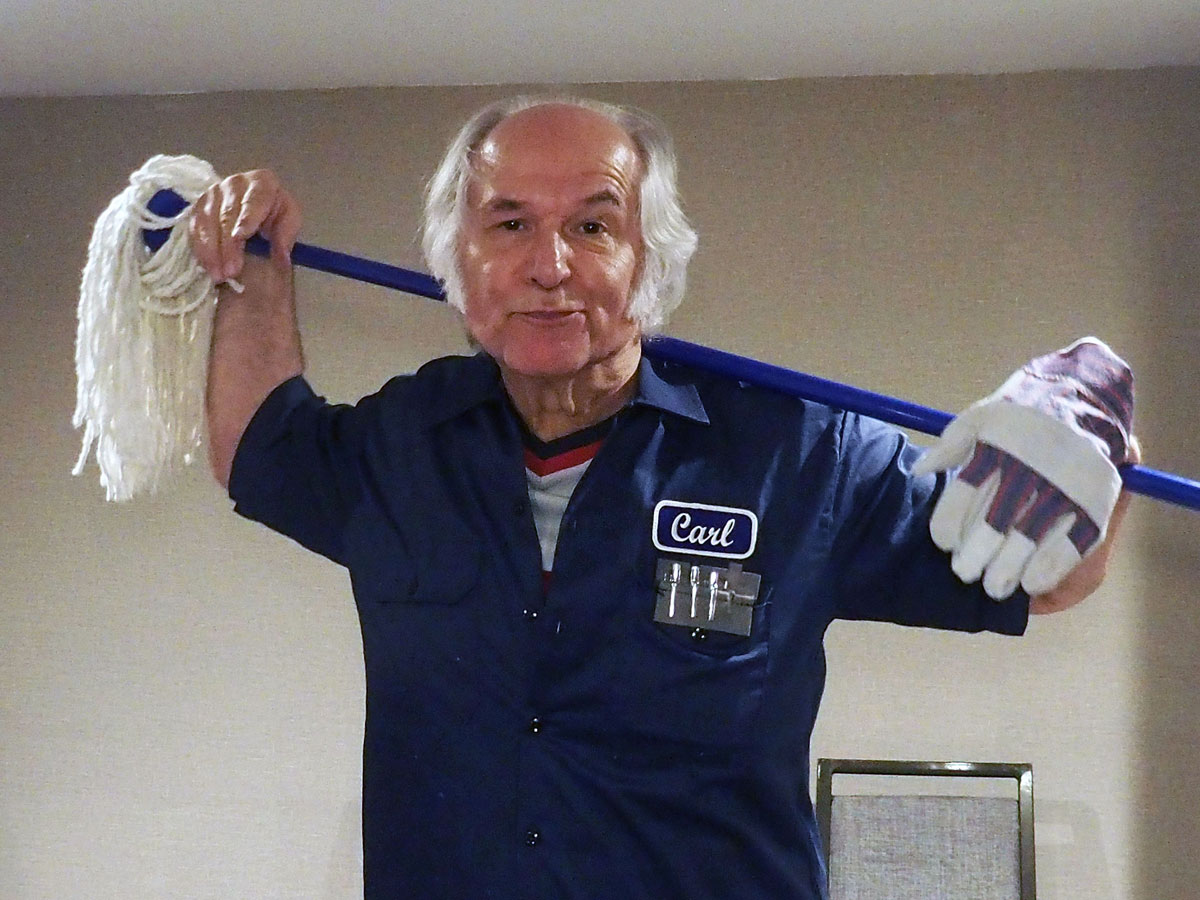
Don’t you forget about Carl: An homage to the janitor in “The Breakfast Club”

John Hughes' teen coming-of-age dramedy, "The Breakfast Club," came out in 1985, which was 40 whole years ago. Hard to believe.

Featuring several key members of Hollywood’s Brat Pack: Emilio Estevez, Anthony Michael Hall, Judd Nelson, Molly Ringwald and Ally Sheedy, the film tells the story of five teenagers from different high school cliques who serve a Saturday detention overseen by two adults: Paul Gleason as Vice Principal Vernon and John Kapelos as Carl the janitor, who was twenty-eight when the movie was made.

While Principal Vernon embodies the bitterness and disillusionment of adulthood, Carl presents an alternative: a man who understands the system but doesn’t let it define him. 

Hughes wrote the script in 1982 and filmed it in the spring of 1984. The whole movie was shot at Maine North High School in Des Plaines, Illinois. I remember watching this film for the first time in 9th grade health class and thinking, "Hey, that's my neighborhood." I grew up in Des Plaines (woooo, Maine East Class of ’99) and Hughes grew up in the neighboring suburb of Northbrook. Whenever people watch this movie, they immediately begin to self-reflect on which character best represents their own life story. Is it nerdy Brian, jock Andrew, weirdo Allison, popular Claire, or hooligan Bender? Certainly, none of us relate to authoritarian Vernon, who assigned them each a thousand-word essay on “Who do you think you are?” In response to this big philosophical ask, the pressing question for me has always been: What about Carl Reed?

In the opening moments of the film, the camera pans quickly across a photo plaque of Carl from 1969—he was awarded Man of the Year when he attended that very same high school, and now, he is “following a broom around after s**theads like you,” he remarks to the kids he spends his workdays curiously spying on.

Carl’s role in the story is so often overlooked that even the film’s Wikipedia page affords him only one mention in the plot summary: “Meanwhile, Vernon complains to the janitor, Carl, that students have become less disciplined and more arrogant compared to the ones he had when he was a teacher, but Carl suggests that Vernon is the one who has changed and cares too much about what the students think of him.” Carl’s perceived value is usually limited to the pearls of wisdom he drops in this one conversation with the other adult in the movie. But what about the luxurious intimacy of Carl’s uninterrupted time spent alone, or the moments he spends with the kids? The role calls for a straight-up sage, albeit a somewhat comedic one. A telling detail from the casting proves it. This role originally belonged to Rick Moranis, but when producers saw the travesty of a cartoonish Russian character he’d created for the part, he was replaced with Kapelos.

John KapelosJohn Kapelos attends the Chiller Theatre Autograph Expo Spring 2024 at Parsippany Hilton on April 28, 2024 in Parsippany, New Jersey. (Bobby Bank/Getty Images)The other reason why we should take Carl more seriously is that they gave him a song. Eight of the ten songs on the movie soundtrack credit Keith Forsey as the writer, with five co-credits to composer Steve Schiff. Forsey, more widely known as Giorgio Moroder's drummer, won an Academy Award for "Flashdance…What a Feeling," and had done other hits for "Ghostbusters," "Beverly Hills Cop," and "The NeverEnding Story." The song Forsey and Schiff co-wrote for Carl to listen to is "Waiting," sung by Elizabeth Daily—perhaps better known to Gen Xers as the voice of Tommy Pickles on "Rugrats" and Buttercup on "The Powerpuff Girls." Forsey himself played synthesizer and keyboards on the song, in addition to serving as its producer, mixer, and drum programmer.


Want a daily wrap-up of all the news and commentary Salon has to offer? Subscribe to our morning newsletter, Crash Course.


The scene where “Waiting” is emanating quietly from Carl’s headphones offers a more nuanced take on maturity. While Principal Vernon embodies the bitterness and disillusionment of adulthood, Carl presents an alternative: a man who understands the system but doesn’t let it define him. For Carl, “Waiting” encapsulates a different kind of perspective on life than that of Principal Vernon. Vernon is the archetype of the jaded adult, one who has lost faith in both himself and future generations. His conversation with Carl reveals deep-seated resentment when he laments that the students will be running the country someday and predicts they will be just as self-serving as their parents. For him, time is a conveyor belt leading to inevitable disappointment, a viewpoint shaped by his own failures and growing irrelevance. In his world, waiting is futile because he’s already resigned himself to the belief that nothing gets better. The lyric, “Sitting on ice while the clock is watching, losing face,” describes Vernon’s passivity and despair.

Carl sees the world through a more pragmatic but still hopeful lens.

By contrast, Carl sees the world through a more pragmatic but still hopeful lens. He has no problem leveraging the corruption and flaws in the system when he takes fifty bucks off Vernon in exchange for not reporting the fact that Vernon was looking through confidential school records. But he also recognizes the potential for positive change. When Bender mocks him early in the film, Carl warns Bender not to view him as an “untouchable peasant” and delivers his iconic line, “I am the eyes and ears of this institution, my friends.” This suggests that he observes everything, not just the failings but also the possibilities. Carl comes in peace; the teenagers are actually his compatriots more so than Vernon. Unlike Vernon, he doesn’t assume that the students are doomed to become the worst versions of their parents. His presence in the film argues that adulthood isn’t just about authority and disappointment. It’s also about perspective. The song reinforces this idea with the line “Dreaming of a better space in time,” holding out the possibility of something better, not just endless Saturday detentions.

“Waiting” is a song about longing and persistence, themes that resonate deeply with the core struggles of the film’s teenage protagonists. The lyric, “Drifting through eternal systems / Language spoken, no one listens,” echoes the students’ frustration with being unheard and misunderstood by the adults in their lives. The students worry about the expectations imposed on them and are afraid of being trapped in roles that don’t fit. The song’s refrain, “Waiting, someone better have an answer for me,” underscores the tension between feeling stuck and wanting more, mirroring their collective journey over the course of detention.

Carl tells Vernon, “When I was a kid, I wanted to be John Lennon,” and as it turns out, the janitor is a surprisingly insightful presence, cutting through the posturing of adults and students alike. “Waiting” playing in his headphones isn’t just a throwaway filler detail but instead reveals his role as sort of a guardian angel. By the end, even Bender musters a smile when he exits the building, telling Carl, “See you next Saturday,” to which Carl enthusiastically replies, “You bet.” His part is subtle but it's a powerful reminder that adulthood doesn’t have to mean giving up. It can mean watching, listening, and understanding that things can always change, even if it takes time. As the song puts it, “Waiting is the price of freedom.”

“I am overwhelmed”: Mangione shares first public statement since arrest in CEO shooting

Luigi Mangione has shared his first public statement since being arrested and charged with the murder of UnitedHealthcare CEO Brian Thompson. 

"I am overwhelmed by – and grateful for – everyone who has written me to share their stories and express their support. Powerfully, this support has transcended political, racial, and even class divisions, as mail has flooded MDC from across the country, and around the globe," Mangione wrote. "While it is impossible for me to reply to most letters, please know that I read every one that I receive. Thank you again to everyone who took the time to write. I look forward to hearing more in the future."

The statement came via a new website set up to provide updates on Mangione's case. The website was created by attorneys representing Mangione in New York. In addition to news about the case, the website answers frequently asked questions about Mangione's detention and provides a link to sympathizers who wish to donate to Mangione's defense fund. 

Mangione is facing a litany of state-level and federal charges for the alleged murder. Federal prosecutors claim that Mangione kept a notebook that “describes an intent to ‘wack’ the CEO of one of the insurance companies at its investor conference” and that Mangione targeted Thompson to make a statement about U.S. medical insurance.

In the wake of Thompson's killing, UnitedHealth CEO Andrew Witty admitted that the way that healthcare works in the United States is less than ideal. 

“We know the health system does not work as well as it should, and we understand people’s frustrations with it,” Witty wrote in a New York Times op-ed. "No one would design a system like the one we have. And no one did. It’s a patchwork built over decades."

In the brain, smell and sight are closer friends than we thought

Most of us take our senses for granted, at least until one of them stops working. But despite the usefulness of smell, sight, touch and the other senses, they took millions of years to work themselves out. Indeed, many creatures in the tree of life have evolved just fine without eyes or ears, while others have senses we can only imagine. Just the fact that we can see and smell is something of a miracle, and scientists are still learning how they work — and how they work together.

“Natural environments require humans and other species to constantly integrate visual and olfactory sensory cues,” the authors of an October study in Nature describe how odors are represented in the human brain at the most basic level, that of individual neurons involved in olfaction, or smell. Until now, little has been known on how this actually happens in the human brain.

That’s because investigating how olfaction works at the level of individual neurons required a delicate process allowed for recording of single neuron activity. Such recording is often done in animal models but rarely, for ethical reasons, in humans. In this case, epilepsy patients in need of invasive diagnostic surgery offered the opportunity to carry out the procedure without adding to subjects’ existing risk. 

The researchers inserted a bundle of fine micro wires, capable of recording the action potential of a single neuron, through the hollow inner canal of depth electrodes implanted as part of the epilepsy procedure. The patients, awake during the procedure, were given an odor rating (like or dislike) and identification task. They would identify the smell of bananas, garlic, licorice, fish and so on, while the researchers took recordings of the activity of individual neurons in their piriform cortex and medial temporal lobe.

Florian Mormann, lead author on the study, told Salon in a video interview from Bonn that “the surprising finding to us was that we found cells that responded both to an odor and to the picture … of an object that is associated with the odor. For example, the smell of a banana, the picture of a banana and the written word ‘banana.’”

The latter response, Mormann noted, took place in a neuron of the amygdala, which is already known to contain semantic concept cells and to be involved in olfaction. These are neurons that humans, but seemingly not other animals, possess that flexibly encode elements of experience. A concept cell might be invariably linked to a specific person, for example, and will fire on seeing a photo of the person, or reading their name, or hearing their voice.

These concept cells have to date only been found in the medial temporal lobe, where the amygdala is located and where many structures related to cognition and emotion are found. But in the piriform cortex, a brain region associated with olfaction, they also found a neuron that increases firing in response to both the smell of licorice and the images of a piece of licorice candy and the written word licorice — and even to the smell of anise, which is similar in flavor and often used in licorice candy.

Olfactory concept cells, important for memory, thus seem to bring together the senses of sight and smell.

The fact that what Mormann calls olfactory concept cells found in the piriform cortex respond to visuals is surprising. But this wasn’t just a single phenomenon: Of 1,856 neurons, 66 responded to both images and odors.

“They reliably encode odor-related images,” Mormann noted. “It’s supposed to be the primary olfactory cortex.”

Precisely. You wouldn’t expect your vision centers to respond to odors or sounds. But we do know that when you imagine something without actually receiving any visual stimulus from your retina, your primary visual cortex does get activated.

“My best explanation for that is that this reflects olfactory imagery,” Mormann said. “This has to be brought about by some top-down process in which some conscious part of the brain decides ‘I want to think of something now and then.’”

Mormann is suggesting that olfactory concept cells allow you to smell something you merely imagine. “So I see the banana, and I think of the smell that I just smelled, and thereby reactivate these representations in the olfactory cortex. It’s the best explanation. It’s purely speculative,” he noted. Which is why he and his team are now looking into how quickly the neural response to visual stimuli occurs in the olfactory regions.


Want more health and science stories in your inbox? Subscribe to Salon's weekly newsletter Lab Notes.


“You would expect that first of all, you need to recognize the picture of a banana, or you need to read the word ‘banana.’ And by the time that the conscious recognition of that has happened, which is around 300 milliseconds … Then the onset latency should be at least that amount of time, if not even more.” 

That would suggest that Mormann’s speculation is correct, and the banana visual is triggering our olfactory concept cells to imagine the rich, ripe banana odor that results, when there’s actually a banana there, from a compound called isoamyl acetate. Presumably reading the word isoamyl acetate would not trigger the smell of a banana though — except perhaps in biochemists, science nerds or perfumers for whom it’s become part of their internal concept of the fruit.

How does a color smell?

Olfactory concept cells, important for memory, thus seem to bring together the senses of sight and smell. But this isn’t the only way in which these two senses overlap. What about less obvious mental connections between the senses? For example, what color is the smell of a banana? What shape is its smell? Sure, as Shakespeare’s Juliet said, “That which we call a rose by any other name would smell as sweet–but would a rose smell as sweet if it looked more like the “world’s ugliest orchid”?

Perhaps not, if olfaction and sight are closely linked. Crossmodal correspondences are “the tendency for a sensory feature / attribute in one sensory modality (either physically present or merely imagined), to be associated with a sensory feature in another sensory modality”, according to University of Oxford experimental psychologist Charles Spence. The physical co-location found between olfaction and sight that Mormann’s team found in the olfactory cortex may be part of the physical apparatus behind such crossmodality. These can be far more imaginative than associating the smell of a thing with its visual representation (banana to banana smell.)

There is evidence that humans associate certain smells or tastes with certain visual attributes, suggesting a crossover between the olfactory and the visual senses. In fact, often what we think is taste is actually olfaction, Spence notes: “If I make a loud noise, suddenly the light seems brighter. That’s a crossmodal effect. It made the light seem bright — I didn’t put [the senses] together into a ‘sounding light.’ Whereas multisensory would be like when you hear my voice, you see my lips moving, we actually perceive it as one audiovisual [object].”

“And then synesthesia would be … these rare individuals who experience additional sensations that sometimes happen to be across the senses, but most commonly sight,” Spence told Salon in a video interview.

Crossmodal correspondences, which are less idiosyncratic and unlike synesthesia (where a common example is the synesthete seeing letters in color) always involve more than one of the senses, are of greater interest to Spence, who sees them as a kind of universal synesthesia.

Bouba is round; kiki is pointy

“Why do people think that sweet is round … that bitter is angular and sour is high-pitched?” Spence asked rhetorically. And most people would agree. Crossmodal correspondences like these are fundamentally different from synesthesia, where a flavor/sight example might be the case of the British man who tastes words and has identified not just the flavors of every stop on the London Tube, but also every subway station in far-away Toronto.

We need your help to stay independent

“These cross modal correspondences are shared across people. Is it across everybody? Is it universal? Sometimes, perhaps yes,” Spence said. “But it’s much more consensual, much more agreed. I know that 95% of the people in the world, no matter what language they speak, will think that [the nonsensical word] ‘bouba’ is round, ‘kiki’ is angular.”

In fact, there is significant academic literature on the bouba-kiki effect. And it will come as no surprise to most (unless you’re in the benighted 5%) when I tell you that most people who are told the nonsense or pseudoword “maluma” know for a fact that it’s sweet — despite not having the slightest idea what a maluma is.

It’s not clear, though, whether these reliable associations between different sensory modes, including sight and olfaction, result from shared early experiences, like an almost-universal cultural influence, or from co-location of concept neurons like those identified by Mormann and his team in their single neuron study, and to what extent the visual appearance of the word (like seeing the written word banana can trigger the smell) determines the associations.

A rose by any other name might smell as sweet, but if you changed its color? All bets are off. Perhaps if you rename it a Maluma Rose.

Is it time for America’s judges to go on strike?

Now that multiple court orders are blocking executive actions by the new administration, the Vice President has openly suggested that the executive branch may simply ignore them. That statement risks a constitutional crisis because it challenges a bedrock principle of separation of powers: the holding of 1803's Marbury v. Madison that "it is emphatically the province and duty of the judicial department to say what the law is."

For over two centuries, Marbury and the concept of judicial review have ensured that no politicians or agency administrators—no matter how powerful—can place themselves above the law.  While compliance with court orders has at times been grudging, the President and Congress have consistently respected Marbury in the end because it is part of the glue that holds the Constitution together.

If the Trump Administration is willing to test whether judicial authority can be ignored, how can the courts respond? So far, responses have been  rhetoric from the Chief Justice, talk of civil-contempt fines (which a defiant executive could refuse to pay), and speculation about contempt charges for agency officials (whom a defiant executive could pardon). The judiciary’s usual tools for forcing compliance with court orders could easily be ineffective if the entire executive branch refuses to comply. 

But identifying that problem — that remedies designed to enforce orders in a specific case don’t work well against a concerted effort to ignore orders in many cases — suggests a potential solution. In other contexts, courts identify the party as the problem rather than the order immediately at hand — for example, a “jailhouse lawyer” serving a life sentence in prison who endlessly files frivolous lawsuits.  A body of law has developed about “vexatious litigants” whose filings are simply dismissed out of hand unless they allege an imminent risk of serious harm. 

A similar body of law is “judicial estoppel,” a doctrine that prevents a party from taking inconsistent positions in separate legal proceedings. If the executive branch refuses to comply with judicial rulings, courts could invoke judicial estoppel to bar the government from asserting legal arguments or seeking relief in other cases, on the ground that it cannot simultaneously demand judicial enforcement of its rights while rejecting judicial authority.

What if the judiciary treated the federal government itself as a vexatious litigant? Imagine courts refusing to hear broad categories of cases where the United States is a party until the executive branch obeys court orders. The agencies and departments that make up the federal government rely heavily on the courts to enforce contracts, prosecute criminal cases, and otherwise resolve a sprawling range of disputes about the operation of government. . A refusal to entertain some — or most — cases from an Administration that disrespects judicial authority would be a drastic but forceful step—and far more effective than imposing fines that will likely not be paid. 

The functional equivalent of a “judicial strike” is a radical idea without precedent. But so is an administration openly contemplating the defiance of court orders and a rejection of Marbury. If court orders can be ignored without meaningful consequence, then courts will be losing cases anyway — and the most impactful ones, where the Constitution’s limits on executive power are at issue. 

We need your help to stay independent

Public opinion will be critical in this crisis. The judiciary relies on public support for its legitimacy. If courts take any kind of radical step along these lines, they must ensure the public understands the stakes and the role of judicial review in maintaining the rule of law. That requires public-relations savvy that is not the ordinary business of the federal courts. But again, there is no real choice. If the courts cannot explain what is at stake when Marbury is challenged, then their legitimacy will be at serious risk anyway. 

This is a radical proposal. But the truly radical idea is that the executive branch can unilaterally decide, after 200 years of success, to jettison Marbury. If the courts are faced with systematic disobedience of their orders, and choose to respond by focusing exclusively on inadequate remedies, both the judiciary and the American people will be the worse for it.

Republican states claim zero abortions. A red-state doctor calls that “ludicrous”

In Arkansas, state health officials announced a stunning statistic for 2023: The total number of abortions in the state, where some 1.5 million women live, was zero.

In South Dakota, too, official records show zero abortions that year.

And in Idaho, home to abortion battles that have recently made their way to the U.S. Supreme Court, the official number of recorded abortions was just five.

In nearly a dozen states with total or near-total abortion bans, government officials claimed that zero or very few abortions occurred in 2023, the first full year after the Supreme Court eliminated federal abortion rights.

Those statistics, the most recent available and published in government records, have been celebrated by anti-abortion activists. Medical professionals say such accounts are not only untrue but fundamentally dishonest.

“To say there are no abortions going on in South Dakota is ludicrous,” said Amy Kelley, an OB-GYN in Sioux Falls, South Dakota, citing female patients who have come to her hospital after taking abortion pills or to have medical procedures meant to prevent death or end nonviable pregnancies. “I can think of five off the top of my head that I dealt with,” she said, “and I have 15 partners.”

For some data scientists, these statistics also suggest a troubling trend: the potential politicization of vital statistics.

“It’s so clinically dishonest,” said Ushma Upadhyay, a public health scientist at the University of California-San Francisco, who co-chairs WeCount, an academic research effort that has kept a tally of the number of abortions nationwide since April 2022.

The zeroing out is statistically unlikely, Upadhyay said, and also runs counter to the reality that pregnancy “comes with many risks and in many cases emergency abortion care will be needed.”

“We know they are sometimes necessary to save the pregnant person’s life,” she said, “so I do hope there are abortions occurring in South Dakota.”

State officials reported a sharp decline in the official number of abortions after the Supreme Court overturned Roe v. Wade in June 2022.

  • Arkansas reported zero abortions in 2023, compared with 1,621 in 2022.
  • Texas reported 60 in 2023, after reporting 50,783 abortions in the state in 2021.
  • Idaho reported five in 2023 compared with 1,553 in 2021.
  • South Dakota, which had severely restricted abortions years ahead of the Dobbs ruling, reported zero in 2023 compared with 192 abortions in 2021.

Anti-abortion politicians and activists have cited these statistics to bolster their claims that their decades-long crusade to end abortion is a success.

“Undoubtedly, many Arkansas pregnant mothers were spared from the lifelong regrets and physical complications abortion can cause and babies are alive today in Arkansas,” Rose Mimms, executive director of Arkansas Right to Life, said in a press statement. “That’s a win-win for them and our state.”

A spokesperson for the Arkansas Department of Health, Ashley Whitlow, said in an email that the department “is not able to track abortions that take place out of the state or outside of a healthcare facility.” State officials, she said, collect data from “in-state providers and facilities for the Induced Abortion data reports as required by Arkansas law.”

WeCount’s tallies of observed telehealth abortions do not appear in the official state numbers. For instance, from April to June 2024 it counted an average of 240 telehealth abortions a month in Arkansas.

Groups that oppose abortion rights acknowledge that state surveillance reports do not tell the full story of abortion care occurring in their states. Mimms, of Arkansas Right to Life, said she would not expect abortions to be reported in the state, since the procedure is illegal except to prevent a patient’s death.

“Women are still seeking out abortions in Arkansas, whether it’s illegally or going out of state for illegal abortion,” Mimms told KFF Health News. “We’re not naive.”

The South Dakota Department of Health “compiles information it receives from health care organizations around the state and reports it accordingly,” Tia Kafka, its marketing and outreach director, said in an email responding to questions about the statistics. Kafka declined to comment on specific questions about abortions being performed in the state or characterizations that South Dakota’s report is flawed.

Kim Floren, who serves as director of the Justice Empowerment Network, which provides funds and practical support to help South Dakota patients receive abortion care, expressed disbelief in the state’s official figures.

“In 2023, we served over 500 patients,” she said. “Most of them were from South Dakota.”

“For better or worse, government data is the official record,” said Ishan Mehta, director for media and democracy at Common Cause, the nonpartisan public interest group. “You are not just reporting data. You are feeding into an ecosystem that is going to have much larger ramifications.”

When there is a mismatch in the data reported by state governments and credible researchers, including WeCount and the Guttmacher Institute, a reproductive health research group that supports abortion rights, state researchers need to dig deeper, Mehta said.

“This is going to create a historical record for archivists and researchers and people who are going to look at the decades-long trend and try to understand how big public policy changes affected maternal health care,” Mehta said. And now, the recordkeepers “don’t seem to be fully thinking through the ramifications of their actions.”

A Culture of Fear

Abortion rights supporters agree that there has been a steep drop in the number of abortions in every state that enacted laws criminalizing abortion. In states with total bans, 63 clinics have stopped providing abortions. And doctors and medical providers face criminal charges for providing or assisting in abortion care in at least a dozen states.

Practitioners find themselves working in a culture of confusion and fear, which could contribute to a hesitancy to report abortions — despite some state efforts to make clear when abortion is allowed.

For instance, South Dakota Department of Health Secretary Melissa Magstadt released a video to clarify when an abortion is legal under the state’s strict ban.

The procedure is legal in South Dakota only when a pregnant woman is facing death. Magstadt said doctors should use “reasonable medical judgment” and “document their thought process.”

Any doctor convicted of performing an unlawful abortion faces up to two years in prison.

In the place of reliable statistics, academic researchers at WeCount use symbols like dashes to indicate they can’t accurately capture the reality on the ground.

“We try to make an effort to make clear that it’s not zero. That’s the approach these departments of health should take,” said WeCount’s Upadhyay, adding that health departments “should acknowledge that abortions are happening in their states but they can’t count them because they have created a culture of fear, a fear of lawsuits, having licenses revoked.”

“Maybe that’s what they should say,” she said, “instead of putting a zero in their reports.”

Mixed Mandates for Abortion Data

For decades, dozens of states have required abortion providers to collect detailed demographic information on the women who have abortions, including race, age, city, and county — and, in some cases, marital status and the reason for ending the pregnancy.

Researchers who compile data on abortion say there can be sound public health reasons for monitoring the statistics surrounding medical care, namely to evaluate the impact of policy changes. That has become particularly important in the wake of the Supreme Court’s 2022 Dobbs decision, which ended the federal right to an abortion and opened the door to laws in Republican-led states restricting and sometimes outlawing abortion care.

Isaac Maddow-Zimet, a Guttmacher data scientist, said data collection has been used by abortion opponents to overburden clinics with paperwork and force patients to answer intrusive questions. “It’s part of a pretty long history of those tools being used to stigmatize abortion,” he said.

In South Dakota, clinic staff members were required to report the weight of the contents of the uterus, including the woman’s blood, a requirement that had no medical purpose and had the effect of exaggerating the weight of pregnancy tissue, said Floren, who worked at a clinic that provided abortion care before the state’s ban.

“If it was a procedural abortion, you had to weigh everything that came out and write that down on the report,” Floren said.

The Centers for Disease Control and Prevention does not mandate abortion reporting, and some Democratic-led states, including California, do not require clinics or health care providers to collect data. Each year, the CDC requests abortion data from the central health agencies for every state, the District of Columbia, and New York City, and these states and jurisdictions voluntarily report aggregated data for inclusion in the CDC’s annual “Abortion Surveillance” report.

In states that mandate public abortion tracking, hospitals, clinics, and physicians report the number of abortions to state health departments in what are typically called “induced termination of pregnancy” reports, or ITOPs.

Before Dobbs, such reports recorded procedural and medication abortions. But following the elimination of federal abortion rights, clinics shuttered in states with criminal abortion bans. More patients began accessing abortion medication through online organizations, including Aid Access, that do not fall under mandatory state reporting laws.

At least six states have enacted what are called “shield laws” to protect providers who send pills to patients in states with abortion bans. That includes New York, where Linda Prine, a family physician employed by Aid Access, prescribes and sends abortion pills to patients across the country.

Asked about states reporting zero or very few abortions in 2023, Prine said she was certain those statistics were wrong. Texas, for example, reported 50,783 abortions in the state in 2021. Now the state reports on average five a month. WeCount reported an average of 2,800 telehealth abortions a month in Texas from April to June 2024.

“In 2023, Aid Access absolutely mailed pills to all three states in question — South Dakota, Arkansas, and Texas,” Prine said.

Texas Attorney General Ken Paxton filed a lawsuit in January against a New York-based physician, Maggie Carpenter, co-founder of the Abortion Coalition for Telemedicine, for prescribing abortion pills to a Texas patient in violation of Texas’ near-total abortion ban. It’s the first legal challenge to New York’s shield law and threatens to derail access to medication abortion.

Still, some state officials in states with abortion bans have sought to choke off the supply of medication that induces abortion. In May, Arkansas Attorney General Tim Griffin wrote cease and desist letters to Aid Access in the Netherlands and Choices Women’s Medical Center in New York City, stating that “abortion pills may not legally be shipped to Arkansas” and accusing the medical organizations of potentially “false, deceptive, and unconscionable trade practices” that carry up to $10,000 per violation.

Good-government groups like Common Cause say that the dangers of officials relying on misleading statistics are myriad, including a disintegration of public trust as well as ill-informed legislation.

These concerns have been heightened by misinformation surrounding health care, including an entrenched and vocal anti-vaccine movement and the objections of some conservative politicians to mandates related to covid-19, including masks, physical distancing, and school and business closures.

“If the state is not going to put in a little more than the bare minimum to just find out if their data is accurate or not,” Mehta said, “we are in a very dangerous place.”

KFF Health News is a national newsroom that produces in-depth journalism about health issues and is one of the core operating programs at KFF—an independent source of health policy research, polling, and journalism. Learn more about KFF.

Subscribe to KFF Health News' free Morning Briefing.

This article first appeared on KFF Health News and is republished here under a Creative Commons license.

Trump, sensing a lack of solidarity, pushes the press down a slippery slope

While Vice President JD Vance flew to Munich and angered our closest allies on a variety of subjects, including free speech, the president was busy in Washington D.C. banning the press in an effort to stifle free speech.

Welcome to the 26th day of the new Donald Trump regime.

A few days earlier, the White House press pool gathered to enter the Oval Office for another day of Trump signing and commenting on presidential executive orders and whatever else struck his fancy when a White House official stopped the Associated Press reporter from entering. “No. Sorry,” the official said, as another pooler noted that wranglers looked on “sheepishly.” Though a member of the press pool, the AP reporter wasn’t getting into the Oval Office.

Donald Trump is sticking his index, middle and ring finger up to the camera to the citizens of the world and telling us all to “read between the lines.”

Trump has a bug up his nether regions about the AP because it won’t recognize the Gulf of Mexico as “the Gulf of America,” per Trump’s royal decree. “The Associated Press continues to ignore the lawful geographic name change of the Gulf of America,” Trump said via a post on X. “While their right to irresponsible and dishonest reporting is protected by the First Amendment, it does not ensure their privilege of unfettered access to limited spaces, like the Oval Office and Air Force One.”

It's not only questionable whether it’s a “lawful” name change, but the rest of the world hasn’t acknowledged the change, so the AP — with offices around the world — has been right to withhold the change until something definitive — like a law being passed, or other countries acknowledging the change, take place. No matter, Trump isn’t going to wait. He wants you to bow right now damnit. So Trump has kicked the AP out of the pool for not bending its collective knee. This begs the question what will happen when other reporters question Trump on anything from vaccines to Ukraine to immigration to a variety of other important topics. If Trump declares he’s stating facts when he isn’t, and we question him on the facts, who else will be kicked out of the pool for not agreeing with the president?

That’s a slippery slope into a cesspool I’d prefer to avoid.

Trump says the AP isn’t losing its access to the White House grounds or their press passes. He learned the hard way, after both I and Jim Acosta defeated him in court during his last administration, that taking a press pass is problematic. But according to First Amendment attorney Ted Boutrous, who defended both me and Acosta, the AP has a great case to make against Trump. “The AP has extremely strong arguments that their exclusion from these events blatantly violates the First Amendment and due process. The White House is unconstitutionally punishing the AP based on the contents of its reporting and its editorial choices. The Acosta and Karem rulings provide strong support for immediate legal action and I am surprised they have not already gone into court,” Boutrous said.

Trump’s action shows that he is still trying to negotiate around the press, removing those who don’t agree with him, ask difficult questions or those who won’t bow before him. Now he’s trying to say that merely getting onto the White House campus is enough to cover the administration. But those of us not in the press pool know what the president is really saying to the AP: Just sit at your chair, raise your hand and don’t get called on. Go back into the press office and get ignored by staff. Make calls that aren’t returned. Write emails that don’t get answered. That’s what Trump is actually advocating. I suppose he believes you can cover the administration through osmosis. 

His latest actions do not bode well for coverage of the President of North Korea, I mean Russia . . . I mean the United States of Donald Trump. It is without a doubt chilling to the process of reporting and puts Trump in the driver’s seat of determining who can and cannot cover his presidency based solely on what he declares the facts to be. We all know those declarations can and will change frequently.

The greatest example of that was the infamous classified documents case. Trump first said he didn’t have classified documents, then claimed they were planted by the FBI and then later admitted he had them but he had declassified them with his mind and therefore had every right to keep them. Most people are not capable of such mental gymnastics — not if they call themselves sane, sober and mostly ethical. 

We need your help to stay independent

A long-time source and member of the Trump administration told me “on deep background only” that Donald Trump doesn’t care if he angers the press. “He just wants you to leave him alone, don’t ask any question he can’t answer and let him ‘perform’ for the cameras.” Donald Trump wants to be the entertainer, king, sport star and rich celebrity, all rolled up into one.

Trump’s actions have already led to frosty relations worldwide among our staunchest allies. “The new American administration has a very different world view to ours, one that has no regard for established rules, partnership and grown trust,” German President Frank-Walter Steinmeier said prior to Vance’s speech in Munich, which was met with “icy reception” and tepid applause, according to NBC News.

The fact is there is no solidarity among reporters. We are far too competitive.

"I was in the room in Munich for VP Vance’s speech," Sen. Andy Kim, D-N.J., wrote in a post on X. "No talk about Russia, Ukraine, China. Just criticisms of our allies and focus on “the threat from within.” His speech is going to embolden our adversaries who will see this as a green light to act while America is distracted/divided."

And while Vance said Russia and China aren’t the problem, Donald Trump was in the White House declaring that Vance made a “very good speech, actually very brilliant,” before saying, “In Europe they’re losing their wonderful right of freedom of speech.” Reporters didn’t ask, and Trump didn’t offer, why he was both siding with Russia and China against our allies and at the same time limiting free speech in this country while decrying the fictional loss of free speech in Europe.

But that’s part of the plan. Remember: Donald Trump doesn’t care.

Donald Trump is sticking his index, middle and ring finger up to the camera to the citizens of the world and telling us all to “read between the lines.” His fans love him for it and cheer as he “waves” at them into the camera. The rest of us know exactly what he’s saying. And some of us, sadly, will happily return the “wave.”


Want a daily wrap-up of all the news and commentary Salon has to offer? Subscribe to our morning newsletter, Crash Course.


There are some who believe the press should walk out in a mass boycott and refuse to cover the president. That’s as silly as Trump saying he’s a supporter of free speech. The fact is there is no solidarity among reporters. We are far too competitive. For that matter, Trump would love it if we all walked out of the press pool, the briefing room and his life. He’d simply fill the room with fans and sycophants and there are hundreds if not thousands of reporters who’d give their soul, if they haven’t already, to stand next to and question the president. Look around, there are already enough sycophants covering him. On Friday, he sat side-by-side with Elon Musk for an interview with Fox News’ Sean Hannity. How many times will we have to hear reporters compliment Trump or his cheerleader press secretary before asking a shallow question that is never really answered? 

The White House Correspondents Association has apparently circulated a letter asking news organizations to sign on and support the AP. Why? Anyone who signs on to this letter will simply be blacklisted by the White House. Why not just issue a statement from the WHCA stating that everyone stands by the AP? That would be more effective. Don't give Trump multiple targets. Don't bend over.

If you haven’t figured it out by now, let me put it as bluntly as I can to my colleagues in the press: If you want to cover Donald Trump, then you have to stand up to him. You have to refuse to move. Refuse to bend. Refuse to break. Ask him the important questions. Push back against his verbal defecation. It doesn’t matter what he, other reporters or anyone else thinks of you. 

Your job is to ask questions of the president. Speak truth to power. You must put that ahead of your own job. You must put that ahead of your career. 

You are the public’s representative. You’re not at the White House to be popular. You’re not there to make friends. If you need a friend, then get a dog.

Do your job. Be ready to go to jail, lose your job and your access to do it. Otherwise, you’re part of the problem. And right now we need solutions.

Are Democrats screwing this up? Lawmakers and activists quarrel over how to fight Trump

By a week into President Donald Trump's second term, political observers were wondering where Democratic lawmakers and voters alike had gone. Instead of a wave of protests — like the 2017 Women's March, attended by 200,000 people — the response to Trump's second inauguration was subdued; instead of vows to fight back, some in the opposition vowed to "work together" with Trump, choosing to confirm his nominees and collaborate on issues like mass deportation.

But after Trump's Office of Management and Budget issued a blanket federal grants suspension and Elon Musk's DOGE team began ferreting its way through federal agencies, outside pressure groups like Indivisible and MoveOn saw both an egregious power-grab and an opportunity to activate the Democratic base. 

"The Trump administration is creating an unprecedented constitutional crisis prompted by actions from the OMB spending freeze to the illegal firing of the inspectors general to Elon Musk having access to people's private information in treasury databases. This calls for an unprecedented response from Democrats not to go along with anything this administration is up to," Mary Small, Indivisible's chief strategy officer, told Salon.

The approach favored by Indivisible and its progressive allies entails a blockade of all of Trump's nominees and legislation, as well as using an impending must-pass government funding resolution as leverage against what they see as an administration gone amok. An obstructionist strategy in Congress combined with other forms of visible opposition, like protests and forceful rebuttals of GOP policies in the media, would represent a clean break from the party's approach in the first days of Trump's term.

Last month, 12 senators and 46 House members from the Democratic Party voted with the GOP to pass the Laken Riley Act, which requires federal authorities to detain immigrants accused — but not necessarily convicted — of a number of crimes. 

Several of Trump's nominees, including Treasury Secretary Scott Bessent, Interior Secretary Doug Burgum and Transportation Secretary Sean Duffy, were confirmed with substantial Democratic support, including from blue-state senators like Kirsten Gillibrand, D-N.Y., and Cory Booker, D-N.J. Gillibrand also went so far as to endorse former Rep. Elise Stefanik, R-N.Y., a staunch backer of Israeli expansionism, as UN ambassador.

While most of the Democratic caucus voted uniformly against Trump's agenda, many members refrained from publicly urging their more accommodating colleagues to take a more oppositional stance. Indeed, in a call with Democratic governors last month, Senate Minority Leader Chuck Schumer, D-N.Y., insisted that the most he could do was unify his caucus against the most controversial Trump nominees.

Outside groups have been urging a different approach. Since Trump took office and sought to throw the opposition off-balance with a "shock and awe" approach to governance, they have escalated a pressure campaign on both Democratic and potential swing GOP senators, primarily by helping constituents organize mass communication and rallies outside of lawmakers' offices in a show of resolve. Sometimes, like in the case of Sen. Ruben Gallego, D-Ariz., lawmakers' staff agreed to talk to the rallying constituents and promised to take their demands seriously when they refused earlier requests to leave.

"Our members want Democrats to use every bit of leverage at their disposal to fight for us,” Britt Jacovich, a spokesperson for MoveOn, told Salon.

As of Feb. 11, there's been over 300 cases of constituents showing up to lawmakers' offices and demanding face-time with staffers, according to Ezra Levin, Indivisible's co-executive director.

"If every single Democrat in the Senate and House, or even a healthy number of them is quietly pushing their leaders to play hardball, then Schumer and [House Minority Leader Hakeem Jeffries, D-N.Y.] are going to respond to that," Levin told Salon.

"What we're telling our folks is, if you want to see them leading an opposition party, and you've got a Democratic senator or a Democratic House member, you need to hold them accountable as well," Levin said. "They need to be pushing for a stronger response within the Democratic caucus and also be out there publicly stating that we need some clear red lines about what they're planning to do with this budget deal."

After a series of drastic, allegedly unconstitutional moves by the White House that some courts have already declared unlawful, Democrats appear to have found some renewed energy. According to Jacovich, over 50,000 people joined a Feb. 2 organization call hosted by Indivisible, MoveOn and the Working Families Party. 

"What we saw over the course of last weekend and headed through this week is the spark that has really caught fire," she said. "We do not feel like we are at the peak of constituent energy yet — that is still continuing to build and grow."

Meanwhile, the tone from congressional Democrats is shifting. Sens. Brian Schatz, D-Hawaii, and Chris Murphy, D-Conn., pledged to block all Trump appointees in over the administration's move to shutter the U.S. Agency for International Development — Schumer later urged the rest of his caucus to follow suit. They and several dozen other Democratic lawmakers attended a protest organized by MoveOn outside the treasury department building earlier this month, excoriating Trump and Musk for meddling in citizens' private information and usurping congressional prerogatives to make harmful cuts. But when some protesters chanted "SHUT DOWN THE SENATE" as Schumer spoke, many lawmakers shifted uncomfortably rather than join in.

We need your help to stay independent

To some groups' frustration, the message has sometimes been muddled by Democratic politicians reluctant to sever themselves from the party's corporate class. 

Days after the Treasury Department protest, Jeffries was mending fences with Silicon Valley donors, many of whom are "pissed, watching former and current colleagues have unlimited, unchecked power, and getting richer off of this and they’re not," according to one attendee of the fundraiser. Shortly afterwards, Jeffries told a reporter that among the "lessons learned from the 2017 tax fight" was that "House Democrats are the common sense caucus … we could have landed the plane right at 24-25% corporate tax rate like the CEOs asked for."

"I don't think aligning yourselves with corporate CEOs is a great way to build public opposition," Levin said. "They're by definition fewer in number than regular constituents, and we should be building a broad based coalition of not just Kamala Harris voters, not just non-voters, but also Trump voters who feel like they've been betrayed by this administration and this Congress, and aligning yourself with CEOs is no way to do that."

Some House Democrats, including Jeffries, are reportedly unhappy about being pushed into action. According to an Axios report, a meeting of the Steering and Policy Committee — with Jeffries in the room — turned into a grievance-airing session over the outside groups.

"People are pissed," one senior House Democrat told Axios about the calls their offices have been receiving, adding that Jeffries himself was "very frustrated."

"There were a lot of people who were like, 'We've got to stop the groups from doing this.' … People are concerned that they're saying we're not doing enough, but we're not in the majority," said another.

"I reject and resent the implication that congressional Democrats are simply standing by passively," said Rep. Ritchie Torres, D-N.Y., one of 46 House Democrats who voted for the final version of the Laken Riley Act.


Want a daily wrap-up of all the news and commentary Salon has to offer? Subscribe to our morning newsletter, Crash Course.


Meanwhile, centrist groups like Third Way are not so enthused by a blanket opposition strategy. Speaking to Salon, Kate deGruyter, Third Way's senior communications director, said the Trump administration and GOP majority are pursuing "alarming and damaging" policies, but Democrats cannot be expected to "chase every pitch" and should instead "focus on the things Americans are worrying about, like Trump-driven inflation."

"Republicans are in charge. They have the steering wheel, gas pedal and the key. People should focus their ire on them," deGruyter said. "We’re also at a moment where Democratic and Democratic-leaning voters are demanding that the party become more moderate. So Democrats should focus on bread and butter issues and ignore activists clamoring to push them further to the left. The path to take back the House and ultimately the White House is to win over the reasonable center and lawmakers must have that front and center as they show voters how Trump’s approach will increase costs and harm their families."

Progressives argue that labels like "moderate" and "left" are poorly defined from a voter's perspective, and that at this moment, the way to address those so-called "bread-and-butter" issues is to forcefully oppose Trump and his efforts to gut the federal bureaucracy at every turn. 

On Feb. 9, Indivisible, MoveOn, the Progressive Change Institute, Americans for Financial Reform and CFPB Union NTEU 335 co-hosted a rally to oppose Trump and Musk's moves to shut down the Consumer Financial Protection Bureau, which shields American consumers from exploitative business and lending practices. 16 of the 17 Democratic lawmakers who spoke at the event committed to opposing a must-pass government funding bill until the "constitutional crisis was over."

The one Democrat who said "he'd have to see the bill," Rep. Brad Sherman, D-Calif., was immediately confronted by chants of "WITHHOLD YOUR VOTE."

The aforementioned bill is a continuing resolution that would fund the government and raise the debt ceiling after the expiration of the current resolution — which passed last December with bipartisan support — and is potentially a key leverage point for Democrats. Groups like Third Way view it as a policy-focused battle, with deGruyter telling Salon that the price for any deal to fund the government "must be high, and it begins by identifying key principles that any deal must meet to protect the interests of hardworking American families and uphold our core values."

Others, like Talking Points Memo founder Josh Marshall, believe that the resolution, more than just a policy battle, must be used to force Trump to end his "spree of criminal and unconstitutional conduct."

"Democrats’ position needs to be this: no discussions, no negotiations until the law breaking stops. After that, if there is an after that, they can negotiate on actual budgetary issues, but not before," wrote Marshall.

"Eventually, there will be a deal with some Democrats to fund the government for the remainder of the year. The price for that deal must be high and it begins by identifying key principles that any deal must meet to protect the interests of hardworking American families and uphold our core values.

Both Schumer and Jeffries have maintained that they do not want to see a government shutdown and might support "sensible" legislation to avoid one, which Marshall posited could mean anything from meekly conceding to holding their cards close to not being so sure about their own plan of action yet. But simply accepting those statements, he continued, would mean trusting Democratic leadership to do the right thing — and that's "not a wise approach."

L.A. wildfires lead to price-gouging in rental market

As the raging wildfires in Los Angeles have displaced tens of thousands of people, they're also exacerbating fears of not being able to afford a place to live in a part of the country that has endured a decades-long housing shortage. 

As someone who lives in the neighboring town of Altadena, I've witnessed firsthand how L.A. residents scramble to file for federal assistance, gather essentials for everyday living and try to feel a semblance of normalcy and make sense of the devastation amid the chaos. On top of their stressors, price gouging is making the dire housing situation in Los Angeles County even worse. 

Per California Gov. Gavin Newsom's executive order on Jan. 17, landlords cannot raise rental unit prices by more than 10% compared to what they were listing right before the state of emergency on January 7th. This comes from Penal Code Section 396, which prohibits price gouging on consumer goods, services and rent. The provision is in effect for at least 30 days and can be renewed. 

Price gouging in rental market 

That said, price gouging is running as rampant as the wildfires. Per a recent study by The Rent Brigade, between Jan. 7 and Jan. 18, 1,343 listings on Zillow look like they've violated the state's ban on price gouging. For new listings, on average landlords and rental agents are charging renters 315% of the Fair Market Rent, which is nearly double the legal limit. 

"The reality is that price gouging is very hard to keep track of unless there is a record of the prices listed for a particular unit online," said Jacob Woocher, a tenant lawyer and organizer with the Los Angeles Center for Community and Action. "More generally, one cannot check for price gouging any more than one can check for exploitation and oppression; it is ubiquitous. As long as there are landlords, there will be price gouging." 

We need your help to stay independent

There have been instances of real estate agents charged with price gouging those impacted by the L.A. wildfires. California Attorney General Rob Bonta and the Department of Justice reported sending more than 650 warning letters to landlords and hotels in the state.

As Woocher explains, tenants and displaced families should keep in mind that the enforcement of price-gouging protections by those who are meant to do so — primarily the attorney general of California and local city and district attorneys — will almost certainly be lacking. "They may try to make an example out of a small number of the worst offenders, but this will be no more than a drop in the bucket," said Woocher. 

Understanding your rights 

If you live in Los Angeles County, you can check websites such as the Housing Rights Center, where you can look for information on what is legal and not legal regarding rent increases in your jurisdiction, said Chancela Al-Mansour, executive director of the HRC. This information can be found on the HRC's website and the County of Los Angeles. Plus, the City of Los Angeles and Pasadena have rent stabilization departments.  

Organizations such as the Housing Rights Center and the LA County Department of Consumer and Business Affairs are accepting rent price gouging complaints. You can also file a complaint with the city or jurisdiction where you live. So if you've experienced or witnessed potential price gouging, filing a complaint is fair game.

If you're renting or were displaced due to the fires, you must be keen on your tenant rights

If you're a prospective tenant, Al-Mansour recommends researching to find out what the posted rent was before Jan. 7. On some real estate platforms, such as Zillow and Trulia, you can see any price changes and the price history of a rental. "That way, you could know whether or not the rent they're being quoted is more than what's allowable under the law," she said. 

In other words, see if you can determine the rent before the fires. That could reveal the maximum rent the landlord or real estate agent can charge now, regardless of what was posted.

Preparing for renting after getting displaced

If you're renting or were displaced due to the fires, you must be keen on your tenant rights. Under Newsom's executive order,  you cannot be evicted if you're a renter and are housing people who the fires have displaced. This protection is in place until at least March 3, and can potentially be renewed. 

And if the home you're renting was built before 1978, it's protected under the Rent Stabilization Ordinance, which means that for many homes, rent cannot be raised more than 4%, and in some instances, no more than 6%. 

Douglas A. Boneparth, a certified financial planner and founder of Bone Fide Wealth, explains that before signing a lease, always be sure to carefully review it for hidden fees or unfair clauses.

Financial steps for getting back on your feet

While you might be in a panic and scramble to find a new place to live, says Boneparth, it's important to figure out what's feasible within your budget. 

A good place to start? Boneparth recommends calculating how much rent you can comfortably pay without dipping into savings that are intended for emergencies. 

"Moving expenses can be surprisingly high — even if you're moving only a short distance"

That said, depending on the particulars of your situation, it might be hard not to clear your savings. This depends on whether you've lost everything in your fire or need to uproot for a period of time while your home undergoes the restoration or partial rebuild period.   

Boneparth suggests not renting out of desperation. "The pressure to find a home quickly can be overwhelming—especially after losing your primary residence," he said. 

Hit "pause" before you sign up for the first rental you come across. You'll want to factor in all the expenses, said Boneparth. "Rent is just the start," he said. "There are one-time costs such as the security deposit, application fees and potential broker fees. Moving expenses can be surprisingly high — even if you're moving only a short distance." 

Moving expenses can depend on the size of the move, the time of year, the distance and the cost of your new rent, security deposit and other fees. 

To explore funding options, go beyond your savings, says Bobeparth. See how much you can get from FEMA, friends, family and community-based resources. Also, wait for your payout from a homeowner's or renter's insurance claim. 

And while you can tap into crowdfunding platforms such as GoFundMe, be careful that any money you receive from a GMF isn't deemed duplicate assistance. (Insurance payouts can also impact the amount of FEMA assistance you end up qualifying for.) 

By familiarizing yourself with local tenant protection laws and planning as best as possible, you can help find yourself with sky-high rent far above everyday market prices. 

“OpenAI is not for sale”: ChatGPT maker rejects Musk bid for ownership

OpenAI's board publicly rejected an attempt to buy the company on Friday, telling the group of bidders led by Elon Musk that the ChatGPT creator isn't up for sale. 

"OpenAI is not for sale, and the board has unanimously rejected Mr. Musk's latest attempt to disrupt his competition," the company shared in a statement on the Musk-owned social media platform, X. "Any potential reorganization of OpenAI will strengthen our nonprofit and its mission to ensure AGI benefits all of humanity."

The statement, which was signed by board chairman Bret Taylor, made the company's rejection of the $97.4 billion bid official. CEO Sam Altman had already turned down Musk's offer, responding to the takeover attempt almost immediately after it was made on Monday.

"No thank you but we will buy twitter for $9.74 billion if you want,” Altman wrote on X.

In a letter to Musk's attorney, OpenAI attorney William Savitt said that Musk's offer was "not a bid at all" adding that "the decision of the OAI board on this matter is unanimous."

Musk has feuded with the leadership of OpenAI for years. He's accused the company of betraying its non-profit ideals both on his public platforms and in the courts. He is currently suing the company to block its attempts to become a for-profit company. OpenAI representatives submitted a letter to the court earlier this week, saying Musk's bid to buy OpenAI contradicts the claims made in his lawsuit.

“I can’t give prophylactic restraining orders”: Chutkan declines request for “broad” block on DOGE

U.S. District Judge Tanya Chutkan declined to issue a restraining order against Elon Musk and his Department of Government Efficiency on Friday, saying the request brought by over a dozen states was overly broad.

The temporary restraining order on Musk and DOGE was requested by the 14 states that filed a lawsuit against the entity and its billionaire head on Thursday. The states requested Musk and DOGE be immediately blocked from making any changes at any federal agencies. Chutkan, who is a familiar villain in Trumpworld after overseeing the election interference case against the president, said the states failed to show that they would be harmed in the absence of restrictions on Musk.

"The order you’re requesting is incredibly broad,” Chutkan told the states' attorneys in a hearing on Friday. "It would essentially bring government to a halt."

While previous orders granted by judges have restricted DOGE's access to data and payment systems at the U.S. Treasury, Chutkan said the states were being too vague in their request.

“You’re essentially asking me to shut down the government,” Chutkan said. “I can’t give prophylactic TROs."

The states seeking to stop Musk will have another shot at getting a restraining order while their lawsuit plays out. Chutkan requested they file another request by Sunday afternoon that better defines the harm that Musk and DOGE could cause.

“They control email lists that ask for money”: Stewart bashes Democrats helplessness before Trump

We're not even a month into President Donald Trump's second term and Jon Stewart has had enough of Democrats throwing up their hands. 

The comedian shared his exasperation with former White House Press Secretary and current MSNBC host Jen Psaki during the most recent episode of his podcast, "The Weekly Show." Psaki was pointing out that the Democrats don't control a single branch of government when Stewart cut in with a joke that insinuated all the party was good at was fundraising.

"Democrats just lost everything, they control nothing," Psaki said, causing Stewart to burst out into laughter. 

"They do control the email lists that continue to ask for money," he said. "They still have that."

Elsewhere in the interview, Stewart said he was "shocked" by how willing the Democratic Party was to move against the desires of voters. 

"[They put] their foot on the scales to make sure that Hillary Clinton comes out [on top]," he said. "Even the [Affordable Care Act] struck me as very conservative…It didn't address the very thing that was causing the foundational upset."

It's far from the first time since Election Day that Stewart has given the Democrats an earful. Post-mortems claimed the Democrats lost because they ran too far to the left, but Stewart, who has spent the last several decades mocking American politics, has a memory longer than the last week. On an episode of "The Daily Show" he excoriated the party for its continued kowtowing to Republicans and attempts to flank the GOP to its right.

“I only have one problem with the ‘woke’ theory,” Stewart said in November. “I just didn’t recall seeing any Democrats running on woke s**t…They acted like Republicans for the last four months. They wore camo hats and went to Cheney family reunions. Do you know how dangerous it is to wear a hunting hat around the Cheneys?”

Stewart diagnosed the Democrats with a terminal case of overreacting to conservative smears. He said that the party rarely stands for issues that can energize the base, wasting all of its energy responding to a fabrication in GOP voters' heads. 

“Democrats were mostly running against an identity that was defined for them based on a couple of months of post-George Floyd Defund the Police #MeToo Instagram posts from four years ago,” Stewart said last year.

On the podcast this week, Psaki agreed with Stewart's assessment.

"Liz Cheney is very heroic, but I don't think closing the campaign with a message about fighting democracy with a former Republican member of Congress was the right strategy," she said.

Trump admin bars Associated Press from Oval Office, Air Force One over Gulf of Mexico tiff

The Trump administration barred the Associated Press from Air Force One and the White House's Oval Office on Friday, citing the wire service's reluctance to refer to the Gulf of Mexico by the administration's preferred term: Gulf of America

In a post to X, White House Deputy Chief of Staff Taylor Budowich said the outlet had a right to "irresponsible and dishonest reporting" but called the publication's commitment to the centuries-old name "divisive." (It's worth noting here that the Associated Press is not an arm of the federal government and is under no obligation to change the way they refer to places on the whims of the president.)

"The Associated Press continues to ignore the lawful geographic name change of the Gulf of America. This decision is not just divisive, but it also exposes the Associated Press' commitment to misinformation," Budowich wrote. "While their right to irresponsible and dishonest reporting is protected by the First Amendment, it does not ensure their privilege of unfettered access to limited spaces, like the Oval Office and Air Force One. Going forward, that space will now be opened up to the many thousands of reporters who have been barred from covering these intimate areas of the administration."

President Trump ordered the Secretary of the Interior to refer to the American sea as the "Gulf of America" on his first day in office. The move is one small front in an ongoing tit-for-tat between Mexico and the Trump administration. The Associated Press, who maintain a stylebook used as the standard for written journalism at many outlets, issued guidance to journalists on how to proceed.

"The Gulf of Mexico has carried that name for more than 400 years. The Associated Press will refer to it by its original name while acknowledging the new name Trump has chosen," they wrote. "As a global news agency that disseminates news around the world, the AP must ensure that place names and geography are easily recognizable to all audiences." 

Earlier this week, the White House barred an AP reporter from a press event over the spat. AP Executive Editor Julie Pace said the retaliation "plainly violates the First Amendment" in a statement.

“Find a coward to file your motion”: Adams prosecutor resigns after being asked to drop charges

The lead prosecutor of New York City Mayor Eric Adams' corruption case has resigned over Department of Justice orders to dismiss the federal charges.

Assistant U.S. Attorney Hagan Scotten's resignation came shortly after that of Danielle Sassoon, formerly the U.S. Attorney for the Southern District of New York. Scotten's stepping down came with a blistering letter to acting Deputy Attorney General Emil Bove, accusing the senior man at the DOJ of making a "mistake."

Scotten lambasted Bove's reasoning for wanting the case dismissed, taking particular offense at the idea that Adams' case should be dismissed so that the Trump administration could strong-arm him into cooperating with the president's immigration initiatives. 

 “No system of ordered liberty can allow the Government to use the carrot of dismissing charges, or the stick of threatening to bring them again, to induce an elected official to support its policy objectives,” Scotten wrote. 

Donald Trump's border czar Tom Homan made the threat explicit during a stop by "Fox & Friends" on Friday. While sitting next to Adams, Homan laid out a deal between the mayor and Immigration and Customs Enforcement agents to operate on Rikers Island.

"If he doesn’t come through,” Homan said, "I'll be back in New York City and we won't be sitting on the couch. I'll be in his office, up his butt saying, 'Where the hell is the agreement we came to?'"

Scotten said the inherent threat was beneath the Department of Justice.

"Any assistant U.S. attorney would know that our laws and traditions do not allow using the prosecutorial power to influence other citizens, much less elected officials, in this way,” Scotten wrote. “If no lawyer within earshot of the President is willing to give him that advice, then I expect you will eventually find someone who is enough of a fool, or enough of a coward, to file your motion. But it was never going to be me.”

Scotten was the seventh DOJ official to resign over Bove's order. After the department's public integrity section considered resigning en masse, prosecutor Ed Sullivan volunteered to file the motion and save his colleagues the trouble.

"This is not a capitulation-this is a coercion," an unnamed source briefed on the meeting told Reuters. "That person, in my mind, is a hero."

Nestlé CEO says packaged food is “very important for mankind” just before RFK Jr.’s confirmation

Nestlé CEO Laurent Freixe defended packaged foods on Thursday, just moments before Robert F. Kennedy Jr. was confirmed as the secretary of the U.S. Department of Health and Human Services. 

Kennedy has criticized packaged foods and ultra-processed foods (UPFs), calling the latter “poisonous” in several instances. Despite his harsh remarks, Kennedy said during his Jan. 29 appearance before the Senate Committee on Finance that he’s not looking to ban UPFs. But on Jan. 30, during an appearance before the Senate Committee on Health, Education, Labor, and Pensions, Kennedy underscored the harms of UPFs. He told lawmakers that food producers have been allowed to “mass poison American children,” reiterating his previous claims that UPFs are “poison” and contributing to the nation’s “chronic disease epidemic.”

Nestlé is the world's largest food and beverage company, best known for an array of packaged food products, including Maggi instant noodles, Cheerios, Hot Pockets, Lean Cuisine and Häagen-Dazs.

“The US is very, very important to us, and we are monitoring the situation,” Freixe told Reuters.

“Packaged foods are very, very important for mankind,” he continued. “They have brought safe foods to many. They preserve the quality of the food. They allow us to fight food waste.” 

Freixe also acknowledged that Nestlé is committed to nutrition and health: “This is our goal as well. We are all for good diets, diverse diets and nutrient-rich diets.”

“Can’t spell history without a T”: Hundreds protest Trump’s trans erasure at Stonewall

NEW YORK — Hundreds of protesters gathered outside the Stonewall National Monument on Friday amid an attempted purge of transgender history by the Trump administration.

The demonstration came in response to the National Parks Service removing mentions of transgender people from its page on the Stonewall monument in accordance with Trump's broader crackdown on the trans community. A day-one executive order directed the federal government to "recognize two sexes, male and female," which it asserted are "not changeable and are grounded in fundamental and incontrovertible reality."

The result is a false history, cleansed of its politically inconvenient actors.

“The Stonewall Uprising on June 28, 1969 is a milestone in the quest for LGB civil rights and provided momentum for a movement,” the site read on Thursday after the letters for "transgender" and "queer" were removed.

Demonstrators emphasized the explicitly trans history of the landmark, commemorating the riots led by transgender activists including Marsha P. Johnson and Sylvia Rivera, who revolted against police amid an attempted raid of the Stonewall Inn, a gay bar.

“Stonewall would not be Stonewall without the T,” trans demonstrator Chloe Elentari told Salon. 

“National Park Service: You can’t spell history without a T,” one sign read. Another demonstrator wrote the word “transgender” on a sign noting the monument.

Others questioned the purpose of recognizing the monument at all if trans identities are scrubbed from its history.

“You're like erasing the meaning of this. You're erasing the origin of this,” Kalen, who preferred not to share their last name, told Salon. “The Stonewall riots were led by transgender women of color.”

A 38-year-old nonbinary Brooklyn resident who rode in for the demonstration, Kalen said that the National Park Service’s decision was part of a broader push to “systematically erase trans people.”

For trans folk, Stonewall is a sacred place. Michael Venturiello, founder of Christopher Street Tours, an LGBTQ+ history walking tour in New York, told Salon in a phone interview that tour participants strongly connect with the trans history of Stonewall.

“The thing about queer history and trans history, is that it’s life-saving in a way,” Venturiello told Salon. “When we see ourselves represented in history, that is also life-saving and really empowering, to say, well, trans folks have done this. They’ve stood up to oppressive governments before and paved the way for rights that we have today.”

Venturiello argued that LGBTQ+ history is “still being shaped.” Stonewall’s monument status is less than a decade old.

We need your help to stay independent

Stonewall became a National Monument in 2016 after President Barack Obama proclaimed it the “first national monument to tell the story of the struggle for LGBT rights.” Former President Joe Biden became the first sitting president to visit the monument, speaking there last summer and acknowledging the “trans women of color” who advanced queer rights.

“They’re essentially re-writing history, or trying to,” Venturiello said. “But the reality is, Stonewall will continue to be a queer space and a haven for a lot of people, and trans folks will continue to exist.”

Protestors rallied against the broader assault on trans Americans during the rally, too, deriding NYU Langone and other local hospitals for ceasing gender-affirming care programs and the Trump administration for assaults on trans athletes via an executive order earlier this month.

“They're gonna go after the T first and then they're coming after the LGB,” Elentari told Salon. A trans woman, Elentari added that the Trump administration was “trying to erase us.”

Entari shared a message to LGBTQ+ allies standing on the sidelines, too: speak up.

“You have to act. Don't call yourself an ally if you're not acting. 
Show up and protest, donate to queer charities, help trans people directly,” she said.

“Yellowjackets” returns with the same convoluted taste some of us aren’t excited to re-acquire

The only way we'll make it through this disaster is…jokes? Community? Carbs? Compassion? Take your pick. Grab it all. We are officially in a “smoke ‘em if you’ve got 'em” situation.

Here's another suggestion: how about lowering our expectations? Like, “bucket clanking on the bottom of a dry well” low? This is also a valid coping mechanism. What’s true of all this (gestures indiscriminately) also works for “Yellowjackets.”

You’ve made it this far with the show, maybe sustained by the consistently solid performances and the soundtrack. Might as well see it through.

Since you're reading this, presumably you’re invested in knowing whether the third season pulls out the second’s nosedive. I may be the wrong person to answer that question. Think of me as the dad who stands up from the table in the middle of Tuesday night dinner, mumbles something about going to the corner store for beer and walks out the door, never to return.

My feelings about “Yellowjackets” are about the same as that guy would have if he were ever asked about the teenagers he hasn’t seen or thought of since they were toddlers. Conceptually I miss what was, I guess. But I can’t honestly say I care what’s going on with those kooky kids. Have they figured themselves out yet? Are they still biting people?

Yet I also understand why people stick with moribund marriages after the initial thrill has faded. You’ve made it this far with the show, maybe sustained by the consistently solid performances and the soundtrack. Might as well see it through.

Besides, other series have retained their fandoms on a lot less. "Yellowjackets" still holds a few cards we’d like to read, mainly the ones that can tell us what’s really going on.

Season 3 meets the young surviving members of Wiskayok High’s soccer team in happier, warmer days. They’ve survived a bleak winter and are as close to their version of “at peace” as they can be, considering Coach Ben (Steven Krueger), the sole adult in their midst, deserted them like our figurative dad. When you’ve seen a pack of feral children eat two of their own, you may rightly wager they’ll rationalize devouring the longest pig at the first opportunity. 

From the team’s point of view, though, Coach’s disappearance makes him the prime suspect in the case of the burned-down cabin.

Other disturbances are a more present concern. Shauna (Sophie Nélisse), hurtled from a stillbirth to hunting her friend Nat (Sophie Thatcher) to butchering the corpse of the boy who died “in her place,” Javi (Luciano Leroux), resents the rest of the group for transforming their crisis into some quasi-religious celebration.

With Lottie (Courtney Eaton) as their shaman, the Yellowjackets mythicize their cannibalistic rituals to paint themselves as legends and heroes instead of the bloody monsters Shauna believes them to be.

But she also resents Natalie for accepting the mantle of leadership Lottie passed to her while she’s doing all the nasty work. Meanwhile, Travis (Kevin Alves), Javi’s older brother and the lone boy left in the group, is psychologically and emotionally marooned.

YellowjacketsSteven Krueger as Ben Scott in "Yellowjackets" (Kailey Schwerman/Paramount+/SHOWTIME)
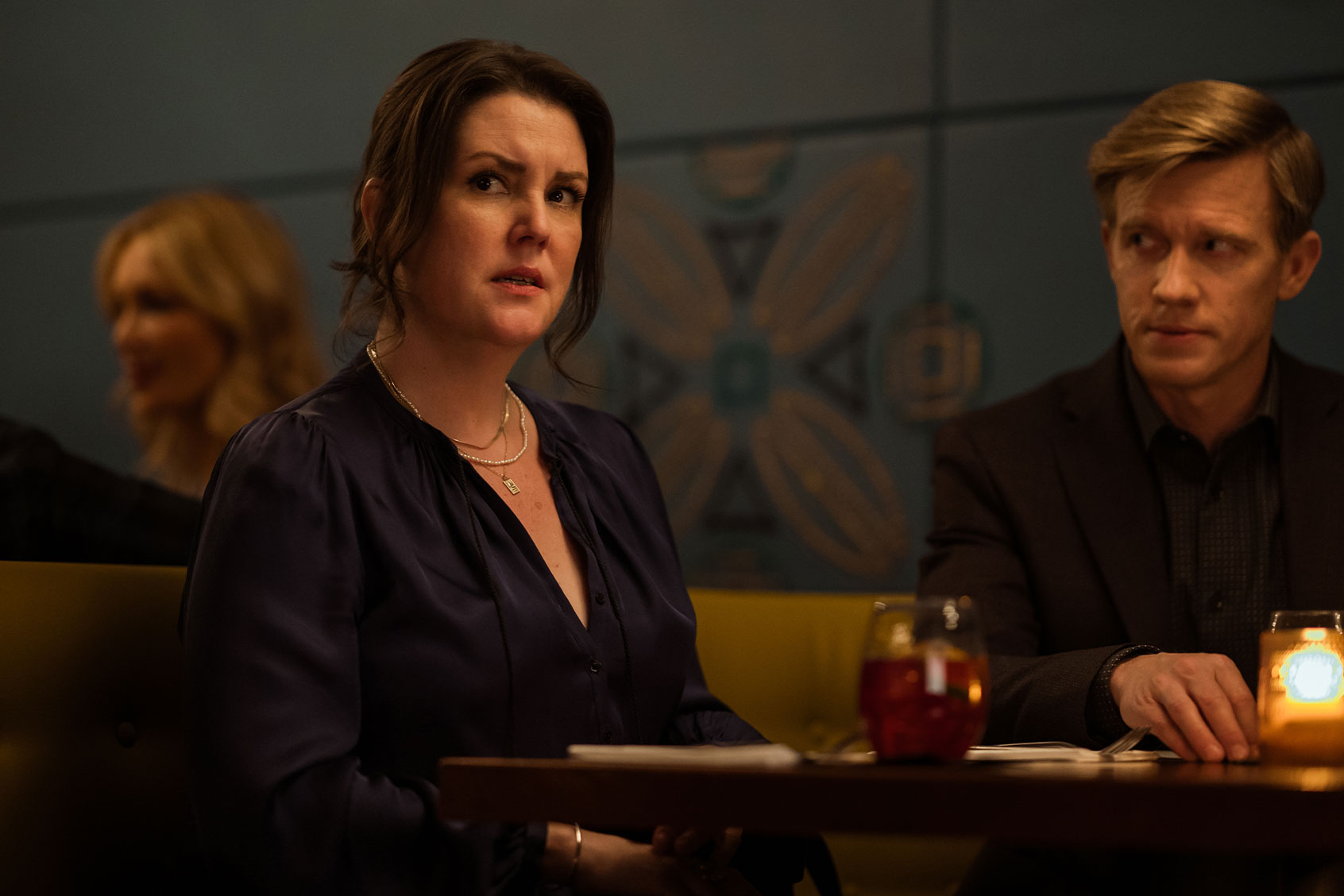
In the present, Shauna (Melanie Lynskey), Taissa (Tawny Cypress), Van (Lauren Ambrose), Lottie (Simone Kessell), and Misty (Christina Ricci), are wrestling with demons personal and, possibly, actual.

The remaining five are recovering from the unexpected death of adult Natalie (Juliette Lewis), a finale gut punch whose aftermath leaves one wanting – probably because the audience feels more for Natalie than her old friends do.

The rarer notes of soft honesty poking through here and there approximate the feeling the show stirred in us in the first place.

Or is that a matter of missing Lewis? In some shows, threatening that anyone can die becomes the carrot dangling a few inches out of reach, pulling us from one episode to the next regardless of the writing’s sharpness. The “Yellowjackets” cast tautens the narrative slack with muscular performances and some of the actors’ native likability.

Thatcher, thankfully, continues to exert her commanding presence in the four episodes provided to critics. But to some of us closer in age to the adults than teendom, losing Lewis feels like breaking up the actor equivalent of a ‘90s supergroup. (It also smacks of a business decision forcing the story in a certain direction since Hilary Swank is set to show up at some point soon, although that is purely a guess.)

We need your help to stay independent

Within that dissatisfaction are winding currents of black humor that keep the show watchable. Natalie’s memorial is a fine exhibit of what that means – it’s simultaneously bleak and hilarious, brutish and short as Thomas Hobbes told us it would be. Then comes her wake, which is intimate and not at all about her.

Scenes like these nudge us to mourn the paucity of emotional depth these women swim in. Conversely, the rarer notes of soft honesty poking through here and there approximate the feeling the show stirred in us in the first place.

“Yellowjackets” was fiercest when it brought into relief the wildness we abandon or push down in middle age. Some of that is still present in Lynskey’s Shauna bravely trying to prop up her marriage to the wet rag that is Jeff (Warren Kole), who is now a regretful blackmailer.

“Yellowjackets” isn’t quite one show but several of inconsistent quality joined by the flimsy glue of lingering questions that don’t seem all that complicated.

With her daughter Callie (Sarah Desjardins) now involved in her trauma revival  — the poor girl knows mommy murdered someone and fired a pistol at her mother’s friends as they chased her with knives and watched one of them die — maintaining a dignified front is an ever-increasing burden for Shauna. That grants Lynskey plenty of runway to exercise her comedic side when, say, her weak tea spouse behaves erratically.

I’m more curious about the subtextual invitations to inquiry, like how extensively Callie’s witnessing of her mother’s dark side will mold the daughter into the mother.

The ‘90s timeline of the show retains its clarity better than the present, which is understandable. Our past selves have straighter sides, creating the corners and borders that come to hold the full picture of our lives, pretty or not. They’re the easiest to fit together even if the whole image doesn’t make sense yet.

YellowjacketsMelanie Lynskey as Shauna and Warren Kole as Jeff Sadecki in "Yellowjackets" (Kailey Schwerman/Paramount+/SHOWTIME)

That era also showcases the wild, unpredictability that’s stiffened in their 40-something versions. Having responsibility pressed on some doesn’t make them tougher or more mature. Their girl selves grow pettier and crueler, a shadow their middle-aged selves have learned to channel and surreptitiously enjoy.

The match between Samantha Hanratty’s performance as Misty and Ricci’s remains most consistent, with each lending shards of riveting volatility to their versions of a loopy role. Hanratty’s Misty is capable but not quite level, eager to be needed but also (and for good reason) petrified of losing everyone's esteem.

And Ricci coupled with fellow citizen detective and genteel psycho Elijah Wood’s Walter could carry a bumbling physical comedy about a perfectly odd couple by themselves. In a way, that’s exactly what they’re doing, precisely evoking this drama’s shortcomings.

Without moving that train very far down the track we begin to wonder what purpose some characters serve.


Want a daily wrap-up of all the news and commentary Salon has to offer? Subscribe to our morning newsletter, Crash Course.


When we met adult Lottie (played by Simone Kessell) in Season 2, she was precisely what you’d expect her to be: a “healer” leading an “intentional community” drawing wayward souls to her, just as she did in the woods. Once that all fell apart, she was shuffled off to a facility for the “differently sane,” as Van put it, and maybe that’s all that needs to be written.

But…she’s still there. Like adult Taissa, freshly exiled from politics and her family, and a terminal Van, navigating what time she has left. Every ensemble show writes stronger parts for some actors than others, but there’s a sense the writers are less focused on delving into the substance of what draws these two to each other than using them as a focal point of . . . well. Some things need to be left unsaid for the sake of discovery.

Returning to those overarching questions – who is the Antler Queen, and will we find out which girl fell in the pit in that first episode? Who is the tall man with black pits where his eyes should be? Who’s getting eaten next? Can this show keep people invested in this runaround for two more seasons?

“Yellowjackets” isn’t quite one show but several of inconsistent quality joined by the flimsy glue of lingering questions that don’t seem all that complicated. What is “it” — “it” being the supposed wilderness terror – and what does “it” want decades after the teens left it? You, the loyal fans, can sit tight and ponder all that for as long as it appeals to you. And me? Um, I gotta go .  . . do something. No, no, don’t wait up.  

Two new episodes of "Yellowjackets" will be available to stream Friday, Feb. 14 on Paramount+ for Showtime subscribers, and make their linear debut at 8 p.m. ET/ 5 p.m. PT Sunday, Feb. 16 on Showtime.

Starbucks reduces the number of items customers can order through its mobile ordering system

Starbucks is putting a limit on how many items customers can order on its mobile app. The coffeehouse chain told TODAY that it has reduced that number from 15 to 12.

The latest change hopes to “improve [Starbucks’] ordering experience for customers, reduce wait times and ease the workload for its baristas,” TODAY reported. It’s all part of Starbucks CEO Brian Niccol’s “Back to Starbucks” plan, which strives to return the chain’s 40,000+ locations to its “community coffeehouse roots.”

“Our stores have always been more than a place to get a drink. They’ve been a gathering space, a community center where conversations are sparked, friendships form, and everyone is greeted by a welcoming barista,” Niccol wrote. “A visit to Starbucks is about connection and joy, and of course great coffee.”

He continued, “Today, I’m making a commitment: We’re getting back to Starbucks. We’re refocusing on what has always set Starbucks apart — a welcoming coffeehouse where people gather, and where we serve the finest coffee, handcrafted by our skilled baristas. This is our enduring identity. We will innovate from here.”

The coffeehouse said it’s focusing on four key areas, including empowering its baristas to take care of customers with the necessary tools and time needed to “craft great drinks every time” and re-establishing Starbucks as the community coffeehouse through a clear distinction between “to-go” and “for-here” service.

In addition to the new limit on online orders, customers will no longer be able to add a splash of milk or lemonade to a classic Refresher or order a Caffè Americano without water, Bloomberg first reported. That’s because these modifications already exist in beverages that are on the menu.

TikTok is back in Apple, Google app stores in U.S.

TikTok is back in Apple and Google app stores in the U.S., nearly a month after it was removed from them.

The social media app left the stores on Jan. 18, a day before its parent company ByteDance was required by federal law to sell it to a non-Chinese owner or be banned in the U.S. The app’s service also briefly shut down before President Trump took office and delayed the ban until April.

After receiving assurance from the Department of Justice that the ban would not be enforced, TikTok has reappeared in the app stores and is available to download again, according to The New York Times

TikTok's future in the U.S. is still uncertain. Trump told reporters in January he's looking to have the U.S. government broker a deal for 50% control of the app, and would be open to Elon Musk or Oracle's Larry Ellison purchasing it. Trump said he believes the app is worth $1 trillion. 

In February, Trump signed an executive order that called for the creation of a sovereign wealth fund, which he suggested could be used to purchase TikTok.

Trump tried to ban TikTok in his first term, citing national security concerns.

He reversed course last year, using the app to court younger voters and inviting TikTok CEO Shou Chew to his inauguration. A notification from TikTok following the end of its temporary ban in January read: “As a result of President Trump’s efforts, TikTok is back in the U.S.!”

Out with the old: Maxwell Frost, Gen Z Democrat, on why America needs a real “opposition party”

Amid President Donald Trump and Elon Musk’s rapid consolidation of power, Democrats in Congress seem down for the count, progressive voters and advocacy groups say, struggling to pick their spots and fight back. But some members of the party are putting the gloves back on.

Rep. Maxwell Frost, a Florida Democrat, was elected to Congress in 2022 and at age 28 remains the chamber’s youngest member. In an interview with Salon, the Gen Z representative argued that the party can do more than sit back and watch until the midterms.

“I think in this moment, America needs not a minority party, but an opposition party to express why what's going on isn’t normal, why it’s wrong and what’s the opposing vision for this country,” he said.

Frost was elected as a co-chair of the House Democratic Policy and Communications Committee last November, joining three other congressional Democrats in steering the party’s messaging agenda. So far, Frost has pushed a strategy of pivoting from a minority party that's dedicated to working with the majority, to one that sees itself as a proper opposition.

“It’s kind of a state of mind too," Frost said. "Thinking about, in this moment, where are we gonna be? I've repeated this over and over again, but it's what's guiding me in this time. We might have fewer seats in Congress, but we make the decision: Are we the opposition or are we the minority?” In other countries, he noted, parties out of power are often officially called the opposition.

Frost has taken his more confrontational approach to the streets. Indeed, while Musk and his DOGE operatives led a takeover of the Treasury Department and its payment systems that experts said was likely illegal, he led a fight.

Speaking at a demonstration outside the U.S. Treasury Building to a crowd of more than a thousand protesters, Frost promised to pursue congressional oversight before leading colleagues in an attempt to enter the department itself. He and nearly two dozen other Democratic lawmakers were denied entry to the building, sparking uproar online — a moment of potentially galvanizing oppositional theater.

Days later, Frost and a handful of other elected Democrats were once again blocked from the Department of Education building while demanding answers on Trump’s planned dismantling of the congressionally mandated arm of the federal government.

The lawmaker spoke about the unprecedented lockouts and promised Democrats would continue to bring awareness to the GOP’s attacks on the federal government.

“You can walk into any of these buildings,” Frost said, explaining the open-door policies at federal agencies he encountered during his first term in Congress under Joe Biden. “You’re always allowed entry as long as it’s during business hours. We went during business hours and were not even allowed to be in the building — that’s much different.”

But showing up and giving constituents a glimpse at what Musk and his “goons” are up to is an essential piece of the puzzle for Democratic lawmakers, Frost says.

An opposing vision, he says, should make it clear that Democrats, not billionaires like Elon Musk, are for the working people.

“I know for a matter of fact Donald Trump is not going to lower prices for Americans, that wealth inequality is going to rise under him like it did the last time he was president,” he said.  “We need to be there to oppose what he's doing on behalf of our constituents, of the American people, but also express the opposing positive vision for this country so we can put ourselves in the best situation to win back power.”

Frost acknowledged that the GOP has the power to exact a lot of damage on federal institutions. But he said he doesn’t buy the narrative that Democrats are powerless to fight back.

“There are going to be opportunities to utilize our leverage for the agenda that we believe in or block agendas we don't believe in,” he said.

We need your help to stay independent

Frost also has a theory on Trump’s executive shock-and-awe campaign. The president’s reliance on the executive order and testing of presidential powers, the congressman argued, is proof that Trump’s control is far from absolute.

“We are barreling towards a constitutional crisis and I think a big part of it has to do with the president's disregard for our laws and our Constitution,” Frost told Salon. But the way Trump is operating now, he continued, "exposes some very blatant weaknesses in his presidency.
I mean, he does not have the ability to operate like a strong president."

House Republicans have a knife's-edge majority in the lower chamber, making the task of carrying out the party’s agenda through the legislative channels a contentious game of whipping votes. Speaker Mike Johnson has already had to enlist Democratic support to bail out a plan to fund the government. For Democrats, Frost said, there is real bargaining power.

“The crux of it is standing true to the reason our voters sent us here, which is to fight for democratic values,” Frost said. “As long as we hold the line, and we’re strong, we’ll be good. I learned a lot about this as an activist and an organizer: you don’t have all the power you want, you gotta use all the power we got.”

It’s an attitude that many voters have begged Democratic leadership in Congress to take. Progressive groups like Indivisible and MoveOn have led pressure campaigns to push Senate Minority Leader Chuck Schumer and others to obstruct more of the GOP’s agenda, while others would prefer to see new voices in charge. 

For Frost, getting young voices into leadership isn’t an overnight process, but the work is already in motion.

"There are people in the party who are actively looking for young people and young voices," Frost said. "But there's a difference between saying you want to see young people in these positions and actively working to help them get those positions, and it's a fight.”

Frost knows firsthand how hard running for office can be, especially as a young person. He told Salon that any young person looking to enter electoral politics should take a hard look at their financial situation. He was forced to rack up massive amounts of credit card debt and moonlight as an Uber driver while he was campaigning.

“The more young people you have in the body, the more likely you are to see young people represented in leadership,” Frost said. “We have a ton of work to do there.”

Make risotto at home like a professional — and impress yourself in the process

Risotto has a reputation. It’s the dish that sends “Top Chef” contestants home. It’s the meal that seasoned chefs, decorated with Michelin stars, have fumbled under pressure. It’s also a dish that, when done well, feels like an accomplishment — one you can achieve in your own kitchen.

Back in 2023, I wrote a piece titled "Making risotto is so much easier than you think." I still stand by that claim, but I want to refine it. Risotto isn’t difficult in the way that, say, laminated pastry is difficult. But it’s not as simple as boiling water, either. It requires attention, patience and a willingness to stay present at the stove.

As I wrote then, “Making risotto at home shouldn’t be treated as such a gargantuan feat. Truthfully, in no more than 45 minutes — or as quickly as 18 — you can have restaurant-worthy, silky risotto with whatever mix-ins or toppings you choose.” That remains true. But to set you up for success, let’s acknowledge the reality: Risotto is an active dish. It demands preparation, precision and an understanding of its method.

That’s where home cooks often go wrong. Without proper mise en place — ingredients prepped, broth warmed, tools within reach — you risk a gummy, stodgy disappointment. Too much liquid too fast? Mush. Too little patience? Undercooked rice. And given the cost of quality ingredients, this isn’t a dish you want to leave to chance.

In my original piece, I warned against adding ice-cold stock, which can wreak havoc on texture, leaving you with a bowl of broken, unevenly cooked rice. The fix? Following the classic risotto technique: soffritto, tostare, sfumatura, brodo (cottura), and finally, mantecatura. These steps build the foundation of a properly cooked risotto—one that’s creamy, structured and deeply flavorful.

So, without further ado, here’s your step-by-step guide to risotto success. Follow it closely, and you’ll be rewarded with a dish that feels like a triumph—one that’s perfect for a cozy Valentine’s Day dinner, whether shared or savored solo.

One final note: Use Arborio or Carnaroli rice. Their starch content is what makes risotto work. Grab any old white rice from the pantry, and you’ll be setting yourself up for failure before you even begin.

We need your help to stay independent

Risotto with fennel, hazelnuts and chives
Yields
3 to 4 servings
Prep Time
15 minutes
Cook Time
30 minutes

Ingredients

3 to 3 1/2 cups stock or broth of your choosing

5 tablespoons unsalted butter, divided 

1 fennel bulb, halved, cored and finely diced (about the size of the grain of rice), fronds reserved and chopped

1 onion, halved, peeled and finely diced (about the size of a grain of rice)

1 leek, cleaned, halved and finely diced (about the size of a grain of rice)

1 1/2 cups Carnaroli or Arborio rice

4 cloves garlic, peeled and minced

1/2 cup white wine or vermouth, optional

3/4 cup hazelnuts

1/2 cup grated Parmigiano Reggiano (ideally not pre-grated)

Chives, finely chopped


Directions

  1. Preheat oven to 400 degrees F. Place two pots on the stove: One will be for the risotto itself, so opt for a large pot that can accommodate lots of vigorous whipping and stirring, and one to warm your stock, which can be in a smaller saucepan, if you’d like.

  2. Begin warming the stock of your choice in the smaller pan.

  3. In the larger pot, melt 2 tablespoons butter. Add fennel and cook for 3 to 4 minutes, until slightly tender.

  4. Add onions and leek, season with salt and cook until translucent, without color, about 5 more minutes.

  5. Add rice and toast for 2 to 3 minutes. The vegetables and rice can begin to take on a bit of color here, but you’re not looking for, like, caramelization: Keep it light. 

  6. Add garlic and toast for 30 seconds or until just fragrant.

  7. Add wine, if using, and cook until almost completely reduced. 

  8. Begin adding stock, one ladleful to start — and not adding another ladle until the previous addition has been fully and completely absorbed by the rice. This is a process of slowly but surely cooking the rice via each ladleful — you’ll feel the difference as you stir, as the rice starts to give less and less resistance as each kernel begins to soften and plump as it cooks.

  9. Repeat the process twice or thrice more, until you’ve used up nearly all of your stock. You want the rice to still have a subtle, slight bite, almost like an al dente noodle.

  10. At this point, spread your hazelnuts out on a sheet pan and add to oven. Toast until fragrant, 7 to 8 minutes. Be careful not to burn! Let cool.

  11. This is the fun part: You’re going to whip — and I mean whip — butter and Parmesan cheese into your risotto with gusto. Truly, put your elbow into it — exercise some frustration, get some exercise, whatever — you want to whip as much air into the dish while incorporating butter, Parm and lots and lots of flavor and body to your risotto. 

  12. Coarsely chop cooled hazelnuts and set aside.

  13. Taste for seasoning: You shouldn't need much (or any) because of the salinity of the cheese.

  14. When the rice kernels seem tender and you’ve added all of the cheese and butter, use a ladle to serve risotto in a large bowl or plate. As Tom Colicchio has stated on “Top Chef” numerous times, risotto should expand and fill the plate or bowl and should have a loose, flowing viscosity — it should not be stodgy and stay in one place after you plate it. 

  15. Garnish with chopped hazelnuts, a smattering of minced chives and some of the chopped fennel fronds.

  16. Eat immediately and feel immense pride in your kitchen prowess (but you probably won't need that directive once you smell the finished risotto).

Crumbl swaps signature pink boxes for limited-edition Valentine’s red

For the first time, the popular cookie company Crumbl is temporarily ditching its signature pink cookie boxes.

This week, in honor of Valentine’s Day, the company is swapping in red boxes. In a press release, Crumbl called it a "bold new color" and announced that "eight cupid-worthy flavors are on the menu for Valentine’s Day week, with plenty of romantic flair and some novelty options too." The pink box, a company staple since 2017, will return once the red boxes sell out.

"Crumbl pink is a key part of our brand,” said Sawyer Hemsley, Crumbl’s co-founder and chief branding officer. “However, during a week so focused on love and gathering, we knew we wanted to do something special! The Red Box is a tribute to both Valentine’s Day and the innovative spirit that continues to drive our brand."

The limited-edition red box release will reportedly be available at every location, which the company calls a "major milestone."

Financial infidelity is wrecking our relationships

For many couples, money isn’t just about numbers — it’s about power, security, personal identity. And for some, it's about secrets.

A new survey from Bankrate.com found that 40% of adults in the U.S. with a live-in partner are committing or have committed financial infidelity. Younger generations were more likely to keep money secrets: 67% of Gen Zers said they have confessed at least one instance of financial infidelity, followed by millennials, at 54%. 

What sort of things are they hiding? Thirty-three percent are spending more than their spouse or partner would be cool with, and 23% have racked up debt that their partner has no knowledge of. Others keep secret credit or savings accounts.

Keeping secrets is not necessarily financial infidelity, says Avigail Lev, founder and director at Bay Area CBT Center. “Choosing to be private about where and how you spend your money is just privacy," she said.

But "having agreements with your partner about how you use money and hiding that — hiding it on purpose, lying or deceiving, that’s financial infidelity,” she added.

Money is one of the leading causes of divorce, yet often couples still struggle to communicate openly about finances. “Many couples never unpack their financial history and beliefs, leading to misunderstandings and resentment. Without open dialogue, secrets fester and financial infidelity can erode trust — just like emotional or physical infidelity,” said Melissa Murphy Pavone, a certified financial planner and founder of Mindful Divorce Partners.

We need your help to stay independent

With so much at stake, money shouldn’t be a taboo topic. So why can’t people be straight with each other about money? How can couples keep money from ruining their relationship, and how can they move forward when one breaks the trust? 

Why financial infidelity happens

Why would someone who loves you deeply be dishonest about money? The survey respondents  said they mainly wanted financial privacy or control of their own finances. Some didn't want to share money, and others said they were embarrassed of their money management. 

“People can’t be truthful with money because honesty exposes them to vulnerabilities,” said Kevin Shahnazari, CEO of FinlyWealth.

“Sometimes it’s about guilt or fear — worrying that their partner won’t approve of a certain purchase, or that an old financial mistake might scare them off," said Emily Luk, a certified financial planner and co-founder of Plenty, a money management tool for couples. "Other times, it’s a way to avoid conflict or keep the peace. If one partner is anxious about being judged for a shopping habit, for example, they might think it’s easier to conceal credit card statements than to have a tough conversation."

"People can’t be truthful with money because honesty exposes them to vulnerabilities"

There can be differences in couples' money personalities and values: One is a spender, the other a saver. But money can also take the form of power, control, safety, past financial trauma or even a mental health issue, substance use or gambling disorder, said Joy Slabaugh, a certified financial planner and therapist specializing in financial therapy, and founder of the Financial Conflict Resolution Institute.

Her clients are full of stories. “One partner bought a bunch of clothes but hid the evidence because the couple had agreed to do a ‘no buy’ month, another partner financially supported an ex-partner without disclosing it, one person told their partner the first-class upgrade was paid for with miles when it was actually purchased outright.”  

How to keep money problems at bay

Communication is key in a relationship and especially when it comes to finances. Lisa Atkinson, a financial adviser with Tucson Federal Credit Union, says couples should embrace transparency. “Schedule regular money discussions in a judgment-free, calm setting. Or schedule an initial meeting with a financial adviser.”

Creating a no-blame environment makes it easier to tackle issues. “Approach financial talks with empathy, rather than accusations, to encourage honesty.”

Develop a joint financial plan. “Establish shared goals and budgets that both partners contribute to and review together. It’s important for both parties to feel comfortable,” she says.

Teamwork makes the dream work. Using financial tools together — budgeting apps, shared spread sheets and joint accounts — can help promote transparency.

You’ve discovered financial infidelity, now what?

When trust is betrayed, there are bruises. In the Bankrate survey, 38% of adults said they believe that keeping financial secrets from a partner is as bad as physically cheating, and 7% say it’s worse. 

But there is a path to rebuilding trust, says Pavone. “Overcoming financial infidelity requires openness, patience and maybe even professional guidance.”

Getting on the same page is critical to a couple’s financial success.  “The sooner couples face financial fears together, the stronger their relationship will be,” Pavone said.