Spring Sale: Get 1 Year, Save 58%

North Carolina’s GOP-led Supreme Court intervenes to block election victory of Democratic justice

The North Carolina Supreme Court on Tuesday blocked the certification of the state's Supreme Court election as it prepares to consider a challenge from a Republican appeals court judge who is seeking to overturn his loss in the November election.

North Carolina Appellate Court Judge Jefferson Griffin, who narrowly trailed sitting North Carolina Justice Allison Riggs, a Democrat, in the November election, requested an immediate, temporary pause on the certification of the results last year as he asked the court to throw out more than 60,000 ballots. Such a move that would allow him to assume the lead in the race he lost by just 734 votes.

Two recounts — one machine and one partial hand — have confirmed Riggs' electoral victory. But in its order granting the stay, the GOP-led Supreme Court also outlined an "expedited briefing schedule" on Griffin's petition.

"In the absence of a stay from federal court," the court's five conservative justices wrote, "this matter should be addressed expeditiously because it concerns certification of an election." 

Justice Anita Earls, the only other Democrat besides Riggs on the bench, dissented on the grounds that the standard for a pause had not been met, arguing that there is "no likelihood of success on the merits."

Griffin filed the suit challenging his loss in mid-December after the Democrat-controlled state Board of Elections rejected his claim that it had erroneously and unlawfully counted thousands of votes, including provisional ballots and those cast from military voters overseas. He argued, in part, that those ballots came from a swath of voters who had incomplete voter registration applications. Some applications are incomplete because voters did not provide or weren't asked to provide driver's license information or the last four digits of their Social Security number. 

Riggs, who has served on the state Supreme Court since 2023 after being appointed, recused herself from the case immediately after it was filed in the state's highest court. The state Board of Elections previously moved to have the case removed to federal court shortly after, but the federal court sent it back to the state Supreme Court on Monday.

In an interview with Salon last month, Riggs said she was "saddened and disappointed" that the effort to contest her victory had escalated to this degree and voiced concern about the implications of the challenge on North Carolinian voters. 

"We need to remember that this is about voters and their choices," she said at the time. "Sometimes maybe democracy breaks your heart, but if you believe in the institutions and the dream that our founders had, I think you have to be willing to say, 'I am not going to try to burn things down if I don't win.'"

The North Carolina Supreme Court will hear Griffin's petition later this month.

Why “Smitten Kitchen” endures: Deb Perelman on cooking for real life

A formative presence in the early 2000s food blog explosion, Deb Perelman — the founder and leader of “Smitten Kitchen” — writes and speaks with an inviting, fun, and conversational tone that is practically always welcome, no matter your mood.

Perelman clearly loves food. She is passionate about the importance of a "good recipe" and all that entails. Her imagination and talent shine in her recipe development, ingredient choices and flavor profiles. Plus, she's a reliable pal when it comes to container-specific measurements — no errant half cans of coconut milk or half tubes of tomato paste here!

“Smitten Kitchen's” refreshing voice and reliability have remained steadfast in the nearly 20 years since its debut. In addition to the immensely comprehensive blog and recipe archive, the brand now includes several cookbooks. As Perelman puts it, she has created over 1,500 recipes overall. Her most recent cookbook, “Smitten Kitchen Keepers,” was released to much fanfare and acclaim less than two years ago.

Now, as a companion to that book, she’s releasing a PDF and audiobook designed to guide fans and listeners through her recipe development process. The audiobook delves into the ins and outs of each recipe, the personal stories behind them and much more. Perelman describes the audiobook as akin to having an informal chat with a friend about what you're making for dinner — nothing stuffy or ostentatious. Instead, it offers a relaxed conversation, commiserating over a dish that didn’t turn out as planned or celebrating one that exceeded expectations.

Perelman hopes to be a patient, fun, and guiding voice, helping home cooks improve, learn, grow — and make really good food. Salon recently had the opportunity to connect with Perelman to discuss all of this and more.

Deb PerelmanDeb Perelman (Photo by Christine Han)

The following interview has been lightly edited for clarity and length. 

I'd love to hear about the new audio project, "Smitten Kitchen Keepers:  A Kitchen Counter Conversation"  such an interesting idea!

I thought it would be fun to do a cookbook audiobook, but understood from the get-go that nobody wants to hear me read a recipe aloud — "half a teaspoon of salt, a quarter-teaspoon of black pepper. . ."

Fortunately, after a small amount of convincing, my publishers were game and we decided to home in on the parts we hope listeners would find the most enjoyable to listen to: the introductions and stories. We wanted it to feel like I get to hang out in the kitchen with you, leaning against the counter, chatting as we cook. We focused on some of my book favorites and went a little deeper, including extras and side notes that didn't make the cut in the headnotes due to space. 

I love that there's a companion PDF to complement "A Kitchen Counter Conversation." How did that come about?

Having a companion PDF allowed us to not taunt you with descriptions of recipes you had no ability to make. The PDF covers the recipes we included in the special audio edition of Smitten Kitchen Keepers, should I have succeeded in enticing you to drop everything and make one of them immediately. 

There are 44 recipes discussed throughout. Are those all from "Smitten Kitchen Keepers?" 

Yes. Keeping an eye on length and the recipes we felt would translate the best to an audio conversation, I focused on a little under half of the recipes in Smitten Kitchen Keepers, the ones I truly cannot — in my words — "shut up about." They had a bigger conversational element and I knew there were even more interesting parts I had to leave on the cutting room floor.

That's terrific. Are there any long-time fan favorite recipes that you still hear a lot about, whether from any of your cookbooks or the site itself? 

Oh yes. So many: The caramelized cinnamon sugar french toast, toasted ricotta gnocchi with pistachio pesto, ginger garlic chicken noodle soup, oven-braised beef with harissa, thick molasses spice cookies and the cover girl, the devil's food cake with salted milk chocolate frosting. Nothing makes me happier than these recipes making it into other people's repertoires, too.

We need your help to stay independent

Back in my halcyon cooking days pre-culinary school, "Smitten Kitchen" was an invaluable resource, so thank you for that. I still make salted caramel brownies the way I learned from you way back when. Your cookbooks are tried-and-true, your recipes always accessible, your food delicious. What else do you attribute your enduring success to?

Thank you. I don't have all of the answers, but I do know that I'm secretly a very picky eater, but I've tried to make this an asset, not a hindrance by turning it around. "Why is ricotta gnocchi so underwhelming and fussy?" "Why do so many black bean chilis just taste like soup?" etcetera. I'm also very lucky to love my work and even though I've published over 1400 recipes on my site and over 300 in my cookbooks, I can easily think of 500 more I'd make this year if I had time. 

What are some of the conversations during "A Kitchen Counter Conversation" that yielded the most fiery debates food-wise?

Pizza always amuses me with its contentiousness among certain types of home cooks — the flour, the oven, the hydration, so many absolute rights and wrongs. And I think it keeps too many people from just making pizza at home. I enjoyed tackling the hang-ups and my refusal to participate in them in The Angry Grandma (Pizza), celebrating the no-fuss, any oven, whatever-flour-you've-got grandma-style pizza. The "angry" part is that it uses a spicy arrabiata sauce, which translates as angry. 

Can you talk a bit about the early origins of "Smitten Kitchen," the blog? 

I had just started cooking more at home and realized I didn't have go-to recipes for so many things I wanted to know how to make. I created it as a space where I could share recipes I thought were worth the time and had great outcomes too. I had no professional cooking experience and had never been to cooking school; I didn't expect anyone to read along to my yapping when there were actual experts out there. But, that wasn't what happened and it's still wild to me today that it took off and allowed, in turn, for me to become the cook and recipe developer I wanted to be. 

You have released three wonderful "Smitten Kitchen" cookbooks. What are some dishes, ingredients, cuisines or topics that you feel you still haven't touched on and look forward to possibly addressing in future cookbooks? 

We don't have a lot of space and my kitchen is deeply unfancy but I love having people over and I think it would be fun to write an entertaining cookbook for real people — things that work, warnings about things that never do — with the singular goal of having the kinds of parties you get to enjoy too because you're not stuck in the kitchen.

Smitten Kitchen Keepers: A Kitchen Counter Conversation by Deb PerelmanSmitten Kitchen Keepers: A Kitchen Counter Conversation by Deb Perelman, read by the author. (Courtesy of Deb Perelman/Penguin Random House)

The "online food" realm nearly 20 ago was so vastly different from today's landscape. Could you speak a bit to that? 

So, so different. Did you know, could you imagine, that you often didn't have photos at all in early food blogs? Blogs often didn't have themes, SEO or social media strategies. But, I'd argue that even though the technology and how we use it couldn't be more different, what we want hasn't changed: something good to cook for dinner with a recipe that works and won't waste our time.

Do you have a number-one favorite ingredient to work with? 

I love cabbage with the abandon of someone who wasn't tormented with it as a child and am glad it's getting a glow-up these days, like brussels sprouts and cauliflower before it. The charred salt and vinegar cabbage in "Smitten Kitchen Keepers: A Kitchen Counter Conversation" is one of my favorite recipes, an oddball I thought everyone would brush past but, instead I've gotten so many messages from people about how it became a staple for them too. I'm thrilled. 


Want more great food writing and recipes? Subscribe to Salon Food's newsletter, The Bite.


What stands out for you as a formative moment that got you into cooking or food at large? 

I remember being a kid and I'm definitely showing my age here but crazy enough, telephones used to have cords and the telephone in the kitchen used to have a really long cord, so it could stretch as you needed to walk around. There's a way people talk about cooking with friends over the phone — "but this dough looks sticky! I'm messing it up!" "Really? Just smash it down? Okay, if you say so…" — that is relaxed, funny and conversational in a way that written recipes from chefs and cooking professionals in cookbooks and magazines never get to be.

I don't care what some chef in a toque says about caramelizing onions; I want to hear the telephone cord cooking lowdown you'd warn your cousin about when she was making dinner. It remains my guiding force.

What would you say are your three most used ingredients? 

Onions, butter and eggs. Not wildly exciting, but I could make a full menu from it!

What is your favorite cooking memory? 

I remember my parents attempting to make soft pretzels one day; it was a mess. They weren't normally so wildly experimental, but I think it embedded in me the idea that you didn't need to have it all figured out to try to make something new.

What’s your biggest tip for cutting down on food waste? 

I really like recipes that use ingredient amounts that align with can or packaging sizes. I've got an orphanage of 2-ounce bags of dried pasta in my cabinet. I'm pretty sure I've got a molded can of tomato paste with only 1T taken out in the fridge at any given time, and if there's one carrot left in the bag, I've already forgotten it exists until it's too late. So, I try to keep package sizes in mind as much as possible when I write recipes and if there's any way to use all of it, I will. 

What’s next on the horizon or agenda for you? 

I should probably start working on that entertaining book! Maybe 2025 will be the year.

Jon Stewart says Kamala Harris confirming Donald Trump’s win is “like attending your own funeral”

Four years after the Jan. 6 insurrection on the Capitol, Jon Stewart was shocked at the unusual civility on display at this year's 2024 election certification.

This time, Vice President Kamala Harris kept score of the electoral college's vote tally, keeping a steady composure and demeanor. It was a stark juxtaposition to the complete disarray at the Capitol in 2021. In Stewart's first "Daily Show" episode of the year, he couldn't help but point out how the snowy weather in Washington D.C. is reminiscent of "a blanket of angry white descending on the Capitol."

"This white, oddly enough, not as disruptive," he riffed. "It did snarl traffic, but a lot less bear spray and Confederate flags.”

During this Jan. 6 confirmation, there was a slight awkwardness to Harris' vice presidential responsibility, Stewart admitted. The vice president's job is to verify the 2024 election results which meant that as she did, she confirmed her former opponent Donald Trump's win — and her own loss.

"Of course, the ultimate indignity of this January 6 is that Donald Trump's opponent, Kamala Harris, because she is the vice president, serves as the master of ceremonies. Poor baby. But it does suck." Stewart said.

The show played a clip of Harris reading Trump's winning electoral votes before she was interrupted by Congress' boisterous applause for Trump.

"That’s got to sting,” he responded. "It's like attending your own funeral and even the mourners are like 'woo-hoo!' I can't imagine anything that would be more uncomfortable, standing there while the crowd applauds your opponent."

We need your help to stay independent

Then Stewart showed Harris reading her own electoral wins, which received equally engaged cheers from lawmakers.

"There's a lot of joy in that room. I think she could still win this thing. She just needs to find like 130,000 votes in Georgia and then in Michigan, in Pennsylvania, maybe Wisconsin, maybe they flip North Carolina," Stewart said in fake tears. 

"But, ultimately, the certification ceremony that we all look forward to every four years since I was little, went off without a hitch. Because it’s amazing how smoothly our democracy works when you don’t act like a little b***h when you lose. Not naming names! Just saying," Stewart concluded.

"The Daily Show" airs Monday through Thursday at 11 p.m. ET on Comedy Central and streams on Paramount+.

Champagne, caviar or salmon: are luxury foods becoming more accessible?

The concept of luxury in food has undergone a profound transformation. Foods once considered exclusive to the wealthy – champagne, foie gras, and truffles – have become increasingly accessible. How did this shift occur? What do the wealthiest now consume? And what defines modern luxury foods?

Historically, festive foods such as champagne, foie gras, or truffles have been symbols of luxury. They hold a high symbolic value, often tied to refined cuisine and special occasions such as Christmas or birthdays. Unlike personal luxury items like watches or handbags, luxury food is inherently shared, creating moments of collective enjoyment, such as savouring fine wine with friends.

The evolving concept of luxury in food

Luxury food is a relative and subjective concept, changing across time, geography, and social classes. As Vincent Marcilhac notes in his book Le luxe alimentaire], products considered luxurious in one era may become commonplace in another. For example, sugar was a rare and expensive commodity in medieval Europe, reserved for the wealthy. Similarly, lobster, now a high-end delicacy, was a low-cost food for the impoverished in 19th-century America before the advent of railroads transformed it into a sought-after luxury item.

In France, luxury food remains a thriving sector. In 2021, gastronomy generated 49 billion euros in revenue, while wines and spirits accounted for 77 billion euros. The fine grocery market, valued at 9 billion euros by 2023, continues to grow, with over 5,300 specialty stores nationwide and promising growth prospects.

Democratization through industrialization and distribution

In recent years, luxury foods have undergone a notable transformation, becoming more accessible to the general public. This democratization has been driven largely by industrialization and the diversification of distribution channels, which have reshaped the availability and affordability of these products.

The industrialization of food production has significantly expanded access to items traditionally considered luxury goods. Mechanized production processes now allow for the mass production of products such as foie gras, which historically required labor-intensive methods. This shift has dramatically increased output, reducing both production and retail costs. As a result, foie gras has become more affordable and widely available, drawing in a broader consumer base.

The ways in which luxury foods reach consumers have also evolved. Once confined to specialty shops, items such as truffles and caviar are now commonly found in mainstream retail outlets, including major chains such as Carrefour and discount stores such as Lidl. These products are also increasingly accessible through online platforms and mail-order services, which cater to entry-level customers through private-label and industrial brands. This broadened distribution network has played a pivotal role in normalizing luxury foods and making them available at more competitive prices. Today, iconic luxury foods such as champagne, foie gras, and smoked salmon are predominantly distributed through supermarkets and hypermarkets.

Caviar illustrates this trend. Previously reserved for an elite few, it has seen 90% growth since the pandemic, with France emerging as the world's third-largest producer thanks to Siberian sturgeon aquaculture. The challenge ahead lies in further democratization, moving caviar from fine grocers to everyday grocery stores.

Rarity and exclusivity

Despite its democratization, luxury food has not lost its allure. For the wealthy, the distinction now lies in rarity and price. Consider caviar: while Baerii caviar costs around 1,600 euros per kilogram, Almas caviar – a rare delicacy from albino beluga sturgeon – can exceed 30,000 euros per kilogram. Similarly, Alba white truffles fetch prices ten times higher than Périgord black truffles, reaching up to 6,000 euros per kilogram. Champagne prices range from 15 euros in supermarkets to more than 10,000 euros for a bottle of Dom Pérignon.

Another manifestation of luxury is the experiential dimension – enjoying high-quality local products in their place of origin. Drinking a fine Burgundy wine at a vineyard, guided by the producer's storytelling, transforms a meal into an unforgettable, emotional experience. This "emotional luxury" underscores the value of authenticity.

Moreover, culinary luxury often takes the form of savoring a high-quality local product at its place of origin. The authenticity associated with these "localized" products adds to their perceived value. For example, enjoying an exceptional Burgundy grand cru while overlooking the vineyards where it was produced, after a guided estate tour with the winemaker sharing its story, elevates the experience. The moment becomes extraordinary – unique, emotional, and rich in sensory detail. This phenomenon can be described as emotional luxury.

In recent decades, rising middle-class living standards have democratized luxury to some extent. However, for a segment of the population, luxury food continues to embody its exceptional, costly, and often profoundly emotional essence.

Nathalie Louisgrand, Enseignante-chercheuse, Grenoble École de Management (GEM)

This article is republished from The Conversation under a Creative Commons license. Read the original article.

“Fights, Camera, Action”: How Jerry Springer exposed the beginning of America’s decline

Before the man who transformed “The Jerry Springer Show” into a gladiatorial showcase of the worst common denominator took over as its executive producer, Richard Dominick made his living writing headlines for Weekly World News and the Sun such as “Two-headed Man Sings in Stereo,” “Toaster is Possessed by the Devil” or “My Wild Affair with Bigfoot. ”

The weirdest ones earned him a recurring guest gig on “Late Night with David Letterman,” where he’d swear with a straight face that every story was true. In the archival clips featured in “Jerry Springer: Fights, Camera, Action,” Letterman’s audience was clearly in on the joke. Letterman’s show was a funhouse where absurdity was encouraged.

Years later, after Dominick had already made his mark on “The Jerry Springer Show” as its fortune-shifting executive producer, Mark Matthews (a pseudonym) was Springer’s guest along with his “wife” Pixel. The pair’s union shocked the studio audience in 1998, especially since they were kept in the dark about their unwitting participation in an episode called “I Married a Horse.”

“The Jerry Springer Show” aired nearly 5,000 episodes over 27 seasons before being shoved through a woodchipper in 2018, and to say that nobody missed it by the time it ended is accurate.

When Matthews kissed the Shetland pony on the mouth — on camera, with tongue — that may be the first widely televised moment when our relationship with reality, propriety and a common sense of morality began to fracture. Why didn’t anyone recognize this was wrong and stop this from happening? How could this possibly be real?

But it was. Matthews wrote an entire manifesto defending his zoophilia. I know this because every page of it was faxed to the newsroom where I worked shortly after the episode aired. The sender’s intent, as I recall, was to legitimize Matthews as someone who simply thinks differently than the typical person. As establishment journalists, who were we to judge him? Just asking questions.

Dominick’s present-day reaction to seeing the gotcha intro to “I Married a Horse” is to giggle softly, then gesture with both hands like an orchestra conductor cueing a “ta-dah!” from the brass section. “Greatest love story of all time,” he deadpans.

To Dominick, it was. “The Jerry Springer Show” gave the audience the proof his tabloid stories never could, even the ones accompanied by interview footage. Most of its featured romantic betrayals and fistfights were real, revved into the red by producers taking advantage of their subject’s emotional discombobulation.

“The Jerry Springer Show” aired nearly 5,000 episodes over 27 seasons before being shoved through a woodchipper in 2018, and to say that nobody missed it by the time it ended is accurate.

When it had run its course, “Springer” was also a liability, linked to a murder case that becomes the narrative focus of the documentary’s second hour and blamed for another man’s suicide. But its obsolescence is the result of its influence more than its exposure to civil litigation.

Curse “Springer” all we want, but it wouldn’t have been a hit if we didn’t enthusiastically watch what Jerry served up for us.

Only at the very end of “Fights, Camera, Action” does its director Luke Sewell link up the documentary’s best idea, which Dominick offers at the start.

At Weekly World News, when his craziest headlines made the cover, sales would go up. Nobody believed Bigfoot had a love slave, Dominick admits, but the public bought it. He theorizes people would rather read about Elvis being in a UFO because “It takes you away from your world into another world,” he said. “And that’s what I wanted to do with Springer.”

He succeeded to such a degree that, as featured media critic Robert Feder explains in the final minutes of the documentary, we’re still living with its effects. Curse “Springer” all we want, but it wouldn’t have been a hit if we didn’t enthusiastically watch what Jerry served up for us.

Feder credits, or blames, “Springer” for ushering in our current era “with no guardrails or boundaries,” and the documentary illustrates this with clips from “Real Housewives of New Jersey” and “Keeping Up with the Kardashians” where people are throwing hands. A vintage clip from “The Apprentice” also makes a cameo to exemplify the way “Springer” made saying anything we think of into a virtue.

Perversely enough, these shows also take viewers into other worlds — those of middling wealth and off-the-rack glamour that seem just out of reach. Our fascination with reality stars rests in the illusion that, if not for their endless money and couture bags, they’d be just like us. They upend tables, throw drinks in each other’s faces and throw hands at their parents. You know, like normal, everyday people.


Want a daily wrap-up of all the news and commentary Salon has to offer? Subscribe to our morning newsletter, Crash Course.


This is why, for a time, “The Jerry Springer Show” was beating the intentionally uplifting “Oprah” in the ratings. Oprah Winfrey’s message was one of self-improvement. “Springer” confirmed that no matter how badly your life was going, someone someplace else was worse off – and, as the show portrayed it, their misfortune was the sum of their choices.

Springer, who died in 2023, made a schtick of apologizing for ruining the culture at the end of his life.

“Fights, Camera, Action” takes more interest in exposing the psychologically traumatizing workplace at “The Jerry Springer Show.” Dominick lorded over his employees to such a warped degree that one of its associate producer subjects, Toby Yoshimura, swears this is the last time he wants to talk about the show, ever.

Some of his other co-workers who agreed to appear in “Fights, Camera, Action” are more sanguine about the experience, and even a bit giddy at the memory of it. None as much as Dominick, who doesn’t seem to regret a thing. Springer, who died in 2023, made a schtick of apologizing for ruining the culture at the end of his life. He also made $60 million by branding that destruction with his name. Dominick’s payout by 2008, when he was fired, cannot have been piddly.

If “Fights, Camera, Action” endeavored to go beyond a simple glimpse at the “Springer” show’s dark legacy, that would require more than two episodes and filmmakers more invested in exploring its broader cultural impact arm-in-arm with its degenerate behind-the-scenes practices.

Someone likens the host to Moneyball and Dominick to the man who figured out the formula: The British-born, Queens-raised Springer was an avatar of coastal elitism his executive producer molded into the end of the 20th century’s P.T. Barnum.

Behind the scenes, his producers eagerly exploited the grimmest episodes of vulnerable people’s lives, never disabusing them of the false assumption that appearing on “Springer” would somehow help them. His small, pressured crew viewed those incest victims and cuckolded spouses as fresh meat for their sausage grinder.

But until his death, when asked about whether he believed he was taking advantage of his subjects, Springer insisted that he was their champion. There’s plenty of footage showing Springer using his power as the show’s host to goad subjects into fights, call their romantic choices sick or depraved, or even crack jokes about their situation. Nevertheless, he argued, what other top-rated TV series would give airtime and weight to the miseries of the overlooked and downtrodden without painting them as villains?

“Fights, Camera, Action” ends with an exasperated Yoshimura calling out the fact that the sole reason this documentary exists is the monster ratings for “Springer” only showed up after it ditched its feel-good format to show men punching women in the face and busty exhibitionists doffing their tops.

The reason that the filmmakers only want to talk about that part, Yoshimura says, is because all the audience wants to hear about is “the Shetland pony with underwear, the murder that was or was not our fault – but, you know, we’re the problem.”

For all its muddy cultural avenues left unexplored, though, it at least provides a slipper view of the ways the show represented “the inception of American shock culture,” as one producer accurately describes it.

Details about the extremes to which the producers would go behind the scenes to force confrontations or cajole subjects into continuing to participate in an exercise more than a few describe as dangerously deceptive aren’t particularly surprising. Instead, Sewell could have made a more overt case out of the documentary’s warnings about the perils of giving the public what it wants.

We need your help to stay independent

“Fights, Camera, Action” entirely neglects the ways the show played up homophobia for ratings or its lingering influence on how the public perceives transgender men and women. (That said, the queer community’s relationship with “Springer” can be conflicted, since it was among the first popular shows to afford visibility to same-sex relationships and trans people.)

Examining the show’s proximity to a murder case must have been an easier approach since most true crime isn’t particularly nuanced. The “Springer” episode around which the second half of the documentary is constructed aired in 2000, a couple of years after the show’s popularity peaked. It involved a woman named Eleanor confronting another woman her boyfriend Ralf Panitz was cheating with: his ex-wife Nancy Campbell-Panitz. Sometime after they appeared on the show, Ralf murdered Nancy.

“Fights, Camera, Action” entirely neglects the ways the show played up homophobia for ratings or its lingering influence on how the public perceives transgender men and women.

Her son Jeffrey relates his mother’s story and wonders whether anyone involved with “The Jerry Springer Show” has ever been held accountable for the pain they’ve caused.

It’s a fair question, but the documentary never adequately spells out why that’ll never happen. We are simply too in love with the crass and the coarse to let go of it, even if that addiction contributes to the undoing of political and social civility.

But those tendencies were within us years before Dominick became one of TV’s most consequential producers. “Fights, Camera, Action” features an excerpt of a 1988 interview with the woman whose toaster is allegedly possessed by Satan, featured on the “Today” show. When Dominick asks her why she’s kept the appliance, she answers, “Well, Richard, when all is said and done, it makes good toast.” And that’s America for you.

“Jerry Springer: Fights, Camera, Action” is currently streaming on Netflix.

Wall Street bails on climate change coalition after Republican pressure

The financial sector appears to be getting cold feet about efforts to curb the effects of climate change. Five of the six largest banks in the United States have pulled out of the Net-Zero Banking Alliance (NZBA) since Dec. 6th, according to a recent report by Reuters.

The first bank to do so was Goldman Sachs, which exactly one month ago announced it was leaving the NZBA because their institution had supposedly “made significant progress in recent years on the firm's net zero goals and we look forward to making further progress.” They were swiftly followed by Wells Fargo, Citi, Bank of America and Morgan Stanley. Only JPMorgan remains among the Big Six U.S. banks.

The NZBA committed the Big Six banks to zero out greenhouse gas emissions by 2050. The overwhelming majority of scientists agree that climate change is caused by burning fossil fuels and other activities that emit greenhouse gases. When present in excessive quantities in the atmosphere, gases like methane and carbon dioxide trap heat, eventually leading to global heating, which in turns causes droughts and heat waves to become more frequent and more intense, sea levels to rise and hurricanes to become more extreme.

Despite the alarm of climate scientists, Reuters reports the Big Six banks are reacting to pressure from Republican politicians who oppose taking climate action on principle. They have argued that the NZBA could be in breach of antitrust laws if they reduced financing to fossil fuel companies. Instead, these same institutions may feel incentivized to move away from environmentally-friendly investment policies.

The banks publicly insist that they remain committed to their environmental goals. A Bank of America spokesperson said the financial institution would “continue to work with clients on this issue and meet their needs,” while Morgan Stanley said its “commitment to net-zero remains unchanged.”

Because large banks provide fossil fuel companies with the investments they need to do business, climate activists often point to large banks as main culprits in climate change. Speaking with Salon in June, the Sierra Club's Fossil-Free Finance senior campaign strategist Adèle Shraiman explained that “banks can play a key role in driving the climate crisis through their financing activities.”

She added, “Many of the world’s largest banks, including the top banks on Wall Street, lend billions of dollars to fossil fuel companies, enabling the buildout of the deadly and destructive industry that is most responsible for the greenhouse gas emissions causing climate change."

Death to “the big light”: Our current concept of “good” lighting needs a whole lot of illumination

Without fail, every time I step into an elevator, I am immediately consumed by two dark thoughts. The first intrusive idea that pops into my head is thinking that the machine's cables are going to break and I’m going to plummet to my untimely death, the second is the fear that the last time anyone will ever see me will be under atrocious overhead lighting. I can envision it so clearly: My friends and family are presented with the elevator’s security footage — I pray that I meet my demise in someplace that’s at least classy enough to have a working elevator camera — and see me standing there, washed out under fluorescents. “Are you sure that’s him?” they’ll ask. “I don’t remember him with such deeply set undereye circles and massive pores. He always had so much joie de vivre, and you’re telling us that this man, who has clearly been so beaten to a pulp by life’s cruelties that it wears on his entire face, is our Coleman?”

If lighting is something you’ve never found yourself thinking about so intensely, congratulations: You’re already functioning at a more productive level than I am. But oh God, what your selfies must look like!

It’s a monologue so incessant that it has kept my thighs in great shape by convincing me to take the stairs whenever possible, but lately, I’ve been trying to trace this loathing for terrible overhead lighting back to its source. When I think about it, I’m blinded by memories of “the big light,” the dreaded overhead fixture in our family’s computer room that I sat under for hours, rotting away playing Neopets on a hefty desktop PC. That light droned down on me for years as I moved from computer games to MySpace, illuminating whatever sins I was committing as a guinea pig in the days of early social media. If I were to undergo EMDR therapy, I’m sure that all my mind would conjure would be images of an atrocious light fixture that looks like one single boob hanging from the ceiling.

Regrettably, I’m seeing a whole lot of ceiling boobs these days. For a while, the content creator boom on social media meant that everyone from amateur videographers to bonafide influencers would be bathed in flattering lighting in the form of a ring light. Somewhere along the way, for whatever reason, the ring light seems to have dropped off the face of the earth. (Maybe a large shipment was lost in that Suez Canal blockage a few years back?) In its place is a terrifying regression to glaring, profoundly unflattering overhead lighting, often from a single source. Scroll through TikTok for one minute and you’ll surely find some creator clocking in at the Content Mines to record a video of them whipping up a recipe or dressing themselves for a get-ready-with-me under the most unforgiving overhead lighting you can imagine. As someone who has spent a fair chunk of their adult life being probably too concerned with the proper lighting for every occasion, I can’t stand to see this backslide go any further. So, please, allow me but a moment of your time to illuminate the benefits of never, ever using your home’s overhead lights.

If lighting is something you’ve never found yourself thinking about so intensely, congratulations: You’re already functioning at a more productive level than I am. But oh God, what your selfies must look like! Photographers and researchers have raved about both the aesthetic and physical benefits of natural light, and you’ll never look better in a photo than when you’re standing in front of a tall window, letting the sweet light of day softly caress your skin. This is nature’s front-facing lighting source, perfect for all of your content needs. Once you put your phone down — which you should — the Vitamin D helps too, and you won’t get that by flicking on the wall switch that came with your home’s design. That is unless you’ve specifically chosen a home with recessed lighting and a plethora of sconces, which I did the moment I could afford a New York apartment that didn’t look like photographs which would be deemed “too grisly” for a true crime doc.

And yet, despite all of the decent built-in lighting, one of the first things you’ll see when you enter my home is a lamp on the foyer table. Yes, the foyer table, and I’ll call it the foyer table because living elegantly starts from within. A quick tally reveals a total of seven lamps in my humble two-bedroom abode, nine if you count the two Christmas trees that have yet to be taken down. That might sound like overkill for a relatively small space, but each lamp has its specific purpose, and I fear that this is what people forget when they rely on wired overhead light fixtures. Lighting should not be all-purpose! Just like you should not use 3-in-1 shampoo, conditioner and body wash, you should not use the same light for everything you’re doing in your home. 

Though TikTok has ostensibly become the world’s go-to educational platform, it’s not where you’ll find completely accurate information. I try my best to steer clear of the platform entirely for that reason. But now and again, I come across a video that suggests you can achieve “ultimate cozy bathtime vibes” with your bathroom’s overhead light humming above you while trying to enjoy the Enya Essentials playlist. In what world do you light a candle for a relaxing bathing experience and then keep the lights on too? You’re supposed to watch it flicker in the dark! It’s how we remind ourselves of life’s fleeting beauty. Elton John has a whole song about it. “Candle in the Wind” isn’t just about tragically deceased blonde beauties, it’s about the importance of appropriate lighting.

We need your help to stay independent

As both a professional critic and lifelong film lover, I’m especially intent on spreading the gospel of good living room lighting. Whenever possible, you should watch movies and television at home on a television, and not your computer. (I’m afraid that anyone content with watching a movie on their phone is already too far gone.) But to fully experience a film how it’s intended to be seen, it’s important to darken your lighting as much as possible. All the lights are shut off when I watch a movie at home, except for one lamp in my bedroom, which seeps a soft glow into the living room to give the illusion of dimmed movie theater lighting. I can accept a warm lamp being turned on within the room where the film is playing on a case-by-case basis, but it’s not my first choice. When watching television shows, a nice, gentle bit of recessed lighting is great. One TikTok trend I will begrudgingly support is putting a soft yellow light behind a television to give it a halo effect, but only for television shows, and preferably scripted ones. I’m less precious about reality television programming, as a louder lighting scheme often matches the general decibel of those shows and the gaudiness of their horrific production lights. “Real Housewives” isn’t exactly concerned with the minute details you might lose with the glare of harsher light, but make sure it’s a lamp regardless.

Perhaps if we exalt good lighting for watching media in our homes, word will get back to Hollywood. One of my favorite memes is a plain bit of text over a pink background that says, “Men in LA…get off your phones and STOP becoming influencers…we need gaffers! These shows dark as hell, I can’t see S**T!” And my God is that the truth. If you’ve ever tried to watch something made after 2015 in the comfort of your own home under bright lighting, you’ve probably found yourself squinting at the screen, trying to see what’s going on amid the glare. “Wicked” notably suffered from this during scenes that featured Cynthia Erivo’s Elphaba in low, blue lighting, causing her green skin to blend in with the background. Other times, the film was just unforgivably backlit, with the “Dancing Through Life” scene being one of the most egregiously lit musical numbers in recent memory. But what’s strange and fun about lighting is that what works for a selfie doesn’t necessarily work to make an actor look their best. Director Jon M. Chu aimed for natural lighting in those aforementioned scenes, but there are plenty of ways to make natural lighting look nice on-camera without losing realism. In the case of “Dancing Through Life,” the heinous backlighting detracted from the majesty of the film’s practical set pieces in the same scene. 

While caring so much about lighting can seem frivolous and silly, it’s really just a small way to exercise a sense of control and luxury within your life.

Happily, there is one person who is both active on social media and within the entertainment industry to look to as a beacon while studying the science of good lighting. Mariah Carey has long been a vocal critic of terrible lighting. Last October, she spoke of being “tortured” by bad lighting on the “Las Culturistas” podcast. Earlier this month, a viral X post saw a 2002 clip of Carey on Japanese television, being led through a hallway lit by fluorescents, shielding her face while walking hand-in-hand with Hello Kitty. Part of the reason why Carey was so notably unrecognizable in her role in Lee Daniels’ “Precious” was because Daniels threw her into garish office lighting. “Lee, come on, the overhead lighting was not my friend,” she said during an interview with “Rolling Stone” in 2009. 

Now, Mimi’s social media is curated with such precision that you will never see her in lighting that does not favor her. The last time I can remember spotting Carey illuminated by anything that could be considered “bad” light would be a random Instagram story she posted on July 16, 2018 (according to the screenshot in my camera roll) where she waves to the camera in a video captioned simply: “Rancid elevator lighting.” Carey is known for her lyrical prose, but I find that even a poetic songwriting masterclass like “The Roof” pales when compared to her off-the-cuff remarks like that unforgettable story. She undoubtedly has a thesaurus earmarked and highlighted like a high school student’s SparkNotes copy of “Macbeth.” 

Now that I mention it, my specific aversion to elevator lighting stems directly from this. I have not entered an elevator in the last eight years without thinking of the words “rancid elevator lighting." It’s just one of the countless lessons I have learned from Professor Carey through the years, but it may be the most important one. While caring so much about lighting can seem frivolous and silly, it’s really just a small way to exercise a sense of control and luxury within your life. Prioritizing good lighting forces us to rethink how content we’ve become with the concept of “good enough.” In a time when political party heads and powerful billionaires would like us to accept the bare minimum quality of life, a little personal opulence is a tiny way to counteract a settling mindset. Overhead lighting is there because it’s functional, not favorable, and it’s time to stop accepting anything less than the paragon of lighting excellence. Your eyes will thank you, and so will anybody who steps foot in your home.

“This is an unimaginable tragedy”: Aubrey Plaza breaks silence on husband Jeff Baena’s death

Aubrey Plaza has spoken out after the sudden death of her husband, Jeff Baena, whose death by suicide at the age of 47 was announced on Jan. 3.

“This is an unimaginable tragedy. We are deeply grateful to everyone who has offered support. Please respect our privacy during this time," Plaza and Baena's family said in a statement on Monday.

Plaza and Baena were together for 10 years before they married in 2021. The pair worked closely together on numerous projects, including Baena’s 2014 directorial debut, a zombie comedy starring Plaza called “Life After Beth,” and the 2017 nun comedy, “The Little Hours." Baena had more than a dozen films in his catalog, making his big break in the industry in 2004 by co-writing "I Heart Huckabees" with director David O. Russell.

In a 2022, interview with Reel Talker, Baena shared what it was like to work with Plaza as partners, saying, “She’s awesome. I would be working with her if she wasn’t my wife, but luckily she is."

Just days after Baena's death, Plaza was set to attend the Golden Globes on Sunday as a presenter but was noticeably absent in the wake of her personal tragedy. While Plaza understandably pulled out of the event, she and her late husband were given nods by fellow artists, showing their respects. 

When Brady Corbet snagged the win for best director of a motion picture for "The Brutalist," he mentioned them in his speech, saying, “My heart is with Aubrey Plaza and Jeff’s family."  

Other people in the industry have also paid tribute to Baena and his life's long work. Friend and star in Baena's films, Adam Pally said on Instagram, “Jeff Baena was a sweet, Jewish boy from Miami. He was a collaborator, a mentor, the scrappiest basketball player with the ugliest jump shot you ever saw.”

“He was a connector of people, a fosterer of possibility, the guy who knows where the best restaurant was no matter where you were.” Pally added, “an overly gracious host with an almost disturbing open door policy, a film encyclopedia, and most important to me a friend.”

https://www.instagram.com/p/DEcnDiSuQeA/?img_index=1

If you are in crisis, please call the 988 Suicide and Crisis Lifeline by dialing 988, or contact the Crisis Text Line by texting TALK to 741741. 


“SNL50: Beyond Saturday Night”: Peacock drops trailer for new “SNL” documentary

Live from Peacock on Jan. 16, audiences will hear first-hand experiences from legendary "Saturday Night Live" comedians, writers and guest hosts in a look back at the long-running sketch show. 

The first trailer for the four-part documentary series, "SNL50: Beyond Saturday Night," dropped on Monday, featuring some of comedy's brightest faces like Amy Poehler, Larry David, Damon Wayans, Will Ferrell and so many more. The documentary will showcase over 60 contributors reflecting on five decades of the longest-running sketch variety show on television.

This isn't the first venture that has given "Saturday Night Live" its flowers. In September, the film, "Saturday Night," starring Gabriel LaBelle as a young Lorne Michaels, chronicled the chaotic debut of "Saturday Night Live" in 1975.

Comedian Tracy Morgan, a "Saturday Night Live" cast member from 1996 to 2021, opens the trailer for the new doc, saying, "Anybody can do comedy. I could teach all of y’all in here to tell jokes and do comedy, but are you funny?" before a montage of various sketches rolls.

“It’s an American institution,” David says elsewhere in the trailer.

The docuseries is meant to take audiences back to "Saturday Night Live's" early days when the show came close to cancellation. According to the trailer, after the sketch show debuted in 1975, it became the "biggest show ever," and "there was nothing like it." "SNL 50: Beyond Saturday Night" will also showcase some of the show's most popular sketches, bringing on comedians like Jimmy Fallon to discuss their best hits.

Fallon says of the documentary, “This is beyond my wildest dreams that they’re making a documentary about the cowbell sketch." The "Cowbell Sketch" is a sketch that aired in 2000 with guest host Christopher Walken. It currently has 28 million views on YouTube.

"SNL50: Beyond Saturday Night" will be available to stream on Peacock


Mark Zuckerberg tells Fox News that Meta will “get rid of fact checkers” in latest appeal to Trump

Meta founder and CEO Mark Zuckerberg is nixing Facebook's fact checkers and replacing them with community notes, a feature used by Elon Musk's X platform where users highlight posts they deem misleading or needing more context. The shift away from the existing system of fact checking, which was widely panned by Donald Trump and others known for spreading false claims, is another yet another sign that Zuckerberg is positioning himself to earn the president-elect's favor.

The community notes feature will also apply to Instagram and Threads, two other social media platforms owned by Meta.

"We need to get back to our roots and focus on reducing mistakes, simplifying our policies, and restoring free expression on our platforms," Zuckerberg said on Fox News. "More specifically, we're going to get rid of fact checkers, and replace them with community notes, similar to X."

The move comes after Zuckerberg hired Joel Kaplan, a well-connected Republican, to serve as his company's policy chief in what many analysts interpreted as an effort to build relationships in Trump's Washington. The changes announced Tuesday will mean lifting restrictions "on some topics that are part of mainstream discourse" and will focus the company's "enforcement on illegal and high-severity violations," Kaplan explained in a blog post.

The decision also comes after Zuckerberg met with Trump at the latter's Mar-a-Lago resort in December and donated $1 million to his inauguration committee.

Zuckerberg was explicit in stating that the elimination of fact-checkers is a response to the change in public discourse underscored by the second election of Trump, whose first election in 2016 was followed shortly after by Facebook instituting the fact checkers. Now, Zuckerberg is saying that those fact checkers are "too politically biased" and have destroyed "more trust than they've created," saying he'd also move his moderation staff from California to Texas, which will "help remove the concern that biased employees are overly censoring content."

"The recent elections also feel like a cultural tipping point towards, once again, prioritizing speech," he added.

New rule removes unpaid medical bills from credit reports

The Biden administration has moved to ban unpaid medical bills from appearing on credit reports, making it easier for people to borrow money for mortgages, car loans or small business loans. 

The Consumer Financial Protection Bureau rule, announced Tuesday, will remove $49 billion in medical debt from the credit reports of more than 15 million Americans, The Associated Press reports. Lenders will no longer be able to take the debt into consideration when deciding to issue a loan.

The CFPB says the change will raise credit scores by an average of 20 points and lead to 22,000 additional mortgages every year. Vice President Kamala Harris said it would be "lifechanging" for millions of families.

"No one should be denied economic opportunity because they got sick or experienced a medical emergency," she said in a statement announcing the rule. 

Harris also announced that states and local governments have used pandemic-related federal aid to eliminate more than $1 billion in medical debt for more than 700,000 Americans. 

Medical bills accounted for more than half of debt collection on consumers' credit records, according to a 2022 report from the CFPB, USA Today reports.

After that report, the three national credit reporting agencies — Experian, Equifax and TransUnion — said last year they were removing medical collections debt under $500 from U.S. consumer credit reports. 

The new CFPB rule goes further and blocks all medical debt from credit reports.

Donald Trump will be forced to face justice before he takes office

Last Friday, New York Judge Juan Merchan, who presided over Donald Trump’s hush money trial, refused to quash the indictment and set aside the jury verdict which made the president-elect a convicted felon. He announced he would sentence Trump on January 10 and, on Monday the judge denied Trump’s motion for a stay. 

Along the way, he delivered a stern rebuke to our soon-to-be president and an important reminder to the rest of us that in a free country, even the most powerful people cannot erase their past. Merchan’s ruling, as the New York Times reported, denies the president-elect “the opportunity to clear his record before returning to the White House.” 

“To dismiss the indictment and set aside the jury verdict,” Merchan wrote, “would not serve the concerns set forth by the Supreme Court in its handful of cases addressing presidential immunity nor would it serve the rule of law.” 

Merchan has set an example of resistance on the cusp of a second Trump presidency. His ruling will serve this country well as we enter a period in which the occupant of the Oval Office intends to bend judges and others to his will and in which serving him will be the standard against which government officials, journalists, and others will be judged.

Judge Merchan did us all a service by delivering that lesson.

Trump got the message, but he did not like it. He lashed out at the legal proceedings that resulted in his conviction and at Merchan. 

"Every major legal pundit… has stated strongly there was no case, there is no case, and this was just a witch hunt," Trump claimed to Fox Digital News.

Then, getting personal, he turned his fire on Merchan. "The judge,” Trump claimed, without any evidence, “is the most conflicted judge in the history of jurisprudence…. He created a case out of nothing because he wanted my political opponent to win." 

And, not surprisingly, the president claimed that "Nobody “has ever gone through what I go through—this is a disgrace." 

No, Merchan’s ruling is the very opposite of a disgrace. What Merchan said, and the fact that he set the sentencing date mere days before Trump’s return to power, will remind everyone of the disgrace that he will bring with him to the White House. 

Before looking more closely at Merchan’s decision, let me say more about the role of history and memory in a democracy.

Writing in 2019, Jeffries Martin observed that in a democracy, respecting and learning from the past is a singular virtue. “Historical work,” Martin explained, has “long served as a major intellectual bulwark for democratic republics….” He conceded that such work would not in itself “preserve our democracy. But when fostered in a critical and democratic spirit, they constitute an important piece of what we might call a culture of resistance and liberty.” 

In a democracy, we can argue over what history means or what parts of the past should be venerated and which should not be, as fights over monuments have shown.  But, no one gets to re-write history or erase memory to suit their convenience or serve their partisan purposes. In authoritarian or totalitarian regimes, history and memory belong to the powerful. Rewriting and whitewashing the past, whether of a nation or its leaders, is standard operating procedure. As Jason Stanley puts it, “Authoritarians…erase history… seeking to separate us from our own history to destroy our self-understanding and leave us unmoored, resentful, and confused.”

In a free society, history and memory are treasures. They remind us of who we are by reminding us of what we have done. This is as true for the stories of individuals as it is for social and political histories.

In a free country, history speaks freely. Its judgments can be generous or harsh, but they are meant to be heard. That is true whether those judged are poor or powerful, heroic or infamous.

And that makes facing his and America’s past so painful and problematic for the man who will be this country’s forty-seventh president. As the New Yorker’s Susan Glaser explains, “Rewriting history—and, at times, even outright inverting it—is one of the signatures of Trumpism….”

And he has allies in that effort. Glaser notes that one of House Speaker Mike Johnson’s early acts was to try “to rewrite history to suit Trump’s version of events—a project that will be crucial in determining whether Trump can overcome the stigma of a criminal conviction.”

We need your help to stay independent

Johnson’s House Republican majority went so far as to “decree the fact of Trump’s trial off-limits. In one instance, they had a reference to “Trump’s various criminal cases… ‘taken down’—that is, struck from the official record.” 

Erasing his past is what Trump and his lawyers asked Merchan to do. But that is precisely what Merchan refused to do. 

On virtually every page of Merchan’s 18-page opinion, the judge shows a reverence for the past, whether it be the past recorded in relevant judicial opinions or Trump’s New York criminal trial. On the third page, he reiterates the central truth about Trump’s past, which he will not obliterate. 

He says in, straightforward and simple prose, that“the Defendant has been found guilty on 34 felony counts…by a unanimous jury of Defendant's peers, after trial.” Merchan insists that the significance of that “cannot possibly be overstated.” 

He rightly calls respecting that verdict a “bedrock principle in our Nation's jurisprudence.”

In evaluating Trump’s claim that the Supreme Court’s presidential immunity decision requires that the verdict be set aside, Merchan carefully parsed applicable precedent. He showed us that in a court of law, judges are not free to ignore precedents with which they disagree or to make the past disappear.

That is why Merchan could conclude that dismissing the indictment and setting aside the jury verdict “would not serve the concerns set forth by the Supreme Court in its handful of cases addressing Presidential immunity nor would it serve the Rule of Law.”

Before ending, Merchan showed his fidelity to the past that Trump wanted him to erase by reiterating  that “A jury heard evidence for nearly seven weeks and pronounced its verdict…” 

That fidelity is why, as Merchan notes, Trump has great “disdain for the Third Branch of government” and takes every opportunity, as he did on the Fox Digital Network, “to broadcast… his lack of respect for judges, juries, grand juries and the justice system as a whole.”

And the judge did one other thing that produced Trump’s rage. He insisted on setting “this matter down for the imposition of sentence prior to January 20, 2025.” 

To be clear, Marchan has already stated that he does not intend to imprison the president-elect. Still, Marchan’s move means that before Trump again swears to preserve, protect, and defend the Constitution, he will learn that under its terms, he has no power to erase the past and escape its judgment. Judge Merchan did us all a service by delivering that lesson.

More than Ozempic, American health care needs a lifestyle revolution

Imagine being one of the millions of Americans in need of a hip or knee replacement due to osteoarthritis. Severe pain, reduced physical activity, an inability to perform many routine tasks — the symptoms can be truly debilitating.

But if you're obese or overweight, there's a good chance that your orthopedic surgeon will refuse to provide care. As one patient told the New York Times of her doctor, "He told me to come back when I had lost 30 pounds."

She isn't alone. According to one survey, fewer than half of orthopedic surgeons will operate on patients with a body mass index above 40. Patients with type 2 diabetes, cardiovascular disease, and high blood pressure face similar barriers to the surgeries they need.

All of these conditions share a common underlying cause: chronic systemic inflammation. Ironically, the very inflammation-driven "metabolic" condition that can get someone to the point of needing a joint replacement in the first place can be what compels their doctor to refuse to perform one.

Thankfully, some doctors are trying to change the status quo by using an approach called "lifestyle medicine." Lifestyle medicine is a medical specialty that uses evidence-based interventions in patient's behavioral choices to prevent, treat, and even reverse diseases driven by chronic systemic inflammation.

"Contrary to what television ads might claim, there is no single 'magic' pill or injection for good health."

While recent pharmaceutical interventions, such as GLP-1 medications like Ozempic, Wegovy and Zepbound, can be an important tool in managing metabolic conditions, they don't provide a comprehensive solution. These drugs can jumpstart a patient's weight loss journey, but without permanent behavioral changes, patients will need to stay on the medication indefinitely to maintain weight loss. Further, these medications do not affect other drivers of chronic inflammation, such as poor sleep and physical inactivity. Lifestyle medicine, on the other hand, can help patients make sustained and consistent behavioral changes needed to tackle inflammation.

The discipline applies six pillars of health that have been found to reduce systemic chronic inflammation: nutrition that balances the good and bad bacteria in the gut, physical activity, sleep, stress management, improving social connections, and avoiding and reducing the use of risky substances.

Improving one pillar of health can have a positive impact on others. When nutrition improves, for example, sleep can improve. Mitigating inflammation caused by poor sleep may be the trigger for some patients to start to experience weight loss.


Want more health and science stories in your inbox? Subscribe to Salon's weekly newsletter Lab Notes.


Contrary to what television ads might claim, there is no single "magic" pill or injection for good health. And addressing weight loss or diabetes in isolation will not solve a patient's entire problem. Taking on systemic inflammation is the most effective, science-backed approach we know of to improve health holistically.

Lifestyle medicine provides the evidence and framework for this care. The hospital I work at has built, a standardized program specifically geared to addressing metabolic conditions in relation to painful musculoskeletal conditions.

New data show that this model of care can work for patients trying to optimize their health prior to surgery. One recent study at New York's Hospital for Special Surgery, which I co-authored, looked at 54 patients with metabolic conditions, including obesity, who were seeking elective orthopedic surgery. Of those, 13 were initially unable to schedule surgery as a result of their metabolic conditions, including obesity. By the end of the program, 85% were able to improve their health and qualify for surgery.

We need your help to stay independent

Achieving results like these takes more than medication management. To be successful, programs need to be personalized to reflect goals patients set for themselves. For example, a patient may want to lose weight, sleep better, and reduce pain. Clinicians can then devise plans for achieving those specific goals.

One powerful motivating factor is encouraging patients to look past their current pain and envision the lives they will live after they succeed. One patient of mine had a dream of traveling to Italy with her grandchildren. Another wanted to see Paul McCartney perform live. Those aspirations made sticking to our lifestyle medicine plan much more attainable.

Today, more than two hundred lifestyle medicine programs operate across the country. But only two of them help prepare patients for orthopedic surgery by treating metabolic and musculoskeletal conditions. That needs to change. The entire medical community must embrace lifestyle medicine as a core element of treating osteoarthritis. Patients deserve no less.

The cure for our housing crisis could be found in empty office buildings

The U.S. housing market is not yet what market experts call an efficient market. In an efficient market, when there is a seller, almost immediately there is a buyer. If there are enough buyers and sellers transacting, that market is efficient. 

What has happened over these past few months is the exact opposite. While the housing market is not frozen, it is slow, for several reasons. 

One is that even before the pandemic, there was a housing shortage in many areas. Real estate takes a long time to plan, to get money for development and then to actually build. In many cases, migration patterns suddenly create a mass of new people who will need housing, but the area lacks enough housing units. 

When the pandemic came, the shortage became exacerbated. Construction actually ground to a halt at one point in many areas. Right now that shortage nationwide varies, according to an October 2024 Brookings Institute article. A Zillow 2024 release estimates a shortage of around 4.5 million homes.

Then the Fed started hiking interest rates. The 10-year benchmark Treasury Bond, which forms the basis of many real estate decisions, from development loans to home mortgages, rose. That means potential real estate project investors prefer to keep money in these safe bills and bonds rather than take a risk on a development turning sour.

We need your help to stay independent

Potential homebuyers, seeing that the mortgage interest rates are now over 5%, prefer to wait for the return of the 3% mortgage, which may never return. Sellers, knowing that even if they sell their homes will then have to take on a new mortgage to buy a bigger home, are frozen in place as well.

This begs the question, how can more housing units be freed up for buyers? One idea is to convert existing idle office buildings in major U.S. cities into residential buildings. This would at least address the shortage of city apartments for those not looking for single detached homes. Thanks to AI, remote work and flexible work arrangements, many older, non-ESG compliant office buildings have fewer tenants, unlike their Class A brethren. Those Class A office buildings still have high power professional firms and Fortune 500 tenants to justify their existence. There is no such luck for older office buildings, since the employer knows they can save money on leases and employees prefer remote work.

Is it even doable? The quick answer is yes, but there are some caveats. For starters, the city would need to approve zoning changes to the areas where the office buildings are located to allow these to become residential or mixed-use areas as opposed to commercial and retail spaces. But in many U.S. cities like San Francisco, that is not a major concern since they also see the benefits. In fact, some even provide financial incentives for doing so.

Sometimes it is better to simply demolish the existing building and start from scratch if the building does not look like residential material

Then there is the question of the land itself. If the area is predominantly upscale, then any conversion to residential would only make sense for affluent buyers or renters. Otherwise it might simply be cheaper to demolish the zero-book value older office building and build a new luxury apartment or condominium project in its place. There may be historical concerns that prevent a building from simply being torn down, though.

If the building has a particular look that lends itself to being converted into a residential or mixed- use building, there are other things to consider that will affect the cost of renovation. Again, sometimes it is better to simply demolish the existing building and start from scratch if the building does not look like residential material.

One consideration is that office buildings have light in their outer perimeter since these are where the glass windows are, but the buildings have no light in the center. If the floor area of the building is huge, then unless an empty vertical corridor is made in the center the area in the middle will have no natural light. These empty space vertical corridors come at a massive cost, and could affect the structural integrity and likely void any previous earthquake permits for the building.

Then there are the provisions that each residential unit needs for water, power, toilet and air conditioning. Most office building floors will either have one or a handful of restrooms for men, women and people with mobility issues. Residences, on the other hand, will require their own individual set of bathrooms with toilets and showers.

In many cases, it is not really practical to pursue a conversion of an existing office space into a residential space. But if the stars align, it could be a good idea and address any city’s housing space shortfall.

Outraged by Jan. 6, a mole infiltrated the highest ranks of American militias

ProPublica is a Pulitzer Prize-winning investigative newsroom. Sign up for The Big Story newsletter to receive stories like this one in your inbox.

Reporting Highlights

  • A Freelance Vigilante: A wilderness survival trainer spent years undercover, climbing the ranks of right-wing militias. He didn’t tell police or the FBI. He didn’t tell his family or friends.
  • The Future of Militias: He penetrated a new generation of militia leaders, which included doctors and government attorneys. Experts say that militias could have a renaissance under Donald Trump.
  • A Secret Trove: He sent ProPublica a massive trove of documents. The conversations that he secretly recorded give a unique, startling window into the militia movement.

These highlights were written by the reporters and editors who worked on this story.

John Williams kept a backpack filled with everything he’d need to go on the run: three pairs of socks; a few hundred dollars cash; makeshift disguises and lock-picking gear; medical supplies, vitamins and high-calorie energy gels; and thumb drives that each held more than 100 gigabytes of encrypted documents, which he would quickly distribute if he were about to be arrested or killed.

On April 1, 2023, Williams retrieved the bag from his closet and rushed to his car. He had no time to clean the dishes that had accumulated in his apartment. He did not know if armed men were out looking for him. He did not know if he would ever feel safe to return. He parked his car for the night in the foothills overlooking Salt Lake City and curled up his 6-foot-4-inch frame in the back seat of the 20-year-old Honda. This was his new home.

He turned on a recording app to add an entry to his diary. His voice had the high-pitched rasp of a lifelong smoker: “Where to fucking start,” he sighed, taking a deep breath. After more than two years undercover, he’d been growing rash and impulsive. He had feared someone was in danger and tried to warn him, but it backfired. Williams was sure at least one person knew he was a double agent now, he said into his phone. “It’s only a matter of time before it gets back to the rest.”

In the daylight, Williams dropped an envelope with no return address in a U.S. Postal Service mailbox. He’d loaded it with a flash drive and a gold Oath Keepers medallion.

It was addressed to me.

The documents laid out a remarkable odyssey. Posing as an ideological compatriot, Williams had penetrated the top ranks of two of the most prominent right-wing militias in the country. He’d slept in the home of the man who claims to be the new head of the Oath Keepers, rifling through his files in the middle of the night. He’d devised elaborate ruses to gather evidence of militias’ ties to high-ranking law enforcement officials. He’d uncovered secret operations like the surveillance of a young journalist, then improvised ways to sabotage the militants’ schemes. In one group, his ploys were so successful that he became the militia’s top commander in the state of Utah.

Now he was a fugitive. He drove south toward a desert four hours from the city, where he could disappear.

1. Prelude

I’d first heard from Williams five months earlier, when he sent me an intriguing but mysterious anonymous email. “I have been attempting to contact national media and civil rights groups for over a year and been ignored,” it read. “I’m tired of yelling into the void.” He sent it to an array of reporters. I was the only one to respond. I’ve burned a lot of time sating my curiosity about emails like that. I expected my interest to die after a quick call. Instead, I came to occupy a dizzying position as the only person to know the secret Williams had been harboring for almost two years.

We spoke a handful of times over encrypted calls before he fled. He’d been galvanized by the Jan. 6, 2021, storming of the Capitol, Williams told me, when militias like the Oath Keepers conspired to violently overturn the 2020 presidential election. He believed democracy was under siege from groups the FBI has said pose a major domestic terrorism threat. So he infiltrated the militia movement on spec, as a freelance vigilante. He did not tell the police or the FBI. A loner, he did not tell his family or friends.

Williams seemed consumed with how to ensure this wasn’t all a self-destructive, highly dangerous waste of time. He distrusted law enforcement and didn’t want to be an informant, he said. He told me he hoped to damage the movement by someday going public with what he’d learned.

The Capitol riot had been nagging at me too. I’d reported extensively on Jan. 6. I’d sat with families who blamed militias for snatching their loved ones away from them, pulling them into a life of secret meetings and violent plots — or into a jail cell. By the time Williams contacted me, though, the most infamous groups appeared to have largely gone dark. Were militias more enduring, more potent, than it seemed?

Some of what he told me seemed significant. Still, before the package arrived, it could feel like I was corresponding with a shadow. I knew Williams treated deception as an art form. “When you spin a lie,” he once told me, “you have to have things they can verify so they won’t think to ask questions.” While his stories generally seemed precise and sober — always reassuring for a journalist — I needed to proceed with extreme skepticism.

So I pored over his files, tens of thousands of them. They included dozens of hours of conversations he secretly recorded and years of private militia chat logs and videos. I was able to authenticate those through other sources, in and out of the movement. I also talked to dozens of people, from Williams’ friends to other members of his militias. I dug into his tumultuous past and discovered records online he hadn’t pointed me to that supported his account.

The files give a unique window, at once expansive and intimate, into one of the most consequential and volatile social movements of our time. Williams penetrated a new generation of paramilitary leaders, which included doctors, career cops and government attorneys. Sometimes they were frightening, sometimes bumbling, always heavily armed. It was a world where a man would propose assassinating politicians, only to spark a debate about logistics.

Federal prosecutors have convicted more than 1,000 people for their role in Jan. 6. Key militia captains were sent to prison for a decade or more. But that did not quash the allure that militias hold for a broad swath of Americans.

Now President-elect Donald Trump has promised to pardon Jan. 6 rioters when he returns to the White House. Experts warn that such a move could trigger a renaissance for militant extremists, sending them an unprecedented message of protection and support — and making it all the more urgent to understand them.

(Unless otherwise noted, none of the militia members mentioned in this story responded to requests for comment.)

Williams is part of a larger cold war, radical vs. radical, that’s stayed mostly in the shadows. A left-wing activist told me he personally knows about 30 people who’ve gone undercover in militias or white supremacist groups. They did not coordinate with law enforcement, instead taking the surveillance of one of the most intractable features of American politics into their own hands.

Skeptical of authorities, militias have sought to reshape the country through armed action. Williams sought to do it through betrayals and lies, which sat with him uneasily. “I couldn’t have been as successful at this if I wasn’t one of them in some respects,” he once told me. “I couldn’t have done it so long unless they recognized something in me.”

2. The Struggle

If there is one moment that set Williams on his path into the militia underground, it came roughly a decade before Jan. 6, when he was sent to a medium-security prison. He was in his early 30s, drawn to danger and filled with an inner turbulence.

Williams grew up in what he described to me, to friends and in court records as a dysfunctional and unhappy home. He was a gay child in rural America. His father viewed homosexuality as a mortal sin, he said. Williams spent much of his childhood outdoors, bird-watching, camping and trying to spend as little time as possible at home. (John Williams is now his legal name, one he recently acquired.)

Once he was old enough to move out, Williams continued to go off the grid for weeks at a time. Living in a cave interested him; the jobs he’d found at grocery stores and sandwich shops did not. He told me his young adulthood was “a blank space in my life,” a stretch of “petty crime” and falling-outs with old friends. He pled guilty to a series of misdemeanors: trespassing, criminal mischief, assault.

What landed Williams in prison was how he responded to one of those arrests. He sent disturbing, anonymous emails to investigators on the case, threatening their families. Police traced the messages back to him and put him away for three years.

Williams found time to read widely in prison — natural history books, Bertrand Russell, Cormac McCarthy. And it served as a finishing school for a skill that would be crucial in his undercover years. Surviving prison meant learning to maneuver around gang leaders and corrections officers. He learned how to steer conversations to his own benefit without the other person noticing.

When he got out, he had a clear ambition: to become a wilderness survival instructor. He used Facebook to advertise guided hikes in Utah’s Uinta Mountains. An old photo captures Williams looking like a lanky camp counselor as he shows students an edible plant. He sports a thick ponytail and cargo pants, painted toenails poking out from his hiking sandals.

Many people in Utah had turned to wilderness survival after a personal crisis, forming a community of misfits who thrived in environments harsh and remote. Even among them, Williams earned a reputation for putting himself in extreme situations. “Not many people are willing to struggle on their own. He takes that struggle to a high degree,” one friend told me admiringly. Williams took up krav maga and muay thai because he enjoyed fistfights. He once spent 40 days alone in the desert with only a knife, living off chipmunks and currants (by choice, to celebrate a birthday).

Williams struggled to get his survival business going. He’d hand out business cards at hobbyist gatherings with promises of adventure, but in practice, he was mostly leading seminars in city parks for beer money. He would only take calls in emergencies, another friend recalled, because he wanted to save money on minutes.

Then around New Year’s in 2019, according to Williams, he received an email from a leader in American Patriots Three Percent, or AP3. He wanted to hire Williams for a training session. He could pay $1,000.

Finally, Williams thought. I’m starting to get some traction.

3. The Decision

They had agreed there’d be no semiautomatic rifles, Williams told me, so everyone brought a sidearm. Some dozen militiamen had driven into the mountains near Peter Sinks, Utah, one of the coldest places in the contiguous U.S. Initially they wanted training in evasion and escape, Williams said, but he thought they needed to work up to that. So for three days, he taught them the basics of wilderness survival, but with a twist: how to stay alive while “trying to stay hidden.” He showed them how to build a shelter that would both keep them dry and escape detection. How to make a fire, then how to clean it up so no one could tell it was ever there.

As the days wore on, stray comments started to irk him. Once, a man said he’d been “kiked” into overpaying for his Ruger handgun. At the end of the training, AP3 leaders handed out matching patches. The ritual reminded Williams of a biker gang.

He’d already been to some shorter AP3 events to meet the men and tailor the lesson to his first meaningful client, Williams told me. But spending days in the woods with them felt different. He said he found the experience unpleasant and decided not to work with the group again.

This portion of Williams’ story — exactly how and why he first became a militia member — is the hardest to verify. By his own account, he kept his thoughts and plans entirely to himself. At the time, he was too embarrassed to even tell his friends what happened that weekend, he said. In the survival community, training militias was considered taboo.

I couldn’t help but wonder if Williams was hiding a less gallant backstory. Maybe he’d joined AP3 out of genuine enthusiasm and then soured on it. Maybe now he was trying to fool me. Indeed, when I called the AP3 leader who set up the training, he disputed Williams’ timeline. He remembered Williams staying sporadically but consistently involved after the session in the mountains, as a friend of the group who attended two or three events a year. To further muddy the picture, Williams had warned me the man would say something like that — Williams had worked hard to create the impression that he never left, he said, that he’d just gone inactive for a while, busy with work. (Remarkably, the AP3er defended Williams’ loyalty each time I asserted he’d secretly tried to undermine the group. “He was very well-respected,” he said. “I never questioned his honesty or his intentions.”)

Even Williams’ friends told me he was something of a mystery to them. But I found evidence that supports his story where so many loners bare their innermost thoughts: the internet. In 2019 and early 2020, Williams wrote thousands of since-deleted entries in online forums. These posts delivered a snapshot of his worldview in this period: idiosyncratic, erudite and angry with little room for moderation. “There are occasionally militia types that want these skills to further violent fringe agendas and I will absolutely not enable them,” he wrote in one 2020 entry about wilderness survival. In another, he called AP3 and its allies “far right lunatics.” The posts didn’t prove the details of his account, but here was the Williams I knew, writing under pseudonyms long before we’d met.

One day, he’d voice his disdain for Trump voters, neoliberalism or “the capitalist infrastructure.” Another, he’d rail against gun control measures as immoral. When Black Lives Matter protests broke out in 2020, Williams wrote that he was gathering medical supplies for local protestors. He sounded at times like a revolutionary crossed with a left-wing liberal arts student. “The sole job of a cop is to bully citizens on behalf of the state,” he wrote. “Violent overthrow of the state is our only viable option.”

Then came Jan. 6. As he was watching on TV, he later told me, Williams thought he recognized the patch on a rioter’s tactical vest. It looked like the one that AP3 leaders had handed out at the end of his training.

Did I teach that guy? he wondered. Why was I so cordial to them all?If they knew I was gay, I bet they’d want me dead, and I actually helped them. Because I was too selfish to think of anything but my career.

Shame quickly turned to anger, he told me, and to a desire for revenge. Pundits were saying that democracy itself was in mortal peril. Williams took that notion literally. He assumed countless Americans would respond with aggressive action, he said, and he wanted to be among them.

4. A New World

Williams stood alone in his apartment, watching himself in the mirror.

“I’m tall.”

“I’m Dave.”

“I’m tall.”

“I’m Dave.”

He tried to focus on his mannerisms, on the intonation of his voice. Whether he was saying the truth or a falsehood, he wanted to appear exactly the same.

Months had passed since the Capitol riot. By all appearances, Williams was now an enthusiastic member of AP3. Because he already had an in, joining the group was easy, he said. Becoming a self-fashioned spy took some trial and error, however. In the early days, he had posed as a homeless person to surveil militia training facilities, but he decided that was a waste of time.

The casual deceit that had served him in prison was proving useful. Deviousness was a skill, and he stayed up late working to hone it. He kept a journal with every lie he told so he wouldn’t lose track. His syllabus centered on acting exercises and the history of espionage and cults. People like sex cult leader Keith Raniere impressed him most — he studied biographies to learn how they manipulated people, how they used cruelty to wear their followers down into acquiescence.

Williams regularly berated the militia’s rank and file. He doled out condescending advice about the group’s security weaknesses, warning their technical incompetence would make them easy targets for left-wing hackers and government snoops. Orion Rollins, the militia’s top leader in Utah, soon messaged Williams to thank him for the guidance. “Don’t worry about being a dick,” he wrote. “It’s time to learn and become as untraceable as possible.” (The AP3 messages Williams sent me were so voluminous that I spent an entire month reading them before I noticed this exchange.)

Williams was entering the militia at a pivotal time. AP3 once had chapters in nearly every state, with a roster likely in the tens of thousands; as authorities cracked down on the movement after Jan. 6, membership was plummeting. Some who stayed on had white nationalist ties. Others were just lonely conservatives who had found purpose in the paramilitary cause. For now, the group’s leaders were focused on saving the militia, not taking up arms to fight their enemies. (Thanks to Williams’ trove and records from several other sources, I was eventually able to write an investigation into AP3’s resurgence.)

On March 4, 2021, Williams complained to Rollins that everyone was still ignoring his advice. Williams volunteered to take over as the state’s “intel officer,” responsible for protecting the group from outside scrutiny.

“My hands are tied,” Williams wrote. “If I’m not able to” take charge, the whole militia “might unravel.” Rollins gave him the promotion.

“Thanks Orion. You’ve shown good initiative here.” Privately, he saw a special advantage to his appointment. If anyone suspected there was a mole in Utah, Williams would be the natural choice to lead the mole hunt.

Now he had a leadership role. What he did not yet have was a plan. But how could he decide on goals, he figured, until he knew more about AP3? He would work to gather information and rise through the ranks by being the best militia member he could be.

He took note of the job titles of leaders he met, like an Air Force reserve master sergeant (I confirmed this through military records) who recruited other airmen into the movement. Williams attended paramilitary trainings, where the group practiced ambushes with improvised explosives and semiautomatic guns. He offered his comrades free lessons in hand-to-hand combat and bonded with them in the backcountry hunting jackrabbits. When the militia joined right-wing rallies for causes like gun rights, they went in tactical gear. Williams attended as their “gray man,” he said — assigned to blend in with the crowd and call in armed reinforcements if tensions erupted.

Since his work was seasonal, Williams could spend as much as 40 hours a week on militia activities. One of his duties as intel officer was to monitor the group’s enemies on the left, which could induce vertigo. A militia leader once dispatched him to a Democratic Socialists of America meeting at a local library, he said, where he saw a Proud Boy he recognized from a joint militia training. Was this a closet right-winger keeping tabs on the socialists? Or a closet leftist who might dox him or inform the police?

He first contacted me in October 2022. He couldn’t see how the movement was changing beyond his corner of Utah. AP3 was reinvigorated by then, I later found, with as many as 50 recruits applying each day. In private chats I reviewed, leaders were debating if they should commit acts of terrorism. At the Texas border, members were rounding up immigrants in armed patrols. But Williams didn’t know all that yet. On our first call, he launched into a litany of minutiae: names, logistical details, allegations of minor players committing petty crimes. He could tell I wasn’t sure what it all amounted to.

Williams feared that if anything he’d helped AP3, not damaged it. Then, in early November, Rollins told him to contact a retired detective named Bobby Kinch.

5. The Detective and the Sheriff

Williams turned on a recording device and dialed. Kinch picked up after one ring: ​​“What’s going on?” he bellowed. “How you doing, man?”

“I don’t know if you remember me,” Kinch continued, but they’d met years before.

“Oh, oh, back in the day,” Williams said, stuttering for a second. He knew Kinch was expecting the call but was confused by the warm reception. Maybe Kinch was at the training in 2019?

“Well I’m the sitting, current national director of the Oath Keepers now.”

The militia’s eye-patched founder, Stewart Rhodes, was in jail amid his trial for conspiring to overthrow the government on Jan. 6. Kinch said he was serving on the group’s national board when his predecessor was arrested. Rhodes had called from jail to say, “Do not worry about me. This is God’s way.”

“He goes, ‘But I want you to save the organization.’”

Kinch explained that Rollins, who’d recently defected to the Oath Keepers, had been singing Williams’ praises. (Bound by shared ideology, militias are more porous than outsiders would think. Members often cycle between groups like square dance partners.) “I imagine your plate is full with all the crazy stuff going on in the world, but I’d love to sit down.”

“Yeah, yeah,” Williams said. “AP3 and Oath Keepers should definitely be working together.” He proposed forming a joint reconnaissance team so their two militias could collaborate on intelligence operations. Kinch lit up. “I’m a career cop,” he said. “I did a lot of covert stuff, surveillance.”

By the time they hung up 45 minutes later, Kinch had invited Williams to come stay at his home. Williams felt impressed with himself. The head of the most infamous militia in America was treating him like an old friend.

To me, Williams sounded like a different person on the call, with the same voice but a brand new personality. It was the first recording that I listened to and the first time I became certain the most important part of his story was true. To authenticate the record, I independently confirmed nonpublic details Kinch discussed on the tape, a process I repeated again and again with the other files. Soon I had proof of what would otherwise seem outlandish: Williams’ access was just as deep as he claimed.

I could see why people would be eager to follow Kinch. Even when he sermonized on the “global elitist cabal,” he spoke with the affable passion of a beloved high school teacher. I’d long been fascinated by the prevalence of cops on militia rosters, so I started examining his backstory.

Kinch grew up in upstate New York, the son of a World War II veteran who had him at about 50. When Kinch was young, he confided in a later recording, he was a “wheelman,” slang for getaway driver. “I ran from the cops so many fucking times,” he said. But “at the end of the day, you know, I got away. I never got caught.”

He moved to Las Vegas and, at the age of 25, became an officer in the metro police. Kinch came to serve in elite detective units over 23 years in the force, hunting fugitives and helping take down gangs like the Playboy Bloods. Eventually he was assigned to what he called the “Black squad,” according to court records, tasked with investigating violent crimes where the suspect was African American. (A Las Vegas police spokesperson told me they stopped “dividing squads by a suspect’s race” a year before Kinch retired.)

Then around Christmas in 2013, Kinch’s career began to self-destruct. In a series of Facebook posts, he said that he would welcome a “race war.” “Bring it!” he wrote. “I’m about as fed up as a man (American, Christian, White, Heterosexual) can get!” An ensuing investigation prompted the department to tell the Secret Service that Kinch “could be a threat to the president,” according to the Las Vegas Sun. (The Secret Service interviewed him and determined he was not a threat to President Barack Obama, the outlet reported. Kinch told the paper he was not racist and that he was being targeted by colleagues with “an ax to grind.”) In 2016, he turned in his badge, a year after the saga broke in the local press.

Kinch moved to southern Utah and found a job hawking hunting gear at a Sportsman’s Warehouse. But he “had this urge,” he later said on a right-wing podcast. “Like I wasn’t done yet.” So he joined the Oath Keepers. “When people tell me that violence doesn’t solve anything, I look back over my police career,” he once advised his followers. “And I’m like, ‘Wow, that’s interesting, because violence did solve quite a bit.’”

Kinch added Williams to an encrypted Signal channel where the Utah Oath Keepers coordinated their intel work. Two weeks later on Nov. 30, 2022, Williams received a cryptic message from David Coates, one of Kinch’s top deputies.

Coates was an elder statesman of sorts in the Oath Keepers, a 73-year-old Vietnam veteran with a Hulk Hogan mustache. There’d been a break-in at the Utah attorney general’s office, he reported to the group, and for some unspoken reason, the Oath Keepers seemed to think this was of direct relevance to them. Coates promised to find out more about the burglary: “The Sheriff should have some answers” to “my inquiries today or tomorrow.”

That last line would come to obsess Williams. He sent a long, made-up note about his own experiences collaborating with law enforcement officials. “I’m curious, how responsive is the Sheriff to your inquiries? Or do you have a source you work with?”

“The Sheriff has become a personal friend who hosted my FBI interview,” Coates responded. “He opens a lot of doors.” Coates had been in D.C. on Jan. 6, he’d told Williams. It’d make sense if that had piqued the FBI’s interest.

To Williams, it hinted at a more menacing scenario — at secret ties between those who threaten the rule of the law and those duty-bound to enforce it. He desperately wanted more details, more context, the sheriff’s name. But he didn’t want to push for too much too fast.

6. The Hunting of Man

A forest engulfed Kinch’s house on all sides. He lived in a half-million-dollar cabin in summer home country, up 8,000 feet in the mountains outside Zion National Park. Williams stood in the kitchen on a mid-December Saturday morning.

Williams had recently made a secret purchase of a small black device off Amazon. It looked like a USB drive. The on-off switch and microphone holes revealed what it really was: a bug. As the two men chatted over cups of cannoli-flavored coffee, Williams didn’t notice when Kinch’s dog snatched the bug from his bag.

The night before, Williams had slept in the guest room. The house was cluttered with semiautomatic rifles. He had risked photographing three plaques on the walls inscribed with the same Ernest Hemingway line. “There is no hunting like the hunting of man,” they read. “Those who have hunted armed men long enough and liked it, never really care for anything else.”

They spotted the dog at the same time. The bug was attached to a charging device. The animal was running around with it like it was a tennis ball. As Kinch went to retrieve it, Williams felt panic grip his chest. Could anyone talk their way out of this? He’d learned enough about Kinch to be terrified of his rage. Looking around, Williams eyed his host’s handgun on the kitchen counter.

If he even starts to examine it, I’ll grab the gun, he thought. Then I’ll shoot him and flee into the woods.

Kinch took the bug from the dog’s mouth. Then he handed it right to Williams and started to apologize.

Don’t worry about it, Williams said. He’s a puppy!

On their way out the door, Kinch grabbed the pistol and placed it in the console of his truck. It was an hour’s drive to the nearest city, where the Oath Keepers were holding a leadership meeting. Williams rode shotgun, his bug hooked onto the zipper of his backpack. On the tape, I could hear the wind racing through the car window. The radio played Bryan Adams’ “Summer of ’69.”

Kinch seemed in the hold of a dark nostalgia — as if he was wrestling with the monotony of civilian life, with the new strictures he faced since turning in his badge. Twenty minutes in, he recited the Hemingway line like it was a mantra. “I have a harder time killing animals than a human being,” Kinch continued. Then he grew quiet as he recounted the night he decided to retire.

He’d woken up in an oleander bush with no memory of how he’d gotten there. His hands were covered in blood. He was holding a gun. “I had to literally take my magazine out and count my bullets, make sure I didn’t fucking kill somebody,” he said. “I black out when I get angry. And I don’t remember what the fuck I did.”

Kinch went on: “I love the adrenaline of police work,” and then he paused. “I miss it. It was a hoot.”

By the time they reached Cedar City, Utah, Kinch was back to charismatic form. He dished out compliments to the dozen or so Oath Keepers assembled for the meeting — “You look like you lost weight” — and told everyone to put their phones in their cars. “It’s just good practice. Because at some point we may have to go down a route,” one of his deputies explained, trailing off.

Kinch introduced Williams to the group. “He’s not the feds. And if he is, he’s doing a damn good job.”

Williams laughed, a little too loud.

7. Doctor, Lawyer, Sergeant, Spy

Early in the meeting, Kinch laid out his vision for the Oath Keepers’ role in American life. “We have a two-edged sword,” he said. The “dull edge” was more traditional grassroots work, exemplified by efforts to combat alleged election fraud. He hoped to build their political apparatus so that in five or 10 years, conservative candidates would be seeking the Oath Keepers’ endorsement.

Then there was the sharp edge: paramilitary training. “You hone all these skills because when the dull edge fails, you’ve got to be able to turn that around and be sharp.” The room smelled like donuts, one of the men had remarked.

The week before, Kinch’s predecessor had been convicted of seditious conspiracy. This was their first meeting since the verdict, and I opened the recordings later with the same anticipation I feel sitting down for the Super Bowl. What would come next for the militia after this historic trial: ruin, recovery or revolt?

The stature of men leading the group’s post-Jan. 6 resurrection startled me. I was expecting the ex-cops, like the one from Fresno, California, who said he stayed on with the militia because “this defines me.” Militias tend to prize law enforcement ties; during an armed operation, it could be useful to have police see you as a friend.

But there was also an Ohio OB-GYN on the national board of directors — he used to work for the Cleveland Clinic, I discovered, and now led a subsidiary of UnitedHealth Group. The doctor was joined at board meetings by a city prosecutor in Utah, an ex-city council member and, Williams was later told, a sergeant with an Illinois sheriff’s department. (The doctor did not respond to requests for comment. He has since left his post with the UnitedHealth subsidiary, a spokesperson for the company said.)

Over six hours, the men set goals and delegated responsibilities with surprisingly little worry about the federal crackdown on militias. They discussed the scourges they were there to combat (stolen elections, drag shows, President Joe Biden) only in asides. Instead, they focused on “marketing” — “So what buzzwords can we insert in our mission statement?” one asked — and on resources that’d help local chapters rapidly expand. “I’d like to see this organization be like the McDonald’s of patriot organizations,” another added. To Williams, it felt more like a Verizon sales meeting than an insurrectionist cell.

Kinch had only recently taken over and as I listened, I wondered how many followers he really had outside of that room. They hadn’t had a recruitment drive in the past year, which they resolved to change. They had $1,700 in the bank. But it didn’t seem entirely bravado. Kinch and his comrades mentioned conversations with chapters around the county.

Then as they turned from their weakened national presence to their recent successes in Utah, Williams snapped to attention.

“We had surveillance operations,” Kinch said, without elaboration.

“We’re making progress locally on the law enforcement,” Coates added. He said that at least three of them can get “the sheriff” on the phone any time of day. Like the last time, Coates didn’t give a name, but he said something even more intriguing: “The sheriff is my tie-in to the state attorney general because he’s friends.” Williams told me he fought the urge to lob a question. (The attorney general’s office did not respond to requests for comment.)

Closing out the day, Kinch summarized their plan moving forward: Keep a low profile. Focus on the unglamorous work. Rebuild their national footprint. And patiently prepare for 2024. “We still got what, two more years, till another quote unquote election?” He thanked Williams for coming and asked if they could start planning training exercises.

“Absolutely, yeah, I’m excited about that.” Williams was resolved to find his way onto the national board.

8. The Stakeout

On Dec. 17, 2022, a week after the meeting, Williams called a tech-savvy 19-year-old Oath Keeper named Rowan. He’d told Rowan he was going to teach him to infiltrate leftist groups, but Williams’ real goal was far more underhanded. While the older Oath Keepers had demurred at his most sensitive questions recently, the teenager seemed eager to impress a grizzled survival instructor. By assigning missions to Rowan, he hoped to probe the militias’ secrets without casting suspicion on himself.

“You don’t quite have the life experience to do this,” Williams opened on the recording. But with a couple years’ training, “I think we can work towards that goal.” He assigned his student a scholarly monograph, “Alienation: Marx’s Conception of Man in a Capitalist Society,” to begin his long education in how leftists think. “Perfect,” Rowan responded. He paused to write the title down.

Then came his pupil’s first exercise: build a dossier on Williams’ boss in AP3. Williams explained it was safest to practice on people they knew.

In Rowan, Williams had found a particularly vulnerable target. He was on probation at the time. According to court records, earlier that year, Rowan had walked up to a stranger’s truck as she was leaving her driveway. She rolled down her window. He punched her several times in the face. When police arrived, Rowan began screaming that he was going to kill them and threatened to “blow up the police department.” He was convicted of misdemeanor assault.

Williams felt guilty about using the young man but also excited. (“He is completely in my palm,” he recorded in his diary.) Within a few weeks, he had Rowan digging into Kinch’s background. “I’m going to gradually have him do more and more things,” he said in the diary, “with the hopes that I can eventually get him to hack” into militia leaders’ accounts.

The relationship quickly unearthed something that disturbed him. The week of their call, Williams woke up to a series of angry messages in the Oath Keepers’ encrypted Signal channel. The ire was directed toward a Salt Lake Tribune reporter who, according to Coates, was “a real piece of shit.” His sins included critical coverage of “anyone trying to expose voter fraud” and writing about a local political figure who’d appeared on a leaked Oath Keepers roster.

Williams messaged Rowan. “I noticed in the chat that there is some kind of red list of journalists etc? Could you get that to me?” he asked. “It would be very helpful to my safety when observing political rallies or infiltrating leftists.”

“Ah yes, i have doxes on many journalists in utah,” Rowan responded, using slang for sharing someone’s personal data with malicious intent.

He sent over a dossier on the Tribune reporter, which opened with a brief manifesto: “This dox goes out to those that have been terrorized, doxed, harassed, slandered, and family names mutilated by these people.” It provided the reporter’s address and phone number, along with two pictures of his house.

Then Rowan shared similar documents about a local film critic — he’d posted a “snarky” retweet of the Tribune writer — and about a student reporter at Southern Utah University. The college student had covered a rally the Oath Keepers recently attended, Rowan explained, and the militia believed he was coordinating with the Tribune. “We found the car he drove through a few other members that did a stakeout.”

“That’s awesome,” Williams said. Internally, he was reeling: a stakeout? In the dossier, he found a backgrounder on the student’s parents along with their address. Had armed men followed this kid around? Did they surveil his family home?

His notes show him wrestling with a decision he hadn’t let himself reckon with before: Was it time to stop being a fly on the wall and start taking action? Did he need to warn someone? The journalists? The police? Breaking character would open the door to disaster. The incident with Kinch’s dog had been a chilling reminder of the risks.

Williams had been in the militia too long. He was losing his sense of objectivity. The messages were alarming, but were they an imminent threat? He couldn’t tell. Williams had made plans to leave Utah if his cover was blown. He didn’t want to jeopardize two years of effort over a false alarm. But what if he did nothing and this kid got hurt?

9. The Plan

By 2023, Williams’ responsibilities were expanding as rapidly as his anxiety. His schedule was packed with events for AP3, the Oath Keepers and a third militia he’d recently gotten inside. He vowed to infiltrate the Proud Boys and got Coates to vouch for him with the local chapter. He prepared plans to penetrate a notorious white supremacist group too.

His adversaries were gaining momentum as well. Williams soon made the four-hour drive to Kinch’s house for another leadership meeting and was told on tape about a national Oath Keepers recruiting bump; they’d also found contact information for 40,000 former members, which they hoped to use to bring a flood of militiamen back into the fold.

Despite the risk to his own safety and progress, Williams decided to send the journalists anonymous warnings from burner accounts. He attached sensitive screenshots so that they’d take him seriously. And then … nothing. The reporters never responded; he wondered if the messages went to spam. His secret was still secure.

But the point of his mission was finally coming into focus. He was done simply playing the part of model militia member. His plan had two parts: After gathering as much compromising information as he could, he would someday release it all online, he told me. He carefully documented anything that looked legally questionable, hoping law enforcement would find something useful for a criminal case. At the very least, going public could make militiamen more suspicious of each other.

In the meantime, he would undermine the movement from the inside. He began trying to blunt the danger that he saw lurking in every volatile situation the militiamen put themselves in.

On Jan. 27, 2023, body camera footage from the police killing of Tyre Nichols, an unarmed Black man, became public. “The footage is gruesome and distressing,” The New York Times reported. “Cities across the U.S. are bracing for protests.” The militias had often responded to Black Lives Matter rallies with street brawls and armed patrols.

Williams had visions of Kyle Rittenhouse-esque shootings in the streets. He put his newly formulated strategy into action, sending messages to militiamen around the country with made-up rumors he hoped would persuade them to stay home.

In Utah, he wrote to Kinch and the leaders of his other two militias. He would be undercover at the protests in Salt Lake City, he wrote. If any militiamen went, even “a brief look of recognition could blow my cover and put my life in danger.” All three ordered their troops to avoid the event. (“This is a bit of a bummer,” one AP3 member responded. “I’ve got some aggression built up I need to let out.”)

After the protests, Williams turned on his voice diary and let out a long sigh. For weeks, he’d been nauseous and had trouble eating. He’d developed insomnia that would keep him up until dawn. He’d gone to the rally to watch for militia activity. When he got home, he’d vomited blood.

Even grocery shopping took hours now. He circled the aisles to check if he was being tailed. Once while driving, he thought he caught someone following him. He’d reached out to a therapist to help “relieve some of this pressure,” he said, but was afraid to speak candidly with him. “I can check his office for bugs and get his electronics out of the office. And then once we’re free, I can tell him what’s going on.”

He quickly launched into a litany of items on his to-do list. A training exercise to attend. A recording device he needed to find a way to install. “I’m just fucking sick of being around these toxic motherfuckers.”

“It’s getting to be too much for me.”

10. The Deep State

On March 20, Williams called Scot Seddon, the founder of AP3. If he was on the verge of a breakdown, it didn’t impact his performance. I could tell when Williams was trying to advance his agenda as I listened later, but he was subtle about it. Obsequious. Methodical. By day’s end, he’d achieved perhaps his most remarkable feat yet. He’d helped persuade Seddon and his lieutenants to fire the head of AP3’s Utah chapter and to install Williams in his place.

Now he had access to sensitive records only senior militia leaders could see. He had final say over the group’s actions in an entire state. He knew the coup would make him vastly more effective. Yet that night in his voice diary, Williams sounded like a man in despair.

The success only added to his paranoia. Becoming a major figure in the Utah militia scene raised a possibility he couldn’t countenance: He might be arrested and sent to jail for some action of his comrades.

With a sense of urgency now, he focused even more intently on militia ties to government authorities. “I have been still collecting evidence on the paramilitaries’ use of law enforcement,” he said in the diary entry. “It’s way deeper than I thought.”

He solved the mystery of the Oath Keepers’ “sheriff”: It was the sheriff for Iron County, Utah, a tourist hub near two national parks. He assigned Rowan to dig deeper into the official’s ties with the movement and come back with emails or text messages. (In a recent interview, the sheriff told me that he declined an offer to join the Oath Keepers but that he’s known “quite a few” members and thinks “they’re generally good people.” Coates has periodically contacted him about issues like firearms rules that Coates believes are unconstitutional, the sheriff said. “If I agree, I contact the attorney general’s office.”)

Claiming to work on “a communication strategy for reaching out to law enforcement,” Williams then goaded AP3 members into bragging about their police connections. They told him about their ties with high-ranking officers in Missouri and in Louisiana, in Texas and in Tennessee.

The revelations terrified him. “When this gets out, I think I’m probably going to flee overseas,” he said in his diary. “They have too many connections.” What if a cop ally helped militants track him down? “I don’t think I can safely stay within the United States.”

Four days later, he tuned into a Zoom seminar put on by a fellow AP3 leader. It was a rambling and sparsely attended meeting. But 45 minutes in, a woman brought up an issue in her Virginia hometown, population 23,000.

The town’s vice mayor, a proud election denier, was under fire for a homophobic remark. She believed a local reporter covering the controversy was leading a secret far-left plot. What’s more, the reporter happened to be her neighbor. To intimidate her, she said, he’d been leaving dead animals on her lawn.

“I think I have to settle a score with this guy,” she concluded. “They’re getting down to deep state local level and it’s got to be stopped.” After the call, Williams went to turn off his recording device. “Well, that was fucking insane,” he said aloud.

He soon reached out to the woman to offer his advice. Maybe he could talk her down, Williams thought, or at least determine what she meant by settling a score. But she wasn’t interested in speaking with him. So again he faced a choice: do nothing or risk his cover being blown. He finally came to the same conclusion he had the last time he’d feared journalists were in jeopardy. On March 31, he sent an anonymous warning.

“Because she is a member of a right wing militia group and is heavily armed, I wanted to let you know,” Williams wrote to the reporter. “I believe her to be severely mentally ill and I believe her to be dangerous. For my own safety, I cannot reveal more.”

He saw the article the next morning. The journalist had published 500 words about the disturbing email he’d gotten, complete with a screenshot of Williams’ entire note. Only a few people had joined that meandering call. Surely only Williams pestered the woman about it afterwards. There could be little doubt that he was the mole.

He pulled the go bag from his closet and fled. A few days later, while on the run, Williams recorded the final entries in his diary. Amid the upheaval, he sounded surprised to feel a sense of relief: “I see the light at the end of the tunnel for the first time in two and a half years.”

Coda: Project 2025

It was seven days before the 2024 presidential election. Williams had insisted I not bring my phone, on the off chance my movements were being tracked. We were finally meeting for the first time, in a city that he asked me not to disclose. He entered the cramped hotel room wearing a camo hat, hiking shoes and a “Spy vs. Spy” comic strip T-shirt. “Did you pick the shirt to match the occasion?” I asked. He laughed. “Sometimes I can’t help myself.”

We talked for days, with Williams splayed across a Best Western office chair beside the queen bed. He evoked an aging computer programmer with 100 pounds of muscle attached, and he seemed calmer than on the phone, endearingly offbeat. The vision he laid out — of his own future and of the country’s — was severe.

After he dropped everything and went underground, Williams spent a few weeks in the desert. He threw his phone in a river, flushed documents down the toilet and switched apartments when he returned to civilization. At first, he spent every night by the door ready for an attack; if anyone found him and ambushed him, it’d happen after dark, he figured. No one ever came, and he began to question if he’d needed to flee at all. The insomnia of his undercover years finally abated. He began to sketch out the rest of his life.

Initially, he hoped to connect with lawmakers in Washington, helping them craft legislation to combat the militia movement. By last summer, those ambitions had waned. Over time, he began to wrestle with his gift for deceiving people who trusted him. “I don’t necessarily like what it says about me that I have a talent for this,” he said.

To me, it seemed that the ordeal might be starting to change him. He’d become less precise in consistently adhering to the facts in recent weeks, I thought, more grandiose in his account of his own saga. But then for long stretches, he’d speak with the same introspection and attention to detail that he showed on our first calls. His obsession with keeping the Tyre Nichols protestors safe was myopic, he told me, a case of forgetting the big picture to quash the few dangers he could control.

Williams believes extremists will try to murder him after this story is published. And if they fail, he thinks he’ll “live to see the United States cease to exist.” He identifies with the violent abolitionist John Brown, who tried to start a slave revolt two years before the American Civil War and was executed. Williams thinks he himself may not be seen as such a radical soon, he told me. “I wonder if I’m maybe a little too early.”

I’d thought Williams was considering a return to a quiet life. Our two intense years together had been a strain sometimes even for me. But in the hotel room, he explained his plans for future operations against militias: “Until they kill me, this is what I’m doing.” He hopes to inspire others to follow in his footsteps and even start his own vigilante collective, running his own “agents” inside the far right.

In August, I published my investigation into AP3. (I used his records but did not otherwise rely on Williams as an anonymous source.) It was a way of starting to lay out what I’d learned since his first email: what’s driving the growth of militias, how they keep such a wide range of people united, the dangerous exploits that they’ve managed to keep out of public view.

Two months later, Williams published an anonymous essay. He revealed that he’d infiltrated the group as an “independent activist” and had sent me files. He wanted to test how the militia would respond to news of a mole.

The result was something he long had hoped for: a wave of paranoia inside AP3. “It’s a fucking risky thing we get involved in,” Seddon, the group’s founder, said in a private message. “Fucking trust nobody. There’s fucking turncoats everywhere.” (Seddon declined to comment for this story. He then sent a short follow-up email: “MAGA.”)

Sowing that distrust is why Williams is going on the record, albeit without his original name. He still plans to release thousands of files after this article is published — evidence tying sheriffs and police officers to the movement, his proudest coup, plus other records he hopes could become ammo for lawsuits. But Williams wants to let his former comrades know “a faggot is doing this to them.” He thinks his story could be his most effective weapon.

Every time militia members make a phone call, attend a meeting or go to a gun range together, he wants them “to be thinking, in the back of their heads, ‘This guy will betray me.’”

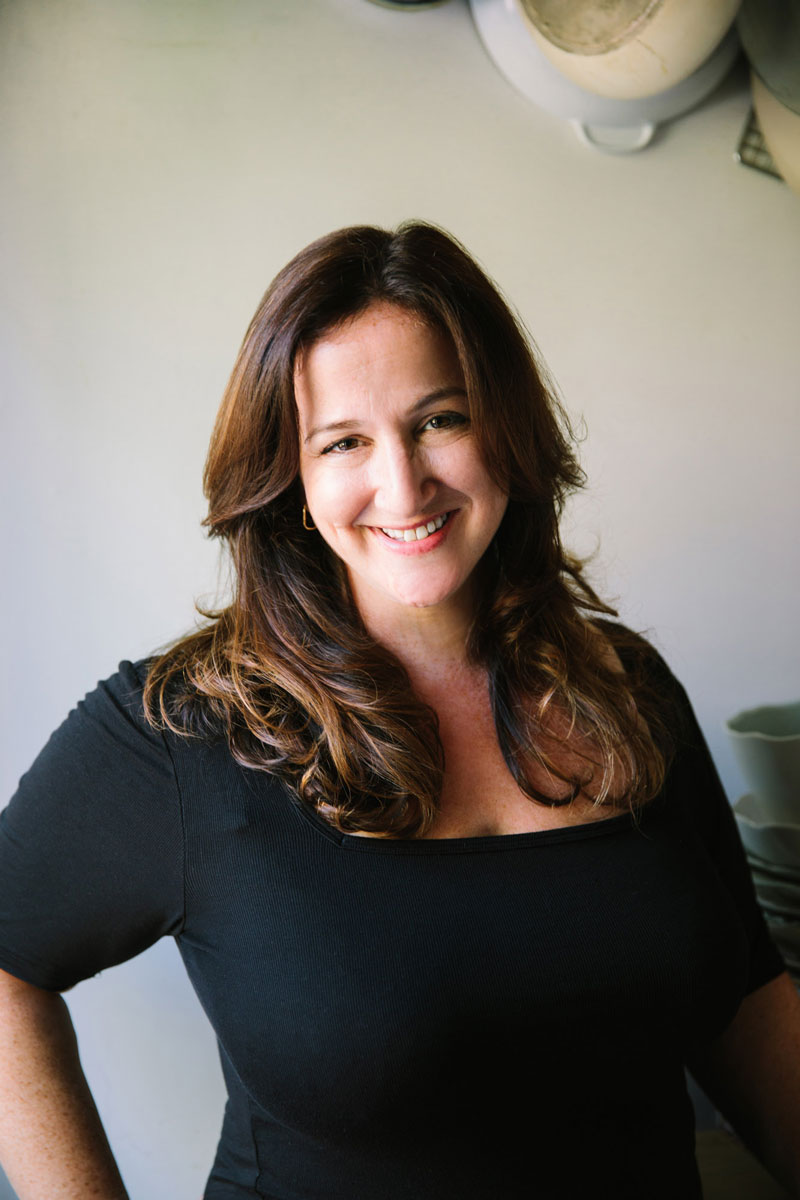
Hard lessons the opposition has learned in defeat

I recently purchased a 2025 calendar from the local dollar store. I am marking each day on the calendar with a big “X” as I count down the next two weeks. This is my way of accepting that which I cannot change and not succumbing to the fantasies that will be sold, with increasing fervor and mania, by the hope-peddlers and hopium sellers to an increasingly afraid and desperate public. Donald Trump will take power for a second time on Jan. 20. Trump’s return to power and his election for a second time should have vanquished naïve beliefs in the fundamental decency of the American people and the eternal nature of American democracy. Alas, I doubt that it has. As Rebecca Solnit writes in her solemn election 2024 post-mortem essay at The Guardian, “Our mistake was to think we lived in a better country than we do.”

During these next weeks, Americans who believe in real democracy, the rule of law, pluralism and human decency will experience a range of negative emotions. These emotions will be greatly amplified once Trump takes office and in the (at least) next four years while he is in power. These negative feelings and emotions may become so severe that numbness and learned helplessness take over; this is the outcome that pro-democracy and other Americans of honor and conscience must work very hard not to succumb to permanently during the long Trumpocene

"We can no longer find solace in the fact that there are more of us than there are them. That’s the most frightening thing of all."

To that point, public opinion polls and other research in the aftermath of the 2024 election show a consistent pattern of frustration, a belief that the country is heading in the wrong direction, a crisis of faith in the country’s institutions and a significant number of (white) Americans who possess authoritarian values and endorse Trump’s strongman politics and personality cult.

"Trump will lead a nation very different from the one that booted him from office four years ago," Max Burns warns in a new essay at The Hill, noting that "since then, millions of Americans have told campaign pollsters that they place a personal allegiance to Trump above their belief in the Constitution":

The number of people willing to consider alternatives to democracy is at a level last seen during the crises of the 1930s….It doesn’t take a political science expert to realize that the America Trump has in mind can’t coexist with democracy — and that Trump’s most committed voters don’t actually want to coexist in a constitutional democracy

[….]

The frightening reality of 2025 isn’t that Trump might attempt some end-run around the democratic process. It’s that he may not need to. Both the MAGA faithful and Trump-leaning independents are still racing rightward in terms of what they’ll excuse from a Trump administration. If Democrats think they can rely on the same anti-Trump messaging that carried them in 2020, they are catastrophically wrong. That audience is gone, and it isn’t coming back. Democrats are quoting laws to people carrying swords.

In an attempt to make better sense of our collective emotions (and tumult and upset) in these weeks before Trump’s return to power, reflect on the previous year and the election and what may come next, I recently spoke to a range of experts.

This is part two of a four-part series

Katherine Stewart is the author of the forthcoming book, “Money, Lies, and God: Inside the Movement to Destroy American Democracy.”

It’s fine to acknowledge our feelings, but this is no time to retreat under the covers. We have to get out of our own heads and think about the battles ahead. After the election it was understandable to want to take a break, maybe disconnect for a few weeks or days and arm oneself with emotional/mental/spiritual tools for the challenges ahead. Now is the time for moral courage. We must figure out how to do better.

There are elections in 2026 and 2028; we should aim to be more committed and effective in turning out the base of voters who share democratic values, as well as reaching out to and earning the trust of low-propensity voters.

In the run-up to the election, I watched as the MAGA movement worked not only to turn out its base but to concentrate on low-propensity voters, on young people and on religious voters in swing states. I watched as they deployed misinformation and the politics of outrage to mobilize new voters as well as allow others to justify their vote for a patently corrupt and unfit candidate. I watched them campaign throughout the election cycle rather than toward the end of it. So while I can’t claim any powers of foresight, I am not all that surprised by Trump’s victory.

Unfortunately, as of yet, there is no substantial equivalent to the Christian nationalist movement on the other side of the political aisle. The authoritarian right is not bigger, but it is better organized, more integrated, more disciplined and more ruthless than anything on the side of democracy. So if we want to save democracy, we are going to have to organize back. 

"We would not wish to emulate their most craven tactics, of course, but could learn something from their strategic resolve."

Funders need to get smarter about their political giving and we need to develop the organizational infrastructure for a parallel movement. The opposition to MAGA, broadly speaking, has a lot of catching up to do. But I continue to believe that there are more Americans who wish to preserve our democratic principles than abandon them for some sort of kleptocratic and despotic theocracy. If there is the broad political will to get it done, it can be done.

Remember, again, that Trump only won by a relatively small margin. There is no structural feature of the American political system, as of yet, that’s going to keep the MAGA movement in power indefinitely.

The fact remains that they have a president who won by less than two percent of the vote, along with slim majorities in the House and Senate. Consider their weaknesses: MAGA draws on multiple factions including oligarchic funders, the religious right, the New Right, libertarians, Q-Anoners and white nativists, “parent activists” radicalized by disinformation, health skeptics, a small sector of the far left and others, all of whom worked together to bring slim majorities of voters to their side. But the agendas and interests of these different groups are not always consistent, and the contradictions can and should be highlighted.

We need your help to stay independent

The most challenging aspect of this battle is the information war. Last month I attended Turning Point USA’s AmericaFest in Phoenix, Arizona. Speaker after speaker told us that “RINOs” and Democrats are communists, “barbarians,” and satanic agents of evil who wish to “destroy the American family.” We were told that public schools basically exist to change children’s gender and were assured that a government run by and for the pleasure of ultrarich donors is going to improve the economic fortunes of the working and middle classes. None of this is remotely true, of course, and there are plenty of Americans who have not been drawn into these fact-free conspiracy holes. We need to start working now to reach them with the truth before the other side influences them with pernicious lies.

We should certainly prepare ourselves for four years of buffoonery and incompetence. We can expect the raiding of our public resources by Trump cronies and some effort, on their part, to intimidate, if not persecute, his political enemies. But we need to stay focused now on strategy, organizational infrastructure and voter turnout going forward.

When they lost in 2020, the MAGA movement didn’t roll over. They simply resolved to fight harder. In addition to spreading lies, including the lie that the election was stolen, and backing a disgraceful insurrection, they hired large numbers of ballot chasers. They committed to early voting and ballot harvesting. They organized conservative faith leaders and gave them sophisticated tools for turning out their congregations and followers to vote for their preferred candidates. They tasked trusted voices within communities to court voters over the long term, hosting (for example) voter-awareness barbecues in March, well in advance of the November election.

Above all, they found new populations to evangelize with untruths and mobilize the vote with the politics of outrage. We would not wish to emulate their most craven tactics, of course, but could learn something from their strategic resolve.

D. Earl Stephens is the author of “Toxic Tales: A Caustic Collection of Donald J. Trump’s Very Important Letters." His website is Enough Already.

I am feeling profound disappointment in my country, but this latest nightmare was not wholly unexpected after the blast in November of 2016. I typed this off to my readers in the wee hours following Trump’s win: “I have absolutely no regrets. This time, I fully knew what my country was capable of and I did everything I could to work toward a better outcome. If the majority of my country is OK with an America-attacking, vulgar racist, whose only true talent is the ability to somehow always go lower, I find it terribly, terribly sad and wildly dangerous. This does not make me a better or worse person than anyone else, it just makes me, me, and I am very proud and comfortable with that. And if you stood for what is good … and right … and decent, you should be plenty proud of yourselves, too.”


Want a daily wrap-up of all the news and commentary Salon has to offer? Subscribe to our morning newsletter, Crash Course.


Again, I am surprised only by how little respect Americans have for the office of the President of the United States and our country. I thought Kamala Harris would win, and in hindsight, it does seem foolish. I believe I told you in a conversation in the weeks before the election that I feared millions of America’s white men were gearing up to do the worst possible thing. Turns out, it was even worse than that. The traitor who attacked us didn't win a mandate, but he did win convincingly. We can no longer find solace in the fact that there are more of us than there are them. That’s the most frightening thing of all. 

Looking to Inauguration Day, I suppose I have been handling this the same way I did pre-election. Back then (feels like years ago now), I would not allow myself to consider the terrible ramifications of a Trump win. I was solely focused on getting Harris across the finish line. I have not listened to a word the America-attacker has said since, nor do I plan to. He and his enablers make me sick. I plan to fight back and hope that the opposition has learned some hard lessons in defeat — namely the need to sharpen our messaging and take it everywhere. The notion that anti-union, pro-oligarch Republicans led by a tax-cheating clown somehow care about the working class more than Democrats is absolutely absurd and proof of the magic of nuclear-powered propaganda. 

I am dubious that it will be as bad as everybody thinks. Until Republicans show me that they understand how to govern and build instead of destroy, there is hope for a Democratic resurgence. It’s always easier to attack than defend. That's as optimistic as I can get because the alternative is gruesome. Keep a close eye on what Trump does in relationship to the military and how the Department of Defense reacts to his incursion. If nothing else remember this: NOTHING Trump does with our military will be to protect the citizens of the United States of America. EVERYTHING Trump does with our military will be to protect himself from the citizens of the United States of America. Military leadership must push back, or the consequences will be dire. 

Federico Finchelstein is a professor of history at the New School for Social Research and Eugene Lang College in New York. His most recent book is "A Brief History of Fascist Lies."

I am not surprised about the outcome of the election. Sadly, demagoguery, manipulation and lies work with unhappy citizens in modern democracies. Complex realities and facts are always more difficult to represent than fake statements and repetitions. In hindsight, I don’t think Democrats were able to convey an interest in problems that concern many people, especially regarding economic and cultural issues. I am not surprised about that. And I also think they did not give themselves time to focus on the best candidate and the best proposals to make this country more equal and fair. I am worried about the risk to democratic institutions that Trumpism represents. In short, dark times are coming but Trumpism like any apocalyptic cult is worse in defeat. Eventually, it will fail as its fascist and populist predecessors did, but first, the country will suffer.

Why Mike Johnson’s fake “Jefferson prayer” matters

One cannot say for certain that Rep. Mike Johnson was deliberately lying during his acceptance speech to return as Speaker of the House. He read what he claimed was a prayer recited by President Thomas Jefferson "each day of his eight years of the presidency and every day thereafter until his death." It is always technically possible that the Louisiana Republican is so profoundly ignorant of history that he didn't know that statement is preposterous on its face. As the Thomas Jefferson Foundation notes on its website, Jefferson doubted "the efficacy of prayer." They add that "Jefferson rejected the notion of the Trinity and Jesus’ divinity. He rejected Biblical miracles, the resurrection, the atonement, and original sin." He saw Jesus as a secular philosopher and wasn't a "Christian" in the way most people understand the term. 

Having Christian leaders from every corner lie about history puts a moral veneer on it as if lying is a holy act rather than a sin. 

Perhaps Johnson is unaware of this, but it is worth remembering that Johnson has previously proven to be an enthusiastic liar, usually displaying his telltale smirk when he's about to let loose with one of his whoppers. Last week, for instance, he backed Donald Trump's lies that the U.S.-born terrorist who attacked New Orleans was to be blamed on the "wide open border." Johnson wasn't just one of 147 Republicans who tried to steal the election on January 6, 2021, by refusing to certify it. He was a leader in the effort to use false claims of a "stolen" election, heading the amicus brief submitted to the Supreme Court, demanding they use these lies as an excuse to throw out the election results. So it's entirely plausible that the fake "Jefferson prayer" was searched for on Google before copy-pasted into the teleprompter. When one searches for the prayer, however, at the top of the results is the debunking offered by the Thomas Jefferson Foundation, which notes that the text appeared to have been written decades after Jefferson's death.

However, the biggest tell that Johnson was knowingly lying was how he introduced the prayer, saying it's “quite familiar to historians." Why mention historians if you didn't consult a single one? Johnson was likely trolling, snidely mocking historians, who would soon correct his "mistake" in mainstream and social media. Whatever deliberation Johnson used in his mendacity, however, what matters is that by using a fake "Jefferson prayer," he was nodding to and advancing one of the primary tactics of Christian nationalists: rewriting history to favor right-wing lies over truth. 


Want more Amanda Marcotte on politics? Subscribe to her newsletter Standing Room Only.


Johnson is tight with David Barton, a Christian nationalist advocate who masquerades as a "historian" and has spent decades passing off lies as "history" to advance his false claim that America was never intended to be a secular nation. Barton's lies are so egregious that his 2012 book about Jefferson was pulled by his publisher. This did not curtail his enthusiasm for disinformation one bit. He's also a big believer that "demons" are everywhere, invisibly pulling the strings wherever progressivism or secularism are advanced or protected. 

Barton's main contribution to the Christian right — helping transform it into Christian nationalism — was instilling the idea that facts do not matter, and "history" can be whatever conservatives want it to be. This tendency accelerated and became normative in the Republican Party under Trump, whose non-stop lying offered even more permission to right-wingers to tell themselves dishonesty is no sin if it serves their cause. Writing for UC Berkeley research in 2022, media specialist Edward Lempinen explained that Christian right leaders routinely preach now that they are in an "all-or-nothing struggle for existence, where the end justifies the means."

Democrats have become so demonized in this view, Berkeley political scientist Paul Pierson added, Christian conservatives believe they "can’t coexist with these other folks because they’re coming for you, and they’re coming for your family." Trump's pick to run the Office of Budget and Management, Russell Vought, has spent years arguing Christianity is under existential threat, and the only way to protect itself is through taking over government to turn secular democracy into something closer to a Christian theocracy. This paranoid fantasy of Christian persecution creates an umbrella justification for any terrible behavior, so long as it advances this theocratic goal, including breaking the law, stealing elections, violence, and, of course, lying. 

Christian nationalists rationalize their will to dominance on false claims that they are the "true" Americans and the rest of us — liberal Christians, non-believers, non-Christians — are interlopers. That's why fake history is central to their project. Barton, for instance, focuses mainly on falsifying evidence that the founders didn't "really" believe all that stuff about the separation of church and state they wrote directly into the Constitution and defended in the Federalist Papers. Instead, he concocts a fictional history where they wanted Christianity imposed by law on the nation. 

But this project of Christian nationalists rewriting history has expanded well beyond false or misleading quotes from the founders about religious liberty. Of special interest is propping up phony histories that paint American slavery in an honorable light, justify white supremacy, and lie about the lives of civil rights leaders. There are also efforts to erase the history of feminism, falsely portraying suffragist leaders as hostile to a woman's right to bodily autonomy. It's probably just a matter of time before they start claiming the riot at Stonewall was in opposition to LGBTQ rights. 

Moms for Liberty was founded, in large part, to push fake history into American classrooms. With their lobbying and the cooperation of Republicans like Gov. Ron DeSantis of Florida, they placed texts in public schools that falsely portrayed slavery as a benevolent institution, akin to a jobs training program rather than lifelong forced labor. They removed biographies of civil rights heroes like Rosa Parks, whitewashed the genocide of native people in the U.S., and erased damning facts about the life of Christopher Columbus from classrooms. 

Lying about long-ago history may seem like an easier lift since the people being lied about are dead and can't defend the truth. But, as Heather "Digby" Parton wrote yesterday at Salon, conservatives have grown so accustomed to rewriting history that they even deny a history the entire country witnessed with its own eyes four years ago: the insurrection of Jan. 6. 

The whole country watched the riot unfold in real time. There were hours and hours more of video that emerged in subsequent days. Witnesses from Trump's own inner circle testified about his state of mind and how he behaved that day. And there have been hundreds of court cases decided by juries finding that people who participated in the event were guilty of crimes. Yet the New York Times published a depressing article over the weekend examining how Trump and his minions have managed to completely turn Jan. 6 upside down in his supporters' minds. They've convinced them that the rioters not only did nothing wrong that day, but they are now supposedly being held as political prisoners and hostages. They say there wasn't much damage to the Capitol, Mike Pence wasn't really in danger, the whole thing is overblown and it's the Jan. 6 committee that should be jailed rather than those who beat cops nearly to death on the steps of the Capitol that day.

We need your help to stay independent

As Charlie Warzel and Mike Caulfield wrote in the Atlantic for the Jan. 6 anniversary, "The function of this bad information was not to persuade non-Trump supporters to feel differently about the insurrection," but to "reinforce the beliefs that the MAGA faithful already held." That they can rewrite the story of something we all saw live on television suggests to me that this is less a sincere delusion and more an act of collective lying. This would have been harder for average American conservatives to participate in years ago, I suspect, but times have changed. Years of watching Trump lie shamelessly without consequence has convinced them it's cool for them to do it, too. And having Christian leaders from every corner lie about history puts a moral veneer on it as if lying is a holy act rather than a sin. 

In this light, Johnson's fake prayer reads less as a mistake and more as a diss to both Thomas Jefferson and all the liberals who share his views about religious freedom and democracy. In the interest of historical accuracy, it must be noted that Jefferson was a bad person, who didn't just own slaves but repeatedly raped at least one of them, Sally Hemmings. But Jefferson is an important historical figure because he was a preeminent advocate for enlightenment values like freedom, democracy, and reason — all values that Johnson rejects, preferring a religious authoritarianism that eschews reality-based information.

Johnson's not a stupid man. I suspect he's well aware that Jefferson would be appalled to see a religious fanatic who tried to overturn an election in charge of the House of Representatives. But Johnson is fully aware he's alive and Jefferson is dead. Spitting on the founder's grave is an unsubtle way to celebrate the triumph of Christian nationalism over two centuries of liberal democracy. 

Billionaires court Trump at Mar-a-Lago, his “center of the universe”

With only a couple of weeks left before Donald Trump’s inauguration, an array of billionaires has descended on his Florida resort Mar-a Lago to curry favor with the president-elect.

Some, like Elon Musk, are well-known, ubiquitous entities. The CEO of Tesla and SpaceX has become Trump's frequent companion and adviser, popping up at his New Year's Eve bash, at meetings with other tech CEOs or on calls with global leaders. He invested more than $270 million in Trump’s campaign and has become the incoming president’s neighbor/tenant at Mar-a-Lago, according to reporting from The New York Times.

Then there are the lesser known influencers. Hussain Sajwani, chairman of Dubai real estate firm Damac Properties who has done business with the Trumps, showed off a picture with the president-elect and Musk from the New Year’s Eve celebration on his Instagram page.

The range and number of billionaires and tech moguls orbiting Trump in Florida — and those poised to join his incoming administration in Washington — are an indication of what we can expect in a second Trump presidency.

Musk’s influence

Musk's outsized involvement in Trump's world since his reelection has led to him being tapped for a budget-cutting advisory group named after the memecoin DOGE and aggressively lobbying lawmakers on his social media platform X.

In December, Musk became the first person worth over $400 billion even though Tesla sales slumped slightly in 2024, the first year of declines for the company amid growing international competition from China in particular. 

Musk’s business interests also include space exploration, as he remains in control of the private company SpaceX. Critics question whether it could benefit from Trump's nomination of Jared Isaacman as head of NASA — a billionaire who promoted the development of private space exploration and has partnered with SpaceX on trips.

We need your help to stay independent

If confirmed by the U.S. Senate, Isaacman would in charge of a government agency with about 18,000 people and a budget of around $25 billion, the Wall Street Journal estimates. He would oversee billions of dollars’ worth of contracts that NASA holds with SpaceX and the company’s direct competitors, CNN reports

While Musk does not see eye-to-eye with Trump's MAGA base on all issues, including H1-B visas, he’s likely to remain a significant influence in his second presidency.

"The most beautiful people from Dubai"

Hussain Sajwani's presence at Trump's New Year’s Eve party was not surprising. He and his family have attended it in previous years, including in 2017, when Trump called them "the most beautiful people in Dubai," according to The Associated Press. They have maintained strong business connections with the Trump Organization through projects in the United Arab Emirates. On Tuesday, Trump announced Sajwani is investing at least $20 billion in the U.S. to support new data centers.

Sajwani's company, DAMAC Properties, is renowned for opulent developments like the Cavalli Tower and its collaborations with Versace. His growing business interests extend far beyond the small UAE: DAMAC has offices in Saudi Arabia, Qatar, Lebanon, China and Singapore. 

DAMAC and the Trump Organization opened a Trump-branded golf course at a development in Dubai in 2017. The partnership was struck before Trump was elected president in 2016, and his family pledged then not to sign new international deals while he was in office. 

"We’re open to any new project, depends on the circumstance and the market"

Trump Organization, led by Trump's son Eric, is planning several residential, golf and hotel projects in the region as a part of a global expansion, according to its website. These include residential, hotel and golf projects in Oman, several residential developments in Saudi Arabia and residential and a hotel project in Dubai.

London-based publication Arabian Gulf Business Insight reported in December that DAMAC has secured the rights to build a Trump Tower in Abu Dhabi, citing sources familiar with the matter. Neither Damac nor the Trump Organization have confirmed or commented on the agreement.

In November, Sajwani told BloombergTV his relationship with the Trump Organization goes back over a decade and could expand further.

“We’re open to any new project, depends on the circumstance and the market,” Sajwani said.

Bezos, Zuckerberg head south 

Some billionaires who clashed with Trump in previous years have sought to mend fences since his reelection. 

Jeff Bezos, founder of Amazon and rocket company Blue Origin and owner of the Washington Post, made the pilgrimage to Mar-a-Lago in December. He was spotted there with Musk, who described their dinner as a “great conversation” in a post on X. Amazon plans to donate $1 million to Trump's inaugural fund.

On Sunday, Amazon said its Prime Video streaming service would release a documentary this year about Melania Trump, who will be an executive producer of it. The announcement came two days after Ann Telnaes, a Pulitzer Prize-winning cartoonist at the Washington Post, said she quit because her bosses blocked the publication of a cartoon depicting Bezos and other billionaires kneeling before Trump.

The Post, which endorsed Trump's Democratic opponents in 2016 and 2020, said in October it would stop endorsing presidential candidates and did not publish a drafted endorsement of Democratic nominee Kamala Harris — a decision made by Bezos, according to the newspaper's own article.

Mark Zuckerberg, founder of Meta, dined at Mar-a-Lago with Trump in late November, four years after Trump accused him of interfering in the 2020 election. 

Zuckerberg minimized news and political content recommendations on Meta's social media platforms this election cycle, and the company gave $1 million to Trump's inaugural fund. Zuckerberg has reportedly appointed Joel Kaplan, a former Republican White House official, to be in charge of policy at Meta. On Monday, Zuckerberg announced that Meta had added Dana White, the chief executive of Ultimate Fighting Championship and a longtime friend of Trump's, to the board of Meta. Additionally, Meta is ending the fact-checking program it uses to reduce the misinformation that can appear on its social media apps.

It’s no wonder Trump called his Florida residence the “Center of the Universe” in a recent social media post, adding, “Bill Gates asked to come, tonight.”

First U.S. death from bird flu reported in Louisiana

On Monday, the Louisiana Department of Health reported that a patient with a severe case of bird flu, caused by the H5N1 virus, had died from their infection, a first for the United States. The deceased was over age 65 and was reported to have underlying medical conditions. Even before the patient died, their case made headlines for several reasons: bird flu is raging across North America, swamping dairy and poultry farms and causing at least 66 human infections. But most of these cases, with the exception of three, have not been severe i.e. they haven’t warranted hospitalization or caused death.

Historically, bird flu has been a nasty bug to catch. Since it was first documented in the ‘90s, it has generally had a 50% mortality rate — far higher than something like COVID-19, with a death rate of around 2% to 3% at its peak or seasonal influenza, which has an average death rate of about 0.1% for most adults. But despite H5N1’s reputation as a killer in other countries, no patients in the U.S. have died, until now.

Public health experts have long warned that H5N1 has extreme pandemic potential, but so far, the risk to the general public remains low, according to the Centers for Disease Control and Prevention.

While the egg and chicken industry has been straining under bird flu outbreaks for several years, last April, bird flu made the jump from wild birds to dairy cows. Since then, it has jumped to farmworkers several dozen times, while also infecting people from poultry farms and, in rare cases, wild birds. The Louisiana patient reportedly contracted H5N1 after exposure to a combination of a backyard flock and wild birds.

Public health experts have long warned that H5N1 has extreme pandemic potential.

While so far there has been no hard evidence of human-to-human transmission — a key factor in these outbreaks turning into a pandemic — each infection in humans gives the virus more opportunity to mutate and evolve genetics that make it easier for it to spread. Indeed, testing revealed that the Louisiana patient possessed “concerning” viral mutations that are associated with being more infectious, according to a CDC report released in December.

Similarly, a teenager in British Columbia, Canada who contracted bird flu was hospitalized and put on life support after coming into contact with wild birds. According to a recent analysis in the New England Journal of Medicine, the teen’s virus also had mutations that would allow H5N1 to more easily infect and reproduce in the respiratory system. Such infections can be more easily spread by coughing or breathing, which is pure pandemic fuel.

Every infection, especially severe cases, is a reminder that “H5N1 influenza has been and continues to be a dangerous virus,” Dr. James Lawler, a director of the University of Nebraska’s Global Center for Health Security, told the New York Times, adding, “The more widely the virus circulates, particularly infections in humans and other mammals, the higher the risk that the virus will acquire mutations that adapt the virus for human disease and transmission.”


Want more health and science stories in your inbox? Subscribe to Salon's weekly newsletter Lab Notes.


And the virus shows no signs of slowing down. Also on Monday, the U.S. Department of Agriculture, specifically their Animal and Plant Health Inspection Service, confirmed more H5N1 avian flu outbreaks in poultry in five states, three involving commercial farms. APHIS also reported 10 more infections in domestic cats, which follows other cat infections reported after they consumed raw pet food. Many of the cats did not survive.

Last week, the U.S. Department of Health and Human Services announced $306 million in funding to continue surveilling the virus as it spreads. For example, the funds will increase the number of tests and provide outreach to high-risk populations, such as livestock workers.

“While the risk to humans remains low, we are always preparing for any possible scenario that could arise. These investments are critical to continuing our disease surveillance, laboratory testing, and monitoring efforts alongside our partners at USDA,” HHS Secretary Xavier Becerra said in a statement. “Preparedness is the key to keeping Americans healthy and our country safe. We will continue to ensure our response is strong, well equipped, and ready for whatever is needed.”

While some bird flu vaccines have been developed, they aren't currently approved for use in humans in the U.S. Multiple pharmaceutical companies, including Pfizer, Moderna and GlaxoSmithKline are racing to develop new H5N1 vaccines. With only a few weeks before Trump becomes president again, many are worried how this crisis will be handled — or if it will be a mangled public health response like the COVID pandemic.

Zendaya and Tom Holland are the “Spiderman” couple made to last

"Spiderman" couple, Zendaya and Tom Holland, are stuck in a love web and can't seem to get out — nor do they want to. 

The British-American love story began when the co-stars first met on the set of "Spiderman: Homecoming" in 2017 — with the pair inhabiting the roles of Peter Parker and Michelle "MJ" Jones — and in acting out the franchises' most "endgame" hookup, they were bitten by the love bug in real life.  

Their relationship wouldn't be made official until 2021, when they traversed the globe arm in arm for "Spiderman: No Way Home" during their press tour. For the first time publically, the pair were inseparable while doing interviews together, answering questions about who cooks each other dinner and posting loved-up selfies.

Unlike all the other "Spidey" couples who briefly dated on and off set — like the original Peter and MJ, Tobey Maguire and Kirsten Dunst, and Peter and Gwen played by Andrew Garfield and Emma Stone — Holland and Zendaya seem like they are in it for the long haul. After nearly four years together, the co-stars and partners soft-launched their engagement via the flash of a massive rock on Zendaya's finger during the Golden Globes on Sunday. 

According to outlets like TMZ and People, a source close to the couple revealed that Holland proposed to Zendaya during the holidays. Just weeks later, Zendaya, nominated for a Golden Globe for her performance in "Challengers," was spotted on the red carpet Sunday evening in a custom orange Louis Vuitton gown, a Bulgari choker and a matching ring on her right hand.

However, watchful red carpet fans and reporters peeped another massive ring on her left ring finger. Per the Los Angeles Times, that specific ring was not mentioned in a Bulgari press release, highlighting the rest of the brand's jewelry Zendaya wore that night.

On the carpet, a recently engaged LA Times reporter flashed her own engagement ring to the "Challengers" star and Zendaya played it cool. The coy actress reportedly smiled, flaunted her shimmering diamond ring back and shrugged her shoulders when asked if she was engaged. People Magazine also clocked that a tiny "T" tattoo for Tom is visible on the actress's ribcage, just barely peaking out of her dress.

Ever since the ring's debut, Zendaya fans have been sleuthing online, looking for confirmation. One person pointed out that the five-carrot, $200,000 Jessica McCormack ring has been on Zendaya's radar since its release in 2022. The X post shows that the actress liked a photo of the ring almost three years ago.

Another person highlighted that during the Globes, Zendaya showed her left hand to "Challengers" producer Amy Pascal. While the camera cut away from Pascal's reaction, Zendaya smiled as Pascal held her left hand. 

Even the streaming platform, Max, which hosts the smash Zendaya hit "Euphoria" had something to say about the engagement prior to it being confirmed by sources close to the couple. Max's social media account posted a clip of a viral scene from "Euphoria" with a photo of Zendaya's ring captioned: "I have never, ever been happier." In the video, Alexa Demie's character Maddie asks Rue (Zendaya), "Rue, when was this?" and she replies "Right after New Year's." 

"The moment Zendaya knew she’d marry Tom Holland," one fan joked in a social media post of the now infamous video of Holland's viral "Lip Sync Battle" performance against Zendaya, where he danced in the rain in a corset singing to Rihanna's "Umbrella." 

We need your help to stay independent

This isn't the first time Zendaya has been at the center of engagement buzz although, this time, it looks like the rumors ended up being true. 

Last year, the 28-year-old posted a selfie to her Instagram story wearing a ring on her finger, but it was a false alarm for fans getting ahead of themselves. 

Zendaya immediately cleared up the confusion, saying, “I posted it for my hat… Like, not for the ring on my right finger, you guys. Seriously, you think that's how I would drop the deuce? Like, what?!”

Zendaya's representatives have yet to comment on the engagement, but a family source confirmed to PEOPLE on Monday.

And in other family planning, Holland hinted in an interview with Men's Health recently that the 28-year-old would like to settle down and leave acting at a certain point in his life.

"When I have kids, you will not see me in movies anymore," Holland said, adding: "Golf and dad. And I will just disappear off the face of the earth."

Holland and Zendaya are set to film the fourth "Spiderman" film sometime later this year.

Oysters once crowded Europe’s coast – here’s how we discovered these long-forgotten reefs

Six generations ago, Europe's seas possessed vast oyster reefs. Oysters were found in their millions, clustered together in reef systems that spanned hundreds of square kilometers. Now the reefs are gone and with them, our collective understanding of what the sea used to look like.

Throughout the 1800s and probably earlier, each August would bring Oyster Day: when the bustling streets of London were lined with stalls selling oysters. Children would build grottos from the shells and pester passers-by for pennies for their efforts, with cries of "Pray remember the grotto!". This cultural tradition, and the reefs that enabled it, are now long forgotten.

Nonetheless, European flat oysters (Ostrea edulis) occupy a place in our history. Ancient Roman writings mention oyster farms off the coast of Italy and trade for oysters occurring as far north as Scotland. Oysters were beloved by the aristocracy at the same time as they provided protein for the very poorest. Their bounty inspired festivals, poems and art.

As demand for oysters grew during the industrial revolution, fisheries expanded and oysters were stripped from further afield to feed the rapidly growing urban market. Young oysters were traded internationally to prop up failing fisheries nearer big cities, leading to the misconception that the supply was stable. Some newly discovered beds were eradicated within weeks.

Fishers and government authorities were already worried about declining oyster populations by the early 1800s. A century later, wild populations had collapsed and, today, European oysters are hard to find outside of upmarket restaurants. The weathered shells that are sometimes found on beaches are usually hundreds or even thousands of years old – a faint ghost of the oyster reefs that used to lie beneath the waves nearby.

Oysters everywhere

The catastrophic decline in oyster landings has been well reported. For example, around the east coast of Scotland near Edinburgh, over 30 million oysters a year were landed in the 1830s. Just half a century later, landings had declined to less than 300,000 a year, and by the 1950s, oysters were declared locally extinct. This trend was repeated in coastal locations around Europe and today, only a handful of wild fisheries remain.

Less widely recognized is the massive loss of oyster habitat that accompanied these declines. Europe's seafloor is now largely dominated by shifting sand and mud, interspersed with rocky boulders covered in kelp, and occasional seagrass patches.

It is hard to imagine that hundreds of square kilometers were once covered by large shell reefs composed of millions of living and dead oysters, emerging vertically from the seabed and extending several hectares along the seafloor. Yet our historical research shows this was the case.

From published sources spanning 350 years, the team of 37 researchers documented more than 1,000 locations where oyster fisheries and habitat once existed. Extensive reefs occurred along the coasts of France, Denmark, Ireland and the UK, as well as parts of the Mediterranean and Black Sea.

Written records in government reports, early scientific studies, the writings of naturalists and newspaper articles describe reefs averaging 30 hectares (around 50 football pitches) in size, and rarely being smaller than one hectare (about the size of London's Trafalgar Square).

In the southern North Sea between the UK and the Netherlands, reefs occurred over hundreds of kilometres. These reefs were so full of oysters that they were a noted concern for sail trawlers, who risked breaking their fishing gear on the heavy clumps of shell.

Although information on the size of reefs was available for only a quarter of the historical reef locations, our sources collectively described more than 1.7 million hectares of oyster reef – an area larger than Northern Ireland. These reefs in turn supported vibrant communities of invertebrates, fish and marine mammals.

Restore the reefs

Today, there are no native oyster aggregations that we know of in Europe bigger than a tenth of a hectare, and most wild populations exist at densities lower than one oyster per square meter.

The complex, diverse ecosystem created by European reef-building oysters has collapsed, according to the recent assessment we submitted to the International Union for the Conservation of Nature, which collates the statuses of ecosystems and species.

As well as the loss of cheap, nutritious food and coastal livelihoods, the disappearance of large oyster reef structures will have had huge and unknown ramifications for biodiversity, shoreline protection, water filtration, sediment stabilization and wider fisheries.

Fortunately, coastal communities around Europe are increasingly engaged in the effort to restore native oysters at scale. This typically involves reintroducing oysters and placing shells for remaining oyster larvae to settle on. As seen in other regions where oyster reefs have been brought back, habitat restoration restores the benefits of formally vibrant ecosystems.

Rediscovering the fact that oyster reefs were once extensive and abundant matters. We now know modern definitions of healthy oyster habitats, which cite more than five oysters per square meter and reefs only a few meters wide, actually reflect an impoverished state. While these remnant patches are important and need protecting, our historical findings should urge us to be more ambitious in restoring the seafloor.

We have far to travel to achieve healthy seas, but we also have a blueprint for a brighter future. Native oyster reefs that were once a dominant feature of European seabed habitats could become this again.

"Pray remember the grotto!"


Imagine weekly climate newsletter


Don't have time to read about climate change as much as you'd like?

Get our award-winning weekly roundup in your inbox instead. Every Wednesday, The Conversation's environment editor writes Imagine, a short email that goes a little deeper into just one climate issue. Join the 40,000+ readers who've subscribed so far.The Conversation


Ruth H. Thurstan, Associate Professor in Marine and Historical Ecology, University of Exeter and Philine zu Ermgassen, Postdoctoral Researcher in Zoology, University of Edinburgh

This article is republished from The Conversation under a Creative Commons license. Read the original article.

“What message does that send?”: Capitol police chief suggests J6 pardons would hurt law enforcement

The head of the U.S. Capitol Police has come out against pardons for anyone who attacked members of law enforcement, including those who did so during the Jan. 6 insurrection four years ago, telling The Washington Post that there should be consequences for those who assault police.

According to the Department of Justice, about 140 police officers were assaulted on Jan. 6, including about 80 members of U.S. Capitol Police, one of whom, Brian Sicknick, suffered a stroke and "passed away due to injuries sustained while on-duty," per a news release at the time.

Hundreds of people were ultimately charged for attacking law enforcement, many of whom could be set free if President-elect Donald Trump follows through on his promise to issue pardons "in the first hour" of his presidency. Although Trump has said cases will be examined on an individual basis, he has pledged to free the "vast majority" of people incarcerated for their efforts to block the peaceful transfer of power.

Speaking to the Post, U.S. Capitol Police Chief J. Thomas Manger — framing his remarks as pertaining to a general lack of accountability for attacks on law enforcement — argued that anyone who assaults police should face consequences, regardless of their political beliefs.

“What message does that send? What message does that send to police officers across this nation, if someone doesn’t think that a conviction for an assault or worse against a police officer is something that should be upheld, given what we ask police officers to do every day?” Manger asked.

“This is not about any particular president," Manger continued. "It’s not about any particular pardon. It’s about police officers who are asked to do the things that they’re asked to do, and the community supporting them when they’re hurt, injured, assaulted or killed."

Congestion pricing begins in Manhattan

Congestion pricing began in New York City on Sunday in a bid to ease traffic and pollution and raise money for public transit upgrades, even as legal challenges to the tolling program remain.

The initiative, the first of its kind in the U.S., charges most drivers $9 during peak hours. It affects vehicles entering Manhattan south of 60th Street and covers areas that are typically clogged with traffic, including Times Square, the theater district, Hell's Kitchen, Chelsea and SoHo. 

New York City had the world's worst traffic in a 2023 scorecard from INRIX, a transportation data analytics firm, NPR reported. Other congested cities are following the results of the tolling program to determine its viability. 

Congestion pricing was an idea born in New York City, conceived by Columbia University professor William Vickrey in the 1950s, The New York Times reported. It has been used in London, Stockholm and Singapore, but didn't gain enough momentum in New York until the State Legislature approved it as part of the 2019 state budget, per The Times. 

The plan was to charge passenger vehicles $15 beginning last June. But Gov. Kathy Hochul canceled the start of the program, saying it could hurt the city's economy. Facing pressure from transit advocates, Hochul revived congestion pricing in November with the reduced fee of $9. Motorcyclists will pay less, while commercial truck drivers will pay up to $21.60. Discounts are offered overnight to all drivers. 

Transit officials expect the program will reduce the number of vehicles in the area by at least 13%, and that it will raise $15 billion to pay for repairs to subways and increase the number of electric buses, per The Times.

Opponents of congestion pricing say they're not done fighting. The measure has survived several legal challenges but could still be upended by pending lawsuits from New Jersey, where officials have challenged environmental aspects of it, and from suburban counties surrounding New York City, where drivers have fewer mass transit options and say the toll is unfair.

President-elect Donald Trump has said congestion pricing could hurt the city's tourism and business industries and pledged to end it after he takes office on Jan. 20.

Timothée Chalamet and Glen Powell look-alike contest winners made it to the Golden Globes

Do you want a way to score Golden Globe tickets? It might be as easy as winning a Glen Powell and Timothée Chalamet look-alike contest.

That's how Chalamet and Powell's doppelgangers, Miles Mitchell and Max Braunstein, found themselves on the red carpet Sunday evening, holding signs that read, “I won a look-alike contest and now I’m at the Golden Globes.”

Mitchell won the first-ever look-alike contest in New York City in October. Since then, the 21-year-old has met Chalamet twice: once at an "A Complete Unknown" screening in NYC and a second time on the Golden Globes red carpet. But that first look-alike contest spawned a series of similar competitions for stars like Dev Patel, Zayn Malik, Paul Mescal and Jeremy Allen White. 

https://www.instagram.com/p/DEdu07uSyxi/

Salon interviewed Mitchell during the chaotic event where several people were arrested and NYPD handed the organizers a hefty $500 fine. Mitchell, a native New Yorker like Chalamet, said about the actor: “I think he’s cool. We have some things in common a little bit.” The Chalamet dupe won a whopping $50 and a trophy worth about $250.

On the other hand, Braunstein scored a $5 prize, a cowboy hat and free queso from a local restaurant in Austin, Texas. The winner, decided by Powell's own mom, also was promised a cameo in Powell's next film.

But on the Golden Globes carpet, Braunstein stood face to face with his equal, Powell. "Oh, look who's here!" Powell said.

Powell told Etalk, "What a great guy, so fun. He's part of the family now. I finally have a brother!"