Spring Sale: Get 1 Year, Save 58%

Mike Johnson flips enough votes after initially coming up short

Update: After leaving the floor with Mike Johnson, Reps. Ralph Norman, R-S.C., and Keith Self, R-Texas changed their votes to support the incumbent speaker. As a result, Johnson won the speakership on his first ballot after an extended pause in the proceedings.

Original story continues below.

Speaker Mike Johnson, R-La., seeking to retain his post for two more years, appears to have lost in the first round of voting to decide who will preside over the House of Representatives for the next Congress.

Republicans, down a member after the departure of Rep. Matt Gaetz, R-Fla., hold 219 seats in the House to the Democrats' 215 seats. With Democrats voting in unison for their leader, Rep. Hakeem Jeffries, D-N.Y., and expected to keep doing so, Johnson, who needs a majority of votes (218 if all 434 members vote) to win re-election as speaker, can afford almost no margin of error.

The Louisiana Republican failed to meet the threshold in a roll call vote that took place early Friday afternoon. Three Republicans voted for a different member of the caucus — Thomas Massie, R-Ky., Ralph Norman, R-S.C. and Keith Self, R-Texas, cast their ballots for House Majority Whip Tom Emmer, R-Minn., House Freedom Caucus chair Jim Jordan, R-Ohio and Rep. Byron Donalds, R-Florida, respectively. Five other Republicans critical of Johnson in the past did not vote when their name was called, perhaps in a show of protest, but ended up picking him in the end to avoid a disaster scenario in which Jeffries could win the election.

With the return of the five hardliners to his camp and the backing of the notoriously fickle President-elect Donald Trump, Johnson is hoping to avoid the same fate as his predecessor Kevin McCarthy, who struggled through fifteen rounds of voting at the start of Congress in 2023, only to be forced out by a motion to vacate the chair in October that year due in large part to Republican defections. Like McCarthy, Johnson faces pressure from both the hard-right Freedom Caucus and more traditional Republicans, all while seeking to please Trump.

To placate the right, Johnson released a list of commitments shortly before voting took place, promising to "aggressively" cut federal spending and work with Elon Musk's "Department of Government Efficiency" to pare down the government bureaucracy.

Unless Johnson or someone else can muster the majority of votes necessary to become speaker, the House will be essentially frozen in place, with no other option but to vote for a speaker ad infinitum, vote to recess or vote to adjourn. Certification of Trump's victory is due to take place on Jan. 6 — in the absence of a speaker and a working House, Johnson allies have warned, that process cannot take place. If Johnson can't get the votes by then, the House could delay it or choose a temporary speaker to oversee certification.

Mark Zuckerberg puts Republican in charge of policy as he seeks to make nice with Trump

Mark Zuckerberg is switching places around at the top of Meta, the social media company he controls. In a move first reported by Semafor and that some observers noted could be a reflection of Zuckerberg's desire to make nice with a new Republican government, Joel Kaplan, a Meta veteran closely tied to influential GOP circles, will replace longtime policy chief Nick Clegg, the former UK deputy prime minister who announced his plans to resign long before last fall's election.

The changing of the guard at Meta seems to reflect a similar transition taking place in Washington and around the world. Clegg, a fixture in the UK's centrist Liberal Democrats party, was hired by Meta in 2018, back when it was called Facebook and dealing with accusations that it was used by Russia and other meddling groups to improperly sway the 2016 US presidential election.

While the company faced criticism from American lawmakers, the gravest threat came from Europe, where officials have much more leeway and willingness to enforce regulations on tech giants. Observers noted at the time that Zuckerberg hoped to make use of Clegg's European connections in navigating the regulatory landscape there.

Now, Zuckerberg's attention is turning homeward. He has already made moves to please President-elect Donald Trump, meeting with the president-elect at Mar-a-Lago after his election victory and donating $1 million to his inauguration fund. The elevation of Kaplan, who worked in former President George W. Bush's administration and has acted as Meta's link to Republican politicians, is a sign that Zuckerberg seeks to maintain or expand his influence with the incoming Trump administration, or at least avoid being shut out.

Meta has been in the crosshairs of officials on both sides of the political aisle who say variously that it has grown too large and powerful, is silencing (or amplifying) certain political voices, and is exploiting its users with unethical tactics. The company is currently battling a federal antitrust suit that was filed by Trump's first administration.

With Kaplan at the helm, Zuckerberg might hope he can avoid repeats of the $5 billion fine he had to pay over the Cambridge Analytica scandal, in which user data was improperly collected by a British consulting firm for political advertising purposes.

“American Psycho” turns 25 and more: The biggest pop culture anniversaries to look out for in 2025

Last year was a major year for pop culture anniversaries within film, television, music, entertainment and more. Ellen DeGeneres’ iconic Oscars selfie went viral 10 years ago last March. M. Night Shyamalan’s 1999 hit film “The Sixth Sense” celebrated its 25th anniversary August. And “Friends” made its debut 30 years ago last September.

The new year promises more pop culture moments to reminisce on, including the 25th anniversary of Mary Harron’s 2000 satirical horror flick “American Psycho.” Based on the 1991 novel by Bret Easton Ellis, the film adaptation stars Christian Bale as the villainous antihero Patrick Bateman — a Wall Street yuppie who leads a secret life as a serial killer. “American Psycho” later inspired a 2002 direct-to-video sequel directed by Morgan J. Freeman and starring Mila Kunis in the main role, and acclaimed director Luca Guadagnino ("Call Me By Your Name," "Challengers") is working on a remake of the original.

Other notable anniversaries to keep an eye out for include the 10th anniversary of Caitlyn Jenner’s Vanity Fair cover, which made headlines shortly after its publication; the 20th birthday of YouTube, which was founded by three former employees of PayPal; and the 60th anniversary of “The Sound of Music.” 

Here’s a list of all the major pop culture anniversaries to look forward to:

01
January
Julie Delpy Ethan Hawke Before SunriseJulie Delpy and Ethan Hawke in the film 'Before Sunrise', 1995. (Castle Rock Entertainment/Getty Images)
  • Jan. 7: “Empire” turns 10
  • Jan. 8: “Leap Year” turns 15
  • Jan. 9: “Malcolm in the Middle” turns 25
  • Jan. 13: “Schitt's Creek” turns 10
  • Jan. 24: 30 years after the O.J. Simpson trial began 
  • Jan. 27: “Before Sunrise” turns 30
02
February
YouTube websiteYouTube website homepage circa 2006. (Photo Illustration by Jeff J Mitchell/Getty Images)
  • Feb. 6: “American Dad!” turns 20
  • Feb. 12: “Percy Jackson & the Olympians: The Lightning Thief” turns 15
  • Feb. 13: “Fifty Shades of Grey” film turns 10
  • Feb. 14: YouTube turns 20
  • Feb. 15: “The Breakfast Club” turns 40
  • Feb. 19: “Shutter Island” turns 15
  • Feb. 21: “Avatar: The Last Airbender” TV show turns 20
  • Feb. 26: 10 years after the black and blue or gold and white dress went viral on Tumblr
03
March
John Cusack High FidelityJohn Cusack Stars In The Movie "High Fidelity." (Getty Images)
  • March 2: “Parenthood” turns 15
  • March 2: “The Sound of Music” film turns 60
  • March 6: “Unbreakable Kimmy Schmidt” turns 10
  • March 17: “Erin Brockovich” film turns 25
  • March 18: “The Suite Life of Zack & Cody” turns 20
  • March 23: “Pretty Woman” turns 35
  • March 24: “The Office” turns 20
  • March 27: “Grey’s Anatomy” turns 20
  • March 27: “Victorious” turns 15
  • March 30: 10 years after Trevor Noah replaced Jon Stewart as host of “The Daily Show”
  • March 31: “The Road to El Dorado” turns 25
  • March 31: “High Fidelity” film turns 25 
  • March 31: 30 years after Mexican pop star Selena was murdered at the age of 23
  • March 31: “Younger” TV show turns 10 
04
April
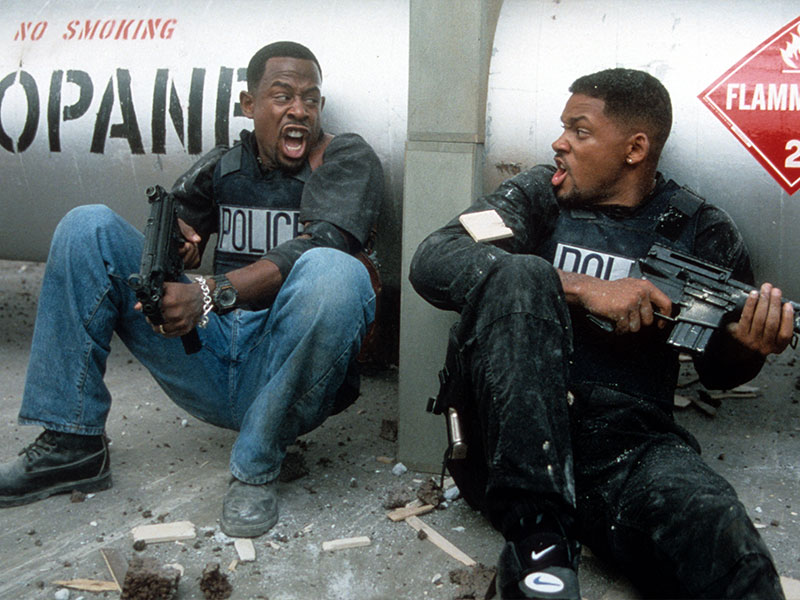
Martin Lawrence Will Smith Bad BoysMartin Lawrence and Will Smith in the film 'Bad Boys', 1995. (Columbia Pictures/Getty Images)
  • April 3: 30 years after Amazon sold its first book: “Fluid Concepts and Creative Analogies: Computer Models of the Fundamental Mechanisms of Thought” by Douglas R. Hofstadter"
  • April 3: “Monty Python and the Holy Grail” turns 50
  • April 5: “Adventure Time” turns 15
  • April 7: “Bad Boys” turns 30
  • April 12: 30 years after Drew Barrymore flashed David Letterman on “The Late Show”
  • April 14: “American Psycho” turns 25
  • April 15: “The Amityville Horror” film turns 20
  • April 16: “Kick-Ass” turns 15
  • April 20: “Bride of Frankenstein” turns 90
  • April 21: “While You Were Sleeping” film turns 30
  • April 21: “The Basketball Diaries” film turns 30
  • April 21: Match.com was created 30 years ago
  • April 23: 10 years after Dr. Derek Shepherd (McDreamy) died in a car accident on “Grey’s Anatomy”
05
May
SurvivorJeff Probst on "Survivor" (CBS)
  • May 4: “Luther” turns 15
  • May 7: “Iron Man 2” turns 15
  • May 15: “Mad Max: Fury Road” turns 10
  • May 15: “Pitch Perfect 2” turns 10
  • May 17: 10 years after Taylor Swift premiered her celebrity-filled music video for “Bad Blood”
  • May 19: “Star Wars: Episode III – Revenge of the Sith” turns 20
  • May 19: “Die Hard with a Vengeance” turns 30
  • May 24: “Braveheart” turns 30
  • May 25: 20 years after Carrie Underwood won the fourth season of "American Idol"
  • May 26: “Casper” film turns 30
  • May 27: “Madagascar” turns 20
  • May 31: “Survivor” turns 25

We need your help to stay independent

06
June
Kelly Rowland, Beyonce Knowles, and Michelle Williams of Destiny's ChildKelly Rowland, Beyonce Knowles, and Michelle Williams of Destiny's Child perform at Oakland Arena on September 3, 2005 in Oakland, California. (Tim Mosenfelder/Getty Images)
  • June 1: “Dancing With the Stars” turns 20
  • June 1: Caitlyn Jenner’s Vanity Fair cover turns 10
  • June 5: “Sense8” turns 10
  • June 7: “Love Island” turns 10
  • June 7: “The Goonies” turns 40
  • June 8: “Pretty Little Liars” TV show turns 15
  • June 10: “Mr. & Mrs. Smith” film turns 20
  • June 11: 20 years after Destiny's Child announced plans to disband during their worldwide concert tour, Destiny Fulfilled . . . and Lovin' It
  • June 13: “How to Train Your Dragon” turns 15
  • June 18: “Toy Story 3” turns 15
  • June 14: 20 years after Michael Jackson was found not guilty on all 10 felony and all four misdemeanor charges in a 14-week child molestation trial
  • June 15: “Batman Begins” turns 20
  • June 16: “Batman Forever” turns 30
  • June 17: “Even Stevens” turns 25
  • June 19: “Inside Out” turns 10
  • June 20: “Jaws” film turns 50
  • June 22: “Lady and the Tramp” turns 70
  • June 23: “Pocahontas” film turns 30
  • June 24: “Mr. Robot” turns 10
  • June 26: “The Gold Rush” turns 100
  • June 30: “Apollo 13” turns 30
  • June 30: “The Twilight Saga: Eclipse” film turns 15
07
July
Drake Hotline Bling muralA mural of Drake, announcing the 2016 MTV Video Music Awards nomination for the song Hotline Bling, in First Street Green Art Park on July 25, 2016 in New York City. (Mike Coppola/Getty Images for MTV)
  • July 3: “Back to the Future” turns 40
  • July 4: “Die Hard 2” turns 35
  • July 5: “Big Brother” turns 25
  • July 9: “Despicable Me” turns 15
  • July 10: 25 years after Coldplay released their debut album “Parachutes”
  • July 12: “Rizzoli & Isles” turns 15
  • July 15: “Wedding Crashers” turns 20
  • July 16: “Inception” turns 15
  • July 18: 20 years after Jude Law publicly apologized for cheating on Sienna Miller with their kids’ nanny
  • July 19: “Clueless” turns 30
  • July 25: “Sherlock” TV show turns 15
  • July 27: “MasterChef” turns 15
  • July 31: 10 years after Drake released his viral song “Hotline Bling”
08
August
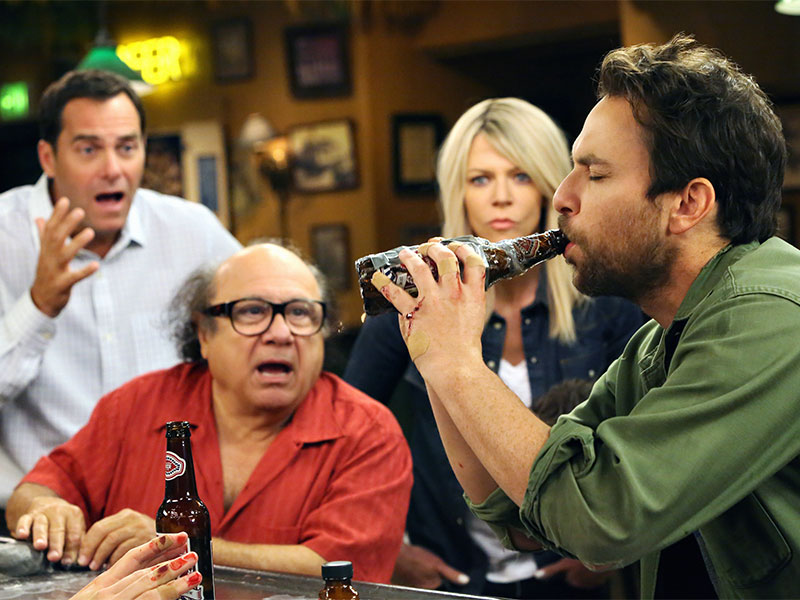
It's Always Sunny in PhiladelphiaIt's Always Sunny in Philadelphia (FX)
  • Aug. 4: “It's Always Sunny in Philadelphia” turns 20
  • Aug. 4: “Babe” film turns 30
  • Aug. 7: “Real Genius” turns 40
  • Aug. 8: “Weeds” turns 20
  • Aug. 9: 30 years after Grateful Dead songwriter, lead guitarist, and vocalist Jerry Garcia died
  • Aug. 13: “Scott Pilgrim vs. the World” turns 15
  • Aug. 13: “Eat Pray Love” turns 15
  • Aug. 14: “Dora the Explorer” TV show turns 25
  • Aug. 17: “The Great British Bake Off” turns 15
  • Aug. 24: 30 years after Microsoft's Windows 95 operating system was launched
  • Aug. 25: “Bring It On” turns 25
09
September
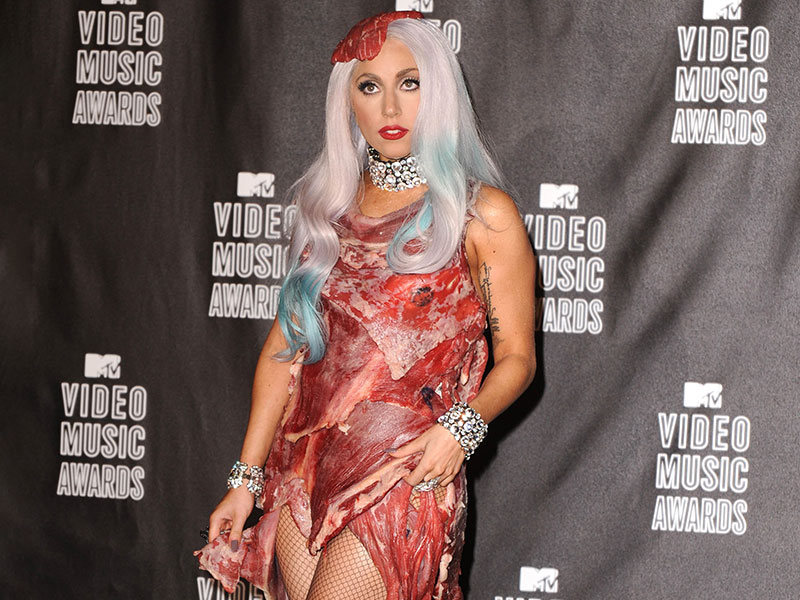
Lady Gaga; Meat DressLady Gaga attends the 2010 MTV Video Music Awards at Nokia Theatre L.A. Live on September 12, 2010 in Los Angeles, California. (Steve Granitz/WireImage/Getty Images)
  • Sept. 1: “Kids” film turns 30
  • Sept. 2: 20 years after Kanye West infamously went off-script and said, “George Bush doesn’t care about black people,” during a Hurricane Katrina tribute
  • Sept. 6: “Regular Show” turns 15
  • Sept. 7: 30 years after TLC’s “Waterfalls” won the MTV Video Music Award for Video of the Year
  • Sept. 8: 10 years after Stephen Colbert replaced David Letterman as host of “The Late Show”
  • Sept. 11: “Girlfriends” turns 25
  • Sept. 12: 15 years after Lady Gaga wore her meat dress to the 2010 MTV Video Music Awards
  • Sept. 13: “Bones” TV show turns 20
  • Sept. 17: “Easy A” turns 15
  • Sept. 19: “How I Met Your Mother” turns 20
  • Sept. 19: “Goodfellas” turns 35
  • Sept. 22: “Almost Famous” turns 25
  • Sept. 22: “Everybody Hates Chris” turns 20
  • Sept. 22: “Criminal Minds” turns 20
  • Sept. 22: David Fincher’s “Se7en” turns 30
  • Sept. 22: “Showgirls” turns 30
  • Sept. 24: “Blue Bloods” turns 15
  • Sept. 26: “The Rocky Horror Picture Show” film turns 50
  • Sept. 26: “Downton Abbey” turns 15
10
October
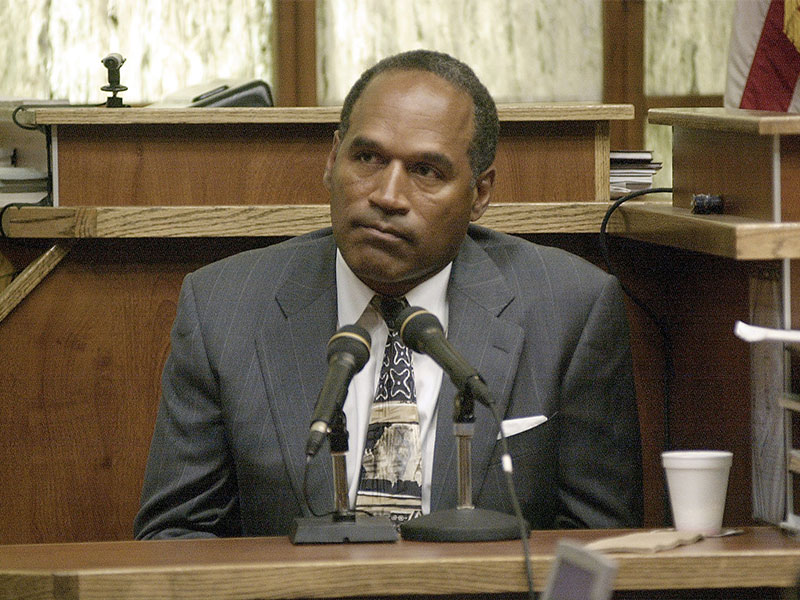
OJ Simpson on trialFormer NFL star and actor O.J. Simpson takes the stand and answers questions in the second day of his "road rage" trial before the Miami-Dade County Courtroom October 22, 2001 in Miami, FL. (Pool Photo/Getty Images)
  • Oct. 1: “The Social Network” turns 15
  • Oct. 2: 20 years after Brad Pitt and Jennifer Aniston finalized their divorce
  • Oct. 3: 30 years after O. J. Simpson was found not guilty of the murders of his ex-wife Nicole Brown Simpson and her friend Ronald Goldman
  • Oct. 5: “Gilmore Girls” turns 25
  • Oct. 6: Instagram turns 15
  • Oct. 6: “Requiem for a Dream” turns 25
  • Oct. 6: “CSI: Crime Scene Investigation” turns 25
  • Oct. 11: “Oklahoma!” turns 70
  • Oct. 12: “Crazy Ex-Girlfriend” turns 10
  • Oct. 20: “Mildred Pierce” film turns 80
  • Oct. 26: “Supergirl” TV show turns 10
  • Oct. 27: “Rebel Without a Cause” turns 70
  • Oct. 31: “The Walking Dead” turns 15
11
November
Jim Carrey How The Grinch Stole ChristmasJim Carrey as The Grinch in "Dr. Seuss' How The Grinch Stole Christmas," Directed By Ron Howard. (Getty Images)
  • Nov. 3: 10 years after Leah Remini released her Scientology tell-all, “Troublemaker: Surviving Hollywood and Scientology”
  • Nov. 3: “Charlie's Angels” film turns 25
  • Nov. 6: “Master of None” turns 10
  • Nov. 8: “Guitar Hero” video game turns 20
  • Nov. 10: “Ace Ventura: When Nature Calls” turns 30
  • Nov. 11: Joe Wright's “Pride & Prejudice” film turns 20
  • Nov. 15: “The Phantom of the Opera” silent film turns 100
  • Nov. 16: “Home Alone” turns 35
  • Nov. 17: 10 years after Charlie Sheen admitted on Today that he contracted HIV “roughly four years ago”
  • Nov. 17: “How the Grinch Stole Christmas” film turns 25
  • Nov. 19: 20 years after Russell Crowe pleaded guilty to second-degree assault over throwing a phone at a hotel employee
  • Nov. 19: “One Flew Over the Cuckoo's Nest” film turns 50
  • Nov. 20: “Carol” turns 10
  • Nov. 20: Adele’s third studio album “25” turns 10
  • Nov. 20: Marvel’s “Jessica Jones” TV show turns 10
  • Nov. 22: “Toy Story” turns 30
  • Nov. 24: “Love & Other Drugs” turns 15
  • Nov. 24: “Tangled” turns 15
  • Nov. 27: “The Danish Girl” turns 10
  • Nov. 30: “Superstore” TV show turns 10
12
December
Whoopi Goldberg; The Color PurpleWhoopi Goldberg in the film 'The Color Purple', 1985. (Warner Brothers/Getty Images)
  • Dec. 3: “Black Swan” turns 15
  • Dec. 7: “Edward Scissorhands” turns 35
  • Dec. 13: Ang Lee's “Sense and Sensibility” film turns 30
  • Dec. 13: “Clue” turns 40
  • Dec. 15: “Jumanji” turns 30
  • Dec. 15: “Heat” turns 30
  • Dec. 17: “Tron: Legacy” turns 15
  • Dec. 18: “Star Wars: The Force Awakens” turns 10
  • Dec. 18: “The Color Purple” film turns 40
  • Dec. 21: “Battleship Potemkin” turns 100
  • Dec. 22: “Miss Congeniality” turns 25
  • Dec. 22: “You Can Count on Me” turns 25
  • Dec. 25: “The Godfather Part III” turns 35
  • Dec. 29: “Blue Valentine” turns 15

Three sequels worth watching in 2025—and three to avoid at all costs

Benjamin Franklin once said that, in this life, nothing can be certain except death, taxes and sequels. Alright, I’m paraphrasing, but it’s true: A deluge of new franchise installments hitting theaters every year is as sure of a bet as gambling that the grim reaper’s scythe will be razor-sharp. If only we could use that hatchet to cut through some of the film industry’s tallest weeds, especially post-actors’ and writers’ strike, when Hollywood’s biggest power players are more cautious than ever about spending money on original projects and would rather dump cash into “sure” successes.

"Mufasa: The Lion King" is all anyone with a brain needs to recognize that franchise fatigue is at an all-time high.

Well, why can’t we trim the fat ourselves? If Tinseltown’s bigwigs can choose to shirk innovative scripts and brush off promising new talent in favor of more sequels and remakes, certainly we can choose not to open our mouths to let them be shoved down our throats. Conscious consumption is the only way to convince studio execs that the average moviegoer has grown tired of being force-fed endless amounts of junk. Take what is perhaps one of the most egregious recent examples of this phenomenon, “Mufasa: The Lion King.” That film is a prequel to the “Lion King” franchise, a sequel to 2019’s live-action “Lion King” remake and a retelling of an animated classic that keeps with Disney’s factory line of insipid live-action remakes that nobody wanted and nobody but children care about. In its late-December opening weekend, “Mufasa” collected a paltry $31.7 million in North America, a mere gasp of its $200 million budget. And while the movie recouped a bit of cash over the historically lucrative Christmas weekend, its bleak opening and middling reviews are all the proof anyone with a brain would need to recognize that franchise fatigue is at an all-time high.

While Disney and the other studios probably won’t be willing to recognize our exhaustion anytime soon, that doesn’t mean we have to neglect ourselves too. It’s a new year, and with it comes the opportunity to put our money where our mouths are and abstain from sequel-going. But here’s the tricky part: Some new franchise installments will be worth seeing in 2025. How can we balance a desire to see movies judiciously with that little voice in our head that repeats, “Watch Tom Cruise do death-defying stunts” on a loop for six straight weeks every other summer? That’s why I’m here, to do some of the work for you ahead of time. Below are six franchises that have new movies coming out in 2025, three that you should spend your money and time on, and three that we could let fade away entirely. (Or, at least until they’re streaming.)

01
“Mission: Impossible – The Final Reckoning
Mission: Impossible - The Final ReckoningMission: Impossible – The Final Reckoning (Paramount Pictures)

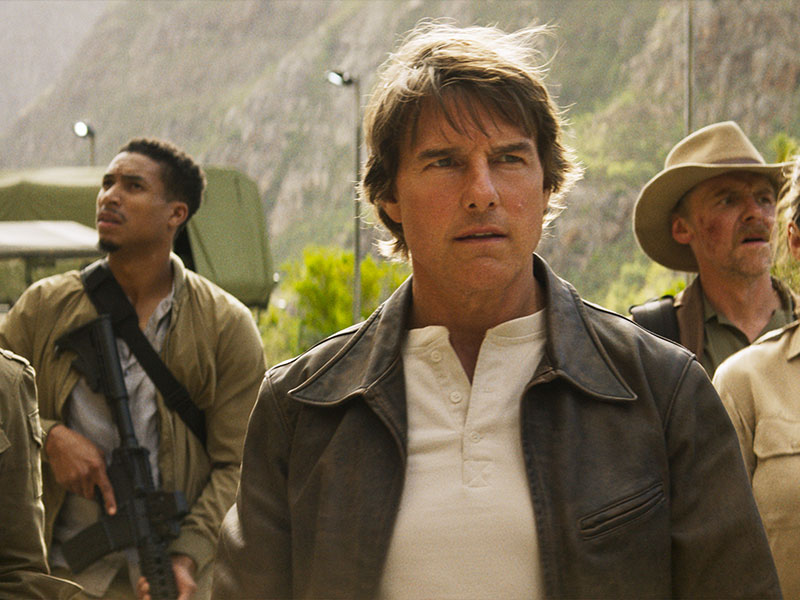
Though having the word “final” in the title would suggest that this “Mission: Impossible” is Tom Cruise’s last, neither Cruise nor director Christopher McQuarrie — who has directed the previous three “M:I” films — is eager to close the book definitively. (Though, if the series does go dark, expect a reboot within 25 years with a Cruise cameo that will make the whole crowd go wild.) But even though this may not be the final installment in the long-running “Mission: Impossible” franchise, it will be an event film nonetheless. The recent string of “Mission: Impossible” movies has shown us that there is still some juice left to be squeezed out of sequels, with each new film in the franchise lobbing shock and awe into the air for the audience to catch in our eager hands. What’s more, these films are well-made and efficiently question the state of our world without ever losing their breathtaking momentum. Out of every sequel, reboot, and remake this year, this is the one you should not miss in theaters. 


Why you should see it: Never underestimate the power of a lengthy car chase or watching someone dive off a cliff while shoveling popcorn into your mouth from the largest vessel available. Plus, this one’s got submarines too. Who knows what the hell could happen beneath the surface, but wouldn’t you hate to miss Tom Cruise fighting a giant squid in hand-to-tentacle combat?


“Mission: Impossible – The Final Reckoning” is in theaters May 23, 2025.

02
“Jurassic World Rebirth”
Jurassic World RebirthMahershala Ali in Jurassic World Rebirth (Jasin Boland/Universal Pictures and Amblin Entertainment)

Rebirth, indeed. This is the “Jurassic” universe’s second reboot after the largely snoozy, Chris Pratt-led “Jurassic World” series revived the world from the “Jurassic Park” trilogy at the turn of the millennium. While plot details are mostly under wraps, this reboot will see Scarlett Johansson and Jonathan Bailey take up the mantle as covert ops expert and a paleontologist, respectively, who travel to the remote reaches of the planet to retrieve dinosaur genetic material that could prove the key to saving humanity. There is, of course, some suspicious, terrifying revelation promised that will surely result in lots of screaming and chomping. And though the fantastic screenwriter David Koepp, who wrote the first two “Jurassic Park” films, is set to return, there’s only so much you can do with dinosaurs in a world where a few giant, roving lizards would be hardly out of place with the terrors of everyday life. 


Why you should let it fade: The “Jurassic” franchise doesn’t have to go extinct, but a few extra years on ice would supply a bit more goodwill. Though, bonus points for casting Jonathan Bailey, who could tame a T-rex just by flashing his smile.


“Jurassic World Rebirth” is in theaters July 2, 2025. 

03
“Bridget Jones: Mad About the Boy”
Bridget Jones: Mad About the BoyBridget Jones: Mad About the Boy (Jay Maidment/Universal Pictures)

It has been a long and arduous road for poor Bridget Jones (Renée Zellweger), whose romantic exploits have been the subject of much adoration since 2001’s (grammatically dubious) “Bridget Jones’s Diary.” Things were looking pretty good for the love-challenged and lovable Bridget after 2016’s “Bridget Jones’s Baby,” but nothing gold can ever stay. The first trailer for “Mad About the Boy” reveals that Bridget’s beloved Mr. Darcy (Colin Firth) has up and died on her, leaving her a widow with two kids. Bridget’s grief will no doubt give Zellweger the chance to remind us of her acting chops, but her husband’s death also allows us to watch Bridget endure her many dating fails, this time with two new suitors played by Chiwetel Ejiofor and Leo Woodall. That’s right, Bridget’s got a younger fling in Woodall, and while she’s not going full “Babygirl,” there will no doubt be plenty of sparks flying, even without the milk and hard candy.


Why you should see it: Though this is the fourth “Bridget Jones” movie, it’s always pleasant to check in with everyone’s favorite lovelorn, blonde Brit. There’s a recognizable quality to Bridget’s misadventures that makes these movies subtly splendid, and it’s a nice break from the action-packed franchise fare later in the year.


“Bridget Jones: Mad About the Boy” streams on Peacock February 13.

We need your help to stay independent

04
“M3GAN 2.0”
M3GANM3GAN (Geoffrey Short/Universal Pictures)

Even before the first “M3GAN” movie hit theaters in 2023, anyone who watched the bonkers trailer knew that the Blumhouse horror movie was destined to be a hit. It was a movie about a killer robot doll that never once took itself too seriously, and it gave one of our best nepo babies, Allison Williams, a well-deserved check. That inescapable fanfare is exactly the reason why we should be wary of “M3GAN 2.0.” A sequel to a massive hit like “M3GAN” always gleams with the color of money, but rarely can sequels to unexpected audience smashes replicate the first movie’s novelty. While it’ll likely be a fun watch, M3GAN’s high-kicking, knife-wielding, sharp-tongued evil will be just as fun on the couch as it would be in a theater, where it’s all too easy to realize that you’re not having as much fun as the first go-round. 


Why you should let it fade: Capturing lightning in a bottle twice is a rare achievement in the film industry, but it will never stop a studio from trying. Skip the overzealous audiences and wait for the inevitable streaming release. (Plus, there’s a slew of allegations following one of the film’s supporting actors, Brian Jordan Alvarez, that you’ll want to consider too.)


“M3GAN 2.0” is in theaters June 27, 2025.

05
“28 Years Later”
28 Years Later28 Years Later (Sony Pictures)

The third installment of the “28 Years” zombie franchise reboots the series after more than a decade of dormancy following  2007’s “28 Weeks Later.” The new film sees director Danny Boyle reteaming with screenwriter Alex Gardland after their work together on 2002’s “28 Days Later” If that wasn’t enough promise for you, “28 Years Later” is due to arrive with a decent amount of innovation. The film was shot on souped-up iPhones, which would initially seem gimmicky if Boyle hadn’t shot parts of the “28 Days Later” on handheld digital video camcorders. That’s an exciting tidbit from a production standpoint alone, but with a standout cast of Aaron Taylor-Johnson, Jodie Comer, Ralph Fiennes, and a returning, skeletal Cillian Murphy, “28 Years Later” promises to be worthy of the silver screen treatment.


Why you should see it: Danny Boyle’s inventive, kinetic direction will get a shot in the arm with the iPhones used in production, while Garland’s thinly veiled allegorical writing is always a treat to parse — even when it’s terrible


“28 Years Later” is in theaters June 20, 2025.

06
“Avatar: Fire and Ash” 
Avatar: The Way of WaterAvatar: The Way of Water (20th Century Studios)

If there’s one thing I’ve learned in my career, it’s that you should tread lightly when speaking critically of James Cameron’s passion project, the “Avatar” series. For as many people who have enjoyed poking some harmless fun at the throngs of delays the series has endured, there are as many who are impassioned defenders of “Avatar” and its massive universe. That’s fine for those who like to watch movies that both look and function like video games, but in a cinema climate overrun by sequels, we have to be selective. Little is known about the plot for “Fire and Ash,” but it will surely involve beautifully rendered space creatures, blue alien humanoids and Sigourney Weaver standing 20 feet tall. We don’t have to know much about the plot itself to know that “Fire and Ash” will look stunning but be narratively inert and predictable. Yet, if I say the “Avatar” series is just a prestigious version of the CGI and real-life texture mixing in Disney’s live-action remakes, I’m the bad guy!


Why you should let it fade: “Avatar: The Way of Water” was lots of show and very little substance, and a third movie will definitively prove whether Cameron’s franchise was a flash in the pan or the two more planned sequels will be worth the wait. You’re better off not being part of the test group.


“Avatar: Fire and Ash” is in theaters December 19, 2025.

“It’s a slap in the face”: MAGA Republicans “highly offended” that Biden gave Liz Cheney award

President Joe Biden's decision Thursday to award former Rep. Liz Cheney, R-Wyo., with the second-highest honor a president can bestow has angered pro-Trump Republicans, who have long accused the conservative lawmaker and frequent critic of President-elect Donald Trump as a traitor to the party.

In granting the Presidential Citizens Medal to Cheney and Rep. Bennie Thompson, D-Miss., Biden acknowledged their role in leading the House investigation into Trump's involvement in the Jan. 6 insurrection. The committee disbanded after unanimously voting in December 2022 to refer Trump for prosecution.

Trump and his allies have said that they and other members of the panel should be jailed for their efforts, with Cheney earning particular condemnation from that corner of the political world due largely to her prominence in the GOP. Then-House Minority Leader Kevin McCarthy, R-Calif., booted her from the party leadership in 2021, and in 2022 she lost her seat against a primary challenger.

Cheney's latest return to the spotlight provoked a fresh round of outrage, with her home-state colleague and No. 2 Senate Republican John Barrasso, R-Wyo., declaring in a statement that Biden “was either going to pardon Liz Cheney or give her an award. She doesn’t deserve either. She represents partisanship and divisiveness — not Wyoming.”

Fox News joined in the broadside Thursday night. Frequent network contributor and former Rep. Jason Chaffetz, R-Utah, told guests on a segment of Hannity he was hosting that he was "offended" by Cheney's receipt of the award.

"I don’t know how you feel, but I was offended that President Biden gave the second-highest medal of honor— it’s not called the Medal of Honor, but a medal honoring these two congressmen… Liz Cheney and Bennie Thompson. What’s your reaction to that?” he asked one of his guests, Rep. Byron Donalds, R-Florida.

We need your help to stay independent

“My reaction is I’m highly offended, but I’m not surprised,” Donalds responded. “Joe Biden and his White House have lived in the bizarro land where no Americans really exist. That’s why the presidency under Joe Biden has been an abject disaster. This is just one of the last pieces of icing on that cake.”

Donalds added that the "fake" Jan. 6 committee's only purpose was to "put a lot of propaganda out into the information stream to go after and attack Donald Trump."

Donalds' fellow panelist, House Oversight Committee chair James Comer, R-Ky., quickly concurred. “It’s a slap in the face to all the good Americans who actually deserve to be recognized for their public service or for their sacrifice or for their community activism,” he said, before criticizing Biden for supposedly snubbing first responders, soldiers and humanitarians.

In addition to Cheney and Thompson, 18 other honorees were recognized at the Thursday ceremony, including a military doctor who improved battlefield trauma care and a civil rights leader who fought for desegregation.

Scientists debate fleeing America because of Trump — or risk their research being censored

It was not easy for Dr. Kevin Trenberth to leave the United States. An esteemed climate scientist who has published more than 600 articles on climatology, Trenberth spent more than four decades of his life in America, first teaching at the University of Illinois before joining the National Center for Atmospheric Research (NCAR), where he eventually became a distinguished scholar.

Yet by September 2019, the New Zealand native decided to return home because he’d had enough of America under President Donald Trump. Trenberth has long been a fierce critic of Trump, but now things were impacting him personally.

“I cannot go to NSF [the National Science Foundation] for research funds because NCAR is base funded that way,” Trenberth wrote in a note to himself at the time. “Nor has it been fruitful to garner funds internally, and the external grants, especially with NOAA [National Oceanic and Atmospheric Administration] dried up after 2012 when NOAA put forward a proposal for a climate service but thoroughly messed it up, and Lamar Smith [R-Texas, then-chair of the Science Committee in the House] not only killed it but cut research funds for climate by 30%.”

America’s lack of support for climate science poses a serious problem for the survival of our species, according to Trenberth. Because the United States is both a leading world power and major contributor to climate change (along with China, the European Union and the United Kingdom), Trenberth says it must do its part to reduce greenhouse gas emissions. As human activity dumps carbon dioxide, methane, nitrous oxide, fluorinated gases and water vapor into the atmosphere, the overheating planet will cause sea levels to rise, hurricanes to become more extreme and droughts and heatwaves to become more frequent and more intense.

"They had a bullseye on us."

It made Trenberth think of Nevil Shute’s 1957 science fiction novel “On the Beach,” in which a nuclear war wiped out the Northern Hemisphere, forcing survivors to flee to southeast Australia and New Zealand. In that fictional scenario, humanity barbecued itself; in reality, Trenberth describes our species’ demise as more of a slow boil. As the temperature rises both figuratively and literally, the question for many scientists is whether they should stay to fight in a nation whose politics make it increasingly hostile to climate science.

By leaving during Trump’s first term, the emeritus Trenberth found one drastic but simple solution to the problem, which was to simply no longer reside in America. Thirtysomething Rose Abramoff, who started as a forest ecologist and also studies climate change, biogeochemistry and land management, arrived at the same conclusion as Trenberth, but with a critical difference: She later came back.

“During the first Trump administration, I was working at a large national laboratory based on the West Coast as a postdoc,” Abramoff recalled, referring to Lawrence Berkeley National Laboratory in Alameda County, California. When Trump won the presidency, however, Abramoff saw that scientists were self-censoring. It became a professional necessity.

“We, researchers in general, were doing a lot of anticipatory obedience,” Abramoff said. This anticipatory obedience is partially based on memories from Trump’s first term, which other scientists have reported to Salon. An anonymous EPA official who left during Trump’s first term described how a lot of their work “pretty much stalled” during all four years when he was in office. “We kind of had to talk about the work differently,” they explained. “No one used the word ‘climate.’ Everybody kind of just talked about, ‘What are the outcomes of climate work?’ and not necessarily name ‘climate’ just as it is, if that makes sense.”

Those who did not comply, like air pollution expert Dan Costa, found that they “had a bullseye on us,” adding that “people objected when I felt that this administration coming in would number one, go after that regulatory program, and number two, because climate was in there, that it was just going to paper over the whole situation.”

Abramoff experienced a similar demand for anticipatory obedience as she pursued her ecology studies. “In our new proposals we would say things like ‘we study climate variability’ rather than ‘climate science’ or ‘soil health’ rather than ‘climate impacts on the carbon cycle in soil,’ which is my area of study,” Abramoff said.


Want more health and science stories in your inbox? Subscribe to Salon's weekly newsletter Lab Notes.


"The Trump years are looming … The issues relate to how much scientists can pursue things that may not have an immediate payoff, and how well it is all communicated."

When Abramoff saw a Make Our Planet Great Again scholarship subsidized by French President Emmanuel Macron, she thought the name was hilarious and applied; to her delight, she got the job, moving to France from 2018 to 2021, working for the Laboratoire des Sciences du Climat et de l’Environnement. During the COVID-19 pandemic she began to miss her family, however, and eventually decided to move back to the United States. By that time Trump was out of office, having lost the 2020 presidential election to Joe Biden, but Abramoff says this was not why she chose to come back.

Yet even though Trump won the 2024 presidential election and will soon return to power, Abramoff does not plan on fleeing this time. She believes she can do more good in this country.

“When I was in France I wasn't as politically effective as I could have been in the United States,” Abramoff said. “I didn't understand the political system as well. I didn't have the same level of connections and understanding of how to make social and political change.” 

According to Abramoff, America is where the action is because the United States is the single greatest historical emitter of fossil fuels and the Trump administration is going to “exacerbate our responsibility. The Trump administration is going to make the climate crisis worse, not better. I feel like I have a personal responsibility to stay here and push against that.”

Today Abramoff does this through her work at the Wintergreen Earth Science based in Kennebunk, Maine. Trenberth, by contrast, prefers to stay with his family in New Zealand. Indeed, that was a big reason why — unlike Abramoff — Trenberth ultimately decided to leave America for good.

We need your help to stay independent

“My daughter was born in New Zealand but left at age three,” Trenberth said. “She became quite successful and was a vice president at OppenheimerFunds. She too was upset with Trump and especially the associated misogyny, since she has two daughters, now five and seven years old, my grandchildren. Very courageously, she quit, just before Oppenheimerfunds folded, and found a position in Auckland, New Zealand.”

Between that and America’s gun violence epidemic, which Trenberth blames on poor regulations, the climate scientist felt his best option was to replant himself in New Zealand. At the same time, this does not mean he lacks any hope that things could improve in the country he once called home.

“The funding under the Biden administration was a real shot in the arm, but the Trump years are looming,” Trenberth said. “The issues relate to how much scientists can pursue things that may not have an immediate payoff, and how well it is all communicated.”

Abramoff also urged climate scientists and those who support them to not let themselves be scared into suppressing the truth.

“Don't comply in advance,” Abramoff said. “Don't comply without being asked. Don't censor yourself before you've even been asked to censor yourself. Because I think a lot of regimes that desire to be authoritarians and desire to control public discourse, they use fear to silence us. They don't even necessarily have to lift a finger."

“Dangerous”: Officials alarmed at Elon Musk “sowing divisions and spreading hate” in Europe

Elon Musk isn't a citizen of any European country, but he's still doubling down on his support for the far-right in Germany and the United Kingdom, provoking uproar among officials who accuse him of stoking danger and meddling in other countries' business so that he can enrich himself and his companies.

Having already endorsed Germany's far-right Alternative for Germany (AfD) in an X post late last year, Musk wrote a translated opinion piece for Welt am Sonntag ("Word on Sunday"), a sister publication of Politico owned by the conservative media company Axel Springer, that was published over the weekend, calling AfD "the last spark of hope for this country."

AfD “can lead the country into a future where economic prosperity, cultural integrity and technological innovation are not just wishes, but reality," Musk wrote in the op-ed, claiming that his investments in Germany gave him the right to comment on the country's politics. Musk's chosen party has been widely condemned for extremist and xenophobic rhetoric that occasionally bears Nazi echoes, and some branches have been censured by German courts.

The American billionaire argued that the characterization of AfD as "right-wing extremist" was "clearly false," because its leader Alice Weidel has a same-sex partner from Sri Lanka. "Does that sound like Hitler to you?" he wrote. "Please!”

Musk's op-ed caused "intense discussion" in the editorial office, and "many colleagues argued against publication," according to Welt journalist Franziska Zimmerer. The German paper's decision to publish it angered its own opinion editor so much that she resigned. "I always enjoyed leading the opinion section of WELT and WAMS. Today an article by Elon Musk appeared in Welt am Sonntag. I handed in my resignation yesterday after it went to print,” Eva Marie Kogel wrote on X, the social media platform owned by Musk.

The incoming editor-in-chief also weighed in, writing that "Musk’s diagnosis" of Germany's economic woes "is correct, but his therapeutic approach, that only the AfD can save Germany, is fatally wrong."

Polls for the Feb. 23 election show the AfD surging into second place, but it appears to hold little chance of gaining power as part of a governing coalition as long as the center-right Christian Democratic Union (CDU), which is leading in the polls, refuses to work with them. If Musk had hoped to apply pressure on CDU chancellor hopeful Friedrich Merz, the op-ed seems only to have provoked him — on Sunday, he told reporters that Musk's comments were “intrusive and presumptuous."

German Chancellor Olaf Scholz, a member of the center-left Social Democratic Party (SPD), declined to criticize Musk directly, instead affirming that "it’s not those who shout loudest who will decide Germany’s future but the broad majority of sensible and respectable people" in his New Year's address.

Other government figures were less circumspect. "Musk is strengthening those who are weakening Europe. A weak Europe is in the interest of those for whom regulation is an inappropriate limitation of their power," said Vice Chancellor Robert Habeck in his own New Year's address. Habeck is a member of the Greens, a center-left party that acted as a junior partner in Scholz's governing coalition before the alliance collapsed last month.

SPD co-leader Saskia Esken vowed to offer "tough resistance" against "anyone who tries to influence our election from outside," whether the influence is organized by Russia or "by the concentrated financial and media power of Elon Musk and his billionaire friends on the Springer board."

We need your help to stay independent

While Musk is not a citizen of any European Union country, he can, through his companies' foreign subsidiaries, still contribute money to political parties and candidates in amounts far exceeding normal foreign entity limits. On Wednesday, hard-right UK lawmaker Nigel Farage told various news outlets that he met Musk during his visit to Donald Trump's Mar-a-Lago resort and continues to negotiate "the issue of money" with the tech billionaire. According to Farage, their discussions have included figuring out how Musk can donate up to $100 million to his anti-immigrant Reform UK party “legally through UK companies.”

Musk “described the Labour and Conservative parties as the uniparty, and left us in no doubt that he is right behind us,” Farage added, referring to the UK's two major political parties.

The potential of such a large donation from a foreign national has amplified long-simering concerns among election integrity watchdogs and the Labour government's chief anti-corruption official. So far, government leaders have declined to answer calls for accelerated reform, fearing that speeding up the timetable would backfire and give Farage the chance to claim that they are rigging the election against him.

“We’ll beat Reform by defeating their arguments rather than changing the rules to stop them getting money from Elon Musk,” a government source told The Guardian. “You don’t successfully take on populists by changing the rules in a bid to thwart them.”

A poll by The Guardian showed that caps on political donations are a popular proposition: according to its findings, 56% of respondents believe there should be such a limit, while only 16% think there should be no cap. A third wrongly believed a cap was already in place.


Want a daily wrap-up of all the news and commentary Salon has to offer? Subscribe to our morning newsletter, Crash Course.


The next UK election will be held in 2029 at the latest, unless Prime Minister Keir Starmer decides to hold it sooner. Musk has already launched a broadside of attacks on Starmer's government on X, characterizing the arrests of anti-immigrant rioters last summer as a crackdown by a "tyrannical police state" and declaring that "civil war is inevitable." Later in 2024, Starmer declined to invite Musk to an investors' conference — something that Musk had taken as an insult, sources close to him said.

Some political observers believe that Musk is furious at the UK government for its plans to toughen regulations on social media networks, especially after the 2024 riots that online safety experts said were fueled in part by extremist and provocative rhetoric on the internet.

Musk appears to sympathize with those who used that rhetoric in the first place, tweeting Thursday that UK authorities should release far-right ringleader Tommy Robinson from prison. Robinson, whose anti-immigration rallies have attracted thousands of supporters, was jailed for 18 months last October for breaching a court order relating to false claims he made about a Syrian schoolboy in one of his documentaries.

One unnamed Labour MP told Politico that Musk's language was "dangerous," warning that "at a time when communities need to come and work together, we have someone with a lot of influence sowing divisions and spreading hate."

"I don’t think Tommy Robinson has anything to say about government efficiency, or anything that reckons with the condition of working people," said another.

Biden blocks $14.9B sale of U.S. Steel to Japan’s Nippon Steel

President Joe Biden said Friday he would block the nearly $15 billion acquisition of U.S. Steel by Nippon Steel of Japan, citing national security concerns.

“It is my solemn responsibility as president to ensure that, now and long into the future, America has a strong domestically owned and operated steel industry that can continue to power our national sources of strength at home and abroad,” Biden said in a statement reported by media outlets. “And it is a fulfillment of that responsibility to block foreign ownership of this vital American company.”

His decision came after a federal committee deadlocked on whether the transaction should move forward. The Committee on Foreign Investment in the United States had said it could result in lower domestic steel production, representing a national security risk, but made no formal recommendation. That left it up to Biden to determine the fate of the deal.

“As a committee of national security and trade experts across the executive branch determined, this acquisition would place one of America’s largest steel producers under foreign control and create risk for our national security and our critical supply chains,” Biden said. President-elect Donald Trump has also opposed the takeover.

Nippon Steel had said it addressed the panel's concerns and made key commitments to grow U.S. Steel and protect American jobs. In December, Nippon sent a letter to CFIUS that accused the White House of “impermissible influence” in the process, The New York Times reported. Nippon said the committee's concerns were “littered with factual inaccuracies and omissions, misleading and incomplete statements, conjecture and hypotheticals that have no basis in fact and are plainly illogical.”

Nippon faces paying a $565 million penalty to U.S. Steel over the collapsed deal and has said it would consider pursuing legal action against the U.S. government.

The proposed sale came amid a growing demand for domestic steel. Prices have soared globally as production capacity has fallen short of need. 

Record-high supply and “silver tsunami” unlikely to solve housing crisis

Recent data suggests a mismatch between a record-high supply of housing and where young workers are choosing to live.

The total number of homes available for sale jumped over 12% in November to the highest level since 2020, according to data compiled by Redfin. And more houses could be entering the market, with nearly 21 million households defined as empty nesters expected to downsize.

But that doesn’t mean America’s housing crisis is over: A lot of homes remain overpriced and out of reach for many, experts say.

“There’s a lot of inventory, but it doesn’t feel like enough,” Meme Loggins, a Redfin Premier real estate agent in Portland, Oregon, told Redfin. 

Loggins said the available houses are not the type of homes that are attracting buyers. “Homes that are priced well and in good condition are flying off the market in three to five days, but homes that are overpriced can sit for over three months.”

The so-called “silver tsunami" — an expected increase in housing inventory from older Americans who “will downsize or otherwise move on” — is also not likely to alleviate the nationwide housing shortage, Zillow researchers warn in their latest report.

"These empty-nest households are concentrated in more affordable markets, where housing is already more accessible — not in the expensive coastal job centers where young workers are moving and where more homes are most desperately needed," said Orphe Divounguy, Zillow senior economist. 

Some top “empty-nest households” have been identified by Zillow as having a potential uptick in home supply. Pittsburgh had the biggest share of empty-nest homeowners, at 22%, followed by Buffalo and Cleveland at 20%, Detroit and St. Louis at 19% and New Orleans at 18%. According to Zillow’s research, all but New Orleans are among the top 10 markets with affordable homes available, and these markets also feature relatively low percentages of heads of households under 44 years old.

The younger demographic has been having a particularly difficult time entering the housing market.

The homeownership rate for adults under 35 decreased to 37% — the age group with the biggest drop — in the third quarter of last year, according to data compiled by National Association of Homebuilders. Limited housing supply, high home prices, persistent interest rates and rising costs of homeownership are among the key barriers. 

Increasing mortgage rejection rates, flagged by Federal Reserve Bank of New York, and housing affordability challenges are likely to persist for an increasing number of borrowers.

“There are no clear signs of relief on the horizon,” Neale Mahoney, a professor of economics at Stanford University, told Salon.com, referring to an increase in mortgage rejection rates. “The Trump administration's proposal to raise tariffs and expectations for deficit-increasing tax cuts have reignited concerns about inflation, pushing mortgage interest rates up to nearly 7% despite the Federal Reserve cutting rates three times this fall.”

Mike Johnson is still fighting for his job because Donald Trump no longer has the juice

After a brief hiatus for the holidays, the circus is back in Washington, D.C., and the high-wire act of Speaker Mike Johnson and the Flying Republicans will attempt a dangerous new stunt. By the time you read this, it may be all over but the shouting or we may have already embarked on yet another House GOP spectacle as they struggle to cobble together a majority to elect someone to the most powerful job in the House of Representatives — again.

After his near faceplant before the break, in which Johnson had struggled to keep the government from shutting down (as it probably would have if it weren't for the fact that it was just days before Christmas), the speaker is again in a very precarious position. Contrary to Republican braying about a mandate, the GOP actually lost a seat in the House last November. So with the resignation of Matt Gaetz, R-Fl., Johnson can only lose two votes or he will lose the speakership. He's already lost one vote, Rep. Thomas Massie, R-Ky., who told the Wall St. Journal, “If they thought I had no Fs to give before, I definitely have no Fs to give now." He's always been an eccentric libertarian and an unreliable team player so no one should expect him to change his mind.

There are a handful of others who have not committed one way or the other so the vote today could have the same drama we witnessed during the long vote for former California Congressman Kevin McCarthy.

Johnson himself faced a similar challenge last spring. You may recall that Georgia Rep. Marjorie Taylor Greene filed a Motion to Vacate the Chair in May over Johnson's support for Ukraine funding. The motion was tabled with the help of Democrats but 11 Republicans voted against it, some of whom are among those who have not committed to vote for Johnson this time. Democrats are not going to save him this time so it would only take one of the original 11 to decide to stick with their "principles" and deny him the speakership and throw the new Congress into instance chaos.

If I had to guess, I'd bet he'll squeak out a victory. President-elect Donald Trump has tepidly thrown his weight behind Johnson, telling reporters at his New Year's bash at Mar-a-Lago that "he's the one that can win right now," more or less acknowledging that there is no plan B. If Johnson fails, it's one more sign that Donald Trump just doesn't have the juice anymore. And if he wins, all it means is that Trump and Johnson managed to eke out a temporary victory and avoid the doomsday scenarios of a protracted fight leading into Jan. 6 and revealing an inability to certify the presidential election.

What this shows is that for all of the GOP's swaggering braggadocio about their alleged landslide, Trump's win was razor thin in Congress, indicating once more that he has no coattails. Yes, he threatens and intimidates "RINOs" and others who defy him, and he likes to endorse MAGA primary opponents against them but his record of success in those cases is spotty at best.

If Johnson fails, it's one more sign that Donald Trump just doesn't have the juice anymore. And if he wins, all it means is that Trump and Johnson managed to eke out a temporary victory and avoid the doomsday scenarios of a protracted fight.

Trump's impending lame duck status was illustrated pretty clearly in the aforementioned pre-holiday crisis when he was more or less out of the loop while his best pal, Elon Musk, put the kibosh on the deal that Johnson had negotiated with the Democrats and all hell broke loose. He came in late to the game and backed Musk, adding a demand that they eliminate or extend the debt limit so he wouldn't have to deal with it — but they didn't give it to him. The Freedom Caucus deficit hawks love their debt limit more than they love Trump.

Trump was so upset by this that he blasted off a Truth Social post on Dec. 29, insanely demanding that Mike Johnson call the House back in session immediately to extend it:

That was just five days ago and no one paid any attention to it because it was a ridiculous tantrum that just proved once again that he is not only addled but is politically much weaker than people commonly believe.

We need your help to stay independent

So regardless of how the speaker vote comes out today, the Republicans are going to have a hell of a time passing any legislation. Unless the Democrats completely lose their minds (which is possible), they are not going to help them so the Republicans are on their own.

Consider that in the first 100 days, Senate Republicans will have to try to get Trump's unqualified, unfit Cabinet nominees across the finish line. The betting has it that they will eventually get there, but it does not look as though it's going to be a slam dunk which means they won't be able to do much of anything else for a while.

Then both the House and Senate want to take a huge border security, defense and energy package through reconciliation but unless it's offset by spending cuts the usual suspects in the House aren't going to play along, especially since they are hoping to extend the Trump tax cuts and create new ones in yet another reconciliation bill. (They may try to combine them but that may make everything even worse.) Meanwhile, you have Musk and Vivek Ramaswamy and their "DOGE" commission getting all those fiscal hawks in the House and Senate all hot and bothered with crazy plans to slash spending on programs that Americans rely upon.

Oh, and there's that pesky debt ceiling coming up within a couple of months and a budget to be negotiated for the next year too. They have a whole lot on their plate with a tiny margin and an aging lame duck leader who seems to be more interested in playing golf than being a full-time president.

The presidency has a tremendous amount of power of its own, of course, and Trump is staffing his White House and Cabinet with people who are willing to carry out the extremist agenda whether he's engaged or not. But many of their plans have yet to be tested in the courts which takes time and nothing can get done without money, which is still in the hands of a Congress that has trouble even electing a speaker without a huge amount of drama. Gridlock and chaos may be our best hope of surviving this mess with as little damage as possible.

Mixed lessons from intentionally infecting people with COVID-19

When the Covid-19 pandemic first struck, Christopher Chiu and other researchers wondered: Should they inject healthy people with the virus that caused the pandemic?

The idea sounded counterintuitive, but by carefully dosing individuals with SARS-CoV-2 in a controlled setting — like Chiu had been doing for more than a decade with seasonal flu and RSV — scientists could study how the virus affects the body and learn what factors may offer protective benefits.

These types of studies, called human challenge trials, could help fast-track understanding the deadly virus devastating the world, experts claimed. Others, though, questioned whether the potential benefits were worth the risk, particularly given the host of unknowns surrounding Covid-19, and the lack of available treatments at the time.

After months of deliberation among doctors, scientists, ethicists, and regulators, the world’s first Covid-19 human challenge study was ultimately born in early 2021. And Chiu, an infectious disease physician and immunologist at Imperial College London, was its chief investigator: “We sort of recognized that there were still lots of things we didn't know about how the disease happens.”

Early insights helped guide U.K. public policy on isolation times. Nearly four years later, more results are starting to emerge: One recent study published in eClinicalMedicine, one of the Lancet’s open-access journals, suggests individuals who got infected performed worse on cognitive tests than those who didn’t — a finding that may speak to long Covid and the cognitive effects of infection but which has received pushback from other experts. Another 2024 study points to a protein that might help protect against Covid-19. And the most recent study found that certain blood biomarkers may help researchers stratify patients for different treatments.

"There were still lots of things we didn't know about how the disease happens.”

For Chiu, these studies were a success. And researchers continue to conduct challenge trials with the goal of developing better vaccines than the ones on the market and now want to expand trials to other countries.

Yet some skeptics argue none of these challenge trials were necessary, and that many of the findings could have been gleaned through other types of studies. The challenge trials, for instance, didn’t directly inform vaccine or treatment development, raising questions about whether these risks were justified.

“Did we really learn?” said Marc Veldhoen, an immunologist at the University of Lisbon and Gulbenkian Institute for Molecular Medicine. “Not so much.”


Human challenge trials have been going on in some form since the 1700s — and they’ve long been controversial. In recent decades, the trials have become more scientifically rigorous but have continued to spark ethical concerns surrounding potential risk and subject exploitation.

Still, they have persisted due to several key advantages.

For one, because researchers control the type of virus and dose, they’re able to better attribute cause to effects. “If a patient does something weird or has a unique response, you never know why that exactly is. Is it because of comorbidities? Is it because this person happened to have been exposed to a massive dose?” said Rik Lindeboom, an immunologist at the Netherlands Cancer Institute in Amsterdam. “With these challenge studies, you can really control for all of this and that makes them very, very unique.”

In recent decades, challenge trials have become more scientifically rigorous but have continued to spark ethical concerns surrounding potential risk and subject exploitation.

Scientists can also control the time of exposure, allowing them to pinpoint how long it takes for someone to become infectious and develop symptoms. Indeed, one of the first Covid-19 challenge trial papers, published in 2022, found that individuals started to shed SARS-CoV-2 after just two days of infection and that they could remain contagious for another 10. Participants with a negative Covid-19 test were not shedding virus, they also found.

At the time, this information had a direct impact on public health decision-making in the U.K., said Chiu, and led to the recommended isolation period of 10 days: “With this research, we were able to really clearly define when you could come out of self-isolation.” Other studies revealed that some people naturally shed large amounts of virus and that people’s bodies fight off infection by increasing an immune pathway called the interferon response, providing a potential target mechanism to help reduce transmission and disease.

More recently, challenge trials have given insight into a unique population that might otherwise not be studied: those who don’t get infected after exposure. In a Nature study published in June, Chiu and colleagues exposed 16 participants to SARS-CoV-2, yet only six developed a sustained infection. Then, Lindeboom studied the immune cells from these participants and found that the people who avoided infection all shared a high expression of a gene the researchers think could potentially protect against infection, said Lindeboom.

Meanwhile, the recent eClinicalMedicine study compared infected and uninfected participants on a set of cognitive tests. The 18 infected participants performed worse than the 16 who did not become infected, particularly in tests that measured memory and executive function. These changes persisted for at least a year, suggesting that the virus could have lasting effects on cognitive function.

That study, though, has received some criticism. Veldhoen, the immunologist in Lisbon, pointed out that the differences between the groups were variable and modest. “If you look at all the tests individually, I think there's only one or two where there is indeed a difference — the difference is quite small,” said Veldhoen, noting that when it comes down to whether the work was necessary, he is “still not completely convinced.”


Indeed, not everyone agreed that the challenge trials were worth the risk. For example, U.S. institutions decided not to approve such trials, in part because, at the time, clinicians lacked an effective treatment for severe cases — typically a key consideration in conducting challenge trials. And while none of the studies conducted to-date have reported serious adverse events such as hospitalizations, some experts question whether more challenge trials are worth the gamble, particularly given the question marks surrounding long Covid.

The decision to infect someone with a pathogen needs to be outweighed by clear and obvious benefits, said Angela Huttner, an infectious disease physician at Geneva University Hospital. “If you're going to sacrifice one person, it better be for the good of more than one person,” she said. Before the studies were conducted, she and others thought that Covid-19 failed to meet those criteria. Now the lack of what they consider meaningful results confirms their worries.

Meanwhile, some experts say that challenge trials may not be necessary given the prevalence of Covid-19. In the United States, “we were able to conduct the huge Phase 3 trials with 30-40,000 participants per vaccine,” wrote Kirsten Lyke, an infectious disease specialist at the University of Maryland, in an email to Undark.

“If you're going to sacrifice one person, it better be for the good of more than one person.”

By comparison, challenge trial studies typically attract fewer than 100 subjects. The 2022 Nature study, for example, included just 36 young and healthy volunteers. Veldhoen noted that the small sample size limits the research’s statistical power and generalizability: “It's super difficult to get the bigger picture from those studies,” he said. Huttner agrees: “You can glean some information, but it may be clinically very limited.”

The findings also did not result in a new vaccine or treatment, as some experts have pointed out. “I’m not convinced that Covid-19 human challenge models turned out to be critical to the effort to develop biologics, vaccines and therapeutics,” Lyke wrote in her email.

Chiu, meanwhile, argues that although current vaccines effectively prevent serious disease and death, they are subpar in stopping the spread. Challenge trials, he said, can help develop better vaccines.

In fact, Chiu leads a new initiative that intends to do just that: The Mucosal Immunity in Human Coronavirus Challenge, or MusiCC, project has received $57 million to develop experimental vaccines to block transmission. The global consortium also aims to increase the capacity to conduct challenge trials worldwide, Chiu said.

Chiu and a group of collaborators at the University of Oxford led by Helen McShane, an infectious disease physician, are also now recruiting for their next challenge trial in which they will infect participants with the Omicron strain. Meanwhile, another research group in Singapore is currently recruiting for a study on the Delta variant.

While some experts have dismissed insights gleaned from the last few years of challenge trials — “We haven't learned something that we wouldn't have gotten in another way,” said Veldhoen — justification for the trials looks different for Chiu.

“It is subjective how much you think scientific findings are worth and their value and their potential impact for the future. So, again, it's always a conversation to be had, and I would never sort of stop people from criticizing,” he said. “Each new study is a new discussion, and you have to weigh things up again.”

This article was originally published on Undark. Read the original article.

New year, same Trump: MAGA pounces on New Orleans tragedy to spread disinformation

In the hours after a mass murderer killed 10 people in New Orleans with a combination car and gun attack only hours into the new year, there was much that was unknown about the killer, his motive(s) or potential co-conspirators. However, one thing was as certain as the sun rising in the east: Donald Trump would take to Truth Social to lie about it, pumping as much disinformation as possible into the discourse before the facts had a chance to percolate. Wednesday morning, at least an hour before the name of the suspect was even publicly released, Trump sure enough was lying about it on his social media website.

"When I said that the criminals coming in are far worse than the criminals we have in our country, that statement was constantly refuted by Democrats and the Fake News Media, but it turned out to be true," he ranted. It did not turn out to be true.

The reported gunman, Shamsud-Din Jabbar, was born in the U.S., worked in IT for the Army and graduated from Georgia State University. Indeed, but for his race and his name, he has a profile that resembles your typical MAGA troublemaker who gravitates toward radical groups like the Proud Boys or the Oathkeepers: past arrest for drunk driving, two failed marriages, a restraining order against him, and serious financial troubles, despite making $120,000 a year at a prestigious accounting firm.

Trump's followers receive his lies as an intoxicating promise: that they, too, can be released from the duty to be honest.

Trump's lie was so outrageous that even Fox News reluctantly pointed out that Jabbar, who was killed by police during the attack, was a U.S. citizen. But, of course, Trump would not admit he was wrong.

"This is what happens when you have OPEN BORDERS," he raved on Truth Social in the middle of the night Wednesday. He continued the lie again Thursday morning, blaming "the Biden 'Open Border’s Policy'" for "Radical Islamic Terrorism."

President Joe Biden doesn't have an "open borders" policy, grammatically written or otherwise, and even if he did, it would not have mattered here, because Jabbar was born in Texas. Still, Republicans saw Trump's doubling down for what it was: a signal that they are expected to repeat and defend the outrageous lie, using sheer force of repetition to drown out the truth. 


Want more Amanda Marcotte on politics? Subscribe to her newsletter Standing Room Only.


Speaker of the House Mike Johnson, R-La., a self-described devoted Christian, ran toward the cameras to violate the biblical commandment forbidding false testimony. Responding to the New Orleans attack on Fox News, Johnson blamed "the wide open border" and sneered, "the Biden administration has been completely derelict in its duty" to deal with the  "dangerous people" coming into the country and "setting up potentially terrorist cells around the country."

Speaker Mike Johnson on Fox & Friends suggests Biden's "wide open border" played a role in the New Orleans attack. Again, the perpetrator was born in Texas and served in the US military.

[image or embed]

— Aaron Rupar (@atrupar.com) January 2, 2025 at 10:28 AM

Shortly thereafter, the FBI confirmed that the native-born citizen behind the New Orleans attack worked alone. Law enforcement revealed, as well, that the driver of a Cybertruck that exploded in front of a Trump hotel in Las Vegas on Jan. 1 was a native-born soldier in the Army. The deceased suspect, Matthew Livelsberger, was white, a member of the Green Berets and reportedly "loved Trump."

Facts did not matter. The order had been implicitly given and Republicans are pretending this is "foreign" terrorism. Rep. Marjorie Taylor Greene, R-Ga., complained about arrests of Jan. 6 insurrectionists, saying the FBI should focus instead on "terrorists who want to kill Americans." The two alleged New Year's Day attackers are no different in profile from the Jan. 6 defendants, who are also native-born Americans who attacked other Americans. Yet Republican policy adviser Neil Chatterjee went on CNN and insisted that the New Orleans attack is connected with "securing the border." Republican Rep. Randy Weber, who represents a district near Jabbar's home, nonetheless pretended on Fox Business that the blame lay with "special interest aliens" sneaking in from Mexico from "Iran, Iraq, Syria, you can go down the list."

MAGA behaves like a cult, where everyone parrots the leader's latest order to only wear green shirts, even though last week he was saying green shirts were forbidden. As in a cult, the willingness to repeat lies is a show of loyalty to the leader, proving his power over his followers and strengthening it by further disconnecting them from reality. The supplicants typically believe they are empowered by shamelessly lying. Just look at Johnson's ever-present smirk. Trump's followers receive his lies as an intoxicating promise: that they, too, can be released from the duty to be honest. That they, too, can claim reality is whatever they want it to be, and relish how much it "triggers" the liberals to keep insisting on a lie in the face of countervailing evidence. 

For GOP leaders, there are rewards in being disinformation parrots, as evidenced by Johnson securing his speakership with a Trump endorsement this week. But that example also shows the dangers. Johnson's power is largely an illusion, dependent entirely on the mercurial whims of his master. If Trump decides tomorrow that he's displeased with Johnson's supplication, he can call for the end of Johnson's career, and congressional Republicans will immediately throw the speaker out. 

The power is even more of a delusion when it comes to the everyday MAGA people who repeat Trump's lies. It may feel exciting, to deny realities they don't like. But all too often, reality has a way of asserting itself on ordinary people. This was evident during the COVID-19 pandemic. Empowered by Trump's non-stop drumbeat of lies and disinformation — such as calling the pandemic a "hoax" or falsely suggesting it could be cured with bleach or sunlight — millions of Republicans refused to protect themselves against the virus. They eschewed social distancing and masks, and when the time came, they also rejected vaccines. The result was that red areas saw higher death rates than blue areas

It's easy to see a similar situation playing out here. If Trump is successful at using the lies about New Orleans to drum up political support for his mass deportation, the likely result will be a return to high levels of inflation. Trump won in no small part with false claims he could bring the price of groceries down. He can't do that, but if he is able to deport scores of farm workers, crops will rot in fields, food supply will diminish, and prices will rise. 

Not that it will matter for the MAGA diehards, of course. As we saw during the pandemic, they operate by cult logic. No matter how many friends and family members got terribly sick or died from COVID, what mattered more was affirming Trump's lies. Loyalty to Trump matters more, and the way to prove loyalty is to repeat his lies. It's a pattern we will see play out over and over for the next four years, no matter how dire the consequences. 

Why I am suing my congressman — and you should, too

On the last day of 2024, the deputy general counsel for the House of Representatives formally accepted the delivery of a civil summons for two congress members from Northern California. More than 600 constituents of Jared Huffman and Mike Thompson have signed on as plaintiffs in a class action accusing them of helping to arm the Israeli military in violation of “international and federal law that prohibits complicity in genocide.”

Whatever the outcome of the lawsuit, it conveys widespread anger and anguish about the ongoing civilian carnage in Gaza that taxpayers have continued to bankroll.

By a wide margin, most Americans favor an arms embargo on Israel while the Gaza war persists. But Huffman and Thompson voted to approve $26.38 billion in military aid for Israel last April, long after the nonstop horrors for civilians in Gaza were evident.

Back in February — two months before passage of the enormous military aid package — both Human Rights Watch and Amnesty International found that, in the words of the lawsuit, “the Israeli government was systematically starving the people of Gaza through cutting off aid, water, and electricity, by bombing and military occupation, all underwritten by the provision of U.S. military aid and weapons.”

When the known death toll passed 40,000 last summer, the UN’s high commissioner for human rights said: “Most of the dead are women and children. This unimaginable situation is overwhelmingly due to recurring failures by the Israeli Defense Forces to comply with the rules of war.” He described as “deeply shocking” the “scale of the Israeli military’s destruction of homes, hospitals, schools and places of worship.”

On Dec. 4, Amnesty International released a 296-page report concluding that Israel has been acting “brazenly, continuously and with total impunity” — with the “specific intent to destroy Palestinians,” engaging in “prohibited acts under the Genocide Convention.”

Two weeks later, on the same day the lawsuit was filed in federal district court in San Francisco, Human Rights Watch released new findings that “Israeli authorities are responsible for the crime against humanity of extermination and for acts of genocide.”

We need your help to stay independent

Responding to the lawsuit, a spokesperson for Thompson said that “achieving peace and securing the safety of civilians won’t be accomplished by filing a lawsuit.” But for well over a year, to no avail, the plaintiffs and many other constituents have been urging him and Huffman to help protect civilians by ending their support for the U.S. pipeline of weapons and ammunition to Israel.

Enabled by that pipeline, the slaughter has continued in Gaza while the appropriators on Capitol Hill work in a kind of bubble. Letters, emails, phone calls, office visits, protests and more have not pierced that bubble. The lawsuit is an effort to break through the routine of indifference. 

Like many other congressional Democrats, Huffman and Thompson have prided themselves on standing up against the contempt for facts that Donald Trump and his cohorts flaunt. Yet refusal to acknowledge the facts of civilian decimation in Gaza, with a direct U.S. role, is an extreme form of denial.

“Over the last 14 months I have watched elected officials remain completely unresponsive despite the public’s demands to end the genocide,” said Laurel Krause, a Mendocino County resident who is one of the lawsuit plaintiffs.

Another plaintiff, Leslie Angeline, a Marin County resident who ended a 31-day hunger strike when the lawsuit was filed, said: “I wake each morning worrying about the genocide that is happening in Gaza, knowing that if it wasn’t for my government’s partnership with the Israeli government, this couldn’t continue.” 

Such passionate outlooks are a far cry from the words offered by members of Congress who routinely appear to take pride in seeming calm as they discuss government policies. But if their own children’s lives were at stake rather than the lives of Palestinian children in Gaza, they would hardly be so calm. A huge empathy gap is glaring.

In the words of plaintiff Judy Talaugon, a Native American activist in Sonoma County, “Palestinian children are all our children, deserving of our advocacy and support. And their liberation is the catalyst for systemic change for the betterment of us all.”


Want a daily wrap-up of all the news and commentary Salon has to offer? Subscribe to our morning newsletter, Crash Course.


As a plaintiff, I certainly don’t expect the courts to halt the U.S. policies that have been enabling the horrors in Gaza to go on. But our lawsuit makes a clear case for the moral revulsion that so many Americans feel about the culpability of the U.S. government.

To hardboiled political pros, the heartfelt goal of putting a stop to the arming of the Israeli military is apt to seem quixotic and dreamy. But it’s easy for politicians to underestimate feelings of moral outrage. As James Baldwin wrote, “Though we do not wholly believe it yet, the interior life is a real life, and the intangible dreams of people have a tangible effect on the world.” 

Organizing together under the name Taxpayers Against Genocide, constituents served notice that no amount of rhetoric could make funding of the campaign against Gaza anything other than repugnant. Jared Huffman and Mike Thompson are the first members of Congress to face such a lawsuit. They won’t be the last. In recent days, people from many parts of the United States have contacted Taxpayers Against Genocide (via classactionagainstgenocide@proton.me) to see the full lawsuit and learn about how they can file one against their own member of Congress.

No one should put any trust in the court system to stop the U.S. government from using tax dollars for war. But suing members of Congress who are complicit is a good step for exposing — and organizing against — the power of the warfare state.

Let’s normalize talking about our credit histories

In December 2019, Seattle-based copywriter Brittany Brown was in “a rough financial situation.” She was several months behind on rent and unable to make a $25 minimum payment toward the $2,000 maxed-out balance on her credit card.

“I had intended to ask someone if I could borrow the $25, but with the holidays and chaos of the month, I forgot to ask in time and it went on my credit report as a missed payment,” said Brown. “I still remember that gut wrenching feeling. This missed payment has haunted me so much.”

The one missed payment tanked Brown’s already-low credit score, and she needed several years to recover.

“I felt so much shame and embarrassment that I wasn't able to make a $25 payment on time.”

Many people have felt the shame Brown described — and they believe they’re alone. In reality, eight in 10 Americans hold some kind of debt, with 39% holding unpaid credit card balances, according a 2015 study from Pew Trusts. The vast majority of them say credit cards are essential to help them pay for necessities, but they’d still prefer not to have that debt, reflecting the cultural shame around the subject that keeps us from sharing these stories candidly.

“There's always a chance you'll make people uncomfortable if you talk about your finances, but I'd argue that there’s no other real risks,” said Lindsey Stanberry, founding editor of Refinery29 Money Diaries and author of the “Money Diaries” book.

We need your help to stay independent

Learning others’ experiences with money is important for reducing stigma and helping us all better understand our financial circumstances. Credit scoring is a famously opaque practice, and fear and confusion put consumers at a disadvantage. Negative marks on credit reports often come as a surprise to folks who believe they’re making responsible money moves.

When "responsible" moves hurt credit scores

Kelly Schulze was let go from their job in 2021. Their family was “making it OK” on Schulze’s husband’s paycheck and a shared credit card with a balance that rode near the limit for months. A high credit utilization weighs heavily in a credit score, so this dragged down both spouse’s scores.

A tragedy turned out to be the couple’s financial salvation: Schulze received an inheritance in 2022 after their father’s death. That helped the couple pay off the credit card debt and Schulze’s student loan debt all at once — but they didn’t expect the effect on their credit scores.

Paying down the student loans dropped those accounts from Schulze’s credit report, reducing the age of their debt, another little-known credit score factor. Having a lower average age for debt brought their score down.

“It was a blow to see how drastic of an impact paying off large amounts of debt had on our credit scores and made me mad at the system,” said Schulze.

This isn’t the only seemingly responsible money move that can lower your credit score. Douglas and Heather Boneparth, who write the newsletter The Joint Account about relationships and money, saw temporary dips to their scores when they refinanced graduate school loans in 2016 and 2017 and a mortgage in 2020. Refinancing requires taking out a new loan, which dings your credit score.

“The good news is that it’s usually a short-term blip,” said Douglas. “[But] it’s important to recognize the impact refinancing can have on your credit score even if it’s temporary.”

Insecurity about how credit scores work

Another little-known credit factor, applying for new credit, dinged Brown’s score recently — and she didn’t even realize she was doing it.

“[This] hurt my ego more than my credit score,” Brown noted, as her score only dropped about five points temporarily.

Brown was researching a Lasik procedure. She answered a series of questions from her doctor’s office, expecting to learn more about her payment options. “I got to the last page, and it turns out I applied for a credit card. I was so embarrassed and so agitated.”

Brown immediately canceled the card (and never scheduled the procedure), but the new application for credit still appeared on her credit report. After working her way out of tough financial straits, she still keeps a close eye on her credit score and can see it dip between two and five points if her utilization goes over 10%, which can be nerve-wracking, if not significant.

Applying for new credit — even when it’s intentional — is a common challenge for anyone keeping an eye on their credit score

Applying for new credit — even when it’s intentional — is a common challenge for anyone keeping an eye on their credit score.

“The hardest thing for me has been opening new credit cards and having that hurt my credit, and being afraid to close old credit cards that I don’t use for fear that will decrease my credit,” said 27-year-old Maria DeVoto of New York City.

Even though DeVoto’s parents helped her build the habit of spending carefully on her credit card and paying off the balance each month, the obscurity of credit scoring still shakes her confidence. “My insecurity with credit cards and credit scores is that I feel like I still don’t fully understand how they work.”

Your credit score doesn’t define you

The best-kept secret about credit scores is that a negative mark to your credit doesn’t necessarily doom your financial future. Central-Illinois writer Michelle Teheux once tanked her credit score on principle — and talked her way into a mortgage in spite of it.

A negative mark to your credit doesn’t necessarily doom your financial future

One weekend around the year 2000, Teheux wanted to turn a giant pumpkin into frozen puree for pies. Slicing into it, the knife slipped and cut her finger deeply. She had it stitched in the emergency room but couldn’t see the hospital’s hand surgeon until Monday.

“[I knew] the nail bed needed to be absolutely flat for the nail to grow back properly and that waiting two days was not ideal,” Teheux said. “I was rather pissed that the specialist blew me off like that.”

After a quick check-in with the specialist the following week, she received a bill she thought was “completely outrageous,” so she never paid it. About four years later, Teheux applied for a mortgage, and the unpaid bill surfaced during her credit check.

“I explained what had happened and said I'd be willing to pay the amount to a charity if they wished, but that there was no way in hell I was giving a penny to that doctor,” Teheux said (although donating to charity would have no impact on the debt or her credit report).

She was able to get the mortgage. Texheux, now 58, added, “I also started buying canned pumpkin.”

Hearing stories like Teheux’s might soothe some of the shame and financial anxiety younger people like DeVoto and Brown are suffering.

“Knowledge is power, and understanding where you stand compared to your peers can be enlightening,” said Stanberry, who now runs The Purse, a newsletter that includes contributor confessionals about finances and household labor. “This applies to everything from salaries to student loan debt to credit scores.

“We need to normalize talking about these things in order to take away the shame and confusion.”

New study finds smoking shortens life expectancy by an average of 20 minutes per cigarette

On average, a single cigarette takes 20 minutes off a person’s life, according to a new study published at University College London. To put that into perspective, a pack of 20 cigarettes can shorten a person’s life expectancy by seven hours. 

The estimated shortened life expectancy is more than what researchers first predicted in 2000, when they found that a cigarette can shorten a smoker's life expectancy by an average of 11 minutes. The data published in Addiction follow up on the 2000 study published in BMJ. It draws from data from the British Doctors Study, which started in 1951 as one of the largest studies looking at the effects of smoking. It also pulls from data from the Million Women Study.

“With smoking, it doesn’t eat into the later period of your life that tends to be lived in poorer health. Rather, it seems to erode some relatively healthier section in the middle of life,” Dr. Sarah Jackson, a principal research fellow in the UCL Alcohol and Tobacco Research Group and lead author of the paper, told CNN. “So when we’re talking about loss of life expectancy, life expectancy would tend to be lived in relatively good health.”

Notably, the study found that when people quit smoking earlier in life they have the same life expectancy as people who have never smoked. However, when people quit later in life, it’s harder for them to regain the time lost to smoking. 

“But as you get older, you progressively lose a little bit more that you then can’t regain by quitting,” Jackson said. “But no matter how old you are when you quit, you will always have a longer life expectancy than if you had continued to smoke. So, in effect, while you may not be reversing the life lost already, you’re preventing further loss of life expectancy.”

While smoking rates have declined over the 2000s, it remains the leading cause of preventable disease and death in the United States. In 2022, the CDC estimated 28.8 million of U.S. adults smoked cigarettes. 

“Don’t do what McCarthy did”: Moderate GOP members urge Johnson not to deal with party’s far-right

Congress is set to elect their next speaker of the House on Friday, and incumbent Speaker Mike Johnson’s path to the gavel is anything but certain.

The GOP's majority in the House is razor-thin, and Johnson needs all the yeas he can get, but moderate Republicans are warning Johnson not to cave to the demands of the party's ascendant far-right.

Endorsements from President-elect Donald Trump and Tesla CEO Elon Musk may not be enough to sway every member of the caucus. Johnson will almost certainly be forced to negotiate with detractors within his party. Johnson admitted in a Thursday interview with Fox and Friends that he can “only afford to lose one or two” GOP votes.

At least a handful of far-right members of Congress aren’t ready to commit their vote to Johnson, the New York Times reported on Thursday, worrying some in the party. According to a report from Axios, "scores" of "regular" House GOPers are warning Johnson not to deal with the party fringe.

“Don't do what [former House Speaker Kevin] McCarthy did,” one House Republican told Axios. “Don't give promises upon which you can't deliver. Don't give promises that require us to do things that we don't want to do, that are beyond reasonable.”

Another representative told the publication that Johnson “cannot trust these guys who undermine us at every point.” 

“They ask for first base, the speaker gives it to them, and they ask for second base,” they added.

Kentucky Rep. Thomas Massie pledged his opposition to Johnson on social media this week, while the New York Times reports that Indiana Rep. Victoria Spartz may make her vote contingent on promises to crack down on government spending. Meanwhile, some inside the House Freedom Caucus haven’t yet shared their positions, the Times reports.

Massie also told the Wall Street Journal on Tuesday that he wouldn’t bow to pressure from his colleagues to back Johnson or sit the vote out.

“If they thought I had no Fs to give before, I definitely have no Fs to give now,” Massie told the outlet.

The GOP will hold 219 seats to Democrats’ 215 on Friday, meaning Johnson will need a near-unanimous vote among Republicans to gain the speakership. Democratic minority leader Hakeem Jeffries indicated last month that his party wouldn’t back Johnson’s bid.

In his Fox News interview on Thursday, Johnson said he was aware of those who plan to vote against him and acknowledged he was ready to negotiate.

“I’ve talked to every single one of those friends and colleagues [who have said they may vote against],” Johnson shared. “We’ll be talking about process reforms inside the House.”

“He was very patriotic”: Vegas Cybertruck bombing suspect’s family says he “loved Trump”

The man behind the wheel of a Tesla Cybertruck that exploded in front of Trump Tower in Las Vegas on Wednesday was a Donald Trump-loving “super soldier,” according to a family member who spoke with The Independent on Thursday.

Matthew Livelsberger’s uncle, Dean Livelsberger, told the outlet that he was shocked to hear his nephew was involved in the explosion.

“He used to have all patriotic stuff on Facebook, he was 100 percent loving the country,” the elder Livelsberger told The Independent. “He loved Trump, and he was always a very, very patriotic soldier, a patriotic American. It’s one of the reasons he was in Special Forces for so many years. It wasn’t just one tour of duty.”

A law enforcement official confirmed the 37-year-old Cybertruck driver’s love for the president-elect to the Daily Beast on Thursday. Though Liverlsberger isn’t suspected to have been targeting Trump, the incident drew parallels with two separate men who made assassination attempts on Trump last year. 

Livelsberger’s uncle added that, given his Green Beret background and skills, he could have created a much larger explosion if he wanted.

“If he did this, he would’ve been able to make a more sophisticated explosive than using propane tanks and camping fuel. He was what you might call a ‘supersoldier,’” the man told The Independent. “[He] could have fashioned a bomb that would have obliterated half of that hotel if he seriously wanted to hurt others.”

Las Vegas police said on Thursday that Livelsberger likely died of a self-inflicted gunshot wound before the vehicle exploded. Law enforcement officials haven’t announced a motive.

Federal appeals court kills FCC’s net neutrality rule

A federal appeals court struck down net neutrality on Thursday, ending the widely popular regulatory doctrine that mandated internet service providers to treat all internet traffic equally.

The ruling from the 6th Circuit Court of Appeals ends a federal rule prohibiting broadband providers from throttling internet speeds or blocking traffic to specific sites.

“The FCC lacks the statutory authority to impose its desired net-neutrality policies,” the judges wrote, overturning what they called the Federal Communication Commission’s “heavy-handed regulatory regime.”

The pro-consumer policy of net neutrality was implemented by President Barack Obama and gutted during Donald Trump's first term. It was reinstated in April of last year by the Biden administration. The now-defunct policy holds that internet carriers are akin to telecom providers and must comply with common carrier regulations governing those services.

Telecom giants like Verizon and AT&T have opposed the policy for nearly a decade, spending big money to back anti-regulation candidates. 

The ruling, handed down on Thursday from three Republican judicial appointees, cited the Supreme Court’s recent overturning of the long-held precedent of "Chevron deference," which asked lower courts to defer to federal agencies' interpretation of the law. 

Conservative federal courts have spent the last several years rolling back regulatory protections and the administrative state, with cases limiting the powers of the Environmental Protection Agency, pushing back against the Department of Education's authority to cancel student loans and blocking a Biden administration ban on trans healthcare discrimination.

FCC chairwoman Jessica Rosenworcel said the ruling went against the wishes of American consumers and urged legislators to step in.

"Consumers across the country have told us again and again that they want an internet that is fast, open, and fair. With this decision, it is clear that Congress now needs to heed their call, take up the charge for net neutrality, and put open internet principles in federal law," Rosenworcel said in a statement.

Beyond internet consumer concerns, the ruling is another major blow against regulatory authority to protect American consumers, critics argue.

“[The ruling] doesn't just kill net neutrality, it delivers the final killing blow to any sort of coherent federal consumer broadband protection,” tech commentator Karl Bode said in a post to Bluesky. 

“We need to secure that border”: Homan suggests crackdown would have stopped attacks

Donald Trump's hand-picked border czar Tom Homan said that a crackdown at the border could have stopped a pair of New Year's Day attacks that appeared to be carried out by U.S. citizens.

“This country’s in grave danger. We need to secure that border,” Homan told Fox News host Sandra Smith on Thursday afternoon. “Border patrol continues to release people into this country without proper vetting.”

Homan was discussing a vehicular attack on New Orleans' famed Bourbon Street that killed 15 people and an explosion that rocked a hotel in Las Vegas. Both the man behind the wheel of a Cybertruck that exploded in Las Vegas outside of Trump Tower, identified as Matthew Livelsberger, and New Orleans attacker Shamsud-Din Jabbar were American-born military veterans.

Homan went on to accuse the administration of outgoing President Joe Biden of “releasing thousands” of immigrants each week “despite what’s happened in the last two days in Las Vegas, New Orleans.” 

Homan’s future boss also blamed a supposed laxity at the border for the attack in a post to Truth Social on Wednesday.

"When I said that the criminals coming in are far worse than the criminals we have in our country, that statement was constantly refuted by Democrats and the Fake News Media, but it turned out to be true," Trump wrote. “The crime rate in our country is at a level that nobody has ever seen before. Our hearts are with all of the innocent victims and their loved ones, including the brave officers of the New Orleans Police Department.”

Jabbar was reportedly inspired by the Islamic State group, with officials telling CNN that he shared videos to that effect. Homan added that he expects law enforcement to find a “connection between the two incidents.”

Asked why he believed the incidents were related, Homan cited a “gut feeling.”

A day earlier, Homan told Fox News the two men were “emboldened” by the Biden administration’s “weak stance” on border security.

“You can’t have national security if you don’t have border security,” he said in a Wednesday appearance on “Hannity.” “I don’t understand why they don’t get that.”

The FDA will test aged raw milk cheese for bird flu in the wake of outbreak

The Food and Drug Administration (FDA) has begun collecting and testing samples of aged, raw cow’s milk cheese for the presence of Highly Pathogenic Avian Influenza (H5N1), better known as bird flu, Food Safety News reported.

The agency plans to collect 300 samples of raw milk cheese from warehouses and distribution hubs, along with their label information. Samples will come from cheese that has been aged a minimum of 60 days — the timeframe that the U.S. requires raw milk cheese to be made in order to reduce the risk of any pathogens. Sample collection is slated to last until March, but there’s a possibility it may last longer.

The testing comes amid an ongoing, multistate outbreak of bird flu in dairy cows that was first reported on March 25, 2024, per the Centers for Disease Control and Prevention (CDC). The CDC reported that 66 cases of bird flu in humans have been confirmed nationwide. Approximately two-thirds of those cases were linked to dairy herds.

The FDA is working with the CDC, the U.S. Department of Agriculture and state partners to investigate the outbreak.

“Any samples that test positive for viable virus will be evaluated on a case-by-case basis. This means that depending on the findings, the FDA will consider next steps, which may include actions needed to address contaminated product, such as a recall, follow-up inspection, or other possible responses to protect public health,” the FDA said.

The agency said it will publish its findings once the investigation is complete, according to The Hill.

“What a nerd”: Fans poke fun at embarrassing “Wheel of Fortune” food puzzle answer

An erroneous, yet comical, puzzle answer on Monday’s episode of “Wheel of Fortune” spurred countless fan reactions online.

The moment occurred when contestants had to guess a three-word answer in the show’s “food & drink” category. One contestant, Gaelyn Nease, guessed multiple letters on the board, which eventually read “Ne_ / _or_ / _heese_a_e.” Nease then attempted to solve the puzzle, but instead of guessing “New York Cheesecake” (the correct answer), she said “New York Cheesesteak.”

Fans of the show were quick to call out Nease’s on-screen flop. Many pointed to the fact that before Nease’s turn, contestant Mike Tomani guessed “T,” which wasn’t a letter on the board. Others were more ruthless in their reactions.

“A new all-time horrible answer on #wheel,” said one user on X alongside a video of Nease’s blunder.

“I was watching. Worst I’ve ever seen ‘live’ on tv. What a nerd,” said another user on X.

“Game shows are hard but yes that should’ve been gotten,” another commenter wrote.

Does taking part in Veganuary put people off meat in the long term? Here’s what the evidence shows

Humans have long wrestled with their conscience about killing and eating animals. The "meat paradox" (the conflict between people's preference for meat and their concern for animals) may have inspired cave paintings from 37,000 years ago. Since then, many leading thinkers have eschewed meat, including Pythagoras, Leonardo da Vinci, Mary Shelley and Mahatma Gandhi.

Today, half of US adults and three-quarters of UK adults oppose the factory farming that produces almost all of their meat, yet only about one in ten follow a meat-free diet.

Plant-based diets are increasingly tasty and cheap in many countries. Adopting them would spare the lives of over 80 billion animals a year and cause 75% less environmental damage than meaty diets.

The benefits of going plant-based on health and longevity are increasingly well established and have prompted an eminent cardiologist to remark: "There are two kinds of cardiologists: vegans and those who haven't read the data."

Despite these proven advantages of a vegan diet, most people continue to eat meat, using strategies like "defensive reasoning" or moral disengagement and avoidance to reduce any psychological unease.

Every January since 2014, the Veganuary campaign –  which encourages people to eat a plant-based diet in January – has attempted to break down these psychological defenses with pictures of cute piglets, fluffy chicks and an invitation to give the challenge a go. Last year, around 25 million people, including about 4% of the UK population joined in.

Research by Veganuary suggests that over 80% of participants maintain large reductions in meat consumption, reducing their intake to half or even more, after six months.

At the University of Exeter, we have independently conducted three online studies of Veganuary participants (a fourth is underway) and found that when people reduce or avoid meat they also start to see meat and themselves differently.

'Meat disgust'

On average, people report liking meat less, with some even finding it disgusting. This complements our earlier research showing that 74% of vegetarians and 15% of flexitarians find meat disgusting.

Another of our studies (under peer review) suggests that this "meat disgust" runs deep. Those who report it (mainly vegetarians) respond to the idea of eating meat in a similar way to how meat eaters react to the idea of eating faeces, or human or dog flesh.

If such negative feelings emerge when people avoid meat during Veganuary, giving up meat in the long term may not be quite the sacrifice that many would expect. We are now collecting data 12 months on from 100 people who participated in our Veganuary study last year and will see whether negative feelings towards meat predict longer-term changes in meat consumption.

Participating in Veganuary also appears to shift people's identity from seeing themselves as a meat eater to more of a "meat reducer" or "meat excluder". These shifts in attitudes and self-perception are associated with greater success in reducing meat consumption during Veganuary.

Some other factors associated with greater success during Veganuary, and beyond, include increased feelings of personal control and improvements in practical skills and knowledge supporting a meat-free diet.

Some of the difficulties that can hinder successful participation in Veganuary include having to navigate food choices in social settings, a lack of plant-based options when eating out, missing non-vegan foods, and the perceived inconvenience of plant-based cooking.

Signing up to the Veganuary campaign to receive their daily emails with recipes, information and top tips is helpful, as are the promotions on vegan food that supermarkets and restaurants offer during Veganuary.

If you're concerned about swapping meat for plant-based substitutes that can be ultra-processed, recent analyses are reassuring and suggest these are often healthier than meat and are not associated with the increased risk of disease that comes with eating animal-based ultra-processed foods, such as sausages, burgers and ham.

However, if you're a fan of beans, eating more of them is a great way to maximize health and environmental benefits while saving money.

Our new study aims to provide additional support for Veganuary participants by helping them mentally prepare for common challenges before Veganuary and during the month. By collecting data before and after Veganuary and three months later, we also hope to determine which psychological changes are most predictive of longer-term reductions in meat consumption.

If you're curious to see how giving up meat might affect you, why not give Veganuary a go?The Conversation


Natalia Lawrence, Associate Professor in Translational Medicine, University of Exeter; Elisa Becker, Postdoctoral Researcher, Behaviour Change Interventions, University of Oxford, and Sophie Hearn, PhD Candidate, Psychology, University of Exeter


This article is republished from The Conversation under a Creative Commons license. Read the original article.

Carville: Dems must go “on the offensive” with “populist” agenda under Trump

In an election post-mortem where he admitted that he was "wrong" about Kamala Harris' chances, long-time Democratic strategist James Carville argued that the party needs to present a bold, populist opposition under Donald Trump’s upcoming administration.

The former advisor to Bill Clinton admitted he was off-base in the lead-up to the Democrats drubbing in November, acknowledging that Harris “flat-out lost the economic narrative” to Trump in an op-ed shared in the New York Times on Thursday. Carville suggested a change of course to win back voters swayed by Trump's promises of a booming economy.

“We must focus on revving up a transformed messaging machine for the new political paradigm,” Carville wrote. “Our central message must revolve around opposing Republicans’ tax cuts for the wealthiest Americans.”

Carville asked that Democratic lawmakers bring broadly popular legislation to the floor and “force Republicans to oppose us” on issues like raising the minimum wage and protecting abortion rights.

“We must be on the offensive with a wildly popular and populist economic agenda they cannot be for,” the campaign strategist argued. “Let’s start by forcing them to oppose a raise in the minimum wage to $15 an hour. Let’s make Roe v. Wade an economic messaging issue and force them to block our attempts to codify it into law.”

The 80-year-old warned Dems to stay focused on economic issues, declaring the stances winners over culture wars and pooh-poohing Trump’s criminal record.

“If we focus on anything else, we risk falling farther into the abyss,” Carville wrote. “Denouncing other Americans or their leader as miscreants is not going to win elections; focusing on their economic pain will.”

The one-time outspoken opponent of progressives like Sen. Bernie Sanders and Rep. Alexandria Ocasio-Cortez further demanded a new “creative, popular and bold economic agenda” from Democratic Party leadership.

Carville also argued the party needs to do a better job of reaching voters by embracing alternative media and nontraditional platforms for messaging purposes after the Trump campaign dominated coverage on podcasts and social media. 

“To Democratic presidential hopefuls, your auditions for 2028 should be based on two things: 1) How authentic you are on the economy and 2) how well you deliver it on a podcast,” Carville wrote.

These delectable, tiny mini-muffins offer a welcome simplicity after the gluttony of the holidays

After the grand desserts and layered flavors of the holidays, the simplicity of my little Sugar Muffins is what I crave. They are plain like a glazed Krispy Kreme doughnut, or a slice of pound cake, or a piece of shortbread, or even your favorite sugar cookie – meaning they are best kind of plain. They bring interest to both your run-of-the-mill, everyday breakfast as well as your grand brunch, but it is their diminutive size that makes them so irresistible.

Made in a mini-muffin pan, these little muffins taste like cinnamon toast, which was a top-tier childhood favorite and still ranks pretty high on my list of comfort foods. Such a simple thing: buttered, cinnamon-sugar sprinkled, sliced bread, hot and slightly crispy from the toaster-oven, the thin deep brown granular topping making an icing of sorts as it bakes. It was my most requested breakfast choice, afternoon snack, or before bedtime nibble as far back as I can remember and these Sugar Muffins taste so reminiscent.

They have a light, airy texture, more akin to white bread than a dense hearty muffin, and their spicy crown of warm, sweet, textured topping seals the deal. With plenty of baking powder and nothing heavy like fruits or nuts in the batter, they have a great rise and puff up on top. They are as cute as they are delicious.     

I think these little guys fall in the breakfast category; although, they all but disappear throughout the day at my house, especially after dinner. I am lucky to have even a few leftover by the second morning if I do not stash some out of sight. Luckily, all you need is an egg and some milk, plus a small measure of pantry staples and another batch can be well on the way.

They are one of the simplest homemade goodies to whip up. More convenient than toast, particularly when serving a group, and less of a commitment than a full-sized muffin, or bagel, or a croissant, these lovelies are just the thing to finish a savory breakfast, accompany fruit and yogurt, or for the minimalist who claims to only want coffee.    


Want more great food writing and recipes? Subscribe to Salon Food's newsletter, The Bite.


Sugar Muffins were, of course, just my size when I was little. Though any muffin could be made a mini-muffin, these were the first wee ones I ever had, and the only ones I knew to be in existence. Served straight from the oven or, later in my life, heated for a few seconds in the microwave, I was a happy girl when Sugar Muffins were part of a slow weekend morning. “Coffee-milk,” what my parents called warm, mostly milk ‘coffee,’ was my beverage of choice to sip between cinnamony bites while watching Saturday morning cartoons, but I can attest they are just as well-paired with a morning espresso and the day’s Wordle.  

I have vivid memories of getting this sticky batter all over my young fingers and hands when I “helped” make them as a child. I did not have the coordination, or the patience, for the “two-spoons” method employed by my mother. One tiny spoon to dip a small bit of batter from the bowl, its twin used like a spatula to slide the perfectly portioned mound expertly into the bottom of each muffin cup. 

I have made progress since those bygone days, but I still manage to get the batter down the sides — rarely a nice, clean entry for me. My problem: I cannot stop myself from spooning too much volume at a time. Rather than being more mindful and slowing down, I do just the opposite, like I am in a race to the finish and I get sloppy. I fill each hole of the muffin tin with more and more batter to cover the drips on the sides made because of my rushing in the first place.     

I expect you will make many batches of Little Sugar Muffins once you try them, and if you have not already mastered the elusive “two-spoons” method, then perhaps you have some other way, or will invent a way, of neatly and evenly distributing said batter into those twenty-four, tiny cups that make up a mini-muffin tin. You will get two tries. This recipe yields forty-eight muffins! 

Honestly, I am unbothered with what some may call imperfections in my Little Sugar Muffins . . . at least I want to be. It may be the case that my actions tell a different story and my perfectionistic tendencies get triggered when I bake. I think it stems from having watched every episode of every season of The British Baking Show and now I long to make an identical batch of anything.

In all seriousness, though, I love my little non-identical, varying in size Sugar Muffins with their high and tight crew cuts made of cinnamon-sugar. I love their cute little Sugar Muffins name, and I never tire of their plainness. I am betting you won’t either.            

We need your help to stay independent

Little Sugar Muffins
Yields
48 mini-muffins
Prep Time
15 minutes
Cook Time
15 minutes

Ingredients

3 cups flour

1 cup sugar

3 teaspoons baking powder

1 teaspoon salt

1 teaspoon ground nutmeg

1/3 cup coconut oil or shortening

1/3 cup butter, room temperature

2 eggs

1 cup milk


Topping:

1/4 cup sugar

3 teaspoons cinnamon

3 tablespoons melted butter (you may need more)


Directions

  1. Preheat oven to 350 fahrenheit.

  2. Sift together flour, baking powder, salt, and nutmeg.  Set aside. 

  3. Beat sugar with butter and oil/shortening. 

  4. Add eggs one at a time and beat until light and fluffy.

  5. Add dry ingredients to sugar mixture a little at a time, alternating with milk until all is incorporated.

  6. Fill mini-muffin cups 3/4 full.

  7. Bake 13 to 15 minutes or until they just start to brown.

  8. Mix together sugar and cinnamon and set aside. 

  9. Melt butter. If butter is unsalted, add a pinch of salt. (You may require more melted butter)

  10. Dip to the top of each mini muffin into the melted butter and them into the cinnamon-sugar mixture.


Cook's Notes

Coconut Oil/Butter/Shortening: Use any mixture of the above to make 2/3 cup.

Flour: Use any flour you like, from wholemeal to gluten-free.

Milk/Non-dairy alternatives: Any type of milk works, but skim-milk or other “thin” milk does not turn out the best muffins.notes