Spring Sale: Get 1 Year, Save 58%

“It is so disastrous”: MAGA men are freaking out that wives may be secretly voting for Kamala Harris

When you’re a star, Donald Trump has said more than once, women will let you do whatever you want to them. As president, that meant putting three right-wing justices on the Supreme Court and stripping half the country of a constitutional right, enabling people like him — their self-proclaimed “protector” — to have the final word on what any woman does with her body.

“I’m going to do it whether the women like it or not,” the former president asserted at a campaign stop on Wednesday. “I am going to protect them.”

Women, it turns out, do not care for this — a large majority of them, at least. While millions will still vote for the Republican candidate, perhaps hating immigrants more than they love reproductive rights, the only certainty at this point is that many millions more will vote for Vice President Kamala Harris. In the latest ABC News/Ipsos national poll, the Democrat enjoyed a 14% advantage with women over Trump; among women with a college degree, that number rose to 23%; among women voters under 40, it rocketed to 34%.

According to the Brookings Institution, Harris’ strength among women angered by the 2022 Dobbs decision could explain why Democrats, for the first time in forever, are polling better with older voters than Republicans. The think tank’s Michael Hais and Morley Winograd noted that, per the ABC News/Ipsos survey, there has been a 10-point swing to Harris among voters over the age of 65 compared to 2020.

“Some observers think this shift is driven by the ‘revenge of Boomer feminists’ among the women of that famous generation, all of whom are now over 65 but who cut their political teeth in the battle for equality when they were much younger,” Hais and Winograd wrote. Younger voters may be angry over losing a right they had never lived without, but older people have seen hard-fought progress rolled back. They are also the most reliable group of voters — and they tend to vote early.

In battleground states, that appears to be exactly what’s happening. According to an analysis of early-voting tallies by Politico, women account for 55% of all ballots cast thus far in states such as Wisconsin, Michigan and Pennsylvania.

That, in turn, is causing some MAGA commentators to break from their usual posture of feigned confidence to outright panic.

“Early vote has been disproportionately female,” Charlie Kirk, head of Turning Point USA and helping to lead the Trump campaign’s get-out-the-vote effort, posted on social media. “If men stay at home, Kamala is president. It’s that simple.” (Kirk, seeking to motivate these voters, offered Orwellian misogyny: “If you want a vision of the future if you don’t vote, imagine Kamala’s voice cackling, forever.”)

We need your help to stay independent

The line that female voters may cost Trump another term could just be a scare tactic intended to motivate other men who hate women. Democrats, after all, often raise money and motivate their own voters by warning that an election is about to be lost.

But speaking with former Fox News anchor Megyn Kelly, Kirk seemed genuinely upset that women could be voting for Harris in massive numbers — and lying to their controlling husbands about it.

“It is so repulsive. It is so disastrous. It is the embodiment of the downfall of the American family. I think it’s so gross. I think it’s just so nauseating,” Kirk said, set off by a new ad, produced by a liberal Christian organization, that features Julia Roberts reminding women that how one votes need not be shared with any emotionally-stunted man who would throw a fit. (“That’s the same thing as having an affair,” Fox News’ Jesse Watters commented on the ad. “That violates the sanctity of our marriage.”)

The over-the-top response to the ad — simply reminding people that, in a democracy, votes are secret — could be read as something other than total confidence. And while early voting numbers should not be conflated with final tallies, there is data to support GOP concern.


Want a daily wrap-up of all the news and commentary Salon has to offer? Subscribe to our morning newsletter, Crash Course.


In Pennsylvania, more than 1.6 million ballots have already been cast, according to data collected by NBC News. In a state with more than 8.8 million registered voters, that’s not enough to have decided the election already. However, it does indicate an early but wide gap when it comes to gender: So far, 56% of mail-in ballots cast have come from women, a 13% advantage over men.

That gap is about the same as was seen in 2020. In 2024, though, Republicans have been strongly encouraging their supporters to vote early, a campaign that has closed the disparity between parties: In the last presidential election, less than a quarter of mail-in votes came from Republicans, compared to roughly a third today.

Democrats hope that the fact the same gender disparity remains, in Pennsylvania and elsewhere, is a sign of dissent among Republican women and others who may have backed former UN Ambassador Nikki Haley in the GOP primary (157,000 Pennsylvanians did so, six weeks after she had dropped out).

Mike Cernovich, a pro-Trump influencer, is openly freaking out.

“Male turnout in Pennsylvania for Trump has been a disaster,” Cernovich wrote on social media. “Unless this changes, Kamala Harris takes PA and it’s over.”

Trump nearly slips attempting to enter a garbage truck for a campaign stunt

Former President Donald Trump's cosplay as a garbage truck driver nearly met with disaster after he appeared to miss the door handle on the vehicle's passenger side and nearly lost his footing. He eventually got the door open and, after briefly clutching his right thigh, climbed into the seat with some effort.

Trump later said that the truck was too big.

“I said how the hell do you get into this truck? It’s way up high,” he said at a rally in Wisconsin, still wearing an orange vest. “I said they didn’t have to buy it that big, right? You have to get it that big?” But Trump said he counted himself lucky that he managed to get in, since the "fake news" was watching. “So the first stair’s like up here,” he said, raising his arm to his waist, though the stair was knee height. “I said, ‘sh*t.’ So I had the adrenaline going and I made it.”

The garbage truck photo-op came after a furor surrounding the use of the word "garbage" in the last full week of the presidential campaign. Trump, who had previously called the United States a "garbage can," likening immigrants to trash, faced a wave of criticism after hosting a rally in which Tony Hinchcliffe, a right-wing comedian, called Puerto Rico a "floating island of garbage." Trump has refused to disavow the remark.

Later, President Joe Biden made a stumble of his own while talking to a group of Latino allies.

"The only garbage I see floating out there is his supporters. His — his — his demonization of Latinos is unconscionable, and it’s un-American,” Biden said. The president later clarified that he was referring specifically to Hinchcliffe's remarks, not all of Trump's supporters, but Trump and his allies jumped on the comment.

“According to the Democratic Party, millions of Americans just like you and me, we are a basket of irredeemable deplorables. We are racist, sexist, fascist-loving Nazis who cling to our God, our guns, our Bibles, our religion. And now, apparently the top Democrat in the White House thinks that we are also garbage," complained Fox News anchor Sean Hannity, who has never criticized Trump for calling Democrats the "enemy within" or threatening to turn the U.S. military against his political opponents.

Hannity, meanwhile, was all praise for the man who referred to the entire country as a receptacle for trash.

“This may go down as an iconic, epic moment that we will remember for a long time," he said of Wednesday's photo op. "Donald Trump hitching a very special ride on a garbage truck decked out in American flags, MAGA gear," he said before airing video of the former president nearly falling over.

“Alarm bells ringing” as report finds greenhouse gas emissions growing faster than ever

The World Meteorological Organization (WMO), released its annual Greenhouse Gas Bulletin earlier this week, reporting that humans are emitting carbon dioxide into the atmosphere at a faster rate than ever before, contributing significantly to climate change. By burning fossil fuels like oil, coal and natural gas for transportation, agriculture, manufacturing and other commercial activities, humans add a molecule to the atmosphere that traps heat and unnaturally warms the planet.

Although carbon dioxide is the most prevalent and potent greenhouse gas, it is not the only major one — and many of its companions are also being emitted at unprecedented rates. The WMO reports historically high levels of the greenhouse gasses methane and nitrous oxide, which like carbon dioxide are common byproducts of human industry. Thanks to all of these emissions, the WMO reports that the heat-trapping potential of the atmosphere is now 51.5% higher than it was in 1990.

“Another year. Another record. This should set alarm bells ringing among decision makers,” WMO Secretary General Celeste Saulo said in a statement. “Every part per million and every fraction of a degree temperature increase has a real impact on our lives and our planet."

The temperature increases could spiral out into a "vicious cycle," as WMO Deputy Secretary-General Ko Barrett put it in the same statement. "Natural climate variability plays a big role in carbon cycle. But in the near future, climate change itself could cause ecosystems to become larger sources of greenhouse gases. Wildfires could release more carbon emissions into the atmosphere, whilst the warmer ocean might absorb less CO2. Consequently, more CO2 could stay in the atmosphere to accelerate global warming. These climate feedbacks are critical concerns to human society.”

The news about carbon dioxide emissions comes on the heels of other dire reports about humanity’s success in controlling climate change. The United Nations agency tasked with addressing global warming announced earlier this week that humanity is currently on track to achieve a mere 2.6% reduction in carbon emissions by 2030 — far short of the Paris climate accord goal of a 43% reduction.

Black Americans still suffer worse health. Here’s why there’s so little progress

KINGSTREE, S.C. — One morning in late April, a small brick health clinic along the Thurgood Marshall Highway bustled with patients.

There was Joshua McCray, 69, a public bus driver who, four years after catching covid-19, still is too weak to drive.

Louvenia McKinney, 77, arrived complaining about shortness of breath.

Ponzella McClary brought her 83-year-old mother-in-law, Lula, who has memory issues and had recently taken a fall.

Morris Brown, the family practice physician who owns the clinic, rotated through Black patients nearly every 20 minutes. Some struggled to walk. Others pulled oxygen tanks. And most carried three pill bottles or more for various chronic ailments.

But Brown called them “lucky,” with enough health insurance or money to see a doctor. The clinic serves patients along the infamous “Corridor of Shame,” a rural stretch of South Carolina with some of the worst health outcomes in the nation.

“There is a lot of hopelessness here,” Brown said. “I was trained to keep people healthy, but like 80% of the people don’t come see the doctor, because they can’t afford it. They’re just dying off.”

About 50 miles from the sandy beaches and golf courses along the coastline of this racially divided state, Morris’ independent practice serves the predominantly Black town of roughly 3,200 people. The area has stark health care provider shortages and high rates of chronic disease, such as diabetes, high blood pressure, and heart disease.

But South Carolina remains one of the few states where lawmakers refuse to expand Medicaid, despite research that shows it would provide medical insurance to hundreds of thousands of people and create thousands of health care jobs across the state.

The decision means there will be more preventable deaths in the 17 poverty-stricken counties along Interstate 95 that constitute the Corridor of Shame, Brown said.

“There is a disconnect between policymakers and real people,” he said. The African Americans who make up most of the town’s population “are not the people in power.”

The U.S. health care system, “by its very design, delivers different outcomes for different populations,” said a June report from the National Academies of Sciences, Engineering, and Medicine. Those racial and ethnic inequities “also contribute to millions of premature deaths, resulting in loss of years of life and economic productivity.”

Joshua McCrayJoshua McCray, of Kingstree, South Carolina, nearly died from covid-19 four years ago. McCray says doctors put him on a ventilator and told his wife he was likely going to die. (Gavin McIntyre for KFF Health News)Over a recent two-decade span, mounting research shows, the United States has made almost no progress in eliminating racial disparities in key health indicators, even as political and public health leaders vowed to do so.

And that’s not an accident, according to academic researchers, doctors, politicians, community leaders, and dozens of other people KFF Health News interviewed.

Federal, state, and local governments, they said, have put systems in place that maintain the status quo and leave the well-being of Black people at the mercy of powerful business and political interests.

Across the nation, authorities have permitted nearly 80% of all municipal solid waste incinerators — linked to lung cancer, high blood pressure, higher risk of miscarriages and stillbirths, and non-Hodgkin lymphoma — to be built in Black, Latinx, and low-income communities, according to a complaint filed with the federal government against the state of Florida.

Federal lawmakers slowed investing in public housing as people of color moved in, leaving homes with mold, vermin, and other health hazards.

And Louisiana and other states passed laws allowing the carrying of concealed firearms without a permit even though gun violence is now the No. 1 killer of kids and teens. Research shows Black youth ages 1 to 17 are 18 times as likely to suffer a gun homicide as their white counterparts.

“People are literally dying because of policy decisions in the South,” said Bakari Sellers, a Democratic former state representative in South Carolina.

KFF Health News undertook a yearlong examination of how government decisions undermine Black health — reviewing court and inspection records and government reports, and interviewing dozens of academic researchers, doctors, politicians, community leaders, grieving moms, and patients.

From the cradle to the grave, Black Americans suffer worse health outcomes than white people. They endure greater exposure to toxic industrial pollution, dangerously dilapidated housing, gun violence, and other social conditions linked to higher incidence of cancer, asthma, chronic stress, maternal and infant mortality, and myriad other health problems. They die at younger ages, and covid shortened lives even more.

Disparities in American health care mean Black people have less access to quality medical care, researchers say. They are less likely to have health insurance and, when they seek medical attention, they report widespread incidents of discrimination by health care providers, a KFF survey shows. Even tools meant to help detect health problems may systematically fail people of color.

Morris Brown Sarah McCutcheon examinationBrown listens to Sarah McCutcheon’s heartbeat in the exam room at his medical office. (Gavin McIntyre for KFF Health News)All signs point to systems rooted in the nation’s painful racist history, which even today affects all facets of American life.

“So much of what we see is the long tail of slavery and Jim Crow,” said Andrea Ducas, vice president of health policy at the Center for American Progress, a nonprofit think tank.

Put simply, said Jameta Nicole Barlow, a community health psychologist and professor at George Washington University, government actions send a clear message to Black people: “Who are you to ask for health care?”

Past and Present

The end of slavery gave way to laws that denied Black people in the U.S. basic rights, enforced racial segregation, and subjected them to horrific violence.

“I can take facts from 100 years ago about segregation and lynchings for a county and I can predict the poverty rate and life expectancy with extraordinary precision,” said Luke Shaefer, a professor of social justice and public policy at the University of Michigan.

Starting in the 1930s, the federal government sorted neighborhoods in 239 cities and deemed redlined areas — typically home to Black people, Jews, immigrants, and poor white people — unfit for mortgage lending. That process concentrated Black people in neighborhoods prone to discrimination.

Local governments steered power plants, oil refineries, and other industrial facilities to Black neighborhoods, even as research linked them to increased risks of cardiovascular and respiratory diseases, cancer, and preterm births.

"Think about how many centuries the same thing has been happening."

The federal government did not even begin to track racial disparities in health care until the 1980s, and at that time disparities in heart disease, infant mortality, cancer, and other major categories accounted for about 60,000 excess deaths among Black people each year. Elevated rates of six diseases, including cancer, addiction, and diabetes, accounted for more than 80% of the excess mortality for Black and other minority populations, according to “The Heckler Report,” released in 1985. During the past two decades there have been 1.63 million excess deaths among Black Americans relative to white Americans. That represents a loss of more than 80 million years of life, according to a 2023 JAMA study.

Recent efforts to address health disparities have run headlong into racist policies still entrenched in health systems. The design of the U.S. health care system and structural barriers have led to persistent health inequities that cost more than a million lives and billions of dollars, according to the national academies report.

“When COVID was first hitting, it was just sort of immediately clear who was going to suffer the most,” Ducas said, “not just because of differential access to care, but who was in a living environment that’s multigenerational or crowded, who is more likely to be in a job where they are an essential worker, who is going to be more reliant on public transportation.”

For example, in spring 2020, the North Carolina health department, led by current Centers for Disease Control and Prevention Director Mandy Cohen, failed to get covid testing to vulnerable Black communities where people were getting sick and dying from covid-related causes at far higher rates than white people.

And Black Americans were far more likely to hold jobs — in areas such as transportation, health care, law enforcement, and food preparation — that the government deemed essential to the economy and functioning of society, making them more susceptible to covid, according to research.

Until McCray, the bus driver in Kingstree, South Carolina, got covid in his mid-60s, he was strong enough to hold two jobs. He ended up on a feeding tube and a ventilator after he contracted covid in 2020 while taking other essential workers from this predominantly Black area to jobs in a whiter, wealthier tourist town.

Now he cannot work and at times has difficulty walking.

“I can tell you the truth now: It was only the good Lord that saved him,” said Brown, the rural physician who treated McCray and many patients like him.

Federal and state governments have spent billions of dollars to implement the Affordable Care Act, the Children’s Health Insurance Program, and other measures to increase access to health care. Yet, experts said, many of the problems identified in “The Heckler Report” persist.

When Lakeisha Preston in Mississippi was diagnosed with walking pneumonia in 2019, she ended up with a $4,500 medical bill she couldn’t pay. Preston works at Maximus, which has a $6.6 billion contract with the federal government to help people sign up for Medicare and Affordable Care Act health plans.

She is convinced that being a Black woman made her challenges more likely.

“Think about how many centuries the same thing has been happening,” said Preston, noting how her mother worked two jobs her entire life without a vacation and suffered from health conditions including diabetes, cataracts, and carpal tunnel syndrome. Today Preston can’t afford to put her 8-year-old son on her health plan, so he’s covered by Medicaid.

“We consistently offer healthcare plans that are on par, if not better, than those available to most Americans through state and federal exchanges,” said Eileen Cassidy Rivera, a Maximus spokesperson.

In email exchanges with the Biden administration, spokespeople insisted that it is making progress in closing the racial health gap. They said officials have taken steps to address food insecurity, housing instability, pollution, and other social determinants of health that help fuel disparities.

President Joe Biden issued an executive order on his first full day in office in 2021 that said “the COVID-19 pandemic has exposed and exacerbated severe and pervasive health and social inequities in America.” Later that year, the White House issued another executive order focused on improving racial equity and acknowledged that long-standing racial disparities in health care and other areas have been “at times facilitated by the federal government.”

“The Biden-Harris Administration is laser focused on addressing the health needs of Black Americans by dismantling persistent structural inequities,” said Renata Miller, a spokesperson for the administration.

The CDC, along with some state and local governments, declared racism a serious public health threat.

U.S. Rep. Alma Adams, a North Carolina Democrat, pushed for “Momnibus” legislation to reduce maternal mortality. Yet federal lawmakers left money for Black maternal health out of the historic Inflation Reduction Act in 2022.

“I come to this space as an elected official, knowing what it is like to be poor, knowing what it is like to not have insurance and having to get up at 3, 4 in the morning with my mom to take my sister to the emergency room,” Adams said.

In the 1960s in North Carolina, Adams and her family would take her sister Linda, who had sickle cell anemia, to the emergency room because they had no doctor and could not afford health insurance. Linda died at the age of 26 in 1971.

“You have to have some sensitivity for this work,” Adams said. “And a lot of folks that I’ve worked with don’t have it.”

Governor’s Veto

The website for Kingstree depicts idyllic images of small-town life, with white people sitting on a porch swing, kayaking on a river, eating ice cream, and strolling with their dogs. Two children wearing masks and a food vendor are the only Black people in the video, even though Black people make up 70% of the town’s population.

But life in Kingstree and surrounding communities is marked by poverty, a lack of access to health care, and other socioeconomic disadvantages that have given South Carolina poor rankings in key health indicators such as rates of death and obesity among children and teens.

Some 23% of residents in Williamsburg County, which contains Kingstree, live below the poverty line, about twice the national average, according to federal data.

There is one primary care physician for every 5,080 residents in Williamsburg County. That’s far less than in more urbanized and wealthier counties in the state such as Richland, Greenville, and Beaufort.

Edward Simmer, the state’s interim public health director, said that if “you are African American in a rural zone, it is like having two strikes against you.”

Asked if South Carolina should expand Medicaid, Simmer said the challenges South Carolina and other states confront are worsened by health care provider shortages and structural inequities too large and complicated for Medicaid expansion alone to solve.

“It is not a panacea,” he said.

But for Brown and others, the reason South Carolina remains one of the few states that have not expanded Medicaid — one step that could help narrow disparities with little cost to the state — is clear.

“Every year we look at the data, we see the health disparities and we don’t have a plan to improve,” Brown said. “It has become institutionalized. I call it institutional racism.”

A July report from George Washington University found that Medicaid expansion would provide insurance to 360,000 people and add 18,000 jobs in the health care sector in South Carolina.

“Racism is the reason we don’t have Medicaid expansion. Full stop,” said Janice Probst, a former director of the Rural and Minority Health Research Center in South Carolina. “These are not accidents. There is an idea that you can stay in power by using racism.”

South Carolina’s Republican governor, Henry McMaster, in July vetoed legislation that would have created a committee to consider Medicaid expansion, saying he did not believe it would be “fiscally responsible.”

Expanding Medicaid in the state could result in $4 billion in additional economic output from an influx of federal funds in 2026, according to the July report.

Beyond health care coverage and provider shortages, Black people “have never been given the conditions needed to thrive,” said Barlow, the George Washington University professor. “And this is because of white supremacy.”

KFF Health News is a national newsroom that produces in-depth journalism about health issues and is one of the core operating programs at KFF—an independent source of health policy research, polling, and journalism. Learn more about KFF.

Subscribe to KFF Health News' free Morning Briefing.

Jeff Bezos just threw Donald Trump’s campaign a life jacket

The stakes have never been higher in a presidential race.

For those who have conveniently forgotten, the Supreme Court of the United States ruled earlier this year that presidents have unlimited immunity for any “official” action they take while in office. The Supreme Court gets to decide what constitutes an “official” action.

This is not the democracy in which we were all raised. It certainly doesn’t conform with the ideals of the Constitution. Next week’s presidential election portends potentially catastrophic consequences depending on who wins.

On the one side, we have former President Donald Trump. In order to campaign on immigration reform, he had the Republican Party scuttle a bipartisan immigration reform package that would at least begin the process of dealing with an issue Congress and the White House have punted since the collapse of the Mexican oil economy in the 1970s that started the influx of immigration at the Southern border. He has lied about the depth of criminal activity of the immigrant community, as well as their ability to receive social services and vote. In a display of complete depravity, he lied about immigrants taking over communities and eating family pets. Wednesday he threatened to withhold federal grant money from local police departments that won’t participate in mass deportations.

He is a convicted felon who has said he would be a dictator on day one if re-elected. During his first administration, he was impeached twice. He has supported Vladimir Putin’s invasion of Ukraine, angered our allies and tried to dismantle NATO.

He has called his political rivals “enemies” and has vowed retribution against the press, calling us “Fake News” and implying that he would jail or deport critics. I was told last week by Jason Miller, partly in jest, that I shouldn’t worry that there were plenty of people in front of me in line who will be imprisoned. “Probably in Guantanamo,” he chided me. What a relief. The part that bothers me isn’t that there are people in line in front of me, but that there is a line at all. 

Trump is supported by the Heritage Foundation, whose “Project 2025” would mean the end of Social Security, the Department of Education, Medicare and the National Weather Service.

His friends include Elon Musk, a billionaire who has tried to buy votes, other ultra-rich members of the donor class, as well as known racists, misogynists and religious zealots – some of whom believe he was given power by Jesus Christ. He mocks diversity and has called authoritarian leaders across the world “friend.”

Former General John Kelly, who was Trump’s longest-serving chief of staff has called him a fascist. Neo-Nazis staged a support rally for him in Florida, screaming “Make America White Again.” 

This is an example of the billionaire donor class paying tribute to someone they see as their own, or at the very least refusing to hold one of their own accountable.

In his last few public engagements, he has wandered off-target, mumbled incoherently and danced for 39 minutes in a manner that even had his supporters wondering what was wrong with him. His comments about Arnold Palmer were both frightening and laughable. His stance on abortion has angered a majority of the nation.

He is running against the standing Vice President, Kamala Harris, who was thrust into the role of the Democratic standard-bearer after President Biden stumbled badly in his first debate with Trump. Like Cincinnatus of Rome, Biden fell on his sword when it became clear he’d lost the support of his followers. Harris, the backup quarterback, was brought in to try and finish off the game. When Biden, now on the sidelines, said earlier this week that Trump voters were garbage, it prompted a rare rebuke from Harris. “I strongly disagree with any criticism of people based on who they vote for,” she said.

She spoke well at the Democratic National Convention, has occasionally stumbled in answering specifics on policy questions, and has spent little time in front of the podium answering questions from the press. She has been criticized for laughing too much, not being specific and has been ridiculed and mocked by some as being either too arrogant, too stupid, or too female. 

Elon Musk, Mel Gibson, Congressman Jim Jordan and other right-wing men are threatened by her and cannot stand her. Trump is an equal-opportunity misanthrope who hates anyone who won’t kiss his ring. 

We need your help to stay independent

Harris has called Trump an unserious man whose presidency would bring about serious consequences. Nearly everyone who has worked with him in his first administration has called him a fascist, a narcissist or incompetent. Liz Cheney, who voted with Trump in Congress more than 90 percent of the time, is publicly campaigning for Harris.

In her closing statement made from the Washington Ellipse this week — the very same place where Trump spoke just prior to the January 6 insurrection — she made a plea for unity and for the United States to rise and pay heed to its better angels. She looked back to our founding fathers to embrace the challenge. “They did not struggle, sacrifice and lay down their lives, only to see us cede our fundamental freedoms, only to see us submit to the will of another petty tyrant,” Harris said. “The United States of America is not a vessel for the schemes of wannabe dictators. The United States of America is the greatest idea humanity ever devised.”

She poignantly and pointedly showed the difference between her and Donald Trump. She made a case for justice and a case for progress. It is no coincidence that Donald Trump wants to “Take America Back.” It’s not merely a slogan. He’d like to return us to the Middle Ages where he and people like Elon Musk ruled as King while the rest of us remain vassals to the throne.

“In less than 90 days, either Donald Trump or I will be in the Oval Office,” she said, pointing back to the building behind her as she spoke from the Ellipse. “On Day 1, if elected, Donald Trump would walk into that office with an enemies list. When elected, I will walk in with a to-do list.”

Trump called Harris’ closing argument “hate-filled” while he continued to spew hatred, and after a comedian at his Nazi-lie rally in New York’s Madison Square Garden called Puerto Rico — part of the United States — an island of floating garbage. Trump has taken to riding around in a Trump-branded garbage can and cosplaying as a sanitation worker.  Think about that – coming from a President who is supposed to project seriousness, dignity and sanity. I used to cover politics, today I feel like I’m an attendant in a mental ward. 

“Puerto Rico just changed their garbage pickup day to November 5,” comedian Gary Mule Deer joked in response to the controversy.


Want a daily wrap-up of all the news and commentary Salon has to offer? Subscribe to our morning newsletter, Crash Course.


It is obvious what is at stake for anyone with the capacity for critical thought, yet there are newspapers, notably the Washington Post and the Los Angeles Times, who have decided not to endorse a candidate for president in this historic election. Jeff Bezos, the owner of the Post and one of the richest men on the planet, blocked a Harris endorsement and defended his action in a follow-up editorial. “No undecided voters in Pennsylvania are going to say, ‘I’m going with Newspaper A’s endorsement.’ None,” he wrote in defense.

Bezos is not only a coward, but he’s extremely arrogant to think he knows how every undecided voter comes by their decision to cast their vote for a particular candidate. He is also conceding that the Washington Post isn’t trustworthy. The facts show that undecided voters — when they trust newspapers to report vetted facts and properly vet candidates, will use that information to cast their ballot — particularly if the newspaper properly vets candidates and has a history of endorsing candidates from both parties. Bezos wimped out a day after billionaire Los Angeles Times owner Patrick Soon-Shiong blocked his newspaper from making an endorsement in the race. USA Today, Gannet’s flagship rag, followed suit a few days later. Not endorsing a candidate, is merely an endorsement for Trump and it sends the message that Trump and Harris are somehow equal and thus all of their activities are equal. 

This is an example of the billionaire donor class paying tribute to someone they see as their own, or at the very least refusing to hold one of their own accountable — and it shows a complete disregard for the readership of those papers. If you are for Donald Trump, endorse him. If you are not, then say so. Don’t sit on the fence. To do so is wrong. 

Doing so only reinforces the understanding that people on the right and the left have expressed: American journalism isn’t trustworthy. Just six companies control more than 90 percent of what you read, see or hear. They are obviously more concerned about themselves than they are about their audience. And that’s just how short-sighted their decisions are. If they really cared about themselves, they’d be more concerned about informing their audience than entertaining them or hiding from them.

It also highlights the increasingly obvious false comparisons between the two candidates. Vice President Kamala Harris has her faults, but she has not sunk to the level of Donald Trump. In fact she’s trying to raise the bar — not lower it.

Remember, the Supreme Court raised the stakes of this election when the Republicans on the bench issued an edict that destroyed democracy. Only one presidential candidate has vowed to reverse that decision by introducing legislation and giving support to Congress to do so. It wasn’t Donald Trump.

Trump, on the other hand, according to Reporters Without Borders, has in an eight-week long period analyzed by RSF, insulted, attacked, or threatened the media at least 108 times in public speeches or remarks from Sept. 1 to Oct. 24. This figure does not include social media posts or remarks from others connected to the campaign. If you can’t stand against that aggression, then you’re not worth a cup of warm spit as a news organization.

So, this year, you must endorse the only candidate who supports democracy. If you hold your nose to do so — as many Republicans say they will — then so be it.

Because what is at stake is not Harris vs. Trump. It is democracy vs. fascism in the ultimate smackdown.  Those in the press who refuse to recognize this very clear choice will be among those who will suffer the most.

It is tragic that the Washington Post, which once employed Ben Bagdikian would stoop to showing cowardice in the face of this historic challenge. “Never forget that your obligation is to the people. It is not, at heart, to those who pay you, or to your editor, or to your sources, or to your friends, or to the advancement of your career. It is to the public.” Bagdikian told us.

It is truly a shame that the Post, the Los Angeles Times and USA Today have forgotten that.

So, Happy Halloween. If you dress up as a Zombie, don’t go as Jeff Bezos.

What owning a cemetery taught me about love

“This is a completely crazy place — look at those graves!” A young, well-heeled couple stood at a window of the renovated church where my partner and I had found ourselves on a Sunday afternoon. The man apparently didn’t like what he was seeing.

Outside, a ramshackle cemetery ringed the church, its worn gravestones toppled this way and that like fallen dominos. Those whose inscriptions were not smudged out by time revealed little of the people buried beneath.

Nearby, a tractor buzzed lazily around a hayfield, the aroma of the newly cut grass wafting through the church’s open windows. Even with its pews and stained glass removed, it felt somehow sanctified.

“There’s just no separation,” the young woman mused. “I want to love it, but that cemetery is just depressing.”

“The only good part about owning this house would be that we would be all set for Halloween,” the man smirked. They quickly left.

My boyfriend, on the other hand, was not put off by the cemetery. He was entranced. “I like the graves,” he said. “Think of all those stories.” I didn’t know it was possible to fall more in love with him, but I did that day. 

Despite being featured on the Zillow Gone Wild Instagram account, the house sat on the market for nearly a year with no offers, its price steadily dropping. I kept coming to see it with my boyfriend, drawn by some connection I only dimly understood. Perhaps it was because death was very much on my mind.

Despite being featured on the Zillow Gone Wild Instagram account, the house sat on the market for nearly a year with no offers

I’d recently turned 50 and had become preoccupied with what it would feel like to attend my father’s funeral. He’d been the man I’d most loved and hated in my life, and now he was dying. Years earlier, after a series of unresolved conflicts and missed birthdays, I’d lost contact with him. Already feeling like our relationship was one-sided, I’d conducted an experiment: If I stopped calling him, how long would it take him to call me? The answer turned out to be never. I hadn’t intended our relationship to end, but when a year passed, then two, I had to admit that it probably had.

For most of my life, I’d idolized my father. Nothing mattered more to me than his approval, even adopting his sneering disdain for my mother to please him. But after I had kids of my own, to my surprise, my father took little interest. “When they can hold a conversation, I’ll be happy to call,” he joked. My mother, on the other hand, sent them artfully curated book collections and handmade valentines. Did I have it wrong all along?

Then, after her own health scare, my mother said she had something to tell me.

“There are things you never knew,” she said. “Your dad used to hurt me during our conflicts. He would grab me. Hard.” Reflexively, she rubbed her upper arms. 

“How hard?’ I asked, realizing immediately it was the wrong question. The instinct to defend him was hard to shake.

“Enough that I had to wear long sleeves to cover up the bruises,” she responded, softly.

I’d already come to view the way he had recruited me into his contempt of her during their almost 20-year marriage with revulsion. Still, when she disclosed the physical abuse, I had the vertiginous feeling of falling. Was my whole childhood a fiction? Sometimes that worry makes me feel like I’m parenting without a map.

In third grade, my eldest daughter earned a place in her school-wide spelling bee.

“I don’t want your help!” she cried when I tried to quiz her on the way to school. “I’m not even sure I want to do it.”

My complicated history with my father has made it difficult to let any man in. Whenever anyone got too close, I would sabotage things.

Do it? When I qualified for a regional spelling bee at 11, my father prepared elaborate flash cards and put me on a strict schedule for weeks until letters and words filled my dreams. I could still feel the intoxicating fizz of his attention, and the sticky shame after I got knocked out in the second round. When my daughter’s turn came up to go on stage, she turned on her heels and marched back to her seat beside me.

“What are you doing?!” I hissed.

“I changed my mind,” she said, crossing her arms.

“Get on stage! Hurry, it’s still your turn!” I could hear the shrillness in my voice. In the silence that followed, I realized that nearly everyone in the auditorium had heard it too. I sat down heavily, a lump in my throat.

“I hate you! You didn’t even ask me why!” my daughter screamed at me later that day.

She was right; it hadn’t even occurred to me. My darkest fear is that I am not all that different from my father. That dread is especially hard in the moments I find myself acting exactly like him. 

My complicated history with my father has made it difficult to let any man in. Whenever anyone got too close, I would sabotage things. Most of the time, though, I just picked the wrong men; it made being disappointed easier. Deep down, I believed I did not deserve better. Then I fell hard for a man who made me feel, for the first time in my life, both known and loved. Of course, it made me want to end things with him immediately.

When I tried to shake him though, he held tight. Even so, our relationship had a certain tenuousness. How do you create a life with someone when you are in your 50s and not going to have children together or get married? What did we have that was just ours? The closer we became, the more I felt completely out on a limb.

“Let’s do this,” my boyfriend said about the house after one last look on a bitterly cold winter day. Rain puddled around the gravestones, making them seem as if they might sink into the ground. “Halloween will be great,” he said. 

We moved in on a beautiful clear spring morning and I promptly picked a huge fight with him.

“Can you please lower your voice?” he asked, trying to de-escalate.

What I heard was: “I want to break up.”

“What? No,” he sighed. “Here’s how this works, Sarah — I am staying. We are in this together.” He brought my fingers to his mouth and kissed them.

Mourners make their way onto our property where they kneel beside their chosen headstone.

In high school, we read "Zen and The Art of Motorcycle Maintenance" in philosophy class. “On a cycle, the frame is gone,” Robert Pirsig wrote. “You're completely in contact with it all. You're in the scene, not just watching it anymore, and the sense of presence is overwhelming.”

Living beside a cemetery is a lot like riding a motorcycle — the sense of presence is overwhelming. Mourners make their way onto our property where they kneel beside their chosen headstone. Then there are the Girl Scouts who plant flags on holidays, the volunteers from the cemetery nonprofit who prop up the stones that have toppled over, and the curious passersby. “I feel like you are taking care of my grandfather,” one woman told me, giving me a hug.

I look out on the crumbling graves while drinking my morning coffee, mist rising from the yard, and feel a swell of love for them. Cemetery ownership can be challenging, but the responsibility I feel to care for the graves also brings a deep connection. I trim the grass and pick up the vases when they fall. After I started putting poetry up on the church marquee outside, poetry recommendations began slipping under our door. I hang them dutifully. The Girl Scouts have come to expect hot chocolate. I’m never too busy to engage with a mourner about their loved one.


Want a daily wrap-up of all the news and commentary Salon has to offer? Subscribe to our morning newsletter, Crash Course.


Since buying our house, I’ve stopped thinking so much about what my boyfriend and I don’t share. Stewarding other people’s stories, it turns out, has strengthened ours.

A few months ago, multiple family members encouraged me to come say goodbye to my father as his death rapidly approaches. For a while, it was all I could think about: Would I regret not mending our relationship, or at least trying? “You have to go,” my boyfriend advised.

Weeks later, I sat in my father's room in the retirement home where he will no doubt spend his remaining days. There he was, sitting on the edge of the bed, his thin, frail frame doubled over. That day, I realized I’d been struggling with the wrong question. It wasn’t about whether he deserved my absolution; it was about whether I would be the kind of person who could give it. Forgiving my father wasn’t for him, so he could die in peace. It was for me so I could live in it.

I’ve learned that cemeteries, too, aren’t really for the dead. They’re for the living. They give us a chance to remember people as we wish, maybe to wash away some of the bitterness or hurt feelings we might have felt when they were alive. Our cemetery has been like that for me. But it’s also been a reminder that all things broken and complicated deserve a home and to be loved. For the first time in my life, I’ve started believing that I do, too.

Blood-sucking moths and flesh-eating birds: These are nature’s strangest vampires

In the 2008 film “Twilight,” a vampire describes the scent of blood as being “like a drug.” While in the world of fantasy, vampires may crave blood for reasons that are tinged with the erotic or infused with the demonic (such as in the 1922 movie “Nosferatu”), real life vampires actually exist in nature. Many real-life animals known as hematophages that sustain themselves on blood for a more practical reason — survival.

Some hematophages are well-known: For example, vampire bats in the subfamily Desmodontinae helped inspire the legendary monsters that bear their name and no one can forget blood-sucking mosquitoes and leeches. Many are also familiar with bloodsuckers that don’t target humans, such as lampreys (Petromyzontiformes), which live very deep in lakes and attach themselves to the sides of fishes with their strange, biting mouths.

There are other, more obscure hematophages, signifying that vampiric behavior is something that evolved multiple times for a reason. Take the aptly-named vampire moths (Calyptra thalictri) which slurp blood in part so males can pass the salts onto females during mating. Vampire ground finches (Geospiza difficilis septentrionalis), despite preferring seeds and insects, will resort to feasting on the blood of other birds if conditions are particularly harsh. Meanwhile the leafhopper assassin bug (Zelus renardii) will hunt by impaling their prey on their tubular mouthparts, then sucking their innards out like a milkshake.

Vampire moth butterfly (Calpe capucina or Calyptra thalictri), Noctuidae. (Photo by DeAgostini/Getty Images)While these creatures are seemingly vastly different from each other, experts on hematophages told Salon that all of these animals are drawn to blood because of their “remarkable similarities” — and it all starts with the mouth.
Vampire ground finches will resort to feasting on the blood of other birds if conditions are particularly harsh.

“Blood-feeding animals, regardless of lineage, often have specialized mouthparts or other structures to access blood,” Dr. Isabel Ortega Insaurralde, who studies hematophages at the University of Buenos Aires, told Salon. This includes the insect Rhodnius prolixus, which like mosquitoes have piercing-sucking mouthparts that penetrate skin. But despite the seeming simplicity of blood-sucking, it takes a lot to evolve such adaptive behavior.

Not only must successful blood-suckers be able to find a compatible vertebrate, they need to have evolved senses that let them hone in on their targets. Finally, they must possess the ability to force their host to let them finish their meal without getting swatted or becoming a meal themselves.

“You need to be able to keep the blood meal fluid and prevent the host from kicking you out,” Dr. Ben Mans, who studies hematophages at South Africa’s Agricultural Research Council, told Salon. “The vertebrate's natural body defenses against blood loss and invasion include blood clotting, platelet aggregation, vasoconstriction and immune defenses. Most if not all blood feeding parasites secrete a form of saliva into the feeding site that contains many different proteins and even chemicals that target host defenses.”


Want more health and science stories in your inbox? Subscribe to Salon's weekly newsletter Lab Notes.


Because different blood feeding parasites select very different hosts, “it seems as if each functional repertoire evolved by different blood feeding parasites are composed of different protein families or family members that support their independent evolution," Mans said.

Sometimes nature goes to creative lengths, though, when making exceptions in how these animals survive. Take the jumping spider Evarcha culicivora, which does not directly feed on blood.

“Instead, it preys on blood-engorged mosquitoes, indirectly getting a blood meal by eating their prey,” Insaurralde said. The spider has developed a special sense that allows it to detect blood and will choose small, blood-filled mosquitoes over larger ones that don't contain the red stuff.

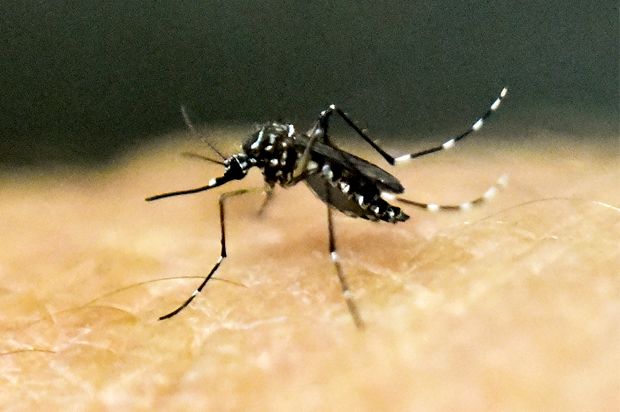
TOPSHOT-COLOMBIA-SCIENCE-HEALTH-ZIKA-VIRUSAn Aedes Aegypti mosquito (Afp/getty Images)There's even a vampire fish: the candiru (Vandellia cirrhosa), also known as the cañero or toothpick fish. It doesn't look like much — just a small, thin and pale little thing, only about 15 centimeters long. But its wormy shape gives it the ability to swim right into the gills of fish, where it drinks its fill of blood. While there are urban legends of the fish swimming up the urethras of some people, this has only been documented once and under controversial circumstances

While hematophages are fascinating, they also are notorious for spreading diseases. Different species of mosquitoes spread malaria, dengue fever, Zika virus, chikungunya and yellow fever; Triatominae species (kissing bugs) disseminate Chagas Disease; and Phlebotomus and Lutzomyia species (sandflies) contribute to leishmaniasis pandemics. As humans continue to pollute the environment — such as by overly-emitting greenhouse gases into the atmosphere — it only gets worse.

We need your help to stay independent

“With climate change, we’re already seeing how the geographic spread and intensity of these diseases are evolving,” Mans said. “For example, Aedes mosquitoes thrive in warmer climates and urban areas with standing water, which are increasingly common due to climate-driven flooding and inadequate infrastructure. Warmer temperatures speed up the virus replication within mosquitoes, increasing transmission rates and allowing these diseases to spread to new regions.”

Although hematophages can cause humans to get sick, that does not mean they don’t fill valuable niches in nature. After all, parasites like hematophages are the bedrock of the tree of life, outnumbering free living species by about 3 to 2. Without them, webs of life in ecosystems would collapse. The evolution of bloodsuckers, no matter how gorey, is worth studying.

“I like working with blood sucking insects because of their uniqueness and the ick factor, complex interactions with their hosts and their fascinating role in both ecological and human health contexts,” Insaurralde said. Mans also described working with hematophages as “a lot of fun.”

“There are still a lot of discoveries to be made and is therefore a fertile field for young minds,” Mans said. “The breadth of vector research has something for everyone whether you are an entomologist that likes bugs, taxonomy and systematics, ecology, disease epidemiology, protein biochemistry and bioinformatics, genomics or field studies. The more we learn about hemophages, the more we realize how intricate they are. You must admire them for their complexity. Even if they turn out to be living nightmares.”

“I’m gonna do it whether the women like it or not”: Trump’s closing argument is toxic masculinity

Much has been made out of the fact that Donald Trump's campaign did nix one "joke" in the now-infamous speech by podcast host Tony Hinchcliffe during the dizzyingly hateful MAGA rally at Madison Square Garden on Sunday: calling Vice President Kamala Harris the c-word. As I wrote in the Standing Room Only newsletter, this shows that the campaign knew Hinchcliffe was planning a wildly racist set. I suspect the racism was a sick form of strategy, a continuation of Trump advisor Steve Bannon's infamous "flood the zone" tactics. Note that the Trump campaign only tried to distance themselves from the comments calling Puerto Ricans — who have a heavy voting presence in some swing states — "garbage," but not from the rest of his set or the many other vile things said by other speakers. 

The Trump campaign hopes, by turning up the misogyny, they can get a lot of those infrequent male voters to turn out.

The censorship of the c-word likely happened because it's profanity, not because it's misogynistic. We know this because Hinchcliffe's other woman-hating "jokes" were left in, including fantasizing about the murder of pop star Taylor Swift. "I think that Travis Kelce might be the next O.J. Simpson," Hinchcliffe said of Swift's NFL-playing boyfriend. Swift has been the object of violent ire by many MAGA leaders, including billionaire Elon Musk, who issued an unsubtle rape threat after Swift endorsed Harris for president. And that is not out of character for Musk, who has purchased a spot so close to Trump's side it often looks like he's replaced Trump's running mate, Sen. JD Vance of Ohio. It's Musk who has shown, in the last few days before the election, that misogyny is right up there with racism as the Trump campaign's closing argument

While Trump's team canceled the c-word "joke" from Hinchcliffe's set, they didn't seem to mind that Musk's political action committee, American PAC, ran an ad declaring, "Kamala Harris is a c-word." Or, they didn't mind until it started to dawn on them that Trump's hate rally in New York City may have backfired, at which point Musk quietly removed the ad. But it was too late, as progressive groups had captured the image. 


Want more Amanda Marcotte on politics? Subscribe to her newsletter Standing Room Only.


No one doubts, of course, the misogyny of Musk and Trump and the MAGA movement. Just last year, a civil jury found Trump sexually assaulted journalist E. Jean Carroll. He's been accused by countless other women, many of whom describe attacks much like the one he bragged about in the infamous "Access Hollywood" tape. Multiple former employees of Musk's have filed lawsuits alleging sexual harassment and gender discrimination. But what is a little strange is how the Trump campaign embraced misogyny, until this late-breaking scramble. Proud woman-hating is also a feature at Trump rallies, as we saw just a few days ago, when former Fox News host Tucker Carlson gave a speech where he rolled out an incestuous BDSM fantasy about "Daddy" giving "a vigorous spanking" to the "bad girl," imagined as a teenage daughter. 

Even when promising to "protect" women, Trump can't help but sound creepy or threatening. Wednesday night, he told a Wisconsin crowd he wants to "protect the women of our country," and, "I'm gonna do it whether the women like it or not." Feminists have long argued that "chivalry" is just another form of male domination, disguised as benevolence. Trump, as he often does, proves the feminist case.

Adding to the creep factor, Trump continued with, "Is there any woman in this stadium that wants to be protected by the president?"

Former Gov. Nikki Haley, R-S.C., complained on Tuesday about the Trump campaign's "bromance and masculinity stuff," saying that it is "going to make women uncomfortable," which is an understatement considering both Trump's proven and alleged victims both report being traumatized by his sex crimes. But it's unlikely that Trump will listen to Haley. First, she's a woman, so he doesn't care what she thinks. Second, toxic masculinity isn't a slip-up or a gaffe. It's a deliberate strategy by the Trump campaign. 

The Trump campaign is well aware that the sexist antics, as well as the ending of abortion rights, led to a loss in female support that is shaping up to create a record-setting gender gap this election. As has been documented by numerous outlets, they believe they can make up for those losses by reaching out to men with implicit — though unrealizable — appeals about how they can bring women to heel. I saw the "women in the back" framework at the Republican National Convention, where once-rising female stars of MAGA world, like Arizona Senate candidate Kari Lake or Rep. Marjorie Taylor Greene of Georgia, were shoved off to the side, mostly ignored by both leaders and delegates. 

It's tough to say if this bet was bad, as the polls remain in a dead heat in the last week. But it is a big risk for the GOP, for one simple reason: Women vote more than men. The Trump campaign hopes, by turning up the misogyny, they can get a lot of those infrequent male voters to turn out. That may happen. Still, it seems unwise because, in the process, they are running off the more reliable female voters. As Jamelle Bouie writes in the New York Times, Trump's gains "with young men are less striking than Harris’s enormous lead with young women." If Harris wins, he argues, "we may look back and say that we should have focused a little more on the women, young and otherwise, who most likely made the difference." Certainly, the head of one of Trump's "get out the vote" operations, Charlie Kirk, is worried. Wednesday, he fretted about women voting at higher rates, adding, "If men stay at home, Kamala is president. It’s that simple."

In the Trump/Musk worldview, men are to hold all the power, but they are never expected to take responsibility for their own choices. 

Who knows if Trump's campaign managers think misogyny is a smart tactic or if they're simply trying to make electoral lemonade out of political lemons. The latter does make sense. Trump and the men he surrounds himself with are so wholly committed to woman-hating that there's likely no way to convince them to tone it down. In MAGA world, the only way to be a man is to embrace toxic masculinity. That much was made clear in a recent Q&A event, where Musk complained, "If masculinity is so toxic, how come the kids that are messed up don't have dads?"

There's no need here to rehash the lengthy debunkings of this myth, which you can read elsewhere. But it is telling that Musk ignores that when fathers abandon their children, it's usually a direct result of toxic masculinity. It's toxic masculinity that tells men it's emasculating to embrace caretaking duties. It's toxic masculinity that teaches that a man's role is to be an aloof "provider" who is barely around and who disappears entirely if the relationship with their mother ends. Musk should know this, as his daughter told NBC News, "He doesn’t know what I was like as a child because he quite simply wasn’t there," and it's "generous" to say he was around "maybe 10% of the time." That is toxic masculinity embodied: believing "fatherhood" is about contributing the DNA and putting your name on a birth certificate, but nothing more. 

We need your help to stay independent

Of course, in MAGA world they don't blame the men who abandon their children. They blame women. When a man like Musk walks away from his kids, the right wants to accuse the mother of running him off, usually by not being submissive enough. In the Trump/Musk worldview, men are to hold all the power, but they are never expected to take responsibility for their choices. 

Trump ally and fellow Hitler-praiser Nick Fuentes illustrated this "childish kings" view of manhood in a nutshell in a recent tweet: "If Trump loses, blame women." 

A better way to phrase this is "thank women." But this epitomizes the all-power-no-responsibility model of MAGA manhood. The GOP nominated a candidate who ushered in abortion bans and is, by his own account and according to a civil court of law, a sexual assailant. His favorite words for women are "nasty" and "pigs." On the rare occasion that he praises a woman, it's almost always for being sexually attractive to him, and not for any talents she may have. He's explicitly running a campaign of male grievance. That grievance is comically unjustified, mostly a long series of complaints that women aren't compliant enough or that they'd rather be childless cat ladies than partnered with MAGA men.

On Monday,  Trump advisor and Project 2025 leader John McEntee doubled down by telling women explicitly their votes are not wanted. 

MAGA men would throw a party with a big banner that reads "Women Not Welcome" and then complain that the shindig is a sausage fest. Hopefully, it will be enough to cost Trump the election.

Washington Post readers aren’t buying Jeff Bezos’ excuse-making

Readers of the Washington Post flocked to read Jeff Bezos' essay this week defending his decision to stop his editorial board from endorsing Vice President Kamala Harris. They wanted to see his explanation of the inexplicable, to understand why he shot the fluorescent lighting out in the editorial board room of the paper whose banner reads “Democracy Dies in Darkness.” Predictably, Bezos' defense failed more miserably than the Union Army at Fort Sumter in 1861. 

The Post won’t stop hemorrhaging editors and subscribers with the see-through bandages of illogic and flawed analogy offered by Bezos. Here are four of his essay’s more obvious fallacies.

“The Media Isn’t Trusted”

The setup was clear from the opening reliance on overwrought generality: There is greater distrust today of the media than ever before, and, Bezos implores,a respected newspaper’s endorsements are part of the problem. “Endorsements,” Bezos wrote, “create a perception of . . . non-independence.”

Please. 

Let’s import a dose of reality. Bezos is essentially arguing that because the media is distrusted, the paper is not going to endorse the candidate running against the man who has done more than any person in American history to create distrust in the media. From that circular reasoning, the billionaire argues in effect, “The way we’re going to reestablish a public perception of journalistic independence is by having the owner of the paper step in and quash the independent judgment of the sage and seasoned journalists on the editorial board. 

Does the second-richest man in the world miss the richness of the irony? Probably not. But he seems to think that we will.

He’s wrong, and there’s proof. The Post’s readers who dropped their subscriptions put their money where their mouths are. They transferred their dollars — to the tune of millions of dollars — from the Post to outlets like The Guardian and The Atlantic whose owners let their journalists do their jobs without interference. So much for discerning readers indiscriminately distrusting the entire media ecosystem.  

The life or death of our constitutional republic is on the ballot. The generals who served Trump agree that he is “fascist to the core.” Trump and his allies proved it again at his replay of 1939’s fascist rally at Madison Square Garden. 

So the way to move the Post up on the trust scale is by not endorsing the candidate who has attacked Trump’s authoritarianism, the Democratic Party nominee who vows to preserve the Constitution?

We need your help to stay independent

Let’s suppose that before the 1932 elections in Weimar Germany, the publisher of Der Spiegel had said, “We are going to move our newspaper up the trust scale by not endorsing the parties that support a democratic Germany and oppose Hitler’s National Socialists.” That would not have had informed readers shouting from rooftops that Der Spiegel had regained their trust. Nor do a publisher’s specious appeals to us based on bothsiderism in an existential election.

Endorsements do nothing to tip the scales in presidential elections.

“No undecided voters in Pennsylvania,” Bezos wrote, “are going to say, ‘I’m going with Newspaper A’s endorsement.’ None.”  

Perhaps not. But there’s a disgraceful cynicism working in this “fallacy of the excluded middle.” It’s not that a newspaper editorial board’s stamp of approval alone convinces citizens; it’s the reasoning in an endorsement that gets them there. Endorsements are part of a stream of persuasion based on faith in reason. 

If a publisher does not believe in an editorial page's power to persuade – in connection with multiple other sources – why have editorial pages? Why own a newspaper?

The only problem is timing

Bezos admits that the Post erred — though not by him bigfooting and blocking an endorsement, but rather by doing it so late. But when was a good time? In June? In January? In 2022? It was clear at every such moment that newspaper endorsements don’t tip presidential elections. It was also clear that Trump would be (or was already) the Republican nominee for president. At any of those times, an announcement by the Post that it would not be endorsing — preceding that of the Los Angeles Times — would have brought howls of outrage. 

The truth is that the closer the election comes, the more someone like Bezos has to face up to the possibility that Trump could win and target a rich publisher and his companies for retaliation. As historian Timothy Snyder has been saying loud and clear, this is nothing but “obedience in advance,” giving up our power to an authoritarian that he needs to take control.


Want a daily wrap-up of all the news and commentary Salon has to offer? Subscribe to our morning newsletter, Crash Course.


As Bezos wrote about blaming others for the diminishing trust in the media, “complaining is not a strategy.” Neither is blaming the timing.

Not an issue of quid pro quo

Bezos claimed that he made no deal with Trump: “Neither campaign nor candidate was consulted or informed in any way about this decision.” 

How innocent does he think we are of the way the world works? No consultations were needed. Bezos sees Elon Musk embrace and be embraced by Trump. Musk is the owner of SpaceX, rival of Bezos’ Blue Origin. Last year, it spent $2 million lobbying for government contracts. Trump has said that he will make Musk the overseer of “government efficiency.

Bezos didn’t get where he is by being dumb. In sophisticated business transactions, corrupt bargains seldom need words. Bezos sees the threat to his prized rocket enterprise, and asks himself “What can I do about it?” The lightbulb goes off on how to send an unspoken signal to Trump.

On this statement from Bezos, we can agree: “Now more than ever the world needs a credible, trusted, independent voice.” The way to get there, however, is not through transparently phony defenses of transparent cowardice. Truth is the only basis for trust. Jeff Bezos’ defense has failed it and the luminous newspaper he owns.

NY Democrat Mondaire Jones’ comeback bid threatened by Israel tensions and GOP “stealth operation”

PEEKSKILL, N.Y. — In a microcosm of the broader 2024 campaign, former Rep. Mondaire Jones, D-N.Y., is fighting to unseat Rep. Mike Lawler, R-N.Y., in a race where wars in the Middle East and the threat of former President Donald Trump loom large even as a GOP "stealth operation" threatens to spoil the election in New York's 17th Congressional District.

At the Westchester Black Women’s Political Caucus candidate forum on Saturday, a small crowd of a few dozen people waited for the arrival of Jones, a Rockland County native who rose from humble beginnings to Congress.

Ahead of Jones’ appearance at the forum, there was a panel with four other candidates — two Republicans and two Democrats running for state legislative positions. Each candidate was given roughly equal time to respond to a set of questions from the community, which had gathered at the Peekskill Presbyterian Church on the first day of early voting to field questions and hear from the political hopefuls.

The only candidate who had failed to attend was Lawler, the sitting congressman and Republican nominee for New York’s 17th, whose campaign was recently left reeling by a New York Times report that unearthed photos of Lawler dressed in a Michael Jackson costume that included blackface. 

Lawler has since apologized for the 2006 costume, however, he again found himself the subject of criticism after he declined to condemn the use of a racial slur for Black people by another participant at a forum on combating antisemitism where he spoke, and for pivoting to a different subject when a far-right radio talk show host told Lawler that neither Islamophobia nor white supremacy exists but that Black supremacy does.

None of the event organizers on Saturday, however, knew why Lawler had decided to skip the event. Jones noted in a short conversation with Salon ahead of his question-and-answer time that the no-show was part of a "pattern of behavior" but didn’t care to elaborate. Lawler had skipped the local NAACP candidate forum earlier in October with the NAACP reporting that Lawler’s campaign accused them of being insufficiently impartial.

The event was also among the last opportunities for residents in NY-17 to get to hear from both candidates at once and to ask questions. It may have also been one of the last opportunities for voters to ask questions of Lawler. As of Tuesday, Lawler had just two events on his campaign calendar before election day while Jones had 17.

"Jones did not mince words, calling Lawler a “mini-fascist.”

At the forum, voters asked about Jones’ plan to restore the state and local tax deduction, the potential expansion of Medicare to include long-term care, Jones’ accomplishments in his first terms and Jones’ vision for comprehensive immigration reform. 

However, the issue that seemed to resonate most with the crowd in the room came toward the end of the forum when one voter described a trip their son had taken to an international school in Syria before asking about Jones’ position on Israel’s wars in Gaza and Lebanon and the United States’ role in the conflict.

“Why can’t the United States be like the father, say, to Israel and say stop?” the voter asked. “It’s not about Hamas anymore.”

Jones responded that he was staunchly in support of Israel and its stated goal of defeating Hamas but said, in his view, there was no tension between supporting Israel’s military mission and supporting the human rights of Palestinians.

“So I disagree with you in your use of the word genocide, Hamas started this war on October 7, the worst terrorist attack on the Jewish people since the Holocaust,” Jones said. “ And the pain and the suffering of innocent Palestinians in Gaza and elsewhere is horrifying as well, and neither of those two things are in tension.”

We need your help to stay independent

Another voter asked about Jones’ position on Israeli settlements in the West Bank. It was clear too, from the reaction of the crowd, that the issue had salience. 

Speaking with attendees at the event, it seemed that the issues of Israel and Palestine and antisemitism and Islamophobia had eclipsed other issues like immigration in the district. Lawler has also tried to put distance between himself and Jones on the issue in the final days of the race with a campaign ad titled “Standing with Israel” and by attacking Jones in a Newsmax interview for saying that “Settlement expansion under Bibi Netanyahu has been inappropriate,” in a debate

In a follow-up interview with Salon, Jones said that Lawler had tried to “create differences between us where there are none.”

“My commitment is to Israel having the resources it needs to defeat Hamas and Hezbollah and other terror proxies of Iran and obtaining the hostages that were cruelly taken from Israel, including American citizens,” Jones said.

Even as divisions over the war in the Middle East seem to split the Democratic constituency in New York’s 17th on Saturday, the looming threat of Trump’s potential return to the White House seemed to unite them. Even the Republicans speaking at the forum were uneager to tie their fortunes to Trump’s in the heavily Democratic area. Lawler, however, has not been so circumspect.

Of the two events Lawler has left on the calendar, one of them is with former Republican Rep. Lee Zeldin, who represented the First District in New York, and House Speaker Mike Johnson, R-La., who recently spoke at Trump’s Madison Square Garden rally, which drew comparisons to the 1939 German American Bund pro-Nazi rally held there.

On this issue, Jones did not mince words, calling Lawler a “mini-fascist.” Lawler himself has complained about Republicans being called "fascists" at length, including prominently on “Face the Nation.” However, he has repeatedly called Jones a “socialist.” Jones told Salon that he was “comfortable” standing with Trump’s former chief of staff John Kelly and General Mark Milley in calling Trump a "fascist."

“In his own words, [Trump says] he wants to terminate the Constitution and be a dictator in day one, neither Donald Trump nor Mike Johnson, a House speaker Lawler says he proudly voted for, have committed to accepting the legitimate results of the 2024 presidential election,” Jones said. “Donald Trump says he wants to jail his political opponents despite all of these things and more, Mike Lawler is supporting him for the third consecutive presidential election cycle.”


Want a daily wrap-up of all the news and commentary Salon has to offer? Subscribe to our morning newsletter, Crash Course.


In the race, Jones is seeking to reclaim the seat he represented following the 2020 election. When New York adopted new district lines ahead of the 2022 elections Jones and former Rep. Sean Patrick Maloney, D-N.Y., who had represented the state’s 18th District, faced a potential primary against one another. Maloney reportedly offered to bow out of the race but Jones declined and considered a challenge to Rep. Jamal Bowman, D-N.Y., in the neighboring 16th District until internal polling indicated he would likely lose the race, according to City and State.

Going into the 2022 elections, Jones decided to run in the crowded Democratic primary for New York’s 10th Congressional District, which covers parts of Manhattan and Brooklyn. In that primary election, Jones and two other Democratic candidates split the vote from the progressive wing of the party and Rep. Dan Goldman, D-N.Y., won with just 26% support.

In 2024, Jones returned to the Hudson Valley to run against Lawler in his old district. What little polling has been done has only confirmed expectations of a close race. An Emerson College/The Hill/WPIX from the beginning of October found that Jones was trailing Lawler by just one point, 44% to 45%, while the Working Families Party nominee, Anthony Frascone was polling at 3% support.

Frascone, however, does not have the endorsement of the Working Families Party, and Ana Maria Archila, the co-director of the New York Working Families Party, says that Frascone was recruited by Republicans to spoil the election for Jones.

“As we learned about who he was we also learned about how he got on the ballot which was through a stealth operation with a set of Republican operatives in Rockland county who registered 200 people,” Archila told Salon.

According to Archila, Republican operatives recruited 200 people to register with the Working Families Party ahead of the state primaries and to vote for Frascone, without the Working Families Party’s knowledge. Before this operation, there had only been about 1,000 registered Working Families Party voters in the district.

“Despite our efforts to contact all the real Working Families Party registrants we did not get enough of them to show up and Anthony Frascone won that primary against Mondaire Jones,” Archila said.

Now, Frascone is threatening to spoil the close election for Jones and some prognosticators have taken notice. The Cook Political Report changed the race’s rating from “tossup” to “lean Republican” just last week despite the fact that registered Democrats outnumber Republicans in the district 227,000 to 140,000.

However, at the Westchester Black Women’s Political Caucus’ candidate forum on Saturday, Democrats in attendance didn’t seem to be aware that elections watchers saw the race as slipping away from them. Attendees, activists and staffers for the down-ballot races for state Senate and state Assembly elections seemed confident that 2024 was going to be different than 2022, in part because of the presidential election and in part because of the support they were receiving from the state party this year.

Lawler’s campaign did not respond to a request for comment.

Abortion could tilt swing states like Pennsylvania for Democrats, experts say

Abortion isn’t technically on the ballot in Pennsylvania this November, but it’s an issue Democrats are still hoping will help them win the election in this important swing state. Elizabeth Moro, the Democrat candidate vying for a seat in the state’s 160th house district, told Salon she’s had interactions with over 10,000 voters and abortion is a “huge issue.”  

“I have had women when I'm at the door, kind of hold my hand and say, ‘Tell me we're going to be okay,’” Moro said in a phone interview with Salon. “It’s not only just on the national front, where we're we're dealing with the possibility of a total abortion ban, but in the state of Pennsylvania, we are one vote away.” 

Pennsylvania’s state house legislature leans very narrowly Democrat while Republicans control a majority of the state senate. If Democrats lose control of the house during this election, they fear state Republicans will continue to advance an anti-abortion agenda. In 2022, Republicans in Pennsylvania’s state Senate tried to rush an amendment to the state constitution saying that it did not guarantee rights related to abortion. As it stands, Pennsylvania allows abortion up to 24 weeks of gestation, or later if there is a medical emergency that necessitates pregnancy termination. Still, many people worry what a Republican-controlled Pennsylvania would mean for reproductive rights. 

“If we lose control of the House, and the Republicans control both the Senate and the House, they may try to do what they tried to do last time they had total control,” Moro explained. “Doctors have come out to canvass, and do door knocks with my campaign, because they know that I will support them because this affects the doctor's ability to do good health care.” 

However, it might not just be the future of reproductive rights in Pennsylvania that hinges on this election, but the future of reproductive rights throughout the United States in general. Political analysts say the next presidential candidate will need the state of Pennsylvania’s votes to take the White House, which has made the Quaker State a key focus of this presidential race.

"Concern for reproductive rights does not have the same level of partisan strife that you see with other issues."

As Salon has previously reported, the Republican Party’s 16-page “Make America Great Again” policy platform essentially paves the way for a national abortion ban suggesting to establish fetal personhood through the constitution’s 14th Amendment. Despite former President Donald Trump stating he would veto a national abortion ban, pro-abortion advocates continue to warn that a Trump presidency would spell doom and chaos for access to abortion nationwide, in vitro fertilization (IVF), and birth control.

Madeline Zann, executive director of the House Democratic Campaign Committee (HDCC), told Salon voters in Pennsylvania are like many voters across the country: “They are extremely worried about reproductive rights in the wake of the Dobbs decision,” Zann said, referring to the Supreme Court ruling that overturned Roe v. Wade. “Voters care about local and state-level races as much as the presidential candidates because they recognize that politics is local and that change is most often made in these lower seats.” 

The 160th District, where Moro is campaigning, is seen by both political parties as a competitive race. Incumbent Republican state Representative Craig Williams, who is running for the Republican nomination for Pennsylvania Attorney General, Moro’s opponent, does not have a pro-abortion voting record. In 2021, Williams voted yes on a measure that would require a funeral or cremation of abortion remains. He voted no to establish a state constitutional right to taxpayer-funded abortions. He has referred to himself as a “pro-life” candidate and recently called protecting access to reproductive rights a “gray area.” Salon reached out to Wililams’ campaign for comment, but did not receive a response.


Want more health and science stories in your inbox? Subscribe to Salon's weekly newsletter Lab Notes.


Such stances are at odds with what polls suggest most voters want. Most recently, a new national University of Massachusetts Amherst/League of Women Voters Poll found that two-thirds of Americans oppose potential national bans on abortion and IVF. The poll found considerable support for policies that would codify reproductive rights and protect women and healthcare providers. While people surveyed cited the economy as the central issue for this election, reproductive rights were in the top five.

“These survey findings reaffirm what we have known since the Supreme Court’s harmful decision in Dobbs v. Jackson Women’s Health Organization – women want the freedom to make personal health care decisions without government interference,” Celina Stewart, CEO of the League of Women Voters, said in a statement. “Women reject policies that strip away their constitutional rights and undermine their equity in our democracy.”

Tatishe Nteta, provost professor of political science at the University of Massachusetts, Amherst, told Salon that abortion is an issue that mobilizes female voters. 

"I've had conversations with women across the political spectrum who I think have seen the real-life consequences of the Dobbs decision."

“And the interesting thing about this issue is that concern for reproductive rights does not have the same level of partisan strife that you see with other issues,” Nteta said, using Kansas as an example, where voters decided to keep abortion legal in the state. “That could only pass with the support of historically Republican identifiers and those who have voted for Trump.”

Others have expressed similar views: Abortion is overall a nonparistan issue and therefore, it could have a remarkable outcome on swing states. If people are voting based on their concern for the future of reproductive rights, they're likely going to be voting for Democrats in the race, Nteta said. 

Hadley Haas, the Democratic candidate for Pennsylvania House District 44, has had a similar experience to Moro while speaking with voters. Notably, where she’s running is a purple district with many Catholic and Christian voters, Haas told Salon in a phone interview. Some people, she said, when they see she’s been endorsed by Planned Parenthood politely decline a conversation. But others show interest. 

“I've had conversations with women across the political spectrum who I think have seen the real-life consequences of the Dobbs decision,” Haas told Salon. “They have real concerns about going back; I've talked to women on the doorsteps in the underserved parts of my district who glance at their young daughters and worry about the choices that they.”

She has even heard from a Republican woman who revealed she had an abortion. The issue of abortion for voters, Haas said, “crosses party lines.”

“The majority of the doors that are slammed on my face, or the people who tell me to get off their doorsteps and cite abortion, is the reason the majority of those folks do identify as Republicans,” Haas said. “But I’ve also heard from Republican women who are supporting Democrats specifically for this reason.” 

We need your help to stay independent

Haas is running against Republican Rep. Valerie Gaydos who has called herself “pro-life.” Democratic Legislative Campaign Committee president Heather Williams told Salon she thinks women are going to show up in this election and rally around the issue of abortion — even in states like Pennsylvania. Gaydos states she believes abortion should be "rare," but believes in exceptions for rape and incest. She "fully supports" a constitutional amendment to allow citizens "to set abortion law, not elected politicians," she told Salon in an emailed statement.

“Abortion is arguably not being taken away in that state, because Democrats have enough power to stop it,” Williams said. “But make no mistake, you put Republicans in control in that state, and the rollbacks start happening immediately.”

Abortion, Williams said, “is on the ballot everywhere.”

“The Dobbs decision, and then Republicans’ immediate response to that, I think, really clarified for so many people what this was actually about,” Williams said. “It was never just about that choice to have a family, it was about controlling women, and it was about removing decisions from them across a whole host of different places in their lives.”

This, Williams said, has given voters “a continued sense of urgency” around codifying abortion rights in state constitutions, and electing state officials who will support the right to contraception, IVF and health care for women.

UPDATED: This article has been updated to include comments from Rep. Valerie Gaydos.

“Grotesquerie”: Niecy Nash-Betts on her role and that killer finale — “It scared me on the page”

Grotesquerie” may have been inscrutable to most of us when it began, but its star and executive producer, Niecy Nash-Betts, knew exactly where it was going, and the importance of staying mum about it. For some actors that means steering clear of social media or Reddit threads to guard the story’s secrets or peace of mind. For Nash-Betts, whose Det. Lois Tryon led us through the show’s mind-freakery maze, avoiding the comments wasn’t a luxury.

“Anybody who had my phone number called me or texted me,” she told Salon earlier this week. Not surprisingly, their questions were the same ones bedeviling the rest of us.

What’s happening now?

What’s going on?

And simply: What?!

Inscrutability is rarely presented as an asset when a show debuts in a crowded fall season, but “Grotesquerie" creators Ryan MurphyJon Robin Baitz, and Joe Baken turned it into a selling point. Nothing about the show turned out to be what it looked like at first: a standard albeit graphically gory serial killer cop show with a Murphy-esque horror twist, pairing Nash-Betts’ Lois, an alcoholic cop at the end of a failing marriage, with Micaela Diamond’s Sister Megan, a homicide-obsessed nun and…practicing journalist?

“You know, a lot of people expected it to be very similar to the other projects that Ryan has done before, but this one absolutely stood alone,” Nash-Betts told me.

Indeed. The good sister stood by Lois as her sanity unraveled at work and in her personal life, where her daughter Merritt (Raven Goodwin) has failed to launch while, at a nearby hospital, her philandering husband Marshall (Courtney B. Vance) rots in a coma, cared for by a Nurse Redd (Lesley Manville) who’s in love with him.

"You know, a lot of people expected it to be very similar to the other projects that Ryan has done before, but this one absolutely stood alone."

Then, and without warning, the writers turned everything upside down. All along we were watching Lois’ coma dream, and she wakes up to a life in shambles. She was the one who cheated, with Merritt’s husband Ed (Travis Kelce). Megan isn’t a nun but a fellow detective married to a violent man Lois shoots in the face… or does she?

Marshall and Redd are having an affair. The only parts of Lois’ coma dreams that weren’t real were the grisly murders, until somebody starts recreating them…which drives Lois back to the hospital, the psych ward this time.

With “Grotesquerie,” Murphy tapped into the all-enveloping fear that the world is in a death spiral, building real-life metaphors into the horrors Lois dreamed of, including climate change, the loss of reproductive rights and the dehumanization of the unhoused.

The finale adds in gaslighting and patriarchal rage as Marshall is blindsided by a sexual assault accusation from a student he slept with.

With “Grotesquerie,” Murphy tapped into the all-enveloping fear that the world is in a death spiral.

“Accountability is everything,” Lois tells Marshall early in the episode, after she's rejected his preposterous suggestion that he, Lois and Redd move in together. That should have been it for them, Lois thinks. But this finale is half Marshall’s story now, and he crawls back from his lowest point by joining an underground men’s group led by one of Lois' doctors. And it has grand ambitions. “Perhaps the issue is that we need to return to a much more traditional model for society,” Marshall tells them, adding that it’s time to “find the bogeyman and slaughter it” so it never returns to “take what is ours.”

Solving one set of problems doesn't erase what caused them, and as the season closes Lois accepts she and Megan have work to do. What are we to take from all this? We tried our best to get the Emmy winner to weigh in on the season's meaning as well as take stock of how "Grotesquerie" ranks in a varied filmography that's included acclaimed roles in "When They See Us," "Dahmer," "Claws" and other dramas, and whether the road to Lois Tryon began in Reno.

The following transcript has been edited for length and clarity.

Most actors don’t necessarily know when an episode of their show is scheduled to debut on air, but I’m wondering if you did.

Ryan and I were tied together at the hip, so yes, I knew what was happening and what was on the way.

What you couldn't have predicted was everything happening in the world this week. You know what I mean?

Yeah. 

So, the meat of my question is this: Ryan called this story a meditation on the feeling that the world is ending. What has it been like to know how the story was going to turn while knowing that this episode would premiere during a week of high anxiety—socially, politically, and otherwise?

You know, when it comes to what the world is unpacking, some of the things are so outrageous that you couldn't have even planned them. You know what I mean? Some of the things that are being said, some of the things that are being done . . .I knew there was going to be an uproar in the world, but I didn't know it was going to look the way it actually looks. And when you talk about art imitating life, we touch on a lot of the things that are happening socially. In the series, “Grotesquerie,” we talk about women having agency over their own bodies. We talk about global warming. The evil that exists in the world. Ryan was definitely in front of it.

Micaela said that when she initially read for her role, she read as if it were Sister Megan because she hadn’t seen the ending. And then in the audition Ryan told her, and that changed her second reading. What did you take in to shift your performance from the beginning to that turn in Episode 7, in the kitchen and then everything after Lois woke up?

Well Lois definitely, even in her disease, portrayed an amazing strength. She was a big deal in a small town for a long time, solving crimes. She was a legend even when she was deep in the throes of her alcoholism. She still pulled up and pushed through.

I feel like in her waking life, she was way more vulnerable, way more sensitive. Cognitively, she wasn't on the pulse of what was actually happening, what was reality. “What was it? Am I going crazy?” So she was a lot more fragile once she came out of the coma.

Thematically, too, there was a notable transformation. When Lois is in the coma, there is a lot of vacillation between what she’s dealing with in terms of what's going on with the case and the trauma. There was also a lot of rage. When she came out of the coma, the tone seemed to shift to a theme of forgiveness. Maybe that interpretation is wrong, but there was a conscious shift, just in terms of reckoning with her marriage and her relationships, out of her anger.

I don't know how much of it was forgiveness, but I do believe there was acceptance. She accepted herself. She accepted her life. She accepted her relationship with Marshal and with Mary, her husband and daughter. She leaned into, This is what it is. You know what I mean? “I'm going to go somewhere and return to whatever the self is I can recognize,” which is why she originally says, “Hey, I'm leaving. I'm going to Tarpon Springs. Let me go around and make amends to all the folks in my life and tell them I'm out of here. Let me sign these divorce papers. Let me tell my daughter I'm leaving.” She was wrapping that part of her life up. I feel like in a way that just screams, “I submit, I surrender and I accept that this is what it is.”

We need your help to stay independent

Going back to what Ryan said about the overall theme of the series – that it's not just about fear, but it's also about the idea the world is ending —is there kind of a metaphor in Lois' journey that relates to what's going on with the world that you can see?

Well, she actually confronts so many of the things that are happening in the world. She has an entire conversation about global warming — “What have we done to the planet?” You know, she has an entire crime scene where women don't have agency over their own bodies. They're being forced to produce. They're being forced to feed babies from their own bodies, the milk that they produce, and all of that. There are so many places in her journey that we see happening right now in the world.

Here’s what I noticed, and I understand that everybody's view of a piece of art is subjective. I've been talking to a lot of people, particularly filmmakers, artists, who have been talking about this idea of healing, finding solace, and finding resolution. That's why I was wondering about the forgiveness element. I didn't know if that was part of the character’s story development.

I think what you primarily see is Lois forgiving herself. She has to reconcile that. You know, I don't know that she is so much standing, like, in judgment, where she's shaking her finger at these other people in her life, but she's like, “Let me be real about who I am and forgive myself and let the chips fall wherever they may after that.”

In terms of the graphic nature of everything we saw, when you first read the script, what was your reaction to that? When you first got on the set, and saw these crime scenes, that must have been quite an experience.

With regards to the graphic crimes, you don't see them committed, but you do see the aftermath. And in a lot of ways in this world, you know, the aftermath — it just keeps going. When you experience something that's painful or horrific, it's like an earthquake. Those aftershocks keep showing up in the space.

For me, it was very, very important, in between takes, to be funny, be bright, be uplifting, because you have a crew of people you're leading the charge with who are standing around with death and destruction and blood on the floor, and you know, all of these things. So I did not want to be participatory, when we were not rolling, in the horror, in the drama, in the weirdness. I would prefer to bring it back up. Kick the drum track. Let's go. You know what I mean? And, “here goes some jokes for you today,” you know, just so that we all could stay emotionally even.

I imagine that in the days following the finale, people are going to have a lot of discussions about the gender split we see at the end of the season. You have Megan and Lois as the crusaders and the heads of their department who are hunting these killers. And there's the strong implication that the killer is at least within, if not a bunch of people collaborating within, the men's group that was introduced.

The point is for the audience to have conversations. That's the whole point of art to me, to make you feel and then make you want to talk about what you feel and what you experience. So, you know, I don't want to step on anything, you know. I want people to come to the conclusion that they come to and then come back for Season 2 to see if they were right.

You're being very diplomatic here. But I would imagine that you, Niecy, would have thoughts to share on those optics.

Yes. That did happen, didn't it?

So how about this: You've spoken about this being the most versatile role you’ve played, which now I think people understand.

Well, you know, I loved it on the page, but it also scared me on the page, which is the thing that made me want to run towards it. I've never played anyone suffering with alcoholism before. That's one of the hardest things to do and make it seem real, you know. You don't want it to feel forced or fake. You have to feel like you are living in this disease, and that was very challenging for me because at any given moment she could have been anywhere in her sickness. She could have been hungover, plastered, tipsy — you know, any place in it. So it was challenging to make sure I tracked it, to make sure that the performance was grounded and real. I often show up to things and get very excited if it's something I've never done before, or if it scares me a little. And this was both.


Want a daily wrap-up of all the news and commentary Salon has to offer? Subscribe to our morning newsletter, Crash Course.


You've done so many varied roles throughout your career, and of course, you're also, you know, a host on a competition show [“Don’t Forget the Lyrics!”] that's a lot of fun to watch. Still, I know a lot of people still think of you as Deputy Raineesha Williams from “Reno 911” even though you’ve also played other law enforcement roles. Do you ever feel like the version of the role you played on “Reno 911” followed you to Lois?

You know what? No. Because Raineesha is an example of what not to do as a cop.

It’s really interesting how these roles have found me, from being a security guard in “Scream Queens” to being in “The Rookie: Feds” to now being a detective. There are different spaces and places where I've played someone in law enforcement, but I don't think it has anything to do with Raineesha because she's her own thing, you know?

This was a huge turn from other shows you’ve been in. That was refreshing to watch.

Yeah, you know, it took me a while to get people to trust me with drama. But now that they trust me with drama, I think they forgot I was funny. I called Mindy Kaling, and I was like, “Girl, quick — let's do a buddy comedy. Let's remind people that I'm funny because I think they forgot.”

. . .In my inner circle, they're starting to call me The Range.

That's a compliment, right? It speaks to your reach.

“Niecy Nash-Betts: The Range.” Yes, that's a beautiful thing.

Since I asked this of Micaela, I would love to ask this of you: What are you hoping that people will take away from this, from “Grotesquerie,” from where we stand right now?

I feel like, one, this is a character you don't typically see an African American female play. This is usually an older white male actor, this detective who’s down on his luck, but he can figure out the crime. I love that we invited people to think differently about casting and about how you see women. That's separate from being a Black woman, but seeing women lead the charge in this type of story. And I hope at the end of the day, if we are lucky, we will say that Lois, like Kamala, saved the world from evil.

"Grotesquerie" is streaming on Hulu.

“Don’t know how to cover that demon”: Charlamagne Tha God bashes CNN’s normalization of Trump

Charlamagne Tha God continues to criticize CNN over their coverage of Donald Trump

The host of "The Breakfast Club" said on Tuesday that covering the former president like a standard Republican candidate plays into Trump's hands and normalizes racist rhetoric. 

“They were talking about the MAGA rally at the Garden, and they were talking about it like it was just normal,” he said. “You know, it’s a weird thing they do on these networks. I’m telling you, we’re almost 10 years in of the Trump era and they still don’t know how to cover that demon… or the blatant white supremacy that comes from anyone associated with him.”

Charlamagne has repeatedly condemned what he sees as CNN's dependence on both-sides-ism and horse race journalism. In a chat with Anderson Cooper on CNN last week, the radio host said the network doesn't do enough to convey the danger of Trump's rhetoric

“How come we’re not having a roundtable discussion asking, ‘Is Donald Trump a fascist?’ Actually, not even asking — he’s stating it,” he asked. “How come that is not the topic of discussion on networks like CNN every day?”

Cooper responded that Charlamagne's take on CNN's coverage was "bullsh*t" and said he talks about Trump's rhetoric "every night."

Back on his own show, ahead of an interview with Kamala Harris, he said that CNN can't focus on the explicit racism of Trumpworld.

"They have a problem making the main thing the main thing. They always center the wrong conversation," he said. "And by doing that, they have assisted in the normal normalization of Donald Trump’s fascism.”

“How do you like my garbage truck?”: Trump holds trash-themed presser after Biden barb

Donald Trump spoke to reporters from the passenger seat of a branded garbage truck on Wednesday, capping off a week of controversial statements about "garbage" on the campaign trail. 

"How do you like my garbage truck?" Trump asked supporters while leaning out of the window in an orange hi-vis vest. "This truck is in honor of Kamala [Harris] and Joe Biden." 

The word "garbage" has been keeping both Democrats and Republicans up at night. The trash talk began with Trump saying that immigration had turned the United States into a "garbage can," a statement seized upon by the Harris campaign as another sign that Trump is unfit for office. 

That controversy had hardly begun to stink when a speaker at Trump's Madison Square Garden rally called Puerto Rico a "floating island of garbage." Biden appeared to call Trump's supporters "garbage" in response, though Democrats have objected to that characterization of the president's remarks. 

"The only garbage I see floating out there is his supporters. His — his — his demonization of Latinos is unconscionable, and it’s un-American," Biden said.

Trump — a lover of both "that garbage" and big trucks — doesn't seem to mind the election season's trashy turn. He kept his garbageman costume on during a rally in Green Bay, leading to an incredible scene in which Trump swayed to Lee Greenwood's "God Bless the U.S.A." while wearing the outfit over his button-down and tie.

“The truth’s gonna come out”: Former GOP candidate arrested for allegedly stealing ballots

An Indiana Republican who unsuccessfully ran for Congress was arrested earlier this week over allegations that he stole sample ballots during a voting machine test. 

Police allege that 51-year-old Larry Savage swiped several ballots during a test of the Madison County, Indiana voting machines on October 3. They claim that surveillance footage shows Savage stuffing several of the test ballots into his pockets. 

Test ballots in Indiana are marked as such, but can still be read by voting machines and used to cast a real vote. Indiana requires that the test ballots be destroyed after using them to test voting machines. In a video shared to Facebook of Savage turning himself in on Tuesday, he said that the "truth's gonna come out."

"I guess this is what they do to political opponents," said Savage, who received less than two percent of the vote in his Republican primary. 

He is facing a felony charge of destroying or misplacing a ballot and a misdemeanor charge of theft.

While Savage hasn't been found guilty, and any intentions with the supposedly swiped ballots are unclear, his story is seemingly part of a larger wave of destruction of ballots as the election nears.

Ballot drop boxes in Oregon and Washington were set ablaze earlier this week. Local authorities hundreds of ballots were destroyed between the two boxes in Vancouver, Washington and Portland, Oregon. That fire followed the intentional burning of several ballots in Arizona in an apparent arson


“Law enforcement must act”: Trump accuses Pennsylvania of “cheating” ahead of Election Day

Donald Trump accused Pennsylvania election officials of "cheating" after videos of early voting locations cutting off lines for ballots in the state went viral.

"Pennsylvania is cheating, and getting caught, at large scale levels rarely seen before," Trump wrote on his social media platform Truth Social. "REPORT CHEATING TO AUTHORITIES. Law Enforcement must act, NOW!"

The post from Trump came after early closures of the line in Bucks County, Pennsylvania over the weekend sparked days of outrage. Voters in the state are required to apply in-person for a mail-in ballot if they wish to vote early. Unlike polling locations, local elections offices handling requests for mail-in ballots aren't required to stay open to clear lines. 

“The Board of Elections office is not a polling place. On-demand in-person mail-in ballots are not early voting. This service is offered as a courtesy to voters because we have the equipment to do so,” county spokesperson James O’Malley told the Pennsylvania Star. “We are happy to accommodate as many voters as we can, but the fact remains that this is not a polling place and our staff needs to be allowed time to fulfill their other duties in furtherance of carrying out the election.”

The Trump team successfully sued to extend the county's deadline for requesting a mail-in ballot to Friday.

Trump's posts suggested that Pennsylvania is "cheating" his supporters seems like an early bit of groundwork to contesting any unfavorable results in a swing state that's still too close to call in most polls. 

“Let’s put this junk behind us”: Schwarzenegger endorses Harris for president

Arnold Schwarzenegger has endorsed Kamala Harris for president. 

The action star and former governor of California is the latest in a growing list of A-listers and Republicans who have thrown in behind the vice president, in large part because they're turned off by the nationalist turn of Donald Trump.

Schwarzenegger shared his reasoning for crossing the aisle in a post to X, saying that a Trump second term would just be  "four more years of bullshit" and expressing his disgust with the stagnated politics of the Trump era.

"We need to close the door on this chapter of American history, and I know that former President Trump won’t do that," he wrote. "He will divide, he will insult, he will find new ways to be more un-American than he already has been, and we, the people, will get nothing but more anger."

The former governor stroke a general tone of disillusionment with politics, saying that he doesn't "like either party right now" and could find fault with both Democratic and Republican platforms. Schwarzenegger said he was spurred to act by Trump's election denialism and his recent comments calling the United States the "garbage can for the world."

"Rejecting the results of an election is as un-American as it gets. To someone like me who talks to people all over the world and still knows America is the shining city on a hill, calling America is a trash can for the world is so unpatriotic, it makes me furious," he wrote. "I will always be an American before I am a Republican. That’s why, this week, I am voting for Kamala Harris and Tim Walz."

Lady Gaga battles past versions of herself in new music video for “Disease”

Lady Gaga has inhabited many different versions of herself in the last decade of her career and in the new video for "Disease," she exchanges blows with a few of them.  

In the first big taste of what's to come from the pop star's seventh album, Gaga puts herself on blast in the video for the first single, where terrible things transpire in what would otherwise appear to be a sleepy suburb stalked by one version of herself with bloodshot eyes that could really use an ointment of some sort. Wearing an all-black outfit and matching mask, this look harkens back to the avant-garde Gaga most people may be familiar with. 

At a certain point though, other versions of Gaga fight each other, sprinting down the street while dancing. Gaga herself said in a post on Instagram, “I think a lot about the relationship I have with my own inner demons. It’s never been easy for me to face how I get seduced by chaos and turmoil. It makes me feel claustrophobic."

"'Disease' is about facing that fear, facing myself and my inner darkness, and realizing that sometimes I can’t win or escape the parts of myself that scare me," she writes of the single. "I can try and run from them but they are still part of me and I can run and run but eventually I’ll meet that part of myself again, even if only for a moment. Dancing, morphing, running, purging. Again and again, back with myself. This integration is ultimately beautiful to me because it’s mine and I’ve learned to handle it.”

Her fans and critics seem to be into it, with one fan sharing their take on the video in a post to X, writing, "We've dreamed of having this Lady Gaga back. I am in tears." 

"Lady Gaga is insane for this," another fan posted, presumably favorably. 

"This is cinema!" another fan writes, clocking in on the takes. 

Keeping an eye on the numbers, the fan account Lady Gaga Now shared that the artist is "currently outperforming the entire iTunes US Top 10 combined in sales."

Watch the video for "Disease" below:

Trump heaps praise on NYC’s indicted mayor, who critics say is a “MAGA supporter”

At his regular weekly press conference, New York City Mayor Eric Adams, who is currently under federal indictment on corruption charges, refused to answer a question about how recently he had spoken to Donald Trump, or to others on the former president's team. This was striking in the wake of Trump's warm words for the city's mayor during Trump's inflammatory Madison Square Garden rally this past Sunday. 

“Give me another question, please," Adams snapped at Politico reporter Jeff Coltin. "You lost your opportunity.” 

Coltin was attempting to circle back to comments Adams had made a week earlier, suggesting that Adams had “in essence, defended Trump when it came to the issue of whether he's a fascist or not.” 

Adams appeared to avoid the question of passing judgment on Trump after the instantly notorious Madison Square Garden rally, at which one featured speaker described Puerto Rico — a U.S. territory and the ancestral home of more than a million New Yorkers — as “a floating island of garbage,” while Trump falsely claimed that the the Biden administration and FEMA “haven’t even responded in North Carolina” in the aftermath of Hurricane Helene.

“They spent their money on bringing in illegal migrants so they didn’t have money for Georgia and North Carolina and Alabama and Tennessee and Florida and South Carolina,” Trump told the MSG crowd. “They spent all of their money on bringing in illegal immigrants and flying them in by beautiful jet planes. … They would fly them into the middle of our country, our beautiful, beautiful country.”

Former New York Mayor Rudy Giuliani also spoke at the rally, suggesting that most or all Palestinians were terrorists who "are taught to kill us at two years old. … They may have good people. I'm sorry, I don't take a risk with people who are taught to kill Americans at two. I am on the side of Israel. You are on the side of Israel. Donald Trump is on the side of Israel. And they [Democrats] are on the side of the terrorists."

Trump also offered unexpected words of support for Adams, who has suggested that he was “targeted” by federal prosecutors for his criticism of the Biden administration over its “broken immigration policies.” 

“You know, I want to thank Mayor Adams because Mayor Adams has been treated pretty badly," Trump told the MSG MAGA crowd. “You know, when he said that this whole thing with the migrants coming into New York, this is just not sustainable. You know, we can’t do it. We’re trying to run a city. We got 100,000 migrants coming. We can’t do it. We just can’t do it. It’s not feasible. It’s not good.”

We need your help to stay independent

Adams has been "really great," Trump continued. "He said that they shouldn’t be calling Trump a dictator because it’s not true. … That was nice. I want to thank Mayor Adams for going through a hard time with these people," an apparent reference to federal prosecutors. "These are lunatics, by the way. They’ve weaponized the Justice Department against their political opponents. I am under investigation more than the great, late Alphonse Capone.”

Perhaps that helps explain why Adams posted a tweet after the rally that seemed to deplore the rhetoric without naming names: “The hateful words that were used by some at today’s rally at Madison Square Garden were completely unacceptable. No matter who says it, hate is hate and there is no place for it in our city. As Americans, we always should stand up against racism, antisemitism, and misogyny.” 

Eric Adams has been "really great," Trump told the Madison Square Garden crowd. "He said that they shouldn’t be calling Trump a dictator because it’s not true. That was nice."

But when confronted in the City Hall Blue Room, Adams took a page from the Trump deflection manual in his response to Burkett’s question, attacking the news media for having the wrong priorities by asking him to clarify his relationship to the multiply-indicted former president who may soon be elected to a second term. 

“Let me tell you what I find insulting," Adams said. "I find it insulting when you have children dying on top of trains based on what they're mimicking on social media. A housing crisis in the city, affordability, thousands of seniors are unable to know if they're going to be able to live in the city. I speak to my mayors across the country and they talk about these real problems we're having. And with all that's going on to everyday New Yorkers, we're asking questions that is someone a fascist or is someone a Hitler. That's insulting to me. … I'm not going to engage in that.

“Everyone needs to turn down the rhetoric, because after Election Day we still have to be the United States and not the divided states,” Adams continued, in a now-familiar preacher or lecturer mode. lectured reporters. “And so if people can't understand their real issues facing New Yorkers, and I just find it just humiliating that … here we are having this conversation about this silly item.” 


Want a daily wrap-up of all the news and commentary Salon has to offer? Subscribe to our morning newsletter, Crash Course.


On the steps of City Hall, Public Advocate Jumaane Williams, who would succeed Adams if the mayor is forced to resign, told WBAI radio that New Yorkers had a "need to know" whether Adams was back-channeling with Trump. “The mayor’s comments have been disgraceful," Williams said. "They’ve been disgusting from a so-called Democratic mayor who has had more criticism of Biden and Harris than he has of Trump and Vance. It makes me believe that he may have wanted to remain in the Republican Party. He should have done so and just been a MAGA supporter.”

“Chris Brown: A History of Violence” – Five shocking moments from a legacy of abuse allegations

Chris Brown has faced allegations of violence for years.

A new Investigation Discovery documentary, "Chris Brown: A History of Violence," delves into the singer’s alleged violent past, examining relationships with women who have reported experiencing violence, sexual assault and physical abuse at his hand. Now streaming on Max, the documentary also revisits Brown’s childhood, exploring the abuse he endured and how his early exposure to violence may have influenced his behavior as an adult.

Experts in the documentary highlight that children exposed to abuse are more likely to become abusers, noting Brown’s highly publicized 2009 assault on then-girlfriend Rihanna as a turning point. Despite this incident and numerous allegations since, Brown remains one of the most popular male R&B artists in the industry.

Here are some of the most shocking revelations from "Chris Brown: A History of Violence":

01
Brown's own history of familial abuse

The documentary not only examines allegations against Brown but also sheds light on the abuse he witnessed in his own childhood. Through archival footage, Brown recounts seeing his mother suffer physical abuse from his stepfather, recalling that from ages seven to thirteen, he was “visually abused” by these traumatic scenes, often too scared to intervene. His stepfather, however, has denied any claims of abuse.


Experts in the documentary note that boys who witness maternal abuse are ten times more likely to abuse their partners as adults, highlighting the potential impact of Brown’s early environment.

02
Brown had a meltdown during a "Good Morning America" appearance

The documentary highlights a highly publicized 2011 incident involving Brown’s outburst on "Good Morning America." After Robin Roberts questioned him about his relationship with Rihanna, Brown reportedly became upset following his performance of “F.A.M.E.”


The hair and makeup team called security after hearing loud disturbances from Brown’s dressing room, where he allegedly smashed a window, causing damage visible from the Manhattan street below. Police were summoned, but Brown had left before they arrived. ABC News later defended the interview, stating, “As always, we ask questions that are relevant and newsworthy.”


The documentary confirms that Brown acknowledged the "Good Morning America" incident.

03
Brown had a relationship with Sean "Diddy" Combs

At age 12, Brown auditioned for Sean "Diddy" Combs, though the opportunity did not result in a deal with Combs’ Bad Boy Records. Years later, after Brown’s assault on Rihanna, Combs invited both to his Miami residence to try to reconcile.


In 2020, however, a different connection between Combs and Brown surfaced when a woman alleged she had been sexually assaulted on Combs' yacht, with Brown’s involvement also under scrutiny.

We need your help to stay independent

04
Brown violated his probation after punching a man, leading him to go to rehab twice

In 2013, while navigating an on-and-off relationship with Karrueche Tran and Rihanna, Brown violated his probation by punching a man who attempted to jump into a photo he was taking with two women, breaking the man’s nose. This probation violation, stemming from the Rihanna assault case, led to Brown spending two to three months in jail before he entered an anger management rehab facility.


However, Brown was later expelled from rehab following a family session where, reportedly frustrated, he threw a rock through his mother’s car window, shattering it.

05
A new accuser comes forward

The documentary covers multiple instances of alleged violence involving Brown, culminating in a new accuser’s account of her 2020 experience with the singer. The woman, identified as Jane Doe, described being invited to a party on Sean "Diddy" Combs' Miami yacht, where Brown approached her about her dance career, gave her several drinks, and led her to a bedroom, where she alleges he assaulted her.


After the incident, Brown maintained contact with her, which, as expert Dr. Carolyn West noted, can be a tactic to control and confuse victims. Following therapy, the accuser affirmed her experience as rape and filed a $20 million lawsuit in 2022, which was later dismissed due to lack of prosecution. Miami Beach Police also closed the case for insufficient evidence.


Brown’s attorneys dismissed the claims as fabricated, and Brown publicly condemned the allegations, challenging the media to correct their coverage. Jane Doe’s attorney, however, stated, “I stand by her then and now.”

 "Chris Brown: A History of Violence" is now available to stream on Max.

Harris, Trump neck-and-neck in several swing states in multiple polls

Kamala Harris and Donald Trump are heading toward the finish line in a dead heat, according to several recent polls of swing state voters. 

The presidential candidates were polling even in Pennsylvania and Michigan in less-than-a-week-out temperature checks from CNN and USA Today

CNN's heat check found that Harris had a slight advantage over Trump in Wisconsin and Michigan. Harris snagged 48% of likely voters to Trump's 43% in the Michigan poll. The gap between the two candidates is close to the poll's margin of error (4.7 percentage points). Harris' lead was a little more comfortable in Wisconsin, where she grabbed a slim majority of likely voters (51%) to Trump's 45%. 

The news network found that the candidates were tied in the crucial swing state of Pennsylvania, with both candidates garnering 48% of likely voters. 

USA Today's outlook in the key battleground state of Michigan differed slightly from CNN's read, but still found the formerly reliable Democratic state to be in play. Their poll found that the candidates were tied in the state with 47% of likely voters pulling the lever for both Harris and Trump. 

While these swing states are nearly always critical in presidential elections, Michigan, Wisconsin and Pennsylvania have particular significance for former President Trump. When he took the White House in 2016, all three states swung his way. When Trump was mollywhopped in 2020 by the campaign of President Joe Biden, all three states swung back to the Democratic candidate. 

Nearly all polls in recent weeks have found the vice president and Trump failing to force any daylight between their likely voters in deciding states. Still, CNN's own analyst Harry Enten thinks that polls might be undercounting the support of Harris, saying the Democratic nominee is "underestimated by the polls." 


“Historically unprecedented”: CNN analyst explains why polls may be “underestimating” Kamala Harris

A series of polls in recent weeks show Donald Trump opening up a narrow lead over Vice President Kamala Harris in key battleground states, but CNN analyst Harry Enten suggested that the former president's position might not be a strong as it looks. Rather than underestimating Trump's support for the third presidential election in a row, he said, they are more likely over-correcting in the other direction.

"What normally happens is the pollsters catch on, 'hey, we’re underestimating. We’re not taking into account some part of the electorate.' They make adjustments. And I think that helps to explain why we have never seen that the same party has been underestimated three times in a row in presidential elections, at least over the last 52 years," he said.

Enten noted that no party outran the polls three election cycles in a row nationally or in key battleground states since 1972. The polls underestimating Trump yet again, he said, "would be historically unprecedented," even if Trump himself might also be historically unprecedented.

In the 2022 midterms, polls underestimated Democratic support by around four points, with a predicted red wave in Congress pulled back by a Democratic undertow and netting only a 10 seats for the GOP. Enten suggested that if a similar phenomenon occurred this time around, Harris would win all the battleground states.

“Maybe that’ll happen,” he said. “Maybe it’ll happen. But I think that there are folks who are undressing the underestimating the idea that maybe Kamala Harris will be underestimated by the polls, at least a week out.”

Trump doesn’t think MSG rally comedian calling Puerto Rico “garbage” is a “big deal”

Former President Donald Trump on Tuesday said he’s “never heard of” the comedian who called Puerto Rico a "floating island of garbage" during his rally at Madison Square Garden.

The comment, made by right-wing comedian Tony Hinchcliffe, spread quickly online, sparking anger and frustration among Puerto Ricans across the country. 

“I have no idea who he is,” Trump told Fox News host Sean Hannity on Tuesday. 

“Somebody said there was a comedian that jokes about Puerto Rico or something and I have no idea who he is. Never saw him, never heard of him, and don’t want to hear of him," he added.

The former president said event organizers often “throw comedians in,” without vetting them and that Democrats have nothing “taken somebody that has nothing to do with the party, has nothing to do with us, who said something, and they try and make a big deal”.

“I can’t imagine that it’s a big deal,” Trump said.

Trump’s attempts to distance himself from Hinchcliffe’s comments seem futile given the entire rally at MSG was filled with xenophobic bigotry and offensive humor. Though it was just one of many racist jokes made on Sunday night, Hinchcliffe’s comment could impact voting amongst the significant Puerto Rican populations in Pennsylvania, Michigan, Wisconsin and North Carolina, all crucial swing states in which Trump and Harris are neck and neck.

A local Democratic Party member in Pennsylvania told Politico that Hinchcliffe’s comments is “spreading like wildfire through the community” of Puerto Ricans in the state. Shortly after Trump’s rally, Harris seized the unexpected opportunity to win over Hispanic voters, releasing an ad telling them that they “deserve better.” 

Throughout the interview with Hannity, the GOP nominee maintained that he had a great relationship with Puerto Rico.

“Every time I go outside, I see somebody from Puerto Rico, they give me a hug and a kiss,” Trump told Hannity. 

“Do you wish he wasn’t there?” Hannity asked, referring to Hinchcliffe.

“Yeah, I don’t know if it’s a big deal or not, but I don’t want anybody making nasty jokes or stupid jokes, and probably he shouldn’t have been there,” Trump replied.

“Overly masculine”: Nikki Haley warns Trump’s “bromance” campaign is putting off women

Former Republican presidential candidate Nikki Haley told Fox News on Tuesday that GOP nominee Donald Trump’s “overly masculine” campaign could be putting off women voters in a crucial moment.

“This is not a time for them to get overly masculine with this bromance thing that they have got going. Fifty-three percent of the electorate are women. Women will vote. They care about how they are being talked to and they care about the issues,” Haley said, referring to the volatile and bigoted environment at Trump’s MAGA rally at Madison Square Garden on Sunday.

Polls show a major gender gap this election, with the majority of women supporting Vice President Kamala Harris and the majority of men supporting Trump. Haley said much of the comments made throughout not only the MSG rally but the entire GOP party is destroying their chances to win over women.

Throughout his campaign, Trump and his allies have repeatedly attacked Harris’ gender, often questioning her intelligence and calling her dumb. Billionaire Elon Musk’s super PAC recently shared a video on X calling Harris the "C-word." At the MSG rally on Sunday, one speaker called Harris the “anti-christ” and another said her “pimp handlers” will destroy the country. 

“That is not the way to win women. That is not the way to win people who are concerned about Trump’s style,” Haley told Fox News on Tuesday.

She also criticized much of the racist and xenophobic rhetoric from the rally, specifically calling out comedian Tony Hinchcliffe’s offensive joke where he referred to Puerto Rico as an “island of garbage,” which caused outrage and offense among Puerto Rican voters in crucial swing states like Pennsylvania and Michigan. 

“This is not a time to have anyone criticize Puerto Rico or Latinos,” Haley said, adding that the GOP should focus on discipline, not comedy.

The former UN ambassador was Trump’s top challenger in the Republican primary this past spring, receiving thousands of votes even after she dropped out of the race. Democrats have focused much of their campaign efforts on targeting Haley supporters, despite her endorsement of the former president in July.

Haley has previously been critical of Trump and his running mate JD Vance’s comments about Harris' gender, urging them to “change the way they talk about women.” 

"You don't need to call Kamala 'dumb,'" Haley said on Fox News last month. "She didn't get this far, you know, just by accident. … She's a prosecutor. You don't need to go and talk about intelligence or looks or anything else. Just focus on the policies."