Help keep Salon independent

Florida’s child vaccination rate plummets: “Kids aren’t getting the protection they need”

Kids in Florida are getting vaccinated at extremely amidst years of anti-vaccine misinformation post-pandemic, exhausting pediatricians and healthcare providers in the state, the Tallahassee Democrat reported.

Just 90.6% of Florida kindergarteners have been vaccinated for highly contagious diseases this school year, 5% below the baseline vaccination rate recommended by healthcare experts to prevent the spread of disease. It's the lowest child vaccination rate Florida has seen since 2009.

"Kids aren't getting the protection they need. We're just one step away from another outbreak," Miami pediatrician Dr. Lisa Gwynn told the newspaper “The data is very clear. Vaccines are safe and effective, but we're up against this polarization right now. It's difficult; it's hard to do the work that we've been trained to do."

Since the outbreak of COVID-19 in 2020, skepticism of vaccination has steadily risenn. According to a recent national survey, just 40% of parents think it is extremely important to vaccinate their children, down from 58% in 2019 and 64% in 2001. The survey also found that the “declining belief in the importance of vaccines is essentially confined to Republicans and Republican-leaning independents.” 

In the red state of Florida, vaccine skepticism is as high as ever, leading the state to have some of the lowest vaccination rates in the country. Florida’s own Department of Health has repeatedly spread vaccine misinformation, the Tallahassee Democrat reported, even calling for an end to all COVID-19 vaccinations.

The misinformation is exhausting for doctors, who can’t keep up with higher infection rates, Gwynn told the outlet. Others refuse to see unvaccinated children altogether.

“It's not just about the individual child, but it's also about family members and also their classmates within the classroom, and then it's the community at large. I think we've gotten away from that,” she said.

Terrifying truths: The rise of Black female trauma in horror cinema

It’s a wonder how Black women went overlooked in past horror films. With their presence unseen and openly neglected in past releases where white counterparts were given longer screen time, storylines mostly relied on resolving their innermost problems through challenging external factors. However, Black women face their complex existences continuously, grappling with their worthiness in a world where they’re disregarded.

Take the 2005 movie "The Skeleton Key," where Jill Dupay, vulnerably portrayed by actress Joy Bryant, aids her friend, caretaker Caroline Ellis (Kate Hudson), while she’s under duress at a haunted plantation home in Louisiana. Despite the state rounding out the top three in the country’s highest Black populations, the film doesn’t provide Ellis equal visibility as her white friend, although she’s meaningful to the plot. Black women in horror came of age in 1970s movies, most independently made, like "Ganga & Hess" and "Sugar Hill," but their decline came at the turn of the ‘80s well into the new millennium, feeding into the "Black character dies first" trope.

While Black female bodies were ravaged early on in slasher films like "Scream 2" and "Freddy vs. Jason," it was 1998 gorefest "I Still Know What You Did Last Summer" that saw the survival of Karla Wilson, played by R&B icon and actress Brandy. Wilson was a final girl among Jennifer Love Hewitt’s Julie James, and 26 years later, Brandy returns as a scream queen in the new A24 psychological horror, "The Front Room." Instead of needing a companion to ensure her safety–she fills a maternal void for her white husband, Norman (Andrew Burnap), her lead character of Belinda becomes her own liberator. In 2024, it’s films like "The Front Room," "The Deliverance," and, although considerably suspenseful, "Blink Twice," that show Black women atone with their traumas, which hadn’t quite been confronted in traditional horrors.

"The Front Room" puts viewers in Belinda’s hesitance, and ultimately, agitation, when her home, motherhood and marriage are encroached upon by her disconcerting stepmother, Solange (Kathryn Hunter). After her husband dies, Solange manipulates herself into the home of her estranged stepson, Norman, where the motive is clear: “This house needs a mother.” Where Norman, already unnerved by Solange’s re-appearance, places household duties on his expectant wife, a racial and religious divide between the women is foreboding. Belinda notices a Daughters of the Confederacy certificate among Solange’s belongings. Solange intentionally places ichthys necklaces on Belinda’s African effigies.


Want a daily wrap-up of all the news and commentary Salon has to offer? Subscribe to our morning newsletter, Crash Course.


The two differing beliefs between Solange, a bullheaded and Bible-thumping curmudgeon and Belinda, a free-thinking anthropology educator of Haitian descent, lead to a literal house divide. Midway through the film, Belinda welcomes her rainbow baby, a daughter, whom Solange names Laurie. Rather than being comforted, Belinda is thrust into a religious confrontation with Solange and her prayer group, along with the home being completely redecorated with antique oddities and sacred imagery. Belinda and Solange face-off, the latter tormenting her stepdaughter-in-law with her excrement and faking elder abuse–in one scene, Solange violently smashes her mouth against a living room table, placing the blame on Belinda when an oblivious Norman walks in. The atrocities that Belinda eventually faces are foreshadowed during a dinner conversation, where Solange complains about the food being too savory for her taste before she condescends Belinda for not knowing “what real racism is.”

But Belinda lives it, through the microaggressions from her department head–she exits the position after oft-delayed meetings–and through being forced to care for someone she comes to despise. The underbelly of religious and domestic labor traumas are shown in Belinda’s struggle for respect. There can only be one mother of the house, and after repeatedly being aggrieved, Belinda smothers Solange to death.

Similarly, religious wounds, or "church hurt" are exposed in Lee Daniels’ exorcism film "The Deliverance," albeit having a slapdash script. Biracial mother of three, Ebony Jackson (Andra Day), runs into conflict with her white mother, Alberta (Glenn Close), a born-again Christian who hasn’t been reprieved by her only daughter. Jackson accosts Alberta about her past alcoholism, has distressing sex abuse flashbacks and refuses to allow crosses in her house–seeing it as Alberta’s cop-out until faith saves the family. The Jacksons undergo the hardships of poverty, familial dysfunction and generational curses when demons latch onto their circumstances, leaving Ebony to fight for redemption.

Taken advantage of in the horror-adjacent "Blink Twice" is protagonist Frida (Naomi Ackie), a down-on-her-luck waitress who’s wafted into paradise by billionaire businessman Slater King (Channing Tatum). At second glance, the lavish rooms, neverending parties and drug overindulgence aren’t as fun as they seem. Frida and the other women on the trip are being conditioned into believing that they’re enjoying themselves through erased memory; the more brutal the men torture them, the more the women forget. Both awkward and stumbling through self-worth, initially depending on the affections of a wealthy white man, Frida becomes the object of King’s sadism. Towards the film’s climax, Frida realizes the truth about King and his male entourage, deciding to no longer seek superficial gain if it means betraying her morals.

Horror hasn’t yet become the haven for Black female depiction, but with the modern emergence of their explored traumas, it’s a meaningful start for the next age of cinema.

With its newest mac and cheese, Stouffer’s expands beyond the freezer aisle to supermarket shelves

Stouffer's, a familiar name in frozen dinners, is moving beyond the freezer aisle with a new shelf-stable offering aimed at expanding its mac and cheese empire. In what appears to be a direct challenge to Kraft Heinz's dominance in the market, Stouffer's, owned by Nestlé, is launching Supreme Shells & Cheese, its first venture into the non-refrigerated macaroni and cheese category.

The product, described in a release from Nestlé as "supremely creamy," promises 10% more cheese sauce than leading competitors, positioning itself as a richer, more cheese-forward option. It takes just 10 minutes to prepare and requires no additional ingredients—a convenience likely to appeal to busy households.

“We saw an opportunity to expand beyond our fan-favorite frozen options,” said Megan McLaughlin, Stouffer’s Senior Brand Manager, in a statement. “Americans love their mac and cheese, and so do we.”

Stouffer's Supreme Shells & Cheese will hit select national retailers and Amazon later this month, with more flavors expected in 2025.

Before Kristen Kish: How Stephanie Izard paved the way for the women of “Top Chef”

In the season finale of "Top Chef: Chicago," the fourth season of the show which aired back in 2008, the finalists were tasked with making a four-course meal to serve as one of the finest meals of their lives, which would, ostensibly, cinch the win for them.

For her main dish, finalist Stephanie Izard made a lamb course with mushrooms, pistachios and a blackberry and olive tapenade; I remember being utterly fascinated by the combination of colors and flavors. 

Soon thereafter, Izard was crowned Top Chef, when then-host Padma Lakshmi announced the winner, telling her "Stephanie: You are 'Top Chef.'" At that time, Izard joined three men as "Top Chef" winners, but obviously, much has changed since those halcyon days — from the show's host, to the amount of women who've won the crown (coincidentally enough, Laskhmi's replacement and current host, Kristen Kish, was actually the second woman to win!)

I've always been inspired by Izard. Her easy-going, good-natured nature, her cool confidence, her amazing culinary skills, the way she's never "doing too much," as many reality TV competitors often do — Izard merely cooked to an amazing degree, treated others normally and presented herself as a formidable contender, never getting ostentatious or boastful — just simply cooking exceptional food and letting that speak for itself.

In culinary school, we had a "banquet" on the day after the last day of class and had to cook a progressive, three-course meal in groups comprised of our classmates. In my group, sandwiched between my classmates' appetizer and dessert courses, I presented a lamb chop dish with blackberry gastrique and a toasted pistachio gremolata — obviously inspired by Izard's season four finale main course.

Salon Food recently had the chance to speak with Izard, who spoke about her time on the show, her experience in restaurants since, her fond memories of her opting to get into the restaurant industry and her earliest memories of food and cooking, the first annual FOOD & WINE Classic in Charleston — where she'll be presenting — and much more.

The following interview has been lightly edited for clarity and length. 

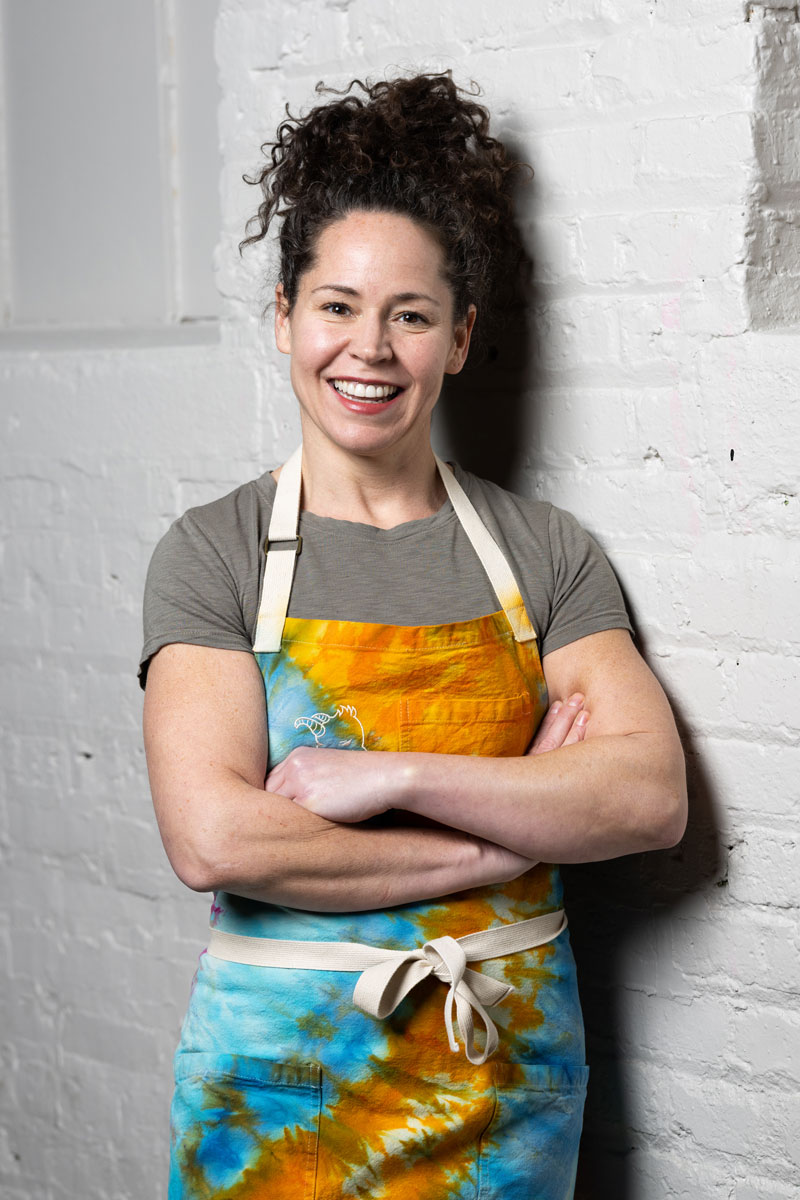
Stephanie IzardStephanie Izard (Photo courtesy of Galdones Photography)

Hello! For those unaware of your journey since winning "Top Chef," can you break it down for them? 

A lot has happened since "Top Chef!" I currently own six restaurants: Girl & the Goat, Little Goat Diner, Cabra and Duck Duck Goat in Chicago and Girl & the Goat and Cabra in LA. I’ve won a few awards, written a couple of cookbooks, been on some awesome TV shows, traveled to beautiful places — and have had a lot of fun doing it all! 

Do you have a number one favorite ingredient to work with? 

It’s hard to pick just one, but if I had to, it would be Red Boat Fish Sauce — I use it in lots of recipes and could practically drink it for breakfast. 

Is there a standout menu item for you across all of your restaurants? Or one that particularly resonates with customers? 

One dish that has really resonated over the years is the Roasted Pig Face at Girl & the Goat — it’s been on the menu since day-one and is still one of our most ordered dishes. 

What was the biggest lesson or takeaways you gleaned from competing in — and winning — "Top Chef"?

I still look at "Top Chef" as a huge jumping off point for me and for my career — I learned how to work under pressure and it tested my creativity and resilience and here I am, so many years later — still competing on TV shows and opening restaurants! 

What stands out for you as a formative moment that got you into cooking or food at large? 

Some people become a chef because they grew up with a mother who was not a great cook or one that was a fantastic cook that inspires. My mom was the latter.

Growing up, we would cook food from around the world. My mom, my sister and I would get together to plan a menu for the week with recipes from cookbooks, Gourmet magazine and my mom’s recipe cards. We would go to the grocery story, shop and cook all together. My mom made mandarin pancakes,, Yorkshire pudding and other fun dishes. 

As I got older, I didn’t really think about being a chef. It wasn’t something you thought about in the early 90’s. I attended college at the University of Michigan and I found it tough to get motivated about my future. My first job was at Olive Garden, first as a host and then a server. I loved it and especially all the unique personalities that worked there.

It was a conversation with my dad who suggested [that] after college, I attend culinary school. I did and went to Scottsdale Culinary. From the first day I walked in, I knew I was on the right path. I never missed a moment of class, the polar opposite of college where I had to drag myself to class.

What would you say are your three most used ingredients? 

  • Fish sauce!
  • Anything pickled, like fresnos or onions
  • Lot of herbs — my favorites are mint, cilantro and basil 

What is your favorite cooking memory? 

Definitely cooking with my mom. My mom and her friend Mrs. Cole would get together once a month or so and make mandarin pancakes. Then each family would have Mu Shu for dinner that night.

It’s just a fun family family shared dish because it is interactive . . . you spread a tiny bit of hoisin on your super thin and chewy pancake, then fill with a heap of the pork and veggie mixture. 

Jiaozi from Duck Duck GoatJiaozi from Duck Duck Goat (Photo courtesy of Boka Restaurant Group)

What’s your biggest tip for cutting down on food waste? 

One tip that I use a lot when cooking at home, is if a recipe calls for a small amount of produce you can check the grocery store’s salad bar for the item and buy exactly as much as you need. 

How do you practice sustainability in your cooking and in your restaurants? 

The biggest thing that we do in all of our restaurants is make sure we use every last bit of our ingredients, especially proteins. Leftovers are used for stocks and family meal. 

You’ve been on many shows since your "Top Chef" win. How do they compare? How do the competition (and anxiety) levels differ? 

It turns out the anxiety just gets worse as you get older, [laughs] but I still love to hang out with my chef friends and feel very fortunate to have these opportunities. 

Is there a particular dish from your "Top Chef" tenure that you are still especially proud of? I was such a fan of so many of your inventive, delicious-sounding dishes. One of your finale dishes was the inspiration for the dish I made for the graduation banquet in culinary school — so thanks for that! 

It’s hard to remember back that far!

One moment that really sticks out was when Anthony Bourdain was a judge and he loved a cheese plate/dessert that I made. It combined sweet and savory in a surprising way and it was always exciting to create something that he liked! 

Oysters from Girl and the GoatOysters from Girl and the Goat (Photo courtesy of Boka Restaurant Group)
I know you'll be cooking at the Shirley Chung fundraiser dinner next month, "Chefs for Shirley." How did that come about? Did Guy Fieri contact you? Hopefully you can all raise tons and tons of money for her and her family! 

Guy is great at always supporting everyone in our group of chef friends. He brought a few of us together to help organize the event and then utilized his team at the Guy Fieri Foundation to pull together a lot of the details. I’m excited to raise a lot of money for Shirley — she’s the best. 

What did the Top Chef “incubator” teach you? I spoke with Buddha just after his win last year and he referenced how it can be so great to singularly focus on cooking — not bills, not customers, not the daily minutiae of running or working in restaurants, etcetera. I always thought that was a great point. 

One of my favorite parts of being on Top Chef, and all competition cooking shows, is the lasting friendships and being surrounded by such talented chefs. Not only does it push me to do better, I’m constantly inspired by their creativity and ideas. 


Want more great food writing and recipes? Subscribe to Salon Food's newsletter, The Bite.


Tell me a bit about your seminar at the FOOD & WINE Classic in Charleston, "Outside the Brunch Box: Diner Favorites with a Twist"? How do you anticipate the event differing from the Food & Wine Classic in Aspen? 

This will be my first time visiting Charleston, I’m very excited. I’ve always wanted to go and experience the amazing culinary scene there.

The folks who come to Food & Wine events, like Aspen, are usually excited to hear from chefs at demos, not only for the story-telling aspect, but to get recipes and cooking tips. The brunch recipes that I’m focusing on this time around are really unique and have a number of components, so that the guests can recreate the entire recipe or take bits and pieces to use in other dishes. 

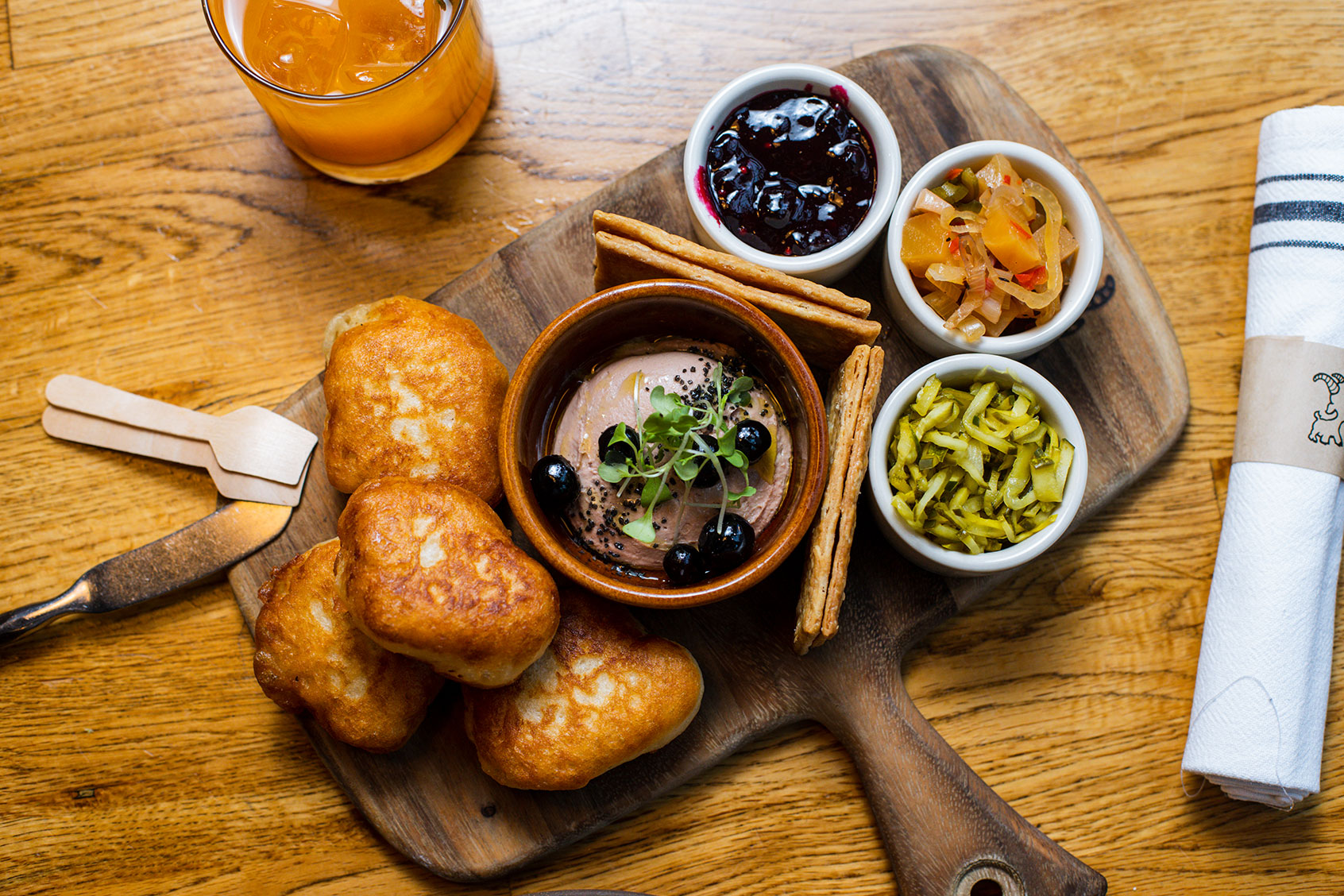
Goat Liver from Girl and The GoatGoat Liver from Girl and The Goat (Photo courtesy of Boka Restaurant Group)
You've been running Girl & the Goat for quite some time now. What do you attribute its success to? 

The Girl & the Goat team, as well as my other restaurant teams, are amazing! So many of the employees there today were part of the original opening team and have become family. Chicago has also been so supportive and continues to embrace us 14 years later. 

How do you differentiate between all of your restaurants and restaurant concepts? 

Each of the restaurants have completely different menus, concepts and themes, but like the “goat” in each of their name, there is a unifying thread: our team and our values. We try our hardest to make sure that each of the restaurants are fun and inclusive workplaces where our team wants to spend time. We definitely take our food seriously — but we don’t take ourselves too seriously. 

I love your cookbooks, by the way — any plans to release another? 

At some point, for sure! 

We need your help to stay independent

Can you talk a bit about "The Curious Chef"?

In "The Curious Chef," I get to spend time with chefs in all different forms – from home cooks to cooks with hidden gem street stalls, pop-ups and secret restaurants. I was so inspired by everyone I met on the show and got to eat some delicious food! 

If I ever get to Chicago, I've always wanted to try Duck Duck Goat. What inspired you to explore that concept? 

We used to host small, themed pop-up dinners at Little Goat Diner and one of the first ones we did was my take on Chinese food. I remember taking home leftovers that night and eating them on the couch, thinking, “Wow! This is so good.” When my partners and I decided to open Duck Duck Goat, I traveled to China and Taiwan and spent time learning about all of the different types of cuisine and dishes, as well as drew upon inspiration from the American Chinatown food I grew up eating and loving. 

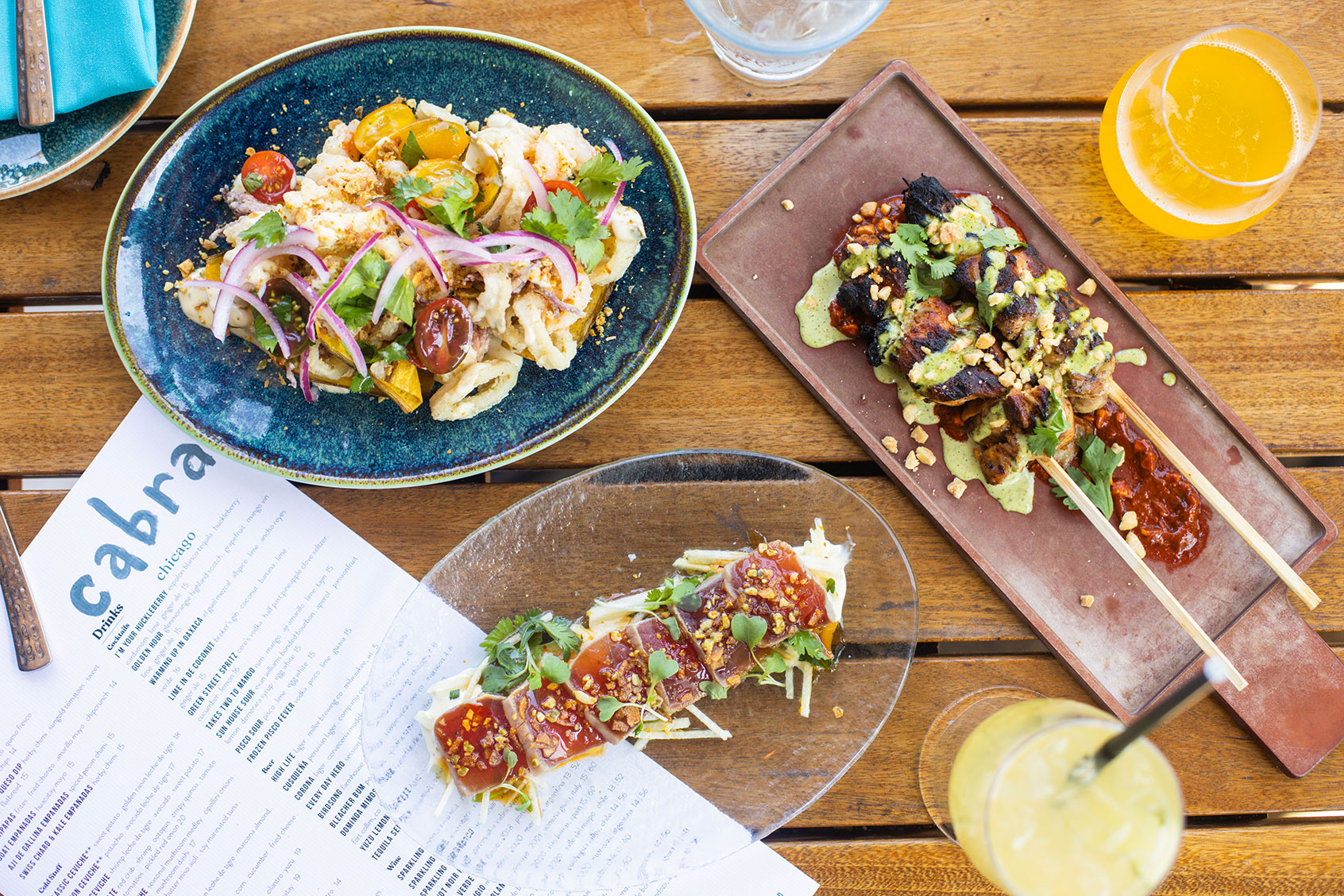
Dinner Spread from CabraDinner Spread from Cabra (Photo courtesy of Boka Restaurant Group)

Can you tell me a bit about Cabra? Its menu, ethos, aim? 

My partners at Boka Restaurant Group were about to open a rooftop restaurant and thought that bright, fun Peruvian food would be a perfect fit for it. I traveled around Peru and fell head over heels in love with the country and the cuisine. The Japanese, Chinese, Spanish and Italian flavors that are part of Peruvian food are so interesting, as well as the different dishes found throughout the country. It was a lot of fun to come back to Chicago and put my own spin on it — and to do it again in Los Angeles. 

With multiple television competition show wins, James Beard awards, a "Top Chef" trophy, the “Iron Chef” title  you've sort of conquered the world of food and food television. What’s next on your agenda?

Stay tuned for some fun restaurant announcements in the coming months!

Meta bans Russian propaganda outlets on Facebook over alleged 2024 election influence campaign

Meta, the parent company of Facebook, WhatsApp, and Instagram, announced that it is banning RT and other Russian government outlets from using its platforms, alleging that they have amplified Moscow’s propaganda using deceptive tactics, the Associated Press reported.

“After careful consideration, we expanded our ongoing enforcement against Russian state media outlets: Rossiya Segodnya, RT and other related entities are now banned from our apps globally for foreign interference activity,” Meta said in a statement.

Kremlin spokesman Dmitry Peskov criticized the decision, saying that “such selective actions against Russian media are unacceptable” and that “Meta with these actions are discrediting themselves.”

“We have an extremely negative attitude towards this. And this, of course, complicates the prospects for normalizing our relations with Meta,” Peskov told reporters during his daily conference call, the Associated Press reported.

RT, formally known as Russia Today, had 7.2 million followers on Facebook and 1 million followers on Instagram, before the ban. Its parent company, Rossiya Segodnya, is responsible for state news agency RIA Novosti and news branks like Sputnik, CNN reported.

This ban comes after the U.S. Justice Department charged two RT employees for funneling about $10 million into a U.S. company called Tenet Media to project content aligned with Russian interests — a covert influence campaign aimed specifically to sway the minds of American voters ahead of the 2024 presidential election, U.S officials told CNN.

“Depressed, disgusted and horrified”: These lifelong Republicans say they’re finally done with Trump

Robert Nix, a 62-year-old lawyer from Philadelphia, was a lifelong Republican before Donald Trump came to office. He’s voted red in every election since he turned 18, and things were no different in 2016 when he voted for the GOP candidate.

But Nix quickly felt he had made a mistake. He was bothered by Trump’s boisterous comments and attacks on freedom of the press. By the time the next election rolled around in 2020, Nix put aside his ideological differences with President Joe Biden and voted Democrat for the first time in his life.

“I wasn't happy about it, but I didn't see any choice,” Nix said in an interview with Salon. This year, he’s encouraging others to do the same.

Nix is one of hundreds of Republicans sharing their experience in the hopes it will resonate with center-right voters in swing states like Pennsylvania. He is part of Republican Voters Against Trump (RVAT), a $3.5 million ad campaign started by Defending Democracy Together, an advocacy organization for conservatives "dedicated to defending America’s democratic norms, values, and institutions." In 2020, the same group launched a similar project, dubbed Republican Accountability, to share testimonials from conservative voters on their decision not to vote for Trump and encourage others to vote blue.

This year's campaign has the same objective: to use personal stories to reach center-right voters in battleground states who are concerned about Trump but hesitant to vote Democratic for the first time.

“The campaign is a community of these voters who feel politically homeless, who need a new home, who want to reject Donald Trump, but don't necessarily identify as Democrats,” John Conway, RVAT's director of strategy, said in an interview with Salon. 

RVAT’s website has over 300 recorded testimonies from former-Trump voters who are voting Democrat this time around. Voters share the dangers of a second Trump term and encourage other conservatives to vote for Vice President Kamala Harris. Many of the testimonies, including Nix’s, are also on billboards and streaming service ads in Pennsylvania, Michigan and Wisconsin.

Kyle Sweetser, a 35-year-old construction worker and father of two from Mobile, Ala., voted for Trump in both 2016 and 2020. As a small business owner in the South, Sweetser liked that Trump was "business minded" and thought he would bring a fresh perspective to the Oval Office.

When Trump imposed tariffs on steel and aluminum in 2018, Sweetser directly felt the effects on his construction business and started to question Trump's economic policy. He still voted Republican in 2020, but did so reluctantly. After the Jan. 6 attack on the Capitol, however, Sweetser lost all faith in the former president.

Trump winning the Republican primary earlier this year "shook" Sweetser "to the core," he said. He decided he would vote Democrat for the first time in his life this fall.

Like Nix, Sweetser started speaking out against Trump, mostly criticizing his views on the economy and approach to foreign policy. With his children's futures in mind, he even spoke at the Democratic National Convention in August. 

"I really started to really look at Trump's record under a microscope and realize how wrong he was, you know, on foreign policy, on trade, on the economy," he said in an interview with Salon. "I've never really been somebody that goes online and talks about things, but I felt like it was the right thing to do."

We need your help to stay independent

While much of Sweetser's decision to vote Democrat is about policy, for Nix this year’s election transcends issues of the economy, foreign affairs or immigration. This election is about preventing a “narcissistic” authoritarian from entering office, he said.

“We can overcome bad policy. We can't overcome if one of our political parties becomes a movement that is no longer part of democracy, that takes us over the edge,” Nix said. “We can't come back from that.” 

Nix was one of 156,000 Republican voters who voted for Nikki Haley in Pennsylvania's Republican primary election in April, netting her over 16% in a presidential race that she had already dropped out of a month before. The former UN ambassador, who has since endorsed Trump, also received 20% of the primary vote in Maryland, 21.7% in Indiana and 17.9% in Nebraska. 

The support for Haley, despite her no longer being a candidate, suggests there are many Republicans out there with qualms about the direction of their party, Nix said.

"Those people that voted for Haley after she dropped out as purely a protest vote against Trump, those are the ones that have to be reached as carefully as possible," Nix said.

Harris is trying to do just that, making a deliberate effort to reach moderate Republicans, particularly Haley supporters. In August, her team launched, "Republicans for Harris," a campaign that aims to create a "permission structure" for GOP voters to vote Democrat. The campaign has hosted events in Arizona, North Carolina, and Pennsylvania, with a focus on "Republican-to-Republican voter contact."

Household Republicans are supporting the movement too. Former Rep. Liz Cheney, R-Wyo., the daughter of former Vice President Dick Cheney, has said she will vote for Harris in November because of the "danger Donald Trump poses."

“It is crucially important for people to recognize — not only is what I’ve just said about the danger that Trump poses something that should prevent people from voting for him, but I don’t believe we have the luxury of writing in candidates’ names, particularly in swing states,” Cheney said at a Duke University event. Her father followed suit.

In August, more than 230 former GOP staffers who worked for George Bush presidents, as well as the late Sen. John McCain released a letter endorsing Democratic candidate Kamala Harris. McCain's son Jimmy recently announced he too is voting for Harris. 

The GOP alumni stated their support for Harris and her running mate, Minnesota Gov. Tim Walz, despite “ideological differences” because voting for Trump would be “untenable.” 

“At home, another four years of Donald Trump’s chaotic leadership, this time focused on advancing the dangerous goals of Project 2025, will hurt real, everyday people and weaken our sacred institutions,” the letter reads. 


Want a daily wrap-up of all the news and commentary Salon has to offer? Subscribe to our morning newsletter, Crash Course.


But despite the high-profile endorsements, recent polling shows that Trump still is perceived as more moderate than he is in reality. According to the latest New York Times/Siena College poll, just 32% of voters said Trump was too conservative, whereas 47% of voters said Harris was too liberal. 

Five percent of registered GOP voters said they would vote for Harris if the election were held today, according to the same poll.

Convincing lifelong Republicans to jump ship isn’t easy. Conway said “tribal instinct is strong” among Republican voters and it may be hard for some to stray from the pack. Indeed, since Nix began sharing his experience and campaigning against Trump, he’s felt incredibly isolated within the Republican movement. He’s been cut off by friends, removed from email lists, and excluded from right-wing circles, he said.

“Each day I wake up and think, 'I can't possibly be more depressed, disgusted and horrified,' and each day I’m surprised to find I am,” he said.

Sweetser too has had isolating and even dangerous experiences. His home address was released online and seen by over 100,000 people. His wife received via text message from an anonymous number.

"It is what it is, you know? The more threats, the more I feel that it's important to continue to speak out," Sweetser said.

It’s a common experience, Conway said. Their target voters are in Republican families and Republican communities where they may be the only person deeply concerned about Trump. Hearing stories like Nix’s can show someone they’re not alone,

“That's what makes these testimonials so powerful: establishing permission structures for other voters to reject Donald Trump's extremism,” Conway said.

Judge denies Mark Meadows’ bid to move “fake electors” case to federal court

A federal judge on Monday rejected Donald Trump’s former Chief of Staff Mark Meadows' attempt to move his 2020 Arizona election fraud case to federal court. Meadows had argued that his actions in Arizona were within his “official duties” as Trump's aide.

The former White House Chief of Staff was indicted earlier this year along with 17 other Trump allies for their efforts to overturn the results of the 2020 election in several states where President Joe Biden won the popular vote. In Arizona, judges alleged Meadows worked with Trump campaign members to submit names of fake electors in attempt to certify a false win for Trump.

U.S. District Judge John Tuchi ruled that Meadow’s charges, which include conspiracy and forgery, were completely “unrelated” to his official duties as chief of staff, making his argument for the case to be moved irrelevant. He also noted that Meadows’ “untimely” request was past the deadline to move a case to federal court.

“Although the Court credits Mr. Meadows’s theory that the Chief of Staff is responsible for acting as the President’s gatekeeper, that conclusion does not create a causal nexus between Mr. Meadows’s official authority and the charged conduct,” Tuchi wrote in the 15-page ruling.

“Mr. Meadows has not so much removed the State’s indictment as rewritten it,” he added.

In August 2023, Meadows was indicted on similar charges for his election subversion efforts in Georgia, where President Joe Biden won by 12,670 votes. 

Meadows also tried to move that case, but a judge denied his request in September 2023.

In blow to Trump campaign, judge rules that RFK Jr. must remain on the ballot in Wisconsin

Robert F. Kennedy’s Jr.'s request to remove his name from the ballot in Wisconsin was denied by a judge who ruled Monday that state law mandates that candidates remain on the ballot as long as they are still alive, the Associated Press reported.

Dane County Circuit Judge Stephan Ehlke maintained that because Kennedy’s campaign submitted nomination papers before the state’s Aug. 6 deadline, the previously independent candidate is now stuck in the race. Kennedy, who last month endorsed Donald Trump after withdrawing from the race, has sought to remove his name from ballots in battleground states so as to not pull votes from the former president.

“The statute is plain on its face,” Ehlke said, adding “Mr. Kennedy has no one to blame but himself if he didn’t want to be on the ballot,” NBC Chicago reported.

This was not the plan. Kennedy suspended his campaign in August to endorse Trump, reassuring his supporters that while he’d remove his name from key swing states, he’d leave it in major states where the race's outcome is unlikely to change with the votes he garners. 

However, it appears that Kennedy is running out of time to erase his name from the Wisconsin ballot  — county clerks will print ballots and distribute them to over 1,800 local officials who run elections by this Wednesday.

Unbalanced is the new black

Here’s a question: Why hasn’t there been more shock about the second (apparent) attempt on the life of Donald Trump in as many months?  I mean, the biggest headline in my newsfeed this morning was Ohio Sen. JD Vance’s claim that he and his running mate “created” the “cat memes” about Springfield, Ohio, seemingly bragging about bringing the national spotlight to the small town. Further down in the list was a story about the clearly unbalanced creep who was arrested in Florida for allegedly attempting to kill Trump. The guy, a 58-year-old fantasist who tried to volunteer to fight for Ukraine against Russia, and was turned down, was charged Monday with two violations of federal weapons laws – possession of a weapon as a felon, and possession of a weapon with its serial number filed off — but not, notably, for attempting to assassinate the former president.

Get that? They had a suspect who was arrested after a Secret Service agent saw the barrel of his gun sticking out of the bushes several hundred yards away from Trump, who was golfing, and they had to dust off two federal laws to get something to charge him with. What’s his name? Does it even matter? Do you remember the name of the Butler, Pennsylvania guy who actually got off a shot at Trump that grazed his ear (or did something to make it bleed anyway)?

This sums up where we stand as a nation. When you can’t even remember the names of people who tried to assassinate a former president of the United States, something is unbalanced other than the two weirdos with the guns. 

When you can’t even remember the names of people who tried to assassinate a former president of the United States, something is unbalanced other than the two weirdos with the guns. 

Their names, just for the record, are Thomas Matthew Crooks, 20, the one who actually drew blood from Trump and killed one person attending his rally, and Ryan W. Routh, 58, who “did not have Mr. Trump in his sightline and did not fire his semiautomatic rifle,” according to a statement by the acting director of the Secret Service.

Nobody has been able to make any sense of either of these two-bit wonders. Crooks was a registered Republican who reportedly posted anti-Semitic and anti-immigrant rants on social media. Routh is said to have voted for Trump in 2016 but voted in the Democratic primary election this year. Routh flew to Ukraine in 2022 and attempted to volunteer. When he was turned down, he began an imaginary campaign to supply Ukraine with former Afghan fighters.  A spokesman for Ukraine’s Foreigners Coordination Department of the Land Forces Command told CNN that Routh’s “messages and ideas” were “delusional.” Suffice to say that neither the FBI nor anyone else has been able to nail down a motive for either Crooks or Routh.

So, naturally, Trump and his minions have settled on blaming it all on the Democrats saying that their “nasty campaign language” about Trump being a threat to democracy…because, you know, both of the apparent assassins paid so much attention to the nature of the political language in this election. Not.

We clearly have a problem in this country when it comes to presidential elections, and the problem has a name, Donald Trump. It wasn’t Hillary Clinton in 2015 who descended a golden escalator and gave a speech about Mexico sending rapists and drugs and criminals into the country.  Trump’s rhetoric, from the very beginning of his campaign, was so extreme that reporters couldn’t really get a grip on how to react to it.  Later in the campaign Trump called for violence against protesters at his rallies and told audiences that if they “beat the hell out of” people, he would pay their legal costs. It took months and months for the New York Times to use the word “lie” in a story about something Trump said. 

The fact is that the media in this country wasn’t prepared for Donald Trump or the kind of things he says or the kind of person he is. The “Access Hollywood” tape – remember “locker room talk”? – didn’t even dent his campaign in 2016 when it came out because it was already known that Trump had been accused by twenty or more women of sexual harassment and assault.  The mistake Trump made in paying off Stormy Daniels in 2016 was his assumption that it would have mattered if it came out that he had had an extramarital affair with an adult film star. In the end, it only mattered to Trump, as the payoffs to keep Daniels silent ended up being part of the New York charges of fraud that got him convicted on 34 counts.


Want a daily wrap-up of all the news and commentary Salon has to offer? Subscribe to our morning newsletter, Crash Course.


Now here we are in 2024, and what are Donald Trump and JD Vance running on?  Stories that even Vance admits were made up about Haitian immigrants eating the pets of their neighbors in the small Ohio town of Springfield.  Trump is so desperate for an issue he can use to stop the ascent of Kamala Harris in the polls that his campaign recently announced plans to hold a rally in Springfield, where presumably the balloon of fake stories about Haitian immigrants will get blown up with even more Trump lies.

Donald Trump has been on a three-year-long campaign to subsume violence into American political life by trying to turn the incredible, violent insurrection of Jan. 6, 2021, during which more than 140 police officers were injured and multiple people lost their lives, into an exercise in some kind of twisted right-wing patriotism.  According to Trump’s rhetoric, which has found its echo throughout the Republican Party, those convicted of offenses on Jan. 6, including charges of violence against police officers and damaging the Capitol building, are “hostages” held against their will by a corrupt and illegitimate government.

This kind of rhetoric and these kinds of lies have broken the political life in this country so profoundly that it is unrecognizable to anyone who was alive to see the campaigns of John F. Kennedy, both the Bushes, Bill Clinton, Mitt Romney, and Barack Obama.  Beginning in 2015, violent rhetoric and actual violence entered our politics in the words and actions of one man, Donald Trump.

Down became up and up became down and unbalanced became the new black. 

Nearly 200 people were killed last year protecting the environment

Jonila Castro is an activist working with AKAP Ka Manila Bay, a group helping displaced communities along Manilla’s rapidly-developing harbor maintain their livelihoods and homes. In recent years, projects like the $15-billion New Manila International Airport have been accused of destroying mudflats and fish ponds, and have already displaced hundreds of families and fishermen who rely on the waters of Manila Bay to make a living. Castro’s work has been focused on supporting these communities and dealing with the environmental impacts of development. 

But on a rainy night in September, Castro and a friend, while ending their day advocating for the rights of fishing communities, were allegedly abducted by the Philippine military for their work. 

“They covered our mouths and brought us to a secret detention facility,” she said. The military interrogators asked them questions about their work in environmental justice, and accused them of being communists. “It’s actually the situation of many activists and environmental defenders here in the Philippines.”

Castro and her friend were eventually released two weeks later, but in December of 2023, the Philippine Department of Justice filed charges against them both for “embarrassing” and casting the Philippine military in a “bad light.” The military has denied Castro’s accusations. 

A new study from Global Witness, an international organization that focuses on human rights and documenting infractions, finds that tactics like what Castro experienced are happening to land defenders across the planet, often with deadly results. In 2023, almost 200 environmental activists were killed for “exercising their right to protect their lands and environment from harm.” These killings are often carried out alongside acts of intimidation, smear campaigns, and criminalization by governments and often in concert with companies. The report says violence often accompanies land acquisition strategies linked to the developmental interests of agricultural, fossil fuel, and green energy companies.

“Governments around the world, not only in the Philippines, have the obligation to protect any of their citizens,” said Laura Furones, lead author of the report. “Some governments are failing spectacularly at doing that, and even becoming complicit with some of those attacks or providing an operating environment for companies.”

Indigenous peoples are the most vulnerable to these tactics. Last year, around half of those killed for their environmental activism were Indigenous or Afrodescendents. Between 2012 and 2023, almost 800 Indigenous people have been killed protecting their lands or resources, representing more than a third of all environmental defenders killed around the world in that same time frame. 

Colombia has the highest death toll of environmental land defenders, and the number has gone up in 2023. There are 79 documented cases representing the highest annual total that Global Witness has accounted for since 2012. Of those cases, 31 people were Indigenous. Other Latin American countries like Brazil, Honduras, and Mexico have consistently had the most documented cases of murders of environmental defenders.

Furones said with the rise of green energy projects, mining will continue to grow, and with it, the potential for violence against land defenders. Mining operations have resulted in the most loss of life according to Global Witness, and while most of these deaths occurred in Latin American countries last year, between 2012 and 2023, many occurred in Asia. Around 40 percent of killings related to mining have happened in Asia since 2012 and the report indicates there are many mineral resources in Asia that are important for green energy technologies.  

“The region has significant natural reserves of key critical minerals vital for clean energy technologies, including nickel, tin, rare-earth elements, and bauxite,” the report said. “This might be good news for the energy transition, but without drastic changes to mining practices it could also increase pressure on defenders.”

This year, the United Nations Permanent Forum on Indigenous Issues also looked into the rise of criminalization that land defenders face, while reporting from the forum showed that there has been very little done to protect Indigenous peoples’ rights over the last decade. A recent report from Climate Rights International, also on the criminalization of climate activism with a focus on Western democracies, like Germany, France, the United Kingdom, and the United States, found that governments are violating basic tenets of freedom of expression and assembly in order to crack down on climate activists. In the United Kingdom, for example, five people associated with the group Just Stop Oil were given four- and five-year prison sentences for “conspiring to cause a public nuisance” by blocking a major roadway in London in order to bring attention to the abundant use of fossil fuels. They are the longest sentences ever given for non-violent protests in Britain. Taken together, the reports highlight how criminalization has become a strategy to discredit climate activists. 

In the Philippines, Jonila Castro said she would continue to protect the people and places of Manila, but she does not go anywhere alone and said she feels like she’s always looking over her shoulder. She is currently facing six months of prison for her activities.

“I think the government is thinking that we will be silenced because we’re facing charges,” she said. “But I can’t think of a reason not to continue, and that’s the same with many of the environmental defenders and activists here.”

This article originally appeared in Grist at https://grist.org/global-indigenous-affairs-desk/nearly-200-people-were-killed-last-year-protecting-the-environment/.

Grist is a nonprofit, independent media organization dedicated to telling stories of climate solutions and a just future. Learn more at Grist.org


JD Vance’s one job is to clean up after Donald Trump — but he keeps making a bigger mess

In case it hasn't been mentioned in the past 15 seconds, a reminder: Sen. JD Vance went to Yale Law School. The Ohio Republican was selected as Donald Trump's running mate in no small part because of his overrated intellectual chops. In the 207-word announcement adding Vance to the ticket, Trump used the word "Yale" four times and even made sure to note that Vance graduated "Summa Cum Laude" from Ohio State University. Vance fashions himself a public intellectual, spending endless hours giving chin-scratching interviews on right-wing podcasts and to Ross Douthat of the New York Times. He name-drops far-right and even Nazi academics like Carl Schmitt and flings around plenty of five-dollar words. As Mike Allen and Jim VandeHei bluntly stated at Axios, "Vance can put an intellectual wrapper around Trump's red meat."

The more voters see Harris, the more they like her. The opposite is true for Vance, but he just keeps talking, assured in his view that Americans will soon fall in love with having a smug bully tell obvious lies to their faces. 

Watching interviews with Vance suggests his main job is to "translate" Trump's babble into coherent-sounding talking points. Vance lies just as much as Trump, but with a syntax that resembles normal human speech. On NBC News Sunday, Vance was asked about Trump's bizarre assertion he had "concepts of a plan" when he was asked during Tuesday's debate about healthcare. Vance claimed Trump didn't end the Affordable Care Act because his philosophy is "to fix problems even if he disagreed with the original legislation." This is false. Trump tried to kill the ACA in 2017 and failed only because a few Republican senators voted to keep it. Still, by using normal spoken English, Vance was able to set off fewer alarm bells. 

The term "sanewashing" was coined to describe the bad habit of journalists who rewrite Trump's rambling nonsense into sentences that make sense, but for Vance, it's a full-time job. When Trump insisted that Vice President Kamala Harris "happened to turn Black," Vance went on clean-up duty, saying it "was an attack on Kamala Harris being a chameleon." It was a lie — Harris has always identified as Black — but it was coherent. When Trump mocked Congressional Medal of Honor recipients because they're "either in very bad shape because they’ve been hit so many times by bullets—or they’re dead," Vance insisted he only saw "a guy who loves our veterans and who honors our veterans." When asked about Ukraine during the debate, Trump blathered, "I have a good relationship. And they respect your president. OK? They respect me," while refusing to say he wanted Ukraine to win. Vance zipped in afterward with a completely made-up plan about a "demilitarized zone" and a "guarantee of neutrality." It's all nonsense, but it was shaped like an argument and used big words, clearly meant to fool people who aren't paying close attention. 


Want more Amanda Marcotte on politics? Subscribe to her newsletter Standing Room Only.


Sometimes Vance is too eager to spin Trump's deranged rhetoric. After Trump contradicted himself multiple times on abortion, sometimes on the same day, Vance pretended this meant that Trump would veto an abortion ban. Vance had to backtrack, however, because the Trump campaign wants the anti-choice activists to believe — correctly, in this case — that he will sign an abortion ban. 

But despite Vance's mastery of noun-verb agreement, he's not doing great at making Trump seem less weird. That's because Vance is quite weird himself, especially about cats, a previously unremarkable popular species of pet. First, there were all the clips of him ranting about "childless cat ladies," which Rep. Alexandria Ocasio-Cortez, D-N.Y., memorably called the "incel platform." Now he's pivoted to lying, repeatedly, about Haitian immigrants in his state of Ohio, falsely accusing them of eating cats. Vance even admitted it's a lie on national television, telling CNN's Dana Bash, "If I have to create stories so that the American media actually pays attention to the suffering of the American people, then that's what I'm going to do."

It seems this was a slip-up because Vance then tried to spin his own gaffe the way he spins Trump's various nutty comments, arguing with Bash about what the word "create" means. The damage was done, however, because Vance blurting out the truth on accident fits with what Americans have seen of his personality in the past few months. Underneath his ever-present smirk, Vance seems to be bristling with barely contained rage, especially at anyone who would question the Trump campaign's use of tactics like overt lying and spreading unapologetically racist conspiracy theories. 

But even while letting a bit of truth leak out, Vance continued to tell an overt lie: that he's interested in "the suffering of the American people." As the Republican governor of Ohio, Mike DeWine, was forced to point out, "Springfield has really made a great resurgence" because of the Haitian immigrants, who are there legally. The city has been trying to restore itself as a manufacturing center and has only made progress because immigrants have made up for a severe labor shortage. The suffering in Springfield is due to what Trump and Vance have done by spreading this lie. Schools have been forced to close and public buildings are being evacuated because of a flood of death and bomb threats. So the Republican governor has been begging his party's nominees to stop, but because they lack even a modicum of decency, they have kept pushing the weird hoax. 

Despite failing repeatedly, Vance still acts as if he's a master at turning Trump's bizarre behavior into something that passes for normal. Trump has been traveling with Laura Loomer, a white nationalist "influencer" who specializes in bottom-feeder vitriol. Loomer posted on Twitter that "the White House will smell like curry & White House speeches will be facilitated via a call center," if Harris, who is Indian-American, wins. When asked about it, Vance pretended to believe Loomer was merely expressing personal food preferences, saying, "I don’t think that it’s insulting for anybody to talk about their dietary preferences." When NBC's Kristen Welker reminded Vance that his wife, Usha, is also Indian-American, he kept up the ruse by saying, "whether you’re eating curry at your dinner table or fried chicken, things have gotten more expensive." He seems to think this sounds clever, but he just sounds dim. Even the dumbest person gets that Loomer's point is people of Asian heritage are not "real" Americans.

Vance's antics continue to backfire on him. In mid-July, when Trump first picked the freshman senator, only 29% of Americans said they had an "unfavorable" view of Vance. His unfavorability rating now stands at 45%, a full 16-point jump. In the same amount of time, Harris' "unfavorable" rating fell from 53% to 47%, a healthy six-point shift in the right direction. The takeaway is that the more voters see Harris, the more they like her. The opposite is true for Vance, but he just keeps talking, assured in his view that Americans will soon fall in love with having a smug bully tell obvious lies to their faces. 

John Roberts’ MAGA conversion: How Donald Trump remade the Supreme Court in his image

Since he was appointed Supreme Court chief justice by George W. Bush in 2005, John Roberts has been something of an enigma. He initially tried to cultivate a reputation as a fair-minded institutionalist, occasionally surprising observers in controversial cases, as he did when he cast the deciding vote upholding the constitutionality of the Affordable Care Act.

But don’t be fooled. Roberts is no moderate. He's a right-wing idealogue whose leadership has done great damage to the Supreme Court, the Constitution, and the country and lately become an enabler of former President Donald Trump.

As to his legal philosophy, a review of his record by the left-leaning nonprofit Take Back the Court Action Fund suggests that “Roberts has been one of the most conservative justices since joining the Supreme Court in 2005.” There “is almost no partisan difference distinguishing Justices Roberts, Gorsuch, Alito, Roberts, and Scalia.”

A New York Times report now brings more evidence that, like so many others, Roberts, once willing to stand up to former President Trump, has made peace with him and joined the coterie of people who condone Trump’s behavior and give him cover. The Times article highlighted the crucial, behind-the-scenes role that Roberts played in ensuring that the Court would protect Donald Trump in three January 6 related cases decided last term. His Machiavellian manipulations culminated in July when the court gave Trump a shocking victory by granting the president broad immunity from criminal prosecution.

Roberts has come a long way since his testimony during his confirmation hearings before the Senate Judiciary Committee. Then, he took pains to assure his listeners that judges “are not politicians.” He insisted that he had “no agenda.” He would “decide every case based on the record, according to the rule of law, without fear or favor, to the best of my ability, and I will remember that it’s my job to call balls and strikes, and not to pitch or bat.” He promised to “be vigilant to protect the independence and integrity of the Supreme Court, and I will work to ensure that it upholds the rule of law.”

The Times points out just how far Roberts has departed from those commitments in regard to President Trump. As the Times put it, “In a momentous trio of Jan. 6-related cases last term, the court found itself more entangled in presidential politics than at any time since the 2000 election…. The chief justice responded by deploying his authority to steer rulings that benefited Mr. Trump.”

Last February, as the court got ready to hear arguments about whether Trump should be disqualified from being on the ballot because of his activities as an insurrectionist following the 2020 presidential election, Roberts got right to work. The Times reports, "While all nine justices agreed that Mr. Trump should remain on state ballots, four of the conservatives were pushing to go beyond that and rule that the Constitution’s prohibition would require congressional action to take effect…. That left the chief justice in control of the outcome…. Ultimately, he sided with the four conservatives in an opinion that he wrote, but that was issued unsigned.“

In Fischer v. United States, another case arising out of the January 6 events, the court found that prosecutors had overreached in the charges they brought against some of the rioters. Here too, Roberts played a critical behind-the-scenes role.

We need your help to stay independent

The Times notes that he had originally assigned the opinion to be written by Justice Samuel Alito. But, after the revelation that Alito had flown an American flag upside down to symbolize solidarity with those who had stormed the capital, Robert again sprang into action. He benched Alito and wrote the opinion favoring the insurrectionists himself.

Completing last term’s pro-Trump hat trick, Chief Justice Roberts led the way in coming up with a decision granting the president the kind of immunity from criminal prosecution available to no other citizen in the United States. As the Times explains, long before the court heard the oral argument in the immunity case, the Chief Justice sent his colleagues a confidential memo offering a “scathing critique” of the Court of Appeals' decision finding that the president had no immunity from prosecution

That memo offered “a startling preview of how the high court would later rule.” Slate’s Mark Joseph Stern got it right when he observed that the immunity decision that Roberts wrote “fundamentally altered American democracy…., awarding the president a sweeping and novel immunity when he weaponizes the power of his office for corrupt, violent, or treasonous purposes.” 

“This near-insurmountable shield against prosecution for crimes committed while in office,” Stern explained, “upends the structure of the federal government, elevating the presidency to a king-like status high above the other branches.”

And thanks to Roberts, Trump has been able to delay his trial on charges arising from his role in the January 6th insurrection. And should Trump return to the Oval Office, there would be little to stop him “from assuming” what Stern labels “dangerous and monarchical powers.” 


Want a daily wrap-up of all the news and commentary Salon has to offer? Subscribe to our morning newsletter, Crash Course.


When Trump was in office, Roberts occasionally stood up to the administration as he did in the case saying the administration could not reinstate a question about citizenship in the 2020 census. But, in what was arguably the most significant case (Trump v. Hawaii) about the power of the presidency decided during Trump's term, Roberts again led the way in defending Trump. He upheld his decision to limit entry into the United States by citizens of many predominantly Muslim nations. In doing so, Roberts ignored a series of statements that Trump made during the 2016 presidential campaign advocating a “total and complete shutdown of Muslims entering the United States.” He called them “extrinsic statements—many of which were made before the President took the oath of office.” 

He delivered for Trump, recognizing the president’s “broad discretion to suspend the entry of aliens into the United States.”

While we did not know it then, Roberts’ willingness to ignore Trump’s worst behavior to advance an expansive conception of presidential power foreshadowed what he would do in the presidential immunity case. In that case, as Stern puts it, his opinion went out of its way to “gloss… over much of Trump’s most egregious misconduct.” 

And the Chief Justice’s accommodation of the former president has come at a high cost to the Court. Roberts presided over a court that has lost the confidence of the American people. In 2005, 56% of the people approved of how the Supreme Court handled its job. This year, that number has fallen to a historic low, with only 41% registering approval of the court.

The New York Times expose of Roberts’s key role in last term’s dismantling of the Constitution to protect Donald Trump is the latest evidence of how far the Chief Justice has come in becoming a MAGA judge. It shows his often unseen but crucial role in leading what commentators rightly have labeled an “extreme, right-wing majority, which is rapidly turning the court into little more than a partisan extension of the Republican Party.

Key Republicans’ shrinking leads could give Democrats new path to Senate majority

While most analyses have identified Montana as the most likely tipping point state for control of the Senate in 2024, there are races in Texas, Florida and potentially Nebraska that appear about as competitive as Montana and could give Democrats a path to the majority.

With Democrats defending Senate seats in swing states including Pennsylvania, Michigan, Wisconsin, Arizona and Nevada, Democratic Sen. John Tester’s race to keep his seat in Montana appears to be the most likely pickup for Republicans’ Senate effort this year.

First elected in 2006, Tester defended his seat in the 2012 and 2018 elections despite the state consistently supporting Republicans up and down the ballot. Now, however, he’s trailing Republican opponent Tim Sheehy in most polls. The importance of this race is reflected in the ad spending in the state with Axios reporting that Democrats are spending upwards of $150 per voter on ads in Montana with Republicans spending nearly $130 per voter in the state.

There are, however, a few races that look similarly close to the Montana race in the polls.

In Texas, Democratic Rep. Colin Allred trails Republican Sen. Ted Cruz by just four points, 43% to 47%, according to a recent Texas Public Opinion Research survey. Other recent surveys have found similar results, with a Morning Consult poll finding Cruz ahead by five points and an Emerson College and The Hill survey finding Cruz leading by four points.

Allred is pitching himself as a centrist Democrat and his messaging has been focused on protecting Social Security benefits, support for the bipartisan border bill, and abortion. The former Tennessee Titan’s campaign is also the first statewide Democratic campaign in recent years to launch a coordinated campaign with the state Democratic Party, meaning the state party, the Allred campaign and down-ballot candidates are pooling information and resources to coordinate voter outreach. The campaign has also outraised Cruz’s campaign every quarter thus far and has had ads on the air since mid-May.

While there have been signs that the race has been tightening, the research director at the Texas Politics Project at the University of Texas at Austin, Joshua Blank, cautions that “for Democrats to be competitive it requires significant turnout from their voters it also requires groups that aren’t as attached to the Republican Party to break their way.”

“That’s ultimately what happened in 2018 but it’s not clear that that’s what’s going to happen in 2024,” Blank said. “The other story here is that there’s been so much variance in Texas election results in the past decade and it’s not clear what sort of election it’s going to be.”

In Blank’s assessment, it would take something “shocking,” like a mass shooting, a death resulting from the state’s outright abortion ban or another mass power outage to make the race closer to a toss-up.

We need your help to stay independent

Florida is the other state where a Democratic challenger, Rep. Debbie Mucarsel-Powell, is hoping to unseat a Republican incumbent, Sen. Rick Scott.

In the race, Emerson College and The Hill polling found Murcarsel-Powell trailing Scott by just one point earlier this month. Other surveys have found a larger margin for Scott, with a Redfield and Wilton Strategies survey sponsored by The Telegraph finding a three-point lead and a Morning Consult survey finding Scott leading by five points.

The Mucarsel-Powell campaign has focused on Scott’s unpopularity in the state, with a recent poll by USA Today, Suffolk University and WSVN-TV finding him at just 35% approval in Florida, including just 59% approval among Republicans and 28% approval among independents.

Scott’s unpopularity, combined with an abortion ballot measure and the fact that Mucarsel-Powell overperformed President Joe Biden in her district by three points, could make for a competitive Senate race in the state. The Mucarsel-Powell campaign only began placing significant ad buys in recent weeks, and they see their current position as their floor of support, which they are hoping to build from. Scott’s bid to lay out a GOP legislative agenda in the Senate, which included a provision that would’ve sunset programs like Social Security and Medicare, has also made him a soft target for attack ads, even though he’s walked back some of his ideas. 


Want a daily wrap-up of all the news and commentary Salon has to offer? Subscribe to our morning newsletter, Crash Course.


The director of the University of North Florida Public Opinion Research Lab, Micahel Binder, is still skeptical of Democrats’ statewide chances in Florida.

“Do I think that race is closer than Trump and Harris in Florida, I do,” Binder said. “Do I think it is going to be a one-point race, I think it’ll be closer to four or five points.”

Binder suggested that, with Vice President Kamala Harris at the top of the ticket, Florida Democrats no longer have to worry about depressed turnout down-ballot but that they probably still need a boost to make the race a true toss-up. In his assessment, independents likely won’t be enough to overcome the Republicans’ registration advantage.

In Binder’s mind, a mistake from Scott — like coming out with a new plan to sunset Medicare — or Mucarsel-Powell overwhelmingly associating herself with the state’s abortion ballot measure could bring the race to a draw. Binder also noted that the Florida Democratic Party is still in the process of rebuilding its internal structure after getting rolled by Republicans in 2022 and that the benefits of new party leadership might not manifest themselves this year.

The true wildcard of this year’s Senate elections is Nebraska, where there is both a regular and special election for Senate underway. In the regular election, independent candidate Dan Osborn is aiming to unseat Republican Sen. Deb Fischer and recent polling has suggested that he could win. A recent Split Ticket and Survey USA poll found him polling at 38% and Fischer polling at 39% and the Osborn campaign’s internal polling has found similar results in the past.

On the campaign trail, Osborn has pitched himself as a Washington D.C. outsider in an effort to contrast himself with Fischer, who initially ran for Senate in 2012 on her support for congressional term limits and a promise to limit herself to two terms in the Senate. Osborn also polls better than Democrats in the rural parts of Nebraska, which could help push him over the edge in November.

While Osborn is running as an independent, his campaign has signaled that he would vote to codify the abortion rights protections afforded by Roe v. Wade, would vote with Democrats on the bipartisan border bill they proposed earlier this year, and that he would be interested in voting for a bill like the PRO Act. While Osborn likely wouldn’t vote with Democrats on every issue, he would keep Republicans from controlling the chamber and has signaled that he may be willing to work around the filibuster on certain issues.

Stress from parenting is finally recognized as a crisis. Maybe it’s time to stop blaming parents

The U.S. Surgeon General recently released a report titled Parents Under Pressure: The U.S. Surgeon General's Advisory on the Mental Health & Well-Being of Parents. Initially, I felt a wave of relief — finally, an official acknowledgment of the immense stress parents face daily. But as I reflected further, a familiar frustration surfaced. We, as parents, have known this for years. Now, one of the very systems responsible for exacerbating this stress has formally recognized it. But what comes next?

For years, parents have battled a lack of support from both federal and state governments. We live in a country without universal childcare or guaranteed paid family leave, where mental health care remains expensive and inadequately covered. The reality of postpartum depression is often dismissed despite its prevalence, while affordable, accessible care is still not readily available for many women. On top of that, we live in constant fear for our children's safety — fears made real by the lack of meaningful gun control laws.

Reflecting on this, the weight of these systemic shortcomings is undeniable. In countries like Sweden and Denmark, where parents are supported with generous parental leave and accessible childcare, parents face far fewer stressors. By contrast, here in the U.S., where, according to the American Psychological Association, 41 percent of parents are too overwhelmed daily to function, we are told to simply "figure it out." Many parents are working full-time jobs, battling financial insecurity, and trying to be present for their children, all while lacking the fundamental support they need.

We live in a culture that has idealized parenthood while simultaneously shaming parents for every problem their child encounters.

While I appreciate the surgeon general acknowledging some of these issues, as well as the societal pressures that worsen parental stress — such as workplaces hostile to parenthood, especially motherhood, and a culture where it's still taboo to discuss stress — it does little to ease the daily struggles we face right now. Society continues to add to these burdens, leaving parents to carry the weight. Schools pile on homework, extracurricular activities consume evenings, and social media bombards us with comparisons to seemingly perfect families. We're constantly told that if we just work harder or follow the right advice, our children will thrive. But when they don't, who gets the blame? Always the parents.

We live in a culture that has idealized parenthood while simultaneously shaming parents for every problem their child encounters. Parents are criticized from every direction — schools, doctors, parenting books, and social media. I recently saw a psychologist's post suggesting parents who want their kids to excel academically, play sports, or be happy are merely living vicariously through them to compensate for their unfulfilled dreams.


Want more health and science stories in your inbox? Subscribe to Salon's weekly newsletter Lab Notes.


Sure, there are parents like that, but most of us are simply trying to give our children the best chance and the tools to navigate an increasingly chaotic world. We are slapped with labels like "helicopter parents" or "overbearing parents when 74% of parents are legitimately stressed about sending their kids to school because of safety fears including school shootings. Yet society continues to point fingers at the parents rather than addressing the root causes of these stressors or fears. It's as if the world expects us to protect our kids from everything while simultaneously blaming us and denying us the tools to do so.

In fact, I have never felt more picked on in my life than when I became a mother. While I certainly faced challenges as a woman in the workplace, the level of criticism, shame and blame I encountered as a mother was far worse. When my older daughter struggled with separation anxiety at school, I was blamed for it and told that it was a result of my anxiety. Year after year, I was the scapegoat, while it couldn't have possibly been from living in New York City during 9/11 and having to drop her off at school a few days later. When I advocated for her academic ambitions, I was labeled a "tiger mom" when I was merely following her lead. My younger daughter's learning disability went undiagnosed for years, and yet I was told I was being too concerned. It felt like no matter what I did, it was either too much or not enough.

Yes, parents make mistakes. I've made my share. I'm sure there are many things I've done wrong that my daughters could list for you. We are also responsible for the children we bring into the world, but some pretty significant issues our children face — peer pressure, social media, the challenges of friendships, and the uncertainty of sending them out into an unpredictable world — are far beyond any parent's control. It's astonishing how much blame is placed on parents while the wider world escapes accountability. We don't talk enough about how the unpredictability and chaos of the world and all our children encounter shape them, possibly just as much as our parenting does.

It's astonishing how much blame is placed on parents while the wider world escapes accountability.

While many parents may roll their eyes at the surgeon general's report, it may be a positive step that it at least acknowledges the struggles parents face today. We know there are real and pressing challenges — poverty, child illness, learning disabilities, work stress, the influence of social media — the list goes on. And while many of these issues require a complete overhaul of government programs, workplace policies, and societal norms, at least this report brings the conversation to the forefront.

And as parents, how can we afford to wait for the world to change, especially with our stress levels literally making us sick? The surgeon general's report highlights that many parents are already stretched thin between work and caring for their children. Yet, if we can find the time and energy, there are ways we can make a difference. We can engage in activism, join community boards, school boards, or local politics, and make our voices heard at the voting booth. There are also excellent nonprofits offering support, and we can extend a hand to other families in need through our own acts of giving. We can at least be part of the change that's needed.

We need your help to stay independent

It's also essential for us as parents to continue helping ourselves and our children manage stress and build fulfilling lives despite the obstacles we face for our families' well-being. Studies show that fear of the unknown amplifies stress and anxiety, clouds our judgment, and, when prolonged, can negatively affect our health. How we relate to uncertainty plays a crucial role in handling the highs and lows of parenting. As parents, we want to enjoy this journey, make thoughtful decisions, and be there for our children for as long as possible.

Unlike many, I like to think of the unknown as a place of hope. Sure, things may not always turn out the way we want as parents — the "maybe not" — but that's only one side of the unknown. The other side of uncertainty holds a "maybe" filled with possibility, potential, and even miracles we can't foresee. This fresh perspective on uncertainty can give us the strength to face each new day, believing that our children can still overcome their challenges. It also gives us hope for change — whether in government programs, workplace support for parents, more postpartum care, or, most of all, a kinder, more generous world for our children.

No one knows the future, and I see that as a good thing, especially if we want the world to improve for our children. If we can't be sure doom and gloom are ahead, then embracing "maybe" and holding onto a loose grip of hope is far better for every parent's mental health.

Ultimately, instead of constantly pointing out what parents are doing wrong, we must address the real issues that affect us all. At the same time, as parents, we need to acknowledge our fear of the unknown and learn to approach life's unavoidable uncertainties with less stress and worry. Even with all our challenges, the truth is that Maybe everything can still turn out okay. But for now, we must stop blaming parents for a world they didn't create alone.

“How could I leave?”: Jon Stewart says he may stay on at “The Daily Show” past election

Jon Stewart is not leaving "The Daily Show". . . at least for now.

The part-time host is on a hot streak after he won his 23rd Emmy on Sunday night for outstanding talk series for "The Daily Show." This would make Stewart's win the first in nearly a decade since his departure. Does this mean that there's the possibility he will prolong his once-a-week return when the election cycle is over? He said maybe . . . 

Earlier this year, Stewart popped back up on the show that catapulted his career as a part-time host on Mondays to steer it through this year's presidential election. Variety reporters asked the comedian on Emmys night whether he may extend his stay and his answer was left open-ended, to the excitement of many. 

“Well, my feeling is this election will never end. So why would I? How could I leave? I won’t be allowed to leave until the election, until we’re all ground to some sort of calcified nubs . . . We’re looking forward to it being awful.” he said.

The comedian's role in his return to the show was only supposed to be as supervisor behind the scenes as the election played out. But it's looking like Stewart's tenure may extend through 2025. Also, his answer could be a potential signal that leadership at Comedy Central and Paramount Global are content with the hybrid host approach to “The Daily Show,” and may want it to continue for the time being, Variety furthered in their reporting.

We need your help to stay independent

With Stewart at the helm, "The Daily Show" has snagged another Emmy a year after it won for the final season of Trevor Noah's tenure — the first time since Stewart left the show in 2015. The back-to-back win after a nearly two-decade-long winning streak may signal the show's popularity on the rise.

Since his return, Stewart has pulled consistent ratings and recently just scored the highest ratings of the show this year with a recent live post-presidential debate episode, The Wrap reported.

Alongside Stewart, his fellow co-hosts Dulcé Sloan, Ronny Chieng, Michael Kosta, Desi Lydic and Jordan Klepper have also helped steer "The Daily Show" for the last several years. 

During the show's acceptance speech, Stewart said winning "made an old man very happy."

He continued to thank his co-hosts during the show's Emmys win: "To have the opportunity to work with this incredibly talented group … once a week, it’s really made my Mondays."

"The Daily Show" airs Monday through Thursday at 11 p.m. ET on Comedy Central and streams on Paramount+.

America’s dairy farms are disappearing, down 95% since the 1970s

Milton Orr looked across the rolling hills in northeast Tennessee. "I remember when we had over 1,000 dairy farms in this county. Now we have less than 40," Orr, an agriculture adviser for Greene County, Tennessee, told me with a tinge of sadness.

That was six years ago. Today, only 14 dairy farms remain in Greene County, and there are only 125 dairy farms in all of Tennessee. Across the country, the dairy industry is seeing the same trend: In 1970, over 648,000 U.S. dairy farms milked cattle. By 2022, only 24,470 dairy farms were in operation.

While the number of dairy farms has fallen, the average herd size – the number of cows per farm – has been rising. Today, more than 60% of all milk production occurs on farms with more than 2,500 cows.
            A chart shows number of farms falling since 1970s and cows per farm rising in an inverse fashion.
Dairy farm numbers have fallen over the past few decades, but larger farms have kept the overall number of cows fairly steady. USDA


This massive consolidation in dairy farming has an impact on rural communities. It also makes it more difficult for consumers to know where their food comes from and how it's produced.

As a dairy specialist at the University of Tennessee, I'm constantly asked: Why are dairies going out of business? Well, like our friends' Facebook relationship status, it's complicated.


The problem with pricing

The biggest complication is how dairy farmers are paid for the products they produce.

In 1937, the Federal Milk Marketing Orders, or FMMO, were established under the Agricultural Marketing Agreement Act. The purpose of these orders was to set a monthly, uniform minimum price for milk based on its end use and to ensure that farmers were paid accurately and in a timely manner.

Farmers were paid based on how the milk they harvested was used, and that's still how it works today.

Does it become bottled milk? That's Class 1 price. Yogurt? Class 2 price. Cheddar cheese? Class 3 price. Butter or powdered dry milk? Class 4. Traditionally, Class 1 receives the highest price.

There are 11 FMMOs that divide up the country. The Florida, Southeast and Appalachian FMMOs focus heavily on Class 1, or bottled, milk. The other FMMOs, such as Upper Midwest and Pacific Northwest, have more manufactured products such as cheese and butter.

For the past several decades, farmers have generally received the minimum price. Improvements in milk quality, milk production, transportation, refrigeration and processing all led to greater quantities of milk, greater shelf life and greater access to products across the U.S. Growing supply reduced competition among processing plants and reduced overall prices.

Along with these improvements in production came increased costs of production, such as cattle feed, farm labor, veterinary care, fuel and equipment costs.

Researchers at the University of Tennessee in 2022 compared the price received for milk across regions against the primary costs of production: feed and labor. The results show why farms are struggling.

From 2005 to 2020, milk sales income per 100 pounds of milk produced ranged from $11.54 to $29.80, with an average price of $18.57. For that same period, the total costs to produce 100 pounds of milk ranged from $11.27 to $43.88, with an average cost of $25.80.

On average, that meant a single cow that produced 24,000 pounds of milk brought in about $4,457. Yet, it cost $6,192 to produce that milk, meaning a loss for the dairy farmer.

More efficient farms are able to reduce their costs of production by improving cow health, reproductive performance and feed-to-milk conversion ratios. Larger farms or groups of farmers – cooperatives such as Dairy Farmers of America – may also be able to take advantage of forward contracting on grain and future milk prices. Investments in precision technologies such as robotic milking systems, rotary parlors and wearable health and reproductive technologies can help reduce labor costs across farms.

Regardless of size, surviving in the dairy industry takes passion, dedication and careful business management.

Some regions have had greater losses than others, which largely ties back to how farmers are paid, meaning the classes of milk, and the rising costs of production in their area. There are some insurance and hedging programs that can help farmers offset high costs of production or unexpected drops in price. If farmers take advantage of them, data shows they can functions as a safety net, but they don't fix the underlying problem of costs exceeding income.

Passing the torch to future farmers

Why do some dairy farmers still persist, despite low milk prices and high costs of production?

For many farmers, the answer is because it is a family business and a part of their heritage. Ninety-seven percent of U.S. dairy farms are family owned and operated.

Some have grown large to survive. For many others, transitioning to the next generation is a major hurdle.

The average age of all farmers in the 2022 Census of Agriculture was 58.1. Only 9% were considered "young farmers," age 34 or younger. These trends are also reflected in the dairy world. Yet, only 53% of all producers said they were actively engaged in estate or succession planning, meaning they had at least identified a successor.

How to help family dairy farms thrive

In theory, buying more dairy would drive up the market value of those products and influence the price producers receive for their milk. Society has actually done that. Dairy consumption has never been higher. But the way people consume dairy has changed.

Americans eat a lot, and I mean a lot, of cheese. We also consume a good amount of ice cream, yogurt and butter, but not as much milk as we used to.

Does this mean the U.S. should change the way milk is priced? Maybe.

The FMMO is currently undergoing reform, which may help stem the tide of dairy farmers exiting. The reform focuses on being more reflective of modern cows' ability to produce greater fat and protein amounts; updating the cost support processors receive for cheese, butter, nonfat dry milk and dried whey; and updating the way Class 1 is valued, among other changes. In theory, these changes would put milk pricing in line with the cost of production across the country.

The U.S. Department of Agriculture is also providing support for four Dairy Business Innovation Initiatives to help dairy farmers find ways to keep their operations going for future generations through grants, research support and technical assistance.

Another way to boost local dairies is to buy directly from a farmer. Value-added or farmstead dairy operations that make and sell milk and products such as cheese straight to customers have been growing. These operations come with financial risks for the farmer, however. Being responsible for milking, processing and marketing your milk takes the already big job of milk production and adds two more jobs on top of it. And customers have to be financially able to pay a higher price for the product and be willing to travel to get it.The Conversation


Elizabeth Eckelkamp, Associate Professor of Animal Science and Dairy Extension Specialist, University of Tennessee


This article is republished from The Conversation under a Creative Commons license. Read the original article.

Caitlin Clark’s record-breaking performance sets new WNBA rookie benchmark

Indiana Fever guard Caitlin Clark has shown no signs of slowing her record-breaking streak since starting her professional career with the WNBA.

The rookie and former University of Iowa phenom set a new record on Sunday during a game against the Dallas Wings at Gainbridge Fieldhouse in Indianapolis, when she saw her season total climb to 761 points. This mark saw her surpass Hall of Famer Seimone Augustus, who set the previous record of 744 points in 2006, as noted by The Guardian.

Clark was instrumental in the Fever's 110-109 victory over the Wings, her 39th game with the pro team. She scored a career-high of 35 points (including eight assists), which saw her secure the record-breaking spot. 

"When I went to my first WNBA game [as a kid], Seimone was the first player who I ever met courtside when I watched them warming up,” Clark said, per The Washington Post. “It comes full circle, for sure. I got my picture [with Augustus] on my dad’s little BlackBerry phone — I vividly remember it. I was always a fan of her game and the way she could shoot the ball and score the ball.”

On Friday, Clark set a separate WBNA single-season record for assists during a loss against the Las Vegas Aces, climbing to 321. “It definitely just speaks to the whole entire year and how historic it’s been,” Clark said on Friday, according to WaPo. “You’re just going to continue to see records taken down — and also really good basketball. That’s why it’s been so fun to watch and the fans have been showing up and the viewership has crushed this year. Everyone is raising their game, and the competition is getting better and better.”

Springfield schools closed after another wave of threats leads city to cancel diversity festival

Turmoil in the Springfield, Ohio, continues as two more schools were evacuated on Monday after police said there were more threats of violence, local television stateion WHIO first reported

Simon Kenton Elementary School and Kenwood Elementary School are the fifth and sixth schools in the Springfield City District School Board to be targeted by threats in the last week amidst an onslaught of racist smears spread about Haitian immigrants. 

Also on Monday, city officials announced they were canceling CultureFest, an annual celebration of “diversity, arts and local culture,” over concerns about “potential risks to attendees, staff, vendors and volunteers,” city officials said in a statement on Facebook.

“We deeply regret having to cancel CultureFest, as we know it is a beloved event for our community,” City Manager Bryan Heck said in the statement. “However, the safety of our residents and visitors must come first.”

Tensions in Springfield have been steadily rising after debunked that Haitian immigrants in the area were eating local pets spread on Facebook. The debunked claim garnered national attention after it was repeatedly shared by former President Donald Trump and his running mate, Sen. JD Vance.

"In Springfield, they're eating the dogs, the people that came in. They're eating the cats. They're eating the pets of the people that live there,” Trump said in the presidential debate last week.

The city of 58,000 has since been plagued with bomb threats, lockdowns and hate towards the Haitian-American community. Asked by reporters on Saturday about the recent threats, Trump said, "I don't know what happened with the bomb threats," claiming that all he did know is that Haitians have "taken over" and "that's a terrible thing that happened."

Despite officials having found no evidence that the pet-eating claim are true, Republicans like Vance refuse to drop the story, further inciting chaos in his home-state.

“If I have to create stories so that the American media actually pays attention to the suffering of the American people, then that's what I'm going to do," Vance said in an interview with CNN over the weekend.

Nate Silver slammed over Trump election model — but forecasters “all saying roughly the same thing”

Election handicapper Nate Silver's prediction model is in the spotlight thanks to an election forecast that seems bullish on former President Donald Trump’s chances of victory, raising questions about how such models work.

Silver’s forecast has drawn significant criticism for giving Trump a better chance of winning than other forecasters. Last week, for instance, his forecast gave Trump a 64% chance of winning the Electoral College while giving Vice President Kamala Harris just a 35% chance of victory, even while the same forecast saw Harris as more likely to win the popular vote and his polling averages had her leading in enough swing states to take the election.

Silver’s model also gives Trump a better chance of winning when compared to peer forecasts. For instance, FiveThirtyEight, the handicapping outlet Silver founded in 2008 and left earlier this year, seems to see a more heated contest unfolding, giving Harris a 56% chance of winning and Trump a 43% chance. Likewise, DecisionDeskHQ’s current model gives Harris a 54% chance of winning the presidency

Silver’s forecast has drawn criticism from Democratic operatives for the types of polls included in his forecast and how certain Republican-leaning pollsters are weighted in his polling averages. Social media users have criticized his employment at Polymarket, a political betting site that has received significant investment from conservative billionaire Peter Thiel, who has personal and professional connections to the Republican vice presidential nominee, J.D. Vance. He’s also received praise from Trump himself, which probably hasn’t helped the perception that his forecast is biased toward Republicans, despite Silver recently telling the “Risky Business” podcast that he plans to vote for Harris.

While there are valid critiques of Silver’s model and criticisms of Polymarket, which is potentially pushing the boundaries of what is legal in terms of how derivatives markets are allowed to operate in the United States, Trump’s statement also touches on a core misunderstanding of what an election forecast like Silver’s is and how their creators normally present them. Trump himself said that Silver had him leading and “up by a lot,” which isn’t true if a reader looks at Silver’s polling average. Other publications have even characterized Silver as a pollster when what he does is probably better described as handicapping, akin to predicting what team will win a match in football or what hand might win in a game of poker.

Although a forecast like Silver’s or FiveThirtyEight’s is informed by data, it’s not necessarily free from editorial decision-making. Forecasters still choose what will be included in their model, how different factors will be weighted, and what assumptions are made about an election and how they think it is likely to unfold. Silver himself has suggested that his model’s forecast will change as the election draws closer, even if there is no shift in the polls, meaning that there is likely some sort of shift in polling priced in.

According to Scott Tranter, director of data science at Decision Desk HQ, forecasting is far from an exact science, even if modelers are normally trying their best to provide sober, statistically informed analysis.

“Models are like cooking, there are many ways to cook a burger, many of those are edible, but at the end of the day people have a preference,” Tranter said in an interview.

Decision Desk HQ’s model works like most models, Silver’s and FiveThiryEight’s included, in that it uses historical and present-day demographic data on the electorate — think race, income and party registration — and combines it with past election results and polling data to produce a likelihood of a given electoral outcome.

In creating a model, Tranter said, forecasters still have to make plenty of decisions about how to weigh certain factors and whether to even include some.

“There’s many different polls forecasters use, weighting schemes, things like that. Some forecasters don’t like to use Trafalgar,” Tranter said, referring to a pollster that frequently has move favorable numbers for Trump than others. “It’s not a good or a bad choice, it’s just a choice.”

We need your help to stay independent

The way forecasters often choose what to include in their model is backtesting a given indicator against historical election data. If a factor has been predictive in past elections, that’s a solid argument for including it in a model for future elections. However, making these decisions is far from an exact science and there’s no way to guarantee that an indicator in past elections will hold true in future elections.

This runs up against one of the issues with using historical data and election about presidential elections and election modeling in general. There have only been 59 presidential elections, meaning the sample size to backtest indicators on is quite small. And most forecasters, like Tranter, would argue that “there’s a good chunk of those that aren’t good to backtest on.” The electoral indicators of the 1800s, for example, are unlikely to predict elections in the 21st century.

Logan Phillips, the founder of the handicapping site Race to the WH, explained that picking up on potential future predictors is where the differences between a lot of forecasts are established.

Phillips said in an interview that he started incorporating the partisan drift of states into his forecast this year, meaning that his model assumes that a "state that has been rapidly accelerating towards one party is probably going to keep moving in that direction.” An example of a state like this is Florida, which has shifted towards Republicans in recent elections.

Another indicator that Phillips incorporated into his model in 2022 was special elections. He credits his incorporation of special election data as helping him avoid overestimating Republicans that year. Importantly, however, factors like special elections might not have been particularly good historical indicators, even if they were a good indicator of electoral performance in 2022.


Want a daily wrap-up of all the news and commentary Salon has to offer? Subscribe to our morning newsletter, Crash Course.


Another decision that forecasters make is whether to make their model into what Tranter calls either a “forecast” or a “nowcast.” The distinction here is that a “forecast” might have movement in one direction or another priced into its final analysis whereas a “nowcast” produces a prediction as if the election were to happen today. This is another editorial decision that forecasters make, and one that can leave the average reader scratching their head as to why the polls might say one thing and the forecast predicts another.

It’s also the sort of decision that makes quantitative models like the ones at FiveThirtyEight not so dissimilar from qualitative models, like the sorts of rating issued by the handicappers at Sabato’s Crytal Ball or the Cook Political Report.

Miles Coleman, the associate editor at Sabato’s Crystal Ball, described the process of creating ratings in an interview, and in some ways the decisions that quantitative and qualitative handicappers make are comparable.

“We try to keep a good balance of what polls say versus where are parties spending money versus what are the historical trends in these states and what are our contacts telling us,” Coleman said.

This year, Coleman identified the lack of ticket-splitting as a potentially important indicator in electoral predictions. In recent elections, voters have become less likely to vote for candidates belonging to different parties on the same ballot. Coleman said that this is factoring into the rating he’s working on in states like Nevada, North Carolina and Montana.

Another factor they’re tracking this far out from Election Day is the vote share a candidate is polling at as opposed to a candidate’s margin in a given survey. While it’s possible to win an election with less than half the vote, it’s impossible to lose an election in a given state with the majority of the vote. Coleman said that this is a useful metric, especially if you’re expecting presidential and down-ballot polling to converge between now and Election Day.

One thing most handicappers — either quantitative or qualitative —encourage readers to do is to think about their forecasts probabilistically. While a 33% chance of winning might seem like bad odds in the context of an election, an event with a sample size of one, it’s also about the same chance an NBA player has to make a three-point shot. Forecasters also often encourage readers to look at multiple forecasts and compare and contrast them.

In other words, even though Silver’s forecast might give Trump a 60% chance to win and another forecast might give Harris a 55% chance to win, those forecasts are essentially in agreement in terms of the bigger picture — both candidates have a good chance of winning.

In Trenter’s assessment, this often gets lost as forecasts are circulated on social media and can become misleading, especially if a forecast is presented like a poll, where a 60% to 40% split would indicate a near insurmountable lead.

The “bottom line,” as Trenter puts it, is that, even though some forecasters might agree or disagree with what goes into a given forecast, “we’re all saying roughly the same thing.”

Shelley Duvall and other notable stars missing from Emmys “In Memoriam” segment

The "In Memoriam" segment of Sunday night's Emmy Awards in Los Angeles — which offered a brief hiatus from the rest of the show to honor industry stars who died in the last year — failed to include some key names.

Set to a performance of "I Am Not Okay" by rapper Jelly Roll, the tribute featured a series of late greats like Donald Sutherland, James Earl Jones, Martin Mull, Richard Lewis, Richard Simmons, Shannen Doherty, Gena Rowlands, Chance Perdomo, and Carl Weathers.

However, social media users were quick to point out other deaths that had been snubbed from the montage, including Shelley Duvall, Treat Williams, Chita Rivera, Joe Flaherty and more. 

Duvall, the doe-eyed actor known for her role in Stanley Kubrick's 1980 horror classic "The Shining," passed away in July at the age of 75 as a result of complications from diabetes. The two-time Emmy nominee was also known for her pioneering efforts in children's television programming during the '80s, even founding her own production company. 

Viewers were also outraged over what at first seemed to be the omission of late "Friends" actor Matthew Perry, who died in October of 2023 of a ketamine overdose and subsequent drowning in a hot tub at his Pacific Palisades home. However, "Friends" fans can feel placated in knowing that Perry was already honored by the Television Academy at the 2023 Emmy Awards, which were hosted in January due to the SAG-AFTRA strikes.


Tito Jackson, an original member of Jackson 5, dead at 70

Tito Jackson, one of the founding members of the Jackson 5 alongside his brothers, died on Sunday at 70.

A spokesperson for his younger sister, Janet Jackson, told The New York Times that the singer died of a heart attack while driving from New Mexico to Oklahoma.

His sons also confirmed the news Sunday evening on Instagram, writing, “It’s with heavy hearts that we announce that our beloved father, Rock & Roll Hall of Famer Tito Jackson is no longer with us. We are shocked, saddened and heartbroken."

They continued, "Our father was an incredible man who cared about everyone and their well-being. Some of you may know him as Tito Jackson from the legendary Jackson 5, some may know him as ‘Coach Tito’ or some know him as ‘Poppa T.' Nevertheless, he will be missed tremendously. It will forever be ‘Tito Time’ for us. Please remember to do what our father always preached and that is ‘Love One Another.’ We love you Pop," the statement concluded.

https://www.instagram.com/p/C_929Mbuhsu/?hl=en&img_index=1

The singer and dancer was one of the original members of the family group Jackson 5 with his brothers Michael, Jermaine, Jackie and Marlon. The group dominated pop music in the late '60s and '70s with songs like “ABC” and “I’ll Be There." Jackson 5 eventually led to the mega-successful music career of the late Michael Jackson

Recently, Tito had been performing with his brothers Marlon and Jackie as a reunited version of the Jacksons. Variety reported that they played a tour date as recently as a week ago in the U.K. 


Ohio sheriff tells residents to “write down the addresses” of Harris-Walz supporters

An Ohio sheriff told people to “write down the addresses” of anybody who supports Democratic nominee Kamala Harris, sparking fear and division among residents in Portage County, located 30 miles south of Cleveland. 

On Friday, Portage County Sheriff Bruce Zuchowski posted the threatening message on both his public and private Facebook accounts: “When people ask me…What's gonna happen if the Flip – Flopping, Laughing Hyena Wins?? I say…write down all the addresses of the people who had her signs in their yards!” Zuchowski wrote. "Sooo…when the Illegal human 'Locust' (which she supports!) Need places to live…We'll already have the addresses of their New families…who supported their arrival!”

The posts have been shared over 200 times and have amassed chaos in the comment section, which Zuchowski has now limited.

It's not the first time Zuchowski's been involved in controversy since he first took office three years ago. In 2021, he criticized Cleveland’s Major League Baseball team for changing its name from the “Indians” to the “Guardians,” a move long advocated for by Native American groups. Last year, The Portage County NAACP also accused Zuchowski’s department of disproportionately targeting minority drivers.

Residents in Portage County were “surprised and fearful” after Zuchowski's latest post, The Portager reported. Before he limited the comments, users had replied with the names and addresses of Portage County residents who were displaying Harris-Walz signs.

“I have a sign in my yard," one frightened resident told The Portager. "Our sheriff is asking MAGA to write down our addresses. This is not normal and it is scary."

Zuchowski’s threat even prompted Portage County Commissioner Tony Badalamenti to resign from the Republican Central Committee.

“Lying, mistrust and bullying, misleading people are against my beliefs,” Badalamenti said in a video posted to Facebook after the committee refused to condemn Zuchowski’s comments.  “To me, the damage which this group of folks have done to the Republican Party is heartbreaking."

Leaked Supreme Court memos reveal John Roberts’ role in shielding Trump from prosecution

John Roberts, the chief justice of the Supreme Court, on Feb. 22 issued a memo to his colleagues urging them not only to take up an appeal from former President Donald Trump over his immunity claim, but also to rule in favor of granting him that immunity.

“I think it likely that we will view the separation of powers analysis differently” from the appeals court, he wrote in the memo leaked to the New York Times, essentially suggesting the court would shield Trump from certain charges and the appellate court's decision greenlighting his 2020 election interference trial.

The document, along with other justices' memos, accounts of the proceedings and testimony from sources the Times interviewed, offers a window into Roberts' high level of involvement in several cases that benefited Trump and ultimately helped him climb out of a mire of legal troubles that threatened to upend his 2024 presidential campaign. According to the Times, his handling of the cases surprised other justices in a court where six of the nine members have been appointed by Republican presidents. Three of them were appointed by Trump.

Roberts exerted his influence in March this year, when he persuaded the other judges to rule that states could not unilaterally kick federal candidates from a ballot. While the judges agreed unanimously on the matter, the court's liberals dissented to an additional proposition that anyone seeking to enforce the Constitution's Fourteenth Amendment against insurrectionist candidates running for office would need to first obtain congressional approval. In June, the chief justice took charge of the case that ended with the court declaring that the government was too zealous in its prosecution of January 6 insurrectionists. The case was originally assigned to Justice Samuel Alito, who surrendered it to Roberts shortly after the storm broke over his wife hanging an upside-down American flag — an emblem of the "Stop the Steal" movement — though it's unconfirmed that the flag controversy was the reason for the switch.

Alito's flag troubles and revelations that Justice Clarence Thomas's wife Virginia encouraged some of Trump's efforts to overturn the 2020 election provoked widespread calls for the two judges to recuse themselves from the three cases involving Trump. Both of them, declining those calls, ruled with the conservative majority in all of them.

The Times reported that during the discussions over Trump's immunity case, some of the conservative justices wanted to schedule it for the next term, which would have certainly meant a post-election decision. The chief justice, joining the court's liberals, chose to hear the case earlier. Oral arguments began in April, and, by then, it was clear that Roberts and the other conservative justices were focusing not on Trump's actions or the "here and now of this case," in the words of Justice Brett Kavanaugh, but on broader legal questions.

“I’m not discussing the particular facts of this case,” Alito told the courtroom. Justice Neil Gorsuch added that they were writing "a rule for the ages."

Roberts and Kavanaugh, who worked to protect presidential powers as White House lawyers, brought their perspective to the bench, raising concerns that a president who could be prosecuted for official acts might not wield his powers effectively.

We need your help to stay independent

Two months later, Roberts circulated a draft opinion that prompted Justice Sonia Sotomayor to offer agreement on some points in order to moderate the forthcoming decision, according to sources familiar with the proceedings. Roberts, who has often favored consensus, did not accept. In a historic 6-3 decision, the Supreme Court made a ruling that not only shielded Trump from prosecution, but also broadly expanded the scope of presidential power in the future.

Roberts used a decidedly lofty tone to justify the decision, invoking Alexander Hamilton's views on a strong presidency to argue that the desire to hold Trump accountable could not justify a clipping of his office's authority. “In a case like this one, focusing on ‘transient results’ may have profound consequences for the separation of powers and for the future of our Republic,” he wrote. “Our perspective must be more farsighted.”

That perspective, if it ever had merit, did not resonate with the public. Liberals condemned the decision as a dangerous abuse of power by conservative justices, while conservatives celebrated it as a political victory for their favored presidential candidate. And it failed to provide cover for a Supreme Court already diminished by other much-criticized decisions and scandals that raised questions over the partiality of some of its justices.

Overseeing the immunity case before the Supreme Court's intervention was Judge Tanya Chutkan, who must now interpret the its ruling in Trump v. United States and decide which charges against Trump are still valid under the new framing of what a president can or cannot do. And when that interpretation is revealed, both sides will be able to appeal her ruling. More delays are likely, as is the seeming inevitability that the case will once again end up in the Supreme Court.

“Casa Bonita Mi Amor!” and the fight to preserve America’s most unlikely restaurants

Casa Bonita, the legendary Denver-area restaurant and entertainment complex, is perhaps one of America’s most surreal dining experiences. Its pink adobe façade rises unexpectedly over a nondescript shopping plaza, while inside visitors are greeted by a sensory overload: 30-foot waterfalls, neon light-adorned palm trees, wandering mariachis and the faint aroma of fried food and nostalgia. It's like someone took Elvis Presley’s 1963 “Fun in Acapulco” and smashed it together with a Chuck E. Cheese — just with more cliff diving and fewer animatronic nightmares.

In 2003, a whole nation of Americans living outside of Colorado discovered the wonder of Casa Bonita thanks to a seventh season-episode of “South Park,” which is best described as a subversive love letter to the restaurant. The plot revolves around Eric Cartman’s singular, increasingly desperate desire to experience the splendor (and sopapillas) of Casa Bonita, which in this universe operates as a shrine to the kind of spectacle that only exists when nostalgia meets capitalism and refuses to yield to taste.

But as is often the case from “South Park” creators Trey Parker and Matt Stone, the episode’s sharp-edged satire is laced with deep sentimentality, rendering Casa Bonita almost mythical, a place so ludicrous in its artifice that it becomes a cultural touchstone. Through Cartman’s over-the-top scheming —  like trapping a fellow kid underground while faking an apocalyptic meteor strike just to make it to dinner —we’re reminded of the way certain spaces, no matter how kitsch or questionable, become essential to our personal narratives. 

Perhaps that’s why it wasn’t a complete surprise when Parker and Stone themselves decided to buy the real Casa Bonita “with an eye on returning it to its early 1970s glory” after the old owners closed the restaurant in 2020 during the early days of the COVID-19 pandemic, later filing for bankruptcy in 2021. The pair anticipated it would take between $6 and $8 million to make their dreams a reality. 

It ended up taking $40 million. 

“CASA BONITA MI AMOR!,” a new documentary from filmmaker Arthur Bradford that’s out now in theaters, follows Parker and Stone through the chaotic, costly and often surprisingly sincere renovation effort. The film stands on its own as a compelling watch, particularly for those with the “Casa Bonita” episode of South Park still echoing in their memory, two decades on, or for devotees of restaurant makeover shows. There’s an undeniable charm in seeing Parker, alongside chef Dana Rodriguez — brought on to rescue Casa Bonita from its reputation of freezer-burned enchiladas — travel to Oaxaca to handpick décor or reimagine the restaurant’s animatronics. 

But "CASA BONITA MI AMOR!" also situates itself within a growing subgenre of documentaries—like “I Like Killing Flies,” “Jiro Dreams of Sushi,” “Deli Man,” and “City of Gold”—that seek to showcase, and in this case, perhaps even preserve, the remaining singular dining experiences in a food landscape increasingly swallowed by homogenization. Together, these documentaries share a common thread: the recognition that human-run establishments, with all their quirks, represent something irreplaceable. They’re cultural landmarks, social gathering spots and testaments to individuality in a world where corporate chains and faceless ghost kitchens continue gaining ground. 

We need your help to stay independent

The rise of ghost kitchens, delivery-only operations often backed by venture capital, has accelerated post-COVID, making it easier than ever to order food from seemingly local “restaurants” that don’t physically exist. In his final essay for The New York Times as the paper’s food critic, Pete Wells lamented this shift, pointing out the growing dehumanization of the dining experience. 

“In my first few years on the job, I thought of restaurants as one of the few places left where our experiences were completely human,” Wells wrote. “We might work silently in our cubicles, rearranging and transmitting zeros and ones. We might walk around with speakers in our ears that played digital music files chosen by an algorithm. We might buy our books and sweaters and toothpaste with a click and wait until they showed up at our door. We might flirt, fight and make up by text.” 

"This is precisely why documentaries centered on singular, idiosyncratic restaurants resonate so deeply, offering a glimpse of what’s being lost in the march toward homogenization."

“But when we went out to eat, we were people again,” Wells continued. 

Wells wasn’t just mourning the loss of physical restaurants; he was mourning the erosion of the relationships that once defined dining. Where we used to know the name of the chef or the local owner, more often now, we click through delivery apps with no sense of who’s cooking or where our money is going. 

Even the giants of fast food, like McDonald’s and Wendy’s, are succumbing to an ever-growing uniformity, with dining rooms disappearing and cashiers replaced by touchscreens and pick-up-only storefronts. In this shift, the soul of dining—the communal, human experience it fosters—feels increasingly elusive. This is precisely why documentaries centered on singular, idiosyncratic restaurants resonate so deeply, offering a glimpse of what’s being lost in the march toward homogenization.

In “I Like Killing Flies,” (released in 2004, a year after the debut of the  “Casa Bonita”episode of “South Park”) we follow the gruff, yet brilliant Kenny Shopsin, whose New York City diner became an institution despite his curmudgeonly nature and associated rules: all customers must eat, parties of four or more are unwelcome, and if you annoy Shopsin, you’re out the door. “Jiro Dreams of Sushi” offers a mesmerizing portrait of Jiro Ono, an uncompromising sushi master who pursues perfection from a kitchen in the basement of an office building adjacent to the Ginza Metro subway station in Tokyo. 

“Deli Man,” from 2015, offers a poignant look at the vanishing world of Jewish delicatessens, each truly unique in their own ways, while “City of Gold” explores the late food critic Jonathan Gold’s love affair with the diverse culinary landscape of Los Angeles, celebrating the immigrant-run spots that give the city its flavor.

In this context, “CASA BONITA MI AMOR!” isn’t just a tale of two famous television-makers restoring a kitschy restaurant. Like other media that encourages viewers to consider what we lose when we trade in our local haunts for faceless convenience, it’s a tribute and a rallying cry. It’s also an invitation: To celebrate the humanity of the singular dining experiences we have left.