Spring Offer: Get 1 Year, Save 58%

Trump’s call for a “bloodbath” was literal — let’s not waste time pretending it was ambiguous

When Donald Trump declared "If I don't get elected, it's going to be a bloodbath" during his rally speech in Ohio Saturday, two things were immediately and obviously true: That is a threat, and it's a literal one. No honest person could dispute that just hearing the snippet of the quote, in which Trump articulates, "It’s going to be a bloodbath for the country." Presented in the larger context, there can be zero honest doubt that this is a call for real-world violence.

Many, if not most, Americans are not hearing about Trump's unsubtle promise to rain more violence down upon the country.  

In the same speech, Trump celebrated the January 6 insurrection at length, calling the people who ransacked the Capitol "unbelievable patriots" for attempting to steal the 2020 election for him. He also underscored the fascist ideology he was espousing by declaring that immigrants are "not people," and sneering, "But I’m not allowed to say that because the radical left says that’s a terrible thing to say." One doesn't need a doctorate in history to recognize this blunt dehumanization is typically used to justify genocide and hate crimes. Frankly, most people who stoke racist violence tend to be more subtle than Trump with the dehumanizing rhetoric. 

We don't need to guess why Trump is doing this. As with the riot he incited on January 6, he views the threat of MAGA violence as a way to intimidate potential opponents into backing down. I think he's wrong. His threats will make most people more determined to stop him. The one problem, however? Many, if not most, Americans are not hearing about Trump's unsubtle promise to rain more violence down upon the country.  


Want more Amanda Marcotte on politics? Subscribe to her newsletter Standing Room Only.


As with Trump's "Mein Kampf" comments or his routine use of Hitler-esque rhetoric accusing immigrants of "poisoning the blood of our country," Trump's violent rhetoric just doesn't seem to break through. The small flurry of political coverage he gets isn't loud or sustained enough to penetrate the blanket of ignorance draped over most voters, who just don't read the news regularly enough to catch these stories. Part of how Trump hides his fascist violence in plain sight is, ironically, by being so relentless with it. He says vile things so regularly that it has been normalized. While most Americans have no idea, it's "old news" to a press that runs on novelty. For them, "Trump is being violent again" has become dog-bites-man stuff.

He says vile things so regularly that it has been normalized.

But a big part of the problem is that, when Trump does this, his comments get bogged down with the bad faith debate about what he "really" meant. So the press often gets dissuaded from covering Trump's violent rhetoric with the heft it deserves, especially as he has only been escalating since he instigated a riot in 2021. 

As soon as the press started to cover Trump's threat of a "bloodbath," Trump and his minions got to work gaslighting everyone, denying we heard what we heard. The Trump campaign spokesman pretended it was a metaphor for "an economic bloodbath for the auto industry." This transparent excuse took off with MAGA bullies, including Twitter owner Elon Musk, who insisted, "Trump was referring to job losses in the auto industry."

Let's be quite clear: No one who says this believes it. Sure, Trump had been talking about the auto industry right before the threat. But anyone who has seen him speak knows he pings around like a demented pinball, even on his good days when he remembers who the current president is. Saturday, he happened to be speaking with more clarity than usual. There is no mistake. He explicitly said, "It’s going to be a bloodbath for the country." (Emphasis mine.) This is not a double entendre, but a single entendre. 

Trump's campaign sent out a fundraising Monday morning, falsely claiming, "They used edited clips to viciously misquote me." This is a flat-out lie. The clip circulating around is straight from his mouth, unedited, and verified by basically every news agency. One can see it here:

Trump is a liar, of course, and should never get the benefit of the doubt. But that he lied so blatantly about this specific speech offers even more reason not to engage the bad faith denials over this. 

Yet, as is often the case, Trump's gaslighting was effective at intimidating much of the press. CNN had a "debate" about "what he meant," pretending ambiguity where none exists. Politico ran the headline, "When is a 'bloodbath' not a bloodbath?" Downplaying the bloodbath comment or giving credence to the idea that it could have been a metaphor, ignores the fact that Trump had, just minutes before, been praising the January 6 insurrectionists who bashed cops and attempted to murder his vice president. Numerous outlets put the "auto industry" language in headlines, mostly adding confusion to what was not a confusing comment. 

Trump and his fascist fanboys may think they're clever with these hand-waving techniques, so it's worth yet another reminder that they didn't invent gaslighting. In fact, their strategies go back to the Nazis. As philosopher Jean-Paul Sartre documented in his 1945 essay on fascist rhetoric, "Anti-Semite and Jew," saying something risible and then pretending to be misinterpreted was a favorite Nazi strategy to muddy the waters and waste the time and energy of their opponents. The "bloodbath" debacle shows that the comments being argued over don't even really need to be ambiguous in order for fascists to pretend they are open to interpretation. At this point, Trump could shoot a puppy in the head on stage and the discourse would get hijacked by MAGA talking heads arguing over whether it's still a "puppy" at six months old. 

We need your help to stay independent

Both the press and the public have agency here and can choose against being bullied or distracted by disingenuous distractions from known liars. President Joe Biden's campaign went at this the right way, by ignoring the Trumpian bad faith. The Biden campaign spokesperson said straightforwardly that Trump "doubles down on his threats of political violence" and "wants another January 6." They immediately released an ad that put Trump's remarks in the larger context.

There may be no way to completely ignore the MAGA liars playing the "nuh-uh" game, but one does not need to take seriously arguments offered in bad faith. It really is just a matter of budgeting time and energy appropriately. Trump's glib and false denials need to be quoted, of course, as is journalistic custom. But they can and should be balanced appropriately by giving the audience the full context of the comments — with heavy emphasis on the pro-January 6 rhetoric that shaped Trump's speech, showing that "bloodbath" was no metaphor.

The good news is many outlets did resist the pressure to downplay Trump's remarks. NBC News went with the headline, "Trump says there will be a 'bloodbath' if he loses the election." CBS News was also blunt: "Trump says there will be a "bloodbath" if he loses November election." Even the New York Times, which tends to bend over backward to give credence to Trump's lies, offered a clean headline that even gave more context: "Trump Says Some Migrants Are ‘Not People’ and Predicts a ‘Blood Bath’ if He Loses." 

This is a step in the right direction, but the next step is not letting Trump's provocations sink beneath the waves. Trump's violence may not be novel to political junkies and journalists, but a lot of Americans have no idea how bad he's gotten because they don't pay much attention. The only way they will learn is if the press keeps up a steady drumbeat. Some options: Dramatically reducing the "Biden is old" stories — which are the definition of "not news"! — in favor of covering Trump's violence. Doing more polls asking voters if they think it's okay for Trump to make these threats. Bringing in more context, like connecting Trump's violent rhetoric to other MAGA aggression, such as that aimed at schools or LGBTQ events. Conducting more "man on the street" interviews asking people, both at random and at Trump events, whether they approve of his calls for a "bloodbath." The media knows how to keep a story alive, if they want to. 

Ordinary people can do their part, too. Trump's violence may be "old news" to people who read the news every day, but not to their less politically engaged friends and family. Sharing these stories and clips regularly —both on social media and in person — can help get them in front of people who are otherwise unaware. Just remember the golden rule of dealing with MAGA bad faith: Don't waste your one precious life arguing with people who don't believe the things they say. A curt "sure, Jan" dismissal is all those lies deserve. If MAGA people can't respect themselves enough to stop acting stupid, they don't deserve to be treated as honest interlocutors by others. 

Decoding Project 2025’s Christian Nationalist language

In George Orwell’s novel Nineteen Eighty-Four, characters engage in doublespeak, a way of distorting language to obscure its true meaning. Christian Nationalists have mastered their own doublespeak. Nowhere is this more apparent than when reading Project 2025, the conservative Heritage Foundation’s manifesto for transforming our government into a Christo-fascist regime. 

Christian Nationalists are taught to be “in the world but not of it.” This means they are called to live alongside the world’s non-Christians, but they are called to remain separate and apart from secular behavior and influence. One way they attempt to remain apart is with language. They speak in a language I call Evangelicalese. I grew up in the world of Christian Nationalism. Evangelicalese was my second language.

By studying Project 2025 and the specific language Christian Nationalist politicians use, we can translate the words they say into what those words really mean to them. A Christian Nationalist’s use of a word or phrase may mean something very different to someone outside their community. It is vital to grasp what Christian Nationalists mean when they say things. because they deploy Evangelicalese to hide extreme positions in plain sight.

Nowhere is this more apparent than when reading Project 2025.

On pornography

Pornography should be outlawed. The people who produce and distribute it should be imprisoned. Educators and public librarians who purvey it should be classed as registered sex offenders. And telecommunications and technology firms that facilitate its spread should be shuttered. – Project 2025, page 13

To many media outlets, this was a throwaway paragraph. Why would anyone make more of it? The average American understands pornography generally includes mediums like adult websites, adult films, fetish sites and similar.

To a Christian Nationalist, pornography means those things, but it also means a lot more.

House Speaker Mike Johnson has called homosexuality pornography. Oklahoma state representative Tom Woods has deemed transgenderism to be filth, a stand-in word for pornography. A Florida school pulled images of Michelangelo’s David because parents considered it to be pornographic

Is an artist who paints a nude artwork a pornographer? What about a romance author who writes racy love scenes? Or a columnist like Dan Savage who pens sex advice? A Christian Nationalists definition of pornography goes far beyond what the rest of the country considers to be porn. This difference matters because they intend to imprison creators and consumers of anything they consider to be pornography.

On marriage

Marriage is between one man and one unrelated woman. – Project 2025, page 481

When the framers of Project 2025 write marriage is between one man and one unrelated woman, they explicitly exclude same-sex marriage. Their basis for this belief? Their interpretation of the Bible, where they insist that God defines marriage as between one man and one unrelated woman.

Therefore shall a man leave his father and his mother, and shall cleave unto his wife; and they shall be one flesh. Genesis 2:24 KJV

Christian Nationalists also believe marriage is a holy lifelong covenant between God, husband, and wife. Holy covenants cannot be broken simply because one or both parties decide the marriage was a mistake.

Through their use of language, they are signaling that they will repeal settled rights to same-sex marriage and the right to end a dysfunctional marriage through no-fault divorce.

On the family

Protect faith-based grant recipients from religious liberty violations and maintain a biblically based, social science–reinforced definition of marriage and family. – Project 2025, page 481

We need your help to stay independent

Project 2025 also defines a family as one man, one unrelated woman, and children. Their rationale for this definition is drawn from the Bible verse referenced above. They go on to condemn unmarried couples living in a home with children, as well as single parents and same-sex partners. If they come to power, they will force this definition of the family on red-and-blue state Americans alike, and use it to redefine all manner of family financial support programs. 

On assisting women with children caused by abortion bans

Grant allocations should protect and prioritize faith-based programs that incorporate local churches and mentorship programs or increase social capital through multilayered community support (including, for example, job training and social events). Project 2025, page 481 (one sample Project 2025 recommendation of many utilizing faith-based welfare assistance)

Republican politicians like to insist that they will provide for women and the children abortion bans forced them to have. The Christian Nationalist mechanism for delivering this help: Religious indoctrination as a predicate for receiving aid. These programs require Bible study attendance for diapers, chapel service attendance for shelter, meetings with unlicensed Christian “counselors,” and more. They often forbid resident women to date and enforce strict curfews.

Project 2025 outlines Christian Nationalists’ ambitious goals to divert taxpayer funds to churches and religious non-profits for many types of welfare assistance. It refers to faith-based organizations, religious freedom, and churches over 130 times. When they say they will help, it will come with the strings of rigid Christian Nationalist indoctrination.

On rape and incest exceptions to abortion bans

Christian Nationalist politicians use Evangelicalese to defend their positions. When a Missouri legislator voted against rape exceptions to the state’s abortion ban, he justified it by saying forced birth can be the greatest healing agent. While many Americans may interpret this response as cruel and callous, it is in line with Christian Nationalist tenets.

Christian Nationalists believe God sends unwanted pregnancies to women to judge them for hidden sin or to draw their attention to something lacking in their lives. They insist that God doesn’t make mistakes. Every pregnancy happens because God wills it. Women should greet these messages from God with gratefulness and joy, because it will lead to healing their relationship with God.


Want a daily wrap-up of all the news and commentary Salon has to offer? Subscribe to our morning newsletter, Crash Course.


While it is fine for Christian Nationalists to believe this is how God works in their lives, it is not acceptable to force the female population of an entire state or country to live by this rigid Christian Nationalist dogma. But if Americans do not grasp this hidden meaning, how can they confront it?

On gun violence

The 920 pages of Project 2025 are completely silent on the scourge of American gun violence, but Christian Nationalists do have much to say about the causes of gun violence. Christian Nationalist politicians are notorious for offering thoughts and prayers after every shooting, while voting to expand access to guns days or weeks later. They insist: Guns aren’t the problem; people are. What does this exhausting phrase mean to them?

Christian Nationalists believe every human problem can be solved with the Bible. Mass shooters have a heart problem, they reason. A shooter’s heart can be transformed by knowing the One True God. From their pulpits, pastors claim gun violence is God’s judgment on a country that has rejected the One True God. Until we turn to him, we must live with this violence and its deadly consequences.

The next time a Christian Nationalist politician offers empty thoughts and prayers in response to a mass shooting, hit them with a rejection of what they are really saying. Americans, and especially American children, do not deserve to live with gun violence simply because Christian Nationalists worship a vengeful, angry God.

Orwell understood that the manipulation of language is an insidious tool of autocracies. Christian Nationalists have been working for decades to pollute the discourse as a means to power and control. The future of American democracy depends upon understanding what Christian Nationalists mean when they say things. It is vital to drill down into their doublespeak, or we may find ourselves living in a dystopian reality created in the image of their Christian Nationalist faith.

Ozempic for kids? Inside the debate on adolescents taking weight-loss drugs

Time and time again, public health officials say childhood obesity is a serious problem in the United States. Dr. Christopher F. Bolling, a retired pediatrician and volunteer professor of pediatrics and the University of Cincinnati College of Medicine, told Salon he’s personally seen childhood obesity rise in the U.S. through the culmination of his own practice, which he started in the late 1980s. 

“I have seen the obesity epidemic from the beginning,” Bolling said. For all of its limitations as a metric for individuals, he elaborated, body mass index (BMI) can provide insights into population patterns. “The percentile that's really exploded, has been that greater than the 99th percentile, the kids with severe obesity,” he said. “And we see illnesses that I never saw in kids in my training in the '80s, like type 2 diabetes, which is a weight-related version of diabetes.”

Bolling is part of a task force with the American Academy of Pediatrics who recently updated its own guidelines on childhood obesity prevention, or what the authors refer to as the “promotion of healthy lifestyle.” In the report, Bolling and his colleagues focus on a variety of behavioral interventions for each stage of childhood, including focusing on good sleep and limiting screen, all of which can enable a more sedentary lifestyle that can become problematic later in childhood.

"We're not just trying to prevent obesity, but we’re trying to prevent all the things that come along with it."

Bolling also acknowledged that there are systemic issues at play when it comes to childhood obesity — like school districts cutting back or eliminating their physical education programs. Still, it’s a concern of many pediatricians and he believes that the pediatrician can play a role in promoting preventative measures in childhood.

“We worry about obesity as an illness and as a chronic disease,” Bolling said. “And what we're trying to do is we're trying to head off that chronic disease, so we're not just trying to prevent obesity, but we’re trying to prevent all the things that come along with it.”


Want more health and science stories in your inbox? Subscribe to Salon's weekly newsletter Lab Notes.


The report comes nearly a year after the much-criticized childhood obesity treatment guidelines were released in 2023, which included a mix of recommendations, ranging from behavior and lifestyle treatment to anti-obesity medication and bariatric surgery. Specifically, AAP said doctors should offer weight loss drugs to adolescents diagnosed with obesity at age 12 or older. Severe obesity is defined as a BMI of 120% of the 95th percentile, or roughly the 99th percentile, for age and sex.

Judging from headlines at the time, these suggestions alarmed eating disorder specialists. Yet over a year later, anecdotal data shows that those guidelines are likely being followed as more reports surface about adolescents and teens being prescribed anti-obesity drugs like Ozempic and Wegovy, which has the generic name semaglutide.

Research has shown medications like semaglutide can be effective in treating adolescent and teenage obesity. For example, one study of 12 to 18 year olds found that those with severe obesity had a greater reduction in BMI than lifestyle intervention alone, when lifestyle interventions were coupled with a once-weekly 2.4 milligram dose of subcutaneous semaglutide.

While the AAP prevention guidelines didn’t mention anti-obesity drugs, it does resurface the debate on adolescents and teens taking semaglutide. Bolling said he thinks they are an option pediatric patients should be aware of when confronted with severe obesity, and emphasized that the guidelines that received pushback were based on physicians reviewing thousands of articles of data. 

“We were all very impressed with how the data showed that medication for kids who have comorbidities, who have hypertension, diabetes, sleep apnea and the effect that medication had in treating the weight,” he said. “The data was saying to us, this works, and if you ever have something that works, you can't suppress the data on it — it’s something patients deserve to know about.” 

He emphasized that it’s not meant to be used in adolescents and teens in “isolation” or for “cosmetic reasons.”  

“This option is for people who have severe obesity,” he said. “Who have physiologic changes that are causing them to get life-shortening illnesses.”

Society is “treating fatness” without considering what’s driving it in America. 

Kimberly Vered Shashoua, a therapist who works with young adults with eating disorders, told Salon she is concerned about adolescents and teens being prescribed anti-obesity drugs from a mental health perspective, despite some anecdotal stories on how the medication improves youth mental health.

“I think it's really helpful to think about what makes people fat,” Shashoua said. “There are lots of longitudinal studies, there are lots of animal studies, that stress and especially experiencing trauma, will increase fat accumulation.”

Shashoua said society is “treating fatness” without considering what’s driving it in America. 

“Is the reason that you're seeing the mental health improvements [with youth on anti-obesity drugs] because society just has such contempt for fat people?” Shashoua asked. “It is a lot harder to have societal changes.”

Shashoua said treating obesity with anti-obesity medication is a reflection of America’s “bootstrap, culture, individual, ritualistic solution," adding that dieting is a risk factor for developing eating disorders. “Weight cycling is a huge factor for not only having your weights and up higher, so if you lose a lot of weight, it's likely that you will end up at a higher weight than when you started and there are a lot of negative health effects that happen from weight cycling.”

In January, a report came out that found 1 in 10 teens worldwide have used so-called “budget Ozempic” laxatives and other risky weight loss products to lose weight. Since the drugs aren’t meant to be used to treat obesity in teens, the study’s authors expressed concern that this trend could pose immediate and longer-term health risks.

“These findings were surprising,” Dr. Natasha Hall, a co-author of the study, told Salon. “Even though to some, the percentage might look low, it's actually affecting a huge number of American children.”

When people look for solutions, Shashoua said: “We need to look at research that controls for anti-fat bias.” 

When asked about fat-bias, Bolling said he agreed that there is too much weight stigma bias in the United States.

We need your help to stay independent

“People who have excess weight, that's not their fault,” Bolling said. “You don't blame people who have asthma for having asthma. We need to quit blaming people for their obesity and quit blaming people for something that is a combination of all sorts of things — genetics, environment, mental health issues.”

At the same time, Bolling said, severe obesity can lead to various comorbidities if it’s ignored and that’s a concern for pediatricians. The goal for pediatricians, he added, which touches on the preventative guidelines, is for patients to be the “happiest and healthiest patient you can be.” 

“And that is different for different people,” Bolling said.

Wayne Brady clarifies “biggest misconception” of what pansexual means

Wayne Brady recently clarified what he described as the "biggest misconception" surrounding pansexuality, illuminating how many people conflate it with bisexuality. During a conversation with People at the GLAAD Media Awards in Los Angeles last week, the actor, comedian and television personality — who came out as pansexual in August of 2023 — noted that even he had to "do research and find out what it was that I was."

"I think the biggest misconception — and I even make a joke about it onstage tonight — is that people think that you're an indecisive bisexual," Brady told the outlet. "It's like, no, no, no, no, no. Let me set you straight. What the definition basically boils down to is, regardless of gender, regardless. So that means that I am happily free to fall in love with anybody here. If you're gay, if you're straight, if you're non-binary, trans, I don't care." He continued by observing that it's about "the person, which in my mind is the ultimate in acceptance and loving — so I win."

https://www.instagram.com/people/reel/C4ic0TiuIRn/

Around the time that he came out, Brady told People that for him, being pansexual "means being able to be attracted to anyone who identifies as gay, straight, bi, transsexual or non-binary. Being able to be attracted across the board. And, I think, at least for me for right now, that is the proper place."


A New Orleans neighborhood confronts the racist legacy of a toxic stretch of highway

Aside from a few discarded hypodermic needles on the ground, the Hunter’s Field Playground in New Orleans looks almost untouched. It’s been open more than nine years, but the brightly painted red and yellow slides and monkey bars are still sleek and shiny, and the padded rubber tiles feel springy underfoot.

For people who live nearby, it’s no mystery why the equipment is in relatively pristine shape: Children don’t come here to play.

“Because kids are smart,” explained Amy Stelly, an artist and urban designer who lives about a block away on Dumaine Street. “It’s the adults who aren’t. It’s the adults who built the playground under the interstate.”

Hunter’s Field is wedged directly beneath the elevated roadbeds of the Claiborne Expressway section of Interstate 10 in the city’s 7th Ward.

There are no sounds of laughter or children playing. The constant cuh-clunk, cuh-clunk of the traffic passing overhead makes it difficult to hold a conversation with someone standing next to you. An average of 115,000 vehicles a day use the overpass, according to a 2012 study.

“I have never seen a child play here,” Stelly said.

Stelly keeps a sharp eye on this area as part of her advocacy work with the Claiborne Avenue Alliance, a group of residents and business owners dedicated to revitalizing the predominantly African American community on either side of the looming expressway.

What happened to Claiborne Avenue isn’t unique. Federal planners often routed highways directly through low-income minority neighborhoods, dividing communities and polluting the air.

For as long as she can remember, Stelly has been fighting to dismantle that section of the highway. She’s lived in the neighborhood her entire life and said the noise is oftentimes unbearable. “You can sustain hearing damage,” she said. Now, she’s helping collect new noise and air pollution data to show it needs to be taken down.

The Claiborne Expressway was built in the 1960s, when the construction of interstates and highways was a symbol of progress and economic development in the U.S.

But that supposed progress often came at a great cost for marginalized communities — especially predominantly Black neighborhoods.

When it was built, the “Claiborne Corridor,” as it’s still sometimes known, tore through the heart of Tremé, one of the nation’s oldest Black neighborhoods.

For more than a century before the construction of the expressway, bustling Claiborne Avenue constituted the backbone of economic and cultural life for Black New Orleans. Back then, the oak-lined avenue was home to more than 120 businesses. Today, only a few dozen remain.

What happened to Claiborne Avenue isn’t unique. Federal planners often routed highways directly through low-income minority neighborhoods, dividing communities and polluting the air.

In Montgomery, Alabama, I-85 cut through the city’s only middle-class Black neighborhood and was “designed to displace and punish the organizers of the civil rights movement,” according to Rebecca Retzlaff, a community planning professor at Auburn University. In Nashville, planners intentionally looped I-40 around a white community, and sent it plowing through a prominent Black neighborhood, knocking down hundreds of homes and businesses. Examples like this exist in major cities across the country.

The federal government has started working on ways to confront the damage highway construction continues to do to low-income and minority communities. An initiative established in the Infrastructure Investment and Jobs Act called the Reconnecting Communities Pilot seeks to do just that: reconnect neighborhoods and communities that were divided by infrastructure.

But there’s wide disagreement on the best way to do that, and some strategies are likely to do little to limit the health effects of living near these highways. What’s unfolding in New Orleans shows how challenging it is to pick and fund projects that will help.

Competing Visions for the Claiborne Expressway

Stelly’s group, the Claiborne Avenue Alliance, submitted a proposal for Reconnecting Communities Pilot money. It wanted $1.6 million in federal funds primarily for public engagement, data collection, and feasibility planning to work to assess whether it would be possible to remove the expressway altogether, with a plan to raise $400,000 more to cover costs.

And it seemed possible its grant proposal would succeed, since even the White House cited the Claiborne Expressway as a textbook example of the biased planning history in a published statement about the Reconnecting Communities Pilot. Ultimately, though, the federal Department of Transportation, the agency charged with allocating the program’s money, denied the Claiborne Avenue Alliance’s grant request.

Instead, the Department of Transportation offered a small fraction of the money requested in a competing joint proposal made by the city of New Orleans and the state of Louisiana. That plan called for a $47 million grant from Reconnecting Communities to do overpass improvements, remove some on- and off-ramps, and, most significantly, create the “Claiborne Innovation District” to promote public life and cultural activities under the highway. DOT granted just $500,000 for the project.

Stelly said she likes a few aspects of the city-state proposal, notably the plan to remove on- and off-ramps to improve pedestrian safety beneath the expressway and other public safety projects, like better lighting and dedicated pedestrian and bicycle lanes.

But, notably, Stelly called the idea of creating an entertainment space and market beneath the highway misguided and ridiculous. Would it be a waste of scarce government funds?

“It’s a foolish idea because you’re going to be exposed to the same thing” as the neglected playground, Stelly said. “You’re going to be exposed to the same levels of noise. It’s not a wise decision to build anything under here.”

Using Science to Inform Policy

Since her group’s proposal was denied, Stelly and her organization are turning to a new strategy: helping with a new study funded by the Environmental Protection Agency on the expressway’s health impacts. They hope the data will support them in their efforts to remove the highway from their neighborhood.

In addition to noise impacts, the EPA-funded study is looking at the health impacts of pollution under the Claiborne Expressway — especially harmful pollutants like particulate matter 2.5, or PM 2.5.

These microscopic particles, measuring 2.5 microns or less in diameter, are released from the tailpipes of passing vehicles, said Adrienne Katner, an associate professor at the Louisiana State University School of Public Health, who is the principal investigator on the EPA study. They’re so small that, when inhaled, they lodge deep in the lungs. From there, they can migrate to the circulatory system, and then spread and potentially affect every system in the body.

“So the heart, the brain,” said Katner. “If a woman is pregnant, it can cross the placental barrier. So it has a lot of impacts.”

Katner and her team of researchers are beginning the study by taking preliminary readings with monitors at different points along the expressway. Completing the research and publishing the data will likely take two to three years.

One of Katner’s monitoring sites is Hunter’s Field Playground. Graduate researcher Jacquelynn Mornay said the noise levels registered there could cause permanent hearing damage after an hour or so of exposure. The pollution levels recorded hover around 18 micrograms per cubic meter.

“It should be at most — at most — 12,” said Beatrice Duah, another graduate student researcher. “So it is way over the limits.”

Residents and workers occupying the homes and businesses lining the area under the expressway are exposed daily to these levels of noise and pollution. When complete, this EPA study will join a decades-long body of research about how traffic pollution affects the human body.

“We’re not inventing the science here,” Katner said. “All I’m doing is showing them what we already know and then documenting it, giving them the data to then inform and influence policy. That’s all I can do.”

‘Removal Is the Only Cure’

Eventually, the study’s findings could help other communities divided by infrastructure across the country, Katner said.

“A lot of cities are going through this right now and they’re looking back at their highway systems,” she said. “They’re looking back at the impacts that it’s had on a community and they’re trying to figure out what to do next. I’m hoping that this project will inform them.”

Amy Stelly said she’s always known the air she and her neighbors breathe isn’t safe, but she’s hopeful that having concrete data to support her efforts will do more to persuade policymakers to address the problem. That could mean taking down the dangerous on- and off-ramps — or scrapping what she considers to be the wasteful plan of putting a market and event space under the highway overpass.

Stelly sees only one true solution to the problems posed by the Claiborne Expressway, only one way to really right the wrongs done to her community.

“Removal is the only cure,” Stelly said. “I’m insisting on it because I’m a resident of the neighborhood and I live with this every day.” And, she said, “the science tells us there’s no other way.”

This article is from a partnership that includes WWNO, NPR, and KFF Health News.

KFF Health News is a national newsroom that produces in-depth journalism about health issues and is one of the core operating programs at KFF—an independent source of health policy research, polling, and journalism. Learn more about KFF.

Subscribe to KFF Health News' free Morning Briefing.

“Creates a real risk”: Expert warns Fani Willis faces two “timebombs” that could blow up Trump case

An attorney for Donald Trump bemoaned a Georgia judge's decision against outright disqualifying Fulton County District Attorney Fani Willis from the former president's election interference case in the state Friday.

According to lawyer Steve Sadow, Trump's lead defense counsel, Judge Scott McAfee did not go far enough in ruling that either Willis or the special prosecutor she had a romantic relationship with, Nathan Wade, must step down from the case in order for it to progress. 

“While respecting the Court’s decision, we believe that the Court did not afford appropriate significance to the prosecutorial misconduct of Willis and Wade, including the financial benefits, testifying untruthfully about when their personal relationship began, as well as Willis’ extrajudicial MLK ‘church speech,’ where she played the race card and falsely accused the defendants and their counsel of racism,” Sadow said in a statement, according to The Hill.

“We will use all legal options available as we continue to fight to end this case, which should never have been brought in the first place,” he added.

Whether an appeal from Trump or his co-defendants on the matter will be successful is unclear. The judge and appellate court granting such a request is "wholly discretionary" and presents "substantial roadblocks," Atlanta defense attorney Andrew Fleischman told Salon. 

In order to appeal the decision, Trump's legal team would have to first obtain a certificate of immediate review, which Trump and seven co-defendants submitted a motion for Monday afternoon, from the trial court within 10 days. Then the Court of Appeals would have to approve the application for the appeal, which they have 45 days to decide. If either McAfee or the Court of Appeals say no — which they can do "for any reason"  — "that's the end of it," Fleischman said. 

If the court does grant an appeal, those proceedings would be likely to push the trial back to late 2025 at the earliest, he added.

The former president's Georgia prosecution took an unexpected turn in January when an attorney for co-defendant Mike Roman filed a motion accusing Willis of financially benefitting from an improper romantic relationship with Wade. Willis first addressed the allegations later that month, suggesting the defense was "playing the race card" by applying greater scrutiny on Wade because he is Black. Willis admitted in February to once being romantically involved with the special prosecutor but denied the relationship created a conflict of interest.

In more than three days of hearings, defense attorneys attempted to show that Willis hired her romantic partner to prosecute Trump and reaped rewards in the form of lavish vacations they shared, and argued Willis' entire office should be removed from the case. Prosecutors characterized the claims as unsubstantiated, and Willis delivered a fierce testimony — which the judge described Friday as "unprofessional" — denying the allegation and stating her relationship with Wade began after she hired him. 

McAfee on Friday morning determined that Willis' past romantic relationship with Wade amounted to an "appearance of impropriety" in the sprawling racketeering case and prohibited the prosecutors from continuing to oversee it together. 

“As the case moves forward, reasonable members of the public could easily be left to wonder whether the financial exchanges have continued resulting in some form of benefit to the District Attorney, or even whether the romantic relationship has resumed,” McAfee wrote in the 23-page ruling.

“Put differently, an outsider could reasonably think that the District Attorney is not exercising her independent professional judgment totally free of any compromising influences," he said. "As long as Wade remains on the case, this unnecessary perception will persist.” 

We need your help to stay independent

McAfee's decision was "clever" for a few reasons, Fleischman said. Despite being a scathing rebuke of what the judge described as Willis' "tremendous lapse in judgment," McAfee's ruling did not directly disqualify her office, disallowing her the opportunity to appeal it. 

It also tried to tackle the "sparse" caselaw on prosecutor disqualification, "drawing a distinction between actual conflict and appearance of impropriety, and explaining the reasoning for why there was an appearance of impropriety," Fleischman explained.

An "accurate" read of the decision would be that McAfee did technically disqualify the district attorney and her team but created a "kind of exit ramp" hinging whether the disqualification would go into effect on Wade's resigning from the case, according to Georgia State University law professor Clark D. Cunningham.

Wade submitted his resignation letter just hours after McAfee's ruling, writing that he was doing so in part "in the interest of democracy." Willis, then, can still prosecute the case, but the ruling doesn't necessarily favor her, Cunningham told Salon.

"McAfee's order is not a win for the district attorney until we know whether a discretionary appeal is going to be allowed," he said. "If a discretionary appeal is allowed it's kind of a 'winning the battle, losing the war' experience for the district attorney because that creates a real risk that the case doesn't go to trial before the election, which is I think a bad outcome for everybody."

Willis' office faces two "timebombs," he added: the possibility that the Court of Appeals decides to hear an appeal on the matter and reverse McAfee, and a potential blow from the newly operational Prosecuting Attorneys' Qualifications Commission of Georgia, which has the power to suspend or remove Willis and already has a complaint against the prosecutor in front of it.

The "best option" for her is to take a "temporary leave of absence" and allow a chief deputy in her office to manage the case, Cunningham said, which would make the probability of Trump's team being granted a discretionary appeal "much less likely."


Want a daily wrap-up of all the news and commentary Salon has to offer? Subscribe to our morning newsletter, Crash Course.


But, assuming Trump's legal team fails to secure an appeal, all parties will now start "gearing up" for a trial, setting a court date and addressing remaining pretrial matters, Fleischman said. 

Willis, he suspected, is likely to file a motion seeking to bar the defendants from discussing the judge's rulings on her credibility, while the defendants may file a request for a gag order on the district attorney "to prevent racial arguments."

Cunningham recommends Willis' office "move now" — to sever Trump's case from the other defendants and schedule his trial for this spring. The long-term delays in Trump's federal criminal cases and the Manhattan criminal case's recent 30-day delay provide Georgia prosecutors an opening to get a jumpstart on what he said would be "very valuable," televised proceedings for Americans.

"Up till now everything has been spin and political argument and speeches," he said. "But a trial is trial, and it effectively puts the American public in the jury box."

Kate Middleton allegedly seen over the weekend with Prince William

The Princess of Wales was reportedly spotted over the weekend with Prince William and the couple's three children, amid ongoing rumors about her whereabouts and health. U.K. newspaper The Sun detailed how Kate Middleton looked "happy, relaxed and healthy" during a trip to a farm shop with William near their home in Windsor, England, on Saturday. ABC noted these the alleged sighting marks only the third time Middleton has been seen in public since undergoing a planned major abdominal surgery in January. TMZ later obtained a video clip of the outing, where Middleton can be seen strolling with William. 

Kensington Palace has faced mounting speculation ever since Middleton virtually disappeared from the public eye after undergoing a planned major abdominal surgery in January, feeding online conspiracy theories that have ranged from wondering whether the royal was in a coma to suspicion of an increasingly fraught relationship with Prince William. Media buzz surrounding the situation has seen no signs of abating, especially after a Photoshop blunder in which several major news outlets retracted a photo of Middleton shared of her with her children after it was deemed to have been "manipulated."  "Like many amateur photographers, I do occasionally experiment with editing," Middleton said in a statement after the photo was flagged. "I wanted to express my apologies for any confusion the family photograph we shared yesterday caused. I hope everyone celebrating had a very happy Mother's Day." 

Last month, the palace doubled down on a previous statement regarding Middleton's health, indicating that she would not be expected to resume public duties until after the Easter holiday. 


Four ways to eat less meat that are better for the planet, your health and your bank balance

Do I choose the meat in my local store or drive out of town for tofu instead? Shall I add honey to my winter porridge or would strawberries or mango be better? Should I choose to drink oat milk or organic goat's milk?

Most people are familiar with the idea that food consumption will affect their health. But food consumption also contributes between 20% and 30% of the environmental footprint from daily life, with impacts from production, processing, transport and retail. For many of us, our diet could be healthier and more sustainable, but it can be hard to know which options will have the biggest positive effect.

As part of our research into healthy and sustainable eating, interviews with predominantly young adults found that UK consumers are willing to make small changes that would improve the health and environmental footprint of their diet, if these changes will have some benefit and are of little cost to them. Small dietary changes tend to be easier to maintain in the longer term than larger changes, but the small changes to make for greatest benefit, for health and the planet, are not well known.

To provide this advice, we compared the health-related, environmental and financial effects of a number of sustainable dietary actions that have previously been proposed. We applied 12 sustainable actions to the dietary data of 1,235 UK adults in the National Diet and Nutrition Survey.

We investigated differences between the new diet and the original diet for six dietary markers (protein, saturated fat, sugars, salt, iron, calcium), three environmental markers (greenhouse gas emissions, freshwater withdrawals, land use), and dietary cost. There were some limitations – we couldn't quantify the impacts of reducing food waste, for example.

But our research showed that four simple switches resulted in the greatest benefits for your diet, the planet and for your pocket. These changes won't be small or simple for everyone, but you don't need to try them all. Every switch will benefit both your health and our home, and lots of small changes will soon add up.


1. Replace meat items with pulses

Beans, chickpeas and lentils are high in protein, fibre and are low in fat. They have low environmental impacts and can even benefit the growth of other crops, plus they are very inexpensive. Barriers that prevent people consuming pulses tend to focus around their taste or texture. And pulses can be perceived as inconvenient, effortful or difficult to cook.

Start with hummus – a tasty pre-prepared chickpea spread or dip. Including more pulses in your diet is made easier and quicker by using pre-prepared and canned pulses or by batch cooking dishes and freezing portions for another day. Try incorporating canned beans into your favorite soups and stews. Add lentils to your bolognese sauce. If you're feeling more adventurous, experiment with some tasty new recipes from cultures that traditionally use pulses, such as Mexico, the Middle East or India.


2. Replace meat items with eggs

Eggs, like pulses, are highly nutritious. They provide protein and many micronutrients, have low environmental impacts, and are good value for money. Choose free-range eggs for added animal welfare benefits.

Eggs can be easy to prepare. They are soft and can be easier to eat for those who may have difficulties chewing, swallowing or cutting up foods. Eggs can add taste and flavour to your diet. Eggs can be consumed at any meal. Poached or scrambled, they make a great high-protein breakfast, hard-boiled eggs are a filling on-the-go snack, and sous-vide (slow-cooked) eggs can impress guests at dinner parties.


3. Replace meat items with hard or soft cheeses

Cheese is another nutritious food, full of calcium and other micronutrients, good for strong bones and teeth. Often considered a food with high environmental impacts, cheese typically has a lower environmental footprint than meat, even more so for soft cheeses.

The environmental impact of dairy foods increases with the processing needed, predominantly as a result of the waste created at each stage of manufacture. Milk has the lowest environmental impact, yoghurt slightly higher, soft cheeses, such as cream cheese, slightly higher again, and hard cheeses such as Cheddar are higher still.

Try switching your pepperoni pizza for four cheeses pizza, replace the meat in pasta dishes for soft blue cheese to retain flavor, and use soft cheeses in sandwiches.


4. Reduce meat consumption by 20%

Meat production, particularly for beef and lamb, has high environmental impacts. Consuming a lot can be unhealthy, but meat consumption in small amounts can offer a valuable source of protein and micronutrients, including iron, zinc and B vitamins. Try consuming smaller portions, increase the quality of meat you buy to gain the health benefits while eating less, or aim to have regular vegetarian days, such as meat-free Mondays. Choose the meat option when you're eating out, make it a treat for special occasions, and eat more plant-based dishes at home.

Katherine Appleton, Professor of Psychology, Bournemouth University and Danielle Guy, PhD Candidate in Psychology, Bournemouth University

This article is republished from The Conversation under a Creative Commons license. Read the original article.

A Roomba with a view: “The Walking Dead” gives Rick and Michonne a time out with a condo getaway

End-of-the-world stories, the good ones anyway, invite us to appreciate all the modern conveniences we take for granted, along with their excess. Before this week’s episode, “The Walking Dead: The Ones Who Live” spent time inside an empty mall with Michonne (Danai Gurira) and fellow road warrior Nat (Matthew August Jeffers). The two convalesced there for a year to recover from an unprovoked mustard gas attack by the Civic Republic Military.

The place was vast and had everything they needed, but it was husk. Not home, and nothing like zombieland's Philadelphia, the walled urban paradise the CRM purports to protect.

This city has all the comforts of the old one but no real liberty. Rick Grimes (Andrew Lincoln) was “saved” by a frenemy he lived beside and conscripted into the CRM workforce, then its fighting forces. Through happenstance he and his wife Michonne, who has been searching for him for almost eight years, meet on the battlefield, and on opposing sides.

They don’t get on the same page until “What We,” the fourth and latest episode of the six-part limited series. Even then, the Grimeses don’t get to where they need to be until nearly two-thirds into this chapter – and yes, this refers to the interlude Richonne fans ached for and were denied for five and a half years: the makeup sex.

“What We" doesn’t hang off that catharsis or even guarantee it, which is to its credit. Gurira wrote it as a classic theatrical two-hander, confident territory for her. Almost 20 years ago she won an Obie for her first two-woman play “In the Continuum,” which she co-wrote and co-starred in with Nikkole Salter.

This is an alternate universe away from that work, asking only for Gurira and Lincoln to be Michonne and Rick — two people, one of them bent on driving the other away. This is an ancient trope that could have resolved poorly.

What We,” is a ballet featuring surefooted partners who never slip.

But when the third episode ended with Michonne leaping on Rick in the middle of a helicopter ride and throwing both of them out its open door, "The Ones Who Live" tossed all creative doubts out with them. The Grimeses always survive to fight – this time, with each other.

Gurira correctly wagers the audience doesn’t need to know how Rick and Michonne survived the fall, choosing to make their union’s possible demise the real crisis. Besides, a lake is visible from the window of the empty luxury condo where they’ve holed up – a smart home with working electricity, running water and AI-regulated thermostats. If the world weren't swarming with undead, this could be a Airbnb romantic getaway destination.

“We need a time out,” Michonne tells him tersely, and that what this space provides, with its modern, elegant furnishings and obligatory Roomba buzzing around. It’s a pause in the chaos. A haven for them to take a beat.

How do you fulfill romantic hunger, yearning and waiting without the plot devolving into corn mush? You kill the hero, The Brave Man, and watch the samurai he married resurrect him.

Episode 3 sets the starting line for “What We” when Rick feints at divorcing Michonne by saying, “Everything we had is broken.” All that comes after is persuasion.

The Walking Dead: The Ones Who LiveAndrew Lincoln in "The Walking Dead: The Ones Who Live" (AMC)Lincoln’s Rick in this story is a lost wolf forced to domesticate to keep the hunters off his pack's scent. Their argument starts there: Michonne remains untamed and knows Rick isn't either. Still, Rick refuses to escape his jailers because he’s convinced that staying behind will prevent the CRM from tracking down Michonne and his children. (This is also the episode where Michonne finally reveals their son RJ’s existence to him.)

Then he swaps his tune for a flimsy refrain about needing to change the CRM, a massive military institution, from the inside.

“So. You’re trying to, uh, keep us safe. By maybe changing the CRM one day. Who might come after our home and put us in danger? That’s it? You won’t come home with me? To your life? Your kids?”

We need your help to stay independent

All perceived safety in this world is an illusion. Naturally there’s an undead rot at the heart of the complex and a ticking clock. Their helicopter crashed into an adjacent tower in the same building, making them home-free, since that means the CRM thinks they’re dead too. But the threat posed by Rick’s bosses isn’t halting him. The main obstacle is in his head.

Gurira writes Richonne's reunion as a ride from bitterness to sweet, teasing out Michonne’s pull and Rick’s push through sadness, anger, aggravation and, at some point, furious acceptance. There are moments when it looks as if they’re truly finished. Wandering zombie packs give them a place to healthily redirect their frustrations. Since marriage counseling is not a priority in an apocalypse, this has to suffice.

Even in mediocre seasons, "The Walking Dead" thrived on its performances, with Lincoln and Gurira's portrays anchoring it. As one would expect, then, “What We,” is a ballet featuring surefooted partners who never slip.

All of it, from their arguments to the comical nagging as they realize how out of sync they are during a team zombie smackdown, feels natural and smoothly coordinated with their surroundings. She’s about to walk away, and he finds her precisely when an explosion releases passels of hungry undead into their midst.

All perceived safety in this world is an illusion.

In another temporary safe room, the two discover their retreat, called Greenwood, was a post-apocalyptic tech incubator composed of “like-minded innovators in various fields seeking to live off the grid to create a new, more sustained and hopeful tomorrow.”

“Our motto, progress and redemption through innovation, is now like a sick joke to me,” its founder Lakshmi Patel wrote in her suicide note, flogging herself for her failure and hubris. The living spaces show they thought of every luxury but not the basic contingencies like providing enough food for everyone to survive. The walkers, Rick and Michonne notice, are gaunt.

“When folks try to save the world their own way, it tends to go to s**t,” Michonne observes. “Sound familiar?”


Want a daily wrap-up of all the news and commentary Salon has to offer? Subscribe to our morning newsletter, Crash Course.


Careful writing and disciplined passion of the performances make "What We" one of those episodes that affirms the new economic direction this franchise has taken. And its producers need to tap Gurira to write more often. Her romantic dialogue is also pragmatic and purposeful, such as when a still-angry Michonne tersely thanks Rick for remaining with her in a situation that looks unsurvivable.

The Walking Dead: The Ones Who LiveDanai Gurira in "The Walking Dead: The Ones Who Live" (AMC)“You never have to thank me ever,” he says calmly. By then, the building is buckling around them. But their animosity is caving in too. They find time to make love anyway and resolve to go on, moments before the ceiling starts to collapse on them.
“You’re the love of my life. I couldn’t just let you go,” Rick tells Michonne, admitting that when it looked as if she was going to leave, “It felt like my heart ripped itself out of my chest and walked out the door.”

Getting these long-separated lovers back together is the entire goal of “The Ones Who Live,” and Gurira’s script earns that by carefully concocting a slow-heating chemical reaction that never fully combusts, even during the sex, but stabilizes, yielding a more lasting satisfaction in the long run.

The Grimeses can’t stay in this illusionary luxury; paradise crumbles to rubble moments after they dash out and fine a gassed-up car, giggling and determined to resume the way they were. By that point, Rick has abandoned his dead nightmares of brokenness. “We can make this whole damn world ours if we want to," he tells his wife. Won't that be killer.

“Lost winter”: January and February shattered heat records, alarming climate scientists

The winter of 2023-2024 was unusually sparse in snow, ice and cold, and scientists know the reason why: it was the hottest winter on record. Month-to-month temperatures have been getting broken so consistently over the past few months that the media has started referring to the 2023-2024 winter as the "lost winter." Indeed, a number of scientists suggested that this so-called "lost winter" may not be at all unusual in the future if humans do not address climate change.

In fact, hotter temperatures all year long can be expected, as indicated in an official statement by professor Adam Scaife, Head of Long Range Prediction at the Met Office, who said, “2024 is the first calendar year where there is a significant chance of breaching the 1.5° C level, but whether this happens will depend on the balance between the extra warmth from the current El Niño and whether we get a decrease later in 2024 from La Niña.”

The term "El Niño" refers to the weather phenomenon in which above-average sea-surface temperatures develop throughout the east-central equatorial Pacific; similarly, "La Niña" is the cyclical cooling of sea-surface temperatures in the east-central equatorial Pacific. The increased burning of fossil fuels, which is largely responsible for emitting the greenhouse gases causing global warming. This is the primary reason why, when 2023 ended, it was the hottest year in recorded history.

Continuing this trend, February 2024 was the hottest February ever recorded, raising red flags among scientists within its 29-day span. On average, February 2024 was 1.77º Celsius warmer than the average February before the Industrial Revolution, according to Copernicus, the European Union’s climate monitoring service. Similarly, January 2024 was the hottest January ever recorded.

"The El Niño was half-baked and yet it easily drove record global temperature."

The bad news is that Earth has officially passed the 1.5º Celsius threshold established as a target by the Paris climate accord to encourage greenhouse gas reductions. The good news is that, while humanity is on the path to surpassing the threshold of being warmer than 1.5º Celsius for several consecutive years, we have not officially done so yet.

Yet the close of February 2029 makes it clear that Earth's condition is still quite ominous, scientists who spoke to Salon all confirm. A recent study by Climate Central found that winter’s longest cold streaks have shrunk in 98% (236) of 240 U.S. locations studied since 1970. Overall the duration of cold streaks diminished by an average of six days across those locations since 1970. The trend is unmistakeable, and the implications are dire.

Just ask Dr. James Hansen, a professor of climatology at Columbia University, whose famous 1988 testimony before Congress helped raise awareness about the issue. He identified one statistic that is particularly concerning — ocean temperatures.

"The subsurface ocean temperature in the equatorial Pacific Ocean" is notable, Hansen wrote to Salon. He observed that the excess heat this year was much less than would normally be present prior to a Super El Niño, or an unusually strong El Niño. Yet this El Niño was hardly "super," despite the NOAA declaration; Hansen says they "simply looked at the [sea surface temperatures] in the Niño region, saw that it almost reached +2º C, and declared it 'Super.'" Much of that warming came from human-caused climate change due to greenhouse gas emissions. "The excess heat in the equatorial Pacific that is belched out during the El Niño was not super at all, yet we got record temperatures."

In short, "the El Niño was half-baked and yet it easily drove record global temperature."

Kevin E. Trenberth, a distinguished scholar at the National Center for Atmospheric Research, wrote in The Conversation last June that "El Niños tend to peak in December, although their biggest atmospheric impacts may not be until February." Trenberth told Salon that "this was sort of expected. The El Niño was expected to peak in December in the tropical Pacific, as it did, but the global impacts peak in February. It will now decline and the event will be over by about May. After then the [sea surface temperatures] will likely be near then below 2023 and it is not a given that 2024 will beat 2023 as warmest year."


Want more health and science stories in your inbox? Subscribe to Salon's weekly newsletter Lab Notes.


"The first payment has come due for our Faustian Aerosol Bargain."

Other experts also expressed alarm at the fact that El Niño played a relatively minor role in causing this February's warming.

"El Niño has certainly provided an extra heating boost, but other parts of the planet outside of the usual El Niño influence, such as the Atlantic Ocean, have also been exceptionally warm during the past year," Steve Vavrus, a senior scientist and state climatologist at the University of Wisconsin—Madison, wrote to Salon. "It appears that last month will go down as Earth’s warmest February on record. February was also the 9th straight time that Earth set a new record high temperature for that month. The streak began last June."

Rebecca Benner, managing director for climate programs at The Nature Conservancy, told Salon that the ocean's unprecedented warming "has potential implications we don’t even understand yet. It will certainly have huge impacts on fish, including commercial fish, whales and corals among other ocean-dwelling species, but it will also have major implications for weather patterns including potentially causing more hurricanes."

Because humanity cannot accurately predict the full extent of how warm oceans will shift weather patterns, "we are in uncharted territory," she said.

Benner also drew attention to the fact that February's record-breaking temperatures were part of a larger trend. "Climate change is all about long-term trends," Benner pointed out. "We are living the trends. We are seeing consistently hotter temperatures over time. We know we cannot attribute any one extreme weather event to climate change, but we are starting to live patterns and trends that show climate change is a tangible reality."

Trenberth identified other signs of this trend beyond rising sea surface temperatures: The drought in the Amazon, the wildfires in Texas and carbon dioxide in Mauna Loa, which in Jan. 2024 was 422.8 parts per million. "But a year ago, Jan. 2023, it was 419.5, an increase of 3.3 ppm: as high as it has ever been," Trenberth said.

Global heating isn't just getting worse; the deterioration is accelerating. As Hansen summed it up, "the broader picture is that there is something else going on besides natural tropical variability on top of the steady global warming rate (0.18º C per decade) that occurred during 1970-2010."

"We have made the case, in our "Global Warming in the Pipeline" paper, that the 'something else' is that the first payment has come due for our Faustian Aerosol Bargain," Hansen said. "Aerosol cooling limited global warming by greenhouse gases, but aerosols kill 6-8 million people per year worldwide, so we are finally reducing aerosols, and that is the main cause of the acceleration of global warming."

We need your help to stay independent

Dr. Friederike Otto, senior lecturer in climate science at Imperial College London, concluded that people "should not be surprised" that February 2024 broke so many climate records.

"There’s now so much evidence pointing to the fact that our climate is warming, if you want to deny climate change, you might as well claim the earth is flat, too," Otto said. “Billions of measurements from weather stations, satellites, ships and planes point to the very basic fact that our planet is heating up at a dangerous pace."

In times of dating apathy and insincerity, it took a himbo to save “The Bachelor” franchise

If you've never watched "The Bachelor" before, you're not alone. Vanessa Vivas hadn't until this season, but she says, "Because of Joey and the hype around him I got sucked in."

Deep in the artistic warehouse neighborhood of Bushwick, a live "Bachelor" watch party is in full swing at Syndicated Bar on Monday night. Women in secondhand Levi's jeans and claw clips dominate the popular Brooklyn space. I’ve been here countless times to watch “The Bachelor” and its spinoffs “The Bachelorette” and “Bachelor in Paradise” but I’ve never seen it like a can of Pillsbury croissant dough ready to burst out of its cylinder. I even had to stand on the edge of the entrance, watching over 100 people, mostly women, chatter in anticipation.

"I do see you for the entirety of who you are."

The numbers bear this out. While the Season 28 premiere drew in a hefty 6.02 million viewers over its first week (taking into account ABC, Hulu and multiplatform views), the viewership has snowballed as the season barrels on. Each week draws an even bigger crowd, and after 35 days, the premiere has now accumulated 7.7 million total viewers, according to The Wrap. The show hasn't been this popular in years. Some attribute this to the changing of producers after the ousting of longtime show creator and executive producer Mike Fleiss after allegations of misconduct. But others attribute it to this year’s bachelor, 28-year-old tennis instructor Joey Graziadei from the Philadelphia area.

He is precisely why Vivas finally tuned into the long-running reality dating show. "[Joey’s] very charming and sincere," she told Salon. "He’s very charismatic. He seems to be attentive and sweet. I think that’s what really grabs all the girls’ attention.” 

Last year, Graziadei was a contestant on “The Bachelorette” where he almost won the heart of the Charity Lawson with his dazzling smile, brown curly locks and emotional intelligence. He began to shine when Lawson challenged him with a conversation on interracial dating. Although he had never dated a Black woman before, Graziadei handled a conversation with a candid sincerity.

“I do see you for the entirety of who you are and I never want you to doubt that I can be someone like that for you,” Graziadei told Lawson.

While he didn’t end up with Lawson, Graziadei won something else – the universal love of Bachelor Nation, the hardcore legion of fans who have kept the franchise running for more than two decades. 

“I showed up here today because it's a community for girls. I feel like a majority of men go to bars to watch sports and I feel like not many women are into that,” Vivas, a former sociology student said. “I feel like ['The Bachelor'] is the one thing women unite in and have that same sense of community.”

Thus Graziadei was plucked from relative obscurity and shoved into the limelight for his second chance at love. But this time felt starkly different from previous “Bachelor” seasons. From multiple failed engagements, a cringe finale featuring the show's first Black bachelor and a racism scandal that ousted longtime host Chris Harrison – the archaic dating show seemingly hadn't been adapting quickly enough to the times. 

There’s also been an increase in messier dating reality TV shows like “Love Island,” “Love Is Blind” and “Too Hot Too Handle.” With these shiny new choices, viewers moved away from the flagship ABC show with yearly declining ratings. But as noted earlier, Joey's season has been setting records in viewership.

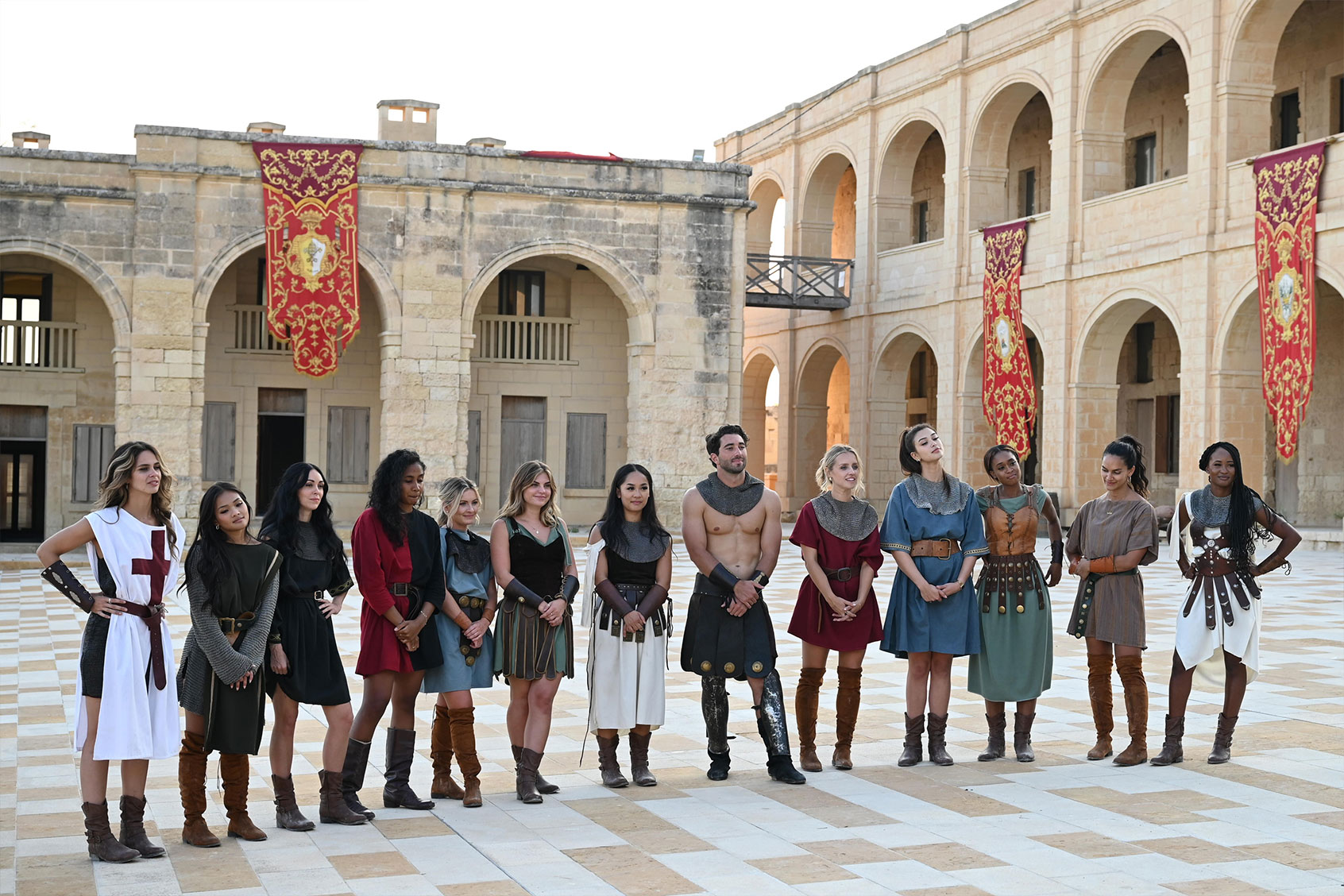
The BachelorJoey Graziadei as a gladiator with his women on "The Bachelor" (ABC)"Bachelor" fans Caroline and Hannah, who preferred only to use their first names, told me that while they are longtime fans of the show, the viewing experience feels different now. Hannah started watching “The Bachelor” in college in 2011 and drew Caroline into the fold three years later. They both feel that the show benefits from the producer changes and also featuring an "attractive nice guy."
“It’s the first time in a while that I’ve been excited about ‘The Bachelor,'" said Hannah. "I’m watching a little bit for Joey not just for the drama.”

So what is the elusive appeal of Graziadei that has hundreds of people showing up at a watch party on a cold March evening in Brooklyn? It’s actually really not elusive at all. He is simply a “himbo," what Merriam-Webster defines as “an attractive but vacuous man.” It may be harsh to rule out Graziadei’s intelligence immediately, but various moments on and off “The Bachelor” have shown he is probably not the sharpest person. 

For instance, the endearing Graziadei mistook one of the most well-known and important Supreme Court Justices Ruth Bader Ginsburg for popular true crime figure Gypsy Rose Blanchard. He also admitted on “Live with Kelly & Mark” that he had “no idea who Kathie Lee Gifford is.” In response to shocked gasps from the audience he earnestly continued, “I’m only 28! I’m sorry.” Also, when “The Bachelor” jetted its cast off to Malta, he described the city as having “that old-school vibe to it.” 

Despite not being the smartest on paper, he makes up for it with emotional intelligence and sincerity, which some feel is the appeal of the classic himbo. Think of characters like Jason Mendoza (Manny Jacinto) from “The Good Place,” Andy Dwyer (Chris Pratt) from “Parks & Recreation” or Jake Peralta (Andy Samberg) from “Brooklyn Nine-Nine.” This archetype tends to hold the emotional heart of their respective shows with their words of affirmation, close attention to detail and active listening. All of these qualities seem to be present in Graziadei.

“I think Joey is somewhat relatable as he opens up about his insecurities and his doubts and feeling like he needs to be perfect,” Caroline said. “He also responds well to the women when they talk about traumatic things that have happened to them. He seems very empathetic and kind.”

Hannah agreed and said he’s a “little more vulnerable,” and as an audience we “see what he’s experienced.” 

This is a refreshing change from Bachelors past, who appear less engaged. “You don’t really know anything about them. All they say to the women is ‘Oh I love that.’ This time he’s actually saying ‘I went through something similar, and that was hard for me too,’” Hannah shared.

Graziadei's openness is what we seem to be missing in real life and maybe even on “The Bachelor” too. Vivas said, “In the dating world in New York City – you have exposure to so many people," and that women can “use ['The Bachelor'] as inspiration in a way. Or maybe that these are the questions I should be asking on dates. Girls can analyze it and apply it to their real life or how the dating world is here.”

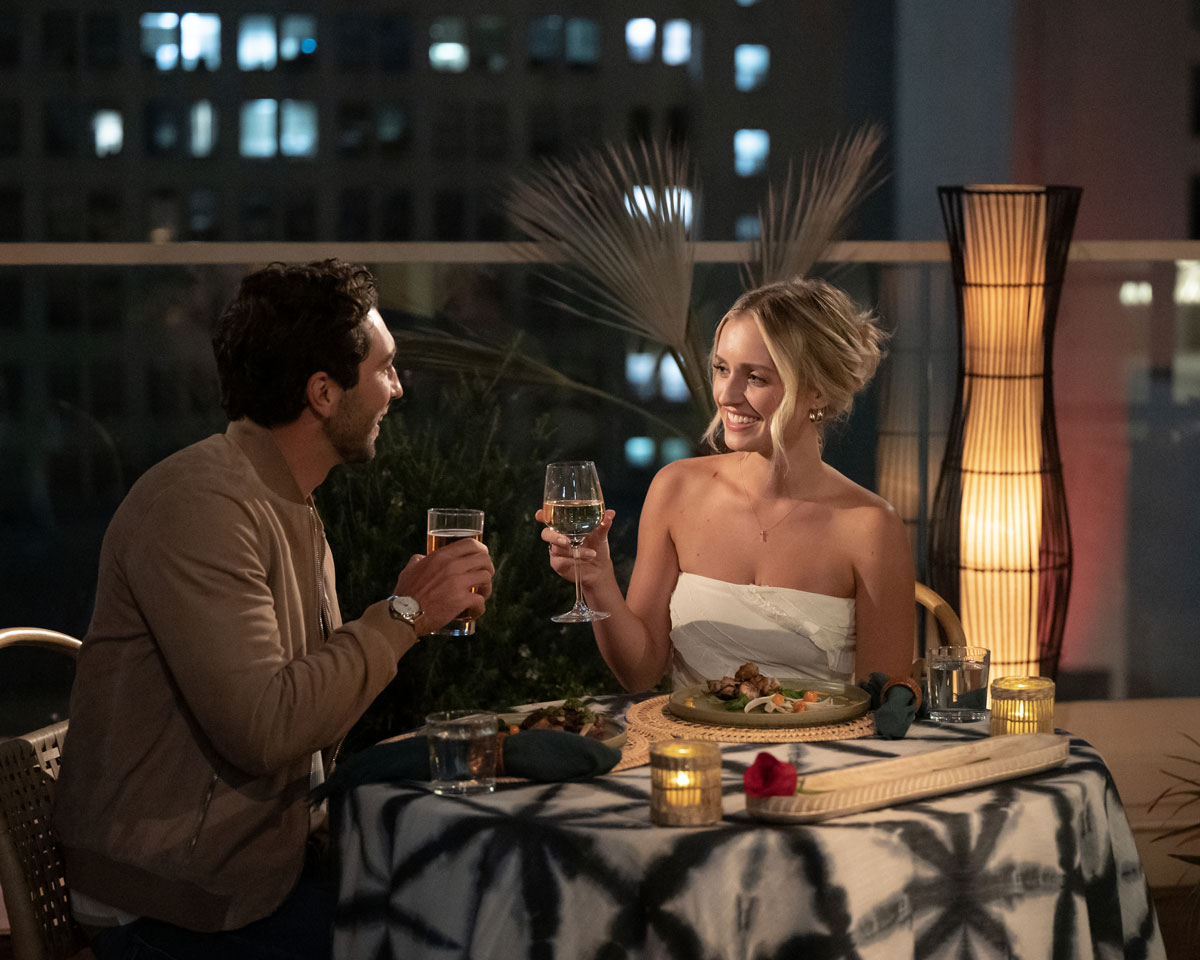
The BachelorJoey Graziadei and Daisy on "The Bachelor" (ABC)Previous Bachelors have struggled with the sincerity and earnestness that Graziadei has easily seemed to convey to the 30-plus women he courted this season. When contestant Daisy Kent shared the story of how she slowly began losing her hearing because of a rare illness called Ménière's Disease, Graziadei showed patience and understanding. He then asked Kent how her mental health was throughout the journey of getting a cochlear implant. She responded in disbelief, “Are you even real?”
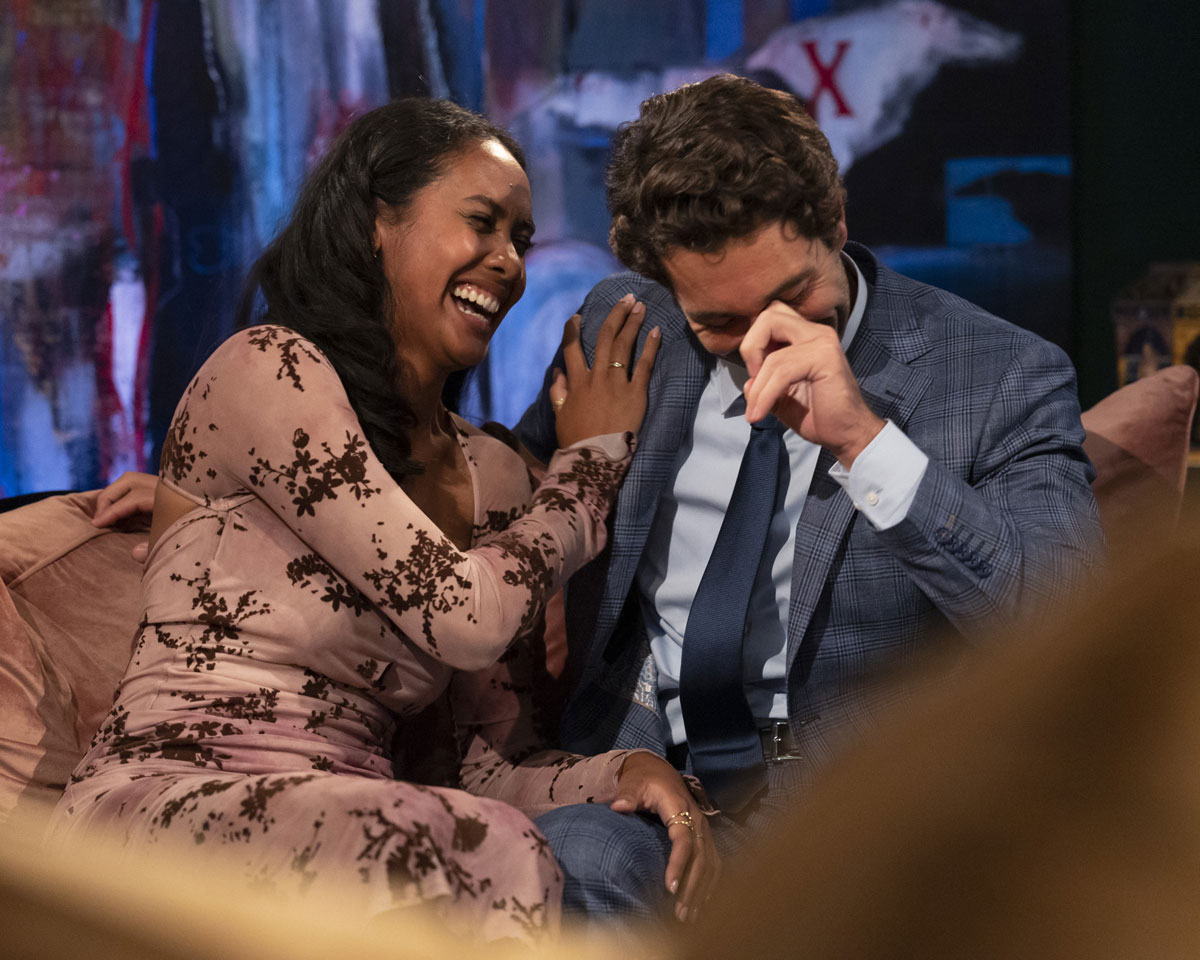
In comparison, Graziadei is miles ahead of these reality show dating duds.

The series has had a long list of failed Bachelors, especially ones that haven’t resonated well with women. In 2014, there was Juan Pablo Galavis, the Venezuelan soccer player and father, who was the first Latino to lead the franchise. Despite the slow strides in diversity hiring, Galavis had nothing to give and was emotionally shut off from the women. His infamous and patronizing catchphrase “It’s OK” still rings in my ears. 

Not only that, Galavis was accused by the women of his season of mistreating them, which led to his top contestant and future Bachelorette, Clare Crowley, telling him off in the finale. She told Galavis in a fury, "I lost respect for you. I thought I knew what kind of man you were. What you just made me go through — I would never want my children having a father like you.”

Years after Galavis’ major failure, in 2019, there was the Christian virgin, Colton Underwood. His most memorable moment was when he leaped over a fence when the frontrunner for his heart, Cassie Randolph threatened to leave. Post-"Bachelor" he was also served with a restraining order for stalking Randolph, who was then his ex and had accused him of putting a tracking device on her car. The retraining order was eventually dropped, and years later Underwood came out as gay.

We need your help to stay independent

Other reality dating shows like Netflix's uber-popular “Love Is Blind” are also in the same boat of showcasing less than ideal single men. During the show's recent sixth season, it suffered from superficial, apathetic contestants who hadn't yet addressed their issues. One contestant named Clay started the blind dating process by saying that he has to be physically attracted to his future partner. The show’s whole process hinges on its contestants not letting someone’s physical attributes get in the way of this sight-unseen love. He told his future fiancée, Amber Desiree, “My favorite attribute is lips, butt and all that stuff. That sounds so shallow but hearing what your best attributes are, if I’mma propose, that’s something I need to know.” 

The BachelorRachel and Joey Graziadei on "The Bachelor" (ABC)In comparison, Graziadei is miles ahead of these reality show dating duds. In a recent episode of "The Bachelor," after Rachel Nance hurt her face while jumping into the water during their date in Mexico, she put on a brave face and claimed she was fine, an instinctual response for Black women. But it was clear she was in pain, which Graziadei noticed. Later in the evening, Nance broke down in tears apologizing for ruining the date, and Graziadei urged Nance to stop looking at the incident through that lens. He kindly told her the incident gave him insight into a more vulnerable side of her.

Ultimately, Graziadei shows us what today's male reality television stars are severely lacking. It’s also a sign that our dating culture has shifted to people yearning for emotionally available people actually looking for love and not fleeting and fickle connections. People like the kind and sometimes daft Graziadei, who poured his heart out saying, “I know I have the best intentions, I know I’ve been honest through all of this, I know I have a good heart and I have so much to give. I just really want someone to want that from me, and I want it to be reciprocated.”


Oprah’s departure, Ozempic and a failed “hype house”: WeightWatchers struggles to adapt its image

Shortly after it was reported that WeightWatchers’ stock shares had tumbled 58% over the last one-month period, the company’s CEO, Sima Sistani, sent a memo to internal employees, noting that “turning around and totally transforming a business is not for the faint of heart.” 

The stock freefall wasn’t an overnight development. In late February, in an announcement concurrent with WeightWatchers publishing their latest financial figures — which showed a net loss of over $88 million for the last three months of 2023 — longtime board member Oprah Winfrey revealed that she would not stand for reelection at the company’s next shareholder meeting in May, which prompted heavy selling. 

In the memo, which was shared with CNBC last week, Sistani indicated that she wasn’t overly concerned about the numbers. “We believe the recent stock price moves do not reflect the strength of their performance, outlook or the near term trade-offs we’re making for our future growth,” she said. “As we shared in our recent earnings report, we have returned the company to a positive trajectory. In fact, we are on track to beat our Q1 guidance for Clinic subscribers.” 

The “Clinic,” to which Sistani is referring, is the WeightWatchers Clinic, which is how the company has rebranded Sequence, a weight loss medication subscription service they acquired last year. The program will connect patients with providers who can prescribe GLP-1 medications like Ozempic and Wegovy

For WeightWatchers, it is also both the key — and the primary complexity — in adapting their image for a new generation of customers, some of whom believe the company first needs to answer for how it has framed dieting in the past. 

The particular difficulty of this dance was incredibly apparent at a recent day-long marketing event which Bloomberg characterized as a “brand misstep.” In February, WeightWatchers gathered a dozen social media influencers at a Los Angeles mansion (the “GLP-1 hype house”) to bake protein-packed muffins, pose for pictures with drag queen Kim Chi and take selfies with gigantic injector pen props. The purpose of the event, according to emails sent to potential partners that were reviewed by the publication, was to “help bust the misconceptions and stigma around GLP-1 medications” and “share that WW is here to support you.” 

Even before the event took place, it managed to attract social media ire. The motivation for the backlash was largely two-fold, as Bloomberg’s Madison Muller reported; some weight loss and fitness influencers objected to the business deal built around the potential partnership itself, which included a pretty rigid non-compete clause. However, others have more personal reasons for distrusting WeightWatchers as they move into the weight loss medication space. 

We need your help to stay independent

“Many of those people had negative associations with the brand’s decades-long approach to food and dieting,” Muller wrote. “A few said WeightWatchers’ points system, which assigns number values to food for optimal nutritional intake, led to their own disordered eating.” 

Ashley Dunham, an influencer with 85,000 followers on TikTok, turned down WeightWatchers’ offer to partner on this event in December. “All it did was make us cringe,” Dunham told Muller. “I understand trying to reinvent themselves, but I think that reinvention needs to start with an apology.”

The pull between WeightWatchers’ past model — which heavily emphasized lifestyle changes, without the aid of medication, as being the key to sustainable weight loss — and their current investment in GLP-1s is raising a flag among investors, too, who aren’t convinced that it will be the solution for the company’s problems. 

“WW is in a tough spot,” said one analyst consulted by CNBC. “Sequence should be the future. That’s the GLP-1 playbook, but at this point it’s still very small. If they are talking about upside to that small business in and of itself, it’s not meaningful. The bigger issue is the legacy business continues to suffer and the company is overly levered.”

Regardless of how the company chooses to move forward, an element of their strategy will have to be in reducing stigma, both around being overweight and the expanding menu of sustainable weight loss methods. This is something Oprah Winfrey, who has revealed she uses weight loss medications as a “maintenance tool,” alluded to in a Feb. 28th statement regarding her departure from the company. 

“I look forward to continuing to advise and collaborate with WeightWatchers and CEO Sima Sistani in elevating the conversation around recognizing obesity as a chronic condition, working to reduce stigma, and advocating for health equity,” Winfrey said. “Weight Health is a critically important topic and one that needs to be addressed at a broader scale. I plan to participate in a number of public forums and events where I will be a vocal advocate in advancing this conversation.” 


Trump to hire Russia-linked ex-campaign chief labeled “grave counterintelligence threat”: report

Former President Donald Trump is expected to enlist former campaign chief Paul Manafort as a campaign adviser, according to The Washington Post. Manafort may be involved in planning around the upcoming Republican National Convention in July and could potentially play a role in fundraising for the campaign, sources told the outlet, adding that no formal decision has been made.

Manafort was Trump’s campaign chief in 2016 before he was charged and later convicted of tax and bank fraud felonies in special counsel Bob Mueller’s investigation into Russian interference in the election. Manafort was sentenced to prison after he admitted to lying to investigators about his contact with a Russian associate during the 2016 campaign, among other crimes. He was pardoned by Trump in his final days in office.

A bipartisan Senate Intelligence Committee report released in 2020 called Manafort’s receptivity to Russian outreach “grave counterintelligence threat” that opened the campaign to “malign Russian influence.” The report concluded that Manafort’s longtime partner, Konstanin Kilimnik, was a Russian intelligence officer who may have been directly involved in the Russian plot to break into Democratic Party accounts and leak the files to WikiLeaks.

Five Democratic senators on the committee, including then-Sen. Kamala Harris, D-Calif., said the report “unambiguously shows that members of the Trump Campaign cooperated with Russian efforts to get Trump elected.”

“This is what collusion looks like,” the Democrats said, referring to Manafort sharing internal polling data with Kilimnik.

Free school meals for all may reduce childhood obesity, while easing financial and logistical burden

School meals are critical to child health. Research has shown that school meals can be more nutritious than meals from other sources, such as meals brought from home.

A recent study that one of us conducted found the quality of school meals has steadily improved, especially since the 2010 Healthy, Hunger-Free Kids Act strengthened nutrition standards for school meals. In fact, by 2017, another study found that school meals provided the best diet quality of any major U.S. food source.

Many American families became familiar with universal free school meals during the COVID-19 pandemic. To ease the financial and logistical burdens of the pandemic on families and schools, the U.S. Department of Agriculture issued waivers that allowed schools nationwide to provide free breakfast and lunch to all students. However, these waivers expired by the 2022-23 school year.

Since that time, there has been a substantial increase in schools participating in the Community Eligibility Provision, a federal policy that allows schools in high poverty areas to provide free breakfast and lunch to all attending students. The policy became available as an option for low-income schools nationwide in 2014 and was part of the Healthy, Hunger-Free Kids Act. By the 2022-23 school year, over 40,000 schools had adopted the Community Eligibility Provision, an increase of more than 20% over the prior year.

Many families felt stressed when a federal program providing free school meals during the pandemic came to an end.

We are public health researchers who study the health effects of nutrition-related policies, particularly those that alleviate poverty. Our newly published research found that the Community Eligibility Provision was associated with a net reduction in the prevalence of childhood obesity.


Improving the health of American children

President Harry Truman established the National School Lunch Program in 1946, with the stated goal of protecting the health and well-being of American children. The program established permanent federal funding for school lunches, and participating schools were required to provide free or reduced-price lunches to children from qualifying households. Eligibility is determined by income based on federal poverty levels, both of which are revised annually.

In 1966, the Child Nutrition Act piloted the School Breakfast Program, which provides free, reduced-price and full-price breakfasts to students. This program was later made permanent through an amendment in 1975.

The Community Eligibility Provision was piloted in several states beginning in 2011 and became an option for eligible schools nationwide beginning in 2014. It operates through the national school lunch and school breakfast programs and expands on these programs.

The policy allows all students in a school to receive free breakfast and lunch, rather than determine eligibility by individual households. Entire schools or school districts are eligible for free lunches if at least 40% of their students are directly certified to receive free meals, meaning their household participated in a means-based safety net program, such as the Supplemental Nutrition Assistance Program, or the child is identified as runaway, homeless, in foster care or enrolled in Head Start. Some states also use Medicaid for direct certification.

The Community Eligibility Provision increases school meal participation by reducing the stigma associated with receiving free meals, eliminating the need to complete and process applications and extending access to students in households with incomes above the eligibility threshold for free meals. As of 2023, the eligibility threshold for free meals is 130% of the federal poverty level, which amounts to US$39,000 for a family of four.


Universal free meals and obesity

We analyzed whether providing universal free meals at school through the Community Eligibility Provision was associated with lower childhood obesity before the COVID-19 pandemic.

To do this, we measured changes in obesity prevalence from 2013 to 2019 among 3,531 low-income California schools. We used over 3.5 million body mass index measurements of students in fifth, seventh and ninth grade that were taken annually and aggregated at the school level. To ensure rigorous results, we accounted for differences between schools that adopted the policy and eligible schools that did not. We also followed the same schools over time, comparing obesity prevalence before and after the policy.

We found that schools participating in the Community Eligibility Provision had a 2.4% relative reduction in obesity prevalence compared with eligible schools that did not participate in the provision. Although our findings are modest, even small improvements in obesity levels are notable because effective strategies to reduce obesity at a population level remain elusive. Additionally, because obesity disproportionately affects racially and ethnically marginalized and low-income children, this policy could contribute to reducing health disparities.

The Community Eligibility Provision likely reduces obesity prevalence by substituting up to half of a child's weekly diet with healthier options and simultaneously freeing up more disposable income for low-to-middle-income families. Families receiving free breakfast and lunch save approximately $4.70 per day per child, or $850 per year. For low-income families, particularly those with multiple school-age children, this could result in meaningful savings that families can use for other health-promoting goods or services.


Expanding access to school meals

Childhood obesity has been increasing over the past several decades. Obesity often continues into adulthood and is linked to a range of chronic health conditions and premature death.

Growing research is showing the benefits of universal free school meals for the health and well-being of children. Along with our study of California schools, other researchers have found an association between universal free school meals and reduced obesity in Chile, South Korea and England, as well as among New York City schools and school districts in New York state.

Studies have also linked the Community Eligibility Provision to improvements in academic performance and reductions in suspensions.

While our research observed a reduction in the prevalence of obesity among schools participating in the Community Eligibility Provision relative to schools that did not, obesity increased over time in both groups, with a greater increase among nonparticipating schools.

Universal free meals policies may slow the rise in childhood obesity rates, but they alone will not be sufficient to reverse these trends. Alongside universal free meals, identifying other population-level strategies to reduce obesity among children is necessary to address this public health issue.

As of 2023, several states have implemented their own universal free school meals policies. States such as California, Maine, Colorado, Minnesota and New Mexico have pledged to cover the difference between school meal expenditures and federal reimbursements. As more states adopt their own universal free meals policies, understanding their effects on child health and well-being, as well as barriers and supports to successfully implementing these programs, will be critical.

Anna Localio, Ph.D. Candidate in Health Services, University of Washington and Jessica Jones-Smith, Associate Professor of Health Systems and Population Health, Epidemiology, University of Washington

This article is republished from The Conversation under a Creative Commons license. Read the original article.

“Desperate” Trump’s inability to get fraud bond makes him “massive national security risk,” Dem says

A Democrat who sits on the House Financial Services Committee warned that former President Donald Trump’s inability to secure a bond for his $464 million fraud judgment makes him a “massive national security risk.”

Trump’s lawyers in a filing on Monday told a New York appeals court that he cannot secure a bond after approaching 30 underwriters.

“The amount of the judgment, with interest, exceeds $464 million, and very few bonding companies will consider a bond of anything approaching that magnitude,” the attorneys wrote.

The filing quoted an insurance broker who signed an affidavit stating that securing the bond is a “practical impossibility.”

“Enforcing an impossible bond requirement as a condition of appeal would inflict manifest irreparable injury on Defendants,” the attorneys wrote, asking for a stay while also requesting oral arguments if the court considers denying the request.

“The presumptive @GOP nominee for President is desperate for $464M (and counting) which he cannot personally access. That fact alone makes him a massive national security risk; any foreign adversary seeking to buy a President knows the price,” tweeted Rep. Sean Casten, D-Ill.

Casten noted that all House lawmakers are required to post “regular reports of our assets and liabilities.”

“The fact that we don't know this about someone running for the highest office in the land shifts the liability onto our democracy itself,” he wrote.

The D.C.-based watchdog group Citizens for Responsibility and Ethics in Washington previously warned that Trump’s mounting financial penalties make him “an even bigger threat to national security.”

“Giving the highest and most powerful office in the land to someone deeply in debt and looking for ways to make back hundreds of millions of dollars he lost in court is a recipe for the kinds of corruption that aren’t theoretical when it comes to Trump,” the group warned, adding: “Despite his financial ups and downs in office, one thing remained remarkably consistent: Trump’s laser focus on using the presidency to line his pockets.”

Trump admits he can’t get fraud bond in filing suggesting “he is much less wealthy than he portrays”

Attorneys for former President Donald Trump admitted in a court filing on Monday that he cannot secure a bond to pay his massive $464 million fraud judgment.

″Defendants’ ongoing diligent efforts have proven that a bond in the judgment’s full amount is ‘a practical impossibility,’” Trump’s lawyers wrote, adding that they approached 30 different surety companies through four brokers and have spent “countless hours negotiating with one of the largest insurance companies in the world.”

“The amount of the judgment, with interest, exceeds $464 million, and very few bonding companies will consider a bond of anything approaching that magnitude," the filing said.

The lawyers wrote that if the appellate division of the Manhattan Supreme Court considers denying their requested stay, it should allow for oral arguments on the issue.

Trump and his co-defendants previously offered to post a $100 million bond, a proposal rejected by appeals court Judge Anil Singh. Trump earlier this month obtained a $91.6 million bond from the Chubb insurance company to cover the civil defamation judgment in favor of writer E. Jean Carroll as he appeals the ruling.

“I’ve represented and prosecuted large real estate developers, and it’s not uncommon for them to be highly illiquid,” tweeted former federal prosecutor Renato Mariotti. “That said, Trump had to know that this judgment was coming, and his inability to obtain a bond suggests he is much less wealthy than he portrays himself to be.”

Legal experts: Judge Cannon “took the bait” on “breathtakingly baseless” Trump arguments

Legal experts expressed concerns over the fate of former President Donald Trump’s classified documents case after a hearing before Trump-appointed U.S. District Judge Aileen Cannon last week.

Cannon heard arguments on two Trump motions to dismiss the case. She later issued an order dismissing the former president’s motion that the case should be tossed due to constitutional vagueness. Cannon wrote that some of Trump’s arguments warrant “serious consideration” but dismissed the motion without prejudice, which means Trump’s lawyers could potentially introduce it again at trial — at which point special counsel Jack Smith would not be able to appeal it.

"Trump moved here to dismiss the indictment on the grounds that certain phrases like unauthorized possession and relating to national defense were vague, and then Judge Cannon took the bait and said these definitions are still fluctuating, and she can't decide the motion now, and she kicked the can down the road," former federal prosecutor Kristy Greenberg told MSNBC on Sunday, adding that "there's nothing vague about these terms."

Greenberg said that the unauthorized possession of national defense information statute is “well-established in the law and these claims have been rejected previously.”

"He understood, and Judge Cannon by not making the decision and kicking the can down the road means he can appeal it, and perhaps double jeopardy would apply if he makes the motion later, and the jury is empaneled, and he has no ability to appeal later,” she added. “It's a bad decision for the special counsel's office, and one we can expect to have frustration for the people who want to move this along. She clearly does not want to do so."

While the hearing was intended to focus on Trump’s motions to dismiss the case on unconstitutional vagueness grounds as well as another that argued he was allowed to take the documents under the Presidential Records Act, Cannon also asked questions at Thursday’s hearing about a third motion alleging “selective or vindictive prosecution,” according to Lawfare senior editor Roger Parloff.

Parloff noted that Cannon appears to be treating that motion “very seriously” even though it is “breathtakingly baseless.”

We need your help to stay independent

Trump’s lawyers argued that Trump is being treated unfairly by the Justice Department compared to other former presidents and vice presidents who took classified materials home. Smith in a filing rejected the argument, noting that Trump allegedly also repeatedly sought to “thwart” the lawful return of the documents and “engaged in a multi-faceted scheme of deception and obstruction.”

Parloff predicted that it is unlikely Cannon would dismiss the case based on Trump’s argument “but she might grant Trump additional discovery & a public hearing to explore those questions, which would itself be virtually unprecedented.”

“She could also write an order decrying purported disparities in treatment beneficial for his campaign,” he added.

Cannon has yet to rule on Trump’s motion seeking to dismiss the case under the Presidential Records Act despite expressing skepticism about it during the hearing.


Want a daily wrap-up of all the news and commentary Salon has to offer? Subscribe to our morning newsletter, Crash Course.


“If Judge Cannon can’t—or won’t—categorically deny this frivolous motion to dismiss the claims against Trump, what is she going to do with other motions that are still pending in the case, and the avalanche of future motions sure to come?” attorney Philip Rotner questioned in The Bulwark.

“Federal judges control everything that takes place in their courtrooms, from motions to dismiss to evidentiary rulings to jury instructions,” Rotner wrote. “They can influence jurors through nothing more than body language and the roll of an eye. There are a hundred ways a federal judge can sabotage a case. In this case, the judge could easily pull enough levers to delay Trump’s trial until after the 2024 presidential election, at which time he will be able to kill it himself if he is elected. And even if Trump loses the election, there’s absolutely no reason to believe that Judge Cannon won’t find more levers to pull to deliver a coup de grâce.”

Rotner warned that it is time for Smith and his team to “read the writing on the wall: Judge Cannon is going to kill your case.”

“Smith should move now to get Judge Cannon thrown off the case,” he added. “Whatever the risk, it has to be taken, and fast. Otherwise, Smith might as well fold his hand now.”

Follow the money, and you’ll find Donald Trump in deep trouble

Back in 2000 when Donald Trump first tested the waters of a presidential campaign by giving a series of speeches as a possible Reform Party candidate, he famously told Forbes Magazine, “It’s very possible that I could be the first presidential candidate to run and make money on it." He was speaking at the time about a weird deal he had going with motivational speaker Anthony Robbins in which he timed his political appearances around paid seminars that Robbins paid him a million bucks to give. By the time he decided to run for real in 2015, he didn't publicly suggest that he could make money campaigning but he did make the case that he was incorruptible saying, "I don't need anybody's money." (He'd obviously figured out that that real graft was to be made once he was in the White House.)

He pledged to spend a hundred million of his own money on his run but contributed only about $66 million out of $398 million so Trump didn't "self-fund" by a long shot. In 2020 he didn't use any of his own money at all instead raising $774 million for the campaign with the RNC and his Super PACs raising much more. (The 2020 election was by far the most expensive in history, doubling the record-breaking 2016 campaign.) His spending in that campaign was so profligate that it ended up having a cash crunch in the months before the election. 

Still, the myth persists among the MAGA faithful that Trump is incorruptible because he's allegedly a self-made billionaire and doesn't need anyone's money. (And even though they believe this, they've been sending him their own hard-earned cash just because they love him so much.)

Back in 2019, Politico reported on research showing that this myth has had some pretty serious political consequences:

Using a 2017 University of Maryland Critical Issues Poll, we found that believing Trump was not born “very wealthy” leads to at least a 5-percentage-point boost in the president’s job approval, even after considering the many factors that can influence public approval ratings. This shift is rooted in the belief that his humble roots make Trump both more empathetic (he “feels my pain”), and more skilled at business (he is self-made and couldn’t have climbed to such heights without real business know-how). 

When voters were informed of the truth, that Trump was born with a silver spoon in his mouth and had to be bailed out repeatedly by his father, there were "noticeable and statistically significant effects on evaluations of Trump’s character," losing 10 percentage points from Republicans on empathy and 10 points on business acumen. "Our research shows that the basic information plugged-in elites take for granted is not known by many Americans, and can be consequential in political evaluations," the researchers concluded. Imagine that.

The following video has gone viral on social media the last couple of days and it shows what might have been if all journalists had been as aggressive as Barbara Walters was in 1990 when she confronted Trump with his recent business failure (just one of many more to come) and the lies he was telling the public:

You'll notice that his persecution complex was in full effect even then, as he whines to Walters that nobody's ever been treated as unfairly as he has been. 

We need your help to stay independent

Trump has been dancing as fast as he can for decades, trying to stay one step ahead of bankruptcy and the law and he has been successful at doing it, apparently leading him to truly believe that he could always prevail by sheer force of will. When the 2020 election didn't go his way, his fragile psyche couldn't take it and he simply created an alternate reality in order to cope. Now he's faced with the greatest challenge of his life, and he has to make one great hail mary pass in order to keep himself from going broke and out of prison. He has to win the presidency and he desperately needs money to pay his own legal expenses and finance his campaign. It's not going all that well. 

The wheels of justice are grinding infuriatingly slowly, largely due to some judges (and Supreme Court justices) who seem to be happy to help Trump out of his immediate criminal jam. But the civil judgments against him add up to more than half a billion dollars and nobody knows exactly what kind of collateral he's having to put up to post the required bonds or who might be acting as his benefactor. The potential for corruption is so immense it's stunning that anyone could have the chutzpah to run for president under these circumstances. But then again, this is Trump we're talking about and the White House is his guaranteed get-out-of-jail-free card. 

But what about his campaign? Considering his precarious personal financial situation there's no way that Trump will be self-funding any part of it and he's commandeered the RNC for his personal use, most likely to help him pay for any lawyers who won't allow him to stiff them. So, according to the New York Times, he's having to hustle like crazy for campaign donations:

One of the most pressing issues facing Mr. Trump is the financial disparity he and allied groups now face with Mr. Biden and the Democratic Party. Mr. Biden’s campaign announced on Sunday that it entered March with $155 million cash on hand with the party, after raising $53 million in February. The Trump operation has not released a more recent total, but his campaign account and the Republican National Committee had around $40 million at the end of January.


Want a daily wrap-up of all the news and commentary Salon has to offer? Subscribe to our morning newsletter, Crash Course.


He's having to hit up billionaires and Wall Street more than ever before and it sure looks like he's making some deals, such as his abrupt turnaround on banning TikTok last week after meeting with one of their major investors. This is because so far, his small donor base appears to finally be a little bit tapped out. The campaign claims that February will be its strongest month for small dollar fundraising which would beat the $22.3 million in August. But as the Times pointed out, the Biden campaign is seeing a massive rush of small donor money, raising more than $10 million online after the State of the Union, more than doubling Trump's much-ballyhooed haul of $4.2 million from his ignominious mug shot. 

How can it be that Biden is raising so much more money when we are told daily that Trump voters are overwhelmingly excited while Biden's are disconsolate and depressed? Well, money isn't everything and incumbency always has an edge in the money game but it does seem odd that with Trump holding a slight lead in many of the polls he would be having trouble raising money while the Democrats are awash in cash. 

Perhaps Biden voters are more enthused than is commonly recognized or, just as likely, are more terrified of another Trump term. But maybe it's also the case that Trump's rapturous followers aren't as representative of Republican voters as they would have us believe. And just maybe people have heard a few things about Trump being indicted on 91 felony counts in several different criminal cases and being hit with over half a billion dollars in fines. Is it possible that people are still telling pollsters they support Trump but they aren't putting their cash where their mouths are? I wouldn't be surprised. Sometimes money does speak louder than words. 

Adult MAGA rage is making schools more dangerous for students

Last week saw national headlines regarding two tragic stories that illustrate how MAGA radicalization of adults endangers kids in school. First, a medical examiner reported that Nex Benedict, the non-binary Oklahoma 10th-grader who passed away recently after enduring a beating in a school bathroom, apparently died by suicide. Then, James Crumbley, the father of Michigan school shooter Ethan Crumbley, was convicted of involuntary manslaughter for providing his disturbed son with a gun. The boy's mother, Jennifer Crumbley, was convicted of the same crime in February

What links these stories is that they are both case studies in how the hatreds and obsessions of MAGA adults are trickling down into the lives of children, and causing real harm and even death.

The Crumbleys faced such unusual charges because they gave their son access to guns mere days before the 2021 shooting, despite knowing he was articulating violent fantasies. One could guess right-wing politics were a factor, but there's no need to speculate. In 2016, Jennifer Crumbley wrote a gushing open letter praising Donald Trump as a man of "sincerity, and humility" who she trusted with "my son's future." She claimed children of immigrants get "free tutors, free tablets from our Government," while her son supposedly gets nothing. 

It was inevitable that some of that ugliness would trickle down from adults to kids.

Benedict died in the wake of a growing crescendo of right-wing hysterics demonizing LGBTQ students and teachers as "groomers" and accusing them of being a threat to other students. In Oklahoma, the far-right Republican state superintendent, Ryan Walters, has been especially aggressive on culture war issues, attacking LGBTQ people and calling for book bans. In an especially trollish move, Walters recently hired Chaya Raichik, who runs the infamous "Libs of TikTok" Twitter account, to be on the state's library committee. Raichick's only "experience" in education is targeting LGBTQ teachers and allies with her account, knowing bomb threats and harassment usually follow. Benedict was beaten up in a girls' bathroom, after being required by Oklahoma state law to use a restroom based on gender assigned at birth, not the one they live as. 


Want more Amanda Marcotte on politics? Subscribe to her newsletter Standing Room Only.


Raichik, Walters, and other MAGA Republicans are scrambling to deny any link between Benedict getting beaten up in a bathroom and a suicide that literally happened the next day. Benedict's family disagrees, however, noting the "severity of the assault" as shown by the autopsy. President Joe Biden released a statement declaring, "no one should face the bullying that Nex did" and they "should still be here with us today." Walters, in response to the criticism, leveled baseless accusations implying LGBTQ people are pedophiles. 

This doubling down on the MAGA vitriol that is linked to school violence is not unique to Walters, but swiftly becoming endemic to the Republican Party. That's evident in the growing popularity of Raichik as a conservative leader, even though she regularly proves she is incapable of coherent sentences when asked to explain what she believes. Even more determinative, from a pure numbers perspective, was the North Carolina primary this month. Republicans nominated far-right activist Michele Morrow for state superintendent, despite — or because of — her history of shockingly violent rhetoric. Unlike the current Republican incumbent, Catherine Truitt, Morrow has no experience in education. On the contrary, Morrow hates public schools, calling them "socialism centers" and "indoctrination centers" and homeschooling her kids instead. But, in a sign of how radical the GOP has become, this is the least incendiary aspect of Morrow's campaign. As CNN reported, Morrow has a long-standing habit of calling for the violent deaths of Democrats or anyone she perceives as "liberal." 

In other comments on social media between 2019 and 2021 reviewed by CNN’s KFile, Morrow made disturbing suggestions about executing prominent Democrats for treason, including Minnesota Rep. Ilhan Omar, North Carolina Gov. Roy Cooper, former New York Gov. Andrew Cuomo, Hillary Clinton, Sen. Chuck Schumer and other prominent people such as Anthony Fauci and Bill Gates.

She wants Obama to be killed by "firing squad," and called for it to be aired on "Pay Per View." She also longed for Obama to be executed by electric chair. In response to President Joe Biden asking Americans to temporarily wear a mask to prevent the spread of COVID-19, Morrow wrote, "KILL all TRAITORS!!!" She also called for the imprisonment of Georgia's Republican Gov. Brian Kemp for refusing to help Donald Trump steal the 2020 election. 

On Wednesday, the Washington Post reported, "School hate crimes targeting LGBTQ+ people have sharply risen in recent years, climbing fastest in states that have passed laws restricting LGBTQ student rights and education." Overall, the annual reported hate crimes doubled from what they were just a few years ago. In the "states with restrictive laws, the number of hate crimes on K-12 campuses has more than quadrupled" since Raichik and her Republican cronies in states like Florida and Oklahoma got to work. 

In the wake of Benedict's death, we're hearing a lot of Republicans, even the most rabidly MAGA ones, claim they oppose violence in schools, even against queer kids. Actions like elevating Morrow, Raichik and Walters say otherwise. At this point, it's almost banal to point out that the Republicans who claim to be "protecting" kids do not actually care how many children are hurt — or killed — because of their cynical efforts to generate right-wing panics and culture wars. But it's crucial nonetheless to keep talking about this.

That the MAGA movement stokes violence hardly needs arguing, as evidenced by January 6. It was inevitable that some of that ugliness would trickle down from adults to kids. But, as the nomination of Morrow shows, it's even worse than that. For years now, through "don't say gay" laws and groups like Moms for Liberty, the MAGA movement has been actively trying to remake America's schools in their own image. Where MAGA goes, violence follows. Ignore the glib denials of Republican leaders about school violence. Judge them by what they do — and who they support going into the 2024 election. 

Expert: “There’s something about being a gun owner that makes many people turn into Republicans”

America loves its guns more than it does its children. We “the Americans” are very sick from gun violence.

The most recent “high profile” mass shooting in America took place several weeks ago at the parade honoring the Kansas City Chiefs for their victory in the Super Bowl. Even the language of “high profile” signals to how common mass murder by guns in America is: in most other countries no such distinguishing adjective would be needed because any such crime would garner public outrage and sustained attention. In the several weeks since the mass shooting in Kansas City, there have been many such crimes all across the United States. Gun violence has killed at least 5,000 people this year in the United States. 

For those Americans who are not part of the gun cult, the solution to mass shootings and other gun violence is obvious. This is a public health crisis that should be met by common sense solutions such as mandatory background checks, waiting periods, mental health screenings, limiting access to certain types of firearms and ammunition, and other practical interventions.

In his new book “What We've Become: Living and Dying in a Country of Arms”, Dr. Jonathan Metzl, who is the Frederick B. Rentschler II professor of sociology and psychiatry and the director of the Department of Medicine, Health, and Society at Vanderbilt University, argues that these “common sense” solutions are anything but easy and obvious – or always effective.

"The health frame has blinded us to how, when the GOP now talks about guns, they are really talking about power in a much broader sense."

Moreover, in his widely praised new book and as explained in our conversation, Metzl also makes the controversial suggestion that the failure by Democrats, liberals, progressives, and others who believe in common sense gun solutions to sincerely listen to and understand how “gun rights advocates” view firearms as being central to their identities (in particular as white men and “conservatives”), beliefs about “freedom”, and what it means to be an “American” is limiting our ability to agree upon effective long-term solutions to the country’s plague of gun violence.

In all, Metzl is deeply concerned that what has become a type of script for how Americans talk about and understand gun violence, has made solving the crisis almost impossible.

This conversation has been edited for clarity and length.

There was a mass shooting in Kansas City at the parade celebrating the Chiefs winning the Super Bowl. There have been many more mass shootings since that day a few weeks ago. Will Moloch, the Eater of Children and America's gun god, ever be satisfied with all the human sacrifices to it? All these "thoughts and prayers" are now worship words and incantations to summon Moloch. We are a defeated society and culture in terms of gun violence.

I'm from Kansas City, so this felt very personal— in fact, I was just back in Missouri this week giving a talk and I spoke on the shooting. Sports and parades and celebrations are supposed to be great unifiers. There were a million people at that parade, people of all backgrounds who came together. And then there is a shooting. And – that unity falls away as people are pushed into different ideological camps of pro- or anti- laws or regulations or public health. Shootings like this become what are called "polarizing crises.” Guns, trauma, and fear of mortality – and politicians and social media – turn celebration into division. The joy of common space becomes a multilevel tragedy that radiates outward in so many ways. Our divisions then come to seem existential and immutable. This is, as my new book suggests, What We’ve Become.

What of these "thoughts and prayers" and "hopes" and other such empty passive talk and slogans?

It's a ritual based in emotional responses that are not actual material responses. Thoughts and prayers are now part of the dance we do here in America. One side — and to be clear I am not making any kind of moral equivalent — says "thoughts and prayers, there's nothing we can do about it" or "it's mental illness" or "it's a bad guy with a gun and we can't stop criminals and that is why we to be armed." The mantra on the other side, my side, is that we need background checks and red flag laws. We need common sense gun reform. Gun violence is an epidemic.

Obviously, I agree with that conclusion about gun violence as a public health problem; I am a doctor. But in my book, I show how the discourse itself, both sides, construct a dialogue that goes nowhere by design, if the aim is actual change. Instead, calls for reform usually, for gun sellers, lead to more gun sales almost every time. Liberal calls for reform are used to fuel gun sales, because people are made to believe that "someone is coming to confiscate our guns!" But background checks and red flag laws are also very polarizing politically, as my work shows – they’re not as neutral as many liberals have come to believe. Moreover, critiques of thoughts and prayers have gotten to the point that liberals at times act as if religious responses to loss are inauthentic, which is not a great way start to a conversation. I’m liberal and I believe in science, but I also think and pray about victims and communities after mass shootings.

The people who actually say this "thoughts and prayers" stuff after a gun massacre, do they really believe it?

The problem is that "thoughts and prayers" and "we send our hopes" has become political nonsense talk, or a way of signaling inaction. In my new book, I interview a lot of everyday gun owners—who have come to know that when a politician says, "thoughts and prayers" he or she really means “you are safe, I’m not going to support regulations.” But again, in my new work, I’m also quite critical of my own side for performing our own versions of empty speak. As I show, we fell into the trap of conflating mass shooters with gun owners in our rhetoric, as one example.

How did we get to this point in America with gun violence where it is very hard to have these conversations about guns and gun violence and deaths after mass shootings and other tragedies? People feel very vulnerable. What triggers many gun owners I interview is that they feel like the government is tyrannical, and it's going to come get them. They are afraid that the liberals are going to come take their guns and they will be left to criminals. Government background checks and red flag laws are seen as government intervention. And to be clear, a background check is a government database. And a red flag law invites the police into your home to do a welfare check on your relative. So, for the gun owners I talked with, it becomes a self-perpetuating cycle that justifies why they want guns in the first place — and after mass shootings, they go out and buy more of them to protect themselves from the government.

I started to understand how, from this perspective, the approach that I and other liberals have been perpetuating may by itself not be the best way to solve the country's gun violence problem—in as much as gun owners are the very people whose participation we require for many public health interventions. And of course, they’re hearing my message from one side – but that of Trump and the GOP, who say you can keep your guns with no regulation, on the other.

What is the difference between someone who happens to own a gun versus someone who identifies as a "gun owner"?

The idea of who is a gun owner is not static. It is incredibly dynamic, which is why one-size-fits-all all interventions become difficult.

In my new book, I look closely at the messages public health people like me send to gun owners. For a long time, we’ve implied that to be a “common sense” gun owner, is to play by the rules of my side, which are public health, safety, trust in government and expertise, etc. But I show how that language only speaks to the gun owners who are willing to play by my rules. There are many gun owners who respond to very different assumptions about safety and autonomy — and their logic(s) make common sense…to them.  

We need your help to stay independent

I also look in depth at how scholars like me assume people will think about guns like they did cigarettes or seatbelts. But guns are incredibly different in so many ways, and you're not speaking to many gun owners if you're trying to convince them that their behavior and relationship with guns is unhealthy when they see it as a sign of power. The NRA and gun sellers have been manipulating the message: “You need a gun because you're not going to be protected, and you need your power.” And it's broadening. 30 years ago, a stereotypical gun owner was some guy down here in Tennessee with a Confederate flag. But courts have dramatically expanded who can own and carry a gun. now the fastest growing groups of gun owners are people of color who have been directly targeted by advertising after the murder or George Floyd, for example, saying the police aren't going to protect you. Jewish Americans now are buying guns, because they're worried about what's happening in the country and world. The real fight over guns is who gets to own one and carry one. Liberals are losing that battle in the domain of public opinion and the courts. We need to change our strategy. 

Guns intersect gender, race, politics, and most other aspects of American society and life. To that point, how do you make sense of the infamous AR-15 ad which presented that rifle as somehow getting "your man card." I showed that ad to a friend who is very experienced with various firearms from his time in the military and being a warfighter and he laughed at it. Why does that “consider your man card reissued" ad and others like it resonate with some audiences (in particular men) and not with others?

After years of interviews for the book, I have seen how owning a gun can make people more conservative, and more concerned that liberals will impose laws that leave them unprotected. I spoke to one man who was an “anti-gun liberal” for the first 35 years of his life. Then he started carrying a gun at work. That then developed into his feeling that he could not go anywhere without a gun. He couldn't get his mail without a gun. He wouldn't leave the house without a gun. When he heard that "the liberals" are coming to take away his guns — which is what Trump said at the NRA convention — that terrified him. He supports whoever lets him keep his weapons and his power, as he sees it now. There's something about being a gun owner that makes many people turn into Republicans.

"The right wing has used the gun issue to take over the court system across red state America, and seed judges all the way up to the Supreme Court, who are then overturning the will of voters in very concrete ways."

Then there’s the story I tell in my book, about the Waffle House mass shooting in Nashville in 2018. This is another complex story about white male gun ownership. The man who is at the center of my book is the shooter, Travis Reinking. I show his secret home movies – where he talks about his homosexual desires. He would have all these psychotic dreams and fantasies about having sex with other men—but that was not OK in the conservative world where he lived. The gun became his symbol that assured him that he was still a man. As I show, Reinking was literally sleeping naked with his AR-15. A Bushmaster, just like in that ad. The man card could not be more explicit from a psychoanalytic perspective in the story I tell. The "man card" theme literally reassured him that he was the ideal heterosexual man that he really wasn't.

Then he got arrested and the FBI took his guns away. He basically had a psychotic break, which caused him to move from Illinois where he couldn't carry his gun to Tennessee. He got his guns back and became a mass shooter: Masculinity restored.

What of these pistols and rifles that are adorned with Trump’s image? These are mostly expensive custom jobs. Who would want such a thing? What does Trump on a gun symbolize?

Trump has positioned himself as the defender of a specific pro-gun ideology. Of course, it’s largely an act. Nobody's taking away anybody's guns right now, this is not a serious debate or discussion about the Second Amendment. But it’s politically savvy. Trump is telling his public that you get to keep your guns — which means your power and privilege. And by comparison, President Biden is arguing for regulations and restrictions.

The data tells us that treating gun violence like a public health problem actually works. There is a great deal of evidence, from both the United States and other countries, that these common sense approaches work. Why should those of us with the evidence and science on our side surrender to the feelings and emotions – and disinformation and lies and myths – that are believed in by those people and groups who oppose such policies?

I'm for the facts. I support effective gun laws. And my argument in this book is not that we shouldn't have gun laws. My point is that we lose in terms of the debate and American society by just framing guns and public policy just around the rhetoric of risk and violence. Gun injuries and deaths are horrible. We have about 50,000 a year, that's 50,000, too many. But there are also about 500 million guns and 82 million or so gun owners. One side is talking about what it means to be a victim of this horrible thing that kills 50,000 people. But the other side is talking about what it means to be a gun owner — and this is 82 or so million people.


Want a daily wrap-up of all the news and commentary Salon has to offer? Subscribe to our morning newsletter, Crash Course.


For example, with the 500 million guns in this country background checks are not going to work for a very long time. That is a point-of-sale intervention, but we already have more guns than people floating around. Or for red flag laws to work, you must basically call the authorities on your relatives. Many people don't trust the police and they are not going to call them. The risk of inviting law enforcement into their homes is greater than the potential risk from a relative with a gun.

Again, I do believe guns are a public health problem. I'm for the science; I'm a practitioner of the science. But the frame can be limiting – as I write in my essay, Guns Are Not Just a Public Health Problem, they are problems of race, of history, of plurality. The health frame has blinded us to how, when the GOP now talks about guns, they are really talking about power in a much broader sense. The right wing has used the gun issue to take over the court system across red state America, and seed judges all the way up to the Supreme Court, who are then overturning the will of voters in very concrete ways. Ultimately, for the right, guns are a conduit for a much larger governing project, If you just see guns as a public health problem, you don't see this much bigger agenda. If you just focus on public health, you are missing the threat to democracy. It is all part of a larger matrix of power, what Patrick Blanchard calls "gun power."

The title of your new book is “What We’ve Become: Living and Dying in a Country of Arms.” What have we become?

I first wanted the book to be called "How We Lost." And to my mind the threat is urgent and real, and I meant the book as a provocation and a wake-up call. If Trump wins the 2024 election, having large numbers of non-government actors who are armed and mobilized for him is going to change how people live in this country, and then you add the issue of the NRA’s influence on judges and courts. We will have moved well beyond background checks, and rapidly so.

But the ultimate title feels more right, and speaks to how we have normalized, habituated, and internalized the trauma of mass shootings. Gun violence has become constitutive of who we are.

What of the “living and dying”?

The story I tell in the book is about four young people who were just out celebrating and never thought of themselves in relation to the gun debate and within less than a second, their lives are defined by being victims of mass shooting. They lived as individuals and they died, tragically and way too soon, in a way that comes to be a metonym for the experience of being "American" for a lot of people.

The horrific 2018 mass shooting in the Nashville Waffle House. Why did you choose to focus on that mass shooting and to make it the throughline of the new book?

We have a mass shooting every day. If it did not impact you personally, we move on a few days later. I wanted to tell the story of what happens when we slow it down and really pay attention. Here I do this by focusing on one mass shooting.  The Waffle House shooting took place in my hometown. This was also a shooting where a naked white man with an AR-15 burst into a waffle house that is in Antioch – a largely nonwhite working-class part of town. He was the only naked person, and he was the only white person in the Waffle House and killed four young adults of color and badly injured four more and traumatized the whole community. How did a naked white man from Morton, Illinois with an AR-15 end up in a Waffle House at 2:30 on an early April morning? How did that gun get there? As the story progresses it becomes even more clear about how his naked white body is a metaphor for the bigger racial problems around guns and gun violence in America.

"The terror of gun violence is also the terror of the color line."

A naked white man walks into a Waffle House with an “assault-style” rifle and proceeds to massacre a bunch of Black people. If someone pitched that story it would likely be thrown in the slush pile as hack work. But in America, race and violence and guns are a surreality. The unreal is real. America is sick in so many ways.

It was an awakening for me—and I’ve been studying guns for a long time. I thought I knew the story and then ended up…with a far deeper awareness of how the terror of gun violence is also the terror of the color line. When I first heard about the Waffle House shooting, I thought it was going to be like the Buffalo mass shooter who was a white supremacist that hated black people. The Waffle House shooter was a lot more terrifying in a banal way. I listened to hundreds of hours of Reinking’s tape and testimony and videos. I never heard him say one racist thing. I make no claims about his interior life and beliefs. But an armed man with a gun — even one bent on murder — is seen as a patriot by the system, someone whose rights are to be respected and not disarmed by the system. Race is omnipresent here: a white man with a gun, even if he's a homicidal white man, is someone whose rights are to be protected until the moment he pulls the trigger. But then the other part of the story is after the murders happened, the state of Tennessee had a decision to make. Would we pass laws to make sure this never happened again because he traveled here to commit murder because of these loose gun laws? Or would the state mobilize to protect the rights of people like the shooter? As I show, the rights of white men trump the lives of the people who were killed.

Americans experience so many mass shootings that we don’t remember them all. One takes place and then another one occurs ad infinitum. This type of organized forgetting is indicative of a traumatized and profoundly unwell society. But the people who are injured and maimed, the families and friends of the dead, the larger community and those many other people who are impacted directly and indirectly do not have the luxury of forgetting.

If you carry the pain of every mass shooting with you, you would not be able to function. This is what soldiers do in a war. They lose a friend and then they're back on the battlefield the next day. That is almost how we act in this country with gun violence. That wasn't always the case. The Columbine shooting was news for a year and the Parkland shooting was news for six months. Same with the Sandy Hook shooting. Now mass shootings are in the news for three days. And so, this is about habituation and conditioning. We are now so numb. In the book, I wanted to talk about the long-term effects for the people, their families, and communities from gun violence. And for us, people not impacted but who now must look over our shoulders at parades. We move on — but we are never the same.

Will Earth hit a climate “tipping point?” Here’s why experts say this framework is problematic

People who follow climate change are often told there is a "tipping point," a single moment after which it will be too late to reverse the damage caused by our excessive use of fossil fuels. Yet experts say this concept is misleading, with one scientist — James Hansen, who played a key early role in raising climate change awareness — describing the phrase as "greatly overused and misused."

"The tipping point concept is greatly overused and misused."

Powerful institutions seemingly disagree. The World Economic Forum uses the phrase "tipping point" when describing the various environmental consequences that will ensue once Earth warms more than 1.5º Celsius above pre-industrial levels. The European Space Agency declares that "climate tipping points are elements of the Earth system in which small changes can kick off reinforcing loops that ‘tip’ a system from one stable state into a profoundly different state."

In 2021, the authors of a study published in the journal Nature wrote that "small changes in forcing cause substantial and irreversible alteration to Earth system components called tipping elements." A 2023 survey published in Sage Journals found members of the British public to be widely demoralized about society's ability to cope with any impending climate change "tipping points." The phrase even appears in the kids' scientific magazine Frontiers for Young Minds, appearing in a 2021 article titled "Tipping Points: Climate Surprises."

Yet many scientists do not like the term because they feel it oversimplifies the science or because it cultivates a fatalistic outlook. Hansen is among those scientists. The Columbia University climatologist is renowned for writing about fossil fuel consumption and climate change as far back as the 1980s, when few other public figures had done so. Hansen's 1988 testimony before the Senate is widely considered to be a landmark event in the history of spreading public knowledge about Earth's rising temperatures. How we frame that issue is important to how we effectively spread that message.

"The tipping point concept is greatly overused and misused," Hansen wrote to Salon. "The phrase is mighty popular among scientists and the public, used for many different climate processes. In fact, most of those processes are better described as amplifying, reversible, feedbacks." Although climate change is going to have very significant consequences for humanity, "it is not a runaway process."

Kevin Trenberth, a distinguished scholar at the National Center for Atmospheric Research who has published more than 600 articles on climatology agrees, explaining in an email to Salon that "there are no real tipping points. There are times when the rates of change may increase substantially because of feedbacks, but it is not like a pencil balancing on its end that when touched topples over."

Unfortunately, for fans of scientific accuracy, that is precisely how climate change is depicted in famous sci-fi representations of climate change like the 2004 blockbuster "The Day After Tomorrow." Then again, it is difficult to blame popular entertainers for reinforcing that particular misconception. People who learn about how humanity has negatively altered our natural environment can respond with a wide range of negative emotions, including hopelessness and anxiety, and people experiencing those emotions are more likely to believe there is a "tipping point," after which humanity is utterly doomed.

Yet that notion is mistaken. Walt Meier, a senior scientist at the University of Colorado Boulder's National Snow and Ice Data Center, similarly told Salon he does not believe it is scientifically accurate to say "that there is a tipping point toward 'genuine civilization collapse,'" although there are individual irreversible thresholds that humans could pass.

Meier's colleague Julienne C. Stroeve, also a senior scientist at the University of Colorado Boulder's National Snow and Ice Data Center, wrote to Salon that she thinks of a tipping point "as a threshold [that] when crossed causes a system to change its behavior." This is distinct from how the term is often used, namely with the idea that it involves on a global scale "irreversibility, which has to do with the impossibility of returning to its previous state."

For example, Stroeve said "the loss of Arctic sea ice in summer would be a tipping point, but it’s not irreversible." Losing the winter cover ice, by contrast, would be irreversible, but defining such an event depends on the timescale. "On a geological timescale ice sheets have come and gone, but on a human timescale if we lose them we can basically consider them gone forever." The term "forever" means one thing for geologists and glaciologists studying epochs, and quite another to a person who wants to gaze upon ice sheets with their own eyes.

Hansen pointed to melting permafrost as an example for why the framing implied in the phrase "tipping point" is misleading.


Want more health and science stories in your inbox? Subscribe to Salon's weekly newsletter Lab Notes.


"It is not like a pencil balancing on its end that when touched topples over."

"There is a tremendous store of carbon in permafrost, which, if all released to the atmosphere, would have a devastating climate impact," Hansen said. He explained how the carbon dioxide that is released by melting permafrost amplifies the global warming caused by human-made greenhouse gases, but that would not happen all at once. "It is rather slow and can be cut off if we begin to cool the planet. That's no small task, of course!"

When these scientists question the usefulness of "tipping point" terminology, they are not discounting the genuine threat posed to humanity by global heating. They all agree that climate change is changing the planet in ways that will harm hundreds of millions of people. Yet how we frame these issues is critical to how we start to address them and experts argue that the idea of a single occasion in which humans cross a barrier from "climate change can be fixed" to "climate change is unfixable" is inaccurate. The Earth's climate is far more complicated than such framing suggests. Instead of seeking a single moment when a figurative switch is flipped, people should look for a constellation of warning signs. There are already many signs that the planet's rising temperature is leading to ecological devastation.

"The way we are going we are already on a dangerous course," Trenberth said. "Only in retrospect will we likely say 'Oh, this was a sort of tipping point.'" He listed off variables that could be viewed by future historians as tipping points, but which may not be recognized as such by contemporaries living through them.

People who live near coasts may in retrospect view rapid sea level rise as a tipping point, since they will endure massive floods and coastal erosion. Those who inhabit flat areas like plains will also experience worsened flooding due to climate change, and people in regions all over the planet will be susceptible to the droughts caused by heat waves.

"There is a big chance (natural variability) component to when and where these threats are realized," Trenberth said.

Stroeve said that potential red flags for Earth entering a severe state of crisis would include irreversible loss of ice for the Greenland and West Antarctic ice sheets, which could between 1-3º C and 1-6º C respectively, although Stroeve added "there are lots of uncertainties here." Similarly, Stroeve speculated that there could be a tipping point-like event in the Amazon rainforest if its area shrinks so much that it cannot generate enough water vapor to support itself. Stroeve said she isn't "sure if that would be irreversible, though."

Meier confirmed Stroeve's observation about the potentially catastrophic consequences of rapid loss to those ice sheets.

"The ice sheets won’t suddenly lose all of their ice — it is something that will happen over hundreds and even thousands of years," Meier said. "As climate changes, there will definitely be costs — in money [such as] infrastructure and human lives as we try to mitigate and adapt to climate change. We will have to live with — and already are living with — sea level rise, more extreme weather, more wildfires, ecosystem changes, etc."

That said, it will not lead to a global civilization collapse all at once. Hansen likewise mentioned the possible collapse of the Greenland and West Antarctic ice sheets as events that would signal, if not a "tipping point," at the very least some level of long-term damage to the planet. He also speculated that this could happen if a system of ocean currents known as the Atlantic Meridional Overturning Circulation (AMOC) completely collapses.

"It would take centuries for AMOC to recover. This will not cause civilization to collapse per se, but it could happen as early as mid-century and in doing so speed the collapse of the West Antarctic ice sheet. [This is] because shutting down AMOC reduces the transport of Southern Hemisphere heat to the tropics and into the Northern Hemisphere," Hansen explained. "It is rapid sea level rise and the accompanying shifting of climate zones that create a potential existential threat to humanity, as they would drive emigration pressures that could make the planet ungovernable."

Hansen added that mass extinctions are certainly irreversible, although they may not count as "tipping points" exactly. "Extermination of species is practically irreversible and some ecosystems can collapse if key species go extinct, and we are in the midst of a mass extinction event," Hansen said.

We need your help to stay independent

As he summed it up, the underlying problem in communicating climate change is that events that may seem to unfold slowly to other people are actually happening rapidly in terms of the larger history of Earth.

"The delayed response of the climate system to human-made climate forcing is what makes these issues so difficult to communicate with the public," Hansen said. "The time scales are very slow as seen by the public, even though human-forced climate change is occurring very rapidly compared with geological time scales."

This is why it's misleading to frame the climate change crisis in terms of a climax or tipping point — it establishes false expectations about how exactly global warming is harming everyone's lives. It is instead more useful to view climate change as a multifaceted dilemma that will require an equally multifaceted response. As Meier noted, this still emphasizes that the issue is very difficult to beat — but also established that is not an impossible dilemma.

"I worry about talking about climate change leading to 'civilization collapse' or even human extinction will actually lead to fatalism and the thought that there is nothing society can do, so let’s not worry about it," Meier said. "Climate change is a big challenge, but a solvable one."

Documentary “Remembering Gene Wilder” leaves no question as to who the love of his life was

Actor Gene Wilder, star of the original "Willy Wonka & the Chocolate Factory" and beloved Mel Brooks films "Blazing Saddles" and "Young Frankenstein," was on his fourth marriage at the time of his death in 2016 from complications of Alzheimer's disease but his widow, Karen Boyer, is not the name he's most often associated with.

For many, the next name to come to mind when thinking of Wilder's is Gilda Radner, a member of "Saturday Night Live's" original ensemble who Wilder met and fell in love with while co-staring in Sidney Poitier's "Hanky Panky" in 1981, marrying a few years later and remaining together until her death from ovarian cancer in 1989. And although their relationship remains at the forefront of fans' memory the new documentary, "Remembering Gene Wilder," makes it clear that she was not the love of his life and that Wilder was unhappy in their relationship for years. A fact that's difficult to come to terms with.

In a 2018 interview with Woman's World, Brian Scott Mednick, author of the biography "Gene Wilder: Funny and Sad," touched upon this, saying, "Gene called Karen the great love of his life. It was his fourth marriage and the longest; he died shortly before their 25th wedding anniversary. Gene admitted he was very unhappy for a long time with Gilda. He didn’t think he’d get married again, and he said he didn’t believe in fate." And in this new documentary directed by Ron Frank, Boyer is candid about the great love they shared, even revealing Wilder's last words to her just prior to passing away.

She describes the last conversation they had as taking place while listening to Ella Fitzgerald's classic song "Somewhere Over the Rainbow," saying, "The music was playing in the background and I was lying next to him and he sat up in bed and he said, 'I trust you.' And then he said, 'I love you.' That's the last thing he said."

Watch the trailer for "Remembering Gene Wilder," playing in theaters in New York now prior to national release:

Pelosi says most people wouldn’t let Trump in their house, so why should he be in the White House?

In an appearance on CNN's "State of the Union" this weekend, Former U.S. Speaker of the House Rep. Nancy Pelosi (D-CA) weighed-in on Donald Trump's rally in Ohio on Saturday — during which he warned of a "bloodbath" if he loses to Joe Biden and said that, in his opinion, some undocumented immigrants are "not people" — questioning how much more American voters need to see to realize that what he's spreading does not represent what this country stands for. 

Speaking to anchor Dana Bash, Pelosi ran through a list of Trump's recent actions and rhetoric from sharing sensitive government information with the Russian foreign minister to condemning soldiers for "losing" by dying in wars and praising Hitler, saying, "We just have to win this election . . . there's something wrong here."

"How respectful I am of the American people and their goodness, but how much more do they have to see from him to understand that this isn't what our country is about? 

Wrapping up her thoughts on the matter, Pelosi said, "You wouldn't even allow him in your house, much less in the White House."

Watch here:

“Love can look like so many things”: Andrea Riseborough discusses the unconventional “Alice & Jack”

Andrea Riseborough would be the first to tell you that she’s too trusting. “You know, just the other day I got scammed,” she told me last month in Pasadena. It was her bank account. Oof. How did it happen? “I was having a very nice conversation with a very nice person on the phone,” she said. “I’m very trusting.”

The Oscar-nominated “Alice & Jack” star laughed as she related this anecdote, an unexpected response to a question about whether she would give her character as many chances as Domhnall Gleeson’s Jack does.

Alice is what a polite person would describe as difficult. That much is clear a few words into the usual first date small talk. He answers the opener of, “What do you do?“ by explaining that he’s researching a rare disease to find a cure.  

In another TV romance, Alice would feign fascination, try to seem engaged but polite if she weren’t interested, or flirt if she were.

Instead, she asks, “Why?” As in, what’s in it for him if he eradicates this malady? His answer, that he'll be satisfied to have helped people, yields more questions that draw him down a path of cool but curious logic. But there's something fetching about her. He is an honest, generous person. She is mercenary and works in finance. A clear reward calculus, she says, as opposed to his murky math.

They spend the night together, and in the morning she gives him the boot. He sweetly offers to call. “Thank you, but if it’s OK with you, I’d rather you didn’t,” she replies. That should have been the end. Instead they become magnets, attracting and repelling over a decade and a half. Alice is a change catalyst for Jack, both wonderful and disastrous.

So, I ask, would she date her character? “Yes. I can say that without any hesitation, really,” said Riseborough. “I love spicy people. I’m not the poster child for common sense where romance is concerned.”

Alice and JackAimee Lou Wood as Maya and Andrea Riseborough as Alice in "Alice and Jack" (Fremantle/PBS)“Alice & Jack” is a divergence from other “Masterpiece’” series, which is probably due to Victor Levin’s sensibilities. An American whose TV writing credits include “Mad Men” and “Mad About You,” titles that are as tonally disparate as they come, Levin always envisioned Riseborough and Gleeson in these roles, although originally it was set in New York instead of London.
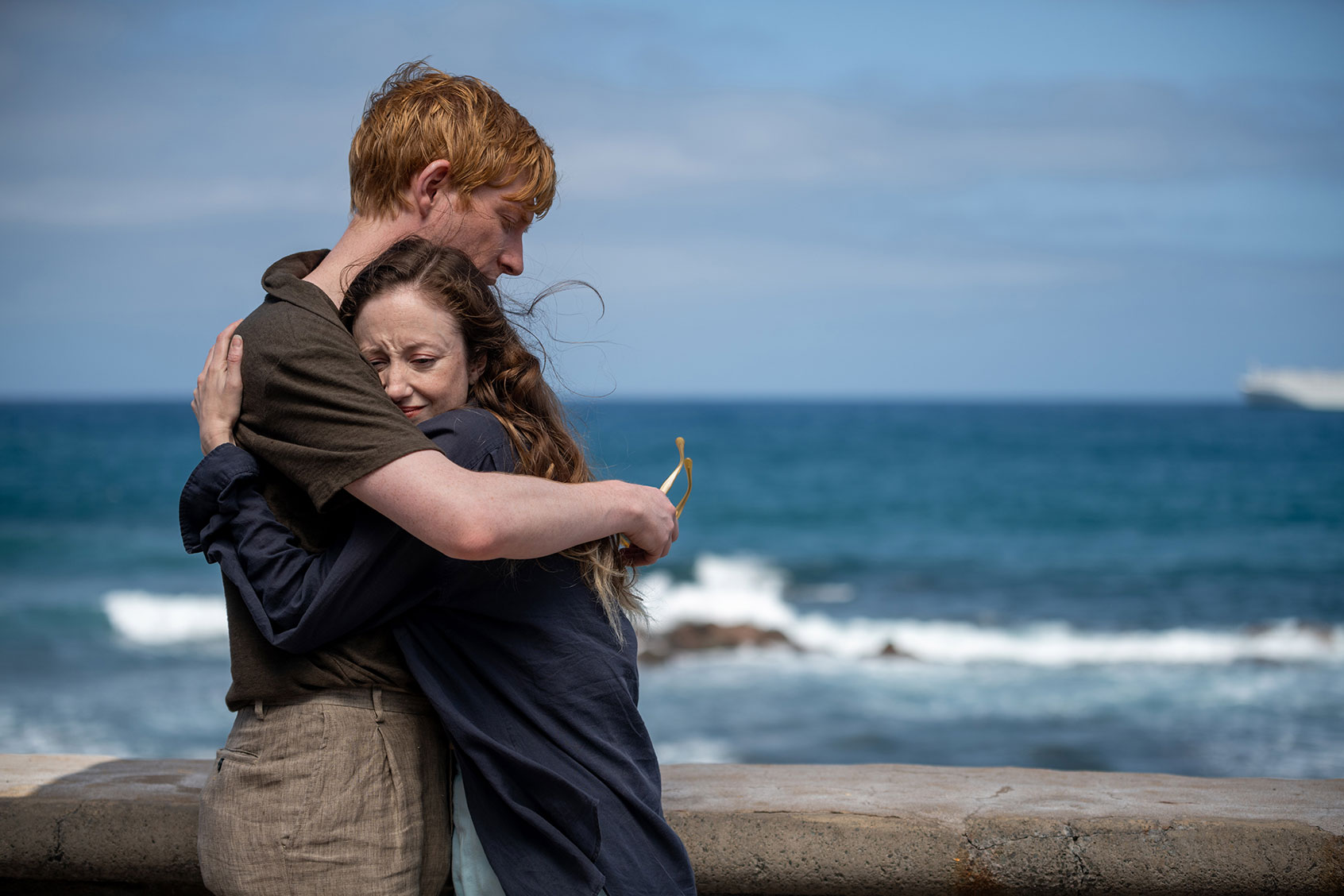
But his honest study of modern romance and the accompanying altered expectations could have taken place anywhere, which is the beauty of it. For people the world over, finding true love is complicated and doesn’t resemble the trajectory that rom-coms and fairy tales sell us.

”Love can look like so many things. And for so many of us, it's not functional,” Riseborough said. “I mean, that doesn't lessen the draw toward each other, the desire for each other, the validity of how you appreciate another person even in spite of your best thinking.”

We need your help to stay independent

Alice also has a deep wound that gave the actor's performance purpose. If Alice seems walled off, there’s a good reason that Riseborough believes should merit grace with the audience. “That doesn't make them any less deserving of love, even if they are absolutely incapable of intimacy in a way that looks functional or healthy on the outside,” she sustained, even as she admits that her past makes her complicated.

“It gives her a firewall or like an armor of candor, and wit and sometimes meanness,” she said. “But I think those things are all to cover hopelessness until she meets Jack. For both, there’s something in the other that needs to be nurtured. And it's hard to explain that to those who love you, especially when it's torturous.”

"I’m not the poster child for common sense where romance is concerned,” Riseborough said.

“Alice & Jack” debuts as Riseborough is appearing in HBO’s “The Regime” as Agnes, the loyal and unappreciated house manager to a dictator played by Kate Winslet. Next to that character, Alice is a kaleidoscope of aspiration and achievement – she’s wealthy, functionally untethered to obligation and, at least at first, unwilling to compromise with anything, even if it would mean sparing someone’s feelings.

“It's really a turning point for Alice when she meets Jack, I think. That's really when life begins. He is faith and hope and goodness to her. And he's probably the first thing she believes in,” she says.

Alice and JackDomhnall Gleeson as Jack and Andrea Riseborough as Alice in "Alice and Jack" (Fremantle/PBS)So what does this say about modern love? The headlines, after all, are not so optimistic. “Why the growing gulf between young men and women?” The Economist asked last week. A few days before that, The Independent ran a story about South Korea’s 40% plummet in marriage rates over the last 10 years.

The Washington Post’s editorial board warned that American marriage may be on the verge of collapse. A New York Times essay replied, "Ask Women What Dating Is Like." Then there's the Reesa Teesa of it all.


Want a daily wrap-up of all the news and commentary Salon has to offer? Subscribe to our morning newsletter, Crash Course.


Where does “Alice & Jack” land on this spectrum? Should we look at their rocky climb as a singular tale or an indicator that a realignment of expectations is in order?

“Perhaps it's all about perspective,” Riseborough says in answer to that question. 

Then she pauses. “Strangely, as advanced as we think we are sometimes, how funny it is that really only now are people being very open and really honest about what they need and want in a relationship, what they can and can't handle?”

To Riseborough, this love story is as current as it is old. Epic loves like the one explored in “Alice & Jack” always existed, she said. “It's just that they were contextualized differently, and everybody was still perhaps ticking the boxes that were expected of them in terms of marriage or children. That didn't mean that those loves weren't happening all over the place.

"And that sort of epic quality of soul connection is something that I think we don't see a lot on screen,” she continued. “The protagonists so often are just so morally impossibly perfect that it's difficult to fully identify with them. At the same time, I understand why we've made these expectations for ourselves emotionally because it's really important to have hope that love prevails, that there's a happy ending.

“But I am a hopeless romantic and I’ll believe anything,” she concluded. “I'm so willing to trust, often to my own detriment.”

"Alice & Jack" premieres Sunday, March 17 at 10 p.m. on PBS member stations. Check your local listings.