Spring Offer: Get 1 Year, Save 58%

Pentagon report denies UFOs are aliens. Experts accuse the government of misrepresenting the truth

A new report from the Pentagon on unidentified flying objects and unidentified anomalous phenomena has partially confirmed high-profile whistleblower allegations about planned clandestine government programs for the retrieval and reverse-engineering of non-human aircraft via private contractors.

The report has also, however, drawn sharp rebuke among academic skeptics and disclosure advocates after raising more questions and concerns than it answered. Concluding the Department of Defense's investigation into itself, the report from the All-domain Anomaly Resolution Office claims to have found "no empirical evidence" of UAP, yet also declassifies the DOD origins and developmental plans for a UAP-related program called Kona Blue, that AARO says never got off the ground. 

Disclosure advocates have since roundly criticized the report for its alleged lack of scientific rigor and failure to fully disclose firsthand accounts and significant details involving the programs mentioned in the report. The report's critics include famed Pentagon Papers lawyer Dan Shehan, former Advanced Aerospace Threat Identification Program (AATIP) director Lue Elizondo and the DOD’s former top civilian intelligence official, Christopher Mellon. The 63-page report is not only notably laden with typographical errors, misplaced URLs, self-referential citations and statements misrepresenting the public conclusions of UAP scholars — but also omits a significant amount of the historically declassified data which the office was tasked with compiling in the report.

In a Friday press conference ahead of the report's release, DOD officials said the United States has "found no evidence of extraterrestrial intelligence." 

But acting AARO director Tim Phillips also revealed plans to deploy what AARO calls "Gremlin" surveillance technology — a configurable sensor array designed in partnership with the Department of Energy and Georgia Tech — to capture more UAP-related data in military hotspots where sighting reports are numerous.

ARRO is testing the Gremlin system at a large range in Texas, with hopes that it can be used in the event of any UAP-related problem with critical infrastructure or national security — echoing concerns from witnesses who have attested to heightened UAP activity near facilities with nuclear capabilities.   

"Examining reports of 'shadow figures' and 'creatures,' and exploring 'remote viewing' and 'human consciousness anomalies.'"

"We've been out there going against some known UAS [unmanned aerial systems] targets, but some unknown targets, picking up a lot of bats and birds. We're learning a lot about solar flaring. We're really starting to understand what's in orbit around our planet and how we can eliminate those as anomalous objects. So we're going to do that. And then we're going to go to the department and say we are ready to deploy our system in response to a national security site or a critical infrastructure with a UAP problem," Phillips told reporters. 

The report's release follows a months-long, tense standoff between Congress and AARO, with lawmakers and UAP whistleblowers on one side and the now-retired former AARO director Sean Kirkpatrick on the other. In January, Kirkpatrick denounced Congressional inquiry into UAP, claiming top members of Congress hold a “religious belief” in UFOs “that transcends critical thinking and rational thought." Kirkpatrick similarly misrepresented UAP whistleblower claims, saying “none of [the UFO whistleblowers] have any firsthand evidence or knowledge" — a statement repeatedly proven incorrect by members of Congress who have spoken to witnesses of clandestine UAP programs. 

U.S. Deputy Director of Naval Intelligence Scott Bray explains a video of unidentified aerial phenomena, as he testifies before a House Intelligence Committee subcommittee hearing at the U.S. Capitol on May 17, 2022 in Washington, DC.U.S. Deputy Director of Naval Intelligence Scott Bray explains a video of unidentified aerial phenomena, as he testifies before a House Intelligence Committee subcommittee hearing at the U.S. Capitol on May 17, 2022 in Washington, DC. (Kevin Dietsch/Getty Images)

Government UAP programs, paranormal research and "human consciousness anomalies"

In addressing whistleblower claims of a collaborative program between the DOD and private companies to "reverse-engineering extraterrestrial technology" and hide it, the report appears to contradict itself repeatedly while incidentally confirming the existence of a number of government operations that may de facto fit the bill. 

On one hand, AARO states that "no empirical evidence" for the claims exists and that "claims involving specific people, known locations technological tests and documents allegedly involved in or related to the reverse-engineering of extraterrestrial technology, are inaccurate."

"It is critical to note that no extraterrestrial craft or bodies were ever collected — this material was only assumed to exist by KONA BLUE advocates and its anticipated contract performers," the report says. 

On the other hand, however, the report in doing so not only confirms evidence that three such programs were in varying stages of development, but provides additional context for their potential funding sources and role in Defense Intelligence Agency strategy, further supporting several whistleblower claims. 

"The organization also planned to hire psychics to study 'inter-dimensional
phenomena' believed to frequently appear at that location."

"AARO confirmed the existence of one Intelligence community controlled access program that was unnecessarily expanded in 2021 to include a UAP reverse-engineering mission," the report says, adding that appropriate congressional committees were notified.

Yet the report claims "this program was expanded despite the lack of any evidence or mission need to justify the expansion" and that it "never recovered or reverse-engineered any technology, let alone off-world spacecraft. This controlled access program was disestablished due to its inactivity, absence of mission need, and lack of merit."

The expansion of this program may or may not be related to the other two programs, depending on how the report's language is interpreted. The report's lack of clarity is compounded when the AARO authors then seem to play a shell game, both admitting and denying the existence of two other such programs related to whistleblower claims. Arguing at times over semantic minutia, the report also seems to spotlight what may have been a keyhole opportunity for disclosure advocates in the bureaucratic labyrinth of esoteric DOD acronyms and classification protocols.

"At the direction of Senate Majority Leader Harry Reid (D-NV), the Defense Appropriations Acts of Fiscal Years 2008 and 2010 appropriated $22 million for the DIA to assess long-term and over-the-horizon foreign advanced aerospace threats to the United States. In coordination with the Office of the Under Secretary of Defense for Intelligence, DIA established AAWSAP (Advanced Aerospace Weapons System Application Program) in 2009, which was also known AATIP. The contract for this DIA-managed program was awarded to a private sector organization," the report says.

Then, contradicting their own recognition of official documentation, the authors add that "unlike AAWSAP, AATIP was never an official DoD program." Rather, this was an "unofficial UAP community of interest within DoD" which also happened to have been officially directed to do this — and thus, under DOD direction, "researched UAP sightings from military observers as part of their ancillary job duties."

"The selected private sector organization conducted UFO research with the support of the DIA program manager. This research included: reviewing new cases and much older Project BLUE BOOK cases, operating debriefing and investigatory teams, and proposals to set up laboratories to examine any recovered UFO materials."

The report goes on to explain that "AAWSAP/AATIP also investigated an alleged hotspot of UAP and paranormal activity at a property in Utah — which at that time was owned by the head of the private sector organization — including examining reports of 'shadow figures' and 'creatures,' and exploring 'remote viewing' and 'human consciousness anomalies.' The organization also planned to hire psychics to study 'inter-dimensional phenomena' believed to frequently appear at that location."

Phillips told reporters Friday that the Kona Blue program was declassified for the report's release, which details the program's origin as an effort to reestablish the UAP program under the auspices of the Department of Homeland Security. The report claims that Kona Blue was "supported by individuals who believed the US government was hiding off-world technology" and was actively readied for formal authorizations to the extent that Deputy Defense Secretary Kathleen Hicks notified congress "in the spirit of transparency.”

"The program was never approved by DHS and its supporters never provided empirical evidence to support their claims," the report says, adding that "many of these (transparency advocates) were involved in or supportive of a cancelled DIA program and the subsequent but failed attempt to reestablish this program under DHS."

David GruschRetired Maj. David Grusch, former National Reconnaissance Office representative on the Defense Department's Unidentified Aerial Phenomena Task Force, testifies during the House Oversight and Accountability Subcommittee on National Security, the Border, and Foreign Affairs hearing titled "Unidentified Anomalous Phenomena: Implications on National Security, Public Safety, and Government Transparency," in Rayburn Building on Wednesday, July 26, 2023. Grusch alleged that clandestine US government programs existed which aimed to reverse-engineer UAP technology (Tom Williams/CQ-Roll Call, Inc via Getty Images)

“Although many UAP reports remain unsolved or unidentified, AARO assesses that if more and better quality data were available, most of these cases also could be identified and resolved as ordinary objects or phenomena. Sensors and visual observations are imperfect; the vast majority of cases lack actionable data or the data available is limited or of poor quality,” the report says. "All investigative efforts, at all levels of classification, concluded that most sightings were ordinary objects and phenomena and the result of misidentification." 

In explaining how it came to these contradictory conclusions — that the government had both undertaken known programs of UAP study and that reported sightings and firsthand encounters with those programs simultaneously never happened — AARO's top reason given was that the government has always said they never happened. 

"AARO assesses that the incidents of UAP sightings reported to US government organizations, the claims that some constitute extraterrestrial craft, and the claims that the US government has secured and is experimenting on alien technology, most likely are the result of a range of cultural, political and technological factors," AARO said. "The aggregate findings of all US Government investigations to date have not found even one case of UAP representing off-world technology."

"Were you relying on these agencies, for example, the CIA, to come up with their own determinations?"

Beyond the visible conflict of interest in AARO's methodology, there appears to be a bigger problem with AARO's efforts. While AARO knows that UAP appearances are largely non-extraterrestrial, mainly ground-based and marine-based, the office doesn't exactly know what it's doing yet amid conflicting jurisdictions and complex policy navigation. More pointedly, it created a report about something which is has not yet even defined. 

"The vast majority of the reporting tends to be in the atmosphere because that's where we're operating. We've received one report in the maritime domain. And we've received no reports in space. However, we do have working groups in space and in the maritime. And what we're trying to do is define what is a UAP incident, and how that will be reported," Phillips told reporters. 

Public outcry around the report likens a Pentagon self-investigation to charging the fox to guard the henhouse. Asked by reporters why Americans should accept the Pentagon's non-independent and unverifiable inquiry into itself, DOD Press Secretary Maj. Gen. Patrick Ryder did not address the inherent conflict of interest in the investigation. 

"The AARO office used a very rigorous, analytical, scientific approach to investigate all past U.S. government efforts, all claims by interviewees. They were granted access at the highest levels to all information. None of the agencies that they spoke with prevented them from getting any of the information that they needed to do," Ryder said. 

Phillips echoed the strategy, lauding a number of agencies for their inter-DOD collaboration. He said AARO closed about 122 cases closed last month, with 68% assessed to be "aero garbage, balloons, trash that's up there in the atmosphere." And confirmed that AARO was involved in identifying the Chinese spy balloon that flew over U.S. airspace last year. 


Want more health and science stories in your inbox? Subscribe to Salon's weekly newsletter Lab Notes.


"We've had about 1,200 cases that we've looked at. We approximately receive anywhere between 90 and a 100-110 a month from the operating forces," Phillips said, adding that AARO has worked with Joint Staff. "I would say that we — we probably, on average, around 100 cases a month we are clearing."

Internal Pentagon collaborators

Clearing that many cases that quickly means AARO wasn’t necessarily operating independently during the time period covered in the report. Its initial operational capacity wasn't met until last October.

"AARO's been around for about 18 months. And we just achieved initial operating capability, I would say, in October of last year is when we actually were able to bring the staff on and start to develop some of the sensors and the capabilities, the flyaway kits, so we could respond quickly when there's a UAP incident," Phillips said. 

ABC News' Luis Martinez asked Phillips to explain how AARO was able to provide a comprehensive report in such a short time span, asking about the staff size required for the task.

"The DoD has no overarching UAP policy and, as a result, it lacks assurance that national security and flight safety threats to the United States from UAP have been identified and mitigated."

"Or were you relying on these agencies, for example, the CIA, to come up with their own determinations, then you would review their work?" Martinez asked Phillips. 

"All of the above," answered Philips. "As the acting director, I work for the Deputy Director of Defense [Kathleen Hicks.] There's actually been — there's — trying to get information, we've actually had to solicit her personal assistance to open a door."

Though he did not provide an exact staff number for AARO, nor how many non-AARO staff had a hand in writing their own investigative findings, Phillips went on to further describe how AARO ultimately compiled the report. 

"This review was primarily, it was the — our operational directorate that was actually making the contacts, arranging for the interviews, they were involved. But then I had our analytical team who was actually looking at the statements, putting the stories together, the act of writing, by Dr. Kirkpatrick. Just probably a good 100 days of tech editing and legal review. I've never had so many help from so many experts on the DOD staff that help us get it right," he said. 

Pentagon Press Secretary Brig. Gen. Pat Ryder speaks during a press briefing at the Pentagon on February 10, 2023 in Arlington, Virginia. (Drew Angerer/Getty Images)

The roar of science: Pentagon watchdog skewers UAP policy for being a risky mess

Calls for further legislative action by congress are bolstered by a January investigation from the DOD Inspector General, which found the Pentagon's work on UAP investigation and reporting so "uncoordinated" that it could have overlooked national security threats — an assessment most military branch leaders agreed with in the report. 

"We determined that the DoD has no overarching UAP policy and, as a result, it lacks assurance that national security and flight safety threats to the United States from UAP have been identified and mitigated," the OIG report said. "The FY 2022 NDAA assigns AARO, under the OUSD(I&S), responsibility for synchronizing and standardizing the collection, analysis, and identification of UAP incidents. However, the DoD has not yet issued comprehensive UAP guidance. In the absence of DoD-level guidance, the DoD Components have developed varying informal processes to detect and report UAP incidents." 

The OIG report also calls out the DOD for saying AARO was operational as early as July 2022 (as claimed in the edited transcript of the Friday briefing, despite Phillips' answer to the contrary). 

"The Under Secretary noted that the findings that inform the recommendation appear to be based on observations that largely predate the establishment of AARO on July 20, 2022. The Under Secretary also commented that the report describes AARO as having been 'operational' at the time of its establishment when in fact the office was not at initial operational capability. The Under Secretary stated that AARO will achieve full operational capability using the resources provided in the Future Year Defense Plan beginning in FY 2024," the report said. 

Christopher Mellon is the former deputy assistant secretary of Defense for Intelligence and former minority staff director for the Senate Intelligence Committee. He has called the report a "huge potential conflict of interest." 

"Imagine a small office at the DoD trying to investigate the Iran-Contra affair. Congress did a great job with that inquiry, something that would have likely been a whitewash if the Executive had tried to investigate itself. Further, many witnesses did not trust AARO and would not meet with them," Mellon said in a tweet.

"The public needs to understand it is imperative to continue aggressively investigating UAP, for both national security and scientific purposes, regardless of the accuracy of this report," he added.

"As a former U.S. Navy fighter pilot who works with other advanced UAP witnesses, I am very discouraged and disappointed by the Pentagon’s report. Once again, the Pentagon demonstrates it is more interested in discounting witnesses and whistleblowers than it is with actually identifying anomalous objects and phenomena in our airspace," tweeted former US Nay pilot Ryan Graves, the co-founder of Americans for Safe Aerospace.

In a Friday interview with NBC News Now's Gadi Schwartz, Graves said the report's language "is really detrimental to people who want to come forward: witnesses, potential whistleblowers … commercial and military pilots.”

Through the weekend, critics of the AARO report swarmed X (once known as Twitter) with similarly pointed take-downs that shredded the DOD's methodology at length. Particularly, the report's sourcing caught eyes online, as readers scoffed at its lack of transparency. 

"If I submitted a summary judgment brief to a court (a dismissal motion based on evidence) 'sourced' like the AARO Report, my case would be immediately dismissed. No court would accept references to my 'case files,' as if that was evidence," said one reader, an attorney from South Carolina. "Where's AARO's cited evidence? MIA."

"The DOD report states only conclusions … and provides no data and no definitions of what they were trying to do in the first place," said Stanford professor, Garry Nolan said.

News Nation journalist Ross Couthart, who last year broke the story of UAP whistleblower David Grusch, pointed out that Rep. Matt Gaetz (R-FL) was among a number of lawmakers who attested to seeing firsthand evidence of UAP encounters and programs.

"There is video for f**k’s sake. There is video of this object, this craft hovering, taken by an American Air Force pilot," Couthart said in a weekend interview.

Daniel Shehan, defense attorney for the New York Times in the 1971 Pentagon Papers case, sharply criticized AARO's report in an open letter on March 8. Shehan called the report a "cheap retread of the now utterly threadbare lies." 

"I personally know that Dr. Kirkpatrick and his associates at AARO are consciously lying when they falsely assert that they have been provided no substantial evidence of the existence of a secret U.S. government UFO crash retrieval program because I personally provided to Dr. Kirkpatrick himself, under oath, the fact that … I was granted access to the still-classified files of Project Blue Book related to the over 700 cases of UFO sightings that could not be rationalized as any natural phenomenon that had been simply mistakenly mis-identified as a UFO," Shehan wrote.

"I was shown, by official representatives of our U.S. government, several official photographs of an active UFO retrieval operation," he said, adding that he provided "ample supportive information directly to Dr. Kirkpatrick to enable him and his associates at AARO to identify and locate those files that had been specially delivered to the then brand-new Madison Building basement for my review."

"If Dr. Kirkpatrick and his staff had made even the slightest good-faith effort to identify and recover that cache of specific official U.S. government Blue Book files specially delivered to Washington for my inspection, they would have had the proof they now deny having found."

Disclosure advocate Lue Elizondo, former director of the AATIP, called the report "intentionally dishonest, inaccurate and dangerously misleading." Elizondo called on Congress to take legislative action for greater transparency and pledged to continue working with lawmakers to help their efforts to achieve disclosure. 

"I hold Pentagon leadership and former AARO leadership accountable for this obvious attempt to diminish and embarrass whistleblowers, to undermine the truth and ignore the evidence. Their goal is clearly to minimize Congressional and public scrutiny, and to cover up the truth," Elizondo said in a Friday statement — one which was applauded online by a former head of the National Oceanic and Atmospheric Administration.

"Many of us who have worked the UAP topic for the government are aware of the ample classified evidence that has been provided to AARO and contradicts this report. This report only makes it more abundantly clear to Congress that they must take more legislative action to demand transparency on the UAP topic on behalf of the American people," Elizondo said.  
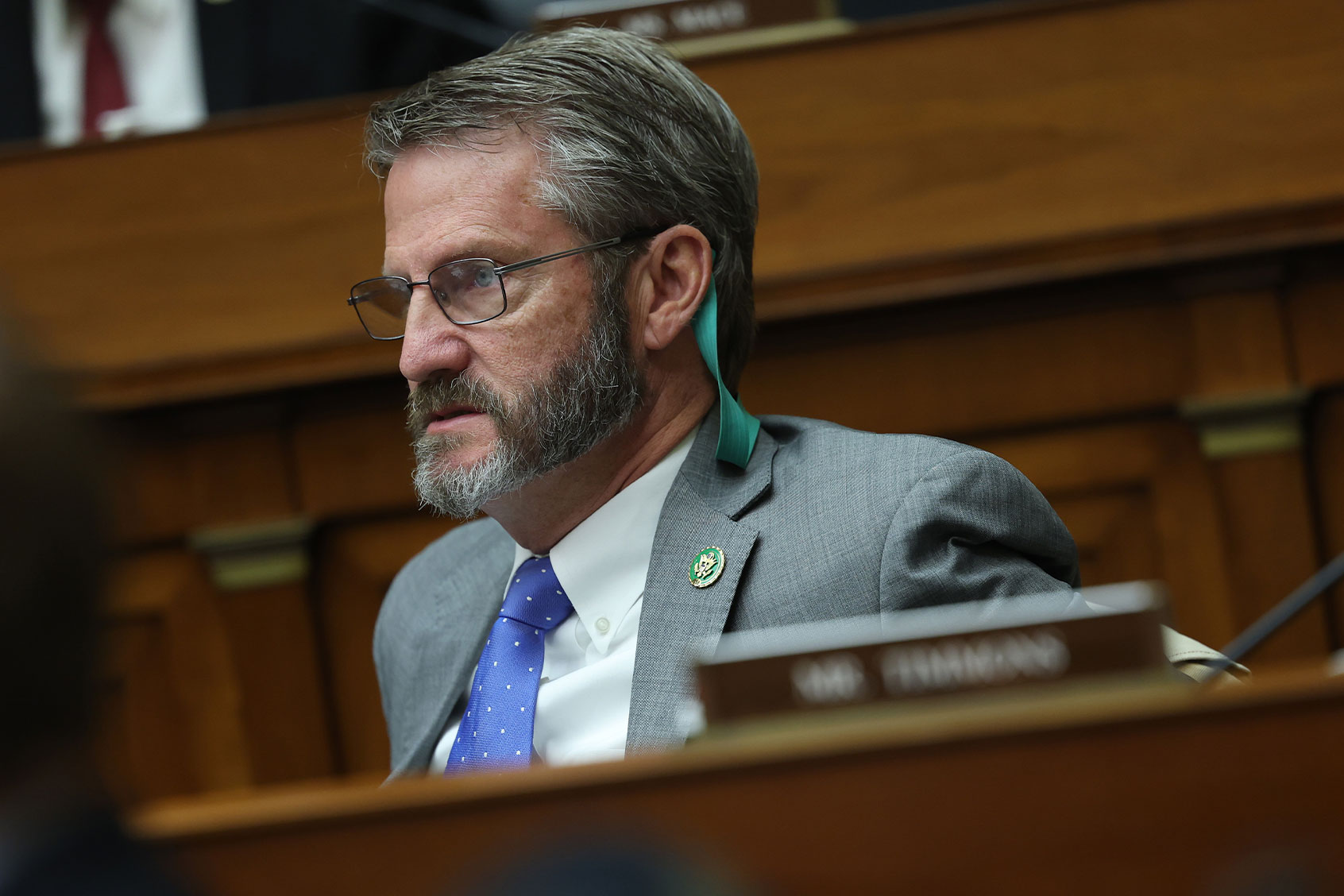
Tim BurchettU.S. Rep. Tim Burchett (R-TN) participates in a meeting of the House Oversight and Reform Committee in the Rayburn House Office Building on January 31, 2023 in Washington, DC. (Kevin Dietsch/Getty Images)

The ball is in Congress' court

On Capitol Hill, interest reportedly remains high among congress members. Last month, Graves said after staff meetings with sponsors of the UAP Disclosure Act that "it does not seem like they have lost interest, and remain committed to UAP transparency."

News Nation's Joe Khalil also reported Tuesday that GOP-led House Oversight Committee members have confirmed an effort to form a UAP Select Committee is underway among some congress members.

According to February memo from Laurence Brewer, chief records officer for the U.S. Government, and Chris Naylor, NARA's executive for research services, all federal agencies will have until the end of the fiscal year in July to "review, identify, and organize each UAP record in its custody for disclosure to the public and transmission to the National Archives."

The move is required by the new records management provisions in the recently enacted 2024 defense policy bill, which establishes a new UAP public repository in the National Archives. Agencies are expected to receive further instructions soon on handling specific records. 

The second volume of AARO's report is slated to include any findings resulting from interviews and research completed from Nov. 1, 2023 to April 15, 2024 and will "provide analysis of information acquired by AARO after the date of the publication of Volume I." 

In the meantime, all eyes are again on congress — and the skies. 

There is only one thing that matters about Donald Trump — and it’s not his crimes or mental decline

I don’t know about anyone else, but I’m already tired of the presidential election campaign and it’s just mid-March. And I like politics.

Usually, by this time in the campaign season, we’re not even sure who the nominees are yet. This year we already know and most of us have already made up our minds. That doesn’t mean anyone has stopped yelling at us, of course. It just means if you’re covering politics you’re already tired because the divisive rancor in this country is headed for overdrive until November (and possibly afterward) and some of us would like to spend a little bit of time thinking about someone other than Donald Trump or Joe Biden. The wife. The kids. The family. Maybe that mime on the beach who nearly drowned. Whoever. Whatever.

To quickly recap, standing in the sewage and heaving his own political feces far and wide is the wild orangutan of the Republican, excuse me MAGA, party – Donald Trump. We know what he’s all about. Do I really need to go into great detail? What can I possibly say that hasn’t already been written, said, recorded or spoken about the man. He’s still chaos in a blender. 

And his supporters? Most of them fall not too far from the poisoned tree of Trump. I spoke with one of his Midwest supporters this week; a used car salesman who believes all politicians are liars, but Donald is special. “They all lie. They’re all crooks. They’re all corrupt. The country was better under Trump though. We were at peace. He got us out of Afghanistan and Biden screwed that up. We were at peace with Russia and Biden screwed that up. There wasn’t a war in the Middle East. That’s Biden’s fault too.”

How do you dissect that nonsense? I didn’t even waste my time arguing with the guy. He’s like a bad SNL skit. It’s as bad as the morons who think God has chosen Trump to lead us to the promised land. If Joe Biden loses to this level of stupidity, he will have no one to blame but himself – and a Democratic Party that hasn’t effectively fought back.

Don’t focus on the Depends. Focus on the end.

Donald is busy slurring his way through speeches, calling other Americans “The enemy”, and creating campaign issues out of inaction, blame, deflection and fiction. You know, typical Trump. 

On the other hand, we have Joe Biden. The MAGA party is falling over itself in befuddlement as it tries to impeach him for reasons they don’t understand, can’t articulate and don’t believe. It is all to support their own candidate, who many of them secretly loathe but are willing to support because . . . they’ve got no one else. Think about it. Who in that party, outside of Trump, has any national appeal? Matt Gaetz would lose a fistfight to Rand Paul’s hair perm. The only real challenger is Nikki Haley and Trump effectively destroyed her by Super Tuesday.

Meanwhile, special prosecutor Robert Hur showed up in Congress this week to answer questions about the investigation into Joe Biden and his handling of classified documents. Hur was the guy who described Biden as a well-meaning old geezer. Since the prosecutor admitted Biden did nothing illegal, all the GOP could do was try to parse his words for soundbites and faux political arguments making the airwaves at Fox, and in articles at Breitbart. 

Hur was vilified by the left, lionized by the right and in the end, no one did anything – because, after all, this is a MAGA-controlled Congress and they can barely keep the lights on. That’s fine with Jim Jordan because he apparently operates best in the dark.

While the MAGA party has no real charges, so far, to level against Biden, that doesn’t keep them from calling him a degenerate, a corrupt criminal, a chronic bed wetter and a drooling dotard with dementia. It doesn’t matter if it’s true or not. Say it enough and the acolytes will believe. More importantly, they’ll start quoting you – that’s all the MAGA party wants. They say it here. It comes out there. Garbage in. Garbage out.

Meanwhile, over on the Meidas Touch video channel, a former Trump employee talked about Trump’s often explosive and violent bowel movements and his use of adult diapers.

But, even if Trump explosively evacuates his bowels on stage in front of thousands, you can’t count him out because remember those four jurisdictions with felony charges against him? Well, looks like that will never keep him out of the presidential race.

The first case to go to court, or maybe not, will be the Stormy Daniels hush money case in Manhattan. Even the fiercest prosecutors think that while the facts of the case are valid, it’s a stretch to charge Trump with a felony – it’s more likely just a misdemeanor. Former fixer Michael Cohen is waiting for a showdown with Trump – which Trump doesn’t want, so Trump has asked for a delay based on his claims of unlimited immunity – for actions that took place before he was president. That’s truly funny. I wonder if he’d claim immunity on stealing lunch money in fifth grade based on his “unlimited” immunity? 


Want a daily wrap-up of all the news and commentary Salon has to offer? Subscribe to our morning newsletter, Crash Course.


The Mar-a-Lago classified documents case is probably the strongest against Trump, but a Trump-friendly judge has prosecutor Jack Smith completely hamstrung, despite the fact that, as Ted Lieu so ably pointed out in the hearing with Hur, Trump lied, conspired to destroy evidence, shifted blame, lied again and then tried a Vulcan mind meld to say he could do whatever he wanted.

The D.C. insurrection case is so tied up in Supreme Court shenanigans it will be lucky to go to trial this fall. And in Georgia? The one case that Trump could not dismiss if he were re-elected? It may never get to trial. A judge dismissed six charges against Trump for lack of evidence. That prompted hoots, screams of “Deep State” (though it was the state that dismissed the charges) and of course, the inevitable plea by Trump for more money from his supporters. Meanwhile, the judge is still to rule on the tryst between Fulton County District Attorney Fanni Willis and special prosecutor Nathan Wade. That whole case sounds like a season of the old soap opera “All My Children.” Trump loves soap operas, so he’s munching popcorn and cheeseburgers waiting gleefully for that dustup to end so he can bilk his supporters for more money while screaming, ranting and raving (and perhaps suffering from explosive diarrhea) no matter what the outcome is.

What a presidential race this is turning out to be.

“We don’t have it so good in this country,” a Trump follower told me. “I don’t like either candidate, but I’ll choose Trump cause he can get things done.”

What, on God’s green Earth, or Trump’s scorched Earth, gives anyone the impression that Trump can get anything done? He never has. He couldn’t even run his own real estate “empire.”

He never got an infrastructure bill passed despite announcing “Infrastructure Week” nearly every week of his presidency. Members of his own party lament that they didn’t get border policy legislation passed when they controlled Congress during the Trump administration. The MAGA party claims immigration, the economy and national security are the main issues in the election – and while they may be right, they also haven’t done anything to contribute to solving any of the problems. They’ve only worked to exacerbate them and exploit them for Trump’s benefit.

Trump doesn’t care about solving the problems, and some of us don’t recognize the true problems we face. For example, the biggest fallout from prosecutor Hur’s testimony in Congress highlighted just how easy it is for our enemies to get access to classified and Top Secret information.

Don’t expect us to pay much attention to that salient point. Explosive bowel movements, hush money to hookers, and “illegal” immigrants who take all the jobs while sitting on their butts not working and getting unemployment are our biggest talking points.

Biden reached out to Trump to solve the immigration problem. “Let’s work together,” he said. Trump would have none of that. He just wants to dish out blame.

That leaves the “Thump them in the nose” approach the only viable alternative to Trump.

We need your help to stay independent

To hell with arguing about court cases. To hell with pointing out Trump’s foibles. Hillary Clinton lost because she didn’t go where she needed the votes in 2016. Concentrate on beating Trump at the polls. Make sure the election is secure. Make sure there’s no fraud. Make sure there’s no suppression.  Concentrate on doing those things and then it doesn’t matter if Trump goes to prison. Just make sure the seditious ass clown never makes it back to the White House. Count every vote and everyone must vote.

Isn’t that the real goal? Personally, I do not care if Trump spends one day in prison – though he deserves to spend the rest of his days there. I also don’t care that he’s old, or that Biden is old.

These things are distractions. The die has been cast. For the next eight and a half months we have to listen to the most moronic, insipid, ridiculous presidential campaign of all time between one old geezer with explosive bowel movements, and another who suffers from sleep apnea and is nursing a broken foot.

The only thing to do is to keep an eye on the prize. Do not be fooled by trinkets, and baubles. It doesn’t matter what goes on in court. It doesn’t matter if Donald is demented. It doesn’t matter if he’s a fascist, authoritarian, a despot, a philanderer, a numbskull, a loon, or a spoiled brat who has mommy and daddy issues. It matters that the atavistic ass could be our president – again. So, don’t focus on the Depends. Focus on the end.

Donald Trump must never return to the White House. We know what and who he is. Don’t waste your time pointing out the obvious, or getting upset about it. Do something positive. Turn out the votes. It is not a time to be complacent. It is not a time to become bored or unamused. The next eight months will be a trial of everyone’s intestinal fortitude. 

I read recently one reporter’s lament about suffering from PTSD following the 2016 campaign. Wussy. Buckle up buttercup. These are the times that try all souls. You’ve got a job to do. Report the facts. If we did that there might be fewer MAGA supporters as a result. 

The voters have a job to do, too.

Quit whining. Don’t listen to the next eight months of gaslighting. Vote.

Because, bottom line, Trump could still win. 

“That is frightening”: Legal analyst thinks Judge Cannon signaling she may “get rid” of Trump case

U.S. District Judge Aileen Cannon on Thursday is expected to hear from special counsel Jack Smith’s team and Donald Trump’s attorneys on the former president’s motions to dismiss his classified documents case.

Cannon set a hearing for Thursday to discuss Trump’s motions to dismiss the case, citing the Presidential Records Act and “unconstitutional vagueness.”

“I've handled a lot of motions in criminal cases. These are barely better than frivolous,” tweeted former U.S. Attorney Joyce Vance.

Trump has repeatedly claimed that the Presidential Records Act allows him to designate documents as personal records.

“But he's never been able to explain how the PRA trumps laws about handling classified & national defense info. It doesn't,” Vance wrote. “Even if, by some stretch of the imagination, a president can hang onto classified information by claiming its personal records, Trump's still obstructed justice according to multiple first-hand witnesses.”

Vance added that with any other judge, the motions would certainly be dismissed. “But with Judge Cannon, we just have to wait and see how she’ll rule,” she said.

MSNBC legal analyst Lisa Rubin argued on Thursday that the Presidential Records Act “doesn’t support the interpretation and almost the perversion that Donald Trump is trying to give it.”

Not only did Trump take sensitive documents but he also “deluded his own lawyers by having the boxes moved,” she said, predicting his motion will not “hold up.”

Cannon, who has been criticized for repeated rulings favoring Trump, earlier this month heard both sides’ proposals for a new trial date as the case has been delayed by pre-trial squabbles but she has yet to issue a new date.

We need your help to stay independent

"She has yet to issue a scheduling order setting a trial date. In the meantime, she's hearing argument today on two motions to dismiss,” Rubin said. “I'm not a betting person, probably would make a miserable one, but the fact she set oral arguments on two motions to dismiss makes me think maybe she thinks she can get rid of this case without setting a trial date. That is frightening, given the gravity of the charges here and the evidence that supports those charges."

Former federal prosecutor Donya Perry told CNN that she was surprised Cannon even called a hearing on these motions.

Cannon is "giving a lot of deference to the former president and his legal team" that is "a lot more than a lot of people think is merited, or that a lot of other judges would give in this situation,” she said.


Want a daily wrap-up of all the news and commentary Salon has to offer? Subscribe to our morning newsletter, Crash Course.


MSNBC host Joe Scarborough noted that Cannon’s previous orders have been “absolutely excoriated by the 11th Circuit” of Appeals.

"She can rule what she rules, but no court will uphold a preposterous argument," Scarborough said.

Climate change matters to more and more people – and could be a deciding factor in the 2024 election

If you ask American voters what their top issues are, most will point to kitchen-table issues like the economy, inflation, crime, health care or education.

Fewer than 5% of respondents in 2023 and 2024 Gallup surveys said that climate change was the most important problem facing the country.

Despite this, research that I conducted with my colleages suggests that concern about climate change has had a significant effect on voters’ choices in the past two presidential elections. Climate change opinions may even have had a large enough effect to change the 2020 election outcome in President Joe Biden’s favor. This was the conclusion of an analysis of polling data that we published on Jan. 17, 2024, through the University of Colorado’s Center for Social and Environmental Futures.

What explains these results, and what effect might climate change have on the 2024 election?

Measuring climate change’s effect on elections

We used 2016 and 2020 survey data from the nonpartisan organization Voter Study Group to analyze the relationships between thousands of voters’ presidential picks in the past two elections with their demographics and their opinions on 22 different issues, including climate change.

The survey asked voters to rate climate change’s importance with four options: “unimportant,” “not very important,” “somewhat important” or “very important.”

In 2020, 67% of voters rated climate change as “somewhat important” or “very important,” up from 62% in 2016. Of these voters rating climate change as important, 77% supported Biden in 2020, up from 69% who supported Hillary Clinton in 2016. This suggests that climate change opinion has been providing the Democrats with a growing electoral advantage.

Using two different statistical models, we estimated that climate change opinion could have shifted the 2020 national popular vote margin (Democratic vote share minus Republican vote share) by 3% or more toward Biden. Using an Electoral College model, we estimated that a 3% shift would have been large enough to change the election outcome in his favor.

These patterns echo the results of a November 2023 poll. This poll found that more voters trust the Democrats’ approach to climate change, compared to Republicans’ approach to the issue.

What might explain the effect of climate change on voting

So, if most voters – even Democrats – do not rank climate change as their top issue, how could climate change opinion have tipped the 2020 presidential election?

Our analysis could not answer this question directly, but here are three educated guesses:

First, recent presidential elections have been extremely close. This means that climate change opinion would not need to have a very large effect on voting to change election outcomes. In 2020, Biden won Georgia by about 10,000 votes – 0.2% of the votes cast – and he won Wisconsin by about 20,000 votes, 0.6% of votes cast.

Second, candidates who deny that climate change is real or a problem might turn off some moderate swing voters, even if climate change was not those voters’ top issue. The scientific evidence for climate change being real is so strong that if a candidate were to deny the basic science of climate change, some moderate voters might wonder whether to trust that candidate in general.

Third, some voters may be starting to see the connections between climate change and the kitchen-table issues that they consider to be higher priorities than climate change. For example, there is strong evidence that climate change affects health, national security, the economy and immigration patterns in the U.S. and around the world.

Where the candidates stand

Biden and former President Donald Trump have very different records on climate change and approaches to the environment.

Trump has previously called climate change a “hoax.”

In 2017, Trump withdrew the U.S. from the Paris Agreement, an international treaty that legally commits countries to reduce their greenhouse gas emissions.

Biden reversed that decision in 2021.

While in office, Trump rolled back 125 environmental rules and policies aimed at protecting the country’s air, water, land and wildlife, arguing that these regulations hurt businesses.

Biden has restored many of these regulations. He has also added several new rules and regulations, including a requirement for businesses to publicly disclose their greenhouse gas emissions.

Biden has also signed three major laws that each provides tens of billions in annual spending to address climate change. Two of those laws were bipartisan.

On the other hand, the U.S. has also become the world’s largest producer of oil and gas, and the largest exporter of natural gas, during Biden’s term.

In the current campaign, Trump has promised to eliminate subsidies for renewable energy and electric vehicles, to increase domestic fossil fuel production and to roll back environmental regulations. In practice, some of these efforts could face opposition from congressional Republicans, in addition to Democrats.

Public opinion varies on particular climate policies that Biden has enacted.

Nonetheless, doing something about climate change remains much more popular than doing nothing. For example, a November 2023 Yale survey found 57% of voters would prefer a candidate who supports action on global warming over a candidate who opposes action.

What this means for 2024

Our study found that between the 2016 and the 2020 presidential elections, climate change became increasingly important to voters, and the importance voters assign to climate change became increasingly predictive of voting for the Democrats. If these trends continue, then climate change could provide the Democrats with an even larger electoral advantage in 2024.

Of course, this does not necessarily mean that the Democrats will win the 2024 election. For example, our study estimated that climate change gave the Democrats an advantage in 2016, and yet Trump still won that election because of other issues. Immigration is currently the top issue for a plurality of voters, and recent national polls suggest that Trump currently leads the 2024 presidential race over Biden.

Although a majority of voters currently prefer the Democrats’ climate stances, this need not always be true. For example, Democrats risk losing voters when their policies impose economic costs, or when they are framed as anti-capitalist, racial, or overly pessimistic. Some Republican-backed climate policies, like trying to speed up renewable energy projects, are popular.

Nonetheless, if the election were held today, the totality of evidence suggests that most voters would prefer a climate-conscious candidate, and that most climate-conscious voters currently prefer a Democrat.The Conversation

Trump’s MAGA movement is causing Republicans in Congress to hate each other

It's wild what a few short months of actually getting to know a person can do to your opinion of them. That's what House Republicans seem to have learned since October, when they replaced the glad-handing Rep. Kevin McCarthy, R-Calif., with smarmy fundamentalist Rep. Mike Johnson, R-La., for the Speaker of the House role. Johnson's election was treated like a big win at the time. Republicans were unified in cheering and chanting "Mike! Mike!" like they were celebrating a championship-winning quarterback, instead of a guy who serves creepy youth pastor vibes.

Johnson's popularity lasted as long as an embarrassing dance craze, however. It hasn't been five months and already Johnson's colleagues are pulling the Mariah Carey "I don't know her" bit. Tuesday, CNN reported that fewer than 100 House Republicans bothered to RSVP for their congressional retreat in West Virginia this week, meaning that less than half the caucus showed up. 

"[S]ome Republicans have complained about the venue choice," CNN's reporters note. "Speaker Mike Johnson selected the Greenbrier Resort because it was 'family friendly,' in a break from past retreats which have taken place in sunny Florida."

No pity for people who elected a Puritan as their leader, only to find out he's serious about taking away everyone's good time. These same people were griping to Politico last month that Johnson's presentation at the last weekend retreat ignored pertinent-to-members issues like how to win re-election and grow their majority. Instead, "Johnson effectively delivered a sermon" about "declining church membership and the nation’s shrinking religious identity." They're just mad that they have to suffer the lives they're seeking to forcibly inflict on the rest of us. 


Want more Amanda Marcotte on politics? Subscribe to her newsletter Standing Room Only.


As fun as it is to pick on Johnson, however, it's not just him. Donald Trump and the larger MAGA movement are very much to blame. This is what radicalization does to communities. It stokes tensions and turns people against each other.  

Authoritarians romanticize order, imagining a society where everyone falls in line without quarrel. In the real world, however, it's hard to communicate, much less organize, without some tolerance for disagreement. When authoritarians get together, it's a clash of big egos of people who all think everyone else should unquestioningly obey them. It's not just that they fight, they have no capacity to work through disagreements. Skills like listening, empathizing, or compromising run counter to the MAGA mindset. So instead resentments and anger fester and grow. 

To get name recognition, fundraising, and support, Republicans must compete with each other to see who is most "MAGA," which usually means being the most willing to alienate others with grotesque stunts.

For instance, yet another House Republican decided to peace out before the end of his term. Rep. Ken Buck of Colorado apparently didn't bother to tell Johnson he was leaving before he told the press on Tuesday. To use the sort of language permitted at a Johnson-run retreat, to heck with the Speaker. "It is the worst year of the nine years and three months that I’ve been in Congress," Buck told CNN. 

Buck's move doesn't just continue shrinking the already small Republican majority in the House, it also may be the final nail in the coffin of the political career of Rep. Lauren Boebert, R-Beetlejuice. Boebert left her more moderate Colorado district after barely eeking out a victory last cycle to run in Buck's much-redder one. She had a good chance of winning the primary because the football stand's worth of identical white men running against her were going to split the anti-public groping vote. Now, there will be no primary, just a hastily scheduled special election with candidates chosen directly by party leaders, who probably will go with someone less embarrassing than Boebert.

The whole debacle underscores another reason why the perverse incentive structure of the MAGA movement conflicts with a party's need to maintain unity in the ranks. The right-wing media ecosystem favors loudmouthed trolls over boring workhorse politicians. To get name recognition, fundraising, and support, Republicans must compete with each other to see who is most "MAGA," which usually means being the most willing to alienate others with grotesque stunts. Even when, as they often do, those stunts run counter to what is good for the party. 

Boebert is a classic example. Even before her humiliating screw-up at "Beetlejuice," she spent much of her time on Capitol Hill trying to become one of the most infamous MAGA villains through non-stop stunts, like trying to bring a gun into House chambers. One of her most chronic efforts at getting attention was demanding the impeachment of President Joe Biden, which threw Boebert into constant conflict with Rep. Marjorie Taylor Greene, R-Ga., who also wanted the mantle of "crazy lady who wants to impeach Biden." 

This impeachment effort against Biden was a bad idea for the larger GOP, because he didn't commit any crimes and lying about that threatened to turn off independent voters in swing districts that Republicans need to maintain their majority. Buck, in particular, has been vocal about how politically toxic it would be to impeach Biden by falsifying evidence. He was proved right when the House committee tasked with that saw one phony piece of "evidence" after another exposed in a dramatic way, including the arrest of a fake whistleblower who appears to be working for a Russian spy. Buck preferred the more old-fashioned GOP strategy of pumping disinfo into the media ecosystem through lies and innuendo, but avoiding an attempt to frame someone for a crime he didn't commit, which draws the sort of legal and press attention that backfires. 

But while pushing for impeachment is bad for the Republican Party, it was — for a time, at least — very good for the MAGA celebrities doing it. It got them on Fox News and other popular right-wing outlets. It juiced their fundraising. And, as most of them have some level of toxic narcissism, it fueled their bottomless need for attention. For some, like Boebert, it may be the end of them. But most of the biggest MAGAholes are in safe districts and are taking over the party. Meanwhile, people like Buck — and Senate Minority Leader Mitch McConnell, R-Ky. — are being pushed out. 

Buck and McConnell, to be clear, are no heroes. They're reactionaries who, like their MAGA counterparts, exploit bigotry and right wing disinformation in order to push through policies that harm most Americans, to line the pockets of the already-rich. But both came up in a time when, to be successful, even very conservative politicians had to learn how to build alliances and even compromise with the opposing party. (Though McConnell prided himself on his extra-legal efforts to get around the latter when he could.) They did not think it beneath them to check their own egos to hold a coalition together. 

“Experts are desperate to warn the public”: Hundreds sign Dr. John Gartner’s Trump dementia petition

Since at least 2016, a brave, determined, and stalwart group of psychologists and other mental health professionals have been trying to warn the public about Donald Trump’s obvious unwellness and pathological behavior. Based on mountains of public evidence of Trump’s behavior and what he has encouraged in others, these mental health experts concluded that the corrupt twice-impeached ex-president, a sexual assaulter as confirmed by a court of law, aspiring dictator, and defendant who is now facing hundreds of years in prison appears to be a sociopath if not a full-on psychopath.

In following through on their ethical obligations, the “duty to warn” the public about a uniquely powerful and dangerous person such as Donald Trump, these mental health professionals risked their careers, reputations, and yes, even personal safety. If members of Congress, then President Trump’s cabinet officials, senior law enforcement, and others with the power to contain the dangerous ex-president had listened to them and acted accordingly, the country would not be on the precipice of Trump's return to power where he will, as threatened and promised, become America’s first dictator.

As seen in the last few weeks and months, Donald Trump’s dangerousness is rapidly escalating. At his rallies and other events, Donald Trump is exhibiting obvious and repeated examples of challenges in his speech, language, and memory. In a widely read series of conversations here at Salon, Dr. John Gartner, who is a prominent psychologist and contributor to the bestselling book "The Dangerous Case of Donald Trump: 27 Psychiatrists and Mental Health Experts Assess a President," has been warning that Trump is apparently suffering from dementia or some other type of brain disease.

Gartner summarizes this as: “Not enough people are sounding the alarm, that based on his behavior, and in my opinion, Donald Trump is dangerously demented. In fact, we are seeing the opposite among too many in the news media, the political leaders and among the public. There is also this focus on Biden's gaffes or other things that are well within the normal limits of aging. By comparison, Trump appears to be showing gross signs of dementia. This is a tale of two brains. Biden's brain is aging. Trump's brain is dementing.”

One of Dr. Gartner’s colleagues, Dr. Harry Segal, who is a senior lecturer at Cornell University and Weill Cornell Medical School, has gone so far as to suggest that Donald Trump should withdraw from the 2024 Election and seek immediate medical help.

Dr. Gartner is far from alone in his concerns and warnings.

In attempt to raise public awareness, Dr. Gartner has created a new petition at Change.org.: “We diagnose Trump with probable dementia: A petition for licensed professionals only.”


At the time of this writing, hundreds of verified mental health and other medical professionals have signed the petition. This group includes some of the leading experts in their respective disciplines. Some of these signers have also offered detailed comments about what they have concluded, based on the obvious evidence, is Donald Trump’s increasing cognitive difficulties, and why he is therefore unfit for office.

In this, our third conversation about Donald Trump’s apparent cognitive problems, Dr. Gartner continues to document the ex-president’s behavior, explains the importance of the growing consensus by medical professionals that Trump is apparently experiencing cognitive challenges, and warns that the ex-president should not be given access to classified information because he is untrustworthy and easily manipulated by malign actors.

This conversation has been edited for clarity and length.

Several weeks ago, we began our series of conversations here about Trump’s obvious cognitive challenges and how they appear to be getting worse at a rapid pace. It is all unfolding as you predicted.

Our conversations are starting to feel like a weekly dementia round-up. Trump keeps proving my point. This week’s lowlights include more phonemic aphasias. Here are a few examples I have noted. “We have becrumb a nation.” “All comp-ply-ments” to Joe Biden. “I know Poten.” "He can’t cam-pay." He can’t campaign. “We will expel the wald-mongers.”

"The American people are going to have a collective nervous breakdown if Trump takes back power."

We had more examples where Trump couldn’t complete a sentence and strung the fragments together incoherently. It’s worth noting that his demeanor changes dramatically at these moments. At one point, Trump was making nonsense sounds, struggling to form even a single word. At one of his events, he said “We’ll re-ve-du. Ohhhh..” At that moment, Trump took a long-defeated sigh, and looked up at the ceiling blankly, looking confused and de-energized. Finally, Trump is sometimes reduced to simply vocalizing nonsense sounds that are not words at all like an infant. For example, at a recent rally Trump said "Gang, boom. This is me. I hear bing". Trump is literally babbling nonsensically and his followers at these rallies, or interviewers on right-wing media, are nodding their heads in appreciation like he makes sense. This is deeply disturbing.

I am continuing to catalogue examples of what to me, clearly appear to be his cognitive decline. I just gave you some examples from last week, but there are more. Ron Filipkowski has a super-cut reel on Twitter that shows 30 examples of gross cognitive slippage from the last week alone. 30! How much more evidence do we need before the mainstream media starts asking the question: Is Trump showing signs of dementia?

You have started a petition at Change.org where medical professionals can sign and offer a comment if they have come to the preliminary conclusion that Donald Trump is exhibiting signs of apparent cognitive decline. Why did you take this step? What has the response been like?

I knew medical and mental health professionals were seeing what I was seeing: flagrant and increasingly frequent signs of dementia, signs that really can't be that easily confused with anything else, and signs that aren't subtle. We're seeing them week after week, and they are getting worse and worse. And no one is saying anything! I had to find a vehicle to give other medical and mental health professionals a chance to express their professional opinions and have a voice. That was the purpose of the petition. At this point, the petition has over 300 verified signatures. Those numbers are going to grow because the petition has only been available for about a week, or so. These licensed professionals, many of them experts in this subspecialty, are making the medical case, point by point with concrete behavioral examples, that Trump's behavior strongly suggests dementia.

The petition includes signers from the faculties of the country’s best medical schools. These are people who know what they’re talking about.

These experts are desperate to warn the public, because they see the signs of Trump’s cognitive decline through the eyes of years of training and experience.

They know better than anyone the alarming implications of what we are all seeing with our own eyes. It’s maddening to them that no one with the right letters after their name is sounding the alarm. The licensed professional experts who signed this petition are medical whistleblowers, risking their reputations and their livelihoods to warn the country of looming catastrophe. Lots of my good colleagues begged off signing this petition, admitting to men that they were afraid of potential reprisals, both professional and personal. These signers are heroes in my book.

Why do you think the American mainstream news media, for the most part, is staying away from this issue of Trump’s obvious aberrant behavior? Why are they not talking in clear and explicit terms about what all of us can see?

I really don't know what their motivation is. Sometimes I'm very cynical, and I just think that these media outlets are owned by huge corporations that are inherently conservative and right-wing. Sometimes I just think they're cautious. In Jennifer Rubin's column in the Washington Post, she called out her colleagues in the media for harping on Biden’s age and while remaining silent about Trump's increasingly obvious cognitive decline. She mentioned our conversations here as a model for how the story should be reported. But Rubin is an outlier. I want to shame the American news media into covering Trump's readily apparent cognitive decline. We are imperiled as a country and a people. I want to make enough noise so the media can’t keep ducking the question.

The press has flogged the non-story of Biden’s age to death. Yes, Biden’s old. So am I. He forgets names and dates. So do I, and so do most of the people in my age cohort. So what? To say we’re less able because of these blips is just plain ageism, pure and simple. News flash: We senior citizens have something you young whippersnappers don’t: the wisdom and judgment that comes from experience. Most societies revere their elders but we ridicule ours.

Meanwhile, the press edits out the most disordered parts of Trump’s speeches or normalizes his behavior with innocuous euphemistic words, like “rambling” The press is pathologizing the normal in the case of Biden and normalizing the pathological in the case of Trump. It’s perverse.

How do you rebut the obvious, and at this point tedious, pushback that you and your colleagues are violating the so-called Goldwater Rule?

It has become a type of blanket denial, this hiding behind the Goldwater Rule. Apparently, no matter what symptoms we are seeing, no matter how much evidence there is, and no matter how many people with direct contact with Trump say that there is a serious problem with his precipitous decline, medical and mental health professionals are supposed to ignore it and treat the whole matter as some type of unknowable thing—because we didn’t meet personally with Trump. Does that make sense to you? Obviously, Donald Trump is not going to submit himself to a psychiatric examination from neutral parties who are real experts and then give them permission to report their findings to the public. Ultimately, the people who have the expertise to explain what appears to be happening with Trump's mind and brain are forbidden from commenting on it.

We are the only medical specialty or profession of any kind under a permanent gag order, and all because Barry Goldwater embarrassed the American Psychiatric Association when he sued a magazine in 1964 for some ill-advised psychiatric opinions they quoted. And if a mental health professional has the courage to speak the truth, they're told that what they have to say is entirely invalid because of this antiquated ethical precept. First of all, we really should make a distinction between invalid and unethical.

If you want to argue that I'm being unethical for diagnosing Donald Trump, well that’s one argument we can have. But that doesn't mean that I'm not accurate in my diagnosis. Looking at the petition, these are very serious and expert people, real professionals with decades of experience, who have reached the conclusion based on the available evidence — which is overwhelming — that Donald Trump appears to be showing signs of probable dementia. One can potentially argue that they shouldn't be speaking publicly about this, but one cannot reasonably deny their expertise or the evidence. So, in the end, who are you going to believe? Medical experts with years of experience, making fact-based arguments based on observable data who are literally risking their careers to warn the public or the MAGA apologists and propagandists?

What is the consensus that has been reached by the medical professionals who have signed your Change.org petition?

Trump’s a classic case of dementia. He ticks all the boxes. He’s shown a precipitous decline from his baseline—He once had a rich vocabulary and spoke in polished paragraphs. And he shows the classic disturbances in memory, language, behavior, and motor performance that we see in dementia patients. If Trump were their patient or my family member, they would urgently refer him for an emergency neuropsychiatric evaluation. And under no circumstances would a patient showing this level or organic cognitive decline be capable of being president.

Donald Trump commands the support of tens of millions of people. His most diehard followers exhibit the behavior of being in a cult. Trump exalts in being a de facto cult leader. In terms of the leader-follower dynamic, what will happen to our society if Trump, given his apparent cognitive and emotional and intellectual difficulties, were to become president again?

It is a national emergency. If Trump were to take back the White House, the American people would be living in what would be the equivalent of an insane asylum. The leader would be like a mad king, and everything would make no sense. The country would be ruled by the chaos emanating from President Donald Trump. Most people cannot imagine how bad it is going to be when Donald Trump has absolute power. The American people are going to have a collective nervous breakdown if Trump takes back power.

If Donald Trump is in fact suffering from some type of cognitive deterioration as you and your colleagues have initially concluded, how would this impact his impulse control? The ability to self-censor his thoughts and speech for example? To behave responsibly and self-regulate?

There's a lack of awareness about his own behavior from Trump. Many of the experts who signed the petition made that observation. Trump makes these gross verbal errors, talking in gibberish and nonsense, but he has such confidence that he keeps going. He just barrels through without embarrassment or being self-conscious about his obvious problems. Because of his severe personality disorder, he's always lacked a capacity for self-awareness and critical self-reflection about hideous behavior. But now, he’s oblivious to the fact that his mind appears to be rapidly deteriorating before our eyes.

We need your help to stay independent

Donald Trump does not have a moral core. He has demonstrated that repeatedly through his decades of life. But now it appears that Trump is having problems with self-regulation. That is a horrible combination, one that results in chaotic random evil behavior. In the end, Trump's apparent inability to self-regulate is just an aggravating factor that magnifies all the other pathologies that we've seen thus far.

Donald Trump, because of his status as the de facto Republican presidential nominee, is poised to begin receiving classified intelligence briefings. Should Trump have access to this information?

We know that Trump will sell the information to the highest bidder. Given Trump's character, that would be the case excluding any neurological problems. Trump has no loyalty to the United States. He is only loyal to his own self-interest — and based on his behavior perhaps Vladimir Putin too. If someone is charged with multiple indictments for stealing classified documents, you probably shouldn’t give them more classified documents.

To that point. Trump just met with the autocratic leader Viktor Orban of Hungary. Trump openly admires Putin and other political gangsters, thugs, and tyrants. Given your conclusion, how easy would it be to manipulate Donald Trump?

Very easy. We're not talking about a demented Ronald Reagan, who still loved America, and in the end wanted to do right for the country. Donald Trump has shown himself to be a traitor who will do anything he can to hurt the country for his own benefit. That is Trump's default position. Were Trump to become president again, how hard would it really be for our foreign adversaries to manipulate a president who can already be won over with simple ego-stroking and bribes, but is now also experiencing obvious cognitive decline?

Donald Trump, because he’s fundamentally corrupt at his core, attracts confidence men, de facto psychopaths, and swindlers into his inner circle. In a vulnerable demented state, there are going to be lots of people working for Trump who are being paid by foreign governments and other hostile interests to manipulate him to do things that are favorable for them and not America.

Do you believe that President Biden should directly engage these questions about Trump's mental and emotional health? If one of his advisors or some Democratic Party campaign consultant reached out to you, what would you tell them?

President Biden has always done better when he's gotten more aggressive. The State of the Union speech was a great example of this. Why wouldn’t Biden and the Democrats not inveigh against the real dangers presented by Trump’s severe cognitive decline? I would argue they’re obligated to. It’s the truth! And people need to know.

Otherwise, the Republicans control the false narrative, focusing on Biden’s age when we should be focusing on Trump’s dementia.

Beyond any clinical observations or evaluations, as a human being, how are you feeling watching Trump behave like this?

It's terrifying. This is a nightmare scenario. I have been speaking to my colleagues and also those medical professionals who have contributed to the petition and they are telling me that they are scared too. They're all saying that this person is uniquely incapable of being president because on top of his malignantly narcissistic personality, he now appears to be losing his cognitive abilities. Can you imagine a worse combination? I'm learning to be more spiritual and to give more trust to the universe. That's the only way I'm surviving. We must continue to sound the alarm. Those of us who can see what is going on with Trump's obvious cognitive challenges must not let ourselves be gaslit into thinking that this is all somehow normal. We are not hallucinating or imagining things. Donald Trump is dangerous and becoming even more so. That’s obvious to anyone paying attention.


Desperate for delay in New York criminal trial, Trump fires blanks to stop it

Last week, Donald Trump filed a new motion to delay his Manhattan prosecution for falsifying business records to cover up an election interference scandal before the 2016 election. The new filing is so pathetically weak that NBC Legal Analyst Lisa Rubin called Trump’s new motion the “Hail Mary to end all Hail Mary’s.” 

Trump’s desperation to avoid criminal accountability is showing. With the 2024 election looming, he doesn’t want America to know whether 12 ordinary jurors think he committed crimes connected to his 2016 cover up. It’s the crux of Manhattan DA Alvin Bragg’s election interference case.

Back in October 2016, mere weeks before the presidential election, Trump hid from voters his alleged one-night stand with adult film star Stormy Daniels. He feared the scandal would derail his wobbling campaign in the days immediately following the release of the infamous “Access Hollywood” tape. In it, Trump said that as a celebrity, he could do anything he wanted to women, including to “grab them by the p***y.” 

So Trump made a hush money payment to Stormy Daniels via his then-lawyer Michael Cohen. Trump feared that, if released, Daniels’ story would be a one-two punch that could TKO his presidential prospects. Eight years later, he now has the same concern about a jury verdict in the case. 

Once an election interferer, always an election interferer.

To keep voters from seeing that, Trump wants the 2016 election interference prosecution in New York “adjourned” – that is, delayed for weeks or months — pending the Supreme Court’s decision on presidential immunity in the federal prosecution for his attempt to overturn the 2020 election. 

Let’s look at three weaknesses in Trump’s newest attempt at using delay to keep from the voters information they want about his guilt or innocence.

First, he doesn’t and can’t make a direct immunity claim like he has in Jack Smith’s January 6 case in DC. In New York, he surrendered that claim last year when he unsuccessfully sought to “remove” the case to New York federal court in an early attempt to delay the prosecution. 

Trump’s real target is not Judge Merchan but the U.S. Supreme Court, where he can always count on votes from reactionary Justices Clarence Thomas and Samuel Alito.

The problem was that his “removal” claim was based on exactly the same argument as his potential “immunity” claim, and he lost the argument in federal court. You only get one bite at the apple when you fail making a legal argument and the ruling becomes final. 

Trump had argued in seeking removal that when he wrote checks to Michael Cohen in 2017 to reimburse him for his 2016 payments to Stormy Daniels, and when he mischaracterized those reimbursements as “legal fees,” he was acting in his official capacity as president. Last July, federal district court judge Alvin Hellerstein rejected that borderline frivolous claim, ruling that Trump was acting personally, not as president

There went Trump’s more valuable, even if legally weak, claim that he was immune from prosecution for writing the checks because he was performing an official presidential function.

Trump and his lawyers apparently realized their error too late. In November, they dropped their appeal of Judge Hellerstein’s decision like a steaming potato left too long in the microwave. Nonetheless, dismissing the appeal didn’t salvage the claim for purposes of a future assertion of immunity. 

That’s why Trump’s present motion is a bank shot aimed at the same side pocket. Trump’s new motion says that while he may not be immune, any statements that he made while president are “immune” from being used against him – as if presidents are divinely anointed so that every word they utter while in office is surrounded by a halo of untouchability. 

We need your help to stay independent

Now there’s a clunker of a legal argument. Trump’s motion cites no authority – because there is none – for the preposterous proposition that in a case where a former president has waived immunity, his statements cannot be used against him. It looks very much like he’s trying to renew a claim that he has already surrendered.

Second, even if there were some authority suggesting that a president’s official statements could not be introduced against him in a trial, Trump’s motion fails to cite any statement that relates to his official duties. Every statement he cites is connected to covering up a sex scandal for the purpose of interfering with the 2016 election.

“Hush money paid to an adult film star,” as Judge Hellerstein wrote, “is not related to a President's official acts.”

Third, Trump failed to submit or give notice of his motion by February 22, the deadline the New York court set for submitting all pretrial motions. Ten days earlier, Trump had already filed for a Supreme Court suspension of his DC election interference trial pending review of the immunity claim to which he now hitches his new, fabricated argument in New York. At that point, if he wanted to preserve his right to raise this new claim in the New York court, he should have alerted it that he would be filing the new motion if the Supreme Court agreed to consider his claim of immunity. 

Let’s be honest. Trump’s real target is not Judge Merchan but the U.S. Supreme Court, where he can always count on votes from reactionary Justices Clarence Thomas and Samuel Alito. A stay motion, however, takes votes from five Justices. 

Trump getting five votes would not be shocking after the court’s recent action reading the Disqualification Clause of the Fourteenth Amendment out of the Constitution to keep insurrectionist Trump on the Colorado ballot, and after the court’s decision to hear the immunity case. Even so, Trump’s new motion in New York is so lame that action by the court granting Trump more delay would effectively cripple its last claim to legitimacy.

The nation needs a Supreme Court that preserves what little right to public trust it has remaining. Call us naive, but we are hopeful that Trump’s ridiculous new plea for delay will fail to get five justices’ votes, and his New York trial will start as scheduled on March 25.

Measles cases are sweeping the nation. Even a few cases can be an extreme drain on the public

This week, a team with the Centers for Disease Control and Prevention (CDC) arrived in Chicago to assist in the response to the measles outbreak. According to the Chicago Department of Public Health, eight cases have been reported in the city in the past week. It’s the first time measles have been detected locally in Chicago since 2019. The outbreak in Chicago comes after an outbreak occurred last month, which has since been contained, in south Florida.

At the same time, in California, at least 300 people have been exposed after a child went to the University of California Davis Medical Center hospital for treatment recently. Michigan also recently confirmed its first case of measles. As the Atlantic reported, measles are making a comeback in the United States, confirming warnings from earlier this year in which health officials predicted we'd see more measles outbreaksin 2024.

“We're turning back the clock 30 years, 40 years, and exposing our children unnecessarily to a really nasty virus, one that we had eliminated from the United States,” Dr. William Schaffner, a professor of infectious disease at Vanderbilt University Medical Center, told Salon. “Leaving pockets of unvaccinated children here in our own country, which once led the world in eliminating measles, seems to us in infectious diseases and public health a great tragedy — and great frustration, frankly.”

Before the measles vaccine was widely available in the U.S., nearly 400 to 500 children would die from measles and its complications each year.

It's frustrating, in part, because measles is preventable. The measles vaccine is extremely effective. After two doses, nearly 99 percent of people will be shielded against infection. But in order to control the spread of measles in a population, a community needs a vaccination rate of around 95 percent. If it drops below that — even by a single percentage point — it can lead to localized outbreaks, like the U.S. is experiencing.

As experts have previously emphasized to Salon, measles isn’t just a fever and a rash as some try to casually portray online. An estimated one in four infected patients will be hospitalized. In severe cases, there can be complications like pneumonia and encephalitis — a swelling in the brain that can trigger seizures, deafness and mental disability. Before the measles vaccine was widely available in the U.S., nearly 400 to 500 children would die from measles and its complications each year.


Want more health and science stories in your inbox? Subscribe to Salon's weekly newsletter Lab Notes.


In addition to being concerned about the health of unvaccinated children, infectious disease and public health experts tell Salon that the cost, both monetary and emotional, of even one single measles is high for all of those involved, requiring a lot of resources from the healthcare system. Similar to how COVID-19 placed tremendous strain on the U.S. healthcare system, measles outbreaks can do the same. 

“Whenever a measles case is identified in a community, it sets off a whole cascade of events,” Dr. Sean O’Leary, who is the chair of the committee on infectious diseases at the American Academy of Pediatrics, told Salon, elaborating when it comes to measles an “outbreak” is defined by one single case. “Public health authorities spring into action when that happens and that can involve a number of individuals,” he said. 

And “time is money,” O’Leary emphasized. 

At the Children’s Hospital in Colorado, where O’Leary works, if there’s a measles exposure, a whole team in the hospital works to figure out who has been exposed, which can be a lengthy process that involves tracking everyone down.

“It's a big deal and that's just the single exposure of a kid coming into the emergency room,” O’Leary said. “Beyond that, the local public health and state public health track down everywhere that person has been, and that takes a lot of time and effort.”

We need your help to stay independent

After that, for people who were unvaccinated and exposed, officials have to track down their potential exposures as well. Again, this is for one single case. If there’s more than one confirmed case, the resources continue to multiply. 

“The costs can quickly skyrocket,” O’Leary said. “And what's so frustrating, from the perspective of people like myself who work in the world of vaccines, is that these are essentially entirely preventable with a very simple low-cost vaccine.”

There have been a few studies published trying to quantify the cost of a measles outbreak. Authors of a paper published in Clinical Infectious Diseases found the median cost for an outbreak was $152,308 — but that’s just an average estimate. An outbreak in Tucson, Arizona, involving 14 cases in 2008 was estimated to cost $799,136. Researchers estimated that an outbreak of 72 cases in Clark County in the state of Washington came with a societal cost of $3.4 million. 

The toll a measles outbreak takes extends beyond public health resources. When it comes to treating measles, O’Leary said there aren’t any “effective antivirals” and that doctors usually have to manage the symptoms. This can be costly for the patient.

“Pneumonia is a common complication of measles, and so they may need oxygen,” O’Leary said. “Some of the kids might end up on a ventilator, so that can be considered part of treatment, but again there’s nothing specific that we can use to stop the course of disease.”

"There are a lot of disruptions, there are medical costs,” Schaffner said. “There's nothing good to be said about measles.”

Schaffner added there are costs to the clinical side as well. Frequently, there are diagnostic delays because there are two generations of doctors who aren’t thinking about measles right away when a patient comes in with symptoms, which could mean frequent doctors visits. A child infected with measles also has to stay home from school for a couple of weeks. The CDC also recommends that unvaccinated students stay home from school for three weeks after exposure.

“On the personal, family and individual side, there are a lot of disruptions, there are medical costs,” Schaffner said. “There's nothing good to be said about measles.”

Schaffner emphasized measles is a “public health emergency” and the response to one is serious. 

“There's a terrific expenditure of resources and monies in response to even a single case,” Schaffner said .”It’s thousands of dollars, and a diversion of public health resources from the routine to responding to this outbreak.”

“You’re a mass murderer”: Climate protesters confront Chevron CEO at gender inclusivity event

Chevron CEO Mike Wirth attempted to deliver a speech at a corporate diversity event on Tuesday about gender inclusivity. Before he could finish his remarks, he was publicly confronted by climate change activists from Climate Defiance, who accused him of hypocritically hurting women while accepting an award from a "corporate diversity event."

In a video posted to X (the platform formerly known as Twitter), the activists can be heard shouting profanities at Wirth and ultimately pressuring him into leaving the event. Before Wirth's departure, the activists are seen storming the stage where Wirth was present, and then delivering a series of statements. One protester accused Chevron of "killing thousands of Indigenous women, and exposing thousands more to cancer and reproductive illness," concluding that "you are not an ally to women. You are a murderer!"

Another protester criticized the oil company for allegedly "increasing offshore gas drilling with Israel in the midst of a genocide against the Palestinian people." Still another referenced a lawsuit in which 30,000 Ecuadorians were awarded $9.5 billion from the petroleum behemoth, which has not yet paid a penny. Chevron "owes billions of dollars in damages for poisoning the Ecuadorian rainforest," the protester said in the clip.

Climate Defiance is famous for its theatrical protests, which target political and business figures associated with the fossil fuel industry. Speaking with Salon in January after a protest at an event for Sen. Joe Manchin — a West Virginia Democrat well-known for supporting the fossil fuel industry — Climate Defiance founder Michael Greenberg explained the group's philosophy to Salon.

"I believe it is important to be disruptive and confrontational, while of course remaining nonviolent," Greenberg explained. "Our aim is not to move Manchin but to shake society awake and shift the terms of debate."

Olivia Munn reveals she had a double mastectomy following an aggressive breast cancer diagnosis

Olivia Munn, star of "X-Men: The Apocalypse" and the HBO series “The Newsroom,” revealed in a lengthy post to Instagram on Wednesday that she underwent a double mastectomy after being diagnosed with an aggressive form of breast cancer last year.

Sharing her story in the hope that "it will help others find comfort, inspiration and support on their own journey," Munn gives thanks to her husband, comedian John Mulaney, with whom she shares a 2-year-old son, crediting him for doing independent research on the four surgeries she's had in the past ten months, as well as her medications, to get a better understanding of their recovery time and side effects.

According to her statement, in February 2023, Munn took a genetic test that checked for cancer genes — including BRCA, the most well-known breast cancer gene — and tested negative across the board, only to find out two months later that she had breast cancer. 

“I’ve kept the diagnosis and the worry and the recovery and the pain medicine and the paper gowns private," she writes. "I needed to catch my breath and get through some of the hardest parts before sharing.”

Munn highlights the importance of people asking their doctors to calculate their breast cancer risk assessment score, having done so at the urging of her obstetrician-gynecologist, which sent her down a health plan that included an M.R.I, an ultrasound, and a biopsy, all aiding in early detection.

“The fact that she did saved my life,” Munn says of her doctor's pro-active testing. 

https://www.instagram.com/p/C4dXfrULDdJ/?igsh=NDlvejY3ZjV6dGJo&img_index=1


Aaron Rodgers’ Sandy Hook conspiracy theories revealed after RFK Jr. names him as VP option

On Tuesday, word spread that Independent presidential candidate Robert F. Kennedy Jr. is eyeing New York Jets quarterback Aaron Rodgers as a potential VP candidate and, hours later, dirt from his past began to surface.

According to CNN reporter Jake Tapper and journalist Pamela Brown, Rodgers — who was reportedly on an ayahuasca retreat in Costa Rica when news of RFK Jr.’s plans for him first broke —has a history of sharing "deranged conspiracy theories about the 2012 Sandy Hook school shooting not being real," and said as much to Brown herself.

According to her first-hand account, while covering the Kentucky Derby for CNN in 2013, Rodgers, then with the Green Bay Packers, bent her ear at a post-Derby party, accusing news media of covering up important stories and posing his theory that the Sandy Hook shooting was "actually a government inside job and the media was intentionally ignoring it." An anonymous source that spoke to CNN on the matter reportedly had a similar experience, telling the outlet that several years ago, Rodgers claimed, “Sandy Hook never happened…All those children never existed. They were all actors.”

Rodgers, who has yet to comment on this, made headlines in January after being called-out by Jimmy Kimmel for connecting him to the impending release of the so-called Jeffrey Epstein list during an appearance on "The Pat McAfee Show” in which he said, “There’s a lot of people, including Jimmy Kimmel, are really hoping that doesn’t come out.” 

Don Lemon’s X talk show deal is canceled after a “tense” interview with Elon Musk for the premiere

In January, former CNN anchor Don Lemon announced a partnership with Elon Musk to produce long-form video content on X (formerly Twitter), but after interviewing Musk for his premiere episode, the agreement has turned from a green light to a red light.

According to Musk, "The Don Lemon Show" lacked originality, explaining his reasons for canceling the deal via a post to X, writing, “His approach was basically just ‘CNN, but on social media,’ which doesn’t work, as evidenced by the fact that CNN is dying." But Lemon sees things differently, issuing a statement of his own where he says "a whole lot" went down during their interview, which he still plans to post to X, and be paid for.

“Elon Musk is mad at me," Lemon said in a video to tell his side. "This does not change anything about the show except for my relationship with Elon and X . . . and I’m gonna tell you about it in the coming days. Apparently, free speech absolutism doesn’t apply when it comes to questions about him from people like me.”

Lemon states that he and Musk "had a good conversation" that covered everything from SpaceX to the presidential election, but admitted that it "was occasionally tense," according to The New York Times, especially during moments where he asked probing questions about Musk’s reported drug use and his various business ventures. 

In a statement from X, they write, "X is a platform that champions free speech, and we’re proud to provide an open environment for diverse voices and perspectives. The Don Lemon Show is welcome to publish its content on X, without censorship, as we believe in providing a platform for creators to scale their work and connect with new communities. However, like any enterprise, we reserve the right to make decisions about our business partnerships, and after careful consideration, X decided not to enter into a commercial partnership with the show."


Madonna’s comments at concert points out larger impact of casual ableism and accessibility issues

Pop icon Madonna is in hot water for a recent comment about a fan in a wheelchair at one of her concerts, igniting debate on ableism and accessibility.

During a March 9 stop on her Celebration Tour, the "Like a Virgin" singer is seen in a video recorded by an audience member yelling from the stage while pointing into the crowd, "What are you doing sitting down?" The implication was that the concert attendee should be standing up and/or dancing to show they were having fun or into the music.

However, Madonna realized her blunder when she walked to the edge of the stage and took a closer look at the audience member she had called out. The person was in a wheelchair. Then she said, “Oh, OK. Politically incorrect, sorry about that. I’m glad you’re here,” NBC News reported.

The video has been widely circulated on social media igniting more discourse surrounding concert etiquette with performers like Elle King, Miranda Lambert, Pink and Steve Lacey acting out against fans, perhaps disillusioned with the parasocial relationship with their fans. However, this incident has sparked more than just debate about concert etiquette, it has pointed out the casual ableism and larger accessibility issues for disabled people in spaces like concerts.

People online have criticized the singer for ableism, assuming that everyone has the same abilities and needs, and therefore must conform to one physical behavior. “Lots of people need to sit down who don’t use wheelchairs, too. This is honestly just gross, ableist behavior,” one user said on X. “Appreciate that the person purchased a ticket and came to see you!”

Clinical psychologist Dr. Annie Hickox said, "It’s not just ‘politically incorrect’ or ‘woke’ to lambast [sic] wheelchair users. It’s pure ableism & glaring privilege."

Madonna may not have intended any harm with her comment, but this incident highlights how common it is for someone to make an unintentional and casual ableist comment, and she won't be the last. While attitudes and rhetoric have come quite a long way because of federal mandates like the Americans with Disabilities Act, and detailed accessibility guidelines like the ADA Accessibility Standards – nevertheless, ableism still exists and most times it's more subtle, Forbes reported. San Jose State University defines causal ableism as the kind of language that is "microaggressive and can include using disability as an insult or as an expression."

Even using language and words like “stupid,” “insane,” “crazy,” “lame” or “dumb,” unknowingly or not, is participation in ableist language, The Harvard Business Review reported. But also, ableism is so much larger than just the language people use; ableist language reveals to us our unconscious biases and our attitudes towards people with disabilities or disabilities in general. However, even if we were to remove ableism from our language, that doesn't mean ableism will cease to exist in our environments and internal attitudes.

In order to rectify this harmful learned behavior, begin with language and make a conscious effort to improve your vocabulary. Educating yourself and the people around you will destigmatize the more than one billion people worldwide who have some disability. People with disabilities make up a quarter of the United States, Harvard reported.

But the most important solution to ableist rhetoric is not to make assumptions about someone’s identity. This is where Madonna faltered. Not only did she assume someone's identity but she also did not comprehend that standing at a concert for a long period is an accessibility issue that even people who don't use wheelchairs may struggle with because of their less visibile disability.

While the singer immediately apologized when she realized why the person was sitting down instead of standing, it still showed the general attitude that people may have towards people who aren't able-bodied. This is why now more than ever when discussing concert etiquette, accessibility and ableism must be at the forefront of the ever-evolving conversation. 

“Bizarre”: Legal expert says Trump’s new hush-money trial defense is “nonsensical and laughable”

Former President Donald Trump plans to argue in his upcoming New York hush money trial that he committed no wrongdoing because lawyers were involved with the alleged misconduct that brought about his indictment, according to a filing made public Tuesday. 

Attorneys for the former president said in the filing that part of his defense will be that he "lacked the requisite intent to commit the conduct charged in the indictment," according to NBC News.

“While President Trump intends to elicit evidence concerning the presence, involvement and advice of lawyers in relevant events giving rise to the charges in the Indictment, he does not intend to assert a formal advice-of-counsel defense," his lawyers wrote.

The filing came in response to an order from presiding Judge Juan Merchan to notify the Manhattan district attorney's office by this week if they intended to use the advice-of-counsel defense, which Trump had previously said he planned to do. The district attorney's office requested that notice, according to NBC News, because that argument would entitle them to more information about Trump's correspondence with his attorneys.  

But the notion that "since there were lawyers representing him, he could not commit crimes" that Trump seems to be arguing is "illogical, nonsensical, and laughable," Bennett Gershman, a law professor at Pace University and former New York prosecutor, told Salon.

"It’s not exactly clear what Trump is arguing," he said, adding: "Is he arguing that because lawyers were involved he did not or could not violate the law? That is a nonsensical argument. It’s a non sequitur. What lawyers is he referring to? Why would the presence of lawyers be a hindrance or obstacle to Trump committing crimes?"

Manhattan District Attorney Alvin Bragg indicted Trump last March on 34 felony charges, alleging he concealed a $130,000 payoff his then-attorney Michael Cohen gave adult film actress Stormy Daniels days before the 2016 presidential election to prevent her from going public about a sexual encounter she said she had with Trump in 2006. The former president has denied sleeping with Daniels but did acknowledge repaying Cohen. He has pleaded not guilty, and the trial is slated to begin jury selection on March 25.

Bragg's case against Trump is "quite strange" because the former president is being charged with trying to cover up a crime, but not being charged with the crime itself, Gregory Germain, a Syracuse University professor of law, told Salon.

"The D.A. has very strong evidence that Trump was trying to cover up the payment," he said. "Whether his reason for the coverup was to hide a campaign finance crime, or to avoid personal or political embarrassment rather than to cover up a crime, is the main weakness in the case" that prosecutors will have to address at trial.

Prosecutors from Bragg's office accuse Trump of falsifying the records surrounding his payments to Cohen. Two of three theories the prosecution has raised to show an underlying crime and warrant felony charges argued that Daniels' hush money payments amount to an illegal contribution to Trump's campaign, violating federal and state election law, according to Politico. The third claims Trump intended to breach New York tax law "by inflating and falsely characterizing the reimbursement to Cohen to manipulate its tax consequences."

We need your help to stay independent

"Trump was surely aware that he was covering up the payments in a convoluted way," Germain said. "Whether his lawyers suggested the arrangement or not doesn't change the fact that he knew it was a coverup. But covering up what he thought was a legal payment is not a crime."

In employing the advice-of-counsel defense, "whether lawyer advice is an excuse depends on what the defendant knew and intended," he added.

A formal advice-of-counsel defense intends to show the defendant is "innocent of wrongdoing" because he was acting on the advice of lawyers, Gershman explained. Raising the defense would require Trump to prove he "fully disclosed his actions" to his counsel, requested their advice and was informed his conduct was legal, and then acted on the guidance in "good faith belief."   

To raise the defense, the former president and the involved lawyers would "certainly have to testify to the advice and that he relied on it," Stephen Gillers, a New York University professor of law, told Salon. 

Trump would have to waive his attorney-client privilege with any lawyer who provided that advice or contrary guidance even if he doesn't mention them in testimony, Gillers explained. Those lawyers could then be called as witnesses and asked about their communications with Trump, subpoenaed for relevant documents and asked to turn over the research that led them to offer the advice. 

In Tuesday's filing, Trump's lawyers said they would ask ex-Trump attorney Michael Cohen and others involved in the Daniels discussions about Trump's "awareness of counsel's involvement," NBC News reported. But because they're not using a formal advice-of-counsel defense, they don't need to provide Manhattan District Attorney Alvin Bragg with more evidence, they said.


Want a daily wrap-up of all the news and commentary Salon has to offer? Subscribe to our morning newsletter, Crash Course.


The move could also be an attempt for Trump and the lawyers to avoid having to testify at trial, "but it won't work," Gillers argued. Trump would have to take the stand to raise the defense unless the judge were to allow its employment with lawyers' testimony alone, "which is not likely."

That result would still require Trump to waive his attorney-client privilege and the lawyer to endure "intense and probably embarrassing, even humiliating, cross-examination and subpoenas," he added.

Gershman, Germain and Gillers all agreed that nothing will come of the Trump legal team's defense filing. The argument is "completely irrelevant," and Trump has "zero chance" of actually taking the witness stand, Gershman said.

The claim is also so "bizarre" that it's unclear how Judge Merchan will respond to it, he added. 

Merchan may allow Trump to make the argument to the jury, but it isn't poised to be "very persuasive," Germain said, noting the judge doesn't have much to rule on with this matter. 

"Trump wants to make an argument that he didn't previously plead," Germain said. "Courts are quite liberal in allowing amendments to pleadings. So the judge will probably let him make the argument. But it doesn't stop the case from going forward."

An apple cider vinegar drink a day? New study shows it might help weight loss

Made from fermented apples and naturally high in acetic acid, apple cider vinegar has been popular in recent years for its purported health benefits – from antibacterial properties to antioxidant effects and potential for helping manage blood sugars.

Its origins as a health tonic stretch much further back. Hippocrates used it to treat wounds, fever and skin sores.

An experimental study, released today, looks into whether apple cider vinegar could be effective for weight loss, reduce blood glucose levels and reduce blood lipids (cholesterol and triglycerides).

The results suggest it could reduce all three – but it might not be as simple as downing an apple cider vinegar drink a day.


What did they do?

A group of scientists in Lebanon did a double-blinded, randomized, clinical trial in a group of overweight and obese young people aged from 12–25 years.

Researchers randomly placed 30 participants in one of four groups. The participants were instructed to consume either 5, 10 or 15ml of apple cider vinegar diluted into 250ml of water each morning before they ate anything for 12 weeks. A control group consumed an inactive drink (a placebo) made (from lactic acid added to water) to look and taste the same.

Typically this sort of study provides high quality evidence as it can show cause and effect – that is the intervention (apple cider vinegar in this case) leads to a certain outcome. The study was also double-blinded, which means neither the participants or the scientists involved with collecting the data knew who was in which group.


So, what did they find?

After a period of three months apple cider vinegar consumption was linked with significant falls in body weight and body mass index (BMI). On average, those who drank apple cider vinegar during that period lost 6–8kg in weight and reduced their BMI by 2.7–3 points, depending on the dose. They also showed significant decreases in the waist and hip circumference.

The authors also report significant decreases in levels of blood glucose, triglycerides, and cholesterol in the apple cider groups. This finding echoes previous studies. The placebo group, who were given water with lactic acid, had much smaller decreases in weight and BMI. There were also no significant decreases in blood glucose and blood lipids.

From animal studies, it is thought the acetic acid in apple cider vinegar may affect the expression of genes involved in burning fats for energy. The new study did not explore whether this mechanism was involved in any weight loss.


Is this good news?

While the study appears promising, there are also reasons for caution.

Firstly, study participants were aged from 12 to 25, so we can't say whether the results could apply to everyone.

The statistical methods used in the study don't allow us to confidently say the same amount of weight loss would occur again if the study was done again.

And while the researchers kept records of the participants' diet and exercise during the study, these were not published in the paper. This makes it difficult to determine if diet or exercise may have had an impact. We don't know whether participants changed the amount they ate or the types of food they ate, or whether they changed their exercise levels.

The study used a placebo which they tried to make identical in appearance and taste to the active treatment. But people may still be able to determine differences. Researchers may ask participants at the end of a study to guess which group they were in to test the integrity of the placebo. Unfortunately this was not done in this study, so we can't be certain if the participants knew or not.

Finally, the authors do not report whether anyone dropped out of the study. This could be important and influence results if people who did not lose weight quit due to lack of motivation.


Any other concerns?

Apple cider vinegar is acidic and there are concerns it may erode tooth enamel. This can be a problem with any acidic beverages, including fizzy drinks, lemon water and orange juice.

To minimize the risk of acid erosion some dentists recommend the following after drinking acidic drinks:

  • rinsing out your mouth with tap water afterwards
  • chewing sugar-free gum afterwards to stimulate saliva production
  • avoiding brushing your teeth immediately after drinking because it might damage the teeth's softened top layer
  • drink with a straw to minimize contact with the teeth.


Down the hatch?

This study provides us with some evidence of a link between apple cider vinegar and weight loss. But before health professionals can recommend this as a weight loss strategy we need bigger and better conducted studies across a wider age range.

Such research would need to be done alongside a controlled background diet and exercise across all the participants. This would provide more robust evidence that apple cider vinegar could be a useful aid for weight loss.

Still, if you don't mind the taste of apple cider vinegar then you could try drinking some for weight loss, alongside a healthy balanced and varied dietary intake. This study does not suggest people can eat whatever they like and drink apple cider vinegar as a way to control weight.

Evangeline Mantzioris, Program Director of Nutrition and Food Sciences, Accredited Practising Dietitian, University of South Australia

This article is republished from The Conversation under a Creative Commons license. Read the original article.

Drake Bell was sexually assaulted by dialogue coach, revealing Nickelodeon abuse of its child stars

Drake Bell, the star of Nickelodeon’s sitcom “Drake & Josh,” has publicly opened up about being sexually abused by Nickelodeon dialogue and acting coach Brian Peck. Bell spoke about his experience in “Quiet on Set: The Dark Side of Kids TV” — an upcoming docuseries from Investigation Discovery about the alleged toxic culture behind some of TV producer Dan Schneider’s most iconic children’s shows.

“Brian and I became really close because we had a lot of the same interests, which looking back, I think that was probably a little calculated,” Bell, now 37, recounted in the docuseries. Bell met Peck in 2000, after the former landed an acting job on Nickelodeon's “The Amanda Show” in 1999. During the show’s second season, Peck grew closer to Bell and would invite him to his house for acting lessons.

According to the documentary, the actor’s father Joe Bell felt uncomfortable with Peck but was dismissed by the production team when he brought up his concerns. Joe Bell said he eventually “backed off” after feeling “ostracized” on set.

Peck later became Drake Bell's manager, which only exacerbated tensions between the actor and his father. Bell would also frequently spend the night at Peck's house so he could attend acting auditions in Los Angeles.  

“I was sleeping on the couch where I usually sleep and I woke up to him . . . I opened my eyes and I woke up and he was . . . he was sexually assaulting me,” Bell, who was 15 at the time, said. “And I froze, and was in complete shock and had no idea what to do or how to react.”

Bell said the abuse happened more than once and that he often looks back at that time and wonders “how in the world I survived.”

In 2004, Peck pleaded no contest to two charges of sexual abuse: oral copulation with a minor under 16 and performing a lewd act with a 14- or 15-year-old. Peck spent 16 months in prison and was mandated to register as a sex offender.

"Quiet on the Set: The Dark Side of Kids TV" airs across two nights, Sunday and Monday, March 17-18, on Investigation Discovery.

Neil Young will return to Spotify following boycott over Joe Rogan and COVID misinformation

Neil Young announced on Wednesday that his music will return to Spotify following a more than two-year boycott of the audio streaming platform over vaccine misinformation.

Young’s departure was largely motivated by Spotify’s contentious multimillion-dollar deal with Joe Rogan and his podcast. "The Joe Rogan Experience" is one of the most popular podcasts and the most-searched-for podcast on Spotify, according to a May 2020 brief posted on Spotify's For the Record. The podcast, which premiered in 2009, was acquired by the music & audio streaming provider in May 2020 through a multi-year exclusive licensing deal.

In 2022, Young accused Rogan of spreading “fake information” about the COVID-19 pandemic and vaccines on his show. "I am doing this because Spotify is spreading fake information about vaccines — potentially causing death to those who believe the disinformation being spread by them," Young wrote in a now-deleted letter addressed to his management team and record label. "I want you to let Spotify know immediately TODAY that I want all my music off their platform. They can have [Joe] Rogan or Young. Not both."

In a statement released Tuesday, Young said his decision to return was due to Apple and Amazon “serving the same disinformation podcast features” he opposed at Spotify. Last month, Spotify announced a new multiyear partnership deal with Rogan, which allows his podcast to be available on additional platforms. “The Joe Rogan Experience” will soon return to several platforms, including Apple Podcasts, YouTube and Amazon Music.

“I cannot just leave Apple and Amazon, like I did Spotify, because my music would have very little streaming outlet to music lovers at all, so I have returned to Spotify,” Young wrote on his website.

Is a conversation between Chris Cuomo and Tucker Carlson really the cure we need?

At some point in our lives, all of us have shared polite verbal exchanges with people whose political, cultural and social views are diametrically opposed to our own. Most of us call this Thanksgiving dinner. But it happens at weddings and birthday parties, on the sidelines at your kid’s soccer practice or any place where crowds gather and people talk.

This is what Chris Cuomo wants for America. “At the end of the day, what matters is how we connect as human beings,” the former CNN anchor said in the opening segment of Monday’s “Cuomo,” his show on NewsNation.

“Conversation is the cure,” Cuomo added. “When you talk to someone instead of about them, it's very different. Civility. Decency. Openness. The humanity.”

Sure. Entire community movements are devoted to bringing together those who hold diametric perspectives to discover what they have in common and build relationships.

Conversation can also be molded to suit our agenda. This is why Cuomo’s insistence on describing his sit-down with Tucker Carlson as such – a conversation, not an interview – set off alarms among skeptics.

While Carlson hosted the highest-rated show on cable news, he used his platform to spew racist rhetoric every night, including promoting the "great replacement” conspiracy popular among white supremacists. This alleges that liberals are plotting to replace white Americans with people of color by, for example, loosening immigration policy and allowing non-citizens to vote illegally.

Cuomo didn’t broach this or anything about race on Monday’s shiplap-side chat, saving it for Tuesday’s sequel, along with touching on Carlson’s thoughts about women and his false portrayals of the insurrection of January 6, 2021.

I am not averse to the conversational model in news. There’s an ease in that approach that, when done well, can be disarming and reveal more about the subject and the host than a direct Q&A might uncover, since that method tends to place both parties in guarded positions.

It’s also possible to engage in probing conversations and push back against inconsistencies without abandoning any earned sense of comity with the other person.

What I take issue with is Cuomo’s failure to interrogate the human cost of Carlson’s six and a half years of fulminating against anyone who doesn't look like him or think like him on "Tucker Carlson Tonight." 

Here’s what Carlson told Cuomo on Tuesday about women: “They want to be married and have children. And that is the thing that the Democratic party prevents them from having through policy,” he said. “And the reason they do that is because the single most important constituency, as you well know, is not Black voters . . . No, it's unmarried women of all races.

“And so they do a lot of different things to discourage marriage and fertility,” he continued. “ . . . They actively work to prevent women from forming families. And I think that's evil, and I don't think it serves women at all. That's my view.”

What does Cuomo offer in response? “It is your view. I disagree. I see it differently.” From there the show cut to a break.

Huh.

The same concepts Cuomo touts as curatives – civility, decency, openness – can become masks we don to put our best face forward, especially in hostile territory.

Conversations can be politely contentious and leave spectators with more knowledge about oppositional paradigms without necessarily changing how they feel about the other person. That has value.

As Cuomo said at the end of the broadcast, “My goal is not for you to like or dislike Tucker Carlson. The whole point is that we don’t have to demonize what and who we disagree with. It’s not working.” That's also fair. To anyone who hasn’t been demonized by Tucker Carlson.

As a reminder, in 2018 Carlson told Fox News viewers that immigration “makes our country poorer, and dirtier, and more divided,” and contended in 2019 that white supremacy is a hoax.

By the way, Cuomo said this to a Brooklyn woman named Dee Dee who praised Cuomo for “getting [her] to like Tucker, so you’ve accomplished what you wanted to do.”

In trying to present a sensible alternative to the combative shouting matches passed off as news coverage Cuomo, at least in this instance, creates a fresh problem. Or, if not that, he aggravates an existing tendency to rebrand the furthering of stereotypes and dangerous misinformation as “a difference of opinion.”

Cuomo’s insistence on having "conversations we need to be having" is why he rejects calls to de-platform people like Carlson, who now posts episodes of his show on X – or Candace Owens, with whom he appeared on a recent podcast.

De-platforming, he says, “plays like censorship, and you're seeing it more and more. And I would be fine with it if it was getting us to a better place. But it isn’t. None of it is. All of it is adding to the division.”

He goes on to ask, “Why is there no consensus at least on common concerns?”  

But let’s consider the context in which we’re parsing these ideas about conversation as medicine. The same concepts Cuomo touts as curatives – civility, decency, openness – can become masks we don to put our best face forward, especially in hostile territory.

It follows that Cuomo’s chat with Carlson was entirely cordial and often wandered thanks to Carlson's redirection. Cuomo did push back on some of Carlson's wilder claims, such as his characterization of January 6 rioter Ashli Babbitt as an unarmed innocent who was killed for no reason.

He also expressed envy for Carlson’s dark hair. (Maybe this is why Elon Musk curiously dubbed the two-part back-and-forth “The Cuomover.”)

Monday’s segment began with Cuomo revealing he reached out to Carlson after he was fired from Fox News a year ago, to offer his sympathy. Fox News has never specified why Carlson was let go, but the ouster occurred shortly after the network settled with Dominion Voting Systems – and after a series of blatantly racist and sexist texts Carlson wrote were leaked to the public.

But again, this dialogue is not about that. Cuomo expressed that he knew the pain of being fired – which he was, in part for trying to use his position as CNN's top-rated anchor to unearth information on the women who accused his brother, then-New York Gov. Andrew Cuomo, of sexual harassment. 

“I knew the pain of it, and I knew the challenge of it, but I do believe that one of the lessons I've learned is you have to think about how other people are being affected by situations, especially once you have paid in your own life,” Cuomo said.

Carlson expressed his appreciation for that sentiment, especially considering all the unprovoked vitriol he spewed about Cuomo on his show.

“I think you had good reason not to like me. I think that that would be fair,” Carlson responded.

We need your help to stay independent

Here is the main sticking point in Cuomo’s approach to figures like Carlson and, to reference his explanation of why he offered an olive branch, emphasizing that Carlson is “somebody who you should care about as a human being.”

For years Carlson offered no such consideration to anyone who doesn’t comport with his image of acceptable Americans. When mass shooters echoed some of the hateful convictions he spouted night after night on Fox News, both he and his former network distanced themselves from those associations for a time only to resume the script once the furor ebbed.

“I know that the left and all the little gatekeepers on Twitter become literally hysterical if you use the term 'replacement,' if you suggest the Democratic Party is trying to replace the current electorate, the voters now casting ballots, with new people, more obedient voters from the Third World,” Carlson said in April 2021. “But they become hysterical because that's what's happening, actually. Let's just say it! That's true.”

When Carlson talks about his wife telling him, “You're not a mean person,” a natural follow-up would be to ask if he’s aware of the harm he’s caused and continues to cause.

When Cuomo brought up Carlson’s frequent forwarding of replacement theory, he alleged, “I’ve never said 'white people.' I said the current — people who were born here, many of whom are not white. Though the attacks on white people are one of the biggest things that’s happened in our country.” 

NewsNation launched in 2021 with the goal of providing an unbiased alternative to CNN, MSNBC and Fox News. The network hired the man his former CNN colleague Don Lemon called “both sides Cuomo” in 2022. This is taken from The Hollywood Reporter’s 2019 profile of Cuomo, in which Lemon qualified his agreement with Cuomo’s insisting on hearing from all sides by saying, “If the side is propaganda and lies, I don’t think you need to hear that.”

Which brings us to Cuomo on “Cuomo” in 2024. When Carlson confidently declares, “I have never one time been yelled at by a non-white person,'” nobody shares the many reasons as to why that may be. And who is Cuomo to doubt him?

“I don't have any problem with you owning any of these opinions that you do,” he said Monday as he pushed back on Carlson’s justification of his chummy sit down with Russian president Vladimir Putin in February. “. . . I can have my own opinion about the level of sufficiency of your reasoning.”

“But I think you'd find it unimpeachable,” Carlson said.

“Oh, it's definitely not unimpeachable,” Cuomo replied.


Want a daily wrap-up of all the news and commentary Salon has to offer? Subscribe to our morning newsletter, Crash Course.


Cuomo’s approach, as demonstrated on Monday and Tuesday night, is flawed because his concept of “both sides” is flawed. It gives equal weight to fact-based logic and agenda-driven paranoia. It can assist in camouflaging incitements to harm and passing off misinformation as truth. Worse, it may help smooth over the image of someone like Carlson by presenting him as a "philosopher," as one "Cuomo" caller described him.

Who else agrees with the perceptions Carlson shares with millions of followers? Well, the replacement theory has been cited by the man who killed 11 people at Pittsburgh’s Tree of Life Synagogue in 2018, and the man who killed 23 people and injured 22 others inside an El Paso, Texas, Walmart in 2019. The man who drove to the Tops Friendly Market in Buffalo, New York in 2022 with the explicit mission of killing Black people, and who ended 11 lives and injured two other people, wrote a 180-page manifesto quoting parts of it.

In 2022, "Tucker Carlson Tonight" pulled an average audience of 3.3 million per broadcast. 

This is why, when Carlson talks about his wife telling him, “You're not a mean person,” a natural conversational follow-up would be to ask if he’s aware of the harm he’s caused to everyday people, harm that widens the division Cuomo is trying to heal. I mean, it would be for me, but what do I know? I'm just a Black woman who has never yelled at Tucker Carlson.

Anyway, maybe that reflection didn't occur to Cuomo because of the most obvious commonality between him and Carlson: Neither has actual or figurative skin in the game when it comes to extremist lawmakers, people Carlson has influenced, passing bills that adversely impact people in marginalized communities. 

The NewsNation host's noncommittal verdict at the end of it all is that Carlson’s opinions, “to me, seem to a large degree almost entirely experiential.” Meaning, his insights on how the world works and what’s wrong with it are entirely based on his limited interactions with other people and places.

Cuomo counters that his judgements are not just a function of his own experience, and perhaps that’s true.

As media analysts suspected, there are NewsNation viewers who now feel better about Carlson, evidenced by Dee Dee’s feedback and praise from another caller who offered the see-no-color-and-therefore-no-racism bromide of, “There's one race: the human race.”

Cuomo is correct when he says that figures like Carlson will always find a bullhorn. That's the nature of the internet age — anyone can build a following through podcasts and social media posts. That being the case, who is really being served by this caliber of conversation? I’m not sure it's us.

“We almost died for these greens”: A journey through my food desert

Urban farming is changing the world and leaving me more optimistic than my 14-year-old self could ever imagine. I believe easy access to fruits and vegetables will not only heal our bodies but transform our communities in general. 

I say this because I was driving down Whitelock, a block in west Baltimore, a few weeks ago and saw a scrawny kid running up the street with a pillowcase-sized bag of what looked like kale or collards or something. He was in a black Nike Tech suit and some semi-laced Jordan 4s. “Shorty, hey kid,” I yelled to the spindly boy through my driver-side window. “What’s up?” 

The kid shot me a confused look before he spat, “What you need OG?” 

“I’m not trying to be funny, but where you get those vegetables from?” 

He pointed down the block to a place called Whitelock Community Farm

I Googled the spot, came across their Instagram and found a glorious collection of images of beautiful Black people growing fruits and vegetables. “I wonder why we didn't have this when I was coming up?” I thought to myself. 

Initially, I wanted to roll up on them to buy a big bag of greens like the kid had, or grapes, or something, but I had so much running around to do and wasn't sure of when I would make it back to the house to put the groceries away. So I called my boy Dro, who started his health kick before me to put him on with Whitelock. “Yo, I’m over west,” I say. “They have a farm for the people around there. What east Baltimore have?” 

“Dummy, I been buying local vegetables for like two years over east and west,” Dro laughed. “We got options now, Watkins. This ain’t 1995, wake up!” 

“I see.”

“We deserve to have these goodies in reach, bro. Remember, we almost died for these greens!” 

I laughed as we got off the phone. I have been traveling constantly over the past 10 years and may have overlooked some of the local developments. I was well aware of the two farmers markets held every Saturday and Sunday in Baltimore as they are my favorite spots — not just for vegetables, but to eat like a pig when I can. However, farms popping up in the middle of the neighborhoods is a development that's new to me. 

1995

Dro and I were trying to get in basketball shape: lean, bony and fast. And to do this we knew we had to cut out the fried foods from our beloved sub shops — the chicken boxes, the mozzarella sticks, the crunchy-crunchy onion rings — and incorporate more disgusting green vegetables and salads into our diets. 

We did not know that salads were delicious. We were just living in the Sahara of food deserts, only coming across lettuce and tomatoes when they morphed into soggy assets on our chicken cheese steaks. And honestly, if the sub shop was out of lettuce and tomatoes, and just gave us damp heroes packed with greasy meat, we would scarf them down anyway. 

“Bro, Rocky Stallone the Italian Stallion cracks an egg and drink that s**t,” Dro told me at the beginning of this journey. “Yeah, all protein, good for muscle.” 

“Man, yuck. Does frying the egg take the protein out?” I asked. “'Cause eating an egg is eating an egg right? Why it got to be raw? I mean, Rocky ate the egg and lost to Apollo right?” 

Dro laughed and said we could cook them, which was a huge step in the right direction for us. Breakfast used to be Lemonheads, Jolly Ranchers, Nerds, Boston Baked Beans, Flamin’ Hot Cheetos, and Butter Crunch cookies, all washed down by Sprite or Pepsi or Brisk Iced Tea. 

We need your help to stay independent

Yes, we ate like this, and our parents ate like this, and high blood pressure and high cholesterol and diabetes spread through our neighborhood like mustard. We only came across vegetables that came in cans. They lost all their firmness, were drenched in dangerous preservatives and were always cooked with meat for flavor, so they weren’t really vegetables anymore by the time they made it to our plates. This would not get us our desired results. 

“Fried or raw eggs ain’t gonna do it man, we need proper guidance,” I told Dro. “We need to talk to Otis.” 

“Good luck with that…” 

Otis, who was about five years older than us, was easily the most ripped guy in the neighborhood, especially after he spent three years in the youth jail. We had to holler at him for the kind of advice we needed to get our bodies right. Otis used to be nice in basketball, too, everything we wanted to be, but he could never stay in school. He was always kicked out for fighting or missing class. Otis dropped out in the seventh grade and had been hustling outside of the sub shop ever since.

Dro wasn’t trying to talk to Otis. He didn’t really like mixing in with dealers, so I went solo.  

Otis was on the block carrying on two conversations: One with a dude around his age and another with a pretty girl who seemed to smile at everything he said. We locked eyes. 

“Shorty, what you up here for, who you lookin’ for?” he asked. I looked around, making sure he was talking to me. Otis ran the block and didn’t have a lot of time for childish games, so I went right in. 

“Looking for you,” I said. Perplexed, Otis asked his audience to give him a second and pointed to the alley. 

“Step into my office,” he said, walking off, pulling a thin blunt from behind his ear and sparking it. I followed him into the alley. “What you need from me, shorty?”

“Sorry to bother, man, but I want to dunk by the end of summer and make varsity as a freshman,” I said. “I need to get cut up like you.” 

Otis blew smoke out of his nose, admiring his own muscular arms. “I used to be bigger, I need to get back on the pull-up bar,” Otis laughed. 

He continued: “Shorty, stop sipping alcohol, beer and all that. I be seeing you. That’s one. Two, you need to eat raw vegetables, nothing cooked. Do that, try to do 50 pull-ups and 100 push-ups a day and you be cut like a bag of dope by August. Easy money. No drink, fresh food.” 

I thanked Otis and blasted back to Dro with the information. Our only problem was finding the salads. 

“Super Pride got salad ingredients, but no salad bar,” Dro said. "We need a salad bar.” 

“Why we need a salad bar?” I asked. “Can’t we just make them ourselves?” 

“Nah bro, I been to a salad bar with my mother,” he said. “They have meat and like 10 dressings and lil jalapeños and croutons and bacon bits and all that.” 

Dro said this magic place was Santoni’s in Highlandtown, about a mile and a half from where we lived. 

“That’s far!” 

“This is for our future!” Dro said. 

That mile meant we had to cross three different neighborhoods — including a sworn rival, even though we weren’t really into street politics — and pass about four sub shops (the equivalent of five-star restaurants, from our inexperienced perspective) to venture into Highlandtown, a place full of the most racist police officers in the city at that time. 

"We wanted to dunk and we needed those damn salads."

Highlandtown used to be a white neighborhood and then it turned Black, which upset the remaining white people. So some of those remaining white people, mostly men, became cops and found joy in clubbing the new and visiting Black people occupying their space. 

But we wanted to dunk. We needed those damn salads. 

Our first few trips were smooth. We made it to Santoni’s unscathed and loaded our salads up with so much meat and cheese and ranch and honey mustard that it didn’t feel like eating boring vegetables. It was delicious — maybe because I didn’t leave much space for the vegetables. 

On one trip a gun went off, and even though I don’t think it was for us, I wasn’t trying to find out, so I dropped my salad and blasted out of there. “You think that was a gun or a loud firecracker?” Dro asked. 

“You want to find out?” I replied. 

“Hell no!” 

Dro and I beat a guy's ass on another trip. His name was Black Kenny; he had an older brother named Calvin who shot Dro’s older brother a few years earlier, leaving him in a wheelchair. There was also a trip where the two of us got stopped out by like 30 kids, but strangely, Dro held onto his salad and we split. 

"These new kids will never know what it’s like to get your head busted over some lettuce and I’m thankful for that."

My favorite trip involved us getting chased all the way to Fayette Street where Crazy Ronald, who was like an uncle to us, spotted us in danger, whipped out a chainsaw — please don’t ask me where he got a chainsaw — and chased the guys who were chasing us, yelling, “Y’all look like my lunchhhh and I’m hungry!” (Disclaimer: No one was sawed in half or became a victim of cannibalism.) 

I must admit that the running and fighting on these trips, not to mention the related anxiety, made us quicker and leaner, but after a few weeks, we realized the juice wasn’t worth the squeeze. Death should never be a consequence of venturing off to buy a salad. 

Otis caught me on the block enjoying one of my salads toward the end of that journey, looked at my high-calorie concoction and burst into laughter. “What?” I asked. 

“Let me see what you working with, shorty,” he said, taking my plate away. “Yo, all this weird pink-colored meat, cheese and ranch. This ain’t no salad, it’s a heart attack.” 

“I don’t eat ham,” I shot back. “It’s turkey ham!” 

Otis laughed harder. “Ain’t no such thing as turkey ham!”

I had no idea. All that risk and I was doing it wrong. But honestly, we both knew we went OD on the extras. I mean, risking so much to get those salads deserved a reward, right?

These new kids will never know what it’s like to get your head busted over some lettuce, and I’m thankful for that. 

Seeing that kid run up the block with that sack of kale was wild inspiring. I hope urban farming continues to grow. I know Dro and I will always support it because, like he said, “We almost died for these greens!” 


Georgia judge drops some charges — but experts say it could be a bad sign for Trump

The judge overseeing Donald Trump’s Georgia election subversion case on Wednesday dismissed six counts in the indictment, including three against the former president, but said prosecutors can seek to bring the charges again.

Judge Scott McAfee wrote in an order that he is dismissing six counts charging Trump and several co-defendants with soliciting public officials to break the law because they “contain all the essential elements of the crimes" but "fail to allege sufficient detail regarding the nature of their commission."

"They do not give the Defendants enough information to prepare their defenses intelligently, as the Defendants could have violated the Constitutions and thus the statute in dozens, if not hundreds, of distinct ways,” McAfee wrote.

The ruling affects three of the 13 felony counts Trump faces but not the central charge of a racketeering conspiracy intended to overturn the 2020 election. The other dropped charges applied to former chief of staff Mark Meadows, former Trump lawyer Rudy Giuliani, Jan. 6 architect John Eastman and two Trump campaign lawyers.

Georgia State University Law Prof. Anthony Michael Kreis told The New York Times that the ruling does not weaken the racketeering charge that remains central to the case and that prosecutors could reintroduce versions of the dismissed charges to a grand jury with more specifics.

“I think it is a minor hiccup for the DA and less so signs of a fatal flaw,” Kreis told The Guardian. “It was never particularly clear what constitutional theory undergirded the oath of office charges. I suspect the DA’s office will button up their theory and go back to the grand jury.”

We need your help to stay independent

Still, if prosecutors seek a superseding indictment “it will make it difficult to try the case before the election,” warned Jonathan Turley, a law professor at George Washington University.

“This does not disable the case, but it adds yet another set back for the prosecution as it awaits the disqualification decision,” he tweeted.

The ruling came as McAfee is expected to rule on a motion from several defense lawyers in the case seeking to disqualify District Attorney Fani Willis over an alleged improper relationship with a special prosecutor she picked to lead the case.


Want a daily wrap-up of all the news and commentary Salon has to offer? Subscribe to our morning newsletter, Crash Course.


CNN legal analyst Norm Eisen suggested that McAfee’s ruling on Wednesday is “somewhat of an indication” that the judge won’t disqualify Willis.

“If he were gonna disqualify Willis, he likely would not have bothered to wrap up this very detailed order, since he’s busy and disqualification will effectively freeze the case for a while,” Eisen wrote on X/Twitter, noting that McAfee is also giving “something to Trump” which “allows him to balance things a bit if he rules for Willis on DQ.”

“But that is only a mild indication, not a strong one. He could be thinking something different. That being said, it tends to reinforce my strong view of the applicable law and the evidence that disqualification does not apply,” Eisen added, noting it is “not a strong indicator but a possible hint.”

“I think Norm may be right here,” Kreis tweeted in response to Eisen’s theory.

Argentina’s new certification could promote more climate-friendly livestock production

In Argentina, where beef is a symbol of national pride, a government-led partnership has started certifying certain livestock as carbon neutral. It's a big step that shouldn't be underestimated, but getting the certification process right is crucial.

The world's livestock sector is a key driver of climate change, contributing around 12% of global greenhouse gas emissions. Two-thirds of agriculture's annual greenhouse gas emissions come from livestock, with raising cattle for meat typically being the most emissions-intensive  activity. While shifting diets to plant-based foods and alternative proteins can help reduce emissions, global meat consumption is growing with an expanding population and rising prosperity.

There are ways that livestock producers can reduce those emissions. However, beyond social pressure, ranchers have few incentives to do so. Unless those steps to reduce emissions also increase productivity, they typically become costs with little immediate benefit in return.

With formal certification, farmers can earn a higher price. This has been the case with certified organic or fair-trade products. If livestock could be raised in ways that produce fewer emissions and certified as climate-friendly, the resulting higher prices they could fetch might give producers an incentive to invest in reducing their herds' emissions.

Argentina's certification approach relies on a silvopastoral system, which integrates tree growth with grazing or production of grasses or grains for fodder. Livestock are raised in forest interspersed with native natural grasslands and cultivated pastures. The pasture and grazing are managed to return nutrients and organic matter to the soil.  

The trees and soil regeneration methods both store carbon, leading to the certification's claim that the cattle, despite the greenhouse gases they produce, are carbon neutral.

The certification, approved in early 2024, is a collaboration between Argentina's National Agricultural Technology Institute and National Industrial Technology Institute and the Argentinian private sector, with certification from the International Environmental Product Declaration System, one of the first and longest operating third-party verification systems of environmental claims.

This silvopastoral system may be hard to replicate elsewhere, but it's only one way to reduce livestock emissions. I'm an agricultural and resource economist and executive director for the Innovation Commission for Climate Change, Food Security and Agriculture, led by Nobel Laureate Michael Kremer. Here are some other emerging innovations that could lead to livestock certifications that reduce emissions:


1. Feed additives

Innovative feed additives, such as red seaweed, could reduce livestock methane emissions by 26% to 98%, depending on the type of additive and how it is administered.

Methane is a potent greenhouse gas with many times the warming potential of carbon dioxide. About 12% of ruminants' gross energy intake goes into digestive processes that generate methane, which the cows belch into the air. So reducing methane emissions via feed additives could also increase productivity while maintaining milk quality. If cattle can conserve energy in the digestive process, they can redirect it toward animal growth and milk production.

Startup companies, such as Blue Ocean Barns and FutureFeed, have started to produce feed additives to reduce methane. However, products like these aren't widely used yet, largely because cattle producers have no incentive to invest in changing their practices.

2. Gene editing

Research underway into gene editing – intentionally altering the genetic code of a living organism – may also have the potential to change the microbes that produce methane in livestock's gut microbiomes. That could substantially reduce livestock emissions.

This type of innovation might benefit farmers who let their livestock graze in fields rather than provide them with feed. Compared to additives like seaweed, gene editing is meant to be a long-term solution, which would make it more cost-effective over time. But like feed additives, currently there is limited incentive for breeders and producers to consider this direction.

3. Advanced farm-management practices

Advanced farm-management practices, such as improved feeding software, could also help reduce methane emissions intensity. These practices tend to be more affordable than other options.

For example, dairy production in sub-Saharan Africa is much more emissions intensive per gallon of milk than production in North America or Europe, and cows in the region are only 5%-7% as productive. This is due to a host of management limitation in low-income settings.

Existing technologies for animal management can be adapted to increase production efficiency and reduce overall emissions. Methods of providing better nutrition and animal care for livestock that limit excess methane production are already widely used in higher-income countries. These methods could also be adapted for producers in low- and middle-income regions, with support and the right incentives.


Certification as a path forward

Certification can give livestock producers incentive to use these methods, but certification systems must be carefully designed.

Claims like Argentina's should be reliably verified to ensure that the certification is credible. Argentina took an important step by including a proven third-party verification system, going beyond similar "climate-friendly" national programs initiated in Australia and the United States.

The organizations that verify certificates should play a role in establishing the rules, but so should governments. For example, feed additives alone are unlikely to reach "carbon-neutral," but organizations are exploring whether lesser reductions could be sufficient for livestock to be certified as "climate friendly" and earn a higher price for producers.  

Finally, certification will only work if consumers are willing to pay a higher price for carbon-neutral, or even just climate-friendly, meat and dairy products.

Higher payments can come directly from consumers buying certified products or through government regulations requiring all meat and dairy products be certified. For example, under its Farm to Fork Strategy, the European Commission encourages food systems that can mitigate climate change. If the commission were to only accept meat and dairy products certified as climate-friendly, that would create an incentive to pursue certification to enter the large European market.

Some environmental groups have complained that climate certification for beef and related carbon credits result in greenwashing, allowing companies and the industry to burnish their reputations while continuing to release emissions. But certification can also encourage livestock producers to take steps they otherwise wouldn't to reduce overall emissions for a better planet.

Paul Winters, Professor of Global Affairs, University of Notre Dame

This article is republished from The Conversation under a Creative Commons license. Read the original article.

Why have bed bugs become so difficult to control? We can only blame ourselves

As panicked headlines around the world will testify, bed bugs have made a big comeback. While it’s fair to say the widely loathed pests never went away — they are easily transmitted from one person or household to another, and notoriously difficult to get rid of — experts say that over the past few decades bed bugs have become increasingly resistant to the insecticides generally used to kill them. The result has been a major resurgence of bed bug infestations around the world, made worse by economic inequality and the lack of consistent public health policy to address the issue.

Aimée Code, the pesticide program director at the invertebrate advocacy group The Xerces Society, wants you to know something about bed bugs: They should not ruin your impression of other insects.

"Bed bugs are definitely an insect that make people squeamish, and for good reason: they are a parasite that can be picked up unexpectedly and are hard to get rid of," Code told Salon. But she added that "The vast majority of insects (and other invertebrates) add tremendous value."

Code proceeded to list some of the countless benefits that humans derive from insects, from feeding birds and cleaning water to pollinating food and controlling populations of harmless organisms. "Even bed bugs, which are clearly a pest in our homes, provide food to spiders and other wildlife."

"Pesticides are often used as a first line of defense when a pest problem arises."

It is understandable why Code seems defensive of insects overall when discussing bed bugs. At the time of this writing, there is a global resurgence of bed bugs thanks to two species: the common bed bug Cimex lectularius and the tropical bed bug Cimex hemipterus. The wingless, pill-shaped insects feed on mammalian blood and, as indicated by their name, are notorious for infesting human dwellings. This includes bedrooms but is not limited to them, as a recent reported infestation at the MSNBC office in New York City indicates.

There have also been bed bug resurgences from France and the United Kingdom to Australia and Japan. When bed bugs target a dwelling, the human residents can develop skin itchy bumps and rashes near the bug bites, as well as possible allergic reactions. People struggling with bed bug infestations can also experience mental health issues like anxiety, stress and (of course) insomnia.

Unfortunately, human activity is only making the problem worse. According to a 2023 study in the Annual Review of Entomology, the two most common forms of bed bugs have developed a resistance to common pesticides. Indeed, they are so resistant that many exterminators say people with bed bug infestations should not waste their time using their sprays — they're essentially useless anyway and you're just spreading a toxin that could spread to non-target insects.

There are other ways of controlling the pests, but Americans still spend a lot in an attempt to keep them at bay.

"The annual fiscal impact of bed bug infestation in the U.S. is estimated to be $1 billion," Chow-Yang Lee, a professor of urban entomology at the University of California, Riverside told Salon by email. "The number of inquiries about bed bugs to the Japan Pest Control Association increased tremendously from about 10 per year in 1995 to more than 300 per year in 2014."

Although Lee acknowledge that humanity has "made some progress in managing the present resurgence of bed bugs, the light at the end of the tunnel remains unseen." After reviewing how bed bugs mainly afflict people from low-income backgrounds who cannot afford expensive pest control methods, Lee concluded that because "infestations in low-income houses can become massive and serve as an insecticide-resistant bed bug reservoir for spread throughout the community," as a result "it is anticipated that bed bugs will continue to be a significant urban pest for many years to come. The world needs to think of bed bugs as a community problem, rather than as an individual issue."

Lee's reference to insecticide-resistant bed bug reservoirs reflects on one reason why they are flourishing: Their adaptation to pesticides meant to wipe them out.

"Insecticide resistance is likely the leading cause of the global resurgence of bed bugs over the last 25 years," Lee explained. "Insecticide resistance in bed bugs have been a major challenge to the pest management industry. Almost all the bed bug populations collected around the world showed resistance towards commonly used insecticides from the class of pyrethroids and neonicotinoids."


Want more health and science stories in your inbox? Subscribe to Salon's weekly newsletter Lab Notes.


"With modern building design and indoor climate control systems, the indoor environment is becoming progressively more uniform worldwide."

Code echoed Lee's observation.

"Pesticides are often used as a first line of defense when a pest problem arises," Code told Salon. "That reliance on chemical management is in part why pests become resistant to pesticides." Indeed, pesticides had been so effective at killing all but the hardiest of bed bugs that some Americans were surprised when they returned, starting in the early 2000s. Now that those resistant bed bugs have survived and procreated, humans are the ones who must adapt.

"When control is needed there are options besides chemicals," Code explained. "Heat is an effective control for bed bugs (and a control technique to which they cannot become resistant). Some housing units have shifted to using heat both to kill existing bed bugs and to prevent new infestations."

One way to ensure to detect these bugs is setting a trap with dry ice overnight. The melting dry ice releases CO2, just like a breathing human, and attracts bed bugs.

Pesticides are not the only culprit in bed bugs' resurgence.

"We have almost 2 years of limited travel during the COVID-19 pandemic," Lee pointed out. "During this time, there were less movement of people and so bed bugs also have limited number of hosts." This caused their populations to temporarily subside, but once the pandemic ended, their numbers shot right back up.

"The recent increase in bed bug infestation around the world is likely due to increase in the number of human hosts, hence with blood meals, their populations increase massively within short period of time," Lee said. "Popular tourist locations in Europe and in Asia are seeing all time high of bed bug infestations. High movement of people also means bed bugs could hitch-hike from one to location to another very quickly."

Over the last five years, tropical bed bugs have been reported in various regions of Europe, including Central Europe, France, Sweden, Italy, Spain, Russia, Norway and more recently in South Korea.

We need your help to stay independent

Zachary DeVries, an urban entomologist at the University of Kentucky, perhaps best summed up the bottom line when it comes to humanity's future in dealing with bed bugs.

"Bed bugs are a major problem, but manageable by trained professionals," DeVries told Salon. "People should have a health respect for them and be vigilant when traveling, especially with spring break right around the corner. The best way to combat bed bugs is prevention, followed by early detection; if you can keep them out of catch them before they get established control is much easier."

“Willing to kill”: CNN’s Jim Sciutto on Putin, Trump and the threat of world war

CNN national security analyst Jim Sciutto showed up at Salon's New York studio by himself, fresh off the train from Washington. He's a genial, athletic fellow in a nicely tailored gray suit, virtually indistinguishable from the thousands of other powerful white men walking the streets of Manhattan on a given morning.

But Sciutto is in a class of his own as a well-connected reporter on foreign policy and military affairs, and his deliberately terrifying new book, “The Return of Great Powers: Russia, China and the Next World War,” contains a number of headline-worthy revelations, from former White House chief of staff John Kelly's scathing comments about Donald Trump to a detailed discussion of the period in 2022 when it seemed distinctly possible — at least according to Sciutto's sources — that Vladimir Putin might use tactical nuclear weapons in Ukraine. 

This isn't the time and place for a book review. Let's acknowledge that Sciutto has "done the work," as he puts it, with 20-odd years of reporting experience and deep connections with officials on both sides of the Atlantic. He was in Kyiv when Russian tanks rolled across the border two years ago, and he's spent considerable time in Taiwan talking to those who face the possibility of Chinese invasion. Let's also acknowledge that Sciutto's views strike me as "hawkish," in the sense that he believes future war between the U.S. and either Russia or China is somewhat more likely than not, and also that Sciutto appears to have no answer for the threat to the Biden administration's vaunted "rules-based order" posed, on the one hand, by unflinching U.S. support for Israel and on the other by Donald Trump's potential return to the White House. This transcript of our conversation has been lightly edited for clarity and length.

Your new book is called “The Return of Great Powers: Russia, China and the Next World War,” a title that may scare the crap out of people. The term "great powers" is one that we associate not just with the last century, but the early part of that century, like World War I. You're deliberately doing a callback here.

Because I believe that this relative period of peace that we've enjoyed, particularly since the fall of the Berlin Wall, the collapse of the Soviet Union, that 30-year period is over and we were back to open competition, and in some places conflict, with great power tactics. The gloves are off, and the signs of this have been there for some time. Putin already was slicing off pieces of European countries, in Georgia and Ukraine in 2014 and elsewhere. China was making a big land grab in the South China Sea. When I was in Ukraine in February 2022, as the tanks rolled across the border and the first cruise missiles started falling on Kyiv, it struck me that he had just started the biggest land war in Europe since World War II. All bets were off. That period is done. 

We are back to this period of bald-faced competition on multiple fronts, not just in terms of land grabs like Ukraine or the threat to Taiwan, but also open cyber-warfare, the weaponization of space, extrajudicial killings around the world. Again, things that seem from another time are now very present, with the ingredients of an open great-power conflict. We're not there, and I spend a good deal of the book talking about ways to avoid getting there, but this is meant as a warning that we have the ingredients for that. We have to be aware of it, and we have to find ways to avoid the worst outcomes.

I think that people on all sides would probably agree that one of the ways to interpret what you just said is that the era of a unipolar world, where the United States was the dominant superpower, is over. We have to deal with that. So the big questions are, what changed that caused that era to end? And was that a good thing or a bad thing? 

"It's a new Cold War, but a more dangerous one because you have more players and more adversaries."

Well, one of the danger points is that it's not just a bipolar world, with the U.S. and the old Soviet Union, it is now a tripolar world where you have the U.S., Russia and China, and then a whole host of middle powers that are playing the game in different ways. You see increasingly Iran and North Korea allied with Russia, supplying arms to them in Ukraine. You see Russia supplying weapons to Hezbollah in Lebanon. So you have those other layers, but big picture, there are three powers competing, with two of them, Russia and China, aligned in many ways, with this "no-limits partnership" that they've advertised. It's a new Cold War, but a more dangerous one because you have more players and more adversaries. 

In addition to the loss of that brief period where the U.S. was the world's lone superpower, there's a longer period going back to the last Cold War where we became used to a rules-based international order. I know that becomes a wonky term that has taken on partisan overtones in this country. because it's called globalist by people on the right. But the fact is it largely helped to keep the world from going to war, going back to World War II, with a general recognition of the sovereignty of nations, a general recognition of borders. You can't just invade Poland and say, “What are you going to do about it?” That's why I feel, and I felt this as I was sitting in Ukraine two years ago, that it really is a 1939 moment. It's a big change. You have, in Putin and Xi Jinping, two leaders who want to change the status quo. They see the status quo is not in their interest, and it's a test for us. How do we respond? Do we accommodate, do we appease? What are the dangers of appeasement?

Isn't there a danger in citing a direct parallel with 1939? Because every situation is different. I'm not going to say anything in defense of Vladimir Putin bu,t I don't see the evidence that he has Hitler-style ambitions to conquer the entirety of Europe. That's not realistic, among other things.

So it's interesting. I had a chat about this last night with a friend of mine, Ryan Lizza at Politico, because he was making the point that Hitler comparisons can become overdone. It's not the first time folks have said, "Oh, this guy is like Hitler." You go back to Saddam Hussein, Kuwait. 

Let me make the case. I'm not saying he's equivalent. There has been no Holocaust, right? He has been guilty of enormous crimes against civilians. We've seen it in his own country and in Ukraine, but no, he's not Hitler in that sense. But in terms of his territorial ambitions, there are parallels. No, he does not want to take over all of Europe, but he certainly wants to restore the old Mother Russia, and if not absolutely take the territory, at least reestablish his sphere of influence over the old Soviet states.

That clearly includes Ukraine because, as he says, "It's not even a country. It's part of Russia." Ask the 40 million Ukrainians. They think differently, and have made repeated decisions in elections to show they think differently. But it's not just them. The way he talks about the Baltic states is very similar, and that's a big problem because they're NATO allies. The way he now talks about Transnistria, this little sliver of Moldova that no one ever heard about, except that's his next attempt to pull it back in. It doesn't go all the way to Normandy, Hitler-style, but he's willing to roll tanks across the border to redraw the borders of Europe, which does have parallels with Hitler, and he is willing to kill a lot of people to achieve those aims.

You have spent time in Estonia, which is one of the Baltic states you just mentioned. By your account, Estonian authorities appear convinced of the argument that you just laid out, that Putin has territorial ambitions that include their tiny country, which was formerly part of the Soviet Union.

Not long ago.

But that opinion is not widely shared by NATO and the U.S.

Well, I would say not unanimously shared, but I wouldn't say it's a minority report. So what I noticed traveling Europe — I love the Estonians, and I think we should all have enormous respect for them. You have a difference in Europe between east and west, in that the eastern-facing allies are more nervous about Russian ambitions. Partly because they're closer, partly because they believe they could be the next targets, and partly because they have extremely recent experience of living under Russia. Estonia got its independence in 1991. That's like a minute ago, for you and me.

"You have in Putin and Xi two leaders who want to change the status quo. They see the status quo is not in their interest, and it's a test for us. How do we respond?"

I spoke to the Estonian prime minister, Kaja Kallas. She's tough, she's educated, she's trying to find the way forward. She grew up under the Soviet Union. Her parents suffered under the Soviet Union. These are not distant memories. You don't have to go back to your grandparents to have real experience. There is less alarm the further you move west, but that's not entirely clear-cut because the Brits are very alarmed about where Russia's going. That's why they've been forward-leaning in terms of their weapons supplies to Ukraine. So yes, I would agree with you that there is some disagreement as to how far Russia will go. For instance, would they attack a NATO ally? Antony Blinken says, "I doubt it." Kaja Kallas says, "Don't doubt it." The question is, what do you do to prevent that even being a possibility? Do you cede Ukraine or do you say, "We're not going to let that stand?"

Well, let's get to that. You provide one of the better histories of the Ukraine war that I've read in terms of the back-and-forth, from the Russian invasion to the big Ukrainian pushback to where we have arrived at this moment, two-plus years in, at an apparent stalemate. Let's be fair: The Ukrainian counterattack of 2023 did not work. The two sides are stuck. Russia controls roughly 18% to 20% of what was formerly Ukrainian territory. Neither side can accomplish what they previously defined as victory, and I don't think that's even controversial. So what outcome can end this conflict, given that Putin's not going to conquer Kyiv and the Ukrainians are not getting back 100% of the territory they've lost since 2014?

Probably not. That is something you won't hear Zelenskyy say. It's interesting, we talk about political pressure here, say, over the debate over Ukraine aid. "Will Trump send a bad tweet about me if I vote for Ukraine aid?" Whatever. Zelenskyy's political pressure is tens of thousands of mothers who lost their sons and daughters fighting the Russian invasion. So if he's going to cede territory, he's got to go to them and explain why he's giving it up after asking their children to die to defend their land. That's an enormous amount of understandable political pressure on any deal. The other piece for the Ukrainians is that they don't trust Putin. Who would, right? He's made repeated agreements that he's broken. So if you come to a deal and say, "OK, that 18%, we're not going to get it back. Let's draw a line of control, with security guarantees from Europe," etc. Their view is, well, Putin takes two years and then he comes back again. Understandable.

So in that view, it's like giving Hitler the Sudetenland.

Exactly. So that's what stands against the simple solution: Just give him some land and everything will be fine. To your point, particularly with Crimea, which Russia views as a strategic interest to it because it's their warm-water port on the Black Sea, the likelihood of them giving that up, either by agreement or through war, is low. So how do you square that circle? That's the difficulty, right? But going into it, you have to understand Ukraine's point of view, and that's why security guarantees will be part of it. 

I talked to Gen. Mark Milley for this book. He says outright, and a lot of NATO leaders will not say this, that Ukraine is probably not going to be a NATO nation. There will be some security guarantee. People mention an Israel equivalent, a model where there's a security guarantee, but not a mutual defense agreement. Milley asked: "Can NATO truly make a commitment to go to war with Russia if they violate any of these agreements?" So you begin to hear private discussion of what the outlines might be: Some land, a security guarantee just short of NATO, but a real one that counteracts Russia's lack of sincerity or credibility on any deal. But we're not there yet, from what I can tell. Certainly when I go to Ukraine, there's very little appetite there for that kind of concession.

In attempting to understand Vladimir Putin's point of view here, it always depends on which parts of history you think are most important. I don't dispute your point that we've got a nation now which is called Ukraine and has clearly expressed the desire to be autonomous and independent. But Putin's argument that, up to the time of Khrushchev, Crimea and much of eastern Ukraine was basically part of Russia and got folded into Ukraine under the Soviet Union, that's true, right? I'm not saying that should determine what happens now, but from Putin's point of view there are historical factors that he thinks trump the modern, liberal-democratic notion of what a nation is.

Listen, the trouble is, that's true of every European nation as it's drawn today. And if the way to solve that is to roll tanks across the border, we've got a problem. Just listen to the way Xi Jinping makes his argument for Taiwan or even for the South China Sea. These guys are always working with maps. There are always maps to justify their point of view. If they don't get what they want, they roll tanks across the border. That solution can't work because then you just set yourself up for the next land grab. Now in recent history, where you've settled disagreements over land, there's always been some sort of compromise. 

"Everybody I talked to for this book in Europe, in Asia and on Capitol Hill believes that China is watching how the world deals with Ukraine, because that enters into their calculus as to how they deal with Taiwan."

If you look at the Good Friday agreements, if you look at attempts to settle the Israel-Palestine conflict, there's always land concessions at some point. The point is, can you get to one that disincentivizes the next land grab by force, or makes them think they can't get away with it? To date, we haven't figured that out. Putin's calculation is, I can get away with it because I got away with it in Georgia. I got away with it in Ukraine in 2014, and I may just get away with it again this time. Everybody I talked to for this book in Europe, in Asia and on Capitol Hill believes that China is watching how the world deals with Ukraine, because that enters into their calculus as to how they deal with Taiwan.

Precedent matters, and not just because it's right to stand up for sovereign nations or because the Ukrainian people have chosen this as their path, or because the Taiwanese people have chosen the status quo. It's because we depend on and benefit from a world where that is not the way you play the game. That's why we can travel and do business in Europe and in Asia and have all the goods that we buy travel through these shipping lanes and so on. It's because that system has largely held, and this threatens that system.

OK, sure. But Ukraine's not getting Crimea back, are they?

I'm not going to make that decision, but I hear you. Personally, I don't see a world where Russia gives that up. From a military perspective, I don't see — and I've been talking to military folks in the U.S. and Europe for some time — a credible military option for Ukraine to do that successfully. So that points in the direction of some sort of settlement.

I do want to talk about one of the biggest challenges to the "rules-based order," which you obviously had to fold into this book at the last minute. Everything feels different in the aftermath of Oct. 7. First of all, we had, the atrocious Hamas attack in Israel. And then we have had the invasion of Gaza, with at least 30,000 dead, millions driven from their homes, the threat of mass starvation. That has outraged most of the world and turned world opinion sharply against Israel and against U.S. support of Israel. How much does that undermine American credibility and international standing?

It's a big one. I found myself in northern Israel in October or November, thinking about this very question, big picture, but also how this competition fit into that conflict. It presented itself to me, as I mentioned earlier, because Russia immediately got in it. It was already involved up in Syria, but they look for opportunities to upset and destroy and cause havoc, and this is a perfect way to do it. The U.S. is on Israel's side: Hey, let's keep the pressure on them. How about we send a S-300 system to Hezbollah to increase the cost for Israel if it were to attack southern Lebanon? How do I make that war worse? This is Putin's extremely cynical thinking.

Which does not require him to openly take the side of Hamas.

Not at all. Quietly, he sent it through the Wagner Group, a nice little cut out, get it there. "I can stoke the flames a little bit." So it''s one more front of this great-power conflict. But in terms of U.S. exercise of power, yes, it's a test. Remember, early on Biden's plan was to go to Israel and to Amman [Jordan]. In the immediate aftermath he went to Israel, and then he was no longer welcome in Amman. That's when there was the hospital attack, initially blamed on Israel, and from there it was all downhill because whatever push our closest Arab allies gave the Biden administration, and to what degree they pressured Israel to have more respect for civilian lives and humanitarian needs, it was not enough.

We're seeing it play out. The death toll is just horrendous, and you're air-dropping food now, just to feed children who are starving. So it is a blow, right? Because one, it's not clear that Israel is winning that war, at least by its own definition of success, which was to eliminate Hamas. And two, the U.S. has alienated some of its closest allies in the region. And it's not like Russia or China has done any better, right? They haven't. But they love to sit back and watch when the U.S. stumbles.

Just to mention one of your competitors in the national security space, a few weeks ago Tom Friedman of the New York Times floated the idea of a "Biden doctrine," a grand plan that was going to bring the Saudis and Israelis together and create the a framework for a Palestinian state. That's out the window, as far as I can see, less than a month later. What off-ramp is there for anybody in this conflict?

Listen, I've been going there for 20 years, and it seems the outlines have been there for some time. You go back to some agreement where there are land concessions that give both sides the possibility of… And I know that in Israel, most people I speak with have lost faith in the possibility of a two-state solution.

Many Palestinians also.

One hundred percent, understandably. Some of them even calculate it might be better to be a voice inside one state. There are a whole host of calculations there. But the outlines have been there for years. It's just that neither party has been willing to make those concessions, or they have leaders who calculate they can get everything. Or leaders, when you look at Hamas, who calculate that an endless state of war serves their interests. 

My personal theory of this is that if you look at — again, these are not equivalent conflicts, but they have some parallels — if you look at South Africa or Northern Ireland situation, it requires two peacemakers. It requires a revolutionary willing to put down their arms, and it requires a dominant power calculating that they can't win by force of arms and therefore willing to make concessions. You plug in your variables there, de Klerk and Mandela, Britain and the IRA and Sinn Féin. We haven't seen those outlines formed. Yitzhak Rabin might've been that guy, right? Yasser Arafat had a chance and turned it down, right? It's not clear who has the leadership. God knows it won't be Hamas because Hamas has no interest in that kind of deal, and it doesn't seem like Netanyahu does either.

It's irresistible to ask you about Donald Trump. Because you write about him a fair bit in this book, and in general you're not a political commentator. You spoke to John Bolton and John Kelly, who both worked for Trump. You spoke to Mark Milley and Antony Blinken. You've got Republicans, Democrats, folks who are neither or in between. But you do express particular misgivings about the danger presented by Donald Trump's potential second term.

Listen, this is based on his own former senior advisers. John Kelly was his chief of staff. John Bolton was his national security adviser. Matt Pottinger was his main China guy. They say in no uncertain terms that in a second Trump term, he would be likely to move the U.S. out of NATO, or at least neuter NATO, make it clear that Article 5, the NATO mutual-defense doctrine, is not something that he as commander in chief would feel compelled to observe.

"China and Russia do not have our best interests at heart. They want to bring down the US and they want to bring down the international system that we have profited from. So whatever [Trump] thinks of his diplomatic skills, that's not what they're interested in."

He has a similar attitude toward other U.S. defense commitments. He was going to reduce U.S. troop deployments to Korea, “It's too expensive for us, not really my problem. Do we really need to go to war to defend Japan?” On Taiwan, I tell a story in here that Bolton tells. Trump would sit in the Oval Office and would point to the tip of a Sharpie. He would say, "That's Taiwan." He would point to the Resolute Desk and say, "That's China." To make the point that Taiwan is so small and stands no chance against China, and therefore we have no business defending it. So it would be a retreat from U.S. alliances, and an accommodation with the Putins and the Xis of the world. Again, this is not my vague sense of this. His own advisers have said it, and he himself has said it. 

He admires the leadership of Putin and Xi.: "I can do deals with them," which, by the way, I find not credible. It's very clear that China and Russia do not have our best interests at heart. They want to bring down the U.S. and they want to bring down the international system that we have profited from. So whatever he thinks of his diplomatic skills, that's not what they're interested in. 

In November, there is a very clear choice on a lot of things — and folks may want to make this choice — but Biden and Trump have diametrically opposed ways of dealing with this. Biden offers a more traditional approach, what used to be the bipartisan approach: stand up for American allies, defense alliances, etc. Trump calculates that it's in America's interest to retreat from those commitments and just find a way to accommodate or appease.

It does strike me that Xi and Putin, in particular, think they're smarter than Trump and can play him. Is that fair?

Yes. Listen, is it to Putin's advantage to have Trump push House Republicans to block Ukraine aid? Absolutely. Trump seems to calculate that we don't have any business there, but it's certainly in Putin's interest so he's cheering things like that. And he's also cheering the domestic division, right? To have an American leader who says that his country is being destroyed suits their interests.

Working at CNN, largely talking to people within “the establishment,” to use a bad word, I'm sure you encounter people all the time who accuse you of "corporate journalism," of spreading lies and propaganda, and saying, "We don't believe you anymore." What is your response? How do you react to that loss of institutional trust?

As an American, it's a shame, right? And, it's across the board, loss of trust in institutions, from the media to government, to the Supreme Court to professional sports to the church. My answer is, listen, I've done the work. I've gone to these places. I'm not theorizing from my couch in Washington. I've gone to Ukraine, I've gone to Taiwan. I've met these people, this is what they're saying. 

For instance, one response I'll give when folks say, "Well, Putin may be right about Ukraine or about Estonia." I say, "Well, ask the Estonians and the Ukrainians." If you're a freedom person, they've made their choice clear. They're pretty darn close to it, and they've lived through it. So maybe they have something to say and some credibility about what it would look like for them. I try to do that. I do find that on these issues in general … I was going to say there is agreement, but there has been agreement across party lines.

Now, maybe not. Less so. I still think that's a minority that is isolationist, America First, but it's real. There's no question. It's not the first time we've had that in this country, as you know, even going back to 1939. What I worry is that the bubbles are so separate and increasingly impenetrable. I could do the work and talk to folks from both sides and both administrations and both parties and travel the world, but I'm doing that in this bubble, and the chances of hopping into the other bubble to make that case become fewer and fewer over time. That's not just me. We all experience this on any issue, and that part is what worries me the most, that it's hard to penetrate those separate bubbles. I will say, at the start of the Ukraine invasion, Republicans and Democrats, CNN watchers and non-CNN watchers, came up to me and said, "You guys are doing such great work there." So there are times when it breaks through, but those times are becoming less common.

35,000 pounds of Johnsonville kielbasa recalled, may be “contaminated with pieces of rubber”

If you often purchase sausages or kielbasa for quick, weeknight meals or in anticipation of grilling season, you may want to take a quick look in your kitchen. 

As reported by Stacey Leasca at Food & Wine, the U.S. Department of Agriculture's Food and Safety Inspection Service (or FSIS) recently "announced that announced that Salm Partners is voluntarily recalling more than 35,000 pounds of Johnsonville turkey kielbasa sausage, which may be contaminated with foreign materials." The meat is said to potentially "be contaminated with pieces of rubber" according to the organization. 

The specific sausages involved in the recall were produced in late October 2023 and are 12-ounce vacuum-packed kielbasa turkey sausages with best-by dates of 5/17/24 and 5/18/24. The establishment number listed is P-32009 and the product is sold at various grocery stores. Consumers initially discovered and contacted the company to report the issue, according to Leasca, but "thus far, there have been no confirmed reports of injury or reactions to consuming the products."