Spring Sale: Get 1 Year, Save 58%

In the wake of the East Palestine disaster, other train towns wonder: Are we next?

A low, bellowing train horn haunts the daily routine of Camanche, Iowa. It’s there in the morning when diners shuffle into Spring Garden Family Restaurant, the only place open for breakfast. They sit at a two-top counter while local news plays on a muted television and pounds of soon-to-be crispy hash browns kiss the griddle.

In the afternoon, Alice Srp sits in her dining room and looks at the Mississippi River. She is talking about the train derailment that happened earlier this year in East Palestine, Ohio, when the horn blares again, stopping the conversation.

“That situation in Ohio was so sad,” Srp said. “You feel for those people, but your heart is thinking, ‘Are we going to be [next]?'”

Alice Srp sits on the porch of her home in Camanche, Iowa. She said trains have become increasingly filled with hazardous oil and chemicals, and she worries about future disasters along the Mississippi River. Grist / John McCracken

Railroad tracks near houses

Grist / John McCracken

A large sign welcomes visitors to Camanche, Iowa. The town, located on the banks of the Mississippi River, is one of the many railroad communities increasingly worried about potential train disasters involving toxic chemicals. Grist / John McCracken
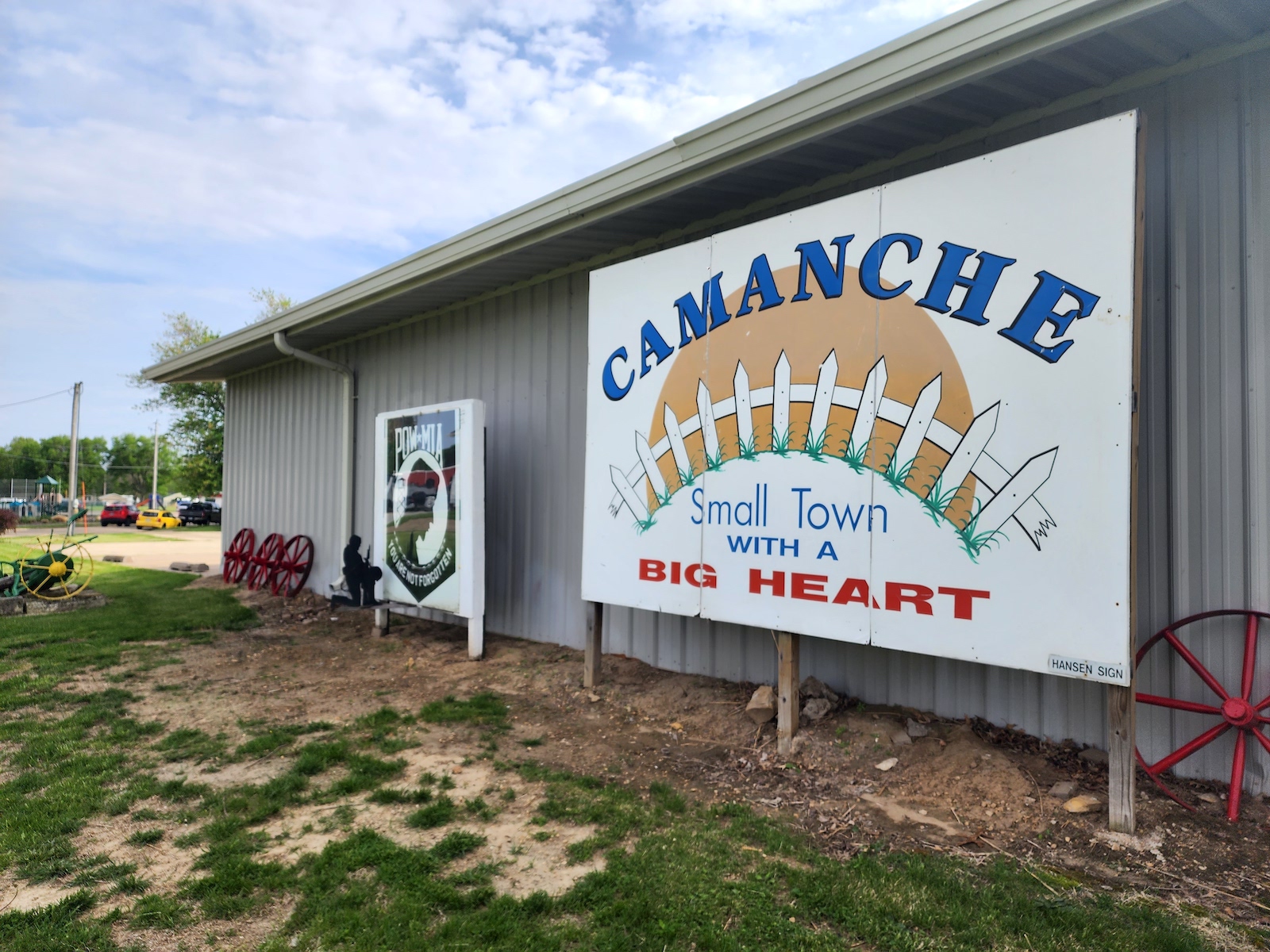
A sign says Camanche: A small town with big heart

Grist / John McCracken

Later that evening, the horn cuts through the noise at the Poor House Tap at the edge of town. As the train roars by, its resonance is dulled a bit by the chatter of patrons and the barks of Zoe, a labradoodle who knows there are treats behind the bar. She is unmoved as the sound cuts through town, grabbing the attention of locals.

Camanche, located on the banks of the Mississippi River three hours east of Des Moines, is no stranger to the sound of trains. But for some people in this town of 4,500, the familiar sounds of a train whistle now bring an unfamiliar reaction: fear.

a blurry train goes through a railroad crossing at night

A train with at least eight oil tankers moves through Camanche, Iowa, at 9 o’clock at night. Grist / John McCracken

After a train derailed in East Palestine in February — resulting in a towering black plume of smoke, the burning of toxic chemicals, and the evacuation of the town — health concerns still linger, and cleanup woes have plagued the rural community. 

In the months since, residents in railroad communities across the country have become increasingly worried about the potential disaster aboard trains. Camanche has become a hotbed of concern over an international railroad merger projected to triple the number of trains moving through town. 

Canadian Pacific Railroad, a major rail company headquartered in the province of Alberta, officially purchased Kansas City Southern Railroad in April. The merger, estimated to cost Canada Pacific $31 billion, is the first merger of major railroad companies in two decades.

With this new merger comes a first-of-its-kind rail line connecting Canada, the United States, and Mexico. This route will also directly link Canadian tar sands oil to Gulf Coast refineries, with increased traffic along the way. 

Crude oil could be shipped from Canada to Texas and Mexico, refined into petrochemicals on the Gulf Coast, then shipped across the country to its destination. 

Camanche currently sees around eight trains a day. After the merger traffic picks up, the city is expected to see upward of 21 trains a day. Other cities along the merger route will see a similar increase, raising the odds of another disaster like the one that struck East Palestine. What separates Camanche is the unique way that railroad tracks isolate residents, creating particularly frightening possibilities for the town.


Standing in Kitt Swanson’s driveway, the first thing you notice is how close the home is to the tracks. She said the trains don’t seem to bother Kiyiyah, her docile Alaskan malamute, but the rails are a few feet from her backyard and shake the house each time a train passes.
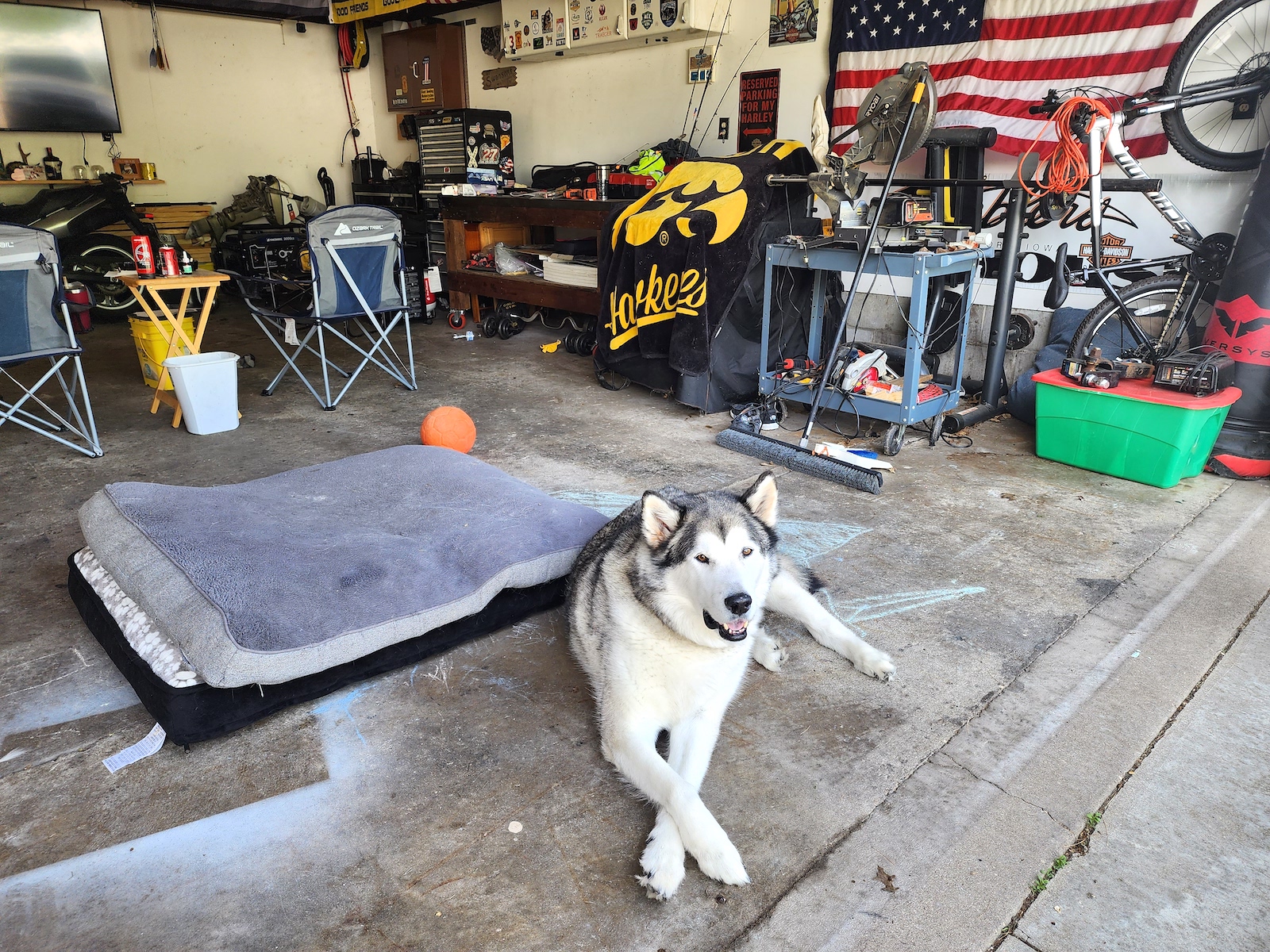
a furry white and gray dog lies on the floor of a garage

Kitt Swanson’s Alaskan malamute, Kiyiyah, rests on the floor of Swanson’s garage in Camanche, Iowa. Grist / John McCracken

Swanson, who has lived in the home for three years, said she worries she and the roughly 1,000 people on the river side of the tracks are without help when trains pass through. When a train comes through town, the only way out for her and others on this side of the tracks is by boat. 

“I’m a brittle Type 1 diabetic,” Swanson said. “If I need EMS care, how am I going to get it when all the tracks are blocked?”

Here lies the problem with the expected increase in rail traffic. When a train comes through Camanche, all seven of the crossings are blocked at the same time. This creates a steel wall, isolating more than 1,000 residents from the rest of the town. The only way out is by boat or to wait for the train to pass.

Aerial view of Camanche

A red line highlights the railroad tracks running through Camanche, Iowa, as seen in an aerial view. In the event of a long train derailment, residents worry that the section of town between the Mississippi River and the train could be isolated from emergency services. Homes to the right of the red line aren’t accessible by road when trains roll through town. Google Earth

The merger, combined with the fact that freight companies have increased the length of their trains in recent years, means that these residents may be in more danger than ever of being cut off from help, should disaster strike.

According to a report from the Government Accountability Office, train lengths have increased 25 percent from 2008 to 2019, with trains averaging at least 1.4 miles long. The same report found that some rail companies operate three-mile-long trains every week. 

“Our biggest concern is simply that we don’t want people to be isolated from emergency services,” said Dave Schutte, the fire chief of Camanche.

a man in sunglasses drives while a playground is seen out the window

Dave Schutte, the fire chief of Camanche, Iowa, drives through the town. His biggest concern with the approved rail merger is delayed emergency service response and potential derailments. Grist / John McCracken

Emergency services are in a bind when trains come through town. Schutte said he’s seen the trains block the tracks for over 10 minutes, which, under the right circumstances, could be life or death for some. 

He said the city voiced its concerns to both the rail companies and the Surface Transportation Board, or STB, the federal agency in charge of regulation of rail and other modes of transportation. He said it was a long shot going into the discussions that something would change given the power that the rail businesses have. 

“They only looked at super busy crossings in big cities where they have high traffic,” Schutte said. “To me, [being a small town] doesn’t devalue the importance of having those crossings open when they need emergency services.”

Now that the merger has been approved, Schutte said he’s focused on emergency preparedness in case of future derailments or blocked crossings. Right now, the city is developing a plan to evacuate residents via boat if a derailment blocks access to residents during an emergency.

A train runs along a mult-track section of railroad

A rail yard located just outside of Camanche is seen from above. This yard, which runs parallel to the Mississippi River, services nearby industrial facilities, such as chemical and ethanol production plants. Grist / John McCracken

This method has been internally described as the Dunkirk Method, a reference to the World War II evacuation of more than 300,000 British and French soldiers by boat.

In addition to potential emergency response delays, Schutte is also worried about the risks of what’s being carried on the trains, given the disaster in Ohio earlier this year.

“Just seeing what could happen to the community, and the devastation of just how bad it really could be depending on what chemicals are on the train, certainly elevates that concern even more,” Schutte said.

Ashley Foley, a mother of three who works from home, said the regular movement of chemicals and oil on rails is a concern that keeps her up at night, worrying about the safety of her family.

two kids stand near a tree in a green yard

Two of Ashely Foley’s children stand in their front yard in Camanche, Iowa. Parents like Foley worry that trains carrying chemicals and oil could put their families’ lives at risk. Grist / John McCracken

“If a train is going slow and it derails, it’s still scary, but the likelihood of us surviving would be higher,” Foley said. “Now with the stuff that they’re carrying, with trains going faster and being longer, I lay in bed at night and I wonder if tonight’s gonna be the night that it comes off the tracks and wipes out the backside of the house.”

While visiting Camanche, Grist observed a train car with at least eight oil tankers moving through the town after 9 p.m. 

Before 38 train cars derailed in Ohio earlier this year, vinyl chloride was a little-known chemical. Now, national media attention has raised awareness of what’s being carried on the trains that move through the nation’s rural backyards.

railroad tracks near backyard fences

Railroad tracks run right beside several homes in Camanche, Iowa. Kitt Swanson’s home is located at the closest left. Grist / John McCracken

According to the Federal Railroad Administration, or FRA, and the Association of American Railroads, there are more than 140,000 miles of railway in the U.S., the majority of which are in rural regions. 

Oil is transported predominantly by pipeline. But oil capacity in pipelines is dwindling, with rail emerging as a popular means of moving crude oil. Between 2010 and 2014, oil by rail topped almost 1 million barrels a day, which represented 10 percent of American crude oil at the time.

At the time, questions over the safety of transporting oil by rail were in the spotlight after a disaster in Canada. In the early hours of July 6, 2013, an oil train jumped the tracks in Lac-Mégantic, Quebec, and derailed, killing 47 people and leveling the area’s downtown, which has yet to recover.

Now that Canadian shale oil will have a direct path through the United States, concerns over oil explosions caused by train derailments have been rekindled. And though global oil demand is poised to slow, fossil fuel companies are pivoting to a similarly toxic industry

Petrochemicals are manufactured from fossil fuels and used in a variety of industries, from plastics to fertilizers. In the past decade, fossil fuel companies have raced to build out their plastics divisions, refining oil into petrochemicals along the Gulf Coast and polluting the predominantly Black communities around them.

Global plastic production is estimated to quadruple by 2050, and with it, the risk of transporting volatile chemicals. Vinyl chloride, the now-infamous chemical that escaped from toppled train cars in East Palestine, is a petrochemical and known carcinogen.

The rail industry knows this, and train executives are betting on the continued growth of the petrochemical and plastics markets.

Speaking at an investors’ earnings call in October 2022, Canadian Pacific Executive Vice President and Chief Marketing Officer John Brooks said the rail company is starting to see petrochemicals shipped out of the Heartland Petrochemical Complex in Alberta, Canada. This newly built petrochemical facility is owned by Canadian energy company Inter Pipeline. Canadian Pacific is the only rail company it uses. 

“Our partnership with Inter Pipeline expands Canadian Pacific’s plastic service to both export and domestic markets, and this volume growth will be a tailwind for us,” Brooks said.

When asked to comment, Canadian Pacific referred Grist to its STB merger application.

While oil and rail are betting on the petrochemical markets, environmental groups are working to prevent their expansion. 

“We just don’t need it,” said Eric de Place, former director of the advocacy organization Beyond Petrochemicals. “They want to triple global plastics consumption, and we already have too much plastic.”

De Place said the pollution and public health dangers seen in East Palestine, Ohio, happen almost every day for communities around the country that reside near petrochemical facilities, just without the spectacle of a massive smoke cloud.

“The derailment in Ohio was horrifying, but in some way, it’s just a moving version of what happens in stationary locations all the time,” he said.


Heading west on Iowa Route 30 to Camanche, the Mississippi River is only visible through split-second cracks in the industrial corridor walling off the nation’s second-longest river.

Along the way, a massive corn mill owned by Chicago-based Archer-Daniels-Midland Company, or ADM, stretches for miles along the river. ADM is a leader in agriculture and food processing, making a variety of products, including corn oils, enzymes, and ethanol

On an early Saturday morning in mid-May, roughly 80 oil tanker cars could be seen sitting along the tracks at the ADM facility. Their destination, and contents, were unknown. (ADM did not respond to a request for comment.) Some of these cars included rail placards that notate that hazardous materials are onboard, a practice created by the U.S. Department of Transportation and used to determine risk in emergency response situations.

A long train carrying several tankers runs through Camanche, Iowa.

A long train carrying several oil tankers moves next to a road in Bensenville, Illinois. The city is just one of the Chicago suburbs opposed to the recent Candian Pacific merger. Grist / John McCracken

Camanche, like many cities along the banks of the Mississippi, became a solidified community in the mid-19th century, relying on a commercial corridor sculptured by rails and barges to haul timber, clams, pork, and grain across the country. 

Since the first tracks split through the city in 1857, the contents of trains have changed drastically. Alice Srp, who lives by the Mississippi River and has lived in Camanche for over 55 years, said she’s seen this shift in her lifetime. 

“Rather than cargo containers and [lumber], these are round oil tankers,” Srp said. 

Srp said the merger will make emergency response harder for the older population who live on the river side of the tracks. She also worries that, even if a future derailment isn’t fatal, an oil spill could become an ecological nightmare for the region, given that the tracks run parallel to the river.

a leaf and a fish float in a river with a rainbow smear of chemical slick

Chemicals float on the surface of Leslie Run creek on February 25, 2023, in East Palestine, Ohio, a few weeks after a Norfolk Southern Railways train carrying toxic materials derailed nearby. Michael Swensen / Getty Images

In May, the dividing line between train tracks and the Mississippi blurred. Camanche saw its third-highest river levels in history, and parts of the tracks in town were underwater. Findings from the U.S. Department of Transportation and global research point to increased hazards and damages to railroads due to climate-fueled flooding.

While rail and water commerce compete for cargo, they often go hand in hand when it comes to location. According to Railfan & Railroad Magazine, railroads are historically built next to rivers to decrease grading and curves along a train’s route, and many routes across the country often followed the “natural courses of water.”

a train crossing sign near a river and trees

In May, the Mississippi River reached record levels in Camanche, swallowing some rail crossings and lines during flooding. Grist / John McCracken

The relationship between railroad corridors and rivers is likely to get more turbulent as flooding becomes more frequent due to a warming climate. In late April, a train derailed in Western Wisconsin along the Mississippi River during heavy rain, dumping train cars into the river.

Despite ongoing concerns about the impact of increased rail traffic on the Mississippi River, the Canadian Pacific and Kansas City rail merger continued. In its final environmental impact statement, the Office of Environmental Analysis for the STB wrote that the negative impacts of the merger would be “negligible, minor, and/or temporary.”

The office also found that the merger would increase the transportation of hazardous material on more than 5,800 miles of rail lines through 16 states, including Iowa, Illinois, and Ohio. 

“You feel like you’re just run over and it doesn’t matter,” Srp said.


Residents in Camanche aren’t alone in their opposition to the merger. 

Eight communities from Chicago suburbs formed the Coalition to Stop CPKC to oppose the merger. Chicago’s freight industry is the largest in the country and, according to the coalition, the merger will increase traffic by 300 percent in the next three years.

A red train car sits outside of the Camanche Historical Society Depot Museum.

A red train car sits outside of the Camanche Historical Society Depot Museum. Camanche, like many towns along the Mississippi River, has always had strong connections to the rail industry. Grist / John McCracken

Despite the deal’s federal approval, these suburban communities are pushing back. On May 11, the Coalition to Stop CPKC filed an appeal to prevent the merger, citing a need to review the public safety and environmental impacts. 

“The (Surface Transportation Board) ruling shows us three things,” said Jeff Pruyn, the mayor of Itasca, Illinois, a community two hours east of Camanche. “It ignored our concerns for the quality of life in our communities, it ignored our concerns about the negative consequences on economic development in our communities, and most importantly, it ignored our concerns for safety.”

When reached, the STB declined to comment for this story, citing the pending appeal litigation. 

In Bensenville, Illinois, another community opposing the merger, the presence of the transportation sector divides the town. On one side, there are quaint bungalows, old-fashioned street lights, and a downtown with cobblestone streets and a commuter train station.

A sign marks the intersection of Railroad Ave and York Road in Bensenville, Illinois.

A sign marks the intersection of Railroad Avenue and York Road in Bensenville, Illinois. Grist / John McCracken

On the other side of Bensenville, a village of more than 18,000, sit two massive transportation facilities: Chicago O’Hare International Airport and the Bensenville Yard, a massive rail terminal. According to the Chicago Metropolitan Agency for Planning, 50 percent of all freight trains in the country pass through Chicago’s varied rail corridors and terminals.

This terminal already sees a variety of cargo, including hazardous materials. On a Saturday morning in mid-May, a train of an estimated 150 cars made its way through Bensenville, headed to the terminal. Grist observed roughly nine train cars marked with a hazard placard for the industrial chemical styrene monomer, an explosive “probable human carcinogen” used to make rubber and other plastics.

There were also 11 train cars marked with a hazard placard for “Not Otherwise Specified” hazardous materials and at least 12 oil tankers with no visible hazard placard.

Safety is not only a concern for the cities and towns seeing increased rail traffic, but also for those working the rails. In the immediate aftermath of the Ohio derailment, the working conditions of railroaders were called into question. 

Mark Burrows, a retired railroad engineer from Chicago, said the rail industry has been stretched thin and lacks adequate protection for workers. It suffered a blow to worker protections when President Biden signed a bill blocking a national rail strike last year. Rail, fossil fuel, and petrochemical companies celebrated the strike’s defeat.
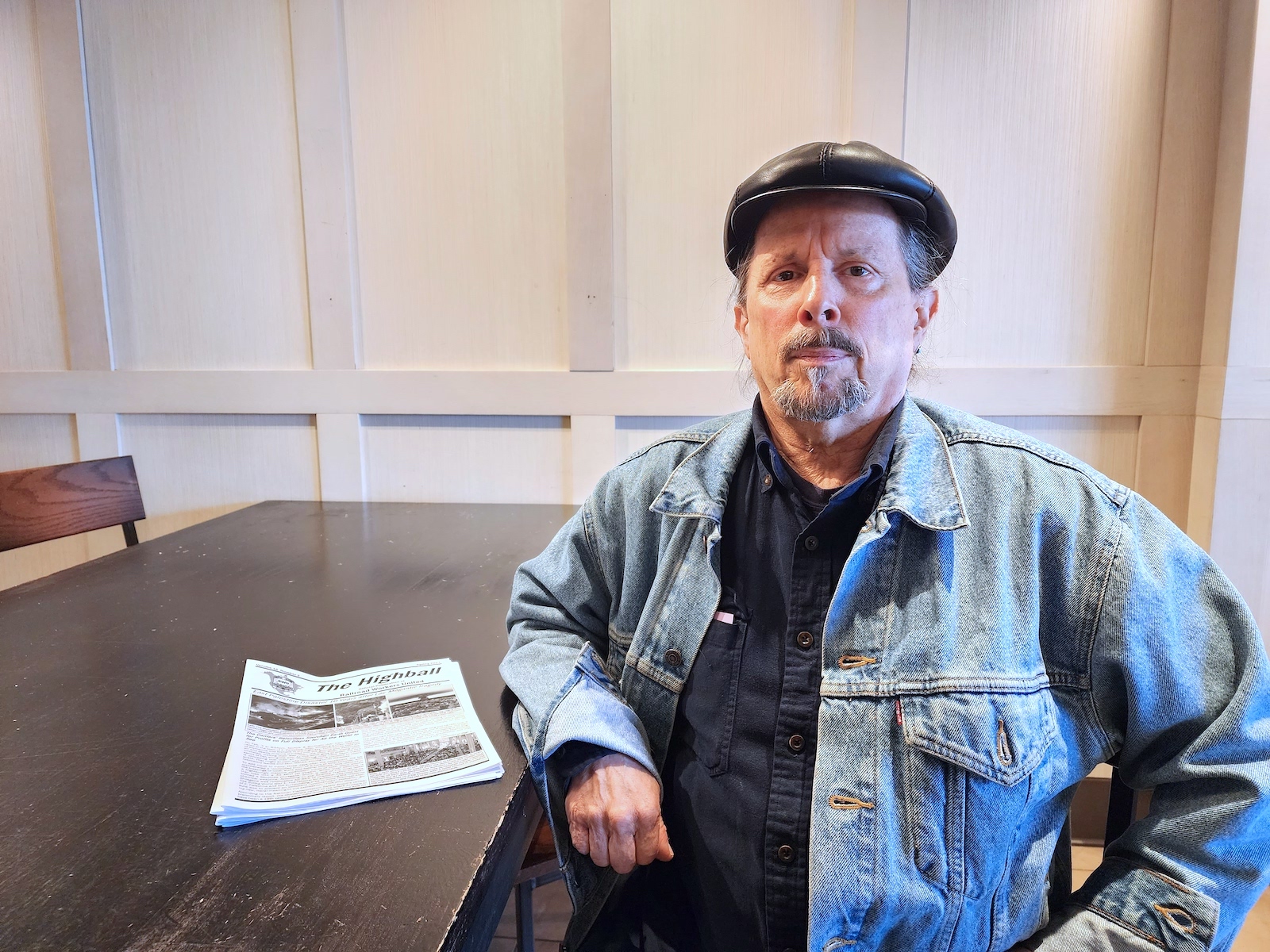
Retired railroad engineer Mark Burrows says the rail industry has been stretched thin and lacks adequate protection for workers. Grist / John McCracken

Burrows said he’s seen the industry become increasingly consolidated, hurting the well-being of workers.  He retired in 2015 after roughly four decades. 

He said he saw an increase in oil tankers in his last years of working in the Chicago area and the Bensenville yard. It is possible that workers are more aware of the hazards they deal with daily, he said, but the “draconic and barbaric” working schedules and conditions have them operating at maximum capacity at all times, to avoid being penalized or worse. 

“What we now know as Precision Scheduled Railroading just obliterates our normal working agreements,” said Burrows, a member of Railroad Workers United. “And it caused a speedup, having these guys work like maniacs.”

“Precision Scheduled Railroading” is a type of rail traffic management that focuses on increasing efficiency by reducing staff and lengthening trains.

For Burrows, derailments and poor working conditions are symptoms of the industry’s efforts to maximize profits. 

He said that establishing better working conditions for staff, creating a nationalized railroad system, and reforming how hazardous materials are classified and transported could all prevent future disasters on the tracks. 

“If you ask me what’s the definition of a hazardous train: If it is just one damn car of ammonia, or chlorine, or anything that’s uber hazardous, then that should be considered a hazardous train,” Burrows said. “Because all it takes is for one car to open up.”


About 1,000 miles west of Camanche, the sound of train horns worries Ingrid Wussow. 

“I think we are at the precipice of a lot of devastating things if we don’t start making decisions that put our environment first,” she said.

Wussow, the newly elected mayor of Glenwood Springs, Colorado, has joined other surrounding municipalities in a push against expanding oil trains directly through her downtown.

A planned 88-mile railway expansion would connect the oil-rich Uinta Basin in Utah to Union Pacific rail lines, linking Western oil to Gulf Coast refineries.

a passenger train runs alongside a rocky cliff face

A passenger train rolls along a rocky cliff face in Glenwood Springs, Colorado. Soon, the town may see a different kind of train pass through after a planned expansion opens up the route for oil tankers. Joe Raedle / Getty Images

While the new railway has been on the table since 2014, Wussow said that concerns over the shipment of hazards like oil have been renewed in recent months.

The increase in oil drilling and an expanded fossil fuel market flies in the face of global climate goals. This burning of fossil fuels will continue to exacerbate the climate crisis, resulting in extreme weather events such as flooding and mudslides.

Besides a potentially deadly derailment and oil train explosion in Glenwood Springs’ downtown district, Wussow shares the same concern as other environmental groups and municipal leaders in the region: increased oil by rail along the Colorado River. The expansion is estimated to ship 4.6 billion gallons of waxy crude oil per year through Colorado, a hundred miles of which would run right beside the river.

The Colorado River is the source of drinking water for roughly 40 million people and is currently experiencing a historic drought. Wussow said the river is the “lifeblood” of the region, drawing tourists and recreation throughout the year. 

Wussow added that many residents would be put in danger by increased oil train traffic moving full speed through railroad towns. She said communities have already seen the risk posed by increased hazards on rail lines moving through their towns. 

“East Palestine, Ohio, is an example of how damaging and concerning these derailments are,” she said.


In Camanche, the dangers of rail contents and the obstacles they pose to public safety aren’t lost on city administrator Andrew Kida, who doesn’t mince words when looking back on negotiations with Canadian Pacific. 

“Canadian Pacific doesn’t give one rat’s behind about people,” Kida told Grist.
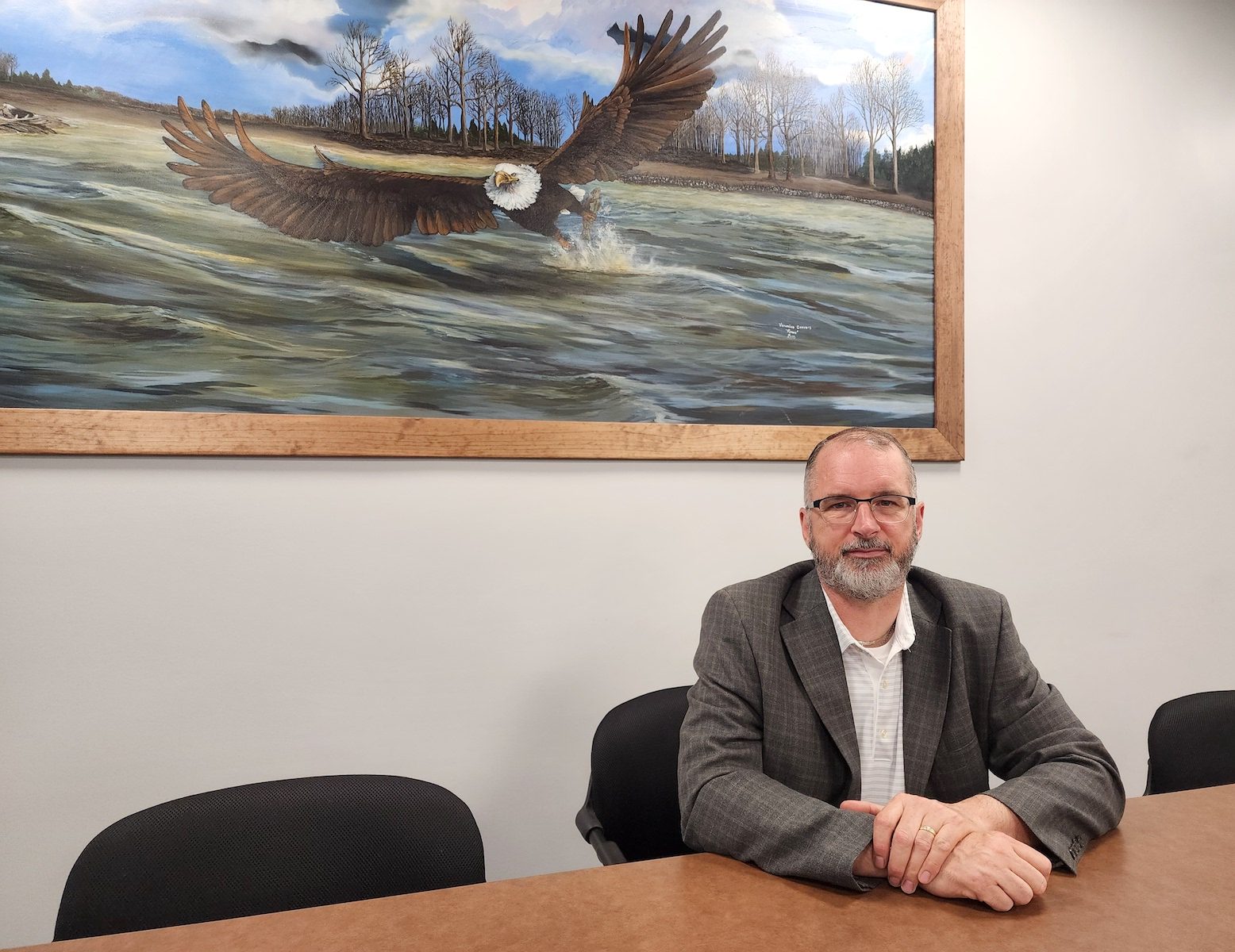
a man in a suit sits at a long table in front of an eagle painting

Andrew Kida, the city administrator for Camanche, sits in a conference room. He told Grist that the international rail company Canadian Pacific cares more about profits than people. Grist / John McCracken

As part of the merger negotiations, the city of Camanche was offered, and its council eventually turned down, over $200,000 per railroad crossing to shut down up to three crossings. This would permanently close the sections of the road that intersect with the tracks. Camanche counter offered with $2.5 million and the railroad company declined. Larger cities accepted offers in the millions of dollars to shut down crossings. 

Kida told Grist that he is now working on using Iowa state law to force the railroad companies to pay for infrastructure that would allow for better access for emergency response.  
Kida said he would have preferred the oil that is now moving through his town be sent from Canada by pipeline, as a shale oil derailment in the nearby Mississippi River marshland would “make cleaning up the Exxon Valdez look like child’s play.”

“All they’ve done is taken the Keystone pipeline and put it on wheels and run it right next to the Mississippi River,” he said.

This article originally appeared in Grist at https://grist.org/transportation/camanche-railroad-merger-hazard-toxic-train-chemical/.

Grist is a nonprofit, independent media organization dedicated to telling stories of climate solutions and a just future. Learn more at Grist.org

“Make every mistake once”: Natasha Pickowicz’s secret to being a great baker

Despite the frosted pink confection on the cover, Natasha Pickowicz’s debut cookbook “More Than Cake: 100 Baking Recipes Built for Pleasure and Community” does indeed live up to its name, offering an exquisite array of savory and sweet tarts, breads and confections. But the title isn’t meant to be solely taken literally. It’s as much a promise about  the cookies and sticky buns contained within as it is a passionate defense of the power of baking, both for personal satisfaction and social change. “I have always been drawn to pastry and to baking,” Pickowicz said to me on “Salon Talks,” “because they represent these greater moments where we’re able to come together.”

To that end, “More Than Cake” provides inventive recipes that draw upon her Asian-American and Californian background, as well as tips and tricks for rescuing your baking disasters and throwing a great bake sale. The “more” here is a way of looking at the world that extends far beyond the oven. 

Watch Natasha Pickowicz’s episode of “Salon Talks” here to hear about why you should think like a cook even when you’re baking a cake and how baking is a potent means of telling the whole world  “what our values are and making a change.”

The following interview has been lightly edited for clarity and length.

Tell me about this book. The phrase “more than cake” means something different. 

It was really important for me that the title of the book work on several levels because it’s more than cake. I’m mostly known for my layer cakes and my approach to aesthetics and decor and my sensibility around that. But within the realm of baking, there are so many other things that I’m passionate about, baking with fruit, with fresh vegetables, things like that.

On a symbolic level, I have always been drawn to pastry and to baking because they represent these greater moments where we’re able to come together, where we can participate and show up for our communities. We can celebrate achievements little and big and everything in between. 

“Every mistake that you could make, I have made. Even when I was running pastry kitchens and I had huge teams of cooks, my credo to them was always make every mistake once.”

I wish I could take credit for the title of my book, but I had to start with this little story about where the title “More Than Cake” came from. I’m on the junior board at the Food Education Fund. They’re a nonprofit based in Hell’s Kitchen out of a high school that works with teens to guide them to a career in the culinary industry. I went there for a career day to speak with a class of ninth-graders, and they were super cute. It was really fun. Then a couple weeks later I got emails thanking me for coming in, and they were really great. One was from this young man, and he was like, “Dear Chef Natasha, thank you for coming in and telling me about what it is to be a pastry chef. I have learned that it is so much more than cake.” 

When I came in, I wasn’t just talking about the technique of making pastry and things like that. I was talking about, how do we relate baking to commitment within our communities to how do we tie it to our values and how do we relate it to social justice? I was so moved that someone that young understood what I was trying to share with them in that moment. I was like, “This is what my book is about.”

You’re really passionate about defending baking.

Definitely, defending the kind of baking that isn’t about the shortcut or shaving off a step or getting that result fast. We very much live in the kind of culture that rewards these hacks and shortcuts and easy ways into something, which are great. Every recipe developer is hoping for that magic formula where they’re connecting with an audience through something that feels accessible. I love that. But I’m also here to be learning a skill.

Something that you’re making with your hands is also something to appreciate and to build confidence around and to derive joy from. Whether it’s woodworking or knitting or gardening, these skills where we’re engaging our senses to make something, there is so much to learn and take away from that. I wanted to really share the strategies and tips that I learned working in fine dining restaurants to the home baker and kind of be like, “We can all do this.”

There’s a phrase you use, “The expectation of quick results.” There’s something to be said about this meditative, slow, trial and error, maybe failure sometimes process.

Every mistake that you could make, I have made. Even when I was running pastry kitchens and I had huge teams of cooks, my credo to them was always make every mistake once. The process of making mistakes and failures, if we are engaged with those moments and learning from them and paying attention, that’s an incredible opportunity for growth. Even out of these moments of “failure,” there’s a way that we’re revisiting the same topic later and making something different.

“I don’t have a ton of fancy equipment. I wanted the book to reflect that.”

I wanted to hopefully be a reassuring voice in all of that. I didn’t go to culinary school. I forget about things in the oven. I make mistakes, but here is what I’ve learned that helps me mitigate those feelings of badness that helps me overcome them or circumvent them the next time, hopefully.

What are your ride or die pieces of equipment?

I live in a little apartment by myself in Brooklyn. I don’t have a ton of fancy equipment. I wanted the book to reflect that. I don’t have the fancy food processor and the blender, and I don’t even own a stand mixer. This blows people’s minds, but I have a little hand mixer. I just don’t have the space for it.

I find it so fascinating when people are baking like, “Baking intimidates me, baking scares me, so many steps, numbers, math, science, da da, da, da, da.” Maybe this is just something about my personality, but I find great comfort in the structure of baking. I feel more relaxed because there’s a structure around what you’re supposed to do. 

The number one tool for me that I tell people to get if they don’t have it already, is to get a kitchen scale. [In] America, we’re so stubborn with our American volume measurements. We do everything in a cup. To my mind nothing is more efficient than having a scale. Everything is in factors of ten. You’re cruising. This is how we’re building confidence. It’s through consistency, through this attention to detail. It’s not through the subjective scoop of flour that is different for everyone. That’s my case to make for having a scale. I have an Escali scale that goes up to five kilos. It’s perfect for any baking project in the book. It’s little, it’s cute, mine is pink. I just want people to be like, the scale is a tool to make my life easier for me to work faster and better. It’s not a piece of equipment that should feel intimidating to me.

You talk about ways of repurposing your mistakes. I always feel like if I’ve made an investment in making  cookies and then something goes wrong, I’ve wasted my time and money and I’ve disappointed my family. Talk to me about what you can do to bring yourself back from the abyss when you have made those mistakes.

I’m learning from bulk production in restaurants where we’re serving hundreds of people every day. We’re not making twelve cookies; we’re making 200 cookies. We’re not making eight scones; we’re making 80 scones. If you mess up a batch of that size, nothing feels worse. Everything is so expensive these days. You don’t want to put not only your hard work, time and labor into something, but expensive, high-quality ingredients that you sourced and bought and are using. 

If we’re engaged with what’s happening, then that’s the moment where we can be like, “How can we turn this around or move forward?” Of course, there are some mistakes that maybe can’t be rectified or turned into something else. But if you over-bake a cake, for example, don’t throw it away. Let’s bring it back to life with a flavorful soak that will rehydrate the crumb. If a cookie or cracker is under-baked and it doesn’t have the right snap or texture, let’s just flash it and put it back in the oven and bake it a little bit longer. 

“A great pastry isn’t just sweet.”

A lot of the strategies that I learned around mistakes and failure are coming out of me in the moment, being like, “What can I do?” and then writing that down and holding onto it and using it as a future strategy. As long as we’re engaged with what the ingredients are and where we are in the process, that’s where we can be like, “Okay, we can use this for something else. We can freeze it and process this into something else. We can take it further.” 

You’re also passionate about reducing food waste, which is a big concern and another big financial drain for a lot of us. When we’re at home and looking at the leftovers in our refrigerator, what are some other ways that we can just change our mindset on using them?

I could talk about this forever. I see it as a fun puzzle or game that I’m trying to solve or examine. It’s this idea of structure where when we actually are presented with less, that’s when our mind, our imagination, our resourcefulness kicks into overdrive and we’re able to create something that’s greater than the sum of its parts. Often when you have everything available to you, that’s when you lose the plot and maybe things lose their focus and they’re not as good as it could be.

This is something coming out of my restaurant years where often it’s the pastry side that’s responsible for processing less-than-perfect scraps from garde manger, from saute. They’re getting the perfect coin of carrot, but then there’s all the scraps. They’re getting the perfect half moon of onion, but then you get all the weird butts of onion and the next day boiled potatoes, and this and that. So I’m coming from a place of, I would have to look at this stuff and be like, “What am I going to do with all these things?” And then, “Okay, let’s process these woody herb bits into salsa verde that can go on the bottom of a savory tart. Let’s crumble this cooked potato into a focaccia dough. Let’s use this lemon syrup into a buttercream.”

That is such a fun exercise for me. There’s no better feeling than when you’re like, “Wow, I made something from that and it actually feels spectacular. It feels special. And I managed to clean up my fridge.”

So much of what you do obviously comes from this foundation in the world of restaurants. Yet the pandemic changed you and changed your relationship with food and cooking and baking, and the people that you bake for. Tell me about how that came about.

Like everyone else in this world, it affected me deeply, but also on a day-to-day financial sense. I was the executive pastry chef for a restaurant group. I lost my job. I was devastated. Working in restaurants, especially in New York where the quality is so high, there’s such an expectation to commit yourself wholly to that organization, to that institution that it really was completely inextricable with who I was and what I thought about.

When I lost that job, I was like, “What am I doing?” That’s when I sold my cookbook. I had been thinking about writing a cookbook for a long time, and when I wrote the proposal for “More Than Cake,” that was the summer of 2020. I sold it to Artisan Books in July. That was terrifying because I was like, “If my name is not associated with a cool restaurant, with clout, with an institution that has bigger names that people have heard of, who’s going to want to read this book? Who’s going to want to care what I have to say?” That was very scary. 

“The beauty of the bake sale is that its power is not in how it’s scaled, but rather in the thought and the feeling behind it.”

It was very validating to sell this book to Artisan and have them be so excited and have them be like, “We want you to write the dream book that’s in your head. We want you to write about your family and your bake sales and your backyard and your cats, and your friends.” They understood what I was trying to communicate, coming out of this intense restaurant environment.

In tandem with that, as I was working on the book, I started doing my own popups. I started doing “Never Ending Taste,” which is my popup that I do at different friends’ restaurants in New York at places like Superiority Burger in the East Village, Té Company in Greenwich Village, Four Horseman in Williamsburg, all over. And also being like, I really want to get back into the fundraising grassroots work I was doing with bake sales. 

When you’re not working in a restaurant, you lose access to those facilities, to those resources, staffing, labor, everything. That was another big question mark, “How can I produce events at this scale with the expectations that I have, but on my own, literally with nothing, with no dollars and just some connections?” That’s been a really incredible journey for me,  to be like, okay, people still care about the food that I’m making, they want to read the book, they’re showing up to the bake sales. And that really reaffirms that the work that I’m wanting to make and how it’s tied to me is mine and will be moving forward.

The power of a humble grassroots bake sale is amazing. How can we all amplify and mobilize via bake sales?

I think people are used to the bigger events that I produce, where maybe there are 40 pastry chefs. We just completed a big bake sale at the Wythe Hotel for the Brigid Alliance, a nonprofit in New York that connects people who are traveling out of state to receive abortion care. We raised $30,000, which was incredible. We had 35 pastry chefs and bakers in New York participate. But I also want to emphasize, it doesn’t have to be that. That’s just what it was for me because I am a maximalist, and I really wanted to start off the book tour with a huge bang and just do something that felt really celebratory and big and fun. 

When I’m writing this book, I’m like, “Maybe it’s just you and a couple coworkers and girlfriends or your family. Maybe it’s your stoop or a little patch of something, a community garden or your wine shop, a farmer’s market.” The beauty of the bake sale is that its power is not in how it’s scaled, but rather in the thought and the feeling behind it. I think that there’s so much that we can derive from that format. Let’s not leave the philanthropy to the 1% and the kind of events that they’re producing; let’s create little moments in our communities, in our neighborhoods that are for the people we know, that are for organizations that are doing work actively in the communities that we live in.

That’s what I’m trying to share. This is an incredibly inclusive way of pulling in anybody and there, anybody can do this no matter where you live at whatever scale that you want for your circumstances. I’m seeing that happen and people who are like, we raised $400 for this organization that addresses food insecurity in our neighborhood. I’m like, “That’s awesome. That’s amazing.” Let’s not diminish the efforts of what’s happening on a smaller level just because there aren’t more zeros at the end of what they raised. If we’re mobilizing more people to participate and show up for their neighborhoods, that is one way that we’re showing what our values are and making a change.

You pull so much from your Chinese heritage, from your California-ness, the flavors, the combinations, the way that almost every recipe has something that’s savory in it or has something that’s sour in it. I love that about that balance and that tension in the things that you make. Maybe all of us can get in that mindset a little more when we’re thinking about how we bake. What are some things we can do to get our eyes and our taste buds trained in that way?

This is something when we think of savory side cooking that maybe we’re already doing intuitively. If you’re making a salad vinaigrette, you’re adding sweet and salty and sour, and you’re tasting as you go, so you’re adding a crack of pepper and you’re like, “Oh, does it need something? A little honey, whatever.”

But with baking, people get thrown for a loop with the steps of the recipe and the ingredients. They feel like they don’t know how to come in with their own palette and change something up. For me, baking needs to be seasoned just as much as savory food is. And when I’m talking about seasoning, I’m talking not just about sugar, but obviously salt and obviously sourness, bitterness.

I think that a great pastry isn’t just sweet. Actually sweet isn’t really a flavor, and something like sugar actually has the effect of dulling our perception of an ingredient. If a jam is too sweet, you’re like, this tastes flat. It doesn’t taste vibrant. It doesn’t taste like juicy and full and bright. But you add a little lemon juice and you’re like, oh, this tastes incredible now. If we’re thinking about seasoning our pastries and our baked goods and thinking about salt as something to draw out flavor from sweet ingredients, acid is something again to draw out, build more flavor, then that’s how we’re going to get things that are irresistible and dynamic, and feel different than just sweet.

Both “Mission: Impossible – Dead Reckoning” and Tom Cruise look and feel exhausted

Perhaps the most unbelievable thing in “Mission Impossible — Dead Reckoning Part One” isn’t the nifty gravity-defying stunts on a train, or the deceitful trickery that unfolds in low-key airport escapade, or the extended car chase through the streets of Italy, but that the opening sequence features a Russian submarine, Seebastopol, sinking in the Bering Sea. It is an unfortunately timed bit of cinema that almost casts a pall over this bloated film. 

Cruise just does not seem to be having fun here, and viewers may share his fatigue.

The Russian submarine is sunk during an underwater skirmish in what might be an imaginary game of “Battleship.” Torpedoes are launched by both vessels, but suddenly things vanish when they are supposed to make impact. What emerges from this incident is the film’s McGuffin, a special key that is comprised of two parts that need to be interlocked to access “The Entity” which has the capability to overtake the world intelligence networks and weaponize them. So, obviously, this key should not fall into the wrong person’s hands.

Enter Ethan Hunt (Tom Cruise) of the IMF. (That’s “Impossible Mission Force,” not “International Monetary Fund,” as one character wonders.) Ethan has chosen to accept his mission to recover the two keys. And so begins an overlong game of Three-card Monte, as the keys are snatched up and pocketed and stolen (step and repeat and repeat) by various players from familiar faces including Ilsa Faust (Rebecca Ferguson) and The White Widow (Vanessa Kirby), to series newcomers Gabriel (Esai Morales) and Grace (Hayley Atwell). Actually, Gabriel is not new to Ethan; they have a past that is shown briefly in flashbacks that provides a little context. 

Gabriel is actually the best thing in “Mission Impossible — Dead Reckoning Part One.” The suave Morales slinks through the film making his unflappable villain alluring. He can disappear as in the aforementioned airport episode, and he is also all-knowing, informing one character that they will betray him — and why — before it happens. Morales is such a smooth operator one might wish he played Ethan Hunt because Tom Cruise looks weary in the role.  

Cruise just does not seem to be having fun here, and viewers may share his fatigue. His initial meeting with Grace, a pickpocket he picks up because she may hold a key to the keys, is flat, rather than charming. Cruise’s megawatt smile seems dimmed. A subsequent comic action sequence has the pair handcuffed together trying to drive a tiny yellow Fiat through the streets of Italy and encountering a series of obstacles, but it is neither amusing nor exciting. Moreover, there is no chemistry between these attractive leads. At least Hayley Atwell tries to imbue Grace with an air of mystery that prompts viewers to question if she is trustworthy, but that’s pretty much all Atwell gets to do. She is a welcome addition but mostly wasted. 

The entire film feels jury-rigged as if every action sequence — and there are too few of them — is designed by an algorithm rather than a human.

Mission: Impossible Dead Reckoning Part OneTom Cruise, Rebecca Ferguson, Simon Pegg and Ving Rhames in “Mission: Impossible Dead Reckoning – Part One” (Paramount Pictures / Skydance)

Director Christopher McQuarrie mostly puts his cast through the motions without creating any emotion. “Mission Impossible — Dead Reckoning Part One” is almost devoid of thrills. A criminally boring sequence involves Ethan’s colleague Benji (Simon Pegg) having to defuse a bomb by answering a series of riddles. When “The Entity,” hacks into Luther’s (Ving Rhames) tech and gives Ethan wrong directions during a foot chase through Venice, making the hero too late, what transpires lacks the desired impact. McQuarrie overplays the scene here reaching operatic heights he should save for the daredevilling.

The entire film feels jury-rigged as if every action sequence — and there are too few of them — is designed by an algorithm rather than a human. Perhaps the nefarious Entity wrote the lame screenplay? The script, which feels wholly artificial, was actually penned by McQuarrie, Bruce Geller and Erik Jendresen. But it does seem odd that Denlinger (Cary Elwes), the Director of National Intelligence, asks to define the meaning of the word “sentient” when he is told The Entity has become sentient. “Are you telling me, it has a mind of its own?” he asks, incredulous. Yes, Delinger, that is what “sentient” means. And it is no clearer when The Entity is vaguely described as “a mind-reading, shapeshifting, incarnation of chaos.”

We need your help to stay independent

Even the familiar tricks of a character wearing face masks to disguise themselves as someone else feels old. An early sequence involving a strange man entering a meeting lacks surprise, and a bit where Grace poses as another character only ensures that ruse will be discovered at the wrong moment. The franchise may rely on its gimmicks, but it does not generate nostalgia; it just feels stale. 


Want a daily wrap-up of all the news and commentary Salon has to offer? Subscribe to our morning newsletter, Crash Course.


The stunts do provide some spectacle, with Cruise getting involved in some aerial action, but it is maybe an hour or so into this 163-minute movie before a car chase, and it is not necessarily that exhilarating. “Mission Impossible — Dead Reckoning Part One” should be breathtakingly entertaining edge-of-your-seat wall-to-wall action, but even a bit involving the characters fighting on top of runaway train feels tired. Hasn’t this all been done before and better? 

What is disheartening is that this is only “Part One.” That the film does not end on a gripping cliffhanger is not encouraging. There should be anticipation for the next installment, but McQuarrie fails to generate even that. 

As the characters in the IMF are told they must choose their mission, viewers should make the choice to pass on this one.

“Mission Impossible – Dead Reckoning, Part One” is in theaters July 12.

Heavy rains trigger flash flooding across northeast U.S.

On Sunday and Monday, heavy rains in Vermont, New York and Connecticut caused flash floods across the area. As reported by Yahoo News on Tuesday, at least one person was killed by the floods and hundreds of motorists were left stranded after roads were washed out and rail service was suspended. West Point, N.Y. received up to 10 inches of rain. 

“They’re calling this a once-in-a-thousand-year event,” New York Gov. Kathy Hochul reportedly noted in a Monday press conference.

The flooding was reportedly a result of an atmospheric high-pressure system near Greenland which has created more extreme weather patterns in Canada and the northeastern corridor of the US. The amount of time the high-pressure system has persisted in the same relative location — along with changes in the jet stream caused by rising global temperatures — has contributed to the increasing likelihood of future severe storms. 

“Not appropriate”: Public Venmo transactions reveal lawyers with SCOTUS business paid Thomas’ aide

Several lawyers who have handled cases before the Supreme Court, including one who successfully argued for the elimination of race-based affirmative action at colleges, sent money to a top aide of Justice Clarence Thomas, according to the aide’s now-private Venmo transaction history.

The lawyers sent what appeared to be payments for Thomas’ 2019 Christmas party to Rajan Vasisht, an aide in Thomas’ chamber from July 2019 to July 2021. The transactions “seem to underscore the close ties between Thomas, who is embroiled in ethics scandals following a series of revelations about his relationship with a wealthy billionaire donor, and certain senior Washington lawyers who argue cases and have other business in front of the justice,” according to The Guardian,

Vasisht’s Venmo account shows that he received seven payments from November to December 2019 from lawyers who had previously served as Thomas’ legal clerks: Patrick Strawbridge, a partner at Consovoy McCarthy who recently argued that race-conscious university admissions violated the Constitution; Kate Todd, who served as Donald Trump’s White House deputy counsel at the time of the transaction; Elbert Lin, the former West Virginia solicitor general who participated in a Supreme Court case that curbed the Environmental Protection Agency’s ability to regulate greenhouse gas; and Brian Schmalzbach, a McGuire Woods partner who has argued cases before the court multiple times.

Manuel Valle, a University of Chicago law school graduate who clerked for Thomas last year and is currently working as a managing associate for Sidley; Liam Hardy, an appeals court judge for the armed forces who was working at the Justice Department’s office of legal counsel at the time of payment; and the late Will Consovoy, who clerked for Thomas during the 2008-09 term and was considered a rising star of conservative legal circles, also made payments. 

Though the value of the payments was not visible, the purpose of each transaction was listed as either “Christmas party,” “Thomas Christmas Party, “CT Christmas Party” or “CT Xmas party,” apparently referencing Thomas’ initials. It remains unclear, however, exactly what the funds were for.

None of the lawyers who made transactions responded to the Guardian’s emailed questions. Vasisht did not respond to an emailed list of questions from the outlet either. When reached via WhatsApp and asked if he would make a statement, Vasisht responded, “No thank you, I do not want to be contacted.”

According to his resume, Vasisht’s duties while working for Thomas included assisting the justice with the administrative work of his chambers such as personal correspondence and his personal and office schedule. 

Legal experts told the Guardian that the transactions raised ethical concerns. Richard Painter, who served as George W. Bush’s chief White House ethics lawyer, said it was “not appropriate” for Thomas’ former clerks who were now established private lawyers to effectively send money to the Supreme Court.

“There is no excuse for it. Thomas could invite them to his Christmas party and he could attend Christmas parties, as long as they are not discussing any cases. His Christmas party should not be paid for by lawyers,” said Painter, who has also been a longtime critic of dark money in politics. “A federal government employee collecting money from lawyers for any reason … I don’t see how that works.”


Want a daily wrap-up of all the news and commentary Salon has to offer? Subscribe to our morning newsletter, Crash Course.


Painter added that he may make an exception for a recent law clerk who was paying their own way for a party, but a majority of the lawyers who sent the money are senior litigators at big firms.

Kendric Payne, the general counsel and senior director of ethics at the Campaign Legal Center, told the outlet that, based on the information available, it was possible the former clerks were paying their own expenses, which he believed was different from them paying admission to an event to potentially influence the justice.

“But the point remains that the public is owed an explanation so they don’t have to speculate,” he added.

Thomas has been at the center of several Supreme Court ethics controversies this year following shocking exposés from ProPublica, which revealed that the conservative billionaire and megadonor Harlan Crow funded extravagant vacations for Thomas, purchased Thomas’ mother’s home, footed the bill for the Thomas’ grand-nephew’s tuition in the 2000s. In response, Democrats have since called for the passage and imposition of new ethics rules on the justices.

The conservative justice has also built a reputation around having close relationships with his former clerks. A 2019 article in The Atlantic noted the justice has a “vast network” of mentees and former aides who now serve as federal judges and or assumed senior roles in the Trump administration. His clerks’ widespread presence, the Atlantic added, meant the “notoriously silent justice may end up with an outsize voice in the legal system for years to come.”

What’s in a name? Quite a lot if it’s prosecco, parmesan or mozzarella

Prosecco might evoke warm summer evenings while prosciutto conjures scenes of generous platters at a casual weekend lunch.  But would “sparkling wine” or “thinly sliced ham” have the same impact?

Australian producers would argue they wouldn’t and are fighting a push by the European Union to stop them from using these and other terms which indicate the geographical origin of numerous cheeses, wines and other foodstuffs now widely produced in Australia.

This stoush over using European names for locally made products has stalled this week’s trade talks, with the EU refusing Australia better access to their markets unless Australia agrees to rebrand its products.

Prime Minister Anthony Albanese said Australia was keen to conclude the trade agreement but would not sign a deal that wasn’t in Australia’s interests. He is strongly backed by the National Farmers’ Federation and food producers.


So why does Europe want to control the use of food names?

Consumers increasingly want to know their foods’ provenance. They also pay premiums for guarantees about origin and quality. There has been a corresponding rise in so-called geographical indicator registrations, with the 3,500th listed earlier this year.

Items included on the EU Geographical Indications register cover different foodstuffs that are either applying for or have been accepted for having their geographic origin related name protected from being used for similar foods produced elsewhere.

Europe has the highest number of registered products, with most relating to wine, agricultural products and foodstuffs, as well as spirits and beers.

Champagne is among those with a widely recognized connection to its place of origin which assures consumers about the regional and cultural values as well as the products’ characteristics and quality.

Like high value household product brand names (for example, Coca-Cola which has been valued at US $97.88 billion) geographical indication registered names also attract substantial dollar values.

This is because of strong international awareness, familiarity and appeal among consumers. The geographic indicator name often attracts a price that can easily be double that of a similar but non-registered product.  

Registered products can therefore bring in significant revenue to the European Union member countries. They contribute to regional development by stimulating tourism and by helping to reverse population decline often experienced in rural areas.

Like household brands, the names which indicate a product’s origins, are recognized as intellectual property. They have consequently become an integral part of international trade agreements.


What would Australia gain by agreeing to European product names?

In return for complying with European Union demands, Australian producers would gain access to European markets of [445 million people] with a GDP of $24 trillion.

The lost opportunity of non-compliance is best illustrated by Brexit. Since Brexit, UK exports to Europe have fallen and UK farmers have faced significant challenges finding alternative markets.

If Australia agrees to the European Union’s conditions to get a trade deal through then producers will need to rename some of their products.

This would be a large and costly exercise but might give local producers an opportunity to capitalize on the growing consumer demand for locally sourced food and promote Australia’s unique geographical brand values.

Recent research conducted by Charles Darwin University reveals some of the unique brand values of Australian agri-food products, including unique selling points of products from the Northern Territory.

Selling points included the unique climate, soil and traditional community values as selling points.

Australia’s reputation for quality and ethically produced goods was also important. Such values may lead to Australia developing more of its own geographical indication registration requirements in the future.

Rather than fight the rising tide of European Union registrations, the federal government might embrace the trend, in conjunction with renewed promotion of Australia’s geographical brand benefits.

Should the government choose to comply with Europe’s demands then producers will need support to rebrand some of their products. Government and departments such as CSIRO should be keen to support this as it can only strengthen Australia’s agri-food sector’s international reputation.

Steven Greenland, Professor in Marketing, Charles Darwin University

This article is republished from The Conversation under a Creative Commons license. Read the original article.

“Comics are not covered like other artists”: How Ali Siddiq changed the system to own his jokes

The concept of hitting the road as an undiscovered comic, grinding out shows and hopefully capturing the attention of some Netflix, HBO or Hulu executive along the way, is a pipe dream. Even so, a network special does not guarantee a comedian long-term success — if you define it like comedian Ali Siddiq does — owning your own work. “If somebody comes to me with $30 million, it is still going to be a conversation about ownership,” he said on “Salon Talks.”

Many remember Siddiq from his appearances on HBO’s “Def Comedy Jam” and “Live From Gotham.” Those performances led him to be named Comedy Central’s No.1 Comic to Watch. Later, he recorded a one-hour special for Comedy Central in the Texas jail where he once served time called “Ali Siddiq: It’s Bigger Than These Bars.” 

Siddiq explained to me during our conversation that he didn’t get his real breakthrough until he tried to promote “It’s Bigger Than These Bars” on his Instagram account by sharing a clip. Instagram removed the clip for copyright infringement, which means Siddiq wasn’t allowed to share a video of himself because he did not own that content. As a result, he went totally independent. 

Siddiq financed his own stand-up, “The Domino Effect,” which received over 9 million views on YouTube. “The Domino Effect 2: Loss” is out now and projected to do more, with all of the proceeds going to Siddiq and his team. The networks are watching, but Siddiq can sit back and engage them when he is ready. 

Watch my “Salon Talks” episode with Ali Siddiq here or read a Q&A of our conversation below to learn more about his business approach, how he developed his storytelling style of comedy and why he wants to be known for stand-up above all else.

The following conversation has been lightly edited for length and clarity.

You are redefining the way comedians are putting their work out into the world with “The Domino Effect Part 1” and “Part 2: Loss.” You’re cutting the middleman out, and everybody comes straight to you. Why did you decide to release it on YouTube?

I always wished that these were very complex things, [like] it was a bunch of real thought into it. With me, I posted a clip of me on Comedy Central on Instagram and I got flagged for copyright infringement. I was like, “Wait a minute, I can’t promote that I have this special on your network, I can’t do that?” Then with Instagram you don’t have nobody that you can call and say, “Hey yo, this is me.” With Facebook it’s not a phone call, which is irritating, that you just can’t say, “Yo, this is actually my work, this is who I am.” 

It’s like going to the tow truck place where they tow your car and you walk in there like, “Hey do you all have a burgundy Lexus in here?” “How do we know that’s you?” Who be going around just going to random places asking for a burgundy Lexus with all my stuff inside of it? “I need your ID.” “For what?” Who else came here and said, “Hey, do you all have a burgundy Lexus with my backpack in it?”

The ID and the title and all that in the glove box.

In the glove box. With that, I said man, I have to be able to own my own stuff. That’s a lot. That’s giving a lot of power. Plus I was doing albums first. When everybody else was doing DVDs, I was doing albums. I was owning everything in my album. Then this lawsuit comes out to where a lot of our album sales and spins are getting cut from Spotify and XM Radio and all this because of a lawsuit that doesn’t serve comics well in the end, or they owe you this money for writing and producing. I think that I should get two checks if I’m the executive producer and the artist. 

I don’t really need it for writing because of this. Then if I do that, then that gives you leeway to do a cover. I don’t want nobody telling my jokes and saying, “Well I tribute to Ali. I’m just doing the cover of his. I’m doing cover jokes. I’m doing cover jokes. It was 1983. Even though I wasn’t born, it was 1983.” That’s crazy to think about it. I just wanted to own my own stuff.

It sounds wild when you say that, but with the internet, somebody actually will try to cover your work and get a little following off of it. It could actually happen. 

I get a clip right of this white lady on a truck mimicking — my joke is playing in the back, and she’s acting it out. It’s my Father’s Day joke. It’s all type of things that I do on the internet that people use in the background, and they just word it out and they getting followers from it. People are covering my work. Should I get paid for when they play that? I should get paid for it.

I’m always going to say yeah.

Yeah, for when they do that, but it’s like comics are not covered like other artists. But we are copyright infringed if you put out something with a network. Because of the success of “Domino Effect,” the first one, I shot the special with Comedy Central, “Bigger Than these Bars.” That’s in 2018 when it came out. It got less than a million something views because they showed it at 12:00 at night. 11:59 is the actual time that you put my special on in the middle of the night.

“I’ve always wanted to be judged on comedy content, not anything outside of the craft.”

I’m confused on the fact that you showed it once, you showed it twice. How am I supposed to get some type of burn off of that and then I can’t even promote that it’s there, for you, for people to go on your website or whatever to watch it? We asked to buy it back from them because Comedy Central is no more. They sold everything to Paramount. We asked to buy our content back. They dropped it on the internet. They dropped it on YouTube because of the success of “Domino Effect,” the first one. He hot, let’s drop his special on there now. Then when they dropped it, it got more views. It has more views now than it had when it was on the network. Netflix, HBO, their viewership versus what I can produce on my own, I beat everybody. In 2022, I beat every last one of them.

With YouTube, you can get it right to the people, no subscription needed.

You don’t make money off of the special. They pay you to do a special, then they shoot it X, Y, and Z. Your special is to push ticket sales for people to come see you and then seal your legacy in the game that you were solidified as a comic. If you got the bread, why not just do that yourself and send it straight to the people, and then still, the goal is for people to come see you. With “Domino Effect,” we got 9 million. With this new one, we on the verge of going up towards 10 million with that one, hopefully. We had 1.5 now in two weeks, so we think that the momentum will come in. More people just saw it coming to the shows because of the messaging with “Domino Effect.”

I think that I’ve reached a level now that I’m cementing what I want to be in this game. I’ve always wanted to be judged on comedy content, not anything outside of the craft. I don’t want people to say that I’m a good comic or a great comic or this type of comic because I was in a movie or because I was on a sitcom or I was on some other show that has nothing to do with stand-up. I want to be known for comedy, not anything outside of that, for somebody to say I’m a great comic because of comedy.

If an executive was to knock on your door and say, “Look man, I want you to do a special with us, I’m going to cut you a check for $30 million,” would you do it or would you not go away from what you have been doing? 

“Netflix, HBO, their viewership versus what I can produce on my own, I beat everybody.”

If somebody comes to me with $30 million, it is still going to be a conversation about ownership. Because you giving me $30 million with the hope that you make $200 million. I don’t think that you giving me that $30 million with the whole thing we going to make $28 million, or we going to make $35 million. You not splitting your power with me like that. What is your end goal, and where does the material lie? Who does it rest with at the end of the day? I think that that’s why I’m so big on the legacy of my particular family and the ownership of having my children be able to license my work over somebody else owning it. 

Some people can’t tell their own story because they got to go through all of these things. You ever watched a documentary, you see “courtesy of” this person? That’s because somebody had to go through a bunch of hoops in order to tell this story. I think if somebody gave me $30 million, you all would probably never see me do stand-up again because it’s going to be hard to motivated. “Hey man, hey Ali, you want to come to a set?” Man, you couldn’t pry me out my house with your cold, dead hands.

Man, I think being rich — I’m straight now. I’m not 30 million straight, but I’m telling you it’ll be hard. You would have to kidnap my children and hold them for ransom. “Hey man, come do a set in Cincinnati. We got your son. We going to release your son after your set.” I come on the stage with attitude. “Twice a year they kidnap my son for me to come do a show. This is some bulls**t. How much longer do I have?”

They like, “Yo, what’s that noise?” “That’s my helicopter that’s on top of this building waiting to take me to my jet if I can go home.” That’s the only way you going to get me.

One thing I appreciate about your style is that it’s you have the ability to speak a universal language. You’re from Texas. I’m from East Baltimore. I got friends who love your work from the Bay Area. We all know stories like the ones you tell in your stand-up. How do feel like you developed that universal language?

I’m very grounded because I talk to everybody that’s grounded. I think the universal language comes from my friends. I have close friends in Baltimore, just like I have close friends in Oakland, Philly. It’s like when we talk, we all have the same discussions. I could call my boys in Baltimore right now, any one of them and start an argument about who got the best crab cakes. This is 40 minutes of somebody naming another spot, another spot, then hanging up and calling back like, “I just thought about it. Such and such got the best . . .” That’s the thing. I live in Houston. I always argue, “Why do Baltimore think that they got the lock on crab when I live in the ocean, I live right here on the Gulf?” I’m like, “Do you all not think that the Gulf of Mexico has crab? I live in the seafood town.”

Not the blue ones.

We do have blue crab. That’s all I grew up on.

They’re not popular though.

This is the thing, and this is what Baltimore do. It’s like you going to say the same exact thing that everybody from Baltimore that I’ve ever heard.

Where they at? I want to see them. Bring them out. Where they at?

It’s like people from Baltimore, “Blue crab only exist in Baltimore.” They like “They don’t never migrate nowhere else.” It’s the ocean. If we was in Baltimore, I will move through Baltimore with you like I’m from Baltimore.

You did Comedy Factory and all that?

Yeah, I’ve always been in these places. Even when I was in the streets, I was always in these places. My man Reggie Carroll from Baltimore. This is one of the most insane people I know, the most insane people. He’s one of the craziest people I know is Reggie Carroll. They was like, “Where you from?” “Baltimore.” But then my man, Gary Monroe, one of the nicest people I know in this world from Baltimore. He was a federal agent. What made him even get into being a cop, his uncle was the dude who “The Wire” was based on.

Little Melvin.

Yeah. When I go somewhere, I’m engulfed in it. When I’m in Philly, I’m always in Germantown. I’m in the Badlands. I’m still grounded with the people that I grew up with because I think that that story is what made us and gave us the tenacity that we have. I’m still talking from that space. I’m still in that space. 

“People are like, ‘Well where you get this mindset from?’ My neighborhood.”

I go to the same barbershop that I’ve always gone to, and my ear is to the words that’s always being said and sometimes I’m the only one that can say it in the space. I take that ownership of constantly speaking the same terms that I grew up with, because it’s the layman’s terms, man. People can understand what I’m saying and where I’m coming from when I’m talking about anything because I’m talking from a human aspect in whatever. 

I think people are like, “Well where you get this mindset from?” My neighborhood. I said, “These are the ideologies of my neighborhood. This is not just me. This is other people that’s in my neighborhood.” When I say loss, when I’m talking about the fact that we never talk about these losses in nobody’s neighborhood, is somebody running around talking about when they lost something.

Absolutely. “All I do is win, win, win, win, win.”

Win. But the reality is, we’ve lost a lot in the just trying to get that one win, we’ve lost a lot. I don’t know any men that haven’t felt the pain of losing a girlfriend that they really was into. I don’t know the guys who never felt the pain of losing a loved one or losing a job too early. I don’t know these people that haven’t experienced that. My man right now is still, every blue moon he’ll bring up, ah man, remember I had them Cartier glasses? I lost them motherf**kers.

That hurt though. That hurt though.

That hurt. He lost them glasses 11 years ago and he still . . . I had these Carrera shades. I’m in the Bahamas, and this lady hat blew and I reached to grab her hat and when I reached to grab it, I bent down and my goddamn shades fell in the ocean. I always remember, I said, “Goddamn.”

$320 in the ocean. Even though I’ve had better shades, I still bring up, “Man, remember that day I was trying to help that lady with that damn hat and lost my damn shades?” Because those are the shades that fit me the best, and I still haven’t found nothing better than that.

That made me think of that part of the special where you said you fell in the pool and you never took a swimming lesson. 

“I just try to do my best to relate to the stories that I know that’s most common in our life.”

No, I ain’t fall in the pool. Pushed me in pool. I was out that water because I wasn’t even supposed to be over the fence in order to even get pushed. This is the thing. I’m at this factory, and my mom told me not to be at this factory with the other little boys. I fall at the factory. We outside playing. It’s the weekend. This factory is closed. My mother said, “Hey don’t go over there to that factory. For one, you don’t work there, and it’s closed.” 

We go over there still. I fall and break my leg. I’m not concerned that my leg is broken. I just need to get to the park. That’s the only thing. I don’t give a damn about this leg, because my leg can be broke, it just can’t be broke here. I got to get to neutral ground. When I tell this story, everybody knows a time that they went somewhere that you got hurt and you like, man, I don’t care nothing about this, I got to get to where I’m supposed to be and then I can deal with my pain once I get there. I don’t know nobody who doesn’t know this story about being somewhere that they don’t supposed to be. I just try to do my best to relate to the stories that I know that’s most common in our life.

“They can smell a loser”: Murdoch sours on “Trump-slayer” DeSantis over poor polling and blunders

The powerful Murdoch family headed has reportedly begun to waver on its support of Florida Gov. Ron DeSantis in the Republican presidential primary.

Anonymous sources told Rolling Stone that the Murdochs have become frustrated with DeSantis’ poor polling and campaign blunders, as well as his inability to oust former President Donald Trump as the top GOP candidate. The family, which controls Fox News, The New York Post and The Wall Street Journal, had shifted away from Trump following his baseless crusade to overturn his election loss and his role in the Jan. 6 Capitol riot. 

“[Rupert’s] understandable worry is that we may end up being stuck with Trump anyway,” a senior Fox source told Rolling Stone. “And DeSantis is underperforming. Anybody can see that … [and the Murdochs], they’re seeing it, too.”

Two sources added that Murdoch feels DeSantis’ relentless culture wars, aimed at outdoing Trump’s own efforts, have not been conducted cleanly. Most recently, DeSantis was slammed for a bizarre campaign video that utilized footage from British mob drama “Peaky Blinders” to condemn the LGBTQ+ community, a group DeSantis has particularly targeted through various legislative initiatives. The show’s cast and crew shared a statement to clarify they “strongly disapprove” of the video.

“They are transactional and can smell a loser a mile away,” one inside Fox source said of Murdoch and his eldest son, Lachlan. Other sources confided in Rolling Stone that Murdoch finds DeSantis’ public persona to be awkward, which renders him unable to forge important relationships with voters. DeSantis has also not made good on his claims of being able to swiftly undermine Trump’s popularity. 

Rolling Stone reported that recent mentions of DeSantis in Murdoch outlets have been largely unfavorable, perhaps indicative of further discontent with the Florida governor. The Wall Street Journal’s editorial board recently criticized DeSantis’ latest anti-immigration bill, warning that it will “exacerbate the state’s labor shortage while doing nothing to fix Biden’s border failures.” As The New York Times reported, nearly ten years ago, Murdoch asked federal officials to prioritize immigration reform.

The New York Post, known for disseminating sensationalized media stories, published a piece questioning “DeSantis’ Odd Choices,” covered his lackluster poll numbers, and accused the governor of being “too online” in his onslaught of culture-warrior escapades.


Want a daily wrap-up of all the news and commentary Salon has to offer? Subscribe to our morning newsletter, Crash Course.


And during recent appearances on Fox News, DeSantis fielded tough questions from anchors Will Cain and Maria Bartiromo regarding his fumbling campaign. In response to Cain, DeSantis said his campaign had only “just started.”

“I think if you look at all these people that are responsible for a lot of the ills in our society, they’re targeting me as the person they don’t want to see as the candidate,” DeSantis said.

Cain acknowledged that, while he felt DeSantis had “done a wonderful job” as governor, “there are those that say there’s something about you that’s not connecting, for whatever reason, not connecting with the voter.”

Bartiromo pressed DeSantis about “what’s going on” with his campaign. “There was a lot of optimism about you running for president earlier in the year,” she said.

“Maria, these are narratives,” DeSantis replied. “The media does not want me to be the nominee.”

Despite his perceived inadequacies, the Murdochs are not prepared to abandon DeSantis just yet, according to Rolling Stone’s sources. As it stands, DeSantis remains Trump’s top challenger, and leaving him behind would mean returning to MAGA-world. 

“Ron DeSantis was built up as the Trump-slayer. So if he’s not immediately leading Trump in the polls, it’s easy to see how that can easily be spun as a let-down,” says Doug Heye, a former communications director at the Republican National Committee. “There are a lot of people who are trying to write the obituary of a well-funded and popular figure in the party before the debates have even started. Ron was the designated dragon-slayer — and because he hasn’t slayed the dragon before the debates have begun, he’s being portrayed as a failure. And I think it’s too early for that.”

Cancer in dogs and humans share more genetic similarities than previously thought: Study

There are many health benefits to having a dog. Previous research has shown that having a dog can help reduce stress and anxiety. For people who are blind or vision-impaired, a guide dog can provide a person with more independence and mobility. Dogs are also believed to help improve human immune health. They can even sniff out COVID and detect positive cases in schools. And now, according to a recent study published in Scientific Reports, canines can help scientists better understand human cancer and perhaps accelerate future cancer treatments for both dogs and humans.

The study, published by researchers from The Broad Institute of MIT and Harvard, University of Georgia, and the One Health Company, demonstrates that dog and human cancers share more genomic similarities than previously known. Researchers looked at nearly 42,000 genetic mutations found in the tumor samples of 671 pet dogs and compared them to genetic mutations found in 25,000 human tumors.

The results revealed a previously unknown degree of similarity in key genetic mutations. In other words, human cancer has a lot in common with dog cancer.

“The results of this study show the incredible potential of combining canine cancer genomics and big data analysis to save lives on both ends of the leash,” said study co-author and One Health Company CEO Christina Lopes in a media statement. “Human cancer research has been moving toward a genomics-based treatment paradigm for decades, but research on canine cancer genomics hasn’t kept up.”

“The results of this study show the incredible potential of combining canine cancer genomics and big data analysis to save lives on both ends of the leash.”

Specifically, the study identified 18 genetic mutations that are likely a primary driver of the cancer in canine patients, eight of which overlapped with so-called “hotspots” in human cancers. For example, the most commonly mutated gene in human cancers, called TP53, is the most commonly mutated gene in canines, too. In the study, it was found to be in 25 percent of all the analyzed canine tumors which spanned across 96 breeds.

Mutations to the TP53 gene cause cancer cells to grow and spread and are most commonly associated with leukemia, breast cancer, bone cancer and soft tissue sarcomas. Hypothetically, it’s possible that treatments used on humans to target this genetic mutation could be used on dogs and vice versa — and that’s the goal.

By demonstrating that there are similarities between dog and human cancer, the hope is that treatment data from canine cancer patients can be used to accelerate preparation and delivery on cancer treatments that can be used for both dogs and humans. Historically, developing cancer treatment is a long and expensive process. An estimated 97 percent of new cancer drugs never make it to market.

“This paper shows that the genomic drivers of cancer in dogs are quite similar to the genomic drivers of cancer in people.”

“This paper shows that the genomic drivers of cancer in dogs are quite similar to the genomic drivers of cancer in people,” Dr. Gerald Post, the Chief Medical Officer at One Health told Salon in an interview. “And again, these are naturally occurring cancers in animals, humans and dogs with intact immune systems.”

Post emphasized that after being in the business of oncology for 30 years, he’s never seen more “acceleration” and a more optimistic outlook in regards to development than he has in the field of comparative oncology. Cancer is the leading cause of death for dogs, and after heart disease, the second leading cause of death for Americans. Indeed, the study’s findings emphasize how a growing field of research called comparative oncology — which means using naturally occurring cancers in animals as models for human disease — can change the future of cancer diagnoses and treatments.

In the past, researchers have looked to data from canine cancer patients to accelerate the development of more than 10 cancer drugs at a lower cost, as Wired reported in 2019. Post said genomics has long been “the missing piece in the puzzle.” But now, thanks to this study, it could help advance research and treatments for both dogs and humans by providing more people with a more robust database.

“Now people can look at a cancer and say, ‘oh, this cancer looks like a cancer in a human,’ and ‘it also has the exact same genetic mutation that this cancer in people have, let’s see what therapies work here,'” Post said, giving an example for how vets could use human cancer treatments on dogs. “[And] we’ve given human cancer researchers a tool to evaluate their drugs and dogs with specific cancers with specific mutations, and so it’s just wonderful. It’s rare in science to have a win-win-win scenario — a win for pets, a win for people and a win for pet parents.”

Iowa Republicans use 14-hour special session to pass bill banning abortion after six weeks

Iowa’s Republican-led Legislature approved an approximately six-week ban on nearly all abortions in the state late Tuesday during a 14-hour special session, the Associated Press reports. Republican Gov. Kim Reynolds said in a statement she plans to sign the bill into law on Friday, which will then take effect immediately.The bill, passed with exclusively Republican support, was met with tense objections from Democratic lawmakers and abortion advocates protesting in the chamber.

“The Iowa Supreme Court questioned whether this legislature would pass the same law they did in 2018, and today they have a clear answer,” Reynolds said in a statement. “The voices of Iowans and their democratically elected representatives cannot be ignored any longer, and justice for the unborn should not be delayed.”

Abortion is currently legal up to 20 weeks in Iowa. The bill would prohibit most abortions once signs of cardiac activity can be detected, which is usually around six weeks of pregnancy and before most people know they are pregnant. It excludes abortions sought due to rape, if reported to law enforcement or a health provider within 45 days; incest, if reported within 145 days; the fetus having an abnormality “incompatible with life;” or the pregnancy endangering the life of the pregnant person. The ACLU of Iowa Executive Director Mark Stringer said in a statement that the organization, Planned Parenthood and the Emma Goldman Clinic have already begun preparations to challenge the bill, once signed, in court. 

“Reckless and illegal”: FDA, FTC warns Delta-8 companies to stop selling copycat snacks

Following an initial round of consumer warnings in June, The Food and Drug Administration and the Federal Trade Commission have now sent warning letters to six companies for illegally selling copycat food products containing Delta-8 tetrahydrocannabinol, also known as delta-8 THC. The agencies are concerned that the products — which look very similar to established cookie, chip and snack brands — can be accidentally ingested by consumers, including children, or taken in higher doses than intended. 

“Marketing edible THC products that can be easily mistaken by children for regular foods is reckless and illegal,” said Samuel Levine, director of the FTC’s Bureau of Consumer Protection. “Companies must ensure that their products are marketed safely and responsibly, especially when it comes to protecting the well-being of children.”

According to a statement released by the agencies, the FDA has requested written responses from the companies within 15 days “stating how they will address these violations and prevent their recurrence.” They say that  failure to promptly address the violations may result in legal action, including product seizure or injunction.

José Andrés will be one of the first chefs to serve lab-grown chicken in the US

Famed chef and humanitarian José Andrés will be among the first chefs in the United States to serve lab-grown chicken starting later this month. As Axios reported, Andrés is one of two chefs — alongside San Francisco’s Dominique Crenn of the three-Michelin-starred restaurant Atelier Crenn —who have committed to serving Good Meat. 

Good Meat, which was given federal approval late last month, is grown from live animal cells. “We feed cells in a clean, sterile environment mirroring how an animal grows,” The California-based company wrote on their website. “By only producing the meat we eat, GOOD Meat has a smaller impact on our planet and avoids slaughter, antibiotics or hormones.” 

Andrés is offering a limited number of reservations at his DC restaurant China Chilcano in order for guests to try their new anticuchos de pollo. This play on the traditional Peruvian skewers will be made with cultivated chicken marinated with anticucho sauce, native potatoes and ají Amarillo chimichurri. During a test-run, which was covered by Business Wire, Andrés said: “The big day is here, the chicken is here, and people are going to be talking. This is a first for the history of humanity.”


Aretha Franklin’s hidden will found between sofa cushions is valid

A will of Aretha Franklin‘s found hidden under sofa cushions after her untimely passing due to pancreatic cancer in 2018 is valid, a jury rules. This ends nearly five years of legal contention over which of two handwritten documents, neither prepared by a lawyer, was the legendary soul singer’s will.

During the two-day trial in Michigan, two of Franklin’s four sons claimed one attempted to “disinherit” them from Franklin’s estimated $6 million fortune, BBC reported, asserting that this document rejects the intentions of another written in 2010. Since the jury ruled the document written in 2014 is considered Franklin’s will, the three sons will split her music royalties and bank funds evenly, and Franklin’s youngest son and his children will inherit her $1.2 million gated mansion. (Franklin’s oldest son was not part of the estate dispute.)

Franklin’s niece, the estate’s executor, found the two documents in the late singer’s Detroit home. The first document, dated June 2010, was discovered in a locked desk drawer. The second document that the jury ruled as valid for the singer’s will was found in a drawing notebook stuffed beneath the living room sofa cushions.

The veteran singer’s net worth was estimated at $80 million after her death but recent evaluations and years of unpaid taxes have significantly decreased her overall net worth.


Trump melts down on Truth Social after DOJ says it will no longer shield him in E. Jean Carroll case

The Department of Justice said Tuesday that it would no longer defend former President Donald Trump in the contentious sexual battery and defamation lawsuit writer E. Jean Carroll filed against him.

According to the Daily Beast, Justice Department attorneys notified a New York City federal judge that they would not affirm that “Donald J. Trump was acting within the scope of his office and employment as President of the United States” when he denied, in 2019, ever raping Carroll and said the columnist wasn’t his “type.”

Former U.S. Attorney Harry Litman called the move a “big reversal” for the DOJ.

“Now Trump has no shield and will have to go to trial on the merits, which we already know are lousy,” he wrote.

Carroll sued Trump for defamation in an initial lawsuit that has been held up for years as the former president brandished the Justice Department as a shield and asserted that he was immune from the lawsuit as a government official.

After he left office and continued insulting the journalist, Carroll sued Trump a second time, resulting in the swift civil case earlier this year in which a Manhattan grand jury found Trump had sexually abused her in the 1990s and defamed her, awarding her $5 million in damages.

The first suit, however, continued to loom behind the scenes. The federal judge asked the DOJ to determine whether its lawyers believed Trump was acting within his official duties when he mocked Carroll several years prior. If they had found that he was, Trump would have been entitled to absolute immunity under the Westfall Act. The DOJ had previously announced in 2021 that it would continue to represent the former president in the suit, but last month asked U.S. District Judge Lewis Kaplan if it could reassess its position after it had been “overtaken by events.”

In a letter filed with the court on Tuesday, Principal Duty Assistant Attorney General Brian Boynton, delivered the department’s conclusion: The DOJ “declines to issue a new Westfall Act certification” to protect Trump.

Though Boynton noted that Justice Department attorneys did not have evidence of Trump’s “state of mind” when he berated Carroll, he said that the department’s lawyers determined that Trump’s offensive comments were part of a personal gripe evidenced by his penchant for lobbing the verbal attacks Carrol’s way post-presidency.

“The prior history between Ms. Carroll and Mr. Trump supports a determination that the former President’s statements were not sufficiently motivated by a purpose to serve the government,” he wrote. “And a jury has now found that Mr. Trump sexually assaulted Ms. Carroll long before he became President. That history supports an inference that Mr. Trump was motivated by a ‘personal grievance’ stemming from events that occurred many years prior to Mr. Trump’s presidency.”

Trump spouted off on Truth Social early Wednesday, bemoaning the DOJ and the judge, asserting that his comments about Carrol were true and claiming the defamation case was another leg of the “political Witch Hunt” against him.

“The DOJ will not defend me in the E. Jean Carroll civil case, which is all part of the political Witch Hunt, lawyered up by a political operative who I just beat in another case, financed by a big political funder, and ‘judged’ by a Clinton appointee who truly hates ‘TRUMP,'” he wrote in the first of three posts. “The statements that I made about Carroll are all true. I didn’t Rape her (I won that at trial) and other than for this case, I have NO IDEA WHO SHE IS, WHAT SHE LOOKS LIKE, OR ANYTHING ABOUT HER….”


Want a daily wrap-up of all the news and commentary Salon has to offer? Subscribe to our morning newsletter, Crash Course.


“The Carroll civil case against me is a Miscarriage of Justice and a total Scam. The trial was very unfair, with the other side being able to do and present virtually anything they wanted, and our side being largely and wrongfully shut down by an absolutely hostile, biased, and out of control judge. My lawyers, due to their respect for the Office of the President and the incredulity of the case, did not want me to testify, or even be at the trial…..” Trump continued.

“The net result of this horrible INJUSTICE, where a completely unknown to me woman made up a ridiculous story, wrote it in a book to increase publicity and sales, I correctly disputed the story and got sued for Defamation, whereupon a hostile Judge and Jury shockingly awarded a woman who I don’t know, have never known, and don’t want to know, $5,000,000, while at the same time throwing out the Fake Rape claim,” he concluded. “WE ARE STRONGLY APPEALING THIS TRAVESTY OF JUSTICE!!!”

Former U.S. attorney Harry Litman clarified on Tuesday, however, that the Justice Department’s determination came as a result of Trump’s own actions.

“Importantly, it wasn’t just an arbitrary reversal of the Westfall Act (scope of employment) argument in the Trump case but a change in position based on change in circumstances,” Litman wrote, “aka another big self-inflicted wound by Trump.”

Georgia election workers who faced death threats ask judge to hit Giuliani with “severe” sanctions

Two Georgia election workers have alleged in new court filings that Rudy Giuliani did not share critical evidence in an ongoing defamation suit against Donald Trump’s former personal attorney. Atlanta poll workers Ruby Freeman and Shaye Moss launched the lawsuit after it was determined that Giuliani advised Trump ally Boris Epshteyn via text to tell the former president about security camera footage of the two women shuffling ballots around, which Giuliani said would “live in history as the theft of the state.” Since late 2020, the women have faced a barrage of attacks from MAGA supporters, stoked by Giuliani and Trump’s public reference to the women and claims of election fraud.

Now, amid the legal battle, Freeman and Moss have alleged that Giuliani ignored court orders mandating him to share his correspondence with Epshteyn, asking in the new brief that a U.S. district judge impose “severe” sanctions on Giuliani in the hopes that they will be granted a total victory in the suit via “default judgment.” Freeman and Moss’s attorneys have stated that the evidence they received in relation to the suit did not come from Giuliani, but from other witnesses and Trump allies. “He failed to take any steps to preserve relevant electronic evidence,” the lawyers said, adding that Giuliani has blamed the Justice Department for seizing and reportedly wiping his electronic devices. He has also cited difficulty accessing his iCloud account, per Politico. 

“The requests by these lawyers were deliberately overly burdensome, and sought information well beyond the scope of this case—including divorce records—in an effort to harass, intimidate and embarrass Mayor Rudy Giuliani,” Giuliani’s political adviser Ted Goodman said in a statement to Salon. “It’s part of a larger effort to smear and silence Mayor Giuliani for daring to ask questions, and for challenging the accepted narrative. They can’t take away the fact that Giuliani is objectively one of the most effective prosecutors in American history who took down the Mafia, cleaned up New York City and comforted the nation following 9/11.”

Senate Republicans grow more radical in the minority

There have always been eccentric, senile and downright simple-minded members of Congress. That’s democracy in action. But there is an unusually high number of them these days — and they are all right-wing Republicans.

Of course, we’re accustomed to the MAGA chaos agents in the House of Representatives and their preposterous escapades. Like this one, for instance:

It’s hard to know if Georgia Rep. Marjorie Taylor Greene still doesn’t understand how the government works or how the world works, but she does have a way of getting attention. House Speaker Kevin McCarthy, R-Calif., couldn’t be more happy with her. He told Axios, “I think Marjorie Taylor Greene is one of the best members we have, I think she’s the one of the most conservative members and one of the strongest legislators. I support Marjorie Greene very strongly.” (That was in response to a question about her ouster from the Freedom Caucus which is reportedly because she can’t be trusted not to share their strategies with McCarthy.)

The House has always been the more fractious of the two chambers of Congress. Traditionally more partisan and subject to volatility. The idea has long been that the Senate, with its lengthier terms and larger constituencies, would be the “saucer that cools the tea.” With the slower processes and the advantage of not having to run for re-election constantly it was assumed that senators could be more deliberate in their actions and temper any radical shifts in policy that could be dangerously destabilizing.

I’m not sure that’s ever been entirely true — there have always been eccentric or radical senators. This latest crop of Republicans, however, seems to be intent on giving the House a run for their extremist money.

This week’s MAGA Senate star is Alabama Sen. Tommy Tuberville, the former college football coach who replaced Democrat Doug Jones in 2020. He doesn’t seem to know a whole lot about how Congress works in any case but he certainly hasn’t signed on to any role as a “cooling” agent.

Whatever pretensions the Senate may have once had as the more staid chamber of Congress, a place where the business of government gets done among sober statesmen, are gone now.

Despite his very brief time in politics, he has not taken the opportunity to keep his head down and learn the ropes in the first couple of years, as most novice senators do. He has, presumably at the prodding of a far-right ideological staff, thrown a monkey wrench into the U.S. military. As the New York Times put it, Tuberville is single-handedly obstructing the “smooth transfer of power at the highest echelons of the armed forces, including in the ranks of the Joint Chiefs of Staff.”

If that isn’t “Ultra-MAGA,” I don’t know what is.

Tuberville is objecting to military policy that allows time off and travel reimbursement to servicemembers who must go out of state to receive abortion care now that the Supreme Court has overturned Roe v. Wade and many states with military installations have pretty much banned it. The policy does not pay for abortions but Tuberville apparently insists that the military forces its personnel to go AWOL if they need one. (I would imagine he is in favor of throwing anyone who does that into the brig as well.) In order to force the military to do his bidding, he is holding up the promotions of all officers and blocking the confirmations of successors to the Joint Chiefs of Staff who are scheduled to depart over the next few months. Just this week the Marine commandant retired and no one can be confirmed to take his place while Tuberville insists on his hold. 

Back in May, Tuberville told a local news reporter that he calls white nationalists “Americans” and elaborated by saying that he considers a white nationalist a Trump Republican because “that’s what we’re called all the time.” He seemed to be completely clueless about what he was admitting. His staff tried to walk all that back but they apparently forgot to tell the boss because he said it again on TV this week.

After the media went into a frenzy on Tuesday, he did finally relent and admit that that white nationalism is racist but it’s pretty clear that he doesn’t believe that. Like his brethren in the House Freedom Caucus, Tommy Tuberville is a MAGA performance artist and he put on quite a show. Whether he’s dim or whether he’s calculated, it really doesn’t matter.


Want a daily wrap-up of all the news and commentary Salon has to offer? Subscribe to our morning newsletter, Crash Course.


But Tuberville is hardly alone. The Senate GOP caucus has quite a few showboaters playing for the right-wing media. The granddaddy, of course, is Texas Sen. Ted Cruz, who paved the way a decade ago when he strategized with the Tea Party Caucus in the House to help shut down the federal government during budget negotiations with the Obama administration. He’s still at it, joined by another old-timer, Sen. Lindsey Graham, R-S.C., who’s given Oscar-worthy performances in the last few years defending Donald Trump.

This latest crop of Republicans seems to be intent on giving the House a run for their extremist money.

Third-term Sen. Ron Johnson of Wisconsin has also made a name for himself pushing snake oil cures for COVID, among other thingsJust this week Johnson said that while he feels for the families of 9/11, he loves golf even more. The guy is always good for a laugh:

Last week, Missouri Sen. Josh Hawley, who infamously raised a fist pump salute in front of the Capitol on Jan. 6, 2021, drew Twitter dunks by posting a fake Patrick Henry quote that was actually a quote from a 1956 article in a white supremacist magazine.

And then we have Rand Paul of Kentucky who may be the most obnoxious of all:

I’ll say one thing for these men. They aren’t subtle.

A couple of newbies deserve to be mentioned as well because I think they are going to be the heart and soul of the Senate MAGA caucus. The first is the newly elected J.D. Vance of Ohio who has hit the ground running by responding to Trump’s indictment on 37 federal charges with a vow to put a hold on all Justice Department nominees. He also took it upon himself to pen a letter to several colleges issuing a demand that they comply with the recent Supreme Court ruling outlawing Affirmative Action or there would be hell to pay.

And then there is the freshman senator from Oklahoma, Markwayne Mullin, an election denier and former cage fighter who told a labor leader to “shut your mouth” during a testy hearing and proclaimed “I don’t want reality” during a committee meeting about teaching children about race. He suggested that they teach “Jesus loves the little children” instead. And then this happened:

Whatever pretensions the Senate may have once had as the more staid chamber of Congress, a place where the business of government gets done among sober statesmen, are gone now. More and more Republican senators are unserious people putting on a show to entertain their base and keep the Fox News hits coming. Marjorie Taylor Greene would feel right at home among them. 

“Very telling”: Experts say Trump filing to delay trial is a test of Judge Cannon’s “favoritism”

Former President Donald Trump’s filing seeking to delay his trial in the Mar-a-Lago documents case poses the first big test of whether Judge Aileen Cannon will display any undue favoritism to the ex-president, legal experts say.

The former president’s legal team this week submitted a filing asking to indefinitely delay the trial to Cannon, a Trump appointee who repeatedly ruled in his favor during an earlier court fight over whether investigators can access the classified documents seized during the August 2022 search of Mar-a-Lago before she was overruled by an appeals court.

Trump’s lawyers asked Cannon to reject the Justice Department’s proposed December trial date and postpone it indefinitely, citing his presidential campaign.

“President Trump is running for president of the United States and is currently the likely Republican Party nominee. This undertaking requires a tremendous amount of time and energy, and that effort will continue until the election on November 5, 2024,” Trump lawyers Chris Kise and Todd Blanche wrote in the filing.

“Proceeding to trial during the pendency of a presidential election cycle wherein opposing candidates are effectively (if not literally) directly adverse to one another in this action will create extraordinary challenges in the jury selection process and limit the defendant’s ability to secure a fair and impartial adjudication,” the filing said.

The attorneys cited the hundreds of thousands of pages of records the DOJ produced in discovery as well as hours of raw surveillance footage while also claiming that the case is a “prosecution of a leading presidential candidate by his political opponent.”

Former federal prosecutor Andrew Weissmann, who served on special counsel Bob Mueller’s team, questioned Trump’s motive behind the filing.

“If you are innocent and want to be vindicated, you ask for a trial before the election,” he tweeted. “If you are guilty and want to run on victimization, without being undermined by facts and law, you don’t.”

The New York Times’ Maggie Haberman reported that Trump’s lawyers are “blunt in private that they see winning the election” as “the key to making the case against him disappear.”

“The speedy trial right lies with the accused, who in this case is explicit that he doesn’t want one,” Haberman tweeted.


Want a daily wrap-up of all the news and commentary Salon has to offer? Subscribe to our morning newsletter, Crash Course.


National security attorney Mark Zaid wrote that the filing suggests that Trump’s lawyers believe the “only way Trump will be legally safe is if he can win re-election & make these federal charges go away as president (or pardoned by another GOP president).”

Former Watergate prosecutor Jill Wine-Banks called the request “meritless.”

“Trump motion for delay is based on politics, not law,” she tweeted. “It is totally wrong in saying such a trial cannot start in 6 months [from] indictment. My team’s #Watergate trial started 6 months after indictment, and that included our going to SCOTUS during that time and Nixon resigning.”

Longtime Harvard legal scholar Laurence Tribe noted that the filing is also “the first big test of whether Judge Cannon is basically working for the defense — or is trying to do justice and vindicate the rule of law.”

Former U.S. Attorney Harry Litman agreed that “nobody, including DOJ, expects a trial” in December but “that doesn’t justify team Trump’s gambit of not even offering” a timeline.

“That’s something in response to which Cannon should display a very firm hand. As I say, the first very telling moment for her of the case,” he wrote.

“This is a very telling moment for Judge Cannon, and she has an obvious move. One party has submitted a schedule; the other hasn’t. She should just adopt the one schedule that is in front of her. There’s no halfway point to choose, which is part of [Trump’s] brazen strategy,” he added.

CNN legal analyst Norm Eisen, who served as Democratic counsel during Trump’s first impeachment, argued that Trump’s request seeking an indefinite delay is “contrary to law.”

“It’s also a major test for Judge Cannon—who previously showed unfounded favoritism to him,” he wrote. “If she missteps again, expect major recusal litigation in her court & 11th Circuit.”

Hunter Biden “whistleblower” exposed as a fugitive and accused spy — but MAGA won’t budge

What a difference a week makes!

Rep. James Comer, R-Ky., was gloating Thursday about how his star witness against Hunter Biden, the president’s son, would prove the doubters wrong. In May, Comer — whose main role in Congress is churning out falsified evidence for arcane right-wing conspiracy theories — had admitted that his supposed “whistleblower” had gone missing. Sure, it was generally understood that Comer’s elaborate mythology about President Joe Biden running some secret international crime syndicate was pure make-believe. So the “missing” informant caused much cackling on the left. It was widely assumed that Comer hadn’t even bothered to prop up a flesh-and-blood person to pretend to be the “whistleblower,” but instead just made this character up whole cloth. Comer was triumphant, however, exalting that he had a real human being with a pulse to stand up as this alleged “whistleblower.” Talking to Newsmax, where Republicans go when even Fox News feels a lie is beneath their low standards, Comer crowed that “the people on MSNBC who made fun of me when I said we had an informant” should “feel like fools right now,” because “a credible witness that the FBI flew all the way to Brussels to interview” was a-coming. 

On Monday, the truth came out. Cormer’s supposed “informant,” Gal Luft, is not preparing his dramatic exposé of the Bidens. No, he’s actually on the run from the law, having been charged by the Department of Justice (DOJ) with illegal arms dealing and, oh yeah, being a Chinese spy. 

Comer was right about one thing, though: Luft is, indeed, a biological human being who exists in the world. But so far, the folks at MSNBC don’t feel chagrined. “Republicans have to make up their mind,” anchor Willie Geist said Tuesday morning. “Is Joe Biden a doddering old man who can’t find the door after a press conference, or is he the mastermind of an international criminal scheme?”


Want more Amanda Marcotte on politics? Subscribe to her newsletter Standing Room Only.


Of course, this egg on his face will not slow Comer down one tiny bit. As he understands all too well, what makes conspiracy theories such excellent propaganda for the right is that they are, by their very nature, impervious to debunking. Conspiracy theories are closed loop systems. When conflicting facts are presented, the conspiracist immediately declares not only are the facts fake, but the fakery is further “proof” of the conspiracy. 

The complexity guards against people being able to point out the contradictions or implausibilities, allowing the devotees of the conspiracy theory to keep at it, without fear of being called out. 

One could see this happening in real time the second the federal authorities announced the charges against Luft on Twitter. Underneath the tweet was a sea of MAGA diehards, easily identifiable by the $8-a-month blue checkmarks, declaring with confidence that Luft is an innocent man being framed by the deep state. Some augmented this with racist jokes, but mostly it was a knee-jerk assumption that this is a railroading job. Not one of these people could pick Luft out of a lineup or could say anything about his life prior to this moment. Yet the invention of a new conspiracy theory about Luft’s arrest was not just automatic, it seemed as mindless as breathing. 

It’s not just randos on Twitter, either. Comer immediately folded the indictments up into the existing conspiracy theory, sneering on Fox News Monday night, “The timing is always coincidental, according to the Democrats and the Department of Justice.” Rep. Nancy Mace, R-S.C., was even less subtle with the nonsense. 

It’s critical to understand that it’s highly unlikely that either Comer or Mace believes their own B.S. Indeed, Comer joked earlier this year to New York Times reporters about how he is just making it up as he goes along. 

“You know, the customer’s always right,” Mr. Comer said wryly, of his approach to the people who elected him and now brandish conspiracy theories, vulgar photographs featuring the president and his son, Hunter, and other lies they expect him to act upon.

That’s the reason it’s so easy for not just Comer, but the entire GOP base, to reflexively roll up these charges into the ever-expanding conspiracy theory. Most of them don’t believe any of this crap, not in the traditional sense of the word “believe.” In my recent investigation into social media conspiracy communities, one family member of a conspiracist explained how the ostensible “belief” is always just a rationalization built around the actual belief, one which is often too shameful to be spoken out loud. As he pointed out at Medium, conspiracy theorists often contradict themselves in frankly comical ways: 

At the University of Kent in 2012, social psych researcher, and core member of my crew, Karen Douglas found that “the more participants believed that Princess Diana faked her own death, the more they believed that she was murdered.” The more they “believed that Osama bin Laden was already dead when US special forces raided his compound in Pakistan, the more they believed he is still alive.”

Throughout and since 2020, conspiracy theorists have said that Covid is at the same time a nonexistent hoax, a bug no more dangerous than the flu, and a deadly Chinese bioweapon. It didn’t matter to them that these things can’t be true at the same time. 

For Comer and other MAGA Republicans, the actual belief is straightforward: They wish to destroy the legitimately elected president and replace him with Donald Trump, a wannabe fascist who attempted a coup. Just saying this plainly, however, is socially and politically difficult. It’s an admission to having a fascist ideology, as well as a willingness to break the law and back a criminal as president in order to get their way. 

The conspiracy theory about the “Biden crime family” is not a sincere belief, but a political weapon: A noisy distraction from their own fascism and criminality that allows Republicans to pursue their unspeakable agenda while pretending to have righteous motivations. To serve that purpose, the conspiracy theory does not need to be plausible or believable. It doesn’t have to make sense. In fact, it’s often more useful if it doesn’t make sense. When a conspiracy theory is confusing, most people — whether they support the theory or not — can’t be bothered to actually try to make sense of it.

With the Hunter Biden conspiracies, the most obvious aspect is that it’s impossible for anyone, even those who made it up, to follow what exactly is being alleged here. Josh Marshall at Talking Points Memo recently gave it the old college try, explaining both one of the conspiracy theories and why it’s not true. 

According to a purported IRS whistleblower, U.S. Attorney David Weiss had been turned down when he requested special counsel status….

The claims centered on Weiss, who was now put forward as a sort of muzzled, reluctant whistleblower. Weiss, remember, was appointed by President Trump and left in place by the Biden Justice Department to avoid any appearance of an attempt to interfere with the Hunter Biden investigation. But now Weiss has stated unambiguously that none of these claims are true. He never requested to become special counsel (which is itself kind of an absurd suggestion) and he was never blocked from bringing any charges or investigating aspects of the Hunter Biden case. 

If you’re going cross-eyed trying to keep up, you’re not alone. And that’s the point. Not of Marshall’s debunking, which is about as straightforward as you’re going to get when it comes to this ever-more-deranged GOP conspiracy theory, but in even trying to figure out what the hell Republicans are talking about in the first place. This is all by design. If a conspiracy theory is easy to follow, it’s also easy to see its flaws. But if it’s so complicated that even efforts at straightforward debunking are bewildering, so it’s hard to argue against it. The complexity guards against people being able to point out the contradictions or implausibilities, allowing the devotees of the conspiracy theory to keep at it, without fear of being called out. 

We need your help to stay independent

Keeping it impenetrable, convoluted and weird is especiallly important in light of the purpose all these lies serve, which is to protect Donald Trump. The vast majority of Trump’s crimes are simple enough to explain on their own terms: Stealing classified documents. Tax fraud. Sexual assault. Attempting to steal an election. But the sheer number of Trump crimes is mind-boggling. What the average Trump voter needs in order to justify themselves is a claim that “both sides” are corrupt. With so much Trump criminality to distract from, the lies about the Bidens need to be overwhelming.

Not that it’s a hard task to keep making crap up. After all, nothing Republicans say about Biden needs to make sense. It just needs to be noisy. 

Meta can suck my data: Why I’m not joining Threads

Meta’s newest app, Threads, already boasts more than 100 million new users — an internet-breaking record — but as for me, I’m good. Thanks, but no thanks. Appreciate the offer (do I?), but I’m gonna pass on their attempted Twitter killer. 

Don’t get me wrong. I’m a dyed-in-the-wool tech enthusiast who marvels openly at the creative persistence of programmers on a mission to further decentralize the internet. And I do love to see billionaires waste each other’s money in digital slap-fights. But I’ve been burned enough times by Meta. Here’s why I’m not taking the bait. 

Meta CEO Mark Zuckerberg’s latest offering may have a $0 price tag but it comes with a steep buy-in. It’ll cost you more of your digital privacy than many other text-based social apps, it tries to control your experience by feeding you only from the slop-trough of an algorithm, and it could end up killing your account on a different social platform if you’re not careful. How fun. 

Currently, if you’re an Instagram user and you join Threads — and then change your mind — you won’t be able to delete your Threads account unless you delete your entire Instagram account, too. And vice versa: If you delete Insta, you lose Threads. For now, you have to settle for changing your Threads profile to private, deleting individual threads in the app, or signing up with an email address (or phone number) not associated with your Instagram account. 

“Your Threads profile is part of your Instagram account, and may be deleted at any time by deleting your Instagram account,” Threads’ privacy policy reads

After the online world’s discovery of, and subsequent backlash over this flaw, Meta appears to be moving to change things. Trusted lieutenant of Mark Zuckerberg and head of Instagram Adam Mosseri said in a post on Threads that Instagram is aware of the issue and looking for a fix. 

“You can deactivate your Threads account, which hides your Threads profile and content,” Mosseri said, “all without deleting your Instagram account. Threads is powered by Instagram, so right now it’s just one account, but we’re looking into a way to delete your Threads account separately.”

You may remember Mosseri as the Facebook power player that in 2021 skirted questions on children’s safety from a Senate Consumer Protection Committee for more than two hours following Congressional inquiries around The Facebook Papers exposé.

I’m not much of an Instagram user so, to be fair, my dog isn’t in that fight. Even so, the last thing I intend to give my digital body is yet another udder that Meta can suckle in its insatiable thirst for user data. The app sucks down a sweeping 14 categories of data once installed, including personally identifiable details. 

At least the Europeans are spared — for now. Threads is so data-greedy that it can’t be launched in the EU because it doesn’t comply with basic GDPR rules. (That would be the General Data Protection Regulations, a core component of EU privacy and human rights laws.) 

It’s impossible to determine with complete accuracy what all that user data is being funneled into, of course. But wherever it goes, the resulting Threads algorithm is going to be inescapable. 

You won’t actually be able to control your feed on Threads as you can on Twitter. And it’s insulting to be presented with a Twitter knock-off app which fails to do the single most important and valuable thing Twitter does: allow users to view posts in chronological order. 

Twitter became culturally important because of its usefulness to a few groups of users for whom timely dispatches are critical: protesters and journalists breaking news of real-time events, government emergency services providing real-time safety broadcasts, and users who connected in real-time about their favorite arts and entertainment events as they happened. 

With Threads, you’re hostage to whatever digital slop the algorithm dishes out. There’s no option for chronological order and no way to avoid seeing posts from people you don’t follow. How delightfully tone-deaf and controlling. 

Even without the immediate turn-off of having to endure another ham-fisted data grab — and my refusal to be a test subject on yet another algorithm farm — Threads just sounds like a complete nightmare to even play with. 

The idea of merging Instagram and Twitter audiences sounds catastrophically hilarious. Imagine having to watch Instagram-influencer baddies try to s**tpost. Or your family and high-school friends — the audience for whom you’re performatively posting your best life — seeing your deranged tweets.

The usual brand account in-migration is already making some users nauseous. Hard relate. If I have to sit through another fast-food fake-spat marketing campaign I’m liable to swallow the messy end of a Heinz 57 magnum. 

At this point, the only thing I actually like about Threads is that it’s costing otherwise seemingly unaccountable billionaires lots of money, and provoking them into digital and legal slap-fights for our collective amusement. 

On Thursday, former Twitter CEO Elon Musk (whose new executive gig at the Bird Site is still unclear to most, and certainly to me) filed suit against Instagram and Zuckerberg over Threads. Musk claims Threads poached Twitter talent to fill its new bench and build the app.

I’m guessing those concerns would probably have more weight in a California court if Musk hadn’t hit Twitter with a sudden tsunami of surprise layoffs after taking over. It’s hard to take seriously the accusation that Meta poached Twitter’s talent when Twitter’s poster-in-chief sent about 10% of that talent to the unemployment line in the first place. 

The courts might also take Musk’s claims more seriously if this weren’t — by his own apparent admission — just a masculine fragility-measuring contest between two men with more money than God and (previously) a literal plan for a cage fight in Las Vegas. 

Am I a Twitter devotee till the end? Do I consider it the superior protocol, the better tech, the most refined and secure experience? Am I caping for Elon? 

No. But I’m tired of being treated like digital livestock and herded onto the next data-sucking machine. I’m riding out the man-baby burndown of my favorite website of all time. After that, I’ll see you all on Mastodon.

From John Birch to Donald Trump: How the GOP got “devoured by their own Frankenstein monster”

The Trumpocene has lasted more than seven years. With Trump’s indictments for federal crimes in connection with the Espionage Act and the probability that he will face other serious charges in connection with the Jan. 6 coup attempt, it feels to many observers and professional politics watchers as though the Trumpocene and that long national nightmare may finally be nearing an end.

Unfortunately, fascism disrupts our collective sense of time and reality – and in many ways what is deemed to be possible and impossible in a society. In that way, escaping the Trumpocene and the larger democracy crisis involves a balance between pessimism and optimism, hope and despair, and overcoming learned helplessness to then do the hard work necessary to create a better democracy and more humane society here in America. When understood through that framework – and most importantly that the Age of Trump is about much more than any one person or leader(s) – the American people are not as close to escaping this crisis as they and the mainstream news media and many members of the responsible political class would like to believe.

In an attempt to work through and make sense of these anxieties about Trump’s enduring popularity and power as the frontrunner for the Republican Party’s presidential nomination, the consensus narrative that he is in great peril and his defeat appears to be inevitable, and more general concerns about what comes next for the Trumpocene and America’s democracy crisis, I recently asked a range of experts for their thoughts and insights.

This is the second of a two-part series.

Their responses have been lightly edited for clarity and length.

Jill Lawrence is an opinion writer and the author of “The Art of the Political Deal: How Congress Beat the Odds and Broke Through Gridlock.”

I am a card-carrying member of both the mainstream media and the pundit class, and I see no rational universe under which Trump could prevail. But we are not living in a rational universe, we’re living in one where a Trump-appointed judge just barred the Biden administration from protesting false information on social media, Trump continues to insist that the system is rigged and that he won the 2020 election, and nearly two-thirds of Republicans tell pollsters they believe or suspect that fraud put Biden in the White House. The risks of undermining and attacking the core of democracy, our elections and election workers, can’t be overstated. I have often said I don’t know how I would have handled the 2016 and 2020 elections as a campaign reporter.

I understand the need for balance, objectivity and horse race coverage, and wrote by those tenets for decades. But to normalize Trump and his supporters, to write anything that overlooks the obvious threats to the republic and many people who live in it, is dangerous. The pundit class can write that. Mainstream media reporters who see reality, and I’m sure most if not all of them do, have a tougher challenge of how to deal with the conflict between misinformation and facts, between balance and truth.

I hope lessons have been learned from elections past and from CNN’s nightmare town hall with Trump. The first GOP primary debate is on Aug. 23, hosted by Fox News and sponsored by the Republican National Committee. How will mainstream print and TV outlets handle it? That will be a test – both of the media and of whether voters will come away with information they need, instead of misinformation they want and believe to be true. Election Night 2016 was a scarring experience for many journalists.

“Now that the fringe dominates the Republican Party, the hope that Trumpism would wither without Trump — that mainstream John Thune-like sensibility would prevail — ignores just how hard it will be to dislodge the fringe from its spot atop the GOP.”

A USA Today column I wrote with a conservative Never-Trump colleague that night was headlined, “Congrats America. You Blew It.” What readers couldn’t know was that it was our second column of the night. We were sure Trump would lose so we wrote a column assuming a Hillary Clinton victory. Late that night, realizing to our shock and devastation that Trump was headed for a win, we wrote a whole new piece. My husband went to sleep early after I had assured him Clinton would win, and woke up to President-elect Trump. I am still gun-shy about making predictions, not least because he reminds me of that one every time I say Trump can’t possibly win in 2024. It is a good cautionary tale, given that millions of us have been wondering for years when (not if) the Republican fever would break.

Trump has now been indicted for risking national security and may soon face state and federal indictments for his role in trying to overturn the election and keep power. Trials requiring his presence could be ongoing through the 2024 primary and general campaign season. At 77, he’s facing real accountability for the first time in his life, and he’s playing the victim instead of the Putinesque strongman. Republican primary voters so far are buying it. My bet is that American voters writ large will not, in numbers large enough to reelect Biden.

Wajahat Ali is the author of “Go Back To Where You Came From.” He is also a columnist for The Daily Beast,  MSNBC Daily and co-host of the Democracy-Ish Podcast.

I believe Americans should be focused on the risks and consequences of a Trump presidency rather than focus on the political horse race, which, admittedly, is a necessary fixture of the election cycle coverage. What does it say about the modern GOP that their leading candidate remains a twice-indicted, twice-impeached vulgarian whose popularity with his base grows with each new scandal and cruel invective he hurls out against his critics, American institutions, and the marginalized? We are dealing with a radicalized and weaponized conservative movement that has fed and nurtured an extremist MAGA movement that has now overtaken the “adults” in the room, who are in the corner, terrified, sucking their thumbs, and hoping they can avoid being devoured by their own Frankenstein monster. Just look at the House Freedom Caucus – they just removed Marjorie Taylor Greene for being openly critical of Lauren Boebert and vouching for McCarthy. Conspiracy theories, antisemitism, all-around nutiness? All good. But how dare she break ranks! The Trumpification of the GOP is complete, and even if Trump is a losing candidate, which I believe he is, we have to contend with a conservative movement that is waiting to anoint his heir who can achieve political victory without the self-destructive baggage.

We need your help to stay independent

DeSantis was the heir apparent, but as I’ve said along, he is a limp, wet noodle who will wither in the national spotlight. Trump is the main attraction, and the base belongs to him until he’s dead or in prison. That’s the reality the GOP establishment and big, conservative money machine doesn’t want to admit or acknowledge. Due to a rigged Supreme Court, the electoral college, and voter suppression, it is a possibility that Trump could still return to power even if he, yet again, loses the popular vote. For mainstream media, many are not built for this moment or made for this fight. They, unfortunately, can’t adapt or evolve to the changing political reality where the GOP is no longer a normal political party. They continue to distort reality with a skewed, “both sides” lens that mainstreams extremism. Example: ABC News recently referred to extremist group Moms for Liberty as “joyful warriors” who are “fighting back.” Lovely.

It’s like Groundhog’s Day if it were remade as a dystopian horror movie. No one has learned the lessons of the past 8 years.

David Pepper is a lawyer, writer, political activist, and former elected official. His new book is “Saving Democracy: A User’s Manual for Every American“.

I think he will win the primary, easily, and lose in the general. The indictments and even trial won’t impact his base of support in the GOP, especially with a very weak field running against him, and essentially echoing his false narrative that these are all politicized witch hunts. I think he is a weaker general election candidate than he was in either ’16 and ’20.


Want a daily wrap-up of all the news and commentary Salon has to offer? Subscribe to our morning newsletter, Crash Course.


When it comes to Trump, the primary and the various investigations and indictments, I think the media is covering major events and assessing their implications as they always would. And all those things SHOULD be covered. The difference is that the core GOP support for Trump is so intense, none of those events hold him back in the primary.

The media and other observers would be better off dispatching half of their DC bureau staffs (how many reporters really need to chase McCarthy around the hallways of the Capitol to all get the same quote as he sprints by?) out to state capitols—where more of the damage to democracy is being done and where there is woeful little coverage at any level. That lack of coverage and transparency is fueling the decline

Matthew Dallek teaches at George Washington University and is the author of Birchers: How the John Birch Society Radicalized the American Right. 

The “Trump is in trouble” narrative privileges short-term over more durable realities, surfacing unfavorable developments (Trump’s felony criminal indictments) over the relative popularity of Trump’s brand of politics within the GOP. A majority of GOP voters have become more radical over the past decade.

And Trump is the most effective exponent of this brand of extremism. His blend of conspiracy theories, explicit racism, anti-interventionism, culture wars, and antiestablishment, apocalyptic rhetoric help account for his continued strength within the Republican Party and help explain why none of his opponents have been able to dislodge him from the top slot yet.

Still, Trump won 74 million votes in 2020 even after four years of his nonstop lies and abuses of power, so dismissing his chances of winning the White House in 2024 isn’t borne out by political reality. I’d add that media coverage going forward ought to account for this paradox: Trump’s internal GOP strengths also make him a comparatively weak general election candidate. A majority of the electorate has rejected most of Trump’s views (abortion bans, election denialism) and chafed at his alleged criminality. MAGA is not a majoritarian movement.

Can Trump win? Absolutely. But I wouldn’t bet on it. A word in defense of the mainstream media: by and large, over the past seven years, it has done a pretty solid job of exposing who Trump is and what he stands for; anyone who cares to look can find many smart, meticulous reporters unearthing Trump’s corruption, disinformation, and the effects of his policies and rhetoric. They have often done it with speed and accuracy.

But one problem I see in the months ahead is that Trump is still good copy and still good for business, so I fear that the mainstream media still gives him more oxygen than he merits. The most obvious example of undeserved coverage is the CNN town hall infomercial before a Trump-loving studio audience in New Hampshire. While the media describes Trump as the frontrunner, the virtual coronation in much of the press also seems premature and unresponsive to the fact that the primary elections are still many months away. Sometimes privileging silence over Trumpian noise—in essence, ignoring him—is the most newsworthy, civic-minded approach. In my recently-published book Birchers: How the John Birch Society Radicalized the American Right, I try to chronicle a slow-motion takeover of the conservative movement by the far right, arguing that the capture of the party required six decades and that the process was halting and contingent. But now that the fringe dominates the Republican Party, the hope that Trumpism would wither without Trump — that mainstream John Thune-like sensibility would prevail — ignores just how hard it will be to dislodge the fringe from its spot atop the GOP.

But the Republican Party is hardly consigned to extremism forever. If Trump and other MAGA-backed election denialists were to lose in 2024, the defeats pile higher and potentially empower some institutionalists to take back power from the fringe. Also, let’s not overdo the pessimism about the health of American democracy. The institutions guarding democracy are frayed. The institutions that constrained the Birchers in the 1960s are no longer so robust. But guardrails still exist, and they continue to function. Trump’s 2020 election loss; the successful prosecution and jailing of roughly 1,000 J-6 insurrectionists; the defeat of MAGA candidates in winnable senate and governors’ races (see Pennsylvania, Michigan, Wisconsin, Arizona, Georgia and Nevada); the Supreme Court’s rejection of many of Trump’s efforts to shield himself from investigations; and the ongoing probes and Trump’s felony indictments are all evidence that democratic institutions continue to exert at least a bit of a check on Trump’s efforts to undermine democracy. That should be a cause for hope.

Joe Walsh was a Republican congressman and a leading Tea Party conservative. He is now a prominent conservative voice against Donald Trump and the host of the podcast “White Flag with Joe Walsh.”

Trump does not look like a losing candidate. He’s looking more and more like a winning candidate to me. He’s locked in his base and he’s locked in the nomination. You throw another indictment or two out there, and more and more republicans & independents outside his base are going to say “what the hell, this seems like overkill, let him be, quit targeting him…” His support could increase, and you combine that with Biden’s age, the uncertainty around Biden, and the utter out of touch aspect of the Dems, Trump will have a decent shot to win.

The mainstream media and pundit class are blinded to Trump’s realistic shot at getting elected again because once again they’re so caught up in “Trump, Trump, Trump” 24/7, and their own personal bias that thinks there’s no way Trump can win again. He’s so good for ratings the media doesn’t see how their over-coverage of him normalizes him.

He tried to end our democracy in 2020. He’ll be the nominee in 2024. And my fear is that we the people and the media, soon 3 years removed from Jan 6th and 4-7 years removed from his presidency, have forgotten the threat he truly is and are caught up again in him as just a clown, an entertainer. We’ll elect a clown, an entertainer again, we won’t elect a true threat to our democracy. If he is perceived just as a clown, he’ll win again. That’s my fear.

James Webb one year later: An astronomer discusses her favorite views of our universe

Dr. Michelle Thaller is perhaps the epitome of a hip NASA astronomer: An astrophysicist by background, Thaller emceed the 2022 broadcast that revealed the James Webb Space Telescope’s first science images to the world. The decision to choose her was logical, as Thaller also regularly talks astronomy on The History Channel and Science Channel. As one NASA official told Salon, Thaller is “an expert science communicator.”

“Now you see the underlying scaffolding of how the galaxy works.”

Now that the James Webb Space Telescope (JWST) is celebrating the one-year anniversary of the release of its first science imagery, Salon spoke with Thaller about her favorite images.

The following interview has been lightly edited for length, clarity and context.

Webb NIRCam composite image of JupiterWebb NIRCam composite image of Jupiter from three filters – F360M (red), F212N (yellow-green), and F150W2 (cyan) – and alignment due to the planet’s rotation. (NASA, ESA, CSA, Jupiter ERS Team)The first picture I have is the image of Jupiter. I find it nightmarish, to be honest. It’s a little frightening. This planet that is so massive with that Sauron-esque eye right below the equator 

[laughs] It’s interesting how you interpret these things! I’m a huge “Lord of the Rings” fan. I’m sitting here with Elvish tattoos that go up and down my arms. Yet [the Great Red Spot] as the eye of Sauron? That’s one I hadn’t heard before.

“This was losing sleep, staring at the ceiling in the middle of the night thinking, “Oh my God, how’s this gonna work? Is it gonna work? Is this gonna be as successful as we hope?”

What do the tattoos say?

To tell you the truth, it’s a little sad but also kind of beautiful. My husband died of cancer, and he wrote me a goodbye letter in Elvish. That’s how geeky we are. And I was able to get a long tattoo that goes all over my body, and he was able to see it before he left. So that was nice. But that gives you a sense of the crossover here [at NASA].

Are you saying that on the Venn diagram of Lord of the Rings fans and NASA scientists, there is considerable overlap?

Absolutely, yes! Absolutely! In fact, if you got the two circles lined up, it would probably look a lot like they’re the same. At any rate, the James Webb telescope for me has been in the family for decades. I have been friends with people that have designed it, that have worked on it. I am friends with the senior project scientist, Dr. John Mather, the Nobel Prize winner. And my husband worked on Webb for a long time as well. Seeing this whole thing come together — I mean, this was losing sleep, staring at the ceiling in the middle of the night thinking, “Oh my God, how’s this gonna work? Is it gonna work? Is this gonna be as successful as we hope?”

The Jupiter image, the one you’re looking at, was one that I just was gobsmacked by. Visually speaking, you’ve got something like Jupiter, which is somewhere on the order of 400 billion miles away. You’re taking pictures that are so clear. It’s almost like you were at a spacecraft that was orbiting the planet. And you can see all of the different whirls and eddies in the atmosphere, and those are very important for us to study. There are whole teams of people here at Goddard [Space Flight Center] that study atmospheres of the giant planets.

And then, like you said, “the eye of Sauron,” which isn’t the way we usually look at the Great Red Spot of Jupiter, which is a big storm that’s been going on for at least a couple hundred years. We don’t really know. But normally you see it as a dark reddish color. The last few years it’s been more of a sandy color, but here we’re looking at it in heat light, in infrared light. And the storm clouds in this storm system are warmer than the surrounding clouds, and so the eye seems to be glowing. It’s actually giving off more heat light than the rest of the clouds, and so it does turn into this glowing eye.

As you mentioned, Jupiter is gigantic. You could fit a thousand earths inside it, and it was most likely the first planet to form, or you’ll get as large as something like a big giant planet in our solar system. You know, we’re very interested in the composition of Jupiter because it sucked up all of this gas and dust around the Sun that was probably fairly old stuff, old hydrogen from not long after the Big Bang.

Jupiter is mysterious. It may be responsible for protecting the Earth from things like comets and asteroids that come our way. The gravity of Jupiter is much stronger than the Earths. That’s the strongest thing that a comet sees falling into us, is Jupiter, which just sucks ’em up. This was visually stunning, this image, and that’s what really got me.


Want more health and science stories in your inbox? Subscribe to Salon’s weekly newsletter The Vulgar Scientist.


Phantom Galaxy M74M74, otherwise known as the Phantom Galaxy, shines at its brightest in this combined optical/mid-infrared image, featuring data from both the NASA/ESA Hubble Space Telescope and the NASA/ESA/CSA James Webb Space Telescope. (ESA/Webb, NASA & CSA, J. Lee and the PHANGS-JWST, ESA/Hubble & NASA, R. Chandar, J. Schmidt)I’m now going to move on to the heart of the Phantom Galaxy. First of all, that name sounds like a comic book or like the premise of “Avengers: Endgame,” like they went to the heart of the Phantom Galaxy to stop Thanos. I’m going to fit in as many pop culture references as I can… But joking aside, first of all, this image is absolutely beautiful. It’s breathtaking. It sincerely makes me feel like I’m staring into the eye of God. What is this image? 

I wish it were officially called the Phantom Galaxy! This is a galaxy that’s about 32 million light-years away from us. Light that we see from it left the stars about 32 million years ago. This is another one that got me as far as visually what you’re seeing. So I’ve always thought that it’s easy to say the word galaxy. We all have heard that “a long time ago in a galaxy far, far away…” But galaxies, in fact, are monsters and people don’t really understand how huge they are. The best way I can say it is that the Milky Way galaxy, the one that we live in, which is similar in size to this Phantom Galaxy. And the sun, which could fit a million earths inside it, right? 

“The thing that blows my mind about these splotches is that I never thought I would be able to actually see an image of this.”

If the sun could fit a million Earths inside itself, if the sun were the size of the dot of an eye on a page of text, a tiny little dot is the sun, then our galaxy would actually be that much larger than the Earth. And so these are incredibly vast clouds of stars, the only place in the universe where stars are forming, dying and creating the elements necessary to make life. In the Hubble image of the Phantom Galaxy — this press release had had images both from Hubble and from Webb — in the Hubble image, you see the visible light depiction of the galaxy. It’s all of these beautiful glowing stars. And the stars kind of blast out everything else.

The center of the galaxy is just a big cloud made of billions of individual stars. Stars are bright. And then you notice there’s a little bit of dark schmutzy material. The disc of this galaxy is about one hundred thousand light-years across. So you’re talking, with thousands of light-years of this dark, dusty material, that’s really where all the action is when it comes to us. That dark dusty material is debris from dead stars that blew up. And the dust that astronomers call anything that’s not a gas — hydrogen, helium, you know — the dust has the carbon that makes up organic molecules. It has things like phosphorus [a building block for life], in our DNA, and the calcium in our bones, and the iron that makes our blood red. 

The only way the universe makes this stuff is when those stars blow up and create that dust, and then that dust enriches areas all around the galaxy. New stars form, new planets form and here we are. And the thing that’s amazing is if you go to the Webb image, as opposed to the Hubble, the Webb image shows the galaxy again in infrared light and heat light. And certainly stars give off lots and lots of heat, but they become less dominant [over time].

Stars are relatively small objects compared to a galaxy. And these giant clouds of dust start to glow themselves. They actually have some warmth to them. And in real life, they’re very cold. They’re actually probably only 10 to 20 degrees above absolute zero. But even so, that’s enough for some heat to be detected by Webb. And now you see the underlying scaffolding of how the galaxy works.

James Webb Space Telescope image of start of universeQuasar SDSS J0100+2802, EIGER (Emission-line galaxies and Intergalactic Gas in the Epoch of Reionization) Survey (NASA, ESA, CSA, Simon Lilly (ETH Zürich), Daichi Kashino (Nagoya University), Jorryt Matthee (ETH Zürich), Christina Eilers (MIT), Rob Simcoe (MIT), Rongmon Bordoloi (NCSU), Ruari Mackenzie (ETH Zürich); Image Processing: Alyssa Pagan (STScI) Ruari Macken)My last question is about the image of the early universe. They’re all splotches. I mean, the first two images that we looked at were gorgeous!

Really, this is the exact opposite. I know it’s a splotch. It’s a little out-of-focus splotchy thing. But the reason these things look like splotches is they are unbelievably far away. These are some of the farthest objects we’ve ever seen. By far away in terms of the Webb telescope, we’re talking something on the order of 13 billion years of light travel time. We’re looking at objects where the light that’s coming to us now had to travel through space for such a huge distance that we’re looking at the universe as it was 13 billion years ago. The Big Bang was only about 13.8 billion years ago. So we’re looking back to the very, very early youngest galaxies here. 

The thing that blows my mind about these splotches is that I never thought I would be able to actually see an image of this, when I was in astronomy grad school and we were learning about what happened in the very earliest part of the universe.

Read more

on astronomy


Sanders raises fresh concerns over “outrageous” price of new Alzheimer’s drug Leqembi

Sen. Bernie Sanders on Monday reiterated his concerns over the staggering price tag of a newly approved Alzheimer’s medication after the Biden administration failed to respond to his letter last month urging swift executive action to force down the cost.

In a new letter to Health and Human Services Secretary Xavier Becerra, Sanders (I-Vt.) wrote that the current $26,500 list price for Leqembi is “outrageous” and demanded that the Biden administration explain “why the cost of this drug cannot be reduced to $8,900—which is the price independent experts believe it should cost based on its effectiveness.”

Sanders, the chair of the Senate Health, Education, Labor, and Pensions (HELP) Committee, raised particular alarm over the drug’s possible impact on Medicare’s finances.

Shortly after the Food and Drug Administration (FDA) approved Leqembi last week, the Centers for Medicare and Medicaid Services announced that Medicare will cover the treatment “broadly”—a contrast from its decision last year to limit coverage of Aduhelm, a different high-priced Alzheimer’s drug.

KFF estimates that if 5% of people with Alzheimer’s disease use Leqembi—also known as lecanemab—Medicare’s annual outlays for the IV infusion treatment would be $8.9 billion, a spending increase that could push premiums up for all Medicare recipients.

As Sanders wrote, “Not only does the high price of Leqembi threaten Medicare’s finances, it will also negatively impact seniors on fixed incomes suffering from Alzheimer’s who simply cannot afford to pay the 20% co-payment of more than $5,000 a year for this drug.”

“With a median income of about $30,000 a year for seniors on Medicare the purchase of this one drug would amount to over one-sixth of their limited income. For one drug! That is unacceptable,” the senator continued. “A prescription drug is not effective if a patient who needs that drug cannot afford it.”

“If I do not receive an adequate and timely response, I will be inviting you to attend a HELP Committee hearing so that you can explain to the American people why we pay, by far, the highest prices in the world for prescription drugs.”

Sanders first wrote to the Biden administration about Leqembi’s cost on June 7, when he warned that the price tag proposed by manufacturers Biogen and Eisai was “unconscionable” and “grossly unfair to seniors suffering from Alzheimer’s disease.”

But Becerra never responded to Sanders’ June letter, the senator wrote Monday.

Sanders requested in his new letter that Becerra provide answers to the fresh series of questions by July 21.

Among the questions Sanders wants answered is whether Becerra is “prepared to use [his] existing authority, under 28 U.S.C. Section 1498, to break the patent monopoly on exorbitantly priced prescription drugs.”

“If I do not receive an adequate and timely response,” Sanders wrote, “I will be inviting you to attend a HELP Committee hearing so that you can explain to the American people why we pay, by far, the highest prices in the world for prescription drugs and how those outrageous prices threaten Medicare beneficiaries and patients throughout the country.”

On top of concerns about its potential harms to Medicare’s financial health, experts and consumer advocates have said they’re worried about the Leqembi’s effectiveness and safety for Alzheimer’s patients, citing the drug’s impacts on some trial subjects.

Dr. Robert Steinbrook, director of Public Citizen’s Health Research Group, said in a statement last week that “the FDA’s decision to grant full approval for lecanemab to treat adult patients with Alzheimer’s disease is misguided and very disappointing.”

“The evidence for the drug’s clinical benefits does not outweigh its substantial health risks,” Steinbrook argued. “The fact that a black box warning for brain swelling and bleeding risks has been added to the prescribing information for lecanemab underscores the substantial safety concerns.”

“Patients with Alzheimer’s disease and their families are understandably desperate for better treatments,” he added. “When it approves drugs for Alzheimer’s disease with little or no benefit and significant health risks, the FDA fails patients and the public.”

The EU is reportedly conceding to chemical companies to allow “forever chemicals”

Although the European Commission has promised to ban all but the most essential of the hazardous chemicals found in commonly used products in Europe, a new report by The Guardian indicates that they are prepared to break that promise. If they do so, it will continue a pattern of government regulators failing to adequately monitor businesses that release potentially hazardous chemicals into the environment.

Despite promising to prohibit “the most harmful chemicals in consumer products, allowing their use only where essential,” leaked documents obtained by The Guardian reveal that regulators have been folding to industry pressure. The document presents three options (the European Commission usually chooses the middle one) and they include restricting 1%, 10% or 50% of the 7,000 to 12,000 hazardous substances in consumer products.

Perhaps the most prevalent and controversial of these chemicals are PFAS, or per- and polyfluoroalkyl substances. These chemicals are linked to cancer, liver disease, kidney disease, high blood pressure, thyroid disease, autoimmune disease, birth defects and other serious health problems — even when people are only exposed at low levels. PFAS are also known as “forever chemicals” because they are not able to organically degrade, meaning once in the environment they tend to stay there permanently. In the United States and elsewhere, it is difficult to regulate these products because companies engage in a practice known as “regrettable substitution.” This is when they make minor changes to dangerous chemicals to bypass regulations intended to catch them.

“The Wire” co-creator David Simon continues to fight the war on drugs, wanting to see real change

David Simon, co-creator of HBO’s “The Wire,” is still taking a hard stance against the war on drugs, especially regarding a man who’s been charged with in an actor’s death, according to the New York Times.

You may have never heard of Benjamin Zeman, but he is the lawyer of Carlos Macci, 71. Macci is a part of the crew who sold actor Michael K. Williams heroin laced with the deadly fentanyl dose that took his life back in 2021. 

Williams, who starred as legendary stickup artist Omar who only targeted dealers, was one of the few actors from “The Wire” that truly combed the streets of Baltimore like a local. He would be in the trenches as well as the ritzy spots. It wasn’t strange to see him in Cherry Hill, Down Da Hill, up the village or sitting outside of a Mount Vernon café with a cup of tea. He has even been spotted taking a stroll through different housing projects. I met the guy a few times before I started my career as a writer, established a deeper relationship with him after interviewing him for Salon, and was even set to be a character in a documentary he was working on about poor housing and lead paint poisoning. 

That brother was an advocate for people, truly understood struggle, and even had a documentary about prison reform, HBO’s “Raised in the System.” I would never try to speak for Williams, but deep down in my soul I feel that he would not have thought that prison was the answer for Macci. 

“The court’s probation office have recommended a sentence of 10 years for Macci, who has been detained since the time of his arrest.”

David Simon has been my mentor for years, a person I lean on for advice, and complain to or with about policing as well as the publishing industry. Simon even gave me my first television job, as a writer on “We Own This City,” a show that fits perfectly into his body of work that constantly exposes the many problems created by the so-called drug war. Our job as writers in that room, was not just telling the story of the corrupt Gun Trace Task Force officers, but also the story of failed policy, showing how the drug war, and the city’s hunger for arrest stats gave them the license to rob, steal, abuse citizens and sell more drugs. 

Simon also did this with his book and the television show both titled “The Corner,” where we meet the McCulloughs of west Baltimore, a family who lived directly in the center of the drug trade. In their neighborhood, the drug trade is an essential part of the community’s ecosystem, and not enough policy makers ask why.  While people continued to die in and around the McCulloughs orbit, the system offers the same ineffective remedies: impossible routes towards treatment, more cops to lock up more people, more jail and never, ever stopping narcotics from entering the community or fighting for better employment opportunities. 

So of course, Simon would not advocate for Macci to serve 10 years in prison, because he knows that sentence would not begin to solve any real problems. Lock up Macci for 10 years or even 10 days and there will be another person in line, ready and eager to sell the same drugs. We need to remove the drugs and the need to use and sell them, not the people who do. Simon has been tweeting, writing, screaming and making art about this throughout the duration of his career. 

The court’s probation office recommended the sentence of 10 years for Macci, who has been detained since the time of his arrest. Zeman, hip to the many ways in which Simon articulated the problems with the drug war over his career, reached out to him, to write a letter on Macci behalf. 

“Mike was always aware that addiction and the impulse toward addiction would remain a constant in his life,” Simon wrote to Manhattan Federal Court Judge Ronnie Abrams.

He spoke of it to me bluntly at points and he never discounted the threat. At the same time, in all of his address of these struggles, Michael always declared that he was responsible for himself, that the decision whether to use or to cease using would always be his own.

When one of his previous sources of supply — not a dealer, but a co-user — was discovered to have some proximity to our film sets, Michael insisted that the matter was to be addressed by changes in his own behavior rather than anything punitive to anyone else. I never failed to see him take responsibility for himself and his decisions.

According to Simon, Williams would take responsibility for his own actions and fully understand that ” . . . No possible good can come from incarcerating a 71-year-old, largely illiterate, who had himself struggled with a lifetime of addiction and who was not engaged in street-level sales of narcotics with ambitions of success and profit, but rather as someone caught up in the diaspora of addiction himself, living one day to the next and heedless of the damage done not only to others, but to himself.” 

Instead of lengthy prison sentences, Macci, along with the rest of the people charged in the Williams overdose case should have to spend the rest of their time working with organizations that Williams cared deeply about, like reentry and prison reform. And that would be a sentence that matters.