Spring Sale: Get 1 Year, Save 58%

“When does the stench get bad enough?”: Democrats call for action on new Clarence Thomas revelations

Reactions to yet the latest report on how Republican megadonor Harlan Crow lavished previously undisclosed funds to aid Supreme Court Justice Clarence Thomas’ lifestyle are pouring in swiftly. On Thursday, ProPublica reported that the billionaire paid the tuition of Thomas’ great-nephew, whom Thomas had legal custody of, while the teen attended first private school and then boarding school.

The investigative outlet reported that a July 2009 bank statement from an unrelated court filing revealed that Crow paid then-teenage Mark Martin’s tuition while he attended Hidden Lake Academy, a private boarding school in northern Georgia, in 2008, amounting to over $6,000 a month at the time. A former Hidden Lake administrator, Christopher Grimwood, also told ProPublica that Crow paid for Martin’s tuition at Randolph-Macon Academy in Virginia, which Martin had attended before and after Hidden Lake Academy. The school was Crow’s own alma mater.

The exact amount Crow paid in tuition fees for Martin is unclear, ProPublica reports, but the cost could have amounted to over $150,000 if Crow footed the bill for both schools, according to public records of the schools’ tuition rates from that time.

This latest revelation comes after last month’s reports that Thomas had accepted luxury travel from Crow almost every year for decades, prompting U.S. senators and government watchdog leaders to speak out about the report on Twitter.

Sen. Sheldon Whitehouse, D-R.I., questioned how bad “the stench” of these discoveries must get before SCOTUS gets involved.

“When does the stench get bad enough that SCOTUS stops the cover-up and ends the mischief? This is on the Chief Justice to solve, plain and simple. Mom’s rent, family tuition, vacations and gifts — and secret? Any other government employee would be fired,” he said.

Echoing Whitehouse’s opinion, Sen. Brian Schatz, D-Hawaii, called on Chief Justice John Roberts to release a statement regarding Thomas’ reported actions:

“Today would be an excellent day to hear directly from Chief Justice Roberts,” he said. “It is not some violation of the separation of powers to ask him to defend the basic question: Why does the highest court have the lowest standards?”

In response to the news, Sen. Jeff Merkely, D-Ore., called on lawmakers to rebuild the public’s trust in institutions through passing legislation like the SCERT Act, which would hold Supreme Court justices accountable by imposing a code of ethics on them.

“We have work to do to restore public trust in America’s institutions,” he wrote. “That’s why I’m fighting to ban lawmakers from trading stocks with the ETHICS Act and to impose a code of ethics on Supreme Court justices with the SCERT Act. We need to get both of these laws passed!”


Want a daily wrap-up of all the news and commentary Salon has to offer? Subscribe to our morning newsletter, Crash Course.


Noah Bookbinder, the president of DC’s Citizens for Responsibility and Ethics in Washington, implied that Thomas’ acceptance of these gifts should prompt an investigation.

“Taking these gifts is way beyond the pale. Failing to disclose them is unthinkable; any federal employee would know this,” he said. “If this does not lead to a real investigation, and a binding code of conduct and inspector general for the Court, it’s hard to imagine what would.”

However, Mark Paoletta, the former chief counsel and assistant to former Vice President Mike Pence and friend of Thomas, came to the justice’s defense in a statement that also seemed to confirm aspects of the report.

The attorney recounted the story of how Thomas and his wife came to be Martin’s legal guardians and decried journalists for not respecting Martin’s privacy. 

 “The Thomases have rarely spoken publicly about the remarkably generous efforts to help a child in need. They have always respected the privacy of this young man and his family. It is disappointing and painful, but unsurprising that some journalists and critics cannot do the same,” the statement began.

Paoletta then outlined the details of Thomas’ arrangement with Crow regarding Martin’s tuition. He wrote that Crow recommended they enroll Martin in Randolph-Macon and offered to pay the first year of his tuition when the Thomases shared that they were struggling to find a school for Martin in 2006, adding that Crow’s office said he did not pay Martin’s tuition in any other year Martin attended the school.

When Randolph-Macon recommended that Martin attend Hidden Lake for a year, Paoletta continued, Harlan offered to pay the tuition for that year and sent payments directly to the school. 

Paoletta called the press’ coverage of the revelation “despicable,” admonishing it for dragging Martin into “their effort to smear Justice Thomas.”

“This story is another attempt to manufacture a scandal about Justice Thomas. But let’s be clear about what is supposedly scandalous now: Justice Thomas and his wife devoted twelve years of their lives to taking in and caring for a beloved child—who was not their own—just as Justice Thomas’s grandparents had done for him. They made many personal and financial sacrifices to do this. And along the way, their friends joined them in doing everything possible to give this child a future,” he said.

He added that Crow’s tuition payments “did not constitute a reportable gift” on the justice’s part.

“This malicious story shows nothing except for the fact that the Thomases and the Crows are kind, generous, and loving people who tried to help this young man,” Paoletta concluded.

This is what the world will look like in 100 years if we do nothing to stop climate change

Aside from its meteorological effects, climate change is also wreaking havoc on our minds: Younger generations are bitterly denouncing their elders in climate protests and mental illnesses are spreading as people feel powerless to avert catastrophe. 

“The floods and fires, droughts and lethal heatwaves we are experiencing today will become much more common and more severe.”

Unfortunately, this is one occasion where the figurative sky is really falling. The prophets of doom-and-gloom are correct in that food shortages, social instability and extreme weather events will define our future.

Of course, it’s not entirely too late. Humanity still has a chance to reduce its dependency on oil, coal and gas for our energy needs. 

And if we don’t, the future will be bleak indeed. Salon spoke to experts to assess what the Earth will look like 100 years from now if we do nothing to change the current trajectory of industrial civilization. Perhaps predictions will jump-start humanity into action.

Food will be scarcer

As far as eating is concerned, unfettered climate change will lead to a “dramatic reduction in sea life and fish and seafood,” according to Dr. Michael E. Mann, a professor of Earth and Environmental Science at the University of Pennsylvania. This means that there will fewer areas of arable farmland for agricultural production; there will be less food, both in quantity and quality, and as infrastructure problems pile up humanity will suffer what Mann described as a “collapsed food distribution system.”

This would happen in a two-fold manner, on land and in the sea. John Hocevar, a marine biologist and director of Greenpeace’s oceans campaign, elaborated on this scenario. On the land, there will be far less usable farm land as temperatures continue to rise and precipitation becomes dicier. In the ocean, coral species will start going extinct and — as reef ecosystems collapse — they will take down the food web with them.

“Krill abundance will decline in Antarctic waters, impacting everything from penguins to whales,” Hocevar explained. “Ocean acidification, the evil twin of climate change caused by direct absorption of carbon dioxide into water, is likely to wipe out whole classes of plankton, leading to a transformation of marine sea webs that is impossible to imagine.”

There will be “far worse extreme weather events than those we see today. withering droughts, epic floods, deadly hurricanes, and almost inconceivably hot heatwaves; a typical summer day in midlatitude regions like the U.S. will resemble the hottest day we have thus far ever seen.”

Dr. Alice C. Hughes from the University of Hong Kong’s School of Biological Sciences projected that, as a result of food scarcity issues, humans would have to adapt through mass mechanization of agriculture and reducing meat consumption. Indeed, meat production relies heavily on ecologically unsustainable factory farms, and requires animals to be fed farmed food that could simply be fed to humans, meaning it is far less efficient in terms of energy required to produce per calorie.

As the economy adjusts to the new conditions imposed by climate change, the area of farmland will likely have to expand in size and therefore drive high extinction rates (which are already skyrocketing due to climate change). There will also be “an increased reliance on imported pollinators (because of this intensification of agriculture and changed climates making areas unsuitable for native species),” meaning that crops which rely on pollinating insects like bees will need to bring in new methods for spreading their seeds — or may utterly collapse from existence while unsuccessfully trying. As shifts in temperatures and seasonality cause various crops to become extinct, it will change how humans produce their food.

Hughes also predicted that global diets will become more uniform, since the loss of agricultural and livestock variety will lead to a loss of local color in diets. In addition, “changing in global fisheries as many upwelling areas for high productivity will shift,” which will combine with our current unsustainable fishing practices to “massively reduce the number of fish species that can be harvested.”

The great migration

Hocevar and Hughes both pointed to another major change to human existence that will be wrought by unfettered climate change: the rise of climate refugees, or people who are forced to flee their homes as they become uninhabitable. For hundreds of millions if not billions of people, this will include coastal cities that are overwhelmed by sea level rise, and possibly desert cities like Phoenix which become too hot to inhabit year-round.


Want more health and science stories in your inbox? Subscribe to Salon’s weekly newsletter The Vulgar Scientist.


“Sea level rise will render many coastal areas uninhabitable,” Hocevar wrote to Salon. Hocevar noted that this would impact food production since as a result “much of our farm land will no longer be as productive.” Hughes alluded to the social consequences of this flooding, writing that “the inundation of many coastal areas, including islands will cause significant displacement of human populations, and these climate refugees will need to be moved to different countries.”

“Climate refugees will increases and create all sorts of tensions,” writes Dr. Kevin E. Trenberth, Distinguished Scholar at the National Center for Atmospheric Research. “The odds of a major war and perhaps a pandemic resulting in greatly diminished populations is finite. Many parts of the tropics will no longer be livable. Many coastal regions will be inundated.”

The weather gets chaotic

“I’ll be long gone.  Perhaps civilization will be too?”

All of the experts agreed that climate change will lead to increasingly frequent and disastrous instances of extreme weather like hurricanes, floods, heat waves and wildfires.

Mann told Salon that there will be “far worse extreme weather events than those we see today,” including “withering droughts, epic floods, deadly hurricanes, and almost inconceivably hot heatwaves.” In southern parts of the United States, an ordinary summer day of the future will “resemble the hottest day we have thus far ever seen.”

Trenberth said that if global temperatures rise to 3°C higher than they were in the pre-industrial era, humans can expect longer summers, shorter winters and there will be larger areas with not enough rainfall or, in some cases, floods. Hocevar explained that “the floods and fires, droughts and lethal heatwaves we are experiencing today will become much more common and more severe.” Overall, if climate change does not get contained through human efforts, Mann predicted a future similar to those out of Hollywood sci-fi apocalypse films.

“Given a worst-case emissions scenario, we’re potentially looking at a dystopian world that resembles what Hollywood has depicted,” Mann wrote to Salon.

Trenberth was even more pessimistic.

“I’ll be long gone,” Trenberth wrote. “Perhaps civilization will be too?”

Clarence Thomas benefactor Harlan Crow revealed to have paid for relative’s private school tuition

In 2008, Supreme Court Justice Clarence Thomas decided to send his teenage grandnephew to Hidden Lake Academy, a private boarding school in the foothills of northern Georgia. The boy, Mark Martin, was far from home. For the previous decade, he had lived with the justice and his wife in the suburbs of Washington, D.C. Thomas had taken legal custody of Martin when he was 6 years old and had recently told an interviewer he was “raising him as a son.”

Tuition at the boarding school ran more than $6,000 a month. But Thomas did not cover the bill. A bank statement for the school from July 2009, buried in unrelated court filings, shows the source of Martin’s tuition payment for that month: the company of billionaire real estate magnate Harlan Crow.

The payments extended beyond that month, according to Christopher Grimwood, a former administrator at the school. Crow paid Martin’s tuition the entire time he was a student there, which was about a year, Grimwood told ProPublica.

“Harlan picked up the tab,” said Grimwood, who got to know Crow and the Thomases and had access to school financial information through his work as an administrator.

Before and after his time at Hidden Lake, Martin attended a second boarding school, Randolph-Macon Academy in Virginia. “Harlan said he was paying for the tuition at Randolph-Macon Academy as well,” Grimwood said, recalling a conversation he had with Crow during a visit to the billionaire’s Adirondacks estate.

ProPublica interviewed Martin, his former classmates and former staff at both schools. The exact total Crow paid for Martin’s education over the years remains unclear. If he paid for all four years at the two schools, the price tag could have exceeded $150,000, according to public records of tuition rates at the schools.

Thomas did not report the tuition payments from Crow on his annual financial disclosures. Several years earlier, Thomas disclosed a gift of $5,000 for Martin’s education from another friend. It is not clear why he reported that payment but not Crow’s.

The tuition payments add to the picture of how the Republican megadonor has helped fund the lives of Thomas and his family.

“You can’t be having secret financial arrangements,” said Mark W. Bennett, a retired federal judge appointed by President Bill Clinton. Bennett said he was friendly with Thomas and declined to comment for the record about the specifics of Thomas’ actions. But he said that when he was on the bench, he wouldn’t let his lawyer friends buy him lunch.

Thomas did not respond to questions. In response to previous ProPublica reporting on gifts of luxury travel, he said that the Crows “are among our dearest friends” and that he understood he didn’t have to disclose the trips.

ProPublica sent Crow a detailed list of questions and his office responded with a statement that did not dispute the facts presented in this story.

“Harlan Crow has long been passionate about the importance of quality education and giving back to those less fortunate, especially at-risk youth,” the statement said. “It’s disappointing that those with partisan political interests would try to turn helping at-risk youth with tuition assistance into something nefarious or political.” The statement added that Crow and his wife have “supported many young Americans” at a “variety of schools, including his alma mater.” Crow went to Randolph-Macon Academy.

Crow did not address a question about how much he paid in total for Martin’s tuition. Asked if Thomas had requested the support for either school, Crow’s office responded, “No.”

Last month, ProPublica reported that Thomas accepted luxury travel from Crow virtually every year for decades, including international superyacht cruises and private jet flights around the world. Crow also paid money to Thomas and his relatives in an undisclosed real estate deal, ProPublica found. After he purchased the house where Thomas’ mother lives, Crow poured tens of thousands of dollars into improving the property. And roughly 15 years ago, Crow donated much of the budget of a political group founded by Thomas’ wife, which paid her a $120,000 salary.

“This is way outside the norm. This is way in excess of anything I’ve seen,” said Richard Painter, former chief White House ethics lawyer for President George W. Bush, referring to the cascade of gifts over the years.

Painter said that when he was at the White House, an official who’d taken what Thomas had would have been fired: “This amount of undisclosed gifts? You’d want to get them out of the government.”


Want a daily wrap-up of all the news and commentary Salon has to offer? Subscribe to our morning newsletter, Crash Course.


A federal law passed after Watergate requires justices and other officials to publicly report most gifts. Ethics law experts told ProPublica they believed Thomas was required by law to disclose the tuition payments because they appear to be a gift to him.

Justices also must report many gifts to their spouses and dependent children. The law’s definition of dependent child is narrow, however, and likely would not apply to Martin since Thomas was his legal guardian, not his parent. The best case for not disclosing Crow’s tuition payments would be to argue the gifts were to Martin, not Thomas, experts said.

But that argument was far-fetched, experts said, because minor children rarely pay their own tuition. Typically, the legal guardian is responsible for the child’s education.

“The most reasonable interpretation of the statute is that this was a gift to Thomas and thus had to be reported. It’s common sense,” said Kathleen Clark, an ethics law expert at Washington University in St. Louis. “It’s all to the financial benefit of Clarence Thomas.”

Martin, now in his 30s, told ProPublica he was not aware that Crow paid his tuition. But he defended Thomas and Crow, saying he believed there was no ulterior motive behind the real estate magnate’s largesse over the decades. “I think his intentions behind everything is just a friend and just a good person,” Martin said.

Crow has long been an influential figure in pro-business conservative politics. He has given millions to efforts to move the law and the judiciary to the right and serves on the boards of think tanks that publish scholarship advancing conservative legal theories.

Crow has denied trying to influence the justice but has said he extended hospitality to him just as he has to other dear friends. From the start, their relationship has intertwined expensive gifts and conservative politics. In a recent interview with The Dallas Morning News, Crow recounted how he first met Thomas. In 1996, the justice was scheduled to give a speech in Dallas for an anti-regulation think tank. Crow offered to fly him there on his private jet. “During that flight, we found out we were kind of simpatico,” the billionaire said.

The following year, the Thomases began to discuss taking custody of Martin. His father, Thomas’ nephew, had been imprisoned in connection with a drug case. Thomas has written that Martin’s situation held deep resonance for him because his own father was absent and his grandparents had taken him in “under very similar circumstances.”

Thomas had an adult son from a previous marriage, but he and wife, Ginni, didn’t have children of their own. They pitched Martin’s parents on taking the boy in.

“Thomas explained that the boy would have the best of everything — his own room, a private school education, lots of extracurricular activities,” journalists Kevin Merida and Michael Fletcher reported in their biography of Thomas.

Thomas gained legal custody of Martin and became his legal guardian around January 1998, according to court records.

Martin, who had been living in Georgia with his mother and siblings, moved to Virginia, where he lived with the justice from the ages of 6 to 19, he said.

Living with the Thomases came with an unusual perk: lavish travel with Crow and his family. Martin told ProPublica that he and Thomas vacationed with the Crows “at least once a year” throughout his childhood.

That included visits to Camp Topridge, Crow’s private resort in the Adirondacks, and two cruises on Crow’s superyacht, Martin said. On a trip in the Caribbean, Martin recalled riding jet skis off the side of the billionaire’s yacht.

Roughly 20 years ago, Martin, Thomas and the Crows went on a cruise on the yacht in Russia and the Baltics, according to Martin and two other people familiar with the trip. The group toured St. Petersburg in a rented helicopter and visited the Yusupov Palace, the site of Rasputin’s murder, said one of the people. They were joined by Chris DeMuth, then the president of the conservative think tank the American Enterprise Institute. (Thomas’ trips with Crow to the Baltics and the Caribbean have not previously been reported.)

Thomas reconfigured his life to balance the demands of raising a child with serving on the high court. He began going to the Supreme Court before 6 a.m. so he could leave in time to pick Martin up after class and help him with his homework. By 2001, the justice had moved Martin to private school out of frustration with the Fairfax County public school system’s lax schedule, The American Lawyer magazine reported.

For high school, Thomas sent Martin to Randolph-Macon Academy, a military boarding school 75 miles west of Washington, D.C., where he was in the class of 2010. The school, which sits on a 135-acre campus in the Shenandoah Valley, charged between $25,000 to $30,000 a year. Martin played football and basketball, and the justice sometimes visited for games.

Randolph-Macon was also Crow’s alma mater. Thomas and Crow visited the campus in April 2007 for the dedication of an imposing bronze sculpture of the Air Force Honor Guard, according to the school magazine. Crow donated the piece to Randolph-Macon, where it is a short walk from Crow Hall, a classroom building named after the Dallas billionaire’s family.

Martin sometimes chafed at the strictures of military school, according to people at Randolph-Macon at the time, and he spent his junior year at Hidden Lake Academy, a therapeutic boarding school in Georgia. Hidden Lake boasted one teacher for every 10 students and activities ranging from horseback riding to canoeing. Those services came at an added cost. At the time, a year of tuition was roughly $73,000, plus fees.

The July 2009 bank statement from Hidden Lake was filed in a bankruptcy case for the school, which later went under. The document shows that Crow Holdings LLC wired $6,200 to the school that month, the exact cost of the month’s tuition. The wire is marked “Mark Martin” in the ledger.

Crow’s office said in its statement that Crow’s funding of students’ tuition has “always been paid solely from personal funds, sometimes held at and paid through the family business.”

Grimwood, the administrator at Hidden Lake, told ProPublica that Crow wired the school money once a month to pay Martin’s tuition fees. Grimwood had multiple roles on the campus, including overseeing an affiliated wilderness program. He said he was speaking about the payments because he felt the public should know about outside financial support for Supreme Court justices. Martin returned to Randolph-Macon his senior year.

Thomas has long been one of the less wealthy members of the Supreme Court. Still, when Martin was in high school, he and Ginni Thomas had income that put them comfortably in the top echelon of Americans.

In 2006 for example, the Thomases brought in more than $500,000 in income. The following year, they made more than $850,000 from Clarence Thomas’ salary from the court, Ginni Thomas’ pay from the Heritage Foundation and book payments for the justice’s memoir.

It appears that at some point in Martin’s childhood, Thomas was paying for private school himself. Martin told ProPublica that Thomas sold his Corvette — “his most prized car” — to pay for a year of tuition, although he didn’t remember when that occurred.

In 2002, a friend of Thomas’ from the RV community who owned a Florida pest control company, Earl Dixon, offered Thomas $5,000 to help defray the costs of Martin’s education. Thomas’ disclosure of that earlier gift, several experts said, could be viewed as evidence that the justice himself understood he was required to report tuition aid from friends.

“At first, Thomas was worried about the propriety of the donation,” Thomas biographers Merida and Fletcher recounted. “He agreed to accept it if the contribution was deposited directly into a special trust for Mark.” In his annual filing, Thomas reported the money as an “education gift to Mark Martin.”

Donald Trump woke up a numb country — and Joe Biden faces a higher bar now

There is an argument to be made that this country never got over the assassination of John F. Kennedy.

The optimism and idealism seen in our culture in the early ’60s died when Kennedy did. Nothing illustrates that more than in Kennedy’s national challenge to be the first country to reach the moon. We did this in his name with pride, and 60 years after his death millions of people are convinced it was staged and shot on a sound stage in Hollywood. Mind you, with a strong enough telescope you can see the landers we left on the moon, but that is lost on a culture today whose national hubris of Kennedy’s Camelot has disintegrated into a turgid stench of misogyny, racism, sexism and fear.

Things are looking a little better since Donald Trump got drummed out of town ahead of the prosecutors who’ve already indicted him and those who appear poised to do so in the near future.

Joe Biden, while not returning the country to Camelot, has at least taken us out of the gutter where jaded morons like Marjorie Taylor Greene, Kevin McCarthy and Lauren Boebert pimp themselves out to the NRA and anybody else who can feather their foul nests with wads of sweaty cash.

There is no greater example of the lunacy of the Trump administration versus the sanity of Biden than in how the two have dealt with the ongoing problem of illegal immigration on our Southern border. Trump called out the troops and stationed them on the border to “harden and secure” points of entry. The Posse Comitatus Act of 1878 removed the military from regular civil law enforcement. In order for the troops to be used in that fashion presidents have to ask for a congressional waiver.

I sincerely want to thank Donald Trump for his contribution as president.

So when Trump made his move, I and other reporters, including then-Roll Call White House Correspondent John Bennett, asked Deputy Press Secretary Hogan Gidley if the president would ask for the waiver. “Is that a rule or something?” he responded. When we informed him it was a law, he told us Trump was the chief executive, and we had to explain that’s not how it works. We talked a few more minutes and Gidley said he’d get back to us “about that Hakuna Matata thing.” Bennett and I stared at each other before Bennett asked, “Did he just quote ‘The Lion King’?” Yes. Yes, indeed he did.

Contrast that with the Biden plan. This week Biden announced 1,500 troops would be stationed along the border in a support role — not directly involved in law enforcement. When I asked both Press Secretary Karine Jean-Pierre and National Security spokesman John Kirby about the Posse Comitatus Act, both of them not only knew what the act was, but why it wasn’t necessary to request the waiver because the military wasn’t directly involved in enforcing the law.

Trump had no idea how the government worked. The Biden crew does. That’s the difference.

Nonetheless, I sincerely want to thank Donald Trump for his contribution as president. You see, like many of us, I had grown numb after Kennedy’s assassination. Or I guess in my case I grew up numb. The corruption of Nixon, Reagan, two Bushes — well, one Bush and, as Molly Ivins said, one “Shrub” — Bill Clinton and even Barack Obama had left me numb. Obama used the espionage act to go after whistle-blowers; Clinton told me fellatio wasn’t sex. Reagan, Nixon, a Bush and a Shrub drilled into me the inadequacies and inequities of supply-side economics while also pounding me over the head with misogyny, racism, greed, fear, idolatry and fascism.

Far from Camelot, I grew up thinking that not only were politicians irretrievably stupid and corrupt, but that they were a standing subversion to the ideals of our Constitution. Still, I just didn’t think I could get angry with our government anymore. I thought it had worn me out.

But along came Trump and millions of people who thought they couldn’t affect change and had no energy for the struggle woke up. There’s the real “woke” army. Donald Trump made that all possible.

So thank you, dear Donald. You gave us hope and woke us up. I’m no longer numb to the ravages of misogyny, racism, greed, idolatry and fascism.

At the same time I thank Trump, I want to express my disappointment in Joe Biden for not providing a better example.

I remember the ’70s when there was hope – we naively clung to it during the Carter years, only to have it ripped asunder by supply side economics, Ronald Reagan and his friends the evangelicals.

And that is why I wish to express my gratitude to Trump. He is so fecklessly foolish, he has had the exact opposite effect on the country that he’s tried to make. Sure, millions follow him. But the vast majority of the people in this country sees him for exactly what he is — a political cancer that must be excised.

At the same time I thank Trump, I want to express my disappointment in Joe Biden for not providing a better example.

Saturday night before the White House Correspondent’s annual dinner Joe Biden gave us his “tight five” standup routine that brought laughs as he skewered himself, Rupert Murdoch and Don Lemon, and gave us a great line about a certain member of Congress; “If you find yourself disoriented or confused, it’s either you’re drunk or Marjorie Taylor Greene.”


Want a daily wrap-up of all the news and commentary Salon has to offer? Subscribe to our morning newsletter, Crash Course.


But Biden started out with a serious note and took time to recognize how tenuous and important the First Amendment is to our nation.  “The free press is a pillar — maybe the pillar — of a free society, not the enemy.”

Great words. But between the idea and the reality falls the shadow, the writer once said. Biden’s defense of the First Amendment rings hollow in my ears.

He said on the campaign trail he’d punish the killer of Jamal Khashoggi and he has not. His administration continues to press charges against Julian Assange brought during the Trump era and that prosecution is routinely condemned by most journalists, many world leaders and anyone with a conscience.

Biden does little himself to support the press. He avoids us with the determination of a Jesuit monk.

On Wednesday, Reporters Without Borders released its latest international press rankings. The United States (45th) has fallen three places. “The Index questionnaire’s US respondents were negative about the environment for journalists (especially the legal framework at the local level, and widespread violence) despite the Biden administration’s goodwill. The murders of two journalists (the Las Vegas Review Journal’s Jeff German in September 2022, and Spectrum News 13’s Dylan Lyons in February  2023) had a negative impact on the country’s ranking,” the report noted.

Meanwhile, Biden does little himself to support the press. He avoids us with the determination of a Jesuit monk. He seeks little public interaction that isn’t both controlled and relatively brief. His disdain for public interaction was given away in a photograph last week of him from a rare press conference in the Rose Garden. He was seen clutching a handout with a picture of the reporter he was to call on — along with a copy of the question the reporter was to ask. He got it ahead of time. That’s a political and journalistic sin.

Presidential press conferences are like pop quizzes for presidents. They shouldn’t cheat.

For a president who says his age is of no concern and for us to judge him accordingly, this is not evidence in his favor.

Do not mistake this as an endorsement for Donald Trump. The best I can say about him is that I’m thankful he woke people up to his larceny and his grave threat against the ideals of our nation. He called us the enemy of the people when we are the people. In 2020 those people spoke. Donald Trump is a failure.

But Biden’s manipulation of the press is as reprehensible as it has been successful.

Reporters have fallen into a trap with Biden. They wish to curry favor and get called upon by an administration that uses access like bait on a hook, and there’s very little to go around. Starving fish have been known to jump at empty hooks — and the press corps is nearly at that point.

Yet it is this desire by Biden to be the anti-Trump in everything that is potentially harming the nation the most.

It’s masterful manipulation — far better than Trump could provide with his limited cognitive functions, both by himself and his staff. Biden’s staff is far better, and ultimately more effective.

If Biden is serious about the American public judging him on his ability to serve another term, then he must be more available to us. Part of the job requires a public inspection on a regular basis.

I have no doubt that Biden can fulfill the minimum requirements with little problem.

If he can’t handle the press, even if he doesn’t necessarily respect the press, then how can we believe he could handle Congressional leaders, world leaders, other aspects of his job?

Of course, part of his revulsion to public inspection is because of the example of his predecessor — or, as Trump is apparently referred to by Biden, the one who shall not be named. Trump’s stain is wide, but his actions should give us all hope. Yet it is this desire by Biden to be the anti-Trump in everything that is potentially harming the nation the most.

Biden seems far more cogent in the time I’ve seen him than Trump ever seemed even for the briefest of moments at the White House. I haven’t heard Biden yell at his chief of staff, slam doors, screech like a banshee, threaten reporters, insult others, bay at the moon, throw food, soil the carpets or act anywhere near as abusive and destructive as Donald Trump. If Trump had scooted his bare bottom across the carpet like a dog with worms while growling and spitting, I would not have been surprised.

Biden, on the other hand, has been a complete professional gentleman.

Yet the results speak for themselves. Trump likes to beat you over the head with a mallet, but Biden and his staff are armed with stilettos and facts, and come at you smiling while pretending to be your friend — you know, kind of like Henry Hill described it in “Goodfellas.”

The problem boils down to this: Donald Trump woke up the country to what Biden describes as our “inflection point.” Biden remains hopeful. Those alive who remember better times long for a new Camelot. Biden has taken large strides, but his hollow defense of the first amendment is no defense at all and leaves him open for withering criticism from the right and growing concern from the middle and left.

In the end, the fear is that Biden, while marginally better than Trump, will be no better at returning us to a sense of national idealism than Trump, and could produce worse results if people’s hopes are once again crushed.

The wind-up to the 2024 election has thus begun.

A shocking lawsuit says Tylenol caused birth defects. It’s possible — but the science isn’t settled

The pharmaceutical company Johnson & Johnson, manufacturer of Tylenol, is in the hot seat as it faces more than 100 lawsuits from families alleging that the ubiquitous pain relief medication can cause autism, ADHD, and other developmental disorders in unborn children when taken by pregnant women. 

The claims, if proven, would be a shocking twist for acetaminophen, the generic name of the drug in Tylenol, which is on a short list of medicines considered “essential” by the World Health Organization. Yet despite being at the heart of the case, the science on acetaminophen is unsettled.

“Other studies have argued that the links between acetaminophen and neurodevelopment disorders are overstated.”

At the heart of the lawsuits are a series of studies, including one from 2019 published in the journal JAMA Psychiatry; that study found that acetaminophen is “associated with increased risk of attention-deficit/hyperactivity disorder and autism spectrum disorder in children” and therefore warrants further investigation. Similarly a 2021 study in the journal Nature Reviews Endocrinology concluded that the existing body of research “suggests that prenatal exposure to APAP [acetaminophen] might alter fetal development, which could increase the risks of some neurodevelopmental, reproductive and urogenital disorders.” Those researchers likewise called “for precautionary action through a focused research effort.”

“The period of fetal development is a very vulnerable stage,” Hugh S. Taylor, chair of Obstetrics, Gynecology and Reproductive Sciences at the Yale School of Medicine, told Yale News regarding his support of a 2021 statement urging pregnant women to exercise caution before taking acetaminophen products. “Things are moving, changing quickly. The changes that occur during that time period are then programmed for the rest of our lives. Things that don’t affect adults may affect these crucial developmental windows.”

By contrast, other studies have argued that the links between acetaminophen and neurodevelopment disorders are overstated. A 2018 study from the American Journal of Epidemiology argued that although “acetaminophen use during pregnancy is associated with an increased risk for ADHD, ASD, and hyperactivity symptoms,” those results “should be interpreted with caution given that the available evidence consists of observational studies and is susceptible to several potential sources of bias.”

Similarly, a 2021 study in the journal Nature Reviews Endocrinology (unrelated to the previous study) asserted that while pregnant women should use acetaminophen as sparingly as possible, there were supposed methodological issues with the research cited by the authors of the previous Nature Reviews Endocrinology study. They claimed the authors proved correlation but not causation, did not account for the hereditary component of autism spectrum disorders (ASD) and seemed to harbor confirmation bias in that “there is uncritical appraisal of studies that support the narrative of the authors,” among other problems. As such, they questioned whether links between acetaminophen and various disabilities should be definitely stated.


Want more health and science stories in your inbox? Subscribe to Salon’s weekly newsletter The Vulgar Scientist.


As a separate 2021 study in Nature Reviews Endocrinology explained, there are risks involved with expecting mothers ceasing Tylenol use just as there are potential risks involved with using it. “Although the authors acknowledge the vast limitations of past studies on this subject, they do not consider the clinical consequences that could result from their premature precautionary statements,” those authors explained. Comparing not taking Tylenol to vaccine hesitancy, they argued that “there are many examples in which undertreatment of maternal illnesses due to medication hesitancy poses a far greater risk to the fetus and mother than does exposure to the medication.”

Long before these studies, there were known risks to acetaminophen, even for those who are not pregnant. Everyone who uses acetaminophen products should avoid mixing them with alcohol, as this can lead to liver damage. In addition, elderly people who use acetaminophen products to treat issues like arthritis pain need to be cautious as well about potentially using too much to treat their symptoms.

“As long as your overall daily dose is under 3,000 milligrams, [in a 24-hour cycle], it’s usually fairly safe,” Ashley Garling, clinical assistant professor at the University of Texas at Austin’s College of Pharmacy, told AARP.

When the hate comes home: It’s not just an act with Tucker Carlson and Steven Crowder

Ever since he took the coveted primetime hosting slot at Fox News, Tucker Carlson has enjoyed a common wisdom belief that his grotesque bigotry is, on some level, just an act. Pundits who remembered Carlson from before, in his bow tie-wearing smartass phase, would often remark on how he remolded himself into a more white nationalist form to meet the Donald Trump era. While some allowed this version of Tucker might be the “real” one, mostly he was afforded the assumption that his bigotry was a costume worn for profit and political gain. 

Carlson even leveraged this notion that his demagoguery was an act to wiggle out of a slander lawsuit in 2020. Former Playboy model Karen McDougal sued Carlson after he accused her of “extortion” when she revealed she received hush money payments from Donald Trump. But Carlson’s lawyers argued that his on-air comments are “non-literal commentary” that reasonable people do not take seriously. Trump-appointed Judge Mary Kay Vyskocil agreed, writing, “any reasonable viewer ‘arrive[s] with an appropriate amount of skepticism’ about the statements he makes.”

At first, the pre-trial filings by Dominion Voting Systems in a separate defamation case against Fox appeared to reinforce this idea that Carlson isn’t serious, but just play-acting the part of a fascist demagogue. Off-camera, Carlson was skeptical of Trump’s Big Lie and of Trump himself, calling the GOP leader “demonic” and saying, “I hate him passionately.” On-camera, of course, Carlson continued to cheer Trump on and make apologies for the Big Lie and the insurrectionists who acted on it


Want more Amanda Marcotte on politics? Subscribe to her newsletter Standing Room Only.


But just because Carlson had his off-camera doubts about the political wisdom of the coup does not mean he’s insincere when it comes to his deeply bigoted ideology. People who’ve argued that Carlson’s racism and other hatreds are not an act were vindicated late Tuesday night, when the New York Times published one of the text messages Dominion had gathered, which was redacted in their public filings. In it, Carlson reveals his white supremacist attitudes are entirely sincere. 

For years, Carlson was able to evade both moral and legal responsibility for his on-air rhetoric because of this presumption that he’s just playing a character on TV.

Carlson texted a producer in the aftermath of the January 6 riot about how he saw a group of Trump supporters beating an “Antifa kid,” and how he felt conflicted between his desire to see “them to hurt the kid” and his concern that it’s “dishonorable,” because, “It’s not how white men fight.”

Gross and racist, but  as many people pointed out, it’s not measurably different than what Carlson says on-air. Many people argued that made it unlikely that the text was the real reason Carlson was fired. 

But it makes sense in light of this larger “Tucker doesn’t actually mean it” narrative. For years, Carlson was able to evade both moral and legal responsibility for his on-air rhetoric because of this presumption that he’s just playing a character on TV. This text message strips away the cover story and leaves bare the truth many have long been warning about: Carlson is every inch the racist he portrays when the camera light is on. 

A similar drama is playing out now over the right-wing “comedian” Steven Crowder. For years, Crowder has been raking in cash with an online talk show built in large part around his over-the-top misogyny. It’s predictable stuff that gets a lot of traffic from people who imagine they’re “triggering the liberals”: Complaints about “undue influence from women” in public schools. Claims that only men can be geniuses. Arguing that only “whores” need abortion access. It’s “comedy” for men who have no sense of humor, but do have fragile egos that can only be propped up with soothing myths that their gender means they are inherently superior. Since there are a lot of such men, Crowder has done very well for himself financially. 


Want more Amanda Marcotte on politics? Subscribe to her newsletter Standing Room Only.


Like Carlson, Crowder has benefitted from the assumption that he’s exaggerating his ugly views for attention and profit. As Kevin Roose of the New York Times wrote in 2019, Crowder and others like him make money by “portraying themselves as truth-telling rebels doing battle against humorless ‘social justice warriors.'” This allowed outsiders to dismiss their nasty rhetoric as mere trolling, more an effort to get a rise out of people than a sincere expression of bigotry. 

Crowder’s attempts at clean-up have only reinforced his image as abusive.

Progressives spent years filing complaints that Crowder’s videos violated YouTube’s rules banning hate speech, only to be told that while his act is “offensive,” it’s not hate speech. Implicit in the rebuttals is an assumption that, because Crowder packages hatred as “jokes,” it’s not worth taking seriously. As tech journalist Will Oremus wrote in 2021, “You’re free to mock, caricature, and belittle people based on their race, just as long as you don’t come right out and say you literally hate them.”

Last week, however, a video was leaked of Crowder berating his wife, who is now divorcing him, in a way that can safely be described as “abusive.” In it, one can hear Crowder shaming the heavily pregnant woman for not doing enough “wifely things,” even as he’s denying her access to the car so she can accomplish basic chores like grocery shopping. When she understandably complains about being put in an impossible situation, he snaps, and can be heard saying, “I will f*ck you up.”

Crowder’s attempts at clean-up have only reinforced his image as abusive. He complained that no-fault divorce is legal in Texas, and suggested a woman should only be able to divorce her husband with his permission. He publicly threatened to unveil divorce papers, including “medical records concerning mental health history,” which is an unsubtle way of calling his ex-wife “crazy.” Soon, the New York Post published a story accusing Crowder of similar abuse of his staff, including repeatedly exposing his genitals and rubbing them on employees. 

It’s a narrative deeply rooted in classism.

As Will Sommer of the Daily Beast pointed out, the expose of Crowder has all the signs of being an inside job from a right-wing press that has decided it’s time to throw him overboard. These right-wing figures “all hoard a different kind of junk on each other,” he explained on the Fever Dreams podcast. “They’re all collecting screenshots and amassing things for when they have their next big, anime betrayal moment—and it looks like that is coming right now for Steven Crowder.”

Crowder is in a big, public fight with Ben Shapiro of the Daily Wire, over a contract negotiation that went south. Sadly, that’s a likely explanation for his current defenestration. After all, the stories coming out suggest this abuse was going on without exposure for years. The safe conclusion, as with Carlson, is that this behavior is very normal in conservative media, and only comes to light when there are ulterior motives for ending the career of a right-wing talking head. 

The larger question is why these monsters keep getting the benefit of the doubt that they can’t “really” mean it, but are just playing it up for the cameras. It’s a narrative deeply rooted in classism. The assumption is there’s a large, uneducated audience that is being expertly manipulated by wealthy propagandists. And yes, there’s a lot of cynical profiteering in right-wing media. But that doesn’t mean that the people who put this garbage out don’t also agree with it. The ugly people you see onscreen are just as bad when cameras are off. Often, they’re even worse. 

6 GOP megadonors quietly propelling Republicans through Trump-era turbulence

In the heady world of Republican mega-donors, news fell hard last week that Peter Thiel had sworn off funding the GOP in 2024 and had reportedly soured on the party’s extremist candidates. Since then, whispers of meetings have begun circulating as the rest of the party’s campaign-donor royalty are thrust further into the spotlight. 

Reuters reported that at least four sources close to Thiel have heard him say on several recent occasions that he’s withdrawn from American politics. But then, other reports note that it’s not the first time Thiel’s reportedly sworn off politics after an embarrassing loss, only to be drawn back in during the next election cycle. 

“​​Thiel came to this conclusion by late 2022, the sources said. He believes Republicans are making a mistake in focusing on cultural flashpoints and should be more concerned with spurring U.S. innovation — a major issue for him — and competing with China,” Reuters reported. Thiel confirmed as much in an interview released this week. 

“I do worry that focusing on the woke issue as ground zero is not quite enough.” Thiel argued that “the focus on identity politics, on the woke religion, is a distraction from stagnation. It’s a distraction from economics.”

Fair enough. Thiel’s financial withdrawal from the GOP could hardly come as a surprise. After all, what internationally strategic, data-analytics billionaire would be caught doubling down on the same failed strategy that lost Republicans both the White House and Senate? 

The GOP’s anti-abortion and anti-trans rhetoric may be the most recently rumored causes for Thiel, who proclaimed “I am proud to be gay; I am proud to be a Republican” on stage at the 2016 Republican National Convention, to withdraw. But those same political philosophies didn’t stop him from funding a slate of right-wing candidates in 2022. The bottom line, Thiel dropped $35 million to bet on the wrong horses

And Thiel’s not the GOP’s only spurned donor who’s seemingly learned a lesson. 

Even though Illinois packaging magnates Dick Uihlein and his wife Liz have already dropped $7 million into 21 congressional races this year, they don’t seem to be funding any Illinois candidates this cycle (except one). They spent $89 million from 2021 to 2022 to become the top GOP — and second-biggest overall — political donors of the cycle. Yet every one of the Illinois candidates the couple backed ultimately lost their races. 

There’s also significantly less incentive for any megadonor to fund a crop of deeply unpopular greenhorn lawmakers in risky seats who appear willing to use market-hostile budget brinksmanship as a culture war proxy when (to the elite class’ advantage) they should have been helping slow the Fed’s portfolio-bleeding spree of interest-rate hikes. 

So, between Republican Gov. Ron DeSantis and former president Donald Trump, who do the filthy rich like best for president in 2024? With Thiel sitting the 2024 cycle out, so far, here are six GOP megadonors who still have money on the table — and which candidates they’re betting on in 2024: 

Kenneth Griffin

Citadel hedge fund founder Kenneth Griffin dumped $72 million into the 2021-2022 cycle, becoming the second biggest GOP donor in the U.S. after announcing Citadel’s HQ would move from Chicago to Miami. 

And back in October — when Peter Thiel still thought he could avenge Trump’s impeachment by ending the careers of the “Traitorous 10” — a spokesman for Griffin told CNBC that Griffin wanted to “elevate talented candidates and broaden the tent of the Republican Party to make it more representative of our country.” 

All of these signs — along with Griffin’s vow not to back a third Donald Trump run — would suggest an early lead for Florida Republican Gov. DeSantis in the race to secure the megadonor’s endorsement. But, despite some earlier supporting statements about DeSantis, Griffin may have been turned off already. 

Griffin, who just bought Harvard University a building with his $300 million donation, was reportedly disturbed by DeSantis’ statements and extreme politics. According to the New York Times, Griffin was put off when DeSantis described Russia’s invasion of Ukraine as a “territory dispute” — and was again displeased by DeSantis signing Florida’s six-month abortion ban into law. The Times’ sources say Griffin is still likely to donate to DeSantis once he announces a formal run, though other candidates may get funding from Griffin as well.  

Jeffrey and Janine Yass

Jeffrey Yass is a Republican billionaire, the Cato Institute’s vice board chair, the founder of Susquehanna International and the richest Pennsylvania resident to game the tax system. Yass — who also funds a far-right Israeli think tank — and his wife Janine spent more than $56 million on 2022 Congressional campaigns, with $15 million going to the School Freedom Fund through the Club for Growth Super PAC. 

DeSantis still has most of his campaign war chest left over from 2022, but he has already raised $12 million more this year — with a seven-figure donation from Yass. In the last five years, the GOP-aligned Club for Growth PAC took in nearly $3 million from Yass.

Notably, Yass’ Susquehanna Group has a 15% stake (estimated to be worth $33 million) in TikTok parent company ByteDance. Yass has given Republican Sen. Rand Paul, of Kentucky, more than $10 million since 2020 — and Paul has coincidentally become a fierce opponent of recently proposed TikTok bans

Timothy Mellon 

Finally, we have the heir and grandson of a Gilded Age Wyoming bank tycoon, Republican billionaire and racist children’s book author Timothy Mellon — who dropped $41 million into the 2022 cycle. 

Mellon, chairman of Florida-based Pan Am Systems, is one of a handful of primary funders for Club for Growth (along with Griffin). He was a prodigious Trump donor in 2020 and perhaps among the last of the GOP mega-donors still visibly backing Trump now. 


Want a daily wrap-up of all the news and commentary Salon has to offer? Subscribe to our morning newsletter, Crash Course.


He donated $20 million to the America First Action super PAC, then run by Linda McMahon — the wife of former WWE head Vince McMahon, and the former Trump-appointed administrator of the Small Business Administration. Eventually, Mellon went on to throw $30 in the 2020 races. He came back again in 2021, bankrolling Texas Gov. Greg Abbot’s $54 million border wall

Per reporting from Politico, Mellon is back in Trump’s corner again this year and already donating to Trump’s super PAC, MAGA, Inc. It’s worth pointing out that, even as some GOP mega-donors have shied from Trump’s 2024 bid, the former president’s fundraising surged following his recent indictments and he’s so far raised more than any other candidate in Q1 — the majority of which came through his super PACs. 

Thomas Peterffy

Griffin wasn’t the only GOP mega-donor turned off by DeSantis’ extreme positions. Citing the Florida governor’s recent abortion and book bans, billionaire Interactive Brokers chair and Hungarian-born immigrant Thomas Peterffy gave a cold shoulder to DeSantis in mid-April when he hit pause on donations.

“I have put myself on hold,” Peterffy told the Financial Times in April. “Because of his stance on abortion and book banning . . . myself, and a bunch of friends, are holding our powder dry.” 

DeSantis, he added, “seems to have lost some momentum.”

However, Trump is still going to have to work the mega-donor if he wants to get cash flowing again. Even though Peterffy — the richest man in Florida — previously said he would vote for Trump if he became the GOP’s nominee, he would “do whatever I can to make sure he is not.” Peterfy was one of the five major donors who iced Trump after the GOP’s disastrous showing in the 2022 midterms.

“The problem with Trump is he has so many negatives, he can’t get elected, period,” Peterffy told Bloomberg in November. “I think we need a fresh face.”

Peterffy seems to have found that fresh face seems in Virginia Governor Glenn Youngkin

Steve Schwarzman

If you were wondering how such an obnoxiously contrived and decidedly un-catchy GOP slogan — “a new generation of leaders” — got such wide circulation in Republican lawmakers’ talking points, you can thank megadonors. For instance, when Blackstone Group CEO and prominent former Trump-backer Steve Schwarzman closed his wallet to Trump after the 2022 midterms, he used the euphemism to signal his funding intentions. 

“America does better when its leaders are rooted in today and tomorrow, not today and yesterday,” Schwarzman told CNBC in November. “It is time for the Republican Party to turn to a new generation of leaders and I intend to support one of them in the presidential primaries.”

Although Schwarzman’s unlikely to back Trump in the primary, there’s no clear line of sight yet on who his favorite contender is at the moment. But South Carolina’s Republican Sen. Tim Scott pulled had a warchest of $22 million leftover at the end of 2022 and Blackstone was his second-biggest donor.  

Miriam Adelson

Republican mega-donor and so-called “$30 billion woman” Miriam Adelson isn’t sitting the 2024 races out. In fact, she’s been talking about them since she first returned to politics in 2021 following the death of her husband, GOP kingmaker Sheldon Adelson. Back then, her political huddles included both DeSantis and Republican Nikki Haley — the former U.N. Ambassador and current presidential candidate. Haley would go on to land a private meeting with Adelson in 2021. 

By 2022, an un-redacted tax filing revealed that Haley’s PAC was the first federal donation Adelson made following her husband’s death, and that Adelson’s support for Haley in 2019 reached $250,000 — making Adelson Haley’s second-biggest donor. The documents provided a rare and early glimpse into Haley’s growing network of conservative donors. 

With Haley tanking in the polls so far, however, there’s no way to predict how many more donors she’ll be able to attract — even with Adelson’s earlier votes of confidence. 

Tucker Carlson’s text: Fox News can’t be surprised — but they may still be scared

The “Choose Your Own Adventure Tucker Carlson – Fox News storybook” has a new chapter. On Tuesday, the New York Times reported that the former prime-time host was abruptly canned on the eve of a highly-anticipated trial against Dominion Voting Systems when the network’s board got wind of texts that read wholly in line with Carlson’s on-air shtick:

A text message sent by Tucker Carlson that set off a panic at the highest levels of Fox on the eve of its billion-dollar defamation trial showed its most popular host sharing his private, inflammatory views about violence and race.

The discovery of the message contributed to a chain of events that ultimately led to Mr. Carlson’s firing.

In the message, sent to one of his producers in the hours after violent Trump supporters stormed the Capitol on Jan. 6, 2021, Mr. Carlson described how he had recently watched a video of a group of men — Trump supporters, he said — violently attacking “an Antifa kid.”

It was “three against one, at least,” he wrote.

And then he expressed a sense of dismay that the attackers, like him, were white.

“Jumping a guy like that is dishonorable obviously,” he wrote.

“It’s not how white men fight,” he said. But he said he found himself for a moment wanting the group to kill the person he had described as the Antifa kid.

Beyond sounding like something written in Madison Grant’s eugenics tract “The Passing of the Great Race,” Carlson’s claims about “white men” and violence are objectively racist and white supremacist because he delusionally assumes, contrary to the mountains of historical and contemporary evidence to the contrary, the inherent honor and superiority and nobility of “white men” as a specific group.

At Mother Jones, Tim Murphy highlights how Tucker Carlson’s self-serving delusions about “honorable” white men (like him, at least in his own mind) and violence reflect a type of undeserved class superiority and smug elitism:

The text is, nonetheless, a revealing document. Carlson’s career has always been defined by an unrestrained current of elitism. He dismissed people he disagreed with in college as “greasy chicken fuckers.” He asked Hunter Biden to help get his son, Buckley, into Georgetown. As a magazine writer he played the part of the preppiest young man in the club, and ingratiated himself as a in-on-the-joke insider—a power journalist who became a source for power journalists. For a long time, he was famous for wearing a bow-tie. That notion of class loyalty he projected was reciprocated far more than it should have been; it was there every time a former colleague or acquaintance pondered if all this from Carlson was just a bit. It’s the sort of distinction that only makes a difference if you’re in the club too.

I don’t really believe that the Fox board, whose members include former Speaker of the House Paul Ryan, only got wise to Carlson’s true beliefs when they saw the text about “how white men fight,” although it’s funny to imagine the conversation if they did. The phrase captures his politics with admirable simplicity: the contempt layered on more contempt. These allies of his are uncivil, they are coarse, they are NOKD. He may slip and become like them, but they are not him. This is the bait-and-switch he played at for years. I can’t think of a more fitting ending for Carlson’s tenure than a seemingly 500-word text that says that the Proud Boys’ great offense is that they’re just not very good WASPs.

That Carlson’s “extremely” racist emails are why he was fired is now just one more hypothesis to add to all the others which include that he was disowned by the Fox “News” family because of a sexual harassment lawsuit or it was the almost 800 million dollar Dominion defamation settlement that did him in or because the Murdochs and other management want to embrace Trumpism even more and Carlson was viewed as incompatible with that plan. Tucker was deemed a threat, one theory holds, because he believes that he is bigger and more powerful than the network. That remains to be seen. 

The answer is likely some combination of all of these answers, with the last one, in my opinion, being the most likely. As has been extensively documented by Media Matters and other watchdog organizations, by virtue of his words and actions, Tucker Carlson has repeatedly shown himself to be an unrepentant and proud racist and white supremacist.

Much of the ongoing coverage of Tucker Carlson seems to be veering ever closer to being an example of the worst and most facile and superficial types of public discussions of white supremacy and racism.

Moreover, Carlson’s popularity (and the money that makes for Fox “News”) with his audience is precisely because of how they crave the poisons of white supremacy in its various forms of Trumpism, neofascism, nativism, white victimology and conspiracism that he gave them every day. Ultimately, Fox “News” featured Tucker Carlson in prime time because of and not despite his white supremacy and other hatred and overall bigotryTo argue otherwise strains all credulity.

Alas, much of the ongoing coverage of Tucker Carlson seems to be veering ever closer to being an example of the worst and most facile and superficial types of public discussions of white supremacy and racism, specifically, and politics and society, more generally.


Want a daily wrap-up of all the news and commentary Salon has to offer? Subscribe to our morning newsletter, Crash Course.


Emphasis on an individual person easily gets bogged down in debates over the definition of “racist” rather than sustained and serious discussions of how American society is structured by racism, white supremacy, white privilege, and other forms of unjust racialized opportunity structures, as well as the policies and actions — both on the macrolevel and microlevel — that sustain them. With Carlson, and the next white racist villain of the moment, there will soon be the obligatory deflections and childish distractions of “hearts and minds” and “racist bones,” as in “I don’t know what is in x person’s heart so I can’t say if they are really a racist.” For Carlson, this has included questions like, “Was he sincere? Does he really believe what he says?” [My answer: The question is largely irrelevant. Racism and white supremacy are defined by actions and outcomes not intent.]

So-called “free speech” absolutists and defenders will (and are already) rally to Carlson’s defense and point to his being fired as being some type of unfair censorship and being canceled because he dared to tell some type of dangerous “truths” about “the system” contrary to what the so-called elites and political correctness demanded of him. Carlson is not engaging in parrhesia; At his core, he is a self-interested malign actor who is not committed to the truth but instead to getting (more) money, more narcissistic fuel, and even more political power and influence.

In a healthy and mature society, the Tucker Carlson-Fox News saga would be an entry point for an ongoing discussion of how huge swaths of (White) American society are actively and tacitly committed to and benefit from whiteness, white supremacy, and racism and the material, psychological, political wages and other unearned advantages such forces grant to their owners, beneficiaries, subscribers, adherents, and other believers. A truly healthy and mature American society would then use such discussions about the color line and how it intersects with other systems of inequality and injustice to craft better public policy in service to a true democracy that benefits all citizens in a fundamentally fair and just way.

Ultimately, Fox “News” featured Tucker Carlson in prime time because of and not despite his white supremacy and other hatred and overall bigotry.

If America was healthy and mature, its opinion leaders and other influentials in the news media and across the public sphere would also focus on Tucker Carlson as being just a cog in a much larger fascist disinformation and misinformation experience machine and type of political technology that is systemically attacking reality itself, the facts, and the truth.

Ultimately, those of us with a public platform and others who help to shape how the American people think should be focusing on this question: What does Tucker Carlson represent?

How do we in the Fourth Estate and across civil society better connect the specific to the general and the society-wide and perhaps even universal as we try to make better sense of complex matters of public concern and then explain what is really happening so that the American people can make better and more responsible decisions about public policy as well as their own individual lives and communities? Chasing down the next chapter or path in the “Choose Your Own Adventure Tucker Carlson – Fox News storybook” is far easier, and more lucrative, but we must do that necessary and civically responsible work in a time of democracy crisis and other great troubles and challenges.

Inequality you can taste: Low wages, instability make fast food workers susceptible to homelessness

Fast-food workers represent a startling portion of California’s unhoused population, making up 11% of all unhoused workers in California, 9% in Los Angeles County and 8% in the city of Los Angeles, according to a new report on the intersection of poverty wages and homelessness.

The authors of the report, published by the Economic Roundtable, estimate that there would be 10,120 fewer unhoused workers in California, 3,595 fewer in L.A. County and 1,889 fewer in the city of L.A. if the fast-food industry provided stable employment and paid workers enough to maintain secure housing.

Daniel Flaming is president of the Economic Roundtable and co-author with Patrick Burns of the report, “Hungry Cooks: Poverty Wages and Homelessness in the Fast Food Industry.” Flaming said the organization looked into the connection between income, jobs and homelessness after data from the Los Angeles Homeless Services Authority showed that over half the unhoused who were surveyed said their biggest struggles were tied to a lack of work and affordable rent.  

The fast food corporations are “flourishing, and they are poverty entrepreneurs. They are economic bottom feeders in terms of the labor force,” said Flaming. “The easiest, most cost effective and responsible solution is for these corporations to pay sustaining wages for workers. This is probably the biggest single thing that we can do to reduce homelessness.” 

According to the Economic Roundtable report, California’s unhoused population grew 51% from 2014 to 2022, and that growth would have been significantly diminished if the fast food wage floor was adequate to ensure workers could afford stable housing. 

Much of the report underscores statements by L.A. Mayor Karen Bass, who has made homelessness her biggest focus since taking office. Her proposed 2023-24 budget dedicates $1.3 billion to address the crisis. Inside Safe, the mayor’s initiative to reduce street homelessness and bring people indoors, has housed about 1,000 people so far.

Flaming said that while programs like Inside Safe offer immediate help to people living in encampments, permanent solutions involve building affordable housing. That will take decades.

For now, “A bigger fix would be helping people who are out there working,” he said, meaning the roughly 10,000 unhoused fast-food workers in the state. 

The median annual earnings of California’s front-line fast food workers were $14,949 in 2020, and over two-thirds of them were paid less than $20,000 a year, the report reveals. What’s more, the poverty rate for the households of frontline workers is three times higher than the rate for the rest of the state’s workers.

Additionally, the report shows a disproportionate impact on minorities in the workforce. Latinos make up the largest share of California’s unhoused workers; African Americans make up the smallest share of unhoused fast-food workers in the city of L.A., but 13% of all unhoused fast-food workers in the state. The risk of homelessness is higher for African Americans than for any other ethnic group in California’s fast-food workforce.

*   *   *

These workers are more likely to experience poverty and homelessness, says the report, and Anneisha Williams, 38, is no stranger to either. Williams, who is Black, experienced homelessness for five years, three of which were spent moving between motels and family or friends’ houses. For two of those years, she lived in a shelter. 

“Every day I worry that will happen to me again,” she said. 

In October 2020, Williams moved with five of her children into a two-bedroom apartment in South L.A. where she currently pays $1,730 a month. Her four daughters, between the ages of 3 and 14, share a bedroom equipped with a bunk bed and a single twin bed. Her 16-year-old son sleeps on the living room couch. She’s struggled to keep up with rent payments while making $16.04 per hour as a part-time shift manager at the Jack in the Box where she’s worked for almost two years.

When she started, Williams was paid $15 per hour as a drive-through cashier. She said she gets a minimum of 16 hours of work each week — 20 if she’s lucky. The CEO of Jack in the Box earned roughly $4.6 million in compensation in 2022 while the median pay for its workers was nearly $19,800 — a 234:1 ratio of CEO pay to median worker pay, according to the report.

“Being a single parent is a toll on me,” Williams said through tears. “I get the help from my grandmother, but I try to take care of all my bills myself. I’ve got to make sure I have tissues, paper towels, my hygiene stuff. I have to budget $20 per week for laundry.”

Over two-thirds of California’s fast-food workers are employed as cooks, cashiers and food preparation workers. These workers are more likely to have children they support with their earnings than the rest of California’s workforce, with 44% supporting children compared to 35% of the general workforce, according to the report. 

While she’s grateful for paydays, Williams says they are also often stress inducing. When she goes to pick up her check from work on Fridays, she thinks to herself, “Damn, that’s it?”

Her circumstances have taken a toll on her mental health.

“It’s stressful, it’s depressing. You try to keep a smile on your face because your kids don’t know what you’re going through,” Williams said. “They think it’s all glitter and gold, and I want to keep it that way.”

Williams said that despite the challenges, she loves her job because it allows her to use a skill she’s been proud of since she was a little girl — talking.

“I like the people,” Williams said. “I like my customer service. The joy of making somebody else happy and to know that I’m able to feed the next person’s family. 

“You have to be able to love doing what you do. If you go to work not loving what you do you’re gonna do a shitty job.”

She disagrees with the idea that fast-food jobs are just for young people in high school. 

“These kids will fold under pressure,” Williams said. “[Fast food businesses] need the backbone of an older person who is more knowledgeable on the floor. Some of these customers can get a little vicious.”

Flaming, president of the Economic Roundtable, said it is “unforgivably arrogant” for people to think a fast-food job is transitional employment.

“These are people who do the basic heavy lifting that make our world go around,” he said. “They change our tires, they build our houses, they make our food. They are parents, they are good neighbors. This has been their life’s work. There ought to be dignity of work and it ought to be sustainable.”

The new report proposes solutions that would help foster sustainability. They include allowing workers to organize and have a voice in setting industry standards; bringing together corporate executives, workers and government regulators to establish industrywide pay and scheduling standards; and requiring corporate brands to help local franchise operators provide wages, benefits and scheduling that enable frontline workers to afford housing, food and health care.

Others, too, are increasingly interested in keeping a roof over the heads of fast-food employees. The California Legislature is currently weighing Assembly Bill 257, which would set industry standards for wages and working hours. The bill was signed into law in 2022, but is facing pushback from a coalition of restaurant and business groups sponsoring a referendum on the California ballot in 2024 that offers voters a chance to overturn the bill. 

Flaming said that parent companies have contracts with franchise owners that require a percentage of the revenue regardless of whether the franchise is making a profit. 

“One of the easiest ways for local operators to cut expenses and have a profit for themselves is to not pay the workers very much,” Flaming said. But he adds that corporations have a responsibility to make the system work for franchisees. 

Parent companies have the money to make it happen. According to the Economic Roundtable’s report, the top five publicly traded fast-food corporations operating in California generated $14.5 billion in profit in 2021 and $12 billion in 2022. 

That’s why I fight so hard,” Williams said. “That’s why I’m an advocate for fast-food workers. We deserve this; it’s not like we’re being lazy on the job. We’re working for a company that can actually give it to us.”

Texas man who sued woman’s friends over abortion hit with countersuit

Sign up for The Brief, The Texas Tribune’s daily newsletter that keeps readers up to speed on the most essential Texas news.


A man who is suing his ex-wife’s friends for allegedly helping her get an abortion may have known about her plans and done nothing to stop her, according to a new legal filing.

Marcus Silva brought a wrongful-death lawsuit in March in Galveston County, claiming three women helped his now-ex-wife obtain abortion-inducing medication and “conceal the pregnancy and murder from Marcus, the father of the unborn child.”

The lawsuit is the first of its kind since the overturn of Roe v. Wade last summer. Silva is seeking a million dollars in damages from each plaintiff.

But now, Jackie Noyola and Amy Carpenter, two of the women accused of facilitating the abortion, are countersuing Silva, claiming that he found the medication and text messages laying out their plans before his ex-wife underwent the abortion.

“Rather than talking with [his ex-wife] about what he found or disposing of the pill, Silva took photos of the texts and surreptitiously put the pill back,” the lawsuit reads. “He wasn’t interested in stopping her from terminating a possible pregnancy. Instead, he wanted to obtain evidence he could use against her if she refused to stay under his control, which is precisely what he tried to do.”

The countersuit contains a screenshot of a police report Silva allegedly made to the League City Police Department on July 17, claiming he found a pill labeled MF in his ex-wife’s purse almost a week prior. He identified the pill as mifepristone, a common abortion-inducing medication.

It’s not clear what became of the police report, but the legal filings seem to agree Silva’s ex-wife took the medication, intending to terminate her pregnancy. Silva confronted her two weeks later, the lawsuit says, and told her he knew about the abortion.

He threatened to use the screenshots and evidence he had gathered to have her sent to jail if she didn’t “give him my ‘mind body and soul’ until the end of the divorce, which he’s going to drag out,” she wrote in text messages to Noyola and Carpenter. She said Silva was asking her to sell the house, give him primary custody of the children and “basically [play] wife.”

Texas law does not allow criminal or civil charges to be brought against the pregnant patient who undergoes the abortion; Silva’s ex-wife is not a party to the lawsuit.

Noyola and Carpenter are countersuing Silva for violating their right to privacy and the Texas Harmful Access by Computer Act, which makes it a crime to access a computer without the consent of the owner. They note that if there is a violation of the state’s abortion laws, Silva is as responsible as anyone, since he knew about the medication and did nothing to stop it.

“The hypocrisy of Silva seeking more than a million dollars in damages is as shocking as it is shameful,” the filing says. “It is a craven misuse and abuse of the judicial system to facilitate his ongoing harassment and abuse of his ex-wife.”

Silva is represented by state Rep. Briscoe Cain, R-Deer Park, and Jonathan Mitchell, a conservative attorney best known for designing Texas’ controversial private-enforcement ban on abortions after about six weeks of pregnancy. Mitchell did not respond to a request for comment.

If this case proceeds, the countersuit filing raises several potentially important legal arguments about how and when Texas’ intersecting abortion laws can be enforced. One argument centers on the laws’ exemption from legal liability for the pregnant patient.

“It is not illegal or wrongful for a woman to terminate her own pregnancy,” the suit says. And thus, the lawyers argue “it is not illegal or wrongful to help a friend do something she is legally permitted to do … Nor should it be.”

The modern courts have not yet had an opportunity to litigate this question, a fundamentally important one in the era of self-managed abortion, when anyone can order medication from an overseas provider, have it shipped discreetly to their home and take it, alone, without involving anyone else.

The countersuit also claims that Silva lacks “medical or other evidence” that his ex-wife was ever actually pregnant or that she terminated what would have become a viable pregnancy.

“To the extent a nonviable embryo existed at all, it was miscarried, i.e., expelled prior to viability,” the lawsuit said.

Noyola and Carpenter are seeking unspecified damages and legal fees from Silva. A hearing is set for June 8 in Galveston.


We can’t wait to welcome you Sept. 21-23 to the 2023 Texas Tribune Festival, our multiday celebration of big, bold ideas about politics, public policy and the day’s news — all taking place just steps away from the Texas Capitol. When tickets go on sale in May, Tribune members will save big. Donate to join or renew today.

This article originally appeared in The Texas Tribune at https://www.texastribune.org/2023/05/02/texas-abortion-wrongful-death-lawsuit/.

The Texas Tribune is a member-supported, nonpartisan newsroom informing and engaging Texans on state politics and policy. Learn more at texastribune.org.

Clarence Thomas’ Citizens United vote enabled billionaire benefactor to boost political power

A report published Monday highlights potential connections between the political influence of Harlan Crow’s family and the billionaire GOP megadonor’s yearslong endeavor to shower U.S. Supreme Court Justice Clarence Thomas with lavish vacations and other undisclosed gifts.

Since Thomas provided a deciding vote in the 2010 Citizens United v. Federal Election Commission case, the Crow family’s ability to influence federal elections has increased by a factor of almost nine, according to an Americans for Tax Fairness (ATF) analysis of campaign finance data.

In “Travel Rewards: What the Crow Family May Have Bought by Hosting Those Luxury Trips for Justice Thomas,” ATF shows how Thomas’ vote in the 5-4 decision that effectively legalized unlimited political spending has allowed the Crows to increase their average annual campaign contributions by 862%, from $163,241 pre-Citizens United to $1.57 million post-ruling.

While Thomas and Crow have denied any impropriety, recent revelations about their relationship have fueled fresh calls for the conservative justice to resign or face impeachment proceedings.

“The Crows used their fortune to buy access to and curry favor with one of the most powerful officials in Washington, then benefited from his central role in loosening rules meant to limit the influence of money over politics and policy,” said ATF executive director David Kass.

“It’s a vicious cycle that can only be short-circuited by restoring meaningful campaign finance rules and by demanding a much fairer share of taxes from billionaires, which, among other good results, will leave them less money to distort our democratic process,” Kass added.

“The Crows’ influence-buying and political spending are emblematic of a larger problem: the ongoing attempt by billionaires to purchase our democracy.”

As ATF notes, the Crow family (Harlan, his wife, parents, siblings, and their family-owned businesses) has used its $2.5 billion fortune to influence elections for the past half-century.

But of the $25.8 million dollars the Crows donated to mostly GOP candidates from 1977 to 2022, $20.5 million (almost 80%) came in the 12 years after Thomas joined his fellow right-wing jurists in gutting campaign finance laws, the analysis points out.

ATF argues that “the Crows’ influence-buying and political spending are emblematic of a larger problem: the ongoing attempt by billionaires to purchase our democracy.”

In a report published last summer, the group documented how “billionaires are increasingly using their personal fortunes and the profits of connected corporations to drown out regular voters’ voices and elect hand-picked candidates who further rig the nation’s economy—especially the tax system.”

Not counting dark money contributions, billionaires dumped $1.2 billion into the 2020 elections, 65 times more than the $16 million they donated in 2008, the report found. By last June, a few dozen billionaires had already pumped tens of millions of dollars into the 2022 midterms—mostly to support Republican candidates, including several election deniers—in a bid to ensure that Congress is full of lawmakers willing “to make their wealthy benefactors even richer.”

“Billionaires shouldn’t be able to buy political access and influence with their enormous fortunes,” ATF tweeted Monday. “It’s well beyond time for Citizens United to go, and to put real action towards making billionaires pay their fair share in taxes. Our democracy depends on it.”

“It’s well beyond time for Citizens United to go, and to put real action towards making billionaires pay their fair share in taxes. Our democracy depends on it.”

In addition to benefiting from the Citizens United decision that has increased wealthy Americans’ ability to shape electoral outcomes, Crow has connections to right-wing groups involved in Supreme Court cases since Thomas was first confirmed to the bench in 1991.

Crow’s financial ties to Thomas, which the jurist failed to disclose and only came to light last month thanks to investigative reporting by ProPublica, go beyond decades of all-expenses-paid trips valued at hundreds of thousands of dollars.

For instance, four years after Thomas helped deliver a victory to U.S. oligarchs in Citizens United, Crow purchased a property owned by Thomas for $130,000 and made improvements to it while the judge’s mother continued to live there.

Thomas is not alone when it comes to conflicts of interest on the high court. Last week, Politico revealed that just days after his April 2017 confirmation, Justice Neil Gorsuch and his business partners sold a 40-acre Colorado ranch for almost $2 million to an undisclosed person. The buyer, Brian Duffy, is the CEO of a law firm that has since been involved in 22 cases before the court.

Despite growing evidence of possible corruption, Chief Justice John Roberts has refused to accept an invitation to testify at an upcoming Senate Judiciary Committee hearing on potential reforms to the Supreme Court, which is currently controlled by six far-right justices, most of whom were appointed by Republican presidents who lost the popular vote.

Progressives have demanded far-reaching changes to disempower the country’s “rogue” justices, including adding seats—a move that has been made seven times throughout U.S. history—and enacting robust ethics rules.

Polling data shows that public approval of the Supreme Court has declined sharply in the months since its reactionary supermajority eliminated the constitutional right to abortion care, among other harmful and unpopular decisions. According to a survey conducted in April, nearly two-thirds of U.S. adults no longer have confidence in the nation’s chief judicial body.

Trump to carry out rape and defamation trial with no witnesses coming to his defense

In the ongoing rape and defamation trial between E. Jean Carroll and Donald Trump, defense had been planning on  testimony from psychiatrist Dr. Edgar Nace to aid in the former president’s plea of innocence, but that is now off the table.

On Wednesday, Trump’s attorney Joe Tacopina broke the news that Nace will no longer be available to testify due to “health issues,” leaving Trump to carry out the remainder of the trial with zero witnesses speaking on his behalf.

Leading up to this latest news of Trump’s defense plan, Tacopina said that his client will not “personally appear at the trial,” and that they’ll be relying on cross-examination of the plaintiff’s witnesses to provide necessary information to the court.

“After they testify under questioning by plaintiff’s counsel, we get to question them,” Trump’s lawyer said in a quote obtained from Insider. “That’s where our defense is in this case. It’s coming out through the questioning of their witnesses. That’s our entire defense.”


Want a daily wrap-up of all the news and commentary Salon has to offer? Subscribe to our morning newsletter, Crash Course.


As Salon reported this week in our ongoing trial coverage, Carroll’s own bank of witnesses is comparatively flush.

On Tuesday, author and journalist Lisa Birnbach, whom Carroll phoned “immediately after being raped by Trump at a Bergdorf Goodman department store fitting room in the 1990s,” provided testimony in Manhattan federal court.

“I am here because my friend, my good friend, who is a good person, told me something terrible that happened to her, and, as a result, she lost her employment and her life became very, very difficult,” Birnbach said “I want the world to know that she was telling the truth.”

Retired stockbroker Jessica Leeds also took to the stand on Tuesday to speak on Carroll’s behalf, saying she was “groped by the ex-president on an airplane in 1979.”

Trump has made no statement thus far pertaining to the situation of his defense witnesses, or lack thereof. 

John Mulaney’s “Baby J” is the latest cancellation comedy reframing a controversial narrative

“What? Are you going to cancel John Mulaney? I’ll kill him!” shouts John Mulaney as he reflects upon John Mulaney’s recent addiction to cocaine, Percocet and Klonopin. In his new Netflix special, “Baby J: A Wide-Ranging Conversation,” the gifted comic affirms that nothing his online detractors could ever do will rival his own powers of self-destruction. 

“Baby J” is the latest example of a subgenre that I call cancellation comedy. Examples include Kathy Griffin’s “A Hell of A Story,” Dave Chappelle’s “The Closer,” Louis C.K’s “Sincerely Louis C.K.” and Aziz Ansari’s “Right Now,” These performances emerge in the aftermath of controversial bits, like Chappelle’s provocations aimed at the LGBTQ community, or Griffin’s tableau of the decapitation of Donald Trump. In other instances, they arise in the wake of sexual misconduct charges (as occurred with C.K. and Ansari).

Addiction is not a cancellable offense. But alleged mistreatment of a spouse is, for many younger fans of comedy.

Cancellation comedy permits comedians to recycle their controversies into a staged performance. A distant cousin of reality TV, the genre lets celebrity humorists reflect on scandals whose epicenter they themselves inhabit. Given the nation’s bottomless thirst for spectacle, the marketability of cancellation comedy should never be underestimated.  

Mulaney’s special comes in the wake of well-publicized personal travails. The first – which he addresses at length – was his descent into addiction. Here, the former “SNL” writer is truly funny. Upon arriving at the rehab facility in December 2020, Mulaney was dispossessed of two grams of cocaine, baggies full of narcotics and a few thousand dollars. These items were discovered in one of his (hidden) pockets. When questioned by staff, Mulaney attributed their presence to the wonders of objects that accrue in “an old winter coat.”  

Addiction is not a cancellable offense. But alleged mistreatment of a spouse is, for many younger fans of comedy, an unpardonable sin. Mulaney’s second personal travail – which he does not address at all – was his highly publicized divorce from Anna-Marie Tendler and subsequent relationship with Olivia Munn with whom he had a child. 

On platforms beloved to Gen Z, like TikTok, this very private episode has sparked rage. It has stimulated frenzied speculation about the parasocial relationships fans develop with comedians. Adding to his internet infamy, Mulaney let Dave Chappelle open for him in Ohio. His colleague reportedly then made transphobic jokes.

John Mulaney: Baby JJohn Mulaney: Baby J (Netflix)“Baby J” acknowledges the threat of cancellation, though it deviates from other cancellation comedies. In their specials, Chappelle and Griffin doubled down on their adversaries, the LGBTQ community and MAGA world, respectively. Ansari and C.K., for their part, directly engaged with the indiscretions that landed them in hot water. 

Mulaney, by contrast, almost never mentions his cancellable offenses. Instead, he beats up on his former addict self. Explaining his decision to sniff cocaine off a changing table in a public restroom Mulaney quips: “When you’re a cokehead you see the world in terms of surfaces.” Elsewhere, the comic reads aloud from a bonkers interview he conducted with GQ while strung out on God-knows-what cocktail of narcotics.  

Cancellation comedy is about itself.

Visually, “Baby J” is built to support Mulaney’s comeback narrative. Unlike Chris Rock’s “Selective Outrage,” which as New York Magazine pointed out was a hot mess from a production perspective, “Baby J” is cleverly paced, staged and filmed. Featuring a song composed by David Byrne (titled “Drownin’ as best I can tell) the show is directed expertly by Alan Timbers. 

Mulaney might have been “cocaine skinny” when he was using in 2020, but Timbers’ close-range camera shots reveal a different 2023 version: a baggy-eyed storyteller, a bit vulnerable and haggard. The effect is to humanize the comic, who spends much of the set laughing at his own coke-addled stupidity. Festooned in a dark magenta suit, Mulaney looks like a cross between a Vaudeville entertainer and a hedge-fund manager – as we shall see, that is the perfect uniform for cancellation comedy! 

Early on, Mulaney razzes fellow comedian Bo Burnham (“All of the kids like Bo Burnham more because he’s currently less problematic”). Herein lies a generational divide which cleaves today’s comedic marketplace. On one side are those who can indulge a little “punch-down” humor, a la Chappelle and C.K. On the other, are all those “kids” (by which Mulaney means Gen Z) who usually loathe those sorts of jokes. This generation is also less likely to “separate the artist from the art” than their elders may be; an artist’s personal misconduct greatly colors their reception of the art.   

Bo Burnham: InsideBo Burnham: Inside (Netflix)Mulaney’s mention of Burnham is intriguing not only because the latter possesses a large Gen Z fanbase – the “kids” that older comedians complain are too touchy. Burnham asks what comedy is, what comedians are actually doing and feeling when they “slay” or “die” on stage. Lampooning those who try to “heal the world with comedy,” his work casts suspicion on “authenticity” as a comic motive. His acute awareness of the corrosive nexus between social media and one’s mental health (recall that striking image in “Inside” of Burnham lying, broken, among a sea of cameras, iphones, mics, cords and tech) also endears him to Gen Z. 
Cancellation comedy can be really funny, but nothing more than that. It doesn’t push boundaries.

This raises the question as to what the purpose of cancellation comedy is. For starters, cancellation comedy is trying to seize the day and make bank. Comedy is scaling up; the upper-tier economics of the art form have changed radically over the past decade. Kevin Hart playing in front of 53,000 people in Philadelphia is a truly mind-bending data point. The audience is there: how does one monetize it?

Cancellation comedy has an answer! All you need is a celebrity comedian, and a scandal. This lends the genre an inauthentic feel, none of which is lessened by its oddly “meta” nature. Cancellation comedy is about itself. We are not only watching a Dave Chappelle comedy special. We are watching a Dave Chappelle comedy special in which Dave Chappelle uses his comedy to address controversies Dave Chappelle created in previous comedy specials. 

Dave Chappelle: The CloserDave Chappelle: The Closer (Netflix)The strangest thing about this genre is that it assumes that more comedy is the answer to problems created by comedy. Stand-ups love to “joke it out.” Lenny Bruce, when facing prosecution for violating obscenity laws, reportedly tried to convince his lawyers to let him perform his set in front of the United States Supreme Court! Do filmmakers make feature-length movies about their own #MeToo accusers? Do dancers dance themselves clean? Do poets – never mind, no one reads poets. 
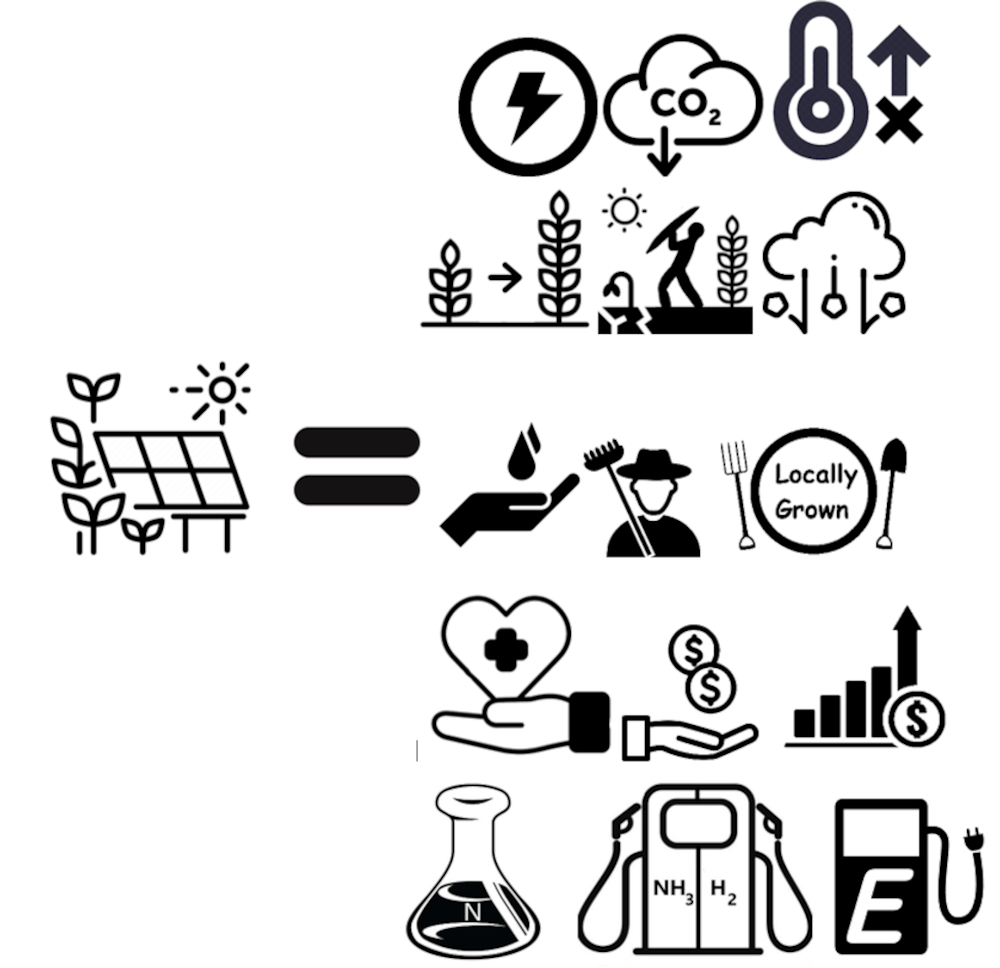
For audiences, cancellation comedy offers a chance to simultaneously enjoy elite talents like Mulaney and the bloodsport of real people fighting and suffering. For comedians, it offers a lucrative platform to regain control of their narrative. In Mulaney’s case, the special signals that he’s back and not a bad guy either (and maybe that he will heal himself through comedy). 

Cancellation comedy can be really funny, but nothing more than that. It doesn’t push boundaries like, let’s say, the frantically cerebral “A Black Lady’s Sketch Show,” or Jerrod Carmichael‘s “Rothaniel” (directed by Burnham), Ultimately, cancellation comedy is a financial instrument, an investment in the future of a distressed comic property. 

“Baby J: A Wide-Ranging Conversation” is streaming on Netflix.


Nazis carrying banner that says “There will be blood” protest Ohio drag brunch

Truthout is a vital news source and a living history of political struggle. If you think our work is valuable, support us with a donation of any size.

On Saturday, a group of 20 neo-Nazis clad in red shirts and black masks targeted a drag brunch in Columbus, Ohio.

The drag queen brunch held at Land-Grant Brewing Company was a fundraiser for the Kaleidoscope Youth Center (KYC), a drop-in community center for queer youth that provides community health, education and leadership programs.

While the drag brunch took place inside the brewery, outside of the event, the neo-Nazis chanted “Under the Aryan Sun,” and “No transgenders on our streets,” while throwing Nazi salutes and holding a banner that read “there will be blood.”

The demonstrators were members of Blood Tribe, a white supremacist organization which was formed online in 2021 by Christopher Pohlhaus. The group routinely participates in anti-LGBTQ protests, shouting racial and anti-LGBTQ slurs, waving swastikas, and giving Hitler salutes, according to the Anti-Defamation League.

Nina West, a contestant on RuPaul’s Drag Race season 11 whose friends organized and participated in the fundraiser, posted on Instagram that “Right outside the event, Nazis stood – masked and bodies entirely covered, shouting horrific remarks, doing the Nazi salute, and using any type of intimidation they could muster.”

Despite the threat of violence from neo-Nazis, Columbus organizers highlighted the local support for the event.

“Our community showed up,” KYC Executive Director Erin Upchurch said. “Our leadership was prepared for the potential disruption and worked with our security team to promote safety during the event. What we did not and could not prepare for were the powerful ways in which the community would leap into action to wrap their arms around the event itself, while providing actual barriers to block out our uninvited guests.”

Threats of violence against drag events have increased in recent years. A report by GLAAD, the world’s largest LGBTQ media advocacy organization, found that there were at least 166 incidents of anti-LGBTQ protests and threats targeting drag events since early 2022. This year alone, there have been 25 anti-drag incidents, including the firebombing of churches, bomb threats and protests.

Neo-Nazi intimidation of drag performances and story hours have increased in tandem with anti-drag legislation that has been sweeping the country. 14 states this year have proposed restricting or banning drag. In March, Tennessee signed a drag ban into law.

Parasol Patrol, an LGBTQ advocacy group from Colorado that uses umbrellas to shield children from far right protesters, has seen an uptick in neo-Nazi presence because of the current political climate.

“The political climate, all the [anti-LGBTQ] laws being passed, and the former president have made it safe for them to come out of their hate closets,” Pasha Ripley, co-founder of Parasol Patrol, told Truthout.

Parasol Patrol was present at the drag queen story hour in March that was protested by hundreds of neo-Nazis in Wadsworth, Ohio, and has protected children attending drag events from far right and neo-Nazi groups like Blood Tribe, the Proud Boys and White Lives Matter.

“Wadsworth was probably the most terrifying event we’ve ever been to,” said Ripley. “The tension was so thick in that place — over 400 protesters that were all whipping each other up into a frenzy. It’s intimidation, terrorist techniques — they want to frighten you back into the closet.”

Despite the threats of violence faced by the LGBTQ community, organizations like Parasol Patrol, as well as armed community groups in Texas and mixed-martial arts fighters in West Virginia have stood up against the hate.

“We need our allies to stand up with us and for us,” said Ripley. “[We need to] try and shield the kids from hatred as much as possible.”

AOC: Dianne Feinstein inflicting “great harm on the Judiciary” and should resign

U.S. Rep. Alexandria Ocasio-Cortez on Monday night rejected claims that Sen. Dianne Feinstein is being targeted by “anti-feminist” attacks as calls mount for the 89-year-old lawmaker’s retirement.

On the social media platform Bluesky, the New York Democrat said Feinstein, D-Calif., “is causing great harm to the judiciary” with her prolonged absence from the Senate due to her recovery from shingles. Feinstein, who sits on the powerful Senate Judiciary Committee, has not been present since late February.

Her absence leaves Democrats without a majority on the panel, and therefore unable to advance President Joe Biden’s judicial nominees without the support of Republicans.

Ocasio-Cortez noted that Feinstein’s indefinite absence has come as right-wing federal courts are gutting reproductive rights. As of last month, there were 18 judicial nominees for circuit and district courts pending in the Senate.

Feinstein asked in April that she be temporarily replaced on the Judiciary Committee, as calls for her resignation intensified among Democratic lawmakers.

The request required unanimous consent from the Senate, and was denied after Republicans including Sens. Lindsey Graham (R-S.C.) and Susan Collins (R-Maine) refused to support removing Feinstein from the Judiciary Committee. Collins suggested she was doing so out of respect for the senator, who has served for more than 30 years.

But by keeping Feinstein tied to the committee in her absence, Collins made it less likely that judges who oppose forced pregnancy will be able to be confirmed and help to secure abortion rights—which both senators say they support and which Feinstein has counted among her signature issues.

Feinstein’s absence has also left committee Chairman Dick Durbin (D-Ill.) without the power to subpoena Supreme Court Chief Justice John Roberts regarding questions about ethics on the court in the wake of revelations about the financial ties of right-wing Justices Clarence Thomas and Neil Gorsuch.

Rep. Nancy Pelosi, D-Calif., has suggested that advocates and lawmakers who have called on Feinstein to step down are being sexist and applying a double standard, saying “I’ve never seen them go after a man who was sick in the Senate in that way.”

The idea that calls for Feinstein to resign are anti-feminist, said Ocasio-Cortez on Monday, “are a farce,” considering that proponents of her early retirement are seeking to protect the rights of women and LGBTQ+ people across the U.S. through the judiciary.

Feinstein has said she will not seek reelection next year and plans to leave the Senate when her current term ends in January 2025. She has faced questions about her health for cognitive health in recent years, before her bout with shingles.

U.S. Reps. Katie PorterBarbara Lee, and Adam Schiff have all launched campaigns to replace the senator.

“Cruz only cares about himself”: Democrat Colin Allred announces 2024 challenge against Ted Cruz

Sign up for The Brief, The Texas Tribune’s daily newsletter that keeps readers up to speed on the most essential Texas news.


U.S. Rep. Colin Allred, D-Dallas, announced Wednesday he is challenging U.S. Sen. Ted Cruz, R-Texas, for reelection.

The third-term congressman made the announcement in a three-minute video posted on social media. The video touted Allred’s life story and congressional record — and took multiple shots at Cruz, including over his role leading up to the Jan. 6 insurrection and the trip to Cancun during the 2021 winter freeze.

“We deserve a senator whose team is Texas,” said Allred, a former NFL player. “Ted Cruz only cares about himself — you know that.”

Allred had been considering a campaign for months, and the launch was no surprise after it leaked out earlier this week that his announcement was imminent.

Allred’s campaign begins as an uphill battle. A Democrat hasn’t won a statewide election in Texas since 1994, and while Cruz’s 2018 reelection race against Beto O’Rourke was surprisingly tight, Democrats have not been able to replicate such a close contest since then.

“Some people say a Democrat can’t win in Texas,” Allred said in the video, which partly focused on his upbringing from the son of a single mother to NFL player. “Well, someone like me was never supposed to get this far.”

Cruz spokesperson Nick Maddux called Allred “too extreme for Texas,” citing his faithful voting record with former House Speaker Nancy Pelosi.

“Allred wants men to compete in women’s sports, isn’t serious about addressing the crisis at the border, wants to take away law-abiding Texans’ guns, and is soft on punishing murderers,” Maddux said in a statement. “Thankfully, the Lone Star State has a tireless champion in Sen. Ted Cruz. For over a decade, Sen. Cruz has been leading the fight for jobs, freedom, and security in Texas. As Senator for Texas, Sen. Cruz will continue to do everything he can to bring more jobs to Texas, fight out-of-control government spending, and support the oil and gas industry from the attacks of Democrats like Joe Biden and Colin Allred.”

The National Republican Senatorial Committee also issued a statement dismissing Allred’s chances.

“Just like Beto O’Rourke before him, Colin Allred is going to quickly regret giving up his safe House seat to run yet another doomed, Democrat vanity campaign in Texas,” NRSC spokesperson Philip Letsou said.

Cruz has some of the highest job approval ratings among Republicans in the state and has amassed considerable influence in the Senate since his last reelection. Cruz is now the top Republican on the Senate Commerce Committee and has evolved from conservative noisemaker to established right-wing brand. He regularly appears on conservative media and his podcast, “Verdict with Ted Cruz,” has millions of listeners.

Allred went after Cruz’s celebrity status in his announcement, saying “he’ll do anything to get on Fox News but can’t be bothered to help keep rural Texas hospitals open.”

That will likely be a campaign theme, with Allred also focusing on growing up as the son of a working class single mother who has been able to build bridges with both the business community and labor groups, having been endorsed previously by the U.S. Chamber of Commerce and the AFL-CIO labor union.

Allred is also a civil rights lawyer who worked at the U.S. Department of Housing and Urban Development under former President Barack Obama. He first ran for Congress in 2018, unseating Republican Rep. Pete Sessions in the Dallas-based district.

Cruz is running for a third term in the Senate after toying with making another White House bid in 2024.

Allred is likely to face primary competition. State Sen. Roland Gutierrez, D-San Antonio, is likely to run but not expected to make any announcement until after the current legislative session, which ends May 29.

Allred has to give up his U.S. House seat to run against Cruz. It was made safe for Democrats during the 2021 redistricting process, and there will be no shortage of candidates for it in the Democrat-dominated Dallas area.

Allred’s launch video drew clear battle lines against Cruz, starting with the Jan. 6 insurrection when supporters of former President Donald Trump stormed the U.S. Capitol in protest of his reelection loss. Allred said Cruz “cheered on the mob and then hid in a supply closet when they stormed the Capitol.”

“That’s Ted for you — all hat, no cattle,” Allred said.

The video also promoted Allred’s bipartisan credentials. He said he has “worked with Republicans” on issues related to veterans, trade and semiconductor manufacturing. The video included multiple shots of Allred appearing with a GOP colleague from North Texas, Rep. Jake Ellzey. Allred and Ellzey served together last year on the traditionally bipartisan House Veterans Affairs Committee, where they worked to improve veteran health care investment in the region.

Allred is a well liked figure in the Democratic caucus, getting picked to help lead his freshman class in the U.S. House in 2019. His class included several other notable new Texans, including U.S. Reps. Sylvia Garcia and Veronica Escobar, who were both the first Texas Latinas elected to Congress, and Rep. Lizzie Fletcher, who flipped a historically red district in Houston.

But Allred has also flexed his partisan fighting chops by serving on the House subcommittee on the weaponization of the federal government, which Democrats decry as a political sham. Allred said at the time of the committee’s creation that he would be a “common sense voice” and “focus on holding Republicans accountable.”


We can’t wait to welcome you Sept. 21-23 to the 2023 Texas Tribune Festival, our multiday celebration of big, bold ideas about politics, public policy and the day’s news — all taking place just steps away from the Texas Capitol. When tickets go on sale in May, Tribune members will save big. Donate to join or renew today.

This article originally appeared in The Texas Tribune at https://www.texastribune.org/2023/05/03/ted-cruz-colin-allred-2024/.

The Texas Tribune is a member-supported, nonpartisan newsroom informing and engaging Texans on state politics and policy. Learn more at texastribune.org.

How shading crops with solar panels can improve farming, lower food costs and reduce emissions

If you have lived in a home with a trampoline in the backyard, you may have observed the unreasonably tall grass growing under it. This is because many crops, including these grasses, actually grow better when protected from the sun, to an extent.

And while the grass under your trampoline grows by itself, researchers in the field of solar photovoltaic technology — made up of solar cells that convert sunlight directly into electricity — have been working on shading large crop lands with solar panels — on purpose.

This practice of growing crops in the protected shadows of solar panels is called agrivoltaic farming. And it is happening right here in Canada.

Such agrivoltaic farming can help meet Canada’s food and energy needs and reduce its fossil fuel reliance and greenhouse gas emissions in the future.  

When shade equals protection

Our recently published paper found that Canada has an enormous agrivoltaic potential as it is a global agricultural powerhouse  —  with Canadian-produced food export goals set at $75 billion by 2025.

A diagram showing the benefits of agrivoltaic farming
Agrivoltaics provide numerous services including renewable electricity generation, decreased greenhouse gas emissions, increased crop yield, plant protection and so on. (U. Jamil, A. Bonnington, J.M. Pearce), Author provided

Many crops grown here, including corn, lettuce, potatoes, tomatoes, wheat and pasture grass have already been proven to increase with agrivoltaics.

Studies from all over the world have shown crop yields increase when the crops are partially shaded with solar panels. These yield increases are possible because of the microclimate created underneath the solar panels that conserves water and protects plants from excess sun, wind, hail and soil erosion. This makes more food per acre and could help bring down food prices.

And as the costs of solar energy plummet, nations across the world are installing agrivoltaic systems and offsetting the burning of fossil fuels by profitably producing more renewable energy.

Solar farming is now globally trending

The agricultural industries in Europe, Asia and the United States have been aggressively expanding their agrivoltaic farms with wide public support.

In Europe, solar panels are put over different types of crops, including fruit trees. Meanwhile, in China, agrivoltaics is used to reverse desertification which is literally using solar panels to green former deserts.

In the U.S., social science studies have shown the photovoltaic industry, farmers and the general public are enthusiastically looking forward to the implementation of such projects.

Surveys of the rural U.S., from Michigan to Texas, show 81.8% of respondents would be more likely to support solar development in their community if it integrated farming. Rural residents generally like the idea of maintaining agricultural jobs, increased revenue from the sale of energy and the fact that it could provide a continued source of income. They believe it can act as a buffer against inflation and bad growing seasons.

It’s time to expand Canadian solar farms

In Canada, agrivoltaics has primarily been applied to conventional solar farms and used by shepherds and their sheep. While the shepherds get paid to cut the grass on solar farms, the sheep use the grass and pastures under the solar panels for shade and grazing. Sheep-based agrivoltaics is found throughout Canada.

            A map showing parts of Canada with high solar flux.
A map showing the agrivoltaic potential in Canada. The colors indicate the solar flux (amount of solar energy per unit area) in the areas that are currently farmed. (U. Jamil, A. Bonnington, JM Pearce), Author provided

The life cycle analysis of agrivoltaics, which assesses its impact from its conception to use, found that these solar-covered farms emit 69.3% less greenhouse gases and demand 82.9% less fossil energy compared to separate food farms and solar farms-based production.  

This is great, but to remain competitive with other major agriculture producers, Canada needs to start large-scale agriculture in the shadow of solar panels. This will enable the production of numerous crops that have been known to increase yield when covered.

This would include vegetables like broccoli, celery, peppers, lettuce, spinach and tomatoes as well as field crops like potatoes, corn and wheat.

Seriously embracing agrivoltaics in Canada would completely drop fossil fuel use. Less than 1% of Canadian land would be sufficient to support over 25% of the country’s electrical energy needs using this system.

This in turn can help the nation honor its commitment to reducing greenhouse gas emissions by increasing the non-emitting share of electricity generation to 90% by 2030.

Agrivoltaic solar farms outstrip electricity demand

The potential of agrivoltaic-based solar energy production in Canada far outstrips current electric demand. This solar energy can be used to electrify and decarbonize transportation and heating, expand economic opportunities by powering the burgeoning computing sector and export green electricity to the U.S. to help eliminate their dependence on fossil fuels as well.

Electricity produced by agrivoltaic farms can also be stored by charging electric vehicles as well as hydrogen production, thus benefiting transportation. Solar can already profitably meet Ontario households’ heating requirements by replacing natural gas furnaces with solar-powered heat pumps.

Lastly, any extra agrivoltaic electricity could be used to power computing facilities and cryptocurrency miners at profit and possibly be exported to the U.S. to help them clean up their much dirtier grid. This would help increase our trade surplus as well as the health and environmental benefits of decreasing the American pollution that wafts across the border.

When benefits outweigh the costs

Despite the numerous benefits of agrivoltaic farming, there are some barriers to its distribution in Canada. There are well-intentioned regulations that are holding these farms back.

In Ontario for example, you cannot install solar in the Greenbelt because of the law to protect farms. Similar issues arise in Alberta on Crown Land.

In the old days that made sense. We did not want to repeat the U.S. fiasco of raising food prices for energy crops. Now we know that with agrivoltaics we can get more food while using solar technology to make electricity.

The other main issue holding agrivoltaics back is capital costs. Agrivoltaics has a much higher capital cost per acre than farmers are accustomed to, but the revenue is much higher. So even though it is profitable it is difficult for farmers to implement large agrivoltaic systems on their own.

This means we need new methods of financing, new partnerships and new business models to help Canada take advantage of the strategic benefits of agrivoltaics for our farmers and the country.

Joshua M. Pearce, John M. Thompson Chair in Information Technology and Innovation and Professor, Western University

This article is republished from The Conversation under a Creative Commons license. Read the original article.

3 expert tips for turning decadent macaroni and cheese into a full weeknight dinner

If one was particularly determined (and had somehow been spared the lactose intolerance gene), they could definitely prepare an entire week’s worth of dinners using just the macaroni and cheese chapter from “Top Chef” star Kenny Gilbert’s cookbook “Southern Cooking, Global Flavors.” 

This book, as the name suggests, focuses on taking classic American recipes — especially those from the South where Gilbert was raised and continues to cook — and adapting them using international inspiration. As a result, Gilbert’s cookbook has not one, but five unique macaroni and cheese recipes, ranging from Chicken Wing Mole with Charred Corn-Jalapeño Mac & Cheese to Port-Glazed Chicken Thighs with Saint André-White Truffle Mac & Cheese. 

“If I’m talking to one of my best friends who’s Italian, and we’re talking food, and I want to cook for him, I want him to have something that’s like that warm hug from grandma — but his grandma,” Gilbert said in a recent conversation with Salon Talks. But also from my side of things in terms of, ‘This would make a good mac and cheese.'” 

Here are three steps from Gilbert for turning your macaroni and cheese into a full meal, and having fun while you do so. 

Start with your base 

It sounds like riffing on recipes was just part of Gilbert’s culinary DNA. 

“All kids growing up in America, regardless of their cultural background, are going to eat mac & cheese at some point,” Gilbert writes in the introduction to the macaroni and cheese chapter of his cookbook. “We always had the iconic blue boxes of mac & cheese in our pantry when I was a kid,” Gilbert writes. “It was so bad, but so good at the same time. I was six years old when I made my first box. I would doctor it up by adding more cheese to make it as cheesy as possible. I thought I was a big shot standing at the stove making ‘my own recipe.'” 

When starting to adapt a recipe, sometimes it’s helpful to start with a base or a reference point; in this case, it could be the macaroni and cheese your mom made you when you were growing up that used elbow macaroni and mild cheddar cheese. Maybe it’s your favorite fast-food macaroni and cheese (Anthony Bourdain famously liked both Popeye’s and KFC’s mac, by the way). 


Want more great food writing and recipes? Subscribe to Salon Food’s newsletter, The Bite.


Or maybe it’s a cookbook recipe. 

In addition to Gilbert’s versions, I’m personally really fond of the version found in Ashley Christensen’s “Poole’s: Recipes and Stories from a Modern Diner.” This recipe, which is served in Christensen’s North Carolina restaurant, is a really classic macaroni au gratin-style mac. 

“The Poole’s Macaroni au Gratin is made to order and is composed of cream (reduced), macaroni elbows (slightly al dente), three cheeses (Jarlsberg, grana padano, and sharp white Vermont cheddar) and sea salt,” she writes. “The most important ingredient, though, is a pile of tasting spoons. The cook working the mac station spends all night perfecting the texture and seasoning each order before mounding the same three cheeses on top and moving it to the broiler to be bruleed to a caramelized crisp of bubbling, cheesy perfection (or as close to perfection as we can get.” 

Once you’ve mastered your base recipe, it’s time to start to have a little fun. 

Riff on the basics — the pasta and cheese 

In speaking with Salon Talks, Gilbert said of the macaroni and cheese chapter: 

I wanted to be able to show, “Hey, this is my basic foundation, how I make mac and cheese.” And then now, you can take these cheeses out, add these cheeses in, and then now you have a different experience. And you can pair that up with different proteins, or vegetables, or whatever.

Gilbert is all about taking thoughtful inspiration from different cultures to amp up the flavor profiles in his dish — and he starts with the pasta and the cheese. For instance, in his Chicken Wing Mole with Charred Corn–Jalapeño Mac & Cheese, Gilbert reaches for pepper Jack, cream cheese, Monterey jack and Modelo beer to make a queso-inspired cheese sauce to coat farfalle — the bowtie pasta that has a really nice tooth, which enables it to stand up to the spiced sauce. It’s then topped with crumbled cotija. 

“I think about all the core basics of flavor profiles,” Gilbert said. “Whether it’s the cheese, whether it’s the type of pasta that would be more relatable, the chicken that’s going with it, how am I going to season that to compliment.” 

Concerned about which cheeses melt best for macaroni and cheese? Here is a very cheesy guide from Salon Food to help guide you through the process. 

Time for additions 

Macaroni and cheese is one of those foods that seem to inherently feed your inner child, so why not have some fun with additions? This is where you as a cook can take macaroni and cheese from a side to a main course. 

Gilbert, for instance, paired all of his macaroni and cheese recipes from this book with some version of chicken. “Chicken is a great lean meat to serve with mac & cheese,” he writes. “And the added protein makes for a full meal.” 

Again, take inspiration from other culture’s cuisines when determining what extras to add. Let’s say, for instance, that you want to go in an Italian-inspired direction. If you want a more intricate recipe, you could choose Gilbert’s Lemon and Rosemary Roasted Chicken Breasts with Taleggio-Pancetta Mac & Cheese; if you wanted something a little more weeknight-friendly, you could add chopped sun-dried tomatoes, frozen spinach and rotisserie chicken seasoned with Italian seasoning to a pot of basic stovetop macaroni and cheese. 

There’s no wrong way to play here, though a quick note for safety: Never add raw meat to your macaroni and cheese, even if you are planning on oven baking the dish. It’s always safer to pre-cook your meat. Many vegetables — including onions, peppers and broccoli — do better with a quick pre-cook, too. However, leafy greens are great to add raw because they will simply wilt under the heat of the pasta and sauce, which makes for an easy opportunity to add a little extra nutrition to your meal. 

Some people can be precious about what makes a “real” macaroni and cheese — remember the uproar when Food Network star Katie Lee added brussels sprouts to a baked Thanksgiving mac? — but don’t let them deter you from experimenting. It’s what Gilbert wants for those cooking from his book. 

“I wanted something that would be unique,” Gilbert told Salon Food about this chapter. “Because if you’re a mac and cheese lover, you’re going to be like, ‘Oh cool, wait a minute, there’s more than one variation.'”

Salon Food writes about stuff we think you’ll like. While our editorial team independently selected these products, Salon has affiliate partnerships, so making a purchase through our links may earn us a commission. 

Expert: New witness testimony in Carroll case “enough to chip away at any doubts” the jury may have

Jessica Leeds, who is one of the women testifying in E. Jean Carroll’s civil rape trial against Donald Trump, said the former president sexually assaulted her with what seemed like “40 zillion hands” on a flight in the late 1970s.

Leeds was sitting next to Trump in first class when he grabbed her chest and ran his hand up her skirt on a New York City-bound jet. In a matter of seconds, she managed to break free from Trump and stormed to the back of the plane, she said.

“There was no conversation. It was like out of the blue. It was like a tussle,” Leeds testified, according to The Associated Press. “He was trying to kiss me, trying to pull me towards him. He was grabbing my breasts. It was like he had 40 zillion hands. It was like a tussling match between the two of us.”

After the incident occurred, Leeds told the court she didn’t share her experience with anyone, but when she ran into Trump at a charity gala in the early 1980s, he reminded her of the attack.

“I remember you. You’re that c*** from the airplane,” Trump said standing next to his pregnant wife at the time Ivana Trump, according to Law & Crime.

In recent years, Leeds has opened up about the alleged assault, including both the airplane incident and Trump’s later comment from the gala.

She has also remained vocal about her aversion to Trump’s politics, but clarified that her testimony was not politically motivated and is just “the truth,” according to Business Insider

“Here is another 80-year-old whom Trump sexually assaulted in basically the same manner as he assaulted Carroll,” former federal prosecutor and founding partner of Selendy Gay Elsberg Faith Gay told Salon. “Although Leeds’ testimony was brief, the signature acts of Trump and the ages of the women were similar enough to chip away at any doubts that jury might have.” 

Gay said that Trump’s whole defense – including not showing up – is meant to suggest that he can’t bother with such a “trivial incident” and that it “intentionally dehumanizes Carroll.”

Leeds and Carroll both met for the first time in 2019 while Carroll was conducting interviews for The Atlantic with women who had come forward with sexual assault allegations against Trump.


Want a daily wrap-up of all the news and commentary Salon has to offer? Subscribe to our morning newsletter, Crash Course.


Carroll’s longtime friend Lisa Birnbach, who Carroll had told about the alleged rape immediately after it happened, also testified on Tuesday.

She said that Carroll called her about five to seven minutes after the attack happened in the spring of 1996 and told her she had been shopping with Trump in Bergdorf Goodman before he accosted her in a dressing room and “penetrated” her.

“I said: ‘Jean, he raped you. You should go to the police,'” Birnbach testified. “She said: ‘No, no. I don’t want to go to the police.'”

Carroll also made her promise to never bring up the incident again or tell anyone about it.

The topic didn’t come up again for decades until Trump was elected in 2016 and Carroll sent Birnbach an excerpt of her book, she testified. 

“Carroll has begun to show Trump’s pattern of or propensity to sexual abuse, as she promised in opening statements,” former federal prosecutor Kevin O’Brien told Salon.

Trump has denied both Leeds’ and Carroll’s allegations against him. He even mocked Leeds after she came forward with the sexual assault allegations shortly before the election, saying she “would not be my first choice.”

He has also used similar language when defending himself against Carroll’s claims, saying that she was “totally lying” and “not my type”.

Carroll and Leeds are both among more than a dozen women who have accused Trump of sexual misconduct over the years.

“While Trump jets off to Scotland, these nine women and men are stuck in the jury box, sitting in a windowless room for hours, hearing in minute detail the mess that Trump made of another person’s life,” Gay said. “They are doing their duty as citizens while our ex-president can’t be bothered.”

Does our gut microbiota really influence our health and life expectancy?

The intestinal microbiota is the set of bacteria and viruses that live inside your gut. Microbiota perform a variety of functions, including digesting food and protecting against specific pathogens.

There are several things that can disrupt the gut microbiota, including diet, alcohol consumption, antibiotics and inflammatory bowel disease. These cause imbalances, known as “dysbiosis” which, in turn, are associated with a wide array of chronic diseases.

In the last decade, the results of hundreds of studies in animal models have suggested that gut dysbiosis may play a role in several metabolic disturbances. Furthermore, in rodents, the implantation of certain bacteria could influence weight and metabolic profile. What’s more, transferring the gut microbiota from a thin mouse to a heavy mouse allows it to lose weight. Is this too good to be true?

Respectively a student and a full professor in the Department of Medicine at Université Laval, our goal is to identify new therapeutic targets for chronic diseases and healthy life expectancy by using an approach based on genetic epidemiology. This short article aims to summarize and contextualize our recent research work on the gut microbiota.


The importance of a causal link

Scientists have suggested that eating certain foods such as dietary fiber, antioxidant-rich fruits and red meat may have an effect on the gut microbiota. Some even suggest that microbiota could become a therapeutic target for the prevention or treatment of certain chronic diseases.

For the microbiota to become a therapeutic target of interest, it is essential to establish a causal link between the characteristics of the gut microbiota and chronic diseases. A causal link suggests that modifying the microbiota would decrease the risk of developing a disease. However, while several observational (non-experimental) studies in humans have identified statistical associations between various markers of gut microbiota and chronic disease, causality has not been clearly established.

For example, it is not known whether gut dysbiosis is the cause or consequence of disease (reverse causation). It is also not known whether both are influenced by other “confounding” factors that are associated with both gut microbiota and chronic disease. One could think, for example, of the quality of our diet, our weight or our alcohol consumption.

So, the aim of our work was to determine whether there is a direct and causal relationship between gut microbiota and metabolic markers such as weight, eight chronic diseases and human longevity using a genetic approach called Mendelian randomization.


The power of genetic data

Mendelian randomization attempts to establish causal links from genetic data. To do this, Mendelian randomization uses genetic variants (frequent changes in our genome sequence called nucleotide polymorphisms) that are strongly associated with a risk factor (gut microbiota), to establish a causal link with a dependent variable (health markers and diseases), as described in a recent article. Since the variations in our genome are established at the time of embryo formation and remain stable throughout our lives, this natural randomization experiment is not subject to reverse causality bias, since the presence of disease does not influence our genetic code. It is also not subject to the effect of confounding factors, since the genetic variations used are specifically associated with the characteristics of the gut microbiota.

We included genetic data from tens of thousands of individuals from several cohorts. We identified genetic variants associated with 10 fecal and blood metabolites. The metabolites included are small molecules produced by the gut microbiota that have previously been associated with gut dysbiosis and certain diseases. We also identified genetic variants of dozens of microbial taxa (e.g. a species, genus or family of bacteria). We studied nine cardiometabolic traits (weight, blood pressure, blood lipids, insulin, etc.) as well as eight chronic diseases: Alzheimer’s disease, depression, Type 2 diabetes, fatty liver disease, atherosclerotic coronary artery disease, stroke, osteoporosis and renal failure. We also studied the effect of these factors associated with gut microbiota on healthy life expectancy and longevity.


            figure representing several molecules
Small organic molecules called metabolites are produced by gut bacteria. These molecules could reach organs such as the liver and the brain. However, their role in the development of chronic diseases and life expectancy is controversial. (Benoît Arsenault), Fourni par l’auteur


We hypothesized that, in the light of previously published data, a causal link would be revealed between gut dysbiosis and chronic diseases associated with aging.

However, contrary to our hypothesis, this Mendelian randomization analysis did not show significant effects of gut microbiota on metabolic factors and chronic diseases. Seven associations between certain microbial parameters and chronic diseases associated with aging appear to be potentially causal, but their effect is small and we cannot rule out the possibility that these associations happened by chance. Overall, the results offer little support for the hypothesis that the gut microbiota has a significant effect on our weight, metabolism and risk of developing chronic diseases.


Results that call for caution

These results suggest that the previously observed associations may not be causal. The associations could be explained by the diseases themselves (reverse causality bias) or by confounding factors (confounding bias) such as diet, medication, smoking, metabolic health or others. However, these findings are consistent with the results of four recent randomized clinical trials showing that transferring gut microbiota from thin to heavyweight individuals does not lead to any weight loss or significant improvement in metabolic profile.

Mendelian randomization is a method that has several advantages over observational studies. However, these results need to be contextualized. It is entirely possible that the genetic parameters we used to predict the metabolites and microbial species associated with gut dysbiosis do not fully capture the complexity of the gut microbiota. This would diminish our ability to identify meaningful associations. Therefore, studies with larger sample sizes and better characterization of the gut microbiota and its metabolites will be needed to determine whether certain gut bacteria play a key role in the etiology (the study of causes) of chronic disease and longevity.

Although the impact of gut dysbiosis on chronic disease appears to be limited, gut health is important for other aspects of human health. For example, the microbiota prevents other harmful bacteria from colonizing our gut. In addition, it allows us to digest certain nutrients (e.g. dietary fiber) that would otherwise be rejected by our bodies.

Therapies that modulate the gut microbiota have recently been approved by U.S. health authorities for the prevention of C. difficile infections (a bacterium that causes diarrhea and other serious intestinal diseases). Our results, along with results from clinical studies less prone to reverse causality and confounding bias, do not, however, support a significant effect of gut dysbiosis on chronic disease.

These results support the conclusion that the potential of the microbiota as a therapeutic target for chronic diseases is, at present, low. We urge health professionals and the general public to be cautious about diagnostic tests based on gut microbiota to diagnose health problems that are not validated by the relevant health authorities.

Most importantly, we urge health professionals to avoid recommending specific interventions based on the mere fact that they would influence the parameters of the gut microbiota.

Éloi Gagnon, PhD Candidate, Université Laval and Benoit Arsenault, Chercheur au Centre de recherche de l’Institut universitaire de cardiologie et de pneumologie de Québec et Professeur titulaire au Département de médecine, Université Laval

This article is republished from The Conversation under a Creative Commons license. Read the original article.

Legal experts: “Almost certain” that Trump will be hit with new charges over the summer

Former President Donald Trump’s likely to be indicted for a second time in Georgia this summer, legal experts say.

Fulton County District Attorney Fani Willis, who has been investigating Trump’s attempt to reverse his Georgia defeat in the 2020 election, formally wrote to local Sheriff Patrick Labat asking to increase security from June 11 to Sept. 1, which is when she plans to announce decisions on charges stemming from her extensive probe.

Willis said she wanted local officials to prepare for a “significant public reaction” to the announcement.

“We have seen in recent years that some may go outside of public expressions of opinion that are protected by the First Amendment to engage in acts of violence that will endanger the safety of our community,” she reportedly wrote. “As leaders, it is incumbent upon us to prepare.” 

Legal experts say that Willis wouldn’t request the extra security if she didn’t plan to indict Trump.

“The Fulton DA’s letter makes it almost certain that Trump is getting indicted,” Titus Nichols, an Atlanta defense lawyer and former Augusta Judicial Circuit District Attorney’s Office prosecutor, told Vice News. “There is no other reason to send something in writing to the sheriff.”

Andrew Weissman, a legal analyst for MSNBC and former lead prosecutor for Robert Mueller’s special counsel’s office, expanded on this idea, questioning why Willis didn’t write “something shorter and sweeter” if she didn’t intend to charge Trump.

“Willis is highly unlikely to issue this letter if she’s not fully intending to charge Donald Trump, as opposed to not bringing charges against him or bringing charges only against lower-level figures,” Weissmann wrote for MSNBC. “Why not write something shorter and sweeter that kicks the can down the road, if you are not anticipating a fight over an upcoming indictment?”

Trump was indicted in April by Manhattan DA Alvin Bragg’s Office for allegedly falsifying business records in connection to the hush-money payments to adult film star Stormy Daniels.

Bragg’s office reportedly received racist death threats during the aftermath, including one that came in an envelope containing a white powder that was later proclaimed harmless. The former president tacked onto the vitriol, accusing Bragg and Willis, who are both Black, of being “racist” in pursuing the investigations and politically targeting him. 


Want a daily wrap-up of all the news and commentary Salon has to offer? Subscribe to our morning newsletter, Crash Course.


Trump’s Atlanta lawyers released a statement in response to comments about the significance of Willis’ letter.

“The public release of this letter does nothing more than set forth a potential timetable for decisions the Fulton County District Attorney’s Office previously announced would be coming,” the attorneys wrote. “On behalf of President Trump, we filed a substantive legal challenge for which the D.A.’s Office has yet to respond. We look forward to litigating that comprehensive motion which challenges the deeply flawed legal process and the ability of the conflicted D.A’s Office to make any charging decisions at all.” 

Trump has denied any wrongdoing in these cases.

He is also the subject of two other federal investigations, led by special counsel Jack Smith, for attempts to stay in power despite his 2020 defeat and potentially breaking the law by keeping sensitive government documents at Mar-a-Lago.

These possible indictments threaten to eclipse the GOP primary frontrunner’s bid for the presidency in 2024, increasing the likelihood that he’ll begin the general election facing criminal charges in at least two districts.

“The View” host Sunny Hostin elevates the beach read with Black stories at the forefront

When Sunny Hostin isn’t co-hosting “The View,” the attorney and three-time Emmy Award winner is often writing — typically into the early morning hours when everyone else in her house is asleep. She spoke to me about writing her novel, “Summer on Sag Harbor,” available now, and why its setting — the wealthy, historically Black community in Sag Harbor, N.Y. — has much to say about race, class and romance. 

Hostin told me on “Salon Talks” that her books have been described as “elevated” beach reads. Hostin has embraced the term because, beyond an escape, she wants to provide a welcome to readers of color and an education to readers who don’t know Black communities like this exist. In “Summer on Sag Harbor,” the protagonist, Olivia Jones — who first appeared in Hostin’s prior bestseller, “Summer on the Bluffs” — inherits a home in the Hamptons community of Sag Harbor.

Hostin, who has herself spent 20 summers there, said she “got the blessings” of the community’s elders to tell readers about Sag Harbor, shedding more light on the complex history of racism in real estate. “Black folks were only allowed to buy in certain areas in this country, especially beachfront, and Sag Harbor was one of those areas,” Hostin said. ” And they started a group of investors with Black lawyers and doctors and teachers and nurses, then they bought this stretch of land in the late ’40s, early ’50s and basically built a community and they were welcomed.”

At times, Hostin has dealt with bigotry outside of the sheltered community as a woman of color. “[Sag Harbor] is definitely different and it is a safe space. I’ve raised my kids going out there, and it’s their happy place, or one of their happy places, as well. But when you leave that safe haven, you notice it right away,” she said. “20 years ago, I wasn’t on ‘The View,’ and I certainly noticed a bit of a difference like, ‘What is she doing here?'”

Hostin, who has a Black father and Puerto Rican mother, writes with a nod to code-switching. “I do play with those things because I think it’s important to mete out those biases that we have within ourselves that I think the majority of people don’t realize they have,” she said.

Watch or read the transcript of the “Salon Talks” episode with Sunny Hostin below to learn more about why readers prompted her to write this sequel, as well as her takes on marriage, therapy and the firings of former Fox News and CNN hosts Tucker Carlson and Don Lemon.

The following interview has been lightly edited for clarity and length.

“Summer on Sag Harbor” is a follow-up to your bestseller “Summer on the Bluffs. Tell me about Sag Harbor.

It’s small and it’s on a private beach. I’ve been summering there for 20 years, probably. It was first introduced to me by Barbara Smith, B. Smith, who used to own all the restaurants. She had a house right on the beach and invited me out, and I fell in love. It’s been designated now a historically Black beach community, and that’s an actual historic landmark designation. The community worked really hard to get that designation, and it’s really important to the community because I don’t think a lot of people know about this. I don’t think they know it exists.

“I was ecstatic that it’s been described as an elevated beach read.”

They will know now because of the book, but I definitely got the blessings of the elders in the community to just tell people about the history, about the fact that Black folks were only allowed to buy in certain areas in this country, especially beachfront, and Sag Harbor was one of those areas. And they started a group of investors with Black lawyers and doctors and teachers and nurses, then they bought this stretch of land in the late ’40s, early ’50s and basically built a community and they were welcomed. I think that’s a really cool story.

It is. And important to note that even though the Hamptons, as it’s known, is a wealthy enclave, what you just described is that this was a place for regular folks.

Well, I will say that they were wealthy folks. That’s the one thing. You had to have money to be able to buy there. So I think that’s why it was a group of doctors and a group of lawyers. It was really founded by the Black elite. I think a lot of people don’t know that either, that there is a Black elite. There’s a Black elite that has been summering on Martha’s Vineyard since the late 1800s. Highland Beach, which is where the next book is, is in Maryland, and Frederick Douglass had his summer home there. It’s a world of history that I don’t think people know about, which is why I wanted to write about it.

You say you got the blessing of the elders.

I had to.

Too many people in this country don’t consider the viewpoint of our wise and older folks.

I know. I do a lot of research for my books because they are historical fiction and I thought it was really important to get their blessing because I’m an outsider, because I’ve only been going there for 20 years. They settled this place a long time ago, and Mr. Pickens, his name’s Bill Pickens, a real person, died recently, but I made sure that I had his blessing because he was the unofficial mayor of Sag Harbor. You had to have his blessing to hang out there, even. He was just a wonderful historian whose great-grandfather was one of the first Black students at Yale. So he had this wealth of knowledge, and I actually read him the first chapter of the book, and he gave me his blessings, and he said, “Well, you’re telling a lot of people about our little place.” I said, “Yeah, I think we should share it.” And he agreed.

I was wondering why they would agree to it. Obviously, you’ve done it with respect, but it’s like people don’t want you to know.

“Black folks were only allowed to buy in certain areas in this country, especially beachfront, and Sag Harbor was one of those areas.”

They don’t want you to know, and that’s why I always ask permission. I mean, even for Martha’s Vineyard, it became such a phenom, and I was surprised. People started visiting that had never visited before and they printed out the book cover on T-shirts and started going all around to the places that I write about in the book. But it was a welcome thing because I had asked the elders, I had asked the store owners, and they were like, “Bring it on.” And one of the store owners actually, he owns C’est La Vie, and he’s an incredible man, and he said his sales went up 100% because people were not only buying the book, they were buying all these things in his little shop.

As a person who spent a lot of my life in that area on the Shinnecock Indian reservation, I had a good time recognizing some of the places and names that you wrote about. There’s a safe space that you’ve written about, which is real. But, this is also a place where there are a lot of people not of color and people who are wealthy. When you step out of that as a woman of color, what has that experience been like for you?

It’s definitely different. And it is a safe space. I’ve raised my kids going out there, and it’s their happy place, or one of their happy places, as well. But when you leave that safe haven, you notice it right away. But it gives me great pleasure that that exists, that there is this safe place. Joy Behar does not live far from this community. I always visit her when I’m there, and she said, “Well, let me visit you.” Our place is right on the beach, so I said, “Come on and visit.” She was like, “I didn’t even know this existed.” And I said, “Yeah, you didn’t.” And she’s like, “This is a beautiful beach. I should have bought here.”

But you can’t.

Well, the interesting thing is, I write about this in the book, there is gentrification going on now. I think a lot of it is welcome, and some of it isn’t because some of it is predatory in the sense that if someone wants to just buy a home, like Joy because she loves the community, she is welcome. 

What we’re seeing happening in Sag Harbor is that you have these big corporate, conglomerate backers that are buying up properties from families that are having some trouble paying for their property taxes or having some trouble paying the mortgage down the line in their families. That saddens me because that is true gentrification. And perhaps these homes are now being sold to people that don’t understand how special this community is when they become a part of it, and that’s disappointing. I write about that because that’s a very real phenomenon. I was told that Sag Harbor initially was 100% Black ownership in this area, and now it’s about 60/40. That’s a very big change.

Do you experience racism in the broader community there as a woman of color who can afford to be there? 

“20 years ago, I wasn’t on “The View” and I certainly noticed a bit of, ‘what is she doing here?'”

I have. No question, I have. I think for me, certainly, it’s different because I’m a public-facing person. I’m pretty recognizable everywhere I go, so people are a little more careful as I have seen that dynamic change as I’ve become more recognizable. But initially, 20 years ago, I wasn’t on “The View,” and I certainly noticed a bit of, “What is she doing here?” That kind of thing.

I recently read Toni Morrison‘s “Recitatif.” She played with language and ideas about stereotypes and racism, and you’re never told the race of the main characters in the story. It’s really fascinating to read that and try to explore one’s own biases. Whether you’re a person of color, whether you’re like me who passes as white but is not actually white, whose mother was brown and an American Indian, whose father is white. I noticed you do some of this play with words in your writing.

I do.

Is that a way to make people feel comfortable no matter where they’re from, or is it code-switching that you put in there for certain people to appreciate?

The latter. I put in the code-switching because I, like you, am mixed race. My mother’s family is primarily from Spain, so they’re European and my father’s African American. Growing up, I got the “What are you?” question often. I’ve even had people say, “Just say you’re Latina. It’s so much easier.” Or, “Just say you’re Hispanic. It’s so much easier.” I love Toni’s work. I’m certainly not as talented a writer, but I do play with those things because I think it’s important to mete out those biases that we have within ourselves that I think the majority of people don’t realize they have. 

I don’t think this country is a fundamentally racist country. That’s just my belief. I don’t think you go to people and you say, “Are you a racist?” And they raise their hands. I’ve never met anyone that has done that, but I think people have implicit bias that they don’t even realize they have, and I like to toy with that.

When we talk about code-switching, I have found in my life that that happens in my own use of language, not just as a writer, but in my interactions with people. You have to be a chameleon.

You do.

I noticed it in myself that I speak differently when I’m around certain communities. It’s not just an ethnic or racial code-switching. I feel like it’s when you have this mixed ethnicity and you may appear one way or another, it’s actually much bigger than that.

“I wanted to explore the notion of therapy because it’s so stigmatized in the Black community.”

It is much bigger than that. It’s about who are you? What is your identity? How do you identify? And no one can really tell you or should really tell you how to identify. You get to determine that for yourself. Especially with women, we’re told how to be so much, or what you should be, what you should look like, how much should you weigh, this entire thing. I wanted to explore those issues in the book because this book is really about Olivia’s journey. It’s a love letter to my readers, really, because a lot of my readers felt that Olivia got the short end of the stick. I got questions like, “Is it because she’s the darkest-skinned sister?” And I was like, “No, but maybe I should explore that because she was written in a way that she didn’t understand herself, and she definitely underappreciated her value.”

I think as women, sometimes we do that. We don’t talk about what we really need. We don’t talk about what we want, our desires, what we deserve. And so this book is about her journey into finding out about herself. I also wanted to explore the notion of therapy because it’s so stigmatized in the Black community. I don’t know if people realize that, but there’s a stigma. Taraji P. Henson, I’ve spoken to her a lot about a lot of the work she’s doing to destigmatize it, so I wanted to insert that in the book after speaking with her, actually. I have Olivia going to see a therapist and just trying to normalize it because it’s been hard the last couple years in this country. I think women are suffering, children certainly are suffering, but women are suffering, and they need help.

Let’s get into the characters a little bit. I don’t know about Olivia or you, but if I was engaged to Anderson, I wouldn’t make it. This is Olivia’s fiance. He is an annoying guy.

A lot of our guys are annoying though. Aren’t they?

Yeah, they are, and you’ve talked about marriage on “The View.” Recently, you described your own marriage compared to some of your co-hosts as “a hot mess.”

It’s hard. I’ve been married almost 25 years. It’ll be 25 years in August. It’s like, I think the first five were terrible. Michelle Obama just recently said 10 of her 30 years were terrible. That’s just real talk about marriage and relationships, and I write to that. Anderson is flawed. There’s no question he’s flawed. A lot of our partners are, but he loves her. What do you do with that when you don’t feel deserving of that love? Because Olivia struggles with deserving that kind of love and attention. Plus, he’s annoying, but he loves her. So do you deserve to maybe be with someone that isn’t as opposite as you are, or do you accept the love?

You accept the love, but the guy who listens to his podcast with no headphones . . .

Yes, my husband does that sometimes. I’m like, “No.”

He could be hot. He’s hot. She writes that he’s got the chiseled face and blue eyes.

He’s really hot.

He’s smoking, but no amount of smoking would allow me to put up with the dirty shoes.

He’s a tough one. And he hasn’t been really truthful about who he really is, and she already has trust issues.

Anything else you want to say about the book and inspirations for it, other than your own experience? 

“I’ve been married almost 25 years. … I think the first five were terrible.”

Really, it was my own experience and also a response to my readers that said, “We want to know more about this character.” It made it easy for me. I always knew the three places the trilogy would be set in. I knew the settings. For me, my home is my sanctuary. I live with 12 chickens and two big Newfoundlands and two kids and a husband and a cat, so I know that home is sanctuary for people. I knew that a home would be another character in the book, just like it was in “Summer on the Bluffs,” but I didn’t know that I was going to write to Olivia’s journey. I thank the readers for telling me that they felt something was missing.

Well, that’s great that you have such a great relationship with your readers and such an engaging one. Nowadays with social media, most authors do, but some more than others.

It makes it so easy. I will tell you one of the reasons why I’m so engaged with the readers is because my book came out during the pandemic, and it was a pandemic escape read for a lot of people. I did a virtual book tour and I met with book clubs, 50 of them. They all bought the book, they read the book, and they had really good questions, but the resounding theme was, “I want to know more about Olivia.” And so I was thinking during the tour, “That’s my next book.”

I can’t bury the lead anymore in news departures. I watched the clip from yesterday from your show and your take on Tucker Carlson, and then there was Don Lemon

“I can say my experience with Don was not an experience with a misogynist.”

I know. 

And the late night hosts had a massive party.

They did. They were calling it the “Monday Massacre.”

Reacting to the news on “The View,” you said, “Karma doesn’t lose anyone’s address.”

Doesn’t ever. You get in this world what you put in. That’s what you get in return. I am a firm believer in that. I mean, I’m Catholic, I’m a faithful person, but you have to look at what you put out in the world when you get something like that back. Now, I think there’s a false equivalency that was drawn between Tucker and Don because the terminations happen on the same day. 

Tucker lied to his audience intentionally, and he did it for money, in my view. I worked at Fox News. I’ve been on air with Tucker. I don’t think he believed most of what he was saying, but he did it anyway. He intentionally misled people. In the process of that, helped in dividing this country a great deal, and also in a sense helped with the degradation of our democracy. I think that’s unforgivable as a so-called journalist. 

Don is an actual journalist. I worked with him at CNN for many years, and our offices were directly across from each other. I consider him a friend, and when I’m in Sag Harbor, he has a home there, and I often visit with my 20 friends. He allows everyone in, as does Joy, but I can say my experience with Don was not an experience with a misogynist. Don loves his mom. He loved his sister. When his sister died, he was devastated. And he loves me, and he treats me as a friend and a sounding board.

He’s always respected the women that I’ve seen him around. So I know that he made some comments that were ageist for sure and were sexist, but he apologized. I’ve never heard Tucker Carlson apologize for anything. And Don also got training, formal training. And I wonder if we are in the world now, where I thought cancel culture had gone away. And how do you get canceled from your career of 17 years after you’ve apologized for something and put in the work of making yourself a better person? This is just Sunny. I was disappointed to see that. I don’t think it was deserved.

It’s like no one is safe.

No one is safe.

And there’s no second chances anymore. Some don’t deserve them.

“To be clear, Tucker should’ve been canceled because he destroyed our democracy.”

To be clear, Tucker should’ve been canceled. Because he destroyed our democracy or helped destroy our democracy. He was very dangerous. He mentioned the Great Replacement theory 400 times on his shows. And that’s a very divisive concept, and it’s a racist concept. It’s the notion that liberals or Democrats are bringing in immigrants to vote to replace white people. And it’s a crazy thing to fearmonger in that way and tell people, “There won’t be space for you because of these people.” And that’s what he did, and never apologized for the falsehoods. And he costs his employer $800 million, almost $800 million. So I don’t think it’s that Fox News is trying to be a better corporation. I think they made a business decision that it wasn’t worth keeping him on air because it costs too much money. That’s just my theory.

Well, I’m sure Don will land on his feet.

I hope so. Yeah.

I see you get a little emotional about that because I can feel it.

Yeah, he’s my friend.

And the same when you were speaking about women in therapy. I think there is a message here: If you need help, get help.

Or read a wonderful beach read and escape.

You like the term beach read? Some authors are fussy about that.

I do. It’s gotten great reviews, and I’m so blessed to be able to say that. One of the reviews compared me to Elin Hilderbrand, who is the queen of beach reads, and I read all of her books, so I was ecstatic that it’s been described as an elevated beach read.

Fox News’ Jesse Watters claims he “can tell” who is “illegal” just by looking at them

Fox News host Jesse Watters claimed to be able to tell if someone is an undocumented immigrant just by looking at them during his program “The Five” on Tuesday, according to The Daily Beast.

The remark came while Watters and his co-hosts discussed Texas Gov. Greg Abbott’s renewed commitment to busing migrants into Democrat-run cities, particularly New York Mayor Eric Adams’ critique that Abbott was “targeting” cities with Black mayors.

Abbott has been transporting migrants into the city since at least last August, in part as a form of retaliation against the Biden administration’s opposition to Title 42, a Trump-era policy set to end May 11 that cites COVID-19 as a reason to expel more people.

Watters called Adams’ claim “stupid,” saying that it’s “like a lawyer complaining that all of these people are coming to them with problems. That’s what you signed up for. You’re a sanctuary city!”

He went on to deny that race played a part in Abbott’s decision, citing border apprehensions as the reason why Abbott didn’t transport migrants during former Mayor Bill de Blasio’s term and asking the race of Martha’s Vineyard’s mayor as examples. (Florida Gov. Ron DeSantis arranged for migrants to be flown to the island, which is comprised of six towns governed by their own select boards instead of mayors, last September.)

Watters then shared an anecdote of his commute to the Fox News studios in the city that day, where he claimed to have seen undocumented immigrants “digging through the trash.”

“I saw on the way into work an illegal immigrant family digging through the trash looking for recyclables,” Watters began.

Co-host Jessica Tarlov quickly jumped in, asking him how he knew the family was “illegal.”

“You can tell,” he responded, adding after her exclamation of disbelief that he’s “a city guy. And, you don’t want me to get into it, but I can tell.”


Want a daily wrap-up of all the news and commentary Salon has to offer? Subscribe to our morning newsletter, Crash Course.


“It is the saddest thing to see because they’re not able to work here,” Watters continued. “They came to work, but they’re not able to work here. And the point is this. You have to be able to choose the people that come into the country based on needs. If you need this type of person, you need this, bring them in. But to just say yeah, come everybody in and oops, you know, and now people are looking for a five-cent bottle. That’s not right. And you can’t blame the guy down in Texas for that.”

Watters shifted the blame to President Joe Biden, whose administration has seen a surge in border crossings.

“Joe Biden is the common denominator for all of this,” Watters said. “It’s like a bad manager that doesn’t do his job. Then everybody on the staff is pointing fingers and bitching about the other person. But if the manager would just do their job, everybody could stay in their lane. Texas could focus on Texas and New York could focus on New York.”

According to Mediaite, Watters also commented on some migrants’ appearances last year during a similar discussion about Abbott’s actions on The Five.

“And they dress so nicely,” he reportedly said in April 2022. “Athleisure, one guy had on matching Nike head to toe. The kicks were clean. If you’re fleeing a war-torn country seeking asylum and you think you’re gonna die, and you show up looking that good, nobody’s going to buy that.”

“Abusive” right-winger Steven Crowder exposed himself at work and berated his pregnant wife: report

Nearly a dozen former employees alleged abuse at right-wing commentator Steven Crowder’s company after a video of him screaming at his wife was published online.

Crowder, in a Ring video published last week on journalist Yashar Ali’s Substack, was heard telling his pregnant wife, Hilary, to “f*cking watch it,” telling her he doesn’t love her, and accusing her of not doing “wifely things.” The couple, who married in 2012, have been embroiled in a tense divorce since 2021.

Following the newly surfaced clip, ten former employees told The New York Post that they were not surprised by his behavior in the video.

​​”I’m not shocked, but it was pathetic what he did to Hilary,” a former employee told the outlet. “That might not be the Steven you see on his show, but that was the real Steven.”

According to the ten employees, Crowder headed an “abusive” company, where he regularly became belligerent, forced assistants to wash his dirty laundry, and exposed his genitals to co-workers, with six staffers claiming they directly witnessed Crowded expose himself. 

“He climbed over and dropped his junk on top of Jared’s shoulder,” one source said of a situation involving ex-producer Jared Monroe. 

Another employee asserted that Crowder’s actions were a “power play” and “if your manager at Red Lobster did this, it would be national news.”

The workplace environment, one ex-employee said, “was like a cult where you were all in,”  adding that Crowder “did not want you having a life outside of it.”

“We don’t want Steven to suffer. We just want the abuse to stop or at least let future employees know what they’re getting themselves into,” said another former employee.


Want a daily wrap-up of all the news and commentary Salon has to offer? Subscribe to our morning newsletter, Crash Course.


Crowder, a 35-year-old Canadian American conservative content creator, became a Fox News contributor in 2009, The Post reported, before moving to Texas in 2016 to expand his podcast business.

The “volatile” Crowder, who has 1.3 million followers on Instagram and 5.9 million subscribers on Youtube, was “capable of working every angle of your emotions,” according to a former employee. 

Crowder has claimed the video of him berating his wife is “misleadingly edited.” The Daily Beast reported that Crowder has since vowed to seek retaliation against his ex-wife and said he may release “relevant medical records concerning mental health history or evaluations.”