Spring Sale: Get 1 Year, Save 58%

This no-fuss cinnamon swirl quick bread is better than any cinnamon roll you’ve ever tasted

There’s no bake more comforting than a quick loaf. Clean-up is a breeze with these one-bowl recipes, which you can prepare in 15 minutes or less. After you exert minimal effort, all that’s left for you to do is pop your mixture into a loaf pan before putting your feet up and letting your oven do all of the hard work for you.

It’s been a long year, and there’s one thing everyone could use in their lives right now: comfort. That’s why the Meyer Lemon Blueberry Loaf developed by Salon’s resident pastry chef Meghan McGarry of Buttercream Blondie was a viral hit this spring. That bright, seasonal bake was followed up by an Apple Spice Loaf Cake, which not only shined a spotlight on fresh Granny Smith apples but also tasted like fall in a bite. 

In case you missed it, Salon Food spent the last six weeks baking through fall with McGarry’s roster of go-to seasonal bakes. After the popular loaf, readers pivoted to apple crisp bars, which magnified the star fruit of the season, and an apple crumb cake, which served up nostalgia in a no-fuss bake. There were also three cookies in the mix: apple cranberry oatmeal, easy peanut butter cups, and Irish cream pumpkin

It may be hard to believe it, but the holidays are finally upon us. This week rings in the season with the first in a new series of modern spins on classic desserts: Cinnamon Swirl Quick Bread. There’s no better way to ease into the most wonderful time of the year than with a recipe that will not only make your kitchen smell like you’re home for the holidays but also require minimal effort. (And “minimal” may be a stretch, because this bread is even easier to make than banana bread.)

You could spend a pretty penny on a highly-processed cinnamon at the store or hours making homemade cinnamon rolls. Instead, you could simply open up your pantry, where you will likely find everything you need to make a no-fuss upgrade to both options without even leaving home. The list of everyday ingredients you’ll need includes: all-purpose flour, cinnamon, eggs, and sugar.

RELATED: This spiked apple spice loaf cake is better than any pumpkin dessert you’ll bake this fall

In her makeover of this retro bake, McGarry emphasizes the coziness and warmth of the holidays. Brown sugar, vanilla, and a hint of whisky combine together like a welcoming hug. If you’ve already cleared out your bar cart baking along with McGarry this fall, you can leave the latter out. You can also swap out brandy or bourbon for equally spirited results. 

Those ingredients all play key supporting roles, but the secret weapon is one you may not expect: buttermilk. The addition of dairy yields a bread with robust moisture. At the same time, it balances the flavors and keeps the bake light air. 

RELATED: You can bake this quick loaf with ingredients on hand in your pantry, because substitutions are easy

We still haven’t even gotten to the star of the show: cinnamon. There’s not only a cinnamon swirl running through the center of this beautiful loaf that melts in your mouth but also a cinnamon sugar topping that adds cheer to every bite. The cinnamon sugar swirl looks like a work of art, but you don’t have to be a professional pastry chef like McGarry to knock it out of the park. All you do is add a layer of cinnamon sugar mixture halfway through adding the mixture to your loaf pan. Once you slice open the freshly-baked bread, you’ll find a gorgeous swirl spinning around the pastry.

As pretty as that swirl may be, you’ll reserve the standing ovation for the cinnamon sugar topping. The final step before your pan hits the oven requires topping the loaf with a cinnamon sugar mixture, which transforms into a crunchy topping that is the icing on the proverbial cake. In additional to the light bread and the cinnamon swirl, you get a nice contrast in texture from the crunch throughout every couple of bites.

RELATED: These spiked apple crisp cheesecake bars are better than any pumpkin dessert you’ll have this fall

Simplicity isn’t the only reason to love a quick loaf. Like its apple and blueberry relatives, this cinnamon version fits any menu. It’s the perfect starter for a boozy brunch, afternoon pick-me-up when paired with a hot cup of tea, or after dinner dessert alongside a heaping scoop of vanilla ice cream. If you aren’t hosting family and friends this holiday season, this loaf also makes a great gift that is guaranteed to liven up any boring cookie swap. (It also freezes well for when you need some emotional support.) Here’s to a season filled with joy and laughter!

***

Recipe: Cinnamon Swirl Quick Bread

Yields one 9×5-inch quick bread

Ingredients:

For the Quick Bread

  • 1/4 cup granulated sugar
  • 3 tsp. cinnamon
  • 2 cups all-purpose flour
  • 1 tsp. baking soda
  • 1/4 tsp. salt
  • 4 ounces unsalted butter
  • 3/4 cup granulated sugar
  • 1/4 cup light brown sugar
  • 1 egg
  • 1/2 tsp. vanilla extract
  • 1 tbsp. whiskey
  • 1 cup buttermilk

Instructions:

  1. Preheat oven to 350 degrees and line a 9×5-inch loaf pan with parchment paper, leaving an 1-inch overhang on each side.
  2. In a medium size mixing bowl, stir together flour, baking soda and salt. Set aside.

Click here to access the remainder of Meghan McGarry’s Cinnamon Swirl Quick Bread. And don’t forget to follow @ButtercreamBlondie on Instagram for more ways to bake through it this holiday season

2020 election reveals deep flaws in how the U.S. chooses its president

The election long count is serving up a plate full of rueful thoughts on what it could have been — whatever side of the divide you inhabit.

By the numbers this morning, we seemed to be closing in on an Electoral College win by Joe Biden, but we also had brought forth a very ugly speech by Donald Trump a slew of annoyingly unsubstantiated legal challenges that judges are rejecting on sight and a persistent threat of violence. Through all of it, we had an American public resisting any clear election message.

Hell, just listening to Trump raving last night about perceived frauds and half-truths about the actual count of ballots rather than acknowledging a huge outcome and a close result was painful — and a dangerous attack on our democratic institutions. So, too, was the near silence of official Republican leaders who refused to call Trump out.

But with results in such close numbers, we’ve decided to continue division above all else. As a result — whether Biden finally hits his magic number or Trump and friends somehow pull off a coup — it is unclear what we will be willing to get done about contagion or job growth or tax policy and income inequality.

Even with a change in the White House, the Senate looks right now to be keeping a slim Republican majority — at least until two likely January runoffs in Georgia — or a body so split that we are guaranteeing that policies to settle issues in health care, immigration, environment and the pandemic will be hard to come by. With an election itself that structurally reflects racial divides, how can we hope that we can have answers that provide change that has either sent people to the streets or to their gun closets to protect themselves from a perceived threat?

Biden would enter this picture starting in an enormous hole on those long-contested issues while trying to provide a path of inclusion not only for Republicans but for an increasingly vocal coalition of progressives, Black and Brown voters and cities who provided most of the boost to get to this point.

And Americans would have ducked anything resembling a useful referendum on Trumpism even if we did not re-elect Donald Trump. Whatever you may think of Trump, he will end his time with a numerical loss, but without a serious judgment of his time in office at the polls.  After politically side-stepping impeachment, rewriting the narrative on coordination with Russians, a mile-long list of unaddressed ethical and moral misadventures and a tattered history of policies that don’t hang together, there is no real judgment here.

Rueful Looks

There is plenty in these results for introspection:

The Electoral College:  Why do we still have the Electoral College, a vestige of our agrarian roots, that makes little sense in our mobile and confederated way of sharing political power? The idea that there is a popular vote that is somehow divorced from the actual naming of a national leader is nuts. And even if we keep the logic of the Electoral College, why can’t it be made proportional by state — which it was at the start of the Republic — rather than winner-take-all?

The idea that a partisan majority state legislature could simply but legally dump popularly chosen electors for an alternative slate, as had been threatened in at least one state, sounds horribly undemocratic at the least.

And after two years of campaigning, we still have to focus on a single county in Pennsylvania or Florida for a national result. The existing, arcane Electoral College couldn’t be the best answer for policy-setting in a big and complicated country.

The money: Collectively, did we just spend $14 billion to come up with a result that leaves half the country feeling bereft?  Just think about the people we could have fed, the housing, the medical; insurance, the COVID testing and cure we could have bought for that money. Can’t we seek bipartisan acknowledgment that the Citizens United case has led to a monstrous cloud of dark political money and demand a federal law to address this with some kind of reasonable limits, like public financing?

The vote itself: We just proved the case for mail-in ballots, for early and spread-out voting over days, for ending long lines and for encouraging full voter participation. Let’s make sure these approaches are made permanent. While we’re at it, why are we allowing one-party state legislatures to gerrymander districts and to pass an increasing set of voting laws aimed at suppressing the vote? How about renewing the Voting Rights Act right now? And let’s insist on independent district line drawing in the next year to account for census results.

For that matter, how about investing in making voter practices less random among the states, from registration to counting? The flood of partisan court challenges of how and when to accept, count or verify votes seems hopelessly over-complicated. And fix the damned Post Office, which, we finally confirmed in a court case, failed to deliver more than 150,000 ballots by Election Day.

Polling: Something is seriously wrong with polling and our insistence on creating them, misinterpreting them and publicizing results that we find advantageous. Maybe we just should abandon them for the one poll that seems to count.

Debates: Those debates were pretty terrible. Let’s cancel the next round for organized side-by-side interviews.

What Might Have Helped?

For openers, some of those many Democratic would-be presidential candidates should have run for Senate seats. Stacey Abrams in Georgia and Beto O’Rourke should have been able to do better than those who finally did run in those states, just as John Hickenlooper and Mark Kelley were able to succeed in Colorado and Arizona.

Having a Senate in opposition to the White House is not good for most of us, unless, like re-elected and once and probably future Majority Leader Mitch McConnell (R-Ky.), your goal simply is to block anything the other side wants to accomplish. In this election, Biden has a string of goals that hang in the balance. Winning the office is just a start, as Trump was learning with a recalcitrant House.

Let’s get rid of all this talk of “socialism” among people who depend on Medicare and Medicaid, but somehow think “Medicare for All” represents some radical departure that will make us the next Venezuela. “Socialism,” quickly becoming “Communism” in the mouths of Trump supporters, is not asking corporations to pay their taxes or food stamps for the hungry or better prescription drug prices. It just isn’t.

And for all the talk of differences between Biden and Trump on a full range of issues, what this election seemed to be about most was a perception of who would bring jobs and economic growth about fastest — the same, old self-interest question. That question split along urban and rural lines in ways that were racial. That’s not how this election was positioned.

The news media and social media need a serious period of introspection since the main storyline on election night once again seemed off. How did most of the media miss the ethnic variations in the Latino vote? Given the number of stories that discussed a repeat of 2016 did this election seem to be a reenactment? Was COVID the biggest concern of the day or not? Voters said something different after voting than they did before.

And, since we seem to have a limited attention span, how about we keep the entire election campaign to three months?

How Trump and Falwell Jr. became evangelicals’ “golden calves” despite obvious moral transgressions

Late Thursday night, a video began circulating on Twitter of a small crowd of women in bright red MAGA hats kneeling outside the Clark County Election Department, rocking back and forth with arms lifted in furtive prayer. “We give our hearts to you in the name of Jesus,” one of them can be heard saying. The rest called out individual prayers that Donald Trump would narrow the gap between him and Democratic challenger Joe Biden in the state. In the end, their prayers were not answered.

The jokes wrote themselves. “Ma’am, please stop, we have separation of church and state here,” one Twitter user wrote, while another posted, “Me when I get to Chick-fil-A, but then realize it’s a Sunday.” It’s funny; in my sleep-deprived state, the speculation that God sent those women to voicemail made me laugh out loud. But as someone who was raised in the church, the image was also heartbreaking  (there’s no other word for it, really) in a way that is difficult to fully express. 

How, after all that has transpired over the last four years — children kept in cages, the consistent dehumanization of marginalized communities, disparaging veterans and POWs, credible allegations of sexual assault, the blatant lies, the Stormy Daniels hush money — can someone who calls themselves a Christian support that man? It’s a question that I’ve been asked, and think about, a lot. 

It’s a question that was also raised retrospectively after the scandal involving former Liberty University president Jerry Falwell Jr., his wife Becki and former pool attendant Giancarlo Granda came to light in August. As Politico reported at the time, Falwell Jr. allegedly both approved of and observed his wife’s sexual relationship with Granda, who was 20 years old at the time. These encounters took place multiple times between 2012 and 2018. “Becki and I developed an intimate relationship, and Jerry enjoyed watching from the corner of the room,” Granda said. 

To understand the magnitude of the scandal, you first have to understand the power of the Falwell dynasty. Jerry Falwell Sr. started Liberty University on the back of his successful ministries, K-12 private school, Bible studies, and television and radio broadcasts that were syndicated across the country.

In the late 1970s — after the Supreme Court’s decision on Roe v. Wade was issued and the IRS proposed an ultimately doomed rule that would have stripped some private schools of their tax-exempt status — Falwell and a group of fellow evangelicals formed the Moral Majority, a prominent American political organization associated with the Christian right and Republican Party. 

“The Moral Majority was both a fundraising behemoth and a rallying point for Christians to get involved in politics,” wrote reporters Maggie Severns, Brandon Ambrosino and Michael Stratford in a joint byline for Politico. “As the group’s most high-profile leader, Falwell Sr. travelled the country, staging rallies and parades and helping to register new voters at churches. In 1980, the group threw its support fully behind Republican Ronald Reagan against the evangelical Democratic President Jimmy Carter.” 

They continued: “After Reagan won a surprisingly large victory, the Moral Majority took credit for mobilizing a new bloc of voters that helped him win Southern states that had four years earlier supported Carter, their fellow Southerner.” 

The Moral Majority, as an organization, petered out in the late ’80s, but Falwell Jr. soon came along and became a prodigious fundraiser for his father’s university (and digging his father out of nearly $100 million in accumulated debt), before eventually taking over as president in 2007 following Falwell Sr.’s death. 

But back to Falwell Jr.’s scandal this summer. That wasn’t his only indiscretion. News of his behavior began last year when, as Politico reported, former Trump attorney Michael Cohen helped “clean up racy ‘personal’ photographs” of his wife, Becki, including one of her in a French maid costume, which Falwell had allegedly sent to a number of employees at his evangelical university. He would allegedly brag about his penis size in the presence of university officials, and reportedly had an old ‘price of admission’ sign decorating the entrance of his home, which he would point to and tell guests, ‘Oh, that’s for blowjobs.” 

Then there were the photos of Falwell that surfaced on Aug. 7, showing  him with his pants partially unzipped and his arm around a woman whom he later claimed was his wife’s assistant. 

Most recently, as Politico reported on Nov. 1 — though it seems it was, understandably, eclipsed by election news and anxiety — the Falwells would play a kind of sexual “would you rather game,” in which they would point to male and female students and imagine what it would be like to have sex with them, according to a former student who said Becki told him about the game.

I’ve written before about how unlikely it was that leadership at Liberty University, which is one of the premier colleges for Evangelical students, were unaware of stories about Falwell Jr.’s behavior, especially since it so blatantly flew in the face of the college’s own student honor code, called “The Liberty Way,” Students are required to sign the code upon admission, which stipulates that premarital sex is forbidden, as are same-sex relationships. Drinking alcohol and “obscene language” are infractions, and students are instructed to “dress modestly at all times.”

It seems instead, and the latest Politico report confirms this, that in the face of allegations of Falwell Jr.’s inappropriate comments and behavior, the school’s board of trustees opted to take no official notice for at least a decade. How could two men like Trump and Falwell be embraced — or at least not publicly admonished — by American Christians? 

I think the answer to that question is found in the Old Testament book of Exodus. According to the scripture, the Hebrews had just narrowly escaped Egypt and, while Moses was receiving the material for the tablets of the Law on Mount Sinai, they fashioned a golden calf to worship instead of the God who had delivered them from enslavement. 

Since then, the concept of the worshiping of a “golden calf” has become a stand-in for a supreme act of apostasy, the rejection of a faith once confessed. As Raymond P. Scheindlin, the Professor Emeritus of Medieval Hebrew Literature at the Jewish Theological Seminary, has written, the Hebrews “wanted an icon, a statue, an inanimate representation of God to give them confidence, His prophet being absent. ‘Give us a god to go before us,’ they said, ‘for we don’t know what has come of this man Moses.'” 

In the Falwell dynasty and the Trump presidency, many white Christians found their golden calves — representatives who promised worldly power, despite their egregious moral shortcomings, at a time when evangelicals felt their place as America’s moral majority was slipping. 

Given the similarities, it’s no surprise Falwell Jr. endorsed Trump.

Trump’s followers don’t care about the president using tear gas and riot police to disperse protestors in Lafayette Square so he could pose in front of St. John’s Church, clumsily brandishing the Bible as a prop, so long as he promises them preferential treatment, often at the expense of people of color and immigrants. As Michael Gerson put it in his 2018 cover story for the Atlantic, evangelicals now regard themselves, “hysterically and with self-pity, as an oppressed minority that requires a strongman to rescue it. This is how Trump has invited evangelicals to view themselves. He has treated evangelicalism as an interest group in need of protection and preferences.”

He elevated himself as their idol — a savior, in a way — and many fell at his feet. But as his grasp on re-election has slipped, even Fox News, a television network that was intrinsically tied to his administration, seems to have turned against him. 

As Salon’s Melanie McFarland reported on election night, Fox was the first station to call Arizona for Biden, a decision that enraged many Republicans who insisted the decision was wrong. 

“Its decision desk editors, including chief editor Arnon Miskin, joined [network anchor Christ] Wallace and his colleagues Bret Baier, Brit Hume, Martha MacCallum, Juan Williams and Dana Perino to explain several times that, indeed, their call was sound and they stood by it,” McFarland wrote.

Trump went on to baselessly accuse Democrats of trying to “steal” the election, a claim that Wallace pushed back on. 

“This is an extremely flammable situation and the President just threw a match on it. He hasn’t won these states,” he said. 

As a result, inevitably, Trump started attacking Fox News. They were now useless to him because of his all-or-nothing take on loyalty, just as he’s now useless to the network, rendered powerless after his loss (not that he’s conceding). 

Meanwhile, since taking over Liberty, Falwell Jr. increased the school’s listed assets from just over $259 million to over $2.5 billion. Those interested in Liberty as an institutional bulwark against liberalism and worldliness were eager to brush aside Falwell Jr.’s indiscretions as long as he continued to bring in money for the university and the cause. But they too cast him aside when his public scandals impeded the cause. 

Biblically, the golden calf narrative ends when Moses descends from the mountain and sees his people worshipping the idol. He becomes enraged, breaks the tablets and insists that the calf be destroyed, melted down and mixed with water. Moses then instructed the Hebrews to drink the bitter mixture as a reminder of their sins. 

Perhaps women who spent their Thursday night praying outside the Clark County Election Department for the re-election of Donald Trump, are simply afraid to be confronted with their own.

Massive celebration erupts outside White House following defeat of Donald Trump

Massive streets celebrations erupted outside the White House in Washington, D.C. as well as across other cities and communities nationwide on Saturday afternoon as word spread that Joe Biden had won the 2020 election and is now considered the nation’s President-elect.

Thousands of people—mostly masked due to the Covid-19—swarmed the streets in the nation’s capitol and descended on Lafayette Park where they blared music and held signs outside the White House gates.

As the Washington Post reports:

Around noon, an impromptu parade broke out on the streets of the nation’s capital to celebrate Biden’s victory. A brass band perched on the back of a truck played upbeat jazz as people spilled out of homes, shops and restaurants in downtown D.C. to join the march.

The crowd swelled quickly as the truck moved from the heart of Adams Morgan in the direction of the White House—first a dozen, then three dozen and soon close to a hundred. A few policemen on motorcycles escorted the group as passing cars stopped to honk, their drivers cheering.

A woman on a bicycle pedaled through Columbia Heights shouting, “It’s over!”

A man in Shaw stood on the curb with a stemmed glass of red wine, raising it to passersby.

“We won!” he shouted in Spanish. “We won!”

Fireworks exploded in bursts as neighbors emerged on porches with pots and pans to bang. Some simply stood there, raising their phones as if it were proof what they were seeing was real.

“The nightmare is over,” a man called to his neighbor, ambling out of a rowhouse just before noon.

Similar scenes were seen in New York City, Chicago, Philadelphia, and elsewhere:

“Ah, finally, something to celebrate,” Justin Oakley, a resident of Brooklyn, told the New York Times, while celebrating in Prospect Park. “The fight isn’t over. But man, this feels good right now.”

Why capitalism was destined to come out on top in the 2020 election

No matter who “won” the U.S. election, what will not change is the capitalist organization of the country’s economy.

The great majority of enterprises will continue to be owned and operated by a small minority of Americans. They will continue to use their positions atop the capitalist system to expand their wealth, “economize their labor costs,” and thereby deepen the United States’ inequalities of wealth and income.

The employer class will continue to use its wealth to buy, control, and shape the nation’s politics to prevent the employee class from challenging their ownership and operation of the economic system. Indeed, for a very long time, they have made sure that (1) only two political parties dominate the government and (2) both enthusiastically commit to preserving and supporting the capitalist system. For capitalism, the question of which party wins matters only to how capitalism will be supported, not whether that support will be a top governmental priority.

No matter who won, the private sector and the government will continue their shared failure to overcome capitalism’s socially destructive instability. Economic crashes (“downturns,” “busts,” “recessions,” and “depressions”) will continue to occur on average every four to seven years, disrupting our economy and society. Already in this young century, we have endured, across Republicans and Democrats, three crashes (2000, 2008, and 2020) in 20 years: true to the historic average. Nothing capitalism tried in the past ever stopped or overcame its instability. Nothing either party now proposes offers the slightest chance of doing that in the future.

No matter who won, the historic undoing of the New Deal after 1945 will continue. The GOP and Democrats will both keep reversing the 1930s’ reduction of U.S. wealth and income inequalities (forced from below by the Congress of Industrial Organizations [CIO], socialists, and communists). As usual, the GOP reverses these gains for Americans further and faster than Democrats, but both parties have condoned and managed the upward redistribution of wealth and income since 1945.

The GOP will likely celebrate explicitly the wealthy they serve so slavishly. The Democrats will likely moan occasionally about inequality while serving the wealthy quietly or implicitly. The GOP will “economize on government costs” by cutting social programs for average people and the poor. The Democrats will expand those programs while carefully avoiding any questioning, let alone challenging, of capitalism.

No matter who won, what U.S. politics lacks is real choice. Both major parties function as cheerleaders for capitalism under all circumstances, even when a killer pandemic coincides with a major capitalist crash. Real political choice would require a party that criticizes capitalism and offers a path toward social transition beyond capitalism. Countless polls prove that millions of U.S. citizens want to consider socialist criticisms of capitalism and socialist alternatives to it. The mass of voters for Bernie Sanders, Alexandria Ocasio-Cortez, and other socialists provided yet more evidence. However, the system allowed and enabled a near-fascistic right wing to take over the GOP and the presidency. At the same time, it aided and abetted the Democrats in excluding a socialist from even running for that presidency. Trump and Biden are long-standing, well-known cheerleaders for capitalism. Sanders was, in contrast, a critic.

A new political party that offered systemic criticisms of capitalism and advocated for a transition to a worker-coop based economic system would bring real choice into U.S. politics. It would place before the electorate a basic question of vital importance: what mix of capitalist and worker-coop organized enterprises do you wish to work for, buy from, and live with in the United States? Voters could thereby genuinely participate in deciding the range of job descriptions from which each of us will become able to choose. Will we mostly have to accept positions as employees whose jobs are designed exclusively by and for employers? Or will all job descriptions include at least two basic tasks: a specific function within an enterprise’s division of labor plus an equal share (alongside all other enterprise workers) of the powers to design and direct the enterprise as a whole?

Any community that wishes to call itself a “democracy” for more than rhetorical, self-promotional reasons should welcome a one-person, one-vote decision-making process governing how work is organized.

Most adults spend most of their lives at work. How that work is organized shapes how their lives are lived and what skills, aptitudes, appetites, and relationships they develop. Their work influences their other social roles as friends, lovers, spouses, and parents. In capitalism, the work experience of the vast majority (employees) is shaped and controlled by a small minority (employers) to secure the latter’s profit, wealth accumulation, and reproduction as the socially dominant minority. In a real democracy, the economy would have to be democratically reorganized. Workplace decisions would be made on the basis of one person, one vote inside each enterprise. Parallel, similarly democratic decision-making would govern residential communities surrounding and interacting with workplaces. Workplace and residential democracies would have significant influences over one another’s decisions. In short, genuine economic democracy would be the necessary partner to political democracy.

Many “capitalist” societies today include significant sites of enterprises organized as worker cooperatives. What they need but lack are allied political parties to secure the legislation, legal precedents, and administrative decisions to protect worker coops and facilitate their growth. Early capitalist enterprises and enclaves within feudalism likewise had to find or build political parties for the same reasons. Anti-feudal and pro-capitalist parties contested with feudal lords and their monarchs first to protect capitalist enterprises’ existence and then to facilitate their growth. Eventually, pro-capitalist parties undertook revolutions to displace feudalism and monarchies in favor of parliaments in which those capitalist parties could and did dominate.

Today, pro-capitalist parties publicly deny but privately fear that their political dominance is threatened. Mass disaffection from capitalism is growing. One reason is the relocation of capitalism’s growth from its old centers (Western Europe, North America, and Japan) to new centers (China, India, and Brazil). Globalization—the polite but confused term for that relocation—generates economic declines in the old centers that destabilize communities unable to admit let alone prepare for them. There, vanishing job opportunities, incomes, and social services provoke increasing questions and challenges confronting capitalism. These are now leading to broad and growing disaffection from the capitalist system. Polls and other signs of that disaffection abound. In the United States, on the one hand, the Republican Party lurched to the right. Trump-type quasi-fascism wants to impose a nationalist turn to “save” U.S. capitalism. On the other hand, the old, pro-capitalist establishment running the Democratic Party blocked Bernie Sanders and other socialists from any real power or voice. Saving capitalism was and also remains that establishment’s goal.

Capitalism eventually defeated and displaced feudalism by combining micro-level construction and expansion of capitalist enterprises with macro-focused political parties finding ways to protect those enterprises and facilitate their growth. Capitalists’ profits funded their parties’ activities. Socialism will defeat and displace capitalism by a parallel combination of expanding worker coops and a political party using government to protect them and facilitate their growth. The worker coops’ net revenues will finance their parties’ activities.

The emergence of politically significant socialist parties is well underway in the United States. Besides the small remainders of past socialist parties, Occupy Wall Street, the recent growth and prominence of the Democratic Socialists of America, the two Sanders campaigns, and the rise of other socialist politicians such as Ocasio-Cortez are all signs of socialist renewal. But those signs also reveal a huge remaining problem: disorganization on the left. The social movements, labor unions, and the new socialist initiatives need to coalesce into a broad, new socialist party. If that party could also become the political voice of a growing worker-coop sector of the economy, many key conditions for a transition beyond capitalism will have been achieved.

This article was produced by Economy for All, a project of the Independent Media Institute.

Who brought danger into the Beatles? “Rent” star Adam Pascal dives deep into his Fab Four fandom

Celebrated actor, singer and musician Adam Pascal recently joined host Kenneth Womack to talk Beatles on “Everything Fab Four,” a new podcast co-produced by me and Womack, a music scholar who also writes about pop music for Salon, and distributed by Salon.

Tony-nominee Pascal, best known for his portrayal of Roger Davis in the original cast of Jonathan Larson’s Broadway hit “Rent” (and later, in Chris Columbus’s film adaptation of the show) has long pointed to the Beatles as his biggest musical influence. Having named his own son Lennon, Pascal tells Womack, “I don’t know anyone who’s not a [Beatles] fan. . . . I don’t think that human exists.”

Pascal remembers the first Beatles song he ever heard being “I Want to Hold Your Hand,” and he believes it was John Lennon who really upped the ante in terms of moving beyond the innocence of the band’s early tunes. “John’s influence, I think, was the influence that gave it more of the danger… I definitely think he was the more dangerous ‘yin of the yang.'”

Having appeared in numerous Broadway productions over the years, including “Aida,” “Pretty Woman,” “Cabaret,” “Hair” and “Chicago” — and with also having recorded five of his own albums — Pascal draws correlations between the music of the 1960s, concept art and musical theater. His favorite Beatles song, in fact, is “A Day in the Life.”

As he says, “It’s one of the most brilliant songs ever written, by anybody — in such a short amount of time it goes on such a wonderful journey … the dark melodic verses, the up-tempo quirkiness of the bridge, the symphonic outro … if there’s one song that can satisfy in so many ways, it’s that one.”

That penchant for the dramatic is also evident in Pascal’s EP, “The New Standards,” in which he juxtaposes music hall standards with well-known rock tunes. “I grew up a rock fan,” he says, “And it’s still the music I’m most drawn to create.”

He also longs — as most do right now — for the return to in-person entertainment. “The only thing that can’t change is the live experience of being in a theater and watching performers in front of you,” says Pascal. “There’s just no substitute for that.”

Listen to the entire conversation with Adam Pascal on “Everything Fab Four,” and subscribe via Spotify, Apple, Google or wherever you get your podcasts:

“Everything Fab Four” is distributed by Salon. Host Kenneth Womack is the author of a two-volume biography on Beatles producer George Martin, the bestselling book “Solid State: The Story of Abbey Road and the End of the Beatles,” and most recently “John Lennon, 1980: The Last Days in the Life.” Read more of his work at Salon here.

5 types of misinformation to watch out for while ballots are being counted — and after

With no clear winner yet in the presidential election, there’s an opportunity for partisan activists, conspiracy theorists and others to exploit public uncertainty and anxiety to attempt to delegitimize the election results.

A growing number of narratives alleging electoral wrongdoing have been spreading on social media, shared through millions of tweets, Facebook posts and TikTok videos, often using hashtags like #riggedelection and #StopTheSteal. These types of narratives rely on “evidence” of ballots that are lost or found after the election, dubious statistics, misleading videos and allegations of foreign interference. People seeking to delegitimize election results are weaving real-world events, such as isolated confrontations with poll workers or broken voting machines, into claims of broader malfeasance by nefarious partisans on one side or the other.

As members of the Election Integrity Partnership and researchers who study online misinformation and disinformation, we have been monitoring social media. We are seeing five types of false and misleading narratives that people are spreading and are likely to spread online, wittingly or not. We urge people to be alert for — and to avoid spreading — the following types of misinformation, which erode trust in the electoral process and in one another.

1. Attempts to sow confusion and doubt

The wait for election results has been a stressful one. During times of uncertainty and anxiety, people are vulnerable to misinformation and manipulation.

Because of significant increases in the number of mail-in ballots in many states and unevenly timed processes for counting mail-in, early in-person and Election Day in-person ballots, even experts are struggling to make predictions and understand how remaining votes may line up. This lack of understanding and certainty can fuel doubt, fan misinformation and provide opportunities for those seeking to delegitimize the results.

As the vote counts come in and vote shares shift, some “influencers” — people with many followers in the media and on social media — have been questioning, with dubious evidence, the results and the voting process in battleground states. For example, images purporting to show people moving ballots in nefarious ways have gone viral — one turned out to be a poll worker moving ballots in an official capacity, and another turned out to be a photographer transporting equipment. There have also been several disputed claims that sudden increases in votes for one candidate indicate voter fraud.

2. “Evidence” of voter fraud

Many people have documented and shared their experiences at the polls on Election Day. Though the vast majority were uneventful, some showed isolated issues. Similarly, some stories in local news outlets and on social media showed isolated problems with mail-in ballots and voting at polling stations. Politically motivated individuals are likely to cherry-pick and assemble these pieces of digital “evidence” to fit narratives that seek to undermine trust in the results.

Much of this evidence is likely to be derived from real events, though taken out of context and exaggerated. As the race begins to focus in on a small number of states where the vote margin is slim, we expect to see cases of an incident in one place used to support false claims of fraud in another place.

A narrative that emerged on Election Day — and that continues to spread — falsely claims that poll workers provided some voters with pencils or Sharpie pens that would have rendered their ballots unreadable by the voting machines, thus nullifying some Trump supporters’ votes. There were more than 160,000 tweets and retweets that used the terms “Sharpies,” “felt tip” or “Sharpiegate” over the course of Nov. 4. The false claims quickly moved into the offline world. They were echoed by Trump supporters protesting in Maricopa County, Arizona, that evening, and Fox News reported that the state attorney general’s office was “investigating” the matter.

3. Ballots “found,” ballots “lost”

One of the most dominant narratives on the political right is likely to be Democratic activists or officials forging votes or faking vote totals to make up ground after the polls closed. This is a conspiracy theory that was alluded to by President Trump on election night, when he claimed to fear that ballots might be “found” at four o’clock in the morning and “added to the list.”

False claims of found ballots in Georgia emerged on Twitter on Nov. 4 and were amplified by Donald Trump Jr. On Nov. 5 Facebook banned a group called Stop The Steal for violating the platform’s policies. The group had been promoting conspiracy theories about ballots and organizing protests.

False claims that nefarious poll workers or activists destroyed, discarded or intentionally mislaid Republican ballots, or replaced them with fake Democratic ones, could also be woven into this narrative.

We expect people seeking to delegitimize election results to promote this theory using a number of interlinking elements. They are likely to frame statistical shifts and the fixing of reporting errors as post-election ballot stuffing — for example, the recent false claim that votes had “magically” appeared for Biden overnight in Michigan. The reality in this case was an error in a file the state sent to a media outlet. The theory is likely to also focus on chain-of-custody events, to create the impression that ballots could be added or swapped.

Together, purported anomalies in statistics, local news reports about misplaced ballots and occasional video of alleged ballot mistreatment could be used to form a greater narrative of a vast, multilevel institutional conspiracy. Since modern conspiracy theories are relatively omnivorous, even tangential elements such as the Sharpiegate claim could be folded into this broader story.

4. Bad projections

Even the best election models are often wrong. Inaccurate projections, which can be intentionally or accidentally wrong, can be picked up and used to contest results that conflict with the projection or cast doubt on the process as a whole. Early projections by Fox News and the AP of Biden winning Arizona appear to have been premature given the closeness of the race there, and if the final tally moves in Trump’s favor it could fuel criticism about an unfair process. Trump supporters protesting in Maricopa County on Nov. 4 expressed anger at Fox News for its Arizona call.

Two complicating factors in the 2020 election are that the polls are quite different from the actual vote share, and that the scale and demographics of mail-in voting, which skews Democratic, have complicated traditional models for projecting victory.

Red shifts and blue shifts — when vote tallies shift from one candidate to the other as votes are counted — are common, but that hasn’t stopped purveyors of misinformation from citing them to falsely claim fraud.

These conditions, along with close margins in several states, have made it more difficult to project winners for several races. The longer periods of uncertainty create more opportunity for misinformation to spread.

5. Premature claims to victory

Early in the morning of Nov. 4, not long after polls closed at the end of Election Day, President Trump made a speech in which he falsely asserted that he had won the election. Later in the day he followed up with a tweet claiming victory in specific states, including Pennsylvania, where election officials were still counting votes and no reputable news organization had called the race.

These premature and potentially inaccurate claims of victory again set the stage for arguing that conflicting results are somehow fraudulent or reflect a “rigged” election. This argument could advance the objectives of a political candidate and appeal to his supporters, but it can also undermine trust that the electoral process is fair.

Shoring up the foundations of democracy

Political misinformation destabilizes the foundations of democracy, causing people to lose trust in democratic processes, information providers and, ultimately, one another.

We are working to better understand these dynamics and identify ways to counter them, with the aim of helping people become more resistant to manipulation. Our advice is to remain skeptical of claims about the election that haven’t been confirmed by reliable sources and to think before liking, retweeting or sharing.

Michael Caulfield, Director of Blended and Networked Learning at Washington State University Vancouver, contributed to this article.

Kate Starbird, Associate Professor of Human Centered Design & Engineering, University of Washington; Jevin West, Associate Professor and Director of the Center for an Informed Public, University of Washington, and Renee DiResta, Research Manager of the Stanford Internet Observatory, Stanford University

This article is republished from The Conversation under a Creative Commons license. Read the original article.

How tech firms have tried to stop disinformation and voter intimidation — and come up short

Neither disinformation nor voter intimidation is anything new. But tools developed by leading tech companies including Twitter, Facebook and Google now allow these tactics to scale up dramatically.

As a scholar of cybersecurity and election security, I have argued that these firms must do more to rein in disinformation, digital repression and voter suppression on their platforms, including by treating these issues as a matter of corporate social responsibility.

Earlier this fall, Twitter announced new measures to tackle disinformation, including false claims about the risks of voting by mail. Facebook has likewise vowed to crack down on disinformation and voter intimidation on its platform, including by removing posts that encourage people to monitor polling places.

Google has dropped the Proud Boys domain that Iran allegedly used to send messages to some 25,000 registered Democrats that threatened them if they did not change parties and vote for Trump.

But such self-regulation, while helpful, can go only so far. The time has come for the U.S. to learn from the experiences of other nations and hold tech firms accountable for ensuring that their platforms are not misused to undermine the country’s democratic foundations.

Voter intimidation

On Oct. 20, registered Democrats in Florida, a crucial swing state, and Alaska began receiving emails purportedly from the far-right group Proud Boys. The messages were filled with threats up to and including violent reprisals if the receiver did not vote for President Trump and change their party affiliation to Republican.

Less than 24 hours later, on Oct. 21, U.S. Director of National Intelligence John Ratcliffe and FBI Director Christopher Wray gave a briefing in which they publicly attributed this attempt at voter intimidation to Iran. This verdict was later corroborated by Google, which has also claimed that more than 90% of these messages were blocked by spam filters.

The rapid timing of the attribution was reportedly the result of the foreign nature of the threat and the fact that it was coming so close to Election Day. But it is important to note that this is just the latest example of such voter intimidation. Other recent incidents include a robo-call scheme targeting largely African American cities such as Detroit and Cleveland.

It remains unclear how many of these messages actually reached voters and how in turn these threats changed voter behavior. There is some evidence that such tactics can backfire and lead to higher turnout rates in the targeted population.

Disinformation on social media

Effective disinformation campaigns typically have three components:

  • A state-sponsored news outlet to originate the fabrication
  • Alternative media sources willing to spread the disinformation without adequately checking the underlying facts
  • Witting or unwitting “agents of influence”: that is, people to advance the story in other outlets

The advent of cyberspace has put the disinformation process into overdrive, both speeding the viral spread of stories across national boundaries and platforms with ease and causing a proliferation in the types of traditional and social media willing to run with fake stories.

To date, the major social media firms have taken a largely piecemeal and fractured approach to managing this complex issue. Twitter announced a ban on political ads during the 2020 U.S. election season, in part over concerns about enabling the spread of misinformation. Facebook opted for a more limited ban on new political ads one week before the election.

The U.S. has no equivalent of the French law barring any influencing speech on the day before an election.

Effects and constraints

The impacts of these efforts have been muted, in part due to the prevalence of social bots that spread low-credibility information virally across these platforms. No comprehensive data exists on the total amount of disinformation or how it is affecting users.

Some recent studies do shed light, though. For example, one 2019 study found that a very small number of Twitter users accounted for the vast majority of exposure to disinformation.

Tech platforms are constrained from doing more by several forces. These include fear of perceived political bias and a strong belief among many, including Mark Zuckerberg, in a robust interpretation of free speech. A related concern of the platform companies is that the more they’re perceived as media gatekeepers, the more likely they will be to face new regulation.

The platform companies are also limited by the technologies and procedures they use to combat disinformation and voter intimidation. For example, Facebook staff reportedly had to manually intervene to limit the spread of a New York Post article about Hunter Biden’s laptop computer that could be part of a disinformation campaign. This highlights how the platform companies are playing catch-up in countering disinformation and need to devote more resources to the effort.

Regulatory options

There is a growing bipartisan consensus that more must be done to rein in social media excesses and to better manage the dual issues of voter intimidation and disinformation. In recent weeks, we have already seen the U.S. Department of Justice open a new antitrust case against Google, which, although it is unrelated to disinformation, can be understood as part of a larger campaign to regulate these behemoths.

Another tool at the U.S. government’s disposal is revising, or even revoking, Section 230 of the 1990s-era Communications Decency Act. This law was designed to protect tech firms as they developed from liability for the content that users post to their sites. Many, including former Vice President Joe Biden, argue that it has outlived its usefulness.

Another option to consider is learning from the EU’s approach. In 2018, the European Commission was successful in getting tech firms to adopt the “Code of Practice on Disinformation,” which committed these companies to boost “transparency around political and issue-based advertising.” However, these measures to fight disinformation, and the related EU’s Rapid Alert System, have so far not been able to stem the tide of these threats.

Instead, there are growing calls to pass a host of reforms to ensure that the platforms publicize accurate information, protect sources of accurate information through enhanced cybersecurity requirements and monitor disinformation more effectively. Tech firms in particular could be doing more to make it easier to report disinformation, contact users who have interacted with such content with a warning and take down false information about voting, as Facebook and Twitter have begun to do.

Such steps are just a beginning. Everyone has a role in making democracy harder to hack, but the tech platforms that have done so much to contribute to this problem have an outsized duty to address it.

Scott Shackelford, Associate Professor of Business Law and Ethics; Executive Director, Ostrom Workshop; Cybersecurity Program Chair, IU-Bloomington, Indiana University

This article is republished from The Conversation under a Creative Commons license.

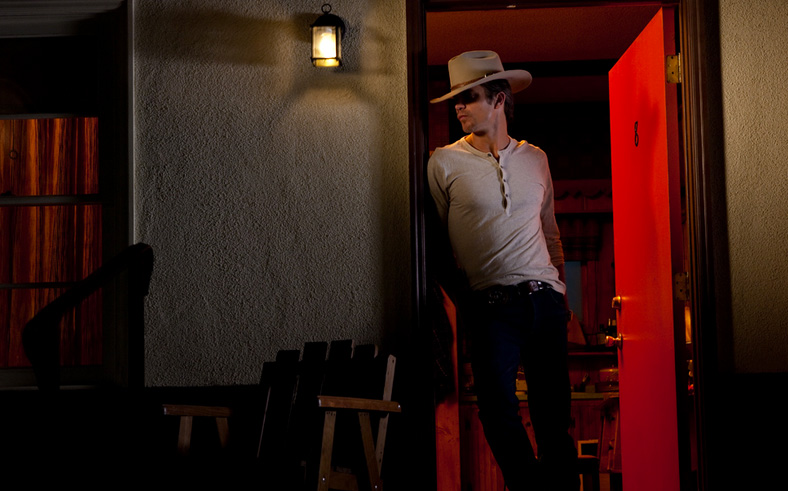
Why has Timothy Olyphant become TV’s go-to lawman?

It’s been five years since Raylan Givens secured his white whale and “Justified” star Timothy Olyphant hung up the modern day cowboy’s iconic Stetson. Since then, the good-natured actor and exceptionally fun late-night guest has taken on a number of different roles, including two fictional versions of himself, but he’s also continued to pop up as impossibly cool lawmen, much to the delight of his many fans. With memorable appearances in the fourth installment of Noah Hawley’s FX anthology series “Fargo” and in the Season 2 premiere of the Disney+ series “The Mandalorian,” the actor has become television’s go-to cowboy-slash-marshal. At this point, casting notices for such roles should probably just read “Timothy Olyphant, no others need apply.”

But how and why has Olyphant, who is equally skilled at comedy as he is at drama (check out his excellent performance on the great single-season show “The Grinder” if you haven’t yet), carved out a specific niche in the television landscape as a law enforcement officer with a penchant for long-winded stories and doing the wrong thing for the right reasons? Is it his recognizable walk, which conjures up images of a swaggering cowboy from the Wild West? Is it the self-possessed way he holds himself that asserts authority and commands the attention of everyone in the room? Maybe it’s the way he wields his characters’ righteous anger and quick wit, sharpening them into weapons that have proven, at times, to be more dangerous than any gun. Or perhaps it’s simply his undeniable ability to wear a hat and look cool leaning against a door jamb

It’s likely all of those things, which when combined with Olyphant’s natural on-screen presence and cool indifference add up to a portrait of a sexy gunslinger with an ineffable, in-between quality. There is little doubt these men are the good guys, but with their sharp tongue and flawed moral centers, they could have just as easily been criminals and outlaws if the circumstances were slightly different. It’s this very idea that powered “Justified”‘s central conflict for six fantastic seasons, during which time a running theme was Raylan’s frequent bending of the law, as he argues his actions and methods are justified (heh) because he’s taking down criminals who’ve pulled their guns on him first. The results speak for themselves, sure, but they also come with more bullet holes than the marshal’s office can often explain. 

But just as this trend of cocky gunslingers didn’t end with “Justified,” it didn’t begin there either. Prior to picking up Raylan’s badge and gun and trading barbs with Walton Goggins’ charismatic Boyd Crowder, Olyphant portrayed Seth Bullock, the reluctant sheriff of Deadwood on the HBO drama of the same name that ran from 2004 to 2006. He returned to the role last year for the long-awaited follow-up film, even growing his own massive mustache for the occasion. Like Raylan, Bullock vibrates with a barely concealed rage but is guided by a sense of duty if not always morality. And like Raylan, he finds common ground with his main foe, the foul-mouthed, multidimensional saloon owner Al Swearengen (Ian McShane). 

“Fargo”‘s Dick “Deafy” Wickware, on the other hand, is more of a straight-shooter than both Raylan and even Bullock. Arriving in 1950s Kansas City chasing two escaped convicts, he quickly finds himself tangled in a complicated web of criminal activity that extends to include the local police. But even as he appears to mostly play by the rules, he is no less self-righteous than the other lawmen Olyphant has played. As a devout member of the Mormon church, his sense of duty is driven by his faith as much as it is a natural desire for justice. Still, he is often smarter than most people expect, with a similar ability to suss out bulls*** that allows him to read people. He uses all of this to his advantage within the on-screen narrative, and it has the added bonus of making Olyphant stand out in a sprawling cast.

Cobb Vanth, the lawman Olyphant plays on “The Mandalorian,” similarly stands out, but it has less to do with the character than it does Olyphant himself. It’s the type of casting that is meant to put the actor front and center, as Cobb is far from showy and this is likely his only appearance on the show. Cobb is a lone marshal attempting to bring law and order to a tiny town overrun by outsiders and terrorized by a krayt dragon. The differences between this role and the others Olyphant plays stem largely from the nature of the show, which is a space Western set in the extended Star Wars universe, but also, hilariously, the relationship the character has with his “hat.” While the other lawmen Olyphant plays are rarely seen without one, Cobb immediately removes his helmet after slinking his way into the local cantina, and he rarely puts it on for the rest of the episode. This speaks to the fact his character is not a Mandalorian, as they rarely are ever seen without their helmet, but it also serves as a subtle nod to Olyphant’s filmography (including a brief appearance as James Stacy, star of “Lancer,” in “Once Upon a Time… in Hollywood”). 

However, in the end this isn’t about what Cobb is not so much as what he is, and that’s another quick-drawing gunslinger with a short temper and an impressive ability to deliver a quip. This is not your typical typecasting, though — spend 10 minutes watching Olyphant in these roles and you get the sense this is another one of his bits, that he finds it hilarious that yet another person has asked him to don a hat and strap on a badge and gun. And he’s only gotten better at it as time has gone on (and since he’s gone more salt-and-pepper up top). But if there’s a snag in the otherwise enjoyable gag, it’s that Olyphant’s habit of playing lawmen, many of whom regularly push the boundaries of the law, becomes a little less amusing when viewed through the lens of the events of 2020 and the worldwide protests against systemic racism and police brutality. 

Characters like Bullock, Givens, and even Wickware, who threatens a Black teenager to get her to give up the location of a family member, become harder to accept even with the excuse of existing in a heightened version of reality. The in-between quality all these men possess, the very thing that draws viewers to them, ultimately threatens to become a detriment rather than an asset, and we must contend with the fact that the thing we love to watch on TV is the very problem we’re trying to solve in the broken outside world. When viewed in a vacuum, though — if that’s possible, and I realize it might not be — it’s easily one of TV’s best running gags. 

Why Trump’s lawsuits are having little impact on the vote counts

The flurry of lawsuits hastily filed by President Trump’s campaign and its Republican allies to stop counting votes and to disqualify absentee ballots has so far failed to make much headway—in contrast to disinformation that they are spreading to discredit the 2020 election.

Trump’s propaganda, predictably, has drawn wide attention. Whether tweets falsely claiming he won and Democrats are stealing the election (which Twitter labeled with content warning notices), or his son Eric’s fabricated video of ballots being burned (they were sample ballots, not real ones), or false statements by White House officials, these antics have been noted and debunked.

In contrast to this bombast, Trump’s lawsuits filed since Election Day in states where the presidential results are not yet known have had limited success, but, more importantly, they do not appear to be game changers. The lawsuits are targeting small facets of the absentee ballots process. While court rulings may delay announcing the results and certifying winners, the suits are not poised to disqualify enough ballots to alter the race’s outcome—not where he lags by tens of thousands of votes. Instead, many of Trump’s suits have been filed late, and some are error-ridden.

“None of Trump’s small bore lawsuits have been able to stop the count, and of course there is no basis to do so,” wrote ElectionLawBlog’s Rick Hasen on Thursday. “He and his supporters have been promoting baseless and dangerous conspiracy theories that Democratic elected officials are somehow ‘stealing’ the vote when all they are doing is counting the ballots.”

Consider two of Trump’s lawsuits from Michigan. The first lawsuit, against Michigan Secretary of State Jocelyn Benson, was filed late Wednesday afternoon and sought to stop the statewide counting of votes—just hours before the counting was done. The campaign’s brief was filed by Mark “Thor” Hearne—a Missouri-based attorney who, in 2005, was one of the first Republicans to promote the false claim of widespread voter fraud. The suit claimed that Republicans did not have an observer “present at the absent voter counting place” in every jurisdiction, and these observers were not being allowed “to observe the video of the ballot boxes into which these [absentee] ballots are placed.” On this basis, Trump wanted to stop Michigan’s vote count.

Michigan Court of Claims Judge Cynthia Stephens dismissed the lawsuit on Thursday, saying that it was filed as the last ballots were counted—too late—which made the procedural claims moot. The defendant, Benson, was the wrong person to sue, the judge said, because Benson doesn’t directly supervise how the state’s local election officials process absentee ballots.

This was a messy filing. Chris Sautter, an election attorney specializing in recounts who has worked for Democratic candidates for decades, said that a serious suit should have been filed on Tuesday, when the absentee ballot processing began. If there were issues with campaign representatives getting access to observe the process, the remedy was granting access, not stopping the count statewide, he said. And while the lawsuit said that Benson had a duty to instruct local officials, it never detailed that she had failed to do so, he noted. In other words, the Trump lawsuit was too general, too late, and had targeted the wrong defendant.

The Trump campaign filed a similar suit late Wednesday in Detroit seeking to stop the city’s processing of a subset of absentee ballots—those that had to be duplicated because they were torn or stained—and seeking to halt certifying the city’s presidential election results. Like the suit against Benson, this action came as the counting was ending and also named the wrong defendant. On Thursday morning, Trump’s campaign filed papers to add Wayne County as a defendant, as it is the county—not the city of Detroit—that certifies election results.

On the specifics, the suit said that some absentee ballots were being duplicated by election officials without a Republican observer present. The duplication should stop, and all duplicated ballots should be “segregated” or set aside, it said, where presumably those ballots could be further examined and possibly challenged. Such a delay would slow down certifying Detroit’s results.

What Trump’s Detroit-centered lawsuit did not say was that the Michigan Republican Party had observers in the cavernous room where the city was processing and counting ballots. It did not say that the Republicans had raised issues surrounding the ballot processing that were being ignored. And it was filed after the counting was over, but still sought a restraining order to halt the process.

Takeaways

The Trump campaign’s litigation in response to not winning in a landslide Tuesday appears to be messy and late. A similar lawsuit was filed in Nevada after Election Day seeking to stop that swing state’s counting. The suit, too, claimed that Trump observers were being stymied. It was unanimously rejected by the state’s supreme court. It didn’t look like the Trump campaign planned on suing in Michigan or Nevada, Sautter said, despite Trump’s threat to launch a wave of litigation.

But more importantly, the target of Trump’s lawsuits—to disqualify a subset of absentee ballots, stop the counting process and delay certifying the results—was not going to add up to the tens of thousands of votes that Trump needs to win in key states. On Thursday, Trump trailed Joe Biden in Michigan by 147,000 votes, where his lawyers are seeking to challenge spoiled ballots that were duplicated.

That same assessment is likely in Pennsylvania, where Trump’s lawyers were positioning themselves to challenge the absentee ballots that had been postmarked by Election Day, but can still arrive by mail through Friday, November 6. The Trump campaign on Wednesday filed a motion in the U.S. Supreme Court to join a suit over these late-returning absentee ballots in Pennsylvania. Late Thursday, the Washington Post reported that the Postal Service said that there were only 3,439 absentee ballots postmarked by Election Day to be delivered in Pennsylvania.

The big picture that emerges is that Trump’s post-Election Day litigation strategy has not stopped the vote-counting process nor was it poised to implicate enough votes to overturn the results in swing states. Thus, if Trump cannot win a second term in the courts of legal opinion, he is seeking to discredit the process in the court of public opinion—where propaganda and disinformation make quicker impressions than real-life points of law.

Trump’s rambling, grievance-filled statement late Thursday blaming the Democrats for trying to “steal” the election appeared to be the latest affirmation of this strategy.

“They are grasping at straws,” Sautter said, speaking of Trump’s litigation strategy before his speech. “They are trying to discredit the process by trying to say that the outcome cannot be trusted because there were too many flaws.”

“They waited too long to complain,” he continued. “If they didn’t have enough people observing [in Detroit], they should have taken care of that beginning with Election Day. This lawsuit was filed late yesterday [Wednesday] afternoon. Now the counting is done. There’s no evidence that any of this stuff adds up to anywhere near the margin.”

There may be “a little bit of truth” in the Republicans’ contention that they lacked sufficient numbers of election observers, Sautter said. But that lapse was their error, not the fault of the officials running the absentee ballot counting boards—a process that has been in place for years.

“A lot of this is too little too late,” he said.

This article was produced by Voting Booth, a project of the Independent Media Institute.

Donald Trump Jr. is pushing an authoritarian idea to steal the election

On Thursday, former Vice President Joe Biden had won 253 electoral votes in the U.S. presidential race compared to 214 for President Donald Trump — and as the vote-counting continued in Pennsylvania, Nevada and other battleground states, Biden’s chances of a victory looked better and better.

In response to this dismal situation for the president, far-right radio host Mark R. Levin responded with a tweet suggesting a plan to overturn the results. Mother Jones’ Tim Murphy denounced the idea as an authoritarian idea for trying to steal the election if Biden is declared the winner, and Murphy noted that Donald Trump, Jr. has signed off on Levin’s idea.

Levin, typing in all caps, tweeted:

Murphy explains: “With Pennsylvania on the verge of flipping into the Democratic column — the remaining uncounted ballots appear to heavily favor Biden — Levin was promoting a legal theory that drew some attention before the election. Because state governments have to formally certify results and then formally send electors to the Electoral College, the Republicans who control the state legislatures of Pennsylvania and several other swing states could, in this theory, simply send their own set of rival electors and force Congress to choose — potentially tipping the election to Trump.”

Trump, Jr., Murphy notes, signed off on Levin’s idea for an authoritarian power grab by forwarding his tweet. But the Mother Jones reporter also points out that Washington Post columnist Greg Sargent has explained why there are many reasons to be skeptical of such a strategy from a legal and constitutional standpoint.

“Changing the process by which Pennsylvania appoints its electors requires changing Pennsylvania law, which the Democratic governor (Tom Wolf) would veto,” Murphy writes. “If Biden goes on to win enough of the remaining uncalled states, perhaps his sizable Electoral College and popular vote lead will dissuade Republicans from attempting to deploy such chicanery.”

Murphy also points out that Republican Jake Corman, majority leader of the Pennsylvania Senate, “wants nothing to do with” that type of power grab.

Nonetheless, Murphy stresses, it is disturbing when a well-known radio host wants to brazenly defy the will of the voters and the president’s son signs off on it.

“The thing about going into untrodden territory is that no one really knows what it’s like; the only sure thing is that it’s not where you want to be,” Murphy warns. “Even President Trump hasn’t gone this far yet. But his son’s promotion of such a plan is an ominous development as the campaign seeks to claw its way back by taking away people’s votes.”

Joe Biden won, but we lost: There’s no doubt who we are now, and it ain’t pretty

It’s not a perfect comparison, but it’s close enough: The way I felt when I went to bed on Tuesday night was almost exactly the way I felt on election night in 1972. Richard Nixon had been president for four long years. Watergate was just the most recent outrage in what had essentially been one long crime spree. Nixon had installed his consigliere, John Mitchell, as attorney general, and Mitchell had proceeded to turn the Department of Justice into Nixon’s personal retribution headquarters, empaneling grand juries, investigating political opponents, indicting enemies and jailing antiwar protest leaders. Nixon had ordered the secret carpet-bombing of Cambodia and Laos, killing thousands of civilians over a period of four years. He used the IRS, FBI and CIA against his political enemies, employing illegal wiretaps and mail cover and creating an entire surveillance system, known as COINTELPRO, to illegally investigate, surveil and harass members of the press, political enemies and antiwar activists. And in June 1972, Nixon sent the “Plumbers” into Democratic Party headquarters in the Watergate complex to bug his opponents’ phones and rifle campaign records. 

Voters in November of 1972 already knew much of this. Everyone knew Nixon was a crook and a cheat. Watergate had been the subject of extensive press coverage. Investigative reporting had linked Mitchell, by then Nixon’s campaign chairman, to the break-in. Money used to pay the burglars to keep them quiet after they were arrested had been traced to a secret White House “slush fund.” Vietnam was a meat grinder, consuming thousands of American lives, killing hundreds of thousands of civilians, and failing to produce the “peace with honor” Nixon had promised. Everyone knew the war was a lost cause, but Nixon kept it going. 

And yet on the morning of Nov. 8, 1972, we woke up to the news that Nixon had carried 49 of 50 states and received just under 61 percent of the vote. 

With the war in Vietnam still raging, White House involvement in Watergate in the headlines, and suggestions of even more Nixon crimes in the news every day, who were these people who had voted for Richard Nixon and handed him a landslide victory?

We knew them: They were our mothers and fathers and aunts and uncles and grandparents and neighbors and high school and college classmates and the man who worked in the haberdashery on Main Street and the lady who served soft ice cream at the Dairy Queen and the construction worker on that new office building downtown.  Some of them were even our friends. It was a bracingly disgusting thought, but they were us.

Nixon was the worst nightmare of my lifetime until Trump, and so was the election of 1972 — until now. But this one takes the proverbial cake. You had to be paying attention in ’72 to really catalogue what a monster Nixon was. But this year? Everybody knew. Every-fucking-body. I’m not going to sit here and put you through a recitation of Trump’s crimes. I’ve been writing about them for more than three years and others have recounted them in grim lists this week, all the way from the kids in cages to the open-air theft of the public treasury and sexual misdeeds and gross abuse of the public trust with his incalculable lying.

But it isn’t often you see someone commit murder, live in person on television, and this year we’ve seen it repeatedly. We saw a police officer, Derek Chauvin, kneel on the neck of an unarmed man, George Floyd, until he killed him on the street in Minneapolis. And nearly every day for months, we watched Donald Trump walk into the White House press room and stand there and tell lies about the COVID pandemic and refuse to address it in a rational, scientific, medically appropriate manner. What we were watching was Donald Trump killing Americans just as surely as if he had his knee on their necks, closing off their airways, snuffing out their lives. It’s one thing to put up with his racism and misogyny and ignorance and contempt for the rule of law, but it’s quite another to watch him commit murder day after day, week after week, standing there contemptuously treating the pandemic as if were a conspiracy against him personally instead of a deadly disease that would infect millions and kill, as of this week, nearly a quarter million of us. 

All those people who cast votes this week for Donald Trump can read. They can count. They can add. They know how many of their fellow Americans have died. But just like Derek Chauvin was just another cop on the beat before he knelt on George Floyd’s neck and killed him, every Trump voter was just another citizen before they marked their ballots and put their knees on the neck of our country and endorsed the deaths of hundreds of thousands of their fellow citizens and the man who killed them. Make no mistake. A vote for Trump was a vote to kill at least another 100,000 Americans, the number experts say would remain alive between now and the end of the year if there were a national mandate to wear masks in public. But Trump has refused to impose this rational, medically necessary order, and people continue to die: 1,200 of us on Wednesday, 1,127 of us on Thursday. At the rate we’re going, 300,000 of us will be dead from COVID by the time Trump leaves office.

I think many of us have had a theory that if we can just get rid of Donald Trump, things will get better. We’ll have a new president who can fire the buffoons working for Trump and appoint reasonable, honest people to run our government, who can reverse the insanely regressive policies of the last four years that are despoiling our water and air, disfiguring our national lands, crushing the souls and indeed the lives of people who are seeking asylum from murderers and rapists in foreign lands. That is the hope that has been sustaining us for the last four years. 

It appears that Joe Biden has won the election. But even so, we have learned a bitter truth. We don’t live in the country we dreamed about. That’s what is so heartbreaking. Nearly 70 million Americans voted for a man who makes Richard Nixon look like a decent human being. Joe Biden may have won, but we lost. We aren’t who we hoped we would be.

Another election, another round of poll bashing. Is that fair?

Four years ago, polls indicated that then-Democratic presidential nominee Hillary Clinton would handily beat her Republican opponent, Donald J. Trump. Based on those polls, one prominent election forecaster, Princeton University neuroscience professor Sam Wang, even called the race for Clinton several weeks before Election Day, promising to eat an insect if he was wrong.

Wang ate a cricket on CNN, and in May of 2017, a committee at the American Association for Public Opinion Research, or AAPOR, released a post-mortem of the polls’ performance. The report acknowledged shortcomings and suggested reforms to “reduce the likelihood of another black eye for the profession.”

Many pollsters and forecasters did make changes before the 2020 election. Once again, though, polls pointed toward big Democratic wins in key states, fueling optimism among progressives. And on Tuesday night, as it became clear that polls and forecasts had once again substantially underestimated the extent of support for Trump, the backlash was quick.

“We should never again put as much stock in public opinion polls, and those who interpret them, as we’ve grown accustomed to doing,” Washington Post media critic Margaret Sullivan wrote on the morning after Election Day. The discipline, she continued, “seems to be irrevocably broken, or at least our understanding of how seriously to take it is.” A headline in The Atlantic’s Ideas section declared a “polling crisis.” A disgruntled columnist for The Daily Beast joked that it was time “to kill all the pollsters.”

Election forecasters did predict that Biden would win the electoral college, which — as of this writing — appears to be correct, though disputes over that outcome may well take weeks or months to settle. But as with 2016, the odds of such a close race were again considered small, and polling errors were particularly pronounced in Florida and parts of the Midwest. For example, polling averages at The New York Times had indicated that Biden was up by 10 percentage points in Wisconsin and 8 in Michigan, and that Ohio would narrowly go to Trump. Complex models at The Economist and FiveThirtyEight produced similar projections. Instead, the Trump campaign has vowed to ask for a recount in Wisconsin, Biden appears to have only narrowly won Michigan, and Trump won Ohio by around 8 points. (All of these tallies are still provisional.)

Does this mean that something is fundamentally broken about political polling? Some experts say that’s not entirely fair. “I think it’s clear that there were some problems with polling this year, but a lot of this reaction strikes me as very premature,” said Courtney Kennedy, the director of survey research at the Pew Research Center and the chair of AAPOR’s 2016 post-mortem committee, in a Thursday afternoon interview.

“It’s like, my goodness, let’s pump the brakes,” she added. “The election is not even over, there are still millions of votes to be counted.”

* * *

Kennedy and other experts acknowledge that the 2020 election polls raise questions for pollsters about some of their methods. But many pollsters also argue that the backlash reflects misguided conceptions about what polls actually do — and that some blame lies with the wider ecosystem of pollsters, poll aggregators, and forecasters that has blossomed in the past 15 years.

At the base of this informational food chain are the pollsters, who use a range of information-gathering methods — including interviewer phone calls, online questionnaires, automated calls, and sometimes text messages — to reach samples of voters and to gauge their feelings on a variety of issues. Poll aggregators then take large numbers of those surveys and average them together, in the hopes of getting more reliable figures than any single poll. Many aggregators are also forecasters, feeding their figures into complex computer models that attempt to actually predict election outcomes. This is the methodology that would eventually make Nate Silver’s FiveThirtyEight operation famous, and it is what many large media companies, from The New York Times to CNN, now emulate as a matter of election-year routine.

Andreas Graefe, an election forecasting researcher, said that these forecasting models have become more sophisticated, and they’ve improved to include and account for a wide array of potential errors. But, he added, “I wouldn’t say that that really helped accuracy.” Graefe has helped run PollyVote, an academic election forecasting project, since 2007. Over that time, he said, he has seen election forecasting become a big business. “What has changed, definitely, is forecasts as a media product,” he said.

Silver worked as a baseball analyst before he began forecasting elections. The two roles, he wrote in 2008, “are really quite similar,” and he has risen to prominence at a time when politics coverage has come to more closely resemble sports media. (CNN president Jeff Zucker, who has pushed the network to model elements of its election coverage on ESPN, told The New York Times in 2017 that “the idea that politics is sport is undeniable, and we understood that and approached it that way.”)

Remarkably on-target predictions in the 2008 and 2012 elections helped propel poll aggregators and forecasters like Silver to new national prominence. Then, in the 2016 presidential election, most forecasting models consistently and substantially underestimated Trump’s success. While a few were more cautious, some popular forecasters had projected that Clinton’s odds of winning were close to 100 percent, feeding confidence among progressives.

The subsequent AAPOR report analyzed why some of the polls underlying these forecasts had been so wrong. Part of the issue, the committee concluded, was that pollsters had sampled too few White voters without a college education, who had turned out heavily for Trump. In addition, the AAPOR committee found, many voters had made up their minds shortly before the election, perhaps after responding to polls — and most of those went for Trump.

The committee also examined the argument that some people simply lied to pollsters about their intention to vote for Clinton, perhaps because they were embarrassed about their decision to support Trump instead. (This has sometimes been called the “shy Trumper hypothesis.”) The polling association found little evidence for this, but some experts continue to argue that the effect may play a role in what one scholar described as Trump’s “unpollability.”

Whatever the constellation of reasons, many pollsters made adjustments in 2020 in an attempt to correct for potential blind spots. But, again, Trump outperformed the polls in many closely watched swing states, and some experts say it’s now apparent that some aspects of the electorate’s mood and tendencies are not being captured by existing survey methods. “It’s pretty clear that some people in the country” – perhaps especially Republicans and people without college degrees – “are less likely to take surveys,” said Kennedy. “We knew that. But the feeling was, that’s okay, we can overcome that as long as the pollster is really responsible and skilled and weights their data properly.”

Essentially, these pollsters, drawing on other sources of data, fine-tune their samples to reflect the estimated number of self-identified Republicans in a given area. That way, even if Republicans are, say, systematically less likely to answer the phone than Democrats, they would be adequately represented in the sample. But, Kennedy said, it’s now unclear if weighting methods like this worked. It’s also possible, she added, that the Republicans who agree to be interviewed for polls are not very good proxies for Republicans who don’t take surveys. “That’s kind of an alarming possibility,” she said.

* * *

Still, Kennedy and other pollsters point out that even the best polls are just estimates. So are forecasts. After the 2016 election, prominent poll aggregators tried to do more to convey the fuzziness in their models. FiveThirtyEight, for example, started showing a range of possible outcomes at the top of its forecast, instead of leading with a specific number.

Whether those changes were effective at preventing unwarranted confidence among election watchers is unclear. “The forecasters can do great work on communication in their own right, but once they’ve put it out there, they’ve lost control of it,” said Natalie Jackson, the director of research at the Public Religion Research Institute, a nonprofit research institute that conducts public opinion polls on a variety of different topics with a special emphasis on religion. Even people who are well aware of the limits of election forecasts, she said, seem to check them constantly — maybe in search, she thinks, of comfort or clarity.

“Humans are just really bad with uncertainty,” she said.

Indeed, Jackson and other experts argue that the buzz around predicting elections — along with some of the backlash when those predictions seem to fall short — misses the actual function of opinion polling. “The purpose of polls is not to predict an election,” said Ashley Kirzinger, associate director of public opinion and survey research at the Kaiser Family Foundation.

“What we’re trying to do,” she added, “is provide some insight into what voters are thinking about in the months and weeks leading up to an election.”

Pollsters ask voters about their opinions on key issues, not just their vote. But, said Kirzinger, “I think the public, unfortunately, has taken polls to mean just ‘things that feed aggregators,’ and not actually dig into what the polls are actually telling us.”

Aggregators and forecasters, meanwhile, suggest that the public needs to better learn what aggregation and forecasting actually do, which is to model and then give odds to a variety of potential outcomes, not to predict a winner. When FiveThirtyEight gave Trump, in the waning days of the 2020 campaign, a 10 percent chance of victory, for example, the site very prominently contextualized those odds: “A 10 percent chance of winning is not a zero percent chance,” the site reminded visitors. “In fact, that is roughly the same odds that it’s raining in downtown Los Angeles. And it does rain there.”

Whether or not that’s a comfort to voters who feel that the forecasts failed them again, Graefe says there’s a place for this sort of pre-election survey data crunching. “I’m an advocate of trying to inform voters, and decision makers in general, and giving them the best information possible,” he said. The models in 2020, he pointed out, suggested, seemingly correctly, that Biden could win even if there was a large polling error — information that, he said, has value.

Not everyone agrees. Jackson, the PRRI researcher, was the senior polling editor at HuffPost during the 2016 election. That year, the site’s popular aggregation and forecasting tool gave Clinton a 98 percent chance of victory — exceedingly high odds that Nate Silver and then-HuffPost Washington bureau chief Ryan Grim had sparred over prior to the election. Grim later publicly admitted that HuffPost’s models had failed.

This experience, Jackson said, pushed her to think more critically about how she was using data. After the 2008 and 2012 elections, the tools had seemed reliable, she recalled. “I wasn’t thinking about it necessarily in public-good terms. I was thinking about it in terms of what an interesting use of the data, and what an interesting statistical modeling exercise this is,” she said. After 2016, she began to reevaluate the reasons for the work. Now, she said, “I don’t particularly see that forecasting serves the public good in a very convincing way.”

Speaking on Thursday afternoon, Jackson acknowledged looming issues with polling methods in the 2020 election. But the culture around forecasting, she suggested, has created impossible expectations for the field. “We now expect that there are a lot of polls,” she said. “We put them together and make pretty aggregates. Forecasters use them to project what’s going to happen. All of those things combined create an expectation that polls will be predictive in a way that they’re just not ever going to be able to do perfectly.”

Like Kirzinger, Jackson thinks that process misses the real benefit of polling, which is “to tell the story of what people think.” But the demand for predictions remains strong. “We’ve gotten to a point in society where everything is at our fingertips, 24 hours a day,” Jackson said. “We think the answer to who’s going to win an election should be, too.”

This article was originally published on Undark. Read the original article.

Robert Reich’s FAQ about the fight ahead

You’ve been in or around politics for more than 50 years. How are you feeling about Tuesday’s election? 

I’m more frightened for my country than I’ve ever been. Another four years of Donald Trump would be devastating. Nonetheless, I suspect Biden will win.

But in 2016, the polls …. 

Polling is better now, and Biden’s lead is larger than Hillary Clinton’s was.  

What about the Electoral College? 

He’s also leading in the so-called “swing” states that gave Trump an Electoral College victory in 2016.

Will Trump contest the election? 

Yes. He’ll claim fraudulent mail-in ballots in any swing state with a Republican governor or legislature. He’ll tell them not to certify Biden electors until fraudulent ballots are weeded out.

What’s his goal? 

To deny Biden a majority of electors and throw the decision into the House of Representatives, where Republicans are likely to have a majority of state delegations.

Will it work? 

No, because technically Biden only needs a majority of electors already appointed. Even if disputed ones are excluded, I expect he’ll still get a majority.

What about late ballots? Trump has demanded all ballots be counted by midnight Election Day.  

It’s not up to him. It’s up to individual state legislatures and state courts. Most will count ballots as long they’re postmarked no later than Election Day.

Will these issues end up in the Supreme Court? 

Some may, but the justices know they have to appear impartial. Last week they turned down a request to extend the deadline for receiving mail-in ballots in Wisconsin but allowed extensions to remain in place in Pennsylvania and North Carolina.

But the Supreme Court decided the 2000 election for George W. Bush. 

The last thing Chief Justice Roberts wants is another Bush v. Gore. With 6 Republican appointees now on the court, he knows the legitimacy of the court hangs in the balance.

Trump has called for 50,000 partisans to monitor polls while people vote, naming these recruits the “Army for Trump.” Do you expect violence or intimidation? 

Not enough to affect the outcome. 

Assume you’re right and Biden wins. Will Trump concede? 

I doubt it. He can’t stand to lose. He’ll continue to claim the election was stolen from him.

Will the Democrats retake the Senate? 

Too close to call.

If not, can Biden get anything done? 

Biden was a senator for 36 years and has worked with many of the current Republicans. He believes he can coax them into working with him.

Is he right?

I fear he’s overly optimistic. The GOP isn’t what it used to be. It’s now answerable to a much more conservative, Trumpian base.

If Republicans keep the Senate, what can we expect from a Biden administration? 

Reversals of Trump executive orders and regulations – which will restore environmental and labor protections and strengthen the Affordable Care Act. Biden will also fill the executive branch with competent people, who will make a big difference. And he’ll end Trump’s isolationist, go-it-alone foreign policy.

And if Democrats retake the Senate? 

Keep your expectations low. Both Clinton and Obama had Democratic congresses for their first two years yet spent all their political capital cleaning up economic messes their Republican predecessors left behind. Biden will inherit an even bigger economic mess plus a pandemic. With luck, he’ll enact a big stimulus package, reverse the Trump Republican tax cuts for the wealthy, and distribute and administer a Covid vaccine. All important, but nothing earth-shattering. 

If Biden wins, he’ll be the oldest man to ever be president. Will this be a problem for him in governing? 

I don’t see why. He’s healthy. But I doubt he’ll seek a second term, which will affect how he governs.

What do you mean? 

He’s going to be a transitional rather than a transformational president. He won’t change the underlying structure of power in society. He won’t lead a movement. He says he’ll be a “bridge” to the next generation of leaders, by which I think he means that he’ll try to stabilize the country, maybe heal some of the nation’s wounds, so that he can turn the keys over to the visionaries and movement builders of the future.

Will Trump just fade into the sunset? 

Hardly. He and Fox News will continue to be the most powerful forces in the GOP, at least for the next four years.

And what happens if your whole premise is wrong and Donald Trump wins a second term? 

America and the rest of the world are seriously imperiled. I prefer not to think about it.

Squad members Omar and Tlaib credited for securing Biden victories in Minnesota and Michigan

Congresswomen Rashida Tlaib and Ilhan Omar, members of the progressive Squad in the U.S. House who represent districts in the states of Michigan and Minnesota respectively, received applause and praise Thursday for their role in lifting Joe Biden in those two battleground states—pivotal victories that have helped put the former vice president on the verge of ousting President Donald Trump.

Among the nation’s most progressive legislators, Omar represents Minneapolis and its nearby suburbs, while Tlaib represents portions of Detroit and some of its suburbs in Wayne County. Both lawmakers campaigned heavily for Biden leading up to this week’s election, and observers says Biden’s victories in those states may not have materialized had it not been for that heavy lifting which propelled huge turnout in diverse districts.

“While the Biden-Harris campaign resisted in-person canvassing, Omar’s campaign kept doing it, hiring dozens of people to knock on doors and pull out votes,” the Washington Post reported earlier this week. 

Ken Martin, the chairman of Minnesota’s Democratic Farmer-Labor Party, told the Postthat Omar “doesn’t need to increase turnout here to win her race… She could take a vacation and she’d get reelected, easy.”

“But,” Martin added, “she recognizes that she has a responsibility to drive up turnout; it’s really important for all of our statewide races, especially the presidential race.”

According to Martin, Omar “does really intensive, face-to-face contacts, with a lot of personal relationship-building, and building long-term power with communities of color,” something that “a lot of politicians don’t do.”

Tlaib is also no stranger to organizing in her district. “Direct voter contact wins elections,” Tlaib tweeted on Wednesday night. “Our team knocked doors, called and texted residents, and registered folks who had never voted before.”

“You get what you organize for,” Omar pointed out on social media on Thursday afternoon. “And in Minnesota, we organize for massive turnout,” which the congresswoman claimed is at a “staggering 88%… in my district so far.”

“Just so we are clear,” said Representative-elect Jamaal Bowman of New York, “Ilhan Omar and Rashida Tlaib were MAJOR factors in delivering Minnesota and Michigan for Joe Biden.” 

In a late-September op-ed in the Post, Omar argued that Democrats ought to focus on engaging non-voters with ambitious, egalitarian policies in order to perform better going forward.

“I have seen the media and even Democrats fall for” Trump’s argument that Omar’s left-wing stances will benefit Republicans, she lamented. 

“We need to win over former Trump voters, the thinking goes, and we can’t do that if we embrace progressive leaders and policies. But while winning swing voters is important, there is a key constituency Democrats need in November that is almost entirely left out of the conversation: non-voters,” she wrote. 

At an event in north Minneapolis last week, Omar told supporters: “It is our votes, here, that are going to make sure not only do we strongly win this state, but that we don’t see [Trump’s] face ever again.”  

Sarah Alaoui, a Ph.D. candidate at John Hopkins School of Advanced International Studies and a volunteer with Arab Americans for Biden, a grassroots coalition working to elect Biden, told HuffPost: “I think we really hit the message home that this election is unlike any other election.”

In light of Trump’s racist, anti-Muslim bigotry and xenophobic immigration policies, Alaoui added that “it’s a critical matter of life and death to get out the vote this time and I think the community responded really well.”

“Muslims showed up for Biden today,” said Nada Al-Hanooti, executive director of the Michigan chapter of Emgage Action, a Muslim civic advocacy organization that endorsed Biden. 

According to reporting from HuffPost on Thursday, roughly 81,000 Muslim Americans in Michigan cast early and absentee votes alone, which activists said is proof that their efforts—phone banking and other events designed to maximize turnout—paid off. 

Biden beat Trump by approximately 150,000 votes in Michigan, a state that Hillary Clinton lost by about 11,000 votes four years ago. Al-Hanooti told HuffPost that Biden’s victory in the state would not have been possible without the labor that organizers put into rallying Arab-Americans to vote in large numbers. 

“We’re going to expect him to show up for us come January,” she noted. 

Why the 2020 election looks a lot like 1876 — with one crucial difference

There's never been a candidate quite like Donald Trump, nor an election quite like 2020's. Yet students of history have observed one surprising and very apt comparison case study: the presidential election of 1876. Though 144 years have passed, the similarities are striking. And learning about the 1876 election might just might help us understand this one a little better. 

The 1876/2020 comparison hasn't gone unnoticed, as media outlets from The New York Times and The Washington Post to Newsweek and the Philadelphia Inquirer have pointed them out. Yet while there are many similarities between the 2020 presidential election — where Democrat Joe Biden faced off against Republican Donald Trump — and the 1876 contest between Democrat Samuel Tilden and Republican Rutherford Hayes, the key difference is this: While both the Republicans and the Democrats cheated in 1876, Trump and his supporters are alone guilty of that evil in 2020. (I'm specifically referring to Trump and GOP efforts to slow the US mail and thus the mail-in vote, to close hundreds of polling sites in Black and Latino neighborhoods, to intimidate voters, and to stop or manipulate the vote count in states that are still counting their votes.)

But back to what they have in common, which is quite a lot. Both elections were controversial and were decided well past election day. (Although it should be noted that, because presidents were inaugurated in March instead of January before the 1930s, the 1876 contest took five months to be decided; while the counting will continue for the 2020 election for a while, Joe Biden is nominally the winner.) On both occasions the Republicans held the White House and the Democrats were challenging them, although incumbent President Ulysses S. Grant opted not to seek another term in 1876 (he waited until 1880 to run for a third term, which at that time was legal) and instead allowed the Republicans to nominate Hayes as his successor.

Both elections saw historic voter turnout: The 1876 election had a turnout of 81.8%, the single highest mark in American history and an increase of more than 10 points from the turnout in 1872. The 2020 election is projected to have an eligible voter turnout in the ballpark of 66%, which would mean the highest voter turnout of any presidential election since the 1900 contest.

Each election occurred during a bad economy, prompted by the Panic of 1873 in the former case and Trump's bungling response to the coronavirus pandemic in the latter. They also both occurred during times when presidential impeachments were fresh on the public's mind — President Andrew Johnson became the first president ever impeached in 1868, while Trump was impeached himself earlier this year — and in each contest the corruption of the incumbent administration was a major issue for voters. (Here is a link with more on the Grant administration's scandals.) 

There are even some eerie superficial similarities between the two elections. While the votes are still being counted at the time of this writing, it seems likely that the final popular vote result will show Biden with roughly 51% and Trump with roughly 48%, just as Tilden had roughly 51% of the popular vote and Hayes had roughly 48%. Both elections occurred at a time when the Republicans controlled the Senate and the Democrats controlled the House of Representatives. Even the candidates' names are similar, from the Republicans' monosyllabic "Hayes" and "Trump" to the Democrats choosing men whose surnames include the suffix '-den.'

There have been a number of great books about the 1876 election, including, notably, the late Supreme Court Chief Justice William Rehnquist's "Centennial Crisis: The Disputed Election of 1876." All of them go into considerable detail about how both sides committed widespread fraud in order to steal the contest for their champion.

The Democratic Party at that time was viciously racist, because its base was in the formerly-slaveholding South (Republicans and Democrats gradually flipped sides on civil rights issues in the mid-20th century). In the run-up to the 1876 election, the Democrats went to considerable lengths to intimidate African American voters from going to the polls or — when that proved impossible — tricking them through the use of deceptive ballots into voting against Republican candidates. On the other side of the country, Oregon's Democratic Governor La Fayette Grover disliked it that the Republican Hayes won his state, and tried to offset that by declaring one of the Republican electors ineligible so he could be replaced with a pro-Tilden Democrat.

The Republicans were not blameless either. Because the Republican-controlled federal government still had control over many Southern states due to Reconstruction programs meant to reintegrate the former rebels back into the union, Republican-dominated election boards in Florida, Louisiana and South Carolina used flimsy pretexts to toss out Democratic votes whenever they could. In South Carolina, eligible voter turnout reached an impossible 101 percent. When the election inevitably became ensnared in legal battles — with some observers concerned that it would even lead to another Civil War, as the previous one had ended less than a dozen years earlier — Republicans pushed for the Supreme Court to resolve the disputes because they knew they had a majority on that body. (Hence another similarity between the two elections, since Trump has openly admitted he hopes the federal court system can bail him out if he loses.)

That did not work, and ultimately an electoral commission was selected with five congressional Democrats, five congressional Republicans and five members of the Supreme Court. Four of those Supreme Court judges were evenly divided between Democrats and Republicans while the fifth, Justice David Davis, was expected to be neutral. After Davis was unexpectedly elected to the Senate, however, he recused himself and was replaced by Justice Joseph P. Bradley, a Republican who supported Hayes despite claiming to be impartial.

Naturally, the body ruled in favor of Hayes along party lines, but angry Democrats threatened to engage in violence unless Tilden was elected. (Unlike Trump, who has unsubtly encouraged his supporters to be violent unless he wins, Tilden made it clear that he did not want violence regardless of the outcome.) In order to make sure that Hayes would prevail, members of both parties in Congress struck an informal deal known as the Compromise of 1877. Its terms were simple: Democrats would allow Hayes to become president if Republicans pulled the last remaining federal troops out of the South, thereby officially ending the Reconstruction era and abandoning African Americans to the racist whims of Southern whites. The trade, in short, was that Republicans would allow an entire race to experience generations of persecution as long as Hayes could become president.

In the election of 2020, by contrast, Trump and the Republicans who support him are alone to blame for the post- and pre-election shenanigans. Unlike 1876, there is no voter fraud. The only reason there is any controversy about the results of this election is because Trump is a narcissist who cannot bear the thought of being labeled as a loser. During his 2016 campaign against Democrat Hillary Clinton, Trump repeatedly stated before the election that he would not accept the results unless he won. Even though his victory that year was not legally contested, he was so sore over losing the popular vote that he created a bogus voter fraud commission to prove that he had actually won it — which, of course, it was unable to do, because he had not.

Now, in 2020, Trump's behavior has been even worse. There had been ominous hints that he would simply refuse to leave the White House if he lost the election. The Republican Party has gone to unprecedented lengths to engage in voter suppression, with Trump even appointing officials to implement policies to slow down the United States Postal Service so that mail-in votes (which are more likely to be cast by Democrats) might be unable to arrive before Election Day and thus be disqualified. Trump repeatedly lied about mail-in votes in order to discredit them, claiming they are susceptible to fraud without producing a shred of evidence to back up his assertion, and has made it clear that he will only accept the results if they declare him to be the winner. Since the election he has prematurely declared victory, filed a flurry of frivolous lawsuits in order to stop votes from being counted and outright fabricated stories of fraud during a Thursday press conference to buttress his complaints. His supporters have even talked about having legislatures in swing states that voted for Biden override the popular vote and submit pro-Trump electors to the electoral college, even though doing so would violate federal law.

This is not to say that Biden is a saint. (See also: his Senate record, the crime bill he championed, his Iraq War support, etc.) Merely, in the very specific context of the 2020 presidential election, Biden has not cheated, attempted to suppress votes, or engaged in ratf**king.

Whereas in 1876, both the Hayes campaign and the Tilden campaign were involved in the chicanery that led to the contested election, each candidate had the redeeming quality of discouraging their supporters from acts of violence. In the 2020 election, Trump alone is the one trying to steal this thing, and he alone has been willing to egg his supporters on to violence.

After Hayes won in 1876, he was given the derisive nickname of "His Fraudulency," and deservingly so. If Trump somehow stages a coup or commits fraud to stay in office, perhaps it will be revived.

White House COVID outbreak spreads: Trump chief of staff Mark Meadows tried to hide diagnosis

Late on Friday night, multiple news outlets reported White House chief of staff Mark Meadows tested positive for COVID-19.

Meadows was in close contact with White House advisor Jared Kushner.

“Campaign officials, along with White House senior adviser Jared Kushner and chief of staff Mark Meadows, huddled at the campaign’s Virginia headquarters Wednesday afternoon plotting strategy and legal battles ahead,” NBC News reported on Wednesday.

Olivia Nuzzi of New York Magazine reported that Meadows was not wearing a mask while huddled with Kushner the night before.

Jennifer Jacobs, of Bloomberg News, originally broke the news Meadows tested positive. She is now reporting there are “at least four other White House aides” who have coronavirus — and they tried to keep it from the American people.

The number of five cases in total was confirmed by The Wall Street Journal.

Dear Wisconsin: If Trump wants a recount, make him pay up front

Earlier in this dizzying week, Donald Trump’s campaign demanded a recount of the Wisconsin vote, even before it was completed. (Now they’d like to recount the entire election, but that’s a different problem.) In an interview with MSNBC’s Katy Tur, Wisconsin Attorney General Josh Kaul said that the state has a “safe, secure and reliable” process but that a recount can happen if the vote is within a one-percent margin. He noted that if the vote is within 0.25%, the state pays for the recount; otherwise, the campaign requesting the recount must pay. 

Wisconsin was called for Joe Biden Wednesday afternoon, and a near-final count suggests that Trump trails by slightly more than 20,000 votes. That’s not a lot, but it’s more than any plausible recount could possibly capture. Again, not the point. 

As nearly everyone paying even scant attention to the real world knows by this point, Donald J. Trump is infamous for not paying his bills. Not paying for services rendered is every bit as much a part of his modus operandi as is lying and making up goofy nicknames for his foes. Oh, and saying that something is “unbelievable.”

He likes to claim that services have not been rendered to the Trump Organization or that they were not rendered up to his standards. Or that they were late. He pays less than the agreed-upon price or pays nothing, daring the business or contractor to sue him. This has reportedly happened many times to workers at his resorts and various contractors doing work at his buildings.

As with cheating on his taxes, Trump might say that this makes him “smart.” He takes advantage of what he can get away with, as he reportedly does in golf, a game based on the player’s sense of honor. (Am I getting off topic? I don’t think so. A person is honest or not — the behavior plays out at work and at play and throughout a lifetime.)

As noted in June 2016 by USA Today:

Donald Trump often portrays himself as a savior of the working class who will “protect your job.” But a USA TODAY NETWORK analysis found he has been involved in more than 3,500 lawsuits over the past three decades — and a large number of those involve ordinary Americans … who say Trump or his companies have refused to pay them.

Oh, and then there are the multinational banks, like Deutsche Bank, that didn’t get paid back for extending massive loans to Trump and found themselves — almost comically — sued in return. To cite just one example, Trump defaulted on a $270 million loan for his Chicago tower. One might also mention, of course, the U.S. government and the public, stiffed throughout the decades on those Trumpian taxes.

And something like 70 million working and taxpaying Americans voted to put this chronic chiseler back in the highest office of the land. 

Reliable sources have estimated that Trump owes unknown entities about $1 billion, with more than $400 million in loans personally guaranteed

And 70 million responsible, bill-paying Americans voted to put this professional miscreant back in the White House for four more years. 

Trump is the perfect vehicle for a party that has based itself on victimhood, people who have been trained by their media choices to despise laws that protect civil rights and government regulations that protect the environment and fair rates of taxation. Trump gets away with everything — even sexual assault — and thereby becomes a hero to those who have been trained by the Fox/Limbaugh/OAN Triad of Tantrums to be ferociously aggrieved by the fact that they are living in a pluralistic modern society. 

Donald cheats his golf partners and marriage partners and fellow citizens and small business owners and waiters working overtime at Mar-a-Lago because, for many people, his celebrity gives him a free pass. As he once put it: “When you’re a star, they let you do it. You can do anything. Grab ’em by the pussy.”

Well, Attorney General Kaul, if Trump insists on a recount, even after all this, I’m sure you’ll agree this is a situation where you need the money up front — in cash. Since you run an honest operation, something he doesn’t understand, I doubt he’ll be pleased with the results. 

Trump campaign lawyers may have violated Privacy Act and USPS rules in Nevada voter fraud lawsuit

Two law firms representing the Trump campaign may have violated U.S. Postal Service (USPS) regulations and privacy law in the course of advocating for a voter fraud case in the state of Nevada.

Its electoral hopes dwindling, the Trump campaign shifted strategies on Thursday to attempting to litigate its way to a victory. The campaign filed three lawsuits, two of which were tossed within hours, and announced a fourth in Nevada which would allege “thousands” of cases of criminal voter fraud, including allegedly deceased people.

When that suit was filed, however, neither the Trump campaign nor the Republican Party were attached. Instead, it was brought in a Nevada federal court by a state resident, a “credentialed member” of the media (who also described himself to right-wing One America News as a senior advisor to the Nevada Republican Party) and the congressional campaigns for Nevada Republicans Dan Rodimer and Jim Marchant.

While the lawsuit mentioned “over 3,000 instances of ineligible individuals casting ballots,” that is not included among the actual legal charges. Instead, those counts stuck to allegations regarding signature verification and observer access to ballot tabulations.

However, that evening, Trump campaign chief spokesperson Tim Murtaugh posted a criminal referral which campaign lawyers had sent Attorney General William Barr alleging “fraudulent voting by non-residents of Nevada.”

The letter, written by Las Vegas corporate law, estate planning and real estate attorney Shana Weir in conjunction with a Washington-area firm, called Barr’s attention to “criminal voter fraud” in Nevada.

On its merits, the suit appears thin. Nevada residents do not need to provide an official U.S. Postal Service address in order to register to vote.

Clark County Voter Registrar Joseph Gloria told USA Today that while the county would look into the allegations, there was no evidence of abnormalities.

“Their [complaint] is based on something that happens regularly,” he said. “You don’t have to live here to be eligible to vote here.”

Nonetheless, the Department of Justice is reviewing the referral, an agency official told USA Today.

At the same time, Weir’s letter to Barr raised the question of how the campaign had accessed the official Postal Service change-of-address database, known as NCOALink, which may be a violation of federal law.

“Specifically, we have identified 3,062 individuals who appear to have improperly cast mail ballots in the election,” Weir wrote, echoing the federal suit. “We verified this by cross-referencing the names and addresses of voters with the National Change of Address database.”

The NCOALink database is designed to reduce undeliverable mail, but the Postal Service makes good money selling access to licensed vendors, such as direct mail advertisers, who can then rent the list to customers. Anyone who accesses the data is required by law to sign a Processing Acknowledgement Form (PAF) promising the U.S. government that they will use the data exclusively for mailing purposes.

The Postal Service explains that as the custodian of this personal information, the agency must account for all disclosures: “Data for any company/person who is handling a mailing list between the LICENSEE and LIST OWNER must be provided to the USPS to comply with this law. Failure to capture all data can result in the Termination of your license.”

Unauthorized users may run afoul of the Privacy Act of 1974, specifically 5 U.S. Code § 552a, according to the the Postal Service:

“No agency shall disclose any record which is contained in a system of records by any means of communication to any person, or to another agency, except pursuant to a written request by, or with the prior written consent of, the individual to whom the record pertains.”

The PAF agreements include these promises:

I also understand that the sole purpose of the NCOALink service is to provide a mailing list correction service for lists that will be used for preparation of mailings. Furthermore, I understand that NCOALink may not be used to create or maintain new movers’ lists.

It is not immediately clear how Weir or her co-signer, Jesse Binnall, came across the NCOA data. It is also not apparent from the content of their criminal referral to Barr that the “sole purpose” of accessing this data was to prepare for mailings.

While it is possible the campaign’s attorneys could argue that they were preparing to notify these voters by mail, the language of the letter suggests the lawyers’ sole purpose was simply to compare information: “We verified this by cross-referencing the names and addresses of voters with the National Change of Address database.”

A 10-year postal industry veteran, who citing concern for his current government position spoke to Salon on condition of anonymity, said election officials rely on NCOALink to identify voters who may have moved or changed locations so they can mail registration information.

A third-party firm, however, cannot simply run a cross-check on the database, the person said. That would violate the agreement, and it could cost the licensee their license — which can run into the hundreds of thousands of dollars — as well as incur criminal penalties for violating the Privacy Act. Data marketing firms and mail houses take this seriously, the individual said, because a single breach has the potential to bring down their business.

A number of other unexplained elements surround the letter to Barr. For instance, it is unclear why the campaign did not sign on to the Nevada suit, as it said it would. It is also unclear why the letter, which is not a legal document, focused on the specific allegation of registration fraud, when that charge was left out of the lawsuit.

It is also unclear what action, if any, the campaign expects of Barr, and why it felt compelled to take a state-level issue to the federal government.

In a similar letter to the Clark County District Attorney, Weir only specified a cross-check of “publicly available change of address records” — not the NCOA.

“Indeed, we have initially identified 3,062 voters who moved from Nevada before the election but still cast ballots in this election,” the letter read. “We have verified this by cross-referencing the list of general election voters with publicly available change of address records. For instance, demographic experts agree that the National Change of Address database only captures about one-third of relocations. Consequently, this number will likely grow by 6,000 voters, at a minimum.”

The Democratic National Committee on Friday filed a defense motion calling the Republican allegations of fraud “too late, rife with procedural deficiencies and meritless.” The motion pointed to mirror complaints about voter lists from a suit thrown out of Clark County District Court back in September.

Then there are questions about the lawyers themselves.

“Real lawyers wouldn’t file this junk, so the campaign had to find new ones who would,” campaign finance expert Brett Kappel told Salon, pointing out that the Trump campaign already retained Las Vegas representation. 

“The payments will probably show up on the post-general election report, although it’s also possible that they were hired by the Nevada Republican Party,” he added.

The firm on the letterhead, Weir Law Group, appears to be a one-woman shop in Las Vegas operated by Shana Weir. According to her LinkedIn page, Weir opened the firm nine months ago. The Weir Law Group’s Twitter account is currently set to “private,” and the website in its bio has not been set up.

Weir is listed as an official delegate for the Nevada Republican Party. Her delegate bio claims that she “began to advise the Nevada Trump campaign on legal issues throughout the primary; and then into the general election.” It further claims that she oversaw and “legally advised” poll watchers, as well as filed a suit on behalf of the campaign to halt vote counts on Election Day. (That suit was dismissed.)

However, despite those months of advisory work, FEC searches conducted by Salon found no immediately available record of any Trump campaign payments to Weir nor Binnall, a partner at HarveyBinnall, the Washington-area firm specializing in political law.

Binnall’s experience includes his 2016 defense of Dimitri Kesar, the deputy campaign manager for Sen. Ron Paul, R-Ky., who landed in prison after pleading guilty to hiding campaign payments through a third-party vendor — an arrangement which also poses serious legal questions for the Trump campaign.

Weir, Binnall and a Trump campaign spokesperson did not reply to Salon’s requests for comment. A Postal Service spokesperson declined to comment.

Georgia’s two Senate seats still up for grabs as David Perdue & Jon Ossoff await a January runoff

Georgia’s highly competitive senatorial race between Republican David Perdue and his Democratic challenger Jon Ossoff will now be decided in a special election as neither candidate cleared the state’s needed threshold of 50% of the votes to claim victory.  Voting will take place on Jan. 5, 2021.

According to the Associated Press, Perdue netted 49.8% of the votes, while Ossoff tailed just slightly with 47.9%. Libertarian Shane Hazel — who served in the United States Marine Corps for eight years and hosts the “Radical” and “Rebellion” podcasts — consistently lagged behind in the polls, but pulled 2.3% of the vote. 

In 2014, Perdue defeated Democrat Michelle Nunn and Libertarian Amanda Swafford in the race to replace retiring incumbent Republican Saxby Chambliss. Before entering politics, he served as the CEO of Reebok, Pillowtex and Dollar General.

Since 2013, Ossoff has served as the CEO of Insight TWI, a London-based media company; he has never held public office, but did run in the 2017 special election to represent Georgia’s 6th Congressional District. He was defeated by Republican Karen Handel by a margin of approximately 3 points. 

Healthcare and pandemic response were two key issues in the race between Ossoff and Perdue; Ossoff accused the incumbent of caring more about his investments than pandemic safety. 

“Perhaps Senator Perdue would have been able to respond properly to the COVID-19 pandemic if you hadn’t been fending off multiple federal investigations for insider trading,” said Ossoff in an October debate, referencing probes into Perdue’s stock trades. The senator’s campaign says he has been cleared of wrongdoing. 

“It’s that you’re attacking the health of the people that you represent,” Ossoff said.

Perdue was also criticized for racial insensitivity several times during the campaign. In July, his campaign removed an ad targeting Ossoff, who is Jewish, that appeared to have enlarged Ossoff’s nose, after it was condemned as being anti-Semitic. In October, Perdue purposely mispronounced vice presidential nominee Kamala Harris‘ name at a rally.

Georgia was one of several red states that some political analysts predicted could flip blue with this election. 

As Emma Hurt of WABE, Atlanta’s NPR affiliate, said in an Oct. 30 interview with “Morning Edition,” the Atlanta area has grown a lot over the last decade, and the demographics of the surrounding state are changing. 

“We’ve had a lot of in-migration from other states. And a lot of this growth has been in communities of color,” Hurt said. “Atlanta’s majority minority, and Georgia is getting there. And then all these new people are being registered at unprecedented levels. There are about a million new registered voters this year compared to 2016.” 

Additionally, the state saw increased mobilization from Democrats, who targeted suburban women and seniors, as the Washington Post reported on Nov. 1

Georgia’s other senate seat was also up for grabs. 

It had been filled by Republican Kelly Loeffler — the former CEO of a subsidiary of Intercontinental Exchange and owner of the WNBA franchise, the Atlanta Dream — after Georgia Gov. Brian Kemp appointed her to replace Republican Sen. Johnny Isakson who resigned at the end of last year, citing health reasons. 

Loeffler, who is an ardent Trump supporter and has been vocally critical of Black Lives Matter, advertised herself as being “more conservative than Attila the Hun.” 

This year’s special election featured an open field of 20 candidates, with the race narrowing down to three top contenders: incumbent Loeffler; Rep. Doug Collins, a Republican congressman bolstered by support from Trump and surrogates like Roger Stone; and Democrat Raphael Warnock, senior pastor of Atlanta’s Ebenezer Baptist Church. 

But after a close matchup, neither Warnock, who had nearly 32% of the vote, nor Loeffler, who had roughly 27% of the vote cleared the needed 50% threshold for victory in Georgia. The race is now also headed to a runoff. 

The outcomes of both of these races could have a major impact on the control of the Senate. As of Friday night, North Carolina and Alaska’s Senate races haven’t been called, but Republicans are projected to win in both, which would put Republicans at 50 Senate seats compared to the Democrats’ current 48. 

But if Ossoff and Collins both managed to win their elections, the Senate would be at a 50-50 tie and — if Biden wins the presidency — Democrats would effectively take control given the vice president’s power to cast tie-breaking votes.

While Trump wonders about “missing” military ballots, they appear to boost Biden in Pennsylvania

With Democratic nominee Joe Biden on the brink of an electoral victory, President Donald Trump on Friday afternoon floated another in a series of unfounded conspiracy theories aimed at undermining public confidence in the results of the election. 

“Where are the missing military ballots in Georgia?” Trump tweeted. “What happened to them?”

Biden had overtaken the president’s early lead that morning as ballot counts trickled in from a number of Democratic counties in the historically conservative state. Around the time of the tweet, Biden’s lead hovered at around 1,500 votes — a margin Trump baselessly implied would vanish if only an unspecified number of “missing” military ballots was uncovered.

Georgia has not reported any missing absentee ballots from military and U.S. citizens overseas. While it is true that about 8,900 of those ballots had not yet been returned and counted, Georgia elections officials said, there is no evidence they are “missing.” About 18,000 military and overseas ballots in Georgia had been counted by Friday afternoon, according to CNN. The 8,900 outstanding ballots had until the end of the business day to arrive with an Election Day postmark. 

That does not mean that all 8,900 were returned, which would make a 100% turnout for overseas absentee ballots in the state. The count in Georgia is so close that the outstanding ballots could potentially make the difference. 

“Right now, Georgia remains too close to call,” Georgia Secretary of State Brad Raffensperger told reporters on Friday. “Out of about 5 million votes cast, we will have a margin of a few thousand.”

Trump’s own ex post facto logic of invalidating all late ballots would scrap them, anyway.

“If you count the illegal votes, they can try to steal the election from us,” Trump said at Thursday night’s White House briefing. “If you count the votes that came in late — we’re looking at them very strongly, but a lot of votes came in late.”

Given recent military polling, however, as well as recently reported results from military ballots this year, Trump, who allegedly scorned fallen American soldiers as “losers and “suckers,” may want to stop searching for the alleged “missing” ballots. 

Out of a batch of approximately 5,000 overseas and damaged absentee ballots counted on Friday in Allegheny County, Pennsylvania, nearly 80% broke in Biden’s favor, according to local NBC affiliate WPXI.

In Gwinnett County, the second-largest in Georgia, only three overseas ballots remained to be counted. About 1,000 were included in the batch of 6,000-plus votes reported earlier in the evening.

While Republicans traditionally enjoy broad support from military families, Trump, whose strongman posing was undercut by both public and private expressions of disdain for U.S. troops and veterans, appears to have slowed or reversed that trend.

An annual Military Times survey conducted in August found that Trump’s support among active-duty military was slipping: 41.3% said they would vote for Biden, while 37.4% said they would vote Trump. A more broad poll of veterans, however, found that 52% supported Trump, compared with 42% who favored Biden. 

Of course, veterans home from war are far less likely to cast the kind of overseas ballots on which Trump appears to have hung his final hopes in a key swing state. 

Greta Thunberg gets her revenge on Trump: “Chill, Donald, Chill”

International climate leader Greta Thunberg on Thursday cleverly mocked President Donald Trump’s all-caps, unlawful demand that election officials “stop the count” of ballots in several states, with a response using the same words the U.S. leader had directed at her last year.

“So ridiculous. Donald must work on his Anger Management problem, then go to a good old fashioned movie with a friend! Chill Donald, Chill!” Thunberg tweeted.

As of this writing, the climate activist’s tweet has been “liked” over 1.5 million times.

Fellow youth climate leader Vanessa Nakate responded to Thunberg’s taunt with her own sarcastic quip:  “He actually seemed like a very happy man looking forward to a bright and wonderful future.”

Thunberg’s suggestion to Trump mirrors one the president issued in December in response to Thunberg’s being chosen TIME’s 2019 Person of the Year for her role in sparking the global youth climate strike movement. The president seemed to suggest that the world’s youth, hundreds of thousands of whom have been taking to the streets to demand urgent climate action, were unfounded in their anger over global leaders and fossil fuel companies setting the planet on fire.

Weighing in on the U.S. elections in October, Thunberg endorsed Biden, who’s now leading in electoral votes. She said that while she “never engage[s] in party politics… the upcoming U.S. elections is above and beyond all that.” Thunberg also urged Americans to “get organized and get everyone to vote” for the former vice president.

Thunberg further appealed to U.S. voters in an Election Day tweet, writing, “Your vote will affect billions of people around the world” and “will affect countless of generations to come.”

“Every election is a climate election,” she added.

Mary Trump warns her uncle is in an “uncontrollable” rage: “Somebody has to step in and stop” him

The president’s niece dissected her uncle’s highly controversial press conference during a Thursday evening appearance on MSNBC.

Anchor Lawrence O’Donnell asked Mary Trump what she saw watching Donald Trump’s address to the nation.

“Well, we’re seeing a man who is in a unique position,” she replied. “Donald has never been in this place before where there’s nobody to bail him out, there’s nobody to buy him out. He’s desperate, he’s flailing, and there’s literally nothing he can do legitimately except to watch this play out helplessly.”

“This wasn’t just Donald obfuscating or lying. This was Donald talking about an attempted coup,” she explained. “The leader of a country trying desperately to de-legitimize an election. it is obscene and somebody has to step in and stop him.”

O’Donnell noted reports her uncle is in a downwards spiral mentally.

“What would be your imagined view of what your uncle is going through in the White House now?” O’Donnell asked.

“Oh, he’s in an uncontrollable rage, I would imagine,” she replied.

Watch:

Trump campaign now terrified Fox News will call Pennsylvania for Biden

President Donald Trump’s reelection campaign was furious when, on Election Night, right-wing Fox News called Arizona for former Vice President Joe Biden in the 2020 presidential election—demanding a retraction. And according to Axios’ Jonathan Swan, Trumpworld has also been furious over another possibility: Fox calling Pennsylvania for Biden.

President Donald Trump’s reelection campaign was furious when, on Election Night, right-wing Fox News called Arizona for former Vice President Joe Biden in the 2020 presidential election — demanding a retraction. And according to Axios’ Jonathan Swan, Trumpworld has also been furious over another possibility: Fox calling Pennsylvania for Biden.

On Election Night, Trump still had a sizable lead in the Pennsylvania vote count. But by Friday morning, November 6, that lead had dwindled to less than 19,000 votes — and many pundits were predicting that as more votes were counted in heavily Democratic Philadelphia, Biden would move ahead of Trump in the Keystone State.

Swan reports, “Aides told Axios they’re dreading the prospect of Fox calling Pennsylvania for Joe Biden, which could make the conservative network the first to give Biden 270 electoral votes. A Trump campaign official said the internal view was that it’s essential to keep the race ‘optically’ alive, and that if Fox were to call it, it would severely harm their efforts to support President Trump’s (false) claims that he’d already won.”

Although Fox News in general has a right-wing slant, there is a separation between its hard news division and stridently pro-Trump opinion hosts like Sean Hannity, Laura Ingraham and Tucker Carlson. And even though Hannity, Ingraham and Carlson were happy to promote the nonsense conspiracy theory that Biden and the Democratic Party were stealing the election through voter fraud, Fox’s news division stuck by its reporting that Biden was the winner in Arizona.

Swan notes, “Fox hasn’t budged. A graphic during news coverage last evening (November 5) by lead election anchors Bret Baier and Martha MacCallum: ‘FOX DECISION DESK STANDS BEHIND DECISION TO CALL ARIZONA FOR BIDEN.'”

The Associated Press also called Arizona for Biden on Election Night and stuck by its reporting. But votes were still being counted in Arizona on November 6, and many other outlets — from CNN to the Washington Post — still considered Arizona “too close to call.”

A senior Trump Administration official, quoted anonymously, told Axios, “When Bush had this issue, they tapped arguably the pre-eminent statesman of his generation, James Baker, to spearhead their legal and PR efforts, to great effect…. We rolled out Rudy Giuliani, Corey Lewandowski and Pam Bondi. You can draw your own conclusions.”