Help keep Salon independent

ABC denies Trumpworld conspiracy theory that Harris had early access to questions

ABC News shut down a conspiracy theory peddled by MAGA surrogates to explain former President Donald Trump’s widely panned debate performance earlier this week.

Unable to accept the potential that Kamala Harris had won the debate, Trump surrogates and allies concocted a deluge of conspiracy theories, suggesting that the Vice President had received early access to debate questions and accusing her of wearing “Bluetooth earrings.”

However, a spokesperson for the network categorically denied the allegations that questions had been fed to the Harris campaign in a statement to the The Daily Beast on Friday.

“Absolutely not,” the spokesperson said. “Harris was not given any questions before the debate.”

The conspiracy, pushed by right-wing social media social media users, seems to be an attempt to re-litigate the 2016 debate, where some potential questions were passed along to the Hilary Clinton campaign ahead of a CNN debate. Trump  himself vented to Fox & Friends after the debate that Harris seemed “awfully familiar with the questions.”

Trump has spent the days since his lackluster performance attacking debate moderators Linsey Davis and David Muir and claiming victory in the debate. The former president has said that he wouldn’t agree to another face-off with Harris.

The Harris campaign set aside at least five days for debate prep, including bringing in Democratic strategist Philippe Reines as a stand-in for Trump in mock debates, a strategy that polls suggested paid off. In a post-debate poll from CNN, nearly two-thirds of those who tuned in said Harris had won.

Trump doubles down on Haitian immigrant smears, dismisses concerns about inciting violence

Former President Donald Trump once again promoted a racist claim that undocumented Haitian immigrants had taken over a town in Ohio, dismissing concerns that the rhetoric was inciting violence after a series of bomb threats shut down schools and local government offices on Friday.

In a press conference at his golf club in California, Trump repeated the smears that he platformed on Tuesday at the presidential debate, claiming that Haitian immigrants were “eating the dogs” in Springfield, Ohio,

It’s not just the violence that Trump and Vance have attributed to Haitian immigrants that’s unsubstantiated. The claim that they have immigrated to the country illegally is also baseless. Haitian immigrants in Springfield are on Temporary Protected Status, a legal immigration status, the city clarified in a recently added FAQ section on its website.

Still, Trump vowed to include documented Haitians in his mass deportation scheme, which he said earlier this week “will be a bloody story.”

“We will do large deportations from Springfield, Ohio. Large deportations. We’re gonna get these people out,” Trump said, adding that he would send them to Venezuela, not Haiti.

When asked by a reporter why he was continuing to push the debunked story, even as bomb threats plagued the city, Trump denied a chance to back down. He instead dismissed the concerns of potential violence.

“The real threat is what's happening at our border because there are thousands of people that are being killed by illegal migrants coming in, and also dying,” Trump said. “Those are your real problems, not the problem that you're talking about.”

The comments come as Haitian community members in Springfield reportedly felt scared for their lives, with back-to-back days of bomb threats disrupting life in the Ohio town.


“Rife with fraud”: Crypto industry PAC raises $200+ million to fight regulations

As Vice President Kamala Harris’ campaign embraces crypto and former President Donald Trump is hocking a new collection of NFTs, the fight to regulate the crypto industry is running up against a campaign season awash in industry cash.

While Harris has yet to announce an official position on crypto, the emergence of groups like Crypto4Harris and the announcement that a top super PAC backing Harris will accept crypto donations is signaling a shift in the Democratic approach to the growing sector.

Over the past few months, party members seem to have pivoted to a less antagonistic stance on crypto, potentially hoping to avoid a deluge of spending aimed at defeating Democrats this November. The pivot is also reflected in the bills being bandied about that are aimed at shaping the future of crypto regulation in the United States.

Sens. Kirsten Gillibrand, D-N.Y., and Cynthia Lummis, R-Wyo., have a bill that is widely seen as friendly to the crypto industry. The bill includes certain changes to the tax code that would be largely beneficial for the industry. For instance, the bill would tax mined crypto at the point of sale rather than when the miner receives the crypto.

Sen. Debbie Stabenow, D-Mich., also has a draft bipartisan bill with Sen. John Boozman, R-Ark., circulating in the Senate Agriculture, Nutrition and Forestry Committee. The push behind the bill sputtered out in July, however. She has signaled that she hopes to bring the bill back up in September, though the bill’s fate is unclear given the upcoming election season. She has also struggled to find the bipartisan support for the bill that would be required to pass it through the Senate.

Lastly, the Financial Innovation and Technology for the 21st Century Act, often called FIT21, appears to be the most likely regulatory framework to become law. The bill passed the House earlier this year with the support of 71 Democrats and Senate Majority Leader Chuck Schumer, D-N.Y., has promised to bring the bill to the floor. The bill would include some regulations on crypto exchanges, like requiring that they adhere to new record-keeping rules and meet the Securities and Exchange Commission’s standards on this front.

What all of these bills have in common, however, is that under them, most crypto would be regulated under the Commodity Futures Trading Commission (CFTC), not the Securities and Exchange Commission (SEC). This has been a central point of contention in the debate over crypto regulation because securities, regulated by the SEC, generally receive stricter oversight versus commodities.

For context, if crypto is regulated as a commodity it would be subject to the same or similar rules that control the trade of gold, crude oil and agricultural products, and the financial derivatives that are traded concerning these commodities, like futures contracts. If crypto is regulated as a security, it will be subject to the same or similar rules that control stocks, bonds and mutual funds, most notably transparency requirements.

Ladan Stewart, a former Enforcement Division staffer at the SEC who now works as a partner at White and Case, described the difference in how the officials and the crypto industry see the regulation.

“I think what the SEC would tell you is that you as the investor should have fulsome disclosures and transparency over what's going on. What the crypto industry would tell you is that a lot of what the SEC does, including registration and disclosure requirements, does not apply to crypto,” Stewart said.

Another reason that the industry prefers regulation by the CFTC may be that the agency is much smaller than the SEC and has historically been less aggressive with enforcement action. The CFTC, in its current form, may also be a softer target for regulatory capture by the industry, depending on how it evolves after a bill is passed. 

Stewart noted that the size of the CFTC is potentially subject to change, saying “if they were given the mandate to regulate all of crypto perhaps their funding would increase.” In 2022, for instance, the SEC expanded its Cyber Unit by 66 percent.

The push by some Democrats to have crypto regulated as a commodity rather than a security also represents a break with where President Joe Biden’s administration was headed earlier this year.

Current SEC Chairman Gary Gensler wants to have crypto regulated as a security and has had some success in pursuing this end. Gensler has said that “most crypto tokens are securities” and has characterized the industry as “rife with fraud, scams, bankruptcies and money laundering.”

One of the goals of the SEC has been to get crypto exchanges to register as securities trading platforms, meaning they would need to adhere to the standards of more traditional financial entities.

“The view of the crypto industry is that these types of requirements that the SEC has on things like stocks and bonds are not appropriate for crypto,” Stewart said.

We need your help to stay independent

The White House has also stated that it opposes FIT21 and that it looks forward to working with Congress “on developing legislation for digital assets that includes adequate guardrails for consumers and investors.” Biden did not, however, say that he would veto the bill. It’s also worth noting that if no bill on the topic becomes law, the SEC will continue to be the de facto body regulating crypto, meaning proponents of SEC enforcement may be less eager to back legislation at the moment.

Last year, there was also some appetite for strict regulation in the Senate with Sens. Elizabeth Warren, D-Mass., and Roger Marshall, R-Kan., leading a bipartisan regulatory crusade. This push produced the Digital Asset Anti-Money Laundering Act of 2023, which, if passed, would be a major change in crypto regulation. The bill, however, is focused on money laundering as opposed to creating a comprehensive regulatory scheme.

One explanation for the Democrats’ pivot in a more crypto-friendly direction is the wave of crypto money washing into politics and Democratic primaries in particular.

The marquee industry-backed committee for crypto, the Fairshake PAC, has raised some $203 million in the 2024 election cycle with major donors including companies like Coinbase and Ripple, both of which have engaged in legal battles with the SEC and the latter of which was recently ordered to pay a $125 million fine to the SEC, a small fraction of the nearly $2 billion that the SEC sought. Fairshake did not immediately respond to a request for comment, though has previously told Axios that it sees itself as standing up for crypto owners.

Supporters of the PAC include venture capital firm Andreessen Horowitz, whose founders CNBC reports plan to donate to a pro-Trump super PAC, and the Winklevoss twins, via Winklevoss Capital Management.

The spending by Fairshake PAC, however, has been squarely aimed at Democrats, spending a total of $6.7 million in favor of more industry-friendly Democratic candidates this cycle while spending $13.6 million against other Democratic candidates, according to campaign finance watchdog Open Secrets.

Some of the candidates that Fairshake PAC has worked to take down include Rep. Katie Porter, D-Calif., in her bid for the Senate in California’s Democratic primary as well as Reps. Jamaal Bowman, D-N.Y., and Cori Bush, D-Mo. The group still has $94 million in cash on hand that it can deploy between now and election day.


Want a daily wrap-up of all the news and commentary Salon has to offer? Subscribe to our morning newsletter, Crash Course.


For context, a Public Citizen report found that crypto spending have accounted for nearly half of all corporate spending in the 2024 election so far. Crypto corporations have spent about $119 million on federal elections, roughly 48% of all corporate spending so far.

Porter, in light of her primary defeat, launched a leadership PAC aimed at pushing back on corporate spending in primaries, the Truth to Power PAC. In its own words, the PAC is “dedicated to electing candidates who will stand up to the corporate special interests, lobbyists, and corrupt politicians.”

A spokesperson for Porter, Jordan Wong, who also serves as the director of the PAC said in an email that she would have “welcomed a thoughtful conversation with all stakeholders about how we design federal crypto policy.”

“Instead, billionaire-funded Fairshake cut off the opportunity for meaningful dialogue by choosing to spend $10 million on attack ads—not even about crypto—without ever reaching out to Katie’s campaign,” Wong said.

Truth to Power’s fundraising operation has been paltry when compared to corporate-backed committees, raising only about $450,000 this cycle.

The cost of lax crypto oversight and regulation on crypto is becoming clear. Earlier this month the FBI issued its first Cryptocurrency Fraud Report. According to the FBI, they received 69,000 complaints relating to cryptocurrency financial fraud, about 10% of all financial fraud complaints reported in 2021. Americans reported $5.6 billion in losses, accounting for 50% of all losses associated with financial fraud. These complaints have also ballooned in recent years, rising from 35,000 complaints in 2021 and around $1.5 billion in losses.

On this front, both the CFTC and the SEC would be able to go after fraud and scams in the space, and while the stricter requirements of SEC enforcement may be able to help spot fraudulent schemes before they collapse, either could potentially represent an improvement over the current system.

This is akin to the position held by Rep. Ro Khanna, D-Calif., who represents part of Silicon Valley and has at times served as a liaison between the crypto industry and Democrats in Congress.

“Democrats should approach crypto like AI, semiconductors, or any other technology that is creating jobs and helping America be competitive in the 21st century,” Khanna said in an email. “The House passed Rep. McHenry’s bipartisan FIT21 bill, which is a first step that would provide regulatory clarity and protect American consumers.”

Newsmax faces defamation trial later this month over false claims that the 2020 election was rigged

A Delaware judge ruled Thursday that the defamation lawsuit filed against the right-wing cable channel Newsmax by voting machine company Smartmatic should proceed to trial later this month, NBC News reported.

Judge Eric Davis rejected Newsmax’s attempt to squash the case and barred a pre-trial settlement, instead inviting a jury to decide whether the network defamed Smartmatic by airing falsehoods about the 2020 election.

“Newsmax reported on allegations regarding the Election and Smartmatic, but there remains a dispute as to whether Newsmax recklessly disregarded the truth,” Davis wrote in a 57-page ruling, CNN reported. “The jury must determine if Newsmax was doing what media organizations typically do — inform the public of newsworthy events—or did Newsmax purposely avoid the truth and defame Smartmatic.”

The trial is scheduled to start September 30, the Associated Press reported

The Florida-based voting machine company sued Newsmax Media in 2021 for alleged defamation, arguing that the latter knowingly aired false claims that its machines were rigged during the election between former President Donald Trump and President Joe Biden.

In his ruling, the Delaware judge affirmed that not all of the alleged defamatory statements made by Newsmax were actually proven false, allowing the network to dispute this at trial. He also agreed that there was no evidence that the network was acting out of malice. However, the Thursday ruling represents an overall win for Smartmatic as Davis not only let the case move forward but reaffirmed that claims of a stolen election were totally false.

A former New York City school food exec receives two-year sentence in a tainted chicken bribery case

An ex-New York City Department of Education (DOE) official was sentenced to two years in prison on Monday for taking bribes to serve young students chicken tenders contaminated with metal bits, plastic and bone.

According to a press release from the U.S. Attorney's Office – Eastern District of New York, Eric Goldstein, the former head of food services for public schools in the city, was sentenced in Brooklyn federal court. Alongside Goldstein, three men who founded a vendor to provide school foods — Blaine Iler, Michael Turley and Brian Twomey — received sentencings Monday. Iler was sentenced to 12 months and a day with a $10,000 fine, Turley to 15 months and Twomey to 15 months and a $10,000 fine.

The four defendants were convicted by a federal jury in June 2023 after a monthlong trial. Goldstein, Iler, Turley and Twomey were found guilty on multiple counts of bribery and bribery conspiracy relating to programs receiving federal funds.

While serving as head of the school system’s Office of School Support Services from 2008 to 2018, Goldstein oversaw food service operations, including the food service program SchoolFood. Iler, Turley and Twomey owned a company, SOMMA Food Group, that focused on delivering food to New York City schools.

Between 2015 and 2016, Goldstein joined forces with Iler, Turley and Twomey to form and operate a grass-fed beef importation business called Range Meats Supply Co., LLC (RMSCO). The corrupt arrangement involved SOMMA providing funds to RMSCO on behalf of Goldstein, including payments to Goldstein’s divorce attorney and father. In exchange, Goldstein abused his executive power within SchoolFood to ensure that food products promoted and sold by SOMMA, namely its Chickentopia brand items, would be purchased by the city’s DOE and served to New York City public schools.

Prosecutors noted that over the course of 14 months, Iler, Turley and Twomey transferred approximately $96,670 to RMSCO. Those funds included a payment of $7,000 to Goldstein’s personal divorce lawyer and a $3,000 wire transfer to a close relative of Goldstein. 

The largest bribe payment was made in the fall of 2016 after the city school system stopped serving SOMMA’s food products when an employee choked on a bone in a supposedly boneless Chickentopia chicken tender. SOMMA’s food products were back in school cafeterias just two months later. According to court documents, SOMMA’s return came a day after Iler, Turley and Twomey agreed to pay Goldstein $66,670 — a hefty amount that he had demanded. Goldstein then approved the reintroduction of Chickentopia products, which were served in schools until April 2017 despite complaints that the tenders contained foreign objects. 


Want more great food writing and recipes? Subscribe to Salon Food's newsletter, The Bite.


“Eric Goldstein corruptly abused his high-ranking position of trust as a public official and pursued lucrative bribes at the expense of school children, many of whom rely on healthy meals provided by the New York City Department of Education,” United States Attorney for the Eastern District of New York Breon Peace said in a statement. 

He continued, “Great responsibility came with overseeing the school system’s food operations, but shamefully, Goldstein prioritized lining his pockets with payoffs from his co-defendants to ensure the DOE purchased their products and that their food stayed in the schools even after plastic, bones and metal were found in the chicken served to schoolchildren and teachers.”

Keurig Dr Pepper pays million dollar civil penalty after SEC allegations about K-Cup recyclability

Are you a K-Cup user passionate about the environment? If so, you might want to think twice before tossing your used pods in the recycling bin. 

As per Amelia Lucas with CNBC, "The Securities and Exchange Commission has charged Keurig Dr Pepper over what the agency said are inaccurate claims by the company about the recyclability of its disposable K-Cup pods, the agency said Tuesday." In response, the company has "agreed to pay a $1.5 million civil penalty without admitting or denying the agency’s findings."

This is far from the first time that the viability of recycling K-Cups has been in the news. In prior annual reports from 2019 and 2020, testing found that K-Cups could technically be effectively recycled. However, the SEC then noted two United States-based recyclers reported that they "didn't intend to accept the disposable coffee pods for recycling and had expressed 'significant concerns' about the financial viability of recycling K-Cups collected curbside"

A Keurig Dr Pepper spokesperson said in a statement that the company will "continue to encourage consumers to check with their local recycling program to verify acceptance of pods, as they are not recycled in many communities. We remain committed to a better, more standardized recycling system for all packaging materials through KDP actions, collaboration and smart policy solutions.” 

“How to Die Alone” demonstrates why Natasha Rothwell was born to be the main event

“How to Die Alone” existed long before JD Vance mounted his campaign against childless women, but the timing of its debut landing smack in the middle of the cat lady era couldn’t be better. The title sums up what misogynistic men believe to be the single woman’s greatest fear when the reality is that it's everyone's. 

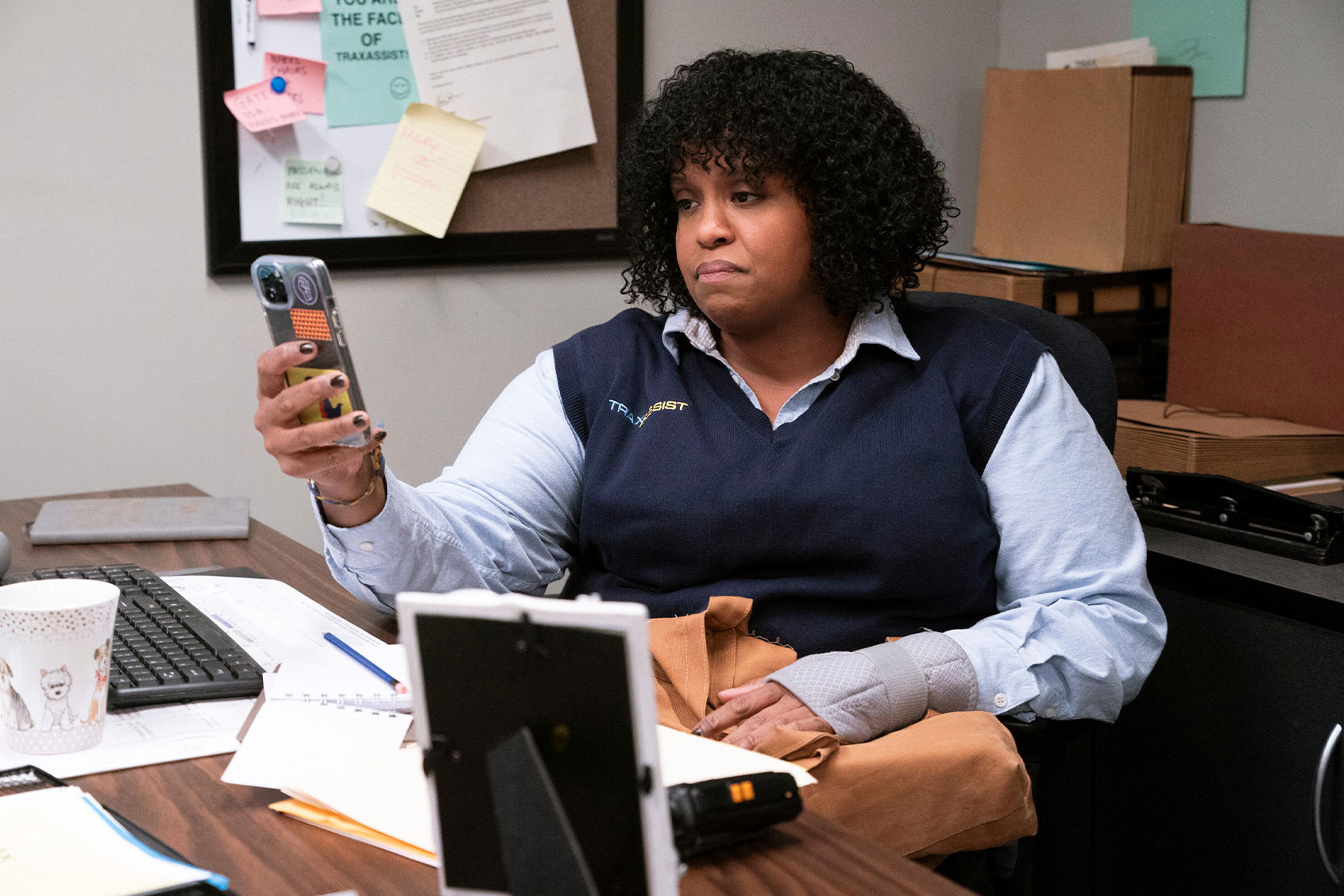
Natasha Rothwell’s Melissa confirms some of those assumptions as the show starts. She doesn’t have a pet at that point, to be clear. She doesn’t have much of anything going on besides a job at JFK driving travelers from gate to gate, enthusiastically spouting facts about the places they’re going. The tragedy is that she’s afraid to fly, which is both a true phobia and a metaphor for the rest of her life.

Mel is in a rut. She can’t trust any intimate relationships and feels alone despite being surrounded at work by friends who adore her. Her 35th birthday coincides with the double whammy of receiving an invitation to her ex-boyfriend Alex’s destination wedding and a knock into the afterlife, briefly, when a shelving unit she's just purchased and put together by herself falls on her. 

Mel wakes in a hospital and is informed that she died for three minutes, which is a very practical way to inspire anyone to step up their business of living. 

Rothwell created, stars in and serves as an executive producer in this show, one that mimics the basic architecture of many affirming shows or movies designated as simple, solidly entertaining and not-too-challenging comforts.

Those are not pejoratives but assets. One example that immediately and affectionately comes to mind is “Survival of the Thickest.”  “How to Die Alone” occupies the same space in my heart and sensibilities as that comedy, and those who have seen “Survival” may recognize this as high praise.

How To Die AloneMelissa (Natasha Rothwell) on "How To Die Alone" (Ian Watson/Hulu)
Each is created by and stars two of the sharpest, funniest, and most performatively agile Black women in entertainment right now. Each is an easy joy, designed for comfort binges and the kind of repeat consumption some of us crave during cozy season. 

Of course, the two series have enough details in common for that assessment to be easily misunderstood, so let’s acknowledge a few things. Both are about plus-size New Yorkers who are either single — which describes Rothwell’s Mel — or, in the case of Michelle Buteau's Mavis Beaumont in “Survival,” unexpectedly unpartnered. 

Watching these eight episodes gives me the sense that Rothwell designed her show to go down smoothly instead of sitting heavily, achieved in part by blending gauzy, sparkly dream sequences into the mundane reality of being a broke woman in the big city. 

Some aren’t even fantasies. One string of scenes that follows Mel’s hospital stay physicalizes the sensation of being on prescription painkillers by showing her and her co-stars break into choreographed body rolls and herky-jerky movements during normal conversations – a creative way of capturing the experience of being cognizant but not all there while mightily striving to maintain the appearance of being fine. 

We need your help to stay independent

It’s in these creative production details that Rothwell’s imagination syncs splendidly with her acting talent. Rothwell initially captured our attention as the brash and unfiltered Kelli on “Insecure.” Some might recognize her from a much-circulated GIF featuring Kelli, at her most knowing. “You know what that is?” she asks, then answers by turning her fingers upward and expanding them like a daisy exploding into bloom while saying “Growth.”

As hilarious as she is in "Insecure," her work as eternally put-upon and forbearing masseuse Belinda on the first season of the anthology series “White Lotus” counts as one of the top performances of that year. Mike White affirms that by returning Rothwell to the cast for its upcoming third season. 

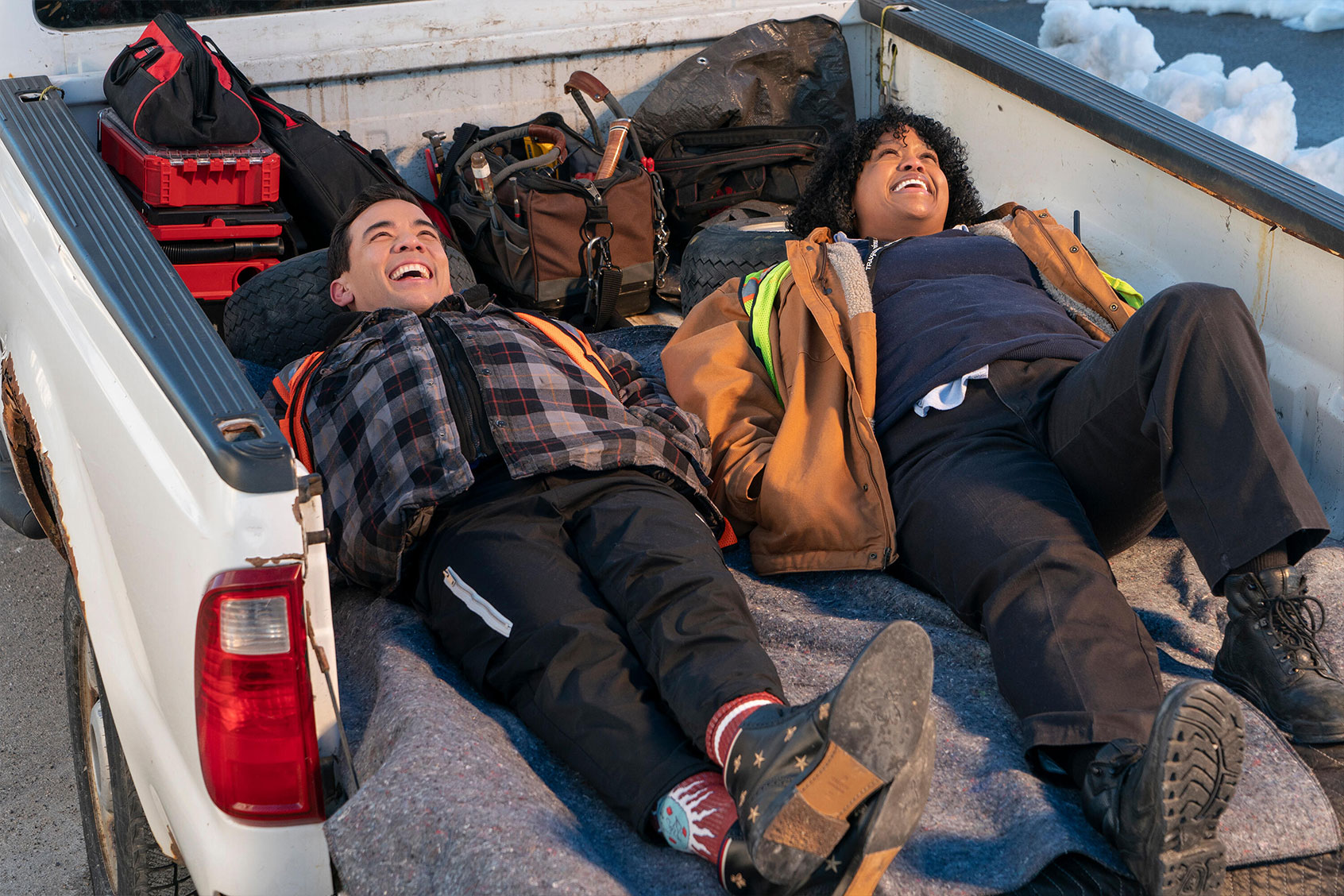
How To Die AloneRory (Conrad Ricamora) and Melissa (Natasha Rothwell) on "How To Die Alone" (Ian Watson/Hulu)

Kelli showcases Rothwell’s dexterity with slapstick while Belinda demands restraint, a necessity to show off Jennifer Coolidge’s flailing goofery. "How to Die Alone" unleashes the breadth of Rothwell’s abilities, traveling a gamut of feelings as Melissa clumsily leaps from one risk to the next. Growth doesn't happen without setbacks or pivots, but Mel's near-death experience prods her to keep following the advice given by the woman sharing her hospital room. "Start doing something that scares you," the stranger tells her, and that advice leads her to make small steps and leaps — including some that aren't advisable.

It also splits the difference between feeling highly personal and broadly relatable, which is both an effect of Rothwell’s undeniable appeal and the many ways that Mel embodies the “we’ve all been there” sensation of taking refuge in playing it small and safe. By itself this could make “How to Die Alone” feel like a very lonely story but Rothwell’s collaborative cast and episode openers featuring unvarnished answers from people on the street fielding questions about life and love, buoy Mel’s adventures. 


Want a daily wrap-up of all the news and commentary Salon has to offer? Subscribe to our morning newsletter, Crash Course.


Conrad Ricamora (from Hulu’s “Fire Island”) meets Rothwell’s chemistry as Rory, the kind of best friend who can be a trap for an overly accommodating, low-self-esteem big girl (this is said from a place of experience). But there isn’t any more malice written into Rory than there is in Mel’s ex-boyfriend Alex (Jocko Sims). The writers make Mel’s mess the center of the story, which allows for a lot of comedy but plenty of understanding for those in her orbit, a few of whom get sucked into the gravity wells that open in her life. 

This includes Mel’s brother Brian (“South Side” star Bashir Salahuddin) whose martyr complex leads him to cast her as the family screw-up, and her ridiculously tight office mate Patti (Michelle McLeod, an underappreciated delight), who doesn’t bother to hide her resentment for her co-workers. If there’s a breakout figure here, though, it may be Terrance, KeiLyn Durrel Jones’ sweet baggage handler who is Mel’s top advocate and a real estate holder in the Friend Zone. 

That’s not always a bad thing – there remains a deficit of strongly written platonic friendships between men and women on TV. (One of the best ones is a highlight of Buteau’s “Survival.”) Rothwell writes their bond with expansion possibilities for future seasons, something the writers place a wager on by punctuating the season with a question mark which, while justifiable, flattens some of the fizziness that leads up to it. 

Cliffhanger endings are a defining trait of streaming series, so this is not the worst sin, especially since the prevailing feeling of “How to Die Alone” is of wanting more. And this goes with what we know and enjoy about Rothwell, whether as a co-star or the main event. Amazing as her work is, Rothwell leaves open the possibility for Mel to be and do more – and earns the audience’s willingness to watch that bet pay off.

The first four episodes of "How to Die Alone" premiere Friday, Sept. 13 on Hulu.


Schools evacuated in Springfield, Ohio, following Trump-Vance lies about immigrants eating pets

The Springfield City School District evacuated two elementary schools and a middle school Friday morning “based on information received from the Springfield Police Division,” according to school officials, The Columbus Dispatch reported.

The school shutdowns come a day after Springfield’s City Hall had to be evacuated because of a bomb threat and three days after Donald Trump’s false claim that Haitian immigrants are eating the city’s dogs and cats. City officials, as well as Ohio's Republican governor, Mike DeWine, have debunked the viral claim, but Trump's running mate, Sen. JD Vance, R-Ohio, only doubled down on attacking the immigrant community there.

It is not yet clear if Friday’s evacuations are from a new threat or related to Thursday’s bomb threats, ABC News reported

Students from Perrin Woods Elementary School and Snowhill Elementary School were evacuated from their buildings and moved to an “alternate district location” according to an SCSD news release as the district currently dismisses students to their parents. 

Roosevelt Middle School did not open Friday based on the information provided by Springfield police. Some parents arriving to drop their children off at school were turned away, the Springfield News-Sun reported

Bomb-detecting dogs helped police clear out multiple facilities listed in the threatening email on Thursday, including the two elementary schools, City Hall, and a few driver’s license bureaus, Springfield Police Chief Allison Elliott told ABC News. Elliot added that the county court facilities have also been cleared “out of an abundance of caution” until FBI and local police uncover the source of the threat. 

From dinosaurs to dolphins, what gaze following reveals about the evolution of empathy

Picture this: You’re at a bar and someone clearly intoxicated starts telling your friend their grand theory about how the Titan submersible implosion was faked. Your friend locks eyes with you, clearly wanting to leave this dreadful conversation. She makes eyes to the door. Following someone’s gaze may seem like a simple act, but it has profound implications for the evolution of intelligence. And humans are far from the only animals that do it.

A recent study of bottlenose dolphins in the journal Heliyon adds to previous research identifying the ability to follow the gazes of members of other species — a visual and cognitive trick that may relate to the development of empathy — across a wide range of mammals, not just humans and our fellow primates. What’s even more interesting is to trace this ability through not just the mammal family but beyond, to reptiles and birds — and perhaps back as far as the Jurassic period.

Doing so reveals not just aspects of how the human capacity for empathy may have evolved from traits seen in our ancestors, but also displays the mysterious details of evolution by natural selection. While not driven by any conscious or guiding force, it can in a way be seen as nature’s imagination — which sometimes comes up with the same ideas over and over again.

Putting yourself in another’s shoes

Gaze following can help an animal identify predators or see what tasty treats their same-species competitor has discovered, among other useful things.

To evaluate animals’ abilities to follow the direction a human experimenter is gazing — for example, noticing the experimenter looking at food and then checking back to be sure before going for the reward — researchers teach the animals how to independently gain a reward. Then, scientists being mean buggers, will give them a similar task that is unsolvable: this is called the “impossible task paradigm.”

An animal’s ability to follow the gaze of another, including another species, may form a basis for advanced social cognition.

But, given an impossible task by Elias Garcia-Pelegrin and his team of researchers (who did not respond to an email interview request from Salon), bottlenose dolphins were not, in fact, driven mad in frustration; instead, they demonstrated the ability to use human attentional cues, staying still and quickly alternating their gaze between the experimenter and the object of the impossible task — while giving up the gaze alternation as soon as the lead experimenter’s back was turned towards them.

Of note: gaze following isn’t a single thing; the impossible task literature divides it into various types, which may suggest different cognitive abilities on the part of the experimental animal. “High-level” gaze following, like the dolphins demonstrated, involves putting oneself in the shoes of another by watching where they are looking to see from the other’s perspective.

In general, by identifying important objects in their environment, an animal’s ability to follow the gaze of another, including another species, may form a basis for advanced social cognition, paving the way for cooperation and empathy.

One such high level type, “geometrical gaze following,” occurs if you block the thing that the other is looking at so the subject can’t see it, so that they will physically reposition themself to see what others are seeing. Geometrical gaze following isn’t even seen in human children before eighteen months of age – and yet wolves, apes and monkeys, and birds of the crow (corvid) and starling genuses have all been found to engage in it. You’ll notice, perhaps, that the trait has therefore been seen in various mammal families (primates and the dog-like animals, called canids), as well as some but not all birds. But what does this mean?

Converging on a point

Most likely, it suggests that visual perspective-taking or gaze following evolved independently in mammal groups that had already diverged earlier in their history. For example, experimental evidence suggests it might have arisen at similar times, though separately, in both the monkey ancestors (primates) and dog ancestors (canids) This is called convergent evolution, where evolutionarily distinct groups that occupy similar environmental roles (or “niches”) evolve similar traits.


Want more health and science stories in your inbox? Subscribe to Salon's weekly newsletter Lab Notes.


“The sort of simple way that I typically define convergent evolution,” Tim Sackton, director of bioinformatics at Harvard University’s FAS Informatics Group, told Salon, “is if there’s a trait that you see in some species, whatever it is, that evolved independently.”

That is, the trait isn’t one that the species you’re comparing got from their common ancestor, but one that emerged in totally different lineages.

“Many other traits seem to be solutions to common problems,” Sackton said. “And so natural selection sort of optimizes for organisms to converge on that same phenotype.”

By phenotype, Sackton means the actual expression of that trait, like having flippers or engaging in gaze following, as opposed to its genotype, meaning the genetic makeup that results in that trait.

Examples of convergent evolution include the similarly streamlined teardrop body shape that evolved in ichthyosaurs, sharks, tuna and dolphins — a response driven by natural selection in similar ocean environments; the camera-like eye structure that evolved independently in vertebrates, including humans, and in cephalopods like squid or octopuses; or certain fish in both the Arctic and Antarctic seas, only very distantly related, which independently evolved antifreeze proteins to protect their tissues and blood from the extreme cold.

Likewise, it seems that gaze following is an aspect of social cognition that has proven its worth as a “solution” to problems for a variety of evolutionarily distant groups.

As a bioinformatician, Sackton’s interest lies in trying to understand what part of the genome of very different evolutionary groups can lead to similar traits being expressed. The traits that strike us as convergent sometimes actually relate to similar proteins being produced by the expression of related genes in these very distant species; sometimes, though, the convergent traits are more superficial than that and only seem similar without having an underlying genetic basis in common.

Take the convergent evolution of flippers. Sackton and colleagues have found that areas of the genome that regulate the development of the hindlimbs are at play in the very divergent types of animals in whom hindlimbs devolved into flippers. By contrast, Sackton’s collaborator Nathan Clark has found that in the loss of eyesight that occurs sometimes in the evolution of many unrelated subterranean animals, the genome changes from that of their non-subterranean ancestors in similar ways to do with genes coding for proteins expressed in the lens, cornea or other parts of the eye. Whether the genes in question relate to the developmental process or to the expression of proteins, Sackton and Clark write that we’re finding that there’s often a lot more genetic convergence — similar things going on at the level of genes — underpinning the similarities we see between unrelated organisms than you’d expect.

So far, there doesn’t seem to have been much research into the genetic underpinnings of gaze following in animals — although there has been some looking at humans, in whom impaired gaze following can be a sign of conditions such as autism spectrum disorder.

Diverging again

What about birds and their reptilian relatives? Why would some have advanced gaze following abilities and some not? A study published last year in Science Advances looks at Archosaurs, the group that includes birds, crocodilians and their dinosaur ancestors, providing some evidence about this.

Researchers Claudia Zeiträg, Stephan A. Reber, and Mathias Osvath compared paleognaths, the most neurocognitively “basic” of birds, with crocodilians, birds’ closest living relatives. They found that the alligator, a crocodilian, was unable to really grasp advanced visual perspective taking. However, both the paleognaths (those birds most similar to their earliest bird ancestor, such as the kiwi, the ostrich and the cassowary) and non-paleognath birds (more specialized birds — a nice duck, say, or a swallow — that have evolved characteristics that make them less similar to the earliest bird ancestors) all engaged in gaze following. They even exhibited checking-back behavior at the level of apes.

Alligators do follow gazes into the distance, but this simpler form of gaze-following is a feature shared by all amniotes (that is, all of the four-legged animals plus descendants of four-legged vertebrates, like birds).

The visual perspective-taking exemplified by geometric gaze following, write Zeiträg and her colleagues, “is a form of functional representation, leading to behaviors that correspond to the fact that the other has a different perspective and that its gaze refers to an object.” Even those basic birds – in scientific terms, “neurocognitively most conserved” – showed both geometric gaze following and the ability to check back, and that “presupposes the expectation that the other’s gaze is directed at something, which cannot currently be seen. Checking-back is a behavior signifying such an expectation,” as they put it.

In an alternative pre-history, we might imagine those early gaze-following dinos continuing to evolve, unmolested by giant asteroids that blotted out the sun.

In human children, checking back precedes gaze following, and children show evidence of it by about eight months of age. On the other hand, among birds, the more advanced geometric gaze-following has only been observed in some species, but not only the most conserved or "basic" of them. This might mean a particular species evolved to lose this trait, or that we simply haven’t looked hard enough for its presence in different bird species.

Similarly, while among the primates, checking back has only been reported in apes and old world monkeys, there haven’t been very many studies of this in primates, and while one rare such study concluded that new world monkeys — spider monkeys and capuchins — don’t check back, in fact an individual spider monkey was observed checking back in that study, over and over.

This could be a case where “absence of evidence doesn’t equal evidence of absence” of this trait that, if found, would suggest some pretty advanced social and cognitive abilities.

Built for the job… But up for the task?

As well as seeking experimental, observational and genomic evidence of gaze following and visual perspective-taking, a complementary approach is to look at the physical equipment making such abilities possible: that is to say, the eyes, body and brain.

Alligators and crocodiles have eyes that are adapted for seeing in air, not water. Their eyes, placed on either side of their head, give them a wide field of view and scary-good peripheral vision. Their ability to adapt to scan the shoreline without moving their heads makes crocodiles, as one headline about a study on the subject put it, “fine-tuned for lurking”. The kind of low-level gaze-following they engage in is mediated by subcortical structures of the brain–those more “primitive” parts also found in mammals and fish.

Dolphins can use binocular or monocular vision but typically use monocular, giving them a whopping two hundred degree vista from each eye compared to primates’ limited field of view, using our two forward-facing eyes, of around ninety degrees to each side of the midline, sixty below the point of focus, and fifty above. The dolphins thus don’t need to move their heads as most non-primate mammals must if they want to get a good field of sight — a good thing, because their fused cervical vertebrae make that tricky to do.

Basically, where head position and forward eyes is thought to be important for the development of gaze following, in dolphins which use echolocation to recognize objects, it may have evolved in a different way. (Like the dolphins, penguins and ibis, which also have eyes on separate sides of their head, have already been found to show conspecific gaze following.)

In the study of Archosaurs, small birds simply had a harder time actually carrying out visual perspective-taking than big birds, like the rhea or the emu: they weren’t tall enough to see what the experimenter was looking at. As a short person, this author can only sympathize.

Looking at which living species show evidence of advanced gaze following and which don’t suggests that even the more advanced type, and the ability to check for visual references, evolved back in the time of dinosaurs. This also likely means that some dinosaurs evolved the neurocognitive equipment to make these things possible, and that when we start looking into the genomes of these different groups, we’ll find genetic evidence of exactly how these traits are being controlled and whether the dolphin’s gaze following abilities, for example, occur in a similar way to those of the swallow or its Archosaur dinosaur ancestor.

But that doesn’t mean that all dinosaurs exhibited this form of social cognition. Instead, it evolved in some dinosaurs only, probably some time after the Archosaur group, a group that includes both reptiles and birds, divided. This division of the constantly branching evolutionary tree gave rise to the ancestors of today’s crocodiles and alligators in one group, and to the ancestors of bird-like dinosaurs and today’s birds in the other. Tracking convergent evolution through the evolutionary tree is best done with a combination of high-throughput genomic analysis and work that looks at actual animals, whether in museums or in the field, to see how traits are expressed.

We need your help to stay independent

As genomic analysis becomes cheaper and easier to do (and as extinction takes a brutal toll on existing species), it can be harder to get funding agencies to invest in studying an animal in the wild – studying its phenotype, or how it expresses traits – than to sequence the DNA of hundreds of thousands of individuals.

“Phenotypic resources are often more challenging,” Sackton told Salon. He stressed the need for collaboration in his work with molecular and organismal biologists to understand how an organism’s ecology might shape what he sees in its genes, and conversely to understand the relevance of the genomic sequencing he does to its phenotype, the traits we can actually observe, like physiology or behavior.

“There’s so many weird things that animals and plants do,” he said. In an alternative pre-history, we might imagine those early gaze-following dinos continuing to evolve, unmolested by giant asteroids that blotted out the sun. Instead of evolution ultimately producing as a dinosaur descendant the clever jackdaw that can follow your gaze to steal your food, we might have a society of empathetic dinosaurs whose early capacity to put themselves in other dinos’ shoes (so to speak) could have led to a complex social world, one in which knowing your dinosaur friend is planning their escape from the dinosaur bar is of great interest.

Perhaps in that alternate world a dinosaur is writing up a story about convergent evolution and the experiments being done to better grasp the amazing, gaze-following abilities of those curious creatures, the bipedal, big-brained, highly social Homo genus of primates and their previously unsuspected empathetic abilities – almost like dinosaurs themselves.

Martha Stewart seems to think the idea of Harris as president is a good thing, subtly endorsing

On the heels of recent Kamala Harris endorsements from celebrities like Taylor Swift and Linda Ronstadt, foodie icon Martha Stewart has casually added her name to a running list of pet lovers voting blue in the 2024 election.

On Friday, The Daily Beast broke the news that during an on-stage conversation with the outlet's Chief Creative and Content Officer Joanna Coles at the Retail Influencer CEO Forum on Tuesday, Stewart mentioned that she'd be tuning into Harris' debate against Trump, adding in her signature low-key fashion who she was cheering for.

“Kamala,” she said, with The Daily Beast emphasizing that she used proper pronunciation of the candidate's name.

During her conversation with Coles earlier this week, Stewart said that she supports Harris primarily because she wants a president “who doesn’t hate New York” and “doesn’t hate democracy."

Trump and Stewart have had beef since 2006 over dueling versions of "The Apprentice" that aired at the same time, which Mother Jones wrote a whole feature on in 2020 titled: "The Trump Files: When Donald Got in a Fight With Martha Stewart."

“I was supposed to fire him on air,” Stewart comments on their feud in the article. "And then Donald liked it too much. And look at, you know, it’s fantastic for him. It’s built him a platform. So now he thinks he can be president.”


Trump rules out another debate with Harris after polls show he lost the last one by a lot

Donald Trump said Thursday that he will not debate Vice President Kamala Harris again.

In a post on his website, Truth Social, Trump continued to insist that he won the debate, despite his disastrous performance, and that because of this he does not need to do it again. “THERE WILL BE NO THIRD DEBATE,” Trump declared, referencing this week's debate and his earlier showdown with President Joe Biden.

By contrast, the Harris campaign continues to press for another matchup. “We owe it to the voters to have another debate,” she said Thursday.

Experts and several polls — from Reuters, YouGov, and CNN — suggest Harris had a far better showing than the former president. But Trump on Thursday continued to insist he won, twisting Harris’s enthusiasm for another debate into desperation to redeem herself. “When a prizefighter loses a fight, the first words out of his mouth are, 'I WANT A REMATCH,'" Trump claimed

At the same time, the former president sought to excuse his poor performance by claiming he was ganged up on by the ABC News moderators.

“It was three to one,” Trump said during a call with “Fox & Friends,” adding: “It was a rigged deal, as I assumed it would be, because when you looked at the fact that they were correcting everything and not correcting with her,” the Maine Morning Star reported.

Trump reiterated his opposition to another plausible debate at a campaign stop in Tuscon, Arizona. "Because we've done two debates and because they were successful, there will be no third debate. Too late anyway, the voting has already begun," he told supporters, CBS News reported.

Nick Lowe’s “Indoor Safari”: A masterclass in simple elegance and timeless tunes

Nick Lowe is one of popular music’s most storied and influential songwriters. The composer and performer of such hits as “Cruel to Be Kind” and “I Love the Sound of Breaking Glass,” Lowe is perhaps best known for writing “(What’s So Funny ’Bout) Peace, Love, and Understanding,” which earned cult status as a New Wave anthem after being recorded by Elvis Costello in the late 1970s.

With "Indoor Safari," Lowe has returned to the music scene with a vengeance, releasing his first full-length album in more than a decade. And "Indoor Safari" was well worth the wait. During a July solo appearance at Brooklyn’s National Sawdust, Lowe test-drove four of the album’s tracks, including “Love Starvation,” “Blue on Blue,” “Trombone,” and “Tokyo Bay.” The resulting performance offered a deep inside look into the qualities that make Lowe such a dynamic and affecting player. There is a simplicity—an economy of sounds and words—at the heart of Lowe’s musical output that never fails to charm. With "Indoor Safari," these songs take on ever greater power as the songwriter spars with subjects related to life’s vicissitudes, the confounding nature of love, and the inevitable prospects associated with growing up and growing older.

The songs on "Indoor Safari" are characterized by a deceptive simplicity in terms of delivery arrangement. During a recent interview with Lowe, he explained the merits of keeping things simple to me. He fondly recalls his mother, who sang with a voice like Rosemary Clooney. “I used to really like singing with her in the house,” he recalled. “By the time I was about 8 or 9, Lonnie Donegan was my man, you know. And like so many people of my generation, we were getting a lesson in the blues—not to mention a lot of the romance stuff.”

"Indoor Safari" is rife with romance and the blues, with a knowing eye towards the weighty fact of our mortality. In “Crying Inside,” for example, he sings, “I’ve been wisecracking like the good old days / but pretty soon I’m going to slip away.” When he’s not pondering the specter of death, Lowe sates himself with the timeless rites of romantic love. “Come play your song,” he sings in “Trombone,” and “make it the one about good love gone wrong.” With "Indoor Safari," Lowe is amply backed by Los Straitjackets, the surf-infused, rock ‘n’ roll band, complete with telltale masks, from Nashville.


Want a daily wrap-up of all the news and commentary Salon has to offer? Subscribe to our morning newsletter, Crash Course.


In many ways, "Indoor Safari" finds Lowe coming full circle to his pre-fame pub band days, when fans were content to enjoy the sweet sounds of a love song along with a pint or two, followed by a turn around the dancefloor. In “Jet Pac Boomerang,” he ponders love’s trials and tribulations, ultimately recognizing that it’s all somehow worth it “when she says she loves me” and “angel choirs sing.” As if to punctuate his nostalgia, Lowe makes an explicit nod to the Beatles and those days of yore, singing, “last night I said these words to my girl.”

"Indoor Safari" is precisely the kind of record that music lovers will find themselves returning to, time and time again, because of Lowe’s buoyant melodies and thought-provoking lyrics. Please please me, indeed.

“Beyond disturbing”: Trump’s allies try to blame Laura Loomer for his racist debate claims

Laura Loomer is an appallingly racist, unhinged conspiracy theorist who has no business being anywhere near a major party’s presidential candidate. And that’s just what Republicans think.

Over the last week, allies of Donald Trump — from Rep. Marjorie Taylor Greene, R-Ga., to Sen. Lindsey Graham, R-S.C. — have reacted with alarm to images of the far-right provocateur cozying up to the GOP nominee. Loomer, who has suggested 9/11 was an “inside job” and celebrates the death of migrants, rode on Trump’s private plane to the debate in Philadelphia and then appeared alongside him at events marking the 2001 terrorist attacks, seen playing “on her phone while pacing between Mr. Trump’s two campaign managers,” The New York Times reported.

According to Greene, Loomer is a “poisonous” and “mentally unstable” figure on the right, one whose open racism (she said the White House would “smell like curry” if Vice President Kamala Harris were to win) is making Trump “look bad.”

Graham likewise took issue with Loomer’s potential impact on the campaign. “The history of statements by Ms. Loomer are beyond disturbing,” he told The Washington Post on Thursday. “I hope this problem gets resolved,” he continued, saying Trump’s informal adviser — a person he wanted to formally hire last year — “doesn’t help the cause.”

Loomer, 31, has responded as could be expected from a member of Trump’s inner circle: by leveling vicious personal attacks against her various critics. Greene, she said, is an adulterer who wrecked her marriage; Graham, she claimed, is a gay man afraid to come out of the closet (“Just be honest,” she posted on X).

It is hard to believe that, in September 2024, allies of the former president have genuinely turned against the proliferation of racist conspiracy theories. The problem, it appears, is that racist conspiracy theories alone are probably not enough to win a general election — but Loomer, a constantly-online extremist, is encouraging Trump to be the worst version of himself.

As Axios noted, “Loomer was among those making false posts on X about immigrants killing and eating dogs and cats,” a claim that Trump famously repeated before 67 million people, his disastrous debate performance followed by bomb threats targeting the very people he slandered.

Loomer is being blamed for the fact that the Republican Party’s 78-year-old candidate cannot stop himself from repeating whatever racist dreck is whispered in his ear or comes across his feed on Truth Social. When Trump sticks to generalities — immigrants are all murderers and rapists, never mind the data showing they are significantly less prone to criminality than native-born Americans, who are also committing fewer offenses these days — no elected Republican bothers to speak out. When he repeats a specific urban legend, though, he doesn’t just trigger the libs but open himself up to mockery among normal people exposed for the first time to the product of a far-right internet subculture that is, yes, weird.

We need your help to stay independent

Republicans like Graham may hope that Trump distancing himself from Loomer can serve as evidence of a general-election pivot to the center. But she is not responsible for who Trump is and the overtly racist campaign he chose to run long before she entered the scene.

Loomer may have promoted the conspiracy theory about immigrants eating cats, but so did that state’s junior senator and Trump hand-picked running mate, JD Vance, whose response to being debunked was instructing his followers to “keep the cat memes flowing.”

Trump team insiders insist that Loomer actually “has no role, official or unofficial,” on the former president’s campaign. The claim is that she’s just there for emotional support.

“She’s ride-or-die, and Trump rewards that loyalty,” one source told The Bulwark. “She’s part of the entourage, and Trump loves an entourage.”

If Trump is appearing too racist or too online to be president in this, his third run for the White House, it is because that is who he is — and his advanced age makes it harder to hide; it is not because some MAGA Rasputin is just feeding him bad advice. Nor is he the only one in today’s GOP openly leaning on a hatemonger: On Sept. 11, the National Republican Senate Committee posted a video on X of Loomer harassing Sen. Jon Tester, D-Mont., about transgender people in sports.

In 2024, the Republican Party is fully Donald Trump’s, most real dissidents having already been exiled to MSNBC. The former president may well jettison Loomer before all the ballots are cast — loyalty is not something he has been known to reciprocate — but his years-long embrace of the far-right activist (like his dinner with the neo-Nazi Nick Fuentes; like his praise for neo-Nazis in Charlottesville; like his repeating neo-Nazi rhetoric about migrants) shows that the rot in today’s GOP is coming from the top.

For the party to ever claim it represents a decent, respectable and non-racist form of conservatism — whatever one thinks of tax cuts and country clubs — it can’t stop at purging a single millennial: Republicans will have to look at the top of their ticket.

Kamala Harris is making climate action patriotic. It just might work

“Freedom” is often a Republican talking point, but Vice President Kamala Harris is trying to reclaim the concept for Democrats as part of her campaign for the presidency. In a speech at the Democratic National Convention last month, she declared that “fundamental freedoms” were at stake in the November election, including “the freedom to breathe clean air and drink clean water and live free from the pollution that fuels the climate crisis.” 

A new study suggests Harris might be onto something if she’s trying to convince voters torn between her and former President Donald Trump. Researchers at New York University found that framing climate action as patriotic and as necessary to preserve the American “way of life” can increase support for climate action among people across the political spectrum in the United States.

“It’s encouraging to see politicians adopting this type of language,” said Katherine Mason, a co-author of the study and a psychology researcher at New York University. Based on the study’s results, she said that this rhetoric “may bridge political divides about climate change.”

Some 70 percent of Americans already support the government taking action to address climate change, including most younger Republicans, according to a poll from CBS News earlier this year. Experts have long suggested that appealing to Americans’ sense of patriotism could activate them.

The framing has taken shape under President Joe Biden’s administration, which has pushed for policies to manufacture electric vehicles and chargers domestically “so that the great American road trip can be electrified.” Harris underscored this approach to climate and energy in Tuesday’s presidential debate with Trump, emphasizing efforts to craft “American-made” EVs and turning a question about fracking into a call for less reliance on “foreign oil.”

Mason’s new study, published in the journal Proceedings of the National Academy of Sciences, is the largest to date on the effects of patriotic language around climate change, with almost 60,000 participants across 63 countries. Americans read a message declaring that being pro-environment would help “keep the United States as it should be,” arguing that it was “patriotic to conserve the country’s natural resources.” 

Bloomfield urged caution in deploying this strategy in the real world, since it could come across as trying to manipulate conservatives by pandering to them.

The text was illustrated by photos of the American flag blowing in the wind, picturesque national parks, and climate-related impacts, such as a flooded Houston after Hurricane Harvey and a Golden Gate Bridge shrouded in an orange haze of wildfire smoke. Reading it increased people’s level of belief in climate change, their willingness to share information about climate change on social media, and their support for policies to protect the environment, such as raising carbon taxes and expanding public transit.

The researchers wanted to test a psychological theory that people often defend the status quo, even if it’s flawed, because they want stability, not uncertainty and conflict. “This mindset presents a major barrier when it comes to tackling big problems like climate change, as it leads people to downplay the problem and resist necessary changes to protect the environment,” Mason said.

For decades, environmental advocates have called on people to make sacrifices for the greater good — to bike instead of drive, eat more vegetables instead of meat, and turn down the thermostat in the winter. Asking people to give up things can lead to backlash, said Emma Frances Bloomfield, a communication professor at the University of Nevada, Las Vegas. The framing in the study flips that on its head, she said. “It’s not asking people to sacrifice or make radical changes, but in fact, doing things for the environment will prevent the radical change of the environmental catastrophe.”

Bloomfield, who has studied how to find common ground with conservatives on climate change, wasn’t surprised the study found that appealing to patriotism worked in the United States. In other countries, however, the results were less clear — the patriotic language saw some positive effects in Brazil, France, and Israel, but backfired in other countries, including Germany, Belgium, and Russia.

Bloomfield urged caution in deploying this strategy in the real world, since it could come across as trying to manipulate conservatives by pandering to them. “Patriotism or any kind of framing message, I think, can definitely backfire if it’s not seen as an authentic connection on values,” she said.

Talking about a global environmental problem in an overly patriotic, competitive way could be another pitfall. Earlier this year, a study in the journal Environmental Communication found that a “green nationalist” framing — which pits countries against one another in terms of environmental progress — reduced people’s support for policies to limit greenhouse gas emissions. Natalia Bogado, the author of that study and a psychology researcher in Germany, said that the new study in PNAS makes “no reference to the key characteristics of nationalism, but only briefly mentions a patriotic duty,” which might partly explain the different results.

If executed smartly, though, appealing to regional loyalty can lead to support for environmental causes. Take the “Don’t Mess With Texas” campaign, started in the late 1980s to reduce litter along the state’s highways. Its target was the young men casually chucking beer cans out their truck windows, believing littering was a “God-given right.” Instead of challenging their identity, the campaign channeled their Texas pride, with stunning results: Litter on the roads plunged 72 percent in just four years. Today, the phrase has become synonymous with Texas swagger — so much so that many have forgotten it was initially an anti-litter message.

This article originally appeared in Grist at https://grist.org/language/kamala-harris-climate-change-freedom-patriotism-study/.

Grist is a nonprofit, independent media organization dedicated to telling stories of climate solutions and a just future. Learn more at Grist.org

Kamala Harris’ big tent strategy — and its success — has thrown Trump for a loop

Despite the ongoing excessive whining in the press about Kamala Harris not doing interviews and MAGA's laughable insistence that Trump won the debate and that it was rigged by ABC moderators, the truth is that the vice president is running an exceptional campaign. At every important juncture, she has met the moment and surpassed it.

Personally, I never understood the widely (but not deeply) held belief that she was a mediocre politician. As a Californian, I have followed Harris' career pretty closely from the time she made a name for herself as the San Francisco district attorney and then state attorney general. I happily voted for her for the Senate. She always struck me as a talented politician who was very likely headed for higher office if the breaks came her way.

So far she's doing something that is very difficult to pull off, but if she does it will be legendary — she's trying to excite the base while also expanding the coalition from Bernie Sanders to Dick Cheney.

She took a shot for president in 2019 and had a bad primary run, but she's hardly the first presidential aspirant to flame out in their first run. Joe Biden ran twice before he finally got the nomination. Even the sainted John McCain and Ronald Reagan failed in their first attempts. But even though she ended up being chosen as Joe Biden's vice president it seemed as though her failure in the Democratic primary was seen as possibly fatal and that dark cloud followed her through her first couple of years in the job.

Needless to say, a lot of this was fed by the right which went to great lengths to demean and demonize her. It is something they do to all Democratic women, particularly the Black ones. As vice president they knew she would run when Biden's term was over and their crusade to degrade her eventually seeped into the beltway ether.

The last two years were quite a bit better as she was featured more in roles that got a lot of attention and it was clear that she was an effective communicator and advocate, most especially on abortion rights about which the president was notoriously uncomfortable. But even with that, when it became obvious that Joe Biden's re-election campaign was in trouble many Democrats and members of the media were convinced that she was not up to the job. That frenzy to create a "mini-primary" or some kind of Rube Goldberg mechanism to pick a candidate was largely based on that knee-jerk opinion.

Luckily, Joe Biden knew better and he immediately endorsed her as many of us desperately hoped he would do. And the Democratic establishment fell in line relatively quickly, thank goodness.

The campaign rollout was simply exceptional, one of the best I've ever seen. Harris personally worked the phones to get the party lined up behind her. They figured out a process to secure the nomination without any hiccups and with almost no time to prepare. They smoothly transitioned the Biden campaign apparatus (which was obviously very good itself) into the Harris campaign and immediately went to work.

Those first few days with her appearance at campaign headquarters taking a call from Joe Biden on camera were perfectly choreographed. The hurried search for a running mate and final choice of Gov. Tim Walz was pitch perfect and their first rally appearances together were raucous, exciting events that radiated optimism and confidence, something we haven't seen for quite some time in this country. I don't know where the "joy" meme originated but it felt real and was a breath of fresh air.

And then there was the convention, which was hastily retooled from a Joe Biden re-election celebration to a "change" candidate introduction. It was a love fest, with ecstatic receptions for every faction of the sprawling coalition Harris was bringing together. And when the nominee took the stage on the final night she looked and sounded like a president which is no mean feat for a woman in American politics.

We need your help to stay independent

Since then she has gracefully and graciously accepted the endorsement from some of the most conservative Republicans in the country, including none other than former Vice President Dick Cheney. So far she's doing something that is very difficult to pull off, but if she does it will be legendary — she's trying to excite the base while also expanding the coalition from Bernie Sanders to Dick Cheney. (Trump, on the other hand, seems determined to shrink his coalition to the most extreme MAGA fanatics. )

Harris didn't do it all herself, of course. As NY Magazine's Rebecca Traister chronicles in this fascinating feature about Harris and her campaign, grassroots organizations, many of them having evolved and matured over the past few years from the women-focused Resistance groups that formed in reaction to Trump's upset victory in 2016, lurched into gear immediately to help jump start fundraising and organizing on the ground. It started with Black Women for Kamala which has inspired dozens of others. Just this week there was "Paisans for Kamala" featuring Nancy Pelosi and Robert De Niro.

The campaign itself has a kick-ass social media team that's churning out memes, TikToks, tweets and Instagram stories that are clever, pointed and tuned in. The outreach to younger voters using these platforms is revolutionary in a presidential campaign. The campaign is wisely allowing them to run unfettered and if the youngs come home to the Democrats and vote in large numbers, this team will deserve a lot of the credit.

And what about this fundraising? The unprecedented massive war chest that's been assembled by the campaign in such a short time is simply mind-boggling. The campaign raised more than $310 million in July, driven by a record-breaking $200 million in the first week. In August they raised another $361 million, tripling Trump's haul. They took in another $47 million in the 24 hours after the debate this week. Most of it has come from small donors which reflects the enthusiasm that's palpable at the Harris and Walz events.


Want a daily wrap-up of all the news and commentary Salon has to offer? Subscribe to our morning newsletter, Crash Course.


She absolutely dominated Trump in the debate this week and the campaign (which always stays on offense) immediately challenged him to another one. Trump is refusing, lamely insisting that he won, to which Harris adviser David Plouffe tweeted that we'd finally discovered Trump's spirit animal: the chicken.

They're not resting on their laurels. They're hitting the ground running:

According to Traister, some of the Democratic "professionals" have descended (Plouffe being one of them) and she worries that they will quash the creativity and spontaneity that's characterized the campaign so far. I'm actually fairly confident that it won't happen largely because the candidate herself has already demonstrated that she's not going to blindly follow their advice. Early on when a pollster suggested that they not use the phrase "we're not going back" or the term "weird," Harris said no. I have a sneaking suspicion that's not the last time she decided to trust her own instincts instead of the stale, beltway, risk-averse habits that take all the life out of a campaign.

It's a big team with many moving parts, obviously. If things are going well because they are all moving in the same direction without a lot of internal strife, you have to look at the person at the top. Harris was slammed pretty hard for her primary campaign's dysfunction but it appears that she learns from her mistakes. This one is working as well as any we've seen and under very unusual circumstances.

The Bulwark's Sarah Longwell held one of her famous focus groups on the morning after the debate. When asked how they would describe Harris's performance, the most common response was "presidential." 

Despite having no investments, Tim Walz will be fine in retirement. What about the rest of us?

Democratic vice presidential nominee Tim Walz's finances made headlines after his financial disclosures showed he owns no stocks or bonds. His lack of investments caught a lot of people's attention and, on the surface, makes him more relatable to the average American. According to the Survey of Consumer Finances, as of 2022, only 21% of families directly held stocks and 1.1% held bonds.

While Walz's lack of investments and diversification potentially make him more relatable, he has something many of us don't — a pension, which is a defined benefit plan.

"I'm not so sure he is like most . . . I mean, nobody's got that [a pension] anymore," said Dan Casey, investment adviser and founder of Bridgeriver Advisors and Panic Proof Retirement. "I rarely see people anymore that come to my office anyways that have pensions. So it's a lot more difficult for, I think, the average American to get that guaranteed income."

The power of the pension 

A pension is a golden ticket to guaranteed retirement income until the day you die, no matter when that happens. Pensions have become nearly extinct to the general population, typically reserved for government and public service workers.

According to Bureau of Labor Statistics (BLS) data, only 15% of private industry workers had access to a defined benefit plan, compared to 86% of state and local government workers.

"The employer will pay into a pension as you're working," said Pamela J. Sams, financial adviser and chartered retirement planning counselor (CRPC) at Jackson Sams Wealth Strategies. "And so the years of service that you have in, basically that translates to after you retire, them providing that defined benefit or pension for the retiree."

Walz's reliance on his pension with few assets elsewhere might not be as shocking as the headlines made it out to be.

"I think, for the most part, when people have pensions, they feel a little bit more secure, and they really don't seek outside investments as much," Sams said. "I have a lot of federal employees in the D.C. area . . . They really don't go outside of what they have with their employer."

The main perk of a pension is that the employer sets it up and takes on the investment risk. The employer is the active participant, while the employee is the passive receiver of the benefit. But with the pension going the way of the dodo, planning and saving for retirement isn't your employer's problem anymore.

We need your help to stay independent

From pensions to 401(k)s

"Most people now have what they call a defined contribution plan, which are 401(k)s, 403(b)s, 457s, things like that where the onus is basically on the participant or the employee to make those contributions," Sams said. "So they don't have that pension portion."

The change in the tides from employer-funded pension to self-funded retirement started in the late '70s and early '80s. Ted Benna, known as the "father of the 401(k)," launched the retirement vehicle in 1978, which later found mainstream success.

As of 2023, 67% of private industry workers had access to a defined contribution plan like a 401(k), and only 15% had access to a defined benefit plan, such as a pension, according to the latest BLS data.

The 401(k) is now the most common defined contribution plan, making up 70% of assets among all defined contribution plans. But even the father of the 401(k) himself admits that as a retirement vehicle, the 401(k) has morphed into something else, and he's "disturbed" by investment fees employers are passing off on employees, according to an interview with Fortune.


Want a daily wrap-up of all the news and commentary Salon has to offer? Subscribe to our morning newsletter, Crash Course.


Americans aren't saving enough for retirement 

For years, the concept of a well-rounded retirement plan focused on the "3-legged stool metaphor." The three legs of the stool are Social Security benefits, a private pension and personal savings and investments. The thought is all three sources must be present to create a strong foundation in retirement. 

For the majority of Americans, one of those legs has been effectively sawed off without an available pension. "So it makes a little bit of a wobbly stool for most people," Sams said. Only about 7% of older Americans have all three income sources, according to the National Institute on Retirement Security.

Americans need to pick up the slack and save more for retirement. But even with access to 401(k)s and potential employer matches, Americans don't have that much saved.

Americans have a median balance of $54,000 in their 401(k), according to the latest United States Census Bureau data. Not everyone is on equal footing, however, and the averages vary widely by race.

White Americans have an average of $60,000 in their 401(k), while Black Americans have an average of just $23,500 and Hispanics have an average of $25,000.

What's more concerning is Survey of Consumer Finances data shows that 54.4% of families have retirement accounts, which means 45.6% don't. If this is any indicator of how other Americans are living, a major part of the population isn't investing for retirement — or certainly not enough. But why?

"I think it's probably fear," Casey said, "and just not knowing how to do it."

Instead, many people are relying heavily on Social Security benefits. In fact, Social Security Administration data shows that 37% of men and 42% of women Social Security beneficiaries 65 or older rely on Social Security benefits for 50% or more of their income. Twelve percent of men and 15% of women rely on Social Security benefits for 90% or more of their income.

The data shows that a large portion of people put a lot of weight on the "Social Security leg" of the three-legged stool.

While Social Security is in place for current retirees, alarm bells have been going off for years, signaling that Social Security is running out of money and the benefits program could change.

"I don't think it'll ever go away, but I think it could be greatly reduced. So I guess if I was advising a younger person, I'd probably just do a worst case scenario and just kind of try to assume it's not going to be there, or maybe only count it for 50% of what we think is expected to happen," Casey said.

Given the current retirement statistics and programs in place — or lack thereof — it seems like Americans need to build a new stool, one that is sturdy enough for whatever the future holds. The retirement of years past is no longer, and the "average" American has to plan for themselves. Walz doesn't, and he'll be just fine.

Trump’s plan to undermine foreign policy

Tuesday’s debate between former President Donald Trump and Vice President Kamala Harris was riveting and drew a worldwide audience. But one of Trump’s most disturbing threats got lost in the flood of post-debate analyses. It was a brief remark but a clear threat to the rule of law. Trump made a boast that would violate the Logan Act, which makes it a felony for private citizens, including presidents-elect, to interfere in foreign policy. Its non-enforcement over time may have emboldened Trump, but it remains the law and both he and the voters need to keep that in mind – for him, to invite yet another investigation, and for the voters, to consider what this, along with the other evidence, says about his fitness for the nation’s highest office.

Midway through the debate, ABC News host and co-moderator David Muir asked Trump “a very simple question” about the Russo-Ukrainian War: “Do you want Ukraine to win this war?” In response, Mr. Trump went on for over 400 words, without ever answering Muir’s question. Along the way, however, he offered the following:

That is a war that's dying to be settled. I will get it settled before I even become president. If I win, when I'm President-Elect, . . .  I'll speak to one, I'll speak to the other, I'll get them together.

On one level, Trump’s response was the usual promoting of himself as a fabulous negotiator. Of course, he did not specify how he would achieve “peace in our time,” or on what terms. It would almost certainly be what he has previously said he would do: gifting Vladimir Putin, the Russian aggressor and strongman whom Mr. Trump has long admired, the promise of a complete withdrawal of U.S. support for Ukraine. That would doom that country and embolden Russia for future aggression against others. 

The geopolitical implications aside, what Trump said he would do if elected is illegal. “Getting together” the Russian and Ukrainian leaders to “get it settled” before taking office would violate the Logan Act. First enacted in 1799, it provides:

Any citizen of the United States . . .  who, without authority of the United States, directly or indirectly commences or carries on any correspondence or intercourse with any foreign government . . .  with intent to influence the measures or conduct of any foreign government . . .  in relation to any disputes or controversies with the United States, or to defeat the measures of the United States, shall be fined under this title or imprisoned not more than three years, or both.

What Trump promised to do would plainly violate this law because as president-elect, he would remain a mere “citizen of the United States,” and it is inconceivable that the outgoing Biden administration would approve what he says he plans to do. Jumping the gun in foreign relations before taking office is a felony. We only have one President at a time.

The last time anyone was prosecuted under the Logan Act was 1852, and there has never been a conviction under it. While it has surfaced from time to time, this is the first time a presidential candidate has publicly stated, in the course of a globally televised debate no less, an intent to violate federal law. This comes on top of reports last month that Trump may already have crossed the Logan Act line in interactions with Israeli Prime Minister Benjamin Netanyahu. (Both men denied the reports.)

Nonetheless, Trump’s promise should not be dismissed as mere puffing. We know from history that the temptation of a presidential challenger to disrupt peace efforts for the challenger’s own political benefit can be irresistible. In 1968, Richard Nixon enlisted Anna Chenault to help gum up the Paris Peace talks among the United States, Ho Chi Minh’s North Vietnamese government, and the South Vietnamese government, which was utterly dependent on U.S. arms and aid. 

We need your help to stay independent

According to Politico, Nixon’s promises of unconditional support, conveyed by Chennault and others, “no doubt helped to persuade the South Vietnamese government to boycott proposed peace talks, shutting a door that Johnson had opened and clinching Nixon’s victory.” More than 20,000 American GIs died in Vietnam after Nixon’s foreign policy interference led to the failure of the 1968 Paris peace talks.

If Trump were elected and were to follow through on his threat before taking office, like Nixon, Trump would be a private citizen “defeat[ing] the measures of the United States” to aid Ukraine. One reason he can with impunity cross lines set by the Logan Act is that neither Nixon nor anyone else is ever investigated or charged for the Act’s violation. 

Consequences for violating the Logan Act are needed to deter self-serving presidential challengers from complicating the critical waning months of an outgoing administration — when major national interests are likely to be at stake — by presuming to exercise presidential powers prematurely. The hard road to restoring the rule of law to which Trump has repeatedly taken a jackhammer is paved by enforcing the law. A muscular Justice Department policy on Logan Act violations would help achieve that restoration.

Cat ladies and dog-eating: MAGA can’t quit the weird talk about pets

The less popular pet species — your gerbils, iguanas, and cockatoos — should be grateful. So far, at least, they haven't become the focal point of a deranged MAGA urban legend, conspiracy theory, or bigoted meme. The same cannot be said for America's two most popular animal companions: cats and dogs. This election cycle has been dominated by discourse about cats and dogs, and not in a fun way. Instead, it's been one news cycle after another involving the deeply unpleasant combination of a household pet plus bizarre far-right behavior.

So it's time to ask the question: Why can't MAGA Republicans leave pets alone? 

Looking back over the past few months, it is startling how many gross stories of Trumpist weirdness involve dogs and/or cats, who do not have partisan preferences. Though, if animals could vote, I suspect they'd turn out for the Democrats, because Republicans can't seem to talk about pets without giving everyone the heebie-jeebies. In her springtime bid to be Donald Trump's running mate, Gov. Kristi Noem of South Dakota bragged about shooting her dog in the head. (She also killed a goat for the high crime of annoying her.) Not that Trump's actual pick, Sen. JD Vance of Ohio, is any more pet-friendly. The man has an alarming obsession with "cat ladies," his go-to insult for women who haven't — or even haven't yet — given birth. 

Robert F. Kennedy Jr., the former Democrat-turned-MAGA hype man, admitted he'd eaten a dog, which somehow is the least strange of his many animal encounters involving dead bears, dead whales, and a dead worm in his brain. MAGA hoaxsters started a conspiracy theory falsely accusing Vice President Kamala Harris's running mate, Gov. Tim Walz of Minnesota, of faking photos of his dog, Scout. One of the architects of Project 2025, which functions as the Trump campaign's policy arm, rants in his book about the evils of city-funded dog parks. 

The pet-related freakishness reached downright frightening levels this week when Vance floated the racist lie that Haitian immigrants in Springfield, Ohio are kidnapping people's cats to eat them. There is no doubt that Vance, a Yale graduate whose wife is a daughter of Indian immigrants, is well aware that it isn't just a lie, but a dangerous one. Already there's been a bomb threat to Springfield City Hall. Trump picked up the lie during Tuesday's presidential debate, raving incoherently about how immigrants are "eating the dogs" and "eating the cats," which caused Harris to reply with a guffaw, "Talk about extreme." 


Want more Amanda Marcotte on politics? Subscribe to her newsletter Standing Room Only.


What all these stories, memes, and lies have in common is that they take a practice most people experience as normal and wholesome — owning pets — and wed it to the uncanny and cruel rhetoric of MAGA. All these bits of pet-related political ephemera are unnerving, and I suspect that's the point. MAGA will rub its filth on every part of people's lives, even something as personal and innocent as your relationship with your pets. 

The fixation on cats and dogs makes more sense in this light. Most won't own it, but MAGA is a fascist movement,  focused on controlling American lives down to the smallest, most intimate details. In real terms, that means forcing childbirth, dictating who you can marry, banning books, and punishing families who accept LGBTQ children. But in a larger philosophical sense, it's about a vision of family life that mirrors the far-right's hierarchical and cold-hearted worldview. As I noted in a recent newsletter, this is a view that rejects the notion that family is about love, but instead about establishing a pecking order of status and submission. 

This isn't even something many on the right would bother to deny. In the world of Christian fundamentalism, for instance, this is a popular meme illustrating how they see family:

In this view, every family member exists to serve the power structure, regardless of how they feel about it. Women exist to serve men. Children exist to be molded into Christian nationalist warriors. Men exist as leaders, even as they cough up self-serving justifications about "serving God" to explain why they get the plum gigs. This is why it's skin-crawling to hear Vance agree with a podcast host arguing "the whole purpose of the post-menopausal female" is to provide free childcare. The possibility that a person has value outside of serving the patriarchal social order is not even considered. 

As I argued in the newsletter, pets disturb this worldview. Even if they "rank" lower than the human family members (cats disagree), they don't serve any "purpose" in a conservative social order. They're just there to love and be loved. So it's no surprise there's so much hostility to pets in MAGA rhetoric, or even downright violent urges towards animals.

That the weirdness about pets is tied to this right-wing obsession with controlling people's personal lives was put on full display this week by — who else? — Twitter owner Elon Musk. First, he sexually harassed pop star and famous cat lover Taylor Swift, by tweeting, "I will give you a child and guard your cats with my life." As journalist Kelly Weill noted in her newsletter, it was "a mask-off moment when pregnancy, which pro-natalists uphold as women’s almost mystical purpose, is invoked as punishment."

Even if they "rank" lower than the human family members (cats disagree), pets don't serve any "purpose" in a conservative social order. They're just there to love and be loved. So it's no surprise there's so much hostility to pets in MAGA rhetoric, or even downright violent urges towards animals.

When he was called out for it, Musk sent another tweet sneering, "Toxoplasma gondii is a danger to our democracy," a reference to the debunked myth that cat owners have a mentally destabilizing parasite. Normal people find it endearing that Swift is a cat person. Musk, however, is threatened. Because a woman he probably doesn't even know would choose cats over a life of sad subservience to a man. (An entirely sensible decision, in non-MAGA land.) 

When the racist urban legend about Haitian immigrants started to spread, a friend texted to ask if perhaps Vance is trying to cast himself as a protector of pets, to push back against his reputation as a cat-hating misogynist. Obviously the main purpose is entirely evil, which is to dehumanize immigrants in hope of scaring up a few more votes from racists. But sure, Vance is full of dumb ideas and that's possible. But what's been striking about the MAGA discourse is that, even when casting themselves in the fantasy role as protector of pets, they can't help but express contempt for people who actually care about animals. 

We need your help to stay independent

Sen. Ted Cruz of Texas posted this meme this week:

Somehow it manages to be indefensible racist propaganda while also shaming people who take real animal abuse seriously. Similarly, the AI-generated images of Trump "protecting" animals manage to convey a distaste for real-life animal lovers.

One reason all these pictures have to be generated is that Trump is a known hater of animals and there is probably no real-life picture of him touching, much less cuddling, a real cat. But there's also a deliberate ridiculousness to these images. The viewer is meant to laugh at how preposterous it would be to see Trump treat a cat with anything but disdain. The memes are racist. They also ridicule cat lovers, the same ones Republicans say they wish to "protect." (We see this same two-step when Republicans claim they wish to "protect" women's sports from trans players. Such proclamations tend to come with sideswipes about how women's sports aren't real sports.) Even when spreading a vile lie, these MAGA messengers can't bring themselves to talk about cats with anything but contempt. Notably, the images never seem to include dogs, which are still seen as a more respectable pet in far-right circles. It's only funny because it's cats, an animal coded as "feminine." 

All this disturbing MAGA talk about cats and dogs is ultimately not about the animals themselves, who remain blissfully unaware of being exploited in the jingoist rhetoric of bigots. It's about the MAGA project of dehumanization, not just of people they dislike, but frankly of themselves. That's why Noem's story is so haunting. The moral of the story is that it's a good thing to suppress humane qualities like kindness, in favor of violently eliminating anyone not serving the right-wing social order. Certainly, no one is spreading the "cat-eating" lie out of sincere concern for cats, but because they wish to dehumanize people whose only crime is looking and speaking differently. It's about taking something as sweet and harmless as a pet and using it as yet another ugly weapon in MAGA's endless culture wars. 

Donald Trump is openly running a Great Replacement Theory campaign

Donald Trump made clear on the Philadelphia debate stage this week, as he has throughout his three presidential campaigns, the basis of his run for office. Trump is running on the platform that non-white immigration is an existential threat to the nation. This time around, Trump has made his primary message, the so-called Great Replacement Theory (GRT), more vivid than ever. It is therefore of existential importance in understanding the stakes of this election to have clearly in mind what has happened in the past when GRT has been the central driving narrative both of individuals and of states.

According to the Great Replacement Theory, the nation’s greatness, its traditions and its practitioners, are existentially imperiled by an influx of foreign races, ethnicities or religions. The foreign elements are sometimes described in the narrative of GRT, as vermin or diseases. 

GRT was central to the official Nazi motivation for the genocide of the Jews of Europe. Hitler blamed the loss of World War I on Jewish betrayal of Germany. But this betrayal, for Hitler, was intimately connected to the Great Replacement Theory, via the introduction of Black soldiers in the French army subsequently occupying the Rhineland, the so-called “Black Horror on the Rhine.” In Mein Kampf, Hitler writes:

It was and is the Jews who bring the Negroes into the Rhineland, always with the same secret thought and clear aim of ruining the hated white race by the necessarily resulting bastardization, throwing it down from its cultural and political height, and himself rising to be its master.

With the benefit of hindsight, the idea that Jews betrayed Germany in World War I in order to use the occupying French army to bring Black Senegalese soldiers in to ruin the white race by rape and race mixing seems utterly unhinged. It is hard to fathom that this crazed conspiracy theory justified for many Germans the mass murder of two out of every three of Europe’s Jews. But our descendants will also find it hard to understand why so many Americans find Trump’s claims that non-white immigrants to the United States are savages who eat pets, criminally insane murderers and drugs dealers who nevertheless somehow manage to get it together to vote fraudulently en masse in election to be plausible. In both cases, the bizarre nature of these claims stands in stark contrast to their obvious political power. 

We need your help to stay independent

Mussolini justified Italy’s colonial war against Ethiopia in 1935 with racial paranoias about the decline and replacement of the “white race.” In 1934, Mussolini wrote that defending the white race was a “matter of life or death” and posed this as a key political issue: “It is a question of knowing whether in the face of the progress in number and expansion of the yellow and black races, the civilization of the white man is destined to perish.” This text laid the ground for the racism and segregation imposed by Italians during the war against Ethiopia in 1935 and later the racist and antisemitic laws of 1938.

Donald Trump’s campaigns have always been based on the Great Replacement Theory.

In the Genocide Convention of 1948, the Soviet Union pressed hard to exclude mass killing of political opponents, demanding instead that the term genocide be restricted to the mass killing of ethnic groups. The Soviet Union’s reason for excluding the mass killing of political opponents, that is, politicide, from the charge of genocide was transparently to absolve the horrific crimes of Stalin’s communist regime, which executed hundreds of thousands of suspected political opponents among their own people. It should worry every American that Trump repeatedly targets as the agents of his version of GRT not an ethnic group, but his political opponents, Democrats. Politicide is no less murderous than genocide.

The potency of the Great Replacement Theory as a justification for mass murder is particularly apparent when it motivates individual actors. Great Replacement Theory was the justification for Norwegian Anders Breivik’s 2011 murder of 77 people, mostly teenagers in a Norwegian left-wing party’s summer youth camp (in this case, GRT-motivated politicide). GRT was the motivation for Dylan Roof’s mass murder of Black churchgoers in Charleston, South Carolina in 2015, and the motivation for the 2018 Tree of Life Synagogue killings of Jews in Pittsburgh, the killing of 23 people, mostly immigrants, at a Walmart in El Paso, Texas in 2019, the murder of 51 Muslims by a white supremacist in Christchurch, New Zealand in 2019, and many other “lone wolf” mass killings. 

Donald Trump’s campaigns have always been based on the Great Replacement Theory. But unlike in his first term, which was characterized by disorganized chaos, his team is now prepared to carry out the actions that GRT has always justified. This time, we can be sure that a Trump victory will mean mass concentration camps that will be filled with millions of non-white immigrants, in conditions of supreme horror justified by the mass vilification of their prisoners. The Nazis filled their concentration camps initially with political opponents before filling them with Jews. It is certainly possible that in a Trump regime, political opponents will join immigrants as the targets of policies of mass imprisonment, as Trump has essentially already vowed. 

History rarely speaks with one voice. This time, it does.

Jill Stein schooled on politics in brutal “Breakfast Club” interview

Green Party presidential candidate Jill Stein and running mate Dr. Butch Ware faced tough questions during their appearance on morning radio show “The Breakfast Club” on Thursday.

The interview got off to a rocky start when recurring guest Angela Rye asked Stein to clarify her assertion that her campaign was “winnable” in all 50 states, despite being off the ballot in at least 13, including three that didn’t allow write-ins.

“We will be on the ballot for 95% of voters. That is more than enough to win an election,” Stein said, adding that she would not “rule out” a win. Stein, who has been criticized as an intentional spoiler candidate, denied that she was in the race to block Democrats from power.


Later in the interview, Rye attempted to demonstrate the Green Party’s failure to build power from a grassroots level. She asked Stein how many members of the House of Representatives there were.

“How many total are there? What is it, 600, some number?” Stein said, before Rye set the record straight. 

Host Charlemagne tha God pointed out that the Green Party seemed to have “a lot more smoke for the Democratic party” than other American politicians,  prompting Ware to attack Alexandria Ocasio-Cortez’s criticism of his party, as well as Vice President Harris’s perceived support for Israel’s war in Gaza.

“It is the talking point of AOC the other day, taking her marching orders from the DNC, that we are only running for president,” Stein said, before Rye responded with skepticism on her language choice.

“It is amazing to hear you talk about women of color as parroting talking points instead of us looking at basic math,” Rye said. “The one thing AOC has done that you haven’t is win some elections.”

Alexandria Ocasio-Cortez, who slammed Stein’s candidacy as “not serious” and “predatory” in a September livestream, argued that the Stein, unlike Working Families Party organizers, didn’t have serious commitments to their goals.

Watch the full interview here:

https://www.youtube.com/watch?v=KGm2Fe4G3AA&t=6s

“Concepts of a plan, which means no actual plan”: Harris jabs at Trump in NC rally

Vice President Kamala Harris knows all about the widely-memed “concept of a plan” moment from Tuesday's debate

Harris joked about the phrase at a rally in Greensboro, North Carolina, mocking the ex-president for his failure to roll out a healthcare plan after promising to gut the Affordable Care Act for nine years.

“You remember? He has ‘concepts of a plan.’ Concepts of a plan? I mean, we’re 54 days from this election,” Harris said, stifling her own chuckles and drawing thunderous laughter from the crowd. “Concepts of a plan, which means no actual plan.”

The clip of Donald Trump answering ABC News moderator Linsey Davis’s yes-or-no question on whether he’d come up with an ACA alternative with “I have concepts of a plan” quickly went viral. Over 10,000 videos using the sound on TikTok had been posted as of Thursday.

Harris went on the offensive,  throwing a punch at Trump’s financial background while championing her plan to introduce tax deductions for new small businesses.

“I understand not everybody like the person who was on the stage the other night and gets handed 400 million on a silver platter and files for bankruptcy six times,” the VP said.

Harris spoke before a massive crowd at the 22,00-seat Greensboro Coliseum during her second North Carolina rally of the day. She trolled Trump during the debate with a dig at his crowd sizes, a remark he seemingly couldn't get over for the rest of the night.

Trump, who claimed debate victory in a rally of his own in Tucson, Arizona on Thursday, told the nearly 3,000 fans at his rally that “her crowds are zero, she's got no crowds.”

Trump campaign sells Taylor Swift-themed shirts after he denounced her Harris support

Donald Trump’s campaign is selling bizarre “Eras Tour”-style shirts following pop superstar Taylor Swift’s surprise endorsement of Vice President Kamala Harris on Tuesday night.

The shirts, mimicking Swift’s now-iconic tour graphic and targeting so-called “Swifties for Trump,” feature photos of Trump on backgrounds color-coordinated to each of Swift’s eras. They'll run supporters $45 dollars.

“Look what you made me do,” the shirt’s pre-sale page on Republican fundraising platform WinRed reads, a jab at Swift pulled straight from one of her singles.

The knock-off comes shortly after Trump dismissed Swift's endorsement, saying that Swift will “pay a price” for her stance when phoning into Fox & Friends.

The merch sale comes days after Swift wrote in an endorsement of Harris, which she felt compelled to share after seeing AI-generated false endorsements from her posted by Trump. The endorsement, which also drew ridicule from JD Vance, has already driven at least 337,000 fans to voter registration site Vote.org.

“I don't think most Americans are gonna be influenced by a billionaire celebrity who I think is fundamentally disconnected from the interests and the problems of most Americans,” Vance told Fox News before the campaign co-opted Swift’s design.

Swift, who endorsed Biden in 2020, joins the ranks of musicians unwittingly tied to the Trump campaign. That includes garage-rock revivalists the White Stripes, who sued Trump for using their song "Seven Nation Army" in a campaign video without permission.

The Trump team is late to Swift campaign merch party. Harris’s campaign released a set of friendship bracelets, a nod to Swiftie culture, immediately after her endorsement.

Georgia judge tosses charges, including several Trump faces, in fake elector case

A Fulton County judge tossed three charges in a case around an alleged fake elector scheme in Georgia, including two charges faced by former President Donald Trump. 

Judge Scott McAfee dismissed two counts of filing false documents and one count of conspiring to file false documents in connection with the alleged plan to send fake electors to Congress after the 2020 election. The wide-ranging case features several defendants, but Trump was charged with the conspiracy count related to false electors and the false document charge.

In the 22-page ruling, McAfee found that the charges fell under federal jurisdiction and couldn't proceed in Georgia state courts. He also separately upheld a racketeering charge filed against Trump and others, denying defendants’ arguments that the state of Georgia didn’t have the authority to try that charge.

In March, McAfee dropped six charges in the indictment, including three against Trump, citing a lack of sufficient details, whittling down the original 13-count case against Trump. In June, a Georgia appeals court paused proceedings against Trump and some co-defendants, as courts considering whether to allow embattled District Attorney Fani Willis to remain on the case. 

Thursday’s ruling only directly impacts Trump lawyer John Eastman and state Senator Shawn Still for now, as Trump’s case is still removed to appeals court. Nonetheless, Trump attorney Steve Sadow celebrated the ruling as a win for Trump, writing in a statement that “President Trump and his legal team in Georgia have prevailed once again.”

In July, a Nevada judge tossed an entire case surrounding a fake elector plot in that state, ruling that the case was filed in the wrong venue and couldn’t proceed.

Trump was re-arraigned earlier this month in a separate federal case for various fake elector schemes and other election subversion projects after special counsel Jack Smith submitted a superseding indictment, replacing initial charges in response to the Supreme Court’s sweeping ruling on presidential immunity this summer.

“You don’t get to yell at me like that”: Chappell Roan affirms her boundaries at VMAs

Chappell Roan isn't afraid of using her voice to enforce her boundaries with the entertainment industry.

At the MTV Video Music Awards on Wednesday — prior to winning best new artist and performing her hit single "Good Luck, Babe!" — the singer had a heated exchange with paparazzi on the red carpet, telling someone in the group to "shut the f**k up." 

The moment — made even more intense by the outfit she was wearing at the time: a killer vintage medieval gown, vicious sword and pointy metal nails — immediately circulated online with videos of the incident reaching 12 million people on X. In the full video, a person can be heard telling Roan to "shut the f**k up," to which she responded with her finger aimed at the photographer, "You shut the f**k up!"

Commanding the carpet, the singer added firmly, "No. Not me b***h!"

After the public scolding of the photographer, Roan cleared the air in an interview with Entertainment Tonight, saying, "This is quite overwhelming and quite scary."

"For someone who gets a lot of anxiety around people yelling at you, the carpet is horrifying and I yelled back. You don't get to yell at me like that," she stated.

Recently, the singer has firmly stated her boundaries with the entertainment industry and her fans. Last month, she took to her social media to call out stalking and harassment of her family and herself, telling fans "I’m allowed to say no to creepy behavior, OK?"

She stated, “I don’t care that abuse and harassment, stalking, whatever, is a normal thing to do to people who are famous or a little famous, whatever. I don’t care that it’s normal. I don’t care that this crazy type of behavior comes along with the job, the career field I’ve chosen. That does not make it OK, that doesn’t make it normal. That doesn’t mean that I want it, that doesn’t mean that I like it."

Roan continued, “I don’t want whatever the f**k you think you’re supposed to be entitled to whenever you see a celebrity. I don’t give a f**k if you think it’s selfish of me to say no for a photo or for your time or for a hug. That’s not normal. That’s weird."

The reception of the singer's boundaries has polarized some fans, including last night when she yelled back at the photographer. Some fans online dubbed Roan as "not cut out for fame." Others said, "Can she not be rude to people now like omg we are tired."

Another person brought up the canceled European dates she was supposed to perform at instead of the VMAs, saying, "Why did she even cancel her shows and show up when she’s gonna act like this?"

However, people like Grammy-nominated singer Noah Kahan have come to Roan's defense. The singer-songwriter said on X, "I’ll never forget leaving Clive Davis and the horrific s**t photographers and paparazzi or whatever were saying to me in front of my sweet mom who couldn’t believe it was actually happening. Love this @ChappellRoan way to stand up for yourself."

Another viral tweet defending Roan stated, "Chappell Roan is entering the industry with a sense of self-worth that everybody applauds in other women as long as they endure mistreatment for a decade before developing it."

We need your help to stay independent

Roan is paving the way for young, rising stars to respect their boundaries and live authentically as themselves. She emphasized that in her speech later in the night while receiving her first Moonman statue.   

With a large smile, Roan read her speech from her diary: "I dedicate this to all the drag artists who inspire me. I dedicate this to queer and trans people that fuel pop all around. To the gays who dedicate their songs to someone they love or hate. Thank you to the people who are fans who listen to me — who hear me when I share my joys and my fears. Thank you for listening."

“For all the queer kids in the midwest watching right now, I see you, I understand you, because I’m one of you, and don’t ever let anyone tell you that you can’t be exactly who you wanna be, b***h,” she concluded with a laugh.