Spring Sale: Get 1 Year, Save 58%

“Chaos has hurt them”: Rove says instability leaves Trump “in bad shape”

Karl Rove spent decades turning bad polling numbers into political victories through a remarkably innovative strategy of "constant lying." But even this battle-hardened GOP whisperer is having trouble seeing a way out of President Donald Trump's bad poll numbers. 

Rove, a regular contributor to Fox News, stopped by the network over the weekend to lay into the Trump administration over their nosediving approval ratings. He said that the president was in "bad shape" thanks to the economic chaos that his tariffs helped create. 

"When it comes to the economy, he is in very bad shape," Rove said. "Even if he gets his way on certain things like tariffs, that he’s not good in the long run…. There’s some very deep-seated skepticism among ordinary Americans about the effect of the economy, the president’s economic policies, both in the short run and the long run.”

Rove said that Trump's historically bad approval ratings were the result of voters' expectations crashing against the reality of his second term.

"They voted for him because…they looked at the last four years under Biden-Harris and said, ‘not good.’ And they looked and remembered the four years under President Trump and said those were a lot better," he said. "I think this was a hope. I don’t think it was based upon an explicit understanding of what he was going to do."

Rove blamed general "chaos" and an "inability of the administration to explain what they’re doing" on Trump's cratering support. 

"I think that has hurt them very much," he said. "All [Americans] know is there’s tariffs, and there’s talks about taxes, and blah, blah, blah, blah, blah. And it doesn’t seem to be making things better when they look at the tangible things of going to the grocery store, filling up their car and looking at the stock market returns."

American Music Honors strikes a defiant chord amid tumultuous times

Now in its third year, the American Music Honors convened on Saturday evening at Monmouth University in unforgettable fashion. Presented by the Bruce Springsteen Archives and Center for American Music, the annual event honors American artists who have achieved excellence as musicians while also championing creative and social integrity. This year’s class included a star-studded roster featuring Smokey Robinson, John Fogerty, Emmylou Harris, Tom Morello and Joe Ely. In a powerful moment of social resistance during these vexing times, Springsteen led the inductees in a passionate rendition of Woody Guthrie’s folk anthem, “This Land Is Your Land.”

Held at the Jersey Shore University’s Pollak Theatre, the American Music Honors were hosted by television journalist Brian Williams. The annual ceremony is the brainchild of visionary music industry veteran Bob Santelli, the Executive Director of the Bruce Springsteen Archives and Center for American Music, whose leadership has been behind some of the nation’s most vaunted institutions, including the Grammy Museum, the Rock and Roll Hall of Fame and the Experience Music Project.

The show kicked off in fine style with Springsteen’s induction of Ely, who was unable to attend the event in person. “If the world was a fairer place,” said Springsteen, “Joe Ely would have been huge! I mean huge! He had, and has, got it all. He’s a great songwriter, he looks dead cool, he’s a fabulous stage performer, always with a great band, and he’s got that voice. The voice I wish I had.” With the Disciples of Soul serving as the house band, Springsteen performed a soaring rendition of Ely’s “All Just to Get to You.”

During a ceremony that included such legends as Robinson and Fogerty, Morello nearly stole the show after being inducted by Nils Lofgren. “It’s an honor to be here at the last big awards event before they throw us all in jail,” said Morello, the gifted guitarist from Rage Against the Machine and Audioslave. “It’s important to note there’s never been a successful social movement in this country that has not had a great soundtrack. Joe Hill’s union anthems put wind in the sails of those fighting for an eight-hour day. "We Shall Overcome" steeled the resolve of the Freedom Riders in the Civil Rights movement. Jimi Hendrix’s "Star-Spangled Banner" channeled the moral cacophony of the Vietnam War through a Marshall stack, and one or two Rage Against the Machine songs were heard pumping in the streets at anti-Trump demonstrations last week.”

Bruce Springsteen and Tom Morello performing at the American Music Honors. (John Cavanaugh)With the Disciples of Soul and bandleader Marc Ribler in tow, Springsteen and Morello performed a searing version of “The Ghost of Tom Joad,” Springsteen’s moving paean to the oppressed and the disenfranchised. As the song reached its apex, the two musicians served up a sizzling guitar duet for the ages.
Up next was Harris, who was inducted by Patti Scialfa. “Music really did give me my heart and my life,” said Harris. “So much of the music I’ve loved doing has been singing with other people. I think I really found my voice when I started singing harmony with Graham Parsons, and the road has just gone on and on.” Harris and Scialfa turned in a moving take on “Red Dirt Girl,” the title track from the country-folk legend’s hit studio album of the same name.

When it came to Fogerty, Springsteen didn’t mince words while inducting one of American music’s most prolific singer-songwriters. “John’s been able to condense everything—good and painful, joyful and serious—about this country we live in, in two minutes and 30 seconds.” Not surprisingly, three of Fogerty’s classic compositions were featured during the ceremony, including “Bad Moon Rising,” “Fortunate Son” and “Proud Mary.”


Want a daily wrap-up of all the news and commentary Salon has to offer? Subscribe to our morning newsletter, Crash Course.


In a moment of pure reverence, the capacity crowd took to its feet during Steven Van Zandt’s induction of Motown legend Smokey Robinson. “I have singer heroes, songwriter heroes, song-arranger heroes, and music producer heroes, and when you get all of them in the same guy, you get Smokey Robinson,” said Van Zandt. Together, Robinson and Van Zandt performed a lively duet on “Tears of a Clown,” Robinson and the Miracles’ 1970 chart-topping hit.

As with previous years, the evening concluded with a series of showstopping encores, including Springsteen’s performance of “Tenth Avenue Freeze-Out.” Last year’s inductee, Jackson Browne, took the stage for a spirited rendition of “Take It Easy” before giving way to Morello, who introduced the show’s final number. “Since this is the Center for American Music, standing at the center of American music is a fella by the name of Woody Guthrie,” said Morello, who pointedly sang the “censored” lyrics of the classic folk song. Guthrie “always stood up for the poor, the downtrodden, for those on the lowest rungs of the ladder. He expressed it on his guitar, which said ‘This machine kills fascists.’”

With Guthrie’s daughter Nora joining him on stage, Springsteen assembled a star-studded band that included Morello, Harris, Fogerty, Browne, Van Zandt, Scialfa, Lofgren and previous inductee Darlene Love for “This Land Is Your Land,” expurgated lyrics and all. It was a dazzling showcase, to say the least.

Ryan Coogler’s “Sinners” is Black history written with lightning

The Trump Administration has declared war on Black history. 

By way of executive orders, the administration has taken aim at not only DEI initiatives, but Black history taught in classrooms across the country and at the Smithsonian’s National Museum of African American History and Culture. These executive orders, along with the threat of withholding federal funding, garner compliance from the education community, which is a disservice to Americans of all ethnic groups.

Thankfully, our society has teachers of a different kind—those whose unique talent bring Black history to life on film, teachers like Ryan Coogler.

Last weekend was the release of his newest project, "Sinners," a vampire horror film set in the Mississippi Delta in 1932. "Sinners" debuted at number one at the box office, making $48 million domestically, the highest-grossing opening for an original film released so far this decade. It also received a record 98% movie review score from Rotten Tomatoes.  

Coogler’s use of history is a weapon for the people against the fascism of the Trump administration and their acolytes.

This past weekend, "Sinners" took in $45 million, grossing $122.5 million in North America and $161.6 million globally since its release 11 days ago.

The weekend success of "Sinners" shows that vampire renderings on film (and television) remain popular among the masses of film and television consumers. It also proves that movies featuring a predominantly Black cast can dominate a big box office weekend, such as the "Black Panther" franchise (directed by Coogler) and "Coming to America." Stars like Will Smith, Denzel Washington and Jamie Foxx have already shown that a Black lead in a movie can dominate a weekend. "Sinners" proves that Black history isn’t a sin and that teachers of Black history aren’t sinners. In fact, "Sinners" unapologetically teaches Black history within its plot, and viewers responded with a box office take of $48 million.

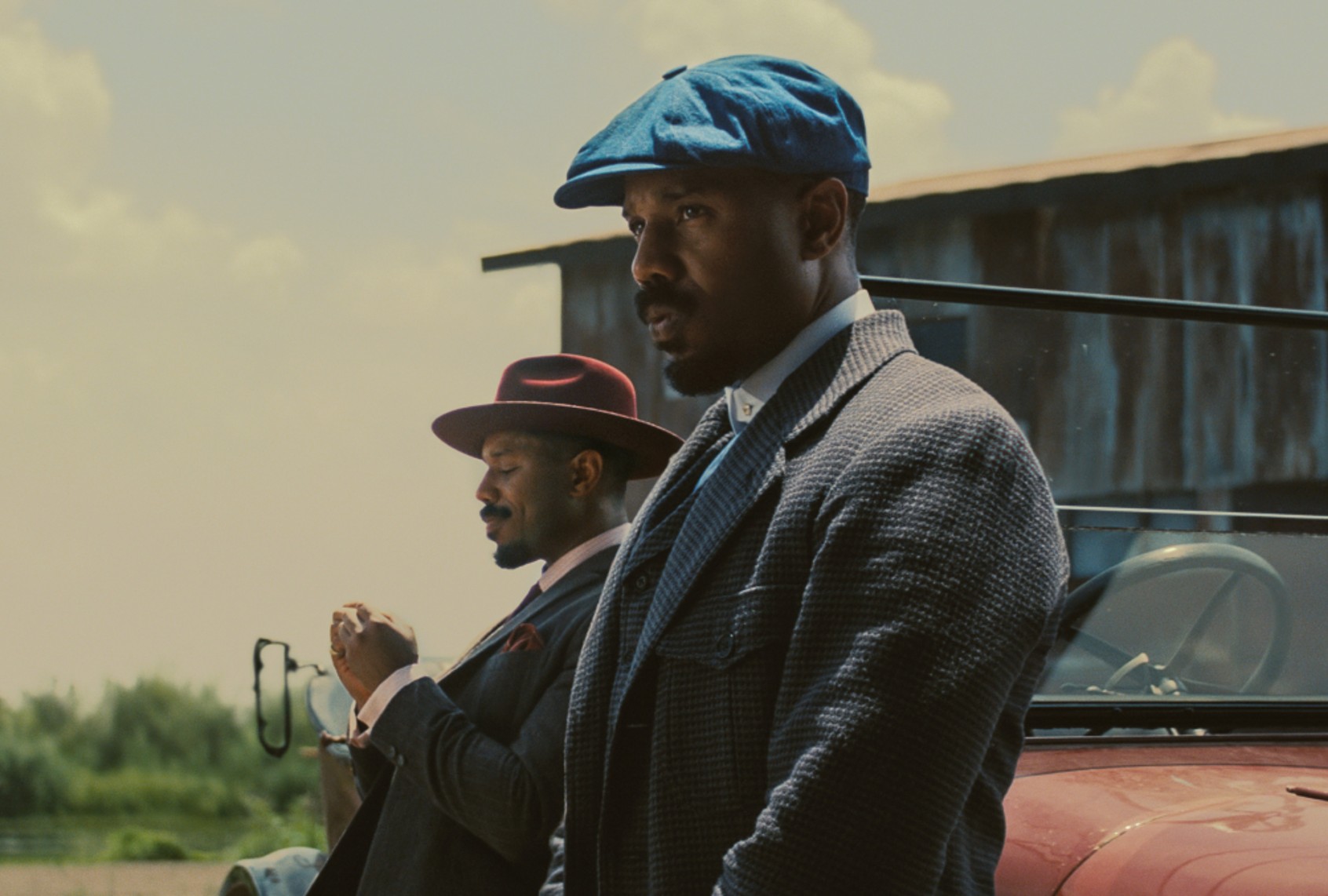
Michael B. Jordan as Smoke and Stack in "Sinners" (Courtesy Warner Bros. Pictures). The Trump Administration doesn’t simply view Black history as the enemy of whiteness, but as the perfect foil to exploit whiteness amongst their base to pick their pockets in order to consolidate power. Erasing the history of Jackie Robinson’s military service or rewriting the history of Harriet Tubman’s purpose behind rescuing the African captives of enslavement not only whitewash Black history, but it elicits outrage from the African American community (rightfully so) so that outrage can be manipulated to convince the Trump base to allow Trump to avenge them by way of his decisions, as he deconstructs the rights, freedoms and autonomy of citizens and institutions. This (mis)use of Black history is his weapon against the people, whereas Mr. Coogler’s use of history is a weapon for the people against the fascism of the Trump administration and their acolytes.
Truthfully, Mr. Coogler has a history of doing so. 


Want a daily wrap-up of all the news and commentary Salon has to offer? Subscribe to our morning newsletter, Crash Course.


In "Fruitvale Station," Mr. Coogler exposed viewers to a portrait of Black male humanity counter to the picture displayed by the power structure culpable in the death of the Black male body. In the "Black Panther" franchise, Mr. Coogler leaned on historical memory to display the innovation, beauty, majesty, and pageantry of African people, countering stereotypes etched in the minds of the masses from those Sally Struthers "Save the Children" commercials. In "Creed," Mr. Coogler not only explored the complexities of Black identity, but he breathed life into a life Hollywood forgot, or only considered as a punching bag to the great white hope, who was Rocky Balboa, Apollo Creed.

The power and prolific nature of Black music displayed in "Sinners" is a reminder that Black history didn’t start with our enslavement, but with our majestic and mighty civilizations in Africa, and as we liberated ourselves from our enslavement.

In "Sinners," Mr. Coogler takes viewers on a trip to the Mississippi Delta to introduce them to the realities of the Jim Crow South; from the Klan in plain clothes to the Chinese serving Blacks and whites from opposite sides of the streets in segregated stores. Mr. Coogler also introduces viewers to the origins of Blues music. Literary giant Amiri Baraka, in his book "Blues People," explains Blues music as:

“A native American music, the product of the Black man in this country… Blues was a music that arose from the needs of a group… singing to ease their labors or the casual expression of personal deliberations on the world… Blues could not exist if the African captives had not become American captives.”

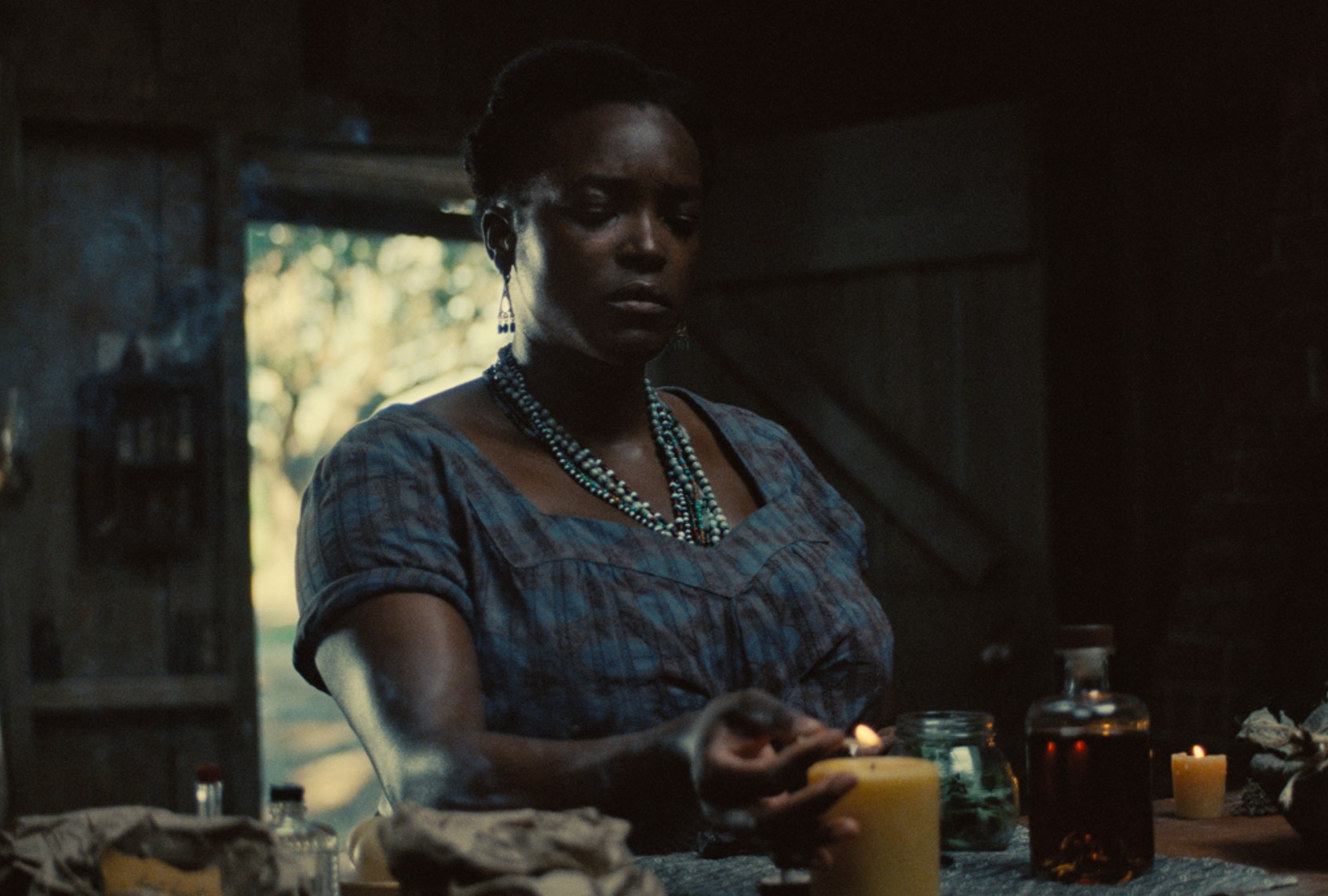
Wunmi Mosaku as Annie in "Sinners" (Courtesy Warner Bros. Pictures). African captives turned American captives often remained as such when society transitioned from enslavement to Jim Crow. An example of this was the character Delta Slim, played by Delroy Lindo, an elder statesman of the Blues who also served as an example of a Black man in need of Blues music to ease his labors. For Slim, Blues playing earned him his corn liquor to self-medicate his pain. But Blues did the same when he was absent the ability to sedate himself. Slim encapsulates the essence of this truth as he hums through feelings of anger, pain and despair to achieve a level of catharsis as he tells a story of a friend who was lynched. With that introduction to Blues music, Mr. Coogler exposed how the Protestant ethic placed upon African Americans manufactured a struggle within Black folk to accept that music is the tool that announces our secular struggles while declaring our spiritual strivings simultaneously, to secure our humanity—through the conflict of a preacher father and his Blues playing son. 
Mr. Coogler continues his Black history teaching masterclass by bridging the divides between past, present and future in the film’s featured musical piece. He exposes viewers to the lineage of Black music from Africa to America: from a tribal dance to funk grooves that drive the sound of Hip Hop. Images of Sammie, an electric guitar player, a DJ, Mc’s, Crip walkers, twerkers [twerking has its origins in African dance], and Zaouli dancers provide viewers with a trajectory of Black music over time in 90 seconds better than a documentary could.

We need your help to stay independent

The scene, taking place in Stack and Smoke’s Jook Joint, was—to borrow from Don Cornelius—the hippest trip in America(n)—history. It is, without question, a masterful moment of art that delivers a lesson that words simply cannot. That it happens within a Jook Joint is no accident. 

The Jook Joint or Jooks, similar to honky-tonks or after-hours joints, according to Dr. Katrina Hazzard-Donald (my undergrad professor), were the first secular cultural institution of social interaction, entertainment and quasilegal activity to emerge after emancipation. She explains further in her book "Jookin":

“Their emergence was linked initially to peasant class African American life, and they appeared as soon as Black populations became significant in both northern and southern towns… And like the Blues, the Jook was a secular institution rooted in West African traditions that intertwined religious and secular elements.”

The peasant class of African Americans was whom Langston Hughes affectionately called the Lowdown Folks: 

“The people who have their nip of gin on Saturday nights and are not too important to themselves or the community, or too well fed, or too learned to watch the lazy world go round. They live on Seventh Street in Washington or State Street in Chicago, and they do not particularly care whether they are like white folks or anybody else.”

The telling of Black stories never needed white validation.

The power and prolific nature of Black music displayed in "Sinners" is a reminder that Black history didn’t start with our enslavement, but with our majestic and mighty civilizations in Africa, and as we liberated ourselves from our enslavement, so too will we be liberated from white supremacy. So, it should come as no surprise that there’s been dirt thrown at the movie in the headlines and on social media.

It may be said that racism has nothing to do with these “critiques.” I wonder if Ben Stiller can change such sentiment with his thoughts. 

Maybe the movie is too Black and has too much Black history in it. Maybe there’s fear over Mr. Coogler’s deal to retain rights to HIS movie after twenty-five years. No matter the reasons for the dirt thrown, sales numbers, while a metric for success, cannot tell the entirety of the impact of any piece of art. This is the mistake made when comparing the commercial success of Drake and Kendrick Lamar in measuring impact. 

Drake may have the numbers over Lamar, but as Kendrick said to Drake in "Euphoria," “I'm what the culture feelin’.” 

In the same way, we shouldn’t expect the Trump Administration to properly interpret Black history or its relevance in the public square; we shouldn’t expect critics who dabble in anti-Black racism to properly interpret the impact of "Sinners," let alone interpret Black culture. If "Sinners" wins an Oscar or a Golden Globe, great. It’s well deserved. Just know that the telling of Black stories never needed white validation. 

It still doesn’t.

Ryan Coogler’s "Sinners" is a horror story where white supremacy is Dracula and his spawn come to terrorize Black people. There will be many think pieces exploring the deeper meanings of the symbolism found in this film. But Mr. Coogler's choice to allow Black history to frame a vampire movie gives viewers and critics enough to reflect on, write about, and use as a foundation for future learning. 

This isn’t what the Trump Administration had in mind for Easter weekend.

Progressive Democrats target 70-year-old incumbent with a primary challenge

Donavan McKinney, a Michigan state representative, announced Monday that he is launching a primary challenge to Rep. Shri Thanedar, D-Mich., making him the first candidate running in the 2026 Democratic primaries with the backing of Justice Democrats, a group that has promoted progressive, working-class candidates since 2018.

McKinney was first elected to the Michigan state House in 2022, representing the 14th district. Following redistricting, he was re-elected to represent the 14th in 2024, which lies just north of Detroit. Now he’s running for Michigan’s 13th Congressional District, which encompasses some of the city and the surrounding area.

McKinney, 32, told Salon that he wants the party to understand the “needs of everyday people” and for that to serve as its “North Star” in 2026 and beyond. "In my community, that means lowering the costs for everyday families, and the greatest obstacle to delivering that is a broken campaign finance system that lets corporations and billionaires spend unlimited amounts of money to buy our elections and politicians like Shri," he said.

Prior to entering politics, McKinney was a union leader in SEIU Healthcare Michigan. In 2020, he was appointed by Gov. Gretchen Whitmer to serve on the state’s Environmental Justice Council, spearheading the state’s Water Restart Grant Program. In the state House, McKinney has championed community violence intervention programs and public schools.

Thanedar, McKinney's opponent, is a 70-year-old businessman and author first elected to the House in 2022. Thanedar has largely self-funded his campaigns; last year, he in turn invested money from his campaign into cryptocurrency index funds, reaping millions of dollars in profit, according to The Detroit News. He has a generally liberal record in Congress and earlier this month called for the impeachment of President Donald Trump, but he angered some on the left in 2023 when he announced his resignation from the Democratic Socialists of America, citing the group's response to the Oct. 7 terror attacks in Israel.

In his last campaign in 2022, AIPAC spent some $2.3 million against an opponent of Thanedar. AIPAC had previously spent against Thanedar, who had been a vocal critic of Israeli policy. However, the situation appears to have changed after Thanedar visited Israel with the group in 2023.

McKinney's campaign cited Thanedar's lavish campaign spending as well as accepting donations from PACs representing Big Pharma, defense contractors and local utility monopolies as reasons for challenging Thanedar. They also accused him of providing poor constituent services and having more in common with billionaire Elon Musk than his constituents.

Monday's announcement comes after the Justice Democrats announced earlier this year that it was launching a candidate recruitment campaign in an effort to push the Democratic Party toward adopting a more progressive, working-class agenda — and to counter the influence of money in politics.

We need your help to stay independent

McKinney said he plans “to take the fight to them head-on,” condemning Democrats who “put corporate interests over our communities” and who can’t be “clear-eyed” about the influence of Republican donors in Democratic politics.

“We need to be building and fighting for a Democratic agenda that not only energizes our bases but is overwhelmingly popular. An agenda that takes money out of politics, gives everyone access to universal, quality, affordable healthcare, clean air and water, and fully-funded public education — these aren’t controversial or radical, this is the bare minimum and voters across political parties want to see Washington fight for it,” McKinney said.

McKinney said that he sees such an agenda as an integral part of creating a robust opposition to the Trump administration. “This is a time to meet the moment, fill in the gaps of these do-nothing politicians and take this fight to Donald Trump, Elon Musk and the billionaires destroying this country at our expense," he said.

In response to a request for comment from Salon, Thanedar's campaign said "Voters know my background. I grew up in abject poverty and with a good education, hard work, and some luck, was able to get my education, start a small business and lift my family out of poverty."

"I know firsthand what it’s like to struggle and make ends meet. That’s why I’m passionate about ensuring everyone gets a free education, universal healthcare, and access to skills training to get good-paying jobs. I achieved my American Dream and am working tirelessly to ensure everyone in my district can achieve their American Dream," Thanedar told Salon. "To date, we’ve solved 3,000 constituent cases, recovered $3 million for constituents, gotten 30 projects worth $30 million approved for the district, sponsored and co-sponsored over 800 bills, and have fought against Trump and Elon Musk’s disastrous policies and cuts."

Trump’s poll numbers are so abysmal he’s crying “fraud”

The 100 day polling continues to be dismal for President Donald Trump and his administration. The Washington Post/ABC/Ipsos and the AP/NORC poll out in the last couple of days even show him with a 39% approval rating which is astonishing for a president this early in his term. It's the presidential honeymoon from hell — for all of us, unfortunately.

One of the most unexpected results of these new polls is the fact that Trump is underwater on every issue now, even his supposed strong suits, immigration and the economy. On the latter he is in terrible shape hovering in the low 30s in some of the polls and even on immigration people are rejecting his tactics. Across the board on every other issue, from tariffs to the assault on DEI to the reckless cutting of government agencies and odious foreign policy, a majority rejects his actions.

Now, it must be said that Republicans, by and large, still support Trump. His numbers aren't in the 90s but they're still pretty high, usually in the 60s to 70s and Republican officials living in their cloistered little cult compounds for the most part consider that to be all they need to justify staying the course. Trump believes he is the president of Trumplandia, not America, so he's fine with that too. He's so lost in his own reality in which anything that doesn't comport with his increasingly delusional hype is dismissed as fake that I don't think he's even aware of how fully he's been rejected by the vast majority of Americans.

There are some Republicans who have to worry, however. House members in swing districts and senators in purple states are probably starting to feel a little bit antsy. If this pattern follows previous midterms, they could be looking at a blow out if Trump doesn't improve his numbers. This may play out over the next month as the Congress comes back into session and takes up the budget talks in earnest. Whatever divisions exist are going to manifest over the next month and we'll begin to see if there are any real cracks in the coalition in light of Trump's pathetic approval ratings.

The Democrats are trying to bring attention to some of these unpopular issues and have had some success recently. New Jersey Sen. Cory Booker's 24-hr floor speech, Rep. Alexandria Ocasio Cortez of New York and Vermont Sen. Bernie Sanders' Fighting Oligarchy Tour, Maryland Sen. Chris Van Hollan's trip to the Salvadoran prison to see wrongfully deported immigrant Kilmar Obrego Garcia are all excellent examples of tactics to expose the Trump administration's extreme policies to more media scrutiny. The town halls all over the country (which Trump is now demanding be met with violence) are taking it to places where the Republicans are afraid to show up and big protests are happening with regularity.

Trump is so lost in his own reality in which anything that doesn't comport with his increasingly delusional hype is dismissed as fake that I don't think he's even aware of how fully he's been rejected by the vast majority of Americans

But there remains some division within the party about whether they should spend their time hammering Trump and his accomplices on their authoritarian takeover or concentrate on the perennial "kitchen table issues." Minnesota Sen. Amy Klobuchar told CNN’s “State of the Union" that the Republicans are using police state tactics "because they want to distract people from the fact that our economy is in a tailspin thanks to them, their tariffs" and California Gov. Gavin Newsom exhorted Democrats not to "get distracted by distractions" referring to the Abrego Garcia case. And according to the Washington Post, the leadership has made the decision to party like it's 2005 and focus on cuts to Social Security:

Early Democratic ads are targeting Republican senators on Social Security. Democrats have visited Social Security offices around the country, sometimes getting turned away and going public. Senate Democrats have set up a “war room” to deliver the message.

The message has been a perennial for decades now, mostly because Republicans have always wanted to cut the program and there's every reason to believe they will do everything they can to cripple it. According to the Post, Trump is worried and reportedly upset to see it in the news and everyone wishes Elon Musk had never publicly called it a Ponzi scheme. There's no doubt that the issue still has juice, particularly with seniors who are very reliable voters. But it's myopic to see this as the only potent political issue and these new polls show that the American people are having no problem wrapping their minds around the full spectrum of atrocities being perpetrated by this administration.

For instance, I would point out that if there is one kitchen table issue that has not been fully explained to the voters it's the extent to which Trump and his acolytes are taking a wrecking ball to medical research. If anyone thinks that people don't care about or that it's a distraction they need to think again. According to the Post/ABC/Ipsos poll, people oppose reducing federal funding for medical research 77% -21%. Nobody voted for that and I can guarantee that people sit around their kitchen tables worrying about cancer and Alzheimer's and ALS and yes, measles and COVID, and the vast majority support their tax dollars going to find treatments and cures. They don't want clinical trials interruptedgrants terminated and they certainly don't want foreign cancer scientists with specific and unique expertise to be detained and threatened with deportation for no reason. In fact, foreign scientists are no longer willing to come to the U.S. and many American researchers are thinking of leaving the country.

We need your help to stay independent

I doubt most people know the scope of what's going on and the Democrats should tell them. According to the Post/ABC poll voters already say, by a margin of 70-28%, that they don't think the federal government should be telling universities how to operate. Imagine how they will feel when they find out that in order to win a culture war battle against DEI and "woke" policies, Trump is withholding billions that are spent almost entirely on biomedical research. It's enraging.

And that's not all. Just a couple of weeks ago the Washington Post reported on a White House budget document that proposes:

Under a more than 30 percent cut to the agency’s budget, public health initiatives aimed at HIV/AIDS prevention would no longer exist, major parts of the National Institutes of Health would be abolished and the FDA would cease routine inspections at food facilities. Funding for top Trump administration priorities — like programs on autism, chronic disease, drug abuse and mental health — is also on the chopping block.

I realize that this is just another of the many horrific cuts all across the federal government but it seems to me that it's a particularly potent one. This is a top line concern for most people and it intersects with DOGE, immigration, foreign policy and Trump's reckless abandonment of America's role as a leader in science.

Maybe the MAGA hardcore and woo-woo followers of RFK Jr. want to put their lives in the hands of proponents of raw milk and Ivermectin cocktails, but I'm fairly sure the rest of us would prefer that we remain in the 21st century where kids don't die of measles and cures for new viruses can be put on the fast track and save many millions of lives. Americans will sit around their kitchen tables and be grateful for the politicians who make that case. 

Pete Hegseth’s Orwellian purge leaves US military academies less free

I was shocked and upset to learn recently that Maya Angelou’s “I Know Why the Caged Bird Sings” was, under orders of Secretary of Defense Pete Hegseth, pulled from the shelves of Nimitz Library on the campus of the US Naval Academy in Annapolis, Maryland. As if the removal of this seminal text of American literature were not egregious enough, in this “DEI purge,” staff also jettisoned “Memorializing the Holocaust,” by Janet Jacobs and “Jack Johnson: Rebel Sojourner,” by Theresa Runstedtler. 

Jacob’s book explores gender as a framework in the larger context of Holocaust memory, and Runsteldler’s text highlights a Black man’s struggles against Jim Crow racism of the early 1900s. At a college founded in the early 1800s, but which did not produce a Black graduate until 1949, and a woman graduate until 1980, the reading of these text by students ought to be lauded, not discouraged.

When I was one of the few Black students at Annapolis in the late 1970s, I and a group of classmates often discussed books we were reading outside of the classroom. The freedom to engage with books like Richard Wright’s “Native Son,” Maya Angelou’s “I Know Why the Caged Bird Sings,” and Claude Brown’s “Manchild in the Promised Land” offered a connection to our personal stories and collective histories while augmenting our official instruction which emphasized the histories and accomplishments of white men. These activities encouraged curiosity and empathetic listening, skills as important to future Navy and Marine Corps officers as learning military tactics and armament. Current students at the Naval Academy may no longer have such freedom. 

Nearly four hundred other books were purged, prompting members of the House Armed Services Committee to demand that the Navy, “stop the removal of books from the service academy’s library.” Every American should make the same demand.  Moreover they should urge their representatives in Congress to also demand that Hegseth return the purged books to the library. 

My alarm about this library purge extends beyond pinning for earlier days of unmonitored library visits. In what appears to be another misguided effort to conform to Executive Order 14151: Ending Radical and Wasteful Government DEI Programs and Preferencing, staff at the Academy cancelled the talk of an invited lecturer, Ryan Holiday, after he refused their request to not mention the book purge in his remarks. Staff at libraries in other military academies and on hundreds of military installations, may be compelled to take similar actions to curtail free speech. Moreover, Secretary Hegseth’s egregious actions may embolden other Trump appointees to further restrict what civilian employees may post on websites, include in internal documents, and discuss with coworkers. The NAACP correctly criticizes book bans as increasingly becoming the tool of “anti-black policy leaders who systematically perpetuate intolerance and ignorance.” More extensive book bans have already disrupted the education of our youth. The free speech advocacy group PEN America reports nearly 16,000 book bans in our nation’s public schools since 2021, numbers “not seen since the Red Scare McCarthy era of the 1950s.”  

We need your help to stay independent

Libraries at service academies exist to help educate the next generation of military leaders. However, these libraries are operated at what the defense department markets as liberal arts colleges. While the academies’ peer institutions have been criticized by Trump administration officials for giving lip service to the free flow of ideas and information, none have been subjected to such blatant censorship—not yet. 

One Department of Defense website reports that on his visit to the Naval Academy, Pete Hegseth said: “Our noncommissioned officer corps…gives us an advantage over autocratic, top-down militaries every day… push information, decision-making and capabilities downward."  Yet, if the secretary genuinely believes in the power of non-autocratic leadership, he should give his subordinates more latitude to decide for themselves what they should read. 

Many websites offer lists of books banned by public officials in numerous states across the US. In addition to asking our representatives to oppose the book purge at the Naval Academy, the public can act further. Buy the books banned, share them with friends and colleagues, review them in the media. These are important actions in what is looking to be an ongoing fight against growing draconian efforts to suppress free speech and individual choice. 

MAGA loves a tantrum: How public meltdowns became the preferred method of GOP communication

If there were an Oscar for the category "hard to watch," I'd have to nominate the video of Rep. Nancy Mace, R-S.C., barking expletives at a constituent after he asked her if she would have a town hall soon. It's produced in a beauty supply store instead of a movie studio, but in a brief minute and 42 seconds, the video finds its place in the canon of horror films shot from the villain's perspective. The camera focuses entirely on the story's hero, a man in a polo and shorts holding a bottle of what appears to be face cleanser, as he holds his own against his congressional representative getting increasingly shrill as she yells invective at him. Even though he said nothing about gay marriage, she demands his gratitude for voting "for gay marriage twice." When he gets annoyed at her reductive assumption, she calls him "crazy" and "absolutely f—king crazy," and repeatedly says "f—k you" to him. 

GOP Rep. Nancy Mace told a constituent “f–k you” after he asked if she will do a town hall this year

[image or embed]

— PatriotTakes 🇺🇸 (@patriottakes.bsky.social) April 19, 2025 at 9:03 PM

In the eyes of normal people, Mace, as her interlocutor said when he fled from this encounter, is a "disgrace." Most adults who act like Mace in public immediately wish to disappear off the face of the earth in shame. But not our Nancy! No, she's the one who posted this video online, proud of her emotional incontinence. She even offered a homophobic "gay panic" defense, by describing the man as "wearing daisy dukes, at a makeup store." (Sorry, Miss Nancy, they aren't daisy dukes until we see cheeks.) To people outside the MAGA bubble, it's a baffling choice. She's not even a fun villain. There's none of the sleek appeal of Loki from the "Avengers" franchise or camp glee of Ursula from "The Little Mermaid." Mace is serving pure toddler here. She likely wished to throw herself to the floor and start pounding it, but doing so would have meant dropping her iPhone.

Mace isn't wrong, however, to think that what most adults find embarrassing, the MAGA base will eat right up. The public meltdown, in which you declare yourself the world's greatest victim, is the preferred GOP method of political communication these days. Despite this effort, Mace didn't even come close to nabbing last week's gold star for the most histronic MAGA performance. She was outdone by Stephen Miller, whose usual register on TV is "verge of a nervous breakdown," but got so shrill on Fox News Tuesday that Lauren Tousignant at Jezebel worried she'd soon have to "look at Stephen Miller’s face as he pops a dozen blood vessels as his brain explodes."


Want more Amanda Marcotte on politics? Subscribe to her newsletter Standing Room Only.


Defense Secretary Pete Hegseth turned in two performances that would cause Al Pacino to tell him to settle down. While carping about "the fake news media" during the White House Easter egg roll, Hegseth's whining got so pitched his voice started to crack, while his children stood behind him, embarrassed at the spectacle. 

At the WH Easter egg hunt, Hegseth this morning pathetically blames the media for what his own appointees disclosed about his latest scandals.

[image or embed]

— Ron Filipkowski (@ronfilipkowski.bsky.social) April 21, 2025 at 10:00 AM

Despite his own family's discomfort with his antics, Hegseth kept up the scenery-chewing, bellowing about the all-powerful, forever-mysterious "they" have "come after me from day one." ("They," in this case, means close friends and advisors who got pushed out after beginning to question Hegseth's fitness for the job.) 

Q: “Do you think there's…deep state forces that want to make sure you don't stay?” Hegseth: “They have come after me from day one just like they've come after President Trump. I've gotten a fraction of what [Trump] got in that first term. What he's endured is super human.”

[image or embed]

— The Bulwark (@thebulwark.com) April 22, 2025 at 8:47 AM

All this yelling and bellyaching serves a pragmatic purpose: to distract from how what they're saying makes no sense. Miller's claim that the six Republican judges on the Supreme Court — three appointed by Trump — are "communist" wouldn't withstand even a moment's thought at a normal volume. Because he's delivering his commentary at "front row at Led Zepplin" levels, the brain can't even process how preposterous the lie is. Mace's routine showed this working in a literal way. Her target runs away, because trying to talk to someone behaving like her is like trying to converse with a wildfire. 

It's part of the overall too-muchness that is the signature of the MAGA aesthetic, which goes right back to Trump's gold-plated tastelessness. We see it in the infamous "Mar-a-Lago" face, which uses plastic surgery and spackled-on make-up to turn women into terrifyingly exaggerated caricatures of femininity. Or the love of roided-out male bodies, which try to recreate the impossibly huge muscles of comic books on human bodies. It's a maximalist aesthetic, minus all the playfulness of Las Vegas casinos or "RuPaul's Drag Race." There's a grim vibe to the undertaking, as if they're trying to pound your head into the ground with the excess. 

All this yelling and bellyaching serves a pragmatic purpose: to distract from how what they're saying makes no sense.

There really is no "as if" about it. The goal of the bombastic MAGA aesthetic is to flood the brain with emotions, so that no rational thought can penetrate. This strategy dates back to Roger Ailes founding Fox News in the 90s. The network dispensed with the staid conservative aesthetic for the 2×4-to-the-face vibe. The loud graphics, busy screens, and sexed-up appearances of the hosts have become ubiquitous on cable television. At the time, it stood out, setting the foundation for how the entire Republican world would look under Trump's leadership. It's tempting to call it "camp," but camp requires pleasure. Even for its fans, the Fox overkill keeps audiences in a state of constant agitation, unable to think clearly — much less question the nonsense they're consuming.  

"Schlock and sentiment and melodrama," Sam Adler-Bell wrote of the MAGA aesthetic, through the prism of Trump's campaign playlist, in October. The right seeks "evocative empty calories" so they can feel without having to think. It's the flipside to the loathing for actual art that has been a steady source of right-wing culture war antics. From Rudy Giuliani trying to shut down the Brooklyn Museum of Art in 2001 to the ongoing book-banning efforts of the Moms for Liberty crowd, the MAGA reaction to anything that tries to marry feeling to thought is to throw a fit and try to banish it from view. It goes without saying that their leader is a reality TV star. He's a failed businessman, but because TV producers could make him look the part, his fans bought the lie that he's a success. It's all about how you feel, so why ruin it by looking past the surface, even a millimeter?

The performative temper tantrum is a crucial part of the forever-fake MAGA aesthetic. It's the funhouse mirror version of the genuinely felt outrage of liberals that conservatives find so annoying. It often verges into parody, especially when Stephen Miller does it, like he's mocking people who experience genuine anger, instead of the flat sociopathic sadism that seems his only true emotional register. Fake outrage is far louder, more ridiculous, and higher-pitched than the real kind, but one can see why it has a soothing quality for the MAGA audience it's geared towards. When someone's rage is justified, such as when their family member has been disappeared to an El Salvadoran gulag for Kristi Noem's photo shoot, it's unsettling. It makes the listener feel called to care about something other than themselves. It's easier to wallow in faux outrages of the right, which, being about nothing, ask nothing more of you than to spit at all those mean liberals who asked you to care about something real. 

I'm not saying that bombast is automatically brainless. The world would be a sadder place without Queen's music, John Waters' films, and Andy Warhol's paintings. I'm a huge fan of punk rock, which made a real art out of shouting into the microphone. There's danger, as well, in equating subtlety with thoughtfulness. Plenty of bad ideas get taken way too seriously because they're rolled out in soothing tones on public radio. "Too much" can be just enough, when it's in service of provoking thought, instead of shutting it down. But the way the right does excess is never about waking you up, but pounding you into submission. The MAGA temper tantrum is the iconic example of shouting so loudly that you can't hear yourself think. 

Seriously, I love being a renter

Honestly? I’m psyched to be a renter in this market. Because, let’s be real: Homeownership barely makes sense anymore. Housing prices, of course, have hit record highs in recent years, all while workers’ wages have plateaued. Even rising property values bring steeper tax bills! And for most Americans, this makes homeownership a risky financial crop whose juice, frankly, might not be worth the squeeze. 

Never mind the fact that I have $17 in my checking account, and a credit score that automates an overnight care package from Experian. The facts are clear: Homeownership is overrated; potentially, even dumb! And seriously, this knowledge zaps any envy I have for my homeowner friends, who I rarely think about, and wasn’t jealous of before I knew this.

The numbers alone make a case for lifelong renting. For a $400,000 home, I’d have to spend $7,000 a year on maintenance and repairs, $5,000 in annual property taxes and $90,000 to install a backyard plunge pool with obsidian tile detailing and a natural stone waterfall. Best case, even if me and my tight-knit crew split it six ways, I’d still be saving as a renter, because we haven’t even factored in the cost of splurging for saltwater, to say nothing of all the margarita mix we’d need to wash down the endless stream of fajita meat comin’ off the grill, blissed out in the domestic paradise of the American dream.

Compared to those dwelling in an apartment’s interconnected ecosystem, homeowners are deeply isolated. When I think about my homeowner friends in their homes — and I rarely do this — and I close my eyes, and I vividly render them in my mind’s eye, hosting friends past 10 p.m. without fear of a chiding text from the couple downstairs, I think, “Couldn’t be me. Where’s the camaraderie of the mail room, and all the bonding that takes place there from trying to recover our stolen packages?”

We need your help to stay independent

If something breaks in my home, guess what? Not my problem. All I have to do is call my landlord, leave him a voicemail, text him, text him again, then once more, then miss his call, call him back, get his voicemail, and then finally answer his call. The plumber will arrive in 12 days.

The best part of benefiting from financial trends I don’t fully understand? I’ve finally started seeing renting an apartment for what it is: an endless fount of opportunities for human connection. Just last week, when my friends broke down a wall to connect their kitchen and living room, adding a harmonious feng shui that I could tell would meaningfully enrich their lives, I didn’t experience an ounce of envy. Instead, I had the clarity to see my accordion-playing neighbor not as a hurdle, but as an opportunity to enjoy some bad polka, free of charge. 

We once rid the US of this nasty parasite. Now it could be coming back

An unpleasant parasite spread by flies was kicked out of the U.S. decades ago — but now it seems to be making its return. As a result, the U.S. Department of Agriculture is changing strategies to confront it. 

New World screwworm is a livestock pest that can be a parasite of any warm-blooded animal, laying its eggs in even the tiniest of open wounds or cuts, including the bellybuttons of newborn animals, and in mucous membranes anywhere in the body.

Notably, they eat live flesh. Unlike other maggot-like infestations, "the screwworm eats live tissues, so it can cause significant tissue destruction and it can cause significant morbidity and even mortality," Isaac Bogoch, a general internist and professor of medicine at the University of Toronto who specializes in tropical infectious diseases, told Salon in a phone interview. 

Bogoch noted that screwworm remains rare in returning travelers (although he treated one such case in Toronto this year involving a traveler returning from Costa Rica.) We have science to thank for eradicating it from the United States. And with outbreaks south of us working their way ever closer, we'll have science to thank if it stays that way.

That starts with our understanding of how this fly gets around, which can be pretty gruesome. After digging deep lesions with their powerful maggot jaws, anchoring themselves inside them with their external spikes, screwworm larvae feed on the living flesh, working their way to deeper tissues like the muscles. This continues — while the odor of the lesion may draw other pregnant females to the wound, and secondary bacterial infections can arise — until treatment or the death of the animal. 

There isn't a medicine to treat screwworm. Instead, treatment involves removing the visible eggs and larvae from the wound with forceps and applying a larvae-targeting pesticide. Screwworm was once horribly endemic in the United States. If the preceding description wasn't enough, the screwworm's scientific name, Cochliomyia hominivorax, hints at how much we really, truly don't want it back — hominivorax translates as "man-eater," and refers to observations of a 1858 screwworm outbreak among prisoners on Devil’s Island in French Guiana.

Fortunately, screwworm was eradicated from the United States in 1966 thanks to a technique invented by USDA entomologist Edward F. Knipling of releasing massive numbers of sterile male flies. As the female screwworm fly gets only one chance to mate in her maximum 30-day lifespan, if you can get her to have sex with a sterile male, you've effectively ended her hopes of motherhood. Since she has the potential to produce 3,000 live-flesh-eating babies, with every interruption of reproductive sex you make a substantial dent in the future screwworm population.

"Human-mediated movement of infested animals remains a key driver. The trend could continue unless regional movement controls and surveillance are strengthened.""

Once the U.S. was rid of the parasite, the sterile male fly technique was used to push it south, eventually restricting it all the way down to South America, south of a permanent biological barrier established at the Darién Gap between Panama and Colombia. This biological barrier literally consists of APHIS' and partners' program, following the late Dr. Knipling's lead, of releasing sterile male screwworm flies in the millions and millions. Serious effort and the cooperation of the U.S. with countries throughout Central America kept it that way for decades.

Having been chased out of North and Central America by the hardworking sterile male flies, today the parasite is considered endemic in South America and in Cuba, Haiti and the Dominican Republic. But over the past two years, screwworm has been spreading in and north of Panama. There were 6,500 cases in that country in 2023, a surge from the more typical 25, with that outbreak in Costa Rica, including a human death last June, and cases in Nicaragua, Honduras, Guatemala, Belize, El Salvador and even as far north as southern Mexico.

According to APHIS, the USDA's Animal and Plant Health Inspection Service, that's because of "multiple factors including new areas of farming in previous barrier regions for fly control and increased cattle movements into the region," Dr. Anna Bagwell, APHIS' program manager for New World Screwworm, told Salon by email, adding that "increased human and animal movement — particularly illegal livestock transport — has contributed to the spread. C. hominivorax flies don’t travel far on their own, so human-mediated movement of infested animals remains a key driver. The trend could continue unless regional movement controls and surveillance are strengthened."

Screwworm monitoring funded by USAID (not USDA) has supposedly been on the chopping block, and in response to a question from Salon about whether this affects work through the Americas, Bagwell didn't address USAID funding, instead noting that USDA allocated $109.8 million two years ago, in December 2023, through Commodity Credit Corporation funding, to combat the outbreak in Central America and Mexico. A keyword search of a list of cancelled USAID awards put together by Health Policy Watch didn't turn up anything relating to screwworm. The sterile flies used now are bred in a cooperatively-funded sterile screwworm breeding facility in Panama run by COPEG, a joint U.S.-Panamanian commission to combat and prevent screwworm.


Want more health and science stories in your inbox? Subscribe to Salon's weekly newsletter Lab Notes.


But rather than restore and maintain the original biological barrier that kept screwworm from spreading north from Panama, APHIS decided in February to shift focus to Mexico, distributing most of its precious sterile flies there in hopes of preventing the parasite from crossing the border into the United States. Although also in February, APHIS reinstated imports of cattle that can carry it (but with enhanced surveillance and import requirements.)

"The reason Panama was chosen [in the first place] was because that's the bottleneck. That's the shortest distance across," Bogoch told Salon. "It's obviously beyond that New World screwworm sterile barrier and so essentially, you're finding an insect in areas where it should not be found, and this is one that can cause tremendous harm to livestock, to wildlife and to humans. So it's a huge public health issue. It's an animal health issue, it's a health security issue … That's a five-alarm fire. It needs to be jumped on and taken care of promptly," Bogoch explained. 

On Nov. 22nd, a single case of screwworm in Chiapas, a Mexican state at the border with Guatemala, triggered an American ban on imports of beef that transited through or came from Mexico. It didn't last long. Beef prices are high in the U.S. and it's a tight market. In December, USDA signed an agreement with SENASICA, its counterpart in Mexico, to set up measures to once again allow Mexican cattle to be exported to the United States, carefully. 

"It's a huge public health issue. It's an animal health issue, it's a health security issue … That's a five-alarm fire."

Also in December, APHIS received $165 million in emergency funding from the Commodity Credit Corporation to protect U.S. livestock and to increase efforts by the USDA to control screwworm's spread in Mexico and through Central America. That work was to involve animal health inspection checkpoints, re-establishing the biological barrier in Panama, and surveillance. Horse imports were restarted on Jan. 21st and imports started again on the 21st, while the cattle and bison import restrictions were loosened Jan. 31st and imports began again in early February.

But it's not clear to what extent the United States and Mexico are currently able to work together. On Saturday, Brooke Rollins, the U.S. Secretary of Agriculture, threatened to go back to restricting livestock imports from Mexico, referring to a lack of cooperation from that country. Rollins alleged in an April 26 letter to her counterpart, Mexican Secretary of Agriculture Julio Antonio Berdegué Sacristán, that Mexico is restricting USDA aircraft to six flights weekly rather, than allowing them to fly daily (to disperse sterile male flies), and is imposing "burdensome" import duties on aircraft parts, sterile fly shipments and dispersal equipment needed for an effective response to screwworm in Mexico, according to Rollins' post on X that links to the letter. "As the New World Screwworm outbreak is escalating, Mexico must eliminate restrictions on USDA aircraft and waive customs duties on eradication equipment. These barriers critically impair our joint response," Rollins wrote. 

Also on X, Berdegué Sacristán soon responded that he had already sent a reply letter to Rollins. He further wrote in Spanish, as translated by Salon: "we collaborate, we cooperate, but we will never subordinate ourselves." Apparently the sudden U.S. desire for cooperation involving Mexican airspace is being viewed as an attempt to undermine Mexican sovereignty — a sentiment expressed by some commentators on the X post. Most other respondents argue that the Mexican government's insistent focus on sovereignty in this case amounts to posturing and populism over good sense, given that screwworm is a genuine public health crisis affecting both countries, and that the United States are making a genuine and urgent appeal for cooperation. One respondent goes as far as to call the Mexican secretary of agriculture a "worm talking about a worm." Nevertheless, it's clear that months of aggressive tariffs, insults and threats of drone strikes by the Trump administration are not creating a favorable environment for working together.

Historically, efforts to eradicate screwworm populations moved steadily south as soon as it was eliminated from the U.S. A history by the Food and Agricultural Organization of the United Nations tells much of the story. First, USDA researchers tried releasing sterile flies on the Florida island of Sanibel, then successfully used them to eliminate screwworm from Curaçao, eventually rearing 50 million sterile flies a week in a facility in Texas and creating a massive sterile fly-based barrier in the United States and northern Mexico, a massive invisible border to monitor and maintain. 

Livestock farmers could see that clearing the parasites out of regions far further south would ensure they maintained their screwworm-free, or enzootic, status (an outbreak in Texas in 1976, while short-lived thanks to the sterile flies, did $283-375 million dollars' worth of damage.)

So Mexican and American farmers united to convince their governments to do more. A Mexico-U.S. Screwworm Eradication Commission was established in 1972. The Texas plant soon closed and a new, and globally unique, sterile fly rearing facility was built in Chiapas — the same state where the discovery of that single infested cow triggered the newly-eased ban on livestock imports in the final months of last year, and where two of the (so far) three human cases of screwworm infection in Mexico were identified this year. 

By 1984, cooperation to release sterile flies reared in the facility in Texas had pushed the parasite south of the Isthmus of Tehuantepec, which, being narrow, created a bottleneck — much easier than monitoring the entire Mexico-U.S. border. And then further, ultimately eradicating screwworm from the Americas north of the Isthmus of Panama. (Again shutting down a sterile fly facility in order to open the cutting-edge, and again globally unique, COPEG facility in Panama.) Occasional outbreaks further north, including an outbreak among endangered Key Deer in Florida in 2016, were resolved quickly through emergency release of sterile flies. And indeed, recent documents, from late 2024, note a focus on re-establishing the Panama barrier.

We need your help to stay independent

But as of this February, APHIS has decided that it would instead be wise to concentrate on the border with Mexico in keeping the parasite out of the United States: while work across Central America will continue, with sterile flies to be released at strategic points throughout the region, the goalposts have shifted, a situation Bagwell says is temporary. Asked by Salon whether the shift in focus is a decision made by the new U.S. administration, Bagwell instead simply replied that "the decision, announced in February 2025, was driven by scientific data and historical models." She also said that "the shift was a scientifically informed, emergency response to the northward movement of the outbreak. The goal is to contain northern movement and push New World Screwworm population southward to re-establish the original biological barrier at the Darién Province" and that despite the historical logic of focusing on restoring that narrow barrier as quickly as possible and the logistical challenge of the new strategy, given the current outbreak, it's the "most effective and economically prudent course of action."

As journalist Sarah Zhang notes in a 2020 Atlantic story about screwworm eradication, "protecting American livestock by dropping sterile flies over the narrow 50-mile Isthmus of Panama is cheaper than maintaining a barrier, even a virtual one, along the 2,000-mile U.S.-Mexico border." 

So why give up on the full-on effort to restore the Panama barrier? As Zhang notes in her article, this was an American-led success in international cooperation — even though that cooperation stopped short of Cuba, at least until President Obama relaxed trade restrictions against Cuba in 2014, and scientists took tentative steps towards a cooperative eradication program there, where screwworm remains endemic, before relations went backwards again. The website for COPEG seems not to have been updated since 2024, and there is only a single post on X from the organization this year, although Bagwell says that the sterile fly breeding facility in Panama is fully operational and operating at maximum capacity.

Panama has become unexpectedly newsworthy lately, not for triumphs of international parasitic fly control but because President Donald Trump has spoken frequently about "taking back" the Panama Canal. Last week, the Panamanian government signed a memorandum of understanding with the United States that will allow first and free passage of U.S. warships through the canal and bring American troops back to the country for the first time since the last U.S. military bases were evacuated in 1999, a move that the opposition government has called "an invasion without firing a shot". The U.S. invaded Panama in 1989, killing hundreds of civilians and destroying infrastructure and homes.

If we are to remain free of parasitic blow flies that burrow deep into the flesh of animals when they can get them, and occasionally people when they cannot, without regard for nationality or immigration status, we're going to want earnest scientific cooperation and goodwill from the U.S. through Mexico and from Guatemala to Panama. Parasite partnerships over politics: Let's hope that persists — or returns.

“Fascism doesn’t like to be ridiculed”: Mike Myers talks Musk, Trump’s plans for Canada

Mike Myers is uniquely positioned to poke fun at the administration of Donald Trump.

The Canadian-American comedian and former cast member of "Saturday Night Live" has been a recurring guest on the sketch series during Trump 2.0, taking on the role of Department of Government Efficiency head Elon Musk. He's also been a visible opponent of the Trump administration's designs on annexing parts of Canada.

In an interview with the New York Times published Saturday, Myers spoke on his decision to use the closing credits of "SNL" to send a message to his fellow Canadians. In consecutive weeks, Myers mouthed "elbows up" at the camera. The reference to hockey legend Gordie Howe is a signal to be aggressive in the face of power plays from Canada's neighbor to the south. 

"What happened came from my ankles and from my brain and from my heart, and it was not about me — it was about my country," he said. "I wanted to send a message home to say that I’m with you."

Myers shared that talk of annexation has raised Canadian consciousness and driven a groundswell of Canuck pride. 

"As the great Canadian poet Joni Mitchell said, ‘You don’t know what you’ve got till it’s gone,’" he said. “The possibility of it all being gone has raised our consciousness of how great we are."

Myers also explained to the outlet why he chose to return to the airwaves and take on the role of another Canadian-American. His jittery take on Musk came about because Myers felt that the billionaire's crusade against government spending and expertise was misguided. 

"Fascism doesn’t like to be ridiculed; it likes to be feared," Myers said. "Satire is an important tool in the toolbox to say that this is not normal — that the cuts he’s making are not normal.”

What’s happening at “60 Minutes” matters to anyone who cares about protecting free speech

There was a time when “60 Minutes” was all but required Sunday night viewing in American households. This was long ago, when viewing options were limited to what was airing on NBC, ABC and CBS until Fox came on the scene in 1986.

Even then, Sunday night viewing began with “60 Minutes,” followed by everything else.

That's still true for many people now. “60 Minutes” is the third most-watched TV show on broadcast, averaging a weekly viewership of 8.4 million, according to Nielsen’s season-to-date numbers shared by TV Line. That’s an impressive ranking in this massively fragmented media environment, and in a time of high distrust in mainstream news.

But it's content from topical comedy shows like “Last Week Tonight with John Oliver,” which alloys comedy to the type of long-form journalistic content “60 Minutes” pioneered, that circulates more widely on social media.

In a recent “60 Minutes” interview with correspondent Bill Whitaker, Oliver characterizes “Last Week Tonight” not as news, but as a “rigorously researched comedy show.” Still, Oliver’s work is as essential to his audience’s grasp on current events as “60 Minutes” is to journalism at large.

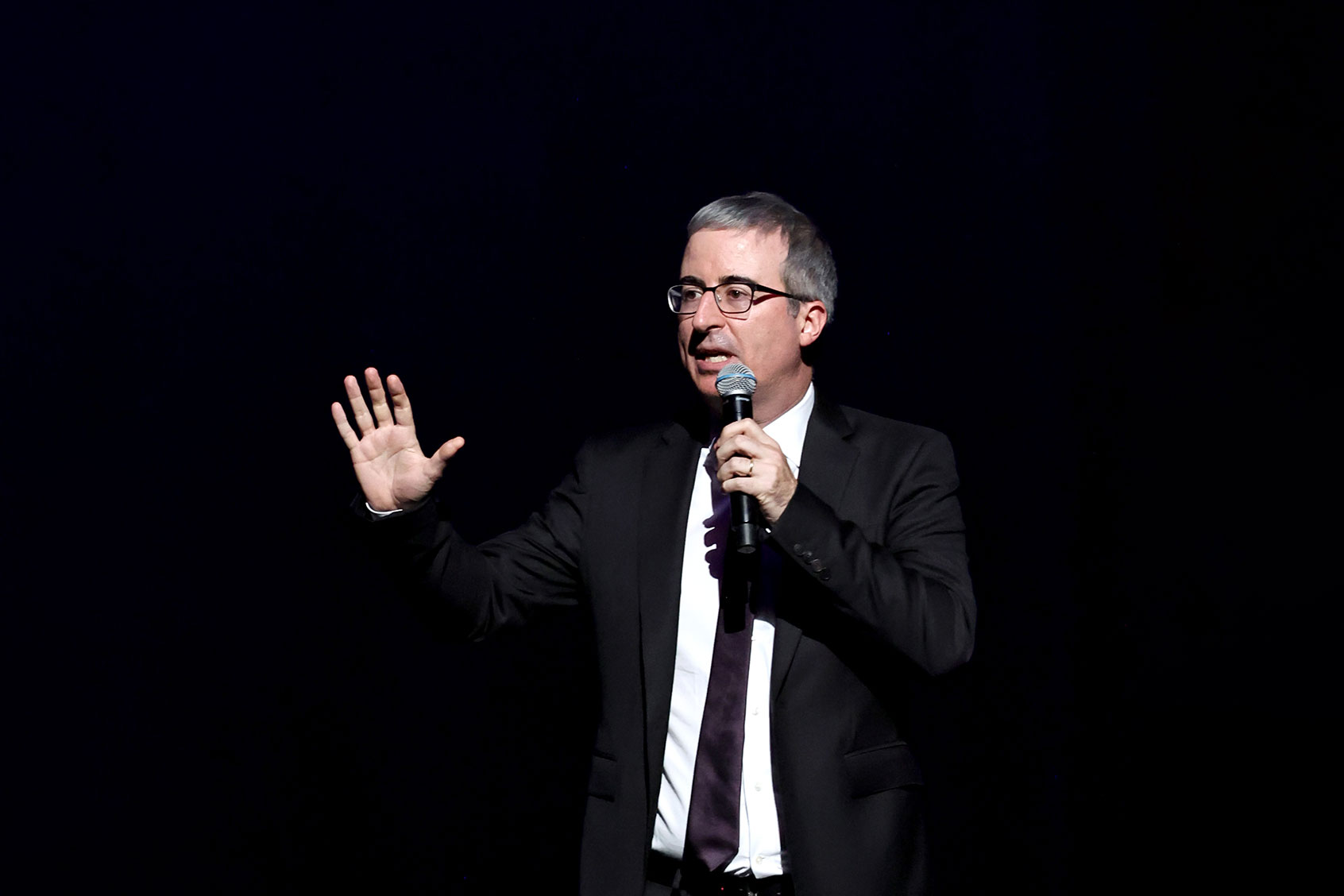
John OliverJohn Oliver performs onstage during 2023 Night of Too Many Stars benefiting NEXT for AUTISM at Beacon Theatre on December 11, 2023 in New York City. (Jamie McCarthy/Getty Images for Night of Too Many Stars)This makes the circumstances surrounding “60 Minutes” executive producer Bill Owens’ resignation headline-worthy.
On Tuesday, The New York Times broke the story that Owens, who has spent 37 years with CBS News, 26 of them with “60 Minutes,” informed his staff that he would be stepping down. “Over the past months, it has . . . become clear that I would not be allowed to run the show as I have always run it. To make independent decisions based on what was right for 60 Minutes, right for the audience,” Owens wrote in a staff memo.

“I am stepping aside so the show can move forward," he added. "The show is too important to the country, it has to continue, just not with me as the Executive Producer.”

Owens is only the third executive producer to lead “60 Minutes” following Jeff Fager, who was ousted in 2018 following allegations of sexual misconduct, and its creator, Don Hewitt.

His departure comes after months of legal wrangling between Donald Trump and Paramount Global, CBS’ parent company. In October Trump sued CBS over a “60 Minutes” interview with his Democratic opponent, former Vice President Kamala Harris, which was also conducted by Whitaker. The suit, filed before Trump-appointed U.S. District Judge Matthew Kacsmaryk in Texas, accuses CBS of "unlawful acts of election and voter interference through malicious, deceptive and substantial news distortion."

In February, Trump’s lawyers amended the suit, as cited in Variety, adding a claim for “unfair competition” under the federal Lanham Act. In total, Trump is seeking $20 billion in damages.

For those who may have forgotten, “60 Minutes” features interviews with candidates topping each major party’s ticket, coinciding with every presidential election. Trump backed out of his appearance.

Expressing an opinion is legal in the United States under the First Amendment. At the moment.

Paramount and CBS filed two motions to throw out the suit in March, one for lack of personal jurisdiction and the other on the grounds that consumer fraud laws do not apply to editorial speech, calling the suit an “affront to the First Amendment.”   

Other legal experts have opined that Trump’s accusations would not hold up under scrutiny. Indeed, in early April, the corporations filed a motion to compel Trump to produce relevant documentary evidence, as required in discovery. 

Meanwhile, in January, Federal Communications Commission chairman Brendan Carr, a Trump appointee and Project 2025 co-author, requested that CBS hand over the unedited tapes and a transcript of the Harris interview.

CBS News complied, explaining in the post containing the links, “In reporting the news, journalists regularly edit interviews for time, space or clarity. In making these edits, 60 Minutes is always guided by the truth and what we believe will be most informative to the viewing public — all while working within the constraints of broadcast television.”

That was not enough to appease Trump, who has repeatedly called for CBS’ license to be revoked. His latest eruption on Truth Social followed a “60 Minutes” interview with Volodymyr Zelenskyy in which the Ukrainian president cites the “enormous influence of Russia's information policy on America, on U.S. politics, and U.S. politicians.”

"I believe, sadly, Russian narratives are prevailing in the U.S.,” Zelenskyy says in the April 13 episode after seeing a clip of Trump calling him a dictator. In response, Trump called for Carr to impose maximum fines and punishment “for their unlawful and illegal behavior” on his social media platform.

As for the specifics of what that “behavior” may be, Trump doesn’t specify. That’s probably because expressing an opinion is legal in the United States under the First Amendment. At the moment.

Nevertheless, Paramount is interested in settling with Trump. According to an earlier New York Times report, Paramount Global’s majority shareholder, Shari Redstone, wants the suit to go away so the company’s multibillion-dollar merger with Skydance Media can move forward and make the wealthy Redstone much wealthier. This requires the FCC’s approval, which has stalled before Carr.

Bill Owens (Piaras Ó Mídheach/Sportsfile for Collision via Getty Images). In March, Oliver Darcy reported in his Status newsletter that incoming Paramount Global president Jeff Shell communicated with Owens and CBS News president and CEO Wendy McMahon that they needed to get on board with a settlement deal. Both have been adamantly against it.

“[I]t goes without saying that any settlement in which a monetary sum is paid to Trump, and especially one in which a statement of wrongdoing is included, would amount to a public surrender and forever stain the treasured reputation of ‘60 Minutes,’” Darcy added.

And this makes the details of a recording of Owens’ emotional meeting with the “60 Minutes” team obtained by Darcy that much more alarming. “It’s clear that I’ve become the problem,” Owens is heard telling his colleagues. “I am the corporation’s problem.”

We need your help to stay independent

Oliver warned his audience that something like this might happen in a 2019 “Last Week Tonight” episode titled “SLAPP Suits.” He didn’t specifically refer to CBS News or any other legacy news organization in that segment. Instead, using his show’s headline-making legal headache as an example, Oliver illustrated why Trump’s penchant for weaponizing the legal system is dangerous to freedom of speech and expression.

We might have missed that larger point at the time, since Trump wasn’t the episode’s star. Oliver took on coal magnate Bob Murray, Trump's pal who sued “Last Week Tonight” and HBO in 2017, threatening to give the network “the fight of its existence.”

There's a reason Murray was so emboldened. “SLAPP Suits” cited Trump’s 2016 campaign rally promise to “open up our libel laws, so when they” – as in, news organizations – “write purposely negative and horrible and false articles, we can sue them and win lots of money.” 

“Last Week Tonight” remains respected and free to continue digging into deadly serious topics. Now it is “60 Minutes,” the newsmagazine that inspired Oliver’s brand of topical satire, that's in jeopardy.

Trump has a long history of suing people solely to inflict financial and psychological pain. Such claims, Oliver explains, are characterized as strategic lawsuits against public participation, hence the SLAPP acronym.

“I spent a couple of bucks on legal fees, and they spent a whole lot more,” Trump once bragged in an interview about his 2006 libel claim against a journalist named Tim O’Brien. “I did it to make his life miserable, which I'm happy about.”

Murray gambled he’d enjoy a similar outcome by suing “Last Week Tonight” over its “objectionable” but accurate depiction of him in its 2017 “Coal” episode. But Murray eventually dropped his suit, and HBO prevailed. At the end of "SLAPP Suits," the host celebrates with a massive, Broadway-style victory dance that makes previous punchlines at Murray’s expense look cheap and small.

Clips from that episode appeared in Oliver’s recent “60 Minutes” profile, reminding us of how different times were just a few years ago. 

“Last Week Tonight” remains respected and free to continue digging into deadly serious topics. Now it is “60 Minutes,” the newsmagazine that inspired Oliver’s brand of topical satire, that's in jeopardy.

This decisive moment in the legacy of “60 Minutes” follows Disney’s $15 million settlement with Trump, who sued ABC News and "This Week" host George Stephanopoulos. During a March 2024 interview with Rep. Nancy Mace, R-S.C., Stephanopoulos referred to a New York civil jury’s determination finding Trump liable for sexually abusing writer E. Jean Carroll as "rape."

Trump claimed this defamed him, although the trial's presiding judge previously clarified in a memorandum that "as many people commonly understand the word ‘rape’ . . . the jury found that Mr. Trump in fact did exactly that." Nevertheless, Disney chose to settle instead of going to trial, requiring the network and Stephanopoulos to apologize, which they did on ABC News' website.

Trump is also suing the Des Moines Register, its owner Gannett and pollster J. Ann Selzer for releasing a poll shortly before the Nov. 5 election showing Harris with a 3-percentage-point lead. Trump went on to carry Iowa by 13 points. Nevertheless, the claim accuses the paper and pollster of election interference and violating the Iowa Consumer Fraud Act. Lawyers for Selzer, the Register and Gannett called for the suit’s dismissal in February.

The First Amendment protections shielding journalists and satirists like Oliver have a shared origin in the 1964 Supreme Court decision in New York Times Co. v. Sullivan. That ruling places the onus on the public figures to prove “actual malice" in their libel claims. In other words, they must show that the defendants knowingly published false information or acted with reckless disregard as to the accuracy of a claim.

The Supreme Court decision that made Oliver’s middle-finger musical possible is 1988’s Hustler Magazine, Inc. v. Falwell, which affirms parody and satire as protected speech and sprang from the Sullivan decision. HBO knew these precedents made a ruling in their favor likely, just as it probably understood that settling with Murray would be a terrible look for the company and Oliver’s show. After all, as Oliver points out, SLAPP suits are designed to bully people into silence.

Since Murray died in 2020, there would be no way to know if HBO would have taken a different course had he sued “Last Week Tonight” while the show’s parent company, WarnerMedia, was negotiating the 2022 merger that created Warner Bros. Discovery.

One hopes not. Although Oliver reported that the suit cost more than $200,000 for HBO to defend and required the show to triple its libel insurance, that’s still less than the reported $15 million budget allotted for each “Game of Thrones” episode in 2019.

Other potential costs are too lasting and steep not to push back. A persuasive factor in Disney’s decision to settle with Trump, according to the Times’ reporting in December, was their lawyers’ concern that the case would land in the Supreme Court, where Justices Neil Gorsuch and Clarence Thomas have signaled an openness to overturning Sullivan.

If Sullivan falls, parody protections will be more vulnerable too.


Want a daily wrap-up of all the news and commentary Salon has to offer? Subscribe to our morning newsletter, Crash Course.


Trump’s lawsuit against ABC is different than his allegedly flimsier allegations against CBS. But as Times reporter David Enrich explains in an expansive March 3 feature, presenting a solid case affirming Sullivan's protections may not be enough to sway this court from shooting it down.

However, Redstone’s motivation to “bend the knee,” as CNN's Jake Tapper put it on Tuesday, appears to be less related to concerns over First Amendment protections than securing a payday estimated to be worth billions. The public stands to lose a whole lot more.

The industry is right to be concerned about CBS News' parent company meddling in its coverage decisions.

“This is not about one man or even about one show,” Tapper said on his broadcast. “It's about an attempt to be rid of criticism.” He then lists the latest insults against the Fourth Estate: The Pentagon reassigned offices previously held by NBC, CNN, Politico and the New York Times to the likes of Breitbart. The White House welcomed podcaster Tim Pool to a recent press conference. Pool is one of six far-right influencers implicated in a Department of Justice indictment to have been paid by Russia to spread Kremlin-friendly talking points. “I like this guy. See?” Trump gushed after Pool tossed him a propaganda softball consisting of lies about Kilmar Abrego Garcia, who the U.S. government erroneously deported to El Salvador. "This is the kind of reporter we like.”

As for Redstone, at a recent documentary premiere she declined to talk to The Wrap about the chaos she's causing at “60 Minutes,” but shared, “I don’t think there’s ever a time you have to compromise what it is that you say and do, but freedom of the press involves telling both sides of the story, giving the facts, not giving opinions.”  

“And I think that’s our responsibility as a media company,” she concluded.

Where preserving the legacy of “60 Minutes” places in Redstone’s tiers of responsibility may be revealed in the tenor of upcoming coverage. The industry is right to be concerned about CBS News' parent company meddling in its coverage decisions.

For the time being, I’m eager to see whether Oliver has something to say about all this, regardless of whether he sets his take to harmonies and a kick line.

The "SLAPP Suits" episode of "Last Week Tonight with Oliver" is available on YouTube. New episodes air at 11 p.m. Sundays on HBO and stream on Max.

“They can come back”: Rubio defends deportations of children who are US citizens

Secretary of State Marco Rubio thinks the press needs to be a little more fair when covering President Donald Trump's program of deportations without due process.

Confronted on Sunday with a news story about American citizens being deported along with their undocumented immigrant parents, Rubio called the story "misleading," disputing the framing and not the facts.

"If you're in this country unlawfully, you have no right to be here," Rubio said during a visit to "Meet the Press." "Three U.S. citizens were not deported…their mothers, who were illegally in this country, were deported. The children just went with their mothers."

Rubio callously pointed out that the deported citizens "can come back" to the U.S.

On Saturday, The Washington Post shared that ICE agents detained and then deported three children who were U.S. citizens after their parents appeared for a routine check-in with immigration authorities. One deportee was a 4-year-old battling stage 4 cancer. Attorneys for the family say that they were deported without medication and deprived of the ability to contact their doctors.

"I don’t know how much more of a blatant or clear constitutional violation there can be than deporting U.S. citizens without due process," ACLU of Louisiana Director Alanah Odoms told the Post. "Especially with some of those citizens being the most vulnerable of all vulnerable, children, and not just any children, children with medical conditions that are dire."

Host Kristen Welker asked Rubio if it was "U.S. policy to deport U.S. citizens…without due process." 

"Children go with their parents," Rubio said, waving away the question of citizens' rights.

Sweet salads are back. Don’t be afraid

Food criticism served with a side of snark has a surprisingly long pedigree, one that stretches far beyond the realm of Instagram influencers, Yelp reviews or even newspapers. This kind of critique didn’t begin with the rise of food blogs or viral restaurant fails; it’s been simmering, and sometimes simmering over, for hundreds of years. Take the early 17th century, when the humble salad was unexpectedly sweet — before French haute cuisine banished sugar firmly to the dessert course.

Enter Giacomo Castelveto: an Italian Protestant who found himself exiled in England, where he could only watch with growing horror as his new countrymen boiled and mangled their salads into an absolute mess. In his book “The Fruit, Herbs & Vegetables of Italy,” he catalogs how Italians eat their produce, but not before taking a few jabs at the English salad. His critique wasn’t just culinary, but cultural, an outsider’s scorn for a practice that seemed — well. Beneath him. As if the very notion of treating vegetables in this way was an affront to his Italian sensibilities.

As food historian and author Ken Albala puts it, Castelveto essentially said: “‘These English people have no idea how to make a salad. They’re cooking the vegetables! They’re crazy. Just put oil and vinegar on and toss it. You don’t need to do anything.’ Thinking like an Italian, obviously.’”

Fast forward a few decades to 1699. That’s when John Evelyn published “Aceteria: A Discourse of Sallets,” offering a more refined dismissal of the sweetened salad. “He says, ‘People once used to put sugar on their salads, but I can’t believe how passé that is,’” Albala explains. “By the end of the 17th century, you just don’t put sugar on savory things anymore, especially not in salads. Only a ‘feminine palate’ put sugar on salad. And that stuck. Permanently.”

I can’t help but wonder what Castelveto and Evelyn, two of the patriarchs of salad orthodoxy, would make of today’s sweet salad renaissance — those jiggly, kaleidoscopic creations that, against all odds, can be as unexpectedly sophisticated as they are nostalgic. Even when chopped Snickers bars and whipped topping make an appearance. One imagines their horror deepening upon encountering “Sweet Farm!” the new cookbook from Food Network star and author Molly Yeh released in March. 

It devotes an entire chapter to sweet salads, ranging from classic cookie salad to roasted rhubarb and strawberries with yogurt whip, pretzel streusel and sumac; black and white cookie salad; pomegranate coconut gelatin molds; and ube fluff. 

And yet Yeh is not exactly a stranger to critique. In fact, she welcomes it. In the chapter’s introduction, she urges coastal skeptics to come down from their high horses and consider what these dishes are actually doing.

“Duff Goldman was my favorite skeptic,” Yeh told me via email. “My go-to argument is that they're good. And my second go-to argument is that there are many socially acceptable desserts that are technically cookie salads that most people have already had, like banana pudding, tiramisu and Eton mess. It’s just the name that people are getting hung up on.”

Tiramisu? A cookie salad with better PR. 

We need your help to stay independent

That idea — that what we consider “bad taste” often says more about cultural perception than actual flavor — quietly runs throughout “Sweet Farm.” Yeh categorizes sweet salads with affection and a wink: cookie salads, Jell-O salads, candy bar salads, fluffs. And while they’re often dismissed as unserious, their DNA isn’t far from more polished, pedigreed desserts. Even panna cotta has more in common with a Jell-O salad than most food critics would care to admit.

That said, she concedes that some hesitation isn’t entirely unfounded. “I can't blame them, any genre of food where the key ingredients are Cool Whip and Jell-O would make me think twice,” she said. “But a turning point came for me when I realized how delicious and creatively satisfying these salads would be using from-scratch components like fresh whip, from-scratch cookies and unflavored gelatin with fresh fruit juices. Once I started playing around with flavor combinations that I love — like rhubarb, mint, sumac and mascarpone and black and white cookies — I realized the world is our cookie salad oyster.” 

But Yeh’s not alone in recognizing the slippage between what’s considered refined and what’s deemed ridiculous.

It’s something Ken Albala came across while writing his book “The Great Gelatin Revival”—a book, it’s worth noting, he only wrote on a dare. “I don’t even like gelatin,” he told me, laughing. “I wrote all the recipes, but once the book was done, I never made Jell-O again.” Still, his research revealed a fascinating throughline: the line between highbrow and lowbrow cuisine has always been blurry, and gelatin salads are a perfect case study.

"That’s when mayonnaise, Jell-O and marshmallows all start showing up together. It’s a very brief period, but an unusual one."

The pendulum of food taste swings wider than most of us realize. According to Albala, the sugary salad essentially disappears for a few hundred years after the late 1600s — until it returns with a jiggly vengeance in the mid-20th century.

“That’s when mayonnaise, Jell-O and marshmallows all start showing up together,” he says. “It’s a very brief period, but an unusual one.”

To understand why these sweet, processed salads took off, and then fell so hard, one has to look at what they represented. In postwar America, food science was a beacon of progress. “In the 1950s, people really trusted science — after all, science had won the war for them,” Albala said. “They were into convenience, speed, and having fun in the kitchen, embracing new inventions and technology. So putting Jell-O in a salad didn’t seem crazy at all. It wasn’t unusual; it was a way to be experimental, creative and playful with food.” 

But just a couple of decades later, that optimism began to curdle. With the rise of environmental awareness in the 1960s and '70s — Rachel Carson’s “Silent Spring,” the backlash to pesticides, the fallout from industrial agriculture — processed foods became suspect. And gelatin? Infantilized. Marketed to children and pushed out of serious culinary spaces.

“No fancy restaurant in their right mind would serve Jell-O after that,” Albala said. “It's too simple, made with artificial flavors, artificial colors and all of that.” 

But that pendulum keeps swinging.

Sweet salads are back — not with irony, but with curiosity. Among them, gelatin salads are having a particular moment. Molly Yeh sees them as the gateway. “They’re so visually appealing and we live in the Instagram age,” she told me. “But also because they can easily be made boozy.”

It was that same visual seduction that first drew Peter DiMario, the co-author of “Jiggle!: A Cookbook” to the medium. “I’m not a chef,” he told me when I called him at his New York City apartment this spring. “This all happened during the pandemic. Everyone else was making banana bread and I just — got really into Jell-O.” What began as a curiosity about light and suspension, turned into something more sustained. He began hunting down old recipes, stripping out the synthetic flavors and, like Yeh, reimagining them with herbs, citrus and whole fruit.

“I was thinking of it as a medium,” he said, “more than a dish.”

His neighbors became the unwitting test audience. They learned to expect a knock at the door, a small plate of jelly left on the doormat. Sometimes it sparkled. Sometimes it slumped. “It was a process. It’s not like cooking something where you can just whip it up, taste it and adjust as you go,” he admitted. “There’s a science to it and if the balance isn’t right, you’re starting over.” 

"This all happened during the pandemic. Everyone else was making banana bread and I just — got really into Jell-O."

DiMario didn’t set out to write a cookbook. But when Judy Choate, a veteran collaborator on culinary projects, saw what he was making, she made a call. “If I’m good at anything, it’s predicting trends,” she told him. “And I think gelatin is going to have a resurgence.”

He dove in.

One of his early experiments was ambrosia — a salad so retro it borders on parody, but so striking in his hands it practically glows. His version suspends mandarin segments in bold pineapple-coconut cream gelatin, layered with optional coconut flakes and chopped toasted pecans (“Total family controversy,” he told me. “Some people love them, some hate them. Personally, I like them both.”) 

We need your help to stay independent

“Ambrosia was definitely something we had at family parties growing up,” DiMario said. “I come from a big Italian family on both sides, and my grandmothers—and even my great-grandmother—were always cooking. Food has always been central to our family. It still is. Ambrosia salad was one of those things that always popped up. But then it kind of fell out of fashion. We stopped seeing it.”

He laughed. “I also remember Watergate Salad, which I didn’t include in the book—mostly because I was trying to keep everything naturally flavored. And it’s so hard to do a natural Watergate Salad. I mean, you could crack open pistachios and make your own pudding, but…” He trailed off, the implication clear: Why suffer?

Ambrosia, though, “is pretty straightforward,” he said. He found some old recipes online, including one from his mom that had originally belonged to his grandmother. “Growing up, we always had it in a big bowl on the table, but I wanted to do an unmolded version.” He added just enough unflavored gelatin to set the salad without making it too firm.

“You still want that fluffy texture everyone remembers.”

DiMario’s ambrosia, carefully unmolded and delicately set, is more than a dessert—it’s a performance of memory. The wobble, the fluff, the quiet alchemy of gelatin are all designed to evoke the version he remembers from his childhood table, just made sleeker. Just like in the Midwest, the heart of sweet salad country, the recipe is rarely the whole story. 

As Minnesota-based Molly Yeh puts it, the real archive lives in the stained notecards and stories passed from one potluck to the next. 

"Whip up some heavy cream, fold in yogurt, sweeten it however you'd like — a sprinkle of powdered sugar or drizzle of honey is nice — add whatever fresh berries you have, and then toss in any day-old baked goods that you have."

“What we lack in restaurant culture we make up in potlucks and dinner parties, and with that comes family recipes that have been made for generations,” Yeh said. “There isn't as much attention paid to cooking trends around here as much as there is to tradition, which I love. It seems like everyone around here has a recipe box with stained notecards and when you ask someone for a recipe, it comes with the story of who that recipe originated from. It has been my absolute favorite way of getting to know this region.” 

For those still on the fence with sweet salad and not quite ready to commit to breaking out the gelatin mold, Yeh suggests starting simply: “Whip up some heavy cream, fold in yogurt, sweeten it however you'd like — a sprinkle of powdered sugar or drizzle of honey is nice — add whatever fresh berries you have, and then toss in any day-old baked goods that you have. It could be cookies, brownies, cake, muffins.” 

 The cream softens the edges; the old becomes new.

In a world where “good taste” has so often been wielded like a weapon — against women, against working-class food, against anything too sweet, too jiggly, too much — there’s something quietly radical about this kind of dessert-salad. Not the kind to win over a tasting panel, maybe. But the kind you write down on a card, tuck into the box and hope someone finds.

It’s unassuming. Generous. A little unorthodox. And I can’t help but think that if Giacomo Castelvetro and John Evelyn — those early defenders of salad purity — were handed a bowl of this, still cold from the fridge, they might pause. They might take a bite. And then, perhaps a bit sheepishly, reach for the recipe card.

Is Elon Musk’s “tech-bro Maoism” really something new? Not at all — and it’s always disastrous

During Donald Trump’s first term as president, Steve Bannon provided the administration’s MAGA ideological blueprint. His reactionary brand of “America First” nationalism entailed stoking populist skepticism of technological progress, and centering American interests ahead of what he called the emerging “globalist technocracy.”

In an ironic twist, now the South African-born Silicon Valley tech billionaire Elon Musk — perhaps the purest embodiment of that globalist technocracy — has taken up MAGA’s ideological reins in the second Trump administration. While the MAGA faithful try to square the circles of nationalist-globalism and billionaire-populism, we all struggle to understand Musk’s techno-futuristic ideology, which has been labeled everything from “neo-reactionary” and “techno-fascism” to “techno-libertarianism” and “tech-bro Maoism.” From riding roughshod over laws and institutional checks on its power to radically dismantling fundamental institutions of American politics, it is clear that neo-MAGAism is unlike anything seen previously in American history.

But it has been seen before — just not in America.

Twentieth-century world history is littered with authoritarian, techno-futuristic ideologies that span the ideological spectrum from the Nazi embrace of science, technology and pseudoscience on the extreme right, to the fetishization of industrial and technological progress in Leninism in the Soviet Union and through Mao Zedong Thought in Communist China. 

What might be dubbed “Elon Musk Thought” shares some disturbing similarities with such totalitarian ideologies. It is, in effect, a plan for the rationalization of the American social and political order based on an unwavering faith in modern technology and AI to eliminate inefficiency and waste. 

Despite their differing positions on the left-right spectrum, what these techno-futurist ideologies have in common are their ostensibly well-intentioned attempts to make human societies more “efficient.” Vladimir Lenin fetishized technology, insisting that industrialization and electrification would lead to the idealized future of a truly communist society. In the 1930s, his successor, Joseph Stalin, cited the “inefficiency” of individual farming as justification for the collectivization of millions of peasants into state farms, creating a “terror-famine” in Ukraine. In a crowning irony, even at the expense of 14.5 million lives lost,  fully mechanized Soviet agriculture was no more efficient than the system it replaced. 

"Elon Musk Thought" shares disturbing similarities with previous totalitarian ideologies. It is, in effect, a plan for the rationalization of the American social and political order based on an unwavering faith in modern technology and AI. 

In 1958, Mao Zedong’s “Great Leap Forward” pushed to radically increase “efficiency” in agriculture while modernizing Chinese society, producing the worst famine in human history. Some 40 million lives were sacrificed with no long-term gains in efficiency. Even into the 1980s, sweeping villagization reforms in Tanzania and Ethiopia were zealously undertaken with an ideological goal of modernization and efficiency, leading to similarly bloody consequences.

In what should be an easy tell, in each of these cases “efficiency” was the rallying cry, though the regime’s actions and their results were anything but.

So too with Elon Musk Thought, and his Department of Government Efficiency. As Harvard emeritus professor Steven Kelman points out, it is clear that Musk has “little interest in conventional ideas of efficiency, which involve getting better organizational performance without spending more money.” Instead, the term “efficiency” is an all-purpose explanation for eliminating any program with no direct value to an imposed ideological agenda. Even as a fig leaf, it is surprisingly persuasive: who could argue against “efficiency,” that core value of free-market capitalism?

Newly appointed Education Secretary Linda McMahon recently announced the gutting of her own department to promote “efficiency.” While noting that there are inherent dysfunctions in our education system, even nonpartisan education groups have responded that “Dismantling the Department of Education or shifting focus to privatization alone will not solve the deep-seated inefficiencies and lack of responsiveness to student and family needs.” Productive, nuanced and intelligent policy reform, they say, will produce more efficient outcomes than “division and bomb-throwing.”

While McMahon and other MAGA Republicans are happy to keep up the “efficiency” charade, others have begun to lower the mask. “You know none of this is about saving money, right?” one Republican source familiar with Musk’s behind-the-scenes push to dismantle state institutions recently told Wired.

But more important than whether DOGE’s cuts are actually efficient, is the belief that they are. As Yale political anthropologist James C. Scott suggested, techno-futurist ideology “must not be confused with scientific practice. It was fundamentally, as the term ‘ideology’ implies, a faith that borrowed, as it were, the legitimacy of science and technology.” So the fixation on, say, the infallibility of Tesla’s self-driving cars or the ability of AI to replace tens of thousands of federal jobs stems not from the technological advancements per se, but rather reflectrs a blind, quasi-religious human faith in them.

So where did this new techno-futurism come from? Some trace Elon Musk Thought to Silicon Valley’s obsession with the superiority of market-based technological solutions to everything, including the messy “inefficiencies” of the democratic process itself. This proto-ideology gathered steam in the 2010s, as tech leaders including Musk and Peter Theil turned their massive wealth into political power by bankrolling individuals and platforms promoting technological over democratic solutions.

Unquestioning fealty often excuses autocratic leaders from frivolities such as laws, constitutional constraints or any checks on power: The leader is perceived not to be working for his own gain, but for the shining future.

A hallmark of all techno-futurist ideologies is that they rigidly position themselves as working toward utopia: a shining path to the “end of history.” For fascists, that was a thousand-year reich based on Aryan supremacy. For communists, it was the state “withering away” so no one could be exploited by another. Elon Musk laid out his utopian goal at a tech conference last year, envisioning a future of hyper-efficiency in which “AI and the robots will provide any goods and services that you want,” providing “universal high income” and rendering all human jobs obsolete. 

Such utopian — and even messianic — ideologies typically contain a “pseudoreligious quality” that elicit an unwavering passion among their followers, even a cult of personality. Unquestioning fealty often excuses autocratic leaders from frivolities such as laws, constitutional constraints or any checks on their power, since the leader is perceived not to be working for his own gain, but for the coming of the shining future. The ends justify the means. Or as Trump recently proclaimed: “he who saves his Country does not violate any law.”

While utopian techno-futurist ideologies are nothing new, why do they repeatedly end in disaster? Here, Scott draws from — of all things — forestry management. Donald Trump’s fixation on well-ordered forests as an antidote to wildfires seems like a weird obsession, but it is rooted in the same high-modernist thought.

In 18th-century Europe, scientific forestry replaced the disorder of natural forests with a monoculture of trees planted in neat, regimented rows, allowing for easy clearing of the forest floor, and greater efficiency and profitability in logging. Its initial successes, however, gradually turned to disaster.


Want a daily wrap-up of all the news and commentary Salon has to offer? Subscribe to our morning newsletter, Crash Course.


“A new term, Waldsterben (forest death), entered the German vocabulary to describe the worst cases,” Scott explained. “An exceptionally complex process involving soil building, nutrient uptake, and symbiotic relations among fungi, insects, mammals, and flora — which were, and still are, not entirely understood — was apparently disrupted, with serious consequences. Most of these consequences can be traced to the radical simplicity of the scientific forest.”

The lesson — which applies in everything from forestry and urban planning to radically remaking government — is that monocultures that appear more efficient are actually far more fragile, more vulnerable and weaker than polycultures. Diversity is strength and resilience. Trump and Musk’s all-out assault on “diversity, equality and inclusion” in government and education are borne of the same regimented, authoritarian monoculture that ultimately weakens a robust multicultural society.

Like forests, human societies are complex ecosystems of diverse peoples, backgrounds, experiences and opinions. What Elon Musk Thought has in common with earlier techno-futurist disasters is the attempt to shoehorn that messiness and complexity into a more “efficient” monoculture to achieve his utopian vision. But as the regime is learning with DOGE’s firing and then rehiring air-traffic controllers, nuclear safety technicians, physicians and cyber-security experts, not even AI can take the place of localized expert knowledge and human improvisation in the face of unpredictable situations.

Elon Musk Thought is a dangerous new techno-futurist ideology, which uses the language of “efficiency” to mask an authoritarian attempt to remake human societies that is ultimately doomed to failure. Or, as original MAGA doyen Steve Bannon recently said “They’re all technofeudalists, they don’t give a flying f**k about the human being. And they have to be stopped. If we don’t stop it, and we don’t stop it now, it’s going to destroy not just this country, it’s going to destroy the world.”

My European trip reminded me of one more way America hates kids

“Car seat or booster?”

When the kind, patient English-speaking taxi dispatcher outside Berlin Brandenberg Airport asked me this, I was shocked into momentary silence. Was he offering what I thought he was? 

“A car seat,” I said, daring to hope. A minute or so later a large van pulled up, with an age-appropriate car seat ready to go for my 3-year-old daughter, Evie, who was as giddy to see it as I was. It was simple to buckle us all in and head to our hotel, no need for me to clamber into the cab and bump my head on the ceiling while installing the awkward, difficult and outrageously expensive travel seat currently strapped to my back in a giant carrying case. The process can take up to five minutes, requires both the strength of a dozen bodybuilders to pull the seat belt tight enough and a great deal of patience, which I no longer possessed. It was Day 12 of a 16-day trip to Europe for my Philadelphia-based, American family, and suffice to say I was exhausted. This beautiful, wonderful taxi dispatcher had taken a literal load off my back.

We drove happily to our apartment-style hotel, in which I was able to book a two-room family suite for the price I’d spend on a single in the U.S. The pull-out couch in the living room was already made up for Evie, one more item checked off the mom to-do list without me having to lift a finger. 

Any parent who walks through American society with tiny humans in tow can tell you that children are simply not welcome in public here.

When we toured the Berlin Wall the next day, no one even noticed the bored toddler playing with the gravel as my husband and I read the historical placards and took photos. Then we only had to walk a few minutes to find a crowded and exciting playground, passing ice cream shops, kids’ activity gyms and preschools along our way through central Berlin. At lunch our waiter giggled good-humoredly at Evie’s order of the “fishy bagel with no fish” and later that night at a rowdy Bavarian brauhaus for dinner, none of the drinkers minded when she took to the dance floor as the polka band blasted out a banger. 

he author's daughter Evie at the Berlin Wall. (Photo courtesy of Kelly Lawler)
By toddler standards, I doubt she could have had a better day. By parenting standards, I couldn’t have had a better experience either. Because just 24 hours into our stay in Berlin, my daughter had already become part of a community. I’m still searching for that sense of belonging back home.

"Children should be seen and not heard"

Any parent who walks through American society with tiny humans in tow can tell you that children are simply not welcome in public here. It’s something you don’t notice until you look for it, or until you have to return an Amazon package and everyone else in line at the UPS store is dead silent and radiating annoyance while your kid can’t stop chattering away. And it’s not just vibes I’m talking about. It’s blatant anti-child policies and aggressive adults in public spaces: breweries and restaurants that post “kid-free” notices during the childcare-strapped week between Christmas and New Years; malls that ban teenagers during after school hours; or even wedding invite after wedding invite that asks parents to exclude their children from a family celebration.

Kids don’t need to be loud, having a tantrum or actively causing disruption to be shunned; they just have to exist outside our prescribed child spaces. Just ask the museum security guard who once physically pushed my daughter back when she was at least five feet away from breaking a “please don’t touch” rule while she explored the art on the institution’s ostensible “family day.” Kids have naturally boisterous, curious and unfiltered personalities that clash with a populace of a country conditioned to repress emotions at all costs. 

Sometimes I get so worried about what other people think I realize I’m parenting for the outside world, not for what’s best for my kid.

It doesn’t take long on the internet to find social media posts shaming parents for bringing kids to a restaurant or decreeing that dogs are preferable in public to children. And just as many parents begging the rest of the world to see that kids actually belong out there. 

In the three-plus years I’ve been a mother, this lack of welcome means I’ve said “no” more than I’ve said “yes.” I can’t go to your out-of-town wedding if I can’t afford a sitter and my daughter isn’t invited. I no longer have long-lingering dinners at restaurants. I drive everywhere instead of bringing a stroller on public transit where it won’t fit. Sometimes I get so worried about what other people think I realize I’m parenting for the outside world, not for what’s best for my kid. 

American society, especially the current political ruling class, claims to be “family first,” but we are a culture that is deeply hostile to children and families. We are one of the only developed countries lacking a federal paid family leave policy, and the price of childcare and other cost-of-living essentials is skyrocketing. There is a pervasive, unspoken agreement in our country that children should be seen and not heard, and actually better off not seen, either. Don’t bring your kids out to dinner. Don’t bring them when you run errands. Don’t bring them to the festival or party or any of the best parts of life. And as a parent, it is demoralizing, exhausting and deeply saddening to feel this hatred. 

Family-friendly Europe may as well have been Disney World

The author's daughter Evie and the author herself at pub in Dublin. (Photo courtesy of Kelly Lawler)Berlin was our third stop on a trip to see friends and family that also took us to London, Dublin and the Irish seaside. All of our destinations were deeply accommodating to a traveling family. All the European airports had family lines at customs and even security that helped our cranky toddler make it through these tiresome exercises quickly. On our British Airways flight from London to Dublin my daughter and every other child on board were handed cute activity packs with pint-sized sleeping masks and coloring pages. 

Nearly every city bus we went on had designated stroller spaces (or “pram” or “buggies” as the Brits and Irish call them) next to priority seating and wheelchair corners. Major museums nearly always had kid-friendly spaces and activities, divvied up by age, right next to all the grown up art and history. All but the fanciest of restaurants we dined at had kids menus and crayons at the ready. Berlin even has designated kindercafes, restaurants with toys and games ready to entertain littles while the parents can enjoy a nice cup of coffee. 

We are a culture that is deeply hostile to children and families.

And it wasn’t just the infrastructure that was so accommodating, but the attitude as well. On all those buses we took crisscrossing metropolises from one tourist attraction to another, Evie ran up and down the aisles and talked loudly about her desire to push the stop button. To my utter surprise as I moved to shush her, I seemed to be the only one who cared; no one looked up from their phones to spit a nasty comment our way. When we called ahead to that fancy restaurant to ask if we could bring a toddler, they told us “of course” and were so kind and sweet throughout our meal, even when she complained and threw her napkins on the floor. At the local fish and chips shop we went to one night in London, the cashier handed her a plate of free chips when she got fussy and hungry during the long wait for our order. It’s almost as if they had an innate understanding of the how and why of little kid actions. She wasn’t being a bad kid; she was just hungry and tired. 

And while I can spend a day running errands with my daughter in Philadelphia without spotting someone else under the age of 18, she was far from the only little munchkin running around these cities. Families with kids of all ages were just out doing whatever they needed to do, on commuter trains and busy sidewalks and at the pub on weekdays and weekends. The kids were not intruding on the scene; they were part of the regular cast. 

One more way to stress out American parents

Walking into a world where my daughter got to participate in the exploration and excitement as much as I did was a welcome shock. A relief. An unclenching. It wasn’t until I got to relax my shoulders and let her sing made up songs on a crowded train that I realized just how stressful all my interactions with the wider world have been since the day she was born. 

Those interactions haunt me, little itching social anxiety spirals that color my cautious lifestyle. I remember the time she had a public meltdown, perhaps the greatest fear of any American parent, in the grocery store. While she was lying prone in the pasta aisle and screaming about who-knows-what, old lady after old lady passed by sneering at my Millennial-style gentle parenting scripts as I tried to calm her down. No ma’am, I didn’t need help, thanks so much. 

I also remember the waiter who couldn’t stop staring the first time I nursed in public, and the logistical and financial nightmare of obtaining and installing a travel car seat for a single Uber ride from the rehearsal to the rehearsal dinner for my sister-in-law’s wedding. I remember the time I brought Evie to urgent care and I let her watch TV on an iPad after she had been crying for hours in pain, even as I was convinced everyone else in the waiting room was judging me. I remember being shushed for her playful sounds while in the children’s section of the library.

And I ashamedly also remember being 23 and snooty, loudly complaining to my drunk friends about all the strollers that I saw as obstructive and intrusive at the Washington, D.C. Cherry Blossom Festival.

Hating kids means hating much more 

Then author's daughter on a bus in Dublin. (Photo courtesy of Kelly LawleR)It is not surprising that Americans culturally reject children in public, because we are a society based on the myth of “rugged individualism” and capitalist hegemony: If it’s not for you, it is against you. If they’re not your kid, then they’re in your way. 

But here’s the thing: kids are people too. They’re not just tiny noise machines, they’re whole human beings who deserve to be out and about in the world. They don’t exist just to go to school and return home silently. They don’t act like robots. They need to run and jump and be loud and learn how to keep their cool in line for ice cream by getting out of the house and seeing what the line for ice cream is really like. In only a brief visit I could see that those European cities fundamentally understood this, and without in any way inconveniencing the adults going about their days. 

Our rejection of children in public is not without consequences for grown adults. It’s part of a prescriptive, old-fashioned notion of politeness and good manners that deliberately leaves out huge swaths of our population, particularly neurodivergent people, who might make noise and stand out from the crowd. Welcoming children is about being a generally welcoming and inclusive culture. But if you haven’t noticed, “inclusive” is starting to become a dirty (and banned) word in the U.S.

It is very hard to win as a parent, particularly in this country. It’s expensive, time- consuming and deeply exhausting to raise children in modern America, where our disparate population lacks “villages” to rely upon, school shootings hardly make the news anymore and most childcare facilities cost more than local mortgage and rent bills. If you want to go have a nice meal at a restaurant you can shell out hundreds for a babysitter or bring the kids with you and risk the ire of all. Maybe they’ll throw food or have a meltdown and you’ll never be able to return to that restaurant again. Maybe you’ll bring a tablet and they’ll be calm and quiet, but the same people who would have thrown you dirty looks for a rowdy child throw you equally judgmental glares for “letting the iPad babysit them.” There are scarcely any ways to win. 

The author's daughter on a beach in Bray, Ireland. (Photo courtesy of Kelly Lawlsro)Earlier in our trip we visited the Irish town of Bray, a picturesque Dublin suburb along the Irish Sea. At a restaurant Evie made a friend with a local Irish girl, and the pair decided to climb on a retaining wall in the outdoor seating area, which a waiter quickly told us wasn’t allowed. We stopped them, then headed to a playground. Next, we went to the pebble-stoned beach where Evie delivered hand-selected rocks to a group of teenagers nearby enjoying the unseasonably warm March day. The teens called her adorable, smiled and accepted their presents, then went back to their phones. We got ice cream and stopped for souvenirs and the store owner directed us to the nearest bathroom upon a potty emergency. We took the train back to Dublin, and Evie fell asleep amid the bustling rush hour commuters, and we carried her blissfully unaware and snoring back to our hotel. 

From her three-foot vantage point she interacted with at least a dozen adults that day (well, if you can call the teens adults), all of whom were polite, gentle and helpful even when she broke the rules. We barely spent any time with them, and yet they acted as part of that village everyone tells me I need to raise a kid. 

Perhaps I’ve given up on finding that village here after dirty looks and hostile policies, but if I’ve learned anything from this trip it’s that there are people ready to make the world more welcoming to kids, because they’re people too. And honestly if you spend some time with them, by gosh they are so much fun to be around. They are funny and energetic and life-affirming. Even the sullen Irish teenagers knew that. 

I only hope that I won’t always have to get on a plane to find a place for us to belong.

The world has a verdict on 100 days of Trump 2.0: Wow, what a loser

There may be no way back to respectability for a supposedly major nation, let alone a global power, after “Vladimir, STOP!” Amid the daily storm of sewage and plague of frogs that is Donald Trump's second administration, it’s difficult to say that anything beggars belief. But that the duly elected president would make such a plea to another world leader in public — if the third-rate social media platform he personally owns counts as public space — and would perceive such an action as manly and strong, as he clearly does, is inconceivably far beyond fiction, pathos or parody. 

Many people with my approximate job description have been trying to take the measure of the Trump 2.0 presidency after its first 100 days. That feels like one fallacious premise piled on top of another: First of all, it’s an entirely arbitrary benchmark, one that doesn’t strongly correlate with how a president will be remembered; second, the Trump presidency can only be measured in days or hours, sometimes in minutes. Whatever premise appears valid about Trumpism today will look stupid tomorrow; policies are proposed, enforced, insisted upon in court with gratuitous lies and then partly recanted or fully reversed. 

At risk of immediately being proven wrong, I will suggest that this past week was when the penny at least temporarily or conditionally dropped for Donald Trump: While the rest of the world views him as dangerous, it does not take him seriously. Trump has projected his fatuous fantasies about global domination onto the wall of world opinion — whether it’s more like Plato’s cave or the light show announcing the opening of a mall in suburban Indianapolis is a matter of individual judgment — while at the same time backing away from all forms of international engagement and obligation. The contradictions are embarrassing, abundant and obvious to everyone. As we supposedly measure these things, Trump is the most powerful individual in the world. He is also a massive global embarrassment, the glaring flaw that proves the entire Rube Goldberg machine is no longer working.

As you may have noticed, Vladimir Putin did not “STOP,” and Trump justifiably perceived last week’s Russian missile attacks on Kyiv as a personal insult. There may be only one subject on which Putin and Volodymyr Zelenskyy agree: Trump is an obstacle they must navigate around, but on critical issues of war and peace he is useless. Far too much smart-people thought has been expended on the relationship between Trump and Putin; I've never found it mysterious and see no need for conspiracy theory. Trump thinks Putin is awesome, longs to be his friend, and aspires to his model of pseudo-democratic state capture. Putin, who is shrewd, cynical, clever and possessed of a relatively consistent worldview, views Trump as an intermittently useful symbol (or symptom) of America’s global decline. He’s not wrong.

As for Trump’s bizarre and self-destructive fixation on Canada as a potential 51st state — what can we say? It’s beyond inexplicable at this point. I suspect this specific deranged fantasy, in fact, is a key factor in the collective global decision not to take him seriously. This goes beyond ideological questions of left and right, or even twinges of sympathy with the MAGA anti-immigrant agenda, which can be found all over the world. No one with a rudimentary grasp of how nation-states function in the 21st century could possibly entertain this notion.

Yes, in Trump’s second term he is surrounded by craven, servile yes-men who have convinced themselves that his ego can bend the real world to its purposes, but still: Someone, surely, has tried to tell him that a) this will never happen, largely because Canadian identity is inextricably involved with not being American; and b) his attacks have fueled an unprecedented upsurge of Canadian nationalism (even among Quebec separatists!), and have, by all appearances, rescued the Liberal Party and new Prime Minister Mark Carney from electoral defeat.

We need your help to stay independent

Some of the president’s yes-men, it would seem, have convinced him to stop talking (at least for now) about his extemporaneous proposal, some weeks back, to expel all the surviving residents of Gaza and redevelop the territory as a Mediterranean beach resort. That one belongs in a category of its own and given the unbearable, unforgivable and entirely avoidable human tragedy involved, offers no opportunity for humor. It is certainly absurd, but could be read as possessing a sinister strategic dimension: The likely reconquest and colonization of Gaza by Benjamin Netanyahu’s criminal regime seems almost normal, or at least more closely aligned to reality, in comparison. 

Trump's bizarre and self-destructive fixation on Canada as a potential 51st state — what can we say? This specific fantasy, I suspect, is a key factor in the developing global realization that he can't be taken seriously.

Trump’s unrealizable fantasies about Canada and Gaza have cast his long-running Greenland fantasy in a new light. Superficially, that one is a whole lot more plausible. First of all, there is historical precedent, since several previous U.S. presidents have coveted the giant Arctic island for various reasons. Secondly, if Trump actually summoned up the will to order a military invasion of Greenland, no one could stop him. Sure, it would be a major diplomatic crisis. The U.N. and the European Union would condemn the seizure as illegitimate and demand negotiations; stern essays would be written casting America as a pariah state no better than Russia. Denmark would break off relations with the U.S. and insist, with a certain amount of hedging, that this was an act of war, sort of. But that, in fact, would be that.

Don’t get me wrong: I make no predictions about what this person will or will not do. But with Trump’s Maple Leaf delusion blowing up in his face, his incoherent tariff policies torpedoing the global economy and his purported deal-making brilliance accomplishing less than nothing in Ukraine, he looks nothing like an all-powerful stable-genius conqueror-slash-peacemaker on the world stage. He looks like a hapless loser. 

To be sure, Trump is an exceedingly dangerous loser, one with immense military and economic power under his theoretical control. In his wounded pride, blundering incompetence and massive ignorance he will certainly do more damage, perhaps immense damage, to the world and many of its people. Canada will never be the 51st state and there will never be a Trump Tower in Gaza. Greenland is still sitting there. 


Want a daily wrap-up of all the news and commentary Salon has to offer? Subscribe to our morning newsletter, Crash Course.


But the lesson for Americans couldn’t be clearer, even at a moment when the domestic carnage inflicted by the Trump regime feels limitless and irreparable. To everyone else in the world, his first 100 days have been a flatulent self-own, and an unexpected boon for normie centrist politicians all over the democratic map who seemed, only months ago, to be facing Armageddon. Right-wing populists like Viktor Orbán and Marine Le Pen have begun to back away in embarrassment: Sorry, new phone. Donald who? 

The fact that this country elected Donald Trump, not once but twice, speaks to deep and fundamental problems. (News flash!) But take half a step back and look at the guy as several billion other people do: He’s a lame-duck president with record-low levels of support, and a complete failure as a world leader. The sooner we begin treating him that way, the better.

Psychedelics and sex: Research is starting to explore how these substances impact relationships

Stacie and her partner were in a rough spot in their relationship when they first decided to take psilocybin together, the psychedelic drug in so-called "magic mushrooms." Long-term use of other drugs had caused Stacie to lose both of her jobs and her apartment. As a result, she moved back in with him, but they fought all of the time, she said.

Constantly triggering past wounds in each other created distance in their relationship. For Stacie, her past experience as a sex worker had ingrained in her the idea that sex was transactional. 

“I was a prostitute for so long … that my heart and my sexual organs weren’t really tied together,” Stacie, who is using a pseudonym to protect her privacy, told Salon in a phone interview. “It was a defense mechanism because of my past history.”

Stacie decided to stop using meth, crack and cocaine on May 31, 2023. Soon after, she and her partner started taking psilocybin. When they took the mushrooms, they could communicate about what was going on in their internal worlds openly, without either of them feeling attacked, she said. This allowed them to be vulnerable and feel safe to share with one another. Their intimacy improved because they could emotionally connect, she explained.

“It was hard for me to think about sex as being with just someone you love because it’s never been that way for me,” she said. “It started to become that way, though.”

Anecdotally, couples report psychedelics are saving their marriage or relationships, allowing them to connect in deeper ways, communicate better and reduce anxieties about sex. Psychedelic use has exploded in recent years with a wealth of studies pointing to their potential treatment for depression, post-traumatic stress disorder and addiction. They remain highly illegal in most places, however. Now, researchers have also begun to ask questions about how psychedelics could impact sexuality and relationships. 

"It is incredibly important to discuss your sexual and emotional boundaries when you are sober."

“There are so many things they can do — from altering perceptions to changing people’s negative and distorted self-perceptions to bringing … greater interpersonal connectedness and even the feeling of being in union with your environment,” said Dr. Daniel J. Kruger, a professor at the University of Michigan studying psychedelics.

To investigate their impact on sexuality, gender and relationships, Kruger conducted a survey of people who had used psychedelics. In the results published last month, 70% of respondents reported that using psychedelics like psilocybin or LSD, as well as adjacent drugs like MDMA or ketamine had a positive impact on their sexual experiences. 

Another study published last year also found that people reported improvements in sexual functioning after taking psychedelics in both a naturalistic setting, in which people used psychedelics on their own recreationally, and in a clinical trial of people with depression. 

These studies were retrospective, meaning they were conducted after the psychedelics were already taken. Stronger evidence would compare these domains before and after they were used. Nevertheless, they suggests psychedelics could have a role to play in sexuality and relationships.


Want more health and science stories in your inbox? Subscribe to Salon's weekly newsletter Lab Notes.


Generally, research on how psychedelics impact relationships and sexual health is limited, although some studies have looked into the question, with some research looking at the role that MDMA, in particular, could play in couple's therapy. A clinical trial is currently underway to test how MDMA affects interpersonal interactions, which could help researchers better understand how the substance impacts relationships. Overall, psychedelics are involved in hundreds of other clinical trials as a potential treatment for all sorts of mental health conditions, leading some to argue that they have been hyped as “wonder drugs.”

While treatments are rarely a cure-all in medicine, part of the reason psychedelics have helped people with a variety of conditions may be because they affect unique domains of the mind like a person’s openness, mindfulness and sense of self. These domains also all play an important role in relationships. 

In Kruger's survey, "people definitely talked about having much greater self-acceptance and being able to be their authentic selves,” he told Salon in a phone interview. 

Yet feeling a greater sense of authenticity doesn't always result in bringing people together. Some people report that using psychedelics helped them move past a traumatic relationship or heal from a breakup. And while many people report transformational experiences with psychedelics, others have a more challenging time. In rare cases, psychedelic experiences can be traumatic, though the drugs tend to carry less risk than other substances.

The changes that psychedelics can bring may not be the right approach for everyone, and practitioners in this space constantly emphasize the importance of set and setting to ensure a safe psychedelic experience. Because psychedelics can increase a person’s empathy and suggestibility, it's important to have trusted individuals around if they are used, said Dee Dee Goldpaugh, a psychotherapist based in New York and author of “Embrace Pleasure: How Psychedelics Can Heal Our Sexuality.”

We need your help to stay independent

“It is incredibly important to discuss your sexual and emotional boundaries when you are sober,” Goldpaugh told Salon in a phone interview. “People can end up agreeing to sexual things they normally wouldn’t have done because they feel an incredibly increased sense of empathy." 

But these feelings can fade and it’s possible to experience regret afterwards.

Still, when used in the appropriate setting, psychedelics have been transformative for many people. Within a partnership, psychedelics have the potential to address underlying issues that are interfering with sex, as sexual dysfunction is closely tied to many mental health disorders, said Jeffrey Alvin Lundgren, a psychedelic therapy provider, sex therapist and author of “Unfolding Eros: A Journey into Psychedelic-Assisted Sex Therapy.”

“The vast majority of [sexual health] struggles that people experience are related to their life experiences, including trauma, dysfunctional social programming, and comorbidities like anxiety or depression,” Lundgren told Salon in a phone interview. He added that conditions like ADHD, physical conditions or addiction patterns “all have a potential impact on sexuality.”

Psychedelic use has also been associated with reduced trauma symptoms and lower levels of shame among adults who had experienced maltreatment in childhood, which could impact relationships, said study author CJ Healy, a PhD candidate in clinical psychology at the New School in New York.

“Psychedelics can cause radical changes in a person’s core sense of self and their beliefs about themselves,” Healy told Salon in a phone interview. He explained that if a person was carrying around a lot of internalized shame, psychedelics may be able to increase the compassion they have for themselves or change their perspective on their past experiences.

Improving sexual health is an important aspect of overall well-being, but many couples do not discuss it. Yet sex with a trusted partner has specifically been linked to happiness and improved mental health outcomes. An analysis published in The Atlantic found people who are married and people who are having sex at least once a week reported being 75% and 35% happier than those who were not.

In the U.S., sex education is lacking, with some states not even requiring it in schools. Impossible beauty standards leave many feeling like they are not enough, which can affect sexual health or manifest into mental health conditions that affect sexual functioning. One in five women in the U.S. has experienced completed or attempted rape, and a quarter of men have experienced sexual violence, leading to sexual traumas that play out in relationships.

Psychedelics can help people address past traumas in the appropriate setting. They can also increase the capacity for communication by lowering defenses — which benefits a relationship, Goldpaugh said.

“I think what psychedelics do is this very particular synergy between helping to soften our defenses when we are indeed safe with our partner, and helping us to have insight about some of the kind of [protective defenses] that we enact in relationships,” Goldpaugh said. 

For Stacie and her partner, psilocybin helped them deal with their own individual mental health challenges in addition to their dynamic as a couple. Stacie has not used drugs since she quit in 2023, and her partner stopped drinking, she said. She got a job that she loves and they moved from their trailer into a house. In March, they got married.

“It was an individual journey of helping ourselves to become better people because we wanted to be better people for each other, which in turn made our relationship better,” Stacie said. “With that changing, we have grown together to be happy, and I know that without mushrooms that never would have happened.”

The financial therapist will see you now: Money anxiety is driving people to seek professional help

As therapy becomes more mainstream, there is a specialty that’s hiding in the shadows — financial therapy. You might know that you can turn to traditional therapy if you’re facing challenges or you want to give your mental health a tune-up. But you might not realize you can work with a financial therapist, specifically focusing on your relationship with money

If you’ve ever felt anxious about money, cried about money, lost your sleep over it or had blow-out fights with your partner about it, financial therapy could be for you, according to Wendy Wright, a financial therapist and licensed marriage and family therapist. And you might need this support now more than ever, in today’s economic climate.

An April 2025 study from CNBC/SurveyMonkey found that 73% of Americans feel stressed about their finances right now, and most feel worse off than they did a year ago. The top stressors included inflation (86%), high interest rates (75%), tariffs (66%) and layoffs (51%). Another 41% have adjusted their investments due to the stock market volatility caused by on-and-off tariffs. If you’re feeling pangs of financial anxiety, here is a primer on financial therapy and how it can help. 

What is financial therapy? 

Financial therapy is a growing field that gained prominence after the calamity that was the Great Recession of 2008. As a practice, financial therapy can help you navigate your relationship with money. 

Many things influence how we feel about money: family, culture, capitalism and trauma. Those things can shape who we are and how we exist in the world in relation to money. Financial therapy is a way to help you untangle all of that so you can find a healthy way to relate and react to money. 

“Financial therapy is really about the intersection of our thoughts, feelings and behaviors around money, specifically focusing on how money plays a role in your life, relationships and patterns,” said Aja Evans, a licensed mental health counselor, financial therapist and author of “Feel Good Finance.”

We need your help to stay independent

Is financial therapy different from traditional therapy? 

If you’re having marital troubles, you might seek out a couples counselor. If you’re dealing with intense grief after a significant loss, you may look for a grief therapist to help you process your new reality. Similarly, if you’re having issues with money, you can seek out a financial therapist. 

“Financial therapy isn't different from traditional therapy; it's a specialty within therapy. Just like there are therapists who specialize in trauma, somatic work or helping manage ADHD, financial therapists are specialists in the psychological side of money,” said Lindsay Bryan-Podvin, a licensed master social worker, financial therapist and founder of Mind Money Balance.

Before looking into financial therapy, be aware that both mental health professionals and financial professionals can look into certification from the Financial Therapy Association. So depending on your needs, you can research the right option for you. 

“Make sure you understand what their home discipline was. I'm trained as a mental health professional. That's my home discipline, even though I'm a certified financial therapist. I'm not going to be giving you investment advice, because that's not my training,” said Nathan Astle, marriage and family therapist, financial therapist and founder of the Financial Therapy Clinical Institute.

Financial therapy vs. financial advising 

Though financial therapy is increasing in popularity, it doesn’t necessarily get down to the nuts and bolts of your finances. It’s different from financial advising in how it works and the results you can get. 

"Financial therapy is about the 'why.' Why do I overspend when I’m stressed? Why do I feel guilty when I save? Why is it so hard to talk to my partner about money?"

“Financial advising is about the what and how of money. Think budgeting, saving, investing, short and long-term planning for your financial life. Financial therapy is about the 'why.' Why do I overspend when I’m stressed? Why do I feel guilty when I save? Why is it so hard to talk to my partner about money?” said Evans.

What people are worrying about 

As the CNBC/SurveyMonkey study showed, Americans are worrying about several things happening all at once. It can be dizzying trying to keep up with the news and a jolt to your nervous system if you see a major drop in your portfolio balance. 

Wright explains that all of this can spike anxiety and potentially lead to avoidance, shutting down or even trigger your fight, flight or freeze response. All of this economic uncertainty can leave you feeling unmoored. 

“Lately, more clients are naming money stress and worries, discussing concerns about what is happening or going to happen and what they want or need to do to feel secure,” Evans said. “People are afraid of losing the progress they’ve made, whether that’s in their retirement accounts or just affording everyday expenses.”

Astle said many of his wealthier clients are discussing the stock market volatility and expressing fears about the drop in value. For clients without as many resources, there’s still a heightened level of stress about other concerns. 

Worries about job stability (especially for federal government employees) abound. Wallets are continually getting hit as the value of the dollar shrinks due to inflation. Then there are the bigger questions that plague people’s minds — will this affect my retirement? Will I need to work longer? Will I ever be able to retire at all?

“A lot of [clients] just don't even believe that retirement will exist, which is very understandable. But there's a lot of worry about ‘I'm not going to have Social Security,’” said Astle.

How to cope with financial anxiety and fear 

Financial anxiety and fear can pop up for any reason. But now financial therapists are seeing the tides change as clients talk about the specific anxiety and uncertainty in this unpredictable environment. 

"Not a day goes by in my clinical practice when clients aren't bringing up their financial fears due to economic news"

“Not a day goes by in my clinical practice when clients aren't bringing up their financial fears due to economic news. People are asking about everything from their rights as consumers (specifically after DOGE slashed the Consumer Financial Protection Bureau), to stock market volatility, to the on-again, off-again threats of tariffs,” Bryan-Podvin said. 

During times of uncertainty, it’s natural to want to feel a semblance of control and take action. But doing so when you're in a highly emotional state may not be a wise decision. 

“First, take a breath. Financial stress can make us feel like we need to take immediate action, but often the best first step is to pause,” Evans said. “I don’t want anyone making any financial moves when they are stressed. Usually, those money moves are about getting yourself out of the stress cycle and may not be good for you long term.”

Astle echoes this sentiment: “We can validate our feelings without making decisions from them.” To help ground clients, Bryan-Podvin said, “I use a blend of facts and metaphors to help clients anxious about the stock market. When it comes to long-term financial fears, historically speaking, the economy and markets are cyclical.”

For those who bury their head in the sand or are in a shame spiral, sometimes even acknowledging where you are can be the biggest step. It’s uncomfortable, but it can guide you forward. 

“Knowing your numbers can create some distress, but often in my experience it does create more calm because you know it, instead of fearing what it might be. And then you know what you have to work with,” said Wright.

Financial therapy isn't cheap

The cost of financial therapy will depend on the provider, their level of experience, any specialties they have and your location. But in general, financial therapy can cost between $100 to $300 per session, according to the therapists we spoke to. 

“Unfortunately, a lot of financial therapy services are not affordable to the average person, which I have a problem with. So if you do look for a financial therapist, look for one that has sliding fee scales,” said Astle. 

You can search the “Find a Financial Therapist” tool from the Financial Therapy Association. If you start working with a financial therapist, you can work on specific issues that may be impacting how you relate to money. Though everyone is different, for best results expect to spend a minimum of three to six months in financial therapy. 

Trump-appointed judge slams deportation of 2-year-old US citizen: “It is illegal”

"It is illegal and unconstitutional to deport, detain for deportation, or recommend deportation of a U.S. citizen," U.S. District Judge Terry Doughty, a Trump appointee, reminded the Trump administration in a Friday ruling. The Department of Homeland Security contended in a court hearing that the removal of American child is proper even though her father had sought an emergency petition on Thursday to stop the girl from being sent abroad.

"The parents made the decision to take the child with them to Honduras. It is common that parents want to be removed with their children," Tricia McLaughlin, DHS' assistant secretary for public affairs, said in a statement to NPR.

We need your help to stay independent

According to court documents, the 2-year-old New Orleans native was brought by her mother, Jenny Carolina Lopez Villela, to a routine immigration appointment in New Orleans on Tuesday when they were arrested along with her older sister. The suit alleges that ICE agents repeatedly refused to give the child's father her location and denied him the opportunity to speak for more than a minute to her mother.

"The families were completely isolated during critical moments when decisions were being made about the welfare of their minor children," the ACLU argued in a statement.

"The Government contends that this is all okay because the mother wishes that the child be deported with her," Doughty wrote. "But the Court doesn't know that." The judge wrote that a lawyer for the Justice Department later told him that Lopez Villela “had just been released in Honduras."

“Sinners” is a smash. So why is Hollywood putting an asterisk on its success?

The night before his 2013 debut feature “Fruitvale Station” hit theaters, director Ryan Coogler sat down for a wide-ranging talk hosted by Film at Lincoln Center. Early in their conversation, then-director of the New York nonprofit, Eugene Hernandez, asked Coogler how he felt on the eve of his first film opening nationwide. “I can’t really describe it,” Coogler began. He was effusive and wide-eyed, looking out into an audience hanging on his every word. 

“I never imagined getting the opportunity to make it in the first place,” Coogler continued. “It was a miracle that we could even finish it. We were scrapping for money, scrapping for time. Once we [edited it], it was like, is anybody ever gonna see it? We just wanted to make something that people could sit down and … see a little bit of themselves in. From there, maybe that could lead to a thought process, whether they love it or whether they hate it.”

Industry journalism's direct and seemingly willful dissent from the larger cultural consensus surrounding “Sinners” only helps to keep power in the hands of those who already have it.

Coogler’s described experience isn’t uncommon for young, independent filmmakers. Once they battle 100 challenges, 100 more are just around the corner. Finishing the film at all is an achievement, let alone getting people to see it. And the great reviews “Fruitvale Station” received opened the door to a massive and exciting career for Coogler. Hernandez echoed this a moment later, adding, “For an indie film like this, the first weekend’s crucial. It means a lot to this movie, this kind of movie, these stories being told.”

In the nearly 12 years since that night, Coogler’s career has become the kind of success story young filmmakers dream about. He was tapped to helm “Creed,” the first of the spinoff films from the “Rocky” series, and soon after came Marvel’sBlack Panther” films, some of the studio’s best and most memorable entries in their exhaustive cinematic universe. Coogler — a Black director from Oakland, California, who was originally going to pursue medicine before a college professor pointed him toward screenplay writing — fought for his success. But beyond the director’s self-described scrappiness, it’s also Coogler’s innate eye for visual storytelling and emotional intensity that audiences have responded to. In that case, it’s no surprise that “Sinners,” Coogler’s first entirely original film, would pique viewers’ curiosity. 

But “Sinners” has done more than ignite interest. In the days since its April 18 release, the film has become a massive box office achievement, one worthy of Coogler’s own success story. Stellar reviews and consistent word of mouth praise have sold out screenings days in advance, and the conversation surrounding the movie itself is on the tip of everyone’s tongue. “Sinners” is exactly the kind of dialogue-starter that Coogler hoped for on the eve of his first film debut: an entirely original movie that has put people in theater seats and shattered records in an age of never-ending remakes and reboots. By all metrics, “Sinners” is an industry-shaking triumph. So why are all the entertainment industry trades putting an asterisk on its success? 

(L to r) Michael B. Jordan and director Ryan Coogler behind the scenes of "Sinners" (Eli Adé/Warner Bros. Pictures)At the end of the film’s opening weekend, during which it earned an incredible $61 million worldwide, Variety’s box office summary concluded, “It’s a great result for an original, R-rated horror film, yet the Warner Bros. release has a $90 million price tag before global marketing expenses, so profitability remains a ways away.” Other responses, like the ones from the New York Times and Business Insider, had a similarly demeaning slant. While box office numbers were once considered industry jargon, the growth of social media and expanding brands like Variety, the Hollywood Reporter and Deadline into go-to publications for cinephiles and everyday readers alike means that reports like the ones put out for “Sinners” have the potential to impact a film’s success. Though “Sinners” is far from the determined indie film that “Fruitvale Station” was, trades are responding to Coogler’s latest as though the opening weekend is a make-or-break moment for the film. That narrative is just the latest in an unnerving trend that has seen leading sources of entertainment journalism pivoting toward conservative viewpoints and industry gatekeeping. And this direct and seemingly willful dissent from the larger cultural consensus only helps to keep power in the hands of those who already have it.
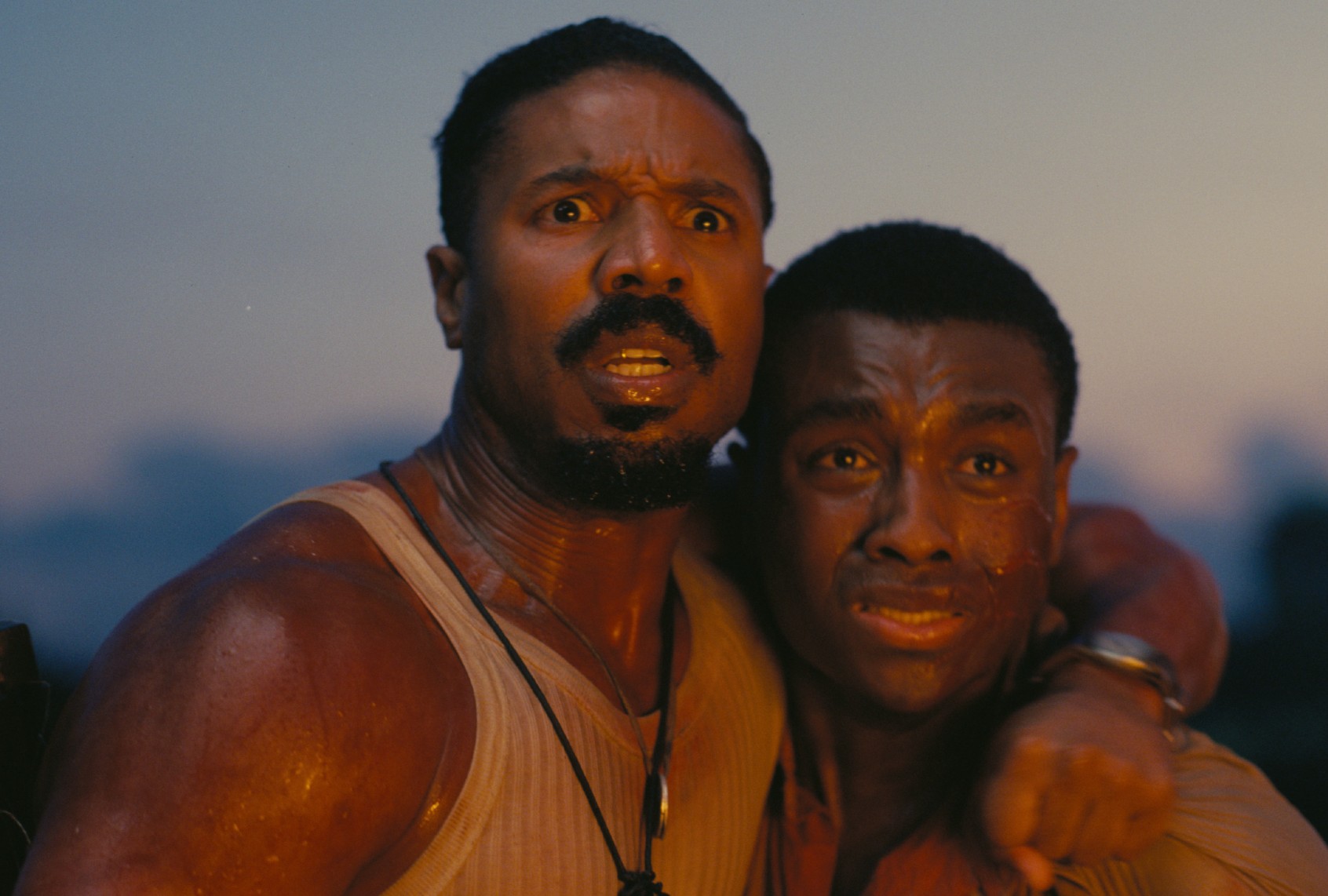

Want a daily wrap-up of all the news and commentary Salon has to offer? Subscribe to our morning newsletter, Crash Course.


Just last week, I wrote about a rarity in the current movie market: A remake of “The Wedding Banquet” that brought interesting, new ideas and resonance to a familiar story. But the likelihood of a remake, reboot or sequel with any lingering value is slim. Moviegoers — especially ones who don’t live in major metropolitan areas — have little originality to choose from at the theater, which is why “Sinners” felt even more like a godsend from the cinema heavens. The film is conceived entirely by Coogler. It’s not an adaptation of any kind or yanked from a true story, and not a sequel to any existing film. What’s more, “Sinners” is a biting piece of blockbuster horror, co-produced and distributed by a major Hollywood studio. 

It may feel bleak, but “Sinners” was a leap of faith for Warner Bros. that paid off immensely. To put the achievement into perspective, Warner Bros. has only co-produced and distributed an entirely original, non-biographical film that wasn’t a sequel to an existing property or simultaneously plopped onto streaming, three times in the last five years. Of the three, which include Clint Eastwood’s “Juror #2” and Christopher Nolan’s “Tenet,” Coogler’s film is the only one written and directed by a Black filmmaker.

Smoke (Michael B. Jordan) and Sammie (Miles Caton) in "Sinners" (Courtesy Warner Bros. Pictures). In the dearth of ceaseless sequel-itis, that is major, and audiences took note. Viewers are as amped about the film being an original piece of work as they are about the movie itself. And after such a successful opening weekend, it’s no major surprise that the excerpt from the Variety write-up was received like a buzzkill showing up to a rager-in-progress. The post drew the ire of social media users and even an industry titan like Ben Stiller, whose criticism of Variety’s framing stunted the number of likes on the publication’s original post. But Variety wasn’t alone in their pointedly worded coverage; the New York Times said that the numbers included “a big asterisk.” Meanwhile, the contents of both the Times and Variety’s pieces admitted that “Sinners” is on track to recoup its $90 million price tag and then some. And besides that, a $61 million opening for an entirely original horror film boasting an R-rating is unheard of, especially in 2025.
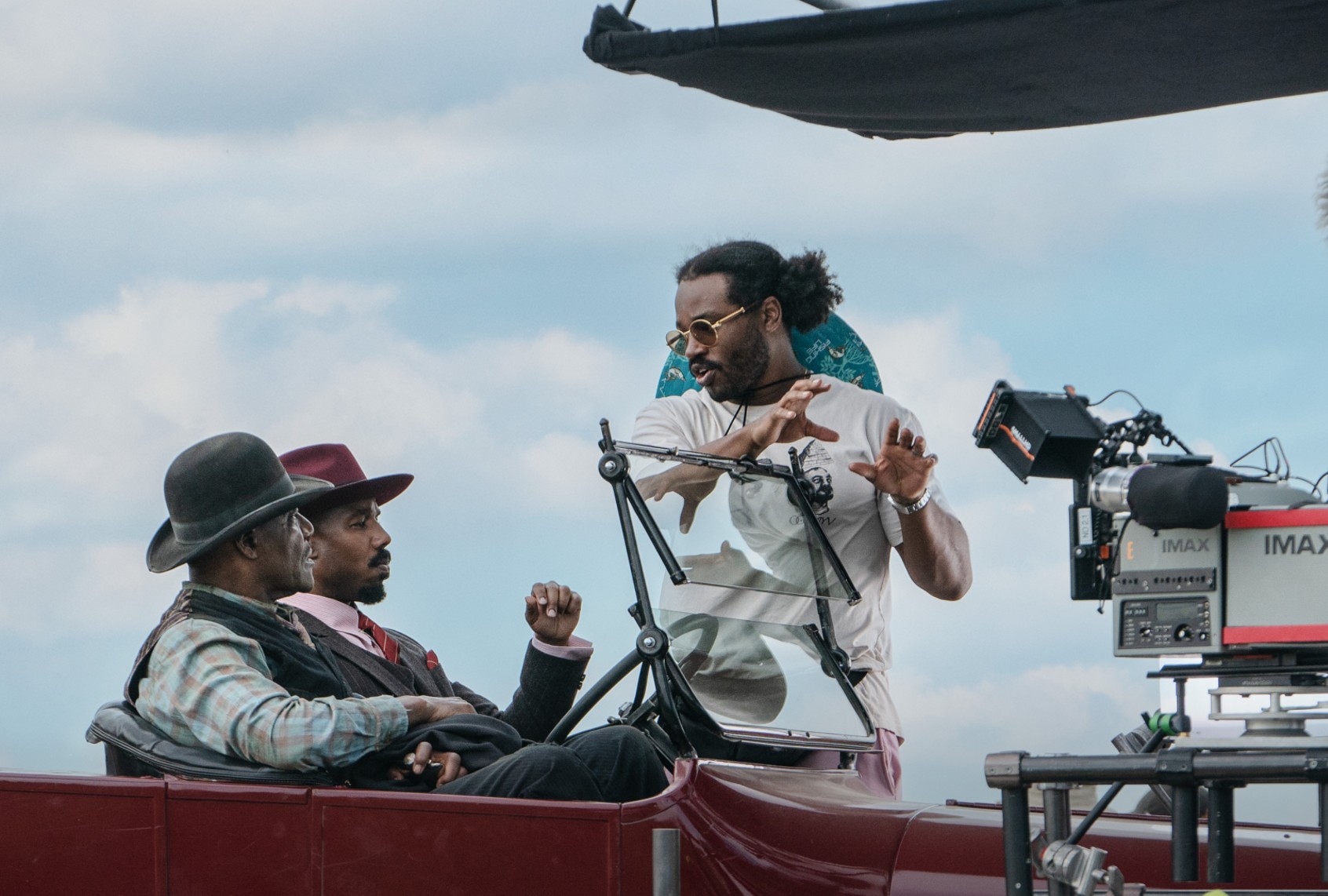
So why frame these responses as a raised eyebrow instead of a celebration over the state of cinema? That’s where things become both intriguing and alarming. In an enlightening guest post for the newsletter Contraband Camp, critic Brooke Obie states that the reaction is just another instance of Hollywood changing the standards of success for Black cinema. “White media has always conspired to spin the narrative and move the goalposts about Black films, Black filmmakers and their successes,” Obie writes. She also references another unique element of the “Sinners” story: a deal carved out by Coogler that will allow him to own the rights to the movie after 25 years, an extremely unconventional industry practice. When a similar deal was cut with Quentin Tarantino for 2019’s “Once Upon a Time in Hollywood,” the headline from the Hollywood Reporter touted it as a “score” for the director. In an illuminating comparison, the Times’ box office report for “Once Upon a Time in Hollywood” called that film’s opening weekend numbers a “hit,” while Coogler’s was met with doubt. But if you assess the numbers, Tarantino’s film actually made less money stateside than Coogler’s did during opening weekend. Yet it was “Sinners” that got slapped with an asterisk.

But this trend goes beyond just “Sinners,” extending to major entertainment news coverage from other outlets and trades, too, particularly when the topic could present a major shift in the entertainment industry. On the day “Sinners” was released, Vulture ran a piece detailing why Coogler’s deal with Warner Bros. was “scaring” studio executives. An anonymous source said that Coogler regaining the rights to “Sinners” after 25 years sets a “very dangerous” precedent that could topple the studio system as we know it. It stands to reason that, if studio execs are freaked out about the deal, the trade publications that function partially as an arm of Hollywood’s most powerful players would cover the indisputable success of “Sinners” with an apprehensive tone. Twelve years out from “Fruitvale Station,” with two major franchises under his belt and a surefire hit of an original film raking in the dough, Coogler’s story beckons other young filmmakers to try their hand at shaking up an industry set in its safe, risk-averse, white ways. Again, we can see that this isn’t just about money; it’s about power and who has it.

(L to r) Delroy Lindo, Michael B. Jordan and director Ryan Coogler behind the scenes of "Sinners" (Courtesy Warner Bros. Pictures). Looking back over the last two months, we can track how that unease went from a simmer to a boil. In February, shortly after pop wunderkind Chappell Roan used her Grammy acceptance speech to demand record labels pay their artists a livable wage and give them better healthcare, the Hollywood Reporter published an inflammatory op-ed by a former label exec. The piece talked down to Roan and diminished her requests as childish and unthinking — ironic for something as petulant as the column reads. The piece garnered an immediate and intense reaction on social media, along with a response from Roan and artists like Charli XCX and Sabrina Carpenter matching Roan’s contribution to Backline’s “We Got You” campaign. 

These publications disseminate narratives into the entertainment world. Even if the average person didn’t see a headline from Variety, Deadline or the Hollywood Reporter, how they write about films and artists affects where the money goes. If a bold, original film like “Sinners” has its success met with doubt, it could easily result in fewer original ideas being funded. 

A similar instance occurred in March, when Variety published an article detailing the “Snow White” remake’s rocky road to theaters. The piece specifically mentioned the film’s star, Rachel Zegler, and her candid pro-Palestine posts on social media, which led to producer Marc Platt flying to New York to meet with Zegler, who stood her ground. While Zegler and Disney declined to comment for the piece, the article quotes an anonymous insider who blamed the movie’s poor box office returns on Zegler. “She didn’t understand the repercussions of her actions,” the insider said. There was, unsurprisingly, no insider quote that examined Zegler’s side of the story, and the imbalanced perspective once again caught the eye of social media users when Variety posted an excerpt from the article on X. “Did you post this thinking it would make us like her less?” one user asked. Another notable comment came from “Scream” star Melissa Barrera, who pointed out that she, too, had been criticized by Variety for her shared political views. 

Coogler, Roan and Zegler all have three glaring, important things in common: They all belong to marginalized communities; they all achieved their success from the ground up; and they all have stood defiant in the face of a machine much larger and more powerful than they are alone. While it’s not a full-scale political rebellion, their opposition is nothing to scoff at. These artists want to own their work, be paid a living wage, have access to decent healthcare and express their views with impunity, as is their right. But those things conflict with the agendas of some entertainment journalism publications. Trades aren’t known to be unbiased sources of information, but that doesn’t account for all those who may read these pieces and take them at face value. We no longer live in a time when Variety and the Hollywood Reporter are read solely by those within the entertainment industry. Now, these pieces are picked up by your mom, dog walker and bank teller. Their articles affect how the common person spends their money, and the trades have a vested interest in protecting the status quo because that’s the safest (and whitest) way to keep the cash coming in. Of course, an original idea from a free-thinker makes them shake in their boots.

We need your help to stay independent

These publications are, after all, how narratives are disseminated into the world of entertainment. Even if the average person didn’t see a headline from Variety, Deadline or the Hollywood Reporter, how these publications write about films and artists affects where the money goes. If a bold, original film like “Sinners” has its success met with doubt, it could result in fewer original ideas being funded. 

Putting an asterisk on something as monumental as “Sinners” doesn’t just denigrate the film to potentially impressionable readers, it serves Hollywood executives looking to make films referred to in board meetings as “content,” or watched in the background at home. Framing the success of “Sinners” like this opens the door for companies like Netflix to slip in and make sure that the format they’ve put billions of dollars into — the home streaming model, where most of the original content is forgotten in a week — isn’t dismissed by the viewer. Slanting the dialogue of a major theatrical gangbuster toward hesitation or negativity only feeds the slop machine.

And right on cue, with “Sinners” in its second weekend dominating the box office with sold-out screenings, is a Deadline article detailing Netflix CEO Ted Sarandos saying the theatrical experience is outmoded. Sarandos is quoted in the piece asking, “What is the consumer trying to tell us? That they’d like to watch movies at home.” Next time you read an article in a trade that has nothing to do with the quality of the art itself, and everything to do with the artist or how they achieved their success, consider: “What is the publication trying to tell me?”

One day after demanding “Vladmir, STOP!” Trump concludes Putin is “just tapping me along”

While in Rome for the funeral of Pope Francis, President Donald Trump appears to have seen the light. Trump said on Saturday that he now believes Russian President Vladimir Putin may not want to end the war against Ukraine. 

“There was no reason for Putin to be shooting missiles into civilian areas, cities and towns, over the last few days,” Trump posted to his Truth Social. “It makes me think that maybe he doesn’t want to stop the war, he’s just tapping me along, and has to be dealt with differently.”

Trump's apparent about-face comes after he briefly met with Ukrainian President Volodymyr Zelenskyy. The two's Vatican encounter was the first since their publicly contentious White House meeting two months ago. Saturday's face-to-face meeting at St. Peter’s Basilica lasted little more than 15 minutes but both parties described the talk as productive. 

We need your help to stay independent

Putin, who has been charged by the International Criminal Court for war crimes, did not travel to Rome for the Pope's funeral. 

On Friday, Trump sang a very different tune on Putin and claimed to be “very close” to a ceasefire deal, calling for Russia and Ukraine to meet for “very high level talks.” His special envoy, Steve Witkoff, traveled to Moscow to met with Putin on Friday.

But even Trump-supportive Republicans in Congress are pushing back. "I've seen enough," Iowa Republican Sen. Chuck Grassley wrote on X Friday. "President Trump pls put the toughest sanctions on Putin."

South Carolina Republican Sen. Lindsey Graham co-sponsored a bipartisan bill this month pushing further sanctions on Russia. “These sanctions against Russia are at the ready and will receive overwhelming bipartisan, bicameral support if presented to the Senate and House for a vote,” the senator said in a statement

Breaking the sushi ceiling: How women are reshaping omakase

Chef Nikki Zheng never planned to become a sushi chef. She always imagined herself on the line, but never considered sushi — a booming, highly coveted craft.

While working at Sushi of Gari in New York City, Zheng enjoyed her very first omakase with a few friends for Christmas dinner. “That day really changed my perception [of sushi],” she said. “I realized, ‘Wow, sushi can be so creative.’ And also, good sushi can bring people joy. It’s like a bridge that connects people.”

Today, Zheng is the mastermind behind the newly opened Sushi Akira, an intimate 12-seat, 18-course omakase experience on the Upper East Side. After starting her culinary journey in Tokyo at the three-Michelin-starred Quintessence, Zheng honed her craft at several high-end Japanese restaurants, including Sushi Nakazawa, Masa, Bar Masa, Sushi of Gari and Tsukimi.    

“What made me stay was the pursuit of perfection,” Zheng said of her career beginnings. “I’ve always been drawn to precision and details. Sushi is all about that.”

Zheng is one of the few women leading her own omakase counter. In Japan — which is home to over 30,000 sushi restaurants — less than 10% of sushi chefs are women, said Makato Fukue, President of Tokyo Sushi Academy, Inc. Within the States, nearly 80% of sushi chefs are men and the number of women leading sushi counters is also low.

In a 2011 interview with the Wall Street Journal, Yoshikazu Ono — the son of Jiro Ono, one of the greatest living sushi masters in the world and subject of the hit documentary film, “Jiro Dreams of Sushi” — explained why he believed women are incapable of performing at the same level as their male counterparts. “Because women menstruate,” he said. “To be a professional means to have a steady taste in your food, but because of the menstrual cycle women have an imbalance in their taste, and that’s why women can’t be sushi chefs.” Other myths claim women have small hands, making them unable to shape sushi, and warmer hands, which ruins the texture of the rice and fish that they’re handling.

While these myths have long been disproven, their impact lingers. The gender gap within the industry remains prevalent. A 2022 report by the world Economic Forum, cited by Condé Nast Traveler, ranked Japan 116th out of 146 countries in the gender gap rankings. In 2023, Japan ranked 125th out of 146 countries on gender equality—the lowest since the World Economic Forum began tracking it, per the University of Tokyo.

Training as a sushi chef is notoriously rigorous, usually with long work hours and minimal work-life balance. Taking time off for parental leave is not only difficult to attain but a hindrance to a sushi chef’s career. Kasumi Takahashi, a female shokunin (or artisan) at Ginza Sushi Aoki told Condé Nast Traveler, “As I worked longer and longer, I became greedy for learning. Now I’m 39 years old, which is considered to be ‘old’ to be pregnant. Considering the timing is really difficult.”

We need your help to stay independent

“Beyond that, it’s harder for women to get opportunities in top sushi kitchens or restaurants,” Zheng said, explaining the strict hierarchy that’s in place within the culinary scene. “As a female sushi chef, you don’t have many opportunities to be an executive chef or a sous chef. It’s more of a challenge to break in.”

Zheng recalled several instances when she received skeptical glances and surprised looks from customers after they saw her behind the sushi counter. In other instances, customers questioned her abilities to serve and make sushi, underscoring outdated, discriminatory beliefs. “Yes, absolutely, I feel sad,” Zheng said. “But it’s not true, you know. I don’t try to explain myself. I just try my best and show them my skills.”


Want more great food writing and recipes? Subscribe to Salon Food's newsletter, The Bite.


“I try to prove that sushi is more about precision, skills and craftmanship, not about gender. Overall skills speak louder than gender for sushi and any kind of cuisine,” she added.

Zheng isn’t alone in her struggles. There’s chef Oona Tempest, who opened up about the challenges she faced as a white female chef breaking into the industry. “In the beginning I had a lot of customers that wouldn’t sit with me. Mainly, they didn’t want to sit with a non-Japanese chef,” she told Edible Manhattan, adding that she found both strength and courage in her mentor, the late chef Toshio Oguma of Tanoshi Sushi. There’s also chef Nanako Fujitani, who spoke about the hierarchy in restaurants along with the physical challenges she faced during her early years in the kitchen. “When I started as a chef, the hierarchy in restaurants was still very strict,” she told OpenTable. “I was an amateur and hadn’t attended culinary school, so I was scolded by my seniors every day no matter what I did.”

Zheng is humble in sharing the strides she’s made within the omakase industry. For aspiring female sushi chefs, she offered one piece of advice: “If you’re really passionate about sushi or omakase, please just believe in yourself. Don’t let outside voices discourage you. And don’t let gender bias discourage you as well.”

The White House Correspondents’ dinner is a sham and a shame. Dump it now

I fell in love with Elayne Boosler in 1993. To be specific, I fell in love with her comedy. She performed at the first White House Correspondents Association dinner I ever attended and proceeded to make a crowd of politicians and reporters and their guests laugh at each other. It was a delicious moment.

Afterward, she was panned in the press and by politicians for her performance.Those in attendance that night in the Washington Hilton’s International Ballroom, however, laughed as hard as anyone I’ve ever seen at a Richard Pryor concert. To criticize her after the event was the height of hypocrisy.

“The best part of the WHCD was the private cocktail party beforehand in a small room off the stage,” Boosler told me. “It was incredible. President Clinton was a wonderful host, down to earth, fun loving. He brought over one of his staff and said, ‘You have to see this. This is so great. Do your Ross Perot for Elayne’. It was surreal and awesome.”

As for the reviews of her performance, she nailed it: “I know the rap on me was that I ‘didn’t do well there’. I got skewered the next day, as does almost every comic whoever performs there. It’s like they laugh, then they’re ashamed and deny it. Kind of the way they are with hookers.”

Hypocrisy has been a mainstay of the dinner for its entirety, and as ubiquitous as floral arrangements at an ostentatious wedding. Women correspondents weren’t even allowed in the event until after I was born. Paula Poundstone was the first woman to host the event – just a year before Boosler.

The event is held annually to present awards and raise scholarship funds; a noble and worthy cause. Since the first dinner in 1921 that cause has drawn entertainers from Bob Hope, Ed Sullivan, Milton Berle, Senor Wences, Duke Ellington, James Cagney, Nat King Cole, Richard Pryor, The Smothers Brothers, Peter Sellers, George Carlin, members of the Rat Pack, Jon Stewart, Ray Romano, Aretha Franklin, Danny Thomas and many others to perform. Jay Leno hosted the event four times. Steve Colbert, appearing in character as a right wing pundit, brought down the house in 2006.

Richard Nixon attended the 1971 dinner. (I was a little young for that one). He later said  it was “probably the worst of this type that I have attended,” and said those who attended (politicians and reporters and their guests I presume) were “a drunken group; crude and terribly cruel.”

Indeed, the event has often sparked controversy. While Calvin Coolidge was the first president to attend, Nixon, Jimmy Carter, Ronald Reagan (who was recuperating from an assassination attempt) and Donald Trump are among those who have refused to show up. 

The greatest criticism of the event has been that it exemplifies a coziness that shouldn’t exist among reporters and the White House. So-called social media journalists and bloggers are among those who scream this the loudest – calling it a horrifying example of “access journalism.” I disagree, or at least think that is a terrible misunderstanding of what is going on. 

Boosler understands this better than most. “Every business needs that Christmas party where you can let your hair down once a year. When Stephen Colbert performed for George Bush, who was a war criminal, and Colbert found a way to be so brilliantly effective without ever raising an eyebrow in the room, that to me was the height of art and comedy. But the establishment always complained the next day about whoever it was the night before, so really, why do it anymore?”

Sam Donaldson, the ABC reporter who practically wrote the book on covering presidents, feels much the same way. “The dinner is one of the "Institutions" which has no reason to exist except that it has been a ‘tradition’,” he told me.

The truth is, for many reporters who never get their phone calls or emails answered, the annual dinner provides them with a unique opportunity to meet sources faces to face — and it helps build bridges of communication necessary for reporters to do their job — as well as politicians to do their jobs. 

Those of us in the business have called it the “Nerd Prom” for years. I first heard that term during the Clinton administration. The part that gets in the way is the event itself seems to have become a cheap knock-off of a Hollywood premiere. There is a red carpet, a receiving line and everything you’ll see at the Oscars or the Emmys. It is rumored that James Carville called Washington, D.C. “Hollywood for ugly people,” after attending a WHCA dinner. On that he is not wrong. 

Donaldson understands this better than anyone. “The problem I see (from afar and out of it) is that beginning several decades ago, all these Washington dinners were turned into a celebrity occasion for those who would join Washington and its inhabitants for the notoriety of it,” Donaldson told me. “We were discovered by Hollywood, by the sports stars, by the "somebodies'" who had nothing to do with our business or our responsibilities as journalists but who could preen and revel in enhancing their own celebrity hood” by associating with the reporters who covered them.

Donaldson favors, as I do, killing the current dinner and instituting something more tenable, but less Hollywood in nature. “I would want to go back to the time when journalists got together with the people we covered and broke bread together and told jokes on one another and said, in effect,  we are on opposite side of an important fence, but understand each other's job and for one night also say that the conflict these different jobs produce is nothing personal and in the end, we respect each other and remain friends.  Well, of course, that is a review that today is no longer tenable,” he said.

That will never happen because there are greater problems. The WHCA is simply useless.

Since Helen Thomas left the WHCA, there has been an increasing and accelerating movement to protect the White House pool and the WHCA board members at the cost of standing up for free speech and supporting all reporters. Current Executive Director Steve Toma has received some of the criticism for this move, as has all the members of the executive board.

Donaldson once told me that you would never know who he cast a vote for in an election based on his actions in the White House. “My job is to ask the hard questions of everyone,” he told me. He also said good politicians like to swing at hard questions. Donald Trump does not like to swing at hard questions.

We need your help to stay independent

Still, when Trump proposed changing up the seating assignments in the Brady Briefing Room, or announced he would take over the pool assignments, many reporters privately didn’t care – or even applauded the move. Trump did it because he believed the pool helped cover up former President Joe Biden’s alleged decline in health. Trump wants softball questions tossed his way. Reporters not in the pool want access to getting their questions answered – even if they are softballs.

Many reporters on the periphery believe the WHCA is preventing them from, not assisting them in, doing their job. That extends to the annual dinner where the pool, board members and the largest media organizations get preferred seating, while smaller outlets – even if they’ve been in the WHCA and covered the president for many years – often get horrible seating assignments at the dinner or none at all. 

To them and the public at large the annual dinner has become an “event” where you show up just “to be seen,” and the core mission has been abandoned. It’s all about the board.  

So, when the HuffPost announced Friday that it would bring workers fired by Trump to the annual dinner as an act of supporting free speech and fight a “sustained government assault on the federal work force and the press,” some were skeptical and found it to be disingenuous.

After the 2007 dinner, New York Times columnist Frank Rich wrote that the dinner had become “a crystallization of the press’s failures in the post 9/11 era,” because it “illustrates how easily a propaganda-driven White House can enlist the Washington news media in its shows.”

Some organizations have said they will refuse to go to the event, and some journalists have called for the end of the annual event. Former CNN anchor Jim Acosta did just that in a Substack column on Friday. He urged the WHCA to “pull the plug” on the event for a specific reason. While pointing out the anti-constitutional crusade of Donald Trump against the free press, he also said, “Sadly,  my friends in the WHCA made matters worse by withdrawing the invitation to comedian Amber Ruffin, apparently under pressure from the White House over some of her comments in the press. WHCA Cancels on Ruffin

This, of course, raises a simple question: How do we celebrate free speech while stifling it? A better course of action would have been to send Ruffin a clear and public message: “We are on your side. See you at the dinner.”

Acosta is right, but doesn’t go far enough. As Boosler told me, “I can’t believe so much of the press is now kowtowing to this tyrant. Sane washing is worse than gaslighting. He surrounds himself with hand-picked reporters. Well, they’re not really reporters, they just play reporters on TV.”

By continuing with the WHCA annual dinner, the impression is that we are, in many ways, part of the problem and not the solution. We are not standing up to authority, we are bowing to it. Firing Ruffin backs up that theory.


Want a daily wrap-up of all the news and commentary Salon has to offer? Subscribe to our morning newsletter, Crash Course.


As H.L. Mencken reminded us in 1927 when it comes to reporters, “He is quite content to take more propaganda from Washington. It is not that he is dishonest, but that he is stupid – and, being stupid, a coward.” In 1956, shortly before his death, Mencken went even further; “American journalism is predominantly paltry and worthless. Its pretensions are enormous, but its achievements are insignificant.” 

He wasn’t speaking directly about the WHCA, but he certainly could have been. 

The organization was cowardly for firing Ruffin after hiring her. Whatever reason that was given, appearance in D.C. is often reality. Ruffin said, "I thought when people take away your rights, erase your history and deport your friends, you’re supposed to call it out. But I was wrong."

Further, the WHCA proved in the first week of Trump’s new administration that it only cares about itself. Faced with threats from Trump regarding pool and briefing room seating assignments, they chose to work with the administration. The WHCA, in tandem with White House, produced the president’s schedule the first week of the new Trump presidency. So, instead of informing the public that the administration wasn’t doing its job, the WHCA jumped in and worked with the White House. That’s a conflict of interest. That’s unforgivable and unimaginable until Donald Trump took office.

To now pretend that the WHCA is a bastion of press freedom is the ultimate hypocrisy. The annual dinner is a sham and a shame. If the WHCA wants to celebrate free speech so damn much it should have a dinner inviting those in the press who have been vilified and marginalized by Trump. It should invite the families of those reporters who’ve died in service of free speech across the globe. It should invite the Freedom of the Press Foundation, the Committee to Protect Journalists and Reporters without Borders to highlight the growing problem of press suppression from authoritarians across the planet. Spotlight their efforts. Shine a light on that and I might more inclined to believe you stand for free speech against the Trump regime. 

Donaldson often told me when I was a young reporter to never forget why the press was there at the White House. “Our job is to challenge the president,” he told me. Helen Thomas told me it was to do so, “even if you anger other reporters.”

And it was Ben Bagdikian, the former Washington Post editor, who said, “Never forget that your obligation is to the people. It is not, at heart, to those who pay you, or to your editor, or to your sources, or to your friends, or to the advancement of your career. It is to the public.” 

In the face of what reporters must go through every day at the White House during the Donald Trump regime, and the fact that the WHCA has failed so miserably in defending a free press, how can the annual dinner be viewed as anything more than a pale shadow of its former self?

It can’t. 

And for those who performed there during its heyday, as Boosler opines, we’ve lost something there as well. “It’s all downhill after you’ve done the WHCD. I mean, is there anything better than making the president of the United States laugh for fifteen minutes? I feel like I helped avert wars.”

That ain’t happening anymore.

Dump the Dinner. Stand up to the bully. Grow some backbone.

Why the world stopped making sense: How the neoliberal “class war” fueled global chaos

There are many ways to understand the political chaos of our time. Many of those recall the famous folktale of the blind men and the elephant, while a handful offer more comprehensive takes. With its focus on the problem of information overload, Dan Davies' book “The Unaccountability Machine” provides an unexpected example of the latter, with a distinctive twist: Davies is a former banking regulator with a clear sense of what needs to be done to restore a sense of order on more equitable foundations. 

I referenced “The Unaccountability Machine” in a recent article asking what a progressive alternative to Elon Musk’s DOGE might look like. That hardly did justice to the value and complexity of Davies’ analysis of how our world has come unstuck since the 2008 financial crisis, and how the triumph of neoliberal economics led to what he calls a “brutal class war” and global chaos.

Davies writes that his central subject is “the biggest problem of modern industrial life — the problem of being overloaded with information, of ‘trying to get a drink from a firehose.’” But as he unfolds his explanation, it has much broader application in understanding our current worldwide political situation. He tells the story of three successive intellectual and organizational revolutions: the all-but-forgotten managerial revolution, the promising, but partially derailed cybernetic revolution — which could have made sense of the managerial revolution and built on it constructively — and then the neoliberal revolution that overtook us instead.

There’s much more to the book than that, including a reflection on the protean musical genius Brian Eno, whose work has involved cybernetic ideas for more than half a century. Alas, to avoid information overload, I set Eno to one side for this conversation with Davies, which has been edited for clarity and length.

Your book is about information overload, and specifically the problems of unaccountability that come out of that. You start by developing the idea of an “accountability sink.” What does that mean, and how does it work? And how is it sometimes beneficial?

The accountability sink was the original concept that I started thinking about when doing the research for this book. It's just a social, organizational, legal and managerial mechanism whereby a decision is created that has no identifiable human being as its owner. You have a decision that nobody seems to have made, and consequently nobody can be held accountable for it. I wanted to write a book about how terrible this all was and what bad people managers were. Nobody took accountability for anything anymore, and isn't that terrible. 

I spent about a year writing, and then I got an attack of intellectual honesty which caused me to be delayed by about a year, because I started to realize that actually you can't run a modern industrial society on the basis of individual human beings taking all the decisions and being personally accountable for them. You have to build systems, because otherwise you can't run anything remotely as complicated as a modern industrial economy. Also you need consistency in some things. I talk about people avoiding individual accountability and delegating their decision-making responsibilities to a written policy — but in a court of law, for instance, that's exactly what you want the judge to do. There are plenty of times you don't want to be exposed to the individual prejudices and caprices of human beings. 

So where did that lead you?

That made me start thinking, well, is there any way we can distinguish the good or bad accountability sink, or arrangements where someone is actually doing something necessary versus someone just trying to pass the buck. That's what got me into a deep and long involvement with management cybernetics, Stafford Beer and all this wonderful 1970s information economics that seemed to get abandoned when economics took its right turn with Milton Friedman and the neoliberal revolution. I think it's all related. 

OK, so what is management cybernetics, and how does it help clarify unaccountability problems? 

Cybernetics is basically information theory or the mathematics of information applied in contexts of control. In electrical engineering there were clear applications for this kind of control theory and cybernetics. But then people started saying, “Could we apply this to human systems?” 

When you start scaling up from an electrical engineering problem to a human system, you have the problem that you no longer have a clear measure of information. You can no longer think about things in terms of kilobytes or megabytes per second, because the amount of information is context-dependent. Also, if you start thinking about the complexity and the information in any human system, it's such an astronomically big number that it starts not making any sense to talk about it that way. 

"The accountability sink is an organizational, mechanism whereby a decision is created that has no identifiable human being as its owner. You have a decision that nobody seems to have made, and consequently nobody can be held accountable for it."

So the question is, can you still say anything that is mathematically useful and mathematically valid? Everyone realized the answer is yes, you can, because all these things have the exact same analogies with economics, and there's a lot you can do with indifference curves and supply-and-demand curves, even when you know that you're not actually going to be able to measure human preferences. 

The first guy who started doing this practically was the British management consultant Stafford Beer. After World War II he got a job in a British steel company, and started doing what they then called operations research, which is just applied mathematics in the context of attempting to improve the efficiency of processes. He started looking at patterns of communication and organization, and spotting bottlenecks in the same way that you’d spot bottlenecks in the production process. 

The fundamental law of motion of cybernetics is that if you have a control system, it has to have at least as much complexity as the thing it's trying to control. If you are trying to model or regulate something at a higher level of complexity than you're capable of representing, it's not going to work. The system is going to blow up and become unregulated. 

In a management context, that's easy to recognize. Everyone who's worked in real life on a management consulting assignment will say the No. 1 problem of all managers is that they have a flood of information coming in, and they need to trim that down to literally make it manageable. so you attenuate and reduce the flow of information to something you can deal with and control. 

One building block of this approach is the famous concept of a black box, where you know the inputs and outputs, but not what’s going on inside. Could you explain the importance of recognizing black boxes, and how systems are built around them?

This is something that everyone does all the time, because you can't function in any other way. You actually gain a lot by paying conscious attention to what you're doing. 

The example I used, talking to some investment managers a couple of weeks ago, is that you have a government treasury secretary who needs to finance fiscal deficits by selling treasury bonds. They don't know the mechanics of how treasury bonds are bought and sold — they just know that there's a treasury bond market and they need to get some dollars from that. One layer down, you've got the bond traders who buy and sell the bonds. They do not usually care about the mechanics of how those trades are settled, and how the money flows between different bank accounts. There's another group of people who have to deal with that. They don't care too much about how the telecom network works, and even the telecoms people don't necessarily care how the electricity is generated. 

At one level, financing the U.S. deficit or managing His Majesty's treasury is a set of instructions to move electrons over wires, but at every level, the people taking the top-level decisions don't care about the electrons. Everyone is working at a level of representation that they can handle, and everyone is treating the level above them as a black box that gives them instructions and the level below them as a black box that does the things that they say will happen. 

That's what everyone does, because you can't do things any other way. If you start trying to contemplate the inside complexity of anything, beyond a very simple textbook example, you will go raving mad, or more likely you'll spend all your time doing analysis and never get any work done. 

Another important concept that emerges is that of a “resource bargain,” which mediates how the different parts relate to each other. Explain what that is and how it functions. 

The resource bargain is really the principle of the black box tuned into an active method of management. The black box, being defined as part of a subsystem, is allowed to organize itself however it likes as long as it fulfills its function in the system. The resource bargain tells parts of the system, "You have autonomy to do what you want, as long as you only use the agreed level of resources in doing so, and as long as you perform your function in the system of taking information from these sources and outputting decisions via these sources." 

It's very similar to the normal principle of management by exceptions: As long as something appears to be working normally, and appears to be performing its function without demanding too much finance, without having too many people and without demanding too much time and effort of other managers in the system, then you let it get on with its business. 

So this is all weird 1970s electrical engineering jargon for some straightforward commonsense management theory: Set clear objectives, set budgets, don't micromanage. All these things can be traced down to mathematically rigorous principles about information processing. 

Beer's management model has five organizational levels, which include operations, regulation, optimization and intelligence. At the top level is the one he calls “identity” or “philosophy,” which seems like the most important to understand. 

"It seems almost weird or quaint to believe that anyone could control industry other than shareholders and investors. It's really been drummed into us — I went to business school, I've been through this indoctrination process — that everyone works for the shareholder."

Yeah, in his model you have the here-and-now management system responsible for optimizing things as they are, and you have the intelligence system that is responsible for change and reorganization. You can't fail to respond to the outside environment, but if you try to restructure too rapidly or you change things too much, you break the organization. So you need an ultimate court of appeal to balance the here-and-now with the future and the outside. 

He calls that identity or philosophy, because it's in managing the balance of present and future where the identity of the organization is created. In setting the principles of how it balances information that's coming in now with the information it expects in the future, that's how an organizational system defines its purpose. 

With that we move from the managerial revolution and the cybernetic revolution — which tried to make sense of the managerial revolution — to the neoliberal revolution of the 1970s onward. Your essential insight about neoliberalism, as I read it, is that it emerged in a time of crisis with a strong identity tied to systematically throwing away, or “attenuating,” an enormous variety of data, basically everything except present-tense costs and prices. That was a way to simplify the world for top decision-makers who faced what Alvin Toffler described as "Future Shock." Is that a fair reading? 

It's a very fair reading. I'm not sure I could have put it better myself. The one thing I would add is that this was class war. This was real, brutal class war between the owners of capital and the managers of enterprises. 

Around the time of the 1970s when the leveraged buyouts, Milton Friedman, all those people got going, there were still plenty of people like J.K. Galbraith and Herbert Simon who were writing about the world of industry as if we were in a new period where “capitalism versus socialism” was no longer particularly relevant, because the modern industrial world was controlled by a techno-structure, and the people who were now interesting to look at were not the capital owners, the bourgeoisie and the investors, they were the managers, soldiers and civil servants who were the people who actually controlled the means of production in the world. That was something in the air at that time. 

Now we come forward to 2020 and it seems almost weird or quaint to believe that anyone could be controlling industry other than shareholders and investors. Everyone has to agree, it's really been drummed into us — and I went to business school, I've been through this indoctrination process — that everyone works for the shareholder. 


Want a daily wrap-up of all the news and commentary Salon has to offer? Subscribe to our morning newsletter, Crash Course.


There's even this doctrine that everyone has a fiduciary duty to maximize value to the shareholder, which is an interesting thing to say, because it's pure ideology. It's simply not true. That's not what's the fiduciary duty of a manager means. There is no necessary duty to maximize anything. There are certain duties that you owe when you are managing a company that someone else owns, but it's nothing like the ideology taught to us post-Milton Friedman. 

So the neoliberal revolution was great for some managers because it meant you had to think about a lot fewer things. You only have to think, if the number goes up, if the share price goes up, then I'm doing well, which solved a huge problem of trying to run a complex economy in an incredibly complicated world. 

"The middle managers, the men in the gray flannel suits, got doses of rhetoric that the Cultural Revolution would've been proud of. They were the inefficiencies in the system, and they had to be cut out ruthlessly."

But while it was good for some of the managers, it was absolutely fantastic for non-manager investors because they were being put back in charge. And lots of the neoliberal process and particularly the leveraged buyout revolution, in my view, was explicitly disciplinary. The vast growth in debt and debt-financed takeovers had a pretty clear purpose, which was to discipline the managerial class and to remind them that they had to work for the investor class. 

It also split the managerial class: You have CEOs and other top management getting rewarded with stock options, so they become completely aligned with the owners of capital.

Absolutely. At the same time, the middle managers, the men in the gray flannel suits, on occasion they got doses of rhetoric that the Cultural Revolution would've been proud of. They were deadwood. They were the inefficiencies in the system, and they had to be cut out ruthlessly. You really could, at some point, do a quiz: Who said this, was it Mao Zedong, or some guy working in a leveraged buyout firm? 

I think that was kind of a crisis, because the middle managers were the brains of the firm, and what we actually did over that period of 50 years was to just sit around cutting out bits of the cerebellum of the global economic system, and try to work out how much of it we could do without. 

Which got even worse when it came to government.

Yeah, absolutely. I still don't quite understand why Friedmanism caught on so much in government, except that it was such an incredibly strong and simple ideology. The market is a fantastic accountability sink. If you’re worried about making decisions and worried about being held accountable for the decisions you make, it's great to have the bond market there. You can now blame everything on the bond market. You can effectively pretend that all the things you are doing are no longer political choices, they're just the inevitable physical consequences of the market system, which covers absolutely all possible things.

That system seemed to work — at least to those on top — right up until around 2008, with the financial crisis and a bunch of other things that started to go visibly wrong. You had a wave of anti-democratic  movements, things fell apart. Regarding that, you say: "The medium itself is the message; what liberal society ought to be responding to is the fact of mass distress, not its content." Can you say a bit more about that, and how you think society should respond?

Well, the first is a lot easier to do than the second. My diagnosis is that 2008 was the year when the neoliberal revolution reached the point where too much information processing power had been cut out of both corporations and governments. The use of debt is a greatly underappreciated information-processing technology, because if you're going to load something up with debt, you immediately reduce the information set down to the question of "Can we service the debt?" 

"Everyone is living in Alvin Toffler's world of future shock. Everyone is living in a world where they correctly perceive that they are part of a system which is no longer able to handle the information or handle the complexity that it has created."

So we built up a system which had to handle increasing complexity. We had cut out a lot of its ability to manage that complexity by forcing it to only care about prices, quantities and returns on investments. And 2008 was kind of the crisis moment at which those lines crossed and the system became unable to regulate itself. We've been living with the consequences of that ever since. 

Meaning what?

My diagnosis of the last 10 years in politics is that everyone is living in Alvin Toffler's world of future shock. Everyone is living in a world where they feel out of control because they correctly perceive that they are part of a system which is no longer able to handle the information or handle the complexity that it has created. 

Into that gap step lots and lots of people who have a family resemblance between them across wildly different geographies and cultures. All of them are saying, "This can be made simple. I have a simple solution to this. I am going to bring things back" — you know, in the U.K. we had Brexit, which literally had the slogan "Take back control." All of these populist authoritarian figures are all trying to say that the world can be made simple and comprehensible again. Which is kind of tricky because you can't turn back the clock. We can't go back to the 1970s and do things over again. 

So back to that trickier second question: What to do?

We have to learn to deal with the complexity of the system that we've got in different ways. It has to mean less use of debt, because the use of debt in the economy just smoothes things over and makes systems fragile. Similarly, we need to have less emphasis on shareholders and investors as the overall goal of economic activity, because we can't afford anymore to have organizations that are concentrating on single values of price and quantity.

People have to be given space to make longer-term plans, to pursue a greater diversity of objectives, and shareholders and investors are going to have to deal with that. Which is, politically, a difficult pill to swallow when you've been the ultimate goal of the entire system for 50 years, but this is how economics used to be. Herb Simon used to write that profits aren't the goal of the company, they're one of the constraints on the company. The company has things to do, and the only reason it cares about profits is that it has to give its investors a reasonable return on their investments, not to divert all of its efforts towards maximizing it. 

But at the most fundamental level, what needs to be built back is not accountability per se. It’s the broken feedback link, where there is no longer any way to communicate from the bottom level of the system to the higher levels of decision-making. It’s that feedback link breaking that becomes intolerable. Firstly, because without that feedback link the higher levels of the management system are working in an information environment which will inevitably depart from reality. The systems will go crazy. But also, from the point of view of the people at the bottom of the system, being ignored is psychologically intolerable. 

There have got to be more and better ways for people to communicate with those who make decisions about them. Building back those communication links is difficult. I suspect it's going to be different in every different system. But what we have at present, across the world, is a management system that just doesn't listen to its customers, or doesn't listen to its voters, in anything like the way it used to. That communication link is broken, and in some way that needs to be restored. 

One thing you talk about is using — you call them “robots,” but we could say algorithmic systems — to help gather that information. I’m partial to something that's less opaque to the ordinary citizen, things like citizens' assemblies or “micropublics,” which are more popular in Europe but not well known in America. They have shown themselves able to facilitate depolarization.

Yes! Not just micropublics, but consultations in general. I'm working at the moment on problems of infrastructure planning and procurement, and I think the key to the whole problem of sclerosis is not "too much regulation." It's too little communication, which means that people just dig their heels in and use the regulatory and legal system because they have no other way of communicating their priorities.

Finally, what’s the most important question I didn’t ask? And what’s the answer?

I'd say the important question is "How is this any different from the rest of the management science literature, which is pretty depressing stuff?" My answer would be that looking at things in information terms really clarifies your analysis. It gives you a language to talk about things which are otherwise difficult to describe. It helps you understand why things don't work. Usually, the answer is that they have been asked to deal with a problem they're not capable of representing.