Spring Offer: Get 1 Year, Save 58%

“What you imagine is much more terrible”: How Viggo Mortensen made a classic Western feel different

Viggo Mortensen’s terrific sophomore effort as a writer/director (he also composed the music) is the gorgeous Western, “The Dead Don’t Hurt.” 

Set during the Civil War, the film recounts the relationship between Vivienne Le Coudy (Vicky Krieps) and Holger Olsen (Mortensen), who meet and fall in love. When he goes off to fight the war, she stays behind. The film stays behind with her.  

While “The Dead Don’t Hurt” has elements of a revenge thriller, this slow-burn drama takes its time and sits with the characters. Mortensen fixes his camera on Vivienne’s face to absorb her emotions after a particularly difficult moment, or on Holder when he returns home after years of fighting the war. As the film villain, Weston Jeffries’ (Solly McLeod) presence is felt in many scenes, but he has very limited screen time, a testament to Mortensen’s care in telling the story to focus less on the shootout and more on the characters — all of whom feel authentic. 

Mortensen also pens a screenplay rich with language that features unexpected narrative details that inform the emotions that range from loss and injustice to greed, love and revenge. 

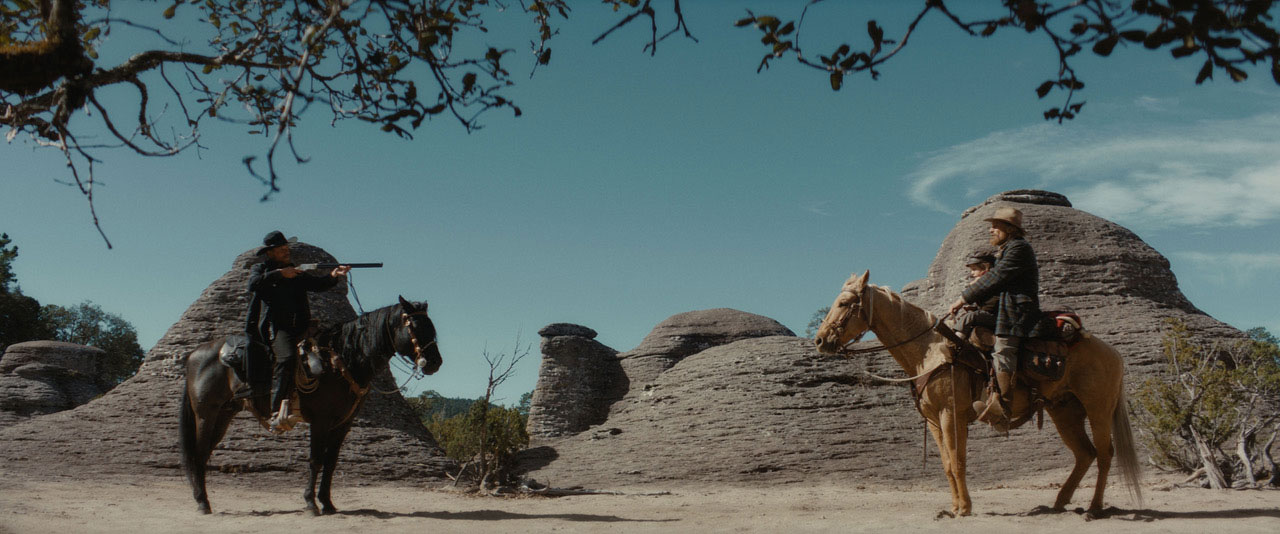
Moreover, the actor-turned-filmmaker shoots his Western with a painterly eye. A courtroom scene is brilliantly lit, and the sweeping vistas are majestic. As a filmmaker, Mortensen uses space, like the town saloon, or a barn, where a deal is made, to contain the action. 

As an actor, Mortensen delivers a low-key performance as Holger, whose romance with Vivienne is sweet. His interactions with the town Mayor (Danny Huston), are terse. And it is satisfying to watch Holger and Weston square off, especially in the film’s end.

“The Dead Don’t Hurt” is a perfect vehicle for Mortensen, who sent hearts swooning as the romantic lead in “A Walk on the Moon,” and appeared in some period Westerns, including “Appaloosa” and “Hidalgo.” He spoke with Salon about putting his spin on the classic genre.

You have a real investment in this film, writing, directing, acting, and composing. It is also much grander in scale than your previous effort as a filmmaker, “Falling,” which was an intimate family drama. What influenced you to make “The Dead Don’t Hurt?” Do you gravitate towards the Western genre? 

"It is different to have woman be at the center of the story, to stay with her as the guy goes off to war."

I wanted to tell a story about Vivienne, who is very a woman of her time. I don’t think she is totally unique. I’m sure there were lots of women like her. There just hasn’t been — and isn’t still — much interest in making stories from that time with a woman as a central character. Their stories are untold, just like the stories of little girls and women whose sons or brothers or fathers or partners go off to war, as happens in this story. We don’t usually stay with them. What happens to them? What are the consequences? What goes through their minds? And what do they have to deal with? Normally, in a story like this, I guess you see the guy at war, and you might glimpse her now and then, so you don’t totally forget her. When the guy comes home, much later than you thought he would — which happens here — she is either dead or married someone else, and we think that’s too bad for him. Or she gives him a warm embrace, and welcomes him home joyfully and tearfully, and that’s great for her. I was asking myself, “What about her? What has she been up to and what are the consequences for her?” It’s not so easy for her after a long absence. I decided to place a woman like this in that historical time period because I thought it would present greater challenges for her, someone who is independent and strong-willed and stubborn. Society is lawless and dominated by powerful, unscrupulous men; that presents a greater challenge for her to be who she is. That’s how it became a Western. I do like Westerns, and once I realized this is going to be a Western, I make the most of it with my team to research it and get details right and respect certain codes of classic Westerns in terms of the visuals.

The Dead Don't HurtVicky Krieps in "The Dead Don't Hurt" (Marcel Zyskind/Shout! Studios)What did the research involve that allowed you to create such authenticity? 

We the whole team, including the actors, the costumers, art department and cinematography, looked at photos from that period — miners, cowboys, women, buildings towns, streets. I rewatched Westerns I’d seen as a kid, and watched many, many, many others. In the oldest of the Westerns, from the silent period, which was the beginning of the genre, they were fairly close to the historical period.  You could see details in saddles and costumes, and the building were still extant. So, you could see things that look right for the period when you compare them to photos of the period. Early Westerns maybe weren’t great movies, but there were things to glean there and share with the team. I enjoyed doing all the research on the film.

How did you lean into or away from the tropes of the Western? There are many familiar elements — the saloon, the greed, the shootout — but they feel fresh. 

As I said, it is different to have woman be at the center of the story, to stay with her as the guy goes off to war. It is also unusual to have the leads in a Western not be Anglo-Saxons and not have English as their first language [as Holger and Vivienne do]. To show different characters, like Claudio (Rafael Plana), the piano player, or with characters with Irish or different American accents. 

I really appreciated the language in the film, such as a line, “That’s a huckleberry above my persimmon,” which I am going to start using immediately. [The phrase means, “Something better than something else.”]

Depending on the character, they use different slang or vocabulary. The way he speaks and presents himself, Mayor Schiller (Danny Huston) is probably the only person in the region who has been to college and has a law degree. He is very verbose and speaks in a certain way. Garret Dillahunt’s character, Alfred Jeffreys, is a man of few words, but he has some pretty interesting turns of phrase, like the one you mentioned. It was important to get those details right, and I enjoyed researching that. There are Westerns, even not so distant ones, like say, “The Missouri Breaks,” the way Harry Dean Stanton’s character speaks, he has some great turns of phrase that are accurate to the time period. W. Earl Brown, who plays Kendall, the salon owner, also has a particular way of speaking. 

“The Dead Don’t Hurt” features shooting, a sexual assault and other scenes of violence. You don’t show them to be too bloody, but they feel visceral. Can you talk about the presentation and depiction of violence in the film? There is a line in which a character asks, “Why do men fight?”

"The film doesn’t exactly do that in the way you expect."

In her way, Vivienne fights too and stands up for herself. I think it’s more important to ask questions and have the audience make up their own mind. And it is important what you don’t show or don’t say in movies a lot of times. In beginning of story, you realize Holger and the boy aren’t just leaving town because there is no reason to stay anymore; the town leaders are corrupt and so forth. Once you realize he is trailing someone, then you think this is a revenge story, and vengeance is going to be the end result of this, and let’s see how we get there. But then the film doesn’t exactly do that in the way you expect. For me, in this story, I was clear that forgiveness — forgiving yourself for your imperfections — is much more important than vengeance. 

The Dead Don't HurtThe Dead Don't Hurt (Marcel Zyskind/Shout! Studios)There is a morality to your film as well as to your character, Holger, who encounters some issues that other men might not handle with grace. You often play good guys who face bad situations. Can you discuss this aspect of your roles?

In this story, it was important when you talk about violence — whether sexual violence or violence with weapons, people shooting each other or someone getting beat up horribly in a saloon, which also happens — if you show every single thing, and do what many people do, use slow motion, and lots of inserts, and close-ups and show every aspect of a physical violation of someone else’s space or body. It’s often when you don’t show all of that, what you imagine is much more terrible. There is an art to that I’ve learned from lots of good directors, men and women, that I have worked with over the years. You try to focus on that. If you focus on the question, “Why do men fight?” or “Why does Holger go to war?” I think he has righteous, noble intentions, like many people do. He thinks it is the right thing to do or he feels he has to do it for moral reason. But any war, of any kind, no matter how righteous intentions are or motivations for going to war, it’s always a mistake. It’s always an error, and it always has disastrous consequences for those involved directly in the war and those who are related to that person. The end result is always sadness and destruction and tragedy and waste. I am not trying to tell people to think that, but I am showing. 

Part of the forgiveness between Holger and Vivienne is that even though they are a man and a woman of their time with all the limitations that go with that, they are both open to considering what the other person feels and thinks; they are open to evolving. In any relationship where one or both of the parties are not open to adapting to new circumstances and how the other person changes, it's not going have a future. It is just going to wither on the vine.  They are both stubborn and different, but they forgive each other and try to understand each other. 

You have collaborated frequently with David Cronenberg, made a series of films in Argentina, are known for the “Lord of the Rings” trilogy and became a heartthrob when “A Walk on the Moon” was released. What observations do you have about your career at this stage, where you are shifting into working more behind the camera?  

If I had the financing for one of the five scripts that I have now I’d start preproduction tomorrow. I have one I have shot to make, which is a smaller story. Hopefully that won’t be like “Falling,” which took four and a half years. This movie took two and a half years before I shot it. It depends on people liking the last film I made and taking a chance on it. The one I hope to make is an Argentine story. It’s a country used to adversity, and I think out of this period, with this government in place, I think there will be some really unusual risks taken, and people will tell some interesting stories as a result. It’s bound to happen. It will not be easy, but there will be some really good work coming out of there.


Want a daily wrap-up of all the news and commentary Salon has to offer? Subscribe to our morning newsletter, Crash Course.


The images in “The Dead Don’t Hurt” are gorgeous. I love that you held the camera on Vivienne after her attack and Holger when he returns home from the war. What can you say about creating the look of the film?

It depends on your actors, but the idea was to make a movie visually that was simple and elegant, the way Westerns were shot by people as different as Howard Hawks and Budd Boetticher. You try to not draw any attention to the way a camera looks at things and show landscapes in an artful way, the characters in this landscape with all the details in a way that makes the audience want to be there or imagining yourself there: “What I do in that situation?” Not, “How amazing is that shot?” Sergio Leone, other Westerns you are very conscious of the camerawork. And that’s fine too. It can be great. It’s just a different type of Western, that’s all. I wanted to make a Western as different as the story is from other Westerns. I wanted it to look and feel like an authentic, classic Western.   

“The Dead Don’t Hurt” is currently in theaters nationwide.

Gel-based male birth control is safe and effective, scientists report

In the palm of your hand, it looks like a glop of hair gel. But this goo could one day revolutionize the reproductive health landscape by being the first male birth control to hit the market.

On Sunday, we got one step closer to that reality. Scientists with the National Institutes of Health’s Contraceptive Development Program announced encouraging results from a phase 2 trial demonstrating the safety and efficacy of the drug.

“The development of a safe, highly effective and reliably reversible contraceptive method for men is an unmet need,” said senior researcher Diana Blithe, Ph.D., chief of the Contraceptive Development Program, said in a statement. “While studies have shown that some hormonal agents may be effective for male contraception, the slow onset of spermatogenic suppression is a limitation.”

In the trial, more than 220 participants aged 18 to 50-years-old successfully reduced their sperm production with minimal side effects. The phase 2b trial aimed to reduce sperm production in patients to up to 1 million per milliliter, putting it well below the threshold of 15 million to 200 million deemed necessary for a man to be fertile. The product — which lowers sperm count with a combination of testosterone and a synthetic hormone called Nestorone (segesterone acetate) — succeeded for 86% of trial participants. Patients applied 5 milliliters of the drug combo between their shoulder blades every day for a year-and-a-half.

The research, which was presented at the Endocrine Society’s annual meeting in Boston, has yet to be peer-reviewed or published in a journal. More research is needed before the drug is finally approved and becomes available for the market.

There are currently no male contraceptives that are approved by the U.S. Food and Drug Administration. Indeed, because it is difficult for pharmaceutical companies to receive funding of this research, only a handful of previous drugs have even reached the clinical trial phase. Experts hope the latest advances will move the ball forward.

“We’ve been pushing for hormonal male contraceptives for 50 years, but there isn’t enough money available to really drive something through a very large phase 3 trial,” Daniel Johnston, chief of the National Institute of Child Health and Human Development’s Contraception Research Branch, told NBC News. Now that this research succeeded, they believe it will be easier to convince other investors to have faith in them. “We’ve been chasing this for a long time. I hope we’re entering new territory," Johnston added.

“I wasn’t dead enough for an abortion”: Texas mom blames Trump for almost losing her life

Lauren Miller was pregnant with twins when she landed in the emergency room after 36 straight hours of vomiting. An ultrasound would reveal that one of her expected twins had fluid where the brain should be developing.

"After speaking with multiple doctors and genetic counselors, we kept arriving at the same point: our son would die," Miller recalled during a press call organized by the Democratic Party on Monday. She could die too too, her doctors said, which would in turn kill the viable fetus and leave her toddler at home without a mother.

The course of treatment was obvious: Miller needed an abortion. Before the summer of 2022, that wouldn't have been much of a problem, even in her home state of Texas, as there was a federally recognized constitutional right to terminate a pregnancy. After the Supreme Court's conservative majority overturned Roe v. Wade, however, more than a dozen states imposed strict bans on the procedure. And while Texas, like other states, has exceptions to protect the life of a mother, in practice there is a concern that recommending one could result in a medical professional being liable for what the state GOP argues is an act of murder.

"As my medical providers tried to counsel me on my options," Miller said, "they would just stop mid-sentence, looking for the right words. It was like they were afraid that they would be arrested just for saying the word 'abortion' out loud."

One specialist, Miller recalled, was visibly upset, tearing off his gloves and angrily tossing them in the trash. "I can't help you anymore," he said. "You need to leave the state."

Miller was finally able to terminate the pregnancy when she heeded the specialist's advice and left the Lone Star state.

"I was at risk of organ damage to my kidneys and brain, but I wasn't dead enough for an abortion in Texas, " Miller said.

We need your help to stay independent

Texas Republicans imposed a near-total ban on abortion following the Supreme Court's 2022 Dobbs decision, a move that has been followed by complaints, from pregnant people and their doctors, that the prohibition is unclear on when a pregnancy can be terminated to protect a life.

Last week, the state's all-Republican Supreme Court rejected a legal challenge from women who said their lives were endangered as a result of complicated pregnancies that their doctors were hesitant to properly treat; the court said abortions could go ahead based on the "good faith judgment" of a medical professional that an individual would be "unlikely to survive."

But what if a doctor performs an abortion that a court later decides wasn't absolutely necessary? Under current state law, that could mean a sentence of life in prison. Some Republicans want to go even further than that.

As writer Jessica Valenti noted, the Texas Republican Party has adopted a plank that effectively calls for people who perform or obtain abortions to be prosecuted and potentially sentenced to death. The party's platform urges lawmakers "to enact legislation to abolish abortion by immediately securing the right to life and equal protection of the laws to all preborn children from the moment of fertilization." That language was first added in 2022, Valenti reported, "after a lobbying effort by Abolish Abortion Texas," a group that refers to "preborn babies" as being "murdered," the punishment for which includes capital punishment.


Want a daily wrap-up of all the news and commentary Salon has to offer? Subscribe to our morning newsletter, Crash Course.


"The fact that this platform could even be brought up for a vote is disturbing," Rep. Veronica Escobar, D-Texas, told reporters on Monday. "But it should remind us how extreme and out of touch Donald Trump's MAGA Republican Party has become. If we allow Trump to get to the White House, he will subject all women across this country to his agenda of revenge and retribution."

While boasting of his responsibility for state abortion bans, Trump, who appointed three of the six justices who overturned Roe v. Wade and previously endorsed punishing doctors who perform abortions and patients who receive them, has waffled on just how far he would go if he wins in November. Last month, the presumptive Republican nominee told an interviewer he was "looking at" allowing state bans on birth control, only to walk back the statement after criticism.

Miller, who ultimately received a single fetal abortion and give birth to a healthy son, said she's not confused about the former president's positions when it comes to women and reproductive rights. Trump won't make America great, she said, but he will make it more like Texas, subjecting millions more Americans to the sort of abortion restrictions that now cover a third of the U.S. population.

Should he win in November, according to Miller, "he will make this nightmare a reality nationwide."

“I don’t see any of that”: Experts pour cold water on Trump’s hope that Supreme Court will save him

Former President Donald Trump faces steep odds on his likely years-long battle to appeal last week's criminal conviction, legal experts told Salon.

Trump on Sunday complained about his upcoming sentencing date, which is scheduled days before the Republican National Convention, writing on Truth Social that the "Supreme Court MUST DECIDE." 

"There's an uphill battle, both in the state courts and the U.S. Supreme Court," Manoj Mate, a professor of law at DePaul University College of Law who focuses on constitutional law, told Salon.

The Manhattan jury convicted Trump last week of all 34 felony counts of falsification of business records. Prosecutors alleged that Trump disguised $130,000 in hush money as a legal expense as part of a scheme to keep information about alleged extramarital sex from voters and unlawfully influence the 2016 presidential election.

Salon has spoken to numerous legal experts about Trump's potential pathway to the Supreme Court — which he could conceivably reach after exhausting his appeal options in the state of New York.

At the state level, Mate said Trump could argue that adult film star Stormy Daniels' testimony was prejudicial or that the judge made some "clear error" in the jury instructions.

"They have to establish that there was some clear error on the part of the judge on some decisions in terms of allowing the D.A. to prosecute the case in this certain way, to allow certain testimony, including the Daniels' testimony," Mate said.

But Mate said Judge Juan Merchan was "cautious" in how he handled requests by defense and prosecution alike.

"You have to find some type of clear error or find some type of misconduct, which I think is very unlikely," Mate said. "Based on everything we've seen, I think Judge Merchan was very cautious."

At the Supreme Court, some experts said Trump could take issue with how prosecutors brought the case in the first place.

We need your help to stay independent

Prosecutors alleged that Trump intended to commit, aid or conceal a violation of state election law section 17-152. 

That statute "provides that any two or more persons who conspire to promote or prevent the election of any person to a public office by unlawful means means and which conspiracy is acted upon by one or more of the parties thereto, shall be guilty of conspiracy to promote or prevent an election."

Merchan said jurors could consider three unlawful means under New York's election law conspiracy statute: a violation of the Federal Election Campaign Act, falsification of other business records or violation of tax laws. 

"We haven't seen this type of exact case play out," Mate said. "A lot of this is sort of novel. And I think on appeal, we're going to see this litigated and again."

Rick Hasen, a professor of law at UCLA, said that it's unclear if "federal election law violations could be the basis for prosecution in state court."

Trump could also bring about due process complaints, according to Hasen.

But when it comes to whether his legal arguments could hold sway in state appellate court or the Supreme Court, multiple experts said they see either zero or slim chance that Trump could come out victorious after years of appeals.

"It is generally very tough to get Supreme Court review," Hasen said. "Because it is Trump, it would certainly get more attention. I think the due process arguments are somewhat stronger than the campaign finance arguments, but both are relative long shots."


Want a daily wrap-up of all the news and commentary Salon has to offer? Subscribe to our morning newsletter, Crash Course.


Election and campaign finance lawyer Jerry Goldfeder said the law is quite clear, and that so were Merchan's jury instructions.

"I don't see any of that being successful," said Goldfeder, who is director of Fordham Law School's Voting Rights and Democracy Project, and a longtime legal counsel for mayors, governors and presidential candidate. "The prosecution made out a very solid case."

"The statute says you cannot influence an election by unlawful means," Goldfeder said. "Unlawful means could be violations of state law or violations of federal law."

Goldfeder said he doesn't see any plausible constitutional issues that Trump could raise. 

Professor Bennett Gershman, a professor who teaches constitutional law and criminal procedure at Pace University, said there is "no federal question" for the Supreme Court to take up.

"To be sure, the federal election law did come up in the judge’s instructions as a basis for the jury to raise the false records to a felony, but we don’t know – and we will never know because jury deliberations are secret – whether that law mattered to the jury, or whether several other legal options triggered the felony convictions," Gershman said. "Federal law may have been an abstract and unnecessary issue in the case."

He added: "Only when the federal question is an 'adequate and independent' basis for the judgment – in other words, the federal question was the reason for the result or contributed significantly to the result  – does a federal court have jurisdiction. In this case there is obviously no clear – or even implicit – basis for the jury’s verdict."

Early on in the Manhattan proceedings, Trump tried to move the case to the federal court — but that request was denied.

Robert Peck, president of the D.C. law firm Center for Constitutional Litigation, pointed out that a federal judge ruled that federal election law did not preempt New York's statute or the prosecution of the former president.

Trump initially appealed the decision and then agreed to dismiss the appeal. 

"There is an adequate state ground for the prosecution and that forecloses Supreme Court jurisdiction on that issue," Peck said.

Katy Perry trolls Harrison Butker with spliced, Pride-friendly edit of his commencement speech

Katy Perry joins the list of people clowning Kansas City Chiefs kicker Harrison Butker for his controversial remarks that have been labeled as sexist and homophobic.

The pop singer took to Instagram on Sunday to post a video of Butker's commencement speech, but with a few key changes. Butker's commencement speech that encouraged women to be homemakers and reject higher education for motherhood has been reimagined. In the video, Perry has spliced Butker's words into support for women, diversity and LGBTQ+ people. 

In the post's caption, Perry said, "fixed this for my girls, my graduates, and my gays — you can do anything, congratulations and happy pride."

Instead of urging women to be traditional stay-at-home moms, in this new edited version of Butker's speech he can be heard saying, "For the ladies present today, congratulations on an amazing accomplishment. You should be proud of all that you have achieved to this point in your young lives.

"I say all of this to you because I have seen it firsthand how much happier someone can be supporting women and not saying that the majority of you are most excited about your marriage and the children you will bring into this world," the clip continues.

Closing the choppy edited version of the speech, Butker says, "The road ahead is bright, things are changing, society is shifting and people young and old are embracing diversity, equity and inclusion. With that said, I want to say happy Pride Month to all of you. And congratulations Class of 2024.”

https://www.instagram.com/reel/C7sSJyovXU7/?utm_source=ig_web_copy_link

Cyndi Lauper announces the Girls Just Wanna Have Fun farewell tour

Cyndi Lauper, singer of "Girls Just Wanna Have Fun," "True Colors" and other iconic hits, wants to go out on a bang.

On Monday, the 70-year-old singer announced that she will have a last hurrah in a 23-city tour across the U.S. this coming fall. According to Variety, the singer did not release a statement about the farewell tour nor her decision to retire from touring, however she is expected to discuss the choice this week to promote her new documentary, "Let the Canary Sing."

Marketed as Lauper's first major tour in a decade, The Girls Just Wanna Have Fun Farewell Tour, is set to kick off in Montreal on Oct. 18 and end in Chicago on Dec. 5.

The legendary pop singer will be also playing popular venues like her hometown's Madison Square Garden in New York on Oct. 30, Nashville’s Bridgestone Arena Nov. 1 and the Los Angeles Intuit Dome on Nov. 23.

According to a press release from Live Nation, The Girls Just Wanna Have Fun Farewell Tour tickets will go on sale with an artist presale on Tuesday. The general sale will begin on Friday at 10 a.m. Lauper is also allegedly said to be joined by opening acting and special guests during the tour.

"Cyndi Lauper: Let the Canary Sing" streams June 4 on Paramount+.

Judge Cannon gifts Trump another two weeks to come up with an argument against a gag order

Judge Aileen Cannon has received flak for her plodding pace in the lead up to Donald Trump's classified documents trial, but that has not stopped her from granting the former president's lawyers another two weeks to prepare an argument against special counsel Jack Smith's request for a gag order.

Smith filed his own motion on May 24, arguing that Trump's false claims that President Joe Biden ordered the FBI officers who searched his home to use deadly force amounted to a "dangerous campaign to smear law enforcement."

Despite the FBI clarifying that the agents followed the same standard protocol they used while searching Biden's house in Delaware, Trump's Republican allies parroted his statements in often inflammatory language.

"The Biden DOJ and FBI were planning to assassinate Pres Trump and gave the green light," tweeted Rep. Marjorie Taylor Greene, R-Ga. "I made sure that he knew."

Cannon has now ordered the Trump defense team to file a response to Smith's request for a gag order by June 14, a date that marks roughly a year since she was selected to hear the case.

"Clearly, Judge Cannon doesn’t seem to be worried about the safety of the law enforcement officers that have targets on their backs courtesy of Donald Trump’s spreading of lies about the MAL search warrant," tweeted lawyer and MSNBC host Katie Phang.

The Trump-appointed judge has been criticized for indulging nearly every request Trump's lawyers have made, no matter how far-fetched, and procrastinating on decisions for months. So daunting was the backlog of unresolved legal issues that, four weeks ago, Cannon postponed the trial indefinitely.

In doing so, Cannon has given Trump what he wanted: a delay of the trial until after Election Day. If he wins in November, the former president could have the case thrown out.

In his New York trial, where he was last week convicted of 34 felonies, the former president was blocked by a court-imposed gag order from attacking jurors, witnesses, and the judge's family. Trump violated the order no fewer than 10 times, prompting him to increasingly rely on surrogates to express his thoughts out loud.

A potato shortage may be upon Ireland following “nightmare” growing season, harsh weather conditions

For the past 12 months, potato growers in Ireland have been hit by what they described is a “nightmare” that has delayed the harvesting of key crops this season. In 2023, around 700 acres of Irish potatoes were lost due to extreme, unprecedented flooding and frost, and overall yield was poor as well. Unfortunately, the potato supply hasn’t picked up in anticipation of the new season, and a more limited supply is what’s anticipated in the coming months, explained Irish Farmers' Association potato chairman Sean Ryan.   

The prolonged wet weather has delayed both the planting and harvesting of first early potatoes, one of three specific groups of new potatoes that require approximately 120 days to mature. The potatoes should’ve been planted early in the spring — in March and into April — but according to Ryan, that is still a work in progress. 

“The old season potatoes are not there, usually the old season would be there until the new season comes in, but they're not so it's a double whammy really,” Ryan told the Irish Examiner. “There will be some new season in the middle of June but it won't be a lot. It will be maybe six or eight weeks later than normal.”

In hopes of boosting the nation’s potato supply, Ireland’s agriculture minister Charlie McConalogue announced he would work to deliver a payment of 100 euros per hectare for horticulture and tillage farmers. “I am committed to our potato sector and despite the constraints of my existing budget, I will work to deliver this support for these farmers,” McConalogue said back in April. However, Ryan said this level of funding is a “kick in the teeth” considering that it currently costs 5,000 euros to grow an acre of potatoes.

Also affecting potato production is blight, a disease that kills off plants, which is already beginning to emerge. Teagasc, the state agency providing research and advisory in agriculture, is developing blight control programmes for 2024.

“It was just as normal as taco Tuesday”: Why comedian Paul Scheer finally faced his childhood trauma

You don’t spend a career performing and over a decade cohosting a podcast called “How Did This Get Made?” and not learn a few things about how a creative project can go terribly, hilariously wrong. But Paul Scheer still believes that “No one sets out to make a bad movie.” During our recent “Salon Talks” conversation, the actor, director and first time memoirist revealed that “I've worked on so many different things, and I'll tell you, you don't know until it's out. I've been on sets that are weird, and the product turns out really good. Very rarely do you know in the moment.”

Scheer also opened up about his new book, “Joyful Recollections of Trauma,” a candid reminiscence about his early days in the New York improv scene, his marriage to fellow actor June Diane Raphael, his recent ADHD diagnosis — and the years of abuse he and his mother endured at the hands of his stepfather. "It took me a long time to even say those words, 'I was abused,'" Scheer revealed.

But becoming a father himself, making peace with his past and relying on his tight-knit community of fellow actors and comics helped pave the path to open up about his darkest moments — as well as the most embarrassing, outrageous and yes, joyful. And reflecting on his beloved podcast and our era of great bad cinema, he said,  "The truth is, when you make a movie for everyone, it's for no one. And when it's for no one, it's perfect for 'How Did This Get Made?'" Watch my "Salon Talks" with Scheer here on YouTube.

This conversation has been edited for clarity and length.

We know you from literally hundreds of roles, including "The League," "Veep," "Fresh Off the Boat," "Black Monday," "30 Rock."

It's so interesting. "30 Rock" is one of those shows that I did very early on in my career, and the success of that show has cemented me as part of that culture, which I love. I couldn't be more excited to be associated with that show. It is amazing when people are like, "'30 Rock'?" It's one of the few appearances that really stick in people's heads.

And of course, the podcasts "How Did This Get Made?" and "Unspooled."

I have a small Etsy shop and also occasionally will sell things on eBay. I got it going on. You want to change your tires? Bring it to my house. I'll do it.
 
Surprisingly, this man has also been diagnosed with ADHD.
 
Yes. As an adult. There's nothing more shocking to be someone in your 40s and find out that you have this thing that can account for a majority of ways that you've acted your entire life. It really was like finding the Rosetta Stone of my life.

I have followed your career for ages, thinking, "He's doing two podcasts, He's doing all these different roles. He's doing live shows. He's writing a book. This is a guy who's spinning a lot of plates." So when you introduce [the diagnosis] very late in the book, and say, "I've not talked about this," how did you not know? And what has changed for you?
 
That chapter I write about that diagnosis was something I was really wrestling with putting in. I know that when people write memoirs, they feel like they have to give a nugget, share something. There was something about that that was still fresh to me, and I was a little nervous to share it because I'm still processing it on some level.

"There's a part of me that I was always keeping a little bit secret. It was really because of my family."

The way I found out about it was through Twitter, which is hilarious. I got into a war of words about my LA Clippers, and one of the people I was fighting with was like, "You're hyper-focusing. You have ADHD. I do, too. You should check that out." Of course I was like, "I don't have ADHD. That's ridiculous. You made a comment, and I'm just continuing to batter you with reasons why you're wrong."

I told my wife. I said, "Somebody said I have ADHD." My wife was like, "Yeah, of course you do." It was this shock to me. She was so unfazed by it. But I started to look online, and especially on Twitter, where I started to see everybody's stories, and it actually helped me get some help. So one of the reasons why I left it in the book, even though I was nervous about it, was because I think when people do share their experiences, talk about it, it does open an avenue of conversation with yourself.

It really pushed me down a path that I would never have gone down before. That was something that was hard to share because I feel like it's something I'm slightly embarrassed by. Now that I'm actually treating it and taking care of it, I'm still the same me that I am, that I was before it, but I just feel like a horse with blinders. They say, "Oh, you don't don't want to wear blinders because you want to see everything." But I want the blinders so I can actually just focus on what's ahead. That has really helped me just stay a lot more on track.
 
Did it help you in writing this book?

Absolutely. Writing a book requires so much focus. I can't just sit down and pop out 5,000 words. I have to really sit in it. It's almost like different states of meditation. You start to lower deeper and deeper into it. It's hard to, I think, tell a cohesive story, to find connections, to really be in something without having that kind of intense focus. I know people who take ADD medication just to write, which is a nice fun side effect for me because I'm now on it and I was writing. I'm not doing it on the side, but people are like, "Oh, I've got to finish this script. I got to take ADD medicine," which is a crazy thing. But yeah, especially in the editing process, which was really, really hard for this book.

Let's talk about the book. You open up in a way that was refreshing and resonant to me about abuse and about trauma. These are things that your family has not talked about. You say, "We move on." What was it that made you say, "It's time for me to talk about it in this way"?
 
Frank McCourt said that if he didn't tell these stories, he'd be screaming until the grave. I realized as I became a parent, that there's a part of me that I was always keeping a little bit secret, and I was wondering why. It was really because of my family. "We don't talk about this. We keep that quiet." I was protecting my family. In a weird way I was not embracing a part of my life that made me who I was. It kind of felt disingenuous.

When I became a father, I recontextualized my childhood in a completely different way. I saw myself through my kids, which brought up anger, which brought up resentment, but also gave me tremendous empathy for my parents, for myself. There was something about having kids, being in therapy for a long period of time. I've done all this work, I have these kids, why am I still not sharing this part of me? What am I afraid of? What am I afraid it says? There was a moment where I was like, "I just have to write this." I didn't even know I was going to write this. The original intent was, I'll tell funny stories from my childhood and I'll tie it all together. Maybe there'll be a fun chapter in there about the movies I think are crazy, or it was going to be a little bit more pop culture-focused.

I think, actually, people wanted that. So instead of just trying to sell a book first, I wrote, and what came out naturally and organically was this story. When I met with Harper's to pitch it, they really responded to that. That's how I knew to go with them, because I think other people might have just wanted me to do more of a light book. It really was, for me, something that I felt came very organically. I didn't have this intention to do it, but once I started writing, I couldn't stop.
 
One of the phrases you use is you don't know how abnormal your upbringing is because it's normalized while you're in it. You talk about violence, abuse against you and against your mom. And your grandmother saying things like, "Well, if there's no broken bones, it's not abuse." Did you have a light bulb moment, an experience where you said, "Oh, this is not normal?"
 
As a kid no. It was just part of my life. I can talk about all these instances here very cavalierly because, in a way, while I was suffering physical abuse and sometimes verbal abuse, it was just as normal as taco Tuesday or something like that. It was just a part of our family life. It took me a long time to even say those words, "I was abused." I could say, "I had a stepdad that was mean. I had these experiences." But that word, abuse, is tricky. A lot of people I've talked to in talking about this book have a hard time saying that word because I think it victimizes you in a way, but it also feels like, "Wait, is it worthy of abuse? Am I on the level? Because I know people who've had it worse, too."

For me, it's been a process of slowly unraveling and allowing myself to really sit in those moments. Some of the first sessions I had in therapy were about exploring anger, which I didn't think I had, and I did. I just had shut it off. I was angry, and my response to that was like a light switch. I just never turned it on.

Then it was also embracing sadness. That was really hard, to allow myself to sit and be like, "It's OK to feel bad for myself, to mourn, because I wasn't allowed to do that in the moment." It's a process. I feel like, even in writing this book, there is an element of catharsis in seeing it all together because all these things are kind of disparate in my head. Even when I went to go write these stories, I saw the connective tissue at the end.

Not to sound too lofty about it, but it feels to me like I was like an artist sculpting marble. I had an idea, but as I was in there I was like, "I'm starting to see things that I didn't even see because it's all in one spot."
 
When you talk about the anger, you say in the book, "My stepdad was the Hulk, and then I was the Hulk. I was a bully. I was angry. I manifested it this way before I could get to the part where then I shut it off." It makes me think of some of the roles you've done where you're so out there and it's very physical. Sometimes you play the heavy, you play the bad guy, you're the creepy guy. Is there something about those kinds of roles that you think maybe that's a way of confronting that side of your experience?
 
I think when you know yourself, and I'm still on a journey of discovery always, when you start to understand parts of your personality, you can tap into them. I can be the angry person when it's called for. I can be the very naive person when it's called for.

"Every one of my characters has an element of me."

Somebody said to me, "Paul, why are you going to therapy? It's going to make you not funny." I was like, "Well, no." 

I think that when you do any work on yourself, when you try to be better, you start to learn about yourself. As a comedian, as an actor, those are really great tools if I can see a side of myself that I can isolate. Every one of my characters has an element of me in it. It's like a rainbow. I just may be blue in one thing. I may just be red in another. That, to me, subconsciously has always been there.

You start out from being this only child making up movies in your head. Now I look at your career and you are part of this repertory, this huge circle of actors. To me, it's always anyone who was on "Burning Love." It feels like that this is about found family.
 
Absolutely. I wrote this chapter in the book about starting at UCB. Upright Citizens Brigade started here in New York City. Matt Walsh, Matt Besser, Ian Roberts and Amy Poehler. When I first saw them, they kind of blew my mind. They were amazing improvisers and comedians, and I think many people that were my same age felt the same way. We started taking classes and performing together. We built this theater and did all these shows. Little did I know that we were building this community, this true family that extends from 1999 to 2024. These are people I worked with time and time again.

I think at a point in my life I was looking for that support. My parents love me. I have a great relationship with my parents, but there are parts of my life where I felt unsupported. I really think that finding that group . . . it's like, "Oh, that's my family."

To your point, "Burning Love," we did that for no money. We shot in this house. The reason why we did it was because we are all gluttons for good ideas. And that's everything that I ever have done in my life. I can call a friend and be like, "Can you come and do this?" It's not about the pay, it's about, "I know you can do this great." That's a beautiful part of our world, is that we just want to play together on a certain level, and we will support and get each other's back. The outpouring that I've had just from my friends in writing this book, when I can call in favors, they call in favors. I love that community. There's a part of me that feels that these people are my ride or die people. We're lucky when we can find those people. I didn't have that in high school or college. I had friends, but these are my people. This is my family.

When you talk about your family, one of the things that really hits hard in this book is you talk about this idea of forgiveness and how distinct that is from making peace with something. What to you is that distinction about being able to say, "I don't have to call it forgiveness?"
 
We all have to do work on ourselves. I've gotten to a point where I'm like, "What can someone else give me that I can't give myself?" I really learned as a very important thing with my parents, which was I have to meet them where they are. When I started to lean into that, that was really fulfilling to me because I didn't expect more of them.

Sometimes we all fall into those traps, where it's like sometimes people will only be capable of what they are capable of giving. If you expect more, you're only setting them up to fail. So once I started to just embrace that my parents had this, then it was like, "Well, if they're not going to give me what I need, how do I find that? And what do I need? What do I need to fill it up?"

I think part of it is empathy. It's trying to see yourself in their shoes. Part of it is also just, when you respect somebody's boundaries or you respect somebody's abilities and what they are capable of, you can actually see how they're trying to do the best they can. I was very true in saying, "I don't need anything from anybody because I can take care of myself." I think that's part of being an only child, but also part of it is like, "Well, no. I've surrounded myself with people who can fill those voids, those people that can help me in those moments." I have a wife, I have amazing friends. Maybe what I can't get from my parents on certain things I find there instead.
 
Talking about this amazing group that you've surrounded yourself with, "How Did This Get Made?" is my favorite podcast that's not about murders. It feels like we're in a golden age of movies that we're all looking around and going, "How did this get made?" We are in peak "How did this get made?" era.

"The truth is, when you make a movie for everyone, it's for no one."

"Beekeeper." One of the best movies ever made but it's so insane, too. I think we're in
a weird zone where we're in a death of the way that we used to consume media.
A lot of people's reaction to that is, "Well, then we need to make the biggest, most accessible thing because that will hopefully get everyone into the theater."

But the truth is, when you make a movie for everyone, it's for no one. And when it's for no one, it's perfect for "How Did This Get Made?" Because then we're having something that's trying to appeal to kids and extreme sports and grandparents. It feels claustrophobic. It feels like you had a good script and there's a million Post-it notes on it. It's like, "Oh, make sure that they chug a Mountain Dew. Then make sure that it's also romantic. Then also, let's add some tragedy here." You're getting whiplash from the responses. So yes, I am loving it. From the birth of "Cats" in the pandemic, the movie version of the musical, we have been getting some real gems.

Because you were also you have an IMDb page as long as my arm, surely you must have your own experiences where you have gotten a script or you have been on a set and thought, "How is this getting made?"
 
Well, what's different about it is no one sets out to make a bad movie. I've worked on so many different things, and I'll tell you, you don't know until it's out, because it can go in many different respects.
 
Not even in the middle?

I think there's an element where things could be going terribly. I would recommend anyone to watch "Hearts of Darkness." It's a documentary that Coppola's wife made during the making of "Apocalypse Now." That movie looked like it was going to be an utter s**tshow, and it becomes one of the classics of cinema. So there is this element where, well, maybe they're going to pull it out. I've worked with actors that can't get two lines out. Then you look at them at editing and you're like, "What the . . . ?" I've literally watched someone get Emmy performances for not being able to string two sentences together. So there's a beauty in the post-production process.

There is this element with movies that magic can happen. So to your question, I've been on sets that are weird and the product turns out really good. I've been on sets that are angry and people don't like each other. Then you go off and do things and people are like, "Oh my gosh, we had the best time." Very rarely do you know in the moment, but sometimes you'll look at something and, yeah, you'll be like, "Oh, wow. OK."

"I watch a lot of movies that are tough to get through."

I remember I was on the set of "Piranha 3DD," the sequel to "Piranha 3D." The title was already there but it was interesting. I was like, "Oh, I'm excited to do this because my character gets to come back, even though I was killed in the first movie," which is interesting how they pulled that off. But it was like, "I've got a chance to work with Ving Rhames. I would love to spend a day with Ving Rhames." One day in North Carolina with Ving Rhames was the best experience. So sometimes as an actor you're like, "I just want to take the experience. Why not?" And you just try to do your best.

One actor said something to me, so interesting. He's been in a lot of great movies and a lot of not-so-great movies, and I was having a heart-to-heart with him about that process. He said, "I'm only responsible to do my job. If I can do my job well, I can try to make the script better but I can't make the movie better." Sometimes you have to let it go out of control, but there are some things definitely on that IMDb page where I'm like, "Ooh."

It's hard because people go, "Why don't you do your movies on 'How Did This Get Made?'" I'm like, "Well, because they are my family, they are my friends." It's even hard for me to talk badly about "Piranha 3DD" because I do have a connection with those people. I'm like, "They meant nice. It was a good time. We had a nice time." Maybe they feel that way about something I've made. So it's tricky. But I know that my litmus is all off because I just watched "Madame Web" and I was like, "Not bad." Not great, but not bad. I watch a lot of movies that are tough to get through. It doesn't make sense, but it's watchable.


Taco Bell will add its Big Cheez-It Crunchwrap Supreme, Big Cheez-It Tostada to menus nationwide

Taco Bell’s supersized collaboration with Cheez-It is slated to go nationwide soon. On May 30, the fast food chain and cheese cracker company announced that they’ve joined forces to launch two new items: the “Big Cheez-It Tostada” and “Big Cheez-It Crunchwrap Supreme.” Both menu items are exclusively available to Taco Bell Rewards Members starting May 30. They will be available to all customers on June 6.

The “Big Cheez-It Tostada” features an enormous Cheez-It cheese cracker — 16-times larger than its normal size — layered with ground beef, reduced-fat sour cream, tomatoes, lettuce and cheddar cheese. The “Big Cheez-It Crunchwrap Supreme” is a rendition of Taco Bell’s Crunchwrap Supreme, featuring seasoned beef, nacho cheese sauce, lettuce, reduced-fat sour cream and diced tomatoes with a Cheez-It cracker instead of the typical tostada shell. The former is priced at $3.99 while the latter is $5.49. 

The latest offerings come two years after Taco Bell tested the Big Cheez-It Tostada along with the Big Cheez-It Crunchwrap Supreme at a restaurant location in Irvine, California. Following a positive trial run, Taco Bell introduced the collaboration at its Live Más Live event, where other new products were also announced. In addition to Cheez-It, Taco Bell is partnering with Tajín and Mountain Dew.     

“This collaboration isn’t just about bringing together two iconic brands; it’s about taking the spirit of fan innovation to create something truly larger than life,” Liz Matthews, Taco Bell’s global chief food innovation officer, said in a press release.

“We’re thrilled to launch this exciting partnership nationwide and offer fans a whole new way to experience the classic cheesy and crunchy flavors they love from Taco Bell and Cheez-It," she continued. 

John Oliver calls out “uncritical fawning praise” of Indian PM Narendra Modi amid growing crackdown

John Oliver took a hit at Indian Prime Minister Narendra Modi, Hindu nationalism and censorship on Sunday's edition of "Last Week Tonight."

The British-American comedian noted that India's election results will be announced on June 4 and it's almost a guarantee that Modi will remain in power. "One polling organization found he has an approval rating of 74%, more than any world leader they track," Oliver pointed out.

However, Oliver noted that this isn't the first time the show has covered Modi and his steady push to convert India, one of the largest countries in the world, into a Hindu nationalist state. Oliver said that Modi and his party have rejected "India’s history as a pluralistic nation and trying to push it toward becoming an explicitly Hindu one."

Moreover, the comedian highlighted there is a reason why Modi is very popular with his constituents. Oliver said he campaigned on "expanding access to sanitation and water facilities and has invested billions in a nationwide upgrade of the country’s roads, railways, airports, and seaports. On top of that, there’ve been programs to alleviate poverty, for which some citizens thank him personally." But the biggest reason for Modi's success is his economic record. During his tenure, the country has "grown to become the world’s fifth-largest economy. It’s almost twice as big as it was, and its stock market has grown threefold since he took office."

But there is a major caveat, Oliver noted, since India changed how it defines poverty to a measure that includes fewer people than before. "Right, anyone can get rid of 'all' poverty if you just change the definition of 'poor people' to something else, like, I dunno, 'fire hydrants' or 'opposite snakes,'" Oliver quipped. 

The show also highlighted growing wealth gap between the country's rich and poor. "By some estimates, just one million people now control around 80% of India’s wealth. And as they’ve gotten richer, much of the country has gotten poorer," Oliver said. 

And as this wealth gap widens, criticizing Modi and his party has become increasingly difficult as censorship runs wild and Modi-aligned billionaires own some media companies, Oliver continued.

"Basically, if you criticize Modi, there’s a pretty good chance things are going to get very unpleasant for you. And given that we’re here in America, I’m honestly not too worried about Modi’s goons coming after me," Oliver joked.

"But on the off chance their reach does extend this far, you know what? F***ing try it. You want to try and shut us down for being critical? I dare you. Do you have any idea who I am? I’m Bill f***ing Maher, and my show has been on for–holy s**t–over 20 years now, and if you want to take us down, take your best shot," he quipped.

Oliver mentioned that "Last Week Tonight" has been censored in India too. Crackdowns create "a clear chilling effect where media outlets may well be intimidated out of criticizing Modi. That could actually help explain why Hotstar, the platform we were on in 2020, mysteriously chose to block our episode criticizing Modi."

We need your help to stay independent

Additionally, Oliver spoke to the growing and troubling anti-Muslim sentiment in India amid rising Hindu nationalism. In one case, Modi opened a Hindu temple built on the site of a mosque that was demolished by a Hindu mob in the '90s, in a conflict that killed over 2,000 mostly Muslim people. 

Oliver said "asking a British person, 'What should we do about India?' is a little bit dangerous, as we tend to have quite a lot of ideas, none of which should be listened to. But as an international community, it seems past time to stop the uncritical fawning praise of a man who is, to put it mildly, a deeply complicated figure."

However, he understands that "this episode is almost definitely not going to end up airing in India. And depending on what they do with the laws around YouTube, I’m not totally sure what’ll happen to it there, either. So if this show does get taken down, and if you have friends or family living in India who’d like to see it, just encourage them to visit OppositeSnakes.com where they’ll find tons of fascinating facts on opposite snakes, as well as a 25-minute video titled 'Opposite Snakes,' which is, in fact, this entire story."

Last Week Tonight with John Oliver airs on Sundays at 11 p.m. ET on Max.

“Want to talk about the theater thing?”: Boebert fumbles debate question about “Beetlejuice” affair

Republican lawmaker Lauren Boebert, attempting to escape voters from Colorado's 3rd district who nearly voted her out in 2022, is vying for her party's nomination in the adjacent 4th district instead. But the conservative firebrand still can't seem to escape her notorious 2023 incident at a "Beetlejuice" performance, when she and a date were kicked out for unruly behavior, The Daily Beast reports.

“Do you want to talk about the theater thing?” asked KUSA’s Kyle Clark, moderating a debate last Thursday between her and her much less famous Republican primary opponents.

“Uh, sure,” Boebert responded. “So, Kyle, I — I certainly have owned out, uh, I owned up to my night out in Denver.”

The alleged claim of responsibility to which Boebert was referring was a tweet in which she sarcastically pleaded "guilty to laughing and singing too loud," while denying that she committed any other transgressions of theater etiquette. Boebert was forced to backtrack from her initial downplaying of the incident after the local NBC affiliated obtained and published the theater's surveillance footage of her vaping, taking selfies with her camera's flash on, engaging in a grope-fest with her date and giving an usher the middle finger on her way out.

"Um," Boebert continued at the debate, “and you know I — I’ve gone on that public apology tour and I’m grateful for the mercy and grace that has been shown. But I’m — I’m not going to continue to live life in shame and, um, be beat up by this. And, you know, I would like to go back to my record.”

But Clark wouldn't let her off easily.

“I just want to make sure. Did you apologize for the behavior that went on with you and your date?” he asked, bulling over her attempts to interrupt him. “Or — pardon me — or did you apologize for lying to voters about what you did that night and the disrespect you showed to service workers that night? What specifically were you apologizing for?”

Boebert, clearly flustered and attempting to feel for an opening to attack, denied that she flipped off the usher and accused the media of taking her behavior "out of context." She then tried to suggest that Clark was hypocritical for once saying "how disgusting it is to record someone without their knowledge" in a podcast interview.

As Boebert continued to ramble, Clark decided to honor Boebert's wishes to move on to her legislative record and turned to the other candidates, who happily piled on.

The experience of last Thursday's debate was apparently too much for the embattled congresswoman. She decided not to show up for the next debate, which took place 48 hours later, leaving her opponents to take figurative shots at an empty podium.

This 5-ingredient chicken dish has become my go-to on weeknights — and most weekends, too

When I was in high school and college, the bulk of my friends' birthday and celebration dinners were practically all held at a local Cuban hotspot.

It was also immensely packed and egregiously loud, with sangria pitchers overflowing at every table. The dining room itself was quite dark, but the outside of the restaurant (and the outdoor patio area) was chock full of enormous plants and trees which added a fun, bright aesthetic to the bustling downtown area.

Truthfully, though? I never loved the food — until I discovered ropa vieja and vaca frita. From then on, I looked forward to any time I could get my hands on Cuban food so I could order one of those two dishes, usually opting for vaca frita with its superb crispness, the bright acidity of the lime, the frizzled edges of the onions, and the unique mouthfeel of the meat itself.

Fast-forward a decade or so, and while I haven't been back in quite a while (and I no longer eat beef), I inadvertently happened to discover that arguably my most frequent meal is actually sort of a remarkably similar amalgamation or iteration of the vaca frita that I used to eat voraciously in my earlier days. 

For a good five years or so now, I've been making a very standard dish of poached-and-shredded chicken which I then crisp up in oil. For the longest time, I'd serve it over lettuce or over rice and call it a day. It takes some time, actually, to get the chicken crisped up just right, but the whole process is so simple and calls for so few ingredients.

Sometime in the past few years, though, I opted to add a sliced onion, a sliced shallot and some garlic to the dish. As I have been removing most gluten and sugar from my diet lately, I found that this crispy-chicken-with-onion-and-garlic has been a meal I eat maybe three or four times a week — and I literally never even remotely tire of it.


Want more great food writing and recipes? Subscribe to Salon Food's newsletter, The Bite.


A month or two ago, I decided to spritz some lime juice on my bowl, and it was only then that I realized . . . wait a minute, this is practically vaca frita, but with chicken instead of beef! And since then, I have now been eating it even more, if that's possible (I literally had it last night, ha!)

Another bonus is that it's devoid of gluten, dairy and sugar, and it only calls for a base five ingredients, not counting any additional spices or seasonings you might add (this brings to mind Claire Robinson's excellent show and cookbook "Five Ingredient Fix," but I'll sing her praises another day).

I love this dish — obviously. Be patient with the cooking process the first few times and you'll be thrilled with the results. I usually eat it plain, but it's great over rice, in salads, in tacos, alongside tostones or platanos, atop an arepa, or however else you might want to enjoy it.

I'm notorious about finishing this all in one sitting, but perhaps you'll actually wind up with leftovers. Unlike me. 

We need your help to stay independent

Poached-and-shredded-and-crisped chicken with onions, salt and lime
Yields
2 to 3 servings
Prep Time
05 minutes
Cook Time
30 minutes

Ingredients

1 pound skinless, boneless chicken breasts

Stock, broth, bouillon, water – whichever you'd like – enough to cover the chicken

Kosher salt

2 to 3 tablespoons neutral oil, such as grapeseed

1 to 2 onions, peeled and sliced

1 to 2 shallots, peeled and sliced

4 cloves garlic, peeled and minced

2 limes, juiced

Seasonings or spices, if you wish (I sometimes add garlic powder, onion powder, and/or Adobo) 

Finely chopped fresh herbs, like mint, cilantro, or parsley, if you wish (I don't use any herbs in mine, but it could def. add a bright burst of color and flavor)

Directions

  1. In a pot large enough to contain the chicken and enough liquid to cover, add chicken and your choice of cooking liquid (or water plus bouillon, if you so choose). Place over medium heat.
  2. After about 15 to 20 minutes, the chicken should be cooked. If it's slightly under, no biggy, since you'll be crisping it up and cooking it further anyway.
  3. Transfer chicken to a plate or cutting board, and using two forks, shred the chicken thoroughly. Let cool slightly. 
  4. In a skillet or grill pan, heat oil. Add chicken and alliums, salt or season well, and let sit for at least 5 minutes before disturbing or stirring.
  5. With tongs or a "flipper," bring the chicken that had been crisped in oil to the top, letting any un-crisped chicken get better direct contact with the pan.
  6. Repeat the above step, multiple times, until the onions and shallot are frizzled and the chicken is crispy and darkened. When you're almost done, add garlic and toss again.
  7. Once you've reached your desired level of crispiness, transfer to a bowl, garnish with lime juice and more salt and serve immediately. 

Former Trump lawyer: “Ridiculous” to claim that Joe Biden orchestrated Trump’s felony convictions

Donald Trump, fuming over his new status as a convicted felon, has been blaming Joe Biden for orchestrating his New York trial, claiming he sought to eliminate a political rival even though the charges were brought by an independently elected local prosecutor.

Political and legal analysts were quick to pile on Trump's false claim, including one of his former lawyers.

"Joe Biden or anyone from his Justice Department have absolutely zero to do with the Manhattan District Attorney," said attorney Joe Tacopina, who was due to represent Trump in his trial but quit the defense team before proceedings began. "They have no jurisdiction over him, they have no context with him, they have no control, certainly, over him, so to say Joe Biden brought this case is one of the most ridiculous things I've heard."

Tacopina, appearing on Rev. Al Sharpton's "PoliticsNation" show on MSNBC, disagreed with the host at times. Sharpton argued that Trump's conviction showed that the jury believed the case against him was sound, but Tacopina suggested that jurors were never going to give the former president "the benefit of the doubt," given how unpopular Trump is in the city. Still, he conceded, the jurors' unanimous vote to convict "validates the Manhattan District Attorney's prosecution to a degree," and negates the claim of a "political witch-hunt of Joe Biden," who "did not know who these jurors were."

Despite the flimsiness of Trump's accusation, a slew of his allies have echoed the claims, with Sen. Tim Scott, R-S.C.,, angrily condemning Joe Biden's alleged use of "the justice system against a political opponent." A group of Republican senators is also pledging to block any non-security-related legislative activity in the Senate in protest of the jury's verdict.

However, when Trump lawyer Will Scharf took his case to ABC's George Stephanopoulos, he was quickly shut down.

"I vehemently disagree that President Biden and his political allies aren’t up to their necks in this prosecution," Scharf maintained.

“There’s no evidence of that,” Stephanopoulos interjected. “Sir, I’m not gonna let you continue to say that. There’s just zero evidence of that.”

Trump and his allies' rhetoric has been followed by MAGA supporters making violent threats against Judge Juan Merchan, Manhattan District Attorney Alvin Bragg, the jurors and anyone they see as culpable for the Republican candidate's conviction.

"Who'll ever want to be a juror again?" Tacopina noted, warning that such threats cut to the heart of the American justice system.

“Lock her up”: Trump falsely claims he never embraced calls for jailing Hillary Clinton

Donald Trump, facing the threat of a prison sentence after jurors convicted him on 34 felony charges, is now denying that he ever used "Lock her up" as a rallying cry against his 2016 rival, Hillary Clinton. He made this claim during an interview with Fox & Friends on Sunday, after co-host Will Cain tried to portray the former president as merciful.

"You famously said, regarding Hillary Clinton, ‘Lock her up.’" said Cain. "You declined to do that as president."

“I beat her,” Trump responded. “It’s easier when you win. They always said, ‘Lock her up.’ And I could have done it, but I felt it would have been a terrible thing. And then this happened to me, so I may feel differently about it."

Trump proceeded to blame his supporters for invoking the chant. "Hillary Clinton — I didn’t say, ‘Lock her up,’ but the people would all say, ‘Lock her up, lock her up.’ OK. Then we won, and I said pretty openly, I’d say, ‘Alright, come on, just relax. Let’s go. We gotta make our country great.’"

Post by @julielaumann
View on Threads

But Trump's many statements on the campaign trail and after his election easily prove his claim false. He repeatedly promised to imprison Clinton, including to her face, and threatened to appoint a special prosecutor to probe her and her campaign over her use of a private email server during her tenure as Barack Obama's secretary of state. When his supporters began the chant at rallies, Trump would often enthusiastically state his agreement. "For what she's done, they should lock her up," he once said.

In the 2020 election, Trump revived the chant again, this time including the Bidens in his prison lineup ("Lock up the Bidens," he said). Now, he is accusing Biden of masterminding a political persecution of him, even though the charges of Trump falsifying business records to cover up a sex scandal were brought by an independently elected prosecutor.

Legal experts: Trump’s “friends on the Supreme Court” may take up his demand to intervene

When Donald Trump lost the 2020 presidential election, right-wing attorney John Eastman came up with a legal coping strategy: What if, he proposed, we just pretend that Trump won? That strategy hit a wall when former Vice President Mike Pence refused to play along, with Trump declaring him a coward and traitor while hundreds of his supporters stormed the U.S. Capitol in an attempted coup d’etat.

Hundreds of January 6 insurrectionists are now behind bars. Eastman, a fellow at the conservative Claremont Institute, can no longer practice law in his home state of California, and was recently indicted for his role in trying to overturn voters’ will in the state of Arizona, but he nonetheless remains a free man. And he’s back, offering the MAGA faithful another glimmer of hope that their 77-year-old leader will be able to avoid any and all consequences.

Speaking with Emerald Robinson, a former Newsmax personality fired for claiming vaccines are the literal spawn of Satan, Eastman denounced the verdict in Trump’s hush money trial and expressed hope that the will of the jury could be overturned by friends of the defendant: the U.S. Supreme Court’s conservative majority.

“They have to see what the rest of us have seen: how dangerous the left’s lawfare have now become,” Eastman said, even as he called for prosecuting members of law enforcement for investigating Trump’s friendly relations with the Russian government.

That’s now the conservative, law-and-order refrain in the wake of 12 New Yorkers unanimously pronouncing the Republican candidate guilty on 34 felony counts. Trump, skipping past the state appeals courts that would be the first to consider any petition to overturn his verdict, has been quick to embrace the latest scheme for undoing the will of the people – which, to be fair, is also the obvious play here for a convicted felon with allies on the country’s highest court.

On his website, Truth Social, Trump on Sunday complained that his July 11 sentencing date, at which he faces the prospect or probation or up to four years behind bars, comes just before the Republican National Convention (omitting that the date, following the standard judicial timeline, was agreed to without objection by his defense team). Instead of Judge Juan Merchan, Trump appealed to the likes of Samuel Alito and Clarence Thomas, stating: “The United States Supreme Court MUST DECIDE!”

House Speaker Mike Johnson, R-La., appearing on Fox & Friends, likewise urged the court’s 6-3 conservative majority, including three justices appointed by the defendant, to “step in” and correct the jury’s decision.

“I think they’re as deeply concerned as we are, so I think they’ll set this straight,” the Louisiana Republican declared.

We need your help to stay independent

Anything, of course, is possible when it comes to precedent and the U.S. Supreme Court, which is to say: just because it would be an absurd stretch for the country’s highest court to overturn the first criminal conviction of a former president doesn’t mean that it’s impossible – not in an era where a justice’s political biases are openly waved from the flagpole outside their home.

What we can say is that, were the court to follow precedent and decide to uphold the rule of law, it would not be likely to overturn a unanimous jury verdict upheld by every previous court that heard the case.

“This is a garden-variety state court conviction,” trial lawyer Mark Zauderer told The New York Times, arguing the case lacked any of the “usual red flags” that might result in a successful appeal. “I don't see a plausible path to the Supreme Court.”


Want a daily wrap-up of all the news and commentary Salon has to offer? Subscribe to our morning newsletter, Crash Course.


Neal Katyal, former acting solicitor general under President Barack Obama, does see a path for Trump, but not necessarily one that ends in victory.

“Maybe they’ll find some federal issue here and maybe there will be an appeal that will get there,” he told MSNBC. “But I think it’s tough. And I think it’s tough here, particularly because … the jury unanimously found Trump guilty of not just one count, but 34 separate criminal convictions that are felonies.”

Former federal prosecutor Duncan Levin also thinks there’s a chance Trump gets his case before the Supreme Court, citing the fact that the jury instructions allowed for a conviction even if jurors were not necessarily unanimous on what underlying crime – tax evasion, say, or breaking campaign finance law – was furthered by Trump’s falsifying business records. However shaky, Trump’s legal team could try to move the case to the federal court system by arguing that those jury instructions conflict with the Sixth Amendment of the U.S. Constitution, which enunciates the right to a “speedy and public trial” and to “be informed of the nature and cause of the accusation.”

“An appeal is 100 percent likely,” Levin said on MSNBC, arguing that it would be a relatively straight forward path Alito, Thomas and the rest of the conservative majority. “Once he gets into federal court, he’s going to be rocketing up to his five friends on the Supreme Court – once he gets his foot in the door there, that’s what his plan is going to be.”

For those with a somewhat cynical view of the country’s highest court and its claims to be above partisan politics, the Supreme Court tugging at a fig leaf to protect Trump is may not seem so implausible. But no conservative justice can overturn time. When he accepts the Republican Party nomination, Trump will no longer just be a convicted felon but, at a minimum, a convicted felon on probation. And while he can appeal any sentence he receives, as Axios noted, the appeals process will take months to play out, just at the state level, “making it very unlikely to conclude before November.”

Republicans in Congress find ways to make Americans pay for Trump’s crimes

We are starting to see a lot of reporting about Donald Trump's promises to wreak revenge on his enemies should he get back into power next year. Some of us have been focusing on this for years because Trump made "vengeance is mine" his credo going back decades. He's never made a secret of it. He even gave a speech at the Christian right's flagship Liberty University before he ever ran for president and gave them two pieces of advice. First, always get a prenup and second, "get even":

I always say don't let people take advantage — this goes for a country, too, by the way — don't let people take advantage. Get even. And you know, if nothing else, others will see that and they're going to say, You know, I'm going to let Jim Smith or Sarah Malone, I'm going to let them alone because they're tough customers.

Years before that he told an audience in Colorado, "If someone screws you, screw them back 10 times harder. At least they're going to leave you alone, and at least you'll feel good. I believe in screwing people when they screw you." In his book "Think Big," Trump wrote:

I love getting even when I get screwed by someone. … Always get even. When you are in business you need to get even with people who screw you. You need to screw them back 15 times harder. You do it not only to get the person who messed with you but also to show the others who are watching what will happen to them if they mess with you. If someone attacks you, do not hesitate. Go for the jugular.

He famously declared "I am your retribution" at CPAC in March of 2023 and last December, he proudly posted a word cloud with "revenge" as the word most closely associated with him. 

It is a defining characteristic that he has never tried to hide until recently. So when he spouts this sanctimonious line (that probably came from a GOP professional like Kellyanne Conway) "my revenge will be success" it's obvious that he doesn't mean it. In fact, he can hardly spit it out. On Fox News on Sunday, he was squirming with discomfort when it came up:

For the record, he said "lock her up" many, many times at his rallies and never once tried to stop his crowds from chanting it. 

The Guardian reported that the watchdog group Citizens for Responsibility and Ethics in Washington did an exhaustive study of his threats to exact revenge on his political opponents and perceived enemies in law enforcement:

The presumptive Republican nominee has threatened to use the federal government to go after Biden during a second Trump administration 25 times since the start of 2023, the study found. These threats include FBI raids, investigations, indictments and even jail time. He has also threatened or suggested that the FBI and justice department should take action against senators, judges, members of Biden’s family and even non-governmental organisations.

Why would anyone expect anything different from the man who posts, “IF YOU GO AFTER ME, I’M COMING AFTER YOU!

We need your help to stay independent

The new immunity claim he and his legal team have hatched for the Jan. 6 case adds another wrinkle to his threats. In a recent Time Magazine interview, Trump said that unless the Supreme Court gives him immunity for his crimes, if he wins he is going after Joe Biden. It's a very cute construct

President Trump, isn’t going after your political opponents what they do in a banana republic?

Trump: That’s what’s happening now. Yeah.

[…]

Well, sir, just to be clear—

Trump: Wait a minute, I haven't had a chance to do it to them. I would be inclined not to do it. I don't want to do it to them. But a lot of that's going to have to do with the Supreme Court. Look, we are going in another two weeks to the Supreme Court. And they're going to make a ruling on presidential immunity. If they said that a president doesn't get immunity, then Biden, I am sure, will be prosecuted for all of his crimes, because he's committed many crimes

Sir—

Trump: Allowing all of this stuff. If a president doesn't have immunity. So when you asked me that question, it depends on what the Supreme Court does. 

It really would be a win-win for him. If he gets immunity and he loses, at least he's off the hook on all the federal charges. (He and his legal advisers all think he'll be bailed out on appeal in the state charges in New York and that the Georgia case is dead on arrival.) If he gets immunity and wins he'll find other ways to get his revenge using his loyal MAGA executive branch. They've already shown a willingness to go after family members, for instance. If he doesn't get immunity and wins, he'll just direct his attorney general to dismiss the federal cases and devote himself to destroying his enemies using the full power of the federal government. 

The only scenario that guarantees accountability for the federal crimes stemming from Jan. 6 and theft of classified documents, is if the Supreme Court denies his immunity claim and he loses the election. We live in hope but I wouldn't count on it coming down that way. 

If he does manage to make it to the White House again, his allies are all on board:

"We're going to come after you. Whether it's criminally or civilly, we'll figure that out," [Kash] Patel, a National Security Council and Defense Department official during the Trump administration, told Steve Bannon on his podcast.

We will go out and find the conspirators — not just in government, but in the media. Yes, we’re going to come after the people in the media who lied about American citizens, who helped Joe Biden rig presidential elections," he said,

Mike Davis is a man often discussed as a potential attorney general or White House counsel in a new Trump administration:


Want a daily wrap-up of all the news and commentary Salon has to offer? Subscribe to our morning newsletter, Crash Course.


We already observed the lackeys trekking to the Manhattan courthouse to show fealty to Trump during his trial. Now that he's been convicted, the MAGA caucus in the Senate is staging a full-blown tantrum and refusing to allow any legislation until well … nobody knows exactly:

Sen. Mike Lee, R-Utah, circulated his own letter in which he suggested it was the White House that “made a mockery” of the rule of law and altered politics in “un-American” ways. He and other senators threatened to stall Senate business until Republicans take action.

“Those who turned our judicial system into a political cudgel must be held accountable,” Lee said.

House Judiciary Chair Jim Jordan, R-Oh., is demanding that Manhattan DAs Alvin Bragg and Matthew Colangelo appear before his "weaponization of the federal government" committee to explain their "political prosecution." The whole GOP establishment has lined up behind Trump to degrade the jury system, the rule of law and any form of accountability for Trump's crimes. 

Jason Stanley, a professor at Yale and the author of “How Fascism Works” told the Associated Press that history is full of examples of people not believing the rhetoric of authoritarians. 

“Believe what they say,” he said. “He’s literally telling you he’s going to use the apparatus of the state to target his political opponents.”

Trump says a lot of foolish things and half the time he doesn't know what he's talking about. But when it comes to his lifelong thirst for vengeance there is no doubt that he means it. And he is now backed by the vast majority of elected Republicans who are clearly slavering at the prospect of taking down their political enemies. They will do it.

9 Trump trial witnesses got significant financial benefits from his businesses and campaign

ProPublica is a Pulitzer Prize-winning investigative newsroom. Sign up for The Big Story newsletter to receive stories like this one in your inbox.

Nine witnesses in the criminal cases against former President Donald Trump have received significant financial benefits, including large raises from his campaign, severance packages, new jobs, and a grant of shares and cash from Trump’s media company.

The benefits have flowed from Trump’s businesses and campaign committees, according to a ProPublica analysis of public disclosures, court records and securities filings. One campaign aide had his average monthly pay double, from $26,000 to $53,500. Another employee got a $2 million severance package barring him from voluntarily cooperating with law enforcement. And one of the campaign’s top officials had her daughter hired onto the campaign staff, where she is now the fourth-highest-paid employee.

These pay increases and other benefits often came at delicate moments in the legal proceedings against Trump. One aide who was given a plum position on the board of Trump’s social media company, for example, got the seat after he was subpoenaed but before he testified.

Significant changes to a staffer’s work situation, such as bonuses, pay raises, firings or promotions, can be evidence of a crime if they come outside the normal course of business. To prove witness tampering, prosecutors would need to show that perks or punishments were intended to influence testimony.

White-collar defense lawyers say the situation Trump finds himself in — in the dual role of defendant and boss of many of the people who are the primary witnesses to his alleged crimes — is not uncommon. Their standard advice is not to provide any unusual benefits or penalties to such employees. Ideally, decisions about employees slated to give evidence should be made by an independent body such as a board, not the boss who is under investigation.

Even if the perks were not intended to influence witnesses, they could prove troublesome for Trump in any future trials. Prosecutors could point to the benefits to undermine the credibility of those aides on the witness stand.

“It feels very shady, especially as you detect a pattern. … I would worry about it having a corrupt influence,” Barbara McQuade, a former U.S. attorney for the Eastern District of Michigan, said after hearing from ProPublica about benefits provided to potential Trump witnesses.

But McQuade said these cases are difficult to prove, even if the intent were actually to influence testimony, because savvy defendants don’t explicitly attach strings to the benefits and would more likely be “all wink and a nod, ‘You’re a great, loyal employee, here’s a raise.’”

In response to questions from ProPublica, a Trump campaign official said that any raises or other benefits provided to witnesses were the result of their taking on more work due to the campaign or his legal cases heating up, or because they took on new duties.

The official added that Trump himself isn’t involved in determining how much campaign staffers are paid, and that compensation is entirely delegated to the campaign’s top leaders. “The president is not involved in the decision-making process,” the official said. “I would argue Trump doesn’t know what we’re paid.”

Campaign spokesperson Steven Cheung said in a statement that “the 2024 Trump campaign is the most well-run and professional operation in political history. Any false assertion that we’re engaging in any type of behavior that may be regarded as tampering is absurd and completely fake.”

Trump’s attorney, David Warrington, sent ProPublica a cease-and-desist letter demanding this article not be published. The letter warned that if the outlet and its reporters “continue their reckless campaign of defamation, President Trump will evaluate all legal remedies.”

It’s possible the benefits are more widespread. Payments from Trump campaign committees are disclosed publicly, but the finances of his businesses are mostly private, so raises, bonuses and other payments from those entities are not typically disclosed.

ProPublica did not find evidence that Trump personally approved the pay increases or other benefits. But Trump famously keeps close watch over his operations and prides himself on penny-pinching. One former aide compared working for the Trump Organization, his large company, to “a small family business” where every employee “in some sense reports to Mr. Trump.” Former aides have said Trump demands unwavering loyalty from subordinates, even when their duties require independence. After his Attorney General Jeff Sessions decided to recuse himself against then-President Trump’s wishes, paving the way for a special counsel to investigate his campaign’s ties to Russia, Trump fumed about being crossed. “Where’s my Roy Cohn?” Trump asked, referring to the notorious former aide to Sen. Joseph McCarthy who later served as Trump’s faithful fixer long before Trump became president.

In addition to the New York case in which Trump was convicted last week, stemming from hidden payments to a porn star, Trump is facing separate charges federally and in Georgia for election interference and in another federal case for mishandling classified documents.

Attempts to exert undue influence on witnesses have been a repeated theme of Trump-related investigations and criminal cases over the years.

Trump’s former campaign manager and former campaign adviser were convicted on federal witness tampering charges in 2018 and 2019. The campaign adviser had told a witness to “do a ‘Frank Pentangeli,’” referencing a character in “The Godfather Part II” who lies to a Senate committee investigating organized crime. Trump later pardoned both men in the waning days of his presidency. (He did not pardon a co-defendant of the campaign manager who had cooperated with the government.)

During the congressional investigation into the storming of the Capitol on Jan. 6, 2021, a former White House staffer testified that she got a call from a colleague the night before an interview with investigators. The colleague told her Trump’s chief of staff “wants me to let you know that he knows you’re loyal and he knows you’ll do the right thing tomorrow and that you’re going to protect him and the boss.” (A spokesperson for the chief of staff denied that he tried to influence testimony.)

Last year, Trump himself publicly discouraged a witness from testifying in the Georgia case. Trump posted on social media that he had read about a Georgia politician who “will be testifying before the Fulton County Grand Jury. He shouldn’t.”

One witness has said publicly that, when he quit working for Trump in the midst of the classified documents criminal investigation, he was offered golf tournament tickets, a lawyer paid for by Trump and a new job that would have come with a raise. The witness, a valet and manager at Mar-a-Lago, had direct knowledge of the handling of the government documents at the club, the focus of one of the criminal cases against the former president. “I’m sure the boss would love to see you,” the employee, Brian Butler, recalled Trump’s property manager telling him. (The episode was first reported by CNN.)

In an interview with ProPublica, Butler, who declined the offers, said he looked at them “innocently for a while.” But when he added up the benefits plus the timing, he thought “it could be them trying to get me back in the circle.”

One Trump aide who plays a key role in multiple cases is a lawyer named Boris Epshteyn, who became an important figure in Trump’s effort to overturn the results of the 2020 election.

A college classmate of one of Trump’s sons who worked on the 2016 campaign and briefly in the White House, Epshteyn was involved in assembling sets of false electors around the country after Trump lost the 2020 election, and Epshteyn’s emails and texts have come up repeatedly in investigations.

In 2022, he testified before the Georgia grand jury that later indicted Trump on charges related to attempts to overturn the election. The FBI seized his phone, and in April 2023 he was interviewed by the federal special counsel.

In early August 2023, the special counsel charged Trump with conspiracy to defraud the United States and conspiracy to obstruct an official proceeding as part of an effort to overturn the 2020 election. A couple weeks later, the Georgia grand jury handed down an indictment accusing Trump of racketeering as part of a plot to overturn the election results in the state. From November 2022 to August 2023, the Trump campaign had paid Epshteyn’s company an average of $26,000 per month. The month after the indictments, his pay hit a new high, $50,000, and climbed in October to $53,500 per month, where it has remained ever since.

Epshteyn is a contractor with the campaign and the payments go to his company, Georgetown Advisory, which is based at a residential home in New Jersey. The company does not appear to have an office or other employees. Campaign filings say the payments are for “communications & legal consulting.”

Kenneth Notter, an attorney at MoloLamken who specializes in white-collar defense, said that a defendant should have a good explanation for a major increase in pay like Epshteyn’s. “Any change in treatment of a witness is something that gets my heart rate up as a lawyer.”

Already in early 2023, months before the pay bump, a Trump campaign spokesperson described Epshteyn to The New York Times as “a deeply valued member of the team” who had “done a terrific job shepherding the legal efforts fighting” the investigations of Trump. The Times reported then that Epshteyn spoke to Trump multiple times per day.

Timothy Parlatore, an attorney who left Trump’s defense team last year citing infighting, found Epshteyn’s large raise baffling. He questioned Epshteyn’s fitness to handle high-stakes criminal defense given his scant experience in the area. “He tries to coordinate all the legal efforts, which is a role he’s uniquely unqualified for,” Parlatore said.

The Trump campaign official told ProPublica that Epshteyn got a pay raise because Trump’s legal cases intensified and, as a result, Epshteyn had more legal work to coordinate. The official declined to say if he started working more hours: “All of us are working 24/7, … every second of the day.” Epshteyn declined to comment on the record.

Even after the major pay increase, Epshteyn has not devoted all of his working time to the Trump campaign. He has continued to consult for other campaigns in recent months, disclosure filings show. And in November, he got a new role as managing director of a financial services firm in New York called Kenmar Securities, regulatory filings show.

Other employees in Trump’s political orbit have followed a similar pattern — including his top aide.

Trump campaign head Susie Wiles, a Florida political consultant, was present when Trump allegedly went beyond improperly holding onto classified documents and showed them to people lacking proper security clearances.

When Trump was indicted on June 8, 2023, over his handling of the documents, the indictment described Wiles as a “PAC representative.” It described Trump allegedly showing her a classified map related to a military operation, acknowledging “that he should not be showing it” and warning her to “not get too close.”

That June, Right Coast Strategies, the political consulting firm Wiles founded, received its highest-ever monthly payment from the Trump campaign: $75,000, an amount the firm has equaled only once since.

Wiles had been a grand jury witness before the indictment. News reports indicated Wiles had told others that she continued to be loyal to Trump and only testified because she was forced to. (And, according to Wiles, Trump was told she was a witness sometime before the indictment’s June release.)

The Trump campaign official told ProPublica that the spike in payments was largely because Wiles was billing for previous months.

She also got a 20% raise that May, from $25,000 to $30,000 per month. “She went back and redid her contract,” the official said, adding that her role as a witness was not a factor in that raise.

A few months later, the Wiles family got more good news. Wiles’ daughter Caroline, who had done some work for Trump’s first campaign and in the White House, where she reportedly left one job because she didn’t pass a background check, was hired by his campaign. Her salary: $222,000, making her currently the fourth-highest-paid staffer. (The Trump campaign official said her salary included a monthly housing stipend.)

Susie Wiles said she and another campaign official were responsible for hiring her daughter, who she said has an expertise in logistics and was brought on to handle arrangements for surrogates taking Trump’s place at events he couldn’t attend. Wiles said Trump wasn’t involved in the hire.

Caroline Wiles told ProPublica her mother’s position in the campaign played no role in her getting a job, but she declined to describe the circumstances around the job offer. “How did I get the job? Because I have earned it,” she said. “I don’t think it has anything to do with Susie.”

The indictment suggests Susie Wiles herself has been aware of efforts to keep potential witnesses in the fold. Soon after the FBI found classified documents at Mar-a-Lago, a Trump employee was asked in a group text chat that included Wiles to confirm that the club’s property manager “was loyal.”

Wiles told ProPublica she couldn’t talk about the details of the case, but she called the text message exchange “a nothing.”

More generally, she said she was unaware of the need to ensure employees who are witnesses do not appear to be receiving special treatment. “It’s the first time I’ve heard that’s best practice,” she said. “I don’t mind telling you I conduct myself in such a way that I don’t worry about any of that.” Trump, she said, had never talked to her about her role as a witness.

Less powerful aides who are witnesses have also enjoyed career advances.

Margo Martin, a Trump aide who, like Wiles, allegedly witnessed Trump showing off what he described as a secret military document, got a significant raise not long after the classified documents case heated up with the search at Mar-a-Lago.

According to the indictment, Trump told Martin and others the military plan was “secret” and “highly confidential.” “As president I could have declassified it,” he allegedly told the group. “Now I can’t, you know, but this is still a secret.”

A few months before her grand jury appearance, she moved from the payroll of a Trump political committee to a job with the campaign as it was launching. Martin was given a roughly 20% pay raise, from $155,000 to $185,000 per year, according to the Trump campaign. Campaign finance filings show a much larger pay increase for Martin, but the Trump campaign said the filings are misleading because of a difference in how payroll taxes and withholdings are reported by the two committees.

Because of that quirk, it’s impossible to know who else got raises and how big they were. The campaign official said that at least one other witness also got a pay raise but did not provide details about how much and when.

Dan Scavino is a longtime communications aide who Trump once called the “most powerful man in politics” because he could post for Trump on the president’s social media accounts. Scavino was among the small group of staff who had an up-close view of Trump during the final weeks of his presidency — a focus of the congressional inquiry into the Jan. 6 insurrection and the criminal probe into election interference.

In August 2021, a month after the congressional investigation began, securities filings show that the parent company behind Truth Social, Trump’s social media company, gave Scavino a consulting deal that ultimately paid out $240,000 a year.

The next month, lawmakers issued a subpoena to Scavino to ask him what the White House knew about the potential for violence before the attacks and what actions Trump took to try to overturn the election results. The panel gave Scavino a half-dozen extensions while negotiating with him, but he ultimately refused to testify or turn over documents and was held in contempt.

In September 2022, Scavino received a subpoena to testify before the criminal grand jury in the federal election interference probe. This time, he wasn’t able to get out of it and was seen leaving the Washington, D.C., courthouse in May 2023.

Bits of Scavino’s testimony were reported by ABC News, citing unnamed sources. Though his recollections of Trump from Jan. 6 painted the former president unfavorably, his reported testimony didn’t include significant new information. He testified Trump was “very angry” that day, and, despite pleas from aides to calm the Capitol rioters, Trump for hours “was just not interested” in taking action to stop it. When the testimony was reported, Trump’s spokesperson said Scavino is one of the former president’s “most loyal allies, and his actual testimony shows just how strong President Trump is positioned in this case.”

Between getting the subpoena and testifying, Scavino was given a seat on the board of the Trump social media company.

Scavino was also granted a $600,000 retention bonus and a $4 million “executive promissory note” paid in shares, according to SEC filings. The company’s public filings do not make clear when these deals were put in place.

As one of the few aides who Trump was with on Jan. 6, Scavino is likely to be called if Trump’s election interference cases go to trial.

Reached by ProPublica, Scavino declined to answer questions about how he got the board seat and other benefits from the Trump media company. “It has nothing to do,” he said, “with any investigation.”

A Trump Media spokesperson declined to answer questions about who made the decision to give Scavino the benefits and why, but said, “It appears this article will comprise utterly false insinuations.”

When Atlanta attorney Jennifer Little was hired to represent Trump in his Georgia election interference case, it marked the high point of her career.

A former local prosecutor who started her own practice, she had previously taken on far more modest cases. Highlights on her website include a biker who fell because of a pothole, a child investigated for insensitive social media comments and drunk drivers with “DUI’s as high as .19.” Little had made headlines for some higher profile cases, like a candidate for lieutenant governor accused of sexual harassment, but everything on her resume paled in comparison to representing a former president accused of plotting to reverse the outcome of an election.

Then in May 2022, her job got even more complicated when Trump pulled her into his brewing showdown with the Justice Department over classified documents at Mar-a-Lago. Despite multiple requests, Trump had not returned all of the documents he had brought with him from the White House to his Florida club. The Justice Department had just elevated the matter by subpoenaing Trump for the records, and Trump wanted her advice.

Little told him, according to news reports, that unlike the government’s prior requests, a subpoena meant he could face criminal charges if he didn’t comply.

When Trump ultimately did not turn over the records and the criminal investigation intensified, Little’s involvement in that pivotal meeting got her called before a grand jury by federal prosecutors.

Some of her testimony before that grand jury, which determines whether someone will be indicted, may have been favorable for Trump. In one reported instance, Little’s recollections undermined contemporaneous documentary evidence that was damaging to Trump. Investigators had obtained notes from another lawyer at the May 2022 meeting indicating Trump suggested they not “play ball” with federal authorities: “Wouldn’t it be better if we just told them we don’t have anything here?”

Little told the grand jury she remembered the question more benignly, according to an ABC News story that cited anonymous sources, and said she couldn’t recall Trump recommending they not “play ball.”

Trump has since been indicted over his handling of the classified documents. If the case goes to trial, Little’s testimony could prove crucial as the two sides try to make their case about Trump's consciousness of guilt and whether he purposely withheld documents. (Trump has pleaded not guilty in that case and has said he did nothing wrong.)

Just after Little was forced to testify before the grand jury in March 2023, a Trump political action committee paid her $218,000, by far the largest payment she’d received while working for Trump. In the year after she became a witness, she has made at least $1.3 million from the Trump political committee, more than twice as much as she had during the year prior.

Little told ProPublica the large payment she received soon after she was compelled to testify was due to a lengthy motion she filed around then to block the release of the Georgia grand jury’s findings and prevent Trump from being indicted. Her hourly rate did not change, she said, the workload increased. The elevated payments in the year after she became a witness did coincide with the Georgia case heating up and Trump getting indicted.

The Trump campaign official said the spike in payments to Little after she became a witness was the result of her billing for multiple time periods at once.

A similar pattern played out for the other Trump lawyer present at the Mar-a-Lago meeting about the subpoena.

Evan Corcoran, a former federal prosecutor who specializes in white-collar criminal defense, was new to the team at the time. And it was his notes, obtained by investigators, that memorialized Trump suggesting they not “play ball.” His notes also included a description of Trump seeming to instruct him to withhold some sensitive documents from authorities when the former president made a “plucking motion.”

“He made a funny motion as though — well okay why don’t you take them with you to your hotel room and if there’s anything really bad in there, like, you know, pluck it out,” Corcoran’s notes read, according to the indictment.

Like Little, Corcoran tried to fight being forced to testify before a grand jury, asserting that as Trump’s lawyer, their communications were protected. But prosecutors were able to convince a judge that the protection didn’t apply because their legal advice was used to commit crimes.

Corcoran’s notes from his conversations with Trump formed the backbone of the eventual indictment, and his descriptions of those meetings are expected to be a critical component at trial. The lawyer made an initial appearance before the grand jury in January 2023 and appeared again in another session in March.

Around the time he was forced to be a witness, Corcoran recused himself from the classified documents case, but he continued to represent Trump on other matters. Nevertheless his firm’s compensation shot up for a few months.

Just days after his March grand jury testimony, the Trump campaign sent two payments to his firm totaling $786,000, the largest amount paid in a single day in his almost two years working for Trump. The firm brought in a total of $1.4 million in that four-week span, more than double its payments from any other comparable period during Corcoran’s time working for Trump.

Corcoran did not respond to questions from ProPublica. The Trump campaign official said the spike in payments came because the firm was billing for more hours of work as Trump’s cases ramped up. The official added that the number of lawyers from the firm working on the case may have increased but could not provide specifics.

The issue of witnesses who have received financial rewards from Trump has already come up at both of the former president’s New York trials.

In the civil fraud case last year, prosecutors questioned the Trump Organization’s former controller about the $500,000 in severance he had been promised after retiring earlier in the year. During his testimony, the former controller broke down in tears as he complained about allegations against an employer he loved and defended the valuations at the center of the case as “justified.” At the time of the testimony, he was still receiving his severance in installments.

Former chief financial officer Allen Weisselberg got a $2 million severance agreement in January 2023, four months after the New York attorney general sued Trump for financial fraud in his real estate business. The agreement contains a nondisparagement clause and language barring Weisselberg from voluntarily cooperating with investigators.

It came up in Trump’s hush money trial last month when prosecutors told the judge that the severance agreement was one of the reasons they would not call Weisselberg . He was still due several payments.

“The agreement seems to preclude us from talking to him or him talking to us at the risk of losing $750,000 of outstanding severance pay,” one prosecutor said.

In last year’s fraud trial, the judge wrote of the severance agreement, “The Trump Organization keeps Weisselberg on a short leash, and it shows.”

A Trump Organization spokesperson said in a statement that after Weisselberg and the controller announced their retirement plans, “the company agreed to pay them severance based on the number of years they worked at the company. President Trump played no role in that decision.” Weisselberg’s severance agreement was signed by Trump’s son Eric.

Another witness from the civil trial last year, longtime Trump friend and real estate executive Steve Witkoff, was called as an expert witness by Trump’s defense team, and he defended the Trump Organization real estate valuations at the heart of the case.

Two months after Witkoff’s testimony, Trump’s campaign for the first time started paying his company, the Witkoff Group, for air travel. The payments continued over several weeks, ultimately totalling more than $370,000.

The Trump campaign official confirmed the campaign used Witkoff’s private jet for multiple trips, including Trump’s visit to a stretch of the Texas border in February, saying it “appropriately reimbursed” him for the flights. The official said it sometimes used commercial charter jet services but opted for Witkoff’s plane because of “availability, space, and convenience.”

Witkoff and The Witkoff Group did not respond to requests for comment.

Do you have any information about Trump’s campaign or his businesses that we should know? Robert Faturechi can be reached by email at robert.faturechi@propublica.org and by Signal or WhatsApp at 213-271-7217. Justin Elliott can be reached by email at justin@propublica.org or by Signal or WhatsApp at 774-826-6240.

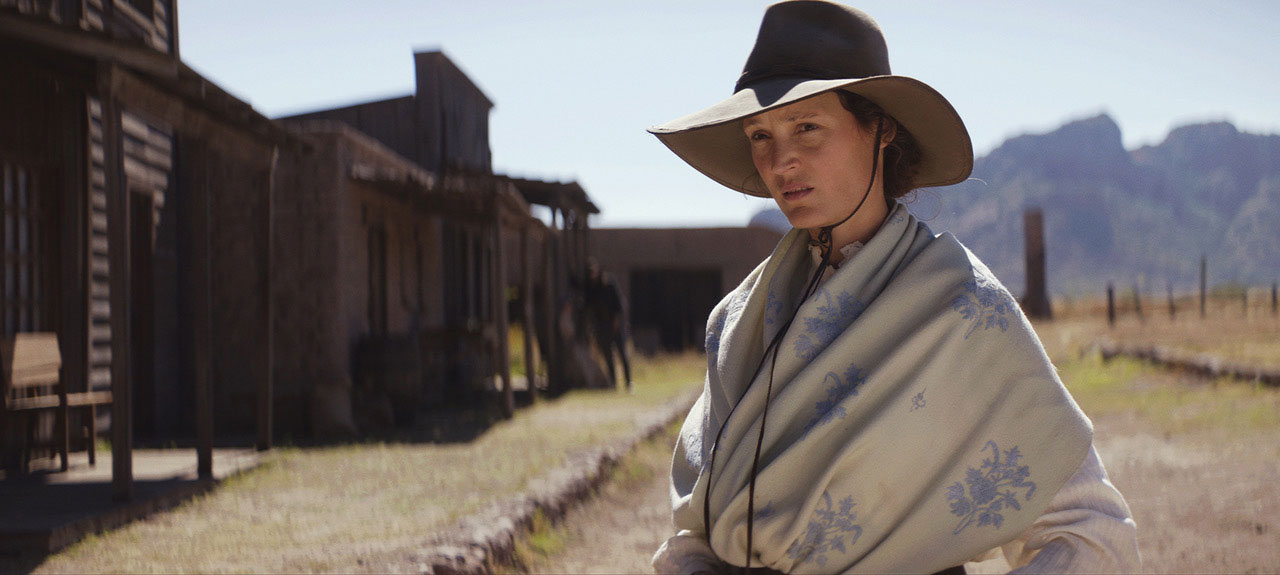
Pregnant in a warming climate: A lethal “double risk” for malaria

Roger Casupang was working in a coastal clinic on the north side of Papua New Guinea, an island nation of 9 million in the southwestern Pacific Ocean, when a pregnant woman burst into his facility. She was in labor, moments away from delivering twins. She also had a severe case of malaria, a life-threatening mosquito-borne illness common in tropical countries.

Casupang, an obstetrician, quickly took stock of the situation. When the parent is healthy, a twin pregnancy is twice as risky as a single pregnancy. Meanwhile, severe malaria kills nearly half of the people who develop it during pregnancy. The woman was exhausted and delirious. Because many of his patients walked for days to get medical care for standard ailments, Casupang didn’t know which province she had come from or how long she had been traveling before she reached his clinic. 

What he did know was that the woman had arrived just in time. “She was actually pushing when she came in,” he said. 

Casupang, who was born in one of Papua New Guinea’s highland provinces and had been practicing medicine on the island for the better part of a decade at the time, had seen pregnant women die in less dire circumstances. Against all odds, with limited medical resources and medicines at their disposal, Casupang and the other medical professionals at the clinic were able to deliver the twins safely. Both babies weighed less than three pounds each, a consequence of their mother’s raging infection. The twins were moved to the nursery while Casupang and his fellow physicians worked to stabilize the mother. She was reunited with her babies after 10 days of intensive care. “If this case had presented in a remote facility,” Casupang said, “the narrative would have been very different.” 

Casupang’s patient was lucky to survive — but she also benefited from geography. On the coast, doctors see lots of patients with malaria, and many of those patients carry antibodies that protect them from severe infection. 

But malaria is on the move. 

Temperatures are rising around the world but particularly in countries where the disease is already present. That warming coaxes mosquitoes toward higher elevations, even as temperatures have historically been too cold for the insects to thrive. In these high-altitude areas, mosquitoes are feeding on people who have never had malaria before — and who are much more susceptible to deadly infections.

“When malaria hits new populations that are naive, you tend to get these explosive epidemics that are severe because people don’t have any existing immunity,” said Sadie Ryan, an associate professor of medical geography at the University of Florida. 

Pregnant people living in highland regions who have never had malaria before are worst-positioned to survive the bite of an infected mosquito. The very act of becoming pregnant creates a potentially deadly vulnerability to malaria. The placenta, the new organ that forms to nourish the fetus, presents new receptors for the disease to bind to. 

Pregnant women are three times more likely to develop severe malaria compared to nonpregnant women. For people who can become pregnant, the climate-driven upward movement of malaria mosquitoes poses nothing less than an existential threat.

“In Western countries, especially where malaria is not endemic, there is this perception that malaria has been around for so long that we already know how to deal with it,” said Deekshita Ramanarayanan, who works on maternal health at the nonpartisan research organization the Wilson Center. 

But that was never the case, and the perception is especially flawed now, as climate change threatens to rewrite the malaria-control playbook. “Pregnant people are hit with this double risk factor of climate change and the risks of contracting malaria during pregnancy,” Ramanarayanan said. 

Hundreds of millions of people get malaria every year, and an estimated 600,000 die from it, mostly in tropical and subtropical regions. In 2022, 94 percent of global malaria cases occurred in sub-Saharan Africa. High rates of the disease are also found in Central America and the Caribbean, South America, Southeast Asia, and the western Pacific. Papua New Guinea registered over 400,000 new cases in 2022. That same year the country accounted for 90 percent of the malaria cases in the western Pacific.  

Malaria is carried by dozens of species of Anopheles mosquitoes, also known as marsh or nail mosquitoes. Anopheles mosquitoes carry a parasite called Plasmodium — the single-cell genus that causes malaria in birds, reptiles, and mammals like humans. 

When the bite of an Anopheles mosquito introduces Plasmodium into the human bloodstream, the parasites travel to the liver, where they lurk undetectably and mature for a period ranging from weeks to a year. Once the parasites reach maturity, they venture out into the bloodstream and infect red blood cells. The host often experiences symptoms at this stage of the infection — fever, chills, nausea, and general, flu-like discomfort. 

The earlier a malaria infection is caught, the better the chances that antimalarial medications can help prevent the development of severe malaria, when the disease spreads to critical organs in the body. 

Pregnancy primes the body for infection. 

The immune system, when it is functioning properly, engages an arsenal of weapons to ward off bacteria, viruses, and other pathogens. But pregnancy acts like an immunosuppressant, telling the defense system to stand down in order to ensure the body does not inadvertently reject the growing baby. “Your immune system is, on purpose, dialed back so that you can tolerate the fact that you have this fetus inside of you,” said Marya Zlatnik, an obstetrician and gynecologist at University of California, San Francisco Medical Center.

Then there’s the added strain of supplying the baby with enough nutrients, vitamins, and minerals. The body must work overtime to provide for the metabolic needs of two. This factor, exacerbated by poverty, malnutrition, and subpar medical infrastructure in countries where malaria is commonly found, poses enormous challenges to maternal and fetal health. A malaria infection on top of those existing vulnerabilities introduces another, even more challenging set of obstacles.

The disease can produce severe maternal anemia, iron deficiency, or it can spread to the kidneys and the lungs and cause a condition known as blackwater fever. The disorder makes patients jaundiced, feverish, and dangerously low on vitamins crucial for a healthy pregnancy. 

“It’s pretty much synonymous with death for many patients up in the rural areas,” Casupang said. Research shows that malaria may be a factor in a quarter of all maternal deaths in the countries where the disease is endemic

Plasmodium parasites have spikes on them, similar to the now-infamous coronavirus spike proteins, that make them sticky and prone to clogging up organs. If Plasmodium travel to the placenta, the parasites bind to placental receptors and cause portions of the placenta to die off. “It changes the architecture of the placenta and the ways nutrients and oxygen are exchanged with the fetus,” said Courtney Murdock, an associate professor at Cornell University’s department of entomology. The placental clots interfere with fetal growth, and they’re one of the reasons why a pregnant woman is between three and four times more likely to miscarry if she has a malaria infection, and why babies born to mothers sick with malaria come out of the womb malnourished and underweight. 

“You see the placenta start to fail,” Casupang said. Fetal mortality is closely tied to how much of the placenta becomes oxygen deprived. “The babies come out with very low birth weights,” he said. If the placental clots are extensive, “they usually die.” 

In 2020, approximately 122 million pregnancies — about half of all pregnancies worldwide that year — occurred in areas where people were at risk of contracting malaria. A 2023 study estimated that 16 million of these pregnancies ended in miscarriage, and 1.4 million in stillbirth. 

Researchers don’t know exactly how many of those miscarriages and stillbirths occurred in individuals who were bitten by malaria-infected mosquitoes. 

However, the World Health Organization estimates that approximately 35 percent of pregnant people in African countries with moderate to high malaria transmission were exposed to the disease during pregnancy in 2022. A widespread lack of health data in poor countries makes it nearly impossible to know how many of those infections resulted in maternal, fetal, or infant death. “Unfortunately, it is only safe to say that we do not have good morbidity estimates at this point,” said Feiko ter Kuile, chair in tropical epidemiology at the Liverpool School of Tropical Medicine.

Researchers have said that out of all the high-impact infectious diseases — including Ebola, mpox (formerly known as monkeypox), and MERS — malaria is the “most sensitive to the relationship of human populations to their environment.” In Papua New Guinea, the coastal zones that sit near or at sea level have long had environmental conditions that foster the development and spread of the Anopheles mosquito. Cases of malaria topped 1.5 million in 2020, and the vast majority occurred in the nation’s lowlands. 

At 4,000 feet or more above sea level, where some 40 percent of the Papua New Guinean population lives, temperatures have historically been too cold for Anopheles mosquitoes to thrive year-round. There have been seasonal outbreaks of malaria in those zones, but the background hum of malaria present in the lowlands largely disappears above the 4,000 feet mark. At 5,200 feet above sea level, periodic freezes kill mosquitoes and prevent them from establishing widely, making malaria infections there very rare.

But climate change is expanding the areas where Anopheles mosquitoes and the Plasmodium they carry flourish by fostering warmer, wetter environments. Mosquitoes thrive in the aftermath of big storms, when the insects have ample opportunity to breed in standing pools of water. 

At the same time, higher-than-average temperatures almost everywhere in the world mark the beginning of a new chapter in humanity’s long struggle to contain mosquitoes and the diseases they carry. Anopheles mosquitoes grow into adults more quickly in warmer weather, and longer warm seasons allow them to breed faster and stay active longer

This poses problems in areas where Anopheles mosquitoes are already prevalent, and in regions the insects are poised to infiltrate. The mountainous regions of the world — the Himalayas, the Andes, the East African highlands — are thawing as average global temperatures climb. What used to be an inhospitable habitat is becoming fertile ground for malaria transmission.

Like their mosquito hosts, Plasmodium parasites are sensitive to temperature. The two most common strains, Plasmodium falciparum and Plasmodium vivax, like temperatures in the range of 56 to 95 degrees Fahrenheit. The warmer the weather, the more quickly the parasites are able to reach their infectious stage. A study that examined temperatures suitable to Plasmodium in the western Himalaya mountains predicted that, by 2040, the mountain range’s high-elevation sites — 8,500 feet above sea level — “will have a temperature range conducive for malaria transmission.”  

There’s little data on the rate at which Anopheles mosquitoes and the parasites they carry are moving upward in Papua New Guinea, but research shows temperatures across Papua New Guinea were, on average, just under 1 degree Celsius (1.8 degrees F) warmer between 2000 and 2017 than they were a century prior. A report conducted by the World Bank Group noted that this temperature rise “has been fastest in the minimum temperatures,” meaning climate change jeopardizes the overnight low temperatures that are so essential to mosquito control. Anecdotally, doctors and nurses working in the country’s colder regions say they have seen a familiar pattern begin to change. 

Stella Silihtau works in the emergency department at the Eastern Highlands Provincial Health Authority in Goroka, a town of 20,000 that sits at 5,200 feet above sea level on a major road that connects the scattered highland cities and towns to the communities along the coast. Silihtau and her colleagues are no strangers to malaria. Hundreds of people in Goroka and surrounding highland towns grow cash crops like coffee, tea, rubber, and sugarcane and ferry them down to the coast every week to sell to plantations and community boards. The highland dwellers are bitten by mosquitoes at lower elevations, and end up at the hospital where Silihtau works weeks later, sick with malaria. Over the past year, she’s seen unusual cases starting to crop up.

“We’ve been seeing a lot of patients that are coming in with malaria,” said Silihtau, who grew up in the lowlands. Many of these cases have been in people who have not traveled at all. “We’ve seen mild cases, severe cases, they go into psychosis,” she said.

Silihtau and her colleagues don’t have the time or staff to keep close track of how many locally acquired malaria cases have been treated at the hospital over the past year. But Silihtau estimates that when she first started working at the hospital in Goroka two years ago, she saw one case per eight-hour shift, or none at all. Now, she sees between two and three cases of malaria per shift, some of them in individuals who have not traveled outside the boundaries of Papua New Guinea’s highland zones. “It’s a new trend,” Silihtau said. 

The new dangers that the upward movement of malaria mosquitoes pose to pregnant people are obfuscated by positive signals in malaria cases globally. 

Global malaria deaths plummeted 36 percent between 2010 and 2020, the dive driven by wider implementation of the standard, relatively low-cost treatments that research shows are incredibly effective at preventing severe infections: insecticide-treated mosquito nets, antimalarial drugs, and malaria tests. 

This promising trend stalled in 2022, when there were an estimated 249 million cases of malaria globally — up 5 million from 2021. Much of the increase can be attributed to the COVID-19 pandemic, which slowed various global infectious disease control efforts as health care systems tried to contain an entirely new threat. Funding for malaria control is also falling short. Countries spent a total of $4.1 billion on malaria in 2022, nowhere near the $7.8 billion in funding the World Health Organization says is necessary annually to reduce the global health burden of the disease 90 percent by 2030. 

Meanwhile, cases have been rising in step with the spread of a mosquito called Anopheles stephensi, a species that can carry two different strains of Plasmodium and, unlike the rest of its Anopheles brethren, thrives in urban environments. Efforts to control malaria in both urban and rural settings are stymied by the quickening pace and severity of extreme weather events, which scramble vaccination and mosquito net distribution campaigns, shutter health clinics, and interrupt medical supply chains. Record-breaking storms, which destroy homes and public infrastructure and create thousands of internal migrants, force governments in developing countries to choose where to allocate limited funding. Infectious disease control programs are often the first to go.

The world’s slowly warming highland regions are one small thread in the web of factors influencing the prevalence of malaria. But because of the lack of immunity among populations in upper elevations, the movement of malaria into these zones poses a unique threat to pregnant people — one that may grow to constitute a disproportionate fraction of the overall impact of malaria as climate change continues to worsen. 

“Pregnant women are going to be a high-risk population in highland areas,” said Chandy C. John, a professor and researcher at Indiana University School of Medicine who has conducted malaria research in Kenya and Uganda for 20 years. John and his colleagues are in the process of analyzing their two decades of health data to try to tease out the potential effects of climate on malaria cases. “What are we seeing in terms of rainfall and temperature and how they relate to risk of malaria over time in these areas?” he asked. His study will add to the small but growing body of research on how temperature shifts in high elevations contribute to the prevalence of malaria.

Controlling and even eradicating malaria isn’t just possible; it has already been done. Dozens of countries have banished the disease; Cabo Verde recently became the third African country to be certified as malaria-free. “Malaria is such a complex disease,” said Jennifer Gardy, deputy director for malaria surveillance, data, and epidemiology at the Bill and Melinda Gates Foundation, “but that complexity is kind of beautiful because it means we’ve got so many different intervention points.” 

In addition to the typical interventions such as mosquito nets, the Papua New Guinea National Department of Health has had some success with medical therapies for people who develop malaria infections while pregnant. Doctors there and in many other malaria-endemic places use intermittent preventive treatment on pregnant women. The antimalarial is administered orally as soon as patients learn they are pregnant and, if taken on regularly, can significantly reduce the chances of severe malaria over the course of gestation. The treatment remains difficult to access in highland regions, as malaria has historically been uncommon there. If governments and hospitals pay attention and get these medicines into places where rising temperatures are changing climatic constraints on mosquitoes, they will save lives. 

The smartest solutions are those that address malaria as a symptom of a wider system of inequity. Papua New Guinea is a “patriarchal society where men get the best treatment,” Casupang, who now works for an international emergency medicine and security company called International SOS, said. “Women are pretty much regarded as commodities.” Most married women must seek permission from their husbands to seek medical care at a facility, and permission is not always granted. Many women are also prevented from seeking medical attention by poverty, by the quality of the roads that connect rural villages to cities, and because they don’t recognize the symptoms of malaria or understand the risks the infection poses to themselves and their unborn children, Casupang said. Just 55 percent of women in Papua New Guinea give birth in a health facility, a partial function of the fact that the country currently has less than a quarter of the medical personnel it needs to care for mothers, babies, and children.

“There are quite a number of factors that will determine the outcome of a mother that has malaria,” Casupang said. “The most important thing is access to a health care facility.” He’s one of many experts who argue that better infrastructure, improvements in education, and the implementation of policies that protect women and girls double as malaria control measures — not just in Papua New Guinea but everywhere poverty creates footholds for infectious diseases to take root and flourish.

“Education, a living wage, sanitation, and all of these other very basic things can do so much for a disease like malaria,” John said. “It’s not a mosquito net or a vaccine, but it can make such a huge difference for the population.”

Correction: This story originally misstated how many people die from malaria annually.

This article originally appeared in Grist at https://grist.org/health/fertility-climate-change-pregnancy-malaria-placenta-mosquito/.

Grist is a nonprofit, independent media organization dedicated to telling stories of climate solutions and a just future. Learn more at Grist.org

Trump’s criminal connection

Convicted felon Donald Trump recently shared a video on his Truth Social disinformation platform that celebrated the rise of a “unified” Trump Reich if he takes power as the country’s first dictator. The imagery, language, and narrative of the video evoke the rise of the Nazis and Adolf Hitler. As is their tactic, Trump's campaign claimed that sharing the "unified Reich" video was an “error." They left the video on the Truth Social disinformation site for hours before deleting it.

Hitler’s Third Reich was supposed to last at least 1,000 years. In reality, it only lasted 12 years. With World War II and the Holocaust, Hitler and the Nazis tried to turn Europe and the world into a necropolis — and they almost succeeded.

In a new essay at The New Republic, Greg Sargent, who is one of the indispensable guides to the Age of Trump, shared these insights about the propaganda video:

The video promoted by Trump’s feed contained the words “unifying Reich,” which were a tad too explicitly evocative of Nazism, requiring his disavowal. But the bigger story is unmistakable: Trump and his allies are testing how far they can push forward with a dizzying barrage of propaganda tropes and policy threats that are at least as perniciously “fasc-ish” as that video, and often far more so. And if Trump can get elected in spite of all that, they will likely claim a mandate for full-blown authoritarian rule.

Of the many examples that I and others have extensively documented, Trump admires Adolf Hitler and other tyrants. Trump is directly channeling Adolf Hitler and his book Mein Kampf with his threats and promises to “purify” the blood of the nation by removing the human “vermin.” Trump has plans to create a nationwide concentration system to deport millions of non-white migrants, refugees, and other undocumented residents. Trump and his agents repeatedly threaten and fantasize about killing and imprisoning his and the MAGA movement’s perceived enemies and other members of the opposition. As detailed in Agenda 47 and Project 2025, a second Trump regime will try to end multiracial pluralistic democracy and replace it with a type of fake democracy that functions like a dictatorship.

After his felony conviction for election interference and hush-money payments last Thursday, Trump will only amplify these threats and dangerous behavior as he and his propagandists attempt to rile up Trump's MAGA followers, and he wallows in and seethes with thoughts (and acts) of revenge and destruction. 

In a news conference about Trump's verdict and the trial, Manhattan District Attorney Alvin Bragg was asked if he feared retribution from Donald Trump. Bragg did his job as a public servant by holding the corrupt ex-president accountable like any other person under the law. That Bragg must now fear for his safety (and that of his family) is something one would expect to see in a banana republic and autocracy or some other failed state. Not in what is supposed to be the world's leading democracy. Judge Juan Merchan, who presided over Trump's hush-money trial, has already been targeted by assassination threats. The jurors in Trump's hush-money case are also in danger. 

At CNN, Stephen Collison described Trump's demeanor and energy perfectly, writing:

Donald Trump’s first act on becoming a convicted criminal was to launch a raging new attack on the rule of law, laying bare the gravity of the choice awaiting America’s voters.

In one sense, Trump’s conviction on all counts in his first criminal trial affirmed the principle on which the United States is founded — that everyone is equal and that no one, not even a billionaire and former and possibly future president, enjoys impunity.

But Trump’s authoritarian outburst minutes after the guilty verdict in New York and a race by top Republicans to join his assault on the justice system underscore how threatened those bedrock values now are.

“This was a rigged, disgraceful trial. The real verdict is going to be November 5, by the people, and they know what happened here and everybody knows what happened here,” Trump said minutes after a jury foreperson announced he was guilty on 34 felony charges of falsifying business records to hide a hush money payment to an adult film star. After returning to Trump Tower and greeting supporters with a clenched fist, Trump issued a written statement that made clear that he views his own fate and the nation’s as indistinguishable — a familiar hallmark of a dictatorial leader. “I’m a very innocent man, and it’s okay, I’m fighting for our country. I’m fighting for our Constitution. Our whole country is being rigged right now,” Trump wrote.

President Biden condemned Donald Trump’s campaign for sharing the Trump Reich video. At a campaign event, the president said, “’ A unified Reich." That’s not the language of an American president. That’s not the language of any American. That’s the language of Hitler’s Germany.” The three evening network news programs also discussed the propaganda video and were suitably critical of it.

In a very important essay at The Philadelphia Inquirer, William Bunch offered this corrective about the “debate” surrounding the “real” meaning of the Trump Reich propaganda video: "It was somewhat amazing to watch the furious debate online and on cable news this week over the weird incident in which small text about a “unified Reich” found its way into a Trump promo video the ex-and-wannabe president posted on Truth Social. The perplexing part, for me, is that this was discussed as some kind of Sherlock-Holmes-magnifying-glass a-ha moment, revealing Trump’s secret plan for Nazi-style rule. Folks, he is screaming his plan out loud at his rallies! The Trump deportation scheme is really Trump’s blueprint for dictatorship.”

We need your help to stay independent

Public opinion polls continue to show that a large percentage of Americans do not understand (or just refuse to accept) the imminent and growing threat that Donald Trump, the MAGA people, and the larger fascist movement represent not just to that abstract thing called “democracy” but to their day-to-day lives and freedom and safety. Authoritarians and fascists (in whatever form they may take) are experts at exhausting the public to make them pliable and subservient. Once in that condition, many members of the public will yearn for the type of order and direction that a strongman like Trump or Hungary's Viktor Orban or Vladimir Putin (or a tyrant like Hitler) promises a beleaguered and broken public.

When such leaders and their agents “flood the zone with human waste” (disinformation, misinformation, lies, threats, and other forms of distraction and emotional and intellectual abuse and conditioning) the public is put into a condition where they can no longer discern truth from lies and fictions. And even when it is clear what the facts and truth are, the mass public no longer cares anyway. In the age of the internet and social media this type of propaganda campaign and psyop is much more powerful than even master Nazi propagandist Joseph Goebbels could have imagined in the 1940s and 1930s.

In a recent interview about the rise of Hitler and the Nazis and its parallels with Donald Trump and the rise of American neofascism, historian Timothy Ryback offers these chilling examples:

I used to cite a quote by Hans Frank, Hitler's private lawyer, who designed the legal strategy for destroying democracy through the democratic process. Before he was hanged at Nuremberg, he said that the Führer [a tyrant] was only possible in 1933. He said [Germans] were too far beyond the monarchy to go back, but only a half a generation into a democracy. So, we didn't have democratic values. Nazis came when the German people could not escape into the past nor into the future. In the late 1980s, I used the U.S. as an example saying, Weimar Germany had 12-13 years of democracy, America has 200-plus years of living in democratic values. The notion of America ever seeing these kinds of issues was beyond comprehension for me.

But there are parallels, and they became evermore striking and almost terrifying. Hitler [had] fierce determination and strong ability to endure endless ridicule in the press to to ignore every reality possible….

Some of the similarities are in rhetoric. Hitler said if he ever came to office, "heads will roll." In the run-up to the 1932 election, he told his followers, "Be there, it's going to be wild." Hitler said when he was [finally] in the chancellery, "People laughed at me for 13 years; no one is laughing now."

Ryback continues:

One parallel I saw was the polarization in the press. When you read the Weimar press, you see that Hitler is failing every week; there's some scandal and there's something that 's going to be the end of Hitler's political ascendancy. There's a cartoon in January 1933 — one week before he is appointed chancellor — of Hitler standing in a Hamlet pose in the graveyard of National Socialism, where all the headstones are broken swastika crosses.

A man named Alfred Hugenberg controlled a media network that fed news to 1600 local newspapers across the country. He was very conservative, antisemitic, and anti-democratic. He developed a strategy that he called Katastrophenpolitik, the politics of catastrophe, bringing what we would "wedge issues," and putting them on the public agenda. He would flood the media landscape with fake news. For example, under the Treaty of Versailles, Germany was burdened with war debts. He put these stories out that the German government was taking German teenagers and selling them into slavery abroad to pay off German war debts — a complete invention. But it got out there and it became a debated issue.

Even more troubling is how similar, and now proven to be very prescient warnings, have been made for many decades. Yet, the gatekeepers and other opinion leaders and elites who shape American life and society continue to act flummoxed and shocked by the Age of Trump and the dictator in waiting who is now tied with President Biden in the early 2024 polls.

During a 1986 appearance on the CNN show “Crossfire," Frank Zappa warned about the rise of the Christian Right in America.

The biggest threat to America today is not communism, it's moving America toward a fascist theocracy, and everything that's happened during the Regan administration is steering us right down that pipe. […] When you have a government that prefers a certain moral code derived from a certain religion and that moral code turns into legislation to suit one certain religious point of view, and if that code happens to be very very right wing, almost toward Attila the Hun.

Zappa’s warnings were prescient as seen in how the “Christian” dominionists and other right-wing “Christian” theocrats are some of the most enthusiastic and loyal supporters of Trumpism and today’s Republican Party and larger anti-democracy movement. Why? Because under such a regime, they will be made the official state religion and possess the power to marginalize and oppress any other groups who do not subscribe to their doctrines.

During a discussion on the “Retreat from Equality” panel which was convened in 1987 as part of the Sag Harbor Initiative series of town hall meetings and public forums, Kurt Vonnegut warned that: “How are we going to treat each other when the trouble comes? …. I think you know what Weimar was the prelude to. And if the excrement is going to hit the air conditioning the Nazi thing will start here…. “

In 2018, I had the very special honor and privilege to speak with and learn from Professor Edgar Feuchtwanger about his personal experiences with the rise of Adolf Hitler and the Nazis, and its echoes in the Age of Trump and the global democracy crisis. As a child, he lived down the street from Adolf Hitler. My questions are in bold:

In Europe there are now Nazis and others of that type marching in the streets. In the United States there are neo-Nazis and white supremacists running amok and killing people. Did you ever think you would see such a thing again in your lifetime?

No. I don’t know whether it’s just bad as it was then, but it isn’t good, let’s put it that way.

It is almost unbelievable. You were an eight-year-old Jewish child living across the street from Hitler.

We knew of course that Hitler was a bad thing for us, we knew that, but we didn’t know that he was going to turn the world upside down and kill people by the millions.  We just didn’t know how quickly. One can’t anticipate a thing like that.

Many Germans thought that Hitler and the Nazis were a joke, a hot flash of sorts who would eventually go away. They thought nothing would come of it all because the Germans are a "good people".

This is the sort of mistake that people like my father made. He couldn’t really believe that it would go like this so he didn’t do the right thing. He should have got out much sooner.

Looking at the world today what worries or frightens you?

What scares me is that there’s so many people around who think they can contract out. It’s like they don’t care, they don’t mind, and those are the people who elect people like Hitler and Trump for that matter. I think people who think they can just forget about it, who think they can contract out of the fate of the world as it were, scare me.

I have been thinking about my conversation with Professor Feuchtwanger a lot these last few months.

The American people and their responsible leaders who believe in democracy have a choice to make. They can learn from history and stop the Age of Trump (Donald Trump the man is less of a problem than what he represents and has empowered) and the ascendance of American neofascism with its increasingly Hitlerian intent (which includes the violence, pain, and destruction) or they can pretend that somehow everything will magically be okay because somehow, in their minds at least, it always has been. Such individual, collective, and social immaturity is how we arrived at such a bad place and on the precipice of a Trump Reich.

Texas professors sue to fail students who seek abortions

A pair of Texas professors figured out that their female students have sex and, boy, they do not like it. So now the philosophy professor and finance professor are suing for the right to punish their students who, outside of class, have abortions.

"Pregnancy is not a disease, and elective abortions are not 'health care,'" University of Texas at Austin professor Daniel Bonevac sneers in a federal court filing with professor John Hatfield. Instead, Bonevac writes, because pregnancy is the result of "voluntary and consensual sexual intercourse," students should not be allowed time off to get abortions. If the students disobey and miss class for abortion care, the filing continues, the professors should be allowed to flunk students. Additionally, Bonevac asserts that he has a right to refuse to employ a teaching assistant who has had an abortion, calling such women "criminals."

The sexual hang-ups of abortion opponents are rarely far from the surface, but even by those low standards, the unjustified male grievance on display in this new Texas lawsuit is a doozy. At issue are federal regulations, called Title IX, first signed into law by President Richard Nixon in 1972. They currently bar publicly funded schools from discriminating on the basis of sex or gender. This means that schools cannot penalize students for health care based on sex. As a male student would be granted leave if he had to travel for surgery, so must a female student, the federal statute requires. The two men argue that granting students an excused absence in such cases violates their First Amendment rights.

Even though the plaintiffs suing for the right to flunk female students for abortion include boilerplate arguments in which they feign concern that abortion is "killing," the legal filing makes it clear that what really outrages Bonevac and Hatfield is that Title IX prevents them from controlling the private lives of students. Along with their anger about abortion, they  grouse about not being allowed to punish students "for being homosexual or transgender." They also argue they should be able to penalize teaching assistants for "cross-dressing," by which they appear to mean allowing trans women to wear skirts.


Want more Amanda Marcotte on politics? Subscribe to her newsletter Standing Room Only.


As Jessica Valenti at Abortion, Every Day wrote, the language of the legal complaint is "downright petulant." The picture painted is of two men obsessed with controlling student lives based on what they're packing inside their underwear. It should be common sense that college students should be graded on their performance in class, not whether or not their professor resents their sex life or sexual identity. Alas, because the Supreme Court overturned Roe v. Wade and Texas banned abortion, it's created a pretext for every busybody who wants to spend less time grading papers and more time working himself into an angry froth over the imagined sexual exploits of his students. 

Even though Bonevac and Hatfield work in Austin, Texas, they filed their lawsuit 486 miles away in Amarillo, Texas. The reason for this is not mysterious: Donald Trump-appointed judge Matthew Kacsmaryk. The right-wing judge has a long and frankly unhinged history of screeching at top volume about the evils of "sexual revolutionaries." (Yes, that does sound like a compliment, but he doesn't mean it as such.) It takes very little to draw Kacsmaryk's sexualized condemnation. Premarital sex, for instance, makes one a "sexual revolutionary." Using contraception within marriage also makes one an irredeemable pervert. In his legal writings, Kacsmaryk is very clear that sex is only for procreation within marriage, and anything outside of that should draw legal sanction. He has not weighed in on whether there should be restrictions on what sexual positions are legally permissible within the procreation-only marital sex, but give him time. 

Unfortunately, the Dobbs decision, which ended abortion rights, didn't just empower professors who are overly preoccupied with the sex lives of undergraduates. Texas has swiftly turned into a case study in how abortion bans aren't really about "life" at all, but about giving abusive misogynists a whole new set of tools to use in controlling women. As Melissa Gira Grant at the New Republic wrote earlier this month, domestic "[a]busers have noticed and taken advantage" of how abortion bans mean the "legal system itself" is now "an instrument of abuse." Operators at domestic violence hotlines have seen a surge in calls from victims whose abusers who "use state anti-abortion laws to intimidate and threaten partners" who have had or are considering an abortion. 

One would think the Republicans who wrote the abortion bans might want to distance themselves from terrible men using the laws as leverage to force women into sexual relationships. Instead, Republicans are embracing the cause of men who believe coercion is an acceptable substitute for romance. Jonathan Mitchell, the former Texas solicitor general who wrote one of the two major Texas abortion bans, has been representing men who don't even bother to hide that they are motivated by a belief that women simply don't have a right to say no to them. 

We've covered the first case, of Marcus Silva, extensively at Salon. Court filings accuse Silva of extensive abuse of his ex-wife, including getting drunk at her work party and calling her misogynist names in front of colleagues. Her friends document how he reportedly knew his ex-wife was going to abort a pregnancy, but didn't try to stop her. Instead, he wanted to use her abortion as leverage. Text messages show him threatening to turn her and her friends into the law after her abortion unless she returned to do his laundry and have sex with him. Mitchell is representing Silva in a lawsuit against his ex-wife's friends for "aiding and abetting" an abortion that made it easier for her to leave him. 

Turns out Mitchell is quickly creating a cottage industry of using the Texas law to help men harass ex-girlfriends. As the Texas Tribune reported earlier this month, Mitchell is representing two more men who want to use legal action to punish their ex-girlfriends for traveling out of state to get a legal abortion. In one case, the woman's lawyers argued it was part of a "scheme to harass an ex-girlfriend who has moved on from her relationship with him." Even if Mitchell never moves to sue the women, their providers, or their friends who helped, by filing legal motions, a legal expert told the Tribune, Mitchell can put "the woman in front of a court reporter and force her to answer questions." Making a woman sit through humiliating questioning at the hands of an abusive ex-boyfriend is clearly a punishment in and of itself. And, again, for using her legal and moral right to terminate an unwanted relationship. 

We need your help to stay independent

In the decades after Roe v. Wade, the Christian right insisted stridently that their opposition to abortion was about "protecting life," and was not about restoring male dominance over women. That this was a lie was always evident to those willing to look even a centimeter below the surface. These same forces also organized against sex education and affordable contraception, both far more effective at preventing abortion than abortion bans. But in the aftermath of Dobbs, there can be no doubt. After red states started banning abortion, the abortion rate rose, fitting the pattern seen in other countries with severe abortion restrictions, because anti-abortion states also tend to be hostile to pregnancy prevention. 

These series of legal maneuvers in Texas further flesh out what's really going on here. Nosy right-wing professors and angry ex-boyfriends are not, despite their feeble protestations to the contrary, just really into babies. For people who actually care about children, there are plenty of volunteer opportunities that aid real kids who need food to eat and opportunities to grow. Instead, the throughline is anger at women, whether students in their classrooms or ex-girlfriends who don't return their calls, for living their lives outside of the control of the men who feel entitled to dominate them.


How Wall Street enables the fossil fuel companies cooking our planet

Stevie O'Hanlon may not be a celebrity, but her organization makes a lot of headlines. Sunrise Movement is well-known for its creative protests aimed at raising awareness about climate change, such as interrupting a campaign stop for Florida Gov. Ron DeSantis in January during his brief presidential bid.

Overwhelming scientific evidence suggests we are heading toward a future of more intensified extreme weather events like tropical storms, droughts, floods, wildfires and heat waves because of burning fossil fuels. Political figures and fossil fuel companies often take the spotlight for not doing enough to get us off this path. But O'Hanlon says there is another, often overlooked culprit behind these mechanisms: Wall Street.

"Essentially banks are betting against us stopping the climate crisis and our generation having a livable future."

"Banks continue to fund oil and gas development in the U.S. and around the world, even as it's crystal clear that these kind of projects are incompatible with a stable climate and a safe future," O'Hanlon, who works as Sunrise Movement's communications director, told Salon. "Essentially banks are betting against us stopping the climate crisis and our generation having a livable future."

Other activists who say Wall Street bears much of the burden for the current climate crisis argue that the finance industry threatens to accelerate our descent into an overheating world.

"It is certainly true that the banking and finance industry bear some of the blame for funding fossil fuel infrastructure," said Dr. Michael E. Mann, a professor of earth and environmental science at the University of Pennsylvania. "Some are now distancing themselves from fossil fuel investment, and they should get credit for that, while pressure needs to be placed on those that still fund new fossil fuel infrastructure, especially since we now know that stabilizing warming below catastrophic levels is incompatible with any additional fossil fuel infrastructure."

Adèle Shraiman understands the difficulty of opposing the fossil fuel industrial complex. She is the senior campaign strategist at the Sierra Club's Fossil-Free Finance campaign. The Sierra Club was founded in 1892 by conservationist John Muir and is one of the oldest and most successful environmentalist nonprofits in America. The organization has a long history of researching power structures that reinforce bad environmental practices, and Shraiman broke it down.

"Banks can play a key role in driving the climate crisis through their financing activities," Shraiman said. "Many of the world’s largest banks, including the top banks on Wall Street, lend billions of dollars to fossil fuel companies, enabling the buildout of the deadly and destructive industry that is most responsible for the greenhouse gas emissions causing climate change."

"The International Energy Agency, among numerous other globally recognized expert bodies, has repeatedly affirmed the need to end fossil fuel expansion in order to prevent catastrophic climate change," Shraiman continued. "Banks have a central role in reaching this goal by ending financing for companies expanding fossil fuel production and instead deploying financing toward renewable energy and other much-needed climate solutions." She recommended that consumers learn about their bank's own responsibility in climate change by visiting a website that exists for that purpose.

"The Banking on Climate Chaos report is the preeminent annual report tracking the fossil fuel financing of the world’s 60 largest banks, including financing for the most polluting sectors from coal mining to Arctic oil and gas," said Shraiman. "The most recent edition of the report found that in 2023 alone, these banks poured over $700 billion into fossil fuels."


Want more health and science stories in your inbox? Subscribe to Salon's weekly newsletter Lab Notes.


These factors create a massive financial disincentive to actually solve our planetary crisis.

Salon reached out to six major American banks, including four — JPMorgan Chase, Citigroup Inc, Wells Fargo, and Bank of America — identified as being most responsible for causing climate change. Citigroup, Morgan Stanley and Goldman Sachs did not respond. Wells Fargo declined to comment, only sharing sources to its sustainability practices.

A spokesperson for J. P. Morgan said, “We provide financing across the energy sector: supporting energy security, helping clients accelerate their low carbon transitions and providing clean energy financing with a target of $1 trillion for climate action by the end of 2030."

And a spokesperson for Bank of America said, “We are supporting clients across the energy sector, to help drive the innovation taking place in both traditional energy and the clean energy sectors." After claiming that BloombergNEF shows their bank has "the highest clean energy supply financing ratio among U.S. peers," the spokesperson said the bank is "engaged with clients across the energy spectrum to help them with their energy transition goals.”

While these claims of eco-consciousness many seem sufficient, many activists and experts wrinkle their noses and characterize them as "greenwashing," a practice in which companies emphasize sustainable practices, but realistically it adds up to little more than marketing. It's not uncommon across industries, with everyone from chain restaurants to universities to even fossil fuel companies making "pledges" or highlighting recycling programs while doing little to nothing to stop emissions — far and away the main factor in global heating and climate change.

Dr. Richard Wolff, a University of Massachusetts Amherst professor of economics emeritus, told Salon that fossil fuel companies rely on bank loans to supplement their investments into risky projects, with producers similarly leveraging their capital by supplementing it with bank loans. Fossil fuel producers will also issue bonds that are then marketed by the banks for profit. These factors create a massive financial disincentive to actually solve our planetary crisis.

"Those banks seek safety of principle plus interest and are not interested in or wiling to forego either in the interest of dealing with the climate crisis," Wolff said. "If any bank did that it would suffer competitively because other banks did not follow suit. Since larger banks now compete globally, the problem is one of banks' general disinterest in anything that might damage their fossil fuel borrowers' capacities to service their loans, market their bond issues and so on. Now of course, if government were to tax banks' interest income from loans to fossil fuel producing borrowers, that would change the competitive equation. Banks might favor the tax exempt (because they are non-fossil fuel) borrowers much as banks now favor tax-exempt municipal borrowers."

Fortunately, ordinary citizens are not helpless in addressing this crisis. Dr. Peter Kalmus, a NASA climate scientist who emphasized to Salon he speaks only for himself, said that "these evil banks that are killing the planet are headquartered on Wall Street." As a result, various climate groups plan on organizing a campaign known as Summer of Heat to shed light on how these banks are providing fossil fuel companies with the financial lifeblood they need to continue overheating the planet. "The more people who join in the protests, the more we will get done! We're planning a protest party that should last for most of the summer."

Mann also said that, in general, stronger banking regulations are required.

"The federal reserve has a role in regulating climate exposure in investment practices," Mann said. "The current Fed chair Jerome Powell has commented on this recently."

"Banks need to understand, and appropriately manage, their material risks, including the financial risks of climate change," Powell wrote in October, but stopped short of telling banks whether or not financially backing oil companies is prudent. "It is not the Fed's role to tell banks which businesses they can and cannot lend to, and this guidance is not intended to do so."

Until banks start changing their tune, activists like O'Hanlon are going to criticize them as harshly as they criticize the other major players in the climate crisis.

We need your help to stay independent

"We are holding politicians and Big Oil accountable for the lives lost and homes destroyed by disasters," said O'Hanlon. "We want people around the country to understand that these are not natural disasters — they are climate disasters. And they are going to get worse if we don't take bold action. We want to send a message to politicians like Greg Abbott and Ron Desantis who are banning water breaks and the mere mention of climate change — if you continue to care more about pleasing your oil and gas donors than the lives of people in your state, you are gonna be out of a job." 

She urged the federal government to sue Big Oil and declare a climate emergency. Kalmus argued that, if these reforms are not implemented, something more radical may eventually come along.

"Short of a full revolution, the only thing that will get [fossil fuel companies] to stop are laws preventing the funding of new fossil fuel projects, or for these projects to no longer make financial sense," Kalmus said. "Protest, civil disobedience and even disruption of new fossil fuel infrastructure could make those projects harder to insure, more financially risky, and possibly lead to new laws that give preferential treatment to new solar and wind projects."

Netanyahu aide criticizes Biden’s Gaza plan

Israeli Prime Minister Benjamin Netanyahu’s aide confirmed Sunday that Israel will accept the U.S. proposal to end the war in Gaza put together by President Biden — but only sort of, Reuters reported. Ophir Falk, the chief foreign policy advisor to Netanyahu, claimed that the proposed framework is flawed and in need of work.

Biden announced Friday that Israel has proposed a three-part plan that would lead to a total cease-fire in the Gaza Strip and the release of hostages who have been held there for the last eight months. It is “time for this war to end,” he said. However, the deal is yet to be finalized. 

National Security Council spokesperson, John Kirby, emphasized Biden’s message Sunday on ABC News’ “This Week,” referring to the plan as an “Israeli proposal, one that they arrived at after intense diplomacy with our own national security team, and over at the State Department.” 

Falk told Britain’s Sunday Times that Biden’s proposal was a “deal we agreed to — it’s not a good deal but we dearly want the hostages released, all of them.” He explained that many details needed to be “worked out” and that it’s a no-deal from Israel unless all their objectives are met.

These conditions “have not changed — the release of the hostages and the destruction of Hamas as a genocidal terrorist organization.”

Of the three-phase plan outlined by Israel, phase one includes a truce and the return of hostages held by Hamas. After this, for a second phase, the sides may discuss ceasing hostilities so that the remaining live captives are let go, Biden said, according to Reuters.

Biden is not the only pressure for a ceasefire that Netanyahu has to consider. Bezalel Smotrich, the Finance Minister and leader of the Religious Zionism party, and Itamar Ben-Gvir, the National Security Minister and head of the Otzma Yehudit party, both issued statements Saturday that say they will leave the government if the destruction of Hamas demand is not met, The Israel Times reported.

Gvir took to X to call the proposal “a victory for terrorism” that would lead to “absolute defeat.” He threatened ‘to dissolve the government” if Netanyahu agreed to the proposal. 

On the other hand, Yair Lapid, an Israeli opposition leader, said that Gvir and Smotrich’s threats showed a “neglect of national security, of the hostages and of the residents of the north and the south.” 

Lapid, who had earlier pledged to support the Israeli prime minister if he accepted the deal, took to X to post “There is a deal on the table and it needs to be done. I remind Netanyahu that he has a security network from us for the hostage deal if Ben Gvir and Smotrich leave the government.” 


“Furiosa” is struggling at the box office. Could the post-apocalyptic “Fallout” be a factor?

Maybe I missed something, but the underperformance of “Furiosa: A Mad Max Saga” over its opening weekend did not cause the usual explosion of sexist edgelords sharing “go woke, go broke” posts.

There are always a few floaters determined to escape the flush, but fewer people are taking them seriously, which is something of a relief. The overall consensus is that George Miller’s “Mad Max: Fury Road” prequel is outstanding, and its $32 million four-day total for Anya Taylor-Joy’s debut as its namesake hero was still enough to score the top box office ranking. Its second weekend out is another story.

Since it also set a record as the lowest No.1 Memorial Day release since 1995, it's amazing that a plague of poisonous Pepe the Frogs isn’t gumming up our social media streams.

But we’d be foolish not to factor in the franchise’s testosterone and petrol appeal. Miller’s apocalyptic wastelands are dominated by musclebound hulks with names like Scabrous Scrotus and Rictus Erectus. Their adversaries battle them for control over a gas refinery and bullet factory ruled by their father – a pale, masked blob who lives on a rock and maintains a harem of human broodmares.

For climate-denying Second Amendment enthusiasts, Miller might as well have created a window to Heaven. For the rest of us, it’s an adrenaline-cranked fable amped up by the mechanical ballet of its action sequences.

In case you’ve somehow avoided this world, the first three “Mad Max” films starred Mel Gibson as a cop caught in an apocalyptic event brought on by fuel shortages, environmental destruction and global nuclear destruction. The survivors motor across what is now an endless wasteland killing for sport and a full tank of gas.

"Fury Road" introduced Furiosa; its prequel shows her as a child living in an oasis, the Green Place, from which she’s kidnapped by a band of vandals led by a striving idiot biker named Dementus (Chris Hemsworth). She survives him and great cruelty to emerge in adulthood as a bloodthirsty Valkyrie.

“Furiosa” may be the female-led box office flop that bridges the partisan divide.

Hemsworth also delivers a performance indicative of a man who knows the story was never about him, in the same way “Fury Road” wasn’t really about Mad Max. Like Tom Hardy before him, the “Thor” actor is there to lure us into the badlands. The catch is that there have always been fewer “Mad Max” fans than “Thor” fans.

Whatever is your pleasure, “Furiosa” may be the female-led box office flop that bridges the partisan divide, enabling typically embattled tribes to agree that it deserves better. That also frees us to understand why it was always going to have difficulties drawing an audience.

Furiosa: A Mad Max SagaTom Burke as Praetorian Jack and Anya Taylor-Joy as Furiosa in "Furiosa: A Mad Max Saga" (Warner Bros. Pictures)

For one, industry experts across the board have predicted that 2024 will be one of the roughest yet for new theatrical releases. Last year's combined WGA and SAG-AFTRA strikes forced production delays we’re feeling right now in the form of fewer movie releases, meaning that the ticket sales shortfalls aren’t going to let up anytime soon. "Furiosa's" main competition over our recent three-day weekend was "The Garfield Movie." (Now ask yourself when the last time was that you thought about Garfield the cat on a regular basis.)

This was also the first Memorial Day weekend without a Marvel or another Disney release to raise all ships. (“Deadpool 3” won’t be out until July 26, although we’ve been love-bombed with so much hype you’d think the Ryan Reynolds/Hugh Jackman team-up was imminent.)

These results show us how much such tentpoles matter. “The Little Mermaid,” for example, made its 2023 Memorial Day debut to the tune of $118, nearly four times the domestic take for “Furiosa.” These movies have nothing in common besides featuring female leads. But they’re useful to compare because “The Little Mermaid” has a quality Miller’s film lacks by being a family film. Parents could take their kids. Nostalgic fans of the animated original might have made a date night of it. Successful weekend openings rely on drawing male audiences and female audiences that are over and under 25 out of their home and into theater seats.  

“Furiosa” was never going to meet those metrics.

We need your help to stay independent

According to PostTrak data shared in The Hollywood Reporter, the opening weekend gender split for “Furiosa” was 71% male to 29% female. Worse, only 21% of the audience was part of the key 18-24 age group that comprises the most frequent moviegoers.

There’s always that increasingly common reason for sluggish movie ticket sales, which is that more of us are holding out to stream new releases unless it is somehow deemed an event.

FalloutWalton Goggins as The Ghoul in "Fallout" (Prime Video)

Less examined is the extent to which the longer-ranging influence Miller’s stories have had in popular culture might be contributing to people waiting for its video-on-demand window. The first “Mad Max” turned 45 this year, with a 30-year gap between its last sequel, “Mad Max: Beyond Thunderdome,” and “Fury Road,” which introduced Furiosa (as played by Charlize Theron). This movie arrives nine years after that, which is enough of a wait to lose fans’ momentum.

There have always been fewer “Mad Max” fans than “Thor” fans.

Within those gaps, however, arose dystopian video game fantasies influenced by Miller’s vision that also have more of a built-in female audience. Prime Video’s adaptation “Fallout,” for example, has remained among the Top 10 most streamed titles across all platforms for weeks since its early April debut.

It features Ella Purnell as a bright-eyed and capable woman raised in a Vault after a nuclear apocalypse decimates the world sometime in an alternate reality stuck in the 1950s. When she’s forced to leave her (mostly) safe, sealed-away home on a quest that draws her to the irradiated surface, she encounters a world twisted by radiation and mad science.

Eventually, she’s hunted by an undead black hat called The Ghoul (an especially superb Walton Goggins). Like some spaghetti western version of Max Rockatansky, he's driven by a vendetta that sends him tearing across the ravaged world.

One might suspect that “Furiosa's" struggles are related to some overall exhaustion with tales like this, but “Fallout,” like “The Last of Us” before it, proves otherwise.


Want a daily wrap-up of all the news and commentary Salon has to offer? Subscribe to our morning newsletter, Crash Course.


According to Nielsen's latest available measurements of U.S. audiences, it’s the third most popular title between “Grey’s Anatomy” on Hulu and “Bluey” on Disney+. That may have something to do with the more even gender split among gamers; women make up about 48% of video game players in the United States, according to Statista.

The estimated split between men and women who play “Fallout” is 66% to 34% women, says a YouGov report. The series is reportedly creating a feedback loop, bringing new gamers to its multiplayer title and longtime players to Prime’s version.

FalloutElla Purnell as Lucy (Jojo Whilden/Prime Video)

It also strikes a balance between grubby apocalyptic doom and lightness even if it is ultimately a cynical story. Goggins and Purnell’s performances make us want to stay with them for eight hours which is easy enough to do when you don’t have to leave your couch.

Still, there’s validity in the argument that directors like Miller compose multisensory experiences for theaters, earning the price of admission and the effort it takes to leave home. “Furiosa” is an intentionally bombastic excursion made for the broadest screen available. But a show like “Fallout” is enough to keep audiences sated until we can watch Miller's movie in our living rooms. That may cost us further stories from his franchise — unless, perhaps, he agrees to make the next one smaller in scope and execution. For some, that would spell the end of the world.

"Furiosa: A Mad Max Saga" is in theaters now. All episodes of "Fallout" are streaming on Prime Video.