Spring Sale: Get 1 Year, Save 58%

“He’s in big trouble”: Experts say Mark Meadows’ “goose is cooked” after new Fani Willis filing

Fulton County District Attorney Fani Willis fired back at former White House chief of staff Mark Meadows on Thursday after a judge questioned whether his case should be moved to federal court.

Meadows, who was charged alongside former President Donald Trump and 17 others in Willis’ sprawling racketeering indictment, is seeking to remove his state charges to federal court, arguing that his charged conduct fell under his official federal duties as chief of staff and seeking to dismiss the charges. U.S. District Judge Steve Jones, an Obama appointee overseeing Meadows’ request, asked both parties to submit arguments on whether a single overt act out of dozens cited in the indictment is enough to require removal of the charges to federal court.

Willis’ team in a filing on Thursday argued that Meadows’ alleged actions were part of a greater sweeping scheme to aid Trump’s post-election crusade and that even one official should not be enough to boot his case to federal court.

“The circumstances of this case are easily distinguishable,” prosecutors wrote. “The defendant conspired not for any purpose related to his duties as chief of staff, but to transform Mr. Trump from a losing political candidate into a winning one, no matter what the outcome of the election had actually been.”

“Here’s the crux of the argument from the Fulton County DA opposing Meadow’s motion to remove to federal court,” explained Georgia State University Law Prof. Anthony Michael Kreis. “Even if some of Meadows’ acts fell within his duties, he’s not being charged for them. He’s being charged for joining in an unlawful enterprise to overturn the election.”

Meadows’ attorneys in a response argued that Willis’ argument was not enough to prevent the state from being transferred to federal court.

“Removal is also required, even if the State has charged some acts beyond Mr. Meadows’s official duties, because what controls is Mr. Meadows’s articulation of his federal defense, not the State’s articulation of its state charges,” Meadows’ attorneys wrote.

We need your help to stay independent

Jones has not said when he plans to rule but has said that the case could set a precedent. At least four other defendants — former Justice Department official Jeffrey Clark, former Georgia GOP Chair David Shafer, state Sen. Shawn Still, and former Coffee County GOP chair Cathy Latham — are also seeking to remove their charges to federal court, where they could potentially draw a more favorable jury pool and perhaps a judge appointed by Trump.

Kreis tweeted that he had been unsure on whether Meadows’ move would work but after Thursday’s filings said he is “confident Willis has the strongest legal argument. Anything is possible but I would be shocked if any pending motion for removal is granted.”

“Mark Meadows’ goose is cooked on federal removal— and so is every other defendant. If you’re Jeff Clark, Shawn Still, Kathy Latham, or David Shafer you’re in trouble. Testifying opens you to cross with little hope. But not taking the stand gets you absolutely nowhere,” he wrote.


Want a daily wrap-up of all the news and commentary Salon has to offer? Subscribe to our morning newsletter, Crash Course.


“Meadows is in big trouble,” agreed Lee Kovarsky, a law professor and expert on the removal statute at the University of Texas, arguing that Willis’ argument is “MUCH stronger.”

To get removal, a federal officer must show that the indicted conduct is both under the auspices of his official duties and “a colorable federal defense,” meaning it can defeat the charge. But Meadows “made no arguments” on the second point, he explained, calling it a “catastrophic blunder.”

Though Meadows argues that the Constitution’s Supremacy Clause gives him immunity from state charges, the Supremacy Clause “can’t be a complete defense to a RICO charge here even if it knocked out *all* overt acts — let alone something less than all of them.”

“A defense is not ‘colorable’ unless it is capable of defeating the count. And on this argument, it’s not just that Willis ‘gets the better of it.’ Meadows lawyers didn’t even get to it,” he concluded. “He’s in big trouble.”

Rescheduling marijuana is the wrong approach. It should be descheduled entirely

The global cannabis industry, regulators and activists are abuzz with what Politico is referring to as “potentially the biggest change in federal drug policy in decades:” Department of Health and Human Services Secretary Xavier Becerra has recommended to Attorney General Merrick Garland and the U.S. Drug Enforcement Administration that cannabis be recategorized as a Schedule III controlled substance.

It’s a big deal and, indeed, a step in the right direction. But it’s also not enough. 

We should of course applaud the progress: President Joe Biden has taken a step no U.S. president ever has in ordering his administration to rethink the way the government treats the plant and its embarrassing, now 53-year-old federal status as a Schedule I drug. So it’s far from hyperbolic to say that Secretary Becerra’s recommendation is legitimately historic. 

But this suggested move also falls short of what is truly needed: a complete descheduling, or removal, of cannabis from the Controlled Substances Act, or CSA, where cannabis currently sits as a Schedule I drug, right next to heroin and hypnotics like Quaaludes.

This suggested move also falls short of what is truly needed: a complete descheduling, or removal, of cannabis from the Controlled Substances Act.

Don’t get me wrong: Reclassifying cannabis from Schedule I to Schedule III would certainly move the needle forward by placing cannabis in the same category as prescription-only drugs like ketamine, anabolic steroids and certain opioids. It would likely enable interstate cannabis trade and remove the cumbersome 280E tax burden that prevents legal cannabis companies from writing off standard business expenses.

But rescheduling cannabis under the CSA, rather than descheduling it completely, doesn’t address the underlying issue: The cannabis plant shouldn’t be a controlled substance under federal law. Period. Alcohol isn’t a controlled substance. Tobacco isn’t a controlled substance. Not even caffeine is a controlled substance. Cannabis shouldn’t be a controlled substance either. 

The cannabis plant shouldn’t be a controlled substance under federal law. Period.

And by the way, Schedule III isn’t even the least restrictive classification. That would be Schedule V, which includes cough medicines containing codeine like Robitussin AC.

Let’s rewind for a moment, back to 1970, when the CSA was signed into law as part of a larger bill by the Drug War’s chief architect, President Richard Nixon.The bill created five “schedules” under which regulated substances are categorized based on their supposed abuse potential and medical benefit (or lack thereof). 

The notoriously racist Nixon and his administration intentionally miscategorized cannabis, according to his own adviser, as among the worst of the worst substances. Why, you might ask?


Want more health and science stories in your inbox? Subscribe to Salon’s weekly newsletter Lab Notes.


“The Nixon campaign in 1968, and the Nixon White House after that, had two enemies: the antiwar left and Black people,” Nixon’s domestic affairs advisor John Ehrlichman told journalist and author Dan Baum in 1994. “We knew we couldn’t make it illegal to be either against the war or Black, but by getting the public to associate the hippies with marijuana and Blacks with heroin, and then criminalizing both heavily, we could disrupt those communities. We could arrest their leaders, raid their homes, break up their meetings and vilify them night after night on the evening news.” 

Did they know they were lying? “Of course we did,” said Ehrlichman, who served a year and a half in prison for his high-ranking role in the Watergate scandal. 

“We knew we couldn’t make it illegal to be either against the war or Black, but by getting the public to associate the hippies with marijuana and Blacks with heroin, and then criminalizing both heavily, we could disrupt those communities.”

The Nixon administration, indeed, chose to ignore advice from its own commission in 1972 that the U.S. decriminalize possession, use and “casual distribution” of the cannabis plant. The Shafer Commission’s report rhymed with research done at the time by similar bodies in France and the U.K.

Today, many millions of arrests later, the high-inducing cannabis plant remains categorized as Schedule I, meaning the federal government treats it as a drug “with no currently accepted medical use and a high potential for abuse.” Cannabis is currently deemed worse than illicit fentanyl and methamphetamine — chemicals that have taken the lives of hundreds of thousands of Americans. (In fact, both meth and fentanyl are labeled Schedule II, meaning the DEA recognizes some medical value in these drugs when they are prescribed as pharmaceuticals. It does not extend the same grace to cannabis.)

Despite a growing body of scientific evidence, from health researchers in Australia to the New York State Department of Health and even the National Institutes of Health (NIH), showing that cannabis increases quality of life for those living with diseases like cancer and reduces reliance on opioids and helps aid chronic pain — and despite the fact that many states across the country have demonstrated that cannabis can be safely regulated like other adult-use substances such as alcohol and tobacco — the federal government is not recommending that cannabis be declassified. 

It’s encouraging that President Biden and HHS have taken the initiative to recommend reclassifying cannabis, but the U.S. deserves drug policy rooted in truth, reason and science. Reclassifying cannabis doesn’t do that. It also doesn’t address the conflict between state and federal cannabis laws, which means we will continue to see more people (primarily BIPOC) going to prison over this nontoxic plant. 

This is a half step where a whole step is needed. 

It should be mentioned that my background as a journalist and the first Cannabis Editor at a major U.S. newspaper informs my position that declassifying cannabis is legitimately the only logical decision here. Marijuana’s inclusion on the CSA is out of touch with reality, over a decade after Colorado and Washington first legalized cannabis recreationally.

Far more dangerous, legal substances than cannabis are consumed every day with no oversight from the DEA and comparably little regulation. Tobacco and alcohol combined kill more than a half million Americans each year, according to the Centers for Disease Control and Prevention and NIH.

We need your help to stay independent

The evidence is growing and undeniable: Cannabis is a safe and effective plant used for both health and recreation. Zero deaths have been attributed to cannabis overdose, according to the above federal agencies. The history of prohibition is riddled with racism and authoritarianism, and this suggested rescheduling does nothing to right those historical wrongs. 

The Biden administration should not cave to the allure of simply rescheduling. Cannabis does not belong in any of the five categories created at the beginnings of what is now America’s longest, failing war. 

DeSantis earned his Jacksonville boos: New documents show team pushed “opposing” views on slavery

Earlier this week, Gov. Ron DeSantis took time off from campaigning to be the GOP nominee for president to offer unconvincing sympathies to the community of Jacksonville, Florida after a white supremacist killed three Black people in a retail shop before killing himself. The audience at the vigil, however, was not having his lame language about how this is “unacceptable” or his efforts to sound tough by calling the killer a “major league scumbag.” Instead, they loudly booed him

He was, unfortunately, quickly rescued by Jacksonville County Councilwoman Ju’Coby Pittman, who unleashed a classic “civility” scolding.

“A bullet don’t know a party.”

False, when it’s only one political party that works so hard to keep bullets in the hands of the deranged and the dangerous. But we shouldn’t be too hard on Pittman, who no doubt is well aware that Republicans will often seize on the “civility” discourse to distract from their culpability for these hate crimes, both in terms of how they normalize bigotry and how they make it easier to get the weapons into the hands of terrorists. 


Want more Amanda Marcotte on politics? Subscribe to her newsletter Standing Room Only.


I fully expected the usual fake umbrage over “incivility” in response to the booing or to people like Florida state Rep. Angie Nixon, a Democrat, who said “the governor has blood on his hands” because he’s waged “an all-out attack on the Black community with his anti-woke policies.” 

And sure, the usual no-name racists are whining about it on Twitter. To my surprise, however, it’s mostly been silence from right wing pundits and Republican leaders. Apparently, it’s not worth wasting their breath trying to argue that DeSantis isn’t a racist. 

This week, we were offered another reminder as to how DeSantis has made himself hard to defend, even for even the bad faith troops of the GOP. The Miami Herald and Tampa Bay Times joined together to file for the release of internal communications from Florida government, which led to state’s education department rejecting the previously non-controversial Advanced Placement curricula for African-American Studies. As is typical for our times, the racism on display from the DeSantis-led government is somehow both shocking but not surprising. 

Florida officials objected to teaching students that enslavers benefitted materially. Even though that would seem self-evident — why else enslave people? — the DeSantis-empowered reviewers complained it “may lead to a viewpoint of an ‘oppressor vs. oppressed.'” They also argued that the lessons “may only present one side of this issue and may not offer any opposing viewpoints.” One state evaluator objected to use of the word “enslaver,” preferring the term “owner.” There were also objections to teachings about the “Black is Beautiful” movement, which promoted acceptance of diverse skin colors and hair types, suggesting it is “rejecting cultural assimilation.” Evaluators also wanted to force the textbooks to lie to students by implying slaves earned wages. By law, of course, slaves did not own property or make money of their own. 

Republicans want people to believe there’s no connection between this racist disinformation campaign and racialized violence against Black people. But, as the booers in Jacksonville understood, the lies and censorship emanating from DeSantis and his allies serve a purpose: It’s propaganda to justify white supremacy. That, in turn, emboldens terrorists like the Jacksonville shooter. For instance, the objections to the “Black is Beautiful” campaign rest on the assumption that white people are “real” Americans and everyone else owes it to white people to change how they look. Once you buy that claim, it’s not much of a leap to embrace the white nationalist view that it’s impossible for people of different races to live in peace with each other. 

We need your help to stay independent

The way DeSantis and his allies get away with this crap is to paint anyone who draws a link between racist lies and racist actions as “hysterical” and “overreacting.” Renée Graham of the Boston Globe pointed out one obnoxious example from May, when DeSantis called it “a stunt” when the NAACP issued a travel advisory noting “the state of Florida has become hostile to Black Americans.”

Other writers pointed out that DeSantis’s historical revisionism must be understood in light of his actions that directly target the rights and safety of present-day Black residents of Florida. As Ja’han Jones of MSNBC wrote:

Through his administration’s assault on inclusive learning plans that may make white students feel uncomfortable, its efforts to dilute Black voter power, its efforts to whitewash racist massacres against Black people and its efforts to tout the purported benefits that slavery afforded Black people, DeSantis has arguably become Florida’s most prominent face of anti-Black rhetoric. 

Ameshia Cross, writing for the Daily Beast, reminds us how DeSantis reacted after a series of neo-Nazi protests in Florida: 

At the time, Florida Gov. Ron DeSantis slow-walked condemning the protests until national leaders from both major political parties did so. And even when he did, he still insisted that being asked to condemn the condemnable was just a ploy by “these Democrats who are trying to use this as some type of political issue to try to smear me as if I had something to do with that.” The governor added, “We’re not playing their game.”

Condemning neo-Nazis isn’t “virtue-signaling,” Ron. One reason that terrorists act is they think they have a large-but-secret vein of public support. When you act like it’s pulling teeth to disparage actual Nazis, those Nazis feel affirmed in their belief you quietly support them. And why would you signal such support if it’s not how you feel? 

Nate Monroe of Jacksonville’s Florida Times-Union stood by the booing crowd, reminding readers, “DeSantis pressured the Legislature last year to pass a congressional map that, for the first time in decades, wiped out a Jacksonville district that allowed Black voters to elect the candidate of their choice.” As anyone with a decent understanding of the history of Jim Crow could tell you, efforts to undermine Black voting rights and violence towards Black people go hand-in-hand. Politicians passed laws making it harder to vote, and that was taken as validation by white citizens to threaten, beat, or even kill Black people for trying to vote or otherwise live as full American citizens. 

Of course, that’s why DeSantis wants to rewrite the textbooks: So people don’t know this history. 

The whole “anti-woke” gambit has been presented to the public as not racist, so much as “anti-antiracist.” The argument is that “anti-woke” people don’t hate people of color, so much as they find the efforts of anti-racists to be overwrought, annoying, and unnecessary. Thomas Edsall of the New York Times wrote in July of political scientists who argue that anti-antiracism is “conceptually distinct from” the “various measures of anti-Black prejudice.” Which is to say, it’s the “I’m not a racist, but” crowd. Of course, the research shows “anti-antiracists” share the same prejudiced views as plain old racists. “Anti-woke” is more of a rebranding exercise for racism than a real shift in opinion. 

These newly released Florida documents prove it again. DeSantis always frames his agenda as “anti-woke,” as if his goal is curbing liberal overreach, instead of pushing a racist agenda. But the documents show that it’s just a paper-thin cover for the same old racist nonsense: Claims that slavery was practically a gift, hints that Black people should be grateful to white people, anger at Black people who express pride instead of shame in their identity. The crowd in Jacksonville understood this thoroughly. The public reaction they’re getting, which is more supportive than scolding, suggests that the lesson may be sinking in more broadly. 

Trump inflated his net worth by $2.2 billion, according to N.Y. AG’s new filing

Attorneys from the New York attorney general’s office claimed that Donald Trump has routinely inflated his net worth, by between $812 million to $2.2 billion depending on the year, according to court documents filed on Wednesday.

The allegation came as part of New York Attorney General Letitia James’ civil fraud lawsuit filed in September 2022 against the former president, his two children and the Trump Organization, alleging at least a decade of fraud. 

“Based on the undisputed evidence, no trial is required for the court to determine that defendants presented grossly and materially inflated asset values” in their statements of financial condition “and then used those SFCs repeatedly in business transactions to defraud banks and insurers,” the filing stated.

The $250 million lawsuit filed by James accuses the Trumps and their real estate company of “grossly” inflating the values of more than a dozen assets by hundreds of millions of dollars between 2011 and 2021 and then using those fake values to defraud banks and insurers to obtain more favorable loan or insurance terms. The suit is also seeking to ban Trump, along with his adult sons Donald Jr. and Eric and the Trump Organization, from doing business in New York.

Trump’s legal team, in a separate motion, has argued that the entire case be dismissed, claiming that many of its allegations are barred by the statute of limitations. Trump’s lawyers have also asserted that James lacks the legal standing to bring a lawsuit because the entities that Trump allegedly defrauded have never raised complaints and have instead “profited from their business dealings” with him, according to The Associated Press.

But Temidayo Aganga-Williams, a white-collar partner at Selendy Gay Elsberg and former senior investigative counsel for the House select committee that investigated the Jan. 6, 2021, Capitol attack, told Salon that the attorney general’s case is premised on New York Executive Law § 63, which gives her the power to bring an action against any person or entity that engages in “repeated fraudulent or illegal acts” or “otherwise demonstrate[s] persistent fraud or illegality in the carrying on … or transaction of business.” 

“Importantly, unlike common law fraud, the statute does not require proof of scienter [i.e., wrongful intent], reliance on the false statements or damages,” Aganga-Williams said. “In other words, Trump’s defense that the banks were not harmed is no defense at all.”

We need your help to stay independent

Trump is already facing four separate criminal indictments as he seeks a second term in the White House — two of which pertain to his efforts to overturn the 2020 election results. Some or all of his criminal trials are likely to overlap with his 2024 election campaign schedule.

The former president has denied wrongdoing in all of the cases so far. In response to the New York lawsuit, he has testified that he only had the financial statements made so he could compile a list of his different properties. 

He said he “never felt that these statements would be taken very seriously,” and that some of the values listed were based on “guesstimates,” according to The AP. 

In her lawsuit, James disputes the value of some of Trump’s most well-known properties, including his triplex apartment at Trump Tower in Manhattan, his Mar-a-Lago resort in Palm Beach, Florida, and his golf course in Aberdeen, Scotland.

Trump has said he “never felt that these [financial] statements would be taken very seriously,” and that some of the values listed for his real estate properties were based on “guesstimates.”

James, in her new filing, wrote that “given the way that the worth of Trump Tower was calculated in 2018, it was overvalued by nearly $175 million. The following year, she said, the value of the building was falsely boosted by nearly $323 million,” according to The New York Times

“Trump’s ongoing civil trial, especially Tish James’ case, may certainly take some of Trump’s focus at a time when he is facing the prospect of imprisonment while also on the campaign trail,” Aganga-Williams said. “The New York case only makes that harder.”

During a closed-door deposition in April, Trump was subjected to hours of questioning about his real estate holdings and appeared to express exasperation that his contributions to the New York skyline were not appreciated.

“So many things I did for this city … and now I have to come and justify myself to you,” Trump said in the seven-hour testimony.


Want a daily wrap-up of all the news and commentary Salon has to offer? Subscribe to our morning newsletter, Crash Course.


Unlike his deposition from last year, in which Trump invoked his Fifth Amendment protection against self-incrimination more than 400 times, on this occasion he spoke at length about his financial statements. He claimed that Mar-a-Lago is worth $1.5 billion and a golf course he owns near Miami is worth $2 billion to $2.5 billion, The AP reported.

“We have properties that make money, but you can sell for many, many times because of the quality of the property, like a Turnberry in Scotland,” Trump said, according to the transcript. “I could sell that. That’s like selling a painting. A painting on a wall that sells for $250 million and doesn’t make income. It just sits on a wall, but it sells for numbers.”

Former federal prosecutor Neama Rahmani told Salon that he doesn’t expect Trump to testify or even appear at his civil trial since there is no requirement that he do so.

“Testifying would be a huge risk when he is under indictment in four different jurisdictions,” Rahmani continued. “This is what we saw happen in the [E. Jean] Carroll defamation case. The outcome of the civil case has no legal effect on the criminal prosecutions because the standard in a civil case is lower.”

The New York civil trial is scheduled to begin in New York in October, well before any of his criminal prosecutions reach the courtroom. As Rahmani noted, Trump is unlikely to testify in court, but video recordings of Trump’s depositions could be played before a jury.

Music of the spheres: Scientists uncover ancient particle hymn from the birth of the universe

The ancient Greeks may have been onto something when Pythagoras mused about the music of the spheres — a flawed, if romantic concept suggesting the mathematical relationships between celestial bodies could likewise emanate harmonious sounds not unlike violin strings.

Pythagoras was as far from the modern scientific mark as any 6th-century philosopher could be, but a new experiment at the Thomas Jefferson National Accelerator Facility has given the world a winking reminder that there's more to the music of our universe's birth — and that it can be detected in the resonance of protons, which still ring like a bell with the excited clamor of the Big Bang

A team of nuclear physicists, led by research University of Connecticut research professor Stefan Diehl, took to the Jefferson Lab's world-class Continuous Electron Beam Accelerator Facility to explore the 3D structures of these protons. The team's research, published this month in the journal Physical Review Letters, has finally shed the first light on how these nucleon resonances work at their core. 

"This is the first time we have some measurement, some observation, which is sensitive to the 3D characteristics of such an excited state," Diehl said in an Aug. 21 release. "In principle, this is just the beginning, and this measurement is opening a new field of research."
 

As far as cosmic origin stories go, Pythagoras' tale faces some stiff competition from the one told by Diehl.

"In the beginning," Diehl said, "the early cosmos only had some plasma consisting of quarks and gluons, which were all spinning around because the energy was so high. Then, at some point, matter started to form, and the first things that formed were the excited nucleon states. When the universe expanded further, it cooled down and the ground state nucleons manifested."


Want more health and science stories in your inbox? Subscribe to Salon's weekly newsletter Lab Notes.


While we've known since the middle of the last century that protons can resonate. And while we knew what those protons looked like when they were calm, we didn't have a clear picture of them in their most intriguing state. We couldn't see them ringing in a state of nucleon resonances, with their quarks going wild in high-energy vibration against each other. Until now. 

To capture the protons in this excited state and explore their 3D resonances, the team sent a high-energy electron beam into a chamber of cooled hydrogen gas. The electrons in that beam slammed into the target's protons, exciting its internal quarks until the proton began to ring like a bell with nucleon resonance. Their results are published in the journal Physical Review Letters.

We couldn't see them ringing in a state of nucleon resonances, with their quarks going wild in high-energy vibration against each other. Until now. 

The song is a short one, though, and the quarks lose their excitement quickly. Even so, they leave behind evidence of their existence — entirely new particles are born from the excited particles' energy as it fizzles out. These new particles are what the research team captured, and what allowed the team to reconstruct the resonance. 

"With this information we can obtain a better understanding of how the resonances were formed and why they have the characteristics which they actually have. Such information can be used as an input to model the processes which were going on shortly after the Big Bang and initiated the transition to the matter which surrounds us today," Diehl told Salon in an email. 

Each experiment like this allows physicists to tease out the properties of the early cosmos after the Big Bang.

For Diehl, the 3D analysis of these particles singing the ancient hymn of excited resonance is just the beginning. 

"With these studies, we can learn about the characteristics of these resonances. And this will tell us things about how matter was formed in the universe and why the universe exists in its present form," he said. 

To that end, the team will be coming back to the Jefferson Lab with more experimental plans in tow. They aim to scatter electrons from polarized protons and collect measurements from that scattering, to discern more about how the resonances behave. They also want to dig for more insight by producing a resonance in combination with a photon.

We need your help to stay independent

"The measurements we do, will tell us more about the properties of the resonances, like how their angular momentum is related to the movement of the quarks and gluons which form them. Or what the pressure distribution within a resonance looks like," Diehl told Salon. 

Each experiment like this, Diehl said, allows physicists to tease out the properties of the early cosmos after the Big Bang. In doing so, we may yet hear a song that is as old as matter itself, a hymn of proton resonance sung by a choir of quarks since time began. 

5 things to know about the new drug pricing negotiations

The Biden administration has picked the first 10 high-priced prescription drugs subject to federal price negotiations, taking a swipe at the powerful pharmaceutical industry. It marks a major turning point in a long-fought battle to control ever-rising drug prices for seniors and, eventually, other Americans.

Under the 2022 Inflation Reduction Act, Congress gave the federal government the power to negotiate prices for certain high-cost drugs under Medicare. The list of drugs selected by the Centers for Medicare & Medicaid Services will grow over time.

The first eligible drugs treat diabetes, blood clots, blood cancers, arthritis, and heart disease — and accounted for about $50 billion in spending from June 2022 to May 2023.

The United States is clearly an outlier on drug costs, with drugmakers charging Americans many times more than residents of other countries “simply because they could,” Biden said Tuesday at the White House. “I think it’s outrageous. That’s why these negotiations matter.”

He added, “We’re going to keep standing up to Big Pharma and we’re not going to back down.”

Democratic lawmakers cheered the announcement, and the pharmaceutical industry, which has filed a raft of lawsuits against the law, condemned it.

The companies have until Oct. 2 to present data on their drugs to CMS, which will make initial price offers in February, setting off negotiations set to end next August. The prices would go into effect in January 2026.

Here are five things to know about the impact:

1. How important is this step?

Medicare has long been in control of the prices for its services, setting physician payments and hospital payments for about 65 million Medicare beneficiaries. But it was previously prohibited from involvement in pricing prescription drugs, which it started covering in 2006.

Until now the drug industry has successfully fought off price negotiations with Washington, although in most of the rest of the world governments set prices for medicines. While the first 10 drugs selected for negotiations are used by a minority of patients — 9 million — CMS plans by 2029 to have negotiated prices for 50 drugs on the market.

“There’s a symbolic impact, but also Medicare spent $50 billion on these 10 drugs in a 12-month period. That’s a lot of money,” said Juliette Cubanski, deputy director of KFF’s analysis of Medicare policy.

The long-term consequences of the new policy are unknown, said Alice Chen, vice dean for research at University of Southern California’s Sol Price School of Public Policy. The drug industry says the negotiations are essentially price controls that will stifle drug development, but the Congressional Budget Office estimated only a few drugs would not be developed each year as a result of the policy.

Biden administration officials say reining in drug prices is key to slowing the skyrocketing costs of U.S. health care.


Want more health and science stories in your inbox? Subscribe to Salon’s weekly newsletter Lab Notes.


2. How will the negotiations affect Medicare patients?

In some cases, patients may save a lot of money, but the main thrust of Medicare price negotiation policy is to provide savings to the Medicare program — and taxpayers — by lowering its overall costs.

The drugs selected by CMS range from specialized, hyper-expensive drugs like the cancer pill Imbruvica (used by about 26,000 patients in 2021 at an annual price of $121,000 per patient) to extremely common medications such as Eliquis (a blood thinner for which Medicare paid about $4,000 each for 3.1 million patients).

While the negotiations could help patients whose Medicare drug plans require them to make large copayments for drugs, the relief for patients will come from another segment of the Inflation Reduction Act that caps drug spending by Medicare recipients at $2,000 per year starting in 2025.

3. What do the Medicare price negotiations mean for those not on Medicare?

One theory is that reducing the prices drug companies can charge in Medicare will lead them to increase prices for the privately insured.

But that would be true only if companies aren’t already pricing their drugs as high as the private market will bear, said Tricia Neuman, executive director of KFF’s program on Medicare policy.

At least six drug companies have filed lawsuits to halt the Medicare drug negotiation program, as have the U.S. Chamber of Commerce and the Pharmaceutical Research and Manufacturers of America, known as PhRMA.

Another theory is that Medicare price negotiations will equip private health plans to drive a harder bargain. David Mitchell, president of the advocacy group Patients for Affordable Drugs, predicted that disclosure of negotiated Medicare prices “will embolden and arm private sector negotiators to seek that lower price for those they cover.”

Stacie B. Dusetzina, a professor of health policy at Vanderbilt University, said the effect on pricing outside Medicare isn’t clear.

“I’d hedge my bet that it doesn’t change,” she said.

Nonetheless, Dusetzina described one way it could: Because the government will be selecting drugs for Medicare negotiations based partly on the listed gross prices for the drugs — distinct from the net cost after rebates are taken into account — the process could give drug companies an incentive to lower the list prices and narrow the gap between gross and net. That could benefit people outside Medicare whose out-of-pocket payments are pegged to the list prices, she said.

4. What are drug companies doing to stop this?

Even though negotiated prices won’t take effect until 2026, drug companies haven’t wasted time turning to the courts to try to stop the new program in its tracks.

At least six drug companies have filed lawsuits to halt the Medicare drug negotiation program, as have the U.S. Chamber of Commerce and the Pharmaceutical Research and Manufacturers of America, known as PhRMA.

The lawsuits include a variety of legal arguments. Merck & Co., Johnson & Johnson, and Bristol Myers Squibb are among the companies arguing their First Amendment rights are being violated because the program would force them to make statements on negotiated prices they believe are untrue. Lawsuits also say the program unconstitutionally coerces drugmakers into selling their products at inadequate prices.

“It is akin to the Government taking your car on terms that you would never voluntarily accept and threatening to also take your house if you do not ‘agree’ that the taking was ‘fair,'” Janssen, part of Johnson & Johnson, wrote in its lawsuit.

Nicholas Bagley, a law professor at the University of Michigan, predicted the lawsuits would fail because Medicare is a voluntary program for drug companies, and those wishing to participate must abide by its rules.

5. What if a drug suddenly gets cheaper by 2026?

In theory, it could happen. Under guidelines CMS issued this year, the agency will cancel or adjourn negotiations on any drug on its list if a cheaper copycat version enters the market and finds substantial buyers.

According to company statements this year, two biosimilar versions of Stelara, a Johnson & Johnson drug on the list, are prepared to launch in early 2025. If they succeed, it would presumably scotch CMS’ plan to demand a lower price for Stelara.

Other drugs on the list have managed to maintain exclusive rights for decades. For example, Enbrel, which the FDA first approved in 1998 and cost Medicare $1.5 billion in 2021, will not face competition until 2029 at the earliest.

KFF Health News is a national newsroom that produces in-depth journalism about health issues and is one of the core operating programs at KFF—an independent source of health policy research, polling, and journalism. Learn more about KFF.

Subscribe to KFF Health News’ free Morning Briefing.

From RICO charges to loyalty pledges: Trump’s transformation of the GOP into a crime mob is complete

Criminal organizations have rites of initiation, membership, passage, and belonging.

For example, there are criminal organizations whose members cut off a finger as a way of asking for forgiveness and/or as an act of loyalty.

Other criminal organizations are rumored to have a ritual where a person pricks their finger, thus drawing blood, and then a prayer card is burned and an oath of secrecy and loyalty is taken.

Many criminal organizations require that its members dress a certain way, mark their bodies with tattoos, or speak in code. Violence is also an important type of ritualistic practice for criminal organizations.

Today’s Republican Party is a de facto criminal organization. The crime boss is Donald Trump. Like in other criminal organizations, Trump rules through an inner circle of his closest advisors and lieutenants. Trump the boss also uses threats of violence and intimidation to keep control and to punish his enemies.

Unlike other criminal organizations, the Republican Party administers its loyalty oath in public.

During last week’s Republican presidential debate there was one such moment when moderator Brett Baier asked the 8 participants the following question: “If former President Trump is convicted in a court of law, would you still support him as your party’s choice? Please raise your hand if you would.”

Six of the eight prospective Republican presidential candidates said they would support Trump.

We need your help to stay independent

Like other criminal organizations, there is to be no breaking of the ranks or criticizing the boss in public – or private.

Donald Trump is facing four criminal trials and potentially hundreds of years in prison. In Georgia, Trump and his co-defendants were charged under the RICO racketeering laws for engaging in a complex interstate crime operation by trying to rig the presidential vote in that state. The RICO statutes were created in the 1970s in order to combat the Mafia and other criminal organizations.

Donald Trump’s crimes against democracy and the American people were committed in public. Moreover, Trump is unapologetic in his criminality and proud of his evil behavior – and promises to get revenge on he and his fascist MAGA movement’s “enemies” when/if he takes back the White House in 2025. Like other professional criminals, Donald Trump has also shown himself to be a sociopath if not a full-on psychopath.

When the Republican candidates pledged loyalty to Trump last week during the debate (and on other occasions as well), they were also endorsing and supporting his crimes and promising to continue with them. As a practical matter, they are now his criminal co-conspirators.

The Trump-controlled Republican criminal organization is huge: it has tens of millions of members and supporters in the United States.

New public opinion polling shows the depth of their support and endorsement of Trump’s criminal behavior.

A Reuters/Ipsos poll from early August shows that 35 percent of Republicans would still vote for Trump even if he was convicted of his crimes. The same poll shows that an overwhelming majority of Republicans believe that Trump is a “victim” who is being unfairly prosecuted and that he did actually commit any crimes on Jan. 6 and during the larger plot to end democracy.

A new Politico Magazine/Ipsos survey shows that despite overwhelming public evidence (including de facto admissions of guilt), more than 60 percent of Republicans believe that Donald Trump committed no crimes by attempting a coup.

The same survey also shows that 85 percent of Republicans believe that Donald Trump should not suffer any serious consequences if he is found guilty of trying to end American democracy on Jan. 6.

A recent New York Times/Sienna College poll shows even more support by Republican voters for Trump’s criminality, where almost 80 percent of respondents believe that Trump is not guilty of any federal crimes and that the party should continue to support him.

A survey from the Associated Press/NORC Center for Public Affairs Research shows that “nearly two-thirds of Republicans — 63% — now say they want the former president to run again”:

That’s up slightly from the 55% who said the same in April when Trump began facing a series of criminal charges. Seven in 10 Republicans now have a favorable opinion of Trump, an uptick from the 60% who said so two months ago.

These results are much more than the result of partisanship or polarization or how Republican and other right-wing voters exist in an echo chamber and closed episteme of disinformation and misinformation. Their support of Trump and belief that he is “innocent” despite all of the public and obvious evidence to the contrary is the result of decades of propaganda, socialization, and radicalization into a view of society where white conservatives and Republicans – and now neofascists and other authoritarians – believe that they are above and outside of the law.

By comparison, Democrats and other people who oppose the Republican Party and “conservative” movement are deemed to be guilty of crimes – both legal and moral — until proven otherwise.

Such a tribal, hierarchical, binary view of the world is a defining feature of fascism and authoritarianism and right-wing populism.

Another defining feature of fake right-wing populist and other authoritarian and fascist movements is that the followers want a leader, i.e. a strongman, who will break the law “to get things done”. Donald Trump and his MAGA movement and Republican fascist Party fit that model.

In a 2022 conversation here at Salon, political scientist Shawn Rosenberg explained:

Donald Trump and other Republican leaders have weaponized the idea that the rule of law, democracy and democratic norms and institutions do not matter, because all that matters is the end result. Winning at any cost. You go for what you believe is right, and you get it in whatever way you can.

It’s one thing to have that percolating in the underbelly of America’s political culture. It’s another thing to have a president of the United States legitimating it, as we saw with Donald Trump on Jan. 6 and beyond….

Trump’s followers would not call him a tyrant. They would just say that he is a strong leader. That distinction is very important. I have done research which shows that almost 60% of Americans support a strong leader, and believe that you should be quiet and support him even if you disagree with what he is doing.

It’s not that large parts of the American public are inherently evil or bad. It’s just that when they look around at the world, they don’t understand what’s going on. They don’t understand why it’s so hard to solve some of these problems we’re facing, why it’s so hard to govern and why they’re supposed to respect people who they believe are obviously wrong. There is also a great anxiety about diversity, in its many forms. They truly believe that if you want a country and society that functions properly, it should be homogeneous. Diversity doesn’t work. Diversity is a disaster.

Right-wing populism offers simple answers and simple solutions and simple characterizations of what the world is like. Donald Trump, Ron DeSantis and other such Republican leaders are offering that vision and those answers.

A new poll from the Washington Post/FiveThirtyEight provides more evidence of how a significant percentage of Republican voters support candidates who break the law if it helps them to win elections and get power.

Philip Bump explains:

On Wednesday, The Washington Post released data from a poll conducted by Ipsos in partnership with FiveThirtyEight. Included among the questions was one that teased out an aspect of the distinction drawn above: Would Republican primary voters rather have a party nominee who respected the rules and customs of elections … or one who would do whatever it takes to win?

About 13 percent chose the latter, 1 in 8. Nearly all the rest chose a nominee who respects those customs. But that means, given Trump’s position in the polls, that a significant portion of the group preferring a nominee who respects election rules also support Trump’s candidacy.

There are interesting patterns in the willingness of likely primary voters to endorse a candidate indifferent to the rules of running for office. Men say that they prefer a candidate who will do whatever it takes to win more than women.

So do extremely conservative Republicans, a quarter of whom endorse a candidate who will set rules and customs to the side.

As the news-consumption habits of respondents shift toward the fringe, their support for ignoring election rules climbs. More than a fifth of those who get news from Newsmax, One America News and other right-wing outlets prefer candidates indifferent to election rules. Among those who watch network news, the percentage is far lower.

These findings have potentially dire implications for the health of American democracy.


Want a daily wrap-up of all the news and commentary Salon has to offer? Subscribe to our morning newsletter, Crash Course.


As I explained in a previous essay here at Salon:

Neofascism and other forms of authoritarianism are exercises in corrupt power. The rule of law (and equality and fairness in its application) is one of the foundations of a healthy democracy. As the Republican Party and “conservative” movement have embraced fascism and other forms of illiberal politics they have, quite predictably, become increasingly criminal and corrupt.

Beyond the specific criminal and quasi-legal actions of the Republican Party and its leaders, such behavior has encouraged a societal climate where antisocial behavior by members of the MAGA movement and “red state” America – including right-wing political violence and vigilantism – is increasingly encouraged and rewarded.

In all, America’s democracy crisis is much bigger than any one person or group of people. It is a cultural and societal problem where the legitimacy of democracy and its institutions, the country’s democratic culture, and the rule of law, the common good and the general welfare are increasingly imperiled.

Fascism is at its heart a form of corrupt power, where crime is a central and defining attribute.

Donald Trump needs to be defeated at the polls and in court. If found guilty, he then needs to be sentenced to prison. The same is true of his confederates.

The Trump Republican Party crime family, like any other criminal organization, needs to be systematically taken apart from the top down. Once that happens, the larger neofascist movement will be without a leader. That will not last long as the movement is much bigger than any one person; American neofascism and the type of criminogenic politics it encouraged and was born of did not take come into being over the course of less than a decade, such elements where present long before the Age of Trump. But in that brief window of opportunity when Trump has been beaten, American’s pro-democracy forces can begin to take some necessary first steps to heal the country and its institutions.

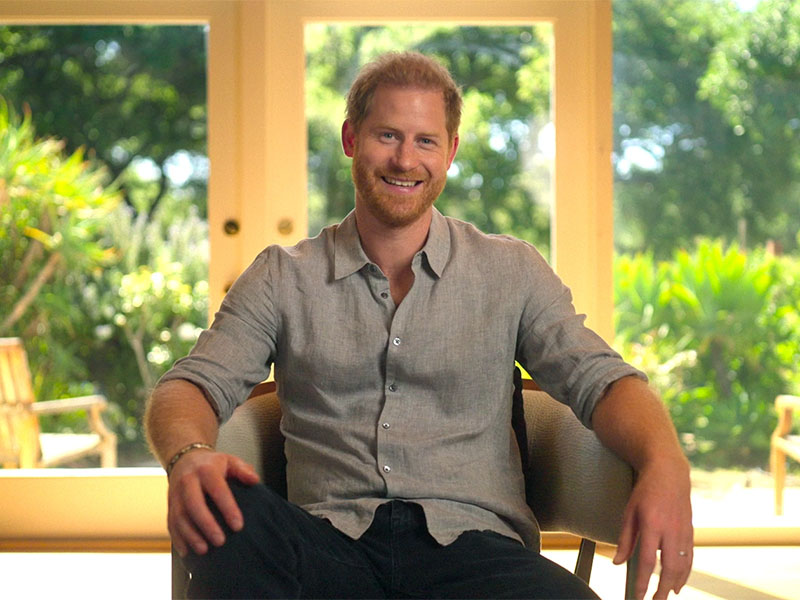
6 royal revelations about Prince Harry and more in Netflix docuseries “Heart of Invictus”

Only a few months after the release of their two-part docuseries “Harry & Meghan,” the Duke and Duchess of Sussex are back with another Netflix docuseries, this one more focused on a group of wounded war veterans who found solace in competitive sports

Called “Heart of Invictus,” the Netflix docuseries spotlights the 2022 Invictus Games, a global sporting event founded by Prince Harry shortly after his 2008 tour of duty in Afghanistan. In addition to his military service, Harry said he drew inspiration from the Warrior Games in the United States, where he witnessed the power sports can have on wounded, injured and sick veterans. Over the course of five episodes, the documentary introduces us to several ex-military competitors who strive to find purpose and strength after tragedy and loss.

Although Harry takes on a more background role throughout “Heart of Invictus,” he still makes several appearances — sometimes on his own and other times, alongside a few veterans and his wife. In true celebrity fashion, he also uses those moments to spark some buzz by throwing subtle shade at his family, namely his father King Charles III. In recent months, both Harry and Meghan have embarked on a media campaign to reinforce their separation from the Royal Family and heighten their own public image. First came “Harry & Meghan” and then, “Spare,” Harry’s tell-all memoir released earlier this year. “Heart of Invictus” is the couple’s third (and probably not final) platform that could be used to garner support from their fans, followers and naysayers.

That being said, “Heart of Invictus” is incredibly moving. But, it’s also incredibly juicy. Here are six of the ways Harry takes aim at the Royal Family in the series:

01
Harry refrains from using royal titles in introduction
Heart of InvictusPrince Harry in “Heart of Invictus” (Photo courtesy of Netflix)

In January 2020, Harry and Meghan Markle stepped back as senior members of The Royal Family following tensions with the monarch and squabbles with the press. The couple, however, still use their respective royal titles: Duke of Sussex and Duchess of Sussex.


In the beginning of the first episode, Harry avoided mentioning his associations with the monarch after an interviewer asked him to state his name.


“My name’s Harry,” he replied, before the interviewer asked, “What do you do, Harry?”


“What do I do? On any given day? I’m a dad of two under 3-year-olds, I have got a couple of dogs, I’m a husband, and I’m the founding patron of the Invictus Games Foundation,” Harry said. “There’s lots of hats that one wears, but I believe today is all about Invictus.”

02
Harry’s Afghanistan tour of duty triggered trauma of losing his mother
Heart of InvictusPrince Harry in “Heart of Invictus” (Photo courtesy of Netflix)

Harry said he experienced an “unraveling” after serving on the front lines in Afghanistan, which consequently triggered the trauma of losing his mother, Princess Diana.


“I can only speak for my personal experience, my tour of Afghanistan in 2012 flying Apaches, somewhere after that there was an unraveling and the trigger to me was actually returning from Afghanistan,” he said. “But the stuff that was coming up was from 1997, from the age of 12, losing my mum at such a young age, the trauma that I had I was never really aware of, it was never discussed.”


Harry continued, “I didn’t really talk about it. I suppressed it like most youngsters would have done — but then when it all came fizzing out I was bouncing off the walls, I was like, ‘What is going on here? I am now feeling everything as opposed to being numb.'”


The British Army veteran previously opened up about his tour of duty in Afghanistan in his memoir “Spare.” In it, he described the military tour as one of his most vulnerable moments


“In my life I’ve felt totally helpless only four times,” Harry wrote. “In the back of the car while Mummy and Willy and I were being chased by paps. In the Apache above Afghanistan, unable to get clearance to do my duty. At (Nottingham Cottage) when my pregnant wife was planning to take her life. And now,” he said, referring to the time when Meghan lost “so much blood” after she miscarried.

03
Harry says his mother’s death made him “unable to feel” for years
Heart of InvictusPrince Harry in “Heart of Invictus” (Photo courtesy of Netflix)

Trauma is a recurring topic throughout the series as Harry joined the Invictus competitors to discuss PTSD and the toll of war. One such conversation was with Canadian indoor rower and veteran Darrell Ling, who told Harry, “I’m glad you’ve been through this stuff and know how we feel.”


Harry then shared how greatly his mother’s death affected him during his childhood and later, as an adult:


“I can’t pretend to know what you’ve been through, but I had that moment in my life where, I didn’t know about it, but because of the trauma of losing my mum when I was 12, for all those years, I had no emotion, I was unable to cry, I was unable to feel.


“I didn’t know it at the time. And it wasn’t until later in my life aged 28 there was a circumstance that happened that the first few bubbles started coming out, and then suddenly it was like someone shook and it went ‘poof’ — and then it was chaos,” he added.

04
Harry blames family for difficulty coping with trauma
Heart of InvictusPrince Harry and Meghan Markle in “Heart of Invictus” (Photo courtesy of Netflix)

In an apparent jab at his father and family, Harry revealed his “biggest struggle” while coping with his trauma was that “no one around me could really help.”


“I didn’t have that support structure, that network or that expert advice to identify what was actually going on with me,” he said. Harry added that he decided to seek help for his mental health only years later, when it became incredibly debilitating for him: 


“Unfortunately, like most of us, the first time you really consider therapy is when you are lying on the floor in the fetal position probably wishing you had dealt with some of this stuff previously, and that’s what I really want to change.”

05
Harry says he learned how to manage his emotions on his own
Heart of InvictusPrince Harry and David Wiseman in “Heart of Invictus” (Photo courtesy of Netflix)

“My emotions were sprayed all over the wall, everywhere I went, and I was like, ‘How the hell do I contain this?’ I’ve gone from nothing to everything,” Harry said. “I’ve gone from nothing to everything and I now need to get a glass jar and put myself in it, leave the lid open. My therapist said, ‘You choose what comes in and everything else bounces off.'”


This isn’t the first time Harry opened up about his family, namely his father, being allegedly distant following Diana’s death. Elsewhere in “Spare,” Harry claimed his father didn’t even hug him once he learned that he had lost his mother forever.


“Pa didn’t hug me. He wasn’t great at showing emotions under normal circumstances. How could he be expected to show them in such a crisis?” Harry wrote.


“His hand did fall once more on my knee and he said, ‘It’s going to be OK.’ That was quite a lot for him. Fatherly, hopeful, kind. And so very untrue.”

06
Yes, Meghan also makes a few appearances throughout the series
Heart of InvictusPrince Harry and Meghan Markle in “Heart of Invictus” (Photo courtesy of Netflix)

Although most of the focus is on the games, its competitors and Harry, the docuseries also features Meghan, who’s seen accompanying her husband in a few clips. In one scene, Meghan is seen reassuring Harry before he goes on stage to deliver a speech to veterans in New York.


In anticipation of this year’s games, which are slated to take place in Düsseldorf from Sept. 9 to 16, a spokesperson for the Duke and Duchess of Sussex told PEOPLE last week that Meghan will also be in attendance at the games with her husband. 


“The Duke and Duchess of Sussex are delighted to attend the Invictus Games 2023 in Düsseldorf. The Duke will be in attendance throughout the entirety of the games and will be joined by The Duchess shortly after the games begin,” they said in a statement.

“Heart of Invictus” is currently available for streaming on Netflix. Watch a trailer for it below, via YouTube:


“Hogwash”: Experts say Clarence Thomas’ belated Harlan Crow disclosures are “too little too late”

Supreme Court Justice Clarence Thomas on Thursday acknowledged that he took three trips aboard Republican megadonor Harlan Crow’s private plane last year as he rejected widespread criticism of his failure to report trips on his annual financial disclosures in previous years, the Associated Press reports

One of Thomas’ trips he was to Crow’s lodge in the Adirondack Mountains in upstate New York, while the others were to Dallas, where he spoke at conferences sponsored by the conservative American Enterprise Institute. 

This year’s disclosures mark the first time Thomas has reported receiving any gifts or hospitality from Crow. According to the filing, the justice said he was following new guidelines from the federal judiciary for reporting travel but omitted earlier travel Crow funded, including a 2019 trip to Indonesia on the GOP benefactor’s yacht.

The financial report comes amid intensified focus on the ethics of the Supreme Court and fervent calls from legislators seeking to impose an ethics code on the justices. The mistrust of the highest court stems from a series of reports from ProPublica earlier this year revealing that Thomas has failed to disclose decades’ worth of luxury travel from Crow.

The billionaire also purchased the Georgia house where Thomas’ mother resides and footed the bill for two years of private school tuition for the justice’s great nephew, who he and his wife, Ginni Thomas, raised.

“After years of non reporting and an extension this year, Justice Thomas provides some basic information the public deserved to know long ago, adding a defense that he had ‘adhered to the then existing judicial regulations,'” former U.S. Attorney Harry Litman wrote on X, formerly known as Twitter. 

We need your help to stay independent

The annual financial reports for Thomas and Justice Samuel Alito, who ProPublica also revealed failed to disclose a private trip he took to Alaska in 2008 that was funded by two Republican donors, were released nearly three months after those of the other seven justices. The two conservative justices were granted 90-day extensions.

In the newly released forms, Thomas also acknowledges that he “inadvertently omitted” financial information from previous reports, including a life insurance policy for his wife valued at less than $100,000 and combined bank account balances at the Federal Credit Union worth $100,000 to $250,000.

He amended the reports for 2017 through 2019 in the filing as a result, also recognizing that he “inadvertently failed to realize” that his 2014 real estate dealings with Crow — in which the billionaire purchased two other properties from the Thomas’ in addition to his mother’s home — constituted a new reportable transaction even though it resulted in a capital loss.

“By amending his prior reports, Justice Thomas is necessarily conceding that he made mistakes—and that the press scrutiny mattered,” Steve Vladeck, the Wright Chair in Federal Courts at University of Texas Law, tweeted. “Whether you think his mistakes were malicious or negligent may well depend on your priors, but let’s not overlook that they’re mistakes *either way.*”

Thomas noted that he is considering whether to amend reports from years prior. A lawyer representing the justice, Elliot Berke, released a statement defending Thomas’ conduct and blasting his critics.

“The attacks on Justice Thomas are nothing less than ridiculous and dangerous, and they set a terrible precedent for political blood sport through federal ethics filings,” Berke said. “Justice Thomas’s amended report answers — and utterly refutes— the charges trumped up in this partisan feeding frenzy.”

Though Supreme Court justices do not have a binding code of ethics and have rejected the notion that they need to adopt one or have one imposed, the Democrat-controlled Senate Judiciary Committee approved an ethics code for the high court on a party-line vote in July. The legislation, however, has a slim chance of passing the Senate as it would need at least nine GOP votes, and Republicans have strongly opposed it.

Legal experts, however, pushed back against Thomas’ defense of his omissions in the filing, telling the AP that the expectation of reporting travel on private planes has been clear to them for years.

“You report the free trips on the jets, the private jets, if you take them. I don’t get this idea that, ‘Gee, the rules changed on us.’ That’s just a lot of hogwash,” Richard Painter, the White House’s chief ethics lawyer at the time Alito and Chief Justice John Roberts were nominated to the Supreme Court, told the outlet.

Eric Segall, the Ashe Professor of Law at Georgia State University, also pointed out on X that Thomas “made amends before for failing to report Ginny’s income.”

“I think that the Thomas report and the Alito report, even more so, are too little too late,” former White House ethics Czar Norm Eisen told CNN Thursday afternoon, acknowledging Thomas’ disclosures and the older amendments.

“But there are many more trips — luxury travel, yacht trips, visits to Crow’s properties, payment of a family member’s tuition — those are not disclosed in here,” Eisen continued, echoing other experts assertions that it was clear Thomas was required to disclose the travel years ago and criticizing Alito’s “much skimpier” disclosure form for not discussing a luxury fishing trip he took years ago that’s been scrutinized. 

“It does speak to the issue that Boris was asking Joan about: How is it possible that we do not have a code of ethics that is binding upon the highest court in the land?” he added, referring to anchor Boris Sanchez and legal analyst Joan Biskupic.

“Not only would I have required anything like this to be disclosed, I wouldn’t have allowed it in the first place,” Eisen concluded, evoking his time working on ethics in the White House. “Harlan Crow has had a case with interest before the court, and he has ideological interest as a prominent conservative. So there is an ethics crisis at the court.”

Proud Boys leader Joe Biggs sentenced to 17 years

Proud Boys leader Joe Biggs was handed down a sentence on Thursday relating to his involvement in the Capitol riot on January 6, 2021. Convicted in May of seditious conspiracy, conspiracy to use, intimidation or threats to prevent officials from discharging their duties and interference with law enforcement during civil disorder, he’s been ordered to spend 17 years behind bars — one of the longest sentences yet, just under Oath Keepers founder Stewart Rhodes, who received a sentence of 18 years.

“Biggs viewed himself and his movement as a second American revolution where he and the other ‘patriots’ would retake the government by force,” prosecutors said in a sentencing memo. According to reporting from BBC, Biggs was tearful in court, issuing an apology for his actions and claiming to have been “seduced” by the crowd on the day of the riot.

“I just moved forward. My curiosity got the better of me,” he said. “I’m not a terrorist. I don’t have hate in my heart . . . I know that I have to be punished, and I understand.”


Donald Trump is cracking up the Georgia GOP

Georgia Republicans find themselves in a state of disarray as right-wing conservatives, both in Congress and Georgia’s General Assembly, pressure GOP leaders to pursue efforts to punish Democratic Fulton County, Ga. District Attorney Fani Willis for indicting former President Donald Trump.

Spearheaded by first-term state Sen. Colton Moore, the push for political retribution has shaken the so-called law and order party, as some of the GOP’s less radical colleagues are forced to fire back against the unseemly probing of a prosecutor. Earlier this month, Willis charged Trump and 18 other defendants in a sprawling racketeering indictment accusing the group of conspiring to overturn the results of the state’s 2020 election. Moore, who represents the northwest corner of Georgia, in response to the indictment said Willis’ “political persecution” of Trump and her behavior in the aftermath should prompt an emergency session to review her actions.

But other Republicans in the Peach State were quick to push back.

Georgia Gov. Brian Kemp dismissed the idea of ousting Willis during a press conference Thursday.

“There have been calls by one individual in the General Assembly and echoed outside these walls by the former president for a special session that would ignore current Georgia law and directly interfere with the proceedings of a separate but equal branch of government,” he said, according to The Hill

Kemp argued that history was “trying to repeat itself,” a reference to the time shortly after the 2020 election when he rejected calls to order a special session to subvert the election results, and pointed out that Georgia law details legal methods constituents can employ to challenge their local prosecutor if they believe the prosecutor is engaging in “unethical or illegal behavior.”

“He’s using the money he steals from conservatives to attack fellow Republicans — doing nothing but helping the Democrats across the state and putting his conservative colleagues in danger.”

“Up to this point, I have not seen any evidence that DA Willis’s actions or lack thereof warrant action by the prosecuting attorney oversight Commission, but that will ultimately be a decision that the commission will make,” Kemp, who pushed back against Trump’s cries of a stolen election earlier this month, said.

“A special session of the General Assembly to end-run around this law is not feasible and may ultimately prove to be unconstitutional,” he added.

We need your help to stay independent

But a small yet vocal group of Republican lawmakers has already joined Moore in calling for the special session to remove the elected district attorney or defund her office.

“The Legislature has this great check and balance when it comes to controlling the purse,” Moore told The Hill earlier this month. “Ultimately, from what I’ve seen, I think she should completely be defunded of any state dollars. People in northwest Georgia and Georgians all over don’t want their tax dollars going to fund this type of political persecution.”

U.S. Rep. Andrew Clyde also hopes to use an upcoming appropriations bill to curtail federal funding for Willis as well as the other prosecutors have indicted the former president this year.

Those who have not aligned themselves with Moore have received a sharp admonishment from the senator, who recently called those colleagues “buzzard cowards,” The Atlanta Journal-Constitution reports.

The former president has added to the tension, posting a video to his Truth Social platform this week that praised Moore’s “courage and conviction” while urging other Republican legislators to stand with the legislator.

“Highly respected Georgia state Sen. Colton Moore deserves thanks and congratulations of everyone for having the courage and conviction to fight the radical left lunatics who are so badly hurting the great state of Georgia and, frankly, the USA itself,” Trump said in the video before taking aim at “failed DA” Willis.

Georgia House Speaker John Burns, a Republican, added to the chorus of GOP dissent, suggesting in a letter to the GOP caucus that the targeting of Willis violates the separation of powers.

If legislators are really concerned “about the levels of serious crime in Atlanta,” stripping funding from Willis’ office would be “be harmful to the public safety,” Burns wrote in the letter to the majority. The representative went on to cite the Georgia statute that outlines the salaries for district attorneys and assistant district attorneys and asserted that the General Assembly does not have the authority to reduce the pay of any individual DA.

“Targeting one specific DA in this manner certainly flaunts the idea of separation of powers, if not outright violates it,” Burns continued.

“We as members of the General Assembly have sworn to uphold the Constitution of the State of Georgia, these United States and the laws thereof. We trust that our criminal justice system will deal with this matter impartially and fairly, and we will not improperly intercede in this matter in direct contradiction to the oaths we took.”

Other Republican state officials have also quickly opposed Moore’s calls for the special legislative session on the grounds that the move would require support from Democrats, according to The Journal-Constitution.

“Senator Moore put his letter out and pasted it all over social media and did interview after interview while using the issue to raise money online,” state Sen. Russ Goodman, R, told his constituents in an open letter, adding, “He never once called anyone in the Republican caucus to discuss his letter. I’ll be perfectly frank: I think what he is doing is disingenuous and I’m not going to purposely mislead y’all.”


Want a daily wrap-up of all the news and commentary Salon has to offer? Subscribe to our morning newsletter, Crash Course.


Moore has since escalated his attacks against his Republican opponents, calling those who have rejected his petition spineless “RINOs” (Republicans in name only) and even alluded to impending violence.

“Do you want a civil war? I don’t want a civil war. I don’t want to have to draw my rifle,” Moore said during a recent appearance on Steve Bannon’s podcast. “I want to make this problem go away with my legislative means of doing so.”

His barrage has also sparked threats against some Republican legislators that prompted the Georgia Bureau of Investigation to ask lawmakers for specifics about harassing activities. After state Sens. Bo Hatchett and Shelly Echols issued a joint statement objecting to Moore’s call to action, they said the senator dispatched robocalls, texts and emails targeting them.

“It’s a horrible abuse of power. A violation of Colton Moore‘s oath of office,” Hatchett told the Journal-Constitution. “He’s using the money he steals from conservatives to attack fellow Republicans — doing nothing but helping the Democrats across the state and putting his conservative colleagues in danger.”

Moore’s conduct only adds to an already tense environment within the chamber as freshman state Sen. Shawn Still, who said he committed no wrongdoing, faces charges in the Georgia indictment and Lt. Gov. Burt Jones could soon be the subject of investigation as one of the charging documents 30 unindicted co-conspirators. A U.S. Supreme Court ruling that could prompt a new round of legislative redistricting at the end of the year also threatens the fleeting harmony of the chambers. 

State Senate Majority Leader Steve Gooch, a Republican, suggested that lawmakers turn their attention to other methods of scolding Willis, such as hearings into her use of public resources. Meanwhile, others predict the split in the chamber will persist.

“I’ve had numerous constituents express that if Trump’s presidential campaign brings people like Colton to the forefront of our state politics, they don’t want the former president back in office,” Hatchett told the Journal-Constitution.

“The only person Colton is helping is Colton,” he added. “He’s hurting Republicans. He’s hurting Republican leaders. And he’s hurting former President Trump.”

There is a Post Malone song with Bob Dylan lyrics we’ll never get to hear

Somewhere in a producer’s hard drive sits an unfinished Post Malone song with iconic Bob Dylan‘s lyrics, Rolling Stone reported. In an interview with the magazine, producer Michael Cash revealed Malone was featured in a project with all of Dylan’s songs where rappers would cover songs written by Dylan. This collection of songs was inspired by the 2014 collaborative album, “Lost On the River: The New Basement Tapes” which featured Elvis Costello, Rhiannon Giddens, Taylor Goldsmith, Jim James and Marcus Mumford singing all of Dylan’s unreleased lyrics.

Dylan’s representative, Jeff Rosen allegedly said there were lyrics for the potential song called “Be Not Deceived” in November 2020. Malone, a major Dylan fan, heard the song when he stopped by Cash’s studio in March 2021, thinking that Dylan also be present for the recording session. Half of the song was recorded in the session. Dylan’s team liked what they heard but suddenly the producer could not get Malone back into the studio to finish the song.

“All I can tell you is it went from being something to be excited about to just turning into a circular, figure-eight pattern,” Cash said. “Nobody had an answer.”

No longer wanting to wait for Malone, Dylan’s team pulled his lyrics out of the song. 

“Rosen said to me at a certain point, ‘Well, we’re just going to retract the lyrics.’ Bob and Mr. Rosen do things a specific way. They get things done in a New York minute, and then it started to become . . . Honestly, they just were like, ‘This should be finished.'”


“Hijack”: How Idris Elba’s reimagining of a hero made me feel better about my chances of survival

After a long week, Idris Elba as Sam Nelson on the new AppleTV+ series “Hijack” is the hero I didn’t know I needed. 

Did I make it out of the streets only to be killed by rice and pasta?

I’m an HBO or well, I guess a Max kind of guy. HBO has been my go-to since I watched “Fraggle Rock” as a small kid. Now I do randomly punch Netflix and Hulu to see if new shows or stand-up specials dropped, but that’s it. Mainly because those apps in combination with the collection of other available streaming services always confuse me – as I think many of us are overwhelmed by every network attempting to shake us down for $10 bucks every month. 

In the middle of these services, there’s Apple TV+. I subscribed to Apple TV+ after so many of my basketball-loving friends raved about “Swagger” and was beyond happy with the money I spent after binging “The Morning Show.” But still, I never think of logging on to Apple TV+ as much as the other apps, and I don’t know why. 

* * *

“You can step back now, Mr. Watkins,” a young nurse in red frames said. 

I was at my doctor’s office, the day of my Uncle June’s funeral. It was also the day after I told my dad June had died, news he would have no way of getting because he has pneumonia, COVID, is breathing out of a tube and had been an isolated impatient for the last two months. 

“Sir, can you hear me?” the nurse asked, “You need to fill out this last form.” 

I apologized for being in a daze and received the clipboard. When I was finished, another nurse or medical assistant walked in and took my blood pressure. Our eyes widen as my numbers came in higher than pandemic gas prices. The nurse took my blood pressure again and again, before we all realized that I was lucky to be alive. She even said, “How are you alive?” 

I shrugged. 

Shortly after we finished playing the blood pressure game, a collection of lab coats filled my room, ready to talk about the cocktail of medicines they wanted to put me on. I agreed to whatever they said, leaving the hospital feeling defeated. How could I just let myself go? Did I make it out of the streets only to be killed by rice and pasta? Will I end up stretched out in isolation, on 10 different pills a day like my dad? 

I walked out of the hospital where my doctor’s office is located with the stack of papers containing multiple blood pressure articles ­­painted with little diagrams of people living happy lives after being diagnosed, and instructions on how to cook flavorless salmon, when I reached the door. An elderly Benson-looking security guard with a nickel silver fro yelled, “You watch that new Stringer Bell show ‘Hijack’? S**t good as hell man!” 

“What?” I said, confused, mainly because he didn’t seem like the kind of guy that read my columns about television; however, maybe I’m stretching out. 

“I ain’t talking to you, Slim,” the old guard laughed, pointing over his shoulder to another guard dressed in the same blue uniform. “You should watch if you have Apple tho.” 

HijackIdris Elba in “Hijack” (Apple TV+)My confusion instantly went away, as I nodded at the other guard. 

I’m a “Wire” fan for life, so anytime one of the characters from the show lands a role, especially a lead, I’m all-in.

“Give me your login,” I said with stone face. The two men paused, until I smiled, “I’m just messing with y’all. I’ll check that show out, and have a good day.” 

They chuckled like kids as I exited. I made a note to watch “Hijack” because they said Stringer, which is what many Baltimoreans still call Idris Elba, even though the real Stringer is alive and well and can be found on North Avenue. Regardless, I’m a “Wire” fan for life, so anytime one of the characters from the show lands a role, especially a lead, I’m all in. I have to say that those guards have great taste because “Hijack” was excellent. 

We need your help to stay independent

In “Hijack,” Elba plays Sam Nelson a businessman who specializes in negotiations, and works in “mergers and acquisitions.” We know he’s doing well because he’s in the nicest first-class seat anyone has ever saw on a plane, and his flat looks like something out of a wealthy design magazine. But all of the money in the world couldn’t buy Sam out the situation responsible for the title of the series, “Hijack.” Gunmen with extreme demands figure a way to sneak their weapons onto the plane and create an extremely serious hostage situation. 

What’s excellent about the show is that every episode takes place on the plane, so you remain on the edge of your seat during every installment. Viewers will feel as uncertain as the terrorized characters who are forced to stare down death repeatedly. Sam with his master negotiation skills on full display shines like a diamond in the conflict. He’s calm, angry, persuasive, aggressive, gentle, kind and empathetic when he has every single reason to crumble, like many other characters on the plane do. Every time you think he is going to sit down and let the hijackers do what they came to do, he’s instantly up in business class, in coach or in a the cockpit suggesting new ideas while trying to talk everyone down. You will love him, you will hate him, and he will confuse you, right before you understand that you need him. 

Nelson makes decisions that will leave you screaming at the television, like giving a hijacker back a pistol he retrieved because he “just wanted to get back home to his family.” Who does that? 


Want a daily wrap-up of all the news and commentary Salon has to offer? Subscribe to our morning newsletter, Crash Course.


Though it’s fiction, I watched the show closely putting my own situation into context. Thinking about my potential new reality wrapped in meds and even more doctor visits, but understood that even if things get bad, I could be like Sam Nelson, by centering family and doing what it takes to survive. 

Sure things can get bad; however, having the ability to fight, means having the opportunity to overcome any adversity and I like my odds, just like Sam. 


Ozempic in the spotlight is just the latest in the long, strange history of weight-loss drugs

Losing weight conveniently, cheaply, safely. That’s been the holy grail of weight-loss ever since 19th century English undertaker and weight-loss celebrity William Banting’s 1863 Letter on Corpulence spruiked his “miraculous” method of slimming down.

Since then, humans have tried many things — diet, exercise, psychotherapy, surgery — to lose weight. But time and again we return to the promise of a weight-loss drug, whether it’s a pill, injection or tonic. A “diet drug”.

The history of diet drugs is not a glowing one, however.

There have been so many popular drug treatments for excess weight over the years. All, however, have eventually lost their shine and some have even been banned.


Ozempic is a recent arrival

Ozempic and its sister drug Wegovy, both manufactured by Novo Nordisk, are the latest offerings in a long history of drug treatments for people who are overweight. They contain the same active ingredient — semaglutide, which mimics a hormone, GLP-1 (glucagon-like peptide-1) that acts on the hypothalamus (the brain’s “hunger centre”) to regulate appetite.

As an obesity treatment, semaglutide appears to work in part by reducing appetite.

These are injections. And there can be side effects, most commonly nausea and diarrhoea.

Although marketed as treatments for chronic obesity and diabetes, they have exploded in popularity as diet drugs, largely thanks to social media.

This has helped drive a shortage of Ozempic for diabetes treatment.


From ‘gland treatment’ to amphetamines

But Ozempic is not the first weight-loss drug. For example, organotherapy (gland treatment) was hugely popular in the 1920s to 1940s.

It rode on a wave of enthusiasm for endocrinology and specifically the discovery that “ductless glands” — such as the thyroid, pituitary and renal glands — secreted chemical messengers (or “hormones”, as they came to be known).

These hormones coordinate the activities and growth of different parts of the body.

Doctors prescribed overweight people extracts of animal glands — either eaten raw or dried in pill form or injected — to treat their supposedly “sluggish glands”.

For slaughterhouse companies, this was a lucrative new market for offal.

But organotherapy soon fell from favor. There was no evidence excess weight was usually caused by underperforming glands or that gland extracts (thyroid in particular) were doing anything other than poisoning you.

Amphetamines were first used as a nasal decongestant in the 1930s, but quickly found a market for weight-loss.

Why they worked was complex. The drug operated on the hypothalamus but also had an effect on mental state. Amphetamine is, of course, an “upper”.

The theory was it helped people feel up to dieting and gave pleasure not found on a plate. Amphetamines too, fell from treatment use in the 1970s with Nixon’s “war on drugs” and recognition they were addictive.


Another decade, another drug

Each decade seems to produce its own briefly popular weight-loss drug.

For example, the popular diet drug of the 1980s and 90s was fen-phen, which contained appetite suppressants fenfluramine and phentermine.

During the height of its craze, vast numbers of users testified to dramatic weight loss. But after users experienced heart valve and lung disease, fen-phen was withdrawn from the market in 1997. Its producer allocated a reported US$21 billion to settle the associated lawsuits.

The hormone leptin aroused excitement in the mid-1990s. Leptin seemed, for a brief moment, to hold the key to how the hypothalamus regulated fat storage.

Pharmaceutical company Amgen wagered millions buying the rights to the research in the hope this discovery could be turned into a treatment, only to discover it didn’t translate from mice into people. Far from not having enough leptin, people with obesity tend to be leptin-resistant. So taking more leptin doesn’t help with weight-loss. Amgen sold the rights it had paid so much for.

Ephedra was popular as a weight-loss treatment and as a stimulant in the 1990s and 2000s, finding buyers among athletes, body builders and in the military.

But the US Food and Drug Administration banned the sale of dietary supplements containing ephedra in 2004 after it was linked to health problems ranging from heart attacks and seizures to strokes and even death and in Australia ephedra is prescription-only.

Now we have Ozempic. Just because the history of diet drugs has been so dire, we shouldn’t jump to conclusions about new ones — Ozempic is not a drug of the 1920s or 1960s or 1990s.

And as history recognises, multiple complexities can combine to push a drug into popularity or damn it to history’s rubbish bin.

These include patients’, physicians’ and industry interests; social attitudes about drug treatment; evidence about safety and efficacy; beliefs and knowledge about the cause of excess weight.

One noticeable contrast with past diet drug experiences is that now, many people are happy to talk about using Ozempic. It seems to be increasingly socially acceptable to use a drug to achieve weight-loss for primarily aesthetic reasons.

(Due to Ozempic shortages in Australia, though, doctors have been asked to direct current supplies to people with type 2 diabetes who satisfy certain criteria. In other words, it’s not really meant to be used just to treat obesity).


Our enduring search for weight-loss drugs

Ozempic is predicted to earn Novo Nordisk US$12.5 billion this year alone, but it’s not just industry interests stoking this enduring desire for weight-loss drugs.

Patients on an endless cycle of dieting and exercise want something more convenient, with a more certain outcome. And doctors, too, want to offer patients effective treatment and a drug prescription is a workable option given the constraints of appointment times.  

The body positivity movement has not yet ousted anti-fat bias or stigma. And despite decades of recognition of the major role our physical and social environment plays in human health, there’s little political, public or industry appetite for change.

Individuals are left to personally defend against an obesogenic environment, where economic, cultural, social, health and urban design policies can conspire to make it easy to gain weight but hard to lose it. It is no wonder demand for weight-loss drugs continues to soar.

Laura Dawes, Research Fellow in Medico-Legal History, Australian National University

This article is republished from The Conversation under a Creative Commons license. Read the original article.

Burger King will face lawsuit over its Whoppers, which are allegedly much smaller than advertised

Burger King must go to court to defend its signature hamburger after a lawsuit, brought forward by several hungry — and disappointed — customers, was given the signature of approval by a U.S. judge. On Friday, U.S. District Judge Roy Altman in Miami rejected Burger King’s bid to dismiss the lawsuit, which claimed the chain misled its customers by making the famed Whopper appear much bigger than it actually is.

The lawsuit alleged that in-store menu boards advertising the Whopper portrayed burgers with ingredients that “overflow over the bun,” which made the burgers appear 35% larger and contain more than double the meat than the chain serves. This, the lawsuit said, qualifies as a breach of contract.

In response, Burger King vehemently denied the claims, saying in a statement on Tuesday, “The plaintiffs’ claims are false. The flame-grilled beef patties portrayed in our advertising are the same patties used in the millions of Whopper sandwiches we serve to guests nationwide.” In his Friday decision, Altman said it was up to jurors to “tell us what reasonable people think” after Burger King argued that it wasn’t required to serve burgers that look “exactly like the picture.” Altman also allowed the customers to pursue negligence-based and unjust enrichment claims.

A “Justified: City Primeval” ending breakdown: The good, the bad and the conflicted

Walton Goggins is a liar.

From the moment news broke that FX’s “Justified” was being revived as a limited series under the “Justified: City: Primeval” moniker, fans of the critically acclaimed neo-Western wondered if Goggins, who memorably portrayed the Kentucky outlaw during the show’s six-season original run, would return alongside Timothy Olyphant as U.S. Marshal Raylan Givens. After all, what is “Justified” without Boyd Crowder? And who is Raylan without his greatest foil?

In the lead-up to the show’s debut in July, Goggins gave interviews in which he stated he wasn’t involved in the new series, which is set 15 years after the original finale and was adapted from Elmore Leonard’s novel “City Primeval: High Noon in Detroit” (Leonard’s short story “Fire in the Hole” served as the inspiration for the original series). Goggins’ absence from the project makes sense; Boyd is still in prison in Kentucky, and the story takes place primarily in the Motor City. But in the “City Primeval” finale, Goggins was revealed to be a liar when – with a little more than eight minutes remaining in the episode, and with Raylan having recently retired from the Marshals after shooting and killing Clement Mansell (Boyd Holbrook) in Carolyn Wilder’s (Aunjanue Ellis) kitchen – the action returns to Kentucky, twangy score and all.

Our first glimpse of Boyd since the iconic “We dug coal together” scene is familiar: dressed in prison orange and seen from behind, he’s walking the halls of Tramble Penitentiary, holding a Bible. Next, he’s seen delivering a sermon to his fellow inmates, also something we’ve seen him do before. He eloquently and passionately speaks about the hateful man he used to be and the possibility of change before revealing that his health is in decline and he’s being transferred to a hospital to determine the cause. But, in typical fashion, it’s all a ruse, as Boyd has planned an elaborate escape with the help of a female guard with whom he’s having an affair. Once they lock the other guard (portrayed by Luis Guzmán) in the transport van, they set off for Mexico. 

For “Justified” fans, Goggins’ return to the action is an exciting moment, and one we all should have seen coming. Of course the powers that be wouldn’t let a new season of “Justified” pass without a visit from the other half of the show’s central duo, especially when he happens to be one of the best antagonists of all time. Speaking to the Los Angeles Times, executive producer and director Michael Dinner said that they knew they had to address the elephant in the room. “It was decided that we would bring him in at the end and have fun with it,” he said. “It was a ball to do. Hopefully people will see it and let out a little rebel yell.”

But what if, upon deeper reflection, one might also begin to question Boyd’s appearance? 

We’re reminded of the show that once was, not the show we just finished watching.

There’s something that happens when Boyd changes out of his orange prison garb and into his all too familiar getup; the crisp white dress shirt, fitted vest, and dark jeans are a uniform that transforms Goggins and announces the charismatic criminal fans loved is back. In an instant, we’re reminded of what “Justified” was for six seasons: a well-written, superbly acted and extremely funny crime drama about two men cut from the same cloth — one a lawman and one an outlaw — bound by shared history and experience but destined to be at odds. We’re reminded of the show that once was, not the show we just finished watching. That six-minute scene, although it serves a purpose, threatens to overshadow the rest of “City Primeval,” which was a good but different series. Goggins’ appearance reminds us that, for as good as Holbrook was at inhabiting the dangerous, unhinged mind of Mansell, the character never quite measured up to Boyd or the other villains who made “Justified’s” original run so uniquely compelling. But the real issue might just be what Boyd’s return to the fold could mean for our favorite marshal.

Justified: City PrimevalWalton Goggins in “Justified: City Primeval” (FX)

When the action returns to Miami, Raylan is at peace, relaxing on a boat with his daughter, Willa (Vivian Olyphant). She asks him if they’re going to talk about his decision to retire, but before he can respond, he receives an emergency alert about an escaped inmate from Tramble. It doesn’t mention Boyd by name, but Raylan seems to understand immediately what it means, as if he’s still deeply in tune with his friend-turned-foe after all these years. He stares at the phone for a moment before choosing to ignore the message, but it’s clear there is an internal battle waging. The alert is then quickly followed by a call from the Lexington office of the Marshals Service. That too goes unanswered, though the phone is still ringing as the camera pulls away from the boat and the episode cuts to black. It’s a sequence of events that can be read two ways. 

The first, most cynical interpretation, is that FX is attempting to capitalize further on one of its best and most beloved properties, and is setting up another run of episodes that sees Raylan return one more time to go after Boyd, a man only he can possibly bring to justice. In an interview with The Hollywood Reporter, showrunner Dave Andron revealed Goggins’ return was planned early in the development of the series but would not say that it was done intentionally to set up future installments of “Justified.” However, in a time when revivals continue to dominate Hollywood, one could hardly fault FX and the creative team for potentially wanting to return yet again to the “Justified” well for a story involving both Raylan and Boyd. The fact that Ava (Joelle Carter) is still out there somewhere with Boyd’s son also means additional narrative threads exist. So, a new limited series that pits an aging Raylan and Boyd against each other a final time is an offer that few could refuse (and Olyphant has already said he’d be willing to return for more).

We need your help to stay independent

But from a straight storytelling point of view, we’ve been there, done that, got the iconic parting line and bourbon hangover to prove it. So there is another interpretation of the show’s final minutes, which is that Raylan is a changed man. Not even Boyd — the former friend and crafty criminal with whom Raylan frequently went toe-to-toe in Harlan — is enough to pull him back into service. It’s a kinder, more optimistic read, one that doesn’t threaten to erase the growth represented by Raylan finally choosing his family over his career, something he failed repeatedly to do over the course of the show. As his ex-wife, Winona (Natalie Zea), poignantly says in the finale, “If you couldn’t do it for me, I’m glad you could do it for her.” It’s an emotionally loaded line that speaks to Raylan and Winona’s long and complicated history, and Zea delivers it perfectly, with understanding and a hint of sadness but without frustration. 

We’ve been there, done that, got the iconic parting line and bourbon hangover to prove it.

It’s Raylan’s decision to retire after fatally shooting Mansell — who was not reaching for a gun but a cassette tape — that ultimately gives “Justified: City Primeval” a reason to exist beyond corporate greed and/or cultural nostalgia. If the decision is immediately reversed in service of a Boyd-centric series, it could potentially undo not just the perfect ending of the original series but also the lessons Raylan learned in the revival. He isn’t the man he used to be, and the world he inhabits isn’t the same either. For Raylan to ignore the call from Lexington, to ignore the thrill of the chase and natural pull of Boyd Crowder, is a sign that Boyd was actually right: people can change. 

And yet, based on what transpires in Kentucky, Boyd himself hasn’t changed all that much. He is still the person he always was: a man who is whatever he needs to be in the moment, who will do anything to get what he wants. Over the course of the original six seasons, we saw many different versions of Boyd, which revealed not only his intelligence but also a keen ability to adapt to any situation. It is what arguably made him a compelling villain and a good foil for Raylan, a man who was, for better or worse, firmly stuck in his ways. If Raylan and Boyd represent two sides of the same coin, what does the fact that Boyd hasn’t changed say about Raylan? Does it mean that he is lying to himself and the decision to retire won’t stick? Does it further separate the two men? Or does it mean that Boyd has been unable to change because, until now, he’s been unable to escape the life he was born into?


Want a daily wrap-up of all the news and commentary Salon has to offer? Subscribe to our morning newsletter, Crash Course.


Until FX announces a decision about the future of the show (or lack thereof), the way we interpret the ending of “Justified: City Primeval” likely says more about our own beliefs and desires than it does about the series. The question of whether people can change has long been debated. For years it seemed as if Raylan was not capable of it, or at least wasn’t willing to put in the work (“If you wanted to change your life for me, Raylan, you would have done so by now,” Winona once told him in Season 3). It’s clear that something has shifted for Raylan, that his priorities are different now. But by leaving the series vaguely open-ended, with Boyd on the run and Raylan on the water, it allows us to make up our own minds. It’s not the abrupt cut to black that ended “The Sopranos” and left fans debating the fate of Tony for years. But it does leave it up to personal interpretation, and there’s something cathartic about Boyd escaping prison and Raylan breaking the cycle of parental disappointment and being there for his daughter. Rather than an ending that honors the past that tied Raylan and Boyd together, it’s one that looks to the future, one in which both men leave Harlan alive. And what could be better than that?

Trump lashes out after the conservative Wall Street Journal editorial board criticizes his campaign

Former President Donald Trump on Wednesday claimed his administration's tariff policies were successful in response to The Wall Street Journal editorial board's cautioning against the 10 percent tariff policy he promotes on the campaign trail.

When the GOP frontrunner proposed implementing a 10 percent tariff on foreign imports into the country, arguing that the policy "would really make a lot of money," the WSJ editorial board pushed back, suggesting that "Americans should be prepared to pay more for all kinds of goods" under the proposal."

"This is worth taking literally and seriously because Mr. Trump meant what he said about tariffs when he ran for President in 2016," the editorial board said, citing a Tax Foundation analysis that found tariffs cost Americans $80 billion and 166,000 full-time-equivalent jobs during his presidency.

Trump fired back at the analysis in an op-ed of his own: "Even after being proven spectacularly and totally wrong in all their past predictions regarding my historically successful trade policies, the die-hard globalists at the editorial board still have not learned their lesson," he wrote, claiming the editorial board was just reciting "debunked talking points from corporate-funded studies about our tariffs' alleged impact on American consumers."

He instead pushed the country's trade deficit as a measure of his administration's success, pointing to the deficit with China he said was "down year-over-year for five straight quarters" ahead of the pandemic. The editorial board, however, had already addressed and dismissed that point in its analysis, arguing that the trade deficit "isn't a useful measure of economic performance" and noting that it had increased under his administration even when adjusting for inflation.

The White House also criticized Trump's proposal last week, echoing the board's warning that it would lead to higher prices.


This 4-ingredient family recipe for homemade Kahlua takes hardly any time — and makes a perfect gift

My mother was neither a drinker nor a smoker; although, she tried over the years to be both. Her problem? She didn’t like the taste of alcohol and she couldn’t inhale. A few times someone would actually try to teach her to inhale, but she somehow managed to simultaneously hold the smoke in her mouth while breathing in only through her nose. It was like a carnival trick, honestly.  

I think she wanted to be like our Grandma Bah, her maternal grandmother (my great-grandmother), whom she absolutely adored and was the only person who smoked in our family. Grandma Bah cussed, smoked, drank lots of Coca-Cola and was unorthodox in countless ways, but she was not known as a drinker.

I don’t know what it was that made mom feel like having a drink was edgy and rebellious. She even said it: “Have a drink,” like it was this elusive thing that only cool people did. It was certainly outside the norm in our household. It was also the late 70s, a lot was happening and I’m sure she felt far removed from all she saw on the evening news while living in our small, Mississippi town on the outskirts of Mobile, Alabama.

Grandma Bah smoked More cigarettes — they came in a red package and I remember seeing my mother happily puffing on one of those long, skinny, dark brown things. Unlike Grandma Bah, the consummate smoker she was, mom held her cigarette awkwardly, rigidly and totally unnaturally between her perfectly straight first and second fingers, its tip aglow; but she loved it! All she she did was fill her mouth with smoke and blow it out, but that was enough. She was smoking. Those two would laugh, tell stories and cut up til close to sunrise. It was something to witness. 

Fast forward to the mid-80s and my mother finally found her drink . . . the White Russian. Thankfully, mom never did develop a real taste for alcohol, but once she discovered the White Russian, that’s what she would order when we went out to a restaurant.

We need your help to stay independent

She was thrilled when she found this recipe and shared it with everyone she knew. Soon she began bottling up her brew in adorable little bottles she found in vintage shops and antique stores that she cleaned up and affixed with handmade labels. Like so many things she made, the packaging became as lovely as the contents.  

For the longest time, I kept a bottle or two of her homemade Kahlua on hand in my liquor cabinet. If stored properly, it keeps indefinitely, so I was rarely without. At some point, though, my home-brew making fell by the wayside and I think it is time to bring it back. We are now coming in to the peak weeks of hurricane season, so what better time to have some stashed away for ourselves and to share with neighbors. It is the simplest thing to make and people really do love it.

Everything is better homemade, right? Well, most things, anyway . . .


Want more great food writing and recipes? Subscribe to Salon Food’s newsletter, The Bite.


More than the taste of this homemade Kahlua, it is the making of it  that I remember most. There is no telling how many gallons mom and I made together, bottled and gave away over the years. I have great memories of us laughing until we could hardly catch our breath during our many mishaps made mostly while trying to pour our concoction into whatever precious bottles my mother had found and wanted to use. Sticky messes, the aroma of coffee permeating the house, planning the next thing we would do, sharing the work of cleaning up while also casually sharing what was on your minds — there is just something about kitchen time, about creating something delicious together.   

Now is the perfect time to make this Kahlua, especially with the holidays arriving before you know it. You won’t believe how much you like Kahlua once you have this homemade version on hand and with a little effort (finding the right sized bottles) and artistic flair (make cute labels for said bottles), your holiday gifts will be in the bag before Thanksgiving.   

Margie’s Homemade Kahlua
Yields
1/2 gallon
Prep Time
05 minutes
Cook Time
10 minutes

Ingredients

750 ml vodka

4 cups sugar* 

2 ounces instant coffee

3 tablespoons pure vanilla extract


Directions

  1. Bring 2 cups of water to a boil.

  2. Stir in sugar and remove from heat once dissolved.

  3. Add jar of instant coffee and vanilla.

  4. Allow to fully cool, then add vodka.

  5. Strain through a fine sieve while pouring into glass container with a good fitting lid.


Cook’s Notes

-The original recipe called for a whopping five cups of sugar! But we never made it that sweet. Pare down the sugar as much as you like or use an alternative sweetener of your choosing.

“Not worth the paper it’s printed on”: Texas Republicans ignore ruling against Abbott’s “Death Star”

A Texas judge ruled on Wednesday that a law dubbed by critics as the “Death Star” and championed by Republican Gov. Greg Abbott is unconstitutional.

Signed into law by Abbott in June, the top-down legislation prohibited cities from passing local ordinances that contradict state legislation in eight broad areas like government, finance and labor. The GOP-backed effort was widely seen as a power grab meant to curtail the progress of Democrat-led cities in the Lone Star state. 

Abbott explained that he signed the bill to “cut red tape & help businesses thrive,” arguing that “Texas small businesses are the backbone of our economy” and “burdensome regulations are an obstacle to their success.”

But District Judge Maya Guerra Gamble disagreed.

The decision against the state Wednesday afternoon came as a response to a lawsuit the city of Houston filed last month. “I am thrilled that Houston, our legal department, and sister cities were able to obtain this victory for Texas cities, Houston Mayor Sylvester Turner wrote in a statement posted to X, formerly known as Twitter. “HB 2127 was a power grab by the Legislature and an unwarranted and unconstitutional intrusion into local power granted to Houston and other home-rule cities.

“While we expect an appeal, it remains clear this law is an unacceptable infringement on the rights of Texans and cities.”

The mayor went on to call for an end to the “self-defeating war” on cities, including home-rule municipalities like his, San Antonio and El Paso, that he says have “long been the drivers of the State’s vibrant economy.”

“The Governor’s and Legislature’s ongoing war on such home-rule cities hurt the states and its economy, discourages new transplants from other states, and thwarts the will of Texas voters who endowed these cities in the Texas Constitution with full rights to self-government and local innovation,” Turner said.

We need your help to stay independent

The law’s author, meanwhile, Republican Rep. Dustin Burrows, criticized the ruling on social media, asserting that it’s “not worth the paper it’s printed on.”

“The Texas Supreme Court will ultimately rule this law to be completely valid,” Burrows asserted on X. “The ruling today has no legal effect or precedent, and should deter no Texan from availing themselves of their rights when HB2127 becomes law on September 1, 2023”

The Texas Attorney General’s office immediately appealed the decision, staying the effect of the court’s declaration and allowing the bill to go into effect on Friday. The office’s director of communications, Paige Wiley, told Insider in a statement that while Gamble declared the law unconstitutional, “she did not enjoin enforcement of the law by Texans who are harmed by local ordinances, which HB 2127 preempts.”

But Houston City Attorney Arturo Michel told The Texas Observer that, unlike the federal Constitution, Texas’ Constitution does not permit the state to preempt local laws in broad areas like the ones HB 2127 addresses.

“For 100 years, cities have had home rule powers, the power of self-governance, under the state constitution, that does not require the legislature’s permission to pass laws,” Michel told the outlet. “The state is trying to turn that on its head.” 

The legislation came under fire among Texan workers and their allies as a deadly heat wave shook the state earlier this summer because the law, once in effect, would overturn ordinances that mandated measures and labor protections like water breaks for outdoor workers and prevent localities from passing new ones.

The state saw protests from construction workers who said that an end to local water break mandates would precipitate more incidents of heat-related illness and death.

“This is a HUGE win for the working people of Texas, local govs, and communities across our state,” labor federation Texas AFL-CIO tweeted of the decision. “While we expect an appeal, it remains clear this law is an unacceptable infringement on the rights of Texans and cities.”


Want a daily wrap-up of all the news and commentary Salon has to offer? Subscribe to our morning newsletter, Crash Course.


“This law was targeting very openly, very basic worker protections that workers and unions and community organizations have fought for for many years,” the group’s policy director, Ana Gonzalez, told The Observer. “This included other ordinances that were targeted like payday lending, and tenant protections, non-discrimination ordinances, fair chance hiring, and many other things that local elected officials have passed and response from their community needs will remain in place for now.”

Other state and local officials celebrated the ruling on social media Wednesday with some vowing to continue to fight the law after its appeal.

“HB 2127 declared unconstitutional for good reason ! This is a big win for Texan workers, Municipalities, and local control,” Texas Rep. Jon Rosenthal, D, wrote on X.

“Texans already knew this law — designed to block worker protections like the right to a water break — was dangerous & wrong,” state Rep. Greg Casar, D, tweeted. “This good ruling will likely be appealed. I’ll continue to fight for workers at every level of government.”

“In a MASSIVE win for local governance, democracy, and freedom, the Death Star Bill (#HB2127) has been declared unconstitutional,” Austin City Council member Vanessa Fuentes added. “This could allow localities to enact more life-saving measures, tenant protections, on-discrimination ordinances, and MUCH more.”

Class action lawsuit against Brita claims its filters are “not nearly as effective” as advertised

A California man is suing Brita, alleging that the manufacturer of a popular water filtration system “falsely and misleadingly markets, advertises, labels and packages” its products’ ability to remove potentially hazardous contaminants from drinking water. The complaint was filed on August 16 by Nicholas Brown in the Superior Court of the State of California County of Los Angeles. According to the 71-page legal filing obtained by Reuters, Brown purchased a Brita Everyday Water Pitcher for $15 in early 2022. He said he was encouraged to buy the pitcher because of some of the statements printed on its packaging, including “FRESH FILTER = FRESHER WATER” and “Reduces 30 contaminants including Lead, Benzene, Mercury, Cadmium, Asbestos, and More.”

In the lawsuit, Brown alleged that those statements are “false,” adding that the pitcher, which he regarded as a “water treatment device” based on its labels and packaging, “does not remove or reduce common contaminants […] to below lab detectable limits.” Brown is seeking a jury trial and “monetary recovery of the price premium” he “overpaid” for himself and other consumers who have purchased Brita-branded products, as well as California-based consumers who have purchased such products within the past four years. Additionally, Brown is asking the court to order Brita “to change its business practices” by either removing or tweaking its packaging, or changing the filters so that they “live up to” to their claims.

In a statement sent to Nextar Media, representatives for Brita said the company “[looks] forward to defending ourselves vigorously” against Brown. “Brita takes the transparency of the variety of water filtration options we offer seriously,” they added.

A fruit fly has landed in your wine — is it OK to drink?

You pour a chilled glass of your favorite sauvignon blanc and are about to take a sip when a fruit fly lands in it. The fly is clearly dead. But given what you know about where flies hang out, you wonder if it’s safe to drink.

Despite their salubrious sounding name, fruit flies (Drosophila species), eat food that is decaying. They inhabit rubbish bins, compost heaps or any place where food is present, including drains. Rotting food is rich in germs, any of which a fly can pick up on their body and transfer to where it next lands.

These bacteria include E coli, Listeria, Shigella and Salmonella, any of which can cause a potentially serious infection in even healthy people. The fruit fly, you realize, may have just deposited potentially lethal microbes in your wine, so you toss it in the sink and pour a fresh glass.

However, the scientific evidence suggests you may have just wasted a good glass of wine. Wine has typically between 8% and 14% ethanol and has a pH of around 4 or 5 — a pH below 7 is considered acidic.

Alcohol is well known to be inhibitory to germs and is one reason wine can be stored for so long. Several laboratory studies have also shown that the combined effects of wine alcohol and organic acids, such as malic acid, can prevent the growth of E coli and Salmonella.

Whether the germs transmitted by the fruit fly into the wine can cause an infection depends on the number of bacteria deposited (the “infectious dose”) and how metabolically fit the germs are. The wine the fruit fly entered was also chilled, which some food poisoning bacteria find shocks their metabolism so profoundly it stops them growing.

As all types of wine (red, white or rosé, whether chilled or room temperature) are naturally antibacterial, germs in wine are likely to become damaged, which will reduce their infection fitness. This suggests that while the germs deposited into wine by the flies might be present in a dose high enough to cause illness, they are not likely to cause an infection as they are too damaged. So, in all likelihood, the contaminated wine could be drunk without ill effect — whether it was chilled or not.


Then it has the body to contend with

And if not damaged directly by the wine, any germs still alive from the fruit fly deposit will encounter the highly acidic fluids of the human stomach.

Food poisoning germs are highly sensitive to acid, which damages their DNA and stomach acid can even kill them. In the stomach, germs must also overcome other deadly barriers such as digestive enzymes, entrapping mucus and the ever-watchful immune system defenses. Fly-deposited wine germs are unlikely to be able to set up an infection.

Unless you are germ-phobic, I would suggest removing the fly and drinking the wine. If you want the extra protein, you could even swallow the fly.

The fruit fly is unlikely to change the taste of the wine, even if there are several of them. Your digestive system will simply process the fly like any other protein. Salud!

Primrose Freestone, Senior Lecturer in Clinical Microbiology, University of Leicester

This article is republished from The Conversation under a Creative Commons license. Read the original article.

Tarte flambée is the cozy 10-minute French pizza you’ve got to try

The other evening I nipped over to France for dinner. In related developments, I am finding it very difficult to leave Switzerland. From my perch these past few weeks in quaint yet cosmopolitan Basel, I’ve enjoyed the best of three countries, cultures and cuisines at once — sampling real Black Forest ham in Heidelberg, oozy raclette and deep, dark chocolate truffles in Zurich, pink praline pastries in Lyon. And in Strasbourg, I sat outside a crowded cafe, sipping chilled Pinot Noir (I said what I said) and nibbling a classic Alsatian dish, flammekueche, aka tarte flambée, aka what I have come to regard as French pizza.

We need your help to stay independent

What makes tarte flambée so hauntingly delicious is its brilliant simplicity — a razor thin, unyeasted dough is topped with creamy cheese, thick bacon and red onions, then baked at high heat. You can throw some mushrooms in the mix, or a little fragrant hard cheese, but the magic is in that crackling crust and minimalist topping. This is comfort food at its most relaxed.

In my tiny temporary kitchen, I’ve gone for the spirit, if not the letter, of the dish with a handful of easy to obtain ingredients. It’s true that here in Switzerland they sell flammekueche dough in the supermarket, but I don’t remember ever seeing a flammekueche aisle back home at Trader Joe’s. So instead, I’ve just defaulted to the flattest toppings vehicle I know — the tortilla. My tarte flambée also has leeks instead of red onion, because I love their sweet, grassy flavor, and diced ham instead of uncooked bacon because my oven doesn’t get terribly hot. You can play around with your own favorite flavors here; I won’t tell the French.


Hungry for more great food writing and recipes? Subscribe to Salon Food’s newsletter, The Bite.


Because I am an American barbarian, I did, that evening in France, abandon all pretense and pick up my tarte flambée, fold it, and eat it New York pizza style. No regrets! Later, as I walked back to the train, it started to rain, but the sun refused to stop breaking through the orange and charcoal colored sky. It was unforgettable. And while I may never experience that particular late summer in Strasbourg feeling of magic again, at least I can try, now and then, for a little taste.

* * *

Inspired by Chocolate and Zucchini and Taste of France

Cozy French pizza
Yields
 2 servings
Prep Time
 5 minutes 
Baking Time
 5 – 10 minutes 

Ingredients

  • 2 medium tortillas or rotis
  • 4 – 6 tablespoons of crème fraîche (You can substitute mascarpone, crema, sour cream, or Greek yogurt if you can’t get crème fraîche)
  • 1/4 cup of shredded gruyere cheese
  • 3 ounces of good ham, coarsely chopped
  • 1/2 leek, cleaned and cut into rounds
  • Optional: Parsley and grated parmesan cheese

Directions

  1. Preheat your oven to 425º F.

  2. Put the tortillas on a baking sheet.

  3. Spoon the crème fraîche, then the cheese, leeks and ham evenly over both. 

  4. Bake 5 – 10 minutes, until the cheese is melted.

  5. Top with fresh black pepper and enjoy with a chilled red wine. You heard me.


Cook’s Notes

If you are feeling more ambitious, you can of course make this with homemade or store bought pizza dough. The only stipulation is that is ought then to be rolled thin thin thin.

Salon Food writes about stuff we think you’ll like. While our editorial team independently selected these products, Salon has affiliate partnerships, so making a purchase through our links may earn us a commission.

Unearthing racism’s Christian roots: How far-right Christianity quietly fueled Jacksonville shooter

This weekend, a racist shooter – Ryan Palmeter – murdered three Black people – Angela Carr,  Anolt Laguerre, Jr., and Jerrald De’Shaun Gallion. This is the latest example of overt, growing, and gruesome anti-Black violence in our nation. 

We need your help to stay independent

We’ve heard from our leaders time and time again that we need to end racism. But we can’t just keep giving the issue lip service. To create true change, we need to peel back the layers, understand how we got here, and defeat the forces that have allowed violence against Black bodies to proliferate. 

For us, as people of faith, that means acknowledging the perverse role of a distorted Christianity in fueling rampant racism. 

This distorted Christianity is at the core of our nation’s deep history of racism. Starting from the very beginning of European settlement, colonists used the Bible to claim Christian explorers had a divine right to seize lands that were not inhabited by Christians. They also argued that they had a godly duty to bring the Bible to native lands. These “Biblical” missions left fields of blood and fire behind them. 

Then, as colonists took over the South, Christianity became a lynchpin of slavery. Faith leaders and policymakers professed that the Bible contained passages that clearly supported enslavement. For example, they claimed that Noah’s curse on Ham in Genesis 9:20-27 justified the subjugation of Black people. In some areas, slaveholders also distributed tainted Bibles that removed mentions of freedom and equality. 

It is these types of distorted uses of the Bible that allowed many Christians to leave church on Sunday morning, and then attend a lynching on Sunday afternoon.

Keep moving through our history, and you’ll see endless examples of purported Christians using the Bible for racist ends: Enforcing segregation, blocking civil rights movements, forbidding interracial marriage, creating a racist incarceration system, committing yet more acts of violence, and more. 

Fast-forward to today, and far-right Christians continue their hateful crusade. They have supercharged their white supremacist rhetoric and pushed for policies that uplift white communities and denigrate Black and Brown ones. For instance, many far-right Christians have fought tooth and nail to redact our nation’s history of brutally enslaving human beings. They have also demonized Black Lives Matter, denied systemic racism at every turn, and conjured fear that white people are in danger. And all of this is imbued with the language of a white supremacist Christian piety. 

And the violence continues. In 2015, a white supremacist influenced by Christian nationalism entered a predominantly Black church in Charleston and killed nine people during a Bible study. Last year, a shooter with ties to white Christian nationalism stormed into a grocery store in Buffalo and killed 10 Black people. These are but two of too many instances to date in our country. 

Crucially, while the Jackson shooter hasn’t yet been overtly connected to Christianity, the racist propaganda that fueled his hatred is grounded in far-right Christian forces. Virtually every white supremacist post, video, meme, and social media group can be traced to our nation’s religious history.

It’s particularly alarming how far-right Christianity can quietly infiltrate people’s lives. A small cohort of white Supremacists has become particularly adept at using online platforms to gently draw in new followers and espouse hateful ideas. Those carefully chosen words quickly translate into discrimination and violence. 

We simply can’t dismantle racism unless we understand and unearth its far-right Christian roots. It’s up to all of us to speak truth to power in a way that ensures every life matters. From individuals who can say something if they see something, to faith leaders who can speak and preach messages of love, to lawmakers who can ensure justice rolls down, we all have a responsibility to engage.  

Every moment we delay puts more Black and Brown lives in danger. It’s time to own up to our nation’s history and use the Bible for good.

“The fundraising has gone in the toilet”: The GOP primary is wiping out the RNC’s coffers

The Republican National Committee (RNC) has a fundraising problem.

Amid a range of heavy expenditures, as it gears up for the 2024 run at reclaiming the White House and Senate, RNC fundraising has significantly slumped, leaving the national party with less than $12 million at its disposal. According to The Daily Beast, the RNC had $80.5 million in the bank at the start of the 2022 midterm cycle, but that number has plummeted to $11.8 million — less than half of the Democratic National Committee's $25.4 million — so far this year. One anonymous RNC member told the outlet the committee was "raising record dollars when Donald Trump was president."

While Trump is still garnering the most financial interest among Republicans, without the ability to use him to curry favor with donors, in tandem with the array of Republican primary challengers to support, the committee's fundraising has declined. At this time in 2019, one year ahead of the last presidential election, the RNC had $46.6 million — a figure that is four times the current amount in its coffers. 

"The fundraising has gone in the toilet," the RNC member told the Beast. "They're not raising money."

In the 2021-2022 midterm cycle, the committee had raised over $335 million, but so far this year, it has only raised about $50.8 million. Despite outraising the DNC by $30 million, according to FEC data, its spending on legal costs, fees and payments for services, and transfers to affiliates has amounted to $401.4 million, surpassing the DNC total by over $85 million. The lack of funding has left many RNC members concerned about the party's financial future ahead of 2024, The Daily Beast reports, noting that the RNC's expenses for the 2020 election came out above $830 million.