Spring Sale: Get 1 Year, Save 58%

No, you don’t eat a credit card worth of plastic every week. But you still swallow a lot of it

Imagine enjoying a fresh salad, a juicy steak or a fluffy pastry. As your taste buds savor the various flavors, the enjoyable experience is suddenly and unpleasantly interrupted by a loud crunch sound. When you spit out your food and look at the contents, you discover to your horror that there is a credit card embedded within your meal.

While it may not sound like a big deal to learn that you are ingesting 5 grams of plastic every week, the statistic hits more viscerally when compared to a literal credit card.

The good news is that, if this experience has ever literally happened to a person, it is definitely not common. The bad news is that — while humans are not literally eating credit cards — the problem of plastic pollution is so pervasive that, in one sense, we might as well be eating them. That is why in 2019 the World Wildlife Fund famously declared — using research from the University of Newcastle, Australia — that people eat the equivalent of a credit card’s worth of plastic every week. While it may not sound like a big deal to learn that you are ingesting 5 grams of plastic every week, the statistic hits more viscerally when compared to a literal credit card.

Yet to what extent are humans actually consuming all of this plastic? And more importantly, what kind of risks are involved with eating these materials? To get to the bottom of these questions, Salon spoke by email with Dr. Douglas Walker, an Associate Professor of Environmental Health at Emory University Rollins School of Public Health.

“This comparison arose from findings suggesting humans ingest approximately 0.1 [to] 5g of plastic particles per week from a variety of exposure sources,” Walker explained. “The original findings were for all plastics. We do not actually eat a credit card each week and this phrase was meant as a comparison to provide context on how much plastic this could equate to.”

In terms of how humans consume this plastic — most folks wouldn’t ingest this stuff on purpose — Walker noted that it enters our bodies from every available source: food, water, even the air we breathe. That doesn’t equate to exactly five grams of polyvinyl chloride (the plastic credit cards are made of), but could be a whole assortment of different types and compositions of plastic and its byproducts. Some people may ingest less than five grams, others may find themselves consuming more.

Yet beyond that, the problem of plastic consumption and its health consequences remains frustratingly enigmatic.

“While these findings (and others) are an important first step in understanding microplastic exposure burden, it is important to recognize these are predictions and do contain uncertainty, especially since so little is still known about the extent of microplastic exposure,” Walker told Salon. “Further, these findings are only providing insight on consumption, and does not tell us about whether these particles are absorbed or have any health effects. We will need further development and application of methods that measure individual plastic exposure levels to evaluate these findings, which is one of the areas my laboratory is focused on.”

Dr. Shanna Swan, a professor of environmental medicine and public health at Mount Sinai School of Medicine in New York City, has at least a few clues about the ultimate health consequences of all this plastic consumption. In her 2017 book “Count Down: How Our Modern World Is Threatening Sperm Counts, Altering Male and Female Reproductive Development, and Imperiling the Future of the Human Race,” Swan documented plummeting human sperm counts and established a potential link to plastic pollution. At the same time, Swan pointed out that it is extremely difficult to definitively prove that this global problem is caused by endocrine disruptors in plastics like phthalates and bisphenols. This task is not impossible, but it has taken a lot of time.


Want more health and science stories in your inbox? Subscribe to Salon’s weekly newsletter The Vulgar Scientist.


“It is important to recognize these are predictions and do contain uncertainty, especially since so little is still known about the extent of microplastic exposure.”

“This research is underway, but measurement of actual plastic particles (micro and nano plastics) in human tissue is very new (and expensive),” Swan told Salon by email. “How these concentrations relate to exposure via these sources is not yet known.” Nevertheless, Swan insisted that “there are 20 years of science (including mine), in animals and humans, documenting adverse health effects of metabolites of chemicals in plastic. The number of these chemicals is staggering. I’ve seen over 2,000 cited. We have only begun to identify the adverse health effects.”

Walker elaborated on this, writing to Salon that although there is copious data on specific plastic-related chemicals like phthalates and BPA, “we are still in the early stages of evaluating whether these particles may be toxic and have toxic effects.”

As an example of one of the challenges faced by researchers, Walker pointed to a recent study published in the journal Environmental Health Perspectives which found — when trying to experiment on the effects of microplastics in placenta cells — that the “pristine particles we used differed chemically from environmentally weathered particles, which raises concerns about what are the most realistic particles to use in our laboratory experiments for studying plastic toxicity.”

He later added, “Current estimates suggest that over 10,000 unique chemicals are linked to chemical manufacturing, many with unknown health effects and others identified as chemicals of concern. With such a large number of chemicals, it is very challenging to identify the key exposures we should be measuring to study health impacts of microplastics, as well as understanding their levels in humans.”

Then again, even if scientists have yet to document all of the adverse health effects associated with plastic consumption, there are some things they can figure out through common sense.

“I think it is important to note that micro and nanoplastics (MNPs) can increase the body burden of the previously recognized — and often studied — chemicals in plastic (most notably phthalates, bisphenols, parabens etc.),” Swan pointed out. Just like any air pollution particles, “these harms from the chemicals brought into the body these small particles can pose a threat because of their physical presence.”

Trump claims he’s “exonerated” and demands his boxes back. Experts say he’s “confessing to intent”

Former President Donald Trump on Thursday spouted off on social media about his latest indictment, taking aim at special counsel Jack Smith and repeating his widely disputed claims that the “Clinton socks” case and the Presidential Records Act prove his innocence in the probe of his handling of national security materials after leaving office.

Trump previously ranted about the Justice Department investigation on his way to the Miami federal district court where he was arraigned on Tuesday and pleaded not guilty to all 37 counts outlined in the indictment, which include willful retention of national defense information, conspiracy to obstruct justice and making false statements. 

The Republican frontrunner continued to express his fury with the charges on Truth Social Thursday evening, falsely claiming he was been “totally exonerated” and demanding the return of his boxes.

“SO NOW THAT EVERYONE UNDERSTANDS THAT THE PRESIDENTIAL RECORDS ACT, PLUS THE CLINTON SOCKS CASE, TOTALLY EXONERATED ME FROM THE CONTINUING WITCH HUNT BROUGHT ON BY CORRUPT JOE BIDEN, THE DOJ, DERANGED JACK SMITH, AND THEIR RADICAL LEFT, MARXIST THUGS, WHEN ARE THEY GOING TO DROP ALL CHARGES AGAINST ME, APOLOGIZE, AND RETURN EVERYTHING THAT WAS ILLEGALLY TAKEN (FOURTH AMENDMENT) FROM MY HOME? THIS WAS NOTHING OTHER THAN ELECTION INTERFERENCE!!!” THIS WAS NOTHING OTHER THAN ELECTION INTERFERENCE!!!” Trump wrote, reiterating statements he made during his Tuesday rally in Bedminster, New Jersey.

Trump’s references to the Presidential Records Act and the “Clinton socks” case don’t quite provide full context of either. Legal experts told Salon that Trump’s case is vastly different from former President Bill Clinton’s, who reports said kept recordings from oral history interviews with a historian who authored a book about his presidency in a sock drawer.

Under the PRA, which defines the scope of presidential records and states that they belong to the government, Clinton’s interviews qualified as diaries and were not, in fact, presidential records, former U.S. attorney Barb McQuade explained.

The experts also clarified that Trump had not been charged with violating the PRA, but the Espionage Act, which instead pertains to national defense records from agencies like the CIA that the indictment alleges he illegally retained.

“PROSECUTORIAL MISCONDUCT AT A LEVEL SELDOM SEEN IN OUR COUNTRY BEFORE!” Trump continued on Truth Social.

“AFTER GOING THROUGH A CRIMINAL INVESTIGATION FOR TWO YEARS BY THE DISTRICT ATTORNEYS OFFICE IN WESTCHESTER COUNTY, NEW YORK, IT WAS JUST ANNOUNCED THAT THE CASE HAS BEEN DROPPED, AND NO CHARGES WILL BE FILED. THIS WAS THE HONORABLE THING TO DO IN THAT I DID NOTHING WRONG, BUT WHERE AND WHEN DO I GET MY REPUTATION BACK?” he said, referring to the suburban New York investigation into whether he or his company misled authorities in order to reduce their property taxes.

“WHEN WILL THE OTHER FAKE CASES AGAINST ME BE DROPPED? ELECTION INTERFERENCE!!!” he concluded.


Want a daily wrap-up of all the news and commentary Salon has to offer? Subscribe to our morning newsletter, Crash Course.


National security law experts warned that Trump’s Truth Social rants are not doing him any favors. 

“He still wants the documents back. Keep confessing to intent, Donnie,” national security lawyer Bradley Moss tweeted in response to Trump’s first post.

“Trump’s legal & political strategies continue to conflict. Legally, every time he ‘speaks’ he brings himself one step closer to conviction,”  national security attorney Mark Zaid added. “Politically, to his benefit to be grandiose & aggressive. Raises funds, creates support & polarizes. Which will prevail ultimately?”

College Board won’t change AP courses to comply with DeSantis’ anti-education law

A day before the deadline Florida Gov. Ron DeSantis gave to the College Board to comply with his law restricting classroom discussions of sexual orientation and gender identity by amending its Advanced Placement class curricula, the company told the Republican governor’s administration that it will not be making the demanded changes.

The Florida Department of Education ordered the College Board in May to change its Advanced Placement (AP) high school psychology course, which addresses gender identity and sexuality, saying the course had to comply with Florida’s restrictions on classroom teaching through 12th grade.

DeSantis, who is running for president in 2024, gave the nonprofit company until June 16 to determine how the course had to be changed.

The College Board said Thursday that withholding information about gender dysphoria, gender identity, and sexual orientation from students studying human psychology “would break the fundamental promise of AP.”

“Colleges wouldn’t broadly accept that course for credit and that course wouldn’t prepare students for careers in the discipline,” said the company.

The American Psychological Association (APA) expressed its support for the College Board’s decision to stand against DeSantis’ “unconscionable demand to censor an educational curriculum and test that were designed by college faculty and experienced AP teachers who ensure that the course and exam reflect the state of the science and college-level expectations.”

“Educators cannot teach psychology and exclude an entire group of people from the curriculum,” APA CEO Arthur C. Evans Jr. added. “Florida is proposing to remove an important body of science from the AP curriculum and test, which will leave students unprepared to continue studying psychology in college.”

Evans also directly took aim at DeSantis’ numerous attempts to control students’ access to information about gender identity and LGBTQ+ communities.

“This law is yet another attempt to erase LGBTQ+ people from public view based on biased thinking and irrational fear,” said Evans. “Our youth need access to age-appropriate, evidence-based information regarding sexual orientation and gender identity so that they may grow up to be healthy, informed, and well-adjusted citizens. This proposal strips parents’ choice and limits Florida students’ options to take an important college-level course and exam that is often a required college course.”

The College Board said in a statement Thursday that it is “resolute” in its decision to rebuke DeSantis “because of what we learned from our mistakes in the recent rollout of AP African American Studies.”

In January, DeSantis’ administration demanded that the company change its AP African American studies course due to its inclusion of Black queer studies and discussions of systemic and intersectional racism. The governor claimed the curriculum lacked “educational value.”

The College Board infuriated progressives when it removed from the course plan all references to systemic racism—a move it claimed was not the result of DeSantis’ demands and that the company later said it would reverse.

DeSantis’ attempts to control what teachers and students can discuss have solidified his status as “the anti-education governor, and a threat to the education of the United States,” said attorney Kristen Browde.

Andrew Spar, president of the Florida Education Association, was among those applauding the College Board, saying that canceling AP psychology classes for Florida students would take away “the rights of students and parents.”

“We don’t know if the state of Florida will ban this course,” the College Board said after informing the state Department of Education of its decision. “To AP teachers in Florida, we are heartbroken by the possibility of Florida students being denied the opportunity to participate in this or any other AP course. To AP teachers everywhere, please know we will not modify any of the 40 AP courses—from art to history to science—in response to regulations that would censor college-level standards for credit, placement, and career readiness.”

MSNBC host: Trump’s “deeply weird” obsession with his boxes suggests “this is all about the money”

Former President Donald Trump displayed an unusual attachment to the boxes of materials he brought home from the White House before he was charged with hoarding national security secrets and obstructing government efforts to retrieve them.

Trump’s aides called the boxes he “carted around with him almost everywhere” his “beautiful mind” material, a reference to the book and film about John Nash, a mathematician with schizophrenia who covered his office with newspaper clippings that he believed held a Russian code he needed to crack, according to The New York Times. His aides used the phrase to capture the “organized chaos” that Trump insisted on — transporting the boxes “that he kept close and that seemed to give him a sense of security.”

One former White House official told the Times that Trump would notice if anyone had riffled through the materials and or were not arranged in a particular way.

When one employee asked another if some of Trump’s boxes could be moved to storage, according to the indictment, the second employee, identified as former aide Molly Michael, replied, “Woah!! so potus specifically asked Walt for those boxes to be in the business center because they are his ‘papers.'”

At another point, she used the phrase “the beautiful mind paper boxes” in a text, according to prosecutors.

The Times report noted that Trump has a long-running habit of storing news clippings, documents and other mementos dating back decades. Early in his administration, Trump began using a cardboard box to store papers and documents from the West Wing in his residence and was “meticulous” about putting things into specific boxes, a source told the outlet.

When former White House chief of staff John Kelly took over, he and other aides grew concerned that some of the documents were presidential records and “might go missing” if they were kept in the residence. They told Trump that the papers had to be tracked but “he was not especially interested,” sources told the Times.

Aides began checking the boxes for presidential records but Trump continued to find ways to bring materials into the residence and the boxes began to multiply, according to the report. Trump could point to specific boxes he wanted with him on Air Force One, appearing aware of the contents in the boxes, two former officials told the outlet.

Trump during a speech at his Bedminster, N.J., resort on Tuesday insisted that the dozens of boxes he stored at Mar-a-Lago contained “newspapers, press clippings” and “thousands and thousands of White House pictures,” as well as “clothing, memorabilia and much, much more.”

“I hadn’t had a chance to go through all the boxes,” he said. “It’s a long, tedious job, takes a long time. Which I was prepared to do, but I have a very busy life.”

Trump’s lawyers also claimed in a letter to Congress in April that his aides had packed the boxes and he was unaware of their contents.

 “The White House staff simply swept all documents from the president’s desk and other areas into boxes, where they have resided ever since,” the letter said.

But the indictment charges that Trump and other White House employees, including co-defendant Walt Nauta, packed the materials in January 2021.

“Trump was personally involved in this process,” the indictment says, adding that Trump on at least two occasions brought numerous boxes to review after demands from the National Archives for the return of the documents and a grand jury subpoena seeking their return.

Trump repeatedly insisted to aides and attorneys that the boxes were “mine,” according to the Times report.


Want a daily wrap-up of all the news and commentary Salon has to offer? Subscribe to our morning newsletter, Crash Course.


The report suggests that “in addition to being a bad person, Donald Trump is a deeply weird person,” Washington Post columnist Eugene Robinson said on MSNBC.

“It is almost a Gollum in ‘Lord of the Rings’ moment. He has a hoarding instinct about the documents. Some weird security blanket, some sort of — it boosts his ego and reminds him that he actually somehow became president of the United States,” he said, adding, “I don’t know what it is about it, but it’s pathological, in addition to being criminal.”

MSNBC’s “Morning Joe” host Joe Scarborough, a former GOP lawmaker, suggested that there may be a more nefarious reason behind Trump’s attachment to the boxes, noting that Trump was “enraged” when his son-in-law Jared Kushner got $2 billion in private equity funds from the Saudis due to his role in Trump’s administration.

“Why is he keeping this just so he can hug boxes? … We’ve said from the beginning: This is all about money,” he said.

“If you’re trying to figure out Donald Trump’s motive, whatever it is we’ve been saying for eight years, it’s all about money,” Scarborough continued. “We have absolutely no evidence that he was selling this information to anybody. But I would never say, ‘oh, he was just doing this to hug the boxes.’ There’s every reason to believe, given his past that there would be a possibility that he might trade this information, if not dramatically for money, maybe for access, maybe just so he can make contacts and build a hotel of this place or that place. Not saying he did it, but we would be foolish to be thinking he’s just keeping all of this information because he’s just a weird, quirky dude.”

Republicans plan to capitalize on Trump’s criminality for decades

It stands to reason that once the Republicans succeeded in corrupting the Supreme Court confirmation process to pack it with far right justices they would turn their attention to the Justice Department. What good is having a partisan High Court, after all, if the Justice Department (DOJ) is going to refuse to do the bidding of whatever Republican is in the White House? If you want to truly corrupt a democracy you need to do it holistically to ensure that all the levers of power are working together.

It’s been a long time coming but it looks like Republicans believe they’ve finally found their moment. They’re now openly announcing their intention to discard all the rules and norms that have governed the arms-length relationship between the president and the DOJ for the past 50 years. Donald Trump made that clear in his speech at his Bedminster Golf Club on Tuesday night:

Donald Trump has always said he intended to do this sort of thing, of course. He cried throughout his presidency, “Where’s my Roy Cohn?” the execrable lawyer who mentored the young Donald Trump (when he wasn’t serving every nefarious character in American life from Joseph McCarthy to Richard Nixon to John Gotti.) When he ran in 2016, Trump told Hillary Clinton to her face in a national debate that he planned to put her in jail and constantly demanded that the Justice Department prosecute his enemies.

They’ve chafed under the rules and regulations that preclude them from behaving like crooks and liars such as Richard Nixon and Donald Trump for the last 50 years.

His Attorney Generals knew what the boss wanted. The White House counsels all knew what he wanted. In fact, everyone in America knew what he wanted because he openly demanded it in speeches, on television and on social media. The DOJ didn’t entirely follow through but they made a stab at it. As I wrote the other day, Trump was plotting behind the scenes against the advice of White House lawyers to make it happen and eventually former Attorney General Bill Barr did relent and assigned a US Attorney to review all the Clinton investigations. (He eventually announced that found nothing new.) And in an unprecedented move, Barr also stepped in to save two of Trump’s top cronies, former national security adviser Michael Flynn and Roger Stone. He then named John Durham as Special Counsel to investigate the FBI’s investigation of Russian interference in the 2016 election.

But Trump was held back from doing his worst at various choke points in the system, particularly the rules and norms that have governed the relationship between the president and the Justice Department after the revelations that came out of the Watergate scandal. For 50 years, the DOJ has operated as a quasi-independent agency in which it was understood that the president would make general policy but would not be involved in individual cases. Now the Republican Party has decided it’s time to change all that.

The New York Times reported on Tuesday that the new MAGA establishment, led by coup conspirator Jeffrey Clark and Russell Vought, Trump administration director of Office of Management and Budget (and Freedom Caucus guru) has some big plans:

Mr. Clark and Mr. Vought are promoting a legal rationale that would fundamentally change the way presidents interact with the Justice Department. They argue that U.S. presidents should not keep federal law enforcement at arm’s length but instead should treat the Justice Department no differently than any other cabinet agency.

They are condemning Mr. Biden and Democrats for what they claim is the politicization of the justice system, but at the same time pushing an intellectual framework that a future Republican president might use to justify directing individual law enforcement investigations.

Republicans enamored with the “Unitary Executive” theory, such as Bill Barr, have always believed that those post-Watergate reforms were foolishly restrictive and unrealistic but they worried that the silly voters would react badly to blatantly hackish partisanship so they always kept up the pretense of an independent Justice Department. Both parties have complained about politicized DOJs over the years but it’s only the Republicans who’ve made it clear that they don’t even believe in the concept — at least when Republicans are in power, anyway.


Want a daily wrap-up of all the news and commentary Salon has to offer? Subscribe to our morning newsletter, Crash Course.


Ironically, by engaging in blatant corruption and open criminal behavior as both a president and presidential candidate, Donald Trump has given them the opportunity they’ve been waiting for. The fact that he doesn’t try to hide his depraved indifference to rules, norms and laws means that the Justice Department under a Democratic administration was left with no choice but to completely abandon the rule of law or enforce it knowing that the Republicans will cynically stage a monumental tantrum that they can use as an excuse to do what they want to do anyway. And that’s exactly what they’re doing.

This goes way beyond Trump. In fact, I suspect they will be happy if Trump is convicted and they can wave the bloody shirt to justify removing any barriers to total control of federal law enforcement. Certainly, the next generation of MAGA leaders are all in on this idea. Take Florida Gov. Ron Desantis who has backed this vacuous claim of a “weaponized” Department of Justice and promised to follow the same program only on steroids:

Florida Gov. Ron DeSantis has been working for months on plans to tear down and rebuild both the Department of Justice and the FBI, consulting with experts and members of Congress to develop a “Day One” strategy to end what conservatives see as the weaponization of the justice system. The governor has privately told advisors that he will hire and fire plenty of federal personnel, reorganize entire agencies, and execute a “disciplined” and “relentless” strategy to restore the Justice Department to a mission more in line with what the “Founding Fathers envisioned.”

The plan is massively ambitious and apparently he believes he can do it all unilaterally:

This kind of innovation suits DeSantis, who takes a broader view of executive authority than is typical of constitutional conservatives and who has told advisors he “doesn’t buy” the idea that presidents can’t fire anyone on the federal payroll.

With a mind-boggling lack of self-awareness, the governor who is banning books, abridging the speech of educators, firing elected prosecutors, creating his own police forces, attacking private businesses and much much more said, “You can’t have one faction of society weaponizing the power of the state against factions that it doesn’t like.”

The fact is that the Republican Party’s alleged hostility to the “Deep State” is nothing more than a set-up to co-opt state power for themselves. They’ve chafed under the rules and regulations that preclude them from behaving like crooks and liars such as Richard Nixon and Donald Trump for the last 50 years. They don’t want to get rid of the “Deep State,” they just want to get rid of all the impediments to using it the way they believe it’s meant to be used: against their political enemies. Trump’s flagrant criminality has perversely given them exactly the excuse they need to do it.

Tech luminaries give RFK Jr.’s anti-vaccine message a boost

Democratic presidential candidate Robert F. Kennedy Jr., the latest scion of the Kennedy clan to seek the presidency, has a set of unusual fans: some of the most influential tech executives and investors in America. Kennedy’s strong anti-vaccine views are, for this group, a sideshow.

“Tearing down all these institutions of power. It gives me glee,” said one of his boosters in tech, Chamath Palihapitiya, a garrulous former Facebook executive, nearly two hours into a May episode of the popular “All-In” podcast he co-hosts with other tech luminaries. The person who might help with the demolition was the show’s guest, Kennedy himself.

“Me too,” responded David Sacks, Palihapitiya’s co-host on the podcast, an early investor in Facebook and Uber. Sacks and Palihapitiya said they would host a fundraiser for Kennedy, which, according to the Puck news outlet, was set for June 15.

Kennedy’s newfound friends in Silicon Valley were mostly loud supporters of vaccines early in the pandemic, but they have proven more than willing to let him expound on his anti-vaccine views and conspiracy theories as he promotes his presidential bid. During a two-hour forum on Twitter, hosted by company owner Elon Musk and Sacks, Kennedy raised a range of themes, but returned to the subject he’s become famous for in recent years: his skepticism about vaccines and the pharmaceutical companies that sell them.

Indeed, on the June 5 appearance, he praised Musk for ending “censorship” on his corner of social media. A promoter of conspiracy theories, Kennedy said various forces are keeping him from discussing his safety concerns over vaccines, like Democratic Rep. Adam Schiff (as part of the intelligence apparatus), Big Pharma, and Roger Ailes (who has been dead for six years).

“He is a lower-intellect, Democratic version of Donald Trump, so he attracts libertarian-leaning, anti-‘woke,’ socially liberal folks as a protest vote”

Kennedy argued an influx of direct-to-consumer advertising from pharmaceutical concerns keep media outlets, like Fox News, from featuring his theories about vaccine safety. Fox didn’t respond to a request for comment.

He then said he supported reversing policies that allow direct-to-consumer ads in media. (Kennedy earlier dubbed himself a “free-speech absolutist” and, later, in a discussion about nuclear power, a “free-market absolutist” and even later a “constitutional absolutist.” Legal scholars doubt the courts, on First Amendment grounds, would be receptive to a ban of direct-to-consumer ads.)

Support for Kennedy in the venture capital and tech communities, which have a big financial stake in the advancement of science and generally reject irrational conspiracy theories, is likely limited. Multiple venture capitalists and technologists contacted by KFF Health News expressed puzzlement over what’s driving the embrace from Musk and others.

“I think he is a lower-intellect, Democratic version of Donald Trump, so he attracts libertarian-leaning, anti-‘woke,’ socially liberal folks as a protest vote,” said Robert Nelsen, a biotech investor with Arch Venture Partners. “I think he is a dangerous conspiracy theorist, who has contributed to many deaths with his anti-vaccine lies.”

But the ones with the megaphones are letting Kennedy talk. Jason Calacanis, another co-host of “All-In” and a pal of Musk’s, said late in the podcast he was pleased the conversation didn’t lead with “sensational” topics — like vaccines. Still, during the podcast, Kennedy was given nearly five uninterrupted minutes to describe his views on shots — a long list of alleged safety problems, ranging from allergies, autism, to autoimmune problems, many of which have been discredited by reputable scientists.

Kennedy was given nearly five uninterrupted minutes to describe his views on shots — a long list of alleged safety problems, ranging from allergies, autism, to autoimmune problems, many of which have been discredited by reputable scientists.

David Friedberg, another Silicon Valley executive and guest on the show, suggested there wasn’t “direct evidence” for those problems. “I don’t think it’s solely the vaccines,” Kennedy conceded. After an interlude touching on the role of chemicals, he was back to injuries caused by diphtheria shots.

While Friedberg, a former Google executive and founder of an agriculture startup sold to Monsanto for a reported $1.1 billion, pushed back against Kennedy, he did so deep into the podcast, after the candidate had left. Kennedy’s views — on nuclear power and vaccines — manifest “as conspiracy theories,” he said. “It doesn’t resonate with me,” he continued, as he “likes to have empirical truth be demonstrated.”

The muted pushback is a bit of a reversal. Early in the rollout of covid-19 vaccines, many tech luminaries had been among the most loudly pro-shot individuals. The “All-In” crew was no exception. Sacks once tweeted, “We’ve got to raise the bar for what we expect from government”; Palihapitiya begged administrators to “stop virtue signaling” with vaccination criteria and simply mass-vaccinate instead.

That was then. Sacks recently retweeted a video of Bill Gates questioning the effectiveness of current covid vaccines and defended Kennedy from charges of being anti-vaccination.

Musk himself has sometimes suggested he has qualms with vaccines, tweeting in January, without evidence, that “I’m pro vaccines in general, but there’s a point where the cure/vaccine is potentially worse, if administered to the whole population, than the disease.”

Musk isn’t the only top tech executive to signal interest in Kennedy’s candidacy. Block CEO and Twitter co-founder Jack Dorsey has tweeted Kennedy “can and will” win the presidency.

In some ways, the Valley’s interest in Kennedy — vaccine skepticism and all — has deep roots. Tech culture grew out of Bay Area counterculture. It has historically embraced individualistic theories of health and wellness. While most have conventional views on health, techies have dabbled in “nootropics,” supplements that purportedly boost mental performance, plus fad diets, microdosing psychedelics, and even quests for immortality.

There’s a “deeply held anti-establishment ethos” among many tech leaders, said University of Washington historian Margaret O’Mara. There’s a “suspicion of authority, disdain for gatekeepers and traditionalists, dislike of bureaucracies of all kinds. This too has its roots in the counterculture era, and the 1960s antiwar movement, in particular.”

KFF Health News is a national newsroom that produces in-depth journalism about health issues and is one of the core operating programs at KFF—an independent source of health policy research, polling, and journalism. Learn more about KFF.

Subscribe to KFF Health News’ free Morning Briefing.

International rights group calls out U.S. for allowing hospitals to push millions into debt

Human Rights Watch, the nonprofit that for decades has called attention to the victims of war, famine, and political repression around the world, is taking aim at U.S. hospitals for pushing millions of American patients into debt.

In a new report, published June 15, the group calls for stronger government action to protect Americans from aggressive billing and debt collection by nonprofit hospitals, which Human Rights Watch said are systematically undermining patients’ human rights.

“Given the high prevalence of hospital-related medical debt in the US, this system is clearly not working,” concludes the report, which draws extensively on an ongoing investigation of medical debt by KFF Health News and NPR.

The report continues: “The US model of subsidizing privately operated hospitals with tax exemptions in the hope that they will increase the accessibility of hospital care for un- and underinsured patients allows for abusive medical billing and debt collection practices and undermines human rights, including the right to health.”

Nationwide, about 100 million people — or 41% of adults — have some form of health care debt, a KFF survey conducted for the KFF Health News-NPR project found. And while patient debt is being driven by a range of medical and dental bills, polls and studies suggest hospitals are a major contributor.

About a third of U.S. adults with health care debt owed money for hospitalization, KFF’s polling found. Close to half of those owed at least $5,000. About a quarter owed $10,000 or more.

“The US model of subsidizing privately operated hospitals allows for abusive medical billing and debt collection practices and undermines human rights, including the right to health.”

The scale of this crisis — which is unparalleled among wealthy nations — compelled Human Rights Watch to release the new report, said researcher Matt McConnell, its author. “Historically, Human Rights Watch has been an organization that has focused on international human rights issues,” he said. “But on medical debt, the U.S. is a real outlier. What you see is a system that privileges a few but creates large barriers to people accessing basic health rights.”

Hospital industry officials defend their work, citing hospitals’ broader work to help the communities they serve. “As a field, hospitals provide more benefit to their communities than any other sector in health care,” Melinda Hatton, general counsel at the American Hospital Association, wrote in a response to the Human Right Watch report.


Want more health and science stories in your inbox? Subscribe to Salon’s weekly newsletter The Vulgar Scientist.


Federal law requires private, tax-exempt hospitals — which make up more than half the nation’s medical centers — to provide care at no cost or at a discount to low-income patients. But reporting by KFF Health News and others has found that many hospitals make this aid difficult for patients to get.

At the same time, thousands of medical centers — including many tax-exempt ones — engage in aggressive debt collection tactics to pursue patients, including garnishing patients’ wages, placing liens on their homes, or selling their debt to third-party debt collectors.

Overall, KFF Health News found that most of the nation’s approximately 5,100 hospitals serving the general public have policies to use legal action or other aggressive tactics against patients. And 1 in 5 will deny nonemergency care to people with outstanding debt.

“Medical debt is drowning many low-income and working families while hospitals continue to benefit from nonprofit tax status as they pursue families for medical debt,” said Marceline White, executive director of Economic Action Maryland. The advocacy group has helped enact tighter rules to ensure Maryland hospitals make financial assistance more easily accessible and to restrict hospitals from some aggressive debt collection tactics, such as placing liens on patients’ homes.

Similar efforts are underway in other states, including Colorado, New Mexico, New York, Oregon, and Washington. But many patient and consumer advocates say stronger federal action is needed to expand patient protections.

The Human Rights Watch report — titled “In Sheep’s Clothing: United States’ Poorly Regulated Nonprofit Hospitals Undermine Health Care Access” — lists more than a dozen recommendations. These include:

  • Congress should pass legislation to ensure that hospitals provide at least the same amount of charity care as they receive in public subsidies.
  • The IRS should set uniform national standards on patients’ eligibility for financial assistance at nonprofit hospitals. Currently, hospitals are free to set their own standards, resulting in widespread variation, which can confuse patients.
  • The Consumer Financial Protection Bureau, a federal watchdog agency, should crack down on debt collectors that do not ensure that patients have been screened for financial assistance before being pursued.
  • The federal Centers for Medicare & Medicaid Services, which administers the two mammoth public insurance programs, should penalize hospitals that do not provide adequate financial assistance to patients.

“Nonprofit hospitals are contributing to medical debt and engaging in abusive billing and debt collection practices,” McConnell said. “The reason this keeps happening is the absence of clear guidelines and the federal government’s inadequate enforcement of existing regulations.”

About This Project

“Diagnosis: Debt” is a reporting partnership between KFF Health News and NPR exploring the scale, impact, and causes of medical debt in America.

The series draws on original polling by KFF, court records, federal data on hospital finances, contracts obtained through public records requests, data on international health systems, and a yearlong investigation into the financial assistance and collection policies of more than 500 hospitals across the country. 

Additional research was conducted by the Urban Institute, which analyzed credit bureau and other demographic data on poverty, race, and health status for KFF Health News to explore where medical debt is concentrated in the U.S. and what factors are associated with high debt levels.

The JPMorgan Chase Institute analyzed records from a sampling of Chase credit card holders to look at how customers’ balances may be affected by major medical expenses. And the CED Project, a Denver nonprofit, worked with KFF Health News on a survey of its clients to explore links between medical debt and housing instability. 

KFF Health News journalists worked with KFF public opinion researchers to design and analyze the “KFF Health Care Debt Survey.” The survey was conducted Feb. 25 through March 20, 2022, online and via telephone, in English and Spanish, among a nationally representative sample of 2,375 U.S. adults, including 1,292 adults with current health care debt and 382 adults who had health care debt in the past five years. The margin of sampling error is plus or minus 3 percentage points for the full sample and 3 percentage points for those with current debt. For results based on subgroups, the margin of sampling error may be higher.

Reporters from KFF Health News and NPR also conducted hundreds of interviews with patients across the country; spoke with physicians, health industry leaders, consumer advocates, debt lawyers, and researchers; and reviewed scores of studies and surveys about medical debt.

KFF Health News is a national newsroom that produces in-depth journalism about health issues and is one of the core operating programs at KFF—an independent source of health policy research, polling, and journalism. Learn more about KFF.

Subscribe to KFF Health News’ free Morning Briefing.

Trump’s addiction to “yes men” may be his ultimate downfall

Despite the nakedly disingenuous “witch hunt” posturing from Republicans, honest observers can agree on one thing: The Department of Justice has been ridiculously lenient towards Donald Trump in the stolen classified documents case.

As Sen. Mitt Romney, R-Utah, noted in a recent statement, the Justice Department granted “Mr. Trump the time and opportunity to avoid charges that would not generally have been afforded to others.”

“To the extent that political considerations influenced the DOJ’s handling of the case,” Eric Levitz of New York wrote earlier this week, “they led the department to extend Trump extraordinary opportunities to extricate himself from legal peril so as to avoid the politically inflammatory spectacle of his prosecution.” Levitz contrasts Trump’s situation with the recent case of Defense Department researcher Asia Janay Lavarello, who plead guilty and got three months for taking documents home for work, even though, unlike Trump, she didn’t show them to anyone and returned them promptly. 


Want more Amanda Marcotte on politics? Subscribe to her newsletter Standing Room Only.


It’s hard to imagine anyone less deserving of special consideration than Trump, a man who literally tried to overthrow the U.S. government. And yet, he refuses to be grateful for the unearned mercy he enjoys. Wednesday, the Washington Post reported that Trump’s lawyer, Christopher Kise, “wanted to quietly approach Justice to see if he could negotiate a settlement that would preclude charges” by agreeing to give the documents back. Kise saw that the Justice Department was bending over backward to give Trump an out and wanted to take it. Trump, however, “was not interested after listening to other lawyers who urged a more pugilistic approach.”

Trump’s quality measure of legal advice still seems to be “does this flatter my ego?” and not “is this person speaking with my best interest at heart?”

Trump had paid Kise $3 million up front to be his lawyer, but instead preferred the advice of Tom Fitton, a conspiracy theorist and right-wing activist who runs a group called Judicial Watch. Fitton is, and this cannot be underscored enough, a joke. His organization spent Barack Obama’s presidency filing lawsuits accusing Obama of faking his birth certificate. Under Fitton, Judicial Watch has been obsessively anti-science, filing nuisance lawsuits claiming climate change is a hoax and backing anti-vaccine disinformation

Fitton’s “advice” deserves scare quotes, as Fitton is not actually Trump’s attorney. Fitton’s priorities are raising money and stoking conspiracy theories, not protecting Trump. So of course he wants Trump to get belligerent with federal authorities. The more legal risks Trump takes, the more fodder for Fitton’s propaganda-and-fundraising apparatus. If Trump goes to jail, it’s even better for Fitton, who will use Trump as a martyr in fundraising emails for Judicial Watch. Unsurprisingly, Fitton is still goading Trump into more legal trouble, by giving interviews unsubtly encouraging Trump to defy the judge’s orders not to talk about the case with witnesses. Judicial Watch probably already has a draft email ready to ask for money if Trump gets cited for contempt of court.

To be clear, it doesn’t take any special talent to manipulate Trump in this way. Trump is a sociopathic narcissist, so all it really takes is flattering him with a tale about how he’s special and the rules that govern everyone else don’t apply to him. Certainly, the House Select Committee to investigate the January 6 insurrection was able to demonstrate that, during his two-month effort to steal the 2020 election, Trump was waist-deep in a river of imbecilic legal advice provided by people whose main interest was to engage in a fascist coup. 

Trump’s ego has grown past his capacity for self-preservation. If justice finally comes for him, we all have his “yes men” to thank for it. 

The car full of clown lawyers Trump relied on during that time have since become nationally famous. You have Rudy Giuliani, who was once known as the former mayor of New York City but is now mostly known for his hair dye-streaked vodka sweats during one of his innumerable press conferences of 2020. Or Sidney Powell, the wild-eyed attorney whose on-airs lies about voting machines led to Fox News paying Dominion Voting Systems over $787 million in a defamation settlement. Or John Eastman, whose famous broad-brimmed hat is almost as stupid as his asinine legal theory that state election results are more suggestions than commands. 

As the January 6 committee also demonstrated, Trump did get good legal advice throughout his attempted coup, like from lawyer Pat Cipollone, who discouraged Trump’s belief that he could simply throw out existing electoral college voters and replace them with fake electors. But Trump liked the clown car of lawyers better. As was laid out in one memorable House hearing, Trump spent much of the night of December 8, 2020, pitting people like Powell, Giuliani and Eastman against actual White House counsel. Trump kept hyping his “yes men” to his real lawyers, who had the unenviable task of telling him that, no, you can’t just steal an election. The “yes men” (and woman) convinced Trump that they just needed to stop the electoral count certification in order to make the scheme work, which is why he incited the riot of January 6. 

It’s worth noting that all three of these nose-honking lawyers have faced serious professional consequences for their role in the plot. All three are facing challenges to their continued right to practice law, and things aren’t looking great for Giuliani or Eastman on that front. Giuliani and Powell are facing a barrage of defamation lawsuits, which they seem much likelier to lose after the Fox News settlement. And Trump isn’t out of the woods, either. Special prosecutor Jack Smith’s grand jury investigation into the attempted coup is ongoing, and experts increasingly believe it’s just a matter of time before indictments for that crime come down on Trump, and possibly his co-conspirators. 

Trump, however, has learned nothing. His quality measure of legal advice still seems to be “does this flatter my ego?” and not “is this person speaking with my best interest at heart?” Trump has been out all week rejecting the legal advice offered by his actual attorneys, and instead insisting that Fitton’s false assurances and non-advice are “the law.” He even is perpetuating conspiracy theories about the Clintons he clearly picked up from Fitton, even though they are utterly irrelevant and will do him no good in court.

As many have been pointing out, often with no small amount of frustration, Trump has skated by on his power and privilege in ways that frankly make a mockery out of the judicial system. If anyone else had committed even a fraction of the crimes he has, they’d be in prison already. That a federal indictment came down is, frankly, a minor miracle. But, as Romney said, “Mr. Trump brought these charges upon himself.” All he needed to do was to wean himself off his addiction to “yes men” long enough to listen to a real lawyer giving good counsel. But Trump’s ego has grown past his capacity for self-preservation. If justice finally comes for him, we all have his “yes men” to thank for it. 

Don’t let your guard down: MAGA is still plotting

On Tuesday, the traitor ex-president Donald Trump was arraigned and arrested at a federal courthouse in Miami for allegedly violating the Espionage Act. Ignoring the commands of Trump and acolytes, a horde of MAGA warriors did not descend upon Miami like Marvel superheroes the Avengers to save their Great Leader from some imagined “deep state” or other fictitious villains.

Writing at MSNBC, Zeeshan Aleem describes what actually took place, a pitiful scene that suggests Trump’s power and command over his most loyal and militant followers may in fact be weakening:

Well, we heard a lot of fighting words, but we didn’t see a lot of soldiers. Trump’s arraignments could’ve been the first signs of a popular or militant pro-Trump uprising in response to the criminal justice system. Trump has framed his charges incessantly as a “witch hunt” that will ultimately result in persecution of his own supporters. “In the end, they’re not coming after me. They’re coming after you — and I’m just standing in their way,” Trump said during a speech in Georgia on Saturday. Yet, the signs of such a mass rebellion so far are faint. 

There are other reasons which explain why there were not more Trump supporters at the federal courthouse in Miami. These include a fear by his followers of the FBI and other law enforcement, that some of the most dangerous leaders and others in the right-wing militia and larger paramilitary movement were arrested in the aftermath of Jan. 6, and that so-called “lone wolves” including mass shooters and other right-wing terrorists and malign actors are choosing their moment to launch attacks and therefore view large gatherings as putting them and their plans at risk. Ultimately, we must be very careful not to infer too much from what took place in Miami on Tuesday and erroneously conclude that the dangers of violence and terrorism from the Trumpists and other members of the white right and neofascist movement are somehow diminished or spent – when, in fact, such an incorrect conclusion is exactly what such malign actors desire.

Unfortunately, at this point, seven years into the Age of Trump, too many among the mainstream news media and other members of the political class continue to believe, contrary to the evidence, that Donald Trump somehow conquered, took over, or manipulated the Republican Party into giving him power against its will.

To that point, law enforcement and other experts have continued to warn that neofascists, white supremacists, and other right-wing “extremists” pose the greatest threat to the country’s domestic safety and security. Public opinion polls and other research show that a plurality, if not a majority, of Republicans (and especially Trump voters) are at the least sympathetic to the idea of political violence to get and keep power or actually full-on support and would participate in such actions including a coup and a second civil war to remove President Biden from office and to stop the “liberal agenda” in order to “save” “traditional American values.” Republican presidential primary candidate Ron DeSantis, for example, signaled this with his recent threats and promise to “destroy leftism.” Trump, too, has made political violence in the form of a “final battle”, and a promise to engage in acts of revenge and retribution for the MAGA movement, a central part of his 2024 presidential campaign.

In one of the most recent examples of the MAGA movement’s escalating threats of violence, several hours after his arraignment on Tuesday, the ex-president traveled to his golf resort in New Jersey where he proceeded to tell a select group of his supporters the lie that “persecution is being done by the same weaponized agencies that for seven years have been running illegal psychological warfare campaigns against the American people, much as if they were trying to destabilize a foreign country.”

As Trump’s legal problems have escalated, he has increasingly used language which frames the rule of law in a democracy and his being held accountable for his many obvious crimes as a type of “warfare” being waged against him personally, and by implication, his followers. In fundraising emails and other communications, Trump has repeatedly mentioned his family and “God” and “country” and “patriotism “and how he is “suffering” and being “persecuted” because he is a brave defender of “real America,” i.e. White right-wing Christians and “red state” America. 

These emails also depict an America that is on the verge of some type of Stalinist or Maoist totalitarian regime under President Biden. Trump’s emails deploy threatening language that is designed to trigger death anxieties and retaliatory eliminationist violence:

The Left would gladly destroy every single American value of liberty, justice, and the rule of law in order to remain in power and stop YOU from having a say over your own government.

That’s why I continue to say that 2024 truly is the final battle.

Either we win. Or we lose more than just an election… we lose our country.

Trump’s emails conflate his criminal interests and fascist demagoguery with those of “the people.” Violence is, therefore, necessary and reasonable — even unavoidable — in such an existential struggle:

The price to save our country is high in Crooked Joe’s America: vicious attacks, endless witch hunts, and politically charged indictments and arrests.

But if this is the cost to see our mission through to the end, to restore our free Republic, and to revive the greatest country in the history of the world, then it’s a price I’m willing to pay.

You see, Biden, the radical Democrats, and the Deep State all believed that after Soros’ hand-picked state prosecutor failed to break us, that this federal indictment would finally bring our movement to its knees.

The truth is, I could walk into the courthouse tomorrow, throw in the towel, denounce our mission to save America, and end our 2024 campaign, and magically, the charges would disappear.

But rest assured, Friend, I will NEVER, EVER SURRENDER our country to the Left’s tyranny!

In perhaps his most extreme statement in recent memory — if not ever — Donald Trump is now telling his followers that he is willing to die for “the movement” as a type of MAGA martyr:

If I were to drop out, what precedent would that set going forward? Presidents would be decided by extortion, not by elections.

You cannot plead with people who are holding your freedom and justice hostage.

As the age-old saying goes, “I would rather die on my feet than live on my knees.”

Conspiracist and failed Republican candidate for Arizona governor Kari Lake even went so far as to intimate a threat of direct violence during a meeting of Republicans last Friday:

If you want to get to President Trump, you’re going to have to go through me, and you’re going to have to go through 75 million Americans just like me. And I’m going to tell you, most of us are card-carrying members of the NRA [National Rifle Association]. That’s not a threat – that’s a public service announcement.


Want a daily wrap-up of all the news and commentary Salon has to offer? Subscribe to our morning newsletter, Crash Course.


In a critically important new essay at Vice, David Gilbert writes: 

In what is becoming a now all-too-familiar trend, former President Donald Trump’s far-right supporters have threatened civil war after news broke Thursday that the former president was indicted for allegedly taking classified documents from the White House without permission.

“We need to start killing these traitorous fuckstains,” wrote one Trump supporter on The Donald, a rabidly pro-Trump message board that played a key role in planning the January 6 attack on the Capitol. Another user added: “It’s not gonna stop until bodies start stacking up. We are not civilly represented anymore and they’ll come for us next. Some of us, they already have.”… Trump announced the news himself on Truth Social, writing that he had been indicted in the “Boxes Hoax” case, as he put it, and said he would be arraigned on Tuesday at Florida Southern District Courthouse in Miami. Within minutes, his supporters lit up social media platforms with violent threats and calls for civil war, according to research from VICE News and Advance Democracy, a nonpartisan think tank that tracks online extremism.

Trump supporters are making specific threats too. In one post on The Donald titled, “A little bit about Merrick Garland, his wife, his daughters,” a user shared a link to an article about the attorney general’s children.

Under the post, another user replied: “His children are fair game as far as I’m concerned.”

In a post about the special counsel conducting the probe, one user on The Donald wrote: “Jack Smith should be arrested the minute he steps foot in the red state of Florida.”

In addition to threats of violence against lawmakers and politicians, many were also calling for a civil war.

“Perhaps it’s time for that Civil War that the damn DemoKKKrats have been trying to start for years now,” a member of The Donald wrote. Another, referencing former President Barack Obama and former secretary of State Hillary Clinton, said: “FACT: OUR FOREFATHERS WOULD HAVE HUNG THESE TWO FOR TREASON…”

Others on similar social media platforms made general calls for an armed uprising.

These threats of violence in response to Donald Trump’s arraignment(s) and arrest(s) are part of a much larger dynamic in this era of ascendant American neofascism where right-wing violence, threats, intimidation, and terrorism have become increasingly normalized. Contrary to what many among the mainstream news media, political class and general public would like to believe, such anti-democratic beliefs, values, and pathological behavior are not outliers or aberrations among the Republican Party and larger “conservative” movement and right-wing.

This all means that it is almost guaranteed that there will be more right-wing political violence, terrorism, blood spilled, and human suffering in America during the Age of Trump and the fascist nightmare.

Unfortunately, at this point, seven years into the Age of Trump, too many among the mainstream news media and other members of the political class continue to believe, contrary to the evidence, that Donald Trump somehow conquered, took over, or manipulated the Republican Party into giving him power against its will. By implication, once Trump is gone the “traditional” and “good Republicans” can take over again, and “normalcy” and “business as usual” can return to American politics and life because all of this is an aberration, a blip, or exceptional and unpredictable happening.

For example, last Monday Nicole Wallace, a former communications staffer in George W. Bush’s White House, said this during a conversation on her MSNBC show “Deadline”: 

It is surreal to have this conversation in private having worked in the government. It is indescribable to have it on live TV and to have been a part of the party that is now part of the rot and threat to domestic security in the United States. I remember, and I think based on his early messages as a candidate, he won’t mind if I disclose this for the first time. I remember talking to Chris Christie after Trump said, ‘Stand back and stand by,’ to the Proud Boys. He said, ‘All of us were trying to get him to take it back.’ I said, ‘What’s wrong with him? It was clearly a gaff.’ And as I was thinking of him explaining why Trump wouldn’t do it. I understood not just Trump’s enthusiasm for the support of anyone and everyone, including David Duke, but Trump’s insatiable appetite for violence carried out in his name. And what it has wrought, that was the fall of 2016, what it has brought is the entire Republican Party to its hands and knees. 

Such a conclusion is incorrect, grossly so.

Today’s Republican Party and “conservative” movement were not “brought to their knees” by Donald Trump and the MAGA movement and their lust for violence and corrupt power. In reality, Trump and his MAGA cult empowered the Republicans and “conservatives” to stand up, fight, and view violence and terrorism and creating a larger climate of intimidation and fear as viable, if not preferable, ways of getting, keeping, and expanding their political and social power. Trump gave modern Republicans permission and encouragement to be their true selves, which in our current context means destroying the country’s multiracial pluralistic democracy.

This all means that it is almost guaranteed that there will be more right-wing political violence, terrorism, blood spilled, and human suffering in America during the Age of Trump and the fascist nightmare. Instead of sounding that alarm, the mainstream news media and political class mostly choose to talk about right-wing political violence as something in the future, a hypothetical or possibility instead of as an already present fact and reality.

Literally, be it Charlottesville, the Jan. 6 attack on the Capitol, Buffalo, El Paso, Pittsburgh, Allen, Texas, and other acts of recent right-wing violence and terrorism across the country, many people are dead and many more have been injured and maimed, their lives changed in horrible ways and who would otherwise be alive, if not for what Donald Trump and his MAGA movement unleashed

But Trumpism and American neofascism are much bigger and more powerful than any one leader. Wish-casting and fantasies of willfully forgetting or national amnesia will not bring people back to life, heal the wounds of the living, or make families and communities whole and healthy after they have been negatively impacted by right-wing violence and thuggery. It’s way past time to wake up to the clear and present threat.

My visit to Mars, in NYC: Is living on a smoke-bomb planet our future?

As it turns out, it’s never too late. I mention that only because last week, at nearly 79, I managed to visit Mars for the first time. You know, the Red Planet, or rather — so it seemed to me — the orange planet. And take my word for it, it was eerie as hell. There was no sun, just a strange orange haze of a kind I had never seen before as I walked the streets of that world (well-masked) on my way to a doctor’s appointment.

Oh, wait, maybe I’m a little mixed up. Maybe I wasn’t on Mars. The strangeness of it all (and perhaps my age) might have left me just a bit confused. My best hunch now, as I try to put recent events in perspective, is that I wasn’t in life as I’d previously known it. Somehow — just a guess — that afternoon I might have become a character in a science-fiction novel. As a matter of fact, I had only recently finished rereading Walter M. Miller Jr.’s sci-fi classic “A Canticle for Leibowitz,” last visited in 1961 at age 17. It’s about a world ravaged by humanity (using nukes, as a matter of fact) and, so many years later, still barely in recovery mode.

I must admit that the streets I was traversing certainly looked like they existed on just such a planet. After all, the ambience had a distinctly end-of-the-world (at least as I’d known it) feel to it.

Oh, wait! I checked the news online and it turns out that it was neither Mars, nor a sci-fi novel. It was simply my very own city, New York, engulfed in smoke you could smell, taste, and see, vast clouds of it blown south from Canada where more than 400 wildfires were then burning in an utterly out of control, historically unprecedented fashion across much of that country — as, in fact, all too many of them still are. That massive cloud of smoke swamped my city’s streets and enveloped its most famous buildings, bridges and statues in a horrifying mist.

That day, New York, where I was born and have lived much of my life, reportedly had the worst, most polluted air of any major city on the planet — Philadelphia would take our place the very next day — including an air quality index that hit a previously unimaginable 484. That day, my city was headline-making in a way not seen since Sept. 11, 2001. In fact, you might think of that Wednesday as the climate-change version of 9/11, a terror (or at least terrorizing) attack of the first order.

On June 7, my city made headlines in a way not seen since Sept. 11, 2001. In fact, you might think of that Wednesday as the climate-change version of 9/11, a terror (or at least terrorizing) attack of the first order.

Put another way, it should have been a signal to us all that we — New Yorkers included — now live on a new, significantly more dangerous planet, and that June 7 may someday be remembered locally as a preview of a horror show for the ages. Unfortunately, you can count on one thing: It’s barely the beginning. On an overheating planet where humanity has yet to bring its release of greenhouse gasses from the burning of coal, oil and natural gas under any sort of reasonable control, where summer sea ice is almost certain to be a thing of the past in a fast-heating Arctic, where sea levels are rising ominously and fires, storms and droughts are growing more severe by the year, there’s so much worse to come.

In my youth, of course, a Canada that hadn’t even made it to summer when the heat hit record levels and fires began burning out of control from Alberta in the west to Nova Scotia and Quebec in the east would have been unimaginable. I doubt even Walter M. Miller Jr., could have dreamed up such a future, no less that, as of a week ago, 1,400% of the normal acreage of that country, or more than 8.7 million acres, had already burned (with so much more undoubtedly still to come); nor that Canada, seemingly caught unprepared, without faintly enough firefighters, despite recent all-too-flammable summers — having, in fact, to import them from around the world to help bring those blazes under some sort of control — would be in flames. And yet, for that country, experiencing its fiercest fire season ever, one thing seems guaranteed: That’s only the beginning. After all, UN climate experts are now suggesting that, by the end of this century, if climate change isn’t brought under control, the intensity of global wildfires could rise by another 57%. So, be prepared, New Yorkers, orange is undoubtedly the color of our future and we haven’t seen anything like the last of such smoke bombs.

Oh, and that June evening, once I was home again, I turned on the NBC nightly news, which not surprisingly led with the Canadian fires and the smoke disaster in New York in a big-time way — and, hey, in their reporting, no one even bothered to mention climate change. The words went unused. My best guess: maybe they were all on Mars.

Been there, done that

In fact, you could indeed think of that June 7 smoke-out as the 2023 climate-change equivalent of Sept. 11, 2001. Whoops! Maybe that’s a far too ominous comparison and I’ll tell you why.

On Sept. 11, 2001, at the World Trade Center in New York, the Pentagon in Washington, and aboard four hijacked jets, almost 3,000 people died. That was indeed a first-class nightmare, possibly the worst terrorist attack in history. And the U.S. responded by launching a set of invasions, occupations and conflicts that came to be known as “the global war on terror.” In every sense, however, it actually turned out to be a global war of terror, a 20-plus-year disaster of losing conflicts that involved the killing of staggering numbers of people. The latest estimate from the invaluable Costs of War Project is almost a million direct deaths and possibly 3.7 million indirect ones.


Want a daily wrap-up of all the news and commentary Salon has to offer? Subscribe to our morning newsletter, Crash Course.


Take that in for a moment. And think about this: In the United States, there hasn’t been the slightest penalty for any of that. Just ask yourself: Was the president who so disastrously invaded Afghanistan and then Iraq, while he and his top officials lied through their teeth to the American people, penalized in any way? Yes, I do mean that fellow out in Texas who’s become known for his portrait painting in his old age and who, relatively recently, confused his decision to invade Iraq with Vladimir Putin’s to invade Ukraine.

Or, for that matter, has the U.S. military suffered any penalties for its record in response to 9/11? Just consider this for starters: The last time that military actually won a war was in 1991. I’m thinking of the first Gulf War and that “win” would prove nothing but a prelude to the Iraq disaster to come in this century. Explain this to me then: Why does the military that’s proven incapable of winning a war since that 9/11 terror attack still get more money from Congress than the next — your choice — 9 or 10 militaries on this planet combined, and why, no matter who’s in charge in Washington, including cost-cutting Republicans, does the Pentagon never — no, absolutely never — see a cut in its funding, only yet more taxpayer dollars? (And mind you, this is true on a planet where the real battles of the future are likely to involve fire and smoke.)

Maybe there’s a “debt ceiling” in this country, but there’s no ceiling at all when it comes to funding the military. Republican hawks in the Senate recently demanded yet more money for the Pentagon in the debt-ceiling debate.

There may indeed be a “debt ceiling” in this country, but there seems to be no ceiling at all when it comes to funding that military. In fact, Republican hawks in the Senate only recently demanded yet more money for the Pentagon in the debt-ceiling debate (despite the fact that, amid other cuts, its funding was already guaranteed to rise by 3% or $388 billion). As Sen. Lindsey Graham so classically put it about that (to him) pitiful rise, “This budget is a win for China.”

Now, I don’t mean to say that there’s been no pain anywhere. Quite the opposite. American troops sent to Afghanistan, Iraq and so many other countries came home suffering everything from literal wounds to severe post-traumatic stress syndrome. (In these years, in fact, the suicide rate among veterans has been unnervingly high.)

And did the American people pay? You bet. Through the teeth, in fact, in a moment when inequality in this country was already going through the roof — or, if you’re not one of the ever-greater numbers of billionaires, perhaps the floor would be the more appropriate image. And has the Pentagon paid a cent? No, not for a thing it’s done (and, in too many cases, is still doing).

Consider this the definition of decline in a country that, as Donald Trump and Ron DeSantis continue to make desperately clear, could be heading for a place too strange and disturbing for words, a place both as old as the present president of the United States (should he win again) and as new as anyone can imagine.

Will the climate version of 9/11 become daily life?

Throughout history, it’s true that great imperial powers have risen and fallen, but lest you think this is just another typical imperial moment when, as the U.S. declines, China will rise, take a breath — oops, sorry, watch out for that smoke! — and think again. As those Canadian wildfires suggest, we’re no longer on the planet we humans have inhabited these last many thousand years. We’re now living in a new, not terribly recognizable, ever more perilous world. It’s not just this country that’s in decline but Planet Earth itself as a livable place for humanity and for so many other species. Climate change, in other words, is quickly becoming the climate emergency.

And as the reaction to 9/11 shows, faced with a moment of true terror, don’t count on the response of either the U.S. or the rest of humanity being on target. After all, as that smoke bomb in New York suggests, these days, too many of those of us who matter — whether we’re talking about the climate-change-denying Trumpublican Party or the leaders of the Pentagon — are fighting the wrong wars, while the major companies responsible for so much of the terror to come, the giant fossil-fuel outfits, continue to pull in blockbuster — no, record! — profits for destroying our future. And that simply couldn’t be more dystopian or, potentially, a more dangerously smoky concoction. Consider that a form of terrorism even al-Qaida couldn’t have imagined. Consider all of that, in fact, a preview of a world in which a horrific version of 9/11 could become daily life.

So, if there is a war to be fought, the Pentagon won’t be able to fight it. After all, it’s not prepared for increasing numbers of smoke bombs, scorching megadroughts, ever more powerful and horrific storms, melting ice, rising sea levelsbroiling temperatures and so much more. And yet, whether you’re American or Chinese, that’s likely to sum up our true enemy in the decades to come. And worse yet, if the Pentagon and its Chinese equivalent find themselves in a war, Ukraine-style or otherwise, over the island of Taiwan, you might as well kiss it all goodbye.

It should be obvious that the two greatest greenhouse gas producers, China and the U.S., will rise or fall (as will the rest of us) on the basis of how well (or desperately poorly) they cooperate in the future when it comes to the overheating of this planet. The question is: Can this country, or for that matter the world, respond in some reasonable fashion to what’s clearly going to be climate terror attack after terror attack potentially leading to dystopian vistas that could stretch into the distant future?

Will humanity react to the climate emergency as ineptly as this country did to 9/11? Is there any hope that we’ll act effectively before we find ourselves on a version of Mars or, as Donald Trump, Ron DeSantis and others like them clearly wish, fossil-fuelize ourselves to hell and back? In other words, are we truly fated to live on a smoke bomb of a planet?

Naomi Klein rebukes “counterfeit populism” of Robert F. Kennedy Jr.

The Biden White House has thus far opted to publicly ignore Robert F. Kennedy Jr.’s 2024 presidential bid, and allies of the incumbent have dismissed the Democratic challenger as a mere nuisance whose campaign should be waved away as a joke.

But author and environmentalist Naomi Klein made the case Wednesday that such an approach is “not a viable political strategy” as Kennedy’s profile continues to rise, with the environmental lawyer and longtime anti-vaxxer making use of corporate television outlets such as Fox Newssocial media platforms, and popular podcasts to appeal to millions of potential voters.

“He has landed an apparent endorsement from Twitter co-founder Jack Dorsey and this week is being feted at a Bay Area fundraiser filled with heavy hitters,” Klein wrote in a column for The Guardian on Wednesday. “According to a CNN poll released in late May, support for Kennedy was at 20% among respondents who identify as Democrats or Democratic-leaning.”

While the CNN survey indicates that more respondents were drawn to Kennedy because of his family ties—he’s the son of assassinated former U.S. Attorney General Robert F. Kennedy—than support for his political views or policy positions, Klein argued it’s critical to discern “the reasons his campaign is resonating with a consequential slice of U.S. voters.”

From Klein’s perspective, Kennedy is a ” counterfeit populist” who is “tapping into a wellspring of real pain and outrage” by railing against the “drug companies controlling the national health agencies and polluters controlling environmental regulators.”

“He also is tapping into rage at the Democratic party itself, which feels to many like a hostage situation,” Klein wrote. “Inside its logic, there seems to be no acceptable way of challenging entrenched power. Not open primaries, not incumbent primaries, not third parties, not getting in and trying to change the system from the inside. All, we have been told since as long as I can remember, will help to elect Republicans. Of course this political straitjacket provokes rebellion, as well as some irrational behavior.”

But Klein stressed that “none of this means Kennedy is running a campaign rooted in finally telling the American public ‘the truth’—as he repeatedly claims.”

“What it does mean,” she added, “is that a public discourse filled with unsayable and unspeakable subjects is fertile territory for all manner of hucksters positioning themselves as uniquely courageous truth-tellers. RFK Jr. now leads the pack.”

Klein proceeded to outline and counter what she describes as the four myths about Kennedy that help explain his appeal, particularly among some progressive voters.

The first misconception, in Klein’s view, is the notion that Kennedy “would be a climate champion” as president, given his long history of environmental activism. Kennedy’s campaign website highlights that he was “instrumental in transforming the Hudson from a dead river to one of America’s cleanest today.”

Kennedy has also been an outspoken opponent of fracking.

But Klein argued Wednesday that “the facts have radically changed,” pointing to recent interviews in which Kennedy “claims climate science is too complex and abstract to explain and that, ‘I can’t independently verify that.'”

“He also says that the climate crisis is being used to push through ‘totalitarian controls on society’ orchestrated ‘by the World Economic Forum, Bill Gates, and all of these megabillionaires—a green-tinged reboot of the same, all-too-familiar conspiracy theories he rode to pandemic stardom, when he opposed virtually every Covid public health measure, from masks to vaccines to closures,” Klein wrote. “Now he is marshaling the same arguments against climate action.”

“In podcast interviews, especially with right-wing hosts, RFK Jr. now says he would leave energy policy to the market and describes himself as ‘a radical free marketeer,'” Klein added. “It should go without saying that the markets are incapable of decarbonizing our economies in anything like the narrow slice of time left.”

Klein also challenges the idea that Kennedy is not actually anti-vaccine.

Kennedy himself—who warned in 2015 that a vaccine-linked “holocaust” was underway in the U.S.—has sought to downplay the importance of his stance on vaccinations to his presidential campaign, telling reporters in May that he’s “not leading with the issue because it’s not a primary issue of concern to most Americans.”

“Except he can’t help himself,” Klein wrote. “In almost every long-form interview with him that I have encountered (and there have been many), he leaps to defend this debunked position (that childhood vaccinations can cause autism), always by citing the same series of figures. ‘Why is it,’ he asked the journalist David Samuels, ‘that in my generation, I’m 69, the rate of autism is 1 in 10,000, while in my kids’ generation it’s 1 in 34?’ He added, ‘I would argue that a lot of that is from the vaccine schedule, which changed in 1989.”

But Klein countered that Kennedy confuses “correlation with causation” and noted that the definition of autism changed in the 1990s, entering “the American Psychiatric Association’s Diagnostic and Statistical Manual of Mental Disorders as a ‘spectrum disorder.'”

“Many more people suddenly met the criteria, which is a big part of what accounts for the post-1989 spike that Kennedy blames, wrongly, on vaccines,” Klein wrote.

Klein closed her column by pushing back on the portrayal of Kennedy as an “anti-war populist” and a human rights advocate.

To the contrary, Klein wrote that Kennedy’s expressions of outrage over U.S. interventions overseas should be met with skepticism given “the blanket support he offers the Israeli government, one of the top recipients of aid from the U.S. military-industrial complex he decries, and a nation consistently unwilling to entertain peace with justice, while escalating tensions with Iran.”

“This position alone should cause Kennedy’s supporters to question his supposedly anti-war, anti-surveillance stance. So should his increasingly reactionary position on border controls. Kennedy talks a good game condemning the U.S. for overthrowing democratically elected governments abroad and destabilizing entire regions,” Klein wrote. “But that raises the question: what does the U.S. owe to the people living in the parts of the world its policies have ravaged? Very little, according to Kennedy. He has taken to warning about the U.S.’ ‘open border’… He has also cited Israel—with its network of walls and fences imprisoning Palestinians in the West Bank and Gaza—as a positive example of a country successfully controlling its borders.”

On Kennedy’s supposed populism, Klein argued that “his sycophantic treatment of Elon Musk is about as un-populist as a person can get, with Kennedy comparing the onetime richest man alive to the heroes of the American Revolution ‘who died to give us our Constitution.'”

“Progressive populists make tangible economic offers: tax the rich and give poor and working-class people more money and supports; some call for nationalizing key industries to pay for it,” Klein wrote. “Kennedy is not actually proposing any of this. On Fox, he would not even come out in favor of a wealth tax; he has brushed off universal public healthcare as not ‘politically realistic’; and I have heard nothing about raising the minimum wage.”

Klein isn’t the first progressive writer to pen a detailed examination and criticism of Kennedy, whose campaign appears to be benefiting from President Joe Biden’s lackluster approval among Democratic voters.

Last month, Lily Sánchez and Nathan Robinson wrote for Current Affairs that “it’s only because Biden and the Democrats have been so disappointing that someone like Kennedy, an abysmal candidate and totally untrustworthy person, can be attracting any support at all.”

“Kennedy will continue to sell himself as a brave ‘alternative’ to the status quo,” they added. “But this man peddles lies and capitalizes on the public’s hatred of corporate greed and government corruption. Like the con artist of 2016, this man is not to be trusted.”

Ted Cruz weaves a bizarre scenario about Biden murdering children while listening to Pat Benatar

While scrolling through Twitter, I noticed that the singer Pat Benatar was trending and clicked to find out why.

The answer was . . . unexpected.

During an appearance on the Joe Pags talk show on Thursday, Republican Sen. Ted Cruz answered a question regarding whether or not a supermajority would ever vote to remove Biden from office in the case of an impeachment by way of diverging off into a Satanic flight of fancy.

“I don’t think Senate Democrats, if you had video of Joe Biden murdering children dressed as the devil under a full moon while singing Pat Benatar, they still wouldn’t vote to convict,” Cruz said.

This mention of Benatar’s name (forget about Biden dressed as the devil and killing kids, I guess) sent the internet a’flutter, with many wondering if her music is the most “Satanic” example Cruz could come up with at the time.

“There are so many black metal bands Ted Cruz could have used here, and yet his idea of Satanic music is… Pat Benatar,” @jh_swanson commented on Twitter.

“I now have a mental image of Pat Benatar just sitting at her kitchen table and wondering why she’s trending on Twitter, and then seeing why,” said @runninhillbilly.


Want a daily wrap-up of all the news and commentary Salon has to offer? Subscribe to our morning newsletter, Crash Course.


Other input from Twitter on the matter:

“Why is Ted Cruz dragging Pat Benatar into his weird fantasies?” @MadyLowell

“GOP: we believe in the rule of law

The rule of law: it’s not appropriate for anyone to store nuclear secrets in a bathroom

GOP: how dare you, I bet you eat children while singing Pat Benatar

The rule of law: no really, no nuclear secrets in a bathroom

GOP/Cruz: PAT BENATAR” @redwingx

“Ever dance with Pat Benatar in the pale moonlight?” @MikePerryavatar

Benatar herself has not weighed in on her trending status, but whenever she does it’s going to be really funny.

Wisconsin GOP sowed distrust over elections. Now they may push out the state’s top election official

Meagan Wolfe’s tenure as Wisconsin’s election administrator began without controversy.

Members of the bipartisan Wisconsin Elections Commission chose her in 2018, and the state Senate unanimously confirmed her appointment. That was before Wisconsin became a hotbed of conspiracy theories that the 2020 election had been stolen from Donald Trump, before election officials across the country saw their lives upended by threats and half-truths.

Now Wolfe is eligible for a second term, but her reappointment is far from assured. Republican politicians who helped sow the seeds of doubt about Wisconsin election results could determine her fate and reset election dynamics in a state pivotal to the 2024 presidential race. Her travails show that although election denialism has been rejected in the courts and at the polls across the country, it has not completely faded away.

One of the six members of the election commission has already signaled he won’t back Wolfe. That member is Bob Spindell, one of 10 Republicans who in December 2020 met secretly in the Wisconsin Capitol to sign electoral count paperwork purporting to show Trump won the state, when that was not the case.

If retained by a majority of the commissioners, Wolfe would have to be confirmed by the state Senate. But the Wisconsin Legislature is dominated by Republicans who buttressed Trump’s false claims about fraud in the 2020 election. The Senate president has in the past called for Wolfe’s resignation after a dispute over how voting was carried out in nursing homes. Some other senators have registered their opposition to reappointing Wolfe, as well.

Republicans and Democrats have fought to a power stalemate in Wisconsin in recent months. Voters reelected a Democratic governor in November of last year and this year elected a new Supreme Court justice who tilts the court away from Republican control.

A December 2022 report by three election integrity groups looking at voter suppression efforts nationwide concluded that in Wisconsin the threat of election subversion had eased. “The governor, attorney general, and secretary of state, all of whom reject election denialism, were re-elected in the 2022 midterm election,” they wrote.

Still, the groups warned, Wisconsin continues to be a state to watch, noting “the legislature now has an election subversion-friendly Republican supermajority in the senate and a majority in the assembly.”

“We are in a better place,” attorney Rachel Homer of Protect Democracy said of the national landscape in a recent press conference following an update to that study. “That said, the threat hasn’t passed. It’s just evolved.”

There are fears that the state Senate could refuse to reappoint Wolfe and instead engineer the appointment of a staunch partisan or an election denier, tilting oversight of the state’s voting operations.

“It could be a huge disruption in our elections in Wisconsin,” said Senate Democratic leader Melissa Agard. “If you have someone who has this pulpit using it to spew disinformation and harmful rhetoric, that is terrible.”

As for Wolfe, she mostly only speaks out about election processes and stays out of the political fray.

Through a spokesperson, Wolfe declined to comment in response to ProPublica’s questions. In a public statement issued last week, she said she found it “deeply disappointing that a small minority of lawmakers continue to misrepresent my work, the work of the agency, and that of our local election officials, especially since we have spent the last few years thoughtfully providing facts to debunk inaccurate rumors.

“Lawmakers,” she continued, “should assess my performance on the facts, not on tired, false claims.” The commission created a page on its web site to address rampant misinformation.

Wolfe has maintained the support of many election officials throughout the state.

She has been “a great patriot” for not quitting despite the attacks and for being willing to be reappointed, said the executive director of the Milwaukee Election Commission, Claire Woodall-Vogg. “I think she understands the pressure and understands the peril that the state could face if she’s not in that position.”

A Honeymoon, Then Trouble

The state commission was created in 2016 by Republican state officials unhappy with the independent board of retired judges that then oversaw elections. They created a panel of three Democrats and three Republicans, advised by an administrator with no political ties.

The commission provides education, training and support for the state’s roughly 1,900 municipal and county clerks, who in recent years have faced cybersecurity threats, budget woes, shortages of poll workers and other challenges. The commission also handles complaints, ensures the integrity of statewide election results and maintains Wisconsin’s statewide voter registration database. The administrator manages the staff, advises commissioners and carries out their directives.

At first the newly established commission had someone else at the helm: Michael Haas, who had served the prior agency, the Government Accountability Board, which had investigated GOP Gov. Scott Walker for campaign finance violations. (The state Supreme Court halted the probe in 2015, finding no laws had been broken.) As a result, Haas did not win state Senate confirmation and stepped down.

The six commissioners then unanimously promoted Wolfe, the deputy administrator, to the top post in March 2018. She won unanimous confirmation in May 2019 in the Senate, which then-state Senate majority leader Scott Fitzgerald said looked to her to “restore stability.”

“I met with Ms. Wolfe last week and was impressed with her wide breadth of knowledge regarding elections issues,” Fitzgerald, now a U.S. representative, said at the time. “Her experience with security and technology issues, as well as her relationships with municipal clerks all over the state, will serve the commission well.”

The bliss did not last.

Wisconsin was one of the first states to put on an election following the start of the pandemic in 2020, amid lockdowns, fear and uncertainty. The primary that April was chaotic, with legal fights over whether to even hold the contest. Local officials closed some polling places. There were long lines in Milwaukee, Green Bay and elsewhere. The governor deployed the state National Guard to assist, and mail-in voting soared.

Later in the year, after it became clear that Trump had lost Wisconsin to Joe Biden in the election the previous November, state Republicans blasted the elections commission for accommodations made during the pandemic, such as the wider use of ballot drop boxes and unmonitored voting in nursing homes. Critics claimed the moves increased the likelihood of fraud and tainted the election.

U.S. Sen. Ron Johnson, R-Wis,, proposed dissolving the commission and transferring its duties to the GOP-controlled Legislature. Talk of that ended with the reelection last year of Democratic Gov. Tony Evers. The Legislature would need his approval to disband the commission.

“What’s happened over the last six years, in particular since the Trump years, is there’s been a systematic attempt to undermine the work of the Wisconsin Elections Commission,” said Jay Heck, executive director of Common Cause in Wisconsin. “Because it’s apparently not as responsive in a partisan way to the Republicans as they would like.”

Wolfe became a target. Many Republicans accused her of facilitating the awarding of private pandemic-related grants to election clerks that those critics claimed fostered turnout in Democratic areas, though the money was widely distributed.

They also criticized Wolfe for allowing the commission to vote in June 2020 to send absentee ballots to nursing homes during the health emergency rather than have special poll workers visit to assist residents and guard against fraud. Republicans discovered that some mentally impaired people in the facilities who were ineligible to vote cast ballots in Nov. 2020, though the numbers were small and not enough to change the election results. Municipal clerks had received only 23 written complaints of alleged voter fraud of any type in the presidential election, the state’s nonpartisan Legislative Audit Bureau found.

Wolfe was the target of lawsuits and insults. Michael Gableman, a former state Supreme Court justice and Trump supporter tapped by the Assembly Speaker to lead a 2020 election investigation, mocked her attire: “Black dress, white pearls — I’ve seen the act, I’ve seen the show.”

One conservative grassroots group, H.O.T. Government, has been sending out email blasts urging Wolfe’s ouster, referring to her as the “Wolfe of State Street.”

Wolfe does have champions, but they are not as vocal as her critics. “I think she’s done an outstanding job with running the Wisconsin Elections Commission here,” said Cindi Gamb, deputy clerk-treasurer of the Village of Kohler. “She’s been very communicative with us clerks.”

Gamb is the first vice president of the Wisconsin Municipal Clerks Association, but she said the group’s rules bar it from making endorsements.

Dane County Clerk Scott McDonell finds the assaults on the once-obscure bureaucrat troubling. “What has Meagan done to deserve the abuse she’s gotten?” he said. “Nothing.”

Wolfe did receive the support of 50 election officials nationwide who called her “one of the most highly-skilled election administrators in the country” in a 2021 letter to the Wisconsin Assembly speaker. Wolfe is a past president of the National Association of State Election Directors.

And she has had the backing of a bipartisan business group that in February of last year sent a letter of appreciation to her and the commission. “Although the 2020 elections were among the most successful in American history thanks to your efforts, we recognize election administrators nationwide are facing increasing unwarranted threats and harassment. We hereby offer our sincere gratitude and full support,” said the letter from Wisconsin Business Leaders for Democracy.

The 22 signers included the president of the Milwaukee Bucks, the former CEO of Harley-Davidson and two top members of the Florsheim shoemaker family.

An Undecided Fate

Wolfe’s term expires July 1.

To avoid a showdown, some legal experts are exploring whether the commission could take no action and just allow Wolfe to continue past June 30, according to the Milwaukee Journal Sentinel. They’ve pointed to the example of Fred Prehn, a dentist appointed to the state Natural Resources Board who refused to leave after his term expired in May 2021, preserving GOP control over the board.

The state Supreme Court ruled last year that Prehn had lawfully retained his position, finding that the expiration of a term does not create a vacancy. And because there was no vacancy, the governor could not make a new appointment unless he removed Prehn “for cause.” Prehn ultimately resigned last Dec. 30.

That scenario now is unlikely. Commission chair Don Millis, a Republican attorney, told ProPublica Wednesday that “there will be a vote” in the near future to consider the appointment of an administrator.

“If someone didn’t think we should have a vote, and we should rely on the Supreme Court decision in the Prehn case, they could move to adjourn,” he said, but added: “I’m not excited about that. To me it would be avoiding our responsibility if we didn’t act.”

Millis declined to say if he would back Wolfe but said he feared that if the commission did not take a vote “that would only add fuel to the fire of the conspiracy theories that we get hit with.”

He warned, “If we decide no vote is required and Megan Wolfe keeps her position after July 1, I can guarantee you we’ll be sued and the courts will decide.”

Arguing that Wolfe does not have the confidence of Republicans, Spindell said, “I did tell her that I’m not going to vote for her.” He stressed, however, that he thought she was unfairly blamed for long-standing policies set by the commission.

In a letter Wednesday to clerks statewide, Wolfe acknowledged that “my role here is at risk” but said she preferred that the Legislature act quickly to confirm someone, even if it isn’t her. Still, she made it clear she considers herself the best choice to serve the commission. “It is a fact that if I am not selected for this role, Wisconsin would have a less experienced administrator at the helm,” she wrote.

And she also made clear what she thinks is driving the questions about her future, writing that “enough legislators have fallen prey to false information about my work and the work of this agency that my role here is at risk.”

If the commission does vote on Wolfe, Agard said, she expects Wolfe will secure at least one Republican vote, moving her nomination on to the Senate — and what could be a hostile environment.

Senate President Chris Kapenga, a Trump loyalist, told the Associated Press this week that “there’s no way” Wolfe will be re-confirmed by the Senate. “I will do everything I can to keep her from being reappointed,” he said. “I would be extremely surprised if she had any votes in the caucus.”

In the Senate, the matter could first be considered by the Committee on Shared Revenue, Elections and Consumer Protection — chaired by GOP Sen. Dan Knodl. In the weeks after the 2020 election, Knodl signed on to a letter calling on Vice President Mike Pence to delay certifying the results on Jan. 6.

Spindell already is envisioning a future without Wolfe. He said there is talk of conducting a national search for a new administrator, but Millis said there doesn’t appear to be an appetite among the commissioners for this approach. He noted the commission is pressed for time: Come July 1, the state will be only about 16 months away from a presidential election.

State law restricts who can be appointed as election administrator. Appointees cannot have been a lobbyist or have served in a partisan state or local office. Nor can they have made a contribution to a candidate for partisan state or local office in the 12 months prior to their employment.

If the position is vacant for 45 days, the Joint Committee on Legislative Organization, chaired by Kapenga and GOP Assembly Speaker Robin Vos, can appoint an interim commissioner.

As for Wolfe, Spindell said: “She’s experienced. She’s been on all the various boards. I’m sure she would have no problem getting a job anywhere else.”


Watchdog group turns to chief judge to demand Judge Cannon be removed because she’s not “impartial”

A government watchdog warned on Wednesday that U.S. District Judge Aileen Cannon’s oversight of the federal case regarding former President Donald Trump’s handling of classified documents and alleged jeopardizing of national security “undermines public confidence in the courts” due to her previous ruling on the matter last year, and demanded that Cannon be removed from the case unless she recuses herself.

In a letter to Chief Judge Cecilia M. Altonaga of the U.S. District Court for the Southern District of Florida, on which Cannon also serves, the organization said the judge “demonstrated judicial error and extreme bias” when she ordered the U.S. Department of Justice (DOJ) to halt its investigation into the classified documents that were discovered at the former Republican president’s estate in Florida.

“In her order, Judge Cannon insisted that normal principles of prosecution and law could not be applied to Trump because of his status as former president,” wrote the group. “The unprecedented and unprincipled ruling demonstrated that Judge Cannon could not be, nor even appear to be, an impartial decision-maker.”

Free Speech for the People (FSFP) said Altonaga should remove Cannon, who was appointed by Trump and confirmed after he lost the 2020 election, unless she recuses herself within 10 days, under federal laws requiring judges to disqualify themselves “‘when their impartiality might reasonably be questioned’ or when they have ‘a personal bias or prejudice concerning a party'” in a case.

The group sent its letter less than a week after Trump, who is running for reelection in 2024, was indicted on charges including willful retention of national defense information, conspiracy to obstruct justice, and concealing documents in a federal investigation. Appearing in court on Tuesday, Trump pleaded not guilty.

In an op-ed at Slate on Monday, ethics attorneys Norman Eisen, Richard Painter, and Fred Wertheimer wrote that Cannon’s assignment to United States v. Donald Trump “cannot stand.”

In addition to Cannon’s “deeply erroneous step” of ordering the end of the DOJ’s investigation and appointing a special master to oversee the case, they wrote, her “statements and actions in the prior proceedings made clear her view that Trump is entitled to differential treatment than any other criminal defendant.”

“She wrote that ‘as a function of plaintiff’s former position as president of the United States, the stigma associated with the subject seizure is in a league of its own,'” noted Eisen, Painter, and Wertheimer. “She reiterated this position in denying the government’s motion for a partial stay of her order pending appeal, stating that her consideration ‘is inherently impacted by the position formerly held by [Trump].'”

FSFP pointed out on Wednesday that a panel of the U.S. Court of Appeals for the 11th Circuit unanimously overturned Cannon’s ruling last year, calling it a “radical reordering of our case law limiting federal courts” which, if allowed to stand, would “violate bedrock separation-of-powers limitations.”

“At a minimum, Judge Cannon’s prior history creates an unacceptable risk of an unavoidable appearance of bias in one of the most important proceedings in United States history,” said FSFP. “The public will view Judge Cannon as a biased decision-maker who opposes the prosecution, and who is prepared to enact unorthodox legal measures to favor Trump in court.”

GOP support for the way Trump kept docs at Mar-a-Lago drops significantly: poll

It’s been around 10 months since the FBI executed a search warrant at Donald Trump’s Mar-a-Lago estate, obtaining thousands of government documents in the process, including more than 100 marked “classified.” And since that time, support for Trump’s action among Republican voters has significantly diminished.

Days after the FBI operation — which came about following the Department of Justice (DOJ) discovering evidence that Trump had misled them in a previous subpoena, falsely stating he had returned all of the classified documents that he had improperly removed from the White House — an Economist/YouGov poll found that a majority of Americans (54 percent) disapproved of Trump’s holding on to the official documents after he had left office. But within that poll, a majority of Republican voters (53 percent) actually said they approved of what Trump had done.

The Economist/YouGov poll repeated the question in its most recent survey, published on Wednesday and conducted after Trump was indicted over his handling of the documents and obstructing their proper return to the U.S. government. And the results of the poll, among Republicans, are now completely different.

Within the new poll, a majority of Americans overall (63 percent) still disapprove of Trump’s actions relating to this issue, with less than a quarter (24 percent) saying they approve of it. Republicans, meanwhile, are now split on the matter — 39 percent say they approve of Trump’s handling of government documents, while 40 percent now say they disapprove.

The change represents an 11-point increase in Republican voters’ disapproval rating for Trump improperly holding thousands of government materials, and a 14-point drop in their approval rating of the action.

Among those who said they voted for Trump in 2020, the drop is not as significant but it’s still noticeable. When news of the FBI search first appeared, 53 percent of Trump voters said they backed him taking and keeping documents at his residence, with just 26 percent saying they felt it was wrong. Today, however, according to the latest Economist/YouGov numbers, 45 percent say they still support his actions while 36 percent say they don’t.

Given how close the last two elections were, any drop in support for Trump on a number of issues — including this one — is likely to worry the 2024 GOP frontrunner for president. Indeed, among the electorate overall, a Yahoo News/YouGov poll conducted late last month (prior to news of Trump’s indictment) found that 62 percent of voters believed Trump being charged with a “serious crime” should disqualify him from the presidency.

Trump can run for office, even if he’s charged or even successfully convicted of a crime prior to the 2024 election, as there are no such conditions within the U.S. Constitution forbidding someone from running for office after a conviction. But having that many voters believe he should be disqualified from office will likely hurt his chances, in a huge way, in the 2024 general election campaign.

Trump was charged with 37 counts of criminal wrongdoing relating to his keeping documents at Mar-a-Lago after his presidency ended, including charges relating to his holding onto sensitive government materials as well as his obstructing efforts by the DOJ and the National Archives and Records Administration to have them returned. Trump appeared in a Miami, Florida, federal court on Tuesday, where one of his lawyers, speaking on his behalf, pleaded not guilty.

Most voters agree with the decision to charge Trump, with the latest Economist/YouGov poll finding that 52 percent of Americans say the decision to charge him was the right one for the DOJ to take, and only 36 percent disapproving of the decision.

Bees and hoverflies are key to growing more fruit and veg in cities

Accessing affordable fruit and vegetables is a significant challenge for the 1.2 million UK residents living in what are known as “food deserts“.

People in these neighborhoods are unable to purchase fresh food within walking distance or via a quick trip on public transport. Instead, they have to choose between shopping at convenience stores with scarce fresh food in stock or spending some of their food budget on transportation.

But there is a solution. Growing fruit and vegetables in cities is an effective and sustainable way of improving many urban residents’ access to fresh produce. In newly published research on urban UK allotments, my colleagues and I found that maintaining a diversity of insects in our cities is an important part of this.

Urban farms, which account for around 6% of all farmland worldwide, have the potential to supply a significant amount of fresh food. Several studies, including those based on data collected by urban growers themselves, have demonstrated that small urban farms (typically allotments or community and market gardens that are less than two hectares in size) can match the productivity of conventional rural farms in terms of food production per unit area.  

But even in cities, humans rely on animals pollinating their food crops. In fact, approximately three-quarters of the world’s leading food crops depend on insects for pollination.

Yet our understanding of which insects pollinate specific crops in urban areas and whether there are even enough insects in our cities to sustain fruit and vegetable production, remains limited.

Most research on crop pollination has focused on rural areas, leaving us with limited information about urban settings. While the role of insect groups like flies and wasps in crop pollination has only gained recognition relatively recently.

We found that most crops are visited by a broad range of insects. Bumblebees and hoverflies emerged as two of the most important pollinators. But we also found that some crops, such as strawberries, struggle to attract enough pollinating insects to produce a quality crop.           
           

Top of the crops

Pollinating insects, such as bees, beetles, flies, butterflies and wasps visit flowers to collect pollen and nectar as a source of food. Through this process, they fertilize the flower, enabling development of seeds and growth of fruit or vegetables.

Our study involved conducting over 1,000 surveys in allotments across the city of Brighton & Hove in the south of England. During our surveys, we recorded the number of pollinators visiting crop flowers.

We found that fruit trees, including apples and bushes like raspberries and blackberries, were most popular with insect visitors, receiving the most visits per flower.

Bumblebees visited the widest range of crops, including fruit trees, beans, pumpkins and tomatoes. This shouldn’t come as a surprise. Bees are typically considered the most important pollinators in fruit orchards.

But in our study, hoverflies were the main visitor to fruit trees. This finding aligns with research from 2020 that ranked flies as the second-most important crop pollinator after bees, visiting 72% of crop plants worldwide.

With the data we collected, we created a visual representation resembling a “social network” of the interactions between different crops and insects. Our findings revealed that many of the crops that are cultivated in urban areas attract a diverse array of insect groups.

Apple flowers, for example, were visited by every type of pollinator except wasps. By contrast, cucumbers were visited by every group expect butterflies. These results suggest that maintaining a diversity of insects may be key for crop pollination in cities.


Strawberries need a helping hand

We also conducted an experiment with strawberries to test whether there are enough insects in urban allotments to effectively pollinate these crops. We assigned two similar sized plants to either a supplemental pollination treatment — where we transferred pollen between flowers by hand with a paintbrush — or open pollination where we relied on the insects to pollinate the plants.

The strawberry plants that were pollinated naturally by insects produced lower quality fruit than those receiving supplemental pollination by hand. This finding suggests that we need to improve the quality of insect pollination that some crops receive in cities.


Food for cities

Improving crop pollination in cities could be achieved by increasing the availability of food and nesting habitat for insects. A separate study that I co-authored in 2020 demonstrated that planting flowers that produce lots of pollen and nectar, such as borage, alongside crops in allotments and gardens can increase the amount of food that is harvested.

We found that strawberry plants grown near borage plants produced a greater quantity of fruits that were larger and of superior quality compared to strawberry plants located further away from other flowering plants.

Our new study offers an insight into which specific pollinators we need to encourage to support and expand urban fruit and vegetable production. For instance, hoverflies are effective pollinators of strawberries.

So providing nesting habitat like hoverfly lagoons for these insects could increase their abundance in urban areas, ensuring more effective pollination and better strawberry harvests in the future.

Growing more food in cities has the potential to improve people’s access to fresh produce. But maintaining a diverse range of insects to pollinate those crops is an important factor in this. Only then will we be able to sustain and expand urban food production for the benefit of city dwellers.

Elizabeth Nicholls, Research Fellow in Ecology, University of Sussex

This article is republished from The Conversation under a Creative Commons license. Read the original article.

“I have more dragons to slay”: Tony Shalhoub is just getting started

It’s the feel-good snack food origin story of the year. In director Eva Longoria’s “Flamin’ Hot,” she traces the rise of businessman and author Richard Montañez (played by Jesse Garcia) from Frito-Lay janitor to the self-proclaimed inventor of Flamin’ Hot Cheetos — with a little help from another visionary man in his corner. And as PepsiCo’s legendary former CEO Roger Enrico, Tony, Golden Globe and Emmy Award winner Tony Shalhoub brings a warm, lighthearted touch to the kind of character who rarely gets to be the cinematic good guy — a C-suite executive.

The helmet-haired Enrico is a far cry from Shalhoub’s five-season turn as midcentury dad Abe Weissman on “The Marvelous Mrs. Maisel” — or OCD-enhanced detective on “Monk,” a role he’s reprising in an upcoming movie. Yet if there’s a through line to Shaloub’s body of work, it’s his fascination with the American dream, and the ways in which our aspirations and traditions are passed from generation to generation.

“My father was not a math professor at Columbia,” Shalhoub said on “Salon Talks,” “but he was a self-made successful man, and he had a certain kind of love slash frustrating relationship with his children.” And with “Flamin’ Hot,” the actor finds a similar story about “assimilating while clinging tightly to your own heritage and trying to find the balance in all of that, which is not always easy.”

With a career that has included three long-running television series, classic films like “Galaxy Quest,” “Men in Black” and “Big Night” and Broadway, Shalhoub would seem, as he approaches age 70, to have already achieved any actor’s dream life. Yet from his perspective, he’s still just getting warmed up. “I have more dragons to slay,” he told me during our conversation. “From my own crazy point of view, I haven’t been doing enough or that much. Does that sound insane? I suppose it does.”

Watch Tony Shalhoub on “Salon Talks” here, or read our conversation below to hear more about the upcoming Monk reboot, why Shalhoub did not want “Maisel” to end and what he’s learned from being a father.

The following conversation has been lightly edited for clarity and length.

When we first heard about this movie, a lot people thought “Really? They’re going to make a movie about . . .?”

About Cheetos.

About Cheetos. It’s a great story. 

It really is. I was not familiar with this story or the main character. I got hold of the script, and they reached out to me. Eva Longoria is the director, and this is her first directorial debut. I just loved the script. It was such an interesting story and characters. My character, Roger Enrico, was a real guy, the CEO of PepsiCo, which owns Frito-Lay. I did a little research on Enrico, and they brought me out to New Mexico, and we shot. It was really, really exciting.

One of the things I love about your character in it is he is a corporate guy who’s actually a good guy. 

I like him too. Based on the research that I had done, he, like our main character, really started at very, very modest, humble beginnings. Grew up, like me, in a smaller town in the Midwest, and became an American success story and was quite bright and ambitious. He just had a feeling about this guy, this janitor, and listened to him, bet on him, and it all turned out good.

What was it like for you being part of this? This is a true passion project for Eva Longoria. This is her first film directing. She really wanted to tell this story.

It’s about a Mexican American. It’s about an immigrant family. It just checks all the boxes for her, certainly, and for me. My father was an immigrant, and it resonated with me in a lot of ways. I think people are really going to respond to this film.

“I don’t have the same perception of my career or my body of work that maybe people do from the outside.”

It has a certain tongue-in-cheek component to it. There’s a lot of, beyond comedic elements, more fantastical elements because it’s all from the point of view of that main character. It’s almost like he’s narrating his real life, which is also intertwined with his fantasy life, which just gives it another layer.

And you get to be in a kind of period piece, yet again. You get to wear a crazy wig.

It’s kind of my dream hair because when I was growing up, I always envied my friends who had that sort of bone-straight hair in those days. They would do that thing where they just flip their hair, and it would fall into place perfectly. Mine was just a complete nightmare rat’s nest and it’s always the bane of my existence. But Roger Enrico . . . Not sure if he was actually wearing a wig, but in my approach to it, in my estimation, he was not wearing the greatest wig. So we went with that.

When you talk about these immigrant stories that are so essential to you, and these stories of people coming to America, I think of that as the story of your whole career. I think about movies like “Big Night,” or “The Marvelous Mrs. Maisel” where it’s about the American dream. 

It is. It’s about, in some ways, assimilating while clinging tightly to your own heritage and trying to find the balance in all of that, which is not always easy.

You have talked about how you’ve really drawn on your own family and your own father.

Certainly in a number of roles I’ve done, certainly in “Maisel.” My father was not a math professor at Columbia, but he was a self-made successful man, and he had a certain kind of love slash frustrating relationship with his children. Like “Maisel,” I was a child during the time that story is told. It was a cultural shift going on. Roles of men and women were shifting, which is what “Maisel” really is all about. Like Abe, like my character in “Maisel,” my father was experiencing that cultural shift and midlife crisis and midcentury crisis that men were experiencing.

I want to ask you about that, because when people come to this country or they’re of another generation, they don’t necessarily dream that their kids are going to go into show business.

They dread it, I think.

Abe has to go through this with Midge. What was it like for your family when you made that leap? It’s an unusual choice for a kid whose parents are immigrants from the Middle East growing up in the Midwest. 

Luckily, I’m the second-youngest of 10 children. One of my older sisters, Susan, is 10 years older than me. She actually went into it first, so she paved the way for me. It was, I think, much harder for her, especially being a woman at that time, in the ’60s. She went off to acting school, and that was a little harder for my father to come to grips with, moving away at 18 years old on her own, going into that business that my parents didn’t know much about. Fortunately for me, she had already hacked through the brush with the machete. By the time I was going through it, my parents were like, “Yeah, OK, well, maybe. Why not?”

“Maisel” and “Flamin’ Hot” are also stories of parenting and how we bring the American dream to our kids. You’re a girl dad. You were raised in a hardworking family. What have you tried to instill in your two daughters as a father?

It’s interesting you ask that because I feel I’ve learned from them as much or maybe more than I was ever able to impart to them. You try to teach them, give them a good work ethic, and you try to give them support. But ultimately you want them to be advocates for themselves and to find their voice and to find their strength. Then what you discover, like Abe discovers in Midge, they know things that you don’t know and that you didn’t impart to them and you couldn’t have taught them. There’s some kind of interesting satisfaction and gratification in that.

I saw you a couple of years ago on Broadway in “The Band’s Visit.” I’ve seen you in movies for decades. When you’re doing the same role night after night where you have to be very on-point in the same character arc night after night, and then you’re on a long-running show where you get the evolution that Abe or Monk had, how do you bring that tension of spontaneity and consistency to these roles that you’re doing? 

I was trained in the theater, and so I had a lot of experience doing theater before I got into film and television. The training was strong in all of my early career. It really is trying to choose the right kind of material, certainly when you’re doing theater, material that is challenging and in some ways is ever evolving and that you can grow in, and that you can never lay back and never become complacent within. Even though you are doing the same thing, if you’re working with good people, which I’ve been so fortunate in doing, and everyone is kind of bringing their A game, there is a subtle evolution to the run of a show.

You just finished filming a reboot of “Monk.” How is Monk doing now, post-pandemic?

Not well. It’s been 14 years since the series wrapped, and we kicked around the idea of rebooting it a number of times over that decade and a half, but there was never ultimately a compelling reason to do it. Then the pandemic hit and then we thought, “OK, well now there’s a game changer, certainly for society at large, but for Monk, for this fictional character that really, really struggles.”

“The pandemic hit and then we thought, ‘OK, well now there’s a game changer, certainly for society at large, but for Monk.'”

How is that going to impact him and how is it going to impact all of the people around him who thought of him as somewhat neurotic? Now they’ve taken on, or we have all somewhat taken on, a little bit of that thing in the back of the mind like, “Oh my God, what if? Is that person I’m meeting a danger to me?” That seemed like a compelling reason to revisit that story, so I think it’s going to be an interesting peek into that.

He was a breakthrough character in terms of showing a type of mental health issue on television. We know so much more now than we even did then. How has the conversation changed now in approaching this character again and knowing that you’re representing someone with OCD?

That’s one of the things we discussed at length when the writer approached us with this really, really strong script. We wanted to make sure that we were highlighting how much COVID has impacted people who really struggle with mental health issues. We all are impacted. But all of those people, the ones with OCD or whether it’s bipolar disorder, any phobias, how much harder is it for them? We were really drilling down into that idea, and I think that we’ve served that really well in this particular story.

You’re at a point in your career where you can do anything. You’ve left a long-running show, you’ve just done a movie. What do you want to do now? Is there a stone left unturned? What’s keeping you motivated? 

Well, it’s funny. I don’t have the same perception of my career or my body of work that maybe people do from the outside. To me, I always feel like, “Boy, I’ve got to get going. I’m getting older and there’s so much I want to do.” I have more dragons to slay. From my own crazy point of view, I haven’t been doing enough or that much. Does that sound insane? I suppose it does.

It does to me. But that’s good because it means you’re going to keep working more. Maybe you’ll be in “Flamin’ Hot 2.”

Maybe. You mentioned “The Band’s Visit.” That was six years ago almost now, and certainly time to do another play. I would love to do another play. Certainly, we’re going to miss “Maisel.” That was five seasons. We all wished it could have gone on for at least one or two more years, but we also are very proud of the way it ended. We feel it went out on a real high note.

Which is unusual.

Yeah. It’s hard to end these things, wrap them up well. Especially when you have that many characters to serve and to honor. I feel like they did it so well with Joel, Michael Zegen‘s character, certainly with Susie, Alex Borstein‘s character. For Marin [Hinkle] and myself, a great evolution, for Caroline Aaron and Kevin Pollak, Shirley and Moishe, really, really even wrapped up that couple’s story. That’s a real daunting task for writers.

How Ethan Peck’s Spock became the mirthful glue binding us to “Star Trek: Strange New Worlds”

Hijinks do not separate man from beast, as any cat owner, squirrel friend or chimpanzee observer knows far too well. They are, however, one of the many stark differentiators between humankind and Vulcans. Ethan Peck’s version of Spock learns this early on in “Star Trek: Strange New Worlds” when he accidentally switches bodies with his betrothed T-Pring (Gia Sandhu) and duty calls, for each of them, before they can switch back.

“I do not like hijinks,” T’Pring tells Spock.

“Neither do I,” he replies, “but it appears that hijinks are the most logical course of action.” He’s proven to be correct when each awkwardly steps into the shoes of their other half and gains a better understanding of their daily lives. Everything works out – awkwardly, but well enough.

That episode, “Spock Amok,” is an instructive prerequisite to the actions Spock undertakes in the second season premiere of “Strange New Worlds,” “The Broken Circle.” When Captain Christopher Pike (Anson Mount) leaves Spock in charge of the Enterprise for a few days while he heads off on a personal mission to save his Number One, Una Chin-Riley (Rebecca Romijn) from imprisonment, you knew his time in the captain’s chair wouldn’t be uneventful.

Star Trek: Strange New WorldCelia Rose Gooding as Uhura and Ethan Peck as Spock in “Star Trek: Strange New World” (Marni Grossman/Paramount+)

Pike assumes it will be, since the ship is undergoing a mandatory inspection while docked at Starbase 1. What’s the worst that could happen? How about this: La’An Noonien-Singh (Christina Chong), who has stepped away from Starfleet to pursue her own exploits, sends a time-sensitive distress signal from a sector of the universe the Federation avoids for fear of running afoul of the Klingons. This places Spock and the bridge crew in a predicament: they can follow orders to remain where they are, the logical choice, or defy them to save a friend, which could go wrong in all kinds of ways.

This Spock chooses hijinks.

“Star Trek: Strange New Worlds” maintains the closest fidelity to Gene Roddenberry’s vision as it was established in the original series, both in terms of its mission of the week format and episodic considerations of sociocultural matters.

The United Federation of Planets’ principles are always being tested, stretched and broken as the voyages of the U.S.S. Enterprise demonstrate. Nevertheless, even when the crew’s best intentions end up being the wrong ones, they learn, adapt and grow.

Future Spock is a master of subtlety; Peck’s is still learning how to harness the human clown goofing about in his DNA.

“Strange New Worlds” evolves the original model by emphasizing character over scenario, a luxury the 1960s show didn’t have. Back then its now-iconic characters were entirely new. Now they’re like family or, if not that, someone universal enough that even people who never connected to the tales of William Shatner’s Captain Kirk get any references to him or Leonard Nimoy’s Spock.

Because of this, Peck had the toughest needle to thread in picking up Spock’s mantle. The second most difficult undertaking in that regard is shouldered by Celia Rose Gooding, who expands Nyota from the version Nichelle Nichols originated.

But as central to the Trek legend as Nichols is, Nimoy’s Spock is on par with Shatner’s Kirk as the personification of the franchise. In hindsight, J.J. Abrams lessened that burden for Zachary Quinto by setting his adventures in an alternate universe, the Kelvin timeline. He acquitted himself well enough.

Peck is the third actor to take on the role and the one who’s spent the second longest amount of time in Spock’s skin. His portrayal holds the challenge of plausibly maturing Spock in a way that connects the character’s past to who he eventually becomes – as in, the Starfleet officer we already know. Therein rests the delight in what he brings to “Strange New Worlds,” in that he’s a half-human, half-Vulcan figuring out the balance of who he is and who he strives to be.

Star Trek: Strange New WorldJess Bush as Nurse Chapel, Andre Dae Kim as Chief Kyle, and Ethan Peck as Spock in “Star Trek: Strange New World” (Marni Grossman/Paramount+)

Season 1 of “Strange New Worlds” is a trip through destiny – Pike’s specifically. In the original series, Pike was introduced as a disfigured character kept alive inside by a boxy apparatus through which he could communicate with a blinking light. In this one he’s a silver-haired Space Zaddy who cooks for his crew and commands from a place of mutual respect and understanding. During a mission undertaken on “Star Trek: Discovery” Pike is made aware of this terrible fate that awaits him. It continues to haunt him in this series.

Through a glimpse at a another possible fate that his future self presents to him, Pike is made to realize that what awaits him has to happen. If he prevents it, not only will it rip apart the Federation, it will kill its best chance at attaining peace with its Romulan adversaries. Which is Spock.

Season 2 widens its lens to build the case as to why that will be by focusing initially on Spock before diving deeper into other figures and their backgrounds, with a connecting thematic refrain that one’s legacy should not necessarily determine one’s prospects. (A newly introduced Starfleet officer named Pelia, played by Carol Kane, is a mirthful reminder of that for reasons best discovered by watching.)

She and others point out, in a complimentary way, that Spock is not like any other Vulcans they’ve encountered. He still follows logic above all else while understanding that occasionally doing what’s right and best for the galaxy, and his fellow crewmembers, requires going against logic.

“Hijinks are the most logical course of action.”

Venturing deep into his self-realization journey allows us a peek into how Nimoy’s half-Vulcan mastered the art of dry-to-nearly-invisible humor and brainy sarcasm without breaking his deadpan expression or violating who we expect Spock to be. Future Spock is a master of subtlety; Peck’s is a superbly capable leader who’s still learning how to harness the human clown goofing about in his DNA.

His Spock’s story is one of becoming which, like the premiere’s mission, presents many opportunities to lurch sideways. This is why when “Star Trek: Discovery” announced its intention to bring Spock into the storyline, I was not hopeful. And I don’t think I was alone in that feeling. Not initially anyway.

Star Trek: Strange New WorldEthan Peck as Spock in “Star Trek: Strange New World” (Marni Grossman/Paramount+)
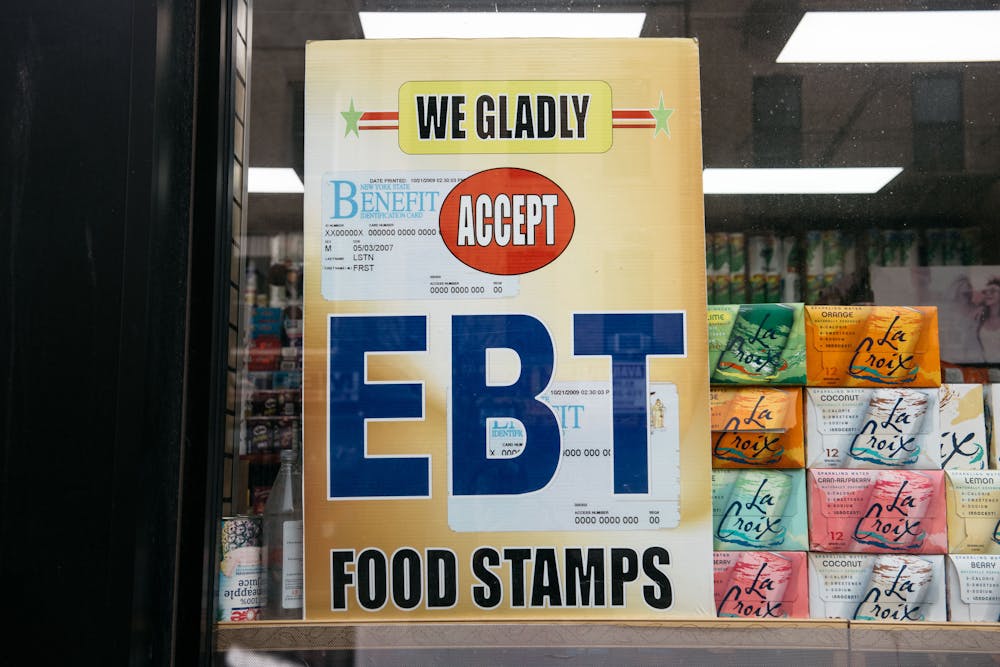
Spock’s essential prominence in the “Star Trek” universe is one of those traits that can be equally beloved and exhausting; there is no lazier way to buy the fandom’s affection than injecting him into a plot. In fairness, that was an inevitability in “Discovery.” Its main character, Michael Burnham, is Spock’s adopted sibling.

But Peck defied those assumptions by building the character from the text instead of following prior depictions. The resulting Spock is plausibly more emotional than his future self is while allowing his devotion to logic to play on the borders of comedy.

“Strange New Worlds” directors accentuate this whenever it makes sense; even in the gloomiest junctures can be somewhat softened by Spock’s eyebrow dancing into its quizzical arch.


Want a daily wrap-up of all the news and commentary Salon has to offer? Subscribe to our morning newsletter, Crash Course.


There is a fear these new episodes may over-index on that charming quirk. It is prominent in the first two episodes, and when it pops up in the second episode its usage is a bit too cute for the moment.

But in the premiere, when the crew asks for his Warp catchphrase, explaining that it announces what kind of commander he is – Pike’s is “Hit it,” for example, and Burnham’s is “Let’s fly” – Spock’s best at a moment’s notice is also totally in character. “I would like the ship to go,” he commands, cocking that eyebrow before adding, “Now.”

Then, when they get to the mission at their destination, hijinks ensue. This time they are terrifying and bring the Federation to the precipice of war.

With Spock at the helm, there is never a time when the audience is made to feel that the situation won’t work out, and that’s true even when a couple of characters flirt with death. “Strange New Worlds” proved its willingness to off series regulars in the first round of episodes, so the possibility of that happening was very real. So too is Peck’s connection with his human side’s eruption of fear, panic and sorrow. 

Spock dials these back in upcoming episodes, both earning and boosting his comedy side. As a character tells another, Vulcans convey their true feelings not through words but in the way they comport themselves. You have to watch them closely to comprehend the nuances of their expression. Those who didn’t get that from Nimoy’s performance may gain a better understanding by spending time with Peck’s Spock, which is one of the sweeter assignments a viewer can give themselves.

Season 2 of “Star Trek: Strange New Worlds” premieres Thursday, June 15 on Paramount+. New episodes debut on Thursdays.


“We don’t know”: Republicans admit Biden bribery tape they’ve hyped for weeks may not actually exist

Several Republicans admitted this week that they don’t know if there are actually recordings of President Joe Biden accepting a bribe as they have suggested, HuffPost reports.

On Monday, Sen. Chuck Grassley revealed that the 2020 tip the FBI received indicated a foreign national, who claimed to have bribed Biden with $5 million, has tapes of himself talking to Biden during his vice presidency.

The audio was presented as a new development about the FBI tip, which Republicans learned of last month and have since demanded be made public. But, according to HuffPost, “the uncertainty over whether the recordings actually exist is a reminder that while the tip came from a credible career informant, the informant’s source is someone else, and the underlying information, audio and all, remains unverified hearsay.”

Legislators “don’t know if they’re legit or not, but we know that the foreign national claims he has them,” House Oversight Committee Chair Rep. James Comer, R-Ky., said of the tapes on Newsmax Tuesday.

Comer pressed the FBI to show the committee a redacted copy of the form for confidential human sources in a private briefing last week. He said that the June 2020 worksheet points to someone paying Biden and his son, Hunter, a large sum in bribes several years ago.

The FBI, however, has previously refused to make the form public on the grounds that those documents can contain unverified information and their release can put the sources at risk.

“We don’t know for sure if these tapes exist,” Rep. Jim Jordan, R-Ohio, said on “The Chris Salcedo Show” Wednesday when asked if Republicans would consider impeaching Biden.

Jordan was not the only Republican lawmaker to acknowledge the dubiousness of the tapes’ existence in a press appearance this week. On an episode of “The Conservative Circus,” Sen. Ron Johnson, R-Wis., reiterated that the tapes might not exist and warned that the informant might not be completely credible either.

“We don’t know really if the tapes exist, we just don’t know that, whether this was just a bluff on the part of, whoever the executive was, I think it was Mykola Zlochevsky, the CEO of the… the corrupt oligarch,” Johnson said.


Want a daily wrap-up of all the news and commentary Salon has to offer? Subscribe to our morning newsletter, Crash Course.


Since former President Donald Trump attempted to convince Ukrainian President Volodymyr Zelenskyy to investigate the Bidens in 2019, Burisma, the Ukrainian holding company that Zlochevsky heads, has been the focal point of GOP attacks against the current president. Republicans had accused Hunter, who served as a board member for the company during Biden’s vice presidency, of presenting a conflict of interest by advocating for the removal of a Ukrainian prosecutor. But the termination of the prosecutor, who was not investigating the company, was a goal of the U.S. and other western countries.

Rep. Dan Goldman, D-N.Y., pointed out that Zlochevsky said in 2019 that he did not have contact with President Biden during a committee hearing on Wednesday.

“The issue here is, is there any connection to President Biden? They have provided zero actual evidence to that effect,” Goldman later told HuffPost. “And yet they are smearing him with innuendo and debunked allegations to try to create the impression that then-Vice President Biden did anything wrong.”

Grassley told HuffPost he was able to announce the tip document mentioning the audio recordings because he and Comer had previously seen a less-redacted copy of the file the FBI presented them last week. He added that he was attempting to obtain that copy of the document and believed it suspicious that the existence of the tapes would be redacted.

Like several other GOP lawmakers, Grassley indicated that the most pressing concern about the bribe allegations is whether the bureau diligently investigated the claims as it moves to prosecute Trump, who was arraigned Tuesday in the federal case regarding his handling of classified documents post-presidency.

“Does the FBI follow up on it or not? Because the FBI ought to be able to answer the question for you and me, and the reason they ought to be able to answer it [is] because it’s an unclassified document,” Grassley said. “And what I hope to do is make this document public.”

2 pies and a sherbet: simple, refreshing cold treats that get me through the hottest summer days

With temperatures and heat indexes soon to be in the triple digits (at least where I live), these cold, fruity desserts will quench your sweet tooth and cool you off. Any one of these no-fuss desserts can be whipped up in a matter of minutes and their fresh flavors are just right for the season.  

Although I love summer, the heat gets to me; each year I find myself wondering, “. . . was it this hot this early last year?”  (Yes, it was.) I can already feel my enthusiasm waning for getting things done outside and we have had only our first taste of summer temperatures this week along the Alabama gulf coast. 

I think this time of year is best suited for lounging — whether poolside or at the beach, by the bay or along a creek or lake — essentially any place cool and breezy, where you can get away from work and be comfortable. Although these days, lounging in bed doing a Sudoku after an afternoon nap sounds almost as wonderful as winning the lottery. Until I get used to the heat, it’s pretty much my fantasy and wish to stay indoors in the air conditioning until closer to sundown.  

These desserts have been with me for as long as I can remember and although I make them other times of the year, they really are perfect for when it is hot outside. They are each a part of what summer tastes like to me. They remind me of slipping away to spend long, languorous days at the beach or on the dock reading and being lulled almost to a slumber by the sound of waves coming to shore. No stress of exams or deadlines, no worry about aging loved ones, no concerns about work or children — that was summer for me for so many years of my life.      

I think of Millionaire Pie as my mom’s because she is who made it popular in my family, but it was my great aunt, Aunt Ruth, who brought this pie into our lives. I remember loving it the first time I tasted it, having had nothing like it before. But my mind was blown when I made it with my mother, who explained to me how the lemon juice “cooks” it and thickens it up while it cools in the refrigerator. It is a pie to make all year round, but summer is the perfect time to try it.

Frozen Limeade Pie is a two ingredient pie — three, if you count the pie crust. It has a punchy lime flavor and because it is made with yogurt rather than milk, cream or condensed milk, it is my go-to when I need something sans traditional dairy. I have made it over the years using goat’s milk, sheep’s milk and every sort of plant milk yogurt known to humanity without missing a beat. It is the easiest thing in the world to throw together: It’s light and refreshing and like Millionaire Pie, you will be sharing the recipe with all who try it.    

Fruity Sherbet, I have no doubt, will become a favorite. You don’t need an ice cream maker — just some time in your freezer. It too is easy to make and will delight every palate. I share the original recipe here, but I reduce the sugar by about half or to taste when I make it. You can adjust the sweetness to your liking before freezing.        


Want more great food writing and recipes? Subscribe to Salon Food’s newsletter, The Bite.


My summer days aren’t as carefree, relaxed or as slow paced as the summer days of my youth, but the heat does slow my husband and me down . . . a little bit, anyway. The sun shines longer, our schedules are more flexible and we tend to end our days later than we do the rest of the year. Most evenings we opt for a light and simple supper then move onto the porch for a cold dessert once the heat of the day has diminished. Sitting in big rockers underneath fans, we talk, but mostly we listen to the humming, clicking and hooting of nighttime creatures that come alive once the sun fully sets. We watch the reflection of the moon glistening on the water and lightening bugs darting through the pines, oaks and magnolias with childlike exuberance while enjoying a piece of pie or a dish of sherbet or ice cream. 

Sometimes I have to remind myself of how good life really is and these familiar, comforting desserts — along with porch sitting, star gazing and being immersed in nature, with my feet in the sand or the grass — do that for me. Like most folks, I get caught up in worrying and fretting about things I can’t control or change, but these summer flavors (and this Millionaire Pie in particular), which I have shared with the people I loved most in this world, bring me back to what is important: Slowing down, spending time with the people, pets and creatures you love and enjoying the place you live.

I hope you carve out time this summer to waste a day or two, to give in to the heat and let it drain away your energy, so much so that you can’t worry or fret. Soak in the beauty of the season, stay out of the kitchen as much as you can and treat yourself to one of these delicious, cold desserts.    

Frozen Limeade Pie
Yields
8 servings
Prep Time
5 minutes (plus 1 to 2 hours freezing time)

Ingredients

1 qt. vanilla yogurt, full-fat preferably

1/2 small can frozen limeade, mostly thawed but still very cold

1 graham cracker crust


Directions

  1. Using an electric mixer, combine yogurt and limeade thoroughly.

  2. Pour into crust and and freeze.

Aunt Ruth’s Millionaire Pie
Yields
8 servings
Prep Time
10 minutes (plus 2 hours cooling time)

Ingredients

1 medium can sliced peaches, drained

1 medium can crushed pineapple, drained

1 bowl Cool-Whip

1 can Eagle brand condensed milk

1/4 cup lemon juice

1 pre-baked, deep-dish piecrust


Directions

  1. Cut peaches into bite-size pieces.

  2. Stir all ingredients together, adding lemon juice last.

  3. Pre-bake piecrust according to package directions, then pour mixture into crust and allow to cool in refrigerator.

Fruity Sherbet
Yields
10 servings
Prep Time
15 minutes (plus 2 to 3 hours freezing time)

Ingredients

2 ripe bananas

2 cups sugar

Juice from 6 lemons

2 oranges

1 small jar maraschino cherries

1 small can crushed pineapple

1 cup whipping cream

1/2 gallon whole milk


Directions

  1. Mash bananas with the sugar, then add the fresh lemon juice.

  2. Add the juice from the oranges along with the pulp, using a spoon or grapefruit spoon to scrape and add all the pulp.

  3. Pour in the juice from the jar of cherries, then chop cherries and add them too.

  4. Add pineapple and its juice.

  5. Put in freezer and freeze until you have a soft “mush.”

  6. Mix whipping cream and milk, then add to frozen mush and continue to freeze until firm.


Cook’s Notes

-I use less sugar, but you can taste and adjust to your liking before freezing.

-If you double this recipe, double all but the lemons. For a double batch, use 9 lemons.

“Apples and oranges”: Trump thinks “Clinton socks” case will save him. Experts say he’s dead wrong

Donald Trump claims that he is being unfairly targeted for retaining documents from his tenure while others who engaged in similar actions have avoided legal repercussions. But legal experts say the former president’s case differs in key ways, which compelled prosecutors to pursue federal charges against him.

A day after he was indicted on 37 counts related to stashing documents at Mar-a-Lago and obstructing government efforts to retrieve them, Trump said that President Bill Clinton kept audiotapes in a sock drawer and a court said it was okay.

“Under the Presidential Records Act — which is civil, not criminal — I had every right to have these documents,” Trump said in a speech Tuesday night. “The crucial legal precedent is laid out in the most important case ever on this subject, known as the Clinton socks case.”

But legal experts have argued that there are stark differences between the two cases and Trump’s interpretation of the law, which is not referenced in the charges against him, is incorrect and goes against the intent of the law itself. 

“Trump isn’t charged with any violations of the Presidential Records Act,” former Assistant U.S. Attorney William “Widge” Devaney told Salon. “Trump is charged with having secret and top secret information, refusing to turn it over, obstructing the government’s attempts to turn it over and causing people to lie about those records. I mean, it’s really apples and oranges.”

For months, Trump has discussed the “Clinton socks case,” recently writing on his social media platform, Truth Social, “Under the Clinton Socks Case, the decision is clear. There was no crime, except for what the DOJ and FBI have been doing against me for years.”

The Presidential Records Act says that presidential records belong to the government, not the individual who served as president, clarified former U.S. Attorney Barb McQuade, a University of Michigan law professor. 

Trump’s description of the case also appears inaccurate. Trump has held the government accountable for the case when instead, the case was filed by a private conservative activist group, Judicial Watch.

The group filed a lawsuit against the National Archives and Records Administration to obtain access to audio recordings of extensive interviews conducted by historian Taylor Branch with Clinton during his White House tenure. Clinton was reported to have stored the audio tapes in his sock drawer.

Clinton kept the tapes, which documented an oral history of his White House tenure. These tapes formed the foundation for Branch’s book titled “The Clinton Tapes: Wrestling History with the President,” published in 2009, according to Vox.

“Clinton’s recordings were from his own interviews, qualifying as diaries, which the Presidential Records Act says are not presidential records,” McQuade said. “No law precludes Clinton from keeping them.”

Judicial Watch argued the audiotapes qualified as “presidential records” and should be released by the agency in accordance with the federal public records law. 

But U.S. District Court Judge Amy Berman Jackson ultimately dismissed the case, stating that NARA lacked the authority to confiscate the records from Clinton and transfer them to Judicial Watch, Vox reported. 

National security attorney Bradley Moss told CNN on Wednesday that the judge in the ruling allowed Clinton to keep his recordings because the National Archives let him take them from the White House and hadn’t issued a demand for their return.

However, intelligence on nuclear weapons programs would never have been designated as personal records that could be removed from the White House, he added.

“Trump is charged with violating the Espionage Act, not the Presidential Records Act,” McQuade pointed out. “The records Trump is alleged to have illegally retained are agency records, such as records of the CIA, NSA, and Department of Defense, not presidential records.”

She added that retention of these records is covered by the Espionage Act “because of their content — information about the national defense, which information could be used to the injury of the United States or advantage of a foreign nation.”

On top of this, Trump ignored a subpoena requiring him to turn over highly classified material and engaged in repeated efforts to obstruct the government’s efforts to retrieve the documents.


Want a daily wrap-up of all the news and commentary Salon has to offer? Subscribe to our morning newsletter, Crash Course.


But that hasn’t stopped Trump from drawing irrelevant parallels and bringing up Bill Clinton, his 2016 Democratic rival Hillary Clinton, vice president Mike Pence and even President Joe Biden. 

All four of them have been questioned about the retention of records pertaining to their public service, but none of them refused to comply with the government.

There’s a difference between their actions compared to Trump’s, Devaney said, pointing to Trump’s intent and actions with how he behaved after he had the documents in his possession. 

Trump’s recent indictment alleged that he tried to convince his attorneys to lie to authorities about federal documents and repeatedly enlisted aides to help him hide records requested by investigators. 

“The people who aren’t criminally charged or aren’t charged at all in these cases are the ones who accidentally removed classified information,” Widge said. “They cooperate with the government in its investigation and return of the information. It demonstrates that they had no intent to remove or further disseminate any type of classified information.”

Trump promised “food for everyone” at Versailles — but “it turns out no one got anything”: report

After his arraignment Tuesday, former President Donald Trump visited Versailles, a locally renowned Cuban restaurant in Miami’s Little Havana, suggesting food would be provided for the rallying crowd of supporters who showed up. 

But the Republican frontrunner did not treat his fans to any grub in the restaurant-bakery, a source with knowledge of the matter told the Miami New Times.

“It turns out no one got anything,” the outlet reported.

Trump and his entourage stopped at the bakery Tuesday immediately after leaving the Wilkie D. Ferguson Jr. U.S. Courthouse where he pleaded not guilty to 37 federal charges, including willful retention of national defense information, conspiracy to obstruct justice and making false statements, in the Justice Department’s investigation into his handling of national security materials after leaving office.

A sea of supporters greeted the former president inside and outside the restaurant with some praying over him and a majority group joining in for a rendition of “Happy Birthday” ahead of Trump’s the following day.

Former MMA fighter Jorge Masvidal even regaled Trump to local press present at the restaurant, calling him “everybody’s favorite president of all time” after they hugged and repeated Trump’s claims that his indictment is a witch hunt.


Want a daily wrap-up of all the news and commentary Salon has to offer? Subscribe to our morning newsletter, Crash Course.


Seemingly roused by the support of what he repeatedly called a “great group of people,” Trump was captured on camera declaring “food for everyone” with a wave of his hand by NBC6 South Florida.

The New Times dug into whether Trump had delivered on his promise, learning from a source that Trump’s visit lasted roughly 10 minutes “leaving no time for anyone to eat anything, much less place an order.”

“Of course, with a long campaign ahead of him  — possibly punctuated with additional South Florida court appearances — Trump will have plenty of opportunities to make good on Tuesday’s promise,” the outlet concluded.

Why the pandemic drove increases of diabetes in pregnancy

Diabetes is a condition most commonly associated with diet and weight, but is also one of the most common complications in pregnancy. Technically known as gestational diabetes mellitus (GDM), it occurs when a pregnant woman — who previously wasn’t diabetic — develops the disease thanks to high glucose levels. Despite its lack of recognition as a serious complication for quite some time, research has shown that if left untreated, gestational diabetes can lead to serious consequences, like premature birth or stillbirth. An estimated 2 to 10 percent of pregnancies in the U.S. are affected by the condition, which can also increase a woman’s risk of developing diabetes later in life.

Cases of gestational diabetes have been on the rise the last several years, part of a nationwide trend dating back even before the pandemic. But research presented at the Endocrine Society’s annual meeting this week showed that cases increased during the COVID-19 pandemic, too.

The results of the study also add more evidence to the connection between COVID-19 and diabetes. Indeed, research has previously suggested that people with diabetes were at an increased risk of having a severe COVID-19 infection. Conversely, having COVID-19 could increase a person’s risk of developing diabetes. Now, the trend appears to have applied to pregnant people during the pandemic, too.


Want more health and science stories in your inbox? Subscribe to Salon’s weekly newsletter The Vulgar Scientist.


“Gestational diabetes appears to have become more common during the COVID-19 pandemic due to both changes in the population and changes related to the pandemic, which has significant short-term and long-term impact for mothers and their children worldwide,” the study’s author, Yoon Ji Jina Rhou, said in a media statement. “This study highlights unrecognized implications of pandemics and pandemic-related measures on pregnancy outcomes and the need for initiatives to limit this impact in current and future pandemics.”

The way prenatal care changed during the pandemic, oftentimes having online appointments, could have been a contributing factor for the increase

Rhou and her colleagues looked at gestational weight gain, pregnancy outcomes and the birth mother’s characteristics in three separate time periods to better understand the trend of gestational diabetes cases and factors contributing to the change. Together, they identified more than 28,000 pregnancies, nearly 50 percent of which took place during the two years before the pandemic started in 2020. More than three-fourths of the pregnant women were non-caucasians and nearly a quarter faced socioeconomic disadvantages. The researchers found that gestational diabetes increased 4 percent from two years before the pandemic to two years into the pandemic.

“Our study showed that the pandemic was associated with a rise in traditional risk factors for gestational diabetes prior to pregnancy and also an increase in weight gain during pregnancy,” Rhou told Salon via email. “However, when we performed additional analyses taking these effects into account, we found that the second year of COVID-19 (but not the first year) was independently associated with more gestational diabetes – so there were factors during the second year of the pandemic beyond what we could measure contributing to the increased risk.”

The researchers suggested that pre-existing health conditions or lifestyle factors could have played a role in the rise of gestational diabetes cases. Additionally, Rhou told Salon that the way prenatal care changed during the pandemic, oftentimes having online appointments, could have been a contributing factor for the increase, too.

“Women are at significantly higher risk of having gestational diabetes in future pregnancies and developing type 2 diabetes in the future”

“We are unable to confirm what specific unmeasured factors were responsible, but some potential contributors include the impact of lockdowns, gym closures, working remotely and fear of infection on diet and exercise, which have impact that cannot be entirely accounted for by changes in pre-pregnancy weight and gestational weight gain,” Rhou said via email. “Psychological stress due to both the fear of infection and escalating restrictions (such as home schooling during school closures and reduced social supports due to border restrictions) is a possible contributor, but more research is needed to explore this.”

As Rhou noted, psychological stress has been a known contributing factor. A longitudinal study published in 2016 found depressive symptoms early in pregnancy led to an increased risk of gestational diabetes. 

A separate study published in 2022 looking at a smaller cohort of pregnant women found a similar trend of more GDM cases occurring during the pandemic. In the study, which enrolled nearly 1,300 women, researchers found that gestational diabetes cases nearly tripled during lockdown periods, increasing from 3.4 percent before pandemic lockdowns to 9.3 percent.

Rhou said the findings of her research speak to serious long-term consequences that must be taken seriously.

“The women are at significantly higher risk of having gestational diabetes in future pregnancies and developing type 2 diabetes in the future,” Rhou said. “The children may also be at higher risk of diabetes and obesity later in life. Both of these impacts may amplify the rising prevalence of type 2 diabetes and cardiometabolic disorders worldwide.”

Food insecurity already affects 12 million US homes — and reductions in SNAP benefits won’t help

Millions of Americans struggle to afford healthy meals and nutritious food. Known as “food insecurity,” this problem was already rising when Supplemental Nutrition Assistance Program, or SNAP, benefits  previously called food stamps  were cut in 35 states this spring.

SciLine interviewed Hilary Seligman, professor of medicine at the University of California, San Francisco, on rising grocery prices, the misconceptions about hunger in the U.S. and how food insecurity diminishes school and work performance.

           
Hilary Seligman discussed food insecurity in the U.S.

Below are some highlights from the discussion. Answers have been edited.

What is food insecurity?

Hilary Seligman: Food insecurity is defined by the U.S. Department of Agriculture as the limited or uncertain access to enough food for a healthy life.

What are the trends in food insecurity rates?

Hilary Seligman: The most recent data suggests that about 1 in 10 households in the U.S. are food insecure. And this rate is even higher among certain groups, like Black and brown households and households with children.

What factors cause food insecurity?

Hilary Seligman: Food insecurity is an inability to access enough resources for your basic needs. So it’s not having sufficient money in the household to meet a food budget. And that may be because of disability, because of unemployment, because of inadequate educational opportunities or all of these root causes.

How does inflation affect food insecurity rates?

Hilary Seligman: It’s clear that when food prices rise, households have to stretch a food budget even more. People have to make difficult choices about the kind of food they eat and the amount of food they eat.

In many cases, when household budgets are stretched thin, people have to shift their purchases toward foods that are cheaper. And in the U.S., cheaper foods are almost always less healthy for you, more caloric and more deficient in vitamins and nutrients.

How does food insecurity affect people’s health?

Hilary Seligman: Over the last couple of decades, we’ve seen that food insecurity can have a profound impact on physical health and mental health, whether children, adults or older adults.

These cheaper foods tend to be really highly processed, nutritionally poor, shelf-stable foods. And we know these foods are bad for people’s health in the long term. They predispose people toward weight gain, diabetes, cardiovascular disease and even cancer.

We also know that when you live in a food-insecure household, it makes it difficult to afford other things that are good for your health. For example, it would make it more difficult to afford your copayment to see your primary care doctor or your medications.

            A sign in a grocery store window says 'We gladly accept EBT food stamps.'
           

              About 12% of the U.S. population relies on the SNAP program.
              Scott Heins via Getty Images News
           

How does food insecurity affect success at work or school?

Hilary Seligman: We know that food insecurity is associated with poor academic performance among children.

Parents are probably really familiar with the way that their children behave when they’re hungry. And those same things happen in school environments when kids show up to school having not had the opportunity to eat a healthy breakfast.

The evidence is clear that food insecurity is associated with behavioral problems in school, absenteeism from school and poor academic performance. And this can have lifelong consequences for children.

A similar thing plays out with adults. Adults who are living in food-insecure households are less likely to be able to hold down a sufficient number of work hours to meet their household budget needs. They’re less likely to be able to devote a lot of hours to finding employment, because finding food takes a lot of time and a lot of energy.

Are there any common misconceptions about hunger?

Hilary Seligman: One of the misconceptions is that people who are experiencing food insecurity don’t want access to a healthier diet.

In many, many cases, if not most cases, the evidence is clear that people at all income levels often want access to a healthier diet. But in a household experiencing food insecurity, a healthier diet is simply out of reach financially.

Many people living in food-insecure households will tell you they perceive fruits and vegetables to be luxury items. They only splurge on fruits and vegetables when they have extra money in their budget. And so one of the things that we have to guard against is an assumption that people with lower incomes don’t want to eat a healthy diet.

What else works to reduce or eliminate food insecurity?

Hilary Seligman: The best solution for food insecurity is SNAP, which used to be called the food stamps program.

It is very, very clear that SNAP is enormously effective at supporting food security in U.S. households. And anything that reduces access to SNAP or makes it more difficult to enroll in SNAP is going to have the effect of increasing food insecurity rates in the United States.

An example of this would be the work requirements that will push people out of the SNAP program and likely increase food insecurity rates.

Things like earned income tax credits protect families against food insecurity. Emergency stimulus checks like we saw during the COVID pandemic also protect families.

Watch the full interview to hear more.

SciLine is a free service based at the nonprofit American Association for the Advancement of Science that helps journalists include scientific evidence and experts in their news stories.

Hilary Seligman, Professor of Medicine, University of California, San Francisco

This article is republished from The Conversation under a Creative Commons license. Read the original article.