Spring Sale: Get 1 Year, Save 58%

War in Ukraine rages on, with no end in sight — peace talks are essential

Six months ago, Russia invaded Ukraine. The United States, NATO and the EU wrapped themselves in the Ukrainian flag, shelled out billions for arms shipments and imposed draconian sanctions intended to severely punish Russia for its aggression.

Since then, the people of Ukraine have been paying a price for this war that few of their supporters in the West can possibly imagine. Wars do not follow scripts, and Russia, Ukraine, the U.S., NATO and the EU have all encountered unexpected setbacks. 

Western sanctions have had mixed results, inflicting severe economic damage on Europe as well as on Russia, while the invasion and the West’s response have combined to trigger a food crisis across the Global South. As winter approaches, the prospect of another six months of war and sanctions threatens to plunge Europe into a serious energy crisis and poorer countries into famine. So it is in the urgent interest of all involved to reassess the possibilities for ending this protracted conflict.

For those who say negotiations are impossible, we have only to look at the talks that took place during the first month after the Russian invasion, when Russia and Ukraine tentatively agreed to a 15-point peace plan in talks mediated by Turkey. Details were not fully worked out, but the framework and the political will appeared to be there.  

Russia was prepared to withdraw from all of Ukraine, except for Crimea and the self-declared republics in Donbas. Ukraine was ready to renounce future membership in NATO and adopt a position of neutrality between Russia and NATO. 

The agreed framework provided for political transitions in Crimea and Donbas that both sides would accept and recognize, based on self-determination for the people of those regions. The future security of Ukraine was to be guaranteed by a group of other countries, but Ukraine would not host foreign military bases on its territory.

On March 27, President Zelenskyy told a national TV audience, “Our goal is obvious — peace and the restoration of normal life in our native state as soon as possible.” He laid out his “red lines” for the negotiations in that televised speech to reassure his people he would not concede too much, and he promised them a referendum on the neutrality agreement before it would take effect.

Such early success for a peace initiative was no surprise to conflict resolution specialists. The best chance for a negotiated peace settlement is generally during the first months of a war. Each month a war rages on offers reduced chances for peace, as each side highlights the atrocities of the other, hostility becomes entrenched and positions harden. 

The abandonment of that early peace initiative stands as one of the great tragedies of this conflict, and the full scale of that tragedy will only become clear over time as the war rages on and its dreadful consequences accumulate.

Ukrainian and Turkish sources have revealed that the U.K. and U.S. governments played decisive roles in torpedoing those early prospects for peace. During then-British Prime Minister Boris Johnson’s “surprise visit” to Kyiv on April 9, he reportedly told Zelenskyy that the U.K. was “in it for the long run,” that it would not be party to any agreement between Russia and Ukraine, and that the “collective West” saw a chance to “press” Russia and was determined to make the most of it.


Want a daily wrap-up of all the news and commentary Salon has to offer? Subscribe to our morning newsletter, Crash Course.


The same message was reiterated by Defense Secretary Lloyd Austin, who followed Johnson to Kyiv on April 25 and made it clear that the U.S. and NATO were no longer just trying to help Ukraine defend itself but were now committed to using the war to “weaken” Russia. Turkish diplomats told retired British diplomat Craig Murray that these messages from the U.S. and Britain killed their otherwise promising efforts to mediate a ceasefire and a diplomatic resolution.

Ukrainian and Turkish sources have revealed that the U.K. and U.S. governments played decisive roles in torpedoing prospects for peace. Boris Johnson and Lloyd Austin visited Kyiv in May — and delivered clear messages.

In response to the invasion, much of the public in Western countries accepted the moral imperative of supporting Ukraine as a victim of Russian aggression. But the decision by the U.S. and British governments to kill peace talks and prolong the war, with all the horror, pain and misery that entails for the people of Ukraine, has neither been explained to the public nor endorsed by a consensus of NATO countries. Johnson claimed to be speaking for the “collective West,” but in May, the leaders of France, Germany and Italy all made public statements that contradicted his claim.

Addressing the European Parliament on May 9, French President Emmanuel Macron declared, “We are not at war with Russia,” adding that Europe’s duty was “to stand with Ukraine to achieve the ceasefire, then build peace.”

Meeting with President Biden at the White House on May 10, Italian Prime Minister Mario Draghi told reporters, “People… want to think about the possibility of bringing a ceasefire and starting again some credible negotiations. That’s the situation right now. I think that we have to think deeply about how to address this.”

After speaking by phone with Russian President Putin on May 13, German Chancellor Olaf Scholz tweeted that he had told Putin, “There must be a ceasefire in Ukraine as quickly as possible.”

But American and British officials continued to pour cold water on talk of renewed peace negotiations. The policy shift in April appears to have involved a commitment by Zelenskyy that Ukraine, like the U.K. and U.S., was “in it for the long run” and would fight on, possibly for many years, in exchange for the promise of tens of billions of dollars worth of weapons shipments, military training, satellite intelligence and Western covert operations.

As the implications of this fateful agreement became clearer, dissent began to emerge, even within the U.S. business and media establishment. On May 19, the very day that Congress appropriated $40 billion for Ukraine, including $19 billion for new weapons shipments, with not a single dissenting Democratic vote, the New York Times published a lead editorial titled, “The war in Ukraine is getting complicated, and America isn’t ready.” 

The Times asked serious unanswered questions about U.S. goals in Ukraine, and tried to reel back unrealistic expectations built up by three months of one-sided Western propaganda, not least from its own pages. As the editorial acknowledged, “A decisive military victory for Ukraine over Russia, in which Ukraine regains all the territory Russia has seized since 2014, is not a realistic goal.… Unrealistic expectations could draw [the U.S. and NATO] ever deeper into a costly, drawn-out war.”

Zelenskyy apparently agreed that Ukraine would fight on, possibly for years, in exchange for tens of billions worth of weapons, military training, satellite intelligence and covert support.

More recently, war hawk Henry Kissinger, of all people, publicly questioned the entire U.S. policy of reviving its Cold War with Russia and China and the absence of a clear purpose or endgame short of World War III. “We are at the edge of war with Russia and China on issues which we partly created, without any concept of how this is going to end or what it’s supposed to lead to,” Kissinger told the Wall Street Journal.

U.S. leaders have inflated the danger that Russia poses to its neighbors and the West, deliberately treating it as an enemy with whom diplomacy or cooperation would be futile, rather than as a neighbor raising defensive concerns over NATO expansion and its gradual encirclement by U.S. and allied military forces. 

Far from aiming to deter Russia from dangerous or destabilizing actions, successive administrations of both U.S. political parties have sought every means available to “overextend and unbalance” Russia, all the while misleading the American public into supporting an ever-escalating and unthinkably dangerous conflict between our two countries, which together possess more than 90% of the world’s nuclear weapons.

After six months of a U.S. and NATO proxy war with Russia in Ukraine, we are at a crossroads. Further escalation should be unthinkable, but so should a long war of endless crushing artillery barrages and brutal urban and trench warfare that slowly and agonizingly destroys Ukraine, killing hundreds of Ukrainians with each day that passes. 

The only realistic alternative to this endless slaughter is a return to peace talks to bring the fighting to an end, find reasonable political solutions to Ukraine’s political divisions, and seek a peaceful framework for the underlying geopolitical competition between the U.S., Russia and China. 

Campaigns to demonize, threaten and pressure our enemies can only serve to cement hostility and set the stage for war. People of good will can bridge even the most entrenched divisions and overcome existential dangers, as long as they are willing to talk — and listen — to their adversaries.

Christian nationalism is getting written out of the story of January 6

When they entered the Senate chamber on Jan. 6, 2021, a group of insurgents stopped and bowed their heads in prayer to consecrate the building and their cause to Jesus. When the Senate reconvened later, its chaplain, retired Navy Adm. Barry Black, also prayed, but called the insurgents’ actions a “desecration of the United States Capitol building.”

Both sides appealed to the Christian God as the authority for their actions and values.

Outside, at the rally that preceded the attack on the Capitol, there was a similar focus on God, in the form of Christian nationalism, which frames the U.S. as a Christian country whose politics and institutions should be guided by Christian principles.

As cultural anthropologists who study politics and religion, we attended the Jan. 6 rally, which some called “Save America” and others called “Stop the Steal,” because we were interested in observing the symbols on display and in talking with the people there. Having studied political demonstrations before, we wanted to document this event and what it meant for its participants.

Most of the people we encountered were peacefully expressing their own political views and were not part of the insurrection. But they nevertheless expressed longstanding ideas that were ultimately echoed and amplified in their most extreme form by those who did engage in violence at the Capitol.

Insurrectionists pause for a prayer in the U.S. Senate chamber on Jan. 6, 2021.

Focus on violence

Maintaining social order and a functioning democracy requires holding people responsible for their actions. That’s why much of the public focus on the insurrection has – rightly – been on the violence and the political conspiracy behind it, through which then-President Donald Trump and his allies sought to overturn the 2020 presidential election.

But as the congressional hearings on the insurrection resume, they will most likely focus on the violent minority and the conspiracy of which they may have been a part. The committee’s goal is not to understand the tens of thousands of people who attended the rally to express their collective identity and their solidarity with what they saw as a just cause: maintaining America’s political and religious heritage. The focus will be on Trump as Jesus fades into background.

Research on the events of that day reveals that most of the attendees at the rally – even those who were later arrested for their actions – were ordinary Americans, people committed to what they believed were the true results of the election. Most of them were not members of organized groups such as the Proud Boys, the Oath Keepers or the Three Percenters.

Ordinary citizens

What we observed at the rally was an optimistic occasion where the people gathered expressed pride in their collective identity. The atmosphere was celebratory, even carnivalesque, perhaps like a tailgate party preceding an American football game. When we arrived we were greeted by a woman who called out, “Welcome to the party!”

The people we saw there were expressing their concern for American democracy and the ideals of law and order. We saw them answering the call of a president and seeking to protect the integrity of the American political system. Most strikingly, we saw proud Americans standing up for Christian values.

Expressions of identity

Anthropologists have long known that public displays are a common way of crafting identities. In the U.S. this is evident in ethnic and holiday parades, museum exhibits, popular demonstrations and highly orchestrated conferences.

On Jan. 6, the images and slogans deployed by the crowd included a wide variety of American flags and recycled Trump 2020 campaign gear, as well as pointed insults toward his opponents. Gun rights were a major theme; flags with images of assault rifles read “Come and Take Them!” Other signs focused on individual freedom by refusing COVID-19 restrictions. American flags with a central blue stripe indicated support for law enforcement.

Christian symbols were pervasive throughout the rally. People took pride in Christian identity and often conflated Jesus and President Trump as figures of national salvation, “Chosen Ones.”

There were flags and T-shirts proclaiming, “Jesus is my Savior and Trump is my President”; posters showing a white, blond, blue-eyed Jesus wearing the Trumpian MAGA hat; and a wide variety of other flags and banners bearing Christian themes.

Some of the Christian displays were starkly militant, such as a flag depicting a raging fire with both a bald eagle and a lion roaring – symbolizing both the United States and a militant Christ. Significantly, such militant themes in broader Christian culture are not restricted to evangelical Protestants, who are often perceived as primary drivers of religious participation in U.S. politics.

God and nation

Despite their professed devotion to God and nation, from the very beginning the Capitol insurrectionists and those at the earlier rallies on Jan. 6 were labeled “extremists.” That term suggests a moral flaw causing people to act in unacceptable ways, such as attacking members of the Capitol police or calling for the vice president to be hanged.

But “extremism” can also be understood as a more intense or committed version of what is otherwise ordinary. As scholars of the cultural politics of religion, we suggest this ordinariness is actually more alarming than its extreme expressions, because it’s harder to notice. Political theorist Hannah Arendt called this “the banality of evil.” Arendt and her generation of scholars were concerned about how totalitarianism could emerge from the very principles we think make us free.

People don’t need to break windows or bones to erode human rights, endanger democracy or form a basis for authoritarianism. Instead, they can ignore what had been expected social behavior because they find a personal or political advantage or formulate or assent to unjust laws. In Arendt’s view, these people are avoiding the human responsibility “to think” from others’ perspectives and to interrogate commonly held ideas.

It was precisely the ordinariness of most of the rallygoers that day that caught our attention. We met people who were real estate agents, firemen and retired construction workers, as well as grandmothers with their children and grandchildren. They seemed familiar to us, as though they could be our Christian neighbors.

People arrived in Washington in carpools or buses with friends or family members. They wanted to take personal responsibility for the political health of the republic and the country’s Christian European heritage and freedoms. They came to uphold the country’s founding myth that injustice can be met by the popular unity of mass rebellion. As one handmade sign read, “Let’s 1776 this place.”

They were relentlessly deceived by their leaders through media owned by wealthy corporations that reaped huge profits from those lies. But that does not change their motivations. Instead it raises questions about the manipulation of democratic and Christian values and highlights the problem of whether people can think for themselves in the face of such an overwhelming barrage of lies.


Joyce Dalsheim, Professor, Department of Global Studies, University of North Carolina – Charlotte and Gregory Starrett, Professor of Anthropology, University of North Carolina – Charlotte

This article is republished from The Conversation under a Creative Commons license. Read the original article.

How Montana GOP hijacked public health amid COVID pandemic and brought a hospital to the brink

ProPublica is a Pulitzer Prize-winning investigative newsroom. Sign up for The Big Story newsletter to receive stories like this one in your inbox.


Vicky Rae Byrd had a sinking feeling.

As she scrolled through her phone on election night, her pick for president — Joe Biden — seemed to have a slight edge. Byrd was too stressed to turn on the local news. Her husband sat down with her in their living room, and the couple settled on some sitcom.

Montana had long voted Republican in presidential elections. But it had a Democratic governor for the past 16 years, and that was almost certain to end. Ending with it, Byrd feared, would be the state’s aggressive response to COVID-19.

Byrd, 58, with long silver hair, had been sounding early warnings as director of the Montana Nurses Association, which lobbies for the state’s 18,000 nurses, many of them unionized. She’d been a nurse herself for 33 years, most of them at St. Peter’s Health in Helena, working in pediatric cancer.

“Nurses are really good at foreseeing,” she recalled. “I’m like, shut down before it gets here! Then, one case gets here, and I’m like: ‘Shut down, hold down the state. Keep me safe.'”

By that fall, many voters were fed up with departing Gov. Steve Bullock’s mask mandate and stay-at-home order. Small businesses complained they were suffocating, Montana’s economy was struggling and efforts to control the virus were colliding head-on with the state’s deeply ingrained belief in personal freedom.

As election night wore on, Byrd kept sneaking glances at her phone. She saw votes piling up for the Republican candidate, multimillionaire businessman Greg Gianforte, who was running against Bullock’s lieutenant governor, Mike Cooney. A Donald Trump acolyte who’d gained national attention for pleading guilty to assaulting a reporter on the eve of his 2017 election to Congress, Gianforte had called for the speedy development of COVID-19 vaccines but answered few questions about how he’d fight what he called “this invisible enemy.” He had, however, made it clear he supported personal responsibility over mandates.

Days after a decisive victory, Gianforte appointed a 21-member panel to guide him on COVID-19. Determined to recharge the economy, his wide-ranging picks included a refinery executive, a local Best Western operator and the owner of a pizza restaurant and casino. Dr. Scott Gottlieb, the former commissioner of the federal Food and Drug Administration, added national gravitas.

Missing from the long list of names were any officials from the state public health agency who had been running the COVID-19 response. Among them was Jim Murphy, a veteran of almost 33 years at the state’s Department of Health and head of its communicable diseases division.

Under Bullock, Murphy had helped deliver daily COVID-19 updates. But in conference calls with the governor-elect’s office and the new coronavirus panel, he sensed “pretty much instantly” that public health was not the priority. The calls, Murphy remembered, “focused more on the perceived overresponse” to COVID-19.

(Gianforte declined requests for an interview, and his press secretary, Brooke Stroyke, said she wouldn’t respond to “biased, gotcha” questions about the governor’s actions, which she said have been “widely covered.”)

One conference call turned tense when the head of the task force, a conservative former state senator named Kristin Hansen, questioned Murphy about the validity of state data on COVID-19 infections and deaths.

“Some of us spoke up to offer the public health side of the story,” Murphy recalled. “That wasn’t always well received.”

When Gianforte took office on Jan. 4, 2021, Montana had avoided the worst of the pandemic. About a thousand residents had died, slightly less per capita than the national average. And the state had just started rolling out vaccines under a plan worked out by Murphy and his team.

Almost immediately, Gianforte began rolling back COVID-19 restrictions. He won applause from businesses by lifting Bullock’s order restricting their hours. A month later, amid a lull in the state’s COVID-19 cases, he allowed an indoor mask mandate to expire; state medical officer Dr. Greg Holzman resigned the next day.

Gianforte got his first Pfizer shot the day he opened vaccines to all adults, weathering criticism from some far-right conservatives for calling the shots “safe and effective.” But even as Montana’s vaccination rate began to sputter, Gianforte again emphasized that getting vaccinated was a personal choice.

As Byrd watched Gianforte with concern, she and her small staff were also trying to track Montana’s GOP-controlled Legislature as it considered a flurry of public health measures. One that initially escaped her attention was introduced by a new legislator, Rep. Jennifer Carlson.

Carlson had pressed the Legislature even before COVID-19 to do away with vaccine mandates. The mother of five, who has a biomedical science degree, had given all of her kids the typical childhood vaccinations. But one child, she recalled, had suffered a severe reaction. Soon after she took office, Carlson introduced legislation that she said she got help drafting from the leader of a popular Facebook group, Montanans for Vaccine Choice.

Her legislation gave the unvaccinated standing as a “protected class,” making it illegal to discriminate against them. No employers could require vaccinations of any kind. The language covered all vaccines, including measles, mumps and other standard childhood vaccinations.

There were no exemptions for people working at hospitals.

The legislation worried Murphy. But he said that the governor’s office told him and other state health officials to stay out of the debate.

“We were told we had to be neutral,” Murphy recalled.

The bill caught fire, particularly after a hospital in Great Falls announced its plan to terminate unvaccinated employees. Gianforte, responding to complaints from alarmed hospitals and other health care providers, sent amendments back to the Legislature that he said “strengthened” the bill. It would at least allow hospitals to ask employees if they were vaccinated so they could make adjustments. But if unvaccinated staffers felt they were being discriminated against, they could sue.

The amended bill sailed through the GOP-heavy House and Senate in the session’s final days. Gianforte signed HB 702 into law on May 7, the same day he signed another bill restricting the authority of local public health agencies to impose COVID-19 restrictions.

Carlson told ProPublica she was quickly deluged with calls. Legislators in other states asked how she had pulled off a “miracle.” Other callers left messages saying she would be responsible for more deaths.

“Nobody wants to be called anti-vax. Nobody wants to be accused of killing grandma,” she said. “I honestly don’t think the government should be in charge of your lives.”

The Montana Medical Association and others sued in federal court, arguing that health care providers receiving federal funding are required to vaccinate their workers. Byrd’s group joined the suit. She noted in an affidavit that when St. Peter’s hired her, it required proof of vaccination “as a condition of employment.”

Byrd remembers thinking: “I don’t go to the governor’s office for my colonoscopy. Certainly you shouldn’t go to the governor’s office to have him lecture you on what immunizations you should or shouldn’t get.”

The Surge

By July, less than three months after Carson’s bill became law, the delta variant began to spread across Montana.

Vaccine hesitancy remained high. Early in the pandemic, residents of the state capital, Helena, stopped at 8 p.m. to howl at the moon in a salute to health care workers. Now staffers faced verbal, even physical abuse, often over intake questions about vaccination status and wearing masks.

St. Peter’s posted a warning in the entryway “Aggressive Behavior Will Not be Tolerated.” Almost overnight, nurses “went from heroes to zeros,” Byrd said.

Gianforte warned that delta was highly contagious and urged citizens to protect themselves, but he again emphasized there would be no mandates.

St. Peter’s doctors and nurses signed a letter on Sept. 1 pleading with Montanans to get vaccinated. One of them was Charlotte Skinner, a nurse and a mother of two who works in the St. Peter’s emergency room and is an officer in the hospital’s nurses union. Earlier in the pandemic, Skinner had volunteered to appear at a press conference with Bullock, where she delivered an impassioned speech calling for an end to “partisan bickering” and urging the state to “embrace science.”

Afterward, a friend warned Skinner not to look at her Facebook messages. She peeked in to find “shocking stuff,” she recalled, including one commenter who “said he wanted to scalp me and my family.”

Vaccines remained a flashpoint even among staffers, about a quarter of whom declined to get one. Skinner said word spread quickly nationwide that Montana was a state where unvaccinated medical workers could work with legal protections. Perhaps unintentionally, she said, it became a “recruiting tool.”

By early September, COVID-19 hospitalizations were climbing quickly. Hospitals in Billings and Missoula warned they were overloaded. Non-COVID-19 patients were competing with COVID-19 patients for resources. The critical care units at St. Peter’s were at 100% capacity.

At St. Peter’s request, Gianforte sent National Guard troops to help, detailing 10 guard members to the 99-bed hospital. Among their tasks was helping exhausted nurses flip struggling COVID-19 patients onto their stomachs so they could breathe more easily. Staff scrambled to deliver ICU-level care in other units as beds dwindled.

By then, despite his state’s unfolding calamity, Gianforte had said on Twitter that Montana would take the vaccine fight national by challenging what he called Biden’s “unlawful and un-American” vaccine mandate.

St. Peter’s was so crowded that nurses had little time to spend with patients, even in the ICU. “Turn. Make sure the vents are on. Go on to the next person,” as Byrd described it.

To handle surges, Montana’s state health agency had revised its guidance on when a hospital should declare “crisis standards of care,” a designation that protects overwhelmed facilities from liability when they can no longer offer normal services and must consider rationing care.

A state official announced the directives on Sept. 15, saying he hoped hospitals would never have to use them.

One day later, St. Peter’s president and chief medical officer, Shelly Harkins, called a video press conference. The hospital was already meeting all of the criteria — long emergency room wait times, scarce equipment and medications, and no vacant beds, including in its eight-bed ICU.

A former Air Force physician, Harkins joined the hospital in 2017 after running a health system in Indiana. Harkins had a light-hearted side. She had played keyboard in a band called Leather Moose. But now, Harkins delivered the blunt reality.

COVID-19 patients filled every available bed, and St. Peter’s was running out of medication to treat them. The hospital was splitting up doses of some medications between patients and using seven times its normal amount of propofol, a sedative that can help ease the agony of the terminally ill.

Harkins was invoking “crisis standards of care,” she said. She was clear about what patients and their families could expect to see. “We are giving our staff permission to not do it all. The hardest thing they will do in their careers is not giving the care they are used to giving, but they simply can’t.”

“JEEZ!” someone in the background exclaimed.

Crisis standards would impact not just COVID-19 patients but anyone needing care. Some decisions would require a kind of battlefield triage, applying standards that had been crafted by a national advisory board in 2009 after the H1N1, or swine flu, epidemic. The guiding principle would be to try to save the greatest number of lives. That could mean giving a scarce resource, like an ICU bed or a ventilator, to a person thought to be most likely to survive.

The prospect of rationing health care has long terrified Americans. Republicans used it as a pillar of an early fear-mongering campaign against President Barack Obama’s Affordable Care Act, when Sarah Palin and then others falsely claimed the legislation would create “death panels.”

Harkins’ work in family medicine and palliative care had prepared her to be direct but reassuring. “We are still very much here to provide care to our community, and we are doing absolutely all we can to keep all services open,” she added during the announcement. “True emergencies will always receive priority.”

But the strain on St. Peter’s staff of 1,700 was escalating. Instead of monitoring one or two desperately ill COVID-19 patients, nurses were caring for five or six.

Byrd’s association set up an email inbox for nurses to anonymously vent. “I no longer look forward to what impact I might make every shift. Instead, I steel myself to simply survive another day at the bedside without breaking down in front of the patients,” wrote one.

Harkins said that the hospital had more than 200 staff vacancies at the time. She told ProPublica the hospital was short of staff throughout.

When COVID-19 first began its march across America, the hospital had set up a 13-member Scarce Resources Committee to help doctors wrestle with tough decisions if things ever got bad. It included doctors, administrators and the hospital chaplain.

It was only called twice in nearly a year and a half. After delta hit, the committee convened six times in just over a month.

The Call

Around lunchtime one day in the middle of October, Harkins got an urgent text from an emergency room doctor.

“I need help,” the doctor pleaded.

A COVID-19 patient with dangerously low oxygen levels had just arrived by ambulance. The woman was severely obese, which put her at high risk. “As soon as she hit the room, we knew if we don’t act rapidly she will be dead soon,” recalled the ER doctor, who later spoke with ProPublica on the condition of anonymity.

The doctor wanted to transfer the patient to the ICU. But the unit was full.

Harkins quickly convened a video meeting of the Scarce Resources Committee. As doctors began to weigh in, the committee realized the crisis ran deeper. There were an additional four critically ill patients in other parts of the hospital who also should be transferred to the ICU.

The math was brutal: Five patients and zero beds.

The committee began the process spelled out by an allocation algorithm in Montana’s crisis standards of care guidelines. Factors like age and preexisting conditions were fair to consider, but vaccination status was not.

Harkins quarterbacked as the committee deliberated: How old? Other serious health conditions? How long in the hospital?What is the latest status?

One critically ill non-COVID-19 patient had a serious heart condition. “I feel the heart patient will not survive. How do you feel?” one doctor asked. Everyone agreed that the heart patient would not get an ICU bed and could be treated in another unit.

After about 20 minutes, the committee decided the woman in the emergency room had the most urgent need and should go to the ICU. They could make a bed available by moving a dying patient too ill to survive to another unit. But they had promised the patient’s family they would wait until everyone arrived to say their goodbyes before removing life support. One family member was not there yet. The hospital was running out of time.

Suddenly, a piercing code blue alarm sounded in the emergency room. “Wait a minute, guys,” an attending physician told the committee. “The patient is coding.”

Then, “the patient has died.”

The committee took a moment to absorb the news. Then it began deliberating again. The call lasted an hour. In the end, the terminal ICU patient’s family members were able to gather to say their goodbyes. When that bed was free, another patient discussed during the call was moved into the ICU but died a few days later.

Of the five patients who had been vying for a bed, four ultimately died.

“Under normal circumstances we would have moved all five into the ICU,” Harkins later told ProPublica. “But we just couldn’t.”

Being forced to make such profound decisions changed Harkins and others on the call.

Kimberly Pepper, the hospital chaplain who served on the committee, described seeking solace in the “thin places,” a Celtic belief that there are spots where the distance between heaven and Earth is at its slimmest. Hers was in the Montana mountains. She noticed her hikes had become longer and longer.

Harkins said hospital staff had found their “cry spots” to deal with the anguish. Hers was in an empty office.

“The human psyche,” she said, “was not built for this.”

The Patients

The virus was forcing cracks in the hospital’s usual care.

Nurses at St. Peter’s had to bathe patients and clean rooms to make up for the large number of nursing assistants who had quit. Kari Koehler, who was serving as the acting chief of nursing during the surge, told ProPublica that the exodus had left the hospital with two assistants per shift instead of the desired 10.

Donna Burrell, a 66-year-old grandmother and former Little League president who worked as a clerk for the Helena school district, arrived at St. Peter’s emergency room in early September with COVID-19-related respiratory failure. A doctor called her daughter, Kima Rosling, to explain that ICU space was unavailable and “may be limited elsewhere throughout the state,” according to medical records.

For Rosling, the next days were chaotic. Burrell was transferred to the ICU when her oxygen levels dropped, then transferred back to a step-down unit.

A doctor prescribed a medicine to control Burrell’s high blood sugar, which can lead to stroke, heart attacks or kidney failure. But a doctor’s note in her file said the order “did not go through” at first and the condition escalated.

Burrell was also having trouble keeping on her oxygen mask. A doctor noted in her records that he told her family “we are in no position to ensure that she keeps it on 24 hours a day.” The medical team told the family it would have to step in to help.

Burrell kept asking doctors when she could go home, and the family discussed transferring her to a rehab facility. But her condition took a sudden turn. Burrell told her daughter and husband that she fell and hit her head during the night while trying to walk to the bathroom.

There was no notation of a fall in Burrell’s record, and Rosling said she complained to a head nurse. Nursing notes show that Burrell was placed on a bedpan.

Burrell’s oxygen levels declined and soon she was back in the ICU, her organs failing. Rosling knew her mother wanted to fight to stay alive and gave doctors permission to intubate her.

But Burrell died at 6:24 a.m. on Oct. 7, after a month of treatment.

Rosling said she realizes that her mother came into St. Peter’s at a terrible time, but she believes her care was lacking and that the medical team should have treated the fall more seriously. Rosling said tracking her mother’s care was a “day-to-day war.”

St. Peter’s administration declined to comment on treatment of individual patients, citing privacy laws. But the hospital said that even amid the chaos, it offered quality care to all patients.

Family members of other patients told ProPublica that it was clear the hospital was under stress. Alarms seemed to be beeping endlessly and medical staff were visibly fatigued. Doctors sometimes told them that drugs and beds were in short supply. The chaos, the family members said, only heightened the anxiety of having a loved one in the hospital and, in some cases, their grief.

Jodi Raue said her concern over her 84-year-old mother’s swift decline after a serious fall was made worse by a lack of communication with doctors about their decision to move her mother out of the ICU. While her mother had a do not resuscitate order signed several years earlier, Raue remains upset that her mom’s last days were not more orderly and peaceful.

“I don’t know why they didn’t tell me,” Raue said. “It wouldn’t have changed anything for my mom, but it would have been transparent.”

Harkins said in a statement earlier this year that the hospital tried to keep families in the loop about treatment decisions, but it depended on individual circumstance and situation, especially during the crisis.

“We are confident,” Harkins wrote, “that our actions helped us focus on the most important task at hand: saving lives.”

The Politics

As overwhelmed doctors and nurses struggled to keep their patients alive, Montana’s red state politics pushed their way into the hospital.

On Oct. 10, St. Peter’s admitted 81-year-old Shirley Herrin, an iconic figure in state GOP politics who had supervised secretaries for Republicans in the Montana Senate. St. Peter’s was treating her for COVID-19, but Herrin’s daughter, Susan Williams, objected to the treatment.

Williams wanted her mother sent home where she could take ivermectin and hydroxychloroquine, drugs then widely promoted as possible treatments by right-wing media and President Donald Trump. She accused St. Peter’s of declining to discharge her mother and of blocking the paperwork needed to give her medical power of attorney. (The hospital later denied this.)

St. Peter’s refused to prescribe the unproven drugs. But Herrin’s daughter wouldn’t back down.

Williams said she and an aunt got ivermectin tablets, typically used to treat parasites, from an outside physician and dissolved them into a frozen drink — a “Frostie.” A nurse delivered the concoction, not knowing it was spiked, to Herrin’s bedside for five days before discovering it.

Later, after Williams confronted staff about moving her mother to another room without explanation, a doctor called hospital security. Williams was asked to leave the building and retreated to the parking lot, where she called a top official in the Montana attorney general’s office, Kristin Hansen.

Hansen was the same politician who had been head of Gianforte’s COVID-19 task force and questioned the state’s statistics. She jumped into action.

Hansen dispatched a Montana Highway Patrol trooper to the hospital, according to a later state report, and the trooper interviewed Williams. Hansen also called a friend near Herrin’s bedside. The friend put the call on speaker and hospital staff heard Hansen warning that St. Peter’s could face “legal ramifications.” More pressure came from a former Republican state senator, who called the hospital to complain about Herrin’s treatment.

The attorney general himself, Austin Knudsen, contacted a hospital lobbyist to set up a phone call with St. Peter’s CEO and other top administrators. He texted a hospital board member that he was ready “to send law enforcement in and file an unlawful restraint charge.”

From her hospital bed, Herrin wrote to her doctor asking that Williams be allowed to give emotional comfort. In Herrin’s final hours, her daughter said she rubbed her feet with an ivermectin salve. Herrin died Oct. 26.

After the attorney general’s actions were reported by the Montana State News Bureau, Knudsen’s press secretary issued a statement defending his office. Knudsen told a local reporter the notion that his office had abused its authority was “absolute, utter nonsense.”

A spokesperson from the attorney general’s office told ProPublica a state report “made it clear” that neither Knudsen nor Hansen threatened anyone.

The hospital said in a statement to ProPublica: “These officials have no medical training or experience, yet they were insisting our providers give treatment for COVID-19 that are not authorized, clinically approved, or within the guidelines established by the FDA and the CDC. In addition, they threatened to use their position of power to force our doctors and nurses to provide this care.” (Read the full statement).

It’s not clear what became of the attorney general’s inquiry into St. Peter’s, but the spokesperson said Williams’ complaint about St. Peter’s “is still under review.” Hansen asked an investigator from the fraud division to look into the matter. Williams also said she met with Knudsen in his office in late April. The county sheriff authorized an autopsy of Herrin.

Williams, who gained local attention with a talk radio interview on her mother’s case, insists that St. Peter’s withheld lifesaving treatment — and tried to push her to expensive therapies. She told ProPublica she still blames the hospital for her mother’s death.

The Lessons

What happened at St. Peter’s fits a broader national pattern that researchers are only beginning to understand as the virus continues to mutate and spread. Americans have died not simply from COVID-19 but also potentially from gaps in care that the pandemic caused.

One study last year found as many as 1 in 4 COVID-19 deaths early in the pandemic may have been due to strained hospital resources rather than the infection itself. One of the study’s authors, National Institutes of Health clinician and researcher Dr. Sameer S. Kadri, noted at the time it was a “truly humbling statistic.”

Kadri told ProPublica recently that, on reflection, the study’s shocking finding is “probably an underestimate.” Avoidable deaths also may have included people hospitalized for other problems, like heart attacks and trauma.

A study from this year found particularly higher mortality rates among those treated in rural hospitals, smaller hospitals and hospitals not affiliated with medical schools.

Experts say part of that can be attributed to overstretched staff and not enough medical resources to go around. “We’ve had increased mortality because of microdecisions,” said Dr. David Scales, a sociologist and practicing physician at Weill Cornell in New York.

A hospital can often guard against risks because it has many layers of defense, arranged “like Swiss cheese,” said Scales, who studies patient safety. But “sometimes the holes line up” and accidents occur. “If you are admitted to the hospital while it’s overwhelmed, you’re at higher risk.”

Hospitals can lower that risk. The Cambridge Health Alliance, which runs two hospitals north of Boston, has won attention for its proactive approach to handling its own COVID-19 surge in the spring of 2020. It moved rapidly to set up a coordinating COVID-19 Incident Command System, expanded its ICU beds into other hospital wards and redeployed large numbers of staffers.

Dr. Maren Batalden, the hospitals’ chief quality officer, said Republican Gov. Charlie Baker backed them up by issuing an order suspending nonessential services. Later, when vaccines became available, Baker issued an order mandating them — with religious and health exemptions — for all state executive department employees and nursing home staff.

“We had the opposite of anti-vaccination. We had vaccine mandates,” Batalden said.

COVID-19 is a common enemy, but it has struck a divided nation. “Ideally, we would have bound ourselves together to protect ourselves and one another,” Batalden said. “Instead, in many places, the virus illuminated and heightened our divisions, exposing the fact that our lack of social cohesion makes us collectively vulnerable.”

A growing body of research shows that death rates were significantly higher in red states like Montana because of lower vaccination rates.

William Hanage, an epidemiologist and researcher at the Harvard T. H. Chan School of Public Health, said that “political lean” has emerged as one of the best indicators for COVID-19 death rates — as much as obesity or advanced age.

“Viruses don’t care how you vote,” he said. “If you allow lots of people to become infected at once, it will crash health care.”

One recent study by the Brown University School of Public Health and others estimated that 1,464 Montana COVID-19 deaths — about 1 in 3 — could have been prevented if every eligible adult had been vaccinated.

“Montana is a very good example of a state that has seen consistent undervaccination, and as a result every third life could have been saved,” said the study’s co-author Stefanie Friedhoff, associate professor of health services, policy and practice at the Brown University School of Public Health.

Harkins, the St. Peter’s chief medical officer, is a lifelong Republican. She calls herself “MAGAfan” on Instagram. But she has seen divisions in her own family over the need for vaccines. It’s exhausting and heartbreaking. “It didn’t have to be like this,” she said. “Conservatives are on the wrong side of this.”

The Aftermath

The surge at St. Peter’s hospital has long since receded. But a residue of distrust remains. Some families say they have not fully recovered and blame the hospital for substandard care. There is no evidence that medical care at St. Peter’s was any worse than at any other hospital hit by the delta surge, and data about patient care is still unavailable.

“In retrospect, there is no denying that it was an unprecedented time, the hardest most of us have seen in our careers,” said Harkins in a recent emailed statement in response to questions from ProPublica. “But we cannot understate how our caregivers’ response, sacrifice, and willingness to share their time and talents saved many local lives.”

Meanwhile, Gianforte and his attorney general, Knudsen, have continued fighting the Biden administration’s vaccine policies. Gianforte sent a letter to unvaccinated health care workers in February encouraging them to consider using religious exemptions from vaccine requirements.

Murphy left his state health department job in June 2021 and charged later that Gianforte’s office had nixed an outreach campaign to get teenagers vaccinated. Murphy and other health officials and experts launched a private effort to promote student vaccinations.

“I’m a little frustrated and a little discouraged by what I see in some of our political leadership,” Murphy said. “They’re patronizing people because it’s necessary to get their votes, instead of taking the time and educating the population about why we need to do some of the things we need to do.”

Bullock, who lost his 2020 bid for a U.S. Senate seat and now serves as court-appointed monitor over Purdue Pharma, still remembers the days when as governor, he knew the location of every available ventilator in the state, the daily death toll and the number of infections. He talked weekly to anxious governors from both political parties who, despite different leadership styles, were equally desperate for solutions.

He recently watched his parents recover from COVID-19 and knows that the virus is not over. The challenge, he said, is to minimize politics. “Do the best you can, informed by science advisers, and whether you like it or not, that’s what you signed up for,” he said of a governor’s role.

An ongoing federal court case will decide whether unvaccinated Montana health care workers are protected from federal mandates if they work at facilities funded by the federal Centers for Medicare and Medicaid Services.

Byrd, who just recovered from a mild second bout with COVID-19, and other plaintiffs won a small victory in March when a federal judge enjoined a key provision of Montana’s anti-vaccination law, saying it could do “irreparable harm” to physician’s and provider’s offices.

In a pointed Facebook message, one state lawmaker warned Byrd’s association to drop the lawsuit and “don’t mess with the will of the legislature.”

In June, the head of Montana’s state health agency stepped down, and Gianforte replaced him with a former lobbyist and Republican congressional staffer.

Montana’s vaccination rate remains well below the national average. In the latest CDC data, just under 58% of residents are fully vaccinated, ranking 39th in the nation.

“January 6th all over again”: Facebook helps fuel Bolsonaro coup-mongering ahead of Brazil election

Trailing badly in the polls with the presidential election less than a month away, far-right Brazilian leader Jair Bolsonaro is attempting to galvanize his supporters with incendiary rhetoric and lies about the integrity of the vote—and Facebook is supplying him with a megaphone to do so.

That’s according to a new report released Monday by SumOfUs, a global group that’s been tracking Facebook’s failure to combat blatant disinformation on its platform ahead of Brazil’s closely watched October 2 presidential election.

The report finds that Facebook, Instagram, and WhatsApp—each owned by Meta—”are being used by Bolsonaro and his allies to push election lies and grow Brazil’s own ‘Stop the Steal’ movement,” a reference to former U.S. President Donald Trump’s effort to overturn the results of the 2020 presidential contest.

That campaign culminated in the January 6, 2021 attack on the U.S. Capitol, and observers fear that similar or far worse violence could occur in Brazil, where Bolsonaro has indicated he may not concede defeat and hinted at a coup attempt if his leftist opponent, former president Luiz Inácio Lula da Silva, prevails.

“This is January 6th all over again—Meta is actively helping mobilize an online army in Brazil that’s peddling conspiracy theories about the integrity of the election and threatening a violent coup,” said Flora Rebello Arduini, campaign director for SumOfUs. “Regulators the world over need to take urgent action, or we’ll only see these kinds of attacks on democracy intensify.”

SumOfUs says in the new report—titled Stop the Steal 2.0: How Meta Is Subverting Brazilian Democracy—that the tech giant is “profiting directly from” Bolsonaro’s attacks on Brazil’s electoral process, just as it did during the lead-up to the January 6 insurrection.

During its investigation of Meta’s content policies ahead of Brazil’s high-stakes presidential contest, SumOfUs found:

  • Multiple examples of Facebook ads that break the federal government’s own pre-electoral advertising rules;
  • An ecosystem of posts and ads echoing the far-right’s cry for a violent uprising on September 7th, peddling conspiracy theories about the integrity of the election and candidates, and attacking democratic institutions and public officials; and
  • Surging levels of extremist rhetoric on WhatsApp and Telegram groups about staging a military coup, removing Supreme Court justices, and questioning the integrity of the electronic voting system.

Focusing specifically on large far-right rallies planned for this upcoming Wednesday—Brazil’s independence day—SumOfUs found that a “relatively small sample of 16 ads related to antidemocratic rallies on September 7th… had racked up 615,000 [Facebook] impressions by 26th August 2022.”

“It illustrates again Facebook’s role in pumping out violent and hateful content to large numbers of users,” the group said. “One ad, which was taken down before the release of this report, features a military combat knife and gear with hashtags related to the 7th September rallies. It ran during the week of August 25th… Despite the ad takedown, an almost identical post remains up on the shop page ‘Military Bazar’ since August 23rd. SumOfUs has reported the post.”

The organization also examined major group chats on WhatsApp, Meta’s messaging service and the most popular social media platform in Brazil, and found abundant “pro-coup extremism.”

“SumOfUs researchers monitored three WhatsApp groups between August 20-26th and were bombarded with messages about the September 7th rallies,” the report notes. “One post compared the protests to Tahrir Square, citing the 18-day protest in Egypt in 2011 which ended in the overthrow of the government.”

Arduini argued the new research makes clear that “Meta has learned absolutely nothing since January 6 in the U.S.”

“We are seeing ads that are pushing not just for a violent coup in the country, but also narratives discrediting the electoral processes in Brazil,” Arduini told TIME.

In order to “change course and prevent a repeat of January 6 in Brazil and beyond,” SumOfUs is urging Meta to strengthen its policies by:

  • Beefing up its content moderation systems, including by hiring more content moderators with sufficient understanding of the local political context; and providing them with fair pay and decent working conditions;
  • Improving its ad account verification process so as to more effectively filter out accounts posting content that undermines the integrity of elections;
  • Assessing, mitigating, and publishing the risks posed by their platforms to human rights in the countries in which they operate;
  • Publishing details of the steps they’ve taken in each country and in each language to ensure election integrity;
  • Increasing transparency by listing full details of all ads in the Meta ad library, including intended target audience, actual audience, ad spend, and ad buyer;
  • Allowing verified independent third-party auditors to check whether the company is doing what it is saying, and to ensure it can be held accountable;
  • Publishing its pre-election risk assessment for Brazil; and
  • Responding to the 90+ Brazilian civil society organizations’ policy recommendations in their report The Role of Digital Platforms in Protecting Electoral Integrity in the 2022 Brazilian Election.

“With tens of thousands expected to join anti-democracy marches in Brazil on September 7th, and Bolsonaro and his allies stoking support for an armed coup online, it is clear we are now at a crunch point,” SumOfUs said. “Meta is failing to live up to its promises of protecting electoral integrity in Brazil.”

“What We Do in the Shadows” star and writer on the finale’s big reveal, kid vampires and what’s next

The fourth season of “What We Do in the Shadows” was a ride. 

One might not expect the show that brought us blood sprinklers to bring the tears as well, but the vampire comedy, airing on FX and Hulu, did just that this season. Based on the film of the same name, “What We Do in the Shadows” follows four, ancient vampire roommates who live in a decrepit house in modern-day Staten Island along with their long-suffering familiar, the human Guillermo (Harvey Guillén). 

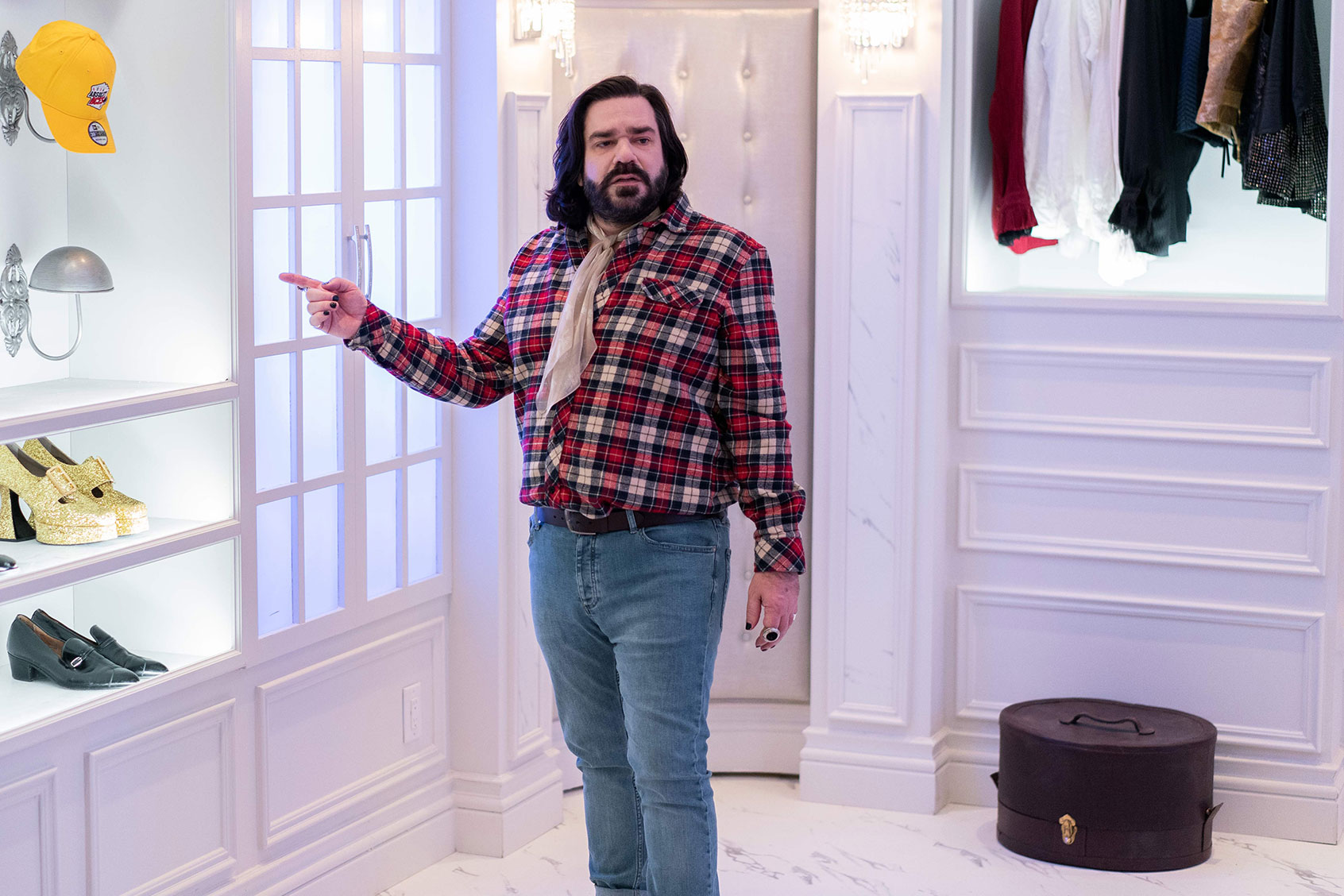
This season, surrogate fatherhood came as a surprise to vampire Laszlo (Matt Berry) as his friend, energy vampire Colin Robinson (Mark Proksch), seemingly died at the end of last season but was reborn (kind of) in large-headed baby form. Over the course of 10 episodes, we watch as the character moves from toddlerhood to tweendom to adolescence, with actor Mark Proksch gamely keeping up with his shifting role, and doing some vaudeville stylings in the process. While ridiculous, the scenes with baby Colin also feel familiar. As outlandish as the vampire show can be, we still recognize ourselves in it, maybe especially this season: those of us who are parents. 

The season also follows two new ventures — modern marriage for Nandor (Kayvan Novak) and a managing a nightclub for Nadja (Natasia Demetriou) — both of which enjoy some success and some horrifying moments before ultimately failing. But the potentially biggest moment is saved for the very last moments when Guillermo seeks out his friend Derek (Chris Sandiford) — a lonely, impoverished vampire who manages a convenience store — and offers him a carpet bag full of cash. The catch? “You’re going to make me a vampire.”

How can the show top Colin’s metamorphosis, finally finding a love for Guillermo, and the sex god the Baron, resurrected for Nandor’s wedding? “What We Do in the Shadows” has already been renewed for two more seasons, and writer Paul Simms promises “the next season’s going to be super funny again . . .  We’re trying to scramble to get it together and it’s going to be great.”

Salon talked with Simms and Proksch about the Season 4 finale, Colin, kids, energy vampires — and if those last two are the same thing.

This interview has been lightly edited for clarity and condensed.

This season is surprisingly emotional, especially the finale. Did you mean to make me cry?

Paul Simms: A little bit, just a little bit. I have a 10-year-old and a 12-year-old, and they grow up so fast. A lot of the ideas in the season came from that and also just anticipating that, eight years from now, I’ll say to them, “Remember all the fun things we did?” And they’ll go, “No, I don’t remember anything.”

It’s just reflecting on life, man.

How did you decide what baby and child Colin would look like with the blond surfer hair and the clothes?

“Any time you can look ridiculous and gross is good for comedy.”

Simms: We did a whole bunch of concepts. If he was bald and had glasses, it would seem like too much of a joke. Too much of a joke and too freakish. We wanted him to look as much like a little kid as possible. I feel like TV kids usually have perfect hair, but little kids are usually wild, unkempt, don’t want to cut their hair. So that’s how we ended up with that. Also, on a technical level, it just helped us, when we later shot Mark’s head and put it on Mark in a wig. The technical aspect of it was not easy to figure out.

I have an 11-year-old, and it was uncanny, both the things that young Colin said as well as the way he looked. The hair was really bringing me back, so thank you for that. Mark, this question is for you specifically, what was your favorite age of Colin to play?

Mark Proksch: Probably teenage Colin and, to some extent, tween Colin. But teenage Colin, being so emotional and pimply, that was really fun to play. And the moment I got to sing and dance on stage, in my adult doughy, 40s body, was fun too. Any time you can look ridiculous and gross is good for comedy.

Do you think that Colin really doesn’t remember being a child or is he lying? 

Proksch: I think that’s up to interpretation. I know Paul has an answer, but he’s not forthcoming and neither am. I think it’s best to let fans speculate whether at some point Colin started feeding on Laszlo a little bit — or is Colin able to hold that back and appreciate what Laszlo did and just not let him know? I don’t know. It’s a good area of debate, I think.

Simms: Got to give people something to think about until the next season starts.

What We Do in the ShadowsMatt Berry as Laszlo in “What We Do in the Shadows” (Russ Martin/FX)Along those lines, is Laszlo going to be changed by his experience with fatherhood?
“They go through experiences that should change them, but like the rest of us, they just keep going.”

Simms: I don’t think so. I think, one of the fun things about this episode is that these characters are hundreds of years old and they’ve basically never really changed. They make efforts to change. They go through experiences that should change them, but like the rest of us, they just keep going. Definitely in the finale, it’s obviously sad that, not only that Colin doesn’t remember all the things [Laszlo] did for him, but that they had a weird bond that Laszlo is not used to having since he’s such a cynic and a curmudgeon. But no one changes.

And the things that would be big in our lives as humans are just blips in their vampire lifetimes.

Simms: Just little blips. That’s why Nandor is like, “I’m just going to relax and read a book for 10 to 15 years.”

“And then I’m going to be through with this phase.” Will we learn more about energy vampires in the next season?

Simms: Yes, you will.

What about Guillermo? Because last season, so much focused on Colin Robinson, which I loved, but is this going to be Guillermo’s year? Or are things going to work out for him ever?

Simms: I feel like every season is everyone’s season. What is interesting at the end of the season is he makes such a rash and ill-advised decision, which is not what Guillermo usually does. He’s usually so cautious and rational. And that’s the fun of seeing the consequences of making a decision about something he’s longed for for so long, but maybe making it a little too hastily and not realizing the repercussions.

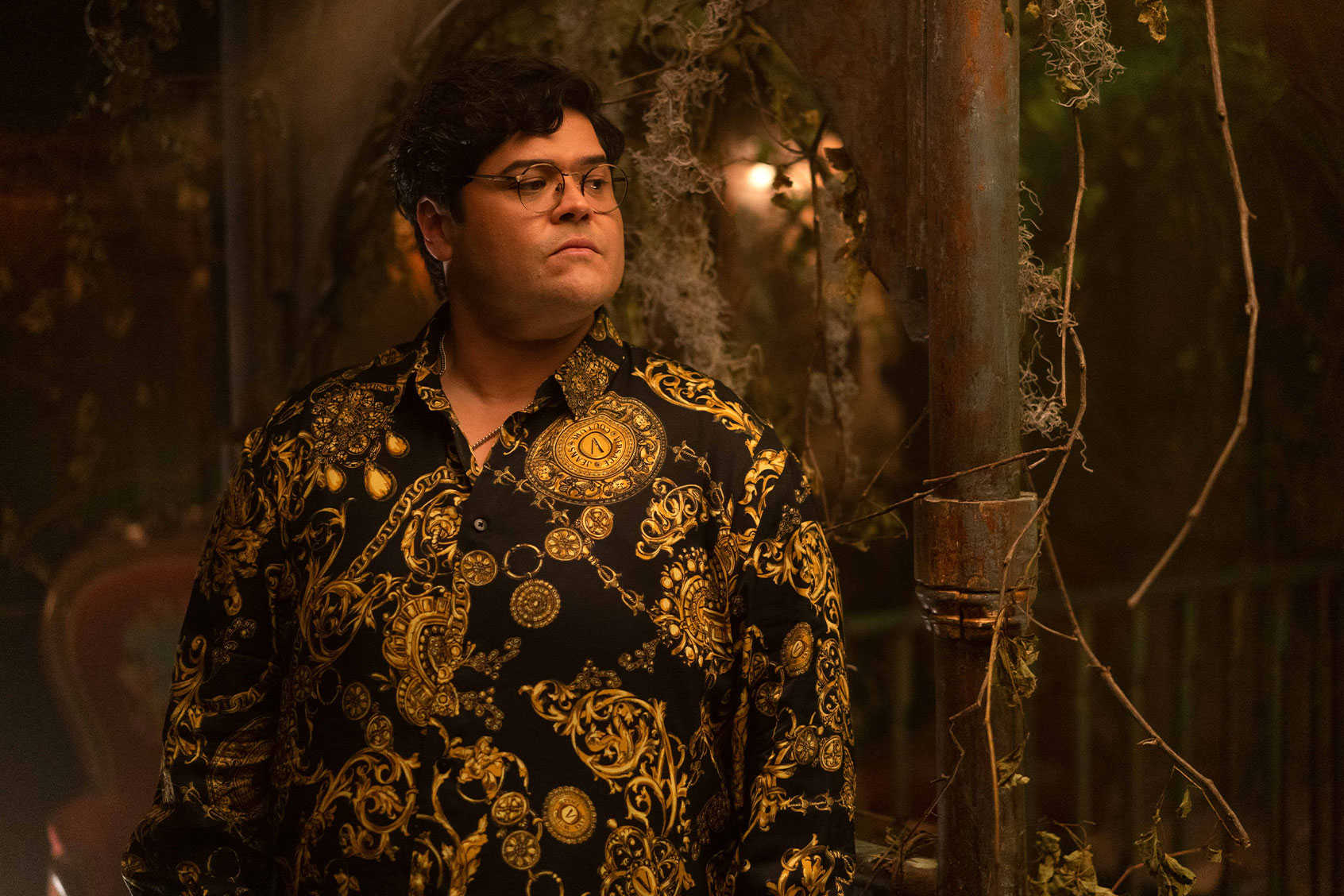
What We Do in the ShadowsHarvey Guillén as Guillermo in “What We Do in the Shadows” (Russ Martin/FX)Are you excited to play Colin Robinson as he was again, Mark? Or are you going to be missing the different stages he was in last season?


Proksch: The different stages — that was really fun to play. And one thing I love about this show is, it doesn’t pander to the whims of fans. Like Paul has said many times, you want it until you get it — and then you don’t want to see it; it doesn’t pay off. And so, being back in regular Colin Robinson mode will be fun for me. And it was fun at the end of the finale, going back into Colin mode.

Simms: That was really fun for all of us also, when Mark walked on set as if the whole season we just shot was nothing and he was right back into that character.

Obviously, I was upset when he dies and I was shocked that it went there and went there so violently. Then I missed him and was suspicious of this child. And then I fell in love with the child — and now you’re going back to Colin Robinson, the grownup again. It’s quite a journey the show takes people on.

Simms: Sounds like we made you a little nervous, but in the end you were satisfied. That was the goal.

That’s much better than the alternative: being complacent. From what you’ve said and what I’ve read, Paul, your children had some say in young Colin Robinson’s lines, and as the parent of an 11-year old — he has very strong opinions about my work and my fiction. Are your kids going to continue to weigh in on the show or do they want to?

Simms: Yes, they do. But mainly, my son wants to make sure that MrBeast sees the clip of the moment where baby Colin mentioned MrBeast, because he thinks then MrBeast will invite him to his workshop in North Carolina. That’s what he’s really fascinated about. 

But so much of that stuff came from both of my kids. And not even me asking them, what would they say? Just from living through the Roblox obsession and the Legos obsession, and the saying, “Guess what?” to the point where you want to go, “Just say what you’re going to say, you don’t have to say, ‘Guess what?’ every time.” The show’s pretty dirty, but I let them watch some of it. And they almost feel like they wrote those parts. They’re like, “Roblox. I remember when we talked about that.” I’m like, “Yeah, you guys did a great job on that episode. Good job.”

I think on one hand, my partner and I feel very seen as parents by this season. On the other, I think it was kind of triggering.

Simms: That’s what we said at the beginning, that we love kids, but they can be energy vampires. They exhaust you just in a different way than maybe adult Colin Robinson does. But still, it’s tiring.


Want a daily wrap-up of all the news and commentary Salon has to offer? Subscribe to our morning newsletter, Crash Course.


Are you surprised, Mark, by how the character has become a fan favorite? He’s not as flashy as the other vampires, but people love Colin Robinson.

Proksch: It is interesting. And that’s really nice to hear, but also, I know people that consider Guillermo the fan favorite or Laszlo or Nadja. And how rare is it to be on an ensemble where there are fan favorites in each one of the characters. I think that just speaks to the writing and the chemistry that we as a cast have.

Simms: It was really fun when we went to Comic-Con. There’s a part where we came out of a place where all the fans were gathered, and it was great because people dressed up as each one of the different characters. It was really fun to see. But I also think the reason Colin is a fan favorite is because we all know an energy vampire or two. And that’s also what makes it fun to write.

“What We Do in the Shadows” airs on FX and streams on Hulu the next day. Watch the trailer for the Season 4 finale via YouTube below:


So who the hell is Liz Truss, anyway? Even the Brits aren’t exactly sure

It’s not entirely fair to describe Liz Truss, the brand new prime minister of the United Kingdom, as “Boris Johnson in heels.” But the salient point here might be that Truss herself would not find that insulting. 

For better or worse (and it’s not super-likely to be for better), Truss’ tenure will be defined by the bloated ego and oversize personality of her mischievous-schoolboy predecessor, who on his way out the door compared himself to Cincinnatus, the Roman statesman who — according to historical accounts of uncertain veracity — was summoned back from retirement on his modest farm to assume dictatorial powers in 458 BC. 

When Truss was announced on Monday as winner of the Conservative Party’s arcane internal leadership struggle — and by extension the incoming prime minister — she gave a brief speech in which she called Johnson her “friend” and thanked him for “getting Brexit done” and leading the Tories to their whopping 2019 election victory. That struck me as more than a routine effort to mend fences with the ousted leader and his wounded supporters; it was a ritual incantation, meant to keep the imprisoned demon in his box. When we see that in a horror movie, we all know it’s not going to work, and such is almost certainly the case here as well.

On this side of the Atlantic, the media is overloaded with quasi-informative explainers about who Truss is, how and why she has landed in 10 Downing Street and what her arrival might mean both for Britain’s future and to the “special relationship” between the U.K. and the U.S. All of which is understandable, since even the British public is mildly puzzled by their nation’s new parliamentary leader, and not at all sure how long she will last or whether she’s anything more than a placeholder — either for the long-delayed return to power of the Labour Party under its neither/nor center-left milquetoast leader, Keir Starmer, or for the triumphant comeback of Boris Johnson himself (in the role of Cincinnatus or Donald Trump or Darth Vader, or all three at once).

Even the British public is mildly puzzled by Liz Truss, and not at all sure whether she’s a placeholder — either for a long-delayed Labour Party victory or for the triumphant comeback of Boris Johnson himself.

So there are a lot of things you can learn about Liz Truss from all the journalistic profiles on offer, and some of them are certainly helpful in understanding her as a person of no evident ideology or principles who has clawed her way to the top job in British politics on pure ambition, shrewd instincts and a dramatic sense of the moment. She grew up in what she has called a “left-wing” family that doesn’t sound like anything of the sort — in American parlance, her parents were, at most, nice liberals — and at Oxford was a student leader in the Liberal Democrats, a centrist third party that has flickered in and out of relevance in recent decades, electing a few polite members of Parliament without the slightest chance of ever holding real power. Grasping that reality, Truss became at first a moderate or “wet” Tory who opposed the 2016 Brexit referendum before recanting entirely and attaching herself to Johnson’s populist-nationalist movement, whose “policies” have amounted to making impossible promises in all directions and then making decisions in desperation at the last possible minute.

There’s no close cognate to Liz Truss in American politics, and there’s definitely nothing similar to the bizarre intra-party process that has landed her in Downing Street. Maybe we could say that in highly approximate fashion Truss hopes to play the role that Ron DeSantis hopes to play in the 2024 Republican primaries — that is, the true believer who will follow the plan laid out by the Founder, but without quite so much outright lying and obvious criminality and bad PR. 

But even within that analogy, we have to imagine that instead of the relatively open U.S. primary system, party leaders were chosen exclusively by people who have signed up for every possible partisan email blast, reliably attend boring and tendentious meetings of local party organizations every month or so and write checks not just to candidates they like but to the parties themselves. In other words, people with no lives who most of us would find endlessly irritating. So Truss was “elected” by a vote of roughly 160,000 official Conservative Party members, which is around one-third of 1 percent of the total British electorate. 

Truss accurately perceived that those hardcore Tories — disproportionately older white people who live in affluent suburban or exurban areas of southern England — still loved Boris Johnson and saw no reason why he should be driven from office over a bit of after-hours carousing and lying about it, or for covering up sexual assault and lying about that, or for, well, God knows what, but in the name of merciful heaven, which of us, when young, hasn’t done plenty of that? (If you know what I mean.)


Want a daily wrap-up of all the news and commentary Salon has to offer? Subscribe to our morning newsletter, Crash Course.


So in one of the many ways that Liz Truss has not just grasped a poisoned chalice but drained it to the dregs, she ran for party leader as the closest thing available to Boris Johnson, and after Johnson had briefly tested the wind to see if there was any imaginable Trump-recount method by which he could undo his own resignation, he more or less gave her his wink-and-nod endorsement. Elected Conservative MPs had largely come to detest and mistrust Johnson — and more important, to view him as politically toxic — and preferred Rishi Sunak, Truss’ final-round opponent, a Thatcher-style budget-cutter with a Goldman Sachs pedigree who would have become (in an inscrutable irony difficult to calculate) Britain’s first nonwhite prime minister.

Truss comes to power with no popular mandate, facing a grave political and economic crisis. She may have to embrace policies the Labour Party would once have rejected as too much socialism.

But in a grudging half-concession to democracy the party had agreed to leave the final verdict up to the so-called membership, a decision it is likely to richly and deeply regret. So it is that Britain gets its third woman PM, and without dwelling on that too much it seems like an ambiguous victory for feminism.

Liz Truss comes to power in Westminster with nothing resembling a popular mandate, facing widespread political discontent and economic near-catastrophe. Whether Brexit, global inflation or the Ukraine war are most to blame is a question for scholars, but the combination has put Britain in a weaker position than any other major Western nation. Growth and employment are stagnant, supply-chain issues continue to pile up and with the coldest, wettest part of the year only weeks away, energy prices are projected to double or triple without government intervention. British people are never in a great mood, historically speaking, but right about now things are pretty dire.

Truss may well have to embrace policies that the Labour Party would once have rejected as too much socialism: If she doesn’t pour money into shoring up the health care bureaucracy and either freeze energy prices or subsidize consumers’ winter bills, the political cost will be unacceptable; if she does those things, the government will continue to run up massive deficits and budgets elsewhere will be slashed indiscriminately. She faces a national election by the end of 2024, which is theoretically enough time to figure some of this stuff out, but also enough time for the tiny universe of voters who selected her to realize that the other guy, the one they liked — the one who reminded them of that mad character they were at school with; they couldn’t possibly tell you half the things that lad got up to! — is hovering in the background, leering over her shoulder.

One American commentator this week suggested that Boris Johnson will haunt Liz Truss’ premiership like Banquo’s ghost in “Macbeth,” which is a nice literary flourish but not quite right. He looks, and acts, a lot more like the malicious doll Chucky of B-minus horror franchise fame, doesn’t he? We all know that Chucky’s getting out of the closet eventually — in fact, we want him to. It’s what we came for.

Whole Foods’ CEO wants to reconnect to the chain’s core values. After Amazon deal, is that possible?

September is already shaping up to be a big month for Whole Foods Market. John Mackey, the organic supermarket chain’s controversial original co-founder and chief executive officer, retired last week. His replacement, former Whole Foods chief operations officer Jason Buechel, has announced plans to “reconnect” to the company’s heritage.

That may be difficult, critics have pointed out, as this year also marks the fifth anniversary of Amazon acquiring Whole Foods, a partnership that in 2017 seemed antithetical to the wholesome and (slightly) countercultural image the market had cultivated since its inception in 1980.

But while kombucha cases and ample vegan options may signal to shoppers that this isn’t your average American grocery store, they alone don’t hedge businesses against the grinding gears of capitalism.

As the New York Times reported in 2017, the $13.7 billion cash deal for Whole Foods “represent[ed] a major escalation in the company’s long-running battle with Walmart, the largest grocery retailer in the United States, which has been struggling to play catch-up in internet shopping.”

While kombucha cases and ample vegan options may signal to shoppers that this isn’t your average American grocery store, they alone don’t hedge businesses against the grinding gears of capitalism.

At the time, Amazon was struggling to become a major player in the food and beverage sector. Despite having sold groceries online since the late 2000s, consumers didn’t associate the e-commerce giant with buying their weekly produce and meat. 

Acquiring Whole Foods was a sure way to change that perception — and it did.

The Amazon acquisition also brought some positives to the company. According to CNBC, Whole Foods has added 3,000 local brands in the past five years — a 30% increase since before the Amazon deal. Additionally, Whole Foods told the outlet it had “more than doubled its list of banned food ingredients, bringing the total to more than 250.”

Whole Foods prohibits ingredients, such as hydrogenated fats, high fructose corn syrup and artificial sweeteners. Meanwhile, meat must be free of antibiotics and added hormones.

However, the move also polarized some Whole Foods customers, who expressed concerns that the purchase might impact how both employees and small-scale producers would be treated under the new regime.

A year after the purchase, a group of Whole Foods staffers emailed thousands of fellow workers with a list of takeover-related grievances, including the removal of some stock options and “constantly being asked to do more with less resources and now with less compensation.” 


Want more great food writing and recipes? Subscribe to Salon Food’s newsletter, The Bite.


Some workers attempted to unionize under the large Retail, Wholesale and Department Store Union, though those efforts have stalled. Moreover, amid the pandemic, Amazon and Whole Foods workers coordinated numerous protests, decrying the lack of safety guidelines to limit the risk of coronavirus, as well as limited paid sick leave.

Now, five years and a global pandemic later, Buechel says he wants to return to the company’s “core values.” 

“One of my top goals is to reignite the connection to our higher purpose, mission and core values with our team members,” said Beauchel during a panel at the recent Wall Street Journal’s Global Food Forum. “We’ve been through a lot.”

However, Jess Weidauer, principal at SSR Retail, wrote on RetailWire that “reconnecting with the Whole Foods’ ‘higher purpose’ can’t be done as long as Amazon holds the keys.” 

“It’s little more than an Amazon locker that sells food.”

He continued, “After five years it’s clear that Amazon doesn’t really know what to do with Whole Foods — there is no overarching purpose or meaning apparent any longer. It’s little more than an Amazon locker that sells food.”

Brian Delph, the chief executive officer of New Sega Home, agreed.

“Perception is reality,” Delph added. “Whole Foods will never be able to shake consumer awareness that it is attached to Amazon. This association completely distracts from any efforts made towards a high-purpose and will always negate efforts unless it’s separated in the future.”

DEA says “rainbow” fentanyl pills are being marketed to children. Experts say that’s nonsense

The U.S. Drug Enforcement Administration (DEA) is warning the public of a deadly new trend: Colorful pills tainted with illicit fentanyl and sold by “drug cartels” that are “made to look like candy to children and young people.” Fentanyl, a synthetic opioid, is driving drug overdose deaths in America, although multiple drugs play a role in the crisis that has killed 109,000 people in the 12 months since March 2022.

“Rainbow fentanyl—fentanyl pills and powder that come in a variety of bright colors, shapes, and sizes — is a deliberate effort by drug traffickers to drive addiction amongst kids and young adults,” DEA Administrator Anne Milgram said in a press release published August 30. Their claims echoes similar statements made by law enforcement earlier this summer, such as a Facebook post by Placer County, California, District Attorney Morgan Gire, who claimed “this rainbow-colored substance is one of the many tools that dealers are using to make the poison appeal to our kids.”

However, drug policy experts argue that such statements are misleading — that no, these rainbow-colored pills are not being marketed to kids. The DEA did not respond to a request for comment, but Salon will update this story if we hear back.

The DEA’s press release was essentially re-report by numerous media outlets, including The Hill, Seattle Times, USA Today and High Times, who ran stories repeating the DEA’s talking points with little evidence or scrutiny.

While it is true that colored fentanyl has been seized many times by authorities, this is neither a recent trend nor proof that children are the intended targets.

Dr. Nabarun Dasgupta, a pharmaceutical scientist at the University of Carolina at Chapel Hill, characterized this new panic about fentanyl being marketed towards kids as “typical drug war bulls**t.” Dasgupta’s work includes running a drug checking service that uses analytical chemistry to detect what is in street drugs.

Dasgupta says the DEA’s framing “was so divorced from any reality of what drug markets are actually like, it was almost laughable that our country’s top drug enforcement folks are so out of touch.”

Samples are mailed to Dasgupta from across the country, which he and his team run through a gas chromatography-mass spectrometer. The spectrometer identifies the exact chemical structure of whatever is in someone’s drugs. It can tell if the MDMA someone was sold actually contains methamphetamine or whether pills sold as prescription opioids are actually illicit fentanyl. 

Regarding the dyed fentanyl pills, Dasgupta says the DEA is “late to the party.”

“We’ve been talking about colored dope for years. This is like completely nothing new,” Dasgupta told Salon, describing a palette of drugs his lab has received since early 2021, including turquoise, bright magenta, purple, green, yellow, brown, and pastels. 

However, Dasgupta says the DEA’s framing “was so divorced from any reality of what drug markets are actually like, it was almost laughable that our country’s top drug enforcement folks are so out of touch with what’s happening on the ground.”

 Claire Zagorski, a licensed paramedic, program coordinator and harm reduction instructor for the PhARM Program at The University of Texas at Austin College of Pharmacy, described the DEA announcement as “old recycled drug propaganda” that echoes the perennial myth that Halloween candy might be spiked with illicit narcotics.

“Why would someone give away their expensive drugs to some random person they don’t know, just so they might have a bad experience? It doesn’t make sense,” Zagorski told Salon. “At the end of the day, drug sellers are business people, and they’re not going to invest in some kind of change to their supply if they don’t think there’s some good return on it … Kids don’t have a lot of money that their parents don’t supervise or give to them. So it just doesn’t make sense from a business standpoint.”

So why are drugs like fentanyl coming in so many bright colors lately? Without more evidence, it is difficult to say, but seizures alone do not verify intent. Using dyes in street drugs has a long history. In 2008, undercover cops in Ohio arrested several people with crack cocaine that had been dyed green for St. Patrick’s Day, for example. Ecstasy pills are routinely produced in interesting shapes and colors, including in the shape of Mickey Mouse’s head, though they are not typically sold to children. The same sort of marketing strategies could be playing out here as well.

“My guess is that it’s a fairly superficial little marketing flourish,” Zagorski says. “I just don’t see the evidence that it’s meant as a very pointed way to capture the hearts and minds of small children.”

It should also be noted that people who use drugs generally pay close attention to the colors of the pills or powders they purchase. “While still in powder form, users broadly noted changes in heroin powder and solution color, as well as perceived physiological effects,” researchers noted in interviews with 38 people who use heroin in the International Journal of Drug Policy in 2017. That study had a small sample size, but results like this have been replicated.

The DEA and the media outlets that have uncritically published this story don’t seem to have considered that maybe adults want colored fentanyl and drug sellers are simply responding to demand. But Zagorski says the DEA’s announcement seems designed to cause panic, similar to the myth that touching fentanyl can kill.


Want more health and science stories in your inbox? Subscribe to Salon’s weekly newsletter The Vulgar Scientist.


“It feels really reactionary. It feels kind of like a ‘Reefer Madness’ thing,” Zagorski says, referencing the 1936 anti-drug propaganda film. “If they have more convincing evidence, I’d love to see it.” 

Dasgupta says it is “irresponsible and reprehensible” that news outlets are reprinting this DEA alert without any pushback. “It’s exactly the kind of behavior from the news organizations that leads to misinformation and panics and detracts from the very real public health dangers that we can and should be focused on,” he says. “This is not one of them.”

Clinton destroys Trump’s false equivalency over his classified docs scandal: “That’s right: zero”

Former United States Secretary of State and 2016 Democratic presidential nominee Hillary Clinton has weighed in on the ongoing drama surrounding the trove of classified documents that were seized from ex-President Donald Trump’s Mar-a-Lago estate by the Federal Bureau of Investigation in Palm Beach, Florida on August 8th.

Trump and his Republican defenders have crafted a catalog of excuses for his behavior, including attempting to equate his clandestine collection of sensitive materials with the investigation into Clinton’s private email server during the 2016 campaign.

Clinton was cleared of intentional wrongdoing by then-FBI Director James Comey, who went on to throw a wrench into the 2016 election when he announced in October of that year that a laptop belonging to disgraced Congressman Anthony Weiner, D-N.Y., contained Clinton-related emails. Although that too wound up being a nothing burger, many people believe that Comey’s untimely update handed the election to Trump.

On Tuesday, Clinton explained in a Twitter thread why Trump World’s comparison to her State Department emails is false.

“I can’t believe we’re still talking about this, but my emails… As Trump’s problems continue to mount, the right is trying to make this about me again. There’s even a ‘Clinton Standard.’ The fact is that I had zero emails that were classified,” wrote Clinton.

“Comey admitted he was wrong after he claimed I had classified emails. Trump’s own State Department, under two different Secretaries, found I had no classified emails. That’s right: ZERO,” she continued.

“By contrast, Trump has hundreds of documents clearly marked classified, and the investigation just started,” Clinton added. “I’m more tired of talking about this than anyone, but here we are. If you’re interested in the facts, you can read more here: How Many Of ‘Her Emails’ Were Classified? Actually, Zero.”

New Politico owner who preaches “nonpartisan” reporting invited execs to “pray” for Trump reelection

Politico’s new owner has publicly pledged to avoid partisan bias in the website’s coverage but, behind the scenes, he appears to be a passionate supporter of Donald Trump.

German publishing giant Axel Springer purchased the fast-growing political journal last year for more than $1 billion, and its CEO Mathias Döpfner has expressed concern that legacy newspapers like the New York Times and Washington Post have drifted too far to the left while conservative media traffics in “alternative facts,” reported the Washington Post.

“We want to prove that being nonpartisan is actually the more successful positioning,” Döpfner told the newspaper.

However, the Post obtained an email showing that Döpfner invited his closest executives to pray for Trump’s re-election shortly before the 2020 election.

“Do we all want to get together for an hour in the morning on November 3 and pray that Donald Trump will again become President of the United States of America?” the email reads.

The email was prompted by a report he shared about the government’s plan to sue Google for allegedly abusing its market dominance, which has angered him for years, and he told colleagues that Trump had successfully tackled all of the most important global issues.

“No American administration in the last 50 years has done more,” Döpfner told the executives.

Döpfner initially denied sending the email.

“That’s intrinsically false,” he said. “That doesn’t exist. It has never been sent and has never been even imagined.”

But Döpfner admitted it was possible that he sent the message after he was shown a printout of the text by a reporter, saying it might have been “an ironic, provocative statement in the circle of people that hate Donald Trump.”

“That is me,” Döpfner said. “That could be.”

Trump judge’s ruling in Mar-a-Lago case proves Biden was right: MAGA is fascism

It had been little over a week since President Joe Biden called Donald Trump and his supporters “semi-fascist” when a Trump-appointed judge, Aileen Cannon of Florida, proved Biden’s point. While most Americans were too busy enjoying Labor Day cookouts to pay much attention to the news, Cannon let loose with a decision breathtaking in its disregard for both the law and the judicial branch’s legitimacy.

In one sense, it’s not a surprise that Cannon, a judge who Trump selected precisely because he knew how corrupt she was, eagerly issued a ruling slowing down the Department of Justice’s (DOJ) efforts to investigate Trump’s theft of hundreds of classified documents from the U.S. government. But even though she had already taken the highly unusual action of signaling her intention to do her crony this favor, the most cynical observers of Trump’s shady judicial appointees were surprised at how far she took it. Cannon not only threw a bunch of wrenches in the DOJ’s ability to investigate a former president, undergirding her decision with the same logic of the Big Lie and the January 6 insurrection, but she extended a nearly unlimited right to Trump to break the law. As national security legal expert Bradley Moss noted on Twitter, this ruling “is meant for Trump and Trump alone,” giving him special rights not enjoyed by any other person in the country, including the actual president. All of this, even though Trump is a private citizen and not the president at all. 

At stake are boxes of classified documents that Trump stole from the government when he left the White House. For months, the DOJ has been trying to get these documents out of Trump’s illegal possession, but Trump — for whatever no-doubt nefarious reason — has been resisting. Even after the FBI raided his Mar-a-Lago resort in an attempt to seize the stolen documents, they found that many of the folders marked “classified” were empty, suggesting Trump removed the documents and either hid them, sold them or gave them away. 


Want more Amanda Marcotte on politics? Subscribe to her newsletter Standing Room Only.


In an attempt to delay the DOJ investigation into what is looking like an extensive amount of criminal behavior, Trump sued, demanding a “special master” go over the documents seized by the FBI to determine what the agency has a right to review. From the beginning, the lawsuit was frivolous nonsense, as a federal judge had already signed the warrant to seize the documents. But Cannon didn’t just overrule the original judge in letting Trump have his “special master,” she also put a halt to the investigation. Because, in a truly alarming move, the judge instructed the special master to consider the former president’s supposed “executive privilege” in retaining the documents.

“It’s a hell of a thing if the mere assertion of executive privilege by someone who no longer holds office can stop an existing officeholder from engaging in a core executive function.”

The problem with this should be obvious: Trump is no longer the president and thus has no “executive privilege.” Biden is the president. He and the FBI, which is part of the executive branch, do possess executive privilege over the documents. By issuing this ruling, Cannon is functionally saying that Trump has more presidential powers than the actual president. As Boston University law professor Robert Tsai noted on Twitter, “It’s a hell of a thing if the mere assertion of executive privilege by someone who no longer holds office can stop an existing officeholder from engaging in a core executive function.”

Call it the Big Lie decision.

Cannon’s opinion rests on an unsubtle implication that Trump is somehow more president than the actual president. As a New York Times article explained, “a court has never held that a former president can invoke the privilege to keep records from his time in office away from the executive branch itself.” As Slate’s legal expert Mark Joseph Stern noted on Twitter, no legitimate judge would “take Trump’s absurd filing seriously,” but “Cannon is not a real judge, but a Trump judge, and one of the most corrupt of the bunch.”

That Cannon was chosen for her corruption is not even in dispute. As investigative reporter Jose Pagliery of the Daily Beast wrote, Trump’s lawyers avoided filing this lawsuit in any court close to Mar-a-Lago, instead picking “a satellite location that’s 70 miles from Mar-a-Lago” because they wanted a judge he appointed, one that could be trusted to ignore the law and instead rule in Trump’s favor. But what they got was likely beyond even their fondest hopes: A judge who would rule as if Trump’s right to executive powers exceeds that of the actual president’s.


Want more Amanda Marcotte on politics? Subscribe to her newsletter Standing Room Only.


For the past week, we’ve been subject to an endless stream of bellyaching from Republicans over Biden’s speech calling MAGA Republicans “semi-fascist,” followed by his Thursday speech in Philadelphia warning Trump’s movement “threatens the very foundations of our republic.” In response, House Minority Leader Kevin McCarthy whined that Biden should “apologize for slandering tens of millions of Americans as ‘fascists.'” 

Judge Cannon ruled that Trump’s right to executive powers exceeds that of the actual president’s. 

All of this umbrage, of course, is totally fake. That Trump and his supporters subscribe to a fascist ideology was clear before January 6 and indisputable after Trump incited a riot in an attempt to stop the peaceful transfer of power. As historian of fascism Federico Finchelstein explained in the Washington Post, Trump “aspires to return to a form of fascism.” Trump may have been unsuccessful at becoming a fascist dictator, but the January 6 riot was absolutely an effort to become one. And as Rep. Jamie Raskin, D-Md., explained on “Face the Nation” this past Sunday, both the Big Lie and the embrace of political violence are “hallmarks of a fascist political party.”

Cannon’s ruling on Monday is just further proof that Trump is, ideologically, a fascist leader. By asserting that Trump enjoys all these powers that the duly elected president does not, Cannon is reinscribing the foundational — and utterly fascist — assumption of Trumpism: Trump’s power should be absolute and not constrained by either rule of law or a lost election.

There’s been, for good reason, a lot of interest in exactly what Trump wants all these classified documents for. Is it for selling them? Or perhaps exchanging them to hostile foreign leaders for political favors? It’s hard to say, but even without knowing his purpose, it’s alarming that Trump is going to such lengths to hang onto the documents, and that his supporters are going to such lengths to defend his illegal behavior. This is all about putting Trump above the law. By issuing this ruling, Cannon has blessed Trumpism’s basic premise: Donald Trump has powers that not only above those of the elected president but powers that exceed those of the office itself. This ruling proves that Biden was right to warn Americans: Trump is a fascist and a threat to democracy. 

Damning video shows Sidney Powell allies at Georgia election office at same time as voting breach

On CNN Tuesday, correspondent Drew Griffin analyzed newly revealed footage showing a GOP operative in Georgia helping associates of pro-Trump attorney Sidney Powell infiltrate the elections offices in a small, heavily Republican community in the center of the state.

This was going on at exactly the same time an illegal breach was found to have happened in the county’s voting system. And it comes amid investigations into Powell, a conspiracy theorist who has repeatedly spearheaded failed legal actions to overturn the elections of multiple states where President Joe Biden won. She has since been disowned even by Trump’s associates for her antics.

“Breaches of these voting machines … in swing states are under investigation across the country,” Griffin anchor John Berman. “This one happened in Coffee County, Georgia, rural county. CNN obtained surveillance video at one of the offices where the voting machines were breached.”

“This is Cathy Latham we’re showing you, the former chairman of the Coffee County GOP,” noted Griffin as the clip played. “Already under investigation… for posing as one of the fake electors who signed documents who declared Donald Trump was the winner of the 2020 election. Latham can be seen escorting a team of pro-Trump operatives into the office, including an IT specialist working with Sidney Powell. This all happens on the same day the voting system in that office was illegally breached. January 7th, 2021, the day after the attack on the U.S. Capitol. Text messages, emails, and witness testimony from a civil lawsuit against Georgia election officials have connected Latham, that woman, to the plan to give the group access to the elections office.”

All of this, noted Griffin, was a week after Latham testified before Georgia state lawmakers with Trump ally Rudy Giuliani, telling them that there were irregularities in Coffee County voting machines.

“Latham’s attorney told CNN in a statement that ‘Ms. Latham has not acted improperly or illegally,’ and ‘Ms. Latham did not authorize or participate in ballot scanning efforts, computer imaging, or any similar activity,'” added Griffin. “The IT specialist firm says it had no reason to believe he was doing anything wrong either. One important note, Coffee County, where this happened, is a Republican stronghold. Donald Trump won this county with 70 percent of the vote. But you can see from the video there that the Trump-connected team wanted to, and was able to get, access to that elections office.”

Watch the video below or at this link.

“Unfit for the bench”: Experts accuse Trump judge of “obstruction of justice” over Mar-a-Lago ruling

Political observers on Monday said U.S. District Court Judge Aileen Cannon “engaged herself in obstruction of justice” by ruling that the U.S. Department of Justice must halt its review of materials seized at former President Donald Trump’s Florida estate, Mar-a-Lago.

Cannon, who was appointed by the former Republican president and confirmed after he lost the 2020 election, ruled that Trump “faces an unquantifiable potential harm by way of improper disclosure of sensitive information to the public” if the review of the materials, which included documents marked “confidential” and “top secret” continues.

Political scientist Norman Ornstein noted that lawyers for Trump hand-picked Cannon to oversee the case.

Cannon “has violated her oath and is unfit for the bench,” he tweeted, adding that her ruling is “a clear-cut impeachable offense.”

Slate journalist Mark Joseph Stern said he had been assured that “no judge would take Trump’s absurd filing seriously” after the former president sued the DOJ over the FBI raid which was sparked by the department’s finding that Trump had taken classified documents from the White House when his term ended in January 2021.

“The problem, of course, is that Cannon is not a real judge, but a Trump judge, and one of the most corrupt of the bunch,” said Stern.

Cannon ruled that a “special master” should be appointed to review the materials seized by the FBI and said the federal government should be “temporarily enjoined” from examining the documents further.

The Justice Department now has until September 9 to propose a list of special master candidates. It was unclear Monday whether the Biden administration would appeal Cannon’s ruling.

Leaked email: Producer begged Fox News to keep Jeanine Pirro off the air ahead of defamation lawsuit

A newly unearthed email shows that an unidentified Fox News producer frantically tried to get the network to keep host Jeanine Pirro off the air for pushing false claims about Dominion Voting Systems stealing the 2020 election for President Joe Biden.

NPR, which obtained a copy of the email and verified its authenticity with two sources, reports that the “anguished” email was sent by an unnamed Fox News producer in November 2020, and it objected to Pirro pushing claims that Dominion’s voting machines supposedly “flipped” votes from Trump to Biden.

“The producer warned: Fox cannot let host Jeanine Pirro back on the air,” writes NPR. “She is pulling conspiracy theories from dark corners of the Web to justify then-President Donald Trump’s lies that the election had been stolen from him.”

The warning would prove prescient, as Fox News and other right-wing media organizations are now facing massive defamation lawsuits filed by Dominion over the false claims made about the 2020 election.

In fact, NPR notes that the email is now being used by Dominion’s attorneys as proof that Fox News acted with malice by allowing its hosts to stay on the air to push baseless conspiracy theories about its voting machines.

Dominion argues it has suffered irreparable harm as a result of these conspiracy theories and has already had multiple contracts canceled by lawmakers who have bought into Trump’s false claims about the 2020 election.

“I’m really rich”: Trump claims he doesn’t even “need financing” as Truth Social deal falls apart

The blank-check company that planned to merge with former President Donald Trump’s struggling Truth Social venture failed to secure enough shareholder support for a one-year extension to complete the deal, according to Reuters.

Trump launched the Trump Media & Technology Group, which owns Truth Social, with plans for a $1.3 billion cash infusion from Digital World Acquisition Corp., a special purpose acquisition company (SPAC). But the deal has been on hold indefinitely as Digital World faces scrutiny by the Securities and Exchange Commission and the Justice Department over whether the company illegally negotiated the deal with Trump before going public.

Digital World asked its investors to approve a one-year extension to complete the merger as a result of the investigations, which the company said in a filing “could materially delay, materially impede, or prevent the consummation of the business combination.”

The company needs 65% of its shareholders to extend the deadline for the merger but by Monday “far fewer Digital World shareholders than those required had voted in favor,” according to Reuters. Most of the company’s shareholders are individual investors and it has been “challenging” getting them to vote through their brokers, Digital World CEO Patrick Orlando said last week, according to the report.

The vote threatens to kill the planned merger and Digital World executives are already scrambling for alternative options, according to the report. The company may try to postpone the vote deadline in an effort to garner more support from shareholders. Without further action, the SPAC is set to liquidate on Thursday and return the money it raised from investors a year earlier.

Trump’s company was set to cash in on $293 million from the deal along with $1 billion in private investment. Trump’s company in the meantime has taken on tens of millions in loans, according to the report.

Trump downplayed the deal ahead of Monday’s vote on Truth Social, arguing that the company is “doing really well” despite widely-reported financial struggles. The former president accused the SEC of “trying to hurt” his merger partner and suggested that he may line up private investors instead.

“I don’t need financing, ‘I’m really rich!'” he wrote. “Private company anyone???”

Despite his wealth, Trump has largely financed his business ventures and presidential campaigns with other people’s money, racking up billions in debt that he does not always pay back.

Truth Social’s right-wing web host is threatening legal action against the company, accusing it over refusing to pay $1.6 million in contractually obligated payments, Fox Business reported last month, adding that the social network’s finances appear to be in “significant disarray.”


Want a daily wrap-up of all the news and commentary Salon has to offer? Subscribe to our morning newsletter, Crash Course.


Digital World in SEC filings has acknowledged that “a number of companies that were associated with [Trump] have filed for bankruptcy” and that “there can be no assurances that [Trump’s media company] will not also become bankrupt.”

In a filing in May, Digital World said that Truth Social “may never generate any operating revenues or ever achieve profitable operations” and will “most likely fail” if it does not address its risks.

The company has also faced numerous setbacks since its messy, glitch-ridden launch last year. The U.S. Patent and Trademark Office last month rejected Truth Social’s trademark application because Trump’s company’s name was “confusingly similar” to other businesses.

The company has also been blocked from the Google app store over its content moderation failures. Trump in his Truth Social post insisted that “Google is coming along nicely (I think?).”

SEC filings show that Truth Social “still has no guaranteed source of revenue and a questionable path to growth,” The Washington Post reported last week.

Digital World, meanwhile, is facing multiple federal probes into whether it illegally negotiated the merger before going public in September 2021. The company said in June that it was subpoenaed by a federal grand jury and was facing probes by the DOJ and the SEC that would delay the merger. And the company warned that Trump’s mounting scandals pose a significant threat to the business.

“The value of TMTG’s brand may diminish if the popularity of President Trump were to suffer,” the company said in a filing last month. “Adverse reactions to publicity relating to President Trump, or the loss of his services, could adversely affect TMTG’s revenues, results of operations and its ability to maintain or generate a consumer base, as well as the outcome of the proposed Business combination.”

America is finally waking up to the fascist danger: Let’s hope it’s not too late

For the last six years or so, most Americans — especially white Americans — were in denial about the monster rampaging across the country. Like privileged children, they believed that if their eyes were closed, the monster couldn’t harm them. The real world does not work that way.

Those slumbering Americans are not entirely responsible for their bad decisions. In one ear they had the hope-peddlers and centrist pundits whispering, like faeries or gods in some pre-Raphaelite painting, that everything would be fine and they should just keep sleeping. In the other ear were Donald Trump, the Republican fascists and their allies, assuring them that everything would be fine and good because the Trump movement was fighting for “real Americans” like them.

As the song lyric (drawn from an Elizabethan poem) warns us, sleep is the cousin of death. That is especially true for democracies in crisis and under siege by fascism and authoritarianism. A much-discussed new poll from NBC suggests, however, that slumbering Americans may finally be waking up. The poll found that “threats to democracy” has overtaken the “cost of living” in perceptions of the most important issue facing the country, and that the legislative package meant to address climate change and health care that was recently enacted by Democrats is widely popular:

But hovering over the entire poll is a deep dissatisfaction from the American public. 

Three-quarters of voters — 74% — say the country is headed in the wrong direction, representing the fifth-straight NBC News survey showing this number in the 70s.

Additionally, 58% believe America’s best days are behind it, which is the highest percentage on this question dating back to 1990.

Another 68% of voters think the United States is currently in an economic recession.

Too many among the mainstream pundit class have latched onto one convenient data point in this poll as further proof that the tide is finally turning against the Republican fascists. Such a superficial analysis is more about wish-casting and a desire for a return to “normalcy” than a reflection of reality. In fact, a more complicated dynamic is at work.

The same NBC poll also finds that 61% of Americans “say they’re so upset by something that they’re willing to carry a protest sign for an entire day,” but the potential protest signs vary widely. Democratic voters say they would favor “Women’s rights,” “Equal rights,” “Prosecute Trump” and “Abortion rights,” while Republicans would prefer signs reading “Impeach Biden,” “Protect our freedom,” “Protect 2nd Amendment” and “Stop Democrats.”

In the real world, Biden has committed no high crimes or other actions that remotely merit impeachment. The Second Amendment is not under threat. Indeed, American society remains sick with gun violence and mass shootings, and the gun lobby continues to have a literal death grip on American society.

In all, the NBC poll offers further evidence that the Trumpists and Republican-fascists of the MAGAverse have constructed an alternate reality in which the basic understanding of facts and truth — and also the meaning of democracy and freedom — have been debased and distorted. Fascism is fueled by such fantasies, and malignant realities. This fracture may well decide the future of America.


Want a daily wrap-up of all the news and commentary Salon has to offer? Subscribe to our morning newsletter, Crash Course.


For example, even after Trump’s coup attempt and the Jan. 6 attack on the Capitol, his supporters still believe they are the true defenders of democracy. Public opinion polls have repeatedly shown that a large percentage of Republicans, if not an outright majority, believe that the Capitol attackers were “patriots.” From the same NBC poll:

By party, 92% of Democratic voters, 61% of independents but only 21% of Republican voters think the investigations into Trump should continue. [emphasis added]

While all voters who prefer the investigations continue rather than stop lead by 17 points, the margin holding Trump responsible for the Jan. 6 attack on the U.S. Capitol is much smaller.

A combined 50% of voters say Trump is solely or mainly responsible for Jan. 6 — up 5 points since the May NBC News poll, before the House committee investigating the attack began holding multiple televised hearings.

That’s compared with a combined 49% saying Trump is only somewhat responsible or not responsible at all for Jan. 6, which is down 6 points from May.

Other research has demonstrated that a large proportion of Trump supporters are willing to give up democracy if it means that white people must share power with nonwhites. In practice their vision of new America will entrench white conservative minority rule over an increasingly diverse and pluralistic majority. There is a name for such a society: apartheid.

Trumpists have a racialized understanding of democracy: White power must be maintained at all costs, they are the only “real” citizens, and if they don’t win elections the outcome is illegitimate.

The Trumpists and their followers have a racialized understanding of democracy in which white supremacy and white power must be maintained at all costs, where they are the only “real” citizens and voters, and where if they do not win at the ballot box the system must be corrupt and the outcome was “stolen” or otherwise illegitimate. That kind of racial logic is the very definition of white supremacy.

There is nothing new about such arguments, which trace their origins at least as far back as Reconstruction. In a February 2022 essay at the New Republic, Nick Tabor provides historical context, writing that in the post-Confederate South, “reports that Black voters intended to commit fraud served as grist for massive campaigns of voter suppression and intimidation”:

Ultimately, at the dawn of the Jim Crow era, this all culminated in a series of new state constitutions that systematically stripped Black men — and in many cases, poor whites as well — of their voting rights.

In speeches last month, Biden compared the January 6 insurrectionists to Confederate soldiers and likened the newest voting restrictions to Jim Crow policies. These comparisons were essentially apt — even if the laws in question are not nearly as extreme as those of the Jim Crow South. But the decades immediately following the Civil War, which are often overlooked in national memory, and which produced the Jim Crow order, may be the most instructive period for the present moment.

Southern fears about phantasmic voter fraud became widespread in the late 1860s, as ballot access was being extended to Black men on a state-by-state basis — and, not coincidentally, as the Ku Klux Klan was also expanding its reach. These voting rights were solidified in 1870, with the passage of the Fifteenth Amendment, which said no man could be turned away from the polls because of his “race, color, or previous condition of servitude.” It’s hard to imagine the psychological effect this must have had on white Southerners. Hundreds of thousands of freedmen were now eligible to participate in elections, with each of their ballots carrying the same weight as the vote of a white aristocrat. The region’s electoral composition was swiftly and radically transformed.

The idea that no person or leader is above the law and that the law should be applied equally to everyone is a foundational principle of democracy. Today’s Republican Party and many of its voters and followers now reject that norm.

Donald Trump is under investigation by the Department of Justice and the FBI for a number of possible crimes, including violations of the Espionage Act and obstruction of justice. But recent public opinion polls make clear that this has not damaged his popularity among Republicans. A Morning Consult poll released after the FBI search of Mar-a-Lago showed Trump’s support in a potential GOP primary campaign rising to 58%, four points higher than in July.

In an article here last week, I discussed Trump’s relationship with his followers and their mutual embrace of criminal behavior and rejection of democratic norms and values:

Trump’s followers therefore identify with his lawbreaking and other antisocial behavior, while also being compelled to rationalize it as both necessary and good. Love for Donald Trump and what he represents becomes the means and medium through which his followers resolve that cognitive dissonance.

By email, Shawn Rosenberg, a professor of political science and psychology at UC Irvine, wrote that the desire for an “anti-democratic strongman and disregard for rule of law are very strongly associated with: 1) populism, 2) seeing a homogeneous people as desirable or necessary, 3) being anti-Black, antisemitic and anti-immigrant, 4) having a simple dualistic, black/white view of political issues and morality and 5) being anti-elite.”

Too many liberals, progressives, Democrats, centrists and others outside the MAGAverse love to accuse Trump and the right-wing movement of being hypocrites or applying a double standard to their own behavior. This is an absurd claim: In reality, the Trumpists and Republican fascists do not hold to any norms or standards beyond winning at all costs. To call them hypocrites assumes that they care and might somehow change their behavior. It is a waste of time and energy.

Fascism involves a violent fantasy of revenge and destruction with the goal of exercising total power and recreating society around the myth of a glorious past in which the in-group holds uncontested power and the out-group is vanquished, oppressed and perhaps destroyed.

Last Monday, NBC News reporter journalist Ben Collins spoke to this truth on Twitter:

I think it’s time we start covering Trumpism for what it is now. It’s no longer a political movement. It’s a violent fairytale of revenge on political enemies…. Feds could’ve found a body in those Mar a Lago boxes and followers wouldn’t care. It’s about retribution, not facts.

Collins offered further context in a later appearance on MSBNC: 

Yeah, it’s just retribution. That’s what Trumpism is now…. They want the world to return to the pre-’90s world in general, but they also just want to get revenge on the people who changed the world to make it so they have less power in their view, in their eyes. That’s what they thought they were getting with Trumpism 1.0. They didn’t think he was serious enough about this culture war. Now they think that he’s going to actually exact that revenge if he gets back into office.

No matter how often Trump and the modern Republicans claim to believe in democracy or claim to respect the Constitution and the rule of law, that is obviously untrue. What they really want is a fake or “managed” democracy in which white conservatives (along with their Black and brown sycophants and collaborators) are guaranteed to hold power for all time and where dissent and resistance is suppressed as much as possible. 

This is an existential struggle. Pro-democracy Americans — especially Democrats and liberals who still believe in the lasting power of our political system and “democratic institutions” — are running out of time to treat the crisis with the urgency it demands. More Americans are waking up to the danger of the Republican fascists and their movement. It is now a moral, patriotic and personal imperative for the entire nation to wake and face its historical responsibility.

How deranged anti-Obama conspiracy theories led America to Donald Trump

In 2007, a widely forwarded email went viral, claiming that then-candidate Barack Obama hoped to replace the national anthem with Coca-Cola’s 1971 advertising campaign song “I’d Like to Teach the World to Sing (In Perfect Harmony).” The email claimed that Obama had actually said that during an appearance on “Meet the Press,” while explaining why he didn’t wear an American flag pin and refused to put his hand over his heart when the anthem was played, suggesting that if the Coke jingle replaced the anthem, “then I might salute it.” According to the email, Obama went on to say the U.S. flag should be redesigned; that the U.S. should  disarm “to the level of acceptance to our Middle East Brethren”; and that when he was president, “CHANGE” would quickly “overwhelm the United States of America.” 

From the distance of 15 years, it’s easy to chalk that viral email — whose text was originally intended as satire — up as the same kind of “fake news” that proliferated during Donald Trump’s presidential campaign, with Facebook posts and Macedonian-owned websites claiming that Obama had just banned the Pledge of Allegiance or the pope had endorsed Trump. After two years of moral panic around critical race theory, it’s also easy to recognize the subtext that a Black person is unpatriotic by definition. 

Yet that story is just one among dozens of similar examples: Obama was accused of disowning the Boy Scouts, court-martialing Christian service members or plotting to kill white people with Ebola. He was called a secret Muslim, a secret Kenyan, a secret Indonesian or secretly gay. As the conspiracy theories expanded to Michelle Obama, she had allegedly ordered that a picture of her in royal garb be put on a postage stamp, or was a Black nationalist or perhaps transgender. 

All of this was more than just an early example of the disinformation age that became impossible to ignore a decade later. According to Patricia Turner, a professor of African American studies and folklorist at UCLA and author of the new book “Trash Talk: Anti-Obama Lore and Race in the Twenty-First Century,” the sort of folk legend represented by the anthem email directly helped pave the way for Trump and today’s political climate. 

Folklorists, Turner says, “scrutinize the manifestations of everyday life,” looking at all sorts of genres of folklore from material culture and music to proverbs, urban legends, rumors and conspiracy theories. In folklorists’ assessment of various forms of disinformation — which is often also a manifestation of folklore — there are subtle distinctions: the rumor that Obama “wasn’t even born in the U.S.” was fleshed out into the conspiracy theory that Obama’s mother gave birth in Kenya and officials in Hawaii later helped cover it up. 

Both are clearly racist, as well as, on a more basic level, “trash talk” disparaging other people. But the components of folklore that they came wrapped up in gave them cover to travel farther, embed themselves deeper and, by 2016, aided in making Donald Trump president. Preventing a replay of that outcome, says Turner, requires recognizing what these forms of folklore look like, in all their potential ugliness. 

Can you talk about “trash talk” in all its forms — rumors, urban legends, conspiracy theories, disinformation — and what it has to do with folklore?

Folklorists scrutinize the manifestations of everyday life, looking at genres like proverbs, legends, folktales, music, material culture. Within that “discourse of daily life,” there are stories that are told as though they are true, but without any evidence offered, or at least not reliable evidence. 

To use an example from my book, the first beliefs about Barack Obama’s birthplace were often circulated like, “I heard he wasn’t even born in the United States.” That’s just a rumor — there are no characters, no plot, no beginning, middle and end. Then we would get more developed claims like, “I heard that Obama’s mother went to Africa with his father, and went into labor early while she was in Kenya and the baby was born there. Then they covered it up when they came back to the United States.” So now you’ve got a timeline, characters, a story in the “cover-up” part. Then people will do versions that involve the Hall of Records in Hawaii, and that’s where it takes on the nomenclature of conspiracy theories — when there’s a place of power trying to manipulate the dissemination of the information to control it. So that’s the realm in which I have traveled for a couple decades now. 

Most people, if they’ve thought about it all, tend to date the start of our new conspiracy theory era back to around 2016, with the arrival of things like Pizzagate. You trace a far longer lineage, to well before Obama was elected.

I kind of expected that Barack and Michelle Obama would trigger this kind of thing when they burst on the scene in 2004. They arrived at the same time as social media and all the ways the internet democratized voices and access to a wide swath of the public. So there were two parallel things: the first prominent African-American couple likely to move into the White House, at the same time that people could express how they felt about that, good or bad, in more and more ways, more and more frequently on their computers. 

I kind of expected that Barack and Michelle Obama would trigger this kind of thing: They arrived at the same time as social media and all the ways the internet democratized public voices.

The first anti-Obama “lore” that I documented — the beliefs that he was Muslim and that he wasn’t patriotic — circulated via email attachments, faxes and even things like church barbecues. As he made his way through his first and second terms, there were more and more people with Facebook accounts, on Twitter or using Reddit, and they were using all those channels to communicate how they were responding to him. And if you went to the places where the voters who became Trump’s base were, you could see an increasingly toxic range of conspiracy theories, legends and rumors about him and Michelle. 

Is there one most telling piece of anti-Obama folklore you found? 

It’s hard to pick one! One thing that’s interesting to me is how all of the conventional anti-African-American female stereotypes got attached to Michelle Obama, almost as though someone had a book of anti-Black stereotypes and went chapter by chapter. She was attacked for living “rent free” in the White House and traveling extravagantly, so the “welfare queen” association was attached to her. There was the rumor that she wanted a postage stamp made of herself, and she chose an image where there’s a crown on her head, suggesting to those who believed it that she had delusions of grandeur. There are memes that show her in stereotypical “ghetto tramp” clothing — really risqué clothing you would associate with a nearly X-rated hip hop video — and associations of her with primates, as Black women have often been compared to apes. And there were claims that she didn’t have the intellectual acumen to get into and succeed at the universities and law school she went to — that she was just an affirmative action baby. Taken together, that is a list of all the things Black women are stereotyped by. As with Barack, it was just so extraordinarily thorough. 


Want a daily wrap-up of all the news and commentary Salon has to offer? Subscribe to our morning newsletter, Crash Course.


With Barack, for the first four or five years, it was all very identity-based. That he’s not the religion he says he is; that he’s not the political person he says he is, but that he’s a socialist, communist or “globalist”; that he’s not the sexual orientation that he tells us — that’s the “Bathhouse Barry” cycle, which accuses him of having been popular in Chicago bathhouses at some point. And certainly that he wasn’t born where he said he was: that he was not born in Hawaii, but, in some versions, in Kenya, in other versions, in Indonesia. It’s like the fullness of his identity was just completely, thoroughly attacked. 

I’m often asked: haven’t other politicians, like John McCain, Hillary Clinton and Bill Clinton, all been affected by unfounded rumors and conspiracy theories also? And yes, all of them were. But there was not the degree of thoroughness that there is with the Obamas. 

At first glance, many of these examples just seem like especially gross forms of racism. Why is it important for us to understand them as conspiracy theories, urban legends and folklore?

Very few people openly profess to be racist, so the conspiracy theories and mistruths give them what they want to consider “evidence.” They don’t want to say they hate Barack Obama because he’s Black; they want to say they hate Barack Obama because he told the world he was an American, but he’s really an African. That somehow enables them to attack him without having to suffer the accusation of racism. 

I spend much too much of my time looking at the comment sections of news stories. One of the things you notice there is how people will defend discussing Barack and Michelle Obama in the most reprehensible terms by saying, “I don’t have this hate because they’re Black, I have it because of these attributes.” But of course, all the attributes are incorrect. 

Other scholars who study conspiracy theories note that they flourish more easily when they tap into people’s pre-existing prejudices, stereotypes or fears. To what extent is that the case here?

I absolutely think that’s the case. They also flourish more easily in what are perceived as times of upheaval and great change, when people feel like the earth is shifting under their feet. Clearly, for that pre-MAGA crowd, when Barack Obama was elected in 2008, that was a time of significant national upheaval. To the people who put Barack Obama in office, it was a logical outcome of decades of progress on the racial front. But the folks on the right saw that time as confusing and were very, very uncentered by it. 

Do you think that was predestined to happen, with such a large step in U.S. history? Or was it the result of this perfect storm, coinciding with widespread adoption of the internet and social media?

To the people who put Obama in office, it was the logical outcome of decades of racial progress. But folks on the right saw that time as confusing and were very uncentered by it.

There are ways it was fairly predictable. Whenever there is a perceived forward movement for African Americans, there has always been a backlash. The post-Civil War Reconstruction era, where we had Southern African Americans in Congress and business owners having all kinds of success, came to a really abrupt halt with the installation of the Jim Crow era. In World Wars I and II, African Americans were encouraged to sign up for the draft, assured it would prove once and for all that they were deserving of full citizenship, and in both instances, the opposite was true. After all of the legislation and Supreme Court cases of the 1950s, ’60s and ’70s, we started to hear talk about a “post-racial America,” but then we got the anti-affirmative action movements and so forth. 

So history suggests that as African Americans become more distributed throughout American society — educationally, economically, residentially — that distribution is met by some people saying, “It’s about time,” and by other people as, “Go back to your place.” And it was exacerbated by the fact that the first Black president was someone with an idiosyncratic name that could be used to evoke all the hate-mongering of 9/11 and also by the rise of the internet. 

To what extent is it fair to say that this wealth of anti-Obama lore and conspiracy theory helped pave the way for Trump? 

I think that was a very significant factor in Trump’s election and what we saw on Jan. 6 and the whole Big Lie. In the book, I talk about the 2008 campaign, when John McCain responds to a member of his audience repeating the “Obama is a Muslim” comment by saying, essentially, “No, he’s a good family man.” McCain actually felt some backlash for that — they wanted a candidate who was as anti-Obama on those identity issues as they were. Similarly, Mitt Romney wanted to win a fair fight in his election. But when Donald Trump was campaigning and had a moment when an audience member evoked the “Obama is a Muslim” remark, he put the camera on him and just rode that moment for all it was worth. And he got elected! 

Also, although he was running against Hillary Clinton at the time, remember how frequently he bashed Obama. The political pundits would say, “You’re not supposed to run against the lame duck. You’re supposed to run against your actual opponent.” But Trump was running against Obama, because he knew that in order for him to get across the finish line, he needed to bring along the voters who absolutely hated Obama, based on their distribution in terms of the electoral counts. 

Could you talk about the 2014 conspiracy theories related to the Ebola outbreak? Ebola hoaxes — like claims of an outbreak in Atlanta that never happened — were among the first instances of Russian disinformation that became recognized, as people started to understand we were in a dangerous new information landscape. But what you write about here both predates that and goes beyond it.

Well, we had this outbreak of a disease named Ebola during the presidency of someone named Obama, who some people were saying was from Africa himself. It was a lose-lose situation, because Obama was being called upon to deploy American resources to mitigate an outbreak in Africa and many people were saying, “That’s Africa’s problem, we don’t have to worry about that.” 

Eventually, he sent financial and human resources to help contain the outbreak, and that really triggered some people. There were all these images [like memes blending Obama’s name and campaign logo with “Ebola”] getting emailed around and posted on Facebook. Then we got to the point where there were various versions of [memes] suggesting he actually wanted to perpetuate the Ebola outbreak. 

If I were teaching this, I would use this as another example of something that shows the nuance between rumors and full conspiracy theories. Some were very simple: People saying things like, “I don’t know, there’s just something up with that Ebola.” And then there were the fully-realized conspiracy theories — which I would not be surprised if they came from a Russian bot — that said Obama sent American soldiers to Africa so they would contract Ebola, come back to the United States, spread the disease to their families and neighbors and kill off white Americans, which would enable Obama to realize his ultimate goal: to replace all those dead white Americans with Muslims and Africans. So this is early “replacement theory,” although people didn’t call it that at the time. 

We had this outbreak of a disease named Ebola during the presidency of someone named Obama, who some people were saying was from Africa himself. It was a lose-lose situation.

There’s some evidence that the most salient political issue for many voters in the midterms in 2014 was Ebola. My colleagues in political science were looking at the popular polls and what people were saying about whether Obama should be sending $6 billion to Africa. But I don’t think they were looking at the really malicious materials on the most right-wing websites that were getting an awful lot of traffic from people who then went and voted for Republicans in that election. And that election is key to understanding Trump’s election. It’s also why we weren’t able to put Merrick Garland on the Supreme Court. So the Ebola beliefs to me are very consequential and I don’t know that people understand how rampant they were. 

You write about how the New Yorker published a cover at one point that tried to satirize anti-Obama narratives, but potentially ended up amplifying them instead. Why is it so hard to squash this sort of lore?

I think the New Yorker had the best of intentions. They thought people would interpret the cover as commentary on what the fringe was saying and how ludicrous it was. There’s a term, “Onionized,” describing when something is published in the Onion and people circulate it as though it’s true. And that’s what happened with the New Yorker cover. There were people who looked at that and said, “The New Yorker’s telling me that Michelle Obama was a radical. See, I told you.” I don’t think that the editors saw that coming, but that was a really key moment. And after it happened, it would have been wise for journalists and political advisers to realize that it was really telling.

Another example I write about was when a satirical writer wrote this piece claiming that Obama wanted to replace the national anthem with “I Want to Teach the World to Sing.” It was intended to poke fun at the anti-patriotism beliefs that were circulating at the time, but instead it was just added to the inventory of people who said, “Here’s what’s wrong with Obama. He won’t wear a flag pin, he won’t salute the flag, he won’t sing the ‘Star-Spangled Banner’ and now he wants to replace it with ‘I Want to Teach the World to Sing.'” It’s really telling when significant segments of the population don’t — or don’t want to — recognize satire when it’s put in front of them. It means that the mainstream media have to be really conscientious about that. 

Are there more effective ways to take this stuff on? 

There’s something I think has potential to help, although I’m not quite sure how it would look. Another thing that exacerbated the dissemination of anti-Obama lore is that people quickly figured out how to make it a revenue stream — from people soliciting contributions to go to Hawaii to uncover “the truth” about the birth certificate to people selling anti-Obama T-shirts to whole anti-Obama websites that generated advertising revenue from gun manufacturers. A lot of people were surprised by how wealthy Alex Jones has become from Infowars, and he was as anti-Obama as any of them. So I think one way of diminishing this is to call that out. 

There’s always this notion that the way to diminish the narratives is to provide people with evidence of the truth. But for someone predisposed to thinking that way, there’s no amount of evidence that would convince them Barack Obama was born in Hawaii. They just can’t wrap their brains around that.

It’s really telling when significant segments of the population don’t recognize satire when it’s put in front of them. The media has to be really conscientious about that.

But maybe the way in is to say, “Let’s figure out how much money this website that you donated to pulled in. Did you ever get a report back on what this person found in Hawaii? Whatever happened with that?” Most of us don’t want to be taken advantage of financially, no matter where they’re coming from. Actually, in terms of education, it wouldn’t be the worst idea for us to learn a lot more about how to be good consumers of many things that are sold to us on the internet. If I search for an office chair today, tomorrow my feed is going to be filled with people trying to sell me an office chair. When I search around politics, I’m given back the politics that I search for, along with ads. So one of my potential remedies is to educate people about the ways other people are trying to take advantage of them. 

How much of a threat are these issues right now? 

I really wish I could say we’d hit bottom. But I don’t think we have. A lot depends on what we see with the midterms this year and what happens in 2024. It’s unknown. 

I was just looking at the coverage of the fact that Barack and Michelle Obama’s portraits are finally going up in the White House this Wednesday, after Trump became the first president to refuse to invite back the former president and first lady so that their portraits could be installed. Biden had promised that would be a priority for him and he’s making good on it this week. 

But I could write another book about the comments on what should be a nice feel-good story. They’re replete with references to “Obama and Mike coming back” — which is the way they refer to Michelle Obama, because they want people to think that they think she was born a man — and how much it will cost the taxpayers for them to return to the White House, when they live in Dupont Circle. The story I found this morning already had 228 comments, and I think I could probably match them to each chapter of my book. There’s a lot about the deep state. A lot of metaphors about Barack being a puppet master still advancing his own agenda through Biden. So they’re still very much out there. Obama still lives rent-free in the imagination of the far right to this day. 

As to your question about where this all ends, it will end, but I don’t have a crystal ball on my desk to tell me when. The moments I’m watching for are the midterm election and then 2024. 

In spite of several decades of being immersed in this material, I’m a glass-half-full kind of person. But people have got to take the sort of stuff I’ve researched seriously. You need to understand all the things that happened in 2014 that created that midterm election, if you want to avoid that in the future. I’m a real information-is-power person and a very anti-silo person. If you live in your own echo chamber politically, you’re unprepared to confront and strategize around what the other side is doing. You’ve got to read the comments section. 

Donald Trump offered to pay lawyer owed $2 million with a horse, new book claims

According to a new book on Donald Trump’s contentious relationship with legal firms that have represented him over the years, the former president attempted to fend off an angry unpaid attorney by offering to give him the deed to a horse Trump owned — in lieu of approximately $2 million in legal fees.

The Guardian’s Martin Pengelly reports that the book, “Servants of the Damned: Giant Law Firms, Donald Trump and the Corruption of Justice” by the New York Times’ David Enrich details an awkward face-to-face Trump had with the attorney who was reportedly flabbergasted and furious by the horse offer.

As the book details, the unnamed lawyer was owed $2 million for legal services provided to Trump before he became president which led to a surprise confrontation at Trump Tower where the attorney from a high-profile firm reportedly exclaimed, “‘I’m incredibly disappointed. There’s no reason you haven’t paid us.'”

As Enrich wrote, “Trump made some apologetic noises. Then he said: ‘I’m not going to pay your bill. I’m going to give you something more valuable.’ What on earth is he talking about? the lawyer wondered. ‘I have a stallion,’ Trump continued. ‘It’s worth $5m.’ Trump rummaged around in a filing cabinet and pulled out what he said was a deed to a horse. He handed it to the lawyer.”

According to the book, Trump’s offer was not well received and was instead met with a threat of a lawsuit.

Trump, in turn, relented with the book stating that Trump “eventually coughed up at least a portion of what he owed.”

You can read more here.

What a Supreme Court impeachment from 1805 could mean for Justice Clarence Thomas: historian

Rep. Alexandria Ocasio-Cortez, D-N.Y., has been calling for the impeachment of U.S. Supreme Court Justice Clarence Thomas, arguing that in light of his wife Ginni Thomas’ efforts to overturn the 2020 presidential election results, he has no business taking part in cases that are related, in any way, to the Jan. 6, 2021 insurrection. But fellow House Democrats, for the most part, haven’t been receptive to AOC’s recommendation — although they agree that Thomas should recuse himself from any Jan. 6-related cases.

Like presidents, U.S. Supreme Court justices can be impeached in the U.S. Members of the U.S. House of Representatives have the power to impeach a Supreme Court justice and give members of the U.S. Senate articles of impeachment to be considered in an impeachment trial. But impeaching high court justices is even more of a rarity in U.S. history than impeaching presidents.

Four U.S. presidents have been targets of articles of impeachment: Andrew Johnson, Richard Nixon, Bill Clinton and Donald Trump — although, in Nixon’s case, there was never a trial in the Senate. Nixon, during the Watergate scandal in August 1974, resigned before the impeachment process got that far. But as presidential historian/author Lindsay M. Chervinsky explains in an article published by the conservative website The Bulwark on Sept. 2, only one U.S. Supreme Court justice has faced impeachment in the country’s 246-year history: Samuel Chase. And that was back in 1804/1805 when Thomas Jefferson was president.

“On Feb. 4, 1805, Vice President Aaron Burr gaveled into session the impeachment trial of Justice Samuel Chase for high crimes and misdemeanors,” Chervinsky explains. “The stakes were impossibly high. No Supreme Court justice had ever been impeached. Every decision would establish precedent and shape future proceedings — so that the aftermath of the trial lasted far longer than the participants could have possibly imagined, down to the present day. Our ideas about impeachment and its role in the justice system can be directly traced to Chase’s trial, over 200 years ago.”

Chervinsky continues, “Chase certainly made an excellent target. Outside of his family, no one liked him. When George Washington nominated Chase to the high court in 1796, many Federalists questioned whether he had the temperament to serve as a justice, even though he belonged to their party . . . His cantankerous and querulous nature was so extreme that it earned him the nickname ‘Old Bacon Face.’ Bad humor was one thing, but Chase’s behavior on the bench was also highly partisan. He had campaigned openly for John Adams in 1800 and relished handing down extreme sentences to defendants accused of sedition against the Adams Administration.”

In 1804, Chervinsky notes, the U.S. House of Representatives voted, 73-32, to impeach Chase — and in 1805, Chase was “acquitted on every charge” in his Senate trial. Chase remained on the high court until his death in 1811 at the age of 70.

“All told, the House has impeached 14 federal judges since 1789, and the Senate has removed eight of them,” Chervinsky observes. “The charges have included waging war on the U.S. government during the Civil War, improper business relationships with litigants, favoritism, tax evasion and criminal conviction, perjury, and solicitation of a bribe. Among the acquitted judges, the articles of impeachment cited charges of favoritism and abuse of power. The Senate has never removed a Supreme Court justice.”

Chervinsky goes on to explain what this history means for Justice Thomas in 2022.

“Let’s say, hypothetically, that evidence continues to emerge implicating Ginni Thomas, wife of Justice Clarence Thomas, in the efforts by Trump supporters to overturn the 2020 election,” the presidential historian writes. “And let’s further suppose that a case involving some aspect of those efforts or the Jan. 6 insurrection comes before the Supreme Court. Under these circumstances, most judicial ethics experts and reasonable observers would likely agree that Justice Thomas should recuse himself, but he has shown no interest in doing so thus far.”

Chervinsky adds, “He has already been involved in several Supreme Court actions that have in some way touched on the 2020 election. Most strikingly, when the Court in January rejected Trump’s attempt to keep various White House records from being sent to the House January 6th Committee, Thomas was the only justice who disagreed; he would have sided with Trump.”

Chervinsky has two recommendations: (1) “Congress could pass legislation mandating that the code of conduct for federal judges applies to the Supreme Court,” and (2) “Congress can start to treat impeachment as a suitable response to wildly inappropriate, if not outright illegal, behavior.”

“To reconceive of judicial impeachment in this way would force us to revisit the precedents set by Samuel Chase’s impeachment,” Chervinsky writes. “Two years after Chase’s acquittal, Jefferson wrote that the whole debacle was ‘a farce which will not be tried again.’ He was right — so far.”

“Trump is beatable”: Former ambassador authors a GOP game plan for defeating the “would-be autocrat”

When Rep. Liz Cheney lost a GOP congressional primary in Wyoming to challenger Harriet Hagemen by 38% on Aug.16, the takeaway for many Republicans was: don’t cross Trump. The arch-conservative Cheney has been attacking former President Donald Trump relentlessly over the Jan. 6, 2021 insurrection, while Hagemen campaigned on a stridently pro-MAGA platform — and Cheney will be gone from the U.S. House of Representatives in 2023.

But in an op-ed published by Politico on Labor Day 2022, James B. Foley — a former U.S. ambassador to Haiti under President George W. Bush and to Croatia under President Barack Obama — emphasizes that Trump is not invincible even though many Republicans believe that he is. And Foley does not believe that a Trump nomination is inevitable in the 2024 GOP presidential primary.

“Almost without exception, the potential Republican candidates for the party’s presidential nomination in 2024 are showing conspicuous deference to Donald Trump, bordering on fear,” Foley explains. “Their reticence is understandable with the party still largely in his grip, but it’s hardly a way of persuading voters they are presidential timber, even at this early stage. Their theory of victory appears to hinge almost entirely on the possibility that Trump will be sidetracked or disqualified from running in 2024 or that primary voters will simply tire of his ceaseless chaos.”

Foley continues, “They secretly hope the former president slips on a legal banana peel while professing to abhor any such thing. This is plainly a strategy for losing, an approach that paves Trump’s way to the Republican nomination once again in the likely event he enters the race. But for GOP candidates who actually aspire to defeat Trump in the political arena, there are ways to take him down, particularly by focusing on his disastrous foreign policy record . . . The fact is, Donald Trump is beatable.”

Foley, now 65, goes on to say that as a “long-time U.S. diplomat,” he has seen his share of bullies along the way — and Trump, according to Foley, fits that profile.

“I have seen his type around the world; he is a would-be autocrat who lacks the vision, discipline and basic competence to achieve anything of enduring significance — a piker compared to world historical demagogues of the recent past, or even our home-grown variety like Huey Long,” Foley observes. “Nonetheless, Trump does possess one trait that is critical in politics: a killer instinct. Armed with a talent for ridicule, he has an ability to sense his opponents’ weaknesses and to exploit them ruthlessly. And yet Trump is himself an extremely fat target for ridicule, with massive liabilities as a candidate for reelection.”

Foley goes on to cite some anti-Trump lines of attack that he believes other Republicans could successfully use against him: (1) Trump is a “stone-cold loser,” (2) Trump is a “foreign policy bungler,” (3) Trump encouraged “surrendering Afghanistan,” (4) Trump favored “putting Russia first” and (5) Trump is a “phony tough guy.”

“The 2024 election is unfolding at a pivotal moment in world history,” Foley notes. “Sensing a fundamental shift in the global balance of power, China and Russia have forged an alliance and all but declared war against the United States, pledging mutual support toward the goal of supplanting U.S. power in Europe and Asia. Putin’s invasion of Ukraine was but the opening phase in this blueprint . . . If voters want the United States to remain the leader of the western democracies and to maintain its preeminent position in the world, they need an American president committed to that cause. Trump has proved he is not that president.”

Foley adds, “Giving Trump the GOP nomination would bring to the doorstep of the presidency a pro-Russian isolationist who would dismantle the global alliance system on which U.S. security depends. Alternatively, the party can choose to serve as the nation’s first line of defense. Republican leaders with conservative credentials have the credibility to expose Trump as the threat to national security that he is. The truth is so compelling, in fact, that the ultimate prize could very well go to a truly tough-minded candidate who dares to make the case. What does he — or she — have to lose?”

Why NASA’s moon-bound Artemis 1 mission matters

NASA’s Artemis 1 mission is poised to take a key step toward returning humans to the Moon after a half-century hiatus. The launch was initially scheduled for the morning of Aug. 29, 2022 but was postponed due to an issue with one of the rocket’s engines. NASA rescheduled the launch to Sept. 3, 2022, but the second launch attempt was scrubbed due to a hydrogen leak. There are numerous launch “windows” throughout the fall of 2022. The mission is a shakedown cruise – sans crew – for NASA’s Space Launch System and Orion Crew Capsule.

The spacecraft is scheduled to travel to the Moon, deploy some small satellites and then settle into orbit. NASA aims to practice operating the spacecraft, test the conditions crews will experience on and around the Moon, and assure everyone that the spacecraft and any occupants can safely return to Earth.

The Conversation asked Jack Burns, a professor and space scientist at the University of Colorado Boulder and former member of the Presidential Transition Team for NASA, to describe the mission, explain what the Artemis program promises to do for space exploration, and reflect on how the space program has changed in the half-century since humans last set foot on the lunar surface.

How does Artemis 1 differ from the other rockets being launched routinely?

Artemis 1 is going to be the first flight of the new Space Launch System. This is a “heavy lift” vehicle, as NASA refers to it. It will be the most powerful rocket engine ever flown to space, even more powerful than Apollo’s Saturn V system that took astronauts to the Moon in the 1960s and ’70s.

It’s a new type of rocket system, because it has both a combination of liquid oxygen and hydrogen main engines and two strap-on solid rocket boosters derived from the space shuttle. It’s really a hybrid between the space shuttle and Apollo’s Saturn V rocket.

Testing is very important, because the Orion Crew Capsule is going to be getting a real workout. It will be in the space environment of the Moon, a high-radiation environment, for a month. And, very importantly, it will be testing the heat shield, which protects the capsule and its occupants, when it comes back to the Earth at 25,000 miles per hour. This will be the fastest capsule reentry since Apollo, so it’s very important that the heat shield function well.

This mission is also going to carry a series of small satellites that will be placed in orbit of the Moon. Those will do some useful precursor science, everything from looking further into the permanently shadowed craters where scientists think there is water to just doing more measurements of the radiation environment, seeing what the effects will be on humans for long-term exposure.

A diagram showing the earth, moon and flight path of a spacecraft

The plan is for Artemis 1 to lift off, travel to the Moon, deploy satellites, orbit the Moon, return to Earth, safely enter the atmosphere and splash down in the ocean. NASA

What’s the goal of the Artemis project? What’s coming up in the series of launches?

The mission is a first step toward Artemis 3, which is going to result in the first human missions to the Moon in the 21st century and the first since 1972. Artemis 1 is an uncrewed test flight.

Artemis 2, which is scheduled to launch a few years after that, will have astronauts on board. It, too, will be an orbital mission, very much like Apollo 8, which circled the Moon and came back home. The astronauts will spend a longer time orbiting the Moon and will test everything with a human crew.

And, finally, that will lead to a journey to the surface of the Moon in which Artemis 3 – sometime mid-decade – will rendezvous with the SpaceX Starship and transfer crew. Orion will remain in orbit, and the lunar Starship will take the astronauts to the surface. They will go to the south pole of the Moon to look at an area scientists haven’t explored before to investigate the water ice there.

Artemis is reminiscent of Apollo. What has changed in the past half-century?

The reason for Apollo that Kennedy envisioned initially was to beat the Soviet Union to the Moon. The administration didn’t particularly care about space travel, or about the Moon itself, but it represented an audacious goal that would clearly put America first in terms of space and technology.

The downside of doing that is the old saying “You live by the sword, you die by the sword.” When the U.S. got to the Moon, it was basically game over. We beat the Russians. So we put some flags down and did some science experiments. But pretty quickly after Apollo 11, within a few more missions, Richard Nixon canceled the program because the political objectives had been met.

a large rocket with two boosters attached to its sides standing between two massive gantries

NASA’s new Space Launch System is seen here being moved from the rocket assembly building to a launchpad. NASA

So fast-forward 50 years. This is a very different environment. We are not doing this to beat the Russians or the Chinese or anybody else, but to begin a sustainable exploration beyond Earth’s orbit.

The Artemis program is driven by a number of different goals. It includes in situ resource utilization, which means using resources at hand like water ice and lunar soil to produce food, fuel and building materials.

The program is also helping to establish a lunar and space economy, starting with entrepreneurs, because SpaceX is very much part of this first mission to the surface of the Moon. NASA doesn’t own the Starship but is buying seats to allow astronauts to go to the surface. SpaceX will then use the Starship for other purposes – to transport other payloads, private astronauts and astronauts from other countries.

Fifty years of technology development means that going to the Moon now is much less expensive and more technologically feasible, and much more sophisticated experiments are possible when you just figure the computer technology. Those 50 years of technological advancement have been a complete game-changer. Almost anybody with the financial resources can send spacecraft to the Moon now, though not necessarily with humans.

NASA’s Commercial Lunar Payload Services contracts private companies to build uncrewed landers to go to the Moon. My colleagues and I have a radio telescope that’s going to the Moon on one of the landers in January. That just wouldn’t have been possible even 10 years ago.

What other changes does Artemis have in store?

The administration has said that in that first crewed flight, on Artemis 3, there will be at least one woman and very likely a person of color. They may be one and the same. There may be several.

I’m looking forward to seeing more of that diversity, because young kids today who are looking up at NASA can say, “Hey, there’s an astronaut who looks like me. I can do this. I can be part of the space program.”

This article was updated on Sept. 3, 2022 to indicate that the launch was postponed a second time.


This article is republished from The Conversation under a Creative Commons license. Read the original article.

Meet the “outcast rats”: Those viral, ostentatious city rats are weird loners in their rat world 

The complicated human relationship with rats is well-documented on social media — where wild, urban rats in cities like New York occasionally go viral for their consumption habits, audacity, or predilection for consuming human food. 

First, there was Pizza Rat — so-named because the wild rat was filmed in a now-viral video carrying an entire slice of pizza down the subway steps, while an onlooker says “live your best life.” (Pizza Rat was later revealed to be a hoax perpetrated by a performance artist named Zardulu.) In 2016, Pita Rats — two rats fighting, or perhaps sharing, a piece of pita bread — achieved similar virality. And in 2021, a video of a solo rat dragging a (thankfully, dead) crab through the subway tracks was viewed by hundreds of thousands. 

But these city rats, though famous to online humans, are strangers in their own worlds, according to one rat expert. Indeed, the rats that you see by themselves, wandering around the built human environment, are technically the “losers” within their own social hierarchy. And though we find their food-dragging antics cool, their rodent peers certainly do not. Understanding why requires a little foray into the world of rats.

What is it like to be a rat? 

Many of us have had, or at least played with, pet rats at some point; or, perhaps, you have worked in a scientific laboratory with lab rats. Yet lab rats and domesticated rats, the types of rats most of us interact with directly, are very different from the types of “wild” rats that you might see in a subway station scrounging for food.

“When you see an individual rat that is scrounging around in public or in broad daylight, or walking across someone’s shoe, you’re seeing what people might characterize as ‘more desperate, disenfranchised’ rats.”

“The wild rat is as different from the lab rat as the chihuahua is from the wolf,” quipped Dr. Michael H. Parsons, a rodent behavior expert, urban field ecologist and visiting research scholar at Fordham University in New York.

“Most of what we know about rat behavior and their direction and navigational skill capability is from lab rats in captivity, but that information from wild rats is incredibly limited,” Parsons added. 

The most common wild urban rat is the Norway rat (Rattus norvegicus), which  are prolific reproducing machines, and rats reach sexual maturity in a matter of weeks. On average, a rat couple can create a resident rat population of 1,250 rats in just 12 months. Under nurturing human care, rats can live up to four years. In contrast, street rats may live half that time—about two years on average. And the outcast rats, like the crab-dragging fellow, perhaps even shorter. 

“Rats are intelligent, sentient animals. They are capable of complex feelings and emotions, they feel remorse,” said Parsons, a behavioral scientist who specializes in academic research relating to rat pheromones. Parsons clarified that rats, which are believed to have helped spread the Black Plague in the 14th century that killed 50 million people, are a public health hazard. “You need to take rats seriously because they can make you really sick,” Parsons added.

Parsons said rats can be grouped into a social structure that maps onto three main groups: the alpha rats who are in charge of a well-organized rat colony; the beta rats who are part of the rat colony; and the omega rats who are not part of any rat colony. The latter are the so-called ostracized or “loner” rats. And these omega rats are the ones you’re most apt to see in front of you on the street or in the subway. 

Meet the omega rats

Parsons notes that alpha wild urban rats are the highest-ranking members of their large colony and are often well-groomed and have access to the best foods.  He has observed rare “movie-star” rats who possess “excellent symmetry and beautiful, healthy coats, and they looked far better than the average rat most New Yorkers see.”

In contrast, omega rats are the low rung on the totem pole, Parson said. In big cities, most people are most likely to encounter the omega rat in the street or, say, in the subway.

Instagram-famous rats also fuel misconceptions about rat behavior, Parsons said. Indeed, such rats are exceptions, not the norm — and typically are outcast rats.

“These are the vagabonds. These rats are desperate for food. They have to take risks. Things are not going well for these rats.”

“When you see an individual rat that is scrounging around in public or in broad daylight, or walking across someone’s shoe,” Parsons said, “you’re seeing what people might characterize as ‘more desperate, disenfranchised’ rats looking for new food sources,” he said.

“They are the ones that have been forced to travel greater distances in order to find food. When humans see these rats, some may have been shunned — or even ejected — by their rat colony,” said Parsons. “They are not well-groomed. These are the vagabonds. They are the scraggly-looking rats you might see in public. These rats are desperate for food. They have to take risks.”

“Things are not going well for these rats,” Parsons continued. 

These so-called disenfranchised rats, Parsons said, are the ones that come to mind when people say “never corner a rat.” If you’ve ever seen a wild urban rat backed into a corner (and hopefully you have not had that experience first hand) these rats will usually find a way out. Urban legend dictates that wild urban rats can jump at you and bite your face — if you are close enough. While it does happen occasionally, this is merely a rat’s reaction to a fight-or-flight scenario. 

But some rats, especially the sick or diseased rats, will most likely find a way to exit stage left whenever possible. In fact, alpha rats are unlikely to be out and about in public by themselves on a solo trip. Rather, the “alpha” rats tend to travel in groups, just as any popular high school kid would.

Whether you are dealing with an angry alpha rat and its posse or an hungry omega individual rat in the urban wild, be very careful either way. The average Norway rat can potentially jump vertically 3 feet, and horizontally 4 feet.

Parsons adds the majority of urban wild rats do not cover a very broad area geographically speaking — unless they are forced to. The average rat only travels only 30 meters, less than half of one city block, from its home base, he said. If necessary, rats can travel miles in order to get to a new food source, Parsons said. 

According to Parsons, the rats that are traveling individually farther away from their homebase are the rats that are more likely to have been ejected from the rat colonies. 


Want more health and science stories in your inbox? Subscribe to Salon’s weekly newsletter The Vulgar Scientist.


“They have to take risks,” he says. “During the pandemic, restaurants were closed and the rats had to take risks because their regular food source was gone.” 

One potential scenario that requires further research is the evolution of city rat colonies during the pandemic when restaurants closed. As rats ran out of  food sources, they may have traveled further distances. Hypothetically, other rats, including omega rats, could have started out in or near the colony might find their way back, especially when the food sources depleted and the rat colonies dispersed or died out. 

“We think this is what happened during and after the pandemic,” Parsons said. “So that means it could be argued that not only do [wild] rats know how to find their way back to a specific location in the past, but they have a memory that that was a food source for them in the past.”


You’ve been storing your “good” butter the wrong way

I first learned to really love butter in a suburban diner called Corfu. Located about 45 miles outside of Chicago, the restaurant looked like someone had gutted an old Denny’s, saved the furniture and then painted a large-scale mural of coastal Greece before finally putting the chairs and tables back on the dining room floor.

My mom and I went there for lunch so often that we eventually established a kind of routine. We’d go around 1 p.m., after the bulk of the lunch rush, slide into the merlot-colored pleather booths and peel the vinyl menus off the freshly wiped tables. Our orders remained unchanged for years. She’d get the chef’s salad with Thousand Island dressing, while I’d go for the open-faced turkey sandwich topped with a peppery brown gravy.

The moment I probably looked forward to most, however, was when the waiter would bring a steaming basket of rolls, along with two different types of butter — orbs of whipped butter nestled in flimsy white plastic packets and salted, yellow pats enrobed in golden foil — which felt like an incredible decadence at eight or nine years old. Since then, I’ve retained an adoration for good butter, ranging from Amish butter rolled in tidy, wax paper sleeves to goat’s milk butter that is so fatty it’s almost pearlescent.

Recently, however, I realized I may not be storing that good butter in the way that best accentuates its flavor.

The germ of uncertainty was planted when I received an email from Food & Wine with the subject line “This TikTok-Famous Tool Keeps Butter Fresh for Weeks.”

I clicked through, expecting some breaking revelation in the world of butter storage, only to find out that the youth of TikTok have seemingly fallen in love with vintage French butter bell crocks, exactly like the one my mom had kept on our kitchen counter. If I’m being honest, that one was largely only used for decoration. The sticks of butter we used on a daily basis lived in that little covered compartment over the condiment shelf in the refrigerator.

I scrolled through video after video of home cooks preparing their butter bell — a stout, ceramic tub with a lid — by pouring cold water into the base. They’d then pack one 1/2-cup stick of butter into a bell-shaped cup underneath the lid, ensuring that there was no remaining space or air bubbles. Finally, they’d place the lid back on the base. An airtight seal of water both cools and insulates the butter, keeping it at the perfect temperature for spreading.

Stephen Chavez, a chef-instructor at the Institute of Culinary Education, said his family always kept a butter bell at home. 

“There are many varieties of crocks or ceramic butter containers that can be left safely at room temperature for an extended period of time,” he said. “This is the way that I recommend saving your butter for best quality and flavor and spreadability.” 

According to Southern Living, 46% of Americans have “no idea” that butter can be stored on the countertop — and only 22% of them actually do. (When I polled a small group of Twitter followers, 62.1% said they kept their butter in the refrigerator.) 

Forty-six percent of Americans have “no idea” that butter can be stored on the countertop.

There’s a variety of reasons for this, ranging from our country’s obsession with temperature control to differences between the butter made in America and the rest of the world. 

“Most American butter by law is made up of 80% fat,” Chavez said. “European butter is made up of 82% fat; which doesn’t seem that great of a difference, but think of the difference in flavor and texture between 2% milk and nonfat milk. Fat is something that can be used to preserve food, which means that good quality butters are safer from spoiling at room temperature than most other food products.” 

However, storing butter in the refrigerator comes with its own disadvantages, namely that the butter begins to set and get hard. 


Want more great food writing and recipes? Subscribe to Salon Food’s newsletter, The Bite.


“Butter has what is known as a narrow plastic range, which means that it doesn’t spread when it’s cold — it shatters,” Chavez said. “Because of this, we have to take it out of the fridge and keep it at room temperature in order for it to be creamy and usable. Butter is [also] susceptible to absorbing odors and flavors, as well as the possibility of bacterial spoilage. So, an air-tight container will be great to prevent both. If butter is left open in an area that has other food products, it can affect the flavor of the butter greatly.” 

So, feel free to keep your “everyday butter” — the lower-fat supermarket stuff you lop off the stick to use for scrambling an egg or tossing with steamed broccoli — in the refrigerator, preferably in an airtight container. But if you’re in the habit of at least occasionally treating yourself to high-fat European or artisan butter, do yourself a favor and transfer it to a butter crock in order for it to really shine. You (and your morning toast) are worth it. 

Salon Food writes about stuff we think you’ll like. Salon has affiliate partnerships, so we may get a share of the revenue from your purchase.

These 6 Halloween décor trends are going to be everywhere this year

If you’re like me, you probably get excited at the first sign of leaves changing, signaling the fall — and more importantly Halloween — is right around the corner. I generally wait until the end of September to start putting up my Halloween décor, but if you want to get a jump on the holiday, who am I to judge?

As you stock up on pumpkins and other Halloween décor essentials, you may want to incorporate a few trendy pieces into your display, too, and there’s no shortage of cute, creepy and downright scary options to choose from this year. From “Hocus Pocus” themed displays to terrifying tableware, the following are going to be some of the biggest Halloween décor trends for 2022.

1. Spooky skeleton animals

Human-like skulls and skeletons are so last year! One of the top Halloween décor trends in 2022 is animal skeletons, which range from cute to completely creepy. As you upgrade your spooky style this year, you’ll see everything from skeleton mice and bats to slithering snakes and even anamatronic wolves. Complete a skeleton zoo in your front yard, or just tuck a few onto your mantle with other Halloween decorations.

2. All things “Hocus Pocus”

“Hocus Pocus 2” is slated to be released on Sept. 30, 2022, and given how much people still love the original movie, it’s no surprise that Halloween enthusiasts are gearing up for the sequel.

With all the buzz surrounding the upcoming film, “Hocus Pocus” themed everything is a top Halloween décor trend. There are lots of ways you can incorporate the Sanderson sisters into your devilish display — try hanging a “Hocus Pocus” sign in your entryway or propping a spooky book of spells on your dining table.

3. Less creepy, more cutesy

If spine-chilling décor isn’t really your thing, there are plenty of popular pastel Halloween decorations in response to the “Barbiecore” trend. Make your home look charming and festive with the help of pink velvet pumpkinspastel candle holders, and maybe even a skeleton unicorn.

4. Charming, spooky and magical lanterns

One of the big downsides of the fall season is that the days get shorter and darker. To remedy this, light up your home — and yard — with the help of Halloween lanterns, like these creepy hand lanterns and light-up wire pumpkins.

If you spend any time on TikTok, you’ve probably seen that floating candles — like the ones that decorate the Great Hall in “Harry Potter” — are extremely popular. These particular candles are battery-operated and can be hung from the ceiling using fishing wire for a magical effect.

5. Extra-large yard decor

Home Depot’s 12-foot lawn skeleton has become a Halloween icon in the past few years, but beware: it sells out so quickly. The good news, however, is that there are plenty of other larger-than-life yard decorations that you can buy for Halloween. For instance, there’s a 15-foot animatronic phantom with color-changing LED accents, or an extra-large spider that you can mount to the side of your home. It’s sure to give kids — and adults — a fright while they’re trick-or-treating.

6. Spooky tableware

Planning a Halloween bash at home? Don’t forget to grab a few themed serving dishes to complete your spooky spread. Pottery Barn has a skeleton-themed entertaining collection that includes serving bowls, decanters, glassware, and more, but you can also find more budget-friendly picks, such as this crystal ball drink dispenser or a coffin serving tray.

This post contains products independently chosen (and loved) by Food52 editors and writers. Food52 earns an affiliate commission on qualifying purchases of the products we link to.