Spring Sale: Get 1 Year, Save 58%

Facebook’s business model thrives on the virality of hate

A recent Wall Street Journal (WSJ) article, “Facebook’s Hate-Speech Rules Collide With Indian Politics,” has blown the lid off Facebook’s unholy alliance with the Bharatiya Janata Party (BJP), the right-wing ruling party in India.

In the August 14 article, WSJ reporters Newley Purnell and Jeff Horwitz detail how Ankhi Das, Facebook’s high-flying public policy director for India and South and Central Asia, blocked action against the ruling BJP party leaders. Facebook had tagged these leaders internally as promoting “hate speech” and “dangerous” and with the potential to cause, as Purnell and Horwitz write, “real-world violence.” The reason Das reportedly gave for letting these violations of Facebook’s policy go unpunished was that such action would harm Facebook’s business in India.

Facebook also has recently invested $5.7 billion in leading Indian telecom company Reliance Jio for 9.99 percent of its shares—one of the largest investments ever by any tech company for a minority stake. The largest number of Facebook and WhatsApp users in the world are from India, with Facebook having more than 300 million and WhatsApp in excess of 400 million users. Facebook bought WhatsApp for $19 billion in 2014 and has business offerings on this platform, whose rules of engagement are completely opaque. Even more than Facebook, WhatsApp has been the major social media platform for the BJP and its troll army to spread disinformation, as it was for President Jair Bolsonaro in Brazil.

On August 21, Horwitz and Purnell wrote that Facebook has subsequently come under attack internally for its failure to address violations of its hate speech policy in India: “Facebook employees are pressing the company’s leadership to review its handling of hate speech in India, saying [in a letter addressed to ‘FB Leadership’ that] the company has tolerated toxic content by prominent political figures.”

This is not the first time Facebook’s sheltering of hate speech and divisive right-wing figures has been exposed. In a 2017 article for Bloomberg, Lauren Etter, Vernon Silver, and Sarah Frier wrote that Facebook “actively works with political parties and leaders including those who use the platform to stifle opposition—sometimes with the aid of troll armies‘ that spread misinformation and extremist ideologies.” They also wrote that “a little-known Facebook global government and politics team… led from Washington by Katie Harbath, a former Republican digital strategist who worked on former New York Mayor Rudy Giuliani’s 2008 presidential campaign,” has helped specific political parties “from India and Brazil to Germany and the U.K.—the unit’s employees have become de facto campaign workers.” In 2018, a five-article series for Newsclick by Cyril Sam and Paranjoy Guha Thakurta ahead of India’s 2019 general elections investigated the close ties between Facebook executives and the BJP, particularly Prime Minister Narendra Modi’s team, and found that the ties went far beyond Facebook’s relationships with other political parties in India.

The August 14 WSJ article identified three prominent BJP figures whose Facebook posts included hate speech: T. Raja Singh, a state legislator from Telangana, had threatened to kill Muslims who ate cows and to shoot Rohingyas, Muslim refugees fleeing Myanmar; Anantkumar Hegde, a member of Parliament from Karnataka, posted cartoons and essays on Muslims spreading “Corona Jihad.” (The WSJ reported that after it asked Facebook about some of Singh’s and Hegde’s posts, “Facebook deleted some of… them” and “said Mr. Singh no longer is permitted to have an official, verified account, designated with a blue check mark badge.” Similarly, “Facebook took no action until the Journal sought comment from the company about… [Hegde’s] ‘Corona Jihad’ posts.”) Kapil Mishra, a former Delhi legislator, played an active role in inciting violent riots earlier this year in New Delhi, for which he has been widely condemned by opposition parties, independent groups, the press, and even (though not by name) Facebook CEO Mark Zuckerberg. These three were among BJP figures flagged internally by Facebook’s team implementing its policy on “Dangerous Individuals and Organizations” as worthy of a permanent ban, as was done in other countries including the United States.

The WSJ coverage may make us believe that the problem in Facebook is an individual’s fault, that of Ankhi Das, its policy head for India. The real issue goes far deeper. The power of digital monopolies—Google, Facebook, Amazon, Apple, and Microsoft—is not merely determined by their wealth. The social media platforms—Google and Facebook—have taken over the media space, not only in terms of advertising revenue, the lifeblood of the media under capitalism, but also in terms of influence. The greater the engagement that you can generate, the greater the likelihood of gaining a significant viewership and following. Purnell and Horwitz reported that “within two months of the video of the speech” by Kapil Mishra—in which he incited physical violence in clearing protesters—”being posted, the engagement for Mr. Mishra’s Facebook page grew from a couple hundred thousand interactions a month to more than 2.5 million.”

Earlier, it was widely accepted that the press—what Thomas Carlyle had called the Fourth Estate in a democracy—has a social role and therefore needs to be regulated for public good. The Press Council of India, however weak it might be in actual practice, has a code that the press is expected to follow. In the U.S., cross-holdings between different kinds of media are regulated.

There are two issues we need to recognize. The first is that the media is not just any other business but is important for democracy. And the second is that monopoly by itself is also a danger to democracy. U.S. Supreme Court Judge Louis Brandeis is widely quoted to have said, “We may have democracy, or we may have wealth concentrated in the hands of a few, but we can’t have both.”

More than 75 years after Brandeis lived, his words on monopoly were cited in the congressional hearing in July with the CEOs of Google, Amazon, Facebook, and Apple. The combined market value of the four companies is nearly $5 trillion. If we compare this to the GDPs of entire countries, they come out above Germany, and behind only the U.S., China and Japan. It is this market power that gives them the ability to bend, or in the case of weaker economies, twist out of shape, their legal and regulatory structures.

Unfortunately, the interests of tech companies with this much capital are less and less often aligning with the interests of society. This is becoming clearest with the case of Facebook, as 98.5 percent of its income is from advertisements. Advertisements depend on the number of views, and the virality of posts and engagement are the main drivers of Facebook’s revenue model. Facebook has discovered, as MIT researchers did, that hate and fake news posts drive virality, and therefore it has no incentive to curb such posts. While it has professed lip service for community standards and healthy discourse, the driving force of its business empire comes from its need to have more eyeballs, and therefore it feeds off hate and fake news. An internal study had found that 64 percent of members who had joined extremist groups did so thanks to Facebook’s recommendation tools.

This pathology of social media is not limited to Facebook. Google’s search engine has shown similar problems, as has its image recognition algorithms. But undoubtedly, Facebook has been the leader in spreading hate politics and fake news in the world.

What Trump, Bolsonaro and Modi have in common, apart from their right-wing politics, is their reliance on Facebook and WhatsApp in their campaigns. Though we have seen the phenomena of troll TV—Fox News in the U.S. and Republic TV in India—penetrating the traditional media space, WhatsApp and Facebook have been the primary playground of trolls, aided by Facebook’s algorithms. While it may seem that the right understands digital platforms better than others, and that is why it has had so much success with them, there is increasing evidence that the support that Facebook provides to various right-wing figures and hate speech is not an accident but a part of its strategy.

In the language of new tech, hate speech is not a bug in the systems of social media but a basic feature. The problem of hate speech cannot be solved by politely petitioning the Zuckerbergs of digital monopoly platforms to behave more responsibly. It needs, at the very least, breaking up their monopolies and regulating them as public utilities.

Trump campaign aide was paid $20,000 a month by Bannon nonprofit linked to alleged fraud

Senior Trump campaign official Jason Miller appears to have been paid about $20,000 a month for work done for a nonprofit co-founded by indicted former Trump strategist Steve Bannon, according to public court filings obtained by Salon.

The nonprofit — now reportedly under investigation in connection with the federal charges against Bannon — started paying Miller the same month that Bannon’s associates learned they were under federal investigation, court documents and public reports show.

The Trump campaign has not disclosed any payments to Miller since news of his hiring broke in June — nor has the campaign disclosed any salary payments to campaign manager Bill Stepien, according to mandatory federal filings. Publicly available court documents obtained by Salon together with Federal Election Commission (FEC) records suggest that the campaign is paying Miller $35,000 a month, apparently through non-public indirect transactions.

Prosecutors in the Southern District of New York have charged Bannon, along with co-defendants Brian Kolfage, Andrew Badolato and Timothy Shea, with running a multimillion-dollar fraud and money laundering scheme, in which they secretly siphoned millions of dollars in payments from their We Build the Wall crowdfunding campaign through a shell company as well as an unnamed nonprofit. The group disguised the allegedly unlawful transactions with fake invoices to hide their own personal takes, according to the indictment.

Bannon denies the charges.

C.O.A.R.

Though prosecutors do not explicitly name Bannon’s nonprofit in the indictment, the document describes “Non-Profit-1” as predating the crowdfunding campaign and being dedicated to promoting “economic nationalism and American sovereignty.” This would appear to describe the Bannon-founded nonprofit called Citizens of the American Republic (COAR), which first filed a tax return in 2017. Its website says the group “seeks to advance the ideals of Economic Nationalism and American Sovereignty.”

Miller co-hosted a podcast with Bannon for COAR, reportedly beginning in October 2019.

In an Aug. 23 interview on NBC’s “Meet the Press,” Miller told host Chuck Todd that although he had worked for COAR, he had not been interviewed by government investigators.

“I have not, and from public reports it looks like this investigation was going long before the podcast even started, the podcast and the radio show that I co-hosted with Steve,” Miller said.

While the exact timeline of the federal investigation is not a matter of public record, the Florida Agriculture Commissioner reportedly opened a probe into We Build the Wall in May 2019, but had not been contacted by SDNY investigators despite referring elements of the case to the FBI.

However, the charging document against Bannon and the other three men accused says they were first alerted that they were under federal investigation by a financial institution around October 2019, after which group members began communicating via encrypted messaging apps.

Miller had joined Bannon’s podcast that same month, and ordinal invoices that Miller references in public filings in Florida court suggest COAR began to pay him around that time.

Those filings, obtained by Salon, show that Miller appears to have been paid around $20,000 a month for his work at COAR, from October 2019 until as recently as April 2020 — six months after Bannon’s group allegedly took steps to conceal communications after learning they were under investigation.

It’s not clear what, if anything, Miller’s COAR income, effectually a $240,000 annual salary, covered in addition to podcasts and radio shows, nor is it clear exactly why the business relationship ended when it did, around April 2020. By comparison, COAR’s 2018 tax returns, which predate the investigation timeline but are the most recent available, show that the highest-paid official at that time was making $55,000 a year, and the highest-paid contractor — a Wyoming entity called Fortress FM — received $191,000 for “security, logistics and training.”

Federal prosecutors say in the Bannon indictment that they are seeking to seize assets belonging to “Non-Profit-1” — presumably COAR.

“These allegations are very serious and I hope that Steve has some good answers for the things he’s been accused of,” Miller told Todd. “It’s not something I worked on. I don’t know anything about the financial dealings of this organization or how it worked, and I hope Steve has an opportunity to tell his side of the story.”

COVID LOBBYING & A CHILD SUPPORT BATTLE

Following the 2016 campaign, where he worked alongside Bannon in the role of communications adviser, Miller was prepared to join the White House as communications director. However, he backed out in the shadow of a scandal after Miller, who is married, reportedly had an affair with then-Trump campaign aide A.J. Delgado, during which Delgado became pregnant. That saga is dragging out in a child support case in a Florida family court.

According to court documents obtained by Salon, Miller was ordered to make $3,167 court-stipulated monthly payments to Delgado beginning June 2018, but with no explanation dropped the payments to $2,604 in November 2019 — the month after Bannon on-boarded him at COAR — and then dropped them again this January, to $500, amid a Twitter spat with Delgado. At the time Miller was reporting around $60,000 in monthly income, according to court documents.

The scandal included explosive allegations that Delgado leveled against Miller in a court filing, and which Miller denies. On Aug. 14, one week before authorities arrested Bannon, Miller asked a Florida judge to revive his $100 million defamation suit against media conglomerate Gizmodo for a September 2018 report published by its now-defunct subsidiary, Splinter, that made those allegations public.

Despite the scandals stemming from the previous campaign, in June the Trump campaign rehired Miller as a senior-level adviser under then-campaign manager Brad Parscale.

The month before the campaign hired Miller, however, he registered as a lobbyist for the first time — lobbying Congress and the Executive Office of the President (EOP) for four weeks on COVID relief for a real estate company helmed by Jack Ryan, a former Illinois U.S. Senate candidate who bowed out of his 2004 bid against then-candidate Barack Obama amid a sex scandal.

Miller also reported that he lobbied the Treasury Department, the Small Business Association and the EOP from April 1 to May 15 on behalf of Fountainhead, a commercial non-bank lender which is now the defendant in a class action lawsuit that alleges it unlawfully prioritized large Paycheck Protection Program loans instead of fielding applications on a first-come, first-served basis.

Those disclosures indicate Miller was paid between $15,000 and $24,000 by each entity for his lobbying work over those weeks. He was paying $500 a month in child support at the time, according to court documents. Miller terminated all lobbying work shortly before the Trump campaign hired him in June, according to his lobbying disclosure forms.

Miller had registered as a lobbyist through an entity called SHW Partners, a firm he set up last year after he left the consulting agency Teneo. Miller’s public departure from Teneo was reportedly the result of crass insults he tweeted to Rep. Jerry Nadler, D-N.Y., over what Miller saw as Nadler’s rude treatment of Hope Hicks, another 2016 Trump campaign aide now at the White House.

However, Delgado alleged in court that Teneo and Miller did not in fact discontinue their relationship, but that Teneo privately began paying SHW Partners immediately after Miller’s public departure.

Miller was ordered by a Florida judge to resume paying Delgado $3,167 a month in child support beginning this July, per court filings, but when he failed to comply at the end of the month Delgado motioned that the court hold him in contempt. The current status of the case is unclear.

However, Miller’s most recent filings in the Delgado case, obtained by Salon, suggest that the Trump campaign is currently paying him $35,000 a month. Miller claims current monthly income of an even $35,000, and had no other known clients when he took the position and has disclosed no new clients since — it would be unusual, but not unthinkable, for a senior campaign official to have other, secret clients while on the campaign.

A Trump campaign spokesperson did not respond to Salon’s questions.

(Miller also claims in those filings liabilities of $250,000 to the IRS and $65,000 to the Commonwealth of Virginia, but because he does not itemize debt amortization, both might be projections for taxes owed for the current fiscal year — Miller is self-employed. He also says he’s in possession of a baseball card collection worth $10,000.)

THE MISSING CAMPAIGN RECEIPTS

But while Miller has reportedly been a top adviser to the Trump campaign since June, filings with the Federal Elections Commission do not show any payments made to him (or SHW Partners) by the campaign, the Republican National Committee or either of their joint fundraising vehicles — the Trump Victory and Trump Make America Great Again committees.

Federal filings also do not show any salary payments from those entities to Bill Stepien, who replaced Parscale as campaign manager in July.

(By comparison, the Joe Biden campaign reports regular bi-monthly payroll disbursements to campaign manager Greg Schultz, totaling about $7,700 a month.)

The Trump campaign, however, does pay Jamestown Associates, a media company founded in New Jersey that specializes in campaign publicity, and where Miller was an executive and partner. Stepien also has ties to Jamestown Associates, through former New Jersey Republican Gov. Chris Christie, who ousted Stepien as his campaign chief in the wake of the “Bridgegate” scandal, but praised Stepien’s elevation to the top slot in Trump’s operation this year.

FEC filings show that the Trump campaign has made a number of payments to Jamestown this year of between approximately $7,500 and $45,500, through June. In July, the campaign’s expenditures to Jamestown increased significantly, including a $78,394 payment on July 13 and a $133,800 payment on July 28. Miller joined the campaign in June, and Stepien was promoted July 15. The campaign reports that the disbursements were for “video production services.”

When asked if the missing receipts for Stepien and Miller seemed unusual, Brendan Fischer, director of the Federal Reform Program at the Campaign Legal Center (CLC), told Salon, “It doesn’t surprise me at all. The Trump campaign has disguised millions of dollars in payments to personnel and vendors by routing the money through LLCs created or managed by senior Trump campaign officials.”

The CLC recently filed an FEC complaint alleging that the Trump campaign has unlawfully hidden at least $170 million in payments through shell companies, thereby keeping its spending a secret form the public, law enforcement and its own donors. Some of those hidden payments have allegedly gone towards salaries — such as to Kimberly Guilfoyle and Lara Trump — and were made through an entity controlled by Parscale.

Reporting sourced this spring from White House advisers suggests that Parscale paid Guilfoyle and Lara Trump $180,000 a year, the rough equivalent of a top White House salary, but those sums have not been verified. Miller’s recent court filings suggest that his campaign salary might more than double that, and Stepien’s salary is unknown.

A great many of Trump’s donors contribute in small dollar amounts.

A Trump campaign spokesperson, Jamestown Associates and Teneo did not respond to Salon’s questions. COAR and A.J. Delgado did not immediately respond to request for comment.

House Oversight Committee to subpoena documents on “deliberate sabotage of the Postal Service”

The House Oversight Committee is preparing to issue a subpoena to Postmaster General Louis DeJoy for documents related to the nationwide mail delays that he is “withholding from Congress,” Chairwoman Carolyn Maloney, D-N.Y., said Monday.

The committee said in a memo that it intends to issue a subpoena for documents related to “nationwide delays caused by changes to postal operations” after DeJoy, a top Trump and Republican Party donor, refused to cooperate with the panel’s requests.

Maloney said DeJoy has not turned over additional documents after he appeared before the committee last week. Maloney plans to issue the subpoena on Wednesday.

DeJoy said in a letter to the committee on Friday that he believes his testimony “clarified any outstanding questions you had regarding operational changes that I have implemented.” DeJoy disputed that he was responsible for operational changes that have been blamed for the slowdown but said he had no plans to roll back changes and would continue to implement new policies after November’s election. DeJoy said in the letter that USPS staff were “working with the Oversight committee to identify and provide materials requested during the hearing.”

Democrats had asked DeJoy to provide any analysis the USPS ran on the effect of the operational changes implemented since DeJoy took over the agency in June, which included eliminating extra mail delivery trips.

The Oversight Committee said that despite DeJoy and aides’ attempts to downplay the “extent and gravity” of the delays, “headlines from states across the nation have made clear that they are far worse than previously disclosed.”

Despite DeJoy’s vow to provide all relevant documents to the panel, “he has not produced a single additional document” since the hearing last Monday, the committee said.

The letter said that documents DeJoy has released have been “woefully inadequate” and failed to respond to Democrats’ concerns. The letter noted that despite repeated inquiries about USPS efforts to remove mail sorting machines from post offices, lawmakers did not learn of the plans until “internal Postal Service documents were leaked to the press.”

Maloney threatened to subpoena DeJoy during the hearing after grilling him over an internal assessment of USPS performance that showed a significant slowdown after DeJoy took over the agency. Maloney questioned why the committee learned about the assessment from a whistleblower when the panel had asked the USPS to turn over documents related to the agency’s performance.

Rep. Alexandria Ocasio-Cortez, D-N.Y., also questioned whether DeJoy would turn over his personal calendar. The congresswoman asked whether DeJoy, the former CEO of USPS contractor XPO Logistics, had met with any former colleagues during his tenure. She called for Maloney to issue a subpoena if the USPS did not turn over the calendar.

“The details of this calendar are extraordinarily important to the committee’s investigations,” she said. “If we cannot receive them voluntarily, I would recommend consideration of a subpoena for these details.”

Democrats, who passed a bill that would provide $25 billion in funding to aid the cash-strapped agency, have particularly been concerned with the slowdown’s potential effect on the delivery of mail ballots in the upcoming election. The USPS warned 46 states that it may not be able to deliver ballots in time for their deadlines, and President Trump has threatened to withhold funding from the agency in an evident effort to undermine timely mail-in voting amid the coronavirus pandemic.

DeJoy, who had acknowledged that changes made during his tenure have resulted in “unintended consequences,” said he would temporarily pause policy changes until after the election to “avoid even the appearance of any impact on election mail.”

But despite DeJoy’s claim, postal workers around the country say the policies already implemented have caused mail to pile up. DeJoy has said he has no plans to return the hundreds of mail sorting machines that have already been removed or reverse any other changes.

“I’ve never seen anything like it,” Keith Richardson, a longtime postal clerk who serves as the president of the American Postal Workers Union chapter in Chicago, told NBC News. “Some stations have so much mail backed up, it’s three times more than the volume you would see at Christmas. You can’t even walk down the aisles. It’s a wonder carriers can get in and out.”

“We have more packages in our facility right now than we do at the holidays,” added Ramona Chavez, the vice president of the American Postal Workers Union chapter in Albuquerque, New Mexico. “We have a mail handler group on Facebook and we’re all reporting the same thing. We’re all understaffed. Everybody’s just doing everything they possibly can. Delays are our new normal.”

Rep. Gerry Connolly, D-Va., the chairman of the Oversight Subcommittee on Government Operations, said the subpoena was intended to “restore confidence” in the postal system.

“Congress must assert itself. The public demands it,” he said. “Today’s action is a necessary step in our efforts to hold the Trump administration accountable for its deliberate sabotage of the Postal Service.”

Trump storms out of press conference after pressed on his support for alleged Kenosha shooter

President Donald Trump on Monday was grilled about why he has not condemned supporter Kyle Rittenhouse, who has been charged for murder after traveling across state lines to confront Black Lives Matter protesters, allegedly shooting three and killing two.

Trump, however, defended Rittenhouse.

“That was an interesting situation,” said Trump. “He was trying to get away from them … and then they very violently attacked him.”

CNN’s Kaitlan Collins attempted to question Trump on the topic, but was cut off. Reporters shouted after Trump as he left the room.

“I couldn’t even really ask him a fully-formed question,” Collins said on CNN, following the press conference:

Watch:

Going against scientific wisdom, FDA head proposes fast-tracking a vaccine

The commissioner of the Food and Drug Administration (FDA), Dr. Stephen Hahn — who recently apologized for advertising an unproven COVID-19 treatment — is now facing fire for telling the Financial Times last week that his agency is prepared to authorize a vaccine before Phase Three clinical trials are complete. 

Explaining to the publication that he may issue an emergency authorization for a COVID-19 vaccine before Phase Three trials are completed, Commissioner Hahn said that “it is up to the sponsor [vaccine developer] to apply for authorization or approval, and we make an adjudication of their application. If they do that before the end of Phase Three, we may find that appropriate. We may find that inappropriate, we will make a determination.”

[Read more about what each vaccine trial phase entails.] 

He later emphasized that he was not motivated by a desire to help President Donald Trump’s reelection chances. The president, who nominated Hahn to head the FDA in December, has recently lagged in polls for the upcoming November 2020 presidential election.

“We have a convergence of the COVID-19 pandemic with the political season, and we’re just going to have to get through that and stick to our core principles,” Hahn told the Financial Times. “This is going to be a science, medicine, data decision. This is not going to be a political decision.”

Sen. Dick Durbin, D-Ill., tweeted on Monday that “Dr. Hahn must decide if he’ll allow the FDA to become a political tool of Pres. Trump’s campaign. The integrity of this lifesaving agency is more important than ever. The hydroxychloroquine & plasma controversies show the lengths Pres Trump will go to mislead the American people.”

Former FDA Commissioner Dr. Peggy Hamburg was quoted by MSNBC journalist Andrea Mitchell as saying, “Given the importance of a vaccine, its safety, its efficacy and the willingness of people to take it and the clear levels of political interference going on, I would urge to proceed with caution.”

Eric Topol, director of the Scripps Research Translational Institute, was outraged, tweeting: “It is f***king outrageous to expedite *any* approval of a #SARSCoV2 vaccine, irrespective of [Hahn’s] subservience to Trump. We will not know about safety for many months after full enrollment. Some people may have serious untoward [immune] reactions when exposed.”

Activist Amy Siskind tweeted that Hahn is “the same Trump goon who lied last Sunday about plasma results.”

Siskind’s comment about the “plasma results” controversy refers to how he aroused controversy last week for overstating the possible benefits of convalescent plasma in treating COVID-19. While this statement was consistent with Trump’s claims that plasma “had an incredible rate of success” in treating the novel coronavirus — and Trump himself had tweeted only a little while earlier that “the deep state, or whoever, over at the FDA is making it very difficult for drug companies to get people in order to test the vaccines and therapeutics” and “must focus on speed” — scientists recognized that it was a significant exaggeration.

Hahn himself later walked it back, tweeting that “I have been criticized for remarks I made Sunday night about the benefits of convalescent plasma. The criticism is entirely justified. What I should have said better is that the data show a relative risk reduction not an absolute risk reduction.”

According to the U.S. Department of Health and Human Services, Phase Three trials of a potential medicine “are conducted to confirm and expand on safety and effectiveness results from Phase 1 and 2 trials, to compare the drug to standard therapies for the disease or condition being studied, and to evaluate the overall risks and benefits of the drug.” Phase Three trials usually recruit 1,000 to 3,000 participants, and the FDA reviews such trials as it considers approving a vaccine.

Hahn, an oncologist and former hospital executive, was perceived by many as a weak leader even before his recent controversies, with some pointing to his decision to grant emergency authorization to hydroxychloroquine, even though experts say it’s unlikely to be effective and poses risks to those who use it. 

U.S. health officials are not the only ones who have proposed skipping vital safety steps in getting a vaccine to production. Indeed, Hahn’s suggestion to fast-track a vaccine without completing clinical trials is reminiscent of the recent actions of the Russian government, which approved production of a coronavirus vaccine that had not gone through two of the four phases normally associated with successful clinical trials.

Why the “6%” meme stating COVID-19 deaths are exaggerated is wrong

The president of the United States, along with numerous prominent conservatives and right-wing personalities, have seized on a misunderstood COVID-19 mortality statistic from the CDC as “evidence” that pandemic public health fears are overblown. Twitter even removed a retweet by President Trump sharing the misleading statistic.

Yet the viral spread of the “6%” meme seems to speak to both a larger scientific illiteracy and the rapidity with which the conspiratorial right jumps on misinformation that appears convenient to their political narrative. Salon spoke with scientific experts to understand the origin of this meme, and how it has been misinterpreted. 

In a report published earlier this month, the Centers for Disease Control and Prevention (CDC) wrote that “for 6% of the deaths” reported involving the novel coronavirus, the data indicates that “COVID-19 was the only cause mentioned.” This means that there were co-morbid conditions — meaning multiple health conditions that compounded the coronavirus’ effects — associated with the COVID-19 death on 94% of the other occasions. The CDC added that, “for deaths with conditions or causes in addition to COVID-19, on average, there were 2.6 additional conditions or causes per death.”

Many on Twitter seized upon the “6%” data point to argue that the United States has been overreacting to the pandemic.

“All of this for SIX PERCENT!” tweeted conservative writer and former congressional candidate DeAnna Lorraine. Another former congressional candidate, this one a veteran and self-described “Torah Observant Christian” named Nick Moutos, tweeted “#Fact Only 6% of reported #COVID19 deaths were “from” the virus. The other 94% were from other comorbidities. Death toll actually near 10K, or roughly .003% of the US population. #SixPercent”

Fox News contributor and Fox Nation host Tammy Bruce tweeted about the meme, too, making her point through understatement: “6% Six. Percent.” Charlie Kirk, the founder and president of right-wing campus group Turning Point USA, echoed Bruce, tweeting simply: “6%.”

A self-described pro-Trump political candidate in Virginia, Jason Alexander Roberge, tweeted that “I was called a conspiracy theorist in March for calling out the FAKE covid numbers: 6% Six Percent.”

Perhaps most shockingly, a Twitter account called The Cain Gang — which describes itself as “formerly run by Herman Cain, now supervised by his team and family” — tweeted that “it looks like the virus is not as deadly as the mainstream media first made it out to be.” That tweet was later deleted. Cain died of COVID-19 on July 30. 

These tweets all reflect a profound misunderstanding of what “comorbidity” means, Dr. Alfred Sommer, an epidemiologist and dean emeritus at Johns Hopkins Bloomberg School of Public Health, told Salon by email.

“People with co-morbidities die at higher rates, as do older people (some without serious co-morbidities but with aging, less responsive immune systems),” he wrote. “None of which makes any difference — if these people had not contracted COVID they would not have died at this time! So they are ALL COVID-caused deaths.”

Sommer believes the number of deaths attributed to the pandemic has actually been underestimated, as many who were ill — either with COVID-19 or something else — were unable to seek care because of the public health situation.

“Nobody counts the increase in the number of deaths caused by the pandemic — but not directly by infection: people who had heart attacks and related who couldn’t get care, or were afraid to seek care, because of COVID,” Sommer added. “The rate of these deaths has been running substantially higher this year than in past years.”

Dr. Anthony Fauci, director of the National Institute of Allergy and Infectious Diseases, weighed in on the “6%” meme on live TV. Speaking to ABC’s “Good Morning America” on Tuesday, Fauci emphasized that the claims about COVID-19 killing fewer people than previously believed are inaccurate.

Fauci explained that the six percent statistic only referred to people who “had nothing else but just Covid.” “That does not mean that someone who has hypertension or diabetes who dies of Covid didn’t die of COVID-19,” Fauci added. “They did. So the numbers you’ve been hearing — there are 180,000-plus deaths — are real deaths from COVID-19. Let (there) not be any confusion about that.” 

He added, “It’s not 9,000 deaths from COVID-19, it’s 180-plus-thousand deaths.”

Dr. Eric Feigl-Ding, senior fellow at the Federation of American Scientists, called the “6%” meme “a ludicrous misunderstanding and misinformation.” “Basically, [they are] arguing that if you die with COVID and have any risk factors, then it somehow doesn’t count as COVID,” he told Salon. Feigl-Ding compared the situation to that of cancer patients, who frequently have compounding conditions that increase their risk of dying of cancer.

“Most cancer patients have many other risk factors, which by their logic means a person didn’t die of cancer if someone has anything else,” he said.

Dr. Justin Lessler, an associate professor of epidemiology at Johns Hopkins Bloomberg School of Public Health, also told Salon that the six percent figure needs to be viewed in an appropriate context.

“The ‘six percent’ figure represents those people with only COVID-19 on their death certificate. This will be very unusual,” Lessler explained by email. “First, COVID-19 causes many of the co-morbidities mentioned, which are respiratory conditions. So, having, for example, respiratory failure on your death certificate in addition to COVID-19 is not really having another cause of death, as your coronavirus infection almost certainly caused the respiratory failure. Second, many of the other co-morbidities, such as heart disease, are common in the US and increase your chances of dying from COVID-19, so may be contributing factors to death but not necessarily the root cause.”

He concluded, “The most important thing to remember, is that no matter what the co-morbidities listed are, pretty much all of these people would have lived longer, probably a lot longer, if they had not been infected with the virus.”

Dr. Georges Benjamin, executive director of the American Public Health Association (APHA) and former secretary of health in Maryland, confirmed to Salon by email that the six percent figure is being characterized “incorrectly.”

“The 6% figure was the percent that did not have any other diseases listed on the death certificate as a contributing factor for their death. That does not tell us what the risk to the U.S. population is,” Benjamin explained by email. “Approximately 40% of the U.S. population have at least one chronic disease (~130 million people [out of] 330 million). That means 40% (130 million) of the country is at risk of getting severe disease if they get infected with SARS-CoV2 the virus that causes COVID-19. That is a significant risk to the overall population. COVID-19 was a contributing cause for the death and may have been the precipitating cause of death.”

He added, “The way they are interpreting the 6% figure implies that the individual would have died from their underlying disease regardless of the SARS-CoV-2 infection, which you cannot say.”

New report deepens mystery around Trump’s sudden and suspicious visit to Walter Reed hospital

On Saturday, November 16, 2019, President Donald Trump made an unexpected visit to Walter Reed Medical Center in Bethesda, Maryland. That visit is among the many things that author Michael S. Schmidt discusses in the new book, “Donald Trump v. the United States: Inside the Struggle to Stop a President.”

New York Times reporter Gabriel Debenedetti, discussing Schmidt’s book, notes that it “reports the White House wanted Mike Pence ‘on standby to take over the powers of the presidency temporarily if Trump had to undergo a procedure that would have required him to be anesthetized.’ The vice president never had to take this step.”

The fact that Trump’s visit to Walter Reed in November 2019 was unannounced raised questions about the president’s health. But Dr. Sean Conley, Trump’s physician, described the visit as “routine” that month and wrote, in a memo, that it was only kept secret because of “scheduling uncertainties.” And Trump described the visit as a “very routine physical.”

“Despite some speculation, the president has not had any chest pain; nor was he evaluated or treated for any urgent or acute issues,” Conley said in the memo. “Specifically, he did not undergo any specialized cardiac or neurologic evaluations.”

But if this is true, it’s not clear why, as Schmidt reported, Pence was prepared to take over the presidential duties. Other vice presidents have taken this step when the president has been temporarily incapacitated. For example, Dick Cheney stood in for George W. Bush when the then-president had to have a colonoscopy.

While it wouldn’t be unprecedented for such an event to take place, it’s perplexing why such arrangements were reportedly made for Trump and Pence in November when no clear explanation has been provided to the press.

Surviving vs. thriving: How “I May Destroy You” is helping to shatter my shame

Coming to identify myself as a survivor of sexual assault has taken me decades. To be honest, I still have trouble reconciling this identity with some pre-existing idea of myself — resisting the concept of victimhood, perhaps; still wanting to think of myself as successful and promising rather than damaged. In recent years, as #MeToo unleashed an onslaught of coverage about the epidemic of rape on college campuses, I’ve been forced to re-examine that period of my life. Then my own body, via increasingly debilitating bouts of illness —vomiting and vertigo that left me bedridden for days — culminating in a mental collapse last summer, forced me to confront it, too. Most recently, while sick with COVID-19, trying to isolate from my husband and kids, watching HBO’s “I May Destroy You” alongside the docuseries “I’ll Be Gone in the Dark,” I realized just how far women have come in a few decades — and how much of my own faltering progress I owe to trailblazers from a younger generation. 

In an early episode of “I May Destroy You,” Arabella (the brilliant Michaela Coel) reveals to a support group that she was raped, in two separate incidents, and is having trouble accepting this as reality. If such a terrible thing could happen to her — twice — it seems to follow that nowhere is safe, that she could be “dragged into the bushes” by someone at any moment and assaulted again. Though her fear might seem exaggerated, the statement is not untrue; Arabella is coming to grips with the fact that sexual assault is as devastating as it is common (“one in every two women,” says Theo, the support group facilitator). She has joined the ranks of the many who must grapple with the aftermath of such a violation: the shattered confidence, long-term health effects, and absence of justice that accompany most so-called “recoveries.” 

Arabella’s experience mirrors that of Coel, the show’s creator, director and star, who in real life was drugged and assaulted while at a bar with a friend. Like Coel and the character she plays, I have no memory of being raped — also twice, in my case as a student 20 years ago; like them, I had to piece together the story of what happened to me, and to my body, via bits of evidence and the accounts of friends. The particulars of our stories differ, of course — but where they truly diverge is that Coel has produced a profound, provocative work of art based on her relatively recent trauma, whereas I have struggled for 15 years to finish my first novel and even now, in this era of reckoning, have trouble just writing the word rape in reference to what I experienced. Doing so terrifies me — not because I fear retaliation, but rather humiliation. This is because I still blame myself. 

Most everyone Arabella comes into contact with on the show—friends, literary agents, police investigators, even her social media followers — never question that what she experienced was a violation. Comparing her trajectory with the stigma and secrecy shrouding victims of a serial rapist in “I’ll Be Gone in the Dark” crystallized for me how utterly refreshing — how radical — it feels to watch a show about assault in which shame doesn’t enter the narrative. The very fact that Arabella is in a support group, talking about her assault not long after it occurred, is a massive step toward healing. Her best friend, Terry (Weruche Opia), even if partly motivated by guilt, is unwavering in her support; “self-care” is referenced so often as essential to Arabella’s recovery that it starts to feel ironic. Overall, she is shown living a full life, filled with warmth, struggle, and humor, her occasional foibles only enhancing the show’s nuanced explorations of race, gender and sexuality — but her inability to have given consent is never in question. Watching the season unfold, I often felt breathless, yet buoyed by strange amazement; it was as though I could see Arabella healing in real time. 

Contrast the lingering shame of the Golden State Rapist’s victims in “I’ll Be Gone in the Dark,” who unlike Arabella fit the description of the mythical “perfect victim”— innocently sleeping when a psychopath breaks into their homes and rapes them at knife- or gunpoint. This is the nightmare women are taught to fear; it’s also the one sort of rape we’re told is definitive. Surely there can be no “debating” consent under such circumstances! But the victims all describe feeling deep stigma, even suspicion, from family members, as well as the police trying to apprehend the rapist. Decades later, they recall being scolded or silenced — one by a father who overheard her telling a friend what happened; another by a husband who said he didn’t want to speak of it ever again.

“Most people say development is linear,” Chanel Miller writes in her staggering memoir, “Know My Name,” “but for survivors it is cyclic. People grow up, victims grow around; we strengthen around that place of hurt, become older and fuller, but the vulnerable core is never gone.” Reading her book when it came out in 2019 was a complicated experience for me, provoking an odd mixture of grief, awe, and recognition — even, for a brief time, envy. I don’t mean envy of her book, or the widespread public support from the likes of Joe Biden to Oprah, or even her ability to confront her rapist in court, thus assuming some control over the narrative — though all of those things seem amazing, unimaginable. 

My envy was simpler, and cut deeper: I had no Norwegian heroes to tackle my rapists and hold them down until police arrived, as Miller did; I had no sympathetic nurses, whose tenderness she credits with helping to soften the shock as she came out of her blackout to a waking nightmare.

What I did have: roommates who offered condolences when I realized what had happened, then left for a football tailgate (perhaps mistaking my anguish for the typical hangovers and regrettable drunken hookups all around us); a surly nurse, whose obvious disapproval during an already humiliating exam helped me feel lower than I thought possible; a campus detective (a woman) who yelled at me for unwittingly putting her investigation in jeopardy. (The investigation went nowhere, of course, and I called it off). I had also the few details I could gather from friends: that on the night of my assault I was slurring my words, falling down, too drunk to accompany them to a bar as planned. That I was put in a taxi with two men we’d met the day before, Brits who were in Boston visiting someone who lived in our dorm. They said they were headed back to campus, that they would get me to my room. “Take care of her,” was the last thing my friend told them as the cab drove away.

What happened to me wouldn’t have if I’d been more careful. Because I have no memories of the assaults, I don’t know how I acted, or if I resisted. These are truths, but not the only truths. “That sounds like a very lonely time for you,” my therapist said when I finally told him the story, not long ago. I’d never heard this reaction before, from the few others who knew; I’d never thought of it that way, as lonely — if anything, I had wanted to move on, to put the assaults behind me. He was right, though: while I hadn’t been completely alone, I’d never seen a professional to help me work through what happened. No one was held accountable, and I sensed that no one close to me wanted to dwell on it. The focus was always on me taking better care of myself, on not letting myself be so vulnerable again. There was little, if any, talk of consent.

I have solidly Gen X sensibilities and will admit to occasional cynicism about things like safe spaces and trigger warnings — but the truth is: what wouldn’t I have given for a safe space during my own college years? For actual conversations about consent, rather than vague warnings about bad situations? For strong, outspoken women, reassuring me that what happened wasn’t my fault? Everyone around me did her best; it was the culture we lived in. What a difference those things could have made, though, during a time of much confusion and hopelessness. 

I consider myself lucky — primarily in that I married the most fundamentally good, kind-hearted human I’ve ever known. We have a comfortable home, two great kids. But I can’t help but wonder how long-buried shame might have been affecting me all these years, keeping me from achieving my dreams. Because I swallowed my guilt and confusion, I went on to have extreme difficulty trusting myself — though I’m slowly learning new ways of looking at the world.

Amidst the chaos of this pandemic, I’ll turn to brave artists like Michaela Coel, who is not only helping light the way for future women, but also to heal people like me, whose adult lives have been haunted by trauma. In this time of unprecedented isolation, I have a new sense of belonging. As Theo rightly tells Arabella, “That’s the important thing to remember in all this: you’re not alone.”


Democrats may subpoena Trump’s intel chief after he abruptly halts election security briefings

Democrats are considering issuing a subpoena to Director of National Intelligence John Ratcliffe and other Trump administration intelligence officials after the administration abruptly ended congressional election security briefings.

Ratcliffe told the House and Senate intelligence committees on Friday that he would cease providing in-person briefings to the panels to ensure that “elections security, foreign malign influence, and election interference is not misunderstood nor politicized.”

Ratcliffe told Fox News on Sunday that the move was aimed at stopping “a pandemic of information being leaked out of the intelligence community” after Democrats complained that officials were keeping key information from the public.

“Within minutes of one of those briefings ending, a number of members of Congress went to a number of different outlets and leaked classified information for political purposes,” he said. “To create a narrative that simply isn’t true, that somehow Russia is a greater national security threat than China.”

Ratcliffe’s comments came after William Evanina, director of the National Counterintelligence and Security Center, responded to Democratic criticism by issuing a statement saying that Russia was using a “range of measures” to interfere in the 2020 election “to undermine former vice president [Joe] Biden’s candidacy and the Democratic Party” while China would prefer Trump’s defeat. 

Ratcliffe said that he would “continue to keep Congress informed” through written updates.

Democrats cried foul over the abrupt announcement and vowed to compel Ratcliffe to brief lawmakers.

House Intelligence Committee chairman Adam Schiff, D-Calif., told CNN on Sunday that the administration’s announcement “doesn’t make any sense,” since written briefings can be leaked just as easily as the contents of in-person briefings. Schiff suggested that Ratcliffe had a different motivation.

“Unless the goal is not to allow members of Congress, the representatives of the American people, to ask questions,” Schiff said. “You can state things in a written report that are not correct, and you can’t be subject to questioning about it.”

Schiff said that live questioning “forces accountability.”

“When you can hide behind documents or withhold documents and not have to answer questions about it, it lets you conceal the truth,” he said.

Sen. Amy Klobuchar, D-Minn., author of an election security bill that has been blocked by Senate Majority Leader Mitch McConnell, told ABC News that Ratcliffe’s decision was a “complete outrage.”

“That’s what happened in 2016, there wasn’t enough information out there. Now we know. We’ve learned a lesson,” Klobuchar said. “And I think the House is going to have to subpoena the director of intelligence in order to get information, which is crazy.”

Asked whether he would subpoena top intelligence officials to testify on election security before the election, Schiff told CNN, “That is certainly one of the tools that we may use.”

Schiff said the decision on whether to issue subpoenas would be left to House Speaker Nancy Pelosi.

“But we will compel the intelligence community to give Congress the information that we need. We will compel the intelligence community also to speak plainly to the American people,” he said. “This intelligence paid for by taxpayers doesn’t belong to Donald Trump. It doesn’t belong to the intelligence agencies. It belongs to the American people.”

The rift is the latest in the Trump administration’s attempts to downplay Russia’s election interference. Evanina said in his statement that China would prefer Trump to lose but that Russia was engaging in efforts similar to its 2016 meddling. Evanina also said that a Ukrainian lawmaker who had been in contact with Trump attorney Rudy Giuliani about information aimed at smearing Biden was part of a Russian disinformation plot.

“Some Kremlin-linked actors are also seeking to boost President Trump’s candidacy on social media and Russian television,” Evanina said.

Asked about the intelligence assessment earlier this month, Trump disputed the findings. “The last person Russia wants to see in office is Donald Trump, because nobody’s been tougher on Russia than I have, ever,” he insisted. “I don’t care what anybody says.”

Ratcliffe claimed that China was the greater election threat, telling Fox News that it was using a “massive and sophisticated influence campaign that dwarfs anything that any other country is doing.”

Senior U.S. officials disputed Ratcliffe’s claim and criticized Evanina’s statement for seemingly equating the Chinese efforts to those of the Russians.

“Between China and Russia, only one of those two is trying to actively influence the outcome of the 2020 election, full stop,” one official told The Washington Post. Another official told the outlet that China’s efforts are not the kind that Russia has used to try to disparage Biden.

Pelosi and Schiff accused the Trump administration of drawing a “false equivalence” between the efforts of Russia and those of China and Iran.

“Only one country – Russia – is actively undertaking a range of measures to undermine the presidential election and to secure the outcome that the Kremlin sees as best serving its interests,” they said in a joint statement.

In a statement, Biden said Ratcliffe’s decision was “nothing less than a shameless partisan manipulation” to protect Trump’s interests.

“There can be only one conclusion: President Trump is hoping Vladimir Putin will once more boost his candidacy and cover his horrific failures to lead our country through the multiple crises we are facing,” the Democratic nominee said. “And he does not want the American people to know the steps Vladimir Putin is taking to help Trump get reelected or why Putin is eager to intervene, because Donald Trump’s foreign policy has been a gift to the Kremlin.”

Changing the face of craft beer: Crowns & Hops is funding racial equity for Black-owned breweries

Bohemia immigrants, now part of the Czech Republic, brought beer and beer gardens to the U.S. in the 19th century. This set the tone for a very eurocentric industry, from the games played to the music listened to in these watering holes. However, the cold beverage has a very diverse clientele, yet to be fully acknowledged by the beer industry. 

There are over 8,000 breweries in the United States, but only 60 of them are Black-owned. Teo Hunter and Beny Ashburn, the co-founders of Crowns & Hops Brewing Co. and the #BlackPeopleLoveBeer movement, are working to fix this while making the craft beer industry and taprooms much more culturally accessible to Black and Brown communities. The duo met on Tinder seven years ago and went on dates to several taprooms. However, they realized they were more often than not the only Black people in the room. Ashburn and Hunter made it their mission to bring more Black people into the world of craft beer. 

“We’ve been consistently working to achieve racial equity in the craft beer industry for Black and Brown communities for quite some time. It has always been really important to us to create spaces for Black people to create change and have ownership,” Ashburn said. In the wake of the resurgence of the Black Lives Matter Movement, they’ve taken this mission a step further. 

This fall they’re launching the 8 Trill Pils Initiative, dedicated to achieving racial equity within the craft beer industry. The initiative will kick off with the launch of Crowns & Hops “8 Trill Pils Fund,” a $100,000 development fund that will be distributed to help Black-owned breweries at various stages from planning to resource management to mentorship. Ashburn and Hunter will decide on the recipients of the funds along with a board based on their applications. They plan to announce the winners this winter.   

The initiative is named after a statistic from the Business Case for Racial Equity by the W.K. Kellogg Foundation case study that found the U.S. stands to realize a staggering $8 trillion gain in GDP by closing the racial equity gap by 2050. The report goes on to detail that, by closing the gap in the major “pillars” of productivity – Healthcare, Education, Criminal Justice, Housing, and Employment/Entrepreneurship – society can start to realize a substantial impact.

“When George Floyd died there just became this emphasis on amplifying Black voices. The dots just started to connect and we realized that we had an opportunity to lean into the rhetoric of racial equity and around that same time within the next two weeks BrewDog, which is one of our earlier partners, reached out just wanting to do something and wanting it to be impactful. They did not want to own it. They just wanted to be a part of it,” Hunter said. 

The multi-phase initiative is utilizing a $100,000 grant provided by BrewDog, a Scottish craft brewer, and will support Black owners with the opening of their breweries. “What we realized as we spent the last five years building our brand is there are a lot of resources out there, but it’s not always accessible to Black-owned businesses to help them create the kind of foundational support that they need to run successful businesses,” Ashburn said, reflecting on the importance of leveling the playing field in the craft beer industry. The 8 Trill Pils Fund plans to provide much-needed funding to Black-owned breweries, as well as help brands develop a sustainable business strategy from marketing to acquiring legal support. 

“When we first started this brand an important aspect for us was bridging dope culture with the world of craft beer culture. That same thinking has been with us since we started. We must include things that are culturally relevant and important to us. We wanted to create a space that people could relate to,” Ashburn said, reflecting on their overall brand ethos and the naming of their beers with titles such as Black Is Beautiful and BPLB (Black People Love Beer). Next month they’ll be unveiling four new flagship beers. Beyond a brand of beers, Crowns & Hops plans to open a production brewery within the next two years, in order to have ownership of as much of the supply chain as possible.

“We do plan on ensuring that when people step into this space that immediately they recognize Black excellence. Immediately they seem themselves woven into the DNA of our brand,” Ashburn said. The intentionality of their new space is much deeper than the mechanics of the supply chain though; they also want to ensure their location is also accessible by public transportation. 

“It’s often one of the things that is overlooked especially when considering bringing craft beer into Black and Brown communities because most Black and Brown people live in over-policed communities, so inviting someone to potentially come out of their homes to come to our place and then to travel back to an overpoliced community puts people at risk,” Hunter said. 

Conscious of this obstacle, they’re working to identify a location that provides a safe way of transportation for patrons. For Hunter and Ashburn it’s more than just a cool and refreshing drink. Beer is a vehicle for bringing communities together, taking up a space that has traditionally been marketed to a much whiter demographic, and providing access to economic mobility.

Crowns & Hops will launch the application process for the 8 Trill Pils initiative fund in the coming weeks, which will require applicants to include a business plan. A full list of application requirements will be available on their website.

Appeals court rules Bill Barr can’t dismiss criminal charges against Michael Flynn

Retired Lt. Gen. Michael Flynn lost another attempt to have his case dismissed after the case had already been decided by a judge.

It was just months ago that the Justice Department, led by Attorney General Bill Barr, attempted to drop the charges against Flynn for lying under oath to the FBI.

The decision was 8-2 with dissenting justices coming from an appointed judge from President Donald Trump and the other from former President Ronald Reagan.

It means that the decisions will now be sent back to U.S. District Court Judge Emmet Sullivan in Washington.

Flynn has asked the Court of Appeals to demand Sullivan to approve the request by the DOJ to dismiss Flynn’s conviction despite his multiple confessions of guilt.

Flynn’s lawyers didn’t do well in the court arguments.

Military Times poll: Trump trails Biden by nearly 6 points among active-duty troops

A new Military Times poll shows that active-duty service members’ opinions of President Trump continue to drop, while Democratic nominee Joe Biden enjoys a lead among the traditionally conservative demographic.

The poll, conducted earlier in August before either political party held its convention, appears to contradict the president’s frequent boasts that members of the military favor him because of defense budget increases, his alleged tough stance on international terrorist organizations and his promises to decrease the presence of U.S. troops overseas.

Military Times polling has in fact shown a steady decline in active-duty troops’ opinion of their commander in chief over the course of his term. The latest round — a survey of more than 1,000 troops — found that 49.9% hold an unfavorable view of the president, and 42% said they “strongly” disapprove of Trump’s time in office. About 38% of respondents say they hold a favorable view of Trump. (The poll had a 2% margin of error.)

The results also found that 43.1% of troops surveyed said they would vote for Biden if the election were held today, as opposed to 37.4% who said that they would vote to re-elect Trump. About 12.8% of respondents said they would vote third-party, and 9% said they would not vote at all.

A May 2016 Military Times survey of active-duty troops showed Trump beating Democratic opponent Hillary Clinton by better than a 2-to-1 margin.

But Trump’s latest poor favorability rating further extends a trend across his term: In a Military Times poll from late 2019, Trump’s “favorable” rating was about 42%. That was down from the start of his term, when the president rated 46% favorable and 37% unfavorable.

By comparison, a national Gallup Poll carried out before the political conventions found that 55% of all Americans held a negative view of the president, against 42% who viewed him positively.

A number of factors could explain the negative trend. Trump was recently reported to have ignored intelligence that Russian intelligence had placed bounties on American troops in Afghanistan. He has consistently depicted troop-deployment issues as a matter of balancing the financial ledger, complaining that long-time NATO allies don’t pay enough and expressing frustration at the funds the U.S. puts towards maintaining a military presence in South Korea.

Trump has also been criticized for using the military as political pawns, such as oft-repeated his desire to stage a military parade in Washington, a move that resounds of strongman tactics in anti-democratic nations. The president’s pardon of convicted Navy SEAL Eddie Gallagher also drew fire from within the military, as Trump overrode Gallagher’s commanding officers and ordered the Pentagon to let him keep his SEAL Trident.

Following that pardon, Richard Spencer, who was fired as secretary of the Navy for resisting Trump’s defense of Gallagher, wrote in a Washington Post op-ed that although he had personally asked the president to stay out of the case, he was overruled because Trump has “very little understanding of what it means to be in the military.”

Amid Black Lives Matter protests this June, Trump, who took to a bunker when protesters gathered at the White House gates, repeatedly threatened to deploy troops to U.S. cities in a law enforcement capacity, a notion quickly stamped out by Secretary of Defense Mark Esper.

“The option to use active-duty forces in a law enforcement role should only be used as a matter of last resort and only in the most urgent and dire situations,” Esper told reporters during a June 3 briefing. “We are not in one of those situations now. I do not support invoking the Insurrection Act.”

That same week, Trump staged a photo-op outside the White House that included Gen. Mark Milley, chairman of the Joint Chiefs of Staff, who later apologized for his presence, saying he regretted the appearance of politicizing the military.

Trump has also caught intense criticism for repeatedly disparaging the legacy of the late Sen. John McCain, who spent years in captivity as a POW in Vietnam, and for his veiled threats against National Security Council aide Lt. Col. Alexander Vindman, whom the president later fired in an act of retaliation for his testimony in impeachment proceedings.

Sill, Military Times reports that Trump’s popularity among service members exceeds that of former President Barack Obama, who in a Military Times poll at the end of his term had a 36% favorable rating versus a 52% unfavorable rating.

Trump’s slip in popularity among military personnel, coupled with Biden’s modest but significant edge, suggests the wider struggle Trump faces to drum up enthusiasm in November.

“It’s fair to say that Trump is not as popular as Republican nominees have been in the past among this group,” Peter Feaver, an adviser to former President George W. Bush who now teaches political science at Duke University, told Military Times. “The bottom line is that in 2020, Trump can’t be claiming to have overwhelming support in the military.”

The poll surveyed troops from a specific audience: Military Times subscriber lists and other publication databases, which is the same base that the poll has sampled for the past four years. The average respondent was 39 years old.

That could be significant, in that military officers and enlisted members demonstrate sizable differences in opinion, with enlisted personnel routinely holding a more positive view of Trump over the last four years. More than 59% of officers hold an unfavorable view of the president, with more than half registering “strong” disapproval, while 47% of enlisted members have an unfavorable view, with 39% approving.

Rosalinda Maury, director of applied research at Institutes for Veterans and Military Families, which partnered with Military Times in conducting the poll, said that the results are “a good sample of the career-oriented military members’ views,” which historically have differed somewhat from the opinions of junior enlisted troops.

“But the president claims he has been good for the military, that they’re grateful that he has rescued them from the shambles,” Maury added. “This shows that’s not the case with all of the military.”

Donald Trump’s hunger for violence isn’t just about politics — it’s fuel for his bloated ego

There are a seemingly infinite number of stories about how Donald Trump is the worst kind of person in every possible way, so readers can be forgiven if they missed or forgot this one: In 1991, Trump, ever the soulless troll, took his then-mistress, Marla Maples, to Aspen, Colorado, to spring her on his then-wife, Ivana Trump. Accounts of the specific details vary, but converge on one central fact: The two women had a very public fight while Trump looked on, apparently with pleasure. Trump’s main memory of the event was to bask in the envy of another man who witnessed the fight, because every story Trump tells about himself (most of which, of course, aren’t true) is about how everyone else wishes they could be as awesome as him. 

That story has always stuck with me because it was a shining example of one of the most predictable aspects of Trump’s character: His ego comes first, always.

Trump is more than willing to harm people who care about him — his wife, his mistress, his supporters — if doing so feeds his endlessly hungry ego. Furthermore, he will actively do harm to his own self-interest, as in that instance, when he chose the ego boost of watching two women fight over him over material concerns, such as how much he might lose to Ivana in a divorce for engaging in such abusive behavior. 

I think about that Ivana vs. Marla fight a lot these days, as Trump is openly and unsubtly encouraging his followers to get injured, arrested or even killed on his behalf. Trump has been egging on caravans of right-wing goons to descend on cities where Black Lives Matter protests are occurring going on, in hopes they will start fights with protesters. 

This violence has not been working out terribly well for his supporters. A Trump-loving 17-year-old named Kyle Rittenhouse is facing multiple felony charges for allegedly shooting three people, killing two of them, during the protests in Kenosha, Wisconsin, that followed the police shooting of a Black man named Jacob Blake. 

A similar situation went down over the weekend in Portland, Oregon, where a caravan of Trump supporters, packed into more than 1,000 trucks, descended on the city in order to intimidate local protesters and provoke conflict. The result, unsurprisingly, was another fatal shooting, with the casualty this time being an apparent Trump supporter named Aaron Danielson

However much Tucker Carlson of Fox News and the right-wing trolls of social media want to turn Rittenhouse into a hero and Danielson into a martyr, the larger reality is that none of this was necessary. Danielson and the Kenosha protesters would still be alive, and Rittenhouse wouldn’t be facing murder charges, if Trump’s idiotic supporters would just stay at home and leave Black Lives Matter alone to protest in peace. 

Trump clearly doesn’t feel bad or responsible that his own supporters are getting arrested or, in at least one case, killed in a misguided effort to show their loyalty. Instead, he’s clearly relishing every minute, tweeting like a madman in his ecstasy that people are so eager to please him they will literally ruin their lives, or risk losing them. 

Common wisdom among the punditry is that Trump is goading his supporters (and the police) into more violence for political gain. There’s some reason to think that’s true, starting with the fact that Kellyanne Conway — wasn’t she supposed to be leaving the Trump team? — has confirmed to the press that the Trump campaign believes he benefits from “chaos and anarchy and vandalism and violence,” because that allows Trump to push a “law and order” message. 

Certainly, both other Republicans and the folks at Fox News appear to believe that the more violence there is in the streets, the better it is for Trump. Carlson and Vice President Mike Pence have openly encouraged right-wing terrorism, clearly believing that they can blame the pandemonium on the left and hurt Joe Biden electorally.  

It’s not impossible that this will work as a political strategy. Trump and his allies are betting that voters in swing districts will be too blinded by fear and racism to notice that the problem is not the Black Lives Matter protesters or the Biden campaign, but the president egging on right-wing acts of violence. Unfortunately, betting that white voters are racist has often paid off for politicians, and in recent years especially for Republicans. 

Still, there’s some evidence now that provoking violence and trying to pin it on the Democrats could backfire for Trump. For one thing, significant polling data suggests that voters blame Trump for the violence, both because it’s happening on his watch and also, importantly, because they can see how Trump is stirring the pot. 

So considered as a political strategy, stoking violence is a risky bet for Trump. As a boost to his ego, however, it’s a huge win.

Forget having a couple of women duke it out over his affections at a ski resort. This is widespread violence and mayhem, all because of him. From Trump’s egocentric perspective, it’s a cornucopia: thousands of men who are willing to risk their freedom and their lives, all on his behalf. For the narcissist, watching people make sacrifices to him — potentially even the ultimate sacrifice — is like a drug. Like other addicts, Trump wants to up the dose, to see more and more lives ruined all for the purpose of serving him and his ego. 

What is truly wild about the story of Marla Maples and Ivana Trump fighting over Trump in Aspen is that the fact that either woman, or both of them, could have avoided all that if they had simply realized that Donald Trump isn’t worth the effort. There’s no reason to publicly humiliate yourself for a man who doesn’t care about you. The smart money is to simply walk away. 

Now the same choice faces Trump’s most ardent supporters. He has made it quite clear he doesn’t care about them, except insofar as they can serve his ego. He’s willing to pack them into public events, without masks even though he knows it’s likely some will get sick and die from COVID-19. (Like his supposed friend Herman Cain, who may well have contracted the coronavirus at Trump’s indoor rally in Tulsa.) He’ll encourage them to pick fights with protesters, knowing that doing so risks injury, arrest or even death. He would feed them all into a meat grinder, if it served his ego to do so.

All that Donald Trump’s superfans need to do in order to keep that from happening is to say no and walk away. But like Marla and Ivana in Aspen, many of them won’t grasp that truth until it’s too late — if they ever see it at all. 

Leaked memo: White House counsel pushed to downgrade Kushner’s clearance over “serious” concerns

Former White House counsel Don McGahn called for presidential son-in-law Jared Kushner’s security clearance to be downgraded over “serious” concerns in his background check, according to a new book.

President Donald Trump overruled career officials in 2018 to grant Kushner a top-secret security clearance despite concerns raised by intelligence officials and the White House. A memo obtained by Times reporter Michael Schmidt for his new book “Donald Trump v. The United States” shows that McGahn argued that Kushner’s clearance should be downgraded over those concerns, according to an excerpt published by Axios.

“The information you were briefed on one week ago and subsequently relayed to me, raises serious additional concerns about whether this individual ought to retain a top security clearance until such issues can be investigated and resolved,” McGahn wrote in a memo to then-White House chief of staff John Kelly following a routine FBI background investigation into Kushner.

It is unclear what information set off the alarm bells. McGahn wrote in the memo that he had been unable to be briefed or “access this highly compartmented information directly.”

“Interim secret is the highest clearance that I can concur until further information is received,” McGahn wrote.

By downgrading Kushner’s security clearance, Trump’s son-in-law and top adviser had his access to the Presidential Daily Briefing and other “highly sensitive intelligence that exposed sources and methods” restricted, Schmidt wrote.

McGahn did note in the memo that the investigation could ultimately be resolved in Kushner’s favor and that Trump could simply “disregard any security concerns and circumvent any standard procedures and grant Kushner the security clearance himself,” according to Schmidt.

And that is what Trump did. The president “ordered” Kelly to give Kushner top-secret clearance in 2018, according to a contemporaneous internal memo written by Kelly. Kelly and McGahn’s memos contradicted Trump’s claim that he had nothing to do with Kushner being granted top-secret clearance despite concerns raised by the FBI about his foreign contacts.

Representatives for Kushner also insisted that there was nothing suspicious about his security clearance.

“In 2018, White House and security clearance officials affirmed that Mr. Kushner’s security clearance was handled in the regular process with no pressure from anyone,” a spokesman for Kushner said last year.

Though the details that caused the CIA and others to prevent Kushner from accessing top-secret intelligence remain unclear, many of Kushner’s foreign contacts have been reported in the press.

The Washington Post reported in 2017 that Kushner told top Russian officials that he wanted to set up a secure backchannel between Trump’s transition team and the Kremlin in late-2016.

Kushner, whose family has extensive ties to Israeli Prime Minister Benjamin Netanyahu, also reportedly tried to get Russia to torpedo the Obama administration’s plan to abstain on a United Nations vote condemning illegal Israeli settlements.

Kushner was also involved in the infamous Trump Tower meeting with a Russian lawyer that had promised Donald Trump Jr. dirt on Hillary Clinton and frequently met with top United Arab Emirates emissary George Nader during the campaign.

Kushner also has close ties to Saudi Crown Prince Mohammed bin Salman. Kushner has reportedly fed bin Salman names of Saudis disloyal to him, and the crown prince bragged that Kushner was “in his pocket,” according to The Intercept.

The White House refused to cooperate with a House Oversight Committee investigation into Kushner’s security clearance. Democrats have repeatedly called for Kushner’s clearance to be revoked and criticized Trump for putting national security in danger by overruling intelligence officials’ concerns.

“Worse still was the White House’s oft-repeated lie that Kushner had been granted the clearance at the conclusion of a normal process. Reports indicate, moreover, that Kushner’s access to the nation’s most tightly held secrets, which require separate adjudication by the Intelligence Community, was restricted. This is a clear indication of the deep unease that national security officials have about Kushner’s suitability,” Intelligence Committee Chairman Rep. Adam Schiff, D-Calif., said last year, adding, “There is no nepotism exception for background investigations.”

NYT reporter’s new book makes explosive Russia, Mueller claims — that Times didn’t report

President Donald Trump reportedly told White House counsel Don McGahn that he was not concerned about special counsel Robert Mueller’s investigation because he could always just “settle” with Mueller, according to a new book by New York Times reporter Michael Schmidt.

“At one point, as the investigation seemed to be intensifying,” Schmidt says, according to an excerpt reviewed by Axios, Trump told McGahn there was “nothing to worry about because if it was zeroing in on him, he would simply settle with Mueller. He would settle the case, as if he were negotiating terms in a lawsuit.”

It’s one of a number of potentially explosive claims in Schmidt’s forthcoming book, titled “Donald Trump v. The United States,” which will officially be published on Tuesday. Schmidt covered the Russia investigation extensively for the Times, and his early reporting on the probe won a Pulitzer Prize.

Per Axios, Schmidt’s book is based on an array of documents obtained from Mueller’s office, the FBI, the White House and Trump’s personal legal team, as well as hundreds of hours of conversations with current and former officials and others involved in the investigation. It is not immediately entirely clear why these reports, many dating back as far as three years, made it into the pages of Schmidt’s book rather than the subscription-based newspaper that employs him.

In a New York Times article adapted from his book, Schmidt reported Sunday that former Deputy Attorney General Rod Rosenstein blocked Mueller from investigating Trump’s personal financial ties to Russia.

“[L]aw enforcement officials never fully investigated Mr. Trump’s own relationship with Russia, even though some career FBI counterintelligence investigators thought his ties posed such a national security threat that they took the extraordinary step of opening an inquiry into them,” Schmidt reports. “Within days, the former deputy attorney general Rod J. Rosenstein curtailed the investigation without telling the bureau, all but ensuring it would go nowhere.”

Schmidt’s article was met with pushback from Mueller prosecutor Andrew Weissmann, who said that the story was “wrong” in its allegation that Rosenstein authored a secret DOJ order barring a counterintelligence investigation “without telling the bureau.”

“Dozens of FBI agents/analysts were embedded in Special Counsel’s Office and we were never told to keep anything from them,” Weissmann, who is publishing his own insider account of the investigation, tweeted on Sunday.

“Also erroneous is NYT claim ‘Rosenstein concluded the FBI lacked sufficient reason to conduct an investigation into the president’s links to a foreign adversary,'” Weissmann added, supporting the claim with the text of Rosenstein’s memo appointing Mueller, which broadly assigned to him “any matters that arose or may arise from the investigation.”

Schmidt, who won a Pulitzer in part for breaking the news that Trump asked former FBI Director James Comey to pledge his loyalty and close the investigation into former national security adviser Michael Flynn, also writes that the day after Trump fired Comey, he called John Kelly, at the time secretary of Homeland Security, to offer him Comey’s job.

“But the president added something else — if he became FBI director, Trump told him, Kelly needed to be loyal to him, and only him,” Schmidt writes in his book, offering further insight into the president’s intent when he fired Comey — and before Mueller took over — a question that factored heavily into Mueller’s assessment of whether Trump committed the crime of obstruction of justice.

Schmidt says that Mueller never learned about this event because Trump’s legal team sealed off his two-hour interview with Kelly. Schmidt has not made clear when he himself learned this information, which would likely have been brought into account as evidence of potential wrongdoing against Trump.

“Kelly immediately realized the problem with Trump’s request for loyalty, and he pushed back on the president’s demand,” Schmidt adds. Kelly said would pledge loyalty to the Constitution and the law, but not to Trump, according to Schmidt.

“Mueller apparently knew a great deal about what had gone on inside the White House as Trump had tried to control, frustrate, and end the Russia investigation,” Schmidt writes. “I thought — but was not entirely sure — that one of the main reasons Mueller knew so much was McGahn.”

However, Schmidt’s new book implies that he himself might have learned more about what went on in the White House than Mueller did.

Biden blames Trump “encouraging violence” after man linked to right-wing group killed in Portland

Democrats blamed President Donald Trump after a man identified as a supporter of the right-wing group Patriot Prayer was killed amid the unrest in Portland on Saturday.

The shooting in Portland escalated political tensions days after a 17-year-old who attended a Trump rally earlier this year killed two people and wounded one other in Kenosha, Wisconsin.

Joey Gibson, the leader of Patriot Prayer — described by the SPLC as a far-right group “frequently engaging in violence against their political opponents” in Portland and other cities — identified the victim of Saturday’s shooting as Aaron “Jay” Danielson, who apparently went by Jay Bishop, according to the Associated Press. The outlet described Danielson as a “supporter” of the group and Gibson told the outlet he was a “good friend.” Danielson was wearing a Patriot Prayer hat when he was shot, according to The New York Times.

“Rest in peace Jay!” Trump wrote on Twitter.

The shooting came after a caravan of Trump supporters in about 600 vehicles drove through Portland, reportedly firing pepper spray and paintballs at counterprotesters. It was not immediately clear if the shooting was related to the caravan.

Michael Forest Reinoehl, a 48-year-old self-proclaimed anti-fascist and supporter of the Black Lives Matter movement, is under investigation in the fatal shooting, according to The Oregonian. The outlet reported that he was accused of bringing a loaded gun to an earlier protest in July.

Portland, which has seen more than 100 consecutive days of protest since the police killing of George Floyd in Minneapolis, has become a focal point in the presidential race. Trump came under heavy criticism after he deployed federal forces to protect a federal courthouse in the city, prompting Democratic leaders to blame his administration for exacerbating the situation. Saturday’s shooting was followed by another round of finger-pointing.

Portland Mayor Ted Wheeler, a Democrat, blamed the violence on Trump’s “racist attacks on Black people.”

“It’s you who have created the hate and the division. It’s you who have not found a way to say the names of Black people killed by police officers even as people in law enforcement have. And it’s you who claimed that White supremacists are good people,” he said on Sunday. “Your campaign of fear is as anti-democratic as anything you’ve done to create hate and vitriol in our beautiful country.”

Trump responded by labeling Wheeler a “fool.”

“He tried mixing with the Agitators and Anarchists and they mocked him. He would like to blame me and the Federal Government for going in, but he hasn’t seen anything yet,” Trump warned. “We have only been there with a small group to defend our U.S. Courthouse, because he couldn’t do it.”

Democratic presidential nominee Joe Biden, who has been repeatedly attacked by the Trump campaign for not condemning violence and looting even though he has repeatedly done so, also accused Trump of “recklessly encouraging violence.”

“I condemn violence of every kind by anyone, whether on the left or the right,” Biden said in a statement. “And I challenge Donald Trump to do the same.”

Oregon Gov. Kate Brown, a fellow Democrat, announced plans to send state troopers to Portland to assist the police, blaming the violence on right-wing groups she said were “looking for a fight.”

Though Saturday’s shooting appeared to target a Patriot Prayer supporter, the Times noted that right-wing demonstrators have fired and brandished guns at recent protests in the city.

“Every Oregonian has the right to freely express their views without fear of deadly violence,” she said. “I will not allow Patriot Prayer and armed white supremacists to bring more bloodshed to our streets.”

Trump has repeatedly called on Brown to call in the National Guard, though she currently has no plans to do so.

Portland Police Chief Chuck Lovell told reporters on Sunday that it may get to the point where the city needs support from the National Guard.

Acting Homeland Security Chad Wolf told ABC News on Sunday that “all options” are on the table in terms of a federal response to the violence in Portland.

Wheeler, in a letter to Trump on Friday before the shooting, asked Trump to stay away from the city.

“Your offer to repeat that disaster is a cynical attempt to stoke fear and distract us from the real work of our city,” he wrote.

Trump is also planning to visit Kenosha on Tuesday, where one of his supporters killed two people following the police shooting of Jacob Blake. Blake was shot seven times in the back in front of his young children last week.

Wisconsin Gov. Tony Evers, a Democrat, pleaded for Trump to stay away.

“I am concerned your presence will only hinder our healing,” he wrote. “I am concerned your presence will only delay our work to overcome division and move forward together.”

Trump’s signal to his followers is clear: Violence and chaos are my only hope

President Trump was having a normal one on Sunday morning, tweeting and retweeting 89 times over the course of three and a half hours. Many of them were tweets of polling numbers from obscure firms showing him in the lead after the Republican convention. But most of the tweets and retweets were incitement to violence among his true believers and complaints about “Democrat cities,” an ongoing mantra which he seems to think is a slam dunk to get him re-elected.

He repeatedly insulted and mocked Joe Biden, of course, and Portland, Oregon Mayor Ted Wheeler will undoubtedly have to change his phone number after the president of the United States posted it on Twitter so his followers could call and demand his resignation.

He also showed support for one of his fans in Wisconsin:

It was a manic tweet spree and one that couldn’t have show the president’s state of mind any more clearly. Biden has said Trump is “rooting for violence,” and I don’t think anyone can reasonably argue with that.

In fact, Trump’s surrogates are saying it right out loud. Fox News’ Chris Wallace asked Trump campaign adviser Lara Trump whether she agreed with White House counselor Kellyanne Conway’s assertion that “the more chaos and anarchy and vandalism and violence reigns, the better it is for the very clear choice on who’s best on public safety and law and order.” Lara answered, “Well, I think it paints a very clear picture.” She might as well have said, “You go, boys!”

On CNN on Sunday, Sen. Ron Johnson, R-Wis., agreed with Trump that the shootings by a 17-year-old Trump fan last Tuesday night in Kenosha were understandable:

What the president did was he offered to surge manpower and resources so the violence could end. The governor did not accept that that day, that night tragically two people lost their lives because citizens took matters into their own hands. I’m not for vigilantism. I’m not sure that’s what was happening. People felt, because the governor — local officials were looking for help. The governor did not accept the help, and so there was not the resolve to end the rioting, and so people took matters into their own hands, and that’s what ended up happening. People die.

Johnson is confused about everything, as usual. Trump publicly berated Wisconsin Gov. Tony Evers for failing to call in the National Guard hours after Evers had already done so, telling his followers that Evers wasn’t protecting the city. Johnson basically said that people felt they needed to take matters into their own hands because the president had lied to them and told them the governor wasn’t protecting them. Yet somehow he’s against vigilantism. Everything about that is a grotesque inversion of anything one could call “law and order.”

Trump was at it again later on Sunday, tweeting in response to a press conference by Wheeler, the Portland mayor. Trump called him a “dummy” and ranted on, saying, “He would like to blame me and the federal government for going in, but he hasn’t seen anything yet. We have only been there with a small group to defend our U.S. courthouse, because he couldn’t do it.”

Conway’s little gaffe in which she admitted that the White House and the Trump campaign believe street violence is good for them illuminates the president’s fanning of the flames. He has finally grasped that he cannot unilaterally sending in a bunch of federal cops, as he did in Washington to stage his photo-op last June. Instead, he’s not-very-subtly signaling to his gun-toting fans that they are going to have to take action on their own if they hope to scare people into voting for him. Leave the propaganda to him, just ramp up the chaos.

He tweeted that MAGA “protesters” who came to Portland in a caravan on Saturday night were “Great Patriots!” and later explained why their behavior was understandable:

The Atlantic’s Ron Brownstein wondered on Twitter whether “suburban voters look at these pictures and say, ‘yes, where I belong is in the same political coalition as men who crowd into pickup trucks w/guns, as in Bosnia 1998 or a Third World dictatorship?'” (Those huge flags flying behind them reminded me of men crowded “into pickup trucks w/guns,” as in news photographs of ISIS fighters.)

It’s a jarringly familiar sight, but it doesn’t look like anything we’ve seen in America before.

There was an actual shooting that night and someone died. It’s unclear what exactly happened. But it is very clear that this kind of confrontation is something that Trump and his henchmen are actively stoking for political gain..

As I wrote on Friday, this is hardly the first time Trump has deployed crude, racist fear-mongering. He’s been doing it for years, going all the way back to the full-page Central Park Five ad. If it isn’t marauding gangs of Black teenagers, it’s Muslim terrorists or Mexican rapists or left-wing anarchists. There’s always some bogeyman coming to get you.

The only thing he knows how to do is point a finger at “the other” and then promise people that he’s the only one who can save them. He feels confident that he’s got the troops to back him up, one way or the other. He gave an interview with Breitbart back in 2019 in which he made this explicit:

You know, the left plays a tougher game, it’s very funny. I actually think that the people on the right are tougher, but they don’t play it tougher. Okay? I can tell you I have the support of the police, the support of the military, the support of the Bikers for Trump — I have the tough people, but they don’t play it tough — until they go to a certain point, and then it would be very bad, very bad. 

Yes, it would be very bad. The question is whether or not anyone will believe that Donald Trump is the man who can save America from all this mayhem he is creating. After all, he’s been promising to do that ever since he came down that elevator. Here he is at the 2016 Republican convention:

I guess that’s yet another promise he’ll fulfill after he makes America Great Again — Again. 


They know how to prevent megafires. Why won’t anybody listen?

What a week. Rough for all Californians. Exhausting for the firefighters on the front lines. Heart-shattering for those who lost homes and loved ones. But a special “Truman Show” kind of hell for the cadre of men and women who’ve not just watched California burn, fire ax in hand, for the past two or three or five decades, but who’ve also fully understood the fire policy that created the landscape that is now up in flames.

“What’s it like?” Tim Ingalsbee repeated back to me, wearily, when I asked him what it was like to watch California this past week. In 1980, Ingalsbee started working as a wildland firefighter. In 1995, he earned a doctorate in environmental sociology. And in 2005, frustrated by the huge gap between what he was learning about fire management and seeing on the fire line, he started Firefighters United for Safety, Ethics, and Ecology. Since then FUSEE has been lobbying Congress, and trying to educate anybody who will listen, about the misguided fire policy that is leading to the megafires we are seeing today.

So what’s it like? “It’s just … well … it’s horrible. Horrible to see this happening when the science is so clear and has been clear for years. I suffer from Cassandra syndrome,” Ingalsbee said. “Every year I warn people: Disaster’s coming. We got to change. And no one listens. And then it happens.”

The pattern is a form of insanity: We keep doing overzealous fire suppression across California landscapes where the fire poses little risk to people and structures. As a result, wildland fuels keep building up. At the same time, the climate grows hotter and drier. Then, boom: the inevitable. The wind blows down a power line, or lightning strikes dry grass, and an inferno ensues. This week we’ve seen both the second- and third-largest fires in California history. “The fire community, the progressives, are almost in a state of panic,” Ingalsbee said. There’s only one solution, the one we know yet still avoid. “We need to get good fire on the ground and whittle down some of that fuel load.”

Yes, there’s been talk across the U.S. Forest Service and California state agencies about doing more prescribed burns and managed burns. The point of that “good fire” would be to create a black-and-green checkerboard across the state. The black burned parcels would then provide a series of dampers and dead ends to keep the fire intensity lower when flames spark in hot, dry conditions, as they did this past week. But we’ve had far too little “good fire,” as the Cassandras call it. Too little purposeful, healthy fire. Too few acres intentionally burned or corralled by certified “burn bosses” (yes, that’s the official term in the California Resources Code) to keep communities safe in weeks like this.

Academics believe that between 4.4 million and 11.8 million acres burned each year in prehistoric California. Between 1982 and 1998, California’s agency land managers burned, on average, about 30,000 acres a year. Between 1999 and 2017, that number dropped to an annual 13,000 acres. The state passed a few new laws in 2018 designed to facilitate more intentional burning. But few are optimistic this, alone, will lead to significant change. We live with a deathly backlog. In February 2020, Nature Sustainability published this terrifying conclusion: California would need to burn 20 million acres — an area about the size of Maine — to restabilize in terms of fire.


Mike Beasley, deputy fire chief of Yosemite National Park from 2001 to 2009 and retired interagency fire chief for the Inyo National Forest and the Bureau of Land Management’s Bishop Field Office, was in a better mood than Ingalsbee when I reached him, but only because as a part-time Arkansan, part-time Californian and Oregonian, Beasley seems to find life more absurd. How does California look this week? He let out a throaty laugh. “It looks complicated,” he said. “And I think you know what I mean by that.”

Beasley earned what he called his “red card,” or wildland firefighter qualification, in 1984. To him, California, today, resembles a rookie pyro Armageddon, its scorched battlefields studded with soldiers wielding fancy tools, executing foolhardy strategy. “Put the wet stuff on the red stuff,” Beasley summed up his assessment of the plan of attack by Cal Fire, the state’s behemoth “emergency response and resource protection” agency. Instead, Beasley believes, fire professionals should be considering ecology and picking their fights: letting fires that pose little risk burn through the stockpiles of fuels. Yet that’s not the mission. “They put fires out, full stop, end of story,” Beasley said of Cal Fire. “They like to keep it clean that way.”

(Cal Fire, which admittedly is a little busy this week, did not respond to requests to comment before this story published.)

So it’s been a week. Carl Skinner, another Cassandra, who started firefighting in Lassen County in 1968 and who retired in 2014 after 42 years managing and researching fire for the U.S. Forest Service, sounded profoundly, existentially tired. “We’ve been talking about how this is where we were headed for decades.”

“It’s painful,” said Craig Thomas, director of the Fire Restoration Group. He, too, has been having the fire Cassandra conversation for 30 years. He’s not that hopeful, unless there’s a power change. “Until different people own the calculator or say how the buttons get pushed, it’s going to stay that way.”

* * *

A six-word California fire ecology primer: The state is in the hole.

A seventy-word primer: We dug ourselves into a deep, dangerous fuel imbalance due to one simple fact. We live in a Mediterranean climate that’s designed to burn, and we’ve prevented it from burning anywhere close to enough for well over a hundred years. Now climate change has made it hotter and drier than ever before, and the fire we’ve been forestalling is going to happen, fast, whether we plan for it or not.

Megafires, like the ones that have ripped this week through 1 million acres (so far), will continue to erupt until we’ve flared off our stockpiled fuels. No way around that.

When I reached Malcolm North, a research ecologist with the U.S. Forest Service who is based in Mammoth, California, and asked if there was any meaningful scientific dissent to the idea that we need to do more controlled burning, he said, “None that I know of.”

How did we get here? Culture, greed, liability laws and good intentions gone awry. There are just so many reasons not to pick up the drip torch and start a prescribed burn even though it’s the safe, smart thing to do.

The overarching reason is culture. In 1905, the U.S. Forest Service was created with a military mindset. Not long after, renowned American philosopher William James wrote in his essay “The Moral Equivalent of War” that Americans should redirect their combative impulses away from their fellow humans and onto “Nature.” The war-on-fire mentality found especially fertile ground in California, a state that had emerged from the genocide and cultural destruction of tribes who understood fire and relied on its benefits to tend their land. That state then repopulated itself in the Gold Rush with extraction enthusiasts, and a little more than half a century later, it suffered a truly devastating fire. Three-thousand people died, and hundreds of thousands were left homeless, after the 1906 San Francisco earthquake and attendant fires. The overwhelming majority of the destruction came from the flames, not the quake. Small wonder California’s fire ethos has much more in common with a field surgeon wielding a bone saw than a preventive medicine specialist with a tray full of vaccines.

More quantitatively — and related — fire suppression in California is big business, with impressive year-over-year growth. Before 1999, Cal Fire never spent more than $100 million a year. In 2007-08, it spent $524 million. In 2017-18, $773 million. Could this be Cal Fire’s first $1 billion season? Too early to tell, but don’t count it out. On top of all the state money, federal disaster funds flow down from “the big bank in the sky,” said Ingalsbee. Studies have shown that over a quarter of U.S. Forest Service fire suppression spending goes to aviation — planes and helicopters used to put out fire. A lot of the “air show,” as he calls it, happens not on small fires in the morning, when retardant drops from planes are most effective, but on large fires in the afternoon. But nevermind. You can now call in a 747 to drop 19,200 gallons of retardant. Or a purpose-designed Lockheed Martin FireHerc, a cousin of the C-130. How cool is that? Still only 30% of retardant is dropped within 2,000 yards of a neighborhood, meaning that it stands little chance of saving a life or home. Instead the airdrop serves, at great expense, to save trees in the wilderness, where burning, not suppression, might well do more good.

This whole system is exacerbated by the fact that it’s not just contracts for privately owned aircraft. Much of the fire-suppression apparatus — the crews themselves, the infrastructure that supports them — is contracted out to private firms. “The Halliburton model from the Middle East is kind of in effect for all the infrastructure that comes into fire camps,” Beasley said, referencing the Iraq war. “The catering, the trucks that you can sleep in that are air-conditioned…”

Cal Fire pays firefighters well, very well. (And perversely well compared with the thousands of California Department of Corrections inmates who serve on fire crews, which is very much a different story.) As the California Policy Center reported in 2017, “The median compensation package — including base pay, special pay, overtime and benefits — for full time Cal Fire firefighters of all categories is more than $148,000 a year.”

The paydays can turn incentives upside down. “Every five, 10, 15 years, we’ll see an event where a firefighter who wants [to earn] overtime starts a fire,” said Crystal Kolden, a self-described “pyrogeographer” and assistant professor of fire science in the Management of Complex Systems Department at the University of California, Merced. (She first picked up a drip torch in 1999 when working for the U.S. Forest Service and got hooked.) “And it sort of gets painted as, ‘Well, this person is just completely nuts.’ And, you know, they maybe are.” But the financial incentives are real. “It’s very lucrative for a certain population of contractors.”

By comparison, planning a prescribed burn is cumbersome. A wildfire is categorized as an emergency, meaning firefighters pull down hazard pay and can drive a bulldozer into a protected wilderness area where regulations typically prohibit mountain bikes. Planned burns are human-made events and as such need to follow all environmental compliance rules. That includes the Clean Air Act, which limits the emission of PM 2.5, or fine particulate matter, from human-caused events. In California, those rules are enforced by CARB, the state’s mighty air resources board, and its local affiliates. “I’ve talked to many prescribed fire managers, particularly in the Sierra Nevada over the years, who’ve told me, ‘Yeah, we’ve spent thousands and thousands of dollars to get all geared up to do a prescribed burn,’ and then they get shut down.” Maybe there’s too much smog that day from agricultural emissions in the Central Valley, or even too many locals complain that they don’t like smoke. Reforms after the epic 2017 and 2018 fire seasons led to some loosening of the CARB/prescribed fire rules, but we still have a long way to go.

“One thing to keep in mind is that air-quality impacts from prescribed burning are minuscule compared to what you’re experiencing right now,” said Matthew Hurteau, associate professor of biology at University of New Mexico and director of the Earth Systems Ecology Lab, which looks at how climate change will impact forest systems. With prescribed burns, people can plan ahead: get out of town, install a HEPA filter in their house, make a rational plan to live with smoke. Historical accounts of California summers describe months of smoky skies, but as a feature of the landscape, not a bug. Beasley and others argue we need to rethink our ideas of what a healthy California looks like. “We’re used to seeing a thick wall of even-aged trees,” he told me, “and those forests are just as much a relic of fire exclusion as our clear skies.”

In the Southeast which burns more than twice as many acres as California each year — fire is defined as a public good. Burn bosses in California can more easily be held liable than their peers in some other states if the wind comes up and their burn goes awry. At the same time, California burn bosses typically suffer no consequences for deciding not to light. No promotion will be missed, no red flags rise. “There’s always extra political risk to a fire going bad,” Beasley said. “So whenever anything comes up, people say, OK, that’s it. We’re gonna put all the fires out.” For over a month this spring, the U.S. Forest Service canceled all prescribed burns in California, and training for burn bosses, because of COVID-19.

I asked Beasley why he ignited his burns anyway when he was Yosemite fire chief. “I’m single! I’m not married! I have no kids. Probably a submarine captain is the best person for the job.” Then he stopped joking. “I was a risk taker to some degree. But I also was a believer in science.”

On Aug. 12, 2020, California Gov. Gavin Newsom, the U.S. Forest Service chief and others signed a memorandum of understanding, or MOU, that the state needs to burn more. “The health and wellbeing of California communities and ecosystems depend on urgent and effective forest and rangeland stewardship to restore resilient and diverse ecosystems,” the MOU states. The document includes a mea culpa: “California’s forests naturally adapted to low-intensity fire, nature’s preferred management tool, but Gold Rush-era clearcutting followed by a wholesale policy of fire suppression resulted in the overly dense, ailing forests that dominate the landscape today.”

Ingalsbee looks at the MOU and thinks, That’s not worth the paper it’s printed on. Likewise Nick Goulette, executive director of the Watershed Research and Training Center, has seen too little movement for too long to believe anything but utter calamity can get us back on track. In 2014, Goulette participated in a planning exercise known as the Quadrennial Fire Review, or QFR, that asked the grim question: What is the disaster scenario that finally causes us to alter in a meaningful way our relationship and response to fire? The answer: something along the lines of a megafire taking out San Diego. In the wake of it, Goulette and others imagined one scenario in which the U.S. Forest Service morphed into an even more militaristic firefighting agency that “overwhelmingly emphasizes full suppression” and is “extremely risk averse.” But they also envisioned a scenario that spawned a new kind of fire force, one focused on “monitoring firesheds” and dedicated to changing the dominant philosophy away “from the war on fire to living with fire.”

This exercise took place three years before the devastating 2017 Napa and Sonoma fires, and four years before the Camp Fire destroyed Paradise in 2018. Goulette thought those events would have prompted more change. The tragedies did lead to some new legislation and some more productive conversations with Cal Fire. But there’s just so much ground we need to make up.

When asked how we were doing on closing the gap between what we need to burn in California and what we actually light, Goulette fell into the familiar fire Cassandra stutter. “Oh gosh. … I don’t know. …” The QFR acknowledged there was no way prescribed burns and other kinds of forest thinning could make a dent in the risk imposed by the backlog of fuels in the next 10 or even 20 years. “We’re at 20,000 acres a year. We need to get to a million. What’s the reasonable path toward a million acres?” Maybe we could get to 40,000 acres, in five years. But that number made Goulette stop speaking again. “Forty thousand acres? Is that meaningful?” That answer, obviously, is no.

The only real path toward meaningful change looks politically impossible. Goulette said we need to scrap the system and rethink what we could do with Cal Fire’s annual budget: Is this really the best thing we could do with several billion dollars to be more resistant to wildfire? Goulette knows this suggestion is so laughably distasteful and naive to those in power that uttering it as the director of a nonprofit like the Watershed Research and Training Center gets you kicked out of the room.

Some fire Cassandras are more optimistic than others. Lenya Quinn-Davidson, area fire adviser for the University of California Cooperative Extension and director of the Northern California Prescribed Fire Council, remains hopeful. She knows the history. She understands that the new MOU is nonbinding. Still she’s working on forming burn cooperatives and designing burner certificate programs to bring healthy fire practices back into communities. She’d like to get Californians back closer to the fire culture in the Southeast where, she said, “Your average person goes out back with Grandpa, and they burn 10 acres on the back 40 you know, on a Sunday.” Fire is not just for professionals, not just for government employees and their contractors. Intentional fire, as she sees it, is “a tool and anyone who’s managing land is going to have prescribed fire in their toolbox.” That is not the world we’ve been inhabiting in the West. “That’s been the hard part in California,” Quinn-Davidson said. “In trying to increase the pace and scale of prescribed fire, we’re actually fighting some really, some really deep cultural attitudes around who gets to use it and where it belongs in society.”

All Cassandras believe California’s wildfires will get worse, much worse, before they get better. Right now, said Crystal Kolden, the state’s fuel management plan, such as it is, is for Cal Fire to try to do prescribed burns in shoulder season. But given that the fires are starting earlier in the year and lasting later (we are not even this year’s traditional fire season yet), the shoulder doesn’t really exist. “So where is the end?” she asks. “It’s not in sight, and we don’t know when it will be.” The week before this past round of fires saw the hottest temperatures ever recorded in California, the hottest temperature ever reliably recorded on earth: 130 degrees, more than half the boiling point of water, and just 10 degrees below what scientist consider to be the absolute upper limit of what the human body can endure for 10 minutes in humidity.

“Meanwhile, our firefighters are completely at the breaking point,” said Kolden, and there’s little they can do to stop a megafire once one starts. “And after a while you start to see breakdowns and interruptions in other critical pieces, like our food systems, our transportation systems.” It doesn’t need to be this way. We didn’t need to get here. We are not suffering from a lack of knowledge. “We can produce all the science in the world, and we largely understand why fires are the way they are,” said Eric Knapp, a U.S. Forest Service research ecologist based in Redding, California. “It’s just that other social political realities get in the way of doing a lot of what we need to do.”

The fire and climate science before us is not comforting. It would be great to call in a 747, dump 19,200 gallons of retardant on reality and make the terrifying facts fade away. But ignoring the tinderbox that is our state and our planet invites more madness, not just for the Cassandras but for us all.

As Ingalsbee said, “You won’t find any climate deniers on the fire line.”

ProPublica is a nonprofit newsroom that investigates abuses of power. Sign up to receive our biggest stories as soon as they’re published.

Longtime GOP consultant: This election “is the most dangerous period since the Civil War”

In response to the civil rights movement and Black America’s embrace of the Democratic Party, the Republican Party chose to make racism the centerpiece of their electoral strategy.

From the “Southern strategy” and Richard Nixon’s summoning of “law and order” to Ronald Reagan’s “welfare queens” and appeals to “states’ rights”, Willie Horton, the Tea Party and “birtherism” — and now to Donald Trump’s naked racial authoritarianism — racism and white supremacy have paid electoral dividends for the Republican Party and the conservative movement.

But this devil’s bargain rests upon a very slippery foundation: as the country’s racial demographics change from an absolute white majority toward one where white people are “just” a plurality as compared to Black and brown people, the Republican Party’s power as a de facto “whites only” party is imperiled.

Instead of responding to these changes by offering ideas and policies that would make the Republican Party more attractive to nonwhite (and other) voters, its leaders have chosen to embrace overt white supremacy in a desperate effort to make sure that white people (specifically white right-wing Christians) remain in control of every aspect of America’s social, political and economic life. In that way, Donald Trump and his white supremacist regime are both the apotheosis of the Republican Party’s full-on embrace of white supremacy and racial animus and also, perhaps, the source of the party’s ultimate self-destruction.

For three decades, Stuart Stevens has worked as a strategist and consultant for the Republican Party at the highest levels including with the presidential campaigns of Bob Dole, George W. Bush, Mitt Romney and John McCain. Stevens’ essays and other writing have appeared in leading publications such as the New York Times, the Washington Post, the Daily Beast and Esquire. His new book is, “It Was All a Lie: How the Republican Party Became Donald Trump.”

Stevens now serves as a senior advisor to the Lincoln Project, a political advocacy group founded by “Never Trumpers” and former Republicans who are committed to defeating Donald Trump and his movement.

In this conversation, Stevens explains how the Republican Party became swallowed by Trumpism and the central role of racism and white supremacy in that union. He also explains how white supremacy and racism have made the Republican Party increasingly obsolete — and how, as the country continues to change demographically, this version of the Republican Party will die as a more inclusive era of center-left government wins power.

In addition, Stevens reflects on his career as a political strategist and demystifies the many claims that the Republican Party is somehow especially successful at politics, compared to the Democratic Party. He warns that Donald Trump and this version of the Republican Party are traitors who lack core principles and will use any means available, legal and illegal, to steal or subvert the 2020 presidential election and remain in power.

You can also listen to my conversation with Stuart Stevens on my podcast “The Truth Report” or through the player embedded below.

This conversation has been edited for clarity and length.

How are you feeling right now?

Watching the Republican Party is like watching your friend drink himself to death. The Republican Party has legitimized hate. History tells us that once such forces are unleashed, that is very difficult to undo. That hatred is not going to be even partially defeated until Donald Trump is defeated. The whole situation is very sad

It is difficult when you are in the middle of any moment, of course, to realize the consequences of that specific moment. But I think the Republican Party and Donald Trump are unlike anything in the country’s recent history. The only thing I can liken it to is the collapse of Communism and the Soviet Union. A major political force has become so disconnected that it just collapsed under its own weight. Chernobyl is basically a more benign version of the Republican Party.  

When one is in the middle of a world-historical moment, a time when great forces and changes are at work, it’s often hard to make sense of it all. We cannot see the boundaries of the event to gain proper perspective.

What led me to write this book was a question: How did we get here? I was in the middle of how this all happened with the Republican Party and Donald Trump. I helped elect Republicans in over half the country. I worked on five Republican presidential campaigns.

In 2016, many people were wrong about Trump — but it’s hard to find anybody who was more wrong than me. I said he wasn’t going to win the primary. I said he wasn’t going to win the general election. In retrospect, I just didn’t want to believe it was possible. I didn’t want to believe that the political party that I’d worked in and helped build would go along with a guy who was a failed casino owner who talked in public about having sex with his daughter. It just seemed kind of impossible.

Then, once Trump won, the Republican Party just completely collapsed and supported him. I went through a period of denial, telling myself that this was not really the Republican Party. But I could not sustain that denial. The Republican Party is now the party that endorsed Roy Moore and attacks John Bolton. Those are just facts. You have to embrace the facts and then ask yourself, what does it mean?  

The Republican Party’s embrace of white supremacy is not a surprise to outside observers who study American politics, especially questions related to the color line, social movements, public opinion and related topics. The obvious example is the “Southern strategy” that mixed coded racial appeals with overt racism. You were a Republican insider. How did you make sense of that embrace of racism? For example, Reagan going to Philadelphia, Mississippi, to give a speech on “states’ rights” in 1980?

I went to work for [George W.] Bush in April of 1999. You can make a good case that conservatism was a victim of its own success. The Cold War was over. We won. Crime, a classic conservative issue of the last 25 years, was going down. Taxes were way down. For the first time in a very long time, the deficit had been wrestled to a standstill by Bill Clinton, with help from Republicans to some degree.

To his credit, Gov. George W. Bush started asking questions: What does it mean to be conservative today and looking forward to a new century? That led him to “compassionate conservatism.”

I believe in hindsight that one can make a good argument that the potential for the Republican Party to remain the country’s dominant center-right party ended with Sept. 11. That horrible event unleashed the Republican Party’s dark side. If you go back to McCarthy and Eisenhower, it was always there, but a lot of us chose to believe that we were on the side of inevitability. The Republican Party would have to become more inclusive because if it did not then it would eventually die.

I’m a seventh-generation Mississippian, and I spent a lot of time thinking about Ronald Reagan going to Philadelphia, Mississippi. Mississippi was a swing state then. People forget that Carter carried Mississippi. I believe that going to Mississippi was not motivated by racial animus. Speaking at the Neshoba County Fair is a political ritual.

For a long time, I defended Reagan on going there. But when I go back and I read the speech that he delivered there it was very problematic. You can almost walk from the Neshoba County Fair to the dam where the bodies of Michael Schwerner, James Chaney and Andrew Goodman were buried by their murderers. For Reagan to not speak to that tragedy was highly regrettable. For Reagan to talk about “states’ rights” and all of the history which comes with that language was also highly regrettable.

Even those of us who want to defend Ronald Reagan — and I’ll defend Ronald Reagan on many fronts — should be able to see that there was a darker side to the Republican Party and his presidency as it relates to race. For example, see the “welfare queens” narrative. That was also a narrative furthered by Bill Clinton as well, with him promising to end “welfare as we know it.” But I did not help to build the Democratic Party. I have to take responsibility for my role in the Republican Party.

What do Republicans understand about politics that the Democrats do not? The Republican Party has been very successful in controlling state governments, Congress and the presidency, and setting the national agenda, despite their positions being so unpopular with most Americans.

I have to push back a little on the premise. The Republican Party has only won the popular vote once since 1988. I worked on the 2004 campaign and one of the qualities about the Bush campaign culture was that we were not arrogant. We always considered ourselves lucky. We never thought we cracked the code. In that way we were very different from Trump’s people.

How come Republicans are supposedly so good at politics if we cannot win the popular vote? I hear that a lot relative to the Lincoln Project where people will say to me, “Why can’t the Democrats do the stuff you guys are doing now?” First, the Democrats are doing some really good work right now. The convention is an example. It’s an astonishing achievement. I have worked on several conventions and putting together a successful event for four nights when everybody knows what’s already going to happen is very difficult. The Democratic National Convention is a brilliant achievement that is going to be studied in the future. The Democrats really reinvented the format.

I liken the Republican Party to the subprime mortgage crisis in 2007. How it’s going to end is more obvious than how long it will take. The future of the Republican Party is pretty clear. It’s California. California was the beating heart of the Republican Party. It was the electoral citadel, and now we’re in third place. Not second — third. That’s what’s going to happen to the Republican Party. It’s inevitable.

Half the Americans 15 years old and under are non-white. It is the end of the Republican Party. It is just a question of how long that outcome will it take. Ronald Reagan won something like 44 states in 1980 with 55% of the white vote. In 2008, John McCain loses the election with 55% of the white vote.  

The Republican Party, to its credit, examined its losing propositions in terms of demography with the so-called autopsy report of 2012. It was a political necessity but also a moral one too. How will the Republicans be able to govern an increasingly diverse country? How can the party better represent the American people as the country’s demographics shift?

Donald Trump comes along, and the lessons of 2012 and that report are just thrown out the window. It was almost like an audible sigh of relief for the Republican Party, something akin to, “Thank God, we don’t have to pretend we care about this stuff. We can win with white people.” That shows you how phony the Republican Party’s introspections about winning over a more diverse America really were.

Republicans have lost Black voters for decades. They are now in the process of losing Hispanics because Trump is attacking them. The Republican Party has lost Asian-American voters too.

There is this narrative about Trump winning the “working class.” In reality, Donald Trump did not win the working class. He lost it, if you consider the working class those at the bottom end of the economic spectrum. Trump actually won the white working class. There is this narrative that Barack Obama did great with younger voters. However, Mitt Romney won under-30 voters — if they were white. They say there is this “gender gap.” Not really. Republicans generally win white women overall, and that has been true overall until Trump.

The Republican Party is obsolescent. It is a white identity, “whites only” political party. How does that impact the party’s political strategy?

They’ll just lose. What’ll happen? What’s happening in California. Losing means that as a political party you are really not relevant in any major public policy decisions.

I believe that we are in for a period of center-left government for a good while. Eventually it will go too far, and then some coherent, moral center-right argument backed by policy will develop. At present, I do not know anyone on the right who can articulate a credible theory of conservative government.

I worked for more than 30 years at the highest levels in the Republican Party and even I cannot tell you what being a conservative means right now. Right now, all the Republican Party cares about is power. The Republican Party exists to elect Republicans. That’s it. In that way, it is like a cartel. There is no higher moral good. All they exist to do is beat Democrats.

To that end, today’s Republicans are against multiracial democracy and will do anything to stay in control by asserting white power over an increasingly diverse country. It is racial authoritarianism.

The current Republican Party has shown all the people who argued against us to be correct. They were right. That is the reality.   

For example, the president of United States, at the White House, actually wished a woman well who was just arrested at the center of an international child-rape ring. In response, the Republicans, for the most part, did nothing. Republicans complain to us at the Lincoln Project, “Why do you guys want to burn the Republican Party down?” We didn’t burn it down. We didn’t walk away. It was today’s Republican leaders who did. If you can’t object to the head of your party and the president of the United States supporting a woman who was arrested in an international child-rape ring, then what is your existence as a public figure about? That is why we at the Lincoln Project are trying to beat Trump and elect Joe Biden.

Why have Republicans so quickly surrendered to Trump and his neofascism and authoritarianism? Are they cowards? Or is it that Trump is advancing the goals of the Republican Party, and how he does it is irrelevant to them?  

These people are the heirs to the “Greatest Generation,” right? Courage is not standing up to Donald Trump. Courage is getting out of the boat when the guy in front of you just got shot. My dad spent three years fighting in the South Pacific, he made 28 island landings. His brother, my uncle, was grievously wounded, machine-gunned in Europe and he never really recovered. They are just like the many hundreds of thousands of Americans, men and women, who served during that war. That is the legacy the Republican Party was handed, and the party’s leaders have now just completely shamed it.

I say this in all sincerity: Can anybody make a credible case that if these Republicans had been around in 1776, that we would not be celebrating the Queen’s birthday today? These Republicans are not going to stand up to Donald Trump. Would today’s Republicans have fought against the king of England and the most powerful army in the world? Are you insane? Maybe we should not be surprised by their cowardice. Maybe we should instead remember just how unusual courage is.

The Senate just released a report showing that Trump and his inner circle actively colluded, if not conspired, with Vladimir Putin and his agents to steal the 2020 presidential election. Those efforts are ongoing. Trump and his inner circle are de facto traitors to the United States. How do Republicans reconcile their support of him with their loud claims to be so “patriotic”?

Power for power’s sake. That’s exactly what it is. It’s not complicated. It’s not new. It’s not novel. It’s not elegant. It’s just power. In 1938, in Germany, that was true too. With Trump and this Republican Party, it is not going to end up the same way because America is not Germany in that era. But it is the same good people allowing bad things to happen because they believe it’s good for them. That is where America is right now.

Why has it taken so long for the chattering class and the American people as a group to wake up to the fact that Trump is a fascist and an authoritarian, and that he and his movement are a threat to the United States?

Donald Trump has always benefited from the inability to imagine Donald Trump. During the primaries there were 16 candidates who spent most of the time attacking each other because all they thought they needed to do to win was be one-on-one with Donald Trump. They believed that the Republican Party was not going to nominate a failed casino owner who talked in public about having sex with his daughter. It was like, are you kidding me? It’s not going to happen. But it did.

Normal people believe that when we see someone acting abnormally, they will eventually revert to normality. They’ll come to their senses. That is a great weapon and tool that Donald Trump has used because he is not a normal person. He senses weakness. Trump saw that the Republican Party was full of weak people and he could just come on in and take over.

Donald Trump also understood that racial animus was a root, unifying principle of the Republican Party. That meant that he could just walk on in and say things that other people would not. Want a Muslim ban? He’s 100% for it. Trump gave Republican voters a raw, unfiltered version of what they really want. Donald Trump is a national emergency. I do not understand how you can call yourself a patriotic American and support someone who was elected with the help of the Russians. I’ve seen a lot of things during my time working on campaigns, but — man, I never woke up and worked on the same side as the Russians. Today’s Republicans do.

There has been this premature celebration by many Democrats that Trump’s defeat seems inevitable, given Biden’s lead in the polls. It is way too early to celebrate. There is also the issue of Trump finding some way to cancel the elections or somehow declare a state of emergency. Of course, there are all active efforts to ensure that the vote is not free and fair. Trump’s defeat is very much in doubt. Am I being too worried?

In 1976, campaign finance reform became law. One of its elements was that each presidential nominee got the same amount of money. That cleaned up the money issue, but it also leveled the playing field. Under that system, Carter lost, Bush lost. Obama blew up that system, which I think is one of his more unfortunate legacies. He ended up winning twice, of course.

It is a reasonable question to ask: When was the last time when you had an incumbent not in the federal funding system and a challenger not in the federal funding system, when an incumbent lost? That was Herbert Hoover in 1932 — and he had a very bad year.

Should Trump win? Of course he should win. Will he win? I hope not. I wake up every day to fight against that outcome. In terms of the law and Trump delaying the election or doing other things? He is not going to ask permission. He will just do it. I have challenged Republicans with the following scenario. I have not found one who can sensibly respond.

In November there are reports of voting irregularities in Dade County, Florida. There usually are. They usually do not mean anything. Donald Trump orders Chad Wolf to send those camo-wearing paramilitaries who were deployed in D.C. and Portland into the Dade County Courthouse and they seize the boxes of votes. The courts go crazy. They order the boxes returned. But let’s say some of those boxes are opened. Now there is a problem with the chain of custody.

What happens then? Are the votes in Dade County thrown out? How do you have a national election without Dade County? Who would stop this? Security guards at the Dade County courthouse aren’t going to stop guys in camouflage with automatic weapons. Trump would give those orders to seize the boxes and interfere with the 2020 election. Trump is testing whether the Republicans will stand up to him. Bill Barr won’t stop him. That is for sure.

Moreover, why do all these people around Donald Trump keep getting arrested? It is because they are crooks. It’s not as if they didn’t want to work in presidential politics before. It was just that no one would hire them. The campaign manager, deputy campaign manager, the foreign policy adviser, the national security adviser, the chief political adviser — all those guys are felons. Now Steve Bannon’s been arrested, and he’ll probably be a felon too. Donald Trump is a wannabe gangster. Gangsters hire other gangsters.

Here is my scenario. Trump, the Republicans and their media machine keep making up lies about the Democrats and voter fraud, obviously creating a pretext for calling into doubt the credibility of the election. In reality, the people who have been caught rigging votes are Republicans. If I were a Republican operative, I would just mail in tens of thousands of fake ballots myself. That way Trump and his agents can declare an emergency on Election Day that they themselves created.

Much of civil society is based on mutual agreement of right and wrong. At every red light there is not a police officer who is going to shoot you if you run through the light. People stop anyway. Donald Trump does not respect those norms. Donald Trump is someone who has actively worked with Russians, and will still do so. I am very comfortable calling Trump a traitor. I don’t know what else you would call him. So yes, Donald Trump would do just what you suggested.

The 2020 election is the most dangerous period in American history since the Civil War. I know many of the people around Trump. They’re not going to stand up to him. They’re not going to wake up in the morning and say, “I want to go do this illegal act.” But when someone tells them to commit a crime they are not going to say no. That is why Trump picked them.

Who is running the Trump campaign? Some guy that is sleeping with the boss’s daughter. What else do you need to know? That’s how it is.

If we presume that Trump is defeated on Election Day, what does he do next? He has several months to create mayhem and disaster.

What will stop him is fear of prison. Why has the postmaster general kind of backtracked? He does not want to go to jail. He’s willing to do a lot of stuff for Trump, but he didn’t want to go to jail. The postmaster perhaps stopping his interference with the mail and the 2020 election has got nothing to do with patriotism or anything else. He’s just worried about going to jail. That fear is what would stop Trump. If I had to make a prediction, I think Bannon will be the ultimate rat, to use Trump’s own language, unless Trump pardons him.                                           

What do you want the American people to understand about today’s Republican Party and its leaders? What would you tell them?

The Republican Party right now is anti-American. If America is anything, it’s a nation of immigrants, and they’re an anti-immigrant party. If America is anything, it’s supporting the Bill of Rights. Today’s Republicans are against many parts of the Bill of Rights. Trump does not believe in freedom of the press. Trump does not believe in freedom of assembly. Trump and today’s Republican Party are anti-American.

In the 1930s, there was a huge fascist element in America. Why did America not fall to fascism like Italy and Germany and other European countries? Probably because Roosevelt was president and not Charles Lindbergh. One of the critical lessons I take away from Donald Trump’s presidency is that leaders matter.

This entire election is about one thing: the nonwhite vote. Trump got elected in many ways for one simple reason: he ran in a year in which you could win with 46.1% of the nonwhite vote. Romney lost with 47.2. Why did Trump win with that percentage? Because third-party voting increased and for the first time in 20 years the nonwhite vote went down. If you overlay 2012, 2008 and 2004 turnout, Trump loses if he ran in any of those years.

Republicans are trying to suppress nonwhite votes in every way they can, be it legal or illegal. They want to suppress the nonwhite vote and maximize the white vote. That is all. Donald Trump is a white-grievance president. That may not be all of what Trump represents, but it is a great deal of it.

If a historian or political scientist asked you to write the epitaph of this version of the Republican Party, what would it be?

The Republican Party was killed by a changing America. It became a white party and there were not enough white people.

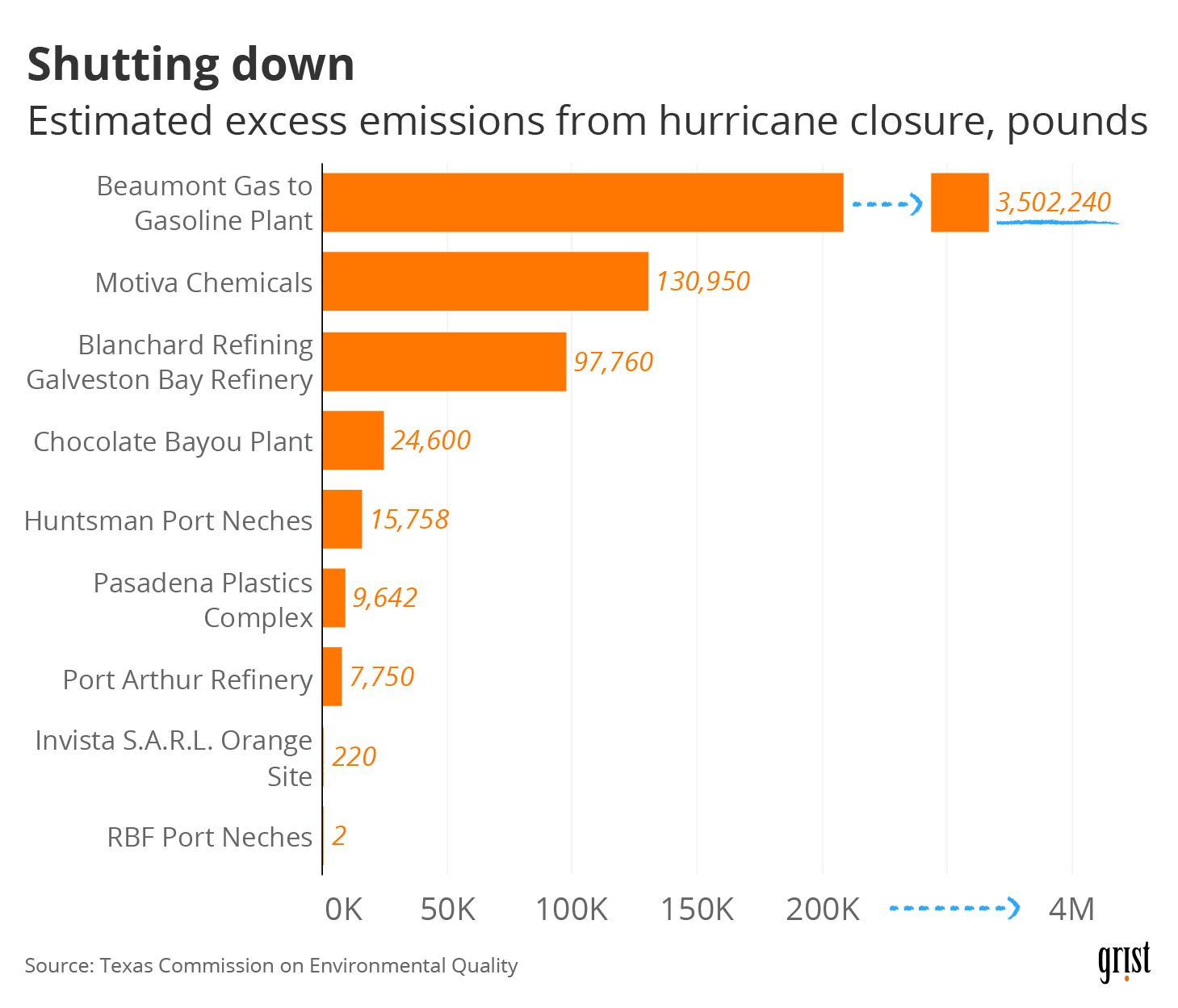
5 accidentally revealing lines from Trump supporters at the RNC

Unsurprisingly, the Republican National Convention was filled with lies about President Donald Trump, his administration, the Republican Party, and the Democrats. But on occasion, the speakers slipped some truth into their speeches.

And on some of those occasions, the truth seemed to come out unintentionally. Or at least, the speaker’s wording left open the possibility of interpreting it quite differently than was intended.

Here are five claims from RNC speakers that were accidentally revealing:

1. Ivanka Trump: “The results speak for themselves.”

“I recognize that my dad’s communication style is not to everyone’s test,” she said. “And I know that his tweets can feel a bit unfiltered. But the results? The results speak for themselves.”

This line seemed to play well with the Republican convention attendees, but it’s not the best argument for the Trump administration to push. Just consider the setting: An RNC held at the White House, in violation of the law, in part because of the still-raging pandemic. As for the most objective measures of how the country is doing: Coronavirus deaths have crossed 180,000. Unemployment is still in the double digits. Protesters, police, and vigilante militias are clashing in the streets.

Trump and his allies think they can spin all these facts to their advantage. And maybe they can. But they certainly don’t speak for themselves.

2. Kevin McCarthy: “Joe Biden and Kamala Harris think this election is about the government. They’re wrong.”

I really had to listen to this one a few times to make sure he said what I thought he said. He did.

He went on to say that the election is about “your family and your future.” But fundamentally, the reason you have an election is to select a government that can best represent and protect the interests and values of you and your family.

But the truth is that for much of the GOP, McCarthy is right. They’re not really interested in how to run a functioning government. They use the government for the purposes they care about — like cutting taxes for corporations — but otherwise, they’d prefer to sit on their hands. And the way they often run their campaigns is to make elections about a bunch of issues that aren’t really the subject of what the government is responsible for — Trump, for instance, doesn’t really have much firsthand responsibility for levels of violence in American cities — but that they think play well with their base voters. For example, many speakers at the convention spoke about school choice, but that’s a policy that is most enacted at the local level; the president has little involvement in it. The point is to stir up the culture war to get other Republicans mad and to the polls, even if there’s really not much the government can do about who says “Merry Christmas” instead of “Happy holidays.”

Democrats, on the other hand, tend to be actually interested in the things the government can do for people, like expanding health care, regulating industry, and fighting climate change.

3. Mike Pence: “Make America great again, again.”

It’s not clear if the closing line to Pence’s speech was supposed to be funny, but it drew mockery and bewilderment from many observers.

It betrayed the fact that the Trump campaign had planned on running with the 2020 slogan, “Keep America Great.” But they quietly dropped that phrase, given that the pandemic and the recession meet no one’s definition of “great.”

“Make America great again, again,” implicitly acknowledges that things aren’t so great right now under Trump. Pence apparently wants us to believe that we should give the president another chance with a second term. But even if you believe the dubious case that Trump did make the country great again in his first three years, why shouldn’t we assume he’ll just mess it up again at some point in the next four?

4. Dana White, the president of UFC: “Let’s re-elect President Trump. Let’s figure out what the problems are and continue to find solutions.”

Many observers pointed out that this phrasing put the cart before the horse. Why should we be confident Trump is the solution to our problems if we don’t even know what the solutions are? Shouldn’t the Trump campaign be telling us what its solutions to the nation’s central problems are before we’re expected to re-elect the president?

Like the McCarthy quote, the White quote just shows that even in the views of Trump allies, the governance questions and policies choices are beside the point. The point is to elect Trump. They hope voters will vote for him because of what he’s seen to represent, and they want voters to do it because it will guarantee them power. They can figure out the messy business of running the federal government later.

5. Trump: “We laid off workers in Michigan, Ohio, New Hampshire, Pennsylvania, and many other states. They didn’t want to hear Biden’s hollow words of empathy. They wanted their jobs back.”

And: “Joe Biden claims he has empathy for the vulnerable. Yet the party he leads supports the extreme late-term abortion of defenseless babies right up until the moment of birth.”

Trump greatly distorted Democrats’ view of abortion here, but the fact that he mentioned “empathy” twice in his speech — both in reference to Biden — was a big tell. He didn’t mention it at any other point in the speech.

Clearly, he was reacting to the Democratic National Convention, which focused heavily on Biden’s personal character and how he related to other people. It showed Biden as a deeply compassionate and empathetic person, drawing a contrast with Trump.

Trump wants to blunt those criticisms. But in taking it on so directly, he revealed that the attacks made him nervous. He knows that Biden comes off as more personable and caring, and that’s probably why many RNC speakers tried unconvincingly to portray a softer side of Trump and downplay his rough edges.

Offline refineries in Laura’s path will emit millions of pounds of pollution

A flurry of activity precedes a major storm like the Category 4 hurricane barreling toward the Gulf Coast right now. People evacuate, stores board up their windows, and governors declare states of emergency in preparation for the chaos and possible carnage to come. Oil refineries — there are many of them in hurricane-prone states — shut down ahead of inclement weather, too. That’s what’s happening in Texas and Louisiana right now.

Shutting down oil refineries and petrochemical plants ahead of big storms sounds like a good idea — and it is, if it’s done early enough! But shuttering these plants creates its own problem: thousands of tons of emissions and hazardous chemicals. That’s because shutdown procedures involve flaring chemicals that can’t be processed by the plant. A lot of different chemicals and gases, including volatile organic compounds, carbon dioxide, carbon monoxide, butene, and propane, get released via gas combustion devices (flares) by refineries during shutdowns, which impacts the environment and nearby communities. If the refineries don’t cease operations in time, power outages and other weather-related impacts can complicate the shutdown procedure and cause the refineries to produce even more pollution.

In Texas, reports filed to the Texas Commission on Environmental Quality (TCEQ) indicate that 9 oil refineries and petrochemical plants are shutting down ahead of Hurricane Laura, including the Motiva refinery in Port Arthur, the biggest oil refinery in North America. According to a Grist analysis, these 9 refineries will produce an estimated nearly 4 million pounds of excess hazardous chemicals total during their shutdowns. That number is based on estimates provided by the companies themselves and could change in coming days as refineries update their numbers.

A bar chart showing the estimated pounds of excess emissions from Texas oil refineries and petrochemical plants due to shutdowns in anticipation of Hurricane Laura. The top plant had 3.5 million pounds in excess emissions.

Clayton Aldern / Grist

Other refineries in Texas may not shut down at all, either because the storm doesn’t pose a threat to their operations at the moment or because they’re waiting till the last second to cease operations. That’s what happened in 2017, when Hurricane Harvey caused petrochemical plants up and down the Texas coast to emit millions of tons of hazardous chemicals.

In a 2017 article in the Texas Observer, Naveena Sadasivam (now a staff writer at Grist) noted that 40 petrochemical plants along the Texas coast produced 5.5 million pounds of pollution as a result of Harvey, much of which could have been avoided just by shutting down earlier or using better emissions controls. During that storm, flooding caused parts of a Houston-area chemical plant run by the French chemicals group Arkema to burst into flames and explode.

Meanwhile, TCEQ has shut down air monitors in Beaumont and Houston ahead of Hurricane Laura to keep them from getting damaged. The commission says it won’t be deploying personnel or the mobile air monitors until Friday, which means the state may have to rely on the estimates from refineries alone to gauge how many emissions were produced during refinery shutdowns. TCEQ was criticized during Hurricane Harvey for being slow to monitor air quality. The exact impact of refinery shutdowns during Harvey is still unknown because TCEQ didn’t corroborate companies’ estimates of their emissions. Whether 2020 becomes a repeat of 2017 remains to be seen.

Grist staff writer Naveena Sadasivam contributed reporting to this story.

Cops shoot another Black man, and the Republicans don’t even notice

As the Donald Trump Party was bombarding the airwaves with warnings about Democrats allowing cities to burn, a video captured police in Kenosha, WI, shooting a black man named Jacob Blake seven times in the back at point-blank range as he opened a car door.

Blake remains in serious condition, hanging on to whether he will join the long list of black citizens shot, choked or beaten to death by police after routine stops or mistaken home entries. Kenosha’s black community and supporters took no time to look at surrounding circumstances in the matter and went to the streets in what ended as a night of fire and riot.

The contrast of droned Law & Order exhortations from Republicans while failing to acknowledge a serious and systemic problem in community policing, and more deeply, in the reactions to decades, even centuries, of racialism in this country could not be sharper.

The message of the Republican National Convention toward race is clear: There is no problem. And if there is a problem, it lags well behind unconditional support for law enforcement of any sort. And if there are questions about race still existing, re-electing Trump will assure more jobs in and for the black and brown communities, along with everyone else. End of discussion, except to note that Democrats want to bring the specter of burning cities to your white, suburban neighborhood.

As racial and income equality were central messages of the Democratic National Convention last week, the message to voters this week is: Beware.

A positive message?

Strangely to me, at least, the Trump campaign is patting itself on the back for presenting a  comparatively “positive, upbeat” view of America while insisting that Democrats see a darker future under Trump. This view of race, as a central set of values questions, seems anything but positive. It is a replay of the carnage theme of the Trump inauguration.

If anything, the Trump campaign is insisting on blinders for Americans rather than masks to stop any imagery associating Trump with a riven racial divide that has broken wide open.

Yet, it is not news that Trump’s four years in office are filled with statements, campaigns and actions that have worsened race relations.

  • Look at Charlottesville
  • Muslim travel bans
  • Removal of children from migrant families at the border
  • Insistence that a Civil Rights division in the Education Department turn against affirmative action
  • Civil protests to suspension of any federal involvement in reviewing local police departments with substantial records of abuse cases, particularly along racial lines

All these examples show the Trump administration has enabled and given voice to racial discord.

An unempathetic Trump is incapable of putting himself even momentarily into the shoes of what it is like to be black in this country at this moment, or non-Christian, or even an angry left-leaning protester. Everything and everyone is measured only against the achievement of prosperity for those already riding success in this country.

Competing messages

In lieu of considering a plan for the next four years of Trump, we’re asked to consider the great things he has done in these four years and just imagine the rest.

Fine, there was an economy that advanced for many, but not all, and a move to isolate America from the world. Tax cuts helped the wealthy and corporations.

But:

  • Health care is turned into a discussion about cutting cost for insurance policies rather than broadening access
  • Housing is translated as freedom from regulation rather than addressing systemic problems of segregation
  • Education policy is recognized as a new opportunity to support Christian parochial schools rather than uplifting public school experiences

In area after area, the Trump administration supports approaches that distance any serious questions about rectifying and balancing race relations.

The case is particularly acute in policing, of course, where the positions are well-known. But the Trump take — that white citizens are killed by police in greater raw numbers than black citizens — hardly seems to cope with the idea that there are so many police killings altogether, to say nothing about addressing the serious racial components here.

Last week, racial discord and imbalance were established as a fundamental American problem, ranking with the pandemic, joblessness and climate change — a topic verboten in the Trump White House.

This week, the race issue has become the Stop the Burning issue.

Just as you don’t eliminate coronavirus with a made-up malaria treatment, you don’t address systemic racism by giving more riot shields to police officers.

The clear message of the racism-blind Republicans this week is that good economic performance that mostly benefits the wealthiest, overwhelmingly white America, is all that matters.

Joe Kennedy III challenges Ed Markey in 2020’s weirdest primary race

When Senate incumbents are challenged in a primary and lose, it is usually because they are enmeshed in a scandal.

Incumbency has numerous advantages: sitting senators have six years to build up a war chest, they have high name recognition, and they have experience running statewide campaigns. Plus, both parties actively discourage primary challenges.

Yet in the fall of 2019, 39-year-old Rep. Joe Kennedy III decided to challenge 74-year-old incumbent Ed Markey in the Democratic primary for the U.S. Senate. Markey has done nothing scandalous and has one of the Senate’s most progressive voting records while representing one of the most progressive states.

So why did Kennedy decide to mount this challenge? And why might he actually have a shot of unseating Markey?

A primary not like the others

It is tempting to see Kennedy’s challenge as another instance of generational conflict among Democrats.

Markey served in the House from 1976 until he won the Senate seat in a 2013 special election. During his House tenure, Markey established himself as an expert on energy and telecommunication policy.

Kennedy, the grandson of Robert F. Kennedy, has served in the House for only eight years compared to Markey’s 37. Before announcing his Senate bid, Kennedy seemed to be on a path toward playing a role in the House Democratic leadership.

The 2020 primary season has featured several House campaigns in which young, progressive candidates have challenged long-serving incumbents in districts that were once considered safe. Three of these challengers – Jamaal Bowman in New York, Cori Bush in Missouri and Marie Newman in Illinois – even won.

But in the Massachusetts race, the ideological differences – if there are any – are muddled. Kennedy cannot make a credible claim to be running to Markey’s left. Markey has secured the backing of progressive star Rep. Alexandria Ocasio-Cortez, the winner of the highest-profile primary battle of 2018, and he has made his support of progressive policy goals like the Green New Deal a centerpiece of his campaign.

Kennedy, meanwhile, secured the endorsements of older establishment figures like Nancy Pelosi and the late John Lewis.

Throwing a wrench in the machine

Instead, it seems as though the race is less a battle of ideas, and more one of political calculation on Kennedy’s part.

One of the most influential recent books on political parties, “The Party Decides,” contends that American presidential primaries are largely a ratification of decisions made by party elites well before the votes are cast. The authors note, however, that political parties long ago lost control of the nominations for the House and Senate.

This has not necessarily been the case in Massachusetts. The Bay State is one of the few remaining in which it is possible to speak of a “Democratic machine” – a party that can control nominations for state and federal offices.

With a few exceptions – the most obvious is Elizabeth Warren – statewide elections in Massachusetts feature seasoned Democratic officials who have faithfully waited their turn to take the next step up the state’s political ladder.

Markey is a product of this approach. When he announced his candidacy in the 2013 special election to fill John Kerry’s Senate seat, his long House tenure made him the closest thing to a “next in line” candidate. Markey’s candidacy dissuaded many other Democrats from running, and he easily bested his lone Democratic opponent, the more junior U.S. Rep. Steven Lynch, in the primary.

Both Massachusetts senators – Markey and Elizabeth Warren – are in their 70s, so even if Markey survives this challenge, there will likely be an open seat race in Massachusetts soon.

Why couldn’t Kennedy simply bide his time?

In this overwhelmingly Democratic state, there are many Democrats who have been patiently waiting their turn, from the state’s all-Democratic House delegation, to statewide officeholders such as Attorney General Maura Healey. The Massachusetts Democratic Party also requires candidates to receive 15% of the votes at the party convention to even appear on the ballot.

So the state Democratic Party’s byzantine traditions, more than anything else, may have influenced Kennedy’s decision. Had he waited for Markey or Warren to leave, he could have found himself vying against several other more seasoned opponents who have been licking their chops. And he may not have even made it onto the ballot.

Perhaps he thought he had a better chance in a head-to-head primary than in a race for an open seat. Furthermore, should he lose, he could build upon this race to run for an open seat in the future, though he’s given up his House seat in order to challenge Markey.

Smelling weakness?

Kennedy also seems to be gambling that Markey’s campaigning skills are rusty.

He may have a point. With no serious Republican opposition, Markey cruised to victory in 2013 and in the 2014 general election. As the representative from a safe House seat for nearly four decades before that, Markey is the rare Senate incumbent who has never had to run in a competitive race.

Kennedy substantially outspent Markey early in the race, and Markey has only begun to catch up in recent weeks.

Although the two candidates each raised approximately $10 million, Markey had three times as much money as Kennedy on hand as of mid-August. An influx of cash from Markey may be behind his recent surge in the polls that have given him a narrow lead. While Kennedy has likely benefited from name recognition, he has struggled to articulate why he is running and where he disagrees with Markey.

Just how unusual would it be if Markey were to lose?

The only Democratic Senate incumbent who has lost his seat to a primary challenger since the early 1990s was Arlen Specter, who switched parties shortly before the 2010 election, only to lose the Democratic primary to Rep. Joe Sestak. The last Democratic primary loser who resembled Markey was J. William Fulbright of Arkansas. Like Markey, he had a track record of impressive legislative achievements but rarely had to vigorously campaign for reelection. Fulbright ended up losing the 1974 primary to the state’s governor.

If the Arkansas comparison seems strained, a Massachusetts comparison could be more apt. In the first half of the 20th century, it was the Republicans, not the Democrats, who dominated Massachusetts politics. The liberal Republican Henry Cabot Lodge Jr. was perhaps the most accomplished Massachusetts senator of his generation. Despite his national reputation, he lost his seat in 1952 to a much younger Democrat who, during the general election, ran a personality-based campaign fueled by his family’s money.

That Democrat was, of course, Joe Kennedy III’s great uncle: John F. Kennedy.

Robert Boatright, Professor of Political Science, Clark University

This article is republished from The Conversation under a Creative Commons license.

Trump intel officials announce they will no longer offer Democrats election security briefings

House Intelligence Committee Chairman Adam Schiff (D-Calif.) indicated on Sunday that his committee may subpoena intelligence officials, following Director of National Intelligence John Ratcliffe’s announcement that regular election security briefings will be scaled back ahead of the general election.

“This intelligence paid for by taxpayers doesn’t belong to Donald Trump, it doesn’t belong to the intelligence agencies, it belongs to the American people,” Schiff told Dana Bash on CNN’s “State of the Union.”

Democrats expressed outrage over the weekend after Ratcliffe announced that lawmakers will no longer be receiving in-person briefings on election security, even amid concerns that foreign powers are attempting to interfere with the 2020 general election.

In what Democratic leaders called a “shocking abdication” of responsibility, Ratcliffe sent letters to members of the Senate and House Saturday evening, indicating that only written briefings will be provided until the November election and blaming leaks from Congress for the decision. 

House Speaker Nancy Pelosi (D-Calif.) and Schiff (D-Calif.) accused Ratcliffe of betraying “the public’s right to know how foreign powers are trying to subvert our democracy.”

“This intelligence belongs to the American people, not the agencies which are its custodian. And the American people have both the right and the need to know that another nation, Russia, is trying to help decide who their president should be,” said Pelosi and Schiff, referring to intelligence shared in a briefing last month. 

On Twitter, Schiff accused President Donald Trump of “lying and projecting” after Trump spoke about the decision in a press conference.

“They leaked the information,” Trump said of Ratcliffe’s decision. “And what’s even worse, they leaked the wrong information. And he got tired of it. So he wants to do it in a different forum, because you have leakers on the committee.”

The scaling-back of briefings comes a month after Politico reported on a classified security briefing given to all members of Congress by William Evanina, director of the National Counterintelligence and Security Center. At the meeting, Evanina acknowledged that “Russia is again trying to boost President Donald Trump’s reelection and denigrate his opponent.”

Democrats in the briefing urged Evanina to acknowledge the information publicly and denounced an earlier public statement he made in which he warned of potential election interference by Russia, China, and Iran. 

The vague statement was “almost meaningless” and not helpful to voters, Democrats said. 

Senate Minority Leader Chuck Schumer accused Trump of using Ratcliffe, a loyalist to the president who was elevated to his current position after serving in the House, “to hide the ugly truth from the American people—that the president is again receiving the help of the Kremlin.”

“DNI Ratcliffe has made clear he’s in the job only to protect Trump from democracy, not democracy from Trump,” said Schumer. 

Previously, Trump and his postmaster general, Louis DeJoy, have overseen what critics call the sabotage of the U.S. Postal Service. Ahead of a general election in which millions of Americans will rely on voting-by-mail due to the coronavirus pandemic, DeJoy ordered cuts to overtime, the removal of mailboxes and mail-sorting machines, and changes to post office hours. The president has also baselessly claimed that the use of mail-in ballots will invite fraud, despite the fact that he himself has voted by mail, and openly admitted that undermining the USPS will ensure universal voting-by-mail is not possible.

In 2018, Special Counsel Robert Mueller charged 13 Russian nationals and three Russian organizations including a government-supported “troll farm” with conspiring to interfere with the 2016 U.S. election. Trump had long accused Mueller of leading a “witch hunt” and a “hoax” about Russia’s involvement. The Mueller Report, released in 2019, found that Trump campaign officials had extensive contacts with Russians and that many lied about those communications, but stopped short of accusing the president and his advisors of conspiring with Russia in 2016.

This year, former Office of Government Ethics director Walter Shaub tweeted, “if America has a legitimate election, it’ll be in spite of Trump’s best efforts to prevent one.”

Democratic presidential candidate Joe Biden, who was at the center of Trump’s impeachment trial last year regarding the president’s attempt to bribe Ukraine to open a public investigation into Biden’s son, accused Ratcliffe and Trump of violating the country’s “national security and sovereignty.”

“For the DNI to curtail one of the most basic duties of our nonpartisan Intelligence Community—to keep the United States Congress fully informed about threats to our nation, in this case, about the real and rising threat of foreign election interference—is nothing less than a shameless partisan manipulation to protect the personal interests of President Trump,” said Biden. “And it is a betrayal of the oath sworn to the American people and our Constitution.”