Help keep Salon independent

Harris, Trump tax proposals: Who wins, who loses?

Eighty-one percent of voters say the economy is very important in the upcoming presidential election, according to Pew Research. “The economy” encompasses several areas where a president does and does not have direct influence, but economic policies are nonetheless a key part of any presidential campaign platform, starting with taxes.

“The proposed policies by both presidential candidates are essentially targeting families of different incomes,” said Armine Alajian, CPA. Alajian said former President Donald Trump’s proposals would result in “overall lower taxes for the wealthy,” while Vice President Kamala Harris has a “focus on providing tax relief for lower-income families.”

The president alone doesn’t set tax policy and would depend on friendly majorities in Congress to make their plans a reality.

Still, tax policies are central to the Harris platform, which focuses on economic opportunity and middle-class taxes and costs. The Trump platform is lighter on specifics, as the campaign and the GOP have instead focused on curbing immigration and expanding deportation. But Trump himself and running mate J.D. Vance have floated tax policy ideas on the campaign trail that analysts have weighed in on.

Harris tax proposals

Harris focuses on two pillars: lowering taxes for middle- and low-income earners, and raising taxes on the wealthy and corporations.

For middle- and low-income earners, she proposes:

  • Expanding the Earned Income Tax Credit to cover more workers, raising the income limit and increasing the amount from $600 to $1,500. The EITC is an existing credit available to workers earning less than $63,000 a year.
  • Expanding the Child Tax Credit, which is currently $2,000 per child per year. Harris proposes increasing it to $3,600 for children ages 2 to 5, $3,000 for children ages 6 to 17 and a one-time credit of $6,000 for newborns.
  • Extending the 2017 Tax Cuts and Jobs Act deductions for workers who earn less than $400,000 per year. The TCJA changes are otherwise set to expire at the end of 2025.
  • Eliminating taxes on tips.
  • Providing up to $25,000 down payment assistance for first-time homebuyers and more for first-generation homebuyers. It’s not proposed as a tax credit for now, but it builds off of similar Biden-era proposals including a First-Time Homebuyer Tax Credit.
  • Expanding the startup expense tax deduction for new businesses from $5,000 to $50,000, applied over multiple years.

We need your help to stay independent

Of Harris’ headline proposals — the down payment assistance and business startup deduction — Javier Palomarez, founder and CEO at United States Hispanic Business Council, said, “These proposals are ideal on paper, but in reality, the impact may be limited.”

"These proposals are ideal on paper, but in reality, the impact may be limited."

Because the startup deduction would be realized over several years, he said, the $50,000 is less impactful than it sounds. And Palomarez is concerned home-buying assistance could overwhelm an already strained housing market. Harris proposes mitigating that by assisting local governments in building more affordable housing faster and penalizing private equity firms that hoard available properties to keep prices high.

For the highest earners, Harris proposes:

  • Increasing the top tax rate to 39.6% (up from 37% under the Tax Cuts and Jobs Act).
  • Supporting Biden’s proposed “billionaire tax,” which would set a 25% minimum tax rate for those with $100 million or more in wealth.
  • Increasing the long-term capital gains tax to 28% (up from 20% under the Tax Cuts and Jobs Act) for those earning $1 million or more per year.
  • Eliminating tax loopholes for the wealthiest investors by changing policies around back-door Roth IRA conversions and unrealized capital gains.

Trump tax proposals

Of the 20 “core promises” listed in the Trump/GOP platform, one mentions taxes, promising “large tax cuts for workers and no tax on tips.”

The Republican National Committee further promises promoting homeownership through unspecified tax incentives and making the Tax Cuts and Jobs Act tax code changes permanent. Those provisions are currently active and include:

  • Top income tax rate of 37%.
  • Doubled standard deduction, which eliminates the need for many workers to itemize deductions and decreases taxable income for many.
  • Child Tax Credit of $2,000 (which the Tax Cuts and Jobs Act raised from $1,000).
  • Top capital gains tax rate of 20%.
  • Reduced estate taxes.

Trump and Vance have mentioned potential tax proposals throughout their campaign.

  • Trump said in a social media post that he would “get SALT back.” Republicans in high income-tax states like New York and California interpreted this to mean he favors their requests to lift a cap on the federal tax deduction for state and local taxes paid.
  • Vance said on CBS News’ “Face the Nation” he favors increasing the Child Tax Credit to $5,000 per child. He recently sat out a Senate vote to expand the credit.
  • In a private meeting, Trump floated an all-tariff policy that would eliminate income taxes for all workers. Experts warn it would effectively raise tax costs for lower-income earners.
  • Trump posted on social media that “seniors should not pay tax on Social Security,” indicating support for eliminating federal income tax on Social Security benefits.
  • Trump said at a campaign event in Arizona that “your overtime hours will be tax-free,” suggesting another income-tax exemption.

"Trump's policies are, overall, a mixed bag."

“Trump's policies are, overall, a mixed bag,” said Palomarez. “While small businesses and American families alike would benefit from tax breaks…Trump’s proposals regarding tariffs and mass deportation are counterproductive to his business-friendly approach.”

More mobile clinics are bringing long-acting birth control to rural areas

Twice a month, a 40-foot-long truck transformed into a mobile clinic travels the Rio Grande Valley to provide rural Texans with women’s health care, including birth control.

The clinic, called the UniMóvil, is part of the Healthy Mujeres program at the University of Texas Rio Grande Valley School of Medicine.

The U.S. has about 3,000 mobile health programs. But Saul Rivas, an OB-GYN, said he wasn’t aware of any that shared the specific mission of Healthy Mujeres when he helped launch the initiative in 2017. “Mujeres” means “women” in Spanish.

It’s now part of a small but growing number of mobile programs aimed at increasing rural access to women’s health services, including long-acting reversible contraception.

There are two kinds of these highly effective methods: intrauterine devices, known as IUDs, and hormonal implants inserted into the upper arm. These birth control options can be especially difficult to obtain — or have removed — in rural areas.

“Women who want to prevent an unintended pregnancy should have whatever works best for them,” said Kelly Conroy, senior director of mobile and maternal health programs at the University of Arkansas for Medical Sciences.

The school is launching a mobile women’s health and contraception program in rural parts of the state this month.

Rural areas have disproportionately fewer doctors, including OB-GYNs, than urban areas. And rural providers may not be able to afford to stock long-acting birth control devices or may not be trained in administering them, program leaders say.

She considered going to Mexico to have the device removed because few doctors take her insurance on the U.S. side of the Rio Grande Valley.

Mobile clinics help shrink that gap in rural care, but they can be challenging to operate, said Elizabeth Jones, a senior director at the National Family Planning & Reproductive Health Association.

Money is the greatest obstacle, Jones said. The Texas program costs up to $400,000 a year. A 2020 study of 173 mobile clinics found they cost an average of more than $630,000 a year. Mobile dental programs were the most expensive, averaging more than $1 million.

While many programs launch with the help of grants, they can be difficult to sustain, especially with over a decade of decreased or stagnant funding to Title X, a federal money stream that helps low-income people receive family planning services.

For example, a mobile contraception program serving rural Pennsylvania lasted less than three years before closing in 2023. It shut down after losing federal funding, said a spokesperson for the clinic that ran it.

Rural mobile programs aren’t as efficient or profitable as brick-and-mortar clinics. That’s because staff members may have to make hours-long trips to reach towns where they’ll probably see fewer patients than they would at a traditional site, Jones said.

She said organizations that can’t afford mobile programs can consider setting up “pop-up clinics” at existing health and community sites in rural areas.

40 foot long UniMóvilThe 40-foot-long UniMóvil — with two exam rooms, diagnostic equipment, and a lab — brings health care to rural communities in Texas' Rio Grande Valley. (University of Texas Rio Grande Valley School of Medicine)
Maria Briones is a patient who has benefited from the Healthy Mujeres program in southern Texas. The 41-year-old day care worker was concerned because she wasn’t getting her menstrual period with her IUD.

She considered going to Mexico to have the device removed because few doctors take her insurance on the U.S. side of the Rio Grande Valley.

But Briones learned that the UniMóvil was visiting a small Texas city about 20 minutes from her home. She told the staff there that she doesn’t want more kids but was worried about the IUD.

Briones decided to keep the device after learning it’s safe and normal not to have periods while using an IUD. She won’t get billed for her appointment with the mobile clinic, even though the university health system doesn’t take her insurance.

“They have a lot of patience, and they answered all the questions that I had,” Briones said.

IUDs and hormonal implants are highly effective and can last up to 10 years. But they’re also expensive — devices can cost more than $1,000 without insurance — and inserting an IUD can be painful.

Patient-rights advocates are also concerned that some providers pressure people to use these devices.

They say ethical birth control programs aim to empower patients to choose the contraceptive method — if any — that is best for them, instead of promoting long-acting methods in an attempt to lower birth and poverty rates. They point to the history of eugenics-inspired sterilization and even more recent incidents.

For example, an investigation by Time magazine found doctors are more likely to push Black, Latina, young, and low-income women than other patients to use long-acting birth control — and to refuse to remove the devices.

Rivas said Healthy Mujeres staffers are trained on this issue.

“Our goal isn’t necessarily to place IUDs and implants,” he said. It’s to “provide education and help patients make the best decisions for themselves.”

David Wise, a spokesperson for the University of Arkansas for Medical Sciences, said staff members with the university’s mobile program will ask patients if they want to get pregnant in the next year, and will support their choice. The Arkansas and Texas programs also remove IUDs and hormonal arm implants if patients aren’t happy with them.

The Arkansas initiative will visit 14 rural counties with four vehicles the size of food trucks that were used in previous mobile health efforts. Staffing and equipment will be covered by a two-year, $431,000 grant from an anonymous donor, Wise said.

In addition to contraception, faculty and medical residents staffing the vehicles will offer women’s health screenings, vaccinations, prenatal care, and testing and treatment for sexually transmitted infections.

Rivas said the Texas program was inspired by a study that found that, six months after giving birth, 34% of surveyed Texas mothers said long-acting contraception is their preferred birth control option — but only 13% were using that method.

“We started thinking about ways to address that gap,” Rivas said.

Healthy Mujeres, which is funded through multiple grants, started with a focus on contraception. It later expanded to services such as pregnancy ultrasounds, cervical cancer screenings, and testing for sexually transmitted infections.

While the Texas and Arkansas programs can bill insurance, they also have funding to help uninsured and underinsured patients afford their services. Both use community health workers — called promotoras in largely Spanish-speaking communities like the Rio Grande Valley — to connect patients with food, transportation, additional medical services, and other needs.

They partner with organizations that locals trust, such as food pantries and community colleges, which let the mobile units set up in their parking lots. And to further increase the availability of long-acting contraception in rural areas, the universities are training their students and local providers on how to insert, remove, and get reimbursed for the devices.

One difference between the programs is dictated by state laws. The Arkansas program can provide birth control to minors without a parent or guardian’s consent. But in Texas, most minors need consent before receiving health care, including contraception.

Advocates say these initiatives might help lower the rates of unintended and teen pregnancies in both states, which are higher than the national average.

Rivas and Conroy said their programs haven’t received much pushback. But Rivas said some churches that had asked the UniMóvil to visit their congregations changed their minds after learning the services included birth control.

Catherine Phillips, director of the Respect Life Office at Arkansas’ Catholic diocese, said the diocese supports efforts to achieve health care equity and she’s personally interested in mobile programs that visit rural areas such as where she lives.

But Phillips said the Arkansas program’s focus on birth control, especially long-acting methods, violates the teachings of the Catholic Church. Offering these services to minors without parental consent “makes it more egregious,” she said.

Jones said that, while these programs have hefty costs and other challenges, they also have benefits that can’t be measured in numbers.

“Building community trust and making an impact in the communities most impacted by health inequities — that’s invaluable,” she said.

KFF Health News is a national newsroom that produces in-depth journalism about health issues and is one of the core operating programs at KFF—an independent source of health policy research, polling, and journalism. Learn more about KFF.

Subscribe to KFF Health News' free Morning Briefing.

If Trump wins, blame the New York Times

If Donald Trump wins the Nov. 5 election, the New York Times will be partly responsible.

As the dominant voice in American journalism, the Times could have fundamentally changed the way Trump has been covered not just by its own journalists but by the political media as a whole. It could have stopped using soft, empty language and false equivalence, and made it crystal clear to the public that if elected Trump would turn America into a racist, authoritarian regime where facts don’t matter.

But rather than call out the dangerous lunacy in plain view, the Times has chosen to engage in tortured euphemisms, passive construction, and poor news judgment.

Here are a few examples of the troubling coverage — or lack thereof: 

  • When Trump seized up at a rally this week and bizarrely swayed to music for 39 excruciating minutes, the Times called it an “improvisational departure.”
  • Trump’s racist threats to deport millions of undocumented people are actually just full of “hyperbolic rhetoric” and “fury.” 
  • When it was reported that Trump’s top general, Mark Milley, called him “fascist to the core” the Times buried what should have been front-page news deep in an article about something else entirely.
  • Times journalists refuse to call Trump’s “false claims” what they are: malicious lies.
  • Hurling racist invective at a vulnerable community to fire up a hateful and bigoted base is just “rabble rousing” to the Times. It’s “combative conservatism.”
  • And even in an otherwise admirable article on Trump’s cognitive decline, the Times couldn’t bring itself to use the term “cognitive decline.” 

Meanwhile, the day-to-day coverage treats Trump like a normal candidate, rather than as the wildly dangerous and unhinged felon that he is. Day in and day out, the Times “sanewashes” his dark and unintelligible ramblings. Day in and day out, it treats the divisions about basic facts and democratic rule as just so much partisan squabbling. 

Day in and day out, Times reporters use the passive voice to muddle responsibility for heinous acts committed by Republicans, find fault with “both sides,” and create false equivalencies between two parties, only one of which respects facts and the rule of law.

This weakness —- this failure to rise to the occasion – is not a coincidence nor an accident. It is also not, despite the insistence of some on social media, because the institution is somehow rooting for Trump. 

The fault lies with the Times’ selfish, smug, and self-destructive leadership. To be specific: New York Times publisher A.G. Sulzberger and editor Joe Kahn have made it abundantly clear time and again that they prize their so-called “journalistic independence” over any obligation to sound the alarm that electing Trump would be a disaster for the country.

Rather than call out the dangerous lunacy in plain view, the Times has chosen to engage in tortured euphemisms.

And by “journalistic independence” they don’t mean the freedom to speak truth to power. They mean the freedom to triangulate between the two parties to occupy some sort of mythical middle, which they consider morally superior to “taking sides” in any kind of political battle – even one as unbalanced as this one.

Kahn gave away the game in a recent interview with NPR. “In people's minds, there's very little neutral middle ground,” he said. “In our mind, it is the ground that we are determined to occupy.”

But the “people” are right about this one. There is no middle ground between the two parties these days. And there’s certainly no middle ground between truth and lies.

We need your help to stay independent

Kahn’s resistance to sounding the alarm is shared by none other than his boss, the Times’ publisher. Sulzberger has said quite definitively that he doesn’t think that’s something the Times should be doing. “I see no lack of passionate, morally confident actors sounding the alarm,” Sulzberger said in a speech this past spring.  “Indeed, the alarm seems so loud and so constant that much of the public has by now put in earplugs.” 

He described independent reporting as “the kind that doesn’t fully align with any one perspective.” It requires being “willing to take a simple, easy, or comfortable story and complicate it with truths that people don’t want to hear.”

I think the message that sends to the newsroom is: If partisans are happy with your work, you’re doing something wrong, so make sure they never are – even if the facts support their view.

It’s easy to blame the reporters whose bylines appear on Times news articles for their pusillanimity. And I often do. But the fault actually lies further up the food chain, with their editors and their editors’ bosses.

The way the Times covers Trump comes directly from the top – as did the disastrous decision in 2016 to devote so much front-page real estate to Hillary Clinton’s emails instead of to the danger represented by Trump.

What we’re left with is this conclusion: If Trump wins in part because the public was insufficiently alarmed by the press coverage of the 2024 election, the people who run the Times will have the extremely dubious distinction of having gotten Trump elected twice.

Invasion of the MAGA body snatchers: How many friends have you lost to madness?

He was, looking back on it, a close friend, although we didn’t debate the state of our souls, something dorm room freshmen of all ages typically discuss. The subjects we chewed over were almost exclusively technical topics, or history, or the sprawling, self-serving institution that Dwight Eisenhower christened the military-industrial complex. He worked at the Pentagon and I was a military analyst on Capitol Hill, and we both took a skeptical stance towards government bureaucracies, having seen them from the inside. 

In the immediate aftermath of the attacks of Sept. 11, 2001, when everyone was disoriented and either fearing devastating new attacks or hysterically screaming for vengeance, he kept his head. He also correctly predicted that the war on terror would degenerate into folly, tragedy and war crimes, with a side order of corrupt contracting and bureaucratic empire-building.

I was a bit disappointed, but not particularly shocked, when a few years later, he began going on quasi-obsessively about how the scientific data suggesting that global warming existed was either badly flawed or deliberately rigged. Even then, these debunking claims, already quite common, seemed a bit far-fetched, but I shrugged and wrote it off: Everyone is entitled to one eccentricity. 

Only later did I conclude that climate-change denial, like the Kennedy assassination decades before, had become the gateway drug to a paranoid and conspiratorial worldview, and the first behavioral sign that should warn us all to back away slowly from association with its adherents.

In 2016, political opponents attempted to stage a coup against the president and would-be dictator of Turkey, Recep Tayyip Erdoğan. The coup failed as 300 people were killed and 77,000 arrested. My friend immediately surmised that the U.S. was somehow behind the coup attempt: Did I also believe it? My response was that I’d certainly be willing to if I saw compelling evidence. None was forthcoming.

And down the primrose path it went. That same year, as presidential candidate Donald Trump loudly asked, “Russia, if you’re listening …” and Trump’s operative Roger Stone was receiving the Clinton campaign’s stolen emails from the Russian GRU via WikiLeaks, my friend emphatically denied that Russia was interfering in a U.S. election — or, at least, if there was interference, not that there was, it made no difference in the outcome. So no harm, no foul, right?

Climate-change denial, like the Kennedy assassination decades before, has become the gateway drug to a paranoid and conspiratorial worldview, and the first behavioral sign that should warn us all to back away slowly from its adherents.

At the point when he wrote a screed denouncing Democrats for facilitating the Trump tax cuts (even though every single Democrat in Congress had voted against them), I had had just about enough. I pointed out the defective logic of blaming the minority party when Republicans controlled both house of Congress and the executive branch, and observed that Democrats were unanimously opposed. “Well, they should have tried harder.” So much for that relationship.

Then there was Pete. An Ivy League-trained engineer (and also a polymath), he had a career in the Pentagon that was creative and fruitful, being in on the design of simpler weapon systems that would actually be effective in combat and not bankrupt the Treasury. Some of them are still operating today.

A creative eccentric in a bureaucratic institution is always a round peg in a square hole, and Pete was no exception. When he left the Pentagon, he dedicated himself to pontificating on the abundant sins of the Defense Department — and he was mostly right. But over time, his pronouncements became increasingly absolute, strident and off-kilter. Then (by coincidence?), when Trump became president, off the rails he went.

The climax came in the early stages of the COVID pandemic. Pete issued an edict that, according to his careful calculations, there would be 18,256 deaths from the disease in the United States. He later amended that figure to exactly double the number (no rounding of his estimate and no margin-of-error range of outcomes; everything was precise, which isn’t quite how reality works, particularly in predictions). In the event, approximately 1.2 million Americans died of the disease.

We need your help to stay independent

At the same time, Pete scoured the lunatic margins of the internet, seeking (and finding) claims that COVID vaccines were more dangerous than the virus itself. It was all part of a learning process whereby I eventually concluded that people who truculently parade their skepticism are actually the most gullible people on earth.

Then there were a couple of earnest government reformers. God knows, having worked a whole career in government, I understood their critique of its baroque and sclerotic routines. But after a while, meaning after the advent of Trump, their humorless, groping sincerity, which I indulged because of course they “meant well,” curdled into flat-out fascist goose-stepping. There were a handful of others, but all followed the same pattern of being erstwhile intelligent, well-read people, successful in their professional spheres, who went down the rabbit hole. It’s as if they were taken over by a simulacrum, as in “Invasion of the Body Snatchers.”

Do you know people like these? I’m not talking about crazy uncles who ruin your Thanksgiving dinner; they’ve been crude and witless since the time you were a little kid who avoided them. I’m referring to intelligent, well-read acquaintances who’ve strangely changed in the last decade; they might not say they’ve become Trump supporters or reactionaries in general, but the sole thrust of their argument is “something-something woke.” Or “Democrats are the real problem.” All too often, this mindset devolves into rants about weather modification or COVID vaccines as a mind-control project.


Want a daily wrap-up of all the news and commentary Salon has to offer? Subscribe to our morning newsletter, Crash Course.


As I reach the twilight years of a halfway decent run, I have to wonder: Were that many Americans always as crazy as they appear to be now? It didn’t seem so, or perhaps I wasn’t paying attention. The internet might have had something to do with it; now everybody’s an expert. Changes in social conduct might have a role: Folks in years past might have harbored crazy thoughts, but were reluctant to let their freak flags fly. Or it could be the Trump effect: a demonstrably sociopathic leader braying like a demented jackass and beamed into every household might have given Americans permission to express their own previously hidden darkness.

All of these factors doubtless played a role in causing a significant slice of the American people to lose their minds, but they emerged in a complex interplay with the historical events of the last quarter-century. The 9/11 terrorist attacks and the inevitably ensuing debacles in Afghanistan and Iraq stoked a strange mental syndrome made up of fear and grandiosity. The greatest economic meltdown since the Great Depression fed personal insecurity of a different sort. The COVID pandemic sent already destabilized psyches into free fall.

Americans have traditionally been famous for being open and friendly, although this quality, often enough, is a superficial gloss. Now we approach our fellow Americans with a certain wariness, and steer clear of a growing list of subjects, lest we inadvertently trigger an embarrassing scene. Perhaps later historians will conclude  that the single most significant development in the United States in the new millennium was not AI, but the rise of the paranoid mind and the resultant loss of social trust.

Fighting demons: The New Apostolic Reformation is waging a holy war against democracy

“You do not attack the enemy — you attack the enemy’s strategy,” and the strategy of the Christian right “has always been to master the tools of electoral democracy in order to erode and to end it.” That advice, quoting Sun Tzu, came from Frederick Clarkson, a senior researcher at Political Research Associates (and Salon contributor), in a recent webinar, "The New Apostolic Reformation and the Threat to Democracy In Pennsylvania." 

Unlike earlier incarnations of the Christian right, the explicit goal of the widely-discussed but little-understood NAR is to install theocracy with a democratic facade, approximately on the Iranian model. They call it “theonomy.” The movement is led by mutually recognized “apostles” and “prophets” who purport to receive direct guidance from God and see themselves engaged in spiritual warfare — literally, as in fighting actual demons — to gain dominion over the “seven mountains of culture”: family, religion, education, media, arts and entertainment, business and government. As in Iran, they wouldn’t just control government but every aspect of society, but would still call it democracy and claim, in the face of America’s "Godless Constitution," that this was what the founders wanted all along. It’s gaslighting in the name of God.

Understanding the NAR’s goals and strategy is crucial in exposing what the movement really wants, most of which is broadly unpopular. And how they want to get there — boosting turnout among a minority base by demonizing their fellow citizens — is highly corrosive to democracy itself. “The left is loaded with demons,” NAR apostle Lance Wallnau has said (according to Clarkson). “I don’t think it’s people anymore; I think you’re dealing with demons talking through people.”  

Pennsylvania plays a key role in the NAR’s plans, and reinventing the state’s eponymous founder, William Penn, as a like-minded forebear — rather than the champion of religious diversity and secular government he actually was — is a core part of their strategy, as advanced by NAR apostle Abby Abildness. 

The webinar came three days after Republican vice-presidential nominee JD Vance appeared at an NAR-sponsored event in Monroeville, Pennsylvania, where he stood the biblical teaching to love the stranger on its head, without even trying to quote scripture. That event was part of the Courage Tour,  targeting 19 counties in seven swing states “where demonic strongholds have corrupt control over the voting," according to Wallnau, who has recently described Kamala Harris as "the spirit of Jezebel" and "the devil's choice." 

Wallnau’s partner in planning his tour is the America First Policy Institute, a Trump-aligned think tank. Vance’s appearance was perfectly in keeping with a whole web of NAR-GOP collaboration, high-level examples of which were provided by researcher Peter Montgomery of People for the American Way during the webinar.

The event kicked off with two presentations on how best to understand the NAR, from former PRA researcher Rachel Tabachnick and religion scholar Julie Ingersoll, author of “Building God’s Kingdom” (Salon author interview here), a study of Christian Reconstruction, which informs most of NAR’s theology. 

“This movement has been building in Pennsylvania for more than 20 years,” Tabachnick said. “There is the belief that Pennsylvania is key to taking the rest of the country, a theme that has been repeated in campaigns and media for more than a decade.”

Two Pennsylvania researchers provided research under pseudonyms, focusing first on six key NAR figures explaining the state’s significance, and then on NAR power and influence in Lancaster Country, which has seen a dramatic shift away from its historical Anabaptist tradition. 

Collectively, these presentations delivered a chilling portrait of a potent but under-recognized threat to democracy that’s MAGA-affiliated but operates on a much longer timeline, and demands a thoughtful strategic response, as outlined by Clarkson in his closing remarks. 

Tearing down the religious establishment

The NAR “predates Trump and it will outlast him,” Tabachnick said. It’s a movement dedicated to “tearing down the establishment, not just in D.C., not just in Harrisburg, but also, and perhaps most importantly … tearing down the traditional religious establishment…. This is not just a religious versus secular movement,” she continued, and should not be framed that way. “This is a movement about reorganizing Christendom under their dominance.”

The NAR "predates Trump and it will outlast him." It’s a movement dedicated to “tearing down the establishment, not just in D.C., not just in Harrisburg, but also, and perhaps most importantly, tearing down the traditional religious establishment."

This entails conflict not just with liberal or moderate Christians, but also with evangelicals, Pentecostals and charismatic Christians who do not share the NAR's theology or worldview. In fact, both the NAR and its predecessor fringe movements going back to the 1940s have been formally denounced by other Christians, along lines that echo Paul’s denunciation of the Colossian heresies: “Do not let anyone who delights in false humility and the worship of angels disqualify you. Such a person also goes into great detail about what they have seen; they are puffed up with idle notions by their unspiritual mind.” 

For many Christians, the NAR’s focus on fighting demons is inherently heretical, since it implies that salvation through Christ is insufficient. Indeed, orthodox critics have accused the NAR and its predecessors of practicing the same sort of pagan ritual magic they claim to be fighting against.  

For example, NAR father figure C. Peter Wagner, who first named the movement and did more than anyone to give it coherence, specifically developed and promoted forms of “spiritual warfare,” that have little if any Christian precedent. This began with “spiritual mapping” to identify “demonic strongholds,” which has more in common with the practices of various pagan traditions than anything adjacent to mainstream Christianity. 

We need your help to stay independent

“This is the same movement that led many of the Jericho Marches around the [state] Capitol building in Harrisburg and other states around the country, and organized and led many of the events in D.C. and on the U.S. Capitol grounds in December 2020 and on Jan. 6,” Tabachnick said, events at least arguably informed by the practice of spiritual mapping. 

It’s good to keep this context in mind when confronted with the NAR’s claims to speak for all Christians, much less to have a personal download from God. But while it’s easy to dismiss a movement that blows shofars and talks about spiritual warfare, Tabachnick noted, the NAR “is simultaneously mastering the mundane nuts and bolts work of legislative work,” and as head of the state prayer caucus, Abby Abildness has worked with legislators for years, drawing on the Project Blitz playbook that was exposed by Clarkson and reported here in 2018. It starts out with benign-sounding bills and then works up to attacking reproductive freedom, LGBTQ equality and more. 

As with Project 2025, “we have playbooks and we need to expose them,” Tabachnick said. NAR strategy is “not meant for public consumption,” she continued, “and a little sunshine goes a very long way. The American people don't want this.”  

The outraged nationwide response to the overturning of Roe v. Wade is a striking example, but far from the only one. The NAR has long been interested in denying women the vote, as Ingersoll has tracked for more than a decade. 

“This is a media-savvy movement, filling the airwaves with claims that those opposed to them are cutural Marxists, communists and, in the words of Wallnau, demons that have to be removed from the high places of culture and society,” Tabachnick said. While it’s impossible to say how many deep NAR support runs, she said research indicates that about 30 percent of adult Christians support the “seven-mountain mandate.” 

"This is a media-savvy movement, filling the airwaves with claims that those opposed to them are cutural Marxists, communists and demons that have to be removed from the high places of culture and society."

NAR is one of “two significant sources of dominionism,” having cross-pollinated with Christian reconstructionism, whose founders “produced thousands upon thousands of pages of blueprints for reconstructing the U.S. in accordance with biblical law,” Tabachnick continued. This “Project 2025 for dominion theology” is against taxation, regulation and labor unions, and its theorists “were fellow travelers with states’ righters, the John Birch Society and, later, the Tea Party movement.”

From its neo-Pentecostal roots, the NAR inherits “a strong supernatural component,” including the “belief that individuals receive supernatural gifts, that these apostles and prophets are given direction from God and have been chosen to be God’s government on earth in all the seven mountains.”

While Doug Mastriano’s losing gubernatorial campaign in Pennsylvania in 2022 brought the movement to the surface, Tabachnick said, he wasn’t the first NAR-associated political candidate, only “the first to launch it with blowing a shofar” — a Jewish ritual ram’s horn that Christian Zionist groups have appropriated. It’s an example of how NAR readily gobbles up elements of other faiths. For the NAR, she concluded, Mastriano’s campaign was a major step forward in mastering the tools of electoral democracy than an electoral defeat.

The NAR's widening influence and long-term goals 

Ingersoll’s presentation was largely about understanding the NAR and cutting through the confusion around it. Asking if someone is a member is “actually the wrong question,” she said, “based on a misunderstanding about how ideas and social movements work. The NAR is incredibly diffuse by design.” 

In part, that’s because of a problem mentioned above: From a traditional Christian point of view, the NAR and its leaders are ungodly. “There are massive egos involved that don't want to be in coordination, let alone under the authority of other people,” Ingersoll explained. But they also fail a basic test of democratic leadership: “They like to preserve a level of deniability. They want to be able to make outrageous claims in some contexts, but not be held accountable for them in other contexts,” she said. Some people who clearly fit in with the NAR will “deny the label, because they don't want to carry around some of the baggage.”

Abstract questions about membership don’t much matter, Ingersoll stressed. What’s important is what people actually do. “People don't live articulated theological systems,” she said. “They assemble components of the systems that work for them in any given context. … Dominionism in the NAR is a fluid assemblage of ideas, traditions and practices that are invoked as they seem applicable.” 

NAR leaders "like to preserve a level of deniability. They want to be able to make outrageous claims in some contexts, but not be held accountable for them in other contexts."

For example, the movement simultaneously embraces two incompatible eschatologies, to use the theological term. On one hand, there’s the pre-millennial interpretation of the Book of Revelation shared by most evangelical Christians: The world gets worse and worse until the day of Rapture and the last judgment. On the other is the Christian Reconstructionist post-millennial interpretation: “The kingdom of God was actually reestablished at the resurrection [of Christ], and it’s the job of Christians to build it.” (Hence the title of Ingersoll’s book.) Logically, you can’t believe both at once, but situationally, Christians of the NAR variety choose to believe whichever one seems to fit the moment.  

One result is NAR’s long time-horizon. “They think in a thousand years,” Ingersoll said. One home-school movement has developed a package for families to build “a 200-year plan for family dominion.” When she began writing about the push to roll back women’s right to vote about 15 years ago, “People would say, ‘That's crazy. That could never happen.’ I don't know that it can't happen, and among Christian nationalists there is a big discussion now about whether or not it's biblical for women to have the right to vote. If we don't think in the long term, we miss where they're going with all these things.

“When we’re thinking in terms of the election or a current crisis or one particular leader, we are missing the long-term horizon with which these these efforts are made,” she continued. One way to shift focus, Ingersoll argues, is to track the use of terms that circulate in NAR circles, many of which (thanks to her) appeared in the glossary Salon published in May. These include “dominion,” ”biblical worldview,” “patriarchy” (as a positive), “government schools” instead of public schools, “civil government” instead of just government, “lesser magistrates,” “biblical spheres of authority” and “covenant marriage.” 

Another complementary focus is to track known pro-NAR individuals and their associates, as Peter Montgomery did in his presentation. He began with high-level examples such as House Speaker Mike Johnson “and a couple dozen members of Congress” who have “gathered with NAR leaders for prayer and spiritual warfare.” His second example cited this year’s Republican convention in Milwaukee, where “spiritual warfare rhetoric was everywhere,” specifically “the idea that the American political scene is not about right or left … but an actual spiritual battle between good and evil, between the forces of God and the agents of Satan.” 

The NAR's reinvention of William Penn

“Each state has a specific NAR name and NAR purpose,” explained the researcher introduced under the pseudonym Kira Resistance. “Pennsylvania is not only ‘seed of a nation’ state, but it's also the ‘government-shift state.’” NAR leaders see Pennsylvania as “the holy seed of a government,” not just for the United States but “a holy governmental example to the entire world,” which is one reason, Kira said, why she avoids the term "Christian nationalism."

Kira discussed six key Pennsylvania figures, beginning not with Doug Mastriano but Abby Abildness, who has been a leader in developing, articulating and spreading the vision of Pennsylvania’s special role, with a reverse-engineered, NAR-friendly version of William Penn at its core. To carry out the vision of this imaginary Penn, “You have to elect righteous leaders,” which of course means those who share NAR’s vision. 

Abildness once said that God had told her that he wanted to claim the state capital of Harrisburg, Kira recounted, after which Abildness released a video “showing dozens of people on a hill right before the Harrisburg Capitol, bending the knee.” 

NAR leaders see Pennsylvania as “the holy seed of a government,” with a reverse-engineered version of the state's eponymous founder, William Penn, at its core.

This kind of ritual performance is typical of the ways NAR seeks to rewrite history and redraw boundaries to suit its vision, sweeping aside inconvenient facts or counter-arguments. In terms of actual history, William Penn’s vision was almost exactly the opposite of the NAR fantasy. As noted on the website of Penn’s country estate, his “belief that ‘Religion and Policy … are two distinct things, have two different ends, and may be fully prosecuted without respect one to the other’ took hold and became one of America’s most important ideals.” In that sense, Penn’s vision really can be seen as the “seed of a nation” in which religious diversity, rather than unanimity, was a hallmark from the beginning.  

Like many early colonial leaders and many of America’s founders, Penn was a slaveowner, a fact that has led liberal Quakers to expunge him “from our Friendly pantheon,” as Quaker activist Chuck Fager wrote in 2022. But as he continued, if liberal Quakers didn’t want Penn anymore, Doug Mastriano and his allies surely did: 

[I]n Penn there are 340 years worth of — in plain worldly language — overwhelmingly positive branding for Quakers and the liberating aspects of our testimonies.

Christian nationalists now want to turn him and them into their opposite….

Penn had his faults; but a theocrat he never ever was.

Doug Mastriano and his wife, Rebbe, are often referred to as “spiritual parents of the state” in NAR-world, Kira continued. At Mastriano's 2022 campaign kickoff, Abildness said “that Penn's heart was bringing forth the godly foundation to our nation” and that “Mastriano's heart is like Penn's heart.” 


Want a daily wrap-up of all the news and commentary Salon has to offer? Subscribe to our morning newsletter, Crash Course.


Rebbe Mastriano stirred up the faithful with fighting words: "When the Israelites came into their promised land, they didn't just march in and take it. God had to move in mighty ways to remove their enemies. Our promised land is Pennsylvania, and we're taking it back." 

After Mastriano’s defeat, Kira noted, he literally compared himself to Abraham Lincoln, saying, “We are in it for the long haul. We often hear about Lincoln losing important races in his time. In the end God gave him the great victory because of perseverance. This movement is going to stay influential in this state.” 

Lancaster County: Microcosm, harbinger or bellwether?

The next pseudonymous presenter, who called himself the Lancaster Examiner, took a hyper-local focus on how NAR power gets built from the ground up. First, the apostolic networks are present in the county, then they attract “big-name visitors” for special events, and then “the local growth of these communities and networks” begins to impact local politics.

At least five or six apostolic networks have been active in Lancaster County and devoted to the mission of “taking over churches,” mostly within “historically Anabaptist communities” such as the Mennonites, the Amish, the Brethren, the Hutterites and similar Christian traditions.  

In a follow-up email, the Examiner explained that as with “the NAR's retelling of the William Penn narrative, local Anabaptist-turned-NAR churches have massaged their own history,” citing one sermon in which a local pastor “twists the narrative a quarter-turn or so to frame south central Pennsylvania's NAR community as uniquely called by God for such a time as this.”

"When the Israelites came into their promised land, they didn't just march in and take it," Rebbe Mastriano told the faithful. "Our promised land is Pennsylvania, and we're taking it back." 

It’s quite a historical twist, since “religious freedom is absolutely a core value of Anabaptists,” the Examiner wrote. “But as you've seen, the NAR and similar charismatic evangelical movements engage in the language of diversity and ‘come as you are,’ but all of that is in dissonance with what comes next in their agenda.” 

For several decades, he continued, “Local leaders have cultivated communities that are involved in dominionist activities and behavior, knowingly and not. What’s noteworthy is arguably not that it’s happened but that such incredible growth has gone unnoticed. So while Mastriano lost, this movement predates him and will outlive his moment in the spotlight.” 

Lancaster County should be seen as a harbinger of sorts, he suggested. "The number of networks that have emerged here feels atypical and significant to me in comparison to other parts of the state," the Examiner said, adding that "Lancastrians have a penchant for reinventing the wheel — or even inventing the same wheel by different people at the same time."

Lancaster County is "different from the rest of the country only in degree," Ingersoll added. "Dominionist Christians have worked for decades to establish a beachhead in culture, whether you're thinking in terms of reconstructionists or the NAR. In some places they've been more successful than others, and they have particularly targeted Pennsylvania because it's such a key state in the election.”  

Fighting back: "A quiet call to action"

In the final presentation, Clarkson laid out a broad overview of one key aspect of the NAR strategy “to master the tools of electoral democracy in order to erode and to end it.” The group seeks to “embolden reluctant conservative evangelicals in blue suburbs and make them feel part of a religious and political cause far greater than themselves,” he said.

“Beyond their efforts at electoral mobilization and possible monkey-wrenching is something far more concerning,” Clarkson continued. “NAR leaders are increasingly teaching that normal religious, political and gender differences are to be seen as supernatural evil, as demonic.” Such demonization, as we should know by now, can readily lead to violence.

Clarkson ended with what he called “a quiet call to action,” but “not a call to do things we have done before that haven’t worked, but this time with more energy.” Instead, activists who hope to battle the NAR’s political influence “need to know more than we do now about who they are and what they are about. If knowledge is power, we need more knowledge — and we need to spread it more widely.” 

Along with that, Clarkson concluded, NAR opponents “need some agreed-upon vocabulary in order to be able to discuss the knowledge we acquire. This is how good strategy is made. We also need to deepen our knowledge of the rules and practices of electoral democracy. We should not be content to leave these things to political professionals. Democracy belongs to all of us, and we need to act like it.” That was what the real William Penn, flaws and all, actually believed. He wasn’t interested in fighting demons. 

Gulls are intelligent, vital birds that deserve our protection, not scorn

Biological conservation efforts typically gravitate toward the more charismatic species. Save the pandas is a more popular slogan than save the earthworms, and most people likely care more about protecting flowers than a rare grass or fungi.

For birds, eagles and condors are beloved poster children of environmental movements. But for gulls — sometimes erroneously called “seagulls,” though they are not exclusive to the ocean — they are described as nuisances and pests, which experts say couldn’t be further from the truth. Nonetheless, public sentiment against gulls is often strong.

In June, police in Hereford, England began searching for a group of men believed to have killed a gull. A month later, a man was arrested in New Jersey for decapitating a gull after the bird tried to take French fries from his child. Then, in August, the Royal Society for the Prevention of Cruelty to Animals announced they were investigating the suspicious deaths of 10 seagulls found in Norfolk, England. One of the birds had a hole in its body believed to be caused by an airgun.

"The shift from celebrating gulls to culling them had little to do with ecology."

Acts of violence against gulls are likely rare, but they illustrate the larger societal disdain many people have for the seabirds. In the comment section of TikTok videos discussing the New Jersey case, one commenter wrote “Seagulls are like rats of the sky.” “It’s ridiculous to arrest a dude for animal cruelty for killing a freaking seagull,” another commenter says. “I’m not saying he’s right but I understand,” says a third commenter.

Gulls today have fallen under the unfortunate designations of “pest” and “nuisance.” Anyone who’s visited a coastal community or beach knows why: They’re loud, they steal our food, they swoop down on us, and they poop everywhere. 

In the U.K., negative feelings toward gulls seem especially high. The U.K. public generally feels strongly protective of birds. “Exceptions are gulls where there are up to 1,000 pairs or more in a single town or city,” says John Coulson, author of the book “Gulls,” who has been studying the birds since the 1950s. There are “strong battles between those wanting culls and those wanting them protected.” Coulson remembers visiting a pub in the English seaside town of Whitby that hung up a sign saying "Keep Whitby tidy. Eat a gull a day.” 


Want more health and science stories in your inbox? Subscribe to Salon's weekly newsletter Lab Notes.


We didn’t always dislike gulls. Throughout the 1800s, gulls were seen as a useful aide to fishermen, both by signaling that their boats were getting close to shore and by eating the remnants of dead fish on their nets. People also revered them for their beauty, much to the birds’ detriment. Gulls were killed in massive numbers for their feathers and their eggs were taken from the wild for human consumption. Their populations suffered severe declines. The Herring gull, the species most people probably associate with “seagulls,” was nearly wiped out along the Atlantic coast. The Ring-billed Gull faced near extinction.

After the Migratory Bird Treaty Act of 1918 protected gulls from hunting and egg harvesting in the U.S., populations rebounded. Around the same time, beach recreation was rising in popularity across the world. Complaints about gulls followed, says John Anderson, professor of ecology at the College of the Atlantic, who studies seabirds. Farmers, who used herring to fertilize their fields and subsequently attracted gulls to their farms, joined in the complaints, Anderson adds. In the 1930s, the U.S. government initiated a massive gull control program in New England where they destroyed over 800,000 herring gull and Great Black-backed gull eggs over the course of around two decades.

“The shift from celebrating gulls to culling them had little to do with ecology,” Anderson and others write in a 2024 essay. “Instead, rising populations were initially viewed as a problem because gulls had become a nuisance to humans.” 

"Birds are just doing what birds do. They're not evil."

Negative feelings grew as gulls started moving into cities in the mid-1900s. Gulls were attracted to our rooftops free from predators and the buffet of food at open landfills. “The bottom line is that we invited them here in the first place," urban gull expert Peter Rock told the BBC.

People started experiencing gull behaviors, such as their early morning calling, much closer to home. “I think that when people are confronted with nature in the city people are both fascinated by it and sometimes inconvenienced by it,” says seabird ecologist Louise Blight. 

Many people still look down on gulls today. What’s different is the growing awareness of our impact on wild animals and our willingness to coexist with them. Many travelers now know the principles of being “bear aware” and communities that live near bears are switching to bear-resistant garbage cans. Gulls illustrate that when we view some wild animals as pests, we don’t always consider how we are impacting them. 

A 2022 survey in Scotland found that 92% of respondents thought gulls were a problem in their area. By far, the most common suggested solution was culling birds. Solutions that focused on changing human behavior — such as stopping people from feeding the birds and tackling litter — were mentioned far less.

The good news is that far from all people hate gulls. Professor Noah Perlut with the University of New England studies urban gull populations in Portland, Maine and says most people he hears from are indifferent toward the birds. A small number of people are “absolutely infatuated” with them, and an even smaller number of people hate gulls. The younger generation seems more empathetic towards gulls, says Jenna Reynolds, president of the nonprofit Save Coastal Wildlife in New Jersey. Many people find gulls’ “wily” behaviors entertaining, Blight adds, and they’re a star of many memes.

Conservationists say the key to changing our views is by simply trying to understand gulls better. We get even the most basic detail about gulls wrong: their name. “Seagull” isn’t a word used in wildlife conservation. There are over 50 different species of gulls, and they live in landlocked areas as well as coastal regions. 

Much of the behaviors we find annoying help gulls survive in the wild. Gulls are kleptoparasites, meaning they get food from other species. People bring food to beaches — and some of us deliberately feed gulls our food — so naturally they learned to associate people with a free meal. Researchers also believe that only a small portion of gulls are committing the “bad acts.” Most gulls are rather shy, Perlut says. The bold individuals are just a lot more apparent to us.

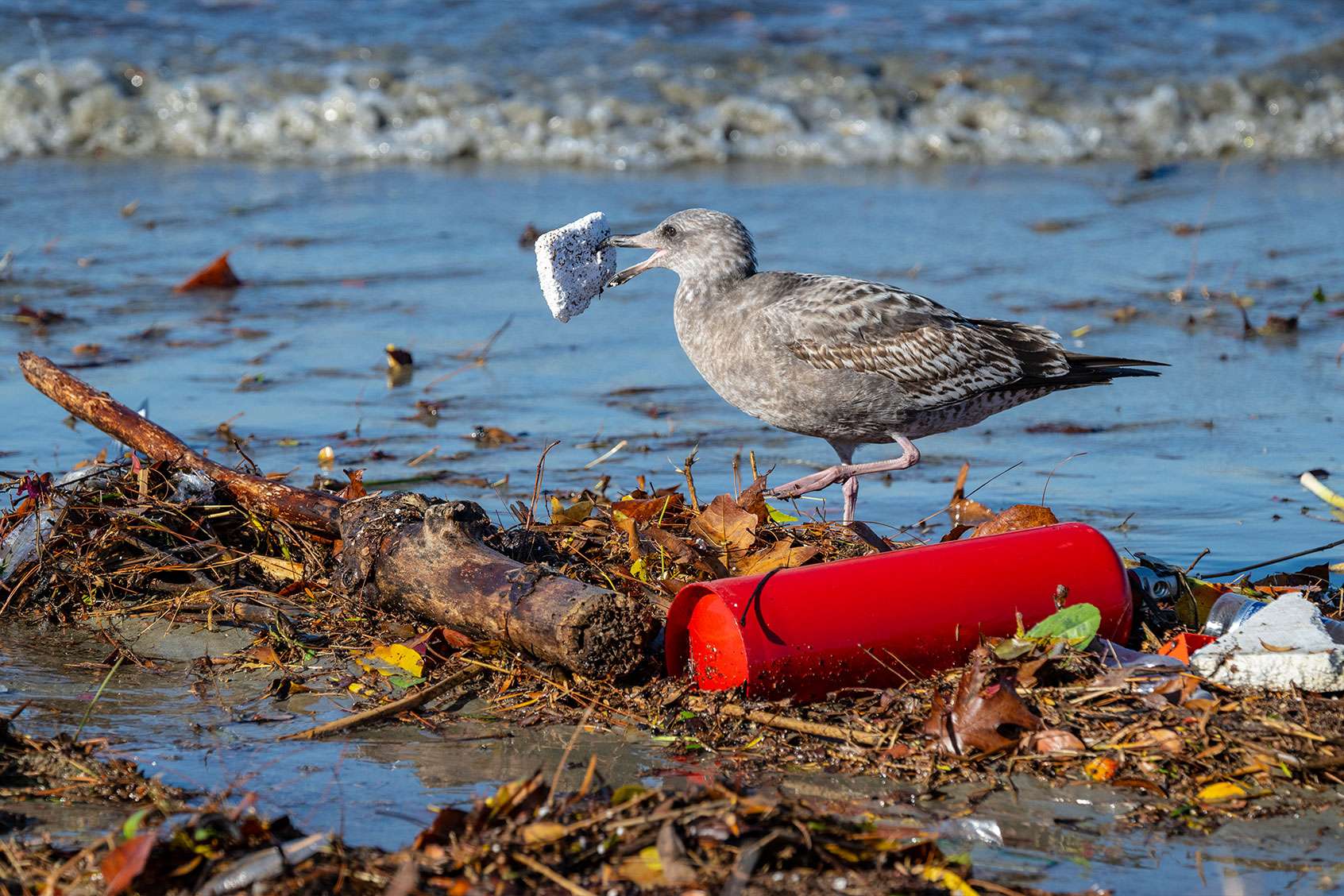
Seagull picks up a piece of trashA gull picks up a piece of trash that washed up along the bank of the San Gabriel River just a few hundred yards from the Pacific Ocean in Seal Beach on Tuesday morning, December 13, 2022. (Mark Rightmire/MediaNews Group/Orange County Register via Getty Images)Gulls are protective parents and swoop down or vocalize at people who get close to their chicks as a warning. They also vocalize to tell their chicks they are back at the nest with food and, seemingly, to cheer on their babies when they’re learning to fly. 

“Birds are just doing what birds do. They're not evil,” Tony Whitehead, spokesperson for the Royal Society for the Protection of Birds, says.

Research shows gulls are also highly intelligent. Studies found herring gulls are more hesitant to take human food when a person looks directly at them, gulls prefer to peck food they see people handling (gulls were not more likely to peck at a non-food item people touched), and gulls prefer food in the same color bag as what a researcher was eating out of. 

Most people likely have no idea some gulls are in trouble.

In contrast to societal views that gulls are overabundant, gull populations are declining in parts of America, Canada and the U.K. Herring gull populations declined around 76% in North America since 1966. Global great black-backed gull populations have almost halved since 1985. Just this September, common gulls and great black-backed gulls were added to the U.K. Red List, a designation for birds of highest conservation concern. The herring gull was already on the list.

Most people likely have no idea some gulls are in trouble. 

“People see gulls in the town and don't believe the population could be in decline when it's so easy to see them and when there seem to be so many in their area,” former gull researcher Madeline Goumas says. “The population density in the local area doesn't [necessarily] correspond with national patterns.”

Our negative feelings towards gulls likely plays a role as well. “If this was most any other species that sort of decline would produce a lot of alarm,” says Anderson. “But humans have a very odd relationship with [gulls].”

The cause of population declines isn’t well understood. It’s hard to get resources to study gulls because they’re not seen as charismatic. And there’s limited funding to study animals so efforts tend to focus on species most at risk, Perlut says.

Research does show that urban gulls aren’t declining the same way as gulls in natural habitats. Gulls probably are having a harder time finding the high-protein fish they prefer due to overfishing and climate change. If they’re eating poor diets, they could be having a harder time reproducing. On Mono Lake in California, where a quarter of the world’s population of California gulls live, climate change-induced droughts are lowering water levels and making it easier for predators to get onto nesting islands where they’ll eat eggs and chicks.

Gulls also get caught in netting, plastics and other human-made objects. And then there’s bird flu, which isn’t just infecting dairy cows and poultry lately, but has also massacred millions of wild birds.

Researchers are “extremely concerned about [highly pathogenic avian influenza], which could present an almost existential threat to gull populations,” says Anderson. Thousands of gulls in the UK are believed to have died from the virus.

We need your help to stay independent

Even if people don’t like gulls, they should still be concerned about population declines. Gulls are highly adaptable, so "if they are experiencing a population decline, the gulls may be telling us that there have been some fairly profound changes to local marine ecosystems,” Blight told Phys.org back in 2015.

Although gulls are associated with annoying behaviors, they’re also synonymous with laid-back coastal communities and beach vacations. Conservationists hope these positive associations will help people care about gulls. “I don't think anybody wants to see a seaside town that doesn't have [the calls of gulls],” Whitehead says.

“What I say to people is you're gonna miss them when they're gone,” says Anderson. “I think that if everything I and my colleagues dread were to happen, and herring gulls … become extremely rare, they might actually get a lot of respect then.”

As gulls in their natural habitats continue to face threats, urban gulls are probably going to be a continued fixture. Instead of being angry at them, we should be learning how to coexist, conservationists say. If “we could start to live together, then I think we'll overcome some of this anger and start seeing the birds for what they are, which is magnificent creatures,” Whitehead says.

“Digital lynching”: Robinson sues CNN, claims he didn’t post “Black Nazi” comments

North Carolina Lt. Governor Mark Robinson has filed a lawsuit against CNN in the wake of their September exposé that alleges Robinson left bigoted and lewd comments on a porn website forum.

CNN uncovered sexually explicit and pro-fascist comments they claim were by Robinson on the forum of porn website Nude Africa. Under the handle minisoldr, which Robinson has used extensively in many corners of the internet, the ultra-conservative gubernatorial candidate appeared to call himself a "Black Nazi," offer support for the actions of Adolf Hitler and admit he was a fan of porn starring transgender actresses.

Robinson's defamation lawsuit — filed in Wake County, North Carolina  earlier this week — called the story a "digital lynching." He's seeking $50 million in damages. The lawsuit blames the use of Robinson's handle and email address on being hacked. 

“Any person could have purchased and/or used Lt. Gov. Robinson’s data to create accounts all over the internet,” Robinson's legal team wrote. 

The lawsuit also alleged that CNN was reckless in their decision to share the story, saying they “chose to publish despite knowing or recklessly disregarding that Lt. Gov. Robinson’s data were previously compromised by multiple data breaches.”

The revelations led to an exodus among Robinson's campaign staff. In a statement shortly after the mass resignations, Robinson said he appreciated "team members who have made the difficult choice to step away from the campaign."

During a Saturday appearance on Newsmax, Robinson continued to claim the comments weren't from him, using the royal "we" to say that he'd never visited the site in question.

"We didn't say these things," he said. We've never been on this site. We don't even know what it is."

"We intend to take CNN to task for this irresponsible reporting on things that are not true," he continued.


Squad ghouls: The power of witches and supernaturals teaming up on screen

In the original “Beetlejuice” (1988), the narrative centers around a trio who must band together to fend off the mischievous ghost, Beetlejuice. The combined efforts of Adam, Barbara and Lydia are crucial to outwitting his schemes. Fast forward to the 2024 sequel, “Beetlejuice Beetlejuice,” and we find a similar dynamic, but with a twist. This time, the three Deetz women find themselves leaning on Beetlejuice to fend off other antagonists—although of course he still manages to be quite annoying. Lydia, Delia, and Lydia’s daughter, Astrid, each face unique challenges in the Underworld, and they rely on Beetlejuice for escape. It’s surprising to see that in this iteration, he helps them mostly without the same selfish motives as before. The evolution in his character reinforces an emerging theme: the Deetz ladies, like many other supernatural ensembles, need each other, and they need the guidance of those more experienced in the occult, even if that guide is a tricky sex pest.

In both “Beetlejuice” films, the central characters are confronted with problems too immense to be solved through solitary effort. Their situations demand collaboration and reliance on others with more powerful or experienced magic. Say what you will about the Juice, but he’s been scheming his way across the Underworld for many moons. Themes of mutual aid and the strength found in community are particularly resonant, as it becomes clear that these women and their disgusting, pun-loving supernatural ally can only break free of their Underworld troubles by combining forces. This need for shared strength and knowledge reflects a broader cultural recognition of the value in community, especially in moments of crisis. It’s also a reminder of the intergenerational bonds that are frequently vital to these stories. The Deetz crew, spanning multiple generations, underscores how wisdom and power can be passed down or shared within families, including living ancestors and often even deceased ones.

This concept of women working together in magical ensembles is hardly limited to “Beetlejuice.” Many films featuring witches or supernatural characters portray them in groups of three or four, emphasizing that community is essential for solving their problems. The cult classic “The Craft” (1996) and its 2020 sequel feature a group of four teenage witches who gain immense magical power through their collective efforts, each one representing their own unique approaches to power and justice. The 2016 “Ghostbusters” reboot brings this same energy into the supernatural realm, with four women combating ghosts through the sciences and their combined savvy in matters of the paranormal. The transmission of knowledge between these characters mirrors the way witchcraft has historically been shared across generations, either with elders teaching initiates or peers learning from one another.

Together, they can wield forces beyond their individual capabilities, an expression not just of shared strength, but of how diverse types of knowing come together in ritual and in practice.

The number four carries rich symbolic meaning in occult traditions. In tarot, for example, the number four is connected to the elements of earth, air, fire and water; each of which represents a different force of nature and its special energies. In witchcraft, these elements are invoked during rituals to create balance and harness various forms of power. These elements can be seen metaphorically in witchy films, where each member of the group represents different magics or general personality traits. The four Ghostbusters, for instance, bring distinct skills and backgrounds to the table, while the witches in “The Craft” each embody a different archetype of teenage girlhood, from outcast to queen bee. Together, they can wield forces beyond their individual capabilities, an expression not just of shared strength, but of how diverse types of knowing come together in ritual and in practice. In “Practical Magic (1998), two sisters initially struggle on their own but eventually need the help of their two witchy aunties to summon the more communal force that truly resolves their problems. The film also emphasizes the importance of intergenerational ties, with the Owens sisters drawing on the wisdom of those who came before them and stories of their deceased ancestors to overcome challenges.

Just as there is power in the number four, the number three also carries strong occult symbolism. Three is often associated with divine trinities, such as the Father, Son and Holy Ghost in the Christian tradition, or the Maiden, Mother and Crone in Wiccan and Pagan practices. The Disney+ ultra-queer MCU series, “Agatha All Along,” references such in the now viral song, “The Ballad of the Witches’ Road.”

The number three speaks to the idea of balance and the mystical idea that certain energies can only be accessed through triads. The three women in “The Witches of Eastwick” (1987), for example, are each grappling with their individual desires and shortcomings, but together they can summon extraordinary magic to confront their shared nemesis. In “Hocus Pocus (1993), the three Sanderson sisters tap into dark magic passed down from their ancestors, and though their coven is pretty dysfunctional, not so much wreaking genuine havoc as sowing comedic chaos, it’s clear their bond makes them far more powerful than they would be individually. The revival of their strength in the sequel (2022) speaks to the idea of witchcraft as something handed down through time, with the Sandersons drawing on centuries of traditional knowledge to extend their powers.


Want a daily wrap-up of all the news and commentary Salon has to offer? Subscribe to our morning newsletter, Crash Course.


In “Monster High: The Movie” (2022), the central teenage girl gang of Clawdeen, Frankie, and Draculaura come together as novice monsters in training, relying on heritage and the legacies of their ancestors to navigate the perils of a supernatural school. Their unity proves to be the cornerstone for unlocking their true powers and preserving the traditions passed across generations of monsters. Each character embodies an aspect of classic monster lore that connects back to their ancestry, illustrating how important it is to not only wield magic as a group but also to honor the legacies that came before them.

The wisdom of an entire community or chosen family are key to accessing the fullest extent of one’s own abilities.

In “The Addams Family” (1991), although there isn’t a formal trio of witches, Morticia, Wednesday and Grandmama often form an eerie, motley crew that suggests the same occult powers associated with groups of three. Their dynamic doesn’t necessarily deploy formal witchcraft, but the supernatural and unconventional bonds that tie them together allow them to resolve plots in ways that highlight the strength of their collective weirdness. The intergenerational aspect of the Addams family speaks to the importance of legacy and shared knowledge, too. Wednesday inherits her mother’s flair for the macabre, and the family’s power grows as each member embraces the oddities passed down to them.

Netflix’s “Wednesday” series (2022-present) expands on this intergenerational dynamic, showing how Wednesday inherits not only her mother’s dark sensibilities but also her psychic abilities, which she hones with the help of her family’s legacy. The show reinforces the theme of passing down knowledge and power through bloodlines, as Wednesday comes to rely on her mother’s guidance and the family history that shapes her supernatural journey. This resonates with how the iconic television series “Buffy the Vampire Slayer” (1997-2003) portrays intergenerational strength. Buffy’s role as the Chosen One is part of a lineage of Slayers. She’s guided by her Watcher, Giles, and almost always works with her two best pals from high school to build a brainy, funny, supernatural coalition to close the Hellmouth threatening to swallow the town of Sunnydale. The show highlights how the wisdom of an entire community or chosen family are key to accessing the fullest extent of one’s own abilities.

Ultimately, these movies and shows underscore a crucial point: witches, supernatural beings and even paranormal ghost hunters are stronger together. Working as a group allows for sharing knowledge, combining forces, and protection through mutual support. Going solo as a witch can be dangerous, not only because of the risks of magical failure but because the isolation limits one’s ability to grow and learn. Community provides a safety net, study buddies and a cooperative energy that allows magic to thrive. These stories remind us that the wisdom of past generations is foundational for growth and survival, and that magic—like so many aspects of life—works best when it’s shared.

“Not deranged to fear this”: Scarborough urges voters to take Trump at his word

Joe Scarborough doesn't see anything wrong in being a little freaked out by what Donald Trump's campaign is promising.

During a Friday night stop by "Real Time with Bill Maher" the MSNBC host said that he knows people might write him off over perceived bias, urging that they instead take the former president at his word.

“I don’t want people to listen to me, I don’t want them to listen to you, I don’t want them to listen to anybody,” the former Republican congressman from Florida said. “I want them to listen to what Donald Trump says.”

While former President Barack Obama was happy to poke fun at Trump's ramblings as incoherent "word salad" in recent stump speeches, Scarborough saw nothing funny in what Trump tells crowds. He railed against Trump's recent assertion that he would sic the military on dissenters if he were allowed back into office, something that Trump opponent Kamala Harris also touched on in a recent, contentious interview with Fox News.

“This past week, Trump said he was going to use the military and the National Guard to arrest his political opponents," Scarborough shared. He was asked if he would back off of that, he said no. And in fact, he doubled down.”

“I would just like to say to my Republican friends that it’s not deranged to fear this, it’s not deranged to find this alarming,” he added.

The television host is feeling the heat from Trump, who has threatened broadcasters who share news stories that he doesn't like. Following a "60 Minutes" interview with Harris — an opportunity that was extended to Trump that he declined — the former president said the network should lose its broadcast license.

"CBS should lose its license, and it should be bid out to the Highest Bidder, as should all other Broadcast Licenses, because they are just as corrupt as CBS – and maybe even WORSE!" he wrote on Truth Social. 

Watch Scarborough's comments below:

“We’re getting creamed”: Graham bemoans Harris’ huge fundraising advantage on “Hannity”

Lindsey Graham might not know how the elections in November will go, but he can certainly read numbers in a bank statement. 

The Republican senator from South Carolina sent out an urgent call during a visit to "Hannity" on Friday, noting that Kamala Harris and the Democrats are beating the bricks off the GOP fundraising-wise. 

"I’m here tonight to give you a wake-up call. You said every vote counts. Well, every donation counts, too. We’re getting creamed on the Senate when it comes to raising money. Wisconsin, Ohio, and Michigan, our candidates are being out-raised 3-1," Graham told the Fox News audience.

The Harris campaign has broken fundraising records since the vice president took the reins from an ailing President Joe Biden. They've used portions of a haul that's topped $1 billion to fund races down ballot. Recent reports show that Harris' fundraising operation has raised nearly twice as much as Trump's in recent months. Those discrepancies in cash on hard  are clearly getting under Republican leaders' skin, as Graham pleaded to viewers to help “put a generation of conservatives on the Supreme Court."

“We’re getting creamed and outspent four and five and six and eight and 10 to one,” he added. “The conservative world needs to step up and help these men and women who are running for the Senate to help President Trump.”

Musk and JD Vance want to colonize the universe. It’s a horrible idea

Earlier this week, Vice President Nominee JD Vance announced on X, formerly known as Twitter, that he wants the United States to “conquer the stars.” It’s a reference to his support of Elon Musk, who, at a Trump rally a few weeks ago, declared that he wants to “make science fiction real.” The rhetoric is part of Musk’s effort to establish a human population on Mars and make humanity “sustainably multiplanetary.” But Musk’s dream is my nightmare, and despite what JD Vance says, it shouldn’t “inspire all of us.”

For context, JD Vance and Musk aren’t alone in such an aspiration. Jeff Bezos, who has his own space exploration company, Blue Origin, remarked last year that he’d “love to see a trillion humans living in the solar system.” Richard Branson, who founded space tourism company Virgin Galactic, once noted that he too is “determined to being a part of starting a population on Mars.”

Forget luxury real estate and financial tech — space, and specifically the expansion of human civilization beyond Earth, has become the latest obsession of the ultra-wealthy.

The problem is that expanding our deeply flawed society would merely amplify our mistakes, failures and acts of cruelty on a much larger scale. We are not anywhere near morally advanced enough to begin colonizing the universe. We must stop this effort before it’s too late and the suffering we inflict grows further.

As you might imagine, that’s not how those in the billionaire club see it. Musk, for example, argues we should ensure the preservation of “the light of consciousness,” and that we must colonize Mars “before something happens on Earth to prevent that.” By this he means existential threats, “for example nuclear war, a supervirus or population collapse that weakens civilization to the point where it loses the ability to send supply ships to Mars.”

We are not anywhere near morally advanced enough to begin colonizing the universe.

Bezos, who has his eye on the Moon to start, ultimately imagines something of a utopia: “If we had a trillion humans, we would have, at any given time, 1,000 Mozarts and 1,000 Einsteins," he said. "The only way to get to that vision is with giant space stations. The planetary surfaces are just way too small."

And then there are those that argue that we have a moral obligation to make the human population as large as possible. To not do so would be, as one philosopher put it, an “astronomical waste.”

But this wouldn’t make sense if many of those lives were bad, much like the current state of Earth. Consider that in 2023, more than 2 billion people faced moderate or severe food insecurity. Among those, nearly one billion people went without food for an entire day or more at times. In the past two years, we saw new wars begin in places like Gaza, Lebanon, Sudan and Ukraine — part of a trend as war has been on the rise for more than the last decade. I could go on and on.


Want more health and science stories in your inbox? Subscribe to Salon's weekly newsletter Lab Notes.


The suffering on Earth dramatically increases when we consider how humans treat animals. We cage billions of hens, giving them less space than a sheet of paper for their eggs on factory farms. We conduct sadistic experiments on more than a hundred million animals each year. And we scoop trillions of fish out of the water indiscriminately in large nets who are left to die slowly by asphyxiation.

This is not a good résumé, to say the least. It would be a grave mistake to replicate these conditions on other planets. There’s little to indicate that these injustices will cease, or that new ones won’t arise. We haven’t earned the right to expand the human species beyond our planetary borders. Unless we put an end to these abuses, more humans may only lead to more suffering — for ourselves and for others.

We haven’t earned the right to expand the human species beyond our planetary borders.

Some proponents of space colonization point out that exploring space has historically led to big technological advancements for those of us on Earth, so we should expand such efforts, not reduce them. But that’s the wrong way to think about it; space colonization actually diverts critical attention and resources from pressing Earth-bound issues. As much as I celebrate memory foam and scratch-resistant lenses, the trillions of dollars spent on space exploration could have been better used to address more urgent problems on Earth, such as poverty, healthcare, education and climate change.

These challenges should take precedence over expansion into space. In questioning the rationale behind plans to colonize other planets, former President Barack Obama put it this way earlier this year: "I would rather us invest in taking care of this planet here.” I would too.

And given that we are already in the process of destroying one planet, it makes little sense to bring our exploitive ways elsewhere. Consider that we have more than enough resources on Earth. The issue is with how humans use them i.e. unsustainably. If we extract resources from other planets without fixing humanity, we will simply squander those resources too.

We need your help to stay independent

One might argue that humans are nowhere even close to reaching other planets, let alone settling on them, and thus that this isn’t an issue we even need to be thinking about. But just because something might not happen, or even is unlikely to happen, doesn’t mean we shouldn’t take steps to prevent it, especially if the potential for harm is large. We wear seat belts regularly, even though the odds of getting into a car crash are low — 1 in 366 per every 1,000 miles. Scientists monitor meteors just in case one begins to head toward us, as improbable as this is. Nuclear war isn’t anywhere near imminent, but I’m glad cities like Los Angeles are preparing for the possibility. Nobody knows if these events will take place, but surely it makes sense to take steps to reduce our chances of very bad outcomes.

Ultimately, it’s better to contain humanity to Earth until we are more ethical and responsible. If humanity stops being short-sighted and cruel, and there is evidence good human character will persist through time, I will change my tune.

But until such a time, we need to reckon with the delusion that space colonization is a good idea. It isn’t. We must stop these politicians and billionaires from making the human species a multiplanetary one, before it’s too late. The fate of trillions of individuals depends on it.

The heart of America’s candy industry still beats in Bryan, Ohio

In Bryan, Ohio, candy is king. Set about 60 miles west of Toledo, the little town of about 8000 is home to Spangler Candy Company, makers of all sorts of favorites, from Dum-Dums and candy canes to Sweethearts, Necco Wafers and Circus Peanuts. There’s even a water tower in the center of town painted to look like it’s held up by the long-lived lollipops.

Employing about 14% of the town, Spangler has been around for well over 100 years. A baking soda manufacturer before finding success in candy, Spangler has been churning out millions upon millions of nostalgic favorites every day for decades. (They make 12 million Dum-Dums per day alone.) 

Though Spangler didn’t create all its candies — some of its brands, like Necco and Dum-Dums, were acquired along the way — it trafficks in legacy and in memory. Who among us doesn’t have a go-to Dum-Dum flavor? Or a specific memory about where you got the suckers as a kid? Maybe a grandparent introduced you to the company’s Bit-O-Honey treats, or you buy Sweethearts for your kids to this day because that’s what your parents always did for you. 

“The candy industry is a nostalgic industry,” said Spangler CEO Kirk Vashaw. “People get used to the candy they like growing up and they tend to just like it forever. There can be new flavors and new innovations, but those new things tend to come and go. We’ve always found that our most popular flavors are the ones that have always been there, like butterscotch and root beer Dum-Dums or anything with a classic fruit flavor.” 

Evan Brock, Spangler’s VP of Marketing, says he’s been partial to watermelon Dum-Dums his whole life, and for good reason. Kids are often introduced to the Spangler brand through the suckers, though they grow into the company’s other brands — and their more “mature” flavors — as they age. In fact, while much of our relationship with candy comes from when we’re kids, recent surveys have found that about half of adults say they eat more candy as a grown-up than they ever did as a child. Hence those 12 million Dum-Dums a day, I guess.  

Take Necco Wafers, with their signature (and rare) clove flavoring.  Brock says those can be more of an acquired taste, even if you’ve tried and disliked them as a kid. “You can come back to them later in life,” he said. “When your taste buds change and realize, ‘Hey, I really like these things and I have good memories of sharing them with my family.’” 

We need your help to stay independent

Vashaw has also noticed more consumers experimenting with flavors, and especially vintage flavors, in recent years. But while Spangler has dabbled in new, “exciting” flavors like Dragon Fruit and Birthday Cake Dum Dums, it’s found that any tweaks it makes to classic options get flagged by consumers. “We’ve thought about making some of our traditional flavors better or more vibrant,” Vashaw said. “But people don’t like when we mess with their flavor, even if they prefer the newer one in a blind taste test. So we introduce new flavors, but we won’t change the existing flavors, even if we think — and a taste test thinks — it could be better. People notice.” 

While Dum Dums account for a good portion of Spangler’s sales, the company also makes about half the candy canes you see on store shelves each holiday season. (Half of which, Vashaw notes, are never actually eaten and are instead used for decoration.) 

The company makes so much candy, between all of its brands, that it supports an army of smaller manufacturers around the United States: the companies that make the sucker sticks in North Carolina and New York, the Wisconsin company that makes Dum Dum wrappers, the midwestern companies that make the cardboard for the company’s boxes, the sugar beet growers up in Michigan. 

"We introduce new flavors, but we won’t change the existing flavors, even if we think — and a taste test thinks — it could be better."

The company even uses locally-grown corn for its non-high-fructose corn syrup, meaning that numerous businesses in the Bryan area benefit from Spangler’s success. 

“For every manufacturing job we have at Spangler, it supports another 10 up and down the supply chain,” Vashaw said. “We have 200 suppliers in the state of Ohio alone, so when we grow our business as a family company, we know it’s not just a benefit to us, but to the whole region’s economy.” 

While Spangler staffers don’t get to eat fresh suckers straight off the production line (Vashaw said his grandfather always told him “not to eat the profits.”), they do get a discount on candy at the SpanglerWorld store and museum in downtown Bryan. They also get good pay, good insurance, paid vacations and holidays, and a membership to the local YMCA. There’s even a wellness clinic on site, should employees want to pop in for a flu shot or a check-up before or after a shift.

While it might feel hokey to call Spangler a feel-good American success story, it’s about as close to one as you can get in corporate America these days. The company clearly values its employees and customers and says it only takes risks when it doesn’t have to bet the proverbial farm. While other nostalgic food brands have gone wild with gimmicks or leaned into flashy marketing, Spangler just keeps plugging away, making candy that everyone in America has adored for basically their entire lives. It doesn’t get much sweeter than that.

Drone attack launched on Netanyahu’s home as Israel strikes southern Beirut

A drone attack was launched on Israeli Prime Minister Benjamin Netanyahu's home in northern Israel on Saturday. 

While Israeli officials told Al Jazeera that one of the three drones launched from Lebanon successfully hit Netanyahu's residence in Caesarea, they added that Netanyahu was not at home and there were no casualties. 

The pointed attack comes during a day of violent exchanges between Israel and Lebanon. Israel attacked the southern suburbs of Beirut with airstrikes after issuing evacuation orders in the area, per Lebanon's state-operated National News Agency

"The Israeli warplanes launched a violent raid a while ago, the second on the southern suburb today, as smoke clouds are seen rising in the air," they wrote. "The enemy warplanes had earlier launched a raid targeting the Haret Hreik area."

In addition to the attack on Lebanon, Israeli forces ramped up attacks in northern Gaza. All of this comes in the wake of the killing of Hamas leader Yahya Sinwar earlier this week. After Israel released footage they claim shows Sinwar's final moments, Vice President Kamala Harris called for renewed ceasefire talks between Israel and Hamas.

“Hamas is decimated and its leader is eliminated. This moment gives us an opportunity to finally end the war in Gaza,” Harris said during a speech in Wisconsin. “It must end such that Israel is secure, the hostages are released, the suffering in Gaza ends, and the Palestinian people can realize their right to dignity, security, freedom, and self-determination.” 

On Saturday, however, Netanyahu continued to stress that the war was not over. 

“We took him out,” the prime minister said in videos shared on social media. “We’re continuing our battle with Iran’s other terrorist proxies.”

The economic impact of Helene and Milton — and who pays for it

The 2024 hurricane season could rank among the most expensive after Helene flooded North Carolina in late September and Hurricane Milton hit south Florida about two weeks later. 

Financial damages are still being counted, but the latest estimates put both storms at $50 billion, making them among the most costly hurricanes on record. 

Hurricanes have become more costly over the past three decades. Andrew, which hit Miami in 1992, was the first $50 billion storm. More recently, Harvey swamped Texas in 2017 and cost about $125 billion in damage — second only to Katrina's destruction in New Orleans and along the Mississippi Gulf Coast in 2005. Hurricanes are responsible for the most damage of any weather disaster since 1980, causing over $1.3 trillion in total damages, according to NOAA's Office of Coastal Management.

Besides causing property damage that can take years to recover from, the storms can disrupt supply chains, limit the money people spend on non-essential items and cause a decrease in GDP growth, which measures how quickly the U.S. economy is expanding.

Hurricane costs are expected to increase as climate change fuels warmer waters and people continue building on vulnerable coasts. Taxpayers are often left footing the bill while insurance companies try to keep up.

Who pays for what?

When you live outside hurricane impact zones, it's easy to forget that someone is financially responsible for clearing away the rubble, rebuilding infrastructure and supporting people through recovery. 

Mark Friedlander, director of corporate communications at the Insurance Information Institute, said state and local governments are largely responsible for paying those expenses until federal funding is available.

“The costs associated with cleanup and restoration efforts are typically reimbursed by FEMA grants,” Friedlander said.

We need your help to stay independent

The Federal Emergency Management Agency also provides direct aid to people who apply for assistance following natural disasters. After Katrina, the U.S. Department of Housing and Urban Development funded billions of dollars in grants to help homeowners rebuild.

Many people also rely on property insurance coverage or personal savings to make them whole. 

But that doesn't work for some homeowners. Those who choose not to purchase the optional flood insurance package will be on the hook for water damage. In the case of Katrina, many didn't have flood insurance because they weren't living in designated flood zones. Helene flooded portions of North Carolina where natural disasters are rare.

"Lack of flood insurance is the largest insurance gap in the U.S."

“Lack of flood insurance is the largest insurance gap in the U.S., with only 6% of homeowners having the coverage,” Friedlander said.

Another wrinkle in the system comes from wind damage. While it's typically covered in standard homeowner insurance policies, hurricanes can throw a wrench into things. 

“If the home is damaged due to a covered event, such as a windstorm, and the homeowner has insurance and complies with their obligations under the policy, then the homeowner's insurance should afford coverage for the damaged property,” said home insurance and FEMA expert Robert Guinn, Esq., Partner & Attorney at Cole, Scott & Kissane.

However, according to the FEMA website, “Wind coverage may be excluded if you live in a coastal area at high-risk for tropical storms and hurricanes.”

War’s public health impacts are vast. Tallying them is difficult

In 2001, Nathalie Williams moved from her hometown of Corvallis, Oregon, to Phnom Penh, Cambodia, and found work with the United Nations Population Fund, an agency focused on sexual and reproductive health. From the start, she recalls, odd things caught her attention: When a motorcycle tire burst on the street, everyone froze, suspecting gunfire. The otherwise bustling capital city seemed to shut down before dark. Williams came home past 8 p.m. one night and couldn’t find a restaurant open for dinner. Over the years, she learned to recognize these moments as scars of the Khmer Rouge-led violence and genocide that had overrun the country less than three decades earlier, between 1975 and 1979. “The war was not gone — ever,” said Williams, now a sociologist at the University of Washington.

The experience spurred Williams’ enduring curiosity and subsequent research on how armed conflict shapes people’s lives. Williams isn’t alone in her interest: Other researchers are investigating conflict’s impacts on migration and health. But connecting the dots between armed conflict and health is not straightforward. Although researchers are finding ways to measure the societal impact of war using new kinds of data such as satellite imagery, the health impacts on civilians caught in the fray remain difficult to fully gauge, especially in resource-poor regions of the world. “Even bringing up that war can affect people's health is a big jump from what people usually think of,” Williams wrote in an email to Undark.

Yet research suggests war casts a long shadow on public health: In addition to deaths caused directly by violence, conflict-related damage to infrastructure like hospitals and roads can drive up rates of infectious disease and malnutrition and diminish access to preventive care such as vaccinations. Refugees and survivors often suffer malnutrition and stress that can inflict higher rates of chronic diseases later in life. And the social and emotional toll caused by the loss of family members and caregivers can continue to impact people’s health generations after a conflict ends.

“Even bringing up that war can affect people's health is a big jump from what people usually think of.”

Now, researchers are developing creative techniques to gauge the extents of these harms — an endeavor that Abraham Flaxman, a global health researcher at the University of Washington, says is essential to inform short-term relief efforts as well as long-term policies.

Estimates of deaths and injuries are crucial, Flaxman said, for making sure “that we know what a problem this is to health and what a difference it could make if we were to focus on what you might call these political determinants of health.”


To capture the full extent of war-inflicted mortality — deaths caused by direct combat and bombing, as well as those that occur because of a lack of medical services, safe passages to hospitals, or other infrastructure — researchers glean numbers from a few key sources. Under normal conditions, administrative data such as censuses, large household surveys conducted by governments, and other record-keeping systems offer reliable estimates of life, death, and disease, but these systems often break down during a war, Flaxman explained. To fill the gap, scientists lean on official government reports, eyewitness accounts and press reports. Recently, researchers have also turned to social media and other non-traditional sources such as satellite and mobile phone data to understand the on-the-ground realities of conflict zones.

While each set of numbers can shed some light on what’s happening on the ground, Flaxman said, researchers must be aware of where they fall short. “They all have their downsides,” he said.

Cellphone data, for instance, provides a limited window into the lives of children, the elderly, and others in a population who might not carry phones. Research into recall bias suggests surveys and eyewitness accounts may suffer from gaps in people’s memories, and Flaxman explained that news coverage and social media reports can be colored by bias. And political motives, he said, can lead to “any numbers being questioned.”

Flaxman highlighted, for example, an article from early 2024 that assessed such political questions. In October 2023, U.S. president Joe Biden stated that he had “no confidence” in the Gaza Ministry of Health’s estimate that more than 6,000 Palestinians were killed during the early weeks of the Israeli bombardment that followed Hamas’ Oct. 7 attack on Israeli civilians and soldiers. However, when researchers from Johns Hopkins University vetted death statistics from the Ministry of Health and compared them to staff deaths reported by the United Nations Relief and Works Agency for Palestine Refugees in the Near East, they noticed similar death rates among Gazans and relief workers. The data suggested that, if anything, the Ministry of Health may have underestimated actual death tolls as hospital services and mortality reporting systems lurched toward a November collapse. The study’s “careful comparisons could help us understand what was happening in a complex situation,” Flaxman said.

Scientific consensus on such numbers is critical, Flaxman said, since health research in conflict zones is often deeply politicized by policymakers. “We’re allowed to have our own opinions,” he said, “but we can’t have our own facts.”

Conflict-related damage to infrastructure like hospitals and roads can drive up rates of infectious disease and malnutrition and diminish access to preventive care.

While mortality numbers garner political attention, other metrics of conflict are also critical to people’s health and may be even tougher to gauge. One such measure is migration — a phenomenon that Williams says is poorly understood in the context of armed conflict. Refugees and asylum-seekers who move to different countries often suffer from inconsistent access to health care; difficulty finding jobs, education, and safe housing; and other social challenges. Yet, official numbers rarely capture the extent of this displacement, Williams said. For instance, people who move when danger from a conflict is imminent but don’t officially register as refugees often go uncounted, though they may face similar problems as documented refugees. The data also fails to accurately represent people who leave their home but, whether by duress or by choice, remain within their countries, she said.

During times of war, “there's this assumption that conflict is this horrible thing, and everybody must just leave,” Williams said. “That’s not actually what happens at all.”

Some people who relocate to nearby areas may be counted as internally displaced persons, or IDPs, if they register with authorities, Williams explained. But many others are never accounted for in this way, she said. “Someone's apartment gets bombed. They can't live there anymore, so they move in with their sister in the next city over. Nobody can really decide if that counts as an IDP or not,” Williams said. “There are millions more people who are in different situations and aren't registered and never counted. So, the numbers, the numbers are dismal.”

Wanting to capture these transient movements, Xiao Hui Tai, a statistician at the University of California, Davis, and her former colleagues from the University of California, Berkeley turned to anonymized cellphone data from Afghanistan that revealed people’s movements between their home districts and nearby regions. They analyzed the location data together with media reports that provided data on violence to track how conflict internally displaced people or triggered migration. In a 2022 study, they reported that people were more likely to leave their home districts after a fatally violent clash than they would in the absence of violence. The odds of their departure peaked 10 days after a violent event, though it remained higher than normal even three months later. They also found that many people left a region pre-emptively, often about five days before reports of deadly violence appeared in media coverage.

The severity of violence and the location of clashes all determined the odds of people moving away. The source of conflict seemed to play a surprising part too: Migration rates following Taliban-incited clashes were lower than rates after violence perpetrated by the Islamic State. “That's not necessarily something that we anticipated,” Tai said, adding that it may have been in part because “there's actually many factions within Afghanistan that think of the Taliban as a legitimate governing force, and so I think fewer people think of the Islamic State in that way.”

While mortality numbers garner political attention, other metrics of conflict are also critical to people’s health and may be even tougher to gauge.

Tai’s study reflects only the movements of people with cellphones, and therefore likely underrepresents children, the elderly, and other vulnerable groups. Still, capturing this type of information could influence “efforts to contain the cost of violence,” Tai suggested, by drawing policymakers’ attention to the consequences of violence and specific groups of people who could benefit from assistance.

While remote data can reveal elusive aspects of life during conflict, personal interviews and surveys can elucidate long-term — even transgenerational — impacts of war. In a study of more than 2,000 people who survived the Vietnam War (often called the American War in Vietnam), researchers found that people who were preteens at the time of the conflict have significantly greater risk of PTSD and physical health issues than those who were older at the time, suggesting heightened risks of early childhood exposure to war.

Another often-neglected fallout of war is the burden of bereavement. Williams’ research suggests the death of a child, a child’s loss of their parents, or an elderly person’s loss of caregivers can all profoundly alter survivors’ physical and mental health, as well as their socioeconomic status. These deaths can affect everything from an elderly person’s ability to go to the doctor to a child’s access to education or a single parent’s ability to support their family, Williams explained. From a public health perspective, these losses increase the risk of developing conditions such as prolonged grief disorder, depression, post-traumatic stress disorder, and substance use disorders — and they may contribute to higher rates of diseases linked to chronic inflammation.

In a study published this July, Williams and her colleagues estimated how bereavement burdened — and will continue to burden — 16 populations that have shouldered conflict-related deaths between 1989 and 2023, including in Ukraine, Syria, Afghanistan, and the Palestinian territories. Their models projected that, even if all of the conflict-related deaths ceased after 2023, past bereavements would continue to impact communities and individuals until at least 2070.

“Regardless of whether we rebuild the bridges or rebuild the buildings, it’s like that bereavement never goes away,” said Williams, who recalls sensing a similar atmosphere of loss during her time in Phnom Penh, where, as she remembers, the trauma of war lurked in collective memory “just barely under the skin.”

Conflict-related bereavement affects people and societies in many ways, ranging from economic insecurity, interruptions in education, and faltering social safety nets. As a result, more data are needed to understand precisely how policymakers might allocate resources to help those affected, Williams added.

Tallying the understudied toll of war on human health matters because conflict is “really a political choice,” Flaxman said. “One that I feel like if we had the evidence on, we might be making different choices.”

As the ice caps melt, Antarctica is greening, alarming climate experts

The first color that comes to mind when thinking about Antarctica is a stark white, which makes sense, given the southernmost continent is generally buried in ice and snow. It has earned its reputation as “the white continent” thanks to harboring 90% of the world’s ice, concentrated in a 2.2 km (1.4 mi) thick layer.

Yet according to a recent study in the journal Frontiers in Environmental Science, Antarctica’s snow white status may soon be eclipsed by a different color: green.

This shifting dynamic is driven, of course, by climate change. Burning fossil fuels are jacking up the Earth’s average temperature, with this heating occurring at an even higher rate at both poles due to a process known as the ice-albedo effect. For decades Antarctica has reeled from a series of ocean heat waves and ice loss events. By analyzing archival photographs of the entire Antarctic continent taken by the NASA/USGS (United States Geological Survey) Landsat program from 1986 to 2021, the scientists behind the new study found the area of likely vegetation cover increased from 0.863 km2 (0.333 m2) in 1986 to 11.947 km2 (4.613 m2) in 2021.

More ominously, the rate of greening has increased with each passing year. As the authors note, the rate of growth in green on the continent was 0.424 km2 (0.164 m2) per year between 2016 and 2021, a sharp uptick from the broader trend of 0.317 km2 (0.122 m2) per year during the entire study period.

While there has been ample previous research on related phenomena like ice melt and sea ice melt, the scientists behind the new paper bluntly declare that “this trend echoes a wider pattern of greening in cold-climate ecosystems in response to recent warming, suggesting future widespread changes in the Antarctic Peninsula’s terrestrial ecosystems and their long-term functioning.”

Melting icebergs Horseshoe Island AntarcticaMelting icebergs are seen on Horseshoe Island as Turkish scientists conduct fieldwork on Horseshoe Island within 7th National Antarctic Science Expedition under the coordination of the Scientific and Technological Research Council of Turkiye (TUBITAK) MAM Polar Research Institute with the joint responsibilities of the Turkish Presidency and Turkish Ministry of Industry and Technology in Antarctica, on February 26, 2023. (Sebnem Coskun/Anadolu Agency via Getty Images)Lead author Dr. Tom Roland, a senior lecturer in physical geography at the University of Exeter, explained that the scientists decided to undertake this research after making a single green discovery that unintentionally foreshadowed their ultimate conclusions.

“Our take home message from this study isn’t a particularly happy one,” Roland told Salon, adding that the results “shocked” the scientists. “We had to recheck our numbers several times before we believed it,” Roland said.

"We had to recheck our numbers several times before we believed it."

“Based on previous work we’ve done on the Antarctic Peninsula, using core samples taken from a few sites across the region, we had some idea that the plants there have been growing faster in recent decades,” Roland said. “What we didn’t know was how widespread this increase in plant growth was, and this is why we turned to satellite imagery — it’s the only way to measure changes like this over huge spatial scales.”

Thanks to their paper, the scientists have now demonstrated that there is indeed a widespread greening trend in Antarctica. Our southernmost continent was actually once so green it was covered in rainforests 90 million years ago, at a time when carbon dioxide levels were much higher than today. Indeed, from the larger perspective of Earth’s planetary history, Antarctica was green for a large chunk of time, specifically during the period prior to the Eocene Epoch 56 million years ago.

Yet all of that is, quite literally, ancient history. Scientists do not believe Antarctica would be greening to this extent today if not for human-caused climate change.


Want more health and science stories in your inbox? Subscribe to Salon's weekly newsletter Lab Notes.


“The area of vegetation cover has increased by over ten times in just 35 years and, worryingly, the speed at which this greening is taking place accelerated in the most recent years,” Roland said.

This trend is yet another canary in the coalmine for our ongoing climate crisis, but Roland argued we are “fast running out of canaries” when it comes to reducing our fossil fuel use and greenhouse gas emissions.

“Our findings confirm that the influence of anthropogenic climate change has no limit in its reach,” Roland said. “Even on the Antarctic Peninsula — this most extreme, remote and isolated ‘wilderness’ region — the landscape is changing, and these effects are visible from space.”

We are “fast running out of canaries” when it comes to reducing our fossil fuel use.

This does not mean that Antarctica will transition from white to completely green overnight. In fact,  such a scenario is unlikely to occur either in our lifetimes or those of any now-living generations. Despite the recent greening, only 0.12% of Antarctica is actually covered in vegetation, hardly enough to sustain lush forest ecosystems. Additionally Walt Meier — a senior research scientist at the National Snow and Ice Data Center who was not involved in the study — told Salon that he was not surprised to see new vegetation on the Antarctic Peninsula, since that area is the farthest north and has seen the most warming over the past few decades.

"We’ve seen this 'greening' in the Arctic as tundra is getting replaces by shrubs ('shrubification')," Meier said. "I would note that the amount of vegetation observed is still very small – it changes from ~0.9 sq km to ~12 sq km. In terms of percentage increase it is a lot, but 12 sq km is still a very small area – it’s about 20% of the size of the island of Manhattan."

Antarctic Peninsula Ice SheetNASA's Operation IceBridge has been studying how polar ice has evolved over the past nine years and is currently flying a set of nine-hour research flights over West Antarctica to monitor ice loss aboard a retrofitted 1966 Lockheed P-3 aircraft. (Mario Tama/Getty Images)
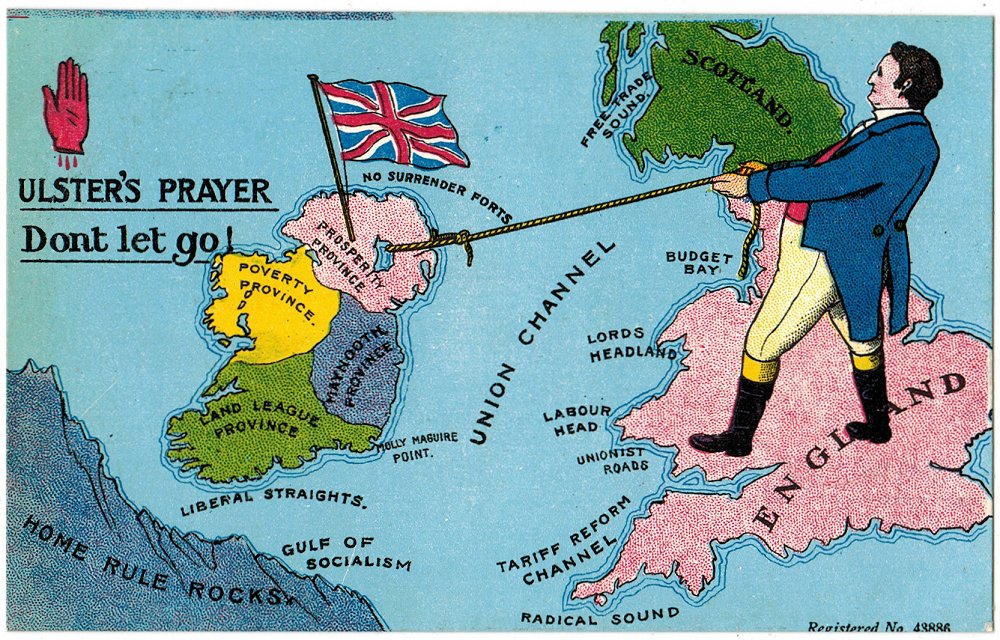
This means that, at the time of this writing, someone dropped in the middle of Antarctica would almost certainly wind up in a world of white. The bigger problem is that this is "an indication of a warming climate over the peninsula," Meier said. While the increased amount of vegetation absorbs CO2 and is thus a sink for greenhouse gases, Meier added that "it is a very small effect and even including greening of the Arctic it does not come close to compensating for the large negative impacts of human [greenhouse gas] emissions, including the melting of the ice sheets and glaciers in Antarctica that contribute to sea level rise."

We need your help to stay independent

University of Exeter glaciologist Martin Siegert, who was also not involved in the study, told Salon that the study confirms what experts like himself have long predicted — namely, that Antarctica will see an increase in plants on exposed surfaces as it loses ice due to climate change.

“The problem is two-fold: First, that the warming promotes growth, and second that more exposed surfaces are appearing as snow and ice melts,” Siegert said. “It matters for the U.S. because the Antarctic acts as a major heat sink, keeping the whole planet cool. If that stops — i.e. the white reflecting surface is replaced by darker exposed surfaces, heat will be retained rather than reflected, and the planet will warm.”

The increased green, meanwhile, will also prove quite disruptive to the indigenous Antarctic ecosystem.

“If I were to make a prediction, I would envisage a growing fraction of the Peninsula’s landscape becoming dominated by a mosaic ecosystem of mosses, lichens, liverworts and fungi,” Roland said. “Of course, with this increase in plant life, we’re going to see increased soil formation, and the risk of colonization by non-native and potentially invasive species grows considerably as a result. Precisely what the Peninsula will look like in, say, one-hundred years’ time is difficult to say, but we can safely suggest that Antarctica’s environmental future is at risk.”

Jack Smith plays his hand

In this election year, with four criminal cases pending against him, Donald Trump’s lawyers have implemented full-scale delaying tactics for both legal and political reasons. Special counsel Jack Smith, meanwhile, is taking the cards he was dealt and it appears his latest legal effort could bypass the Supreme Court’s transformational immunity ruling. Delay works in football, but it may not succeed in this legal/political scrimmage. 

At the end of a close football game, it is quite common for the team with the higher score to eat up the clock. Running the ball rather than passing the ball is an effective and permissible strategy that takes advantage of whether the clock runs or stops at the end of the play. The clock will continue to run after a successful or unsuccessful running play. It stops after a failed passing play.

But in law, most legal codes of ethics stipulate that the strategy of unreasonably delaying a trial is clearly an ethical violation. Moreover, both the federal code and many state codes provide parameters for ensuring that criminal trials will be speedy trials. 

Trump’s Delays Meet Smith Motion for Immunity Determinations

Trump’s lawyers instituted a strategy of delay in all four criminal cases involving Trump. These efforts have been successful. Trump has not gone yet to trial in any of the pending criminal cases against him, except the New York hush money case; he was convicted there and faces sentencing Nov. 26. 

In a 165-page motion filed on Oct. 2, 2024, by Smith and the Department of Justice in the Jan. 6 case against Trump, the DOJ contends that Trump allegedly “resorted to crimes” in his effort to overturn the results of the 2020 presidential election. DOJ maintains that Trump is not entitled to immunity for, among other crimes, the fake elector conspiracy.

The motion is designed to conform to the Supreme Court’s directive to the trial court to decide the immunity issue prior to proceeding to a trial. The Supreme Court ordered the trial court to consider whether their ruling on immunity will prevent the trial.

The trial judge, U.S. District Judge Tanya Chutkan, has to decide before the actual trial commences what evidence proffered by the DOJ will be admissible.

Trump Reply Deadline Extended Until Nov. 7

Judge Chutkan gave Trump an extension until November 7 (two days after the election) to file his responsive brief, and she also granted to him the option of reasserting their motion to dismiss. Their brief may be 180 pages, which is the same concession she gave to the DOJ. The DOJ has until Nov. 21 to file its reply brief and a combined reply brief in response to the motion to dismiss. Trump has until Dec.10 to file a reply brief. 

DOJ has also filed 1,900 pages of supporting evidence in the form of witness statements or testimony and documents as an appendix. Judge Chutkan redacted this evidence, and it was released on Oct. 18.

It is difficult to estimate how long it will take Judge Chutkan to make her decision, but it will undoubtedly be appealed.

It should be noted that a substantial portion of Smith’s motion concerns the fake elector conspiracy. 

We need your help to stay independent

As an example, Subsection D on Page 47 is entitled “The Defendant Organized and Caused His Electors to Submit Fraudulent Certificates Creating the False Appearance That States Submitted Competing Electoral Slates.” This occurred in the seven battleground states that are referred to as “targeted states.”

The motion mentions the memoranda written by Trump and GOP private attorneys Kenneth Chesebro and John Eastman. But their names and the names of all witnesses, including those referred to as co-conspirators, were redacted.

The fake elector scheme played out differently in each of the seven battleground states. In Pennsylvania, several of the proposed Republican electors refused to participate. They contended that doing so would violate state law. Trump was very upset about this, which is just one of several indicators that he was aware of and supported the fake elector scheme. 

Will Delay Tactics Succeed Legally?

If Trump wins the 2024 election, he will direct the DOJ or select as his attorney general someone to terminate the case. Also, as president, he could pardon himself, though no president has ever done so. Given the composition of the present Supreme Court, if this was challenged, the Court is likely to uphold the pardon.

If Trump loses the election, the case is likely to continue. Anyone who reads Smith’s motion realizes how strong the case is, and how likely it is that Trump will be convicted or enter into a plea deal, which is more likely.

The motion could bypass the SCOTUS immunity ruling by leaning heavily on the reasoning of Justice Amy Coney Barrett in her concurring immunity opinion, and could even get a fifth justice to support it if it goes back to the Court. She stated that Trump, as the President, has no official role in the selection of and voting by the electors in the various states because the process is subject to state law in each state. Even if there were some official capacity, Justice Barrett continues that “[W]hile Congress has a limited role [in the appointment of Presidential electors], the President has none.” Therefore, any presumption of immunity would not affect his being found guilty.

Will Delay Succeed Politically?

This will be determined at the polls on Nov. 5. There is no reason, however, to assume that Trump will act any differently after this election than he did after the 2020 election, but he will not be able to use the powers of the presidency to prevent Kamala Harris from taking office.

DOJ has provided concrete evidence establishing that Trump is guilty of the crimes for which he is charged. Will the electorate be influenced by the details in this motion? Trump’s response to the motion indicates that he is deeply concerned about its contents. He should be. The voters will ultimately decide Trump’s fate. 

Gerrymandering in 2024: How “deeply steered” districts benefit Republicans

In 1999, there were 164 House districts where election results were within five points of the national popular vote. Today there are only 82. One major factor in the elimination of competitive swing districts is gerrymandering, which could have a decisive impact on which party controls the House of Representatives in 2025.

The Cook Political Report defines swing districts as those in which the election results are within five points of the nation's overall vote. For example, if the national vote is 50% for Republicans and 50% for Democrats, a swing seat would be any seat where the district voted within five points of the national vote in favor of either party. Over the past 25 years, however, the number of competitive districts has been cut in half. Beyond just the shrinking number of total competitive seats, many of the competitive seats are located in just two states: New York and California

According to Jonathan Cervas, a professor at Carnegie Mellon University and redistricting consultant, redistricting — when states redraw their congressional districts every ten years — is a key part of the decline in competitive House races and has been for decades. Because voters are “not very persuadable,” redistricting has become a “primary method” by which parties can gain or lose seats in Congress, he explained. Since the 2010s partisan redistricting, or gerrymandering, has resulted in relatively few competitive House races.

“It’s much easier for a political party to change district lines to enhance their ability to win than it is to change voters minds,” Cervas said.

Following the 2010 Census, Republicans made a concerted effort to win control of state legislatures, the body that draws district lines in most states. Winning control of those bodies gave the GOP the power to draw more district lines and allowed the party to enact partisan gerrymanders in states like Texas and Utah. In the 2020s, Democrats caught up to Republicans and sought to enact partisan maps in states like New York and Illinois. 

The problem, for Democrats, is that two states where they likely had the best opportunity to pick up seats via redistricting, New York and California, have laws preventing them from doing so.

In both New York and California, redistricting is handled by an independent redistricting commission. Although lawmakers in New York attempted to circumnavigate the commission to push through a map that benefited Democrats, courts ultimately struck down the gerrymander and the state adopted maps very similar to those drawn by Cervas himself, who was appointed to draw neutral maps for the state.

This is how the parties ended up with the current situation: few competitive districts with many of them concentrated in just two states, New York and California. While most good government advocates would say that eliminating gerrymandering is a positive development in these states, it could disadvantage Democrats because Republican-led states did not eliminate gerrymandering.

We need your help to stay independent

A Brennan Center Analysis of the post-2020 Census redistricting found that because of lopsided gerrymandering, Republicans enjoy an advantage of around 16 House seats due to redistricting alone.  

“In terms of gerrymandering it’s sort of a tale of two countries," Michael Li, senior counsel for democracy at the Brennan Center, told Salon.

“There are places where maps are fair and have gotten better and there are places where maps are deeply steered,” Li said. “If you watch the news almost everything is about these seven battleground states, but in terms of toss-up districts only a third of them are in toss-up states.”

Many of the Republicans' post-2020 gains via redistricting came from Texas and Florida. According to Li, Republicans will likely gain five seats in both Texas and Florida as well as two seats in Georgia, North Carolina, Ohio and Iowa. They will also likely gain a single seat in a handful of states around the country. Democrats, on the other hand, will likely pick up two seats in New Jersey and three seats in Illinois because of redistricting, as well as a seat in Oregon and in New Mexico. 

Li explained that part of this has to do with different philosophies of district drawing between the parties as well. To gain seats, a party wants to win each seat with as few votes as possible to protect the seat over the ten-year lifespan of a district map a party will want a safer margin.

“When you gerrymander you have to choose between having safe districts and more districts,” Li said. “Democrats are working to make sure that their districts are safe.”


Want a daily wrap-up of all the news and commentary Salon has to offer? Subscribe to our morning newsletter, Crash Course.


The set of maps this year also differs from the maps used in 2022, with five states adopting new maps in the two years since. Alabama and Louisiana were ordered by a court to adopt new maps that included a new majority Black district in each state after their previous maps were found to have violated the Voting Rights Act.

Georgia was also required to adopt new maps under the Voting Rights Act, though they offset the new majority Black district they were required to include — and which will likely elect a Democrat — by diluting a different Democratic-leaning district. 

North Carolina also adopted new maps after the newly elected Republican-controlled state Supreme Court decided to reverse the court’s 2022 ruling against partisan gerrymandering. The decision gives Republicans the edge in ten of the state’s 14 districts. 

New York is the final state to adopt a new map, though the new maps don’t give one party or another a distinct advantage in the districts. According to Cervas, the changes since 2022 slightly benefit Republicans but don’t radically change the overall partisan advantage Republicans received from redistricting.

When a MAGA-style movement nearly destroyed democracy — 110 years ago

Consider this scenario, unfolding in a country that views itself as the world’s leading democracy:

  • A cynical but charismatic demagogue emerges as a disruptive force in politics — a person of wealth, privilege and fame who claims to represent a mass movement of ordinary people, but uses it for his own purposes.
  • He leads a right-wing, ethnic nationalist paramilitary force with more than 100,000 members, which proclaims itself more loyal to the true spirit of the nation than the actual elected government, and threatens armed rebellion.
  • The leader of the mainstream conservative opposition party pledges full support for the paramilitary movement’s campaign of resistance, up to and including civil war.
  • Conspiracy theories rooted in a long history of ethnic and religious bigotry spread widely in support of the potential rebellion, including claims about the savage, superstitious and bloodthirsty behavior of previously disempowered groups now out for revenge.
  • A leading government official is told to cancel all public appearances because the risk of violent assault or assassination is too high.
  • Dozens of high-ranking military officers, in collusion with senior commanders and right-wing political leaders, stage an open mutiny, pledging to resign or be dismissed rather than obey the lawful orders of the elected government. 

That might sound like the funhouse-mirror narrative for a dystopian Hulu series, an alternate history patched together from things that actually happened, things that almost happened and things that didn’t quite happen over the last decade or so in Trumpian America. But it’s actually more like an object lesson, or a warning to those who insist that whatever else may go wrong, a stable and established liberal democracy cannot collapse into chaos, dictatorship or civil war.

Because everything on that list really did happen, just over 110 years ago in the United Kingdom, which despite its peculiar political history and lack of a written constitution was abundantly confident in its democratic credentials — and, not to drive the point home too hard, was given to lecturing other countries about the superior wisdom, tolerance and flexibility of its system. 

One reason why you probably haven’t heard about the hair-raising British political crisis of 1911 to 1914 — indeed, why hardly anyone has heard about it — is because the catastrophe was averted, but not by everyone coming to their senses and hashing things out in a jolly spirited debate over snifters of brandy and linking arms for a chorus of “God Save the King.” No, the crisis ended because the First World War broke out in the summer of 1914, and the next four years of pointless carnage led to something like a million dead British soldiers (and roughly 20 million deaths overall), redrew the maps of Europe, Africa and the Middle East, and marked the beginning of the end for Britain as an imperial superpower.

After all that, no one especially wanted to revisit the details of a domestic political crisis that seemed insultingly tiny in comparison — or to admit how close it had come to tearing the Land of Hope and Glory apart. Prime Minister Herbert Henry Asquith, who had blundered his way into the Home Rule Crisis (as it is known to historians) through a great deal of erudite dithering, wrote to his mistress on the day war was declared that this solution was like “cutting off one’s head to get rid of a headache.” Another prominent member of his Cabinet, he added, was “all for this way of escape from Irish troubles” — a young man named Winston Churchill.

Yes, the Home Rule Crisis, which according to eminent Oxford historian Robert Blake strained Britain’s incrementally constructed democratic institutions “to the uttermost limit,” was the long-tail result of conflict in Ireland, the perennial stone in the British Empire’s shoe. If the specifics are both historically remote and overly familiar — every so often the British had to confront (or, as in this case, avoid) the question of whether to let the unruly inhabitants of the colonized island next door govern themselves, and on what terms — the passion and emotion, as noted above, feel strikingly contemporary.

Britain's catastrophe was averted in 1914, but not by everyone coming to their senses and hashing things out in a jolly spirited debate over snifters of brandy and linking arms for a chorus of “God Save the King.”

Viewed from the overheated ideological landscape of America in 2024, Britain’s “Irish troubles” may look like an irrelevant, if faintly romantic, relic of the past: indistinguishable tribes of white people fighting over a rain-soaked island on the Atlantic fringe of Europe. On the other hand, and at risk of special pleading or narcissism (my last name is specific to the eastern half of County Clare), I would argue that the strange story of Ireland over the past couple of centuries — precisely because of its claustrophobic scale and intimacy, its whiteness, its universe of invented mythology — offers lessons, or at least asks questions, that have much broader resonance. The Home Rule Crisis is just one example. 

While the longer backstory of the events that brought Britain “to the brink of civil war” in 1914 (to quote Irish historian Ronan Fanning) has filled many scholarly volumes and inspired many histrionic ballads, here’s the tl;dr on the Home Rule Crisis: It was a double dose of historical irony. Two different British solutions to the long-running Irish problem backfired simultaneously, leading to the political equivalent of an uncontrolled chain reaction.

One of those was the Act of Union in 1801, which sought to short-circuit the Irish propensity for rebellion by creating a brand new nation-state, the United Kingdom of Great Britain and Ireland. (Any usage of that term to describe Britain before the 19th century is anachronistic.) To cut a long story short, that didn’t go well: Several more rebellions followed, as did the Great Famine of the 1840s, which reduced Ireland’s population by almost half and permanently soured relations between the two islands.

By the late 1880s the Liberal Party — which, broadly speaking, represented Britain’s reformist middle class — had halfheartedly committed itself to “home rule” for Ireland, which meant … well, nobody was sure what it meant, but some form of self-government well short of actual independence. That wasn’t likely to please all Irish nationalists in the first place, and immediately became a hot issue for the pro-imperialist British right, which depicted home rule as a woke radical socialist surrender to savage Fenian terrorists. (OK, they didn’t say “woke,” but pretty close.)

Anti-home rule postcard, circa 1912. (Public domain)Political infighting and the nearly unanimous opposition of the not-quite-disempowered British aristocracy kept the issue on ice a while longer. But after two indecisive general elections in 1910, Asquith and the Liberals needed the votes of moderate Irish nationalists in Parliament to remain in power. They had no choice but to pursue home rule, even at risk of fracturing or destroying their own party. 
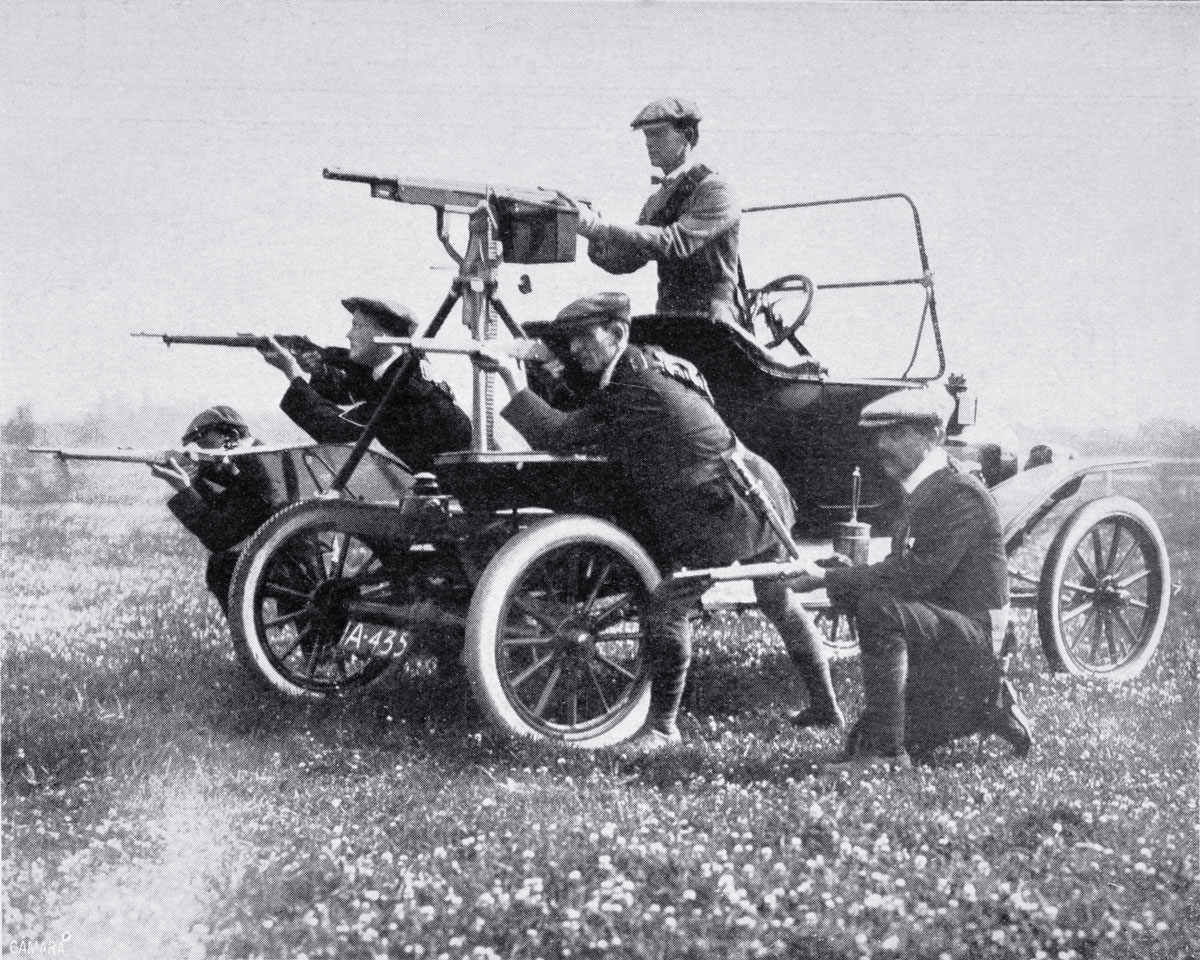
In the event, they accomplished the latter but not the former: Home rule never happened at all. Most of Ireland ultimately became an independent state in 1922, after several years of bloody guerrilla warfare. By that time, the Liberal Party had been wiped off the political map (as had the moderate Irish nationalists), and would never hold power again.

What went wrong? Damn near everything, including that exciting list of events mentioned above. First and foremost, there were the unintended long-term consequences of Britain’s other, much earlier scheme to exert control of Ireland. 

We need your help to stay independent

Both the Liberals and the Irish nationalists, for different but equally disastrous political reasons, pretended to ignore the entrenched population of nearly a million Protestants in Ireland’s industrialized northeast, who wanted absolutely no part of home rule. Or, as many of them imagined it, “Rome rule,” a brutal but incompetent dictatorship of drunken, brawling Irish Catholics under the personal direction of the pope. One popular conspiracy theory held that the houses of respectable Protestant families were being raffled off in Catholic churches, to be invaded by unwashed broods of Irish peasants as soon as home rule was established. 

Such fantasies were an instructive form of projection, of a sort that may seem oddly familiar today. The Ulster Protestant or Unionist community (also called the Orangemen, for their distant ancestral connection to William of Orange, aka King William III) was one of the earliest historical instances of what is now called settler colonialism — and perhaps the first such group to turn around and bite its creators. 

There were nearly a million Protestants in Ulster who wanted absolutely no part of home rule. Or, as many imagined it, "Rome rule," a brutal but incompetent dictatorship of drunken, brawling Irish Catholics under the personal direction of the pope.

Ulster Protestants were (and are) largely descended from Scottish and English settlers imported during the 17th-century “plantation” of Ulster, which, not coincidentally, was contemporaneous with the first English colonies in Virginia. (Many white people in Appalachia today share exactly this “Scotch-Irish” ancestry.) During the reign of King James I, nearly all agricultural land in Ulster was confiscated from native Irish chieftains and delivered to new owners, required to be English-speaking Protestants loyal to the crown. 

While the original plantation scheme envisioned the complete ethnic cleansing of Ulster’s indigenous Irish-speaking Catholics, that proved impractical — the new landlords required laborers and servants, after all. More ambitious Anglo-Irish reformers, including the Elizabethan poet Edmund Spenser, believed that “Irish nationality had to be uprooted by the sword,” in the words of historian Roy Foster, but later generations of British officials were less enthusiastic about overt genocide.

Flash-forward to the 20th century and the lukewarm campaign to enact home rule in Ireland, and we find Ulster Protestants occupying a strange, half-stranded position: an embattled and despised minority within Ireland as a whole, still perceived as alien invaders after 300 years, but a dominant majority in their own corner of it. There was literally no way that would end well. 

Ulster Protestants have frequently been compared to the white community in apartheid South Africa, but in their glory days they preferred to see themselves as the righteous but persecuted Hebrews of the Old Testament, a theme elaborated in dozens of fire-breathing sermons. Their most extreme self-image, in fact, was akin to contemporary right-wing Zionism: an enlightened fortress of civilization, surrounded by violent savages who practiced a sinister, cult-like religion (and who were eager to settle old grudges).

If it's unfair on many levels to compare the charismatic Anglo-Irish lawyer Edward Carson — who had previously destroyed Oscar Wilde’s career in a notorious 1895 civil suit, before becoming the demagogic figurehead of the anti-home rule movement — to Donald Trump, it's also irresistible. Like Trump, Carson had no particular attachment to the people he supposedly represented: He was a cosmopolitan Dublin-London gentleman, not a religious zealot or anti-Catholic bigot, and he found the inbred political culture of Protestant Ulster stultifying. In later life he expressed misgivings about his role in the crisis, concluding that he had been manipulated into a compromise he never wanted: the eventual partition of Ireland and the creation of the Protestant-ruled mini-province of Northern Ireland, whose status has remained unsettled ever since.  

It may be unfair to compare the charismatic Anglo-Irish lawyer Edward Carson — who destroyed Oscar Wilde’s career before becoming the demagogic figurehead of the anti-home rule movement — to Donald Trump. It's also irresistible.

Carson’s original goal was to keep all of Ireland in the Union, and to pursue that he shamelessly manipulated Orange sentiment in a highly effective MAGA-style propaganda campaign, complete with memorable slogans (“Ulster will fight and Ulster will be right”) and hyper-patriotic symbols — one mass rally in 1912 featured a 1,200-square-foot Union Jack, reportedly the largest ever made. He depicted Ulster Protestants as more deeply British than the actual inhabitants of Great Britain, while also practicing open sedition and plotting insurrection. That could either be considered deeply un-British or a throwback to the kingdom’s much earlier days.

Carson’s rhetorical strategy was also strikingly similar to Trump’s: By declaring his radical intentions openly, he put his opponents in the world of normal politics on the defensive, forcing them either to overreact (and potentially appear hysterical) or fail to take the threat seriously and then be taken by surprise.

By September 1911, Carson had laid “the groundwork for civil war,” to quote Ulster historian Alvin Jackson, and was ready to go public in a speech before 50,000 Unionists: “We must be prepared — and time is precious in these things — the morning Home Rule passes, ourselves to become responsible for the Government of the Protestant Province of Ulster.”

The Liberal government and its Irish nationalist partners kept trying to convince themselves that was all hot air — sounds familiar, right? — but the wish-casting got more challenging after Carson unveiled the Ulster Covenant of 1912. That was a pledge, signed by nearly 450,000 Protestants, to use “all means which may be found necessary to defeat the present conspiracy to set up a Home Rule Parliament in Ireland” and not to recognize such a parliament if it happened. A few months later, he announced the formation of the Ulster Volunteer Force, a private army of more than 100,000 men who had signed the covenant. 

Ulster Volunteer ForceMembers of the Ulster Volunteer Force, photographed In 1914 during the Home Rule Crisis. From La Esfera, 1914. (Universal History Archive/Universal Images Group via Getty Images)

Along the way, Carson acquired a powerful ally who gleefully poured fuel on the flames: Andrew Bonar Law, a right-wing firebrand with Ulster Presbyterian roots who became Conservative Party leader late in 1911 and pushed the previously staid Tories “to embrace a policy of revolution without parallel in modern British history,” in Ronan Fanning’s words. Bonar Law was both a true believer in the Ulster cause and a shrewd political operator, who correctly perceived that home rule could be used to bring down Asquith and the Liberals. 

Machiavellian or not, Bonar Law was the secondary Trump cognate of the home rule crisis (or possibly the Mike Johnson), and without him the crisis could not have escalated so far or so fast. His infamous Blenheim Palace speech of July 1912 bears comparison with the most inflammatory things Trump has ever said, beginning with his denunciation of Asquith’s coalition government — all of whose members had been elected by the voters — as “a Revolutionary Committee which has seized upon despotic power by fraud”:

In our opposition to them we shall not be guided by the considerations or bound by the restraints which would influence us in an ordinary constitutional struggle. … I said the other day in the House of Commons and I repeat here that there are things stronger than parliamentary majorities. … 

I can imagine no lengths to which Ulster can go in which I would not be prepared to support them, and in which, in my belief, they would not be supported by the overwhelming majority of the British people.

It seems unlikely that the public would really have supported Carson’s paramilitaries in open combat with British troops. But Bonar Law had tapped into a deep current of upper-class and working-class nationalism, and the exhausted government — bearing very little resemblance to a “Revolutionary Committee” — responded with a series of craven capitulations, while still trying to hammer out the irrelevant details of a home rule bill that would never happen.

Andrew Bonar Law's infamous Blenheim Palace speech of July 1912 bears comparison with the most inflammatory things Donald Trump has ever said.

When dozens of officers at the Curragh, the British Army’s principal base in Ireland, announced in March 1914 that they would refuse orders to enforce home rule in Ulster — with the private encouragement of generals in London — Asquith’s Cabinet caved in to their demands and covered up the entire affair, insisting that no mutiny had occurred because no direct orders were disobeyed. Three weeks later, the Ulster Volunteers smuggled 25,000 German rifles and 3 million rounds of ammunition into Ireland in a spectacular two-day operation — although “smuggled” is hardly the right word, since newspaper reporters were invited to watch while authorities carefully stayed out of the way. 

The stage was set for the kind of violent throwdown more often associated with decaying Balkan duchies or post-colonial dictatorships, at least until the assassination of Archduke Franz Ferdinand intervened. Journalists from around the world converged on Belfast, hoping to see the first match struck. Would Carson form a breakaway Ulster republic? Would Bonar Law lead or authorize a coup against the Asquith government? Would civil war break out throughout Ireland? Militant Irish republicans had been paying close attention to Carson’s tactics — which anticipated Mao Zedong’s maxim about the source of political power — and would eagerly emulate his example in the years ahead.

Instead, war broke out across Europe, and Asquith made his mordant headache joke on the way to the historical dumpster. It was a bitter recognition that mainstream democratic politics, at the heart of an empire that still believed it ruled the waves, had proven completely inadequate in the face of what looked at first like a minor local dispute but unfolded into explosive karmic blowback from decisions made long ago by people long dead. It’s not a new lesson, but it never stops being relevant: History has a tendency to punish great nations for their arrogance.

As heroin in Afghanistan dries up, Europe could face an overdose crisis like the U.S.

For anyone living in America, the nightmarish shift in a contaminated drug supply is all too familiar. For roughly two decades, the United States has been gripped by an increasingly deadly overdose crisis, largely driven by the opioid fentanyl, that has killed more than 1 million people since 2000. These deadly trends, experts say, are largely driven by an unstable and unpredictable drug supply made possible by prohibition.

Many people know it began with the overprescription of opioids like Oxycontin, which resulted in a DEA crackdown that shifted many users to street heroin. Demand became so high that illicit drug manufacturers realized they could make more money and traffick drugs easier by shifting to synthetic opioids. Thus came the rise of ultra-potent opioids like fentanyl, which is increasingly mixed with other drugs including stimulants, xylazine, benzodiazepines and nitazenes. If any of these drug names seem unfamiliar to you, just know that what used to be a predictable bag of dope has now become a soup of different substances, some of which provide a buzz or act as fillers, others that can kill.

In Europe, the last few decades have played out differently. Overdose deaths have remained steady, largely thanks to a regular, relatively pure supply of heroin shipped straight from Afghanistan.

"I remember roughly a year or so after the Taliban came into power, good heroin slowly disappeared," a friend living in London recently told me. "I haven't had any users I know die of heroin overdoses for many years before. I quit last September and it was around the time nitazenes and other synthetic stuff started to appear on the streets regularly. I caught up with an acquaintance around Christmas and was told three people I knew died."

For decades, Europe has avoided the fentanyl crisis plaguing North America through a pure supply of heroin straight from Afghanistan. But following the Taliban's poppy ban in 2022, there have been fears that a heroin drought will clear the way to even deadlier alternatives. 

"Roughly a year or so after the Taliban came into power, good heroin slowly disappeared."

Unlike synthetic opioids produced using chemicals in a lab, heroin and morphine are refined from the gum extracted from Papaver somniferum, the opium poppy. Until the early ‘70s, much of Europe and America’s heroin originated from the poppy fields of Anatolia in Turkey until, under American pressure, the Turkish government shut down the industry.

Poppy fields then reemerged in Iran, until they were eradicated in the Islamic Revolution, and finally Afghanistan, where CIA-backed rebels were battling the Red Army since 1979. Opium was sold to purchase bullets for the guerillas. Warlords such as Mullah Nasim Akhundzada even issued edicts ordering peasants to harvest more poppy, one of the few plants that flourished in the dry, dusty landscape. Plagued by tribal rivalries, war raged in Afghanistan long after the Soviets retreated. By the late ‘90s it was exporting around three-quarters of the global opioid supply.

The Turks remained important middlemen for transporting heroin from the Middle East to Europe, first partnering with the Bulgarian KGB and then, following the collapse of communism in Eastern Europe by the early '90s, Albanian mobs. This network, known as the Balkan route, has remained robust for the past half-century. The steady stream of smack meant there was no need for traffickers to diversify their product portfolio.


Want more health and science stories in your inbox? Subscribe to Salon's weekly newsletter Lab Notes.


In 1999, the Taliban, an Islamic fundamentalist movement that emerged triumphant from the Afghan civil war, wanted to legitimize themselves on the world stage as the rightful rulers of this mountainous land. Their treatment of women rightly alienated the Western world, but their war on drugs did not, imposing a brief but effective ban on poppy cultivation that even won praise from then-U.S. Secretary of State Colin Powell. 

Good news? Not quite.

Alarm bells first sounded in the Baltics. A heroin shortage in Estonia following the first poppy ban was quickly filled by fentanyl labs in St. Petersburg, and by 2012 the tiny nation in northeastern Europe was suffering one of the worst overdose crises in the world. A massive sweep in 2017 arrested the major players and Russian mafia responsible around Tallinn and Ida-Viru County, near the Russian border, leading to a scarcity as users switched to speed or fentanyl analogues. Since then, however, fentanyl supplies been restored, almost completely supplanting any remaining heroin demand.

Fentanyl test stripCarrie Hankins, of Jefferson County Public Health, holds a Fentanyl test strip during an event held at Lakewood Library on August 25, 2022 in Lakewood, Colorado. (RJ Sangosti/MediaNews Group/The Denver Post via Getty Images)

The heroin market remained stable throughout the rest of Europe as America and its allies invaded Afghanistan in 2001, the Talibs retreating back to guerrilla mode and turning to the dope business to make ends meet. But Uncle Sam’s military might was no more able to subdue Afghans than the Russian Bear – all the Talibs had to do was wait (and occasionally, fire an RPG in the enemy’s direction.) 

Immediately after the last U.S. soldier left Kabul two decades later, the Taliban seized power and shortly later, reimposed prohibition. The Students, as their name translates to in their native Pashto, achieved what decades of foreign occupation could not, uprooting poppy fields with tractors and rounding up opioid users into jail-like detox. By 2023, the UN estimated opium gathering in Afghanistan had plunged by 95%.

“The heroin market seemed to have been prepared for the first year of the Taliban ban: there was enough heroin in circulation and stocked up to dampen any supply shocks,” explained Andre Gomes, head of comms for the British charity Release, which provides legal advice on drug cases. “Heroin is also highly adulterated in the European market, so a source ban wouldn’t have immediate effects. A second year of [ban on] poppy cultivation will most likely lead to higher prices for dwindling supplies, and more incentives for more potent synthetic alternatives to be explored.”

Poland in particular has been troubled by a recent spate of fentanyl deaths. While clandestine fentanyl factories are still extremely rare in Europe and most of what appears on the black market are rediverted medical supplies (in Poland, it is rather easy to obtain an online prescription for fentanyl patches as painkillers, rather like pill mills in the U.S.), this could change if honest-to-God smack becomes more scarce.

“Compared to North America, synthetic opioids play a relatively small role in Europe’s drug market overall, but feature prominently in the opioids market in the Baltic countries,” a representative of the European Union Drugs Agency wrote in an email. “There is growing concern about their use in some other EU member states. Despite the difference in scale, and in the nature of the opioids causing harms, concerns are growing that highly potent synthetic opioids are increasingly appearing on the European drug market. Vigilance is crucial.”

"Once people are suddenly going ‘we’ve got no heroin’ — that's the moment we're all looking at with super fear."

At the same time, nitazenes and xylazine, have been creeping up in fatal overdose reports in the U.K. since 2023. First developed as painkillers by the Swiss company Ciba Pharmaceuticals in the 50s, nitazenes are synthetic opioids roughly as potent as fentanyl but sometimes demanding more naloxone to revive from an overdose. Xylazine, an animal tranquilizer which has caused chaos on the streets of Philadelphia, is now being found across the pond in bootleg codeine, tramadol, Valium and Xanax. Both nitazenes and xylazine are now banned by the British government but are still being smuggled from China, sometimes hidden in cans of dog food.

“Since nitazenes have come on the scene, we’ve seen spikes in related deaths across the country, particularly in the northeast [of England], that are very concerning,” Gomes said. “We fear these spikes are signs of a worrying underlying trend. We know there’s a backlog of reported cases in coroners offices, meaning that real figures for nitazenes deaths are only going to be revealed later this year and the next.”

Mat Southwell is a harm reduction worker in Bath, a small city in southwest England where one up-and-coming dealer was recently arrested for selling nitazenes-laced heroin.

“He was selling really good quality crack, which made him attractive … and he bought some nitazenes off the internet,” Southwell explained. “Initially, there was this view among local peers [drug consumers] that this is really great, strong heroin, and then people started to go down really hard.”

Luckily, ambulances arrived in time to revive them with naloxone.

“I think it's like a perfect storm,” Southwell said of the opioid crisis. “The government is pumping more money into drug treatment, but actually drug users are not coming forward to use it because it’s such a coercive model. Then we've got Afghanistan taking out 95% of its opium crop. That's not going to be impacting now — it takes at least 18 months to two years for that crop to work its way through … At the moment, the police are able to take out [retail nitazenes dealers] pretty quickly, but once it starts to hit higher in the chain, and then once people are suddenly going ‘we’ve got no heroin’ — that's the moment we're all looking at with super fear.”

When it comes to synthetic opioids, China is the new Afghanistan thanks to its vast, loosely-regulated chemical industry subsidized by Beijing. Although fentanyl itself was banned in 2019, unscrupulous companies still happily ship the raw ingredients (known as precursors) to Mexican cartels and other customers, which are not illegal under Chinese law.

In March, a package of nitazenes was discovered in Holland for the first time, bound for the States. Although the Dutch are major manufacturers of synthetic drugs like MDMA (ecstasy), it’s unclear whether the pills were produced locally or not.

We need your help to stay independent

“In Europe, we have the benefit of foresight: we saw what happened in America and can prepare accordingly to avoid the worst outcomes,” Gomes continued. “We know that there are potential synthetic opioids in our supply and can implement drug checking systems, safe use sites and prepare treatment systems to support people if and when they need it. Decriminalization and harm reduction interventions will be key to keep people safer and to avoid fatal overdoses.”

In some ways, Europe is better-prepared already. Certain countries such as Germany, Switzerland and Holland have either supervised consumption sites – essentially BYOD (Bring Your Own Drugs) shooting galleries where naloxone and medical assistance is right at hand – or even heroin-assisted therapy, a treatment where pure diamorphine (i.e. pharmaceutical-grade heroin) is administered to patients at specialized clinics, removing the risk of a fatal poisoning. (In controlled doses, heroin and indeed even fentanyl can and are ingested safely.) It also helps users avoid unpleasant encounters with either side of the law and diminishes the incentive to commit crime: why trap or steal when you can score every day for free?

This was once known as the “British system,” where until the 1970s, free heroin, morphine and cocaine were dispensed to registered users with addiction. Although it had its hiccups, like Lady Isabella Frankau overprescribing from the backseat of her car, overall it had the problem contained. Britain today has largely abandoned this system, although last year the country’s first supervised consumption site was greenlit in Glasgow, Scotland, and is finally due to open this month. Scotland currently suffers the worst overdose crisis in Europe, and the Scottish government has been pushing for reform, including decriminalizing personal quantities, providing safe consumption spaces and widening access to naloxone

There’s no guarantee yet that Europe will experience an overdose crisis like North America. But the warning signs are all there, and it’s better to be safe than sorry. 

“You would be worried if your grandpa was acting like this”: Obama pokes at Trump’s “word salad”

Former President Barack Obama had a lot to say about his successor Donald Trump’s age during a Friday campaign stop for Kamala Harris in Arizona.

The Democratic ex-president lobbed an attack at the 78-year-old's physical and mental fitness for office.

“Along with his intentions, there is also a question of his competence,” Obama pointed out. “He’s giving two, two-and-a-half-hour speeches. Just word salads. You have no idea what he’s talking about. He’s talking about Hannibal Lecter.” 

https://twitter.com/atrupar/status/1847422333088157719

Concerns over the Trump’s physical and mental health have piled up over the last week. The Republican candidate cancelled several appearances and report claimed  his campaign admitted Trump was too “exhausted” to maintain a rigorous campaign schedule.

Obama pointed to Trump's apparent exhaustion and on-stage confusion during his speech in Arizona.

“You would be worried if your grandpa was acting like this!” Obama told the crowd.

The former president also tossed a barb at a Trump town hall on Monday, during which the candidate paused questions to bop along to his playlist for nearly 40 minutes.

“He just decided, you know what, I’m gonna stop taking questions and then he’s swaying to "Ave Maria" and "YMCA" for about half an hour,” Obama said. “Folks are standing there not sure what’s happening. Can you imagine if I did that?”

Obama's remarks are part of an all-out assault on Trump's health from the Harris campaign. The vice president openly wondered if Trump was up for four more years during a campaign stop on Friday.

“If you're exhausted on the campaign trail, it raises real questions about whether you are fit for the toughest job in the world,” she said.

Senate candidate Sheehy’s Afghanistan gunshot story has some major holes: report

Did a Montana candidate for Senate in lie about being shot in Afghanistan?

Former Navy SEAL Tim Sheehy has long contended he was shot during his time in the service. Sheehy, running to unseat Democrat Jon Tester, wrote in his book about the bullet lodged in his forearm. The Senate hopeful claims he suffered the injury while serving in Afghanistan, but a pair of new interviews in the New York Times and Washington Post call that fact into doubt.

The interviews with Sheehy's fellow former SEAL and a Montana park ranger indicate Sheehy may have accidentally shot himself in 2015.

“I have a bullet stuck in this arm still from Afghanistan,” Sheehy said in December of last year, per the Washington Post.

Dave Madden, who described himself as a close friend of Sheehy before his deployment, told the New York Times that the candidate never mentioned the wound when it was supposedly brand new. Madden showed the Times emails exchanged between the pair in spring 2012, and said they met in July of that year, two to three months after Sheehy contends he was shot.

Sheehy's story has faced intense scrutiny since April, when Glacier National Park ranger anonymously told the Post that Sheehy had suffered the wound in 2015 while hiking. Sheehy admitted that he was injured while visiting the park, but told the Post in April that he invented the shooting story as a cover for the bullet that was already in his arm. He said that he hoped to cover-up a 2012 shooting in Afghanistan that he never reported to superiors, for fear of a military investigation that might reveal a friendly fire incident.

The ranger who saw Sheehy that day spoke on the record to the New York Times and refuted Sheehy's story. Kim Peach told the New York Times on Friday that she was “100 percent sure he shot himself that day.”

Sheehy stands by his story, telling the Times that their investigation was “tantamount to falsely accusing him of stolen valor” in a Friday statement.

“It raises real questions”: Harris questions Trump’s fitness after media, rally cancellations

Vice President Kamala Harris blasted former President Donald Trump for becoming “exhausted” by his campaign schedule on Friday, arguing that anyone without the stamina to run a campaign can't be an effective president.

“He is ducking debates and canceling interviews. His own campaign team recently said it's because of exhaustion,” Harris said at a rally in Michigan, in her most direct shot at her opponent's health yet. “If you're exhausted on the campaign trail, it raises real questions about whether you are fit for the toughest job in the world.”

The attacks followed questions on whether Trump is ramping down his campaign commitments due to physical or mental limitations. The candidate pulled out of an NRA rally in Georgia on Thursday, following a raft of media cancellations.

The Grand Rapids speech came a day after Harris made three stops in Wisconsin.

Harris became the Democratic nominee for president following President Joe Biden’s exit amid concerns about his age. Biden was then the oldest candidate for president in U.S. history. Trump would be the oldest president ever elected were he to win in November.

Bucking questions about his own cognitive decline, Trump responded to the jab by denying reports that he was tuckered.

“Tell me when you’ve seen me take even a little bit of a rest, not only am I not– I'm not even tired. I'm really exhilarated,” Trump said on Friday. “She’s not a smart person.”

“You shouldn’t play negative ads”: Trump brags about plan to beg Murdoch for interference

Former President Donald Trump told the hosts of “Fox and Friends” that he planned to beg their boss for help in defeating Kamala Harris.

In a Friday morning sit-down with the talk show, Trump said he was on his way to a “very big event,” a meeting with the News Corp owner to make an important ask. 

“I don’t know if he’s thrilled that I say it. And I’m going to tell him, I’m gonna tell him something very simple because I can’t talk to anybody else about it: Don’t put on negative commercials for 21 days,” Trump said, as hosts awkwardly laughed off the demand.

Earlier in the segment, Trump reminisced about a golden age, noting that “in the old days, you [Fox] never played negative ads.”

“For 19 days, I don’t think we should do that anymore. I think you shouldn’t play negative ads,” Trump told the “Fox and Friends” hosts.

The campaign ad axing wasn’t the only demand Trump planned to bring to Murdoch. He also vented about Democratic on-air talent and Harris campaign surrogates taking up the airwaves that should be reserved for his sycophants.

“Don’t put on their horrible people—they come and lie. I’m going to say, ‘Rupert, please do it this way,’” Trump said.

The demands comes as Harris outspends Trump on ads in key swing states, driven by a massive fundraising advantage. The Harris campaign has drawn in a billion dollars since she joined the ticket.

Fox News recently aired a primetime interview with Vice President Harris, drawing the network’s largest ratings in months and angering Trump. Ahead of the interview, he said Fox News had “lost its way.”