Spring Sale: Get 1 Year, Save 58%

8 must-see movies about workers’ rights for Labor Day viewing

The first Monday of September marks Labor Day, the annual holiday that grants us a shorter work week and a longer weekend. And while some may regard it as a measure of when the end of summer is nigh or a reminder to not wear white the following day, the holiday honors the many social and economic contributions of working people — in the past and present

Labor Day officially became a federal holiday on June 28, 1894. But before then, the holiday was recognized by labor activists and individual states. Groups of trade unionists nationwide chose various days to commemorate labor amid the late 19th century, when the trade union and the American labor movement rose to prominence. Oregon became the first state to pass a law recognizing Labor Day, on February 21, 1887. That same year, four more states — Colorado, Massachusetts, New Jersey and New York — passed similar laws. Connecticut, Nebraska and Pennsylvania followed suit a few years later and by 1894, 23 more states had adopted the holiday before it was recognized by Congress.

Today, Labor Day is publicly celebrated with picnics, parades and festivals. But if you’re looking to keep your festivities more private and, dare we say, homey, look no further than your own living room. The best way to enjoy your day off and celebrate from the comfort of your own home is by watching movies that spotlight workers’ rights and persevering unions.

From “Norma Rae” to “Sorry to Bother You,” here are eight must-see films to watch this holiday.

01
“Salt of the Earth” (1954, Tubi and Pluto TV)
Herbert J. Biberman’s drama follows a couple — Esperanza Quintero (Rosaura Revueltas) and her emotionally abusive, miner husband Ramón Quintero (Juan Chacón) — whose plans for a prosperous future are threatened after a workers strike, led by the majority of Mexican-American miners, fuels violence and mayhem. As the situation grows more tense in the miners’ fight for better working conditions, Esperanza and Ramón are at odds on whether it’s best to continue fighting or give up on hope for good. 
 
 
02
“The Pajama Game” (1957, Tubi and Prime Video)
Based on the 1954 stage musical of the same name, “The Pajama Game” centers on the Sleep-tite Pajama Factory, where a union of overworked factory employees is seeking a wage raise of seven-and-a-half cents an hour, much to the company president’s dismay. To add to the mess is a string of corporate corruption that’s ultimately (and heroically) uncovered by the newly hired factory superintendent, Sid Sorokin. Directed by George Abbott and Stanley Donen, the film stars Doris Day, John Raitt, Carol Haney and Eddie Foy Jr.
 
 
03
“The Molly Maguires” (1970, Pluto TV)
Inspired by the true story of the secret organization of Irish-American militant coal miners established in 19th century Pennsylvania, “The Molly Maguires” chronicles their fight against the cruelty of oppressive mine owners. Their fight is anything but civil as the miners resort to sabotage, violence and even murder to battle their oppression. Directed by Martin Ritt, the historical drama stars Sean Connery as “Black Jack” Kehoe, the leader of the Mollies, along with Richard Harris as Detective James McParlan, who helped dismantle the organization.
 
04
“Norma Rae” (1979, Max)
In her Oscar-winning performance, Sally Field plays Norma Rae, a single mother and worker at a cotton mill, where the poor working conditions have taken a toll on the health of her family. Following the unfortunate death of her father and fellow employee, Norma Rae unionizes against the mill’s negligent management, who attempt to quash her efforts by forcing employees to do more work at less pay and spurring racial hostility between the white and Black workers. Alongside Field, Beau Bridges, Ron Leibman, Pat Hingle and Barbara Baxley star in the drama.
 
05
“The Killing Floor” (1984, free on Kanopy or rent on Prime, Apple & Vudu)
Bill Duke‘s feature film explores the true story of two poor Black sharecroppers who find themselves working in Chicago’s meatpacking industry, where they come face-to-face with  racism, labor disputes and layoffs. The film’s protagonist, Frank Custer (Damien Leake) eventually joins the Amalgamated Meat Cutters & Butcher Workmen of North America Union, which consequently fuels more tension than good. In addition to industrial struggles, Custer battles strained relationships with his non-union Black co-workers along with other immigrant workers. Alfre Woodard, Clarence Felder, Moses Gunn and Dennis Farina also star in the film.
 
06
“North Country” (2005, rent on Prime, Apple & Vudu)
For this Oscar-nominated performance, Charlize Theron plays Josey Aimes, a struggling mother of two who leaves her job washing hair to work at the local iron mine. Once there, Josey quickly realizes that she, along with the other female employees, are constant targets of sexual harassment and humiliation by most of their male co-workers. Josey attempts to recruit the women to form a class action lawsuit against their workplace, but the fight for safer working conditions proves to be more difficult than anticipated. Inspired by the 1997 case of Jenson v. Eveleth Taconite Company, the film also stars Frances McDormand, Sean Bean, Richard Jenkins, Jeremy Renner, Michelle Monaghan and Woody Harrelson.
 
07
“Cesar Chavez” (2014, Hulu)
Produced and directed by Diego Luna, the film follows the efforts of labor leader and civil rights activist Cesar Chavez. Amid the 1960s, Chavez, along with Dolores Huerta, co-founded the National Farm Workers Association (NFWA), which later merged with the Agricultural Workers Organizing Committee (AWOC) to become the United Farm Workers (UFW) labor union. The film spotlights several major nonviolent campaigns by the UFW, including the Delano grape strike, the Salad Bowl strike, and the 1975 Modesto march. Michael Peña stars as Cesar Chavez and Rosario Dawson stars as Dolores Huerta.
 
08
Sorry to Bother You” (2018, Prime Video, Freevee and Xumo Play)
Boots Riley’s directorial debut stars LaKeith Stanfield as Cassius “Cash” Green, a young Black telemarketer who adopts a “white voice” to rise through the ranks at RegalView, his exploitative workplace. After participating in a protest as part of his coworker’s union push, Cash is surprisingly promoted to an elite Power Caller position. Things, however, get sticky pretty quickly after Cash learns that the Power Callers sell on behalf of WorryFree, a dubious company that outsources slave labor. Cash soon finds himself embarking on an absurd journey — one that involves half-horse, half-human hybrids — as he decides whether his newfound corporate success is truly worth it or not. Tessa Thompson, Terry Crews, Danny Glover and Steven Yeun also star alongside Stanfield.
 

There’s nothing like seeing Bruce Springsteen perform in his home state

There’s something special about seeing Bruce Springsteen perform in his home state. If you ride New Jersey Transit, the excitement begins long before you arrive at MetLife Stadium. Transit staffers carry placards reading “Bruce!” and “This Way to the Boss!” as you make your way to the Meadowlands. In the Garden State, fans don’t merely tailgate in the vast MetLife parking lot; they’re lugging 12-packs as they board the train, pregaming all the way to the show, Jersey-style. As the anticipation builds, veteran concertgoers swap stories about their favorite shows, engaging in good-natured, beer-fueled one-upmanship about how many Springsteen concerts they’ve attended over the years. Wearing a faded concert tee from The River tour, one rider proudly boasted about seeing Bruce more than 200 times.

At the stadium, visitors were treated to a moveable feast of characters. The “Spring Nuts” were out in force. I caught up with Asbury Park journalist and Jersey Shore tour guide Stan Goldstein, who was holding court near “The Pit,” the raucous, standing-room only section in front of the stage. Springsteen and the 17-member strong E Street Band are more than halfway through a 90-show tour and as Goldstein pointed out, it’s been difficult, at times, for the musicians to mount the post-pandemic tour. Early on, there were the well-reported frustrations about ticket pricing and several shows had to be cancelled because of Covid-related illness.

Goldstein made particular mention of the tour’s fairly static setlist in lieu of the sense of spontaneity associated with previous tours. Like many, he was concerned that the tour’s carefully curated set might sacrifice some of the show’s magic. “Many long-time fans who traveled to multiple shows in different countries realized they didn’t need to see as many shows anymore,” Goldstein lamented. Even still, he seemed optimistic after taking in the soundcheck, in which Springsteen and the band warmed up with “Spirit in the Night,” “The Ties that Bind” and “4th of July, Asbury Park (Sandy).” Any of those songs would be a welcome addition to the standard setlist.

Moments later, the stadium went dark, and 55,000 fans began chanting “Bruce!” as the E Street Band launched into The Rising‘s “Lonesome Day,” with one of the world’s biggest rock stars taking the stage. A few years back, guitarist Steve Van Zandt reminded me that it’s the sense of “energy” that separates the wheat from the chaff among rock ‘n’ roll bands. When it comes to energy, Springsteen and the E Street Band have very few rivals. As the show unfolded, the musicians blazed through a career-spanning set that featured Born to Run‘s “Night,” Born in the USA‘s “No Surrender,” and Darkness on the Edge of Town‘s “Prove It All Night” and “The Promised Land.”


Want a daily wrap-up of all the news and commentary Salon has to offer? Subscribe to our morning newsletter, Crash Course.


And that’s when Springsteen deviated from his regular setlist and broke into a showstopping version of “Spirit in the Night,” the standout cut from his debut LP. Goldstein’s prediction paid off handsomely as Springsteen swaggered across the stage, sharing his song-stories about Crazy Janey and Killer Joe as Jake Clemons played a wailing sax into the late-summer night. At this juncture, the stage show had truly opened up. As my Monmouth University colleague Eileen Chapman, Director of the Bruce Springsteen Archives and Center for American Music, remarked, all of the ingredients were suddenly on full display: “Add the onstage banter, laughs, hand slaps, booty-shaking dance steps and audience interaction, and you have one memorable show.”

The three-hour set found the musicians performing a blistering, time-eclipsing show, scarcely pausing to catch a breath in the process. The concert concluded with an embarrassment of riches in “Born to Run,” “Rosalita (Come Out Tonight),” “Glory Days,” “Dancing in the Dark,” and “Tenth Avenue Freeze-Out.” Springsteen even threw in a cover version of the rockabilly classic “Seven Nights to Rock,” thwarting our expectations yet again.

“There is nothing like seeing Bruce and the E Street Band on their home turf,” said Chapman. And judging by the unvarnished enthusiasm of the fans making their way home that night on New Jersey Transit, the concert was an unqualified success. Springsteen’s energy and ebullience had been on full, unfettered display from beginning to end. In a post-concert message, Goldstein said it best, pointing out that seeing Springsteen and the E Street Band live is still nothing short of “the greatest show on earth.”

QAnon 2.0: “Sound of Freedom” and the rise of MAGA vigilantism

I once met a former Scientologist at a backyard barbecue who explained to me how L. Ron Hubbard, the mediocre science fiction author who founded the Church of Scientology in the 1950s, got his retro-pulp novel “Battlefield Earth” on the bestseller lists in 1982. According to this fellow, the church compelled all its members to rush out and buy multiple copies for friends, family members and even non-Scientologists (sometimes derogatorily known as “wogs”). How many copies of that 1,050-page doorstop actually got read? There’s no way to know, but “Battlefield Earth” spent eight weeks on the New York Times bestseller list. 

Something similar happened earlier this summer with Alejandro Gómez Monteverde’s film “Sound of Freedom,” which occupied the No. 1 spot at the box office until it was mercifully overtaken by Greta Gerwig’s “Barbie.” Whatever the original intentions of the filmmakers may have been, “Sound of Freedom” arrived in theaters as a thinly disguised QAnon recruitment film whose star, Jim Caviezel, is an evangelical Christian who has said he believes in the central myth of that conspiracy theory: that innocent children are being kidnapped by Satanists, dragged into underground dungeons and tortured to manufacture a chemical called “Adrenochrome,” whose consumption keeps the privileged elite forever youthful. This fantastical concept is ripped off from various sources, including Hunter S. Thompson’s 1971 “Fear and Loathing in Las Vegas” as well as an array of grade-B horror movies.

As Miles Klee of Rolling Stone reported on July 7, fans on QAnon message boards eagerly discussed Donald Trump’s endorsement of the film and encouraged efforts to get “normies” who are “in need of awakening” to see it. “Crimes against children will unite us all. Eyes are opening,” read one optimistic post.

That same week, right-wing Christian podcast host Rick Rene urged his followers to drag friends and family members to see “Sound of Freedom,” offering a banner link to the film on his website, emblazoned with a variation on a QAnon catchphrase: “Fight for the light. Silence the darkness.” (The slogan “Dark to light” can be found on innumerable QAnon websites, flags, baseball caps, T-shirts, coins, pins, decals and jewelry.) 

Even so, Rene wrapped up his review of “Sound of Freedom” in a more wistful tone, lamenting that it hadn’t offered “nearly as expansive a message” as he had hoped. The film “didn’t get into Hollywood and the elites and the Adrenochrome and harvesting — all the ugly, ugly stuff. … And it didn’t show any of the real gross stuff either.”

That was revealing, to say the least. From Rene’s perspective, “Sound of Freedom” is disappointingly light on QAnon messaging, but nonetheless useful as a recruitment tool. Essentially, he hoped it would be a gateway drug to what’s really important to him and other QAnon acolytes, i.e., “the ugly, ugly stuff,” the 100% pure hit one finds deep in the QAnon rabbit hole after being offered the free taste test. 

In a so-called news show broadcast July 13 on Newsmax, anchor Rob Schmitt (a former co-host of “Fox and Friends”) tried to connect “Sound of Freedom” to actual political issues, including immigration and border security: 

Senate Republicans say the Biden Administration has created the largest human trafficking ring in the world, which certainly explains why the Establishment media is so desperate to discredit this new Jim Caviezel child sex trafficking film. … The DOJ has eliminated language on child sex trafficking from the government’s website. An archived image of the webpage from April of this year included phrases and descriptions of “International Sex Trafficking of Minors,” “Domestic Sex Trafficking of Minors” and “Child Victims of Prostitution,” but as of today that’s no longer on the website. … These open border lunatic ideologues will ignore anything — death, rape, whatever it is, anything — before they admit their ideals on immigration are misguided …. If this doesn’t open people’s eyes to just how sinister and disturbing American politics has become, I don’t think anything will.

The rest of the segment involved Sen. John Cornyn, a Texas Republican, explaining why he believed the Biden administration was responsible for “creating the largest child trafficking ring in U.S. history.” While Cornyn did not directly endorse QAnon’s lurid fantasies, he certainly alluded to them, claiming that 

300,000 [immigrant] children [have] been accepted and placed with sponsors by the Biden administration … the Biden administration can’t tell you where they are, what they’re doing, whether they’re going to school, whether they’re being adequately fed, their medical needs attended to, or whether they’re forced into involuntary labor [and] sex-trafficked.

Right-wing commentators went out of their way to tie the child-abuse message of “Sound of Freedom” to anti-immigrant paranoia, pursuing QAnon’s most pernicious goals without explicitly endorsing the movement or its beliefs.

None of this is a coincidence. Right-wing commentators who rhapsodized about the importance of “Sound of Freedom” went out of their way to tie the film’s central plot of combating child abuse to anti-immigrant screeds, without ever explicitly endorsing QAnon and its beliefs. To those unfamiliar with the direction QAnon has taken since the aftermath of the Capitol riot of Jan. 6, 2021, this feigned ignorance among MAGA types might seem paradoxical. Consider this ridiculous monologue delivered by Kelly Sadler, an editor at the Washington Times, in the July 10 episode of Chris Plante’s “The Right Squad.” Sadler began by carefully mispronouncing QAnon as “Cue-na-non,” to underscore that she had no idea what it was: 

I’ve been in conservative politics my entire life. I’ve never heard of it! It’s fringe, but it’s a way to label something as racist, something that you don’t like, right? All of Hollywood subscribes to … movies promoting more LGBTQs, they need more movies that have this DEI incentive, but this one from an evangelical talking about a real problem happening on our southern border? Eighty-five children were lost [by DHS, allegedly] last year, trafficked through the border, and then put into child labor camps …. This is a real issue that [the film is] bringing attention to, and it seems if there was one thing that could unify both Democrats and Republicans, it’s this issue of child slavery through child sex trafficking.

Host Chris Plante had introduced the segment with a similar tone of incomprehension, staring into the camera asking: “Who follows QAnon? What is QAnon? The news media is breathing life into QAnon!” 

I’m sorry, Chris — you don’t get to pretend you’ve never heard of the unofficial propaganda arm of your favorite president simply because the events of Jan. 6 exposed way too much of its ugly underside. For Plante, of course, Democrats are “the party of Harvey Weinstein and Jeffrey Epstein … and Anthony Weiner and Bill Clinton’s intern program and ‘Let’s not be critical of people just because they want to have sex with a five-year-old,’ that’s the party that’s attacking anybody and everybody [with] this QAnon obsession.”

I don’t need to tell Salon’s readers that no one in the Democratic Party has endorsed anyone having sex with five-year-olds, but the notion that the Democrats are equivalent to pedophiles — now widespread in the “parents’ rights” movement — has been a core QAnon belief from the beginning. To hear Plante and Sadler essentially advocating a key plank in the QAnon cosmology while pretending to know nothing about the movement reflects a central argument in my recent book, “Operation Mindf**k: QAnon & the Cult of Donald Trump,” where I suggest that in the wake of Trump’s 2020 defeat and Jan. 6, loyal QAnon followers will pretend to leave the movement behind and rebrand themselves, continuing to pursue its most pernicious goals under a somewhat more innocuous banner. The central imperative, however, remains largely unchanged, and the focus on immigration and the border also goes back to the beginning, mirroring Trump’s infamous promise to “Build the Wall” on the southern border. 

In Agenda 47, the profoundly disturbing manifesto found on Donald Trump’s campaign website, we find a plank entitled “President Trump Calls for Death Penalty for Human Traffickers.” Since we know the phrase “human traffickers” is synonymous with “liberal Democrats” in the MAGA mind, it requires little imagination to figure out what Trump is really promising his followers. Here’s Trump talking about “Sound of Freedom” on July 19 at his golf club in Bedminster, New Jersey:

I was thrilled to host a screening at Bedminster of the important new film “Sound of Freedom,” about the power of faith in overcoming evil and in particular, the evil of child trafficking. Big problem. We had it down to the lowest number in many years, just four years ago, and now it’s gone through the roof. Even though the fake news media has tried to ignore it…. We do have modern slavery, if you can believe it. Additionally, I created the first ever White House position focused solely on combating human trafficking and perhaps most importantly, we created the most secure border in U.S. history by far, dealing a major blow to the cartels and traffickers. We built hundreds of miles of wall. We renovated hundreds of miles of wall. We never had anything like it, and then I got Mexico free of charge, to give us 28,000 soldiers to protect us from people coming into our country illegally. When I’m back in the White House, I will immediately end the Biden border nightmare that traffickers are using to exploit vulnerable women and children…. I will use Title 42 to end the child trafficking crisis by returning all trafficked children to their families in their home countries and without delay, and I will urge Congress to ensure that anyone caught trafficking children across our border receives the death penalty immediately.

Whether any of that is true, and whether Trump intends to follow through on any of those promises, is irrelevant in regard to the 2024 presidential election. What’s important here is that Trump knows how that language will be interpreted by the QAnon crowd. Since his 2020 defeat, some of his most outspoken acolytes have ramped up from online stalking and harassment to outright vigilantism against those deemed less than human by the MAGA agenda, specifically immigrants. According to the Southern Poverty Law Center, a growing number of vigilantes patrolling the southern border consist of “White Nationalists, Jan. 6 protesters, and QAnon” followers. 

Veterans on Patrol, a militia group led by a QAnon advocate named Michael “Lewis Arthur” Meyer, takes great pride in attempting to detain migrants crossing the border into Arizona. The SPLC calls VOP “a vigilante group” which believes that “humans, weapons and drugs are being trafficked into the U.S. via the Tohono O’odham Nation Reservation, a Native American reservation in Southern Arizona” and that “migrants are looking to harvest the organs of [American] children.” Investigative journalist Melissa del Bosque reports that these MAGA vigilantes sometimes acquire the phone numbers of migrants’ U.S. sponsors and “confront the sponsors at their homes.” They perceive immigrants as parasites that need to be hunted down and eliminated and view themselves as QAnon superheroes who can get the job done.

Similar views are espoused by Rebecca Ferland, head of the AZ Desert Guardians, a group that claims, with no evidence, that “U.S. sponsors for migrant children are also registered sex offenders.” Other QAnon-adjacent organizations include Women Fighting for America, led by Christie Hutcherson — who came to prominence in MAGA circles by riling up a “Stop the Steal” crowd the night before the Jan. 6 riot — and the paramilitary group AZ Border Recon, led by an Army veteran named Tim Foley who claims to have buried homemade bombs along the border for the express purpose of killing immigrants.

There was never any evidence for the preposterous claim that the man who attacked Paul Pelosi was his lover. It’s far more likely the attacker was influenced by QAnon theories about Nancy Pelosi’s links to Satanism.

Early last year, the National Butterfly Center, which is along the U.S.-Mexico border in Texas, was forced to shut its doors after receiving numerous death threats from QAnon devotees who were convinced that the butterfly sanctuary was actually a front for child sex trafficking. The targeting of the sanctuary began when “it filed a lawsuit to block construction of the [border] wall on its property,” arguing that the barrier “would cut two-thirds off the 100-acre nature preserve, ‘effectively destroying it’.” After consuming inflammatory QAnon theories regarding the sanctuary, one Trump supporter apparently tried to run over the center’s director and her son with a vehicle.  

The phantasmagorical horror story surrounding the Butterfly Center recalls the baseless “Pizzagate” claims of several years ago, which led a North Carolina man to drive 283 miles to shoot up Comet Ping Pong, the Washington, D.C., pizzeria that anonymous Trump supporters on 4chan had claimed was “the home of a Satanic child sex abuse ring involving top Democrats such as Hillary Clinton.”

Far-right propaganda linking liberal ideology to homosexuality, and homosexuality to pedophilia, goes way back in the conservative movement, but has notably ramped up over the past few months. That also can partly explain why QAnon theorists and far-right television commentators worked overtime to convince the public that David Wayne DePape, the man who attacked Nancy Pelosi’s husband with a hammer last October, was actually a male prostitute and that he and Paul Pelosi were lovers. There was never any evidence for that claim, and of course it’s far more likely that DePape was influenced by a steady diet of QAnon theories regarding Nancy Pelosi’s alleged links to a Satanic “dark cabal, a secret group of Jews who manipulate world events for their own gain.” Indeed, DePape posted many such claims on his WordPress blog in the months before his attack on Paul Pelosi. To radicalized Trump followers like him, or like the above-mentioned Meyer, Ferland, Hutcherson and Tim Foley, this is the same world-spanning Satanic network responsible for spiriting immigrant children across the border into the United States. 


Want a daily wrap-up of all the news and commentary Salon has to offer? Subscribe to our morning newsletter, Crash Course.


Not long ago, while I was researching the radicalization of the evangelical right, a colleague who works for the government sent me a copy of an anonymous letter that had been mailed to multiple library branches throughout Southern California. Each letter was a photocopy of a handwritten sheet, although one included an original handwritten page in red ink. Each envelope carried the same fictitious return address. I reproduce it here with original misspellings intact:

Hello Library Employees, 

I’m writing this letter to warn people of California that we have people here that wants to molest kids and rape women. These people kidnapped 95 thousand kids and woman in Mexico. They are here in Los Angeles County, Orange County. Most of them are here to do the same thing here that they did in Mexico. We must not allow these vampires to murder women and children here in the United States. They have to do that in Mexico and not here. 

I just wanted to warn you to be alert of these demons that live among us. We see them every day. Most of these people are Hispanic. Be aware of them. Many of them love to kidnap. Alert all family and friend. Be aware of their. Beware of Death Angels. In there Country 95,000 disappeared. They are in our State. Be alert of them. The Vampires are here. 

Beware of them. They are here to destroy us. Beware and very alert of them. Tell all of your family friend to be alert of them. 

These pictures [in enclosed newspaper clippings] shows that Mexicans are running the show in kidnapping women and children. Sometimes they molest them and sometimes they kill them. Over 90 thousand were killed in Mexico. They want to come here and terrorize USA citizens here in our Country. We cannot let them do that in our Country. These Vampires should stay in there Country and do that. We cannot accepted this here. Are borders should be guarded very well to keep danger from coming into our Country.

The letter never mentions QAnon, but all the important earmarks are there: blatant xenophobia and racism, irrational fear of immigrants, an obsession with pedophilia and a desire to pin the blame for child sex trafficking on outsiders or foreigners, who are equated with inhuman, supernatural beings (“demons,” “Death Angels,” Vampires”). And of course the passive self-righteousness that cloaks racism as benign concern for the safety of children — but only for white children, as the writer makes it clear that he has no problem with Mexican children being kidnapped and trafficked. The alarmist appeal to guard against an ongoing invasion is distinctly Trump-like, as is the pretense that the writer is nothing more than a patriotic citizen offering up some well-intentioned warnings to his fellow right-thinking Americans. If this example seems isolated or extreme, it isn’t. It’s a precise microcosm of the propaganda being shoved into the heads of millions of American conservatives every day. 

According to a PRRI report released in 2022, “nearly one in five Americans and one in four Republicans” still believe in QAnon conspiracy theories. This survey, in conjunction with the surprise success of “Sound of Freedom,” clearly suggests that QAnon has been growing in popularity since Trump’s defeat rather than fading away. Whether or not Donald Trump goes to prison or wins the Republican nomination next year (and both could happen), all available evidence suggests that these conspiratorial obsessions, along with the demonization of immigrants and other marginalized groups, aren’t going away anytime soon.

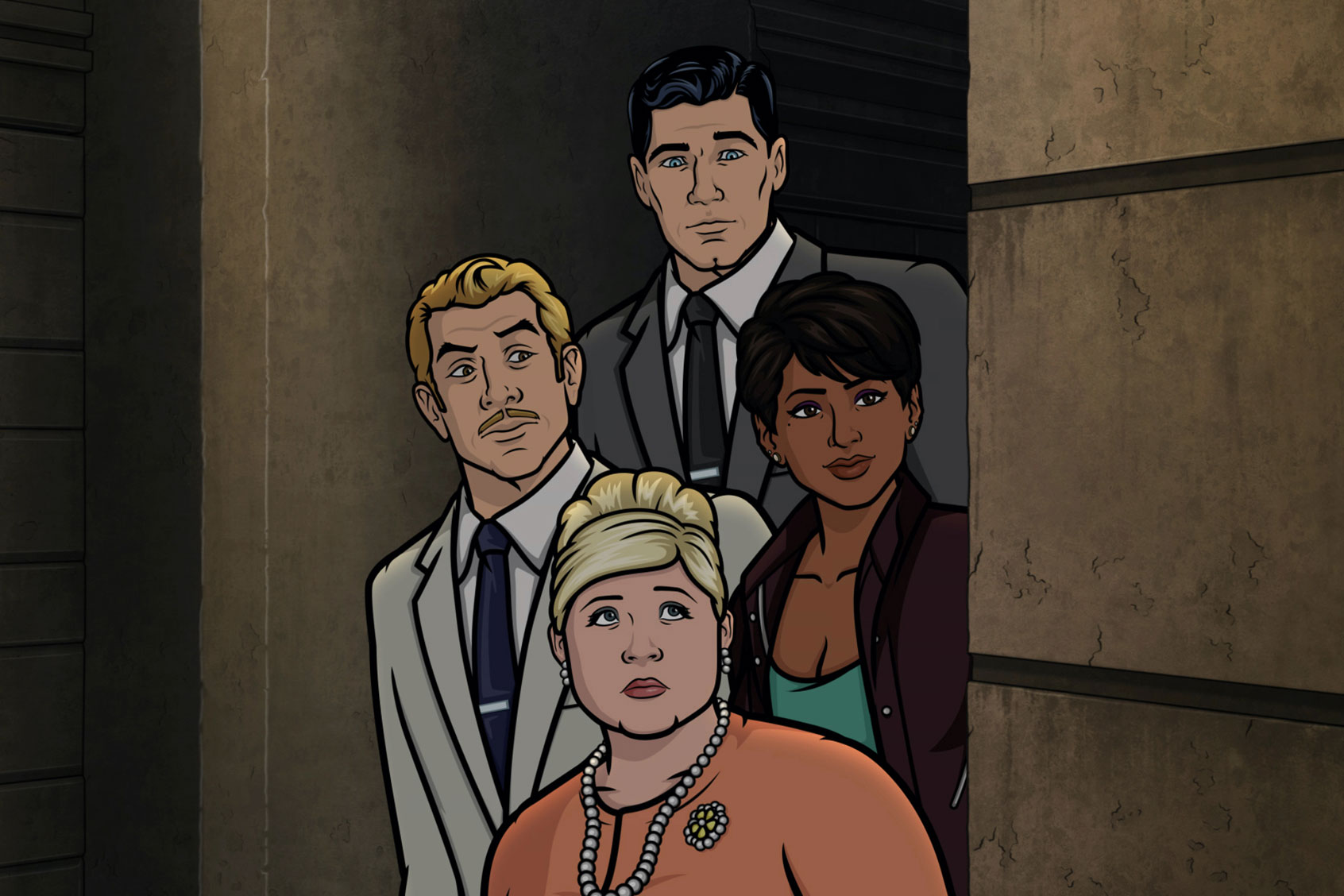
In its final mission “Archer” takes a hard look at whether this agent deserves to be called super

Sterling Archer has handled missions in some of the furthest locales on the globe, as well as under the sea, in space, inside the human body, and within his subconscious. He’s been shot so many times over 13 seasons of “Archer” that anyone keeping count must have dropped that task some time ago. He’s a survivor in other respects too – of sexual assault, cancer, a murderous alcohol addiction and an overbearing mother, Malory, who both smothers him and skewers his self-worth.

All this shaped Sterling Archer (H. Jon Benjamin) into the world’s greatest spy, a superlative he claims with more consistency than living up to it. Spending 14 years with him instills the audience with the impression that there’s nothing he cannot royally mess up and eventually fix, albeit with ample help from fellow operative and on again, off (and we mean way, way off) again romantic partner Lana Kane (Aisha Tyler), with whom he shares a daughter.

Now that it’s ending this season, “Archer” seriously examines a question those around him throw in his face more or less constantly: Is Sterling Archer really the world’s greatest agent, or does he simply look the part? Which is to say, is the fact that he’s a white guy in a suit with a, um, “classic” (as in, outdated) haircut and a Herculean sense of entitlement doing more work in his favor than the results of his unconventional and highly destructive methods?

This is the “Archer” version of gaming out the discourse accompanying transitional moments between one white British male actor stepping into the role of James Bond and the next white British guy. I’d go so far as to posit the show was obligated to circle back to this question since it primarily functions as a send-up of cinematic genres.

Is Sterling Archer really the world’s greatest agent, or does he simply look the part?

Ian Fleming’s unstoppable MI6 agent is the show’s blueprint, recognizable in the way Archer is drawn and his supporting roles. The icy, glamorous Malory, voiced by the late and eternally fabulous Jessica Walter, was an agent in her previous life and a funhouse mirror reflection of Dame Judi Dench’s M. Their agency, once known as ISIS – until, you know, that terrorist organization ruined that name for everyone – is a collection of personalities drawn from various 007 exploits and the screwball workplace side of “Get Smart.”

ArcherArcher (FX)

Dr. Algernop Krieger (Lucky Yates) is part Q, part mad scientist who may be a Hitler clone. In place of Miss Moneypenny is sociopathic heiress Cheryl Tunt (Judy Greer), supposedly a personal assistant, although the only career to which she contributed any effort was her brief stint as a country western singer named Cherlene.

Rounding out these kooks are intelligence analyst Ray Gillette (voiced by series creator Adam Reed); human resources director and occasional cage-fighting champion Pam Poovey (Amber Nash) and Cyril Figgis (Chris Parnell), the office accountant and whipping post.

All of these folks are self-serving and various degrees of terrible to each other and random bystanders. The fresh wrinkle is that Archer’s new field partner Zara Kahn (Natalie Dew) is immune to his supposed charm.

Lana is management now, having assumed leadership of The Agency after the downfall of the corporate vulture who took it over during the 12th and 13th seasons. Zara is a relatively fresh talent and, like Lana, Archer’s equal in skill and a more effective strategist. Unlike Lana, she’s a Brown British woman unwilling to defer to a white guy’s high opinion of himself. 

We need your help to stay independent

Zara doesn’t automatically kowtow to workplace hierarchies, either. At one point she reminds her new boss that everything in the Western world’s power structure is a product of colonialism. As Lana strives to use The Agency to make the world a better place, Zara asks whether her methods support that hardwired patriarchal structure.

The scripts don’t use all those terms, of course. The “P” word? Nah. Colonialism? Sure. This is still a series that used the cover of “Archer Vice,” where they temporarily became drug lords and coke hounds, to take a hard gaze at the United States’ continued foreign policy blunders in Latin America and its role in propping its monstrous regimes. For my money, the show was never that stupendous again.

But it’s always been inclusive, albeit with varying degrees of success since its humor is also edgy and frequently blue. Ray, for example, may have been the only openly gay spy on TV for many years until “Killing Eve” came along. He also used a wheelchair for a time after losing the use of his legs, until Krieger fit him with bionic replacements of questionable functionality.

“Archer” has always been inclusive, albeit with varying degrees of success.

Tyler’s Lana owns her Blackness in a largely white field, which we saw through the series’ introducing her parents and, several times, placing her in situations where her identity stood out as much as her unusually large hands.  Another upcoming adventure introduces a swashbuckling hero styled after “Temple of Doom”-era Indiana Jones, down to a sidekick called Half-Pint. However you may picture these characters from reading that description, you’re probably way off – making it an offshoot of this season’s central thesis.

ArcherArcher (FX)In the main, though, “Archer” plots only developed facets of the story related to identity as far as they served the title character and Lana’s combined and individual character development – but primarily that of its debonair playboy Archer. With his egomania commanding all the attention, the writers indulged in sociocultural critique both as an undercurrent and as the main show. Even Archer’s bout with cancer did double duty by lending vulnerability to a man who would otherwise be intolerable, and showing how differently the world treats sick people who don’t have power and privilege.


Want a daily wrap-up of all the news and commentary Salon has to offer? Subscribe to our morning newsletter, Crash Course.


Longtime viewers may know there’s a good man under all that drunken, womanizing bluster since we’ve seen Archer evolve. Zara hasn’t, so to her, he’s just another white guy getting breaks he may not have fully earned.

A prevailing opinion holds that “Archer” ran out of things to say after Season 10, when its creator Adam Reed stopped writing episodes. There’s some accuracy in that argument; it was never unwatchable, but its captivating charms certainly waned. The comedic roughhousing fell into a predictable rhythm, the character evolution slowed and its sociopolitical critiques grew soft.

Since only four episodes were made available to review there isn’t enough evidence to declare the show entirely revived. But that may not be necessary for any veteran operative, whose main concern may be staying alive long enough to enjoy retirement. That would be a sign of growth for Archer, a man who never accepted the world wasn’t his. Zara challenges that view with her superior skills and wit, showing herself more than capable of taking over the world-saving business.

This lesson may be brought to us by a cartoon, but that message exceeds two dimensions. Spy thriller casting producers, take note.

New episodes of “Archer” air 10 p.m. Wednesday on FXX and are available on Hulu the next day. The season premiere is currently streaming on Hulu.


“Domestic terrorism” — Inside the troubled teen industry, detailed by “Survivor993”

“This is your trigger warning,” Liz Ianelli writes early on in her memoir. “What you will read here is upsetting, especially if you have suffered abuse.” But then she adds, “Don’t worry. Keep going.” Because that, incredibly, is just what she did.

For years, Ianelli shared online about her experiences inside the Family Foundation School under the user name Survivor993 — a reference to the number of days of her brutal adolescence she spent there. After struggling with depression and the aftermath of abuse at the hands of a relative, Ianelli’s parents had sent to the school at the age of 15. There, she says she endured persistent physical, sexual and emotional abuse, claims later echoed in multiple lawsuits filed by fellow former students.

But what Ianelli wants you to understand now, as she writes in “I See You, Survivor: Life Inside (and Outside) the Totally F*cked-Up Troubled Teen Industry,” (written with Bret Witter) is that the system that left her with physical and emotional scars — the one that several of her peers did not survive — is still thriving today. While Ianelli’s school shut down in 2014, plenty of other similar residential facilities carry on, operating within a system the American Bar Association describes as a “largely unregulated… big business.”

“It’s insane what happened,” Ianelli told me during a recent Zoom conversation from the undisclosed location where she currently lives, “and it’s happening right now.” With equal measures of vulnerability and fury, Ianelli opened up about the toll of her time inside “the Family” and why she’s fighting so hard to end an industry she describes as “domestic terrorism.” 

This conversation has been lightly edited for clarity and length.

Having talked to Paris Hilton and to other people who’ve survived these kinds of places, it’s astonishing to me that it continues to go on.

Oh, it’s in in full force. Nothing much has changed. 

Your book begins almost 30 years ago, but this is about what’s happening now. Bring me up to date, because you are still on the front lines. What does the state of the troubled teen industry look like today? 

Money. It looks like money. For me, the troubled teen industry is really a financial institution. If you follow the money, it’s extremely lucrative. And because it’s so unregulated, they’re making even more money now than they were in 1994 and onward. Not much has changed. These programs are still up and running. Right now, someone’s making a phone call to a program for their child or talking to an educational consultant or having their child dropped off or planning it for tonight at 2am. It’s perpetual. I cannot compete with the level of media and internet presence that these places have. 


Want more health and science stories in your inbox? Subscribe to Salon’s weekly newsletter Lab Notes.


A well-balanced parent does not do this to their child.

It’s controversial, but I feel if the parent or parents are unhealthy, those are the children that ultimately will be placed. If they’re in an unhealthy home environment or the parent isn’t healthy enough in what they’re dealing with, then sending the child away makes total sense.

A well-balanced parent does not do this to their child or accept these rules and regulations that cut communication. I have sons right now, 16 and 17. They’ve done some really dumb s**t. Like, really dumb. And it never crossed my mind that they need to be sent away. 

I want to understand how someone could get duped by this system, how someone who is feeling at their wit’s end with their kid might be fooled — especially now as these systems have become more sophisticated in their pitches.

That’s a two-pronged answer for me. A parent today, all they have to do is Google or go on the internet. There’s the information for you. There are more warnings available than there are anything else. You really at this point would have to be actively ignoring the warning signs of the industry. That’s something new. 

We need your help to stay independent

Parents pride themselves on what resources they can bring to give their children the best chance that they need going forward. It’s very easy to dupe these parents into thinking this is the place. When you show up, it’s like synchronized swimming. These places operate differently when there’s a parent around on the property. They know that if another pair of parents or my parents had walked by me wrapped up in a blanket, nobody would be like, “Oh, okay, cool.” They hide those things diligently. There’s nothing that says they have to fully disclose and be open and transparent. People would drive up to where I was, and see that pond and the rolling fields and the Catskills and all that. But really, it was like a torture camp. They didn’t see that part. They just would see what was put right in front of them. 

“It was like a torture camp. They didn’t see that part. They just would see what was put right in front of them. “

I don’t think a parent’s mind could comprehend the dark side of what they’re looking at. They’re looking for safety. They’re looking for, “Where will my child sleep, eat, all their basic needs be met?” and then the therapeutic side to it. But it’s all propaganda and none of it is evidence-based. There’s no science involved. It’s just money, money, money, money.

What do you want people to know about the state of this industry right now, that would wake them up or make them realize how insidious and big this problem remains right now? 

I would like them to understand there are consequences for our society. I want people to care and pay attention. America has an opportunity to rage against this machine and obliterate it and and do something different. It’s not working. It’s hurting people and it is terrorism. They are recruiting. I want American to know we have an emergency. This is not a drill. We have a state of emergency that should be declared are on on this industry and they’re destroying our children and society. Kids are still dying.

When you describe being dropped off, you knew immediately that this was not normal. Your brother knew — he used the word “creepy” despite the the very clever and very sophisticated pretense. Do you feel there was a moment you could reach your parents, you could tell them, and might have been able to get out of there? 

No. I, in my wishful thinking thought that it would be effective at some point to wait for that one touchpoint when my father finally showed up. But it was really known between me and my parents that there’d be no communication for a certain amount of time. I had zero access to a phone. 

“I was a hostage in front of my own parents. That’s how it works.”

Kids are different. We can sense fear. We’re still innocent enough, we’re not hardened by the world. My brother was young; he felt things differently. But it was an instant feeling of, no one’s coming. You look around, and you don’t know where you are. My letters were censored. Even if I did get a private phone call, it would have lasted five minutes, because my parents were already told, “Look, she’s acting out. Of course, she’s going to tell you that she’s being abused. Of course, she’s going to say we’re mean. She doesn’t want to get help. We have to really work with her to get her to accept this way of life.”

My parents were coached that no matter what I said, I was going to be lying. There was so much fear about even trying to tell them. You just know that your dad’s going to leave, your mom’s going to leave, and you’re going to have to stay with these people. And they’re going to do whatever they want to you anyway. Essentially, I was a hostage in front of my own parents. That’s how it works.

A lot of people don’t understand that these teenagers have no legal rights.

We don’t even have human rights. I refer to the industry as domestic terrorism, because I feel that it’s a terrorist organization. They are not here for the betterment of society. They’re taking American children, international children, they’re transporting us across state lines. It’s now being called the teen trafficking industry. We’re a product. I was worth a certain amount of money to the industry. We’re all worth a certain amount of money. It wasn’t about helping us. It wasn’t even about hurting us. It was just about everybody making money on the expense of us.

And these were sick people. They weren’t professionals. These were loosely recovered addicts, maybe. Some of them were still active. These were sociopaths, psychopaths. No wonder they couldn’t get a job anywhere else. And this was a job that made nobodies feel like they were somebody and gave them a lot of power over children. 

Nobody was coming. Ever. And we knew it. “

It’s like they were trained to shock the monkeys. We were the monkeys, and they got to shock us whenever they wanted. Nobody was coming. Ever. And we knew it. 

You tie what goes on here with cult tactics. It is systematically designed to break you, to isolate you and then to make you psychologically dependent. And there’s a financial incentive. 

That’s why I’m so scared of the industry. When I was writing with Bret, I didn’t want to tell everybody all this stuff. I didn’t want to tell everybody all the desperate measures that I had gone to, or in any kind of detail intimately describe what’s happened to my body by people over the years. But I knew that it’s like a kaleidoscope, one little click and everything changes. 

The industry has perfected morphing into what society trends at the time are responding to. The worse we look, the better. They can get more money and move us through the system and traffic us across state lines. It’s insane what happened, and it’s happening right now. It’s like a movie set parents are walking on to. But the underbelly is so dark that no parent in crisis could see it in that moment.

There’s so much we’ve learned about the the psychological after effects of abuse, but you also really get into the physical side of it, in ways that are really intimate. Tell me about the toll that these places take on the bodies of these young people.

The first thing, it interrupts that how much rest we’re getting. Science shows that teenagers need developmentally more sleep. It’s part of the growing process. Our sleep process is completely interrupted and doesn’t really exist. So our bodies and our minds don’t ever enter a period of rest. I cannot identify, to this day, whenever I really feel like I can just rest. 

I’m not unusual. I’m on the healthier end, believe it or not. A lot of us, females in particular, have developed autoimmune diseases and responses, and that’s heavily connected to trauma. Our amygdala on PET scans usually are enlarged because they’re overused. A floppy colon for me. A lot of girls and boys have issues voiding because we weren’t allowed to just pee whenever we wanted to. Our bladders get distended over time. 

A lot of us have old injuries that turned into new injuries or new ailments. My scars tell the story from running away and slipping on that shale slide. I have a scar from where I had my colonoscopy bag. My sleep pattern has always been disturbed. I’ve had six spinal surgeries. I have had neck surgery for my spine. I have fibromyalgia, widespread pain. My hips aren’t properly aligned, because we were doing such manual labor that my hip joints didn’t develop properly. Most of us were given shoes that didn’t fit all the time. I wore shoes for years that were just too small.

A lot of us lose our hair during extreme times of stress. The drains were always clogged at school with hair because all of us were shedding. We were just under so much stress. A lot of us have stomach issues, eating disorders. They really poisoned us, in our ears and through our eyes. And then on the inside, they put this grenade in our body that explodes like whenever it wants.

You could have walked away from all of this. You could have not written about this, not talked about this. What made you decide you had to do this? Because it’s not been easy. 

“After all the heartache and lost relationships and all the shame and the abuse, and my body betraying me, I was like, ‘Someone’s going to have to answer for this.'”

The words that come to mind are just steel stone cold defiance. It was never a choice for me. I left and I tried to put it behind me, but it never was. Even though I wasn’t talking about it, it didn’t mean I wasn’t carrying this with me. And I knew someday I was going f**k ’em up. I did. I’ve always known that. 

I was at the top of my career and I walked away, because I couldn’t stand being put in a box anymore. I couldn’t stand pretending I had my s**t together. I wanted blood. I wanted people to pay. I thought I was going to put everybody in prison. I was going to set the ocean on fire somehow, some way, over what happened to my friends. And I finally was able to acknowledge that I was still suffering terribly. After all the heartache and lost relationships and all the shame and the abuse, and my body betraying me, I was like, “Someone’s going to have to answer for this.”

My biggest fear is that I would die an unlived life, that I was going to expire like a date on a milk carton. I just didn’t want to go out like that. I need a purpose. And I had a lot of pain. So I figured I would just give my pain a purpose and that was the fuel that I drew from. I’d go to my pain pump and fill up my my tank to go blast through, and I’ve been relentless. It just came to a point of, I’m not going to suffer in silence. This can’t be for nothing. This cannot be my life.

We have these concepts in our very binary culture that you’re going to move on and you’re going to get closure and all that BS. What does healing look like for you now on your terms, knowing that was messed up, and it’s never not going to be messed up?

I’m really excited to answer this particular question, which is unusual because I used to feel like “F**k healing; nobody heals. That’s for soft, weak people. I physically can’t even do yoga. That’s how f**ked up I am.” 

“I’m taking bolt cutters to my parents and to my pain. I’m no longer going to chase you for the things I’m never going to get.”

I’ll never ever say that what happened to me is okay. Never. But now with the book coming out, I can’t carry this in me anymore. I’m taking bolt cutters to my parents and to my pain. I’ve released my parents. I’ve discharged them from my life, like, you’re free to go. I’m no longer going to chase you for the things I’m never going to get. Healing to me looks like looking forward to [publication day], because I feel like that will be the first night in my life, that I’ll actually be able to go to bed and not worry anymore, “Is anyone going to know? Did I do it right?”

I’m not going think any more about the things I missed or the things I wish I had or any of it. All of me, inside my body, outside my body, my brain, my thoughts, my life, it’s going out instead of it all crashing down on me. I feel that I’m giving survivors of any abuse a receipt for their pain, to be able to show people and give people. This is really like the Great Purge. I’m not angry anymore about what happened to me. I mean, I’ll always not like it, but I’m not boiling with rage.

All that time I was there, and most of my life, I felt like no one was coming. Nobody’s coming. But in the end, the person that’s coming ended up being me. I came back for myself. And I hope no other person reads this and thinks still that no one’s coming. I am. We are. I want that to be put out there, that someone is coming. And I’ve been on my way; I’m just running a little late. But right on time, you know?


Researchers find nuclear fingerprints in sea turtle shells

A new study found trace amounts of nuclear waste in sea turtles in the Marshall Islands and five locations in the continental United States, underscoring the enduring legacy of nuclear testing and weapons development. 

The analysis, published in the journal PNAS Nexus, looked at turtle and tortoise shells at locations tied to nuclear testing including Southwestern Utah, the Oak Ridge Reservation in Tennessee, the Savannah River Site in South Carolina, and the Barry M. Goldwater Air Force Range in Arizona. 

Cyler Conrad, an archaeologist at the University of New Mexico who led the study along with 22 other researchers, said the team found evidence of uranium radionuclides in the shells of turtles and tortoises at all five sites. He added that contamination amounts were so small that it’s doubtful the animals experienced health impacts.

“If you take a paperclip and divide it a million times, if you take a millionth piece of that and divide it another million times, that’s about the same quantity that we’re measuring in some of these shells,” Conrad said.

Still, Conrad says the findings are significant because they illustrate how turtles and tortoises, in part due to their long lives and metabolic processes, are able to retain nuclear contamination in their tissues. According to Conrad, turtle shells grow in a sequential style, similar to tree rings, and record isotopic elements such as uranium-236 from spent nuclear fuel.

Turtle shells grow in a sequential style, similar to tree rings, and record isotopic elements such as uranium-236 from spent nuclear fuel.

The study is the first that Conrad knows of that identifies nuclear contamination in turtles in the Marshall Islands, but it’s far from the first to find evidence of historical, military-related pollution in wildlife there. In 2019, a U.S. Army study found dangerous levels of polychlorinated biphenyls, more commonly known as PCBs, and arsenic in fish around Kwajalein Island in the Marshalls, which has served as a U.S. military base for decades and is currently part of the Ronald Reagan Ballistic Missile Defense Test Site. 

PCBs are synthetic organic chemicals that are long-lasting in the environment and can be harmful to human health. Another recent study found pollution in fish, including high levels of mercury and lead, surrounding several Marshallese atolls. 

The paper also builds upon decades of research illustrating how nuclear waste bioaccumulates in sea creatures. Conrad said the study’s methodology of analyzing shells is new, but noted past studies have found previous evidence of radionuclides in turtles. A 2020 study of sea turtles in the Montebello Islands found contamination of turtle eggs and tissues. 

The findings coincide with Japan’s decision to release treated, contaminated wastewater from the Fukushima Daiichi nuclear power plant into the Pacific Ocean. The move prompted China to ban seafood from Japan, inspired protests in Fiji and South Korea and has particularly frustrated Indigenous peoples in the Pacific who have spent decades fighting against the dumping of nuclear waste in the region. Between 1946 and 1958, the Marshall Islands were the site of 67 U.S. nuclear tests, leading to health and environmental harms that the Indigenous people of the islands continue to grapple with.

Conrad hopes the study inspires more research into turtles and tortoises and how they record nuclear history. 

“They’re taking in all of this information, they’re depositing this, and they’re acting as a really critical library for us to be able to reconstruct the history of the world in different ways,” Conrad said. “They’re experiencing what humans are experiencing and they’re able to record this in a very unique way.”

This article originally appeared in Grist at https://grist.org/indigenous/researchers-find-nuclear-fingerprints-in-sea-turtle-shells/.

Grist is a nonprofit, independent media organization dedicated to telling stories of climate solutions and a just future. Learn more at Grist.org


Jimmy Buffett got in one last summer before shipping off to the big Margaritaville in the sky

There's a poetry to Jimmy Buffett checking out just prior to a holiday that celebrates working. As a musician who built a reputation for himself as someone who encouraged grabbing on to leisure — and a frosty margarita — whenever possible, you can almost hear him saying, "Labor? Hard pass," before kicking up his heels in a swaying hammock one last time.

According to an official statement posted to his website, "Jimmy passed away peacefully on the night of September 1st surrounded by his family, friends, music and dogs. He lived his life like a song till the very last breath and will be missed beyond measure by so many." He was 76-years-old. No cause of death was given at the time of this announcement, but it was later revealed that a rare form of skin cancer called Merkel cell carcinoma led to his death.

Throughout his career, Buffett shrugged off pressure to seem "cool" or insert himself as a cog in the machine of industry or publicity. His best known song, "Margaritaville" (released in 1977) was his only Top 10 hit. "What seems like a simple ditty about getting blotto and mending a broken heart turns out to be a profound meditation on the often painful inertia of beach dwelling," Spin magazine wrote in 2021. "The tourists come and go, one group indistinguishable from the other. Waves crest and break whether somebody is there to witness it or not. Everything that means anything has already happened and you're not even sure when." Buffett broke the mold, and the world is a little less chill with him gone. 


It’s come to this: The anti-vax movement is now after your dog

Here we are, coming up on three years of dealing with COVID, and not only are people still arguing about vaccines against the disease, but the anti-vax sentiment that seemed to blossom when the COVID vaccine became available in 2021 has also now cross-pollinated and found its way into the veterinary clinic. A study just published by the journal Vaccine, part of the ScienceDirect network, showed that more than half of American respondents now have questions about vaccinating their dogs – even against rabies. 

The Vaccine study, done in conjunction with YouGov, the public opinion polling outfit, questioned 2,200 Americans between March 30 and April 10 of this year and found that 53 percent of respondents had what the study called some “hesitancy” about vaccinating their dogs. This is a bigger problem than you’d think.  According to the journal Frontiers in Veterinary Science, 99 percent of all rabies cases worldwide are contracted through dogs that are household pets. Even scarier than that, rabies is almost always fatal once dogs or humans show symptoms. It’s a vicious disease; vaccinating dogs is the best way to control it. Given those figures, you’d think that vaccinations for dogs would be a slam dunk, wouldn’t you? 

Think again.  

According to the poll by Vaccine/YouGov, large numbers of the American population believe that canine vaccines are unsafe (37 percent), ineffective (22 percent), or unnecessary (30 percent.)  According to the study, “A slight majority of dog owners (53 percent) endorse at least one of these three positions.”

Where the hell did that come from, you might ask?  According to Bloomberg, “Nearly 40 percent were concerned that vaccines could cause dogs to develop autism, a theory without any scientific merit.”  Sound familiar?  We’ve got a prospective presidential candidate, Robert F. Kennedy Jr., who has been pushing that nonsense about humans for the last couple of decades.  That the same bogus theory has now invaded the vet’s office shows you how far we’ve fallen as a nation when it comes to taking care of not only ourselves and our children, but even our pets.

Dogs are like kids in the sense that they don’t get a vote when it comes to their health.  Dogs don’t ask you to put them in the car and drive them to the vet to get their shots for rabies or parvovirus, diseases that when contracted by dogs or cats can be fatal.  Neither do your kids ask you to get them vaccinated against measles, mumps and rubella, or polio, or whooping cough.  We take…or maybe I should say took…this stuff for granted for so long, the whole childhood vaccine thing just dropped off the radar, at least until COVID, when paranoid right-wing lunatics and certain people with the last name “Kennedy” started beating the discredited drum that somehow childhood vaccines do more harm than good. 

You tend to forget how extraordinary it is that medical science has been able to develop ways of immunizing us against these brutal childhood diseases.

Let’s take a look at whooping cough, just for one example.  I’m old enough to have been alive when whooping cough went around in schools, as they used to say.  Living close together, you could hear kids through the walls as you climbed the stairs to your apartment whooping, which is a very good word to describe the initial symptoms of the disease.  Kids used to emit this strange wheeze accompanied by a violent intake of breath, causing the whoop sound.  The disease was easily transmissible, and I can remember schools being shut down when there was a serious outbreak.

Why?  Because a quarter of the kids came down with pneumonia, a disease that could be deadly even after the discovery of antibiotics like penicillin.  I remember seeing photographs of a ward in a hospital in which ten kids lay on beds under big oxygen tents, coughing and whooping.  Some kids developed convulsions and shook uncontrollably.  Many kids had apnea, causing them not to sleep restfully, or even to wake up suddenly, not being able to get a breath. 

And then there was polio, the most frightening disease of them all when I was a kid.  For the first four years of my schooling, every class I was in had at least one kid who walked with crutches or was bent over from the debilitating effects of the disease, or was in a wheelchair.  There were scary photos in LIFE magazine of hospital wards the size of basketball courts filled with kids in iron lungs being attended to by nurses in starched uniforms. In 1954, when I was in the second grade in an elementary school at Fort Leavenworth, Kansas, there was a polio outbreak.80 kids came down with polio within the first two months of the school year.  It was the army, of course, and it was a time when parents didn’t yank their kids out of school and schools themselves weren’t closed because of an outbreak of a disease, even polio.  Instead, they lined us up in the hallways and gave us shots of gamma globulin to boost our immune systems.  The stuff had the consistency of motor oil and was given with a needle about four inches long.  I can still remember standing in my school hallway listening through the doorway to kids screaming as the shots were administered.


Want a daily wrap-up of all the news and commentary Salon has to offer? Subscribe to our morning newsletter, Crash Course.


By the time the first trial of the Salk vaccine began in 1954, the polio outbreak at Fort Leavenworth had gotten so bad that they dropped the placebo from the test and just gave all of us the Salk vaccine shots.  It stopped the outbreak, but I had nightmares about the gamma-globulin shots for years.

You tend to forget how extraordinary it is that medical science has been able to develop ways of immunizing us against these brutal childhood diseases. At least I did, until I was in Afghanistan as a reporter in 2004 and traveled to Asadabad, an outlaw town on the Afghan-Pakistan border in the foothills of the Himalayas.  Taliban control of the surrounding area on both sides of the border had prevented NGOs from setting up health clinics and vaccinating the local populace. So polio was rampant in mountain villages, and driving into Asadabad, you could see the effects of it right out on the street.  Kids hobbled past on crutches made from “Y” shaped tree branches that had been cut down to fit their tiny bodies.  Old men, begging for handouts, pushed themselves with bits of wood held in their hands down dirt streets on boards with wheels from shopping carts.  There weren’t any antibiotics available, either, so staph infection was rampant – leaving little girls with oozing sores on their legs and boys with pus-filled open wounds on their necks.

We take the stuff about our own health for granted, until we’re brought up short by a disease like COVID. It was only two years ago when so many of our fellow citizens were lined up in refrigerated trucks outside of hospitals too busy to handle the bodies being carried out of emergency rooms and ICUs.

Even when those memories fade, we’re reminded again of the folly of human beings when a new study comes out like the one showing that the anti-vax mania has now spread into veterinary offices. 

We need your help to stay independent

I didn’t have a column in Salon two Saturdays ago because my wife Tracy and I came down with mild cases of COVID, despite our triple-vaccinated and double-boosted status. I looked up the figures showing what they’re calling an “uptick” of COVID cases around the country. In my state, Pennsylvania, hospitalizations are up 19 percent over the last two weeks.  In the same time period, COVID deaths increased 45 percent.  Nationally, COVID hospitalizations are up 31 percent with deaths up 32 percent over the past two weeks. 

Vaccination rates and the spread of at least two new variants of COVID show why these increases are happening.  Nationally, the rate for primary COVID vaccinations is 69 percent overall and 94 percent for those over 65 years old.  But the rates for bivalent boosters — which work against a variant of the disease that is now at least a year old — is 17 percent among the total U.S. population, and 43 percent among those 65 and older.  Tracy and I came down with the disease even though our upper arms look like pincushions by now. But it’s pretty clear that those who are unvaccinated, or only minimally vaccinated, are contributing to the so-called uptick of both hospitalizations and deaths.

So don’t listen to whatever-his-first-name-is Kennedy and the raging lunatics who are still out there screaming that more people are dying from the vaccine than the disease itself. They’re wrong, of course. So please listen to your vet when he or she tells you it’s time to get your dog or cat boosted for rabies. You don’t want to die, and your animals don’t want to die, either. What stands between you and them and any number of diseases that can put either of you in the hospital and start costing you some real money, not to mention your lives, is as ever, a vaccination just like the ones that have been saving lives around the globe for the last 75 years. Don’t hesitate. Do it.

A good week for the rule of law: With democracy in crisis, courts are doing their job

Three court-related events on Wednesday signal the ongoing power of law and truth, as well as their judicial enforcement of them. The strength of the courts is worth taking a moment to note — and to celebrate.

We might not ordinarily think that was worth bothering with, except for the exceptional threat our justice system faces. A heightened awareness of the importance of the rule of law has been brought to us courtesy of Donald Trump and his MAGA movement. More of us are active in defending courts as the place where facts matter.

“Political power will always sacrifice factual truth for political gain.” That warning came from Hannah Arendt, the famed 20th century political philosopher, according to Samantha Rose Hill, Arendt’s biographer.

Let’s look at this week’s most notable court-related events, all on Wednesday.

First, in Washington, federal district court Judge Beryl Howell ruled in a civil case that Rudy Giuliani, Donald Trump’s former personal attorney, was liable for defaming Georgia election workers Ruby Freeman and her daughter, Shay Moss. 

In the aftermath of the 2020 election, as part of Giuliani’s effort to convince the nation that Trump had actually won in Georgia (which he clearly hadn’t), Giuliani falsely accused the two Black women of tampering with votes in Atlanta.

The D.C. court ruling was a default judgment: The judge entered it against Giuliani for his failure to comply with the judicial rules of discovery. He had failed, by all appearances intentionally, to provide documents that Freeman and Moss had sought to prove their case. 

That Judge Howell enforced Giuliani’s breach with so serious a sanction sends a powerful message: Judges will respond forcefully if parties defy the judicial process for determining the facts.  

The truth, and the American people, are the winners when courts are working effectively.

We need your help to stay independent

Second, in New York, state Attorney General Letitia James told a court that Donald Trump’s company had overstated his net worth by $2.2 billion in business dealings over the years. That court filing came in a civil case for fraud entitled People of the State of New York v. Donald Trump

James sought a court determination that when that case goes to trial in October, the jury can be instructed, without having to decide itself, that Trump and the other defendants materially inflated the value of their assets in financial statements. They did so, James alleges, for the purpose of obtaining favorable loans and insurance arrangements.

Trump disagrees, unsurprisingly, and wants the case dismissed. 

Of course we don’t know how the judge will rule. But for the moment, the bottom line appears to be that the truth of Trump’s business dealings and alleged deception will soon emerge.

Third, the effectiveness of courts in advancing the search for truth is evident in prosecution of Peter Navarro, a former White House economic adviser, for contempt of Congress. On Wednesday, D.C. federal district court Judge Amit Mehta ruled that Navarro cannot raise as a defense in his trial — which is set to begin next week — that Trump, as a former president, instructed Navarro not to testify. 

Navarro had claimed that Trump’s assertion of executive privilege justified Navarro’s refusal to show up when subpoenaed last year by the House Jan. 6 committee. Mehta found that was not a legitimate defense. 

Nearly a century ago, the Supreme Court ruled in another contempt of Congress that “a legislative body cannot wisely or effectively legislate in the absence of information respecting the conditions which the legislation is intended to affect or change.”

In that case Congress was investigating the Teapot Dome scandal, which involved the corrupt sale of oil rights in Wyoming. Witness Mally S. Daugherty, like Navarro, had defied a congressional committee subpoena for testimony. 


Want a daily wrap-up of all the news and commentary Salon has to offer? Subscribe to our morning newsletter, Crash Course.


On Wednesday, the D.C. court similarly enforced the law against a witness who sought to obstruct Congress’ search for truth.

Of course we cannot and should not pretend that the search for truth and justice is on the march in every court in America. In early August, for instance three judges on the U.S. Court of Appeals for the Fifth Circuit decided that they knew better than the FDA’s experts when it came to scientific evidence about the safety of mifepristone, the abortion pill. 

Nor does it seem as if the rule of law outweighs partisan agendas among all of America’s judges. On Wednesday, the Republican-controlled Texas Supreme Court reversed a lower court decision that had put a hold on SB 175, a bill passed by the Republican-dominated state legislature that singles out Harris County to eliminate its appointed election administrator position. 

Harris County, with a population of more than 4.7 million, includes the city of Houston and is the most populous county in Texas, as well as the third most populous in the entire country. Voters there favored Joe Biden over Trump in 2020 by a margin of 13 percent.

Vigilance will always be required, especially given the precarious state of our democracy, to call out judges who appear to prioritize politics or ideology over the rule of law. Even so, we should stop to appreciate — and to defend — the majority of courts that continue to uphold the legal standards, and the search for truth, upon which democratic freedoms depend.

Rudy Giuliani pleads not guilty in Georgia election case

Rudy Giuliani and six other co-defendants charged with allegedly helping Trump to fiddle around with the 2020 election results in Georgia pleaded not guilty on Friday, waiving their right to an arraignment hearing.

As CNN highlights in their coverage, “Fulton County District Attorney Fani Willis charged Giuliani with 13 state crimes, including violating Georgia’s anti-racketeering law, conspiracy to commit false statements and writings, and soliciting a public officer to violate their oath.” The former NYC mayor and one-time Trump lawyer’s counts in the Fulton County indictment are more numerous than any other defendant in the case besides Trump himself, who also pleaded not guilty this week. 

The other co-defendants heard from on Friday were Kenneth Chesebro, Robert Cheeley, Stephen Lee, Mike Roman, Harrison Floyd and Scott Hall. All denied wrong-doing in relation to Trump’s 2020 campaign. Per PBS, “Fulton County District Attorney Fani Willis, who brought the case under Georgia’s anti-racketeering law, has said she wants to try all 19 defendants together. But the legal wrangling has already begun in a slew of court filings since the indictment was filed Aug. 14.”


Taylor Swift’s “Eras Tour” concert movie fends off demons, sending “The Exorcist: Believer” packing

Let it be known that 2023 is the year of the Swifties. Since March, fans of the esteemed pop star flocked to her Eras Tour, which sold over 2.4 million tickets on the first day of sales, causing Ticketmaster’s website to crash from all the traffic. The ongoing tour has so far earned a record-setting $1 billion in sales, making it a possible contender for the highest-grossing tour of all time, and even caused seismic activity equivalent to a 2.3 magnitude earthquake — better known as the “Swift Quake.”

Simply put, Taylor Swift is powerful. She’s even more powerful than demonic possession.

On Thursday, Swift announced her concert movie would release in theaters on Oct. 13, and much rejoicing was had by all . . . except. Jason Blum, the founder of Blumhouse Productions. It turns out the studio’s highly anticipated horror flick “The Exorcist: Believer”  was also slated for that same date. Although the counterprogramming of disparate movies worked for “Barbenheimer” (the pinkness of “Barbie” offsetting the explosiveness of “Oppenheimer”) with their simultaneous release prompting the most unlikely double feature, that particular lightning in a bottle is no match for Swifties, and Blumhouse knew it.

Later that day, Blum announced that “The Exorist: Believer” will instead release one week earlier, on Oct. 6, to give the movie a fighting chance before Swifties overtake the theaters.

Blum took to social media to accept his defeat and quote Swift lyrics, writing on X (formerly Twitter), “Look what you made me do. The Exorcist: Believer moves to 10/6/23. #TaylorWins.” Swift’s ardent fan base also took to the platform to celebrate the news, albeit comically.

“The Exorcist: Believer moving release dates to not compete with the Eras Tour Film just proves that Taylor Swift is a goddess because demons only run from Gods,” wrote one user, while another posted, “Even the devils from the realm of hell has no choice but to bow to Taylor.”

Some fans used the opportunity to share edited movie posters with Swift’s power stance on display. Forget about “The Exorcist,” they said, it’s now time for “The Exorswift.”


Want a daily wrap-up of all the news and commentary Salon has to offer? Subscribe to our morning newsletter, Crash Course.


Swift’s concert film, titled “Taylor Swift: The Eras Tour,” has already managed to break the record for the highest-ever single-day advance ticket sales following its announcement. Per The Hollywood Reporter, ticket presales for the film hit $26 million after the first day for distributor AMC Theatres. Seat maps at numerous AMC locations, including in Los Angeles and New York, also showed several sold-out theaters over the Oct. 13-15 weekend.  

Although “The Exorcist: Believer” will no longer be competing against Swift, the film will still take on Craig Gillespie’s GameStop stock drama “Dumb Money,” which is slated for wide release on Oct. 6.

The upcoming “Exorcist” film is the sixth installment in “The Exorcist” franchise, and will serve as a direct sequel to the 1973 film “The Exorcist,” which celebrates its 50th anniversary. Ellen Burstyn returns as Chris MacNeil, whose daughter Regan experienced a paranormal possession in the original. Set 50 years after those events, “The Exorcist: Believer” follows Leslie Odom Jr. as Victor Fielding, the father of demonically possessed girls who seeks help from MacNeil.

This two-ingredient combination finally got me excited for “clean eating”

Watermelon and lemon go together like conservatives and hypocrisy. 

Google says I didn’t invent this combination, but out of obligation, I’m here to tell you exactly how this happened for me. I suck at diets and the reason is very simple: food tastes so good, and diets feel like I’m unnecessarily punishing myself. 

I am a pig for a great steak. I am a pig for lobster mac and cheese. I am a pig for every single Italian dish ever created except spaghetti. I’m a pig for buttered-down freshly baked breads. I’m a pig for fusion anything — and I am a pig for washing all of these beautiful dishes down with a craft cocktail made by a farm-to-table person who only dresses in flannel. I’d rather eat than work or read or smoke a Jay that was rolled by Rihanna and passed to me by Barack Obama on the night he became the first Black President. I love food. 

So, there’s no surprise that on a recent doctor visit, a collection of people with lab coats came into the small room where I waited patiently and said a variation of, “You should try giving up food, especially if you want to live,” and “You will never be satisfied again,” and “I hope and pray that you starve,” and “Delete all of the cooking shows from all of your devices, because you are now an egg white lifer. 

Now, I’m sure it didn’t come out like that, but as a person who would choose eating at a Michelin star restaurant over playing around of tennis with Serena in Oprah ‘s backyard, that is exactly what I heard. But lucky for me, I will always put my family and well-being over everything, even my food addiction. People do this every day and if it’s one thing I specialize in, its mastering things that people do every day. 

The one thing I learned is that delicious food is kind of like heroin — once you get through the aches and pains of kicking it, you can potentially reach normalcy and maybe even find joy in the bland boring universe of what they call “clean eating.” 

In this journey, I began forcing myself to love dressing-less salad, jugs of purified water, the bitterest dark chocolate as a treat, and yes, seasonless salmon. This has been going on for about a week, and the one thing I learned is that delicious food is kind of like heroin — once you get through the aches and pains of kicking it, you can potentially reach normalcy and maybe even find joy in the bland boring universe of what they call “clean eating.” The other day, I happen to experience that joy. 

I was grabbing a salad from one of my favorite spots in Baltimore called Atwater’s. They specialize in chicken salad sandwiches (a beautiful dish that I may never enjoy again), delicious apple pies and all kinds of fancy breads — other items that are kind of extinct to me. On my salad was goat cheese that I plucked off, pecans and fresh watermelon. The freshest watermelon I ever had; it kind of tasted like Jesus grew it. 

“Do you guys have a side of this watermelon?” I asked the waitress, “It sure is good.” 

She said no. As I ate the salad, without dressing of course, I found myself struggling to chew those big leafy greens, so I took the lemon that was perched on top of my glass of water and squeezed it on the salad. Some of the lemon juice hit the watermelon, and Oh my God, my God, God. 

It felt like I carved into hot fudge brownie sundae. It was so unexpectedly good. Instantly I purchased another salad and then blasted to the grocery store where I bought huge container of pre-sliced watermelon and a bag of lemons.

Once home, I placed a portion of the sliced watermelon into a bowl squeezed lemon juice all over it until it almost formed a small puddle and suddenly clean eating didn’t seem so boring. I wonder what else is out there? 

The harder coming out stories on “What We Do in the Shadows” aren’t what you think they’d be

Like many out-of-left-field developments on “What We Do in the Shadows,” Guillermo (Harvey Guillén) telling his family and the audience that he’s gay is an unexpected fourth season twist, but also its most anticlimactic and lovingly handled.

They already knew, Guillermo’s mother Silvia assures him. “Familia es familia,” says cousin Miguel. With that, the de la Cruz clan huddles for a group embrace before returning to the activity already in progress: hunting Guillermo’s vampire roommate Nadja (Natasia Demetriou), as their Van Helsing lineage compels them to do.

If only his road to coming out as a vampire were as simple.

Vampire canon in its many forms contains myriad parallels to the queer experience.

Guillermo’s gayness was never supposed to be a big deal despite his visible relief at his family finally knowing that truth about him. (“I mean, who isn’t gay?” says a shrugging Nadja, brushing good old Gizmo’s low-key celebration off with, “Oh, OK, woo-hoo! I’ll get the trumpets out. Sorry.”)

Besides, in that same moment, the real shock that they register is his admission that he wants to become a vampire. That notion strikes them as an abomination, not their loved one’s queerness. It’s also the part Nadja compels them to forget via problem-solving hypnosis.

Cut to the fifth season, most of which Guillermo spends hiding his vampirism, such as it is, from his master Nandor (Kayvan Novak). Throughout their long game of “I Have a Secret” hide-and-seek, we’re regularly reminded of something Nadja and her husband Laszlo (Matt Berry) vehemently deny, which is that these vampires truly care about the people they’re close to. They consume human strangers, sure. But to paraphrase something another show’s figurative vampire is fond of telling his minions, if you’re good with this coven, you’re good.

That doesn’t make it any easier for Guillermo to break his unfortunate news. Indeed, it makes things worse, since he loves Nandor – platonically, if not entirely romantically – and Nandor clearly loves him.

Guillermo committed the cardinal sin of asking his friend Derek (Chris Sandiford) to do the deed, the gravest wrong a human servant can commit against his would-be sire. Aside from placing an actual stake through Nandor’s heart, that is.

Vampire canon in its many forms contains myriad parallels to the queer experience, although they’re most easily recognized in Anne Rice’s Vampire Chronicles. “What We Do in the Shadows” lampoons this by making everyone besides Guillermo both pansexual and casually hypersexual. Guillermo, with his thrift store sweaters and relatively solid morals, is neither.

But he is loyal beyond what anybody, living or dead, should expect. By the season’s end, this 10-episode ruse is less of a coming-out metaphor than one about loyalty in any long-term relationship, including one bound by a verbal contract between a gentleman and his vampire.

Hence the show’s husband and wife team, Laszlo and Nadja, respond to Guillermo’s plight by keeping his secret and standing by the familiar as they bring their sire, Baron Afanas (Doug Jones), Colin Robinson (Mark Proksch) and the one who’s almost always the last to know everything, The Guide (Kristen Schaal), into their trust. It’s akin to a family protecting one member from the wrath of an elder who’s set in their phobias. No, it’s not simply like that – it is precisely that.

What We Do In The ShadowsKristen Schaal as The Guide in “What We Do In The Shadows” (Russ Martin/FX)

The Guide, in fact, is the core of a subplot whose importance we never saw coming, one that demonstrates that even out-groups have insiders. Last summer’s rom-com “Fire Island” also played up this concept through Joel Kim Booster and Bowen Yang’s characters who, along with their friends, are treated as second-tier by the island’s wealthy white gays.

The “Shadows” group is part of a much smaller community of (entirely fictional) beings who should welcome each other. And yet, as Schaal’s character laments in this season’s penultimate episode “A Weekend at Morrigan Manor,” Nadja, Laszlo, Nandor and Colin Robinson rarely show her the smallest act of kindness.

We need your help to stay independent

Since she’s moved in with the rest they’ve minimized her contributions if not outright ignored her. In the finale, when it’s announced that Guillermo will be a fully equal member of the household with “where once there were four (as in Laszlo, Nadja, Nandor and Colin Robinson), now there are five,” The Guide protests that their count is off.  

“Exit Interview” answers the longstanding question of what Nandor and Guillermo are to each other while opening a new frontier, of “Now, what?”

Besides serving as a reliably funny recurring bit, this is telling: between the ancient vampire newcomer and the errand boy who’s been cleaning up after them for more than 13 years, Guillermo rates more highly.

Nandor was always destined to discover his deceit. Less predictable to a degree was what he’d do with that information. This show favors happy endings, although some closures are uncertain. 

Through its resolution “Exit Interview” answers the longstanding question of what Nandor and Guillermo are to each other while opening a new frontier, of “Now, what?”

Vampire law dictates that Nandor kill Guillermo before killing himself out of shame. “What We Do in the Shadows” would never go that dark, though. That’s true even when one accounts for all the innocents Guillermo marches to their deaths to feed his bloodsucking friends – that comes with the vampire servant territory.

What We Do In The ShadowsKayvan Novak as Nandor in “What We Do In The Shadows” (Russ Martin/FX)

Whether he survived Nandor’s wrath became less important than whether Guillermo fully understood what he professed to desire most and whether Nandor comprehended how essential Guillermo is to his well-being.

“I think what bugs me the most is that I have given Guillermo my friendship,” he tells his new friend Patton Oswalt, playing a fictional version of himself. “This is a gift I don’t give to just anyone.” He proves that by offing the actor in a rage in reaction to his reasonable suggestion that Nandor repairs his relationship with Guillermo. Which he eventually heeds – but does more than just that.

Helping Guillermo to comprehend the price of being a vampire — specifically, that it means killing humans to survive — becomes the greatest act of love Nandor has shown Guillermo in the show’s entire run.  


Want a daily wrap-up of all the news and commentary Salon has to offer? Subscribe to our morning newsletter, Crash Course.


First Nandor overcomes Guillermo’s stagnated transformation, which his Van Helsing DNA stymied, by feeding him a cup of human blood. That does the trick. Tragically for Guillermo, he underestimates the intimacy of murder – simply put, he can’t bring himself to bite someone who was simply eating dinner at a restaurant.

So Nandor reverses his vampirism by staking Derek, who Laszlo pays the local necromancer to revive as a zombie. This works because only a month has passed, well within the range of a normal human lifespan.

The other side of this coin is that Guillermo is back to where he started, only slightly worse off. Becoming a vampire was his motivation for putting up with Nandor’s thanklessness for all these years, and without getting paid for that trouble. 

What’s the point of sticking around now? Maybe the answer rests in something Guillermo confesses when he still believes Nandor is hunting for him. “I’m just more afraid of losing the vampires. My friends,” he admits. “I always figured if I got turned into a vampire, that it would bring me closer to them. But it’s just left me feeling more alone than ever.”

Now what? It might take up to a year before we find out if “Shadows” answers that question.

All episodes of “What We Do in the Shadow” are streaming on Hulu.


MSNBC panel predicts Trump may throw his “idiot” sons “under the bus” in $250 million NY AG lawsuit

Trump biographer David Cay Johnston predicted that the former president may try to “shift responsibility” in New York Attorney General Letitia James’ $250 million fraud lawsuit onto his adult sons, whom he has privately derided.

Trump in a lengthy deposition in the lawsuit denied that he was “the person with ultimate decision-making authority for the Trump Organization.

“My son Eric is much more involved with it than I am. I’ve been doing other things,” he said, according to a transcript

Johnston told MNSBC on Thursday that the exchange shows Trump “doing is what he always does. He’s trying to shift responsibility onto other people.”

“And Donald won’t have any problem shifting responsibility onto his sons, who he has told others he thinks are idiots,” Johnston continued. “He doesn’t say that in public, doesn’t say that to audiences. But he said to many people that he doesn’t have much regard for the judgment of his two older sons. Well, I’m talking about the adult sons here.”

“I mean, the inverse is also true,” host Nicolle Wallace said, turning to fellow panelist Donny Deutsch. “He says highly inappropriate, sexualized things about the physical attractiveness of his adult daughter, Ivanka. But let’s stick with the boys. What do you make of their very real exposure here because of the kinds of things that Trump says about their role and to what David Cay is saying about their incompetence?”

We need your help to stay independent

“Look, just a little additional peek inside of Donald Trump’s humanity, if we haven’t had enough, I think anybody, any of us who are parents, at the end of the day, you throw yourself in front of a bus for your kids and Donald is the opposite,” Deutsch said. “And anybody you talk to that knows Donald will say the same thing. He would throw his kids under the bus. The question is, Ivanka, does she live in a different space? She lives in an entirely weird, different space, as you’ve mentioned. But this is a guy that would not put his children in front of him.”


Want a daily wrap-up of all the news and commentary Salon has to offer? Subscribe to our morning newsletter, Crash Course.


James’ suit, which also seeks to bar Trump and his adult children from serving as an officer or director of a business registered in New York, accuses the family and their real estate company of routinely and “grossly” inflating their net worth by between $812 million to $2.2 billion depending on the year, and then subsequently using those funds to defraud banks and insurers on that basis of securing better loan or insurance terms. In a separate motion, Trump’s legal team has claimed that the case should be dismissed, arguing that the allegations are barred by a statute of limitations. 

A judge in June dismissed the allegations in the lawsuit against Ivanka Trump, stating that the statute of limitations had expired because she was no longer at the company by 2016, but the suit will move forward against the former president and his adult sons.

As COVID cases continue to climb, health departments prep for fall and the emergence of new variants

Anecdotally, it seems like “everyone knows someone who’s sick with COVID-19 right now,” according to CNN. Cases have been rising for the entire month of August, with a 19% increase in hospitalizations in the past week, according to Centers for Disease Control and Prevention (CDC) data updated Thursday. Hospitalizations are still about 35% of what they were in last winter’s surge, but now that the CDC stopped tracking cases in May and the population has stopped testing as frequently, it’s become more difficult to know the full extent of new waves. 

Experts say the CDC data is likely an underestimate. Using wastewater to determine how much the virus is circulating, some estimate 621,837 new cases are being reported each day, about 50% the rate of last winter. All variants in circulation right now are mutations of the Omicron strain of the virus, with top variants EG.5 (nicknamed “Eris”) and FL.1.5.1 (nicknamed “Fornax”) together responsible for 36% of cases.

The situation has become more unpredictable following the emergence of variants like BA.2.86, also known as “Pirola,” which scientists worry could be a cause for concern if it becomes widespread. In response to this summer’s wave, especially Pirola, the U.K. accelerated the rollout of its new vaccines. In the U.S. the new batch of vaccines, which will work against the variants currently circulating, will be available in mid-September. Meanwhile, some places are bringing mask mandates back, NPR reported. 

COVID isn’t the only virus on the radar as we approach colder months. Other viruses like the flu and respiratory syncytial virus, or RSV, for which a new vaccine was recently approved for people 60 and up, also peak in winter months. A safe strategy to prevent infection from all of these viruses is to get vaccinated in September or October. As always, following standard COVID protocols, including masking, can also reduce the spread of disease.

Harvard professor Avi Loeb says he found interstellar objects in the deep sea. Others are skeptical

In 2014, a meteorite dubbed IM1 broke apart over the Pacific Ocean, casting at least 700 remnants into the ocean near Papua New Guinea, according to Avi Loeb, Ph.D., a theoretical astrophysicist at Harvard. In new research, Loeb says his team found evidence in 57 of these shiny spherules that suggests they came from outside our solar system, making them the “first recognized interstellar object bigger than half a meter in size.”

“This is the first time that scientists analyzed materials from such an object, so that’s a historic discovery already,” Loeb told Salon in a video call.

The claims, dispersed in a press release and paper that has not been peer-reviewed or accepted in a journal, are extraordinary, to say the least. Loeb barely has time in the day this week to field reporters questioning him about his findings. And for good reason: If corroborated, a discovery like this could change how we think about life in this solar system by providing clues into how it operates in others. 

Loeb is the longest-running chair of the astronomy department at Harvard University and has published more than 800 scientific papers. But he has become a source of controversy in the scientific community for making what The New York Times called “outlandish declarations that are too strong and too hasty.” Some of his peers are hesitant to accept these new findings and are critical of his approach to the scientific method, which involves widely disseminating his work to the media before following the typical peer-review process. 

“The closest analogy to his approach to the scientific method is the way that a bull approaches a china shop,” said Ethan R. Siegel, Ph.D., a theoretical astrophysicist and science communicator. “What Loeb has been doing with not only this one particular interstellar claim but in a troubling pattern of claims that has been going on for several years, is failing to be his own harshest critic. Instead, [he] behaves like a religious zealot about his alleged discoveries.”

Loeb counters that scientists should be transparent with the public throughout every step of their process. During and after his Galileo Mission, in which he used a deep-sea, magnetic rake to scoop up these mysterious spherules, he wrote more than 40 publicly available blog entries about his findings. He argues that greater transparency in science can help build trust in a community that has begun to lose the public’s confidence in recent years.

“Those people who make these comments don’t do much; they sit on their chairs and display negativity,” Loeb said. “If they have a better method of doing science, they should let me know, but the way I was educated is that you need to collect the evidence, analyze it and publish it in a scientific paper. What I do differently is I also communicate with the public.”

Donald Brownlee, Ph.D., an astronomer at the University of Washington who has spent his career studying cosmic remnants like meteorites and stardust, pointed to Carl Sagan’s quote, “Extraordinary claims require extraordinary evidence,” when asked about Loeb’s research. 

“What they found is interesting — they didn’t come back empty-handed,” Brownlee told Salon in a phone interview. “They came back with real extraterrestrial material and clearly in that are some particles that are quite mysterious for the reasons they describe.”

“They came back with real extraterrestrial material and clearly in that are some particles that are quite mysterious for the reasons they describe.”

Loeb says traces of three rare elements — beryllium, lanthanum and uranium — suggest the spheres come from outside of our solar system. He hypothesizes they could have originated from a magma ocean on a planet with an iron core or a region near an exploding star that was enriched with these elements. Or, he says, it could be technological in origin, meaning it was manufactured by aliens. 

Brownlee said the prevalence of these elements is not sufficient proof to determine if they are from outside our solar system or even outside our planet. The answer to whether they are indeed interstellar in origin instead lies in the sphere’s isotopes, or various forms of the same element with different numbers of neutrons, rather than the abundance of certain elements, Brownlee said.

“The ratio of isotopes of uranium 238 to 225 on our planet is different than anywhere else in the universe because the two isotopes decay at different timescales,” Brownlee said. “So uranium from outside the solar system would have been totally different isotopically than ours.”


Want more health and science stories in your inbox? Subscribe to Salon’s weekly newsletter Lab Notes.


Steven Desch, Ph.D., an astrophysics professor at Arizona State University who researches small grains and meteorites, said the data Loeb presents regarding the isotopic makeup of the spherules suggests they are instead something from within our solar system that was manipulated when it passed through the atmosphere.

“I don’t know exactly what this composition is telling us except I do see that, broadly, it’s pretty similar to other types of micrometeorites that have ended up on the bottom of the ocean,” Desch told Salon in a phone interview, citing a 2016 study that found similar spheres made up of rare elements that were also collected from the ocean floor. “Right away that tells us they’re maybe just asteroids in our own solar system.”

Loeb says additional evidence comes from the trajectory of IM1 as it passed through the atmosphere and broke apart before entering the ocean as spherules. The idea is embedded in the fact that the spherules maintained their composition without being completely demolished en route, which shows they are “tougher than all space rock cataloged by NASA over the past decade, including iron meteorites,” he said.

“It’s distasteful. It really confuses the public and erodes faith in the scientific method.”

But Desch says the speed at which an interstellar meteorite of this composition entered the atmosphere would burn everything up and there wouldn’t be any spherules like these left. On the other hand, if it came from within our solar system, it could have gone slow enough to break apart and fall into the ocean, scattering spherules like these. 

“This is aside from the parts that they actually do not know where it crashed or exploded, and they actually do not seem to realize how much it’s spread out by ocean currents and things like that,” Desch said.

In 2017, Loeb famously said another interstellar object known as Oumuamua — meaning “scout” or “messenger” in Hawaiian — could have been a form of alien technology visiting us from a distant star. He even published a book about his findings in January 2021. But just a couple of months later, Desch published a contradictory paper that found Oumuamua was actually an icy piece of rock from a Pluto-like planet.


This back-and-forth is a lot to keep up with, and Desch says Loeb going to the media without having his work peer-reviewed risks losing even more of the public’s trust in the scientific community.

“It’s distasteful,” he said. “It really confuses the public and erodes faith in the scientific method.”

Some scientists contacted for this story declined to comment on Loeb’s contradictory findings. Karl Gebhardt, Ph.D., an astrophysics professor at the University of Texas at Austin who studies black holes and the formation of galaxies, said a “toxic” culture has developed around Loeb’s research. Though Gebhardt said he was excited by his research and applauded his efforts, he said Loeb is quick to dismiss feedback from his peers and sometimes aggressively cuts off collaboration within the scientific community.

“I am glad to hear he has submitted something to some journal,” Gebhardt told Salon in an email. “That does not necessarily imply the community will engage with him, since he has burned so many bridges already.”

We need your help to stay independent

Brownlee said Loeb is “quite a self-promoter,” although he noted that could be necessary for an expedition like this, which cost $1.5 million and was funded by donations from a cryptocurrency entrepreneur. Loeb dispersed the press release on the same day he released another book about the Galileo Mission, in which he waxes philosophical about the likelihood that we are not alone in the universe. 

During the expedition, Loeb was followed by a film crew interested in making a documentary about the retrieval of the spherules. On his daily morning jog one day on the deck of the ship, the director asked him whether he was running away or towards something.

He replied, “Both. I am running away from some of my colleagues and towards a higher intelligence in interstellar space.”

Legal experts: John Eastman “literally just confessed to the crime” in Fox News interview

Former Trump legal adviser John Eastman, one of former President Donald Trump’s 18 co-defendants in the sprawling Fulton County RICO case, appeared to admit to a key part of the allegations against him during an interview with Fox News, legal experts say. Fox host Laura Ingraham asked Eastman to clarify what he specifically wanted to happen on January 6. “Several things,” Eastman replied. “Some people had urged that Vice President Pence simply had the power to reject electors whose certification was still pending,” he said, before Ingraham interjected to say “I don’t believe that.” Eastman continued by claiming that he had told Pence it “would be foolish to exercise such power” even if he had it. “What I recommended,” the lawyer added, “and I’ve said this repeatedly, is that he accede to requests from more than 100 state legislators in the swing states to give them a week to try and sort out the impact of what everybody acknowledged was illegality in the conduct of the election.”

Legal experts said the explanation is not the defense Eastman thinks it is. “He literally just confessed to the crime,” tweeted national security attorney Bradley Moss. “The thing about the Eastman interview is that, I suspect, he’s admitting to committing federal crimes on national television because he’s fixated on Georgia, which is why he should keep his mouth shut for his own benefit (or in the interest of transparency keep going),” agreed Georgia State Law Prof. Anthony Michael Kreis. “Pro legal tip: If you’ve been indicted for doing something, don’t talk about that something on TV,” quipped attorney George Conway.

SNAP is undergoing major changes starting in September. Here’s what you need to know

If you're a recipient of the Supplemental Nutrition Assistance Program, it's important to know that there is a monumental change going into effect, effective Sept. 1. 

According to Candy Woodall with USA Today,  "childless workers who are 18 to 50 years old will have to show they are working at least 80 hours a month or enrolled in an education or training program" to continue to receive SNAP benefits. 

In addition, as of Oct. 1, 2023, the top of the age range increases from 50 to 52 years old. In 2024, the age range increases another two years, up to 54; this will be the case through 2030. As Woodall reports, this marked change may result in about 750,000 adults who could now no longer receive their SNAP benefits. It should be noted, also, that unhoused peoples, veterans and young adults aged 18 to 24 "who aged out of foster care are exempt from the new requirements." While eight states have now approved free school meals for all students, massive changes to the SNAP program like these are a perfect example of the push-pull issues facing so many suffering from food insecurity.


Alabama nitrogen hypocrisy: America’s latest fantasy death-penalty solution

The state of Alabama now says it is ready to try again to put Kenneth Smith to death. Smith has twice been convicted of murdering a woman named Elizabeth Sennett in 1988, in an apparent contract killing arranged by her husband.. 

On Nov. 17, 2022, Alabama officials tried to execute Smith by lethal injection, but were forced to abandon the attempt when the execution team failed repeatedly to insert the IV necessary to carry the lethal chemicals. That was the third time since 2018 that the state had failed to complete an execution.

Last week, Alabama Attorney General Steve Marshall asked the state Supreme Court to set a new execution date for Smith. In an added twist to the Smith saga, Marshall told the court that this time the state intends to put him to death by nitrogen hypoxia, which Alabama added to its execution menu in 2018

Unlike virtually all other nations that use capital punishment, which stick to one consistent method of execution, the U.S. has, for more than a century, engaged in a restless quest to find ever better ways to kill those who are sentenced to death. Since 1900, various states have carried out executions by hanging, electrocution, firing squad, the gas chamber and lethal injection. 

Now Alabama intends to add nitrogen hypoxia to the list. 

According to a report in the Guardian, Alabama state Sen. Trip Pittman described nitrogen hypoxia as a “more humane option” for putting condemned prisoners to death. Pittman compared the method to the way that passengers on a plane may pass out when the aircraft depressurizes. 

Unlike other nations that use capital punishment, the U.S. has, for more than a century, engaged in a restless quest to find ever better ways to kill people who are sentenced to death.

Michael Copeland, one of the country’s leading proponents of nitrogen hypoxia as an execution method, anticipated this claim several years ago in testimony before the Oklahoma legislature. He told the lawmakers that it would be a painless way to put someone to death. 

“The condemned person,” Copeland argued, “might not even know when the switch to pure nitrogen occurs, instead he would simply lose consciousness about 15 seconds after the switch was made. Approximately 30 seconds later, he would stop producing brain waves, and the heart would stop beating about two to three minutes after that.”

Humane, painless and quick — these are the words used every time death penalty supporters market a new execution method. With the invention of new technologies for killing or, more precisely, with each new application of technology to killing, they have proclaimed previous methods to be barbaric, or simply archaic, and have promised a vastly improved solution. 

We need your help to stay independent

For example, in the 1880s as New York considered replacing hanging with the electric chair, proponents assured state officials that “The velocity of the electric current is so great that the brain is paralyzed; is indeed dead before the nerves can communicate a sense of shock.” They estimated that “the interval necessary for nerve communication with the brain at one-tenth of a second” and “that the electric discharge occurs in one-hundred-thousandth of a second, or 10,000 times more rapidly than nerve transmission.” 

In the early part of the 20th century, when states began to consider the gas chamber as an alternative to the noose and the electric chair, proponents claimed that it would produce death “without preliminaries” and “without the possibility of accidents.” They said it would “leave the criminal little more to dread of the future than the common lot of all mankind.” 

And in 1977, when Oklahoma led the way in adopting lethal injection, its legislative sponsors assured their colleagues that executions by lethal injection could be accomplished with “no struggle, no stench, no pain.” Such assurances have led judges and others to conclude that “lethal injection is at present the most humane type of execution available and is far preferable to the sometimes barbaric means employed in the past.”

But these repeated promises have turned out to be hollow, without exception. 

If Alabama goes forward with its plan, Kenneth Smith will join a dubious list that includes William Kemmler, Gee Jon and Charles Brooks Jr., the first people executed by electrocution, gas chamber and lethal injection, respectively.

None of the advertised virtues of those execution methods have been realized in practice. Each new and supposedly improved method has had its crippling flaws and the record of botched executions using each method has left a trail of gruesome suffering in America’s execution chambers. 

That trail of suffering began the first time each new execution method was used.

If Alabama goes forward with its plan to kill Smith with nitrogen hypoxia, he would become the first person in the United States executed in this manner. He would join William Kemmler, Gee Jon and Charles Brooks Jr. as people with the dubious distinction of being the first to die by each new method of execution introduced over the last 125 years. 


Want a daily wrap-up of all the news and commentary Salon has to offer? Subscribe to our morning newsletter, Crash Course.


Kemmler was the first person executed in the electric chair, Gee was the first to die in the gas chamber and Brooks was the first to die by lethal injection. Each was also the first whose execution was botched using those respective methods.

Before his August 1890 execution in Auburn, New York, Kemmler gave a short speech in which he wished everyone good luck. Then, according to a contemporaneous report, “Kemmler easily settled back into the chair … turned calmly to the Warden and in such tones as one might speak to a barber who was shaving him, said calmly: ‘Now take your time and do it all right, Warden. There is no rush. I don’t want to take any chances on this thing, you know?'” 

When the straps around Kemmler’s body, face, arms and legs were properly in place, the warden ordered the electric current turned on. A moment later, Kemmler’s body first convulsed and then became rigid as the electricity streamed through him. 

The current was switched off, and Kemmler was checked by the attending physician. He was not dead. Sometime after he received the first shock, Kemmler began to drool, his chest heaved and he made strange noises. The warden ordered the execution to resume. 

But this time, as the electricity pulsed through Kemmler’s body, white smoke appeared and a “pungent and sickening odor” filled the death chamber. The execution lasted a total of eight minutes, and for more than half that time Kemmler received electric shocks of up to 2,000 volts.

In the case of Gee Jon, a Chinese national executed in Carson City, Nevada, in 1924, officials first tried to pump cyanide gas into his cell while he slept, but this proved impossible. His death in the gas chamber that was subsequently built was not pretty: He suffocated in a toxic cloud of poison air, and witnesses could faintly smell the gas as it leaked from the chamber.

Brooks, who was executed in Huntsville, Texas, in 1982, had been led to believe that lethal injection would produce a calm, painless, almost soothing death. But this first lethal injection was none of those things. 

In a scene foreshadowing what Smith would experience four decades later when Alabama first tried to execute him, three technicians repeatedly failed in their efforts to insert an IV into a vein in Brooks’ arm — splattering blood onto the sheet covering his body. During the several minutes it took for the drugs to take effect, Brooks reportedly looked forward in terror and let out a harsh rasp.

Unlike Kemmler, Gee and Brooks, Kenneth Smith was offered a choice of the execution method used to kill him. Smith said he would prefer to take his chances with nitrogen hypoxia. Given the horrors that inmates in Alabama and other death penalty states have experienced during recent lethal-injection executions, it is understandable that he would want to avoid dying by that method.

But nitrogen hypoxia, like electrocution, the gas chamber and lethal injection, is unlikely to deliver on its proponents’ promises. As Joel Zivot, an anesthesiology and death penalty expert, puts it, “I think the nitrogen gas will not work … because even though the gas is inert, breathing it is going to be much more complicated and getting people to cooperate to breathe will be complicated.”

Alabama’s intended approach to killing Kenneth Smith promises to be just the latest episode in America’s recurring dark dream of finding and perfecting an execution method that can deliver a dignified death. Whatever happens to Smith, it is long past time that we wake up and leave that dream behind us. 

“Crossed the line of ethics”: Jamie Raskin uses GOP admission to demand House subpoena Jared Kushner

Rep. Jamie Raskin, D-Md., the top Democrat on the House Oversight and Accountability Committee, on Thursday sent a letter to Chairman James Comer, R-Ky., urging him to subpoena Affinity Partners, Jared Kushner’s multi-billion dollar Saudi-backed private investment firm. Raskin in the letter urged Comer to mandate that Kushner produce requested documentation after the firm “ignored” voluntary requests for information.

“I am encouraged by your recent acknowledgment that ‘what Kushner did crossed the line of ethics’ and your repeated assertions that our Committee is ‘investigating foreign nationals’ attempts to target and coerce high-ranking U.S. officials’ family members by providing money or other benefits in exchange for certain actions,” Raskin wrote. “In light of these concerns, I urge you to pursue a serious and objective investigation by issuing a subpoena to Affinity and requiring the firm to comply with my February 15, 2023, request for documents regarding its receipt of billions of dollars from Gulf monarchies shortly after Mr. Kushner left a senior White House position he used to reshape U.S. foreign policy toward Saudi Arabia and the Middle East in Saudi Arabia’s favor — a request you have thus far allowed Mr. Kushner to ignore and defy,” he added.

Comer previously stated on CNN that Kushner “crossed the line of ethics” after accepting $2 billion from the Saudis in his private equity firm shortly after leaving his post at the White House. Democrats are interested in Kushner’s dealings with Saudi Crown Prince Mohammed bin Salman, with whom Kushner had frequent contact during his time working as a senior advisor to Trump, according to Insider. Insider also reported that during his time working for the government, Kushner pushed for Suadi Arabia to be Trump’s first overseas visit, that Kushner ensured the crown prince got a favorable bargain on a $100 million Lockheed Martin deal, and consistently communicated with him via voice and text message without keeping official from the National Security Council abreast, even after the notorious killing of Saudi dissident and U.S. resident Jamal Khashoggi by Saudi agents.

TV writer talks “Breaking Bad,” writers strike and the toxicity of the “auteur genius showrunner”

To describe Patty Lin’s TV writing resume as enviable undersells her achievement. Within the space of a decade, she’d racked up a list of credits that includes some of the biggest titles of TV’s golden age, including “Freaks and Geeks,”Desperate Housewives,” “Breaking Bad” and The One She Refers To as the “F” bomb, “Friends.” 

In case the title of her recently released memoir “End Credits: How I Broke Up with Hollywood” isn’t sufficient enough of a hint, most of those writers’ rooms were tough to bear for an Asian woman who was frequently the only non-white person on staff.

Not all of her experiences were negative. “Freaks and Geeks” fans will be relieved to know that she has nothing but admiration for its creator Paul Feig and producer Judd Apatow. Other bosses she names in the book do not come off nearly as well for an array of reasons. (You may or may not be shocked to hear that “Breaking Bad” creator Vince Gilligan, for example, was a challenging, or that James Cromwell is . . . a bit particular.)

Despite these surface details, and early coverage slinging dish about say, a youthful crush on Jason Segel or how tough it was to join the “Friends” writing staff long after the blush was off that rose, the soul of “End Credits” champions the single most undervalued commodity in all of showbusiness: respect.

Lin’s book was released on Day 120 of the Writers Guild of America strike, which surpassed the 100 days of the 2007-2008 strike on Aug. 9. (Salon’s unionized employees are represented by the WGA East.) Lin walked the picket line with her fellow WGA union scribes back then. Now she’s been out of the industry for 15 years, spending the time between then and today recovering from punishing work schedules and ruthless bouts of being strung along by, among other things, sewing.

“The job ended up kind of killing that creative spark in me, so I had to actively find ways to reignite it because it had been so stamped out by the business of Hollywood,” Lin explained in a recent Zoom interview, adding that eventually she was able to enjoy writing again. “But that took a lot of work, you know. It took a lot of therapy to get to that place.”

In “End Credits” Lin recounts her time in TV writing with the type of candor to which anyone working in a pressured corporate environment can relate — especially people of color. We spoke about those experiences and how they inform her view of the ongoing strike, along with the current state of the industry that seems to be faring far worse than she is.

The following interview transcript has been edited for length and clarity.

A couple of major themes in the book hit home for me. One is that whole idea of being the only person of color in the room how that relates to imposter syndrome. I don’t think a lot of folks understand what that does to a person, especially if you’re in a demanding creative field where you’re surrounded by people and you have to be on a team. It can be absolutely daunting. 

“The job ended up kind of killing that creative spark in me.”

Yeah. Well, you might be able to relate to this. When you grow up in an environment, a community that is majority white you’re not constantly thinking about, “Oh, I’m a person of color.”  It wasn’t on my mind all the time, it was sort of just the water that I swam in. And the same thing happened when I went into television; I wasn’t thinking about my race. Most of the time, I was just trying to survive. I was just trying to make it as a writer and fit in and do good work, you know.

I definitely thought about more afterwards and especially lately, because there’s been much more awareness of lack of diversity and the sort of imposter syndrome, that that can result from being one of the few people of color. I definitely put a lot of pressure on myself to do a good job. And I honestly don’t know how much of that . .  . I can’t parse out how much of that was this feeling that I had to prove myself because I didn’t look like everybody else. I don’t know if I’ll ever be able to parse that out.

And I think that that goes into the larger conversation that you mention it in the book about feeling like the affirmative action hire. You said “It’s a mindf**k” because on the one hand, you got the job placing you in a rarefied position that most others would never be.

On the other hand, you have thoughts like, “Was I hired because of my race and not because of what I can do?”  I wonder about that, especially now where we’re in this time when not only on a national level, there’s a huge push to get affirmative action abolished, but in Hollywood right now . . . many shows that where either written by, created or featuring people of color are being canceled. Or DEI initiatives or teams are being eliminated, or those execs are leaving in force and seemingly of their own volition. What’s it like to see all these conversations going on, and know that you lived them in these forums where you weren’t in front of the camera, but people would recognize the show or the product?

Yeah, the whole diversity hire thing is a tough one. Because, like I said in the book, I believe in affirmative action policy. I think that it’s necessary; things are not going to change unless there are some policies in place to make that change happen. But it’s a deeper cultural issue.

And when I say cultural, I mean the culture of Hollywood. There’s just so many problems with Hollywood that are just so ingrained in the culture that . . . I don’t know how to change that culture.

You know, the last time I worked in Hollywood was 15 years ago. So now I’m looking at it from a consumer’s perspective. And when I watch shows like “Beef,” I’m blown away – I am so happy to see a show like that, that shows many Asian American experiences, from a point of view where it’s not pandering to a white audience, it’s not explaining itself to a white audience, but it’s telling stories that are that are universally relatable, right?

The only way you can get great material like that is if you put it in the hands of the people who lived those experiences. The problem is, the people who are greenlighting projects, generally are mostly not people of color. So when they hear a pitch or they watch a pilot, they’re bringing their own life experience to it, they’re bringing their own lens to it.
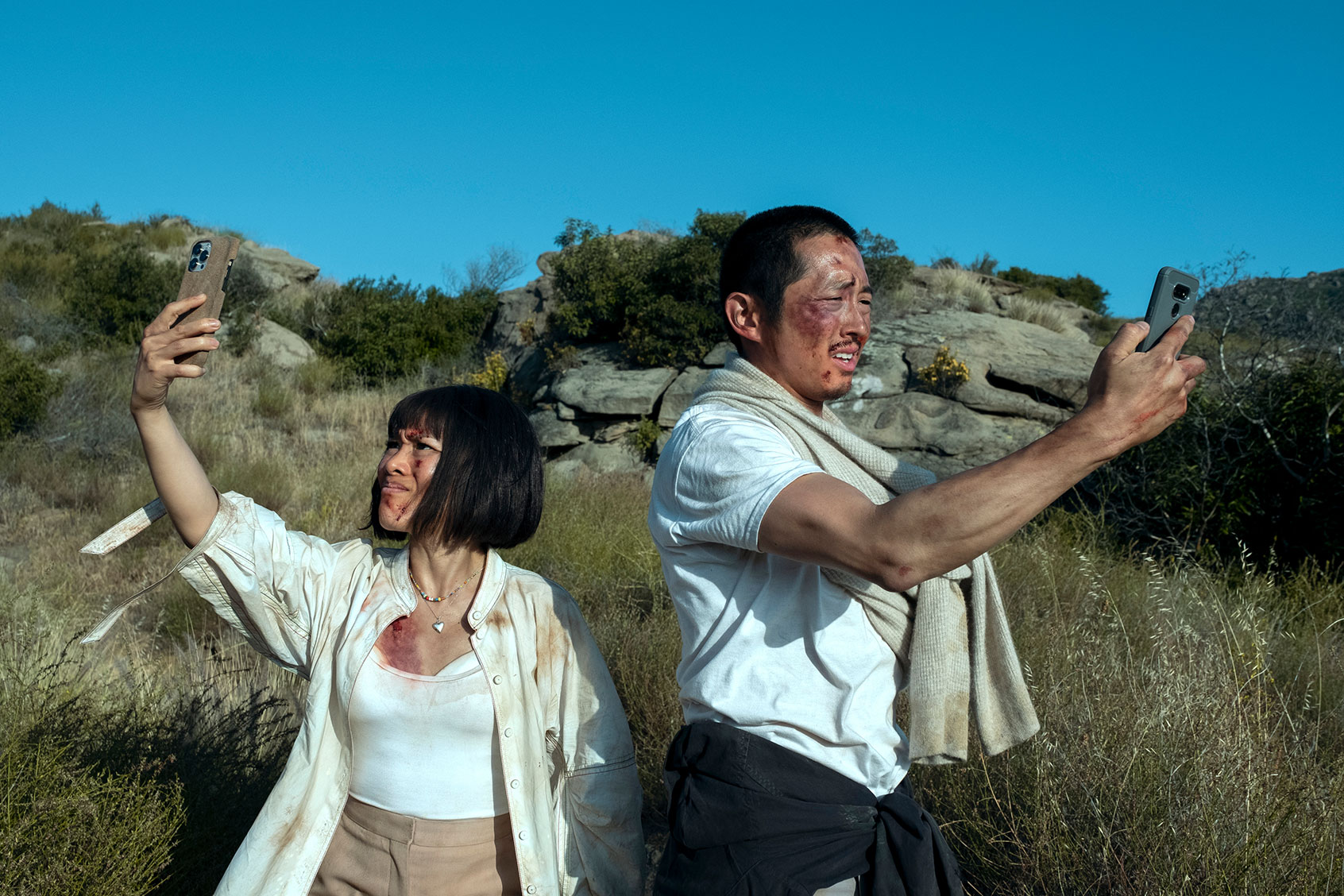
BeefSteven Yeun as Danny and Ali Wong as Amy in “Beef” (Andrew Cooper/Netflix)So for them it might not resonate when they see something that is very culturally specific. Or they may have their own idea of what is culturally specific. Like, I pitched a show that was an adaptation of a novel that was written by an Asian American woman, and the whole book was about an Asian American family. All the characters were Asian. And if I were to write that show, if I were to be the creator of that show, I would be writing from the point of view of an Asian person, and I would hope to hire other Asian writers and other Asian people to work on the crew.

And yet, the response that I got in the pitch was essentially, “This doesn’t sound Asian enough to us.” And I was so confused by that reaction, I honestly didn’t know how to address it. And it wasn’t until much later that I sort of reflected back on this and realized that I think the reason they didn’t think that it was Asian enough is because it didn’t fit their stereotype of what an Asian show should look like and what stories Asian people should be telling. So that’s the kind of problem that’s inherent in the system. And I honestly don’t know how to solve that.

This a little bit facetious, but I’m guessing you didn’t plan for this book to come out in the middle of a huge writers’ strike that has now dragged on longer than when you were on the picket line in 2007 and 2008. Another book recently came out by Mo Ryan, “Burn It Down”

I watched your interview with her, by the way, and . . . the whole time I was both shaking my head and nodding because I could relate to so much of it. I just kept wanting to be there with you so I could jump into the conversation. Her book was great, and it shed light on so many of the things that I’ve been thinking about and that we’ve been talking about.

Right. So what this all comes back to, and what we’re talking about, is that this is an industry where it’s so easy to treat people well. It’s so easy!  One of the best examples that you had your experience writing for “Freaks and Geeks” You talked about working with Paul [Feig] and Judd [Apatow] and how that was a great experience all around. Any set could have been like that.

But what I find really interesting about this is that there’s something about the added part of just the trauma of being in these rooms that people don’t quite understand.

Whatever happens with SAG-AFTRA and the WGA, that’s probably not going to be solved. Right? Yeah. But it’s all part and parcel of this industry and these demands. So what has it been for you to watch that from the outside?

“Writers are having to take side jobs just to pay their rent.”

Well, it’s really disappointing that 15 years after I left, that the writers have to go on strike again. Obviously things have changed a lot in the last 15 years. Streaming has taken over, and that has changed the landscape a lot. It’s changed the day-to-day experience of writers, and I can only imagine how hard it is for them. Because back when I was working in TV, you would go through some really hard times, but then in the back of your mind, you’re thinking, “Well, at least I’m making decent money.” And now that’s not the case. Writers are having to take side jobs just to pay their rent, so I feel for them. And also with AI around now, which is not something that we had to deal with in the in the last strike? Oh, boy.

We need your help to stay independent

That’s a whole other level of dehumanizing, isn’t it?

Well, yeah. I mean, you’re talking about companies that if they could cut the writer out of this whole process and still get a product that makes money for them, they’ll do it in a heartbeat. They don’t care.

And I know you didn’t specifically ask me about AI. I’m not one of these Luddites that’s like, “Oh, all new technology is bad,” or “Save people’s jobs just for the sake of saving jobs.” But when you’re talking about AI creating scripts, I have a very hard time imagining a day when a script that was created by AI is going to be something that I’m really interested in watching.

And by the way, the way that something like Chat GPT works is it scours all of this previous material to generate something new. And that previous material was written by writers. So they need to be compensated, they need to give consent. It’s a copyright issue. So these are things that we didn’t have to deal with in 2007.

I just feel like the companies need to understand that this great material that makes entertainment marketable, it doesn’t come out of nowhere. It comes from human beings that need to be compensated fairly, that need to work in safe workplace conditions, that need to be treated with respect, essentially. That’s how you get people to create great art.
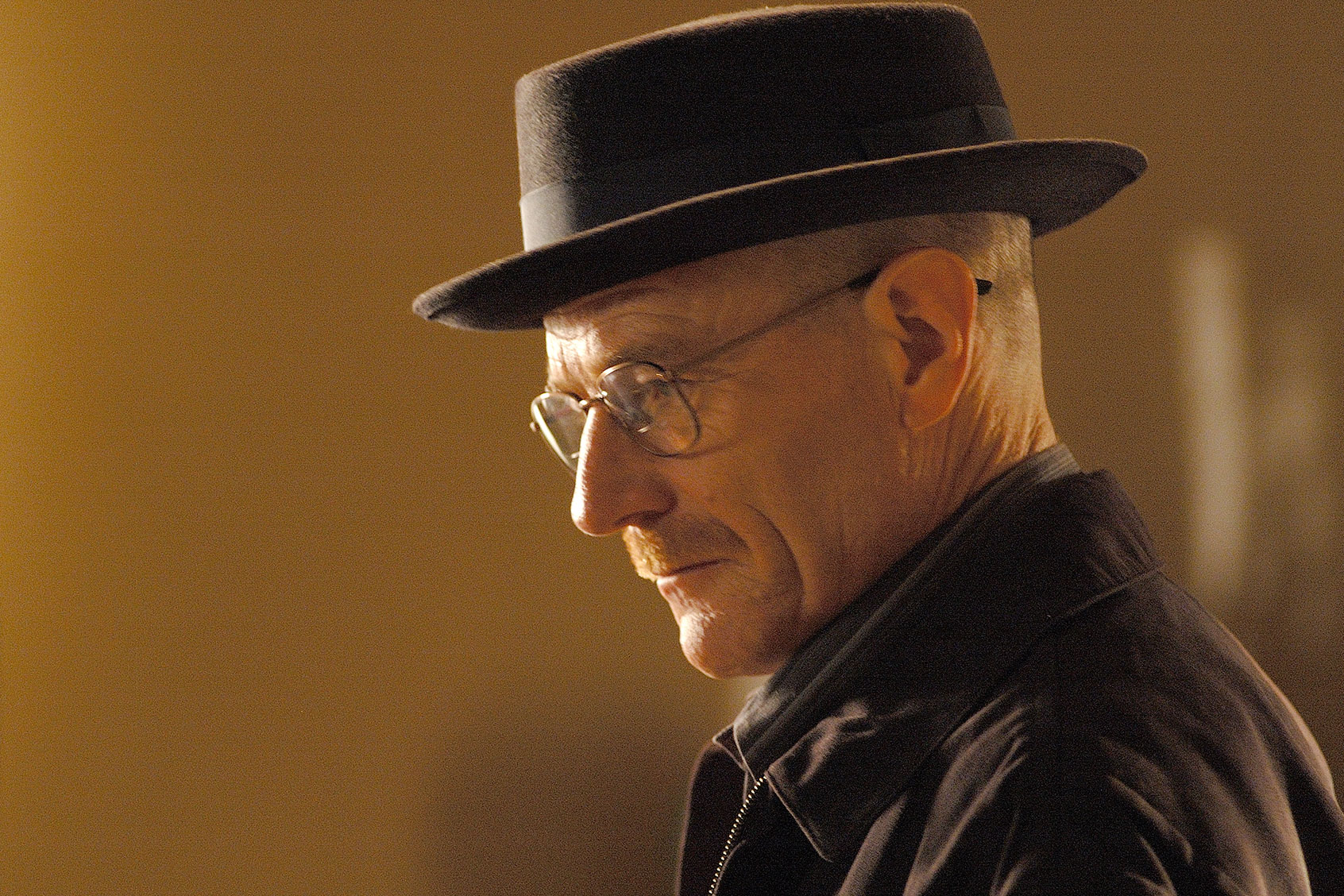
Breaking BadBryan Cranston in “Breaking Bad” (Ursula Coyote/AMC)This is completely what I’m talking about. I think of those situations that you gave, in your book – those are very specific situations people can relate to just in terms of being treated with respect on an individual level. If that level of respect is not being given to you as an individual, then when there’s larger forces at hand, of course, that disrespect is just going to be kind of amplified.

Let’s discuss another part of this. You wrote for “Desperate Housewives.” You wrote for “Friends.” You wrote for “Breaking Bad,” and you wrote for “Freaks and Geeks,” all of which, in some capacity, have been running in repeats. “Friends” is going to run until the sun burns out, right? And you say in the book that you’re thankful for the residuals. That’s a big discussion topic right now.

Hopefully people understand that you’re also talking about living a writer’s life from a different era in Hollywood, just in terms of your ability to support yourself and to still reap the benefits of your work long after you’ve left. And I think that’s something that people are still struggling to understand. Do you think that that the coverage of strike is enabling people to understand that better?

Possibly, I hope so. I think in general, we live in a gig culture, and that’s why we’re starting to see labor coming together and saying, “We can’t live like this.” As a TV writer you go through long stretches of time where you’re not working, and the residuals are very important to just keep you afloat.

And here’s a hot take for you: There’s been a lot of talk about how, in the streaming era, the seasons now tend to be 10 episodes or something, and it used to be on network television, you would get a season of 22 or 23 episodes, and that was much greater job security for the writers who were on those shows.

And some writers would be on a show like that for years and years and years, and they could send their kids to college on that.  A lot of people are talking about that aspect of it, and I get that.

But when I was a TV writer during that era, I never had that job security, because I worked on shows that got canceled after one season or I was let go. So it’s not a stable, steady job. It just isn’t.

And I’m not saying that it should be. I’m not. There’s been talk about . . . essentially mandating that every show hire a certain number of writers. I don’t know how I feel about that, and here’s why. If you take a showrunner who doesn’t want to have a staff, and you force them to hire a staff, I don’t see that being a good situation for those writers.

“This idea of everybody heralding the ‘auteur genius showrunner,’ we’ve got to get rid of that.

I had this experience, kind of, on “Breaking Bad” where the creator was very much, you know, had very much like an auteur kind of attitude. And to be on a staff where you are essentially being sidelined because the showrunner has no interest in training you how to write that show, that is a terrible, terrible experience. Nobody wants to go through that.

So that’s why when I hear, “We should make sure that all these shows have a minimum number of [writers],” it’s just not going to work.

And in terms of shorter seasons — again, now, as a consumer of entertainment, sometimes I’m thrilled that they’re only 10 episodes, because I go, “Wow, they got out before they had to jump the shark.” . . . There is a natural lifespan to every show. And that has to be determined organically. To say, “Yeah, we’re going to do seven seasons of this show,” it just doesn’t make sense.


Want a daily wrap-up of all the news and commentary Salon has to offer? Subscribe to our morning newsletter, Crash Course.


This is an interesting view, because I’ve been watching the conversations on social media about the mandated minimum staffing roles, and it seems that the pervading wisdom is that that way, newer writers can get in experience. It actually should be more pro-diversity.

And I understand your thinking, having read your book. For instance — you didn’t say this name, but I will — I don’t think I’d want to work for Taylor Sheridan. Because if I did, I’m pretty sure I’d just be chilling in an outhouse while he was inside his cabin writing “Yellowstone,” you know what I mean? And I’m using his name because he’s actually said something along the lines of, “I don’t want to be told how many people to bring on to write my show.”

But that’s a unique perspective that you bring in, in that you have this experience now that you’re out saying, I don’t want to be sidelined, not only professionally, but because you had traumatizing work experiences in a number of these situations and that’s not helpful for writers creatively. I wonder if there a happy medium that can be achieved.

Again, I don’t have the solution to this problem, unfortunately. I really wish I did. But all I can say is that there are showrunners out there or creators out there, who are interested in true collaboration. I mean, like, you know, when I worked on “Freaks and Geeks,” Paul and Judd were showrunners who knew that if they opened up the room to collaboration and created an environment where everybody felt like their ideas were welcomed and taken seriously, that they knew that was going to create a better product in the end. So we know that it can be done.

But there are always going to be people who aren’t interested in that. So I don’t know what the solution is, but I know that the solution is not to force those people to bring a staff on, who they are going to then ignore and traumatize and completely rewrite their scripts and not tell them. That’s not going to be good for those writers.

But I do think that this idea of everybody heralding the “auteur genius showrunner,” we’ve got to get rid of that. That sort of worship is part of the toxic culture in Hollywood. I think it makes a great story. It’s very simple and clean, and it’s not as shiny as a story about a bunch of people in a writers room who are all collaborating and making each other feel included. That’s the problem: Hollywood creates stories about itself. And those things just get perpetuated. There are books written about it, right?  You know, “Difficult Men.” Ooh. So yeah, we need to get rid of that sort of hero worship.
Freaks And GeeksThe cast of “Freaks And Geeks” (Getty Images/Chris Haston/NBC)What are you hoping that people will take away from reading “End Credits”?

I guess what I hope is that they realize that there’s more to life than work and career. You know, we live in such a work-obsessed culture. And I just hope that people will realize that they don’t have to rack up all of these showy, conventional achievements to feel like a worthwhile person or to feel like a creative person. There are just so many different paths to happiness. And when we just focus on that work part of our lives, we’re just missing out on so many other things that can bring joy.

I spent a lot of time with that tunnel vision. And it took a while before I realized I just didn’t want to live that way anymore. So if anything, I just hope people that this book gives them the permission to stop defining themselves by their jobs.

“End Credits: How I Broke Up with Hollywood” by Patty Lin is available now.

“I was defamed”: Trump melts down on Truth Social after NY AG accuses him of inflating net worth

Donald Trump on Friday claimed he was “DEFAMED” by New York Attorney General Letitia James after her office argued that the former president routinely inflated his net worth to financial firms by as much as $2.2 billion in certain years,

“Based on the undisputed evidence, no trial is required for the court to determine that defendants presented grossly and materially inflated asset values” in their statements of financial condition “and then used those SFCs repeatedly in business transactions to defraud banks and insurers,” James said in a filing on Wednesday. James’ whopping $250 million lawsuit accuses the Trump family and their real estate company of “grossly” inflating the values of more than a dozen assets between 2011 and 2021, and then subsequently using those funds to defraud banks and insurers on that basis of securing more advantageous loan or insurance terms.

Trump on Truth Social accused James of defamation in an all-caps rant. “IN THE NYS A.G. LETITIA JAMES CASE, I WAS TARGETED, GIVEN NO JURY, NO EXTENSIONS, NO COMMERCIAL DIVISION, NO CONSTITUTIONAL RIGHTS, NO ANYTHING!” he claimed. “THE DEMOCRAT JUDGE HATES TRUMP WITH A PASSION. THE THING I HAVE IS A GREAT CASE BASED ON PHENOMENAL NUMBERS THAT SHOW A NET WORTH BILLIONS OF DOLLARS MORE THAN SHE VICIOUSLY & FALSELY CLAIMED, VERY LITTLE DEBT, BIG CASH, A POWERFUL DISCLAIMER CLAUSE, PAID OFF LOANS, NO DEFAULTS, ‘HAPPY’ BANKS, GREAT ASSETS. I WAS DEFAMED BY NYS – ELECTION INTERFERENCE!”

“He got tripped up”: Legal experts say Mark Meadows may have a “perjury problem” after testifying

Fulton Country District Attorney Fani Willis in a new brief seemed to imply that former White House chief of staff Mark Meadows may have committed perjury in his unexpected witness stand appearance earlier this week, as he attempts to have his case moved to federal court. Willis, who recently indicted Trump, Meadows, and a slew of other co-conspirators for their efforts to overturn Georgia’s 2020 presidential election results, argued in a new filing that Meadows’ testimony undercut his effort to remove the case to federal court.

“And after insisting that he did not play ‘any role’ in the coordination of slates of ‘fake electors’ throughout several states, the defendant was forced to acknowledge under cross-examination that he had in fact given direction to a campaign official in this regard,” Willis wrote. 

“The Court has ample basis not to credit some or all of the defendant’s testimony,” a footnote in the filing argued.

“Mark Meadows has a potential perjury problem,” tweeted New York University Law Prof. Ryan Goodman, adding that Willis put “it in understated terms.”

Experts have already warned that Meadows’ surprise testimony may blow back on Trump, as his defense was “precisely that point which Fulton County DA Fani Willis is trying to prove: that Trump was at the center of this entire criminal conspiracy,” wrote Daily Beast reporter Joe Pagliery. 

“He now cannot ever say, ‘I wasn’t doing this for the president, I was acting on my own,'” concluded Peter Odom, a former prosecutor at the Fulton County DA’s office, told The Daily Beast.

Former federal prosecutor Andrew Weissmann, who served on special counsel Bob Mueller’s team, told MSNBC on Thursday that Meadows’ testimony appears to have backfired.

“I don’t think he is going to be found by the judge to be credible, and it’s also the case that if you lie on one thing and the judge can throw out that testimony on that item, but also disregard your testimony altogether, he really, having reviewed everything now, I don’t think comes off is a terribly thoughtful witness or terribly careful,” Weissman said.

“He has a wonderful defense lawyer. I’m sure they tried to prepare him a lot. And it really showed that he was not terribly preparable, because he made a lot of mistakes in his testimony. I think he really hurt himself,” he added, noting that Meadows’ damning statement “is from the redirect examination. That’s when his own lawyer got to ask him questions and he actually kept digging, and made it worse through his redirect examination.”

We need your help to stay independent

Georgia State Law Prof. Anthony Michael Kries underscored Meadows’ cross-examination as “one of the more dramatic moments in Monday’s hearing.”

“It took very little time between Meadows saying he wasn’t involved at all in coordinating the electors scheme with campaign employees and the DA’s office throwing the email showing that he did on the projector,” he wrote on Thursday.


Want a daily wrap-up of all the news and commentary Salon has to offer? Subscribe to our morning newsletter, Crash Course.


With the testimony previously dubbed a “high-risk gamble,” former federal prosecutor Renato Mariotti argued that though the “potential upside” of Meadows’ decision to take the stand was “significant,” this “was the risk — that he got tripped up on the stand and testified falsely or locked himself into a problematic position.”

“Trying to fool the judge is a bad idea,” added MSNBC legal analyst Katie Phang. “In an evidentiary hearing like Meadows’ removal hearing this week, the judge is the fact finder, as well as the one who applies those facts to the applicable law. Judge Jones sits and judges the witnesses’ credibility and trustworthiness.”

“War on Mexico”: Republicans ramp up calls for military action as they blast Democrats as warmongers

Georgia Rep. Marjorie Taylor Greene posted on X, formerly known as Twitter, on Wednesday that the Democrats are going to drag the country into a full-scale war to “unite the country behind Biden.” The Republican said it would “be horrific” and would infuriate the country “but make no mistake, they want war.” Donald Trump was so pleased he actually re-posted her comment on his own social media platform Truth Social.

Greene trying to portray herself as some sort of peacenik is possibly even more hilarious than Trump doing it. They both like to position themselves as “anti-war” by calling Joe Biden a warmonger for supporting Ukraine in its fight against Russia’s invasion. They claim to be “America First,” or at the very least “non-interventionist,” as if they just want to give peace a chance but they don’t seem to realize that just doesn’t scan as their faux pacifism is belied by their extreme bellicosity. Take for example this declaration from Greene just a few months ago:

As you can see, they’ve actually introduced legislation to “declare war” on the Mexican cartels. Trump is echoing this in his presidential campaign:

I will order the Department of Defense to make appropriate use of special forces, cyber warfare, and other overt and covert actions to inflict maximum damage on cartel leadership, infrastructure and operations.

We need your help to stay independent

That kind of talk will sound familiar to anyone who lived through “the war on drugs.” There were covert operations in places like Colombia but those were coordinated with the governments in question. What these people are talking about is essentially an invasion of Mexico, which hasn’t happened in over one hundred years.

Trump wanted to do it during his first term but was apprised that it would be unwise, to say the least. The New York Times reported that former secretary of defense Mark Esper revealed in his book, “A Sacred Oath,” that:

Mr. Trump, who was unhappy about the constant flow of drugs across the southern border, during the summer of 2020. Mr. Trump asked Mr. Esper at least twice if the military could “shoot missiles into Mexico to destroy the drug labs.”

“They don’t have control of their own country,” Mr. Esper recounts Mr. Trump saying.

When Mr. Esper raised various objections, Mr. Trump said that “we could just shoot some Patriot missiles and take out the labs, quietly,” adding that “no one would know it was us.” 

Trump wanted to perpetrate an act of war against our neighboring country and then lie and say it wasn’t us who did it. That sounds so unlike Trump.

That was just one of many kooky anecdotes in Esper’s book which was like so many other of the Trump books that were released during and after his term. It was clear he had no understanding of how the government worked or what the Constitution meant and was always issuing crazy orders and he would be talked out of it by some of the more responsible people he had around him.

It has been made very clear since then that none of those people would be welcome in a new administration and Trump would have free rein to carry out some of his most irresponsible impulses. In fact, they are openly making plans to that effect. Unfortunately, much of Trump’s reckless rhetoric has infected the Republican Party in general.

This idea of war with Mexico is now a mainstream Republican policy. As you can see from Marjorie Taylor Greene’s post, one of the people pushing this aggressive policy with Mexico is Dan Crenshaw, R-Tx., who is generally considered to be at least occasionally sane. No one would say the same about House Oversight Committee Chairman James Comer, a Republican from Kentucky, who told Fox News that it was a mistake that Trump didn’t go ahead with his plan to send Patriot missiles into Mexico to take out the cartels. Sen. Lindsey Graham, R-S.C., meanwhile, introduced a bill designating Mexican cartels as foreign terrorist organizations, creating the option to take military action against them. And freshman Sen. JD Vance, R-Ohio, makes it clear what he’s after:

“We need to declare the Mexican drug cartels a terrorist organization because that’s exactly what they are. It allows our military to go into Mexico, to go on our southern border, and actually do battle with them.”

And the presidential candidates have jumped on the bandwagon as well.

Asked if he would send special forces over the border into Mexico at last month’s presidential primary debate, Florida Governor Ron Desantis said “yes, and I will do it on day one.” (He has likewise vowed to kill drug smugglers “stone cold dead” at the border which means that he’s going to order summary executions as well — which is illegal, obviously.)


Want a daily wrap-up of all the news and commentary Salon has to offer? Subscribe to our morning newsletter, Crash Course.


Former South Carolina Governor Nikki Haley, the alleged moderate who told Vivek Ramaswamy in that same debate that his lack of foreign policy experience was showing, told Fox News that:

When it comes to the cartels, we should treat them like the terrorists that they are. I would send special operations in there and eliminate them just like we eliminated ISIS and make sure that they know there’s no place for them. If Mexico won’t deal with it, I’ll make sure I deal with it,” she added.

South Carolina Senator Tim Scott, for his part, has said he would destroy the cartels and would “allow the world’s greatest military to fight these terrorists. Because that’s exactly what they are.”

This talk is, to be blunt, batshit crazy. Mexico is a sovereign country and taking any of these actions unilaterally would be an act of war. Even such hawkish Republicans as former Ambassador John Negroponte are appalled at the idea. He points out that “Mexico is our largest trading partner, we share a 2,200 mile border and we have inter-relationships that are extensive and across an entire spectrum of issues such as migration, trade, people-to-people relations and environmental concerns.” Needless to say, the Mexican government and its people would be outraged and defiant and the consequences would be dire.

The allegedly “isolationist” GOP of 2023 may love to call the Democrats warmongers. But just listen to that rhetoric and this rapidly evolving consensus that the U.S. should send troops into Mexico and it becomes obvious that the anger and hostility that animates their domestic policy extends to their foreign policy as well. They are the ones itching for a war. If I didn’t know better I’d think they watched Russian President Vladimir Putin make his move against Ukraine and thought, “what a good idea!”