Spring Sale: Get 1 Year, Save 58%

Flaco the owl’s troubled freedom: A meditation on zoos, stories and empathy

The first time I saw the cage where Flaco, the much-loved Eurasian eagle-owl, was kept, I was shocked. 

I should say right away that I was no great proponent of the abolition of zoos or a deep thinker on zoo ethics. But I was struck by how small the cage was, especially for a member of a species of owl that is among the very largest. This was the enclosure that Flaco had left behind on the night of February 2, 2023, after vandals cut a hole in the mesh. Over the next year, the owl claimed first Central Park and then New York City as his territory, gaining millions of fans around the world. 

It was raining when I arrived at the Central Park Zoo, two weeks after the owl’s death, and at first I couldn’t find Flaco’s cage and I wondered if it had been dismantled. A friendly zoo worker led me over to the enclosure, which was tucked in near the exit to the penguin and seabird exhibit. 

When we got there the man spread his arms.

“This bird was big, huge, and this was its place,” he said.

I studied the space that was Flaco’s home for twelve years. Three dead trees that my not-always-reliable phone app identified as an Indian almond, bagpod and common fig, served as his perches. An illustration covered the back of the cage, a misty painting of foggy mountains and steppes with a river running through it, Flaco’s native habitat, put there, if you were in a certain dark mindset, almost to taunt him.

The steel mesh that had covered the opening was gone, the former cage now completely open.

I asked the zoo worker about this, and he said, “They left it open all year just in case the owl wanted to come back.”

As it turned out, he did not.

* * *

Back when he was in this cage, a human being looking back in at the large bird, thousands of miles from the taiga and rocky steppes of Europe and Asia and North Africa where its kind evolved, might say he looked bored. But be careful. For most of the twentieth century human beings who studied animals and human beings who used words to describe them were warned not to attribute “human” emotions to animals. Anthropomorphism, the great crime. Only lately has common sense and empathy, bolstered by emerging science, returned to the scene and told us what we knew already. To say an animal is experiencing a certain feeling is not plastering a human emotion on an inhuman thing. It is allowing for the obvious but somehow suppressed fact that we coevolved with creatures like this owl for billions of years before splitting off and going our human way. No grand experiments are needed to conclude that emotion is part of our common heritage. Just watch a big cat prowl back and forth in the zoo. Just ask your dog if it wants to go for a walk.

"What happens if they injure or, God forbid, kill Flaco while attempting to capture him?"

So maybe bored is not the exact word, but something close. The owl, our fellow animal, lives a life where many of the things that have been encoded in it by the grand scheme of evolution have been denied. Not small things either. Sex. Food obtained by hunting. Flight. Soaring. Companionship.

Back when he was in his cage, zoogoers sometimes complained about Flaco. One day a man told a zoo worker that the bird looked “grumpy.” Perhaps a more worthwhile experiment than questioning the use of anthropomorphism would be to separate this man from his children and place him in an enclosure for twelve years and see how he fares, whether or not he too would exhibit some grumpiness. 

* * *

During his year beyond the cage, Flaco was the protagonist of a story with a moral, and even a basic narrative arc, that is still uncertain and varied, dependent very much on who you talk to or what posts you read. The poor owl carried so much symbolic weight that it was a miracle he could fly at all. The narrative began with the bird’s escape and the zoo’s attempts to recapture him, which most supported at first. Once the early predictions that Flaco would not be able to hunt in the (relative) wilds of Central Park were proven wrong, however, the narrative began to change, and there was a growing deep and heartfelt resistance to the attempts to capture Flaco. 

Free Flaco followers signed petitions urging the zoo to stop their efforts, and their comments flooded the internet. Ornithologists weighed in, some claiming the non-native bird would be a danger to native ones. But the experts also worried for Flaco—his ability to survive in the wild, the poisons he might be ingesting once he started hunting successfully—setting up the central conflict of the narrative that would grow over the next year: safety versus freedom.

New Yorkers hold a memorial for FlacoNew Yorkers hold a memorial for Flaco, the Eurasian Eagle owl who died last week, leaving cards in his memory under a tree where he often roosted, March 3, 2024 in Central Park, New York City, New York. (Andrew Lichtenstein/Corbis via Getty Images)By mid-February, two weeks after Flaco’s escape, with Flaco catching rats and feeding himself, the Wildlife Conservation Society (WCS), which runs both the Central Park and Bronx zoos, started to waver in its commitment to capturing the owl. Whether or not this was in reaction to the growing Free Flaco movement is not entirely certain, but public opinion sure seemed to impact how they proceeded. At that point the WCS softened their stance, saying they would “continue to monitor him, though not as intensely, and look to opportunistically recover him when the situation is right.” But then, only five days later, they set a baited trap in the Sheep Meadow and tried to lure in Flaco using a recording of a hooting female owl. 

The zoo warned about the dangers the owl would face in the urban wild, warnings that would prove prophetic twelve months later when Flaco would succumb to the dual poisons of rodenticide and a herpesvirus contracted from pigeons. Concerned for the owl, they understandably wanted to capture it both quickly and safely, but it didn’t prove that easy. For one thing, by this point crowds were following Flaco everywhere, and the traps the zoo workers were using weren’t working. Raptor experts have suggested to me that Flaco could have been captured successfully with a cannon net. But a device that used explosives to launch a net was a potential public relations nightmare. The zoo workers were well aware that they were onstage while they went about their business. 

“What happens if they injure or, God forbid, kill Flaco while attempting to capture him?” Andrew Farnsworth, a renowned Cornell bird researcher, asked. “It adds to the whole notion of the whole thing's onstage. And the capturers are onstage too.”

The world was watching. 

* * *

I am not anti-zoo. The last time I had visited the Central Park Zoo, before my visit to the cage, had been over a decade before when I’d watched my daughter delight in the penguins and sea lions. I understand the argument that zoos are now arks, safe places where endangered animals and genetic material are preserved in a world where thousands of species are hurtling toward extinction. I also understand that if people, especially children, are not allowed to see real animals, then the idea of them, and of saving them, becomes abstract.

“I have a lot of respect for inner-city zoos,” a zooworker who specializes in birds told me. “Most inner-city kids would never have a chance to see wildlife without them. The whole point is getting kids face-to-face and connecting with animals so they care about them.”

When I brought up the Central Park Zoo, and he said, “They were definitely in a no-win situation,” he might have been speaking about zoos in general. Zoos are a business, and every year that business gets harder and harder with more and more red tape and with the public perception turning darker. Efforts to create larger and more natural habitats need to be balanced by the simple fact that if people don’t see the animals, they won’t be coming back.    


Want more health and science stories in your inbox? Subscribe to Salon's weekly newsletter Lab Notes.


In retrospect, it isn’t hard to empathize with the bind the WCS and zoo were in, but their response, once they stopped trying to re-capture Flaco, was to keep quiet. Perhaps this was out of defensiveness once the freedom narrative took hold and people started noticing how small Flaco’s enclosure had been. Whatever the reason, the result was this: they lost control of the narrative.

  Andrew Farnsworth agrees that the WCS and the zoo had “really missed an opportunity.” 

“I like WCS, and a lot of amazing things come through that organization. But by not talking they didn’t do themselves any favors. Instead they could have said, ‘What story can we tell?’ They could have led weekly walks to see Flaco, right?”

An irony here is that another primary goal for zoos is to educate people by letting them observe animals. The WCS really did seem to miss a great opportunity in Flaco, whose location was known for most of the twelve months he was free. In a way, what Flaco-watchers in the park and on-line were experiencing was a moveable zoo. Part of the work of modern zoos is to reimagine the experience. What were Flaco’s adventures, with the internet websites and Twitter filling the void left by the zoo, but a moving, living, unpredictable zoo exhibit?

How can one bird change the thinking of so many? Maybe, part of the secret is exactly that: the fact that we are talking about one bird.

Not long after Flaco’s death, I hosted a zoom call with a couple dozen Flaco followers. Eventually the discussion turned toward the idea of sanctuary. What if Flaco had been captured and returned to a place where he could live without the threats of rat poison, cars, buildings, and crowds? But where would that place be? One of the Zoomers suggested the Adirondacks, but there he would have threatened native wildlife and competed with native raptors. Was a sedated flight back to his native Europe really a possibility or farfetched? 

When the talk turned to the zoo’s role there was frustration and anger.

“The zoo failed him both in freedom and captivity. They probably could have saved him. Once they decided not to catch him, they said they would ‘continue to monitor him.’ But they never made an effort to actually track him. How did they monitor him? Was there any evidence of this? They abdicated responsibility. They dropped out of the story entirely.”

* * *

The Wildlife Conservation Society, which would become an online whipping boy during the Flaco year, has noble origins. Originally the New York Zoological Society, it came into being when Teddy Roosevelt, then president of the Boone and Crockett Club, founded the society with three stated objectives: to open a zoological park, to promote the study of zoology, and to preserve wildlife. 

Modern zoos, combating the idea that zoos are still just menageries of captive creatures, are quick to point out that part of their missions, aside from entertaining and educating the public, include the crucial work of field conservation and species recovery, and the New York Zoological Society provided both the earliest and most famous example of this when they reintroduced fifteen American bison, a species on the brink of extinction, to what was then called the Wichita Forest and Game Preserve. The WCS continues to work toward species recovery in a time of massive biodiversity loss and has a stated goal of trying to help save 50 percent of our remaining wild lands.

I am not anti-zoo, or at least I wasn’t before the Flaco year.

Larger zoos, wilder zoos, even non-zoos with no customers. We are in a time of re-imagining.

In 2024, the Oakland Zoo decided to send Osh, its last remaining African elephant, to the Elephant Sanctuary in Tennessee. The decision was made by the zoo based on the elephant’s “well-being,” and in a statement the zoo said: “He will have the opportunity to socialize and develop relationships with many other elephants over his lifetime. Something that we could not offer him here.” 
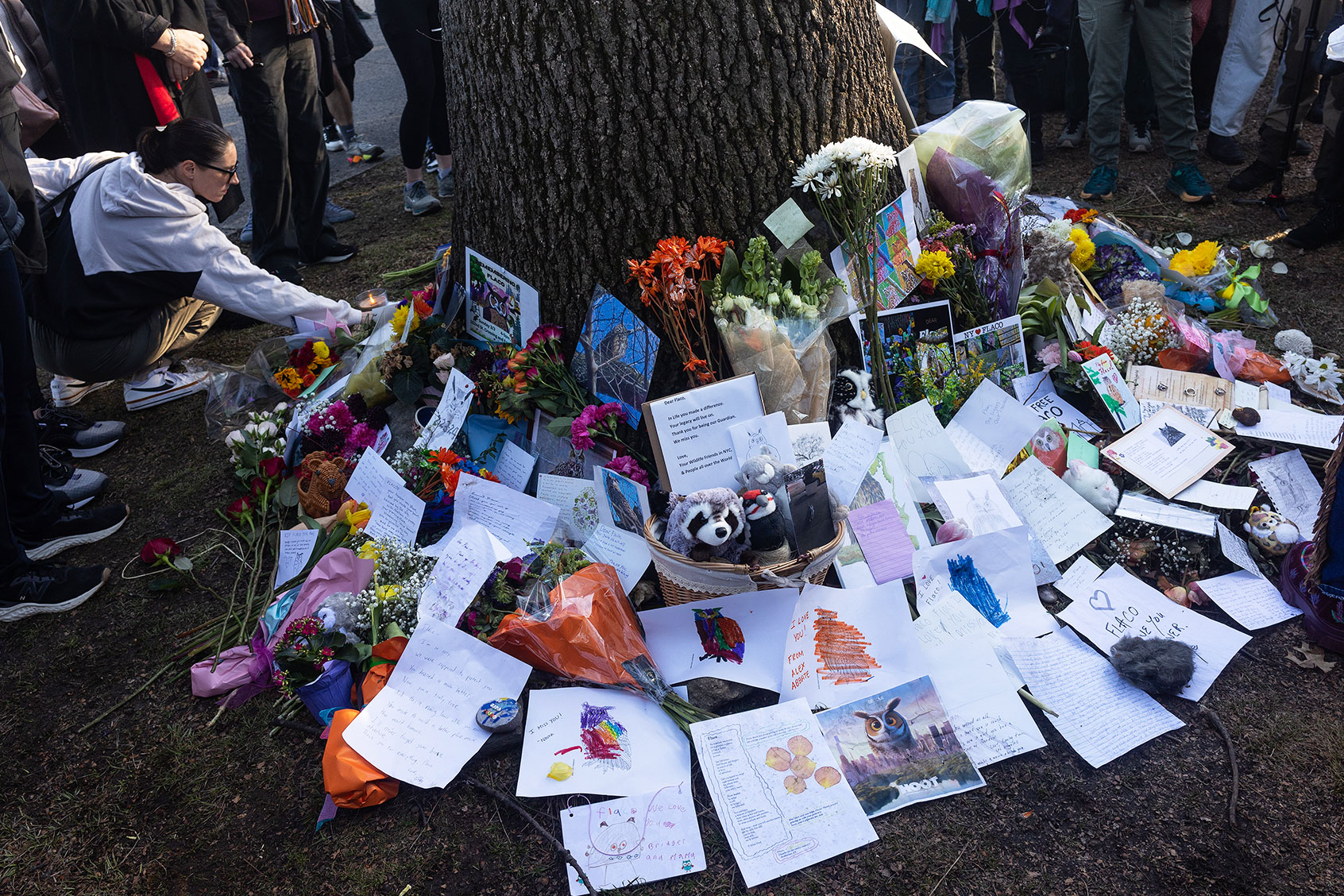
New Yorkers hold a memorial for FlacoNew Yorkers hold a memorial for Flaco, the Eurasian Eagle owl who died last week, leaving cards in his memory under a tree where he often roosted, March 3, 2024 in Central Park, New York City, New York. (Andrew Lichtenstein/Corbis via Getty Images)

More specifically it would give the thirty-year-old male an opportunity to reunite with Donna, who had been the last female elephant at the Oakland Zoo before being transported to the sanctuary a year before. 

At the sanctuary the elephants move in herds. The sanctuary is a sprawling 3,060-acre habitat, located 85 miles south of Nashville. Though elephants are given individual care when needed, they wander freely on the property. The elephants are not managed: “Recognizing that elephants are wild animals with complex physical and social needs, there is no free contact management or dominance training.” The sanctuary literature does not call the elephants tame. It calls them captive.  

The herd can be viewed on camera, but the elephants’ habitats are closed to the public. The sanctuary says this explicitly on its website: “Visitors to The Discovery Center will not see or interact with elephants.”

The sanctuary is for the elephants, not the watchers.

* * *

How can one bird change my thinking? How can one bird change the thinking of so many? Maybe, part of the secret is exactly that: the fact that we are talking about one bird. 

“One of the things that made Flaco so popular was that he was an individual,” David Barrett, whose X account, Manhattan Bird Alert, was Mission Control during the Flaco year. “So many birds are anonymous. They’re beautiful, but they look just the same as a thousand others of their species. Flaco was distinct. He was the only Eurasian eagle-owl in the wild in all of North America. And he was a bird that people could come out and see as an individual every day and follow.” 

We need your help to stay independent

What some call anthropomorphizing, might also be called empathy. It is easier to empathize with an animal than with animals. Education and entertainment are laudable goals, but maybe a greater goal is to get people to look beyond themselves and imagine lives beyond the human. One way to do that is by learning an animal’s individual story. 

The WCS proved right in the end, Flaco’s freedom was short-lived and he fell to the dangers of city life, but during those early days, thousands of people got to learn Flaco’s story and watch as Flaco rediscovered the skills of flying and hunting that evolution had gifted him. These were days of growth, of change, of evolution. And while it may be dangerous to attribute specific emotions to an animal, it is fair to say that, at least on a physical level, a kind of self-realization was occurring. Certainly, Flaco was becoming more. Parts of him that had long slumbered were waking up. Flaco wasn’t the only one changing. Thousands of people were witnessing his growth, and, to some extent, growing along with him. What zoo exhibit can do that?

The last time I returned to Flaco’s cage, I knew more about eagle-owls and understood that my earlier impression was not unfounded. The Association of Zoos and Aquariums (AZA) recommends a minimum of four hundred square feet for an eagle-owl. That is not a huge space, about the equivalent of a two-car garage, but vast in contrast to Flaco’s longtime closet of a home. In fact, some of Flaco’s relatives in other zoos were lucky enough to be housed in spaces many times larger than the suggested minimum, where they could sometimes hunt for rats that happened to wander into their cages, but as anyone who has lived in New York knows, space is at a premium in the city. To add to the lonely picture of Flaco’s life, the AZA also recommends that eagle-owls are best kept in pairs, while Flaco was alone. 

No wonder Nancy Garay, whose research I am drawing on here, has written: “Once freed, Flaco became the bird he always was.” 

AI could widen the wealth gap, experts say

The world experienced a seismic shift in November 2022 when San Francisco-based OpenAI's ChatGPT, a generative AI chatbot, was introduced to the public. Much like the arrival of the internet in the mid-1990s, artificial intelligence is impressive for its time but merely a glimpse of what’s to come. 

AI has already transformed every walk of life. But it also makes many of us wonder: Will artificial intelligence be the great equalizer or just another tool for the rich to get richer

AI’s economic impact: a double-edged sword

Artificial intelligence is making our lives easier, but it has also started replacing some jobs. This has left many worried that this technology could make them redundant in the workforce and exacerbate wealth inequality.

A survey by IPSOS showed that 50% of Americans believe the increased use of AI will result in greater income inequality and a more polarized society. Around 64% believe that governments should take action to prevent AI from taking people’s jobs, and 46% of the younger generation believes it’s likely or at least somewhat likely that they’ll lose their jobs to AI within the next five years. 

We need your help to stay independent

But according to Taylor Jo Isenberg, executive director of the Economic Security Project, the way AI impacts economic inequality will largely depend on the decisions made in the next decade. “We’re at a critical juncture. The choices we make in the next decade will determine whether we deliver on a vision of broad-based prosperity or further entrench economic and political power into the hands of a few,” she explained. 

If left unchecked, corporations driven by profit incentives may develop AI in ways that concentrate wealth and power at the top. However, Isenberg believes that if governments can deploy smart policies such as interoperability and nondiscrimination, they can foster innovation in the AI space while preventing monopolization. The government’s intervention could also help solve societal problems that might not have a big payday attached to them, such as health care and medicine. 

“If we imbue government with the expertise to proactively regulate, build public infrastructure to ensure access and affordability, and double down on fair and healthy competition across the industry, I think we’ll be off to a pretty good start,” Isenberg said. “However, I think it’s going to take political muscle and true leadership to put us on that trajectory, given the tremendous interest in staying the current course of letting a few players dominate the industry.” 

Carlos Gershenson-Garcia, a SUNY Empire Innovation professor at the Department of Systems Science and Industrial Engineering at Binghamton University, agrees. “Taxing successful AI companies and investing those resources in broader fields like health care and education would be wise,” he said. “The problem is that these companies fund and lobby politicians, giving them huge leverage over the government.”

AI and global inequality

AI has the potential to widen the wealth gap not only within our country but also globally. 

In a recent analysis, the International Monetary Fund staff examined the potential impact of AI on global labor using an AI Preparedness Index. After assessing the readiness of 125 countries based on areas such as digital infrastructure, human capital and labor-market policies, they found that wealthier economies tend to be better equipped for AI adoption than low-income countries, with Singapore, the U.S. and Denmark leading the way. 

As AI technology accelerates in wealthy countries, it might only exacerbate the inequality that already exists among nations

In other words, because wealthy countries have the infrastructure and skilled workforces to harness the benefits of AI, they may see a greater boost in productivity and economic growth. Meanwhile, less developed countries that lack the necessary technology and training programs will risk falling further behind. Over time, as AI technology accelerates in wealthy countries, it might only exacerbate the inequality that already exists among nations.

Who’s winning and who’s losing?

Big tech companies leading the AI revolution, like Amazon, Google, Microsoft and OpenAI, are amassing a tremendous amount of wealth. And because these firms dominate cloud computing, data access and AI research, it makes it difficult for smaller businesses and individuals to compete. Similarly, wealthier nations with the infrastructure and capital to invest in artificial intelligence will reap the benefits, while lower-income countries will be left in the dust. 

There are winners and losers in the labor market as well. With some jobs gradually being automated, lower-income and less-educated workers will be disproportionately affected by it since they often don’t have the financial resources to upskill themselves. On the other hand, the future seems pretty promising for workers with expertise in AI, machine learning and data science, but not everyone has access to the education and training needed to break into these fields.

"Looking back at history, large technological leaps have only widened wealth inequality"

That said, Gershenon-Garcia thinks the fear of AI taking over all jobs may be slightly overblown.

“It might seem that AI is taking our jobs, but a closer look at the statistics should reveal that the change is not that different from previous technologies that had a similar effect,” he said. “We can learn from what worked and what didn’t in those previous cases and implement programs to minimize an adverse effect on the workforce.”

What lies ahead?

Johnny Gabriele, head analyst of blockchain economics and AI integration at The Lifted Initiative, sees AI as part of a broader shift in technological evolution. He believes AI will follow the historical trend of widening wealth inequality unless financial structures change fundamentally. 

“Looking back at history, large technological leaps have only widened wealth inequality. In my opinion, the only technology that has the power to do the opposite is cryptocurrency.” Gabriele said. “At the end of the day, this tech revolution will reward those who can master it and punish those who ignore it. If things get bad enough, there are already talks about universal basic income, but the jury is still out on whether this will lead to utopia or dystopia."

He believes that as long as our financial structures maintain their centralization, the rich will get richer, and the poor will get poorer. “At the end of the day, it’s centralization, not technology, that affects wealth and equality,” he explained. 

John Roberts’ Supreme Court obeyed in advance

Within less than a month in office, the Trump administration exceeded its constitutionally authorized powers, diminished the role of Congress, and challenged the authority of the judiciary. Waving away his campaign pledge to lower the cost of groceries, Trump focused instead on maximal cruelty and political retribution dispersed with a wrecking ball.

Article I of the Constitution gives Congress, not the president, the power to establish federal agencies and to appropriate money to run them. But instead of examining expenditures and functionalities with an eye toward cutting costs, Trump and ketamine-crusted Elon Musk are blowing up entire government institutions, some of which have been in existence since the Revolutionary War.

As Trump serves up federal chaos as a surrogate for governance, one wonders if this is what the federalist-majority Roberts court had in mind when it gave Trump immunity from criminal prosecution and invited him to do his worst — a challenge Trump is embracing with drool on his chin. One also wonders whether the court will use one of the many pending cases to delimit its immunity ruling, or will appease Trump to avoid a clash, thereby threatening the separation of powers and its own authority.

The Roberts court teed up Trump’s criminality

Trump’s authoritarian rule disregards both Constitutional guardrails and federal statutes, limitations on power that would irritate any aspirant dictator for life. Staying in office permanently is a goal Trump has often repeated, a goal he tried to enforce through violence on January 6, 2021.

We need your help to stay independent

Trump likely assumes he will die in prison if he loses power, and seems poised to either start a civil war or WWIII to save himself. That he is not the first world leader to use violence or war to avoid prison offers cold comfort.

Many federal judges who meant their oaths to the Constitution understand that the Roberts Court obeyed Trump in advance, a grievous error.

Trump’s wrecking ball is a constitutional unravelling of the Roberts’ Court’s own making. In June the Court threw out the Justice Department's prosecution of J 6 defendants by ruling that they couldn't be charged with obstruction for rioting at the Capitol, reasoning creatively that beating police officers, trashing capitol property and threatening death to elected officials to stop the certification of the 2020 vote wasn’t “obstruction” because it didn’t involve “documents.”

Trump thinks he’s above the law because SCOTUS said as much

The “no obstruction” travesty followed several other decisions in the same partisan direction. Last March, the Roberts Court blocked Colorado’s efforts to keep Trump off the ballot based on the Constitution’s plain language barring insurrectionists from public office. Section 3 of the 14th Amendment does not lack clarity. It bars anyone from federal office who “engaged in insurrection” after they swore an oath to support the Constitution. The opening words — “No person shall…” — make the ban mandatory, not optional.


Want a daily wrap-up of all the news and commentary Salon has to offer? Subscribe to our morning newsletter, Crash Course.


Despite the 14th A’s clear text, the Court ruled that states could not enforce the insurrectionist ban, even though states have primary Constitutional authority over elections, lest “chaos” ensue. Apparently Trump’s brand of chaos in blowing up the entire federal system suits them better.

The Court then salted the Constitutional wound in July when, in a 6-3 partisan ruling, Roberts wrote an immunity opinion tailor-made for Trump, freeing him to violate criminal laws with impunity if his conduct relates to a “core function” of the presidency. Dissenting justices noted that Trump was now free to assassinate political rivals, an extension of the ruling Chief Justice Roberts has never effectively countered.

Requiem for the rule of law? Not yet.

As cases challenging Trump’s power grabs play out, the rule of law awaiting its fate, the looming question is who will prevail- federal courts pushing back, or Trump?

For now, my money is on the courts because it’s still too early in his second term for Trump to openly defy them. I harbor no doubt that this Nazi-adjacent administration will eventually tear up federal court orders and embrace the use of violence (again) to stay in power, likely deploying the military this time. But I don’t expect Trump to be this obvious, this early, because his Chief of Staff Susie Wiles won’t let him. Open and early defiance of court orders this soon would be a miscalculation that alienates marginal supporters who are not yet ready to overthrow the government, including Congressmen from purple states. It could also upset the stock market and rankle high-dollar corporate donors who need a reliable legal system to attract investors.

Musk and Vance, who have no criminal immunity (yet), will eventually risk criminal contempt in their fight to end medical research, put families on the streets and deny food to the hungry. Many federal judges who meant their oaths to the Constitution understand that the Roberts Court obeyed Trump in advance, a grievous error. These lower court judges, hailing from both parties, will rein Trump in until the high court acts again. Until then, expect Trump to continue to at least pretend to follow the law.

“His mission is to eradicate ‘woke Jesus'”: How money, lies and religion are abused to gut democracy

Money, God and lies: These are the three pillars of the movement that led to Donald Trump's disturbing victory in November. A well-funded propaganda machine that exploits people's cultural fears and spiritual yearnings, turning them away from their economic self-interests and toward an authoritarian movement to end democracy. Katherine Stewart spent months traveling and researching the various people — from far-right priests to atheist billionaires — who have come together to bamboozle millions of Americans into backing a political movement that wants to take away their rights and safety

In her new book "Money, Lies, and God: Inside the Movement to Destroy American Democracy," Stewart offers a grounds-eye view of the machine that led so many Americans to vote against themselves and their democracy. She spoke with Salon about her experiences and how it is that disinformation has gotten its hooks into so many Americans.

This interview has been edited for length and clarity.

You describe the modern right as motivated by "reactionary nihilism." Can you tell me what you mean by this phrase, and how it plays out?

It's a description of those whose fundamental aim is really to destroy things, rather than create things. By reactionary, I mean that, rather than advance or progress toward a better society, this movement emphasizes a "return" to an imaginary better past. A past that includes elements of regressive social order, like gender hierarchy. It's a suppression of certain forms of speech, attacks on religious freedom of those who don't conform, and racism. Put together, these words describe this anti-democratic reaction. It's those who believe that the democratic political system is so bad that it needs to be smashed and destroyed. At the same time, they're exalting a completely fictitious and unrealistic fantasy of a "golden age." It's retreating into a fantasy that's projected onto the past.

Right now, so much focus has shifted from the Christian right to the MAGA tech-bros like Elon Musk. But they're both in the mix. How does it all fit together?

The new right and Christian nationalists are a power couple of American authoritarianism. Both want to smash the institutions that safeguard our democracy. They've said it in different ways. The smashing of the "administrative state" is more of a new right concept. The Christian nationalist movement is more focused on rejecting pluralism and equality. But both are committed to this anti-democratic project. On the Christian right, they would say our democratic system is not godly. On the new right, they would say it simply doesn't work, that it's outlived its purpose. They want to smash it up and create something new, and that's an autocracy.

The Christian nationalist side has been an authoritarian movement for quite some time. They refer to Donald Trump like a biblical ruler. They compare him to King Cyrus or King David, an imperfect ruler God chose to enact his will. Here's the thing about kings: They're not part of a democracy. They're the law onto themselves. Christian nationalists have persuaded themselves they're facing a demonic other, defined as anyone who doesn't believe as they do. They also believe God's hand is on Trump's shoulder. If anybody opposes him, they're going against God.

Trump became the perfect leader for an authoritarian movement. He doesn't respect the rules. He's a law unto himself. He's promising to smash heads, and that's fine with them as long as as they think it's the heads of their supposedly demonic enemy.

It continues to be fascinating how they embrace Trump, who could not be a less Christ-like figure. You write that Christian nationalists justify themselves by arguing that "Jesus may have great plans for us, but the reality is that this is a cruel place in which only the cruel survive." Honestly, that sounds like they reject the Jesus of the Bible entirely. How do they square that circle?

In December, I went to America Fest, which is an annual gathering put on by Turning Point USA, which had 20,000 people at the Phoenix Convention Center. This is the hardcore of the MAGA movement. The head of Turning Point Faith is a pastor named Lucas Miles, who has described the social gospel as heretical. I'm paraphrasing here, but he's said that Christianity started to go off the rails in the 17th century. He says his mission is to eradicate "woke Jesus" from the American pulpit. Does he want us to go back to the ideas of pro-slavery theologians like Robert Dabney or James Henley Thornwell? Does he think that they got it right? They definitely weren't "woke." 

In my book, I show that Christian nationalist leaders today draw on a theological tradition that extends back to the pro-slavery theologians. They often aren't aware of this connection, and might reject it if it were presented to them. But the reality is their harsh, hierarchical, anti-democratic reading of scripture is deeply indebted to the thought of those pro-slavery theologians and other reactionary forces.

We need your help to stay independent

Many, if not most, American Christians see the social gospel as the gospel. Some of the most powerful and impactful voices in opposition to Christian nationalism are pastors and faith leaders. But this movement views their Christianity as heresy.

The other innovation of the 17th century was the invention of modern democracy.

This is true. 

You that a major step Christian nationalists have taken to advance their goals is to convince their voters "to transfer the perceived source of political legitimacy from democratic processes to the so-called higher authorities." Can you elaborate?

They believe the U.S. is not founded on principles, but on a specific religious and cultural heritage. They argue America is on the brink of an apocalypse, owing to the rise of equality and what they call "wokeness." They argue democracy, as a system, isn't sufficient to meet the "challenges" of feminism and equality. They believe the democratic rules no longer apply, because we're facing this absolute apocalypse of equality. They want an authoritarian leader who puts himself above the law, who's going to seize the reins of power and scrap the rule of law in favor of the iron fist.

Why are they so convinced that we're in an apocalyptic moment?

This is what authoritarian leaders do. Christian nationalism is not just an ideology. It's also not just a political movement. It's a mindset, which includes four features. First is "us versus them" or "pure versus the impure," or those who properly "belong" in the country, and those who do not. Second, there's a sense of persecution. They claim white conservative Christians are being persecuted more than any other group in society. Third is the sense that we're facing an apocalypse. They share this view with the new right. It's always, "If we don't win this election, we're gonna go under the control of the Illuminati and the devil's gonna be controlling us for hundreds of years." So it's any means necessary to "save" us from this terrible fate.

"Whether they don't care or don't know, it's because they've been colossally misinformed. That's how they rationalize their choices at the ballot box."

Those three ideas clear the way for the acceptance of an authoritarian leader, someone who doesn't respect the rules, who will punish their enemies, and who will suspend the rule of law. If you look at what's happening in our politics today, you can see it playing out before our eyes. In the first weeks of the Trump presidency, we're seeing a version of Project 2025. They've been telling us for a long time they're going to smash the institutions that safeguard our democracy. That's what they're doing.

Most media attention on the Christian nationalist movement focuses on white evangelicals, but there's also Opus Dei and the Catholic far right. They play a critical role in the Christian nationalist movement. Can you tell me more about them, and why you think they're overlooked?

American Catholics are as politically diverse and divided as any other group. As Ralph Reed said, they're the jump ball of American politics.


Want more Amanda Marcotte on politics? Subscribe to her newsletter Standing Room Only.


Within the Catholic hierarchy, there's a group that isn't exactly progressive, but they lean more progressive on environmental issues and perhaps labor issues and issues of poverty. At the same time, there's a group of ultra-wealthy Catholic laities. They fund outside organizations to influence the direction of Catholic theology, dragging it to the right, infusing it with hyper-capitalism. They push for a Catholicism that doesn't take care of the poor, but takes away regulations for polluting businesses and reduces taxes for the rich, while cutting benefits for the poor. They also fund right-wing media operations, such as Eternal Word Television Network, which is a lot like Fox News. Turn that on, and you're going see the culture-war issues used to get people upset. Frankly, most don't have much relevance in the everyday lives of most people, but they serve as a massive distraction from the right-wing economic agenda of the funders.

Many of the big names in the MAGA movement are far-right Catholics — people like Bill Barr or Sam Alito — but their Catholic spin on Christian nationalism flies under the radar. 

Christian nationalism is often characterized as a white evangelical movement, but it would be nowhere without ultraconservative Catholics. But that's why I focus on the funders and the intellectuals of the movement. The rank and file are very different and have different concerns. But the funders are not any one type. Some are Catholic, some evangelicals, some Jewish. Others are frankly quite atheistic. Religiously they're all over the place, but they agree on one thing: the need to crush liberals and destroy what they call the administrative state. Most funders are more driven by economic policy than by culture-war issues. The culture-war issues are what get the rank and file on board.

The Christian nationalist movement is as organized around the profit motive as politics. They are sincere authoritarians, but the leaders also come across like con men shaking down their followers for cash. How do you see this relationship between both sincere ideology and this attitude that their followers are wallets to be picked?

The Reawaken America tour is a traveling, pro-Trump conspiracy-fest. They set up in mega-churches around the country. Each one draws thousands of participants. It's organized by Mike Flynn, who's a close ally of Trump, and Clay Clark. Usually one of the Trump kids shows up to speak. And that they always have these very political preachers. It's rooted in the independent charismatic movement. They're hawking all these goods and telling people to buy precious metals. The attendees aren't poor, but they're certainly not wealthy. They're working or middle class, but the kind of people the information economy left behind.

But it's not just about fleecing them, but exploiting them for political gain. They do that by promoting fear. They tell them evil woke demons are going to come after you in your house. They're going to change your kids' gender against their will in their public schools. They're gonna control every cent you own. The fear makes people susceptible to manipulation. How do you get half of American voters to support a guy who is a convicted criminal, who exploited all of these people that he's gone into business with? Well, you do it by convincing them that he is being persecuted, that the election of 2020 was stolen, that God's hand is on his shoulder, and if anyone else is elected, then that goes against God's will.

Many of these supporters don't recognize that American democracy might be destroyed. Some don't care. They think it's more important to put a strong man in power to demolish the supposedly dangerous radical left. But whether they don't care or don't know, it's because they've been colossally misinformed. That's how they rationalize their choices at the ballot box. And I would have to say this is not just about Trump. Authoritarianism loves a misinformed public. The anti-democratic movement has funded this massive propaganda campaign that has led us to where we are today. 

CORRECTION: This interview transcript has been edited since its original publication. Katherine Stewart's remarks about Turning Point Faith pastor Lucas Miles have been expanded to reflect her original intentions and to add further context and clarity. 

Delta crash at Toronto airport leaves 9 injured after plane flips upside down

A Delta flight from Minneapolis crashed upon arrival at Toronto Pearson International Airport on Monday, with the plane coming to a rest belly up on the airport's runway. 

Per the Federal Aviation Administration, the plane operated by Endeavor Air crashed at 2:45 p.m. local time. Video from the crash scene showed firefighters and grounds crews spraying the smoking fuselage of the aircraft.  

Nine people were injured in the crash, according to Peel Regional Paramedic Services Supervisor Lawrence Saindon.  While speaking to the New York Times, Saindon said two of the injured people were in critical condition but that their injuries were not life-threatening. Canadian Minister of Transport Anita Anand said that "all 80 passengers onboard are accounted for" in a post to X

The cause of the crash is not yet known.

While CNN anchors marveled over a video of the crash shared by a passenger, their aviation expert said that it was "incredible" that no passengers died in the accident. 

"A fire can spread so quickly," Pete Muntean said.  "It's a 10 on the scale of severity on an airplane crash, in some cases an 11. And, so, for us to be saying that this is an outcome with all souls accounted for on board this plane is really incredible."

The crash comes during a time of increased scrutiny of President Donald Trump's handling of the Federal Aviation Administration. The agency had no acting head when a passenger plane crashed into a military helicopter above Washington, DC late last month, killing 67 people. That in-air collision was followed by a crash in Philadelphia that killed seven.

Trump quickly blamed the D.C. crash on diversity initiatives in hiring. Reports that followed showed that air traffic controllers were stretched thin and the time of the crash. The National Transportation and Safety Board is investigating possible equipment malfunctions and miscommunications that could have led to the crash.

The crash at Toronto Pearson comes just days after the Trump administration unceremoniously fired hundreds of probationary employees with the FAA.


“They deserve a long prison sentence”: Musk joins Trump in trashing “60 Minutes”

Elon Musk has come around to his boss' way of thinking, trashing CBS' "60 Minutes" and saying that the team behind the program deserves to be jailed. 

Musk's dander was up after the long-running newsmagazine shared a promotion of their segment on the proposed slashing of federal funding for USAID. Reporter Scott Pelley began the segment wondering "how serious President [Donald] Trump is in defiance of the Constitution." In a later clip, a Republican former administrator of the aid agency denied Musk's claims of widespread waste. He said on Sunday that USAID is "the most accountable aid agency in the world.”

When "60 Minutes" posted about their story on Musk-owned X, the head of the Department of Government Efficiency replied to call them liars. 

"60 Minutes are the biggest liars in the world! They engaged in deliberate deception to interfere with the last election," he wrote. "They deserve a long prison sentence."

That allegation of election interference appears to be a reference to their pre-election interview with former Vice President Kamala Harris. After CBS aired different edits of a portion of the interview, Trump accused the network of intentionally meddling with the then-upcoming presidential election. He sued the network for $10 billion.

Trump filed that lawsuit in the conservative Northern District of Texas, a move that CBS called judge-shopping in a request to dismiss the case. Though CBS' parent company Paramount has appeared open to settling the case, "60 Minutes" recently made the unprecedented move of sharing all of their recordings from the Harris interview. 

"In reporting the news, journalists regularly edit interviews – for time, space or clarity. In making these edits, '60 Minutes' is always guided by the truth and what we believe will be most informative to the viewing public – all while working within the constraints of broadcast television," they wrote at the time.  


Gen Z is “de-influencing” on social media

Influencer marketing is one of the most popular strategies brands use to reach their target audiences and promote their products. For example, Fenty Beauty collaborated with influencers like Jackie Aina and Duckie Thot to showcase its inclusive range of foundation, and Gymshark teamed up with fitness influencers like Whitney Simmons and David Laid to foster a community of gym enthusiasts.

However, not everyone is buying into the influencer hype anymore — especially Gen Z

Constantly bombarded with videos of influencers suggesting items they should buy, many young people are growing weary of influencer-driven consumerism and joining the "de-influencing" movement instead. Here’s how the trend is reshaping the younger generation’s shopping habits and why it matters.

What does de-influencing look like?

The de-influencing movement is a social media trend where influencers are discouraging their followers from buying unnecessary products. Instead of telling their followers to buy this or buy that, de-influencers are urging people to think twice about whether they truly need those $118 Lululemon leggings. The movement essentially turns influencer marketing on its head by promoting authenticity and mindful spending over hyper-consumerism. 

Take skincare, for example. Remember when every influencer was raving about 10-step routines and $200 serums? De-influencers are now calling that out and reminding their followers that having clear skin shouldn’t cost that much. A basic cleanser and moisturizer will do just fine for many people. 

We need your help to stay independent

Why de-influencing matters

De-influencing matters because social media influencers have a powerful impact on consumer behavior. A recent study published in the New York State Communication Association Proceedings found that people were more inclined to make purchases after being exposed to social media influencers’ recommendations, especially if they already follow them.

“It is unfortunate, but many influencers make their money by getting others to spend money they otherwise would not spend on things they never knew they needed or wanted,” Bobbi Rebell, CFP, Founder and CEO of Financial Wellness Strategies, said in an email. “De-influencing does the opposite. It gives their followers the positive validation that they don’t need to buy a certain item to feel good about themselves.”

De-influencing is Gen Z’s way of fighting back against consumerism, but it’s also a wake-up call for the influencer industry. Many influencers have built entire careers and millions of dollars by encouraging their followers to purchase products. And now that younger generations are starting to question those “must-haves,” what happens next?

"Many influencers make their money by getting others to spend money they otherwise would not spend on things they never knew they needed or wanted"

For one, it’s forcing influencers to evolve. The ones who thrive in this de-influencing era are those who are authentic and genuinely believe in the products they’re promoting. 

The de-influencing movement also puts pressure on brands to step up their game. According to a recent report that First Insight produced in partnership with the Baker Retailing Center at the Wharton School of the University of Pennsylvania, 75% of Gen Z consumers say that sustainability is more important to them than brand name when making purchase decisions. This means that slapping a celebrity endorsement on a mediocre product and calling it a day will no longer work. They’ll need to deliver on value, sustainability, and transparency to meet consumer expectations. 

But perhaps the biggest impact of de-influencing is how it’s reshaping our relationship with money and material goods. Gen Zs are showing that it’s okay to say “no” to pressure to keep up with trends; "no" to the endless cycle of buying, discarding and buying again; and “no” to the notion that our worth is dictated by what we own.

Tips for fighting hyperconsumerism

Excess consumerism isn’t healthy for your wallet or the planet. R.J. Weiss, certified financial planner and CEO of The Ways to Wealth, suggests implementing a waiting period to curb impulsive spending and fight back against overconsumption.

“Add things to your cart if you want, but only check out one day a month,” he said. “Most purchases aren’t urgent; if they are, you can always go out and get them.”

If you’re finding it hard to cut back on spending, you may want to lower your screen time since one of the biggest drivers of hyper-consumerism is social media. With TikTok and Instagram reels constantly bombarding you with ads and influencer promotions, it’s hard not to feel like you’re missing out if you’re not buying the latest products and keeping up with the Joneses.

Remember, influencers aren’t always transparent when giving product reviews because they’re often paid to say certain things. So, trust yourself to make purchase decisions instead of letting influencers guide your spending habits. 

Sweet and irresistible: The history of how chocolate and romance became linked

Valentine’s Day and chocolate — they simply go hand in hand. In recent years, the confection has been regarded as the symbol of affection with stores and major retailers selling them by the box. But in its earliest iteration, chocolate carried a completely different meaning. In fact, it was the antithesis of romance. It wasn’t until the 1860s when chocolate became synonymous with Valentine’s Day thanks to one British chocolatier.

Chocolate itself first began as Xocolatl, or “bitter water,” a spiced drink made from ground cacao beans, chiles and spices that originated with the Aztecs and Mayans. Xocolatl “was mostly an upper-class extravagance, although the lower classes enjoyed it occasionally at weddings or other celebrations,” according to History. Aztec ruler Montezuma II allegedly drank copious amounts of Xocolatl for energy and as an aphrodisiac, the outlet added. Despite his great love for Aztec chocolate, he still managed to share some of his cacao beans with his military.    

In Aztec culture, cacao beans were believed to be a gift from the gods. The beans were also regarded as the highest form of currency, even more valuable than gold, and used to purchase food and various goods.

By the 1600s, European explorers discovered cacao beans and adopted the beverage as their own. It’s unclear who introduced chocolate in Europe first, although most historical accounts agree that it initially arrived in Spain. Some claim Christopher Columbus learned of cacao beans on his fourth voyage to the Americas and brought them back to Spain in 1502. Others credit Spanish conquistador Hernan Cortes, who got a taste of chocolate after being served Xocolatl by Montezuma himself. A few accounts say friars who presented Guatemalan Mayans to Philip II of Spain in 1544 also gifted him cacao beans.

Chocolate eventually made its way to Italy, France and England where it was exclusively enjoyed by the ruling class. That’s because Europeans enjoyed their cacao sweetened and sugar “was a luxury, an expensive treat for the lucky few who could afford it,” Megan Giller, founder of Chocolate Noise and author of “Bean-to-Bar Chocolate: America’s Craft Chocolate Revolution,” told CNN.

By the 19th century, sugar became more accessible and, with it, sweetened cacao. Chocolate, which was once a symbol of power and virility, took on more feminine connotations once women could enjoy it. “The era’s descriptors of femininity — sweetness, triviality, softness and indulgence — all became associated with chocolate,” CNN’s Casey Barber wrote.

We need your help to stay independent

It wasn’t until 1861 when chocolate became a Valentine’s Day staple. British chocolatier Richard Cadbury introduced his “fancy box” in which he packaged his company’s chocolates in heart-shaped boxes. Other chocolate companies soon followed suit, adorning their boxes in silk, satin lace and ribbons. “American chocolate manufacturers were all-in by the 1930s on Valentine’s Day merchandise and advertising that targeted women as the recipients of their sweet designs,” according to CNN.


Want more great food writing and recipes? Subscribe to Salon Food's newsletter, The Bite.


In 1943, Whitman's Chocolate released an advertisement showcasing a soldier giving a box of chocolates to a young woman. Although the ad was made for Easter, it contained a famous tagline, “A woman never forgets the man who remembers.” In the 1920s, Russell Stover released its Secret Lace Heart, a heart-shaped box covered in satin and black lace, along with its Red Foil Heart.

Today, chocolate on Valentine’s Day isn’t just a gift that couples exchange amongst themselves. Boxes of chocolate are given to friends in celebration of Galentine’s Day. It’s also a gift one can give to themselves — a celebration of self love.

Leadership shifts and job cuts: How Albertsons and Kroger are moving forward after failed merger

Following the dissolution of the proposed Kroger-Albertsons merger, both grocery giants are undergoing structural changes. The $24.6 billion deal, which would have been one of the largest supermarket mergers in U.S. history, was halted by regulatory intervention in December 2024. Now, both companies are focused on restructuring operations and trimming costs in response to shifting market conditions.

Albertsons: Cost-cutting and corporate restructuring

Albertsons has announced plans to cut $1.5 billion in spending over the next three years. As part of these efforts, the company is implementing layoffs and reorganizing its corporate structure. Later this month, nearly 400 corporate employees at Safeway, an Albertsons subsidiary, will be laid off.

The company has also begun a divisional restructuring process. Albertsons confirmed to multiple publications, including Grocery Dive and Supermarket News, that it is merging its Intermountain Division, which includes Idaho, Montana and Wyoming, with its Denver Division, which covers Colorado and surrounding states. The newly formed Mountain West Division will streamline operations and, according to Albertsons, allow for “strong local operational excellence” while leveraging the company’s scale.

A spokesperson for Albertsons stated, "As we continue to evolve and enhance our retail operations, a core part of that effort is ensuring our organizational structure properly enables strong local operational excellence across the regions we serve and also leverages our size and scale. We are placing some of our best leaders in new roles, providing new opportunities for our team, and continuing to deliver on our strategy to earn customers for life."

BoiseDev reported that John Colgrove, current head of the Intermountain Division, will leave the company this summer, with Brad Street, currently leading Seattle operations, taking over the new division.

This restructuring extends beyond the Mountain West Division. Albertsons is reportedly reorganizing itself into three broad regions: East, West and California. The company has emphasized that these changes are aimed at improving efficiency and operational effectiveness.

The reorganization follows a series of cost-cutting measures, including job cuts within its corporate and division support workforce. “As we continue to evolve and enhance our retail operations, a core part of that effort is ensuring our organizational structure properly enables strong local operational excellence across the regions we serve and also leverages our size and scale,” an Albertsons spokesperson told Supermarket News. 

We need your help to stay independent

Leadership fallout from merger failure

The failed merger has had leadership ramifications, too. Todd Broderick, former head of the Denver Division, retired last year following allegations that he deleted text messages related to the merger.

As reported by the Oregonian, the Federal Trade Commission alleged four Albertsons executives — including Broderick and CEO Vivek Sankaran — destroyed text messages “that might have figured into the government’s case against the planned acquisition by Kroger.” Broderick acknowledged that he may have deleted messages unintentionally but denied wrongdoing.

Kroger: Office job cuts and strategic shifts

Meanwhile, Kroger has also initiated some structural changes. The Cincinnati-based supermarket giant has cut jobs at three major office sites, including its headquarters, one of its data analytics divisions and its Technology & Digital team in Blue Ash, Ohio. While Kroger has not disclosed the exact number of layoffs, sources cited by the Cincinnati Business Courier estimate the number to be in the “couple hundred” range.

Unlike Albertsons’ broader restructuring, Kroger’s job cuts appear to be more targeted, affecting consultants and employees working on projects that the company decided to discontinue. A Kroger spokesperson framed the changes as a strategic effort to prioritize key areas, stating, “As we continue delivering fresh, affordable food to our customers, we are focusing on key priority areas that support our go-to-market strategy. As part of this prioritization work, we announced team restructures and a small number of eliminated roles to improve efficiency.”

Notably, Kroger did not file notices under the federal Worker Adjustment and Retraining Notification (WARN) Act, suggesting that the layoffs did not meet the threshold for mandatory reporting. According to the Cincinnati Business Courier, that’s only required “if companies of Kroger’s size lay off 500 or more workers at a single site or lay off 50 or more people if they make up at least one-third of the people at that site or if the layoff involves closing a building or facility.”

The cuts have not impacted Kroger’s store employees or manufacturing workforce.

What’s next for the grocery giants?

Both Albertsons and Kroger are now navigating an increasingly competitive grocery landscape without the advantages of a merger. Albertsons’ restructuring suggests a long-term plan to streamline operations and manage costs, while Kroger’s targeted job cuts indicate a focus on refining its internal priorities.

In December, Albertsons announced it was suing Kroger for a “willful breach” of the terms of their merger contract, claims which Kroger has dismissed as “baseless and without merit.”

“They have learned nothing”: Trumpworld fumes over Tom Hanks’ “SNL50” MAGA character

"Saturday Night Live" used its 50th anniversary to bring back many of its most famous cast members and guest hosts and the show's writers made the most of that opportunity. In a long night full of reprises for the series' most beloved characters, only one managed to stick out in the minds of Donald Trump's most fervent supporters. 

Guest star Tom Hanks reappeared on the long-running sketch "Black Jeopardy" as Doug, a poor, Southern MAGA true-believer who finds a surprising amount of common ground with the show's Black contestants. The sketch's typical premise — in which white contestants are left stumped by clues that are lay-ups for the Black competitors — was first turned on its head by Hanks in 2016. 

Hanks returned to the character at the tail-end of the Kenan Thompson-led sketch, which also starred former "SNL" cast members Leslie Jones, Tracy Morgan and Eddie Murphy (who was impersonating Morgan). After Hanks shared that the world would be better off if more people went to church, Thompson approached to shake his hand. As Doug, Hanks recoiled in horror, before tentatively accepting the handshake. 

The idea that a MAGA conservative might also be a racist — something borne out by the tweets of certain former DOGE employees if nothing else — was a bridge too far for right-wing commentators. 

CNN pundit Scott Jennings said the sketch could be included in a book on why Republicans will never lose another presidential election.

"Unbelievably offensive," he shared on X. "They’ve learned nothing."

Benny Johnson, the noted plagiarist who failed to live up to the journalistic standards of boom-times Buzzfeed, echoed the idea that Democrats have a lot to learn.

"SNL decided it was a good idea to depict Tom Hanks as a 'Racist Trump Supporter' in a MAGA Hat afraid to shake a black man’s hand," he wrote on X. "Donald Trump just won a landslide election and has never been more popular with Americans."

The chirping managed to break its containment on X, making it to the airwaves via a shocked and aghast segment on Fox News' "Fox & Friends."

"I don’t censor comedy, but that wasn’t funny," said host Lawrence Jones.

Watch the sketch below: 

“SNL” is a haven for straight white guys, yet its NYC roots make it queerer than its peers

In 1975, the year "Saturday Night Live" premiered, nearly 70% of Americans said they believed that homosexuality was always wrong.

That figure would only rise over the next decade, a National Opinion Research Center poll found, peaking in 1987 at 75%. So it’s likely unsurprising that most mainstream comedies presented queer people pretty one-dimensionally in the ‘70s and ‘80s, often as victims of brutal crimes — an implicit risk of their “gay lifestyle,” the subtext whispered — or, frequently, depicted as reductive versions of sex workers living on the fringes.

From the jump, "SNL" branded itself as something countercultural.

Seeing openly gay characters in movies was rare, too; until 1968, the Motion Picture Association of America abided by a moral censorship code, The Hays Code, that banned the depiction of LGBTQ+ characters in Hollywood films. Even in their most sensitively approached portrayals in mainstream film and television, gay characters were often used to teach straight characters lessons about tolerance (the subtext being that it’s humane to tolerate queerness, as opposed to genuinely accepting it as valid).

Comedies and teen movies were frequently vehicles for shock-value homophobia, bullying and gay-bashing — for example, in the form of the casual F-slurs dropped in ‘80s blockbusters like "Teen Wolf," "The Breakfast Club" and "Sixteen Candles," to name a few high-grossing examples from the ‘80s. 

You’d be forgiven for thinking that "SNL," like most other American media, existed in a familiar bigotry pipeline: that it was once homophobic, but isn’t as much anymore. And that’s kind of true, especially in the ‘70s and ‘80s, when the show’s cast and writers’ room were perhaps their most hegemonically heterosexual.

But that’s also an oversimplification of "SNL"'s relationship to queerness, which has always been distinct from other massively successful network comedies of its ilk, experts say, in that it reflected a more knowing relationship to queerness than many other comedies, even during periods of little queer representation among its ranks.

In particular, the show’s roots in New York City — which, during "SNL"’s earliest years, was a political breeding ground for queer activism — played a significant role in the show’s comfort with queerness. In this way, its relationship to queerness has always been different from perhaps any other mainstream comedy that isn’t explicitly aiming to appeal to queer audiences, or wasn’t itself created by somebody from the LGBTQ+ community.

From the jump, "SNL" branded itself as something countercultural — “a whole new dimension for TV,” it declared in a promotional ad — airing live from a packed New York City soundstage at an hour most of the country experiences as the middle of the night. "SNL" leaned into the NYC of it, emphasizing New York City, specifically the city’s downtown, as a core part of its identity. Just watch its first season’s opening credits, which open first on a shot of the Statue of Liberty, then downtown Manhattan, then a blurry taxi cab, whisking its passengers off to some fantastical cosmopolitan romp.


Want a daily wrap-up of all the news and commentary Salon has to offer? Subscribe to our morning newsletter, Crash Course.


“From its founding, it often positioned itself within the television landscape as a kind of edgy alternative to mainstream mass television,” Ronald Becker, a gender and media studies professor at Miami University, told Salon. Becker also co-edited “Saturday Night Live and American TV,” a collection of critical essays on "SNL" and social issues like race, gender and sexuality.

"SNL" did so “very clearly,” Becker said, “by emphasizing how downtown New York it was.” 

That wasn’t apolitical. In the mid-'70s, downtown New York was home to perhaps the nation’s most politically active queer community at the time, and a highly visible LGBTQ+ population compared to nearly all other American cities. “Within my memory, there was a constant crowd of gay men strolling (or cruising) up and down Christopher St. 24 (or seemingly 24) hours a day,” the queer historian Andrew Lear wrote of Greenwich Village, one of New York’s oldest queer neighborhoods, in the ‘70s.

Living or working in New York, and especially Manhattan, has for decades meant being exposed to queerness on a daily basis: walking by a queer bookstore, theater or sex shop on your way to work, where there’s a higher-than-average chance at least one of your coworkers is gay, or going out to a bar or restaurant, where — if you’re literally living in the gayest city in America — the chances are solid that you’ll be rubbing elbows with at least a few queer people.

In the ‘70s, ‘80s and ‘90s, Becker said, that proximity to queerness set up "SNL"’s largely hetero writer’s rooms to be at least more broadly comfortable with gay people, and more supportive of their rights, than the average American who hadn’t interacted with many (or any) gay people over the course of their day-to-day lives.

In the latter portion of its half-century run, "SNL" has seen queer perspectives and sensibilities emerge more into the fabric of its comedy.

That’s not to say that the show was exactly a bastion for queer comedy in the ‘70s and ‘80s — for the most part, from the ‘70s up to the early ‘90s, anything queer on "SNL" “was very much from a straight perspective, for a straight audience,” Becker said. “I don't think anybody would really say that it had a strong queer vibe in the sense of LGBTQ queerness in the ‘70s and ‘80s, and maybe even much in the ‘90s."

Just take “Jamitol,” the 1975 commercial parody which might technically count as "Saturday Night Live"’s first-ever depiction of a queer couple, depending on what you think about this next part. “Jamitol” aired in "SNL"’s first-ever episode, on Oct. 11, 1975, and opened on Chevy Chase and Michael O’Donoghue standing side-by-side in a soundstage, both wearing different versions of a sweater over a button-up, looking perfectly generic.

“This is my best friend, my business partner, my advisor, my companion, my wife,” Chase states plainly with O’Donoghue by his side. “And I love her.” He continues: “She takes care of the house, cooks great meals, makes studded leather vests at our own boutique, and still has enough energy to give me the attention and affection I need at the end of a long day.” Chase looks down at O’Donoghue. “I don’t know how you do it.” 

Jamitol. Jam-it-all. Get it? Part of the joke – or perhaps the whole joke – was about anal sex. Or, was "SNL" presenting queerness with the same banality as we’ve come to see straightness, albeit with the use of a somewhat dehumanizing pun? Such is the subjectivity of comedy. One thing for certain, though — it didn’t exactly add up to groundbreaking queer representation. And during the show’s earlier years, that was largely a factor of "SNL"’s straightness, and those writers’ insulation from queer spaces. 

“I haven't studied this in-depth, but in the '70s and '80s, the comedy writers just probably didn't know very many gay people,” Becker said. “They weren't good friends with gay people, and there wasn't a cultural context that pushed them to be a little bit more sensitive to how they should address queerness in their comedy."

But in the latter portion of its half-century run, "SNL" has seen queer perspectives and sensibilities emerge more into the fabric of its comedy. By the late ‘90s and early 2000s, “even the straight writers operated in the social environment filled with LGBTQ people,” Becker said, “and there was a conversation around representation and sensitivity.”

You can see a shift in “Schmitt’s Gay,” for instance. Written by Robert Smigel, the commercial parody aired in 1991, during "SNL"’s 17th season, and sees Adam Sandler and Chris Farley as frat bros in a hypersexualized beer commercial, ogling the oiled-up hotties that emerge from the backyard pool like sirens. Only, these sirens are men — jacked body-builders, to be specific — and Sandler and Farley are into it. “You look like you need to get wet,” one bodybuilder says. The bros’ jaws drop. They clasp their hands in prayer. “Thank you,” they whisper, gazing toward the heavens.

"SNL"’s progressivism has at times been unique, in that it can’t help but reflect a pair of contrasting forces at-war in the show.

Things play out as if the two guys had stumbled upon a sorority’s pool party, albeit more stupidly: the bros ogle a trio of muscled men’s butts in banana hammocks from afar; Sandler sneakily uses his camcorder to zoom in and enhance his view of one of the men’s crotches. After some more escalating antics, a voiceover: “If you’ve got a big thirst, and you’re gay, reach for a cold, tall bottle of Schmitt’s Gay."

Sandler and Farley play their parts precisely as you’d expect to see them in a beer commercial alongside a bunch of bikini-clad women. “It's hard to say whether this sketch is laughing at the idea of men touching other men or whether it's lampooning the sexism in beer commercials,” The Advocate wrote in 2018, “but either way it's nice to see Chris Farley and Adam Sandler play these gay characters just like they would any other characters (as dumb, horny bros).” 

They aren’t grossed out by the men, no sir, not at all! They’re enamored by them, and unironically so. And that’s where the cultural consensus on this sketch is split. On the one hand, Sandler and Farley are two straight dudes pretending to be over-the-top horny gay dudes – though it’s worth noting that their whole vibe is generally not even that sexual, more so just excited in a “woah, dude!" sort of way. 

Still, some say that, ultimately, people are laughing at homosexuality, with others feeling that the sketch is more satirical, showcasing the utterly bats**t logic of hypersexualized beer commercials that make the link between one’s sexuality and the beer they drink. 

We need your help to stay independent

Stephen Tropiano, a media professor at Ithaca College and the author of several books including “The Prime Time Closet: A History of Gays and Lesbians on TV,” “Saturday Night Live FAQ” and “The SNL Companion,” told Salon that he sees the sketch’s depiction of a “gay fantasy” as “reflective of the times, as things became a little bit more accepted."

The mere depiction of men lusting after other men, let alone as something to be celebrated, wasn’t anything to sniff at. But that’s not the same thing as saying the joke was a queer joke, for queer audiences, or that it was even necessarily about queer people. 

“It’s sort of a fratty bro play on, or translation into, gayness,” Becker told Salon. “But it's all about straight sensibility, in a way.” 

In this way, "SNL"’s progressivism has at times been unique, in that it can’t help but reflect a pair of contrasting forces at-war in the show: the cast’s more-progressive-than-average attitudes toward queerness throughout the decades, which you’ll tend to get when you round up a bunch of improvisers in New York, and the network comedy’s outsized share of straight cast members throughout virtually its entire run.

Americans have been a majority-homophobic people for much of the nation’s history, yet, "SNL"’s many straight cast members have, at times, demonstrated more comfort with queerness than many other Americans.

Bowen Yang and Colin Jost in "Saturday Night Live" (Will Heath/NBC)Take Bowen Yang’s “Iceberg That Sank the Titanic,” a now-iconic character that Yang debuted on Weekend Update in 2021. Yang, alongside co-writer Anna Drezen, imagined the iceberg as a pop diva whose sinking of the R.M.S. Titanic represents an early career scandal it’s desperate to keep in the past. “I’ve done a lot of reflecting to try and move past it,” Yang’s iceberg tells Colin Jost, adding its publicist was “very clear” that the iceberg is “not here to talk about the sinking.” Instead, the iceberg wanted to focus on its new album: “a hyperpop EDM nu-disco fantasia.” 
Pay attention to Colin Jost the next time you watch the sketch, though, Becker said. Because, unlike straight male comics of the ‘80s, ‘90s and beyond, Jost demonstrates a straight guy who isn’t at all concerned with establishing his heterosexuality in Yang’s presence.

“It's so elusive,” Becker added. “I think it's hard to really nail down.”

That behavior – namely, hetero dudes needing to affirm that they’re straight, and nothing like the queer person in their midst — is often a core driver of homophobic humor and homophobia, Becker said.

In that way, Jost functions as something that might’ve been equally powerful for "SNL"’s mainstream American audiences to witness: namely, a straight man embracing queerness, enjoying its sensibilities, and approaching it without fear.

“He's in on the joke,” Becker told Salon. “He has a different relationship to Bowen Yang, and that queer comedy sensibility, than they would have had in the ‘80s, right? That never would have happened. He’s enabling it. He’s supporting it.”

Is Donald Trump more like Hitler or Augustus Caesar? Honestly, it’s both

Donald Trump’s destruction of America’s 249-year-old constitutional republic and civic culture follows a historically familiar pattern that includes two especially striking precedents — one ancient, one modern. In both of these, an aspiring dictator overthrows a tottering republic while promising its frightened, gullible and/or opportunistic citizens that he is rescuing it even as he drains it of its remaining legitimacy and power.

The precedents I have in mind rose and fell on elements of “human nature” that also drive what’s befalling us now. We Americans often consider ourselves transcendent of such dark elements, triumphant over them and even innocent of them. But the precedents I’m going to sketch suggest that every time Trump tells us that one of his accomplishments is so great that "you've never seen anything like it," he’s marching people who believe him one step closer to the same abyss that swallowed Augustus Caesar’s ancient Roman Empire and Adolf Hitler's modern German Reich. This time is no different. Yale law professor Bruce Ackerman was right to warn Guardian writer Robert Tait that this is "dictatorship … a shattering assault on the foundations of the Constitution."

In Rome during the 1st century B.C., Julius Caesar’s grand-nephew Octavian provoked and won a chaotic, decade-long power struggle in the republic, emerging victorious and intimidating the shaken senate into naming him Augustus Caesar and granting him the title of Imperator as he established an empire that would outlast him, in one way or another, for roughly a thousand years.

Twenty centuries later, Hitler and his “National Socialist” or Nazi movement of angry, desperate Germans — who had been defeated in World War I, humiliated in its settlement at Versailles and brought even lower by the Great Depression  destroyed their Weimar Republic and established his dictatorship as the culmination of a "Thousand-Year Reich" that had supposedly followed the coronation of Charlemagne in 800 A.D., the Holy Roman Empire and, more recently, the 19th-century German Empire.

Trump’s promise to “Make America Great Again” under a dictatorship carries more than a few echoes and remnants of Augustus’ and Hitler’s projects. Different though those precedents were from one another and from our situation now, a sober look at them yields insights into what we’re dealing with and where we’re heading, even though we can’t know where we’ll land.  

When in Ancient Rome …

Augustus’ record should matter especially to Americans because18th-century historian Edward Gibbon’s magisterial six-volume "Decline and Fall of the Roman Empire" was read intently by our republic’s founders as it was coming off the presses in the 1770s. Gibbon, no democrat, spent much of his time reading voraciously and carried some English biases and feuds into his writing, but he illuminated Augustus’ strategies in ways that America’s framers found sobering, cautionary and salutary.

Julius Caesar had become Rome’s first dictator after 49 B.C., when the republic was faltering, after leading soldiers who’d become loyal to Caesar while abroad, returned to Italy by crossing the Rubicon River, thus prompting a civil war by defying the republic’s ban on posting Roman troops domestically. Upon winning the ensuing conflict, he took control of the republic.

Caesar’s republican opponents considered him a tyrant and assassinated him in 44 B.C., whereupon his grand-nephew Gaius Octavius, or Octavian (the future Augustus), whom he’d designated as his adoptive son and heir, joined with Mark Antony, the guardian of Caesar’s papers and prerogatives, to avenge Caesar by killing his assassins. But Antony considered himself Caesar’s principal heir, and he and Octavian fought each other politically and militarily for more than a decade until Octavian defeated him in the Battle of Actium in 31 B.C., winning the loyalty of more Roman legions. 

Although Octavian’s power was now supreme, he exercised it shrewdly by dispensing selective doses of bribery, coercion and worse, turning Rome’s senators into sycophants who granted him the title of princeps, or "first citizen," of Rome in 27 B.C. and gave him the honorific name Augustus Caesar.

Like their new emperor, Elon Musk and the other tech moguls see democratic politics as little more than a lubricant for their power and wealth.

The republic’s consuls and other officers became Augustus’ lapdogs, but he preserved their venerable offices and titles “with anxious care,” seeming to consult them and massaging their vanity. Augustus established a regime on their backs whose stability and benefits lasted for centuries in what Gibbon characterized as "an absolute monarchy disguised by the forms of a commonwealth” whose ruler exploited his subjects in ways that reflected his perverse character:

A cool head, an unfeeling heart, and a cowardly disposition prompted him, at the age of nineteen, to assume the mask of hypocrisy, which he never afterwards laid aside…. His virtues, and even his vices, were artificial …. He wished to deceive the people by an image of civil liberty, and the armies by an image of civil government.

Human nature hasn’t changed enough since then to shield masses of people from being seduced and intimidated into servility and herd-like stampedes. It certainly hadn’t changed by the 1770s, when Gibbon described the spread of what he called “a slow and secret poison” into the vitals of the Roman Empire, whose residually republican citizens "no longer possessed that public courage which is nourished by the love of independence, the sense of national honor, the presence of danger, and the habit of command” and so “received laws and governors from the will of their sovereign and trusted for their defense to a mercenary army.”

Trump has been counting on such weaknesses, as Augustus did, but he's doing it even more recklessly and at warp speed. Gibbon’s “slow and secret” poison has always spread much faster and more blatantly in America than it did in Augustus’ Rome or even in Gibbon's England. John Adams may have been channeling Gibbon in his warning to Americans:

When the people give way, their deceivers, betrayers, and destroyers press upon them so fast, that there is no resisting afterwards. The nature of the encroachment upon the American Constitution is such as to grow every day more and more encroaching. The people grow less steady, spirited, and virtuous, the seekers more numerous and more corrupt, and every day increases the circles of their dependents and expectants, until virtue, integrity, public spirit, simplicity, and frugality become the objects of ridicule and scorn, and vanity, luxury, foppery … and downright venality swallow up the whole society.

A thousand-year Reich — that lasted 12 years.

Rome’s decadence may indeed be outdone by our own, owing to 20th-century developments that would supplement Gibbon’s account of Augustus with an even-darker analogy between Trump’s plot against America and Hitler’s plot against the Weimar Republic.

In an Atlantic article, “How Hitler Dismantled a Democracy in 53 Days," historian Timothy W. Ryback references Hitler’s failed Beer Hall putsch of 1923, triggering memories of Trump’s failed coup attempt of 2021. Ryback also notes that Hitler “campaigned on the promise of draining the ‘parliamentarian swamp — den parlamentarischen Sumpf,’” a promise that Trump has repeatedly echoed by vowing to “drain the swamp” in America.

Trump’s apologists can’t excuse or ignore his continuing refusal to disavow supporters who have made Nazi salutes while shouting “Hail Trump”; who have marched into Charlottesville in 2017 shouting, “Jews will not replace us"; who have brandished Nazi swastikas in the Capitol during their 2021 coup attempt; and who have flirted with Germany’s proto-fascist Alternative for Germany party, known as the AfD, as Elon Musk and Vice President JD Vance have both done.  

Trump is more contemptuous and vengeful than Augustus in handling senatorial wind-sniffers and flip-floppers, not to mention the tech moguls whom he seated together at his inauguration this year, like dogs on a single leash, after they’d abased themselves at Mar-a-Lago. Like their new emperor, they see democratic politics as little more than a lubricant for their power and wealth. Musk may consider himself the top dog unleashed, but Trump will dump him and other Muskovites, as he did former Secretary of State Mike Pompeo, former national security adviser John Bolton and others who’d done his fixing and his heavy, sometimes dirty, work but then made the mistake of differing with him in public.

The poison, and Trump as its pusher

One effect of the lubricant that would have been unimaginable in Augustus’ Rome and even in America’s beginnings has been recent “free speech” jurisprudence, such as the 2010 Citizens United ruling, that stretches the First Amendment’s original intent beyond recognition to protect disembodied, algorithmically driven corporate “speakers” and their huge megaphones. It's leaving other citizens with laryngitis from straining to be heard in the internet's supposed free-for-all, which is becoming a “free-for-none” whose engines track, distract, titillate, indebt and entrap us before flickering screens, like the helpless Athenians Plato depicted as chained to seats in a cave, watching images projected on the wall.

Such postmodern servitude liberates only those who “platform” it and profit from it with approval of our national marketer in chief, who hawks his own merchandise online: Bibles, steaks, meme-coins, phony university degrees.

Trump didn’t invent the poison that has worked its way into the vitals of American society, but he's its most prominent pusher and a carrier of its most virulent effects.

Trump didn’t invent the poison that has worked its way into the vitals of American society, but he’s its most prominent pusher and a carrier of its most virulent effects. Millions of voters seek relief by following him because he knows their addictions so well that he can voice and channel their pain while telling them, “I, alone, can fix it.” Never mind that he’s been a carrier since long before he peddled it to millions of Americans for nine seasons on his TV show “The Apprentice,” every episode of which accustomed them to being told what he’s now telling tens of thousands of public workers: “You’re fired!” He can’t “fix” what’s oppressing them, but he may be able to rig it for a favored few, becoming the heartland’s and the urban working-class’ imagined avenger when he’s really their pusher.

Gibbon anticipated — and Augustus mastered — something very much like Trump’s false bonding with plebeians:

The provinces, long oppressed by the ministers of the republic, sighed for the government of a single person, who would be the master, not the accomplice, of those petty tyrants. The people of Rome, viewing, with a secret pleasure, the humiliation of the aristocracy, demanded only bread and public shows; and were supplied with both by the liberal hand of Augustus. The rich and polite Italians… enjoyed the present blessings of ease and tranquility, and suffered not the pleasing dream to be interrupted by the memory of their old tumultuous freedom.


Want a daily wrap-up of all the news and commentary Salon has to offer? Subscribe to our morning newsletter, Crash Course.


So now, too, with us. Civic implosion and loss have generated a spiritually deep hunger that's driving many Americans to sanctify Trump, as ancient Romans sanctified their emperors — and as Trump has sought to sanctify himself, ostentatiously surrounding himself with evangelical leaders and overt Christian nationalists.

As Gibbon wrote: “The influence of the clergy, in an age of superstition, might be usefully employed to assert the rights of mankind; but so intimate is the connection between the throne and the altar, that the banner of the church has very seldom been seen on the side of the people.”

Even Gibbon’s despairing judgment that history is little more than “a register of the crimes, follies, and misfortunes of mankind" resonated with many American founders’ residual Calvinism, which was grimly realistic, right up through Abraham Lincoln’s reckonings with our fallen world. But the founders’ Calvinism, represented in “The Battle Hymn of the Republic,” was intrepidly covenantal, crusading against abuses and addictions that Augustus merely massaged and that Trump actively trades on and peddles. 

What historian Louis Hartz characterized as Americans' "vast and almost charming innocence of mind" hasn’t transcended the idealism of the 1960s, when Peter, Paul and Mary’s “If I Had a Hammer," a ballad of "danger" and "warning" and "love between our brothers and sisters, all over this land," electrified me at age 16 when I watched them sing it at the 1963 March for Jobs and Justice in Washington. But although that and other siren songs — The Who’s "Won’t Get Fooled Again," Bob Dylan’s "The Times They Are A-Changin'" — arrested millions of us morally and roused us against "the System," they couldn’t deliver us politically. That would have required untangling what’s more inherently destructive in our politics and markets, not to mention in human hearts.

Can Americans resist dictatorship and rescue fairness?

Trump's election has put all Americans on a playing field somewhat like the one on which Hitler was installed as the Weimar Republic’s duly elected chancellor, but it's a field unlike any other in the American republic’s history since the Civil War. Trump isn’t quite as crafty as Augustus or as brutal as Hitler, but he’s a wrecking ball for America’s civic-republican structures: “He’s been extremely good at persuading banks to lend him money for dubious business ventures and equally good at getting gullible customers to pay for things he never delivered,” writes Stephen Walt, a Harvard Kennedy School professor and Foreign Policy columnist: 

He has proven to be remarkably adept at persuading voters that the United States was in desperate shape (no matter what the facts were) and that he alone could fix it, in good part because he is equally adept at finding fictitious enemies to blame for different problems. He’s in a class of his own at avoiding punishment for past crimes and pretty darn good at extracting benefits to himself, his family, and his pals…. What Trump has not shown much talent for is running a government, designing coherent policies, and delivering broad and tangible benefits to ordinary Americans.

Even Bret Stephens, the conservative New York Times columnist, assesses Trump’s governance as follows: 

The Jan. 6 pardons were awful… Withdrawing Secret Service protections from Mike Pompeo and Bolton… will haunt [Trump] if Iran makes good on its efforts to kill them. The sale of Trump crypto tokens is tawdry and unethical…. The effort to revoke birthright citizenship and 160 years of jurisprudence on the 14th Amendment is abominable…. And the idea that Elon Musk has an office in the White House when he has billions of dollars of business before the federal government is appalling.

Watching U.S. senators cave in to confirm Trump’s horrid nominees for Cabinet positions and other high administrative posts, I can’t help but recall Gibbon’s report that after Augustus piously “professed himself the father of his country,… He was elected censor; and… he examined the list of the senators, expelled a few members, whose vices or whose obstinacy required a public example, persuaded near two hundred to prevent the shame of an expulsion by a voluntary retreat… The principles of a free constitution are irrevocably lost, when the legislative power is nominated by the executive.”

Our hideous gun massacres, degrading entertainments and rampant addictions make clear that tens of millions of Americans feel abused or alienated enough to crave easy explanations and scapegoats to blame for their pain.

Trump hasn’t expelled or “primaried” many senators into oblivion, nor is he yet as armed and brazen as Augustus. Most Americans aren't yet as frightened and angry as the desperate Germans who sought relief in hailing Hitler’s Third Reich. Yet our hideous gun massacres, degrading entertainments and rampant addictions are making clear enough that tens of millions of Americans do feel abused or alienated enough by corporate and finance capital's exploits to crave easy explanations and scapegoats to blame for their pain. Many swallow Trump’s lies like poisoned gummies and demand more.

It has become possible to imagine Trump delivering a speech, embellished perhaps by Stephen Miller and Steve Bannon, in which he boasts that MAGA and “all great movements are movements of the people, are volcanic eruptions of human passions and spiritual sensations… and not the lemonade-like outpourings of literati and drawing room heroes.” But that celebration of a MAGA-like movement was written in 1926 by Adolf Hitler, in "Mein Kampf,” to describe his own rising movement.

It has also become easy to imagine an influential conservative such as Bret Stephens becoming alarmed enough by Trump’s actions and rhetoric to issue this warning:

Right before our eyes, like something on the screen, the vast social fabric of [our republic] has crumbled and on its ruins, [Trump] and his confederates have run up a political front of startling and provocative modernity.…[MAGA’s] hand has been so much quicker than the democratic eye, and for his violence we have so little precedent. All the democratic countries, or if you like, the parliamentary countries, are unaccustomed to murder gangs…. We can no more count on the fruitful prospects of earlier days than we can count on ease in a hurricane. We… who made for ourselves a habit of give-and take in the faith that we were not at cross-purposes with anyone, have to confess that if goodwill runs out of the machinery of government and domestication is wrecked, to repose on our security is suicide.

But that assessment was written not by Stephens but by Francis Hackett, literary editor of the New Republic, in 1941 for his book "What Mein Kampf Means to America." Nazism wasn’t on my mind when I came upon and read Hackett's book one wintry morning early in 2016, as candidate Trump was rampaging through the Republican primaries and exposing the hypocrisies of conservative Republicans and neoliberal Democrats on his way to the GOP nomination. 

An ordinary citizen, with the last word

To understand how creepily un-American Trump’s Project 2025-driven strategies are, compare them to a brief sample of American civic-republican thinking in action that an anonymous reader identified only as “SPHealy” sketched in a 2007 post, beneath something I'd written:

Back in the playground days, we used to play basketball with whoever was on hand… and people would rearrange and switch sides as needed to keep things even and fun. We were quite competitive and loved to win, but we were playing against our neighbors and schoolmates who were not necessarily our friends but with whom we knew we needed to maintain at least non-destructive relationships.

The problem is that such a system requires that all parties have a fundamental allegiance to getting along, and specifically to handling losses without developing longstanding brutal grudges. If a small group had ever gotten together and made an agreement to subvert the system and behave destructively in a coordinated manner, they could have done a lot of damage before the rest of us figured out what was happening — and then our only alternative would have been to terminate the system. 

If trust had been destroyed it could not have been replaced. Strong as our constitutional system is, I don’t think it was ever intended to resist a large scale, long-term, tightly-organized effort to subvert it from within.

That warning about “a small group” making “agreement to subvert the system and behave destructively in a coordinated manner” fits perfectly the Claremont Institute, the Heritage Foundation and such prominent right-wing activists as John Eastman, Michael Anton and Russell Vought, who are referenced tellingly in a darkly prophetic essay by the legal and political historian William E. Scheuerman

Eastman, Anton and Vought could have been top strategists for Augustus or Hitler, and now perform those functions for Donald Trump. To understand where they, Bannon, Musk, Miller, Peter Thiel and others are taking us, ponder a prophecy from 18th-century Anglo-Irish writer Oliver Goldsmith, which the late Tony Judt adapted for the title of his final book: "Ill fares the land, to hastening ills a prey/ Where wealth accumulates, and men decay."

Back to the Miocene: What the climate 13.8 million years ago could tell us about our future world

Projections of our future under climate change paint a picture of extreme weather and acidified oceans, a world many of today’s animals — including humans  —  may struggle, or fail, to survive. Yet despite overwhelming scientific evidence screaming at us to reverse course, humanity just keeps burning more fossil fuels, skidding past climate goals, and ramping up consumption. We don't really know what to expect from the climate we're hurtling towards. What might the world be like in 50 or 100 years? Maybe looking to the past can give us clues.

For prehistory fans, the Miocene, with its fantastic mammal life, is an immensely attractive period. From Dryopithecus, a lineage of extinct primates that included forerunners of humans, to the toxodonts, large-hoofed mammals with long, curved incisors, to mammals similar to sloths, armadillos and anteaters, to marsupial carnivores, this epoch that stretched from 23.03 to 5.33 million years ago was a glorious time of the weird and oddly familiar. The Miocene is even named using the Greek words for “less” and “new.”

In the oceans, molluscs and crocodilians radiated into diverse new forms. Continents were arranged quite similarly to their configuration today, while plate tectonics pushed the Andes up from the Earth, and the Himalayas began a slow rise towards their current extravagant height. Over almost 18 million years, the mostly steamy climate gradually cooled and carbon dioxide levels declined from an early high. What a time to be alive!

Paleoecology, the study of past ecosystems, employs geology and the study of fossil evidence from plants, animals or other kingdoms of life to reconstruct what it would’ve been like back then. Most often, paleoecologists use modern understanding of how organisms interact with their environment and apply them to what we know about the past in order to bring it to life, as it were.

Increasingly, though, it’s of great interest to reverse that process: that is, to use the past to imagine the world we may face in our not-too-distant future. Of the hundreds of millions of years of history at our disposal, the Miocene epoch stands out as the closest thing to a proxy for conditions we may expect to face within the next 50 or 100 years, as human activities have raised our atmosphere’s CO2 content by 50% since the Industrial Revolution. These and other greenhouse gas emissions are heating up the planet and causing sea levels to rise while contributing to erratic weather patterns that are decimating agriculture and intensifying natural disasters.

A proxy for our near future

Before we put ourselves on a clear path to overshooting the maximum global heating target we set for ourselves, a different epoch, the Pliocene (which took over from the Miocene and ended just 2.4 million years ago), seemed like a reasonable proxy for our coming world. With its CO2 levels that maxed out at 425 ppm (roughly where we’re at already), the Pliocene offered a mostly warm and pleasant climate preceding the ice ages of the Pleistocene. Not such a bad vision for our future. But that was then.

"We are currently not in the best case scenario, but also not the worst case scenario, we’re sort of on a middle trajectory, and that is what the Miocene best represents."

“Not too long ago, a lot of people would have been talking about the Pliocene as a good proxy for modern [climates] but we’ve actually, by all reasonable estimates, surpassed the Pliocene CO2 levels, and that’s why the focus is mainly on the Miocene,” explained Tammo Reichgelt, a geologist and paleobotanist at the University of Connecticut, in a video interview with Salon.

Under the legally-binding 2015 Paris Agreement, signatories committed to holding the now-inevitable increase in the global average temperature “to well below 2° C above pre-industrial levels” while still working to keep it to no more than 1.5° C — although more recently it’s been understood that we really need to avoid exceeding 1.5° C by the end of the century, which according to the United Nations means that this year at the latest should see a peak in greenhouse gas emissions, followed by a steep 43% reduction by 2030.

Of the different best to worst case scenarios outlined by the Intergovernmental Panel on Climate Change, the relatively recent Pliocene epoch is indeed a fair proxy for the very optimistic scenario for the near-term future we face, Reichgelt explained. By contrast, the earlier Eocene, when C02 reached 1000 ppm and the global mean temperatures were 13º C warmer than today, could represent the worst case scenario. But it’s frankly too late to put much faith in that wildly optimistic scenario.

“And as we are currently not in the best case scenario, but also not the worst case scenario, we’re sort of on a middle trajectory, and that is what the Miocene best represents,” Reichgelt said.

HyaenodonHyaenodon, extinct carnivorous mammals, late Eocene to middle Miocene. (Florilegius/Universal Images Group via Getty Images)Between the nightmare of an Eocene-like world and the no-longer realistic Pliocene as a proxy lies a frightening but quite plausible span of possible global CO2 concentrations between around 540 ppm and something under the apocalyptically worst-case scenario of 900 or higher ppm by the end of the century.
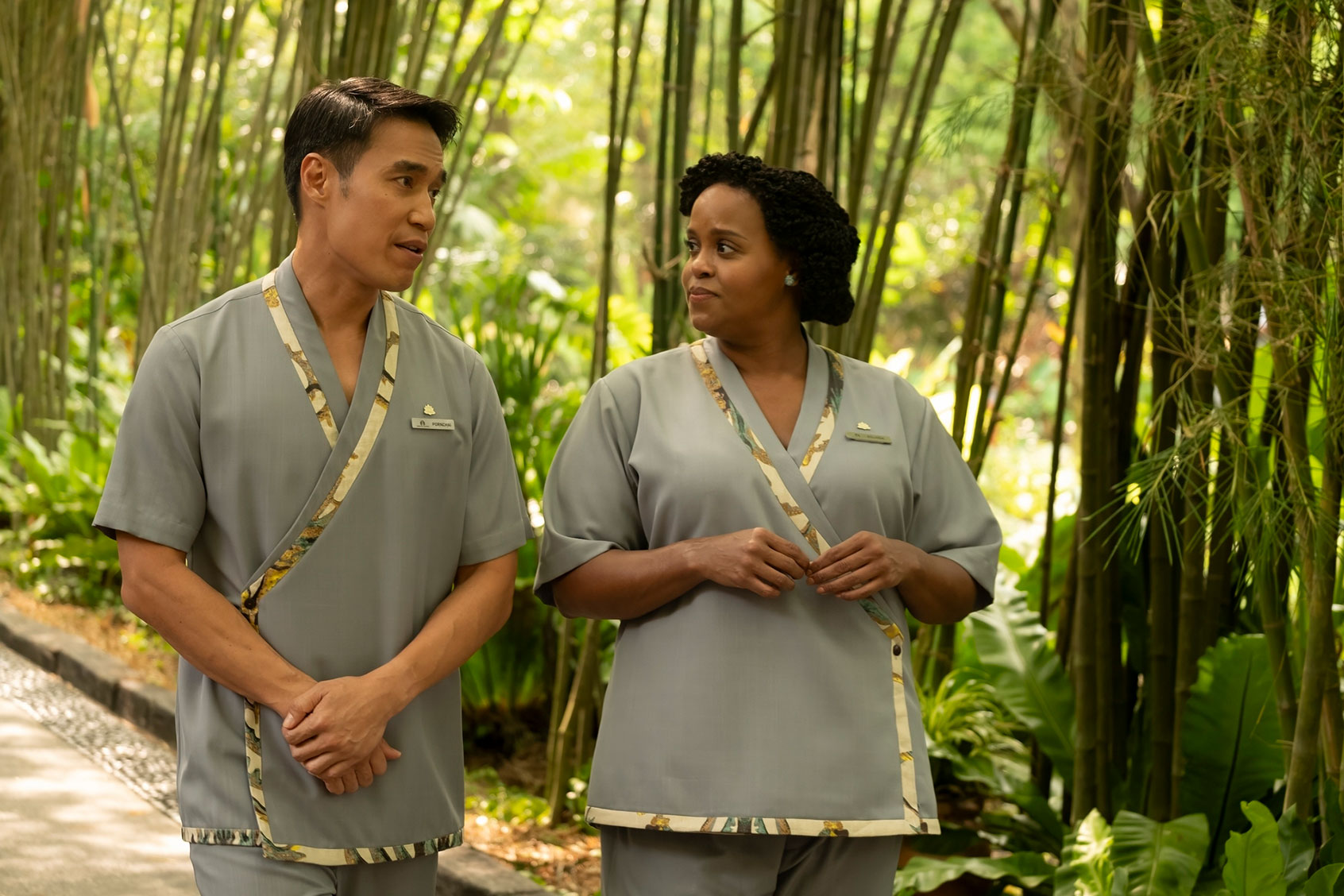
Along with CO2 levels similar to what we might expect under that not-great, could-be-worse scenario, the Miocene boasted a relatively similar continental configuration to our own, which ensures a more similar climate than otherwise, as well as its biomes.

“The ecosystems would be recognizable to what they are today. You know, like flowering plants are the dominant plants,” Reichgelt said. “You would have grasslands, which didn’t really exist that much in the Eocene.”

Significantly, the Miocene was a nearly 18 million year epoch full of change, albeit far slower change than ours. It started with a period of glaciation that must have been a chilly change from the greenhouse-like Oligocene, and ended with a prolonged period of glaciation, too. But through much of the Miocene, it was a warm world compared to today’s, a high CO2 planet that gradually cooled over millions of years until ice sheets developed in the Northern Hemisphere and Antarctica. 

Around the middle of the epoch, we reached what is called the Miocene Climate Optimum (MCO), a roughly two million year-long greenhouse period when the world experienced its last period of sustained warmth, and the CO2 level was at least 500 ppm. This is the period we’re talking about, most specifically, when we talk about the Miocene as a proxy for our future, although changes throughout the Miocene are relevant: basically, from the middle Miocene Earth went through a process roughly opposite the one we are experiencing (and causing) today.


Want more health and science stories in your inbox? Subscribe to Salon's weekly newsletter Lab Notes.


“We go from a globally warm world with an Antarctic ice sheet [in the middle Miocene] to a globally cool world with a larger Antarctic ice sheet and an Arctic Greenland ice sheet. Contemporary climate change will likely mean the reverse process over the next 100 or 200 years,” Reichgelt said.

Reichgelt is part of a thriving community of paleoecologists interested in what we can learn, and infer about the future, from accurate modeling of conditions in deep time, tens of millions of years ago. They put their different models and data together then analyze the resulting ensembles, an approach called a Model Intercomparison Project that aims to understand the differences and similarities between geophysical models. Since the paleoecologists focus on Deep Time, or epochs from tens of millions of years ago, they call their ensembles DeepMIPs. The Miocene-focused DeepMIP builds on a 2021 synthesis of various existing Miocene climate models along with available reconstructions of the ground and ocean surface temperatures during this period.

The DeepMIP-Miocene researchers found that the global mean surface temperatures during the Miocene ranged from 5.3º C to 11.5º C higher than the temperatures on earth just before the start of industrialization a couple of hundred years ago. Only about 2 degrees of that difference from today can be explained by factors other than CO2.

So what can we learn from the Miocene, its climate and CO2 levels and transitions, that might help us understand how life on Earth will be affected by our own, speedy transition to a warmer world?

Under the sea

Plankton, the abundant tiny creatures that exist in many different types today, were far less diverse during the Miocene. Katherine Crichton, a paleoclimatologist at the University of Exeter, explained to Salon in an email interview how her team explains their findings of reduced plankton biodiversity during the Miocene compared to now.

"The ecosystems would be recognizable to what they are today."

“The carbon cycle describes how carbon moves and is distributed in the ocean — this carbon includes organic and inorganic carbon. Phytoplankton living in surface waters photosynthesize, and take up carbon from the waters around them (they convert inorganic carbon into organic carbon by growing!). These plankton are predated by other plankton, and so on, and form a whole load of organic carbon near the surface,” Crichton said.

What about lower down? Well, due to gravity, we get what Crichton calls marine snow — the continuous shower of organic matter made up of everything from dead plankton to fecal pellets, that falls from the upper ocean to deeper waters. And that marine snow becomes food for the creatures of the deep. 

“If you imagine that lots of organic matter is leaving the surface waters and sinking, this is effectively removing carbon from the surface and moving it to deeper water. Between the surface waters and the atmosphere, air-sea gas exchange occurs,” Crichton told Salon. “If surface ocean waters have less carbon dissolved (inorganic), then they absorb more carbon from the atmosphere (it is more complicated than and depends on other things too). But this is how the ocean carbon pump works. So, a strong ocean biological carbon pump can draw down atmospheric carbon levels. The biological carbon pump is a result of the marine ecological system.”

Then there’s temperature, which was higher back in the Miocene.

“A fridge works because it preserves food by keeping it at lower temperature — bacterial degradation of the food happens slower at lower temperatures. If ocean waters are colder, that organic matter that is sinking degrades slower, it can get deeper, and provide a source of food for deeper-living fish, creatures, etc.,” Crichton explained. “In the warmer Miocene, less food at depth was probably why there were fewer plankton at depth, and during the cooling since the Miocene, the number of plankton species at depth greatly increased. This we attribute principally to increasing food availability.”

In the world we can expect under most scenarios of global heating over the coming decades, the biological carbon pump will become weaker. And a weaker biological carbon pump is less able to draw down atmospheric carbon into the ocean, “which means we may be underestimating future temperatures,” Crichton said, as this is a positive feedback to warming.

And on land

In a paper published January 2025, Reichgelt and collaborator Christopher West compared the shapes of fossil leaves of the Miocene gathered and analyzed in many previous studies with a dataset of modern leaf morphologies. They were able to draw inferences about the global climate on land, about productivity of different regions, and about characteristics of the various biomes of the Miocene compared to today. Among other things, they found that precipitation was much more varied from today than temperature.

“You would expect that in a high CO2 world, the temperature is the main signal that you get. But instead, we found that precipitation was the largest signal. I don’t know what to make of it yet,” Reichgelt told Salon.

We need your help to stay independent

What is clear is that this was a very moist world, with 89% of the reconstructed Miocene biomes being wetter than today while only 66% were warmer, despite our usual focus, when we think of the ways in which we are setting out on the Miocene trajectory only in reverse, on the warmer world we are entering, rather than the sogginess we should probably expect in many regions.

Carbon dioxide levels affect plants by allowing for greater photosynthesis rates, and by increasing water use efficiency, in that plants can achieve the same amount of photosynthesis with less loss of water through the pores in their leaves, because higher availability of CO2 absorbed through open pores means they can keep them closed more of the time. Thanks to all this, it was also “a globally greener Miocene world,” as Reichgelt and West write in the 2025 paper. Various forms of evidence suggest that the biosphere was more productive during the Miocene compared to now, and that at higher latitudes, this effect was more pronounced.

So what would it be like?

There is a huge amount of research that looks at very specific aspects of life in different parts of the Miocene, in different areas of the Earth, in different biomes on land and under the sea. Beyond Reichgelt’s general description of a globally greener, wetter, warmer world, it’s hard to say how we personally, or our personal favorite forms of life, are likely to fare under Miocene-like CO2 and temperature levels — nor should we, since life exists in dependent relationships, or food webs. What we can say is what did well in the past.

Take palm trees. Although plants don’t get up and migrate like herds of wildebeest, they do shift over time as climate zones change. In fact, we’re already seeing a northward shift in the distribution of palm trees, those tropical icons. Since palms are one type of plant that really can’t propagate in freezing temperatures, Reichgelt wanted to know just how far north they might spread. As he and his colleagues reported a few years ago in Scientific Reports, many palm species are able to do well in fairly temperate, rather than tropical, climes, and paleoclimate reconstructions suggest they can do just fine at a minimum temperature of 2º to 8º C (35.6º F to 46.4 Fº.)

"It’s also possible that we’re being seduced by the idea that the Miocene might represent a “happy medium."

Fifty million years ago, in fact, palm trees grew in Antarctica, as palm fossils attest, and in the more recent but still mostly toasty Miocene, they were still found in North America, Europe, Asia and in South America far south of the tropics. Back in the present day, it’s been reported that exotic palms are already displacing native species in the Swiss Alps, posing a fire risk. More fires and more palms in our future? Perhaps.

And what enjoys a good lush plant to chew on? Herbivores. In a 2020 research article that provides a rich overview of what we know about conditions and biology during the Miocene, Margret Steinthorsdottir and colleagues outline the radiation of mammals, both plant-eaters and the carnivores that feed on them, that occurred thanks to the warming climate around the middle Miocene. There were radiations of hoofed mammals; of primates including our ancestors; of whales and dolphins; of the all-time biggest sharks. Oh, and 10-foot tall, fast-running, meat-eating terror birds. ​​

By the end of the Miocene, though, as the Earth followed the opposite path to the one we’re on now, grasslands expanded at the expense of forests, and we saw the development of tundra and cactus-filled deserts, with desert-specialist animals like snakes and rats soon to follow.

Limitations on the Miocene as a proxy for our future world

Sadly, the taxodonts will not grace our future world. The long-armed, horsey Chalicotheriidae, reminiscent of Bojack Horseman, won’t be joining us at the bar. Smilodon, the catty predator whose ancestors emerged in the early Miocene, will not smile on us again. Nor the “bizarrely specialized” family of carnivorous marsupials, Malleodectidae, which used their massive ball peen-like third premolars to crush snails. Not the dog bears, Hemicyoninae, who emerged before and lived through the Miocene, nor the bear dogs, Amphicyonidae, which died out by the late Miocene. Evolution doesn’t work like that. Barring the odd de-extinction attempt, what’s lost is gone forever (that includes, thank goodness, the terror birds.)

Crichton explains that climate proxies help us to understand if our best Earth system models capture the main drivers of importance for the climate system. Past climate data helps to improve such models so that we can make predictions about the impacts we might expect on ecological and human systems, and have confidence about our results and our ability to make decisions based on model projections. Findings like Crichton’s might also provide a warning that a future climate could lack the deep-sea plankton necessary to sustain large deep-sea fish.

But there are limits to how far we can take the Miocene analogy. Reichgelt, for example, notes that while all the paleoclimate proxy models that rely on comparisons of fossil plants to modern ones use leaf surface area as a measure of precipitation, increased water use efficiency resulting from higher atmospheric CO2, rather than more rain, could actually explain the observed larger leaf sizes during the Miocene. This would mean that the models could be overestimating just how wet the world was.

It’s also possible that we’re being seduced by the idea that the Miocene might represent a “happy medium.” As Steinthorsdottir and colleagues write, “More pessimistic scenarios of unmitigated greenhouse gas emissions quickly move us beyond the Pliocene state, pushing Earth's systems into a potentially vulnerable position where many of its ‘tippable’ subsystems such as glaciers, sea ice, forest biomes, deserts and coral reefs will be permanently destabilized […] an ‘intermediate’ deep-time climate analog, where boundary conditions are close to modern but extreme climate changes occurred, is therefore of great interest.”

As humans we have a notorious tendency to believe that whatever’s in the middle of two given extremes is moderate, cozy, all around OK. (In politics, this results in the Overton Window.) But Miocene-style hydrological or water cycles favor high altitude wind events, like cyclones and hurricanes, that transport heat and moisture evaporating from the tropics to higher latitudes, or California’s intense seasonal rainstorms. The future may be lush, sure, but it’ll also be erratic and dangerous for us. And the “tippable” subsystems Steinthorsdottir mentions may have tipping points that occur well within a Miocene-like context, as scientists have warned.

It’s also important, from the perspective of the world humanity may find ourselves living in, to understand that the most significant limit in using the Miocene as a proxy for tomorrow’s world has to do with the drastic difference in the rate of change.

“We have to remember scale, right?” Reichgelt said. “We were talking about millions of years of evolution versus hundreds of years or maybe even decades of change [now]. So really different pace of change, and we’re also going in the opposite direction. So whether that will play out like that in the short term, where you have a greener world, is really a much more open question.”

He returned to the issue of water use efficiency, which should be greater in a warmer, higher CO2 world. Turns out, it’s not that simple. 

“That would in theory favor the expansion of forests, but forests need a really long time to establish, and over a shorter period of time, human disturbance or drought [are] much more effective at killing whatever is capable of establishing itself,” Reichgelt said. 

Crichton echoed the same sobering warning.

“The warming we are currently imposing is happening much much faster than changes seen during the Miocene cooling. It took say 10 million years for the Earth System to change temperature naturally by around 5 degrees — now it could happen in 100 years,” Crichton explained. If, she added, we are unlucky — and don’t take necessary steps to avoid such extreme and rapid temperature change.  

“Forgot more about immigration law than she will ever know”: Homan continues feud with AOC

Donald Trump's "border czar" Tom Homan continued his days-long feud with Rep. Alexandria Ocasio-Cortez on Sunday, hinting that the Democratic congresswoman from New York could face prosecution for informing constituents of their rights during ICE raids.

During a stop by CNN's "State of the Union," Homan questioned whether AOC could be charged with impeding law enforcement after the representative shared information on the constitutional rights of people approached by ICE agents.

“I would ask the Department of Justice, where’s that line on impediment, right? That’s a broad statute. So I know impeding or someone stopping in front of me and putting their hands on my chest that you’re not coming in here to arrest that guy, that’s clearly impeding," he said. "The Department of Justice, who are the prosecutors and decide who they prosecute and what the standards of that prosecution is. I simply say, at what point is that impeding? Because you can call it 'know your rights' all you want. We all know the bottom line is… how they evade law enforcement. Don’t open your door. Don’t answer questions."

Homan did concede that there's nothing wrong with informing the public but continued to question whether AOC crossed the line.

"They have the right to know their rights. The Constitution said they have the right to certain rights," he said." I hope to God we’re not educating people [who] are going to be the next murderer of a college student."

Homan floated the idea of prosecuting AOC in a similar television appearance earlier this week. When he said that the congresswoman might "be in trouble," AOC mocked the Trump adviser

"MaYbe shE's goiNg to be in TroUble nOw," she wrote on X. "Maybe he can learn to read. The Constitution would be a good place to start."

AOC expanded on her response in a statement to Fox News. 

"Since Mr. Homan seems to be vaguely familiar with U.S. immigration law, we also remind him that according to Congressional statute, becoming undocumented in the United States is a civil offense and not a criminal one," she shared. "I look forward to continuing our work in ensuring the safety of everyday New Yorkers while keeping families together."

"State of the Union" host Dana Bash referred to the statement in her Sunday interview of Homan. The former head of ICE replied testily that he's "forgot more about immigration law than AOC will ever know."

“The White Lotus” returns to luxuriate in the spiritual malaise of the rich and dissatisfied

Is the parent company of The White Lotus luxury resorts publicly traded? Mike White may not have the answer to that question, or perhaps he does. Either way, the overthinkers are right to wonder how it is that three of its hotels can become separate murder scenes within a brief timespan without the brand's stock taking a reputational hit.

Then again, has anyone noticed these crimes? Not likely. Every season of “The White Lotus” studies Western solipsism, the American strain in particular. Bad things happen, that mode of thinking goes, and as long as it’s not happening to me, it’s somebody else’s mess to clean. Tragedies are for small people. The world keeps turning regardless. This is a selfish way to glide through life, and it also describes the dominant philosophy of the idle rich, especially when the ruling class goes on vacation with their princes and princesses in tow.

Blessedly, Season 3 makes room for glimpses into the locals’ lives beyond the hotel, augmenting the personal stakes for workers beyond the usual administrative staff whose prickliness co-stars in previous seasons.

We love watching the rich behave badly and get their just desserts for abusing the help. But that dynamic can grow tiresome, even with more than a year’s pause between new seasons. Wisely, White evolves this viewpoint with each fresh turn, fine-tuning parts to fit each new environment and lending additional insight and sympathy to those catering to their underappreciative visitors.

Setting the third season in Thailand allows him to rectify previous shortcomings in his story arcs or, conversely, risks tumbling into old traps. The Hawaiian season, its first, minimizes the individual personality of the island's Indigenous employees to focus on the white vacationers. Natasha Rothwell’s spa manager Belinda is the sole character whose emotional trials are explored with nuance and intricacy.

In Thailand, it’s mostly the white guests who are in the minority and out of step with the environment despite its intoxicating beauty and serenity. Even Belinda, who returns this season to participate in a management exchange program, gets a good jump-scare from a chance encounter with one of the locale’s four-legged denizens. This shock vanishes as quickly as it comes since Belinda immediately melds with the Thai staff’s dedication to caring and connecting with people.

At the Hawaiian branch, that focus drains her. Here we see how the staff’s service to each other and their guests can be nourishing in ways beyond the implied requirements of their uniform.

“Thai people believe that spirits are everywhere, so we give them offerings for good luck and protection,” explains Pornchai, Dom Hetrakul’s welcoming spa manager, to his American counterpart as they consider one of the hotel’s spirit houses. These shrines laden with incense, flowers and other offerings sanctify its gardens, waters and the surrounding landscape, and they highlight the psychic malaise dominating most of its visitors.

The White LotusDom Hetrakul and Natasha Rothwell in "The White Lotus" (Fabio Lovino/HBO)

White has trained viewers to hold certain expectations for each new season, and six out of the eight episodes made available for review exceed the elevated bar of its Italy season. You can get as drunk on the cinematography as the cocktails everyone’s enjoying, which is on purpose; the artwork, accessories and even the walls tell a story. The waters surrounding each resort tell the place’s unique tale and steadily scrub the veneers off each person. In Thailand, the action is veiled in the jungle’s mist and lush greenery visitors see as magical, or perhaps threatening, but are a part of life for the people who live there.

White has honed his vacationers’ personalities to a scientific formula.

Blessedly, Season 3 makes room for glimpses into the locals’ lives beyond the hotel, augmenting the personal stakes for workers beyond the usual administrative staff whose prickliness co-stars in previous seasons.

Instead, we empathize with the accommodating and humble security guard Gaitok (Tayme Thapthimthong), a polite local villager who holds a torch for the kindhearted Mook (Lalisa Manobal), one of the spa’s many “health mentors,” its version of premium guest concierges. Gaitok’s crush on Mook isn’t entirely unrequited, but next to the burly security guards constantly flanking the hotel’s glamorous owner Sritala (Lek Patravadi) he’s a scrawny underdog.

We need your help to stay independent

You might notice the meta-layer White injects into their courtship story by casting Manobal, a member of Blackpink colloquially known as Lisa. She might be the most familiar Thai performer in the cast, although Thapthimthong’s character is more thoroughly developed than Manobal's dream girl. But recognizing the K-pop superstar's status automatically puts a thumb on the compassion scale for Thapthimthong's front gatekeeper. The story scripts them as social equals, but the audience knows Lisa's well out of this man's league.

White has honed his vacationers’ personalities to a scientific formula, with this season’s terrible family played by the Ratliffs, a brood of North Carolinians headed by wealthy businessman Timothy (Jason Isaacs) and blithely self-medicating wife Victoria (Parker Posey, affecting a drawl that’s half southern patrician and half wine-drunk).

They’re the type of couple convinced that their way of life is a universal standard, thinking to which their arrogant eldest Saxon (Patrick Schwarzenegger) wholeheartedly subscribes without any false politesse. Their younger son Lochlan (Sam Nivola) and daughter Piper (Sarah Catherine Hook) are somewhat embarrassed by their parents and brother, but mainly Saxon, who views the world as an endless buffet of things and people waiting to be screwed.

The White LotusAimee Lou Wood, Charlotte Le Bon and Patrick Schwarzenegger in "The White Lotus" (Fabio Lovino/HBO)

Meeting Aimee Lou Wood’s Chelsea bewilders him since he can’t understand how this attractive, scantily clad British girl would turn her nose up at his beefcake in favor of Rick (Walton Goggins), a bedraggled middle-aged guy perpetually stewing in a sour mood.

These types are one means by which the third season solidifies a few unifying constants across the series. Surely as the problems its families and couples think they’ve left behind catch up to them, others that have been long-gestating are coaxed into view by the warm atmosphere and relaxed inhibitions. These materialize in ways that lend unexpected mournfulness to some figures and, to others, a squeamishness that’ll make your skin crawl.


Want a daily wrap-up of all the news and commentary Salon has to offer? Subscribe to our morning newsletter, Crash Course.


The setting allows White to indulge in commentary about misguiding Western hierarchal assumptions, primarily turning up in the form of old bald white men shacking up with young women from Thailand or elsewhere. The main arcs mostly steer clear of this version of exoticizing, even in this subplot, by focusing on a couple of grudging vacation buddies who brought their younger halves to Asia with them, Rick being one.

White also reprises some of the giddy crankiness he enjoys writing for his female characters, this time through a reunion between three lifelong friends played by Carrie Coon, Leslie Bibb and Michelle Monaghan.

They claim to share a sisterhood but whose dissimilar economic and social statuses rocket to the surface like freshly uncorked champagne bubbles. Their envy does pour out immediately but strains forth bit by bit, pressing through the narrow gaps in their bleached smiles.

Like everyone else, they eventually have a motive to kill, or a reason to be killed, but before converging on that inevitable when a body shatters this placid bubble, the story takes us on a gratifying pleasure tour inviting us to smell the blossoms and note how gorgeously they’re wilting under the weight of self-indulgent egomania.

“Everyone runs from pain towards pleasure, but when they get there, only find more pain,” somebody observes. “You cannot outrun pain.” True. But this new season of “The White Lotus” helps to blunt ours with an alluring, thoughtful excursion into privileged people's problems, including whatever it is that’s passing for their souls.

"The White Lotus" returns at 9 p.m. Sunday, Feb. 16 on HBO and streams on Max.

Chappelle says he was barred from touching on Gaza, transgender people on “Saturday Night Live”

Dave Chappelle has never hesitated to touch the third rail, knowing that his unassailable craftsmanship can navigate him through plenty of thorny subjects (abject trans hate, excluded). 

With that in mind, it might not be surprising that "Saturday Night Live" gave the button-pushing comedian a list of "no-nos" during his recent appearance on the long-running series. Chappelle told a San Francisco crowd on February 13 that producers on the show warned him away from talking about transgender people and Gaza. According to a review in SFGate, Chappelle mentioned the moment in passing and failed to elaborate. 

Chappelle has long been a supporter of a free Palestine — in fact, he said "free Palestine" at the show in question before dropping the mic — but specific references to Gaza were largely absent from his monologue. 

The discursive 17-minute-long spiel he shared on "SNL" touched heavily on politics and briefly mentioned Palestine in a story praising late President Jimmy Carter. He told a long and heartwarming story about Springfield, Ohio, the town that was briefly demonized by Donald Trump and JD Vance. Chappelle said the Haitian immigrant community saved the town and pushed back against unfounded claims that the new residents were eating household pets.

"They saved a lot of companies. They did jobs that the whites weren't doing," Chappelle said of the town. "[White people] were busy doing other things: heroin, sleeping on the streets, you know what it is." 

He added that he tried to support the community by eating at local restaurants. 

"To be honest with you, I don’t know what that meat was," he joked. "But whatever it was, it fell right off the bone."

The "SNL" monologue closed with a direct plea to Trump to avoid using the office for revenge.

"The presidency is no place for petty people," he said. "Whether people voted for you or not, they’re all counting on you."

A love beyond romance: How Mary Sue Milliken and Susan Feniger built a culinary empire together

Valentine’s Day is often seen as a celebration of romantic love, but shouldn’t its spirit extend beyond that? Love comes in many forms — platonic friendships, familial bonds and even professional partnerships. In the culinary world, few partnerships exemplify this as well as chefs Mary Sue Milliken and Susan Feniger, who have worked side by side since the mid-1980s, helming the iconic Border Grill and building a culinary empire together.

Milliken and Feniger, pioneers of Mexican cuisine in the United States, have spent decades collaborating, opening restaurants, filming television shows (including the Food Network classic "Too Hot Tamales"), publishing cookbooks and advocating for social justice and equity in the restaurant industry. Their partnership has become a model of mentorship and empowerment, an example of how two people can elevate each other’s work.

Their connection runs deeper than business. In a twist that only strengthens their bond, Feniger was once married to a man named Josh Schweitzer — who is now Milliken’s husband. Yet their enduring friendship and shared vision remain the core of their partnership.

Feniger’s journey began in Toledo, Ohio, where she discovered a love for the camaraderie and pressure of restaurant work. She convinced her economics professor to let her complete her final year at the Culinary Institute of America, balancing six-hour classes with eight-hour shifts. Her career took her from fish markets to Kansas City to Chicago —where she met Milliken — before landing in Los Angeles to work with Wolfgang Puck. A stint in the south of France followed, solidifying her culinary expertise.

Young Mary Sue and SusanYoung Mary Sue and Susan (Photo courtesy of Border Grill / BBQ Mexicana)

Milliken, on the other hand, fell in love with cooking as a teenager and realized at 16 that it could be her profession. She graduated high school early, attended culinary school in Chicago, and soon after, met Feniger. "It was the first time I worked with someone as passionate as I was — maybe even more so," she recalled. "I remember one day she told me that she wasn’t reading novels, only cookbooks!"

Persistence, they agree, has been key to their success. "We are in it for the long haul," Milliken said. When they founded Border Grill in 1985, they hoped it would stand the test of time. Their early exposure to Mexican cuisine reshaped their culinary outlook. "The spices, the flavor profiles, the down-to-earth qualities of the people we worked with, the amazing use of produce—learning about ingredients we’d never encountered before, like epazote, hoja santa, achiote, and all the different chiles—was a revelation," Feniger said. 

Now, 30 years later, the pair also has a Border Grill location at Mandalay Bay in Las Vegas.

We need your help to stay independent

When asked about the secret to their enduring partnership, Feniger responded with humor and insight. "Therapy!" she said. "I think the fact that we both had many years of therapy was crucial. It helped us accept change and see the value in this incredible partnership. We trust each other implicitly, and that’s a huge gift in business."

Milliken agreed, emphasizing mutual respect. "I’d be lying if I didn’t mention how hard we work at it. We have complementary skill sets that make the partnership strong, and if there’s one thing you can always count on—it’s change."

Susan and Mary Sue receiving the Julia Child Award (Photo courtesy of Border Grill / BBQ Mexicana)

Both chefs cite winning the Julia Child Award as one of their most validating achievements. "Being part of the Smithsonian’s permanent collection, with our history displayed alongside Julia Child’s kitchen, still blows me away," Feniger said. "I mean, around the corner are Dorothy’s shoes from ‘The Wizard of Oz’ and the Batmobile!" Milliken called the award "the biggest thrill ever," describing Child as "an amazing inspiration, friend and mentor."

Their latest venture, Alice B., holds deep significance. The restaurant is named after Alice B. Toklas, partner of Gertrude Stein, and is part of Living Out, a luxury apartment complex for LGBTQIA+ adults. "A restaurant owned by two women, two activists — one of whom is a lesbian — felt like a perfect fit," Feniger said. "When we met chef Lance Velasquez, we knew he was the right person to bring our vision to life. His passion for Mediterranean cuisine, high-quality ingredients, and mentoring his team aligned with everything we believe in."

Alice B Main Dining RoomAlice B Main Dining Room (Photo courtesy of Border Grill / BBQ Mexicana)

Milliken echoed the sentiment. "We’re huge advocates for the LGBTQIA+ community, and cooking at this groundbreaking complex was an opportunity we couldn’t resist. Alice B. was a natural choice for the name—she and Stein were trailblazers, and she was beloved for her cooking."


Want more great food writing and recipes? Subscribe to Salon Food's newsletter, The Bite.


When asked why they cook, Milliken was succinct: "To make people happy, including myself." Feniger elaborated: "I love everything about it. It feels like home. Cooking is my life, my way of sharing experiences with friends. I love the ceremony of eating, the joy of giving people something special, and the way food brings people together."

Sustainability has been a core value in their kitchens for decades. "All of our fish is sustainably sourced according to the Monterey Bay Aquarium’s Seafood Watch program," Feniger said. "Our proteins are hormone- and antibiotic-free, and we’ve been at the forefront of using recycled to-go containers." Milliken added that designing plant-forward menus has been a priority. "If we all eat less meat and more vegetables, it will have the biggest impact on mitigating climate change."

Border Grill Chicken Poblano EnchiladasBorder Grill Chicken Poblano Enchiladas (Photo courtesy of Border Grill / BBQ Mexicana)

Their commitment extends beyond their restaurants. Feniger has served on the board of the LA LGBT Center for over 17 years and is now co-chair. "It’s the largest LGBT center in the world, with over 800 employees doing critical work, especially in today’s political climate. I’m incredibly proud to be part of it."

She is also deeply involved in the Scleroderma Research Foundation, having lost her best friend to the disease. Additionally, she and Milliken have long supported No Kid Hungry and their event Cool Comedy Hot Cuisine, which they co-hosted for years alongside Bob Saget.

"Good partnerships allow for change, growth, and evolution," Milliken said. "If you’re stuck in the past, that usually dooms a partnership."

Feniger & Milliken's Julia Child DisplayFeniger & Milliken's Julia Child Display (Photo courtesy of Border Grill / BBQ Mexicana)

With nearly four decades of collaboration behind them, Milliken and Feniger continue to prove that love — whether found in friendship, business or the kitchen — can be a force for lasting impact.

“Alleged intellectual”: White House Comms calls Yglesias a “mouth-breather” over Hegseth rumors

Nothing brings the left and right together quite like dunking on Matthew Yglesias. 

The wonky blogger drew the ire of White House comms staffer Alex Pfeiffer after he helped spread rumors that Defense Secretary Pete Hegseth was drinking while delivering a speech at a NATO summit earlier this week. Social media users noted the liquid in Hegseth's cup looked brown, not accounting for the refraction of Hegseth's hand on a clear cup full of water. 

"I assume this is a trick of the light and he’s not actually throwing back bourbon on camera, but it’s interesting that the water looks brown," Yglesias shared on X.

Hegseth's confirmation was hampered slightly by persistent stories of over-indulging. Employees at a non-profit he ran shared stories of frequent drinking. While it was eventually overshadowed by insinuations of domestic abuse and sexual assault, the noise around his alleged problem drinking got so loud that Hegseth promised to give it up if he was confirmed.

"I’m a different man than I was years ago. And that’s a redemption story that I think a lot of Americans appreciate," Hegseth said of the allegations hurled at him during the confirmation process. "You fight. You go do tough things in tough places on behalf of your country. And sometimes that changes you a little bit."

Yglesias' reminder of this rough start to Hegseth's Cabinet tenure was too much for Pfeiffer, who went scorched Earth on the author of "One Billion Americans."

"It's interesting that an alleged intellectual is actually a mouth-breathing idiot. Or does he just think his followers are?" he wrote. "Less than a month into the new admin, and Matt is trying to make drinking water a scandal." 

Will Kash Patel turn out to be the next J. Edgar Hoover?

Kash Patel, Donald Trump’s nominee for FBI chief, has said he wants to dismantle the J. Edgar Hoover Building, the agency’s concrete fortress headquarters in Washington, and disperse the 7,000 employees who work there to offices around the country. 

Patel could well succeed in demolishing the landmark building named for the FBI’s founding director. It was opened in 1974 and is now considered obsolescent; a replacement site in Maryland has already been chosen. But many of the incoming director’s critics worry that Patel worry he may return to the practices of the Hoover era, including unauthorized surveillance operations, massive collection of personal data and harassment of dissidents, activists and perceived political enemies.

Hoover served as FBI director from 1924 to 1972 — the first 11 years at its predecessor organization, the Bureau of Investigation — and built the agency from a small and obscure department of the federal government to the fearsome, sprawling security force of today. Currently, the FBI has a budget of $10 billion and employs 33,000 workers, including 13,000 special agents and 20,000 support personnel.  

Hoover became a national hero in the 1930s and ‘40s, when the FBI captured notorious criminals like John Dillinger, Pretty Boy Floyd and Machine Gun Kelly, and rounded up dozens of Nazi spies during World War II. 

But his legacy is quite different today. Most historians now regard Hoover as a racist and a misogynist. He belonged to an openly white supremacist fraternity as a law student at George Washington University; it is perhaps no accident that the FBI remained 99% white and all male until Hoover’s death in 1972. He fiercely guarded his autonomy, serving under seven presidents, none of whom dared fire him — perhaps because they feared what was in his voluminous files. He compiled enormous troves of information on senators, members of Congress and other public figures, and curried favor with Franklin D. Roosevelt and Lyndon Johnson, among others, by sharing gossip about their political rivals. On occasion, he conducted secret wiretapping or surveillance for his bosses.

Although Hoover officially lived on a modest salary in a small home in Washington, not far from where he was born and raised, he supplemented his income with speaking fees, gifts from admirers and free travel. An enthusiastic gambler on horse races, he was rumored to have obtained inside tips from track officials, perhaps one reason he was considered to be “soft” on pursuing organized crime. 

In the 1950s, he targeted the Communist Party USA for special scrutiny, and by the end of that decade, an estimated 1,500 of the party’s 10,000 or so members were FBI informants. Historians estimate that the FBI bureau compiled files on 10 million Americans; of those, 20,000 were considered “subversive” and subject to detention in an emergency. After the outbreak of the Korean War in 1950, Hoover offered to round up as many as 10,000 individuals immediately; President Harry Truman was horrified and rejected the idea. 

Hoover’s racism and anti-communist paranoia resulted in his notorious vendetta against Dr. Martin Luther King Jr. Hoover could not believe that Black people, whom he considered inferior and submissive by nature, would rise up and challenge the oppression they endured in the segregated South. He was convinced that the Soviet Union was orchestrating the civil rights movement and that King was a communist agent. Obsessed with destroying King’s reputation, Hoover ordered the wiretapping of King’s home and hotel rooms, collecting reels of tape documenting the leader’s extramarital affairs. His agents routinely mailed and telephoned death threats to King. Shortly before King’s assassination in 1968, the FBI sent a package to his wife, Coretta Scott King, containing tape recordings of his sexual escapades. 

Hoover kept this and other illegal actions secret, and his reputation remained largely intact until the legendary 1975 hearings held by Sen. Frank Church, an Idaho Democrat. Held in the immediate aftermath of the Watergate scandal and Richard Nixon’s resignation, the Church committee hearings uncovered many rogue activities of the FBI and CIA. Among its most spectacular and alarming findings were the CIA’s many assassination attempts against Cuban leader Fidel Castro. 

After the Church hearings, Attorney General Edward Levi published a new and far stricter set of guidelines for the FBI. Later FBI directors, including William Webster and Robert Mueller, have reportedly followed them closely. James Comey, the FBI director fired by Trump in 2017, kept in his office a framed FBI letter requesting a wiretap on Dr. King. He called it a “reminder of the bureau's capacity to do wrong." 


Want a daily wrap-up of all the news and commentary Salon has to offer? Subscribe to our morning newsletter, Crash Course.


In an interview with The New York Times, Yale professor Beverly Gage, author of the acclaimed 2023 Hoover biography "G-Man," said the founding director would have been "appalled" at Trump’s nomination of Kash Patel. Gage said she found the most frightening aspect to be Patel’s sycophancy to Trump. "He’s making no secret that he will use the bureau to punish Mr. Trump’s enemies," Gage said.

The obvious question here is how far Patel is willing to go. Will he ignore agency guidelines and seek to persecute citizens that Trump considers enemies?

James Comey, the FBI director fired by Trump in 2017, kept a framed FBI letter requesting a wiretap on Dr. King in his office as a "reminder of the bureau's capacity to do wrong." 

In 2023 Patel published a book entitled "Government Gangsters," in which he labeled the FBI "a tool of surveillance and suppression of American citizens" and "one of the most cunning and powerful arms of the Deep State." The so-called deep state, he continued, was "a dangerous threat to democracy" which used the FBI to target and persecute conservatives. At the end of the book, Patel included an appendix naming 50 current or former U.S. officials he labeled as "members of the Executive Branch deep state." That list included Joe Biden, Kamala Harris, Hillary Clinton, Bill Barr, John Bolton, Christopher Wray, James Comey and Gen. Mark Milley. 

In his first confirmation hearing on Jan. 30, Patel denied that the roster of names was an enemies list, describing it as "just a glossary."

"I have no interest, no desire, and will not, if confirmed, go backward," Patel told the senators. "There will be no politicization at the FBI. There will be no retributive actions taken by any FBI."

Rep. Jamie Raskin, D-Md., ranking member of the House Judiciary Committee, was not convinced. He called Patel "a dangerous choice" with "a wavering commitment to the rule of law," who appeared ready to "silence dissent."

Under current law, the FBI director reports to the attorney general, the recently confirmed Pam Bondi. She would be in a position to potentially limit a new director’s activities. 

If Patel does indeed conduct covert surveillance on innocent American citizens and persecute individuals he perceives as Donald Trump’s enemies, he will (consciously or otherwise) be emulating J. Edgar Hoover. If he follows the U.S. Constitution and sticks to FBI guidelines, then the dark days of Hoover’s secretive, vengeful reign will remain in the past.

If the ultra-rich want to escape from reality — good riddance

I can sometimes get irrationally upset by movies with an incredible premise that is poorly executed. “The Creator,” for example, was nothing but mind-blowing concept art with zero plot or acting.  Watching it made me mad that such beautiful trash was wasted. “Civil War” was so politically neutered, with such wooden characters, that it completely missed an opportunity to expound on the growing tensions in this country or how to navigate them. It was devoid of stakes, context and depth, a complete waste of 109 minutes. But to me, the biggest and most recent missed opportunity was “Leave the World Behind,” a 2023 film financed by Barack and Michelle Obama, no less, that is so out of touch with reality it’s astonishing.

Admittedly taking a few liberties, the plot can be summarized this way: The global elite go on an infinite vacation away from us normies, allowing the world to crumble as people realize that nothing is really holding it together. Writer and director Sam Esmail’s script plays out something like a bad slasher film, without any slashing, as a confused family at a remote rural Airbnb tries to figure out why the internet has gone out. As far as we can tell, the government just disappears — maybe because CEOs, politicians and hedge fund managers are all so essential. Based on the 2020 novel by Rumaan Alam, “Leave the World Behind” is almost like a secular version of the “Left Behind” series, which traumatized me as a kid — only it’s not Christians being sucked up to Heaven while everyone else suffers, it’s billionaires.

Frankly, this is a load of crap in many different ways, but far too many people are taking it seriously. There is something morbidly fascinating about the “super-rich preppers” who are building massive, expensive bunkers in case the manure hits the fan. It’s not fiction either. Plenty of people in the top half of the one percent are contingency-planning for just such a scenario: an escape to New Zealand or the deep woods of upstate New York if climate change, civil unrest, some high-mortality pandemic or whatever else causes the collapse of society, or at least global capitalism can no longer sustain itself. 

Such blueprints and escape schemes are in vogue, and probably for sale near you. I’m not above occasionally Zillow surfing multi-million dollar properties with super-creative names like the “Las Vegas Underground House.” Author Douglas Rushkoff has seen this perverse trend firsthand, and says he’s been courted by elites for advice designing their doomsday bunkers and adapting for a future insulated from the coming collapse.

There is something morbidly fascinating about the “super-rich preppers” who are building massive, expensive bunkers in case the manure hits the fan.

In his 2022 book, “Survival of the Richest: Escape Fantasies of the Tech Billionaires,” Rushkoff illustrates how this attitude permeates everything from seasteading to space colonies, writing: “Whether on land, on sea, or in outer space, the quest for self-sovereignty is less important as an example of apocalypse preparedness than it is as an exposé of the underlying, Ayn Rand fantasies of the tech elite: the most rational and productive among us escape to pursue their self-interests, empowered to build an independent economy of their own, free from the moral consequences of their actions.”

I can sympathize with the impulse to survive — that’s encoded in our DNA or something — but I can’t get over how misguided this mentality is. Rushkoff puts it succinctly on why the post-apocalyptic fantasies of the Nerd Reich are destined to fail:

“What I came to realize was that these men are actually the losers. The billionaires who called me out to the desert to evaluate their bunker strategies are not the victors of the economic game so much as the victims of its perversely limited rules. More than anything, they have succumbed to a mindset where “winning” means earning enough money to insulate themselves from the damage they are creating by earning money in that way. It’s as if they want to build a car that goes fast enough to escape from its own exhaust.”

I don’t need to waste time getting into the ethics of waving hasta la vista to the masses, nor do I think it’s  worth debating whether or not panic-room lairs would even work. I’m pretty sure those bunkers don’t have a shelf life half as good as advertised. The rich better hope they get what they paid for: After the bombs drop would be a bad time to find out that your oxygen filter was on the fritz or rodents had eaten all your apocalypse bucket slop before you got to it.


Want more health and science stories in your inbox? Subscribe to Salon's weekly newsletter Lab Notes.


If this is such a good idea, maybe these folks should just do it already. Stop teasing us and go. Last month, Realtor.com featured a profile on what was described as a “$300 million members-only luxury doomsday bunker complete with robotic medical suites, lavish swimming pool, and fine dining restaurants,” which was  “set to revolutionize how the rich and powerful can shelter themselves in an apocalyptic disaster.” If I had billions of dollars,, maybe I’d buy into something like that too. I’ve never been offered enough cash to know if I’m really above selling out. It sounds a lot better than LARPing “Mad Max,” although it also sounds like a version of Neo who crawled back in the Matrix, sniveling like a scared puppy.

Anyway, if you’re a moneyed packrat with a ticket out of here, please don’t hesitate. Occupy Mars or the high-tech version of your mom’s basement. Bring your Savannah cats and Gucci bags with you. I think all us peasants will do well enough without you. Without the stewards of capitalism, would the world come to an end? It’s a gamble many of us would be willing to take.

If this is such a good idea, maybe these folks should just do it already. Stop teasing us and go.

After all, back in the real world of right now,, the rich are the biggest reason this planet is getting burnt to a crisp. Not only do the affluent suck up far more natural resources than people in other income brackets, they belch out disproportionate levels of greenhouse gas emissions that cook the globe faster. One 2023 Oxfam report found that the richest 1% emit as much planet-heating pollution as two-thirds of humanity, which in 2019, translated to about 1.3 million excess deaths from heat. The 1.5º C threshold established by the Paris climate accords wasn’t just some arbitrary metric. As we exceed this boundary — which seems to have happened in 2024 with no end in sight — that will translate into tangible, measurable death on a scale difficult to reckon with.

As Earth cooks, more viruses spring up. The feedback loop of climate change and pandemics is well-established. Viruses need reservoirs in the form of animals (often bats) and as we destroy the habitats that allow wild creatures to survive, their pathogens make the jump to humans. We’ve seen this with viruses including Ebola, Nipah, SARS-1, MERS and SARS-CoV-2. We are in the process of this happening with bird flu. Other diseases are likely on the horizon.

Maybe oligarchs like Elon Musk, Jeff Bezos and Peter Thiel don’t understand that they’re leading us off a cliff. Or maybe they do, and they just think they can escape in time. I’d like to propose that they stop reading Ray Bradbury’s “The Martian Chronicles” and read Edgar Allan Poe’s “The Masque of the Red Death” instead, in which a nobleman’s masquerade ball held during a brutal plague is interrupted by the Grim Reaper. Because despite what Silicon Valley vampires who hope to beat death want to believe, there’s no escape.

That won’t stop them from trying. But what are they really trying to build? In his book, Rushkoff recalls Timothy Leary telling him that these tech bros “want to recreate the womb”: 

“As Leary the psychologist saw it, the boys building our digital future were developing technology to simulate the ideal woman — the one their mothers could never be. Unlike their human mothers, a predictive algorithm could anticipate their every need in advance and deliver it directly, removing every trace of friction and longing. These guys would be able to float in their virtual bubbles — what the Media Lab called “artificial ecology” — and never have to face the messy, harsh reality demanded of people living in a real world with women and people of color and even those with differing views.”

I say let them have it and leave the rest of us out of it. One final question deserves our attention: If the rich are so good at designing impervious automated homes, why can’t they build a better world for all of us? I don’t actually believe that extreme wealth makes people heartless or evil, although it may thrive on such tendencies. The real answer is that the ultra-rich elites don’t know what the hell they’re doing. They couldn’t make a better world if they tried. News flash: They don’t actually run this place. Ultimately, nature rules humanity, not the other way around. We can’t escape from that. Even our technology is natural, in the truest sense: It’s entirely based on resources drawn from our environment, and operates according  to the laws of physics.

The rich can’t escape, though they can certainly try, and may kill themselves and many of the rest of us in the process. As Just Stop Oil activist Roger Hallam, who is serving a prison sentence for his climate activism, told Salon’s Matthew Rozsa, “This is not a “rich versus the poor” thing. Ultimately, it is the rich committing suicide, killing us first, and then killing themselves. …  We don't need to talk about the climate, we don't need to talk about change. What we need to talk about is power and criminality and evil. What we're talking about is a death project.”

We need your help to stay independent

When spiritual teacher Ram Dass interviewed Allen Ginsberg in the 1980s, they discussed how the invention of television had conditioned people to be less empathetic, experiencing things vicariously. In our own time VR goggles and AI girlfriends make this problem even more acute.  In that conversation, Ginsberg observed that “dehumanization is a funny kind of enlightenment.” Maybe the ultra-rich are actually on the path to higher understanding. Who am I to say?

But Ginsberg cautioned that dehumanization “didn't propose a compassion or tenderness or mutual involvement or Buddha nature as an alternative. It proposed a complete annihilating void and nothingness.”

In the underground chambers where the ultra-rich think they can escape their sins,  there’s one truth that  echoes more clearly than their misguided attempt at self-preservation: It isn’t true gods that hide underground — it’s worms.

Economists say the GOP budget would destroy Medicaid and “disproportionately benefit the 1%”

Economists say that the House GOP’s budget proposal, which aims to combine a $4.5 trillion tax cut with roughly $2 trillion in spending cuts, will likely benefit the richest Americans while jeopardizing access to health care for the country's poor and rural populations.

In terms of top-line numbers, Republicans are hoping to pay for their gigantic tax cut by reducing spending by between $1.5 and $2 trillion, and they have put social services — Medicaid, specifically — in their crosshairs.

House Republican leadership has specifically asked the Energy and Commerce Committee to find $880 billion in cuts over the next ten years, while the GOP leaders have asked the Education and Workforce Committee and the Agriculture Committee to find $330 billion and $230 billion in cuts respectively. The Transportation and Infrastructure Committee has also been asked to find $10 billion in cuts.

Republicans have claimed that they don’t want to take benefits away from Americans but are also looking at work requirements for Medicaid, a policy designed to make it harder for people to enroll and stay enrolled in the program, and likely cuts to nutrition programs.

“If you add work requirements to Medicaid, it makes sense to people. It’s common sense,” Johnson told the Associated Press. “Little things like that make a big difference not only in the budgeting process but in the morale of the people. You know, work is good for you. You find dignity in work. And the people who are not doing that, we’re going to try to get their attention.”

Conservatives have long advocated for scaling back Medicaid under the guise of "reform." The Heritage Foundation in its Project 2025 blueprint for the Trump Administration advocated for deep cuts to the program. 

For example, Project 2025 advocated for "more robust eligibility determinations" and work requirements, which would push people off of Medicaid. It also advocated for the federal funding of Medicaid to be converted from a fixed percentage of a state's Medicaid costs to a fixed amount, untethered to a state's actual costs. The right-wing think tank also advocated for other policies, like lifetime caps on what a beneficiary could receive in Medicaid benefits and allowing states to eliminate mandatory benefits from Medicaid, meaning states could pick and choose what they did and did not want Medicaid to cover.

That long-standing goal informs the GOP budget proposal.

Dean Baker, an economist at the Center for Economic and Policy Research, a liberal think tank, told Salon that “it looks like they’re primarily targeting Medicaid and food stamps." To meet the numbers outlined in the GOP proposal, “you’re talking about cuts of around 20%” to Medicaid, in particular.

These cuts are meant to finance the GOP’s $4.5 trillion tax cut, which Baker said is mostly an extension of the tax cuts from Trump’s first term, which “hugely, disproportionately benefit the one percent.”

Baker said that there are a variety of ways the GOP could achieve such cuts, like simply pushing 20% of the roughly 79 million people on Medicaid off of the program, which would leave around 16 million without insurance. While the specifics of the proposal are not yet public, Baker said House Republicans could do this through a variety of methods, like raising eligibility requirements, imposing work requirements or making it so Medicaid doesn't cover specific treatments. For instance, Medicaid already has restrictions on dental care, and Congress could tighten restrictions like this even further. Republicans could also institute a per capita cap on federal funding for Medicaid.

“I can't recall a program ever being cut like this since most Republican presidents have been at least outwardly supportive of it,” Baker said. 

Allison Orris, a fellow at the Center on Budget and Policy Priorities, a progressive think tank, told Salon that even though Republicans claim they don’t want to hurt Medicaid enrollees, it is going to be impossible for them to meet their goals without doing so. Orris pointed out that most Medicaid recipients already work and that policies like work requirements are designed to just make enrolling harder for people by getting them caught up in bureaucratic red tape, while also likely denying access to those people who can't work due to disability.

“Any way you look at it it's impossible to come up with policies that would cut Medicaid that dramatically and wouldn't hurt people,” Orris said. “Even work requirements, which are at their root a way to cut people off of coverage, wouldn't save nearly $800 billion.”

We need your help to stay independent

Orris said that the sort of cuts Republicans are talking about would probably result in community health centers and rural hospitals shutting down as federal funding dries up. She also said that Republicans could implement a per capita cap on Medicaid spending, which would disproportionately affect states with lower populations.

“Whether it’s a combination of policies like reducing the level of financing states currently get to pay for Medicaid expansions or introducing a hard cap on per person spending, all of those would fundamentally change the way that Medicaid operates today and would result in people losing coverage,” Orris said. “You’re right to connect the very big number to very deep cuts.”

Orris added that the combination of coming cuts to Medicaid, alongside the likely cuts to the Supplemental Nutrition Assistance Program, would probably affect many of the same households.

Josh Bivens, chief economist at the Economic Policy Institute, a liberal think tank whose one-time chief economist, Jared Bernstein, was an advisor to President Joe Biden, told Salon that one catch in the GOP’s scheme is that — in order to do the full $4.5 trillion in tax cuts — the resolution says that they need to actually achieve $2 trillion in mandatory spending cuts.”

“This is widely seen as a sop to the anti-spending Freedom Caucus – but it’s not obviously enforceable in any way,” Bivens said. “That still obviously leaves lots of this deficit-financed, and, it also puts on Republican paper what opponents of TCJA extension have said all along: there is a pure, unambiguous trade-off between tax cuts disproportionately going to the rich and spending programs (Medicaid and others) that go to vulnerable families. This trade-off is written into the budget resolution.”


America’s Enabling Act moment: Congress’ coming denouement and the Reichstag test

Nearly one month into Donald Trump’s second term, the courts, the Congress, and the American people are facing the denouement of our democracy’s power. Each will have to decide to either enforce the Constitution or succumb, as Germany did, to dictatorship. The president has faced several court rulings that question whether his actions and policies are consistent with the Constitution of the United States that he swore to defend and uphold. The question now is, will he be prudent and begin to follow court orders, will Congress act, or must the American people shut the country down?

The House and the Senate, both with small Republican majorities, may soon be compelled to face the choice that the Reichstag faced in March 1933.

One court has ruled that he defied the Constitution’s 14th Amendment that defines citizenship and two other courts – so far – have put on hold his freeze on congressionally-authorized spending, his attempt to usurp the Article 1, power of the purse, rights of Congress. Here we see an ongoing parallel with how Hitler chose to govern, a parallel that must inevitably lead to a denouement in which we will learn whether Trump’s America goes the way of continued democracy or the hellish way of Hitler’s Germany.

Two months after Hitler became Chancellor in 1933, he, like Trump today, disregarded his country’s Constitution. In March of 1933, with the National Socialist Party shy of a majority in the Reichstag, Hitler sought and obtained a two-thirds majority vote in the chamber that passed what we know as the Enabling Act. That act stripped the Reichstag’s members of the authority given to them by the voters. The Enabling Act allowed Hitler to override laws passed by the legislature; it allowed him to make laws himself; it allowed him to ignore the Constitution; it allowed him to ban and jail his political opponents. It made Hitler the dictator of Germany. All of this was done with proper procedure and behind the veil of the seemingly best of intentions. Hitler did not unilaterally declare himself dictator. Rather, he and the Nazi Party said that all they wanted was to restore Germany’s lost stature and its people’s well-being. The National Socialists, put plainly, wanted to make Germany great again.

The Enabling Act was known at the time as “The Act for the Removal of the Distress of the People and the Reich.” The Reich’s distress originated in Germany’s surrender in World War I and the harsh terms of the Treaty of Versailles. The reparation payments imposed by the treaty drove Germany’s economy into hyper-inflation and massive unemployment. The German currency became nearly worthless. Employment, standing at about 20 million in 1929, dropped to 11.5 million by the time the Reichstag voted to endorse the act. These were, of course, the very distress of the people that the legislation was purportedly aimed at alleviating.

We need your help to stay independent

Donald Trump has promised to Make America Great Again and to undo the carnage allegedly created by the Biden administration. That, of course, is his right — if the Congress goes along with his wishes. And Trump repeatedly promised on the campaign to cut deeply into what he deems to be wasteful spending, the politicization of justice, and the biases of the civil service. As well, he promised to rid the country of illegal immigrants and to undo birthright citizenship. Much of his economic agenda and his withdrawal of birthright citizenship, however, are not rights that fall under the sphere of the American president. Indeed, when it comes to citizenship rights and spending decisions the Constitution is clear. Like Hitler, Trump seems to be signaling that he is not terribly concerned with obeying the constraints that the Constitution and Congress impose on him. Like Hitler, he seems committed to purging anyone who has opposed him and to making the law himself. Here is where the lessons of the Enabling Act become crucial. 

While Hitler sought legislative authorization for his dictatorial rule, so far Trump has not. Whether he subsequently does or does not, the American people and Congress will face hard, fundamental choices. Donald Trump believes, perhaps rightly, that Congress has authorized enormous amounts of wasteful spending. Those expenditures, he contends, impose an enormous burden on the American people, creating national distress. But, as courts have now held, it is at best questionable whether the president can undo the appropriations passed by Congress, contravening the power given Congress under the Constitution. Hitler followed the German Constitutional procedure to eliminate the authority of the Reichstag. Will Trump attempt to do the same? Will the Congress go along if he does? 

The House and the Senate, both with small Republican majorities, may soon be compelled to face the choice that the Reichstag faced in March 1933. When the courts rule against Donald Trump’s efforts to strip away those sections of the Constitution that he doesn’t like, such as the 14th Amendment’s language on birthright citizenship, then President Trump will have to make a momentous decision. Does he prefer the rule of law over his own desires, or is he prepared to put his own preferences ahead of a ruling by the Supreme Court against his effort to eliminate birthright citizenship or his effort to grant to himself legislative and appropriations authority as Hitler did through the Enabling Act? 

If he follows the law, as his oath and prudence indicate he must, then democracy survives. If, instead, he ignores the Supreme Court, then it is up to the Republican members of Congress to determine whether they are in their jobs to fulfill their oath of office or they are just there to draw a paycheck while the president usurps their function and, as happened to the Reichstag in 1933, denudes them of any say over how their own constituents are governed. If Trump chooses to ignore the court rulings, then Congress must remove him from office or hide behind the pretense that their actions are merely intended to remove the distress of the people and the regime. The heinous results of the Reichtag’s choice are all too clear. They could have chosen otherwise. Hitler needed the support of the divided Catholic Center Party and bought it with side-deals. Trump is a deal maker and that is certainly politics as usual. But such side-deals stop being normal when they result in the legislative branch agreeing to become decoration, as the Reichstag did. 

Well-entrenched democracies—for example, most recently the Republic of Korea—have withstood pressures to undo democracy. Democracy rewards average people so much better than any other form of government that if Trump is not prudent, he should anticipate being deposed by Congress or by mass protest, perhaps even extending to shutting down the economy. 

Wanting nothing more than to be a winner, we should expect that he will submit to the courts, the Congress, and, if necessary, the people. Then democracy is preserved. If he does not, we should expect that he will lose his office, his power, his dignity, and his legacy. If we come to an American Enabling Act moment, the Republicans in Congress should be expected to put democracy and their oaths to the Constitution ahead of any momentary side-deal that profits them politically while destroying the United States and their own political future in the process. 

“So long, Tesla”: Sheryl Crow waves goodbye to Musk-made car, donates proceeds to NPR

Sheryl Crow won't be taking her Tesla down any more winding roads. 

The "All I Wanna Do" singer tired of the electric automaker's unshakable association with Donald Trump's unofficial co-president Elon Musk and opted to sell her Tesla and donate the proceeds to NPR

"My parents always said… you are who you hang out with," she wrote in a Friday post to Instagram that featured the singer waving goodbye to the car. "There comes a time when you have to decide who you are willing to align with. So long, Tesla."

Crow said the money from the sale went to public radio, long a conservative target, as the outlet is under threat from Trump and Musk's federal government-razing regime.

https://www.instagram.com/p/DGEf88eBMVX/

"Money donated to [NPR]…in hopes that the truth will continue to find its way to those willing to know the truth," she wrote alongside the video soundtracked by Andrea Bocelli's "Time to Say Goodbye."

Crow was supported in the move by a who's who of twangy, progressive superstars. Margo Price said "Love to see it" while Kacey Musgraves workshopped a few puns around the regency of Crow. 

"Sheryl CrowN," she wrote. "Sheryl Queen."

 While people haven't committed to burning their Teslas in protest, in part because the vehicles tend to burst into flames all by themselves, Musk's alignment with Trump has hurt the automaker in sheer sales. 

In Europe, sales of Teslas fell dramatically last month. The automaker went through a down year in 2024, reporting its first decline in sales in over 12 years. 

“He who saves his Country does not violate any Law”: Trump denies his actions are unconstitutional

President Donald Trump shared his own, oddly capitalized spin on "l'etat, c'est moi" on Saturday, claiming that his recent actions should fall outside discussions of constitutionality. 

After several weeks of grabbing power for the executive branch, undermining Congress and bullying the press, Trump shared that he should be above the law if the ends justify his means. 

"He who saves his Country does not violate any Law," Trump wrote on Truth Social after his early executive orders and budget-slashing work with Elon Musk's questionably legal Department of Government Efficiency were called into court by a host of lawsuits. 

Trump may be right. The Supreme Court granted the office of the president broad immunity in Trump v. United States, writing that “the President may not be prosecuted for exercising his core constitutional powers, and he is entitled to at least presumptive immunity from prosecution for his official acts.”

Given the ever-growing amount of power being sucked into the executive branch, and the unwillingness of the other two branches of government to claw back their own constitutionally allotted powers, it does seem like Trump will be able to bend any law to his will by declaring his own actions legal as he does them.

Vice President JD Vance set the stage for a potential brush-off of the judicial branch earlier this month, saying that the Trump admin may well ignore orders they don't agree with. 

"Judges aren't allowed to control the executive's legitimate power," Vance wrote on X.

The president has already shown that he believes a freeze on federal funds appropriated by Congress is within his "legitimate power" and has taken aim at the typically non-partisan world of civil servants. His post makes clear that he doesn't expect any consequences for his actions and the last decade of Trumpist America has only validated that assumption.