Spring Sale: Get 1 Year, Save 58%

Sen. Tom Cotton campaigned on his “experience as an Army Ranger” — but he didn’t have any

Sen. Tom Cotton of Arkansas has accrued a resume tailor-made for a Republican politician: He leapt from a small-town Arkansas cattle farm to Harvard University and then Harvard Law School; he left a leading New York firm to join the military after George W. Bush’s re-election; he was discharged after nearly eight years and two war-zone deployments as an Army captain and decorated hero — including two commendation medals, a Bronze Star and a Ranger tab.

But when Cotton launched his first congressional campaign in 2012, he felt compelled to repeatedly falsify that honorable military record, even as he still served in the Army Reserve.

In his first run for Congress, Cotton leaned heavily on his military service, claiming to have been “a U.S. Army Ranger in Iraq and Afghanistan,” and, in a campaign ad, to have “volunteered to be an Army Ranger.” In reality, Cotton was never part of the 75th Ranger Regiment, the elite unit that plans and conducts joint special military operations as part of the U.S. Army Special Operations Command.

Rather, Cotton attended the Ranger School, a two-month-long, small-unit tactical infantry course that literally anyone in the military is eligible to attend. Soldiers who complete the course earn the right to wear the Ranger tab — a small arch that reads “Ranger” — but in the eyes of the military, that does not make them an actual Army Ranger.

Yet Cotton told the Hot Springs Sentinel-Record in February 2012: “My experience as a U.S. Army Ranger in Iraq and Afghanistan and my experience in business will put me in very good condition.” The year before, he told Roby Brock of Talk Politics in a video interview that he “became an infantry officer and an Army Ranger.” A Cotton campaign ad placed in the Madison County Record in May 2012 identifies Cotton as a “Battle-Tested Leader” who “Volunteered to be an Army Ranger.”

Reached for comment, Cotton spokesperson Caroline Tabler told Salon in an email, “Senator Cotton graduated from Ranger school and is more of a Ranger than a Salon reporter like you will ever be.” (It is not immediately clear whether Tabler herself is a Ranger, or whether she graduated from Ranger school. Further, Tabler, a spokesperson for Cotton’s Senate office, copied the office’s chief of staff, Doug Coutts, on the email, but to a Cotton campaign address; senate offices may not coordinate with campaigns. Tabler asked to arrange an off-the-record call in that email; Salon declined, citing the unfavorable terms.)

It isn’t a minor or insignificant distinction. Last summer, Washington Post fact-checker Glenn Kessler addressed it during New Hampshire’s Republican Senate primary, which featured two Ranger School alums: Colorado lawyer Bryant “Corky” Messner, and retired Brig. Gen. Don Bolduc. Messner claimed repeatedly that he was a Ranger; Bolduc did not make such claims, and called out his opponent over it.

“Unless you served in a Ranger battalion, I think you’re overstretching your claim,” Bolduc told Messner last spring. “I’m Ranger-qualified, and I always stipulate that. I never served in a Ranger battalion.”

The Ranger Regiment is considered the Army’s top action unit, and over the course of the so-called War on Terror, Rangers have killed or captured more high-value targets than any other unit. The regiment comprises four battalions, and members wear distinctive tan berets as well as a red, white and black Ranger “Scroll,” a cloth badge distinct from the black-and-gold tab that Cotton earned at Ranger School. Attending the school, in fact, is not a prerequisite to serve in the Ranger Regiment.

“It should be noted that Ranger School and the 75th Ranger Regiment are completely different entities under completely different commands with completely different missions, and one is not needed for the other,” writes one Ranger veteran for the Havok Journal.

When Kessler asked the Army to evaluate Messner’s claim, a Special Operations Command spokesperson made a distinction: Ranger qualified vs. an Army Ranger.

The U.S. Army Ranger Course is the Army’s premier leadership school, and falls under Training and Doctrine Command, Fort Eustis, Virginia, and is open to all members of the military, regardless of whether they have served in the 75th Ranger Regiment or completed the Ranger Assessment and Selection Program. A graduate of the U.S. Army Ranger Course is Ranger qualified.

The 75th Ranger Regiment is a special operations unit with the mission to plan and conduct joint special military operations in support of national policies and objectives. The Regiment’s higher headquarters is the U.S. Army Special Operations Command located at Fort Bragg, North Carolina. The Regiment is the Army’s largest, joint special operations force. All members of the 75th Ranger Regiment have passed the Ranger Assessment Selection Program 1, 2, or both. Anyone who is serving or has served within the 75th Ranger Regiment is a U.S. Army Ranger.

Messner told the Post that his claim had never been closely examined until he ran for Senate, and provided five statements from retired officers saying that anyone who graduated from the school had the right to call themselves a Ranger. Kessler went to the retired colonel who headed the Ranger School between 2014 and 2016, who said the difference was indeed a matter of debate, but concluded: “Should [Messner] say he was ‘Ranger-qualified’ in his ads? Probably. Maybe.”

Kessler described Messner’s phrasing — “Corky became an Army Ranger, serving abroad guarding the Berlin Wall during the Cold War” — as “especially problematic.” Some of Cotton’s claims appear to go even further, especially when describing his “experience as a U.S. Army Ranger in Iraq and Afghanistan.”

Kessler gave Messner two “Pinocchios,” the Post’s measure of falsehood. Cotton, who in a fiercely criticized New York Times op-ed last summer advocated for calling in the military to put down Black Lives Matter protests, deserves at least as much.

Post-Trump, what are you going to do with all of that freed-up space in your brain?

On Wednesday, Jan. 20, there came a moment around midday, Eastern Standard Time, when people across the globe harmonized through sensation. Millions upon millions, I’m guessing, felt a weight lift from their bodies – a feeling of something suddenly missing that absolutely, positively will not be missed.

Maybe along with that arrived a sharp clarity and a state that first struck some as terrifying, then bewildering . . .until it finally dawned on them that a term existed for that forgotten notion. It’s called hope.

This, friends, is a byproduct of a wild, unstable entity vacating your headspace – not a diagnosable condition but a person. Whether we wanted it or not, this person was squatting inside our brains. Now that he’s gone, hallelujah, there’s room up there. Glorious open square footage.

What are you – what are we – going to do with that empty mind hole?

Take time to think about that. Scratch that, take the weekend off from thinking about anything, since the guy who was living rent free inside your skull did a number on it, stomping on the upstairs floorboards morning, noon and night for five years, stealing your bandwidth.

Even if you weren’t on social media since he governed by tweet, he sneaked in to your thoughts by way of words tattooed on dead trees, radio waves, a friend’s seething complaint. Predictably, he got worse, doing the equivalent of clogging up the plumbing and stripping the copper from the fixtures and wiring. He’s gone now, but the place is a wreck.

We all need a break.

Once we’ve straightened out the place and taken scrub brushes and scouring powder to the corners, seriously, do come back to that question. What do we put in there? It is absolutely imperative that we come up with individual and collective answers. Recognize this is a multipronged question demanding creative responses on multiple fronts – sociopolitical, spiritual and cultural, for starters.

Television has a way of touching all of these and impacting what we believe and the way we think, and sadly the fact that the previous administration happened at all proves this. Already there are forces vying to break in and take up residence unless we reclaim that spot, change the locks and beef up the security, maybe install some motion lights?

After that we can start making repairs. Although, frankly, few are clear on the tools needed for the job.

From a holistic perspective people have already endeavored to improve themselves with exercise and deep breathing. Netflix has an entire slate of programming devoted to mindfulness, like its recently launched “Headspace Guide to Meditation,” or completely tuning out reality via “Moving Art.” HBO Max debuted “A World of Calm” before the election for a reason.

All of these provide pathways to feeling better about where we are, and you could certainly pour all the soothing imagery you can fathom into your freshly abandoned mind palace as a palate cleanser.

However, to honestly answer the question of what to do with our mental penthouse requires thinking bravely and creatively not just about where we are, but how to positively stoke the possibility of where we can and should go from here.

Lots of folks are suggesting what not to do again, advising well-meaning thinkers not to waste time digging for concrete data to explain why 74 million people voted for the hooligan who spent four years steadily beating reason and science to death and killing 400,000 Americans in the process. They don’t want to acknowledge that the answer is obvious and ugly, and therefore very hard to solve and defeat in one or two swipes.

We can be aware that in this moment, every one is asking some version of “What now?” Studios and networks are staring down a lot of empty road on the TV schedule over the next few months due to the pandemic shutting down productions. Partisanship has divided the American electorate, but it has nothing on what the streaming wars have done to fragment the nation’s TV viewers. There is no single show that gathers us on common ground lit by a single glow anymore.

Even in this there is reason for optimism and a clue about which direction to head in. “This Is Us” is still one of the most popular series among Democrats and Republicans, and has consistently enjoyed a bipartisan audience since it’s been on the air. 

CBS comedies “The Neighborhood” and “Bob Hearts Abishola,” shows that specifically deal with interactions between Black people and white people, are holding their audiences. Again, these don’t prove that white supremacy isn’t poisoning America; indeed, some of the very people who love these shows likely point to them as a proof that racism doesn’t exist. 

But the fact that people are watching them also means they’re being exposed to people who don’t look like them, welcoming them into their home and connecting to their stories.

And creators, if you’re wondering how to refresh your mental interior design, perhaps you can begin by thinking of new ways to speak to people’s biases against multiculturalism and their implicit role in propping up a society designed to degrade and exclude people who don’t look like them.

Realize, for example, that inclusive storytelling doesn’t merely mean bringing non-white characters into “white” spaces, a la “Bridgerton.” Audiences also want to enter predominantly non-white spaces; the successes of “Atlanta” and “Insecure” prove this. Moreover, they can also handle the fact that diverse programing doesn’t only mean stories about Black people.

One heartening development is the number of shows by and about Native Americans coming to TV. Ava Duvernay is developing “Sovereign” for NBC, a drama about an indigenous family co-produced by Sydney Freeland and Bird Runningwater.

“The Good Place” creator Mike Schur is bringing “Rutherford Falls” to NBC with co-creator and showrunner Sierra Teller Ornelas, starring Ed Helms as the mayor of an upstate New York town that borders a Native American reservation. FX has ordered the half-hour comedy series “Reservation Dogs” from Sterlin Harjo and Taika Waititi; it’s about four Native teenagers in rural Oklahoma who fight crime and commit it.

We should pull for these shows to succeed, because if they do that gives them the power to speak to a populace that hasn’t listened to Indigenous people, let alone seen or meaningfully interacted with them. When they knock, let them in.

Meanwhile in 2020 we lost “One Day at a Time” and barely got to know the reboot of “Party of Five,” two shows that resurrected classic formats with Latino families at the heart of them. The cancellation of “One Day at a Time” really smarts, though, because it was incredibly good at making us care about the Alvarez family for many reasons beyond the challenges they face, a secret all great series masterfully put into practice. It was all over our hearts and minds, that one. 

 (The good news is that Gloria Calderon Kellett, the forward-thinking creator of “ODAAT,” now has an overall deal Amazon.)

We also lost “Fresh Off the Boat,” and gaining “House of Ho” and “Bling Empire” doesn’t exactly bring balance in the realm of representation unless TV wants to leave the impression that all Asian folks are crazy rich . . . or space travelers, as John Cho will be in “Cowboy Bebop.” Then again, we were also blessed with Mindy Kaling‘s “Never Have I Ever,” so there’s that.

All these shows that are, were, or will be on TV play a vital part in deciding what will occupy our mind space and shaping how we view the world as it is and better, as it can be. The boldest of them will coax us into places we haven’t gone and steer us through conversations that can be new to us and therefore uncomfortable. Those dialogues can address what divides us, but they can also foster better understanding about how we got to where we are how to go through it.

In his post-inauguration monologue, “Late Show” host Stephen Colbert reveled in the relief that rolled across the nation last Wednesday and in his own way addressed the very question we’ve posed here.

“How do you repair the past?” he asked. “Have we tried unplugging it and plugging it back in? Because that works with almost everything else.”

Rebooting is impossible. Repairing and redesigning, that we can do. For now, though, it’s fine to know our mind space is ours again and blissful sit with that. The keys to our attention have been returned. Please, let’s not lose them again.

Besides getting them high, catnip may help cats ward off pests

Like a stoner with a joint or an oenophile with a glass of wine, any cat that is susceptible to the intoxicating effects of catnip seem to be having an absolute blast getting joyfully wasted.

Yet as a new study reveals, a cat may be doing more than having a good time when he or she goes bonkers over catnip. Your feline friend may also be telling mosquitoes to take a hike.

Scientists at Iwate University, the University of Liverpool, Nagoya University and Kyoto University argue in a scholarly paper published on Wednesday in the journal Science Advances that cats may also rub their faces against catnip and another plant, silver vine, because they contain chemicals which repel the blood-sucking insects. Although catnip and silver vine are not closely related, each plant contains a type of chemical known as iridoids, which are believed to induce a high in cats. Because studies in 2006, 2011 and 2014 already reported that catnip can also keep mosquitoes away from cats, the scientists behind the paper decided to expose a group of wild and domesticated cats to an iridoid extracted from silver vine. After most of the cats reacted with the same seemingly blissful grinding that they display when exposed to catnip, scientists then took domesticated cats who had the silver vine iridoids on their heads and put them in the vicinity of hungry mosquitoes.

For the most part, cats with silver vine chemicals on their heads were left alone, while those without the iridoids were covered in mosquito bites. This caused the scientists to hypothesize that cats may have evolved to feel euphoria when exposed to the nepetalactone in catnip and the nepetalactol in silver vine because those plants will also ward off the dangerous insects.

“Face rubbing against plant sources of the repellent will help to protect the face and head of the animal, as the mouth, eyelids, ears, and nose of felines have relatively little fur and are therefore easy targets for mosquitoes,” the scientists explain. “Although the rolling response following face rubbing, which exposes the belly, may look like a defenseless behavior, it enables cats to pick up repellent iridoids on other areas of their bodies.”

They also speculate that, because cats did not roll around on the ground when the stimuli were placed near them in such a way that they would not come into contact with it by rolling, “rolling is a functional behavior rather than an indicator of euphoria or extreme pleasure.”

“Previous studies reported that nepetalactone of catnip, but not nepetalactol of silver vine, induces the specific response including face rubbing and body rolling to cats,” Dr. Masao Miyazaki of Iwate University, the corresponding author of the paper, told Salon by email. Miyazaki also pointed out that their paper is the first to “show the strong evidence that rubbing behavior rather than rolling over on the ground is a most important reaction in the feline response to the plants, which enables cats to attach nepetalactol to their body fur.” In addition, their paper is the first to demonstrate that the “numbers of mosquito landing were significantly lower in cats treated [with] nepetalactol and cats that responded to silver vine than control cats.”

This does not mean that the book is closed on the matter. Sarah O’Connor, a biochemist at the Max Planck Institute for Chemical Ecology in Germany, told The New York Times that there could still be other explanations for why many cats love catnip and silver vine and that scientists still need to see how cats in the wild that roll around in iridoids fare compared to those who do not. The notion that cats like these plants so they can repel mosquitoes is “compelling,” O’Connor explained, but “I think it needs more evidence to prove it.”

Dr. Jane L. Hurst of the University of Liverpool, another co-author of the paper, also told Salon that we cannot know for sure “how cats are impacted psychologically by either of these plants and their active chemicals.” Although scientists were able to show that cats exposed to silver vine had an increase “in beta-endorphin levels associated with the u-opioid reward system, which regulates euphoric and rewarding effects in humans,” that only implies that certain cats gravitate toward catnip and silver vine because they find it rewarding. “We cannot know how this impacts the cats psychologically other than that they are highly attracted to the chemicals and very readily show this response.”

Cardiac arrest deaths are rising — and the culprit may be “stealth” opioid overdoses

Cardiac arrest–related deaths have risen precipitously during the pandemic — and the reason may have to do with a mystery of coronavirus, an increase in drug overdoses, or both.

Indeed, those are two main theories explicating the rise in cardiac arrests, both compelling. First, because SARS-CoV-2 infects blood vessels, at least some of the cardiac arrest deaths may be from coronavirus infection. A second, equally sinister suspicion is that a percentage of the cardiac arrests over the past twelve months could have been “occult” opioid overdoses — a medical term that means that the drug-related cause of cardiac arrest was not recorded nor discernible. 

Even before the pandemic, researchers suspected opioid overdoses were being “disguised” as cardiac arrests. Earlier this month, researchers published a paper in the journal Resuscitation that found 10 percent of out-of-hospital cardiac arrests from February 2011 through December 2017 in San Francisco were actually occult opioid overdoses. The paper adds on to ongoing evidence that opioid overdoses are being masqueraded as cardiac arrests is prevalent across the country. 

Indeed, since the pandemic, opioid overdoses have increased along with cardiac arrests. That’s led some to wonder whether opioid overdoses are being reported as cardiac arrests.  

“The way to think of it is that paramedics will arrive on scene, they called for cardiac arrests and will start resuscitating the patient, using protocols that are directed at resuscitating the heart,”  said Dr. Robert Rodriguez, who is the author of the study and a professor of emergency medicine at the University of California, San Francisco, in an interview. “So what we have shown is a certain percentage of those patients that they assume that they’re assuming are cardiac arrests turned out to be narcotic overdoses.”

At the beginning of the pandemic, one-third of the country’s “excess deaths” were not directly due to COVID-19, according to an analysis in the Journal of the American College of Cardiology. Public health experts define excess deaths as the difference between the actual number of deaths in a specific time period and the expected numbers based on historic trends. Specifically, comparing data from January 1 to June 2, 2020, with the same timeframe from 2019, showed that deaths by ischemic heart disease increased across the country after the onset of the pandemic.

Certainly, the pandemic has been a stressful time and is affecting everyday health in a myriad of ways—especially those in low-income and marginalized communities. As Bob Hennelly reported for Salon in April, EMS workers noted that before the pandemic they would see one or two cardiac arrest calls per shift. In the beginning of the pandemic, they were attending to as many as thirteen cardiac arrest calls per shift. At the time, they suspected it was COVID-19 related. But could those deaths be related to something else — perhaps a concurrent crisis of opioid overdoses during the pandemic.

The Centers for Disease Control and Prevention reports that more than 81,000 deaths between June 2019 and May 2020 were linked to drug overdoses — an 18 percent jump compared to the previous 12-month period. But when first responders attend to what is initially believed to be a cardiac arrest, the protocol doesn’t include administering Naloxone, which can rapidly reverse an opioid overdose. Rarely do people die immediately over an opioid overdose, as it often takes hours.

Rodriguez said if EMS responds to 350,000 adult cardiac arrests cases in the United States a year then, assuming 10 percent of those are opioid overdoses,  35,000 lives could be saved by administering Naloxone. That’s an optimistic estimate; Rodriguez’s more conservative numbers suggests 1,750 lives would be saved if the Naloxone doesn’t work on everyone. 

Rodriguez is hoping that his paper will help inspire first responders to cardiac arrests to include Naloxone in the resuscitation protocol. There is no risk to administering it, even if a person isn’t having a heart attack. 

 “The idea is that using this research we can detect these occult cases of overdose-induced cardiac arrests and, you know, hopefully save lives,” Rodriguez said. “Our plan is to kind of push this forward and do some more research and try to address that further.”

Indeed, it is possible that the rise in cardiac arrests is related to COVID-19, too. As Salon previously reported, research has shown that those who seem to have less-pronounced COVID-19 symptoms or no symptoms at all may discover that they have heart issues later.

“That’s certainly the concern,” said Dr. Thomas Maddox, Chairman of the American College Cardiology’s Science and Quality Committee and a professor at the Washington University School of Medicine in St. Louis, in a September interview with Salon. “Even for people who have a relatively benign infection, most people do not need the hospital even if they do have confirmed COVID-19. . . .  but at least a subset may have long-term cardiac damage.”

Rodriguez said there are a “number of reasons” opioid overdoses could be on the rise because of the pandemic.

“Those include social isolation, loss of the other factors that traditionally would increase narcotic abuse, such as loss of income and loss of other outlets to generally socialize,”  Rodriguez said. “Unfortunately, narcotics and opioids remain widely available and that has not changed, presumably more people are turning to that.”

Rodriguez added that more people are likely using drugs alone and don’t have someone nearby to call for social or emotional support.

Don Jr. picks up where his dad left off: Trump’s son continues tradition of Twitter lies

With his father now permanently barred from Twitter, President Trump’s son, Donald Trump Jr., has taken it upon himself to continue the family legacy of attacking Joe Biden with lie-laden accusations on Twitter. 

Don Trump Jr., who has both steadfastly defended and participated in his father’s many improprieties, has positioned himself as one of the biggest right-wing provocateurs of the Trump era. A self-styled cultural critic and political analyst, Don Jr. has already “written” two books on “leftist hate”, “liberal privilege,” and “Biden’s half century of being a swamp monster.” 

On Thursday, Twitter witnessed just one of Don Jr.’s latest provocations, when he shared a New York Times story about Portland, Oregon protestors getting tear-gassed by federal agents for destroying property and burning an American flag. “Joe Biden uses tear gas…,” said Don Jr, confused, “That’s how this is supposed to work right?”

While many users kindly reminded Don Jr. of his decreasing relevance to American politics, he nevertheless continued on with his tirade, indicting the media as a key contributor to Biden’s “illegitimate” win. 

“Imagine how much easier it is to run as a Democrat when you have a multi billion dollar main stream media complex willing to lie and run cover for you at all times!” Don Jr. tweeted, “Our media is broken.” Sowing distrust in the “liberal” media is, of course, his father’s calling card, which Don Jr. has inevitably inherited.  

To make his case on media bias, Don Jr. exhibited two headlines: one from The Washington Post which read, “Trump campaign promotes false claim that Biden would end fracking” and the other, from right-wing news site Townhall: “Biden Administration: Yes, We Are Following Through With a Fracking Ban.”

What Don Jr. failed to include, however, was any context for either. Because although the two headlines appear contradictory, both authors admit the same premise: that Biden vowed to ban fracking on federal land. 

Don Jr. also bandied Senator Ted Cruz’s absurd notion that “By [entering back into the Paris Climate Agreement], President Biden indicated that he’s more interested in the views of the citizens of Paris than in the jobs of the citizens of Pittsburgh.” Senator Cruz’s sudden concern for the people of Pittsburgh runs in direct contrast to his failed effort to overturn the election, which would disenfranchise Pennsylvania voters. In fact, most of Allegheny County, where Pittsburgh is situated, voted overwhelmingly for Biden. 

Don Jr. capped off his firestorm on Twitter with brevity. “Congratulations China,” he tweeted, eliding any context. One might imagine that such vague embitterment stems from his father’s distaste for the country, despite the family having strong financial ties to it. Don Jr.’s quip also confounds in the face of Biden’s recent condemnation of China’s sanctions on former Trump staffers.

Some have speculated that Don Jr. might pursue a political career of his own after four years of situating himself in the right circles. Indeed, The Post argued that his book Triggered read like a campaign book. It’s unclear what will come of Don Jr. now that he is steeped in litigation. Hopefully, lawyers and federal officials will drain him of the necessary and “finite” energy to ever make a bid for public office. 


After years of way too much Trump, White House reporters need to shift focus

Covering Donald Trump’s White House was easy. All that mattered was Trump.

It might have been exhausting, given his manic and narcissistic proclivity to say absolutely whatever came to mind, whenever, and regardless of what he had said before. But it was hardly mentally taxing, especially for the many White House reporters who were satisfied with simply capturing his words rather than genuinely contextualizing them.

Tracking down Trump cronies to whom they could offer anonymity in return for lies and gossip was also time-consuming for those reporters, I’m sure. But it did not require an understanding of the complex work of governing. In fact, that would probably have been a handicap.

But now we return to a state of affairs in which the White House is more than just the president’s whims and mood disorders. It is filled with staff, and process, and sometimes competing senses of mission.

And it’s hugely important for our major news organizations to break themselves of the habit of obsessively focusing on what the president says — and instead devote themselves to exploring much more broadly what is going on inside the White House, and how and why.

The nation faces an unprecedented array of challenges, which require a wide-ranging series of actions, all of which must come from this White House, which needs not just to reverse course but to set an entirely new one.

“What did the president just say?” is no longer the question reporters should be consumed by. “How can we fix this mess?” is the right question. It’s also a much more complicated question and much harder to answer, requiring a lot of research and context and critical thinking.

To his credit, new White House chief of staff Ron Klain actually summarized the challenges quite well in a public memo to staff four days before they all became official:

We face four overlapping and compounding crises: the COVID-19 crisis, the resulting economic crisis, the climate crisis, and a racial equity crisis. All of these crises demand urgent action.

So the daily press briefings, for instance, shouldn’t be about what the president thinks about this or that, they should be about what the White House is actually doing about those crises.

Instead of asking about Biden’s exercise bike or whether he will keep Trump’s Air Force One color scheme or other fluff, reporters should ask what specific steps are being taken. Even better, they should ask what future steps are being contemplated, by whom, what the alternative views are, and which seems to be prevailing. And they should get substantive answers, not canned talking points.

It was great to see new White House press secretary Jen Psaki come out only hours after the inauguration and treat the press with respect. She promised to do that daily and — most significantly — not to constantly utter a stream of lies. But reporters should demand not just announcements, but a metaphorical flinging open of the White House windows.

That’s in the Biden administration’s own interest: Only with radical transparency can the government earn back the trust of the people. That can’t happen if all the people in the decision-making process are hidden away out of public view.

I realize that since it’s so early, reporters may first need to get to know the new players. Biden swore in nearly a thousand appointees on Wednesday. His “landing teams” have fanned out to all the executive-branch agencies. And of course nominees to Cabinet posts and other major jobs are just now going through the confirmation process.

Those are the people who will actually be getting things done. Reporters should be actively pursuing them and getting them to share their backgrounds and views — on the record. In fact, a key initial test of the Biden White House’s true dedication to transparency will come when those officials either agree to talk on the record or do not.

To that end, reporters should join the Society of Professional Journalists in insisting that the Biden White House “end restrictions on employees in federal offices and agencies that prohibit speaking to the press without notification or oversight by authorities, often by using public information officers as gatekeepers.”

Reporters should join the good-government groups pushing for greater transparency about possible conflicts of interest by requiring appointees coming from the private sector to disclose not just who they worked for but what they did for the companies they worked for.

As I’ve written previously, reporters should demand that the White House proactively establish entire classes of documents that will be made public by federal agencies without reporters having to ask, including the calendars of top White House officials and agency heads, agency org charts, unclassified correspondence with Congress and more.

Reporters should then report about what they’ve found out — not just follow the president around.

After four years of effectively no process at all, reporters should keep a close eye on what sorts of processes the Biden White House is following.

There was already one significant sign of change on Wednesday, which as far as I can tell leading White House reporters didn’t even notice. It was a hugely ambitious memo with the subject line “Modernizing Regulatory Review.”

That memo would appear to be the first step in turning the innocuous-sounding Office of Information and Regulatory Affairs (OIRA) in the Office of Management and Budget (OMB) from a notorious bottleneck for pro-consumer and pro-worker regulations into a powerful force for progressive reform. The memo envisions a regulatory review process that will “promote public health and safety, economic growth, social welfare, racial justice, environmental stewardship, human dignity, equity, and the interests of future generations.” This would be a seismic change, even from past Democratic administrations.

James Goodwin, a policy analyst at the Center for Progressive Reform, wrote in an email on Thursday that he’s been trying to persuade reporters that “this was potentially the most important thing Biden did yesterday.” But apparently without much luck.

Here’s something else to keep in mind: Historically, some of the best White House coverage hasn’t involved the president at all. It comes from reporters with deep sourcing in the agencies and in the field — reporters who don’t just react to official statements, but act proactively.

I have found it depressing to see so many of the same people assigned to cover this White House as covered the last one, instead of, say, subject-matter experts. If it were up to me, I’d replace most of the White House press corps with health reporters, environment reporters and reporters who focus on racial and economic inequality — and I’d encourage them to ignore talking points in favor of original reporting.

One positive sign worth noting is the Washington Post’s assignment of longtime White House reporter David Nakamura to an entirely new beat, “to write broadly about the federal government’s role in protecting and ensuring civil rights in America, based at the Justice Department.” I think thematic beats like that are the future.

Finally, there’s another good reason to stop focusing so much on the president. It’s not just that with Biden as president, the president is no longer the only person in the White House who matters. He may not even be the person in the White House who matters the most.

Given the choice of who I’d most want an hour-long sit-down interview with, I’d probably pick Klain over Biden. He would be more likely to know the answers to my questions.

Biden is the right man for the moment: He is almost uniquely human, after a president who was almost uniquely inhuman; he is compassionate and empathetic, after a stunning absence of both; he seems truly devoted to bringing about greater unity in this country at a time when, as he said in his inaugural speech, people can’t even agree on common facts.

But I suspect that his leadership style will be more Ronald Reagan than Barack Obama — or Trump, for that matter. He seems likely to be more of a figurehead, leaving the weedy work to others.

And that weedy work is what will make all the difference.

“The White Tiger” is a terrifically cynical tale of an ambitious man who games the system

A terrifically cynical yet sanguine tale of bootstrapping, “The White Tiger” could easily have been retitled “The Rooster Coop” given the protagonist Balram’s (Adarsh Gourav) analogy that servants in India are basically trapped animals awaiting impending slaughter. But the title comes from the once-in-a-generation birth of the prized white tiger, a symbol of Balram’s ability to succeed in a society where his fate was practically sealed by being born in the Halwai (sweetmaker) caste. 

Late in the film, Balram takes his nephew to a zoo where the see a white tiger in a cage. It provides an apt metaphor. Director Ramin Bahrani, who adapted Aravind Adiga’s Man Booker Prize-winning novel, suggests that no matter how valuable one may be, they may still be imprisoned. 

As Balram narrates his story, he talks about the two Indias — one dark, one light — noting that there is a possibility that any poor Indian boy can be Prime Minister, but also that “one should not be a poor man in a free democracy.” He describes how Indian entrepreneurs must be both “straight and crooked, mocking and believing, sly and sincere.” Balram, with his slicked back hair and ponytail, reveals himself to be all of these things. His ambitions know no bounds — especially after he realizes the door of opportunity is unlocked. 

“The White Tiger” flashes back to show young Balram (Harshit Mahawar) in his village of Laxmangarh in Northern India. He knows English and is promised a scholarship in Delhi. However, his fate gets sidetracked by his family. His father is indebted to the local landlord (Mahesh Manjrekar), and Balram must work as a result; he regrets never attending school again. But he does not stop learning from the school of life. He discovers that the landlord may need a driver and promises his Granny (Kamlesh Gill) great fortune if she will support him taking driving lessons. He uses his wiles to get the job as a second driver, working mainly for the landlord’s American-educated son Ashok (Rajkummar Rao). 

The car is a(nother) cage, of course, but it allows Balram slightly more freedom. Once ensconced in servitude, Balram’s resourcefulness helps him find the weakness of the first driver, which he shamefully/shamelessly exploits. Balram also ingratiates himself with Ashok, who sees the poor young man as typical of the untapped market of Indians who can benefit from (and/or be exploited by) the outsourcing industry in Bangalore

Balram accompanies Ashok and his Brooklynite wife Pinky (Priyanka Chopra, who also executive produced) to Delhi, and drives the couple to various appointments. Some meetings involve Ashok delivering satchels of money to compensate for his family’s tax fraud, indicating the rich are, indeed, guilty. 

“The White Tiger” portrays this shift in Balram’s fortune with the young man’s wide-eyed gaping at the city’s skyscrapers and luxury. There is a tension watching Balram negotiate his new circumstance. He holds the car door open for Ashok, who feigns embarrassment, but relents, enjoying his privilege. Balram enjoys privilege by association even though he sleeps in the parking garage with the other servants/drivers. The underground network is another system Balram has to navigate, but he knows he is better off there than being in his village, where his Granny wants him to marry, which would derail his ambitions.

The crafty servant does gets chummy with his Master — they are seen playing a video game at one point — but Ashok is mercurial and can put Balram in his place. The two actors complement each other well. Adarsh Gourav makes his savvy sycophant appealing as Balram tries to please the very man he should hate. In contrast, Rajkummar Rao (so good in “Newton,” available on Amazon) plays Ashok as guileless. But he borders on creepy — especially during a drunken visit to Balram’s garage room. 

However, most of this is background. The real drama in “The White Tiger” stems from a decision the characters make following a tragic car accident that occurs around the film’s midpoint. (It is actually hinted at in the opening scene, but Balram’s narrative cheekily insists, “This is no way to start a movie!”) As the situation is manipulated to benefit the culpable, Balram’s attitudes inform his subsequent actions. 

Bahrani’s recent films — “99 Homes” and the underrated “At Any Price” — both featured characters making questionable decisions and behaving amorally for their own benefit. “The White Tiger” continues this trend, but it is less aggressive. It may be why Balram humbly asks viewers in the opening moments to withhold their judgment of him until, “I’ve told you my glorious tale.” 

What makes this contemptuous tale glorious is that Bahrani’s stinging social commentary has exuberance even during its darker moments. The film practically delights in showing the lengths Balram is willing to go to break out of the rooster coop. And “The White Tiger” invites viewers to root for a man whose behavior is likely no worse than the corrupt Master he serves. 

One revealing scene features Balram squatting and smiling with a holy fool as they relieve themselves, perhaps acknowledging that everyone is the same on some level. But a more telling episode has Balram reacting aggressively to a beggar woman, showing his haughtiness and entitlement. 

Shrewdly, whenever Balram sheepishly apologizes for any of his transgressions; he is really saying, “Sorry, not sorry.” And this is why “The White Tiger” is so enthralling. Balram plays both sides, and Bahrani admires how he games the system to get what he wants, even as he lightly chastises him for doing that. 

“The White Tiger” is available in select cinemas and on Netflix on Friday, Jan. 22.

Wait, do blue lives matter? How Joe Biggs and the Proud Boys turned on the police

A leader of the Proud Boys who was charged on Wednesday for his role in the Capitol riot boasts an arrest record that includes an assault on an officer of the peace, and on Jan. 6 led a mob of his fellow members as the right-wing man-centric gang turned on the police. He also has a history of encouraging sexual violence, and dined with Sen. Lindsey Graham, R-S.C., at former President Trump’s Washington hotel.

A since-deleted Instagram post from Nov. 7, 2019, shows self-described Proud Boy organizer Joe Biggs seated beside a beaming Graham at a banquette dinner in the BLT Prime restaurant at the Trump International Hotel in Washington. At the time, Biggs was well known in far-right circles after a seven-year stint as an on-air personality for Alex Jones’ Infowars network. Biggs, who describes his position as “investigative reporter,” used the platform to peddle ludicrous but well-trodden conspiracy theories, such as the elaborate set of falsehoods known as Pizzagate and the hypothesis that Hillary Clinton and the Democrats were responsible for the murder of Seth Rich.

Cassandra Fairbanks, a journalist for the right-wing publication Gateway Pundit, confirmed the Graham-Biggs summit in a tweet on Oct. 1 of last year, one day after Trump declined to denounce the Proud Boys in his first debate with Joe Biden.

“Can confirm. I was sitting at a table near them,” Fairbanks wrote. “Whoooops @SenLindseyGraham.” She deleted the tweet the following day. Graham at the time appeared to be losing ground in his high-profile campaign against Democratic challenger Jaime Harrison. (In the end, the senator was easily re-elected.)

(In January 2019, Biggs posted in a since removed tweet: “Trump Intl Hotel is like my cheers now. On a first name basis with everyone. Pretty F’n cool.”)

In other now-deleted social media posts from his evening with Graham, Biggs suggested that Trump would also join them for dinner, writing “awaiting @realDonaldTrump to have dinner with us,” and “about to see @RealDonaldTrump at the Trump International DC.” No documented evidence exists of a meeting, but Trump was in fact slated to be at the hotel that evening, according to his official White House schedule, which noted that he would give “remarks at a fundraising committee reception” at 8 p.m. 

At the time, the National Republican Senatorial Committee was hosting a two-day “Save the Senate” fundraiser at the hotel, featuring Trump as well as then-Majority Leader Mitch McConnell, along with several senators and candidates expected to face tight races the next fall. Another photo, this one posted on the second day of the fundraiser but since lost to the sands of time, shows Biggs mugging in the Trump International lobby with Proud Boys founder Gavin McInnes.

Biggs’ appearance that weekend was perhaps incidental to the GOP event. He had traveled to the capital to show support for longtime Trump ally Roger Stone, who was standing trial in Washington at the time. In a video interview ahead of the trip, Biggs says he would be joined by fellow Proud Boy royalty Enrique Tarrio and McInnes, as well as deplatformed conservative provocateur Milo Yiannopoulos. “It’s going to be a busy next week or two,” Biggs said.

The Proud Boys initiation process requires aspirants, among other things, to renounce masturbation and recite the names of five brands of breakfast cereal while fighting other members. The final requirement involves “a major fight for the cause,” founder McInnes told Metro.us in a 2017 interview.

“You get beat up, kick the crap out of an antifa” and possibly get arrested, McInnes explained.

For Biggs, the violent tendencies appear to go further. In 2017, Media Matters revealed that Biggs had posted a number of tweets promoting date rape and sexual violence in 2012 while serving in the U.S. Army. “Every kiss begins with … Roofies,” he wrote at one point, as well as, “I like to reason with her (reason=chloroform) and then just drink a lot of beer and release,” and “I’m gonna punch some bitches in the face real soon. But first I have to jerk off. You fucking fags.”

In a statement, Biggs said those posts “were a cry for help” while he was going through a dark time, having just departed the Army on medical retirement.

“I became very depressed and turned to alcohol and the over-abuse of painkillers that had been prescribed to me while I was in,” he said. “You see you can take the soldier out of the war but you can’t take the war out of the soldier.”

While serving in Afghanistan as an Army sergeant, Biggs was involved in a gruesome suicide-bombing incident captured in Michael Hastings’ book “The Operators.” At the end of the episode, Hastings quotes Biggs describing a group of eight- and nine-year-old Afghan boys as “little terrorist bastards.” 

Biggs was also arrested on a domestic violence charge in 2007 in Cumberland County, North Carolina, home to Fort Bragg, where he was stationed at the time. At this writing, no further information on that case is available.

Four years after his medical discharge, Biggs was arrested in Austin, Texas, for assault on a uniformed officer of the peace. A court filing detailing the fracas indicates that Biggs was drunk at the time, a detail he later confirmed in an Infowars interview, which featured short video clips Biggs had recorded on the scene, but lacked sound or subtitles. A grand jury declined to return charges.

Police officers appear to have become major antagonists for the Proud Boys during the Jan. 6 Capitol assault. The group, whose members have often joined the crowds at Back the Blue rallies, has since the 2020 election repeatedly found itself at odds with law enforcement: A clash with cops in Oregon four days before the Capitol siege resulted in multiple arrests. By the day of the riot, the Proud Boys had developed a new slogan: “Back the Yellow,” referring to their bumblebee-style palette.

Two days before the Capitol insurrection attempt, Washington, D.C., police arrested Proud Boy chairman Enrique Tarrio on weapons and vandalism charges, after he burned a Black Lives Matter banner he’d stolen from a historic Black church during a protest event the previous month. (Police also found him in possession of high-capacity ammunition magazines. As a convicted felon, Tarrio is not allowed to own firearms.)

A judge released Tarrio without bail but barred him from the city until his next court date, precluding his participation in the violence that unfolded two days later.

Asked after nightfall on the day of the riot whether anyone was “backing the blue,” far-right media personality Nick DeCarlo, who has since been indicted, told a livestream host, “No, absolutely not. In fact, there were much more people today shouting, ‘Fuck these guys, they’re traitors to us, they don’t protect us. Look at what they’re doing.'”

On the morning of the riot, Proud Boy leader Ethan Nordean — aka “Rufio Panman” — tried out the group’s new anti-police mantra through a bullhorn on fellow members gathered at the Capitol.

“Looking good, gentlemen, looking sharp. Back the yellow,” Nordean says in a speech captured on video, before apparently directly addressing police. “You have to prove it to us now. You took our boy in and you let our stabber go. You guys have to prove your shit to us now. We’ll do your goddamn job for you.”

Here, Nordean appears to be juxtaposing Tarrio’s arrest two days earlier (“you took our boy in”) with the failure to bring charges against a man allegedly involved in stabbing of several Proud Boys during their Dec. 12 march in Washington. There are no police visible in the video — at least not in uniform.

Nordean then name-checks Joe Biggs, who appears to be standing, with his face covered, in the center of the motley crew — some wielding baseball bats, one wearing tactical camo gear, a few in Thin Blue Line regalia and one sporting a derby hat suggestive of a ska concert. As they follow Nordean and Biggs to the Capitol, the person filming the video pitches a souvenir.

“We got ‘Enrique did nothing wrong’ shirts. If you wanna buy ’em, come find ’em,” he says, putting a spin on Stone’s “Roger Stone did nothing wrong” catchphrase. The narrator then asks a man next to him to show off his shirt. The man, who is wearing a Trump shirt and carrying a bat, turns to the camera, his face covered by a Thin Blue Line mask.

Soon after that, the group of Proud Boys converge with a mob of Trump supporters fresh from the then-president’s fevered speech at the Ellipse. Together they quickly dismantle police barricades, overrun a few officers and make their way toward the Capitol.

The government has charged Biggs with impeding Congress, as well as illegal entry and disorderly conduct on Capitol grounds. He was released to home confinement, with oversight. The court believes he may try to obstruct justice.

McConnell’s plan to derail Democrats’ takeover — and nuke the economy — is already in full swing

Shortly after President Joe Biden’s inauguration on Wednesday, a friend told me he was worried. Senate Minority Leader Mitch McConnell, R-Ky., was smiling way too much during the ceremony, he said, and it made him nervous. The sight of a smiling McConnell, after all, is like seeing a smiling Ted Bundy: It should immediately make you wonder where the bodies are buried. 

Sure enough, McConnell wasted no time launching his evil scheme to maintain control of the Senate after losing his Republican majority.

On Thursday, McConnell kicked off the newly Democratically-controlled Senate’s first filibuster, not of legislation nor appointments, but of even starting the business of the Senate by assigning committee spots. He demanded that Democrats take the elimination of the filibuster off the table completely before commencing with the basic business of the upper chamber. He justified the move by pompously declaring, “Minority rights on legislation are key to the Senate” and disingenuously appealing to tradition. 

This is complete and total nonsense offered with the utmost bad faith, as Sen. Elizabeth Warren, D.-Mass., pointed out. “Mitch McConnell was fine with getting rid of the filibuster to a United States Supreme Court nominee for a lifetime appointment, but he’s not okay getting rid of the filibuster for unemployment relief for families that are out of work because of COVID-19,” Warren told CNN. “I’ve just had enough of Mitch McConnell.”

Sen. Brian Schatz, D-Hawaii, agreed, reminding the Republican leader: “We won the Senate. We get the gavels.”

That McConnell is filibustering before Senate business even begins should serve as the surest sign that his strategy going in is to obstruct everything the thin Democratic majority wants to do, tank the ability of the government to serve the people, and force Biden’s presidency into failure. This is what McConnell did to Barack Obama, working under the almost certainly correct theory that people blame government failures not on the Republicans who caused them, but the Democrat in the White House. And that’s clearly what McConnell intends to do this time around

The only solution is to take the filibuster debate off the table completely, not by agreeing to let the filibuster stand, but by killing the filibuster off completely, right here and now. McConnell’s favorite tool for obstruction needs to be taken away from him. 


Want more Amanda Marcotte on politics? Subscribe to her newsletter Standing Room Only.


“Right now, the chamber that calls itself the world’s greatest deliberative body can’t even debate how to arrange itself,” the editorial board at the Los Angeles Times wrote Friday morning, arguing that McConnell’s maneuver is proof enough that it’s time to get rid of the filibuster entirely. 

It does seem that many to most Democrats in the Senate agree, but the hold-up, according to Politico, is coming from Sens. Kyrsten Sinema of Arizona and Joe Manchin of West Virginia, who “say they want to keep the filibuster, emphasizing that it drives compromise.”

This is utter nonsense. McConnell doesn’t want to keep the filibuster for “compromise”. Republicans are never going to meet Democrats halfway on anything. McConnell wants to keep the filibuster to avoid compromise and block all legislation, rendering Democrats who were elected to lead as leaders in title only.

McConnell’s very obvious plan is to keep anything from getting done, forcing the economy to collapse on itself and the pandemic to continue to spiral out of control. Republicans can then falsely blame Democratic leadership for the destruction — knowing most voters pay very little attention and won’t know the truth — to reap the rewards at the ballot box. If the filibuster is not destroyed swiftly, it will be used relentlessly by Republicans to obstruct absolutely everything. To believe anything else is to be a total fool. 

McConnell’s immediate goal is forcing Biden’s presidency to fail, but really, it goes much deeper than that. Ever since Ronald Reagan’s administration, Republicans have campaigned on the idea that government is inherently dysfunctional. The idea is to demoralize voters and drive down turnout so that the only people who show up to vote are right-wing culture warriors. And the best possible way to do that is to make absolutely sure that government never works, by tanking any efforts by Democrats to pass bills that actually help people. 

That’s why it’s foolish to believe there’s any argument that could be made to lure Republicans over to vote for Democratic bills. Republicans don’t want to vote for Biden’s proposed coronavirus relief bill, even though it would do a lot of good for their constituents, because they believe — rightfully — that seeing the government work effectively for the common good would do long-term political damage to the Republican Party. They’d rather just keep screwing over their own constituents, and pretending the problem is government itself, and not Republican obstructionism. 


Want more Amanda Marcotte on politics? Subscribe to her newsletter Standing Room Only.


The good news is an increasing number of Democrats who understand that Republicans only feign interest in compromise in order to run out the clock, making sure that absolutely no legislation of consequence gets passed. Sen. Chris Murphy, D.-Conn., told Edward Isaac-Dovere of The Atlantic that there’s “a consensus that one of the mistakes of ’09 was playing footsie for a long time with Republicans who never had any intent to actually get to yes.” 

Unfortunately, this message doesn’t seem to be cracking the thick skulls of the centrist Democrat holdouts like Manchin. What makes this doubly stupid is that, by getting rid of the filibuster, the power of said centrists increases dramatically. Without a filibuster, Manchin can extract all sorts of concessions to get legislation passed, because he’s the swing vote. With the filibuster, Republicans hold all the cards — all of them. McConnell would be the real Senate leader, and Senate Majority Leader Chuck Schumer, D.-N.Y., will be leader in name only. 

The filibuster is not a sexy debate; parliamentary procedure never is! But it is the most important and pressing issue facing the country right now, because as long as it still exists, there’s simply no hope of passing any real legislation on any pressing issue, from the pandemic to climate change. 

There is no time to waste. As Ezra Klein of the New York Times writes, Democrats only have “[t]wo years to prove that the American political system can work,” and if they fail, “they will open the door for Trumpism or something like it to return, and there is every reason to believe it will be far worse next time.”

Again, a lot of congressional Democrats — most, hopefully — seem to get this. But with only 50 Democrats in the Senate, they all need to get on board, and fast. This is about getting relief to people and passing bills that are way overdue. But it’s also, as Klein argues, about saving democracy itself. If the people don’t see their government working for them, they will drift away and let the Trumpers take over. The only way to stop that is to nuke the filibuster so thoroughly that only a smoking pit remains. 

A beloved Syrian dessert and the inheritance of loss

Good food is worth a thousand words — sometimes more. In My Family Recipe, a writer shares the story of a single dish that’s meaningful to them and their loved ones.

* * *

Back in early February, before the world as we knew it changed, I hosted 20 people at my home in Chicago. Crowding around a dining table packed to the edges with my favorite Syrian Jewish dishes, we ate and talked about the Syrian war. It was a benefit luncheon I was hosting to raise money for displaced people of the nearly 10-year old conflict that has, for most of its duration, been a blip on the map of global crises.

Aided by the mezze spread of my dreams — musabaha, muhammara, marinated feta and olives, and cheese sambousak — my friends circles merged and mingled together. When the conversation finally turned to Syria, we were deep into lunch. Over mujaddara and spinach fatayer, we began to peel away at the layers of the conflict, using stories of courage and resilience to access an alternative history. As I shuffled lunch plates from the dining room back to the kitchen, I felt a sense of pride. Guests were rapt with attention and asking thoughtful questions, and there were murmurings of satisfaction around the room: everyone was enjoying the food. I slid the baking sheets into the oven and began washing and drying salad plates. It was time for dessert.

A couple of weeks before the luncheon, I was still searching for the perfect dessert idea. Kanafeh, my first choice, and a childhood favorite of mine, felt too fussy, and wasn’t the finger-friendly finish I was looking for. So, I called my mom and brought up my interest in making qatayef, a well-loved Arab pastry. It would be a showstopper of a dessert, but I was looking for her vote of confidence. As I listed out the logistical hurdles I would have to overcome to serve these cream-filled deep-fried pancakes for 20 people, I could see I wasn’t going to get the validation I was seeking. What I hadn’t realized was that I’d trigger another decades-old food memory.

There has to be a word that describes when a long-dormant memory, buried in the dark recesses of one’s brain, comes rushing to the front, but this is exactly what happened with my mother. Though her recollection was immediate and matter-of-fact, there was something serendipitous about it. In my mom’s deep mental catalogue of everything she had ever cooked, it felt as if she had been waiting for the moment to find this treasure in the corner.

Phyllo with sutlaj had last been made, my mom explained, some 20 years ago by my grandmother on Shavuot, a Jewish holiday on which it is traditional to eat foods with dairy. As she reminisced, I tried to recall my 13-year-old self eating this dessert, a creamy, floral-scented custard enveloped in buttery phyllo dough, but had little memory of it. My mom urged me to make it, and I was quite taken with the idea — an old recipe rediscovered, an impressive end to the luncheon, and an opportunity to pay homage to my grandma, who passed in 2011.

The only snag? She didn’t have the recipe.

As I dwelled on whether the recipe would live again, I began thinking about the patterns of loss and reemergence in recipe preservation. Several years before my grandmother died, she had stopped cooking, but well before that, the women in my family — aunts and cousins alike — began learning to cook and bake as she did. After all, she was getting on in years and the family was ever-expanding, so they pitched in to put together elaborate Shabbat and holiday dinners. It was a casual inheritance that developed over a few years. No one was prepared for her to completely leave the kitchen — but one day, she turned the light switch off one last time.

My grandmother was gone by the time I loved food and cooking enough to pursue it professionally. People often ask me about the inspiration for my catering business and the Syrian dishes that I cook. I invariably talk about the influence my grandma had on me, and the legacy she built in the kitchen. But here’s the thing: legacy is tricky, and almost always seen through the eyes of the beholder. Did my grandmother love cooking? I do not know, and I do my best not to conflate the unbelievable command she had in the kitchen with a love for the time she spent there. One of her quips in her final years was: “I’ve seen the world over!” Usually this was her feisty response to someone pushing her too hard to take on some new experience. It only dawned on me after she was gone what this had really meant. She was tired.

I was young when my mom started telling me about my grandma’s life growing up. Though her family’s Aleppian lineage runs long, my grandmother was born in 1922 in what is now Istanbul. Right after she was born, her father’s jewelry business took the family to Paris. At the age of 17, the year France surrendered to the German army, she was compelled to leave her parents behind and hide on a farm until the country was liberated from Nazi occupation in 1944. When she returned to Paris, it was a completely changed city, country, and life. Her family’s house had been ransacked and was empty. She had lost her father, mother, and twin brother to concentration camps.

It was not until I was much older that I learned why my grandma survived. When the Germans came to her family’s home one night and took her twin brother, her parents set in motion a plan to send their daughters away from Paris, paying thousands of dollars to secure their escape, forging papers to hide their Jewish family name (Chalom), and arranging safe passage to the small town of Villeneuve in Southeastern France.

Adele, or Auntie Adele as we call her, was only 12 when she fled with my grandma and her other sisters. Though my grandma never actually mentioned this, the experience of war and violence left an indelible mark on her relationship with Auntie Adele. After all, she helped raise her. While her other sisters stayed in Europe to make new lives, Auntie Adele moved to New York soon after the war was over. My grandmother would follow her several years later, settling there with my grandfather in 1951.

It was because of grandma’s closeness to Auntie Adele, both in physical proximity and relationally, that I saw her so often growing up. She was a fixture at childhood summer beach outings and was often around on holidays. After my grandmother died, it was Auntie Adele we called to decipher recipes and recall the Syrian dishes that grandma left in our memories but not on index cards. As it turns out, Auntie Adele could not remember the last time she had made phyllo with sutlaj, but she gave my mom her recipe and asked, jokingly, to save her some.

When I started my own catering business three years ago, I began making a concerted effort to document and become more skilled in making many of my favorite Syrian dishes. It was not only to begin sharing this wonderful food more widely with clients, but also in realization that my forebears would not be around forever.

Since moving to Chicago in 2010, I have traveled back to New Jersey to visit family every summer. The past three visits, I have suggested the idea of having an intergenerational family cooking class with Auntie Adele to learn more about Syrian dishes we have never made but the idea has never come to fruition. At the end of my last trip, I asked my mom why she has been so reluctant to let this happen. Her response was that she thought it would be an imposition. But imposition is how recipes and culinary tradition live on for another generation, I wondered to myself—like money, we cannot take them to our grave and be the better for it.

When I brought the phyllo with sutlaj out to the table this past February, I could not help but think of my grandma and Auntie Adele. In so many ways, their experiences with loss, trauma, and hope touch up against the feelings Syrians are cycling through today. When Auntie Adele — the last living sibling of my grandma — is no longer with us, will memories, recipes and stories continue to reveal themselves? They have left so much behind and yet, selfishly, I still want more.

As people settled into dessert and smiles hit their face, I let out a sigh of relief. I looked around the table and realized that, 800 miles from any of my own family, I was surrounded by my chosen family who supported my idea, my food, and an amazing organization. We had raised over $2,000 to support Syrians still striving for peace and justice. With the themes of loss and emergence floating around all of us, a dessert had finally returned home.

Recipe: Auntie Adele’s Phyllo With Sutlaj

The shock and awe of Donald Trump’s final days

It seems like only yesterday that we were all making jokes about 2020 being the worst and reassuring ourselves that 2021 was bound to be better. Looking forward to the departure of the most divisive president in U.S. history we slid into the new year relieved and a little bit complacent, secure in the knowledge that the country was soon to be rid of him. Instead, this has been the most tumultuous January in modern memory.

Each week of the new year has been momentous. Specifically, every Wednesday of the new year has been historic.

We started with the January 6th insurrection, of course, in which then-President Donald Trump incited an angry mob of thousands to storm the U.S. Capitol during a joint session of Congress to stop the constitutionally-mandated counting of the Electoral College votes for the next president, Joe Biden. That had never happened before, obviously. Until then, we never had a president so radical and so psychologically unbalanced that he would try to stop the peaceful transfer of power. But, of course, Trump was unlike any other and he persuaded tens of millions of people that they could believe him or they could believe their lying eyes and convinced them that the election had been stolen from them despite all evidence to the contrary.

That Wednesday is going to be one of those days that will be remembered like December 7th and 9/11. It will be commonly referred to as the January 6th insurrection or, more likely, just January 6th.

The nation was left reeling and in shock by what they saw unfold on their TVs, including the speech by a president who egged the mob on and then stood by and did nothing for hours, reportedly delighted by the mob violence. Members of Congress had been targeted by the murderous rioters and were left traumatized by the experience. It was so outrageous that on the very next Wednesday, the House of Representatives took the bold and unprecedented step of impeaching President Trump for a second time.

They had no choice. Five people died on January 6th and dozens were injured. The horrific pictures were beamed around the world leaving our allies shaken and our adversaries rubbing their hands together with glee. Despite the fact that Trump would be out of office in just one week, Congress had to take a stand and they did. Even ten Republicans voted to impeach, which is saying something considering their normally supine attitude when it comes to Trump.

So on the first Wednesday of January, the United States suffered a violent insurrection and on the second Wednesday, the House of Representatives impeached the President of the United States for his role in it. Then one week later, on the third Wednesday of the month, a new president was sworn in.

Suddenly this week, after what the nation went through the first few weeks of the new year, the government went back to normal, observing its usual quadrennial rituals, necessarily altered due to the raging pandemic, but nonetheless offered up to the public as a cheerful, optimistic event as if nothing had happened.

Ask yourself what you would think if you watched these events take place in another country. Would you call that a stable democracy?

These three major events happening in rapid succession was more surreal than anything that happened during Trump’s four years. And perhaps the weirdest part is the fact that the day after the Inauguration, he had vaporized. After dominating our political culture for almost five years, we are quite suddenly in a world in which he simply doesn’t exist. Sure, there are remnants of his reign to be dispensed with and his former collaborators are still throwing a few punches from the sidelines. But with Trump banned from social media and no longer commanding the attention of the press, we are watching the last four years already wash down the memory hole in record time.

Americans don’t have a great capacity for introspection and there is a great propensity for amnesia when it comes to our unpleasant past and inability to live up to our ideals. Leaders tend to prefer to sweep things under the rug with the excuse that we are a forward-looking culture that doesn’t wallow in nostalgia as some others do. (That’s bunk, of course – we valorize the founding as if the Declaration of Independence and the Constitution are holy writs.) It’s a habit that has led to an America in the 21st century still having failed to deal adequately with the original sin of slavery and the racism that festers and creates much of the division that the right has been exploiting for decades and which finally exploded into the violence of January 6th.

Let’s face facts: Donald Trump ran two presidential campaigns on blatantly racist culture war themes and when he lost this time he told his supporters that Black voters in Philadelphia, Atlanta, Milwaukee and Detroit stole the election from him. And yet, just two days after the new president is sworn in it feels as if that clear realization is already slipping away.

The right is naturally doing what it always does. Its top voices are already energetically clutching their pearls at the mere mention of white supremacy and racism and fatuously insisting that Joe Biden is dividing the nation by even suggesting it might be a problem. As The Atlantic’s McKay Coppins put it, they plan to pretend it never happened:

People who spent years coddling the president will recast themselves as voices of conscience, or whitewash their relationship with Trump altogether. Policy makers who abandoned their dedication to “fiscal responsibility” and “limited government” will rediscover a passion for these timeless conservative principles. Some may dress up their revisionism in the rhetoric of “healing” and “moving forward,” but the strategy will be clear—to escape accountability by taking advantage of America’s notoriously short political memory.

And, as usual, a Democratic administration has been elected in the wake of catastrophe and they will have their hands full dealing with the urgent emergencies of the pandemic and consequent economic fallout as well existential long term problems that can no longer be put off. The temptation is going to be great to just pretend we are back to “normal” and write off this strange episode as an anomaly. But sweeping the radicalization of the faction of Americans that is organized around racism and resentment under the rug is what led us to January 6th and it won’t be the last time if we don’t face up to these problems.

We have one more Wednesday left in January. It should be the first day of Donald Trump’s second impeachment trial.  It would be a good day to take the first step in a long, overdue process of accountability, restitution and reconciliation. There can be no healing or unity without it. 

“It’s over and nothing makes sense”: QAnon believers struggle to cope with Biden inauguration

Followers of the QAnon conspiracy theory have for years believed, in the face of all available evidence, that Donald Trump would soon begin mass arrests of his political foes and retain power indefinitely. Many of them appear to be struggling to cope with reality after President Joe Biden was sworn in on Wednesday and the mass arrests never came.

Many diehard conspiracy theorists, stoked by Trump and his top allies, have long predicted “The Storm,” a day of reckoning Trump would lead the National Guard in mass arrests of Democrats, “deep state” elites and Hollywood celebrities whom Q fans believed were running a cannibalistic, satanic child trafficking ring. This would in turn usher in the “Great Awakening,” when the world would discover that Trump had been leading the fight against this cabal all along. But the “storm” never came, and Trump flew off to his Mar-a-Lago golf resort as expected while Biden was sworn in as the 46th president. The only “mass arrests” were of Trump supporters who stormed the Capitol on Jan. 6, many of whom were dressed head-to-toe in QAnon gear.

“It’s over and nothing makes sense,” one QAnon forum user wrote. “Q was a LARP the entire fucking time,” wrote another, describing the entire conspiracy theory as a live-action roleplaying game.

QAnon, which is effectively a greatly amplified version of the baseless Pizzagate conspiracy theory, began in October 2017 when an anonymous poster on the far-right imageboard 4chan who went by “Q,” and who claimed to be a high-level government official, and began to post “clues” about Trump’s secret plot to take down the deep state, Democrats like former President Barack Obama and Secretary of State Hillary Clinton, and celebrities like Tom Hanks and Chrissy Teigen. QAnon adherents had cited many previous dates in their past mass-arrest predictions that all came and went, but some still held out hope that Trump would lead the mass arrests right up until Biden was sworn in shortly before noon Eastern time on Wednesday. Some claimed that the National Guard troops deployed to protect Biden’s swearing-in were actually there to carry out the mass arrests.

“Well I’m the official laughing stock of my family,” a user wrote in a QAnon group chat. Another questioned whether Biden was a “hologram.”

Speculation has swirled for years about who was behind the Q account, which stopped posting shortly after Trump’s election defeat. A 2018 NBC News investigation concluded that Q could likely be traced back to three people who first pushed the posts on 4chan and 8chan and had created similar accounts in the past. Some have speculated that Q was Ron Watkins, the former administrator of 8chan, which has since changed its name to 8kun after it was kicked offline after  the 2019 El Paso Walmart shooter published his manifesto on the platform.

Watkins posted a message on Telegram urging people to “go back” to their lives and “remember all the friends and happy memories we made together over the past few years.” Some users in the channel responded by accusing him of being a CIA “plant.”

Biden’s inauguration set off a wave of confusion and numerous varieties of grief among the true believers.

“I dont think this is supposed to happen?” one user wrote during Biden’s swearing-in. “How long does it take the fed to run up the stairs and arrest him?”

Opinions appeared divided on what the future may hold. Some predicted that Trump and the military still “have a plan” that will kick in at some point after Biden takes office. Many looked for hints or “clues” in Trump’s farewell speech and the statements made by his children. Others urged patience, insisting that the former president still had some sort of mysterious “Trump card” to play.

Others even sought to change direction, suggesting that “Biden has been part of QAnon all along.”

“The more I think about it, I do think it’s very possible that Biden will be the one who pulls the trigger,” one user wrote in a popular QAnon Telegram channel.

“The most hardcore QAnon followers are in disarray,” Daniel Jones, the president of extremism watchdog Advance Democracy, told CNN. “After years of waiting for the ‘Great Awakening,’ QAnon adherents seemed genuinely shocked to see President Biden successfully inaugurated. A significant percentage online are writing that they are now done with the QAnon, while others are doubling down and promoting new conspiracies.”

“What we’re seeing is a trend in increasingly bunker-down, apocalyptic language,” Joel Finkelstein, co-founder of the anti-disinformation group Network Contagion Research Institute, told The Washington Post. “It’s gone from [talk of] a revolution to a civilization-ending kind of collapse.”

QAnon followers have largely been relegated to message boards and apps like Telegram and the right-wing social network Gab after Twitter and Facebook cracked down on accounts associated with the conspiracy theory. Screenshots of QAnon adherents shocked by the inauguration quickly went viral and drew rampant mockery. Now white supremacists have seized on the disillusionment on these platforms and are actively trying to recruit members to their cause, according to Nick Backovic, a researcher at Logically.AI, which identifies disinformation online.

“There are lots of people feeling shocked, cheated and angry. As scary as that is on its own, it’s the rest I’m most worried about,” he told NBC News. “We’re seeing a lot of neo-Nazis preying on the potentially disenchanted Q people.”

“Focus less on trying to red pill [i.e., recruit] them on WW2 and more on how to make them angrier about the election and the new Democrat regime,” a white supremacist recruitment message on Telegram said, according to the report. “Heighten their burning hatred of injustice.”

Other experts worried that the QAnon conspiracy theory had spread overseas to countries like Germany and Japan.

“They’re going to reemerge at some point because they’ve internationalized,” Finkelstein told the Post. “There’s a metastization of QAnon from a national story to a global revolution.”

Can Democrats hold the line? Schumer may rebuff McConnell on filibuster in first power-sharing salvo

Now that the Democrats have taken their narrow hold on the Senate majority, Republican Majority Leader Mitch McConnell, R-Ky., is pushing to keep the filibuster — a tool that will undoubtedly be used to hobble any Democratic agenda. So far, however, all indications are that Senate Democrats are prepared to explore the “nuclear option” of suspending or even ending the filibuster –– which might expedite Senate Majority Leader Chuck Schumer’s top legislative priority. 

“From a violent insurrection to countless attempts to suppress votes,” Schumer said, “Attacks on democracy have come in many forms.” The Senator added, “The first bill the @SenateDems majority will introduce will be the #ForThePeople Act to renew democracy, end big money in politics, and tackle corruption.” With support from several civil rights groups and public policy organizations, including the Leadership Conference on Civil and Human Rights, Common Cause, the Center for American Progress, the “For the People Act” seeks to crack down on “rampant voter suppression, gerrymandering, and a torrent of special interest dark money.” 

The first iteration of the “For The People Act” (H.R. 1) was passed in the House back in 2019 before it was inevitably killed by the Republican-majority Senate. The bill –– which The New York Times called “the Democrats’ signature piece of legislation” –– originally set out to expand voting rights, improve government ethics, and enact sweeping campaign finance reform, even demanding a constitutional amendment to reverse Citizens United.  

The bill also promised to institute a formal code of ethics for Supreme Court judges, reform redistricting, and give D.C. formal statehood. McConnell condemned it, at the time, as a “one-sided power grab” by the Democratic lawmakers.

Schumer has been open to working across the aisle given the Senate’s virtually even split, but his efforts to broker a power-sharing agreement with McConnell look to have run into a wall after McConnell demanded he be able to still utilize the only procedural mechanism that could help maintain his control even while in the Senate minority. “The legislative filibuster is a crucial part of the Senate,” he declared on Thursday. 

“I cannot imagine the Democratic leader would rather hold up the power-sharing agreement than simply reaffirm that his side won’t be breaking this standing rule of the Senate. I appreciate our ongoing good-faith discussions and look forward to finding the solution together,” he said. “If the talk of unity and common ground is to have meaning, and certainly if the rules from 20 years ago are to be our guide, then I cannot imagine the Democratic leader would rather hold up the power-sharing agreement and simply reaffirm that his side won’t be breaking this standing rule of the Senate,” McConnell said.

“It’s too soon to say how we’ll pursue this,” said Sen. Ed Markey, D-MA, who sponsored the bill with Schumer, “Every American has received a message that the integrity of our elections is incredibly important and so in terms of accountability for the events of this past year there’s probably nothing more important than passing the For the People Act.”

The No. 2 Democrat in the Senate, Democratic Whip Dick Durbin of Illinois insisted, “We’re not going to give [McConnell] what he wishes. If you did that then there would be just unbridled use of it. I mean nothing holding him back.” 

“Chuck Schumer is the majority leader and he should be treated like majority leader. We can get shit done around here and we ought to be focused on getting stuff done,” said Sen. Jon Tester, D-Mont. “If we don’t, the inmates are going to be running this ship.

Even West Virginia Democratic Sen. Joe Manchin, who opposes such institutional changes, said of Schumer’s refusal to back down from the filibuster fight: “Chuck is right to do that, he’s the leader. I’m in the minority of the caucus on this. He has the right to use that to leverage in whatever he wants to do.”

In the meantime, McConnell is also reportedly asking Schumer to hold off an impeachment trial until February to give Donald Trump’s legal defense at least two weeks to prepare. 

Texas lawyer fired after Capitol riot files ambitious suit: Dissolve Congress, don’t arrest him

Texas attorney Paul Davis, who was fired earlier this month after posting several Instagram videos of himself on the front lines at the Jan. 6 Capitol riots, filed an impressively grandiose lawsuit in federal court on Monday, requesting that Congress disappear entirely and that nearly everyone who holds high office in the United States, along with Mark Zuckerberg, be barred from ever seeking election or voting again. He also asked the court to tell the Justice Department and FBI not to arrest him.

The complaint, filed in the Waco Division of the Western District of Texas by Davis and co-counsel Kellye SoRelle, a failed Republican candidate for state office, claims that every vote cast in the 2020 general election was illegal, and therefore that “entire 117th Congress is illegitimate.” Consequently, Davis argues, every action this Congress has taken, including impeaching former President Trump and certifying President Joe Biden’s victory, is “null and void.”

The lawsuit was filed in the name of a few small conservative minority groups, including Latinos for Trump and Blacks for Trump, along with a number of related but unspecified individuals. The only plaintiff whose full name appears in the document is Joshua Macias, a Navy veteran and the founder of Vets for Trump, who was arrested in November after he and a friend brought a semiautomatic rifle and samurai sword from Virginia Beach to a Philadelphia ballot processing center. Macias also submitted, under penalty of perjury, a false sworn affidavit in Davis’ lawsuit, upon which hinged the suit’s sole claim of actual injury.

The 54-page complaint opens by stating plainly that it is “not a 2020 presidential election fraud lawsuit,” and doesn’t seek to change the declared winner of any elections. (Based on the subsequent arguments, that appears blatantly false.) A footnote on the first page reads: “This is not a Sidney Powell lawsuit. This is not a Rudy Giuliani lawsuit. This is not a Lin Wood lawsuit. This is not a Team Trump lawsuit. This is not a Republican lawsuit. This is not a Democrat lawsuit.”

The suit then goes on to argue that procedural election changes adopted by the majority of states out of public health concerns have, unfortunately, voided every vote cast anywhere in the country.

For remedy, Davis asks the court to throw out the results of every federal election last year, shut down the legislative branch and (re)install Trump as the country’s sole legitimate elected official. He adds that the court “should rest assured that the relief requested in this lawsuit will not result in the destruction of democracy.” Which is reassuring.

Davis takes the additional bold step of asking the court to ban every sitting member of the House and Senate, all 50 governors and secretaries of state, the governor of Puerto Rico and Facebook CEO Mark Zuckerberg from ever holding elected office, voting, or publicly engaging in any political activity for all time.

This must be done post-haste, argues Davis, who at one point in the suit admits that he had been awake for 48 hours, because Biden was slated to be inaugurated in two days. (He filed when courts were closed for Martin Luther King Jr. Day, which burned one of those days.) On the morning of the inauguration, with no action in Waco and Trump en route to Palm Beach, Davis filed a supplemental memo begging the court to issue “some sort of restraining order” to stop Biden and all sitting members of Congress from carrying on the business of government.

To get such a restraining order, however, Davis would have to show immediate and irreparable harm to his clients. He argues that a Biden presidency would precipitate a constitutional crisis that will “have a devastating effect on the Plaintiffs’ ability to plan for retirement by investing in 401(k)s, IRAs, or other such accounts.”

Coming as it does on the heels of a nationwide crash course in the toxic social effects of frivolous election lawsuits, the complaint left experts appalled.

“The suit is illogical and convoluted,” Barry Burden, director of the Elections Research Center at the University of Wisconsin, told Salon. “It misunderstands the Help America Vote Act altogether and the relationship between the U.S. Constitution, federal laws and state election law. It is filed far too long after the election to be actionable and in any event is requesting a preposterous remedy of removing every elected federal official from office who was elected in 2020 aside from President Trump. Remarkably, the lawsuit says nothing about how Vice President Pence should be treated.”

“Somehow Mark Zuckerberg is also listed as a defendant,” Burden added.

(Some experts have shared their analysis of the suit’s merits, such as here and here.)

Other than Zuckerberg, named defendants include Rep. Pete Sessions, R-Texas; House Speaker Nancy Pelosi; then-Senate Majority Leader Mitch McConnell; Rep. Alexandria Ocasio-Cortez, D-N.Y.; then-Senate Minority Leader Chuck Schumer; and Georgia secretary of state Brad Raffensperger. That list then extends to “all current so-called members of the 117th Congress,” every governor of the 50 states and Puerto Rico, and every secretary of state. The Facebook CEO is sued in his capacity as founder of the Chan-Zuckerberg Initiative, and at one point Davis accuses him of criminal fraud, without elaboration.

The suit does not appear to have considered that the vast majority of senators, along with a large proportion of the governors and secretaries of state, were not elected in 2020. Its legal argument, if that’s the correct term, appears to rest in large part on two “expert” reports: One produced by Dennis Nathan Cain, aka the Clinton Foundation whistleblower; and one by a man whose LinkedIn page says that he had 40% of his cerebellum removed.

“One thing that Americans learned during the post-election litigation is how little patience courts have for absurd legal arguments,” Ciara Torres-Spelliscy, fellow at the Brennan Center for Justice at the NYU School of Law, told Salon. “This legal effort to declare Congress illegitimate will be laughed out of court and could lead to sanctions for the lawyer bringing such a claim.”

“One might try to chuckle at this lawsuit but it is an abuse of the court and the judicial process,” Rick Hasen, nationally renowned election law expert at the University of California Irvine School of Law, told Salon. “The lawyers should face sanctions and punishment for filing such a frivolous and ridiculous lawsuit.”

Davis has genuine legal credentials, surprisingly enough. He graduated from the University of Texas School of Law, ranked 14th nationwide at the time. He gained civil litigation experience at Andrews Kurth, a large Houston-based firm that has since grown into Hunton Andrews Kurth. He later took a position as associate general counsel at Goosehead Insurance, a job he held until the morning of Jan. 7, when he was fired after an internal company investigation into his involvement in the assault on the U.S. Capitol, which Davis documented on his public Instagram account and was first widely shared by this Salon reporter via his personal Twitter account.

“We’re all trying to get into the Capitol to stop this,” Davis, standing in front of a line of riot police, says in one clip, referring to Congress ratifying the electoral vote. “And this is what’s happening. They’re tear-gassing us, and this is not acceptable — not acceptable. People are not going to stand for this.”

In the filing, Davis brings up his current legal situation unprompted, asking the court to order the Justice Department, the FBI and all other federal agencies not to arrest him for his actions at the Capitol, unless they can show that he committed “some overt and intentional act of violence that directly resulting in substantial injury to the person of another.” He argues that his arrest will get in the way of pursuing this important case, but does not address the fact that many actionable crimes do not involve physical violence.

Davis maintains he was peacefully protesting at the Capitol and did not go anywhere he didn’t have the legal right to be. In fact, he drew attention to this in his own signature block on the lawsuit:
Davis also posted a similar denial to his since-deactivated Instagram account, claiming that he was not advocating violence when he said he was “trying to get into the capitol,” and that the video had been taken out of context. In another post he says that his entire Instagram story from that day will show that had been “peacefully demonstrating” and praying over the police:

For those of you claiming I was trying to “storm the Capitol,” it’s obvious from my entire story that I was peacefully demonstrating. They gassed the entire crowd that was standing there with me. I was not trying to break in. Was just talking to the police officers and praying over them.

A series of clips from that Instagram story, obtained by Salon, shows Davis praying in front of multiple lines of riot officers, after which, in another clip from a separate location, he gets knocked around as the crowd and police clash, saying that they “tear-gassed us and pushed us down the stairs,” and adding that “it got a little rowdy.”

Some charges already handed down from that day suggest that Davis’ claim to innocence may not be true, such as these, part of the government’s case against Proud Boy member Joe Biggs, which alleges that he:

. . . did knowingly enter or remain in a restricted building or grounds, i.e., the U.S. Capitol, without lawful authority, or did knowingly, and with intent to impede or disrupt the orderly conduct of Government business or official functions, engage in disorderly or disruptive conduct;

did willfully and knowingly engage in disorderly or disruptive conduct, at any place in the Grounds or in any of the Capitol Buildings with the intent to impede, disrupt, or disturb the orderly conduct of a session of Congress or either House of Congress, or the orderly conduct in that building of any deliberations of either House of Congress.

Incidentally, the lone named plaintiff in the lawsuit, Vets for Trump co-founder Joshua Macias, was also active at the Capitol on Jan. 6. As a result, he faces a court motion to have his bail revoked, which Macias initially incurred from his arrest in November after he and a friend drove from Virginia Beach to a Philadelphia ballot counting center with two handguns, an AR-15, ammunition and the aforementioned samurai sword.

Macias, like Davis, claims that he did not enter the Capitol, but federal prosecutors say in their court motion that video from the day shows him giving “a speech to a crowd inciting a riot.”

“During that speech, the rioters overran the Capitol Police Officers stationed at the door of the Capitol and invaded the building in a manner not seen since the War of 1812,” the motion says.

“MIKE PENCE IS A BENEDICT ARNOLD,” Macias told the mob, according to the filing, adding that Pence “backstabbed the veterans, backstabbed these patriots. That’s why we’re here. President Trump, you have the ability to pass, you have the strength, sir. The Insurrection Act is now! You have the power, sir, and we support you 110%.”

The document says that Macias then “participated in the insurrection at the US Capitol,” adding that video shows him “within the security perimeter on the Capitol Grounds in an area specifically marked ‘No Demonstration Permitted.'”

In a sworn affidavit attached to Davis’ lawsuit, Macias says that he voted in the 2020 elections for House and Senate in North Carolina:

My name is Joshua Macias, I am competent to make this Declaration as follows. I declare and verify under penalty of perjury that I voted in the 2020 election for the U.S. House of Representatives and the U.S. Senate in the state of North Carolina.

But Macias, who says that he lives in Virginia and North Carolina, has never been registered to vote in North Carolina. It is unclear how such an error was sustained, considering that Davis uses Macias to argue that every vote cast this year in North Carolina (and all 49 other states) was illegal.

Macias’ right to vote, Davis writes in a motion for a restraining order, was clearly harmed in one of two ways. Davis says that he cannot specify which, however, because he was writing the motion at nearly 2 a.m., while Macias was asleep and unavailable for consultation.

Undersigned counsel would clarify whether Mr. Macias voted in person, but the truth of the matter is that its 1:54 AM and Mr. Macias is asleep while counsel has not slept in two nights drafting this lawsuit. But this fact is immaterial because either way, Mr. Macias is injured.

Salon pointed out the false claim about North Carolina to Davis as well as to a representative for Macias, who characterized it as a “clerical error” but repeatedly refused to answer Salon’s questions about who made the error or its substance. Davis eventually sent Salon a draft of a second declaration in which Macias says that the confusion about where he voted stemmed from a discussion with an unidentified “member of the legal team” whom Macias had authorized to sign the affidavit electronically on his behalf.

Davis appears to be the sole author of the complaint, though his co-counsel, SoRelle, happens to be a co-signer with Macias on a separate but strikingly similar “invincible” legal argument posed ahead of the Capitol riot by conspiracy theorist and Roger Stone confidant Jerome Corsi. But Davis would not disclose the “team member’s” name to Salon, citing attorney-client privilege. He declined to say whether he would retract his argument about North Carolina’s “illegal” voting laws and amend it to Virginia, but indicated that the second declaration would appear on the court docket on Wednesday night. As of this writing it has not.

“This is impressive on many levels,” Michael Dunford, a lawyer who tracks frivolous litigation and has analyzed the case, told Salon. “If I were a lawyer concerned about seditious conspiracy charges heading my way as a result of my actions on Jan. 6, I’m not sure that’s someone I’d want to be associating with,” Dunford added, referring to Macias and his prior arrest.

“Second, credit where due: It’s good that the lawyers are correcting the record now that they’re aware they’ve made a bad mistake,” he continued. “That said, this is a hell of an embarrassing mistake. The Federal Rules of Civil Procedure require lawyers to make an ‘inquiry reasonable to the circumstances’ before asserting claims in court. I’m pretty sure that in any voting rights case, such an inquiry would likely include knowing where your own client voted. You’d at least hope they’d get the state right.”

“None of this is likely to matter much in the long haul,” Dunford concluded. “The case is frivolous no matter where Macias voted. All this second statement really tells us is that these lawyers might actually be so fear-crazed that they somehow think they’re presenting a real case to the court.”

Hasen, the election law expert from UC Irvine, concurred on that point. “I’ve already said that this complaint should open up the lawyer to sanctions,” he said, “and the confusion (at best) over the truth of the first affidavit only makes things worse.”

Beyond Macias, other parties to the suit have also had encounters with the law. The chief of staff of Latinos for Trump, for instance, is Proud Boy chairman Enrique Tarrio, who was arrested two days before the riot on weapons and vandalism charges. Tarrio also has not paid $1.2 million he owes Abbott Labs in restitution for stolen diabetes strips, and until he does so cannot register to vote. The founder of Blacks for Trump, Maurice Woodside aka Michael the Black Man, has trafficked in anti-Semitic and anti-gay rhetoric and formerly belonged to a violent religious sect often described as a cult.

Neither group responded to Salon’s request for comment.

Asked for comment on the lawsuit and his next moves after Biden’s inauguration on Wednesday, Davis told Salon in an email, “Send me a physical address, and we will mail you a written statement.” Salon declined, citing the deadlines inherent in internet news publication, and suggested a phone call. Davis demurred and bid Salon a good day.

Two days before he filed the suit, Davis asserted his confidence in a lengthy post on his since-deactivated Facebook page. He concluded:

Now let the hateful comments begin, if you dare. But, be forewarned that God will bring severe judgment on you sevenfold for every evil word you speak against me and have already spoken. Praise be to the Lord our God, and long live His chosen instrument for good in the world: The United States of America. Amen. Hallelujah. 

Read the full complaint here.

Update: In a series of midnight filings on Friday, Davis retracted Macias’ claim to have voted in North Carolina and adapted it to Virginia instead. He also adapted his motion for emergency restraining order to Biden’s inauguration on Wednesday by proposing a restructuring of the United States government in the fashion of Gondor, a mythical realm from The Lord of The Rings.

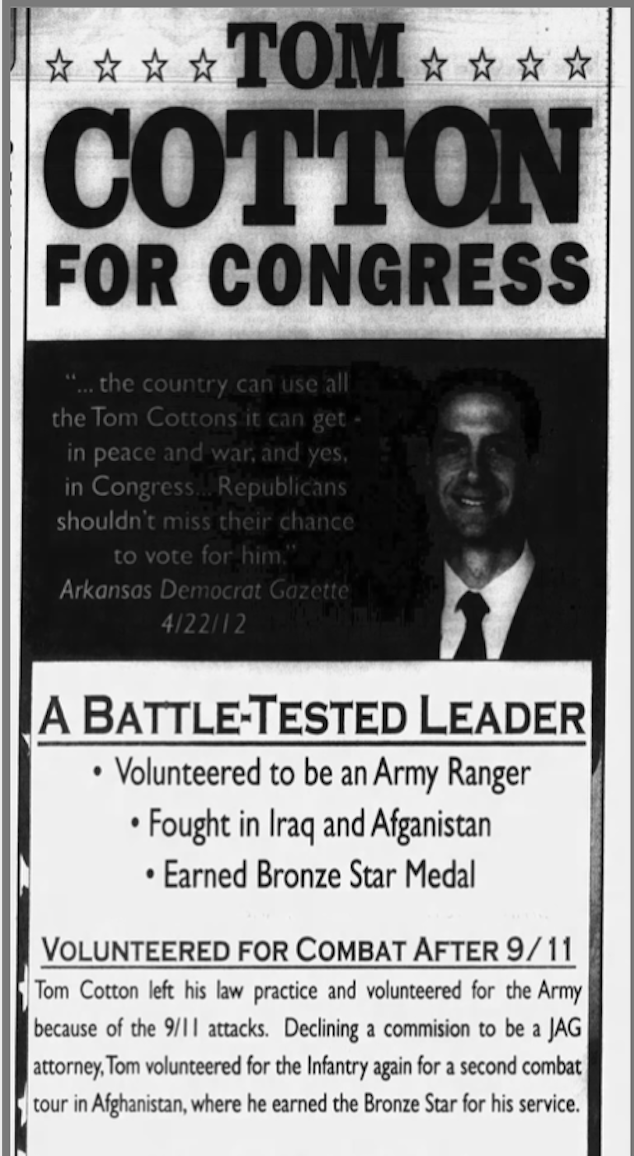
Biden takes the reins, calls for a united front against COVID and other threats

Joe Biden on Wednesday took the oath to become the 46th president of the United States, vowing to bring the nation together in the midst of an ongoing pandemic that has claimed more than 400,000 lives, enormous economic dislocation and civil unrest so serious that the U.S. Capitol steps where he took his oath were surrounded not by cheering crowds, but by tens of thousands of armed police and National Guard troops.

In his inaugural address, given outside despite concerns for his physical security, Biden emphasized unity, the driving theme of his campaign. “My whole soul is in this, bringing America together, uniting our nation,” he said. “And I ask every American to join me in this cause.”

On health care, Biden made it clear that combating the covid-19 pandemic will be his top priority. “We must set aside politics and finally face this pandemic as one nation,” he said. “We will get through this together.”

Among Biden’s first official actions Wednesday afternoon were several covid-related executive orders. As promised, Biden is requiring masks and physical distancing in federal buildings and on other federal properties, and by federal workers and contractors. He also announced the U.S. will renew its membership with the World Health Organization, which former President Donald Trump was in the process of leaving. And he will re-establish the pandemic preparedness office in the National Security Council, which the Trump administration had dissolved.

Last week, Biden unveiled a covid plan that also includes using the Defense Production Act to speed the manufacture of syringes and other supplies needed to administer vaccines; creating federal vaccination centers and mobilizing the Federal Emergency Management Agency, the National Guard and others to administer the vaccines, and launching a communications campaign to convince reluctant members of the public that the vaccine is safe. Details on his vaccination plan followed his unveiling the day before of a $1.9 trillion covid emergency relief package.

Biden got a separate boost earlier in the day with the swearing in of two new Democratic senators from Georgia, fresh off their victories in a Jan. 5 runoff election. The additions of Sen. Jon Ossoff and Raphael Warnock, plus a tie-breaking vote from new Vice President Kamala Harris, gives Democrats 51 votes in the Senate and effective control of both chambers of Congress for the first time since 2010.

With such narrow majorities in the House and Senate, it seems unlikely Biden will be able to make good on some of his more sweeping health-related campaign promises, including creating a “public option” to help expand insurance coverage and lowering the Medicare eligibility age from 65 to 60.

But even the barest of control will make it substantially easier for Biden to get his appointees confirmed in the Senate, and the possibility is open to use a fast-track process called budget reconciliation to make health-related budget changes, perhaps including modifications of the Affordable Care Act that might make coverage less expensive for some families.

Beyond covid, health is likely to take a back seat in the early going of the administration as officials deal with more pressing problems like the economy, immigration and climate change.

Biden health aides are expected to begin to unwind many of the changes made by Trump that do not require legislation, such as restoring anti-discrimination protections for transgender people and reversing the Trump administration’s decision to allow some states to implement work requirements for adults covered by Medicaid. But even that could take weeks or months.

Kaiser Health News (KHN) is a national health policy news service. It is an editorially independent program of the Henry J. Kaiser Family Foundation which is not affiliated with Kaiser Permanente.

Republicans greet Joe Biden’s inauguration with vows to fight his agenda

On the day Joe Biden was sworn in as the 46th president of the United States and Kamala Harris as the first woman of color to be vice president, Texas Republicans greeted the new administration with a mix of calls for bipartisanship and vows to vehemently oppose Biden’s agenda.

The state’s two Republican U.S. senators — Ted Cruz and John Cornyn — and multiple members of the U.S. House were on hand to witness the transition of power. Six House Republicans representing Texas in Washington, D.C. confirmed to The Texas Tribune that they did not attend Biden’s inauguration due to a variety of reasons like dealing with family emergencies and COVID-19 safety concerns. No one stated that they stayed away to protest Biden’s election.

Leading up to Biden’s swearing in, U.S. Rep. Beth Van Duyne, R-Irving, signed a letter with 16 other House GOP freshmen hoping to “rise above the partisan fray” and pass legislation relating to coronavirus relief, infrastructure and technology monopolies.

“After two impeachments, lengthy interbranch investigations and, most recently, the horrific attack on our nation’s capital, it is clear that the partisan divide between Democrats and Republicans does not serve a single American,” the letter said.

U.S. Rep. Van Taylor, R-Plano, released a statement also addressing the gridlock within Congress, stating that “Washington cannot be enveloped in endless battles of political brinkmanship.”

“Somewhere along the way, politicians replaced debate with ultimatums, disagreement with hyperbole and opponent with enemy,” Taylor wrote.

The reception as a whole was a far cry from how many members of the Texas GOP reacted to Biden’s electoral victory in November. Multiple Texas Republicans in Congress amplified President Donald Trump’s false claims of widespread fraud in the days after the election. Earlier this month, 16 of the state’s 23 GOP House members objected to certifying Biden’s victory in at least one state. The vote came hours after Trump supporters stormed the Capitol to disrupt the certification of the vote. The siege left five people dead.

But on Wednesday, there was no disputing the results. And some Texas Republicans in Congress expressed hope that Biden could help mend the country’s wounds.

“I pray he seeks to unify our deeply divided nation and focuses on repairing our economy which has suffered so much under COVID-19,” freshman U.S. Rep. Troy Nehls wrote in a Facebook post.

Freshman U.S. Rep. Ronny Jackson, a Panhandle Republican, said on Twitter that he was willing to work with any politician “to make our nation better.”

“However, I am NOT willing to compromise on my Conservative values for ANYONE, and I will always put the needs of my constituents FIRST,” he said.

Others took a more confrontational tack. The Republican Party of Texas released a statement that didn’t acknowledge Biden and instead focused on a list of Trump’s accomplishments and repeated Trump’s false claim about the integrity of the election. There is no evidence of widespread fraud in the election that would have affected the result.

“It took a global pandemic, a thoroughly corrupt media and massive election irregularities for President Trump to be removed from office,” the statement said. “However, what he started will not end today. America First is not going away. We will not surrender this nation to the false song of globalism and progressive socialism.”

Meanwhile, Texas Attorney General Ken Paxton, whose office has made a habit out of suing the federal government to block programs it opposes, vowed to be a check on Biden’s agenda.

“I promise my fellow Texans and Americans that I will fight against the many unconstitutional and illegal actions that the new administration will take, challenge federal overreach that infringes on Texans’ rights and serve as a major check against the administration’s lawlessness,” he said.

And criticism of Biden’s policy ideas came swiftly. Several members expressed their disgust on social media at Biden’s immediate plans, including rejoining the international Paris Agreement, ending the national emergency that Donald Trump declared along the U.S.-Mexico border and revoking Trump’s executive order that all of the millions of people living in the country illegally are priorities for deportation.

“I will be a ROADBLOCK to Joe Biden’s radical agenda in Congress!” U.S. Rep. Lance Gooden, R-Terrell, tweeted.

The move that drew perhaps the most pushback was Biden’s plan to revoke a presidential permit granted during the Trump administration to finish the controversial Keystone XL pipeline that extends from Canada through Texas to the Gulf Coast. That drew backlash from Texas Republicans like Cruz, Cornyn and Rep. Dan Crenshaw, R-Houston.

“The biggest losers from this decision are the energy workers who stood to benefit from the pipeline,” Cornyn said in a release. “There’s no doubt our energy industry has already suffered during the pandemic, and President Biden’s answer is to kick the industry further down the well.”

Environmental groups, however, dispute the idea that the pipeline will create a large number of permanent jobs. The State Department estimated during the Obama administration that the pipeline could create thousands of temporary construction jobs, but only 35 full-time, permanent workers.

Crenshaw tweeted that revoking the pipeline’s permit is only meant to “appease the radical left and their pseudo-environmentalism.” The National Resources Defense Council, an environmental advocacy group, says on its website that “the anti-corrosion coating on pipes for the project is defective from being stored outside and exposed to the elements for the last decade,” making it likely that the highly corrosive tar sands oil going through the pipeline would leak into the environment.

U.S. Rep. Kevin Brady, R-The Woodlands, also criticized Biden’s plan to block the finishing of pipeline on Twitter using the hashtag #BidenKillsJobs.

“#Biden fires opening shot on Texas energy workers,” he tweeted.

In statements late Wednesday, Cruz blasted Biden’s immigration orders and accused Biden of choosing “Paris over Pittsburgh” with the pipeline order. But during the inauguration, Cruz, who perhaps called into question Biden’s victory more than any other Texan in Congress, kept his commentary on the day’s pomp and circumstance. Congress was debating his objection to the electoral results earlier this month when Trump supporters mobbed the Capitol. On his Twitter account Wednesday, he uploaded a photo of Biden in the middle of taking his oath and praised the artists who sang at the event.

“May God bless the United States of America,” he said in one tweet.

The Texas Tribune is a member-supported, nonpartisan newsroom informing and engaging Texans on state politics and policy. Learn more at texastribune.org.

How Operation Warp Speed created vaccination chaos

Hospitals and clinics across the country are canceling vaccine appointments because the Trump administration tells states how many doses they’ll receive only one week at a time, making it all but impossible to plan a comprehensive vaccination campaign.

The decision to go week by week was made by Operation Warp Speed’s chief operating officer, Gen. Gustave Perna, because he didn’t want to count on supplies before they were ready. Overly optimistic production forecasts turned out to be a major disappointment in the rollout of the H1N1 vaccine more than a decade ago, also leading to canceled appointments and widespread frustrations with the government’s messaging.

This time, however, the most pressing problem isn’t the overpromising of supply. For each of the past three weeks, the federal government got about 4.3 million shots. But the amount that each state is sent has fluctuated as Operation Warp Speed changes the quantities available week by week.

State health officials say the unpredictable shipments have led to chaos on the ground, including the inability to quickly use up all of the doses sent to them. The week-by-week system also makes it hard to plan for the second doses that everyone needs because they come three or four weeks after the initial dose.

“It’s a huge problem. When you’re setting up clinics and registration systems, you have to have some idea of the supply,” said Lori Freeman, chief executive officer of the National Association of County and City Health Officials. “If you’re starting and stopping all the time, it can lead to confusion in the community — they’ll think you don’t know what you’re doing.”

As President-elect Joe Biden’s team prepares to take over on Wednesday, officials are aware of the problem and will have to decide how to address it, according to a member of the transition team. Sorting it out will be critical to meeting Biden’s goal of 100 million vaccinations in his first 100 days.

In the meantime, many Americans are experiencing this problem firsthand in the form of canceled appointments. On Jan. 14, Mount Sinai Health System sent a flurry of emails out to elderly patients across New York City, just two days after expanding eligibility to New Yorkers ages 65 and up. “You are receiving this email because you are scheduled for a vaccine appointment. . . . Unfortunately, your appointment has been cancelled due to a sudden decrease in the amount of COVID-19 vaccine being supplied to us,” the email said. “We are truly sorry, but unfortunately, the vaccine supply is not under our control.”

In Virginia, allocations to the state Department of Health vary not only week to week, but day to day. Dr. Danny Avula, Virginia’s COVID-19 vaccine coordinator, said the department learned in the middle of last week that it could get up to 80,000 doses, but — for reasons unclear to the Virginia team — the allocation increased to 106,000 by Thursday when it went to place orders. The state agency has tried to give local health providers consistent information about how many doses they’ll receive at their clinics and hospitals, but Avula said state officials will have to instead explain the erratic allocations.

“States don’t know what they will get week to week,” said Dr. Marcus Plescia, chief medical officer of the Association of State and Territorial Health Officials. “The locals get frustrated with states, thinking the states have all this information, but the states are in the same position as the locals.”

The way that Operation Warp Speed leaves it up to states to hand out vaccines within their borders harks back to the Trump administration’s strategy of passing down responsibility during earlier phases of pandemic response. In April, White House adviser Jared Kushner chided governors for seeking help from the federal government’s stockpile of emergency medical supplies. And President Donald Trump left states to decide how to reopen their economies, telling governors, “You’re going to call your own shots.”

The root of the problem now is the system designed around weekly allotments. Perna has said he set up the system this way because he wanted to act on only supplies in hand, not predictions.

“Every week I get an update, I know exactly what has been approved by the FDA for final distribution,” he explained in a Dec. 12 briefing. “I will not allow those estimates to go forward for speculation because I want people to focus on what is actually available.”

The makers of the two authorized vaccines, Pfizer and Moderna, are each contracted to supply 100 million doses by the end of March. But with just 31.2 million delivered as of Jan. 15, according to data from the Centers for Disease Control and Prevention, the companies will need to ramp up their pace to hit their targets.

The companies give the federal government weekly or daily updates on their production numbers, according to their contracts. Then Operation Warp Speed takes the total number of available Pfizer and Moderna doses for the week and divides them up between the states. The allocations are currently based on the state’s population over age 18, but the Trump administration said last week it would soon change the formula to be based on each state’s elderly population and ongoing pace of vaccinations. That change hasn’t taken effect yet, and the new administration may not decide to stick with it.

Every Tuesday, these state-by-state allocations are keyed into a software system called Tiberius, which was built for the government by the data analysis company Palantir. (Tiberius is the middle name of Star Trek’s Capt. James T. Kirk; “Warp Speed” is also a Star Trek reference.) The numbers show up on states’ screens around noon Eastern time, according to Oregon health authority spokesperson Jonathan Modie.

But these allocations aren’t final: Adjustments are made that can result in further daily changes. The system subtracts out doses that are set aside for long-term care facilities, which are administered by Walgreens and CVS, as well as “any corrections from the prior week, including doses that weren’t ordered by states in previous weeks, or doses shipped to states accidentally that CDC needs paid back,” explained Modie. Only then is a maximum order “cap” calculated for the week, which is placed into a separate system, called VTrckS.

Perna publicly apologized in December when states received fewer doses than he’d told them to expect. The general said at the time that the discrepancy was a one-time mistake that resulted from moving the releases from Fridays to Tuesdays. “This is a herculean effort and we are not perfect,” he said. “It looked very good on paper. Paper plans are very good. Execution is where we learn and we adapt it.”

But the problem of unpredictable numbers has persisted as states continue to grapple with last-minute adjustments to their allocations.

For this coming week, Michigan was initially told on Tuesday it was receiving 62,400 doses of the Pfizer vaccine to distribute among vaccination sites, according to Lynn Sutfin, spokesperson for the state’s Department of Health and Human Services. Then on Wednesday, Michigan was told that an additional 60,000 doses of the Moderna vaccine that were initially earmarked for long-term care facilities were available for general vaccination sites instead. On one hand, that was good news, because the state got twice as many doses to give out, since the long-term care program wasn’t ready to use them. On the other, this meant the Michigan department had only a day to figure out where to send the extra doses.

The states are responsible for deciding how to distribute their doses to local vaccination sites, and they usually have only two days to figure that out. After receiving their allocations on Tuesday, each jurisdiction must then submit its orders in VTrckS by Thursday. Shipments arrive the following week.

Second doses are ordered separately, on Sundays, according to a spokesperson from the Department of Health and Human Services, the government agency that houses Operation Warp Speed.

“For the past three weeks, jurisdiction allocations have remained relatively steady around 4.3 million total doses (or just over 2 million first doses) of both Pfizer and Moderna, which has provided additional predictability,” the HHS spokesperson said. “Operation Warp Speed is committed to providing as much planning time as possible, while balancing manufacturing schedules and maximizing doses available.”

Pfizer and Moderna declined to comment on what production numbers they shared with the government program during their regular updates. (Paul Sagan, board chairman of ProPublica, is a member of Moderna’s board.)

Despite stable total doses at the national level in recent weeks, individual states still don’t know what to expect from Operation Warp Speed more than a week ahead, creating continued chaos on the ground.

In Columbus, Ohio, health commissioner Dr. Mysheika Roberts was feeling both encouraged and concerned about the vaccine rollout in her city. It had gotten off to a slow start with the holidays, but after some outreach efforts, the vaccine clinic was steadily booking all 700 slots it had each day. Then, she had a new problem. She was starting to run out of vaccines. “What we have on hand will run out by the end of day Wednesday,” she said in a Monday interview. “We’re just calling the state and telling them we need more. We’re potentially going to have to cancel clinics on the 14th, 15th, 16th.” Roberts was saved from having to cancel appointments because the state managed to send her more shots at the last minute, according to a spokesperson, but the site’s supply is once again limited, so the cycle is beginning again.

Starting Wednesday, it will be up to the Biden administration to provide clear visibility for states, according to a member of the president-elect’s COVID-19 team, who asked not to be identified because he wasn’t authorized to speak on behalf of the new administration.

“The government can point at the manufacturer, but it’s like asking the [Defense Department], ‘How many planes do you have?’ and them saying, ‘I don’t know, ask Boeing,'” the person said.

It’s critical for the government to know how many doses are available at any given time and how many are coming through the pipeline, the person added. “How can this not be known?” he said. “It’s the most basic question.”

I kicked Mike Lindell’s MyPillows out of bed and finally got a good night’s sleep

Thursday morning will forever be remembered as the first time in who knows how long that I woke up without neck pain, back pain and creaky joints. Untold millions may have awakened similarly refreshed, the result of a temporary relief that sanity has been restored to the White House and the nuclear football is no longer in the hands of an unpredictable madman.

But I credit this atypically sound night of sleep to an additional factor: I finally got a fascist nutcase out of my bed. In this respect I suppose my household may have something in common with Jane Krakowski.

According to a report in The Daily Mail, Krakowski secretly dated Mike Lindell, Donald Trump’s weirdo bestie and inventor of the infamous MyPillow, for nine months. A statement from Krakowski’s publicist to Page Six denies the story, stating, “Jane has never met Mr. Lindell. She is not and has never been in any relationship with him, romantic or otherwise.” Lindell likewise denies the story, telling the Daily Beast he intends to sue the Daily Mail

If the tale were true, at least she would have kept her alleged lapse in judgment brief. My husband and I have been resting our troubled heads on four MyPillows for the better part of a decade. Our only excuse is sheer laziness.

They were gifted to us by my mother-in-law, a devoted worshipper at the church of “As Seen on TV,” who first introduced Lindell’s bestselling products to us during a hometown visit. Thanks to her, our lives have been blessed with many direct-to-consumer-marketed devices over the years, including but not limited to: one Snuggie, the Clapper, and countless packages of ShamWows.

Usually she sneaks them in under elaborate Christmas wrapping. In this instance, she secretly replaced the old pillows on her guest room bed with a pair of MyPillows with all the wily verve of an instant coffee taste tester. If memory serves, she asked how we slept, and we must have responded “fine,” because she sent us home insisting we take the two sacks of open-cell poly foam fill we slept on, and then shipped two more as presents later.

We didn’t turn her down because our existing pillows were old and crappy, and here were four that perked right back up after a few cycles through the dryer.

Admittedly, for a long time we didn’t think our MyPillows were bad, mostly because we barely thought about any of the pillows we purchased before we got these. They were also free, which is a main reason the devil’s fun bags lasted in our home for as long as they did, despite the fact that they were yellowing and getting more flat and miserably irregular as time trudged on.

Still, they’re also entirely machine washable.

But then Lindell tried to hawk overthrowing the government with all the slickness and subtlety of Wile E. Coyote trying to tiptoe away from an amateurish trap only to have it snap on his ankle, triggering an anvil to drop on his head. Following the elections he loudly peddled lies about widespread voting fraud involving Dominion machines; in response Dominion fluffed up a legal letter warning of pending litigation.

Lindell also funded buses to the Jan. 6 attempted insurrection in Washington D.C. And after it went over about as well as a post-taco Tuesday Dutch oven, he popped up at the White House with notions of convincing former president Donald Trump to invoke the Insurrection Act and declare martial law.

At long last I looked at the offending nap cushions, turned to my husband and said, “I’m sorry, but we really need to get rid of these.”

“I was thinking the same thing,” he grimly muttered.

Could I have sauntered over to some big box store and picked from the replacement options there? Of course. Instead, for the first time in my life I decided to research my purchase instead of throwing my money at some down-stuffed floozy that would eventually make my life worse. More than this, I wanted some level of assurance that the manufacturer wasn’t a complete kook. In other words, I decided to treat my pillow selection with more or less the same level of vetting I’d give the people I vote for, with the difference being I intended to sleep with it.

At the time we acquired our MyPillows neither my mother-in-law nor my husband nor I — nor, I suspect, most of America — had a clue as to the extent of Lindell’s depravity. Back then — “then” probably being around 2013 or 2014 — Lindell was mainly known to insomniacs and convenience enthusiasts.

We placed him in the same category as Billy Mays, Ron Popeil and Vince Offer — fast-talking late night hucksters pushing products of variable usefulness. This one, promoted as “The Most Comfortable Pillow You’ll Ever Own!” led Lindell to call himself a “sleep expert” and tout his American-made pillows as the solution to chronic neck and back pain, sleep apnea and an assortment of other bodily nags, ailments and chronic diseases.

These claims would eventually make him the subject of many lawsuits.

Anyway, even after Lindell started popping up next to the game-show host-turned-feckless authoritarian, even after he tried to sell poison as a snake oil COVID cure, we nervously assured ourselves that the money that funded our pillows was spent long ago and not by us.

This time the decision I made would be completely on me, so I decided to consult consumer evaluation lists and poke around a few “about us” sections on the recommended companies’ sites. I cannot claim this to be anywhere close to a scientific method or on the same level as an investigative report. The only thing I knew is that I wanted those lumpy crimes out of my home, and I didn’t want to trade them for a product supporting a company that might be as bad as Lindell, or possibly worse but smarter because they remained quiet about it.

Here’s the sad, honest truth: If Lindell hadn’t loudly participated in multiple assaults on America’s people and its democracy over the course of 2020, it’s highly likely I would still be sleeping with the enemy. I am not proud of this.

Since I spent most of 2020 trying to ignore that crackbrain, several of his other abhorrent acts escaped my notice, including his assistance in bailing out Kyle Rittenhouse, the 17-year-old charged with gunning down two people in Kenosha, Wisconsin who were protesting the police shooting of Jacob Blake. Yes, I know. I should have trashed the pillows then.

Let he or she who has never quenched their thirst with a Coca-Cola or a Fanta; used IBM products; quoted Coco Chanel or treated their illness with a drug manufactured by Bayer cast the first stone.

But capitalism follows some version of the comedy equation of “tragedy plus time” when it comes to persuading the masses to forget details like Nazi collaboration. Lindell’s walrus-mustached face is up in our collective business right now, and at long last some companies are de-platforming him in the same way tech companies banished his messiah.

Bed Bath & Beyond, Kohl’s, H-E-B and Wayfair have all dumped Lindell’s products; Krakowski (if she had even met him in the first place) allegedly cut him loose last summer, and following a brief search for new bedding options so have I.

I’m also glad to have taken a bit of time really considering my purchase, because as it turns out, quality pillows aren’t cheap, and some brands may not necessarily align with my viewpoints any better than Lindell does.

Take the company that opens its mission statement with, “In 1793, Eli Whitney invented the cotton gin and changed the world forever by revolutionizing the way cotton fabrics and linens were manufactured.”

That’s true. It also skips the inconvenient part about that revolutionary manufacturing accelerating the growth of slavery in the American South and being a contributing factor to the Civil War. That this is the guy the company honors in its name is telling.

Pass.

There’s also the recommended manufacturer that appropriates its name from Hindu philosophy but whose leadership team is mostly white and male. The company also raises money for local non-profits and outwardly states its devotion to sustainable practices, and that’s nice. But the endorsed pillow in question was $145, and it wouldn’t arrive until well into February.

Eventually I went with a budget-friendlier option from a family-owned company that describes itself as “competing against some big players, but we’re determined to succeed by putting our customers and product quality first.” I had no idea how hard it is out in these streets for independent bedding manufacturers.

There was also mention of loving their office dog and eating pastries, and at no point did I come across any evidence of its founder saying anything akin to “Hail Hydra!”

I bought two of their $60 side-sleeper pillows, and they arrived the next day. They also puff up nicely in my dryer, and once I settled into bed I was thrilled to realize how dreamy it was to rest my head on something that didn’t feel like I was mashing my cheek into a bag of dry beans.

Sleeplessness became a chronic condition for untold millions during the 45th president’s anxiety-provoking administration, so I suspect the situational relief of knowing that man is out of the Oval Office deserves as much credit as my new purchase’s superiority. But the fact that I woke up pain-free for the first time in ages indicated that, in fact, I had never owned a good pillow that fit my needs.

Usually an item is just an item. Sometimes, though, it’s a metaphor for larger woes born of low expectations, for settling for less, if not the least, because attempting to make things better takes effort and energy we simply don’t have.

I don’t believe it’s a coincidence that midway through 2020, no number of passes through the dryer made those MyPillows comfortable enough get me through the night. Maybe we put up with them because in the midst of such darkness it didn’t occur to us that there were better options within our reach, because they didn’t hurt us too terribly, because it was simpler to keep on living with them.

Now that we know better and have better, perhaps we can sleep a little easier for a little while.

This story has been updated to reflect both Lindell’s and Krakowski’s denials of the Daily Mail dating story.

Thanks to a new fossil discovery, we suddenly know a lot more about dinosaur sex

No one predicted that January 2021 would be a banner month for dinosaur news. Last week an article in the scholarly journal Cretaceous Research revealed that dinosaur bones in Argentina may have belonged to a creature so massive that it would have been the largest land animal know to have existed. Now a study published in the journal Current Biology gives us an up close look at these animals — namely, at their butts.

A team of scientists from the University of Bristol and the University of Massachusetts Amherst revealed that they had discovered and described in detail a dinosaur’s cloaca — that is, a vent in the animal’s posterior that would have been the dinosaur’s equivalent of an anus, urethra and genitalia — based on a fossil that had distinctly preserved the skin patterns of a Psittacosaurus, a dog-sized dinosaur related to the Triceratops. Unlike bones, soft tissue does not usually preserve well over millions of years; hence, lacking any preserved organs or skin tissue, much of dinosaur anatomy and behavior has been a mystery. That makes this discovery of a cloaca a genuinely interesting clue that tells us more about dinosaur behavior, including mating.

“The cloaca is a multi-purpose opening that is used for everything that you do opposite of your mouth: peeing, pooping, having sex, laying eggs,” Dr. Jakob Vinther, a paleontologist at the University of Bristol, told Salon. “Most of these animals have penises, except for some of the dinosaurs’ descendants. Amongst birds you don’t find penises so often. They do something else called cloacal kissing, where they basically put their cloacal openings up against each other and then they just vibrate until some sperm is released and that is absorbed by the female’s cloaca. The question is, what would dinosaurs be doing?”

Until recently, paleontologists could only guess.

“One of the issues is that a lot of the bits that would be relevant to the actual reproductive systems are soft tissues that don’t typically fossilize,” Dr. Diane Kelly, a professor of psychological and brain sciences at the University of Massachusetts Amherst who helped co-author the paper, told Salon. She noted that there have been some exceptions, such as a raptor fossil that was found sitting on a nest in the Gobi desert.

“From that you can deduce that that particular species had brooding behavior,” Kelly told Salon. When it comes to actual preserved soft tissue, however, Kelly pointed out that finding it in a condition suitable for meaningful scientific examination is “rare,” and as such information about dinosaurs nether-regions has been limited.

Thanks to the scientists’ study of this cloaca, however, we now know a lot more.

“Now we can actually say that this type of cloaca is not suited for cloacal kissing, that is a cloaca that is suitable for penetrative sex,” Vinther told Salon. Although he said that scientists cannot determine the sex of the dinosaur they found, they noted that “the shape of the cloaca is somewhat distinct. It doesn’t look like either birds or the close relatives, the crocodiles. It’s got a pair of sort of swollen lips on either side that sort of flare out. They sort of join together in one direction and then they flare out towards the tail.” By contrast, bird cloacas “kind of looks like a swollen zit that is ready to be popped,” Vinther said, although another close relative of dinosaurs — the crocodile — also has a pair of lips around its cloaca.

“In crocodiles, when you have these swollen lips there is a pair of glands below that can release this sort of fatty substance that are full of pheromones and smell irresistible to other crocodiles,” Vinther explained. “We believe that this dinosaur also had that based on its anatomy.”

In addition, Vinther identified something “quite surprising and unique” in the dinosaur’s cloaca — namely, the fact that it was very colorful, which suggested that they were used for visual signaling.

“That’s something we don’t see in crocodiles,” Vinther explained. “We don’t see that in many animals actually altogether. Of course there are some mammals like, for example, baboons, that have a big colorful butt or lower quarter, as they say in technical terms, which can be used for communication. But if you take, for example, birds, there are just two species of living birds that we could find that have a colorful cloaca.”

Normally cloacas are not exactly headline news fodder, but both scientists told Salon that they suspected their discovery might garner attention.

“We were not surprised that there was a lot of attention,” Kelly explained. “There’s usually a lot of attention when it’s dinosaurs. When any new dinosaur study comes out, people are usually pretty interested in and excited about it.” She noted that this is compounded her because the discovery is “about naughty bits, so that’s just another level of interest.”

Vinther also said he had a “suspicion” the story would become popular, recalling that people had expressed interest in the subject when he had mentioned it in passing prior to the article being published. Even so, he added that “I wasn’t sure whether people would pick up on it and cover it to the extent that they have. That is quite amazing.”

“Fox & Friends” hosts take it personally after Biden denounces white supremacists

The hosts of “Fox & Friends” on Thursday blasted Democrats after President Joe Biden denounced “racism, nativism, fear [and] demonization” during his inauguration speech.

In Wednesday’s speech, Biden also pledged to defeat “political extremism, white supremacy [and] domestic terrorism.”

The hosts at “Fox & Friends” seemed to take the attack on racism personally.

“Dividing America has been the Democratic political strategy,” Fox News host Will Cain opined the next morning. “Name the line which divides us, whether it be race or socio-economic or political party. Dividing us has been a political win for the Democratic Party.”

“What I have found is that those that yell ‘fascist’ are the first to embrace authoritarian crackdowns on dissent,” he continued. “Those that yell ‘racist’ are the first to ensconce themselves in suburbs where they’re totally insulated from any exposure to diversity, to pay $50,000 a year in private school tuition for their children never to encounter someone who looks much less — earns less money than their parents.”

“If you want to live that life, fine,” Cain said. “But then don’t turn around and preach that you are more virtuous than others that you look down upon and call racist. What I see here is a movement populated in essence by frauds. They are largely what they accuse others of being.”

Co-host Steve Doocy then suggested that Biden’s inauguration speech was divisive because it condemned racism.

Another of the show’s hosts, Ainsley Earhardt, agreed.

“If you’re pro-life, it doesn’t mean you’re racist,” she complained. “If you like lower taxes, it doesn’t mean you’re racist. If you like constitutional judges, it doesn’t mean you’re racist. If you like less government, it doesn’t mean you’re racist.”

“You might have supported Trump because of those issues,” the co-host added, “because of the policies. You might not like his tweets, you might not like some of his rhetoric, calling names to other people. But you like his policies.”

According to Earhardt, “a lot of people” in the Republican Party voted for Trump just because they are Republicans.

“They have been Republicans their whole life!” she insisted. “And they liked that option better than the other option, which was Kamala Harris — progressive movement. So that is what the Republican Party is.”

“All of the Republicans I know wouldn’t be storming the Capitol,” Earhardt concluded. “They’re not racist. They just — they like Trump policies. That’s it.”

Watch the video below from Fox News.

Breathing life into the corpse flower

The alien-like blooms and putrid stench of Amorphophallus titanum, better known as the corpse flower, draw big crowds and media coverage to botanical gardens each year. In 2015, for instance, around 75,000 people visited the Chicago Botanic Garden to see one of their corpse flowers bloom. More than 300,000 people viewed it online.

But despite the corpse flower’s fame, its future is uncertain. The roughly 500 specimens that were living in botanical gardens and some university and private collections as of 2019 are deeply related — a lack of genetic diversity that can make them more vulnerable to a host of problems, such as disease or a changing climate.

Corpse flowers aren’t doing much better in their native home of Sumatra, where they are dwindling because of deforestation for lumber and crops. In 2018, the International Union for Conservation of Nature (IUCN) listed the plant as endangered. There are fewer than 1,000 individuals still in the wild.

To combat the lack of genetic diversity in the corpse flower and six other species with shallow gene pools, the Chicago Botanic Garden spearheaded the Tools and Resources for Endangered and Exceptional Plant Species (TREES) program in 2019. The program will see widespread genetic testing across partnering botanic gardens, as The New York Times reported in December. This allows participants to create a database of the plants’ family trees, so to speak, to make more informed breeding choices and increase genetic diversity.

TREES could pave the way for future plant reintroductions into the wild, should any of the seven species continue to dwindle or come too close to extinction, says Jeremie Fant, a conservation scientist with the Chicago Botanic Garden, which leads the efforts for the corpse flower. However, some experts express concern about bringing genetics from foreign-grown plants into their native habitats.

The corpse flower is a tricky plant to preserve outside its native habitat. It blooms rarely and it has specific heat and humidity requirements to mimic its native habitat. Like many of the plants in the TREES program, the finicky flower also produces recalcitrant seeds, which can’t be easily stored because drying and freezing — the main way seeds are preserved — will kill them. Other plants in the program simply produce too few seeds to make seed banking a viable option.

While the Chicago Botanic Garden is taking charge of the corpse flower, the National Tropical Botanic Garden in Hawaii is heading the collecting and testing of two species: Hibiscus waimeae and the critically endangered Phyllostegia electra. There are two other botanic gardens heading up other species to tackle this widespread issue.

“We at botanic gardens have to work together to save some species,” Fant says. “Because we can’t do it on our own.”

* * *

Currently, most plant conservation happens in seed banks, such as the International Potato Center in Peru and the International Institute of Tropical Agriculture in Nigeria. These banks of genetic information regularly freeze seeds for long-term research and use. In Arctic Norway, the Svalbard Global Seed Vault holds a backup collection of seeds from around the world in case local stores are compromised. But this doesn’t work for plants with recalcitrant seeds.

Usually, it is warm-climate plants — including the corpse flower — that produce these seeds, but there are exceptions, including oak. According to research out of Royal Botanic Gardens, Kew, in the United Kingdom, 36 percent of critically endangered plants have recalcitrant seeds. Many well-known crops also produce recalcitrant seeds, such as coconuts.

If a plant is socioeconomically important and produces recalcitrant seeds — like coconuts — conservationists will often create what are called “field gene banks,” according to Nigel Maxted, a professor of plant genetic conservation at the University of Birmingham, who isn’t part of the TREES program. These field gene banks have many of the same plants growing in the same area. They take up a lot of space, and the proximity of the plants to each other opens them up to other threats as well. “Disease could very easily go through the whole lot,” Maxted says.

As such, preserving plant species by spreading individual plants across many botanic gardens, or other collections, can be a useful bulwark against extinction, because it greatly decreases the likelihood that every single plant will die at once, says Susan Pell, deputy executive director of the United States Botanic Garden, a TREES participant.

But fostering genetic diversity in the botanic gardens can be difficult, especially with finicky and rare plants. Like many plants, corpse flowers can reproduce in different ways. Sometimes, they reproduce asexually: a tuber-like bulge at the base of their stem, called a corm, grows large and eventually splits, producing multiple genetically identical plants. While this has effectively grown the raw number of corpse flowers in botanic gardens, it has done little for the population’s genetic diversity.

Corpse flowers can also reproduce sexually, which requires pollination by insects — or, in botanic gardens, by humans wielding paint brushes. There’s no set schedule for a corpse flower to bloom; each plant takes a variable number of years and blooms unpredictably based on conditions such as heat, light, humidity, and other factors.

To help breed on this unpredictable schedule, the Chicago Botanic Garden is creating a store of corpse flower pollen, which can be sent across the country when another specimen that isn’t closely related blooms. These targeted cross-pollination efforts could lead to more genetically robust offspring. While TREES has yet to lead to a crossing of corpse flowers, the Chicago Botanic Garden has used the methodology to strategically cross another plant called Brighamia insignis, also known as a cabbage-on-a-stick plant, which is critically endangered.

The TREES program is starting from a place of low genetic diversity for the corpse flower and its peers. Over the last 100 years, there have only been 20 documented collections of the plants from the wild for botanic gardens.

Sometimes, botanic gardens will get rare plant genetics from nurseries and private collections. For example, three of the U.S. Botanic Garden’s corpse flowers were acquired as seeds from a plant grower in Hawaii. But, as collecting plants from the wild can be difficult and expensive, the botanic gardens will usually propagate the specimens and share the offspring with other collections. In the case of plants with low genetic diversity, this means an increase in raw numbers, but does little for genetic health.

“In terms of genetic diversity, it’s hopeless,” Maxted says.

TREES may help, he adds. The program’s approach has been successfully deployed in the animal kingdom for a long time. For example, many zoos and conservation efforts create studbooks, or documents used to track the family trees of specific species. This tactic has been used to follow the lineages of myriad threatened species around the world, including the red panda.

“In general, all you’re looking for is to maximize variation,” Maxted says.

* * *

While TREES could increase genetic diversity for domestic corpse flowers, some researchers aren’t sure the flower — and plants more generally — should necessarily be reintroduced into the wild. This is particularly true for plants in botanic gardens that are located far away from their native range.

There are two competing trains of thought, Pell says. The first is that only nearby plants should be reintroduced into an area. For the corpse flower, this could mean pulling from the Bogor Botanical Garden in Indonesia, which has a few specimens. The other supports the idea of putting foreign-grown plants back into nature and letting natural selection play out, even if it means that the foreign plants may thrive or outcompete their wild counterparts. (While TREES aims to make it possible to reintroduce the corpse flower into the wild, should conservationists decide it is necessary, so far there have not been any efforts to do so.)

Reintroduction can also take a lot of time, money, and effort, says Joyce Maschinski, director of plant conservation at San Diego Zoo Global and president and CEO of the Center for Plant Conservation. So can the long-term monitoring and care that the plants would need to thrive in the wild. Similarly, moving plants across borders can be difficult, and the laws surrounding it vary from country to country, although, she adds, moving pollen or seeds from botanic garden plants is likely easier.

Despite the challenges, conservation organizations and botanic gardens have gotten good at reintroducing plants, Maschinski says. The groups provide more monitoring, record-keeping, and caring for the plants after they are placed in the wild, including fencing off newly-planted areas and watering them.


For some plants, the approach may be the only hope. While there are concerns about reintroducing foreign-grown plants back into the wild, Maschinski adds, particularly rare species may otherwise go extinct.

If a future comes when reintroduction becomes a necessity, efforts like TREES could ensure a healthy and diverse population of corpse flowers and other endangered plants, Fant says. The researchers involved in TREES also say they hope that the methods could be rolled out to other species that could benefit, as the need arises. The program is already growing, and asking for samples from botanic gardens — including groups outside of the U.S. like the Bogor Botanic Garden.

According to Maschinski, plants are primary producers in their natural habitats, and, as such, preserving some plant species can have a “cascade effect” on the environment — they feed bugs, which feed birds which feed animals, for instance. But according to Pell, the corpse flower’s role in its native habitat is relatively unknown. Whether or not it’s a keystone species, the corpse flower could still be a valuable ambassador, one that raises awareness of the plight faced by many other species, she says.

“I sort of think of the corpse flower as the panda of the plant world in a lot of ways,” she says. “It is just so fascinating and people are so taken in by it that it can be the kind of spokesperson for the importance of conserving all of our biodiversity, and certainly in the plant world.”

Even if the TREES program doesn’t lead to reintroduction in the wild, there’s value in protecting the corpse flower in botanic gardens, says Cyrille Claudel, a biologist at the University of Hamburg. It also might be easier to simply leave the plants alone in the wild, he says, rather than attempting to bring them back. Safeguarding captive corpse flowers would allow the curious to continue their research on the plants — or allow people to simply marvel at them.

The plant is also worth saving just for its own sake, Claudel adds: “It’s probably just the coolest species on Earth, so I would very much like it to be preserved in nature, and cultivation.”

This article was originally published on Undark. Read the original article.

Trump’s children and former staffers to get Secret Service protection at taxpayers’ expense: report

As one of Donald Trump’s final abuses of the office of the presidency, he extended Secret Service Protection beyond himself and his wife Melania –– as is guaranteed in the Former Presidents Act –– to 14 additional family members and former administration staffers, The Washington Post reported on Wednesday.

Congress originally voted in 1994 to cap security protections for former Presidents at ten years. President Obama, however, reversed his vote in 2012 under the assumption the Secret Service would be used responsibly.  Of course, Trump has done just the opposite. 

Those protected by Trump’s 11th-hour directive will include his youngest son Barron (until he’s sixteen), Tiffany Trump, Donald Trump Jr., Ivanka Trump, Eric Trump, and members of their own families. Trump also saw to it that many of his former staff receive the same protections, including Treasury Secretary Steven Mnuchin, former White House Chief of Staff Mark Meadows, and former National Security Adviser Robert O’Brien. Vice President Pence and his wife, Karen Pence, are also included. 

This 6-month, 24-hour security detail is expected to cost American taxpayers millions of dollars. Although the Secret Service does not typically divulge the cost of their operations, it’s believed to be in the tens of millions of dollars annually.

It’s not unusual for outgoing Presidents to request Secret Service details for their families before leaving office. Former President Bush, Obama, and Clinton all asked that a temporary security detail be assigned to their families. However, the full extent of the Trump family’s security sets a record. After all, many of Trump’s children are well into adulthood and could pay for their own private detail. 

The directive is one of the Trump family’s latest abuses of the Secret Service. 

Earlier this month, for example, it was revealed that Trump’s daughter Ivanka and his son-in law Jared Kushner did not permit the Secret Service agents guarding their 6.5-bathroom estate in D.C. to use the bathrooms inside, instead requiring that the agents use a porta-potty outside. The agents were also instructed to use a garage bathroom at former president Barack Obama’s house, and later, a guard station bathroom one mile away, just outside of Vice President Pence’s house. 

Trump’s last-minute security directive also fits squarely into the family’s misuse of taxpayer money. According to The Post, Trump’s adult children went on nearly 4,500 trips for both business and vacation on account of the Trump Organization. All of these trips required that the Secret Service travel alongside them. 

“The cost of protecting the president and members of the extended first family, who have traveled extensively for business and vacations,” reported The Post, “has strained the Secret Service, local governments and at least one other federal agency, the Coast Guard.” 

The Trump childrens’ rarified excursions were estimated to cost tens of millions of dollars in taxpayer money. It is not outside the realm of possibility that, for the next six months –– yes, even in a pandemic –– the Trump family will squeeze out of taxpayers tens of millions more. 


The anticipated violence at Biden’s inauguration never happened — thank Trump’s Twitter ban

After the violent but failed insurrection of Jan. 6, federal and state authorities were understandably terrified about violence on Inauguration Day. The FBI warned of threats of violence not just in Washington D.C. on January 20, but all 50 state capitols, the homes of prominent members of Congress, and other federal buildings across the country. This was hardly an idle concern. The same far right channels that were used to organize the insurrection were alight with excitement about another round, and Inauguration Day was the target. One of the organizers of the “Stop the Steal” rally that kicked off the insurrection spent the days after upping the ante, promising to “bring hell to my enemies” and declaring “I am the tool to stab” Trump’s political opponents. 

Yet Inauguration Day came and went in relative peace.

The calm was maintained not just in D.C., where the presence of 25,000 National Guard troops was an intimidating deterrent to would-be insurrectionists, but the planned pro-Trump protests at state capitols barely materialized — with mostly a few disparate and sad sign-wavers, rarely numbering more than a dozen at any single location. Outside the perimeter in D.C. set up by the National Guard, journalists outnumbered the Trump supporters so badly that any redhats who bothered to show up got swarmed by photographers. Only Portland, Oregon seemed to have seen any real violence, possibly only because the antifa and fascist groups that have spent the past four years street fighting there seemed interested in one final go-round. 

There’s a number of reasons that Inauguration Day ended up being relatively peaceful.

For one thing, legal authorities took the threat seriously and took significant preventive action. For another, the mass arrests of the insurrections by federal law enforcement sent a signal that the impunity that Trump supporters were feeling was misplaced. But most importantly, the main driver of insurrectionist sentiment and the man who instigated the Capitol riot — Donald Trump — wasn’t on hand to incite more violence.  


Want more Amanda Marcotte on politics? Subscribe to her newsletter Standing Room Only.


Without their leader directing their energies and giving them targets, the violent right was aimless and confused — and not organized enough for another strike. 

While conservatives are already trying to muddy the waters around Trump’s responsibility for the events of January 6, the record is quite clear. He repeatedly — in debates, in interviews, and at rallies — made winking references to his far right supporters, encouraging their violent urges. He repeatedly signaled that January 6 was the day of action. Even the wifi password at Trump’s Georgia rally two days before the riot reinforced this target date to his most fanatical supporters. 

And, of course, Trump gave a speech on January 6 with a fairly explicit “go” order in it, telling his supporters to march on the Capitol and falsely claiming he would join them

But while Trump had many ways to communicate with the delusional fanatics that love him so much, it was his Twitter account that was probably the most important. Trump repeatedly pushed the January 6 date on Twitter, promising it “will be wild!” Even during the riot, Trump was directing the crowd, tweeting vitriol about then-Vice President Mike Pence in the midst of the violence. Unsurprisingly, the crowd’s energies turned towards finding Pence, while chanting, “Hang Mike Pence”. 

Twitter temporarily suspended Trump’s account after the riot and then, after briefly letting him back on, permanently banned him when he went straight back to lying about the election and stoking the violent impulses of his followers. Facebook and other social media platforms also cut Trump off. There was also a purge of QAnon accounts and others who were spreading lies about Joe Biden “stealing” the election. 

The positive effects of the Trump social media ban were felt immediately. The analytics firm Zignal Labs showed that Twitter experienced 73% drop in misinformation about election fraud in the week after Trump and some of his most avid fans were banned from the platform. It underscores how dependent right-wing extremists are on their ringleaders, including Trump, and how many of them are uncertain what to do or what lies to spread without guidance. Frankly, it’s unsurprising. These folks are authoritarians. Following their preferred authority figures is the whole point of it. 


Want more Amanda Marcotte on politics? Subscribe to her newsletter Standing Room Only.


That Trump was going to start losing his hold over his fanatical supporters was likely inevitable. They weren’t ever really in it because of some great love for him, so much as they saw Trump as the most effective tool they could use to stick it to the liberals. Without political power, Trump’s usefulness to his followers has disappeared, and their enthusiasm appears to be dissipating at a rapid rate. The New York Times reports that the Proud Boys are rapidly shifting from calling Trump “Emperor” to whining that he’s a “total failure”. QAnon chatboards were reeling in disbelief, as it became clear that Biden’s inauguration was really happening and the promised mass arrests of Democrats were not materializing. One of the most popular Trump fan boards, The Donald, has rebranded under the even stupider name Patriots.win

Still, there remains a danger that Trump could build up a myth of himself as a rightful-king-in-exile with these people. Without Twitter, however, it’s going to be much, much harder — if not impossible. Trump loved Twitter because it allowed him to spread misinformation with less effort than it takes to make a phone call. Trump is both lazy and dumb, and clearly is struggling to imagine how to rally support without tweeting his every errant thought during his “executive time”. His efforts at communicating with his base in the two weeks since his Twitter ban have been lackluster at best, and mostly non-existent. 

And we’re all so much better for it. Without Trump giving both direction and permission to the violent urges of his followers, they are adrift, and seemingly starting to absorb the idea that there may actually be consequences for their actions.

To be certain, the authoritiarian movement Trump breathed so much life into isn’t going away. Republican voters have been radicalized — nearly three-quarters are continuing to assert misinformation about the 2020 election —  and it’s unlikely they are going to start feeling warm towards the democratic system again, just because Trump isn’t riling them up every day. There’s also still plenty of outlets for right-wing misinformation, including Fox News. The threat of domestic terrorism is still incredibly high, especially as so many domestic terrorists are self-directed instead of attached to organized conspiracies. 

Still, without a strong central figure to rally around, the seditionist crowd will likely fracture into hundreds of small communities, and get weighed down by in-fighting, as often happens with the deeply unpleasant and aggressive personalities that are drawn to authoritarian politics. A lot of them may even drift away, looking for some other fringe community to give their lives meaning. 

So while it’s hardly some cure-all for the problem of growing authoritarianism or right-wing domestic terrorism, keeping Trump off social media is still crucial to protecting lives and protecting American democracy. And, while I doubt they’ll listen, social media networks should also snuff the accounts of any would-be Trumps, who are getting attention and likes for spreading lies online. And if they don’t, Congress should step in and regulate these companies so that they have no other choice. 

Medical experts hail President Biden’s early and aggressive COVID-19 push

Shortly after being inaugurated, President Joe Biden signed a raft of executive orders, proclamations and memorandums, including several that attempt to more effectively tackle the coronavirus pandemic that has already taken more than 400,000 American lives. Biden’s bold action comes amid reports that the new president was left with “a complete lack of a vaccine distribution strategy” by his predecessor. 

“The President’s actions today in his first hours in office speak to the long-overdue leadership our country needs to tackle this pandemic,” a White House spokesperson told Salon. “President Biden will lead an urgent national response, which includes distinct measures like calling on Americans to wear masks for the first 100 days and invoking the Defense Production Act to boost vaccine supply and availability. With a dedicated COVID response team working in strong partnership with officials across our country, we will be able to finally address this pandemic with the urgency and leadership needed.”

He also announced plans to issue an executive order requiring people to wear masks in certain travel situations, such as when they are in airports and on many intercity buses, trains and airplanes. His national mask mandate on federal property is an “appropriate and important national example of what needs to be done — and what he can do directly and immediately,” Irwin Redlener, leader of Columbia University’s Pandemic Response Initiative, explained to Salon.

Redlener also praised Biden’s decision to re-enter the United States into the World Health Organization (WHO), arguing that “it was totally irresponsible for us to withdraw in the first place. It is the only global organization working on this extraordinary global crisis.”

Biden’s push to increase aid to marginalized communities that have been underserved during the pandemic, Redlener also stressed, is what “we need to address this indefensible inequity of black and brown people being at higher risk of contracting and dying from COVID-19. People in low-income communities need to move to the front of the vaccine line.”

Redlener did acknowledge, however, that Biden will have his work cut out for him when it comes to restructuring the federal government’s response to the pandemic, telling Salon that “there are a lot of moving parts necessary to create a fast, effective program to expand testing, trace contacts, treat victims and vaccinate as many Americans as possible, as rapidly as possible.” He believes that Biden has “a great team of experts” and his challenge will be “getting them to work together on a shared mission — and doing so efficiently.”

Dr. Georges Benjamin, executive director of the American Public Health Association, echoed Redlener’s views.

“President Biden has rebooted the COVID pandemic response,” Benjamin wrote to Salon. “We finally have a transparent written national plan to guide the response. It is using the best science we know works.” With regard to the mask wearing mandate, Benjamin observed that “mask wearing is the most important single prevention tool we have. It is part of a layered set of protections that include hand hygiene and physical distancing.” Benjamin likewise praised the decision to put the United States back in the WHO, pointing out that “this will help coordinate US efforts with the rest of the world,” and expressed agreement with Biden’s engagement with outside nonprofit groups to coordinate a pandemic response, his goal to have 1 million vaccination shots every day for his first 100 days and his promised use of the Defense Production Act to maintain an efficient supply line for the vaccination effort.

“These things will accelerate the effort and I think will be highly successful if implemented as proposed,” Benjamin argued.

Dr. Alfred Sommer, dean emeritus and professor of epidemiology at Johns Hopkins Bloomberg School of Public Health, told Salon that Biden’s measures are a good start when it comes to the goal of containing the pandemic and saving lives.

“We have to start somewhere!” Sommer explained by email. “With the President advocating the public health measures real experts have been promulgating for nearly a year, perhaps more people will pay attention and follow these common sense recommendations.” He added that until the Moderna and Pfizer/BioNTech vaccines are more readily available to the public, following common sense public health guidelines “is the only hope we have for preventing unnecessary deaths from this pandemic! We can only hope more people will pay attention, wear masks, and socially distance” and that they should do so “even after they are vaccinated, because no vaccine is 100% effective, and we don’t yet know whether the vaccine prevents someone from becoming infected and infecting others.”

Dr. Monica Gandhi, an infectious disease doctor and professor of medicine at the University of California–San Francisco, told Salon by email that even some of Biden’s policies which might not seem to directly involve the fight against COVID-19 will have a salutary effect in America’s need to eradicate the disease. She specifically cited his financial relief programs including a moratorium on evictions and student loan postponement.

“The economic downturn in this pandemic goes hand-in-hand with poor health outcomes,” Gandhi explained. “Food insecurity, housing insecurity, poverty [are] all contributing to poor health outcomes so recognition of this is essential.”

As far as what Biden will need to do beyond these initial steps, Dr. Russell Medford, Chairman of the Center for Global Health Innovation and Global Health Crisis Coordination Center, argued that the president should “take immediate steps to reverse the marginalization of the CDC [Centers for Disease Control and Prevention] by re-establishing its reputation and fully resourcing its COVID-19 scientific, pandemic and disease expertise and operational capabilities as the country’s, and world’s, leading and most trusted public health agency.”

Biden will have to “institute regular and frequent briefings on the pandemic to the public by the CDC and other government scientists,” Medford said, to empower the CDC to effectively surveil and test for COVID-19 on a national level and “establish an integrated and accessible national system and standards for COVID-19 data collection ranging from hospital capacity and vaccine distribution, to the health and economic impact of COVID on a state and county level and especially on communities already suffering disproportionately from health disparities.”

Medford also said that Biden will need to “accelerate and sustain” his initial efforts to vaccinate the majority of Americans, something that will need to include creating a “Task Force on Health and Vaccine Equity” that would, among other things, provide accurate information about vaccines “that address the oftentimes distinct and community-specific issues that drive vaccine hesitancy and to deliver this information to susceptible populations.”

The Biden administration’s goal “will need to go to 2-3 million vaccinations per day to achieve herd immunity by midsummer,” the APHA’s Dr. Benjamin explained, adding that “once we get a third vaccine and the response gets ramped up as proposed this should be possible.” He also said that the administration could consider “increasing efforts to engage volunteers to address the workforce shortage and assessing disparities in vaccine administration as well are already seeing inequities in vaccinations for minorities.”

Biden’s policies are a stark contrast from those implemented by his predecessor, Donald Trump, who ignored expert medical advice about the seriousness of the pandemic for more than two months after it reached the United States, repeatedly touted pseudoscientific advice like pushing for herd immunity and urging people to inject bleach, often refused to wear a mask and downplayed the importance of doing so, terminated America’s relationship with the WHO and delayed working with the incoming Biden administration on coordinating a COVID-19 response so that he could focus on pushing baseless claims that the 2020 election had been stolen from him.