Spring Sale: Get 1 Year, Save 58%

Why “the market” can’t regulate the trade of PPE and other vital pandemic supplies

Back a couple of months ago, when coronavirus spikes were limited to the Northeast and Donald Trump was still taking over the daily virus briefings at the White House, the Justice Department was trotted out to announce a big effort to curtail profiteering by those manufacturers and re-sellers of personal protective equipment (PPE), sanitizer and ventilators.

Curiously, not much has been heard from the effort to date.

Sure, we still are being inundated with sales pitches for coronavirus necessaries, and there are a rising number of reports of fraud. But we are not seeing the White House ballyhoo widespread arrests, despite triggering a nationwide task force.

Yes, there were some arrests. In New York in May, federal prosecutors charged a used car salesman and a pharmacist who called himself “the Mask Man” in separate schemes to inflate prices of personal protective gear needed to fight coronavirus. The retrieved goods worth hundreds of thousands of dollars were retrieved and sent to medical personnel.  And in April, nearly a million medical-grade masks and gloves were seized this week from a Brooklyn man who said he had the virus and coughed on agents before he was charged with lying to federal agents about price-gouging.

Politico.com review of what happened concluded that the Justice Department task force meant to go after pandemic scammers and profiteers has found its work complicated by a “philosophical” debate with top Trump “free-market” staffers.

So, the Law & Order Trump administration is stubbing its own toes on whether to enforce overpricing schemes or letting the marketplace decide how to handle itself, even as coronavirus numbers are skyrocketing across 43 countries and medical personnel are once again complaining loudly that they lack sufficient PPE and governors are griping about the lack of a federal response.

Meanwhile, there apparently is debate about which approach fits best with reelection hopes.

Fraud and high prices

Behind the creation of the task force was a simple question: How exactly should the federal government deal with pandemic-related hoarding and price-gouging?

That we would have scammers, fraudsters and opportunity-grabbing companies, including those who never before had manufactured PPE falling over each other to reach a desperate medical market was a foregone conclusion. That’s how we roll.

With 1,000 hospital workers now having died as a result of treating the virus has meant that hospitals and states will pay whatever the going freight requires to get their hands on enough materiel.

With some fanfare, Atty. Gen. William Barr deputized Craig Carpenter, the U.S. attorney for New Jersey, to lead a nationwide effort to “aggressively pursue bad actors who amass critical supplies either far beyond what they could use or for the purpose of profiteering,”

Politico reports that behind the scenes, some White House officials, protecting their anonymity, expressed reservations and concerns about the task force’s approach, particularly as it reflected enforcement of price-gouging under the Defense Production Act that grants the federal government broad authority over the private sector during national emergencies.

The New Republic reported that on the day after the World Health Organization designated the coronavirus a pandemic, New York sent a cease-and-desist letter to vendors hawking colloidal silver as a treatment. One offered a phony silver treatment at $350 a pop (it sold out), and conspiracy theorist Alex Jones was promoting a special silver toothpaste that he promised, would obliterate “the whole SARS-corona family at point-blank range.” Others were selling oregano oil and a “spirit dust” from powdered mushrooms and roots.

Fraud aside, New York’s state government paid up to 15 times the typical price for PPE, according to a ProPublica analysis. And the top financial officer of one New York hospital told the Associated Press his team had to pay $7 for face masks that usually cost just 50 cents. For some hospital systems, the pandemic also brought grave financial peril.

And now?

Three months later, we still have false claims, still have hoarding, still have unmet medical needs and a whole lot of virus. And a free marketplace.

In a recent op-ed for Law360, Carpenter wrote that the task force has taken “numerous enforcement actions” and “disrupted numerous potential price-gouging operations” — but did not specify how many. Sources told Politico the task force has hundreds of complaints, but no enforcement decisions.

More than 49,000 complaints about price-gouging have been submitted to law enforcement officials in 22 states. Whatever the enforcement numbers, they are a tiny proportion of those totals.

The reason, in part, apparently is a “philosophical dispute:” within the administration that is reportedly impeding enforcement.  This time, the White House has been quick to point out that it has no daily interference in the business of an independent Justice Department – a claim that actions from seeking to crush the Mueller Report to commuting the sentence of Roger Stone make easily laughable.

Of course, free marketers would argue that the market is self-regulating about such abuses. And the White House declares daily that there are more tests, more masks, better anti-virus work under their direction than in any country on Earth.

But if one arm of the Trump administration is absolving companies and individuals from legal liability, that act is stepping on the enforcement arm being announced simultaneously. Even then, the Department of Health and Human Services has had technical authority to issue allocation orders, but it has been the White House that actually decides.

So, reelection fans: Law & Order or Free Marketplace? Either way, we still have plenty of virus to go around.

Trumpism is an aesthetic, not an ideology — and it will survive Donald Trump

Donald Trump likes winning, winners and avoiding any association with losers. He’s recently taken to trumpeting his endorsement record in Republican primary elections, which achieves the synergy of an explicit boast and implicit threat at once. So it’s understandable that after a 24-year-old named Madison Cawthorn handily defeated the Trump-endorsed favorite in a North Carolina Republican congressional primary on June 23, some media observers believed they’d witnessed an embarrassment or even a rebuke of Trump

But this narrative thoroughly and dangerously misconstrues the nature of Trump’s appeal and the source of his sociopolitical power. In short, the Trump movement did not (and does not) derive from wholesale respect for the president’s individual thoughts and opinions or a devotion to his discernible ideology; all the evidence suggests, rather, that Trumpism is an aesthetic — one generally shepherded by certain shared cultural and political values and experiences, but an aesthetic all the same, not a political philosophy or even a full-blown cult of personality. 

Trumpism is primarily the appearance of insurgency, irreverence and a particular understanding of white masculinity and power — so when Republican voters choose a candidate who exudes all of this symbolism over a nominally Trump-endorsed candidate who does not, we fall into a trap if we excitedly note the grassroots rejection of Trump’s preference as a portent of his waning influence and potential demise. We misunderstand what attracted voters to Trump four years ago and what they expect him to deliver, as well as how these same voters assess the other political decisions they face. 

Trumpism: An aesthetic 

In May and June of 2015, as pollsters began including him in their surveys, Trump failed even to reach 5% support; the data offered little by way of contradiction as pundits initially laughed off Trump’s chances. 

Then, in the first poll following his voraciously covered announcement speech —  a speech mostly devoid of policy prescriptions, let alone details, but famously rich with braggadocio and rhetorical antagonism towards large, crude targets like Mexican immigrants, Obamacare and China, Trump immediately registered 11% support. Such swift success from a politics that blatantly prioritized aesthetics over substance was surely reinforcing to his burgeoning political instincts. 

The second major Trump-campaign firestorm erupted in July of that year, after the candidate disparaged Sen. John McCain for failing to avoid capture during the Vietnam War. That criticism, directed at a symbolic figurehead of the Republican mainstream, began an escalating series of similar offensives against entrenched figures and institutions that remains a staple of the Trump playbook. It jibed remarkably well with the populist, anti-establishment rhetoric of the announcement speech. 

It also heralded a collision between antiquated and emerging sets of cultural values. McCain, a decorated veteran with mid-century emotional discipline, was no longer a paragon of virtuous masculinity.  Suddenly, conservative voters craved Trump’s distinctive and domineering rendering. They wanted his violence, his obscenity, his overstated confidence and his belittling of prominent women for their looks and performance of universal bodily functions. In the days that followed, Trump first registered greater than 20% support in a major survey and claimed a lead in Real Clear Politics’ polling average. By early August, Trump had rapidly built a 10-point polling advantage over other Republican candidates that he would never relinquish. 

Also in August, Conor Friedersdorf of The Atlantic began corresponding with Trump supporters across the country about the motivations for their allegiance. One anonymous response warrants reproduction: 

“Trump fights. Trump wins. I want an Alpha Male who is going to take it to the enemy. I am tired of supporting losers. I used to vote for President based on their positions. Now I am going to vote for President based on emotion. I want a strong man to be president, an Alpha male.” 

The aesthetic nature of Trumpism — the extent to which his appeal to voters is predicated on his performance of impudence and outsiderdom, and not a precise agenda — is powered by this emotionality. Among a large, overwhelmingly white and disproportionately male population that make up the notorious “Trump base,” the president’s behavior elicited a visceral response that took much of the rest of the country by surprise. It did so by delivering to this constituency something few others had realized it wanted — not policy but narrative, an animation of its grievances and its fantasies played out in the public square. 

This is not to suggest that the Trump presidency has been inconsequential — that’s clearly untrue — but that the underlying Trump phenomenon remains aesthetic. The most substantive of the president’s accomplishments are not ones you’re likely to hear cited at a Trump rally: tax reform and judicial confirmations were and are primarily the priorities of a different, elite group of Republican wonks and interest groups. And the most actionable of the formative opening salvos of the Trump movement — “Build the Wall,” the “Muslim Ban” and “Drain the Swamp” come to mind — were more slogan than policy, as four years of harmful but mediocre implementation of these apparent priorities has continued to demonstrate. 

Indeed, their appeal too was aesthetic, in their bald, subversive vulgarity. Their political potency derived from the same. The priority demands of the president’s core constituency amount to, at most, large and unwieldy political symbols. 

Simonetta Falasca-Zamponi, a professor of sociology at UC Santa Barbara, has written about the aestheticization of politics in the pursuit of the Italian fascist state. She acknowledges parallels between the fundamental preeminence of aesthetics in that political project and in Trump’s. 

“I give you a formal expression — that’s it,” she explains, in reference to the way Mussolini offered the masses participatory spectacles while denying them opportunities for real political engagement and change. “Which, I think in part, reflects something that is happening” in the Trump era as well. 

Trumpism, too, is exciting and participatory but insubstantial, Falasca-Zamponi says. Trump strips issues of their political essences and instead supplies “little expressions of easily-gathered agreement — ‘this flu is Chinese’ — little things that create a relationship between him and his base.” She notes that 20th-century fascists used cutting-edge mass media to inculcate people into their aesthetic languages, much in the way that Trump relies on social media to perform for his supporters and provide them, almost ritualistically, with opportunities for engagement and arousal. 

It’s not hard to spot the ways this political aestheticization manifests.

Until this past week, Trump refused to wear a mask in public, despite widespread and bipartisan pressure to do so — a seemingly inexplicable rebellion against the consensus advice of experts and the political establishment that is plainly resonating with his base, and which comes further into focus when you consider what wearing a mask requires of Trump: the literal subordination of his aesthetic to his governing imperative. 

Amid the roiling protests that have followed the murder of George Floyd, he staged his entirely peculiar, explicitly but not specifically religious, violence-soaked photo-op before St. John’s Church — a perverse and confused performance, and an acutely aesthetic one. 

He remains shockingly incapable of articulating policy priorities, as demonstrated by a recent exchange with Trump-night-whisperer Sean Hannity in which, despite repeated prompting, the president failed to name a single one. It’s hard to escape the notion that, though Trump lacks any perceptible command of the particulars of  governance, the reason for this failure may not have been purely a case of bad brain. When in dialogue with his base, what incentive does Trump have to answer such a question as asked? It may never have occurred to him. 

Trumpism, innovated 

Let’s return to Madison Cawthorn, the 24-year-old North Carolina Republican who trounced his Trump- endorsed primary opponent. He has light, coiffed hair; his face is inoffensively photogenic. He is a motivational speaker and a gun-toter; he describes himself as a constitutional conservative, a proven fighter and a defender of “faith, family and freedom.” He uses a wheelchair — a 2014 car accident left him paralyzed from the waist down. Trump endorsed his opponent; Cawthorn beat her by more than 30 points. 

Superficially, Cawthorn does not much look or speak like Trump, but he has nonetheless achieved a compelling and Trump-entangled electoral success by performance of an inevitable Trumpian mutation. As Trump did, he perceptibly jarred with traditional images of what a politician is — he’s shockingly young and has a visible disability — and, crucially, he positioned himself as an unbeholden political outsider capable of manning a neglected, aesthetic front in the defense of conservative political and cultural values: the online effort to put a compelling and youthful face on conservatism, aimed at the millennial and emerging Gen-Z electorates. With a message discipline the president could never match, he sold North Carolina voters an original but definitively Trumpist pitch: My age and associated savvy uniquely equip me to perform our narratives and values in the face of opposition, especially on social media. 

Speaking to Maggie Astor of the New York Times the day after his victory, Cawthorn flitted around some vague priorities — he gestured at the importance of a balanced budget and expresses a desire to repeal the Affordable Care Act and decrease health care regulations as a means to increase coverage — but as he did on the stump, he spoke most about his ability to message differently, more effectively, and to a different constituency than Republicans have in the past. He recycled a favorite stump-speech line: “The main purpose [of my candidacy] is because I believe there’s a generational time bomb going off in the Republican Party.” Later he connected the dots, relating this warning to his pitch: 

The left has gotten very good at social media, whereas the right has kind of trailed behind. You see people like Congressman Dan Crenshaw as being the only Republican member who’s very savvy when it comes to social media. I think we need to be able to compete not only on a traditional debate stage or on cable news, but also in the new town square.

Social media are, to begin with, highly aesthetic for a means of political communication, more conducive to performance than the work of governance. Trump, unsurprisingly, makes his home on Twitter, the simplest and most structurally reductive of the social media behemoths. Now Cawthorn is skimming toward Congress on the strength of his own perceived ability to partake in the president’s aesthetic project on the president’s favorite platform. He’s headed to the capital to troll millennials on Twitter. 

In a further mimicry of the Trumpian aesthetic, Cawthorn deftly tarred his opponent over her association with powerful Washingtonians. Lynda Bennett — a personal friend of White House chief of staff Mark Meadows, who withdrew from the race for the seat in December and resigned from Congress in March — appeared to have secretly coordinated her entrance with his withdrawal to clear her path, which roiled some local legislators, activists and operatives. She stressed her endorsement from Trump and her connection with Meadows; Cawthorn emphasized that Bennett had been handpicked and anointed by these Washington insiders. Early in June, he told the Hendersonville Lightning: 

Whenever you allow somebody to help you get into office, you’re going to have to pay the piper. One day they’re going to knock on the door and say, “Hey, I need you to vote this way.” … If you owe anybody other than the people of Western North Carolina, you’re not going to be doing your job right.

That Cawthorn won overwhelmingly, swimming upstream against a Trump endorsement, becomes intuitive when you consider what he had: the unorthodox (and disarming) quality of his appearance; a convincing warning about the Washington baggage of his opponent; and a pitch literally centered on aesthetics, on his ability to publicly affect conservative cultural and political narratives on social media. All this suggests that the same values that animate support for Trump animate Republican voters regardless of Trump’s endorsement. 

Clearly Trump has a store of credibility with his supporters, but it is less than clear that he can command their attention and loyalty when he’s not performing the narratives they expect. Here he may have seemed like simply another outsider — a force aligned with the will of national politicians, at best an unconvincing messenger and at worst a compromised one. North Carolinians, given a choice of two candidates, one more Trumpian than the other, duly picked the Trumpier — the president’s wishes be damned. 

Trumpism, onward 

“Our faith, our freedoms and our values are under assault from leftist, coastal elites like Nancy Pelosi and AOC,” reads a prominent banner on Madison Cawthorn’s campaign website. It’s a classically Trumpian statement, fear-mongering and heavily reliant on symbols, evocative of broadly sinister forces and popular bogeywomen, the sort that has thoroughly pervaded the Republican Party — alarming but at this point unremarkable. 

Cawthorn’s aestheticized, Trumpist politics are arguably no more than a variation on the original. But Cawthorn is a far more disciplined messenger, and where Trump engages, seemingly intuitively, in the aesthetic rituals his base craves, Cawthorn asserts the performance in its entirety as his explicit mandate — the primary mandate for a likely soon-to-be congressman. 

Falasca-Zamponi, the sociology professor, emphasizes a difference between America today and Italy under fascism: Mussolini, operating in a truly dictatorial context, saw himself as the artist of Italian society, a molder of the faceless masses. Trump lacks the intellectual capacity to conceive of himself in the pursuit of a coherent project and does not possess the totalitarian control necessary to demand participation in his aesthetic whims. 

This is lucky for the rest of us, but it demonstrates something else: Trump chases his constituency’s aesthetic fantasies. He does not dictate to them but is instead dictated to; our democratic context lays bare the widespread, uncompelled eagerness for aesthetics over results. 

Which raises its own looming specters, chiefly an electorate ripe for exploitation and a country clearly in danger of further backsliding. It suggests that after Trump is gone, public officials willing to deploy the playbook he stumbled upon will have a sizable audience. Savvy operators could, conceivably, do so much more adeptly. Perhaps someone like Tom Cotton, the Arkansas senator who has been among the brashest promoters of Trump’s culture wars and domestic militarism. Or Josh Hawley, a freshman senator from Missouri who, like Trump before him, has derived a brand of economic populism stripped of radical economic policy. Each matches Trump’s extremism while eschewing his most unrefined bombast by performing, far more strategically, crucial parts of the conservative aesthetic. There’s an increasing bounty of such political figures at the national level, to speak nothing of state and local government. Already they’re endowed with grassroots mandates and formal political power. As Trump has led the Republican Party into its brave new world, they’ve watched and waited, surely receiving a comprehensive education in the idiosyncratic tastes of the Trump electorate.

If we divorce our understanding of political events from these central realities of Trumpism, we will continue to be flummoxed by an electorate that isn’t being shy about what it wants. Madison Cawthorn’s success points not toward the Trump phenomenon’s demise, but toward its essential nature and possibly its future. 

It suggests the limits of Trump’s charisma as an individual, which can sometimes seem limitless, but also the power and durability of the forces that buffeted a C-list celebrity to the White House. We herald the fall of Trump and Trumpism at our peril. Whatever happens this November, at least one of the two is likely to be with us well into the future; Madison Cawthorn is certainly poised to be.

Masks for All: Bernie Sanders pushes to provide face coverings for everyone in the country

Sen. Bernie Sanders and public health expert Andy Slavitt on Friday published a joint opinion piece for CNN arguing for a national effort at the federal level to produce and distribute face masks to everyone in the country to help stop the spread of Covid-19.

“We are urgently calling for a simple, common-sense, practical, and inexpensive way to protect Americans during the coronavirus pandemic: Masks for All,” the two write. “Our goal must be to make high-quality masks available on an equitable basis to every single person in this country at no cost.”

Sanders, an independent senator from Vermont who caucuses with Democrats and ran for the party’s nomination for president earlier this year, intends to introduce legislation on Masks for All next week. The bill would call for producing and delivering three high-quality masks to everyone in the U.S. using the Defense Production Act and the U.S. Postal Service. 

“Masks for All will not only increase the availability of masks, but also the quality,” write Sanders and Slavitt. “The ultimate goal, which we hope can be achieved within months, is to get every American a mask that is high quality, comfortable, easy-to-fit and washable for continued use without losing the capacity to keep the virus at bay. And these masks should protect both the wearer as well as the people they come into contact with.”

The former acting administrator of the Centers for Medicare and Medicaid Services during the Obama administration, Slavitt has been an outspoken critic of President Donald Trump’s response to the pandemic. On Wednesday, Slavitt noted on Twitter that while universal mask-wearing could become an effective counter to the disease, “the public will still need to be convinced it’s the right thing to do.”

Sanders and Slavitt emphasize the need to normalize mask-wearing in their opinion piece. 

“President Donald Trump has recklessly made masks a political football,” they write. “But public surveys suggest that Americans, by a good-sized majority, are very open to wearing masks. This bill would help make clear the public health necessity for masks once and for all.”

The duo conclude their argument with a call for solidarity in the face of an unprecedented crisis.

“We are all in this together,” they write. “During World War II, factories across the country were given the opportunity to play a role in winning the war. Today, U.S. manufacturers and workers could play an equivalent, vital role in winning the war against the pandemic, and ensuring a healthy society for all.”


Trump’s suburban outreach follows the Nixon and Wallace racist playbook

With so many pundits arguing that President Donald Trump is alienating suburban voters, the president is stepping up his suburban outreach — and he is doing it in an overtly racist, fear-mongering way that recalls President Richard Nixon and segregationist George Wallace in the 1960s and 1970s.

During a speech on the White House’s South Lawn on Thursday, July 16, Trump slammed former Vice President Joe Biden on housing policies and attacked a rule designed to combat segregation. Biden, Trump claimed, would “obliterate” the suburbs if elected president in November by causing property values to plummet and crime to skyrocket.

“Your home will go down in value and crime rates will rapidly rise,” Trump claimed. “Joe Biden and his bosses from the radical left want to significantly multiply what they’re doing now, and what will be the end result is you will totally destroy the beautiful suburbs. Suburbia will be no longer as we know it.”

If that type of rhetoric sounds familiar, it’s because Nixon and Wallace used similar arguments during the 1968 presidential election. Both of them ran on law-and-order platforms, going out of their way to convince white suburbanites that integration would destroy their communities. And when Trump vows to “protect the suburbs from being obliterated by Washington Democrats, by people on the far left that want to see the suburbs destroyed,” it is right out of the racist Nixon/Wallace playbook.

“The suburban destruction will end with us,” Trump declared during his July 16 speech.

Biden’s campaign website calls for fair housing policies, noting, “Racial disparities in home ownership contribute to the racial wealth gap. It is far past time to put an end to systemic housing discrimination and other contributors to this disparity.” To Trump, that is an attack on white suburbanites.

In terms of where Americans live, political strategists tend to divide voters into three main groups: (1) urbanites, (2) residents of rural areas and small towns, and (3) suburbanites. Trump has enjoyed his greatest success in rural areas and small towns — especially in red states, which are the heart of his white MAGA base. Urbanites, meanwhile, lean heavily Democratic: from Seattle to Los Angeles to New York City, Philadelphia, Boston and Washington, D.C., the United States’ large urban centers are overwhelmingly Democratic. And Trump is wildly unpopular in those cities.

The suburbs are more complex. In the past, the suburbs of Los Angeles, NYC and Philadelphia were more GOP-friendly than the cities they were attached to. For example, Philly Proper has long been dominated by Democrats; Philly hasn’t had a Republican mayor since the early 1950s, and Republicans are a minority on the Philadelphia City Council. But during the 1980s and 1990s, the Philly suburbs of Montgomery County, Bucks County and Delaware County elected a lot of Republicans — although they tended to be sane conservatives, not raving lunatics or far-right evangelical culture warriors. Republican Tom Ridge, now a Never Trumper, was popular in the Philly suburbs when he served as Pennsylvania governor during the 1990s. But when the far-right Pennsylvania Sen. Rick Santorum was voted out of office in 2006, he was rejected in Suburban Philly — which went overwhelmingly for centrist Democratic Sen. Bob Casey, Jr., now serving his third term.

The Greater Philadelphia Area is hardly unique in that regard. From Southern California to the Houston suburbs, the 2018 midterms found suburbanites voting heavily Democratic and rejecting Trumpism. And if suburbanites join urbanites in voting for Biden in November, it will be disastrous for Trump.

One thing that is making suburbia more racially integrated, ironically, is gentrification, which has been rightly condemned as a form of ethnic cleansing and social cleansing that forces African-Americans and other people of color (as well as working class whites) out of communities they have been a part of for generations. And many working class people of color, forced out of urban areas, have become neo-suburbanites. Trump, in essence, is trying to terrify white suburbanites by telling them they will have black neighbors. But many suburbanites already have black neighbors who found inner-city areas to be increasingly unaffordable thanks to gentrification.

Trump is obviously hoping to terrify suburbanites into voting for him. But if 2018 is any indication, doubling down on racism will not win over suburbanites — and it could alienate them instead.

Marco Rubio pays tribute to John Lewis — with a picture of Elijah Cummings

On Saturday, Sen. Marco Rubio (R-FL) tweeted out a tribute to the late Rep. John Lewis (D-GA) — a universally beloved hero of the civil rights movement, and the last of the still-living “Big Six” civil rights marchers. He posted a picture of himself with what he apparently believed was Lewis and made it his profile picture.

There was just one problem: The congressman Rubio is talking to in the picture he tweeted out isn’t John Lewis. It’s Elijah Cummings, the former Baltimore congressman who chaired the House Oversight Committee and passed away last October.

Rubio quickly deleted the tweet and swapped out his profile picture — but not before being buried in scorn and outrage for his mistake.

Abolishing the whole prison-industrial complex

Although it was the brutal killing of George Floyd in Minneapolis on May 25 that set off huge protests all over the world, there’s another name echoing in the chants of those demanding criminal justice reform: Breonna Taylor. The 26-year-old African-American woman and emergency medical technician was killed by police during a no-knock drug raid in Louisville, Kentucky on March 13.

Activists have been calling for the prosecution of the officers involved in that shooting. But writers Mariame Kaba and Andrea J. Ritchie, in an op-ed published on Essence Magazine’s website on July 16, stress that prosecutions are not enough — and that Taylor’s memory should be honored by a full-fledged abolition of the prison-industrial complex.

Taylor’s death shows why no-knock raids, in drug cases, are a terrible idea — as journalist Radley Balko (who now writes for the Washington Post) pointed out time and time again in his articles for Reason Magazine. The main targets of the March 13 raid were Jamarcus Glover and Adrian Walker, who Louisville police suspected of selling drugs. Walker, a licensed gun owner, has said that during the raid, he believed he was the victim of a home invasion or a robbery and was acting in self-defense. Shots were exchanged, and Taylor was caught in the crossfire. No drugs were found during a search of the house.

One of the officers involved in the shooting, Brent Hankison, was fired from the Louisville Metropolitan Police Department, while two others were placed on administrative leave. So far, however, none of them have been arrested or prosecuted.

Kaba and Ritchie, in Essence, note: “The FBI and a special Kentucky prosecutor are investigating Breonna’s killing and whether charges can be brought against the officers. We fully support demands for accountability for Breonna’s death, and her family and loved ones’ quest for justice. When agents of the state act violently against an individual — and in this case, callously and negligently takes their life — there is no doubt that collective responses are absolutely warranted and essential.”

But Kaba and Ritchie quickly add that real justice for Taylor — as well as George Floyd — needs to involve comprehensive criminal justice reforms in the United States.

“As Prison Industrial Complex (PIC) abolitionists, we want far more than what the system that killed Breonna Taylor can offer — because the system that killed her is not set up to provide justice for her family and loved ones,”  Kaba and Ritchie emphasize. “Experience shows that officers who harm are rarely arrested by the departments that employ them, and prosecutions and convictions are even more unlikely. Since 2005 there have only been 110 prosecutions of police officers who shot people, while police have killed 1000 people a year on average since 2014.”

Kaba and Ritchie go on to say that while police officers who use excessive force are given every benefit of the doubt in the U.S., many African-Americans are guilty until proven innocent under the country’s criminal justice system.

“The officers who killed Breonna Taylor will claim self-defense because a confused, half-asleep person defending his home and his fiancée against what he reasonably believed to be a home invasion fired shots,” Kaba and Ritchie write. “And, even if they are arrested and brought to trial —  if past experience is any indicator —  the law will once again provide them with cover for killing another black person. Meanwhile, countless black women and trans people who act in self-defense when police fail to protect them languish in prison.”

In their article, Kaba and Ritchie call for a “broader and deeper conception of justice for Breonna Taylor and other survivors and family members harmed by police violence — one rooted in reparation.”

“People who have been or who see their loved ones arrested, prosecuted, incarcerated, and killed for the slightest infraction — or none at all — want the system to act fairly by arresting, prosecuting and incarcerating those who harm and kill us,” Kaba and Ritchie stress. “People who have consistently been denied protection under the law desperately want the law to live up to its promises.”

“The front door blew off the hinges”: What happens when police raid your home without knocking first

It was 1995, and we were scheduled to leave the east side of Baltimore for Kings Dominion the next morning. I had big plans: to ride all the rides, eat funnel cake, crack jokes on the three-hour bus ride with my classmates to the theme park, and sleep on the ride home. And to debut my new Nikes on this school trip — the Air Max 95s — with the top strings undone, like my boy JT from West Baltimore showed me. “I don’t know why, but the girls love when I don’t tie my shoes alla way up!” he’d say. “Wear them string loose, D!”

“Yo, stay the night at my spot. I got the house to myself — mom on a church trip,” my homie Larry told me as we shot jumpers in front of the rec center. “We can get up early and be the first ones on the bus in the morning. I want to sit next to Shannon, and you should sit with her sister.”

I packed my bag and headed to Larry’s. We ordered Chinese food and sat in the front of his house, laughing, joking, calling girls from school, and eating shrimp fried rice and Beef Yat Gaw Mein — we pronounced it yak-a-me, and Larry could finish a family size order on his own — until two o’clock in the morning. I laid my trip clothes across the top of his couch, noticing how my new white shirt enhanced the texture of my those Nikes, and then dozed off to reruns of “Def Comedy Jam.”

Pop! Pop pop! I woke up. Gunshots in movies sound like BOOOM! but in real life they go, Pop! Pop pop! 

Larry was asleep in another room. I peeked out of the window and saw cop cars swarming the front of the projects outside. Sometimes people get shot in Baltimore. I laid back down to go to sleep. 

The front door blew off the hinges.

“Yoooooo, who the fuck is that!” I heard Larry yell from upstairs.

I climbed over the couch and hid, but someone picked me up by my neck, flipped me back over the couch, slammed me on the floor, and buried my face into the carpet. It was the police. A cop dragged Larry down the stairs, his head hitting every step like a rag doll.

Somebody had been murdered — those gunshots I heard — and I guess a “reliable citizen” had pointed to Larry’s house. 

We were minors, but we were taken downtown without our parents’ consent to homicide, where we were held for hours and questioned. No food, no phone calls to our parents or anyone else. We missed the bus to Kings Dominion, and with it the trip we had waited the whole school year to go on. (The crazy thing about it? That wasn’t even the first time I had been trapped down in homicide as a minor for no reason at all.)

Being caught up in a violent sweep for an active shooter at large sounds like a dramatic outlier, but the experience of having the cops bust into your home without knocking or even announcing themselves is on the rise. The use of no knock warrants has grown expeditiously over the past 40 years — from 1,500 issued annually in the early 1980s to more than 45,000 in 2010, according to Peter Kraska, an expert on the militarization of police and Eastern Kentucky University professor. 

On March 13, three police officers executing a no knock search warrant for Breonna Taylor’s apartment in the South End of Louisville were in the process of banging down her door when her boyfriend Kenneth Walker fired a shot at what he thought was an unlawful home invasion — he and neighbors say the police didn’t identify themselves, though the cops claim otherwise. The police broke down the door and fired a barrage of gunshots, more than 20, into the apartment. One fired 10 rounds “wantonly and blindly,” in the words of the acting police chief when he fired the officer in question, who remains the only cop present that evening to be terminated for his actions. Five bullets struck Breonna, an emergency medical technician with no record of criminal activity or involvement, and she died on the floor of her apartment. The investigation into her death remains open.

The logic of no knock warrants rests on the belief that cops should be allowed to retain the upper hand via the element of surprise when searching for illegal substances or when looking for suspects. They give police the power to locate their targets at their most vulnerable, and they are supposed to help avoid shootouts between police and armed criminals, along with other dangers. The problem is the power that the element of surprise allows police. When police abuse that power, they’re often protected from consequences by the system, even when these searches turn up nothing. 

And if these so-called criminals whose homes are being searched aren’t even dangerous? Or even criminals at all? Do those families’ lives deserve to be disrupted? Do they deserve to be put in the position that Walker was put in — to defend himself and his partner against what he thought were dangerous criminals? Did Breonna Taylor deserve to die as a result? 

This is a result of poor policing combined with the unchecked power of a no knock warrant, and the cops who killed Breonna Taylor should be arrested and charged. 

In reaction to the public outrage over the death of Breonna Taylor in combination with my own experience in house raids, I had a series of conversations with people caught up in house raids in different parts of the country where no knocks are still taking place. The results were uniformly terrible. 

* * *

Cheyanne and Ezekiel, Westside Baltimore, 2009

The Baltimore City Police Department busted down Cheyanne’s front door.

Cheyanne, who lived with her parents at the time, came home to discover her things scattered all over the place. The sight came as a shock; Cheyanne comes from a church family.

“The police picked a pair of your Nikes up and asked if you sold drugs,” her dad told her. “I told them you were home visiting from college.” 

Cheyanne’s brother Ezekiel, who lived next door, returned from a trip to Chicago to find his place raided too: his front door broken, his mattresses slit open, and all of his work identification cards and other job-related documents spread out across his kitchen table. 

The police didn’t leave a copy of a search warrant at Ezekiel’s house, so he grabbed the copy left at his parents’ and headed to the police station to demand answers. The officer who conducted the search started an unnecessary argument with Ezekiel before forking over a copy of the warrant. 

According to the warrant, a confidential informant claimed without proof that drugs were being sold out of the two residences. The cops found nothing in their search and filed no charges. What they did do was leave behind busted furniture and a door they never fixed. 

Ezekiel reached out to a lawyer for help, but was told that since nobody was hurt in the raid, there was really nothing that he could do to get reimbursed for the property damages, let alone obtain any information about the source who made the false claim. Forget about an apology from anyone. 

Eleven years have passed. That door is still messed up. 

* * * 

Unnamed State Prosecutor, 2019

“I watched body-worn camera footage of a group of officers busting into a house. On the other side of the door was a woman being treated by her Hospice nurse. The police searched the house, and detained the nurse with little to no regard. As if she wasn’t at work, doing her job. It was one of the most disgusting acts I ever saw during my career.” 

* * * 

La Tonya Green, Eastside Baltimore, 2001

It was cold, it was February, and everybody had slid through her house to watch the NBA All Star game — the one where Iverson went crazy, hitting all types of wild shots and snagging the MVP. 

Pizza, wings, macaroni salad, and caesar salad were on the menu. Her guests ate it all, but luckily, she had thought to stash an extra plate for herself before they arrived, carefully wrapped in foil and tucked in the back of the refrigerator. After she finished cleaning, long after the party ended, she checked on that plate to make sure nobody had strolled out of the door with it. Then she made sure her son was sleeping, pecked him on the cheek, and went to bed. 

“Get on the floor! Get on the floor!” Screams, bright lights, and aimed guns woke her up some time before sunrise. Police were in her home looking for a guy they say she was dating — her “lil dope-dealing boyfriend,” the cops called him. She had never even heard of this guy. Her actual boyfriend — now her husband — is in the military, and he was away at the time serving our country. 

Almost 20 years have passed since that night. La Tonya still has no idea who the man was that they were looking for. She does remember that the police trashed her home, knocked family pictures off the wall, tossed all of her belongings and broke her dishes. They threw that plate of food she had saved on the floor of her kitchen, and stepped on it as they left her home. 

Her son still has nightmares about it. 

* * * 

Lance Ramirez, Harlem, New York, 1999

Ramirez says up front that he was guilty.

“Yeah, I had plug on the [heroin],” he tells me. “It was good, it was pure. I was that guy, feel me!”

Ramirez stepped on it — which means he cut it with other chemicals to increase his quantity — and slanged all over New York. From the white boys in SoHo to the Wall Street coke-hounds, he served everybody. Eventually Ramirez had a dispute with one of his workers who felt like he should be paid more.

That guy sold Ramirez out to NYPD, and cops kicked in his mother’s door at the crack of dawn. 

There was a problem: Ramirez hadn’t lived with his mom for at least three years at that point. He wasn’t even talking to her at the time. If he had, he wouldn’t have brought drugs into her home, he tells me, because “she was a real woman of the Lord.”

The ashes of Ramirez’s World War 2 veteran grandfather were stored in an urn kept inside of a locked wooden box on a shelf in his mother’s living room. The cops cracked the box open and poured the ashes out onto the carpet — looking for drugs or drug paraphernalia, they said. They found nothing. 

Even though eventually Ramirez was incarcerated, his mother’s house never had anything to do with the three grams of heroin that earned him his charges and time at Rikers. 

* * *

Kondwani Fidel, Eastside Baltimore, 2016

Cops bum-rushed Fidel’s grandma’s house like wild cowboys in the middle of the night, splitting the door in half — yelling, screaming, waving pistols, like they were raiding Pablo Escobar’s compound. 

Once inside, the officers lined Fidel, his baby brother and a young woman he had just started dating next each other on the couch as they rummaged through all of their things. The cops busted open closed cereal boxes and dumped the flakes on the floor. They punched holes in the wall. They broke a dresser. Fidel’s a writer with important work on his laptop; the cops bagged it up. 

“I just started dating this girl,” Fidel says he thought at the time. “She finally felt comfortable coming to my place and this BS happens. Man, I know she won’t go out with me anymore.” 

The young woman’s phone kept ringing — because she was supposed to take her little brother to school — so one of the police officers answered it, told her mom what was going on, and made light of the fact that he was holding innocent kids hostage. 

“Now her mom knows!” Fidel thought. “She is really never going to see me again.” 

The cops found nothing, and left Fidel behind to clean up the mess they made of his house and his new relationship. 

He never got his laptop, or the writing he’d saved on it, back. 

* * *

Ms. Green, Camden, New Jersey, 2008

“My son was in jail for drugs, two years or so, but he passed in 2001,” Ms. Green told me. “I been in this house for 35 years and I never, ever, ever been so terrified!” 

Ms. Green is a homeowner. She and her late husband had scrimped and saved up for a steel door that Mr. Green had installed himself. The door was for keeping criminals out, after their home had been burglarized two or three times in the past, and and it worked well. “Our neighborhood had become known for break-ins,” Ms. Green told me.  

That steel door, along with a piece of the wall, ended up shattered — bulldozed to the ground and trampled over by big white police officers who, Ms. Green says, “smelled like all kinds of beer and mess.” 

“They didn’t knock one bit, show us any ID, or tell us why they were there,” Ms. Green tells me. “They just put us in a room and fished through our belongings, until they realized that we had nothing for them.” 

The police spent an hour or so looking for whatever they were looking for, but found nothing. “They was mad when they left,” Ms. Green says. “And the city never paid to fix my door.”

* * * 

D Watkins, Eastside Baltimore, 2003 (again) 

Durham Street was wild, and cops played that section of east Baltimore all day. My friend Big Bo owned 1020 Durham, and that house functioned as a kind of hangout spot where we’d drink liquor, talk trash and play NBA 2K all day. Because Bo owned a few homes, some of our friends even lived at 1020 Durham when they were in between places of their own. 

One day the cops busted the doors off the hinges and made about 12 of us lie on the ground. One particularly ambitious officer yanked the video game console out of the wall and knocked the television over. They pulled down pieces of the drop ceiling, cleared out the refrigerator and the cabinets, dug through a ton of empty Nike boxes, and sent a couple who were in the middle of having sex downstairs naked. They allowed the woman to cover herself with a sheet, but slapped the dude on his naked butt cheek as he tripped down the stairs

“Aw, man! We were supposed to be running up in 1024, not 1020!” a cop shouted. The other officers just laughed it off as they all left to head over to 1024, maybe. 

If I had had a gun on me the day the cops busted into 1020 Durham without warning, I might have shot at the door. For all any of us knew in that moment, we were being attacked — the police certainly acted like criminals when they broke in while we were playing video games. 

                                                                          ***

All of the victims listed above are Black. I did to talk to three white people who were caught up in house raids as well. Strangely, in every case, the cops knocked on their doors first like civilized people. 

COVID-19 in ICE detention: An asylum-seeker on getting coronavirus in a for-profit immigration jail

The coronavirus pandemic has been especially devastating for those behind bars, including immigrants held by Immigration and Customs Enforcement (ICE) who are locked up while their cases proceed. Medical care in these facilities is often substandard, and the tight quarters makes socially distancing impossible. Last year, Raul Luna Gonzalez, an immunocompromised asylum-seeker from Mexico, was transferred to a notorious immigration jail in Louisiana run by LaSalle Corrections, a for-profit corporation. Inside, as more people contracted the disease, ICE continued to deny Gonzalez’s parole requests until he, too, became infected. Over several conversations, frequently interrupted by coughing fits, he spoke of why he fled Mexico and what he found when he arrived in the United States.

* * *

I arrived at the Richwood Correctional Center on June 13, 2019. My group was mostly Cubans — we had been moved from Texas to Mississippi to Louisiana. We were excited because we expected to be released soon. But at Richwood, the detainees told us that they don’t give anyone parole or bond in Louisiana. They had a name for Richwood: the graveyard of living men. I asked to be released on parole anyway, but ICE denied me. They denied me many times.

I came to the United States because, until recently, I believed this was a country where you could find justice. Some people at Richwood thought I was crazy to carry all my files and audio recordings of the threats from the cartels. “But you have to prove what happened to you,” I’d tell them.

I was a butcher in Acapulco, Mexico. In Acapulco, if you want to have a business, you have to pay a fee to the cartels, even if you’re only selling lollipops. The Jalisco Nueva Generación cartel kept increasing the fee because they saw my business was doing well. I had nice cars and a house, and I went to fancy restaurants. I had eleven employees and gave them bonuses.

My employees took care of me, too. In 2014, I was diagnosed with colon cancer. When I got sick, they ran the shop. I endured 28 radiation therapies, eight chemotherapies, and dropped to 104 pounds. There was a moment when I asked God to end my life. But my doctor told me something that I’ve guarded as a beautiful treasure: “Your mind is powerful. If you think you are going to live, and you fight to live, you will make it.” In 2017, they took out 43 centimeters of my intestine and rectum and installed a colostomy bag. I was back at work three months later.

By 2018, the cartel had raised the fee to 1,000 pesos a week (roughly $45 US). One Sunday, they took me to their boss. He proposed that I work for the cartel to identify wealthy people they could kidnap for ransom. I told him that I only wanted to run my business. Before I left he said, “Think carefully about it.”

I kept paying the fee, but I refused to help the cartel. On February 18, 2019, I was at my friend’s mechanic shop when an SUV pulled up and five men got out; two of them were the ones who collected the fee. They pulled me into the truck. One put a gun to my head. They drove me to a hill and forced me to walk into a forest. That’s where I spent three days, with my hands and legs wrapped in duct tape. They hit and kicked me; one man urinated on me. They wanted 300,000 pesos, so I told them to call my mother. They told her, “Look, señora, we need this money now.”

My family contacted the government and started working with an anti-kidnapping squad. I didn’t know this at the time. I told the cartel they could take the cash I had in my house, my cars, and my gold jewelry. On February 20, the cartel told my sister to put the money and jewelry in a bag in my Jeep Patriot, park it at a certain spot, and leave the key under the driver’s seat. They watched her park the car from the hill. But they were still going to cut me up with machetes.

“You see, in this life there are no family or friends,” the boss told me over the phone. “Now we have to kill you.” I begged him to have mercy. I told him lies: that I’d give him 15,000 pesos a month and work for the cartel. I finally convinced him. My kidnappers couldn’t believe it. One said, “Many people have come up here. You’re the first who is going to leave this hill walking.”

When I got home, I called my sister. I knew I needed to get out of there with my family. Minutes later, she arrived with the police, who said they had stopped my Jeep and arrested three men. I totally panicked. In Mexico, the police can’t protect you from the cartels, and now the cartel would know my family went to the government. I thought for a long time and decided to negotiate. I’d tell the police everything I’d learned, but I needed a copy of the case file for proof of what had happened.

We hid at my brother Placido’s house — he lived outside of Acapulco — and I shared what I knew. Meanwhile, the boss kept calling my sister, threatening us. As soon as we got the files, we drove to Juarez, where I have another brother. On the day we arrived, the boss called my sister. “Tell Raul that if he knows how to run, he should run as fast as he can. There’s no place we can’t find him, and when we do, I am going to personally cut him into pieces.” 

I crossed the bridge into El Paso on April 2, 2019. My sister, mother and brother Placido crossed later, in Arizona. I introduced myself to an immigration officer. “I’ve come to ask for asylum. Here is my evidence.” I thought I would live with my niece in El Paso, but instead they locked me up while I waited for my asylum hearing.

At Richwood I lived in a dormitory with more than 100 men. They don’t give you fruits or vegetables — it’s always beans and rice. Sometimes we went 20 days without going outside. A lot of the guards were racist. When we’d go to the cafeteria, they’d say, “The pigs are coming for their rice.” If we asked for something, they’d say, “Get out of here, wetback!”

These detention centers are designed to psychologically force people to give up. One of my friends was a Cuban named Roylan. He was a very positive person, very optimistic. He’d say, “Mexican, don’t give up!” I’ll yell back, “I won’t!” He hung himself in his cell in October.

I cleaned my colostomy bag in the shower, where the walls are covered in mold and bacteria. In December, an infection made my genitals so swollen that I couldn’t walk. My companions yelled for help, and the guards took me away in a wheelchair. The whole time, I was in handcuffs and chains were wrapped around my legs and waist. I asked, “Are you really going to lock me up? I can’t even walk.”

My asylum hearing was on March 27, 2020. The judge was on a video screen from New York; my attorney sat next to me. My sister and mother had already won asylum in Arizona, and I was sure I’d win mine, too, since I was the one who was kidnapped. I started to talk, but the judge interrupted. She said it wasn’t necessary because she had already read the file. She said that she believed my story, but that she didn’t think I faced future persecution. I couldn’t believe it. She asked if I was going to appeal. I said, “Of course.” 

By this time we had heard about the coronavirus. We asked the guards, “Why don’t you wear masks? You’re putting us at risk.” But many guards refused to wear them. They didn’t give us masks, either. They never even gave us soap or hand sanitizer. The bunk beds were about three feet from each other. It was impossible for us to protect ourselves.

In April they started moving us around. Two dormitories, A and B, are apart from the others. From the yard, we could see people dressed like astronauts going into them. That’s when we got really nervous. Outside, my lawyer kept asking for my parole. ICE kept denying it.

I started having a fever and difficulty breathing. On April 17, they tested me for COVID-19 and it came back positive. They moved me to Dorm A with 30 other people. If I moved, even a little, I couldn’t breathe. I began vomiting and felt like I was going to drown. They hooked me up to oxygen and brought me to the hospital, drew my blood, and sent me back the same day.

My condition didn’t improve. I still couldn’t breathe—this time I thought I was truly going to die. Back at the hospital, the nurse told me to walk, but I fell over when I tried. They dragged me to a room where I was given oxygen again. There was a nice nurse who prayed for me and brought me strawberries, pears and oranges. Slowly, I started getting a little better. After five days, I returned to Richwood. Instead of 30 people with COVID-19 in the dormitory, now there were 55.

That’s when I learned two guards at Richwood had died of COVID-19. I knew one of them, Officer Johnson. We had become friends; I told him about my life, and he told me to keep fighting. He said that sometimes he didn’t want to come to work, because of how badly we were treated. They aren’t supposed to do us favors, but on my birthday he gave me a chocolate.

On May 1, a guard yelled, “Raul, you have a phone call.” It was Jaclyn from the Southern Poverty Law Center. “Congratulations,” she said. “They’re letting you go. You got parole.” I didn’t believe it. I called my younger sister, Margarita, who lives in Washington, and she confirmed it. Two days later, an officer said, “Grab your things, you’re leaving.”

Wow. Wow! I began crying. I hugged my friends. I told them, “Don’t give up. Fight.”

They opened the door and there was Margarita. “What do you want to eat?” she asked. I told her I didn’t want to eat. “Get on the highway and drive away from here. Just get me away from here. Don’t stop, don’t stop, don’t stop.”

These three-ingredient strawberry funnel cakes bring the state fair into the comfort of your home

Among the multitude of disappointments within our seemingly ceaseless pandemic summer, there is the matter of missing the fried dough season. Like Joey Tribbiani, I would describe my favorite food as “fried stuff.” I believe you could throw a toothbrush into a vat of hot oil, and it would be immediately rendered delicious. But plain old batter? Topped with sugar? That’s the best. That’s the universal language of love.

I have braved the throngs at the San Gennaro festival just to put away some zeppoles. I have made a spectacle of myself devouring powdered sugar laden beignets at Cafe du Monde. I wouldn’t go to San Francisco without getting donuts from Chinatown, any more than I’d go to Provincetown without eating malasadas from the Portuguese Bakery. Sticky Vietnamese bánh rán! Crispy Polish chrusciki in a clamshell box! Mexican churros with a side of hot chocolate! Syrupy Greek loukoumádes! Fritters! Any kind of fritters! If a food is so insanely sweet, crunchy and paper bag-destroying that I have to build a sugar crash nap into my schedule when I eat it, I want it.

Naturally, then, I am a big fan of the funnel cake. Ah, funnel cake, Pennsylvania’s culinary apology for scrapple. A country fair favorite, the funnel cake is the fried stuff equivalent of the corner piece in a pan of brownies — an addictive combination of flavor and texture. Plus, it’s just fun, a jaggedly tangle that says, “Hey, it’s summer. Don’t take yourself seriously.” And who couldn’t use a little more of that in their lives now?

There are probably events now opening up in which I could find a decent purveyor of fried dough before Labor Day if I tried. But, really, I’m not yet up for the threat of crowds. I’d rather bring the fair inside to my tiny apartment with the help of a “Great British Bake Off” heavyweight.

One of my great recent Netflix delights has been Nadiya Hussain’s charming “Nadiya’s Time to Eat.” Hussain, the 2015 “GBBO” champion whose victory lap speech is the inspiration you need today, is both a talented baker and a practical instructor. Her recipes exist for a real world of work and parenting, for people who don’t cook for a living and want to have nice things, too. And when I saw her make funnel cake on an episode called “Sweet and Easy,” I was all in.

Modern generations have been raised with a fear of deep frying. We may eat plenty of processed and fast food and drink soda all day long, but pour a few cups of oil in a pan? We freak out. It just seems so . . . unhealthy. So I am here to invite you to get over it and to remind you that you don’t actually drink the oil. I’m also here to say that if you really want to be shocked, check out the fat and calorie contents of a muffin.

The genius of Hussain’s funnel cakes are that instead of the expected confectioner’s sugar, they’re dusted in luscious, surprising strawberry milk powder. Her recipe is uncomplicated enough, but as soon as she compared it to pancake batter, I knew I could really lazy this thing up. And sure enough, it wasn’t long before I landed on a funnel cake recipe made just of pancake mix.

The result — aside from a treat that is automatically cheery, because it’s pink — are funnel cakes that are simultaneously true to all the fried doughs you’ve loved before and something entirely new. The strawberry flavor brings an unexpected hit of tartness, while keeping all that intense sweetness intact. Biting into one — hot and straight out of the pan, of course — I was impressed at how complex the flavor could be with just that one added element.

And while I may not soon go back to powdered sugar, I can also imagine these being fantastic with Ovaltine dusted on top or some old-fashioned Swiss Miss. However you enjoy these, turn on the air conditioning, cue up a movie and have an inside state fair with no lines and no mosquitos — all the deep fried goodness you can handle.

**

Recipe: Three-Ingredient Strawberry Funnel Cakes, adapted from “Nadiya’s Times to Eat” and Created By Diane

Makes four servings

Ingredients:

  • 1 cup of complete buttermilk pancake mix
  • 1/2 cup of water
  • 6 tablespoons of Strawberry Quik
  • 1 quart of vegetable oil for frying

Instructions:

  1. In a large pan with high sides, heat two inches of oil over high heat. (You’re going to want to get it to 375° if you have a kitchen thermometer, but don’t worry if you don’t.)
  2. Line a cookie pan with paper towels or plain brown paper bags.
  3. Meanwhile, mix pancake mix and water. (You can add a tablespoon of white sugar for a sweeter batter.) Let it sit while the oil heats.
  4. When the oil is ready, spoon the batter into a sandwich bag (or pastry bag if have one).
  5. Snip off a corner of the bag. Squeeze a small drop of batter into the oil. If it sizzles and floats, you’re ready.
  6. Working quickly, squeeze the batter into the pan in circular squiggles. Flip the squiggles over as they puff up and float, then remove to the lined cookie sheet. They will fry very quickly.
  7. Using a mesh strainer, sift the Quik over the funnel cakes, coating generously.
  8. Serve and eat immediately.

Trump’s Land Bureau chief publicly undermines the agency’s rangers

Donald Trump’s acting head of the Bureau of Land Management, says local authorities should have primary law-enforcement authority on federal land.

The director, attorney William Perry Pendley publicly undermined the agency’s rangers, saying they should defer to local law enforcement. He could be putting rangers in danger with his words.

Pendley, the acting director since July 2019, wrote in November in the Las Vegas Review-Journal that local law enforcement has the primary responsibility for maintaining state and federal law.

“Maintaining that deference is essential to making (the bureau) a truly productive and valued partner to Western communities,” Pendley wrote.

Tim Whitehouse, the executive director of Public Employees for Environmental Responsibility (PEER), said Pendley’s pronoucement no basis in law.

“Federal rules and regulations are exactly what … rangers are specially trained and tasked to enforce,” Whitehouse wrote in the Reno Gazette-Journal. “Ceding away their enforcement primacy without a clear act of Congress is wholly indefensible.”

The bureau oversees 247 million acres of public land, roughly the size of Texas and California combined, more land than any other federal agency. The bureau has not had a Senate-confirmed director since Trump took office.

Interior Secretary David Bernhardt sidestepped the Senate confirmation needed for the appointee who runs the bureau and appointed Pendley as acting director in July 2019.

Appointment challenged

Trump nominated Pendley in June to become the director after PEER and Western Watersheds Project, another environmental watchdog, sued over the appointments of Pendley and the deputy director of the National Park Service.

Pendley’s words could lead to potentially violent confrontations with bureau employees who routinely face threats, harassment and violence from people upset about restrictions on federal land.

In 2014, armed protesters allegedly pointed their rifles at officers in southeastern Nevada who were rounding up cattle belonging to rancher Cliven Bundy.  The rancher owed more than $1 million in grazing fees. Bundy’s son, Ammon Bundy,led an armed takeover of the Malheur National Wildlife Refuge in 2016.

Backward law enforcement

The bureau’s 212 or so rangers each patrol an area about the size of Delaware. Researcher Zoe Nemerever wrote in Political Behavior that counties with “constitutionalist sheriffs” who say federal and state government authorities are subordinate to county governments, are 50% more likely to have violence against bureau employees.

Kane County, where former Sheriff Lamont Smith destroyed more than 30 “restricted access” signs posted on public land in 2003, has the highest rate of political violence against bureau employees in Utah. Nearby Beaver County in Utah has had no political violence against bureau employees.

How to pick a watermelon

fridge (or cooler) or blending up chunks for a refreshing slushy cocktail, watermelon is a summer classic.

Picking out just-the-right watermelon can be tricky since there aren’t many external signifiers, and you can’t just give it a squeeze to see if it’s softened, like you would with other fruits. There are, however, a few things you can look out for, and do, to ensure you’ve got a melon that’s ready to eat.

Here’s how to pick out a watermelon, plus a few ideas for what to do with it at home this summer (oh hi, watermelon Campari granita).

* * *

How to pick a watermelon

1. First things first: Pick it up. Even though watermelons vary in size, it should feel heavy whether it’s large or small.

2. You’ve probably heard that you can give watermelon a tap or a knock and, if the melon sounds hollow, then you’ve got a winner. This isn’t a foolproof method because it’s pretty unreliable and more or less subjective. “While plenty of people swear by a quick knuckle-rap on a melon’s surface,” writes Nozlee Samadzadeh in our guide to all sorts of melons, “the best way to tell is by turning the melon over.”

“If the yellow-brown patch where the melon lay on the soil is pronounced, large, and dirty, it’s a good sign that it has been growing for a while,” she explains. You’ll want to steer clear of watermelons with a patch (also known as a field or ground spot) that’s white or non-existent.

3. Another handy tip for picking watermelon: The prettiest watermelon probably isn’t the sweetest. According to Maki Yazawa for Real Simple, the more matte or dull-looking the watermelon, the better. “If the melon is very shiny, it is likely underripe,” she says.

4. Spots can also be a good sign. “Dry weathering spots and vein-like webbing lines are great indicators of an extra sweet watermelon,” she explains. “These spots show where sugar has been seeping out of the fruit” and onto the rind.

Christmas in July: Christopher Haatuft teaches Gordon Ramsay about reindeer and Neo-Fjordic cuisine

On this weekend’s season finale of “Uncharted” on Nat Geo, master chef Gordon Ramsay travels to Norway to learn about the cuisine of the country’s western region and its Viking roots. Ramsay’s guide is chef Christopher Haatuft, who has risen to prominence as the inventor of “Neo-Fjordic” cuisine. It is December, and Haatuft challenges Ramsay to an epic Christmas dinner cook-off

But before he can pick up his chef’s knife, Ramsay must set off on a quest to meet with local experts to learn the story behind the plate. That includes diving for shellfish in the ice-cold waters of the fjords, eating a sheep’s head, fermenting fish and herding reindeer with the Sami people on a snowmobile. 

When you watch the show, it will come as no surprise that Haatuft, a veteran of Norway’s punk rock scene, counts the late U.S. chef Anthony Bourdain as an inspiration. He is no-nonsense, sports tattoos behind his sleeves and his gold tooth even plays a key role in the plot. Plus, he’s here to win. 

Haatuft spoke with Salon ahead of the action-packed season two episode about cooking reindeer, competing with Ramsay and how Bourdain inspired his career. He also revealed how he coined the term “Neo-Fjordic.” It involves drinking, and it’s a good reminder that despite his success, Haatuft doesn’t take himself too seriously.

Read the full Q&A of our conversation below, and tune in Sunday, July 19, at 10/9 CT to watch.


I just watched the episode last night, and it was a lot of fun. What was it like to film with Gordon?

It was more fun than what you saw on the show. I mean, it was fun on a bunch of different levels. It was fun professionally, getting to cook. The whole cooking segment, we’re cooking over live fire. There’s no cheating. It’s real cooking, and it’s not often I get to cook in a competitive way against the, I mean, arguably the most successful chef on the planet. Whatever the ending was, my food was better than his food. Anyway, it was a lot of fun, and he was great fun. I mean, you could tell that he’s done this for a very long time. And he’s super professional, but he’s also standing there cooking real food. So, cameras or not, it’s a competitive chef that comes out in him.

So filming took place in December, and Christmas dinner is the most important meal of the year. Can you tell us more about why that is and what the tradition is of a Christmas dinner?

We have a couple of traditional dinners or lunches throughout the year, but we don’t have Thanksgiving like you guys have in the U.S. So Christmas dinner is the one big, celebratory feast that everybody celebrates every year here. And there’s not a lot of variation. On the West coast of Norway, you serve a dried lamb ribs, and in the Eastern part of Norway, you serve pork. And nobody really knows what they serve up North, probably halibut or something. I mean, every Norwegian person has very strong traditions and childhood memories of a Christmas meal. And even though everybody serves ribs, the variance from family to family, there’s not a lot of variation there. So us kind of putting a twist on it for this dinner here, it was fun.

He looked at all the ingredients from a three Michelin star chef’s perspective. Without having that history and about how it’s used, he just looked at it objectively, applied sensible technique to it and turned out great products. For me, it’s fun forcing myself to do that and to step away from the traditional way of doing stuff.

But I mean, Christmas — I try to serve Christmas dinner. I have a lot of foreign staff, people who moved to the different restaurants to work there from abroad. And I try to make sure they get at least one very, super traditional Christmas meal every year so that they can have something that’s very particular to Norway.

And you did make the lamb dish and forgive me because I’m afraid I cannot pronounce it. Can you say the name again?

Yes, pinnekjøtt.

Pinnekjøtt. 

That’s perfect. That was a perfect pronunciation.

Oh, great. Thank you.

Pinnekjøtt.

Pinnekjøtt.

You should say that to the next Norwegian person you meet.

I’ll do that. And can you tell us more about that?

So, the thing with the food of Western Norway is that Western Norway has been poor up until we found oil in the ’70s and winters are, I mean, it’s like Canada, right? So winters are very rough. It’s very humid in the fall and spring. So, it’s hard to preserve food that you can’t… You can’t make low salt hams like you do in Spain, Italy. You just have to solve the shit out of all the meat, if you want to preserve it over winter. So, and also the landscape here is not suited for agriculture. So all these small, self-subsistent farmers, they would have just a couple of animals, and when they slaughtered in October, normally, no, sorry, in September, they would slaughter the lambs that came down from the mountains, and then they would just salt them very, very hard.

And literally depending on which valley, or what part of Western Norway you’re from, they all have very different humidity. So, if you’re in a very humid part of Western Norway, you would smoke it as well to add more nitrates to it. So it’s a very rough, super rustic way of preserving food, and these ribs, I don’t know exactly why that would be the Christmas dinner as opposed to the legs or something like that. But it’s just become, through the years, what everybody eats for Christmas.

From what I saw, it seems that the process of growing and preparing food in Norway is very sustainable. There were regulations in place when Gordon went fishing, and the reindeer are only hunted by the Sami people. For Gordon’s first taste of reindeer, the blood was used to make pancakes. He ate the entire head of a sheep. It seems really nothing is wasted, and there’s an emphasis on sustainability. Is that fair to say?

Well, yes, so what you got there is a mix. So you have the kind of old nose-to-tail type of sustainability, where you can’t afford not to use everything. And the traditional lamb of Western Norway is a very small breed of lamb, so the tenderloins are the size of a Sharpie, and the filets at the strip loin. One whole strip loin would be what you would normally get served as one portion, so you can’t cherry pick the cuts. So whatever meat that animal had you ate, and all the very old recipes, if you read the farmer’s almanacs and stuff that from 200 years ago, every meal is basically just gruel and porridge, and it’s boiled bread or oats.

And then for dinner or supper, for supper you would get maybe a small piece of fat or meat or bone in there, right. Sustainability wasn’t articulated back then, of course, but it just has to be because you have to get the most out of the earth. But now we’re a rich, liberal, progressive country and anything that’s not sustainable — we as a society, here in Norway, we see ourselves as the most liberal, progressive, sustainable people in the world, except the paradox that we’ve made our wealth on oil. But we try to not think about that. 

To reindeer, that’s obviously not something that we have here. And Gordon talked a little bit about the taste, but not too much. He said it was very tender. Can you tell us more about what it tastes like. It is used in dishes beyond Christmas, correct?

Yes, reindeer isn’t isn’t necessarily a Christmas product. The slaughter of reindeer follows the game season sort of starts around September. And then, I mean, there’s two main seasons for slaughter. It’s in early autumn and for a while through autumn, and then it’s early winter, like January, February. And regulation wise, it’s very similar to the native American salmon fishery in the US, so you have a comparable industry there with that, but in flavor of the… To me, it is by far my favorite meat. And it sounds weird to say it, but it’s very fresh and clean tasting. It’s dark. The meat is dark and it’s a little bit bloody. No, actually it’s pretty bloody, but it gives it a iodiney, almost acidic flavor when you cook it medium raw. If you cook it medium or medium plus it gets leathery but cooked perfectly, it’s some of the cleanest meat you’ll taste, and it will be similar maybe to the venison, but more refined maybe. I mean, it’s a delicious meat. It’s not gamey at all. It’s very lean.

One thing I noticed when you guys cooked, you didn’t make any sort of dessert. And I was wondering why that happened is it not a traditional part of the dinner, or did you just not do it?

Well, he was here in winter, and there is basically nothing sweet in winter here. The farmers, they would grow apples. And we have a very specific microclimate for apples. And then traditionally the Apple farmers would have varieties that would store well over winter, but we don’t really have a lot of traditional dessert recipes here. And also in the context of the show, the idea was to see what is the Viking cuisine of Western Norway and the Vikings, the only sweet thing they had basically was honey, and they brewed mead and got drunk, and raided Scotland off it. So we should have done that . . .

Gordon had this sort of traditional Viking experience, so we didn’t get to see what the restaurant scene is in Norway. So can you tell us more about that and your restaurant specifically, too?

Here there’s been a big shift and to put it very simply, I credit that to Noma and their success in Copenhagen, but after this whole folk, the fine dining and culinary world got their eyes on Nordic food. We as chefs here, we got the confidence to start using the ingredients that Gordon finds in the show, but these very specific ingredients that you’ll only find in your micro region. And we’ve elevated that up to the same standard as you’ll find fine dining that French and Italian food. So the restaurant landscape has completely changed after that. And also with the success of somebody like Anthony Bourdain making it super cool to be a young tattooed, rebel cook. The shift has also gone from the classic restaurateur into the chef driven restaurants. So, and Norway, Sweden, Denmark has been a really good example of how that has shifted in the restaurant scene. So right now you’ll find a lot of independent, very high quality, small restaurants that serve food that is specific to our region. So it’s completely changed.

And can you tell us about your restaurant Lysverket, specifically?

My restaurant. I worked at Per Se in New York until I moved back home in 2012, and then I opened this restaurant in 2013, and it’s in art museum. It’s a fine dining seafood-focused restaurant, because traditional ingredients aside, the ingredients that I could find that you won’t find anywhere else in the world at the same quality are the scallops, and the langoustine and the cod fish and those types of things. So that’s what I try to cook mostly, and that’s my Lysverket. I try to show that in a fine dining setting. But it’s also a casual restaurant, because I think I’m a casual guy. I don’t have a lot of patience for a lot of the hoity-toity fine dining stuff.

Since you mentioned Anthony Bordain, you do a punk vibe, with your rolled up sleeves and your tattoos. Do you credit him as an inspiration?

One hundred percent. Because when I started cooking here, I was a bit older. I started writing articles for a local newspaper here — the weekend recipes and stuff like that — when I was 20, not knowing anything of what I was doing. I was totally bullshitting my way through it. And then I got to be part owner of a restaurant that failed miserably, because I was also trying to be the hardest punk rock kid in town.

And when it failed, I started taking my life a bit more seriously. And I started apprenticing as a cook and knowing that it’s a very low-paid, super hard profession that most people retire from at the age of 26. I knew that I had to educate myself about more than what was offered to me through an apprenticeship, so I tried to find every single book that I could on cooking, every single show. I don’t know if you’ve seen the early Gordon Ramsay shows? Like his “British Kitchen Nightmares” shows?

Yes.

Amazing shows, incredibly educational for somebody trying to understand how restaurants work. Then, when I found Anthony Bourdain’s book and also his first show, “A Cook’s Tour,” he had a voice that I recognized from punk rock. I just read. That was me and my friends, right? But he could hold a conversation with Thomas Keller and all the top luminaries in the culinary world. So, I devoured everything that he made.

I’m sure a lot of delivery guys got yelled at unnecessarily, because in his book he tells people to yell at the delivery guys, which you know, it’s not nice, and I did that. I would definitely say that he was an inspiration. It was hard to get outside inspiration in a very small town, in a very small country all the way up at the North Pole. 

But you did learn in kitchens here in the U.S., where you have a dual citizenship?

Yes. So, immediately after apprenticeship, I went to Alinea in Chicago. And I haven’t really said this out loud before, but due to probably poor lifestyle choices, I got a severe case of gout at the age of 25 or something. And I had to go home and operate on my foot. So, I was pretty f*cked up. But I spent a couple of months there, and it was absolutely, completely life changing.

And for a non-religious guy, it was like hearing about Jesus. I went into that kitchen having only read about these types of kitchens before. I had never eaten at a Michelin star restaurant. I knew nothing, but I knew that Alinea was the best. It had just been awarded best restaurant in the U.S. by Gourmet Magazine, which was a very big deal that back then.

And the level of discipline, and ambition and drive down to even the pot wash guys. If you gave the pot wash guys a dirty pot, they will look at you and wait for you to take it back, and go clean it yourself and deliver them a clean pot for them to clean. They would vacuum the kitchen floor three times a day. So, even though I was only there for a couple of months, it set the course for the rest of my career. Sadly, it’s given me standards that I failed at every single day after that.

But now you’re credited with creating an type of cuisine: Neo-Fjordic. How did you coin the term, and what does it mean?

So it was coined drunk, as a joke, because we had this really stuck up New York Post reporter at the restaurant. We spent a lot of time with her trying to make her smile and write something nice about us. And then I had a friend from Noma visiting, who I worked with that Per Se. And we were making fun of him, because he was at Noma, and they were foraging all the time, picking ants, and spruce needles and dirt.

And that’s the whole joke with New Nordic cuisine: It’s a bunch of sticks and stones on a plate, and it’s presumably delicious. So, we were joking around saying, “All right, they’re the king of New Nordic, but we’re cooler. We do New Fjordic because it’s even more Nordic. And it sounds even more exotic if you say, “Neo-Fjordic.” So we were having a laugh of that one late night, and then I wrote on Twitter something like “founder of the Neo-Fjordic cuisine” or something.

And then, all of a sudden, somebody showed me an article in New York Post, saying something about the restaurant and the sophisticated Neo-Fjordic cuisine. Holy shit, that was easy. So, that was the whole joke. But then every single person that wrote about the restaurant after that, and still for seven years, has said that. And so very quickly we said, “Well, all right, shit. I mean, we’ll own it, right?”

Because we are in the Nordic region, there’s a lot of micro climates here, and Western Norway is not like Eastern Norway, or Copenhagen, or Sweden, or North Norway or anywhere. It’s very, very specific climates right here, because we have the Gulf stream hitting us from the South. Then we have the cold waters from the North. We’re at the same latitude as Newfoundland. My mom is from Chattanooga. Her family thought there was polar bears in the streets here.

Oh, wow. I’m from Alabama.

All right. So, I mean, you can imagine people’s impression of what it’s like here. And if you go one hour inland, if you released a polar bear there, he would thrive. Right? It’s so much colder one hour inland than where I’m from. My point is just we’ve been using that term, the Neo-Fjordic food as a guideline for how do we create food, at least as specific to Bergen, our city, and how we give people an experience that makes sense here and nowhere else. Because at the price point that we’re charging, it better damn well be interesting, good, smart and sustainable. So we’ve been looking at dishes and saying, “OK, it’s nice. It’s a good dish, but it doesn’t make sense here.”

It doesn’t make sense for us to use a corn flour, because you can get a better corn flour tortilla anywhere in the world where they grow corn. But can we use this technique? The nixtamalization of the corn with our local product that ended up with something that is uniquely ours. And we did that — we used barley, nixtamalized barley, and we ended up with the barley tostada. To me, that’s the perfect Neo-Fjordic example, because I don’t want to serve museum food. Nobody gives a shit about the history of the food if it doesn’t taste nice.

I’m fortunate. I have staff from, I don’t know, 10 different countries. And if they can bring me the best techniques that are indigenous to them, and they look at my ingredients in a way that hasn’t been done before, I can add those techniques, and we’ll end up with a product that’s modern. We can revitalize tradition, and the food can even have cultural value beyond just the culinary value, because you’re pumping new life into something.

Why do you cook? For me, for example, my grandmother’s an immigrant from Mexico, and it connects me to my family roots. On the most basic level, why do you cook?

Most basic? Because it gives me a sense of accomplishment every single time I cook. So multiple times a day, if I’m turning 200 pieces of turnip, every single turned turnip is a potential accomplishment. I’m in control of something I can do better every day — that gives me a lot of satisfaction. Even more simply, though, I just get an extraordinary amount of pleasure out of food. A disproportionate amount of pleasure out of a beautiful turnip. So I don’t really know what else to do. I love it more than absolutely anything in the world, except my son, and my wife and my parents. That’s it. You could throw any money in the world at me, but I don’t want to do anything else.

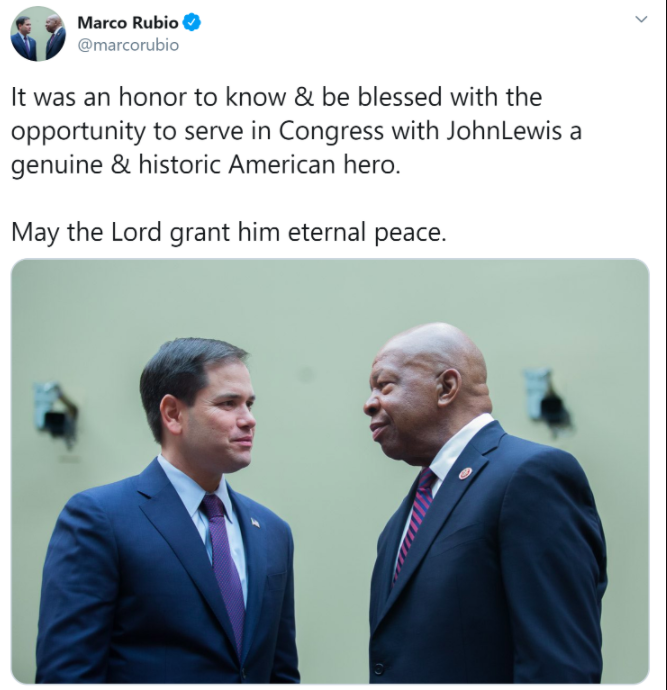
 

Funfetti is back in all of its colorful glory when we need it most

This is the week where we realized that everything is cake. Social media is currently one long montage of knives slicing into everyday objects — Crocs, Coca-Cola cans, Filet-O-Fish sandwiches — only for the camera to zoom in, showing they’re actually constructed from flour, frosting and copious amounts of fondant.

All corners of the internet have now clung to the trend; there are Twitter threads of K-Pop groups as cake, “Hannibal” jokes that write themselves, and revised versions of the Biblical tale of Solomon recommending a baby be cut in half. And all I have to say is this: If you cut me open and it’s revealed that I, too, am merely cake — I genuinely hope that I am filled with Funfetti. 

Funfetti, a portmanteau of “fun” and “confetti,” was developed by Pillsbury in 1989. The original commercial features the Pillsbury Doughboy pushing a purple tub of frosting with a short, lit fuse sizzling from the top. “Want a bigger bang out of your next birthday?” the deep-voiced narrator queries, before the frosting bursts like a firecracker, revealing a cake flecked with neon sprinkles. “Nothing says lovin’ like Funfetti.” 

And indeed, the OG Funfetti flavor —featuring those tiny saccharine sprinkles suspended in light, boxed white cake — became synonymous with kids’ birthday parties. These were the kind of birthday parties held at dimly lit roller rinks and neighborhood swimming pools, where the achingly sweet forkfuls of cake cut through the lingering taste of chlorine in your mouth, and you and your friends would all pose for a photo with burnt skin, and sprinkles stuck in your teeth. 

As Molly Yeh, host of Food Network’s “Girl Meets Farm” and known for her homemade version of the cake, told the New York Times, “In the 1990s, to have a successful birthday party, you had to beg your mom for Funfetti cake. It was as if chocolate and vanilla no longer existed.”

Then came the variations: Funfetti seasonal mixes: Funfetti with black and orange, or red and green Halloween and Christmas sprinkles; Funfetti sugar cookie mixes; Aqua Blue vanilla frosting; Galaxy Space Blue frosting; Orange All Star vanilla frosting.

There was soon seemingly Funfetti for every occasion, but then in 2018, as The Wall Street Journal reported, J.M. Smucker Co., which had owned Pillsbury since 2004, sold the baking business “to a private-equity firm for $375 million, including debt, mirroring moves by other food companies to divest decades-old brands whose sales are in decline because of changing consumer tastes.” 

According to The Wall Street Journal, Mark Smucker, the chief executive of J.M Smucker Co., said he hadn’t invested much in Pillsbury during the year prior to the sale because it would have hurt profit. “We consciously chose not to go deep,” he said on an earnings call, stating that the business had entered a protracted decline after several years of growth as consumers started buying freshly baked goods, leaving boxed cake mixes behind.

Don’t call it a comeback

But since the sale to the Connecticut-based private equity firm, Brynwood Partners, Funfetti has returned to grocery shelves with a vengeance. 

In January, Coffee-Mate released a Funfetti-flavored coffee creamer (it apparently tasted like birthday cake, sans the trademark sprinkles). Earlier this month, shoppers started scooping up Pillsbury’s new Funfetti Chocolate Cake & Cupcake Mix, and in August, the company will be releasing a colorful new cereal that will be “true to the Funfetti cake taste.”

While it remains to be seen if the new products will put Pillsbury in the black, for many people, the love of Funfetti — and its variations and imitators — never subsided. 

Larissa Neto is an Atlanta-based baker whose Funfetti-inspired creations, like this Funfetti bread, have garnered her a steady Instagram following. Neto says that there are several practical factors that help explain the enduring appeal of the flavor, namely the extra crunch and hit of sugar the sprinkles add, as well as the obvious visual appeal. 

But there’s something else that is a little more difficult to quantify, a certain element of nostalgia inherent to the product. 

“I think there is a certain level of people wanting to regain the feelings of their childhood, of those birthday parties,” Neto said. “And I think a lot of different industries, not just the baking industry, are wanting to regain a certain nostalgia. I think there is a newfound appeal for a lot of things from the past.” 

This corporate play for nostalgia has appeared in several ways, from Pizza Hut returning to the logo they used from 1967 to 1999, to the re-release of New Coke. In the realm of sprinkle-filled desserts, the kids who loved Funfetti the first time around are now adults and are looking for (or creating) products that hearken back to those years. 

For example, pastry chef Christina Tosi’s Birthday Cake, which was Funfetti-inspired, is what helped put her bakery Milk Bar on the map back in 2008, while as the New York Times reported in 2016, according to Pinterest, in the last year, users 25 to 34 years old had saved 260 percent more Funfetti ideas than the year before. 

This renewed interest in Funfetti has made its way from Pinterest pages into home kitchens, as well. 

Georgia-based travel writer Caroline Eubanks said that she hasn’t ever had much of a sweet tooth, but that Funfetti’s nostalgia factor made it an enduring favorite.

“After college I moved to Australia for a year,” she said. “It was my first time being away from home for so long and my parents sent me a care package with Funfetti mix and other favorite items from home. They probably spent $50 to mail items totaling in $10 of value. But it made me feel less homesick.” 

Faith Kramer, an Oakland-based journalist, says that Funfetti remains a favorite for her 32-year-old son. She made him a Funfetti-inspired cheesecake for his bachelor party in 2017. “Also, he lives in London now, and whenever his wife visits, she picks up the cake mix and frosting as a surprise for him,” Kramer said. 

There is certainly  a contingent who have forsaken Funfetti for what they perceive as more “adult” desserts; but as a Reddit user responded to a query about whether 30 was too old for a Funfetti birthday cake, “I’ll eat [F]unfetti until my deathbed.” And why not? As the world around us continues to look pretty grim, why not decorate whatever you can with sprinkles?


FDA warns of contaminated hand sanitizers that can make you go blind

Most hand sanitizers contain some form of alcohol, a disinfectant; yet as any distiller will tell you, not all alcohols are created equal. Inexperienced or unscrupulous chemists may accidentally create toxic alcohols, including one which can cause blindness. 

Something like this appears have happened during the production of some hand sanitizer, a hot commodity during the global pandemic. Recently, the Food and Drug Administration (FDA) warned that some hand sanitizers that are labeled as containing ethanol (also known as ethyl alcohol, and what is in spirits) have tested positive for methanol, also known as wood alcohol. According to the FDA’s recall list, there are 69 hand sanitizer products that they advise consumers not to use. On July 15, two more products were added to the list, both from manufacturer MXL Comercial SA de CV, which is based in Guanajuato, Mexico.

“Consumers and health care providers should not use methanol-containing hand sanitizers,” said FDA Commissioner Stephen M. Hahn, M.D. in a statement on July 2. “The FDA remains committed to working with manufacturers, compounders, state boards of pharmacy and the public to increase the safe supply of alcohol-based hand sanitizers.”

The precipitous increase in demand for hand sanitizer has made it a profitable pandemic business endeavor. Yet the possibility of methanol in some hand sanitizers could have some seriously grave, and sometimes deadly, consequences.

“It has a number of toxic effects, nausea, vomiting, headaches, blindness seizures, and coma,” Aline Holmes, a professor of nursing at Rutgers University School of Nursing, told Salon in an interview. “It’s especially deadly for children because even if they just touch a little bit, it could be absorbed through their skin . . . they put everything in their mouth, so even if they just accidentally had some on their hands and they put it in their mouth, it could be very deadly.”

According to research published in 2017 in the Annals of Occupational and Environmental Medicine, an estimated oral dose of 3.2 to 11.9 grams of pure methanol is enough to cause blindness. A lethal dose from respiratory intake is reportedly between 4,000–13,000 mg. “Methanol can be easily absorbed during exposure through respiration, skin, and the gastrointestinal tract,” researchers wrote. “Even a low dose of pure methanol through oral or respiratory exposure might be lethal or result in blindness as a clinical symptom.”  

Holmes explained that ingesting methanol is most dangerous, but that merely rubbing it on one’s hands and having the chemical absorbed through skin can be nearly as bad.

“Even if you just get it on your skin, it can be absorbed into your skin — and the way it’s metabolized in your body can lead to blindness, death or stroke,” Holmes said.

The FDA explains in its statement that in June, the agency first warned consumers about products manufactured by Eskbiochem, which contained methanol. Since then, several of Eskbiochem’s distributors have issued voluntary recalls.

“I was surprised that there would be any kind of methanol — or as we call it wood alcohol — in hand sanitizers,” Dr. William Schaffner, a professor of preventive medicine at Vanderbilt University Medical Center told Salon. “Methanol can make you very very sick, with nausea and vomiting and headache. . . . you can get central nervous system toxicity with seizures.”

Why would companies do this if it’s so dangerous? Chalk it up to ignorance or companies trying to take advantage of this moment. The FDA commissioner believes that producers are “taking advantage of the increased usage of hand sanitizer during the coronavirus pandemic and putting lives at risk by selling products with dangerous and unacceptable ingredients.” The FDA also said that during the pandemic poison control centers have had an increase in calls about accidental ingestion of hand sanitizer.

Dr. Stephen S. Morse, a professor of epidemiology at Columbia University Mailman School of Public Health, told Salon via email that methanol has a long history of being substituted when ethanol isn’t available.

“In an earlier time, you’d hear about the . . . alcoholics who filtered the alcohol from Sterno cans (used to keep food hot) because they couldn’t afford anything else,” Morse said. “Many would go blind as a result, and some would die.”

Dr. Morse added: “Methanol is cheaper than ethanol, and isn’t taxed, but for many purposes just can’t be substituted for the other alcohols.”

Public health officials still recommend consumers use an alcohol-based hand sanitizer that contains at least 60 percent ethanol. Especially during the pandemic, hand sanitizer is always a great substitute if you can’t wash your hands for 20 seconds with soap and water. The FDA said that if hand sanitizer says it’s “FDA-approved,” it could be a red flag since no hand sanitizers are approved by FDA.

Indeed, as Dr. Schaffner told Salon, one way to avoid the contaminated hand sanitizers is to stick to brands that are “well known.” Many people have also tried to make their own hand sanitizer, although not everyone is in favor of do-it-yourself formulas.

Judge rules Trump administration must accept new DACA applications

EL PASO — A federal judge ruled Friday that the Trump administration must start accepting new applications for the Obama-era Deferred Action for Childhood Arrivals program that shields some undocumented immigrants from deportation.

The decision comes four weeks after the U.S. Supreme Court allowed the 2012 initiative to remain in place. The policy, known as DACA, has protected more than 130,000 Texans from deportation since its inception, the second-highest total of any state after California. As of December 2019, there were about 107,000 Texans with DACA permits, according to federal statistics.

The DACA program applies to undocumented immigrants who came to the country before they were 16 and who were 30 or younger as of June 2012. The program gave them a renewable, two-year work permit and a reprieve from deportation.

After the program was halted in 2017, DACA recipients were allowed to apply for renewal of their two-year permits. But new applications had been put on hold.

Friday’s developments come from a separate case heard in Maryland, where federal district Judge Paul Grimm made his decision in part based on the ruling by the Supreme Court, which said the Trump administration didn’t follow proper procedure when it stopped the program.

“The policy is restored to its pre-September 5, 2017 status,” he wrote in the four-page order. “Defendants [including the Department of Homeland Security] and their agents, servants, employees, attorneys, and all persons in active concert or participation with any of them, are ENJOINED from implementing or enforcing the DACA rescission and from taking any other action to rescind DACA.”

Immigrant rights groups immediately cheered the decision and said the ruling should spell relief for potential applicants and please the majority of Americans.

“Today’s decision reaffirms what we already knew and what the Supreme Court already said. The Trump administration’s heartless attempt to terminate the DACA program was illegal and they must immediately begin accepting new DACA applications,” Gustavo Torres, CASA’s executive director, said in a statement. “Trump’s xenophobic policy agenda is being stripped apart, demonstrating what 74% of Americans already agree on: DACA should be here to stay.”

After the Supreme Court ruling, President Donald Trump said he would try again to end the program in a way the high court would deem appropriate. “The Supreme Court asked us to resubmit on DACA, nothing was lost or won,” he said at the time.

He has since made statements saying he would soon announce action on DACA that would protect young undocumented immigrants but hasn’t been clear on the details and has said it would either be part of an executive action or part of a larger bill.

Texas Attorney General Ken Paxton said in a statement after the Supreme Court’s ruling that his office would keep working to have DACA declared unconstitutional in a separate case filed in Texas’ federal courts.

The Texas Tribune is a nonprofit, nonpartisan media organization that informs Texans — and engages with them — about public policy, politics, government and statewide issues. 

“The bleeding wound”: How Trump’s presidency proves Osama bin Laden won

It’s July 2020 and I’m about to turn 76, which, as far as I’m concerned, officially makes me an old man. So put up with my aging, wandering brain here, since (I swear) I wasn’t going to start this piece with Donald J. Trump, no matter his latest wild claims or bizarre statements, increasingly white nationalist and pro-Confederate positions (right down to the saving of the rebel stars and bars), not to speak of the Covid-19 slaughter of Americans he’s helped facilitate. But then I read about his demand for a “National Garden of American Heroes,” described as “a vast outdoor park that will feature the statues of the greatest Americans to ever live” and, honestly, though this piece is officially about something else, I just can’t help myself. I had to start there.

Yes, everyone undoubtedly understands why General George Patton (a Trump obsession) is to be in that garden, not to speak — given the president’s reelection politics — of evangelist Billy Graham, Supreme Court Justice Antonin Scalia, and former president Ronald Reagan. Still, my guess is that most of you won’t have the faintest idea why Davy Crockett is included. I’m talking about the frontiersman and Indian killer who died at the Alamo. Given my age, though, I get Donald Trump on this one and it gave me a rare laugh in a distinctly grim moment. That’s why I can’t resist explaining it, even though I guarantee you that the real subject of this piece is Osama bin Laden’s revenge.

After all, The Donald and I grew up in the 1950s in different parts of the same bustling city, New York. We both had TVs, just then flooding into homes nationwide, and I guarantee you that we both were riveted by the same hit show, TV’s first mini-series, Walt Disney’s Davy Crockett, King of the Wild Frontier, starring the actor Fess Parker. Its pop theme song swept the country. (“Born on a mountain top in Tennessee, greenest state in the land of the free… Kilt him a b’ar when he was only three… Davy, Davy Crockett, king of the wild frontier.”) The show also launched a kids’ craze for coonskin caps. (Who among us didn’t have, or at least yearn, for one?) So how could a statue of Fess Parker not be in the Garden of American Heroes?

And since Donald Trump is himself the essence of a bad novel (though he’s also become our reality), I just wonder: What about the Lone Ranger and Tonto, especially since there are no plans for Native Americans in his garden-to-be? They were a crew obviously put on Earth to be wiped out by white colonists, cowboys, and the cavalry in the kinds of Westerns both of us trooped to local movie theaters to see back then.

Or how about Hopalong Cassidy (Hoppy!), that other TV cowboy hero of our childhood? Doesn’t he deserve to ride in that garden next to another Trump military fixation, General Douglas MacArthur? After all, I know that Hoppy was real and this is how: When I was seven or eight, my father had a friend who worked for Pathé News and I rode in front of the tripod of his camera on the roof of that company’s station wagon in a Macy’s Day Parade in my hometown. (I still have the photos.) Somewhere along the route, Hoppy himself — I kid you not! — rode by on his white horse Topper and, since I was atop that station wagon and we were at about the same height, he shook my hand!

And here’s what makes Cassidy especially appropriate for The Donald’s garden landscape: in the 1950s, he was the only cowboy hero who dressed all in black right up to his hat (normally, a sign of the bad guy) and, in the process, created a kid’s craze for black shirts (his version of a coonskin cap), breaking its past association with either Italian fascism or mourning and bringing it back into the culture big time. Tell me honestly, then, don’t you think a garden of “heroes” in the age of Trump should have a few black shirts and an increasingly Mussolini-ish look to it?

An American Garden of Blood

So Donald Trump and I both lived through the same TV world in our childhoods and youth. We also lived through 9/11, still in the same city, although unlike him, I wasn’t practically a “first responder” at the site of those two downed towers, nor did I see all the Muslims celebrating across the river in Jersey City (as he claimed he did). Still, of one thing I’m convinced: Donald Trump is Osama bin Laden’s revenge.

Of course, that was all so long ago. The new century had barely begun. I was only 57 and The Donald 55 when those two hijacked planes suddenly slammed into the twin towers of the World Trade Center in our hometown, a third one plunged into the Pentagon in Washington, and a fourth (probably heading for the White House or the Capitol) crashed into a field in Pennsylvania after its passengers fought back. Ever since, all you have to do is write “9/11” and everyone knows (or thinks they know) what it stands for. But on 9/11, there was, of course, no 9/11.

It was a breathtakingly unexpected event (although, to be fair, the CIA had previously briefed President George W. Bush on Osama bin Laden’s desire to hijack commercial planes for possible terror operations… oh, and there was that FBI agent in Phoenix who urged headquarters “to investigate Middle Eastern men enrolled in American flight schools”). Still, the downing of those towers and part of the headquarters of the singularly victorious military of the ultimate superpower of the Cold War, the one already being called “indispensable” and “exceptional” in 2001, was beyond shocking.

Admittedly, there’s history to be remembered here. After all, it wasn’t actually that military or that Pentagon that downed the Soviet Union. In fact, when the American military fought the Soviets in major proxy wars on a planet where nuclear catastrophe was always just around the corner, it found itself remarkably stalemated in Korea and dismally on the losing side in Vietnam.

No, if you want to give credit where it’s due, offer it to the CIA and Washington’s Saudi allies, who invested staggering effort from 1979 to 1989 in funding, supporting, and training the Taliban’s predecessors, groups of Afghan Islamic extremists, to take down the Red Army in their country. Supporting them as well (though, as far as is known, probably not actually funded by the U.S.) was a rich young Saudi militant named, believe it or not, Osama bin Laden who, before that war even ended, had founded a group called “the Base” or al-Qaeda, and would, in 1996, declare “war” on the United States. Oh yes, and though it’s seldom mentioned now, when charges are flying fast and furious about the possible recent Russian funding of Taliban militants to kill at most a few Americans in Afghanistan, in those years the U.S. poured billions of dollars into… well, not to put it too subtly, empowering Islamic extremists to kill the soldiers of that other superpower by the thousands in… yes, Afghanistan. How’s that for shocking?

In 1989, the defeated Red Army finally limped home from what the Soviet Union’s leader, Mikhail Gorbachev, had taken to calling “the bleeding wound.” Only two years later, his country imploded and the U.S. was left alone, officially victorious, on Planet Earth (despite future fantasies of a horrific “axis of evil” to be faced), the first country in endless centuries of imperial rivalry to find itself so.

And what exactly did that triumphantly indispensable, exceptional superpower do but, a decade later, get dive-bombed by 19 — just 19! — largely Saudi hijackers in the service of tiny al-Qaeda and that wizard of terror Osama bin Laden, whose urge was then to provoke Washington into a genuine war in the Muslim world and so create yet more Islamic extremists. And did he succeed? You bet — and in a fashion even he undoubtedly hadn’t conceived of in his wildest dreams. Think of 9/11, in fact, as the greatest example of “shock and awe” in this century.

Here’s a feeling I still remember from the weeks after the 9/11 attacks when I saw where the administration of President George W. Bush was heading toward the invasion of Afghanistan and then, god save us, Iraq; when I watched our mainstream media narrow its focus to this country as the most victimized yet dominating and exceptional place on Earth and Osama bin Laden as the ultimate evil on this planet; when I watched the never-ending memorial ceremonies begin and what soon came to be called “the war on terror” be launched with up to 60 (count ’em: 60!) countries in its gun sights, even if I didn’t yet know that, on 9/11 in the damaged Pentagon, Secretary of Defense Donald Rumsfeld had turned to an aide and said, “Go Massive. Sweep it all up. Things related and not,” with a future invasion of Saddam Hussein’s Iraq clearly in mind, though the Iraqi autocrat had no relation whatsoever to al-Qaeda (something you wouldn’t have known from the top officials in that administration in those years) — when, in short (though I didn’t yet think of it that way), I watched my own country become a “bleeding wound” that has never stopped flowing and, in Donald Trump’s Covid-19 moment, has turned into an American Garden of Blood.

Back in late September 2001, despite having been deeply involved decades earlier in the nightmare of the Vietnam War (and opposition to it), I could already sense war coming and it occurred to me that this was going to be the worst period I had ever experienced. Now that we’re in Donald Trump’s America, with hundreds of Americans dying daily of a disease that a reasonably responsible president and administration could have brought under control, the 3,000 deaths of 9/11 are beginning to look like a drop in the casualty bucket. (By the beginning of April 2020, Covid-19 deaths in New York City alone had already surpassedthose of 9/11 by 1,000.)

And I wasn’t wrong in that hunch about this being the worst period, was I? Mind you, it was just a gut feeling then, no more — even though it would soon enough lead, almost inexorably, to the creation of my website, TomDispatch, and its focus on what turned out to be America’s never-ending wars of this century.

A passport to nowhere

Let’s get one thing straight, though. If, at that moment, you had told me that this country was going to launch a series of forever wars across what would turn out to be a significant part of the planet and fight them hopelessly for almost two decades or that, the more success proved absent in those same years, the more one administration after another would pour taxpayer dollars into the U.S. military, the 17 “intelligence” agencies, and the rest of the national security state; that what’s still known, with no accuracy whatsoever, as the “defense budget” would years ago have become larger than those of the next seven best-funded military powers on the planet combined and, by 2020, the next 10, and would still be rising; that domestic investment, from infrastructure to pandemic preparedness, would be starved for money in those same years, and that just about no one would protest any of this in the halls of Congress or the streets of America, I would have thought you a madman — or rather, the world’s best writer of dystopian fiction.

If you had told me that, in those very years, of the two great powers of this century, China and the United States — one rising, the other ever more clearly falling — the latter would lose approximately 7,000 military personnel (and at least another 8,000 military contractors) and many more wounded, not to speak of those who came home with PTSD or, under the pressure of repeated deployments to the sorriest of conflicts, committed suicide, while the former, as the New York Times reported recently in the wake of a bloody (but not weaponized) clash on China’s disputed Himalayan border with India, would have lost next to none, I wouldn’t have believed you. (“In four decades,” as the Times wrote, “the People’s Liberation Army had lost just three soldiers to fighting abroad — troops who were killed in United Nations peacekeeping operations in Mali and South Sudan in 2016.”)

If you had told me that, facing a devastating virus, the leader of one would largely suppress it — admittedly using the most authoritarian of methods — while, in his search for reelection, the leader of the other, officially still the greatest power on the planet, would ignore it, open the economy, churches, schools, and institutions of every sort and watch it run wild without a plan in sight; if you had told me that fewer than 5,000 people would die in the first of those countries and more than 134,000 (and still counting) in the other, leaving the American dead of 9/11 and the bloody wars of this century in the shade, and that it was all only getting worse, I wouldn’t have believed you. Not for a second.

And if, above all, you had told me that, deep into those years of bleeding abroad and increasingly at home, a near majority of Americans would vote to (as I wrote during election campaign 2016) send a suicide bomber into the White House, I would have told you that, though Osama bin Laden had been killed by SEAL Team Six in Pakistan and buried in the briny deep in 2011, Donald Trump was his living revenge, and that bin Laden had won twice — once thanks to those ludicrous, murderous forever wars across much of the Muslim world and the second time thanks to the pandemic from hell and the president from the same place.

Imagine if, in 1991 when the Soviet Union imploded, I had told you that, in 2020, not quite three decades distant, an American passport would be, more or less literally, a document for a trip to nowhere. Talk about a bleeding, or even hemorrhaging, wound! In the years to come, I think it will be ever more obvious that Donald Trump was, in fact, proof of Osama bin Laden’s success, of the fact that 9/11 and those 19 hijackers were all that was needed to produce the world of his dreams and the wounds that went with it.

And if, by the way, you wondered why I wrote this piece with the longest sentences I could possibly create, the answer is simple enough: two decades into the twenty-first century, I think it should be obvious that Americans have been given an exceptionally, perhaps even indispensably long sentence without parole on a planet already heating to the boiling point, 94,000,000 miles from the sun.

No, this truly won’t be “the American century,” but I doubt it will be the Chinese one either. By the time this crew is done, it may be nobody’s century. Thanks a heap, Osama! This is your bleeding wound, too.

Copyright 2020 Tom Engelhardt

To stay on top of important articles like these, sign up to receive the latest updates from TomDispatch.com here.

Hospitals suddenly left short of doctors — because of Trump’s visa ban

As hospitals across the United States brace for a difficult six months — with the first wave of the coronavirus pandemic still raging and concerns about a second wave in the fall — some are acutely short-staffed because of an ill-timed change to immigration policy and its inconsistent implementation.

A proclamation issued by President Donald Trump on June 22, barring the entry of most immigrants on work visas, came right as hospitals were expecting a new class of medical residents. Hundreds of young doctors were unable to start their residencies on time.

Trump’s order included the H1-B visa for highly skilled workers, which is used by some practicing doctors abroad who get U.S. residency slots. The proclamation stated that doctors “involved with the provision of medical care to individuals who have contracted COVID-19 and are currently hospitalized” should be exempt from the ban, but it delegated the issuing of guidance to the departments of State and Homeland Security. That guidance has been slow and inconsistent.

Many consulates started approving doctors’ visas on Thursday, after ProPublica asked the State Department about the delay. Others say they’re still awaiting guidance.

At hospitals where many incoming residents are visa holders, even a delay of a few weeks in arriving in the U.S. creates a staffing crisis. Doctors and administrators are afraid that the repercussions will last for the rest of the year — leaving them overworked and ill-prepared even before a second wave of the virus hits.

ProPublica has heard from 10 would-be medical residents stuck abroad because of H1-B visa issues. Six of them had gotten emergency consulate appointments for visa approval, but when they arrived for meetings they were told their visas could not be approved. Three were still waiting on DHS approval for their visas, a necessary step before a visa gets a consulate stamp. One resident had application approval but was denied an emergency consulate interview appointment because of the ban. All were destined for hospital positions treating COVID-19 patients.

The State Department told ProPublica on Tuesday that it, “in conjunction with the Department of Homeland Security and interagency partners, is establishing and implementing procedures” for the visa ban, and that it “has communicated and will continue to communicate implementation procedures” to consulates abroad.

On Thursday, the State Department’swebsite posted guidance, spelling out that doctors treating COVID-19 patients were exempt from the ban. On that day, many of the residents ProPublica spoke to said they had suddenly received visa approvals. “A quite remarkable turnaround, given that I received a rejection email three days ago,” one said. In at least five countries, however, consulates were still not processing doctors’ visas.

The Committee of Interns and Residents, an affiliate of the Service Employees International Union, has heard from over 250 interns stuck abroad. Over 150 of them are on H-1B visas.. (The others are on visas that weren’t covered in Trump’s ban, but can’t get approval because their consulates are still closed due to the pandemic.) Union president Jessica Edwards pointed out to ProPublica that while that number may sound small, each intern is responsible for the care of thousands of patients.

As of 2017, there were 2,532 medical residents on H1-B visas, according to the Journal of the American Medical Association — though the Trump administration’s continued restrictions to legal immigration may have made it less appealing for hospitals to sponsor visas in the last few years. But the impact on hospitals is highly concentrated in the less-prestigious hospitals that tend to rely on residents from overseas.

At one New York City hospital serving low-income residents, nearly half the incoming class is still stuck abroad, multiple sources confirmed to ProPublica. One hospital in a large Midwestern city told ProPublica that “roughly half” of its first-year doctors started on time. In the Deep South, a region now overwhelmed by COVID-19 cases, a doctor who was set to start told ProPublica he was among 10 residents still awaiting visa approval as of early July. All hospitals and doctors spoke to ProPublica on the condition of anonymity because they worried about jeopardizing their visa applications.

ProPublica has also spoken to more-experienced doctors facing the same issue — including an infectious-disease specialist blocked from starting a job in an area of the Western U.S. where COVID-19 cases are rising.

When there aren’t enough incoming residents to replace departing third-year residents, staffing crunches result.

At the New York City hospital, a doctor told ProPublica that after only 10 days of short-staffing, one resident had called in sick from exhaustion. The doctor recounted a recent shift in which there had only been two junior residents on call, compared with the typical six. Even by having residents work individually instead of in teams of two, they couldn’t keep up with new patient admissions.

“The patients had to just stay there waiting in the (emergency department) for the residents to finish their first admission, in order to see them,” the doctor said. “When the shift was over, I logged into the computer and I would see notes written at 10 p.m., 11 p.m. And these residents are expected to go home and then come back again at 6:30 a.m.”

Even at hospitals with decreasing COVID-19 caseloads, short-staffing is a bigger problem than it was in pre-pandemic times. Some hospitals are seeing a “surge of non-COVID patients” who were unable to get care for chronic conditions like heart disease during lockdown and are now deteriorating, a doctor at a short-staffed hospital told ProPublica. And because protocols prevent doctors from switching back and forth between COVID-19 and non-COVID-19 patients, the hospital needs to keep more doctors on-call to maintain staffing levels in both wards.

“If someone is getting acutely ill, who will see them?” a hospital administrator told ProPublica. “I’ve got my poor residents running around trying to make sure everyone is seen in a timely manner. And residents are great, but they can only be in one place at one time.”

Some of these problems will be fixed as residents receive delayed visa approvals and are able to come. But it will take weeks, if not months, to successfully onboard them. The Midwestern hospital anticipates that arriving residents may not be able to start until mid-August. In the meantime, they’re understaffing services and using fourth-year medical students in place of residents.

Hospitals are used to a summertime efficiency gap, as new interns learn the ropes. This year, it could persist into fall — when a second wave of coronavirus infections is expected.

“I’m really worried that in three months,” said the medical administrator, “we’re going to have a bunch of residents who are just exhausted and just getting into the worst part of the fall, flu and COVID season.”

These doctors already had to push themselves through the first wave of COVID-19 this spring. Furthermore, at hospitals hardest hit by the visa ban, the residents picking up the slack are often themselves H1-B visa holders whose futures are now uncertain. Trump’s ban didn’t revoke visas for anyone currently in the U.S., but if they leave the country — which they will have to do if they change jobs — their ability to return is unclear. Some of the doctors interviewed by ProPublica were living in the U.S. before the pandemic and returned home partly to get visa approval for their new jobs. One doctor ended up stuck in India while her husband was unable to travel there from the U.S.


Another doctor from India, now working in the U.S., told ProPublica: “My parents, they’re (in India) by themselves, and both of them are about 70. At some point, probably, they will catch the infection.” If that happens, the doctor plans to leave the U.S. to care for them — “and if I don’t come back, I don’t come back. At this point, I really don’t care.”

The feeling that the U.S. doesn’t value them is compounded among residents who’ve already lived through the first wave of COVID-19 and who are now facing overwork and visa uncertainty. Some said other countries are making it easier for doctors to immigrate, while the U.S. leaves them in limbo.

“We feel underappreciated for what we’re doing,” the New York City resident said. “And what else can you do, more than sacrificing your life?”

Tightly regimented residency schedules can be tricky for H1-B visa holders even in the best cases. Doctors find out in mid-March if they are “matched” with a U.S. hospital, where they’ll be expected to start at the beginning of July. DHS often takes longer than that to approve H1-B applications. Employers can pay for expedited processing to guarantee a decision within five days — but DHS shut down its expedited processing on March 22 because of COVID-19 and didn’t reopen it until June 8.

Shortly afterward, Trump issued his proclamation banning entries on many visa types, including the H1-B.

Most people coming to the U.S. for residencies arrive on a different kind of visa, the J-1, and aren’t covered by Trump’s ban, though some have had issues getting consulate appointments because of the COVID-19 pandemic. But doctors do identical work regardless of their visa types. If anything, doctors with H1-Bs are more qualified than those with J-1s, since they’re required to have completed all three phases of the taxing U.S. Medical Licensing Exam before starting residencies. Residents with H1-B visas were practicing doctors in their home countries, working alongside new medical-school grads from the U.S.

An earlier immigration ban targeting permanent immigrants, which passed in March, contained a broad medical worker exemption. When rumors of a work-visa ban started swirling in late spring, immigration lawyers and hospitals expected it would include the same language. Instead, the June proclamation mentioned only doctors working with hospitalized COVID-19 patients.


Every resident who spoke with ProPublica had provided evidence to the U.S. government that they met that description. Some were told by consular officers that they were probably exempt. But until they received State Department guidance, they had to place their visas in “administrative processing” — an indefinite holding pattern.

ProPublica saw an image of a form given to one visa applicant informing them of a hold. The form is typically used to request more information from the applicant. In this case, though, a consular officer had modified the form to say that processing would not begin until “implementation procedures” for the visa-ban exemption had been provided.

Doctors in limbo have formed WhatsApp groups to share information and support, but the dialogue has shown inconsistencies in the ban’s implementation. Some consulates, such as those in Serbia, Russia and the United Arab Emirates, have approved doctors’ H1-B visas as exempt. Asked about the discrepancy, the State Department told ProPublica: “Applicants who believe they qualify for an exemption from Presidential Proclamation 10052 should check the website of the closest U.S. Embassy or Consulate regarding the current status of services. How appointment systems are managed can vary depending on the consular section.”

One applicant who reached out to the State Department for assistance received an email reply from an employee on July 10. The employee said that as far as they knew, the Office for Consular Affairs had given guidance to consulates and embassies to process visas that were exempt from the ban. (The agency declined to comment on that email.)

On Thursday, that applicant received a second email from the same employee. Guidance had been slow in coming, the employee admitted, but it had finally come through.

But some countries still haven’t changed their practices. One doctor stuck abroad told ProPublica they’d sent a follow-up email to the consulate on Thursday morning. “He gave me the same reply,” the doctor said, “that they are still waiting for guidance from Department of State.”

ProPublica is a nonprofit newsroom that investigates abuses of power. Sign up to receive our biggest stories as soon as they’re published.

Remember when the internet was supposed to be transparent and democratic? There’s still hope

Once upon a time, the internet was seen a wondrous fount of knowledge and information, empowering users and spreading democracy. This utopian view resonated widely with early adopters in the 1990s, after the end of the Cold War, but it resonated much more broadly around the world in 2011, during the Arab Spring. There were always dark shadows noted by observers, as in Gene Rochlin’s 1997 book, “Trapped in the Net,” but collectively we’ve been blindsided and bewildered by how different the online experience has become — how much of a marketplace for rumor, fear, conspiracy theories and polarized worldviews, all watched over by purportedly neutral platform manipulations bringing us exactly what we’re told we want.

Could it be possible to recover that original promise? In a way, that promise was always naïve, as illuminated by Paulina Borsook’s 2000 book, “Cyberselfish: A Critical Romp Through the Terribly Libertarian Culture of High-Tech.” As Borsook notes, it took more than half a century of government investment to make the internet’s commercial incarnation possible, contrary to Silicon Valley’s self-serving mythos. But democratic theory, history, philosophy and psychology is far richer than libertarians suppose, and there is a much more sober, realistic version of that promise — one that, for example, scientists collaborating worldwide have experienced for more than a generation now.   

So could something like that become possible for all of us? A new paper in the journal Nature Human Behaviour strongly suggests that it could, and lays out an initial framework for what it might be like, reshaping things from the bottom up: “How behavioural sciences can promote truth, autonomy and democratic discourse online.” As the abstract explains, the problem can be simply put: 

The current online ecosystem has been designed predominantly to capture user attention rather than to promote deliberate cognition and autonomous choice; information overload, finely tuned personalization and distorted social cues, in turn, pave the way for manipulation and the spread of false information.  How can transparency and autonomy be promoted instead, thus fostering the positive potential of the web? 

Framed like that, this is a scientific problem, susceptible to scientific solutions. Of course, knowing that solutions exist and implementing are two different things: Consider the climate crisis. For a better understanding of how such a future could come to be, and what some specific steps would look like, Salon reached out to lead author Philipp Lorenz-Spreen, a postdoctoral fellow at the Max Planck Institute for Human Development in Berlin. This interview has been edited, as is customary, for clarity and length.

What struck me first on seeing your article was that it’s not reactive, but rather affirms a positive, arguing that behavioral science “can promote truth, autonomy and democratic discourse online.” So before talking about the paper itself, I’d like to ask about what informs your positive approach.

I think a bit of forward-looking is probably necessary. We need to be careful we don’t get into a whack-a-mole game. So, I was searching for more sustainable solutions, and you get end up getting less reactive and trying to find solutions that come from the bottom up, to think about how to change the system itself.  

Were there any previous examples in internet history that were resonant for you?

One of the rare examples of online environments that promote truth — one of the shining examples — is Wikipedia. This was an inspiration, to think about how different this website looks, compared to Amazon, how it’s designed and how things are arranged. 

Your paper draws attention to the asymmetry between what platforms know about users and vice versa. How do you characterize that asymmetry, and what negative consequences result that you propose to address?

The asymmetry probably comes out of dependencies we live with in this information-rich world. It gives the human brain too much to process, so we must rely on some kind of curation. That’s what the platforms do for us. That’s probably why they are successful. Google and Facebook are skyrocketing, successful, because we really, really depend on them to navigate through this information world. 

Additionally, “intransparency” contributes to it. We get recommendations that we cannot really follow where they actually come from, what factors contribute to them. So we are getting increasingly dependent on intransparent platforms, where we have to rely on trust. And the remedy we propose is increased transparency, and giving back a bit of autonomy to the user. 

To improve the online environment, you identify available but untapped cues and two kinds of behavioral interventions — “nudging” and “boosting” — that employ these cues. The cues differ in different contexts, so let’s start with the interventions. Folks may have heard of them, but just to be clear, what do each of them do?

They are both classic behavioral interventions, so they’re more umbrella terms. They both interact with the decision process. “Nudges” do that mainly or exclusively through the choice architecture. So whenever parts of the choice architecture are emphasized to steer behavior or influence behavior, that’s nudging. In our case, we just try to draw the attention of the reader to some piece of information that might be good for them — that will be the broad class of nudging. 

Boosting goes a bit further into the educative direction. So it’s not education, but it’s pieces of the environment or external tools that help the decision-maker, within the process of making the decision, to acquire some competencies. Often in this context, we refer to digital media literacy as a competence that a boost would help the user to acquire or develop. That can be done through the environment, by giving useful hints that you can remember, and then you use them even if the hints are missing. So you can actually incorporate that boost and take it along with you. Second can be external tools, like rules of thumb that you can actually use to evaluate sources of information. 

One aspect of boosting you mention is “self-nudging.” Could you explain what that is?

Self-nudging is when you yourself change your environment in a way that nudges you to a certain behavior that you want for yourself. An alarm clock is a self-nudge, a very elementary one. If you want not to browse certain apps so often, you might delete them from your phone. Or if we want to eat less sweets, we might not buy them. So we ourselves change our choice architecture so we make decisions that we want to make. That’s a boost, in a sense, because self-nudging itself is a competence. If you’re good at designing your own choice architecture, your own environment, to the choice you want to achieve, that’s what we call a competence. That’s why we would classify it as a boost. 

You discuss what you call “endogenous” or “exogenous” cues as being important in interacting with the internet. Give me some examples. 

Endogenous cues are cues that describe the content itself. So when we talk about an online article, that would be the characters that appear in the article, the relationships that may be the part of the story, stuff like that we would call endogenous cues. And of course, it can be helpful to evaluate the truthfulness of the story. If the characters do not exist, or the story doesn’t have a logic it’s evidence it might not be true. 

Exogenous cues, on the other side, are context-dependent. So they do not regard the content of the article itself, but for example, the source of the article, who has written the article, which other outlets or sources the article cites. Where did it come from? How did it reach you? Who else has recommended it for you? Things like that. So the context around the story itself is an exogenous cue.

In the paper, you focus your attention on exogenous cues. Why is that?

We just experience how difficult judgments are about the content itself. There are extreme cases where you should make a judgment — maybe when it’s about violence — but you always run into the danger of either censorship or the accusation of censorship when you’re making judgments about content itself. So when you make a judgment about context, I think this is more robust against accusations or dangers of censorship. If you only provide more context, that could allow people to make the judgment themselves, without you or a third-party fact-checker or a platform or anyone else to make that judgment for you. That’s going in the empowerment direction — we want to let people make these choice decisions themselves. That’s why we focus on exogenous cues.

You examine three different contexts: online articles, algorithmic curation and social media. I’d like to go through each of them with you, to understand the challenges you identify and how to propose to meet them. Let’s start with online articles. What are the challenges they present? And what cues are available?

The main challenge we think we are facing here is the overabundance of articles, of content being produced. There’s a multitude of sources, a high number of articles reaching us and also the consumption patterns have changed. People do not consume a whole newspaper as one piece, and they do not subscribe to one newspaper for a long time. Some do, but we much more consume them on an article basis. So, we are moving from long-term decisions to rather short-term decisions, and we have this huge information overload at the same time. So that makes it very difficult to make decisions about the trustworthiness or reputation of the source. So that’s the challenge with news articles online. 

And what kinds of cues are available?

We can check if the publisher has an “About” section on the website, or if it’s a known publisher one can check for an external validation by making a Google search and finding reports of the same story. But one can also check if the article cites external evidence, if there are other articles of this article’s type, if they are clearly marked and if they come from other publishers and not just themselves. These would be some exogenous cues that one can check on — which, by the way, are not always readily accessible, which adds to the challenge of information overload. 

So how can nudging and boosting be used to make things more transparent?

Nudging can be used to draw attention to the external cues, so the sources that an article is citing could be listed on top of the article with a very clear color, or something. Or there can be a warning message if there are no external sources cited. There one can actually be inspired by Wikipedia, which often has warning messages with articles if there are not enough sources or if quality is lacking in the sources. That would be a very simple nudge. You can go a bit further when you think about sharing an online article, and then a warning message could require you to click a second time to confirm that you want to share the article even though it doesn’t cite any external sources. So the main process of the nudges in this context would be to draw your attention to the external cues.  

A boost would be more like a tool: In the article show a decision tree — that’s a tool that has been used to improve medical decision-making — by having, like, three or four questions that one can go through systematically to evaluate the trustworthiness of an article, for example. It can become like a cognitive tool kit. A person can remember this cognitive process and it will help them anytime they encounter an article, for example. 

The second context you discuss is “algorithmic curation,” the often opaque process by which things are delivered to us on the internet. What are the challenges that presents and what cues are available?

We talked about transparency here. Usually the problem is that a lot of things end up on my newsfeed and it’s often very unclear for what reason, and these algorithms that source the news feed, for example, are hidden. They are not known to the user. It becomes extremely difficult to understand why a specific article is ending up in the newsfeed. We do not know — this gets back to asymmetry — what they know about many other people who are consuming similar content, for example. That makes it extremely difficult for us to understand this curation.

The biggest challenge in the whole paper is that it’s very unclear what cues could be available. But if you think about a less sophisticated algorithm — not a machine-learning AI algorithm, but rather a simple, rule-based algorithm — that could help provide cues. Because if it’s just a linear combination of a few factors that source my content — which, for example, could be recency, and how many of my friends have engaged with this article, and a preference that I have, for sports or something — that could be displayed. So there would be cues that in principle a platform with a rule-based algorithm could show and help people understand much better why some things came up and others not. 

So how can nudging be used here?

When we talk about nudging in this situation, we’re very close to just information providing. So the factors that led to the decision could be displayed more clearly, or displayed at all — that would already help. Another nudge that would help would be a clear separation, even a visual separation, between different types of content. Currently in the newsfeed, everything is very blurred — so a post from my friends looks very similar to a commercial, or something from a politician or political party or a company. So these different entities and players could be much more clearly differentiated. That would change the choice architecture, to help us understand, for example, which is a paid ad and which is not. This is not in the best interest of the platform, because making an ad seemingly appear within the posts of my friends makes it much more personal than if I realize that’s an ad. But I think we should make that newsfeed more “overviewable.” 

And how can boosting be used?

If the newsfeed is more transparent, it could also be customizable. Of course, you can customize the feed in a way by following certain people and outlets, but you cannot determine the order or frequency. So that would be possible, to actually change your preferences and say, “I want to see more sports and less politics,” or “More from my friends and less from news.” That could allow the user to do self-nudging, so if I want to be more informed I can increase the amount of news I want to get. That gives the user back a bit of agency, at least.

So moving on, the third category is social media. What are the challenges they present? And what cues are available?

The challenge here is that we certainly have access to a huge number of other people, and we can communicate with them in different forms, but this kind of communication is like nothing we are used to. It’s difficult to have a feeling for what the numbers mean, social metrics — likes for example, or uploads, downloads or shares. We only see one number, the number of likes, for example. But there could be much more information available that could help us access the real consensus. We have access to such a large group of people, we can feel that even a very weird conspiracy theory, for example, is actually believed by many others. Two hundred seems like a very big number of other people believing it. So, you might actually think you are right in the middle of the conversation when actually you are on the outskirts of the discussion. That would be the challenge.

So how can nudges and boosts be used here?

A nudge in this context would be quite simple. It would be having just additional social information — these are sometimes called social nudges. If we know what others are doing, this is influencing our behavior quite heavily. One example would be to show what the average reading time of other people were on this article, on a newsfeed in social media. That information would give us a hint that something is clickbait, or that most people just stayed on this article for a few seconds or just a minute, and that would help us make a decision to maybe not click on those things. So that’s one thing. But also we can provide more information what other people on this network are doing not only around my direct neighborhood, but rather on another side of the network so I can see other opinions, so we can have a feeling what the discussion is actually looks like.

Boosting has a more educated character, it would be more like a tool. One thing that would really help us is adding to social media posts a hint of trustworthiness. So if sharing is very narrow, often it’s a niche topic, not so trustworthy, and if it’s broadly distributed, and many people at each point share it, it might be more true. So that’s something one could teach people to learn, basically to understand the social spreading pattern. Currently we don’t have much access to this information, but if it were provided we could actually learn such patterns, and see if someone was, for example, replicating posts several times, artificially amplifying the message, or if someone was picking up an old story from someone very far away in the network and trying to push that. So that would be a skill that people could acquire with such a tool. They could see the social spreading pattern whenever they encounter something on social media, so they can actually learn what the patterns mean and get a feeling for social media and social dynamics.

In your conclusion, you write: “In our view, the future task for scientists is to design interventions that meet at least three selection criteria.” What are they and why?

First, of course, is the need to be transparent, because we said the core of the problem is he intransparency of the platform. So if scientists or regulators make new regulations, they have to be fully transparent for people to become trustworthy, I think that’s a second point. I was talking about the danger of censorship early on, and so that’s what we try to avoid here with transparency and trustworthiness, with cues providing context that cannot be confused with censorship. Because you never know who is in the end implementing such tools and if they are by definition not able to do censorship, there might not be a danger of that. And the last criteria, specifically, is that it can’t be gamed. What we mean here is that social media metrics that we have now are often gamed. So the “likes” are a very simple metric that can be gamed by increasing social engagement, by either paying for it or getting other people to click the “like” button, so it appears to be popular, but actually it isn’t. 

If we come up now with new cues that should help people to assess the quality, there need to be protections. So, for example, if you have a very simple metric like the numbers of references that an article cites, that’s something that’s quite easy to game by just typing them into the article or something like that. So it has to go a bit deeper. It also has to show which articles are actually cited, for example, which would make it a bit more difficult to game. But that’s something you really have to think about and maybe even run experiments and check if it works and if anyone in the internet comes up with a solution to get around it — that’s something that happens a lot. That’s also in the conclusion: all these things need to be independently tested.

Yes, you say it’s important to examine a wide spectrum of interventions. This seems like an invitation to furthering empirical process, correct?

Definitely. The whole paper is a call for more research in this direction, more solution-oriented research, how to improve that environment. There’s a lot of empirical work to be done. These are just ideas and suggestions. So yes, it’s definitely a call for much more empirical work, and also independent from the platforms themselves.

Your focus is on what might be called normal users, not malicious ones. In fact, you argue that “it is not necessary that all or even the majority of users engage with nudging or boosting interventions.” Why are you confident in taking this approach?

We can never assume that everyone would engage with all the tools or interventions we are proposing. It will always be just a fraction. These external interventions are not making any judgments, they are getting people to make decisions for themselves. They of course cannot catch malicious actors who have an agenda, so they can only help people who by accident fall prey to their tactics. So that’s one reason. Another one is of course that we believe that we are very social beings. So, I was talking about Wikipedia as one of the examples of collective intelligence that actually has worked out. So that’s what we try to use as a parallel — once our online environments are more promotions of quality, in a collective-intelligence way, it will be pushed upward and reach people that would not have engaged with it before.

Finally, what’s most important question I didn’t ask and what’s the answer?

Well, one important question is “Who should do that?’ ‘Who would be interested?” I think the answer is that maybe the platforms have some interest in implementing such measures to improve quality, but it’s always important to keep in mind that they are commercial entities and that they have a certain goal, which is to maximize user engagement so they can make their ad revenue. 

So it’s probably also the responsibility of a democratic society to participate in this process of designing our online world. We have now let the platforms do that for us for a very long time, for the 10 years or so that they been around. Now we think it’s about time that, as a democratic society, we should come up with our own solutions. The option space for doing this is huge. There are a lot of options that we have not even touched or thought about yet. 

“It’s a mess”: Republicans turn on Georgia’s GOP Gov. Brian Kemp’s “stubborn” war on masks

On Saturday, The Daily Beast reported that GOP officials in Georgia were not all on board with Gov. Brian Kemp’s attack on local face mask orders.

“It’s a mess. It’s 2020, we have two Senate races, might as well be at the epicenter of face-masks lawsuits,” said one unnamed strategist. “This governor is very, very stubborn. When he starts chewing on a bone he will not let any dogs near that bone, this is something he’s really digging in on.”

But another strategist, Heath Garrett, argued Kemp was just sticking to his principles. “I think he recognizes he’s taking a short term PR hit, but I think he’s confident that our data’s different than Florida, Arizona, Alabama, Texas and these other Sun Belt states.”

This week, Kemp filed a lawsuit against Atlanta mayor Keisha Lance Bottoms to block her from enforcing a local mask mandate.

So far, very few Republican governors in the South have moved to mandate masks. Govs. Kay Ivey (R-AL) and Asa Hutchinson (R-AR) moved to do so this week. Gov. Greg Abbott (R-TX) also issued an order mandating masks in most counties, although his party is in revolt over the decision and many county officials are not enforcing it.

Even a magical sword can’t help “Cursed,” a retelling of the Arthurian legend that needs honing

Unspoken rules exist with regard to weapons in dramatic storytelling. If there’s a gun on the stage, it needs to go off. If we see that a character has a knife in his boot, he’d better use it to get out of a bind . . . or his bonds. And if a story centers upon a supernatural sword, the main character had better know how to swing it.

“Cursed,” Netflix’s latest attempt to lock down a successful fantasy franchise in a post-“Game of Thrones” world, places the sword of Arthurian legend into the hands of a young woman named Nimue, played by Katherine Langford (of “13 Reasons Why” fame). Nimue hails from fairy folk, a people connected to nature and the spirit realm. Among those with inherent powers she has special gifts her fellow villagers fear, marking her as an outsider. And that’s before she wraps her fingers around the hilt of one of Western literature’s most famous blades. 

When this weapon infused by ancient magic eventually comes into her possession, the story sets us up to think that Nimue would naturally be, at least in short bursts, a total badass . . . when in fact and in action, Langford’s technique is wince-worthy. No matter, because she flails it about well enough to fell evil creatures and terrible men, some of whom are considerate enough to more or less walk into the pointy end.

Handily the show’s editors paint in some CGI arterial sprays in the signature shape of Frank Miller’s artwork making each splash a modern-day version of those cartoon “POW!” “ZAP!” “BAM!” cards that popped up in the 1960s live-action TV series version of “Batman.”

But then, those were played for camp. “Cursed,” a co-creation of Miller and Tom Wheeler, who wrote five of its 10 episodes and authored the best-selling graphic novel the series is based upon, is an entirely serious creation that means well. Through their story, Miller and Wheeler aim to re-shape the legend of King Arthur by placing women in positions of power as opposed to relegating them to mere objects of desire or sinister temptresses. Cheers for good intentions.

Truly there’s much to be appreciated about a version of the creaky Arthurian myth that casts Nimue as the girl who would be queen but is fated to become the Lady in the Lake . . . although in this telling, who can say what that ultimately means?

Fate marks Nimue, who in the way of all high fantasy leaders these days, refuses her destiny before grudgingly embracing it, flailing along as she figures out what to do while the people around her are brained and shot through with arrows. The confusion, you see, is that Nimue contains powers outside of those supposedly bestowed by the sword. People or beasts who threaten her suffer payback from the local flora. She’s not someone you want to anger.

There’s more: “Cursed” also introduces Arthur (Devon Terrell) as a mercenary with a heart of gold and Nimue’s declared protector, even though she declares she needs no protecting, a debatable point.

Merlin (Gustaf Skarsgård) is a drunk and charlatan, hiding the inconvenient detail that he’s lost his powers from of King Uther Pendragon (Sebastian Armesto), a ruler barely holding the country together. Mad zealots in red monks robes led by the bloodthirsty Father Carden (Peter Mullan) rip through the kingdom, slaughtering magical folk – including Nimue’s kin, which places her on a quest to seek out Merlin. Along the way she must unite her people and avoid the murdering paladins while outrunning their champion, a black-cloaked one-man slaughterhouse (Daniel Sharman) whose name remains a mystery until the season finale. A bunch of Vikings pop in along the way, because why not.

There’s nothing wrong with a low-stakes, feather-light romp, and the case that is “Cursed” snugly fits that pillow. Still, it could have aimed higher in its first-season execution on multiple fronts, not the least of which should have been to prioritize putting Langford through some type of Renaissance faire boot camp.

The reason I keep pounding on this point, despite several scenes explaining Nimue’s inexperience to excuse Langford’s unbelievably poor attempt at theatrical sword fighting, is that there are simply too many brilliant female fighters in genre entertainment for the choreography in these scenes to come across as glaringly amateurish.

They also prevent the viewer from fully purchasing the central notion that this sword holds the power to change the fate of a kingdom for good or ill. A locus of that mojo level should make anyone visibly competent in a brawl for 30 seconds at time. In a better series, this would be an easily overlooked flaw. In this piece it exemplifies the B-grade nature of the production’s aspirations and its insistences on maintaining a predictable linearity to its quest.

Turn off your brain, and “Cursed” is fun and more evenly paced than other recent genre debuts. But at best, it feels like a small plate meant to keep our bellies full until we get a new season of “The Witcher,” a yarn that’s far and away wilder and messier but also a reliably better adventure.

Since Netflix, along with every other studio, is still grasping to discover the next great magical franchise, “Cursed” ends on a cliffhanger that I’m guessing will receive an opportunity to resolve, along with a few significant minute-to-midnight reveals that establish its intent to remain loyal to the classic myth’s hallmarks and make a person wonder what wackiness Wheeler and the show’s writers will employ to get there. Yet this is an old story – not “old” in the stalwart, time-honored sense but in its creakiness.

Film and TV audiences haven’t clamored for a retelling of the Knights of the Round Table tales since 1981’s “Excalibur” became a cult hit. If there were any chance of a by-the-book update succeeding Guy Ritchie’s 2017 bomb “King Arthur: Legend of the Sword” shot an arrow into the heart of that dream.

Compared to that “Cursed” is an adventuresome means of squeezing though the portcullis between this intellectual property and audience enthusiasm that allows its chosen one to actually be extraordinary in her own way and without neutralizing her gender. The show may not pass muster with many, but young adults and young women in particular who hungering for a story that places a heroine on a classic hero’s journey might find something to enjoy here, at least until some better enchantment comes along.

“Cursed” is now streaming on Netflix.

We asked experts to respond to the most common COVID-19 conspiracy theories and misinformation

Well before the coronavirus pandemic the United States suffered from a misinformation pandemic, thanks to a toxic stew of social media, intelligence agencies, and a “post-truth” presidential administration. It now appears that the coronavirus — and the concomitant social and public health measures required to stem its spread — served as the perfect agar plate to culture a new round of pandemic-related misinformation.

One recent poll found that millions of Americans would not get a coronavirus vaccine if it became available, threatening our ability to develop herd immunity. President Donald Trump infamously told his supporters that this pandemic exists merely to make him lose to former Vice President Joe Biden in the upcoming election. Many Americans are refusing to wear masks in public — egged on Trump himself — even though doing so unequivocally saves lives.

Salon reached out to experts, scientific and political, to debunk the most widespread conspiracy theories and misinformation about the pandemic.

“It is an abnormal process that stems from the psychopathology of the president, whereby his way of dealing with encroaching reality is to double down on his fantastical thinking and wishful version of reality, as well as to pressure others to hold his beliefs,” Dr. Bandy X. Lee, an American psychiatrist with Yale University, told Salon. “Many of his followers and even his non-followers have been conditioned to either listen only to him or to yield to his beliefs because of of the president’s sheer emotional drive for his fantasies to be the truth.”

Dr. John Gartner — a psychologist, psychoanalyst and former professor at the Johns Hopkins University Medical School — had a similar observation. Gartner explained that historian Richard Hofstadter deconstructed the American tendency to believe in conspiracy theories in his classic 1964 essay “The Paranoid Style in American Politics.” “There has always been a strain of that,” Gartner observed, “but we’ve never had it in a president. . . . And this president has a very powerful model this to propagate it and push it through social media thousand times a day, until finally it’s become more of a mainstream view for half the country.”

“It is very frightening. It’s a real regression,” he continued. “We’ve gone from being a more information-based society to a more fantasy-based society, from pro-science to anti-science, from reality to fantasy. He’s using his bully pulpit to brainwash people.”

That lays out the complicated relationship between the presidency and conspiracy theories. Not all misinformation memes emanate from his mouth directly, but Trump’s blatant mistrust for institutions certainly has helped make many conspiracies seem more plausible than they might otherwise.

Salon compiled a list of seven prominent conspiracy theories and instances of misinformation that this author encountered frequently, and asked experts to comment on them.

1. The coronavirus targets the sick and elderly while leaving youth mostly alone.

“The coronavirus affects both old and young,” Dr. Russell Medford, chairman of the Center for Global Health Innovation and Global Health Crisis Coordination Center, told Salon. “What’s clear is, in terms of the impact of the virus on, it causes severe symptoms and death in the young. It’s much less severe in the young, but the young are infected significantly and in large numbers. We are seeing our hospital beds and ICU beds being filled up with young patients now in Florida and Texas, that are in the hospital and undergoing intensive treatment because of their infection by coronavirus.”

Dr. Georges Benjamin, executive director of the American Public Health Association, was succinct in his dismissal of this notion: “That’s a myth. That’s definitely a myth.”

2. In terms of its public health impact, COVID-19 is no worse than the flu.

“That’s not true,” Benjamin explained. “The mortality for this disease is almost 10 times that of influenza, depending on where you are. And we don’t understand the full denominator, but it’s by far worse than influenza.”

Medford echoed Benjamin’s reaction, right down to the opening sentence: “That’s not true. This is much more severe. It affects not only the lungs, but other organ systems. It is putting both the old and young in intensive care and causing severe damage and death and mortality rates that are significantly greater than we see with the flu.”

3. People are being counted as COVID-19 deaths even when they die for unrelated reasons.

“Considering the extent across the entire nation and the world of COVID-19, for there to be a deliberate attempt to inflate numbers based on false research, the assignment of COVID-19 inappropriately to deaths, there’s simply no evidence of that,” Medford told Salon. “I can’t even imagine how that would be executed on a worldwide or even U S national basis. By far the data has been consistent. Many different types of data sources and a number of studies that have looked specifically at this have all shown that the reporting out of COVID-10 associated complications in-depth are accurate.”

Benjamin elaborated by explaining how the process of accurately classifying deaths is complicated and messy.

“If you die from a severe lung disease or a heart attack with COVID-19 as the precipitating cause, it is still a COVID-19 death,” Benjamin said. “We now know that COVID-19 causes a range of clinical conditions, from strokes to blood clots to heart attacks, in addition to severe lung disease. They’re all COVID-19 deaths now. Unless you do autopsies on every one of these patients, you won’t get 100 percent of the story.”

He added, “Sometimes we put the wrong cause of death, don’t always get it right. And I would admit that one of the worst things we do in this country is we don’t have a very good death reporting system. We have coroners that are just elected officials with no medical background who sign out death certificates, believe it or not.”

4. The pandemic is just a conspiracy to defeat Donald Trump and “everyone is lying” about it.

“That one is purely [partisan,]” Dr. Adam Enders, an assistant professor of political science at the University of Louisville, told Salon. “The correlation with self-identification as a Democrat, as a Republican or a conservative is probably very, very high.”

Earlier in our conversation, Enders explained that people “want to believe that a problem isn’t as big as it actually sounds. And if that’s the case, that happens to be good politically, at least potentially, for President Trump.” If Republicans can believe that the pandemic “is just something that the Democrats are perpetrating on him, and it’s not something we should really worry about or hold him accountable for, psychologically it feels better for lots and lots of people.” It has an added benefit in that it “reduces anxiety and uncertainty a little bit because you believe that you’re safe. This isn’t going to kill you.”

Medford was more blunt in his assessment: “A virus has no political affiliation.”

5. Wearing masks does not help and may actually make people more sick.

“Masks are clearly protective,” Benjamin told Salon. “Numerous studies have shown that they are protective and they don’t make you sick.”

Medford had the same argument, telling Salon that the notion masks are anything other than helpful is “categorically false on all levels. Masks not only reduce the titre, where the concentration of virus is in the air, but also can confer some degree of protection for the user itself. Masks are — along with hand-washing and social distancing — the most important elements that we can employ as citizens to make an impact on this pandemic.”

6. The pandemic is part of a conspiracy to depopulate the planet and make billions off of a vaccine and/or a vaccine will contain a microchip to monitor citizens’ activities and this is all being planned by Bill Gates.

“There’s no evidence that there is a conspiracy whatsoever,” Benjamin explained. “Somebody will make money off of vaccines, that’s for sure, but most of the development for vaccines right now is your taxpayer dollars, and there’s been some investments from the pharmaceutical companies as well.”

Enders went into a little more detail.

“We think about a general worldview that researchers either call conspiracy thinking or conspiracy ideation as just being this predisposition to view major events as products of conspiracies,” Enders explained. “And that sort of explains some baseline level of conspiracy beliefs across categories of conspiracy beliefs.” The pandemic presents a somewhat different situation in that “it’s not mostly political. It can’t really be chalked up to misunderstandings about health and it can’t also be chalked up to the sort of negative psychological states that the pandemic itself is creating, where we have uncertainty and anxiety and sort of powerlessness. This is something somewhat different, where people are just predisposed to believe that these nefarious entities are out there always doing these kinds of things. And the pandemic is just another notch in their belt.”

Regarding the popularity of using Bill Gates as a scapegoat, Enders explained that “[it has] the classical elements of a nefarious group that’s involved with trying to control the population. I think Bill Gates is the guy just because he is a billionaire that has his hands in all kinds of different kinds of societal enterprises. When you think of a super rich guy that uses his money for whatever, you think of Bill Gates, right? So that’s why it’s Bill Gates. I don’t think there’s anything else special about that.

7. Donald Trump has beautifully managed the pandemic, as he claims

“It’s not exactly a conspiracy theory, but it has some of the makings of one, like turning a blind eye to evidence and just untethered motivated reasoning, where we see what we want to see,” Enders explained. “And we expose ourselves to the information that we comport with previously held beliefs. So those kinds of ingredients go into a belief in the kind of thing you just said, which very well could spill over into other kinds of political kinds of conspiracy theories.”

Notably, in 2018 Trump disbanded the global health national security team, which would have helped Americans prepare for the pandemic; spent more than two months refusing to acknowledge that the crisis was impending; has spread pseudoscience about the pandemic; and has still refused to implement widespread contact tracing, test manufacturing and worker protections, which are the only effective ways of both containing the outbreak and protecting the economy. As a result, America has suffered a higher per capita death rate and a worse economic setback than nations which were adequately prepared in advance and responded to the pandemic in a rational way.

Bandy X. Lee had a related observation. “One of the main concerns that I have had for the public’s mental health has been, first of all, the change of conditions that include the rise and socioeconomic inequality, which is a rising problem,” she says. “And instead of solving the problem, this country as a whole, either politically or economically, has chosen to mobilize psychological techniques to convince the population to not only accept the worst of these conditions, but also to even self-destructively advocate for them.”

She added, “And because of that, when conditions grow even worse, they drew the population to a frankly destructive politician, who would be Donald Trump, and therefore we’re in a rapidly declining, worsening spiral.”

Even if the pandemic had not happened, the war on facts waged by Trump would have taken a terrible toll on America’s collective mental health. As it so happens, the pandemic has merely forced that problem into the realm of our physical health as well.

The Electoral College has a surprising vulnerability

In the 2000 U.S. presidential election, changing just 269 votes in Florida from George W. Bush to Al Gore would have changed the outcome of the entire national election. Similarly narrow results have happened in nearly one-third of the country’s presidential elections – and five winners of the nationwide popular vote did not become president, including in 2000 and 2016.

The Electoral College divides one big election into 51 smaller ones – one for each state, plus the District of Columbia. Mathematically speaking, this system is built to virtually ensure narrow victories, making it very susceptible to efforts to change either voters’ minds or the records of their choices. In fact, in certain circumstances the Electoral College system is four times more vulnerable to manipulation than a national popular vote.

Few votes, big consequences

In at least 18 of the 58 U.S. presidential elections held between 1788 and 2016, the popular vote count may have seemed to indicate a clear winner, but looking more closely – at the number of votes required to change the Electoral College result – the election was actually very close.

That shows how the Electoral College makes meddling a lot easier, and more effective, when an adversary – whether a vote-machine hacker or a propaganda and disinformation campaign – changes just a small fraction of votes in a few states.

In 1844, for instance, James Polk defeated Henry Clay by 39,490 votes in an election that saw 2.6 million people cast their votes. But if just 2,554 New Yorkers – 0.09% of the national total – had voted differently, Clay would have become the 11th U.S. president.

The closest Electoral College victory ever – except for 2000’s – came in 1876, when Rutherford B. Hayes lost the popular vote to Samuel Tilden by about 250,000 votes but won the Electoral College by a single vote.

The election was disputed, and Northern and Southern states struck a political compromise that gave Hayes the White House in exchange for ending federal troops’ occupation of the former Confederate states. That dispute could have been avoided if just 445 South Carolinians – 0.01% of the national vote – had voted for Tilden instead of Hayes.

Even elections that seem like relative runaways are susceptible. Barack Obama won in 2008 by nearly 10 million votes, but the outcome would have been completely different if a total of 570,000 people in seven states had voted for John McCain – just 0.4% of the participating voters.

For outside influence to change the popular vote winner, propagandists and misinformation peddlers would have had to shift 5 million people’s votes – nearly 10 times as many.

Is the popular vote less vulnerable?

For mathematicians like me, it’s instructive to try to calculate exactly how vulnerable an election result is to changes in one or more popular votes. We try to pick the “best” method, among all hypothetical ways of taking a bunch of votes and determining the election’s winner.

Suppose we run an election between candidate A and candidate B, in which each has an equal chance of winning. Then imagine that once the popular votes are cast, an adversary looks at the tallies and changes some fixed number of popular votes, in a way that changes the election’s outcome. A majority vote has the least number of options for an adversary to reverse the outcome. So, in this sense, majority voting is the “best.”

It is, of course, unrealistic to think that an adversary would know the detailed vote tallies. But this scenario provides a useful analogy because it’s extremely difficult to predict how people will vote – and equally hard to calculate how an adversary might target certain voters and not others.

Election corruption from random vote changes

There is another way to simulate the potential for an adversary to somehow change votes. This time, instead of an adversary changing a fixed number of votes, assume there is a 0.1% chance that the adversary switches any vote to the other candidate. This assumption could be reasonable if there are adversaries working for each candidate. By allowing the vote changes to be totally random, we simplify the calculations and still end up with a reasonable approximation of how all the various factors interact with each other.

Then, using tools from probability such as the Central Limit Theorem, it’s possible to calculate that in elections with large numbers of voters there is, on average, about a 2% chance that 0.1% random vote corruption changes the outcome of a majority vote. On the other hand, for the Electoral College, the chances of a successful interference rise to over 11% – if each state is assumed to be of equal size. By adjusting the states’ sizes to reflect the real number of voters in U.S. states, the chance of interference is still over 8%, four times the chance for a majority vote.

That four-to-one ratio is unchanged, so long as an adversary’s chance of changing a vote is relatively small: The Electoral College system is over four times more susceptible to vote changes than the popular vote.

Also, among democratic voting methods, the majority voting method is most resistant to random vote changes. So, under these criteria, there is no other democratic voting method that is better than majority voting at protecting against election interference.

The above calculations examined only elections with two candidates. Determining the smallest possible probability of a changed outcome for democratic elections with more than two candidates is much harder. Building on the work of many people, I have made some recent progress demonstrating that plurality voting is most resilient to random vote corruption.

There is no one best voting method. Every approach has undesirable flaws, such as the potential for a third-party candidate’s entry in the race to change the winner of the election. Ranked-choice voting has its flaws, too. But it is clear that when attempting to protect an election from outside influence, the Electoral College is far weaker than a popular vote.

Steven Heilman, Assistant Professor RTPC of Mathematics, University of Southern California – Dornsife College of Letters, Arts and Sciences

This article is republished from The Conversation under a Creative Commons license.

How the pandemic hit Americans

The novel SARS-CoV-2 has roared through the American landscape leaving physical, emotional, and economic devastation in its wake. By early July, known infections in this country exceeded three million, while deaths topped 135,000. Home to just over 4% of the global population, the United States accounts for more than a quarter of all fatalities from Covid-19, the disease produced by the coronavirus. Amid a recent surge of infections, especially across the Sun Belt, which Vice President Mike Pence typically denied was even occurring, the Centers for Disease Control and Prevention (CDC) reported that the daily total of infections had reached a record 60,000Arizona’s seven-day average alone approached that of the European Union, which has 60 times as many people.

Making matters much worse, the pandemic erupted during the presidency of Donald J. Trump, whose stratospheric self-absorption, ineptitude, denial of science, and callousness have reached heights even his most ferocious critics couldn’t have imagined. His nostrums, including disinfectant, sunlight, and hydroxychloroquine, could be dismissed as comical if they weren’t downright dangerous, encouraging possibly fatal experimentation, while breeding false hopes.

Public health safeguards that should have been initiated early on were neglected, above all testing and contact tracing. At the end of April, when President Trump first crowed that “we are the best in the world in testing,” the U.S. ranked 22nd in tests per 1,000 people in the 36-member Organization for Economic Cooperation and Development, the club of the globe’s wealthy states. Although testing nationwide had increased from 250,000 a day in early May to a current 571,574, that’s still less than half the number needed to begin to lock down the virus.

By portraying mask-wearing as effete and elitist, even as those who come near him are tested, disparaging social distancing (recall his reckless rally in Tulsa, Oklahoma, and unmasked Fourth of July celebration at South Dakota’s Mount Rushmore), and downplaying the danger of a second wave of infections, President Trump has been the problem, not the solution. It would be hard to imagine a less suitable helmsman to steer this country out of a public health catastrophe. His eternal spin, tweets, and fulminations about “fake news” can’t obscure the obvious: his administration’s management of the pandemic has been shambolic.

The variability of vulnerability

It’s common to hear that we’re all caught in the Covid-19 crisis, that we’re all its victims. Having spread across the country, afflicting people of all backgrounds, it certainly qualifies as a national security crisis, a concept that, militarized for so long now, seems odd when applied to the pandemic. The coronavirus, of course, has neither tanks, nor missiles, nor roadside bombs, and that may help explain the government’s abject failure to plan for and contain it.

Still, take a deeper look at Covid-19’s destructive path and you’ll see that it’s been highly selective in the suffering it’s caused and the lives it’s taken. Adjusted for age, fatalities per 100,000 have been significantly higher for African Americans, Hispanic-Latinx, and Native Americans than for whites across all age groups, as detailed studies demonstrate: for Blacks, 3.6 times higher and for Hispanic-Latinx, 2.5 times. The disparity becomes even greater when the comparison is made by age groups. Ditto hospitalization rates: 40.1/100,000 for whites, 160.7 for Hispanic-Latinx, 178.1 for African Americans, and a whopping 221.2 for Native Americans.

In addition, places with the highest income inequality have had the highest death rates. New York State, which surpasses its counterparts in income disparity, has had a Covid-19 death rate 125 times that of Utah, which has the least inequality. In big metropolitan areas like Los AngelesNew York, and Chicago, where the number of infections has been particularly high, the death rate has unsurprisingly been steepest in low-income communities. People living in such neighborhoods, most of them minorities, are significantly less likely to have health insurance or access to good healthcare services and far more likely to have underlying respiratory ailments including asthma, in part because the air in their communities tends to be more polluted. Poor people also have less chance of surviving Covid-19 because the quality of care in hospitals closely matches the wealth of the neighborhoods they’re in.

National economic statistics help highlight Covid-19’s uneven effects. Thirty-nine percent of those who have lost their jobs since March made less than $40,000 a year compared to 19% of those earning $100,000 or more. In addition, social distancing works for those whose jobs can be done from home, but bus drivers, cabbies, janitors, meatpackers, caregivers, hairdressers, farm workers, home health aides, and the like can’t use Zoom to sever themselves from their workplaces. If you don’t have to work on-site (and can afford grocery deliveries to your doorstep), you’re undoubtedly on the upper rungs of the income ladder. Nearly 62% of those in the 75th income percentile managed to work from home compared to 9.2% of those in the 25th percentile. There are race-based differences as well: 37% of Asian Americans and 30% of whites can work from home versus 19.7% of African Americans and 16.2% of Hispanic-Latinx.

Then there’s age. The CDC reports that 80% of those who died from Covid-19 in the United States were 65 or older. The disease has particularly ravaged the elderly in nursing homes (as well as the personnel staffing them), accounting for about 43% of countrywide deaths attributable to the virus.

The upshot: If you’re old, poor, and African American or Hispanic-Latinx, your chances of infection are especially high and your odds of survival significantly lower. So, no, we aren’t really all in this together, especially since not everybody can easily take elementary safety precautions, certainly not the two million Americans who don’t even have running water at home and so can’t regularly wash their hands, let alone the Navajo, 30% of whom must drive an hour or more to fetch water. Covid-19, anything but blind to color and class, has visibly hit the most vulnerable segments of American society most fiercely.

Devastating the homeless

Among those especially hard-pressed to avoid infection and death are people who sleep in shelters, on the street, in deserted buildings, in subway cars, or — and they are perhaps the “lucky” ones — in their own cars. The homeless don’t get all that much Covid-19-related media coverage, in part because they are a sliver of the population (0.2%) and so lack a significant political voice: you won’t find pricey lobbyists working for them in Washington. They can’t even take that most basic precaution advised by medical experts, sheltering in place. To do that, you need dependable shelter, which the homeless, by definition, lack.

If you live in a big city, you can hardly miss the homeless, and you’re undoubtedly familiar with the rituals of passersby. Some simply walk on, perhaps at a slightly quickened pace; others glance at the homeless but ignore, or pretend not to hear, their pleas for help. Some do give them money or food from time to time, knowing that the gesture amounts to slapping a band aid on a serious wound. Even those who see the homeless daily generally know very little about — who they are, how they ended up on the street, how they manage to survive — and even less about the homeless who, having found a place in a shelter, are out of sight.

While statistics can’t substitute for this lack of knowledge, they can help us grasp the magnitude and nature of homelessness. According to the Department for Housing and Urban Development (HUD), on any given night in January 2019, 560,715 people were homeless. Nearly two-thirds of them lived in shelters. The rest slept wherever they could, often on sidewalks, relying, if in places with cold winters, on steam grates to stay warm. About a quarter of them were deemed “chronically homeless,” which, by the definition HUD adopted in 2015, meant that they had been “living in a place not meant for human habitation, a safe haven, or in an emergency shelter” for 12 months running or for that total over a three-year stretch. Since 2007, when the compilation of data began, homelessness decreased by 12% until 2018-2019 when it rose by 3%, chiefly because of a 16% jump in California. The economic damage done by Covid-19 will, however, ensure yet more future increases.

Four states alone — California, Florida, New York, and Texas — contain nearly half of the homeless. Add Massachusetts, Oregon, Pennsylvania, and Washington, and you’ll hit two-thirds. The vast majority of them live in large urban areas, with five — New York County, Los Angeles County, Seattle/King County, San Jose/Santa Clara County, and San Diego — accounting for 29% of the homeless nationwide. A clutch of cities (in descending order, Washington, D.C., Boston, and New York) have a homelessness rate six times the national figure of 17 per 10,000, with San Francisco barely escaping this list of ill-fame.

So, though homelessness exists in every state, as well as in suburbs and rural areas, spatially it’s highly concentrated — and that concentration is racial, not just spatial. Whites comprise 76% of the American population but only 49% of its homeless. For African Americans, the corresponding figures are 13% and 40%, for Hispanic-Latinx Americans 18% and 21%. Native Americans and Native Alaskans, a mere 1.2% of the population, make up nearly 9% of all homeless people. The homelessness rateis similarly skewed: 66.7 per 10,000 for Native Americans and Native Alaskans, 55 for African Americans, 21.7 for Hispanic/Latinx, 11.5 for whites, and 4 for Asian Americans.

Covid-19 and the homeless

From the start, the homeless were among the groups most threatened by the coronavirus. Compared to other adults, a far higher proportion of them have respiratory or cardiovascular illnesses, which increase the risk of being infected and reduce chances of survival. Because of the physical wear and tear produced by exposure to the elements, poor nutrition and hygiene, and the stress of living on the streets or in shelters (while fearing being robbed or assaulted), the state of their health resembles that of people who are two decades older. Moreover, an estimated 38% of the homeless are addicted to alcohol and 26% of them to drugs. Substance abuse can, of course, weakenthe body’s immune system, putting the homeless at an added disadvantage in warding off the virus.

Some experts claim that infections and deaths among the homeless have belied the direst predictions. Still, by mid-May, the Covid-19 death rate for New York City had reached 187/100,00. In the city’s homeless shelters, however, it was 291/100,000, or 56% higher. A CDC study covering March and April found that in Boston, San Francisco, and Seattle, 25% of the residents and 11% of the staff in homeless shelters tested positive for the virus.

None of this should be surprising. After all, regular handwashing, hard enough for the homeless who don’t live in shelters, became especially so once bathrooms in places like libraries, restaurants, and bus stations were ever less available as the pandemic revved up. Hand sanitizer can, of course, substitute for water, but not if you don’t have enough money to eat regularly, much less buy such products. Psychological disorders create an added barrier to self-protection as about 25% of the homeless — some studies report even higher numbers — suffer from severe mental illness and fewer than halfreceive any treatment.

Testing and contact tracing have reduced the virus’s spread substantially in a number of countries, but considering how far behind the U.S. has been in both realms, you can bet that the homeless weren’t anywhere near the head of the line for either. In addition, many of the organizations that care for them lack the money, kits, disinfectants, protective gear, and trained personnel (relying as they often do on volunteers) needed for an effective test-and-trace regimen. Fever and coughing were used as markers for testing early in the pandemic, so those in shelters who exhibited neither symptom but were infected transmitted the virus to others unnoticed. A single individual in a San Francisco shelter, for instance, infected 90 fellow residents and 10 employees before he tested positive.

Not surprisingly, the homeless sleeping rough didn’t rush to such shelters in these months, deterred by news that the coronavirus had hit places particularly hard where people were packed together and slept in close quarters, often in bunk beds. The chances of dodging Covid-19 seemed better on the outside.

Moreover, once infections soared, many shelters went into emergency mode. To implement social-distancing mandates and create space to isolate the infected, they froze new admissions or substantially reduced the number of residents they held. Some even shut down. People seeking beds faced long waiting lists. Meanwhile, cities, already under financial strain from the economic effects of the virus, scrambled to house their homeless in hotels, convention centers, or even in RVs, as the shelters disgorged people, leaving them to fend for themselves. In places like San Francisco’s Tenderloin district (already teeming with the homeless), they sleep on the streets or in makeshift tents, which increased nearly threefold citywide. Before long, cities were overwhelmed by costs, logistics, and lack of space. It was one thing for mayors to insist that the unsheltered homeless would be protected, quite another to foot the bill for hotel rooms and basic amenities in places designated for their housing, not to speak of supervisory staff and security.

Could it get any worse?

Covid-19’s staggering economic effects will make it ever harder to manage homelessness, especially if its numbers increase due to an upswing in unemployment. Job losses in this country have already been estimated at up to 40 million and, despite the fall in the June unemployment rate, the virus’s recent surge across significant parts of the country will make matters worse. Another 10 million workers have seen their work hours or wages cut. Put it all — the unemployed, those whose earnings have been slashed, and those who have simply stopped looking for work — and the real unemployment rate for May reached something like 21%. Unsurprisingly under such circumstances, in June, 20% of renters and 18% of home owners couldn’t make their rent or mortgage payments, while an additional 10% in each category could only pay part of what they owed. Those earning $24,000 or less had the hardest time with 20% of them unable to pay and 18% paying only in part.

Rent strikes have proliferated and many localities have banned the eviction of those who fall behind on their rent due to pandemic-related circumstances. Yet while such moratoriums can be extended, there’s nothing permanent about them. In fact, they have already expired in all or parts of more than a dozen states. Nationally, as many as 23 million renters could face eviction as the fall gets underway and those with low incomes run the greatest risk. Congress included financial assistance (plus a 120-day stay on evictions) for tenants and owners in its March Coronavirus Aid, Relief, and Security bill, but that legislation will expire this summer and Senate Republicans are anything but keen to support a follow-up bill.

The Federal Housing Finance Agency (FHFA) and the Federal Housing Administration (FHA) have banned home foreclosures until August 31st on mortgages backed by them. More than 30 states have also prohibited the filing of home-foreclosure proceedings against, and the eviction of, owners who haven’t paid their mortgages for Covid-19-related reasons, though the provisions vary greatly with lots of fine print, and not all will last until the end of the pandemic emergency. Once such moratoriums lapse, renters and owners will be on the hook for missed payments.

Together, prolonged unemployment, reduced earnings for those who retain their jobs, and a decline in savings for workers in the bottom 40% — a trend anyway over the past three decades — are likely to increase homelessness, especially if an eviction spiral begins. Columbia University economist Brendan O’Flaherty, who shared his data with me, estimates that the economic downturn caused by the virus could drive the number of homeless to 800,000, an increase of 40% to 45% from 2019.

Homelessness could increase for non-economic reasons as well in the Covid-19 era. Take recent moves to reduce the number of people in American prisons, one of the five top hotspots for the spread of the virus. Three-quartersof the inmates at Ohio’s Marion Correctional Institution, for instance, tested positive for the disease. At the Cummins prison in Arkansas, 891 inmates and 65 employees tested positive. From mid-May to mid-June alone, infections at U.S. prisons doubled to reach a total of 68,000, while deaths rose by 73% to 616 and had reached 651 by July.

In a rush to diminish population density, prisons and jails started releasing certain categories of inmates, though of this country’s 2.1 million prisoners, only about 20,000 have been freed so far, the vast majority from local jails. Keep in mind that people leaving prison have difficulty finding jobs in the best of times, so some of those released to manage the pandemic will undoubtedly find themselves both poverty-stricken and homeless. Even in the pre-pandemic moment, former prisoners were 10 times more likely to become homeless than other Americans and, according to a 2019 study by the Texas Criminal Justice Coalition, striking numbers of them end up in homeless shelters soon after their incarceration ends.

In short, as the coronavirus continues to rage, this country is ill-prepared to handle a surge in homelessness, let alone help those already homeless. The pandemic massively increased the federal deficit. The Congressional Budget Office projects that it could reach $3.7 trillion in this fiscal year, while other estimates go as high as $4.3 trillion. Meanwhile, without exception, statesface steep drops in revenue.

Sadly, even if the plight of the homeless worsens and their number rises dramatically, it will barely register in the corridors of power. The homeless are a miniscule fraction of the population and have zero political clout. Politicians can safely ignore them, particularly because they know that most voters do and that the media covers homelessness sporadically at best. The homeless, society’s all but invisible castaways, can hope for little at a time when they will need more help than ever.

Copyright 2020 Rajan Menon

To stay on top of important articles like these, sign up to receive the latest updates from TomDispatch.com here.

No rallies, no Death Star: Trump’s campaign is disintegrating before our eyes

If you want to know exactly how well Donald Trump’s re-election campaign is faring as we count down the final three months before Election Day, all you have to do is Google “list of rallies for the 2016 Donald Trump presidential campaign” and compare it with what you’ve seen lately. 

Now that was a presidential campaign! Not dozens of rallies, hundreds of rallies! Trump held 187 rallies during the Republican primaries, between June 15, 2015, and June 3, 2016. He held rallies in Costa Mesa, California; Warwick, Rhode Island; Vienna, Ohio; Evansville, Indiana; Warren, Michigan; Bethpage, New York; and dozens and dozens of other cities and towns.

I remember the rally in Bethpage, because I went to it. It was held at the Grumman Studios on April 6. I was curious to see how the gold-plated flim-flam man I had followed when I lived in New York City in the ’70s and ’80s was doing on the campaign trail, so I logged onto the Donald Trump for President website.

Here is what I found: a short list of the upcoming rallies and an online application for a ticket to each of them. There were rallies scheduled for Rochester and Albany and Pittsburgh and Hartford, so I filled out the brief form for my ticket to the Bethpage rally and printed it out. Then I went looking for the rest of the Trump campaign website — you know, the white papers and list of endorsements and positions on hot-topic issues.

There weren’t any more pages on the Trump campaign website. You could apply for tickets to the next few rallies, and that was it.

As it happened, I had been on the Hillary Clinton for President website recently for the same reason, looking for an event I could attend so I could get a look at the candidate in action. On the left of the main page, there was a list of upcoming campaign events — fundraisers, rallies, town meetings and so forth, covering several weeks, as I recall. Hillary wasn’t appearing at a single one of them. Instead, “surrogates” stood in for her – Bill Clinton, Chelsea Clinton, various senators and sometimes a governor. But no Hillary. On the right side of the page were links to about 35 campaign “white papers” giving Hillary’s positions on everything from immigration to crime to health care to gun control. But at least for the few weeks covered by the campaign’s main webpage at that moment, Hillary Clinton was not to be found.

In the same few weeks covered by the schedule on the Clinton for President website I looked at, Trump appeared in Connecticut, New York, Indiana, Maryland, Pennsylvania, Delaware, Rhode Island, West Virginia, California and Oregon.

Trump’s campaign after he won the Republican nomination was just as busy. He appeared in 129 rallies between June 10 and Nov. 7 of 2016. He was all over the place: fairgrounds, convention centers, Las Vegas casino hotels, airports, sports stadiums, concert venues, even an equestrian center in Jacksonville, and a maritime park amphitheater in Pensacola, day after day, rally after rally, sometimes two in different cities on the same day. 

Meanwhile, in some office park in San Antonio, Texas, a political unknown by the name of Brad Parscale was gearing up to run a virtual campaign on social media, raising money and running ads on Google, Twitter, and Facebook to a targeted audience, largely using the names of people who had signed up for tickets to Trump’s rallies during the primary and general election.

You know the result of Trump’s 300-plus rallies in 2015 and 2016, supplemented by Parscale’s expert manipulation of Facebook and Twitter with some Russian hacking and social media mischief thrown in. He won.

And he planned to win again in 2020 by following the same playbook: dozens, perhaps as many as a hundred rallies, complimented by a brand new Parscale digital operation he labeled the “Death Star” in a May tweet.

So how’s the Death Star firing, Brad my boy? 

Parscale was removed as campaign chairman this week, replaced by a former Chris Christie factotum named Bill Stepien, one of whose career highlights was being named in the infamous “Bridgegate” scandal involving the closure of several lanes of the George Washington Bridge in 2013. Stepien saw duty as “field director” during Trump’s 2016 campaign, and the way things are going now, directing traffic is about all that’s left for him to do in 2020.

As for those rallies? Well, Trump appeared at a grand total of 10 rallies back in January and February before the coronavirus took hold of the White House and began to strangle its grand plans. Last month, a rally was held in deep-red Tulsa, Oklahoma, which was intended to kick off the Trump 2020 general election campaign. You know how wonderfully that turned out. After bragging on social media about a million tickets that had been sold for the Tulsa arena (which held only 19,000), Trump was able to “fill” the arena with just over 6,000 of his most loyal base voters. An “overflow” rally outside the arena was canceled when nobody showed up. 

A few days later, Trump held another rally at the Dream City megachurch in Phoenix, attended by an audience of about 3,000 students. 

Few attendees at either rally wore protective masks, despite a local ordinance requiring them in Arizona. There was an outbreak of coronavirus in Tulsa following the rally there, and the Republican governor of Oklahoma, Kevin Stitt, who attended the rally, tested positive for the virus this week. On Wednesday, Oklahoma saw its largest one-day increase in coronavirus cases, rising by 1,075, nearly a 5 percent increase in the state’s total number of cases.

The Republican National Committee announced plans for a scaled back convention next month in Jacksonville, complete with social distancing and masks. Most convention events will be restricted to about 2,500 delegates. On the final day, Aug. 27, when Trump gives his acceptance speech, alternate delegates and guests will bring the total allowed inside the arena to about 7,000. The Trump campaign has been scrambling for new venues to hold rallies where they won’t have to worry about the kind of depressed turnout they got in Tulsa. As of this weekend, no new rallies had been scheduled.

But even more worrisome for Trump was a story in the New York Times last week reporting that Facebook is considering banning political ads on its site sometime before the November general election. Facebook advertising was as important to Trump in 2016 as rallies were, and with the campaign facing the possibility of no more rallies at all, Facebook looked to be even more important this year. 

If Facebook pulls political ads and Twitter continues to fact-check Trump’s tweets for lies and hate speech, all he will have left is Rose Garden press conferences like we saw on Tuesday, when Trump accused Biden of being against windows (!) and accused him of plans to disarm America’s military, among sundry other unhinged accusations and cries of “Where’s Hunter?” referring to his rival’s son, Hunter Biden. By Thursday, Trump was railing about Biden’s plans to deprive home dishwashers of water and blind everyone with low-wattage LED light bulbs.

We haven’t even gotten into Trump’s cratering poll numbers. He is down by double digits nationally, down by double digits in most battleground states, and even down in double digits among his own Republican base when it comes to his performance in handling the coronavirus. And then there are the worst numbers of all: almost 140,000 dead, with the CDC estimating 170,000 by Aug. 8. A record 77,000 people were diagnosed with the virus on Thursday, and 926 died. The numbers keep going up almost every day.

There are only 15 weeks left before Election Day on Nov. 3, and a lot can happen in American politics in 15 weeks. We learned that in spades in 2016, didn’t we? But Trump isn’t just running against Joe Biden. He’s running against a virus that doesn’t belong to a political party, doesn’t watch Fox News, and doesn’t care how many times the president of the United States tries to wish it away. The virus has a big vote this year, and so far, it’s voting against Trump. It’s one of the tragedies of our political system that so many people have to die for one incompetent, corrupt man to lose the presidential election.