Help keep Salon independent

“Fanatical: The Catfishing of Tegan and Sara”: Five bombshells from catfishing to incest fanfiction

If one Canadian indie band dominated the '00s — it was Tegan and Sara.

The identical twin sisters from up north radically stepped into the indie music scene as a woman-led queer duo in a music space that was so rife with straight white indie rockers, finding a community with many young, queer people like themselves. But in Erin Lee Carr’s Hulu whodunnit documentary, "Fanatical: The Catfishing of Tegan and Sara," their fans' closeness began creepily bordering on something else. 

Simultaneously, the duo rose to fame as the birth of online fandom and fan culture began. With websites like LiveJournal, MySpace and eventually FaceBook, these spaces gave access to the Quins in a way fans didn't have before. This allowed fans to feel like they had developed an intimate relationship with Tegan and Sara, one that was outside of limited glances on stage, merch table meet-ups or briefly chatting with their favorite musicians before a show.

However, Tegan and Sara's online fandom would never be the same after a fake version of Tegan or "Fegan" began reaching out to people and starting intimate friendships and relationships with fans. Since 2008, the impersonator enmeshed themselves with countless people — all under the guise of being real Tegan. This documentary uncovers the tangled web of a catfishing conspiracy.

Here are five of the most mouth-dropping revelations from "Fanatical: The Catfishing of Tegan and Sara":

01
Fegan knew intimate details about Tegan's life

Alongside developing a relationship with fans and duping them into thinking Fegan was real Tegan, Fegan crossed other boundaries with Tegan's personhood.


In one of their relationships with a fan, Julie, they sent a shared drive with a password that included passport photos of Tegan and Sara and all of their band members. This opened the gateway for Julie to learn they were communicating with someone impersonating Tegan.


One of Tegan's managers said that alongside the passport scans, Fegan shared an unreleased demo from Tegan and had knowledge that Tegan and Sara's mother, Sonia, had breast cancer.


"The fact that they knew that my mom had had cancer and that wasn't something we publically talked about . . . It's not something we publically talk about now . . . It was creepy. It introduced the idea that someone we know . . .  is it possible that someone who knows intimate details about me is pretending to be me?" Tegan questioned.

02
Fegan developed sexual, volatile relationships with fans

A former Tegan and Sara super fan who other fans interacted with shared that she had also had an intimate relationship with Fegan. 


She shared with Carr that their messages "were very sexually charged a lot of the time," saying, "When it started to get like really volatile, I would get texts like, you know 'I'm drinking all the time and Sara's really worried. This is all your fault.'"


Tara said Fegan would say "'None of your friends actually care about you. They're all going to leave you.' It just got really ugly."


Another person, a musician and an actual casual friend of Tegan, JT, also developed an intimate relationship with Fegan. The pair talked for years and the relationship grew sexual in nature. 


"When it turned sexual, it caught me off guard for sure. But I didn't really think twice about it. In my mind, I was given the green light and I didn't need anything more," JT explained.


But at a certain point, JT said they became very annoyed that Fegan wouldn't meet with them because they were in the same city. JT issued an ultimatum, "If you're not interested in meeting up, then I'm not interested in talking to you anymore because this is insane."


After Fegan and JT ended their correspondence, Tegan's management reached out to JT to explain that Tegan had a person stealing her identity. However, JT was unconvinced that Fegan was fake and not actually the real Tegan, creating tension between JT and Tegan.

03
Some Tegan and Sara fans wrote "Quincest" fanfiction

During the hunt to uncover Fegan, Tegan found that there were fans, namely "Tara," who was involved in writing incest fanfiction about Tegan and Sara. 


"There were these message boards with incest fanfiction, sexualizing us. It was gross," Tegan explained.

04
Tegan's inner circle's emails were hacked to access Tegan's personal information

Tegan's tattoo artist, Rene Botha, recalled Tegan calling her about emails Botha sent her asking her for her password for her file-sharing program.


Botha said, "I was very confused. I didn't understand what she was talking about."


She explained that Tegan reiterated that Botha asked her for her password, to which Botha responded, "Absolutely not. I would never do that. And then I was informed there were many emails coming from my email address to Tegan which I obviously didn't send. There was one from my mom as well."


Tegan said, "I mean that just made me question everyone around me, even my managers. It was terrible to be suspicious of people in my life that I loved."


"It felt like somebody had access to your personal thoughts, your relationships. And they had an ulterior motive. They're not there to be an observer — they're there to take something and use it and potentially hurt people I love and care about," Botha described.

05
Carr and her investigative team confront "Tara" but never get the answers they want

Carr's investigation into Fegan led her on a wild goose chase leading to a confrontation with "Tara." "Tara" reached out to many of Fegan's fellow victims, like JT.


JT said they reached out to her stating that they also received some attention from Tegan and tried to connect with JT over the Fegan situation.


"Something felt weird to me because they kept trying to bring Tegan up all the time. They became very aggressive very fast and tried to message me a lot. I eventually had to say 'Hey stop messaging me about this. I literally don't want to think about it. It's over. F**k off,'" JT said.


JT shared that she found a link between "Tara" and Fegan, however, Carr said they didn't have enough evidence to make that conclusion.


"All this paints a portrait of somebody who is obsessive. They got kicked off of forums for inappropriate behavior. They were in touch with the other victims," Carr theorized about "Tara." "So after a year and a half of this and taking in all this information, this is the person it's led us to, but it's circumstantial evidence."


Carr and her investigative team traveled to Maine to interview "Tara" in person but she bailed on the meet-up. Carr then sent a message to "Tara" stating that her team's evidence has led them to accuse "Tara" of being Fegan.


In a conversation with Carr, Tegan and "Tara" over the phone, "Tara" denied any involvement in impersonating Tegan. "I know, in my core, I know that it wasn't me," they said


In conclusion, Tegan said, "This is someone who had a relationship with Fake Tegan, feels totally f**ked over, got conned and is pissed. So I do not think 'Tara' is Fegan. I don't think we've found Fegan."


The documentary ends with a statement revealing that Carr's team found "2,000 emails between Fegan and their victims over the course of 16 years. Recently unearthed evidence revealed that at least one Fegan is located in the U.K."


However, the investigation into Fegan continues . . . 

His “personal government ATM”: House Dems accuse Trump of overcharging Secret Service at his hotel

Donald Trump overcharged the Secret Service for hotel stays and took in cash from ambassador and appointee stays in an attempt to enrich himself as president, the House Oversight Committee alleged on Friday.

In the 58-page report, authored by top Democrats in the chamber, an 11-month-wide snapshot of Trump Organization finances paints a picture of the former president’s abusing the office for financial gain.

"While this is an exceedingly small window into the opaque web of [the Trump Organization]… it is enough to reveal hundreds of unconstitutional and ethically suspect payments he accepted while in office from domestic sources," the report shared.

Between September 2017 and August 2018, Secret Service officers protecting Trump’s family routinely paid between $600 and $1,185 a night for stays at the D.C. Trump International Hotel. The rates shattered the standard $201 per diem for government employees and were often nearly double the room rate for other guests, the House committee says.

In one instance, Eric and Lara Trump’s detail paid $600 per room, when on the same night the hotel “rented out more than 80 rooms at rates less than $600 per room,” including a dozen rooms for under $350 to a Chinese mining company.

The Secret Service must house the former president’s security when he makes visits to his D.C. hotel, Mar-A-Lago, and other properties. House Democrats say Trump knowingly took advantage of that obligation.

But it wasn’t just Secret Service stays that Trump cashed in on. The report alleges that Trump profited from foreign leaders and political appointees’ stays, a potential pay-to-play scheme, and an apparent emoluments violation. 

The report “reveal[s] significant shortcomings in the current federal anti-corruption framework—shortcomings that Donald Trump exploited to the tune of millions of dollars,” per its authors.

Though the president is bound by the emoluments clause of the Constitution, Oversight Chair Jamie Raskin argues there isn’t currently an accountability measure for Trump’s alleged violations. The top-ranking committee member called the findings “urgent calls to action that Congress must heed to ensure the effective enforcement.”

House Republicans on the committee rebuked the report, with a spokesperson for the group telling Axios that their counterparts “suffer from Trump Derangement Syndrome.” 

Gaffigan jokes Trump’s Haitian “cats” lie is second election scandal around “grabbing a kitty”

At the Al Smith Dinner on Thursday, comedian Jim Gaffigan took aim at Donald Trump’s debunked smear about Haitian immigrants in Ohio eating local pets.

He joked to the crowd that Trump's widely shared remark that immigrants were “eating the cats” was “the second time grabbing a kitty has been part of a campaign issue.”

Gaffigan's quip referenced the infamous "Access Hollywood" tape in which Trump boasted to host Billy Bush about sexually assaulting models,  saying he could “grab em’ by the p***y” without consequences.

The politicians, socialites, and Catholic leaders present at the dinner didn’t take the joke well, but their groans weren’t nearly as scornful as the former First Lady’s reaction. Melania Trump sat with a grave expression as Gaffigan noted that he “was going to leave that out.” Former President Trump, on the other hand, appeared to chuckle at the low blow.

It's not the first time Gaffigan has laid into Donald Trump. In a 2020 rant, the comic called the former president a "fascist" with "no belief in law." 

"Look Trumpers I get it. As a kid I was a Cubs fan and I know you stick by your team no matter what but he's a traitor and a con man who doesn't care about you," Gaffigan wrote. "Deep down you know it. I'm sure you enjoy pissing people off but you know Trump is a liar and a criminal."

“That man needs to go to jail”: Former Trump voters explain why they could never support him again

PHILADELPHIA — Free markets, free trade and defending democracy, at home and abroad: that’s John Conway’s ideal version of the United States, led by the Republican Party. In 2024, it’s also a vision far removed from reality, former President Donald Trump’s conquest of the GOP having been fully actualized, his party critics long since replaced by members of his family and others more loyal to him than the principles, however romanticized, of traditional conservatism.

Conway, director of strategy for the group Republican Voters Against Trump, is fully aware of that. He just doesn’t think that he and other conservatives should accept their party being taken over by a 78-year-old with a dubious grasp on what it takes to be a leader — “a disgusting character who doesn’t represent the best of America” — and a record of putting his own interests ahead of the republic.

“Donald Trump has really fundamentally changed what the Republican Party stands for and what the Republican Party is,” Conway said in an interview. “If you look at an issue like Ukraine, it’s unimaginable to think of a Republican Party that has taken such an isolationist turn and that doesn’t support Ukraine in their fight against Vladimir Putin.”

It’s more Russia’s GOP than Ronald Reagan’s, as Conway sees it. And he’s not alone: Outside Independence Hall, Salon spoke with a literal busload full of disaffected Republicans who plan to take their party back — by voting blue in November. It’s part of a tour of battleground states organized by RVAT, which is itself a project of the Republican Accountability PAC founded by conservative Sarah Longwell, publisher of The Bulwark and a former chair of the Log Cabin Republicans.

Voting for Vice President Kamala Harris does not come easily to those who have never voted for a Democrat before. But “we have to value our democracy above short-term policy goals,” as Conway put it. “We can always change direction in the future. What we can’t do very easily is change the damage that Donald Trump does to our democratic institutions.”

The bus tour is essentially meant to give other conservatives a pass — permission to vote for a liberal, at least just this once, to protect the Constitution from a man who issued a call to “terminate” it. Outside Independence Hall, where the RVAT bus stopped Thursday, Salon spoke to more than a half-dozen people who voted for Trump once, if not twice, but said they can’t bring themselves to do it again. Some said they were tricked by his anti-establishment rhetoric, only to realize he was just another politician looking out for himself; others always knew he was a charlatan, they said, but voted for him anyways because voting for Republicans is just what Republicans do.

Their stories — why they voted for Trump, why they broke from him and why they think other Republicans should do the same — are presented below, edited for clarity.

Ursula Schneider, 52, is an artist from Tucson, Arizona:

I was a Republican for 30 years. I just had been part of the party all of my life — I was an evangelical conservative Christian. When Trump came along, I didn't like him. I had known of Trump for many years, of course, but I always thought he just seems kind of crass and rude and all of that. But I was a Republican, and I had been indoctrinated in all the Republican rhetoric about how Hillary was the devil and she was terrible and we couldn't possibly have her in office.

After he got elected, I started to pay attention and I began to really see how he was fomenting hate among Americans. You know, rather than just people disagreeing on politics, now people were, like, literally hating one another because they disagreed, and that didn't fit with my core values.

"After he got elected, I started to pay attention and I began to really see how he was fomenting hate among Americans."

And then when January 6 happened, it was like, ‘Oh my God, we are going to lose our country. Our whole nation is just going to be done. We are going to have a civil war.’ It was very frightening. I live in a rural area. People have signs all over about, you know, ‘Welcome to Trump Hill’ and ‘Don't tread on me’ kind of stuff. And I became aware that I can't even let my neighbors know my political opinion. I wouldn't even put a sign in my yard, because there's people who are threatening. I'm a gun owner — I'm not anti-gun — but you can't even drive down the road in the community where I live without people being threatening.

Just that whole kind of conglomeration of people really fomenting hate; like he started it, but everybody else kind of glommed on and it seems like until he is done, we won't be able to heal this rift that has developed in our nation. I think our nation needs people from both sides of the fence and all the different opinions need to come together. That's what I saw Joe Biden working towards. My first Democratic vote ever was Joe Biden in 2020 and my husband and I both are planning on voting Democrat down the ballot because I don't trust the Republican Party anymore.

I think that [we] may not have the opportunity to vote again in the future. I think we can live through a season where policies are made that we don't agree with. I don't think we can live through a season where we lose democracy altogether and the right to vote. And I mean, if I'm being 100% honest, I'm concerned we're moving towards fascism. That sounds extreme, but everything that I see Trump doing and his people through Project 2025 and all of that looks an awful lot like other autocracies that have formed over this last century. And I think people need to get educated and understand this isn't just another election because you like this set of policies or that set of policies. This really is a fight for democracy.

Rebecca Foster, 47, is a paralegal from northeast Florida:

Change. Being an outsider. The whole ‘drain the swamp’ thing got me. I was apathetic for years before that. 2016 might even have been my first election. I was just ready for the same thing I'm ready for today: change. Washington's broken. It's time to at least pretend like we want to try to fix it.

I'm an independent. I've always been not affiliated with any party. I'm just ready to see this country move into its full capabilities, you know. We have so much potential and I feel like things just became real stagnant, very stale. And there was a bunch of people in Washington that just are wrestling with letting go. I get it. They've been there forever, but it's time.

[But I broke from Trump] pretty quick. What did it for me was the separation of children and their families at the border. Immigration still really isn't a huge issue to me. I mean, I do know that we have a problem. We need to vet better, we need the resources, we need the judges. But to see that was so visceral and so human, and that was it. That's really what did it. And, you know, over COVID, it was almost like, wait a minute, nobody's gonna say anything about just the speech, the rhetoric, the up is down and down is up, and the gaslighting pretty early on. So, yeah, I've known for a long time that I made a huge mistake.

After 2016, we learned ‘drain the swamp’ — sure, drain the swamp of who is there, but his intention is to bring in other people to milk the same resources. I think it’s been well proven. “Let me get rid of you so we can take advantage.”

Kyle Sweetser, 35, is a contractor from Mobile, Alabama:

So in 2016 I supported him. Immediately I voted for him in the primary. I felt like he appeared to be trying to give a voice for people, like from my area, like from Mobile. A lot of people down there view themselves as left behind by the political system, really. I guess we didn't have that connection to politics, and a lot of these other areas, especially up in the Northeast, and everyone's interconnected. They're kind of cut off in a lot of rural areas, and I think that has a lot to do with politics.

"I liked the fact that he ran on Reagan's MAGA slogan, ‘Make America Great Again’ slogan. However, he is a polar opposite Reagan now so it’s kind of like a betrayal of that."

Originally, I liked some of his tough talk. I liked the fact that he ran on Reagan's MAGA slogan, ‘Make America Great Again’ slogan. However, he is a polar opposite Reagan now so it’s kind of like a betrayal of that. So, to people like me, when he would say things that were slightly crazy, you thought there was some kind of political tactic. And there's still a lot of people that think when he says crazy things to whatnot, there's some kind of special strategy. And that's kind of how he has a lot of people. They think that he knows what he's doing. Come to find out, it doesn't seem like he knows what he's doing at all.

Tribalism and breaking out that — being in a deep-red area, basically being more in that area where everyone is like that — it takes more than a singular thing. But for me, it was the tariffs. There was no real outreach to businesses and then seeing the tariffs and how they affected things and how our supply chain was messed up back in 2018, 2019, before COVID even hit. Finished steel products: those products doubled in [cost in] construction. And when you go and you talk to customers say, ‘Hey, things are going up,’ and there's Trump's not coming out, or his administration's not coming out, and saying, ‘Hey, this is, you know, going to make things cost more and creates a bunch of problems.’ Well, that was the first thing. And then I really started to pay more attention to him. I started to pay attention to things that he said.

In 2020, I held my nose. Didn't think he would ever run again, especially after January 6. I thought it was over. But after January 6, after Ukraine, and it was apparent he was going to run again, I started paying attention to geopolitics a lot more, and started to go back on some of the things that Trump said, some of his foreign policy positions. He kind of started out like with the NATO thing, you know? He started out saying, ‘Hey, we just want them to pay more.’ It's a sales tactic. And he's slowly conditioning people away from from really a global economy into isolationism.

I think there's some people you can win over and there's some people you can't win over. I think the people that you can win over are people that care about foreign policy. They're people that care about conservative economic and trade policy. And at this point, really, I would say American economic, trade and foreign policy — things that we've done for a while, that Democrats and Republicans have agreed on, Trump's moving away from and really he has radical positions there.

We need your help to stay independent

Ethan Lenz, 56, is an attorney from Portage, Wisconsin:

I did not vote for Donald Trump in 2016. I wrote in Paul Ryan because I didn't believe Donald Trump was a real conservative. I got sucked in and largely voted with my pocketbook in 2020 and I've often said now that it's the only time I've ever been embarrassed by a vote I've made in my lifetime. January 6 was the end of Trump. For me, I never really did believe he was a real conservative. I don't believe he's a real conservative now — I think he's even less of a conservative now.

I was never, you know, big on Trump. I was never big on the Trump Train or MAGA. Like I said, I voted for him but January 6 was completely, as far as I was concerned, that completely disqualified him from ever being anywhere near the Oval Office again.

My argument and my true belief, and a big part of why I joined this movement and will vote for Kamala Harris this time around, is because I don't believe Donald Trump is a conservative at all. And if he gets back, if he wins this election, there will never be a true conservative alternative for the American people again, because it's going to be a bunch of copycat mini-me Donald Trumps, who are going to keep peddling this populist garbage that has no basis in real conservative values at all. And so this is for me, at my age, I see it as the last hurrah if there's any chance we're ever going to have a real conservative alternative and real conservative movement in this country again in my lifetime. Donald Trump has to go.

"He's not a fiscal conservative… His foreign policy — it makes me sick."

I'm from the party of Reagan. I describe myself as a fiscal conservative, a foreign policy and military hawk and a social moderate. The Republican Party used to hit two of those three; at least the first two of those three. Donald Trump doesn't come anywhere near hitting either one of the first two of those any longer, which are the most important issues to get. He's not a fiscal conservative. He only understands how to mouth ‘cutting taxes.’ Doesn't understand, never had the intestinal fortitude, to cut spending. And I don’t know what he is on foreign policy. His foreign policy — it makes me sick.

Jennifer Weinstein, 53, is an attorney and stay-at-home mom from Manchester, Vermont:

Back in 2016, the initial appeal was he wasn't Hillary. And I honestly felt that he would get in and the other Republicans — the other adults in the room — would keep the reins in. I thought that he just wanted to be in to say ‘I'm king.’ [Originally] I'm from New York, so I had known Donald Trump, and my parents are from Queens, so I knew the whole shtick that he brought, and I thought that that's all it was — a shtick. And then all of a sudden he's in office, and he doesn't let it go. The whole Russia thing, and now it's snowballing and all of a sudden I'm realizing, he's not serious [but] he's also dangerous, because he's not thinking of the country, he's not thinking of other people. He is wanting to be king, which is what I thought, but I didn't think that other people would support him, no matter what.

And so after the impeachments, I mean, there was no question, even hearing what he did on the call [with Ukraine’s Volodymr Zelenskyy], there was no question that I was never gonna vote for him [again]. And I could not believe that the RNC put him up, so I voted for Biden — the first time I voted for a Democrat. I'm not a registered Republican, just unaffiliated, but I had always voted Republican, but Biden was a vote against Trump, and Harris is going to be a vote against Trump.

"Trump — the way he handled COVID was insane, absolutely insane, and makes me nuts."

Trump — the way he handled COVID was insane, absolutely insane, and makes me nuts … How many people would not have ever gotten it. Who knows how it would have spread if he took it seriously? I mean, people forget when he said, ‘Oh, it's going to be over by Easter.’ And that was exactly when he was learning the exact opposite. So all trust is gone. I don't know how to convince other people now [who are] still by him. I think that, honestly, it's just racism, because there is no articulate answer to what is he going to bring to the team.

[This is not about] a few policies here and there. I think that Trump has shown, and I don't want to sound like an alarmist, but I think he's shown that he can radically change [America]. And that is why it's so important to keep him out. If my taxes are 5% higher or 5% lower, you know that's not going to really change our lives. But him coming in and getting rid of the Department of Education, him coming in and getting rid of the SEC, him coming in and, you know, allowing states to track women, or whatever was going on with the abortion stuff, that's going to radically change who we are as a country.


Want a daily wrap-up of all the news and commentary Salon has to offer? Subscribe to our morning newsletter, Crash Course.


Danny Sims, 61, is a public relations professional from Abilene, Texas:

I first voted for a Republican president, the first time I voted for president, in 1984: Ronald Reagan. And I voted for Reagan [again] and [George H.W.] Bush and Bush, and then I voted for [Bob] Dole, and then I voted for [George W.] Bush and Bush, and then I voted for [John] McCain, and then I voted for [Mitt] Romney, and then I voted for Trump. Because that's what I did — I'd always voted Republican, so I have a sterling record of voting for white men. And I'm embarrassed I voted for Trump in 2016 because I knew better, because I started to already be really disgusted with him after the ‘Access Hollywood’ tape had come out, and he talked about grabbing women, bragging about it in such a horrible way, and then later saying it was ‘locker room talk.’ So I began feeling like I could not look my wife and daughter in the face and support a man like that. I kept thinking, if a man said that about my wife or daughter, I'd punch him in the face. I'm not a violent person, but it's just outrageous, and yet, there I was voting for him, so I was really ashamed of that. And though I'm a conservative, particularly fiscally a little more socially liberal, but even in those days, I thought Trump matched that appeal.

By the time 2020 came, I admitted, in my mind, I could not support Trump again. I would not vote for Trump again. And I really wasted my vote. I didn't want to vote for Biden. And I think, honestly, I think it's almost like a congenital thing. I never voted in the general election for a Democrat for president. I had voted for Democrats in the past, but not for president in the general; I crossed over and voted in primaries, but never in the general. So I didn't vote for Biden, and I regret that for two or three different reasons, but I was resolved this time. I just said, ‘Okay, whoever the Democrat is going to be, I'm going to vote for him.’ But I did not want to vote for Biden. He had just aged so much. I felt he was really teetering. My father-in-law is almost the same age as Biden: I could not imagine my father-in-law being president. It sounds like a punchline, and it's not.

"You would not leave your kids with him. Why should he be president of the United States?"

So I didn't know what to do. I wasn't excited. When he finally stepped out of the race in July, again, I was in this weird place. I was not excited about Kamala Harris. I thought the Democrats are in a bit of a bind. They should have a process. Long story short, it didn't take too long, and largely it was because of the comparison between Trump and Kamala Harris. I started to really like Kamala Harris, again, because of my dislike for Trump. The more I listened to her, the more I respected her, the more I respected how I could agree to disagree with some of her policies. I think the most conservative president is going to moderate toward the center and the same is true for the most liberal. So I started to really like Kamala Harris.

I think of it almost like a freeway: Which lane do you want to choose to find your opposition to Trump. His misogyny? His racism? National security advisers and generals and chiefs of staff have said, ‘Don’t vote for this guy, don’t support this guy’ — one of whom, Mark Milley, a Marine and a man’s man, has said he’s the most dangerous person I’ve ever known or seen. Another Marine, ‘Mad Dog’ Mattis, has said very similar things. Rex Tillerson. This goes on and on.

But you don’t want that lane? Well, let's go over to the lane of grifting. What kind of president sells Bibles, gold shoes and a $100,000 watch that may never be on the market, that you may never actually be delivered, but you can buy it today through Bitcoin? That means you're making a $100,000 donation to Trump that can't be traced. That is the ultimate grift. You don't want that.? Okay, well, let's talk about his daughter and son-in-law getting billions from the Saudis. You don't want to talk about that, okay? I mean, he just never stops: his convictions, his indictments, January 6 — he encouraged a rabid insurrection and then, in real time, refused to do anything to stop it, and now has promised if elected again, he'll pardon those who did it. What kind of world is this?

My wife teaches middle school math and she says that Donald Trump could not get a job at her school as a teacher, as a substitute, as a receptionist — he could never get a job at her school as a hall monitor, he could not get a job at her school serving food in the cafeteria line. And if he was a student at her school and said the things he says and behaves the way he behaves, he would be in detention, in perpetual detention, in super detention, and ultimately kicked out of school. Now think about that: He wants to be president, right? And 40-something percent of our country supports him, right? They're willing to have a lower standard for the president than they would have for their own elementary or middle school staff.

I would say it's time to grow up. It's time to quit pretending. It's time to speak. Seek the truth, say the truth, seek the truth, and do the truth. And it's time to disavow Trump. He's s a horrible influence. You would not, if Trump behaved this way as a 16-year-old and drove up to take your daughter out, you would not let your daughter go out on a date with him. If you had to leave your kids with somebody for a weekend, you would not leave your kids with him. Why should he be president of the United States?

Dave McHenry, 64, is an Army veteran from St. Louis, Missouri:

I've always been a Republican. I'm still Republican. … I believed in the Republican Party. He was the nominee. I voted straight ticket, all the way back to Reagan. I was just, ‘Well, Hillary Clinton was abhorrent.’ She violated classified documents [handling with her private email server]. Little did I know Trump was gonna do the same thing. There's no excuse. In the military, I dealt with classified documents. If I would have done anything like that, I'd be in jail. So that really ticked me off.

It was easy to vote for him in 2016. Was I surprised he won? Yes. 2020 was a little different. I'd been defending him. I read the Mueller report. Yes, he tried to violate the law. [But] I would make excuses for him. ‘Well, he didn't actually, people didn't obey him,’ right? That's a weak excuse. That was my excuse. So I voted for him again in 2020.

"We’ve been going through this for years, non-stop lying, when is enough enough? This is like an abusive relationship."

But January 6, everything changed. I'm military. I swear an oath to the Constitution. When you swear an oath, in my mind, you swear. You swear. There's no time limit on it. When you get married, you swear. No, you're supposed to fulfill it to the best of your ability. Oaths should have meaning. So, yes, that was it. It took me probably about nine months [after Jan. 6] to realize, yes, I've been lied to. It took a while. I was just sitting there waiting. I was waiting for all this evidence come out. Where's the evidence? Where's the evidence? They kept saying this — lawyers would come out, [Rudy] Giuliani, "All this stuff's gonna happen." Never happened. Then, I go looking back: You faked electors in what, five states? Not one, five. You try to get the vice president to leave the city so [you could steal the election]? Man, that’s out and out. That man needs to go to jail for that.

Overthrowing the government is not a riot [like followed some Black Lives Matter protests]. I was buying the riot narrative, but it wasn't riot. That was an insurrection. We tried to take over the government. That's an insurrection.

When you go to the military, you don't do it because you get a good paycheck. When you go to church and you do volunteer work in South America, you do it for the greater good. If you're a volunteer, like I am at Salvation Army, you do for the greater good. These people [Republicans] do stuff for the greater good all the time. Now, suddenly it's about the price of gasoline? It's about the inflation? Step out of it, dude. This is our country. He did it before; he's definitely gonna do it. When somebody shows you who they are and you still ignore it, then you're the fool — I'm not gonna say they're the fools, but when you ignore stuff — we’ve been going through this for years, non-stop lying, when is enough enough? This is like an abusive relationship. "Hey, let me pack up your stuff and you leave him. Yeah, I'll get you to a halfway house."

Jack Smith drops 2,000 pages of evidence that Trump tried to keep sealed until after the election

Despite protests from former President Donald Trump’s legal team, special counsel Jack Smith laid out the evidence that might come up at trial in Trump's Jan. 6 case in a heavily redacted roughly 2,000-page filing Friday.

The heavily redacted filing came in four parts totaling nearly 2,000 pages of evidence. The first section includes interviews the House Select Committee conducted to investigate January 6 with Trump aides. The second focuses on posts made by Trump and his surrogates and statements made by conservative activists like Matt Schlapp, claiming that the election was stolen. 

The third section includes court filings from cases filed by the Trump campaign challenging results in Arizona, as well as excerpts from former Vice President Mike Pence’s autobiography “So Help Me God.”

The sections of Pence’s book include accounts of meetings that took place between Trump and his advisors after Trump lost the 2020 election and Trump telling Pence that he planned for Jan. 6 2021 to be a “big day.”

The fourth document describes a “January 6 scenario” in which Pence would hypothetically use his position as vice president and the slates of fake electors submitted to ensure that Trump is declared president. It also includes the communication from Pence announcing that he would not participate in the fake elector scheme on Jan. 6. The fourth document also contains numerous fundraising emails sent from the Trump campaign to supporters after the 2020 election.

While much of the documents were redacted and most of what was released was already publicly available, there were nuggets of new information revealed in the filing, including excerpts from a conversation between the Jan. 6 Committee and the White House valet, which had been released previously, though with heavy redactions.

In the newly unredacted portions of the interview, the valet seems to be reviewing footage or timestamped photos of the discussions he had with Trump on Jan. 6 about what portions of his speech were broadcast on TV. He also describes getting the former president a Diet Coke while he watched coverage of the day’s events.

We need your help to stay independent

The purpose of the filing Friday was to present all of the evidence that Smith planned to present at a trial, something the Supreme Court required of him in its ruling on presidential immunity.

According to Ty Cobb, a former White House attorney under Trump, the filing underscores the breadth, depth and level of corroboration in the evidence against Trump.

“I do think this filing highlights how many layers of corroboration and support they have for the evidence in this indictment,” Cobb told Salon. “There are a lot of strange bedfellows corroborating each other and people from the highest levels to the lowest levels.”


Want a daily wrap-up of all the news and commentary Salon has to offer? Subscribe to our morning newsletter, Crash Course.


Cobb dismissed complaints from many Republicans claiming that the filing amounts to election interference, saying that Judge Tanya Chutkan, who is overseeing the case, made the right call in finding that “the real election interference would’ve been if she had not honored the public’s right to know.”

The level of redaction also suggests to Cobb that there is significant evidence that has not been made public in the case, including evidence like that presented to the grand jury before the indictment, which is not normally released. He  said that to an experienced lawyer, “there’s nothing unusual going on here.”

“He didn’t have a single legal argument to prevent the publication of these documents and he was very dismissive of the public’s right to know which is a significant legal consideration,” Cobb said. “There is no bar that would’ve justified not proceeding at this stage in the game.”

Steele dossier author: European leaders quietly “petrified” of new Trump presidency

More than seven years after the Steele dossier was made public, former British intelligence operative Christopher Steele can’t confirm whether its most salacious detail, the “pee tape” involving Donald Trump and Russian prostitutes, is real or not. But Steele, who is an expert on Russia, says with confidence that if Trump wins the 2024 election, he would attempt to “run America in the way that Putin runs Russia.”
 
I spoke to Steele recently for “Salon Talks” about his new book, “Unredacted: Russia, Trump, and the Fight for Democracy,” where he offered a stark warning for all who treasure our democratic republic. Steele described Vladimir Putin as “basically a gangster” who came to power with his gang and is concerned about controlling power and wealth and making sure that his children, and those of his inner circle, are able to inherit that wealth and carry it forward.

That description also fits our former president, who also hopes to be the next one. So it was deeply concerning to hear Steele say that, if Trump wins, a Putin-esque “oligarchy is what might come to America.” The only thing that might prevent that happening is the allegedly solid checks and balances of our system. But Steele expressed concern that those would not hold up, given that the Supreme Court is controlled by justices likely to side with Trump and Republican members of Congress will do whatever he asks of them. 

 
From a geopolitical point of view, Steele said that we can expect Trump to further undermine our relations with Western democratic allies, while enabling Putin to potentially go further than Ukraine. Steele warned that Putin has “his eye on the Baltic states and Poland” and believes that's where the Russian president will seek to strike next. With Trump as president, Putin’s long-held dream of rebuilding the Soviet Union comes closer to reality.
 
Watch my "Salon Talks" with Christopher Steele to hear more on that and why, if Kamala Harris manages to defeat Trump, there will be “a very big sigh of relief” from our NATO allies.  

The following conversation has been edited for clarity and length.

What first interested you in becoming involved in British intelligence?

I had been born abroad and brought up abroad and I was very aware of the world around me and the world outside. My parents had served in some fairly eventful places — in Yemen, initially, where there was a rebellion going on, and subsequently in Cyprus where all sorts of things unfolded, including the division of the island. Cyprus is a big issue in the Middle East, it's very close to Lebanon and Israel and Egypt. I think my interest in international affairs was obvious, it was what I'd lived. I think the interest in politics came through my family and the traditions of my family. Once you mold those two together, you end up in international affairs and diplomacy and intelligence.

There's a moment early in your career where you have a choice between learning Russian or Arabic, and you picked Russian. Did you ever think about how different your life would’ve been if you had picked Arabic instead?

There are a number of moments, crossroads if you like, including where you get posted to as a diplomat which do determine what you then become expert in and how your career progresses. Yes, it could have been very different, but it was what it was. I feel [in] many ways that I've ended up in the right place at the right time, or some might argue the wrong place at the wrong time. There's a fateful element to this, I think.

In your new book, “Unredacted: Russia, Trump, and the Fight for Democracy,” you talk about the rise of Vladimir Putin. What are Putin's goals, with regards to NATO and the EU?

The thing that's important to understand about Putin is he's an opportunist and he's a tactician, not a strategist. I think when he came to power in 2000, he did not have the same objectives and aims and goals that he has now. One of the themes in the book is that it's our failure to engage with Putin and Putin's Russia effectively that has led to this growing ambition that he's got now, where he's interfering in various elections around the world, where he's conducting a major war on European soil for the first time in two or three generations, where he's conducting sabotage and assassination operations.

"I think that anything that gets Putin off the hook in Ukraine, that delivers at least something of a victory, something of a win for him, would be catastrophic for the rest of us."

His goal is effectively a zero-sum game with the West. He realizes that the Western way of life, the rule of law and everything else is inimical to the way he wants to run Russia, and he's determined to get Russia forward at the expense of the West. Ultimately, he would like to go down in history as the Russian leader who effectively rebuilt at least part of the Soviet Union after the liberals like Gorbachev had dismantled it, in what he sees as a disastrous fashion.

In the past, Russian leaders who have failed in military expeditions or wars usually don't have a long life. How much pressure is there on Putin in Ukraine?

Putin will be judged by the Russian people and by history as to what unfolds in Ukraine. There's no question that where we are now, two and a half years into the war, is not where anyone would've expected him to be, including himself. He genuinely believed, because he'd been misinformed by his security and intelligence services, that it would all be over in a week or two. 

Frankly, if you'd asked me back at that stage, “If there's a full-scale Russian invasion of Ukraine, how long would it take them to overwhelm the country?” I would have said two or three months. The Ukrainian resistance and the Ukrainian opposition to this has been extraordinary by any standard. I think that anything that gets Putin off the hook in Ukraine, that delivers at least something of a victory, something of a win for him, would be catastrophic for the rest of us and particularly those of us in Europe living in democracies.

How did you first get approached to work on what became known as the Steele dossier, and what was the goal?

It's important to understand that what we do in my business is we look at the world, as it were, through the Russian end of the telescope. We're not looking at American internal politics or British internal politics or even French internal politics. We're looking at those politics from either the Russian end of the telescope or the Chinese end of the telescope. In this case, it was very much obviously the Russian end of the telescope. 

What we had done before we did the dossier, and probably the reason we were asked to write the intelligence up and run the intelligence sources, was a prior study of what the Russians were doing in European elections in six countries, including the U.K. It was off the back of that that we realized that we were on something quite big.

When Fusion GPS [a strategic intelligence firm based in Washington], who we were already in touch with and had worked with on other things, came to us and said, “Can you do this work on our election as you've done other work on European elections?” We said, “Yeah, we think we can. We've got the capability.”

So when Glenn Simpson and Fusion GPS comes to you, what was their mandate? What did they want you to gather?

They wanted us to look from the Russian end of the equation down the telescope into the American election. What were the Russians trying to achieve? Who were the main actors? What were their objectives? How far were they being fulfilled? What measures they were taking to cover their tracks? Which is an important thing in all these operations that Russia does, plausible deniability. With our expertise, and particularly my knowledge and experience of dealing with Russia, that was the obvious place to come for us to work on it.

If you ask people about the Steele dossier, they think about the more salacious details, like the alleged video of Donald Trump in a hotel room with prostitutes. Was that true?

"It's difficult to explain why Trump has only really been consistent about one thing in politics, which is he won't criticize Putin."

We judge that it came from credible sources and not just one source. We also know that this is the Russian modus operandi. This is how the Russian intelligence services work. That wasn't widely known, perhaps, until this particular report became public. Since our work in 2016, as I again detail in the book, there have been other manifestations of this. We're never going to know fully, unless and until this regime in Russia collapses and we get access to the files of its security services. That goes to a lot of the questions that we could talk about at the moment. Hopefully that happens. It may never happen, but certainly it came from credible sources and I felt duty bound to report it because it is part of the Russian intelligence playbook. If they have leverage over a political leader in the West of any sort, that is significant and a concern for our national security. That was the thinking behind sharing that with the client.

We're in the middle of the 2024 campaign right now. In all the gathering of intelligence that you've seen, is there a concern that Putin has blackmail material on Donald Trump?

Absolutely. If you look, for example, at the history of the Trump Tower project and other things, it's clear that Trump was quite heavily engaged with Russia in the period before he entered really active politics. That has to be a concern, I think. Also, he wasn't honest about it. The fact that negotiations on Trump Tower in Moscow were going on well into the 2016 campaign was never avowed. I think there are a lot of things in the past — and the thing about Russian intelligence is they never forget anything. They never lose anything. They store things up, they use things. They have a very patient approach to these things. They don't rush it, and therefore what they have on any politician or any leader can pop up years later and be used against them.

We need your help to stay independent

It's difficult to explain why Trump has only really been consistent about one thing in politics, which is that he won't criticize Putin. Every other world leader he will express different views about over time, whether it's Xi Jinping or even the North Korean leader, and that of course is the natural way with politics. There is something very odd going on here. I actually think that Donald Trump probably wants to run America in the way that Putin runs Russia, if the truth were known, and that probably underlies a lot of this.

There are significant concerns. It's very clear that Putin wants Trump to win in each of the elections he's running. That can only mean that he thinks he's going to benefit from it, and would explain why an American president would be so concerned about what a Russian leader thinks about him. I think Helsinki [in 2018]was an extraordinary moment in the history of American foreign policy, but even a couple of weeks ago when Volodymyr Zelenskyy was here from Ukraine, Trump made it very clear that he has a good personal relationship with Putin. Putin is now an indicted war criminal and he's conducting an illegal war in European soil against allies of the United States. How would you explain that without there being something odd going on in the background?

Vice President Harris said that if Trump was president, Putin would be in Kyiv right now. Is that fair to say?

I think Putin would be in Washington right now, sadly. Whether Putin would be in Kyiv, I think, is another matter because I genuinely believe that what we've seen in Ukraine suggests that Russia is not capable of defeating Ukraine in a whole-scale way. I certainly think any peace settlement that came about would result in Ukraine losing a lot of its territory and really being scragged as a country. That's the way I see it.

The United States is a leader in democracy. If Trump were to win again, in your expertise as an intelligence officer, what are your concerns for the United States?

Commenting on what happens inside the United States is not really my business as a foreigner, but obviously what is my business, and our business in Britain, is looking at how close an alliance we have. This has been an amazing alliance that's been so effective for generations since the Second World War. Anything that puts that trust and that sharing and that alliance in danger is of major concern to us in Britain, particularly those of us with a national security-type background. 

Western politicians can't discuss this in the way that I'm discussing it, but I know what they think. They are very fearful of an isolationist America, that all the things that we’ve worked on with America since World War II, which have been so successful — peace and stability and wealth creation and everything else — would be up for grabs. It's not just the NATO alliance and guarantees of mutual defense. Don't forget that the only time that NATO’s Article 5 has been invoked was by the United States, when we came to your support after 9/11. That's the sort of thing that could be flushed away if Trump gets back in. 

I also think that things like trade tariffs would be hugely damaging to our wealth and to our trade and to our societies at the moment, particularly when economic competition with China is so great. I don't talk about climate change because I'm not an expert in it, but it's probably the single most important thing facing the world today. The people around Trump and Trump himself are climate change deniers, so that's another terrifying prospect.

Given what you’ve seen in Russia, what would happen if Trump blossomed into a Putin-like character and elevated the oligarchs, cracked down on dissent and the like?

Putin's not a normal politician in the way that we regard politicians. One of the mistakes I think that people like Angela Merkel and others made was to regard him as thinking in the same way that they did. He's basically a gangster who's come to power with his gang and all they're concerned about really is controlling power, controlling wealth, making sure that their children are able to inherit that wealth and carry on with that wealth. That sort of oligarchy is what might come to America if Trump were to be re-elected. 

"I know from conversations with people in government and in the intelligence services in Europe that they are petrified of the prospect of Trump coming back to office."

Obviously there are huge safeguards here and one would hope that they held out, but the evidence so far is probably that only the judicial system, not the Congress and not the executive, are capable of keeping a president in check. When you look at the decision that was made by the Supreme Court recently, that makes this a whole lot worse were you to get someone in the supreme office of president with those sorts of powers and with that intent.

You had to flee for your life, in a way, when you got outed as the author of the dossier. Donald Trump sued you. If Trump were to win, would you come back and visit the United States?

I'm not sure I would. It's interesting that you raise those court cases because one thing that is very important to understand is that Trump has already sued me and my company twice, once in Florida in a class-action suit, a racketeering suit, which is absurd on its face. The second was in London, where he used a law that doesn't exist in the United States to try and sue us there and failed. He had a cost order declared against him by our high court, which he hasn't paid and shows no sign of paying, which I think tells us what he really thinks about the U.K. This is a country where he declares his love for the queen, and his mother came from the U.K., yet he has no respect whatsoever for our legal system or paying his dues when he loses in court. It's extraordinary, really.


Want a daily wrap-up of all the news and commentary Salon has to offer? Subscribe to our morning newsletter, Crash Course.


Our presidential election is going to be a tight race. In Europe, are Western democratic leaders paying close attention, and do they have the same concerns that you've been articulating about where this country can go?

You bet. I mean, particularly those in Eastern Europe, which Putin would have his eye on — the Baltic States and Poland. The problem for Western politicians, obviously, is that they can't say anything about this. This is the elephant in the room, literally the Republican elephant in the room. This is the dog that isn't barking in the night. But I know from conversations with people in government and in the intelligence services in Europe that they are petrified of the prospect of Trump coming back to office. The idea that he would do some geopolitical deal with Putin in quick-step after an election victory. He was already talking with Zelenskyy about doing this before he even takes office if he wins — which I think is another crime, isn't it? There's an act that you can only have one foreign policy running at one time, but he doesn't seem to care about that. I can tell you that whilst you will not hear anything from Western politicians and European politicians and government ministers at the moment, were Trump to lose there'll be a very big sigh of relief.

Vice President Harris is now the Democratic party’s presidential nominee. How is a potential Harris presidency viewed in Europe?

I think Harris is a bit of an unknown in Europe, to be fair. We're looking very closely at what she says and what she talks about. She was speaking about Ukraine just a couple of days ago on television, that was very encouraging. She seemed to be wholeheartedly in favor of supporting Zelenskyy and Ukraine against Russian aggression. 

The problem you've got is that Harris would be, I'm sure, a good president, but you've got to get things through Congress as well. You can't get aid packages through without having the House of Representatives. The strange thing there is that you've got the chair of the Intelligence Committee in the House and the chair of the Armed Services Committee saying, “We've got to stand up to Russia, we've got to give Ukraine the aid it needs.” Yet over half the Republicans in the House of Representatives voted against the aid package and at least half the Republican senators did, sometimes twice: cnce when it came to the Senate and once when it came back for approval. 

You've got a massive problem, in that it's not just the candidates for president. Trump's effect and impact on the Republican Party is such that at least half of the Republicans in Congress are prepared to back things which Putin wants, which is absolutely extraordinary given the national security history of the Republican Party, the party of George H.W. Bush and Eisenhower and all the others. It is extraordinary that we've reached this point, and it's very concerning.

In “Anora,” director Sean Baker paints a dazzling portrait of love, loss and self-discovery

Though her name means “light and bright,” those two adjectives are hardly how anyone would describe Ani, Mikey Madison’s titular sex worker with a heart of gold in Sean Baker’s magnificent love story “Anora.” Not because those words aren’t fitting descriptors for Ani, but because she’s far more complex than a couple of attributes you can pull from the etymology section of a mommy blog.

As a writer and director, Baker has dedicated much of his career to elucidating the subtleties of figures like Ani who are often relegated to the background. He’s allowed us to peer inside the fictional lives of trans sex workers on Hollywood Boulevard in his 2015 breakout “Tangerine,” and given us an up-close-and-personal look at a washed-up porn star’s attempt at rebuilding his old life in 2021’s “Red Rocket.” But nothing Baker has made thus far comes close to “Anora,” his Palme d’Or-winning masterpiece primed to make Madison a household name. The dazzling shine of red tinsel woven into Ani’s hair lures you into the film’s whirlwind from the opening sequence. And once you’re in the vortex, enraptured by Madison’s exceptional presence (and the first use of an EDM remix of Take That’s “Greatest Day”), Baker holds you in the film’s joyous grasp for its remaining 139 minutes. Joy rather than euphoria, because as its powerhouse ending shows, the highs of Anora are no ephemeral feeling. 

Baker remains at Headquarters, the club Ani works at, as the film sinks into its rhythm. We’re slowly inducted into Ani’s world, watching as she spends the night grinding for tips, schmoozing big spenders, and cutting up with her fellow dancers about the lousy playlists the DJ is cranking. It’s a night just like any other until she meets Ivan (Mark Eydelshteyn), the 19-year-old playboy son of a Russian oligarch, looking to have some fun. Ani is the only girl at Headquarters who speaks Russian, and her rusty language skills picked up from her grandmother perfectly complement Ivan’s sexual naivete and boyish charm. Ani leaves the club at dawn with a few extra hundreds in her purse and Ivan’s number in her phone, but thinks little of it until she gets a text from him asking to come over later that day.

Ani is as enchanted by Ivan’s hyperactive obsession with her as she is his massive home, which soon becomes her big, ugly Brighton Beach ivory tower when Ivan offers to pay for an entire week of the girlfriend experience. Ani enjoys the spoils of Ivan’s fortune during these seven days but remains physically close to him through it all, so when Ivan proposes to her on an impulsive trip to Las Vegas, Ani feels like she may actually be getting both the love and the financial security she’s always longed for. And to her credit, the moment feels natural. Baker remembers the leading way that 20-year-olds struck by their infatuation speak to each other when making big professions of love, with the hope that the right words will fall out of the other person’s mouth. Each syllable burns like an ember, every word tinged with new possibilities. But even with the offer of a four-carat ring, Ani is skeptical. “Don’t tease me with that shit,” she pleads. To Ani, this isn’t a game, and Ivan — like any good operator — makes her believe he feels the same way.


Want a daily wrap-up of all the news and commentary Salon has to offer? Subscribe to our morning newsletter, Crash Course.


It’s easy to equate the sparkling appeal of expensive gifts with romantic gestures. It’s only when it’s too late that we figure out we’ve been bought.

That is, of course, not exactly true, which Ani finds out not long after their wedding at a 24-hour Vegas chapel. When news of the nuptials hits Russia, Ivan’s parents and their party of goons come calling. Igor (Yura Borisov), Garnick (Vache Tovmasyan), and Toros (Karren Karagulian) show up at Ivan’s mansion to politely request that the two annul their marriage. When Ivan runs away, their civil approach turns into a raucous, expletive-filled afternoon of broken noses and shattered vases. It’s a hysterical sequence for us viewers, but amid the laughs, we always remember Ani’s shock and confusion, which remain at the forefront throughout the film’s central search for Ivan. 

It’s during that hunt when Baker cleverly builds small moments of romantic tension between Ani and Igor. Despite Ani responding to his compassionate greeting with violence, Igor remains smitten with the wife of his employer’s son. He talks to her gently, keeping his voice steady as if to remain the sole calming force among all of the chaos Ani is suddenly forced to endure. From the moment they meet, Igor provides Ani with the quiet respect and humanity she deserves, which is worth far more than any flashy car or the fleeting clout that washes over you when balling out at a club. But the value of being seen by someone else isn’t something you innately understand when you’re in your early 20s. In those years, it’s easy to equate the sparkling appeal of expensive gifts with romantic gestures. It’s only when it’s too late that we figure out we’ve been bought.

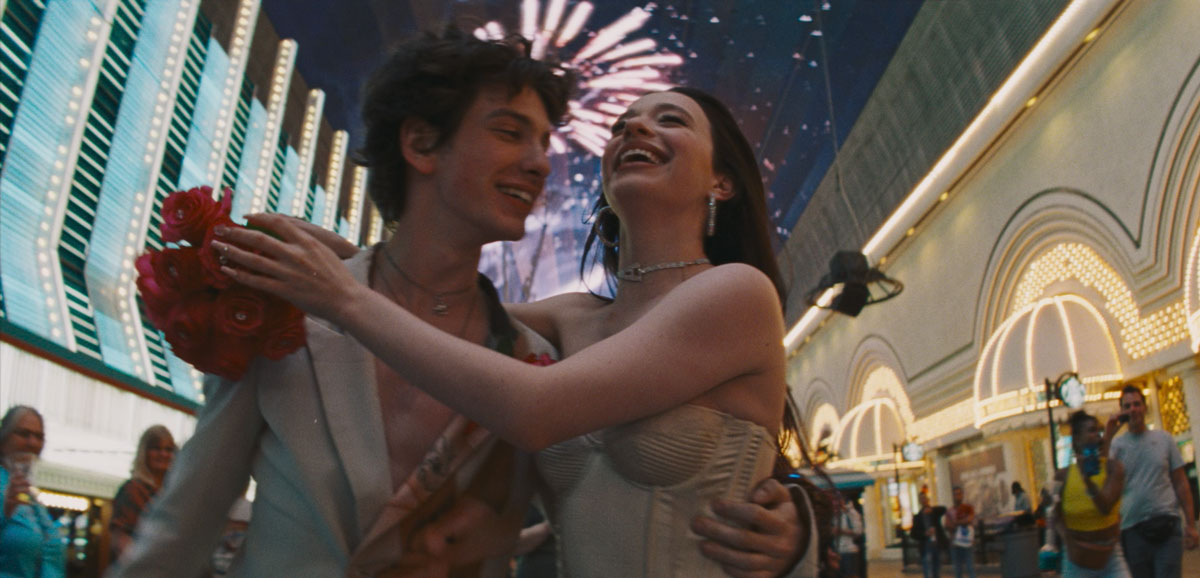
AnoraMikey Madison as Ani and Mark Eydelshteyn as Ivan in "Anora" (Courtesy of NEON)But that’s a life lesson that can only be taught through experience, and Ani is newly enrolled in a crash course on the difference between romance and riches. She envisions some childlike life where there might be a happy middle ground, one where fairytales can exist and she can be the subject of them. Ani even mentions to her best friend Lulu (Luna Sofia Miranda) that she hopes her honeymoon can be at Disneyland, where she and Ivan could rent the themed Cinderella hotel suite. Baker keeps this reference from feeling too on the nose by making Ani completely aware of her own rags-to-riches position, but it’s still sad to watch the wonder in her eyes when we know it will inevitably fade. Even her idea of an idyllic honeymoon has some element of commerce baked into it when she’s with Ivan. There is no simplicity, no hidden place for the newlywed couple to be away from the gleams of the wealth that brought them together. What happens when that all falls away?

When Baker dives into the repercussions, “Anora” slows down and transforms from a slapstick farce to a true character study, and it’s then when the film shines its brightest. We know from the start that Ani won’t get everything she wants, and as soon as Ivan’s parents catch up with him, Ani’s past catches up with her. Ivan thanks her for making his last trip to America so fun. To him, it’s a throwaway expression of gratitude. But for Ani, this reduces her to an object, a plaything for men to have fun with and abandon as soon as they’re finished. When she’s working at the club, she’s in a safe space where emotions like this can be contained within four walls. Ani can be in control of this feeling — and even profit from it — without so much as a bruise to her heart. But in the real world, when she lets herself be vulnerable with one of these men, she sees just how easy money makes it for someone to toss her aside.

When Baker dives into the repercussions, “Anora” slows down and transforms from a slapstick farce to a true character study.

That quickly growing pile of raw emotion follows Ani to the film’s end. (And, if you haven’t yet gotten eyes on “Anora,” it may be wise to turn back until you experience the gut punch yourself.) Igor is entrusted with bringing Ani back to Ivan’s mansion to collect her things, where the two of them spend the night eating takeout and watching television. Igor makes more conversation with her than he has been able to yet, and Ani briefly lets her guard down as they laugh about his English pronunciations. They chat about how Americans rarely ascribe meaning to names, leading Igor to look up the origin of Ani’s full name, Anora. “Light and bright,” Igor says, and we see that brightness return to Ani’s face for just a moment until she recognizes the feelings she’s developing toward him. Even with someone taking a genuine interest in her, Ani is too scarred by her romance with Ivan and too distrustful of her own judgment. The wall goes back up.

Igor shuttles Ani back to her home the following morning, just as a rare blizzard hits Brooklyn. He kindly takes her bags to the door and returns to the car, where the two of them sit in complete silence before Ani sidles up and mounts him. Her advance is both a test of how he’ll respond and a way of working out her rampant confusion. In offering someone physical pleasure, she can take control again. But Igor is different from Ivan and all of the men at Headquarters; he sincerely cares for Ani, and when his eyes meet hers and he tries to pull her in for a kiss, it all comes undone. Ani crumbles into sobs and lays her head on Igor’s shoulder, allowing him to wrap his arm around her. It’s a tangible display of love she could never get out of Ivan, who was always too preoccupied with partying and PlayStation. She lets it all pour out: grief, disappointment, and sadness. Ani reconciles her fear of being truly seen with the dread that Ivan’s perception of her as an object could be correct. 

And yet, there are no words spoken. There is only the rhythmic idling of the car’s engine and the occasional sound of windshield wipers to evoke a beating heart. The snow covers everything outside, making it all new again. It’s a massive ending, as gut-wrenching as it is hopeful. But most of all, it’s human. Baker has made a career out of his empathetic character writing, and “Anora” is no exception. His gorgeous finale brims with the kind of sensitivity that he’s made into a calling card; who among us hasn’t survived the storm of their youth only to look up and be overwhelmed by the wreckage of our mistakes? Even with all of the film’s other merits, it’s that familiar feeling that elevates “Anora” from enjoyable to remarkable. Leave it to Sean Baker to make the heavy darkness of love lost and transient youth feel light and bright.

Meteor shower to grace Earth this weekend. Here’s how to see it

The Orionids are back, promising views of a spectacular meteor shower this weekend. Stargazers can eagerly look skyward starting on Sunday and continuing through the week of Oct. 20th, according to a recent report from the American Meteor Society.

The Orionid meteor shower — often known as “the Orionids” for short — occurs every year thanks to Halley’s Comet. Although the famous celestial object only passes Earth once every 72 to 80 years (and is due again in mid-2061), it leaves an annual trail of meteor showers known as Orionids. The Orionids were technically visible in 2024 starting as early as Sept. 26th, but viewing conditions have not been ideal until this week. Even now, however, a waning gibbous moon will still somewhat impede viewing conditions.

Yet the American Meteor Society says fans of meteor showers may be pleased despite this obstacle. Orionids swoop past and/or into the Earth’s atmosphere at 41 miles per second (66 kilometers per second), or around 148,000 mph (238,000 km/h). As a result they put on quite a spectacular show, with Orionids being well-known for their vivid colors and zipping speeds. Astronomy aficionados are already swapping tips on the best way to take in everything.

“In 2024, the Orionid meteor shower should rain down its greatest number of meteors on the mornings of October 20 and 21,” reports EarthSky.org. “The morning of October 21 might bring the richest display of meteors.”

NASA urges stargazers to wait until after midnight, then find a location away from light pollution (particularly urbanized areas or those with street lighting). After finding a comfortable position, stargazers should set aside half an hour or more for lying flat on their backs while looking upward. Those in the Northern Hemisphere should face southeast; those in the Southern Hemisphere should face northeast.

“It’s the First Amendment, stupid”: Judge rips DeSantis threatening TV stations over abortion ads

A federal judge issued a temporary restraining order Thursday against Florida's surgeon general after the state health department, part of Gov. Ron DeSantis' administration, threatened to bring criminal charges against TV stations airing a pro-abortion amendment ad.

Officials from the health department called the ad "false" and "dangerous" to public health, but Judge Mark E. Walker had a response: "It’s the First Amendment, stupid.”

The ad that provoked the onetime GOP presidential candidate's ire was produced by the group Floridians Protecting Freedom, which is supporting Amendment 4, a ballot measure to enshrine abortion rights in the state constitution and reverse Florida's existing six-week abortion ban. It features a brain cancer survivor named Caroline, who says that state law would have blocked her from receiving the abortion that saved her life.

“The doctors knew that if I did not end my pregnancy, I would lose my baby, I would lose my life, and my daughter would lose her mom,” she says in the ad. “Florida has now banned abortions, even in cases like mine.”

Joe Wilson, the general counsel at Florida's health department, sent cease-and-desist letters on behalf of the state to news stations airing the the ad, essentially threatening criminal prosecution unless they took it down. Floridians Protecting Freedom, in turn, filed a lawsuit against Wilson and Florida surgeon general Joseph Ladapo, accusing them of “unconstitutional coercion and viewpoint discrimination" and urging the court to shield them from the state's threats to sue.

Seven days after sending the threats, Wilson resigned from his post, saying in a letter that he was uncomfortable with decisions he was ordered to make.

“A man is nothing without his conscience,” the letter said. “It has become clear in recent days that I cannot join you on the road that lies before the agency.”

Judge Walker agreed that the state's threats constituted "viewpoint discrimination" and wrote that the group presented “a substantial likelihood of proving an ongoing violation of its First Amendment rights through the threatened direct penalization of its political speech.”

"Whether it’s a woman’s right to choose, or the right to talk about it, Plaintiff’s position is the same — 'don’t tread on me,'" he continued. "Under the facts of this case, the First Amendment prohibits the State of Florida from trampling on Plaintiff’s free speech."

Walker's ruling blocks Ladapo from issuing further threats to news stations over the ad through Oct. 29.

“Nightmare scenario”: Trump campaign’s coordination with outside groups tests FEC “loophole”

The get-out-the-vote campaign backing former President Donald Trump is pushing the limits of new regulations passed by the Federal Elections Commission related to how his campaign is allowed to coordinate with outside groups.

The Trump campaign has been leaning heavily on outside groups like Turning Point Action and billionaire Elon Musk’s America PAC to organize its ground game and get-out-the-vote operation. The big advantage for outside groups is that they are not subject to the same campaign finance regulations as an actual campaign.

For example, Turning Point Action claims to be running the ground game for Trump in Arizona and recently combined operations with the America PAC to run voter turnout in Wisconsin, but has not disclosed any of its finances since 2022. The group also says it has staff working in Michigan, Nevada, Georgia and Pennsylvania.

Likewise, Musk’s America PAC has raised $87 million recently, with $75 million of that coming directly from Musk himself. This far exceeds the standard $3,300 contribution limit for individuals giving to a candidate's campaign.

In past elections, PACs have been forbidden from coordinating with campaigns. As the Supreme Court reasoned in Citizens United v. Federal Election Commission, keeping a campaign from coordinating with outside groups like PACs played a role in preventing corruption or the appearance of corruption.

While the prohibition on coordination was imperfectly enforced in the past, in March the FEC issued an opinion allowing for outside groups to coordinate with campaigns on canvassing, opening the door to the tight collaboration between campaigns and groups like Turning Point and the America PAC.

For example, in May, Luke Malace, a field manager at Turning Point, said in an address to the Monrow County GOP in Michigan that when Trump says the election is “too big to rig” it’s because “we now are officially a arm of the Trump campaign, Turning Point Action is, for the get out the vote, chase the vote efforts.”

At an August event, Malace reiterated his characterization, saying “now we're an official arm of the ballot chasing.”

“They're kind of just doing their own thing, kind of, and we're doing our thing, but we are in coordination with each other, so we share data and everything, so we know what we're they're to, they know what we're up to,” Malace sad a the August Super Chase event at Kent County 

Tyler Boyer, who serves as the chief operating officer of Turning Point Action, described a major data-sharing operation between the Trump campaign and Turning Point at a September event with Meshawn Maddock, who served as a Michigan GOP co-chair and a fake elector for Trump, and Shane Trejo, a GOP operative infamous for calling white supremacists at Charlottesville “civil rights heroes.”

“How often does voter data get uploaded? Daily,” Bowyer said, adding “the left has totally subverted this entire process by creating organizations that collect the data and distribute it quickly. Our side has basically done little to nothing on that side, so there's only a couple of different places to aggregate all the data. So this is also a good reason to utilize what we're doing in our application and also what whatever the GOP is doing or the RNC. And by the way, we're sharing all of our data upwards with the Trump campaign.” 

We need your help to stay independent

The new rules around coordination have also paved the way for those working with outside groups to have closed-door meetings with members of the campaign or even the candidate under the pretense that they’re discussing canvassing.

Lacy Nagao, the Chase the Vote Director for Turning Point Action, revealed during a session at Turning Point’s “People’s Convention” in June that Bowyer had met privately with Trump.

“So we actually, our COO, Tyler Bowyer, met with the Trump campaign just a couple weeks ago and went over everything and they are completely on board. President Trump actually tweeted out something that was kind of funny, he said, ‘Everyone go apply for a job at Turning Point Action, be a ballot chaser.’ So he is 100% on board,” Nagao said. “We got the Trump endorsement for this operation.”

Saurav Ghosh, the director of federal campaign finance reform at the Campaign Legal Center, told Salon that this sort of coordination between candidates and outside groups like Turning Point Action is exactly what the FEC opened the door to in their recent rules change and that “I don’t think any super PAC would’ve done so without this decision giving them cover.”

“They essentially created a loophole that super PACs and candidates immediately jumped on to spend millions of dollars on our election,” Ghosh said. “That’s very concerning because super PACs are a primary vehicle for special interests to exert their influence on our election.”


Want a daily wrap-up of all the news and commentary Salon has to offer? Subscribe to our morning newsletter, Crash Course.


Turning Point Action and groups like it are especially concerning to Ghosh because the group, as a 501c4 nonprofit, is not required to disclose its donors, meaning that “voters don’t even know who is financing the operation.”

“That’s pretty much the nightmare scenario when you have the wealthy, billionaires special interests, who are not only allowed to put an unlimited amount of money into an operation but also their contributions being concealed,” Ghosh said.

Ghosh went on to note that when outside organizations and campaign officials or the candidate is allowed to meet with outside groups to coordinate on canvassing, there is little that watchdogs or the FEC can do to verify that their conversations were limited to canvassing. 

“It’s going to be a bipartisan practice and thus a bipartisan problem,” Ghosh said. “I think what people need to know is that when that happens and when super PACs get more access and influence the real people that are hurt are the voters.”

Turning Point Action did not immediately respond to a request for comment.

Trump and RFK Jr. unite to “Make America Healthy Again” by threatening to dismantle public health

Last week, Robert F. Kennedy Jr. endorsed Donald Trump, encouraging his followers to vote for him in the presidential election under a new, slightly familiar slogan: “Make America Healthy Again.” 

“Our big priority will be to clean up the public health agencies like the CDC, NIH, FDA, and the U.S. Department of Agriculture,” Kennedy said, referring to the pillars of federal public health regulation: the Centers for Disease Control and Prevention, National Institutes of Health and the Food and Drug Administration. He promised in a video announcing the campaign that began with him selling green "MAHA" hats and merch. 

The MAHA Alliance super PAC gives new legs to the so-called medical freedom movement, in which Kennedy — an environmental activist who has made multiple false or misleading claims about vaccines but does not see himself as an anti-vaccine advocate — is seen as a leader. Although the movement has existed essentially since the country was founded, it reached a boiling point during the COVID-19 pandemic and in recent years has elected its backers to positions of power on the boards of hospitals and in local elections around the country. Anti-vaccine bills have also been making it further in state legislatures.

Once seen as a political movement on the margins, composed mostly of libertarians opposed to vaccines, the medical freedom movement has expanded to unite supporters across party lines, merging the far-right with what some have called the “crunchy granola” new-age alternative medicine voters on the far-left. It champions a platform that values personal liberties above the medical establishment and opposes government public health and regulatory agencies. 

"Vaccines, over the last 100 years or so, have allowed us to live 30 years longer than we used to."

“I think Kennedy is trying to draw from both of those streams,” said Wendy Parmet, faculty co-director at the Center for Health Policy and Law at Northeastern University. “For Trump, obviously Kennedy is a potential way of reaching some anti-establishment groups that otherwise might think of themselves as on the left, because he also, unlike traditional Republicans, talks about environmentalism and clean food.”

In addition to vaccines, the movement also generally opposes federally mandated public health interventions and promotes alternative therapies and raw foods like unpasteurized milk, which Kennedy has said he drinks, despite the CDC recommending against it, especially as bird flu continues to infect hundreds of herds of dairy cows. Notably, the movement does not involve reproductive rights, but has been accused of appropriating slogans like "my body, my choice" in the abortion rights movement.

“The brilliance of the term, and the problem of the term, is it means different things to different people," Parmet told Salon in a phone interview. 


Want more health and science stories in your inbox? Subscribe to Salon's weekly newsletter Lab Notes.


Leah Wilson, the co-founder and executive director of Stand for Health Freedom, which supports candidates who align with the movement, said 40% of its members are registered Democrats. During the COVID pandemic, when mask mandates and vaccine recommendations became a political and divisive hot-button issue, the movement gained more momentum. In 2022 midterm elections, Stand for Health Freedom supported over 1,000 candidates in local and state races, Wilson said.

“It transcends party lines, it transcends socioeconomic status, it transcends racial diversity — all those things,” Wilson told Salon in a phone interview. “It's not specific to any one population, and I think that there's probably even more evidence of that post-COVID than there was prior.”

"They’re creating space for some of these conspiratorial views to fester."

Trump has suggested that he would elect Kennedy to a position in his administration related to health if he wins the election, to the dismay of many scientists who consider the medical freedom movement a threat to public health and are concerned that anti-vaccine sentiments will lead to more deaths from infectious diseases.

Required childhood vaccinations for diseases like measles, polio and diphtheria decreased during the pandemic, with about 250,000 kindergartners not vaccinated for measles in the 2022-23 school year. In a measles outbreak in Ohio in 2022, the majority of 85 children infected were not vaccinated. Though no children died, 85 is a high number of cases for a disease as contagious as measles and 36 kids were hospitalized.

“Vaccines, over the last 100 years or so, have allowed us to live 30 years longer than we used to,” said Dr. Paul Offit, a vaccine expert at Children’s Hospital of Philadelphia. “There will be another pandemic, or pandemics, so will we be ready?”

Of course, it was precisely the COVID pandemic that poured gasoline on the idea that public health is untrustworthy. Ever since, public health has continued to be politically charged and public health messaging has continued to be challenged by elected officials — especially in Florida. In 2022, Gov. Ron DeSantis created a committee to “investigate crimes and wrongdoing committed against Floridians related to the COVID-19 vaccine.” In February, Florida surgeon general Joseph Ladapo was met with backlash when he left it up to parents to decide if their child should go to school, going against the CDC’s recommendation to keep unvaccinated children home for the length of the incubation period for measles. Ladapo has also been accused of falsifying study data to make it seem like COVID vaccines are dangerous.

Changing messaging during the pandemic about masking, along with political division undermining regulatory agencies, increased the polarization of public health, said Rupali Limaye, an associate professor in public health at George Mason University.

“All of these things led to this distrust broadly in government, but also distrust really in health and public health, more importantly, because of how COVID-19 was handled,” Limaye told Salon in a phone interview.

“You have these things that are diametrically opposed, with one contingent of the government saying this is really important, but another one directly coming out and saying, ‘Don’t do it,’” Jerel M. Ezell, a researcher at the Cornell Center for Health Equity, told Salon in a phone interview.

“They’re creating space for some of these conspiratorial views to fester,” Ezell added, noting that public health agencies could do more to ensure their messaging is timely, direct and clear.

Kennedy has been vocal about his desire to defund the public health system, recommending in a September Wall Street Journal editorial to divert half the medical research budget to “preventive, alternative and holistic approaches to health.” 

However, it’s not clear how some of Kennedy’s initiatives, like removing pesticides from food and improving water quality, would align in practice with Trump’s voting history, in which he has been resistant to regulating big polluting industries.

“When you focus on what RFK Jr. says is part of his Make America Healthy Again mission, it’s very hard to see how this aligns at all with what Trump, his supporters, and the Republican party are proposing,” Parmet said. “RFK Jr. wants to get rid of toxins and claims he is going to get rid of capture at the FDA, but how do you do this while you are also dismantling the regulatory state and appointing judges that disable regulators from regulating? … What is the magic device by which we’re going to get polluters to stop polluting?”

Trump previously offered Kennedy a health position that never realized, and some doubt he will actually appoint Kennedy should he win the election. 

We need your help to stay independent

“I think that if Trump loses the election, RFK Jr. will become a footnote, but I do think the damage has already been done,” Ezell said. “Those seeds have already been planted in the whole anti-establishment thing that a lot of people love in this country. Trump and RFK Jr., they’re going to represent that for them.”

John Maldonado, a postdoctoral research associate at the School of Public and International Affairs at Princeton University, visited several medical freedom movement meetings in Pennsylvania as part of a research project in 2020.

“Some of the rallies that I was attending, even back then, it was sometimes difficult to differentiate between what degree these folks were primarily motivated by this medical freedom cause versus to what degree this was just the same standard Trumpism that we had seen up to that point,” Maldonado told Salon in a phone interview. “Some of these events were just so clearly partisan in a way that it often did not seem like a distinct sort of thing — even down to campaign merchandising.”

“Cunningham Bird” takes flight: Breathing new life into “Buckingham Nicks”

Originally released in 1973, the "Buckingham Nicks" album marked the vinyl debut of Lindsey Buckingham and Stevie Nicks. Their big break came when Mick Fleetwood famously heard the duo’s recording of “Frozen Love” at Los Angeles’s Sound City Studios. Not long afterward, the couple joined Fleetwood Mac, transforming them into a global sensation in the process. A slew of blockbuster albums would ensue—most notably, "Rumours" (1977), which has sold some 40 million copies and counting. 

In many ways, "Buckingham Nicks" was the blueprint for Fleetwood Mac’s world-beating success, not to mention the evolving sound of Southern California rock. Even in its earliest manifestations, there was a peculiar combination of grooving energy and inherent sadness in their music that would pervade their hitmaking efforts with Fleetwood Mac and beyond. Even still, that remarkable LP has been commercially unavailable for decades. Until now.

Leave it to multi-instrumentalist Andrew Bird and singer-songwriter Madison Cunningham to breathe new life into the long-forgotten album. Released with the title "Cunningham Bird," naturally, the duo has re-imagined the album within their own musical imprimatur. A track-for-track remake of the "Buckingham Nicks" LP, Bird and Cunningham celebrate the original album’s emotional highs and lows in fine style. At the same time, they imprint the songs with their particular indie sound. The result makes for an irresistible combination of old and new.

Original standout tracks like “Crystal,” which would be reborn on the "Fleetwood Mac" (1975) album, sparkle in Bird and Cunningham’s hands, as does “Frozen Love,” which takes on a new sense of foreboding in their reading of the composition. By the same token, Buckingham’s instrumentals “Stephanie” and “Django” find new resonances under Bird and Cunningham’s guardianship.


Want a daily wrap-up of all the news and commentary Salon has to offer? Subscribe to our morning newsletter, Crash Course.


While much of the latter album serves as a solid retelling of the original’s songs, tracks like “Crying in the Night” arguably improve on "Buckingham Nicks'" earlier ambitions. The song positively soars on the back of Bird’s violin. The duo offers an equally fresh approach to “Don’t Let Me Down Again,” with its jaunty headfirst rhythms and ferocity. In a similar vein, Bird and Cunningham’s take on “Long Distance Winner” finds new levels of drama and tension. And then there’s “Lola My Love”—always a great song in its own right—which finds new levels of beauty and mystery under Bird and Cunningham’s tutelage. 

In its finest moments, "Cunningham Bird" will find listeners rushing to YouTube, where they can cue up "Buckingham Nicks" and compare the duos’ performances. As majestic as the original may be, listeners will no doubt be pleased to discover that "Cunningham Bird" can not only stand, but flourish on its own merits.

Campaign official admits Trump “refusing” interviews because he’s “exhausted”: report

Former President Donald Trump has pulled out of a string of campaign events and interviews over the last two months, often leaving his hosts frustrated after being promised a visit by the GOP presidential candidate.

The staff of The Shade Room, an entertainment site with wide reach among young and Black audiences, shortly after wrapping an interview with Vice President Kamala Harris last week were left feeling that their "feet were being dragged in the Trump campaign," according to two sources who spoke to Politico Playbook. When they called to reschedule, a campaign official reportedly gave them a concise explanation: the former president was "exhausted."

Because of this, the official continued, Trump was "refusing [some] interviews but that could change" at any time, according to the two people familiar with the conversations. Trump campaign national press secretary Karoline Leavitt pushed back against the report, telling Playbook that Trump's alleged exhaustion is "unequivocally false" and that he "has never backed down from an interview."

She did not provide an explanation, however, for why Trump has been flaking despite his constant criticism of Harris for not making enough media appearances. While Trump did show up to some interviews, most of them have been with friendly hosts like right-wing radio host Laura Ingraham and networks such as Fox News.

Most of the cancellations, on the other hand, have been on territory not predisposed to coddle the GOP nominee. In late August, Trump dropped an interview with The Detroit News, reportedly after he was asked to back up his claims about crime statistics. The cancellations ramped up in October, with Trump ditching a 60 Minutes interview mere hours before the taping, a Squawk Box interview due to "scheduling conflicts," and an NBC News interview because, according to his campaign, he decided to go instead to Michigan. He also cancelled an appearance at the National Rifle Association and at less overtly political events like the unveiling of a Polish-American Catholic shrine in Pennsylvania.

When he did show up for a contentious interview with Bloomberg editor-in-chief John Micklethwait at the Chicago Economic Club, Trump complained that he was "hoodwinked to go on that."

"I was supposed to make a speech in front of the Chicago Economic Club, which is a big deal," he said. "It’s a very prestigious place, everything was beautiful. And all of a sudden I understand I’m being interviewed by this gentleman and he’s got a reputation.”

At a Univision town hall, Trump remained unrepentant as undecided Latino voters questioned him about Jan. 6, libel about Haitian immigrants and his role in killing bipartisan border security legislation. And the Trump campaign has been indicating that some of the cancellations were a pre-emptive move to prevent similar kinds of performances — according to Playbook, the campaign stands by pulling out in part because 60 Minutes' fact-checking "was inappropriate and unnecessary."

Taylor Swift bypasses book publishers for new read

Taylor Swift's decision to shake off traditional publishers and distributors for her new book could shake up the industry, Business Insider reported.

Swift announced the "Eras Tour" on Tuesday, a 256-page, $39.99 read to be released on Black Friday as a Target exclusive. 

Since she is self-publishing under her new Taylor Swift Publications, she can keep more of the revenue than typical celebrity memoir deals which can reap millions for publishers through advances and royalties on sales, BI reported. Self-published authors are also able to control the creative content of their books and release them sooner, although they give up access to printing presses, distributors, the media and staff who can promote the book, the publication reported.

Analysts told BI that Swift will likely use her huge fan base and social media to promote her book, set to feature hundreds of behind-the-scenes photographs and reflections on the tour that started in early 2023, spanned five continents and grossed over $1 billion.

Her business move might inspire less famous authors to follow suit. 

"Obviously, Taylor Swift is sort of a case under herself for this stuff in terms of just her reach," Erik Hane, founder of Headwater Literary Management, told BI. "But there are a lot of people who aren't as famous as her but are still doing pretty well who this kind of thing might make sense for as well."

Swift's other financially savvy decisions include releasing multiple versions of her records with different cover art and self-producing last year's "Taylor Swift: The Eras Tour" film, BI reported.

She has a longstanding working relationship with Target and plans to release "The Tortured Poets Department: The Anthology" for the first time on vinyl and CD as Target exclusives on Nov. 29. 

“Horrible mess”: Trump called out for “ungodly” profanity-laced tirade at Catholic event

The Alfred E. Smith Memorial Foundation Dinner, an annual Catholic charity event in New York City, has traditionally been a place for the two major party presidential nominees to throw lighthearted barbs at each other, with other public figures also catching strays. This year, Vice President Kamala Harris left a recorded greeting so that she could attend a campaign event in Wisconsin, leaving former President Donald Trump to deliver a profanity-laden speech on his own to the white-tie audience Thursday evening.

Trump, complaining about his legal troubles and tossing around transphobic cracks, lashed out at Harris ("I can't stand her"), President Joe Biden ("President Biden couldn’t be here tonight. The DNC made sure of that"), former House Speaker Nancy Pelosi ("Crazy Nancy") and others in remarks that appeared to resemble grievance more than jest. Senate Majority Leader Chuck Schumer, who was seated next to the podium, also received fire, though Trump punctuated this part of the routine with seemingly half-hearted assurances that the New York senator was "a good man."

Trump might have encapsulated his performance in one sentence during his speech. “I don’t give a s**t if this is comedy or not,” he declared, before calling former New York City mayor Bill de Blasio a "terrible mayor" who did a "horrible job — that's not comedy, by the way, that's a fact." He did warn the attendees of what was to come at the beginning of the speech, too. “I’m supposed to tell a few self-deprecating jokes,” he told them. “So here it goes… nope. I’ve got nothing. I’ve got nothing!”

“I guess I just do not see the point in taking shots at myself when other people have been shooting at me for a long time," he added.

Many of Trump's jokes relied on the old lines of attack he has used on the campaign trail, including Harris' laugh.

“But I must say, I was shocked when I heard that Kamala was skipping the Al Smith dinner,” he said. “I’d really hoped that she would come, because we can’t get enough of hearing her beautiful laugh. She laughs like crazy. We would recognize it anyplace in this room.”

At times, Trump sought to take on two rivals at once. “We have someone in the White House who can barely talk, barely put together two coherent sentences, who seems to have mental faculties of a child, is a person that has no intelligence whatsoever — but enough about Kamala Harris,” he said, clearly insinuating that those same qualities applied to Biden as well.

We need your help to stay independent

Trump also took shots at the transgender community, suggesting that if Harris lost, Schumer could still become the first woman president given "how woke" the Democratic Party has become. Schumer forced an uncomfortable smile as Trump mocked him for looking so "glum," the second time in a fake-baby voice and accompanied by a back-rub.

He also used transphobia to batter Gov. Tim Walz, D-Minn., Harris' running mate. “I used to think the Democrats were crazy for saying men have periods, but then I met Tim Walz,” Trump said.

Not all of Trump's speech was about his enemies. He also reserved some time to compare himself to former presidents Abraham Lincoln and Andrew Jackson in wake of two recent assassination attempts against himself. “There’s never been a president that has been treated so badly as me,” he complained.

Though Trump was greeted with some laughter and applause (but also gasps and boos) at the event itself, other people who watched his performance were outspoken with their displeasure. The next morning, former Rep. Barbara Comstock, R-Va., told CNN's Kasie Hunt that her husband, who teaches at a Catholic girls school, called her at the middle of the dinner about "what a buffoon and what an ungodly, profanity-laced hot mess that dinner was, because he knows what that Catholic dinner is supposed to be."

"This was somebody who was just being horrendous at that dinner, swearing in front of priests – who does that?" Comstock added. "That is just a hot, horrible mess. We need to turn the page."

According to Trump, it could have been a lot worse for them. "I actually thought about not doing jokes tonight, I was going to come out tonight and say listen, this country is doing really badly, this is not about jokes, but then some person said you have to do jokes," he concluded.

Donald Trump’s town hall with Latino voters shows his campaign is clueless

We have officially entered the manic stage of the presidential election, in which the candidates are suddenly everywhere. At least Kamala Harris is everywhere. She's holding huge raucous rallies all over the swing states, appearing on podcasts and mainstream interviews, and even going on Fox News and subjecting herself to a barrage of hostile Trump-inspired accusations from anchor Bret Baier, who didn't seem to want her to actually answer them. (Harris showed she could not be intimidated, which was probably the point of the interview in the first place.) Nobody at this point should complain that she isn't available to the public. Just turn on your TV and you'll see her there.

Donald Trump is as present as always, holding loony rallies and posting crazy comments on Truth Social. Yet he is refusing to debate Harris again and has canceled numerous scheduled interviews this week. According to Tara Palmieri at Puck, Mar-a-Lago insiders say this is all because Trump is so certain he's going to win that he's just letting his freak flag fly. The campaign figures that Trump's "self-assurance" will create a bandwagon effect as voters decide to go with the winner. Republicans do love the bandwagon-effect strategy, but Trump is seemingly off his rocker in a way that doesn't easily read as "confident," except to the extent he may believe that his "election integrity" plans will ensure that he "wins" even if he doesn't.

Trump did do some events this week, but it would be an awfully big leap to say he showed self-assurance. There was the now-notorious swaying-to-the-music town hall event, which I've written about already. That appearance was so bizarre that it actually managed to dominate the conversation for a couple of days, which really says something amid this frenzied news cycle.

Then he held a taped Fox News town hall with host Harris Faulkner, who sat him down with a group of allegedly undecided women. We know that a large majority of women voters in this country loathe Donald Trump. His campaign would like to mitigate that by allowing him to beguile a few women with his suave charm. The gathered Georgia women did seem rather weirdly ecstatic by his presence, but that's because they were all Republican party shills and ardent supporters brought in by Fox. It even turned out that Fox edited out one of the questions that gave away the scheme.

But Trump did one event this week that may turn out to be important, for reasons of actual substance. He appeared on the Spanish-language network Univision for a town hall with Latino voters. I think we all know what an important demographic this is, and we've heard that Trump is garnering a larger percentage of Hispanic men than ever before. I suspect he believed that it would, therefore, be an easy exchange like the one with the women plants the day before. So he wasn't prepared for the kind of questions he got.

He wasn't prepared for the kind of questions he got.

A man named Ramiro González, who identified as a Republican, asked Trump why he should support him when people from his own administration, including former Vice President Mike Pence, refuse to do so. Gonzales pointed to Jan. 6 and Trump's COVID mismanagement as disturbing but wanted to give Trump a chance to win back his vote.

Trump replied that 97% of people in his former administration still support him. He then claimed that Jan. 6 was "a day of love." He lamented the police shooting of insurrectionist Ashli Babbitt before insisting that "nobody was killed" that day and then lumped himself in with the rioters while saying, "We didn't have guns. The others had guns but we didn't have guns." You can see from the look on González's face, and those of others in the audience, that they knew he was full of it.

González later said he would not be voting for Trump.

We need your help to stay independent

Trump has been charged with several felonies related to the Jan. 6 insurrection. He claims that he bears no responsibility for any of it. And yet here he said that "we" didn't have guns, but "the others" did, by which he can only mean the police. One imagines that special prosecutor Jack Smith will be looking at that footage with keen interest. (Needless to say, there were plenty of guns among the rioters. Many of the people Trump calls "hostages," and promises to pardon on day one, were charged with violent assaults against police officers.)

But there was another question that interested me most, because I've been dying to hear someone ask it for months. A 64-year-old man named Jorge Velázquez, who said he'd spent many years working with his hands, "hunched over picking strawberries and cutting broccoli," asked Trump who he thought would do that kind of work if he deported all the undocumented workers who account for most of the agricultural workforce, and how that would affect food prices.

Trump went into his usual rant about criminal immigrants, showing once again that he is completely clueless about how anything actually works. Trump seems to think they're taking the jobs away from American citizens, specifically "African Americans and Hispanics" who are suffering as a result. These are the "Black jobs" he was talking about.

Trump made a point of saying that he wants laborers (who love our country) to enter legally, which suggests he's talking about something like the old bracero program which was replaced by the issuance of H-2a and H-2b visas. The problem is that his agenda, as articulated in Project 2025, wants to discontinue temporary worker visas. His immigration guru, Stephen Miller, has made clear that he intends to drastically curtail legal immigration as well.


Want a daily wrap-up of all the news and commentary Salon has to offer? Subscribe to our morning newsletter, Crash Course.


Trump's grotesque xenophobic rhetoric, whether or not he fully understands it, is paving the way for the GOP's mainstream adoption of the Great Replacement theory, which holds that all foreigners from "s**thole countries" must be barred, not just because they are criminals or are taking all the "Black jobs" but because they are supposedly destroying the culture of America. When Trump reads Miller's screeds on the stump about immigrants "poisoning the blood" of America, there is no distinction between legal and illegal.

His new best friend, Elon Musk, is pushing the Great Replacement theory constantly, having signed on to the idea that Democrats are trying to import immigrants so they will vote for them, an old standby promoted by the likes of Ann Coulter in her book "Adios, America." One would think that with all the talk about Latinos voting in large numbers for Trump this time, his campaign might stop and think about whether deporting them is a good long-term strategy. But they're so hooked on the idea that migrants are marauding gangsters — who are also, inexplicably, highly motivated to vote for Democrats — that they aren't thinking clearly on the subject.

On a more material level, I have to wonder how everyone's going to like the prices at the grocery store when strawberries and broccoli are selling for 10 or 20 times what they cost today from the combination of labor shortages and tariffs on imported food. Trump may not ever eat vegetables but I'd guess that even Republicans like to eat a salad once in a while.

While I doubt that Trump's ever read a treatise on the Great Replacement theory, he's fully on board with it and we know that because he's recently promised to deport the Haitian immigrants in Springfield, Ohio, even though they are here legally, are working at jobs that others didn't want and profess to love America. He believes they're polluting the culture of Springfield and need to go back to where they came from. That's what this is all about. And that, my friends, is fascism with a capital F. 

Gen Z heads to trade school as college costs rise

Cody Forst has been a fleet mechanic for Jensen Precast in Phoenix, Arizona, for a few months. Forst, 21, works on trucks and equipment for 40 to 50 hours a week. He’s always loved working and wrenching on his own vehicles but felt limited by his career choices.

“I enrolled in Glendale Community College [after high school] and took classes there,” he said. “I wasn’t happy with how the college curriculum was laid out. I felt stuck and was not happy with my decision to go to college.”

On the last day of the semester, he toured the Arizona Automotive Institute. In August, he graduated from its year-long Diesel Heavy Truck Program.

“[I] fell in love with the hands-on aspect of learning how semi-trucks and heavy equipment work,” he said. “So ultimately, I made the decision to follow my passion.”

Trade, vocational programs booming

According to the National Student Clearinghouse Research Center, the number of students enrolled in community colleges with a vocational focus continues to climb. In the last year, enrollment has increased more than 17%. From 2021 to 2024, more than 129,000 students enrolled in a community college with vocational programs. 

The mounting cost of traditional college could be a reason. According to the National Center for Education Statistics, an on-campus student's average price for a public, four-year college degree was $27,100 for the 2022-2023 school year. At the end of four years, the same student will have paid $108,400 for their education if there haven’t been any changes to tuition, fees, room, board or other costs. Tuition increases by about 8% per year, according to Finaid.

We need your help to stay independent

Trade and vocational programs vary widely in cost. The National Center for Education Statistics says the average tuition at two-year institutions ranges from $4,000 per year at public institutions to $19,500 at private ones. The Arizona Automotive Institute program cost Forst $24,500. His parents put $10,000 towards his education, and rather than take out traditional student loans, Forst now pays $732 every month, interest-free, to AAI. He says he has about $5,000 left until his loan is paid off.

“I didn’t receive any scholarships or grants along the way, so I am paying completely out of pocket,” he says. “My scenario is not the same as everyone's. A lot of my classmates had help with grants and some had help from other sources to pay for their school.”

Trades offer job security, less debt 

In McAllen, Texas, Juan Castillo, 25, attended South Texas Vocational Technical Institute, where he completed the HVAC program in August. The cost was about $14,000, but his financial aid covered half of that. 

“Money was never a factor,” he said. “I knew what I wanted to do. The great thing about this school was how they bought all the necessary tools for the HVAC [program]. What’s left of my student loan is $7,000, which I’ve been paying off with every paycheck.”

Trades might not seem glamorous, but they're almost always in demand

While trades might not seem glamorous, they’re almost always in demand. Think about what’s around your home and community: air conditioning, lights, plumbing, appliances, and even how your home was built in the first place. Those jobs are always going to be needed. 

While not fully recession-proof, trade jobs tend to have fewer layoffs than other industries. You’re four times more likely to face a layoff in a high-paying profession like tech or business than you are in building, manufacturing and similar jobs, based on data from the Bureau of Labor Statistics

Earning a lot of money, especially after racking up a lot of college debt, sounds enticing. But according to Crunchbase, more than 191,000 workers faced layoffs from tech companies in 2023 and into 2024. Many prefer the job security that trades give them.

While Forst and Castillo tried traditional college before enrolling in trade schools, Castillo wishes he had entered his program much sooner.

“If there's one thing I would do differently, it would be going to trade school after high school,” he said. “I dropped out of community college due to not knowing what I wanted out of life and here I am today, enjoying what I do. I would say that you should try new things and take the risk.”

“Thirst for the spectacle of Trump’s cruelty”: Exploring MAGA’s unbreakable bond

Donald Trump is a very successful hate merchant. What Trump is selling his MAGA political cultists — the racism, bigotry, nativism, xenophobia, misogyny, violence, fascism and other antihuman values —  is highly addictive. Such poison damages a person’s mind and behavior. With fewer than three weeks until Election Day, Trump is further “refining” his product, making it even more toxic and addictive. Trump does not care if his product hurts his MAGA users, because the more dangerous it is the more they want it. Ultimately, there will be no crescendo or endpoint for the hatred that Trump is selling; he will only get worse in the coming weeks. 

 Trump is a political entrepreneur who understands his target market. 

In a recent series of speeches, interviews and other communications, Trump is continuing to escalate his authoritarian and Hitlerian threats and menace. Last week, at a rally in Aurora, Colorado, and then during an appearance on Fox Business News, Trump said that he would invoke the Alien Enemies Act to remove Black and brown “illegal aliens” and other “criminals” from the country and also to crush the “leftists” and other “enemies within” the United States. The Alien Enemies Act was used during World War II to imprison Japanese Americans in concentration camps. Trump and the MAGA movement’s “Leftists” and the other “enemies” will expand to include any person or group that the Great Leader and his regime decide is some type of enemy Other.

As a preview, Trump has also publicly fantasized about his own version of Orwell’s Two Minutes Hate or the “Purge” films where his police and other thug enforcers are allowed to rampage, killing and brutalizing “criminals” and other “undesirables” at will. In a post last week on X ( formerly known as Twitter), Trump announced:

We are now known, all throughout the world, as OCCUPIED AMERICA…But to everyone here in Colorado and all across our nation, I make you this vow: November 5th, 2024 will be LIBERATION DAY in America. I will rescue Aurora and every town that has been invaded and conquered—and we will put these vicious and bloodthirsty criminals in jail or kick them the hell OUT OF OUR COUNTRY. In honor of Jocelyn Nungaray, Laken Riley, Rachel Morin, and all of the others that are dead and mortally wounded at the hands of migrants who should never have been allowed into our Country, I am announcing today that upon taking office, we will have an OPERATION AURORA at the Federal Level. To expedite removals of this savage gang, I will invoke the Alien Enemies Act of 1798 to target and dismantle every migrant criminal network operating on American Soil. No person who has inflicted the violence and terror that Kamala Harris has inflicted on this community can EVER be allowed to become President of the United States!

This is part of a much larger pattern of behavior by Trump and his surrogates. During his presidency, he wanted to use the Insurrection Act to command the United States military to crush dissent under the pretense of stopping “political protests” and “riots.”

This week, Trump went even further.

At a campaign event in Pennsylvania on Monday, Trump said the following about his opponents: “They are so bad and frankly, they’re evil. They’re evil. What they’ve done, they’ve weaponized, they’ve weaponized our elections. They’ve done things that nobody thought was even possible.” In an interview that aired on Fox News on Wednesday, Trump specifically named Nancy Pelosi and her husband, Paul, who was the victim of a brutal home invasion beating last year. “These people, they are so sick and they are so evil,” Trump said of the Pelosis. 

Trump and his agents are continuing to target Vice President Kamala Harris with both stochastic terrorism and explicit threats in the form of repeated lies that she is somehow responsible for the murders and other crimes committed by “illegal aliens” who are “invading” (White) America. “[She] has imported an army of illegal alien gang members and migrant criminals from the dungeons of the third world," Trump says of Harris, "from prisons and jails and insane asylums and mental institutions, and she has had them resettled beautifully into your community to prey upon innocent American citizens.”

Social theorist and cultural critic Peter McLaren explained to me how Trump’s incitements to violence (and his fascist politics more broadly) reflect the collective psyche and emotions of the MAGA people and his other followers:

With the psychological deftness of a cult leader, Trump is able to infiltrate the shadowed corners of America’s consciousness, casting a sinister silhouette that bends reality into a fevered hallucination of chaos and bloodlust. His voice, like a conjurer’s incantation, stirs the embers of rage, mustering both a conviction and devotion that consumes both logic and restraint. This would not be possible if his audience did not already thirst for the spectacle of Trump’s cruelty — a grotesque panorama of cities overrun by thieves, murderers and criminally insane, sapping the marrow of the law that once made America safe for white collar felons like Trump. 

It is important to understand that the key to Trump’s cruel and inflammatory pronouncements can be found in his audience. Trump possesses an uncanny, almost preternatural ability to reach into the very bowels of his most fervent followers, pulling from their darkest recesses the raw, untamed emotions that lie buried beneath the surface. With each execrable word, each veiled promise of destruction, he taps into the primal core of their fears and resentments, awakening something deep and unspoken — subconscious elemental forces — a state of being-in-the-world that resonates with their daily consumption of misinformation found in the echo chambers of their favorite MAGA podcasters and influencers. Like a harbinger of some twisted future, he speaks of a purge—a single, merciless day of reckoning — where lawlessness would be met with brutal reprisal.  Here again, as with so many of his rallies, Trump’s oratory pulses with the promise of blood. 

McLaren notes "Trump is speaking to an audience that since 2016 has come to share Trump’s worldview, his political intuition, his apprehension of the world, what the Germans call Weltanschauung and has created a visceral, almost savage bond with the aspiring dictator." 

We need your help to stay independent

As the next step in Trump’s dictator and authoritarian-fascist plans, he is now embracing scientific racism and eugenics by telling his followers that nonwhite migrants, refugees and “illegal aliens” have bad genes, i.e. “a murder gene.” Last Monday, Trump told right-wing radio host Hugh Hewitt that, “You know now, a murderer — I believe this — it’s in their genes. And we got a lot of bad genes in our country right now.” Take Trump’s obsessions with good genes and bad genes and couple them with his remarks about “purifying the blood” of the nation by removing the human poison and other human vermin. Historically, both in American society and other parts of the world, people with the “bad genes” that Trump is so obsessed with have been removed from normal society through imprisonment and other means. Such targeted populations have also been subjected to eliminationist violence and forced sterilization.

Trump, JD Vance and other MAGA and right-wing propagandists and provocateurs have also continued to tell the racist conspiracy theory lie that Black Haitians have “invaded” the white community of Springfield and are eating (white) people’s cats and dogs. These lies are an example of some of the crudest, ugliest and most dangerous manifestations of old-fashioned racism and white supremacy where Black and other nonwhite people are judged to be savages and beasts not fit for “white civilization.” These racist conspiracy theories and panic about Black Haitians are part of a larger propaganda campaign about how nonwhites are invading white society more generally, taking over apartment buildings if not entire towns, forming their own “armies” and acting like Hannibal Lecter and other cannibalistic serial killers as they murder, rape — specifically innocent and beautiful white women.

Mentioned as an aside in the Washington Post’s very important recent reporting on Trump’s apparently worsening mental and emotional state and related behavior is this description of his talk at an event in Milwaukee on Oct. 1:

Much of what Trump said here he has said before. He repeated false claims about a U.S. government app directing cartels where to drop off smuggled migrants; in fact, the app lets migrants request appointments for legal processing. He falsely accused the Biden administration of admitting 13,000 convicted murderers — a number that in fact reflects several decades of migration and includes people in federal or state custody.

He also repeatedly praised predominantly White countries such as Denmark, Norway and Sweden while emphatically warning against immigrants from Congo in Africa. And he again said migrants crossing the U.S. southern border were taking “Black and Hispanic jobs,” a characterization that many Americans have found offensive and economists said was false.

“They come from, from the Congo in Africa,” Trump said at the event at Discovery World, a science and technology museum a couple of miles from where the Republican National Convention was held in July. “Many people from the Congo. I don’t know what that is.”

These dreams and idolization of “white countries” are standard talking points of white supremacists and other members of the right-wing such as “Christian nationalists” who view America’s multiracial democracy as a failure and a threat to what they see as the “natural order of things” and white people having total control over the country’s political, economic and other centers of power.


Want a daily wrap-up of all the news and commentary Salon has to offer? Subscribe to our morning newsletter, Crash Course.


Social scientists and other real experts have shown that contrary to these White dreams of a white utopia and “superior” “culturally and racially homogeneous” societies, racially and ethnically diverse societies and countries with a strong civil culture and shared values are actually more dynamic and economically vibrant.

Public opinion polls and other research demonstrate how effective, Trump and his propagandists have been in laundering and mainstreaming the ideologies and policies of white supremacists and related white racist conspiracism and white victimology such as the so-called Great Replacement Theory and “White genocide” (these white supremacist conspiracy theory-lies posit that Jewish people and other global elites are working together to somehow replace white people in by importing large numbers of nonwhites) into the United States and Europe. A majority of Trump MAGA and other Republican voters now believe in these conspiracy theories.

"This is eugenics," wrote Beth Shapiro on X. "As President of the American Genetics Association and a human, I reject this. We are better than this."

Trump’s idolization of “white countries” motivates his proposed policies of mass deportation of nonwhite immigrants, ending birthright citizenship and taking away the legal status of naturalized citizens and reinstating the Johnson-Reed Act to limit if not outright ban the number of immigrants from “nonwhite” countries that are allowed in the United States. Trump’s plans for de facto ethnic cleansing in service to making America into a “white nation” are further revealed by how specific and obsessive his focus is on nonwhite “illegal aliens”, migrants, refugees and other undocumented people(s). There are large numbers of undocumented immigrants from “white” countries such as Ireland, France, Russia, Poland and other parts of Eastern Europe living in major cities and other parts of the United States. Trump and his agents have not targeted those people (or based on my cursory search, made prominent if any mention of them) as being “undesirables” and “vermin” who are “poisoning” the “blood” of the nation.

Donald Trump the hate merchant is giving his MAGA people and other followers, voters and members of the right wing what they want. “Make America Great Again” actually means “Make America White Again.” Trump is a political entrepreneur who understands his target market. Social scientists have repeatedly shown that if given a choice between real democracy and sharing power with nonwhites and an authoritarian country where white people are the dominant group, racist and racially resentful white Americans choose the latter. Trump was America's first White president. If he wins the election in November, he will then "ascend" to the status of first White dictator for life.

JD Vance’s new spin on the Big Lie is even more fascist than Trump’s original

After weeks of dodging and weaving, Sen. JD Vance, R-Ohio, finally bit the bullet and endorsed the Big Lie. Donald Trump's running mate has been coy about echoing his boss's false claims that President Joe Biden stole the 2020 election, but Wednesday, Vance came right out and claimed Trump was the true winner in 2020. When asked by a reporter if Trump lost in 2020, Vance feigned exasperation and said, "No. I think there are serious problems in 2020. So did Donald Trump lose the election? Not by the words that I would use."

That's the part of his quote getting the most attention, but what he said next may be even more chilling:

Here’s the thing that I focus on. Because what the media will do, they’ll focus on the court cases, or they’ll focus on some crazy conspiracy theory. What I know, what verifiably I know happened, is that in 2020, large technology companies censored Americans from talking about things like the Hunter Biden laptop story. And that had a major, major consequence on the election.

He reiterated this point later that day, again pretending to be exhausted by reporters asking him about it: "I think that Big Tech rigged the election in 2020."

He's arguing that tech companies are obliged to publish right-wing disinformation, and their failure to do so means democracy is forfeit.

Vance appears to believe he's found a nifty little tapdance that allows him to both back Trump's ridiculous lies while also holding himself out as too smart to really believe all that nonsense. As usual, Vance is not nearly as clever as he seems to think he is. Instead of coming across as "MAGA, but smarter," he reads like a naked opportunist who views his own voters with contempt. He is so worried that journalists will think he's stupid that he will tacitly admit he's lying rather than let reporters think he might actually believe this stuff. This isn't the first time, either, as we saw when he told CNN he feels he's entitled to "create stories" smearing innocent people as cat-eaters. 


Want more Amanda Marcotte on politics? Subscribe to her newsletter Standing Room Only.


But Vance's novel spin on the Big Lie isn't just a sad attempt to look smart in front of reporters. It's deeply tied to the larger political project that Vance, far more than Trump himself, is deeply enmeshed in: Building the pseudo-intellectual scaffolding to justify fascism. In this way, Vance's version of the Big Lie may be even more dangerous than the original rolled out by Trump in 2020. 

While some of Trump's co-conspirators like Rudy Giuliani and Sidney Powell generated buzzwords — "Dominion machines," "mules" and "Hugo Chavez" — to create the illusion of evidence, Trump himself was not all that interested in filling the Big Lie with manufactured details. That's the old-school style of conspiracy theory, where the theorists fling around names and dates, in hopes it sounds like they are investigating, instead of making it all up. Trump was too lazy to bother. Vague "fraud" was alleged and cities with large Black populations were accused of specifics-free funny business, but he didn't bother with drafting many fictional particulars. It was all just a thin cover for Trump and his supporters to say the only legitimate voters are white. 

Vance is doing something different from either Trump or the Mike Lindell crowd, with their string-covered bulletin boards. He's arguing that tech companies are obliged to publish right-wing disinformation, and their failure to do so means democracy is forfeit. The Hunter Biden laptop gambit is a red herring. It's technically true that Twitter toggled stories about Biden's laptop for 24 hours while determining if the story was real, but no one with functioning cognitive capacities mistakes that for a serious case of censorship. Instead, what chaps the hide of Vance and all other Republicans whining about "censorship" is the inadequate job social media companies are doing of keeping disinformation off their platforms. 

Put simply, Vance is yet again asserting not only that Republicans have a right to lie, but that they are entitled to have those lies amplified on massive platforms. One is reminded of his tantrum during the vice presidential debate, when Vance whined, "You weren't going to fact-check" at the debate moderators for correcting a lie he kept repeating about immigrants. Vance also threw a fit last week on ABC when the host called him out for lying about Biden's hurricane response, calling it "nit-picking" when she correctly noted it is untrue that FEMA was neglecting Republican-voting areas. 

Trump's lies stem from a lifetime of being a cheat and a fraud, who will say whatever it takes to get ahead. Vance's lies — and the fact that he keeps insisting he's entitled to lie — are part of a larger ideological project of creating "intellectual" rationales for fascism. As he showed Dana Bash on CNN with his "creating stories" remarks, he employs an "ends justify the means" approach to lying. In this view, he and his are the only legitimate rulers, and therefore there is no limit on what they can do to seize the power that is rightfully theirs. 

As has been well-documented, Vance and his billionaire benefactor, Peter Thiel, are deeply involved in a pseudo-intellectual movement of enemies of democracy. Some, like Curtis Yarvin, might identify as "neo-monarchist." Others, like Vance's Twitter buddy Costin Vlad Alamariu, proudly call themselves fascists. But whatever labels they apply, they share a belief that democracy has failed and must replaced by dictatorship. Yarvin, for instance, has insisted Americans must "get over their dictator phobia." 

We need your help to stay independent

Vance is more coy than his buddies, but his antipathy to democracy is never far from the surface. During his Republican National Convention speech, Vance rejected the long-standing view "that America is an idea." Vance ignored the fact that GOP idol Ronald Reagan repeatedly insisted that "America is freedom" and that what defines America is not an ethnicity but that "we believe in our capacity for self-government." Vance rejected both the history of the American Revolution and Reagan's words to offer a blood-and-soil nationalism as a replacement. "It is a group of people with a shared history and a common future," he said. America, in his telling, isn't found in the Constitution or the concept of democracy, but in a "cemetery plot in Eastern Kentucky"  where his white ancestors are buried. In his view, a small number of immigrants may be allowed in. His wife, who married into a white family, appears to get a pass. Still, he rejected the concept of a nation formed by laws uniting people of different races and identities, in favor of an ethnonationalist view of America. 

Vance didn't spell out the implications of this dramatic shift in the definition of "American," but it's not hard to see what they are. When tensions arise between democratic laws and preserving a white ethnostate, he unmistakably believes democracy must give way. For the MAGA movement, that time has come. The majority of voters back the view that America is a multiracial democracy, not a white ethnostate. And so the majority, in his view, should not have a say. Only "real" Americans should count. 

In light of this, it's easier to make sense of why Vance barely bothers to hide his belief that there's no sin in lying for the fascist cause. Empiricism, rationality and truth are all values entwined with the democratic ideal. The concept of self-governance requires believing citizens are entitled to reality-based information to make informed decisions. But if what matters to you is not democracy, but preserving your concept of the correct American ethnic hierarchies, then the truth value of information doesn't matter. In Vance's view, a lie that upholds his preferred social order is always superior to a fact. 

In a democracy, we should want social media companies to use their First Amendment right to refuse to publish fascist propaganda. If one believes in the concept of self-governance, it's self-evident that the people should have access to trustworthy sources of information. Trump is a liar because he's self-serving. Vance's vigorous defense of lying is even more disturbing. It's part of a larger ideological rejection of democracy. He's setting up MAGA as more than a personality cult around Trump. He's hoping to shepherd MAGA fully into a fascist movement, one that will outlive Trump.

“A corruption of what it means to be Christian”: Liberal pastors challenge Christianity’s MAGA turn

One August morning in Los Angeles, 18 Christian clergy members marched onto the street outside the Cameo Beverly Hills to support hotel workers striking for better pay, invoking Jesus Christ as one who taught that "whatever you did for one of the least of these brothers and sisters of mine, you did for me." Police officers detained them all, among them Rev. Denyse Barnes, a Methodist priest who told Salon that risking arrest on behalf of the striking workers was part of her calling as a Christian leader.

"That's what church is, right? It's not just the building with the rituals and traditions, which is still important, but also walking the walk that Jesus taught us," Barnes said. In following Christ, she explained, it is his mercy and advocacy for the downtrodden — for whom he was anointed to bring "glad tidings" — that she and her fellow marchers look to for guidance.

Liberal and left-wing Christians point out that, far from allying himself with moneyed interests, the Jesus found in the Bible championed the liberation of the poor and outcast, upbraided officials and merchants for their greed and was himself a humble shepherd who, as a baby, escaped persecution in the arms of his refugee parents. If religion is a code of personal ethics, they argue, then it is also a calling to put those ethics to use for the common good.

"From the very start, Jesus was engaging with the lowliest of the low, the shepherds, who were out on the literal margins of society, smelly, uncouth folks out there tending smelly animals," Rev. Nathan Empsall, an Episcopal priest and executive director of national Christian organization Faithful America, said in an interview. "Jesus brought them in and Jesus challenged Herod from the very start. Social justice and loving the poor and challenging corrupt rulers is baked into Jesus' teachings and mission and life from his birth as our incarnate God."

To fulfill what they view as their ethical purpose, those pastors have formed organizations such as Clergy and Laity United for Economic Justice (CLUE), a network of congregations in Southern California that helped organize support for the striking hotel workers. Another organization, the Catholic charity Annunciation House, provides shelter and hot meals to asylum-seekers who cross the U.S.-Mexico border. Those kinds of efforts often draw the ire of right-wing Christians who see the organizations behind them not as partners in faith, but as threats to the social order. Earlier in 2024, Texas attorney general and megachurch founder Ken Paxton, a Republican, harassed and demanded the surrender of documents from Annunciation House, which responded by seeking a restraining order on Paxton. The attorney general then escalated with his own lawsuit to shut down the organization completely.

A judge ruled against Paxton, writing that his "request to examine documents from Annunciation House was a pretext to justify its harassment of Annunciation House employees and the persons seeking refuge."

Dueling views on Christian duty

Religious conservatives, rejecting the notion of Jesus as the kind of revolutionary described by Barnes and Empsall, have taken great pains to fend off accusations of hypocrisy and siding with the rich and powerful. Paula White, a spiritual advisor to Donald Trump, insisted that if anyone's twisting faith for their own ends, it's Christians invoking Jesus' flight to Egypt as a call to help refugees who are most guilty of the charge. “I think so many people have taken Biblical Scriptures out of context on this, to say stuff like, ‘well, Jesus was a refugee,’” White said in an interview with the Christian Broadcast Network. “Yes, he did live in Egypt for three-and-a-half years. But it was not illegal. If he had broken the law, then he would have been sinful and he would not have been our Messiah.”

For most of modern American history, the role of Christian churches in mobilizing congregants — and Christian morality in shaping political beliefs — has been centered on causes and ideas, rather than on the overtly partisan business of electing Republicans or Democrats. But in the 21st century, the unabashed eagerness of the Christian Right to start or wade into political fights has ensured that religious conviction is seen by many as both an exclusive province of Movement Conservatism and an obstacle to social progress.

This strand of Christianity, which embraces conservative insularity and material prosperity as pillars of godly living, has dismayed pastors whose own version of faith stresses the importance of workers' rights, civil liberties and ending poverty as central to their calling.

"This other thing, which many of us are calling white Christian nationalism, claims [Donald Trump] as a messiah and that whiteness is a kind of manifest destiny," Presbyterian Rev. Jacqui Lewis of Middle Church in New York City said in an interview. "I think that there has been a corruption of what it means to be Christian."

"I think that there has been a corruption of what it means to be Christian."

That assessment would have been hard to grasp as recently as the 1960s, prior to the emergence of the Christian Right as a dominant political force. Before then, the influence of political Christianity was perhaps strongest in the late 19th and early 20th centuries, as rapid industrialization, widening economic inequality and mass migration into squalid urban centers impelled Christians to think deeply about poverty and class —and what role their faith had to play in alleviating those problems.

The movement that emerged under those conditions came to be known as the "Social Gospel" for Protestants, which joined like-minded Protestant antecedents and the existing tradition of Catholic social teaching to uphold the ideals of human dignity and the common good. In the 1960s, a similar current swept through impoverished Latin America in the form of Catholic liberation theology, which called for Christians to defy the "sinful" socioeconomic structures that oppressed the poor and put their faith in the framework of worldwide class struggle. This appeal to revolutionary social justice unsettled church leaders like Cardinal Joseph Ratzinger (the future Pope Benedict XVI), who tried to silence its leading proponents and himself authored a document rejecting liberation theology, which he called "a singular heresy."

Advocates in the United States and Latin America alike saw vindication in scripture that urged the faithful to "let the oppressed go free, and to break every yoke … to share your bread with the hungry, and to bring the homeless poor into your house; when you see the naked, to cover him with clothing, and not to [hide yourself] from your own flesh and blood." True faith was not simply the worship of God in heaven, but also the "exhibition of the Kingdom of Heaven to the world," as leaders of the Presbyterian Church put it in reference to the Lord's Prayer ("Thy kingdom come, Thy will be done on earth as it is in heaven").

Passages that inspired Christians to open settlement houses to shelter poor city dwellers and join union picket lines to fight against decrepit working conditions also formed the core of Martin Luther King Jr.'s argument that pastors cannot preach the glories of heaven while ignoring the earthly hell of racialized oppression. Though King helped infuse the Civil Rights Movement with Christian imagery and exhortation, and many Black churches took a leading role in rallying support, other church leaders, especially in the American South, were reluctant to weigh in, not wanting to alienate the white community and the dominant white power structures. King himself was thrown out of the National Baptist Convention's leadership committee and faced criticism from a council of white ministers that labeled him "an outsider and an extremist."

It was this council to which King addressed his 1961 Letter from Birmingham Jail, part of a long mission to portray himself not just as a racial dissident but a Christian advocate for the unity and equality of all brothers and sisters in Christ. "The broad universalism standing at the center of the Gospel makes brotherhood morally inescapable," he said at a conference on Christian faith.

Schism in America

Even though King and other Civil Rights leaders managed to rally Christian pastors to their side, the acrimony between Christians over racial segregation and the movement to destroy it underscored political tensions that were already creating schisms within American congregations. Feminism, gay rights and the Vietnam War fueled additional discord, with more traditionalist congregants opposing the ordination of female priests and reacting furiously to mainline Protestant leaders who advocated from the pulpit. Many chose to leave and either form their own religious communities or join evangelical congregations where, according to Matthew Hedstrom, a professor at the University of Virginia's Department of Religious Studies, "people could avoid churches that were making them uncomfortable on those issues and challenging them as Christians to think about how they might practice their faith in a changing society."

The schisms are still taking place. In 2019, the United Methodist Church voted to tighten its prohibitions on LGBTQ clergy, prompting a wave of public backlash led by around half of the UMC's congregations across the country. Acknowledging the inevitability of change, conservative Methodists left in droves to start a splinter congregation called the Global Methodist Church, while the remaining three-quarters of the original UMC voted in 2024 to reverse the anti-LGBTQ measures.

We need your help to stay independent

If religious polarization is a function of political polarization, the widening chasm is in part reflected by the media's labeling of Christians on the right as "Biblical conservatives," "White Evangelicals" or other such names. While most surveys indicate that self-described White Evangelicals form a plurality, if not a majority, of Christians who vote Republican, their outsized influence has grafted them into the the popular imagination of a Christian conservative in general. Among left-leaning Americans, there's no dominant religious categorization, at least in the manner that the media categorizes them. A 2022 survey by the nonprofit Public Religion Research Institute found that the largest group of religious Democrats is "Black Protestants" (16% of Democrats), which includes adherents from both mainline and evangelical traditions. "White Evangelicals," by contrast, make up 30% of Republicans.

What it means to be "evangelical" or "mainline" is not always clear-cut in practice. The pairing of "White Evangelicals" with "Biblical Conservatives," however, provides a hint: According to the standard definition of "Evangelical" in the Bebbington Quadrilateral, adherents believe in "a particular regard for the Bible," or the belief that all essential truth can be found in scripture, among other key tenets such as their namesake mission to evangelize the Christian faith. While this kind of theological conservatism might shape some evangelicals' minds towards political conservatism, many prominent evangelical leaders argue that those two concepts are not, and should not, always be aligned.

"I won't concede 'evangelical' to the religious right. I'm still evangelical, which means you want to be rooted as a follower of Jesus, and you want to take the Bible very seriously. And that means taking to heart Jesus' teachings about people on the margins and that we're all one in Christ, no matter our race and class and gender," said Rev. Jim Wallis, an evangelical theologian and author who has pushed for anti-poverty, pro-worker policies in Washington.

And yet, the association between evangelical Christianity and right-wing causes is as strong as ever, while liberal or leftist Christians are hardly described as a political or electoral force at all. In some places, like northeastern Pennsylvania, activist churches now find themselves sapped of influence because of declining rates of worship, including among those who identify as Christian only as matter of ancestral tradition. According to a Politico report, the Catholic Diocese of Scranton lost 39% of its physical churches since 2009 — a contraction in a predominantly white, working class region that, combined with a perceived turn by the Democratic Party towards cultural issues, has alienated much of the population from Catholic churches that once mobilized a Democratic Party-aligned labor movement.

The challenge of politics

Liberal pastors also acknowledge the modern dilemma of framing progressive values with Christian morality in a country where atheists, Jews, Muslims, Buddhists and other non-Christian religious and spiritual identities encompass an increasing share of the population. That difficulty is much more pronounced in liberal spaces, where plurality, some pastors say, is considered a positive value and not something to be feared or reversed.

"When [liberal Christians] are thinking about questions of public life, they tend to search for secular ways to frame the matter, because making theological claims in public can be seen as as violating that commitment to pluralism, or as exclusionary when you're trying to build an inclusive, multi-religious democracy," Hedstrom explained.

Naturally, the reluctance to combine faith with politics is largely absent in Black church communities — both mainline and evangelical — that arose from formal and informal congregations of free and enslaved Blacks seeking Christian solace in the face of injustice and suffering. While a majority of Americans surveyed by the Pew Research Center in 2019 said that religion should be kept out of politics, most Black Protestants think that religion should actually have a bigger role in public life. 

"There is a legacy of inequality and discrimination that is seared into the Black church and has led to dramatic interpretations for the role of faith in modern society, with an emphasis on social justice, and greater attention to wrongs in society, and greater attention to how we fix these wrongs in society," Jason E. Shelton, professor of sociology and director of the Center for African American Studies at the University of Texas at Arlington, said in an interview. He noted that religious divisions among Black Americans, and their associated political leanings, do not always correspond neatly with those of white America.

The Black Baptist tradition, he said, hews more closely to mainline traditions than its white counterpart, with the literal immersion of conscious believers only (as opposed to infants baptized soon after birth) remaining the main common denominator. While Black evangelicals (and to a similar degree, Asian-American evangelicals) are committed to a literal reading of the Bible and tend to hold many socially conservative views, their interpretation of what is "literal" sometimes differs from that of many white evangelicals. Moreover, they still vote overwhelmingly for Democratic candidates.

Asian-American evangelicals, originally active in the Black Civil Rights Movement and supportive of anti-colonial revolutions across Asia, became more apolitical after the 1960s.

"We've seen a more conservative or apolitical orientation among our congregants, something shaped by their immigrant status and relatively limited engagement with politics or civic and community events. That sense of being out of place reinforced a focus on one's personal relationship with God, rather than building the Kingdom in their communities," Russell Jeung, an Asian-American Studies professor at San Francisco State University, told Salon. That, he suggested, could change again as a surge in hate crimes against Asians has galvanized pastors and congregants into speaking more forcefully about political issues from the pulpit and working more closely with civic organizations to improve public life.

If progressive-minded Christians are divided about combining religion and politics, those on the Christian Right have far less compunction over imposing their beliefs on others as a matter of public policy, claiming that America is and should be a Christian nation-state. And with this faith in America as a Christian nation-state often comes an embrace of values that have long been associated with American aspirations like the home-owning nuclear family and material prosperity as a sign of divine grace, without any serious appraisal of their problems.

Wealth, power and the mega-church

The moral and intellectual gymnastics that liberal pastors say define the convictions of right-wing Christians have only hardened with emerging models of worship that orient its congregants in a more consumerist, less politically reflective direction. Megachurches, often multi-denominational and classified as drawing more than 2,000 people on a single weekend, are an especially notable culprit, according to Hedstrom, in large part due to a perverse incentive structure centered on charismatic founders who, after completing their flagship church, then begin setting up satellite campuses.

"There's that old line about what a preacher's job is, to comfort the afflicted and afflict the comfortable. And there are a lot of American churches that have zero interest in afflicting the comfortable," he said. "If you're a megachurch pastor, your whole life depends on selling your product to customers, right? You want as many butts in the pews as possible, because that's the only way the bills get paid, and that's the only way your institution grows." By acting as a "de-politicizing" force, Hedstrom explained, they have entrenched congregants' acceptance and comfort with the unequal, capitalistic status quo of American life.


Want a daily wrap-up of all the news and commentary Salon has to offer? Subscribe to our morning newsletter, Crash Course.


Whatever criticism can be leveled at the Christian Right, pastors across the political spectrum recognize that its leaders have largely succeeded in creating a network of institutions that has persuaded millions of Christians to consistently support Republican candidates for office. But if Christianity is supposed to be about imitating Christ's virtues, then their political power may have come at the cost of moral authority, especially now as many of its leaders transact business with a presidential nominee sullied by credible accusations of sexual abuse and a conviction over hush-money payments to a porn star. The upside, of course, is that Trump gives them the federal judges they want, though whether or not their rulings are actually in the Christian spirit is, like the refugee status of Jesus Christ, up for debate.

It's exactly this kind of perceived spiritual corruption that leaves many pastors outside the Christian Right ecosystem wary of imitating them. And the prospect of church and state in union is hardly a cause for celebration, according to Wallis, no matter what kind of policies come forth. "Our faith should shape our politics, not the other way around. Republicans are using religion for their political purposes, and Democrats are often afraid to refer to it, partly because they rightly believe that we live in a pluralistic society," he said, adding that he believed in the separation himself. But, he continued, the separation of church and state does not and should not mean a segregation of moral values from public life.

"Dr. King said that the church should not be the master of the state, which is what the right of the right wants, nor the servant of the state of bad policies, but should be the conscience of the state," Wallis said.

The question of how to act as the conscience of the state without contradicting the spirit of inclusion or wading too deeply into partisan politics still bedevils liberal pastors defying the influence of right-wing Christianity. Some of them, like Wallis, Barnes and Lewis, have written and spoken in support of Vice President Kamala Harris, whose policies steer closer to their beliefs than do those of Trump. According to Wallis, it is possible to take political stands "without becoming just another arm of the Democratic or Republican Party" (Jesus himself was political in his exhortations to liberate the poor and outcast from the oppression of empire). But Christians must not to let the expediency of a partisan alliance and a desire to win compromise their independence and cloud their moral judgment, he warned. And that means being prepared to hold anyone accountable for their words and deeds.

Lewis told Salon that, as a self-described universalist who believes that all human beings will be restored to a right relationship with God, Christian exhortation need not come at the expense of pluralism. "There are core values that I think are deeply Christian, are deeply Jewish and deeply Muslim. This lesson, this message, love your neighbor as yourself, is across all these major religions and the moral logic of many, many others," she said.

Barnes suggested that Jesus himself could provide an example for Christians who are timid about reaching out to others with their convictions. In Luke 19:1-10, he spots Zacchaeus, the hated tax farmer, climbing a tree to watch one of his sermons, and singles him out. "Zacchaeus, come down immediately. I must stay at your house today," the Christian messiah tells him, to the disapproval of the crowd.

Despite Zacchaeus' allegiance to a corrupt and exploitative state, Jesus recognized "someone ready to be saved, and he was willing to save him not just by visiting his house, but also his heart," said Barnes. Zacchaeus then returned what he had stolen from the people and gave half of his remaining possessions to the poor, Barnes recalled. The lesson — that anyone, whatever their station in life, can still find a new perspective — is surely one that has relevance today.

Harris pledges to federally legalize marijuana to bolster Black communities. Will it work?

On Monday, Vice President Kamala Harris became the first major presidential candidate to endorse the federal legalization of cannabis, pledging to ensure “the safe cultivation, distribution and possession of recreational marijuana is the law of the land.” Though many states have legalized cannabis and its marijuana extracts, the drug still remains illegal at the federal level.

The declaration was made in an “Opportunity Agenda” designed to support Black men that also includes plans to improve access to addiction treatment and other medications. It also states Harris would provide forgivable loans for Black business owners along with opportunities for the Black community to participate as a “national cannabis industry takes shape.”

The agenda, released at a Black-owned business in Erie, Pennsylvania, appears to be part of a larger strategy to appeal to Black voters that also included a campaign stop in Detroit. There, Harris was interviewed by radio host Charlamagne tha God, whose morning hip-hop show, “The Breakfast Club,” has a weekly audience of 4.5 million listeners.

“I will work on decriminalizing [cannabis] because I know exactly how those laws have been used to disproportionately impact certain populations and specifically Black men,” Harris said during the interview Tuesday.

The campaign push comes after a New York Times/Siena College poll found that, although Harris had increased support among Black voters after President Biden dropped out of the race, she still trailed behind the proportion of Black voters that Biden had to win the election in 2020 by about 10 percentage points. Meanwhile, the number of Black voters pledging support for Trump has increased to 15 percentage points from nine in the 2020 election. As Harris said in the Tuesday interview, it is expected to be a “margin-of-error race.”

When Charlamagne tha God asked Harris to comment on the “political timing” of the agenda and the sentiment that “some people in the Democrat Party use Black Americans to play identity politics,” Harris said the initiative built on the economic agenda she has been working on for years as senator and vice president and specifically highlighted her efforts to increase money in community banks.

"When our Black men are taken care of, that is better for our community, that is better for our family, and that is better for our economy."

“Of all the venture capital funding, only 1% goes to Black entrepreneurs,” Harris said. “We don't have the same rates of access to capital, be it through family or through connections, which is why I've done the work of putting billions more dollars into community banks, which go directly to the community.”

The agenda Harris released this week takes a holistic approach to Black men’s health care, not only vowing to increase screenings for conditions like prostate cancer and funding for diseases like sickle cell disease that disproportionately impact Black men, but also promising $20,000 in forgivable loans for socially disadvantaged entrepreneurs among many other economic pledges.


Want more health and science stories in your inbox? Subscribe to Salon's weekly newsletter Lab Notes.


Many Black and brown communities disproportionately criminalized for marijuana possession are still dealing with the trauma that this caused, and a legalization plan that centralizes the health of these communities is necessary, Frederika Easley, president of the Minority Cannabis Business Association, told Salon.

“When our Black men are taken care of, that is better for our community, that is better for our family, and that is better for our economy,” Easley said in a phone interview. “We know that stress is a silent killer, and specifically for Black men, there is a weight on their shoulders.”

Racial disparities persist even in states that have legalized cannabis, with reduced rates of incarceration mostly among white people, said Dr. Yasmin Hurd, the director of the Addiction Institute at Mount Sinai.

“Despite the legalization in many states, arrests for Black and brown people are still relatively the same as before legalization," Hurd told Salon in an email. 

President Joe Biden pardoned thousands of people convicted of marijuana possession charges during his presidency and moved toward rescheduling marijuana as a less dangerous drug but stopped short of supporting legislation to nationally legalize it. Donald Trump has recently voiced support for Biden’s loosening of marijuana restrictions and said he would vote for legalization in Florida, which is on this November's ballot. During his presidency, Trump appointed Jeff Sessions to the role of attorney general, a stark opponent to progressive drug policy including cannabis reform. He also signed the First Step Act, which lowered sentences for certain drug-related crimes.

Harris’ stance on cannabis has changed over time. As a district attorney in San Francisco in 2010, Harris did not support a proposed ballot initiative to legalize cannabis and urged voters to decide against Prop 19. In her role there, she did support the use of marijuana medically, but also prosecuted more than 1,900 people on cannabis-related cases. In 2019, Harris sponsored a law put forth to decriminalize marijuana as a junior U.S. Senator.

During a roundtable discussion with rapper Fat Joe about inequities in federal marijuana policy in March, Harris acknowledged racial disparities in drug charges and said it was “absurd” and “patently unfair” that the federal government considers marijuana to be as dangerous as heroin and other Schedule 1 drugs.

The Harris campaign did not respond to Salon's request for comment before this story’s publication.

Harris' evolution on cannabis legalization has reflected changes in public opinion, said Morgan Fox, the political director for the National Organization for the Reform of Marijuana Laws (NORML.) In 2010, for example, a minority of the U.S. public favored recreational marijuana legalization. Today, two-thirds of voters support it.

We need your help to stay independent

“We're seeing national support, across political lines, in the majority for ending federal prohibition,” Fox told Salon in a phone interview. “I think that smart politicians on both sides of the aisle are going to be looking at the poll numbers and the increasing outpouring of support for ending these disastrous prohibition policies and will eventually begin to start prioritizing this.”

How Harris could get federal legalization passed by Congress if she does win the election is unclear, Steven Bender, a law professor at Seattle University School of Law, told Salon. Nevertheless, this action plan from Harris addresses not only the over-policing of Black communities in relation to cannabis, but the economic consequences to stem from it — and that is significant, Bender said. 

“It is symbolic and important that it’s something that no serious presidential candidate with a major party who got the nomination has been saying before,” Bender said in a phone interview.

Fungi deserve same protections as plants and animals, conservationists argue

Fungi have a nasty reputation among humans. They can cause dangerous diseases like Cryptococcus neoformans and Candida auris among our own kind, massacre beloved fellow animals like frogs and bats and even turn less-charismatic animals like cicadas into horrifyingly mutilated zombies.

Yet a recent proposal by the United Kingdom and Chile to the UN convention on biological diversity (CBD) could radically alter the way people perceive the fungi with whom we share Earth. Organized by a nonprofit organization called The 3F Initiative, the two governments are proposing that fungi be included alongside flora sand fauna as a separate realm for conservation efforts. Citing how human-caused environmental problems like climate change and biodiversity loss are driving fungi species to extinction — including countless mushrooms, mildews, moulds, lichens and yeasts — the pair of governments will argue for large-scale fungi conservation efforts at the COP16 meeting in Cali, Colombia.

“If this pledge is adopted by the CBD, it will introduce a new opportunity for decision-making, a new way of seeing,” Giuliana Furci, the Chilean-British chief executive of the Fungi Foundation, told The Guardian. “Looking at nature without fungi is like trying to diagnose a disease without doing a blood test. Fungi are the firmament of life on Earth. They make systems ecosystems.”

The effort to conserve fungi is part of a broader movement by environmentalists to stop or even reverse the ongoing biodiversity collapse occurring on our planet. A 2023 study from the journal Proceedings of the National Academy of Sciences found that humans have caused as many extinctions in the last 500 years as would have occurred over 36 times that duration (18,000 years) for those same genera if humans had never existed.

Similarly, a 2021 study in the journal Communications Earth & Environment found that past extinction rates for freshwater animals and plants today is three orders of magnitude higher than it was during the Cretaceous–Paleogene extinction event which killed all of the dinosaurs 65 million years ago. If that rate continues unabated, one-third of all freshwater species alive today will be extinct by 2120.

“I did make a mistake”: Baier apologizes for playing edited Trump clip in Harris interview

Fox News anchor Bret Baier is apologizing for playing a misleadingly edited clip in an interview with Vice President Kamala Harris.

Harris sat down with Baier on Wednesday for a tense interview, in which the "Special Report" host repeatedly cut off and chastised the Democratic candidate. One exchange in particular gave the game away.

When Harris admonished former President Trump over suggestions that he’d sic the military on his political opponents, Baier aired a portion of a Trump interview that omitted his comments against “the enemy from within.”

“I’m not threatening anybody,” Trump said in the clip Baier played. “They’re the ones doing the threatening.”


In a Thursday night episode of “Report,” Baier owned up his misdirection.

“I wanna say that I did make a mistake,” Baier admitted. “When I called for a soundbite, I was expecting a piece of the ‘enemy from within' from Maria Bartiromo’s interview, to be tied to the piece from [Harris Faulkner's ]town hall."

https://twitter.com/RonFilipkowski/status/1847077344449618055

Baier went on to play the intended clip for his audience, though Harris was still able to get her point across the previous night despite the misleading edit.

“You and I both know that he has talked about turning the American military on the American people,” the vice president said on Wednesday. “In a democracy, the president of the United States, in the United States of America, should be willing to be able to handle criticism without saying he would lock people up for doing it.”

Texas judge halts execution of Robert Roberson, a man advocates say is innocent

A Texas judge granted a last-minute restraining order to stop the execution of Robert Roberson, a death row inmate who many believe is innocent. The temporary reprieve leaves Roberson’s path to exoneration open, though it’s unclear what his next steps are.

Travis County Judge Jessica Mangrum granted a temporary order halting the execution just 90 minutes before it was scheduled to take place after Governor Greg Abbott and the United States Supreme Court declined to intercede.

Roberson’s two-year-old daughter died in 2002, then thought to have resulted from shaken baby syndrome, a condition that health and legal experts have scrutinized in recent years. Roberson, later diagnosed with autism, was accused of murdering her after expressing little sadness upon her death, per Texas Public Radio.

Advocates for Roberson, including the Innocence Project, claim his prosecution was riddled with “unscientific evidence, inaccurate and misleading medical testimony, and prejudicial treatment.”

Roberson made multiple appeals in state courts this week and all were denied. On Wednesday, the Texas Board of Pardons and Paroles rejected his clemency pleas. Ultimately, his execution was stayed due to some unprecedented legal maneuvering by Texas lawmakers. A committee of the state House of Representatives subpoenaed the inmate to testify about the case in the legislature. They then brought a request for a stay before a Travis County judge. 

Many advocates have promoted Roberson's innocence, including a detective in who took part in the investigation of Roberson's daughter's death.

“This is an innocent man, beyond question,” former detective Brian Wharton told lawmakers in a hearing on Wednesday

The high-profile death penalty case is yet another this year in which a plaintiff sought a last-minute reprieve. Last month, Marcellus Williams was executed in Missouri despite questions over his conviction. Activists made a bid to spare Williams, but Republican Missouri Gov. Mike Parson and the Supreme Court denied the plea.

A representative for Texas Attorney General Ken Paxton, a Republican and ally of Abbott, told Texas Public Radio that the office would immediately appeal to the Texas Criminal Court of Appeals in order to resume the execution.