Help keep Salon independent

Illinois governor declares Malört the “unofficial shot” of the DNC

Once described by comedian John Hodgeman as tasting of “pencil shavings and heartbreak,” Jeppson’s Malört is a polarizing wormwood and anise-flavored liqueur that’s kind of a secret handshake among Chicagoans. Originated and distilled in the city, its strong taste — with notes of rubber bands, licorice and grapefruit — makes it something of a rite passage among local drinkers. 

Now, as an estimated 50,000 people descend upon Chicago for the Democratic National Convention, Illinois Governor J.B. Pritzker wants to share the local liqueur. Over the weekend, the governor posted a clip of his recent appearance on MSNBC’s “Inside with Jen Psaki” on social media with the caption: “Excited to announce Malort as the unofficial shot of the Democratic National Convention.” 

A portion of the segment, which served as a look-ahead to the DNC, showed host Psaki and Pritzker at a Wrigleyville bar. “If you come to Chicago, every Chicagoan knows you’ve got to have a shot of Malört,” Pritzker said. “This is a liqueur that Chicagoans take. I’m not saying it’s the best tasting liquor. I’m just saying it’s the one if you want to prove your mettle.”

“I don’t know if that’s an endorsement of the liqueur,” Psaki replied, before the two each took a shot of Malört. “Ooh!” Paski exclaimed. “That has an after-effect.” 

The DNC runs from Aug. 19 to Aug. 22 in Chicago.


“He’s failing and flailing”: Trump rages about crowd size during extended Truth Social tantrum

Former President Donald Trump on Sunday flooded his Truth Social feed with more than 25 posts and reposts, largely consisting of meandering rants, false claims and misleading AI images. The meltdown came on the eve of the Democratic National Convention, as the GOP nominee continues to lose control of the narrative and his self-defeating impulses against an emerging Democratic polling advantage he can't seem to reverse.

One of the AI images, originally posted on Friday and Saturday by right-wing accounts, depicts an artificially generated crowd of Taylor Swift fans accompanying one real blonde woman wearing a "Swifties for Trump" shirt at a rally. “I accept!” he captioned on the screenshots of fake Swifties, in reference to their made-up support.

Another AI image, showing Vice President Kamala Harris speaking before a large crowd of cadres at a Democratic National Convention decorated with red hues and Communist paraphernalia, was shared by Trump on both Truth Social and X, where the former president recently re-emerged after a long hiatus. It appears to be part of an effort by Trump and right-wing influencers and media to persuade Americans that Harris is a far-left Communist disguised as a mainline liberal, a campaign that also included Trump sharing the New York Post's digitally altered cover photo of Harris speaking at a podium with a Communist hammer and sickle nailed to the front. When reached for comment about the AI images of Harris by CNN, a Trump campaign spokesperson replied with the Post's headline: "Kamunism."

Trump's indulging of these AI images violates his own standard that a candidate using such tools should not be allowed to run for president. Earlier this month, he falsely accused the Harris campaign of sharing an AI image of her supporters (which was proven to be authentic) and called for her disqualified on the grounds of "election interference." One consistency is Trump's obsession with crowd sizes, a topic he continued to drag across Truth Social into Sunday afternoon.

“We had to turn away lots of people yesterday in Wilkes-Barre, Pennsylvania, but Comrade Kamala Harris’ Social Media Operation showed empty seats, long before the Rally started, early in the afternoon when, in actuality, we had to turn away 11,500 people!” he wrote. “She’s a Crooked Radical Left Politician, and always will be!”

Ammar Moussa, Harris' rapid response director, tweeting back pictures of a sparsely-filled venue, mocked Trump for not wanting "anyone knowing that he spoke to an empty arena yesterday."

Trump then turned his ire against CNN commentator Van Jones, who on Friday praised Harris for unveiling measures targeted at corporate price gouging and also commended the Democratic candidate for her "strength" and "politics of joy." The former president did not like that, writing over a screenshot of those remarks that "Lightweight Political commentator Van Jones begged me, while in the Oval Office and with tears flowing from his eyes, to help get Criminal Justice Reform approved by the United States Senate."

We need your help to stay independent

"I got it done, with Conservative help, and this lowlife, Jones, never once called to thank me, or the others that helped, for what we had done," he complained.

Trump then repeated his claim that he had done more for Black Americans than any other president, with one possible exception. "Along with Opportunity Zones, the long term funding of HISTORICALLY BLACK COLLEGES AND UNIVERSITIES, and much more, I’ve done more for our black population than anyone other than, perhaps, Abraham Lincoln!!! Sorry, but that’s the way it is!!!” he wrote.

That claim, commonly repeated by Trump, is met with bemusement by historians who point to at least a handful of other presidents who they say have done more, including Lyndon B. Johnson, who oversaw passage of the 1964 Civil Rights Act. Even Trump's own named policies have been met with mixed success at best, with his so-called "Opportunity Zones" often serving the interests of investors and moneyed developers more than local residents. And like many of Trump's other recent lines of attack or self-promotion, it's a message that is apparently failing to stick with its intended audience — the consolidation of Harris' support among Black voters is continuing, according to a USA Today/Suffolk University poll, with the vice president leading Trump 70-9 and 70-11 among Black voters in Michigan and Pennsylvania respectively.


Want a daily wrap-up of all the news and commentary Salon has to offer? Subscribe to our morning newsletter, Crash Course.


Polls in general continue to indicate a Trump slide nationally and in battleground states. A survey by the New York Times and Siena College released this weekend finds Harris four points ahead of Trump in Michigan, Wisconsin and Pennsylvania, five points ahead in Arizona and two points ahead in North Carolina. Trump maintains a one-point lead in Nevada and four-point lead in Georgia. A Sunday poll by ABC News, The Washington Post and Ipsos gives Harris a three-point national lead with third-party candidates included in the race, and a four-point lead in a head-to-head matchup.

On Monday, Jones returned fire on Trump, suggesting that the former president was reacting desperately to the resurgence in Democratic enthusiasm, his own receding poll numbers and the shift in media attention from him to Harris. "He’s failing and flailing. Listen, they’re saying that these are the worst three weeks of his campaign," Jones said to his colleague Anderson Cooper.

"This is the year in which he got indicted, convicted, and shot at—and actually hit—by a bullet and none of that to him is as bad as possibly not getting as much attention as Kamala." 

Donald Trump is crashing out ahead of schedule

All the attention is going to be on the Democratic Convention in Chicago this week but it's pretty clear that for the next few weeks, the center of gravity in American politics is going to be in Pennsylvania. All the strategists and political pundits tell us that both the Harris and the Trump campaigns see it as a must-win and according to the latest polls, it's a tight race there. Already both candidates and their running mates have held events in the Keystone State, with no doubt many more to come.

I recently spent some time in southern Pennsylvania, as I often do, visiting friends in the late summer and was struck by the fact that unlike 2016 and 2020 there were far fewer Trump signs out in the rural areas. For years they had kept their tattered big blue Trump flags flying even long after the elections but this year they seem to be few and far between. Sure there were some yards covered with signs and trucks festooned with bumper stickers but it's much rarer than it's been in the past. What that means, I can't say definitively but something has changed and it's fair to guess it has something to do with enthusiasm. It feels as though some of the air has gone out of the Trump balloon. ( I'm not the only one who sees that.)

Judging from his rally over the weekend in Wilkes-Barre, Pa., the hardcore cultists are still there for Trump but they're getting weirder by the day. Some reportedly showed up carrying semen specimen cups with JD Vance's picture on them with the words "JD Vance family kit" in an apparent attempt at as some kind of mockery of Tim and Gwen Walz's IVF struggles. But that was only slightly weirder than Trump's rally speech which featured some of his most unhinged commentary yet.

Less than four minutes into his speech he went into a long diatribe about Harris' TIME Magazine cover which he claimed without evidence was drawn by an artist when the pictures they took were unusable (implying she looked too ugly.) He said the image looked like Sophia Loren or Elizabeth Taylor and went on to complain about a column by Wall St. Journal columnist Peggy Noonan, who had written that Harris had an advantage in the race because she is a beautiful woman. This evidently made him very jealous because he believes he is a much better-looking person than she is:

Trump values his own TIME Magazine covers almost as much as his "ratings" so seeing Harris on one apparently triggered him in some primal way.

Republicans have been telling every reporter who will take their dictation (on background, of course) that Trump needs to talk more about policy and stop his personal attacks on his opponent. They say that the race is his to lose but only if he delves deeply into the policy details that Trump voters are supposedly dying to hear about.

Have they met Donald Trump? Have they met his voters? Anyone who believes that didn't hear his ecstatic followers cheering when he proclaimed that he's much better looking than Kamala Harris.

Donald Trump doesn't do "policy" unless by policy you mean that he incessantly lies and rambles incoherently. For example about the economy, whether it's his own record, which he mischaracterizes as the most successful the world has ever known, or the current administration, which he likewise mischaracterizes as the worst. When asked recently what he would do about high housing costs, Trump bizarrely answered "drill, baby, drill." But then "drill, baby, drill", tax cuts for the wealthy and tariffs are really his only "policy" prescription. And even after being president for four years, he's still monumentally ignorant about them:

Trump is not going to change. He's made that clear, telling reporters last week, “I have to do it my way.” Nobody puts Trumpie in the corner.

We need your help to stay independent

On Sunday, Kamala Harris and her husband Doug Elmhoff along with Gov. Tim Walz and his wife Gwen went on a bus tour of western Pennsylvania where they stopped in at a campaign phone banking operationbought some snacks at a Sheetz convenience store, got food at a local restaurant and went to a high school football practice. Contrary to popular myth, Harris was happy to take questions from the accompanying press on issues both shallow and substantive.

A new Washington Post/ABC/Ipsos poll has Harris ahead of Trump by 49% to 45% among registered voters and 51% to 45% among likely voters, which is a substantial improvement over Biden's numbers from a month ago. Nonetheless, when asked about it at one of the stops on the bus tour, she wisely said,  “I very much consider us the underdog. We have a lot of work to do to earn the vote of the American people. That’s why we’re on this bus tour today.” Those numbers may look promising but they're just one poll with others showing a tighter margin.

More importantly, Harris was also asked about the Child Tax credit at one of the stops and she was ready with a serious, informed response (and it wasn't "drill, baby, drill.")

Walz, in turn, gave a rousing "Friday Night Lights" speech at the football practice at the famous Aliquippa High School, where NFL Hall of Famer Jerome Bettis actually joined them. Walz is clearly a gifted politician:

Kamala Harris isn't bad herself:


Want a daily wrap-up of all the news and commentary Salon has to offer? Subscribe to our morning newsletter, Crash Course.


Harris and Walz flew out to Chicago last night with Harris scheduled to appear tomorrow night at the Democratic National Convention (DNC) when Joe Biden symbolically passes the torch to her. On Tuesday, she and Walz will travel to Milwaukee Wisconsin for a rally at the Fiserv Forum, the same venue where the RNC took place in July and on Wednesday and Thursday Walz and Harris will accept their nominations at the DNC.

Trump meanwhile will be trying to counterprogram the Democrats' convention with rallies in various swing states and his campaign will be holding press conferences at the Trump property in Chicago on a daily basis. Unfortunately for them, the DNC is already using that venue for its own messaging:

The Harris/Walz ticket has the momentum, creativity and palpable excitement on its side. Whether that's enough to overcome Trump's inexplicable hold on the Republican Party after eight years of his now very tired old schtick is unknown. When they get a post-convention bump, according to Politico's polling expert, "candidates who end the conventions on the upswing typically see that momentum continue through to Election Day." So, if the stars align and there is no external catastrophe, the Democrats might deliver that historic victory we all thought we were getting back in 2016, and our long Trumpian nightmare may finally be over. 

CORRECTION: An earlier version of this story incorrectly reported that former NFL star Jerome Bettis graduated from Aliquippa High School. The story has been updated.

Election deniers secretly pushed rule to make it easier to delay certification of Georgia’s election

ProPublica is a Pulitzer Prize-winning investigative newsroom. Sign up for The Big Story newsletter to receive stories like this one in your inbox.

Georgia’s GOP-controlled State Election Board is poised to adopt a rule on Monday that would give county election board members an additional avenue to delay certification of election results, potentially allowing them to throw the state’s vote count into chaos this fall.

A former Fulton County election official who submitted an initial draft of the rule told ProPublica that she had done so at the behest of a regional leader of a right-wing organization involved in challenging the legitimacy of American election systems. That organization, the Election Integrity Network, is led by Cleta Mitchell, who helped orchestrate attempts to overturn the 2020 election and spoke on the call in which former President Donald Trump demanded that Georgia’s secretary of state “find” him 11,780 votes to undo Joe Biden’s victory.

The Election Integrity Network’s role in bringing forward the proposed rule has not been previously reported.

The State Election Board’s Monday meeting comes on the heels of a vote less than two weeks before that empowered county election board members to conduct “reasonable inquiry” into allegations of voting irregularities. That rule did not set deadlines for how long such inquiries might last or describe what they might entail, and critics worried that this omission could cause Georgia to miss the Dec. 11 deadline for sending its certified presidential election results to the federal government.

The new rule is even more concerning, election experts said, because it requires county boards to investigate discrepancies between the number of ballots cast and the number of people who voted in a precinct, no matter how minor. It bars counties from certifying the election tallies until officials can review an investigation of every precinct with inconsistent totals. Such inconsistencies are commonplace, not evidence of malfeasance, and only in extremely rare circumstances affect the outcome of elections. The requirement to explain every one of them and litigation around investigations into them could take far longer than the time allowed by law to certify.

“If this rule is adopted, any claims of fraud, any claims of discrepancies, could be the basis for a county board member — acting in bad faith — to say, ‘I’m not confident in the results,’ and hold up certification under the flimsiest of pretexts,” said Ben Berwick, who leads the election law and litigation team of Protect Democracy, a nonprofit that works to protect the integrity of American elections.

“The bottom line here,” Berwick said, is that “election deniers are intentionally creating a failure point in the process where they can interfere if they don’t like the results of an election.”

Until 2020, the certification of elections was a noncontroversial part of running them. After Trump made “stop the steal” a rallying cry in his attempt to overturn his loss to Biden, an increasing number of conservative election board members, especially at the county level, have attempted to block certification of subsequent elections. ProPublica has previously reported how these disruptions revealed weaknesses in the nation’s electoral system.

Among those who would have the ability to slow down the count in the fall is Julie Adams, who is a Republican member of the Fulton County elections board and a regional coordinator with Mitchell’s Election Integrity Network. She was sworn in to the Fulton board in February, and one of her first official acts was to vote against the certification of the March presidential primary election, saying she needed more information to investigate discrepancies. She was overruled by her colleagues. She then sued the board and the county’s election director, asking for the court to find that her duties, such as certification, “are, in fact, discretionary, not ministerial.” The suit is ongoing.

The State Election Board received the proposed rule in April from Vernetta Nuriddin, a former member of the Fulton County elections board. In an interview on Friday, Nuriddin acknowledged that Adams “brought that particular concern” to her and was “instrumental” in bringing that rule and several others to the board.

In Nuriddin’s packet of paperwork asking for consideration of the rule, a cover letter said that the “Election Research Institute respectfully submits this petition for adoption.”

The Election Research Institute is led by Heather Honey, a conservative activist who also played a role in attempts to discredit the 2020 election results and has worked to advance election system overhauls supported by Mitchell, the head of the Election Integrity Network. Another organization Honey co-founded, Verity Vote, is listed as working on “joint projects and events” with the Election Integrity Network in its handbook. Mitchell has praised Honey as a “wonderful person” on her podcast.

Honey told ProPublica that her institute did not submit the proposed rule. “The Election Research Institute, like many, you know, nonprofits out there, have folks that have expertise in elections,” Honey said in a brief interview. “And so it is not uncommon for folks to seek our advice.” When asked about the language identifying the institute as submitting it, she said she would only answer further questions over email and then hung up. Honey did not respond to an emailed list of detailed questions.

Mitchell did not respond to requests for comment or a detailed list of questions.

Neither did Adams. In comments supporting the rule during a public meeting, Adams did not disclose her role originating it but explained that “it’s very hard to certify when you’re not following the law in knowing who voted, where they voted and how many ballots were cast.” She said that the purpose of the rule was to catch “problems beforehand” and that its goal was not “about throwing out precincts.”

Nuriddin eventually withdrew her submission. She would not say why.

An almost identical submission was provided to the board at about the same time by Bridget Thorne, a Fulton County commissioner and election denier. The primary difference was that Thorne’s version did not mention the Election Research Institute and said she was submitting it herself.

Thorne’s proposal was considered by the election board in its May meeting. “My hope is to reel in the blatant Fulton County not running their elections correctly,” Thorne told the board. She acknowledged that she had worked with Nuriddin on the rule, and that Nuriddin had withdrawn her name because “she wanted some tweaking of the language, last minute.”

In an interview, Thorne said she was encouraged to submit the rule by Honey, Adams and others.

She said that she did not know where all of the language in it came from because she had consulted with many lawyers and election experts while putting it together, but that some of it had come from herself and Honey. She said that Adams was not a writer but an organizer of the rule.

Thorne denied the rule was meant to be able to affect the outcome of the election. “The whole rule is to safeguard everybody’s vote,” she said, and to make sure that “nobody’s vote gets watered down by inadvertently double-scanning ballots.”

In a 45-minute discussion of the rule, a Republican member of the State Election Board warned that it ran “counter to both the federal and the state law” because it suggested counties could ignore the existing legal deadlines. The Republican chair of the board said that “this rule needs a little bit more work on it to make sure that it fully follows the statute” and that it was “not yet ready for prime time.” The board’s only Democratic member emphasized that it “is a criminal act to refuse to certify valid votes.”

Speaking alongside other conservative elections officials supportive of Thorne, Adams said that if an investigation was able to “find out why the numbers were wrong, a county might be late in certifying but they’d be a whole lot closer in returning accurate results.”

The five-person board, which has four Republicans on it, voted the proposal down unanimously, while offering to have two members work with supporters to refine the rule for future consideration.

That wasn’t the end of the proposal. In a matter of days, the Republican House speaker made a new appointment to the State Election Board, replacing a Republican lawyer who practices election law and who had said the rule was illegal and voted against it. In his place, the speaker appointed Janelle King. King is a conservative podcaster and panelist on a Georgia politics TV show, co-chairs a conservative political action committee, has no experience administering elections and has questioned the results of the 2020 election.

In June, a conservative activist resubmitted the rule with only minor updates, retaining a misspelling in its most important sentence.

In early August, during a rally in Atlanta, Trump praised by name the three members of the board’s new majority who are aligned with him, calling them “pit bulls fighting for honesty, transparency and victory” and saying they were “doing a great job.”

Days later, the State Election Board adopted a rule by a 3-2 vote that allowed for county board members to delay certification of election results to conduct a “reasonable inquiry” into them. The Republican chair sided with the lone Democratic appointee in opposition. Georgia’s Republican Secretary of State Brad Raffensperger harshly criticized that rule in a statement that called it “new activist rulemaking.”

“Quick reporting of results and certification is paramount to voter confidence,” Raffensperger said. “Misguided attempts by the State Election Board will delay election results and undermine chain of custody safeguards. Georgia voters reject this 11th hour chaos, and so should the unelected members of the State Election Board.”

ProPublica interviewed six election experts about the potential impact of the rule that is scheduled to be considered by the election board on Monday. Five said it seemed more likely to affect urban Democratic counties than rural Republican ones because the former are more populated and have more ballots and voters.

“The statistical probability of a discrepancy is more likely to occur in counties with many voters,” said Paul Gronke, a professor at Reed College and the director of the Elections and Voting Information Center. “What’s unusual” about the proposed rule “is saying that any discrepancy is enough to refuse to certify a whole precinct’s worth of votes,” without considering the magnitude of the discrepancy or the votes it might disenfranchise.

The six experts listed off numerous scenarios in which small discrepancies that do not impact the outcome of the election regularly occur, including: ballots getting stuck in scanners and overlooked, citizens checking in to vote and then discontinuing the process before finalizing their vote, memory sticks failing to upload, election systems being slow to update that a provisional ballot has been corrected and so on.

According to the experts, election laws across America do not allow minor discrepancies to halt the certification process because legally mandated deadlines are tight. There are later opportunities to resolve the discrepancies, such as mandatory audits, investigations and litigation.

“There’s a process for investigating problems” with vote tallies in the courts, “and so if a candidate feels there’s something wrongly done, they can go to the courts,” said Gowri Ramachandran the director of elections and security in the Brennan Center’s Elections & Government program.

If the proposed rule were used to delay certification, the battle would shift to the courts, according to the experts. Georgia law is explicit that certification is mandatory and that attempts by county board members not to certify votes would prompt interested parties to seek a writ of mandamus, a type of court order forcing government officials to properly fulfill their official duties. This prescribed remedy goes all the way back to an 1899 decision by the state Supreme Court, arising from a situation in which a county board was overruled when it tried to refuse to certify a precinct to give victory to their preferred candidates.

What would happen after that is less clear. Numerous outside groups would likely attempt to join the litigation, including the Republican National Committee and Democratic National Committee. On appeal, cases could end up at Georgia’s Supreme Court. Or they could get moved to federal court. The closest precedent is the recount of the 2000 election in Florida, which only ended after the U.S. Supreme Court stopped the count and awarded the presidency to Republican George W. Bush by a 5-4 vote.

“The 100% definitive answer is that no one knows how such a crisis would play out,” said Marisa Pyle, the senior democracy defense manager for Georgia with All Voting is Local Action, a voting rights advocacy organization. “No one wants to find out.”

Humans know very little about the deep sea. That may not stop us from mining it

In Kingston, Jamaica, by secret ballot, an election was held earlier this month. The lands whose governance was at stake are vaster than any nation, and it’s possible the consequences of the vote will be felt for eons. More than half of the world’s ocean floor is under the jurisdiction of an intergovernmental body called the International Seabed Authority, or ISA. Its members have spent the last three decades in deliberations with a single purpose: crafting an international legal regime for a field of commercial activity that does not yet exist. Their mandate is to determine how — and whether — to allow the nations of the Earth to mine the sea.

The cold floor of the deep ocean is a place human beings know very little about. One thing we do know is that things there happen extremely slowly. The mercurial forces that condition life for the creatures of the Earth’s surface — sunlight, winds, the seasons, the weather — have little reach into the deep-sea ecosystem. When scientists visit, their machines’ tracks in the sediment are still visible a quarter-century later. The world’s oldest living organisms rely on this stability to make their home here, sheltered in darkness under the ocean’s colossal weight.

Once in a while, a bit of organic matter from the livelier waters above makes its way down to the ocean floor: a shark’s tooth, the scale of a fish, a shell fragment. Once it’s there, minerals begin to accrete around this core. There are competing theories of the chemical process by which this occurs, but the result is a concretion that grows at the pace of a few centimeters every million years to form a small rock known as a polymetallic nodule. These are often compared to potatoes in size and shape. They’re found around the world, but the largest concentration is in the Clarion-Clipperton Zone, a region the size of the United States in the eastern Pacific Ocean, where trillions of nodules are strewn across the abyssal plains.

In the 1960s, an American mining engineer named John Mero publicized a tantalizing idea: that these nodules were an untapped fortune ready for the taking. Polymetallic nodules contain cobalt, nickel, manganese, and copper — metals with a range of industrial applications, most notably in steelmaking, that had played a material role in the economic growth of the U.S. and for which new mines were then desperately sought worldwide. In a 1960 article in Scientific American, and a 1965 book called The Mineral Resources of the Sea, Mero argued that, should a viable technology be devised to vacuum up the nodules at scale, it would yield cheaper access to the increasingly valuable metals than terrestrial mining — and a significantly greater store of them than could be found anywhere on land.

It’s not self-evident that allowing some companies to mine the sea would result in decreased terrestrial mining.

These claims caught the attention of both private industry and governments. In short order, the dredging technology that Mero had imagined was developed, and commercial extraction appeared imminent. All that stood in the way was the task of devising a legal framework to regulate access to the international waters in which the buried wealth lay. In 1973, the United Nations began deliberations over a new so-called Law of the Sea. “With the law straightened out, we could be doing real mining in a couple of years,” one mining executive told The New York Times in 1977.

But all the excitement coincided with a movement in global politics, sometimes called third-worldism, formed in the wake of the 20th century’s anticolonial independence movements. Representatives of the world’s poor countries sought to forestall a reprise of the unequal resource exploitation that had enabled the colonial powers’ development while holding back those in the periphery, and demanded that the treaty include specific rights for developing countries. In 1982, evincing an internationalist spirit that seems almost irretrievably utopian today, the U.N. issued its third Convention on the Law of the Sea, or UNCLOS, declaring the seabed the “common heritage of mankind,” and established the ISA. This body was given the authority to govern future exploration and eventually regulate mining of the seabed, as well as the responsibility to protect the marine environment from the effects of mineral exploration and extraction. Among its protections for developing countries was a requirement for developed countries that receive licenses to explore the seafloor to set aside half of the regions they survey in reserve for only the developing countries to access.

The industrial powers weren’t thrilled. “The United States, West Germany, and virtually every other developed country at that time refused to ratify the Law of the Sea Convention, because of the seabed mining provisions,” said Matthew Gianni, the political and policy advisor of the Deep Sea Conservation Coalition. “They thought it was too socialist and gave away too much power to developing countries.” Today, 169 states and the European Union have signed the treaty, but — despite years of failed efforts from American presidents in both parties — the U.S. remains a holdout. Until the Senate votes to ratify UNCLOS, the U.S. cannot access mining concessions in international waters.

In 2000, the ISA began issuing exploration contracts for national scientific agencies to begin surveying sections of the seabed even before the regulations for actual mining were written. Over the course of its history, in the eyes of its critics, the body has become increasingly friendly to industrial concerns, and in 2010, exploration contracts began to be awarded to private companies.

During this period, a new argument emerged for mining the sea: It might help fight global warming. The minerals in polymetallic nodules are needed for the global energy transition away from fossil fuels, some climate hawks argue, and the ocean is an easier place to get them than the land, where mining tears up rainforests and pollutes communities. The ocean-obsessed filmmaker James Cameron has characterized seabed mining as simply a lesser evil than terrestrial mining.

But it’s not self-evident that allowing some companies to mine the sea would result in decreased terrestrial mining. In fact, there’s an argument that it could actually exacerbate the problems of mining on land. “If you introduce a new source of extraction, you bring competition to the market,” said Pradeep Singh, an ocean governance expert at the Research Institute for Sustainability in Potsdam, Germany. “And if you add a new form of competition, it could force terrestrial mining to grow at an even faster rate in order to wipe out the competition.” Singh speculated that this dynamic could incentivize terrestrial miners to lower their standards in order to stay competitive, rendering mining on land even more destructive. “And then we’ll just end up with seeing more of the same old problems on land, and new problems at sea,” he said.

In 2021, a Canadian mining venture called The Metals Company made the most serious play yet for a license from the ISA to begin extracting nodules from the ocean floor. It has announced plans to file a full application by the end of this year, even in the absence of completed mining regulations. Though the company is headquartered in Vancouver, its application is sponsored by the Pacific microstate of Nauru, via a wholly owned subsidiary in that country — an arrangement that allows it to take advantage of the ISA’s policy of holding surveyed areas in trust for developing nations. “They didn’t have to go out and take a boat and go look for these nodules; they knew that they could get guaranteed nodule-rich areas of the deep seabed without lifting a finger. All they needed to do was apply for areas in reserve,” Gianni explained. What’s more, the company may have used inside knowledge when deciding which areas to apply for: In 2022, The New York Times reported that ISA staff had shared secret data with Metals Company executives on which sites had the most nodules.

The ISA’s incumbent secretary-general, Michael Lodge, a British lawyer who was first elected in 2016, is generally seen as having made it his mission to get extraction started as soon as possible. During Lodge’s scandal-marred tenure, he made public statements affirming the inevitability of commercial mining and even appeared in a promotional video for The Metals Company. In this month’s election held in Kingston, he lost his bid for a third term to Leticia Carvalho, a Brazilian oceanographer, by 79 votes to 34. Her four-year term as secretary-general will begin in 2025.

Because the ISA uses secret ballot voting, we don’t know which countries voted for Carvalho, but the unexpectedly wide margin of her victory reflected a growing discontent among member states with the ISA’s friendliness to the mining industry. This is in part because of rapid and recent advances in the state of scientific knowledge about the deep-sea ecosystem. Many scientists and conservationists now believe that what once appeared to be an ecologically cost-free extraction method — scooping up rocks off the deserted ocean floor — may in fact be profoundly disruptive to that environment’s delicate balance of life.

One of the dangers new research has highlighted comes from the meters-deep bed of very fine sediment in which the nodules sit, with particles far smaller than grains of sand. Dredging up the nodules generates clouds of metallic dust on the seafloor that suffocate organisms there. The mining process also creates a second such sediment plume closer to the water’s surface, where the muddy seawater around the nodules is discharged after extraction, blocking sunlight for midwater organisms and polluting a different ocean ecosystem.

Recent studies have also begun to suggest the nodules themselves play an important ecological role. An extremely abundant genus of sea sponge discovered in 2017 lives on the nodules. An octopus species nicknamed “Casper” for its ghostly appearance, discovered in 2016, lays its eggs on sponges attached to the nodules. And perhaps the most dramatic revelation just weeks before the ISA election: A paper published in July in Nature Geoscience posits that the metals in the nodules create a small electric current and thereby produce oxygen — challenging the widely held assumption that photosynthesis is the only natural means by which oxygen is created on Earth. The full significance of the new findings, and in particular the ecological importance of the “dark oxygen” produced by the nodules, remain unclear.

Perhaps more significant than the risks we know would result from seabed mining are those we haven’t yet learned about; the deep sea remains little understood, and many scientists say our ignorance alone renders mining an irresponsibly reckless idea. “We didn’t know the things we know now when UNCLOS was negotiated, and this makes the ISA’s dual mandate — to both create a code to open deep-sea mining and protect the marine environment — contradictory,” said Jackie Dragon, senior oceans campaigner at Greenpeace USA. Thirty-two of the ISA’s member states now support a moratorium or a precautionary pause on mining while more research is carried out. Some, like France, go even further and support an outright ban.

Carvalho, the new secretary-general, does not support a moratorium, but many environmentalists cheered her expertise in ocean science and her background as a woman from the Global South. Daniel Cáceres Bartra, regional representative for Hispanoamérica for the Sustainable Ocean Alliance, an organization with observer status at the ISA, said, “The reason we were supporting Leticia was not because of the moratorium or precautionary pause. It was because we thought the ISA needed a change of face and also somebody that would be willing to dialogue with NGOs and observers. We think she’s much more open for that.”

If there is no moratorium and The Metals Company’s ambitions are realized, Carvalho could be the first ISA secretary-general under whose watch there is actual mining in the deep ocean. If this happens, “there’s good reason to believe the environmental implications will be significant,” said Singh. “They would be irreversible on human timescales. For hundreds of years, it would be difficult for the ecology to restore to its original state once we’ve had this direct intervention to extract the minerals.”

This article originally appeared in Grist at https://grist.org/oceans/leticia-carvalho-international-seabed-authority-election/.

Grist is a nonprofit, independent media organization dedicated to telling stories of climate solutions and a just future. Learn more at Grist.org

Why joy matters: Kamala Harris hopes happy women can defeat Donald Trump and MAGA’s male rage

I'm old enough to remember when the sexist stereotype of feminists was that they're "humorless" and "shrill." So it never fails to make me smile to hear Donald Trump, in ever-shriller tones, rant and rave about how much he hates Vice President Kamala Harris' laugh. Her guffaws haunt him. We cannot doubt he's kept up late at night, dwelling on his fear that a woman might be enjoying herself. At a rally in Asheville, North Carolina last week, Trump could not stop babbling furiously about Harris's laugh

"That’s a laugh of a person with some big problems," Trump said, projecting his deep psychological issues onto his opponents, as usual. He insisted it's "the laugh of a crazy person." 

It's a far more effective strategy than earnest t-shirts proclaiming "the future is female."

The Harris campaign was unfazed, following the speech with an email that read, "Donald Trump delivered what was supposed to be a speech focused on his economic plan but ended up resembling more of one unhinged man’s public airing of grievances."

While every presidential election is a complex machine involving millions of people with their own idiosyncratic opinions, there is a simple, visually arresting contrast defining this one: Harris' boisterous laugh versus Trump's relentless scowling.

This isn't just a personality difference between the two candidates, either. It speaks to a deeper cultural conflict that has been spooling out for years, with flashpoints like the #MeToo movement and the fight for abortion rights. It's about women asserting they have a right to joy and freedom, and the backlash from outraged men. It's about men who believe they're entitled to women's attention and even submission, and the women who laugh in their faces and say "no." 


Want more Amanda Marcotte on politics? Subscribe to her newsletter Standing Room Only.


From the beginning, Trump's campaign was sculpted to appeal to bitter male voters with a message of rage over losing their traditional dominance over women. As the Associated Press reported last week, "his campaign is counting on younger male voters" who reject mainstream news sources in favor of podcasts and online influencers. At the New York Times, journalist Zack Beauchamp described it more frankly as "a bunch of men who have become extremely resentful about the current state of gender affairs." That's why the campaign went with Sen. JD Vance of Ohio for Trump's running mate. It's not despite the endless number of clips of him disparaging women for being single, having jobs, or not having children. It's because that's the campaign's message to this target demographic. 

President Joe Biden tried to counterprogram this with a pro-woman message centered around protecting reproductive rights. It wasn't connecting with voters, however, likely because he's an elderly white man who has been hostile to abortion in the past. Harris, on the other hand, is much more persuasive as the messenger, and not just because she's a younger woman. Her buoyant laugh is aspirational. Through her, women can feel like they're laughing in the faces of the creeps and weirdoes who want to take away their freedom and happiness. 

CNN polling expert Harry Enten recently laid out how these dynamics are affecting the race — and driving Harris up in the polls. Trump's 9-point advantage with men has not budged in national polls. Harris, however, is outperforming Biden with women by quite a bit. Biden led with women by 4 points over Trump, but Harris is up 11 points over Trump with the ladies. 

Trump's response to this has been to double down on flinging sexist words at women. Maggie Haberman and Jonathan Swan reported in the New York Times that Trump calls Harris "nasty" when on a microphone and the B-word in private. In response, Trump targeted Haberman — but notably not Swan — in a speech and on Truth Social with yet another misogynist slur: "Maggott. Hag. Erman." (Yet he still eagerly takes her calls.) Vance, meanwhile, continues his tour of insulting every woman in America, suggesting to Laura Ingraham of Fox News that "normal" women don't care about reproductive rights. 

On "Pod Save America" Friday, host Jon Favreau suggested Trump "wants to draw" Harris "into a fight" with these insults, but she's refusing to be baited. "She is barely talking about him," Favreau added, "or she's just talking about him like a washed-up entertainer." It's a far more effective strategy than earnest t-shirts proclaiming "the future is female." Harris is showing, not telling, by modeling how the progressive vision of an egalitarian future isn't just more fair, but more fun. She and her running mate, Gov. Tim Walz of Minnesota, demonstrate how much more relaxed and happy men and women are when they meet as equals and friends. Trump and Vance offer a grim and unappealing vision of gender relations, one where women are shuffling servants under the watchful eye of dour patriarchs. 

This isn't just a difference in vibes, but of substance. It can be seen, for example, in how the campaigns address concerns voters express about how hard it is for young people to start families.

On Friday, Harris unveiled an economic plan focused on giving young families a boost, with a $25,000 subsidy for first-time home buyers and a $6,000 tax credit for the first year of a baby's life. She also proposed bringing back the child tax credit that Republicans in Congress let expire in 2021. 

We need your help to stay independent

Vance has been especially outspoken on his belief that American women need to have more babies, but the Trump and Vance plan to make that happen is centered on compelling motherhood. Trump's already made headway on the forced birth agenda, by appointing three out the six Supreme Court justices who voted to end abortion rights in 2022. Project 2025, the blueprint for what a second Trump administration would look like, details strategies to ban abortion nationally and restrict contraception access. Vance is also, famously, a big fan of shaming women for not having babies, calling them "miserable cat ladies" and "sociopathic" if they haven't procreated. 

Yes, Vance claims he supports the newborn tax credit, but as many Democrats swiftly pointed out, that's probably a lie. Vance had an opportunity in the Senate to vote for the child tax credit, but he skipped the vote. He finds oodles of time to go on various TV shows and podcasts to insult women who haven't had children, but when he had a real opportunity to ease the financial burden of young parents, he rejected it. In addition, Vance has spoken out loudly against affordable childcare, believing it's up to mothers and even grandmothers to quit their jobs to raise kids instead. 

The Democratic National Convention starts Monday and it will focus on issues that matter to women and men who care about women. Harris is particularly skilled at putting an issue like abortion rights into a larger constellation of policies aimed at freeing women to make their own choices. The convention is also widely expected to be a joyous occasion, with a steady stream of images of happy people — especially women — both on the stage and in the crowd. It's bound to drive Trump nuts, likely compelling him to spew even more misogynist vitriol at Harris and her female supporters. He sent more than 25 posts to his Truth Social followers on Sunday. Trump will get worse this week, but it's a safe bet that instead of getting unnerved by it, Harris will keep laughing in his face. 

“The Vance effect among independents is negative”: How Trump’s running mate is a drag on the ticket

Over the last few weeks, the political ground has been moving under the feet of the American people (and the world). We “the Americans” are still trying to regain our balance and make sense of it all. In a turn of events that one would likely not believe if they saw it in a movie or TV show or read it in a book, in rapid succession President Biden was soundly defeated by Donald Trump in what would be their first and only debate. Trump then survived an assassination attempt and was coronated as a type of god-king by the Republicans at their national convention. Several days later, President Biden stepped aside and passed the torch for his party in the 2024 election to Vice President Kamala Harris. Donald Trump was winning in the polls by such a margin that a landslide victory in November was looking more likely than not. Now, matters have changed dramatically, and in such an extreme way that it is now Trump and the Republicans who are lagging behind Harris and the Democrats.

Hitler retreated to his bunker and became increasingly delusional after six years of war; Donald Trump is acting like a mad king after only two weeks of seeing his political fortunes rapidly blunted and then apparently reversed.

A series of new polls show Harris leading Trump by a significant margin nationally. In addition, Harris is leading Trump in five of the key battleground states as well. At this early point, she also has more paths to victory in the Electoral College than Trump.

Given the ex-president’s cantankerous and what appears to be an increasingly unwell mental and emotional state — even by his already low standards where deviance is a baseline — he is reacting to this change in political fortunes very poorly. It is being reported that Donald Trump is lashing out at his campaign advisors and replacing several of them, increasingly paranoid and full of rage, and increasingly detached from reality. Hitler retreated to his bunker and became increasingly delusional after six years of war; Donald Trump is acting like a mad king after only two weeks of seeing his political fortunes rapidly blunted and then apparently reversed.

In an attempt to go beyond the too-much-discussed “vibes” about the current state of the 2024 election and what may happen next, I recently spoke with Mike Kulisheck. He is Managing Director of BSG, a consulting and strategic research firm that worked as Barack Obama's pollster during the 2012 presidential campaign. 

Kulisheck explains what he has learned from new polling and focus group research about the presidential contest between Vice President Harris and Donald Trump how the public’s emotions and moods have been impacted by these tumultuous last few weeks in American politics, and in what ways Harris’ personhood and identity as the first Black and South Asian woman to be a major party’s presidential nominee is impacting voters’ decisions to support her or not.

At the end of this conversation, Kulisheck shares his warnings about what Harris must avoid going forward if she is to defeat Trump and win the White House. Kulisheck also offers advice for Donald Trump about the need for him to remain disciplined and on message if he is to have any chance of clawing his way back into the 2024 presidential race and defeating Kamala Harris.

Given this onslaught of events these last few weeks how are you feeling? How are you making sense of it all?

In politics, whiplash is usually the result of spin. This summer the whiplash was real. When we talked earlier this year, I said that politicos should be planning for low-probability events this election cycle. We had three extremely low-probability events in a row! Joe Biden’s disastrous debate performance was followed by an assassination attempt on Donald Trump, and then the lowest probability event: the president bowing out and endorsing his vice president. Making sense of the past two months is the wrong frame. It’s been about just keeping up.

How was this reflected in the public opinion data? What is the story the data is telling us?

Polling in June and July was extremely relevant as the country struggled to make sense of what was going on. The country is divided, and voters are sorted into camps, but polling over the summer showed how big events can still shape people’s attitudes, priorities, and preferences in real time. 

Our polling immediately after the debate revealed voters’ deep concerns about Joe Biden’s ability to serve a second term and manage the responsibilities of the presidency based on his debate performance. Voters watched the debate, paid attention, and reevaluated their choices. Polling about how Democrats and Independents were interpreting the debate helped drive the conversation that led to the president eventually dropping out. 

Trump’s assassination attempt led into the Republican convention, which was defined by the GOP’s jubilant confidence about their candidate and the matchup against a damaged Joe Biden. As Republicans celebrated and Democrats struggled, polling showed an election breaking clearly in Trump’s favor. 

When Biden passed the torch to Kamala Harris, the Democratic Party fell in line (and in love), and the race reset again. In our early August polling, we see voters looking at Harris with fresh eyes – her favorability ratings are up compared to June – and rethinking Trump now that the choice is between the former president and Kamala Harris instead of Joe Biden. 

What are the polls and focus groups telling us at this moment?

Donald Trump opened a consistent lead over Joe Biden after the debate and assassination attempt. Kamala Harris has snapped the horserace back to what it looked like in the spring: basically a tie. The August BSG poll shows Harris leading Trump 48% to 46%. Our March poll had Trump leading Biden by 1-point. 

The horserace isn’t everything. Harris has changed the energy around the election for president. Her entry into the race is motivating people on the left and the right to vote. Seventy percent of Democrats say they are more motivated to vote now that Harris is in the race. And importantly for Democrats, her candidacy is motivating voters under age 30, Black voters, and Latino voters. Harris’ candidacy is also galvanizing Republicans, with 59% saying that are now more motivated to vote compared to when Biden was running. 

"Harris’ candidacy is also galvanizing Republicans."

Harris’ entry into the race has jumpstarted how Democrats are thinking about the election for president. In our March polling, 47% of Democrats said they were worried or fearful about the election for president, just 32% said they were excited or energized, and the remaining 21% were resigned, conflicted, or confused. The numbers flipped in our August poll with Kamala Harris at the top of the ticket. Now, 52% of Democrats say they are excited or energized about the election and only 36% are worried or fearful. Just 12% of Democrats say they are resigned, conflicted, or confused.

Republicans are a different story. Their feelings about the election are basically unchanged from March. In our August poll, 47% of Republicans say they are worried or fearful about the election for president, 36% are excited or energized, and 17% are resigned, conflicted, or confused.

Voters believe Kamala Harris being on the ballot will help other Democrats running for office. This is a big change from when Joe Biden was in the race. Currently, 40% of voters say that Harris will help other Democrats, compared to just 28% who say she will hurt them. By comparison, only 29% of voters in mid-June said Biden would help other Democrats and 38% said he would hurt them. 

Voters are divided on whether Trump will help or hurt other Republicans, with 35% saying he will help and 35% saying he will hurt. This is a slight improvement from mid-June when 33% said he would help other Republicans and 37% said he would hurt them. 

In the aggregate how does the public feel about the general direction of the country and the national mood? How has that changed (if at all) with Harris being the Democratic Party’s nominee?

Harris has reset the race for president, but the mood of the country has not changed. Voters still believe the country is off on the wrong track, that the economy is in bad shape, and that inflation is getting worse. What has changed is the choice voters have about the future. 

On the one hand, Donald Trump has not changed his tone or message. His campaign continues to be about grievances and dividing people. Trump is offering voters a vision of the future based on his backward-looking, dystopian interpretation of America. 

We need your help to stay independent

Democrats, however, are talking about the future differently with Kamala Harris at the top of the ticket. Instead of trying to convince people that the economy isn’t that bad, and that inflation is getting better (both are true statements that voters largely reject), Harris is exciting voters with talk about an inclusive future and expanding opportunity. She talks about "not going back" and she is a strong and constant advocate for abortion rights. Voters are still pessimistic about the economy and the direction of the country, but Harris is offering an optimistic vision of the future that is in stark contrast to what voters hear from Trump and the Republicans. 

You just got back from doing public opinion and focus group work. What have you learned in terms of where the election is right now, on the ground, as they say?

Comparing our August and March polling, Harris is neutralizing important issues on which Trump enjoyed big advantages over Biden. Harris has drawn even with Trump on "getting prices and inflation under control", "growing the economy", and "getting the US out of foreign wars and conflicts." Trump had double-digit leads over Biden on these issues in March. Harris now trails the former president by just 2 points. Harris is also expanding Biden’s advantages on "dealing with climate change", "fixing our schools" and "standing up for working people."

This is not to say the race flipped. On "fixing health care" and "restoring civility and decency to politics," voters give Harris the same advantage Biden had over Trump. Importantly, Trump maintains leads over Harris on top-of-mind issues like "cracking down on illegal immigration at the border" and "enforcing law and order."

The Harris reset means that the race for president is competitive. At the Republican convention, it looked like Trump could coast to victory. Now, he’s going to have to work for it. 

Vice President Kamala Harris literally and symbolically embodies a range of historic firsts in this country. How is that a factor in support for her? Opposition by the Republicans, “conservatives”, and Trump MAGA people and others against her?

Kamala Harris is an historic candidate on multiple fronts, but for many voters, this election is about who they are voting against, as much as who they are voting for. 

Democrats are excited about Harris' firsts, but the firsts are less important as drivers of their vote. While 72% of Democrats are excited about Harris being a woman running for president, just 44% say that it is important to their vote.  Similarly, 58% of Democrats are excited about Harris being Black and 52% are excited about her being South Asian, but only 39% say Harris being Black and South Asian is important to their vote.

Overwhelmingly, Independents and Republicans tell us that Harris being a woman and her identifying as Black and South Asian is neither exciting nor important to their vote. This doesn’t mean these factors won’t figure into their vote, but they are not what Independents and Republicans say matter. For Democrats, Trump’s actions and behavior are more important than Harris’ firsts. The fact that Trump appointees to the Supreme Court overturned Roe v. Wade is important for 71% of Democrats. Likewise, Trump being a convicted felon is important for 72% of Democrats and his being held liable for sexual assault is important for 71% of Democrats. 

What do we actually know about JD Vance and Tim Walz and how the public is responding to them?

Democrats and Republicans are happy with their nominees’ choices for VP — but independents view Tim Walz and JD Vance differently.

The base voters approve of the VP nominees: 77% of Republicans approve of JD Vance and 78% of Democrats approve of Tim Walz. Independents, however, disapprove of Trump choosing Vance by 40% to 32% approve. At the same time, they approve of Harris choosing Walz by 39% to 23% disapprove. 


Want a daily wrap-up of all the news and commentary Salon has to offer? Subscribe to our morning newsletter, Crash Course.


Few voters cast ballots for president based on the VP, but it can matter on the margins. Walz is a net positive for Harris among independents, with 20% saying Walz being on the ticket makes them more likely to vote for Harris and 16% less likely. The Vance effect among independents is negative. Just 13% of independents say Vance makes them more likely to vote for Trump and 23% say he makes them less likely to vote for Trump. Two-thirds of independents say that Walz and Vance don’t really affect their vote either way.

Harris is leading at present. What are some pitfalls she must avoid? How can Donald Trump potentially turn around his extreme loss of momentum and support?

Harris’s greatest risk – as is the case for most campaigns – is unforced errors. So far, the Harris campaign has been organized, disciplined, and executing at a high level. This was in no way preordained. The Biden campaign morphed into the Harris campaign without drama or intrigue. There will be bumps, but so far, Harris has avoided missteps as she started to introduce herself to voters, chose her VP, and decided when and how to engage with Donald Trump.

Looking ahead, challenges for Harris include managing takeaways from the Democratic convention, as well as interactions with the press. Kamala Harris has been introducing herself to the country on a whirlwind tour of speeches in front of thousands of adoring supporters. She has to be ready for tough questions about issues and policy. She is going to be asked to defend past positions as well as explain what she wants to do as president. 

To win, the Trump campaign needs to be disciplined, on message, and ready to pounce on Harris' mistakes. The Trump campaign appears to understand this reality, but its candidate has slipped back into loose cannon mode. Trump’s rambling speeches and interviews are not focusing on his strengths or Harris’ weaknesses.  

Of course you are not psychic. But what are some things that you think we will see as having been important in hindsight, that are being overlooked in the moment, with the endless maw of the 24/7 news cycle and all of these surprises?

If Kamala Harris wins, history will look back on Joe Biden’s decision to step aside as a unique example of selfless leadership. Harris will win based on her own decisions, actions, and campaign, but Biden’s decision on July 21 to step aside will be credited for making her win possible. History will pay attention to Harris’s path to the nomination, the way she wins, and what her candidacy and success says about America. 

I believe history will interpret a Trump victory as part of an ongoing and inevitable shift to the right.  I don’t think historians will focus as much on how Trump won a second term. Instead, they will focus on what his victory means in the context of broader global rightwing populist movements. 

Based on the data and your other insights, who would you rather be right now Donald Trump or Kamala Harris?

I would rather be Kamala Harris right now. In addition to her strengths, the mere fact of her candidacy has thrown Trump off balance. Harris is gaining in the polls and Trump is not executing the case against her with any discipline. The fact that Trump continues to pine for Biden when addressing the MAGA faithful is a clear sign that he has not found his footing as it relates to Kamala Harris. 

Climate change activists urge attorney general to prosecute fossil fuel industry

Jennifer Sebold is a 48-year-old single mother of three in Montpelier, Vermont, and climate change is a very personal issue for her. She lost two businesses — a flower shop and a separate store selling various types of goods — in the Great Vermont Flood of 2023. Like much of the rest of the world, Vermont is experiencing more extreme weather because of climate change, in particular devastating floods that cover entire communities in debris.

Climate change is primarily caused by humans burning fossil fuels, which emit greenhouse gases that trap heat and trigger numerous unintended weather consequences. The science on the matter is settled, which is why Vermont acted in May to become the first state to demand Big Oil pay for damages.

Yet Sebold has heard from people who deny that climate change is real. From her point-of-view, those people are being stubbornly political.

"These aren't natural disasters. They're crimes."

"I can sit here and say 'The sky is purple or pink or green, and you just can't argue with some of these people, right?" Sebold said. "How does one change a mind when they're so entrenched and it's become so political?" Even though she does not want to feel defeated by those individuals, "I'm also tired of arguing the point. It does matter who is responsible, just like cancer and Big Tobacco, right? Like they had to be held accountable and responsible. They're still doing terrible things, but at least the doctors aren't smoking in waiting rooms anymore."

Sebold is not alone among American climate change disaster survivors demanding accountability. Led by the non-profit progressive consumer rights advocacy group Public Citizen and the Chesapeake Climate Action Network, over 1,000 fellow survivors sent a letter to Attorney General Merrick Garland on Thursday demanding a federal investigation of Big Oil for climate crimes.

The activists argue in the letter that the fossil fuel industry "has known since the 1950s about the dangers posed by burning fossil fuels. Instead of acting responsibly on their own scientists’ warnings, they waged a decades-long disinformation campaign to muddy the science and confuse and mislead the public. The burning of fossil fuels has racked up enormous profits for fossil fuel companies while stoking the fire of climate change and driving increasingly lethal extreme weather events that have destroyed lives, property, and livelihoods."

They add, "And the damage is far from over."

The list of survivors foreshadows the scope of that damage. It includes story after story of families being displaced and businesses getting destroyed from wildfires, tropical storms, heat waves and (of course) floods. When Salon spoke with Public Citizen's senior policy counsels on climate, Aaron Regunberg and Clara Vondrich, they expressed disappointment that the Justice Department is not taking the lead in prosecuting Big Oil much as they did with Big Tobacco in the late 20th Century.

"I think there's disappointment that that hasn't happened yet," Regunberg said. "We're hopeful that there will be action. We also think that we're also hopeful that under a new administration there might be leadership that is even more attuned to these concerns that climate survivors are articulating, and ready and willing to take action."

Regunberg emphasized that although Public Citizen is not partisan,"one of the candidates for president [Vice President Kamala Harris] has said that they believe Big Oil should be investigated by the Department of Justice. We find that very heartening."


Want more health and science stories in your inbox? Subscribe to Salon's weekly newsletter Lab Notes.


"Trump said something about how he's looking forward to having more beachfront property. It showed this lack of understanding and empathy for the impacts of climate."

Vondrich expressed cautious optimism that the Justice Department may feel compelled to act, given the groundswell of support – proven by their letter's existence and the actions of many local governments — for Big Oil to be held financially and legally accountable for their overwhelming role in causing climate change.

"We have seven states, 35 municipalities plus the District of Columbia, which have either brought charges against Big Oil for their decades of deception or passed really bold laws like the Vermont Super Fund law, which would take a piece of Big Oil's profits and put them towards climate adaptation and mitigation," Vondrich said. "Given the interest of the majority of jurisdictions in pursuing this issue, we think it's only appropriate that the big kahuna, the federal government, take action as well."

If former President Donald Trump is re-elected, Regunberg and Vondrich argue the fight to address climate change will go in the wrong direction. Trump openly denies that global heating is caused by human activity, and the policies promulgated by his administration's alumni through Project 2025 would almost entirely eliminate the already-weak environmental protections. Regunberg pointed to Trump's recent conversation with X, formerly known as Twitter, CEO Elon Musk as evidence of their callous attitude toward the victims of climate change.

"In Trump's conversation with Elon Musk this week, Trump said something about how he's looking forward to having more beachfront property," Regunberg said. "It showed this lack of understanding and empathy for the impacts of climate. Because when you're talking about more beachfront property, you're talking about people like Jenny getting their businesses flooded out, right? You're talking about people like many of the folks who signed the pledge, who have lost their homes, who've lost multiple homes like that. That is what it means for the sea to rise so that 'you have more beachfront property.'"

We need your help to stay independent

He added, "It's not even that he is denying climate. He's saying he doesn't care about the real pain and injury, that loss of livelihoods and loss of homes and loss of lives, that this crisis is causing and to people who deserve justice. And I think that's what this letter is about."

Vondrich summed it up as "These aren't natural disasters. They're crimes."

Sebold is among the victims, still trying to put her life back together.

"I'm still rebuilding; I'm still nowhere near recovered and I've been in survival mode now for like a year," Sebold said. "Every other week it's like, I don't know if I can make payroll this week or I don't think I can make my car payment this month. Thank god my mom has helped me, otherwise I would've lost my house. I would like to think that I had a lot of scaffolding in my life to keep me supported, but I wasn't prepared for this and neither was my family. It's taken quite a toll. My youngest is living with their dad right now just because they can't handle the lack of security, like the lack of a really packed fridge. Life has really changed for us. It's humble. In December, I was cashing in cans just so that I could do a delivery so that I could make a little bit more money. It's been tough. It's been really tough. I hope that by this time next year I'm like, 'Remember that?'"

Harris kicks off pre-convention bus tour with positive message about leadership

On Sunday, as Donald Trump was busy sharing AI-generated images to Truth Social of Taylor Swift fans liking him, and JD Vance supporters were left to explain why they spent the weekend carrying around jars of a viscous fluid meant to symbolize his virility, Kamala Harris and Tim Walz kicked off their pre-Democratic National Convention bus tour in western Pennsylvania where, joined by their spouses, they spread messages of strength and positivity.

While out on the road, Harris stopped in at the Aliquippa Fire Department to pet the station's dog, a golden Labrador Retriever named Hank, gifting the firefighters on hand with a burnt almond torte from Prantl’s. And over at a Democratic office in Rochester, Pa, Walz, a former football coach, pumped up volunteers by telling everyone, “Let’s leave it all on the field,” painting the perfect image of the positive 'tude the Harris-Walz campaign has quickly become known for. 

Illustrating the above even further, Harris spoke outside the area field house in Western Pa. to deliver her take on the true meaning of strength, setting her campaign apart from Trump's in such a powerful way that we'll surely hear more of in the upcoming days during the DNC.

"This campaign is about a recognition that, frankly, over the last several years, there's been this kind of perversion that has taken place, I think," Harris said. "Which is to suggest that the measure of the strength of a leader is based on who you beat down. When what we know is, the real and true measure of the strength of a leader is based on who you lift up."

Watch here:


“Chimp Crazy,” the latest from maker of “Tiger King,” is disturbing in more ways than the obvious

“Things are getting kind of strange” is what you’d expect someone in a docuseries called “Chimp Crazy” to say. By the time someone drops that line, Tonia Haddix has already recalibrated our bar for strangeness. 

The four-part series opens with Haddix in what looks like a child’s nursery, with stuffed animals and bunk beds. As she presses her nose to the face of a diapered baby animal she says, “Monkey love is totally different than the way that you have love for your child,” going on to explain that the bond is much deeper.  

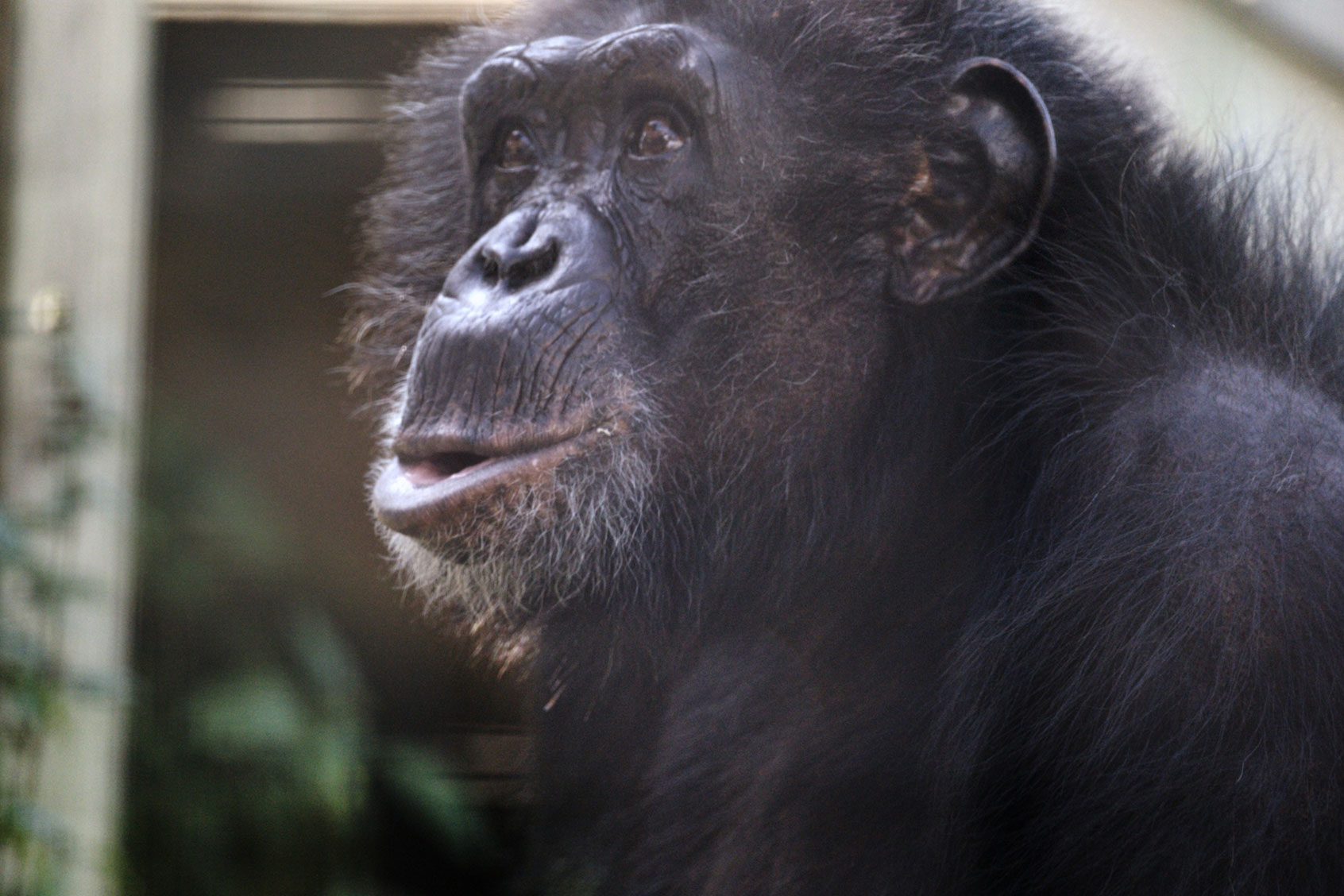
Haddix’s son, introduced later, has come to accept his lower place in his mother’s emotional hierarchy, and her husband appears to do the same. Haddix’s heart is ruled by Tonka, a 32-year-old chimpanzee who appeared in several Hollywood movies, including 1997’s “Buddy” and 1998’s “Babe: Pig in the City.”

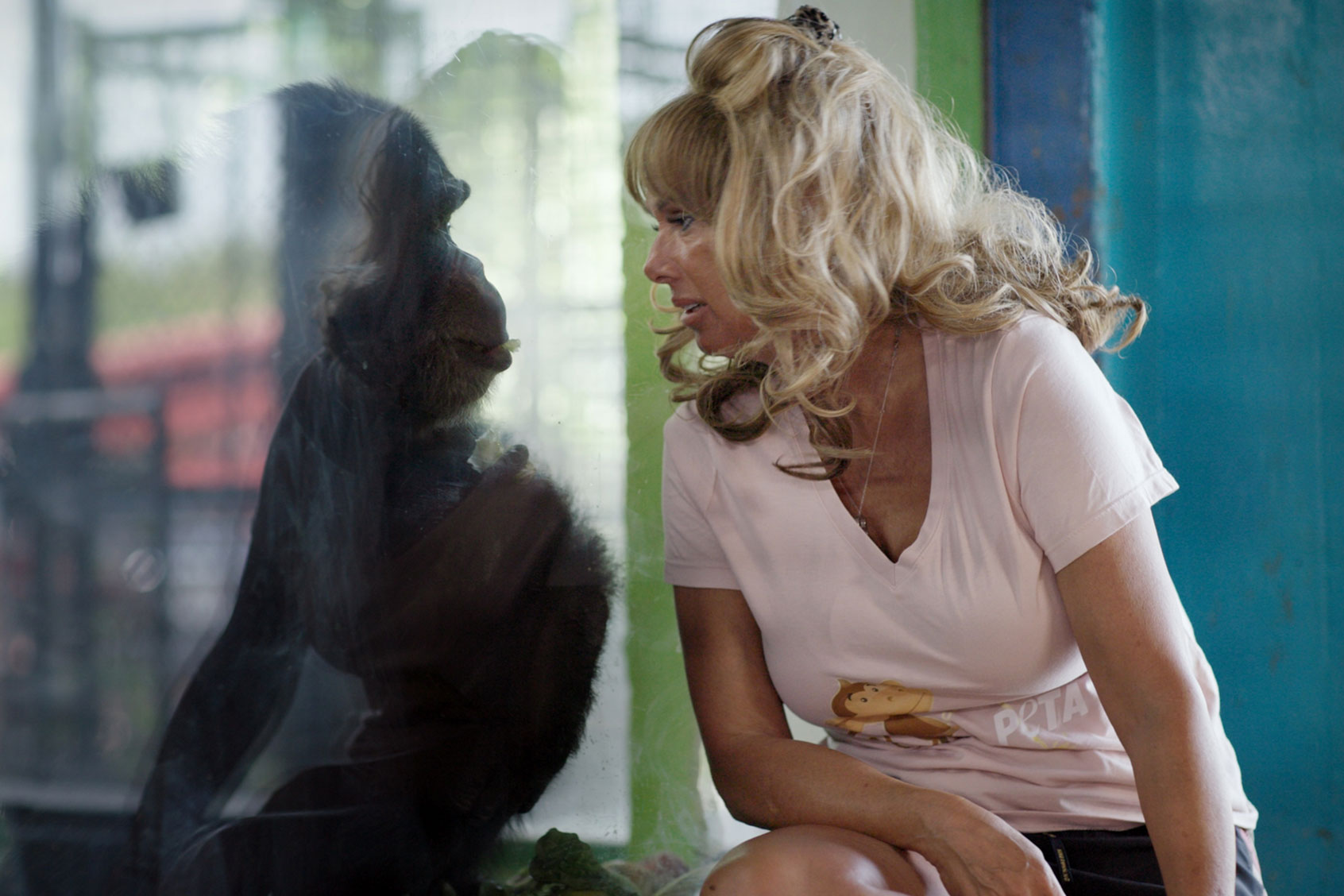
Haddix thinks of all her primates as her kids. She feeds them McDonald’s Happy Meals and Gatorade through the doors of their cages. What she views as playful antics look like stressed-out apes bouncing off their steel mesh walls. 

Out of all of them, Tonka is special.  “Tonka always makes me feel safe,” Haddix says, later adding, “He’s just a very kind and loving person.” 

Chimp CrazyTonka and Tonia Haddix in "Chimp Crazy" (HBO)By that point the People for the Ethical Treatment of Animals has upended her life with a 2017 lawsuit, aided in its efforts by Tonka’s “Buddy” co-star Alan Cumming

We’ve also watched Haddix spill her secrets to a former circus clown claiming to be making a documentary about her legal plight, but who isn’t really directing it.  

Eric Goode, the filmmaker who gave us 2020’s “Tiger King,” is behind “Chimp Crazy.” Although he’s been documenting exotic animal keepers for many years, his “Tiger King” notoriety also made it difficult, if not impossible, to approach exotic animal brokers like Haddix head-on.  

Instead he sent “proxy director” Dwayne Cunningham to interview her and capture other footage using hidden cameras, including a game-changing turn HBO has deemed a spoiler. 

Like other docuseries with a knack for being in the right place at the right time, Goode and Cunningham are deeply insinuated in Haddix’s life as the situation evolves from garden-variety chimps in cowboy hats “strange” to “taking a kidnapping turn.” The culmination is funny but troubling; enraging at times but also somewhat empathetic to both the apes and the people loving them to death.

A story this bizarre didn't escape the national media’s notice. (If you simply can't wait for four weeks to see how it turns out, plug Haddix’s name into a search engine or click the above link.) But “Chimp Crazy” is less fascinating for the story’s outcome than its insight into the types of people who are obsessed with chimps regardless of the dangers they pose. 

Haddix’s fixation with Tonka is the series spine, but Goode uses each development in her odd case to look at other stories of housebound chimps that turned on humans. There's Travis who in 2009 mauled his owner's friend so severely that it left her blind and with a featureless face. (His story inspired the Gordy subplot in Jordan Peele's "Nope.") Or Buck, the chimp shot dead by police after mauling his owner’s adult daughter in 2021.

One look at Haddix is enough to suspect Goode has caught lightning in a bottle twice with “Chimp Crazy."

Without explicitly saying so, Goode reveals in Haddix and others a breed of human drawn by a dark neediness to these animals that nature designed to grow beyond their control. 

Originally Goode sought to interview Connie Casey, a breeder the series says is responsible for three-quarters of the captive-bred chimpanzees in the United States. Casey rented out chimps for events or to model for Hallmark cards through her for-profit company called Chimparty. 

She later rebranded it to Missouri Primate Foundation and made it a non-profit, but it remained a chimp mill until a friend of Casey’s reached out to PETA. Casey refused to work with the filmmakers but Haddix, who volunteered at the facility, happily spoke on Casey’s behalf. Eventually she took custody of the chimps to try to nullify the PETA’s lawsuit, but they simply added her name to it. 

We need your help to stay independent

Once Cumming learned his beloved co-star had not retired to Palm Springs, as he was told, but was being kept in a filthy cage in Missouri, he fortified PETA's efforts by lending his celebrity to the cause. The organization was nearly successful at relocating all the chimps to a well-managed sanctuary. But when the authorities came to seize them, Tonka was missing. Haddix told them he died suddenly. PETA's lawyers don’t believe her. 

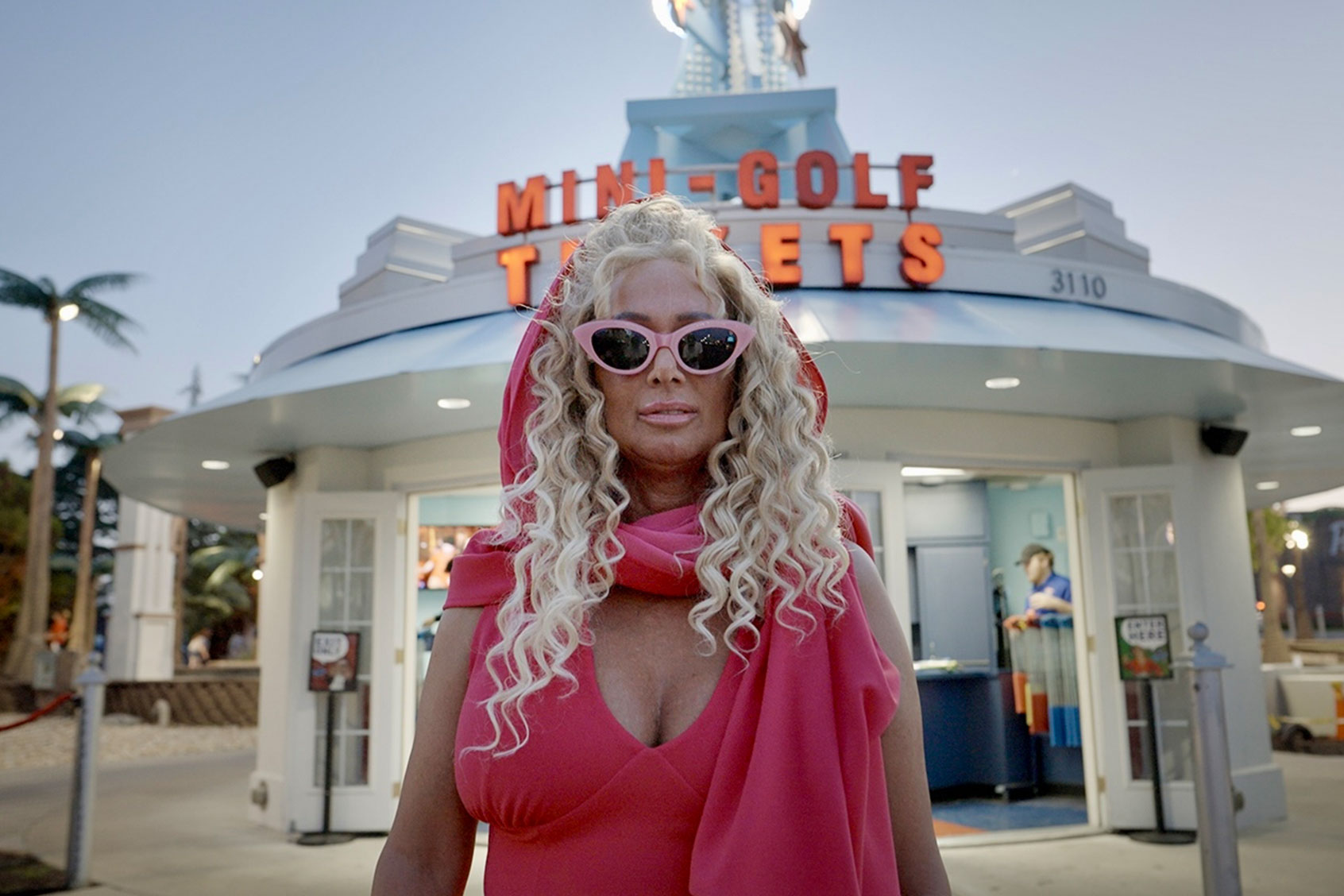
Chimp CrazyTonia Haddix in "Chimp Crazy" (HBO)One look at Haddix is enough to suspect Goode has caught lightning in a bottle twice with “Chimp Crazy." The self-labeled “Dolly Parton of the chimps” has a yen for pastel pink, lip filler and giant blonde hair, styling herself like an adult-sized doll. She allows the camera into the sanctums of her tanning booth and facial treatment sessions, but there’s an exhibitionism in these moments instead of conveying honesty and openness.

Unlike Joe Exotic’s trashy lewdness, however, Haddix’s personality is simultaneously maternal and juvenile. She defends her right to keep chimps by calling Tonka a “humanzee,” half human, half chimpanzee, and therefore happier with her than other primates. Other reasons she gives for loving chimpanzees, however, say more about her deep-seated needs than theirs. 

“They don’t break your heart,” she says. “They don’t grow up and get a mind of their own.” “They’ll be your friend for life.” 

Haddix was made to star in a docuseries. She's easily flattened into a heavily painted cartoon with eyelash extensions and clacking acrylic nails. There’s very little she says in “Chimp Crazy” to the lawyers and judges hounding that’s true, but the biggest whoppers she tells highlight her self-delusion. She and other chimp owners insist the animals are better off with them even though reasonable people can see they're imprisoned in miserable cages.

But she’s also the type of person whose extremity and selfishness make it easy for the audience to overlook the filmmaker’s ethically questionable choices, beginning with having Cunningham stand in for him.  (A Rolling Stone story about Haddix’s case also implies that Cunningham and the other crewmembers didn’t reveal to her who was funding the film, which might have impacted her willingness to participate.)


Want a daily wrap-up of all the news and commentary Salon has to offer? Subscribe to our morning newsletter, Crash Course.


Of course, this resumes the argument over whether this style of nonfiction filmmaking should be held to what are understood to be common editorial standards and practices. "Chimp Crazy" is constructed as entertainment, with a soundtrack and framing choices that accentuate the absurd comedy of this situation alongside the tragedy.

Chimp CrazyTonka in "Chimp Crazy" (HBO)Similar concerns were raised about "The Jinx," and indeed, Goode is moved to consult a journalist to talk him through a major quandary. (“Part of me is saying this is the craziest story ever now,” he says upon first confronting the dilemma, “and part of me is thinking, what do we do?”)  But this is edited to be a moment that the filmmaker could point to as evidence that they considered these issues, and not much beyond that. 

Does it serve the audience’s understanding of the difference between filmmakers like Goode and journalistic documentarians? Hard to say. “But we like to look at ourselves differently, don’t we?” Goode muses late in the story. “I don’t know . . . we like to believe our own truth.” 

Exactly. It’s much simpler to persuade the audience to glom onto the spectacle of Haddix’s poor choices and forgive whatever murky choices Goode and his team make to thwart it. Nothing strange about that at all.

"Chimp Crazy" begins airing Sunday, Aug. 18 at 9:45 p.m. ET on HBO, across four weeks.


JD Vance thinks polls showing surge of Harris support are “fake”

Just as Donald Trump has done his best to downplay the Democratic excitement surrounding the Kamala Harris and Tim Walz campaign — even going so far as to falsely accuse Harris' team of using artificial intelligence to make crowds appear larger at rallies — his running mate, Sen. JD Vance (R-OH), is out here disputing polls showing consistent momentum for their opponents, calling them "fake."

In a Fox News interview on Sunday, Vance was asked to comment on "a rough couple of weeks for his campaign," as described by Mediaite, and New York Times/Siena polling indicating that "Harris is now leading Trump among likely voters in Arizona, 50 percent to 45 percent, and has even edged ahead Trump in North Carolina — a state Trump won four years ago — while narrowing his lead significantly in Georgia and Nevada,” and his reply went down a familiar path — that it's fake news, according to him. 

Vance stated his opinion to host Shannon Bream that surveys “tend to radically overstate Democrats," and that their own calculations show the “sugar high” that Harris' campaign is experiencing to be “leveling off.”

“Consistently what you’ve seen in 2016 and 2020, is that the media uses fake polls to drive down Republican turnout and to create dissension and conflict within Republican voters,” Vance said. “The Trump campaign is in a very, very good spot."

As Axios points out in their coverage of Vance's claim, "The polls aren't always accurate, but they certainly aren't fake," highlighting that "nearly every major pollster has shown Harris surging," maintaining a 6-point lead, 51% to 45%.


George Santos likely to plead guilty at Monday’s fraud hearing

Former Republican congressman George Santos will appear at a hearing on Monday in federal court on Long Island, where he's expected to plead guilty in his ongoing fraud case where he faces 23 felony charges accusing him of defrauding donors and lying about his finances. 

Entering a guilty plea will make a previously scheduled September trial unnecessary, although hundreds of potential jurors have already been summoned and are at the ready, should he change his mind regarding his plea, according to ABC News, with the outlet highlighting that he's known for his surprise decisions.

Expelled from the House of Representatives in December 2023 in the wake of his mounting financial shadiness, with Rep. Max Miller, R-Ohio, accusing Santos’ campaign of stealing from his mom — on top of everything else — Santos pleaded not guilty to 10 charges against him in July and his team pushed for a federal judge to dismiss part of the fraud case against him in the summer, but their request was denied.

Per ABC News' reporting, it's "not clear to which charges Santos is expected to plea [on Monday] or what sentence would be imposed," but two of his associates wrapped up in the ordeal — including Santos’ former campaign treasurer — have pleaded guilty themselves for their involvement. 

Cats seem to grieve the deaths of companion pets, study finds

Cat intelligence is an ongoing area of research, with new discoveries being made all the time. Such as when cats make certain facial expressions, they do so to communicate complicated emotions. Scientists believe cats can feel shame, love and other sophisticated sentiments. There are even some cats can be trained to "talk" to humans using buttons that produce specific English words.

Now a recent study in the journal Applied Animal Behaviour Science reveals that cats may be deep enough to display grief when they lose a beloved animal companion.

To learn this, researchers from Oakland University's Department of Psychology studied 412 cat caregivers regarding both their experiences and the experiences of surviving cats after their families lost another beloved pet to death. They found that the surviving cats displayed "grief-like behaviors" such as seeking attention and losing interest in eating, playing and sleeping. This finding is somewhat complicated by the fact that caregivers who expressed higher levels of grief were more likely to report the same emotions in their cats, suggesting a possible bias or tendency to anthropomorphize the animals.

"[The cats] engaged less in sleeping, eating and playing…"

Yet because there is a dearth of research on this subject — indeed, this is only the second known exploration of this issue — the scientists conclude that further studies will be needed to supplement the most recent analysis.

"[The cats] engaged less in sleeping, eating and playing but more in seeking attention from humans and other pets, hiding, spending time alone and appearing to look for their lost companions," the authors wrote. "Future work is needed to determine whether these results reflect caregivers projecting their own grief onto surviving animal companions or whether cats may also experience grief following companion loss."

Study co-author Jennifer Vonk, a professor of psychology at Oakland University explained to Salon how the new study attempts to further clarify the origins of cats' seeming "grief."

"What is new about the study is that both the cats' relationship with the deceased companion and with the owner seem to predict how it will respond to the death," Vonk said. "This is consistent with the cat feeling grief because their behaviors change in the direction we would expect (less play, more sleep, more comfort-seeking, etc.) and are stronger when they had lived with the deceased animal for longer and had better relationships. All this suggests that they are impacted by the loss, but the findings are also are consistent with the idea that the cat is responding to changes in the owner's emotions and behavior or that the owner is projecting their own grief onto the surviving cats."


Want more health and science stories in your inbox? Subscribe to Salon's weekly newsletter Lab Notes.


"They are impacted by the loss, but the findings are also are consistent with the idea that the cat is responding to changes in the owner's emotions and behavior or that the owner is projecting their own grief onto the surviving cats."

Vonk noted that, on a personal level, she found the results "somewhat reassuring," since the findings came from such a large sample of cat owners.

"Cats do seem to be responding to the deaths of their fellow companion animals because my own cats have rarely shown any overt reactions when we have lost a member of the household and it often makes me a little sad. At least a couple of my own cats seemed to look for the cat that had passed away but the behavioral changes are quite subtle and easy to miss," Vonk said. "Still, other owners have reached out to me with stories that seem to indicate much more striking accounts of sadness in their cats. I think as animal caregivers, we need to do a better job learning how to read the emotions of our animals."

One way to better read cat emotions is to look at their faces. A 2023 study in the journal Behavioral Processes studied 53 adult domestic shorthair cats at a cat café, obtaining 194 minutes of footage with 186 different cat interactions. They learned that the cats had at least "276 morphologically distinct facial expressions," adjusted based on the details of their interactions with the people in question. They would close their eyes and move their ears and whiskers forward when feeling friendly, or constrict their pupils while flattening their ears and flicking their tongues when feeling aggressive.

We need your help to stay independent

Similarly, a 2022 study in the journal Animal Cognition studied how 16 domesticated cats reacted to hearing a prerecorded voice of their owner when they were directly addressed and compared that to how they reacted to prerecordings of their owners speaking to other humans. The scholars found cats react differently in the latter situation, further demonstrating that they are aware of specific individuals in their lives and tailor their responses to their presence.

Vonk's own research bears out that notion.

"I think it shows that cats are impacted by their relationships with companions in the same household — both human and other animals so they are not as socially 'aloof' as sometimes thought," Vonk said. "They definitely seem to be attuned to the changing social dynamics in their environment, which is somewhat unexpected given that they were domesticated from asocial species. I would not feel comfortable speculating about love and grief at this point. I think it is safe to say that they can form attachments where they respond to the loss of an attachment figure."

Donald Trump and JD Vance: Decoding a double dose of right-wing racism

The Republican ticket of Donald Trump and JD Vance is currently being subjected to well-deserved ridicule, but even if their venture ends in defeat, powerful antidemocratic forces behind them — such as Peter Thiel and Elon Musk — aren’t going anywhere, and Trump’s base won't suddenly melt into nothing. Despite what looks to be their failure (so far) to score with racist and misogynist attacks on Kamala Harris, it’s worth taking a closer look at how two distinct streams of conservative racism have come together this year.

Two recent books I have covered for Salon shed light on these distinct forms. First was David Austin Walsh’s “Taking America Back: The Conservative Movement and the Far Right,” (author interview here), which explains that the “mainstream” conservative movement never rid itself of its fascist element and the "paleoconservatives" who have re-emerged in the Trump era. The second book is Annalee Newitz's “Stories Are Weapons” (interview here), which features a chapter about how neoconservatives (ideological rivals of the paleocons) tried to make racism great again with “The Bell Curve,” a 1994 book whose style of racist pseudoscience has flourished in Silicon Valley, including among JD Vance’s most significant backers. 

I reached out to Walsh and Newitz in an effort to expand our understanding of the present moment, what brought us here and what may lie ahead. What they told me was both simple and complex. Here’s the simple part: The paleocons can be understood as old-fashioned, antisemitic white nationalists, representing a form of instinctive racist conservatism that resents and resists all change. The neocons' first intellectual leaders, on the other hand, were Jewish, and their "model minority" assimilation into the conservative movement typified the adaptive dynamic of a more pragmatic conservatism that accepts change and seeks to master it. Among other things, this involves intellectualizing racism in evolving ways — new bottles, same old whine. Yet at root, both forms boil down to denying the humanity of Black people, Native Americans and Muslims, along with a long list of racial, ethnic and religious "others." The differences are largely about how best to do this.

What makes things more complex starts with what’s new to the news cycle, including the resurgence of "race science" thanks to Vance and his Silicon Valley backers. But as Newitz writes, there’s nothing new about it. The "Bell Curve" moment of the 1990s, as Newitz frames it, was a psyop aimed at both the right's allies and adversaries, historically linked to the "Indian Wars" of the 19th century. By email, Newitz explained that when the U.S. government was waging war against "hundreds of Indigenous nations, [it] worked with churches and other groups to set up residential schools for Indigenous children":

These children were taken away from their families, without consent, and taught English, forced to convert to Christianity and learn "Western" ways of life. The idea was that these children were ignorant, and that there was something defective about the way Indigenous communities taught their children. Their minds, in other words, needed fixing. 

This idea, that America's enemies are somehow mentally defective due to poor education or simply inferior minds, has continued into the present. It fits nicely with the history of eugenics and race science, which inform more modern works like “The Bell Curve.” The thread that connects them is the idea that marginalized groups are somehow less intelligent than white people, and that therefore they don't deserve the same privileges as white people. The argument in “The Bell Curve” is aimed at white people, at convincing them that they are inherently superior. If you think about it as a psychological weapon, however, its intent is also to undermine Black people's confidence in their own abilities, and more importantly, to make it harder for them to be taken seriously by white people. 

The timing here is worth noting. Writers like Toni Morrison, Alice Walker and Gloria Naylor had decisively smashed white male literary hegemony in the previous decade. Although no one outside the academic world had ever heard the term "critical race theory," it had been developing for almost two decades before “The Bell Curve” was published. The first two volumes of Martin Bernal's “Black Athena” were published in 1987 and 1991, challenging the received notion of ancient Greece as a distinctively European or "white" civilization. Legal scholar Lani Guinier's influential articles (collected here) advocated for a more inclusive and responsive democracy. That triggered a right-wing backlash after her former college friend Bill Clinton nominated Guinier for a key civil rights post in the Justice Department. Clinton hastily backed away, as did Sen. Joe Biden, who chaired the Senate Judiciary Committee at the time. 

"'The Bell Curve' was aimed at convincing white people that they were inherently superior. If you think about it as a psychological weapon, its intent was also to undermine Black people's confidence in their own abilities."

In other words, there had been a flowering of serious intellectual challenges to white racial hegemony. “The Bell Curve” implicitly rejected all of them, arguing against engaging in any argument at all. If it was a neocon psyop, as Newitz argues, white America’s elites were eager to embrace it. Newitz doesn't see much difference, however, between the neocons and the paleocons: 

We see the same ideas about a natural hierarchy of intelligence, and even the same pseudo-scientific language about IQ being deployed. "The Bell Curve" doesn't call for Black people to be enslaved, but it does suggest that they might be kept fenced into high tech "reservations" for people who are too weak-minded to do work. I think if we acknowledge that this is a psyop, rather than a reasonable policy document, it becomes very obvious that "The Bell Curve" is dealing in mythology rather than science. It's about vibes, about reassuring white people that they are the best.

David Walsh, on the other hand, perceives crucial differences between the pseudo-fascist "paleocons" who are the focus of his book and the neoconservatives who became "a 'respectable' faction in Washington politics in the ‘80s and '90s," providing cues to many so-called liberals:  

After all, most of the neocons started out as liberals in the 1950s and 1960s before moving right, due primarily to challenges from the left with more than a little schmear of good old-fashioned racism. That’s fundamentally why “The Bell Curve” gets such a rapturous response in the pages of The New Republic.

The real stakes of the infighting between neocons and paleocons in the 1970s and 1980s was over the ownership of American conservatism and who would get the spoils — whether it would be old stalwarts and loyalists who came up in more explicitly movement and/or populist circle, guys like [Pat] Buchanan, or whether the intellectuals who moved right had a meaningful leadership role to play. This was heavily tinged by antisemitism and a sense of resentment towards Jewish intellectuals who had moved right. 

Perhaps the best big-picture way to understand this fight is found in Edward Fawcett’s “Conservatism: The Fight for a Tradition,” (interview here), which surveys the history of conservative politics, culture and ideology from the early 1800s, both in the U.S. and Western Europe. The most crucial struggle Fawcett describes is between hard-line conservatives fundamentally opposed to liberal democracy and what he calls “liberal conservatives,” who seek accommodation in order to preserve their power. 

At the level of governance, this involves “Tory men and Whig measures,” in the words of 19th-century British prime minister (and novelist) Benjamin Disraeli. At a more fundamental level, it means redrawing the lines of who’s included in the conservative coalition, and under what conditions. Landowning conservatives in England were originally hostile to the rising merchant class, but over time began include them in their coalition. This qualified assimilation of previously excluded groups became a familiar strategic trope in the “liberal conservative” arsenal. 

Walsh also considers another aspect of the story: How liberals, in various ways and for a number of reasons, permitted or enabled this to happen. That’s the focus of his recent essay at the Boston Review literally arguing that “Liberals Are to Blame for the Rise of J.D. Vance.” As his subhead puts it, the liberal tendency to embrace "responsible conservatives" — defined as "someone who offers thoughtful critiques of the excesses of American liberalism and especially of the left" — has led to Vance as a vivid if illogical end point.

There has never been a parallel desire to identify a “responsible left,” meaning left-wing critics of liberalism such as Noam Chomsky, James Baldwin or Gore Vidal. Dr. Martin Luther King Jr., often misleadingly portrayed today as a unifying centrist, was almost universally condemned for proposing U.S. withdrawal from Vietnam. 

The liberal tendency to embrace "responsible conservatives" — defined as "someone who offers thoughtful critiques of the excesses of American liberalism and especially of the left" — has led to JD Vance as a vivid end point.

In Walsh's essay, the legendary conservative intellectual William F. Buckley Jr. serves as his primary example, transitioning from radical fringe defender of McCarthy in the 1950s to mainstream fixture with the 1970s talk show "Firing Line." Ronald Reagan, the most prominent symbol of conservatism's triumph, followed a similar trajectory, moving much of conservative culture with him. In the latter part of his essay, Walsh argues that Vance's political trajectory is unusual because, "unlike Buckley or Reagan, who began as 'radicals' and morphed into 'responsible conservatives' as far as liberals were concerned, Vance has traveled the opposite direction."

That is, Vance has transitioned from a standard “never Trump” conservative to an enthusiastic Trump flunkey. But Walsh describes another complicated trajectory: that followed by the neocons who became Buckley’s allies in the 1970s but had earlier been among the first and fiercest liberal critics of both Joseph McCarthy and Buckley’s defense of McCarthy. This left-to-right voyage may be the most striking example of liberals moving rightward to accommodate “responsible conservatives,” while dismissing critics on the left. 

That complicated backstory is significant to any understanding of the neocon-versus-paleocon infighting Walsh describes, such as the "outright resentment" felt by paleocons like Pat Buchanan toward Jewish intellectual neoconservatives like Norman Podhoretz and Irving Kristol: 

I think that you can explain part of this — and certainly William F. Buckley’s deepening ties with Jewish conservatives — by two things. One is the popularization of the “model minority” concept — American Jews were certainly prominent in this framing in the 1960s and 1970s — which simultaneously implied Jewish exceptionalism and the ultimate fairness of American society (i.e., the most deserving and hardworking groups get ahead). The other — and it’s intertwined with assimilation and meritocracy — is racism. This is the whole flipside to the model-minority approach — groups that haven’t “made it,” to paraphrase Podhoretz, haven’t made it on the merits. And this fits neatly with Buckley’s worldview!

"There was a lot of talk during Trump’s first term about how he was the first 'postmodern' president, but a lot of what pundits pointed to was pioneered by the Bush administration."

JD Vance fits the neocon model on multiple counts. First and most obviously, his Silicon Valley backers not only embrace the eugenic arguments advanced in “The Bell Curve,” but center those arguments ideologically. This connection, bringing Silicon Valley wealth and social media influence into the picture, is clearly a dominant consideration. Newitz offered several intertwined thoughts on the subject:

While researching my book, I found that techniques the military had used for psyops had become common in culture wars. … Before that time, psyops had been reserved for use against foreign adversaries, but now they were being used by Americans on other Americans. Psychological war became culture war. And we're still seeing the results of that, with industry moguls taking up the cause in the present day. [Elon] Musk and [Peter] Thiel are doing essentially what rich industrialists such as Henry Ford did, when he bought a Michigan newspaper and used it to publish Nazi propaganda during the 1920s. …

I think the ruling class always wants to justify its power with a mystical or pseudo-scientific story that suggests they are truly the chosen ones and that they deserve to rule. Of course the barons of Silicon Valley are drawn to myths about their superior intelligence because they work in an industry that values smarts and rewards brilliant inventors. The "Bell Curve" myth is also a story about meritocracy — it suggests that white people control the majority of our nation's wealth because they deserve it, due to their mental prowess. It has nothing to do with luck or inherited wealth or an unequal playing field.

There are other commonalities between Vance and the neocons. Given the conservative fantasy that white men are the new oppressed minority, Vance's heartland background signifies a "model minority" member who’s made it. But Vance also casts Appalachian culture more broadly in a caricatured, negative light — a fact that most elite commentators have missed, but which experts on the region have not. Finally, Vance's wife is Indian American, representing another "model minority" group reflected in such diverse figures as Kamala Harris, Nikki Haley and Vivek Ramaswamy, among many others. 


Want a daily wrap-up of all the news and commentary Salon has to offer? Subscribe to our morning newsletter, Crash Course.


As Walsh notes, "There’s a fair amount of anti-Indian racism on the right," which "Trump tapped into" with his infamous remarks about Harris' racial background, "but that hasn’t precluded the right from making inroads and alliances with Indian Americans. 'Model minorities' may be rejected by the most nakedly racist factions … but are still more or less assimilable on the American right."

So how did these factions come together in this year's presidential campaign? Walsh frames the question this way, and answers it:

How do we explain JD Vance, who comes out of neocon-influenced Silicon Valley but has become — at least superficially — a Trumpian populist? I think the key is to be found in the shared contempt for democracy and meaningfully democratic processes. Let’s not forget that the neocons came to power with the George W. Bush administration in 2001, which was predicated on using the Supreme Court and carefully mobilized grassroots intimidation to overturn the results of a presidential election.

Thanks in part to 9/11, the soft-coup nature of the 2000 election has largely been wiped from public memory. But the parallels between the Bush and Trump eras are chilling, as Walsh notes:

Remember the Brooks Brothers riot [during the Florida recount of 2000]? It was the neocon Jan. 6! Remember Karl Rove’s bizarre but extremely revealing rant about how America is an empire now and creates its own reality? There was a lot of talk in 2016 and during Trump’s first term about how he was the first “postmodern” president, but a lot of what pundits and analysts pointed to really was pioneered by the Bush administration. 

I think the selection of Vance illustrates … that Trumpism is a syncretic movement that brings together various factions on the right united by a shared contempt for liberalism as a political philosophy and democracy as a form of politics.

As for how liberals and progressives can counter this trend, Newitz suggests that moral and intellectual clarity are paramount: 

We need to treat these racist myths as what they are: weapons in the culture war, intended to coerce, mislead and intimidate. They are not good-faith policy arguments or suggestions. But that doesn't mean we should take up arms against them. I argue for a ceasefire in the culture wars, which means that we need to tell different stories — stories about Black history, Black excellence and competence. 

But it also means coming up with effective ways of dealing with misinformation and propaganda in the public sphere. … There is no way to engage productively with psyops — you can't have a reasonable conversation with someone who is telling you that you are stupid or morally defective. I've been intrigued by the Harris campaign's shift away from trying to debate the neocons with logic about democracy — instead, they are telling a new story, about a Black and South Asian woman who represents justice and thoughtful engagement with real political policies. Instead of engaging with Trump's weaponized rhetoric, they are basically shrugging it off as "weird" and moving on. That's a great response to a psyop — decline to engage with it and change the subject to something real.

"There is no way to engage productively with psyops — you can't have a reasonable conversation with someone who is telling you that you are stupid or morally defective."

What lies ahead? Walsh said he has no idea: “If Trump wins, all bets are off,” but if the Democrats triumph, the future remains murky in a different way. “Ordinarily you’d expect an American political party to go through a profound leadership crisis if it loses multiple consecutive presidential elections," he said. "But considering how the GOP is effectively an apparatus of the Trump personality cult at this point, I think he remains the paramount figure until he dies … There’s no universally popular successor.” 

That is clearly reflected both in the history of right-wing authoritarian strongmen around the world and in Fawcett’s account of "liberal conservative" leaders of mainstream parties, who have rarely been able to pass their coalitions along to successors.

Newitz sees "a lot of psyops" ahead, often "disguised as good-faith political rhetoric":

Don't be fooled: If a politician or leader is using violent threats, lies or scapegoating a marginalized group in their speeches, then you're in the realm of psyops. Those are the kinds of statements you can dismiss as just weird and myth-based. I'm not saying we shouldn't have intense debates! But "debates" involve evidence-based statements, and a grounding in history and context. They are not vibes and insults.

That's a tall order, in an age when both mainstream media and social media platforms have retreated from past standards of vigilance. To this point, the Harris-Walz campaign has set a high standard in responding to Trump’s torrents of lies and advancing straightforward, fact-based political discourse. Can we change the media environment, and restore the kind of debate Newitz advocates? Anything's possible.

MAGA has a Catholic gender gap problem — and it could spell trouble for Trump

Catholic school nuns practically canonized John F. Kennedy, never ceasing to remind us students that he was the first Catholic President.  By all accounts, Biden is a more devout Catholic and a more devoted family man than the philandering JFK. Yet, most white Catholics voted for Trump — and the more frequently they attend Mass, the more likely they are to be MAGA voters.  

 If lay Catholics are tepid in their support, many clergy are downright hostile toward the President, adopting what Timothy Busch of the right-wing Napa Institute calls “in-your-face Catholicism.”  A large majority of the Council of Catholic Bishops voted to deny Biden communion with some priests claiming that “you can’t be a Catholic and a Democrat”.   A few clergy believe that Catholic leaders discredited the legitimacy of Biden’s presidency and that this helped give “rise to the violence at the U.S. Capitol.”  Who could miss the Christian symbols on display at the insurrection, including a statue of the Infant of Prague

The Faithful Citizenship Document and a 1994 Vatican Directive state that priests and the Church “should refrain from actively engaging in politics or endorsing parties and candidates.”  The Pope warned against the communion vote but many clergy simply ignored the Vatican and the directives as if they are unaccountable to any earthly power.  Thanks in part to Leonard Leo, SCOTUS has a large MAGA Catholic contingent with some members behaving like unaccountable clergy. A staunch supporter of the Christian Nationalist agenda, Leo is co-chair of the Federalist Society and was instrumental in guiding Thomas through his Supreme Court nomination hearings under Bush senior and even more involved in shepherding Roberts and Alito under Bush junior.  It’s said that he simply provided Trump with the names of his Supreme Court nominees, Brett Kavanaugh, Amy Coney Barrett and Neil Gorsuch, and Trump followed his direction.

When Justice Alito says it is the job of the government “to return our country to a place of godliness,” he agrees with the thirty percent of American Catholics who adhere or sympathize with Christian Nationalist ideas. They completely are mostly agreed that “the U. S. government should declare America a Christian nation’’ and that “God has called Christians to exercise dominion over all areas of American Society.”  It’s clear that Christian Nationalism is driving people away from organized religion, especially young women.

American Catholicism has never been free of politics. 

We need your help to stay independent

In 1933, Dorothy Day co-founded the left-leaning Catholic Workers Movement.  The principles of Christian service that she promoted can be found in the Sermon on the Mount and Mathew 25. Her purpose: “to comfort the afflicted and afflict the comfortable.” The Dorothy Day way to return “our country to a place of godliness” is not by government order but by the example of living a life of Christian service.  “In-your-face Catholicism” is anathema to this version of the Church. 

Historically, nuns outnumbered priests 3 to 1 and performed most of the back breaking labor of Christian service but many earned advanced degrees at Catholic Universities and were teachers, doctors, nurses, and administrators who ran schools, hospitals, orphanages and charities.   Since 1965, their number has declined from 180,000 to around 42,000 today with an average age of 80 and only 1% under age 40. 

Women are more empathetic and compassionate than men while their presence is known to alter institutional culture.  With the departure of nuns, the Catholic culture of Christian service changed forever while church politics became more stridently right-wing. Hospitals were secularized, orphanages and parish schools closed or often transformed into prep schools for rich kids causing the Church to relinquish much of its relevancy in the daily lives of Catholics.


Want a daily wrap-up of all the news and commentary Salon has to offer? Subscribe to our morning newsletter, Crash Course.


In contrast to the arrogance of many clergy surrounding the Church’s sexual assault scandals, the humility and humble service of nuns has served as an inspiration to generations of Catholics. As one woman I know put it, “the reason I’m still a Catholic is because of the nuns.”  No longer able to provide an inexpensive Catholic education to working class parishioners or inspire them with a message of Christian service, some misguided clergy have tried to recapture a measure of relevancy by offering a political message. 

Nationalism in the 20th century was always about the race/ethnicity of the “real citizens.”  In their book Taking America Back for God, Whitehead and Perry argue that Christian Nationalism “gives divine sanction to ethnocentrism and nativism.”  A number of their survey respondents doubted that non-English speakers could ever be “truly American.”  MAGA Catholics should remember that the first U.S. citizen to be canonized a saint was an Italian immigrant, Mother Cabrini, “the patron saint of immigrants.”  Before government-funded social services, she established hospitals, orphanages and founded 67 missionary institutions to serve the sick and poor.  Fortunately or unfortunately for today’s Church, many Catholics still prefer the Christian service vision of Mother Cabrini to the Christian politics of Leonard Leo and Justice Alito.

“A story of contrasts”: The DNC returns to Chicago — but 2024 promises to be nothing like 1968

By announcing in July that he would not seek a second term, President Joe Biden inadvertently revived an American tradition many experts had deemed dead for a half-century: exciting national party conventions. The last-minute switch of the lackluster Biden with his electrifying Vice President, Kamala Harris — potentially the first female president and first president of Asian and Jamaican descent — makes this convention mostly ceremonial, however, as Harris' nomination is a foregone conclusion.

When political organizations like the Whigs and early Democrats first began holding national conventions in the 1830s, they served a function analogous to modern Zoom conference calls. Those conventions served a practical purpose, allowing leaders from all over the country to discuss their party's future in a single place. Until the mid-20th century, it was more common than not that a party would not have even formally decided on its presidential nominee until all of their delegates actually met face to face. Indeed, although former President Donald Trump and other Republicans are railing against Biden for stepping aside so late in the election cycle, historically, there is nothing unusual about political parties not formally choosing a candidate until the convention itself rolls around.

What distinguishes the 2024 Democratic National Convention is that, since the 1970s, both parties have mainly chosen their nominees far in advance of the convention due to primary elections. (Although primaries have existed since the first decade of the 20th century, the first presidential candidate to focus on primaries, Sen. Estes Kefauver of Tennessee, did so during the Democratic primaries of 1956. Kefauver lost, but his campaign was influential in starting the process of making primaries paramount in choosing presidents, leading journalist Theodore H. White to dub Kefauver "the godfather of the American presidential primary system.") In 2024 Biden first swept the primaries and then decided to leave the race, meaning the Democratic presidential candidate is now being decided by the elected Biden delegates rather than the primary voters themselves. Perhaps appropriately, this means that the best way to analyze the historical significance of this moment is to compare it to a trio of Democratic National Conventions that occurred in the old era when conventions actually mattered more. Perhaps coincidentally, the three most analogous primaries — like the 2024 one — were held in Chicago, which first began hosting conventions when the Republicans chose Abraham Lincoln there in 1860.

Among notable Democratic Chicago conventions, the first on the list is the 1896 convention. Occurring in the middle of an economic depression that had commenced three years earlier, the assembled Democrats lacked any clear favorite as they began to discuss whom they should select. The major issue in 1896 was whether America should address the ongoing economic crisis by converting to a bimetallic currency based on gold and silver; the liberal and populist wings wanted to do this, while the more conservative elements (led by President Grover Cleveland) insisted on retaining a strict gold standard. Because the so-called "gold bugs" had far more financial support than the pro-silver faction, they had a strategic edge as proceedings began. Yet in a moment that could have been ripped from the pages of a romantic epic, an obscure Midwestern congressman inspired the collected politicians to nominate him as a pro-silver candidate. He did so based on the quality of a single speech.

"If they dare to come out in the open field and defend the gold standard as a good thing, we shall fight them to the uttermost, having behind us the producing masses of the nation and the world," declared former Rep. William Jennings Bryan of Nebraska. "Having behind us the commercial interests and the laboring interests and all the toiling masses, we shall answer their demands for a gold standard by saying to them, you shall not press down upon the brow of labor this crown of thorns. You shall not crucify mankind upon a cross of gold."

Bryan's words electrified the convention hall; Bryan himself later recalled that his speech succeeded foremost because it established that the banking and financial classes did not represent the majority of Americans who produce wealth.  "Since I became interested in the discussion of monetary questions, I have often had occasion to note and comment upon the narrowness of some of the terms used," Bryan later wrote. "And nowhere is this narrowness more noticeable than in the attempt to ignore the most important businessmen of the country, the real creators of wealth." Instead of accepting the conservatives' argument that populists and liberals opposed working people, Bryan effectively retorted that only by opposing the wealthiest classes could working people receive quality leadership.

"It put the Democrats on the path to becoming a modern liberal party on economic issues (pro-labor, in favor of regulation of corporations and a flexible money supply) that presaged the New Deal," said Georgetown University Michael Kazin. Even though Bryan would lose to Republican William McKinley in the 1896 election — and would also lose on the subsequent occasions he was nominated, in 1900 and 1908 — Bryan transformed the Democratic Party and America more than many individuals who actually did become president. Perhaps nothing proves this more amply than Kazin's reference to a "New Deal," a liberal political program that began at the Democratic National Convention of 1932.


Want more health and science stories in your inbox? Subscribe to Salon's weekly newsletter Lab Notes.


"If Harris wins in November, it will be by the narrowest of margins"

Like the 1896 convention, the 1932 convention took place in the middle of an unprecedented depression. The frontrunner was New York Gov. Franklin D. Roosevelt, who was running on a hybrid of sentimentality for his distinguished cousin (former President Theodore Roosevelt) and the fact that he had provided meaningful economic relief to New Yorkers during the Great Depression Yet Roosevelt had avoided taking any firm ideological stances on how to confront the depression nationally, a tactic that helped him consolidate support but left many other Democrats wary of his intentions. One of them was another New Yorker, former governor Al Smith, who four years earlier as the party's nominee had gone down to a landslide defeat in large part because of anti-Catholic bigotry. Despite his previous defeat, Smith was beloved by many of the party's liberals, particularly since his progressive policies laid the groundwork for much of what Roosevelt had later accomplished.

Therefore it was at the 1932 convention that Roosevelt pledged himself to a bold program of proactive government involvement in the economy. Rejecting the laissez-faire economic dogmas of predecessors like Cleveland, Roosevelt told the assembled delegates "I pledge you, I pledge myself, to a New Deal for the American people. Let us all here assembled constitute ourselves prophets of a new order of competence and of courage.  This is more than a political campaign; it is a call to arms.  Give me your help, not to win votes alone, but to win in the crusade to restore America to its own people."

As historian Oscar Handlin later recalled, "there were some in the cheering crowd in Chicago who rejoiced not only because Roosevelt had won, but also because Smith had been routed." It was a cruel twist of fate for Smith, who had been born into poverty yet risen to the height of power — all the while helping other poor people whenever he could — only to be denied the ultimate prize because of religious bigotry. Yet Smith's loss ultimately proved to be America's gain, as Roosevelt defeated Republican Herbert Hoover and thereby forged a durable political coalition that lasted for more than three decades. Linking the interests of labor unions, big city machines, blue-collar workers, Southern whites, intellectuals and racial and religious minority groups (especially African Americans, Catholics and Jews), Roosevelt's coalition allowed the Democrats to win seven of the nine presidential elections from 1932 to 1964. (Their two defeats were at the hands of a Republican, Dwight Eisenhower, who ran as a moderate and won largely due to his popularity as a World War II hero.)

Then came the 1968 election. The New Deal coalition was in tatters, with liberals fleeing because of President Lyndon Johnson's support of the Vietnam War and conservatives angered at Johnson's support of civil rights legislation for African Americans. Even worse, presumptive Democratic nominee Vice President Hubert Humphrey — once beloved by liberals for his success in passing civil rights, farmers assistance, pro-labor and Medicare legislation — was now despised by many liberals for backing Johnson's Vietnam policies. The feeling among rank-and-file Democrats was that Humphrey's nomination had been forced on them after a more appealing alternative, Senator Robert F. Kennedy of New York, had been removed from the equation by an assassin's bullet. The only anti-war candidate left, Senator Eugene McCarthy of Minnesota, had been systematically outmaneuvered by the Humphrey forces. Therefore anti-war protesters coalesced in Chicago to protest Humphrey's impending coronation, lending an air of illegitimacy to the otherwise inevitable. As gonzo journalist Norman Mailer wrote at the time, "Either the convention was sewn up for Humphrey or the convention was soft. No one really knew." Mailer also described the atmosphere at the convention as having "the packed intimacy of a neighborhood fight club."

Unfortunately for Humphrey, a worst-case scenario transpired: The Chicago Police Department, under orders from Mayor Richard Daley, violently suppressed the protesters. Instead of the American people focusing on Humphrey's message of a "politics of joy," they were treated to images of protesters being brutalized by cops. The American public turned against Humphrey; he suffered so badly in the polls that, although his campaign eventually recovered, his "comeback" in the polls was too late to allow him to win. To stave off future conflicts like the one in Chicago, Humphrey personally supported reforms that democratized the primaries and convention to ensure they would be more representative in the future. These helped the party in its future, but not in 1968: Conservatives faulted the Democrats for not being able to better control the upstarts, while liberals were horrified at the repressiveness. All agreed on one thing — Humphrey took a major political hit from the convention.

"By the end of 1968, Democrats had lost more than a presidential election," historian Frank Kusch said. "They had lost the south and their stranglehold over organized labor, including many moderates and independents, not to mention the alienation of younger voters. Southern white Democrats and others didn’t dissent over war policy, they did when one of their own embraced civil rights for black Americans, and that did more to shatter what was left of the old new deal coalition than an interparty battle over Vietnam War planks between Hubert Humphrey and Eugene McCarthy at the convention in Chicago. The splintering of that once strong coalition with big labor, white ethnic groups, rust belt and mid-western and southern voters during the mid-1960s was a gift to challenger Richard Nixon who saw his chance with a southern strategy in ‘68 and a Midwestern and northern one in 1972."

This brings us to the first lesson that Democrats will need to take away from their party's history: Under no circumstances should they respond to protests — such as those planned by critics of Israel at the 2024 convention — with violence or repression. Even though it is essential for the party's nominee to establish that they are strong and in charge of their own organization, they risk fracturing their coalition if they do so by seeming brutal or prone to overreaction.

Unlike Humphrey in 1968, Harris has multiple advantages that make her a much stronger candidate going into the general election.

"1968 is like 2024 in the same way that Neptune is like Uranus," Nick Proctor, a historian at Simpson College, told Salon. "They are both gas giants. They are about the same size. They have rings and moons, and they are far out in the solar system. To a non-astronomer, they seem basically the same, but when you start to look more closely, the differences are striking."

As Kusch put it, any analogy between 1968 and 2024 is "more a story of contrasts."

"We are dealing with a very different time," Kusch said. "In the 1960s, with civil rights demonstrations, political assassinations, and race riots for almost two full years prior to the ‘68 convention, the situation today could not be more different. From the Black Panthers to the Weathermen to the war at home against involvement in Vietnam, the 1960s witnessed a galvanizing protest movement that defined a generation. We have nothing comparative today. It’s difficult to imagine a mayor anywhere in the United States today suggesting that their city looked 'like Berlin in 1945,' as Detroit mayor Jerome Cavanagh did in 1967."

He added, "The generation that grew up in the shadow of the Cold War and with the bookends of the Cuban Missile Crisis and the Kennedy assassination on one side and Kent State, the Pentagon Papers and Watergate on the other might look at current student protesters and wonder why it appears as if they took the summer off from the struggle on college campuses. In the dog days of 1968, no one took the summer off."

We need your help to stay independent

On the other hand, comparing the 2024 election to both the 1896 and 1932 contests works quite well because the stakes are so high. Trump has a long history of refusing to accept any election's results unless he is the winner, and as a result attempted a coup after losing the 2020 election, the single most violent action to occur in the Capitol since the War of 1812. If elected, Trump is expected to implement an agenda known as Project 2025, which would radically alter the government's policies on everything from protecting the environment and providing public education to fighting sexism, racism and anti-LGBTQ prejudice. Trump has even promised his supporters that if he wins, they "won't have to vote anymore," leading many critics to suspect that he plans on eliminating democracy entirely if he wins. Democrats are already mobilizing to protect democracy in case Trump wins,

Even though the consequences of defeat will be dire, though, the 1896 and 1932 contests also provide Democrats with a path for rebuilding their party in a manner that is both liberal and electable. To do this, they must simultaneously craft their own careful coalition while taking advantage of Trump's political weaknesses.

"I think 2024 provides an opportunity to be one of the more significant elections in recent memory if those involved keep an eye on how policy decisions and cultural positioning have dictated previous party dynamics," Kusch said. "As one of the current sayings goes, 'This is not your father’s GOP.' Indeed, there were no legacy families at the Republican National Convention; no Reagans, Bushes, Cheneys, McCains, Romneys, or Pences were in attendance and if there had been, they would likely not have felt at home. For some, the current Republican Party exists in name only, and in some respects, no longer feels like the one that they grew up in."

Kusch added, "Republicans may not be jumping to the Democratic Party exactly but there are signals that an exodus might be on the horizon, where voters who describe themselves as independent or disaffected might feel tempted to vote for Harris or to stay home on election day, both equally bad for the GOP.  Like in ‘68 and ’72 for the GOP, or with Roosevelt in 1932 and 1936, there is an opportunity for the Democratic Party under new leadership to see what is possible and salvageable in this divided country to build something like a coalition."

As for building a lasting political coalition — one that can triumph in multiple elections, like the one put together by Roosevelt in 1932 — the Democrats need to pay attention to American demographics.

"Despite an aging population, there remains a large, untapped youth voting block that could end up deciding this election for the first time in American history," Kusch said. "Young voters are known to make noise, but then ghost polling booths on election day. Those days could be numbered. While it’s easy to dismiss the relevance of influencers on social media, ignoring their power and their reach would be unwise. The Democrats seem more poised to benefit from this, a trend in support in such circles that seems to be increasing since Harris joined the race. While global superstars like Taylor Swift have remained mostly silent on this election, given her very public donations to food banks and other charities, it’s not a great stretch to believe she would back the Harris/Walz ticket. This could be considerable and play directly into relevant policy issues if the Democratic Party wishes to build itself around the narrative of protecting vulnerable people and backing issues like woman’s reproductive rights, sensible gun laws that most Americans already agree on despite the 'gun grabbing' rhetoric, fair taxation, affordable healthcare, and protecting the rights of farm and factory workers, and especially reaching out with aid for 18-24 year olds who often need senior discounts more than the wealthier baby boomers."

Kusch added, "The party can also do well by developing policies for affordable housing and other measures to ensure young people don’t end up impoverished and on the streets. This could be a significant opportunity to realign the nation’s political direction by targeting voters under 30 while ensuring that cuts to social security and Medicaid and Medicare never happen for the vulnerable people who need such programs. This is the beginning of coalition building."

Of course, much as the 1896 and 1932 contests were only the start of the coalition-building commenced by Bryan and Roosevelt, any successes experienced by the Democrats in 2024 will only be a first step.

"It’s a rather short window between now and the election and if Harris wins in November, it will be by the narrowest of margins," Kusch said. "Currently, the labor vote is split, as it is with Hispanics and women, the working class, and lower wage voters. But could it be possible that Walz could do for Harris what Lyndon Johnson did for Kennedy? Perhaps, but Walz will not be able to bring in Southern states like Texas as Johnson did, but he might appeal to Midwesterners, military families, labor and working-class families, at least as much as someone in the number 2 slot can."

If nothing else, one thing is known for sure: The notion that Democrats were "unfair" by swapping Biden for Harris is ahistorical and ridiculous. As White wrote about national conventions before the primaries, they were "a system where states, sovereignties, interests, pressure groups, machine blocs, unions, ethnics, all regarded the national convention as the ultimate bargaining place where wheeler-dealers, cause people, and vested interests traded claims." By Harris making a national convention intriguing again, she is if anything a throwback to an earlier time. The Democrats' actions are not only literally "democratic"; they are also entirely fair in terms of what political parties are allowed to do.

"it's an absurd argument: political parties, like other private organizations, can make or unmake any rules they like within their rules," Kazin said. "When Biden dropped out, every state delegation had been chosen, and there was no time or state laws in place to run another set of primaries less than two months before the Democratic convention."

More articles on psychology and politics:

Trump scares his followers with talk of “illegals,” but border crossings are lowest in four years

During Donald Trump's press conference at his Golf Club in Bedminster, New Jersey on Thursday, he pivoted from speaking points meant to focus on inflation to, once again, rattle off misinformation about Kamala Harris wanting to "end detention of illegal alien migrants, releasing vicious monsters into our communities to rape, maim and murder." And this has been a popular loop-de-doop of his for years, regardless of who his opponent is. But it's usually not based on facts by any stretch of the word.

Having made a habit out of scaring his followers with talk of "illegals," with several MAGA enthusiasts stumbling into the subject as recently as today speaking to press just before his rally in Wilkes-Barre, Pennsylvania, it would be interesting to hear his response to a new tally from border agents revealing this fake news of crossings to be at their lowest in four years. 

In a Friday afternoon feature by The Washington Post breaking down the decline in illegal border crossings, they highlight data from U.S. Customs and Border Protection showing "56,408 illegal crossings in July, a 32 percent decline from June and the fifth straight month that the figure has fallen," with officials attributing the change "to executive actions Biden announced this spring that effectively shut off access to the U.S. asylum system for migrants who enter illegally."

“The Biden-Harris Administration has taken effective action, and Republicans continue to do nothing,” White House spokesperson Angelo Fernández Hernández said in a statement on the numbers, adding that Republican lawmakers “are more interested in cynically playing politics than securing the border.” 


My first music festival . . . and panic attack

Just a few rows back from the front of the stage, I watched as patches of brown, well-trodden grass  — once largely visible minutes earlier — became steadily occluded by hundreds of feet. I felt shoulders pressing against mine and a noticeable shift in pressure at my back. My arms were suddenly pinned at my sides. 

Then the tears came, and I began to think about death.

Kendrick Lamar wasn’t set to come onstage for another 45 minutes, but the crowd — mostly drunk teenagers in backward caps and shiny basketball jerseys — was already riled up.

My breathing began to quicken, and I tossed frantic glances to my three siblings, who were standing around me. The August sun, formerly a welcome source of warmth, now beat down mercilessly. The air around me was sour and stale, transmogrified by a mass of sweating bodies.

“Hey — make some room!” my brother, who towered over most of the crowd, said to no one in particular as soon as he saw my face. Skinny frames ricocheted off of each other, punch drunk on cheap vodka and the vibrations of the thrumming bass from the interim performer. They paid no heed to my brother’s order or the cries of girls much shorter than I, being slowly dragged under the crowd. 

I can’t breathe. 

Then the tears came, and I began to think about death. 

Last summer, at the Lollapalooza music festival in Chicago, I experienced my first fully realized panic attack. As someone who has dealt with near-lifelong anxiety and bouts of claustrophobia, it may not come as a surprise that a surging and swaying crowd of thousands would be triggering for me. And yet, as someone who has attended a litany of concerts in my 26 years of life, I still don’t think I could have accurately anticipated the intensity of my reaction. 

My parents, certified concert junkies and once moshers extraordinaire, drove to the first iteration of Lollapalooza in 1991 — then a multi-stop touring festival conceived as a farewell tour for one of their favorite rock bands, Jane’s Addiction — in a surf van with some friends from the Jersey Shore. Their lifelong love and appreciation for music, a trait they passed on to their five kids, drove my adult siblings and me to want to experience a version of it for ourselves, at a festival. 

After reviewing the lineup, which ranged in genres from pop and rap to electronic dance music and folk rock, we decided to buy two-day passes. Though the music featured at current Lollapaloozas has changed quite a bit (as my dad often grumbles to us), the chance to see another one of my parents’ favorite ensembles, the Red Hot Chili Peppers, on the second day was too good to pass up. Plus, my brother’s living in downtown Chicago made the whole setup proximally accessible and relatively affordable. On paper, it was the quintessential family activity, melding fun with familiarity — an updated version of Mom and Dad’s old haunt, surrounded by my best friends, while throwing our heads around to “Can’t Stop” and “Parallel Universe.” I could hardly contain my excitement. This was all blissfully compounded by the fact that we had dined at the same pancake joint as Chili Peppers frontman Anthony Kiedis — decked out in a bejeweled, oversized leather Moschino jacket — the day before seeing them at Lollapalooza. We’d even had a brief interaction with him on the way out; he'd made our group’s hearts collectively stop when he joked that their set at the festival the following day had been canceled. 

Part of this romanticization also came from my conceptions of other popular music festivals, like Woodstock. The whole braiding of peace, love, art, rock-n-roll and your hallucinogenic drug of choice is one that I’ve always found culturally appealing, insofar as lore and historical context are concerned. My perpetual preoccupation and fascination with other generations (and the music that defined them) has led me to fantasize about what it would have been like to hear “All Along the Watchtower” live many a time.

As a self-admitted melophile in a way that feels closely tethered to my family identity, it was all the more disconcerting that my first festival revealed such a deeply triggering anxiety. In the moment, between darting thoughts of suffocation, I thought of the Astroworld crowd crush in 2021 that left 10 people dead and many more injured. I ultimately asked a festival attendant to help pull me out of the crowd once the anxiety became too overwhelming; yet, my nerves lingered from the hilltop where I found myself sitting at a considerable distance, worried that my sisters — pressed against the metal gates below the stage — would end up being pulled beneath the sea of people.

More than that, however, my uncontrollable reaction to the impending crowd crush, which thankfully remained in the hypothetical realm, subverted another quintessential feature of festivals: other than the more obvious focus on music, these large-scale gatherings are founded on principles of community. Music’s magnetic ability to unite like-minded people is perhaps the most wholesome nugget of festival culture, not to mention a key structural component of my family dynamic. My inability to stay literally grounded in the moment incited a sense of being unmoored from a piece of myself. 

I questioned my own mental integrity. Could my anxiety really be that acute?

That’s precisely why I forced myself to surmount my anxiety on the second day of Lollapalooza when we were slated to see the Chilis. I knew my siblings wanted to be front row again, as did I. But getting there took a full day of onerous prep work. I meditated to will my mind to have the fortitude to “get through” the worst moments and spoke at length to brother my brother and his fellow 6-foot 4-inch friend about crafting a “box-out” strategy — rec basketball style — to plant themselves and effectively barricade our group from bouncing high schoolers.

Though I made it through the rest of the festival physically unscathed, I couldn’t shake the experience for some time afterward. I questioned my own mental integrity. Could my anxiety really be that acute? How could I not have foreseen this reaction? 

It doesn’t seem to be a modern-day issue, either. Eleven people fatally asphyxiated in 1979 at a concert for The Who at Cincinnati’s Riverfront Coliseum. In 2000, nine people died in a mosh stampede at Denmark’s Roskilde festival during a performance by Pearl Jam. And in March of 2023, a concert for rapper Glorilla saw two crowd-crush-related deaths. Setting aside the ethical queries, at one point, the physical power of the horde is simply too great to overcome. 

I couldn’t help but feel somewhat jaded by these breaches of concert etiquette. How could people ignore another human being who was crying and pleading to stop jostling them into a churning crowd? Or were these fans simply too entranced by the beat, unable to break concentration, their senses dulled under the influence of ecstasy or weed or fruit-flavored liquor? I suppose the power of music, ostensibly rife with positive potential, also has its own unique drawbacks.

The experience won’t stop me from going to festivals, but if there’s one thing my first Lollapalooza taught me, it’s to always tread carefully — literally and figuratively — before diving headlong into any new situation. You never know when you’re going to find yourself in need of fresher air. 

Congressional security officials advise House Democrats to be extra careful during DNC

In preparation for the Democratic National Convention in Chicago next week — which starts on Monday and ends on Thursday — extra security measures are being put into place to protect big-name attendees from protestors and potential attacks from political opposers.

According to a recent report from Axios, congressional security officials have been advising House Democrats to be extra careful when making their travel plans for the convention, going so far as to urge them to book their lodging under different names as "hotels have been getting random calls asking for people," and to avoid certain areas where violent encounters may be more likely to occur.

"The protesters aren't staying in a designated protest site . . . and there are people who are going to go and really try to cause trouble," one lawmaker quoted by the outlet predicted. 

Aside from anticipated rabble-rousing from Trump supporters, the primary concern is the potential for violence from tens of thousands of pro-Palestinian demonstrators traveling to the area to protest U.S. funding for Israel's war in Gaza.

In a welcome packet sent to congressional Democratic attendees, convention officials highlight that the Secret Service "has been coordinating with all levels of law enforcement agencies," including the Capitol Police and the Chicago Police Department.

Kamala Harris and Tim Walz will both deliver speeches at the DNC and a number of celebrity guests are expected to pop up. Julia Louis-Dreyfus hinted that a "Veep" moment is something that we can keep an eye out for, and some are even crossing their fingers that Taylor Swift will show up to back Harris. TBD on that one. 

Behind the Michelin star: Chef Andrew Zimmerman’s secret to success at Chicago’s Sepia

For any chef, winning a Michelin star is an accolade unlike any other. Retaining said stars, though, is a whole other story.

So for Chef Andrew Zimmerman of Chicago's Sepia, who's retained the restaurant's stars under his leadership for 13 years, that level of perfection, persistence, grit and talent is almost unheard of.

Zimmerman, who also recently opened another restaurant named Proxi, originally came to Sepia in 2009 and the restaurant won its first star under his tutelage two years later, in 2011. Since then, Sepia has been a darling of the restaurant world, not only in its native Chicago, but nationwide. As the Michelin page itself says, "Chef Andrew Zimmerman’s menu is a delicious amalgam of American cuisine with hints of Southeast Asian, Korean, and Mediterranean tastes."

Salon Food had the pleasure of speaking with Zimmerman about his time at Sepia, his inspirations at Proxi, the role of music in his life, standout dishes, why he cooks and more.

The following interview has been lightly edited for clarity and length.

Chef Andrew ZimmermanChef Andrew Zimmerman (Photo courtesy of David Turner)

You've led Sepia since 2009 and it's held onto its Michelin star since 2011 — that's incredible! What do you attribute that sort of stunning success to? And how does it propel you towards your next milestone

Any success that we’ve had all comes down to building and developing a strong team, both in the kitchen and in the Front of House.  In the time I have been the Chef at Sepia, I have been fortunate to work with some very talented and driven people who helped set and uphold the kind of standards needed to be in the conversation for a star. 

The star itself, I think has helped us continue to push and evolve as no one wants to be part of the team that failed to retain it for the next year.  Hopefully our desire to do good work, feed people delicious, exciting food and make them feel welcome and well cared for will propel us on to our twentieth anniversary and beyond.

The website says "Built from an 1890 print shop, Sepia features memorabilia from the Windy City’s bygone eras." I'd love to hear more about that? 

The building did, in fact, house a photo studio and print shop back around the turn of the twentieth century and my business partner and founder of the restaurant Emmanuel Nony used that as inspiration for the vibe and décor.  We have several pieces of art around the dining room that were created using vintage photos from that era as well as a large, antique accordion style camera by the entry way.  The bar and host stand in particular also have a very vintage feel being crafted out of wood and marble with vintage accents.  Emmanuel wanted to create a feeling of timeless vintage glamor in the space.

Sepia interiorSepia interior (Photo courtesy of Sepia)

The website also notes "Sepia celebrates tradition — with a modern twist." Could you speak a bit to that?

When we talk about the “celebrating tradition” we mean using classic cooking methods . . . also known as “doing it the hard way” as the starting point of our cuisine.  We make just about everything you are going to eat from the cultured house made butter to the hand stuffed pasta, [etcetera].

As for a modern twist, that speaks to our willingness to play with the flavors and presentations and use those traditional methods and attitudes to produce food that is contemporary and creative. 

I'm a big music guy, so I'd love to know a bit about how you think your music background plays into your role and growth as a chef? Or, conversely, what are your favorite albums/artists to listen to in the kitchen at home?

I have always had very eclectic tastes in music. I think that my openness and curiosity around music helped set the stage for my openness and curiosity with food too. Music is probably also where I was first introduced to the idea that an artist could try out or mix different styles, often in the same song. That shows up in our cooking anytime we play with how we want to present flavors.

For example, if we do a dish of ‘Toasted Masa Cavatelli with Chestnut Mushrooms, Roasted Poblano Cream and Cotija Cheese”, that dish presents like a very Italian dish, but is all Mexican flavors.  


Want more great food writing and recipes? Subscribe to Salon Food's newsletter, The Bite.


Sepia and Proxi aren't anything like one another and both totally unique unto themselves. How do you differentiate between the two? 

Sepia and PROXI are different in appearance and in style, that is true. PROXI is less formal than Sepia, it’s bigger and louder and has a different energy for sure.  I think of the food at PROXI as being more immediate and direct, with big bold flavors, an emphasis on cooking over a live fire. Sepia on the other hand is admittedly more refined, more delicate and less brash. The vibe may be different but both restaurants draw on my enthusiasm for flavors from around the world.  In many ways, I think the biggest difference is just in how we are choosing to present those flavors.

Is there a particular dish from either restaurant that you think best typifies your current culinary approach and ethos? 

At Sepia I think the “Kanpachi Crudo with Tikka Masala Consommé, Avocado and Almond” is a great example.  It takes a very familiar format (raw fish and avocado) but introduces flavors (Chicken Tikka Masala) that aren’t immediately associated with that format.  Usually, you’d fall into either Japanese or Mexican flavors when approaching raw fish and avocado.

Similarly, at PROXI a dish like “Green Curry Ice Cream Sunday with Candied Peanuts, Bruleed Banana, Whipped Coconut Cream and Fish Sauce Caramel” takes a very familiar idea and presents it in a new refreshing way.

I'm fascinated by the tikka masala consommé in the kanpachi crudo! How did the idea for that come about? Also love the sound of the malted rye ice cream and the pretzel puff pastry in the dark chocolate crema catalana 

The tikka masala consommé was the brainchild of our incredible Chef de Cuisine Kyle Cottle.  He knows of my affection for Indian food and wanted to do something creative with the idea of tomato water.  He had the very clever idea to season the tomato water so it would suggest the flavors of the sauce for chicken tikka masala. The rest flowed from there.

The chocolate crema catalana was created by our equally fantastic pastry Chef Erin Kobler.  Outside of some discussions on crema catalana techniques and presentations, you’d have to ask her.  It is a very creative (and delicious) dish, how she came up with it is still something of a mystery to me.  I mean — caramelized pretzel puff pastry?

Proxi interiorProxi interior (Photo courtesy of Proxi)
I'd love to hear a bit about all of the cultural influences that go into the menus at Proxi  the range is so interesting. 

As a cook and a lover of food, I am interested in finding, trying and learning about things that are novel and delicious so that has led me to investigate all kinds of foods.  I am drawn to big bold flavors like those of Southeast Asia, India and Mexico but my early culinary background was based in French and Italian cooking technique. 

Some of the influences come from traveling to different countries, some from trying the food of other people here at home in Chicago and some from reading and cooking at home. I’m open to trying practically any food and seeing if it will have a place somewhere in the constantly evolving food that we create at Sepia and PROXI.    

Why do you cook? 

I cook because I love to make things, I love to eat tasty things and I love to do something that nourishes people and, hopefully, makes them happy.

What stands out for you as a formative moment that got you into cooking or food at large? 

As a child of divorced parents, I would spend time with my father on weekends and summers.  He was the one who introduced me to a more global palate, like sushi, Indian food and Thai food.  The food I was eating back at home with my mother was a little more “traditional American” and I started to get a little bored with it.  Then I realized that with the help of cookbooks I could teach myself to make nearly anything that sounded exciting and it all kind of took off from there.

We need your help to stay independent

What is your favorite cooking memory? 

I have a lot of really important cooking memories, but surprising my future in-laws with risotto with lobster for dinner the first time I met them is a pretty good one.  It worked out very well for me.

Do you have a number one favorite ingredient to cook with? 

My honest answer to this question is gonna be a real boring one: love so many ingredients and flavors and they all have their place. The most important one though, has to be salt. It’s just the thing that makes everything else come to life. Just don’t overdo it.

How do you practice sustainability in your cooking? 

We practice sustainability in our cooking by being mindful of how the products we are using were produced and by whom and, maybe even more importantly, by making efforts to use every last bit of those products to their fullest advantage.  Things that might otherwise be considered scraps or trim find their way into sauces, sausages, pasta fillings, flavored powders, ferments and meals for the staff.

Chef Andrew ZimmermanChef Andrew Zimmerman (Photo courtesy of David Turner)

What are some tips you'd give to home cooks for cutting down on food waste? 

Some really good ways to cut down on food waste at home is to be open minded and flexible in your cooking.  Look for recipes that are well suited to substitutions and variations.  Fried rice for example (and stir frys in general) are a great way to take those last bits of a protein that maybe isn’t enough for a meal on its own and combine it with that half a carrot you saved in the crisper drawer and a couple other bits and bobs and make a tasty meal.  Saucy Curries are also a great place to combine different vegetables and proteins and have it all be pulled together with a tasty sauce.

You've won an amazing amount of accolades thus far in your career  what's next for you?
At the moment what’s next for me is to continue to go to work every day and make the best food I can, share my knowledge with my staff and keep my mind and eyes open for exciting new foods and opportunities as they present themselves.

How the “very demure, very mindful” TikTok trend changed a content creator’s life

If scrolling TikTok over the past week has led to the words "demure" and "mindful" becoming part of your daily vocabulary, you're one of millions.

In her now-viral video, which has been recreated by numerous celebrities such as Penn Badgley, Lindsay Lohan and Jamie Lee Curtis, transgender influencer Jools Lebron gives beauty tips for how not to look like a clown at work and it's taken off to such a degree that the former cashier is now being flown all over the world to host events — earning enough money through her creativity to afford a life-changing procedure.

“I don’t come to work with a green cut-crease,” Lebron says in the video that started the trend which, as of Saturday, has over 3 million likes and hundreds of thousands of shares. “I don’t look like a clown when I go to work. I don’t do too much, I’m very mindful at work. See how I look very presentable? The way I came to the interview is the way I go to the job. A lot of you girls go to the interview looking like Marge Simpson and go to the job looking like Patty and Selma.”

Earlier this week, Lebron posted a new video explaining how her viral status has impacted her, encouraging her followers to pursue their dreams and post their own TikTok videos.

“One day, I was playing cashier and making videos on my break, and now I’m flying across countries to host events, and I’m gonna be able to finance the rest of my transition. TikTok has changed my life," she says. 


Mpox outbreak shines light on global health disparities

Another global emergency involving mpox is unfolding, with cases spreading from Africa now springing up across the globe, an echo of the viral crisis two years ago. But this time around, things are different, with a mutated strain of the mpox virus that seems to be more contagious — and more deadly, threatening to become a pandemic on par with COVID-19.

The crisis first attracted attention earlier this year in the Democratic Republic of Congo, where most cases are currently concentrated. But it soon began to spill over into at least 13 neighboring countries. In late June, health authorities first rang alarm bells over a new strain of mpox, clade Ib, spreading through the North and South Kivu provinces of the Democratic Republic of Congo. Scientists believe it mutated from the lineage called clade II that impacted the U.S. and other Western countries in 2022.

Now the virus is spreading beyond Africa. On Thursday, Sweden confirmed its first case of the new strain of mpox, the first known infection of the strain outside of Africa. European officials have said other cases are "highly likely" to be found. So far, this year there have been 14,719 suspected and 2,822 confirmed mpox cases, with 99 percent reported in the African continent. That tally includes 517 deaths, giving this mpox clade an estimated case fatality rate of 3%.

The news came only a day after the World Health Organization (WHO) declared mpox a global public health emergency for the second time in two years, but this time concerning a seemingly more rapidly spreading strain.

“Spread to other countries and areas is also likely and remains very concerning,” the WHO told Salon via email. “There remains a risk of wider outbreaks, and WHO is working with countries in the region to step up preparedness, strengthen surveillance and cross-border collaboration.”

In a statement from Dave Daigle, a spokesperson for the U.S. Centers for Disease Control and Prevention (CDC), said the public health agency “is closely monitoring the situation” in the U.S., and the agency will provide updates as needed.  

"While it is a possibility that clade 1b cases may end up in the United States, it's something that could be fairly easily controlled."

“Given how widespread the clade I outbreak is in Central and Eastern Africa, a case diagnosed in an occasional traveler is not unexpected,” Daigle said. “Rapid detection and containment of any mpox case are key to stopping mpox spread.”

The CDC recently issued a Health Alert Network update and updated Travel Health Notice. Daigle added the CDC “has more than two years of experience with mpox in the United States response during the ongoing 2022 global clade II mpox outbreak.” He said the CDC can use existing domestic public health systems and structures with minor adjustments to respond to any outbreak of mpox in the United States. The agency has reported moderate confidence that fatal cases in the U.S. would be lower than in Africa because of better access to health care.

As authorities move forward and warn about the spread of mpox across the world, some people worry what’s to come is the result of health disparities between the East and the West. In other words, it could have been avoided if the DRC had the resources to contain the spread of mpox in the first place. 


Want more health and science stories in your inbox? Subscribe to Salon's weekly newsletter Lab Notes.


“While it is a possibility that clade 1b cases may end up in the United States, it's something that could be fairly easily controlled in the U.S. with the deployment of vaccine and a change in behavior,” Amesh Adalja, an infectious disease expert and senior scholar at Johns Hopkins University Center for Health Security, told Salon in a phone interview. “The reason why clade1b spread so readily in these African countries is because they don't have any resources to be able to combat it, which was the whole impetus behind the public health emergency of international concern declaration — to coordinate a response.”

The mpox vaccines are the same vaccines for smallpox and already companies are scrambling to produce enough to ensure bottlenecks from the 2022 outbreak don't reoccur. The European Centre for Disease Prevention and Control has advised travelers to get their shots.

“There are many public health interventions that people take for granted in the Western world that are out of reach to Africa,” Adalja said, including access and storage of vaccines. “

A health worker takes a sample at the Mpox treatment centre of the Nyiragongo general referral hospital, north of the town of Goma in the Democratic Republic of Congo, on August 16, 2024. (GUERCHOM NDEBO / Contributor (Getty Images))

Despite suspicions that this strain of mpox is more transmissible, WHO told Salon: “Data shows that clade Ib is spreading fast.”

As Reuters reported, 65,000 doses were likely to be available in the short-term, but a big vaccine roll-out campaign is unlikely to happen before October. 

Mpox first originated in wild animals in the jungles of west and central Africa. On occasion, it has made the jump to humans. The first known human case of mpox was detected in 1970 in a 9-year-old boy in a remote part of Congo.

According to the CDC, mpox can cause symptoms like painful rashes that can appear all over a person's body. The other symptoms are similar to influenza, and include swollen lymph nodes, muscle aches, backaches, headaches, fever, fatigue and chills. Eventually, lesions form and progress through several stages before falling off. Death can also occur.

Notably, mpox spreads through direct contact with body fluids or sores on the body of someone who has mpox. It can also spread through materials that have touched body fluids or sores that have been in contact with someone who's infected — for example, clothing or bedsheets. It can spread through respiratory droplets when people have close face-to-face contact. According to data from the WHO, 91.4 percent of cases have been linked to sexual contact.

We need your help to stay independent

“Sexual contact is understood to be an efficient mode of transmission of mpox, which, as seen in the global outbreak, can rapidly spread the disease,” a WHO spokesperson said in an emailed statement. “There is no information at present to suggest that this virus is inherently more transmissible.”

Adalja emphasized to Salon that mpox never went away in the United States. It is still spreading in the U.S. after the 2022 outbreak. According to the CDC, there have been a total of 32,000 reported cases in the United States over the last two years. 

“There’s a chance that there could be mpox clade1b that's imported to the United States that could cause clusters and outbreaks,” Adalja said. “However, I don't think it will find the U.S. very hospitable to spread, because there would be a lot of public health interventions brought to bear pretty quickly, and we don't have the difficulties in the United States in terms of deployment of the vaccine.”

CORRECTION: This story has been updated to reflect the fact that the mpox case detected in Pakistan turned out to be the older strain, not the newer one, as reported by Reuters.

Editing fetal genomes is on the horizon. We need to talk about it now

With their primary goal to advance scientific knowledge, most scientists are not trained or incentivized to think through the societal implications of the technologies they are developing. Even in genomic medicine, which is geared toward benefiting future patients, time and funding pressures make real-time ethics oversight difficult.

In 2015, three years after scientists discovered how to permanently edit the human genome, U.S. scientists issued a statement to halt applications of germline genome editing, a controversial type of gene editing where the DNA changes also transfer to the patient’s future biological descendants.
The scientists’ statement called for “open discussion of the merits and risks” before experiments could begin. But these discussions did not happen.

By 2018, at least two babies had been born from germline editing with embryos that had been genetically modified in China. With no preemptive ethics or clear regulatory guidance, you get the occasional “cowboy scientist” who pushes the boundaries of experiments until they are told to stop.

After finding out about the babies, scientists continued to talk – but mostly among themselves. Then in 2020, an international commission report that brought together expert views resounded the same call for societal discussions about whether germline editing could be ethical.

I’m a medical anthropologist and bioethicist who studies the values and experiences driving prenatal gene therapy developments, including genome editing.

Human prenatal genome editing has not happened yet – as far as we know. Prenatal genome editing isn’t the same as editing ex vivo embryos, like the Chinese scientist did, because prenatal editing involves editing the DNA of a fetus visible inside a pregnant person’s womb – without the intent to affect future descendants.

But the societal implications of this technology are still vast. And researchers can already start exploring the ethics by engaging communities well ahead of time.

Engaging communities

You can’t really anticipate how technologies might benefit society without any input from people in society. Prospective users of the technology in particular might have their own experiences to offer. In 2022 in the U.K., a citizens’ jury composed of people affected by genetic disease deliberated. They voted that germline editing of human embryos could be ethical – if a series of specific conditions could be met, such as transparency and equality of access.

Recently in the U.S., the National Council on Disability published a report on their concerns about embryo and prenatal editing. Their key concern was about the potential for more discrimination against people with disabilities.

Some people see preventing the birth of people with certain genetic traits as a form of eugenics, the troubling practice of treating a social group’s genetic traits as unwanted and attempting to remove them from the human gene pool. But genetic traits are often associated with a person’s social identity – treating certain traits as unwanted in the human gene pool can be deeply discriminatory.

Losing a baby to severe genetic disease leads to profound suffering for families. But the same genes that cause disease may also create human identity and community. As the National Council on Disability outlined in its report, people with disabilities can have a good quality of life when given enough social support.

It’s not easy to engage nonscientists in discussions about genetics. And people have diverse values, which means community deliberations that work in one context might not work in another. But from what I’ve seen, scientific developments are more likely to benefit prospective users when the developers of the technology consider the users’ concerns.

Not just about the fetus

Prenatal human genome editing, also known as fetal genome surgery, offers a chance to address cellular disease processes early, perhaps even preventing symptoms from ever appearing. The delivery of treatment could be more direct and efficient than what is possible after birth. For example, gene therapy delivered into the fetal brain could reach the whole central nervous system.

Gene-editing technology has advanced rapidly over the past decades. Prenatal gene editing is different from editing embryos outside the human body, as it involves editing a fetus inside the body of the pregnant person.

But editing a fetus necessarily involves the pregnant person.

In the 1980s, scientists managed to conduct surgery on a fetus for the first time. This established the fetus as a patient and direct recipient of health care.

Seeing the fetus as a separate patient oversimplifies the maternal-fetal relationship. Doing so has historically downgraded the interests of the pregnant person.

And since editing the fetal genome could harm the expectant parent or require an abortion, any discussion about prenatal genetic interventions also becomes a discussion about abortion access. Editing the genes of a fetus isn’t only about editing that fetus and preventing genetic disease.

Prenatal genome editing versus editing embryos

Prenatal genome editing sits within the broader spectrum of human genome editing, which ranges from germline, where the changes are heritable, to somatic cell, where the patient’s descendants won’t inherit the changes. Prenatal genome editing is, in theory, somatic cell editing.

There’s still a small potential for accidental germline editing. “Editing” a genome can be a misleading metaphor. When first developed, gene editing was less like cutting and pasting genes and more like sending in a drone that can hit or miss its target – a piece of DNA. It may change the genome in intended and sometimes unintended ways. As the technology advances, gene editing is becoming less like a drone and more like a surgeon’s cut.

Ultimately, researchers can’t know whether there would be unintentional, collateral germline edits until decades into the future. It would require editing a significant number of fetuses’ genomes, waiting for these fetuses to be born, and then waiting to analyze the genomes of their future descendants.

Unresolved health equity issues

Another major ethical question has to do with who would get access to these technologies. To distribute prenatal genome therapies equitably, technology developers and health care systems would need to address both cost and trust issues.

Take, for example, new gene-editing treatments for children with sickle cell disease. This disease mostly affects Black families, who continue to face significant disparities and barriers in access to both prenatal care and general health care.

Editing the fetus instead of a child or adult could potentially reduce health care costs. Since a fetus is smaller, practitioners would use fewer gene-editing materials with lower manufacturing costs. More than that, treating the disease early could reduce costs that the patient might accrue over a lifetime.

An American teenager received a gene-editing treatment for his sickle cell anemia. Many people with the disease face barriers when seeking treatment in the U.S. health care system.

Nonetheless, all genome editing procedures are expensive. Treating a 12-year-old with sickle cell disease with gene editing currently costs US$3.1 million. While some academics want to make gene editing more affordable, there hasn’t been much progress yet.

There’s also the issue of trust. I’ve heard from families in groups that are underrepresented in genomics research that say they’re hesitant to participate in prenatal diagnostic research if they don’t trust the health care team doing the research. This type of research is the first step to building models for treatments such as prenatal genome editing. Moreover, these underrepresented families tend to have less trust in the health care system at large.

Although prenatal gene editing holds immense potential for scientific discovery, scientists and developers could invite the prospective users – the people who stand to gain or lose the most from this technology – to the decision-making table for the clearest picture of how these technologies could affect society.