Spring Offer: Get 1 Year, Save 58%

“He ripped off the tax system”: IRS audit could cost Trump more than $100 million

ProPublica is a Pulitzer Prize-winning investigative newsroom. Sign up for The Big Story newsletter to receive stories like this one in your inbox.

Series: The Secret IRS Files:Inside the Tax Records of the .001%

A massive trove of tax information obtained by ProPublica, covering thousands of America’s wealthiest individuals, reveals what’s inside the billionaires’ bag of tricks for minimizing their personal tax bills — sometimes to nothing.

Former President Donald Trump used a dubious accounting maneuver to claim improper tax breaks from his troubled Chicago tower, according to an IRS inquiry uncovered by ProPublica and The New York Times. Losing a yearslong audit battle over the claim could mean a tax bill of more than $100 million.

The 92-story, glass-sheathed skyscraper along the Chicago River is the tallest and, at least for now, the last major construction project by Trump. Through a combination of cost overruns and the bad luck of opening in the teeth of the Great Recession, it was also a vast money loser.

But when Trump sought to reap tax benefits from his losses, the IRS has argued, he went too far and in effect wrote off the same losses twice.

The first write-off came on Trump’s tax return for 2008. With sales lagging far behind projections, he claimed that his investment in the condo-hotel tower met the tax code definition of “worthless,” because his debt on the project meant he would never see a profit. That move resulted in Trump reporting losses as high as $651 million for the year, ProPublica and the Times found.

There is no indication the IRS challenged that initial claim, though that lack of scrutiny surprised tax experts consulted for this article. But in 2010, Trump and his tax advisers sought to extract further benefits from the Chicago project, executing a maneuver that would draw years of inquiry from the IRS. First, he shifted the company that owned the tower into a new partnership. Because he controlled both companies, it was like moving coins from one pocket to another. Then he used the shift as justification to declare $168 million in additional losses over the next decade.

The issues around Trump’s case were novel enough that, during his presidency, the IRS undertook a high-level legal review before pursuing it. ProPublica and the Times, in consultation with tax experts, calculated that the revision sought by the IRS would create a new tax bill of more than $100 million, plus interest and potential penalties.

Trump’s tax records have been a matter of intense speculation since the 2016 presidential campaign, when he defied decades of precedent and refused to release his returns, citing a long-running audit. A first, partial revelation of the substance of the audit came in 2020, when the Times reported that the IRS was disputing a $72.9 million tax refund that Trump had claimed starting in 2010. That refund, which appeared to be based on Trump’s reporting of vast losses from his long-failing casinos, equaled every dollar of federal income tax he had paid during his first flush of television riches, from 2005 through 2008, plus interest.

The reporting by ProPublica and the Times about the Chicago tower reveals a second component of Trump’s quarrel with the IRS. This account was pieced together from a collection of public documents, including filings from the New York attorney general’s suit against Trump in 2022, a passing reference to the audit in a congressional report that same year and an obscure 2019 IRS memorandum that explored the legitimacy of the accounting maneuver. The memorandum did not identify Trump, but the documents, along with tax records previously obtained by the Times and additional reporting, indicated that the former president was the focus of the inquiry.

It is unclear how the audit battle has progressed since December 2022, when it was mentioned in the congressional report. Audits often drag on for years, and taxpayers have a right to appeal the IRS’ conclusions. The case would typically become public only if Trump chose to challenge a ruling in court.

In response to questions for this article, Trump’s son Eric, executive vice president of the Trump Organization, said: “This matter was settled years ago, only to be brought back to life once my father ran for office. We are confident in our position, which is supported by opinion letters from various tax experts, including the former general counsel of the IRS.”

An IRS spokesperson said federal law prohibited the agency from discussing private taxpayer information.

The outcome of Trump’s dispute could set a precedent for wealthy people seeking tax benefits from the laws governing partnerships. Those laws are notoriously complex, riddled with uncertainty and under constant assault by lawyers pushing boundaries for their clients. The IRS has inadvertently further invited aggressive positions by rarely auditing partnership tax returns.

The audit represents yet another potential financial threat — albeit a more distant one — for Trump, the Republicans’ presumptive 2024 presidential nominee. In recent months, he has been ordered to pay $83.3 million in a defamation case and an additional $454 million in a civil fraud case brought by the New York attorney general, Letitia James. Trump has appealed both judgments. (He is also in the midst of a criminal trial in Manhattan, where he is accused of covering up a hush-money payment to a porn star in the weeks before the 2016 election.)

Beyond the two episodes under audit, reporting by the Times in recent years has found that, across his business career, Trump has often used what experts described as highly aggressive — and at times, legally suspect — accounting maneuvers to avoid paying taxes. To the six tax experts consulted for this article, Trump’s Chicago accounting maneuvers appeared to be questionable and unlikely to withstand scrutiny.

“I think he ripped off the tax system,” said Walter Schwidetzky, a law professor at the University of Baltimore and an expert on partnership taxation.


Trump struck a deal in 2001 to acquire land and a building that was then home to the Chicago Sun-Times newspaper. Two years later, after publicly toying with the idea of constructing the world’s tallest building there, he unveiled plans for a more modest tower, with 486 residences and 339 “hotel condominiums” that buyers could use for short stays and allow Trump’s company to rent out. He initially estimated that construction would last until 2007 and cost $650 million.

Trump placed the project at the center of the first season of “The Apprentice” in 2004, offering the winner a top job there under his tutelage. “It’ll be a mind-boggling job to manage,” Trump said during the season finale. “When it’s finished in 2007, the Trump International Hotel and Tower, Chicago, could have a value of $1.2 billion and will raise the standards of architectural excellence throughout the world.”

As his cost estimates increased, Trump arranged to borrow as much as $770 million for the project — $640 million from Deutsche Bank and $130 million from Fortress Investment Group, a hedge fund and private equity company. He personally guaranteed $40 million of the Deutsche loan. Both Deutsche and Fortress then sold off pieces of the loans to other institutions, spreading the risk and potential gain.

Trump planned to sell enough of the 825 units to pay off his loans when they came due in May 2008. But when that date came, he had sold only 133. At that point, he projected that construction would not be completed until mid-2009, at a revised cost of $859 million.

He asked his lenders for a six-month extension. A briefing document prepared for the lenders, obtained by the Times and ProPublica, said Trump would contribute $89 million of his own money, $25 million more than his initial plan. The lenders agreed.

But sales did not pick up that summer, with the nation plunged into the financial crisis that would become the Great Recession. When Trump asked for another extension in September, his lenders refused.

Two months later, Trump defaulted on his loans and sued his lenders, characterizing the financial crisis as the kind of catastrophe, like a flood or hurricane, covered by the “force majeure” clause of his loan agreement with Deutsche Bank. That, he said, entitled him to an indefinite delay in repaying his loans. Trump went so far as to blame the bank and its peers for “creating the current financial crisis.” He demanded $3 billion in damages.

At the time, Trump had paid down his loans with $99 million in sales but still needed more money to complete construction. At some point that year, he concluded that his investment in the tower was worthless, at least as the term is defined in partnership tax law.

Trump’s worthlessness claim meant only that his stake in 401 Mezz Venture, the LLC that held the tower, was without value because he expected that sales would never produce enough cash to pay off the mortgages, let alone turn a profit.

When he filed his 2008 tax return, he declared business losses of $697 million. Tax records do not fully show which businesses generated that figure. But working with tax experts, ProPublica and the Times calculated that the Chicago worthlessness deduction could have been as high as $651 million, the value of Trump’s stake in the partnership — about $94 million he had invested and the $557 million loan balance reported on his tax returns that year.

When business owners report losses greater than their income in any given year, they can retain the leftover negative amount as a credit to reduce their taxable income in future years. As it turned out, that tax-reducing power would be of increasing value to Trump. While many of his businesses continued to lose money, income from “The Apprentice” and licensing and endorsement agreements poured in: $33.3 million in 2009, $44.6 million in 2010 and $51.3 million in 2011.

Trump’s advisers girded for a potential audit of the worthlessness deduction from the moment they claimed it, according to the filings from the New York attorney general’s lawsuit. Starting in 2009 Trump’s team excluded the Chicago tower from the frothy annual “statements of financial condition” that Trump used to boast of his wealth, out of concern that assigning value to the building would conflict with its declared worthlessness, according to the attorney general’s filing. (Those omissions came even as Trump fraudulently inflated his net worth to qualify for low-interest loans, according to the ruling in the attorney general’s lawsuit.)

Trump had good reason to fear an audit of the deduction, according to the tax experts consulted for this article. They believe that Trump’s tax advisers pushed beyond what was defensible.

The worthlessness deduction serves as a way for a taxpayer to benefit from an expected total loss on an investment long before the final results are known. It occupies a fuzzy and counterintuitive slice of tax law. Three decades ago, a federal appeals court ruled that the judgment of a company’s worthlessness could be based in part on the opinion of its owner. After taking the deduction, the owner can keep the “worthless” company and its assets. Subsequent court decisions have only partly clarified the rules. Absent prescribed parameters, tax lawyers have been left to handicap the chances that a worthlessness deduction will withstand an IRS challenge.

There are several categories, with a declining likelihood of success, of money taxpayers can claim to have lost.

The tax experts consulted for this article universally assigned the highest level of certainty to cash spent to acquire an asset. The roughly $94 million that Trump’s tax returns show he invested in Chicago fell into this category.

Some gave a lower, though still probable, chance of a taxpayer prevailing in declaring a loss based on loans that a lender agreed to forgive. That’s because forgiven debt generally must be declared as income, which can offset that portion of the worthlessness deduction in the same year. A large portion of Trump’s worthlessness deduction fell in this category, though he did not begin reporting forgiven debt income until two years later, a delay that would have further reduced his chances of prevailing in an audit.

The tax experts gave the weakest chance of surviving a challenge for a worthlessness deduction based on borrowed money for which the outcome was not clear. It reflects a doubly irrational claim — that the taxpayer deserves a tax benefit for losing someone else’s money even before the money has been lost, and that those anticipated future losses can be used to offset real income from other sources. Most of the debt included in Trump’s worthlessness deduction was based on that risky position.

Including that debt in the deduction was “just not right,” said Monte Jackel, a veteran of the IRS and major accounting firms who often publishes analyses of partnership tax issues.


Trump continued to sell units at the Chicago tower, but still below his costs. Had he done nothing, his 2008 worthlessness deduction would have prevented him from claiming that shortfall as losses again. But in 2010, his lawyers attempted an end-run by merging the entity through which he owned the Chicago tower into another partnership, DJT Holdings LLC. In the following years, they piled other businesses, including several of his golf courses, into DJT Holdings.

Those changes had no apparent business purpose. But Trump’s tax advisers took the position that pooling the Chicago tower’s finances with other businesses entitled him to declare even more tax-reducing losses from his Chicago investment.

His financial problems there continued. More than 100 of the hotel condominiums never sold. Sales of all units totaled only $727 million, far below Trump’s budgeted costs of $859 million. And some 70,000 square feet of retail space remained vacant because it had been designed without access to foot or vehicle traffic. From 2011 through 2020, Trump reported $168 million in additional losses from the project.

Those additional write-offs helped Trump avoid tax liability for his continuing entertainment riches, as well as his unpaid debt from the tower. Starting in 2010, his lenders agreed to forgive about $270 million of those debts. But he was able to delay declaring that income until 2014 and spread it out over five years of tax returns, thanks to a provision in the Obama administration’s stimulus bill responding to the Great Recession. In 2018, Trump reported positive income for the first time in 11 years. But his income tax bill still amounted to only $1.9 million, even as he reported a $25 million gain from the sale of his late father’s assets.

It’s unclear when the IRS began to question the 2010 merger transaction, but the conflict escalated during Trump’s presidency.

The IRS explained its position in a Technical Advice Memorandum, released in 2019, that identified Trump only as “A.” Such memos, reserved for cases where the law is unclear, are rare and involve extensive review by senior IRS lawyers. The agency produced only two other such memos that year.

The memos are required to be publicly released with the taxpayer’s information removed, and this one was more heavily redacted than usual. Some partnership specialists wrote papers exploring its meaning and importance to other taxpayers, but none identified taxpayer “A” as the then-sitting president of the United States. ProPublica and the Times matched the facts of the memo to information from Trump’s tax returns and elsewhere.

The 20-page document is dense with footnotes, calculations and references to various statutes, but the core of the IRS’ position is that Trump’s 2010 merger violated a law meant to prevent double dipping on tax-reducing losses. If done properly, the merger would have accounted for the fact that Trump had already written off the full cost of the tower’s construction with his worthlessness deduction.

In the IRS memo, Trump’s lawyers vigorously disagreed with the agency’s conclusions, saying he had followed the law.

If the IRS prevails, Trump’s tax returns would look very different, especially those from 2011 to 2017. During those years, he reported $184 million in income from “The Apprentice” and agreements to license his name, along with $219 million from canceled debts. But he paid only $643,431 in income taxes thanks to huge losses on his businesses, including the Chicago tower. The revisions sought by the IRS would require amending his tax returns to remove $146 million in losses and add as much as $218 million in income from condominium sales. That shift of up to $364 million could swing those years out of the red and well into positive territory, creating a tax bill that could easily exceed $100 million.

The only public sign of the Chicago audit came in December 2022, when a congressional Joint Committee on Taxation report on IRS efforts to audit Trump made an unexplained reference to the section of tax law at issue in the Chicago case. It confirmed that the audit was still underway and could affect Trump’s tax returns from several years.

That the IRS did not initiate an audit of the 2008 worthlessness deduction puzzled the experts in partnership taxation. Many assumed the understaffed IRS simply had not realized what Trump had done until the deadline to investigate it had passed.

“I think the government recognized that they screwed up,” and then audited the merger transaction to make up for it, Jackel said.

The agency’s difficulty in keeping up with Trump’s maneuvers, experts said, showed that this gray area of tax law was too easy to exploit.

“Congress needs to radically change the rules for the worthlessness deduction,” Schwidetzky said.
“An expectation of redemption”: Trump is fueling MAGA’s revenge fantasy

Donald Trump, now convicted of a criminal felony, is also the presumed presidential nominee for the Republican Party and leads in several key battleground state polls. A sexual assaulter as confirmed by a civil court and an admirer of Adolf Hitler, Trump is an aspiring dictator who is threatening to imprison his perceived enemies. These are truly unprecedented existential challenges for the United States.

But these extreme dangers to democracy are not confined to the United States. They are global. The United States is the world’s most powerful country and has been described as a type of shining city on the hill, a beacon of global democracy. In reality, America’s democracy is deeply flawed and has been a real democracy for only some sixty years because of the victories and sacrifices of the civil rights movement and the long Black Freedom Struggle in defeating Jim and Jane Crow. If Trumpism and neofascism take power the United States will become the opposite: A premiere example of how democracies rot and then die from within.

Trump’s escalating attacks on the rule of law are empowering autocrats and tyrants such as Russia’s Vladimir Putin, Hungary’s Viktor Orban, China’s Xi Jinping, North Korea’s Kim Jong Un, and other leaders of the global antidemocracy movement. America’s European allies are reportedly on the verge of panicking at the prospect of Donald Trump returning to power and the harm he will do to the global democratic order, most importantly their safety from Russia.

Ultimately, Donald Trump and his MAGA movement and the larger neofascist project must be stopped by the American people in the voting booth on Election Day 2024 and beyond. The courts – and yes, even putting Trump in prison – will not stop the MAGA movement and the larger neofascist threat to the country’s democracy. Moreover, the latter is comparatively easy and the former is much more difficult.

In an attempt to make better sense of Donald Trump’s historic felony conviction and its meaning and implications for this political moment, the 2024 election, the country’s democracy and what may happen next, I recently spoke to a range of experts.

Steven Beschloss is a journalist and author of several books, including "The Gunman and His Mother." His website is America, America.

In a sane world, the jury's unanimous guilty verdict of Donald Trump on all 34 felony counts would provide an overwhelming signal to one of the country’s two main political parties that he is unfit to hold office and should not be their presidential nominee. But the once-legitimate Republic Party and its top elected officials — including the House speaker and craven, high-ranking U.S. senators — have chosen to emulate Trump's false and hateful message that the trial was rigged, and the judicial system and its participants cannot be trusted. Their response portends a deeper tragedy for our country beyond November: Their degradation of the judicial system is tearing apart the main fabric of a healthy society that depends on the rule of law and the public’s trust.

On the morning after his conviction, Trump stood in front of the stars and stripes of American flags and called his jury trial “rigged,” the judge a “tyrant,” witness Michael Cohen a “sleazebag” and the criminal case itself a “hoax” and a “scam.” It was a miserable sight to watch this convicted felon lash out against the judicial system while employing the symbols of American democracy and freedom behind him. But this should be a vivid warning to all of us who recognize the danger and care about democracy’s survival. Between now and November 5 — as the attacks by Trump and his enablers grow more grotesque and violent — the response must be fierce, unrelenting, and focused on voters who are only now paying attention. This GOP is determined to usher in a fascist state, ruled by a proven criminal who rejects the rule of law, the will of the people and factual reality. If they win in November, it will mean the end of America's nearly 250-year-old democratic experiment.

Federico Finchelstein is a professor of history at the New School for Social Research and Eugene Lang College in New York. His most recent book is "The Wannabe Fascists: A Guide to Understanding the Greatest Threat to Democracy."

The trial was important in the sense that it showed that justice or legality prevailed over raw power and propaganda. Trump, as a wannabe fascist, of course, expected the opposite to happen. But it is still concerning, and not at all surprising, that MAGA and the usual conservative enablers in GOP, still believe the opposite.

We need your help to stay independent

In 2023, Trump told them "I am your warrior. I am your justice. And for those who have been wronged and betrayed, I am your retribution.” These beliefs are widely shared by his followers, including a belief in his unique connection to God. In this sense, Trumpism shares features with the fascist history of crowd manipulation and propaganda, which often involved shared fantasies and an expectation of redemption. For Trump’s MAGA cult followers, the law does not really mean anything.

David L. Altheide is the Regents' Professor Emeritus on the faculty of Justice and Social Inquiry in the School of Social Transformation at Arizona State University and author of the new book "Gonzo Governance: The Media Logic of Donald Trump."

The public perception of justice is influenced by media narratives. Political actors seek to shape media accounts by playing to the criteria and emphasis of entertaining formats that drive the coverage. This media logic is foundational for Donald Trump’s approach to Gonzo Governance. He has manipulated both mass and social media by promoting conflict and drama that draws coverage emphasizing that American social institutions are corrupt and can only be changed by him. As his former— and now current— Trump campaign digital guru, Brad Parscale, explained: “I pretty much used Facebook to get Trump elected in 2016.” 


Want a daily wrap-up of all the news and commentary Salon has to offer? Subscribe to our morning newsletter, Crash Course.


Donald Trump’s pretrial claims about being a victim of an unfair election process and a corrupt criminal justice system set the tone for his dismissal of the jury’s verdict as unfair. This message is being customized for groups of voters by sophisticated digital AI techniques for disinformation and propaganda, such as Republican-led investigation of the weaponization of the federal government.” Many Republican officeholders echoed this claim. House Republican leader Mitch McConnell posted on X, formerly Twitter: “These charges never should have been brought in the first place. I expect the conviction to be overturned on appeal.”

Most convictions are contested on specific grounds about an individual case; a defendant’s claims that he/she was treated unfairly by the legal process. Some defenses claim that the violation should be denied because the law itself was unjust. But Trump’s case is different: The jury’s verdict was immediately attacked by a chorus of naysayers denouncing not just the verdict in this case, but the entire criminal justice system that is said to be “weaponized” and being used by Democrats against Trump and the American people.

In a comment in February, Trump compared his legal troubles to Black prisoners: "Some of the greatest evils in our nation's history have come from corrupt systems that try to target and subjugate others to deny them their freedom and to deny them their rights," Trump said. "I think that's why the Black people are so much on my side now because they see what's happening to me happens to them." Such evocative statements follow media logic, although even Trump would hesitate to promise that if elected, he would pardon all Black prisoners. That would not likely appeal to his MAGA base.    

Jason Van Tatenhove served as the national media director for the Oath Keepers. He documented his experiences with the Oath Keepers in his book "The Perils of Extremism: How I Left the Oath Keepers and Why We Should be Concerned about a Future Civil War.

As we reflect on Trump's historic felony conviction on 34 counts of falsifying business records, it's evident that his modus operandi remains unchanged. It's a playbook we've witnessed unfold time and again, from the Jan. 6 insurrection to his relentless attempts to subvert democracy. Trump's desperation to cling to power at any cost has been on full display, culminating in the violent siege of the Capitol.

What's perhaps even more alarming is the complicity of Republican leaders who now rally behind Trump, despite knowing full well the extent of his misinformation and outright lies. This blind allegiance not only undermines the credibility of the GOP but also poses a grave threat to the future of our nation. With Trump's daughter-in-law now wielding considerable influence within the party, it's evident that a new regime is emerging — one where loyalty to Trump supersedes loyalty to the country.

Trump's own messaging has taken a deeply authoritarian turn. He has openly discussed plans to expand executive power and exact retribution on his political opponents. His rhetoric, which includes threats of mass deportations and crackdowns, signals a shift towards quasi-autocratic leadership. This dangerous trajectory mirrors the tactics used during the Jan. 6 attack, reinforcing fears of further democratic erosion.

As we look ahead to the 2024 election, it's imperative that we confront this reality head-on. The stakes have never been higher, and the choice could not be clearer. Will we allow ourselves to be governed by fear, division, and deceit? Or will we rise to defend the values that have long defined us as a nation? The path forward may be uncertain, but one thing is clear: the soul of America hangs in the balance, and the time to act is now.

Donald Trump and Byron Donalds racial stunts are for white racists, not “outreach” to Black voters

Because we keep hearing so much about how convicted felon Donald Trump is doing "outreach" to Black voters, much of the press assumed that was what was going on with a recent Bronx rally where Trump made a big deal of appearing with a few D-list rappers who are facing criminal charges of their own. "Courting Black Voters, Trump Turns to Rappers Accused in Gang Murder Plot," declared the headline at the New York Times, which characterized the event as "clumsy" while taking Trump's purported overtures to Black voters at face value. Most outlets did, even though the rally itself was rather small

This follows Trump and his media allies repeatedly claiming that his 2023 mug shot, from his arrest in Georgia on charges related to his attempt to steal the 2020 presidential election, would endear him to Black voters. "That’s why the Black people like me," Trump said of his mug shot," because they see what’s happening to me happens to them." Fact check: While there are a couple of Black defendants who were in the conspiracy, the vast majority of people charged with crimes related to the coup or the January 6 insurrection are white.

Trump's invocation of "the Black people" should be your first clue, but despite all the "outreach" chatter, such stunts and rhetorical gambits are not really meant to appeal to Black voters themselves. Sure, Trump would like to grab a few people of color caught up in these theatrics, but that's not the intended audience for this. The actual target was neatly illustrated last week when dopey white bro icon, Joe Rogan, gloated on his disturbingly popular podcast, "So many rappers are showing support for Trump now. It’s crazy. Cause now he’s got a felony." Fellow pasty white "comedian" Tony Hinchcliffe, in a cloud of marijuana smoke, replied on behalf of the Black community with, "I don’t think they were counting on the black voter" supposedly relating to Trump being convicted for leading an election interference conspiracy. 

In reality, polls show the opposite:  20% of Black voters who previously said they were backing Trump say they are now switching to Biden. 


Want more Amanda Marcotte on politics? Subscribe to her newsletter Standing Room Only.


What Trump's doing is not outreach to Black voters. It's old-fashioned racist trolling, meant to appeal primarily to white right-wingers by validating their stereotypes. As a side benefit to MAGA jerks, it puts many Black pundits and politicians in the uncomfortable position of being asked repeatedly to respond to these provocations. As Eugene Robinson of the Washington Post wrote, "I guess hearing African Americans stereotyped as ignorant, gullible and criminally inclined doesn’t bother some folks." I'm glad he's here to state it so plainly, but it's frustrating that he has to step up to call out what should be obvious. 

This is also the context in which Rep. Byron Donalds, R-Fla., decided to audition to be Trump's running mate by arguing Black people were doing better under Jim Crow. At what was ostensibly a Republican outreach event to Black voters in Philadelphia, Donalds said, "You see, during Jim Crow, the Black family was together," and also that "more Black people voted conservatively." Notably, the statement overlooked how Jim Crow laws banned most Black people from voting in the South. He said things have gone downhill since President Lyndon Johnson signed the Voting Rights Act and the Civil Rights Act that ended Jim Crow. 

His remarks drew sharp rebuke from Democrats, like Minority Leader Hakeem Jeffries of New York, who said, "We were not better off when people could be systematically lynched without consequence." Donalds unsurprisingly doubled down however, insisting it's not pro-segregation to say "the marriage rates were better in the — higher, higher, I want to be clear — higher in the Jim Crow era." 

But this is a disingenuous argument. Marriage rates have nothing to do with voting rights and desegregation. By saying otherwise, Donalds is plugging into a long history of white supremacist claims that Black people aren't responsible enough to handle freedom. (For what it's worth, marriage rates are down for people of all races from a high in the 1950s.) But he's also trying to start big, public fights with prominent Black politicians and pundits, in order to get praise from Trump and other MAGA types. That's why he appeared not just on the liberal network MSNBC, but specifically on Joy Reid's show. Being seen condescendingly explaining Jim Crow to a Black woman is how to win over the worst white people. 

Donalds is also Black, which is key to this trolling strategy. Writing about that aspect for the New York Times, columnist Charles Blow pointed out that many of the rappers Trump has recruited to praise him publicly aren't really aligned with Trump for ideological reasons. Instead, the relationships are "transactional," he writes. Lil Wayne, for instance, was willing to praise Trump and pose for a picture with him in 2020, but tellingly only right before Trump pardoned Wayne on a federal gun charge. That "certainly looked a lot like a quid pro quo," Blow wrote. Snoop Dogg used to criticize Trump, but after Trump commuted a federal sentence for a long-time friend and colleague of the rapper's, Snoop offered Trump a public compliment. 

As Blow noted, giving out a handful of pardons to rich celebrities and music industry executives does "nothing to alter the predation of the system" of justice that disproportionately targets people of color, often imposing harsh prison sentences for low-level crimes that wouldn't even rate an investigation for a white transgressor. Nor is it justice to the people who get these favors because, as Blow points out, the acts are "not so much bestowed as traded for loyalty, creating unwritten indentureship for the recipients."

We need your help to stay independent

The main audience for that is white racists. They like seeing Trump condescend to Black celebrities, particularly those they may resent for having more talent and success than they do. They like Trump reinforcing racist stereotypes. They especially enjoy using these gestures to troll progressives with bad faith arguments about how Trump is some magnanimous savior figure, instead of what he is: a lifelong racist who repeatedly argues for an even harsher justice system. 

The bad news is that Trump and his allies have no shame and know no limits, and so will keep up these race-baiting antics. The good news is that white liberals like myself can do more to blunt the power of this racist trolling, instead of just leaving it up to Black pundits and politicians to do all the work. The first step is recognizing this behavior as trolling. That creates an avenue to call it out, without having deal with conversations about race that can sometimes feel fraught for people who may not feel they have the knowledge or experience to speak in great depth or nuance. No need to be armed with books of statistics or a doctorate in sociology. Just go meta: Point out that Trump is doing Racist Theater for the benefit of bigoted white people, and that it's gross. Sometimes the most effective pushback is the simplest. 

Turn up the heat: Climate change activists are gearing up for a sizzling summer of dissent

Renata Pumarol still remembers the energy and beauty of the moment when climate activists took a stand against New York City's most important bank.

Pumarol is a seasoned activist, her experience spanning from housing reform to improving the lives of working class women. Today she is deputy director of Climate Organizing Hub, an organization that assists protesters throughout the world under the name Climate Defenders. Pumarol has participated in hundreds of protests and been in the climate movement for more than a decade, but that autumn night stands out in her memory. It was September 2023, and she had joined hundreds of others protesters in New York City's Upper East Side to shut down the New York Federal Reserve.

"It was a beautiful moment, with dozens of people getting arrested for blocking the doors of Citi headquarters."

"It was right after the march to end fossil fuels; we were also one of the organizing organizers of that march," said Pumarol. "We also planned, after the march, a series of disruptions, one of which was in front of Citi headquarters. You could just feel the energy. It was a beautiful moment, with dozens of people getting arrested for blocking the doors of Citi headquarters." They blocked activity at the headquarters for more than three hours. "The energy outside was just like in that plaza; it was beautiful. I think for me, that seems like one of the highlights in recent years."

Climate Organizing Hub and other climate protest groups intend for there to be many more protests like that one, all with the intended goal of drawing attention to one of the biggest existential problems of our lifetimes. As the protest group Climate Defiance recently posted on Twitter/X in response to a study on rising sea surface temperatures, "Disaster is nearing. Mass displacement. Mass starvation. Mass death. It is all imminent. Do you understand?"

Climate change has been shattering temperature records since the beginning of 2024, and did so after 2023 closed with broken records for global surface temperature, ocean heat content and ice melt. Summer 2024 is expected to be the hottest ever recorded, complete with heat waves, droughts, wildfires, floods and tropical storms.

None of this was inevitable; it is happening because humans continue burning fossil fuels at unsustainable levels, thanks to Wall Street and fossil fuel companies. This means that future disasters can be either avoided or mitigated if only humans exercise the collective will to make necessary economic reforms. That is why the literal summer of heat is being turned into the Summer of Heat protest movement.

"We have a series of many events," said Pumarol. "We are planning direct actions throughout the summer."

For three months starting on June 10th, they plan on shutting down the headquarter of Citibank, a financial institution that helps fund fossil fuel exploration. They also plan on staging a protest where humans dress as orcas, the iconic cetaceans that have been targeting yachts at least since November. "I think it's been a source of inspiration for many activists. We're also going to have a day where scientists are going to get arrested in front of city headquarters, and we're going to have a day where elders are going to bring their rocking chairs into city headquarters and also plan to get arrested. Next week is going to be packed with activities."

Protests may seem exciting, but they're also potentially dangerous. People spending too much time outside in hot weather risk suffering from dehydration, heat stroke, exhaustion and any other number of medical issues. Fossil fuel companies are also known to work hand-in-glove with law enforcement to squash dissent, particularly when it comes to climate change.

"We are being advised by a lawyer," said Pumarol. "We have meetings for everyone to be prepared for the direct actions. People are assigned roles, so anyone is welcome, even if they're not willing to take a risk." Civil disobedience, or non-violent law breaking as a form of political protest, inherently involves risk, so participants are given legal advice.

"Our movement is strictly non-violent, and everyone involved is made aware and trained on our principles," said Pumarol. "We’ve never had agitators in our past climate protests, but if we do there are people assigned to de-escalate any potential conflict."


Want more health and science stories in your inbox? Subscribe to Salon's weekly newsletter Lab Notes.


"These evil banks that are killing the planet are headquartered on Wall Street."

The scientific community recognizes the importance of protesting. In addition to being good for your mental health, protests can also lead to constructive results by galvanizing public opinion and pressuring bad actors. Major social changes from ending segregation and granting women suffrage to ending the Vietnam War and creating the Environmental Protection Agency all occurred because of organized protest activity.

"Protest is an important form of expression," said Dr. Michael E. Mann, a professor of earth and environmental science at the University of Pennsylvania. "It always has been. I was part of the protests in Sproul Plaza at UC Berkeley in the mid-1980s that ultimately led to the collapse of the Apartheid regime in South Africa. This is relevant to today's fossil fuel divestment campaign." At the same time, Mann is concerned that purely antagonist actions — such as climate change protesters who throw tomato soup on classic works of art — cause more harm than good.

"[I've] criticized certain disruptive public actions that I believe have been unhelpful in garnering public support for climate action," said Mann. "Protesters must be smart, and think carefully about who the real target is, and whether this is well communicated through the actions being undertaken. How will it play in a photo and a caption, if that’s all that most people see. Always think about that."

Dr. Peter Kalmus, a NASA climate scientist who made it clear he is speaking only for himself, said that "these evil banks that are killing the planet are headquartered on Wall Street." He notes that the climate groups now coalescing to organize this campaign hope to "shed light on how they are contributing to the irreversible destruction of the habitability of the only planet in the universe known to have life." After encouraging people to go to the Summer of Heat website, Kalmus added that "the more people who join in the protests, the more we will get done! We're planning a protest party that should last for most of the summer."

Yet participants should also make sure to be mindful of their physical and mental health. This is, after all, predicted to be the hottest summer ever recorded in human history. Kalmus' advised protesters to keep these things in mind even as they do not lose sight of their mission.

"Drink water, stay cool, don't exert too much in very hot and humid weather, watch out for each other, and protest the morally bankrupt bankers and fossil fuel folks who are profiting from making extreme heat worse and worse every year," said Kalmus.

Stevie O'Hanlon, who works as communications director for the climate change activist organization Sunrise Movement, said that protesters ultimately believe they can mobilize public opinion in their favor as temperatures continue to mount and natural disasters keep piling up.

"We are holding politicians and Big Oil accountable for the lives lost and homes destroyed by disasters," O'Hanlon said. "We want people around the country to understand that these are not natural disasters, they are climate disasters, and they are going to get worse if we don't take bold action. We want to send a message to politicians like Greg Abbott and Ron DeSantis who are banning water breaks and the mere mention of climate change — if you continue to care more about pleasing your oil and gas donors than the lives of people in your state, you are gonna be out of a job."

We need your help to stay independent

 
Additionally O'Hanlon said, "We are demanding our government sue Big Oil and that President Biden declare a climate emergency to use every resource at his disposal to stop the climate crisis and save lives."

Amidst the stress of this campaign, however, there are still moments that can inspire. Pumarol identified how this can happen when speaking to Salon about the diverse group of people backing the protest movement.

"We are building such a wide and diverse coalition," said Pumarol. "We have over 94 organizations that have already endorsed the Summer of Heat. We are partnering with communities of color in New York City and partnering with folks in the Gulf South that have been facing the brunt of the climate crisis. We just want to build a wide and diverse coalition, and we think that would be more effective in pressuring Wall Street to stop funding fossil fuels."

“Horrific”: Israel’s war on Gaza also destroying the climate, study finds

In addition to its death toll, Israel's war in Gaza comes at great cost to the climate, mainly because of the emissions that will be required to reconstruct tens of thousands of buildings there, a study published Thursday shows.

The study looked at the first four months of the war, during which time the authors estimated that some 156,000 to 200,000 buildings were destroyed or damaged in the Gaza Strip. The resulting climate costs were greater than the annual emissions of each of the world's 135 lowest-emitting countries, the study, a preprint that was posted to SSRN and is currently under peer review, shows.

"While the world's attention is rightly focused on the humanitarian catastrophe, the climate consequences of this conflict are also catastrophic," Ben Neimark, a co-author and lecturer at Queen Mary University of London, toldThe Guardian.

Though the vast majority of the estimated climate cost comes from the future rebuild, the study authors also looked at the immediate climate emissions from wartime activities, most of which came from flights by Israeli fighter jets and U.S. cargo planes that supplied weapons, fuel, and other supplies. There were 244 round-trip cargo flights from the U.S. to Israel during the four-month study period.

Experts not affiliated with the study, which was an update on earlier work, responded by expressing outrage at the multiple layers of Western complicity in the Gaza onslaught.

"Quite apart from the unspeakable destruction in Gaza and across Palestine, this report lays bare the hypocrisy of Western nations who moralize about the perils of climate breakdown and the responsibility of every nation to protect the planet — all the while funding, aiding, and enabling the Israeli regime's catastrophic war and its implications for those affected by ongoing and future climate change," Zena Agha, a Palestinian-Iraqi policy analyst at Al-Shabaka, the Palestinian Policy Network, a think tank, told the paper.

New from our team: In addition to the harrowing human costs of the Genocide in Gaza, acts of genocide themselves have serious climate consequence- our work calculates the climate impacts of the 1st 120 days after Oct 7. 🧵 https://t.co/5LeIJFvcrb
— Patrick Bigger (@patrickmbigger) June 6, 2024

Patrick Bigger, a study co-author and research director at the Climate and Community Project, has separately called for a cease-fire and an end to apartheid in Palestine, arguing that the "climate crisis in Palestine cannot be detached from the Israeli occupation."

The people of Gaza, who prior to the war used solar panels to an exceptional degree, are themselves particularly vulnerable to the impacts of climate change, authorities there say.

The biggest threat to Palestinians before the war was the climate crisis, Hadeel Ikhmais, head of the climate change office at the Palestinian Environmental Quality Authority, told The Guardian, referring to rising sea levels, extreme heat, and increased occurrences of flooding and drought.

"As long as this war continues, the implications will be exacerbated with horrific consequences on emissions, climate change, and hindering climate action in Gaza," he said.

The environmental impacts of the war go well beyond the contribution to climate change coming from new emissions. "Gaza's water, soil, and air have been devastated," Al Jazeerareported earlier in the war.

In its assault on Gaza, the Israeli military had by March destroyed more than 2,000 agricultural sites, including 40% of all used farmland, according to research by Forensic Architecture, a London-based research group, which called the destruction a "deliberate act of ecocide." Humanitarian groups have suggested that the destruction is deliberate and that starvation is being used as a "weapon of war," as Human Rights Watch has repeatedly argued.

The new study, full of "conservative" estimates, likely underestimates the climate impact of the war, as many factors could not be precisely accounted for, especially given military secrecy regarding emissions. Globally, military emissions account for roughly 5.5% of total emissions, according to a recent report, but are not required to be reported to the United Nations Framework Convention on Climate Change.

However, new findings released by a U.N. agency on Monday indicate that the new study may have slightly overestimated the number of destroyed buildings in Gaza. About 137,000 buildings had been damaged, destroyed, or possibly destroyed by May 3, the United Nations Satellite Center concluded—which, though a bit less than the new estimate, is still more than half of the buildings in Gaza, by the agency's estimate.

Regardless of the exact figures, legal experts have accused Israel of "domicide"—"the mass destruction of dwellings to make the territory uninhabitable," as defined by an editor at The Guardian.

The continuing war, coupled with climate-related extreme weather events, could jeopardize Palestinian rights still further, experts said.

"One of the serious consequences of the war in Gaza has been the massive violation of the right to a clean, healthy, and sustainable environment… which represent a serious risk to life and the enjoyment of all other rights," Astrid Puentes, the U.N.'s special rapporteur on human rights and the environment, told The Guardian. "The region is already experiencing serious climate impacts that could get even worse."

Correction: An earlier version of this article misstated the comparison between the climate costs in Gaza and the annual emissions of the world's 135 lowest-emitting nations. That error has been corrected. The article has also been updated to clarify SSRN’s role as a repository of preprints.

Doug Burgum is the latest buzzy contender for Trump’s VP

Donald Trump has still not decided who his running mate will be, and the guessing game continues. However, it looks like the wait might not be much longer. Doug Burgum, the Governor of North Dakota, might end up being the safe option, The New York Times reported.

The Trump campaign has already requested the personal information and documents of multiple potential vice-presidential candidates — including Burgum  building suspense ahead of the official announcement at the Republican National Convention that starts on July 15th, just days after Trump's sentencing. 

But becoming Trump’s running mate might not be easy, as the former president has some specific drama-free stipulations after the media attention his hush-money trials garnered. Trump requires a contender who can run a “disciplined campaign,” the Times reported. 

The Republican governor might have positioned himself at the forefront carefully by showing his unfettered support for the presumptive GOP nominee by appearing in court during his criminal trial. The governor also defended the former president when he likened the Biden administration to the "Gestapo." 

What makes Burgum a bit of a wildcard, however, is that he is largely untested on a national stage and is sparsely known, even amongst Trump supporters. He's also not an “ideological warrior” like other contenders, such as Tom Cotton. 

Trump’s interview with his probation officer will be held over Zoom from Mar-a-Lago

On Monday, newly convicted Donald Trump is scheduled to sit for a pre-sentencing interview with a New York City probation officer, and attorney Todd Blanche will be present — with permission from Judge Juan Merchan

Possibly to avoid the "money shot" of him trudging through the city for such an appointment, Trump will participate in the interview via Zoom from his home at Mar-a-Lago, which legal experts are saying is a bit outside the lines. But so is a former president on probation. 

In a quote obtained from NBC News, Martin Horn, former commissioner of the New York City Department of Corrections and Probation, says, “It is highly unusual for a pre-sentence investigation interview to be done over Zoom. But you can argue that Trump’s appearance at the probation office on the 10th floor of the Criminal Court Building in Manhattan where his trial took place, with Secret Service and press following him, would be very disruptive to the probation office and unfair to other defendants who might not want to be identified. So in the end, this might be better for the probation officer.”

Horn notes that, typically, an interview of this nature is conducted in person to assess a criminal's living situation and, often, interview anyone else who lives in their home. The interview also takes into account a criminal's mental health, financial resources, and any physical or addiction issues. 

Following the interview on Monday, the probation officer will write up a report and send it over to Merchan.

“Vietnam is more than just a war”: How Kieu Chinh helped evolve the Hollywood war machine propaganda

There’s a turning-point scene in Francis Ford Coppola’s 1979 Vietnam War film “Apocalypse Now” where Martin Sheen’s character Captain Benjamin L. Willard and his band of American soldiers massacre an innocent Vietnamese family of civilians aboard a sampan his crew has raided. The sound of guns firing and men shouting drowns out the screams of the dying Vietnamese people.

Soon after, Willard kills the lone survivor of the sampan: a Vietnamese woman. Even in death, her facial expression is barely registered on camera. We see her body twist from the impact, but any pain she might’ve felt goes unheard. We find out she has been protecting a puppy before being killed, and we see the soldiers hold and regard the puppy with more gentleness and respect than they had the Vietnamese lives they just slaughtered. The scene rounds out with Willard reflecting via voiceover on his actions with an air of resignation as the men continue upriver. At the same time, presumably, Vietnamese bodies lie in the water all around them. We can’t know for sure because the camera doesn’t show them. 

"They're not characters with a story . . . they’re either a prostitute, a peasant or get killed in the mud."

Such scenes where Vietnamese people are portrayed as collateral damage and brutally killed with nary a line uttered on screen are common throughout the American cinematic canon. Vietnamese American actress Kieu Chinh, 86, understands the consequences of these depictions better than anyone. Boasting a 67-year acting career across 65 and counting Asian and U.S. television shows and films, Kieu Chinh has starred in over 20 Hollywood stories about the Vietnam War. These include “A Yank in Viet-Nam” (1964), “Operation C.I.A.” (1965) and “Hamburger Hill” (1987), among others. At one point, she was even nearly cast in “Apocalypse Now.” Most recently, she starred in HBO’s Vietnam War espionage limited series “The Sympathizer.”

Having witnessed how Hollywood’s depiction of the Vietnam War has evolved over the years, Kieu Chinh observes how many of these have historically only focused on the American soldiers, the spectacle of the explosions and the bloody aftermath from the U.S. perspective. In short, these Hollywood Vietnam War stories would conveniently leave out the Vietnamese perspective and rarely feature Vietnamese characters with actual names. Of the roles credited to a Vietnamese actor, the characters would either lack depth, be horribly killed or raped, or be reduced to serve the main white characters’ storylines, reinforcing the American idea that Vietnamese lives were disposable and belonged in the margins. 

“They’re not characters with a story,” Kieu Chinh tells me in a Zoom interview. “If there are female characters mentioned, they’re either a prostitute, a peasant or get killed in the mud.”

While fictional, these kinds of depictions are more than just entertainment. “Apocalypse Now” was released after the U.S. withdrew from Vietnam in 1975, but it joined movies like  “A Yank in Viet-Nam,” “Operation C.I.A” and “Hamburger Hill” as part of a long line of Hollywood war movies that would serve as propaganda films for America’s pro-war agenda in Vietnam. These types of films effectively make up what American professors of social sciences and authors Carl Boggs and Thomas Pollard defined as the “Hollywood war machine.” 

The Hollywood war machine, explained

The Hollywood war machine starts with the media, from which many well-known cinematic depictions of the Vietnam War can be traced. The Vietnam War was one of the first widely televised wars in American history. Any U.S.-inflicted violence that Americans would see on the news, such as the Tet Offensive, would then be referenced in films. “Apocalypse Now” is a famous example, having been inspired by the My Lai massacre. Newsreels and images of Vietnamese people being shot desensitized Americans from the violence and made them view Vietnamese people not as humans with stories and lives of their own worthy of dignity, but as numbers and digits among enemies and casualties. 

A prominent example where this dehumanization of Vietnamese people is in full effect is Oliver Stone's “Platoon” (1986), which depicted Vietnamese people, particularly Northern Vietnamese and Viet Cong soldiers, as vicious and aggressive. Kieu Chinh wishes that more American movies would instead depict those in the South, giving the conflict more nuance and the South Vietnamese more agency as those actively opposing the North as well. These were the same people who felt they had no other choice but to escape the country after the North won.

“Hollywood only sees Americans fighting with the communists,” the actress says. “You see, the war is not just Americans fighting with the North Vietnamese. There was South Vietnamese [fighting the North], but they’re not well-presented.”

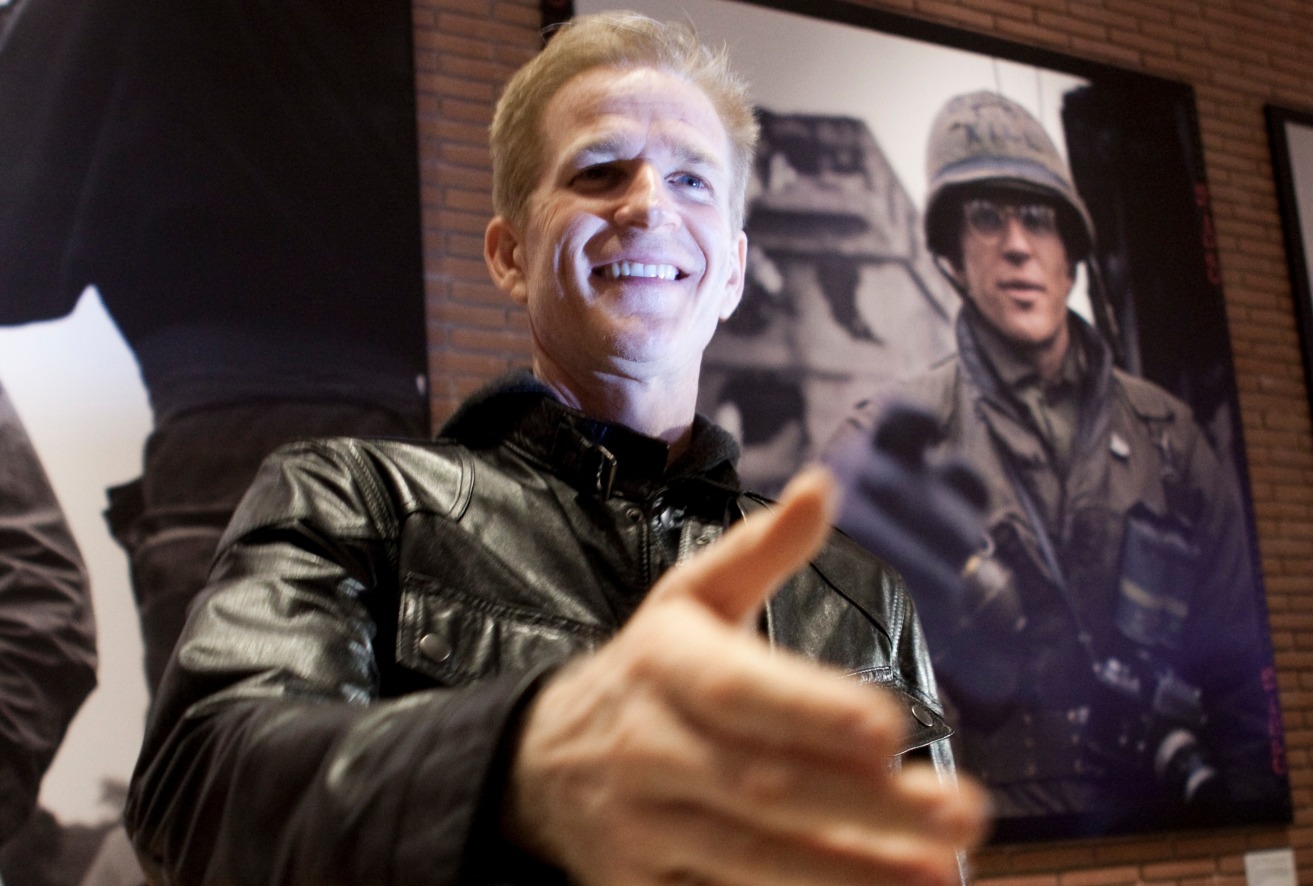
Matthew Modine opens his photography exhibition "Full Metal Jacket" diary Redux for the 25th anniversary of Stanley Kubrick's film during the 7th International Roma Film Festival (Alessandra Benedetti/Corbis via Getty Images)Even if the Vietnamese aren't painted as enemies or nameless victims needing outside help, American films found other ways to dehumanize them. Take the infamous quote “Me love you long time,” said by a Vietnamese sex worker to an American Marine in Stanley Kubrick's “Full-Metal Jacket” (1987). The interaction has at least two effects. First, it serves to sell the hypermasculinity of the Hollywood war machine, creating an image of desirable, macho patriots. However, the context of that scene and the oft-quoted line have also harmed countless women of Asian descent, depicting them as a sexual fantasy – devoid of personhood or agency — for mainly white Western male enjoyment. 
“It's a terrible phrase that became a racist/sexist way for people to provoke Asian/Asian-American women,” novelist Viet Thanh Nguyen, whose Pulitzer Prize-winning novel on which the “The Sympathizer” is based, denounced the phrase back in 2021 to Esquire

“These simplified representations have come to frame Asian women as whores . . . and impact the racist desire of Asian women broadly,” adds Linh Thuy Nguyen, an associate professor at the University of Washington who specializes in Asian American and Southeast Asian American refugee studies, U.S. militarism, and race. “The quote further erases the conditions of militarized imperial violence that shaped the realities of life under war and made coerced sexual labor one of the only viable forms of economic opportunity.” 

"Hollywood only sees Americans fighting with the communists."

As a byproduct of the Hollywood war machine, these portrayals of Vietnamese people, particularly Vietnamese women, erased the humanity in the countries where Americans were committing war crimes. We can also arguably see the consequence of these portrayals in the form of anti-Asian hate crimes, such as the Atlanta spa killings, today.

By valorizing the U.S. presence abroad – whether it was invading other countries or supposedly aiding them to ensure national security, combat communism or protect democracy – the U.S. would weaponize support at home through these films. This would then allow the U.S. military to minimize their role in the deaths of millions of innocent Vietnamese civilians killed during the war, as well as result in Americans directing their antagonistic views towards hundreds of thousands of Vietnamese diaspora who were displaced and had no choice but to become refugees at the mercy of the Americans’ goodwill and sponsorship.

The evolution of Vietnamese American portrayals in Hollywood

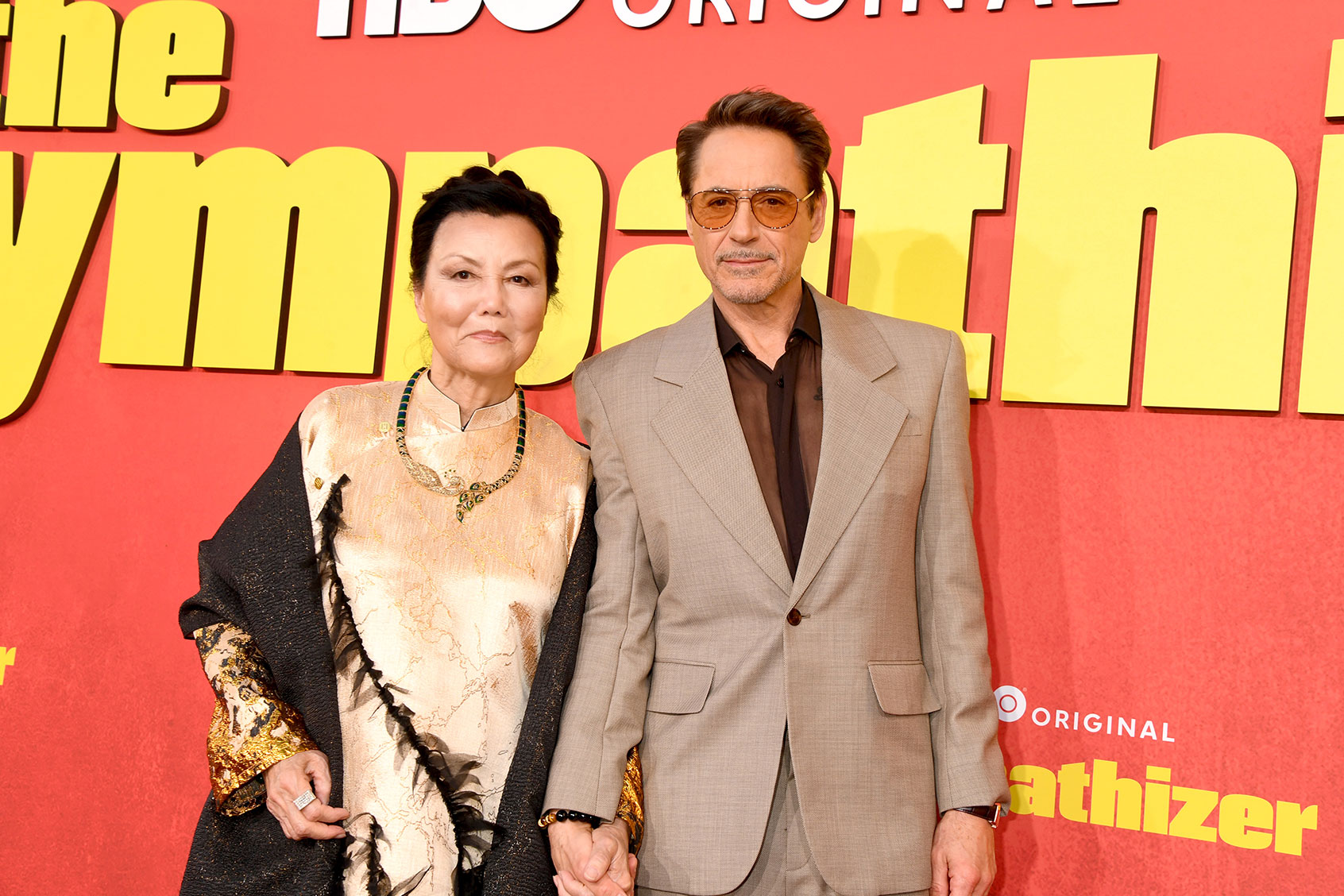
Kieu Chinh and Robert Downey Jr.Kieu Chinh and Robert Downey Jr. attend HBO's "The Sympathizer" Red Carpet Premiere Event at Paramount Theater on April 09, 2024 in Los Angeles, California. (FilmMagic/FilmMagic for HBO/GEtty Images)Kieu Chinh has experienced the repercussions of the Hollywood war machine firsthand. Not only did she star in many of Hollywood’s Vietnam War stories as an actress, but she's also a Vietnamese refugee herself who escaped the country during the fall of Saigon in 1975. Before that, Kieu Chinh became well known and respected among Vietnamese audiences for appearing in several visiting American productions, winning best actress awards, hosting a TV talk show where she interviewed American celebrities on USO tours, and leading her own film company.

Despite her prolific resume, Kieu Chinh struggled to secure roles of meaningful Vietnamese characters with any depth. Of the few Hollywood roles that were available to her, she’d be given roles such as “Asian woman,” “Chinese woman,” or a character whose name is a clear riff off of her own such as “Kim Chinh” in “Operation C.I.A.,” where it was clear the scriptwriter barely put any thought into her character’s backstory.

“I had to accept whatever came, even the very tiny parts – one line here, one line there, one scene here, another there,” Kieu Chinh says in an interview with Vanity Fair. “I took everything. I had to work.” 

"The underlying problem is that filmmakers . . . are simply not committed to representing Vietnam and Vietnamese people in a complex and realistic way."

One of the first roles she’d been offered, but eventually had to turn down, had been the Vietnamese female love interest Phuong in American director Joseph L. Mankiewicz’s 1958 Saigon film “The Quiet American” (1958) based on author Graham Greene’s anti-war novel of the same name. Despite the source material originally condemning American involvement in Vietnam, the film adaptation was one of Hollywood’s earliest propaganda films advocating for pro-American meddling in Vietnam during the First Indochina War between France and Vietnam and it left little room for Vietnamese voices to weigh in. Kieu Chinh rejected the role due to her family’s objections, which resulted in Saigon news headlines declaring, “Vietnamese unknown girl rejects Hollywood’s famous director” with her picture splashed on the front page. 

Unfortunately, that role would end up being played by Italian actress Giorgia Moll as a clear example of yellowface in film. Despite her European background, Moll is supposed to portray the Vietnamese woman Phuong, wearing Vietnam’s traditional dress, the ao dai, and embracing the stereotype of the sexually submissive Asian woman. In many of her scenes with the two lead white men, she has no lines yet is seen smiling, seemingly uncomplaining, while they talk about which man she should choose as if she’s not there. 

Besides playing a passive sex object, her presence also serves to represent all Vietnamese people, as the men talk about how they believe they know what’s best for her, extending a metaphor in the film about America believing they know what’s best for Vietnam. This exceptionalist view is further evident when one of the male characters speak condescendingly to a group of Vietnamese police officers in supposedly fluent Vietnamese in another scene.

“These actors generally spoke in intentionally broken English to signal that their characters were foreign, and in scenes in which they were supposed to speak Vietnamese, they mangled the pronunciation so badly that only about 5% of what they said was comprehensible,” says  Nu-Anh Tran, a University of Connecticut history and Asian and Asian American studies associate professor who has specialized in South Vietnam and Vietnamese history. 

Kieu Chinh would go on to star in “A Yank in Viet-Nam” opposite Marshall Thompson, and “Operation C.I.A.” opposite Burt Reynolds, playing similar roles as either a female guerrilla fighter or a female love interest, both of which ultimately served the white American male characters’ story.  

https://www.instagram.com/p/CrrsKoPL_A1/?utm_source=ig_web_copy_link&igsh=MzRlODBiNWFlZA==

After fleeing Vietnam and gaining American citizenship, Kieu Chinh started her career over and landed roles in productions such as the television series “M.A.S.H” (1977) where she played South Korean love interest Kyung Soon in an episode centered on the Korean War, and the film “The Joy Luck Club” (1993) where she played Chinese mother Suyuan Woo in the first Hollywood movie with an all-Asian cast. Again, while these iconic roles were perhaps progressive for their time, there were so few roles specifically for Vietnamese people in Hollywood that Kieu Chinh had no choice but to play other Asian ethnicities. 

In addition to acting in projects, Kieu Chinh would lend her expertise on Vietnam as a cultural consultant for many Hollywood stories, including John Irvin’s 1987 film “Hamburger Hill.” Set during the controversial May 1969 Battle of Hamburger Hill assault during the Vietnam War, the film became critically acclaimed by critics for its brutal and raw depiction of the time 600 American soldiers of the American 3rd Batallion, 187th Infantry, 101st Airborne Division met North Vietnamese soldiers on a heavily fortified hill. However, the film was also criticized for never showing the faces of the North Vietnamese army and leaving out the South Vietnamese army who were attacking the same hill from the other side.

We need your help to stay independent

When reflecting on the many times she’s had to retell her refugee story for work such as “Hamburger Hill,” Kieu Chinh acknowledges it can be tiring having to talk about it and in a way, relive the trauma of it, repeatedly. “Yes, it is painful, but it is good because you have the opportunity to tell your experiences about the history,” she says. “If there's no past, then there's no future.” The actress considers herself a living witness of the Vietnam War, and as such, has a responsibility to do what she can in front of and behind the camera.

Kieu Chinh’s career and experiences resulted in a documentary based on her life called “Kieu Chinh: A Journey Home” (1996), which led her to win an Emmy Award. She’d also write a memoir called “Kieu Chinh: An Artist in Exile” detailing many of her experiences in Hollywood. 

In one story, Kieu Chinh talks about the time she missed out on being cast in a minor role as Marlon Brando’s character’s unnamed wife in “Apocalypse Now." Through a series of connections with Hollywood directors she had befriended during her time as an actress in Vietnam, she met with director Coppola, who suggested she could also be a cultural consultant for his movie. Desiring more acting work again after becoming a refugee, Kieu Chinh saw the role as her way to break into Hollywood again. However, due to passport issues, she couldn’t be present in the Philippines to film the movie. Ultimately the role was cut entirely from the film.

If she had been able to be a part of “Apocalypse Now,” it likely wouldn’t have been a progressive role, considering that Vietnamese characters in the film were depicted as savage natives who worshipped Brando’s character. Coppola famously commented on his film at the 1979 Cannes Film Festival saying, “My film is not about Vietnam. It is Vietnam.” While the film doesn’t exactly valorize the Americans’ involvement in the war, its portrayal of Vietnamese people is reductive and violent in its inaccuracy and stereotyping.

“The underlying problem is that filmmakers, despite the very real differences in their politics, are simply not committed to representing Vietnam and Vietnamese people in a complex and realistic way,” Tran says. 

Even when Hollywood stories don’t paint U.S. involvement in Vietnam as benevolent, it still centers Americans as the main drivers of the story, effectively erasing the multi-layered stories and experiences of the Vietnamese people who were most impacted.

“These movies still have a way of recuperating American militarism, national identity, and masculinity precisely through racialized depictions of the Vietnam War,” says Marguerite Nguyen, a Wesleyan University associate professor and author of “America's Vietnam: The Longue Durée of U.S. Literature and Empire.” 

The ultimate danger of these cinematic depictions is the historical revisionism of the Vietnam War, told primarily from the Americans’ side.

“The Sympathizer” addresses Hollywood’s Vietnam War stories

The SympathizerKieu Chinh and Phanxinê in "The Sympathizer" (Hopper Stone/HBO)It would be 67 years from Kieu Chinh’s first credited role before she’d get to star in “The Sympathizer,” one of the few Hollywood-produced projects centered on the Vietnamese perspective about the Vietnam War, adapted from a novel by a Vietnamese refugee. She's proud of her involvement in the show, playing the mother of the Major. “This is a breakthrough for Hollywood,” Kieu Chinh says.
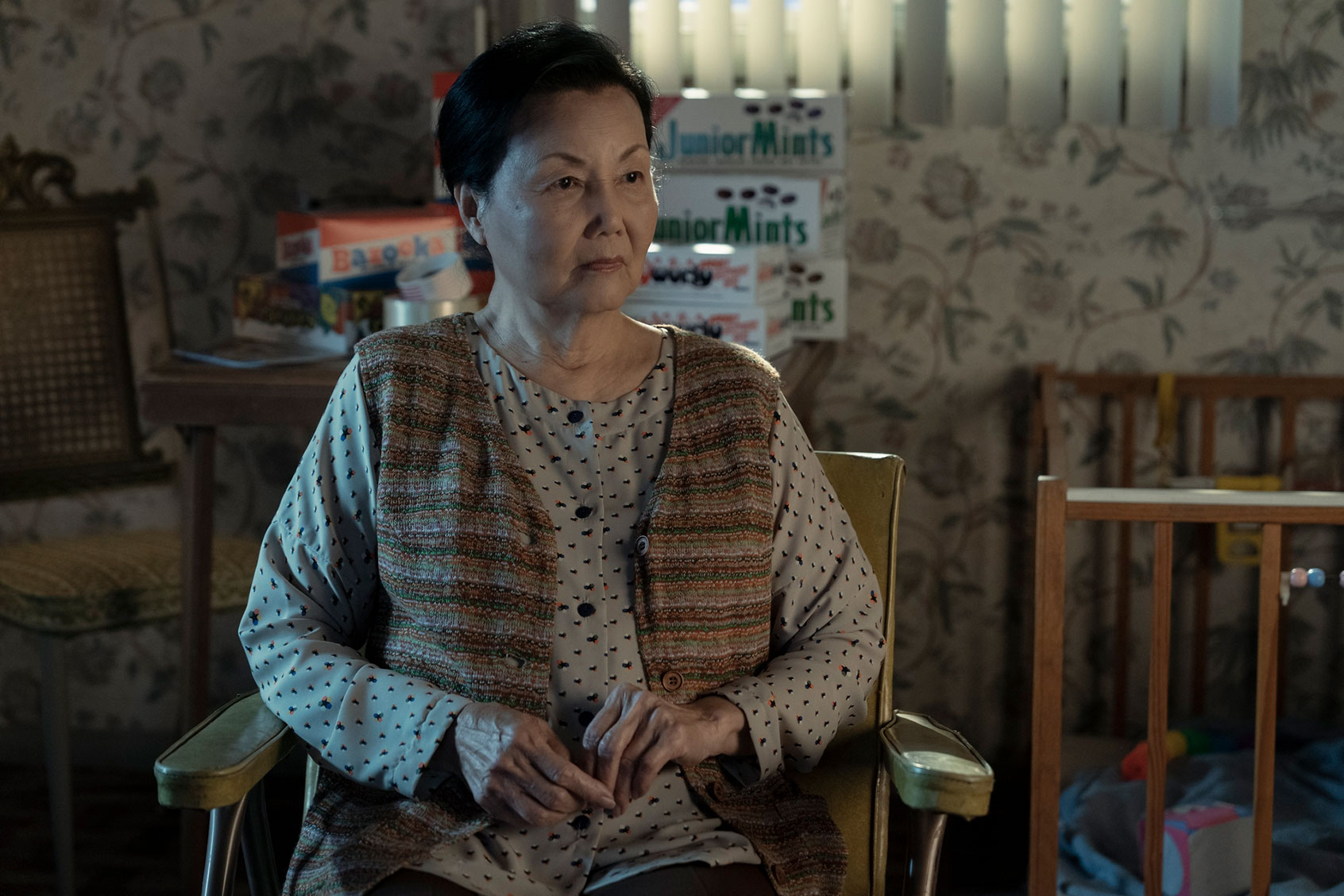
In one episode, Kieu Chinh appears in a scene that is meant to satirize Hollywood’s depictions of the Vietnam War. The series protagonist Captain (Hoa Xuande) lands a cultural consultant role for a Vietnam War movie called “The Hamlet” by American film director Nicos Damianos (Robert Downey Jr.), a role inspired by Hollywood auteurs and more specifically, the experiences of Coppola making "Apocalypse Now." In Damianos’ film, the Vietnamese characters are nameless background characters with little to no lines, and they die on screen and end up with nameless prop tombstones. Sound similar to a certain sampan massacre scene?

"I packed few belongings. I had my little handbag with my passport, my lipstick and a few dollars left to my name."

Captain points out the inaccuracy of the way “The Hamlet” depicts Vietnamese villages and tries to fight for the Vietnamese characters to have some significant lines. In a particularly comedic scene meant to poke fun at Hollywood’s treatment of Vietnamese actors, “The Hamlet” filming is disrupted when Damianos realizes one of the Vietnamese extras is speaking her dialogue in Cantonese in response to American soldiers (John Cho, David Duchovny) raiding her village. When requested to speak in Vietnamese, the extra can’t because she is in fact Chinese. Captain brings in Kieu Chinh’s character to play the Vietnamese extra instead. But instead of translating the line Damianos wrote, “Don’t shoot me. I’m a peasant. I’m only a peasant,” Captain has Kieu Chinh's character sneak in the line, “We’re not afraid. Our hands will close around the throat of American imperialism!” in Vietnamese, with Damianos and the American crew none the wiser. 

Viet Thanh Nguyen wrote the Hollywood arc in the story as a deliberate nod to Vietnam War films like “Apocalypse Now," although he doesn't believe directors like Coppola deliberately decided to erase Vietnamese voices. “I think the power of racism is such that [Coppolla] didn’t have to do it on purpose,” Nguyen says in a 2019 interview with PBS. “The assumption could simply be that Vietnamese people had no speaking role whatsoever in this American imagination. Americans don’t think of that as racist, but it is racist.”

The SympathizerKieu Chinh in "The Sympathizer" (Hopper Stone/HBO)Kieu Chinh also doesn’t particularly blame any of the Hollywood directors, writers and actors she worked with for depicting Vietnamese people in such dehumanizing ways. “We want to hope that they do the right thing,” Kieu Chinh says. “We want to hope that they educate the right history.” 

“The Sympathizer” not only calls out Hollywood’s lack of interest in depicting the Vietnamese experience, it also subverts Americans’ stereotypical narratives of the Vietnamese people and the Vietnam War by centering the narrative on the refugees that escaped during the fall of Saigon and how they acclimate to a new life in America. The arc of Kieu Chinh’s character, the Major’s mother, over the course of the show, spotlights this subversion particularly well. In a heartbreaking scene early in the series, her character gets chosen over her son’s daughter to board one of the last planes out of Vietnam, mirroring many of the real-life stories of Vietnamese refugees who had to make difficult last-minute decisions about which of their family members they had to leave behind. 

Kieu Chinh empathizes with her character’s plight deeply, having also experienced separation from her father and brother at a young age following the end of World War II and the split of Vietnam into two regimes after the Geneva Conference. She would later be separated again from her adopted family and her friends during the fall of Saigon in 1975, when she hopped on a plane in a mad dash to Singapore. 

“Much like the scene in 'The Sympathizer,' I packed few belongings,” Kieu Chinh says. “I had my little handbag with my passport, my lipstick and a few dollars left to my name. And the military attacked the Tan Son Nhat international airport and there was so much chaos. Air Vietnam couldn’t take off. No other flight could take off. I hid in the VIP room at the airport and we waited until the next day. Via a connection with a friend, I was able to board a Pan American airline taking American personnel only.”

Similar to Kieu Chinh’s reality, the show would further show her character struggling to assimilate to the new cultural norms of America, all the while balancing her relationship with her son and the other characters in the show who all have their own dilemmas and traumas to endure. In a refreshing flipping of the Hollywood war machine script, “The Sympathizer” depicts Vietnamese and Vietnamese Americans in all of their complexity and multidimensionality as agents of their own story, capable of both great good and great evil. 


Want a daily wrap-up of all the news and commentary Salon has to offer? Subscribe to our morning newsletter, Crash Course.


Not unlike many Vietnamese American refugees who Americans may have helped to come to America, Kieu Chinh feels lucky to have gotten consistent work throughout her career. “As an actress, I always respect the writer, the script and the director,” Kieu Chinh says. “I try to take the direction from the director to fulfill my duty as an actor. And off set, of course, I talk about the script with the director, but how much they take up my advice is up to them.”

After the success of “The Sympathizer,” some Vietnamese American viewers have expressed a desire for even more diverse and nuanced portrayals of the Vietnamese diaspora like the show. Kieu Chinh plans to keep working and hopes that Hollywood will produce more stories with more characters for Vietnamese actors that allow for a full breadth of experience to be shown on screen.

“Next year is already the 50-year anniversary of the end of the Vietnam War,” she says. “But there are still so many stories that have not been told. So I hope that after 'The Sympathizer,' Hollywood will continue to pick up more stories about our lives, not only ones about war. Vietnam is more than just a war.”

VP Kamala Harris says Trump’s conviction should be “disqualifying”

Donald Trump's conviction on 34 felony charges has given the Biden administration further incentive to try and keep the preemptive GOP nominee out of office — and Vice President Kamala Harris hammered down on the topic this weekend.

During her speech as keynote speaker at the Michigan Democratic Party Legacy Dinner on Saturday night, the VP called Trump a “cheater,” Mediate reported. While in earlier weeks, Joe Biden has shared his two cents on Trump, this is the first time Harris went all in on the former president. 

She highlighted his attempt to overturn the last election and his attacks on the justice system, based on the claim that his hush money trials were unfair, all to paint him as ill-equipped to run for the 2024 presidential election.

The VP called to her audience to examine the facts, as she saw them: “You know why he complains? Because the reality is, cheaters don’t like getting caught,” Politico reported

She added, “And since the verdict, he attacks the judge and the witnesses. He suggests the case could be a “breaking point” for his supporters, hinting at violence. He spreads lies that our Administration is controlling this case when everyone knows it was a state prosecution. And he says that he will use a second term for revenge.”

She claimed that Trump parading around as though he is above the law should disqualify him from becoming president. 

All this said, what incited heckling from the crowd was not the VPs remarks on Trump, but her comments about hostages being rescued from Gaza. 

"Before I begin, I just want to say a few words about the morning, which I know weighs heavily on all of our hearts," she said. "On October 7th, Hamas committed a brutal massacre of 1,200 innocent people and abducted 250 hostages. Thankfully, four of those hostages were reunited with their families tonight. And we mourn all of the innocent lives that have been lost in Gaza, including those tragically killed today." 

At this, a heckler began shouting from their seat, and was immediately shut down, according to Fox Detroit

"I’m speaking right now," Harris said to the heckler, before they were escorted out. "I value and respect your voice, but I'm speaking right now." 


What do we mean when we say “sober” now?

Nearly 90 years ago, when Bill Wilson and Bob Smith joined forces to create the program that would become known as Alcoholics Anonymous, there was no O'Doul's section in the beverage aisle. There was no word for trading in one’s alcohol consumption for weed, no designation of “California sober.” The first month of the year was not also known as Dryuary. Now, however, we’re consuming less alcohol than our parents and grandparents did, and exploring what it means to be sober curious more. But sobriety isn’t what it used to be. 

“My science-backed view is that alcohol problems are massively heterogeneous, hugely complex, nuanced, and individual,” said Dr. James Morris, Chair of the New Directions in the Study of Alcohol Group at London South Bank University. “But the models, the terms and ideas that we have around them are very limited and categorical, and siphon people into certain stereotypes or ideas like abstinence or rock bottom or only sobriety, etc.”

“I'm by no means anti-abstinence or anti-sobriety," Morris said. "It’s such an important thing, and it's the healthiest choice. But I am against excluding other ways of changing drinking patterns, or allowing people to explore their drinking in ways that don't necessarily siphon them off into these very strongly kind of labeled ideas.” 

Morris has been doing intriguing research into the language we use around sobriety and alcoholism, and the potential positive benefits for some to embrace a more fluid perspective.

“For people that engage with self-identification, my view is that reflects a really strong commitment to recovery,” he said. “That process of recovery involves an identity shift away from protecting and valuing drinking as a positive identity to replacing that with like a recovery identity.”

In contrast, Morris said, “For some groups of heavy drinkers, a continuum model means that they don't really have to engage in that identity shift. They can consider some of the consequences of their alcohol use without having to think about, ‘What does this mean for how I position my identity?’” 

“Just like everything else in culture, people need to understand that sobriety is in a period of flux right now,” said Sarah Hepola, author of the bestselling “Blackout: Remembering the Things I Drank to Forget.” “Bill Wilson gets going with AA, and so the one thing that everyone can agree on is if you don't drink, you can smoke the s**t out of cigarettes. Nicotine is a gnarly drug. And, how are you going to navigate a world if your lines of demarcation for de-escalating your addiction to a substance run along legality lines? Well, you're moving away from cigarettes, which are increasingly banned in spaces, and you're moving toward things like marijuana, psychedelics, all sorts of nootropic gray zone areas. I once listened to a woman give the most riveting share about how she almost tried kombucha. I had to ask my sponsor later, 'What's kombucha?' She said, 'That's that stuff at the store. There's a little bit of alcohol in it.' I'm like, what is happening?"

(Just to show how varied mileage on this is, one recovery program advises that consuming kombucha "can be viewed as a relapse, while another refers to it as a "good alcohol alternative.")

We need your help to stay independent

As Hepola puts it, “AA has a parallel with the Bible in the sense that there is a book, it was written by a person. He's dead now. Everybody that was involved in the process of writing that book is dead now. They don't have any additional materials to add to that book. But that book doesn't include things like antidepressants, the legalization of marijuana, an understanding of mental health, certainly doesn't expand to nonalcoholic drinks. There’s no kombucha. And so what happens when you have a bunch of people that are going to interpret the words of a very wise book by a dead person is that some of them are going to have a generous interpretation, and then you're going to have people that have the strict fundamentalist interpretation.” 

I was reminded of this fundamentalism when actor and podcaster Dax Shephard announced the launch of a nonalcoholic beer brand this past spring, and an older sober friend was swift to express his disdain. “How is that not a slip?” my buddy had wondered. This is a man who won’t touch anything cooked in wine, who’s highly suspicious of pain relievers — and wouldn’t dream of using mouthwash. 

For years, I’ve accepted my friend’s decades-long version of sobriety as the closest thing to authentic as it comes, including that rigorous avoidance of not just alcohol but anything that conjures the feeling of alcohol. Naturally, when a few months ago I told him about Abe Zarate, a sommelier who goes by @sober_somm on his TikTok, and whose wine tasting motto is “I just spit,” my friend was similarly skeptical. For him, even experiences that are alcohol adjacent feel like a slippery slope to cheating, a condition that reminds me of the Whole 30 maxim about avoiding “sex with your pants on.” He may be on to something. A 2023 feature in VeryWellMind warned that for some with alcohol use disorder, the smell of alcohol substitutes can trigger cravings that may lead to relapse. 

"Just like everything else in culture, people need to understand that sobriety is in a period of flux right now."

Or as Hepola said, “The old saying in AA is that if you keep going to the barber, you'll get a haircut.” But, she added, “That saying derives from a time when there really weren't that many options. When I was a year sober, I went to a bar, and asked for seltzer. The bartender was like, ‘What now?’ That's how far we've come. Because since then, there's been the La Croix revolution followed by the Waterloo revolution and the Rambler revolution. Then you've got non-alcoholic brews, and you've got zero-proof cocktails. You've got every single liquor company looking at their bottom line and going in hardcore with nonalcoholic drinks.”

Hepola recalled hearing from some other people in sobriety that “We're not going to get mad about this, but we don't like it. We left that world, and I don't want to participate in it.” And, she said, “That is completely valid. I just refuse to believe it can't be a choice.”

Sobriety is a highly individual concept, one based in behaviors that may adapt and change, within a culture that also has adapted and changed exponentially in just the past few years. There’s no one set way to practice sobriety, and nobody can define anybody else’s version of it. What looks like a slip to one person may well be keeping another one sober, because drinking is never just about drinking. It's also about belonging.

“This is 21st century recovery," said Hepola, "and it needs to reckon with all the many variables. It’s almost 100 years since Bill Wilson fell off his barstool.” 


Hostage crisis ends in bloodshed: 274 Palestinians killed in Israeli operation

An Israeli raid on the Nuseirat refugee camp held by Hamas resulted in the rescue of four hostages and the deaths of at least 274 Palestinians in the process — with nearly 700 more left wounded — Gaza’s Health Ministry said Sunday.

Visuals of the Gaza Central camp  — after the complex daytime operation deep inside the territory — showed roads covered in wreckage and wounded Palestinians, some without limbs, the Washington Post reported.

According to ABC News, Israel's massive offensive has killed over 36,700 Palestinians, citing information from the Health Ministry, "which does not differentiate between civilians and combatants in its count." Some 64 children and 57 women were killed in the latest raid, with 153 children and 161 women among the wounded.

The four hostages rescued after Israeli forces raided two locations, include Noa Argamani, 26; Almog Meir Jan, 22; Andrey Kozlov, 27; and Shlomi Ziv, 41. Rear Adm, Daniel Hagari, Israel’s military spokesperson told reporters Saturday that the hostages were held in two apartments 200 meters apart — the forces were repeatedly trained on a model of the apartment buildings. 

Argamani was one of the more publicly recognized hostages, after being taken from a music festival like the other three. A video of her abduction shows her screaming “Don’t kill me!” as two men on a motorcycle drive away with her seated between them. 

Due to the sheer amount of casualties, Israel has received considerable backlash. Israel’s Foreign Minister Israel Katz, addressed this in a post to Xsaying, "Only Israel’s enemies complained about the casualties of Hamas terrorists and their accomplices.”

Women’s work: America’s social safety net is built on sexist exploitation

"Other countries have social safety nets. The U.S. has women." When sociologist Jessica Calarco said that in an interview for Anne Helen Petersen's Culture Study newsletter in November of 2020, it struck a nerve in a country still staggering under the weight of COVID. 

Calarco was discussing her research on inequalities in family life and education, which had resulted in two papers on the impact of the pandemic. She concluded that event hadn’t actually created new problems, but rather intensified existing ones. That quote became the interview’s headline, was referenced by dozens of news outlets, and widely tweeted before editor Leah Trouwborst asked Calarco to turn her research into a book. The result is “Holding It Together: How Women Became America’s Safety Net,” which personalizes her research through vivid individual examples and places it in a broader historical and comparative context.

In that 2020 interview, Calarco recalled how legendary sociologist C. Wright Mills “described using a ‘sociological imagination’ as seeing how individual human lives are shaped both by ‘history and biography,’” in contrast to the way our individualistic society "promotes individual solutions to deeply structural problems." In her book, Calarco exemplifies what Mills meant, both in the ways she tells individual stories drawn from hundreds of women and how she weaves them into the larger story of American history from the New Deal to the present, occasionally drawing contrasts with European countries that have more robust safety nets. 

She first lays out the landscape of challenges women face, which does not get dramatically more secure even with advanced degrees and relatively higher pay. She then surveys the myths that keep us from fixing things the way other countries have done, and concludes with a hard look at how we could change that. This interview with Calarco was conducted by Zoom and has been edited for clarity and length. 

Your book begins with the little-known story of how Congress created an affordable national child care system during World War II — and then dismantled it. How did that happen, and why did you choose to start there? 

The child care crisis — the current lack of affordable child care for families — illustrates how we rely on mothers to fill in gaps in our economy and our social safety net. So looking back in time and finding a moment when we did create a child care system on a national level is a way to show that this is possible in the U.S., but that we also have a long track record of pushing this work onto women instead.

During World War II, we needed as many women in the workforce as possible, and that included mothers of young children. But not only did many states have legal policies in place that prevented women with children from working, or made it impossible for them to access all but the most menial jobs, there also wasn't a child care system to rely on. 

So Congress, after some pressure, decided to use funds from the Lanham Act [which authorized defense-related infrastructure projects] to build child care centers in many parts of the U.S. Those offered high-quality, low-cost care for both young children and also school-age children after school and in the summer. The employment rate among mothers with young children went from one in 30 to one in six. 

At the end of the war, almost all of these women wanted to stay in their jobs. But instead we decided to shutter those child care centers and force them back home, in many cases putting back in place those employment bans and using the kinds of cultural attitudes that permeated the 1950s to persuade women their natural place was in the home. 

This laid the groundwork for the kind of policy decisions that we've made subsequently, treating women as this our reserve force of labor, as we saw during COVID. When we need women in the economy, we do things to pull them back in, and when we don't need them in the economy, we're very happy to push them back out again. We treat their labor as something we can toggle up and down depending on the needs and whims of the economy, as opposed to something that we should be investing in and supporting overall. 

In your introduction you describe America as a “DIY society.” What do you mean by that, and how did we become that way? 

Other countries have invested in social safety nets to help manage risk. They use taxes and regulations, especially on wealthy people and corporations, to protect people from falling into poverty, to give people a leg up in reaching economic opportunities and also to help ensure that people have the time and energy to contribute to a shared project of care, to take care of their homes and their children and even themselves. In the U.S. we try to DIY society: We cut taxes, we slash huge holes in the meager safety net that we do have and we tell people that if they just make good choices, they won't need government support to take care of their families or themselves. 

"When we need women in the economy, we do things to pull them back in, and when we don't need them in the economy, we're very happy to push them back out again. We treat their labor as something we can toggle up and down." 

But the problem is that we can't actually DIY society. Forcing people to manage all that risk on their own has left many American families and communities teetering on the edge of collapse, really struggling to make it through. And yet I argue in the book that we haven't collapsed, in part, because we've pushed women into the position of holding it together, filling in the gaps both in our economy and in our social safety net. 

You write that the DIY society is an illusion that seems real because of the magic that women perform, and the first three chapters about how we get women to do that magic. It begins with making them mothers-in-waiting: Grooming them for motherhood and turning motherhood into a trap, which you elucidate through the stories of four different women. Tell us about one of those mothers and how she illustrates the problem.

In the U.S. we figured out that one of the most effective ways to push people into low-paying jobs, and into doing a disproportionate share of the unpaid caregiving work, is by officially making them responsible for children and then leaving them with nowhere to turn for support and also nowhere to hide when other people ask them to try to take on even more. 

One woman I discuss wasn't a biological mother herself when she became responsible for young children. She was a teenager when her older brother and his girlfriend became addicted as part of the opioid crisis. So the Department of Child Services had taken their two children away and given them to the woman I spoke to, and her mother, as their primary caregivers. The grandmother was already working for pay as a home health aide, working two low-wage jobs to make ends meet for her family. 

So caring for these two young children fell to the 18-year-old, who had plans of going to college, plans of finding a different life path for herself, but suddenly found herself as a mother at a very young age and ultimately also had to take a part-time job as a health aide. This was the best job available to her, as someone without a college degree and with high levels of care work responsibility, essentially working an overnight shift as a home health aide. That was often deeply demeaning and difficult work, especially in terms of how it was paid, yet she didn't feel like she had a choice. So it shows how women can get pulled into being responsible for the unpaid caregiving labor of supporting other people and their families and their communities, and also how being in those kinds of positions can push women into doing a disproportionate share of the underpaid labor in our economy too. 

Your second chapter, “Leaving Women With No Choice,” starts by saying that once they’re caught in the motherhood trap “it doesn’t take much to get women to stand in for the social safety net. All it takes is denying them access to paid family leave and affordable, reliable childcare." The most extended example in this chapter is a woman called Erin, whom you describe as the typical white, married stay-at-home mother. What's her story, and what does it tell us? 

She never intended to be a stay-at-home mom. But she was pushed into that role by what I talk about in the book as the missing middle of child care. In the U.S. we do have child care subsidies, but they're only for very low-income families, usually with incomes below $30,000 a year in most states. At the other end of the spectrum, if you're going to pay full price for care that's easily going to cost $1,000 or $2,000 or sometimes more per month per child. So millions of American families can't afford to pay for child care, but make too much to qualify for subsidies. 

As a result, and because of gender pay gaps, it's often women who end up sacrificing their paid work when the family figures out that they would actually be cash-negative if they actually pay for child care. That's how we ended up in a situation I talk about in the book, where almost 75% of stay-at-home moms in the U.S. have household incomes under $50,000 a year. It's not because that's where they’ve chosen to be, necessarily, but because it's the best financial option for their families, given the high cost of child care. That was very much the case for Erin. 

"One of the most effective ways to push people into low-paying jobs, and into doing a disproportionate share of the unpaid caregiving work, is by making them responsible for children and then leaving them with nowhere to turn for support."

She and her husband had dropped out of college, in part because college costs got too high — another common story for many of the families we talked to. He was working in a mining job, trying to work his way up, and she was working at a grocery store before they got pregnant. When they did have kids, neither of them had access to paid leave, they couldn't find affordable child care and they didn't have family members who could help them, in part because their own parents were working well into their 60s and 70s to be able to afford possibly having the chance of retiring. So the only way they could afford to have kids was if Erin quit her job to stay home, because she was making less money. 

They actually tried to make it work by having her working a night shift. They worked a split shift where her husband was working during the day for pay and Erin was home with their baby and would go to work on the night shift. But not surprisingly, this was deeply unsustainable. It was hard on their marriage, it was hard on Erin both in terms of lack of sleep and the constant stress of being on call, whether at home or at work. So she ended up dropping out of the workforce to become a stay-at-home mom. She has thought about going back to work many times, but hasn't found a way to make it possible financially. 

In your third chapter you write, “In our DIY society the only way to avoid the risk of precarity is to dump that risk downstream.” You have multiple different stories that illustrate aspects of that. Tell us one of those.

Holly is part of a same-sex married couple. She talks about how she and her wife wanted to divide caregiving responsibilities equally when they were first pregnant and having children, but what they found was, again, this child care crisis. The first spot they were able to find in child care was when their daughter was nine months old. To make it work in the meanwhile, Holly was able to do her work from home, switching to a part-time position where she was working remotely. This was deeply difficult for her, because she wanted to be working for pay full time. She wanted to have her daughter in child care, but there wasn't a good option available. 

When they finally got their daughter into child care, the pandemic hit and child care centers in their community closed. Even when centers began to reopen in late 2020, they were only operating part-time because they had staffing shortages. Holly went to complain and got a lesson in the economics of childcare. The director explained that given the labor intensity of this kind of work, they couldn't afford to pay much more than minimum wage, and couldn't afford to offer their workers health care benefits or paid leave. Many of them had high levels of medical debt, credit card debt and financial precarity within their own lives. So those who had been able to find better jobs during the pandemic had left, and they were having trouble filling those jobs. 

We need your help to stay independent

For Holly, this created a tremendous amount of guilt. She felt guilty that she was only able to get ahead in her own career because of what she saw as exploitation of other women, particularly women of color who were doing this work of caring for her daughter. And yet, at the same time, she couldn't see a way around it.

The second part of your book is called “Why We Haven’t Fixed This and How We Could.” You have four chapters, each dealing with misleading narratives of different kinds. The first of those is the “good choices” narrative. What does that argue, and how do your examples poke holes in it? 

We often tell people in general, and women in particular, that if they just make good choices, if they go to college and major in the right career field, if they pursue a high-paying job, if they find the right guy to get married to and if they wait to have children until after they take all these other steps, they'll avoid the hardships that other women complain about. But the reality is that correlation is not causation, in the sense that these kinds of "good choices" are most available to people who are most privileged.

Even when people are able to make those choices, that doesn't necessarily guarantee they will pay off. One mom, Lillian, was raised in an upper-middle-class white family. She had support from her family going to college and was able to get degrees in counseling and a job working for a social service agency. She met and married a man who is a South African immigrant, and he was struggling to finish his college degree in order to find a decent paid job. 

So she's the primary breadwinner for their family, and they ended up on Medicaid, struggling financially. She wasn't making much more than $30,000 a year when she had to take time off after her children were born because of health complications. She didn't have access to paid leave for that extended period, and her husband wasn't making enough to support their family on his own salary, while also trying to finish his college degree. 

It was deeply upsetting for Lillian that she had to go to these offices to sign up for welfare programs and social service programs, and see many of the people that she had counseled in her previous job, or people that she knew from her community. She felt like a failure facing these kinds of hardships, despite, in theory, making all these right choices, going to college, getting a master’s degree, getting married and waiting to have children. It still didn’t pay out in the end. 

Chapter 5 is on “The Meritocracy Myth,” which encourages us to assume that people who are struggling simply haven't tried hard enough. 

This, again, gets to the idea that we presume that good choices will save people: If they work hard enough, have the right mindset, they'll be successful. But this is a privilege story, in the sense that hard work often translates into success only in the context of relatively high levels of privilege. The way this myth operates, though, is that it leads people who would benefit from a stronger social safety net, people who are just above the cutoff for these social programs, to perceive themselves as morally superior to those who rely on the social safety net, rather than saying, "Hey, let's expand these programs so I can have access to them.”

"We often tell women that if they just make 'good choices,' if they go to college, if they pursue a high-paying job, if they find the right guy and wait to have children, they'll avoid the hardships that other women complain about."

I talk about a mom I call April, who's a white evangelical Christian. Her current household income is only about $30,000 a year and she would very much benefit from expanded social programs, like free college tuition or expanded food stamp benefits or universal health care. But she rejects all of these possibilities. She even insisted that she and her family didn’t need the COVID stimulus payments they got because — this is where she drew on these meritocratic tropes — she believed other women who received those supports were spending money on things like getting their nails done, or going out partying and hiring babysitters. She insisted that her own frugality, her own good choices, would ensure that her family could get by on a relatively low income and didn't need government support. 

Chapter 6 is “The Venus/Mars Myth,” which refers to a binary, gendered view of skills, temperaments, preferences and needs. This is such a big topic: What's your bottom line? 

The bottom line is that believing that men and women are fundamentally different and that women are happier at home offers a way for men to feel like good guys, and not see themselves as bad guys even when they are exploiting women in their lives or women in their communities to enable them to get ahead at work. We have to acknowledge the role of “ideal worker” norms and overwork pressures in this capitalistic economy, which pressure men to earn as much money as possible to support their families. That pressure is reinforced because of gender paybacks that mean that investing in time for paid work often pays off more for men than it does for women. Unfortunately, the research shows that one of the best ways for men to get ahead in their own careers is to have a wife who does more at home. 

So there's a financial incentive for men to exploit women's labor. But they don't want to feel like bad guys in the process, like they're hurting women by keeping them from having economic opportunities or by forcing them to do a disproportionate share of the housework and child care. One way to do that is by assuming, "Oh, you know, she's just happier doing that kind of work. She's just better at it than I am." That kind of soft sexism, soft sexist ideology, often looks like men praising their wives. 

I talked to one guy who told me, "The day that I'm home with the kids, I can just barely keep focus on keeping them alive. When she's home with the kids, she can do it all. She can do the laundry and housework and cleaning and other things, and keep the kids as happy as possible." That kind of reverence for women's ability to do all these things operates to justify men's underinvestment in their own caregiving responsibilities, and allows them to feel like they're being the heroes even when they're ultimately exploiting women at home. 

The next chapter deals with “The Supermom Myth,” which paints a portrait of children in constant danger, with mothers as the only ones empowered to rescue them. You describe three different forms it takes through the examples of three different women. How do the supermom myth and the lack of a safety net reinforce one another?  

We tell women that they are the natural best protectors of children. This not only shapes the way that men treat women but also leads women to internalize a sense of responsibility to step in whenever they perceive children as being under threat. So one easy way for anyone who wants to manipulate or exploit the labor of women is to create the appearance of a threat to children. 

"Believing that men and women are fundamentally different and that women are happier at home offers a way for men to feel like good guys and not see themselves as bad guys, even when they are exploiting women in their lives or women in their communities."

One way I talk about this is through things like the “critical race theory” panic or the panic around transgender kids, this idea that the public schools are promoting problematic ideologies that are harmful to kids. This is rhetoric that women can be easily motivated by, to feel like they have to stay home, they have to take on more of the parenting, they have to be more vigilant to protect their children from those kinds of potential or perceived threats. 

But it's not the only threat families can perceive. Families also perceive threats to children's ability to reproduce their parents’ class status. A fear of downward mobility can also lead mothers to see themselves as the superheroes, the ones who have to step in to save their children, to rescue them from that kind of potential harm. We can gaslight ourselves into believing that we have to do more than is necessary, and that the only way to keep our children safe is for us to do more of that work, instead of asking how we actually invest in social safety nets to protect our children. 

In Chapter 8, you call attention to the fact that during the COVID pandemic we actually did create a more robust safety net, and came close to creating something more permanent with Joe Biden’s Build Back Better plan. You reflect on the failure to do that in light of opposition from billionaires and corporate interests, which leads to your conclusion. So tell us about the way forward. 

We had this moment during the pandemic where we thought we might “build back better.” We actually put in place a number of programs and policies that deeply helped families, things like rent moratoriums that made it possible to stay in housing without worrying about rent payments every month, or the extended child tax credit that lifted millions of kids out of poverty, or even things like universal free lunch. All these protections had huge benefits. 

Yet rather than invest in those and make them permanent, rather than take the kinds of steps promised with Build Back Better — things like universal child care, a higher national minimum wage, guaranteed paid family leave — we abandoned all those efforts. We even pulled back on some of the protections we used to have for families, in terms of things like Medicaid eligibility, things like the Dobbs decision and the rollback of reproductive freedom. 

What I show in the book is that we did so in part because the engineers and profiteers who have orchestrated our current system don't want us to have a stronger social safety net. They profit from the fact that we don't, and that we rely on women's unpaid and underpaid labor to fill in those gaps. It means we don't have to raise taxes to the level you'd need to fund those kinds of safety-net programs. 


Want a daily wrap-up of all the news and commentary Salon has to offer? Subscribe to our morning newsletter, Crash Course.


In the introduction, I link this back to how we got here, which in the wake of Franklin Roosevelt's New Deal had a lot to do with the National Association of Manufacturers — a major lobbying organization for big business — trying to figure out how to persuade Americans not to buy into the need for a stronger social safety net. What they found was a group of Austrian economists who were developing what we now call neoliberal economic theory. The core idea is that societies not only don't need a social safety net but they're better off without one, because without that kind of protection people will make choices that will keep themselves safer from risk. 

These ideas have been thoroughly debunked, but they were widely promoted in the U.S., in part because the NAM and its members paid to import those economists and set them up in high-profile academic positions. They trained people like Milton Friedman, who went on to orchestrate massive changes to U.S. policy throughout the second half of the 20th century. They also helped orchestrate massive propaganda campaigns, things like “General Electric Theater,” a widely popular TV program hosted by Ronald Reagan that helped promote these distorted myths, this idea of people pulling themselves up by their own bootstraps. It persuaded many Americans that we didn't need a social safety net. 

They also orchestrated changes to campaign finance laws that have allowed wealthy people and corporations to leverage their wealth into political power, as we saw with Build Back Better, with people like Joe Manchin, Kyrsten Sinema and all the Republicans who voted against the bill receiving large sums of money from big Republican donors or representatives of corporations through super PACs. That's ultimately what killed Build Back Better in Congress.   

But the key is to remember that at least as long as we remain a democracy, there are more of us than there are of them. We could, in theory, vote for politicians and policies that would help us to build a better social safety net. One of the best ways to get there is to reject the myths that delude and divide us, and one of the best ways to do that is to see how care links our fates. All of us need and provide care to others at various points in our lives, and we could all be better positioned to participate in that work, and benefit from strong care networks, if we see that that work affects other people, and that our work is affected by other people's ability and availability as well. 

My hope is that by helping people to see how care links our fates — across race, across gender, across class — and how that kind of a stronger care network or stronger social safety net would benefit all of us, that we can come together across those differences. We can fight for things like universal health care, universal child care, universal paid family leave, which would help to ensure that all of us, regardless of gender, have more time and energy to commit to the shared project of care. 

Finally, what's the most important question I haven’t asked, and what's the answer?

One question I get sometimes is, “Aren't we too big and too diverse to pull this off?” Many Americans perceive that Europe might be able to do large social safety net programs because these are mostly smaller countries that are more homogeneous. We've actually proven that we can do this here. We have Social Security, we have Medicare, both of which were tremendously successful, And we've shown, during World War II, that we can even do this with child care, we can put in place these large national systems and do so effectively and cost-effectively. So that gives me hope. It’s possible to make these kinds of broad-scale changes that will leave us better off, despite the challenges that might be involved.

What a fool believes: Donald Trump and America’s bogus respect for “faith”

Two or three years ago it was just another snake cult. Now … they're everywhere.
— "Conan the Barbarian"

Last summer’s federal indictment of Donald Trump for inciting the Jan. 6, 2021, assault on the U.S. Capitol released a flood of concern-trolling from the establishment media. The arguments revealed something sadly defective about the intellectual tenor of the present age, a mindset that cannot distinguish between reality and fantasy. It is the root cause of American political and social dysfunction.

The verdict of the prestige journals was remarkably consistent: Trump’s eventual trial would hinge, not upon facts, evidence and patterns of behavior involving him or other actors in the case, nor on whether the trial scrupulously upheld the law and proper judicial procedure, but on subjective matters concerning the defendant’s beliefs, feelings and motivations, as well as how the public perceived the trial through the polarizing lens of political partisanship.

You know what’s coming when you read a headline like this New York Times howler: “Trump Election Charges Set Up Clash of Lies Versus Free Speech.” Really? Conspiring to violently overthrow the government and then inciting a mob to do it is just a little free-spirited political rhetoric, such as to allow legitimate disagreement? Does that require us to set aside the fact that people were killed?

The Wall Street Journal, as you might expect, chimed in with this one: “Trump Is Being Prosecuted, but Justice Department Is on Trial, Too.” Both-sides-ism, much?

But the absurdity of the media mentality is perhaps best captured by this Washington Post headline: “Heart of the Trump Jan. 6 indictment: What’s in Trump’s head.” Absent some breakthrough in neuroscience, what goes on in the minds of others is denied to us; just as a scientist can’t infer the intentions of the solar system, only its behavior, we can only draw conclusions from a person’s words and actions, not his subjective state of mind. In all the media reports I have cited, the journalists seem to have made Trump the final arbiter of his own intent. 

If criminal conviction depended on a defendant’s own representation of his state of mind, there could be no law enforcement. But the unspoken premise of legal experts typically quoted in the media is that a default assumption of benign intent only applies to certain claimants like Trump. Try robbing a 7-Eleven or stealing a police cruiser and I doubt the judicial system will be unduly concerned about what was going on in your head, or your claims that it was free expression under the First Amendment.  

Religion and its adherents, contrary to assertions that the faithful are beleaguered by the aggressions of secular society, have obtained extraordinary privileges well beyond their tax-exempt status.

In the last several years, we’ve been inundated with similar claims: Refusing to get vaccinated is a matter of religious conscience; Jan. 6 rioters were honestly convinced the 2020 election was stolen; the anti-abortion crowd fervently believes that life is sacred; refusing service to a retail customer or firing an employee is dictated by sincere faith, burning like a pure flame, rather than mere spite or ill will.

These extraordinary claims have long been embedded in law, politics and social convention, and they are related to, or devolve from, a particular form of ideological advocacy: religion. Religion and its adherents, contrary to assertions that the faithful are beleaguered by the aggressions of secular society, have obtained extraordinary privileges well beyond their tax-exempt status.

When the U.S. had military conscription, formal adherents of certain religions could obtain exemptions from the draft if the religion in question explicitly espoused pacifist principles. That loophole did not, however, apply to a nonreligious individual who merely objected to killing. While the attitudes towards taking human life were identical, the law granted legal exemption to one and not the other. 

The Supreme Court ruled, in a Wisconsin case involving members of the Amish community, that parents have a constitutional right to withdraw their children from public school by the eighth grade. No one, however, consulted the children to determine whether their rights to become educated, functioning citizens might have been infringed. The same religious or “conscience” exemption from generally applicable law prevails in many states with respect to home schooling or childhood vaccination if a petitioner claims he doesn’t “believe” in public schools or vaccines, whatever that may mean.

What is a belief, anyway? It can be defined, approximately, in terms of the mental perception that something is true based on generally accepted evidence or established standards of logic. But belief also has a secondary meaning: an attitude, disposition or emotional commitment that has nothing to do with facts or logic. It is a stance that can be firmly maintained regardless of evidence to the contrary and, taken to an extreme, becomes the willful suspension of critical thinking.

We need your help to stay independent

In contrast to the doubt and uncertainty that assail most people when considering complex matters, the dogmatic vehemence with which adherents of various fringe ideas often advocate their case can tempt us to conclude that an “untrue” belief is held more strongly than a “true” one. But this certitude can only be sustained if it is never questioned, because the leaders of authoritarian movements that propagate these beliefs instinctively know their doctrines are brittle and cannot survive open debate.

That is the reason fundamentalist Christians have built an entire subculture of home-schooling, Bible colleges, retreats and a vast body of approved literature to reinforce their dogma and avoid contact with contaminating ideas; conservatives have done much the same with their Fox News bubble. Since all authoritarian movements are founded on obtaining followers of weak character and low intellectual curiosity, and sustaining them within that information bubble, an outsider challenging even absurd doctrines will have a difficult task.

Adding to the surrealism of the situation, the very doctrines that gain privileged exemption from generally applicable laws (like taxation and nondiscrimination against retail customers) may not even be sincerely held. Russell Moore, a former Christian fundamentalist and current editor-in-chief of Christianity Today, has described why he sees religion in crisis:

It was the result of having multiple pastors tell me, essentially, the same story about quoting the Sermon on the Mount, parenthetically, in their preaching — "turn the other cheek" — [and] to have someone come up after to say, "Where did you get those liberal talking points?" And what was alarming to me is that in most of these scenarios, when the pastor would say, "I'm literally quoting Jesus Christ," the response would not be, "I apologize." The response would be, "Yes, but that doesn't work anymore. That's weak." And when we get to the point where the teachings of Jesus himself are seen as subversive to us, then we're in a crisis.

Being a devout evangelical these days apparently does not require church attendance: “In the farming communities of Calhoun County [Iowa] . . . church adherence fell 31 percent from 2010 to 2020 — the steepest decline in the state — even as 80 percent of the population continued to identify in surveys as white Christians. More than 70 percent of the county’s voters cast ballots for Trump in 2020.”

This apparently contradictory phenomenon of devout yet nonobservant evangelicals can lead to some peculiar theology: “Ron Betts, a 72-year-old Republican who said he plans to caucus for ‘Trump all the way,’ said he felt the former president ‘exemplified what Jesus would do.’" One wonders if that includes paying $130,000 to a porn actress to hush up a tryst. 

Aside from the legal deference given to purported holders of such beliefs, there is social convention: Most of us are brought up not to question or argue about another person’s faith. This exemption from the rough-and-tumble of genuine debate allows the purported believer to wield religion as a stick to beat others and a shield against accountability.

If you wonder how insurrection-supporting judges landed on the Supreme Court, you should read the establishment media’s coverage of Samuel Alito’s nomination hearing.

This deference, and the impunity it breeds, carries over into public policy debates. Those Americans wondering how insurrection-supporting judges landed on the Supreme Court should read excerpts from the establishment media’s coverage of Samuel Alito’s nomination hearing. He lied about his previously documented position on abortion and obfuscated when his membership in a Princeton alumni association that discriminated against women and minorities came to light, yet the supposedly godless press scolded Senate Democrats for bullying a man of faith, rather than correctly calling out Alito as a liar. 

Iustificatio sola fide: Justification by faith alone. This is the core tenet of Lutheranism, and, more broadly Protestant evangelicalism. When William L. Shirer, probably the most widely read of all chroniclers of the Nazi regime, drew a straight line from Martin Luther to Adolf Hitler, he was mostly referring to Luther’s notorious antisemitism. Shirer received a lot of subsequent criticism for an exaggerated historical determinism, and there is probably some merit in that critique – but we are left with the fact that Luther did indeed write a furious 65,000-word tirade against the Jews and, 400 years later, Hitler approvingly quoted him.

Missing from the controversy (which still sputters on, to the present day) was a broader look at Luther’s thinking, and a recognition that its implications don’t just affect German history but are universal. What Luther was propounding was the acceptance of a complex of beliefs based on blind faith, without any reference to facts, evidence or reason. It is not difficult to see how this mindset leads to dogmatic inflexibility, intolerance and epistemic closure. With Luther, those attitudes preceded the antisemitism he espoused later in life — his pathological hatred of a nonconforming out-group logically flowed from his pre-existing mental disposition.


Want a daily wrap-up of all the news and commentary Salon has to offer? Subscribe to our morning newsletter, Crash Course.


After the European wars of religion that culminated in the Thirty Years’ War (which may have killed 20 percent of the population of Central Europe), most of the branches of evangelical Protestantism, along with the Roman Catholic Church against which they had rebelled, gradually shed their zealotry, if only from sheer exhaustion. Undoubtedly in part from the disgust with the desolation that zealotry always brings in its wake, the dawning of the Enlightenment showed a new way of explaining the world, a worldview that required neither gods nor demons. 

When the great scientist Pierre-Simon LaPlace presented a copy of his "Celestial Mechanics" to Napoleon, the latter asked why LaPlace never mentioned the divine creator of the system he had described. His reply: "Je n'avais pas besoin de cette hypothèse-là" (“I had no need of that hypothesis”). And so we thought, with LaPlace, that the ghosts would gradually be banished and the world made a little more straightforward and sane once the God hypothesis received critical scrutiny.

But just as there was no straight line from Luther to Hitler (else how can we account for Beethoven and Schiller?), there is no straight line of civilizational progress. I grew up as an Eisenhower Republican and thought that I, and the party, would remain more or less as such, despite the transient shock of Barry Goldwater in 1964. I spent most of a decade in Europe during the 1970s; the Watergate scandal and Richard Nixon's resignation came and went. I might as well have been living on Mars, given the ideological transformation which occurred in America in that misunderstood decade. Out went the cloth-coat Republicans, the small-town bankers and matrons with big hats. In came Jerry Falwell’s dervishes, back-country Southern accents and the Party of Ideas. And what ideas!

When I came to Capitol Hill in the 1980s, I gradually discovered that the country had catapulted itself back into the Age of Faith. One congressional staffer informed me, with the air of wearily cluing in a gullible friend, that dinosaurs were a hoax. I was too startled to ask whether the fossil remains had been counterfeited by evil Darwinians intent on subverting the faithful, or by God himself for some inscrutable purpose, perhaps as a test of faith.

Those who rant about eternal values and verities have now lurched into nihilism, as is evident in the fanatical devotion to Donald Trump expressed by nearly 80 percent of evangelicals.

Another staff member I’ll call Jim, because that was his name. A self-cultivated religious eccentric, he once declared the now-universally accepted Gregorian calendar, adopted because it was more accurate than the preceding Julian calendar, to be no good. The reason was that it was a product of Pope Gregory’s “atheist astronomers.” Yes, these people make the policy that runs the country.

The same person announced to me that he was philosophically indifferent as to whether stars were celestial bodies many light years away or just tiny, twinkling lights in a dome over the earth, like LED lights above a suburban patio. Aside from the fact that GPS wouldn't work on his cellphone if scientists had somehow miscalculated distances by many orders of magnitude (as well as having to adjust for relativity), there are enormous problems with this point of view.

Precisely those people who rant about eternal values and verities have now lurched into nihilism, the diametric opposite of what they claim to espouse. This is nowhere more evident than in the fanatical devotion to Donald Trump expressed by nearly 80 percent of evangelical Christians. They have tossed overboard every tenet of decency, religious or secular, to embrace Trump’s hatred, because his burning torch of ill will, in their minds, is the royal road to the only thing they care about — power and domination.

How ironic, then, that religious “belief,” by abandoning every constraint imposed by empirical reality, has adopted the nihilistic theories of Ingsoc (English Socialism) in George Orwell’s "1984." In that novel, we read of protagonist Winston Smith's exchange with his interrogator, the cynical O'Brien, as to whether objective reality exists apart from the Party's commands:

"But the whole universe is outside us. Look at the stars! Some of them are a million light-years away. They are out of our reach forever."

"What are the stars?" said O'Brien indifferently. "They are bits of fire a few kilometers away. We could reach them if we wanted to. Or we could blot them out. The earth is the center of the universe. The sun and the stars go round it."

I might have been tempted to doubt the plausibility of the fictional O’Brien’s declaration of the triumph of belief over reality — if I had not actually heard someone say it to me.

The inflationary consequences of Trump’s planned immigration crackdown

The 2024 election cycle will likely be one of the closest in recent memory, coming down to the smallest of margins of victory. President Joe Biden and Kamala Harris have an incredible story about giving voters the tools to create better lives. But that is only half the story; to go on offense, Democrats must attack Donald Trump's abysmal economic record. 

Conventional wisdom is that Republicans hold an advantage over the economy; however, a close examination of Trump’s toxic economic record presents many lines of attack, particularly regarding how his policies will increase voter's cost of living. Remember, Trump is the only president in modern history to leave office, losing more jobs than he created. His corporate tax cuts didn't benefit working-class voters economically and increased wealth inequality. Worse, his current economic plans, raising tariffs across the board by 10% and creating a deportation force, would increase inflation, raise costs, and hurt working people. 

With record job creation, lowered health care costs, and 17 million new small businesses created, Democrats have an incredible story to tell. Donald Trump, on the other hand, has a dismal economic record. He passed the most significant corporate write-off in history, which only helped the mega-rich and failed to deliver on the financial benefits promised to working-class people. Under Trump's law, according to the non-partisan Tax Center, workers who earned less than $114,000 on average saw "no change in earnings," while top executive salaries increased sharply.

Recent research from Way to Win Action Fund shows that Democrat base turnout voters already view corporations as a huge impediment to their families well well-being. Corporate price gouging, profiteering, and raising prices were listed as the number one reason families are suffering right now by Black, Gen Z, and Voters of Color. Donald Trump gave these companies massive tax breaks and would be their best friends if elected president again. 

We need your help to stay independent

If that wasn't bad enough, Trump's trade wars were disastrous for the American economy. If re-elected, he would double down on these tariffs, with plans for a 10% universal tariff on imports. While President Biden has left many of the tariffs put in place during the previous administration and has levied further ones, what Trump is now proposing would tip the scales too far, likely significantly increasing inflation. 

According to the Center for American Progress, Trump’s tariff would cost the typical American household roughly $1,500 a year. The proposed across-the-board tariff would amount to an annual tax increase for the typical household, including: “a $90 tax increase on food, a $90 tax increase on prescription drugs, and a $120 tax increase on oil and petroleum products. This tax increase would drive up the price of goods while failing to significantly boost U.S. manufacturing and jobs.”

Finally, Trump's other big plan to boost the economy, mass deportations of immigrants, would be both a humanitarian and economic disaster. 

According to the National Bureau of Economic Research, immigrants raise wages and boost the employment of U.S.-born workers. Instead of finding awful ways of keeping immigrants out of the country, we should be reforming our broken immigration system to find ways to allow more people into the country and legalize those here to help raise wages and boost employment for everyone. 


Want a daily wrap-up of all the news and commentary Salon has to offer? Subscribe to our morning newsletter, Crash Course.


Giovanni Peri and Alessandro Caiumi, economists at the University of California, Davis, put it this way: "Immigration, thanks to native-immigrant complementarity and college skill content of immigrants, had a positive and significant effect on wages of less educated native workers, and no significant wage effect on college-educated natives."  Peri and Caiumi also found that immigrants positively affected the employment rate of most native U.S.-born workers.

Yet, despite all of the positive things immigrants bring to this country if elected, Trump would do everything he could to remove immigrants. These mass deportations would be a humanitarian disaster and raise the cost of goods and services for everyone.  According to the Center of Migration Studies of New York: "The undocumented population comprises 5 percent of the workforce in the United States, working in industries such as agriculture, construction, service, entertainment, and health care. Without their labor, the US economy would experience a labor shortage, and the costs of goods and services would rise."

Donald Trump's proposed economic policies would only worsen inflation. At the same time, President Biden has invested in workers, giving the American people the tools to create more jobs and small businesses and helping people build better lives. Donald Trump's economic policies would make it harder for working families in our great country. This election cycle is between protecting our progress and going backward to chaos and economic uncertainty.

Bird flu has killed dozens of cats across the world. Is your kitty at risk?

When it comes to the bird flu outbreak, a lot of attention has been placed on cows and, of course, birds — but they’re not the only animals getting infected with the H5N1 virus. Cats are increasingly at the center of this growing public health crisis, which is especially concerning given they drink milk at dairy farms and eat birds and mice, which have recently been reported as reservoirs for the virus.

When cats die from bird flu, it can be grisly. They experience fever, loss of appetite and severe respiratory and neurological symptoms that are unpleasant and painful.

As reported in the Centers for Disease Control and Prevention's Emerging Infectious Diseases journal, more than half of cats around the first Texas dairy farm to test positive for bird flu this spring died after drinking raw milk from the infected cows.

"The cats were found dead with no apparent signs of injury and were from a resident population of [approximately] 24 domestic cats that had been fed milk from sick cows," the scientists wrote. “Clinical disease in cows on that farm was first noted on March 16; the cats became sick on March 17, and several cats died in a cluster during March 19–20.”

H5N1 has been known to exist in birds since 1996, but the current situation really started to ramp up around 2021, killing hundreds of millions of them around the world in just a few years. It has also infected other mammals, including seals and bears. However, this recent outbreak in the U.S. is the first time public health officials have confirmed that the virus jumped from a cow to a human. Since the outbreak, there have been three reported human cases where people have been infected this way with bird flu — although experts say it’s highly likely there are more cases — and at least 90 dairy herds affected in 12 states.

There have also been at least 9,398 wild birds confirmed to have it. Considering that cats are predatory animals with hunting instincts, especially at times, toward birds — are domestic outdoor cats at risk for getting bird flu? And should cat owners take precautions like keeping their outdoor cats inside?

"If you have a cat that catches a bird that has bird flu, then it is possible in some cases for the cat to get avian flu."

Dr. Rajendram Rajnarayanan of the New York Institute of Technology campus in Jonesboro, Ark., told Salon that experts don’t really know the “magnitude” of the situation and how it’s affecting domestic animals, like cats.

“I don’t see a big threat in terms of H5N1 spreading among domestic cats. Yes, we do have some domestic cats that have been reported,” Rajnarayanan said. “But what I would be looking at is good hygienic practices in general, and then I would suggest looking for signs of illness.”

Another area of concern to be aware of is feeding your cat raw meat. In summer 2023, a bird flu outbreak in Poland raised alarm bells when more than 45 cats in 13 geographical regions of the country died. Testing found that 29 had H5N1. Experts suspected raw meat was linked to the outbreak. Cats that have been confined indoors have also died from bird flu, as noted by a 2023 study of 40 shelter cats in South Korea, 38 of which died from duck meat cat food contaminated with bird flu.


Want more health and science stories in your inbox? Subscribe to Salon's weekly newsletter Lab Notes.


Daniel Goldhill, a virologist at the Royal Veterinary College, told Salon if you live on a farm and have cats that get raw milk from the cows, to be “really careful” about letting your cats consume raw milk. 

“One of the ways that vets recognized that this was avian flu had jumped into cows, which they weren't expecting, was that they also saw on various farms where the cows were getting sick they saw cats dying and birds dying as well,” Goldhill said. “That's how the majority of the cats we've seen get infected have got it — they’ve lived on farms.” 

But that’s not the only way, Goldhill pointed out. There have been reported cases of cats getting infected from wild birds directly. 

“If you have a cat that catches a bird that has bird flu, then it is possible in some cases for the cat to get avian flu,” he said. “And if the avian flu successfully replicates in the cat, it can go systemically through the cat, it can get into the cat’s brain and then the cat can die.”

Goldhill emphasized that the numbers of cats who have died this way are pretty low. When asked if cat owners should keep their outdoor cats inside, he said the possibility of bird flu is something to be aware of — especially if you live on a farm. But, in his opinion, your regular domestic cat is “probably more likely to be run over” by a car. Of course, cats can catch plenty of other diseases if they're given uncontrolled access to the outdoors, including rabies, ringworm, Salmonella and feline immunodeficiency virus (FIV), which is basically the equivalent of HIV in humans.

We need your help to stay independent

For years, experts have warned that if bird flu made its way to pigs, it could be time to press the panic button. That's because swine are closer to humans in genetic terms, acting as a prime reservoir for viruses to mutate into something that could turn into a far-reaching pandemic in people. Is the fact that cats are getting infected a cause for concern as well? 

“For cats, we don't really see this continued transmission, we don't see this sustained transmission in cats,” Goldhill said. “There's much less of an opportunity for the virus to spread between cats and develop traits that would let it jump into humans.”

A bigger worry, he said, are minks and ferrets. “They have receptors that look much more similar to the human receptors in their airways,” he said. Indeed, a study from the Centers for Disease Control and Prevention published Friday found that ferrets are especially susceptible to the strain of H5N1 that infected a human in Texas. The virus was 100% lethal in all six ferrets that were infected.

"This is very concerning," Rick A Bright, formerly the chief executive officer of the Pandemic Prevention Institute and an expert on influenza viruses, said on X (formerly Twitter). "Efforts to change to narrative in any way to soften this important data are reckless. Ferrets are the animal model used frequently for human infection. The fact that they got so severely ill, virus infected most of their internal organs and brain, and they died, is a strong signal that every effort to stop this virus from spreading should be considered seriously."

In other words, cats may be the least of our worries.

“I think it’s important to have him”: Trump digs at poll numbers keeping RFK Jr. out of debates

During Donald Trump's up, down and all over town Fox News conversation with Sean Hannity at the start of the weekend, the topic of his upcoming debate with President Joe Biden came up, which he used to verbally pet Robert F. Kennedy, Jr. with one hand while slapping him with the other.

Going into what's preventing RFK Jr. from participating — falling short of the necessary polling criteria — Trump said, "I’d love to have Kennedy in the debate, too. I think it’s important to have him. The problem is, his poll numbers are terrible.”

In response to Hannity's question as to whether or not there should be "a threshold for him," Trump walked further down the path, offering, "Yeah, sure. It should be, probably I think they have it at like 20 or 25 percent or something. But his numbers are lousy and they seem to be getting worse. But I don’t mind having him in the debate. I think it would be good.”

Kennedy made further steps in his trudge towards the ballot box as an independent candidate this week, fighting for eligibility in the state of Nevada. After filing a lawsuit to the Nevada Secretary of State's office last week to secure a position for himself on the state ballot, he submitted a new petition, with less than a month left to collect signatures, according to CBS News

Recipients of SNAP benefits are falling victim to rampant EBT card skimming schemes

Back in October 2022, the U.S. Department of Agriculture (USDA) and Administration for Children and Families (ACF) posted a notice about a growing trend of EBT card skimming. The scheme involves scammers stealing Electronic Benefits Transfer (EBT) account information from unsuspecting recipients of Supplemental Nutrition Assistance Program (SNAP) benefits, typically during checkout. At the time, the USDA’s Food and Nutrition Service along with the ACF assured those relying on government food assistance that they were working to combat SNAP fraud: “As Federal partners, we seek to work with State leaders of both programs to take strong preventive actions to protect clients from victimization and provide the tools and supports for program participants to proactively safeguard their benefits.”

But now, more than a year later, EBT card skimming schemes have grown rampant, compelling a few recipients to take matters into their own hands.

More than 59,000 homes have been impacted by food stamp fraud, which amounts to more than $30 million in lost benefits, according to recent statistics from the USDA. In 2023, Florida reported 356 claims concerning stolen SNAP benefits. Elsewhere in Detroit, a “substantial food stamp fraud ring” made headlines after three individuals reportedly stole $4 million in SNAP benefits from 8,000 EBT cardholders. A similar scheme also occurred in Dixon, Illinois, where 2,800 Walmart shoppers were robbed of their SNAP benefits via EBT card skimming.

EBT cards are especially susceptible to identity theft due to out-dated security features. In the same vein as credit and debit cards, EBT cards are used at food retailers to purchase groceries and at ATMs to withdraw cash. But unlike credit and debit cards, EBT cards lack a protective microchip that safeguards the former from fraud. EBT cards contain a magnetic stripe instead that provides minimal security. As explained by computer consulting firm Next7 IT, the data contained in the magnetic stripe is not protected by any kind of encryption, making it easy for scammers to attain. Scammers can then install devices inside store scanners and steal card information from unsuspecting individuals — a scheme known as skimming.

In the wake of growing cases of EBT card fraud, President Biden signed into law the Consolidated Appropriations Act of 2023, which allows state agencies to use federal funds to replace stolen SNAP benefits through September 30, 2024. At this time, 127,290 fraud claims have been approved and more than $62 million in stolen benefits have been replaced, per the USDA’s Stolen Benefits Dashboard.


Want more great food writing and recipes? Subscribe to Salon Food's newsletter, The Bite.


However, 36 percent of EBT theft victims never filed claims for reimbursement because half of them were unaware that they could even do that, according to a May survey released by Propel. Another 19 percent of victims said their claims were straight up denied. 

“The burden for reporting stolen benefits falls squarely on victims, who must meticulously document unauthorized transactions and substantiate fraudulent activity,” the survey specified.

Propel also found that half of the 1,770 EBT theft victims they surveyed didn’t know how or where their benefits were stolen. Fifty-three percent of victims were forced to skip meals or eat less due to EBT theft, while 44 percent had to borrow money or go into debt.

Despite the high claims, the USDA has advised EBT cardholders to take several protective measures against theft, like not sharing their PIN or card number with anyone outside of their household and checking their EBT account regularly for unauthorized charges. The agency also warned cardholders of phishing and encouraged them to change their PIN often.

Julia Louis-Dreyfus on the “one main reason” she thinks “Seinfeld” wouldn’t be made now

During rounds of press for her role in A24's "Tuesday" — out on June 14 — Julia Louis-Dreyfus has been noticeably mum on her "Seinfeld" co-star's recent batch of controversial comments regarding the ways in which being politically correct does or doesn't harm creative output. But, as evidenced in a recent interview with The New York Times, she clearly wants to set herself apart from them.

Whereas Jerry Seinfeld spent the bulk of his "Unfrosted" press tour ranting about "extreme left and P.C. c**p" and pining for the return of "dominant masculinity," Dreyfus makes a point to clarify that "political correctness, insofar as it equates to tolerance, is obviously fantastic," as stated to NYT. And while she shares Jerry's view that their wildly popular sitcom would likely not fly today, it's for a much different reason.

In an April interview with US Magazine, Jerry gave examples of how jokes from "Seinfeld" would not be allowed now because they are not politically correct. But Dreyfus flips this in her interview, focusing blame on the consolidation of money and power as "the true threat to art and the creation of art."

"When 'Seinfeld,' was made, it was really unlike anything that was on at the time," she says. "It was just a bunch of losers hanging out. So I would say one main reason it wouldn’t be made now is because it’s hard to get anything different recognized."

When asked to weigh-in on her co-star's comments, she does so briefly, but expressly, saying, "If you look back on comedy and drama both, let’s say 30 years ago, through the lens of today, you might find bits and pieces that don’t age well. And I think to have an antenna about sensitivities is not a bad thing. It doesn’t mean that all comedy goes out the window as a result. When I hear people starting to complain about political correctness — and I understand why people might push back on it — but to me that’s a red flag, because it sometimes means something else. I believe being aware of certain sensitivities is not a bad thing. I don’t know how else to say it." 


“The Acolyte” bait and switch angered some, but many more kept watching. That’s why it works

Veiling the “Star Wars: The Acolyte” in question marks until shortly before its premiere is one of the smartest moves Disney+ could have made. The world knew it was coming since 2020 when the studio described it as "a mystery-thriller that will take viewers into a galaxy of shadowy secrets and emerging dark-side powers in the final days of the High Republic era." 

Obscuring most details about the show was a gamble. The lackluster “Ahsoka,” which followed the so-so “Obi-Wan Kenobi” and the entirely unnecessary “Book of Boba Fett,” taught the audience to keep expectations low.

Then Disney released commercials with Carrie-Anne Moss slicing through the air in full “Matrix” balletic glory. Trinity, as Jedi Master Indara, wielder of “Force-fu”! The ads showed just enough of Moss confronting a masked assailant with absolute precision to sell us on this new, Skywalker-free story — a brilliant play.

Maybe not as genius as killing her off in the premiere’s cold open.

Star Wars: The AcolyteStar Wars: The Acolyte (Lucasfilm Ltd./Disney+)

Not everyone appreciates the misdirection — especially people expecting “The Acolyte” to give them a “Star Wars” version of their red pill dream queen. Discovering that it is not about Indara but her assassin Mae, played by Amandla Stenberg – and the assassin’s twin sister Osha, also Stenberg, and Sol, a Jedi Master played by “Squid Game” star Lee Jung-jae – must have bruised some feelings.

Be assured that “Acolyte” creator and showrunner Leslye Headland wasn't trying to trigger a No Girls Allowed clubhouse. She told Entertainment Weekly that she was striving to match the shock of the “Breaking Bad” opener, widely accepted as one of the best TV series introductions of all time. Offing the figure played by the most recognizable name in one's cast is nothing if not audacious.

Headland also had to know this choice would be polarizing.  But all that demonstrates her confidence in both the story and the audience, placing faith in knowing reasonable viewers might tune in out of fan curiosity and stick around for the story. Moss is a superb Trojan horse leading people into a “Star Wars” show that breaks from the usual pattern in many respects, including making the franchise's first Asian Jedi master its lead.

“The Acolyte” bait and switch joins a list of shows revered among children of the '80s whose creators ventured away from old and outdated lore. “Masters of the Universe” and “Mad Max: Fury Road” lured their primarily male fandoms into their vehicles only to reveal that women are the plot's drivers.

“Masters of the Universe” committed an especially egregious crime by appearing to kill off its sword-swinging He-Man in its 2021 “Revelation” arc, making the first five episodes mainly about Teela, who Gen X man-children knew as his battle support and squeeze.

The revival's creator Kevin Smith reshapes Teela as a capable warrior in her own right; casting “Buffy” star Sarah Michelle Gellar to voice the role sharpens that point. But longtime He-Man fans resented that slant, coming around only once they were assured their favorite action figure hadn’t been replaced by a girl. 

We need your help to stay independent

“Fury Road” enraged men’s rights goons in 2015 by dangling the expectation of seeing Tom Hardy continue Mel Gibson's outback rampage, only to grant deeper development to Charlize Theron’s Furiosa and the other women with her. When “Furiosa: A Mad Max Saga” was released, everyone knew what they were getting. Most who have seen it gave it high marks. 

Similar to the fuming that arose around Mattel’s tiniest bodybuilder, those crying “feminism” or “woke” now pretend to find no pleasure in George Miller’s impeccably orchestrated and jaw-dropping acrobatic action sequences, which is the main reason to see these flicks. When sexism or racism doesn’t factor in, guess what? They're a pretty good time.

Moss is a superb Trojan horse leading people into a “Star Wars” show that breaks from the usual pattern.

“The Acolyte" is enduring the usual review bombing, which by now the average viewer should recognize and ignore. Disney+  shared a more telling enthusiasm metric with trades: the series racked up 4.8 million views within its first day of streaming. That's according to the company's internal data reported by The Wrap, which further defines a view as total stream time divided by runtime. The usual caveats about grains of salt apply.

Star Wars: The AcolyteStar Wars: The Acolyte (Lucasfilm Ltd./Disney+)

But as a point of comparison, that’s more than the 4 million global views the critically acclaimed “X-Men ’97” racked up within its first five days.

Stenberg already weathered the menacing side of fantasy fandom when she was cast as Rue in 2012’s “The Hunger Games” stoking a small racist uprising among the too-much online. At the time that was somewhat unusual and alarming. Now, sadly, it’s an expected byproduct of any new Disney release featuring a person of color in a role that in the past would have been played by a white person or, in the case of most Jedi knights, a man.


Want a daily wrap-up of all the news and commentary Salon has to offer? Subscribe to our morning newsletter, Crash Course.


The upset over Indara's demise shows some progress on that front; Daisy Ridley's Rey walked so Moss' Jedi Master could levitate, it seems.

It's also normal to be disappointed that we won’t get more of Moss in this series — in the present, I should say. Instead, we're treated to Lee demonstrating why he is one of South Korea’s biggest stars, and the dramatic breadth and variety Stenberg brings to her dual performance.

Indara’s death gives the plot ballast not because of who plays her but due to what the character represents. She’s the best among an elite few, and Stenberg’s Mae proves she’s better. If what came after their confrontation wasn’t engaging, none of this would matter. 

"The Acolyte" revolves around characters lacking established histories, meaning we don’t know whether they’ll make it or how the story will end. And yes, placing Moss out front led us to believe something quite different about what this show would look like, but the rest of the cast maintains the tension established by her character's killing. Nothing is sure, and no one safe. That hasn’t happened with a “Star Wars” story in a long time.

New episodes of "The Acolyte" stream Tuesdays on Disney+.

Low waste, high-end sushi: How a corporate dive into omakase has changed Chicago’s dining scene

There is no shortage of dining options in Chicago. But perhaps one of the most ambitious and interesting projects to arrive on the scene is the Omakase Room at Sushi-San.

The minuscule restaurant only seats 10, operates just three days a week and has a limit of two seatings per night (in part to ensure quality control). Guests are taken through an 18-course meal that could vary from one seating to the next within the same night, due to its selection of rare seafood selections from the Fukuoka Market in Japan. 

"This might get me in trouble but this is the same omakase experience you'd get in Japan,” says Rudy Valenta, a Chicago native of Japanese descent who’s split his time between the U.S. and Japan since childhood, and now lives in Brooklyn, New York. “That's the value this experience brings."

At $250 per person (not including taxes, gratuity or beverages), it’s one of the city’s most expensive meals. However, a closer look at the mechanics of the business and the team’s attention to detail, will have you wondering if the experience shouldn’t actually cost more.

The Omakase Room is found nestled deep within its 110-seater sister restaurant Sushi-San—both owned and operated by Lettuce Entertain You—creating a symbiotic relationship that allows the tiny, high-end sushi bar to thrive. Because the reality is that a place like the Omakase Room could not exist as an independent venture without great financial strain on its operations team or at a higher cost to its consumer. It needs the massive infrastructure it’s parent company provides in order for its culinary team to realize its lofty dreams.

“If we only do Omakase Room, we have to charge at least $450 or $500 per person to survive,” says Chef Kaze Chan, a partner for both the Omakase Room and Sushi-san. “We have downstairs [Sushi-san] to support up here. We can move everything, no matter what. A customer can dine either upstairs or downstairs and still have the best of every single ingredient.”

Omakase is a Japanese expression that means you are giving your trust to the chef to choose the most high quality sushi meal for you, based on their knowledge of ingredients and what’s in season. It’s synonymous with rare ingredients, high-end sushi and an expensive price tag. Omakase dining experiences have been gaining popularity, particularly in big cities like Chicago, New York City and L.A. where there is a growing interest in high-quality, authentic Japanese cuisine

LEYE, one of the biggest restaurant groups based in Chicago. They have 120 locations and 60 brands across the U.S. It’s a brand that mostly appeals to the masses and plays it safe with pasta, pizza and burgers. Their restaurants are known hotspots for celebrities and athletes, not necessarily for taking culinary risks (their most ambitious projects, L2O, Tru and Everest, have been shuttered for years). So to see them dive into such a unique, culturally rich concept — a high-end speakeasy-style sushi restaurant located within another restaurant in 2022 — is worth noting. 

We need your help to stay independent

Diners enter through Sushi-San, a noisy, chaotic environment where friends dine in groups, lovers sit in booths and co-workers pony up for happy hour at the sushi bar. When it’s time to be seated, a hostess guides you through the hip, loud crowd and just when it seems as if you’re going to be walked through the kitchen, a sharp right is taken towards an unmarked back door, which leads to a stairwell. The door clicks behind you and everything is silenced.

Head up the stairs where another unmarked door leads to a private bar that feels like it belongs to a fancy art friend, with just enough plush seats for 10. There, diners are seated and asked for their drink order. It’s easy to get lost in the low-lit beauty of the space before two staff members walk towards the back and sweep back the curtains for a dramatic reveal of a bright, white lit sushi bar doubling as the dining room.

For more than two hours Chan takes guests through a culinary experience that might include king crab handroll, otoro tartare with caviar and uber rare Hokkaido snow beef. Because Chan is relying on the best ingredients from Japan and other parts of the world, sometimes “the best” is in short supply, and adjustments are made in real-time.

Chan is one of one of the city’s most central and authoritative figures on Japanese cuisine. His resume includes head sushi and executive chef roles at Boka Restaurant Group’s Momotaro, Macku Sushi, Kaze Sushi, SushiSamba and Mirai. 

“Chef Kaze has been influential on Chicago’s sushi scene for so long,” says Darryl Smith, partner at LEYE, on how the concept came to fruition. “Our guests [at Sushi-san], especially regulars, were asking for a more comfortable, more focused environment. We felt obligated to provide that for them, and provide that for Chef Kaze and Chef Shinge.”

"Because the tiny Omakase Room exists within the larger Sushi-san, it allows Chan and the LEYE team to minimize food waste and service sushi lovers across the budget spectrum."

Chan’s 20-year relationship with his seafood vendor in Tokyo, alongside LEYE’s portfolio and their purveyors, has created a unique opportunity in which he's able to source the best ingredients for the small-batch Omakase Room, and repurpose what remains for diners at Sushi-san (likely at a steep discount), ensuring nothing goes to waste. 

Take the akami dish. It only requires one pound of bluefin tuna but the average bluefin weighs between around 550 pounds. Because the tiny Omakase Room exists within the larger Sushi-san, it allows Chan and the LEYE team to minimize food waste and service sushi lovers across the budget spectrum. 

Diners have come to expect a certain level of experience and knowledge when they sit down for sushi with Chan. However, his reverence for Japanese cuisine and tradition, alongside his expertise, show up in small, subtle ways beyond the finished dishes he places in front of guests. There’s the use of a sharkskin board to grate fresh wasabi. It’s an ancient technique that brings out the full flavor, and creates the ideal texture, for consuming the expensive root vegetable (whose cost is on par with truffles and caviar). Chan serves it within minutes of having grated it and beckons guests to consume it within minutes. The reason being that fresh, high-quality wasabi loses its flavor within 15 minutes—a far cry from the green paste blend served up in many quick service sushi restaurants. 

“Fine dining is a really challenging space,” says Amarit Dulyapaibul, managing partner at LEYE. “Having these two restaurants operate within the structure of LEYE is such an advantage for us. We’re able to rely on all of that culinary and beverage expertise, vendor relationships, scale and structure to help ensure its success so that Chefs Kaze, Shige and Michael can focus on creating the best omakase experience in Chicago, every single night.”

Nothing is an afterthought. There is intention behind every decision. The stoneware is custom-made to provide guests with their individual lazy Susan that Chan uses as his stage. Individual lights shine down on every diner's plate (a necessity in the era of social media). Even the non-alcoholic beverage pairing is a carefully curated selection of tea-based drinks. The smoky flavors of Lapsang Souchong tea are paired with strawberries and orange for a non-boozy version of an old-fashioned. A honeydew melon swims in a bath of oolong tea where the sweet, tropical taste of pandan compliments the beverage.

“We wanted tea to be a part of the Omakase Room experience, because it’s part of Japanese dining,” says Daniel Bennett, assistant general manager. “We studied it and we worked to really understand it.”

It’s hard to imagine executing on this level of creativity and quality with the rising cost of labor, supply issues and inflation. 

Bennett doubles as the restaurant’s sake sommelier. It’s because of him that 13 members of the Omakase Room and Sushi-san brand underwent sake certification. It’s rare to find someone with this level of sake training among most beverage specialists, let alone a whole team. Last summer, Bennett and his team worked to launch Sake-san, a private-label sake made in collaboration with Daimon Brewery in Osaka, Japan—a project two years in the making which is now served in all four “San” brand restaurants. 

It’s hard to imagine executing on this level of creativity and quality with the rising cost of labor, supply issues and inflation. The Omakase Room is able to pull it off in part because it exists within the corporate structure of LEYE. A corporate partner doesn’t guarantee success and they’re not necessarily known for being nimble innovators but here it works and that’s worth paying attention to. It’s an interesting move by LEYE and only the kind of investment LEYE can make due to its size.

In the realm of fine dining, where every detail matters, The Omakase Room at Sushi-San sets a new standard, where the price of admission isn’t just for a meal but for a cultural experience you’d typically have to get on a plane and fly halfway around the world for.

Expert: Donald Trump is “not in a happy place”

This week, there has been a great deal of chatter over conflicting opinions on the extent to which Donald Trump does, or does not, aim to seek revenge on the numerous individuals who, in his eyes, have perhaps helped to land him in the sorry legal state he's currently in.

On Thursday, Kellyanne Conway told Fox News viewers that the concept of Trump going after revenge and vengeance for what led him to his hush money trial conviction is "the new narrative by all the lemmings in the mainstream media." Implying that he does not, in fact, want those things. But in an interview with Dr. Phil McGraw that aired that same day, Trump said himself that, yeah, he actually really does.

"Revenge does take time. And sometimes revenge can be justified, Phil. I have to be honest. Sometimes it can,” Trump said, within the topic of his legal woes. 

New York Times correspondent and CNN analyst Maggie Haberman took a look at this back and forth on Trump's "revenge" issue, speaking to host Phil Mattingly on Friday’s edition of CNN’s The Lead. From Haberman's perspective, Trump may be publicly holding back on his vengeance views, but his message is still very clear.

"There’s a difference between being upset about the outcome of a case and saying, therefore, I’m going to go after everybody," Haberman said. "Trump might be tempering, somewhat, his language publicly, but he is very focused on this behind the scenes. He does want to see retribution. He is not in a happy place."


6 horrifying “Dancing for the Devil: The 7M TikTok Cult” discoveries in the Netflix series

There is a corner of the internet for every person and every interest, with dance videos taking up a huge chunk of online real estate. With millions of viewers on TikTok and YouTube tuning in to watch and attempt the next viral dance sensation, it's easy to get sucked into the rabbit hole of dance content online.

However, the dancers making the addictive dance content, according to "Dancing for the Devil: The 7M TikTok Cult," are just as susceptible as their audience to fall under a spell. The new Netflix docuseries gives a disturbing peek behind the yearning for fame and success in the entertainment industry, and how a person can led astray by an allegedly abusive entity that wields controls through wealth and religion.

In "Dancing for the Devil: The 7M TikTok Cult," promising, young dancers share their stories of how a talent management company called 7M Films run by a pastor of the Shekinah Church in Los Angeles was able to allegedly assert control over their lives.

Here are some of the most damaging discoveries in the docuseries:

01

The Wilking sisters: dancing duo Melanie and Miranda

Dancing for the Devil: The 7M TikTok CultDancing for the Devil: The 7M TikTok Cult (Netflix)
The docuseries kicks off with the introduction of the close-knit sisters, Melanie and Miranda Wilking. The pair started their influencer journey as the dancing duo The Wilking Sisters, sharing their dancing videos on TikTok and YouTube. With three million followers on TikTok, the pair made a name for themselves on the platform and in the dance world.
 
Soon after, Miranda met another well-known dancer named James "BDash" Derrick, who would eventually become her husband. Derrick would also introduce Miranda to the crucial players in the 7M management company, which managed and represented dancers like Derrick and his dance friends. Melanie said that Miranda only joined 7M and the church so that she could be closer to her boyfriend, Derrick. This would be the beginning of the end of the sisters' relationship as they knew it.


2

7M, led by Robert Shinn, becomes a refuge for dancers

Dancing for the Devil: The 7M TikTok CultDancing for the Devil: The 7M TikTok Cult (Netflix)

At the center of the talent company 7M is Robert Shinn, the Los Angeles pastor of the nondenominational church named Shekinah, which he founded in 1994. The docuseries reported that Shinn started 7M Films in 2021 when his son, videographer Isaiah Shinn, began working with dancers like Derrick and Miranda to create content for TikTok and YouTube.
 
Former 7M dancers said in the docuseries that Shinn used his talent company to help lure vulnerable dancers who wanted to make it in the entertainment industry to Shinn's advantage.


3

Shinn uses religion as a way to cut off dancers from their family

Dancing for the Devil: The 7M TikTok CultDancing for the Devil: The 7M TikTok Cult (Netflix)
One of the troubling revelations in the docuseries was the deterioration in what was portrayed as a close sibling bond between dancers Melanie and Miranda because of alleged religious and controlling influences on Miranda. 
 
As Miranda grew closer to Shekinah church, her sister Melanie experienced some of the alleged indoctrination that members of 7M and the church said Shinn had used on people. Melanie recounted an experience in the series where she was at a weekly dinner with the 7M dancers, her sister Miranda and Shinn. She said Shinn had asked her if she was a sinner. She said he said, "What if I told you you have [sinned] 1,000 times today?" She recalled that they all sat in a circle and held hands. Melanie said that Shinn supposedly began speaking in tongues, and the rest of the dancers followed. Moreover, after that experience, Melanie said she had to draw a line in the sand because Shinn had personally invited her over to spend one-on-one time with her and she refused.
 
Not long after the experience, Melanie noticed a shift in Miranda's behavior. She noted that she would be gone all day from their apartment without a word. The Wilking sisters' parents also stated that they knew that Miranda was "running dry on money."
 
In 2021, when one of their family members passed away, Miranda refused to come home and lied about having COVID-19 so she would not have to see her family and go to her grandfather's funeral. Her family called the police to perform a wellness check and found she was with Shinn's daughter, Khloe Shinn. 


It is later revealed in the docuseries that according to former 7M dancers, Shinn told people in the church that to get right with themselves, atone for their sins and grow as a person they needed to "die to [themselves]." They would  “die to your family in order to save them,” and get an entrance into heaven, essentially cutting themselves off from their support system to work on themselves. Miranda's family said they knew "she's gone" in that moment. She even got engaged and married to Derrick without telling her family. The family's concerns grew, which led to a bombshell Instagram Live in which the family accused Shinn for allegedly running a cult masquerading as a business and church.

4

Dancers say that Shinn exploited them

Dancing for the Devil: The 7M TikTok CultDancing for the Devil: The 7M TikTok Cult (Netflix)

7M dancers recounted in the series that the management company took advantage of their finances. They explained the breakdown of the fees deducted from their paychecks: 20% went to management at 7M, 10% would go to tithe for church, 10% to the man of God (which was Shinn) and 10% to an offering.
 

Melanie said she believed that the dancers in 7M are "not in control of their lives." In the docuseries, which highlights a later lawsuit filed by former 

Shekinah and 7M members, found that the environment was rife with "brainwashing" to a state of “economic and physical submission” and “abuse.” 


5
Sisters Priscylla and Melanie reveal dark experiences with Shinn
IDancing for the Devil: The 7M TikTok CultDancing for the Devil: The 7M TikTok Cult (Netflix)

Before Shinn's 7M company, his life work started as a pastor at his church Shekinah. Explained in the series as a religious community for Korean Americans, Shekinah was home to two Korean immigrant sisters Melanie and Priscylla Lee, who joined in 1999.
 
The sisters lived in a joint house with Shekinah members until Melanie left the community and lost contact with Priscylla for a decade. Before Melanie left, what was a community for the sisters turned out to be a nightmare when Melanie recalled that young women at the church interrupted a sermon once to share they had been sexually assaulted, coerced and manipulated by Shinn through their faith. But Shinn reworked the narrative to the congregation that he had been seduced by the women instead. Melanie shared that Shinn made advances at her even though he was married. He even suggested she should be his mistress. He told her she "may pay her price" like other members of the church have. Melanie said he had propositioned her to have sex with another member of the church but before it happened, Melanie was able to flee the church, urging Priscylla to come with her but she refused.
 
Following Melanie's escape, Priscylla shared that she was then sexually abused for 10 years. She said that she would vomit because of their interactions, but Shinn would say she was vomiting because he was purifying her. After 23 years, Priscylla would finally decide to leave the church in 2021. Robert claimed that leaving would condemn her to hell, however, Priscylla said she would rather be damned to hell than stay at the church.
06
Shinn sues former 7M dancers, but are counter-sued
Dancing for the Devil: The 7M TikTok CultDancing for the Devil: The 7M TikTok Cult (Netflix)
In 2022, Shinn filed a lawsuit that alleged defamation and libel against several former church members/dancers and the Lee sisters. He claimed that the defendants asserted “false statements” when they referred to 7M and Shekinah as a cult. The complaint stated that their clams started a campaign to "cancel Shinn through defamatory attacks on social and other media,” CNN reported.
 
However, a year later in 2023, the defendants all counter-sued Shinn, his wife and their organizations for allegations of fraud, forced labor and human trafficking. The lawsuit also includes accusing Shinn of sexual battery. Moreover, former Shekinah and 7M Films members described in the suit that Shinn was in full control of their lives and finances, explaining that people “worked on a small allowance,” were “only allowed to eat food provided by Shekinah,” and “were only allowed to make purchases approved by Shekinah."
 
The case is scheduled to go to trial in July 2025. No criminal charges have been brought against Shinn.

"Dancing for the Devil: The 7M TikTok Cult" is streaming on Netflix.

 https://www.youtube.com/watch?v=-CCG5RXbtwc

Here’s what happened when Boeing Starliner reached the ISS, narrowly averting crisis

After overcoming the mid-flight malfunctions of Boeing's commercial spacecraft, NASA astronauts Suni Williams and Butch Wilmore finally reached the safety of the International Space Station on Thursday. A decade in the making, Cape Canaveral's Wednesday launch was Boeing's third attempt after aborting two prior launches, due in part to helium leaks in the service module of its Starliner-series capsule, named Calypso by Williams. Though deft handling and scientific precision prevailed, the astronauts were beset by further helium leaks throughout the flight, including one known pre-launch and three discovered after their capsule was already in orbit.

The earth had held on tight to Calypso. Even strapped to the Atlas V's combined 90,250 pounds of rocket fuel, the Starliner capsule fought hard to break away — firing up its own thrusters in a final burn in order to stabilize its elliptical orbit. Free from gravity, Williams and Wilmore were just about to get some shut eye when mission control piped up.

"Looks like we picked up a couple more helium leaks," NASA said from the ground. "Butch, I'm sorry. We're still getting the story together."

"We're ready," said Wilmore. "Give it to us."

Back on the clock with a quickness, the two veteran astronauts got to work stoppering two culprit valves spotted by the hawk-eyed public scientists below. Leaks sealed, Boeing chimed in to tell NASA its astronauts were "safe to fly."

Just as the astronauts were finally in reach of the station, a ship-saving belay came from NASA engineers watching over the capsule: something was wrong, five of Starliner's 28 control thrusters were dead. With the jets stalled out, it was too dangerous to dock. 

Just 850 feet away, the ISS glinted — a meteoroid-battered patchwork of rad-hard space experiments held together by a network of indomitable ground-nerds 240 miles below. A hulking metal canary in the Ruso-American policy mine, the station was filled with spacewalking scientists from both nations, leveraging the last wisps of international accord in a bid to defy the impossible. 

Mercury, Gemini, Apollo's Saturn — since Alan Shepard's 1961 flight, crewed U.S. spacecraft have always invoked crossroad guardians when breaching the threshold of the impossible. Then came the Space Shuttle, and the Dragon — and by NASA's count, after being blasted into orbit on the deafening roar of diehard Russian rocket engines, Williams and Wilmore were aboard the sixth inaugural voyage of an American spacecraft. Packing a stash of curry with her Ganesh statue, veteran spacewalker Williams was now the first woman to take to the stars in such a mission. In the 63 years of tangled space-time between Shepard's Mercury launch and her own voyage, and in the span of her 322 days in space — a record no one but space juggernaut Peggy Whitson could beat — an impossible number of things could have stopped Williams. With her tin-can stalled out in the stone's throw of dead space between Calypso and the station, they still could.

But not this time. Not today. The duo had already switched the capsule's thrusters over to manual control by the time NASA gave them the green light.

With manifolds cranked wide open and helium reserves online, Suni and Butch punched it — unleashing a surge of celestial power through the capsule with a hot-fire test that kick-started four of the dead jets back to life. Dropping the clutch for a Tokyo space-drift, the intrepid duo cut the engines and piloted the capsule manually to take a second crack at the ISS rendezvous. With surgical precision, Williams and Wilmore's Calypso maneuvers became a slow-motion ballet toward the forward port of the ISS Harmony dock — where they stuck the landing in a historic first.

A sigh of relief later, NASA and Boeing confirmed Calypso was safely anchored. 

“Nice to be attached to the big city in the sky,” Wilmore said.

Suni agreed — bounding out of the capsule and straight into a dance party with the international space crew she calls family.

Wilmore and Williams now join Expedition 71 crew members aboard the ISS — Roscosmos cosmonauts Nikolai Chub, Alexander Grebenkin, and Oleg Kononenko, and NASA astronauts Michael Barratt, Matt Dominick, Tracy Dyson and Jeanette Epps. The intrepid duo are expected to stay aboard the space lab for eight days before returning to earth.

Patriarchy harms boys and men, too. Helping them realize this is key to erasing toxic masculinity

“It really did feel like, ‘My tribe is abandoning my kids,’” recalls author Ruth Whippman. There she was, pregnant with her third son, already facing sympathetic reactions that gave her the sense that “girls were more of the prized gender,” and then the #MeToo movement broke. “Then the conversation exploded.” And, as she recalls, “It felt like this weird set of culture war divisions had co-opted my own children into this politicized narrative, which was really hard.” 

So Whippman, author of “America the Anxious” channeled her complicated feelings into “Boymom: Reimagining Boyhood in the Age of Impossible Masculinity,” a supremely levelheaded examination of how we got here — and how we can guide our boys away from the abyss that’s harming all of us across the gender spectrum, in different ways. It’s a frank look at the rising rates of depression and loneliness in men, the academic gaps between boys and girls, and how our contemporary American culture both privileges and sabotages males from before they’re even born. She makes the case that raising a healthier, more emotionally intelligent population of boys is possible — and that we all have a stake in making it happen.

As a mother of girls, I was excited to read Whippman’s deeply researched yet intensely personal account of American boyhood, and even moreso to talk with her recently about why  boys today feel "so isolated," and why masculinity is a feminist issue.

This conversation has been edited and condensed for clarity.

I want to start where you start, with the wild things people have said to you when they you found out you were pregnant with a boy, or that you have sons. 

You would think that it was a feature of having three children of the same sex, but even from the very first, it felt like a little disappointing to people when I said, “We're having a boy.” You could tell the reaction was kind of muted. Then people would say, “Oh, well, you can try again. You’ll have a little sister next time.” That sort of thing. Then there were all these sort of threads online for you know about gender disappointment, and they're pretty much about mothers who are pregnant with boys. 

I think, for mothers, there’s this idea that you don't want to disappoint your family by not giving it sons, whereas the idea that you're bringing other men into the world is treated like a collective disappointment.

"I already had this sense that girls were more of the prized gender, at least in our liberal bubble."

I already had this sense that girls were more of the prized gender, at least in our liberal bubble. But then when I had a third boy, people would look at me as if I was going off to a war or something. It was almost an object of pity. Then the conversation exploded. There were all these articles about how it's okay to be disappointed it's a boy, that sort of thing.

Then #MeToo happened, and it ramped up exponentially. I started to buy into it as well, the horror show of bad news about men. We were just exposing this underbelly of the world. It was this problem that we knew existed but we hadn't had words for and suddenly, it was this kind of clarity, just like, “Men are terrible.” To be giving birth with a boy in that moment, was quite an extreme. I had some quite conflicted feelings about it. 

I identify as progressive and as a feminist, and it felt like this tribal thing was happening was if you were a liberal, progressive, you err on the side of women and girls, and if you identified on the right, you were on the side of boys and men. It was this total false dichotomy, but it really did feel like, “My tribe is abandoning my kids. They don't care about what happens to them.” That was really hard. I had to really look at that and think, what was going on here? Am I just being unnecessarily defensive? I absolutely support the cause of women and girls, and I was so thrilled that we had this voice and clarity, but at the same time, all these complicated feelings are coming up.

Because you're raising your children. 

You don't have the option to just be like, “Shut up, boys, time for somebody else to have a time.” These are my children. 

I had this line in the book where the feminist part of me wants to smash the patriarchy, and the mother part of me wants to wrap the patriarchy up in its blankie. Where I ultimately landed was that these two things are not in opposition. Patriarchy harms men and boys, as well as women. We’re all trapped in this system together. It’s central to the feminist project to to support men and boys. It's not in opposition to it. But in that moment, it felt like this weird set of culture war divisions had co-opted my own children into this politicized narrative, which was really hard. It was the inspiration to write the book, because if I'm feeling this, lots of mothers of boys must be feeling similar things, and people were telling me that they were feeling similar things.

"Patriarchy harms men and boys, as well as women. We’re all trapped in this system together."

I wanted to look at where we are going wrong with male socialization that we've allowed this to become completely normalized. That sexual violence is just normal fact of life. And not just sexual violence, but all kinds of other violence and incels and school shooters and the manosphere. Where are we going wrong and on a systemic level?

Obviously, nobody wants to raise some sexual predator as their child. We're doing something without realizing it. I also was really interested in this whole narrative does to boys, psychologically, because we've got this microgeneration of boys who were going through puberty when the #MeToo movement happened, and now they’re voting age, college age. They had their whole adolescence play out in the shadow of this conversation about toxic masculinity and framing them as harmful beings. What does that mean to be a boy growing up in this very historic moment? 

Let's talk about how the patriarchy harms men and boys. 

Men are going through this loneliness crisis. One in four young men says they don't have any close friends at all. I interviewed so many boys, and even the ones who felt like they did have friends felt that those friendships were kind of superficial, that they couldn't really share their problems with them, that they couldn’t talk about anything intimate or personal with them. They had to put on this performance of masculinity. I think masculinity norms and the expectations and these demands of men are really harmful for them. It's really getting in the way of forming healthy, connected relationships.

We are at this moment that absolutely scares me with the rise of these incels, with guys like Andrew Tate, who are indoctrinating men, especially young men. It’s not just this older generation who want us all to go back in the kitchen. It’s these 20 year-olds.

It’s getting worse. Boys are moving more to the right, and they're identifying as more conservative, which is a really unusual direction. Men are lonely, they're angry, they're resentful, they're pushing back, they blame feminism for everything. And these influencers are exploiting those feelings. 

It comes up often, that women and girls are granted and presumed a rich emotional range. And boys and men are given one: anger. 

I saw that time and time again. “You can be happy, or you can be angry. Those are your two options.” Boys were telling me that, and it was so damaging to them. We teach boys to code every emotion as anger. At the same time, we spend less time listening to boys feelings. We spend a lot of time listening to their opinions, and much less time listening to their feelings. So it's not really that surprising. If you give them the options of anger and opinions, then they're going to have angry opinions. That's the only outlet to express all those feelings. 

Masculinity intersects with race, with gender identity, with sexuality. And the implications of masculine expectations on you are going to be so much more corrosive for different groups. 

"We teach boys to code every emotion as anger."

I would argue that what we demand of boys to meet society's expectations for masculinity is harmful for all boys. That's not to say that the traits associated with masculinity are harmful, necessarily. There are lots of great things that are associated with masculinity, like bravery and strength. Even emotional stoicism sometimes can be a good thing. It's not that those traits are wrong. But we give boys this impossible ideal. If anything, those expectations are ramping up, in the same way that girls and women have these impossible expectations to be pretty, thin, submissive and likable. There's this role that we have to play that's oppressive.

Boys and men have this standard they have to meet. They have to be physically tough, they have to be muscular, they have to be emotionally invulnerable. They can't show their feelings, they can't show weakness. There's the superhero myth that we feed boys from right from the beginning, which is like, you don't even have to be human, you have to be super human. It's just this recipe for inadequacy. Boys, I think, carry this sense of shame and inadequacy, because it's impossible. No one can meet that standard. And when they don't, they feel a real sense of shame and loss. 

I write in the book that there's a weird combination of entitlement and inadequacy. You're entitled as your birthright as a male to women's bodies, you're entitled to power, you're entitled to glory, you're entitled to this heroic position. But you're also never going to meet it, so you're always going to feel shame and inadequacy. That combination makes is like a perfect storm for this resentment and emasculation. And those are the feelings that promote violence. 

That's your incel mindset completely. Inadequacy and entitlement.

There is all this research that shows it's not masculinity that makes men violent. It's the feeling that they're not masculine enough. Researchers call it masculine discrepancy stress, this idea that you don't meet the required expectations for manhood. Men who suffer from that are much more likely to commit all kinds of violence. 

What is really paradoxical about the entire movement, though, is that it cuts both ways. These incels, their whole shtick is like that they've basically given up on ever meeting society's expectations for masculinity. Their whole founding premise is that there are these Chads, the alpha males, and they’re right down at the bottom of this hierarchy. For some of them, that went in the direction of shame and violence. For other ones of them, it was quite freeing in a way. It was, “We're never going to be able to meet that this standard, so we might as well be emotional and vulnerable.”

So you see this weird paradox in those incel spaces where you see the worst, most toxic, masculine, violent, repulsive, misogynistic stuff imaginable. And you see the other extreme, which is this tender brotherhood and emotional vulnerability and loving support that men in society often feel like they can't really give each other. I saw both extremes. 

You use a phrase in the book that I really like, “sub toxic masculinity.” Tell me what that means in the day to day.

"It's not masculinity that makes men violent. It's the feeling that they're not masculine enough. "

We all know the obviously toxic things, the Harvey Weinstein or the school shooter. It's easy to disengage from that and think, “Well, that's not me, or that's not my kid, and so none of this really applies.” But there's this whole spectrum of little ways in which we enforce masculine expectations onto boys, which are really subtle. It might be the difference between wrestling and roughhousing with your boy and sitting and talking to your girl about her emotions. Or you giving your boys stories about battles and fighting and competition, and giving your girls stories about relationships and friendships.

These little differences in socialization add up to really quite a big difference. And so, by the time they reach adulthood, boys have had much less engagement with emotions, with relationships, with caregiving, with nurture, and so they don't have those skills. Obviously, these are averages, not everybody. There are incredibly emotionally intelligent men, but they're fighting against a system which is pushing them away from that. 

We need your help to stay independent

We all have to interact with each other, whether you're a boy mom or not. So what can any and all of us do? 

I think there are two pieces to it. There’s the wider cultural piece in the political discourse, and then there's the piece in the home. I think the response is kind of similar. The patriarchal system has harmed boys in the sense that it's cut them off from their emotions, it's cut them off from connection.

In the home, we want to promote that and to give boys nurture and to talk to them about their feelings, to name their feelings and to make them feel heard and safe. When you have a boy, everyone’s main parenting advice you receive is like, “Boys need more wrestling. They need more physical play.” I hear that all the time. They get a lot of that. All anyone wants to do with the boys is wrestle them. But actually, what they need is engagement with emotions and nurture in more quiet reflection. Then, exposing them to role models, both in life and in arts, where they can see themselves reflected in these relational emotional ways, which girls get as absolute standard. 

In the wider cultural discourse, especially the progressive left, it's time to really listen to boys. When I say listen to them, I don't mean take their toxic opinions at face value and engage with them. I mean, really listen to the pain that's driving those opinions. I think that there's this tendency on the left now to be like, “Men, you've had your chance. Shut up, pipe down, you're so privileged.” A lot of boys just don't recognize this privilege. The idea that a man on Wall Street is making more money than a woman on Wall Street is so remote to a teenage boy, they don't they don't see this privilege that they're supposed to have. All they feel is that they're being shut down from all sides.

It's like if you voice your concerns, you’re taking away from a woman or a more marginalized group. And I think boys just feel so isolated. If we can listen to boys’ feelings and make them feel heard, and safe and connected and loved, rather than ridiculed and shamed and demonized, then I think that will go a long way to creating more emotionally healthy men.

And it's hard because people feel like men have had way more than their fair share of concern already, and now it's someone else's chance. That's true in a way, but they've handled the wrong kind of attention. Everyone's listened to their opinions, but no one’s listened to their feelings.