Spring Offer: Get 1 Year, Save 58%

Melania Trump noticeably absent from family Christmas photo

Melania Trump, the former first lady famously quoted as saying, "Who gives a f**k about Christmas stuff and decorations?" was noticeably absent from her family's holiday photo this year, which otherwise features the full Trump family posed in front of a trifecta of lit trees at the former president's Mar-a-Lago compound.

Shortly after the photo began to circulate, rumors flew as to why Melania skipped the occasion, adding to a running theme of her passing on attending the majority of her husband's events surrounding his campaign for a second term of presidency.

According to a number of sources such as Fox News and Page Six, there's an easy explanation for why she's not featured in the photo, with a Trump spokesperson weighing in to say that a family matter kept her away. Her mother, Amalija Knavs, is “very sick," according to a source who spoke with Fox, adding that “Melania has always been very devoted to her entire family . . . It should be no surprise that she spent this Christmas with her ailing mother.” But as The Mercury News points out, her father managed to make it to Mar-a-Lago for the snap. In the outlet's coverage of the family photo, they quote Laurence Leamer, the author of a book on Mar-a-Lago, as having told The Telegraph in a recent interview, "Nobody knows where she is. It’s like a mystery. It’s certainly talked about . . . She rarely exits Mar-a-Lago. It’s a strange, isolated life they have in that place."


Nick Fuentes is bummed that Kanye West apologized for his antisemitic statements

On Tuesday, Kanye West, also known as Ye, issued a Hebrew-written apology for a series of antisemitic statements made over the years, saying that he's now "committed to making amends and promoting unity," and Nick Fuentes has something to say about it.

Weighing in on West's walk-back during an episode of his episodic live stream, "America First," Fuentes called it “a big, tough blackpill for all of us to swallow," referring to the apology as “disappointing, but not really a surprise.”

Admonishing Kanye for apologizing to "the Jews," the white nationalist youth activist and founder of the far-right "groyper" movement called the rapper's statement "a total capitulation" that he never thought he'd see from the man whom he accompanied to a dinner with Donald Trump at Mar-a-Lago last year. 

As Mediaite points out, Fuentes made headlines in recent weeks for calling Jews and other non-Christians to be executed, ranting that “there is an occult element at the high levels of society, and specifically among the Jews,” and that “when we take power, they need to be given the death penalty.”

Tom Smothers, of the Smothers Brothers comedy music duo, dies at 86

Tom Smothers, the older half of the comedy music duo the Smothers Brothers, has died at 86.

A spokesman for the National Comedy Center speaking on behalf of the Smothers family said that Tom died “following a recent battle with cancer.” He reportedly died from lung cancer on Tuesday at his home in California, The New York Times reported.

His brother Dick said in a statement Wednesday, “Tom was not only the loving older brother that everyone would want in their life, he was a one-of-a-kind creative partner. I am forever grateful to have spent a lifetime together with him, on and off stage, for over 60 years. Our relationship was like a good marriage – the longer we were together, the more we loved and respected one another. We were truly blessed.”

The folk-singing pair became household names for their satirical comedy show “The Smothers Brothers Comedy Hour,” which ran from 1967 to 1969. As the duo bickered, Tom played the guitar and Dick the bass. They mixed music, skits and left-leaning political commentary while challenging CBS' censors at the time.

But the show was pulled from the air in 1969 when the brothers voiced their political opposition and critiques of the Vietnam War and defended civil rights. The show inspired the likes of sketch variety shows like "Saturday Night Live" and comedy news show "The Daily Show." 

The sibling-duo was about to return to the stage earlier this year on a tour but it was canceled when Tom announced his diagnosis.

New York Times sues OpenAI, Microsoft for using its articles to train chatbots

The New York Times filed suit against OpenAI and Microsoft on Tuesday in the Federal District Court in Manhattan, accusing the two tech giants of copyright infringement, alleging the companies used its human writers' original works to train generative artificial intelligence technologies. The Times claims the two companies caused "billions of dollars in statutory and actual damages" through the "unlawful copying and use of The Times’s uniquely valuable works.” The outlet hasn't specified a monetary amount, but wants the companies to destroy the Times-produced training data collected by the companies along with the resultant chatbots. 

“While Defendants engaged in widescale copying from many sources, they gave Times content particular emphasis when building their LLMs — revealing a preference that recognizes the value of those works … Defendants seek to free-ride on The Times’s massive investment in its journalism,” the outlet said in its complaint, “using The Times’s content without payment to create products that substitute for The Times and steal audiences away from it.”

In its extensive list of evidence, The Times also points to instances where it says the generative-AI products "also wrongly attribute false information to The Times." The outlet argues that the $90-billion valuation of ChatGPT was achieved in large part by OpenAI's alleged theft and repackaging of The Times' intellectual property. According to the complaint, the suit is a result of months of failed negotiations between Microsoft, OpenAI and the publishers. The Times has retained the Susman Godfrey law firm — the same firm that brought Fox News to heel this year with a $787.5 million settlement on behalf of Dominion Voting Systems. 


The 11 wild facts from the “Willie Nelson & Family” documentary

The year 2023 was a pretty big one for Willie Nelson, who celebrated his 90th birthday back in April.

The country music legend — who is best known for shaping the outlaw country subgenre of the late 1960s — has had a pretty colorful career, filled with its fair share of ups and downs. Born into great poverty, Nelson credits music for giving his life both purpose and meaning. Even when the industry itself was unkind to him during his early beginnings, Nelson persevered, never losing sight of his dream to make it big as a country musician.

Many can attest to Nelson’s immense success. He remains one of the most recognized artists in country music, thanks to the critical successes of his albums “Shotgun Willie,” “Red Headed Stranger” and “Stardust.” In 1993, he was inducted into the Country Music Hall of Fame. In 1998, he received the Kennedy Center Honors. In 2008, he was inducted into the Grammy Hall of Fame and in 2023, the Rock & Roll Hall of Fame.

Nelson’s career, along with his tumultuous personal life, are all explored in “Willie Nelson & Family,” a new documentary series on Paramount+. The four-part series looks back at nine decades of history through a series of interviews, including with Willie’s former spouses, his current spouse, his eight children, his closest acquaintances in the music business and several country music experts.

Here are the 11 biggest bombshells from the series:

01
Willie Nelson and his sister Bobbie were abandoned by their parents
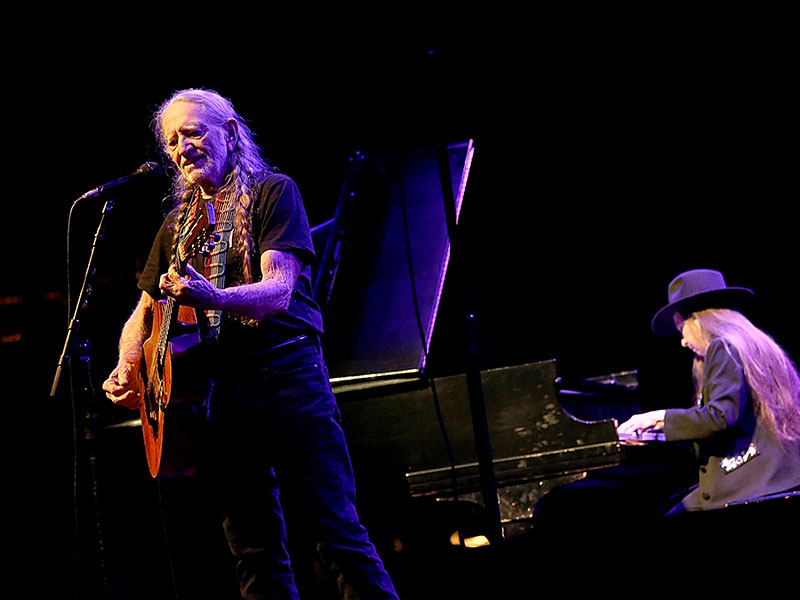
Willie Nelson; Bobbie NelsonWillie Nelson (L) and sister Bobbie Nelson perform in concert on New Years Eve at ACL Live on December 31, 2014 in Austin, Texas. (Gary Miller/Getty Images)Willie Nelson; Bobbie NelsonWillie Nelson (L) and sister Bobbie Nelson perform in concert on New Years Eve at ACL Live on December 31, 2014 in Austin, Texas. (Gary Miller/Getty Images)
“The introduction of music into Nelson’s life is maybe one of the reasons that he was able to navigate his childhood with the grace that he did because there was trauma in the fact that his mom and dad gave up Willie and Bobbie to the grandparents,” said David Ritz, the co-author of Willie Nelson’s 2015 autobiography “It's A Long Story: My Life.”


Nelson's sister, Bobbie Nelson, explained that the siblings grew up in Abbott, Texas. Their mother, Myrle Marie, was three-quarters Cherokee and was “scorned for her ethnic appearance.” Their father, Ira Doyle Nelson, was “no one we could count on.” Myrle left the family soon after Willie’s birth, and Ira abandoned his children after remarrying. Left with no other choice, the siblings were taken in by their grandparents, who ultimately gave them the kind of upbringing they needed.     


“For as long as I can remember, Bobbie and I called my grandparents ‘Mama and Daddy Nelson.’ Mama and Daddy Nelson gave Bobbie and me two gifts that saved our lives: love and music,” Nelson recalled. “My grandmother stressed the importance of breathing way down deep from the diaphragm, she called it. I found out that that’s probably been as much help as anything in keeping my voice strong.


“Mama and Daddy Nelson taught music as a form of worship, another way to praise the Lord. They anchored us, raised us and kept us — or at least, tried to keep me — on the straight and narrow.”

02
Willie Nelson has two birthdays, thanks to the county clerk
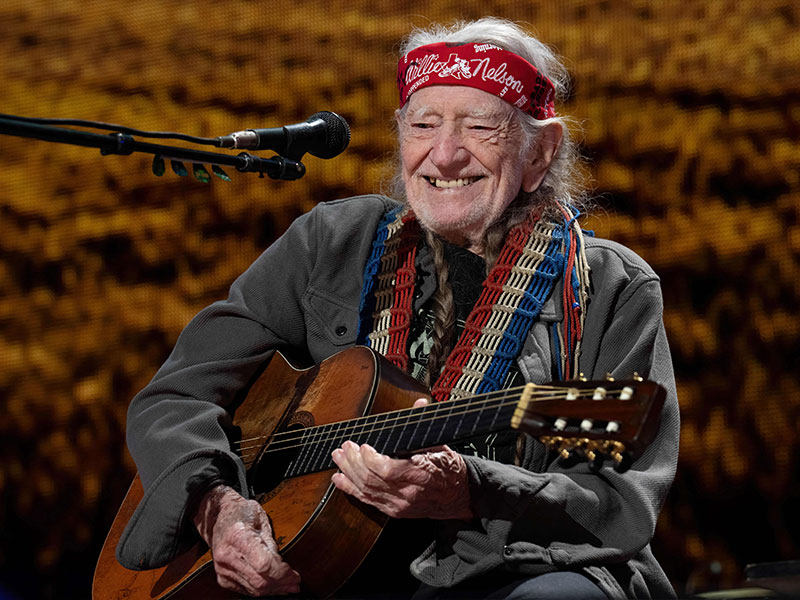
Willie NelsonUS musician Willie Nelson performs during the Farm Aid Music Festival at the Ruoff Music Center on September 23, 2023 in Noblesville, Indiana. (SUZANNE CORDEIRO/AFP via Getty Images)
Nelson was born on April 29, 1933, but because he was born around midnight, the county clerk erroneously recorded his birthday as April 30. 


“I was born before midnight on the 29th, but it didn’t get registered in the county courthouse until the next day, the 30th,” he told KXAN-TV news earlier this month. “So, it went out officially as the 30th. So I just do both days.”


Nelson celebrated his 90th birthday this year with a star-studded concert that aired on Dec. 17. The musical showcase featured performances by Nelson himself, Beck, Sheryl Crow, Snoop Dogg, Norah Jones, Miranda Lambert, Dave Matthews, Nelson's sons Lukas Nelson and Micah Nelson, George Strait, Chris Stapleton and more. It was hosted by Jennifer Garner, Chelsea Handler, Woody Harrelson, Ethan Hawke, Helen Mirren and Owen Wilson.

03
Willie Nelson said his first wife once stabbed him with a fork
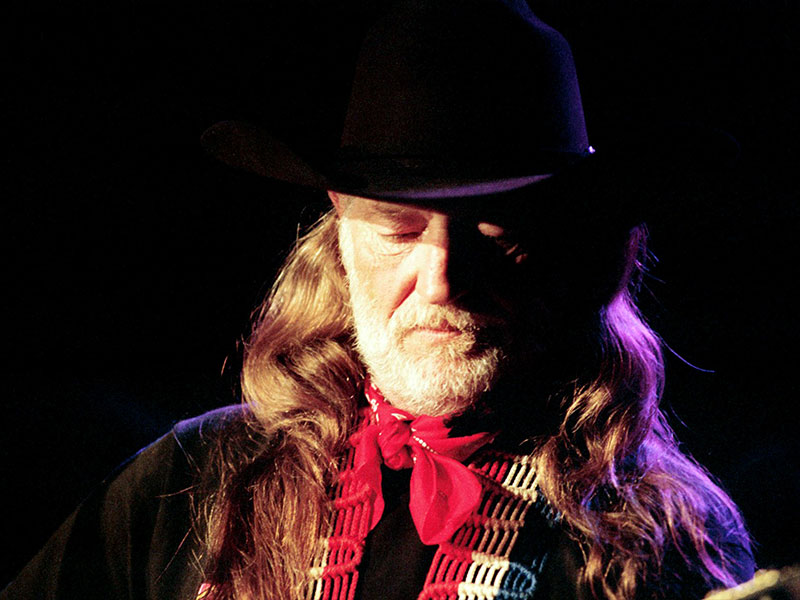
Willie NelsonWillie Nelson during VH1's Willie Nelson and Friends at The Roxy in Hollywood, CA, United States. (Jeff Kravitz/FilmMagic, Inc/Getty Images)

Willie Nelson met his first wife Martha Jewel Matthews in 1952, when he was 19 and she was 16. He said Matthews “was a dark-haired beauty, a full-blooded Cherokee” whose “eyes set my soul on fire.”


The pair quickly became friends and after two or three days of talking, they began going out. Nelson and Matthews, who died of liver failure in 1989, eventually ran off and got married without Matthews’ parents knowing about it.


“Mama said one time it was like Bonnie and Clyde going through America on their own, not worrying about money, but having to worry about money at the same time,” said their daughter Lana Nelson.


During their decade-long marriage, the pair had their fair share of ups and downs:


“We had a lot of fun together but we fought, and we both were drinking a lot in those days," Nelson said. “One morning we got in this argument, and she picked up this fork and threw it across the table and it stuck in my side. It sounded like a tuning fork.”

04
Willie Nelson admitted to self-destructive, suicidal behavior
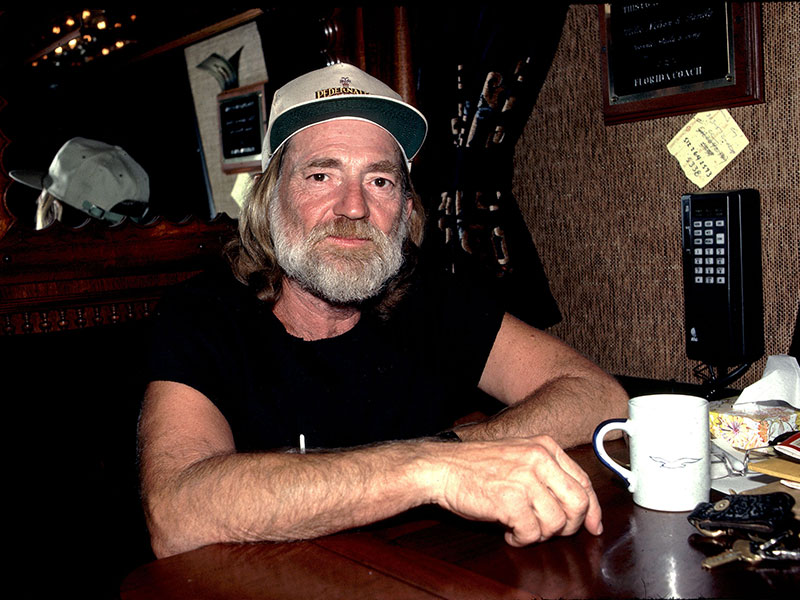
Willie Nelson; Old Whiskey River Kentucky Straight BourbonSinger Willie Nelson (C) hoists the first case of the new handcrafted Old Whiskey River Kentucky Straight Bourbon as Jeff Homel (L) and Max Shapira look on at Heaven Hill Distillery in this undated photo taken in Bardstown, KY. (Photo courtesy of Old Whiskey Bourbon via Getty Images)
Nelson and Matthews, along with their three children (Lana, Susie and Billy), all settled in Nashville during the '60s so Nelson could fulfill his dreams of becoming a big star in the country music scene. Unfortunately, that proved to be incredibly difficult as he struggled to make enough money as an aspiring performer and songwriter. Matthews said she got fed up with the family’s financial situation, so much so that she decided she would no longer put up with “no more crap.” 


“She and I were fighting worse than ever, and I started drinking more than ever,” Nelson said. “I would get drunk every night and go home with someone different every night. [I was] slowly self-destructing. I really didn't care.”


He continued, “Back in my drinking days, I tried to [die by] suicide a couple of times. One time in the dead of winter I was so down on myself I laid down in the middle of the street hoping a car would run over me. No such luck. I had to get up off my ass and kept on trying to figure out how to make a living.”

05
Willie’s second wife learned he was having an affair from a hospital bill
Willie NelsonWillie Nelson on 8/19/84 in Chicago, Il. (Paul Natkin/WireImage/Getty Images)
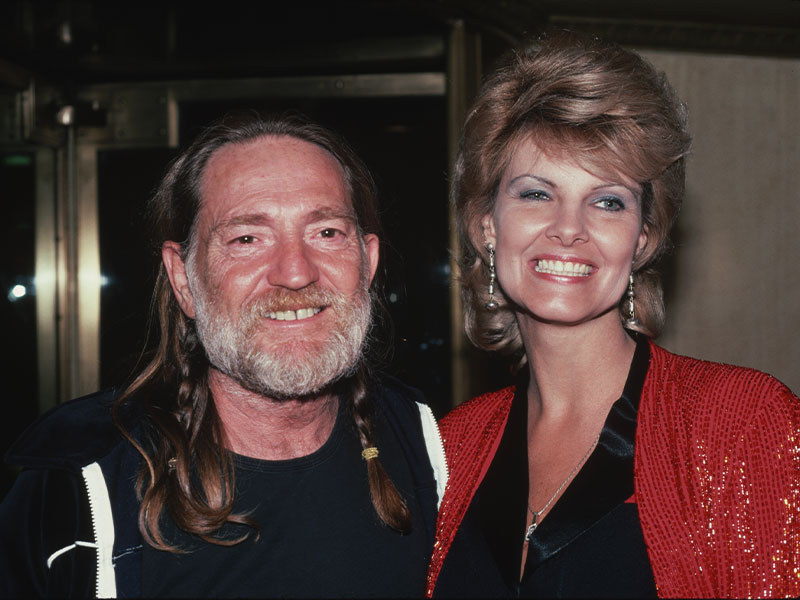
In 1962, Nelson and Matthews got divorced, which the former said was “inevitable.” Shortly after, he got married to Shirley Collie, with whom he duetted the hit country tune “Willingly” with. Nelson recalled the intense chemistry he felt with Collie while the duo recorded their song: “The title just about summed up the sexual vibe we felt in the studio.”


Their marriage, however, also ended in divorce. Collie learned her husband was having a decades-long affair when she discovered a Houston hospital bill that revealed Nelson’s mistress at the time, Connie Koepke, had given birth to a baby girl named Paula Carlene.


“Shirley wanted to know who in the hell was Connie Nelson,” he said. “The truth is Connie [Koepke] had been my girlfriend for several years before becoming pregnant.” His daughter Lana added that the hospital bill was also how she learned of her father’s affair. 


“She had no idea there was a Connie,” Lana said of Collie. “She had no idea there was a baby until she got the hospital bill. That’s how she found out about Connie. That’s how I found out about Connie.”

06
Koepke said she knew she was going to be Willie Nelson’s next wife
Willie Nelson with His WifeWillie Nelson with His Wife (LGI Stock/Corbis/VCG via Getty Images)

Willie Nelson tied the knot with Koepke 1971, the same year he finalized his divorce from Collie. Prior to their marriage, Koepke said "the farthest thing from my mind” at the time was “getting pregnant and telling my mom and dad.”  


“Anyway, it happened,” she continued. “Honestly, I was the next one, and I don’t mean that in a bad way. It's just Shirley wasn’t their mother, she was gone. I bonded with those kids so much. I loved those kids. They all became my kids, too.”


Nelson and Koepke’s daughter Paula also made an appearance in the documentary, saying her mother was “the new girlfriend, then wife.” She added that while it was difficult for Susie, Lana and Billy to adjust, they are “all close” now.   


“That's dad's doing really, because he’s the one that kind of brought us all together as one big tribe.”

07
Willie Nelson once ran into a house fire to save his guitar and a bag of weed
Willie NelsonAmerican country singer Willie Nelson takes a drag off a joint while relaxing at his home in Texas, 2000s. (Liaison/Getty Images)

Willie Nelson’s house in Ridgetop, Tennessee, caught on fire right before Christmas in 1970. He had gone out to an annual Christmas party at the King of the Road Club in Nashville and later rushed home after her he was told over the phone that his house was going up in flames.


Inside the burning house was Paula, who was napping in her crib located in the back bedroom. She was saved by her half brother Billy after he smelled smoke.


Nelson later ran into the house, past all the firemen, to rescue two important items: his beloved guitar Trigger and “a bag of primo Colombian pot.”


“I wasn’t about to lose a couple of pounds of good pot,” he said. “Sometimes disruption and even material destruction can help you rethink your priorities. Something about that Ridgetop fire told me it was time to get a move on. I was anxious to get back home.”


Home, Nelson said, was Texas.

08
Willie Nelson’s longtime manager was arrested for shipping cocaine
Mark Rothbaum; Carolyn MugarWillie Nelson's manager Mark Rothbaum, and Farm Aid's Carolyn Mugar backstage at the Walnut Creek Amphitheatre in Raleigh, North Carolina for the 2014 Farm Aid concert on September 13, 2014. (Ebet Roberts/Redferns/Getty Images)
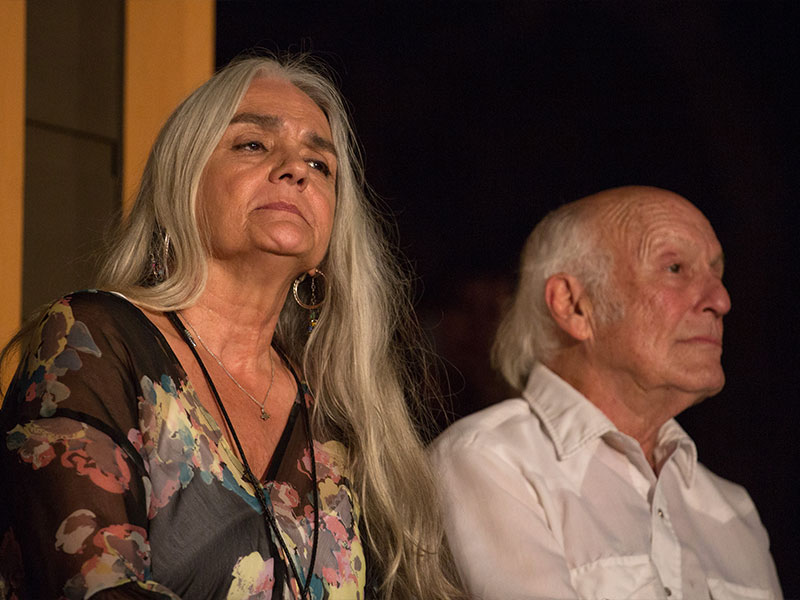
Mark Rothbaum’s criminal record was one of the many reasons why he was hired as Willie Nelson's manager. Rothbaum was arrested for distributing cocaine to country star Waylon Jennings in 1978. At the time, Rothbaum worked for Neil Reshen, who managed both Nelson and Jennings.  


“Waylon and Neil were birds of a feather: They were doing lots of cocaine . . . I got a call from Neil to take a package — I knew what was in it, it was cocaine. Not a lot, but it was in an envelope,” Rothbaum recalled in the documentary. “The courier company was to pick it up and you had to sign the slip and give it to the guy, and my name was on that, so technically I sent it.”


He continued, "I truly loved Neil and Waylon and could not conceive of cooperating with the government to put them in jail. I couldn't do it. It didn't go well for me. I was given a year sentence. Once I pled guilty, Neil fired me. I was no longer of use to him. And now I was really alone — except for Willie. Willie said I'm going to fire Neil, and when Mark gets out of jail I'll hire Mark as my manager.”


Rothbaum currently serves as Nelson’s manager 44 years later. He’s also an executive producer of the documentary.

09
Willie Nelson once got into a gunfight with his son-in-law
Lana Nelson; Sonny Carl DavisLana Nelson (L) and Sonny Carl Davis attend a Q&A following the Luck Cinema screening of 'Red Headed Stranger' at Luck Ranch on July 06, 2019 in Spicewood, Texas. (Rick Kern/Getty Images for Shock Ink)
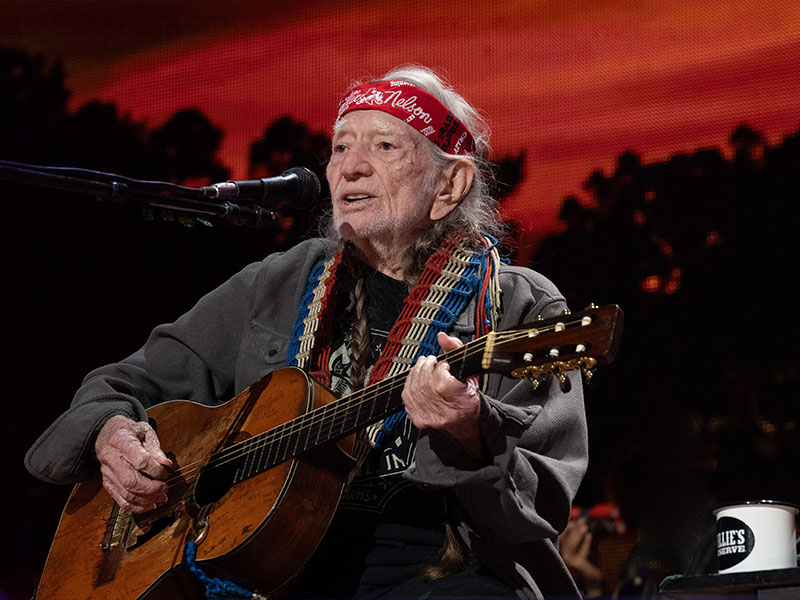
Willie Nelson’s famed nickname “Shotgun Willie” stems from an infamous incident involving his daughter Lana’s ex-husband. While living in Ridgetop, Lana said she “was married to a guy who had some anger management issues, and he took it out on me.”


“It really pissed me off when he beat her up, so I went over there and slapped him around a little bit,” Willie Nelson said. “I told him not to ever do that again. Then he came back, taking shots at the house.”


“We had the whole family there,” Lana recalled. “My mother, who is freaking out, is screaming, 'Oh my God, oh my God, we're going to get killed!’”


It was at this moment when Willie Nelson’s first wife and his third wife met for the very first time. Connie said she came across Martha in the midst of the shootout: “I just grabbed her by the skirt and dragged her down and said, ‘Get down, you’re gonna get killed!’ That’s how I met Martha.”


Nelson, along with his late bandmate Paul English, managed to put a bullet into one of the ex-husband’s tires. The incident inspired the song “Shotgun Willie,” which is the title track of Nelson's 1973 album.

10
Willie Nelson refused to file for bankruptcy amid tensions with the IRS
Willie NelsonUS musician Willie Nelson performs onstage during the Farm Aid Music Festival at the Ruoff Music Center in Noblesville, Indiana on September 24, 2023. (SUZANNE CORDEIRO/AFP via Getty Images)
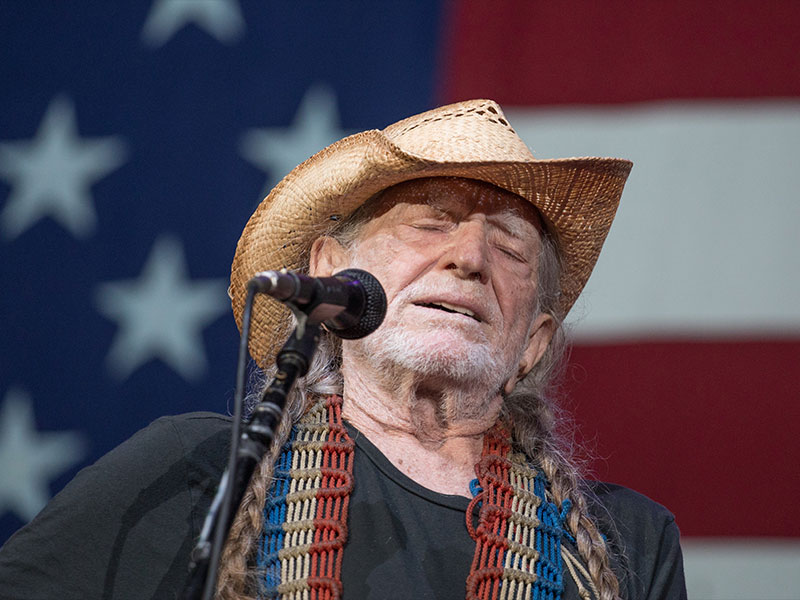
In 1990, the IRS seized most of Willie Nelson’s assets (his gold records, a piano and his Texas ranch, just to name a few), claiming that he owed $32 million in income taxes. Nelson’s financial struggles began more than 10 years prior, when Reshen, his business manager at the time, failed to pay any taxes for years. Reshen was fired in 1978. That same year, Nelson released his hit album “Stardust,” which Rothbaum said earned him “serious money.” 


Unfortunately, Nelson's financial situation grew worse during the 1980s, when he owed several million dollars worth of taxes. He sought advice from an accountant, who claimed that writing a check for $200,000 would eliminate his debt (spoiler alert: it didn’t). When he was advised to file for bankruptcy, Nelson refused, saying “that wasn’t my plan at all.”


"I never intended and never will do a bankruptcy where the people I owe get screwed out of their money,” Nelson said. “It’s very important to think positive. More important probably is knowing that a negative thought will release poison into your system and will eventually kill you if you keep doing it.”


Nelson eventually paid off his debt thanks to friends and one fan, who bought back his Texas ranch as a way of thanking him for Farm Aid. Sales made from Nelson’s 1991 album “The IRS Tapes: Who'll Buy My Memories” also helped solve his financial problems.

11
Willie Nelson is still alive, and his resilience inspires his children
Willie NelsonSinger-songwriter Willie Nelson performs onstage with Willie Nelson and Family during the 46th Annual Willie Nelson 4th of July Picnic at Austin360 Amphitheater on July 04, 2019 in Austin, Texas. (Rick Kern/WireImage for Shock Ink/Getty Images)
In the series’ fourth and final episode, Willie’s son Lukas Nelson said his father’s determination and perseverance amid the lowest of his lows is what makes him so inspiring:    


Dad has been homeless, he’s had his house burnt down, he’s been through four marriages, he’s been up and down, he’s been broke, he’s [fought] the IRS, he’s lost a child . . . that’s what makes him inspiring to me: His resilience in the face of adversity.”

“Willie Nelson & Family” is currently available for streaming on Paramount+. Watch a trailer for it below, via YouTube:


Ex-GOP lawmaker tells Trump’s Christian fans: “You don’t understand your own religion”

Former Rep. Adam Kinzinger, R-Ill., criticized former President Donald Trump and Christians who continue to fervently back him, arguing that they “don’t understand” their religion. Kinzinger hit out at Trump's fans after the former president spent his Christmas attacking President Joe Biden, special counsel Jack Smith and other perceived enemies. "MAY THEY ROT IN HELL," Trump wrote on Truth Social. "MERRY CHRISTMAS!"

“I’m going to go out on a NOT limb here:  this man is not a Christian,” Kinzinger wrote on X/Twitter. “If you are a Christian who supports him you don’t understand your own religion. Trump is weak, meager, smelly, victim-ey, belly-achey, but he ain’t a Christian and he’s not ‘Gods man.’” Kinzinger has faced significant scrutiny from much of the GOP since serving on the House select committee investigating the deadline Capitol riots on Jan 6. 

Jack Smith filing targets Trump conspiracy theory — and hints at potentially damning testimony

Special counsel Jack Smith on Wednesday asked a judge to bar former President Donald Trump’s legal team from using political talking points at his upcoming election subversion trial in Washington D.C. In a 20-page filing, Smith and his team of prosecutors wrote to U.S. District Court Judge Tanya Chutkan, arguing that Trump’s attorneys should not be permitted to raise “irrelevant political issues or arguments in front of the jury,” like his claim that he is the target of a "selective and vindictive prosecution," according to The Hill

“In addition to being wrong, these allegations are irrelevant to the jury’s determination of the defendant’s guilt or innocence, would be prejudicial if presented to the jury, and must be excluded,” Smith’s team stated. “Although the defendant is entitled to cross-examine the Government’s law enforcement witnesses about matters fairly within the scope of their direct testimony, he cannot raise wholly irrelevant topics in an effort to confuse and distract the jury,” prosecutors added. “Much as the defendant would like it otherwise, this trial should be about the facts and the law, not politics.” 

“A bank robber cannot defend himself by blaming the bank’s security guard for failing to stop him," the filing added. "A fraud defendant cannot claim to the jury that his victims should have known better than to fall for his scheme. And the defendant cannot argue that law enforcement should have prevented the violence he caused and obstruction he intended.” The special counsel’s filing comes after the Supreme Court rejected his request to expedite arguments on whether Trump had presidential immunity from federal prosecution for crimes he is accused of committing while acting as president in his election subversion case. 

Prosecutors are also seeking to exclude evidence about "cross-examination that would cause unnamed government witnesses to breach attorney-client privilege or protection under the Constitution’s Speech and Debate clause," noted MSNBC legal analyst Lisa Rubin. "Put another way, the government is making clear they have testimony from Trump lawyers and/or members of Congress."

What “Fargo” achieves through puppets

Surrealism is a calling card in Joel and Ethan Coen’s films, although in the main it is atmospheric as opposed to episodic. The trippiest tangents ascend into fully realized psychedelia, taking us out of the action and into the “life of the mind,” as the “Barton Fink” script immortally described it.

If you think of oddity as the LSD of visual storytelling — best in small hits over the long haul instead of massive wallops to the cranium — you can understand why Noah Hawley’s “Fargo” refrains from constantly straying too far over the line into eccentricity. These are still crime stories, and TV has rules about that, namely that the audience should be able to make sense of what’s happening regardless of how colorful the characters may be.

Some departures from the mundane are the best way to tell difficult stories, as the series does in the fourth season’s “East/West” episode by showing how differently white America treats a Black child stranded in Kansas than, say, a white orphan girl running away with her dog Toto.

Season 5 continues that “Wizard of Oz” connection by naming Juno Temple’s scrappy heroine Dorothy Lyon, but her port in a storm isn’t a wonderland or Camp Utopia, as it claims to be. It’s a cultish cabin full of domestic abuse survivors who call each other by one name. It casts her as Goldilocks in a den full of she-bears.

Dorothy Lyon's port in a storm isn’t a wonderland or Camp Utopia. It casts her as Goldilocks in a den full of she-bears.

“Linda,” which Hawley co-wrote with April Shih, is the seventh episode of a season centered on a woman who lives in peace until her past rears up to devour her and anyone who would get in its way. But the nature of what happened in her past life, though obvious in the fact that she fled it, is left to the imagination. Telling stories of abuse on TV is tough to do without seeming exploitative or traumatizing the audience, and doubly challenging when the storyteller’s goal is for the viewer to keep seeing its protagonist as a survivor and not a victim.

Indira (Richa Moorjani) says as much in the previous episode when she forcefully points out to Lorraine (Jennifer Jason Leigh) that Dot, her daughter-in-law, never asked for anything from her billionaire mother-in-law – not for money, or protection, nothing. Indira, a local cop, only gets involved because it’s her job, and Dot asks a single favor of Indira to keep her daughter safe while Dot ventures out to confront her demons.

Dot drives down a country road in a Kia minivan, struggling to stay awake before pulling into a diner, where a waitress asks her if she’s running to something or from something. She doesn’t answer, ordering a pancake instead, which the waitress brings her after drawing a smiley face in whipped cream and berries across the top.

Truth is, Dorothy can’t take down her abusive, murderous ex-husband Roy Tillman (Jon Hamm) without help from the other woman to liberate himself from his clutches, Roy’s first wife Linda (Kari Matchett). Gator’s mother.

Linda left breadcrumbs for Dorothy to follow if she were ever to break free from her cage, sending a postcard from a place called Camp Utopia that Dot buried in a cache under an old windmill. Dot finds it, digs it up, reads its short message of "I'm sorry" and follows the signs to the place, driving until her car runs out of gas before walking through the dark snowy woods. At the end of the path is another kind of holding area: a blissed-out conclave made up of self-sufficient women living in limbo between hell and a new life.

They can leave whenever they’re ready, and announce their new identity, but only after they expel their stories before the others in a puppet show.

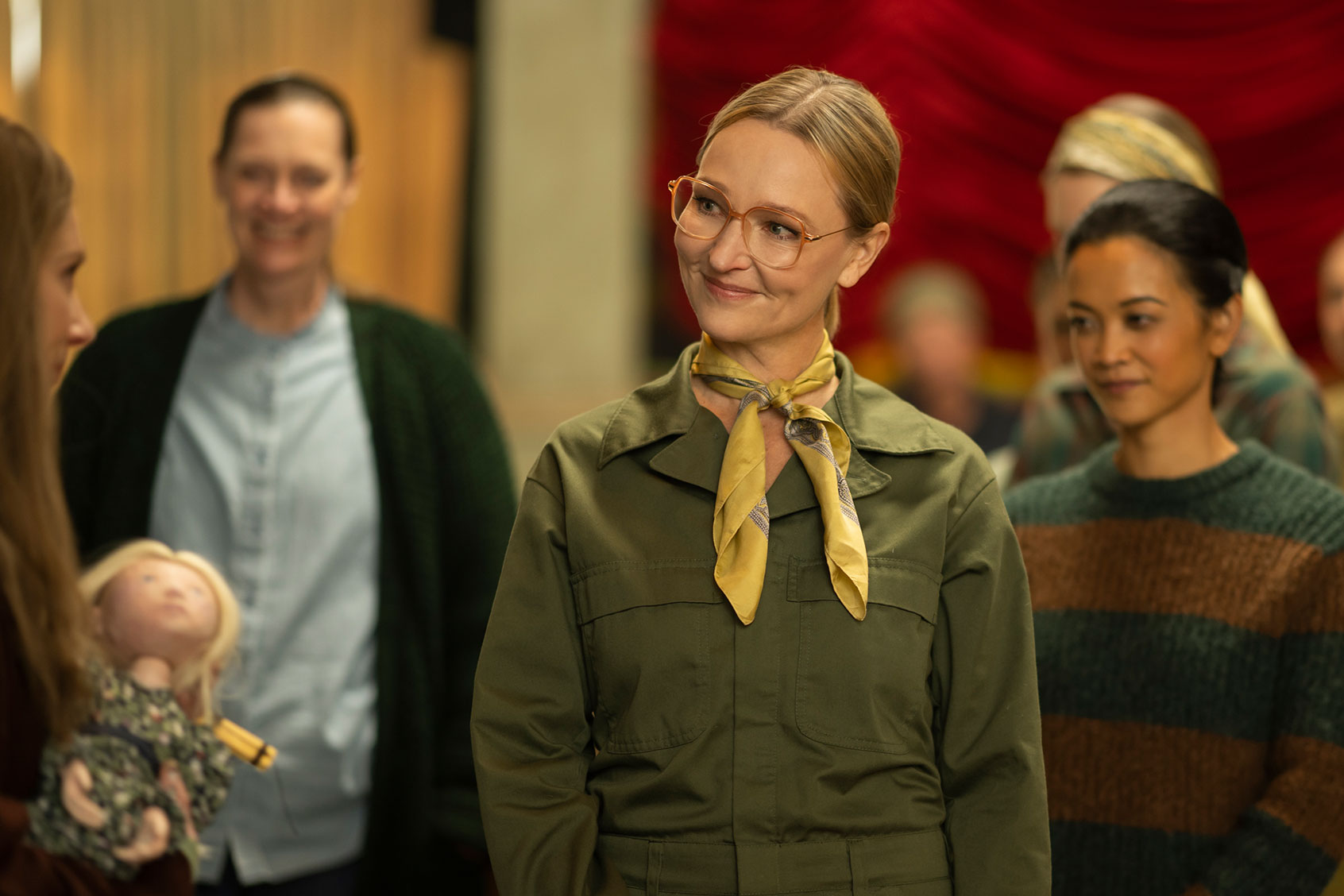
FargoFargo (FX)“Linda” hints at where the writers and director Sylvain White are taking us and Dot by dreamily weaving James and Bobby Purify's 1967 single “I’m Your Puppet” into the first part of her journey. 

On one level, this is an artful way to portray the separation survivors use as a mechanism to live through the worst moments of their lives and the memories of those moments they can’t shake, bury or exorcise. 

The choice to portray the horror of what Dorothy experienced through using marionettes is directly allegorical, in that the sexual and physical abuse to which Roy subjected Dot happened when Dorothy was a teenager he could control with violence.

Puppets also have a haunting innocence about them, fitting Dorothy’s tale of being a 15-year-old survivor of abuse and rape. (In hindsight, that makes that “helpless hitchhiker” character Roy’s third wife alludes to in their sex play more sinister than it already was.) The puppet show Dot walks in on looks like an especially evil Punch and Judy play, with the "husband" hand puppet hitting the "wife" one with a stick, making a sharp clacking sound each time he makes contact.

Dorothy passes out at this sight, and when she comes to a “Linda” keeping vigil greets her. The woman moves her lips, but what Dots hears – “Said the baby bear to the mama bear, ‘Someone’s been sleeping in my bed . . . she’s still there,” – doesn’t match what the woman is saying, at first.

But then she explains the place’s purpose to Dot: “When you leave a man who abuses and controls you, and you find this place, you take on a new name. A transition name. Linda.”

We need your help to stay independent

Dot’s Linda, she discovers, is Saint Linda, to which she responds with a sarcastic laugh. Dot’s Linda, see, is the one who lured her into Roy’s clutches when she was a teenage runaway escaping another unspecified violence portrayed only as wolves.

When Dorothy finds Linda, after socking her across the jaw, she demands Linda come with her to the police to tell them about Roy’s violence against them. But Linda imperiously demurs, telling Dot she owes her nothing and referring to the abuse she sustained as a choice. A nearby Linda suggests a trial; since “Saint Linda” already told them her truth, Dot has to provide hers, using the puppet. Only then, they say, can the “true truth” be determined and Dorothy fully claim her name.

The details of the puppet set, by the way, are astoundingly precise. On a set visit in the spring, a few reporters were given a tour of the Tillman ranch, including its kitchen and main room. “Fargo” sets tell a potent story by themselves, and one accent you may not have noticed is the impudent double meanings in the surroundings.

We understand, as Dorothy does, that all this happened to a girl named Nadine. 

The wallpaper is an example – its repeating pattern consists of three small hens gathered near a larger rooster along with paintings of stallions and bulls, and that tells you all you need to know about Roy’s concept of the way the world should be.  You might not have noticed it in the live-action scenes, but the dioramic sets on which Dot’s puppet show was filmed make everything larger than life.

Smaller, too, when the need arises. Roy’s grooming and the violence he inflicted on Linda and Dorothy is horrendous and disgusting, but we can absorb it the way Dot had to because it’s not happening to her. Some harder part inside takes the blows for her, the shame and the anger. 

FargoFargo" behind the scenes with a marionette (FX)

We understand, as she does, that all this happened to a girl named Nadine. Nadine is the puppet. Dorothy is the woman who emerged whole and real when her life became magic.

After the show, Linda agrees to accompany Dorothy, and once they're back on the road Dorothy thanks the previous Mrs. Tillman for helping her protect the life she fought so hard to build. 


Want a daily wrap-up of all the news and commentary Salon has to offer? Subscribe to our morning newsletter, Crash Course.


Mid-gratitude, however, the scene cuts back to the diner where she still sits with her pancake, with her Kia parked in the lotoutside.

When is this? Where is Linda? These questions may not cross our mind until Dorothy exits the diner and is heading toward her car when a speeding semi-truck comes out of nowhere, blazing through parked cars to crush her minivan, throwing a vehicle into her and sending her flying.

Dorothy wakes up in the hospital asking for Linda when a nurse informs her that she came into the hospital by herself. 

That is the point at which, if we weren’t doing so already, we question everything. Maybe Dorothy fell asleep at the wheel as "Linda" began instead of shaking herself awake again. Maybe the song we should have paid more attention to is the one playing before "I'm Your Puppet," David Ramirez's "My Love Is a Hurricane" with its foreboding sweet nothings refrain of, "You got to know, wherever you go/ I'll be right there beside you . . .You can't escape my love."

Maybe the diner, the camp, the Lindas, and Linda Tillman, are plays in Dot's subconscious, glimpse into the life of her mind.

One recurring nightmare isn’t a figment, which is the man who her nurse says is her husband and tells her has been waiting for her to wake up. It isn’t Wayne. It’s Roy.

The end of “Linda” never establishes what happened to that lost little girl, only that she takes off through a window, leaving the bears to go on with their lives. Roy is another kind of predator, one who can’t let go. Until now, his escaped ex-wife has slipped her tormentors in an array of creative and dangerous ways. This Dorothy will not surrender easily. That much we know to be true.

New episodes of "Fargo" air 10 p.m. Tuesdays on FX and stream the next day on Hulu.

“Betrayed is an understatement”: Fake elector throws Trump team under the bus as he spills the beans

A Michigan Republican who served as a fake elector for former President Donald Trump in the 2020 presidential election expressed remorse for partaking in the scheme, per a recording of the elector’s interview with the state attorney general’s office that was obtained by The New York Times.

Michigan Attorney General Dana Nessel dropped criminal charges against 77-year-old James Renner after he agreed to cooperate. Renner is the only one of 16 fake electors charged to have reached an agreement with Nessel’s office. Thus far, Nessel has only charged the electors but has stated that her investigation is ongoing. 

“I can’t overemphasize how once I read the information in the J6 transcripts how upset I was that the legitimate process had not been followed,” Renner said in the interview. “I felt that I had been walked into a situation that I shouldn’t have ever been involved in.”

The Times reported that Renner was an eleventh-hour substitution in December of 2020 for two electors who had dropped out of the plot. Slates of fake electors have already been charged in several states, including Georgia, Michigan, and Nevada. Separate probes are also underway in Arizona and New Mexico. 

The investigators who conducted Renner’s interview questioned him about a bevy of items related to the scheme, including reported key players such as former New York City Mayor and Trump attorney Rudy Giuliani, and Shawn Flynn — a Michigan lawyer who worked with the Trump campaign. Giuliani is also charged in the Georgia probe, headed by Fulton County District Attorney Fani Willis.  He recently filed for bankruptcy after being ordered to pay $148 million to two Georgia election workers who sued him for defamation after he peddled voter fraud conspiracies about them. 

We need your help to stay independent

The Times reported that Renner is a former state trooper and a retired businessman who volunteered as a local party activist in Clinton County, near Michigan’s state capital, Lansing. “He had never served as an elector before and typically supported Republican campaigns by passing out signs and distributing fliers,” the Times report noted. “He said he was contacted by the head of the county Republican Party a day or so before the electors had planned to meet on Dec. 14, 2020, was asked to fill in for someone who was dropping out and agreed to do so.”

During the interview, Renner indicated that he “knew nothing about the electoral process,” adding that three other electors — Meshawn Maddock, Kathleen Berden, and Marya Rodriguez — took the reins. All three have pleaded not guilty. “I was accepting the individuals that were in authority” knew “what they were talking about,” Renner told investigators. 

It was not until he and the other electors were sued in civil court in January of 2023, Renner said, that he took it upon himself to begin reading into the House transcripts and the official procedure for electors. He later understood that what had transpired “was not legitimate.”


Want a daily wrap-up of all the news and commentary Salon has to offer? Subscribe to our morning newsletter, Crash Course.


It was only then that I realized that, hold it, there is an official state authorized process for this,” he said. Prior to that, Renner said, “I had never been an elector, I had never discussed it with anybody. I was used to a much more informal process at the county level. And so that’s when I became suspicious of what had gone on.”

I am very upset, I don’t show it, but I am,” Renner told investigators. Feeling “betrayed,” he added, “is an understatement. That’s all I can say.”

“I do not believe in welfare”: Some state Republicans opt out of Summer EBT program for hungry kids

On the Friday before Christmas, Iowa Republican Gov. Kim Reynolds announced that her state would opt out of a federal program that gives $40 per month to children who receive free and reduced-cost lunch to help with food costs while school is out. 

The 2024 Summer Electronic Benefits Transfer for Children — or Summer EBT — program is, according to the United States Department of Agriculture, based on USDA's Summer EBT for Children demonstration projects and Pandemic EBT. Despite Congress making the pandemic-era benefit, which was shown to reduce hunger and increase diet quality, permanent, Reynolds is skeptical. 

"Federal COVID-era cash benefit programs are not sustainable and don't provide long-term solutions for the issues impacting children and families. An EBT card does nothing to promote nutrition at a time when childhood obesity has become an epidemic," Iowa Republican Gov. Kim Reynolds said in the news release.

She continued: "If the Biden Administration and Congress want to make a real commitment to family well-being, they should invest in already existing programs and infrastructure at the state level and give us the flexibility to tailor them to our state's needs."

However, Iowa isn’t the only state declining to participate in the program. In fact, according to the Alliance to End Hunger, less than half the eligible states and U.S. territories have signed up for Summer EBT as a Jan. 1 federal application deadline looms. But why, as food insecurity continues to skyrocket across the country, are some states refusing to participate? 

What are the details of the program? 

Back in 2010, the Summer EBT program got its start with funding from the Agriculture Appropriations Act. This act, also known as Public Law 111-80, gave the U.S. Department of Agriculture (USDA) the green light to try out new ways to tackle food insecurity during summer break.

In 2011, the USDA kicked off Summer EBT as a test run. They wanted to see how providing summer nutrition benefits through an EBT card would impact low-income families with school-age kids. In the first year, around 12,500 families in need received a debit card with a set amount to buy groceries during the summer months.Because the pilot project was a hit, Congress decided to invest more resources in Summer EBT through their annual appropriations process. This extra funding allowed the USDA to expand the program to more states and serve more children. 

In a 2016 assessment of the program, several positive results were observed, chiefly reduced food insecurity and improved nutrition. 

We need your help to stay independent

“By providing low-income households with a $30 or $60 per month per child benefit, the most severe type of food insecurity (very low food security) was reduced by one-third, and food insecurity was reduced by one-fifth,” reports the Food Research & Action Center. “Both the $30 and $60 monthly

benefit levels led to an improvement in children’s summertime nutritional intake, but children in households that received the $60 benefit ate slightly more nutritious foods (fruits, vegetables, and whole grains) than those in the $30 group.” 

In 2023, the program was permanently authorized as part of the Consolidated Appropriations Act, meaning that states willing to cover half the administrative costs have the option to implement it this summer. 

According to the National Conference of State Legislatures, Summer EBT will provide families with kids who are eligible for free or reduced-price school meals with $40 per child per month over the summer while school is out. Families will receive physical EBT cards —  like those used for the Supplemental Nutrition Assistance Program, which they can then use to purchase food. States that choose to implement Summer EBT are required to serve all children who qualify for the program.

Why are some states opting out? 

Some states, including Iowa, have cited cost as at least a partial reason for opting out of the program. As the Associated Press reported, participating in the program would cost Iowa about $2.2 million. According to the Lincoln Journal Star, Nebraska is also declining to participate in the program, which would cost the state about $300,000 annually in administrative costs. 

However, there also seems to be a partisan tinge to some of the dissent, specifically around the concept of whether or not a program like this qualifies as “welfare,” something against which many conservatives have historically rallied. Such is the case for Nebraska Republican Gov. Jim Pillen, who told the Journal Star on Friday: “In the end, I fundamentally believe that we solve the problem, and I don't believe in welfare.” 

In Iowa, Gov. Reynolds brought up childhood obesity as part of her reasoning for opting out (though it’s worth noting that equating laziness — or obesity — and the need for government assistance is a common line of rhetoric out of the Republican playbook that’s as old as Reagan.) 

What do food security advocates think? 

Some politicians have already criticized their respective state’s choice to not participate in Summer EBT. 

"It's extremely disappointing that the Reynolds administration is planning to reject federal money that could put food on the table for hungry Iowa kids," Democratic Sen. Izaah Knox of Des Moines said in a statement. "This cruel and short-sighted decision will have real impacts on children and families in my district and communities all across Iowa."

In a Wednesday statement to Salon Food, Eric Mitchell, the president of the Alliance to End Hunger, said that for millions of children, the end of school meals during the summer months means losing out on their main and most consistent source of nutrition. 

“For these children, access to Summer EBT can be the difference between getting the meals they need to stay healthy and thrive, or going hungry,” Mitchell said. “That’s why Congress recently made the program permanent, and why every state should participate.” 

He continued: “It is deeply concerning that, with the January 1 deadline approaching for summer 2024, more than half of states have yet to commit for this summer. In a time when food insecurity in the United States is increasing, we need to do everything in our power to ensure that no child goes hungry. The Alliance to End Hunger hopes that states will do the right thing and make the proper investments in this critically important program.”

Michigan Supreme Court keeps Trump on the ballot — but leaves opening for a new challenge

The Michigan Supreme Court declined on Wednesday to hear a case arguing that former President Donald Trump should be booted from the state's primary ballot, allowing the GOP frontrunner to remain a candidate, the Detroit Free Press reports

The Wednesday order aligns with lower court rulings in the state, but departs from a recent ruling removing Trump from the ballot by the Colorado Supreme Court.

The question of whether Trump is an eligible candidate for the presidency hinges on whether his conduct related to the Jan. 6, 2021, Capitol attack should be considered engaging in insurrection. Section 3 of the 14th Amendment to the U.S. Constitution prohibits anyone who has taken an oath to uphold the Constitution to hold office if they have "engaged in insurrection or rebellion" against the nation. Another key concern in the slate of court cases is whether barring a candidate over such a matter would be within state powers or only in the power of Congress. 

In the order, Michigan's highest state court indicated it agrees with the latter option, declaring that it is "not persuaded that the present questions should be reviewed by this court."

It refused to reconsider a mid-December decision by a three-judge panel of a state Court of Appeals, which affirmed a lower court ruling that neither the courts nor Secretary of State Jocelyn Benson can keep Trump from being a candidate in Michigan's Feb. 27 Republican primary. 

Mark Brewer, the lawyer for Michigan voters seeking to have Trump removed from the ballot and a former Michigan Democratic Party chairman, called the decision "very disappointing but extremely narrow." If Trump becomes the Republican nominee, he added, his clients will again challenge his eligibility for the November ballot. 

In a statement, Free Speech For People, a nonpartisan government-ethics organization and one of the plaintiffs in the lawsuit, echoed the attorney's assertion, declaring that the decision does not "preclude FSFP from raising the same claims in Michigan before the general election, if Trump’s candidacy proceeds to that point."

It also doesn't affect the organization's pending challenge in Oregon, challenges it intends to bring in other states, or the status of the Colorado decision, the organization added. 

“The ruling conflicts with longstanding US Supreme Court precedent that makes clear that when political parties use the election machinery of the state to select, via the primary process, their candidates for the general election, they must comply with all constitutional requirements in that process," FSFP Legal Director Ron Fein said in the statement. "However, the Michigan Supreme Court did not rule out that the question of Donald Trump’s disqualification for engaging in insurrection against the U.S. Constitution may be resolved at a later stage."

Justice Elizabeth Welch, a Democratic appointee, dissented, pointing to the Colorado ruling among other matters. 

She agreed with the Michigan Court of Appeals' argument that under the wording of state law, the secretary of state does not possess the authority to exclude from the primary ballot a prominent candidate like Trump, whose name has been promoted by a political party, regardless of whether the U.S. Constitution would deem him ineligible. But, "political parties might have an obligation to ensure that proposed presidential primary candidates are eligible," Welch wrote.

"Considering the importance of the legal questions at issue and the speed with which the appellants and the judiciary have moved, I believe it is important for this court to issue a decision on the merits," she added.

We need your help to stay independent

Michigan's lower courts, along with the courts of other states, have largely found that whether Trump is disqualified under Section 3 is a decision best left for Congress — at least in terms of a primary election — and not the state's courts or election officials.

But the Colorado Supreme Court's split decision, now on hold pending a decision on whether the U.S. Supreme Court will take up the matter, states that nothing in the 14th Amendment, which was written in response to the Civil War, requires Congress rather than a state to make that determination. It only holds that the U.S. House and Senate can overturn any disqualification if they choose to, the decision said.

The Colorado opinion also noted that its state law describes a duty to "exclude constitutionally disqualified candidates" in a process run through its courts ahead of any election including a primary. Michigan law, however, does not include any similar provision. 


Want a daily wrap-up of all the news and commentary Salon has to offer? Subscribe to our morning newsletter, Crash Course.


"The lower court decision (and this refusal by the Michigan Supreme Court to take up the issue) is not about the merits of the underlying 14th Amendment question but more so the mechanisms of state law in placing a person's name on the primary ballot," Georgia State law professor Anthony Michael Kreis clarified on X, formerly Twitter.

While arguing in her dissent that the challengers should be able to retry their challenge in the event Trump wins the nomination, Kreis notes, Welch also highlights that Colorado law and Michigan law are "not analogous."

"The Co. Supreme Court and the Mich. Supreme Court were presented with challenges to Trump's eligibility under the 14th Amendment but have different state law vehicles for placing names on the ballot," Kreis explained. "The MI Court ruling doesn't touch the merits of Trump's eligibility as a result."

Though the Michigan Supreme Court didn't affirm that the challengers could renew their lawsuit for the general election, it did "allow the lower court ruling permitting a second bite at the apple to stand," Kreis added. "Justice Welch would have affirmed that part expressly."

“Parasite” actor Lee Sun-kyun dies at 48

South Korean actor Lee Sun-kyun, one of the stars of the Oscar-winning "Parasite," died on Wednesday. He was 48.

After weeks of investigating the actor for alleged illegal drug use which Lee vehemently denied, South Korean authorities said that Lee was reportedly found dead in a car in Seoul. His death is being investigated as a suicide.

According to Seoul’s Seongbuk police station, they were searching for the actor after receiving a missing persons report. He was found by authorities in his car in what they believed was an unconscious state. First responders confirmed Lee was dead, The Associated Press reported.

The authorities have not determined cause of death but South Korean media outlets have reported that Lee's manager shared to the police that the actor left his home after leaving a message that seemed like a suicide note.

Lee was known internationally for his portrayal of Park Dong-ik, the wealthy patriarch of the Park family in Bong Joon-ho's scathing class satire that swept the 2020 Oscars. "Parasite" was the first foreign language and South Korean film to win best picture at the Oscars. But before "Parasite," Lee had a long career in South Korean television and film. Besides 2007's "Coffee Prince" – in which he plays the record-producing cousin of Gong Yoo ("Train to Busan") and performed his own singing – he's also  starred in K-dramas "Behind the White Tower," "Pasta," the acclaimed "My Mister" and most recently in Apple TV+'s "Dr. Brain." This year, he starred in the musical rom-com "Killing Romance."

He is survived by his wife, actress Jeon Hye-jin and their two children.

If you are in crisis, please call the 988 Suicide and Crisis  Lifeline by dialing 988, or contact the Crisis Text Line by texting TALK to 741741.

Trump mocks Democrat for crying over husband’s funeral — and not being grateful enough to him

Former President Donald Trump accused Rep. Debbie Dingell, D-Mich., of not being grateful to him for the arrangements for her late husband's funeral after she criticized his dark Christmas message.

The ex-president unleashed a torrent of negative comments against Dingell after she publicly criticized Trump’s holiday weekend tirade, in which he told President Joe Biden, special counsel Jack Smith, and others to “ROT IN HELL.”

“Merry Christmas to all, including Crooked Joe Biden’s ONLY HOPE, Deranged Jack Smith, the out of control Lunatic who just hired outside attorneys, fresh from the SWAMP (unprecedented!), to help him with his poorly executed WITCH HUNT against ‘TRUMP’ and ‘MAGA,’” he wrote on Truth Social on Christmas.

“Included also are World Leaders,” Trump added, “both good and bad, but none of which are as evil and ‘sick’ as the THUGS we have inside our Country who, with their Open Borders, INFLATION, Afghanistan Surrender, Green New Scam, High Taxes, No Energy Independence, Woke Military, Russia/Ukraine, Israel/Iran, All Electric Car Lunacy, and so much more, are looking to destroy our once great USA. MAY THEY ROT IN HELL. AGAIN, MERRY CHRISTMAS!”

Dingell in a Tuesday interview on CNN described Trump’s Christmas invective as “one of the most pathetic Christmas greetings I’ve heard, when a former President of the United States who wants to return [to office] tells people on Christmas Day that they can ‘rot in hell.’”

The congresswoman added that “there were men outside of my house with assault weapons” following instances in which the former president previously “went after” her.

Following Dingell’s Tuesday remarks, Trump took to Truth Social, writing, “Debbie Dingell of Michigan is a LOSER,” also accusing her of helping President Joe Biden to “DESTROY our Country.” Trump also took the opportunity to call out Dingell in relation to the death of her husband, former Rep. John Dingell, D-Mich, in February 2019. 

We need your help to stay independent

“When I gave, as President, her long serving husband, the absolute highest U.S. honors for his funeral, a really big deal, she called me, crying almost uncontrollably, to say that she couldn’t believe I was willing to do that for a Democrat,” Trump wrote. “She thanked me profusely. Two months later, she was back on the trail ranting and raving about ‘TRUMP.’”

The Daily Beast noted that Trump’s Tuesday missive was not the first time he has used Rep. Dingell’s husband’s passing against her. After she voted in favor of impeaching him in December of 2019, Trump at a campaign rally implied that Rep. John Dingell could be in hell. 

“It just sort of kicked me in the stomach," Dingell told Chris Wallace on “Fox News Sunday” following Trump’s comment. "It was the politicization of something that didn't need to be so. He [Rep. John Dingell] was buried in Arlington Cemetery because he was a World War Two veteran."


Want a daily wrap-up of all the news and commentary Salon has to offer? Subscribe to our morning newsletter, Crash Course.


Dingell at the time did concede she appreciated some of Trump’s efforts. 

“[Trump] called me to tell me he was lowering the flags," Dingell said, recalling the ex-president's response after her husband passed. "And to this day and this minute, I am grateful that he did it. I was grateful for the call. He was kind and empathetic. It meant a lot to somebody who was hurting and loved her husband."

She also explained that, though she was grateful for the measures Trump took in the wake of her husband’s death, she did not believe that that meant she needed to vote against his impeachment.

"Those are two different issues for me … we have to learn in our country that you can agree to disagree agreeably," Dingell explained.

She added, "I think there are lines you don’t cross. I don’t want an apology, I don’t want a campaign to begin around that. What I do want is people to take a deep breath and think going forward that their words have consequences, that they can hurt, and how do we bring more civility back to our political environment?"

Trump posts word cloud touting “dictatorship” and “revenge” as key words for second term

Former President Donald Trump shared on social media Tuesday a word cloud survey that prominently featured the words "revenge" and "dictatorship" to describe him. According to Axios, the word cloud was generated from a J.L. Partners poll for the Daily Mail that asked 1,000 likely voters to describe in one word what both Trump and President Joe Biden want in a second term. 

The former president presented his word cloud in an uncaptioned post to Truth Social. Its largest and, thus, most frequently mentioned words included "revenge," "power," "economy" and "dictatorship," written in bright red and orange letters. Biden's cloud featured royal blue and lilac-colored words including "nothing" — the largest by far — "economy," "democracy" and "peace." Trump sparked controversy earlier this month when he quipped during a town hall event with Sean Hannity that he would not be a "dictator" if reelected in 2024 "other than day one."

Trump's plans for a potential second term reportedly include a dramatic expansion of federal power, including presidential power. His rhetoric in recent months — including describing his political opponents as "vermin" and saying that undocumented immigrants are "poisoning the blood of our country" — has also prompted sharp rebuke, with many pointing out similarities between his language and that of fascist dictators like Adolf Hitler and Benito Mussolini. Trump remains the Republican frontrunner in the 2024 presidential primary race. He is currently facing 91 criminal charges across four separate cases, including two related to his efforts to overturn his 2020 electoral defeat. 

The twisted fantasy behind Mike Johnson’s “purity” pledge

Several years ago, when many Democratic strategists were demanding that the party embrace the tenets of the Christian Right in order to win over the salt of the earth, Real Americans (whom they insisted were essential to a legitimate governing majority), the media briefly reported on some of their more extreme rituals. They looked at "purity culture" practices such as gay conversion "therapy", masturbation abstinence and "purity balls" which feature a pseudo-wedding ceremony between a father and daughter. 

Mike Johnson aligned himself with the most morally corrupt politician to ever run for the presidency and he doesn't seem in the least bit conflicted by it.

All these practices were disturbing enough that they pretty much went underground after being publicly exposed and the culture wars turned to their next battlefield, the latest being the cruel bullying of transgender teens and the banning of gay literature in schools. 

There was something particularly creepy about the purity balls. TIME Magazine reported on one of the balls back in 2012, where girls as young as eight or nine don long white dresses and listen to their fathers "promise 'before God to cover my daughter as her authority and protection in the areas of purity,' and to practice fidelity, shun pornography and walk with honor through a culture of chaos and by so doing guide their daughters as well." He promises to protect her "purity of mind, body, and soul" and the girls are given lockets with a key, which the father keeps until the girl gets married at which point they turn it over to her husband. (I guess chastity belts are hard to find these days.) Here is a scene-setting description of the event: 

After dinner comes the ballet performance, when seven tiny ballerinas in white tulle float in; then seven older dancers carry in a large, heavy wooden cross, which they drape in white, with a crown of thorns. Four of the five Wilson daughters are among the dancers, and they offer a special dance to their father, to the music of Natalie Grant: Your faith, your love And all that you believe Have come to be the strongest part of me And I will always be your baby …

Then Randy and his friend Kevin Moore stand in front of the cross, holding up two large swords, points crossed. Fathers and daughters process beneath the swords to kneel; the girls place a white rose, symbolizing abstinence, at the base of the cross while the fathers offer a quiet blessing.

We need your help to stay independent

I don't know if these purity balls have completely gone out of fashion but you don't hear about them much anymore. At least not until last week, when this story from ABC News showed up in our news feeds:

Years before Mike Johnson would ascend to No. 2 in the presidential line of succession, a German TV news outlet profiled the future speaker of the House and his then-teenage daughter.

"This looks like a wedding," a news reporter says in German in a 2015 n-tv news segment that was unearthed by ABC News. "But they are not bride and groom — but rather father and … daughter," the reporter adds, referring to Johnson and his then-13-year-old daughter, Hannah.

According to ABC News, the segment shows him nodding along as his daughter Hannah vows "to make a commitment to God, myself, my family, my friends, my future husband, and my future children … to a lifetime of purity, including sexual purity." That's quite a pledge to require a 13-year-old to take. (Mrs. Johnson is shown in the film saying that they don't even discuss contraception because premarital sex is completely out of the question.) 

Is it at all a surprise that Mike Johnson engaged in this bizarre practice? Of course not. It's a wonder nobody thought to ask him about it before. After all, he was already on record as a staunch believer in purity culture when he said that he installed so-called accountability software called "Covenant Eyes" on his and his teenage son's devices so they can catch each other if they ever view pornography. He and his wife have a "covenant marriage" which makes divorce very difficult (and which Johnson tried to make into law when he was in the Louisiana legislature.) He even says God told him he's Moses chosen to pull Republicans together.


Want a daily wrap-up of all the news and commentary Salon has to offer? Subscribe to our morning newsletter, Crash Course.


Speaker of the House Mike Johnson is a fundamentalist with a theocratic agenda that he's been pursuing for many years. And like so many other Christian nationalist leaders, he's made common cause with a man one would think a true believer like Johnson would think was the antichrist. Has the man who forced his little girl to take that purity pledge ever seen this?

Johnson obviously doesn't care about any of that. He worked with other leaders of the Christian Right to help Trump's coup attempt in 2020 and raced down to Mar-a-Lago the minute he got the speakership to endorse Donald Trump immediately. 

As the New Republic pointed out, Johnson has been groomed for power for years by some of the most influential right-wing organizations in America, including the secretive Council for National Policy which "journalist Anne Nelson, author of the book on the Council for National Policy, Shadow Network, has described … as 'the secret hub of the radical right.' She has also described Johnson as their 'creation.'" They all, including Mike Johnson, clearly see Donald Trump as a useful tool and nothing more. 

Johnson said during a Fox News interview, “I am a Bible-believing Christian. Someone asked me today in the media, they said, ‘It’s curious, people are curious: What does Mike Johnson think about any issue under the sun?’ I said, ‘Well, go pick up a Bible off your shelf and read it. That’s my worldview.'” He certainly checks all the boxes, even going so far as the strange rituals of fundamentalist purity culture. 

But you know what they say about power corrupting even the most pious of believers. Mike Johnson aligned himself with the most morally corrupt politician to ever run for the presidency and he doesn't seem in the least bit conflicted by it. Clearly, he didn't take any of his purity pledges seriously at all. 

“Terrifying”: Republicans warn court that Trump’s “dangerous argument” opens door to more crimes

A group of former Republican federal officials on Tuesday warned a federal court to reject former President Donald Trump’s presidential immunity claim in his D.C. election subversion case.

The group in an amicus brief filed to the Court of Appeals in the District of Columbia warns that ruling that Trump is immune from prosecution would “encourage” future presidents to commit crimes to stay in power.

"Nothing in our Constitution, or any case, supports former President Trump's dangerous argument for criminal immunity," the brief said, according to Business Insider.

The Republican authors argued that Trump’s claim that he is immune in the case because he was president at the time is “especially weak.”

"The last thing presidential immunity should do is embolden Presidents who lose re-election to engage in criminal conduct, through official acts or otherwise, as part of efforts to prevent the vesting of executive power required by Article II in their lawfully-elected successors," they wrote.

Allowing future presidents to commit crimes to alter election outcomes would turn the Constitution “on its head,” they added.

"These terrifying possibilities are real, not remote,” wrote the group, which included former UN Ambassador and Sen. John Danforth, former Reagan Solicitor General Charles Fried, and former CPAC Chairman and Rep. Mickey Edwards.

U.S. District Judge Tanya Chutkan rejected Trump’s immunity argument, writing that the presidency “does not confer a lifelong ‘get-out-of-jail-free’ pass.” The appeals court is set to review the matter after the Supreme Court last week rejected special counsel Jack Smith’s request to fast-track it.

Though the appeals process is likely to delay the case beyond the scheduled March trial date, legal experts widely expect Chutkan’s ruling to hold up.

“It's kind of ridiculous,” Paul Saputo, a Texas defense lawyer, told The Daily Beast. “We're not even going to have a 5-4 decision. I don’t think it's going to be a close call. They realize that in order for them to really keep the country together, it's got to be pretty unanimous.”

We need your help to stay independent

But Michael Waldman, the head of the Brennan Center for Justice at New York University Law School, acknowledged that there is “not much precedent” on post-presidential prosecutions.

“There have been so few presidents as crooked as Trump,” Waldman told the outlet, adding that the Justice Department’s policy against indicting a sitting president relies on the assumption that “you can prosecute someone after-the-fact.”

“Even if the Supreme Court doesn’t want a president always looking over his back… if they want to try to draw a line, what they can say is, ‘This was not just some random act he did while in office,” Waldman explained. “This was his attempt to overthrow the Constitution,” he said. “This was about the presidency. You can’t use presidential immunity… to cling to the presidency.”


Want a daily wrap-up of all the news and commentary Salon has to offer? Subscribe to our morning newsletter, Crash Course.


Former U.S Attorney Harry Litman told CNN that the D.C. case poses “the biggest threat” to Trump because even with the delays the trial is likely to occur before the election.

"There is still a lot of space, even if we lose a couple months, for that to be tried and go to the jury, conviction, one might think," he said. "Plenty of time before the election, though; not plenty of time before he secures the nomination. But, that to me, is coming at him with the most seriousness."

Brain damage caused by COVID-19 may not show up on routine tests, study finds

Understandably, COVID-19 is largely thought of as a respiratory illness. Its most notorious symptoms include coughing, congestion and a sore throat, and people can limit its spread by covering their noses and mouths with masks. Yet as many people know from experience, COVID-19 can do a lot more than hurt the lungs and throat. It also wreaks havoc on the heart, the gut and the nervous system.

That's because COVID-19 is primarily a vascular disease, with the SARS-CoV-2 virus targeting the vascular endothelium that transmits fluids between blood and other bodily tissues. This specialization is what helps it spread so easily throughout the body. Consequently, it isn't surprising that COVID-19 also infects our most important organ of all: the brain.

Two of the brain injury markers (GFAP and Nfl) are "significantly higher in participants with neurological complications."

The outstanding question is, if COVID can affect the brain, how bad is the damage? Dozens of researchers from the University of Liverpool and King’s College London, among other scientific institutions, found that recovering COVID-19 patients may show up as healthy on the usual blood inflammation tests — and yet still have markers of brain injury in their blood. Their analysis was recently published in Nature Communications.

"Compared to 60 uninfected controls, [markers of brain injury] are increased with COVID-19 infection at acute timepoints," explain the study's authors, adding that two of the brain injury markers (GFAP and Nfl) are "significantly higher in participants with neurological complications."

When there are higher level of markers like these in the blood, they can indicate the presence of serious neurological conditions like strokes, seizures and brain inflammation, as well as milder ones like headaches and myalgia.

“Our study shows that markers of brain injury are present in the blood months after COVID-19, and particularly in those who have had a COVID-19-induced brain complication (e.g. inflammation, or stroke), despite resolution of the inflammatory response in the blood," Professor Benedict Michael, principal investigator and director of the University of Liverpool’s Infection Neuroscience Laboratory and co-author of the study, said in a statement. "This suggests the possibility of ongoing inflammation and injury inside the brain itself which may not be detected by blood tests for inflammation."

To study this, the researchers examined blood samples from over 800 COVID-19 patients who had been hospitalized in England and Wales — of whom half had developed neurological conditions. It was a rigorous study, one that extended to the period after patients were discharged from the hospital and exhibited fewer or no symptoms. Much to the scientists' surprise, the brain injury markers persisted in the patients' blood for months after their release.

Just as concerning, as this study showed, this damage may not always appear on routine tests. But the good news is this research brings us closer to finding the mechanisms behind brain damage caused by SARS-CoV-2 and — perhaps more importantly — could lead to ways of treating it. "These brain injury markers are associated with dysregulated systemic innate and adaptive immune responses in the acute phase of the disease, and suggest that these may represent targets for therapy," the authors concluded.


Want more health and science stories in your inbox? Subscribe to Salon's weekly newsletter Lab Notes.


"This suggests the possibility of ongoing inflammation and injury inside the brain itself which may not be detected by blood tests for inflammation."

The Nature Communications study is only the latest in a series of scientific papers demonstrating that COVID-19 causes harm to the brain. In June scientists led by Dr. Alexander Wong at the University of Waterloo used correlated diffusion imaging (an updated form of MRI scanning) to study the brains of COVID-19 patients. They discovered that these patients suffered immediate changes to the white matter in two areas of their brains: Their frontal lobes, which help manage thoughts, and in their cerebellums, which take charge of motor control.

"Hopefully, this research can lead to better diagnoses and treatments for COVID-19 patients," Wong told Salon at the time. "And that could just be the beginning for CDI as it might be used to understand degenerative processes in other diseases such as Alzheimer's or to detect breast or prostate cancers."

In a somewhat similar vein, researchers at the University of Oxford published a paper in the journal Nature in 2022 demonstrating that even mild COVID-19 infections can shrink the brain. After studying 785 patients between the ages of 51 and 81 both before and after the pandemic — more than half of whom developed COVID-19 — the scientists found that the COVID-19 patients had more gray matter shrinkage, especially in the areas of the brain linked to smell. Additionally, they found that 1.8% of the parahippocampal gyrus and 0.8% of the cerebellum had shrunk compared to patients who were not COVID-19 positive.

"Despite the infection being mild for 96 per cent of our participants, we saw a greater loss of grey matter volume, and greater tissue damage in the infected participants, on average 4.5 months after infection," Professor Gwenaëlle Douaud, lead author on the study, said in a press statement at the time. "They also showed greater decline in their mental abilities to perform complex tasks, and this mental worsening was partly related to these brain abnormalities."

A 2022 study in the journal Molecular Psychiatry further unpacked how the SARS-CoV-2 virus messes with the human brain. It revealed that the virus triggers the same inflammatory processes seen in patients with Alzheimer's or Parkinson's. One of the study's authors, Dr. Albornoz Balmaceda, compared the inflammation to a "fire" in the brain, an example of the body's natural processes misfiring and causing harm instead of health.  "It's kind of a silent killer, because you don't see any outward symptoms for many years," Balmaceda said in a press release.

GOP’s Biggest Loser of 2023 Moms for Liberty has us asking: How many sex tapes are there?

This is the second in a five-day series. Read part one here

Bridget Ziegler co-founded Moms for Liberty with the goal of transforming staid school board meetings into high-octane right-wing agitprop. So it's fitting that her comeuppance arrived in the form of being read for filth to her face at a Sarasota County School Board meeting by one of her many victims, gay former Florida public school student Zander Moricz, in a clip that went viral in mid-December

On top of founding the infamous pro-censorship group, Ziegler has been serving as a school board member, while also working closely with Gov. Ron DeSantis, R-Fla., to pass the notorious "don't say gay" law meant to put public school teachers and students back in the closet. She has also been busy with at least one same-sex encounter of her own, admitting to police that she had a three-way with another woman and her husband, Christian Ziegler, the chair of Florida's state Republican Party. Police are involved because the other woman has accused Christian Ziegler of raping her, in alleged retaliation after she declined to have sex with him without his wife present. 


Want more Amanda Marcotte on politics? Subscribe to her newsletter Standing Room Only.


Since there's no limit to Christian right hypocrisy, readers will not be surprised to hear that the couple who would ban books for others allegedly felt no shame about creating hardcore porn for themselves. Police reportedly recovered a video of Christian Ziegler and the accuser having sex. Now sources say police have a second video, of Bridget in bed with the unnamed woman. She was doing this while also terrorizing teachers in for advertising non-explicit LGBTQ-affirming events

"You do not deserve to be removed from it for having a threesome," Moricz declared to Bridget Ziegler's face, in one of the most satisfying speeches of the year. "That defeats the lesson we’ve been trying to teach you, which is that a politician's job is to serve their community, not to police personal lives."

"Bridget, you deserve to be fired from your job because you are terrible at your job," he concluded. "Not because you had sex with a woman.”

A master class in going low to go high. Moricz managed to use Ziegler's sex life to humiliate her while making a larger point against using sex as a weapon against ordinary people. It was also a fitting obituary for Moms for Liberty, which may limp on for some time as an organization, but whose political power is disappearing along with Bridget Ziegler's ability to keep up the "chaste church lady" act. 

It seems harder to believe today, but two years ago, Moms for Liberty was widely regarded as the great electoral hope of the Republican Party. The pro-censorship/anti-mask group was founded in Florida in January 2021 by far-right Republican activists, including Zielger, passing themselves off as mere "concerned mothers." The ostensible target was public schools, demonized for "woke" curricula and temporary public health measures to control the spread of COVID-19.

The real goal? Republican victories in state and national elections. The Moms targeted school board meetings in swing states, throwing tantrums over made-up threats like "critical race theory," which is just a scare term for teaching the histories of segregation and slavery. Or to scream about "groomers," a slur term authoritarians use to falsely imply LGBTQ teachers are sexual predators. The theatrics would garner local news coverage and social media play, creating the illusion that schools were out of control with "political correctness." The hope was to stir up a moral panic that would lead to swing districts electing Republicans, all the way up to the White House. 

In November of 2021, Moms for Liberty scored big when Republican Glenn Youngkin won Virginia's gubernatorial race, running on a platform of annoyance over pandemic restrictions and fury that Black authors like Toni Morrison were being assigned in English class. This created a veritable mania in the GOP, which hoped that racist and homophobic panic, as well as lingering pandemic resentments, could be the key to winning over the mothers of school-age children, a group that has been trending left in the Donald Trump era. Moms for Liberty was lavished with money, attention, and acclaim, all in the hopes that their book-banning mania would be the key that unlocked future Republican victories. 


Want more Amanda Marcotte on politics? Subscribe to her newsletter Standing Room Only.


There was always good reason to be skeptical that the Moms were all they were cracked up to be. Post-election data showed that Youngkin did not actually get a surge of votes from parents angry about "woke" schools, but because elderly white people who were angry over Trump's loss turned out in large numbers, while other demographics, no doubt sick of politics, stayed home. Nor was there any evidence that the public had developed a sudden enthusiasm for censorship, as polls showed 83%-87% of voters opposed the Moms for Liberty-style book bans. Plus, common sense should have warned that they were wrong to believe Americans wished to continually relitigate the mask wars after the pandemic's end.

Sure enough, Moms for Liberty never made good on its promise to spin electoral gold out of culture war straw. The story of the past couple of years has been how much voters reject Christian right busybodies trying to control our sex lives, our reading material, and our right to ignore some unhinged church lady screaming about how the queers are trying to critically race theorize her precious white children. Moms-linked candidates who snuck onto school boards were voted out. Republicans underperformed in most elections. Instead, voters were driven by support for abortion rights, which stands in for a whole constellation of "mind your own business, Karen" attitudes in the public. 

It's almost too good to be true that the already wounded organization would meet its end with a sex scandal. As most people who follow politics know, the Republicans out there making the biggest stink about the supposedly sinful sex lives of others tend to have overstuffed closets of illicit secrets themselves. No doubt there are still some liberals who are anxious about talking about the Zieglers' love of three ways, fearing it violates the principle of not using people's private sex lives as political weapons. But, as Moricz deftly illustrated, there is one loophole: When a person has built a career on shaming and policing the sex lives of private citizens, feel free to go ham when you discover there's video evidence that they love three ways. 

Perhaps the lesson here is simple: Any Republican who wants to monitor our sex lives or reading habits must first hand their iPhone library over for public inspection. That would invite a blessed silence from the would-be arbiters of sexual morality. 

Newly discovered species of “fanged” frogs eat crabs in Indonesia: study

The biodiversity of frogs and toads demonstrates just how ingenious evolution can get. Some are like the glass frog, which resembles a particularly famous Muppet. Others are like the Colorado River toad, whose skin secretes a powerful hallucinogenic enzyme called 5-MeO-DMT. Then there is the so-called "horror frog" or hairy frog, which can break its own bones to pierce through its toes and form makeshift claws. But new frogs are being discovered all the time, notably in a new study in PLOS One, which adds another freaky frog to this list: Meet Limnonectes phyllofolia, the world's smallest "fanged" frog.

Measuring at 1.2 inches (30 millimeters) from snout to vent, L. phyllofolia inhabits an Indonesian region known as Sulawesi Island. Aside from its diminutive stature, the frog's most notable feature are a pair of "fangs" that jut out from its lower jawbone. (Yes, some frogs have teeth!) Resembling pairs of pinpricks from a human's vantage points, the features help the tiny amphibians fight each other, attract mates and crack open the shells of prey like crabs and centipedes. Additionally, L. phyllofolia are unusual among frog species in that the males rather than the females guard the clutches of eggs.

"The discovery and description of the new species highlights the remarkable reproductive trait diversity that characterizes the Sulawesi fanged frog assemblage despite that most species in this radiation have yet to be formally described," the authors write in the study. In an accompanying press statement, the study's lead author Jeff Frederick, a postdoctoral researcher at the Field Museum in Chicago, explained that there are doubtless many other fascinating frog species yet to be found — and in danger of never being discovered at all.

“Most of the animals that live in places like Sulawesi are quite unique, and habitat destruction is an ever-looming conservation issue for preserving the hyper-diversity of species we find there," Frederick said. "Learning about animals like these frogs that are found nowhere else on Earth helps make the case for protecting these valuable ecosystems.”

The future of birth control is sharing the burden with men — and could be here sooner than you think

The year 2024 is expected to usher in a new era of birth control. While an exact date has yet to be announced, an oral contraceptive named Opill is likely to be available over-the-counter, without a prescription, some time this year. Approved by the FDA in 2023, the manufacturer said to expect the pill to be readily available in stores and online at leading retailers across the U.S. in “early 2024.”

Not only will this be a historic moment in reproductive rights in America, one that is long overdue, but the so-called mini pill is progestin-only. Compared to combination oestrogen-progestin pills, progestin-only pills carry fewer risks like blood clots and can be accessible to more people. Experts see this pill as not only a win for reproductive rights, but as a celebratory moment of innovation in contraceptives. 

Experts tell Salon they’re seeing more innovation in the contraceptive science field than before. The future, they say, looks bright and even more equitable as abortion care restrictions sweep across the country.

"There's really no limit to the diversity of methods that could and should come out for men in the same way that we created diverse methods for females."

“I think there is a shift towards more gender equity, you can see more men getting comfortable taking on and sharing that burden,” Dr. Brian Nguyen, an assistant professor in the obstetrics and gynecology department at the University of Southern California, told Salon. “And more female partners who are expressing that their male partners should take on the burden.” 

Male partners have had no options to prevent pregnancy that fall between condoms and vasectomies. But Nguyen sees firsthand the “paradigm shift” that’s happening because he helps run clinical trials for two potential male contraceptive options. One, which he says is closest going to market as it’s currently in a phase 2b trial, is a male hormonal gel. The other is a once-a-day pill.

The idea is that men would rub the gel on their shoulders once a day. Over the course of several weeks, it would gradually reduce their sperm count to less than one million. A “normal” sperm count is 15 million to one million per millimeter, so the idea is that by dropping that to less than one million is quite dramatic and can make the possibility of pregnancy less likely. While he couldn’t share specific details, the results are “very promising,” he said.  


Want more health and science stories in your inbox? Subscribe to Salon's weekly newsletter Lab Notes.


The daily pills are only in the first phase of their research and development. They work by suppressing hormones that initiate sperm production, not unlike the hormone suppression that is key to some forms of female birth control.

But this really only scratches the surface of what could be on the horizon. One option, that Nguyen isn’t directly involved with, is a non-hormonal pill that targets a protein that would produce Vitamin A. Previous research has shown that mice deprived of Vitamin A are infertile. In December 2023, a small clinical trial kicked off for this non-hormonal option in the U.K. including 16 participants. Improved reversible vasectomies could also be something that becomes more common in the future, Nguyen said. 

“There's really no limit to the diversity of methods that could and should come out for men in the same way that we created diverse methods for females,” Nguyen said, pointing out that most innovation that’s happened in birth control has focused on female bodies.

Humans have been controlling their reproduction for all of recorded history, from ancient Egyptian vaginal suppositories made of animal dung to spermicidal ointments made with cedar and olive oil employed by 4th Century Greeks. Modern birth control is a little more sophisticated (and effective.) In 1916, a nurse named Margaret Sanger opened the Brownsville Clinic, the first birth control clinic in America — which was quickly scrutinized and rapidly shut down. The story goes that despite moments of progress, female contraception has historically been hard to innovate and access for over a century now.

Big Pharma has decreased their footprint in contraceptive research and development over the years and now."

“Issues specific to women, girls, and pregnant-capable individuals have always been understudied and underfunded,” Dr. Alison Edelman, professor and OB/GYN at Oregon Health and Science University, told Salon via email. “However, contraception comes with its own challenges — it is an area of high risk but potentially high reward.”

Edelman elaborated that it’s difficult to create something for a diverse and healthy population. Plus, the stakes are pretty high: a majority of reproductive-aged females will use a contraceptive method in their lifetime. It must work to prevent pregnancy, be safe and have few side effects, for a big population.

“Given this high bar, Big Pharma has decreased their footprint in contraceptive research and development over the years and now,” she said. “Much of the current innovations are being pushed forward by nonprofits, small startups, the NIH NICHD [National Institute of Child Health and Human Development] and individual researchers.”

We need your help to stay independent

This month, the CDC released a report on popular contraceptive choices for teenagers between 2015 and 2019. Condoms were the first most common method of contraception for females between the ages of 15 and 19. The withdrawal method was second on the list, and the pill ranked third. The fourth most popular method was the Depo-Provera injectable, which surpassed an intrauterine device (IUD) device. Another method on the list was a hormonal implant called Nexplanon. Just as it sounds, this birth control is a matchstick-sized implant that physicians insert into a person’s arm. It releases hormones to prevent pregnancy.

While it sounds a bit like science fiction, similar implants could be the future of birth control, too. Nguyen said to even expect neuro-modulating switches, which turn signals on and off in the brain — but that right now it’s “baby steps” with the first one to finally get a male contraceptive other than condoms on the market. 

How far are we away from that? "Hopefully in next five years," he said.

GOP congressman traveled to Uganda to support anti-LGBTQ death penalty law

In a little-noticed October speech in Uganda, Rep. Tim Walberg, R-Mich., urged that nation to stand behind its new Anti-Homosexuality Act, which includes the death penalty.

Walberg’s remarks came at Uganda’s National Prayer Breakfast. His trip to attend the event was paid for by the secretive U.S. group behind the National Prayer Breakfast, congressional filings show.

As the keynote speaker of the Entebbe event, Walberg advised Uganda to “stand firm” on the new law. Walberg can be seen in video of the event listening to, endorsing and associating himself with the remarks of other speakers. Speakers called LGBTQ+ advocates “a force from the bottom of hell” and urged government officials to adopt “Christocracy” over democracy.

Walberg explicitly encouraged Uganda’s leaders to resist opposition to the law from the U.S., the U.N. and other global institutions. His audience included President Yoweri Museveni, who signed the Anti-Homosexuality Act into law in May.

Museveni later said that Walberg’s presence showed his people that there were Americans who “think like us.” Walberg justified his Uganda trip as related to his official duties in part because of his role as co-chair of the Feb. 2 U.S. National Prayer Breakfast.

The Oct. 8 Uganda gathering consisted of international delegations belonging to “the national prayer breakfast movement,” according to Uganda’s prayer breakfast chair, Member of Parliament David Bahati. It was Bahati who began pushing for the bill 15 years ago.

At the time, the U.S. National Prayer Breakfast drew protests for its ties to Bahati and the efforts of his parliamentary prayer network to pass the legislation. The breakfast was run by the Fellowship Foundation, known popularly as The Family, which at the time distanced itself from Bahati and his bill.

Uganda's president, who signed the Anti-Homosexuality Act, said that Rep. Tim Walberg's presence showed his people that there were Americans who “think like us.”

Now, however, the new filing shows that The Family paid for Walberg’s trip. Walberg’s itinerary shows that the trip was planned to include the keynote speech and meetings with multiple supporters of the law, including Bahati. Both men are longtime Family insiders. Walberg’s trip marks the first time a Family leader or any American lawmaker has publicly embraced the legislation.

As TYT has reported, the original U.S. National Prayer Breakfast split in two this year, with a new organization running it, after TYT and others revealed a pattern of Family leaders using the events to bolster political networks fighting LGBTQ+ and reproductive rights around the world.

The new event’s first leader, former Sen. Mark Pryor, a Democrat from Arkansas, was abruptly replaced by an anti-LGBTQ+ crusader, Caroline Aderholt, a trustee at the anti-LGBTQ+ organization Concerned Women for America and a longtime Family leader, as is her husband, Rep. Robert Aderholt, R-Ala.

And last year’s Ugandan National Prayer Breakfast also served as a rally to resist international pressure for LGBTQ+ rights. The latest version of the Anti-Homosexuality bill, commonly known as the “Kill the Gays Bill,” was introduced shortly afterwards.

The law provides penalties of lengthy prison sentences and even execution for “aggravated homosexuality,” including “serial offenses.” Even advocating for LGBTQ+ rights can mean years behind bars under the new law. Just attempting to engage in same-sex conduct can draw a sentence of ten years.

According to Human Rights Watch, Ugandan rights groups have seen a spike in anti-LGBTQ discrimination and persecution since the bill’s introduction. Advocates in Uganda report government crackdowns on rights organizations and, since the law was enacted in May, hundreds of individual acts of violence, discrimination and even evictions.

As recently as Dec. 11, the Biden administration reiterated its demand that Uganda repeal the law and stop its official persecution. The White House cited U.S. visa restrictions and sanctions of Ugandan officials. The U.S. has suggested further economic consequences may follow.

Walberg in his remarks told Museveni and members of the Parliament to stand fast against the U.S. and the international community.

“Though the rest of the world is pushing back on you,” Walberg said, “though there are other major countries that are trying to get into you and ultimately change you, stand firm. Stand firm.”

We need your help to stay independent

Walberg interpreted Biblical parables as exhortations to defy international condemnation of the law. “Worthless is the thought of the world,” he said. Drawing applause, Walberg continued: “[W]orthless, for instance, is the thought of the World Bank, or the World Health Organization, or the United Nations, or, sadly, some in our administration in America who say, ‘You are wrong for standing for values that God created,’ for saying there are male and female and God created them.’”

Referring to himself and the Ugandans there as “we,” Walberg asked, “Whose side do we want to be on? God’s side. Not the World Bank, not the United States of America, necessarily, not the U.N. God’s side.”

With the nation facing consequences that could hurt its economy, Walberg urged Ugandans not to abandon Museveni, saying, “He knows that he has a Parliament, and … even congressmen like me who will say, ‘We stand with you.’”

Museveni underscored the point. “I want to thank the congressman from Michigan, because you have seen that we have got the Western people that we see here. I’m not the only one.”

“Whose side do we want to be on?" Walberg asked. "God’s side. Not the World Bank, not the United States of America … not the U.N. God’s side.”

Walberg’s support, Museveni said, shows Ugandans that they have allies on the far right’s two hot-button issues. “There are others, also,” Museveni told his people, “who come to tell you about homosexuals, about abortion. You now know that there are other Americans, other Western people, who think like us.”

Walberg’s remarks were first reported by the Take Care Tim blog and others. The Family’s sponsorship of Walberg’s travel has not previously been reported.

The Family has a long history of using prayer breakfasts in the U.S. and elsewhere to bolster political networks actively fighting LGBTQ+ and reproductive rights. Its earlier work in Uganda was chronicled by author Jeff Sharlet in two books — "The Family" and "C Street" — and a Netflix documentary series.

President Barack Obama and then Secretary of State Hillary Clinton (a confidant of late Family leader Doug Coe) both chided The Family after Sharlet’s revelations about ties between The Family and Bahati’s legislation. At the time, Family leaders spoke out against the law.


Want a daily wrap-up of all the news and commentary Salon has to offer? Subscribe to our morning newsletter, Crash Course.


That has not happened this time. In the intervening years, The Family and its political allies have actively pursued, and in some cases won, right-wing victories around the world.

TYT has reported on how the participation of prominent Democrats enabled The Family and its allies to build right-wing political networks not just in Uganda, but also in Ukraine and Guatemala. Internal prayer breakfast documents obtained by TYT even showed how the event was instrumental in Family insiders radicalizing MyPillow CEO Mike Lindell.

Evangelist and global anti-LGBTQ+ crusader Franklin Graham was revealed by TYT to have been the longtime sole donor to the National Prayer Breakfast. Graham never publicly condemned the Uganda bill after its 2008 introduction.

In light of these and other revelations, leading Democrats had stopped attending the U.S. National Prayer Breakfast. They returned this year to the new event co-chaired by Walberg. Via closed-circuit connection, President Biden even welcomed attendees of The Family's parallel event, apparently unaware that the audience included powerful opponents of LGBTQ+ rights.

One month later, some of the Family guests welcomed by the U.S. president attended Burundi's National Prayer Breakfast. That event, too, served as a rally to resist international defense of LGBTQ+ rights.

At some point, Bahati asked Walberg to keynote Uganda's prayer breakfast. Bahati recalled the conversation in his own remarks at the event. He said he asked Walberg whether he was comfortable being in touch amid controversy over his new law. Walberg responded, “Don’t worry, we are on the right side of God.”

Despite Walberg’s prediction in his keynote speech that his statements “will probably get back to the national media in the United States,” his remarks were not initially picked up by U.S. media. None of the speakers, however, explicitly mentioned the Anti-Homosexuality Act’s death-penalty provisions, even when defending the law as God’s will.

Walberg said, “I expect some pushback, but I’m not gonna give in to them.” Nevertheless, he has not publicly defended the Ugandan law in statements here in the U.S., and did not respond to TYT’s questions and request for comment.

If Walberg is unwilling to say explicitly what he wanted Ugandans to stay firm about, other speakers were more direct.

First Lady Janet Musevni said, “The decision that was made this year to pass the anti-homosexual, homosexuality bill, has secured our place as a chief nation among the nations of the world.” Referring to threats of sanctions and boycotts, she asked God to help Uganda become economically independent, “so that we can never again be held hostage to these evil forces.”

Prior to Walberg’s remarks, he listened as Member of Parliament Cecilia Ogwal called LGBTQ+ people and their advocates a force from hell.

Walberg praised and applauded Ugandan MP Cecilia Ogwal, who said the "forces of LGBTQ" were "coming against Africa, attacking familyhood" and creating "all sorts of evil practices."

“There is a force from the bottom of hell attacking familyhood in our society,” Ogwal said. God, she claimed, “said ‘Go ye and multiply,’ so the moment you attack the very core of creation, you are attacking God. And that is this force which is called LGBTQ, the homosexuality forces.”

To applause and whistles and the smiles of clergy, Ogwal continued, “That is not just the mindset of developed countries against us, that is the force from hell. And the Bible tells us we are not fighting human beings. We are not fighting flesh and blood. We are not fighting Europeans. We are not fighting Americans. We are fighting the forces of hell.”

Walberg and his wife, seated at the head of the gathering, interjected only on personal issues, such as correcting the number of their grandchildren. In fact, Walberg praised Ogwal when he later took the podium.

He referred to meeting Ogwal, along with Bahati, back in 2007, and said, “There’s only one [thing] that doesn’t change and that’s God, right? But Mama Ogwal comes in second.”

Ogwal’s speech earlier in the event included a vow to “destroy” LGBTQ+ forces:

Today the forces of LGBTQ coming against Africa, attacking familyhood and creating things imaginable: The transgender, the gay, lesbians and all sorts of evil practices. Father, today we decree at this national altar that this power will not invade Uganda. We uproot them. We tear them down, and we destroy them in the mighty name of Jesus Christ of Nazareth.

Even a segment dedicated to economic issues touched on the new law. MP Anthony Esenu asked God’s help in the face of economic sanctions. “We ask you, our father,” Esenu prayed, “to give Uganda friends, to give Uganda partners, and give us avenues of accessing resources and capital to help us grow our economy even when we feel these doors are closing because we have stood our ground to obey you on matters of morality.”

The event appears to have been one of the most intensely and openly anti-LGBTQ+ prayer breakfasts in the long history of their use by Family insiders and allies to rally opposition to LGBTQ+ and reproductive rights.

As the Take Care Tim blog previously reported, at Ukraine’s National Prayer Breakfast in 2019, Walberg credited the events and Christian networking for helping to get then-President Donald Trump to back their views on family and abortion.

Walberg’s Uganda itinerary included parliamentary meetings “to discuss the role of faith and stewardship in governance.” There was no mention of LGBTQ+ rights, but the itinerary said that, “Walberg will lead conversations on climate stewardship, commerce and energy.” (Walberg has acknowledged humanity’s role in climate change, but said that “if there’s a real problem, [God] can take care of it.”)

The itinerary said that after the prayer breakfast, Walberg was set to participate in a seminar on “The Leader of Character and Faith.” It said that Walberg would “speak on being a leader with strong convictions.”

Despite his speech urging defiance of official U.S. policy, Walberg’s travel filing says that “Meeting and strengthening relationships with global leaders will improve the United States’ relationships with foreign countries.”

The congressional disclosure form for sponsored travel asks members of Congress to explain how their trip “is connected to …official or representational duties.” Walberg’s office in his filing wrote that the trip was connected to his duties because of his role at the Feb. 2 National Prayer Breakfast attended by Biden and leading congressional Democrats.

“Rep. Walberg was a co-host of the National Prayer Breakfast and a member of the Prayer Caucus,” his form says.

Opening the U.S. National Prayer Breakfast in February, Walberg’s co-chair, Rep. Lucy McBath, D-Ga., stood beside him and said, “I have faith that our unity this morning can extend beyond these doors and shape the work that we have ahead of us.”

Walberg responded, “This is a prayer breakfast that will have impact.”

“Preposterous, nonsensical, and a sure loser”: Legal scholar trashes Trump’s “immunity” claim

After the U.S. Supreme Court declined to quickly decide Donald Trump’s claim that he cannot be prosecuted for trying to undo the 2020 election results, the former president urged a federal appeals court to dismiss the federal election interference case in Washington, DC, arguing that presidential immunity shields him from prosecution.

Lawyers for the former president reiterated that Trump was within the “outer perimeter” of his official responsibilities as president to “ensure election integrity” when he questioned the results of the election. Therefore, under Supreme Court precedent, the ex-president is immune from prosecution, they argued.

“The indictment of President Trump threatens to launch cycles of recrimination and politically motivated prosecution that will plague our Nation for many decades to come and stands likely to shatter the very bedrock of our Republic—the confidence of American citizens in an independent judicial system,” lawyers for Trump wrote in a filing late Saturday night.

Trump is asking the D.C. Circuit Court of Appeals to reverse U.S. District Judge Tanya Chutkna's decision to dismiss his immunity claims in the election subversion case led by special counsel Jack Smith. The appeals panel is considering Trump's request, which the Supreme Court declined to expedite on Friday, as Smith requested.

The case “presents a fundamental question at the heart of our democracy: whether a former President is absolutely immune from federal prosecution for crimes committed while in office,” Smith said in his request to the Supreme Court.

Trump's legal team objected to Smith's request, asserting in a court filing that the special counsel's attempt to bypass the normal appellate process amounted to a "rush to decide the issues with reckless abandon."

The former president reacted to the rejection on social media. "The Supreme Court has unanimously rejected Deranged Jack Smith’s desperate attempt to short circuit our Great Constitution,” he wrote on Truth Social. “Crooked Joe Biden and his henchmen waited three years to bring this sham case, and now they have tried and failed to rush this Witch Hunt through the courts. Of course I am entitled to Presidential Immunity. I was President, it was my right and duty to investigate, and speak on, the rigged and stolen 2020 Presidential Election.”

Even though Trump claimed that the ruling Friday was unanimous, the court did not disclose its vote on the matter. The ex-president has repeatedly tried to delay his March 4 trial making immunity claims, which legal experts say are destined to fail.

“Trump’s claim of absolute immunity for his actions to try to subvert the results of the 2020 electoral given the uncontested facts is preposterous, nonsensical, and a sure loser,” Bennett Gershman, a former New York prosecutor and law professor at Pace University, told Salon. 

We need your help to stay independent

When Trump urged a mob to storm the Capitol, he was aware that all courts had dismissed his claim that the election was invalid. His closest advisors told him the same thing and he “teamed up with cronies” to prevent a lawful transition of the presidency, Gershman said. Nothing Trump did to subvert the election was done as president. Everything he did was “outside the normal and routine acts” that presidents perform. 

Consider the implications of a president engaging in actions taken to benefit himself personally, but having nothing to do with his role to “execute the laws of the United States.” If he shot someone on Fifth Avenue would he claim absolute immunity, Gershman questioned.

“While monarchs may claim absolute immunity, Trump was not king, however much he may have thought he was,” Gershman said. “If his unlawful, unconstitutional, and criminal behavior can be deemed official acts, then we must deem Trump to have been King of America. While his MAGA extremists might like that, that’s not how America works.”

Former federal prosecutor Neama Rahmani also agreed and said that Trump’s presidential immunity argument is “weak” as courts have consistently ruled that campaigning is outside the scope of one's official duties. The Supreme Court would have to "go against long-standing precedent to side with Trump."

"But even if the substantive argument is weak, Trump is effectively using the executive immunity and double jeopardy appeal as a procedural tactic to delay his trial,” Rahmani said. “Trump's best defense has always been to push his criminal trials past the November election because if he regains the White House, a sitting president can't be prosecuted.”


Want a daily wrap-up of all the news and commentary Salon has to offer? Subscribe to our morning newsletter, Crash Course.


The appeals court has fast-tracked its review, scheduling oral arguments for January 9. Judge Chutkan, who is overseeing the criminal case, has temporarily halted all procedural deadlines during the appeal process.

Earlier this month, Trump's legal team requested the appeals court to review Chutkan's ruling on immunity, which dismissed Trump's immunity claims. The judge said in her opinion that his “four-year service as Commander in Chief did not bestow on him the divine right of kings to evade the criminal accountability that governs his fellow citizens.”

Judge Chutkan played into Trump’s strategy when she agreed "to stay or pause" the D.C. election fraud case while the appeals play out, Rahmani said. 

The trial is one of four criminal cases confronting the leading candidate for the 2024 Republican presidential nomination. Trump is also facing federal charges in Florida for mishandling classified documents, state charges in Georgia for attempting to obstruct election results and state charges in New York for falsifying business records linked to a hush money payment during the 2016 election campaign.

“Delaying the trials is for Trump and his lawyers the name of the game,” Gershman said. “The longer they can delay the proceedings the greater the likelihood that a court will defer a trial until after the 2024 election, assuming Trump is the candidate and the Supreme Court doesn’t get in the way.”

“I put them on the map”: Kevin Spacey bashes Netflix to Tucker Carlson, claims inventing “tudum”

Disgraced actor Kevin Spacey has returned to make his annual (albeit incredibly bizarre) Christmas Eve videos, in which he poses as his “House of Cards” character, Frank Underwood. In this year’s special, Spacey sat down with former Fox News host Tucker Carlson to bash Netflix.

“By the way, do you watch Netflix anymore?” Carlson asked.

“Probably as much as you watch Fox,” Spacey replied, which earned a few cackles from Carlson. The host continued, asking Spacey if he’s aware that he’s “there in some way” when people pull up the Netflix app. Netflix’s signature “tudum” intro sound played shortly after. (Netflix hired a company to produce the sonic logo.)

“Yes, you know what that is?” Spacey asked, pounding his fist on the table in the same manner as his “House of Cards” character. “Boom, boom. So it is bizarre they decided to publicly cut ties with me on allegations alone, allegations that have now been proven false. Because I don’t think there’s any question. Netflix exists because of me. I put them on the map and they tried to put me in the ground.”

“House of Cards” became the first Netflix original series to rack up Emmy nominations following its release in February 2013. In the series, Spacey stars as Frank Underwood — a ruthless politician who becomes president of the United States through treachery — up until Season 6, when Spacey was cut from the series after facing sexual assault allegations. In 2022, Spacey denied committing any sexual assaults, instead asserting that he is a “big flirt.” Earlier this year, a U.K. jury found Spacey not guilty of nine charges of sexual assault, indecent assault and causing a person to engage in penetrative sexual activity.

Elsewhere in his interview with Carlson, Spacey, still pretending to be Underwood, suggested that he would run for president:

“Our country needs to stop apologizing and stiffen up,” Spacey said. “We have so many people running with so many different issues, like gun control, but let’s be honest. More people are killed by online trolls everyday.”

Watch the full interview below, via YouTube:

Why 2023 becoming the year of the concert film is good news for everyone

If you’ve been on TikTok at any point since mid-October, you might have seen movie theaters of ecstatic Swifties having robust dance parties and sing-alongs during showings of “Taylor Swift: The Eras Tour.” 

You can pinpoint the large-scale popularity resurgence of the modern concert film to two 2022 releases.

The film documents the bulk of a show from the superstar’s record-breaking 2023 Eras Tour — in early December, Pollstar reported it became the first tour to generate over $1 billion in gross ticket sales — and set the box office ablaze. In fact, “Taylor Swift: The Eras Tour” is already the highest-grossing concert or performance film at the global box office, as noted by the 2023 Guinness World Records.

Not to be outdone, Beyoncé’s stunning concert film, “Renaissance: A Film by Beyoncé,” topped the box office during its first week in theaters. This movie documented Queen Bey’s own epic 2023 Renaissance World Tour — the second-highest-grossing tour of all time by a woman. 

Swift and Beyoncé are long-time friends; in fact, each woman showed up to support the other at their respective movie premieres in Los Angeles (“Eras Tour”) and London (“Renaissance”). That’s why it’s so fitting their movies are leading a year when concert films in theaters had a big moment. 

Billie Eilish’s concert film "Live At The O2 (Extended Cut)" screened in late January, while K-pop fans enjoyed “Tomorrow X Together World Tour — Act: Sweet Mirage In LA – Live Viewing” and “SUGA: Live from Japan” in theaters later in the year. Hard rockers Metallica brought two live concerts from their M72 World Tour to theaters during the summer. 

Historic concert films also had a moment in 2023. A restored version of the Talking Heads’ legendary 1984 movie "Stop Making Sense" had a renaissance of its own, thanks to a theatrical re-release and a rare reunion of the band members. “David Bowie's Ziggy Stardust And The Spiders From Mars: The Motion Picture” arrived in theaters with bonus footage to commemorate the 50th anniversary of Bowie's last show as Ziggy. And Martin Scorsese's “The Last Waltz,” a seminal chronicle of the Band’s 1976 farewell concert, also screened in theaters for its 45th anniversary. 

What explains the concert film resurgence?

Nostalgia certainly plays a big role in the enduring love for vintage movies like “The Last Waltz” and “Stop Making Sense.” But these also have cross-generational appeal, between older fans who loved the films during original theatrical runs and newer fans who want to experience the excitement for the first time.

Arguably, you can pinpoint the large-scale popularity resurgence of the modern concert film to two 2022 releases: the live concert broadcasts “BTS Permission to Dance on Stage — Seoul: Live Viewing” and “Elton John Live: Farewell from Dodger Stadium.”

The K-pop group is no stranger to releasing successful concert films — for example, 2018’s “Burn the Stage” and 2019’s “Bring The Soul: The Movie” grossed $18.5 million and $24.3 million worldwide, respectively. However, “BTS Permission to Dance on Stage: Seoul” — a live concert broadcast from South Korea — was an even bigger success, with a global box office of $32.6 million.

With much fanfare, “Elton John Live: Farewell from Dodger Stadium” — his last Farewell Yellow Brick Road show in North America, held at the very same venue where he broke through in 1975 — streamed live via Disney+. The event featured special guests such as super-fan Brandi Carlile and then Elton’s duet partner Kiki Dee; the latter reprised her part on the classic "Don't Go Breaking My Heart," of course. 

We need your help to stay independent

The timing of these events is telling: these arrived not long after the COVID-19 pandemic shaped the way we experienced live music — specifically by priming music fans for watching concerts on screens. In the absence of live concerts, many artists filmed concerts in empty venues or in intimate spaces, like recording studios. Fans could then buy or rent these shows from various streaming platforms and view them at their leisure.

Film screenings in theaters were the next logical step, as they combined the concert-on-screen phenomenon with a live community, at a fraction of the cost. “As the pandemic made it difficult to access the concert venue, we wanted to create an opportunity for fans to gather and watch the concert together,” said HYBE 360 President DJ Kim, discussing the BTS movie. “We came up with the idea of ‘live viewing’ at cinemas and are delighted to offer an alternative experience for fans to enjoy the concert live.”

Why is the 2023 concert film resurgence a good thing?

Concert films have always been popular, but the 2023 resurgence is particularly beneficial for many reasons.    

Theaters and streaming services could use some good news

The 2023 concert film wave comes at a time when the movie industry is still trying to get visitors back to theaters, after a challenging few years because of the COVID-19 pandemic. For example, ticket sales in the first half of 2023 ($4.46 billion) were 21% less than they were in 2019. Additionally, there were also 12 fewer movies released in 2,000 theaters or more during the first half of 2023 as compared to 2019. 

That trend continued for the rest of the year: Variety reported in mid-December that only 88 films were released in 2023 — 20 fewer than in 2019. Although the one-two punch of “Barbie” and “Oppenheimer” ensured theaters had a good summer — and Taylor Swift and Beyoncé ensured a dynamic fall — the total 2023 box office is likely still going to come in billions short of pre-pandemic numbers. Streaming services have also had their struggles, as mergers, price hikes and subscriber churn have caused uncertainty.

However, the success of these concert tour films opens up new possibilities for film programming, as it’s clear fans have keen interest in attending these movies. This also bodes well for airings after theatrical runs on streaming platforms.    

It’s a plus for consumers 

Beyoncé's “Renaissance” elevated creativity in filmmaking to another level.

Even as in-person touring returned, soaring ticket prices and ticket scarcity meant that concerts remained out of reach for many people. However, concert films are a win-win for consumers: more affordable (no paying for parking or overpriced food!) while giving fans the ability to catch their favorite artist in a more flexible way. Streaming concert films are even more of a win, as they are often more accessible — no worrying about standing for long periods of time! — and allow fans to create a comfortable environment that fits their needs. 

Streaming platforms can use concert films for a marketing win

Streaming services often have concerts. But they’re rarely on the same level as, say, the launch of “The Eras Tour” or given the kind of attention that was bestowed on Elton John. Given the platforms’ challenges with customer satisfaction and retention, prioritizing concert films can be an easy win in terms of marketing and promotion. 

Artists can expand their audience

Obviously, not every artist is a Taylor Swift or Beyoncé — and so not every concert film will be as big as their films. However, concert films are a low-risk way for fans to try out an artist to see if they dig their music. For artists who might not be able to launch large-scale world tours, a concert film gives them global visibility. This means British musicians and K-pop acts can reach American audiences — and vice versa for U.S. musicians looking to expand their reach. As touring becomes more expensive in general, concert films can be an easy way for artists to present their live show to more people.

It's a good thing for art

Just as MTV showed us that music videos didn’t have to be boring and rote, concert films can also be artistic. That’s not necessarily a new revelation — the choreography and cinematography of “Stop Making Sense” are still seminal — but Beyoncé's “Renaissance” elevated creativity in filmmaking to another level. A concert film doesn't have to be just a straightforward documentation of events, but a full-blown storytelling medium in and of itself — creating an extra-special experience even for fans who attended a concert in person.