Spring Sale: Get 1 Year, Save 58%

Protestor sets self on fire outside Israeli consulate in Atlanta

Investigators are gathering details on what they're calling "an act of extreme political protest" after an unidentified person set themself aflame on Friday outside the Israeli consulate in Atlanta.

According to Atlanta Police Chief Darin Schierbaum, who spoke at a news conference on the matter at the start of the weekend, a Palestinian flag was found at the scene, which he believes was part of the protest that left the individual in critical condition and also caused an intervening security guard to be injured as well, receiving burns on his wrist and leg. Per AP News' coverage of the event, "investigators did not believe there was any connection to terrorism and none of the consular staff was ever in danger."

As of Saturday morning, the protester’s name, age and gender have not been made public, but it has been disclosed that they apparently set up outside the building in the city’s midtown neighborhood on Friday afternoon and used gasoline as an accelerant, as reported by AP News after speaking with Atlanta Fire Chief Roderick Smith. 


Forget Oliver – this person should’ve been “Saltburn’s” true antihero

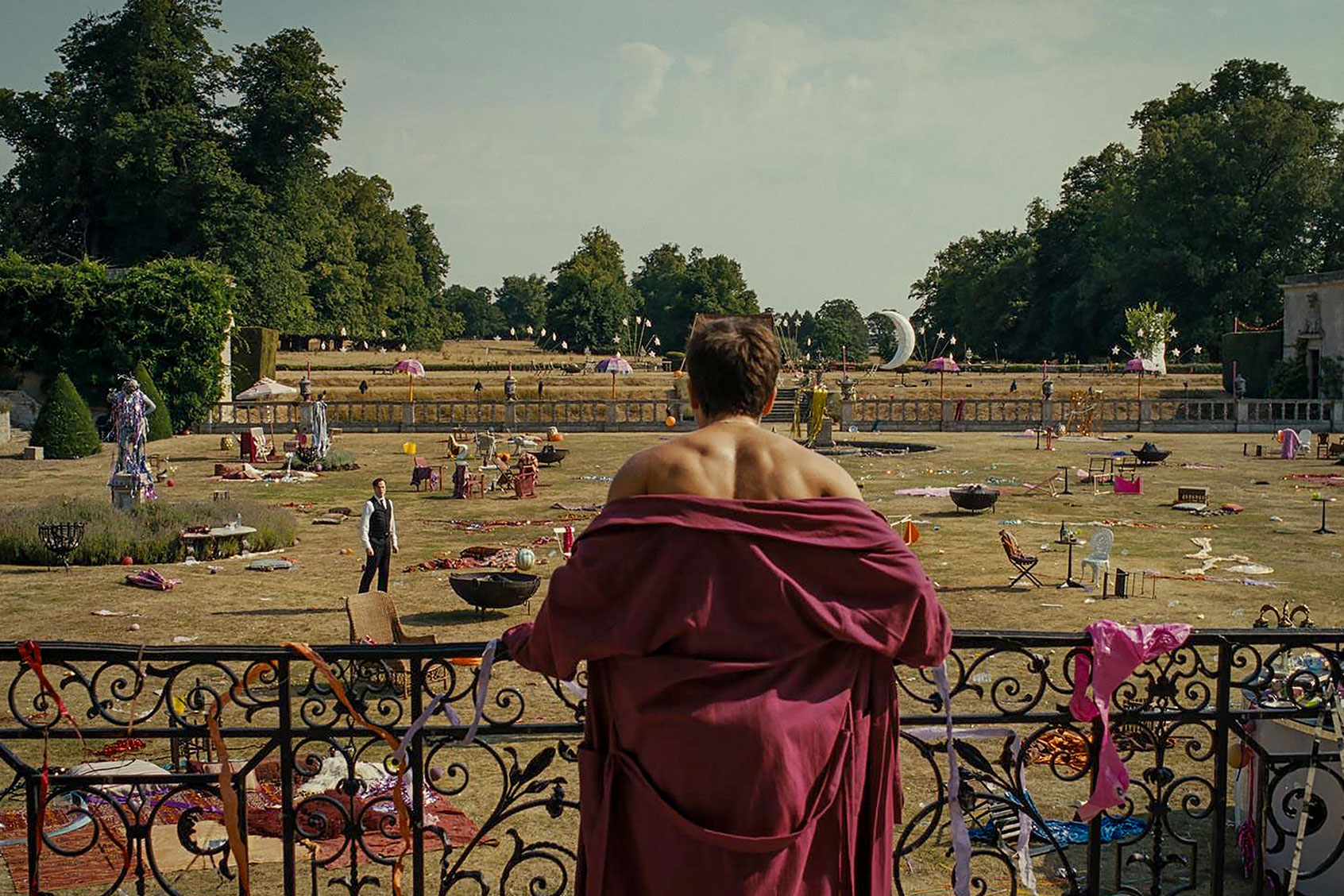
"Saltburn" is a satirical take on the lustful pursuit of wealth through one man's attempts to acquire a life of privilege by proxy.

Oscar-winning writer-director Emerald Fennell depicts Oliver (Barry Keoghan) as a poor scholarship student at Oxford University in the mid-aughts. In his first couple of weeks at school, Oliver is an outcast who longs to befriend the school's most popular, rich and attractive guy, Felix (Jacob Elordi) and succeeds in getting drawn into that new circle of friends. They establish a close, slightly homoerotic relationship, and after tragedy strikes in Oliver's family's he's invited to spend the summer at Felix's sprawling family estate called Saltburn. Oliver is therefore transported to an elite new world, gaining entrance to the life of wealth he's longed for.

Even though Fennell attempts to make the audience sympathize with Oliver, it does not quite land because of the movie's ending that undoes the groundwork that was laid out. But there is another character who is more fascinating than Oliver: Felix's cousin Farleigh (Archie Madekwe) whose background would have made for a better more satisfying antihero in the end.

Here's why Oliver ultimately fails the audience, while Farleigh could've been the one to take "Saltburn" to the next level:

Oliver's betrayal

It should be noted that there are only a few moments where the audience actually feels bad for Oliver. In the beginning of the film, there are many scenes where he sits alone in a library or dining hall pining for friends. But when he finally gains Felix's friendship, it's because Oliver is able to get vulnerable and share his experiences growing up with abusive and neglectful addicted parents and that he lost his father to that addiction. Felix is there for him and comforts him as any good person would.

SaltburnJacob Elordi as Felix in "Saltburn" (Amazon Studios/MGM)But what makes us want to root for Oliver turns out to actually be a lie. And Felix finds this out as well.

In this scene, Oliver loses whatever sympathy he's gained from the audience.

When Oliver's estranged mom calls on his birthday, Felix answers on his behalf and secretly schemes to take Oliver back to his hometown so they can reconcile. The impromptu road trip takes the friends to a high middle class neighborhood that looks pristine. The image that Oliver's painted shatters when his warm and lovely mother greets them both. Felix is shocked and perplexed to learn Oliver's father is not only alive, but is also kind and respectable. Not only that, Oliver has siblings even though he claimed to be a sad, only child. In this scene, Oliver loses whatever sympathy he's gained from the audience and Felix, whom feels betrayed and manipulated. Oliver is cosplaying as the poor son of drug addicts for attention. In that instance, he becomes just as unethical as any grifter.

Enter Farleigh, the family hanger-on

As Felix's cousin, Farleigh always comes second string. They run in the same social circle at Oxford, and he initially appears just as thoughtless and airheaded as his cousin at times. Farleigh seems only really focused on coasting through school and partying. He is in the same one-on-one essay sessions with Oliver and their professor, but Farleigh gets out of doing schoolwork by talking about his mom whom the professor used to have a crush on. Oliver sits in the room quietly, watching and hating from the outside. But this is part of Farleigh's appeal;  he's popular, loud and takes up space because he has to.

But Farleigh isn't a part of the clique because of his personhood – it's only because of his association with Felix. Farleigh is different from most Oxford students because of his nationality. He's American, and it shows in his dry Northeast accent. But he was also raised in America with his mom who is still there. He really has no home with the people who are his extended family at Saltburn and he knows this and is careful to never ruffle any feathers. While he may have an aristocratic British family, he knows that they'll only ever see him as the American cousin.

Farleigh's race also plays a large role in his outsider status. As the only Black person in his circle of friends at Oxford and the only Black family member who is at Saltburn, Farleigh must play nice . . . or at least tries to in order to not be perceived differently, but it proves to be difficult. In one heartbreaking scene, Farleigh is all but begging his rich cousin for more money that he can send to his mom. But Felix refuses, and Farleigh retorts that of course he couldn't understand his plight as the only non-white person in their family. Felix scoffs at the accusation, but Farleigh points out that Felix doesn't even know the name of the family's Black footmen. 

Farleigh is an economic outsider as well. His mother struggles with money in America and is practically disowned by the family. Meanwhile, Farleigh is depending on Felix's family for everything. They pay for his schooling, and he stays with them at Saltburn when his aunt and uncle can put him out with the snap of their fingers (and have done with another parasite who has overstayed her welcome). When he begs Felix for money, he is denied. Farleigh knows his social and economic ranking falls low in the hierarchy of his white family and does his best to play the part of someone who is as rich and privileged as them, so as not to attract their attention.

Oliver vs. Farleigh

Therefore, Farleigh was the outsider who infiltrated Saltburn way before Oliver did – and that’s why he can see through Oliver's lies and grift. Oliver is actually threatened by Farleigh because he’s the only person who can see it's all an act to get close to the wealth. After all, the truly marginalized person, Farleigh, knows what that experience is and can tell when a fraud is a fraud.

Actor Archie Madekwe said about his character, “He recognizes someone on the outside looking in, like him. This is not Farleigh’s world. One, he’s not English. Two, he’s the only person of color. Three, he’s queer. Four, he is not wealthy. It’s all of these things that don’t make him part of this world, and all of a sudden this outsider has come in and has potentially taken the place of him. And then he ends up in his house, and that’s when the threat comes too close.”

SaltburnBarry Keoghan as Oliver in "Saltburn" (Amazon Studios/MGM)Throughout the film, the two characters watch each other. Farleigh sees Oliver is encroaching on what he has built with his family, and Oliver sees that he has to take Farleigh out to take his place with Felix and the family. They play a cat-and-mouse game with one another. In a scene where the family is singing karaoke together, Farleigh is resentful of Oliver's ability to snake his way into his family and gain the approval he can barely receive from them. So Farleigh tricks Oliver into singing the Pet Shop Boys' "Rent" to publicly embarrass him. But Farleigh knows the song also applies to him too with lyrics that go like this:
You dress me up, I'm your puppet
You buy me things, I love it
You bring me food, I need it
You give me love, I feed it

And look at the two of us in sympathy
With everything we see
I never want anything, it's easy
You buy whatever I need

Look at my hopes, look at my dreams
The currency we spent
I love you, you pay my rent

Oliver knows that Farleigh is an increasing danger to his standing at Saltburn when Farleigh tips his hand, telling Felix that Oliver hooked up with his sister Venetia (Alison Oliver). In turn, Oliver sets up Farleigh by framing him via email and gets him kicked out of Saltburn.  Ultimately because Farleigh is a grifter too, he finds his way back . . . but when Felix ends up dead, Oliver once again points the finger at his rival and eventually gets Farleigh permanently kicked out of Saltburn and cut off from their finances.

We need your help to stay independent

Who deserves to take Saltburn

After Felix, each Saltburn family member dies . . . and somehow Oliver eventually is victorious and inherits Saltburn. Through flashbacks, the audience learns that he's been scheming from the very first moment Felix befriends him, and orchestrated every tragedy that eventually becomes his windfall. His celebratory nude dance through the halls of Saltburn is joyous, and presumably the audience is mentally high-fiving him for being able to pull one over on the financially rich but virtuously bankrupt.

SaltburnSaltburn (Amazon Studios/MGM)But to me, Farleigh would have been the better person to gain all the advantages in the end. It is just more meaningful to root for someone who has all the societal constraints up against him. We learned in the movie that Oliver has led a fairly easy and comfortable life – and didn't appreciate it. He had to lie about hardships and struggles to receive Felix and his family's sympathy and generosity. He had no real true motivation to eat the rich besides envy. Yes, Oliver shapeshifted into what each family member needed and gave it to them before disposing of them, and in that way he did "work" for those gains using his smarts.

But nothing changes once he inherits Saltburn. He will continue to live a life of greed, excess and unearned wealth just like Felix's family. His silly traipsing through the halls shows us this frivolous mindset.

Farleigh would have been the better person to gain all the advantages in the end.

But we can only imagine that if someone like Farleigh inherited the prize that was Saltburn, because of his true outsider status he would potentially use his wealth for good . . . or at least differently from how Oliver does. It's not a guarantee but there's a higher chance that Farleigh would try to change the way the family ran the estate. Maybe he would pay the staff more, promote the Black footmen or at least give them some better treatment. It is possible that he would make Saltburn a safe haven for marginalized people just like him because he's known hardships that Oliver hadn't. He could finally be accepted into a family he made for himself that looks like him and embraces his outsider status as a Black American queer working class person.

Ultimately, Fennell's premise falls flat because the story is told through the perspective of someone who doesn't have the range to fairly depict what being an outsider looks like. It is a missed opportunity because Farleigh was there the whole time, and was the right antihero for the role. It would have been a more satisfying and complete ending if the man who's been codeswitching his whole life to fit in ended up with the prize. He would have flown under the radar and beat the system despite the circumstances of his birth and lack of privilege.


Our “Golden Bachelor” reality check: It’s not the first time a lapse in vetting led to juicier TV

Color me shocked. Gerry Turner, the 72-year-old star of “The Golden Bachelor,” a grown man who intentionally agreed to star in one of the most popular reality TV franchises . . . was not entirely honest about his past?

Do you mean to tell me that, contrary to his claim that he hadn’t dated in 45 years, he actually did? Are you saying that the producers might have stretched the truth when it came to characterizing his career history?

My stars. We may never believe in TV-manufactured romance again.

Sarcasm aside, it’s kind of incredible that “The Bachelor” franchise is being yanked back into this same doghouse for another mild imbroglio, this time courtesy of The Hollywood Reporter. This is a brand and a genre that is constantly scrutinized for social media screw-ups, closet-dwelling skeletons and general behind-the-scenes shenanigans. Both “The Bachelor” and “The Bachelorette” have generated their share of past headlines making people question the level of vetting they apply to their pool of potential matches for a season’s star.

“The Golden Bachelor” is already being credited for resurrecting the franchise.

No “Bachelor” has been hyped up as much as Turner, a sexy senior who wept openly in the premiere as he tells the story about losing the love of his life to a sudden illness. Turner’s pre-season press tour validated the apparent honesty of his vulnerability — writers and talk show hosts marveled at his good humor, lack of self-importance and radiant sincerity.

All of that was destined to place him on some reporter’s radar. Sure enough, by glancing at Turner’s LinkedIn page, chatting with a few former co-workers, and doing a bit of poking around social gathering spots in Hudson, Indiana – population 537 – THR revealed Turner’s glow of perfection to be part pyrite. Still glittery, certainly, but maybe a bit less rare and precious than advertised.

Not that it matters, since the story emerged days before the season finale, where Turner chose 70-year-old fellow widow Theresa Nist who bonded with Turner over their grief experience, sending home Leslie Fhima, the 64-year-old aerobics instructor who was very pissed to have put on a $60,000 dress and diamond earrings for nothing.

How does Fhima feel now? Episodes of “The Golden Bachelor,” like others in the franchise, are filmed months ahead of their premiere. Prince’s “Sexy Dancer” muse might be relieved to have dodged a bullet.

The Golden BachelorGerry Turner and Leslie on “The Golden Bachelor” finale (Disney/John Fleenor)Regardless of the extent to which the THR report may stick, “The Golden Bachelor” is already being credited for resurrecting the franchise, drawing its biggest total audience since a February 2021 episode of “The Bachelor” –  a magnet for a less than savory reason. It also pulled strong ratings in the coveted 18-49 demographic and has been killing it on streaming, as THR previously reported.

Thursday’s season finale drew an audience of more than 6 million, according to Nielsen live-plus-same-day data — the best total viewership for the franchise since the March 2021 season finale of “The Bachelor” which, again, was a ratings draw for reasons ABC would rather people forgot about.

Right now Bachelor Nation youths love the “Golden” season, as do the Olds, because the network sold Turner as the genuine article.

Whether Turner and Nist’s love match turns out to be the Real Deal doesn’t concern most of us in the long run. The brand’s poor track record in the lasting relationship department is widely known, and that hasn’t stopped people from tuning in.

Besides, Turner’s tarnish marks aren’t especially egregious. It boils down to a few fibs, really. Contrary to his story on the “Bachelor Happy Hour” podcast that he engaged in one kiss before coming on the show, a few women have come forward to clarify that, au contraire, he kissed a few more misses in recent years than he claims.

The report has a whiff of cheap gossip to it and not much more.

THR also revealed that producers massaged his description as a “retired restaurateur,” finding that his more recent work history includes installing hot tubs and serving as a maintenance man at a mental health facility. Most people understand how central artifice is to creating reality TV, and in dating terms, a former restaurant owner is more likely to get swiped right than “retired maintenance man” or even “one-time hamburger drive-in proprietor.”

A less attractive part of Turner’s past is relayed through an ex-girlfriend THR identifies as Carolyn, with whom he shared a relationship spanning nearly three years, beginning around a month after his wife died . . . yikes. They even moved in together. But Carolyn’s account of how he ended things is worse.

At the close of a relationship marked by Turner being neat freak and a skinflint, they broke up after he shamed her for gaining 10 pounds. On the day she was supposed to move out, Carolyn says she accidentally broke her foot, requiring emergency surgery. When she returned to their shared home he accused her of somehow “using the fall as an excuse to prolong her stay” and ordered her to go to a hotel, she claims. This, in the dead of Midwestern winter.

Between corroborating insights from Carolyn’s indignant friend Susan and spilled tea from Turner’s outstandingly named local spot The Shady Nook (!) the report has a whiff of cheap gossip to it and not much more. Still, these were details ABC might have accounted for before constructing the sensitive, chaste gentleman fantasy that made everyone weak in the knees.

Every reality show purports to do cursory background checks on participants, be they the stars or other contenders. Depending on the methods employed by the hired agency this can include searching for criminal records or other major black marks on someone’s file. But past “Bachelor” seasons have proven some of these passes to have been insufficiently thorough.

We need your help to stay independent

In 2018 “Bachelorette” audiences watched Lincoln Adim receive an early first impression rose from Becca Kufrin in the same week he pleaded guilty to indecent assault and battery for groping a woman on a Boston harbor cruise . . . in 2016.

Past “Bachelor” seasons have proven some of these [background checks] to have been insufficiently thorough.

That level of vetting requires investigative expertise. The level of dish THR pulled up on Turner requires a cursory search of publicly accessible information, along with a few phone calls – easily done but something the show’s producers have neglected time and again. During her season Kufrin was also courted by Garrett Yrigoyen, who liked Instagram posts attacking transgender people, undocumented immigrants and Parkland, Florida mass shooting survivor David Hogg. Anyone, including a few interns, could have spotted those before Yrigoyen made it to the mansion. That did not happen.

Neither Adim nor Yrigoyen won but won’t be forgotten thanks to this lapse — which should not have happened a year after Rachel Lindsay became the franchise’ first Black Bachelorette. Early in her season reporters dug up the Twitter feed of one of her suitors, Lee Garrett, and found a trove of anti-Black racism, sexism, homophobia and Islamophobia. Lindsay ended up eliminating him on the sixth episode, and we would say “phew!” to that, except for that being four episodes after the world found out she was being courted by a bigot.

Surely the show would have tightened its filters after that but uh, no. In 2019, “Bachelorette” Hannah Brown chose Jed Wyatt. The woman he was still dating at the time was not pleased about that, and shared as much with reporters.

The BachelorThe Bachelor (ABC)Similar sloppiness happened yet again in 2021 when the franchise welcomed Matt James as its first Black Bachelor in its 25 seasons. James went on to pick Rachael Kirkconnell as the recipient of his final rose, but held back from giving her an engagement ring. Good thing too, because by the finale Kirkconnell had been outed on social media for having attended an antebellum-themed “Old South” party with her sorority sisters and liking others’ racist posts.
This is why that February 2021 episode enjoyed a ratings spike, leading one to wonder if the whole lax vetting of “Bachelors” and “Bachelorette” contenders isn’t entirely accidental.

Next to all that, what’s a little resume massaging and lies by omission between old friends? Not much. Especially in the same year that yielded the “Love Is Blind” drama wherein two people who previously dated, Uche Okoroha and Lydia Velez Gonzalez, ended up in the same supposed “sight unseen” dating experiment. That show’s creator, Chris Coelen, swore to People that the producers had “absolutely no idea” and were as shocked as the rest of us were. “Of all the gin joints in all the towns in all the world” and so forth.


Want a daily wrap-up of all the news and commentary Salon has to offer? Subscribe to our morning newsletter, Crash Course.


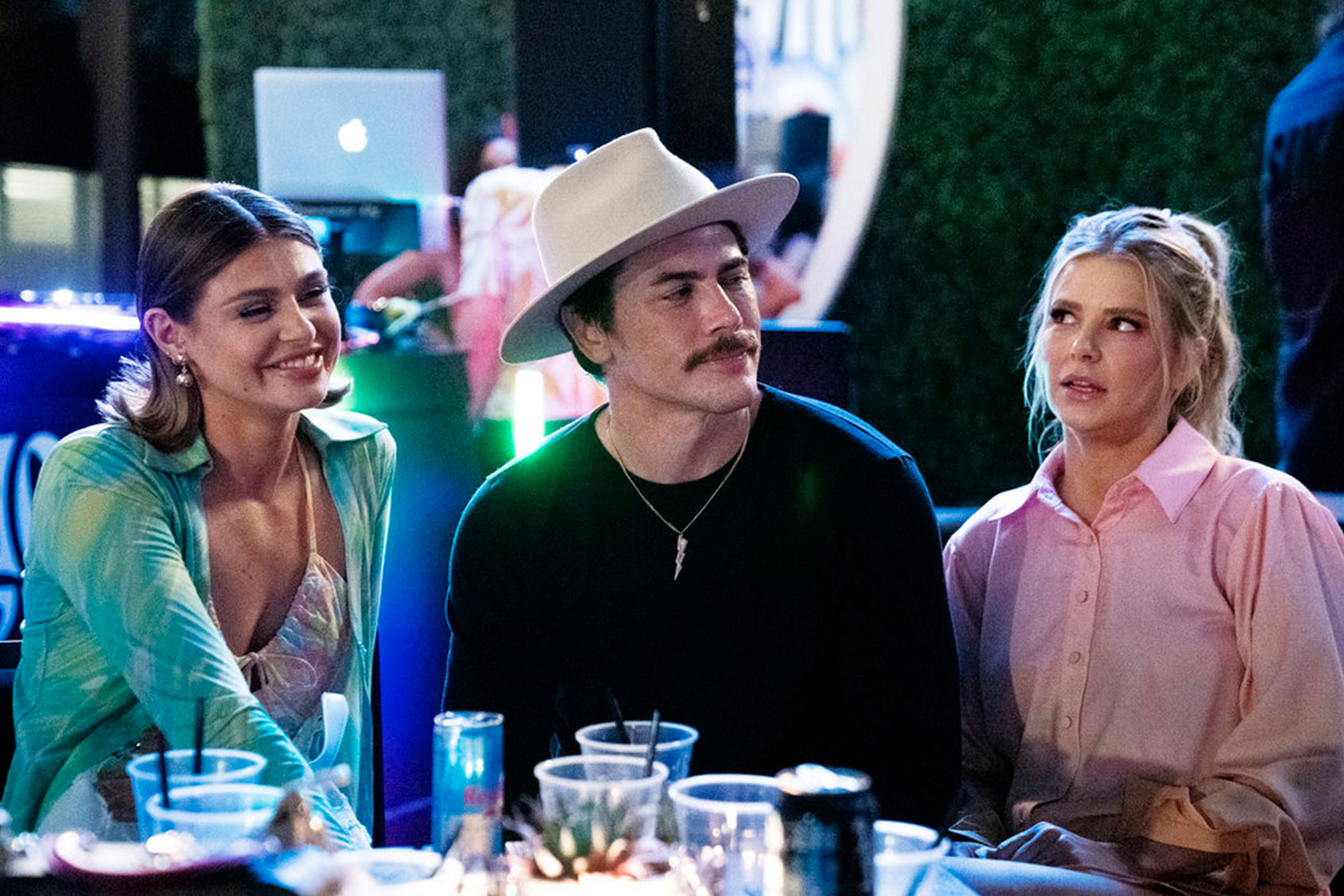
This is also the year that “Vanderpump Rules” viewers gave the show its highest ratings ever thanks to “Scandoval,” in which the real-life break-up of two longtime “characters,” Tom Sandoval and Ariana Madix, preceded a season where their relationship seemed rock solid.

Watching Madix’s traitorous bestie Raquel Leviss display loyalty for the cameras transformed the viewing experience, driving home the artificiality of reality TV relationships. Even ones lasting nine years are part performance, illustrating that whether won by contest or witnessed on Bravo, nothing gold ever stays in reality TV.

Vanderpump RulesRaquel Leviss, Tom Sandoval and Ariana Madix on “Vanderpump Rules” (Nicole Weingart/Bravo)Then again, the appeal of “Scandoval” is in the organic allure of its real world messiness shattering the carefully edited “Vanderpump Rules” aquarium, whereas those who make “Golden Bachelor” may have known all about Turner’s dating history and figured a few broken hearts in his near past could be skipped over without much risk.

They’re probably right. Shortly after proposing ABC set Thursday, Jan. 4 as its date for “The Golden Wedding,” in which Turner and Nist’s nuptials will be broadcast live. As for scenes from their marriage, those who remain invested can read up on it later.

Episodes of “The Golden Bachelor” are streaming on Hulu.

“Capitalizing on conflict”: How white nationalists are exploiting Israel-Gaza tensions to push hate

Fiery tensions related to the crisis in the Middle East are worsening in the United States as Israel wages its war on Hamas — and white nationalists are flocking to the internet to exploit them. 

Protests have erupted throughout the nation as pro-Palestinian demonstrators call for a permanent ceasefire in Gaza, where a week-long ceasefire collapsed Friday following Hamas and Israel's exchange of more than 100 Israeli hostages, the majority of whom were seized during the militant group's deadly Oct. 7 attack, and more than 200 Palestinian prisoners in Israel, thousands of whom have been imprisoned for years. The crisis has also sparked a rise in anti-Muslim, anti-Arab and antisemitic incidents of bias and hate, leaving members of those communities reeling. 

"Everybody has been affected whether it's personally affected by incidents in our communities, in our schools, in and around our places of worship, or that which has been experienced by a friend or community member or a family member," Halie Soifer, the CEO of the Jewish Democratic Council of America, told Salon. Soifer explained that she's mostly seen hateful, antisemitic rhetoric fueled by the war crop up online alongside a rise in vitriol targeting her organization. 

Recent reports have documented a massive surge in anti-Muslim and antisemitic hate speech on the internet in the nearly two months since Israel began its bombardment of Gaza that's killed over 15,000 Palestinians, including 6,150 children, according to the Hamas-run Gaza Health Ministry, in response to the Hamas attack that killed 1,200 Israelis, according to their government.

Posts on X, formerly Twitter, containing anti-Muslim keywords and hashtags spiked in the week of Hamas' attack by 250 percent compared to the previous week, according to an early November report from the London-based Institute for Strategic Dialogue, which also saw a sustained 297 percent jump in the number of posts on X containing anti-Muslim keywords in the five days following the initial 422 percent surge in hateful posts during the weekend of the attack. In an analysis of 162,958 tweets and 15,476 Facebook posts from the week before Hamas' attack to the week after, the ADL also found a 919 percent, week-over-week boom in antisemitism on X and a 28 percent increase in antisemitism on Facebook. 

The presence of white nationalist rhetoric in online hate speech reveals a more insidious underbelly in the surge. Though researchers can't prove causation, white nationalist ideology has featured prominently in the hate speech circulating on social media sites, as users, in response to the crisis, lash out at Jews, Arabs and Muslims on mainstream platforms.

On X, where a premium account subscription provides a range of perks, including algorithmic content boosts in searches and access to ad-revenue sharing, posts espousing white nationalist viewpoints raise alarms, according to Katie Paul, the director of the Tech Transparency Project, which functions as the tech arm of ethics watchdog Campaign for Accountability. 

"These are ideologies that are essentially paying to get themselves lifted up toward higher level rankings when it comes to people who are searching for content related to the conflict," Paul told Salon. "That's deeply concerning because it's not prioritizing authoritative content or authoritative sources and essentially prioritizing, in many cases, disinformation and, in all the cases that we looked at, explicit racism and antisemitism."

In a report released last month, the Tech Transparency Project found dozens of X premium accounts associated with white supremacist ideology using the violence in the Middle East to further hateful agendas in posts that often violated X's policies. These profiles' posts tied the ongoing crisis to the "Great Replacement" theory — a bigoted ideology that claims Jews are perpetrating a plot to replace white-majority populations with non-white and non-Christian immigrants — defending "white nations" and giving voice to anti-Muslim rhetoric and antisemitic tropes. 

One self-described "White Ultra National" X Premium account the watchdog found, @UltraPatriot44, made several posts in October pushing replacement theory. “Multiculturalism has failed and by bombing Gaza the AntiWhite Jews will create a wave of AntiWhite refugees to our homelands,” the user wrote in part in one post. "This is what the AntiWhite Jews want.”

The user later attempted to use the violence in Gaza to recruit others to join Active Clubs, a network of white supremacist fight clubs, writing, "As the Arabs and Jews duke it out, We must be prepared to defend our White nations. Our enemies won't win the war for us!”

A Nov. 1 post from user @makeeuropasnow, a premium account with more than 19,000 followers that condemns "race mixing" and warns of "white genocide," pushed an antisemitic claim that Israel "has all the power, control and manipulation of majority White Nations." The same post also attacked "the other side," represented by a Palestinian flag, as "p3dos" and "r@pists" who "are mass invading our White Nations trying to bring in white sharia law," the last part referencing an Islamophobic trope alleging that Muslims want to force Sharia law onto western nations.

All of the posts and users TTP found violated at least one of X's safety rules, according to the watchdog, the breach of which the platform states may result in the loss of the blue checkmark and even account suspension. A Salon search of the accounts named in the report saw that, as of Friday, all except one of the profiles (one of which appeared to have changed its handle to a similar one while maintaining the same bio described in the report) were not only still active but still had visible blue checkmarks, which can be hidden by Premium subscribers.

Some of the cited X users have also seen growth in their platforms since TTP published the report. @AntiWhiteWatch1 has more than 185,000 followers on X, up from the 174,000 it had per TTP's report.

We need your help to stay independent

What's happening on the platform "is one of the few times where we're not just seeing these accounts permitted, but they're still able to monetize. We're not seeing any effort to even stop the way that these white nationalist accounts are able to make money on the platform, let alone the fact that they are spreading hateful ideology, at all," Paul told Salon, adding that the proliferation of hate speech on all social media demonstrates that platforms' AI-run, reporting systems — and user reporting — aren't enough to combat the vitriol.

When reached by Salon for comment, X's press email returned an automated message reading, "Busy now, please check back later."

Two weeks ago, X owner Elon Musk, who reinstated accounts previously banned for peddling extremism and conspiracy theories upon taking control of the platform last year, even partook in amplifying the rhetoric, praising a user who pushed the "Great Replacement" theory against Jews, a move that garnered harsh rebuke. Musk, for his part, apologized for the post while speaking at a conference Wednesday night.

Still, the danger in Musk's praise also lies in the theory's direct ties to white supremacist violence. In fact, replacement theory, which was expressed in the antisemitic Protocols of Zion meant to foment violence against Jews, is at the heart of all white nationalist movement in the United States — and right-wing extremism movements globally, according to Lawrence Rosenthal, the chair of U.C. Berkeley's Center on Right-Wing Studies.

"This is a template. In fact, antisemitism is the model of what we're seeing both on the extreme right in this country and internationally in the right-wing populist movements that have often taken power," Rosenthal told Salon, adding, "So there's almost a coming home to roost quality about antisemitism emerging on the right in the face of the Hamas-Israel current war."

Islamophobia also fits snugly into that template, Rosenthal said, explaining that anti-Muslim hate had been prevalent among the far-right before 9/11 but became a "staple" in its ideology in its aftermath. Former President Donald Trump's 2016 campaign, which hinged on curtailing immigration alongside promises of a Muslim ban that were brought to fruition, further incited Islamophobic vitriol by amplifying anti-immigration sentiment that otherwise remained internal to far-right groups like the Tea Party and later pushing it to dominate the mainstream Republican Party, Rosenthal added.

While he largely sees parallels in white nationalist rhetoric toward Muslim and Arab people in the aftermath of the 9/11 terror attack and the current violence wracking the Gaza Strip, he noted that the breadth of the white nationalism movement is far greater now.

"That kind of exclusivity of Islamophobia in the wake of 9/11 is no longer the case," Rosenthal told Salon. "So you can get the Elon Musk-kind of antisemitism and at the same time you have [the idea that] Latin peoples, they're an invasion from the border." 

Rosenthal pointed to the presence of replacement theory in the 2017 alt-right rally in Charlottesville, Virginia, where demonstrators chanted, "You will not replace us" and "Jews will not replace us." That demonstration turned physically violent when a white supremacist plowed his car into a crowd of counterprotesters, killing 32-year-old Heather Heyer and injuring 19 others.


Want a daily wrap-up of all the news and commentary Salon has to offer? Subscribe to our morning newsletter, Crash Course.


The theory later motivated the mass shooter who murdered 11 congregants of the Tree of Life synagogue in Pittsburgh in 2018, who wrote on the far-right platform Gab that he blamed Jewish people in the U.S. “for bringing in an invasion of nonwhite immigrants,” per Media Matters for America. A white supremacist in New Zealand who murdered more than 50 Muslims in a 2019 shooting of two mosques referenced the theory as well, describing Muslims as "invaders" in his manifesto. Mass shooters who carried out violent murders of Black people in Buffalo, New York, and Mexican people in El Paso, Texas also referenced the ideology.  

Most alarming about white nationalists' use of the crisis in Gaza to push hate online in service of their agendas is how it coincides with a spike in physical incidents of hate and violence directed toward Arab, Muslim and Jewish people since Oct. 7.

A 6-year-old, Palestinian boy, Wadea Al-Fayoume, was stabbed to death and his mother badly wounded in Illinois in October, allegedly by their 71-year-old landlord who faces three murder counts, one count of attempted murder and two counts of committing a hate crime, among other charges. Prosecutors claim the suspect had become paranoid listening to conservative radio segments about Israel's war on Hamas. 

Last weekend, three Palestinian college students — Hisham Awartani of Brown University, Kinnan Abdalhamid of Haverford College and Tahseen Ali Ahmad of Trinity College — wearing Palestinian keffiyeh scarves were shot in Vermont while conversing in English and Arabic. The suspect, a white man in his 40s, pleaded not guilty to three counts of attempted murder earlier this week as authorities continue to investigate. State Attorney Sarah George told the Associated Press that while local law enforcement does not yet have evidence to support a hate crime charge, “there is no question that this was a hateful act.”

In the month following Hamas' attack, the Anti-Defamation League documented 832 antisemitic incidents of assault, vandalism and harassment in the U.S., marking a 316 percent increase from the number of incidents reported during the same period last year. A parallel report from the Council on American-Islamic Relations revealed that between Oct. 7 and Nov. 14, the organization received a total of 1,283 reports of anti-Muslim bias, a figure that represents a 216 percent rise in the number of complaints received from a similar period the year prior.

The Southern Poverty Law Center has also documented an increase in antisemitic harassment of individuals and "'fake' bomb threats to Jewish institutions" alongside incidents of "anti-Muslim hate groups capitalizing on the conflict to push bigoted rhetoric about Islam and fearmongering about the Muslim community," SPLC senior research analyst Caleb Kieffer told Salon in a statement.

"The community is very afraid," Corey Saylor, CAIR's research and advocacy director, told Salon, also noting Muslim and Arab communities' courage in continuing to call for a permanent ceasefire in the face of increased violence.

"We see all these incidents, and we see and we hear from people who are changing their behaviors," Saylor added. "They don't want to be out. They don't want to be visibly Muslim. And they're afraid of just having the lens, shall we say, turn to them."

What to America is John Brown?

On December 2, 1859, the United States saw its first execution of a prisoner convicted of treason: a white man who challenged slavery. Today, America still can’t imagine a nation of white people who dissent from white supremacy. That's partly because we can't imagine healthy dissent. 

As a professor of peace and conflict, I am often teased about my support for the 19th-century militant John Brown. Peace Studies involves studying alternatives to violence, and certainly not the advocacy of violence, so I admit that Brown is a difficult figure to square with my work facilitating multi-partisan and multi-ethnic collaborations. Brown, who was hanged in 1859 by the Commonwealth of Virginia for raiding a federal armory in Harpers Ferry, VA, aiming to support enslaved people’s escape to freedom, had also clashed with pro-slavery groups during the battles known as “Bleeding Kansas,” including an alleged midnight ambush and slaughter of five pro-slavery leaders.

After decades of giving speeches arguing against slavery, and leading conversations and appeals to the wealthy and powerful, Brown was impatient with this pacifist approach, which insisted on “moral suasion,” as mainstream abolitionist William Lloyd Garrison called it — what we'd now call “changing hearts and minds” or “changing the narrative.”

His dear friend Frederick Douglass, in a now-famous speech given two years before the Harpers Ferry raid, asked a white audience in Rochester, NY, “What, to the slave, is the Fourth of July?” answering that the day merely reminds of, “the gross injustice and cruelty to which [Black people are] the constant victim,” and exhorting

your celebration is a sham; your boasted liberty, an unholy license; your national greatness, swelling vanity; your sounds of rejoicing are empty and heartless; the conscience of the nation must be roused; the propriety of the nation must be startled.

Douglass and Brown were not the only ones impatient for their peaceful dissent to finally be heard. In those febrile years, Brown and many others took up arms; 18 months later the country plunged into a long, bloody civil war.

What, to America, is John Brown? Maybe a lesson about people who refuse to learn from the instructive dissent of social movements, whatever “side” they’re on. But the fact that there are only three statues of Brown in the country tells us something of a particular shame attached to his legacy. I don’t think the shame is for his violence. I think it’s for our white history of coordinated repression, instead of the moral courage needed to finally create a just, multi-ethnic democracy.

Dissent from white supremacy now is quite different than in Brown’s day. The war that to Brown had clear “sides” — white pro-slavery forces against Black enslaved people — has grown more dynamic and complex. Legal sanctions have closed a gap, bringing far more protections for Black and other marginalized people, so that uninformed white people can reasonably object to what they perceive as “special treatment” for other groups. And relying on people’s racial identities alone doesn’t deliver justice, since wider economic opportunities have unsurprisingly also resulted in abuses of power by people of all races, not just white people. Today's scenarios thus require both information and discernment. Mamie Till-Mobley wrote in 1955, after her 14-year-old son, Emmet Till, was lynched in Mississippi:

People have to face themselves. They have to see their own responsibility in pushing for an end to this evil. Two months ago I had a nice apartment in Chicago. I had a good job. I had a son. When something happened to the Negroes in the South I said, “that’s their business, not mine.” Now I know how wrong I was.

Till-Mobley, a Black mother who lost her son to mob violence, and then because Jim Crow courts had no recourse to the state, urged all individuals to take responsibility, not only members of the racial group that killed her son. To me this isn’t a false equivalency, somehow erasing the very different obstacles that Black people faced and which white people put in place, but a generous gesture acknowledging that everyone in society is tied together, whether we want to admit it or not.

In February of last year, I flew to Kansas for research on John Brown and stopped in St. Louis to visit family. I was especially looking forward to talking with my cousin Will, who’s ten years younger and also a fan of Brown, describing him in our texts before my trip as “absolutely a man of noble character.” I wanted to trade facts and sources; also, because he did two Army tours — Iraq and Afghanistan — I expected he might have a different understanding of John Brown’s view of violence as sometimes necessary. I was hoping to learn something.

But the fact that there are only three statues of Brown in the country tells us something of a particular shame attached to his legacy. I don’t think the shame is for his violence.

Will’s sandy blond hair is receding a bit, and his eyes have an insomniac’s circles. Built like a distance runner, he thinks and talks fast, his stories peppered with Army-vivid swear words. I love talking with him, because he's deeply intellectual, though it means we traverse a gap between our different sources of information.

After describing settlers’ westward expansion (“Big fan of [President] Polk — that rope-a-dope in the Spanish-American war?!”), Will shares his assessment of most liberal policy approaches, starting with FDR (“influenced by the fascists”) and continuing with Black Lives Matter (“[morally] bankrupt”). With each of his points, I can feel the gap between us widening, at least politically. I resist automatically assuming I’m right, particularly about facts I haven’t yet researched. I note that he grew up white in St. Louis, raised within white settler culture; I grew up white in majority-Black Washington, D.C., going back and forth from the dinner tables of white families, of Black families, and Black immigrant families, each one offering me a very different interpretation of the day’s news.

Will is also a good listener. As I share how differently I see, for instance, Black Lives Matter and the Black freedom movement in general, he looks for areas where we might be saying very similar things but using different language. An area we’re not able to find a connection on is the police. And I flinch when, instead of saying someone’s tough, he uses a phrase like “they’d rip your heart out,” though I’m guessing it also reflects the Army culture.

Maybe it is my flinching that causes him to text me after I leave, one of his essay-long musings on life philosophy with politics that begin with, “hey man.” While talking I’d brought up the fact that the curator at the John Brown museum in Osawatomie, KS, had described Brown as an “ideological guerrilla,” and I couldn’t help but be reminded of the rioters at the Capitol on January 6. They too saw their acts as patriotism, not treason, a moral dysphoria that I see repeated in newspapers’ use of the word “extremist” to describe dissent that is escalating or confrontational, even angry protesting. Disruption is never neutral, so to me, the question is: To whom are disruptive acts accountable? Is it only the powers-that-be, or are the actions seeking to instruct on how those powers can act more justly?

I asked Will about his thoughts, and whether the Army had codes of ethics that might be relevant to understanding how far might be “too far,” and whether force is sometimes necessary. But he gently dismisses my line of questioning, saying that whatever ethical code he follows he’s arrived at from hard experience, and we are quiet for a minute. Later, asking why I have such a strong interest in race, he seems sensitive to the possibility that my learning, too, has come from hard experiences. Which is also to say, my mistakes.

White supremacy in the U.S shows how easy it is to keep a status quo in place, even if incredibly destructive. Just refuse to listen to the people it's hurting; also, suppress conversations between people who are exploring what is and isn't the case. I appreciate how Will and I, as two white people with different life experiences, can do that exploration. In his long text a day or so after I’m home, he continues our conversation about the limits of pacifism in pursuing justice for white supremacist corruption. And I'm not sure, but maybe he also wants to make sure I don’t mistake him as at all aligned with the Trump-conservatives. He conclusively describes Brown’s choice, “to engage in such a harsh and extreme f***ing manner” as not having “any place in the here and now of American politics.”

Will is open to my dissenting views, even when I vigorously push back, and I have grown in my understanding of his. We’re learning from each other. But too often views that dissent from white supremacy norms receive disdain and correction. In a university talk a few years ago, after I brought up Brown calling slavery a “war” that’s “one portion of its citizens against another,” a white woman scholar advised me to “look in the mirror a bit more about your own biases.” I felt rebuffed and judged, and questioned whether I’d come across as arrogant. She also hadn’t responded to the substance of what I’d said, which I was genuinely interested in hearing.

A key part of conflict resolution is knowing how to discern a “third way” and not only the “two sides” before you — also known as learning.

In "My Bondage, My Freedom," Frederick Douglass noted that plantations were not just places, where enslavement was legal, but a political project, a “nation in the midst of a nation… [whose] branches reach far and wide in the Church and State.” And which, to maintain “fetters on the limbs of the blacks” proposes “to padlock the lips of the whites.” Douglass was referring to violence, whether by lynching and assault or by destroying people’s property, threatening their livelihood. (I’m grateful to Saidiya Hartman for bringing the Douglass piece to my attention in her 2020 interview in Artforum.)

In this century, the more common tools for repressing dissent are disinformation campaigns, which carefully depict the idea as disloyal or dangerous. “Marxist,” for instance, is still a chilling synonym for “anti-American” in many conservative circles. Like “McCarthyism,” Senator Joseph R. McCarthy’s 1950 crusade against Americans allegedly exploring communism, this kind of repression goes viral and can result in widespread retaliation, firings or censuring, as is happening now toward many who express pro-Palestine views. They are, instead, described as “pro-Hamas,” or worse, as violent terrorists. W.E.B. Du Bois wrote an article in response to McCarthy, “The Freedom to Learn,” noting that simply for exploring alternatives to the economic system one was likely to be called a traitor, “accused of having selfish and unfair designs upon the progress and well being of the people of this nation.” It’s not just the accusation of treason he reviled, but the active efforts to bar access to information, to learn:

not only what our leaders say, but what the leaders of other groups and nations, and the leaders of other centuries have said….[access to] such an array of facts and such an attitude toward truth that [all] can have a real chance to judge what the world is and what its greater minds have thought it might be.” [Midwest Journal, 2 no. 1:9-11 (Winter 1949).]

Du Bois points out how this banning or repression is a danger not just to individuals but to the country, because we lose “the right to think,” This repression dynamic is lethal to a society, undermining the freedom to learn even about views or information others might consider “dangerous”; undermining the legitimacy of all knowledges, and even of schooling and education. It propagates a worldview in which we are disinterested not only in learning but one another.

It also blocks our ability to resolve social conflicts. A key part of conflict resolution is knowing how to discern a “third way” and not only the “two sides” before you — also known as learning. We have to look very squarely and surely at the facts of what has happened, what is happening, what is being said and why — and remain committed to finding what it is that we do not yet know. Paradoxically, it’s in this fact-based new understanding that we often discover that third way, or what else could be.

When Charlie Rose asked Toni Morrison in a 1993 interview about whether white people, too, are harmed in the unfolding of white supremacism, she didn’t disagree. Instead, her face framed by glamorous waves of hair and a red lip, she flashed what she says is the more important question: “What are you, without racism?”

The statue of Brown in Kansas City, KS, has twice been vandalized. In 2018 racist graffiti and swastikas were painted on it. In November 2019, two of the fingers were broken off along with the marble scroll in the fingers held, a representation of the alternative constitution that Brown and others wrote.

Part of why I and others revere Brown is not only for the bravery of his life’s end, but that, as Frederick Douglass put it, he was “in sympathy, a black man… as though his own soul had been pierced with the iron of slavery.” He lived and worked alongside Black people; he was, as W.E.B. Du Bois put it, “a companion to their daily life, knew their faults and virtues.” In 1849, antislavery novelist Richard Henry Dana met Brown and his family in North Elba, NY, and was shocked to find Brown matter-of-factly introducing white and Black residents equally. “The man was ‘Mr. Jefferson,’ and the woman ‘Mrs. Wait.’” Dana concludes, “[I]t was plain this family acted on principle in even the smallest matter.” Yet John Brown remains better known for his violence than his inviolable wish, that American society might renounce its covert war of “two nations": White, and everyone else.

This story has been updated to clarify that John Brown's execution was carried out by Virginia, not the federal government of the United States. 

The lesser-known history of the Monroe Doctrine

Today marks the 200th anniversary of the Monroe Doctrine, celebrated in history books for extending U.S. influence throughout the hemisphere. But few Americans are aware of its lesser-known predecessor – “The Jefferson-Monroe Penal Doctrine” – which first proposed using slavery and involuntary servitude as punishment for crime to establish a national penal colony.  At a time of continued reckoning over slavery in the United States, it is also a fitting moment to consider the roots of prison expansion in empire.  

At the dawn of the nineteenth century, Gabriel Prosser and hundreds of enslaved people in Virginia planned a revolt. Enslavers and local militia discovered and thwarted the rebellion amid a suffocating climate of white hysteria over the revolution taking place on the former French colony of Saint-Domingue, where enslaved people were engaged in a struggle against slavery that would establish the first Black republic in the Western Hemisphere. 

By uncovering the lesser-known history of the Jefferson-Monroe Penal Doctrine, we might counter the white nationalist celebrations that characterize so much of recent debates over the American past.

In the wake of Gabriel’s Rebellion, James Monroe wrote to Thomas Jefferson requesting he find a place to transport prisoners convicted of sedition, conspiracy, or insurrection “out of the limits of the U.S.” What they came up with was evoked in schemes to establish a national penal colony in places like Île-Vache, off the coast of Haiti, and Alaska, dubbed “America’s Botany Bay.” 

Federal law providing for slavery and involuntary servitude to be used as punishment for crime in territories that otherwise outlawed slavery made proposals for using prison labor to colonize land seem feasible. The so-called “convict clause,” the legal exception for prison slavery, originated with the Northwest Ordinance, applying to territories claimed northwest of the Ohio River, and was carried forward in the Thirteenth Amendment to the U.S. Constitution. The clause provides that: “Neither slavery nor involuntary servitude, except as a punishment for crime… shall exist within the United States, or any place under their jurisdiction.”  

Over successive eras of empire-building, those places under U.S. jurisdiction came to include a vast expanse of Native American land across North America, Alaska, Hawaii, Puerto Rico, Panama Canal Zone, and the Philippines. Plantation labor at the Iwahig Penal Farm in the Philippines established after the U.S. waged war with Spain and put down the Philippine independence movement – said to be the largest penal colony in the world – looked strikingly similar to convict labor at Parchman Farm in Mississippi. 

We need your help to stay independent

Prison officials celebrated the Iwahig penal colony as a model “Prison without Walls” when they set about implementing a similar scheme at McNeil Island prison off the coast of Washington, in the Puget Sound, suggesting that taking up the “White man’s burden” of imperialism overseas had taught them how to better govern prisons domestically. 

The Jefferson-Monroe Penal Doctrine’s formulation that prison slavery be used beyond borders became a mainstay of federal policy. President Theodore Roosevelt selectively extended certain constitutional provisions by executive order to the Panama Canal Zone, where the U.S. had seized control in the early 20th century, for example, making clear that the “convict clause” would apply in this new “extra-territorial” jurisdiction as well. 

Many of the same military men, police, and prison guards who fought in places like the Philippines, Cuba, and Puerto Rico during the Spanish-American War, were tapped to extend prison imperialism in the Canal Zone. Veterans from Roosevelt’s “Rough Riders” assumed posts as police captains and prison wardens, overseeing one of largest infrastructure building projects in history. Highly visible and degrading convict labor on road gangs was used to structure racial hierarchy in the Zone.


Want a daily wrap-up of all the news and commentary Salon has to offer? Subscribe to our morning newsletter, Crash Course.


As in the U.S. South, bogus charges and sentences to hard labor effectively re-enslaved Black people in the Panama Canal Zone, including thousands of migrant workers from the Caribbean islands of Jamaica, Barbados, and Martinique. And hard labor on road gangs in the Panama Canal Zone looked a lot like the chain gangs used to consign Black people to prison slavery in the South. 

The convict clause may now be the longest lasting and farthest-reaching piece of federal prison policy. As an early cornerstone of what might be called “prison imperialism”, it spawned a network of historic and contemporary institutions that have spread U.S.-style structural racism around the globe. Whether we chose to disavow or ignore it, the fact is that empire-building crucially shaped the rise of the mass incarceration. 

Ahead of the impending commemorations of the Monroe Doctrine, we should understand that U.S. policymakers exported prison slavery along with their foreign policy aims. By uncovering the lesser-known history of the Jefferson-Monroe Penal Doctrine, we might counter the white nationalist celebrations that characterize so much of recent debates over the American past. 

To reverse course requires that we reckon with the living legacies of racism and colonialism in the prison system. The convict clause provision for prison slavery has recently been abolished in seven states and was on the ballot but failed to garner enough votes in California and Louisiana last year. This history, hidden in plain sight, urges us to mobilize support for campaigns like 13th Forward in New York and the Abolish Slavery National Network across the country, and push to end to slavery, without exceptions.

Inmate who stabbed Derek Chauvin 22 times charged with attempted murder

John Turscak, the 52-year-old inmate who stabbed Derek Chauvin 22 times using a makeshift knife on the day after Thanksgiving, has been charged with attempted murder. According to corrections officers at the Federal Correctional Institution in Tucson, where Chauvin is serving out his 22.5 years sentence for the second-degree murder of George Floyd, Turscak said he would have killed the former police officer had they not intervened so quickly.

In addition to the charge of attempted murder, Turscak also faces three other counts, including assault with intent to commit murder, assault with a dangerous weapon and assault resulting in serious bodily injury, according to CNN. In a news release from the District of Arizona’s US Attorney’s Office, they add that “attempted murder and assault with intent to commit murder violations each carry maximum penalties of 20 years’ incarceration, while assault with a dangerous weapon and assault resulting in serious bodily injury each carry maximum penalties of 10 years’ incarceration.” According to the Los Angeles Times, Turscak was sentenced in 2001 to 30 years in prison for carrying out crimes while working as a federal informant, adding that he was "recruited as part of a 1999 case that eventually brought down charges against members of the Mexican Mafia, a gang that he admitted he had joined in 1990," according to court documents.  

Per the initial complaint filed against Turscak following the stabbing, he stated that his attack of Chauvin on Black Friday was symbolic with the Black Lives Matter movement and the “Black Hand” symbol associated with the Mexican Mafia criminal organization.

Julianna Margulies apologizes for offending Black and LGBTQ+ people — Doesn’t take it back

After a full day of being dragged on the internet for comments made on a podcast in which she berated Black and LGBTQ+ people for supporting Palestine, Julianna Marguiles is doing damage control, issuing a statement in which she apologizes for offending people, but does not recant what she said to set this whole thing off. 

For those who missed it, "The Morning Show" actress made an appearance on "The Back Room with Andy Ostroy" podcast on November 20 and passionately ranted about "The Blacks" and "these people who want us to call them they/them" spewing antisemitic hate, going so far as to accuse Black people of being brainwashed to "hate Jews," and saying that gender neutral people would be decapitated in an Islamic country and have their heads used in place of soccer balls. Taking some time to reflect on the response she got to this (it wasn't good), she's not taking back anything that she said, but she's sorry that people were upset by it.

“I am horrified by the fact that statements I made on a recent podcast offended the Black and LGBTQIA+ communities, communities I truly love and respect,” she said in her statement on Friday. “I want to be 100% clear: Racism, homophobia, sexism, or any prejudice against anyone’s personal beliefs or identity are abhorrent to me, full stop. Throughout my career I have worked tirelessly to combat hate of all kind, end antisemitism, speak out against terrorist groups like Hamas, and forge a united front against discrimination. I did not intend for my words to sow further division, for which I am sincerely apologetic.”


Impossible to shop for? These 5 books got you covered for gifts this holiday season

The holidays are coming, which means you will be confronted by many different kinds of stresses, including travel, complicated family gatherings and, yes, buying gifts. Because we all know, there is no more difficult feat than that of delivering the perfect gift. Or at least that is what we think. 

My family unfairly uses words like finicky or inscrutable to describe me. And in response, I toss the phrase ultracrepidarian at them because they don't know what they're talking about. The fact that I don't eat pork, because why should I, won't drink orange juice from concentrate because I have been fortunate enough to have freshly squeezed, and will only step foot inside of a McDonald's if it was the last option on planet earth and I was a morsel away from starvation because nothing positive ever happened to me after eating a McDonald's meal. That's not picky; these are basic preferences. 

Does hating loungewear make me inscrutable? Why would my family gift me lounge pants covered in God-awful flaming hot chili peppers, accompanied by a matching shirt that says something like "Flaming Hot Dad"? First of all, I work 3,000-plus hours a week, so I never lounge, and second, if I were to lounge, then why would I want to do it in the shirt that calls me a flaming hot dad or any shirt that has a message at all? I have no need to send a message. And finally, this is the big one – why give me the same kind lounge wear every single year? Do you they think I'm wearing it out, by lounging too much? Can we mix it up – maybe take a year off and bless me with something else I don't need, like some flaming hot socks or a pair of finger-restricting mittens?

Or maybe, just maybe, my beautiful loved ones, can you take a look at my career, listen to my conversations or glance around at the thousands of books in my house? Surprise, I like books and a $1.00 gift card from my favorite local bookstore will do you way more for me than the 25 bucks they waste on Walmart loungewear.

Here's five books, that I highly recommend for the inscrutable in your and your family:

(These are by far the best books I've read this year, and I'm going to attempt to do this without spoilers. You're welcome.)

01
"Mad Honey: A Novel" by Jennifer Finney Boylan & Jodi Picoult (October 2022)
Mad Honey by Jennifer Finney Boylan and Jodi PicoultMad Honey by Jennifer Finney Boylan and Jodi Picoult (Courtesy of Ballantine Books/Random House)
Give this gift to both the young person in your family who may have concerns about coming out and to the hard-headed uncle who refuses to learn about gender – as this book will have a magic way of engaging them both. "Mad Honey" is one of the most thoughtful, perfectly paced and addictive books I have ever read.
 
In the novel, Olivia returns to her sleepy New Hampshire hometown with her teenage son Asher after her husband's dark side is revealed. Also getting a fresh start is high schooler Lily, who quickly falls for Ash. One of them ends up dead, and what follows is suspenseful murder mystery that will blow your mind, over and over again. I am pretty sure this is going to be made into a TV show one day, so you may also want to give the book to the gritty crime drama lover in your family, you know, the one who can't stop talking about "The Sopranos," "The Wire" or "Dateline" because this honey will have them equally stuck (pun intended).
02
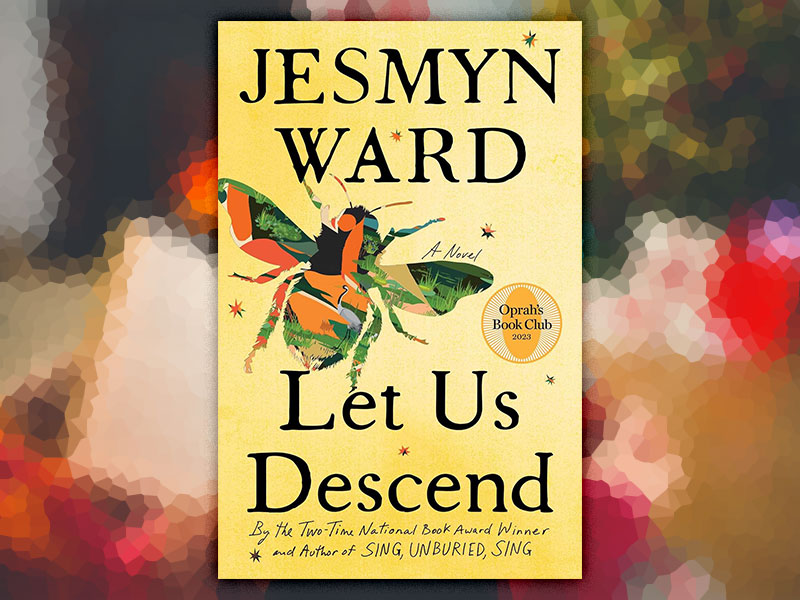
"Let Us Descend: A Novel" by Jesmyn Ward (October 2023)
Let Us Descend: A Novel by Jesmyn WardLet Us Descend: A Novel by Jesmyn Ward (Courtesy of Scribner/Simon and Schuster)
There is a collection of family members that deserve "Let Us Descend." For starters, if we're talking literature, I've long considered Ward one of the world's best living writers and storytellers. I'll even put her up against all-time greats like Toni Morrison, James Baldwin and Fyodor Dostoyevsky.
 
"Let Us Descend" reimagines slavery by telling the story of  a young enslaved woman, who was sold south by the enslaver who fathered her. Anyone who loves literature needs this book. You can also give this book to the family history buff, who could learn a great deal about the inner workings of chattel slavery, complex relationships during the antebellum era, and what love looks like behind all of the facts, dates and perspectives they so often cling to. It also has one of the most beautiful book covers I've ever seen, so be prepared to wow the room as that problematic family member unwraps your glorious gift.
03
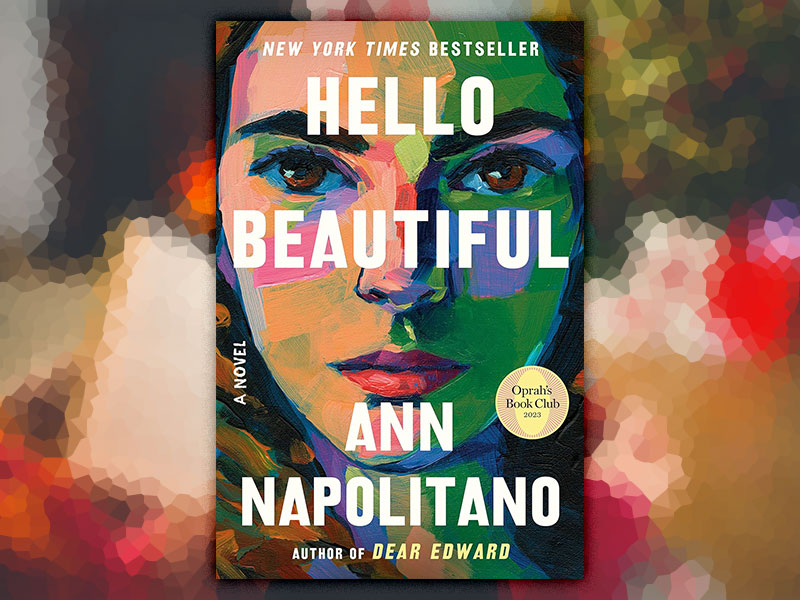
"Hello Beautiful: A Novel" by Ann Napolitano (March 2023)
Hello Beautiful: A Novel by Ann NapolitanoHello Beautiful: A Novel by Ann Napolitano (Courtesy of The Dial Press/Random House)
You can buy "Hello Beautiful" for that hopeless romantic in your family. You know, the family member willing to risk everything for love – I mean wreck relationships, dismantle family structures and go against societal norms. The family member will always put love above all and pursue the person of their dreams, even if the love of their life is or was once married to their sibling. Yeah, that kind of drama.
 
In this homage to "Little Women," "Hello Beautiful" tells the story of four sisters who are brave, daring and ultimately strong enough to make the difficult life decisions that suit them best. 
04
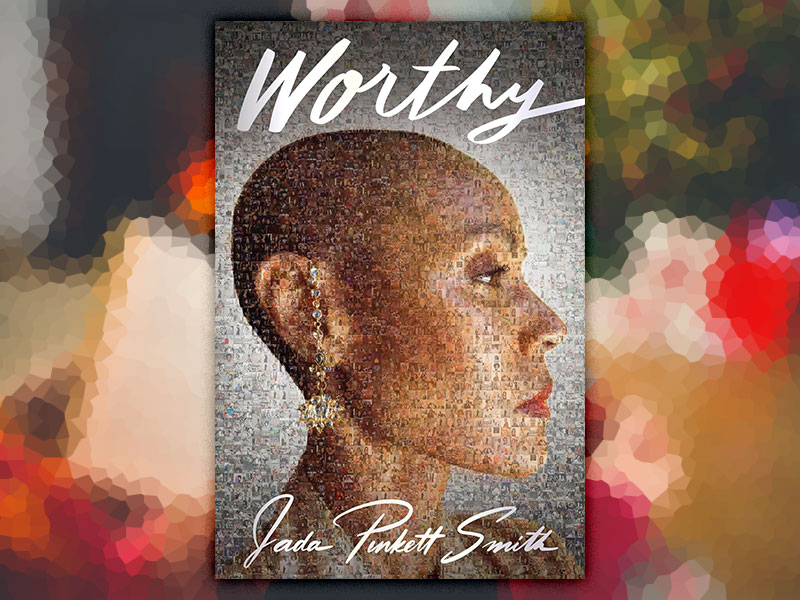
"Worthy" by Jada Pinkett Smith (October 2023)
Worthy by Jada Pinkett SmithWorthy by Jada Pinkett Smith (Courtesy of Dey Street Books/Harper Collins)

Gift this book to the dynamic person who may be hiding in the shadows of their significant others' humongous personality. "Worthy" is about Pinkett Smith's roller coaster journey from the streets of Baltimore to the Hollywood Hills and all of the craziness in-between. "Worthy" has to be the subject of one of the most effective marketing campaigns ever. Pinkett Smith did everything she could to wrap all of us up in the coils of her personal life, family drama and personal truth. In my opinion, this book is the perfect memoir because the actor bares all, remains brutally honest throughout and teaches us that healing isn't a unique destination but a constant part of the journey.
05
"Fly: The Big Book of Basketball Fashion" by Mitchell S. Jackson (August 2023)
Fly: The Big Book of Basketball Fashion by Mitchell S. JacksonFly: The Big Book of Basketball Fashion by Mitchell S. Jackson (Courtesy of Artisan/Hachette Book Group)

Gift this book to me, well, not me, because I have three copies already, and two of them are signed. This book combines everything us '70s, '80s, '90s and even 2000s babies love – the explosion of the NBA, merged with the evolution of fashion, and where those worlds collided, sparking a movement that reshaped how we look at and talk about fashion globally. Jackson's words and brilliant interviews with industry leaders in combination with the beautiful images, make for a truly one-of-a-kind gift. You can kick back and read it, stroll down memory lane with photos or sit it out and let it look gorgeous on your coffee table. No matter what, you'll win because it isn't just a book; it's visual art.


Eat the rich: 7 movies like “Saltburn” that skewer the wealthy

Our obsession with the wealthy has hit new heights in pop culture and media — with narratives that critique their lives of excess and metaphorically allows us to "eat the rich." Emerald Fennell's biting and disturbing new satire "Saltburn" does exactly that.

Led by Barry Keoghan and Jacob Elordi, "Saltburn" is an untraditional take on class warfare stories we know so well. A seemingly disenfranchised scholarship boy Oliver (Keoghan) befriends the wealthy, attractive and popular Felix (Elordi) at Oxford University. When tragedy strikes in Oliver's life, the pair develop an intimate and almost homoerotic bond. Felix invites Oliver to his family's grotesquely large estate called Saltburn, and that's when things get freaky, and we see Oliver systematically infiltrating this high class, privileged family and their social circle.  

For this reason, "Saltburn" is indicative of a recent trend in films that focus on the plight of the working class and their takedowns of the uber-rich. If this film has left you hungry for more of the same delicious fare, here are seven other "eat the rich" films like "Saltburn."

01
"Parasite" (2019, Max)
ParasiteMr. Park (Sun-kyun Lee) and Yeon-kyo Park (Yeo-jeong Jo) in Parasite. (Courtesy of NEON + CJ Entertainment)
This 2020 Academy Award best picture winner is a gripping, suspenseful and satirical tale of the South Korean class divide. Director and writer Bong Joon-ho infuses dark comedy into the story of two families: one rich and one poor. The Kim family schemes to be employed by the Park family, becoming tutors, drivers and housekeepers for them, slowly snaking their way into their household as qualified, trustworthy people.


But this drama gets interesting when the Parks go on vacation, and the Kims revel in their lavish mansion. They uncover something hidden deep in the house that changes just about all the dynamics between the two families. It's every man for themselves when the Parks come back from vacation and throw a birthday party. . . Let's just say it gets bloody.


Ultimately, "Parasite" resonated with audiences because of its scathing look at inequality in South Korea. It depicted the realistic under-privileged neighborhoods and housing crisis, while also highlighting the people who suffer from high rates of unemployment as the gap between the rich and poor widens.


02
"Knives Out" (2019, Netflix) and "Glass Onion" (2022, Netflix)
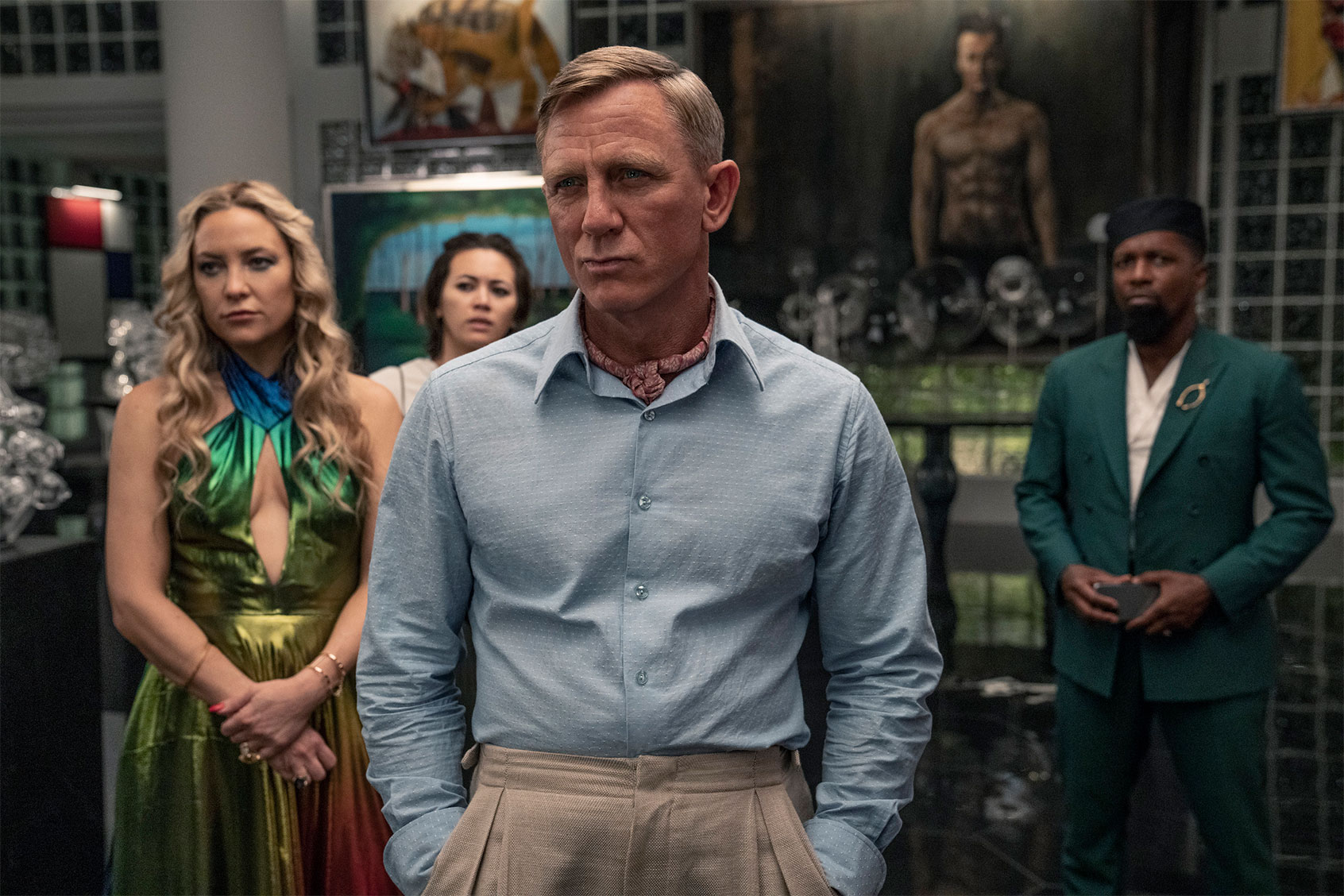
Glass Onion: A Knives Out MysteryKate Hudson as Birdie, Jessica Henwick as Peg, Daniel Craig as Detective Benoit Blanc, and Leslie Odom Jr. as Lionel in "Glass Onion: A Knives Out Mystery" (John Wilson/Netflix)

This Rian Johnson whodunit series stars a buzzy cast of A-listers in both  "Knives Out" and its sequel "Glass Onion." anchored by the folksy and affable Detective Benoit Blanc, played by 007 actor Daniel Craig. Each movie gathers a bunch of rich people in one house, and when one dies under shady circumstances, it's Blanc's job to figure out who did it.


In the first "Knives Out," Ana De Armas plays an immigrant nurse who inherits the wealth of a rich family after the patriarch dies by what looks like a suicide. Each family member is played by the likes of Toni Collette, Chris Evans and Jamie Lee Curtis question the nurse about inheriting their fortune. The second film follows a similar whodunit structure but each cast member – from Kate Hudson, Leslie Odom Jr. and Janelle Monáe – has to solve a murder mystery game that turns into real life when they are invited to their ex-friend/billionaire's estate played by Edward Norton


The series really gets into the nitty-gritty of greedy, wealthy people and how they would kill to maintain their wealth — even if it means murdering friends and family.


03
"Hustlers" (2019, Digital and on demand)
Jennifer Lopez; Keke Palmer; Constance Wu; Lili ReinhartJennifer Lopez, Keke Palmer, Constance Wu and Lili Reinhart in Hustlers (2019) (IMDB/Annapurna Pictures)
What's better than strippers giving finance bros their comeuppance after they caused the 2008 financial crisis? The answer is nothing. And "Hustlers" does right by the real-life story of Roselyn Keo. Based on the New York Magazine story, "The Hustlers at Scores," director-writer Lorene Scafaria takes us through the New York City nightclub scene where Destiny (Constance Wu) is a professional club dancer struggling to make ends meet who befriends established dancer Ramona (Jennifer Lopez). Shortly thereafter the 2007 recession hits, and NYC's clubs are deeply affected. But they devise a plan spearheaded by Ramona to drug some of the top finance men in the city and rob them by charging thousands of dollars on their credit cards at clubs while they're incapacitated.


"Hustlers" is a fast-paced, intriguing look at the underbelly of the NYC club scene while also skewering the rich people who created the gaping inequality in American life, continuing  to benefit from the struggles of the working class.  


04
"The Menu" (2022, Max)
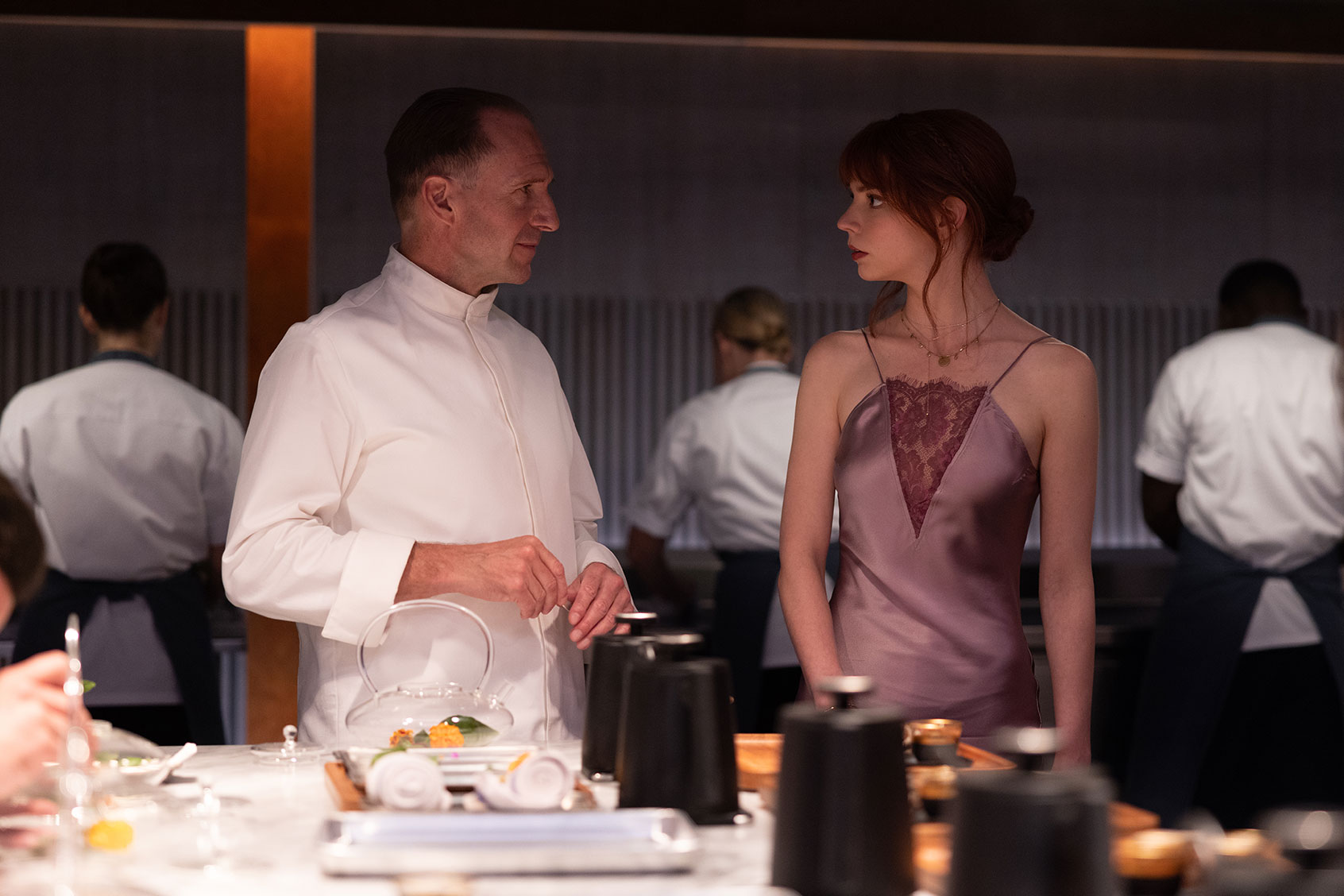
The MenuRalph Fiennes and Anya Taylor-Joy in "The Menu" (Eric Zachanowich/Searchlight Pictures)

"The Menu" is a dark comedy that follows Anya Taylor Joy and Nicholas Hoult as they travel to an island to dine at one of the world's most renowned restaurants that promises a unique eating experience. But of course, things aren't what they appear to be in "The Menu," and the rich guests who have paid an obscene amount of money to be there are all put through horrific psychological tests by the head chef played by the always creepy Ralph Fiennes.


"The Menu" is a pretty clear example of an eat the rich film, as Taylor-Joy's character is the only seemingly working class person in the group of diners. She's the only one who finds herself challenging the ridiculousness and elitism of fine dining and the rich who revel in this exclusive eating experience that does more harm than good.


05
"Triangle of Sadness" (2022, Hulu)
Triangle of SadnessTriangle of Sadness (Neon)

This indie standout and Palme d'Or winner is an absurdly funny satire on the rich people stuck on an expensive yacht trip – well, that is until the boat actually gets wrecked. The ensemble cast is made of standouts Harris Dickinson, the late Charlbi Dean and Dolly de Leon. Director-writer Ruben Östlund tells "Triangle of Sadness" in three parts to keep the audience hooked into the absurdity of its plot.


Look out for a gross scene of the elite getting violently seasick and throwing up all over each other. A perfect metaphor to highlight the repulsive and obscene levels of wealth and privilege these people hold and forget about so easily as they have people wait on them hand and foot.


06
"Dumb Money" (2023, Digital and on demand)
Dumb MoneyNick Offerman and Seth Rogan in "Dumb Money" (Sony Pictures)

This pandemic movie showcases the great GameStop short squeeze of 2021. Paul Dano plays Keith, an everyman who notices that GameStop's stock is falling and so he invests his life savings into it. While it was seemingly a waste of time, people on Reddit, namely the r/WallStreetBets subreddit revealed that investment banks were short selling the stock because they thought it would close. However, it caused an increase in the stock price when online buyers started aggressively buying the stock. This led to hedge funds losing hundreds of millions of dollars.


"Dumb Money" depicts working class people outsmarting some of the richest financial minds and companies in the country. This true story happened at a time where people were reeling from the direct effects of the COVID-19 pandemic and the strain it put on working class people financially because of the loss of work.


07
"Ready or Not" (2019, Digital and on demand)
Ready or NotSamara Weaving in "Ready or Not" (Fox Searchlight)

Imagine marrying the love of your life and on the same day being forced to play a deadly game of hide and seek with his rich family. . . Welcome to "Ready or Not." The black comedy horror follows foster kid Grace (Samara Weaving) when she marries into the Le Domas family, whose members are seemingly cursed.


Turns out thhere is a Le Domas tradition Grace didn't know about. Each time a family member marries, they have to play a game at midnight. Poor Grace is left clueless when the game turns deadly, as each family member tries to kill her as part of a ritualistic sacrifice that is part of their curse.


In "Ready or Not" the only working class person without a real family is being hunted for so that the privileged can maintain the status quo. It is very on the nose that Grace is the one who is challenging the wealth they cannot live without.


Want a daily wrap-up of all the news and commentary Salon has to offer? Subscribe to our morning newsletter, Crash Course.


Dr. Fauci expresses concern about the extreme right’s anti-LGBTQ+ movement

On World AIDS Day, a recent interview with Dr. Anthony Fauci is circulating, in which he expresses concern about homophobic lawmakers turning back the clock when it comes to fair and equal treatment of the LGBTQ+ community, calling the extreme right's antigay attitude as bad as he's ever seen.

“It's reverting back to the way it was 40 years ago, which is terrible. We certainly have got to do something about that and push back against that," Fauci says, with Advocate pointing out that Republicans in Congress are working to strip funding for AIDS research and housing, and holding back reauthorization, after 20 years, of the President’s Emergency Plan for AIDS Relief (PEPFAR), George W. Bush and Fauci's signature program.

Encouraging the gay community to organize their efforts to protect their rights, much like they did in the 80s, Fauci added, "We also need to tap experienced activists that are still around and are close friends of mine like Peter Staley, Mark Harrington, and Gregg Gonsalves. We've got to be very, very, very aggressive in pushing back on this nonsense.”

Watch: Felicity Huffman felt she “had to break the law” for college admissions for daughter’s future

Felicity Huffman is speaking out for the very first time about her role in the 2019 college admissions scandal that resulted in her serving 11 days in prison.

“It felt like I had to give my daughter a chance at a future. And so it was sort of like my daughter’s future, which meant I had to break the law,” Huffman told Los Angeles-based ABC7 Eyewitness News during a sit-down interview

The “Desperate Housewives” star recalled meeting with William “Rick” Singer, a fraudulent college admissions consultant, who had convinced Huffman that her daughter wouldn’t get into any of the colleges she wanted to attend.

“And I believed him. And so when he slowly started to present the criminal scheme, it seems like — and I know this seems crazy at the time — but that was my only option to give my daughter a future,” she explained. “And I know hindsight is 20/20, but it felt like I would be a bad mother if I didn’t do it. So I did it.”

Huffman pleaded guilty in May 2019 to conspiracy to commit mail fraud and honest services mail fraud. She served 11 days of a 14-day prison sentence and was fined $30,000 and ordered to do 250 hours of community service.

“I think the people I owe a debt and apology to is the academic community,” Huffman said elsewhere in her interview. “And to the students and the families that sacrifice and work really hard to get to where they are going legitimately.”

Watch the full interview below, via YouTube:

Sandra Day O’Connor, the first woman to serve on the Supreme Court, dies at 93

Sandra Day O'Connor, the first woman to serve on the Supreme Court, died on Friday in Phoenix at age 93, The New York Times reports. The Supreme Court announced her death in a statement, citing dementia complications as her cause of death. O'Connor, a rancher's daughter who grew up in and lived in Arizona most of her life, held great power over American law while as a justice, her ideology falling at the center of the court's spectrum.

In a letter she released in October 2018, O'Connor, who had been out of the public eye for some time, announced that she had been diagnosed with the beginning stages of dementia, "probably Alzheimer’s disease,” and would be withdrawing from public life. Appointed in 1981 by then-President Ronald Reagan, the justice during her tenure was often referred to as the most powerful woman in America, and the Supreme Court called the "O'Connor court." When it came to the most polarizing issues on the court's docket, little could happen without O'Connor's support — she played a key role in deciding the law pertaining to affirmative action, abortion, voting rights, religion, federalism, sex discrimination and major matters.

The middle ground she straddled often reflected the public's as she strove to heed current events and public attitudes. “Rare indeed is the legal victory — in court or legislature — that is not a careful byproduct of an emerging social consensus,” she wrote in a collection of her essays published in 2003.  After the ideology of the court shifted rightward, her moderate conservativism came to appear relatively liberal and, following her retirement, she lamented that some of her majority opinions were being "dismantled." O'Connor served on the Supreme Court for 24 years, retiring in 2006 to care for her ailing husband.

Highly-mutated “Pirola” COVID variant is spreading more rapidly, but vaccines seem to neutralize it

Four years ago, on November 30, 2019, the first confirmed case of COVID-19 was detected in a man in Wuhan, China. It would still be over a month before the SARS-CoV-2 virus was fully identified, but it would go on to kill no less than 7 million people globally and forever alter life on this planet.

As we have changed, so has the virus. It's natural for pathogens to evolve workarounds to our immunity and, a few months ago, scientists detected a variant of SARS-CoV-2 that seemed alarmingly capable of infecting mass amounts of people, breaking through the immunity acquired from previous infections and vaccines.

The variant is named BA.2.86, nicknamed by some experts as “Pirola,” because a string of letters and numbers can be confusing to the general public. When Pirola first hit the radar of virus hunters, it was only responsible for a handful of cases. It was not really responsible for the wave of COVID infections that surged at the end of summer. But now that seems to be changing and Pirola is making a bigger impact as the pandemic heads into its fourth winter.

The WHO estimates "the public health risk posed by BA.2.86 is currently evaluated as low at the global level."

Many experts who have been watching its evolution closely are worried about this trend. Two weeks ago, BA.2.86 accounted for an estimated 3 percent of coronavirus cases in the United States, according to the Centers for Disease Control and Prevention (CDC). However, the public health agency’s most recent report estimates it now makes up nearly 10 percent of cases and is the third most prevalent strain after EG.5 and HV.1.

The rise of the variant comes as a concern as various hotspots across the country are seeing more COVID-19 hospitalizations. On November 21, the World Health Organization labeled it a “variant of interest,” a tier below its "variant of concern" designation for truly infectious strains like Omicron and Delta. The WHO estimates "the public health risk posed by BA.2.86 is currently evaluated as low at the global level."

Nonetheless, as the holidays ramp up, many are wondering what circulating COVID means for gatherings and public health, and just how concerned we should be.

When asked about the rise, Dr. T. Ryan Gregory, an evolutionary and genome biologist at the University of Guelph in Canada, told Salon he is “concerned,” but perhaps for the reasons people might not suspect. First, he said, he doesn’t think Pirola, or any other single variant, is likely to cause a massive wave like Omicron did in winter 2021 and 2022. In part because it’s not one variant that experts fear are behind waves, but instead a “soup of variants” that keep the number of infections and hospitalizations consistently high. This doesn’t necessarily overwhelm hospitals like what happened in the earlier days of the coronavirus pandemic, but it does keep putting pressure on an already vulnerable system. 

“In other words, it isn't about ‘tsunamis" anymore — it's about ‘high sea level,’” Gregory said. “And it does mean more long COVID [in which symptoms last for months or years], more variant evolution.”

BA.2.86 is not a new variant. Scientists first identified it from a single sequence in Israel over the summer. Soon after, two more were spotted in Denmark. Since then, it’s shown up all around the world. Pirola has caught the attention of scientists due to its peculiar mutations, specifically one that is similar to the “FLip mutation” in the virus’s spike protein. (The name FLip comes from a shift in two amino acids labeled F and L.) This specific mutation increases the chances of immune evasion to the disease, meaning a person can get reinfected because their immune system won’t recognize the virus again. 


Want more health and science stories in your inbox? Subscribe to Salon's weekly newsletter Lab Notes.


“BA.2.86 differed from its ancestor BA.2 by about 30 mutations in the spike protein and several other mutations in other gene regions,” Gregory explained. “Again, these changes accumulated over the span of about a year as the variant evolved within a host with a chronic infection.”

Gregory added this is another point of concern: that variants are evolving within people with chronic infections, so-called "recombinant variants" that likely produced variants like XBB.1.5 that dominated infections throughout most of 2023. The current crop of vaccines now available are tailored to fight XBB.1.5, which descended from Omicron.

Gregory said these variants can and do establish as evolving lineages in the larger population. "This means we need to take extra care to protect immunocompromised patients and others who may be most susceptible to long-term infections,” he said.

Dr. Rajendram Rajnarayanan, of the New York Institute of Technology campus in Jonesboro, Arkansas, told Salon he is also concerned about the rise in Pirola for other reasons. One being that the U.S. doesn’t have the tools it did in previous waves to properly monitor it.

"What I'm concerned about is that many things are hitting us together. Especially at a stage where the healthcare system is tremendously unprepared."

For example, the CDC’s daily COVID-19 tracker, a once-revered source of information regarding the number of COVID-19 cases in the United States, no longer works. Instead, the CDC tracks hospital admissions and wastewater samples, which only accounts for 40 percent of the population. Every other week the CDC updates variant proportions, which is where recent data showing a rise in Pirola infections came from. The most recent update marked the first time BA.2.86 surged enough to be a standalone variant in the eyes of the CDC.

Rajnarayanan said the lack of masking is a concern to him as well, in addition to a COVID-19 wave hitting alongside other viruses. Seasonal influenza is increasing in parts of the country, and so are cases of RSV, another respiratory virus that mainly impacts children and elderly people. Meanwhile, cases of pneumonia known as "white lung" are cropping up in China, parts of Europe and a few states, such as Ohio.

“Am I concerned about COVID alone? Probably not, but at the same time, what I'm concerned about is that many things are hitting us together,” Rajnarayanan said. “Especially at a stage where the healthcare system is tremendously unprepared.” 

Symptoms with BA.2.86 are similar to what doctors have seen with other BA.2 variants. 

“But again, the issue is less about whether each new variant is worse than the worst,” Gregory emphasized. “But whether it will add more pressure on healthcare systems, lead to more long COVID and contribute to further viral evolution.”

The good news is that this doesn’t appear to be causing more severe acute illness. Both Rajnarayanan and Gregory said that the new vaccines likely work against this variant because BA.2.86 descended directly from the ancestral BA.2, too. This perspective is supported by a recent preprint study (meaning it is not yet peer-reviewed) that indicated the latest shots were able to neutralize the variants.

We need your help to stay independent

“Evidence indicates that these new boosters do work against more recent variants, including Eris clan (EG.5*) and Pirola clan (BA.2.86, JN.1),” Gregory said. “Of course, that requires that people actually get the boosters, and that they be made available for people to get, and even then what it protects against is mostly severe acute illness, and less so transmission or long COVID.”

Rajnarayanan said he doesn’t think the rise in the variant should totally scare people away from holiday gatherings, either. He advises that people should enjoy themselves, but also “be mindful” about what public health officials are saying in terms of recommendations and guidelines. 

“If people are obviously coughing, if you noticeably see something, of course do something about it,” he said. “Wear a mask, and stay away from it.”

New tech simulates having an octopus arm

The eldritch, alien movements of octopus arms have captivated people for generations. These underwater cephalopods don't have just one brain but nine, with each of their arms able to act semi-independently. These movements are technically called "bend propagation," a flexible motion that travels like a wave through to the tip before wrapping around the octopus' prey. Each tentacle also contains rows of suckers to help the octopus maintain its grip. Naturally humans would love to have similar abilities — and, according to a recent paper in the journal Science, now they can.

Dubbed E-SOAM (or electronics-integrated soft octopus arm), the new invention is described by its creators as using a "bending-elongation propagation model to move, reach and grasp in a simple but efficient way." While that may sound unwieldy, humans can actually operate it with just a single finger glove to control how the arm reaches and grasps both within its own plane and outside of it.

“We decided to do this project because we saw how octopus capture prey in a very elegant way,” Li Wen, a robotics researcher at Beihang University in Beijing who led the research, told Nature. This is not the first recent invention based off of octopus anatomy. Last year mechanical engineering professor Michael D. Bartlett and researchers from Virginia Tech invented a so-called "Octa-glove" which allows people to securely grip objects under water with the same control as an octopus. As Bartlett explained to Salon, most man-made adhesives do not work underwater, but "the octopus displays this ability with their suckers."

Florida GOP chairman — husband of Moms for Liberty co-founder — accused of rape

Florida Republican Party Chairman Christian Ziegler is currently under investigation by the Sarasota Police Department, his attorney Derek Byrd confirmed to CBS News

Byrd did not specify the exact allegations against Ziegler, but in response to a CBS News question about Ziegler's charges, the Sarasota Police Department returned a heavily redacted police report that mentions an accusation of rape and sexual battery that allegedly occurred on Oct. 2 in the city. 

Florida Gov. Ron DeSantis called on Ziegler to resign as state party chair late Thursday night.

"I don't see how he can continue with that investigation ongoing, given the gravity of those situations," DeSantis told reporters in Alpharetta, Georgia, after his Fox News debate with California Gov. Gavin Newsom. "And so I think that he should, I think he should step aside." 

"He's innocent 'til proven guilty, but we just can't have a party chair that is under that type of scrutiny," DeSantis added. 

The Florida Trident, a nonprofit organization focusing on government accountability, reported that a woman, Christian Ziegler and his wife, Bridget Ziegler, engaged "in a three-way sexual encounter more than a year before the incident," citing a search warrant publicly released in the case Friday. The events being investigated allegedly occurred while Christian Ziegler and the woman were alone at the woman's home, indicated The Trident, which initially cited sources close to the investigation. According to police, Bridget Ziegler was expected to come to the woman's home for a threesome planned the day of the incident but was unable to make it.

Bridget Ziegler is a co-founder of Moms for Liberty, a right-wing group that dubs itself a parental rights advocate and attempts to elect far-right candidates to school boards. The group opposes references to race and LGBTQ identity in the classroom and has called for books referencing gender and sexuality to be removed from school libraries. 

Byrd said Christian Ziegler "has been fully cooperative with every request made by the Sarasota Police Department," adding that once the police department finishes its probe, he is "confident" they won't file charges and that "Ziegler will be completely exonerated."

We need your help to stay independent

The Florida Democratic Party echoed the governor's call for Ziegler to step down as Florida's GOP chair in a statement.

"Christian Ziegler can't possibly continue to lead the Florida GOP under these conditions," Florida Democratic Party chair Nikki Fried said. "Given the severity of the criminal allegations, I'm calling for his immediate resignation."

"As for the more salacious allegations — what happens behind closed doors is Christian and Bridget's personal business," Fried continued. "That being said, I do find it interesting that two people who are so obsessed with banning books about gay penguins might be engaged in a non-traditional sexual relationship."

Republican Florida Attorney General Ashley Moody was asked about the accusation against Ziegler in a news conference ahead of the DeSantis-Newsom debate. Moody said she had not seen the facts, so she had no comment. 

“May December” is Todd Haynes’ seductive puzzle that challenges viewers to unpack moral decisions

Director Todd Haynes’ “May December” is a twisty, intriguing psychodrama about Elizabeth (Natalie Portman), an actress, studying Gracie (Julianne Moore) as research for a film she is making about Gracie’s life. Back in 1992, Gracie made tabloid headlines after her affair with Joe — who was a seventh grader at the time — was discovered. Gracie gave birth to their daughter, Honor (Piper Curda), while she was incarcerated, and the scandal still has repercussions two decades later. 

The film, which is set in 2015, opens with Elizabeth arriving at Gracie’s home in Savannah where she and her now husband, Joe (Charles Melton), live with their two additional children, twins Mary (Elizabeth Yu) and Charlie (Gabriel Chung). Elizabeth claims she wants to tell Gracie’s story truthfully and sets out to observe and interview Elizabeth, Joe and others, including Elizabeth’s ex-husband Tom (D.W. Moffett); Elizabeth’s other son, Georgie (Cory Michael Smith); Mr. Henderson (Charles Green), the owner of the pet store where Elizabeth and Joe’s affair was discovered; as well as Elizabeth’s lawyer Morris Sperber (Lawrence Arancio). Each of these interviews divulge something about Gracie, and Elizabeth, like the viewer, absorbs it like a sponge. 

“May December” is very deliberate in how it doles out information, and what makes the film so captivating is that each scene presents something that may or may not be true. As Elizabeth asks questions of Gracie, she is fishing for insights into her character — and Gracie may be withholding or even misdirecting. How much should (or would) Gracie reveal to someone recreating the most fraught episode of her life, and why would she agree to this? Does Gracie really have no shame, guilt or regret about her past actions as Elizabeth suspects? Is Gracie as naïve as she claims to be? And how is Joe processing an event that robbed him of his adolescence? Viewers get to determine what is fact and what is fiction, and the lines are distinctly blurred. 

Truth becomes knottier as Elizabeth digs deeper. Georgie floats some information that shifts Elizabeth’s perspective on her subject. Joe gives Elizabeth a letter Gracie wrote him that may be useful in understanding her character. Elizabeth gets excited by all she uncovers, but is she enthralled by the material or the role of a lifetime? Her motivation is slippery at best. 

We need your help to stay independent

That said, it is the scenes that Elizabeth is not privy to — Gracie experiencing despair when she loses a client from her cake business, or Joe’s efforts to talk with Gracie about their past — that reveal the real Gracie and Joe. A scene of Gracie complaining about Joe climbing into bed smelling like smoke from a cookout they had explains their relationship clearly; she is the one in control, and he is subservient to her. That is likely how it has always been since they met, and Elizabeth’s arrival will rock that possibly shaky foundation.

Haynes, working from a script by Samy Burch, makes sure to create unease and uncertainty in every scene, and he uses Marcelo Zarvos’ score (a reworking of Michel Legrand’s film music for “The Go-Between”) brilliantly to establish a sinister mood. The filmmaker also uses mirrors to reflect not just Elizabeth and Gracie sizing each other up, but also to play with their similarities and differences. A scene where Gracie applies her makeup to Elizabeth’s face is terrific — especially since it gives Gracie an opportunity to turn the tables and probe Elizabeth about her life for a change. 

May DecemberNatalie Portman and Julianne Moore in "May December" (Netflix)

“May December” pivots on who is seducing or manipulating whom, which plays out through the final scene. Elizabeth is determined to get what she wants, and underneath her polite exterior may have too few boundaries. She is certainly looking to gain the trust of Gracie and her family. An interesting scene has her patiently answering questions, including one about filming sex scenes, at Mary’s high school theater class. But the class interaction also forces Elizabeth to reveal why she would want to play Gracie, and her answer upsets Mary. Likewise, when Elizabeth flirts with Joe — to understand Gracie’s character, of course — she must know she is crossing a line.

In contrast, Gracie becomes more, not less enigmatic as the film unfolds. Watching her body shame her children while dress shopping with Mary or justify giving Honor a scale as a gift is awkward and darkly comic. These scenes emphasize Gracie’s calculating nature, and it is fun to see her exposing herself like this for Elizabeth’s “benefit” as the actress is always nearby. Gracie’s predatory nature certainly extends to how she treats Elizabeth.

Haynes doesn’t build “May December” to a big crescendo. His approach is more organic, allowing a handful of significant dramatic and emotional moments to occur as the characters interact. As such, he has the three very strong performances from his leads propel the film. 

Portman does exceptional work as Elizabeth, a woman whose efforts to mimic her subject are fascinating. Seeing Elizabeth “performing” Gracie in the throes of ecstasy in the pet shop storeroom is uncomfortable, because the reality of that moment likely had a completely different tone. 

And Julianne Moore is outstanding as Gracie, a woman whose fragility is masked by her otherwise self-assured demeanor. When Gracie drops the mask and admits to Joe that Elizabeth is getting on her nerves, it shows that Gracie is just as flowing with fake sincerity as Elizabeth is. 

In a breakout role, Charles Melton delivers a superb performance as Joe, a man who is unexpectedly forced to confront the ripple effects of his past. Scenes of him having heart-to-heart chats with his son Charlie or Elizabeth or Gracie are poignant and quietly powerful. However, a subplot about him raising monarch butterflies seems a bit heavy-handed. 

In support, Cory Michael Smith dazzles with his anxious, kinetic energy in his few scenes as Georgie.


Want a daily wrap-up of all the news and commentary Salon has to offer? Subscribe to our morning newsletter, Crash Course.


“May December” is designed as a puzzle, and it asks viewers to unpack the moral decisions and consequences of a scandal from a distance. That Haynes gets at these characters in a way that Elizabeth only hopes to, is what makes the film so wickedly entertaining. Elizabeth acts as a catalyst for all the drama that occurs, and the actress may not so secretly delight in intentionally causing trouble. She unwittingly brings a box containing feces to Gracie on her first visit, a sign of her s**t-shirring nature. But the pleasure of this film is watching how Gracie responds and reacts to this interloper. Seeing Portman and Moore kill each other with kindness is why “May December” is so delicious.  

“May December” is now playing in select theaters. It streams on Netflix Dec. 1.

Rosalynn Carter’s quiet victory: How she saved thousands and took no credit

The late civil rights leader and congressman John Lewis liked to talk about the necessity for getting into “good trouble” —the moral duty for good people to go about their lives by comforting the afflicted and afflicting the comfortable — and in that spirit of the human need to seek redemption in a broken world, he had much in common with his friend Rosalynn Carter, who died last week.

While most Americans remember the former first lady for her visible public advocacy for mental health and human rights — including her leadership of President Carter’s Commission on Mental Health, which led to passage of the Mental Health Systems Act of 1980 — few understood how much she was able to accomplish on that mission by exercising her formidable influence behind the scenes, leaving credit to others when it meant ensuring that the most vulnerable among us were cared for and protected from harm. I was privileged to watch her quietly work that complicated political room once, though on an international scale, with a profound impact on the lives of thousands of people.

Passing through London’s Heathrow Airport on my way back to Chicago after a conference in Zurich in 1989, I glanced at a copy of the Observer at a news kiosk, the front page bearing a shocking photo of dozens of emaciated men wandering naked in a large room, their heads shaved. It was a lurid scene reminiscent of Auschwitz or a Hieronymus Bosch rendering of hell. The headline on the front page was stark: “Europe’s Guilty Secret: 1,300 Lost Souls Left to Rot!”

The story described the sheer horror of “the naked and the damned … [trapped] in a Greek Bedlam” — hundreds of men, women and children suffering from mental illness or mental disabilities had been dumped into a fetid warehouse-like institution on the Aegean island of Leros, essentially abandoned by their families as well as by the Greek government's health officials, who apparently viewed them as citizens who were best forgotten.

It was no secret that the Greek mental health system had been plagued by scandalous conditions in its large public hospitals for decades, prompting unheeded demands for reform from the wider European community and mental health advocates. But the Leros story was about to expose this broken system in a way that could no longer be ignored.

We need your help to stay independent

Mrs. Carter and I had worked together on mental health advocacy projects in the past, so when I shared the Observer article with her after returning to Chicago, I figured she would probably find a way to remind the world that these forgotten people existed.

She did.

Some months later, Mrs. Carter’s assistant at the Carter Presidential Center in Atlanta called my office, suggesting that I watch the upcoming Sunday evening ABC program "20/20," hosted by Barbara Walters. The broadcast opened with Walters telling viewers that “a woman in Georgia recently alerted us to a horrifying human tragedy going on in Greece.”

Walters went on to narrate shocking scenes filmed by a special ABC crew sent to Greece to investigate the Leros story, adding that the Greek ambassador to the U.S. had refused to comment when asked about this matter. The George H.W. Bush White House didn’t know what to tell Barbara Walters either, nor did the State Department. Other voices were not so quiet, and in the weeks to come letters of outrage started flowing in, not just to the White House but to the U.N. secretary general, the World Health Organization, even to the Vatican.


Want a daily wrap-up of all the news and commentary Salon has to offer? Subscribe to our morning newsletter, Crash Course.


In the end, the humiliated Greek government, its national pride embarrassed by the public exposure of such inhumane conditions, announced that the hospital on Leros would finally be shut down. What followed was the emergence of a sweeping reform movement that would eventually transition Greece’s broken mental health system into a network of community-based treatment centers and smaller hospitals. The reformers implemented a plan for developing adequately resourced facilities with trained psychiatrists and social workers, the sorts of changes that would bring Greece in line with mental health system transformations that had already occurred in other European countries, as well as the United States.

In her quiet way, Rosalynn Carter contributed to that hopeful outcome on behalf of hundreds of lost souls on a Greek island, taking care that the story would be told not by a former resident of the White House but simply by an anonymous “woman in Georgia.”

The world is a better place today because Rosalynn Carter was a woman who knew how to make good trouble.

112 Republicans vote against expelling George Santos after colleague claims he stole from his mom

The House on Friday overwhelmingly voted to expel Rep. George Santos, R-N.Y., even as GOP leaders supported him staying in office. The House voted 311-114 with two members voting present to make Santos just the sixth member in the chamber’s history to be ousted by colleagues. House Speaker Mike Johnson, R-La., House Majority Leader Steve Scalise, R-La., and House Republican Conference Chair Elise Stefanik, R-N.Y., voted against the expulsion as did more than 110 other Republicans, many of whom argued that Santos had not been convicted.

Santos was indicted in May on 23 federal counts accusing him of defrauding donors, stealing from his campaign and lying to Congress. Santos pleaded not guilty to all counts. The House Ethics Committee last month released a report detailing “overwhelming evidence” of lawbreaking by the Congressman, including numerous campaign finances violations.

The vote came shortly after Rep. Max Miller, R-Ohio, accused Santos’ campaign of stealing from his mom. “Earlier this year I learned that the Santos campaign had charged my personal credit card — and the personal card of my Mother — for contribution amounts that exceeded the FEC limits,” he wrote in an email to Republican colleagues. “Neither my Mother nor I approved these charges or were aware of them. We have spent tens of thousands of dollars in legal fees in the resulting followup. I’ve seen a list of roughly 400 other people to whom the Santos campaign allegedly did this. I believe some other members of this conference might have had the same experience.”

“Her goose failed to lay the egg”: Judge issues scathing rebuke of Kari Lake’s latest election suit

An Arizona judge rejected Kari Lake's request to examine signed ballot envelopes of 1.3 million early voters, handing the defeated Republican gubernatorial candidate another loss in her third lawsuit related to last year's election in the state. In an order filed Thursday, according to The Associated Press, Maricopa County Superior Court Judge John Hannah Jr. argued the ballots' release would undercut their verification process in the future. “The broad right of electoral participation outweighs the narrow interests of those who would continue to pick at the machinery of democracy,” Hannah wrote. 

Lake's attorney, Bryan Blehm, did not immediately respond to the outlet's requests for comment. Lake has yet to comment directly herself but has been retweeting supportive posts on X, formerly Twitter. Most of the two-day bench trial was spent hearing testimony from Maricopa County Recorder Stephen Richer, who is named as a defendant. Richer explained that Lake's initial requests to view the envelopes were denied because state law requires ballot envelope signatures to stay confidential. Blehm countered that there are other documents with people's signatures that are publicly available. 

In the ruling, the judge compared Lake's efforts to see the signed envelopes to villagers wanting to inspect a goose that lays golden eggs, “except that her goose failed to lay the egg she expected.” Hannah continued, "If only she could cut open the electoral process and examine each of its 1.3 million pieces, she says, she would be able to figure out what happened and show that the prize has been there waiting for her all along. Even if she doesn’t find what she’s looking for … the act of disassembly will strengthen everyone’s confidence that the machinery produces reliable outcomes.”

Both sides trade blame after Israel-Gaza ceasefire falls apart

The week-long ceasefire between Hamas and Israel in the Gaza Strip fell apart Friday morning with both Israel and the militant group blaming the other for the collapse of a truce that had allowed for the exchange of hundreds of hostages and prisoners, and the increased delivery of much-needed aid to civilians in the territory, The New York Times reports. Fighting resumed almost immediately around the truce's expiration time. Just before 7 a.m. local time, Israel said it had intercepted a projectile fired from Gaza, and moments after the deadline passed, the state announced it would be restarting its military campaign. Airstrikes followed swiftly after.

“With the return to fighting, we emphasize: The government of Israel is committed to achieving the war aims — freeing our hostages, eliminating Hamas and ensuring that Gaza will never again pose a threat to the residents of Israel,” Israeli Prime Minister Benjamin Netanyahu said in a statement released by his office. Hamas in a statement said that it had offered to release more hostages, including older people, but Israel had made "a prior decision to resume the criminal aggression.” For its part, Israel said that Hamas had failed to release the promised number of hostages; Hamas released eight Thursday, two fewer than expected, after releasing 94 since the beginning of the truce. 

International mediators said they were continuing negotiations amid the fighting in hopes of quickly reinstating the truce. The foreign ministry of Qatar said in a statement that the renewal of airstrikes “complicates mediation efforts and exacerbates the humanitarian catastrophe in the strip,” Under the truce, which went into effect last Friday, more than 100 Israeli and dual-national hostages were freed from Gaza in exchange for Israel's release of 240 Palestinian prisoners held in Israeli jails. 

Newsom humiliates DeSantis on Fox News

When Florida Gov. Ron Desantis agreed to debate California Gov. Gavin Newsom, it's unlikely he knew his presidential campaign would be flailing to the extent it currently is. But he still should have thought twice. Whatever he thought his political skills might be, he is terrible on the debate stage. He's managed to barely hold his own in the sad Trumpless GOP primary debates that have been dominated by his rival, former South Carolina Gov. Nikki Haley, but he did himself no favors on Thursday night when he finally met with Newsom on Sean Hannity's Fox News show. 

Any Trump fans, which would include virtually all Fox News viewers, were primed to watch Newsom be humiliated. Trump spokesman Steve Cheung, either taking dictation from the boss or channeling him perfectly, put out this humdinger of a statement in advance of the event:

“Ron DeSanctimonious is acting more like a thirsty, third-rate OnlyFans wannabe model than an actual presidential candidate. Instead of actually campaigning and trying to turn around his dismal poll numbers, DeSanctus is now so desperate for attention that he’s debating a Grade A loser like Gavin Newsom. 

At the debate, Ron will flail his arms and bobble his head wildly, looking more like a San Francisco crackhead than the governor of Florida. This isn’t a prediction. It’s a spoiler.

“Hopefully for Ron, it’s a seated debate so he won’t have to mash his foot into his high-heels to look taller. But if not, he’ll definitely be on a 12 inch step stool so he can peek right above the podium.”

Ouch. That's harsh, even by Trump standards. Trump didn't personally weigh in — but he did post this on his social media site Trump Social:

Hannity was much kinder to DeSantis than that but it didn't help much and DeSantis certainly didn't help himself. 

We need your help to stay independent

The questions were all loaded with statistics in favor of DeSantis designed to put Newsom on the defensive. I don't think there was even one data point he presented that put Florida in a more negative light. So it was up to Newsom to provide context and correct the record which he did quite effectively. 

Newsom probably made a few new fans among the Democrats who tuned in to watch the cage match.

For instance, DeSantis was programmed to insist that Californians are moving to Florida "in droves" which he did approximately a dozen times, and maybe those Fox viewers were convinced. But it's just not true. (As Newsom pointed out repeatedly, per capita more Floridians have actually moved to California than the other way around.) 

Hannity threw one question after another right over the plate to DeSantis, but he was the one who ended up on the defensive as Newsom not only stood up for his state but made a great case for Joe Biden on Fox News (which was the whole point of the exercise).

They sparred about their COVID response, with DeSantis making repeated fatuous comments about Newsom going to the French Laundry restaurant during the lockdowns. But Newsom got the better of the argument by pointing out that DeSantis wants to have it both ways by portraying himself as a defiant contrarian on the mitigation measures when in fact he called for all of them early and then decided that it would be in his best interest to prematurely repeal all of them resulting in many unnecessary deaths. DeSantis claimed it wasn't true but it certainly is. 

According to an LA Times analysis of the Johns Hopkins University data on COVID deaths:

-California: 2,560 COVID deaths for every 1 million residents
-Florida: 4,044 COVID deaths for every 1 million residents

“In other words, Florida’s raw death tally — 86,850 in early March — came close to California’s total, 101,159, despite California having roughly 18 million more residents,” 

It is true that Florida has a large senior population but that should have argued for DeSantis to be more cautious not less. His legacy on COVID is shameful and the fact that he actually brags about it is mind-boggling. 

They also argued about crime statistics with DeSantis accusing Newsom of presiding over a crime wave while Newsom pointed out that it had actually declined precipitously over the past couple of decades. One set of statistics (which Hannity showed, naturally) has California having more violent crimes than Florida but Newsom responded, correctly, that Florida actually has a higher murder rate than California. 

I wondered when (or if) Hannity would discuss abortion, seeing as it is a serious problem for DeSantis due to the draconian laws he signed, first for a 15 week ban and then a 6 week ban a few months later. Hannity tried to nail Newsom with the right's tiresome question about whether he would outlaw all abortions after a certain period of time, but he didn't get very far. Newsom said that these instances are exceedingly rare and are almost always because of a tragic fetal anomaly, which is correct. (If I were a politician, I would always use the example of a real person in that situation and then ask whether or not politicians and judges are competent to make such complicated medical decisions. Most people would agree that they are not.) 

DeSantis pretty much just stood there like a potted plant obviously wanting to get past the subject as soon as possible. Just yesterday, a poll was released showing that 62% of Floridians want to vote the right to abortion up to 24 weeks into the state constitution and that includes 52% of Republicans. He made a huge mistake in judgement on that one. 

One of the most jarring aspects of the debate was that throughout, DeSantis kept bizarrely talking about feces. That's right, feces. This is actually an old right wing obsession going back to the civil rights marches, the Vietnam war protests and most recently Occupy Wall Street. There are always tales of rampant public defecation and they can't stop talking about it. DeSantis seems to have a particular fetish about this feces problem as illustrated in this bizarre moment:

Politifact, which fact checked much of the debate if you're interested, explains what that's all about if you really want to know. 


Want a daily wrap-up of all the news and commentary Salon has to offer? Subscribe to our morning newsletter, Crash Course.


Apparently, DeSantis' hapless campaign thought it would be a good idea to showcase him on the friendly network because it would give him a chance to talk about how great Florida is. The problem is that there isn't a Republican primary voter on the planet who hasn't heard him drone on endlessly about what a fantastic job he's done in Florida and frankly, they're sick of it. But that's what they got last night along with a laundry list of culture war talking points that merely show DeSantis watches the same shows they do. It's possible that a few people came away thinking they should give him a second look but I doubt it was more than a handful. He's just so … odd:

Newsom probably made a few new fans among the Democrats who tuned in to watch the cage match. He was loose and confident and why wouldn't he be? He's not running for anything, a point he made clear when he archly declared that the one thing everyone can agree on is that neither of the two of them were going to be president in 2025. 

The debate was best summed up by former Republican strategist Stuart Stevens who quipped:

“We did it our own way”: Violent Femmes’ Brian Ritchie on making a “timeless” punk LP 40 years ago

This year, the Violent Femmes’ eponymous first album marks its 40th anniversary, celebrated with a new deluxe edition. It’s a remarkable milestone, to be sure, for the post-punk rock band that originally cut its chops playing gigs on Milwaukee street corners. But as founding member and bassist Brian Ritchie pointed out to me in a recent conversation, the Violent Femmes self-consciously built the LP to stand the test of time.

Ritchie contrived the band’s unusual name when he was performing as a duo with drummer Victor DeLorenzo. In the early 1980s, the Violent Femmes were rounded out by lead singer Gordon Gano. The group’s big break came in August 1981 when the Pretenders’ James Honeyman-Scott observed them as they busked outside Milwaukee’s Oriental Theatre, where the Pretenders were set to play a gig. That night, Chrissie Hynde invited them to perform an acoustic set before the Pretenders took the stage.

Ritchie recalled the fateful night that would transform the Violent Femmes’ destiny. “We had been kicked out of a venue that we were trying to audition for, which was called Century Hall, but we call it Centipede Hall," he remembered. "And we went in with our instruments and said, ‘Hey, we want to audition. We want a gig at your club.’ And they said, ‘No, leave, please.’” 

It was no accident that they found themselves outside of the Oriental Theatre that day. In their dejected state, the trio took advantage of the crowd coming to see the Pretenders. “We just set up in front there and started playing, as we usually would do,” Ritchie explained to me. “But this time they heard us, and then they asked us to open the show for them. Well, we were thrilled. I mean, it was kind of like a Cinderella-type story. We got up there, and we played three songs. At first when we came out, everybody was booing. And then by the end of the three songs, half the people were booing, and half were were cheering. So we considered that a victory.”

The Violent Femmes’ victory as the Pretenders’ impromptu opening act helped to establish the momentum that led to the production of their inaugural album. Recorded in July 1982 at Lake Geneva, Wisconsin’s Castle Studios,  "Violent Femmes" served as a showcase for the trio’s unusual punk- and folk-infused soundscapes. “We designed the album to endure,” said Ritchie. “We made what we thought was going to be a timeless recording. And amazingly, it has turned out to be one.”

Ritchie chalks up the LP’s perseverance to the Femmes’ effort to avoid sounding clichéd. On the album, “some of the music sounds like '50s music or even earlier,” he points out. “The recording was comprised of very simple acoustic sounds. We used very conservative reverbs.” In this way, “We were trying to make something that would last, but we certainly didn’t know that it would.  Because let's face it, at that point, when we made the album, rock ‘n’ roll itself had not even been around for 40 years.” 

When pressed for the band’s real secret, Ritchie admitted that the Femmes gravitated towards punk rock because it “was a much more malleable form. Punk rock was in the process of becoming codified, and we just resisted that by doing it differently.” With their acoustic, rhythm-oriented sound, “We did it our own way,” Ritchie added, while retaining an overarching sense of “punk energy.”

Violent Femmes 40th anniversary reissue LP box set"Violent Femmes" 40th anniversary reissue LP box set (Craft Recordings)

The result was a spate of extraordinary songs, including the Femmes’ signature composition “Blister in the Sun,” which, like the album itself, has stood the test of time and remained influential four decades hence. For his part, Ritchie doesn’t see the end coming any time soon. “Maybe we'll be doing a 50th anniversary tour,” he said. “I wouldn't be surprised. It’s fun because we keep getting new generations into it.” They may be decades removed from busking on street corners and playing in coffee houses, but the Violent Femmes have hardly lost their edge, having grown their audience during the intervening years. Ritchie proudly observed, “During our latest tour there were a lot of young people in the crowd.”

"Violent Femmes" 40th anniversary deluxe edition is on sale Dec. 1.


Ex-Mueller prosecutor: Court “gaffe” reveals evidence of Scott Perry’s “complicity” in Jan. 6 scheme

Court documents that were inadvertently unsealed on Wednesday and later taken down revealed communications between Rep. Scott Perry, R-Pa., and former DOJ official Jeff Clark, one of Trump’s unindicted co-conspirators in D.C. who played a key role in former President Donald Trump’s post-election efforts, according to Politico.

The D.C. Circuit Court of Appeals, which heard litigation over special counsel Jack Smith’s effort to access Perry’s cell phone, on Wednesday unsealed documents related to the case, including a lower court’s opinion that described and quoted the text messages Smith had been seeking. The unsealed opinion was removed from the court’s public docket later on Wednesday, suggesting it was posted inadvertently, according to the report.

Former federal prosecutor Andrew Weissmann, who served on special counsel Bob Mueller’s team, tweeted that the court’s “gaffe” shows “evidence of Perry J6 complicity and how the DC panel ruled in a way to insulate him from liability” by overruling the lower court’s decision allowing Smith to access the evidence.

“This is a big deal,” Weissmann wrote, arguing that the messages show that “Perry was up to his eyeballs in support of J6 insurrection.”

One exchange took place after 11 pm on December 30, 2020, days before Trump sought to install Clark, a former DOJ environmental lawyer, as acting attorney general to pursue his debunked claims of election fraud. “POTUS seems very happy with your response. I read it just as you dictated,” Perry wrote to Clark, according to the documents.

“I’m praying. This makes me quite nervous. And wonder if I’m worthy or ready,” Clark replied.

“You are the man. I have confirmed it. God does what he does for a reason,” Perry wrote.

Former DOJ officials testified to the House Jan. 6 committee that Trump ultimately backed off the plan after senior officials threatened to resign en masse.

The messages underscore Perry’s efforts in helping elevate Clark to the acting attorney general job.

We need your help to stay independent

Perry’s messages to Clark show the congressman’s extensive involvement in helping to push his appointment as attorney general while Clark was pressuring top DOJ officials to send letters to state legislatures urging them to consider sending alternate slates of electors to Congress. Clark also had obtained a security clearance to review intelligence about potential foreign election interference efforts.

Perry indicated in one exchange that Trump personally approved a “presidential security clearance.”

“The disclosure of Representative Perry’s private communications, taken from the phone of a sitting Member of Congress — who has never been accused of wrongdoing — is unfortunate,” Perry attorney John Rowley told Politico. “The communications reflect his efforts to understand real-time information about the 2020 election. They were confidential and intended to address critical business before Congress in service of his constituents.”

The FBI seized Perry’s phone in August 2022, seeking all communications related to “alleged election fraud,” “efforts to install Jeffrey Clark as Acting Attorney General,” and contacts with Clark, his deputy Ken Klukowski, Trump, Trump’s chief of staff Mark Meadows, and Jan. 6 architect John Eastman and any discussions related to “overturning, decertifying, delegitimizing, challenging, or questioning the results of the 2020 United States presidential election in any state.”


Want a daily wrap-up of all the news and commentary Salon has to offer? Subscribe to our morning newsletter, Crash Course.


The unsealed documents on Wednesday showed Perry discussing efforts to challenge President Joe Biden’s win with Republican National Committee Chair Ronna McDaniel and White House officials and lawyers in Trump’s orbit.  

The documents showed that Perry was in contact with individuals working for TrumpWorld lawyer Sidney Powell, including Phil Waldron, a purported cybersecurity expert.

“Rep. Perry asked Waldron to ‘show me what you have’ and agreed to ‘fast track any questions/answers right to the leadership in the pa state legislature,’ and stating '[w]e’ll need a connection in the other states,’” the document says, according to Politico.

Perry also communicated with other House Republicans, texting Rep. Chip Roy, R-Texas, about “concrete evidence” of fraud in Michigan and Reps. Roy, Jody Hice, R-Ga., and Jim Jordan, R-Ohio, about issues with “the Dominion voting system.”

In another exchange, then-Rep.-elect Marjorie Taylor Greene, R-Ga., complained about “incompetence here in Georgia,” to which Perry responded, “Nothing can beat effective cheating.”