Spring Sale: Get 1 Year, Save 58%

Sweet collaboration: Olivia Rodrigo and Jeni’s partner up on a signature purple ice cream cone

As you’re bopping to Olivia Rodrigo’s new album this weekend, why not enjoy some Jeni’s Splendid Ice Cream, too? The iconic ice cream brand recently announced their partnership with the singer, whose new album “GUTS” was released on Friday. As reported by Billboard, from Sept. 8 to Sept. 10, Jeni’s is offering waffle cones that have been dyed purple, the singer’s signature color. 

Per Jeni’s official website, they are “turning all of our Buttercrisp Waffle Cones a cool shade of purple to celebrate Olivia’s new album, GUTS.” Olivia’s order — which Jeni’s is calling the “Home Scooped Girl” — is a combination of Wild Lavender and Brambleberry Crisp, all in one of the patented purple cones. In addition, Jeni’s is even hosting “GUTS” listening parties “in select scoop shops around the country.” Check here to see if there’s one in your neck of the woods.  Not able to stop into a Jeni’s this weekend? The chain is also offering to-go packs consisting of five dyed, purple waffle cones and two pints of ice cream. 

Rodrigo is a three-time Grammy winner and actress who got her start on Disney before crossing over into music in 2020. “GUTS” is her second album following 2021’s “SOUR.” “GUTS” is now streaming on all music platforms.

Lindsey Graham “dodged bullets” in Fulton County case; legal experts say he’s “no less culpable”

The special grand jury in Fulton County, Ga. that investigated the state’s 2020 presidential election recommended charges against Sen. Lindsey Graham, R-S.C. and former Republican Sens. David Perdue and Kelly Loeffler of Georgia, the special counsel grand jury report unsealed Friday reveals per CNN

Fulton County District Attorney Fani Willis did not charge the legislators in the sprawling racketeering indictment against former President Donald Trump and 18 co-defendants she returned last month. Special grand juries in Georgia are not permitted to bring down indictments, so the decision for how closely to follow its recommendations rested with the district attorney.

The grand jurors largely agreed that Graham, Perdue and Loeffler had engaged in unlawful conduct with 13 of the 21 voting in the affirmative for Graham, 17 for Perdue and 13 for Loeffler. One of the dissenting jurors, however, believed that the former Georgia senators’ statements following the 2020 election, though pandering to their political base, did not indicate that they were guilty of criminal conspiracy, the report noted.

We need your help to stay independent

The lawmakers have denied committing any wrong doing in relation to the 2020 election. They are among a larger group recommended for charging by the special grand jury that Willis decided against indicting, which included Trump adviser Boris Epshteyn, former national security adviser Michael Flynn and attorneys Cleta Mitchell and Lin Wood.

The special grand jury had also suggested charging 13 of the 16 members of the false Georgia elector slate. Willis only brought charges against three — Cathy Latham, a former Coffee County GOP chair, David Shafer, the former chairman for the Georgia Republican party, and Shawn Still, a current freshman Republican state representative — and it is unclear why the three excluded electors were not recommended. 

Despite the overwhelming votes to indict the electors, two dissenting jurors believed “the electors should not be indicted for doing what they were misled to understand as their civic duty.”

Legal experts reacted to those excluded from the indictment online Friday following the report’s complete release. Former Assistant U.S. Attorney Andrew Weissmann noted it is “So interesting who was NOT then charged” based on the juries recommendations.

“We now understand much better what probably was happening as we all waited for the indictment to drop ‘imminently,'” former U.S. Attorney Harry Litman wrote on X, the platform formerly known as Twitter. “Willis had a bevy of decisions she was making & ultimately decided not to charge more people than she decided to charge (20-19). That’s a lot of deliberation.”

“Does the forbearance play as a a virtue for Willis, or does the narrow scrape of prominent current officeholders fuel critics of prosecutions of national figures by a local DA? Probably both,” he added.

Other experts offered explanations for why Perdue, Loeffler and Graham were left unscathed in Willis’ final charging decision and pondered whether others like Flynn had decided to cooperate with authorities.

“For those asking why certain individuals listed by the special grand jury were not indicted by Willis, bear in mind the following: 1) murky constitutional issues tied to Members of Congress due to their role under the Electoral Count Act; 2) some people, particularly fake electors, might have made cooperation deals with Willis; 3) some people might have been viewed as more helpful simply as material fact witnesses than as criminal co-defendants,” national security attorney Bradley Moss wrote in two posts to X

Asha Rangappa, a lawyer and former FBI special agent, echoed those sentiments, acknowledging that Willis bringing charges against the senators would have given “folks like Jim Jordan a clear ‘hook’ to do what he’s doing now,” referring to the investigation the House Judiciary Committee chairman and Ohio Republican launched into Willis’ handling of the indictment last month.

“Can attribute some of the non-charging decisions to calls about guilt and innocence and what they could prove, eg Graham. But others who dodged bullets — thinking here of Flynn & Mitchell for starters—seem no less culpable,” Litman tweeted. “Does that perhaps suggest that they are cooperating??”


Want a daily wrap-up of all the news and commentary Salon has to offer? Subscribe to our morning newsletter, Crash Course.


Graham appeared before the special grand jury last year following a court battle regarding his testimony. After the 2020 election, Graham corresponded with Georgia election officials, including phone calls with Georgia Secretary of State Brad Raffensperger and his staff connected to the potential of finding enough fraud in the state that it could reverse Trump’s loss.

The South Carolina Republican repeatedly pressed Raffensperger and his colleagues over the phone about the signature-matching of ballots in the Atlanta-area. Raffensperger told CNN in November 2020 that he believed Graham “implied” that he should attempt to “throw out” ballots in the overwhelmingly Democratic county.

Raffensperger testified to the House Select Committee investigating Jan. 6 that his phone call with the senator made him “uncomfortable” because some of Graham’s suggestions could have precipitated “disenfranchising voters.”

The senator denies wrongdoing and challenged Raffensperger’s description of the call. He argued in his battle against the Fulton County subpoena that his calls to Georgia officials were legislative activity directly connected to his duties as the then-chair of the Senate Judiciary Committee. He also asserted that his actions should be protected by the Constitution’s Speech or Debate Clause. 

Perdue, who lost his Senate run-off election in January 2021, personally encouraged Georgia Gov. Brian Kemp to bring a special session of the legislature to aid in Trump’s efforts to overturn the election. Loeffler, who lost her run-off election that January as well, was also present at the meeting.

Perdue last year carried out an unsuccessful Trump-supported primary challenge to unseat Kemp, relying heavily on peddling false claims of election fraud touted during the 2020 election. 

The Fulton County special grand jury began hearing evidence in June 2022 and Willis used the group to probe efforts to reverse Joe Biden’s victory, an inquiry prompted by Trump’s infamous January 2021 phone call with Raffensperger where the former President asked him to “find” the thousands of votes he needed to win the state. 

Deadly dog bites are on the rise, CDC reports, but it’s unclear what’s driving the trend

Deaths caused by being bitten or attacked by a dog appear to be increasing, according to data released by the Center for Disease Control and Prevention (CDC) today. Overall, the number of deaths caused by dogs across the country is very low, with fewer than 50 deaths per year on average, according to the Morbidity and Mortality Weekly Report. Canine bites are common, but data suggests fewer than 1% will result in a hospital admission.

However, between 2011 and 2018, the number of deaths caused by being bitten or struck by a dog hovered around 20, with higher death rates for males versus females depending on the year. But between 2018 and 2021, deaths more than doubled among both sexes, the CDC reported.

The report is brief and doesn’t dive into why deaths are increasing. One potential fatal complication from dog bites is contracting rabies, but this data set excludes rabies cases. In a 2021 study that found fatal dog attacks have also been increasing in Europe, with 45 Europeans killed in 2016, the authors suggested that deaths caused by dog attacks could also be related to secondary dangers caused by the attack, like falls. Another study published in June found dog attacks may be caused by humans misunderstanding cues dogs were trying to communicate, like baring their teeth.

If a dog looks like it’s about to attack, there are things you can do to reduce your chances of being bit. WBUR reports a few tips, including standing still rather than running, using a firm voice to try and give the dog commands and avoiding eye contact.

Jimmy Fallon apologizes after allegations of toxic behavior: “It’s embarrassing, and I feel so bad”

Jimmy Fallon has apparently apologized to his staff after a bombshell Rolling Stone article exposed allegations that the late-night show host fostered a toxic workplace environment rife with erratic, abusive behavior from Fallon. 

Following the investigation, Fallon met with former and current “The Tonight Show” staff on Zoom to apologize to staffers about his alleged behavior, Rolling Stone reported. Fallon reportedly said he did not intend to “create that type of atmosphere for the show.” Employees said Fallon apologized for his behavior, admitting the situation was “embarrassing, and I feel so bad. Sorry if I embarrassed you and your family and friends . . . . I feel so bad I can’t even tell you.”

According to staff, Fallon said he wants “the show to be fun, [it] should be inclusive to everybody. It should be the best show.”

Fallon’s representatives did not immediately return requests for comment and did not comment on the record. But a spokesperson for NBC said, “We are incredibly proud of ‘The Tonight Show,’ and providing a respectful working environment is a top priority.”

The allegations against Fallon ranged from showing up seemingly inebriated at work, demeaning and belittling staffers, and erratic, toxic behavior that included outbursts in front of the show’s guest Jerry Seinfeld, who allegedly made Fallon apologize to one of the staffers.

Secrets to longevity can be taught, and “conservative cities have been better” at adopting them

Making it to your 100th birthday is a noble goal — it might net you a shout-out on “Today” or “Good Morning America,” for example — but it frightens a fair share of us, too. Americans associate advanced age with physical frailty and an assortment of diseases and impairments presumed to be inevitable. Common thinking tells us that if we do live that long, our quality of life may not make the effort worthwhile.

Journalist, author, and lifelong cyclist Dan Buettner has spent more than 20 years accumulating evidence to the contrary, showcased in Netflix’s four-part documentary series “Live to 100: Secrets of the Blue Zones” and his latest book, “The Blue Zones Secrets for Living Longer: Lessons From the Healthiest Places on Earth.” One goes hand-in-hand with the other but seeing the results may be more effective than simply reading the findings.

“Live to 100” introduces us to elders in Japan, Europe, Central America and Southern California living vibrant lives that include physical activity, socializing, cultivating a purpose and, perhaps best of all, enjoying flavorful whole foods and — hooray — wine.

One centenarian is shown herding livestock while riding on horseback. Another plays a stringed instrument with acuity and ease, laughing and smiling throughout. Buettner himself is proof in advertising, a man who consumes a plant-based diet, still uses a bicycle as his chosen means of transportation other than walking, and looks younger than his 63 years.

By teaming up with National Geographic and the National Institute on Aging to study the demographically confirmed areas geographically defined as “Blue Zones,” Buettner and his partners distilled the secrets of longevity into a few very simple and essential lifestyle choices. The Netflix series is a manifestation of something he says he avoided for 20 years: making a documentary about his work. “It wasn’t until we had this team, and the director Clay Jeter, who really understood it,” he said in a recent Zoom interview, explaining that he want to avoid “the pop-y quick fix, the hyperbole that most longevity or anti-aging is surrounded with.”

Live to 100: Secrets of Blue ZonesRamiro Guadamuz, age 100 in “Live to 100: Secrets of Blue Zones” (Netflix)As a bonus, he enlisted the film crew from “Chef’s Table” to create what he describes as “for lack of a better term, longevity porn. Just making it look so aspirational. So beautiful. Because these ideas are subtly powerful.”

Part of the series’ attractiveness has to do with its featured locations. The Blue Zones span the globe and include Okinawa, Japan; Sardinia, Italy; Ikaria, Greece; and Nicoya, Costa Rica. Vastly different places, each of which boasts higher percentages of the local population living well into their 80s, 90s and beyond. Regardless of their geographic and cultural differences, a commonality is their older population experiences lower occurrences of cancer, dementia and other ailments relative to the elderly population elsewhere, including in most of the United States.

The overall life expectancy in the United States has declined to 76.4 years, according to CDC data dated to December 2022, the lowest level since 1996. Experts list a number of reasons for this including a loneliness epidemic that’s been deemed a public health crisis.

People in Blue Zones live longer due to an assortment of factors associated with the usual suspects, meaning diet and activity level. Still, these are the first regimens Buettner is likely to be questioned about – what should we eat, and what shouldn’t we? Should we take up jogging? As Buettner tells anyone who asks, there is no single magic bullet to ensuring healthy longevity. It’s more like buckshot — a  “constellation of mutually supporting factors,” as he calls them, that contribute to overall wellness.

Buettner’s work has taken him into communities across the United States to seed more Blue Zones here. America already boasts a Blue Zone in Loma Linda, California, a Seventh-Day Adventist community that follows a health-forward lifestyle guided by faith.

His quest also made us curious as to whether American politics is an obstacle to adopting the Blue Zones approach. In the U.S. meat consumption is viewed as a cornerstone of partisan identity, and the beef industry has a powerful lobbying arm. When the Obamas launched campaigns to counteract child obesity, including passing legislation to promote healthier school lunches and more transparency in food labeling, Republican leaders accused Michelle Obama of attempting to implement a “nanny state.”

Presumably then, conservative towns and states would be more resistant to implementing Blue Zone habits. But Buettner’s experience defies that assumption, as he explained in a wide-ranging interview where we discussed the politics of America’s health habits along with what he believes are the secrets to living longer, healthier lives.

The following interview transcript has been edited for length and clarity.

One of the things that you demonstrate through the series is that people are just living their lives. They’re not simply lifestyles, but their health is related to day-to-day living, in the choices they make.

I feel like whenever there’s any provable kind of mission that says, “This can work, if you can simply do these simple things,” there’s a reaction that’s almost negative. Maybe that’s my interpretation due to the politicizing of eating in this country.

I’m thinking about when the Obamas, for instance, had a vegetable garden at the White House and talked about there was a backlash when the suggestion was so simple: “Plant a garden.” The same kind of thing that you’re talking about. Is that resistance something you’re encountering as you’re doing this tour? Does that factor it all into different communities and their acceptance of the Blue Zones method?

Well, you just gave me about five questions. Let me answer some of them sequentially.

First of all, these people aren’t making better decisions than we are. They’re not better people, they’re not smarter or wiser than we are. But they do live in this very special environment that has evolved over the centuries to engineer their micro decisions in such a way they add up to a much healthier day.

The cheapest and most accessible foods are peasant foods, which are inexpensive, or in their garden. It’s much easier and cheaper to walk to work or your friend’s house or out to eat. It’s much easier to socialize with your neighbor than it is to implode in your house and be on your handheld device. Having a sense of purpose comes with mother’s milk.

There is no single magic bullet to ensuring healthy longevity. It’s more like buckshot.

The bigger point is that it’s all transportable. It’s hard for Americans because we’re so relentlessly marketed the quick fix or the pill or the supplement or the super food or the longevity hacker or stem cells. None of those work. But we know we look at the data: I didn’t just travel to these places. I spent three years working with demographers to identify these places where you find people who live a long time because they’re not getting Type 2 diabetes, they’re not getting cardiovascular disease, breast cancer, prostate cancer, anywhere near the rate that we are in America. And they’re doing it because of this constellation of mutually supporting factors.

They’re eating mostly a whole food plant-based diet for the long run, because their life is underpinned with purpose. They have a small social circle of friends that reinforce those behaviors. And they live in places where the healthy choice is the easy choice.

By the way, the Obamas — I mean, they were right-minded. But there was too much political headwind for them to take on the big beverage and the big food companies and make a real difference.
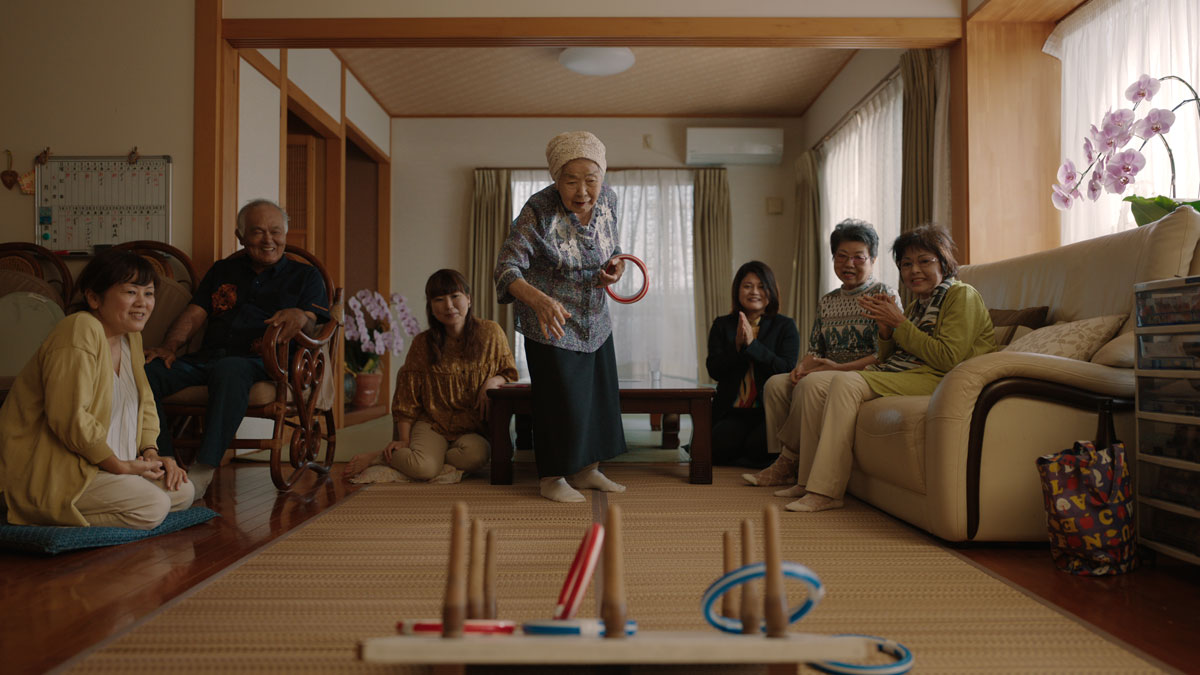
Live to 100: Secrets of Blue ZonesUmeto Yamashiro, age 101 in “Live to 100: Secrets of Blue Zones” (Netflix)If you’re overweight and unhealthy in America, it’s probably not your fault. And I’ll tell you why. In 1980, we had a third as many people who are obese as we do today. We had a seventh as many people were suffering from Type 2 or pre-diabetes than we do today. Is that because people in the 1980s were smarter, or more disciplined or better humans? No. Our food environment has changed . . . We live in this environment of overabundance and ease where we’re relentlessly marketed to do things that aren’t all that good for us. And that’s the problem. And it’s not going to get any better until we shift the paradigm and stop trying to think we’re going to change Americans behaviors. We’re not going to change 330 million Americans’ behaviors. But we can change their environments.

You touched on something that I think other Blue Zones around the world, except for maybe Loma Linda, don’t contend with, which is the lobbying arm of the food industry in our country. In the series you talk about going into Texas, and you went into Phoenix [Ariz.]

Fort Worth, and Phoenix. Right.

Texas is a huge beef industry state. Typically in a lot of these Blue Zones, when people who eat meat indulge, it’s very sparingly versus in America where meat is on the table at least once a day for people, if not at every meal. Did you encounter any resistance?

Yeah. I remember in Fort Worth, I was at a big final meeting with the head of the health care system, the big CEOs, the head of the Chamber of Commerce, the mayor. And I gave them my presentation, that we want to make the healthy choice the easy choice.

And there immediate responses were, “I don’t know, sounds like it’s a nanny state effort.” Another guy said, “Yeah, it looks like they’re trying to limit our freedoms.” And I shut my computer and said, “Thank you very much. I don’t think the city is ready.” And the mayor — Betsy Price at the time, a very strong character and principled person – said, “I don’t know, I think we ought to give Dan a chance.”

We need your help to stay independent

It was her throwing her political equity in that gave us five years. We had a staff of 30 people. And we went about working with the city council — not telling them what to do but showing them evidence-based policies that favor healthy food over junk food, that favor the pedestrian over the motorist, that favor the non-smoker over the smoker.

And it was very easy to identify 15 or so policies that my team got implemented. We went to every restaurant, grocery store, workplace, school and faith-based community with an opportunity to become Blue Zone certified. And that means they optimize their policies, and they optimize their design so people unconsciously make better food and movement and social decisions. Now we got about 20 or 30% of all those places certified. We didn’t get 100. But those 20% exerted a big influence on what the community did. This gentle pressure relentlessly applied over five years, we lowered their obesity rate or BMI by some 3-6% depending on the demographic. They themselves reported to us that they expected a quarter of a billion dollars in healthcare cost savings that our project occasioned.

That’s the reddest city of the reddest state in America. If they can do it there . . .

Anyway, regardless of politics, it tends to be the most conservative cities that have been quickest to adopt this. And that completely surprised me, I thought it was going to be the Oaklands or Boulder, Colorados. But as it turns out, in conservative communities the public sector and the private sector seem to work very well together. And it’s not until you get a handshake between both of those that you can really get a Blue Zone [underway].

Why do you think that in the bluer cities like the ones you just mentioned have been more of a challenge?

“I wanted the show, first of all, to remind Americans that most of us can live an extra decade if we optimize our life, and that the Blue Zones approach is actually an enjoyable way of getting there.”

Well, we’ve been in 72 American cities, and when I think of the biggest ones, they tend to be conservative. We’re politically agnostic, in that this works for all people. It’s a population-wide intervention, which keeps us above the fray. The mayor of New York City has actually been talking with us, so who knows? We may be in New York. But I don’t know why. It’s just it seems that it’s a big commitment to make your entire city focus on a healthier environment or a healthier living environment. And for whatever reason, conservative cities have been better at putting it all together.

It should be a federal thing, by the way.
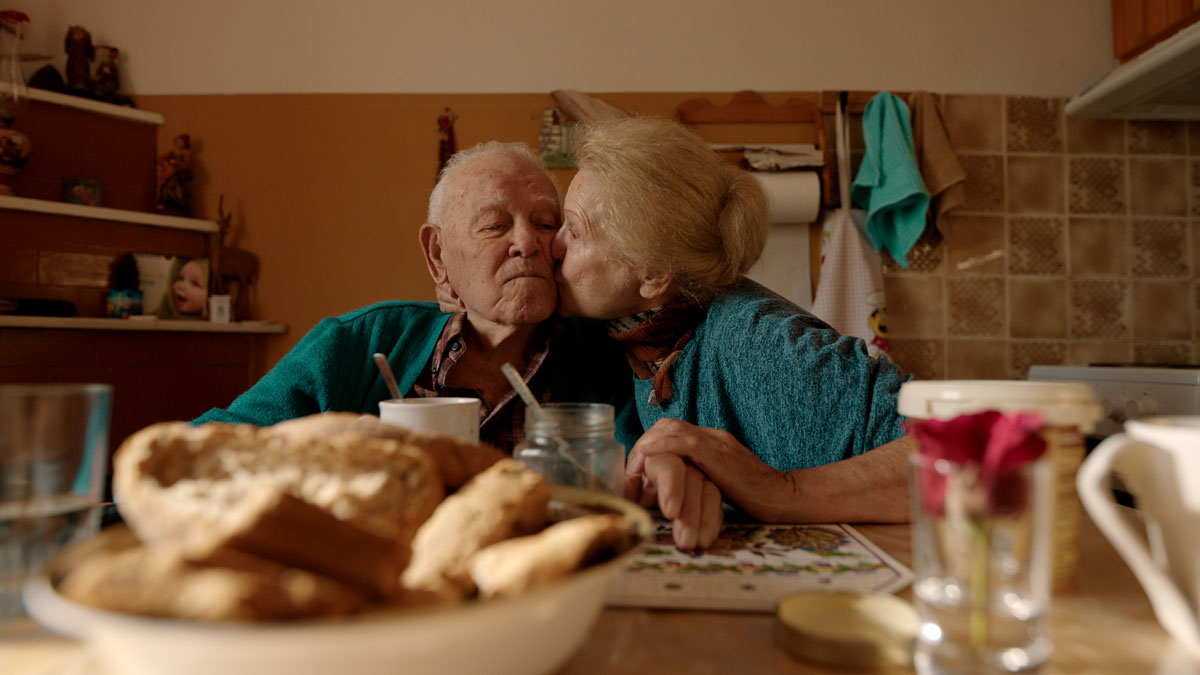
Live to 100: Secrets of Blue ZonesLive to 100: Secrets of Blue Zones (Netflix)I have a theory about blue cities, since I live in one of the bluest cities, Seattle, in what is one of the bluest states in the nation. I wonder whether it may be that people are thinking “Well, we’re already living this way. We already have access to plant-based diet and great produce, so what is it that I should be doing differently?”  

I don’t have much or any research that shows that blue cities are healthier than red cities. Maybe slightly. Still Seattle, three-fourths of people there are obese or overweight. There’s still traffic problems. The chronic disease load there isn’t much better than it is in a red city.

. . . I don’t want to say the city, but they a big city considered us and you know, the agenda at the time —and I don’t blame them, it was right after George Floyd was murdered — this city had Black Lives Matter [chapter], and they wanted to know what Blue Zones could do to improve the disparity. And I had to say nothing. We’re not a disparity-fixing project. What we’re good at is scoping the defaults, the nudges in your community, so people socialize more, they eat better, they move more, they smoke less. But it’s not a panacea.

I do believe, however, the more you can connect people socially, the more social problems go away. And the more you can connect people socially, the rates of depression go down, the rates of suicide go down. It’s much harder to be mean to a neighbor whose name you know than a stranger.


Want a daily wrap-up of all the news and commentary Salon has to offer? Subscribe to our morning newsletter, Crash Course.


Regarding what that representative from Black Lives Matter asked about narrowing disparity: I’m not inside that person’s head. But even coming into this interview, I had a question that I suspect may have informed what this person may have asked, which relates to the topic of food deserts. That’s a problem in a lot of larger cities. If someone is living in a food desert, what would you tell them in terms of what they can do to implement Blue Zone habits into their lives?

So just to be clear, we were asked to tackle the diversity issue or ethnic racial disparity issue. We can’t do that. But a Blue Zone project that’s been very successful in Fort Worth [is] we help find the money for bodegas or these convenience stores to put coolers in so that they have access to fresh fruits and vegetables. And it turned out to be a boon for the bodega owner.

So we do have a method, we do have a strategy for food deserts. But more important than that, we are so misguided in America in thinking that eating healthy is expensive that “I gotta go to some boutique grocery store and buy organic foods.”

It turns out — and by the way, a lot of convenience stores have this as well – that if you have a bean and a grain, these are cheap peasant foods and the cheapest foods in the grocery store and the convenience store. Beans and rice, you know, with a can of tomato paste, or tomato sauce, which you can also get a convenience store, and some herbs, a little bit of all that makes a delicious meal. And it’s got all the protein you need. Black beans? Dirt cheap. Corn tortillas, those together a whole protein, all the amino acids necessary for human sustenance, full micronutrients, full fiber. We’re marketed this idea that we have to have a Whole Foods in order to be healthy. We don’t. What we need is access to some beans and some grains and, you know, being able to get online and download a few whole food, plant-based recipes.

What are you hoping that people will take away from watching your Netflix series?

I wanted the show, first of all, to remind Americans that most of us can live an extra decade if we optimize our life, and that the Blue Zones approach is actually an enjoyable way of getting there. Having friends. Having a glass of wine with your friends. At the end of the day, knowing and living out your purpose. Eating healthy. These things feel good. And I want people to realize that this is available to them. And I’d also love it if our city council people are paying attention, and our federal politicians are paying attention, because it’s within their means within half a dozen years to make a healthier America. But it relies on shifting the focus from beating the dead horse of individual responsibility to setting up Americans for success by designing their environment for health.

“Live to 100: Secrets of the Blue Zones” is streaming on Netflix.

Self-indulgent sabotage: A psychologist explains the dangers of over-diagnosing narcissism

The son of a nymph and a river-god, Narcissus was a sight for sore eyes. With long locks like an ancient Greek Timothée Chalamet and soft features like Harry Styles, he was so attractive, as the myth goes, that he couldn’t look away from his own reflection, withered away and died.

These days, it seems we all know a modern-day Narcissus, and people are throwing around the term narcissist, rooted in the Greek myth, to label this kind of self-centered behavior all over the internet. Spend five minutes on TikTok, and you’ll probably come across at least one video about narcissistic parents or how to spot narcissism in romantic partners. 

But are narcissists really increasing in number? Where do we draw the line between positive associations with oneself, like confidence or self-love and toxic egotism? And is there any danger of amateurly diagnosing narcissistic personality disorder? Salon took these questions to Craig Malkin Ph.D., a psychologist and lecturer for Harvard Medical School, who is also the author of “Rethinking Narcissism The Secret to Recognizing and Coping with Narcissists.”

The conversation has been edited for length and clarity.

Can you distinguish between narcissistic personality disorder and narcissistic traits? 

We have to start with the definition of narcissism, and the simplest way of understanding it is to think of narcissism as the drive to feel special, exceptional or unique and to stand out from the other nearly a billion people on the planet in some way. The core of narcissism is something called self-enhancement, and it’s also best understood as a pervasive, universal human trait. We know that it’s pervasive because you can measure it cross-culturally using measures like the Narcissistic Personality Inventory (NPI). … But you can also understand it as an adaptation or survival strategy that is self-soothing or coping by maintaining this feeling of being special. 

People who are well above average on that trait — [which is determined] by clinicians like myself sitting in the room with them and interacting with them and talking about relationships — compared to others, that’s what we define as a narcissist. They’re elevated in narcissism but that does not mean they’re disordered.

Narcissists are “people who are so driven to feel special, exceptional and unique compared to others, they’d lie, steal or cheat in order to maintain that feeling about themselves.”

Of the number of people high enough on the trait to be called narcissists, you’re going to have a percentage who have narcissistic personality disorder (NPD). This is best understood as people who are so driven to feel special, exceptional and unique compared to others, that they would lie, steal, cheat or do whatever it takes in order to maintain that feeling about themselves.

They demonstrate what I call the core of pathological narcissism or the “triple e.” Exploitation: doing whatever it takes no matter the cost to others, potentially even hurting them in order to feel special. Entitlement: acting as if the world should bow to their will. And empathy impairments: being so driven to maintain that sense of being special compared to others that people lose sight of the needs and feelings of those around them. 

Roughly speaking, you’re probably going to see about one in 10 people who are high enough on the trait to be considered a narcissist. One percent of the population is going to be so narcissistic that they meet the criteria for NPD, according to the DSM, [the manual psychologists use to diagnose mental illness.]

Is there a rise in narcissism?

My best conclusion based on the evidence is, no, there is not a rise in narcissistic traits. Most of the types [of narcissists] that we’re talking about here are loud, extroverted and thrive on attention — not all people who are narcissistic do. 

What I do see is that there’s been an increase in the ease with which somebody like that can make themselves heard, and make themselves heard loudly. So it starts to feel like we’re surrounded by it when we’re really talking about a handful of people who are high in narcissistic traits and have gotten really adept at seeming to be everywhere.

Could it be also that we, as a society, are becoming more aware of narcissism? Or could it be that we’re kind of over-prescribing or over-labeling — trying to fit everything into a category? 

I think we are getting better [at recognizing narcissism]. People are more educated, but there’s all sorts of misinformation out there that reduces all narcissism to pathological narcissism. That’s hugely problematic especially because it gets confusing when we’re talking about different types of narcissism. They don’t all look the same.

“It starts to feel like we’re surrounded by it when we’re really talking about a handful of people who are high in narcissistic traits.”

But people definitely have more information. They know the more narcissistic someone is, the more likely they are to put someone else down to make themselves feel better. These are kinds of behavior patterns. The problem is, everybody at times can slip into more narcissistic behaviors. There’s a difference between somebody who is behaving narcissistically and the one who is a narcissist.

I think it’s true that people are getting better at spotting the kind of behaviors that are called narcissistic. … We’re actually really good at spotting [extroverted narcissists]. There are a number of studies where you just have somebody describe this person who, it turns out, does turn out to be a narcissist. Most people, when they read that description, or they interact with this person, they’re like, “Oh, yeah, they’re a narcissist.” We’re not so good at spotting pathological narcissism. 


Want more health and science stories in your inbox? Subscribe to Salon’s weekly newsletter Lab Notes.


What is the danger in overusing the term narcissist?

Even some people in my field are doing that and reducing it in a way that actually isn’t very helpful, and then it becomes a stigmatizing label. As soon as people are using the language in that way, you can define them as a label, and then you don’t have to consider them as a whole person. They’re just a narcissist. … If that’s the filter that we’re using, we can’t even recognize [narcissism in ourselves] without feeling somehow like it diminishes us or it makes us an awful, horrible person. 

My specialty is to help people struggling in relationships with someone who is narcissistic, but I also help people who are diagnosed with NPD. It’s easy to reduce all of narcissism to, “These people are evil and we don’t need to contend with them.” First of all, there are the risks that we just discussed, with moments of narcissism within ourselves.

But there’s an even greater risk that there’s going to be people out there with narcissistic personality disorder, who want to change their behaviors or want to reflect and want to get better. The message out there for them is: If you’re narcissistic in any way, you’re completely bad; there’s no hope for you. People just write you off. Now, you’ve got a segment of the population that actually is suffering, people with whom I work, who are facing such stigma, that they feel that there’s no possibility for them to ever change course, or to have a better life.

How can narcissism be a healthy or helpful trait? 

The core of narcissism is something called self-enhancement, or positive illusion. It’s only a problem when people become rigidly invested in believing in themselves in this overly positive view of themselves, that they are smarter than others, more capable, more whatever. When it’s held loosely, when it’s not untrue, we know it’s healthy. That’s an expression of narcissism that is healthy.

If you look at studies of people around the world who don’t think of themselves as average, who actually think of themselves in a slightly overinflated way, who hold these positive illusions, they are often happier in life. They persist in the face of failure. They’re able to give and receive in relationships — all healthy things. They may even live longer, according to one study, because there’s a health benefit to having those feelings. That is healthy narcissism. 

“It is not helpful, turns out, to not have any of those rose-colored glasses.”

Another way you can think about that is having slightly rose-colored glasses for the self, world and future. We also know from the same research that people who don’t have any of that suffer. They’re often more anxious and depressed. They tend to see themselves, the world and the future more realistically — it’s actually something called the sadder-but-wiser effect. It is not helpful, turns out, to not have any of those rose-colored glasses. It can actually get in the way in all kinds of ways in people’s lives, including in their relationships.

We can think of narcissism as a drive to feel special, exceptional and unique. A little of that is actually kind of a buffer and helps create some kind of resilience. Again, it’s only when people cling to it so fiercely, that they can’t accept blame — that they can’t reflect on themselves. 

Are there parallels to be drawn for this happening with other disorders where people start loosely tossing around a term? One that comes to mind for me is “empath.” I hear people say that all the time. I’m not sure if they’re actually empaths, but it’s become another kind of label.

It happens all the time. In history, when the public gets ahold of a term, it starts to get overused, loses some of its meaning and might even get improperly used. That’s what happened with schizophrenia. Because of the derivation of the term and because it literally meant “split,” people decided schizophrenia meant split personality. That’s not what schizophrenia is, but for a while, it started to take on these connotations that have absolutely nothing to do with the disorder. This also happens with terms like psychopath and empath.

“As soon as people start using these terms as these rigid, inflexible character descriptions, that’s where we have problems.”

[People] lose any kind of nuance and the understanding that most of these traits can be measured on the spectrum, most people fall somewhere around it and there’s an implication of where you are along the spectrum but there’s even nuances in that. As soon as people start using these terms as these rigid, inflexible character descriptions, that’s where we have problems, where it’s either used to write somebody off or to write ourselves off: “I can’t help it because I’m an empath.” Then how do I participate in relationships in a way that perpetuates this feeling about myself? Maybe I need to be angry sometimes, and maybe I’m uncomfortable with anger, but if it just gets dismissed as some inherent aspect of character, then it can’t ever be amended or changed.

Is there something special about narcissism or narcissistic traits that have made them kind of stand out to become more popular in the lexicon? And I do see there’s kind of an irony there. 

The people who come to see me for help with NPD have some capacity to reflect, some self-awareness, at least enough to be able to say, “I think I’m having problems and I need to look at it. I need help.” But the less capacity people with NPD have for that, the more they can be very disruptive and aggressive in relationships.

It helps to explain a lot of real nasty behaviors. Not all of it, because not all people with NPD are abusive, for example. Again, it depends on any number of factors. But some are, and it becomes a really handy way for those who have survived abusive relationships to understand and explain what’s going on. The problem is, anybody can be abusive.

There are all sorts of different personality disorders where people become abusive, too. Even somebody with obsessive-compulsive personality disorder — if they feel like their rigid controls have been threatened, they might become abusive. So there’s a danger in reducing all abusers to people that have NPD. 

Think of narcissism as the drive to feel special, exceptional and unique. If you think about that trait, there are lots of ways to feel special, right? So this gets confusing, too. People get very hung up on that, and I think it’s kind of a caricature of the narcissist we all know and loathe. These are people who are extroverted or grandiose, “obvious” narcissists or “overt” narcissists — those are all names for the same type. They feel special by virtue of their wealth. They feel especially smart compared to others — positive things. 

We need your help to stay independent

But then there are people who are extremely narcissistic and feel special because of negative qualities. They feel like the most misunderstood person in the room, the ugliest person in the room — no one has suffered as much as they have. That’s the more introverted, covert or vulnerable narcissistic presentation. 

So there’s this problem again too, of [people thinking] these are people who are full of themselves and feel good about themselves. The reality is, the introvert or covert narcissist very often shies from attention. They feel socially anxious. They don’t want all eyes on them in a room and they don’t feel particularly good about themselves. 

DeSantis flustered when pressed on guns, kicks out Black man who mentioned Jacksonville shooting

Florida Gov. Ron DeSantis erupted at a Black audience member during a Jacksonville news conference Thursday after the unidentified man questioned state policies he said have led to the deaths of Black people in the state. 

"You have allowed weapons to be put in the street and the hands of immature, hateful people that have caused the deaths of people who were murdered a couple weeks ago," the man said, referring to the racially motivated, fatal shooting of three Black people by a white gunman at a Jacksonville Dollar General late last month.

As the man then began to talk about Trayvon Martin, a Black teen who was fatally shot by George Zimmerman in Sanford, Fla. in 2012, DeSantis abruptly cut him off.

"First of all, I did not allow anything with that," the 2024 presidential candidate said of the recent shooting. He then told the man he would not accept his accusation and argued that the Jacksonville gunman should have been ruled ineligible to own a firearm under the Florida Mental Health Act

"I'm not going to let you accuse me of committing criminal activity. I am not going to take that!"

As the exchange intensified, the audience member repeatedly called to DeSantis to "let me finish" and "allow me to speak my truth, sir" as the governor continued to deny the accusations. "You have allowed people to hunt people like me," the man eventually said when DeSantis paused.

"That is nonsense. That is such nonsense," DeSantis replied, rejecting the man's remarks. The man was then escorted out of the room as the Republican launched into a rundown of Florida's crime rate and the audience applauded. 

DeSantis signed a bill in April that allowed state residents who legally owned a firearm to carry concealed guns without a permit, legislation that sparked contempt among Democrats. At a vigil for the victims of the Jacksonville shooting, the conservative governor was met with boos and chants of "Black Lives Matter" from the crowd of attendees as he spoke. 

Wisconsin GOP’s impeachment plan: Another MAGA coup against democracy

MAGA Republicans in Wisconsin are gearing up to impeach newly elected state Supreme Court Justice Janet Protasiewicz, just five weeks after she took her seat on the court and before she has cast her first vote. They want to stop her from doing what the majority of Wisconsin voters elected her to do.

Their plan is nothing less than a coup attempt, an effort to sideline a duly elected judge not because she has committed an impeachable offense but because of what she might do — namely, join her liberal colleagues in throwing out gerrymandered state legislative maps and legalizing abortion in Wisconsin. 

Impeachments of federal or state judges are rare. The National Conference of State Legislatures offers the following examples:

In 1994, a state Supreme Court justice became the first Pennsylvania judge to be impeached in 183 years. In 2000, the New Hampshire House held an impeachment proceeding — something that the House had not done in 210 years…. The Illinois House has impeached only two people in the state’s history — a judge in 1832-33 and a governor in 2008-9.

Even with these limited precedents, our country has never seen anything quite like what is unfolding in Wisconsin.

On Wednesday, the state Democratic Party unveiled a $4 million initiative aimed at mobilizing voters to press Republicans in the state legislature to back down from their planned coup. 

Some of the Republican legislators may well come to understand that there are serious consequences when you seek to silence someone who just won a landslide victory in a statewide election by pledging to defend democracy in her state.  

Significantly, the Republican initiative is about more than trying to take out one political opponent in one state. Rather, it is part of a cross-national MAGA assault on truth, government institutions, the law and the vote itself.

The threat in Wisconsin mirrors the House Freedom Caucus’ preparations to impeach Joe Biden without factual support and the evidence-free stunt hearings being held in Congress by Reps. Jim Jordan and James Comer.

They are all designed to protect Republican power built on systems that perpetrate minority rule

Both the national and Wisconsin MAGA strategies also seek to undermine public trust in government and in the critical checks and balances that restrain political power. The more disillusioned citizens become with politics — “Both sides do it, I’m throwing up my hands!” — the more power can be wielded by those with their hands on the controls.

As Republicans in Wisconsin move forward with their plans, however, they would be wise to contemplate what may happen in 2024. 

Protasiewicz’s resounding victory last April tells us that a large statewide majority in Wisconsin — typically a “purple” state where votes are evenly divided between the two major parties — favors democracy. There’s considerable evidence that same statewide majority will turn against MAGA Republicans when issues like abortion and gerrymandering are squarely framed and propel Democratic victories in statewide elections, whether for president, governor or secretary of state.

It might well also produce the kind of blowback that could curtail Republican control in the state legislature and finally roll back the gerrymandered district maps that have given the GOP large majorities in Madison.

More on that in a moment. Here’s the background: Wisconsin Republican legislators know that those gerrymandered maps are the source of their power — and know that Protasiewicz’s presence on the state Supreme Court threatens it. 

In her election campaign last winter and spring, Protasiewicz said, “I can’t tell what I would do in a particular case, but I can tell you my values, and the maps are wrong.”

As part of Republicans’ campaign for Dan Kelly, her MAGA-aligned opponent, the Wisconsin GOP filed and publicized a trumped-up complaint alleging that Protasiewicz’s campaign statements had violated the ethical rules that govern judges.

On Tuesday, Protasiewicz released a May 31 letter from the Wisconsin Judicial Commission, an independent, nonpartisan group, dismissing that complaint. The commission’s ruling is consistent with a 2002 U.S. Supreme Court decision that judicial candidates have a First Amendment right to campaign by expressing their positions on legal issues of public concern.

Having failed in their ethics gambit before Wisconsin’s judicial commission, GOP legislators apparently won’t take the voters’ verdict on Protasiewicz for an answer. Evidently, their plan is to put Protasiewicz into permanent legal limbo, rendering her ineligible to make decisions on the bench, quite likely without even trying to convict her of an impeachable offense.

There are two principal reasons for this scheme. First, the Wisconsin constitution provides that “no judicial officer shall exercise his [or her] office” after being impeached, unless and until that person is acquitted at trial. 

Second, while it only takes a majority vote for impeachment vote in the state House, where Republicans hold a 29-seat edge, they almost certainly don’t have the votes to convict Protasiewicz in a state Senate trial, where a two-thirds vote would be required. Every single Senate Republican would have to vote to convict her, and as the GOP is well aware, Protasiewicz carried six state Senate districts currently held by Republicans. If even one of those GOP senators decided to abide by the letter of the Wisconsin constitution, which says that impeachment is only permitted in cases of “corrupt conduct in office or for the commission of a crime or misdemeanor,” she would be acquitted. 

Protasiewicz has clearly committed no crime, and the Judicial Council’s letter establishes a lack of any evidence of corruption. According to University of Wisconsin law professor Robert Yablon, the last impeachment of a Wisconsin judge occurred in 1853, and that was the result of a “bribery scandal,” as the New York Times reports. 

So the GOP legislators have evidently hit upon an especially ingenious form of injustice: Impeach Protasiewicz and never hold a trial.


Want a daily wrap-up of all the news and commentary Salon has to offer? Subscribe to our morning newsletter, Crash Course.


What they apparently fail to understand is that it’s always a mistake to use chicanery to thwart the will of the voters. 

Their scheme might backfire in several different ways. If Protasiewicz is impeached, she could file suit seeking a judicial order to compel a trial. She would likely win in the less partisan lower courts.

If her case went to the state Supreme Court, which without her vote would be equally divided between Republicans and Democrats, a 3-3 tie would leave a lower court’s decision standing. For that matter, a vote in her favor is not inconceivable. In December 2020, conservative Justice Brian Hagedorn, who remains on the Court, joined the three liberal justices in a 4-3 vote to dismiss Donald Trump’s challenge to Joe Biden’s electoral victory in Wisconsin. 

In either case, Protasiewicz would be freed from her Republican-constructed purgatory and able to vote on upcoming cases, including those on gerrymandering and abortion rights. 

While all these scenarios play out, we need to recognize that what we are seeing in Wisconsin mirrors the tactics of MAGA forces in the U.S. Congress who now threaten Biden with impeachment. 

To that threat, Sen. John Fetterman, the Pennsylvania Democrat known for plain speaking, has called their bluff: “Go ahead. Do it, I dare you. If you can find the votes, go ahead, because you’re going to lose. It’s a loser. Sometimes you just gotta call their bullshit.”

His words echo in Wisconsin, where Trump’s allies and imitators are again showing their true, anti-democratic colors. They should be careful what they wish for. If Wisconsin Republicans push forward with their cynical scheme, the voters will deliver their own verdict next year.

Tommy Tuberville tears down the last pillar of the GOP’s claim to patriotism

There are a number of crazy political events taking place right now, from the impeachment trial of embattled Republican Attorney General Ken Paxton in the Texas Senate to the GOP threat to remove a Democratic Supreme Court Justice in Wisconsin and the impending impeachment of Joe Biden. (Oddly, the only one that’s justified is the one in Texas, brought by Republicans against a Republican so corrupt even they couldn’t ignore it.) We also have trials against former president Donald Trump in civil and criminal court pending in five different jurisdictions. Oh, and we’re also looking at a possible government shutdown. It’s a lot. 

The one place that seemed relatively sane, at least by comparison, was the U.S. Senate. Sure they had some big dramatic fights last year over President Biden’s legislative agenda but they were pretty standard policy battles that mostly took place within the Democratic caucus. The Supreme Court confirmation hearings for Justice Ketanji Brown Jackson were as ugly as usual but they didn’t feature a lot of fireworks. All in all it’s been a fairly functional institution lately. 

That’s not to say that the Republicans haven’t been playing any games at all.

Rand Paul, R-Ky., has abused the power given to any senator to block nominations to the executive branch by putting holds on all State Department nominees in order to force the foreign relations committee to “access COVID-19 documents being held by various government agencies.” His complaint is that he’s only allowed to read the documents in private and isn’t allowed to take them out. As a result, no ambassadors are being confirmed. 

We need your help to stay independent

Texas Senator Ted Cruz likewise held up State Department nominees for months because he wanted the president to reimpose sanctions on the Nord Stream 2 pipeline. He generously released them when Biden did what he wanted. 

In case you were wondering, there is nothing in the Constitution that grants an individual senator this power. It’s simply one of the Standing Rules of the United States Senate which has been around forever but never was used to block entire categories of nominees until fairly recently. This could be changed, but like so many of the undemocratic rules of the Senate which have no place in a modern democracy, there is no will to do it. 

The holds by those GOP senators are not all that surprising. Republicans have traditionally been hostile to the State Department going all the way back to the McCarthy era when old Tailgunner Joe claimed that it was crawling with commies. (With that epithet gaining new currency on the right lately, I expect we’ll see it rolled out again.) They tended to think of diplomats as being pretty useless, preferring the big stick to the soft talk, which translated to reflexive support for military solutions to all foreign policy questions.

That’s why the actions of freshman Sen. Tommy Tuberville, R-Al., are so astonishing. I never thought I’d see the day that any Alabama politician would even dream of holding up the promotions and assignments of military officers but that’s what’s happening. The worship of the uniformed services in the Deep South has always, well, run deep. Anyone who questioned it would be called to task for their lack of patriotism. Yet here we have this former college football coach telling the officer corps of the U.S. military that he could not care less if they get their promotions and assignments because he basically thinks they’re all a bunch of “woke” pansies who don’t know how to fight.

Tuberville, it must be noted, has never served in the military. Neither does he have any political experience. He was elected because he used to coach football in Alabama until he moved to Florida and decided to run for the Senate in 2020. He’s been there for two whole years and has made a name for himself as the densest member of the body. That’s saying something considering that Wisconsin Sen. Ron Johnson was just re-elected last fall.

The alleged “issue” that has caused Tuberville to take on the Pentagon is about the military policy that allows time off and pay for service members to travel to another state if they are stationed someplace that has banned abortion. The military won’t provide abortions nor does it pay for them. All it will do is give a soldier or sailor the ability to end a pregnancy without having to go AWOL and lose their pay. Tuberville says this is unacceptable and has now held up hundreds of promotions including the upcoming changing of the guard at the Joint Chiefs. 

That is the stated reason for his hold but it’s clear that he also has another agenda. Tuberville, the military expert, believes that the military isn’t macho enough. The navy is so woke they’re doing all kinds of gay and girly stuff on board ships:

Nobody tell the senator that George “Blood and Guts” Patton was so woke that he wrote this and many other poems:


Want a daily wrap-up of all the news and commentary Salon has to offer? Subscribe to our morning newsletter, Crash Course.


Coach Tuberville (he prefers to be called that instead of senator) doesn’t know or care about any of that. The secretaries of the three branches of the service made a rare public plea to end this madness and he smugly retorted that he was going to hold out until he gets what he wants. And you can be sure he’ll keep insulting the military until they stop being so woke, which I assume means getting back to some serious sexual harassment and gay bashing, the way he no doubt taught his boys during locker room pep talks. 

The Democrats are not going to give in to this dullard by agreeing to take on the tedious task of confirming each officer individually in a floor vote because that would be giving into Tuberville’s bullying nonsense and rewarding more of this adolescent transgressive Republican behavior. It’s up to the Republicans to police their own and while some have tepidly objected to what he’s doing, they just don’t seem to have the energy to deal with him, not even when he’s attacking the military, the last institution in American government that Republicans had still held in some esteem. Now that it’s “woke” too, all bets are off.

https://twitter.com/senmikelee/status/1699897288360124603

Tuberville is an imbecile who has no idea what he’s doing but clearly loves the attention. He’s listening to the far-right fringe that has decided the U.S. military is “woke” because it includes women and LGBTQ members and has made the correct decision to ensure that service members don’t behave like stupid brutes. He’s too ignorant to understand that he’s tearing down the last pillar of the Republican Party’s claim to patriotism. The only flag they’re allowed to salute these days are those giant blue Trump flags. Old Glory is just another symbol of America’s descent into wokeness.

Cancer is rising in people under 50 — but the causes remain a mystery

Cancer is often thought of as a disease that mostly affects older people. But worrying new research shows that cancer in younger adults is a growing problem. The study found there’s been a nearly 80% increase in the number of under-50s being diagnosed with cancer globally in the last three decades.

Also of concern are the types of cancers being seen in younger adults – with this latest study and previous research showing that cancers thought of as typical of older age groups are now increasingly being diagnosed in younger people. These include bowel cancer, stomach cancer, breast cancer, uterine cancer and pancreatic cancer.

This is worrying because some of these cancers – particularly pancreatic and stomach cancer – have low survival rates, due to the fact they’re often diagnosed at a late stage. Research has also shown that bowel cancer tends to be diagnosed at a more advanced stage in young people compared with older adults.

While it’s clear from this latest study that cancer is becoming more common in those under 50, experts still aren’t entirely sure what’s causing this rise.

Early-onset cancer

The study investigated cancer cases in people under the age of 50 (termed “early-onset cancer”) from 204 countries and regions. The data analysed was collected between 1990 and 2019. The researchers were interested in knowing not only the incidence of early-onset cancer, but what types of cancer had the highest burden in under-50s.

They found that in 2019, there were 3.26 million cases of early-onset cancer diagnosed worldwide – a 79% increase since 1990. The authors also predicted that by 2030, the number of under-50s diagnosed with cancer would increase by a further 31%.

Breast cancer was the most common early-onset cancer in 2019, but incidences of prostate and throat cancers increased at the fastest rate since 1990. Liver cancer decreased the fastest over the same time period.

The number of deaths due to early-onset cancers also increased from 1990 to 2019 – although less quickly than the rate of diagnosis, with 1.06 million deaths worldwide in 2019, an increase of 28%. The cancers with the highest number of deaths in 2019 were breast, lung, bowel and stomach cancers. The age group at greatest risk of early-onset cancer were those in their 40s.

There’s no single explanation for why cancers are rising in under-50s.

In 2019, early-onset breast cancer had the highest burden for women, while early-onset lung cancer the highest burden for men. Women were disproportionately affected in terms of death and poor health from early-onset cancer in low- and middle-income countries.

The study also shows that while the highest number of early-onset cancer cases were in developed countries such as western Europe, North America and Australasia, many cases were also seen in low- and middle-income countries. Death rates were also higher in low- and middle-income countries.

The main limitation of this paper is the variability of the data collected by different countries, making it difficult to measure its completeness. Nonetheless, it is still useful in getting a picture of global health.

Unknown causes

There’s no single explanation for why cancers are rising in under-50s.

Some cancers in younger people happen as a result of a genetic condition – but these only account for a small number of cases (around 20%).

Lifestyle factors such as the foods we eat, whether we drink alcohol or smoke, and being overweight are all linked to an increased risk of many types of cancer. Research indicates that these factors may be contributing to a rise in early-onset colorectal cancer, for example. Whether this is true for other types of early-onset cancer remains unknown.

Some people affected by early-onset cancers may live healthy lifestyles. This suggests there are probably other reasons for the increase that have not yet been discovered.

It’s clear from this research that the landscape of cancer is changing. While the incidence of early-onset cancers is increasing, cancer in this age group is still much less common than for those over-50. Early-onset cancers account for only around a tenth of new cases in the UK. But though the numbers are still relatively low, this doesn’t mean the trend we’re seeing isn’t of concern.

It will be crucial now to ensure there’s greater awareness of early-onset cancers. Most younger people, and even healthcare professionals, don’t necessarily put cancer at the top of the list when symptoms develop. It’s important for people to see their GP if they notice any new symptoms, as detecting cancer at an early stage leads to a better prognosis.

Urgent research into early-onset cancer is also needed at a national and international level. The underlying causes are probably different depending on a person’s sex, ethnicity and where they live.

On a personal level, there are many things you can do to reduce your risk of developing cancer. Following a healthy lifestyle remains important. This includes eating a healthy diet, stopping smoking, exercising regularly, reducing your alcohol intake, being safe in the sun and maintaining a healthy weight. If something doesn’t feel right with your body or you experience any new symptoms, it’s important to see a doctor as soon as you can.

Another Christian influencer arrested for child abuse: Why conservatives keep falling for these cons

In many ways, it’s the least surprising story of our times: A showily Christian conservative holds themselves out to be the moral arbiter for others to follow but is soon exposed as a hypocrite and a villain, accused of violence or abuse against the vulnerable people they claimed to champion. It could be the establishment of the Catholic Church, which covered up sexual abuse by priests for years. Or the Southern Baptist Convention, which also spent decades reflexively shielding abusers. Or Jerry Falwell Jr. and Liberty University. Or the Duggar family from TLC’s reality TV series and their religious leader, Bill Gothard. The drumbeat of similar stories is unrelenting. Once a person holds themselves out to be an exemplar of clean Christian living, it feels like it’s just a matter of time before their closetful of dark secrets comes spilling out. 

So it wasn’t really a shock when another Christian right celebrity, Ruby Franke of the YouTube series “8 Passengers,” was recently arrested and charged with six charges of felony child abuse. Franke was part of a new crop of Christian “influencers” who have recreated the Duggar family’s reality TV success for the social media era. There seems to be an unending number of these content creators. They rake in massive views and advertisers by dishing up a fantasy of blindingly white, well-scrubbed, “wholesome” family life.

The same religious right that treats women like second-class citizens takes a similar view of the humanity of children, treating them more like property than people. 

Franke was a bog standard example: A thin Mormon housewife with 6 kids and expensive-looking blond hair, living in small town Utah. She and her husband, Kevin Franke, kept up a YouTube channel documenting how their strict, religious parenting style supposedly led to an upright and enviable life. She partnered with ConneXions Classroom, which bills itself as a counseling service to “create joy in your life and relationships!” All this is advertised with familiar imagery: Laughing children in fields, content-looking white wives in well-appointed kitchens, ruggedly handsome husbands with full heads of hair. 

We need your help to stay independent

Behind the scenes, according to police and prosecutors, was massive amounts of child abuse, which was exposed when Franke’s 12-year-old son escaped out of a window of the home of Jodi Hildebrandt, who runs ConneXions. The boy reportedly had duct tape on his arms and legs and was starving. His 10-year-old sister was found in the house, reportedly also malnourished. Four minors were taken into care by the Department of Child and Family Services, according to a statement from the Santa Clara-Ivins Public Safety Department. Franke’s oldest daughter responded with gratitude for the arrest on Instagram:

It’s grim stuff, but also just exactly what cynical secularists of the left expect.

What’s so confounding about this story is that so many other people were buying Franke’s B.S. image of herself. She had over 2 million subscribers on her YouTube channel. While some of those people were skeptics, by and large, it was the same audience you always get for these Christian influencers: People who desperately want to believe in this fairy tale of the shiny, happy perfect white Christian families. 

It’s not like the red flags weren’t there. The Frankes made a big deal out of being strict disciplinarians on their channel, which led to describing punishments of children. A 15-year-old, for instance, was deprived of a bed for 7 months, after he played a prank on a younger brother. Franke defended herself by calling a bedroom a “privilege.” She also described being able to eat as a “privilege” that children should expect to lose for misbehavior. She filmed multiple videos recalling times when she withheld food to punish children. 

Some viewers criticized the Frankes for this, as well as their repeated assertions that children do not deserve privacy. Most of the audience, however, didn’t clock this as abuse, and no wonder. The Christian right has long pushed the idea that harsh punishments are “loving” and that treating your kids like property is “good” parenting. Christian bookstores are full of parenting books that advocate hitting children, which is often minimized with the word “spanking.” It’s common to read writers like James Dobson, who claim the only reason beating kids wouldn’t work is the “spanking may be too gentle.” A popular parenting book, “To Train Up A Child,” recommends beating kids from infancy and hitting them with a “switch,” on the grounds that open-handed spanking isn’t painful enough. 

The viciousness, which often verges on flat-out sadism, goes a long way toward explaining the apparently bottomless yearning for Duggar-style propaganda. It’s all about reassuring conservative Christians that all this religious oppression and cruelty is justified. The images of smiling blonde children chasing butterflies in a field under the gaze of beatific blonde parents tell a story they desperately want to hear: That it’s okay to beat and starve kids because look at all this family harmony and joy it will eventually produce! 

It’s not true, of course, but the need to believe that they’re one more spanking away from Christian utopia clearly drives a lot of people to consume this Hallmark-style propaganda by the bucketfuls. Worse, this notion that harsh “discipline” is the key to living this saccharine image is used to justify all manner of hurtful policies. Anti-choice activists advocate for abortion bans by suggesting that forced childbirth will turn women from hussies to glowing mothers, gratefully cuddling babies they didn’t know they needed. The current mania for book-banning and bullying LGBTQ students in schools is fueled by the notion that there are “innocent” Christian families that need “protection.” And, of course, this recasting of child abuse as mere “discipline” makes it incredibly difficult for authorities to intercede when children are in danger. 


Want more Amanda Marcotte on politics? Subscribe to her newsletter Standing Room Only.


One of the most striking things about the Franke story is that there seems to be many previous moments in which outside authorities received word that the children in the home were being abused. Their eldest daughter claims that child protective services and the police had been notified in the past, to no avail. Insider reports that there was a visit from child protective services after they took their son’s bed away. In another video, Ruby Franke complains that her daughter’s first grade teacher was clearly uncomfortable when Franke forced the girl to skip lunch. 

The police, social workers and teachers are not to blame, however. They’re often prevented from doing anything to interfere in child abuse, because Republicans, at the behest of the Christian right and under the guise of “parents rights,” implement laws that make it very hard for authorities to deal with abusive parents. In many states, for instance, it’s against the law for one adult to hit another adult, but you are allowed to hit a child so long as it doesn’t bruise or break the skin. The teacher may not like watching a kid go hungry at lunch, but until the kid is in medical danger, it’s not against the law in Utah. Republicans are so hostile to laws protecting the safety and well-being of children that they’ve even blocked the U.S. from ratifying the U.N. Convention on the Rights of the Child, making ours the only nation in the world that doesn’t recognize the human rights of children. 

As Human Rights Watch explained in a recent report, “US states overwhelmingly fail to live up to key standards” on “the issues of child marriage, corporal punishment, child labor, and juvenile justice.” As Jill Filipovic explained in her write-up of the report, “Over and over again, the worst states for children are clustered around the ‘pro-life’ Bible Belt, and the map of the states that are the worst for children looks a lot like a map of red state America.” The same religious right that treats women like second-class citizens takes a similar view of the humanity of children, treating them more like property than people. 

Ruby Franke’s is just the latest in a long line of stories that illustrate the gap between the image the Christian right likes to portray and the ugly reality just under the surface. Millions of dollars every year spills into an industry framing conservative Christianity as a romanticized world full of beaming white people, living in bucolic environs untroubled by the problems that the sinners of the world supposedly bring upon themselves. The image of the emaciated 12-year-old boy with rope burns and duct tape on his limbs, slipping out the window of a pricey McMansion, is an alarmingly resonant symbol of reality: Behind that spiffy, shiny Christian exterior is all too often a world where the most vulnerable people trapped and malnourished. 

Ape elbows and shoulders evolved differently than monkeys, allowing us to throw with precision

Mary Joy is an undergraduate student at Dartmouth University’s Department of Anthropology — and, additionally, is a climber and runner. Indeed, Joy’s athletic interests have fueled her scientific endeavors in at least one important way: They helped her develop a hypothesis about the evolution of shoulders, elbows and wrists in human beings. Since humans apparently use quick movements with a large range of motion when running downhill, could that same increased range of motion exist in primate shoulders and elbows to reduce fatigue and muscle contraction when they climb downward?

Why do apes have a far greater range of motion in their shoulder, elbow and wrist joints than monkeys?

Now Joy is the co-author of a scientific paper, recently published in the peer-reviewed journal Royal Society Open Science, that offers real evidence behind that hypothesis (which later became her thesis). To provide this evidence, the Dartmouth researchers studied the “upclimbing” and “downclimbing” movements of both wild chimpanzees (Pan troglodytes) and sooty mangabeys (Cercocebus atys, a small monkey species), using sports-analysis and statistical software.

While comparing the videos and photographs, they noticed that chimpanzees did not downclimb in the same way as mangabeys: while the mangabeys scaled trees with their shoulders and elbows mostly bent close to their bodies, chimpanzees support their weight by extending their arms far over their heads.

Thanks to this discovery, scientists can now start answering one of the great mysteries of primate evolution: Why do apes have a far greater range of motion in their shoulder, elbow and wrist joints than monkeys?

“Researchers have long puzzled over the question, with most arguments focusing on (a) climbing upward or (b) below-branch suspension,” Dr. Nathaniel J. Dominy, study co-author and a professor of anthropology at Dartmouth University told Salon by email. The new study focuses on the importance of downclimbing, as “controlled descent is more challenging than ascent even though gravity is identical in both directions, so it follows that monkeys and apes should use their shoulders and elbows differently during downclimbing, and they do!”

Mangabey close upMangabey close up (Photo by Luke Fannin)
This particularly applies to chimpanzees, who are heavier than monkeys and therefore utilize their shoulder and elbow joints more expansively than monkeys “to maximize use of their feet as brakes, a position known as ‘laybacking’ among human rock climbers,” Dominy said. The study is the first to show these differences in body movement, or kinematics, during vertical climbing.

“But if you ask any rock climber,” Dominy said, “they’ll tell you that climbing downward is more difficult than climbing upward, even with all the advantages of our super-flexible ape shoulders and elbows.”

Joy elaborated on the importance of further studying downclimbing, as this seemingly simple act contains movements that could help unlock some of the secrets of human evolution.

“From my perspective, it indicates that downclimbing is a potential evolutionary force that has implications for primate — and eventually human — skeletal morphology, as opposed to just a leftover motion,” Joy told Salon by email. “In other words, it’s a powerful form of movement in its own right, and should be studied further.”


Want more health and science stories in your inbox? Subscribe to Salon’s weekly newsletter Lab Notes.


“Downclimbing is a potential evolutionary force that has implications for primate — and eventually human — skeletal morphology.”

To explain why she feels this way, Joy observed that our bodies likely evolved to adapt to changes in our environments and modes of living. When viewed from that vantage point, it makes sense that creatures which constantly need to transport their bulky bodies through trees would benefit from anatomical features that act as brakes. It just so happens that these same features make it possible to play organized sports, craft sophisticated tools and do hosts of other activities specifically associated with humans.

“To me, it made me think a lot about how other forms of human movement might have stemmed as safety (or other) adaptations to movement that our common ancestors might have had to do as they shifted between modes and environments of living,” Joy explained. “Based on our study, it seems plausible that our common ancestors developed this large range of motion in their upper arms in response to the need for safer downclimbing, but even in the absence of that pressure, we use that same adaptation to stretch, throw balls (or weapons) and rock climb recreationally.”

It is easy to conceptualize how human downclimbing led to these evolutionary quirks. As Dominy put it, these careful climbing behaviors “would have favored the stiff spine and thicker lumbar vertebra needed for upright walking, together with shoulders and elbows equipped for throwing objects and making tools.” The end result was that “climbing gave us the anatomical needed to thrive as hominins in the savanna-woodlands of Africa.”

We need your help to stay independent

It also provided the Dartmouth students behind this project with experiences they will never forget. Dominy himself commented that “this study was led by two students, and I’ll never tire of seeing the thrill of discovery when students see the first results of their hard work.” In this case that hard work “improves our understanding of how primate bodies evolved to solve essential problems safely and efficiently. Our own bodies are a legacy of that process.”

It also had the incidental effect of allowing the students to develop bonds with the monkeys they observed. As Joy recalled, “I actually really enjoyed observing and measuring the mangabeys’ climbing behavior in the videos. They’re adorable animals, and despite the fact that they were different individuals, I named them all Geronimo.”

Experts warn that “accountability” for Donald Trump could come at a cost to democracy

Donald Trump is a type of fascist political preacher and MAGA is his congregation. His sermons are of violence and destruction.

On Sunday, Trump made an explicit threat and promise on his Truth Social disinformation platform to treat President Joe Biden and his other “enemies” like they were in a “banana republic”. Trump even went so far as to call Biden and the Democrats “Communists”. In essence, Trump is threatening to kill President Biden and the Democratic Party’s leaders (and supporters) when and if he takes back the White House in 2025.

Last Tuesday, Trump told Glenn Beck that he would put President Biden, Special Counsel Jack Smith, Attorney General Merrick Garland, Hillary Clinton, and his other “enemies” in prison.

“You have no choice,” Trump asserted, “because they’re doing it to us.”

As seen on Jan. 6, a recent assassination attempt on President Barack Obama by one of Trump’s MAGA zealots, threats by Trump’s followers against prosecutors and jurors and other law enforcement who are connected to his upcoming criminal trials, mass shootings and other violence by right-wing hate mongers and other extremists, Trump’s followers have and will continue to obey his incitements and commands to violence.

We need your help to stay independent

In a democracy, it is the responsibility of the Fourth Estate to speak truth to the powerful by informing the public so that they can make good decisions about their leaders and society. The Fourth Estate in America, what we can broadly describe as “the news media,” has failed in many ways to follow through on those responsibilities during the Age of Trump and the ongoing democracy crisis.

In an attempt to make sense of what comes next with Trump’s escalating threats of fascist violence and bloodshed, the country’s ongoing democracy crisis, and why the news media continues to mostly ignore and normalize the clear and present dangers, I recently asked a range of experts for their thoughts and insights.

Mark Jacob is the former metro editor at the Chicago Tribune.

Trump has regularly made criminal prosecution of his enemies a part of his political rhetoric. He encouraged the “lock her up” chants against Hillary Clinton during the 2016 campaign. He was disappointed that Attorney General William Barr didn’t do more to weaponize the Justice Department, though Barr did far too much in that direction, I’d say. Joe Biden, on the other hand, has wisely refused to weigh in on Trump’s legal problems. Some in the news media are frustrated — and have even wondered on air why Biden isn’t talking about Trump’s indictments — because the media loves mud fights.

“The sad fact is what the GOP’s base wants and desires is someone to promise violence.”

People who believe in the rule of law must fight against the Republican assault on our justice system. These prosecutions are not a nefarious plot against Trump, no matter what the right says. Clearly, Trump committed crimes. If this were a leftist plot, that stolen documents case wouldn’t have gone to Trump judicial nominee Aileen Cannon. Let’s allow the system to work.

If Trump were to win the 2024 election, the Justice Department would become a leading instrument of his fascism. People need to understand that if Trump wins, the American experiment is over. The U.S. becomes a version of Putin’s Russia or Orban’s Hungary. An authoritarian state. A fake democracy.

Jared Yates Sexton is a journalist and author of the new book “The Midnight Kingdom: A History of Power, Paranoia, and the Coming Crisis.”

The sad fact is what the GOP’s base wants and desires is someone to promise violence. I’ve actually come to believe, in part, what’s happening with the primary race is that no one is quite willing to go the extra mile that Trump does to promise it to them. They want something beyond representative government / political promises. And that are media continues to ignore/dismiss a very obvious reality sickens me. And worries to me no end.

Next, I fear, is pretty predictable. As Trump’s legal problems and legal jeopardy increase, so too does his call for violence and so too does the appetite for violence. I think, while a lot of people are celebrating holding him “accountable,” they’re taking their eye off the ball and the fact that real and actual violence is only becoming increasingly more likely.

Dr. Justin Frank is a former professor of psychiatry at George Washington University and author of the bestselling book “Trump on the Couch“.

We are at the point in political life which is aptly called “malignant normality.” We gradually get used to destructive change and somehow normalize it, aided by calm, accepting media coverage combined with a failure to challenge directly the ideas and distortions that usually stem from pathologically narcissistic leaders. This is always the first step in subduing the electorate. It is what happened with Trump when he entered the political arena; now his presence is a malignantly normal mainstream. Normal because it is part of our culture, malignant because it is a destructive force eating away at American democracy.

Trump’s need to attack Biden has several deeply personal sources. The most obvious one being that Biden beat him in 2020 – and Trump knows it. More subtle, however, is that Biden’ brand is “loved and loving,” whilst Trump energy is all “feared and vengeful.” Biden is kind, some may say to a fault, to his troubled son Hunter. Trump’s father ground his disappointing son Fred (Donald’s older brother) into the grave – a warning to young Donald that he must evade that abuse by becoming like his father. We see this in the way Trump treats his own troubled sons, not to mention their long-suffering mother. On Trump’s watch, Ivana was allowed to tumble down the stairs of her lonely townhouse and now molders at the second hole of  his Bedminster golf course. Only his daughter (and by extension, her husband) remain in his good graces, fueled by a creepy incest meme he encourages, if not outright embraces.

Biden governs by nourishing thoughtful relationships with genuine friends in the Senate, with whom he worked side-by-side for decades.  Trump has few, if any, close friends. He courts not respectful friendship but uses his fake bonhomie to grasp after the modest bank accounts of his millions of addicted followers – people with whom he would never even share a Big Mac. Well-heeled members of Mar-a-Lago usually find themselves roped off from his company. He knows he is unlovable, uninteresting, and only to be had at a price. OnlyFans, indeed.

Envy itself can be a destructive emotion when tied to narcissistic injury. Trump, being a malignant narcissist, cannot stand having lost to Biden and even worse, cannot stand to see Biden’s goodness on daily display. Biden is a true builder, Trump a true destroyer.

Brynn Tannehill is a journalist and author of “American Fascism: How the GOP is Subverting Democracy”.

We got here because the GOP’s base wanted to go here. There is a long-standing culture of victimhood, particularly among white Southerners who feel put upon since before the Civil War. They keep losing culturally: whether it’s slavery, segregation, women’s rights, gay rights, etc… At the same time, religiosity in the US is in steep decline and the majority of the US will be people of color by the mid-2040s. The world is changing in ways they hate and fear, and the response is sheer bloody-mindedness. Aiding this is conservative media that is built to feed the darkest impulses of Trump’s base: whether it’s Fox, OANN, NewsMax, Matt Walsh, Charlie Kirk, or a slew of end-times evangelicals like Franklin Graham. The fact that places like the New York Times want to be seen as “fair and balanced” leads to them either supporting right wing talking points about “those people”, or watering down the lead about how far the American right has gone.

I would suggest reading the Project 2025 “Mandate for Leadership” to get an idea. But they are going to fully weaponize the government against their enemies. Schedule F will clear out government employees and replace them with loyalists. He’s going to fully weaponize the Department of Justice against his opponents, filling it with sycophants who will always say yes to his ideas. He’s going to fill nearly every senior military position with loyalists and pull out of NATO (this is why I believe Tuberville is holding the spots open). They’re going to go after anything related to DEI, women, and LGBT people. They fully intend to make it impossible to be trans or get an abortion in the US using the full force of the law.


Want a daily wrap-up of all the news and commentary Salon has to offer? Subscribe to our morning newsletter, Crash Course.


We’re looking at an end to most government oversight of everything: we’re going to get to explore what 1900’s capitalism looks like in the 21st century.

I also believe that Trump will probably beat Biden in the next election. And before anyone accuses me of being hysterical: this is basically all stuff they have promised to do, often in writing. I wrote months ago that a second Trump term will be worse than anyone can imagine, and people are only beginning to understand: the base is howling for vengeance, and they will turn fully the government against anyone labeled an “enemy”.

Robert P. Jones is President and Founder of PRRI and author of “The Hidden Roots of White Supremacy and the Path to a Shared American Future”.

The temptation of a Machiavellian, “ends justify the means” politics has of course always existed throughout American history. But this impulse has typically been tempered with the need to present a public rationale for actions that can be squared with basic morality and democratic principles. Historically, when the connection between power and principles is stretched so thin as to be no longer plausible, the public recoils. Perhaps the most dangerous impact Trump has had on American politics is his overt abandonment of even a pretense of a politics of principle by convincing his followers that, because the threats to their “way of life” are so dire, raw expressions of power against political enemies are justified.

One of the most blatant acts of public hypocrisy I’ve witnessed, in more than two decades of observing conservative white Christians, was their easy discarding of the “values voters” moniker along the road to supporting Trump. Polling by PRRI, where I serve as president and founder, documented a stunning wholesale abandonment of a political ethic of principle by white evangelical Protestants and other conservative white Christians. In 2011 and again in 2016, PRRI asked Americans whether “an elected official who commits an immoral act in their personal life can still behave ethically and fulfill their duties in their public and professional life.”

Across this five-year period, no group shifted their position more dramatically than white evangelical Protestants. In 2011, only 30% of white evangelical Protestants agreed that an elected official can behave ethically even if they have committed transgressions in their personal life, a position one might expect from a group billing itself as “values voters.” But by 2016, with Trump at the top of the Republican ticket, 72% of white evangelicals agreed—a 42- point jump from 2011. These results were largely unchanged the last time PRRI asked this question in 2020.

Moreover, despite Trump’s refusal to participate in the peaceful transition of power following his loss in the 2020 election, despite his encouraging a violent insurrection at the US Capitol on January 6th, and despite multiple indictments by federal and state courts, few of his followers have withdrawn their support. In a recent PRRI survey, for example, Trump’s favorability remains at 59%, roughly where it was during his 2016 campaign.

The central reason our politics seem so fraught today is that the disagreements are about fundamentally incompatible visions of the country. Is America a divinely ordained promised land for European Christians, where others hold subservient roles and have only subsidiary rights? Or is America a pluralistic democracy, where everyone—regardless of race or religion—stands on equal footing as citizens? Much about our future will depend on whether white Christians—who no longer comprise a majority of Americans but still represent a sizeable minority at 42%—will stop giving mere lip service to democracy and reject any politics or politician who puts power over these principles.

Trump’s claims he can do “whatever” he wants “constitute virtual confessions”: legal experts

Former President Donald Trump’s recent comments claiming that he has the authority to do “whatever” he wants with classified documents because the Presidential Records Act protects him are “totally inane and upside-down,” and can be used against him court, legal experts warn. 

Trump justified his handling of classified documents in an interview Wednesday with conservative radio host Hugh Hewitt, misrepresenting the Presidential Records Act and claiming that it protected him from doing whatever he pleases.

“I don’t talk about anything,” Trump said. “You know why? Because I’m allowed to do whatever I want. I come under the Presidential Records Act… I’m not telling you. You know, every time I talk to you, ‘Oh, I have a breaking story.’ You don’t have any story. I come under the Presidential Records Act. I’m allowed to do everything I did.”

But Trump’s claims that his retention of dozens of classified documents after leaving the White House were covered under the Presidential Records Act “is a mischaracterization of that authority,” Javed Ali, former senior counterterrorism official at the Department of Homeland Security, told Salon.

We need your help to stay independent

“Had President Trump or his team submitted official requests through the NSC or National Archives to declassify those documents after he left office then that would have been a proper utilization of the existing process,” Ali said. “The failure to submit such requests and then willful retention of classified documents is one of the reasons Special Counsel Jack’s Smith team was able to [bring] criminal charges against President Trump.”

Smith’s investigation into the Mar-a-Lago documents case exposed evidence that Trump had retained more than 300 classified documents, including some labeled “top secret,” at his Florida estate. After leaving office, the former president reportedly took classified materials with him containing intelligence on nuclear weapons programs and information on the nation’s defense capabilities. 

“At a minimum, they help establish his criminal state of mind with respect to the documents he withheld and his obstruction of justice regarding the retention of those documents”

Trump has denied any wrongdoing in the matter and instead made baseless claims that the Biden administration has “weaponized” the FBI and Department of Justice in an attempt to undermine his 2024 presidential campaign. 

He has also continued to defend his actions by inaccurately claiming that he is protected under the Presidential Records Act – a reading of the law that legal experts disagree with. 

In a Fox interview that took place earlier this year, Trump criticized the FBI for conducting a search of presidential documents at his Mar-a-Lago. He argued that “he should have been allowed to engage in further discussions with the government over these records saying the ‘very specific’ Presidential Records Act actually requires extended talks with the National Archives and Records Administration,” CNN reported

But legal experts argue that once a President’s term of office concludes, the presidential records become public records, under the PRA. 

“The Presidential Records Act was passed by Congress precisely to prevent the kind of thing Nixon tried to do with his White House records by making clear that those records, with the exception of purely personal items, all belong to the American people and are to go to the National Archives, not to an ex-president’s mansion and country club like Mar-a-Lago,” longtime Harvard Constitutional scholar Laurence Tribe told Salon.

The PRA makes clear that the moment Trump’s presidency ended, his authority with respect to the highly sensitive documents he “absconded” with to his Florida resort came to an end, Tribe added.

“He has things upside-down when he invokes that Act, which isn’t a criminal statute and confers no immunity from criminal prosecution, to defend his conduct,” Tribe said. “If anything, the details of that Act help defeat all his claims with respect to being entitled to withhold top secret documents and national defense documents from the Federal Government.”


Want a daily wrap-up of all the news and commentary Salon has to offer? Subscribe to our morning newsletter, Crash Course.


Former federal prosecutor Neama Rahmani agreed and said that the Presidential Records Act “specifically” applies to presidents. It requires them to transfer records to the archives as soon as they leave office.

“Trump’s belief that he ‘can do whatever he wants’ is dangerous and how autocrats rule,” Rahmani said.

Even as the government pressed Trump to return all materials taken to Mar-a-Lago, he ignored the subpoena and engaged in repeated efforts to obstruct the investigators’ efforts to retrieve the documents, according to this indictment.

Now, his most recent comments on Hewitt’s show can be used against him in the court of law, legal experts said. 

“His statements can be presented in court as evidence that he doesn’t think the law applies to him,” Rahmani said. “Trump lawyers have probably advised him to keep his mouth shut, but Trump is notorious for ignoring his lawyers’ advice, which is why he’s in this mess.”

Tribe added that Trump’s comments to Hewitt “constitute virtual confessions” rather than sources of any kind of defense. 

“At a minimum, they help establish his criminal state of mind with respect to the documents he withheld and his obstruction of justice regarding the retention of those documents,” Tribe said.

“This is nuts”: Former Trump adviser Peter Navarro convicted of contempt for dodging Jan. 6 subpoena

Former Donald Trump trade adviser Peter Navarro was convicted of contempt of Congress on Thursday for refusing to comply with a subpoena from the House select committee relating to their investigation into the Jan. 6 Capitol riot. Calling the situation “nuts,” he told reporters outside the courthouse that he’s “willing to go to prison to settle this issue,” according to CNN

“We knew going in what the verdict was going to be,” Navarro said, making mention of a pledge to appeal based on executive privilege issues. He’ll join another ex-Trump aide, Steve Bannon, in that endeavor. Last year, Bannon was likewise convicted of contempt, facing two counts of his own.

When asked by CNN reporters if Trump is providing support, or offering to help pay for his legal bills through all this, Navarro said, “President Trump has been a rock in terms of assistance. We talk when we need to talk. He will win the presidential race in 2024, in November. You know why? Because the people are tired of Joe Biden weaponizing courts like this and the Department of Justice.”

Tim Mulvey, former spokesperson for the Jan. 6 committee, sees this second subpoena dodging verdict as a win, saying, “[Navarro’s] defiance of the committee was brazen. Like the other witnesses who attempted to stonewall the committee, he thought he was above the law. He isn’t. That’s a good thing for the rule of law. I imagine that those under indictment right now are getting a good reminder of that right now.” 

“A rot in the GOP”: Tuberville blasted for military blockade over “poems on aircraft carriers”

 "There's a rot in the GOP and Tommy Tuberville is a perfect example of it."

On Thursday, MSNBC host Joe Scarborough, a former Republican member of Congress, slammed GOP Sen. Tommy Tuberville, R-Ala., who complained about "wokeness" in the military amid his months-long military promotion stoppage protesting the president's military abortion policy.

Tuberville told Fox News' Laura Ingraham on Wednesday that the armed forces are losing recruits because of so-called wokeness, Mediaite reports. After accusing the Biden administration of wanting to make everything "about equity" with its military policies, the Republican senator called on Navy Secretary Carlos Del Toro, who co-authored a scathing op-ed accusing Tuberville of "aiding and abetting communists" by carrying out the hold, to "get wokeness out of our navy." 

"We've got people doing poems on aircraft carriers over the loudspeaker. It is absolutely insane the direction that we're heading in our military and we're heading downhill, not uphill," Tuberville said, adding later that "we're running Russia into China" after responding "no" when Ingraham asked if the U.S. military could confidently take on the country. 

The Alabama Republican's recent comments about the military drew rebuke from Scarborough, who during his Thursday morning segment sharply condemned Tuberville's admission that he doesn't know what Pentagon officials "do every day." 

"What an idiot!" Scarborough said, after playing a clip of Tuberville's remark. "What an idiot. Let me just say it again. What an idiot! What!? What? You don't know what our military leaders do in the Pentagon every day."

Scarborough went on to chastise Tuberville, explaining that the Pentagon protects the nation from enemies and freedom from tyranny and "idiocy like that guy." He ended his admonishment of the senator by acknowledging the "honorable Americans" who serve the country despite the sacrifices that come with doing so. "And those are the people that Tommy Tuberville is hurting every single day. It's disgusting," Scarborough concluded.

Watch below via MSNBC: 

Do audiences even trust movie critics anymore? The downfall of Rotten Tomatoes and media criticism

As a person who is passionate about film, television and criticism in media — my first move to assess whether a movie is hot or not is usually decided when I see a Rotten Tomatoes score. I tend to go down all the way to the bottom of the page to do my research. I end up inhaling all the criticism I can until I’ve ingested all the typically highbrow but thought-provoking critiques and then I eventually decide how I feel about a film. 

There is conflicting data on whether … criticism in general can affect a movie’s performance at the box office.

But not everyone is as invested in criticism the same way a culture writer is — it’s a part of our job. The moviegoers’ job is to experience a film in its entirety and form an opinion afterward on the content of the film but also the theatrical experience. And the film studios’ job is to create that experience for us as fans and critics. There are specific roles that we inhabit in the realm of movie-watching and the role that Rotten Tomatoes has always played as a trusted, review aggregate website has been apparently compromised. According to Vulture’s puzzling Rotten Tomatoes exposé, the integrity of criticism is at stake due to publicists and public relations firms buying off critics to game the review aggregate website’s critical scores. 

The extensive article details the allegations that a PR firm called Bunker 15 has been recruiting and lobbying small, self-published critics who are still part of the countless critics that Rotten Tomatoes monitors. Bunker 15 then allegedly paid specific critics $50 or more for each seemingly positive review, several critics told Vulture. The review site says it prohibits “reviewing based on a financial incentive.” Reportedly, Bunker 15 said journalists are free to write whatever opinions they’d like of their films but “super nice” critics often agreed not to publicly post bad reviews on their usual website. They would shelf the negative reviews and eventually post them on their smaller blog that Rotten Tomatoes would never see. If successful, then Rotten Tomatoes would only log those positive reviews not negative ones.

In a statement to Vulture, Rotten Tomatoes said, “We take the integrity of our scores seriously and do not tolerate any attempts to manipulate them. We have a dedicated team who monitors our platforms regularly and thoroughly investigates and resolves any suspicious activity.”

Simply, one of the most coveted review aggregate websites is under fire for allegedly being a breeding ground for paid reviews, inaccurately affecting the fresh vs. rotten tomato score that determines the success of a film. Can we even trust Rotten Tomatoes after this? Or has the decline of trust in authentic critical commentary and reviews been the case for a while? 

There is conflicting data on whether Rotten Tomatoes or criticism in general can affect a movie’s performance at the box office or favorability with the general public. A study from 2017 by USC’s Data & Analytics Project found that the scores have not played a “very big role in driving box office performance, either positively or negatively.” But a deep dive by Ringer said it found that there is a correlation between a film’s score and box-office returns, specifically for comedy and horror films. 

Although, this isn’t guaranteed 100% of the time. Recently, there has been a notable divide between the audience’s and critics’ scores. Audiences loved films like Adam McKay’s satirical climate activism plea in “Don’t Look Up” even though it has a 55% on the Tomatometer versus the audience’s 78% score. Meanwhile, “The Super Mario Bros Movie” released earlier this year was a hit with audiences and made $1.36 billion worldwide box office while also becoming the highest-grossing video game adaption film. It’s rated 59% on the Tomatometer while the audience score is at a whopping 95%. Other fan-favorite films that are critically panned but positively received by audiences include the Tom Holland-led “Uncharted” and the iconic children’s film “Spy Kids.” IMDb’s user ratings system, which pre-dates Rotten Tomatoes, could also be a reason why there has been a shift towards ambivalence about critical reviews, enforcing the idea that critics don’t matter, only a viewer’s opinion does.

Criticism provokes a response that then sparks larger discourse — remember the night terror that was “The Idol”?

But sometimes audiences use their influence to spew hate onto critically lauded films like the Brie Larson-led “Captain Marvel.” The Marvel film was review-bombed by misogynistic comic book nerds after Larson critiqued that 67% of the top critics reviewing the 100 highest-grossing movies in 2017 were white men. Following the baseless negative reviews, the website announced it would no longer allow people to have early reactions to films without seeing them because the website saw “an uptick in non-constructive input, sometimes bordering on trolling.” 

We need your help to stay independent

Without a doubt, the review system is irreversibly mangled, and it happened long before Vulture’s article. I mean Rotten Tomatoes is literally owned by the movie ticket seller Fandango (which is owned by Comcast) and partially owned by Warner Bros. The website is one tangled net that almost seems like it is too much of an unbeatable boogeyman to kill or at least to gut out its rotting insides. All of these conflicts of interest further erode the unspoken power we hand over to critics as they make or break the validity of a film.

But also, do we even care about what some critics have to say if they can so easily be bought and sold for a measly $50 positive review? If films are performing well at the box office regardless of their negative or positive critical score, doesn’t that prove that what really matters is how the audience responds to a film? To me, criticism’s importance only comes to light when it negatively or positively critiques a film, television or a specific actor that we love. That criticism provokes a response that then sparks larger discourse — remember the night terror that was “The Idol”?

Most importantly, criticism has lost its value because most people don’t seem to be engaged in understanding that criticism isn’t an attack on art. We criticize things because nothing exists in an immaculate, untouchable form. The rise in anti-intellectualism and American culture wars has eliminated any space for nuance, and that’s what criticism requires. But maybe that’s why social media apps like Letterboxd are having a moment with cinephiles and even people removed from the film world. It has made criticism increasingly more accessible and less snobbish for people who seek it out and want to engage with opinions that differ from their own. Ultimately, the exposé has revealed that some critics can be bought, and as hard as the industry tries to drown out authentic criticism — this scandal only amplifies that we need to spotlight the importance of criticism to drown out the bogus white noise.

Report: Jimmy Fallon accused of erratic behavior, lashing out and creating a toxic workplace

Jimmy Fallon has been accused of creating and fueling a toxic work environment on the set of “The Tonight Show,” per a new report from Rolling Stone that spotlights two current and 14 ex-staffers. The staffers worked in a range of positions, from production crew members to office workers and in the writers’ room. Many said they left for the sake of their own mental health, while others said they were outright fired from the show.

Rolling Stone contacted more than 50 “Tonight Show” employees, past and present, in preparation for the report. The outlet reached out to an additional 30 current and former staffers after reaching out to representatives for Fallon and NBC.

“While many of them praised Fallon’s immense talent and comedic gifts, not a single one agreed to speak on the record or had positive things to say about working on ‘The Tonight Show,'” Rolling Stone wrote. “Nor would any of the program’s nine showrunners since 2014 comment about the program’s namesake on the record — they wouldn’t even give statements of support, as is common in the entertainment industry.”

Former staffers described “The Tonight Show” as a tense and “pretty glum atmosphere.” They said it was pretty common to hear people joking about “wanting to kill themselves,” and referring to guests’ dressing rooms as “crying rooms” because that’s where they would go to release their emotions in private amid the alleged mistreatment.

The harsh work environment took a toll on staffers’ mental health. Many said they had nightmares related to work and were in a constant state of fear. One employee said they had their first anxiety attack while working at the show. Another said they experienced hair thinning and weakened nail beds from the stress. Three employees said they had suicidal thoughts while working on the show.

“It’s a bummer because it was my dream job,” a former employee said. “Writing for late night is a lot of people’s dream jobs, and they’re coming into this and it becomes a nightmare very quickly. It’s sad that it’s like that, especially knowing that it doesn’t have to be that way.”

Although representatives for Fallon declined to comment on the record, a spokesperson for NBC defended the program in a statement, saying, “We are incredibly proud of ‘The Tonight Show,’ and providing a respectful working environment is a top priority.” The statement failed to mention Fallon himself.   

Current and former staffers alike told Rolling Stone that the “ugly environment behind the scenes” started with Fallon and was intensified by its nine different showrunners in the past nine years. 

Here’s a breakdown of all the complaints made against Fallon:

01
“Good Jimmy days” vs. “Bad Jimmy days”

Staffers said that behind the scenes, the host had “good Jimmy days” — when Fallon’s on-screen chipper, witty and amicable personality was on full display — or “bad Jimmy days” — when Fallon’s “outbursts” and unexpected, inconsistent behavior made employees incredibly fearful of him.


During a 2017 rehearsal, Fallon reportedly had one of his many “bad Jimmy days.” Several employees noticed him crossing out jokes on a piece of paper he was holding before he re-examined that same sheet of paper a few minutes later, clearly confused — and agitated — about the revisions he had made.   


“He couldn’t remember he had just crossed it out himself,” the employee said. “I was like, ‘Oh, my God, he [seems] drunk. He doesn’t know what he’s doing. This could be awful — this could be the end of the show right here.'” Another staffer said they also witnessed the incident from a live studio feed inside their office.

02
Staffers lost faith in senior leadership, who couldn’t handle Fallon

“The Tonight Show” has had six different groups of leadership teams during its nine years on air. Josh Lieb started off as showrunner in 2014. In 2016, Mike DiCenzo, Katie Hockmeyer, and Gerard Bradford took over as a trio. Jim Bell then had a short term from 2018 until 2019. From 2019 to 2020, Gavin Purcell took over the position before being replaced by co-showrunners Jamie Granet-Bederman and Nedaa Sweiss in 2020. As of March 2022, Chris Miller holds the current title as “The Tonight Show” showrunner.


The show’s lack of a stable, longterm showrunner consequently contributed to the “chaotic atmosphere among staffers, many of whom have lost faith in senior leadership,” Rolling Stone wrote.


“Nobody told Jimmy, ‘No.’ Everybody walked on eggshells, especially showrunners,” one former employee said. “You never knew which Jimmy we were going to get and when he was going to throw a hissy fit. Look how many showrunners went so quickly. We know they didn’t last long.”

03
Fallon allegedly has a very short fuse

“Tonight Show” employees said “they’ve witnessed Fallon snap at crew members, express irritation over the smallest of things, and berate and belittle staffers out of frustration,” Rolling Stone wrote. Three employees said Fallon berated them in front of other colleagues and crew members.


“It was like, if Jimmy is in a bad mood, everyone’s day is f**ked,” a former staffer said. “People wouldn’t joke around in the office, and they wouldn’t stand around and talk to each other. It was very much like, focus on whatever it is that you have to do because Jimmy’s in a bad mood, and if he sees that, he might fly off.”


On days when Fallon was “not having a good day,” employees commonly used the phrase “we’re up against it” to warn each other in the office that they too would be having a rough work day.

04
Staffers saw Fallon seemingly inebriated at work

Although Fallon denied having a problematic relationship with alcohol in a 2017 New York Times profile, he was seen showing up to work seemingly hungover or under-the-influence by several staffers. Two employees said they thought they smelled alcohol on Fallon’s breath when they entered an elevator with him during the workday. The incident took place on separate occasions in 2019 and 2020. 


Eight former employees added that Fallon’s behavior seemed to be dependent on whether he was hungover from the night before or not: 


“When something was wrong, we all knew how to behave afterward, which was just sort of avoid eye contact and don’t make another mistake,” one former staffer said. “It would happen over the smallest thing . . . We would have to shut the whole thing down, the sketch isn’t happening, and when things like that would happen, you would just beat yourself up.”

05
Fallon often put his toxic behavior into writing

“Sometimes we would get nice Jimmy, but that sometimes was not a lot,” one former employee said. “It was just really, really sad to me that this really talented man created such a horrible environment for the people there.”


One employee said they felt like Fallon’s notes and feedback were more insulting rather than constructive, especially when he was in a bad mood. They said he would write comments like, “Are you OK? Seriously, do you need help?” Photos of the employees’ alleged notes from Fallon read, “Ugh, lame. What is going on with you? You’ve outdone yourself.”


The same employee said Fallon also sent combative emails when he wasn’t pleased with his staffers’ work.

06
Fallon scolded a crew member in the middle of a taping with comedian Jerry Seinfeld

Recalled by two employees, the “uncomfortable moment” involved Fallon scolding the crew member who was in charge of his cue cards amid a taping with comedian Jerry Seinfeld. Fallon allegedly apologized to the cue-card production member only after Seinfeld told him to do so. 


Per Rolling Stone, the employees said the incident, “which felt awkward to watch,” did not make it to the version of the show that appeared on television.


Following the publication of the report, Seinfeld sent a statement to the outlet, saying the situation was far from uncomfortable or awkward and more silly:


“This is so stupid. I remember this moment quite well… I teased Jimmy about a flub, and we all had a fun laugh about how rarely Jimmy is thrown off. It was not uncomfortable at all. Jimmy and I still occasionally recall it and laugh. Idiotic twisting of events.”

07
Fallon didn’t directly acknowledge his blackface skit with staffers

Amid the George Floyd protests and Black Lives Matter movement in the summer of 2020, a video of Fallon in blackface during a past “Saturday Night Live” skit resurfaced online. Although Fallon tweeted an apology for the video and spoke to The New York Times about the incident, many employees were enraged because Fallon failed to directly acknowledge the incident with them.


“It was the first time I had seen the video even though I was told, ‘Oh, this resurfaced again,'” one former employee said. “So I’m sure for many other people on staff, especially younger folks, it was probably the first time they were seeing it, too.” The same employee said when the clip started going viral online, senior leadership initially wanted to “sweep it under the rug.”


“I asked, ‘Are we going to use this as an educational moment? Are we going to be a pillar of change and be the role model as an example for the future?'”


Employees also faced mistreatment at the hands of show runner Granet-Bederman, who allegedly fat-shamed staff and commented on a Black staffer’s hair. Two employees also said they were mistreated by Sweiss who bullied, intimidated, and yelled at them.


“They are the worst bosses I’ve ever had in my life. They use that position of power to bully and treat the staff that way, and the network is aware of how they treat people,” one former employee said. “They not only continue to enable it, but they reward it.”


Former staffers said they spoke to HR about their experiences behind the scenes of the show, but were met with hostility instead of solutions. One employee said they never reported their issues to HR because they say their fellow colleagues subsequently get fired after speaking up.

“That ’70s Show” actor Danny Masterson sentenced to 30 years in prison for raping two women

Danny Masterson — best known for his role as Hyde in the Fox sitcom “That ’70s Show” — was sentenced to 30 years to life in prison on Thursday for raping two women at his Hollywood Hills home in 2003.  

Per NBC News, Masterson did not take the stand at either of his trials, nor did he make a statement of any sort at his sentencing. Denying the charges against him throughout the totality of the legal process, his demeanor in court was described as displaying “no visible emotion” and his wife, actress Bijou Phillips, is said to have left the Los Angeles courtroom “without a word” after Judge Charlaine Olmedo announced her husband’s sentence. 

“Mr. Masterson, I know that you’re sitting here steadfast in your claims of innocence, and thus no doubt feeling victimized by a justice system that has failed you,” Olmedo said prior to sending Masterson to prison. “But Mr. Masterson, you are not the victim here.” 

The two women Masterson was convicted of raping and a former girlfriend he was acquitted of sexually assaulting addressed the actor during the sentencing, with one woman saying, “You are pathetic, disturbed and completely violent . . . The world is better off with you in prison.”


Bruce Springsteen postpones eight shows due to peptic ulcer disease. Here’s what that means

Bruce Springsteen has postponed all of his September shows with the E Street Band in order to receive treatment for peptic ulcer disease (PUD), a common condition that afflicts millions worldwide. The New Jersey musician, who turns 74 later this month, apologized on his website, saying that he was “heartbroken” to have to postpone the eight shows. “We’re looking forward to more great times,” he added. “We’ll be back soon.”

PUD is a painful condition that manifests with ulcers, or open sores, in the lining of the stomach or upper part of the small intestine, according to the Mayo Clinic. Symptoms include bloating, heartburn and general stomach pain, which can be triggered by an infection of the bacterium Helicobacter pylori. This little pathogen attacks the mucus layer protecting the stomach, causing ulcers to form. It can also result in dark or bloody stools, weight loss and vomiting blood.

PUD can also develop from taking certain medications, specifically the class of pain relievers known as NSAIDS, or nonsteroidal anti-inflammatory drugs. This includes aspirin, ibuprofen, naproxen and other over-the-counter medications. (Doctors recommend that individuals with PUD stop taking these medications.) Certain drugs can treat PUD, such as proton pump inhibitors, which reduce acid levels in the stomach, or histamine-2 blockers, which can stop the formation of ulcers. Lifestyle changes are sometimes recommended, including avoiding alcohol, tobacco, caffeine and spicy foods. In rare cases, when ulcers don’t heal with medication or lifestyle changes, or complications arise, surgery may be necessary.

Microgreens: the health-giving shoots explained

Many of us germinated cress seeds on a bit of wet tissue at primary school, giving us a first introduction to edible microgreens. Recent interest in more diverse ways of getting flavor and nutrition into the vegetable components of our diets has increased the focus on the potential these crops have to offer.

There are now a growing number of horticultural businesses operating at a significant commercial scale to deliver a wide variety of microgreens to the market. In most cases, sales are to the food service industry, rather than retail, meaning you are likely to find them in your sandwich or as garnish on a restaurant dish. Microgreens are simply the cotyledons or seed leaves, that first emerge from a seed when it germinates. If the seedlings were left to mature they would eventually become full-sized leafy vegetable and herb crops.

These miniature leafy salad crops pack a lot of nutritionally beneficial and flavorsome goodies into a small space. Seedlings of plants such as beetroot, radish, rocket, basil and coriander come in many shades of red and green. They give a real zing to a dish with their distinctive flavors and contain biologically active compounds, such as glucosinolates and polyphenols, that are known to reduce the risk of some cancers and cardiovascular disease.

Recent research has shown that the “bioavailability”, that is, the ease with which the human body can access all the nutrients locked up in the plants we eat, is better in some microgreens than others. Red radish sprouts had higher bioavailability of polyphenols than red cabbage, broccoli and white mustard, even though the concentrations found in the radish were lower. These findings show just how important it is for us to understand the digestibility of the food we eat and not simply the concentration of different compounds within it.

Although microgreens are more nutrient-dense than their fully grown relatives, the portion sizes offered still tend to be very small. While microgreens are still treated as a garnish instead of a valuable component of a diet, people will not get as much of the nutritional benefits as they could.


Grown indoors

Microgreens can easily be grown indoors and don’t require much space. Indoor growing has its challenges, as the energy demand is often high to provide the lighting and temperatures that the plants need. However, if the energy used is from renewable sources, indoor growing becomes sustainable.


How to grow your own microgreens.


Researchers in Canada also discovered that using continuous LED lighting both increased the yield of microgreens and reduced the energy costs associated with production compared with using traditional light/dark cycles.

Microgreens are harvested within days of germination, meaning that they don’t need additional fertilizer supply and they suffer very few problems of pests and diseases that affect plants grown to greater maturity because they are grown in such clean indoor environments. All they need is a bit of water to sustain them.

However, the indoor growing environment also offers the potential for fortification of microgreen crops, ensuring that they are even more rich sources of the nutrients that we are often deficient in. A 2022 study from the Slovak University of Agriculture in Nitra, showed that a range of different varieties of microgreens could be more than 100-fold enriched with selenium by including it in the growing medium. Selenium is an essential nutrient that lowers the risk of developing cancer.

The biggest challenge that remains is to improve the shelf-life of these seedlings. Many of the things that make them attractive as crops, such as tender texture and growing in a highly protected environment, make them unable to withstand the conditions they are exposed to after harvest. The rise in popularity of these crops will encourage plant breeders to invest in developing varieties that are specifically adapted to cultivation as microgreens.

The low-input, indoor-friendly production of microgreens provides opportunities to have leafy veg grown in towns and cities or even in people’s own homes. These short supply chains mean that the product reaching people’s plates is fresh and of good quality.

When production is more local to the point of consumption people feel more connected to their food supply and are more likely to incorporate these sustainable, healthy and tasty little leaves into their diets.

Carol Wagstaff, Research Dean for Agriculture, Food and Health, University of Reading

This article is republished from The Conversation under a Creative Commons license. Read the original article.

Georgia DA Fani Willis fires back at Rep. Jim Jordan: “Clear that you lack a basic understanding”

Fulton County, Ga. District Attorney Fani Willis on Thursday slammed Rep. Jim Jordan, R-Ohio, after the congressman demanded that she turn over records of her communication with Justice Department officials, who also indicted former President Donald Trump over his efforts to overturn the 2020 presidential election.

"As I make clear below, there is no justification in the Constitution for Congress to interfere with a state criminal matter, as you attempt to do," Willis fired back in her nine-page response, the Atlanta Journal-Constitution first reported. The House Judiciary Committee chairman launched an investigation into Willis' handling of the Georgia indictment late last month, writing her a letter just 10 days after that suggested Willis was trying to interfere with the 2024 election by bringing charges against the GOP frontrunner. 

Blasting Jordan for including "inaccurate information and misleading statements" in his Aug. 24 letter, Willis accused the Ohio Republican of improperly interfering with a state criminal matter and trying to punish her for his political gain. "Its obvious purpose is to obstruct a Georgia criminal proceeding and to advance outrageous misrepresentations," Willis wrote of Jordan's letter. 

"Your letter makes clear that you lack a basic understanding of the law, its practice and the ethical obligations of attorneys generally and prosecutors specifically," Willis added. She concluded her response by outlining four suggestions for how the committee "can engage in productive legislative activity," which included expanding funding to states and localities for victim-witness advocate pay.

Do unbiased jurors exist: Who can serve at Trump’s trials in the age of social media?

As trial dates approach for former President Donald Trump’s indictments, both he and prosecutors are already claiming it will be hard to secure an impartial jury.

Special counsel Jack Smith has said Trump’s public statements risk contaminating the jury pool for the charges he will face in a federal court in Washington, D.C., related to his efforts to overturn the results of the 2020 presidential election.

Trump has said that jury pool is already biased because District of Columbia residents tend to vote with the Democratic Party. They certainly remember what Jan. 6, 2021, was really like on the streets of their city. And few anywhere in the U.S. have been able to avoid exposure to news coverage, online posts or in-person discussion of the 2020 election, its aftermath and the investigations that have sprung from the invasion of the Capitol and efforts to overturn the election’s results.

Trump’s lawyers, and those prosecuting him, aren’t the only ones grappling with the problem of finding unbiased jurors in the age of social media.

We need your help to stay independent

In October 2021, jury selection for the trial of three men accused of murdering unarmed Black jogger Ahmaud Arbery took longer than usual because many prospective jurors were exposed to media reports about Arbery’s death, including a graphic video of his killing taken by one of the defendants. The jury that was ultimately selected convicted the men, who were later sentenced to life in prison.

The Supreme Court weighs in

The question of an impartial jury reached the Supreme Court most recently in 2021, in the case of Dzhokhar Tsarnaev, the lone surviving Boston Marathon bomber. Much of the news coverage focused on whether the court would uphold the death penalty for Tsarnaev, but the case also presented a fundamental question for this era of ubiquitous social media: Is it possible to find unbiased citizens to serve on a jury in high-profile cases?

This question focuses on the voir dire process, which employs a French term that roughly translates to “speak the truth.” Voir dire occurs before the start of trial, when lawyers or the judge, depending on the jurisdiction, questions prospective jurors to determine whether they harbor any kind of bias or prejudice against one of the parties.

Tsarnaev was charged with 30 counts related to the bombing of the marathon. The case had received widespread attention, including online commentary about the defendant and pictures of him carrying a bomb-laden backpack to the finish line. Voir dire in his case was extensive, lasting 21 days and involving 1,373 prospective jurors, each of whom completed a 28-page questionnaire.

At some point during voir dire, Tsarnaev’s attorney wanted the judge to ask a two-part question to prospective jurors: First, whether they had seen media coverage of the case, and second, what specifically they had seen. The judge asked the first part of the question, but not the second.

A crowd of news cameras focused on the courthouse where the Tsarnaev trial was held.

There was intense media focus on the crime and the subsequent trial; here, outside the courthouse on the first day of Dzhokhar Tsarnaev’s trial, May 4, 2015, in Boston. Scott Eisen/Getty Images

‘Does not suffice’

Tsarnaev’s lawyers appealed the death penalty, saying in part that the trial judge should have asked what media coverage jurors had seen or read about the case to ensure a fair jury.

The 1st Circuit Court of Appeals found fault with the judge, saying that asking the jurors “only whether they had read anything that might influence their opinion does not suffice,” because that sole question does not elicit “what, if anything, they have learned.” During the oral argument at the Supreme Court, Justice Sonia Sotomayor noted that “there was a whole lot of different publicity here.”

The Supreme Court ultimately ruled that “the jury selection process was both eminently reasonable and wholly consistent” with legal precedents, and upheld the death penalty sentence.

The court could have issued an opinion requiring lower courts to ask jurors more penetrating questions about their exposure to media accounts in high-profile cases.

Some lawyers believe that trial judges should be given a measure of flexibility and autonomy in how they conduct voir dire. Others wanted the Supreme Court to step in and spell out exactly how voir dire should be conducted.

Those favoring this latter approach pointed out that Tsarnaev was facing a death sentence and made four requests for a change of venue to move the case from Boston because, his lawyers argued, it would be impossible to get unbiased jurors in the local area. As a scholar of criminal law and juries, I believe a strong argument could be made that any trial judge in this situation should have taken additional steps to uncover bias in prospective jurors.

Those on the other side believe that requiring more questions will unduly lengthen the voir dire process and encroach on juror privacy. Despite these misgivings, courts around the country are increasingly questioning jurors about such topics as social media and their use of the internet.

Can’t unplug a juror

There is a larger discussion currently happening in the legal community about whether courts in the digital age can find objective jurors.

Finding unbiased jurors in the pre-digital age, even in high-profile cases, was challenging but nothing like today. Once chosen, jurors needed to maintain that unbiased status and were told not to discuss the case with anyone and to avoid radio, television and newspapers. If the case involved the death penalty, jurors might be sequestered.

Today, that same approach won’t work.

Few jurors can go eight hours, much less a whole week, without using their smartphone or social media. Many people share aspects of their life with others in real time through social media, which is incompatible with jury service. In fact, being a juror makes their social media posts more interesting to others.

In Tsarnaev’s case, juror No. 138 had a running dialogue about the case on Facebook with his friends.

Today’s jurors also have much more information available to them. By way of example, from April 4 to May 16, 2022, the Johnny Depp v. Amber Heard trial generated more social media interactions per article than inflation, the Russian invasion of Ukraine, or the leak of the Supreme Court’s abortion decision. In the past, news stories about a crime or the defendant would have been difficult to discover or access. Now they are just a click away – or may even be included in notifications pushed to jurors’ phones.

Investigators in white suits examining the bombing scene at the Boston Marathon.

On April 16, 2013, investigators examine the scene near the finish line of the Boston Marathon, one day after two blasts killed three and injured more than 260 people. AP Photo/Elise Amendola, File

Dealing with the connected juror

Judges across the country take a variety of approaches to protect defendants from biased juries in the digital age.

Attorneys and judges will ask potential jurors questions. In addition, attorneys will investigate jurors to learn what they know about the case. This happens both in the courtroom at voir dire and online, where attorneys research jurors’ digital footprints, including social media posts. The question of how far to pry during voir dire was the main issue of concern in Tsarnaev’s case.

Once chosen, jurors are told to follow the court’s instructions, but the lure of social media can be all too tempting. Thus, courts impose penalties on jurors who are unable to follow the rules on seeking out information or discussing the case.

These penalties include holding jurors in contempt of court, taking their devices or imposing sequestration, in which jurors are put up in hotels away from their family and devices. The common theme with all penalties is that once imposed, they make citizens less inclined to want to serve as jurors.

Question time

Some legal experts believe that if jurors are given sufficient information about the case, they will be less inclined to violate court rules and go online to look for information or discuss the case. One way to improve the appropriate flow of information to jurors is to allow them to ask questions during trial.

Finally, there are calls to change jury instructions to fit the modern times. Since today’s jurors are so receptive to learning information online, they may have to be told why practices that they regularly use are prohibited while on jury duty. Those explanations could help jurors abide by the rules.

The jury, throughout its approximately 400-year history in America, has witnessed many changes in society. Through each one, the jury has adapted and survived. Thus, I believe it is highly likely the jury will weather the storm of the digital age.

How “Ahsoka” takes the sexist subtext of “Star Wars” and brings it to the fore through Hera Syndulla

General Hera Syndulla (Mary Elizabeth Winstead) can’t Force choke a fool, but by the end of the fourth episode of “Ahsoka,” you couldn’t blame her for wishing she could. 

In the limited time we’ve spent with the war hero, she’s had her authority questioned by a guy who’s essentially a Corellian salvage yard manager, Myn Weaver (Peter Jacobson) and made it through a gunfight in his workplace unscathed.

Surviving that shoot-out is no problem for Hera, especially with a Force-wielder at her side. Myn Weaver’s condescension might have caused someone less steady to burst a forehead vein, though. When Hera asks to see a supposedly classified document he’s holding, he tries to block her by insisting, “I’m sorry, I cannot unseal the document without authorization.”

“Well, then I’m authorizing it,” says the General.

“I’m not sure you can,” he replies. Hera reminds him that she is a general, and authorizing declassifications is part of the gig. That’s still not convincing enough for Myn, who calls a protocol droid to his side to tell him what to do.

For a story supposedly set long ago in a galaxy far, far away, “Ahsoka” has a knack for capitalizing on frustrations common to women living in the here and now, especially through Hera. Sure, Jedi Ahsoka Tano (Rosario Dawson) and her apprentice Sabine Wren (Natasha Liu Bordizzo) may wrestle with the relevancy of Jedi traditions, but Hera’s struggles are familiarly mundane. There may not be a word for it in the common tongue ruling George Lucas’ space opera, but here on 21st-century Earth, we know it as sexism.

Women in every workplace have contended with some jerk with a penis doubting their authority or something as simple as whether the information they’re conveying is correct. Myn Weaver is the irate customer who demands that the female manager get her manager, or else what she says doesn’t count. He’s the guy in the E.R. who insists the woman stitching his wound can’t possibly be a doctor. In this scene and others, Hera becomes the stand-in for every woman who’s been challenged in situations where, if she were a man, her orders wouldn’t be given a second thought.

Then again, Myn has a reason for stonewalling Hera – he’s an Imperial stooge wearing the cloak of a businessman. 

“My loyalty is to my investors,” he claims moments before his minions try to kill her while screaming, “For the Empire!” Regardless, one wonders if old Myn would have dared toy so brazenly with a male military officer, or if he would have turned tail as soon as his ship landed.

The “Star Wars” movies deal in moral absolutes. The TV shows allow for human complexities like greed and ambition to explain how noble governments lose their footing.

Sidelining women in “Star Wars” is nothing new. Mainly it happened in the writing. Long before Disney dreamed of Din Djarin, Lucas’ movies depicted women in minor roles serving the Rebellion or promoted them as the mothers or caretakers for male Jedi saviors. 

A famous 2015 video created by Vulture is a supercut of all the dialogue spoken by women who aren’t Leia in the first three “Star Wars” films. It comes out to around 63 seconds out of the 386 minutes that comprise “Episode IV: A New Hope,” “Episode V: The Empire Strikes Back,” and “Episode VI: Return of the Jedi.” Most of those 63 seconds consist of dialogue delivered by Aunt Beru or the original Mon Mothma.

Similar results would probably be achieved if one were to do the same with female dialogue in the prequels for every role that isn’t Natalie Portman’s Amidala, but the point was made. J.J. Abrams’ contributions remedied this omission somewhat through characters like Kelly Marie Tran’s Rose Tico and Lupita Nyong’o’s Maz Kanata, alongside Daisy Ridley’s Rey.

But it wasn’t until “Ahsoka” creator Dave Filoni added his lapsed Jedi and Sabine Wren to the cinematic canon, along with Hera, that it became possible, if not inevitable, to portray brazen sexism within the Republic as well as the Empire without invoking the term.

I’m sure longtime “Star Wars” fans view this as seeing something that isn’t there since, to a generation of believers, the Skywalker saga is an egalitarian universe. There are women in command positions and serving other vital roles, mainly seen dashing around in the background. Leia Organa wears many titles besides princess; by the end of her life, she’s also a General and a Jedi. 

Star Wars: AhsokaLieutenant Beyta (Dawn Dininger), Hera Syndulla (Mary Elizabeth Winstead) and First Officer Vic Hawkins (Nican Robinson) in Lucasfilm’s “Star Wars: Ahsoka” (Disney+/Lucasfilm Ltd.)Only quite recently has the “Star Wars” pantheon of central players welcomed in more women than simply Leia, Amidala and Rey. Primarily that’s happened through the Disney series, products of a post-Trump era where the similarities between the 45th administration’s illiberalism and the Empire’s overreach were and are often cited. (Donald Trump’s election coincided with the release of “Rogue One: A Star Wars Story,” introducing Felicity Jones’ Jyn Erso, another crucial female revolutionary who was mostly ignored by the powers that be.)
The Palpatine Empire is the first example of authoritarianism that most children learn about since these stories are impressed on our consciousness at a younger age than children typically learn about World War II and Nazi Germany — or the Roman Empire, or any historically oppressive regimes that influenced Lucas’ creation.

We need your help to stay independent

The “Star Wars” movies deal in moral absolutes, boiling down the battle for freedom to a matter of good battling evil with an unseen Force guiding the universe’s tendency toward balance. The TV shows allow for very human complexities like greed and ambition to explain how noble governments lose their footing.

Recent franchise entries drill into the bureaucracy that enabled the rise of the Empire (as in “Andor“) and the eventual weakening of the new Republic (as portrayed in the third season of “The Mandalorian“). Drawing our attention to these factors makes it increasingly difficult to portray this universe as a place where gender politics are neutralized. 

Authoritarianism is an outgrowth of patriarchy, after all, which is why curtailing the rights and political power of women is among the first stages of the larger conquest plan.

Positioning Imperial loyalist Morgan Elsbeth (Diana Lee Inosanto) as Ahsoka and Hera’s opponent fits that model; she’s the “Star Wars” version of Rebekah Mercer and as amply resourced. That places her in a separate category than, say, Dedra Meero (Denise Gough) in “Andor,” whose ruthlessness is necessitated by her need to prove herself in a male-dominated bureau. 

Morgan Elsbeth may be the boss, and to her credit, she picks a Dark Jedi, Baylan Skoll (Ray Stevenson), who’s mentoring a young woman named Shin Hati (Ivanna Sakhno) — good on both of them for Hiring the Future! But it’s understood that Elsbeth is serving a domineering patriarchal force. The Empire thrives on order and rewards the wealthy class that serves them and stays out of their way with broad latitude to do as they please, an attractive proposal for any rich woman who’d like to maintain her status.

In this way “Ahsoka” picks up a thread of authoritarian creep “The Mandalorian” introduced in a third season subplot, showing the weakest players on the side of democracy turning a blind eye to rising evil either in the name of keeping the peace or to better solidify their political position. 

Once Myn Weaver is unmasked, Filoni could have let that loyalty serve as the explanation for his gaslighting schmuckery. But a subsequent interaction with a New Republic senator dissolves the assumption that the Empire has cornered that market. 

Star Wars: AhsokaChancellor Mon Mothma (Genevieve O’Reilly) and Senator Xiono (Nelson Lee) in Lucasfilm’s “Star Wars: Ahsoka” (Disney+/Lucasfilm Ltd.)

Authoritarianism is an outgrowth of patriarchy, after all. Positioning Imperial loyalist Morgan Elsbeth as Ahsoka’s and Hera’s opponent fits that model

Hera has a powerful ally in Chancellor Mon Mothma (Genevieve O’Reilly), but the group hearing her plea for resources also includes Senator Xiono (Nelson Lee) who scoffs at everything she says. So although although Hera and Ahsoka discover a fast-moving plot to re-establish an Imperial Grand Admiral long thought to be dead in a dangerous leadership position, warning the politicians holding the purse strings gets her nowhere because a key male voice doesn’t respect her.

Hera can’t even engage in a friendly exchange with Mon Mothma about her child without Xiono rolling his eyes and insinuating that these nattering mommies are wasting his time. 

“Were you ever in the war, Senator?” Hera asks him, which stops Xiono cold for a beat before he admits, “No.” We know the type well.

“Just sat back and waited to see who came out on top?” Hera says with a furious gaze . . . to no avail. Xiono wins the crowd, forcing Hera to defy orders with a handful of X-wing pilot volunteers, including Carson Teva (Paul Sun-Hyung Lee). Together they try to reinforce a very outnumbered Ahsoka and Sabine. 

Their noble intentions aren’t enough to stop Morgan and her forces from completing the first phase of their mission, which is to travel to a little-known part of the universe using a hyperspace ring. The force of their jump wipes out most of Hera’s companions, leaving Carson and one other.  

Hera will probably take the blame for this failure despite being under-resourced because that’s just how things work in an office. 

Ahsoka and Sabine may grapple with their place in the universe, but every interaction Hera has with supervisors or politicians is a mud-wrestling match of diminishment to which nearly every woman who has a boss or is a boss can relate. It’s good for young women to take in that lesson as early as possible so they can prepare accordingly and, like Hera, refuse to be stopped.

New episodes of “Ahsoka” premiere Tuesdays at 9 p.m. ET/6 p.m. PT on Disney+.