Spring Sale: Get 1 Year, Save 58%

“Charles: In His Own Words” director: “He plays a very long game, especially with his own family”

It is in many ways a relatable, vulnerable moment. It’s five days after the man’s mother has died, and he’s trying to hold it together, to perform one simple task. But is unsure of the date, and now the leaky pen in his hand is getting the better of him. “Oh God, I hate this,” he mutters. But this is not some ordinary senior citizen grieving a parent. This is the new King of England. So the incident goes viral, a mishap that makes the man look like a petulant blunderer.

It’s also the moment that opens the National Geographic documentary, “Charles: In His Own Words.” It’s the kind of Charles we’ve seen before, the inflexible grump of Prince Harry’s “Spare,” the icy antagonist of the Diana arc of “The Crown.” But there’s more to the new monarch than meets the eye. Through rare footage and archival interviews we get a picture of how the man has seen himself over the years — as a boisterous amateur actor, an involved and caring single dad, a vocal supporter of environmental issues and a husband who knows exactly “whatever love is.” As director Tom Jennings told me during a recent “Salon Talks” conversation, “I think he plays a very long game, especially with the media, especially with his own family. He’s looking way over the horizon when we’re looking at the ground right in front of us.” 

Watch the “Salon Talks” episode with Tom Jennings to hear Jennings share what he learned from culling nearly 75 years of footage from one of the most publicly lived lives in history, about the bullying he endured as a child, future of the monarchy and the almost supernaturally patient way he’s preparing for this moment his whole life — defective writing instruments be damned. “I didn’t make this film to make people like him,” Jennings said. But after making the film, he admits, “I have more respect for him.” 

“Charles: In His Own Words” is airing now on National Geographic, Hulu and Disney+.

This conversation has been lightly edited and for clarity and length.

Of all the moments in the 74-year-old Charles’ life, you started with the pen. Why?

The leaky pen. Well, the way this film came about is that National Geographic wanted to do something on Charles. We had done “Diana: In Her Own Words,” and that was very successful for them. We have a particular style in these films, which is there’s no narrator and there are no modern interviews. Instead, for “Diana,” we were very fortunate to convince Andrew Morton, the British author who wrote the famous book about Diana to let us use for the first time the tapes that Diana had made that were the foundation for his book. The rest is history on that one. It was quite extraordinary. 

“Charles is playing three-level chess when the rest of us are playing checkers, despite being portrayed as hapless or befuddled.”

When the queen passed, Charles technically becomes king, and we started talking with National Geographic like maybe we should consider doing something on Charles. They weren’t quite sure what to do. Everything was up in the air, and eventually they decided that they would want to do something in terms of “in their own words” in the style that we do. So we came up with the idea of doing themes, and we developed maybe a dozen themes that we could look at in his life. The main theme that came to the fore as we looked at more and more footage was his relationship with the press and the press’ relationship with him. 

One thing we wanted to do was also make it feel current or contemporary. In the film, there is a series of modern events or current events that allow us to spring back in time to examine the themes that we’re talking about. The first one is his relationship with the press, so we chose the leaky pen, which went viral and he was ridiculed as “unfit to be king” because he loses it over a leaky pen. We chose that on purpose, because who has not experienced a leaky pen in their pocket? It wasn’t his pocket, but it had leaked all over the place. The fact that something that we could all relate to, a leaky pen, became headline news and questioned his ability to do his job was a good current example of how everything he does is not only watched, but then magnified by a thousand. There were other things we could have chosen, but that is well known. It also is such a great way to show that nothing escapes the eyes of the world when it comes to King Charles. 

It also gives us the Charles that a lot of us think we know, which is that kind of guy who seems unprepared and has been sheltered his whole life. Yet later on in this same documentary, we see him at a public event where someone fires and charges at him, and he is cool as a cucumber. 

Yes, and that was another example of his relationship with the press. I had forgotten that, if I even knew it at all, that someone had taken a shot at him, albeit with a starter pistol. It was in 1994 in Australia where he was celebrating Australia Day with the people there. He did not flinch, but it’s fascinating to watch. It’s something that most people probably have forgotten about because it was there and then it was gone. 

He did a radio interview in Australia right after that where the reporter says, “Well, the reports are coming back from London, how he did not flinch under pressure, under the pressure of a firearm, has improved his image.” And he goes off on this reporter about, “Why do you have to say something like this, ‘It improves my image’? If you live in the public eye, sometimes these things happen.” He just berates this reporter for feeding the 24/7 news cycle, which was not as intense as it is here today. It showed that he was well aware of how much scrutiny the press was giving to him all of the time. 

“The fallout from the breakup with Diana, who was so popular, it’s understandable how his approval rating would go down.”

Something like this, instead of talking about how it was tragic that this person had such mental illness that he wanted to attack him, or talking about his own personal security, what did the press want to talk about? How being shot at and that he didn’t flinch improved his image. It’s just such a bizarre thing to say to someone who’s just gone through a relatively traumatic experience like that. We chose it on its face because it’s fascinating, it’s forgotten. We have a lot of footage from Australia that people had not seen regarding that event. And then the reporter asks him something completely unrelated to it. He asks him about improving his image by being shot at. That’s another reason why that one is in there.

Prince Charles; Queen ElizabethPrince Charles, Prince of Wales (wearing the uniform of Colonel of the Welsh Guards) and Queen Elizabeth II watch a flypast from the balcony of Buckingham Palace during Trooping the Colour on June 2, 2022 in London, England. (Max Mumby/Indigo/Getty Images

There is also this understanding in the UK that there is a relationship between the press and Buckingham Palace as well. What did you discover about that in your research?

About the back channels and relationships with the press, much like Diana, I think Charles is hyper aware that the press is always watching. He’s also hyper aware that the press can be used to his advantage. I don’t think he’s quite as obvious about it as Diana was, but there’s a lot more there going on on so many levels. It’s really the mystery inside the enigma type of thing. I joke that Charles is playing three-level chess when the rest of us are playing checkers, despite being portrayed as hapless or befuddled. And he may be at certain times, we all are. I think he plays a very long game where things are concerned, especially with the media, especially with his own family. He’s looking way over the horizon when we’re looking at the ground right in front of us, so I’ll give him credit. I have more respect for him. 

I didn’t make this film to make people like him, but to present him in a way that I don’t think most people are aware of his circumstance and background and what has led him to today. His relationship with Harry, that’s a film all by itself obviously, and there’s been a lot that’s been said of late. We included his relationships with his sons in the film, but we also juxtaposed it with his relationship with his own father and how he was a great disappointment to Prince Philip. Philip had sent him to a boarding school in Scotland called Gordonstoun, where Charles was mercilessly bullied by classmates and put upon, beat up in some cases. Yet that didn’t make him enough of a man for Prince Philip, who was into Charles being a man’s man type of guy.

So he sends him down to Australia to a place called Timbertop, and it’s interesting, again to juxtapose it with Harry. Philip had said at the time, “I’m going to put some steel into him, or I just give up.” You’re 15 or 16, that’s like a really rough thing to hear from your own father. And your mother is completely distant because she’s the Queen of England

I don’t know that he had role models to go off of. He was nurtured by a guy named Lord Mountbatten, close friend of the family. [Mountbatten and three other people were killed by the IRA in 1979.] To see where he came from, then we show footage of him when the boys are young, playing and roughhousing together. And you look and you think, how sad compared to where things stand today.

What’s going on in the headlines with Harry and his relationship, that’s barely scratching the surface. I think there’s a lot more going on behind the scenes. Again, my opinion is that as part of Charles’s long game, whatever that may be in regards to his sons, there’s a lot more bubbling underneath of which we’re not aware.

As this documentary points out, even Diana admired Charles as a father. 

“What’s going on in the headlines with Harry and his relationship, that’s barely scratching the surface. I think there’s a lot more going on behind the scenes.”

Thank you for picking up on that. Yes. We contacted many book authors who’ve written about Charles over the years, and one of them had a clip from, I believe a member of Parliament. You hear from that person as Diana’s funeral is playing out in our film. Diana had mentioned to this member of Parliament how good a father she thought Charles was. The author writing the book asks, “Well, when did she say that?” And the member of Parliament responds, “About six months before she died.” So again, there’s all this vitriol that goes around regarding Diana’s last few months on the planet and her relationship with Charles, yet behind the scenes she had mentioned that she thought Charles was a good father to her sons.

Meghan in so many ways encapsulates this feeling about the monarchy that things have got to change. How has she changed Charles? Has she made him dig his heels in more about this institution or has she helped him maybe think of a different way to move forward as a king?

I think just because of the publicity surrounding what Meghan and Harry have been doing the last couple of years, it’s probably lit a fire under Charles in a sense, about having the monarchy evolve. My opinion is he knew that the monarchy had to evolve once his mother has passed. And by the way, what a strange thing for you to get the dream job, the job of anyone’s lifetime, the King of England, but you have to wait for your mother to die in order to get it. 
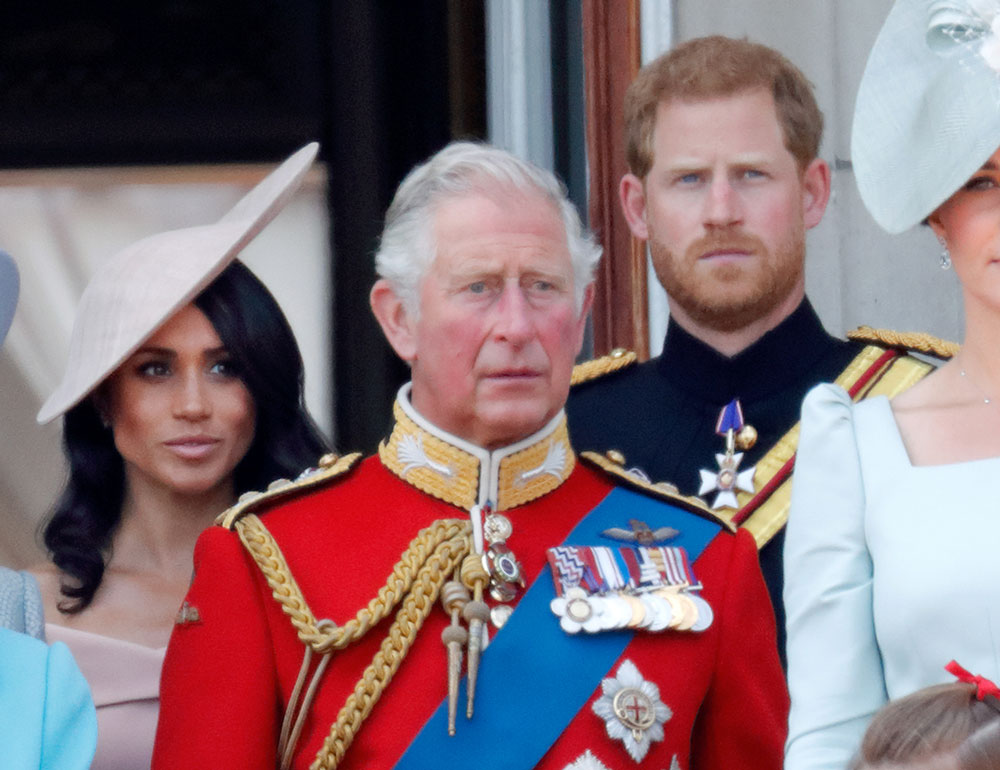
Prince CharlesMeghan, Duchess of Sussex, Prince Charles, Prince of Wales and Prince Harry, Duke of Sussex stand on the balcony of Buckingham Palace during Trooping The Colour 2018 on June 9, 2018 in London, England. (Max Mumby/Indigo/Getty Images

It’s a bit of an odd thing. I lost my mom when I was very young, younger than Harry actually, and it’s not something that really ever goes away. I think that he’s always harbored some rage and resentment about anyone and anything having to do with how Diana passed, which would include his father and Camilla. I think his relationship with Meghan has allowed him to express that in a way that perhaps he wouldn’t have done before.

“[Harry] has always harbored some rage and resentment about anyone and anything having to do with how Diana passed, which would include his father and Camilla.”

However, I also think Charles probably realized sometime in the last few years that his reign was going to be relatively short compared to his mother’s. After studying him, I think he sees himself as the hinge person between the old and the new, which will be William. He is the conduit through which whatever vestiges of the old monarchy they’d like to keep around. Certainly the traditions, the things that tourists love, stay connected to the past. But I think going forward, he talks about a slimmed-down monarchy, one that’s less bulky. Maybe there’s going to be a bunch of layoffs. I’m not quite sure how it’s going to play out. I think he knew that had to happen even before Meghan and Harry started doing their tour on what’s wrong with the royal family, and so he’s perhaps going to speed that up.

He’s greatly constrained as the Monarch about being involved in politics. For example, we talk about that he can’t comment on things like global warming anymore. For the first time in years because he’s now King, he was not allowed to give a speech at the UN Climate Summit, not by his choice, not by the UN’s choice, but the way the monarchy is currently structured. I think the slimmed-down version, the physicality of that will be evident, but over the next couple of years, you are going to see Charles take it in a direction where either he or his son, when he becomes king, will be able to stand on the floor of parliament and talk about global warming.

I see it becoming more political in that sense, and I think that’s where he always wanted it to be. Whether he is successful or not, I don’t know. And I think the relationship with Meghan and holding “the firm’s” feet to the fire, if it’s done anything, it’s probably accelerated the process in his own mind about how quickly that needs to be done.

We know how unpopular the monarchy is and that the majority of his subjects don’t approve of the monarchy. Yet Charles still has a much higher approval rating than he did 30 years ago, when it was 4%.

I mean, who gets 4% from approval ratings?

That was shocking, when we dug up that. Our researchers who worked so very hard on it, I made them check it three times. I said, “Get another source.” I was a journalist when I first graduated from college, and there’s the old adage that if your mother says she loves you, get a second source. So I said, “You get three sources on that to make sure it’s right.” 

He’s still very popular. He is popular now. The fallout from the breakup with Diana, who was so popular, it’s understandable how his approval rating would go down. But down to 4%, that’s almost something you cannot recover from. He plays the long game. He has recovered from it.

One thing I did not know is that he and Camilla dated when they were single in 1970. The fact that they were dating and that because they did what young people do when they’re in love, they had an intimate relationship, disqualified her from marrying Charles, becoming queen. That was in 1970. Well, 53 years later, Charles is going to become king. He’s married to Camilla, and she’s going to be queen. That’s an example of his long game to me. I mean, it took 53 years for all of that to come to pass, but he kept going.

He’s getting every piece of the pie.

Everything he ever wanted.

You spend a good amount of time on probably the most famous few words Charles has ever said in his life. “Whatever love means.”

Whatever love means. Yes.

It’s the last thing you want your fiancé to say about love. And yet, this is a man who has had a 50-plus year love affair with one particular woman. He does know what love means. He is married to, as is pointed out in this documentary, his soulmate. He knows what love means, right? 

“You’re going to start to see changes soon. They will be subtle and subtle and subtle.”

He does know what love means, and he was well aware, I believe, when he uttered those words, “whatever love means.” You could really extrapolate that out to be, well, this is love under the current constraints in which I live.

It was a heinous thing to say, and I liked how our editors used every frame of the cameras continuing to roll. That clip is shown a lot, but it’s often cut off after you see Diana say, “Yeah, thank you very much,” because the reporter has to explain what love means. They both kind of say, “Thank you. Thank you.” She looks down, but most people don’t realize how long the camera stayed on Diana. The look down continues, and you just see this expression of despair and horror, I think would be a good way to describe it. She’s completely defeated in that moment. 
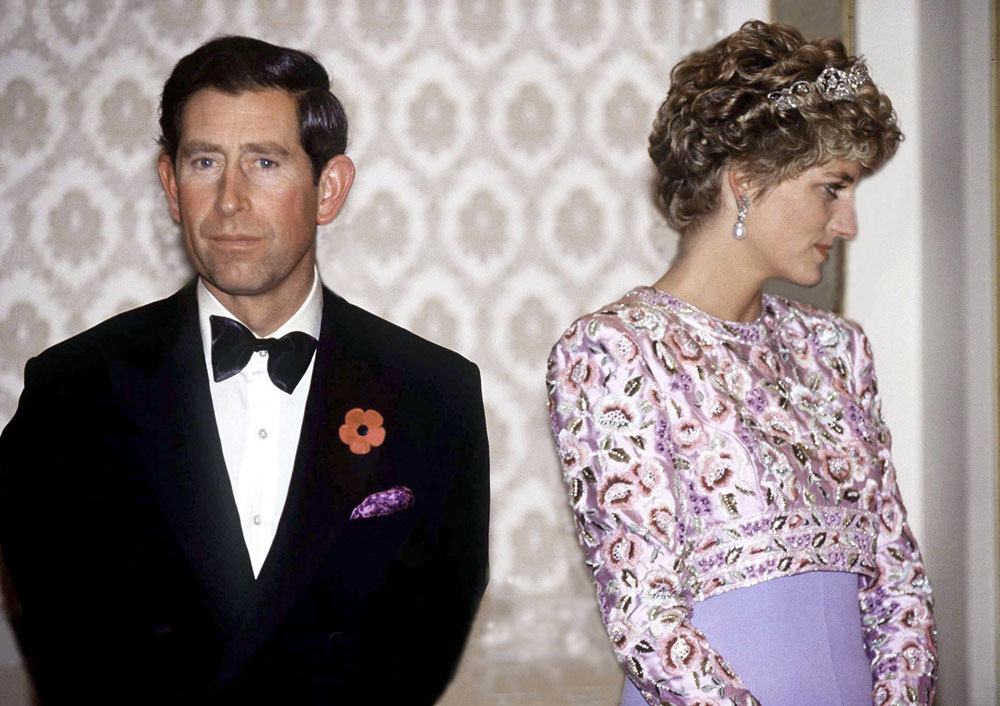
Prince Charles And Princess DianaPrince Charles And Princess Diana On Their Last Official Trip Together – A Visit To The Republic Of Korea (South Korea). (Tim Graham Photo Library via Getty Images)That look is also on Charles’s face as well. When I saw that clip, I saw the despair on his face as well. I saw two people looking away from each other in abject despair.

I agree. Both of them. It’s much easier to follow Diana’s gaze because she described herself as “the lamb to the slaughter,” and it was obvious that was what was going on. It was part of how the institution worked. It was what they needed, and she was the person in line, available to do that. “Whatever love means,” I think will be something that will haunt him forever in many ways. 

“At 19, that’s where his passion for environmental issues was ignited.”

You mentioned the anti-monarchists. There’s a tremendous anti-monarchist movement because people are thinking, “What do we really need him for? We don’t live in a fiefdom anymore. It’s not a role to till the soil and then present the king with our best sheep. It just doesn’t work that way.” He’s well aware of that too. I think that’s why you’re going to start to see changes soon. They will be subtle and subtle and subtle. Then you and I will talk in five years and we’ll say, “Wow, look what he pulled off right under our noses, little by little.” 

One of the ways that we got into that was showing the anti-monarchists who were protesting after the Queen. There were people who believed once Elizabeth died, that was going to be it; Charles would say, “Why don’t we just let this fade into the sunset?” He has no intention of doing that.

However, when he was 19 and went through this process called the investiture to become Prince of Wales, he walked right into these riotous crowds up in Wales and charmed them, which is a remarkable thing at 19. I wasn’t calming riotous crowds when I was 19 years old. I could barely get to my class in college on time. Not only does he do that, but then he goes on this tour. He first learns the language. He spends two months in a university up there learning the history of the place. He tours Wales. I love that where he interviews an old farmer in Wales. That’s very rare stuff, and we loved having it. Then he goes on this grand tour of Wales where he is meeting people, and he meets a bunch of young people who are out planting trees, and they’re talking about the environment.

At 19, that’s where his passion for environmental issues was ignited. In Wales. Here we are all these years later, and it’s probably his number one issue outside of family problems. It’s his number one global issue about climate change and global warming. That started at 19, and it’s part of his long game of doing things. I think we’re going to see more and more of that play out.

“Ed Sheeran: The Sum of It All”: 6 heartbreaking revelations from the Disney+ doc

When Ed Sheeran performed his single “You Need Me, I Don’t Need You” live for SB.TV’s YouTube channel in February 2010, he didn’t anticipate it to be his big break. Shortly afterwards, Sheeran released his debut studio album, “+” (“Plus”), which charted within the Top 25 of the UK Singles Chart and sold more than 4 million copies worldwide.

Sheeran’s personal journey from a struggling artist — who once couch surfed with celebrities, including Jamie Foxx and Courteney Cox, before he attained stardom — to internationally renowned pop star is both admirable and inspirational. Over the years, Sheeran has amassed an ardent fanbase, known as the “Sheeran Sheerios,” who have stood by him through thick and thin.

In 2018, Sheeran was at the center of a copyright infringement lawsuit brought forward by the estate and heirs of the late producer Ed Townsend, who accused Sheeran of copying parts of Marvin Gaye’s “Let’s Get It On” in his 2014 hit single “Thinking Out Loud.” On May 4, Sheeran was found not liable for copyright infringement in the case.

Although Sheeran’s sheer success is no secret to the public, his personal life and marriage to his childhood sweetheart, Cherry Seaborn, have mostly been private. The singer-songwriter recently opened up about the latter in a Disney+ docuseries, titled “Ed Sheeran: The Sum of It All.” The moving four-part series features Sheeran himself, his wife, parents and other members of the star’s inner circle as he narrates moments from his personal life and endeavors in music.

Here are the six major revelations from the series:

01
Sheeran’s impressive world record
Ed Sheeran: The Sum of It AllEd Sheeran in “Ed Sheeran: The Sum of It All” (Photo courtesy of Sofi Adams)
Sheeran’s Divide tour, which began in March 2017, broke the record for the biggest, most attended and highest-grossing tour of all time. The world record was previously set by Irish rock band U2, whose 2011 360° tour had a record attendance of 7.3 million. In comparison, Sheeran’s tour saw more than 8.5 million people across 43 countries following its conclusion and grossed $736 million, breaking U2’s record of $735 million.


At the time, Sheeran took to Instagram to thank his fans and supporters. “Thanks so much for each and every one of you who have come to a show,” he wrote. “12 shows left, will never forget it.”

02
The death of Sheeran’s best friend remains “very raw” to this day
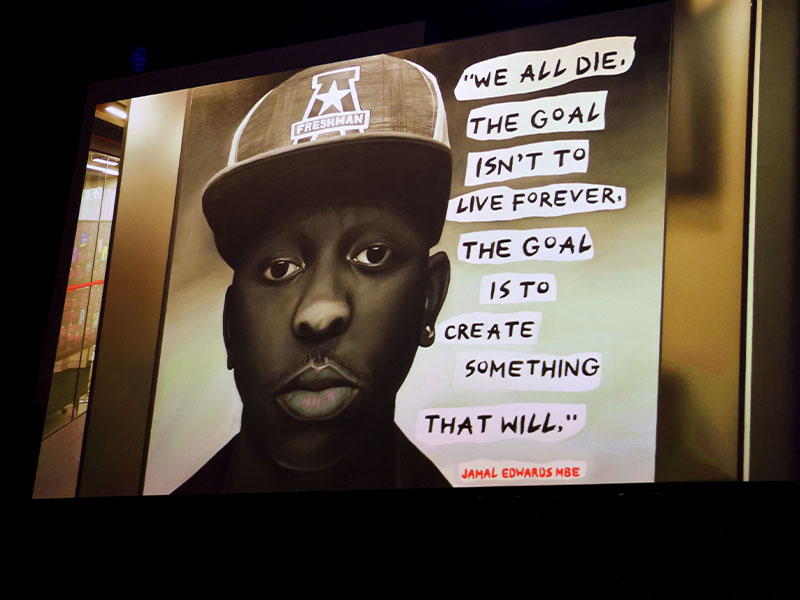
Jamal EdwardsA general view of images of the late Jamal Edwards onscreen at the Music Industry Trust Awards 2022 at The Grosvenor House Hotel on November 07, 2022 in London, England. (JMEnternational/Getty Images)

“This is his first birthday that he hasn’t been here. And this is his first cookout that he hasn’t been here. You know, he died six months ago,” Sheeran said while recounting Jamal Edwards’ 2022 death. “It’s still like very very raw. I’ve never been to a burial. This is the first time that you’re there. Someone’s singing a hymn, then suddenly, someone hands you a shovel. And then suddenly, you’re putting dirt on your mate’s grave, and it’s very real.”


He continued, “And it just feels so weird that he’s in amongst loads of people that he didn’t know. It’s obviously a grave site . . . And it’s all just pure sadness. Oh, it’s horrible.”


Sheeran’s close friendship with Edwards — an English music entrepreneur, DJ and founder of the online R&B/Hip-Hop platform SB.TV — helped launch Sheeran’s career and contributed to his great success. On Feb. 20, 2022, at the age of 31, Edwards died of a cardiac arrhythmia caused by recreational drugs.


“I had friends in school whose parents passed away when they were like 14,” Sheeran recounted in the documentary. “I looked back on it and I’m like, ‘That is when you became an adult.’ I became an adult recently. But that’s when you became an adult because grief instantly ends your youth.”

03
Sheeran says loss ultimately “took over my life”
Ed Sheeran: The Sum of It AllEd Sheeran in “Ed Sheeran: The Sum of It All” (Photo courtesy of Sofi Adams)

“I feel, like, a lot of times in a kind of chaotic storm where you’re just trying to stay level,” Sheeran explained. “I hadn’t really grown up until I felt grief. Loss, it just took over my life.”


A day after Edwards’ memorial, Sheeran performed in Warsaw, as part of his ongoing Mathematics tour. While backstage, he spoke about how difficult it was to mourn his friend’s death while having to perform:


“Obviously it’s good to be distracted and have things, and playing to a crowd, that is great. At one o’clock in the morning, I was at the mural and . . . it’s just kind of weird. I was thinking, ‘I don’t want to cry in front of 78,000 people.’ And I found myself really close at times.'”

04
Sheeran spiraled over wife’s cancer diagnosis
Ed Sheeran: The Sum of It AllEd Sheeran and wife Cherry Seaborn in “Ed Sheeran: The Sum of It All” (Photo courtesy of Sofi Adams)

“I got diagnosed with cancer at the start of the year which was a massive s**tter,” Sheeran’s wife, Cherry Seaborn said. “It made me massively reflect on our mortality. I would never agree to do anything like this but it made me think, ‘Oh if I died, what’s people’s perception of me? What do you leave behind?'”


She continued, “For Ed, the whole point is he wants to say to people, ‘I’m not just this music machine. I’m not just this robot that tries to get No. 1. I’m a father, I’m a son, I’m a friend.’ It wasn’t until this year when I was like, ‘I might die.'”


To cope with the pain, Sheeran said he wrote seven songs in four hours.


“The moment you find out that the worst thing in the world has happened to someone that you truly love with all your heart, you feel like you’re drowning and can’t get out from under it,” Sheeran said.

05
Sheeran has repressed his grief
Ed Sheeran and Cherry Seaborn during The BRIT Awards 2022Ed Sheeran and Cherry Seaborn during The BRIT Awards 2022 at The O2 Arena on February 08, 2022 in London, England. (JMEnternational/Getty Images)

“And now [the] stage is not his safe place. Or it wasn’t,” Seaborn said in the documentary. “I’ve never seen him cry on stage. He doesn’t really cry in general. That’s really unusual to see him cry. But I just don’t think he’s had the time to . . . he hasn’t had the time to sit with his thoughts. And I can’t see when he’s gonna have that in the next four years.”


Seaborn added that Sheeran overloaded on work to distract himself from his recent hardships, including Jamal’s death, Seaborn’s cancer diagnosis and his recent court cases.

06
Sheeran’s new album reflects his struggles
Ed Sheeran: The Sum of It AllEd Sheeran in “Ed Sheeran: The Sum of It All” (Photo courtesy of Sofi Adams)
“It’s scary putting out your sort of deepest, darkest thoughts to the world,” Sheeran said of his upcoming album, which releases on May 5. “The first half of this year was a very difficult part of the last 30 years of my life. There’s an umbrella over that time which is just a bit of a blur.


“It’s opening the trapdoor into my soul. For the first time I’m not trying to craft an album people will like, I’m merely putting something out that’s honest and true to where I am in my adult life.”

“Ed Sheeran: The Sum of It All” is now available for streaming on Disney+. Watch a trailer for it below, via YouTube:

Justice Department working with Trump source on Mar-a-Lago probe: report

Federal prosecutors are working confidentially with a person who used to work for former President Donald Trump at Mar-a-Lago in their investigation of his handling of classified documents, sources with knowledge of the matter told The New York Times

The move is part of prosecutors’ strengthening efforts to determine whether Trump ordered boxes containing classified materials to be moved out of the club’s storage room while the government attempted to recover them, the sources said. Through new subpoenas and grand jury testimony, the Justice Department is also striving to clarify how the documents were stored, who was able to access them, how Mar-a-Lago’s camera security system works and what Trump told his lawyers and aides about the location and content of the materials, they added.

Though the insider’s identity has not been disclosed and the extent to which the witness has aided prosecutors is unclear, the witness has reportedly provided investigators with an image of the storage room in question, signifying what could be an important point in Special Counsel Jack Smith’s investigation of the former president.

Prosecutors are also trying to clarify their knowledge of the boxes’ movement following their handling of Trump’s valet Walt Nauta, a potential key witness whose lawyers cut contact with the government after prosecutors told them that Nauta was under investigation and could potentially be charged with a crime. Prosecutors believed that Nauta failed to fully and accurately account for his role in the movement of the materials.

Sources familiar with the matter told The Times that prosecutors have subpoenaed at least four other Mar-a-Lago employees — two say nearly all of the employees — as well as another person who had insight into Trump’s thinking upon his initial return of documents to the National Archives. 

Prosecutors also subpoenaed the Trump Organization several times in search of additional surveillance footage from Mar-a-Lago, Trump’s residence and his private club, they added. In an effort to understand why some of the footage from the storage room’s camera seems to be missing, prosecutors subpoenaed the company that handles the Trump organization’s security footage and questioned a number of witnesses about the gaps.


Want a daily wrap-up of all the news and commentary Salon has to offer? Subscribe to our morning newsletter, Crash Course.


Adding to the prosecution’s subpoenas was the recent one of longtime head of security turned COO of the Trump Organization Matthew Calamari Sr. and one from some time ago of his son, Trump Organization corporate director of security Matthew Calamari Jr., sources said, adding that both would be familiar with the security camera operations.

The Calamaris appeared before the grand jury on Thursday as jurors tried to gather evidence for the case.

The special counsel’s office are seemingly looking into parts of Trump’s family business as well, The Times reports citing people with knowledge of the actions, as prosecutors have subpoenaed the Trump Organization itself seeking an array of internal materials, including records of Trump’s business with LIV Golf, a Saudi-backed professional golf venture that reportedly holds tournaments at some of his resorts.

A Trump spokesperson said the case is “a targeted, politically motivated witch hunt,” adding that it was “concocted to meddle in an election and prevent the American people from returning him to the White House.” They went on to accuse the Special Counsel’s office of harassing “anyone who has worked for President Trump” and targeting Trump’s business.

“We’re all weirdos”: A new documentary explores how Americans got so anxious

Decades ago, anxiety was a niche diagnosis, something that few would openly admit to. Now anxiety permeates the culture like water — flowing outward from political and climate crises, from current events like the pandemic, and from economics (as in the term “economic anxiety“). To Gen Z, anxiety isn’t the exception: It’s the norm. 

This is one of the main premises of “Anxious Nation,” a new documentary from filmmaker Vanessa Roth being released May 5th digitally and in theaters. Anxiety isn’t merely internal and individual; it’s a social problem, something the documentary makes quite clear through its interviews with the anxious. Indeed, if you count yourself among them, there are some scenes here that might unsettle you as they effectively demonstrate to the viewer what an anxiety attack feels like.

“If it’s nature, it’s you. If it’s nurture, it’s you.”

The new documentary is executive produced and presented by former supermodel Kathy Ireland, and is co-directed by Roth and New York Times best-selling author Laura Morton. It starts in 2022 with an advisory from Surgeon General Vivek Murthy, who explains that mental illness is an epidemic among American youth, before shifting into a diverse range of stories from Generation Z-ers who struggle with anxiety. The term “diverse” here applies in two respects: The teenagers come from a wide range of ethnic and socioeconomic backgrounds, and the manifestations of their anxiety are strikingly different. For some, their anxiety stems from early experiences with abuse or inherited medical problems; others experience racism in their own lives and are terrified by incidents like the murder of George Floyd. Multiple subjects express concern about climate change, or state how their worlds fell apart due to the COVID-19 lockdowns.

In an interview with Salon, Morton explained that she approached the subject from a very personal vantage point: Her teenage daughter suffers from an anxiety condition, and Morton admits in the film (and in our interview) that she made well-intentioned mistakes at first when trying to help her. Because of this perspective, Morton transforms “Anxious Nation” into a meditation on parenting just as profound as it is a mosaic of the voices of anxious youth. At no point does the film lose sight of the central fact that children develop anxiety disorders because of the world given to them by their parents. It does not matter if one believes anxiety comes from nature, nurture or both: Regardless of the answer, it is ultimately the parents’ responsibility.

Just as “Anxious Nation” is a tribute to a generation that shows remarkable resilience while grappling with the anxiety disorders bequeathed unto them by their parents, it is also an instruction guide for parents who want to help their anxious children. (One highlight is when Emma Stone, who also has anxiety, reassures other anxious people that “we’re all weirdos.”) I spoke with Morton about the state of anxiety in America; our interview has been edited for length and clarity.

The first person who is introduced is your own daughter, who is Jewish. We live in an era where anti-Semitism is on the rise. I thought it was rather courageous to open the story with not just a Jewish person, but a person who you’re seeing getting Bat Mitzvah’d, so the Jewishness is explicit. Then there is another person who talks about experiencing racism and knowing that he doesn’t look white and how he feels anxiety because of the racism in the society around him. To what extent do you think your film, through stories like those, is really about social justice as much as it is about mental health?

What a great question, Matt. I think it’s very much about social justice, because I think that’s such a trigger for so many people. If had we not shown the various stories that we do, I think we would’ve been doing an injustice to what different people experience. I don’t know what it’s like to be a member of the brown or black community anymore than somebody doesn’t know what it’s like to be a member of the Jewish community right now with rising rates of anti-Semitism.

It’s interesting that you bring that up because I actually had somebody call me who’s very close to me and said, “Are you a little worried about opening with the Bat Mitzvah?” I understood what they were saying, and it was coming from a very loving and protective place, but it made me want to lean into it even more.


Want more health and science stories in your inbox? Subscribe to Salon’s weekly newsletter The Vulgar Scientist.


We’re very proud to be Jewish. I think it’s important that we stand firm in our beliefs, and I think it’s also important that we don’t judge anybody else for their beliefs. I think this is why we live in America. I think that the free speech, and the ability to be able to speak your mind — we may not like what another person has to say, but they have the same right to say it.

I think it was exceptionally important, especially while we were making the film. There was a lot of cultural unrest and upheaval, particularly that our kids were feeling. George Floyd, that whole circumstance took place while we were filming, very early on in our filming, and very early on — obviously we know it was in the days of COVID-19 – I think for our cast members, who are a part of the brown and black communities, I think it was something very much on the forefront for them. It would’ve been a disservice not to talk about what’s happening culturally. 

The film discusses the role that parents, and that the older generations more generally, play in creating anxiety for youth. Now obviously most of this involves questions of parenting, and I am going to get to that later on. But I also feel there is an implicit political message here — because on a global scale if we allow the climate to continue to overheat, if we allow racial justice and economic injustice to continue, then we create a worse world for our children. Children seem to be aware of that.

I’m curious if you have any observations on the extent to which young people are aware of politics and aware of social issues and feel anxiety because of the world that their elders are creating for them.

“Every single statistic that we cite in our film in and around social media came from an internal study at one of those platforms at Facebook, at Instagram, at Twitter. They know the damage that they’re doing.”

In “Anxious Nation,” I think we got to go out of our way to show all of the 24/7 stimulation that our kids are getting. Whether it’s eco-anxiety, from the political current, from the racial issues that are happening in our country, I think our kids are exceptionally aware of it, because they’re exposed to information 24/7, because they have access through their phones, right?

We used to be a home that had the news on every single night, and at some point early on in COVID-19, we just shut it down. But my daughter still had access because she was online, going to school, and she has her phone.

I think the kids are far more aware. I want to say that I think kids have always been aware of what’s happening with politics. If you look back to the Vietnam War era, I think that, for sure, that was a generation that really was aware and really fought for what they believed in, whether it was fighting for their country or not wanting to be at war. I think our youth always finds something that they want to rally for or against. But I think today what we’re seeing is because there is so much coming at these kids, there is so much information that they have access to, I think that it becomes overwhelming. And we really do talk about overstimulation in the film, which I think is a big piece of it. 

There is a certain paradox to the internet, to social media. Social media can be a great escape; you can find communities, or you can, as one of the people in the movie described, go on TikTok and become a star. You can go on Facebook and unite with like-minded people. But there is also a lot of toxicity. There is a lot of harassment. How does one keep the good and filter out the bad in terms of social media? 

I’m so happy you asked me this question. First of all, I wanna say, if it weren’t for social media, nobody would know about my film right now. There are ways that we can use social media to do good, right? And to spread positive messages. And we see that all the time. And then we see the dark side of social media. We see the downside of social media. We see stories of cyber-bullying. We certainly know the correlation that social media and our devices have had on our children’s mental health since the introduction of social media. But I’m a big believer that we can’t blame the end user for much of this. I think we really have to look to the social media companies and really ask ourselves, why are we not demanding more from them?

“I’m the parent that thought I was doing all the right things, and I was coming from a pure place of love. And in the process, I didn’t realize that some of the things I was doing were actually adding to [my daughter’s] anxiety.”

Why are they protected under Section 230 of the Communications Decency Act? A law that was put into place in 1996, a law that didn’t contemplate the power of social media platforms, and yet it basically says that these platforms can’t be held reliable for much of the third party posting that happens on their website.

Here’s the thing: every single statistic that we cite in our film in and around social media came from an internal study at one of those platforms at Facebook, at Instagram, at Twitter. They know the damage that they’re doing. Section 230 basically gave tech companies the right to self-regulate. It’s an insane and absurd proposition today to think that. We certainly wouldn’t let tobacco companies self-regulate. We wouldn’t let pharmaceutical companies self-regulate. So why are we letting the tech companies self-regulate? Why are we making them immune from the responsibility that they have when they know they’re creating so much damage to our youth? 

Now I want to pivot to discussing the way that parents can create an anxious environment for their children, which is a major theme of the movie as well. There’s one line where someone says, effectively, “Is it nature or nurture? And the answer is both.” It is highly emphasized that parents can make mistakes in their parenting, even with the best intentions that create anxiety in their children. Are there any tips that you learned from your research and from making this movie? 

Thank you for asking this. As the parent of anxious child: I am that parent. I’m the parent that thought I was doing all the right things, and I was coming from a pure place of love and wanting to help my daughter in any way that I could. And in the process, I didn’t realize that some of the things I was doing were actually adding to her anxiety and creating a bigger problem. I don’t identify really as an anxious person. But now that I’ve made a movie on anxiety, I think I have a little more anxiety than I have ever had. I think what was so important was holding up the mirror and taking a look at my own behaviors and asking myself, wow, what can I change?

Because I had been looking at my daughter to make all the changes. And what we know is that anxiety shows up. And if, as one of our experts says in the film, it’s like a cult leader in the home — so as long as you’re doing everything that anxiety wants you to do, everything is fine, but as soon as you try to break away and say, ‘Nope, we’re not gonna do this, and the child then has an anxious moment, a panic attack, and they can’t go to the barbecue at the neighbor’s house because they don’t know who’s going to be there, and they want to sleep in your bed, and they can’t go to school, and they go to school and they want to come home from the nurse’s office — that’s the cult leader, right? That dictates every single little thing that the family is doing.

“George Floyd, that whole circumstance took place while we were filming very early on in our filming and very early on — obviously we know in the days of COVID-19 – and I think for our cast members, who are a part of the brown and black communities, I think it was something very much on the forefront for them.”

I think that as parents, we want to do right by our kids. We want to be great parents. So for me, I think the biggest takeaway that I learned was understanding that what my daughter was feeling was genuine and true and real. I was trying to process it through my mind as somebody who doesn’t really struggle with anxiety, and I couldn’t understand it. I did not understand what it felt like for her. Once I came to that big “A-ha!” moment where I said, “Oh,  she’s not manipulating me. She is not trying to be difficult. She is not purposely being inconvenient, right? I have a meeting and she’s having a meltdown. What do I do?” Once I understood that better, it was a game changer for us.

I think the other takeaway was that we now have a common language that we can use so that when she’s describing her anxiety, I understand what she’s saying, and I understand how to nurture her through that nature, right? One of our experts in the film psychotherapist Lynn Lyons says, “If it’s nature, it’s you. If it’s nurture, it’s you.” And the question really is, how do we nurture through the nature? How do we give our kids the tools and the resilience and the capability to know that when this ceiling comes, it shall pass? What do you do? How do you work through it? I think that’s one of the greatest takeaways that we have in the film is helping people understand that anxiety is energy and the energy can be repurposed and it can be used for good.

Ginni Thomas payments mark a tipping point for the Supreme Court

It seems as though the press is dropping a new Supreme Court Justice Clarence Thomas corruption scandal every day. Yesterday we got two. First, Pro-Publica published yet another story about Thomas’ wealthy benefactor Harlan Crow passing on a lavish gift to his pal which Thomas once again failed to report. This time, it was private school tuition for the grand-nephew Thomas and his wife Ginni have said they raised like he was their own son since he was 6 years old. By evening, we found out that Federalist Society guru Leonard Leo instructed longtime GOP operative Kellyanne Conway back in 2012 to have her polling firm bill his nonprofit group “another $25,000” but give the money to Ginni Thomas — adding, with “no mention of Ginni, of course.”

What the hell is going on here?

It’s bad enough that Ginni Thomas is a hardcore far-right Republican activist who even participated in the coup attempt of 2020 and spouted QAnon conspiracy theories. This was not a huge surprise since she’s been working in far-right circles for some time, even helming her own Tea Party group and working with the shadowy Groundswell organization. But it’s particularly unnerving since her husband was the lone Justice to dissent from the Supreme Court’s rejection of former President Donald Trump’s bid to block the release of some presidential records to the January 6 committee. She claimed that she never talks to the man she famously calls her “best friend” about any of that — which nobody believes. So we’re left with the fact that while it’s unseemly that she’s so involved in issues that come before the court in the first place, and her husband refuses to recuse himself, they both are completely shameless about their rank partisanship so there doesn’t seem to be anything anyone can do about it.

But now we have evidence that money is exchanging hands — and a lot of it.

To be precise, this isn’t exactly news. Back in 2004, the Los Angeles Times published a big expose of Crow’s lavish gifts to Thomas, which he wasn’t disclosing. And in 2011, Ian Millhiser, then at Think Progress, came out with yet another article revealing even more examples of Crow’s largesse to the Thomases. They both made brief splashes at the time but Thomas didn’t care and that was that. We’ll have to see if this time is different.

This looks like rank corruption which some new norms and rules won’t fix.

The story about Leonard Leo in cahoots with Kellyanne Conway to secretly funnel money to Ginni Thomas is a new twist. We knew that Crow had bankrolled Ginni’s activist group Liberty Central back in 2009 with over half a million dollars, $120,000 of which was used to pay her salary. As it happens, Leonard Leo co-founded that group with Ginni Thomas and the non-profit he told Conway to bill for her non-existent services filed a brief in a landmark case, Shelby County v. Holder, which was the first step in gutting the Voting Rights Act. So Crow may not have had immediate business before the court but Leo certainly did. The opinion was 5-4 with Thomas voting in the majority. I doubt the money caused Thomas to vote the way he did — he has always been hostile to the right to vote — but it certainly is nice to have so many good friends with similar ideas making a public servant’s life so comfortable, isn’t it?


Want a daily wrap-up of all the news and commentary Salon has to offer? Subscribe to our morning newsletter, Crash Course.


In 2010, Ginni left the group so that it would not be encumbered by the distractions her “media celebrity” was causing. This happened shortly after it was revealed that Ginni had left a message with Anita Hill, the woman who had accused Thomas of sexual harassment back in 1992, demanding an apology. Shortly thereafter, Justice Thomas amended 13 years of his financial disclosures after having omitted his wife’s employment. He said he had misunderstood the rules. It seems to be an ongoing problem with Thomas, which is odd for a man who is charged with interpreting the U.S. Constitution.

Then came all the lavish trips and the purchasing of Thomas’ mother’s house, which she lives in rent-free, and various other perks and presents, none of which Thomas disclosed even after having been caught numerous times in the past. He seems so addled about all this that you have to wonder if he might have neglected to claim all these gifts on his taxes which would not just be an ethical violation but an illegal one as well. Maybe nobody told him that either. He’s just an old country Supreme Court justice, after all.

It seems to be an ongoing problem with Thomas, which is odd for a man who is charged with interpreting the U.S. Constitution.

With the revelations about Ginni Thomas combined with the sheer volume of Harlan Crow’s cash and the justice’s ongoing refusal to disclose it, we might finally be reaching a tipping point. But it’s a long shot. The Senate can hold more hearings and give Ted Cruz a platform to say “high tech lynching” again but Chief Justice John Roberts claims there is a separation of powers issue that precludes him, and I assume any other justice, from testifying so that’s not going anywhere. They can bring Harlan Crow up to the Hill but I’m not sure what good that would do as long as the Republicans are protecting Thomas. And Roberts could push through some new ethics requirements but he doesn’t seem inclined to do it and anyway. This looks like rank corruption which some new norms and rules won’t fix. Disclosure requirements are supposed to make judges embarrassed to take big sums of money from “friends” and cause them to recuse themselves when there are conflicts of interest (or the appearance of such conflicts.) Thomas obviously has no such concerns and neither do his defenders.

Obviously, impeachment is off the table with the House in the hands of Marjorie Taylor Greene and her loyal manservant Kevin McCarthy. Even if the Democrats were in control, the Senate doesn’t have even close to the votes to convict. (So much for our vaunted checks and balances.) That leaves the only option being Thomas resigning in disgrace and I am quite sure that will never happen. He won’t even stop taking “gifts” from Harlan Crow.

As long as Clarence Thomas is the patron saint of the right-wing legal establishment, he will not be held liable for his actions. He can do what he wants and he knows it. He could have accepted suitcases full of hundred dollar bills on the courthouse steps and Ginni could have rampaged through the Capitol chanting “hang Mike Pence” and it would have changed nothing. The Supreme Court has a radical majority made up of hard-right extremists and Republican partisans and apparently at least one of them is openly corrupt and they have gone rogue. And they have the full support of the Republican Party.

The country has lost trust in the institution and the members of that institution could not care less. That’s a serious problem for our system of government and unless the political system wakes up and takes some kind of action like passing term limits or expanding the numbers of justices (very difficult to do, of course) we are in for decades of turmoil no matter who sits in the White House or has a majority in Congress.

“Top Chef” serves up an underwhelming Restaurant Wars thanks to uneven teams, lack of drama

Full disclosure: I’m not a huge proponent of Restaurant Wars. (Please don’t throw tomatoes.)

Whenever I settle in for a “Top Chef” rewatch, Restaurant Wars is one of the episodes I almost always immediately skip. It’s a bit too formulaic; I always dislike how the front-of-house role works out (or does not, which obviously, doesn’t rear its ugly head this time around) and I just generally am not a fan of how the episodes  and eliminations  often play out. (Shall we revisit Kristen Kish’s restaurant wars experience?)

Commiserating in the kitchen

Whenever I settle in for a “Top Chef” rewatch, Restaurant Wars is one of the episodes I almost always immediately skip.

I also have another complaint, if I’m being upfront: While doing a rewatch, it’s fun to laugh at the antics of the early seasons, from the yelling and fighting to the early reality show tropes and oftentimes borderline amateurish food . . . but at the end of the day, those episodes are still profoundly more entertaining, if we’re being honest.

While the past five or six seasons or so have been enjoyable and are still classically “Top Chef,” there’s a certain sterility and flatness that the show tends to veer into for me, which feels like it’s becoming more and more tepid as time goes by. Usually, with only seven or eight cheftestants still in the competition, I am very invested, super excited, often even anxious while watching. Unfortunately, though . . . I don’t really feel that much this time around, nor did I last season . . . or the season before that and so on and so forth.

I love the show with all the marrow in my bones, but there was a rawness and a legitimacy that came through in such a direct manner when this show started. Now? It’s . . . nice? Generally, it feels kind of sanitized; there are little, fleeting bits and pieces here and there this season in which you think, “Oh! Conflict!” . . . and then it amounts to absolutely nothing, like this episode’s blink-and-you-miss-it Gabri moments (one with Tom over the cauliflower, one with Nicole over the stand mixer and prep space).

But there’s almost a “Let’s all get along and cook well!” energy that, while definitely ethically sound, doesn’t always make for the most exciting episodes. 

Restaurant Wars No. 20 (give or take, since Season 4 inexplicably did “Wedding Wars” instead)

To get into the nitty-gritty of this particular episode unveils yet another complaint (oops) — the teams are wildly lopsided to begin with. I don’t think Victoire does a great job selecting her team (and she has first pick!) and the unfortunate grocery mishap is just peculiar.

Furthermore, this episode has hardly any suspense or excitement, frankly, because it’s pretty much a foregone conclusion which team will come out on top. The edit attempts to get tricky by making Buddha seem a little forceful (why did Ali and Amar literally say not a word during the planning, leaving Sara totally on an island in terms of discussing conceptualization with Buddha?), but obviously nothing comes of it. Unfortunately, the already uneven teams become compounded even further by the aforementioned grocery mishap and the fact that the ethos of “Roots” isn’t evident in the menu or the dishes themselves, while “United Kitchen” has a clear, obvious theme. 

. . .  the teams are wildly lopsided to begin with.

Good things? The restaurant is gorgeous, Clare Smyth is a really wonderful judge (and what an amazing “get” for the show, truly), I love the “secret restaurant critic” Jimi Famurewa and a lot of the food looks stunning. I like Sara’s leek-wrapped fish, Victoire’s African-inspired tiramisu, Gabri’s colorful plate, Tom’s vegetable-centric dish and practically all of Buddha’s offerings (although I didn’t love the idea of serving his apparently stellar tomato tea in a wine glass that then fogs up? I feel like a mug of sorts may have been a preferable choice). 

Restaurant WarsTom Colicchio, Gail Simmons, and Clare Smyth in “Restaurant Wars” (David Moir/Bravo)
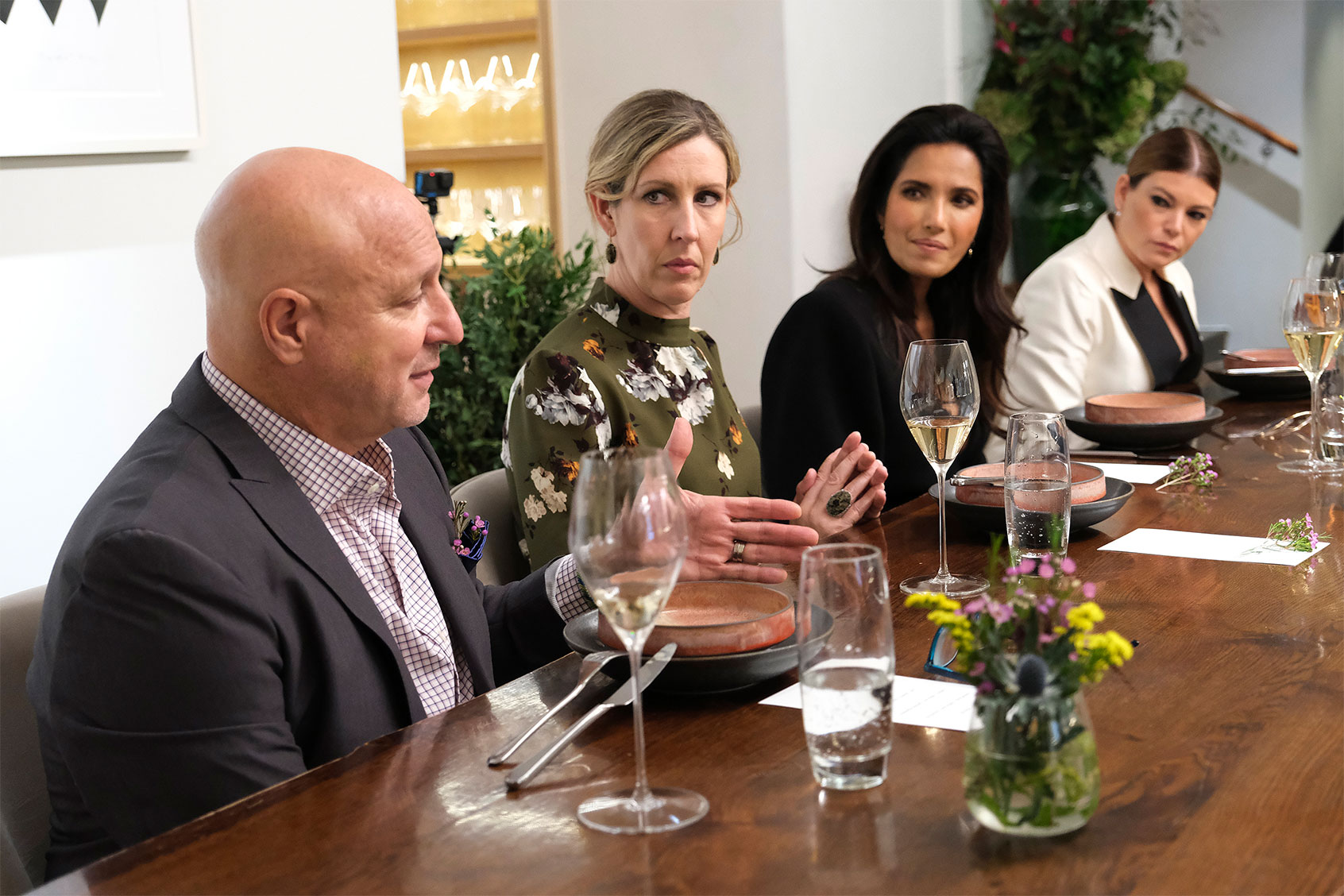
The crying game

While I typically love an emotional ending or a particularly charged “pack your knives and go” (and I can’t recall many Padma send-offs that were this heartfelt), I’d argue that this one feels almost somewhat . . . unearned? At least from a viewer’s perspective. 

Aside from her personal story and adoption journey, of course (which, according to a comment on Sara’s Instagram, is unfortunately still not complete), I’m not exactly sure if Nicole’s actual culinary contribution this season necessarily “warrants” such a strong reaction from Padma. Clearly, Nicole makes some real personal inroads with Victoire, who sobs for the entire last five minutes of the episode.

Clearly, Nicole makes some real personal inroads with Victoire, who sobs for the entire last 5 minutes of the episode.

I love Victoire’s general openness and authenticity, but the entire ending makes me wish that the editors had let us see a bit more of this clearly very close friendship as it progressed throughout the competition. These are the times I question editing decisions: Do we need a few quick joint confessionals of Ali/Amar for a quick chuckle here and there? Their friendship gets a moment in nearly every episode. Couldn’t there have been a deeper exploration of this Nicole-Victorie connection that apparently ran so deep to produce a truly tear-soaked farewell? In addition, Ali’s goodbye to Nicole is really jarringly beautiful, too.

(I will also note, though, that it is very sweet when Amar excitedly says, “We won together, Ali!’ after Padma announces their team’s win).

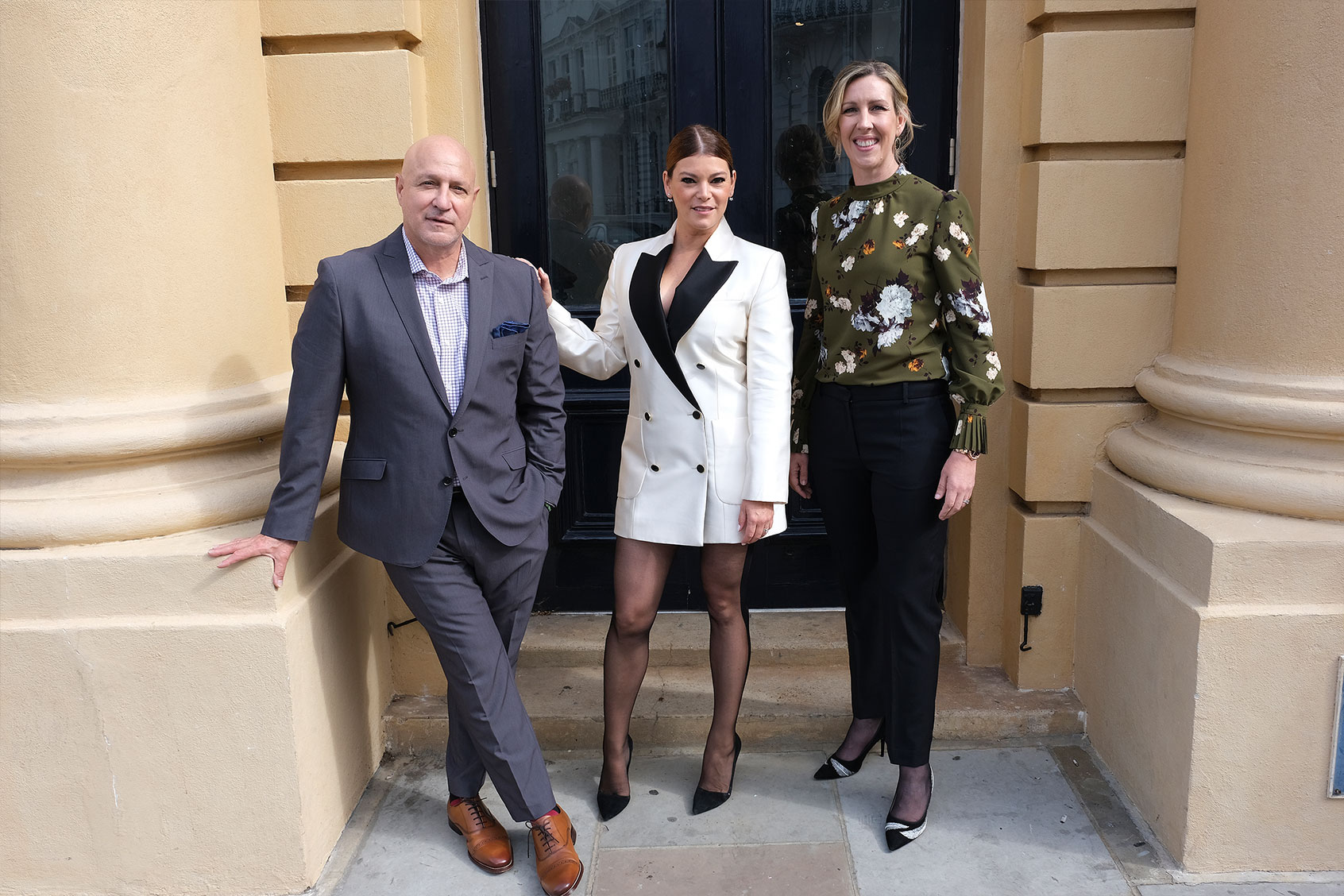
Restaurant WarsTom Colicchio, Clare Smyth, Padma Lakshmi, and Gail Simmons in “Restaurant Wars” (David Moir/Bravo)
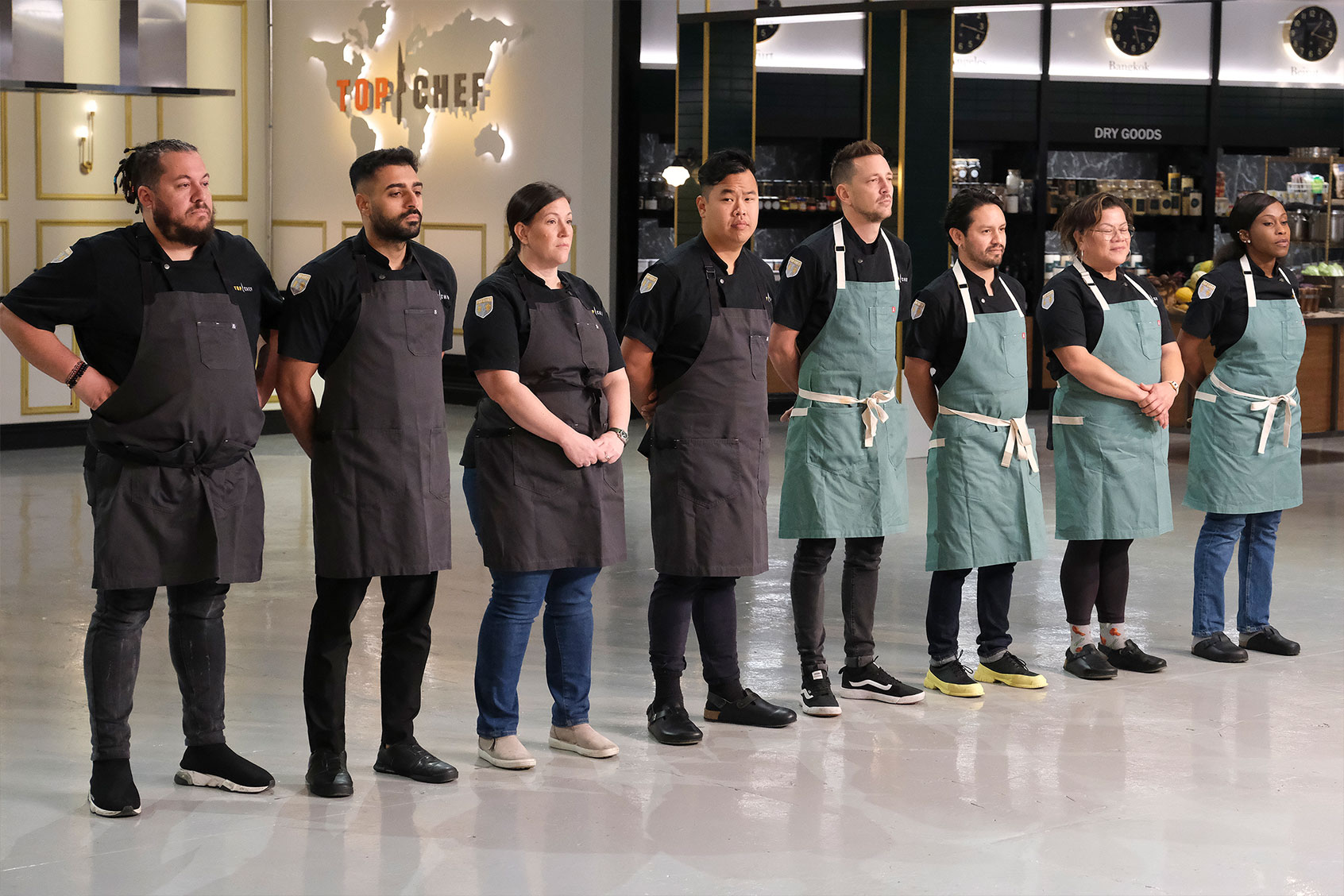
Regardless, I truly hope Nicole is well on her way to call a child her own and that the exceedingly steep paperwork and delays are nearing their end. She — and her soon-to-be child  deserve nothing less.


Want a daily wrap-up of all the news and commentary Salon has to offer? Subscribe to our morning newsletter, Crash Course.


After-dinner mints

I’m thoroughly rooting for Charbel in “Last Chance Kitchen”! I’m also rooting for Sara in general, but I think a Charbel-Ali final might be one of the best from a storyline perspective, especially after Ali’s opening confessional in this episode. Of course, I also just love Victoire overall and would love to see her in the finale (I really love the idea of that terrific tiramisu  with cassava flour and plantain? Amazing!) 

Regardless, I truly hope Nicole is well on her way to call a child her own and that the exceedingly steep paperwork and delays are nearing their end. She — and her soon-to-be child — deserve nothing less.

I love that Sara coins Charbel “onion boy” to align with uber-likeable Sylwia’s “potato girl” moniker. 

I also really appreciate Buddha’s genuine appreciation and his amazingly kind words to Clare after his (well deserved) win.

It is interesting to see Ali falter a bit for the first time.

Tom continues to be a fascinating cheftestant; his arc is totally unique. I also love his vegetable cookery  he really has a talent for it. His leek and chestnut with black garlic dish sounds and looks superb.

The judges enjoying Amar’s dish surprises me, actually. I wouldn’t think those contrasting temperatures would work, especially if the butter sauce coagulates or thickens as it cools due to the cold scallop. 

Restaurant WarsAmar Santana, Ali Al Ghzawi, Sara Bradley, Buddha Lo, Tom Goetter, Gabriel Rodriguez, Nicole Gomes, and Victoire Gouloubi in “Restaurant Wars” (David Moir/Bravo)
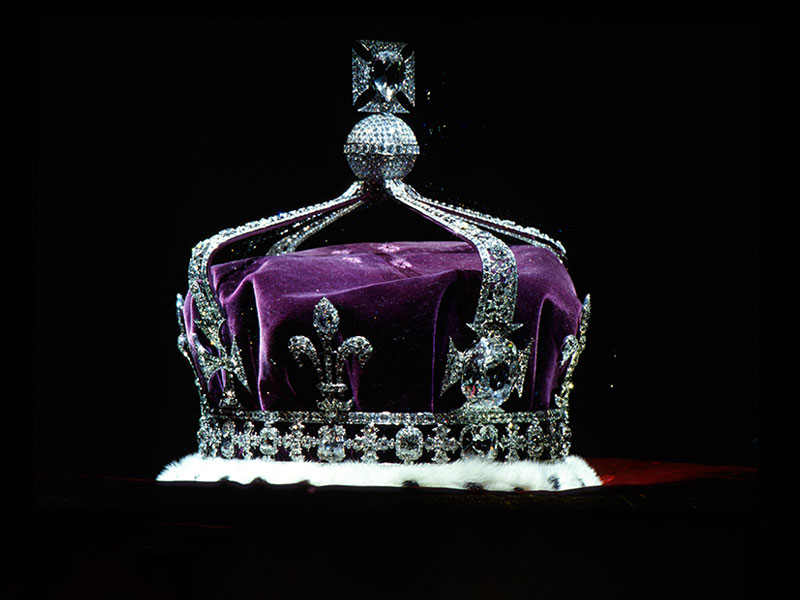
I feel like Gabri often gets the short end of the stick in nearly every episode, but I love his incessant resilience.

Sara’s underdog confessional is interesting . . . I’ll be keeping that one in mind. 

I obviously get a kick out of all the promo for the MasterCard touchless or touch-free card.

I’m a sucker for a palate cleaner, so I did love that sorbet-and-grapefruit idea!

I am struck by two phrasings at Judges’ Table: Padma’s “glaringly naked” in regards to Ali’s under-sauced lamb dish and Tom C.’s “absolutely pristine and beautiful,” which is maybe the most effusive I’ve heard Tom speak (although I think that was in reference to the quality of the scallop itself, not necessarily the dish at large).

I’m thoroughly rooting for Charbel in Last Chance Kitchen!

Side note: Why is Tom *so* quiet and almost tuned out at Core? I get a kick out of how every shot of the cheftestants discussing their food shows Padma, Gail and Clare listening intently and smiling pleasantly . . . while Tom fervently eats eats and drinks, paying little-to-no-mind to the cheftestant. Also, the way he later (silently) “checks” on Ali? Odd!

Disagree with my (myriad) gripes? Feel free to argue with me (or as “Real Housewives of Potomac” star and “Drive Back” singer Candiace Dillard-Bassett might say, “Drag me, Monique!”)

Next week, everyone does their darnedest to impress Padma with Indian food. Iconic! 

“Top Chef: World All Stars” airs Thursdays at 9 p.m. on Bravo and streams next day on Peacock.

“Democrats now have virtually no shot of winning”: James Clyburn saves only his South Carolina seat

The meeting was arranged in secret. On Nov. 19, 2021, the chief of staff for South Carolina’s Senate Judiciary Committee texted Dalton Tresvant, a key aide to Rep. Jim Clyburn, the state’s most powerful Democrat.

“Hey Dalton – Andy Fiffick here,” he said. “We wrapped up some morning things quicker than we thought, so if you want/can come earlier than 1:30 we’re available.”

The state legislature had begun the crucial task of redrawing voting district lines after the 2020 census. Even small changes in the lines can mean the difference between who wins office, who loses and which party holds power. As the process commenced, Clyburn had a problem: His once majority Black district had suffered a daunting exodus of residents since the last count. He wanted his seat to be made as safe as possible. Republicans understood the powerful Black Democrat could not be ignored, even though he came from the opposing party and had no official role in the state-level process. Fortunately for them, Clyburn, who is 82 and was recently reelected to his 16th term, had long ago made peace with the art of bartering.

Tresvant made his way to the grounds of the antebellum Statehouse, a relic still marked by cannon fire from Sherman’s army. The aide carried a hand-drawn map of Clyburn’s 6th District and presented it to Fiffick and the other Republican committee staffers who were working to reconfigure the state’s congressional boundaries.

Some of Tresvant’s proposals appealed to Republicans. The sketch added Black voters to Clyburn’s district while moving out some predominantly white precincts that leaned toward the GOP. The Republicans kept Tresvant’s map confidential as they worked through the redistricting process for the following two months. They looped in Tresvant again near the end, according to public records obtained by ProPublica.

The resulting map, finalized in January 2022, made Clyburn’s lock on power stronger than it might have been otherwise. A House of Representatives seat that Democrats held as recently as 2018 would become even more solid for the incumbent Republican. This came at a cost: Democrats now have virtually no shot of winning any congressional seat in South Carolina other than Clyburn’s, state political leaders on both sides of the aisle say.

As others attacked the Republican redistricting as an illegal racial gerrymander, Clyburn said nothing publicly. His role throughout the redistricting process has remained out of the public view, and he has denied any involvement in state legislative decisions. And while it’s been clear that Clyburn has been a key participant in past state redistricting, the extent of his role in the 2021 negotiations has not been previously examined. This account draws on public records, hundreds of pages of legal filings and interviews with dozens of South Carolina lawmakers and political experts from both sides of the aisle.

While redistricting fights are usually depicted as exercises in raw partisan power, the records and legal filings provide an inside look that reveals they can often involve self-interested input from incumbents and backroom horse trading between the two parties. With the House so closely divided today, every seat takes on more value.

South Carolina’s 2021 redistricting is now being challenged in federal court by the NAACP. The organization contends that Republicans deliberately moved Black voters into Clyburn’s district to solidify their party’s hold on the neighboring swing district, the 1st. A three-judge federal panel ruled in January that aspects of the state’s map were an unconstitutional racial gerrymander that must be corrected before any more elections in the 1st District are held.

But Clyburn’s role already has complicated the NAACP’s case. The judges dismissed some of the group’s contentions partly because Clyburn’s early requests drove some of the mapping changes. The Republicans are now appealing the ruling to the Supreme Court, which has yet to decide if it wants to hear oral arguments in the case.

The redistricting process was the first South Carolina has undertaken since a series of Supreme Court rulings made it easier for states to redraw their districts. In 2013, the high court significantly weakened the Voting Rights Act, removing South Carolina and other Southern states, with their history of Black disenfranchisement, from Department of Justice oversight. And in 2019, the Supreme Court opened the door to more aggressive gerrymandering by barring federal court challenges on the basis of partisanship. But it can be illegal to draw lines based on race. Republican gerrymanders in Florida, Texas and several other states have recently been challenged for targeting Black voters.

The fight over the South Carolina redistricting has exacerbated racial wounds in a state where the growing white population now accounts for about 68% of residents, up from 66% a decade ago. Driven by the immigration of white retirees and a slow emigration of Black people, the state’s Black population has dropped over the years to just over a quarter of its 5.2 million residents. The GOP now controls all major state elected offices except for Clyburn’s seat.

Clyburn’s role highlights an underbelly of the redistricting process: In the South, Black Democratic incumbents have often worked with Republicans in power to achieve their own goals.

Few state Democrats will criticize Clyburn by name on the record. Bakari Sellers, 38, a former state Democratic lawmaker who once served on the redistricting committee, said, “There is a very unholy alliance between many Black legislators and their Republican counterparts in the redistricting process.” Clyburn’s district “is probably one of the best examples.” Moving that many Black voters into Clyburn’s district meant “we eliminate a chance to win” in other districts, he said.

“I’m not saying that we could win, but I’m saying we could be competitive, and people of color, those poor people, those individuals who have been crying out for so long, would have a voice,” Sellers said.

Clyburn speaks in the deep baritone of a preacher’s son, but his voice rises in anger when the subject turns to criticisms of his involvement in redistricting. Unfounded, he says.

In an interview, Clyburn said the redistricting plan signed by the Republican governor in early 2022 proves he did not get all that he wanted, mainly because his district lost its majority Black status. On questions about Tresvant’s work, a Clyburn spokesperson acknowledged that the office had “engaged in discussions regarding the boundaries of the 6th Congressional District by responding to inquiries” but did not answer detailed follow-up questions about his role. Tresvant did not respond to repeated requests for comment.

“Any accusation that Congressman Clyburn in any way enabled or facilitated Republican gerrymandering that wouldn’t have otherwise occurred is fanciful,” Clyburn’s office said in a statement, calling the notion a “bizarre conspiracy theory.” Clyburn agrees with the decision of the three-judge panel and “hopes it will be upheld.”

Backroom Deals


Clyburn’s district, the 6th, itself resulted from what political experts would later describe as a racial gerrymander. After the 1990 census, a federal court imposed a plan that gave South Carolina’s Black population, then about a third of the state, a fair shot at electing a member of Congress. It hadn’t done so since 1897.

The 6th’s boundaries brought in Black people from across the state to create a crescent-shaped district. Black people made up almost 6 in 10 residents. National Democratic Party strategist Bill Carrick, then a South Carolina campaign consultant, said race guided the GOP. “It was like the Republicans decided, ‘Let’s see how many African Americans we can put into one district — instead of our own,'” he said.

This redistricting technique is known as “packing.” Packing can be a double-edged sword, giving underrepresented communities a voice but also limiting them to one — and only one — member of Congress. Clyburn, the first Black person in modern times to head a South Carolina state agency, won the seat in 1992. He rose to prominence in Washington, climbing to the post of House majority whip by 2007. His 2020 endorsement helped Joe Biden seal the Democratic presidential nomination, and he was recently named a co-chair of Biden’s 2024 campaign.

Clyburn’s stature within the state was unparalleled. He had learned early in his career the value of backroom negotiations, at first dealing with staunch segregationists running the state government. His role in Washington required negotiating with GOP leaders to pass legislation though he would publicly criticize them when they rejected Democrat’s initiatives, like new voting rights proposals.

He is best known back home for delivering federal money. Clyburn’s name is emblazoned on taxpayer-funded structures all over the state, including a Medical University of South Carolina research center and an “intermodal transportation center” (otherwise known as a bus station) in his hometown, Sumter.

Clyburn also was willing to help local Republicans. When the family business of George “Chip” Campsen, a top GOP state leader, had a dispute with the National Park Service over how much it owed the federal government, Clyburn co-sponsored a Republican lawmaker’s bill to pressure the service into mediation. The parties then settled in 2002 on favorable terms to the Campsen family company. Clyburn’s office said he did nothing improper. (Campsen did not respond to a question about the deal.)

Clyburn’s ties with Republicans have come in handy during the previous redistricting battle. Clyburn has repeatedly angled to keep a majority Black constituency, according to documents and political observers.

Redistricting is meant to follow clear principles. Each congressional district’s population must be as similar as possible. Maps are supposed to be understandable, with counties and cities kept whole and lines following natural boundaries, like rivers or highways. And the process is designed to be transparent, guided by public input.

But it has rarely worked out that way. Despite a recent history of moves to disenfranchise minority voters, Republicans have sometimes been able to capitalize on individual politicians’ self-interest. In the early 1990s, then-Republican National Committee counsel Benjamin Ginsberg seized upon Black disenchantment with white Southern Democrats’ gerrymanders to forge what has come to be known as the “unholy alliance” between the RNC and Black elected officials. Ginsburg told the Congressional Black Caucus Foundation in 1990 that the RNC would share its redistricting tools with minorities as part of a “natural alliance born of the gerrymander.” The upside for the Republican party is that Black voters in Southern states could be limited to as few seats as possible.

In 1994, the GOP took over the House and the Congressional Black Caucus reached its largest membership since Reconstruction. Redistricting “increased the political power of both groups,” said David Daley, author of “Ratf**ked,” a book on gerrymandering that delves into the history of the alliance between the GOP and Black Southern Democrats. “Republicans regained control of the House, and the Congressional Black Caucus grew to its largest numbers since Reconstruction.”

Clyburn is part of a generation of Black officials who lived through the Jim Crow era and cherished the protections of the Voting Rights Act. But many politicians who agree about the importance of the act say that the notion that Black politicians need majority Black districts to get elected is outdated. Because he’s been in office so long, “Jim Clyburn could win reelection with 20% Black voters,” said former Rep. Mel Watt of North Carolina. “He’s trying to protect the district for the candidate coming after him.”

Despite state and local resistance, the number of elected Black officials in South Carolina increased from 38 in 1970 to 540 in 2000 and continued growing. Yet complaints continued to flood into the Justice Department about gross abuses of voting rights, including biased handling of redistricting.

The last congressional redistricting overseen by the Justice Department in South Carolina was in 2011. Then, as now, the state’s population was booming, and it had gained another congressional seat, which both parties hoped to claim. As is the case today, Republicans controlled the legislature. The Democrats, however, could rely on the Justice Department, which had to preapprove the plan, to prevent gross abuses.

Both Clyburn and the NAACP were among those who publicly submitted their own maps as part of the state’s legal submission to the Justice Department. Clyburn’s map suggested that his district include a Black voting age population of nearly 55%, a higher level than what the NAACP’s map recommended.

Some Democrats proposed moving Black voters out of Clyburn’s district to create a new district, with the hope that the party could elect a second member of Congress. The Republican House speaker blocked the efforts.

Behind the scenes, some lawmakers believed Clyburn was working with the speaker. On a visit to Columbia, the capital, Clyburn went to the House map room and made suggestions to protect his position, according to a nonpartisan former House staff member, who asked not be named because he was not authorized to discuss his work.

During the process, Clyburn met privately with then-Republican state Rep. Alan Clemmons, head of that year’s redistricting panel, according to an account Clemmons later gave to local media. Clemmons said Clyburn had Tresvant act as his “eyes and ears,” the same role that he would take on in 2021. Tresvant “would request specific businesses and churches be included in Clyburn’s district,” according to a 2018 report by The Post & Courier of Clemmon’s account.

Clemmons, now an equity court judge, declined to comment, citing the judicial ethics code.

The 2011 redistricting plan also prompted a federal lawsuit, which unsuccessfully challenged Clyburn’s district as an illegal racial gerrymander. Clyburn did not testify, but in an affidavit, he accused Republicans of making “an intentional effort” to decrease the political influence of Black people by packing them into a single district. He said nothing about his own behind-the-scenes negotiations with Republican leaders.

The 2021 Strategy


Ten years later, Clyburn followed a familiar strategy when Republicans began redistricting again. For the first time, the Justice Department had no oversight role. This time, however, none of his actions were public.

Clyburn’s district had lost about 85,000 people. Each new district had to be drawn to represent 731,203 people. One obvious place to look for additional constituents would be the 1st District, just to the southeast along the coast. That district was overpopulated by almost 88,000. The First District was the last remaining swing district, with a history of tight races. In 2018, a Democrat had won by about 4,000 votes. Two years later, a Republican, Nancy Mace, won it by about 5,000. If the GOP could remove enough Black or Democratic voters from that district, it could give the party a lock on the seat.

The map Clyburn’s aide Tresvant had quietly brought to the GOP at the beginning of the 2021 process included suggestions that would help both Clyburn and the Republicans. His map gave his boss a larger portion of heavily Democratic Charleston County, drawing from Mace’s district. Clyburn’s suggested lines reflected a move of about 77,000 new people to his district, according to an expert who analyzed the maps for ProPublica.

Not every request of his was about race. Clyburn also sought to move an additional 29,000 people into his district from Berkeley County, which he split with Mace. Berkeley is a fast-growing area, adding white voters, but is also home to some of the state’s largest employers.

Clyburn didn’t only suggest adding Democratic voters. He was also willing to give up pockets of his district where elections were trending Republican. One such proposal would help Republicans seal control of the 1st. Clyburn suggested giving up about 4,600 people in Jasper County, an area that was trending Republican as white Northern retirees relocated there.

During the NAACP’s trial, some Republican senate aides said they did not rely on Clyburn’s map. But the staffer for Senate Republicans who was chiefly responsible for redrawing the lines testified that he used it as a starting point. And then the GOP went further. As the redistricting plan made its way through the legislature, Republicans further solidified their hold on the 1st District. Clyburn monitored their progress in calls to Democratic allies, according to two state senators who spoke with him during the period.

A plan proposed by Campsen, the state senator whose family company Clyburn helped years earlier, moved almost all of Charleston County’s Black and Democrat-leaning precincts to Clyburn. The shift gave Clyburn the city of Charleston, where he had deep connections, and consolidated the county’s major colleges and universities into his district, a political plus. The new borders for Clyburn gave him a number of small pockets of Black voters, including about 1,500 in Lincolnville, which juts out of the election map like an old-fashioned door key. “The congressman was hoping to get Lincolnville years and years ago” and finally succeeded in 2022, said the town’s mayor, Enoch Dickerson.

As a result of Campsen’s plan, the Black voting-age population of the 1st District fell to just over 17%, the lowest in the state. In the 2022 election, Mace beat her Democratic opponent by about 38,000 votes — a 14 percentage point landslide, up from her 1 percentage point in the previous election.

Clyburn said nothing publicly as some Democrats in Charleston County, led by former Rep. Joe Cunningham, protested Campsen’s plan. On the Senate floor, Campsen praised Clyburn and said Charleston County would be well served by having both Clyburn and Mace looking out for its interests.

“Jim Clyburn has more influence with the Biden administration perhaps than anyone in the nation,” Campsen said.

As Clyburn monitored the debate, Fiffick kept Tresvant in the loop, texting him again on Jan. 14, 2022, to share a link to the redistricting webpage. It’s unclear why Fiffick sent it.

Campsen’s plan was approved by the legislature and signed by the governor Jan. 26, 2022.

In the end, Clyburn didn’t get everything he wanted. Republicans moved all of rapidly growing Berkeley County to the 1st District. The percentage of Black voters in his district has dipped below 50%, the threshold he long sought to preserve.

The congressman soon got to work serving his constituents. Shortly afterward, Clyburn had Lincolnville added to a federal program that protects historic stops along the Gullah Geechee trail. In the 2022 election, Clyburn won 62% of the vote, lower than the 68% he won in 2020 but comfortable nonetheless.

Consequences


Soon after the new redistricting plan went into effect, the NAACP pressed ahead with its lawsuit against state Republican leaders, charging that many congressional mapping decisions were based predominantly on race. The case dealt with more than just the changes in Mace’s district that had an impact on Clyburn.

A three-judge federal appeals panel ruled that the plan’s division of the 1st and 6th districts was an unlawful racial gerrymander aimed at creating “a stronger Republican tilt” in Mace’s district. The court said that the movement of about 30,000 Black voters into Clyburn’s district was “effectively impossible” without racial gerrymandering.

But the court knocked down some of the NAACP’s claims. In several cases, it said, Clyburn had requested the mapping changes. The NAACP declined to comment.

Antonio Ingram, an assistant counsel for the NAACP Legal Defense Fund, said lawyers for Republican leaders tried to shift the emphasis to Clyburn’s early requests. He said it was “inappropriate to blame a congressman for the General Assembly’s decision to pass discriminatory maps.”

Republican leaders appealed the panel’s decision and asked the Supreme Court to reject the racial gerrymandering charge.

If the court orders that the map be redrawn, it could have ripple effects on Clyburn’s district and other parts of the state. Although a Republican challenger gained ground on him in 2022, he’s considered a shoo-in if he chooses to seek reelection, no matter how the lines are drawn.

Taiwan Scott, who lives in Mace’s district and is the lead plaintiff in the NAACP lawsuit, said racial gerrymandering has deprived Black voters of fair congressional representation. A small businessman in Hilton Head, Scott said Black people are showing disapproval by declining to vote.

“It is bigger than myself. It’s systemic,” he said.

“It’s not how white men fight”: Tucker Carlson and the death of Jordan Neely

In the most recent chapter in the “Tucker Carlson — Fox “News” Choose Your Own Adventure Story”, the New York Times is reporting that he was unceremoniously fired by Fox because they feared that Carlson’s “extremely” racist text messages would hurt their business:

A text message sent by Tucker Carlson that set off a panic at the highest levels of Fox on the eve of its billion-dollar defamation trial showed its most popular host sharing his private, inflammatory views about violence and race.

The discovery of the message contributed to a chain of events that ultimately led to Mr. Carlson’s firing.

In the message, sent to one of his producers in the hours after violent Trump supporters stormed the Capitol on Jan. 6, 2021, Mr. Carlson described how he had recently watched a video of a group of men — Trump supporters, he said — violently attacking “an Antifa kid.”

It was “three against one, at least,” he wrote.

And then he expressed a sense of dismay that the attackers, like him, were white.

“Jumping a guy like that is dishonorable obviously,” he wrote.

“It’s not how white men fight,” he said. But he said he found himself for a moment wanting the group to kill the person he had described as the Antifa kid.

As I wrote on Thursday, “Beyond sounding like something written in Madison Grant’s eugenics tract ‘The Passing of the Great Race,’ Carlson’s claims about white men and violence are objectively racist and white supremacist because he delusionally assumes, contrary to the mountains of historical and contemporary evidence to the contrary, the inherent honor and superiority and nobility of ‘white men’ as a specific group.”

In all, Carlson’s claims about white men and honor are objectively false and absurd.

From before the so-called Founding, white men have engaged in mob actions, pogroms and racial and ethnic cleansing campaigns against Black, brown and First Nations peoples across the Americas and what would later become the United States. As many historians and other experts have repeatedly shown, the freedom to engage in violence against non-white people with impunity is one of the defining features of how white masculinity has historically been constructed around the world.

White racial settler colonialism, white on Black chattel slavery, European and American imperialism, the Holocaust, and white supremacy as a global enterprise are acts of violence on a massive scale committed by white men and grand proof of how “white men fight.”

The Ku Klux Klan is America’s largest terrorist organization. The Klan and other white terrorist organizations and mob actions killed tens of thousands of Black people in America (and terrorized many millions more) from the end of the Civil War through to the middle of the twentieth century and the victories of the Civil Rights Movement and beyond. As the Equal Justice Initiative and other researchers have exhaustively documented, at least 6,500 Black men, Black women, and Black children were killed in spectacular lynchings and other acts of white supremacist violence in the United States from the 19th century to the middle of the 20th century.

The Jan. 6 coup attempt by Donald Trump’s followers was an example of how Tucker Carlson’s “white men fight” against multiracial democracy, pluralism, the common good, and law and order. The white men that Tucker Carlson admires as being somehow inherently honorable led and participated in and legitimated these acts of violence and many others. Moreover, these same white men and their spokespeople and defenders even described such anti-Black and anti-brown violence as “honorable” and doing the work of white civilization and Christianity. 

White women (and white children) also participated in and continue to be beneficiaries of America’s (and the West’s) past and present of widespread and systemic violence by “honorable” white men against non-whites and those deemed to some type of Other.


Want a daily wrap-up of all the news and commentary Salon has to offer? Subscribe to our morning newsletter, Crash Course.


And of course, the “honorable” white men that Carlson so admires have committed massive acts of violence against other white people.

Tucker Carlson and most other white people (and some lost black and brown people too) who are committed to white identity politics and neofascism do not even know the real history of white people and White America and Whiteness and how such identities were invented and made real. On this, James Baldwin wrote so brilliantly and cuttingly in his essay “On Being ‘White’ … and Other Lies”:

By deciding that they were white. By opting for safety instead of life. By persuading themselves that a Black child’s life meant nothing compared with a white child’s life. By abandoning their children to  the things white men could buy. By informing their children that Black women, Black men and Black children had no human integrity that those who call themselves white were bound to respect. And in this debasement and definition of Black people, they debased and defamed themselves.

And have brought humanity to the edge of oblivion: because they think they are white. Because they think they are white, they do not dare confront the ravage and the lie of their history. Because they think they are white, they cannot allow themselves to be tormented by the suspicion that all men are brothers. Because they think they are white, they are looking for, or bombing into existence, stable populations, cheerful natives and cheap labor. Because they think they are white, they believe, as even no child believes, in the dream of safety. Because they think they are white, however vociferous they may be and however multitudinous, they are as speechless as Lot’s wife— looking backward, changed into a pillar of salt.

However-! White being, absolutely, a moral choice (for there are no white people), the crisis of leadership for those of us whose identity has been forged, or branded, as Black is nothing new. We—who were not Black before we got here either, who were defined as Black by the slave trade—have paid for the crisis of leadership in the white community for a very long time, and have resoundingly, even when we face the worst about ourselves, survived, and triumphed over it. If we had not survived and triumphed, there would not be a Black American alive.

Thus, the great rage and defensiveness and lashing out when the many lies of Whiteness are exposed as such.

The Republican fascist thought crime regime in places such as Texas and Florida (and across other parts of red state America and Trumplandia) and its campaign to erase, rewrite and literally whitewash America’s history by banning books, firing teachers and other educators, silencing truth-tellers through violence and intimidation, and closing down schools and other programs that dare to teach the real complex, unsettling, and challenging history of America because such things “hurt white people’s feelings,” is, at its core, an attempt to protect and sustain such White fantasies and White delusions as Carlson’s. 

The freedom to engage in violence against non-white people with impunity is one of the defining features of how white masculinity has historically been constructed around the world.

Tucker Carlson’s deranged and twisted fantasies about “honorable” white men and their violence and what such self-soothing and narcissistic ego-justifying thoughts channel and manifest, is not something about the past, ghosts of America’s history that are still being litigated and debated but that ultimately have no real impact on the present. Those ghosts and demons of white supremacy and white racism and white violence and the world that they created and recreate all the time are with us right now. These are matters of life and death.

On Monday afternoon on the New York City subway, a former Marine choked an unhoused Black man named Jordan Neely to death. The crowd watched as they recorded the killing on their phones. The medical examiner has ruled Neely’s death a homicide. Some of the people in the crowd helped to hold the 30-year-old down while the former Marine killed him. It is being reported that no one intervened to stop the former Marine turned apparent vigilante. While he was questioned by police, he was then allowed to go home. As of the time of this writing, he has not been charged with a crime.

In a new essay at the Nation, Elie Mystal writes:

Having told you all that, do I even have to tell you the race of the assailant or the victim? Does anyone think there is a Black man alive in this country who could walk up to a nonviolent white person, in public, choke him to death in full view of other passengers and on video, and then just walk away after a brief chat with the police? Barack freaking Obama would not be allowed to walk away after choking a homeless white man to death on the subway. If you do think that he could, please step forward and claim your complimentary dunce cap, and infuse it with your own naivete.

The victim was Black; the assailant was white. The victim pretty much had to be Black to support the callous disregard for his life, and the assailant had to be white to secure the disregard of law enforcement. This is a story that could only happen in America, where white supremacy and anti-Blackness combine to make the violent murder of a human being on public transportation into the kind of thing white people can do and then go home. At some level, this could only happen on the New York City subway, one of the few places in the entire country where people from all different races, creeds, and classes are forced into close contact and required to behave with a modicum of civility and empathy toward their fellow citizens, if only until the next stop.

Jordan Neely’s supposed “crime” was “being disruptive” and “hostile and erratic.” It would appear that is now a capital offense.

Such a horrific outcome — and the descriptors that are used to justify it — is not new for Black people, where, whatever or despite their behavior, they have been punished with extreme force and lethal violence for the above “crimes” by Tucker Carlson’s “honorable” white men.

Trump better beware! Proud Boys guilty verdict shows America wants Jan. 6 ringleaders to pay

In the days and hours before the jury finally brought back a verdict in the Proud Boys trial, there was a dour mood in much of the coverage. Journalists worked overtime to lower expectations that these particular insurrectionists would taste real justice for what they did on January 6. The initial word was that the jury returned a “partial verdict.” The prevailing assumption was that some of the lower-ranking of the five Proud Boys on trial may be convicted of lesser crimes involving the violence of the Capitol riot, but that the jury would balk at some of the more serious charges, such as seditious conspiracy. Audiences were especially warned that Enrique Tarrio, the then-leader of the Proud Boys, might get off scot-free, as he had not been at the Capitol that day. 

Then the opposite happened.

The jury threw the book at the Proud Boy leaders, and showed a more merciful attitude towards those who were just following along.  Tarrio and his top lieutenants Joseph Biggs, Ethan Nordean, and Zachary Rehl were all found guilty of seditious conspiracy. The jury, however, acquitted Dominic Pezzola, who was a bit of a latecomer to the gang and whose defense has argued, persuasively, that he was more of a follower than a leader. 

In reaching this verdict, the jury sends a clear message: When it comes to the events of January 6, the generals bear far more responsibility than the foot soldiers.


Want more Amanda Marcotte on politics? Subscribe to her newsletter Standing Room Only.


It’s a signal that special prosecutor Jack Smith, who was appointed by Attorney General Merrick Garland to investigate Donald Trump’s role in the attempted coup and the Capitol riot, should pay special heed to. The common wisdom regarding January 6 has been that it’s easier to convict the low-level people than those at the top of this conspiracy. But there’s growing evidence that, in reality, ordinary Americans are far more interested in justice for those who spearheaded the fascist insurrection, instead of settling just for the convictions of the people who did their dirty work for them. 

“At my Senate confirmation hearing just a month after January 6th, I promised that the Justice Department would do everything in its power to hold accountable those responsible for the heinous attack that sought to disrupt a cornerstone of our democracy: The peaceful transfer of power to a newly elected government,” Garland said in his press conference after the verdict.

The verdict was yet another reminder that the public believes “those accountable” include those who masterminded the insurrection, not just those who broke windows and chased members of Congress.

The verdict was yet another reminder that the public believes “those accountable” include those who masterminded the insurrection, not just those who broke windows and chased members of Congress. Thus, as long as Trump remains unindicted, Garland’s promise remains unfulfilled. 

The conviction of Tarrio is especially important in this regard. Going into jury deliberations, many of the close observers of the court were bearish about his possibility of conviction. As Brandi Buchman of Empty Wheel and Roger Parloff of Lawfare explained on the Lawfare podcast last week, there was significant photo, video and witness evidence of the other four Proud Boy defendants committing viscerally affecting crimes, but Tarrio was not actually present at the riot. Granted, it was because he was barred from Washington D.C., due to being charged with other crimes stemming from street violence a couple days before the insurrection. Still, he wasn’t at the riot, and so the worry was the jury would struggle to find him guilty. 

That worry thankfully did not pan out. The jury was able to absorb the various text and online messages from Tarrio that prosecutors presented, showing that Tarrio was signaling what was expected of other Proud Boys and cheering them from the sidelines.

Contrast that with the jury’s continuing reluctance to go quite as hard on Pezzola, even though he’s on video smashing through Capitol windows with a stolen police shield. Pezzola initially appeared to do himself little favor by taking the stand at trial, where he melted down and raved about “this corrupt trial with your fake charges” to the prosecutor. But he did manage to convince the jury he’s more of a follower than a leader, leading to his acquittal. Clearly, the jury was more interested in punishing those giving the orders than being the guy taking them. 

The ordinary people who sit on juries understand the Spider-Man rule: Great power comes with great responsibility.

The great irony is that the lawyers for the Proud Boys themselves have been making that argument — by pinning the blame on Donald Trump.

During opening arguments in January, Tarrio’s lawyer argued his client was a “scapegoat” and that “Trump told these people that the election was stolen.” The defense team circled back around to this argument in closing, pointing out that Trump said “fight like hell,” and the Proud Boys were just doing what they were told. There were even efforts to bring Trump to the stand


Want more Amanda Marcotte on politics? Subscribe to her newsletter Standing Room Only.


Obviously, the jury didn’t totally buy that line of argument, because all five defendants are grown men who could have simply rejected Trump’s call to arms. That Trump is guilty doesn’t make the Proud Boys innocent, after all. But the larger principle, that the commanders deserve more blame than those who follow orders, is reflected in this verdict. We saw the same thing with the Oath Keepers trial last year. The group’s founder, Stewart Rhodes, and his right-hand man, Kelly Meggs, were convicted of seditious conspiracy. Two other defendants, who were acting on orders from their leaders, evaded the most serious charges, even as they were convicted of lesser ones. 

Clearly, the ordinary people who sit on juries understand the Spider-Man rule: Great power comes with great responsibility. Everyone who engaged in January 6 is guilty on some level, but the higher up the chain you go, the guiltier you are. Taken to its logical conclusion, one can guess that a fair-minded jury would only be too glad to convict Trump. There’s an argument that January 6 would have still happened without the Proud Boys or the Oath Keepers. But without Trump’s incitement, the insurrection would have never happened. He bears the ultimate responsibility, and it’s a travesty that he’s still evading accountability. 

The good news is that Smith, who has a long history of putting away powerful monsters, is throwing up signals that he is serious about dealing with Trump. Last week, former vice president Mike Pence was made to testify before a grand jury on January 6. Pence put up a legal fight to avoid testifying, but Smith was not easily intimidated. He was even reportedly there in person during Pence’s testimony. If there is any lingering reluctance to go forward with charges, then this Proud Boys verdict should ease it.

Juries are not just capable of understanding that leaders deserve more blame than followers. They appear eager to make the people who led the insurrection pay the highest penalty for the events of that day. 

King Charles III’s coronation: The bloody history behind some of the crown jewels

This weekend, at the coronation of King Charles III, not all that glitters will be gold. Some of it will be jewels — and more than a few of those jewels have tragic, blood-soaked histories behind them. 

Since Queen Elizabeth II’s death in September, her son Charles has ruled, but May 6 marks the official coronation when Charles becomes monarch of the United Kingdom of Great Britain and Northern Ireland. It’s the 40th such ceremony, though the last coronation took place back in 1953, when Elizabeth took the throne to reign for a record 70 years. As Vox writes, “The coronation serves as a religious ceremony much like a wedding, formalizing Charles’s new status as king. It’s also a moment of national celebration (and royalist propaganda), welcoming the new king to his station as the country moves away from mourning his long-reigning mother.”

Elizabeth’s coronation was the first such ceremony to be televised. The coronation includes a procession, a two-hour long service, a recognition by those in attendance (mostly dignitaries and staff, who pledge loyalty to the king); Charles takes an oath, he’s anointed and there’s a reception. 

For over 900 years, every British monarch has been crowned in Westminster Abbey, and Charles is not one to break from tradition. For example, as NBC News reports, “No U.S. president has ever attended a British coronation, a tradition that continues.” President Biden won’t be there. Charles will sit in the coronation chair, a bit of furniture so old it’s called a relic, from King Edward II’s time of 1308.

But some of the items typically worn at a coronation are deviating from tradition, for good reason. Their histories include violence, theft, power and deception. 

 
Queen Mary’s Crown
Queen Mary's CrownQueen Mary’s Crown (1937) Made Of Platinum And Containing The Famous Koh-i-noor Diamond (Tim Graham Photo Library via Getty Images)
Charles’ wife Camilla will now be known as Queen Camilla, after being referred to as Queen Consort since Elizabeth’s death. Like Charles, she will be crowned with an actual crown. But the first break with tradition comes here: previously, consorts were crowned with new headpieces, created just for this moment. Camilla will wear an existing piece. Known as Queen Mary’s Crown, it was created for the coronation of Queen Mary in 1911.


It will also be altered. The crown will be reset before the ceremony in order to remove the Koh-i-Noor diamond. The Koh-i-Noor diamond, sometimes spelled as Kohinoor, which is a massive 105 carats, was allegedly found 800 years ago, on the banks of India’s holy Krishna River. For many years, it was hidden in plain sight: in the eye of a statue at a Hindu temple. As NPR reports, “Rumors spread about this giant diamond guarded by a goddess, and it became the object of violent conquest.” It disappeared from records for a while, changing hands several times. According to NPR, “Its history is enormously disputed. There’s almost no record of it [again] until it’s on the top of the peacock throne.” After an Iranian leader defeated the army which had taken power in India, the diamond went through Iran, then Afghanistan. By the 19th century, the diamond was inherited by a prince, Duleep Singh, who was only 10 years old at the time – and ill. British diplomats befriended the prince, and as NPR put it, “They basically take this little boy’s diamond.” Queen Victoria claimed it as part of a treaty the prince was forced to sign after the imprisonment of his mother.


By now the diamond had assumed a legend of being cursed. But only for men. No man might wear it without terrible injury or death. So, British female monarchs wore it, including Queen Mary and Queen Mother Elizabeth to her coronation in 1937 and to her daughter’s in 1953. 


According to NPR, the “loss is felt, memorialized, in India to this day” of the great jewel whose name means mountain of light in Persian. India wants the diamond returned. As Slate writes, “Even amid [Elizabeth II’s] personal efforts to whitewash the kingdom’s cruelty and discourage independence movements, the most piercing symbols of the United Kingdom’s exploitation remained with Elizabeth—on her horsesinside Buckingham Palace­, and, most significantly, on her crown.” 


Instead of the giant diamond? Camilla’s crown will feature 2,200 smaller diamonds. It’s unclear where they came from.

 
St. Edward’s Crown
Image_placeholderSt. Edward's CrownSt. Edward’s Crown, 1953. (The Print Collector/Getty Images)

The headpiece to officially crown the king is St. Edward’s Crown, first created for Charles’ namesake, King Charles II. It’s known as the coronation crown. Weighing five pounds, with a velvet cap and band of ermine fur, the crown includes a dazzling array of rubies, amethysts, sapphires, topazes, tourmalines and garnet. Solid gold, with its crosses-pattée and four fleurs-de-lis, this crown is also specifically seen as a symbol of the monarchy in the United Kingdom, incorporated into various insignia and emblems. 


More than any other crown — and there are others, including one Charles will swap out later; yes, multiple crowns in one coronation ceremony for one king — this crown represents the monarch. And it’s hard not to feel the antiquated nature of the event when the headpiece in question is from 1661. As the Los Angeles Times writes, “Arguably everything about this ceremony is recycled. There’s not much of a line between recycled and historic here.”


Want a daily wrap-up of all the news and commentary Salon has to offer? Subscribe to our morning newsletter, Crash Course.


The Sovereign’s Orb
Image_placeholderThe Sovereign's Orb and Queen Mary II's OrbThe Sovereign’s Orb and Queen Mary II’s Orb, 1953. (The Print Collector/Getty Images)
The Los Angeles Times also notes, “[i]n a nod to sustainability, according to the palace, Charles is reusing the white leather coronation glove made in 1937 for his grandfather, George VI. He’s also reusing a scepter and vestments worn in coronations back in the 1800s.” Sounds dusty. 


While the coronation crown most acutely symbolizes the monarchy, perhaps no item in the ceremony illustrates the strangeness of it all more than the Sovereign’s Orb. It’s a golden globe topped by a cross. It wouldn’t be a coronation if it wasn’t jewel-encrusted and the orb is, with diamonds, pearls, emeralds and rubies. The orb’s last public appearance was on Elizabeth’s coffin, where it was placed while she lay in state and during the funeral procession. As Slate writes, the orb “represents the Christian world.” It looks like a very expensive Easter egg and the monarch holds in their right hand. Historic Royal Palaces puts it this way, the orb “reminds the monarch that their power is derived from God.” And does so with a heavy handful of gold and precious jewels with long, complicated and still aching histories.


The enemy within: Why did the Secret Service deny a Muslim mayor entrance to the White House?

More than two years after Jan. 6, the American people still don’t know what the U.S. Secret Service knew and when it knew it about the violent insurrection that almost upended the peaceful transition of power following the 2020 election.

It’s very much an open question if it obstructed Congress’s inquiry into the Trump junta’s machinations to stay in power after the disappearance of a trove of agency text messages from those hours when they were simultaneously protecting Pence and Trump — whose tweets incited the mob to attack the Capitol Police and to erect gallows at the Capitol.

Now, this week comes confirmation that Prospect Park Mayor Mohamed Khairullah was inexplicably turned away by the Secret Service at the gates of the White House a half-hour before the was to attend the Biden White House’s celebration of Eid al-Fitr, which marks the close of the holy month of Ramadan when the world’s Muslims fast and recommit themselves to their faith.

When asked to explain its last-minute decision to embarrass the five-term Mayor from New Jersey the Secret Service’s response was typically opaque.

“While we regret any inconvenience this may have caused, the mayor was not allowed to enter the White House complex this evening,” an agency spokesperson told reporters Monday evening. “Unfortunately, we are not able to comment further on the specific protective means and methods used to conduct our security operations at the White House.”

“What are we going to do about the targeting of Arabs, Muslims, South Asians, by federal agencies that are basically not telling us why we are being harassed at airports, border crossings and now for me to be denied entry into the People’s House is baffling,” a rightfully incensed Khairullah told CNN Tuesday morning.

For its part, the White House has remained mum on the issue as well, with White House Press Secretary Karine Jean-Pierre repeatedly referring reporters back to the U.S. Secret Service.

The Passaic County Mayor, who won both the Democratic primary and the general election last year by 2 to one margin, had been invited to the White House as part of a group of Muslim-American elected officials to attend President Joe Biden’s East Room celebration.

“It’s hard to think of someone more committed to elevating our country’s highest ideals than Prospect Park Mayor Mohamed Khairullah,” said Senator Cory Booker in a statement. “Since immigrating to the United States over thirty years ago, Mayor Khairullah has contributed to his community, become a U.S. citizen, successfully run for elected office, and is now serving his fifth consecutive term as mayor. He embodies the American dream.”

Booker continued. “That’s why I was so profoundly disappointed that Mayor Khairullah — whose effective leadership and passion for public service has made him beloved in New Jersey — would be rejected from entering one of our nation’s more important civic spaces: our White House. “

“What makes matters worse and all the more painful was that his invitation was revoked moments before he was set to attend the White House Eid al-Fitr celebration yesterday,” Booker recounted. “To travel to Washington, away from the community he so diligently serves, only to be denied entry in this way adds insult to injury.”

Along with New Jersey Sen. Bob Menedez and Rep. Bill Pascrell, both Democrats, Booker has called for a formal explanation.  

“We also urge you to provide Mayor Khairullah with the substantive reasons he was denied admission, and urge you to initiate a review of Mayor Khairullah’s status so that in the future he may be able to attend events and represent his constituents at the People’s House,” the trio of New Jersey representatives wrote. 

Khairullah’s campaign website includes pictures of him with Pascrell and Booker as well as regional elected leaders and law enforcement officials. Under the headline “Meet the American Mayor who happens to be a Muslim”, the campaign urges voters to “act locally think globally.”

“Fleeing his homeland of Syria in 1980, Mayor Khairullah sought to shape a new meaning of hope through civic engagement and grassroots activism,” the campaign website explains. “As a former volunteer firefighter and through his relief efforts inside war-torn Syria, Mayor Khairullah demonstrated courage by running towards danger that most people run away from.”

In 2001, just one year after becoming a citizen, he successfully ran for council in a diverse community with close to 6,300 residents. “After four short years of serving as Councilman, he was unanimously supported by his colleagues on the council to become the mayor,” according to the campaign website. “For over eleven years now, since November of 2005, the residents of Prospect Park have re-elected Mayor Khairullah to office for three consecutive terms.”

As would be expected the website recounts Khairullah’s efforts to “promote economic development as well as “capital improvements at Hofstra Park” and a Mayor Wellness Campaign “to enhance services that provide residents with a resourceful base for a safe, inclusive, and nurturing community.”

“As a freshman in college, he started volunteering for the local fire department, a journey that lasted 14 years,” according to the campaign bio. “Before starting his relief efforts for Syria, Mayor Khairullah helped in relief campaigns for the people of the Dominican Republic and Haiti during their times of crisis.”

The website discloses that “during the current conflict in his homeland of Syria, the Mayor has been actively inside the country seven times delivering food, medical and school supplies, and helping equip underground medical facilities.”

Sadly, but not surprisingly, this was not Khairullah’s first run-in with a national security state that failed to see the clear and present danger of a mob of white supremacists storming the U.S. Capitol but regularly racially profiles Muslim Americans.

Back in August of 2019, the married father of four was detained for three hours by Custom Border Patrol, after his return flight from Turkey landed at JFK International Airport. On that trip, Khairullah, his wife, and children 1,2,9 and 10 “visited relatives in Turkey who are Syrians displaced by war” and “Khairullah met with mayors of different towns to talk about government and business,” USA Today reported.

“During the screening, he said, they asked him what he studied in college, where he works, his mother’s name, his nicknames and where he traveled,” the newspaper reported. “Khairullah said they asked whether he’d visited any towns with terrorist cells and whether he personally met with any terrorists.

“It’s flat-out insulting,” Khairullah told USA Today. “It’s flat-out stereotyping of Muslims and Arabs.”

The popular Prospect Park mayor turned over his cell phone as requested by the CBP officers which was taken to another room. As time went by, Khairullah decided to call an attorney and withdrew his consent for officials to the search of his phone. The CBP kept the cell phone for 12 days until a lawyer from the Council on American-Islamic Relations intervened.

In addition to his civic activities, Khairullah has had a distinguished career as a public-school administrator serving as an assistant principal with Passaic County’s Technical Vocational School District.

What’s totally surreal and disquieting is that while our law-enforcement security apparatus is targeting upstanding citizens like Prospect Park’s Mayor, it tolerates and may even be covering for folks that are still in federal elected office who voted to overturn the lawful 2020 election results after Trump’s thugs attacked the U.S. Capitol.

And there’s more, much more.

Back on Dec. 11, 2020, Rep. Pascrell wrote Speaker Pelosi before Jan. 6 to point out that 126 House Republicans had signed on “a malignant lawsuit filed by the state of Texas against the states of Georgia, Michigan, Pennsylvania, and Wisconsin. This suit demands the will of the voters of these states be overturned and the Electoral College votes be stolen and awarded to Donald Trump.”

Pascrell urged a close reading of the Constitution’s 14th amendment, passed after the trauma of the Civil War which gave Congress the power to not seat members that “have engaged in insurrection or rebellion.”

“Stated simply, men and women who would act to tear the United States government apart cannot serve as Members of the Congress,” Pascrell wrote. “These lawsuits seeking to obliterate public confidence in our democratic system by invalidating the clear results of the 2020 presidential election attack the text and spirit of the Constitution, which each Member swears to support and defend, as well as violate the Rules of our House of Representatives, which explicitly forbid Members from committing unbecoming acts that reflect poorly on our chamber.”

Pascrell continued. “Consequently, I call on you to exercise the power of your offices to evaluate steps you can take to address these constitutional violations this Congress and, if possible, refuse to seat in the 117th Congress any Members-elect seeking to make Donald Trump an unelected dictator.”

We need more from Congress then statements of protest about the way Mayor Khairullah was treated this week. We need oversight hearings into the efficacy of the Department of Homeland Security, which was rushed into existence in the immediate aftermath of 9/11 and almost overnight became this massive behemoth of 22 separate agencies including the U.S. Secret Service.

And President Biden needs to extend another invitation to Mayor Khairullah in the spirit of Eid al-Fitr, a holiday that celebrates “gratitude, forgiveness and for making amends.”

Judge dismisses Donald Trump’s lawsuit against New York Times over reporting on his tax records

A New York judge dismissed Donald Trump’s 2021 lawsuit against The New York Times over its reporting on his tax records and ordered the former president to pay all attorneys’ fees and legal expenses incurred by the news outlet and its journalists.

New York County Supreme Court Justice Robert R. Reed ruled on Wednesday that Trump’s claims against the paper and three of its journalists, regarding their Pulitzer Prize-winning investigation of his undisclosed finances in 2018, did not hold up under constitutional law.

“Courts have long recognized that reporters are entitled to engage in legal and ordinary newsgathering activities without fear of tort liability — as these actions are at the very core of protected First Amendment activity,” Reed wrote in his ruling.

The judge further ruled that Trump had failed to show any “tortious interference” when a Times journalist “provided his niece with a burner phone to communicate about the records,” according to The Daily Beast.

Trump filed the $100 million lawsuit in 2021 against The Times, three journalists from the outlet (David Barstow, Russell Buettner and Susanne Craig) and his estranged niece Mary Trump. While Mary Trump “has also filed a motion to dismiss,” a “ruling has not yet been rendered,” per NBC News.

The suit alleged that the reporters and Trump’s niece had “engaged in an insidious plot to obtain confidential and highly-sensitive records which they exploited for their own benefit and utilized as a means of falsely legitimizing their publicized works.”

The 2018 Pulitzer Prize-winning article published by The Times probed Trump’s claims that he was “a self-made billionaire,” leveraging information provided by his niece. The investigation “found that he received at least $413 million in today’s dollars from his father’s real estate empire, much of it through tax dodges in the 1990s.”

“The New York Times is pleased with the judge’s decision today,” Charlie Stadtlander, a spokesperson for The Times, told The Guardian. “It is an important precedent reaffirming that the press is protected when it engages in routine newsgathering to obtain information of vital importance to the public.”

This isn’t the first time that the former president has sued a news outlet. He previously sued CNN, accusing the network of playing a part in a “campaign of dissuasion in the form of libel and slander against” him, seeking $475 million in punitive damages.


Want a daily wrap-up of all the news and commentary Salon has to offer? Subscribe to our morning newsletter, Crash Course.


Then his campaign sued The Times in 2019 over an op-ed suggesting a “quid pro quo” with Russian officials. Similarly, he went after The Washington Post for libel over an opinion piece that linked his campaign to Russian electoral interference. Both cases were dismissed.

After her uncle’s lawsuit was filed in September 2021, Mary Trump told The Daily Beast: “I think he is a f**king loser, and he is going to throw anything against the wall he can. It’s desperation. The walls are closing in and he is throwing anything against the wall that will stick. As is always the case with Donald, he’ll try and change the subject.”

Following a recent appearance on “Salon Talks,” Dean Obeidallah wrote that Mary Trump “understands what Donald Trump is capable of, especially now that he has finally been charged with crimes.”

“Every day he is allowed to roam free, he gets more dangerous . . . Because he will reveal to people who for some bizarre reason don’t believe it yet that he’s capable of anything, that there is no bottom and there is nothing at which he will stop either to get his way,” Mary Trump told Obeidallah.

New poll: Fox News’ reputation plummets

Fox News’ standing with viewers fell after Dominion Voting Systems’ defamation lawsuit with the network, according to recently released polling

The conservative media corporation settled the suit for a record $787.5 million, but not until after Dominion produced evidence that suggested Fox promoted unsubstantiated claims about a stolen 2020 election that it knew were false to make money and placate viewers.

In the poll, conducted by YouGov and the Economist, Americans, 51% to 21%, said “that Fox hosts said things about the 2020 election that they knew to be untrue,”  The Washington Post reported.

The data also revealed a dip in reputation amongst the network’s conservative fanbase: The Post reported that “nearly as many Republicans said Fox hosts effectively lied (31 percent) as dispute that assertion (34 percent),” adding that the split was similar amongst Trump supporters at 30-35.

Fox also ranked last for “accurate” coverage of the 2020 election in the poll, with only 12% of Americans saying that the network’s 2020 coverage was “almost always accurate” and less than half saying it was “mostly accurate.” These values were lower than that for CNN, MSNBC, ABC, NBC and CBS in both categories with percentages for those networks ranging between 56% and 58% for the “mostly accurate” poll.

In an article reacting to the poll on Thursday, “The Rachel Maddow Show” producer Steve Benen wrote that the “knew to be untrue” aspect of the data is especially significant.

“Every news organization and media professional has, at one time or another, gotten something wrong. That includes me,” he said. “But in journalism, there’s an enormous difference between making a mistake and peddling deliberate falsehoods.”

“In situations like these,” Benen added, “it’s best not to rely too heavily on one poll, which makes it all the more important to emphasize that there’s other data pointing in the same direction.”

What these polls also reveal is that Republicans are split on Fox’s standing following the settlement.

A YouGov poll from just after the settlement that asked if Fox knowingly broadcast false claims specifically about Dominion reflected the Republican split on the matter. Thirty-one percent of Republicans answered in the affirmative, compared to 39% who didn’t, making the separation 46-27 against Fox, according to The Post.

A month before the settlement, another Quinnipiac University poll showed this difference of opinion. After being briefed on the details of the situation between Fox and Dominion, 41% of Republicans said that Fox should be held accountable, while 47% said it shouldn’t. 

That poll also showed that Americans overall had taken a stance against Fox with 65% (compared to 26% in the negative) saying that Fox should be held accountable for its role in airing false claims about the election.

Hey “Ted Lasso”: The surprising soccer chant history of “Hey Jude”

From the beginning, buskers have been a big part of “Ted Lasso.” Street (and real-life) musician Cam Cole had a reccurring role on the Apple TV+ series, including taking over as a big benefit performer and getting everyone on their feet with his weird one-man band. In the most recent episode, Ted (Jason Sudeikis), Beard (Brendan Hunt) and Ted’s son Henry (Gus Turner) are treated to a rendition of “Hey Jude” by a busker (Alex Vargas) while dining outside at the local, Richmond supporters’ pub. While Ted, preoccupied all episode by the fact that his ex-wife Michelle (Andrea Anders) may be moving on, takes a call, Beard explains the genesis of the song to young Henry.

“Hey Jude,” released as a non-album single by the Beatles in 1968, was written by Paul McCartney to comfort John Lennon’s son, Julian. The original title of the song was “Hey Jules,” for Julian. John was separating from his then-wife and Julian’s mother Cynthia due to his affair with Yoko Ono. Julian was 5 years old at the time, and the song was apparently composed while Paul drove down to visit the child. “I knew it was not going to be easy for him,” Paul said, as quoted in the book “Paul McCartney: Many Years from Now,” written by Barry Miles.

Their singing started back in 1969, a mere year after the song’s release, thanks to a stadium announcer.

It’s a fitting song for “Ted Lasso,” which has been so much about Ted’s divorce, especially this season. Henry seems mostly unconcerned about his mom’s new romantic partner, but Beard uses a moment alone with the boy to impart some beardy wisdom, relevant to the child’s life. He explains about Lennon’s divorce and his son. “Jude’s dad had a best friend . . . real worried about Jude and all his sad feelings,” Beard says. “So, he wrote him this song, hoping that, well, the words might help him somewhere down the line.” Henry accepts the advice, casting a long look at his dad on a park bench, and the two return to their French fries.

Surprisingly in a soccer show, no one mentions the other, extremely relevant history of the song. “Hey Jude” is an English football chant, beloved by massive crowds at sporting events, and part of a long and emotional tradition of singing along. 

“Hey Jude, don’t make it bad. / Take a sad song and make it better.” These lyrics of the Beatles’ classic seem like they could fit easily into a high-stakes game, where emotions run high and an evening can be ruined by a crushing loss, out of supporters’ control. But the story is deeper than that. Brentford fans sing the song, sometimes replacing the “Hey Jude” of the chorus with “Brent-ford.”

Their singing started back in 1969, a mere year after the song’s release, thanks to their stadium announcer, Peter Gilham, known as Mr. Brentford. In his mid-70s, he’s still working, the longest serving PA announcer in the United Kingdom. In 1969, it was his first year. He told The Athletic, “In those days, I would sit in a box at the back of the stand (at Griffin Park), make an announcement and put the music on as well. During the 1970s, there was a group of us who would socialize and go to home and away games. One of them was a girl called Judy Kaufman. Judy was known as Jude and therefore I used to play the song for her.” Kaufman, a former teacher, died in 2019.

Ted LassoGus Turner and Charlie Hiscock in “Ted Lasso” (Apple TV+)Supporters of Manchester City also sing the song and have since the late 1960s. In 1968, Man City won their second first division title. According to Manchester Evening News, “‘Hey Jude’ was also released that year and it soon became associated with City’s most successful era at the time and it has stuck around since.”

If you’ve never seen big, sometimes shirtless, often inebriated British men singing with their entire bodies, fists pumping in the air, tears rolling down their faces, do yourself that favor.

“Hey Jude” works so well for huge groups to sing together because the chorus is soaring, memorable and easy to sing. There aren’t any words to remember, for one thing. As Manchester Evening News describes it, “It also helps that the recognizable chorus of ‘Nahh, na, na, nahh-na-na, nahh hey Jude,’ can easily be changed to add any two syllable word or phrase at the end,” adapting it for Man City, Brentford or others. And it sounds great reverberating through a huge stadium. “Do you know what the best part about this song is?” Beard asks Henry right before the busker hits a high note and prepares to launch into the chorus, backed by a gathering crowd. “This!”

But songs don’t have to be easy for fans to sing them. Perhaps one notable difference between British and American sports fans at events? British supporters — they can really sing. They go for it, belting out entire songs, not just the shortened chorus. If you’ve never seen big, sometimes shirtless, often inebriated British men singing with their entire bodies, fists pumping in the air, tears rolling down their faces, do yourself a favor and lose an hour on YouTube that way. Singing is emotional. Sports can be emotional, and British soccer supporters bridge that gap. Fans use songs to motivate the players. Stadiums use music to motivate the fans. It brings people together, sometimes even across team lines.

Perhaps the best example of a song connecting at a match is “Don’t Look Back in Anger,” the Oasis song. Performed at the Stade de France when the French played a friendly match with England in 2017 mere days after the London and Manchester terrorism attacks left 22 people dead, both teams wore black armbands. And by the time of the first chorus of the melodic, emotional song, whose lyrics include the lines “Her soul slides away. / But don’t look back in anger,” the entire stadium was singing together, joined in support.


Want a daily wrap-up of all the news and commentary Salon has to offer? Subscribe to our morning newsletter, Crash Course.


Music can help heal, among its many properties, as (David Bowie fan) Beard well knows. And as stadium announcer Gilham told The Athletic, “Every fan knows they have a part to play . . . It sends shivers down your back when you hear Brentford supporters singing . . . It’s a special moment and the fans wait to hear those first notes.”

AOC vs. Eric Adams: New York Democrats split apart by reactions to subway death of Jordan Neely

U.S. Rep. Alexandria Ocasio-Cortez was among numerous progressives on Wednesday who expressed anger and disgust at the killing of Jordan Neely, an unhoused 30-year-old Black man who was choked to death by a fellow passenger on the New York City subway earlier this week.

Neely’s death was ruled a homicide by the New York City medical examiner late Wednesday, but the 24-year-old former Marine who was filmed placing him in a chokehold had not been arrested as of Thursday morning.

Ocasio-Cortez (D-N.Y.), who represents parts of The Bronx and Queens, was among the critics who linked the killing to an aggressive crackdown on New York’s unhoused population and shredding of the city’s public services, overseen by Democratic Mayor Eric Adams.

“Jordan Neely was murdered. But because Jordan was houseless and crying for food in a time when the city is raising rents and stripping services to militarize itself while many in power demonize the poor, the murderer gets protected with passive headlines and no charges,” said Ocasio-Cortez. “It’s disgusting.”

According to news reports and eyewitness accounts, Neely had been screaming, “I don’t have food, I don’t have a drink, I’m fed up” and acting in a “hostile and erratic manner,” but had not assaulted anyone on the train. The 24-year-old passenger approached him and placed him in a chokehold, holding him down for at least two minutes, according to a video taken by another rider named Juan Alberto Vazquez.

Neely was seen “flailing his arms and kicking his legs” as he was held down by the passenger and at least one other person, The New York Timesreported.

Anger erupted on social media and at protests late Wednesday as details of the killing were reported.

The outrage was compounded by Adams’ official statement on the matter, in which the mayor suggested he has prioritized aid to unhoused New Yorkers and those struggling with mental health issues.

“We do know that there were serious mental health issues in play here, which is why my administration has made record investments in providing care to those who need it and getting people out of the streets and subways, and out of dangerous situations,” said the mayor. “And I need all elected officials and advocacy groups to join us in prioritizing getting people the care they need and not just allowing them to languish.”

Adams’ method of “getting people out of the streets and subways,” announced as part of a new initiative late last year, has relied heavily on the New York Police Department rather than social services and has been condemned by human rights organizations. The mayor has empowered police to forcibly commit unhoused New Yorkers to hospitals, placing struggling community members at greater risk for “violent police encounters,” according to Human Rights Watch.

The mayor has also pushed budget cuts that have led to staffing shortages in the city’s social services department, leading to delays in the processing of food assistance for low-income people; reduced funding for a program that allows mental health experts to respond to 911 calls regarding mental health crises; and reduced public housing funds.

Adams’ comments were “especially rich coming from an administration trying to cut the very services that could have helped” Neely, said Ocasio-Cortez.

The congresswoman echoed the thoughts of several state and local lawmakers and advocacy groups, including the New York Working Families Party.

“Jordan needed care. Instead, he was brutally murdered. This is not who we are as New Yorkers,” said the party.

Demonstrators gathered in at least one subway station late Wednesday to hold a vigil for Neely and demand accountability for the killing. NYPD officers were present at the demonstration and reportedly arrested at least three people after the organizers moved above ground.

Ocasio-Cortez was also among those who condemned the local media’s and police department’s decision to allow the suspect to remain anonymous and walk free as of Thursday, even as both entities have helped to push Adams’ “tough on crime” approach.

“It is appalling how so many take advantage of headlines regarding crime for an obsolete ‘tough on crime’ political, media, and budgetary gain, but when a public murder happens that reinforces existing power structures, those same forces rush to exonerate and look the other way,” said the congresswoman. “We shouldn’t.”

FTC watchdogs set loose on Facebook for “repeatedly” violating kids’ privacy for profit

Recklessness, broken promises, kids at risk.

The antitrust watchdogs at the Federal Trade Commission (FTC) tore into Facebook on Wednesday, saying the agency has caught the social media giant violating kids’ data privacy for profit — for the third time. Now the FTC has had enough. In a new proposal to protect kids, the agency wants to ban the platform from ever monetizing youth data again. 

In a ferocious rebuke, the FTC said Facebook defied its direct order to protect kids’ online privacy and broke the promise the company made in a 2019 consent order when it was forced to pay a $5 billion penalty for violating a 2012 order.

“Facebook needs to answer for its failures,” said Samuel Levine, the FTC’s Consumer Protection Bureau director, on Wednesday “Facebook has repeatedly violated its privacy promises. The company’s recklessness has put young users at risk.”

The FTC hit Facebook with that 2020 penalty after it caught the company doing the same thing it’s accused of now — violating a federal privacy protection order (entered into in 2012) so it could continue profiting off users’ data. The FTC’s latest allegation is that the company has now been caught twice violating the 2019 order, potentially making this the third time overall that Facebook has defied a federal order.

This time, the FTC says, Meta (née Facebook) “failed to fully comply with the [2019 order], misled parents about their ability to control with whom their children communicated through its Messenger Kids app, and misrepresented the access it provided some app developers to private user data.”

Although FTC complaint respondents could previously hire their own evaluators in these kinds of cases, that ethics loophole has been closed; Meta can’t go auditor shopping. And in September of 2021, the initial assessment from global consulting firm Protiviti — obtained by MLex newswire’s Mike Swift — found significant “gaps and weaknesses” in Facebook’s internal response to the 2019 consent order. 

If finalized, the FTC’s new proposed rule would go beyond barring Facebook from using minors’ data — whether culled from traditional or VR platforms — for anything other than basic service and security verification. It would prevent Facebook from profiting off the data of users under age 18, and place new limits on Meta’s use of facial recognition technology. 

It would also stop Meta from launching any new products or services “until it can demonstrate….that its privacy program fully complies with the Order and has no material gaps or weaknesses.” Smith pointed out the unprecedented nature of the move. 

“This is the first time I’m aware of that the FTC has tried to block revenue or profit streams of a major tech company,” he said in a Wednesday tweet


Want a daily wrap-up of all the news and commentary Salon has to offer? Subscribe to our morning newsletter, Crash Course.


Within hours of the FTC’s announcement, Facebook appeared to be on the backfoot. In a seemingly panicked response, anonymous Meta executives hid their identities behind company spokesman Andy Stone while hissing bizarrely Sinophobic accusations and attacking a woman online. 

And not just any woman. After being charged by federal authorities with repeatedly violating a $5 billion child protection order, Facebook executives’ strategy was to anonymously attack FTC chairwoman Lina Khan.

“This is a political stunt,” the anonymous company figures said in Stone’s Wednesday statement

“Khan’s insistence on using any measure — however baseless — to antagonize American business has reached a new low,” added Meta’s executives, lying low.

The nameless official(s) also made more promises — this time, to “vigorously fight this action” — and falsely accused the FTC of trying to “single out one American company while Chinese companies, like TikTok, to operate without constraint on American soil.”

As Facebook’s executives know, however, TikTok has been under FTC constraint since 2019 — when it paid a $5.7 million fine and entered into a consent decree with the FTC to also stop collecting kids’ data.

Across the sprawl of the internet, however, the anonymous yelps from Meta’s c-suite appeared to be almost wholly drowned out by an online roar of cheers from privacy advocates and digital rights activists who hailed the boldness of the FTC’s “big swing.”

“Brava!” tweeted author Roger McNamee. “In the 6-plus years of my activism for reform of Big Tech, this is by far the most important reform in the US.”

“We would live in a very different — and much better and kinder — world if social media companies could not monetize the data they collect from kids,” said Robert Weissman, president of the nonpartisan digital rights group, Public Citizen.

Another digital rights group, the Electronic Privacy Information Center, has been on the frontlines of the fight for kids’ privacy protections since 2009. In a statement, EPIC Executive Director Alan Butler urged the FTC onward. 

“Meta has had over a decade to clean up its act, but even after a $5 billion fine, it continues to violate its users’ privacy,” Butler said in a statement.

“It is essential that the Federal Trade Commission vigorously enforce its orders and hold these companies to account when they fail to protect the privacy of their users.”

As pointed out by privacy writer Robert Bateman, however, similar FTC data-profiting bans have resulted in more settlements and consent orders — making it all the more likely that Meta will fight the proposed rule. 

Meta has 30 days to respond to the agency’s investigative findings and proposal. 

A California bill could help make EVs a blackout solution

Chris Bowe was preparing for his daughter’s ninth birthday party in February when a drenching storm knocked out power to his neighborhood in Hayward, California. Minutes before the party began, Bowe connected his electric Ford F-150 Lightning to a panel in his garage, sending electricity from the pickup truck to his house. 

“It was dark out, parents were dropping off their kids, and our house was lit up,” said Bowe, who works as a FedEx manager in the Bay Area. “They were like, ‘How do you have power?'”

Bowe kept the lights on using bidirectional charging, which allows electric vehicles to not only receive electricity but discharge it as well. It’s a feature that a proposed California bill would require that all EVs sold in the state offer by model year 2027.

Making an EV bidirectional capable is a matter of equipping it with the right software and hardware, and some, like the Nissan Leaf, Kia EV 6, and the Lightning, already provide the feature. Other manufacturers have been slower to roll out the technology. Tesla, for example, says its cars will be bidirectional by 2025

Proponents of Senate Bill 233, which the state’s Senate Appropriations Committee will hear this month, say using electric vehicle batteries to power homes, buildings, and even the grid could provide energy resilience and bolster grid reliability. Climate events and growing power demand increasingly stress the state’s energy supplies. Utilities sometimes shut down power lines to prevent ignition when wildfire danger is high. Storms can cause widespread blackouts, and excess demand when people turn up air conditioners during heat waves have prompted rolling blackouts to ration power. 

The solutions to these outages often rely on fossil fuels that only exacerbate the underlying causes. California might turn on a backup natural gas plant to supply more power, and homes and businesses often draw power from diesel generators during blackouts. 

“When the grid is stressed, wouldn’t it be great if instead of firing polluting fossil fuel peaker plants typically located in disadvantaged communities, we were using our electric vehicles?” said Kurt Johnson, community energy resilience director at the California nonprofit The Climate Center.

Such a solution is called vehicle-to-grid integration, in which EV owners could plug their cars into bidirectional charging stations at home and sell the power in its battery to utilities during peak demand, buttressing the grid and reducing their utility bills. Those batteries can also power a home or building, or even be used to directly plug in a refrigerator or essential medical equipment.

“Even the smallest commonly available EV battery is a multiday energy storage asset for everybody,” said Johnson. “A Nissan Leaf can run your house for days.” 

The bill comes as the state takes a leading role in vehicle electrification. Last year, California regulators required that all new cars sold in the state be electric by 2035, and it already has 1.5 million EVs on the road. That number is projected to reach 8 million by 2030. All of those cars would have a total capacity of 80 gigawatts of power, according to Johnson. Plugging in a fraction of them would quickly surpass the capacity of the state’s largest power plant, the Diablo Canyon nuclear plant, which can provide up to 2.3 gigawatts.

The Alliance for Automotive Innovation, an auto-industry advocacy group, opposes the bill. Its representatives declined an interview request, but referred Grist to a letter to state senators in which it said that a mandate is premature and does not consider the associated costs or the regulatory changes needed to make vehicle-to-grid technology work. 

“Mandating bidirectional hardware on the vehicle will not ensure that bidirectional charging will take place or will even be capable of taking place,” it said in the letter. The organization estimates that the technology could add about $3,300 to a vehicle’s cost. 

In a Senate Transportation Committee hearing last week, state Senator Nancy Skinner said the mandate would ensure that vehicles sold in the most pivotal years of the state’s electric transition, which is being driven by generous grants and rebates, can become energy assets. “I appreciate that manufacturers don’t like mandates, but we need to make sure the cars have the capability while the rebates still exist,” said Skinner, who introduced the bill.

The alliance also argued that using an EV to deliver power could adversely impact battery life and undermine battery warranties, which are based on years and mileage. However, the battery warranty on the Nissan Leaf, one of the least expensive full-battery electric cars available, accounts for bidirectional charging use. The bidirectional charger approved for use with the Leaf manages the battery’s levels to preserve battery life. 

Even if every EV had bidirectional capability, getting the energy flowing into a home or the grid requires an expensive array of hardware. In addition to a bidirectional charging station, the car owner would need an inverter to convert the car’s DC power to AC, a switch to isolate the system from the grid, and a small battery to get the system going during an outage. Ford offers an all-in-one package that costs more than $5,000, not including the cost of hiring an electrician to install it. 

That was too expensive for Bowe. “It sounds wonderful, but you’re still talking about an upper-middle-class, wealthy person in a single-family home that’s going to be able to afford to do this,” he said. He instead installed a manual transfer switch that he connects to his Lightning with the same type of power cord used for a home generator. It cost him $1,500. 

For those who can afford all the hardware, the framework for connecting with the grid and selling electricity back to the local utility does not yet exist. “We’re not even effectively interconnecting stationary batteries, much less mobile batteries,” said Johnson. Also, for it to make financial sense for EV owners to offer up energy to the grid, there needs to be pricing mechanisms for selling the electricity to the utility. While a few California utilities have begun vehicle-to-grid pilot projects, no official programs exist yet.

Johnson said the state is working on both interconnection and pricing –– there are about a dozen bills addressing interconnection woes in the legislature, and the public utilities commission is studying new pricing frameworks. He said that SB 233 is meant to be a starting point. “If the vehicles themselves don’t have the bidirectional capacity, which is the point of the bill, then none of that opportunity can be realized. So it all starts with the vehicles.”


This article originally appeared in Grist at https://grist.org/energy/a-california-bill-could-help-make-evs-a-blackout-solution/.

Grist is a nonprofit, independent media organization dedicated to telling stories of climate solutions and a just future. Learn more at Grist.org

“If I ever get fired”: Tucker Carlson admits Dominion lawyer “triggered” him

Ex-Fox News host Tucker Carlson called the lawyer who led his deposition in Dominion Voting Systems defamation lawsuit against the network a “slimy little motherfucker” in a behind-the-scenes video obtained by Media Matters for America.

Dominion’s lawyers questioned Carlson about several of his racist, misogynistic and salacious messages included in the voting technology company’s court filing in February, which reportedly played a role in Carlson’s termination last week. In one such message, redacted in court documents until published by The New York Times on Tuesday, Carlson described watching a group of Trump supporters assaulting “an Antifa kid,” writing that “jumping a guy like that is dishonorable obviously. It’s not how white men fight.” Carlson explained that he was initially “rooting for the mob against the man” but was later alarmed by the sentiment.

During the deposition, Dominion attorneys also reportedly asked Carlson about his reference to former Trump lawyer Sidney Powell “as a cunt,” to which he replied: “You know I-I-I can’t know and I just want to apologize preemptively. I mean you’re trying to embarrass me, you’re definitely succeeding as I am embarrassed.”

In the video, the former Fox anchor is seen on the set of “Tucker Carlson Tonight,” speaking to someone off-camera in the same suit he wore during his August 26, 2022 show, the same day he was deposed. 

Carlson laments the “10-hour” deposition with “that slimy little motherfucker sitting across from me,” adding that “the hate that I felt for that guy” was “unhealthy.” Carlson claimed that the lawyer suggested he was “cheating on his taxes” by trying to figure out where the multi-homeowner lives.

“I never feel that way,” he said. “I don’t want to feel that way. I think it’s wrong. It’s bad. It’s totally bad for you to feel that way. But that guy, he triggered the shit out of me. ‘Where are you now? Where do you live?’ The amount of times I had, ‘First of all, fuck you,’ on my lips was like, it was unbelievable.”

The video leak comes alongside reports of a message Carlson pre-recorded that was shared at the beginning of the “No Woke Zone” discussion at Hungary’s Conservative Political Action Conference, according to The Daily Beast. In the video, apparently shot at his Fox studio prior to his firing, the former Fox star greets the audience before and sends his ironic regards.

“I wish I was there in Budapest,” he said. “If I ever get fired and have some time – and can leave – I will be there with you. But in the meantime, Godspeed, we are thinking of you and cheering you on.”

In the wake of his dismissal, Carlson is also floating ideas for ways to move into a larger, non-limiting role and is willing to potentially forgo the millions granted from his contract with Fox in order to be a prominent voice during the 2024 election, sources familiar with his thinking told The Washington Post

The former top-rated host aspires to moderate his own GOP candidate debate forum outside of the Republican National Committee’s existing system and has discussed the idea with frontrunner Donald Trump. 

Carlson’s idea, The Post writes, would test his influence in conservative politics and push against Fox after Trump threatened to skip the first official primary debate that the network is hosting. 

How undocumented migrants find work as substitute couriers in the UK

Luca* had not been working long as an online food courier when we met him on a cold winter’s day in a square in the city centre. This was where many food couriers waited for orders to “drop” into their mobile phones.

The 42-year-old husband and father of one was a recently arrived migrant but not qualified to work in the UK. Luca spoke little English, rented a room with three other people and earned some money by informally renting food delivery accounts from other couriers as a “substitute” rider. He said this was his first chance of regular paid work since arriving in the UK, adding:

In this square, I could point you to who is renting an account from other people because they cannot register using their own details.

Opportunities to rent someone else’s official account can arise through word of mouth, family members, social media and other community websites. Mario, another undocumented migrant in his late 20s, explained that he would constantly browse different social media platforms to identify new courier accounts to rent, in case his existing ones suddenly became inoperable:

The way I started working was to search on Facebook for ads offering accounts — it’s pretty impressive how these people have all this set up. They asked me if I needed a bike, gear and helmet for an extra fee.

Our research into food couriers in one English city highlights the daily challenges facing undocumented migrant workers in this sector. Despite past news reports highlighting this issue, it was not hard to find and talk to such people about their experiences.

During 2021 and 2022, we got to know seven undocumented migrants who worked as food delivery riders by renting accounts from other riders. We also interviewed 25 documented account holders, of whom three rented their accounts to undocumented couriers for anything from a few hours to weeks at a time.


This article is part of Conversation Insights

The Insights team generates long-form journalism derived from interdisciplinary research. The team is working with academics from different backgrounds who have been engaged in projects aimed at tackling societal and scientific challenges.


This is by no means a representative sample — undocumented riders represent a tiny fraction of the UK’s rapidly expanding food courier population. But their experiences are important to understand. Often desperate to secure waged work but with no options for lawful employment, they are willing to accept pay standards well below the UK’s national minimum wage and put up with stressful working conditions.

The undocumented couriers we spoke to typically said they struggled to make enough money to pay off their debts and support their families, despite often working seven days a week. Mario, who was single and lived with friends, linked his long hours and the physical nature of his work with sustaining various injuries as well as mental stress:

I can take some money home but at very high costs: long hours on the bike, aching knees and joints, back problems from carrying the thermal bag — [and then] dealing with the account broker . . . They are such a pain, and you are always like: “Yes, sir.”

Some couriers also described receiving abuse from other riders on social media — for example, in response to their posts looking for accounts to rent. The documented couriers regard this activity as harming their prospects of securing decent pay and working hours.

“A choice between eating or getting documents”

The undocumented couriers we interviewed were aged between 20 and 40 and possessed little or no English. They had arrived from different parts of the world, incurring loans and other debts to enter the UK — which were then added to by the need to buy or rent the bicycles, helmets, thermal bags and other gear to start working as a food delivery rider.

Edu, who was in his mid-30s, told us that before making any money for himself or his family back home, he first had to put money aside to pay off the debts he had incurred to get to the UK. He had arrived with a tourist visa nearly a year earlier, helped by an “agency” back in his home country. He said:

I earn money for me and my family, but first and foremost to pay off any debt . . .  I work every day to try to earn as much as possible. Money is tight, but somehow I am managing.

Poignantly, he told us that he often goes short of food himself while working as a delivery rider:

I’m always delivering food while hungry . . .  I will only bring my family [to the UK] when I’m debt-free and I get my documents — but this day may never come. Until then, I work and work and work.

Edu said he relied on other couriers to rent him food delivery account details for a weekly fee that was deducted directly from his wages. Social media and chat groups are ripe with posts offering accounts for rent. Typically, they ask for weekly fees of between £55 and £100.

Edu no longer had his tourist visa and was in the process of securing approval for his right-to-work documentation when we spoke. This presented a daily dilemma for him:

I am dealing with the paperwork and on the phone trying to sort things out, or I am out on the bike trying to earn some money. It’s a choice between eating or getting the [legal] documents.

On average, our undocumented interviewees earned between £900 and £1,500 a month, after deducting their account and gear rental costs. Working weeks of 80 to 115 hours were common, meaning that they earned well below the UK’s national minimum wage (at the time of our interviews, £9.50 per hour for workers aged 23 and over).

The insecure and informal nature of this work results in hyper-precarious lives. The prohibitive costs of city accommodation in the UK, for example, are often minimized by renting rooms with other migrants. Interviewees described sharing a single bedroom with up to three other people.

Body aches and extreme fatigue were part of life for Edu as he tried to overcome the low pay by working long hours every day:

The way I see it is, on weekdays I work to pay off my debts from back home, plus the bike and account rental. Weekends, when I work the most hours, are for me and my family . . . On Fridays and weekends, I sometimes work over 15 hours each day to compensate for the little money I take home during the week.

“Easy to cut through the red tape”

The UK online food ordering and delivery industry is currently valued at £2.75 billion, having grown almost 30% each year since 2018. The number of public users of these food delivery services is currently put at 12.7 million — equating to almost one in four UK adults.

Riders who deliver for online food platforms are self-employed, with flexibility a key selling-point for these “gig economy” jobs. This includes the ability to ask a substitute to deliver on the rider’s behalf if he or she is unavailable. But our research confirms that some people, usually couriers themselves, use the substitution rule to rent out multiple accounts in different food delivery apps to supplement their income. As Anthony, a 30-something “courier-broker”, observed:

I know that some [account holders] run real businesses here by renting multiple accounts, gear, the lot . . . This means that the demand [for accounts] is there . . . but it also tells you how easy it is to cut through the red tape.

The online food platforms all have strict regulations regarding who is allowed to work as a delivery courier. For example, both Deliveroo and Uber Eats — two of the UK’s largest food delivery companies — make clear on their websites that all couriers must be able to prove their right to work in the UK, including as a substitute rider. When approached for comment about the issues raised in this article, both companies stressed that this policy is strictly enforced at all times.

However, responsibility for checking that substitute riders are qualified to work ultimately lies with the account holders themselves and our research found multiple examples of undocumented migrant workers, as well as other documented but ineligible or banned riders, working informally as substitute couriers.

Sam, another courier who was renting out his accounts, told us he was “constantly looking out for potential new rentals” (individuals who are looking to rent accounts), but that “where I dedicate more time is in setting up new accounts”. These may come via friends and family members who are willing to register new accounts on multiple platforms for him, so he can rent them out to other couriers.

Sam, in his late 30s, had been renting out accounts to both documented and undocumented workers for three years, charging a weekly fee of £70. He added:

It’s not like I’m expecting to get rich from this. But it gives me some pocket money to be more comfortable.

One of the documented couriers we met during an earlier round of interviews also worked for a union that supports food couriers. Mark, who was in his mid-20s, said it was increasingly common to see undocumented couriers engaging in food delivery because platform companies were “pretty much passing the legal responsibility and costs on to the rider who is renting out the account”.

If you are a legitimate account holder, Mark explained:

You’re supposed to do a criminal record, right-to-work check on whoever you’re handing the account to. But we all know that is not going to happen because it’s too much hassle.

As well as the initial checks, couriers then receive regular prompts to submit a selfie through the account app to verify their identity. Sam explained how he gets round this identity-checking system when renting the account to an undocumented or disqualified rider:

If you’re using the account and the photo [prompt] comes up, you can message me, and I will log in [to the app] and take a selfie … I just need to verify my identity this way. Then you log back in, and that’s it.

Deliveroo stressed that it operates a zero-tolerance policy towards riders who fail to meet their obligations when they appoint another person to complete orders. It added that it conducts regular sweeps of its riders to search for any indication of suspicious or illegal activity and is rolling out new identity verification technology to further strengthen its system of ID checks. A spokesperson said:

Deliveroo riders are self-employed and those who work with us must have the right to work in the UK. Riders have these checks completed before signing up with Deliveroo, and riders who engage substitutes — for example lending accounts to friends or family to do deliveries — are contractually responsible for doing the same. Should a rider subcontract to an individual without right-to-work status, Deliveroo would end their contract immediately. These obligations are clearly and consistently communicated to all riders.

Uber Eats stated that it takes immediate steps to deactivate an account if any breach is found to have taken place and that it carries out regular identity verification on account holders to ensure that the owner retains control of their account. A spokesperson said:

All couriers who use the Uber Eats app are required to pass a criminal background check, be over the age of 18, and hold a valid right to work in the UK. Any courier that fails to meet these criteria will have their access to the app removed.

Living “in constant anxiety”

The nature of food courier work, with pay per delivery and high workforce competition, means the riders — whether using bicycles, e-bikes or mopeds — can be exposed to health hazards and safety risks, in some cases resulting in serious injury.

As well as accidents with cars and road rage incidents with drivers, our interviewees also highlighted the dangers from “cutting corners” — for example, running red lights and riding on pavements. However, both Deliveroo and Uber Eats stressed that they do not have strict delivery deadlines and that riders are encouraged to adhere to the rules of the road at all times.

While some food platform companies, including both Deliveroo and Uber Eats, offer their riders insurance while delivering, many documented couriers feel the need to buy more comprehensive coverage.

But this option is not available to undocumented riders. Accidents can make them “visible”, jeopardizing both their immediate ability to work and any future prospect of securing legitimate right-to-work status. This may lead them to avoid seeking treatment if an injury is sustained, instead continuing to work and thereby risking doing further damage to their physical and mental health.

Undocumented riders must also deal with the constant stress of being “shopped” for their lack of qualifications or of losing their income stream if an account owner suddenly stops renting it to them or the food platform shuts it down. As a result, these riders usually access accounts from multiple sources to protect their income stream — including renting from family members or tight networks they may have built up before arriving in the UK.

Mario talked of living “in constant anxiety” about suddenly finding he cannot access his rented account:

I get so distressed because then I have to spend hours looking for a new [account], which obviously means I’m not making any money . . .  It can be that the account expired, or simply that the broker rented to someone else who’s willing to pay more money.

Another hurdle can be how undocumented migrants receive their wages, since all payments go to the account holder in the first place. Money exchanges rely on a high degree of trust, as Sam explained:

All details associated with the account are mine, apart from the mobile number. I just transfer the money but keep the [account rental] fee. They can cash out daily or weekly.

Deliveroo highlighted that it carries out “systemic bank account checks” to verify the account holder is also the owner of the bank account.

Our interviewees told us that the account brokering system can, in some cases, lead to abusive and coercive behavior towards undocumented couriers. Some described working in a perpetually hostile environment amid the twin threats of not being paid and of being exposed for their undocumented activity. We also saw numerous social media posts and chat rooms in which documented food couriers threatened to expose undocumented couriers.

A spokesperson for Deliveroo stressed that all forms of harassment or discriminatory behavior are completely unacceptable and that specific harassment claims are immediately investigated.                     

Informal work across the UK

The number of undocumented couriers working in app-based food delivery throughout the UK is unclear. But studies show there has been a recent increase in informal work and employment practices in many UK sectors. Since 2016, businesses using undocumented workers — those without residence status or visas — are estimated to have generated between 10% and 12% of the UK’s annual Gross Domestic Product (GDP).

We know from our wider research that undocumented workers are a growing presence in a number of UK sectors. For example, at hand car washes, undocumented labor from Albania, sub-Saharan Africa, Iraq and Kurdistan now competes with documented workers from eastern Europe. This has pushed day wage rates down to subsistence levels, with workers in some cases forgoing wages in favor of food and shelter.

In cash-only nail bars, a sector that has witnessed exponential growth in England and Wales, most workers are inappropriately documented. For example, they may be students who have remained in the UK beyond the terms of their student visa or undocumented migrants who have entered the UK with the help of a “travel courier” — more commonly referred to as a trafficker. If you look in a nail bar you will typically see generous staff levels, but there are few, if any, adverts for technician jobs.

Both cash-only nail bars and hand car washes frequently fail to comply with regulations regarding health and safety and planning permission. Because they are unregulated, the status of those engaged (workers, contractors or employees) is invisible to enforcement agencies, which our research found are typically more interested in patterns of ownership, the potential for money laundering and migrant dissemination than labor rights.

In contrast, online food platform companies such as Deliveroo and Uber Eats abide by all UK laws and regulations. But our research supports previous reports that have shown the sector’s rider substitutes system is being misused by some account holders, putting undocumented migrants who take advantage of this system at risk of harm and abuse. We believe stronger oversight on the part of the UK authorities is needed, if informal working in the food delivery sector is not to grow further and put more vulnerable people at risk.

In its response, Deliveroo stressed that it is constantly working to improve oversight of its riders, including by introducing new technology and working collaboratively with the relevant authorities. It added that riders’ use of substitutes is a legitimate right of the self-employed workforce and rejected any comparison with other labor markets.

*All names of interviewees have been changed to protect their identities


For you: more from our Insights series:

To hear about new Insights articles, join the hundreds of thousands of people who value The Conversation’s evidence-based news. Subscribe to our newsletter.

Pedro Mendonça, Associate Professor of Work and Employment, Heriot-Watt University; Ian Clark, Professor in Work and Employment, Nottingham Trent University, and Nadia Kougiannou, Associate Professor of Work and Employment, Nottingham Trent University

This article is republished from The Conversation under a Creative Commons license. Read the original article.

Pay homage to long-time Grand Hotel bartender Bucky with these ice-cold, not-too-sweet cocktails

For 61 years, Bucky greeted and served guests at the Grand Hotel. With gentlemanly charm, a calm, dignified demeanor and the most uncanny ability to remember people’s names, he was gifted in the fine art of southern hospitality.   

The Grand Hotel in Point Clear, Alabama is a magical place steeped in history; Bucky was very passionate about sharing its history with those who visited. The natural beauty alone is magical. Sprawling over 550 acres, only a few miles south of Fairhope, right along the eastern shore of Mobile Bay . . . it is exquisite. 

When you enter the front gate, there’s enough beauty to take your breath away: From the sight of the lagoon to the gardens and enormous, moss-draped, majestic old live oaks, with branches and limbs reaching almost to the ground before turning back skyward. There are walking paths that wind through the property like pale ribbons against the green of the landscape and if the weather permits, people play croquet or sit at one of the many picturesque spots looking out at the water.

There is a gravity about the place. Even if you know nothing about its history, you feel it. If only the walls or the grounds could speak . . . 

Bucky referred to the Hotel as being hallowed ground and he educated visitors and locals alike about the Hotel’s history from his pulpit: behind the bar of his Birdcage Lounge where he was bartender extraordinaire. From early March through the end of summer, his strawberry mojitos and mint juleps were simply divine on a warm, sunny day. Never too sweet and always ice cold, the first sip even better than you thought it would be, his cocktails were picture perfect.     

The Birdcage is now called Bucky’s Birdcage since his passing in 2002. It is a beautiful bar with mostly glass on the west facing side, so the view of the grounds leading out to the shore of Mobile Bay (Julep Point, to be specific) is uninterrupted. As you might guess, the sunsets are spectacular. And right outside the bar is a life-sized bronze statue of Bucky, created by a local artist. Interestingly, in August of 2005 when Hurricane Katrina hit, Bucky’s statue was the only thing left standing on the bay side of the hotel. Katrina brought with her a decimating twelve-foot storm surge, leaving six feet of standing water in the main building. But Bucky remained! A little dirty, but he cleaned up just fine.    

Bucky would tell you that the hotel was built in 1847 and guests originally traveled by steamboats to enjoy their holiday by the bay. He would go on to say that by the mid-1860s, during the Civil War, the Hotel was used as a military hospital and close to 300 soldiers are buried under a canopy of live oaks in a small cemetery across the street from the main building near one of the Hotel’s golf courses. 

Bucky was very proud of the fact that in 1944, Ed Roberts  the owner at that time  offered the Hotel to the US Army Air Corps as a staging and training center for a very important and secret military operation known as Operation Ivory Soap, a vital part in World War II’s final push. Over 5,000 men were trained at the Hotel and it was known as the Bootless Camp because the soldiers removed their combat boots while inside out of respect and to keep the beautiful hardwood floors as pristine as they were when they arrived. 

The Hotel endured as evidenced by the fact that it is still standing today, but as mentioned, it was battered by some formidable storms. Although bought and sold numerous times over the years, it remained privately owned until Hurricane Frederic came ashore near the Alabama-Mississippi line in September of 1979. The resulting damage from that terrible storm was so extensive that at that point, the owners reached out for corporate help. Marriott bought the Hotel in 1980 and put fifty million dollars into renovations and improvements.


Want more great food writing and recipes? Subscribe to Salon Food’s newsletter, The Bite.


Aura J. “Bucky” Miller began working at the Hotel in 1941 at the age of twenty-four. He became a valued and honored associate  an icon, really  and ambassador. Thanks in large part to him and his leadership, the hospitality and charm that exists at the Hotel has never waned. Bucky was legendary. 

Bucky was loved and he was deeply appreciated. His legacy lives on and that makes me incredibly happy.

I hope wherever you are, you are enjoying Spring like I am here along my little bay in Coastal Alabama. It is precisely this time of year when the humidity is (relatively) low, a cool breeze is easily found and the sun is shining bright and warm that I think back to the days I lived but a short bike ride away from the Grand Hotel. 

Although I wouldn’t want to turn back time, it is easy to romanticize the past, when I only had myself to worry about and cocktails with friends after work at the Birdcage was a common occurrence. What a whirlwind that time of my life was. I didn’t think a lot about change then. 

Now, especially this time of year, I make Bucky’s cocktails at home for my husband and myself and we sit on the porch listening to the loons. They are about to depart and head north after being here all winter, so it’s bittersweet. I guess that that’s the thing about change. It’s bittersweet. The Hotel has changed—it’s fancier than it’s ever been and my life has changed, too — it also is a little fancier now, come to think about it. Most of the time, I think all the change is good . . .  great, in fact.

But every now and again, I want a little taste of what I left behind. These two cocktails will forever bring me back to The Grand Hotel. 

Bucky’s Mint Julep
Yields
01 servings
Prep Time
 05 minutes
Cook Time
00 minutes 

Ingredients

6 fresh mint leaves

Less than 1/4 tsp simple syrup

Crushed ice

1 3/4 oz Walker’s Deluxe bourbon 80 proof

1 mint leaf sprinkled with powdered sugar

1 maraschino cherry


Directions

  1. Place 6 mint leaves in a 12 oz glass with a touch of simple syrup and a bit of crushed ice and muddle.

  2. Add crushed ice until half full.

  3. Add bourbon and muddle more, adding more crushed ice until the glass is almost full and ice is pale green.

  4. Garnish with powdered sugared mint leaf (sprinkle powdered sugar over dampened mint leaf) and a maraschino cherry.


Bucky’s Strawberry Mojito
Yields
01 servings
Prep Time
 05 minutes
Cook Time
00 minutes

Ingredients

1 oz simple syrup

2 lime wedges

6 mint leaves

2 medium-to-large ripened strawberries, hulled and divided

1 1/2 oz light rum

Ice

Club soda

Fresh mint leaf for garnish

Directions

  1. In a mixing glass, muddle lime, mint and 1 strawberry.

  2. Add rum and ice. Shake. Pour into glass and top with club soda.

  3. Garnish with fresh strawberry and mint.

Is happiness connected to your five senses? Gretchen Rubin unlocks the path to living a fuller life

Of the many trials that COVID gave me when it finally came for me this winter, the one I’m still most mad about is the way it robbed me of a multitude of little pleasures I didn’t even know I’d miss. The coughing and the exhaustion had been rough, but what made me want to scream was how blah my morning coffee was, how drab and utilitarian showering had become. With my senses of smell and taste knocked out, the comforts that would normally have sustained me through an intense illness were profoundly blunted. And I was miserable. Now, months later, I appreciate the aromas and flavors and all the other tangible joys of my world differently, just for experiencing their loss even for a little while.

Gretchen Rubin had a similar kind of experience a few years ago. She’d written bestselling books on the topic, and hosts a popular podcast aimed at exploring how to be “Happier.” But, as she told me on “Salon Talks” recently, “I’ve been studying happiness for years, and I had the sense that there was something I was missing.” Then, a random comment from her doctor one day led to her own deeper understanding of the subject, and a new path toward even greater fulfillment. 

In her newest book, “Life in Five Senses: How Exploring the Senses Got Me Out of My Head and Into the World,” Rubin delves into her own journey through sight, sound, taste, touch and scent, and offers her trademark wise and practical advice for engaging with all five on a more international — and enjoyable — level.

Watch Gretchen Rubin’s episode here to hear about why repetition can heighten our sensory awareness, how to better filter the barrage of stimulation we’re exposed to every day, and how COVID made so many of us appreciate that smell isn’t just a “bonus” sense.

This conversation has been lightly edited for clarity and length.

What was the impetus for this book? You had an “Aha!” moment that started you down this path of exploration.

It started on a very ordinary moment. I’m a person who’s maybe overly susceptible to pink eye. I had an unusually stubborn case, so I ended up going to the eye doctor. As we were finishing up, he said to me, “Be sure to come back for your regular checkup because as you know, you’re at more risk for losing your vision.” He said it very casually, like, “Wear your sunscreen.” I said, “No, what are you talking about? I did not know that I was at greater risk for losing my vision.” He said, “You’re extremely nearsighted and that means you are at more risk of having a detached retina, and if that happens, we want to catch it right away because it can affect your vision.” By chance, I had a friend who had recently lost some of his vision to a detached retina, so that felt very real to me. 

“It just hit me that I was taking it all for granted.”

As I walked out onto the street, I looked around me. It just hit me because, of course, intellectually, I knew I could lose anything at any time; we all can. I knew that I could have a rich, meaningful life, even if I did lose one or more of my senses, but it just hit me that I was taking it all for granted. I was looking around like I’d never seen it before. I live in New York City, so I’d walked there and was getting ready to walk back. As I was realizing that I was taking everything for granted, it was like every knob in my brain just got jammed up to 11, and I could see everything with crystal clarity.

I could hear every sound on a separate track. I could smell every smell — New York City is pretty smelly. It just came to me in this kind of psychedelic intensity all the way home, and that showed me, this is happening all around me all the time. I’m not noticing it, I’m stuck in my head, I’m in this fog of preoccupation. I’ve been studying happiness for years, and I had the sense that there was something I was missing. There was some peace, some essential element that I had been overlooking, and that walk showed me, it was my five senses. That was what was missing. That was the way that I could get that direct contact with the world, with other people, with myself, that I had felt that I’d been missing. So, it really came from pink eye.

I have two kids, and I feel like I had pink eye for 20 years.

I know. It comes and it goes, but usually it does not come with an epiphany, so I feel like there was an upside that time.

You are a happiness expert. What is it about happiness that is meaningful?

Well, happiness is happiness. I think that sometimes people feel like in a world so full of injustice and suffering, is it morally appropriate for me even to seek to be happier? In fact, research shows that happier people are more interested in the problems of the world, and they’re more interested in the problems of other people. They’re more likely to donate their time, they’re more likely to donate their money, they’re more likely to vote. They have healthier habits, they make better leaders and better team members. There’s a feeling sometimes that people who are happy just want to sit by the beach and drink margaritas all day. But it seems like people who are happy start having thoughts like, “I think there might be a better way to distribute malaria nets. Maybe I need to get involved in that.” By thinking about our own happiness, well, we’re happier. Also, it really equips us to think more about the happiness of other people, as well.

You start this pursuit of understanding the senses with a really interesting project for yourself. It’s very New York City-specific. 

I’ve always been very drawn to repetition and familiarity, and how experiences change with familiarity and over time. So as part of this experience, I wanted to do something every day. I’m also kind of an all-or-nothing person, where I like the idea of doing something every day more than doing it sometimes or most days. I wanted to go to the same place every day. I live within walking distance of the Metropolitan Museum, which I’m so incredibly fortunate that I have the time and the freedom to visit. Living in New York City, we can visit for free as a New York State resident. I did join as a member because I wanted to go every day and see how it changes.

“Happier people are more interested in the problems of the world and they’re more interested in the problems of other people.”

When I started this, I thought that was pretty idiosyncratic, but what I found is that many people do this, or many people have the impulse to do this. People who do forest bathing will have a sit spot. Often they go back to the same place every day, or they’ll do the same walk with their dog. There’s something about seeing something change so gradually. I know I heard from a guy who goes to the same drugstore every day, and I thought, I get that because there’s a lot going on in a big drugstore. There’s a lot to see and to smell and to taste and to touch, and people there.

I feel incredibly fortunate that I could go someplace like the Met, but I’ve heard from so many people who have done it in their own way, and I think it’s the kind of thing that some people would never dream of doing. They’re like, I like more variety, or I don’t want to feel stuck. Other people are very deeply attracted to the idea of doing something every day. There’s a power that comes from that.

It can be a drug store, it can be your walk.

Yeah, your daily walk with your dog, and you watch the same tree throughout the year, and then throughout the seasons, or you watch the plants change in your neighbor’s garden.

You say in the book that this is not meditation. What’s the difference between this and the mindfulness practice that we’ve heard a lot about? 

“I was too rigid with my mind. I was too focused, too controlled. I wanted recess. I wanted to let my mind off the leash.”

A lot of people want to say, “This is a walking meditation,” and certainly, people could do it in a way that would be meditation. But, I wanted the opposite of meditation. Meditation, if it is anything at its core, because of course there’s many kinds of meditation, is an effort to discipline the mind. You’re doing a certain thing with your mind, where I felt like I was too rigid with my mind. I was too focused, too controlled. I wanted recess. I wanted to let my mind off the leash. I wanted something where I would just do whatever I felt like, for as long as I felt like, and I would just think whatever I felt like, and if I felt like thinking about this, I would.

I remember somebody saying to me, “If you’re going to do this, you need to sit in front of an artwork and study it for half an hour,” and I’m like, “I don’t have to do that, because that does not appeal to me.” For some people that would be very appealing, and I’ve been going every day for such a long time. Maybe one day, that would be a fun exercise to do. This is really much more playful, much more undisciplined, much more just doing what you feel like. For some people, they need to bring that element into their life, and other people might not feel that need. For me, I felt like I needed to schedule time to goof off. I needed to find a way to put that on my calendar, to give myself recess.

A lot of the books and the conversation around mindfulness and meditation are, “I can be more productive later,” and this is not about that. This is about its own thing.

It’s about its own thing. There is a huge amount of research showing that time off or downtime, this open time is a time of creativity. You tend to make unexpected associations. Like Virginia Woolf said, “My mind works in idleness.” It’s all about understanding ourselves and what we need to bring ourselves into balance. Some people are very drawn to meditation, but no tool fits every hand, and I don’t find it to be a useful tool. OK, well then, what would I bring in to have mindfulness? In a way, this is a kind of mindfulness, it’s a kind of attentiveness, but maybe a more playful, loose kind of mindfulness or attentiveness. These are very broad terms that people use in different ways.

Let’s get into the senses. You start with the visual and you say, early on that all of our senses are important, but in a competition, if they’re all competing for our attention, that our visual senses will win.

Well, usually trump.

Why is that? And what did you learn from the visually impaired people that you talked to for the book?

We’re wired that way. Sight has more real estate in the brain and that’s just the way we are brought into the world. Talking to people who are visually impaired, what you see is that there are many ways that the other senses can be recruited. Sometimes that’s through technology, because now technology’s bringing all these new tools, or even just the tools that we have that we bring into the world with us, like touch. You can use these to fill in whatever gaps that you need to fill in.

You make a connection between hearing and touching. How do those two senses work in harmony together?

“If you put a jelly bean in your mouth with your nose plugged, it would just taste very sweet.”

You’re talking about the ones that help us to engage, because one of the most important things we do with our hearing is listening to other people, and one of the most important ways that we engage with other people is through appropriate touch. What I found is that if I was having a difficult conversation, say with my husband, that if I would reach out and touch him while we were doing it, it would immediately change the nature of the conversation. It would make it more tender. It would make it more attentive. It’s just much harder to say you’re super irritable with somebody if you’re actually physically touching them. Those are ways that you can use those two together, to help you connect with other people.

One of my favorite things is the connection between smell and taste. I love the way they work together, or don’t work together. A lot of us, myself included, went through COVID.

Did you lose your sense of smell?

For a long time, and it made me really sad. I was so sad because I couldn’t smell. It was like nothing gave me pleasure. 

It’s interesting because traditionally, especially in the West, the sense of smell has been kind of treated as a bonus sense or kind of a nice-to-have sense. It hasn’t been particularly emphasized or understood as important. I think post-COVID, because so many people went through that experience themselves, or they know somebody who lost their sense of smell, we’re much more aware of its importance to a sense of vitality and connection.

Now versus five years ago, there’s a much greater understanding of how it affects the sense of taste because without our sense of smell, with taste, we just smell the big five of sweet, sour, salty, bitter and umami. If you put a jelly bean in your mouth with your nose plugged, it would just taste very sweet. But if you unplug your nose, then you get all those complex flavors that might be like cherry or root beer, those bonkers flavors that they have, pina colada. You need your sense of smell. Of course with COVID, when people lost their sense of smell, it also affected their sense of taste. A lot of times people, that’s what they notice first. Which did you notice first? Sense or smell?

It was the smell.

You noticed the smell right away?

Yeah. I felt so sad, Gretchen. It made me sad.

People say you feel claustrophobic. You feel like you’re behind glass, everything feels stale, and then the food loses its pleasure. It’s interesting, some people lose weight because they get no pleasure from food. And then, some people gain weight because they can’t get satisfied.

It was really intense, and this speaks to the ways in which our senses are connected with our emotions, and smell is so deeply connected with emotion and with memory in a way that almost no other sense is.

This is the argument, but in my own experience, I feel like all the senses are really important for a memory. If I hear a song that was my favorite song in high school, that takes me back. If I saw my favorite shirt from when I was three years old, that would take me back. People do often say that smell has a special role, and I wonder if that’s because with smell, we’re surprised. It’s invisible. It comes on us, and we’re just flooded with memory because there’s a lot of arguments about why the physiology of smell is particularly strong.  

I feel like they all kick up memory, and I’m a huge fan of the sense of smell. I went into this really appreciating the sense of smell. That’s just one of these things where I haven’t done any research on this, and many people say there is this special role for this sense of smell. But I feel like they’re all so powerful in evoking memory.

You put me next to a fuzzy blanket or a fuzzy coat, and I will just be right back in my kindergarten coatroom. 

“We are all in our own sensory universe.”

See, there you go. My grandfather was an engineer in the Union Pacific Railroad, so we had this lava soap, which is this special gritty soap thing. The feeling of that, flooded, flooded, flooded, flooded. Even just seeing the package in the grocery store. Would it be stronger if I smelled it? I don’t know. For me, it was the touch of it, so I think they’re all so powerful.

Here’s the problem. We almost have too many coming at us at once now. We are just flooded with sounds, smells, visuals — it’s a barrage all the time. How do we filter those so that we’re getting the good sensory experiences and somehow put a muzzle muffle on ones that give us stress and anxiety? 

A lot of it is really addressing our sensory environment and trying to take control of it where we can, because there’s some things that are not within our control. You can’t stop sirens from going down your street. But to a very great degree, we tend not to fuss with our sensory environments to the degree to which many of us can, to make it suit ourselves. If you’re a person who really cannot put down your phone, if you feel like it’s really grabbing your attention in a way that’s like crowding out other things, turn your phone to grayscale. Because if it’s black, white and gray, you’ll find it much more difficult to use your phone. It’s just harder to use, and it’s a lot less appealing.

If you feel distracted by notification sounds, turn off your notification sounds or turn off your notifications if you find that very distracting. For focus and productivity, create the auditory environment that works for you. Let me ask you, if you need to really focus, really concentrate, do you prefer silence? A busy hum? Like in a coffee shop, music with words or music without words?

I like white noise. I put on my rain sounds.

So you like white noise, but this is a thing that’s very useful because often people don’t think through, “What really helps me do my best work, and then can I put myself in a circumstance where I have that?” It’s like,”Oh, I have to deal with whatever’s here,” and sometimes again, it’s not within our control. But often it is, and we can take steps to try to bring our environment into more alignment with what works for us. Some people are extremely sensitive to different kinds of touches. For some, it’s smell, they can’t bear to have any smells. and I also think this is why we really want to show more consideration for other people, because to a really astonishing degree, we just live in completely different sensory universes.

“I have to say now, being more aware of my senses, I notice more beauty, but I also notice more racket and stink, but I like that.”

I knew this intellectually, but realizing I really do not hear a siren because I hear sirens so often, my brain doesn’t even bother to alert me. Or, we can’t smell our home the way guests would smell it because it’s so familiar to us, our brain doesn’t alert us to the smell of air freshener or cats or dog food, or whatever it might be. Guests will smell something that we will not smell. So, if they’re struggling with something in an environment where you’re like, “It’s no big deal, I don’t understand what you’re fussing about,” it can be very different for them because we are all in our own sensory universe.

Talk to me about why you say in your book that we need a little bit of ugly.

Often, a little bit of ugly is what we need to make something truly beautiful. If you’re creating a beautiful perfume, they often have notes that are very bad smelling in it, but overall, it gives the perfume or the fragrance a rich depth. With colors, there was this hilarious attempt by Australia to come up with the ugliest color, which what does that even mean? It’s a very paradoxical ambition. They wanted to do it to make cigarette packaging as unattractive as possible, so they came up with a sort of greenish brownish, which allegedly is the ugliest color. Of course, if I go to the Met or you go to go anywhere and look around, you see it all over the place as part of beauty, because every color can be beautiful in the right context. 

In music, dissonance, at least to Western ears, sounds dissonant, but it’s often used in a way that’s extremely effective. Some of the most renowned songs in music will use dissonance in an artful way. With taste, a little bit of vinegar, a little bit of bitterness will add. You need a little bit of ugly sometimes if you’re going to create beauty.

That’s a good way to look at life, in our five senses.

I have to say now, being more aware of my senses, I notice more beauty, but I also notice more racket and stink, but I like that. I’m not sorry that I’m more aware of the negative because I do feel like it adds depth and richness to my life, to the universe.

Jan. 6 was a seditious conspiracy: Four Proud Boys found guilty of attack

Four members of the far-right organization The Proud Boys were convicted on charges of seditious conspiracy on Thursday in connection to their roles in the Jan. 6, 2021, insurrection at the Capitol.

The Washington, D.C., federal jurors found Enrique Tarrio — the longtime chairman of the neo-fascist organization — Ethan Nordean, Joseph Biggs and Zachary Rehl guilty of conspiring to prevent the transfer of power from former President Donald Trump to Joe Biden following the 2020 election. The jury was not able to decide whether to convict Dominic Pezzola, the fifth defendant who was reportedly inactive in the Proud Boys group chats and allegedly not in a leadership position, of the charge.

According to Politico reporter Kyle Cheney, all defendants were also found guilty of obstructing an official proceeding, namely Congress’ joint session on Jan. 6.

Each member faced several charges, including three separate conspiracy charges, tampering with evidence and obstruction of the Electoral College vote, CNN reports. The judge overseeing the trial instructed the jury to continue deliberating Pezzola’s charges in addition to the remaining, undecided counts against all five members.

The guilty verdict is the third of the Justice Department’s seditious conspiracy convictions of those who attacked the Capitol in 2021. Six members of the Oath Keepers, another far-right group, were also found guilty of that charge in two trials in November and January.

During the latest trial, prosecutors made the case that the Proud Boys, incited by Trump and his election lies, called for violence in response to the impending Biden presidency, using messages and videos that the defendants and other members posted.

Messages in the indictment suggested that Tarrio helped to build a chain of command prior to the attack by preparing for a “revolution” and reviewing a plan to occupy “crucial buildings” in Washington.


Want a daily wrap-up of all the news and commentary Salon has to offer? Subscribe to our morning newsletter, Crash Course.


Tarrio was not in D.C. on Jan. 6. He had been arrested and ordered to leave the city on Jan. 4 for bringing high-capacity rifle magazines in.

Prior to the Capitol breach, prosecutors said during the trial, members also messaged each other calling for “war,” “revolution” and firing squads for traitors, adding that the Proud Boys saw Biden and others on the left as threats to the country. Prosecutors also alleged that, during the attack, Proud Boys leaders on the frontlines of the march encouraged others to move forward through hand signals.

Defense attorneys argued that the defendants never planned the insurrection or to impede the Electoral College’s vote, adding that the messages and videos only show stupid, violent rhetoric, not a conspiracy.

The trial slated to last five-to-seven weeks came to a close on Tuesday with delays from revelations of new evidence, a juror who believed they were being followed and disarray amongst attorneys, pushing it to four months.

Let them eat cake: Ron DeSantis’ office occupied, more than a dozen protesters arrested

More than a dozen activists were arrested late Wednesday after occupying part of Republican Florida Gov. Ron DeSantis‘ office to protest his “fascist agenda,” especially his support for a new anti-immigrant bill.

Protest organizers said 14 people were placed under arrest Wednesday evening. Earlier in the day, dozens of members of the Florida-based and youth-led Dream Defenders and allied groups including Florida Rising and Showing Up for Racial Justice had entered the lobby of DeSantis’ office in Tallahassee, where around a dozen people sat and locked hands in front of the reception desk.

The activists—who said they would not leave until they met with the governor and presumptive 2024 GOP presidential contender—were protesting a wide range of DeSantis’ policies and actions, including his support for S.B. 1718, a bill passed by both houses of Florida’s Legislature that would ban cities and counties from funding organizations that issue identification documents to people who enter the U.S. illegally.

The bill also bans businesses from accepting identification—including out-of-state driver’s licenses—from such immigrants, and forces hospitals to record patients’ immigration status upon admission.

Video posted on social media by Dream Defenders shows at least one of DeSantis’ staffers eating chocolate cake in front of the demonstrators.

One protester is heard saying in the video that “they sittin’ here eatin’ cake while the people of Florida are in crisis.”

Florida Planned Parenthood Action tweeted that “as always, the cruelty is the point with this administration.”

Florida Rising senior political adviser Dwight Bullard—a former Democratic state lawmaker—said in a statement that “Gov. DeSantis and Republican lawmakers have chosen to attack many of Florida’s most vulnerable and historically marginalized communities with policies that attack who they are, who they love, and how and what they learn.”

Showing Up for Racial Justice associate director Julia Daniel said that DeSantis “stokes division to try and make white people afraid, and I’m here to say that we will not be divided or tricked because we know that we are stronger when we stand together.”

Common Dreamsreported last month that advocacy organizations issued a travel advisory for Florida, with one of the groups, Equality Florida, citing DeSantis’ “passage of laws that are hostile to the LGBTQ+ communityrestrict access to reproductive healthcare, repeal gun safety laws and allow untrained, unpermitted carry, and foment racial prejudice” in warning that the Sunshine State “may not be a safe place to visit or take up residence.”

Tulips for breakfast: the flower as food from the war to contemporary gastronomy

The Netherlands, late 1944. After the liberation from the Nazis, there were still unexpected problems to solve. Trains and river transport were blocked by rivers that had frozen over so people found it more difficult to access food.

This critical situation led to a great famine, especially in the country’s western urban areas. Calorie consumption went from 1,800 to 500 kilocalories per person per day from May 1944 to February 1945.

It is estimated that from the fall of 1944 until May 1945, between 20,000 and 25,000 Dutch citizens died of malnutrition. This also affected pregnant women and babies less than one year old, with long-term consequences on the health of these children.

A 16-year-old apprentice ballerina, who was 1.70 meters tall and weighed 40.8 kilos, would later recall that she suffered from asthma, jaundice, anemia and other diseases that result from malnutrition, such as edema. “It starts with your feet and when it reaches your heart, you die. For me, it was above my ankles when the Allied Forces liberated us”.

She and her family survived — by eating tulips.


Tulip soup to soothe the soul

The Dutch government was looking for food that was rich in energy and nutrients, as well as easily accessible. During this stage of war, tulips were no longer cultivated and a large reserve of unplanted bulbs remained. Therefore, authorities took advantage of this surplus to sell bulbs in grocery stores and publish recipes in local magazines in an effort to help the population. Tulip bulb soup was cooked during the only hour of gas that was available per day.

One of these recipes was prepared in the following way: “Add water to the pot, cut the bulbs in half and remove the germ. Next, grate the bulbs with a fine grater and preferably into the pot since the pulp discolors quickly. Although tulip bulbs are rich in starch, they will not thicken the soup as flour does. Their pulp floats in the soup like flakes. If you have curry powder at home, add a pinch, then add a little oil or a small amount of fat. And don’t forget the salt!”.


Toxic bulbs

Tulips, nevertheless, have a problem. Their bulbs mainly contain an allergen: the compound called tulipalin A, which is primarily found in the bulb’s outer layer, but also in the stem, leaves and petals.

Experts have detected the poisoning of cows which have eaten hay and tulip bulbs, in addition to the compound’s role as a causative agent of so-called “tulip fingers“. This dermatitis, which affects bulbiculturists, is characterized by a red rash on the skin located around the nails and between the tips of the dominant hand’s first and second fingers. It can only be prevented by limiting contact with these bulbous plants and using nitrile gloves (vinyl gloves do not work).

The danger of consuming tulip bulbs lies in the variety or in the way in which they are prepared. In fact, not all types are edible and those that are have a bitter taste. On the other hand, eating them uncooked can cause nausea, stomachaches and other digestive problems.


In modern cuisine

Today, tulip bulbs can be dried, pulverized and added to grains or modified to obtain flour to make bread.

In addition, the flowers are also edible. They can be used to decorate dishes, with the whole flower (without the pistil and stamens) or by chopping the petals and mixing them into a salad, although they do not have much flavor. The ornamental use of sugared petals on a cake or eating them with syrup is also noteworthy.

Efforts to recover this original ingredient are seen in current gastronomy. Margaret Roberts, an expert in nutritional plants and medicine, has gathered recipes such as tulip syrup, tulips stuffed with chicken mayonnaise and three bean salad with tulips.

Other examples to highlight are Johanna Huiberts-van den Berg, who collected some thirty recipes; and Alain Caron, a French chef based in the Netherlands for the past 40 years and who runs several restaurants in Amsterdam. Caron invented dishes such as tomato confit, fennel and tulip bulb salad and oysters with tulip bulbs.

What might that young woman who discussed the ravages of the Dutch famine have made of the culinary evolution of the tulip? Years after the hunger she became one of the twentieth century’s best known actresses and at the end of April 1990 she was declared a star of the botanical world in the Netherlands. The Dutch bulb industry paid tribute to her by naming a white variety of the flower with exceptional luminosity, the Audrey Hepburn tulip.


Official ceremony to name a tulip variety after Audrey Hepburn at Huis Doorn, the family’s mansion in Doorn, the Netherlands.

Jose Miguel Soriano del Castillo, Catedrático de Nutrición y Bromatología del Departamento de Medicina Preventiva y Salud Pública, Universitat de València and Mª Inmaculada Zarzo Llobell, Estudiante de Doctorado en Medicina, Universitat de València

This article is republished from The Conversation under a Creative Commons license. Read the original article.