Spring Sale: Get 1 Year, Save 58%

How to make apple cake, as seen on “The Great British Bake Off”

Halloween isn’t for two more weeks, but “The Great British Bake Off” gives time only as much respect as it gives culture, and thus chose to run the skeleton-filled episode a few weeks early. It doesn’t really matter since nothing could ever be anywhere near as scary as the tacos created by the bakers during Mexican Week. Except, perhaps, the tattoo that James — the baker eliminated on that episode — has since gotten on his upper back, which depicts a cactus with a bushy mustache and a sombrero just above the word “Mexican’t.”

The episode included an unintentionally frightful challenge for the technical: the show unleashed its British sensibilities on the all-American campfire treat, but the s’mores involved no campfire, and no Graham crackers. Thankfully, this week’s signature challenge returned to the kinds of classic bakes that people watch the show for: simple cakes that each baker can put their own unique spin on. In keeping with the season, the assignment was to make apple cakes, and the results ranged from Ukrainian sharlotka to a spiced version with sour plums.

Sweet and moist, with hints of tartness and enough body to stick around during baking make apples a delight to weave into cakes and gives bakers something of a blank canvas to play with — in terms of both flavor and decoration. If you’re feeling inspired, we rounded up a few of our favorite apple cake recipes from around the world.

1. Very Easy Apple Cake

Inspired by the traditional Slavic sharlotka, this super-simple version winnows down the ingredient list to just five common ingredients (salt, sugar, flour, eggs, apples) — and the only butter or oil needed is for greasing the pan. This is apples bonded by a bit of cake, rather than cake dotted with apples, which means that the flavor comes, dominantly, from the cake’s rightful star, the apples, with a helping hand from whole wheat flour.

2. Hasselback Apple Cake

This cake translates the recently trendy potato technique into apples. While the potatoes get extra crispy with the added surface area, the Hasselback cuts become mostly decorative here, showing off that apples don’t melt into cake the way softer fruits often do, though it does allow the cinnamon lemon juice to soak down into the fruit.

3. Apple-Almond Cake (Apfel-Marzipan-Kuchen)

Rich and tender, this version of a traditional German apple cake uses double the apples to really get the most out of them – incorporating both cubed fruit in the batter and laying slices on top to decorate. The boost from almond paste, creamy texture, and shiny apricot glaze make it an impressive cake without an overcomplicated recipe.

4. Rum Apple Cake

The Food52 Test Kitchen editors declared this boozy, gluten-free delight “an apple cake for grown-ups,” when they tested it out. Like the Very Easy version, it focuses on creating apples held together with a bit of cake, and like the apple-almond version, it uses almonds to add a bit of complexity.

Another woman has stepped forward alleging Herschel Walker paid for her abortion

During a press conference on Wednesday held with lawyer Gloria Allred, a woman going by Jane Doe read a statement alleging that GOP Georgia Senate candidate Herschel Walker pressured her into having an abortion in 1993. 

This latest allegation, which Walker denies, comes weeks after news circulated that Walker paid for another girlfriend’s abortion in 2009. Walker vehemently denied the 2009 allegation, same as he is doing now, saying that he had no idea who the woman was, but it was later revealed that she was mother to one of his children.

Jane Doe, who attended Wednesday’s press conference virtually in an effort to protect her identity, says that she began her relationship with Walker in 1987 while he was playing for the Dallas Cowboys. As their relationship progressed, she would make trips to spend time with him after he was traded to the Minnesota Vikings and the Philadelphia Eagles, according to CNN

“He has publicly taken the position that he is about life and against abortion under any circumstance when in fact he pressured me to have an abortion and personally ensured that it occurred by driving me to the clinic and paying for it,” says Doe. “Herschel Walker is a hypocrite, and he is not fit to be a US Senator . . . We don’t need people in the US senate who profess one thing and do another. Herschel Walker says he is against women having abortions, but he pressured me to have one.”

Doe goes on to say that the first time Walker leaned on her to get the abortion, she wasn’t able to go through with it, so he leaned harder.


Want a daily wrap-up of all the news and commentary Salon has to offer? Subscribe to our morning newsletter, Crash Course.


“After discussing the pregnancy with Herschel several times, he encouraged me to have an abortion and gave me the money to do so. I went to a clinic in Dallas but simply couldn’t go through with it, I left the clinic in tears,” says Doe.

“[He] drove me to the clinic the following day and waited for hours in the parking lot until I came out. I was devastated because I felt like I was pressured into having the abortion.”

Walker spoke out against the allegations against him while at a campaign event in Georgia saying “I already told people this is a lie, and I’m not going to entertain, continue to carry a lie along. And I also want to let you know that I didn’t kill JFK either.” 

Watch video from Wednesday’s press conference with Doe and Allred below:

Real estate mogul Steve Wynn’s newest project: Making it harder to vote

Steve Wynn’s mark on the Las Vegas Strip is hard to miss. He built opulent casinos that changed the skyline of Sin City. Now the longtime Republican donor is backing something much less glitzy: an election law group whose purpose is to make it harder to vote.

Billionaire Wynn is playing a key financial role in Restoring Integrity and Trust in Elections, a Virginia-based law group that launched over the summer. Among its leaders are political heavyweights Karl Rove, former Attorney General Bill Barr and Bobby Burchfield, who served as the Trump Organization’s outside ethics adviser. The group is one of a handful of legal organizations that are filing lawsuits and assisting plaintiffs seeking to restrict access to the ballot across the country, often by asserting states’ rights to control the time, manner and place of the voting process.

The organization’s launch came just as other Republican-affiliated groups were stepping up their efforts to restrict voting, according to a recently released report by Democracy Docket, a group led by Democratic elections attorney Marc Elias. They say there has been a five-fold increase in new lawsuits by GOP-affiliated groups since 2021.

*   *   *

The primary purpose of such GOP lawsuits is “to make it harder for people to register to vote, with the thinking that that’s going to benefit the Republican Party,” said UCLA Law Professor Richard Hasen, director of the Safeguarding Democracy Project, which launched in July. While the partisan impact of these lawsuits is unclear, “They help feed into the narrative that Democrats are trying to bend the rules in order to gain advantage,” he said. RITE’s emergence in 2022 follows a year of unprecedented productivity by Republican-dominated legislatures seeking to enact voting restrictions, according to the Brennan Center for Justice, a New York-based think tank.

As a nonprofit organization, RITE is not required to reveal its donors. Wynn, who is RITE’s national finance chair, did not respond to requests for comment. RITE staff members did not respond to requests for comment, either. Their July press statement says it is trying to restore “voter confidence in the electoral process,” and places most of the responsibility for that lack of confidence on “the left” rather than on the persistence of false claims of election fraud by Republican candidates.


A report by the group Democracy Docket found a five-fold increase in anti-voting lawsuits by GOP-affiliated groups since 2021.


“By defending the rule of law in the election process, RITE will both ensure that elections are conducted according to the rules and that voter confidence in the results is restored,” Burchfield said in a July statement, which blames the left and “some on the right” for “numerous often unfounded claims of election irregularities.”

Wynn has recently donated to those who have advanced such claims. He has contributed to Republican senatorial candidates J.D. Vance in Ohio and Blake Masters in Arizona, and given $250,000 to a super PAC that supports Missouri senatorial candidate Eric Schmitt. All are election deniers who have promoted the “great replacement theory” espoused by white nationalists. (Masters has recently scrubbed his website of some of its more controversial content.)

In August, Wynn, who is 80, donated $10 million to a pro-Trump super PAC that is attacking Democratic senatorial candidates. The PAC spent more than $900,000 supporting the campaign of Pennsylvania senatorial candidate Mehmet Oz, according to the Federal Election Commission. Like Oz, a majority of GOP nominees running for seats in Congress and for key statewide offices have “denied or questioned the outcome of the last presidential election,” according to a recent Washington Post analysis.

*   *   *

RITE is not itself in the 2020 election denial business. The group rejects claims by some Republicans that the election was stolen, Burchfield, one of the co-chairs, told Reuters in July. Barr has dismissed his former boss’s claims that the 2020 election was tainted by widespread fraud as “bullshit.” After the Jan. 6 attack on the Capitol, Rove blasted Republicans who repeated the president’s claim that the election was stolen.

But to some observers, the difference is simply one of degree. “It’s a great strategy,” noted Rick Perlstein, author of Nixonland and a historian of the right. “It’s kind of like [saying], ‘We’re, you know, sensible people, a former attorney general, critics of Donald Trump. So take us seriously.’ When really, they’re working towards the same goals and probably with greater strategic acumen and expertise and efficiency.”

RITE has filed briefs advancing voter restrictions in courts in MontanaFlorida and Wisconsin. An amicus brief filed in the U.S. Court of Appeals for the 11th Circuit supports a Florida law that, according to a spokesperson for the state’s nonpartisan League of Women Voters, “makes voter-registration drives, voting by mail and rendering basic assistance to voters in line needlessly difficult, resulting in voting suppression.”


RITE counted it as a win when a Wisconsin judge determined that state law does not allow election clerks to fill in missing information on the envelopes of absentee ballots.


In March, U.S. District Judge Mark Walker overturned the parts of the law that placed restrictions on dropboxes used for mail-in voting, new requirements placed on voter registration groups and a ban on giving water to people waiting in line. “At some point, when the Florida Legislature passes law after law disproportionately burdening Black voters, this court can no longer accept that the effect is incidental,” Walker wrote. His ruling is likely to be reversed by a higher court, according to UCLA Law School’s Hasen. (Indeed, the 11th Circuit ultimately issued a stay of Judge Walker’s permanent injunction, allowing provisions of the law, SB 90, to go back into effect.)

RITE has also filed an amicus brief in Moore v. Harper, a U.S. Supreme Court case that is expected to be heard this fall that many fear could lead to increasingly extremist swing state legislatures crafting election rules that could change the outcome of the 2024 presidential election.

*   *   *

RITE’s participation in legal battles over election rules has sometimes flown under the radar. “I had no idea that RITE had any involvement,” Jeffrey Mandell, the lawyer representing the Democratic Party of Waukesha County, Wisconsin, in a case involving what’s known as “ballot curing,” told Capital & Main in an email.

RITE counted it as a win when in September the Wisconsin judge sided with the GOP and determined that state law does not allow election clerks to fill in missing information on the envelopes of absentee ballots. That practice had been developed by a nonpartisan election board and wasn’t an issue until Trump’s allies raised it in their efforts to undo the results of the 2020 Wisconsin election, according to Mandell.

Mandell is concerned that there is a higher risk that “some people’s ballots will be subject to challenge or not be counted.” But that’s not the only problem with ending what has been an accepted practice by both parties. “It raises the public profile and concern about whether absentee voting is a safe way to ensure that your voice is heard in the election,” Mandell said.

Scot Mussi, president of the Arizona Free Enterprise Club, a right-leaning advocacy organization, sees things differently. “It should be easy to vote but hard to cheat,” said Mussi. “Most voters, when you ask them, ‘Would you like a system where it’s as easy as possible, or a system that ensures that their vote counts and has integrity,’ they always take the latter,” he added. Mussi worked with RITE to defeat an Arizona voting rights ballot measure this past August that would have enacted a suite of reforms, including same day voter registration, restoration of a permanent early voting list and prohibition of partisan audits like the one that took place in Maricopa County after the last presidential election.

Experts agree that voter fraud is vanishingly rare. “It just doesn’t happen very much. And there are safeguards in place that make it hard to do. This system, for the most part, works in preventing fraud,” said Hasen. He has documented how the closely fought 2000 Florida presidential election supercharged the election litigation industry and the GOP’s strategy to stoke fears of voter fraud.


“They’re playing with fire these days. That can have some very severe consequences for democracy when people don’t believe we have free and fair elections.”

~ Richard Hasen, UCLA School of Law professor 

 
Despite the widely viewed clip of Barr denouncing Trump’s election lies before the House committee investigating the Capitol riot, his record has actually been mixed. He repeatedly echoed Trump’s baseless claims about the potential for fraud connected to voting by mail leading up to 2020. In September, two months before the 2018 midterm, Barr went on CNN and made false claims of voter fraud in absentee ballots submitted in 2017 in Dallas County, Texas.

Ashley MacLeay, another RITE board member, cast doubt on the 2020 presidential election after the national media called Joe Biden the winner. She took to drivetime radio in Virginia on Nov. 12, 2020, to urge Trump supporters to attend a Million MAGA March in protest of the results. The marchers “want to confront Antifa. And hopefully, you know, at the end of the day, keep their current president in office,” she told host John Reid. The event was attended by militia groups like the Oath Keepers and the extremist Proud Boys, whose members would go on to be charged in the Jan. 6 attack on the Capitol, as well as by Republican members of Congress. The largely peaceful march was capped off by skirmishes with counterdemonstrators. MacLeay is also co-chair of the Republican National Committee’s Election Integrity Committee.

At least as far back as the mid-1990s, Rove was fomenting public outrage about voter fraud, a bare knuckle strategy he used to help his client win. His then candidate, Perry O. Hooper, successfully overcame a narrow loss in his race for Alabama Supreme Court justice with a heavily litigated recount that involved convincing a judge to disqualify absentee ballots.

Hasen sees an important distinction between Barr’s recent warnings about the potential for voter fraud and Republican candidates who say the last presidential election was stolen. Still, he said, “They’re playing with fire these days. That can have some very severe consequences for democracy when people don’t believe we have free and fair elections.”

Wynn’s relationship with Rove stretches back at least a decade. Rove attended Wynn’s 2011 Las Vegas wedding, where Trump was also a guest. Once a donor to Republicans and Democrats alike, including to Joe Biden in 2007, Wynn eventually soured on Barack Obama, whom he considered hostile to business. “Government has never increased the standard of living of one single human being in civilization’s history,” he told Fox News Sunday in 2009.

*   *   *

In 2018, the Wall Street Journal alleged a decade-long pattern of sexual misconduct affecting dozens of women that forced Wynn to step down as GOP finance chair and divest his holdings in Wynn Casinos. (Wynn denied the charges.) By 2020, he was once again a major fundraising force in the party, donating millions of dollars to candidates and super PACs. More recently, he’s faced a U.S. Department of Justice lawsuit for failing to register as a Chinese lobbyist. He had lobbied the Trump administration to extradite a Chinese asylum seeker from the U.S to China, where Wynn had business at the time.

In August, Wynn gave advice for the midterms while on a private fundraising call with GOP chair Ronna McDaniel. The Republicans needed to employ “hard-hitting kind of spots with a man’s voice, no soft pedal” that would tar Democrats as the party that would tax working people, according to a story in Politico. While it wasn’t clear to which tax policies he was alluding, he may have been referring to a provision in the Inflation Reduction Act that boosts funding to the Internal Revenue Service, a frequent line of attack by Republicans. That provision is meant to target wealthy tax avoiders.

Wynn provided the script that would focus voters’ attention on the little guy: “‘They’re coming after you if you’re a waiter, if you’re a bartender, if you’re anybody with a cash business … they’re coming after you.'”

Jeffrey Dahmer’s disturbing newfound popularity, from offensive Halloween costumes to themed pizzas

A middle-schooler with excellent musical tastes recently related that Talking Heads’ “Psycho Killer” had been ruined for him. He couldn’t listen to it anymore. Why? The song is being used incessantly on TikTok for videos about convicted killer Jeffrey Dahmer.

Dahmer is the latest crime figure to be given the Ryan Murphy treatment in “Dahmer – Monster: The Jeffrey Dahmer Story,” a splashy dramatized series on Netflix that soared to the top of the viewership ratings, despite vocal criticism of the series’ very existence. People still watched it. And now its popularity is having an impact. Dahmer is back in the consciousness of a nation, introduced to a younger generation in a glamorous way that goes against the wishes of his family and victims’ loved ones. And it’s a similar treatment usually given to celebrities.

From “American Crime Story” to “The Watcher,” Murphy is no stranger to true crime. But the crimes of serial killer and sex offender Dahmer (played in the series by the charismatic Evan Peters) were exceptionally violent, including cannibalism. Convicted of over a dozen brutal murders and sentenced to multiple terms of life imprisonment, Dahmer was beaten to death by a fellow inmate in 1994. Dahmer escaped detection for a long time, in part because of racism and homophobia. His victims were largely young gay men and boys of color, and Dahmer was white and blond. 

It’s his appearance that has sparked some of the popularity, with TikToks and social media posts commenting on Dahmer’s so-called handsomeness. (Search for these posts at your own risk, as they are nauseating.) Convicted serial killer Ted Bundy skated under the law for much the same reason. It was believed that a conventionally handsome and charming man couldn’t possibly have done such terrible things — never mind that superficial charm is one of the tools in a psychopath’s arsenal. Charm conceals, and the best mask to hide behind is an allegedly attractive one. 

The ramifications of the Netflix Dahmer series are not limited to social media.

As of this writing, Jeffrey Dahmer TikToks have received over 9.4 billion views. There is a specific challenge where TikTok users post their reaction to viewing gruesome Dahmer crime scene photos. But the ramifications of the Netflix Dahmer series are not limited to social media. A Texas restaurant has advertised a pizza called the “Jeffrey Dahmer Special” with ramen noodles standing in for intestines and lots of fake blood that appears to be tomato sauce. The pizza is not on the menu, but has been placed on public display in the restaurant window.

We’re approaching Halloween, a time when some people fail to make the best judgment as to what is and is not a costume. Perhaps it’s unsurprising then that Jeffrey Dahmer costumes are hitting store racks and being plotted in basements. On Monday, eBay told Newsweek the retail site had banned the sale of Dahmer costumes, deeming the getups in violation of a policy that prohibits “listings that promote or glorify violence or violent acts, or are associated with individuals who are notorious for committing violent acts.”

Amazon, however, still has for sale orange jumpsuits, aviator glasses similar to the ones Dahmer wore, T-shirts with fake blood splatter and ones mocking cannibalism. “I eat guys like you for breakfast,” reads the message on one of the shirts with a picture of Dahmer, while another advertises a fake “Dahmer’s Deli.”

And parents are dressing children too young to know of Dahmer or to have much say in the manner as the convicted killer, posting Halloween photos on social media.

Celebrities such as gymnast Simone Biles have spoken out against the costumes. Biles wrote on Twitter, “Put the jeffrey dahmer costumes back in the closet. We ain’t having it!!!!!!”

Biles is far from the only one. Families of Dahmer’s victims were critical of the series, and now they are speaking out about its cultural impact. Shirley Hughes, the mother of Tony Hughes, who was killed by Dahmer, had already expressed disappointment about the show, its inaccurate portrayal (“It didn’t happen like that,” she told The Guardian), and the fact that family members such as herself were never even consulted. The streaming of the show “revictimized” the victims’ families, according to The Cut. The Halloween costumes are adding even more continued trauma.

“Fans” of the serial killer continue to show up unannounced to the elderly man’s home.

Dahmer’s father, Lionel Dahmer, who is 86, is considering suing Netflix over the series. Also in 2022, Netflix released a docuseries “Conversations with a Killer: The Jeffrey Dahmer Tapes,” which included recordings from Dahmer’s legal team — recordings Lionel Dahmer never granted permission to be aired. Netflix did not contact Lionel Dahmer about either of the shows, according to the senior Dahmer’s caregiver. As “fans” of the serial killer continue to show up unannounced to the elderly man’s home, Lionel Dahmer is a “nervous wreck,” his caregiver, who did not wish to be identified, told Decider.  


Want a daily wrap-up of all the news and commentary Salon has to offer? Subscribe to our morning newsletter, Crash Course.


We live in a time when a petition on Change.org calling for a rewrite of “Halloween Ends” to be more “worthy” of the killer Michael Myers has over 12,000 signatures. But Michael Myers is fictional, the killing he does (or at least, the length of time he continues to do it in — and somehow come back to life again and again) supernatural, bordering on the absurd. Dahmer was real. His crimes: horrific. And his survivors’ families and his family: still alive. The Netflix series brought back a killer we need to forget and makes glamorous and handsome crimes that are deeply ugly. 


Dinesh D’Souza’s conspiracy theory book “2000 Mules” scrubbed of antifa claim after publisher recall

Far-right publisher Regency has reissued the Dinesh D’Souza election conspiracy book “2,000 Mules” after abruptly recalling it in August.

NPR compared the two versions and reported on Tuesday on the changes the publisher had made to the book.

“Most notably, a passage in the recalled version of the book that accused specific, named nonprofit organizations of involvement in illegal ‘ballot trafficking’ has been rewritten, softening certain claims and outright removing the names of the groups,” NPR reported. “Separately, sections of the book that purported to link election fraud to antifa and the Black Lives Matter movement have also been deleted.”

The book is based on the movie by the same name, which was fact-checked by Reuters and The New York Times, among many others.

“And in response to a viewer of the film who wanted to see more evidence, filmmaker and author Dinesh D’Souza said in July that the follow-up book based on 2,000 Mules would name names,” NPR reported. “The initial version of the book set to be published in August did just that. D’Souza accused five nonprofit groups of acting as illegal ballot ‘stash houses.’ Copies of the book had already reached bookstores, when, just before the release date, the publisher Regnery issued a recall, though they did not catch every copy. NPR managed to find the book on the shelf at a Barnes & Noble bookstore.”

Regency did not list a reason for recalling the book.

The New Georgia Project, founded by Democratic nominee for governor Stacey Abrams, was one of the organizations listed in the recalled version of the book.

A spokesperson for the organization told NPR, “we’re always happy when someone who has been discredited takes our name out of their mouths.”

Read the full report.

“Examine your ableist instincts”: Critics mocked John Fetterman’s debate performance after stroke

Democratic Pennsylvania Senate nominee John Fetterman, who is still recovering from a stroke he experienced in May, struggled to answer rapid-fire questions during his Tuesday debate with Republican candidate Mehmet Oz.

The two candidates sparred on issues such as fracking, abortion rights and immigration during the only debate in the Pennsylvania Senate race. 

The Oz team had previously gone after Fetterman for not committing to any debates, but his team waited as long as possible for the lieutenant governor to recover and agreed to the single debate in October. 

Fetterman began Tuesday night’s debate by informing viewers he would have difficulty answering questions smoothly. 

“Let’s also talk about the elephant in the room. I had a stroke. He’s never let me forget that,” Fetterman said, referring to previous comments Oz made about his fitness for office. “And I might miss some words during this debate, mush two words together, but it knocked me down but I’m going to keep coming back up. And this campaign is all about, to me, is about fighting for everyone in Pennsylvania that got knocked down, that needs to get back up, and fighting for all forgotten communities all across Pennsylvania that also got knocked down that needs to keep to get back up.”

Both candidates agreed to special accommodations for Fetterman, including closed captioning to help him. 

Throughout the 60-minute debate, Oz raced through his answers and defended his time as the host of the “Dr. Oz” medical show, claiming he “never sold weight loss products.”

Fetterman answered questions about raising the federal minimum wage to $15 per hour and went after Oz for his “10 gigantic mansions.” Fetterman also faced questions about his health, including one about why he wouldn’t release his full medical records.

“My doctor believes that I’m fit to be serving, and that’s what I believe is where I’m standing,” Fetterman said. 

His doctor has provided two letters saying he is capable of doing the job of a U.S. senator. 

During some questions, Fetterman tripped over phrases and mispronounced certain words. When asked about his stance on supporting fracking, Fetterman struggled to provide a clear response.

“Uh, I do support fracking, and, I don’t—I don’t—I support fracking, and I stand, and I do support fracking,” Fetterman said.

Moments into the debate, critics seized on Fetterman’s stumbles. 

“There is no amount of empathy for and understanding about Fetterman’s health and recovery that changes the fact that this is absolutely painful to watch,” tweeted New York Magazine reporter Olivia Nuzzi.

Andrew Feinberg, a politics reporter for The Independent, blamed Fetterman’s team for his debate performance. 

“Sorry Democrats, but Fetterman lost the race tonight. He’s in no way able to communicate clearly or effectively, and agreeing to this debate was political malpractice in the first degree. Whoever told him to do is should be finished in electoral politics,” he wrote


Want a daily wrap-up of all the news and commentary Salon has to offer? Subscribe to our morning newsletter, Crash Course.


Fetterman’s staff issued a statement prior to the debate highlighting that he would encounter communication “errors” as he is still “dealing with a lingering auditory processing challenge while recovering from a stroke.” 

Regardless, his team was preparing for “right-wing media” to “circulate malicious viral videos” that paint him in a “negative light.”

Fetterman’s critics were accused of ableism by some observers. Erin Biba, a science journalist, slammed Nuzzi’s characterization of the debate.

“The thing about her saying this quiet part out loud is that it’s likely the majority of abled people feel this way and cannot or will not admit it, not even to themselves. Ableism truly is that ingrained in abled society,” she tweeted. “I would encourage every abled person to really look deeply and honestly at their instincts in watching Fetterman. Ask yourself if you actually secretly agree with Nuzzi. Ask yourself why. Examine your ableist instincts that society has built into you.”

Ana Navarro-Cárdenas, co-host of “The View,” praised Fetterman for powering through the debate despite knowing he has “auditory & processing issues as a result of stroke.”

“He could’ve refused to debate like some candidates have. Instead, he went out there and let voters see his challenges and healing process. Support him or not, that takes courage, humility and honesty,” she tweeted

Connie Schultz, a columnist for USA Today, lashed out at critics mocking Fetterman’s performance “as if they are immune from the randomness of illness and infirmity.” 

“Time catches up with everyone, no exceptions,” Schultz wrote. “Few would have his courage to recover so publicly.”

“Absolutely f-ing not”: Trump advisers reportedly scrambled to talk him out of testifying under oath

Advisors to former President Donald Trump are hoping they talked him out of the idea of complying with a subpoena from the House Select Committee Investigating the Jan. 6 Attack on the U.S. Capitol because they fear his testimony would result in perjury charges.

After the select committee voted unanimously to approve the subpoena, Trump began floating the possibility of complying if the interview was broadcast live.

One of Trump’s advisors told Rolling Stone the message aides sent to the former president was, “absolutely f*cking not.”

The magazine reported, “several of Trump’s attorneys and political counselors have directly told the ex-president this month that any testimony under oath before that panel would be an awful idea for him, according to this source and two other people with knowledge of the matter. The advisers cautioned Trump that committee members would mine his testimony for potential perjury charges, particularly given Trump’s penchant for lying.”

One advisor told Rolling Stone, “It is my hope that we talked him out of it. The [former] president seemed receptive to our arguments against [it], but with Donald Trump, it can be hard to tell [sometimes] what has actually sunk in or stuck.”

Former Trump White House attorney Ty Cobb told the magazine that no lawyer in their right mind would advise Trump to testify.

“It is clear that testifying would be a bad idea, as highlighted by the fact that his initial reaction to the subpoena included a multi-page screed where he repeated the completely discredited theories of the Big Lie,” Cobb said. “I would like to believe his lawyers did not see that before it went out, but whether they did or didn’t, each scenario is scary.”

Read the full report.

That cardboard box in your home is fueling election denial

ProPublica is a Pulitzer Prize-winning investigative newsroom. Sign up for The Big Story newsletter to receive stories like this one in your inbox.


Much of the cardboard and paper goods strewn about our homes — the mail-order boxes and grocery store bags — are sold by a single private company, with its name, Uline, stamped on the bottom. Few Americans know that a multibillion-dollar fortune made on those ubiquitous products is now fueling election deniers and other far-right candidates across the country.

Dick and Liz Uihlein of Illinois are the largest contributors to Pennsylvania gubernatorial candidate Doug Mastriano, who attended the Jan. 6 rally and was linked to a prominent antisemite, and have given to Jim Marchant, the Nevada Secretary of State nominee who says he opposed the certification of Joe Biden’s election victory in 2020. They are major funders to groups spreading election falsehoods, including Restoration of America, which, according to an internal document obtained by ProPublica, aims to “get on God’s side of the issues and stay there” and “punish leftists.”

Flush with profits from their shipping supply company, the Uihleins have emerged as the No. 1 federal campaign donors for Republicans ahead of the November elections, and the No. 2 donors overall behind liberal financier George Soros. The couple has spent at least $121 million on state and federal politics in the last two years alone, fighting taxes, unions, abortion rights and marijuana legalization.

Uline’s core business — selling boxes — is so boring there’s an entire Simpsons bit devoted to its dullness. But tax records obtained by ProPublica show the company, which is privately held and does not publicly disclose financial results, has experienced an astonishing boom.

The Uihleins, who make the vast majority of their money from the company, reported around $18 million in income in 2002, according to the records. That rocketed fortyfold, to $712 million, in 2018. Thanks to the pandemic-induced online shopping surge, Uline has grown even more since.

While the Uihleins rarely speak to the press — they didn’t respond to requests for comment for this story — they have become well known in political circles. But the explosion of the Uihleins’ wealth as well as the roots of their politics have not been well understood.

The German-American clan made their original fortune in the 19th century as owners of the Milwaukee brewery Schlitz. Family members were staples of the Chicago Tribune society pages. In 1917, Dick’s grandfather was identified as a millionaire in a Chicago Tribune humor item about how the wealthy man had fired an unqualified chauffeur.

When Dick and Liz Uihlein donated millions in recent years to the pro-Trump super PAC America First Action, they were following in a family tradition. Edgar J. Uihlein of Chicago was among the handful of largest donors to the original America First Committee, the aviator Charles Lindbergh’s group that opposed the United States’ entry into World War II. (It’s unclear whether that was Edgar Sr., Dick’s grandfather, or Edgar Jr., his father, who had just graduated from college.) While America First drew supporters from across the political spectrum, it was most associated with rightists. Uihlein’s donation was disclosed in 1941. Later that year, Lindbergh gave an openly antisemitic speech assailing Jewish influence.

When Edgar Uihlein Sr. died in 1956, his estate was valued at $4.8 million — more than $50 million in today’s dollars — and the money was left in a trust for his heirs, newspapers reported at the time.

Dick’s father, Edgar Uihlein Jr., who had started a plastics company after serving in the Navy during World War II, established himself as an important funder of far-right political groups in the 1960s.

A document from 1963 identify Edgar Uihlein Jr. as on the National Finance Committee of the John Birch Society. Founded a few years earlier, the group quickly became a significant force to the right of the Republican Party, known for its obsessively anti-communist politics. The Birchers combined hostility to New Deal social programs with lurid conspiracies, famously campaigning against “the horrors of fluoridation,” a supposed Red plot.

The group fiercely opposed civil rights. An entry in one 1963 Birch newsletter railed against the upcoming March on Washington for Jobs and Freedom, where Martin Luther King would give his “I Have a Dream” speech: “the only good Americans who should have anything to do with this Communist-instigated mob in any way, or pay any attention to it in Washington, are the police required to maintain law and order.”

Edgar Uihlein Jr. supported politicians who embraced segregation. In early 1962, he sponsored a speech that brought to Chicago a former U.S. Army general named Edwin Walker. Walker toured the country attacking supposed communist conspiracies and civil rights, while celebrating the Southern defeat of Reconstruction, which he labeled “the tyranny within our own white race.”

The Anti-Defamation League, which tracked far-right figures in the period, has archives showing Edgar Uihlein Jr.’s involvement with several other groups and campaigns, including a $1,000 contribution to the presidential campaign of segregationist George Wallace in 1968. It’s not clear when, if ever, Uihlein’s association with the John Birch Society ended. As late as 1977, the founder of the group wrote a long letter to him asking for money.

Edgar Uihlein Jr.’s second child, Dick, born in 1945, grew up in the wealthy Chicago suburb of Lake Bluff and got the same sort of blue-blood education (Phillips Andover, Stanford) as his father (Hotchkiss, Princeton). Amid the social upheavals of the ’60s, Dick Uihlein didn’t waver: He married Liz before graduating from college in 1967, joined the family business and immersed himself in conservative politics. He worked on the 1969 Illinois congressional campaign of Phil Crane, who won a crowded Republican primary in an upset on a hardline anti-tax and anti-communist platform.

In one of the only interviews he’s ever given, Dick Uihlein told National Review in 2018 that he got his politics from his father, who often went by Ed. At the family breakfast table growing up, Uihlein recalled, “My father would talk about the importance of capitalism and the evils of socialism.” Dick said that same year that “my father shared many of the same values that I have, conservative values.”

Dick and Liz Uihlein continue to revere Edgar Jr., who died in 2005. Dick Uihlein named the family foundation after his father, and it now sends tens of millions of dollars to right-wing institutions. Among the recipients of the Ed Uihlein Family Foundation’s grants are the Federalist Society and think tanks that have pushed misleading claims about the 2020 election, such as the Conservative Partnership Institute and the Foundation for Government Accountability, as the Daily Beast reported.

Tucked in toward the back of the Uline catalog released this summer, sent out to millions of homes and businesses, was a long tribute to the “wise” Edgar Uihlein Jr.

“Father Uihlein, the head of the family, had a towering presence, and we respected his values,” wrote Liz Uihlein under a picture of her husband and father-in-law, recalling “frequent dinners at his house, where business, issues of the day, fishing muskies and, always, politics were discussed.”

She ended on a note of nostalgia tinged with bitterness: “Living your life and raising your kids were easier in an easier time. There was no legalized marijuana, defund the police or social media. We, like so many families, were raised with a sharp moral compass. The rules were the rules, but it was OK.”

The Uihleins’ political giving reflects these longings for a bygone era. Dick Uihlein is a major funder of the American Principles Project, which runs ads attacking what it calls “transgender ideology,” abortion and the teaching of “critical race theory.”

Last year, Uihlein weighed in on recalling four school board members in a small town north of Milwaukee because of their support for COVID-19 safety protocols and “equity” training for teachers. More recently, in his home state of Illinois, Uihlein has spent more than $50 million to back the Republican gubernatorial candidate Darren Bailey, who has drawn criticism for saying the Holocaust “doesn’t even compare” to the toll of abortions and for accusing Democrats of “putting perversion into our schools” for adopting a sex ed bill that includes information about gender identity and same-sex couples.

The Uihleins were huge beneficiaries of a tax provision promoted by Sen. Ron Johnson, R-Wisc., that was included in the Trump tax overhaul and are continuing to support the Wisconsin senator and fund attack ads against his opponent.

For all the Uihleins’ dismay at the disorder they see consuming the country, there is one domain where they can exert near total control. Former employees of Uline told ProPublica the couple’s traditionalist politics govern the smallest details of how the company is run.

For new staffers, it begins with the dress code in the employee handbook: Women are not permitted to wear pants except as part of a pantsuit or on Fridays; hose or stockings must be worn except during the warmer months; dresses “that are too short” and corduroy of any kind are strictly prohibited.

“DRESS CODE VIOLATIONS ARE TAKEN SERIOUSLY AND MAY RESULT IN DISCIPLINARY ACTION UP TO AND INCLUDING TERMINATION,” the handbook warns.

The handbook defines “tardy” as one minute past an employee’s scheduled start time. Just four personal items are allowed on employees’ desks, with maximum dimensions of 5 inches by 7 inches. One former staffer at Uline’s headquarters recalled a coworker who was forced to remove several drawings done by his young child. “Liz would walk up and down the aisles, and if your desk looked off, you’d be written up,” he recalled.

The Uihleins have enlisted company employees to manage their vast personal real estate holdings and maintain their exacting standards, records obtained by ProPublica show. While the Uihleins’ primary home is in Lake Forest, Illinois, they also have several waterfront properties in Florida. In one case, a Uline staffer emailed an official in Everglades City to complain after surveillance footage showed a local man “peeing off Dick’s dock.”

The family’s management style has worked well for the company. Founded in 1980 when Dick and Liz Uihlein saw a gap in the market and borrowed money from Dick’s father to launch a shipping supply distributor, Uline has grown to a network of 12 vast warehouses around the country as well as in Canada and Mexico. Uline’s signature marketing product, its Sears-style catalog, now runs over 800 pages, offering endless varieties of paper bags, packing tape, foaming hand soap, metal racks and more.

Liz Uihlein runs day-to-day operations from the company’s Pleasant Prairie, Wisconsin headquarters, right over the Illinois border. Her obsessive focus on next-day shipping and customer service — “We answer the phones faster than 911,” a company saying goes — have powered Uline’s expansion.

Growth accelerated with the online shopping boom that relies on Uline’s specialty, cardboard boxes, which it carries in more than 1,700 sizes. “It’s weird to develop a love of corrugated boxes and shipping supplies, but I really enjoy” it, Liz Uihlein told a Milwaukee business newspaper.

Uline is now so dominant that its customers range from high-end firms like Tesla and Gucci to countless small merchants on Etsy to huge municipal governments. The New York City Department of Education and other agencies, for example, collectively spend more than half a million dollars per year with Uline.

Unlike at other corporate workplaces where discussing politics is tacitly discouraged, the Uihleins lean in to theirs. Employees gathered at the major Uline distribution center in Allentown, Pennsylvania, for a company party in 2019 were bemused when the entertainment hired by the company emerged on stage: a Donald Trump impersonator, wearing a red MAGA hat. The company regularly hosts “Lunch & Learn” sessions at its headquarters with figures such as former Wisconsin Gov. Scott Walker, as the Guardian reported.

In 2018, when the New York Times published a profile labeling the Uihleins “The Most Powerful Conservative Couple You’ve Never Heard Of,” the company began to get calls from angry liberal customers canceling their accounts, a former sales staffer recalled. A website, Refuse Uline, was launched that lists alternatives to the company. But as the company’s only shareholders, the Uihleins only have to answer to themselves.

When COVID-19 hit, as Liz Uihlein campaigned against shutdowns and required workers to return to the office before vaccines were available, demand for Uline’s shipping and cleaning supplies surged. In 2020, as other businesses shuttered, sales at Uline shot up 14% to $6.5 billion, according to an internal report obtained by ProPublica. Stung by a worker shortage, Uihlein emailed Wisconsin’s Democratic governor in July 2021 urging him to “get government out of the way” by immediately cutting people off of expanded federal unemployment benefits that had helped people weather the pandemic. Uline needed to fill 500 jobs, she noted in the email, which ProPublica obtained via a public records request. The governor did not oblige.

It’s not clear when the Uihleins, who are both 77, will retire. But the next generation is in place. The couple’s adult children are executives at the company, and they have begun to give money to federal candidates — all conservatives. Dick and Liz Uihlein, meanwhile, have been taking steps to preserve their multibillion-dollar empire for their descendants by shielding it from the hated estate tax.

Over the years, they have gradually transferred the shares of Uline into a so-called “dynasty trust,” which now appears to hold a majority of the company, according to the tax records and business documents filed in Florida. Bob Lord, a lawyer at tax reform group Patriotic Millionaires, said dynasty trusts are typically designed to avoid estate and other transfer taxes for ultrarich families.

“The goal is for the company to remain in the family for possibly hundreds of years,” he said. “And the wealth generated by the company will accumulate untouched by estate tax.”

The Beatles’ remixed “Revolver” is a revelation, adding even more rich sonic detail for the ears

As the latest installment in the band’s deluxe series of box sets, the Beatles’ “Revolver” is a revelation for the ears, a bravura experience befitting an album that will eclipse the ages. And when it comes to outtakes and unreleased demos, the “Revolver” box set may be Apple’s finest effort yet.

As with previous installments, Giles Martin and Sam Okell’s remixed version of the LP not only does the album justice, but succeeds in creating a richer sound palette characterized by clarity and separation. Fans will no doubt enjoy the opportunity to hear the Beatles’ magisterial performance with an enhanced sonic spectrum. Martin and Okell’s disaggregation of the bandmates’ instruments, for example, affords listeners a new appreciation of their unparalleled musicianship.

But the real gems among the box set involve the studio outtakes. Frankly, when it comes to the Beatles’ deluxe repackagings, they’ve simply never been better. The additional takes of “Eleanor Rigby” offer an unforgettable window into the production of one of the band’s most essential compositions. Fans can follow along as members of the classical octet refine their parts. In a memorable exchange, producer George Martin asks the string players to try performing his arrangement with vibrato as the song takes shape.

Paul McCartney’s “For No One” enjoys a similar treatment, with listeners being treated to the evolution of his painstaking keyboard work in bringing the song to fruition. In perhaps the most revealing instance, the box set takes the creation of “Yellow Submarine” from ideation through studio production. John Lennon’s original demo, laden with loneliness and regret, marks a far cry from the final version, overdubbed with an array of sound effects that imbue the recording with childlike appeal and wonderment.

If the box set has a flaw, it’s a truly minor, albeit slightly mystifying one. The four-track “EP” disk devoted to “Paperback Writer” and “Rain” seems like a strange, even wasteful exercise, just as the EP did with the “Let It Be” edition. All of that digital real estate might have been better deployed with even more outtakes and studio chatter, which is where these deluxe editions really shine.


Love the Beatles? Listen to Ken’s podcast “Everything Fab Four.”


It was no less than novelist Kurt Vonnegut who once remarked that “the function of the artist is to make people like life better than they have before,” adding that “when I’ve been asked if I’ve ever seen that done. I say, ‘Yes, the Beatles did it.'” The “Revolver” album — as with the band’s late-period masterworks — offers powerful testimony about how the Beatles have made our lives irredeemably better. And these deluxe box sets, especially because of the studio outtakes, provide us with a vital window into how these miracles came into being in the first place.

“A Tree of Life: The Pittsburgh Synagogue Shooting” is a warning, and a message of resilience

There are undoubtedly times when some people wonder how many documentaries about hate-fueled mass shootings will be made. This is not said from a place of cynicism or worse, some heartless notion that the latest, “A Tree of Life: The Pittsburgh Synagogue Shooting,” is merely a different telling of a type of tragedy Americans have accepted to be part of life in this country.  

Trish Adlesic’s singularly affecting, enormously moving work is much more that. Four years nearly to the day after the October 27, 2018 mass shooting that ended the lives of 11 people who were gathered at the Tree of Life Synagogue, the Pittsburgh native presents a film that is at once a tender remembrance and a chilling warning about the mainstreaming of antisemitism in American culture.

In the face of that terrible tide, the survivors and the people from local and national faith communities rallying around them still promote a hopeful vision of communities unified against injustice and bigotry. This tone that informs Adlesic’s direction more than anything else, built through the voices of the survivors and family members of the victims.  

The main takeaway from “A Tree of Life” is the awe-inspiring resilience of the people who lived through the deadliest attack on the Jewish community in the United States. Adlesic establishes that tone early in the documentary by featuring a statement from Joe Charny, one of the featured survivors.

“There are writers who say, ‘We are born, we suffer and we die. The whole of life in eight words,” he observes. “And I say, ‘we are born, we laugh and we die.'” Then he laughs before adding, “Anyway, that gives you an idea of the kind of person I am.”

That is the key role this documentary plays in all the circular discourse surrounding mass shootings and gun violence, topics the film touches upon as a necessity without lingering too long in that space. One doesn’t get the sense that Adlesic fears taking the discussion in that direction as much as she understands that the undeniable humanity of this stalwart community is more effective at breaking through the most hardened or numbed sentiment.

The undeniable humanity of this stalwart community breaks through the most hardened or numbed sentiment.

Adlesic liberally includes these asides from people like Charny or fellow synagogue member Audrey Glickman throughout “A Tree of Life” as a reminder that their joy hasn’t been permanently shattered. Glickman’s introduction is utterly charming; with an easy smile, she warns the filmmaker of her habit of wildly gesticulating as she talks.

But it isn’t her hand movements that stay with you as she recalls what it was like to flee for her life or even the details of that flight. It’s her remark that she regrets wearing clothing with pockets too shallow for a phone. “It was a poor decision,” she says, “and I’ll never go to synagogue again without pockets big enough to have my phone on me.”

After a pause, she adds, “And I think women’s clothing should be made with pockets big enough for phones because apparently, it’s a matter of life and death.”

A Tree of Life: The Pittsburgh Synagogue ShootingAnthony Fienberg, with a photo of his mother Joyce Fienberg who was killed in the shooting, in “A Tree of Life: The Pittsburgh Synagogue Shooting” (HBO)

There are many such eyewitness accounts in the film alongside wrenching interviews from victims’ family members, people who unfortunately do not wonder why their loved ones were killed but are reminded that nobody is safe anywhere. The heart breaks at watching Magali Fienberg, the daughter-in-law of Joyce Fienberg, who was killed that day, recall having to answer her nine-year-old son Adam’s question, “Do you think someone can come and kill us?” with an honest, “I said, ‘Yes.'” The producer captures the silent space during which her lips quiver with the distress of that truth.

By the way, this review refrains from spelling out the gunman’s name for the same reason given by Carol Black, a survivor of his crime: it humanizes him and makes him famous. His federal trial begins in 2023, and it’ll be said many times then. Indeed, the film only identifies him as much as it has to, sagely way of keeping the focus on the people whose lives he took and changed.

In a related thought, it is odd and despairing to know that a straightforward documentary like this may be considered by some people to be political, a fact that one interviewee, Brad Orsini, acknowledges by refusing to fault the influence of Donald Trump for the fact that hate groups feel they can be emboldened, empowered and vocal.

Adlesic, off camera, asks him to name the reason he thinks that is, tacitly acknowledging his expertise not only as the National Security Advisor of the Secure Community Network but as a Marine and an FBI agent. He smiles tightly and after a bit of equivocation will only say, “We all know what the answer is.”

Adlesic fills in that blank with footage of the demonstrations that followed Donald Trump’s visit to the synagogue after the shooting for a photo opportunity with his wife Melania. People in the community met him with signs that read “President Trump, Denounce White Nationalism,” among other reasonable demands.

We all know he has not done that. The Pittsburgh Synagogue shooting came long before Trump told the Proud Boys at a Presidential Debate to “stand back and stand by” and the insurrection that took play on January 6, 2021.

“The danger of antisemitism is that it doesn’t stop at antisemitism,” Rabbi Jeffrey Myers warns.

Within the last week, he posted an ominous message on Truth Social that says, “U.S. Jews have to get their act together and appreciate what they have in Israel — before it’s too late.” This came after his advice that Jewish people emulate the country’s “wonderful” Christian Evangelicals in admiring him for all that he’s done for Israel.

This is a version of the antisemitic slander painting Jewish people as being unpatriotic or having a “dual loyalty.” And, as “A Tree of Life” shows, it is this type of rhetoric that spurred the gunman to target this community. Online posts discovered after the mass murder revealed him to be anti-immigrant and violently against the humanitarian nonprofit HIAS, which provides aid and assistance to refugees.

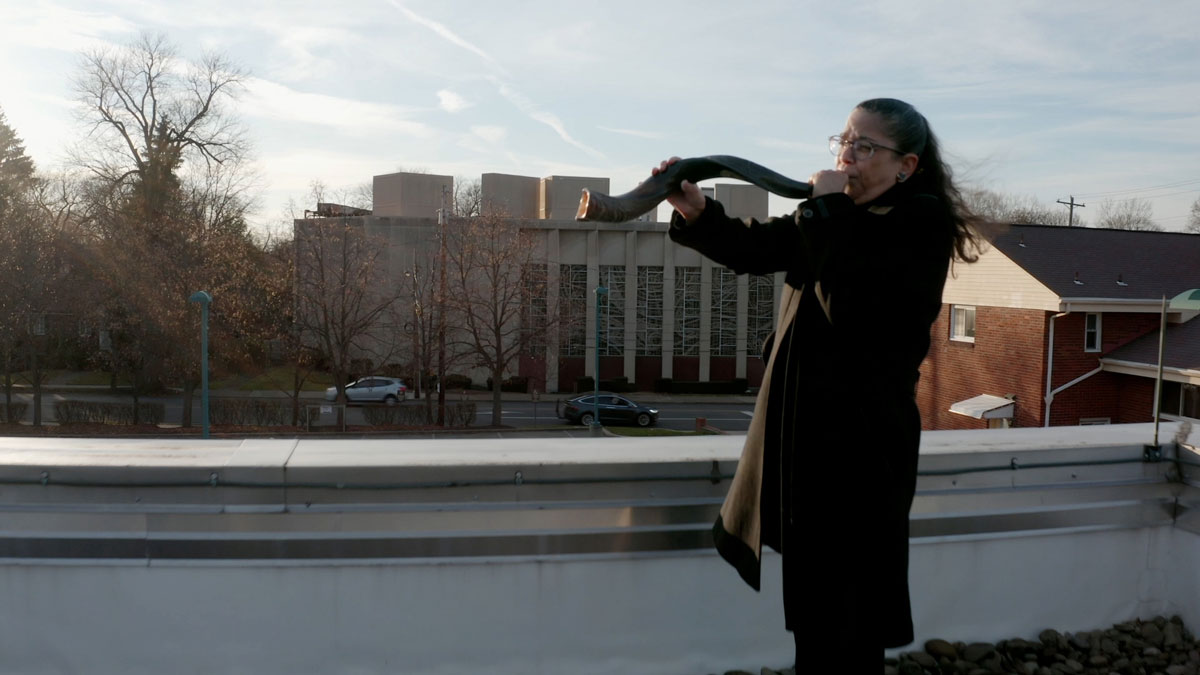
A Tree of Life: The Pittsburgh Synagogue ShootingSurvivor Audrey Glickman playing the shofar in “A Tree of Life: The Pittsburgh Synagogue Shooting” (HBO)

Through the gunman’s example, the film and its subjects spell out the warning this shooting as the thousands of antisemitic crimes should sound. As Rabbi Jeffrey Myers warns, “The danger of antisemitism is that it doesn’t stop at antisemitism. It denotes a moral decay in humanity when you’re going to treat people as an ‘other’ and think of them as less than human.”

Frighteningly, “A Tree of Life” arrives days after Kanye West’s antisemitic calls to violence on social media got him locked out of Twitter and Instagram, followed by a Tucker Carlson interview where he defended wearing a t-shirt that says “White Lives Matter,” a slogan considered hateful by the Anti-Defamation League, was “funny.”


Want a daily wrap-up of all the news and commentary Salon has to offer? Subscribe to our morning newsletter, Crash Course.


It would be naïve to say watching “A Tree of Life” makes a person feel less anxious about where the world is heading. But sitting with this film and the people who opened their lives and memories in the spirit of healing and understanding is something of a balm.

A scene near the film’s close acknowledges what life is like for people living in a reality altered by gun violence and hatred: Glickman and Charny are triumphant at Glickman’s participation in an original work performed by the Philadelphia Orchestra; she opened the performance by playing the shofar. 

Then as they are walking out of the theater, a horrible, familiar sound cracks through the air, and they turn to look at the busy street to see what caused it. This time, it is only a motorcycle backfiring. “It’s scary,” Charny admits. 

“It is,” Glickman says, and his smile momentarily disappears. But it’s a beautiful, clear night in the city, and they stride onward.

“A Tree of Life: The Pittsburgh Synagogue Shooting” premieres Wednesday, Oct. 26 on HBO Max.


Ex-FBI counsel: New DOJ revelations suggest probe is much further along than previously thought

Andrew Weissmann, the former counsel of the FBI and prosecutor for Robert Mueller’s special counsel team, said that recent reports that the FBI is questioning more and more people suggests that the investigation into the classified documents at Mar-a-Lago is moving much quicker than previously understood.

On a panel with former FBI assistant director for counterintelligence, Frank Figliuzzi, Weissmann explained that the fact that the Justice Department is seeking information from Trump’s personal valet, Walt Nauta and the Presidential Records Act appointed aide Kash Patel “is a real sign that the investigation is way past the beginning stages.”

“I’m particularly intrigued by the fact that the government appears to be seeking an order from the chief judge of the D.C. District Court compelling Mr. Patel to testify,” Weissmann continued. “That is — that’s a very bold step to be taking at this point. It makes it clear that the government is not looking to bring a criminal case against Mr. Patel, but is willing to immunize him and put him in the grand jury, because they want to know the inside story of what he has to say, particularly, I would think, about the alleged declassification of documents. And the same with Mr. Nauta.”

He explained that the “strong grand jury process” gives the government the ability to compel testimony from those aides closest to Trump.

“Obviously, if you’re the target of an investigation, that is a difficult situation to be in because you’re constantly guessing about what the government knows,” Weissmann continued. “And I think in Donald Trump’s case, trying to think how to thwart that — can be a form of obstruction if he engages in it.”

Over the past several months since the document scandal began, Kash Patel has been all over the map when it comes to his defense of Donald Trump. At one point he falsely claimed that the former president can declassify documents by simply standing over them and saying “they’re declassified.” In another interview, he claimed that Trump will never get in trouble because the General Services Administration (GSA) packed up Trump’s boxes and they were the ones who somehow forced Trump to steal the documents.

It isn’t true, as Figliuzzi explained, noting that the GSA asked the White House to sign a form saying that they packed the boxes “and that whatever is in there is necessary for you when you move out of the office.” It’s unknown who signed that document from the White House, but it is likely available via a Freedom of Information Act request.

Figliuzzi also said that Patel can get out of trouble by saying he simply didn’t know, despite his legal education, that Trump had no right to the documents and couldn’t magically declassify them.

“But the key to Patel is whether he had direct conversations with Trump or those immediately around Trump about obstructing, by saying, ‘Hey, I’m going to do this for you, boss. I’m going to say, you declassified these. And I’m going to make that argument that I somehow knew about that.’ Maybe he’s clairvoyant. I don’t know. You and I talked about this before. There has to be a tangible process. There has to be a defensible process around the declassification of documents. And there’s no evidence here. And Trump knows that, and Kash Patel knows that.”

Figliuzzi also said that Patel might be someone, like many of those around Trump, who wants to take the fall and save Trump, regardless of what that means.

“Let’s remember something, Trump was thinking about making Patel either the deputy director of the CIA or the deputy director of the FBI,” he also recalled. “By the way, those are career positions. You just don’t grab somebody off the street for those. But that is the influence that Patel had with Trump, and vice versa. So, he’s the fascinating piece of this.”

Watch video below or at this link.

A billing expert saved big after finding an incorrect charge in her husband’s ER bill

If Dr. Bhavin Shah was on his own, he said, he probably would have paid the bill for his broken arm. The 47-year-old physician from suburban Chicago incurred surprisingly steep charges after landing in an emergency room on New Year’s Day 2021. He’d hit an icy patch while skiing with his kids in Wisconsin.

The $10,563.49 in initial ER charges from a Froedtert South hospital in Pleasant Prairie, Wisconsin, seemed high considering he basically got only an exam, X-rays, pain relief, and an arm splint. His insurer negotiated the cost down to $7,922.62 — but, with Shah owing $250 for his deductible and 40% of the remaining charges, his bill of $3,319.05 still felt like too much. However, he thought, who was he to question the hospital’s billing department?

Shah’s wife, on the other hand, is highly qualified to question such charges. Sunita Kalsariya, 45, is the office manager of her husband’s medical practice, a job that includes overseeing billing. She took one look at the hospital charges and decided to investigate further.

Kalsariya had no way of knowing then that she was embarking on a crusade that would take over a year, send their bill to debt collections, lead her to complain to the Illinois attorney general, and discover that the hospital charged nearly $7,000 for a procedure that was never performed.

Froedtert South did not respond to multiple requests for comment on the case.

Here’s how Kalsariya reduced her family’s bill:

Tip 1: Start Early

Even before you know you’ll be challenging a bill, Kalsariya said, you should ask the hospital both for more information and to pause the billing process. The sooner you do that, the more time you’ll have to track down the details you need to contest a bill — and possibly reset the clock before it is sent to collections.

“Even in our case, we waited until the second bill,” Kalsariya said. “Start acting with the first bill.”

Tip 2: Get an Itemized Bill

Hospitals often have their own internal billing codes, so it’s important to ask for an itemized bill that lists “current procedural terminology” billing codes (CPT codes, for short), which are standardized across the country.

Depending on the medical procedure, Kalsariya said, a bill could contain an overwhelming number of line items that are hard to understand. She suggested focusing on the items that stand out, such as those with the highest price tag.

Kalsariya said it took months to get a bill that included CPT codes for her husband’s ER trip. Once she did, one item jumped out: $6,961.75 for CPT code 24505 — treating a fractured humerus without making an incision.

Shah didn’t remember having that treatment at Froedtert South. What he did recall was having his arm splinted in a comfortable position and making plans to have surgery the next day at a hospital in the Chicagoland area unaffiliated with Froedtert South. He returned home that night, caught maybe a couple of hours of sleep while propped up by pillows in an almost-seated position, then had a successful surgery.

Tip 3: Compare Your Charges With Those at Other Hospitals

Since January 2021, all hospitals have been required to make their prices publicly available, although some do so in a way that is difficult to find. Still, Kalsariya was able to find the prices that other hospitals in Wisconsin and beyond charged for the same procedure. They ranged from $201 in Boise, Idaho, to $1,300 in Madison, Wisconsin, she said, but all were fractions of the nearly $7,000 that Froedtert South charged.

The website fairhealthconsumer.org has a tool that allows consumers to search for typical patient expenses for procedures in their area. The website estimates that the out-of-network cost for the procedure Shah underwent, within the hospital’s ZIP code, would be $3,863; in network, it would be $1,707. Medicare also has an online tool to find national average patient expenses searchable by CPT code. The total cost for that procedure is listed at $1,892, with Medicare paying $1,514 and the patient on the hook for $378.

Tip 4: Challenge Your Charges

Armed with the information that Froedtert South was seemingly charging more than others for the bone realignment, the couple tried appealing directly to the hospital with no luck.

“The charges incurred on your date of service were both reasonable and within the range usually charged by similar healthcare providers in the area,” the hospital’s response letter read. “Moreover, your insurance company, United Healthcare Choice-Golden Rule, entered into a long-term agreement with Froedtert South knowing the charges for its various services.”

The couple sent two complaints to their insurer asking how it could allow itself to be charged such a high amount, but response letters said the claim was processed correctly.

“We expect our in-network providers to bill appropriately for their services,” UnitedHealthcare spokesperson Maria Gordon Shydlo wrote in an email to KHN. “We paid the claim under the terms of Mr. Shah’s benefit plan based on the information we received from the provider.”

Fed up, Kalsariya filed a complaint with the Illinois attorney general’s office. After going back and forth, she eventually was told her husband could apply for the hospital’s financial assistance program to reduce his bill. But Kalsariya said they didn’t need financial assistance. They could afford $3,319.05. This, she said, was about the principle of the thing — she felt they were being egregiously overcharged.

Tip 5: Request Your Medical Records

Getting Shah’s medical records proved to be another challenge. Kalsariya said her attempt to access the records on the hospital’s website didn’t work, so instead the couple was required to send hospital officials a form to release the records.

“They wouldn’t even accept fax or email,” Kalsariya said. “They needed it mailed, specifically, and it had to be notarized.”

It almost didn’t seem worth the hassle to them. But when a KHN reporter responded to the family’s request for help investigating Shah’s hospital bill, the couple decided to send in the form to accurately document their saga.

When the records arrived, they showed the splinting that Shah remembered but not the treatment that was driving up his bill. They appealed the bill to Froedtert South once more in May 2022, this time noting the discrepancy between the charges and the medical records.

Tip 6: Tell Collections You Are Disputing the Bill

Shah had received a letter from a debt collector, which Kalsariya said came in November 2021, over his unpaid medical bill. She asked the hospital to pull the bill from collections because the dispute was unresolved, which she said it did.

Informing a collections agency that a bill is in dispute can help protect a patient’s credit score. That wasn’t an issue with Shah’s bill from the hospital because the hospital pulled it back after Kalsariya’s call.

How It All Ended

After the couple asked the hospital about the discrepancy with the procedure, Shah received a letter from the hospital dated May 27 of this year, saying it had reviewed the records and discovered the bill was inappropriately coded: The hospital should have used the code for a splint, not a treatment. A month later, Shah got a new bill with a patient balance of $1,214.91 — $2,100 less than the original balance.

Kalsariya still thought the bill seemed high and that the hospital seemed unapologetic about charging for a procedure that was never performed.

But the couple paid the new, smaller bill, and their saga was finally over. Her advice to other patients? When you get a bill, look into it before paying.

“I know it’s time-consuming. It is really taxing on our minds to do this,” Kalsariya said. “But if everybody makes that effort, then they have to be transparent.”


KHN (Kaiser Health News) is a national newsroom that produces in-depth journalism about health issues. Together with Policy Analysis and Polling, KHN is one of the three major operating programs at KFF (Kaiser Family Foundation). KFF is an endowed nonprofit organization providing information on health issues to the nation.

Subscribe to KHN’s free Morning Briefing.

In Netflix’s uneasy “The Good Nurse,” Jessica Chastain suspects Eddie Redmayne of killing patients

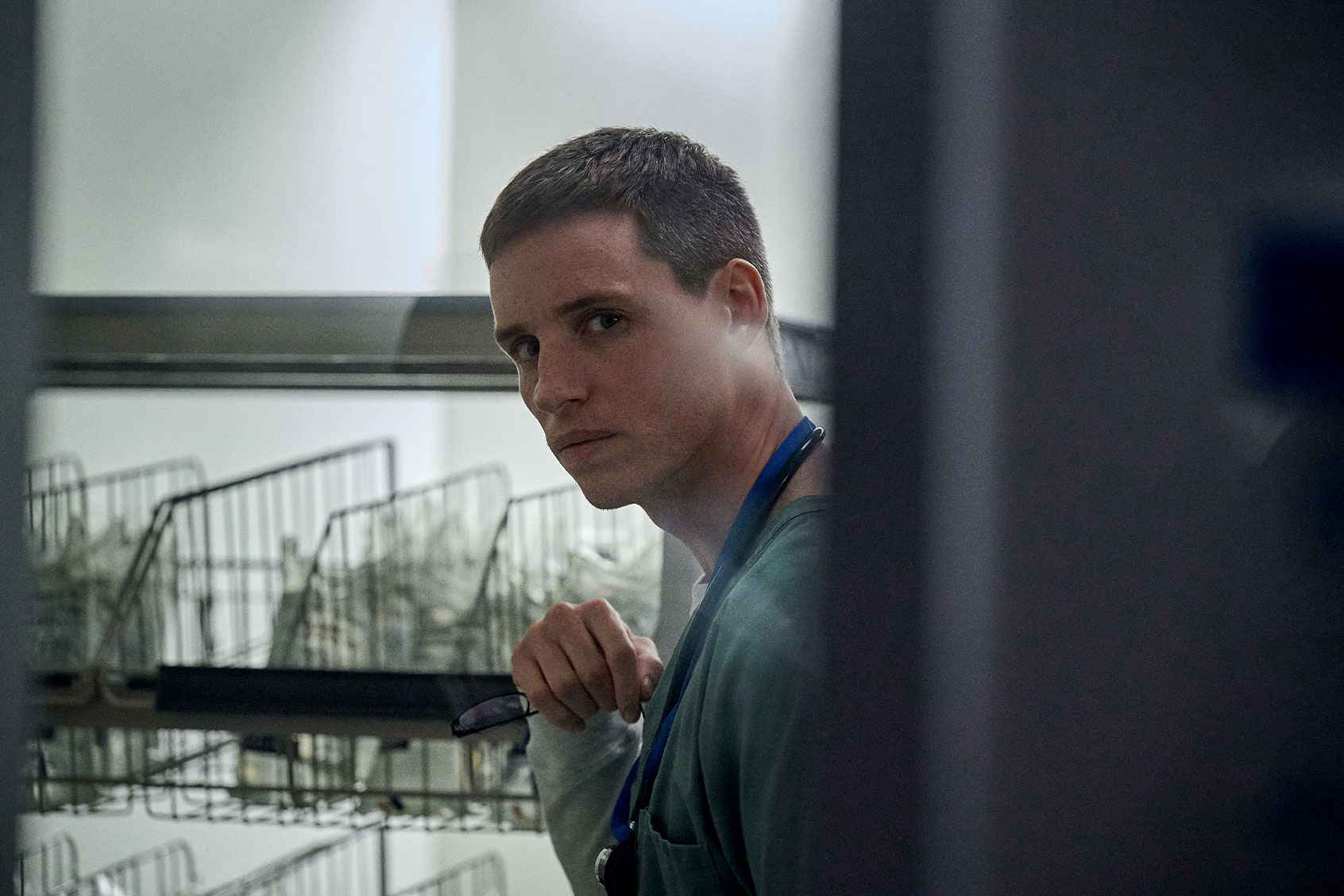
The first scene of “The Good Nurse” has a hospital patient coding as they suffer a fatal seizure. The death is shot discreetly from the doorway of the room; only the patient’s legs and feet are seen as nurses rush in to attend to the situation. As the camera slowly enters the room, it focuses on Charles “Charlie” Cullen (Eddie Redmayne) in profile, silently implicating him as he watches the horrific events unfold. 

Director Tobias Lindholm (“A Hijacking“) takes a subdued approach to telling this story of Cullen, who is not the titular caregiver, but a serial killer who murdered dozens — possibly hundreds — of patients for years by poisoning their IVs. The deaths occurred almost without warning; the uncalculated nature of them makes the crimes particularly insidious. (Cullen’s motive for his actions are briefly touched on, but largely ambiguous.)

Based on a true story — Charles Graeber wrote the book which Krysty Wilson-Cairns (“1917“) turned into the film’s screenplay — “The Good Nurse” recounts Charles’ killing spree not from his perspective, but mostly from the point of view of the good nurse, Amy Loughren (Jessica Chastain), who helped a pair of detectives Dan Baldwin (Nnamdi Asomugha) and Tim Braun (Noah Emmerich) connect the dots and collar Charlie after she realized what he was doing. 

Lindholm takes what could easily have been a TV movie of the week thriller and elevates it to an involving drama by keeping the danger spiky. There are quietly sinister moments, such as an episode where Charles “steals” medicine for Amy. (She suffers from cardiomyopathy, and requires surgery, but Amy is without health insurance and has to keep her condition a secret to keep her job.) There is also some real fear when Amy realizes the threat that Charlie poses to her family — she is a single mother of two — which prompts her to try to get him to confess. 

Much of the film focuses on the investigation, which is generally interesting because the detectives are stymied by the hospital’s risk administrator (Kim Dickens), who is evasive when she is not stonewalling the cops. (She also demands to be present as hospital staff members are interviewed.)  It is quite satisfying when Braun has an outburst and dresses her down. 

“The Good Nurse” suggests how someone like Cullen, who arrived at Parkfield with “experience and good references” can move from hospital to hospital without being detected because no one says anything — not unlike how abusive priests are transferred from parish to parish.

The investigation into Cullen certainly has its snags. One concern is that a body is needed to prove their case, which means having to wait for another mysterious death to occur. (It doesn’t take long.) Cue the exhuming of a corpse to gather sufficient evidence. 

But it is the film’s psychological moments that engage the emotions. Amy certainly struggles with her decision to bait Charlie because of the risks she is taking (for her job and her family.) But she is a “good nurse” and cannot allow the patients she cares for die. 

The Good NurseEddie Redmayne in “The Good Nurse” (JoJo Whilden/Netflix)

Lindholm does not sensationalize these situations too much, but he fumbles a bit when he intensifies scenes, such as when Amy wears a police wire to a lunch with Charlie, or a showboating moment where he is being interrogated by the detectives. Likewise, the film falters when it relies on a clunky visual motif of an IV bag rolling on to the floor to mirror Amy passing out in a hallway after discovering Charlie’s method of killing. 

Mostly, the film gets by on the strength of the performances by Chastain and Redmayne. She radiates warmth and cares for her patients as well as Charlie until she comes to realize what he has done. A pivotal scene has Amy reuniting with an old friend (a terrific Maria Dizzia) who used to work with Charlie and confirms Amy’s growing suspicions. Redmayne’s Charlie generally comes across as affable — he is great with her kids — which belies his dangerous nature. “The Good Nurse” does not give him enough solo scenes, which keeps his dark side enigmatic, but Redmayne reveals enough of his madness once his carefully constructed mask slips. 

To the film’s credit, the dramatic scenes between Chastain and Redmayne have an uneasiness to them. As he helps her calm down when she is having a health issue, his friendliness is a little creepy. As she tries to coax him to confess, what clicks is that viewers understand what each character fears or is hiding, and the tension comes from who is going to blink first. 

“The Good Nurse” is a chilling film because it raises unanswerable questions about how someone like Charlie could do what he did, and why hospitals did nothing to stop him.

 “The Good Nurse” is currently in select theaters and streams on Netflix starting Oct. 26. 


Insect swarms create so much electricity that they may influence the weather, study finds

A common thought experiment posits that a butterfly flapping its wings in Brazil can, over time, lead to a chain of events that sets off a tornado in Texas. It seems this old saw may be more true than previously thought, as a new study in the journal iScience suggests that insects can be a source of “atmospheric space charge,” which is the level of electricity in the atmosphere.

In other words, massive swarms of insects, such as bees or grasshoppers, may be influencing the weather, carrying an electrical charge equivalent to a thunderstorm cloud. The study gives a whole new meaning to the term “bug zapper.”

Our skies are filled with molecules called ions that are bristling with electric energy. Ions can have either a negative or positive electric charge, which plays a role in the generation of lightning. But while some aspects of meteorology are focused on the atomic, it often overlooks the so-called aerobiome, the diverse neighborhood of organisms that live in the air. Using genetic markers, a 2021 study in Environment International was the first to fully inventory the aerobiome, which includes microscopic fungi and plant material, tiny insects, trillions of microbes, and more.

These organisms may be small, but previous research dating back to 1982 has shown that bacteria can cause rain, a phenomenon known as bioprecipitation. However, far less studied is the influence that bigger organisms like insects can have on weather systems.

To test this idea, researchers at the University of Bristol in Langford, United Kingdom conducted an experiment at an outdoor field station hosting several honeybee hives. Honeybees will naturally swarm as part of their life cycle. When spring invites warmer weather, the queen of a hive will evict herself and her thousands of daughters, leaving newly born queens to fight to the death over the old kingdom. The victor begins a new hive while the swarm will spend a few days looking for a new home, later repeating the cycle.

For only about three minutes, a migrating swarm of honeybees passed by the sensor. But this was enough for the scientists to measure a peak of 100 volts per meter. 

Being able to observe a honeybee swarm gave the researchers an opportunity to measure their electric charge using an electric field monitor, a short-range sensor that can detect lightning, plus a camera pointed upward to measure swarm density.

For only about three minutes, a migrating swarm of honeybees passed by the sensor. But this was enough for the scientists to measure a peak of 100 volts per meter. As a control, this effect was not observed by a second, nearby monitor placed 50 meters away from the swarm. The measured electricity was compared to previously published charge measurements of honeybees.

Thus, the researchers concluded that swarms of honeybees “directly contribute to atmospheric electricity,” which has downstream effects on the weather. But of course, bees aren’t the only bugs that swarm. Everything from butterflies to termites to certain beetles have been known to gather en masse.

These grasshopper clouds “have the potential to alter their local electrical environment with a magnitude comparable with meteorological events.”

By using other electrical charge data on insects, the researchers were able to estimate how a giant swarm of desert locusts, for example, would compare. Some of these insect armies contain “tens of billions of flying bugs,” according to NPR, “with 40 million to 80 million locusts packed in half a square mile.”

And it turns out, these grasshopper clouds “have the potential to alter their local electrical environment with a magnitude comparable with meteorological events,” the study authors report, with some swarms “capable of exceeding charge densities reported for electrical storms and clouds.”

In contrast, butterfly and moth swarms don’t seem to have as great an influence, because their mobs generally have low densities. However, some painted lady butterfly swarms have grown as large as 70 miles across, enough to be picked up by weather radar. Still not quite as electrically charged as desert locusts, but enough to be “associated with fair-weather clouds,” the authors report.

“We only recently discovered that biology and static electric fields are intimately linked,” the study’s lead author, Ellard Hunting, a biologist at the University of Bristol, said in a statement. “There are many unsuspected links that can exist over different spatial scales, ranging from microbes in the soil and plant-pollinator interactions to insect swarms and perhaps the global electric circuit.”


Want more health and science stories in your inbox? Subscribe to Salon’s weekly newsletter The Vulgar Scientist.


The implications for this research are global. The electrical charge of insects is not accounted for in current climate models, but bugs could play an active role in the movement of dust, for example. The movement of dust particles in the atmosphere has long puzzled scientists, but they know it can shift the levels of radiation and cloud coverage. Including insect swarms in these equations may lend greater insight into how weather forms around the planet.

The researchers call for more investigations into the “dynamic electrical interactions between physical and biological entities in the atmosphere,” because clearly there is much to learn about the living creatures in the sky and their influence on our world.

Oz rebuked for saying abortion decision should be up to “women, doctors and local political leaders”

Republican U.S. Senate nominee Dr. Mehmet Oz said on the Pennsylvania debate stage Tuesday night that “local political leaders” have a role to play in abortion decisions, drawing swift condemnation from reproductive rights advocates and Democratic candidate John Fetterman, whose campaign is planning to run ads highlighting the comment.

“There should not be involvement from the federal government in how states decide their abortion decisions,” Oz said when asked about his position on abortion, which has become a central midterm issue following the U.S. Supreme Court’s June decision in Dobbs v. Jackson Women’s Health Organization.

“I want women, doctors, local political leaders letting the democracy that’s always allowed our nation to thrive to put the best ideas forward so states can decide for themselves,” Oz added.

Asked specifically about whether he would support Sen. Lindsey Graham’s, R-S.C., proposal to ban abortion nationwide after 15 weeks of pregnancy, Oz refused to provide a yes or no answer, reiterating that he opposes federal involvement.

“I’m not going to support federal rules that block the ability of states to do what they wish to do,” said Oz, who has previously called abortion at any stage of pregnancy “murder.”

Alexis McGill Johnson, the president of Planned Parenthood, responded that “no politician should make this decision. Period.”

Fetterman, Pennsylvania’s lieutenant governor, contrasted his stance with Oz’s by stressing his support for codifying Roe v. Wade into federal law, something the currently razor-thin Democratic majority has repeatedly failed to do because of obstruction from right-wing members of the caucus.

“If you believe that the choice for abortion belongs between you and your doctor, that’s what I fight for,” Fetterman said in the first and only debate in the battleground race that could decide which party controls the Senate next year.

Fetterman’s campaign wasted no time seizing on Dr. Oz’s stated support for giving local politicians a say in reproductive health decisions, a view he expressed as Republican legislatures across the U.S. are imposing draconian abortion bans that are denying pregnant people basic healthcare.

In a statement following Tuesday’s debate, Fetterman’s campaign announced it will be unveiling an ad Wednesday that spotlights Oz’s “radical, out-of-touch” comment.

“Our campaign will be putting money behind making sure as many women as possible hear Dr. Oz’s radical belief that ‘local political leaders’ should have as much say over a woman’s abortion decisions as women themselves and their doctors,” said Joe Calvello, a spokesperson for the Fetterman campaign. “After months of trying to hide his extreme abortion position, Oz let it slip on the debate stage on Tuesday.”

“Oz belongs nowhere near the U.S. Senate,” Calvello added, “and suburban voters across Pennsylvania will see just how out-of-touch Oz is on this issue.”

Arizona’s attack on voting rights: It’s part of a long and ugly tradition

Contrary to popular myth, the United States was not founded on the concept of “one person, one vote.” In fact, there isn’t a right to vote enshrined in the Constitution at all, a fact which the late Justice Antonin Scalia made sure to mention in his notorious Bush v. Gore opinion that decided the 2000 election. Managing elections was at first left entirely up to the states, which meant that in most places, most of the time, only white male landowners had the franchise. It took several decades, until the Andrew Jackson era, before essentially all white men were allowed to vote, let alone anyone else. (A few property-owning African Americans were permitted to vote in Northern cities before the Civil War, but no women could vote anywhere until Wyoming enacted universal suffrage in 1869.) 

After the Civil War, the end of slavery and the 14th Amendment, all Black men were officially granted citizenship, but very few were allowed to vote before the enactment of the 15th Amendment in 1870, which specified that the right to vote “shall not be denied or abridged by the United States or by any state on account of race, color, or previous condition of servitude.” That led to the brief period of Reconstruction, which saw Black men not just voting across the South but also elected to high office: Sixteen African Americans served in Congress (including two U.S. senators) and several hundred served in state legislatures. But by the 1880s all that was over, as Southern whites (with the federal government’s permission) launched the systematic disenfranchisement, vote suppression and voter intimidation of the Jim Crow era, meaning that virtually no Black people in the South could vote until the civil rights movement of the 1950s and ’60s led to the passage of the Voting Rights Act.

But it’s a mistake to believe that voter suppression only happened in the Deep South — or only happened in the distant past. Over the past 20 years we’ve seen a huge resurgence of such tactics in most states run by Republicans. In Florida, Wisconsin, New Hampshire, Maryland, Indiana and Texas, for example, GOP officials have purged voter rolls, limited early voting and mail-in ballots, established “caging” lists, spread voting disinformation and enacted onerous voter-ID laws and ballot requirements. Just this week, a pair of notorious GOP dirty tricksters were convicted of felony telecommunications fraud in Ohio for spreading false information by robocall in 2020.

Most of those tactics, primarily (although not exclusively) targeting Black and Latino voters, were assumed to be illegal under the Voting Rights Act of 1965 — at least until the conservative-majority Supreme Court struck down huge portions of the act in their 2013 ruling from Tennessee, Shelby County v. Holder. The justices held, in an astonishing denial of reality, that voter suppression was no longer much of a problem in the South (or anywhere else) so many of the Voting Rights Act’s provisions were no longer necessary.

Last year the high court outdid itself with the decision in Arizona’s Brnovich v. Democratic National Committee case, upholding a ban on what they called “ballot harvesting” — that is, collecting and turning in mail ballots by anyone other than a voter’s immediate family members or caregivers — and allowing states to toss out any ballot cast in the incorrect precinct. Republicans are effectively creating updated Jim Crow-style voting restrictions all over the country, with the support of a supermajority on the Supreme Court. 


Want a daily wrap-up of all the news and commentary Salon has to offer? Subscribe to our morning newsletter, Crash Course.


Arizona, however, must be regarded as a special case. While many states had discriminatory laws of one kind or another until fairly recently, Arizona has been on the voter suppression bandwagon all along, and stands as the leading example so far in 2022. That “live and let live” libertarian spirit of the Southwest seems to have led conservatives in the Grand Canyon State to a culture of election intimidation that just won’t quit.

I’ve noted in several columns over the years the famous Arizona suppression scheme from the early 1960s known as Operation Eagle Eye. It’s particularly famous because the late William Rehnquist, chief justice of the Supreme Court from 1985 to 2005, was an eager participant early in his career.

The New York Times reported this during Rehnquist’s confirmation process in 1986:

Republicans say that in the 1960, 1962 and 1964 campaigns, he helped plan and direct a poll-watching program that was intended to block what Republicans called illegal attempts by Democrats to win elections by bringing large numbers of unqualified black and Hispanic residents to the polls shortly before they closed.

They also had a special trick:

A Phoenix lawyer and longtime Democratic activist, who said he did not want to be identified because he expected Justice Rehnquist to be confirmed as Chief Justice, said that at the 1962 election he was photographed by William Rehnquist as he and another Democrat approached a voting precinct in a minority community.

”We asked him what he was doing, or perhaps he just told us, ‘I’m taking pictures of everybody,’ ” the lawyer recalled. ”We asked if that wasn’t harassment. He just laughed and said, ‘There’s no film in the camera.’ ”

That sounds familiar, doesn’t it? We are getting daily reports of armed, masked yahoos dressed in tactical gear staking out ballot boxes in Arizona filming people dropping off their ballots.

The sheriff of Maricopa County, which includes the city of Phoenix and has a population of 4.5 million, said he has been forced to increase security at drop boxes so voters can feel safe dropping off their ballots. This “monitoring” is being done at the behest of “voter integrity” groups that have been gathering in the state and around the country, claiming they are training “poll watchers” to make sure that the election is on the up and up. It doesn’t sound as if that’s their actual goal.

This is voter intimidation plain and simple, just as it was when Rehnquist stood there taking pictures of voters (whether or not there was film in the camera). And it’s being endorsed, of course, by extremist election denier Mark Finchem, the Republican nominee for Arizona secretary of state, who tweeted this week, “[George] Soros does not want people to watch their shenanigans. We must watch all drop boxes because they do not have live cameras on them streaming to the public for people to ensure there is no fraud in the process.” That’s the man who will be in charge of Arizona’s elections if he wins the election on Nov. 8. (Notice the cutting-edge MAGA touch of sneaking in a little old-fashioned antisemitism. It’s all the rage these days.)

Citizens who are simply driving up to drop off their ballots are confronted with these people who record them doing it, photograph their license plates and in some cases even follow them in an apparent effort to figure out where they live. Several complaints have been forwarded to the Department of Justice and two lawsuits have already been filed. Whether John Roberts’ Supreme Court will agree that this is unconstitutional remains to be seen, but I wouldn’t hold my breath. After all, the right-wing justices upheld Arizona’s ludicrous ban on anyone dropping off ballots but their own, which was filed by Arizona Attorney General Mark Brnovich and another Republican election denier

This ridiculous obsession with nonexistent ballot stuffing at drop boxes is what formed the so-called basis of the thoroughly debunked claims of fraud in Dinesh D’Souza’s “2000 Mules” movie, which has inspired millions of Trumpers to believe the 2020 election was stolen. These amateur surveillance efforts are being organized by a rogue’s gallery of right-wing groups with anti-government views and associations with white nationalism, including the Oath Keepers, True the Vote, Lions of Liberty and the Constitutional Sheriffs and Peace Officers Association.

You can always count on Arizona right-wingers to be in the vanguard of any innovative attempt at voter suppression and intimidation. They’ve been at this for decades and are way ahead of the rest of the country. They once put one of their own in the chief justice’s chair — and the current Supreme Court has their back all the way.

“This is the ballgame”: DOJ moving quickly in “secret court proceedings” in Trump Jan. 6 probe

Investigators are ramping up efforts to penetrate the “privilege firewall” former President Donald Trump has used to avoid scrutiny of his Jan. 6 discussions in “secret court proceedings” in D.C., according to CNN.

The Justice Department last week asked a federal judge to force Trump White House counsel Pat Cipollone and deputy White House counsel Patrick Philbin to testify despite Trump’s efforts to block them from answering questions before a grand jury.

Trump has cited executive and attorney-client privilege to prevent disclosures and delay criminal investigations but the DOJ has already been successful in breaking through the privilege firewall, according to the report.

Prosecutors over the past three weeks have scored “significant court victories” in secret proceedings, securing answers from former Mike Pence advisers Greg Jacob and Marc Short. Jacob’s testimony on October 6 is the “first identifiable time” that Trump’s privilege firewall has been pierced in the criminal investigation, according to CNN. Short had his own grand jury appearance a week later.

All four former officials previously declined to answer some questions about discussions they had with Trump before the former president quietly lost court battles related to testimony from Jacob and Short before the chief judge of the trial-level U.S. District Court in D.C. last month, according to the report. Judge Beryl Howell refused to put the two men’s testimony on hold while Trump’s lawyers appealed, though the D.C. Circuit Court of Appeals is still considering legal arguments surrounding the privilege claims.

Jacob, who testified before the House Jan. 6 committee, has been particularly vocal in condemning Trump’s actions after the election and his scheme with attorney John Eastman to block the certification of President Joe Biden’s win on Jan. 6, calling the lawyer a “serpent in the ear” of the president. After Trump supporters stormed the Capitol, Jacob wrote to Eastman, “thanks to your bullshit, we are now under siege.”

“There is almost no idea more un-American than the notion that any one person would choose the American President, and then unbroken historical practice for 230 years, that the vice president did not have such an authority,” Jacob testified to the House panel in July.

Prosecutors are now seeking to compel testimony from Cipollone and Philbin, who had extensive discussions with Trump leading up to the Jan. 6 Capitol riot. Cipollone previously appeared before the House panel but declined to disclose his discussions with Trump, citing privilege. The two men’s roles in the White House counsel’s office raise questions about whether Trump can “claim confidentiality over the legal adviser they gave him” and whether a former president can invoke executive privilege to “hold off criminal investigators, “CNN reported.


Want a daily wrap-up of all the news and commentary Salon has to offer? Subscribe to our morning newsletter, Crash Course.


The federal grand jury has also subpoenaed former White House officials Mark Meadows, Eric Herschmann, Dan Scavino and Stephen Miller as well as campaign adviser Boris Ephsteyn, who could also cite privilege to decline to answer questions in the probe. Trump has similarly used both executive and attorney-privilege claims to impede other probes, like the House Jan. 6 investigation, the FBI investigation into national security documents found at his Mar-a-Lago residence and the Fulton County, Georgia district attorney’s investigation into election meddling. Some privilege questions have remained unresolved and could eventually reach the Supreme Court.

President Joe Biden has repeatedly declined to assert executive privilege over Jan. 6 related information and federal prosecutors who investigated former Presidents Bill Clinton and Richard Nixon were also able to overcome attorney-client privilege claims for White House counsel.

The DOJ is “getting A LOT done in under-seal proceedings,” tweeted CNN legal reporter Katelyn Polantz.

“In a lot of ways, this is the ballgame for the January 6th criminal prosecutions and the grand jury investigation around Donald Trump and after the election,” Polantz said on CNN, noting that investigators have gotten some answers from former officials but Trump is still “trying to block those final answers” from the grand jury.

Andrew Weissmann, a former federal prosecutor who served on special counsel Bob Mueller’s team, said the report was a sign that the DOJ is pressing ahead in its probe of Trump’s actions.

“Really important development,” tweeted former U.S. Attorney Harry Litman, adding that the DOJ could also turn to the “biggest prize who has dodged testimony to date based on executive privilege argument: Mark Meadows,” Trump’s former chief of staff.

“Litigating privilege issues is some serious effort by DOJ to get to Trump’s conversations with his inner circle,” wrote former U.S. Attorney Barb McQuade. “You don’t do this unless you’re determined to turn over every stone.”

Cities want more trees. Drought is complicating their efforts

This story is part of the Grist series Parched, an in-depth look at how climate change-fueled drought is reshaping communities, economies, and ecosystems.

On an overcast Thursday morning in September, a team of five people slowly makes its way down Broadway Avenue, a residential street in the city of Huntington Park, California. Every couple hundred feet they park their pickup trucks, loaded with 275 gallon water tanks, hop out, and fan out along the street, dousing the roots of young trees lining the strip between the sidewalk and the road. 

The watering team, from the nonprofit TreePeople, is responsible for thousands of newly planted trees in seven low-income neighborhoods in Los Angeles County, including Watts, South Gate, and Lynwood; each tree comes with a guarantee that the nonprofit will provide water and other maintenance for at least 3 years. 

“Last week we were out in the heat wave and it was brutal,” says Eileen Garcia, senior manager of community forestry with TreePeople. Around her, crew members in wide brim hats and long sleeved shirts haul 5-gallon buckets across lawns fading from green to brown. “We had to start at 5am to avoid the danger.” A few blocks over, Garcia points out a Brisbane box tree, planted by the team three years ago. The leaves look crinkled and crispy at their edges. “That one is struggling,” she says. But most of the young trees planted by TreePeople are doing well – “that’s because we’re here watering them.”

Huntington Park, a three-square-mile, 96-percent Latino city, has a ratio of just 0.7 park acres per 1,000 people; the recommended standard is 2 acres per 1,000. It’s one of the many cities across the country, in partnership with nonprofits and federal and state agencies, trying to increase its urban canopy as global temperatures rise and the risk from excessive heat worsens. Phoenix, Arizona and Las Vegas, Nevada aim to double their forest canopies within the next decade; San Diego wants to go from 13 percent to 35 percent cover by 2035. Los Angeles has a goal to increase its canopy cover to 50 percent by 2028 in places where historic underinvestment and redlining has left communities of color and low-income communities without shade.

But young trees require a lot of water – posing a challenge for planting programs in the U.S. Southwest, where historic megadrought conditions are drying up rivers and reservoirs.  

Water has always been a problem for tree planting in the region, where areas can go for nine months a year without rain. “When I first started, I told a reporter there were two main constraining issues for tree canopy growth in Los Angeles,” said Rachel Malarich, LA’s city forester appointed in 2019. “Water and space.” As drought becomes even more severe and evaporation increases, water has become even more of an issue. The same 5-gallon bucket won’t go as far. 

Newly planted trees require the most water during their establishment phase of 3 to 5 years. The TreePeople team, caring mostly for drought-tolerant species like gold medallion tree, Chitalpa, and lemon bottlebrush, recommends 15 gallons, poured slowly onto the base of the tree, every week for the first three years. The nonprofit asks residents to help with watering but ultimately, its staff members check every young tree; if it looks thirsty, they water it. 

“During a drought, the team increases the number of visits they make,” said Garcia. “When we know there’s a heat wave coming, it is especially important to water beforehand to increase the likelihood of survival.” But watering isn’t something that all organizations and municipalities have the resources to do, even during non-drought times.

Cities and partner organizations have long been able to drum up funding and energy for tree planting. But maintaining and watering new trees over the long run – an expensive and less glamorous, yet critical, activity – has garnered less support. Most cities have systems in place to water trees in parks and medians, but for watering residential parkway strips, where the majority of trees in the urban canopy are located, cities have largely relied on residents, with mixed results.

“About 25 percent of the agencies we work with take on watering trees in the public right of way,” said Mike Palat, vice president of operations for Southern California and the Southwest at West Coast Arborists, a contractor that maintains trees for about 350 municipalities in California. 

In the past several years, nonprofits and governments have started to rethink how they get water to trees, and a movement towards investing more dollars in watering, especially during critical heat and drought times, is underway, even if progress is slow.

Palat said he’s worked on all sorts of programs to encourage residents to water: asking people to sign volunteer agreements, sending text reminders, and running educational programs in different languages about the importance of tree care. For a resident, the cost of watering a young tree is less than $10 a year, but it can still be a struggle to get people to do it, especially in places occupied by mostly renters who move away over time. “I’ll be honest,” said Palat, “the best success we’ve had in the end is paying someone to water.”

“I got my start with an organization that did volunteer tree care and that’s a beautiful model for community building and connecting people with plants,” said Malarich. “But to really shift the landscape at the speed we need to, you have to have crews moving in tandem.” She added that tree planting used to be considered an amenity. “We made the shift to talking about trees as critical infrastructure in the ’90s, but some of our structures still reflect the era of beautification in that trees are not treated as a ‘must have.'”

Part of the problem, Malarich says, is that hiring someone to water is expensive. And many organizations that apply for tree planting grants will opt to rely on residents in order to appear more competitive and get more trees in the ground at a lower cost. Local governments with wealthy tax bases are the ones that can allocate watering funds in their budgets. “You’re looking at $700 to $1000 a day to get 100 to 200 trees watered,” said Palat. “A lot of cities aren’t in a position to do that, which is why we have open areas on maps that aren’t being planted.” 

CAL FIRE, the main granting agency in California for urban forest projects, has started to address this issue by granting dedicated funds for maintenance and allowing grantees to apply for additional cycles of maintenance funding past the end of the typical four-year grant period. “We weren’t seeing the survival rate we wanted to see with grantees who relied on residents,” said Henry Herrera, CAL FIRE’s LA County grant administrator. The agency expects a 10 percent mortality rate for new projects, but based on Herrera’s observations, projects that relied only on residents to keep the trees alive saw rates of 20 to 25 percent. “Part of the solution was to provide the cities with the money to care for the trees,” he said. Still he recognizes that not every funding agency offers funds for tree maintenance. 

“We’re having conversations about how we should be providing water to trees in lower income areas,” said Aimee Esposito, who runs a tree planting non-profit in the Greater Phoenix area and collaborates with government agencies to grow the urban tree canopy. “But it’s a pipe dream, it’s not something in the works in Phoenix.”

Once trees develop a mature root system, they can access groundwater, which makes them more capable of living on their own. But when groundwater runs low during a drought, like the one raging in the Western U.S. right now, older trees also start to struggle. 

“The old rules don’t apply,” said Esther Margulies, a research lead on the Urban Tree Initiative at the University of Southern California. “Mature trees can usually access groundwater but when things are this dry, the game changes.” She added that during the last major drought in 2015, tree die off continued to happen years after drought conditions improved, when trees that had become water stressed finally succumbed to pests.

Already, foresters are seeing signs of stress across the state. “A healthy pine tree has enough sap to eject a beetle, but without water, it doesn’t have the sap,” said Palat, noting how the goldspotted oak borer is devastating drought-stricken oak forests across the Southwest. “We’re seeing more fungus and pathogens get into trees.”

Because trees also calculate how much to grow based on the amount of water they receive, the same species of tree can become dependent on different amounts of water. A sharp cutback – like when a park shuts off lawn sprinklers – can have a shocking effect. That’s why it’s important to give trees the right amount of water from the get-go and avoid overwatering, says Malarich.  

Drought makes it harder for the urban canopy to grow, but once trees are established they can help ameliorate drought. Urban forests capture thousands of gallons of rainwater in their canopies and trickle it back into the ground. They shade soil, slow the evaporation of water, and improve soil quality, inviting fungi and bacteria that make the soil more porous so that it can store more water and carbon. A strategically placed tree means you don’t have to use as much air conditioning to cool a home. 

For all of these reasons, even as Southern California instituted unprecedented water conservation restrictions to deal with the drought in June, water agencies spread the message that trees were exempt and should be hand watered. 

Funding for urban forests is only increasing. The Inflation Reduction Act sets aside $1.5 billion to be spent over the next decade. With new bills in California for schoolyard greening and wildfire and climate resilience, CAL FIRE this year has an unprecedented $167 million for urban forestry projects, over five times last year’s urban forestry budget. Phoenix and Tucson recently created city forester positions to coordinate across the various agencies that engage with trees. While urban foresters across the country stress the importance of maintenance, San Francisco is the only city that has established a dedicated fund for maintaining, including watering, all street trees in perpetuity.

As the climate changes, and 65 percent of urban trees experience drought conditions  dangerous for their survival, cities are rethinking the types of trees they plant. “A lot of popular California natives, like coastal live oak, are not actually the most drought-tolerant species,” said Natalie Love, a doctoral student studying urban forests at the California Polytechnic State University in San Luis Obispo. The most drought-tolerant natives are small. They don’t cast a lot of shade. So her team is looking into other species that might be suitable for Southern California streets, like the Australian rusty gum. Then it’s a matter of encouraging the nursery trade to grow them. 

Garcia also emphasized the importance of tree diversity for forest resilience, which is being prioritized in Huntington Park. There the team has planted about 25 different species, including Hong Kong orchid trees, Marina strawberry trees, and crape myrtle alongside natives like ‘Desert Museum’ palo verde. 

A few blocks away, on Stafford Avenue, some of the first trees planted for the project are already casting shade. “I definitely have hope that we will grow the canopy here,” said Garcia. “Because we’re here, we’re watering. Just looking at this street I can see the fruit of this partnership.”

Donald Trump must be indicted — and this time, I believe Merrick Garland will act

Following the final hearing of the congressional investigation into the Jan. 6, 2021, attack on the U.S. Capitol, the evidence is overwhelming: The Department of Justice must bring criminal charges against Donald Trump and many others for their culpability for the attack. The evidence of criminal conduct by the former president is so strong, and the offenses so consequential to the continued viability of American democracy, that indictment is the only appropriate outcome — and I believe the DOJ will indict.

The select committee’s public hearings, which culminated Oct. 13, made clear how Trump and his allies planned and executed a conspiracy to overturn the will of the American people. The committee demonstrated that Trump and those around him knew he had lost the 2020 presidential election but nevertheless pushed false election fraud claims to justify their efforts to overturn the results. The committee explained how Trump and his allies illegally pressured Vice President Mike Pence to overturn the will of the people, illegally pressured and harassed Arizona and Georgia legislators and election workers to do the same, and pressured the Department of Justice to legitimize election fraud lies to create a false pretext for overturning the election. 

The committee further demonstrated that Trump’s allies were in touch with violent extremist groups to plan the “Stop the Steal” rally on the morning of Jan. 6, that Trump had clearly specified that date for mob action in a tweet — after a marathon meeting with lawyers made clear that other options to overturn the election were not promising — that Trump sent a mob he knew to be armed to the Capitol to stop the peaceful transfer of power, and that he anticipated, incited and encouraged the violence that occurred on Jan. 6. 

While the question of whether to indict a former president yields few easy answers, there is only one that is just: Trump must face criminal charges for his efforts to defraud the American people of their right to elect a president.

Bringing federal charges in any case requires as a threshold matter that a prosecutor determine that the defendant’s conduct constitutes a federal offense and that there is sufficient evidence to sustain a conviction. Thanks in part to the committee’s work, we know there is overwhelming evidence that Trump participated in a conspiracy to defraud the United States and obstructed an official proceeding of Congress — just two of the offenses that federal prosecutors are likely considering. Charging Trump would also meet other requirements, including that it serve a substantial federal interest. Other relevant considerations would support charging Trump too: Few imaginable federal offenses could be more serious than a criminal conspiracy to unlawfully remain in power. Trump was at the center of the various efforts to remain in power, and he has fought the DOJ’s efforts to investigate the Jan. 6 attacks.


Want a daily wrap-up of all the news and commentary Salon has to offer? Subscribe to our morning newsletter, Crash Course.


The prosecution of a former president is clearly no standard criminal case. Attorney General Merrick Garland and his department may feel pressure to decline prosecution because of the likelihood that charging Trump would prove contentious and the possibility that doing so might exacerbate partisan political divisions, or even lead to violence. Those advocating for forbearance often cite Gerald Ford’s pardon of Richard Nixon as a model that should inform the present.  

That logic is misguided for three reasons:

First, Trump has yet to face any consequences for his criminal efforts to retain power against the will of the American people. After the Watergate investigations exposed Nixon’s crimes, he resigned the presidency in disgrace and never sought public office again. Trump by contrast, is not in exile — he is emboldened. He remains the de facto leader of the Republican Party and is reportedly preparing to run for president again in 2024. Under Trump’s leadership, the party has embraced, not renounced, the Jan. 6 attack: At least 291 Republican candidates running for Congress or statewide office this year have denied the legitimacy of the 2020 presidential election. The election denialism that Trump fomented and still propagates today will go unchecked if charges are declined. 

Second, Trump is going to continue breaking the law until he is held accountable. Since he first ran for president in 2016, Trump has been credibly accused of at least 55 crimes. That record includes his attempts to obstruct the investigation of Russian interference in the 2016 election, his efforts to pressure Ukraine to open a sham investigation into Joe Biden in 2019 and his unauthorized possession of sensitive government records at Mar-a-Lago. 

Finally, prosecuting Trump represents a critical opportunity to reaffirm that it is unacceptable to interfere with the peaceful transfer of power–a defining feature of American constitutional democracy. Ultimately, Garland understands this, as well as the strength of the evidence. That’s why I believe he will act. The way to protect our democracy is to hold accountable those who sought to destroy it — including the former president.

The Cochise County groundwater wars

This story is part of the Grist series Parched, an in-depth look at how climate change-fueled drought is reshaping communities, economies, and ecosystems.

For Anje Duckels, Florida was home. Duckels, 41, was born in the Sunshine State; her family had lived there for generations. But housing prices in Fort Myers just kept rising, so she and her wife decided to find somewhere cheaper to raise their three children. Duckels volunteered to help restore a rural estate with a small farmhouse in the Willcox Basin of southeast Arizona, near the U.S.-Mexico border. After a few years in the area, they bought the property, which was located in a Cochise County neighborhood called Kansas Settlement.

Calling the Willcox Basin “remote” would be an understatement: 2,000 square miles of sand and scrub, strewn with crop fields and lined with dusty single-lane roads, it’s nothing like the subdivided coastal paradise that Duckels was used to. Most residents live at least 30 minutes from the closest store or gas station. Many live several miles from their nearest neighbor. In most of the county there are no public services or utilities. The most famous housing development in local history was a land-fraud scam that marketed empty desert tracts to gullible northerners — a sham version of snowbird refuges like the one where Duckels had grown up.

The day the family moved to Kansas Settlement, they lost their water. When Duckels turned on the faucet, she heard a spitting noise, but nothing came out. It didn’t take long to find the source of the issue: The aquifer beneath her house had dropped below the bottom of her well. The pump was pulling on dry dirt. Duckels soon learned that many of her neighbors had lost water as well, and they’d found themselves forced to haul in jugs of water on their pickup trucks or else pay thousands of dollars to drill their wells deeper.

“Not only was our well dry, but pretty much everybody in this area has a well that was dry, or going dry, or had been dry and had to be re-drilled,” Duckels told Grist.

In times of crisis, people tend to look for a villain. It didn’t take long for Duckels to find one: Surrounding her property on all sides are farms owned by a massive dairy operation called Riverview. Over the previous decade, the Minnesota-based company had gobbled up more than 50,000 acres in Cochise County to build an expansive network of farms and feedlots, according to High Country News, which has covered Riverview and the local opposition it has engendered extensively. The dairy’s wells were far deeper than the one on Duckels’ property, and she assumed the firm was sucking all the water out from beneath her.

Riverview is hardly the only reason for the area’s water crisis — the desert aquifers had never been very robust, and a climate-change-fueled drought had made the area drier than ever — but Riverview and other large farms growing nuts and alfalfa are by far the area’s largest water users. Duckels started to look at the irrigated fields around her with fear and resentment.

“That Riverview man is literally going to try to starve us out of water,” Duckels told me, referring to the Riverview board member who runs the company’s operations in the area. “I hope every single property he owns is set on fire by someone. I hope that someone salts his ground so that nothing grows.” 

Duckels’ neighbors all feel the same way. The mounting water crisis has created a groundswell of anger in the Willcox Basin. Libertarian-minded locals who might once have kept to themselves have banded together against the dairy and other large nearby farms, channeling their frustration over dry wells into a political battle against big agriculture. Interviews with almost two dozen residents in the area paint a picture of a once-sleepy community that has erupted into turmoil: Residents have shown up at public meetings to shout at Riverview representatives, sparred in comment wars in local Facebook groups, and flown rogue reconnaissance flights over dairy facilities.

The growing water shortage is driving freedom-loving denizens of the Willcox Basin to a radical solution: state regulation. In two weeks, basin residents will vote on whether to establish new restrictions on large groundwater wells, the first such referendum in state history. If voters approve the new rules, it would constitute a sea change in Arizona water politics. Not only would it be one of the first times a rural community has voted to restrict its own water usage, but it would also be a rare example of rural voters succeeding in limiting the power of large-scale agriculture.

The backlash may portend a broader political shift in the arid U.S. West. Farms are by far the largest water users in the region, and rural communities from California to Texas are watching these operations suck the water from beneath their homes. Places like Cochise County have relied on agriculture as an economic anchor, but the water crisis is drawing battle lines between rural populations and the large agricultural firms that sustain them.

“Back in the day, we used to get a lot more rain, and the theme with water was: If it’s not affecting you personally, nobody’s really gonna care,” said Esteban Vasquez, a lifelong Cochise County resident who has managed local water systems. “Now that people actually see it happening, the conversation has opened. It’s something that has hit close to home.”


Unlike the sprawling Phoenix suburbs 200 miles away, Cochise County remains mostly an undeveloped desert, almost as rural today as it was when the first prospectors and miners arrived to dig for copper more than a century ago. Most residents who spoke with Grist said they moved to the area because they wanted solitude and privacy, even if that meant roughing it. In a county where the population density is a quarter of the national average, they often see more rattlesnakes than people.

“People have to be a little bit courageous or at least ambitious,” said Christian Sawyer, who moved out to the area a few years ago in search of a quiet place where he could pursue various creative projects. “It’s people who want to do their own thing, build their own house, farm their own crops. It’s this kind of back-to-the-land libertarianism, with a bit of a hippie-type of mentality as well.”

Cochise County has a unique “opt-out” permitting system, which allows people who own more than four acres of land to build structures without having to submit to a county building inspection. This has enabled some unorthodox abodes: Some residents have built houses with composting toilets, walls made out of volcanic rock, and frames made out of straw bale.

If the absence of local regulations made Cochise County an attractive retreat for loners and libertarians, it also made it an ideal target for large farms. There have long been small cotton and alfalfa operations in the county, but over the past ten years a number of large conglomerates have moved in to grow nuts and alfalfa; several vineyards have opened as well. The growers needed a place where they could pump water with no restrictions whatsoever, and the Willcox Basin fit the bill.

These conglomerates could afford to dig groundwater wells that are much deeper than standard residential wells, giving them a de facto monopoly on the region’s aquifers. Producers have also snapped up land in unregulated localities elsewhere in the state — like the town of Kingman, where a Saudi-backed company grows alfalfa for export back to the Middle East, and Hyder, where a conglomerate called Integrated Ag has invested $90 million to grow Bermuda grass.

Riverview made the biggest splash in the Willcox Basin. Starting around 2014, the company built or bought out several separate dairy operations in the area to the tune of $180 million, beginning in Kansas Settlement and spreading out from there. With operations in five states and hundreds of thousands of cows, Riverview is one of the largest dairy firms in the country. In other states the company has been accused of muscling out family farmers by flooding local milk markets and then underpaying desperate farmers to buy them out and swallow up their acreage.

Much of the land Riverview bought had already been used for farming, but the firm dug dozens of new wells at depths of more than 1,000 feet and pumped millions of gallons of water to grow food for its large herd of heifers. State records show that Riverview owns more than 600 wells in Cochise County. The majority were drilled before the company arrived, but the wells that Riverview drilled in recent years are by far the deepest, with some of them reaching more than 2,000 feet into the earth — so deep that the water is hot from proximity to the earth’s crust. This year alone, the company has bought or drilled at least a dozen thousand-plus-foot wells.

Unlike other aquifers that are fed by rivers and streams, the aquifers in the Willcox Basin depend on rainfall alone for replenishment, so they have always been vulnerable to depletion during drought. But it wasn’t until large operations like Riverview moved in that residents started to notice their water disappearing. Groundwater accretes underground in basins, so if one user pumps a lot of water from a deep well, they can cause water to drop for other wells even several miles away. The best way to visualize this is to imagine two or three straws stuck in the same milkshake; the straw that plunges down deepest will get the last of the milkshake, even as the ones positioned higher end up coming up dry.

“The amount of groundwater pumping has increased exponentially because of what’s been happening with this dairy. And as that has happened, people’s wells have gone dry,” said Kathy Ferris, a research fellow at Arizona State University’s Kyl Center for Water Policy. Ferris was one of the architects of Arizona’s landmark 1980 groundwater law, which limited underwater pumping in the state’s main population centers.

“I think we know what the problem is,” she added. “It’s not rocket science.”

A 2018 report from the state water department found that groundwater levels declined by at least 200 feet between 1940 and 2015 in the parts of the Willcox Basin with the most agricultural pumping — and that was before Riverview moved in. An Arizona water official who spoke to High Country News last year said the rate of decline has increased since the dairy arrived.

Other farming-heavy regions across the West are seeing similar stress on their aquifers from unrestricted agricultural pumping and an ongoing megadrought. California has recorded 1,287 dry well reports across the state this year, a 50 percent increase since 2021. One town in the Golden State’s Central Valley may run out of water altogether by the end of the year. The massive Ogallala Aquifer that runs from Nebraska to Texas has also shown signs of severe stress in recent years.

In the Willcox Basin, the groundwater crisis began in the immediate vicinity of Kansas Settlement, but it’s since spread out across the county as Riverview and other large farms expand farther out and draw from new sections of the aquifers that run through the county. The crisis has even started to affect the town of Willcox itself, one of the only incorporated settlements in the area, which is ten miles from Riverview’s operations. Esteban Vasquez spent five years helping manage the town’s water system, and he told Grist that even the town’s deep municipal wells were seeing stress as a result of agricultural pumping.

“There’s seriously something going on down there,” he said. “We were dropping about nine feet a year. People used to think that since we were miles away [from the dairy], that wasn’t really going to affect us and our aquifers, but it was only a matter of time.”

When Vasquez left his job with the town of Willcox and started working for a company that manages small water systems across the county, he encountered the same dry well crisis everywhere he went. According to High Country News, at least 100 wells in the basin went dry between 2014 and 2019.

The proliferation of water issues has cast a pall over the area, making life darker and more difficult for all those who live there. Everyone knows someone whose well has gone dry, or who’s had to deepen their well, or who’s taken to hauling water rather than try to find it on their own property. Many of the haulers are elderly people who live on fixed incomes and can’t afford to invest in wells, so they haul water instead, filling up jugs at a water facility in Willcox and driving them back home multiple times a week. In a county where the median household income is just 70 percent of the national figure, options for those who suddenly find themselves without water are limited.

Even for those who still have water, the effects of the crisis are all too visible. In some parts of the basin, the overpumping of underground aquifers has led to the emergence of fissures in the ground that are dozens of feet deep, some of which have split apart roadways and forced local officials to close them for weeks. Dozens of people have left areas like Kansas Settlement over the past few years after losing water and finding themselves saddled with worthless properties. Vasquez said he knows at least 20 people who’ve left the county due to the recent water issues; Duckels gave a similar estimate.

“A lot of people have abandoned their houses,” said Duckels. “You drive up and down our streets over here. You can see houses that are just decrepit, because the people have literally just had to leave their investments to rot.”


Even as the water crisis grew for years, many locals didn’t understand the scale of the problem. Because the population of the basin is so spread out, many people were not totally aware of the growth of agribusiness in the area. Opposition to megafarms was initially limited to just a few committed locals.

Julia Hamel, who lives about six miles north of the town of Willcox, was one of those people. She refers to dairy owners as “crooked bastards” and sees their expansion as part of a campaign to force out longtime residents like herself.

“These folks at the dairy have forced out families that have been there five generations,” she said of Riverview. “They can’t sell their land because no one wants it without water. Meanwhile [the dairy has] bought miles and miles of land. We’re the ones who get tromped on.”


About ten years ago, as a dairy company called Feria was expanding its operations in the Willcox Basin, Hamel and two of her friends decided to go on offense. They piloted a small plane from a nearby hangar to conduct aerial reconnaissance on Feria’s feedlots, looking out for potential health code violations. Hamel’s friends photographed large ponds she said were full of urine, as well as burning piles of manure, both of which she could smell from miles away. They tried to show the photos to local representatives, but nothing came of it. A few years later, Riverview acquired Feria. (Riverview representatives did not respond to Grist’s multiple requests for comment.)

Stunts like these were rare, but in recent years more people have come over to Hamel’s side. The local “Willcox chit chat” Facebook group has exploded with debates over how much of the responsibility for dry wells can be pinned on agriculture, with many residents blaming Riverview. Vandals have defaced some of the dairy’s signage, and residents have shown up at county meetings to berate public officials for supporting the dairy.

Anje Duckels said she’s concerned that violence will erupt in the area if water supplies continue to drop.

“You get people who see their moms cry because they’re too old to mortgage their house to pay for another well,” said Duckels. “These people are gonna get desperate and crazy. These people are frightening, they’re poor, and they’ve got weapons.”

Ironically, one major demonstration of this outrage was a pressure campaign against a proposal to actually increase local water access. In the years after Riverview arrived, a group of county politicians started to push for the creation of a municipal water district that could ease the burden on individual wells. Rather than having everyone pump water on their own property, the new district would pump water from a deep communal well and pipe it out to households.

But many residents view the proposed district with suspicion or outright hostility — not because they think it wouldn’t deliver water, but because it is supported by Riverview. Gary Fehr, a member of Riverview’s board of directors and grandson of the dairy’s founder, is one of the lead organizers behind the effort.

The water district doesn’t advertise its association with Riverview, and vice versa. But Peggy Judd, a member of the Cochise County Board of Supervisors and a supporter of the water district, told Grist the district wouldn’t have been possible without Fehr and Riverview, which she said has helped finance outreach efforts and donated office space for the endeavor.

“The power and the brainpower behind the district is the dairy, and they’re keeping it quiet. But if we didn’t have them, we wouldn’t have that gift,” she said.

As a result, many locals consider the water district part of a ploy to make the entire Willcox Basin dependent on Riverview for water access. Rumors have swirled that Fehr is laying the groundwork to build a massive new suburban development in the area: First he’ll dry out everyone’s wells, the logic goes, and then he’ll create a new water district to support the residents of his planned community.

At a series of public meetings about the water district earlier this year, numerous residents cast blame for the crisis on Riverview, suggesting the dairy couldn’t be trusted to solve a problem it had allegedly created.

“The only reason we’re here today is because our water table is going down, and the biggest single reason that water table is going down is because of agricultural pumping,” said one.

“Neighborliness is one of our values in this valley, and good neighbors don’t suck their neighbors’ wells dry,” he added to laughter and applause. 

For the moment, the water district project appears to have stalled amid local opposition; the volunteer committee hasn’t held a meeting since June. Fehr did not respond to Grist’s requests for comment.


Even as residents of the Willcox Basin have spurned the dairy’s proposed water district, many have embraced a far more radical solution: strict regulations on groundwater usage. Decades of anti-regulation sentiment have given way to an unprecedented grassroots campaign for restrictions on new groundwater wells. These restrictions could jeopardize the future growth of industrial farming operations like Riverview.

When Arizona lawmakers drafted the state’s landmark 1980 groundwater law, they were trying to solve an over-pumping problem that had begun to threaten development around the major cities of Phoenix and Tucson. Because most of the state’s population lived in these metropolitan areas, lawmakers focused on slowing new well drilling in urban rather than rural areas. The 1980 bill established so-called “active management areas,” or AMAs, in those two cities, as well as in the agriculture-heavy county that lay between them.

For four decades now, farms and large subdivisions in these areas have been subject to stringent limits on how much groundwater they can pump. Outside these three counties, however, unlimited pumping remained fair game. People in areas like Cochise County didn’t want restrictions on their water, and the potential for overdraft in many of Arizona’s more remote regions was less immediate.

“We knew that there are areas of the state where problems are worse than other areas,” said Ferris, the water expert who helped craft the law. However, “in many rural areas, they just said, ‘go away.’ They didn’t want regulation. They didn’t want us to be managing their groundwater.”

But buried within the 1980 law was a provision that allowed for the possibility that rural communities might change their mind: If residents of a groundwater basin gather enough signatures, the law allows them to propose a ballot question about whether to establish an AMA. If the ballot question wins a majority vote, the state then appoints a committee to supervise groundwater in the basin. The committee can impose restrictions on new irrigation activity, capping the amount of land in the basin that is fed by groundwater.

The proviso has never been used — until now.

In Cochise County, a local librarian and textile artist named Bekah Wilce learned about the clause a few years ago. She had started to worry about the impact of agricultural pumping on her town, Elfrida, which sits in the water basin adjacent to the Willcox Basin. Wilce’s husband, an independent journalist, started to talk with Arizona’s state water department about how large water users could be regulated. Those conversations led him to the 1980 statute, and to the clause allowing communities to form their own AMAs.

Wilce soon got involved with a group of local groundwater activists known as the Arizona Water Defenders. The group had been looking for a solution to the dry-well problem for a few years, and Wilce pitched them on gathering signatures for an AMA ballot question, something that had never been tried in Arizona before. 

When Wilce first started working on the AMA campaign, her neighbors warned her that it would be a long shot. Cochise County residents tend to be quite conservative — Donald Trump carried the county by 20 points in the 2020 election — and many are averse to the very idea of regulation. So Wilce was surprised that she and her fellow volunteers had no trouble getting enough signatures. In fact, they submitted 250 more signatures than they needed to get an AMA vote on the ballot — not just in the Willcox Basin but also in the neighboring Douglas Basin, where Wilce lives. Wilce told Grist that the massive growth of big agricultural interests in the area has woken up people who might not have engaged in the past.

“It’s true that it’s a fairly conservative area — and even those on the left side of the spectrum don’t really want a lot of government interference — but I do think we see the need for common-sense limits,” she said. “The dairy has been in place now for a number of years, and people have become increasingly concerned. It’s just been this snowballing tragedy, so there’s this fear.” 

The scale of support for the AMA has also surprised Vasquez, the former water systems manager, who said he’s been trying to warn locals about groundwater for years without success.

“I feel like nobody really cared about water before,” he told Grist. “Water conservation was the last thing I felt in people’s minds when it came to this community. So when the AMA got a lot of positive backing behind it, I’m thinking to myself, ‘Well, that’s crazy, because everybody that I’ve talked to beforehand didn’t give two shits about water.'”

The campaign has deepened the fault lines between farmers — including many small-scale growers unaffiliated with larger newcomers like Riverview — and the rest of the county’s residents. Now that the AMA question is on the ballot, the state has paused all new irrigation in the area until the election, freezing the growth of local agriculture. It isn’t clear how strict the AMA’s ultimate restrictions would be: Should the ballot question pass, the state will appoint a committee that will study the aquifers in the basin and decide what kinds of pumping need to be curbed. Individual households wouldn’t be subject to restrictions, since their wells are too small to meet the legal threshold for regulation, but family farmers might face limits on future growth, and they would need to go through a permitting process to drill new wells. The largest operations would likely be unable to expand at all.

Jacob Collins, a fourth-generation alfalfa farmer who lives just southeast of the town of Willcox, said that the region’s farming community is very worried about new limitations on water usage. Collins farms about 360 acres in total, and there’s a chance an AMA might place a ceiling on the amount of land he can irrigate.

“There’s a lot of fear surrounding a loss of water in the valley, and there’s a lot of fear [about] having our water controlled by an outside entity that isn’t here,” he told Grist. “If we want the valley to continue to be farmable, we do have to do our best to make sure that we’re not using more water than we need, [but] there’s not really anything farmers can do to make a drought not happen.”

These sentiments in the local farming community have led to a backlash against the pro-AMA campaign. A group called Rural Water Assurance, which was co-founded by the president of the county farm bureau, has put up billboards by the Interstate urging a ‘no’ vote on the ballot question. The Willcox Facebook group has seen a proliferation of posts warning of draconian water restrictions. Rural Water Assurance even filed a lawsuit against the Douglas Basin AMA effort in June, alleging that the signatures the group had collected were invalid. A court dismissed the lawsuit in August, finding that the plaintiffs had “wholly failed to demonstrate any legal basis” for the challenge.

Wilce feels confident the AMA vote will pass in the Willcox Basin, and a large chunk of the county’s most engaged voters seem to be on her side. If the outlook for the AMA campaign is bright, though, the outlook for the county’s groundwater is far darker, regardless of which way the vote goes next month.

Even the most stringent regulations might not save people like Duckels from having to leave the valley. At its strongest, the AMA can restrict almost all new pumping, but it can’t order current users to stop drawing water, which means Riverview would get grandfathered in. The dairy wouldn’t be able to expand its operations any further, but it could keep withdrawing water at its current rates. And the groundwater levels in the basin will likely keep dropping.

“You’re just trying to stop the hemorrhaging,” said Ferris. 


The depletion of area aquifers will make life harder and harder for people like Duckels. More residents will have to haul water, or spend tens of thousands of dollars to dig new wells, or walk away from their homes and move somewhere else. In the absence of a water district like the one proposed by Riverview, there will be more new dry wells every year, and more people leaving the area. Plus, new limitations on large groundwater pumping will deter new farms and businesses from moving to the county, further sapping its already sluggish economy.

The irony, according to Ferris, is that the dairy can always move somewhere else if it loses water access. There’s a lot of land in the United States, and it’s a lot easier to move cows around than people. The absence of water regulations in the Willcox Basin has allowed Riverview to run down the clock on the area’s future, and the new political backlash against these companies is arriving too late to change that trajectory. Even if residents manage to stymie Riverview, there’s no guarantee the community will survive.

“Industrial ag moved into that basin, and industrial ag can move out of that basin. But everybody else is kind of stuck,” Ferris told Grist. “They’re living there, they invested their livelihood there, and I think the potential outlook is really grim. I think, unless something changes, it becomes a ghost town.”

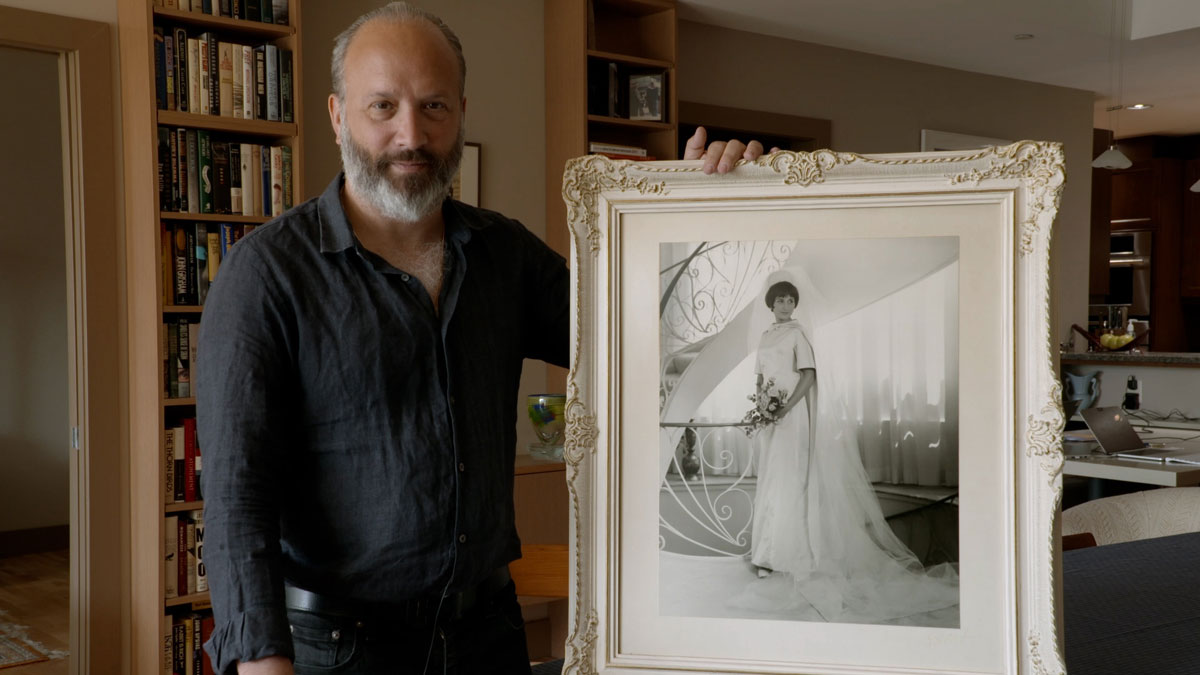
Cats know when you’re talking about them: A new study sheds light in the feline mind

While dogs are colloquially known as “man’s best friend,” cats also share a unique and emotionally close bond with their human companions. Scientists have proved that cats feel genuine affection for humans, know how to communicate their wants and needs to humans, and can even literally take on their human’s personality traits.

Now comes a new piece of evidence to add to the growing pile that allows felines to join canines in the pantheon of humanity’s favor: Cats are able to distinguish, just by listening, whether the humans they care about are talking to them or to other humans.

In a paper published in the journal Animal Cognition, researchers from the French college Université Paris Nanterre studied how 16 domesticated cats reacted to hearing the prerecorded voice of their companion when the owner in question was speaking directly to them. The researchers then contrasted this with the cats’ reactions to prerecordings of their owners speaking to another human — and, the scholars found, the cats tended to react differently in the latter situation.

This research comes on the back of other studies that demonstrate the close bond between humans and cats.

Just as intriguingly, while 10 out of 16 cats showed decreased interest when a stranger called out their name, they became engaged again when the voice speaking to them was that of their human. Eight of those same cats again showed a loss of interest when they heard their human talk to another human — which was signified by the use of a human-directed tone — but again gained interest when they could tell the human was talking to them.

“These findings bring a new dimension to the consideration of human–cat relationship, as they imply the development of a particular communication into human–cat dyads, that relies upon experience,” the authors conclude.


Want more health and science stories in your inbox? Subscribe to Salon’s weekly newsletter The Vulgar Scientist.


This research comes on the back of other studies that demonstrate the close bond between humans and cats. Scientists from the ongoing research project TheyCanTalk, who have trained dogs and cats to communicate by pressing buttons that speak words, told Salon last year that they learned cats can be taught how to link specific words with things they want or need when communicating with humans. The researchers even noted distinctions between how dogs and cats chose to communicate using the button pads for words like “hungry” and “sit.” 

“What’s interesting is that they [cats] tend to not do that much in the way of multi-button presses, but there’s like a lot of single-button presses,” cognitive scientist Leo Trottier told Salon. “With cats, you kind of have to find things they really want, and there are just fewer of those than with dogs.”

“These findings bring a new dimension to the consideration of human–cat relationship, as they imply the development of a particular communication into human–cat dyads, that relies upon experience.”

Some of the research into cat-human relationships has yielded unsettling conclusions. An early 2021 study from the journal Frontiers in Veterinary Science found that humans have been breeding cats to have faces that look cuter to us but impairs their ability to communicate emotions like pain to each other. That could mean that some cats are unable to communicate when they are in pain. 

Research also finds that feline characteristics may have rubbed off on their homo sapient counterparts. For example, a study published last month in the Journal of Marketing revealed that while dog owners tend to respond more to advertising that promotes receiving rewards, cat owners are more likely to be convinced by marketing that emphasizes avoiding risks.

Proud Boys protests over drag performers are turning violent — and now they’re targeting kids

It was just a matter of time before the anti-LGBTQ protests got violent. For months now, egged on by Republican leaders like Gov. Ron “Don’t Say Gay” DeSantis of Florida, far-right groups have been mounting increasingly aggressive anti-queer protests under the guise of “protecting” children. By framing any expression of LGBTQ identity that occurs around kids as “sexualizing” children, groups like the Proud Boys have spent months targeting family-friendly Pride events and child-oriented events where drag performers read to kids from storybooks. Even though these events are deliberately sanitized and intended only to amuse children and adults by playing dress-up, lurid claims of “grooming” and pedophilia are being leveraged to send protesters into a frenzy. In some places, protesters are showing up with guns, threatening violence around the children they claim to be “protecting.”

Unsurprisingly, then, one protest in Eugene, Oregon got violent this week. Worse, the queerphobic protesters have focused their ire on an 11-year-old child, doxxing her and putting her in danger, all while claiming to do it for her own good.

Sunday morning, a restaurant called Old Nick’s Pub hosted a Drag Queen Story Time Brunch. The pub, like many across the country, hosts a mix of events that are sometimes family-friendly and sometimes not. Like the pub’s other family-oriented events, such as their Saturday morning pancake party, Drag Queen Story Time is a kiddie event, where drag queens and little kids bask in their shared love of flashy clothes and acting goofy. Indeed, one of the performers is an 11-year-old drag enthusiast-turned-performer who has regularly turned out to entertain the other kids. 


Want more Amanda Marcotte on politics? Subscribe to her newsletter Standing Room Only.


Far-right activists seized on the existence of this child as “proof” of their false claims that drag is an elaborate cover for more sinister activities. One woman, going by the name “Honey Badger Mom” on Twitter, posted pictures of the child and made hay out of the fact that, at night on different days, the pub hosts events that are more adult in nature.

Once it was discovered that, as Eugene Weekly reports, “a drag queen who has appeared in photographs” with the tween “was later arrested on charges of child pornography,” all hell broke loose. Even though the family says the child has only had cursory contact with and has never been alone with the offender, that was all the excuse that the Proud Boys needed to go on an all-out attack. The offender worked at an elementary school, but the Proud Boys are not — yet — demanding that all education be shut down because some pedophiles find positions in schools. Similarly, there is no call for organized sports or churches to be shut down, even though both institutions have had highly publicized issues with child sex offenders finding employment within them. 


Drag Queen Story Time is a kiddie event, where drag queens and little kids bask in their shared love of flashy clothes and acting goofy.

Proud Boys and other anti-LGBTQ groups showed up at the drag show on Sunday and were met by a much larger group of locals there to show their support for the pub and their family-oriented events. The pub asked supporters to “keep things civil” because “[c]hildren will be present,” but very quickly, according to The Register-Guard, things turned violent. Eugene Police report that firearms were being displayed by “both groups,” and soon the two sides were throwing rocks at each other. Reporters snapped pictures of the Proud Boys and their allies firing paintballs at the pro-drag side. One man was taken to the hospital, but there were no arrests. Inside, the performers read books and sang children’s music, keeping up a brave face. 

“The issue here is they want to label queer people as pedophiles,” the organizer of the event told the Eugene Weekly. He denounced the protesters for making children unsafe, despite claiming they wish to protect them. 

The family of the 11-year-old performer reports their child was “unable to attend school the entire week due to safety concerns, causing serious stress, trauma, and anxiety.”

This violent protest came a mere two days after a similar event in Nashville, Tennessee, complete with the attacks on children’s safety under the guise of “protecting” them. Matt Walsh, a far-right podcaster for The Daily Wire, led a protest against a children’s hospital run by Vanderbilt University on Friday. The protest was called “Rally to End Child Mutilation,” a misleading name meant to falsely imply the hospital is performing surgeries to alter the genitals of minors. In reality, the hospital never does such surgeries on people under 18, and the rare surgeries they do offer are more cosmetic in nature and only done for those over 16. 

As Emily St. James of Vox explained in a recent article, refusing gender-affirming care to minors is not about “protecting” them, but about inflicting harm. “The risks of withholding gender-affirming care vary from patient to patient but often involve things like worsening anxiety, depression, and suicidality,” Jack Turban, a professor of child and adolescent psychiatry at the University of California San Francisco, told St. James. As the article explains in great detail, the care trans children receive is slow-moving and cautious, largely focused on psychological therapy and the use of hormone blockers to delay puberty until the child matures to the point where they can start making more adult decisions about their bodies and self-presentation. 


Want more Amanda Marcotte on politics? Subscribe to her newsletter Standing Room Only.


Despite their claims to the contrary, these anti-LGBTQ protesters are harming, not helping kids.

The bad faith that fuels this performative outrage is generally not hard to suss out. It appears Walsh doesn’t just object to gender-affirming care for children, but to trans identities in general. On his Monday show, he blamed trans victims of murder for their own deaths by claiming “they engage in high-risk activities.” His argument that older teens can’t be trusted with even basic decisions regarding gender presentation is similarly suspicious. Walsh has previously argued that the category of “teenager” is a degenerate modern notion and we should return to the past, where “13-year-olds were expected to act like they’re 23.” Mostly, his interest was in pushing more teenage girls to marry and have babies. That he thinks teens are ready to be parents but not ready to identify as trans speaks not to a rigorous understanding of child development so much as an interest in forcing rigid gender roles. 

Despite their claims to the contrary, these anti-LGBTQ protesters are harming, not helping kids. But there is one group being helped by all these conspiracy theories: Right wing Republican politicians exploiting disinformation about drag shows and trans medical care to stir up voters. Last week, the GOP nominee for governor of Pennsylvania, Doug Mastriano, falsely suggested a children’s hospitial in Philadelphia was “grabbing homeless kids and kids in foster care, apparently, and experimenting on them with gender transitioning.” Not one word of that is true.

Arizona’s Republican gubernatorial candidate Kari Lake made similar false allegations that drag queens are “grooming” children. In response, Phoenix-based drag performer Barbra Seville posted numerous photos of Lake standing with her in full drag. “Kari was a friend of mine,” wrote Seville, whose real name is Richard Stevens. “I’ve performed for Kari’s birthday, I’ve performed in her home (with children present,) and I’ve performed for her at some of the seediest bars in Phoenix.” Lake, who was once a supporter of Barack Obama’s, has been regularly accused of embracing far-right politics for cynical and opportunistic reasons. These photos only added more fuel to those suspicions. 

The rumor is also dehumanizing, as it equates being gay or trans with being a dumb animal.

Earlier this month, reporters for NBC News detailed how at least 20 Republican politicians have repeated false claims that “K-12 schools are placing litter boxes on campus or making other accommodations for students who identify as cats.” This urban legend is rooted in the same bigoted rhetoric that is being leveraged against drag performers and trans kids. The idea is that by “allowing” minors to identify as queer or trans, the door has been opened to all sorts of wild behavior, including “allowing” kids to identify as common housepets. Not only is it not true, but the rumor is also dehumanizing, as it equates being gay or trans with being a dumb animal. The talking point has echoes of GOP rhetoric in the earlier 21st century when politicians and conservative pundits routinely suggested that legalizing same-sex marriage would lead to people marrying “box turtles” or other such animals. 

On the whole, the current anti-LGBTQ panic is reminiscient of the similar “Satanic panic” of the 1980s, when acccusations of ritual sexual abuse and murder were frequently leveled at everyone from daycare workers to heavy metal musicians. Then, as now, the paranoia was rooted in conservative Christian anger at social change — that’s why the targets of those false accusations were people who made it easier for women to work outside of the home and those who made space for adolescent rebellion. The Satanic panic is also a reminder that moral panics and conspiracy theories create real victims. Numerous people were imprisoned based on false accusations of Satan worship. Communities and families were torn apart. Now it’s happening all over again with a disinfo-fueled panic over drag shows and trans identities. Conservative pundits and politicians benefit, but innocent people — especially children — are increasingly suffering the violent consequences

Joe Biden and the death penalty: N.Y. terror case suggests he can’t make up his mind

Sending mixed signals is a tried and true tactic for politicians seeking to please people on all sides of a contentious political issue. But the Biden administration’s on again, off again policy on the federal death penalty is truly head-spinning. 

This was made especially clear on Oct. 12, when jury selection started in the federal death penalty prosecution of Sayfullo Saipov, an Uzbek man charged in a 2017 truck attack that killed eight people on a crowded Manhattan bike path. He allegedly carried out this attack as a step toward joining the Islamic State, or ISIS.

At the time of the attack, then-President Trump tweeted that Saipov “SHOULD GET DEATH PENALTY.” 

Because state law in New York does not authorize the death penalty, Saipov could not face execution without federal intervention. Not to disappoint his boss, Jeff Sessions, who was attorney general at the time, authorized a federal prosecution.

But it didn’t happen before Trump left office, in the chaotic aftermath of Jan. 6. So the Biden Justice Department, under new Attorney General Merrick Garland, was left to decide what to do about Saipov. Its decision to proceed with a capital prosecution marks the first time Biden’s DOJ will go to trial seeking to put someone to death.

What makes this decision so surprising is that during the 2020 campaign Biden appeared to embrace the abolition of the death penalty, raising hopes that he would make it a national priority to end the death penalty, both at the federal level and across the country.

Indeed, since Biden came into office, the administration has taken some steps in that direction. In July 2021, for example, the DOJ moved to withdraw capital punishment requests in seven cases where federal prosecutors under the Trump administration had been pursuing them. 

At the time, as a New York Times article noted, “It was not immediately clear whether the decision to withdraw the death penalty authorizations in the seven cases was part of a broader effort, and the Justice Department has not announced policy changes in how or when the government seeks the death penalty.”

That same month, Garland imposed a moratorium on federal executions, which seemed to suggest that the administration’s opposition to the death penalty was a sincere priority.

As if reading from the abolitionist playbook, Garland said, “Serious concerns have been raised about the continued use of the death penalty across the country, including arbitrariness in its application, disparate impact on people of color, and the troubling number of exonerations in capital and other serious cases.”

Without a doubt, both the withdrawal of the capital prosecutions and the moratorium were significant steps.

But only a few months later, the Biden Justice Department seemed to do an about-face. Among other things, it urged the Supreme Court to reinstate the death sentence for Boston Marathon bomber Dzhokhar Tsarnaev — and got its way in March of this year, when the court announced its decision in that case.


Want a daily wrap-up of all the news and commentary Salon has to offer? Subscribe to our morning newsletter, Crash Course.


In court proceedings the administration also made clear its support for the 2017 death sentence of Dylann Roof, who killed nine Black parishioners in June 2015 as they prayed during Bible study at Emanuel African Methodist Episcopal Church in Charleston, South Carolina. As the Washington Post reported, Roof was “the first person sentenced to death for a federal hate crime.”

In July 2021, Merrick Garland imposed a moratorium on federal executions and gave a speech straight out of the abolitionist playbook. But only months later, the Justice Department did an apparent about-face.

Even so, Garland’s September announcement that the administration would move forward with Saipov’s capital prosecution came as a surprise. It was particularly hard to understand since this case, like the others where Garland had reversed Trump-era decisions, was also a leftover.

Indeed at the time the DOJ withdrew the other capital prosecutions, Saipov’s lawyer, David E. Patton, said he was hopeful he could persuade the government not to seek the death penalty for his client. He claimed that doing so would be in keeping with Biden’s campaign promise to end the death penalty.

Patton even offered an incentive to the administration, saying that Saipov would plead guilty and serve a life sentence if the threat of a death sentence were withdrawn. “I doubt there would be a trial, period,” he said.

But the Justice Department evidently declined that offer.

This refusal was no mistake, nor was it the result of a bureaucratic snafu. It required Garland’s explicit endorsement. Justice Department regulations lay out a clear and thorough process in which the attorney general must himself sign off on any and all capital prosecutions. 

Those prosecutions are initiated by U.S. attorneys who send their recommendations to the Criminal Division in Washington, which has a specialized unit charged to receive and review them. 

Regulations say such recommendations must be accompanied by “a death penalty evaluation form for each defendant charged with a capital offense, a detailed prosecution memorandum, copies of indictments, written materials submitted by defense counsel in opposition to the death penalty, and other significant documents and evidence as appropriate.”

They further specify that if the Criminal Division agrees to a capital prosecution, the case must be sent on to “the Attorney General’s capital case review committee,” consisting of senior DOJ lawyers. “The review committee meets with the Capital Case Unit attorneys, the U.S. Attorney and/or the prosecutors in the U.S. Attorney’s office who are responsible for the case, and defense counsel. During this meeting, defense counsel are afforded an opportunity to present any arguments against seeking the death penalty for their client.”

After that process is complete, the review committee forwards its recommendation and all documentation to the attorney general, who “makes a final decision as to whether a capital sentence should be sought in the case.”

The decision to withdraw a capital prosecution or to proceed in the Saipov case would not have been made by anyone but Attorney General Garland.

Despite President Biden’s public hands-off policy with regard to the Justice Department’s prosecution decisions, Garland’s choice to move forward with Saipov prosecution is hard to square with the president’s commitment to end the federal death penalty. 

Horrible crimes, such as Saipov’s, unquestionably present the real test of that commitment. Furthermore, his prosecution seems at odds with the administration’s death penalty moratorium. Are federal prosecutors really going to ask jurors to go through the agonizing process of deciding whether to sentence someone to death, even though the DOJ has no intention of carrying it out? 

Polls show that public perception of rising crime has become a serious political problem for the Biden administration. Perhaps a death penalty prosecution and death sentence, in a notorious terrorism case, is a move to appease critics. If so, it is a grotesque and empty gesture.

The president and the attorney general should stop the Saipov case in its tracks and heed the call of 17 U.S. senators who have asked the administration to institute a new policy prohibiting federal prosecutors from seeking the death penalty. That would be the course of true courage and commitment. 

“In atheists, they don’t trust”: Why is it so hard for atheists to get voted into Congress?

The midterm elections are likely to return to Congress elected representatives who hold a range of religious beliefs.

But while self-identified Christians, Muslims, Jews, Buddhists and Hindus currently rub shoulders in the corridors of power, one group is noticeably absent: atheists. And despite a growing number of openly nonreligious candidates running for office, it remains difficult for atheists to get a foothold in Congress.

Of 531 members of Congress included in a 2021 survey (at the time, four seats were unfilled), 88% identified as Christian, with those of a Jewish faith second, with 6%. Indeed, according to that survey, only two people in Congress don’t openly identify with any mainstream religion: Rep. Jared Huffman, a Californian Democrat, who identifies as a “humanist,” and Sen. Kyrsten Sinema, who describes herself as religiously unaffiliated. But neither has self-identified as being an “atheist.” A list compiled by the Freethought Equality Fund Political Action Committee indicates that atheists are running for a few seats in the U.S. Congress, and many more are doing so at the state level.

But throughout history, only one self-identified atheist in the U.S. Congress comes to mind, the late California Democrat Peter Stark.

‘In atheists, they don’t trust’

This puts the country at odds with democracies the world over that have elected openly godless – or at least openly skeptical – leaders who went on to become revered national figures, such as Jawaharlal Nehru in India, Sweden’s Olof Palme, Jose Mujica in Uruguay and Israel’s Golda Meir. New Zealand’s Jacinda Ardern, the global leader who has arguably navigated the coronavirus crisis with the most credit, says she is agnostic.

But in the United States, self-identified nonbelievers are at a distinct disadvantage. A 2019 poll asking Americans who they were willing to vote for in a hypothetical presidential election found that 96% would vote for a candidate who is Black, 94% for a woman, 95% for a Hispanic candidate, 93% for a Jew, 76% for a gay or lesbian candidate and 66% for a Muslim – but atheists fall below all of these, down at 60%. That is a sizable chunk who would not vote for a candidate simply on the basis of their nonreligion.

In fact, a 2014 survey found Americans would be more willing to vote for a presidential candidate who had never held office before, or who had extramarital affairs, than for an atheist.

In a country that changed its original national motto in 1956 from the secular “e pluribus unum” – “out of many, one” – to the faithful “in God we trust,” it seems people don’t trust someone who doesn’t believe in God.

As a scholar who studies atheism in the U.S., I have long sought to understand what is behind such antipathy toward nonbelievers seeking office.

Branding issue?

There appear to be two primary reasons atheism remains the kiss of death for aspiring politicians in the U.S. – one is rooted in a reaction to historical and political events, while the other is rooted in baseless bigotry.

Let’s start with the first: atheism’s prominence within communist regimes. Some of the most murderous dictatorships of the 20th century – including Stalin’s Soviet Union and Pol Pot’s Cambodia – were explicitly atheistic. Bulldozing human rights and persecuting religious believers were fundamental to their oppressive agendas. Talk about a branding problem for atheists.

For those who considered themselves lovers of liberty, democracy and the First Amendment guarantee of the free exercise of religion, it made sense to develop fearful distrust of atheism, given its association with such brutal dictatorships.

And even though such regimes have long since met their demise, the association of atheism with a lack of freedom lingered long after.

The second reason atheists find it hard to get elected in America, however, is the result of an irrational linkage in many people’s minds between atheism and immorality. Some assume that because atheists don’t believe in a deity watching and judging their every move, they must be more likely to murder, steal, lie and cheat. One recent study, for example, found that Americans even intuitively link atheism with necrobestiality and cannibalism.

Such bigoted associations between atheism and immorality do not align with reality. There is simply no empirical evidence that most people who lack a belief in God are immoral. If anything, the evidence points in the other direction. Research has shown that atheists tend to be less racist, less homophobic and less misogynistic than those professing a belief in God.

Most atheists subscribe to humanistic ethics based on compassion and a desire to alleviate suffering. This may help explain why atheists have been found to be more supportive of efforts to fight climate change, as well as more supportive of refugees and of the right to die.

This may also explain why, according to my research, those states within the U.S. with the least religious populations – as well as democratic nations with the most secular citizens – tend to be the most humane, safe, peaceful and prosperous.

Freethought Caucus

Although the rivers of anti-atheism run deep throughout the American political landscape, they are starting to thin. More and more nonbelievers are openly expressing their godlessness, and swelling numbers of Americans are becoming secular: In the past 15 years, the percentage of Americans claiming no religious affiliation has risen from 16% to 26%. Meanwhile, some find the image of a Bible-wielding Trump troubling, opening up the possibility that suddenly Christianity may be contending with a branding problem of its own, especially in the skeptical eyes of younger Americans.

In 2018, a new group emerged in Washington, D.C.: The Congressional Freethought Caucus. Although it has only 16 members, it portends a significant shift in which some elected members of Congress are no longer afraid of being identified as, at the very least, agnostic. Given this development, as well as the growing number of nonreligious Americans, it shouldn’t be a surprise if one day a self-identified atheist makes it to the White House.

Will that day come sooner rather than later? God only knows. Or rather, only time will tell.

Phil Zuckerman, Professor of Sociology and Secular Studies, Pitzer College

This article is republished from The Conversation under a Creative Commons license. Read the original article.