Spring Sale: Get 1 Year, Save 58%

Republican allies break with Trump after he claims he can declassify documents just by “thinking”

Top Republican senators pushed back on former President Donald Trump’s claim that he could declassify secret national security documents just by “thinking about it.”

“If you’re the president of the United States, you can declassify just by saying it’s declassified, even by thinking about it,” Trump said in an interview with Fox News host Sean Hannity on Wednesday. “Because you’re sending it to Mar-a-Lago or wherever you’re sending it. There doesn’t have to be a process. There can be a process, but there doesn’t have to be. You’re the president — you make that decision.”

Some top Senate Republicans broke with Trump’s claim as he faces a federal criminal investigation into classified documents that were seized by the FBI during an August 8 raid on his Mar-a-Lago residence.

Senate GOP Whip John Thune, R-S.D., told CNN on Thursday that there is, in fact, a process for declassifying documents, and that “it ought to be adhered to and followed.” 

“I think that should apply to anybody who has access to or deals with classified information,” he said. “I think the concern is about those being taken from the White House absent some way of declassifying them or the fact that there were classified documents removed — without sort of the appropriate safeguards. I think that is what the Justice Department is getting at.”

Even top Trump allies took issue with the former president’s statement that he could declassify documents with his mind, including Sen. Lindsey Graham, R-S.C., who simply acknowledged that “the process is probably more complicated than that.”

Sen. Thom Tillis, R-N.C., told the network there is a formal process that everyone must go through when declassifying sensitive material. “As I understand the Executive Branch requirements, there is a process that one must go through,” he said.

Sen. Mike Rounds, R-S.D., who sits on the Armed Services Committee, told CNN that the handling of classified documents is a  “very serious” issue.

“I think anyone who takes the time to appropriately protect that information and who has taken the time to see what’s in the information would have serious concerns about how items could be accessed if they’re not stored properly,” he said. “And so once again, up here, we take it very seriously. People can get hurt, people can get killed if it’s not stored correctly, and if that information gets out.”


Want a daily wrap-up of all the news and commentary Salon has to offer? Subscribe to our morning newsletter, Crash Course.


However, some GOP senators are still defending Trump’s claims. When asked about the former president’s comments on Fox News, Sen. Josh Hawley, R-Mo., smiled and doubted that Trump made the claims. When pressed on the issue, he claimed Trump was “probably suggesting, I imagine, that it’s easy to do.”

“I suspect what he means is that there’s not much to it, and that may be right. I just don’t know,” Hawley added. “I haven’t thought about the constitutional angle in terms of what authority that gives the president.”

Rep. Jim Jordan, R-Ohio, a close ally of the former president, claimed that his understanding of the Constitution is that Trump is “the one person who has the ability to declassify when he wants to declassify.” 

“It’s like the pardon power. It’s pretty much unlimited. The founders invested that power with him, and he can declassify it,” he said. “I don’t know that the constitution spells out there’s a specific process he has to go through, I think he just has that power.”

Indiana senator Mike Braun also came to Trump’s defense. “I think there’s prerogative on the part of the president to declassify,” he said when asked about Trump’s comments. “What the proper methodology is, I don’t know. I guess we’ll find out how.”

“Shameful”: Republicans unanimously block bill that would force them to reveal dark-money donors

Proponents of democracy responded with disgust Thursday after Senate Republicans filibustered the popular DISCLOSE Act, which seeks to expose the super-wealthy donors who are spending unlimited amounts of undisclosed money to ensure that the U.S. government advances their interests at the expense of the vast majority.

As Sen. Sheldon Whitehouse, D-R.I., author of the defeated legislation, said in a Wednesday floor speech, the bill’s goal is to prevent corporations and billionaires from using dark money loopholes to “spew bile and slime” into the nation’s political system.

After all 49 of his GOP colleagues in attendance voted to prevent debate on the legislation endorsed by President Joe Biden, Whitehouse released a statement slamming right-wing lawmakers for fighting to preserve “dark money’s poisonous influence over American democracy.”

“Today, Senate Republicans stood in lockstep with their megadonors and secretive special interests to protect the most corrupting force in American politics—dark money,” said Whitehouse, a senior member of the Senate Judiciary Committee. “The American people are fed up with dark money influence campaigns that rig their government against them and stymie their priorities.”

Whitehouse was far from alone in condemning the GOP.

“Once again, Senate Republicans sided with special interests and dark money—and against honest and transparent political debate,” Sen. Patty Murray, D-Wash., tweeted. “Instead of voting for the DISCLOSE Act and cracking down on the dark money in our democracy, Republicans blocked it. Shameful.”

Michael Sozan, a senior fellow at the Center for American Progress, said in a statement that “at a time when the guardrails of our democracy are undergoing a severe stress test, it’s lamentable that the Senate minority continues to give corporations, wealthy special interests, and foreign entities the ability to secretly spend vast amounts of money to influence election outcomes.”

Trevor Potter, president of Campaign Legal Center, added that the failure “to advance, or even allow debate on, the Democracy Is Strengthened by Casting Light On Spending in Elections (DISCLOSE) Act… disappoints those of us who have been fighting against the influence of secret spending.”

“More importantly,” he continued, “it deprives voters of important information about who is attempting to influence their vote and allows corruption to prevail by permitting special interests to continue anonymously rigging the system in their favor.”

“It is past time for Congress to enact legislation that bolsters transparency requirements and fulfills voters’ right to know who is spending on election influence—a right that has repeatedly been upheld by the U.S. Supreme Court, even as the court has struck down other campaign finance and election-related laws,” said Potter.

The ability of the nation’s wealthiest individuals to translate their disproportionate economic power into political clout has increased exponentially since the Supreme Court’s 2010 Citizens United decision eliminated effective limits on campaign contributions.

As Whitehouse’s office noted, “Dark money in particular has skyrocketed despite the Supreme Court, by an 8 to 1 margin in Citizens United, upholding disclosure requirements as a means for citizens and shareholders to hold elected officials and corporate spenders accountable.”

According to the Rhode Island Democrat, “Dark money political spending went from under $5 million in 2006 to more than $1 billion in 2020. Billionaire political spending increased by a factor of 70, from $17 million for the 2008 election to $1.2 billion for 2020.”

Among other things, the DISCLOSE Act would require “organizations spending money in elections—including super PACs and 501(c)(4) dark money groups—to promptly disclose donors who have given $10,000 or more during an election cycle,” his office explained. “In addition to election disclosure requirements, the bill requires groups that spend money on ads supporting or opposing judicial nominees to disclose their donors.”

“The DISCLOSE Act would shine a light on special interest spending to neutralize its toxic effect, giving Americans’ voices a chance to be heard,” said Whitehouse. “Republicans heeded the wishes of dark money donors today, but the fight to pass this bill isn’t over.”

Given the GOP’s unified opposition to the legislation, passing it requires that Senate Democrats abolish the upper chamber’s 60-vote filibuster rule—a move corporate Democrats like Joe Manchin of West Virginia and Kyrsten Sinema of Arizona have refused to support.

“Holding a vote on the DISCLOSE Act without pushing to end the filibuster highlights the fundamental flaw with Democrats in Washington: Their rhetoric and warnings about dark money have always been spot-on, but they have failed to take the actions necessary to actually stop the flow of secret cash distorting and corrupting American politics,” The Lever reported earlier this week. “Meanwhile, the party has become increasingly reliant on these same dark pools of cash to help elect more Democratic lawmakers.”

Josh Hawley ridiculed for demanding schools teach kids there is only “one gender”

Sen. Josh Hawley, R-Mo., is being mocked for a baffling argument that suggests he may be “gender-confused,” according to HuffPost.

The conservative lawmaker’s latest debacle stems from a fundraising email he recently sent. In that email, he raised concerns about teaching children that “more than one gender” exists; something he describes as “transgender propaganda.”

According to HuffPost, Hawley insists teaching any more than that is “against nature, science, and common sense.”

Per HuffPost: “The message asked readers if they want to ‘keep Transphobic Propaganda OUT of our classrooms’ and offered two options. The first was: ‘YES – keep transgender propaganda out.’ The second was the puzzling: ‘No – Teach young children there is more than one gender.'”

Twitter users quickly pounced on Hawley’s fumble.

“He didn’t misspeak, Hawley doesn’t recognize women as being people,” one Twitter user wrote. “He only sees them as breeding machines. The only legitimate gender that exists in his world is men.”

Another user added, “In a fundraising email to his supporters, Josh Hawley asked folks to give to his campaign so he could help stop schools from teaching that there’s more than one gender. Not sure which gender he plans to eliminate.”

A Twitter user also took the moment as an opportunity to mock Hawley’s actions during the Capitol insurrection. With a clip of Capitol surveillance footage, the user tweeted, “Josh really identifies more as a runner than anything else.”

Ron DeSantis’ genius plan goes sideways: Is his 2024 campaign suddenly in trouble?

Last week when I wrote about Florida Gov. Ron DeSantis’ sadistic little trolling exercise — coercing asylum seekers to board a plane for Martha’s Vineyard, purely to own the libs — I speculated that Donald Trump must have been gnashing his teeth over  his former protégé stealing the idea from him. That was true, as it turned out. Rolling Stone reported that Trump was furious, claiming that he’d tried to do something similar as president but the bureaucrats wouldn’t let him. Of course, Trump was also livid that DeSantis was getting all the attention on right-wing media.

Well, he needn’t have worried about losing the spotlight. This week all the attention pivoted back to Trump as numerous legal crises descended upon him and DeSantis faded into the background. Which was a lucky break for the Florida governor, honestly. Some rather unsavory facts have emerged in the last few days about his Martha’s Vineyard stunt, shedding light on who may have profited from it as well as what he had hoped to achieve with an aborted flight to Delaware — President Biden’s home state — that was supposed to happen a few days later.

This story is still unfolding, but the more we learn, the uglier the whole thing looks. Payments for the Martha’s Vineyard flight apparently went to some big-donor cronies with connections to the DeSantis administration, and no one has yet figured out who hired the shadowy characters in Texas who made all kinds of false promises to asylum seekers to get them on the plane. The Miami Herald is all over this and I’m sure their reporters will dig up more very soon.

As for the Delaware flight, it was originally scheduled to take off from San Antonio on Tuesday, with the same shady characters luring unsuspecting migrants onto the plane. Then it was abruptly canceled, possibly because word got out and authorities in Delaware government were prepared to receive them. Some in the press have swallowed the line that the plan was to “punk” the Delaware libs by making them get ready for a bunch of migrants and then landing an empty plane in New Jersey, which strikes me as ridiculous. Potential passengers had already been recruited, who were left high and dry when the plan was canceled at the last minute. It seems far more likely that DeSantis and his accomplices started to feel the heat and decided to call the whole thing off.

There are various questions about the legality of this scheme. A sheriff in Texas has opened a criminal investigation and a nonprofit has filed a lawsuit against DeSantis on the migrants’ behalf. When it became clear that these migrants were asylum seekers fleeing the dysfunctional left-wing government in Venezuela, DeSantis likely became worried about the political optics, and about upsetting an influential Republican constituency. Florida has a lot of Venezuelan immigrants opposed to the current regime in their home country.

This whole ruse was designed to get the media talking about immigration and the border just ahead of the midterm elections, and I suppose it may have achieved that end. But it also exposed DeSantis, once again, as a snotty troll, and his act may be wearing thin with people who don’t have the emotional development of 12-year-old bullies. Naturally, the hardcore Trump base loved it. But can he sustain that love the way Trump has?


Want a daily wrap-up of all the news and commentary Salon has to offer? Subscribe to our morning newsletter, Crash Course.


The New York Times’ Jamelle Bouie wrote recently about DeSantis’ culture-war stunts, from his war on Disney for being “woke” to ordering Florida schools to indoctrinate students with the right-wing propaganda version of American history. It seems to be pretty much the only thing DeSantis does these days, and he certainly attracts tons of attention flitting from one invented battleground to another without pausing for breath.

But Bouie pointed out that DeSantis’ most recent maneuvers haven’t work out the way he hoped. Sure, he got his photo-ops and national media attention, which he craves more than anything, but the results weren’t likely to play well with normal people. His “election police” arrests of alleged illegal voters turned out to represent failures by his own officials, who had registered a small number of voters who weren’t eligible. And the Martha’s Vineyard ploy, rather than showing horrified liberals screaming to get the Latinos off their lawns, instead showed a small community responding with empathy and compassion, which undercut the desired narrative about hypocritical liberal elites. In Bouie’s view, DeSantis isn’t ready for prime time:

Yes, when viewed from the perspective of partisan media, DeSantis looks almost unstoppable. But to a typical person — someone who may have heard about these stunts but doesn’t know much about DeSantis otherwise — he looks a lot like a bully, someone willing to play high-stakes games with people’s lives for the sake of his own ego and advancement.

Well, you might say, Donald Trump is a bully, too. Yes, he is. But Donald Trump is also a lifelong celebrity with a public persona that is as much about “The Apprentice” and even “Home Alone 2” as it is about his political career. What’s more, Trump has the skills of a celebrity. He’s funny, he has stage presence, and he has a kind of natural charisma. He can be a bully in part because he can temper his cruelty and egoism with the performance of a clown or a showman. He can persuade an audience that he’s just kidding — that he doesn’t actually mean it.

That’s an astute observation. Trump is a nasty piece of work: a crybaby, a braggart and an ignorant fool. To his large and devoted following, he’s also wildly entertaining, which is a huge part of his appeal. In fact, that’s the most important part of his appeal. Yes, he has given former fringe elements on the right permission to let their freak flags fly and flaunt their hatred. But when he says “there’s nothing more fun than a Trump rally,” for his fans that’s absolutely right. Trump’s roadshow is their rolling Woodstock, their Grateful Dead.

Now tell me if this guy has an ounce of fun in him:

DeSantis gave a speech to big donors about two weeks ago in which he telegraphed his plans to send migrants to Martha’s Vineyard and made clear that he plans to run for president in 2024 as an unreconstructed culture warrior. His speech sounds like Pat Buchanan, back in the latter’s glory days of the ’80s and ’90s. But Buchanan in person could be garrulous and funny, a classic Irish-American backslapper and glad-hander, which made up somewhat for his hardcore hate-mongering. DeSantis has none of that personal charm:

DeSantis did not joke with the crowd, or thank his hosts, or even wait for applause at times as the audience cheered him, according to multiple people familiar with the gathering. In a private roundtable with top donors, he mainly gave the same speech he gave to the larger group. He was at the retreat for about three hours. Several people familiar with the event said he received mixed reactions from donors, who liked his broader message but wished he would connect more personally.

Say what you will about Trump, but his celebrity glamour definitely works on some people and no one would claim he lacks a gift for showmanship. DeSantis, on the other hand, is a creepy, dour, unlikable jerk. While the Trump cult does love an asshole, they want one in the vein of a wrestling “heel,” who makes them feel good about being bad.

Ron DeSantis wants to be president and he’s adopted the latest right-wing ideological fad, “Orbánism,” meaning the doctrines of “illiberal democracy” borrowed from the current regime Hungary. That’s definitely dangerous. But there is a political graveyard full of Republican Great White Hopes who felt sure they could be elected president until they came face to face with actual voters: Scott Walker, Fred Thompson, Lamar Alexander, Rudy Giuliani; the list goes on. Ron DeSantis may well be the next member of that ignominious club. 

Read more on the Jan. 6 committee:

“Put up or shut up moment”: Special master corners Trump’s lawyers on his “planted” evidence claims

The special master tasked with reviewing thousands of documents seized from Mar-a-Lago on Thursday demanded that former President Donald Trump’s lawyers assert to the court whether the FBI lied about what they found.

Trump and his lawyers after the August 8 raid repeatedly claimed without evidence that the FBI may have “planted” evidence at Mar-a-Lago. Trump has largely backed away from that claim publicly, instead insisting that he may have “declassified” the documents found by the FBI — possibly just by “thinking” it. Federal Judge Raymond Dearie, who was who was chosen by Trump-appointed U.S. District Judge Aileen Cannon from a list proposed by Trump’s lawyers, on Tuesday rebuked Trump’s lawyers for refusing to submit any evidence of his declassification claim. Dearie on Thursday further challenged Trump’s lawyers to back up the former president’s “planted” evidence claims.

Dearie in an order gave Trump’s legal team until September 30 to confirm whether they believe any of the seized items listed on the Justice Department’s 11-page inventory list were incorrectly described and to submit “a list of any specific items set forth in the Detailed Property Inventory that Plaintiff asserts were not seized from the Premises.”

“This submission shall be Plaintiff’s final opportunity to raise any factual dispute as to the completeness and accuracy of the Detailed Property Inventory,” Dearie wrote.

Dearie’s handling of the matter has been a departure from Cannon’s handling of Trump’s motion to appoint a special master. Cannon never asked Trump’s lawyers to back up his claims about planted evidence or declassification. Cannon had also blocked the DOJ from continuing its criminal investigation into the documents, but an appeals court on Tuesday lifted her order, writing that she had “abused” her discretion.

Trump in an interview with Fox News host Sean Hannity claimed that he had the power as president to declassify the documents just by “thinking about it,” a claim entirely rejected by legal experts.

Dearie at a hearing on Tuesday rejected the Trump lawyers’ argument that they cannot submit evidence backing up his claim because they have not yet reviewed the documents and because they may need to withhold the evidence for a defense in a potential prosecution.

“My view of it is, you can’t have your cake and eat it,” Dearie told Trump’s legal team.

Trump in the Hannity interview also repeated his claim that the FBI may have planted evidence during the search.

“Did they drop anything into those piles” he questioned, “or did they do it later?”

Trump has hinted that he may release surveillance video from the search. Hannity asked Trump if there was video to back up his claims.

“Nah, I don’t think so,” Trump replied.

Dearie on Thursday suggested he may hold a hearing where “witnesses with knowledge of the relevant facts” could be called to testify about the materials seized from Mar-a-Lago.

Former U.S. Attorney Barbara McQuade said Dearie’s order shows he’s “not taking any of the nonsense that’s been put forward by Trump’s lawyers.”

“That really is a put up or shut up moment,” she told MSNBC. “Fine, you are making this allegation. But if so, tell us what that is. Say so in a document that is under oath in court. it’s time to stop playing games and making accusations. You can say what you want in the media. But here we are in court and we deal with facts here. And so if there is a factual dispute, you need to say so under oath and then we’ll hear from the government and we’ll litigate that.”


Want a daily wrap-up of all the news and commentary Salon has to offer? Subscribe to our morning newsletter, Crash Course.


Former federal prosecutor Elie Honig said that while Trump and his lawyers can get away with “fudging the truth in their public statements,” the court battle will require them to prove their claims.

“You can see the tension in Donald Trump’s legal team because they will not say the things in court about declassification and planting that he is saying because lawyers have an ethical obligation,” he told CNN. “You cannot make a false statement to a court. You can argue aggressively for your client, you could try to poke holes in what the other side is doing, but you cannot lie. This is really a test for Donald Trump.”

National security attorney Bradley Moss pointed out that Trump’s headaches in the special master proceedings are of his own making.

“Trump made it an issue. He brought the litigation. He raised the issue of possible declassification,” Moss told NewsNation. “To the extent that he’s being asked to lay out his defense prematurely, that’s a problem of his own making.”

Legal experts widely believe that Trump’s gambit to delay the investigation by asking for a special master may have already backfired.

“Trump’s team needs to find an exit ramp,” tweeted former federal prosecutor Renato Mariotti, “out of the Special Master proceeding they asked for.”

Stop making fun of Nick Cannon for having so many kids

Nick Cannon is having another baby. He announced the pregnancy in August, about a month before his ninth child was born, and two months after the eighth arrived in June. 

This isn’t a setup for a joke or a math problem to solve. I’m not trying to poke fun at Cannon and his notorious fertility. I’m just going to attempt to unpack the idea of Cannon expecting his tenth child and what that means.

On September 14, Cannon, the 41-year-old actor and “Wild ‘n Out” host, announced his ninth child, Onyx Ice Cole Cannon, to the world. After the delivery, Cannon shared a reel of himself with baby Onyx and her mom, former “Price is Right” model Lanisha Cole, on Instagram, along with a lengthy post, in which he wrote, “I am learning that it is not the limited amount of time we have on this planet but it’s the limited amount of love that is the issue.”

As a father, I often drift off to the moment I watched my wife bury the back of her head into hospital pillows, grit her teeth while squeezing her eyes shut as she pushed out our beautiful baby girl. Our daughter was so small — palm-sized — and so slippery, so precious. My wife and her strength, with our newborn, red and brushed with pale vernix, was the most beautiful thing I had ever seen in my life. There isn’t much I wouldn’t trade to recreate that moment minutes after the baby had entered the world — that experience, those feelings that rushed through my body the first time we held each other as a trio. I totally understand why Cannon would want to recreate that feeling, over and over again. 

Cannon’s nine children also include two sets of twins — 11-year-olds Monroe and Moroccan with ex Mariah Carey, and 15-month-olds Zion and Zillion with former radio personality Abby De La Rosa. He has a son, Golden Sagon, 5, and a daughter, Powerful Queen, 19 months, with model Brittany Bell, with whom he is expecting baby number 10. Model Bre Tiesi gave birth in June to a son, Legendary Love. His son with Alyssa Scott, Zen, died from brain cancer last year at 5 months old. 

It appears as though the entire clan is supportive of Cannon’s extended family. Some of Cannon’s peers, on the other hand, have comments. 

Comedian Kevin Hart, who stars with Cannon on BET’s “The Real House Husbands of Hollywood,” sent him a vending machine full of condoms for Valentine’s Day. Actress Vivica A. Fox chimed in, not finding the situation funny at all, when she addressed Cannon’s fatherhood journey on an episode of the Fox Soul show “Cocktails with Queens,” saying, “I don’t like it.” 

“Y’all can be like, ‘It’s cause he got money, this, that, and the third.'” Fox continued. “But the foundation of Black families, especially a strong father figure is needed. This isn’t a good representation of it … in my opinion.”

Social media introduced me to Cannon’s quest to exemplify what he calls a “virile man,” but I mostly ignored the commentary on him until it found its way into my circle of friends. Multiple conversations began referencing Cannon’s rapidly growing family, calling him “crazy” and “out of control,” around the time babies five and six appeared. 

“Nick Cannon lost his got-damn mind!” my friend Teon typed into our group chat of a few neighborhood guys who are all fathers. “Look at his IG.” 

On Cannon’s Instagram I found a collection of images and videos of him promoting his shows and music and engaging with his children. 

“That dude is single-handedly replacing the lives lost during the pandemic,” my friend Chuck chimed in. They continued to make light of the situation. Shortly after news broke about another child, and then another child, and the internet began to levy its harsh judgments. And what’s worse, people were going as far as attacking the mothers of his children, too. De La Rosa addressed the harassment on the “Lovers and Friends with Shan Boodram” podcast, saying of the public’s perception of their relationship: “I’ve never been hit with thousands of people just telling me their hate for me.”

Having 10 kids is pretty far from normal, and when celebrities do strange things, we pay attention.

“He had a lover over here that, they were going strong, and they had been involved for years. Then he had another beautiful family over here that he has. And then he has his ex-wife, who’s the queen of all queens,” De La Rosa said, referring to Carey. “People feel so invested.”

Invested we are. Mainly because having 10 kids is pretty far from normal, and when celebrities do strange things, we pay attention. According to Statista, the average family in 2021 had under two children, which still sounds like a lot of kids to me. 

My daughter, now 2, pops up starving for waffles and pancakes and oatmeal at the crack of dawn and is wired until bedtime, demanding to be entertained all day. She is enrolled in gymnastics and swimming and music and dance and early learning; has questions and needs answers; and must be held, needs to be held, read to and taken to the pool and hugged and kissed and played with, and all of these things need to be repeated again and again. And my wife and I proudly comply. Even though we both pull 60-plus hours of work per week and have help, we still end up gushing over our busy baby with bloodshot eyes before making our way back to our laptops to squeeze out some words before treating ourselves to three or four hours of sleep. That is our normal, the recipe for family that we subscribe to. 

“I’ve seen where people believe a traditional household works, and [yet] there’s a lot of toxicity in that setting,” Cannon told Men’s Health. “It’s not about what society deems is right. It’s like, what makes it right for you? What brings your happiness? What allows you to have joy and how you define family? We all define family in so many different ways.”

Cannon is also fighting against the stereotype that says Black men make a lot of babies but don’t take care of them. Cannon and I came of age in a time when there weren’t many fathers present in homes. The crack era, in combination with the rise of mass incarceration, wiped many dads out. Cannon knows this. Maybe that’s why he takes every opportunity to talk about how he is present in the lives of his children. 

Who gets to define what a good or appropriate family is?

And contrary to what many may believe, Cannon may be right. Who gets to define what a good or appropriate family is? What makes a good family: money, stability, exposure, consistency, or all of the above? Should there be a mom and a dad, or two moms or two dads, or nonbinary parents? Do two-parent households equal guaranteed success? Are single parents capable of creating healthy environments for their children? The answer is yes and no to all of these questions, because there is no right answer or cheat code to raising a healthy, happy kid. Every child has different needs, wants and desires, and will respond differently to different types of parenting. I like having one kid. Maybe Cannon wants a dozen. Our value systems are different, and that’s OK. 

I know latch-key kids from poverty-stricken, single-parent households who grew up to be respected filmmakers, doctors and bestselling authors. I also know children who came from two-parent homes in upper-middle class neighborhoods who spend their time as scammers, fake gang bangers and deadbeats who bring babies into the world and then act like they don’t have children. 

The ugly truth is that you can give a child everything — a great home, the best education, and more resources than they know what to do with — and that child can still grow up to be a jerk. And then, that jerk can find their own journey of healing and end up growing into an amazing person. Human life is unpredictable. Maybe the more effective thing to do, instead of worrying about the number of children Nick Cannon has, would be to direct that energy toward children in our own communities who don’t have rich dads but still need love and support. 

Why does nature create patterns?

The reason patterns often appear in nature is simple: The same basic physical or chemical processes occur in many patterned substances and organisms as they form. Whether in plants and animals or rocks, foams and ice crystals, the intricate patterns that happen in nature come down to what’s happening at the level of atoms and molecules.

A pattern in nature is any regularly repeated arrangement of shapes or colors. Some of the most striking examples include the hexagonal arrays of rocks at Giant’s Causeway in the United Kingdom, the beautiful fractal arrangements of florets on a Romanesco broccoli and the colorful stripes and spots on tropical fish.

Patterns like these begin to form at a small scale when materials undergo processes like drying, freezing, wrinkling, diffusing and reacting. Those changes then give rise to complex patterns at a larger scale that people can see.

Patterns in ice and rock

Imagine delicate frozen crystals on a windowpane during a cold day. What creates that pattern?

When water freezes, its molecules begin clustering together. Water molecules have a particular bent shape that causes them to stack into clusters shaped like hexagons as they freeze.

As the cluster grows, many outside factors, including humidity and temperature, begin to affect its overall shape. If the water is freezing on a windowpane, for example, small and random imperfections on the glass surface redirect the stacking and create the larger pattern.

This same process of stacking molecules is responsible for the striking variety of snowflake shapes.

What about the amazing patterns of the basalt columns at Giant’s Causeway? These formed 50 million to 60 million years ago, as lava — hot rocky fluid from deep underground — rose to the Earth’s surface and began to lose heat. The cooling caused the top layer of basalt to contract. The deeper, hot layers resisted this pulling, creating cracks in the top layer.

As the lava cooled, the cracks spread deeper and deeper into the rock. The particular molecular qualities of basalt, as well as the basic physics of how materials fracture apart — laws of physics universal to all substances on Earth — caused the cracks to meet up with one another at certain angles to create hexagons, much like the stacking water molecules.

Eventually, the cooling basalt broke into the hexagon-shaped columns of rock that still create such an impressive pattern millions of years later.

Patterns in animals

The creation of complex patterns in living organisms also begins with simple mechanisms at the molecular level. One important pattern-making process involves the way diffusing chemicals react with one another.

Imagine how a drop of food coloring spreads in a glass of water — that’s diffusion.

In 1952, English mathematician Alan Turing showed that a chemical spreading like this within another chemical can lead to the formation of all kinds of patterns in nature.

Scientists have proved that this process reproduces the patterns of a leopard’s spots, a zebra’s stripes and many other animal markings.

What makes these markings consistent from generation to generation? As animal species evolved, these chemical reactions evolved with them and became part of their genetic codes. This might be because the markings helped them survive. For example, a tiger’s stripes camouflage it while hunting in a forest or grassland, making it easier to surprise and catch its prey.

However, researchers are still working out the details of which particular chemicals are involved.

Scientists do not always know the purpose of a pattern, or even if there is one. The molecular processes involved are simple enough that they might coincidentally generate a pattern.

For example, in my research team’s work studying plant pollen grains, we have seen a huge variety of patterns, including spikes, stripes and many more.

The pollen grains of various common plants like sunflower, morning glories, prairie hollyhock, oriental lily, evening primrose and castor bean — magnified 500 times and colorized in this image — display intricate patterns.
Dartmouth Electron Microscope Facility

We don’t yet understand why a plant produces one particular pollen pattern rather than another. Whatever the ultimate use this and other patterns in nature may have, their variety, complexity and order are amazing.


Maxim Lavrentovich, Assistant Professor of Theoretical Biophysics, University of Tennessee

This article is republished from The Conversation under a Creative Commons license. Read the original article.

Far-right activists have a brilliant new strategy: Don’t vote!

Ali Alexander, a key organizer of the “Stop the Steal” protests that led up to the Jan. 6 insurrection, declared this week during a livestream appearance that he probably won’t vote in this year’s midterm elections. As Right Wing Watch first reported, Alexander said that Republicans had failed to adequately “court” his or his supporters’ vote and that conservatives might be better served by “strategically losing” rather than “a win that cannot be sustained.” 

Strange as this may seem, he’s not alone. With this declaration, Alexander joins a handful of far-right activists, including white nationalist leader Nick Fuentes and failed Florida congressional candidate Laura Loomer, who are discouraging their fans and followers from voting as a rebuke to the GOP. 

The trend began in August with Loomer, a self-declared “proud Islamophobe” and white nationalist who, after losing the Republican primary in Florida’s 11th congressional district, delivered a bizarre speech in which she refused to concede (“because I’m a winner“). The following day, she urged her supporters not to vote for the Republican who defeated her, six-term incumbent Rep. Daniel Webster, in the November general election. In a post on the right-wing social media site GETTR, Loomer wrote, “I encourage all of my supporters and all of my voters to NOT support Daniel Webster and the establishment RNC and Big Tech voter fraud machine that is propping his feeble body up and depriving my constituents of the representation they deserve and need.” 

She went on, “I weep not for myself, but for our country and the constituents of Florida’s 11th District who do not have a Congressional Representative as a result of voter fraud, illegal Big Tech election interference, and RNC corruption. The Republican Party is broken beyond repair.” (Although the 11th district primary was fairly close, the result was clear enough: Webster got 51.1% of the vote to Loomer’s 44.2%, winning by roughly 6,000 votes.) 

In the weeks since her loss, Loomer doubled down on these messages, saying the GOP “disgusts me these days,” that she has no “faith in the party anymore,” and that she refuses to “blindly support treasonous RINOS.” In a GETTR post last Sunday, Loomer wrote, “I will never support people who are working to undermine our country and the integrity of our elections by giving them my vote. In fact, I will actively campaign AGAINST the demented, sickly RINO Dan Webster who the GOP establishment rigged my election in favor of. You don’t reward cowardice and corruption in your own party with your vote.” 

Since losing her Florida primary, Laura Loomer has said that the GOP “disgusts” her and she won’t vote for any Republican who isn’t “fighting for the release of the J6 political prisoners.” 

In another post last weekend, she added that she would refuse to vote for any Republican who fails to support “mass deportations,” isn’t “fighting for the release of the J6 political prisoners” and lacks “a viable plan to combat voter fraud.” Loomer has also recently aired numerous complaints about the party, charging that GOP officials had “blacklisted” her campaign and orchestrated Donald Trump’s failure to endorse her candidacy, and accusing Florida Gov. Ron DeSantis’ of “plagiarizing” her work, since she had “brought illegals to Nancy Pelosi’s house ” years before he created a media spectacle by flying asylum seekers to Martha’s Vineyard. 

Also last week, young white nationalist leader Nick Fuentes, head of the far-right America First or “groyper” movement, vowed that if DeSantis wins the Republican presidential nomination in 2024 instead of Trump, Fuentes won’t vote for him and would work to “spoil” the election for Republicans. 

“I support Trump or nothing at all. I’m either voting for Trump in ’24 or I’m not voting,” Fuentes said during a livestream. “And that’s gotta be the message: we want Trump, we want Trump in the primary, we want Trump in the general, we are not going to vote for anyone else. They need to understand that.” He suggested that the far right would only “need a small concerted minority of Trump supporters to say, ‘We will sit out the election, we will spoil it for Republicans if we get DeSantis.’ Because in my opinion, that’s the only way we’re going to salvage Trumpism — by sitting out.” 

Fuentes added that he was “sitting out the midterms” as well because he is “unimpressed” and “disappointed at what I’ve seen from the party.” The only exception, he said, should be voters in Arizona, where the slate of far-right candidates — from gubernatorial nominee Kari Lake to U.S. Senate nominee Blake Masters to incumbents such as Rep. Paul Gosar and state Sen. Wendy Rogers — is sufficiently radical to garner his approval. “Anywhere else? Just forget about it,” Fuentes said. “No chance.” 


Want a daily wrap-up of all the news and commentary Salon has to offer? Subscribe to our morning newsletter, Crash Course.


Fuentes continued in that vein this week on Telegram, complaining that the campaign war chest DeSantis has amassed demonstrates a nefarious conspiracy: “Once again, the establishment working together on both sides to dethrone Trump.” In another post he wrote, “Honestly I hope the Democrats maintain their House majority and gain control of the Senate” even if that might harm him personally, because “the GOP has done nothing to earn the support of the people since backstabbing Trump in 2020.” 

And now there’s Alexander, the bombastic self-described political strategist who is widely credited with orchestrating the protest movement leading up to Jan. 6. In a Monday livestream on the new app Callin, which he entitled “My fears of a 2022 ‘win,'” Alexander said, “I’m increasingly of the belief that I personally will not be voting this midterm election. I’m doing a lot of soul-searching on that, and that’s a decision I have come to myself, but it’s increasingly a decision that some of my friends and colleagues have told me [they share].” 

Like Fuentes, Alexander urged voters in Arizona, and perhaps Pennsylvania (where far-right Christian nationalist Doug Mastriano is the GOP gubernatorial nominee), to still turn out. But, he continued, “the reason I can’t is my vote hasn’t been earned … on a personal level. On a move [sic] level, our vote’s really not been courted as a demographic.” 

Predicting that Republicans would likely lose the Senate and adding that “we’re shrinking our presumptive majority in the House already,” Alexander suggested that a weak Republican victory in November might be worse than full-on defeat. 

“It’s counterintuitive, but a short-term win can mean a long-term loss,” he said. “We need to take both chambers [of Congress] or none,” he continued, since a narrow victory in the House would presumably elevate Rep. Kevin McCarthy — who has become a despised figure on the far right — to the speaker’s chair. Alexander claimed many other people in his “friend group that are public figures” were starting to say the same thing. 

Ali Alexander proclaimed on social media that he and Loomer had warned that “GOP and even parts of ‘MAGA Inc.’ sold out patriots and gave Democrats a chance of keeping BOTH chambers of Congress.”

“In an ideal world, I’m saying, ‘Vote Republican, vote straight down the ticket.’ But a lot of my friends are not feeling that, I’m not feeling that,” Alexander said. “A loss is going to sting. But as people know, in sports or other disciplines, sometimes a strategic loss and mitigating and preparing for that loss is better than a win that cannot be sustained.” This notion of “strategically losing” was something few wanted to talk about out loud, Alexander acknowledged, since it sounded “too similar to sabotage.” But he called on listeners to “share this podcast with some of our allies who are still platformed,” such as far-right media figures Jack Posobiec or Mike Cernovich, in case they too wanted to join the don’t-vote groundswell.

On GETTR, Alexander promoted the livestream with a post proclaiming that he and Loomer had warned people that “GOP and even parts of ‘MAGA Inc.’ sold out patriots and gave Democrats a chance of keeping BOTH chambers of Congress,” adding a hashtag he’s apparently trying to get trending, #GOPrevolt.

On one hand, the prospect that some of the most vitriolic and destructive activists on the far right are working to demobilize their supporters ahead of the 2022 and ’24 elections was greeted as welcome news by many Democrats. On Twitter, users responded to the news of Alexander’s announcement with variations on “That’s the spirit” and “Spread the word.” Other progressive commentators have pointed out that Republicans’ insistence that the 2020 election was stolen likely depressed turnout in the January 2021 U.S. Senate runoff elections in Georgia — perhaps leading to wins by Democrats Raphael Warnock and Jon Ossoff — and that these continuing claims could have the same effect going forward. 

“You will never hear me say on this show stuff to try to trick Republicans into not voting,” said progressive podcast host David Pakman in July, after Rep. Marjorie Taylor Greene mused that conservatives still angry about Trump’s 2020 loss might not turn out this year. “But I’m certainly not going to tell Republicans not to do it themselves.” 

On the other hand, notes Political Research Associates research analyst Ben Lorber, there’s a complicated irony at work when it comes to these far-right activists threatening to withhold their support: That their influence has already spread far and wide within Republican politics, and they themselves may not matter anymore. 

Earlier this year, Lorber recalled, Nick Fuentes boasted that his America First movement would begin endorsing and running its own candidates, “in order to deepen their impact” on the mainstream GOP. That by and large hasn’t happened, and instead Fuentes and his movement have been increasingly sidelined in the larger universe of conservatism. 

“Faced with this disappointment,” Lorber said, “Fuentes is doubling down on the insurrectionary, anti-establishment energy” that drove events like the Million MAGA March in December 2020. Now, Lorber continued, “the white nationalist politics Fuentes has long championed have moved mainstream,” while the Republican Party has “little patience for the groyper leader himself.” 

Hang on, Republicans: Who are the real “elites,” anyway?

Bestselling author Malcolm Gladwell recently posted some thoughts on the subject of high school sports, of all things. High schools do a good job at elevating elite athletes, he wrote, to the detriment of students of more average ability, or who lack parents who could afford to pay for soccer or baseball camps starting at age six. 

Gladwell, who is a lifelong, serious runner — and can run a mile at age 55 nearly as fast as I did when I was 15 and winning races on the track team — came up with a law he named after himself: In any sporting endeavor, elite achievement comes at the cost of mass participation.

We can easily expand Gladwell’s Law to the whole of society. Don’t many of us view life in America as a dispiriting continuation of the ruthless, often shallow competitions of high school? And our thinking about how we relate to so-called elites can be complicated by our culturally driven feelings of envy and shame. 

At least arguably, America’s national sport is not played with a ball. It’s electoral politics, which has always had elements of ruthless competition but used to be a lot more “sporting” than it is now. At its best, politics is about knowledge, hard work, compromise, mutual respect and some acknowledgment of shared goals, even alongside vigorous disagreement. None of those qualities are evident in the churlish zero-sum game that the Republican Party, with its backs against the demographic wall, has played in recent years. 

This sea-change goes back at least as far as 1994, when Newt Gingrich invited Rush Limbaugh to train the incoming Republican House majority on how best to despise your political opponents and push disinformation and conspiracy theories. It was either un-American or, sadly, quintessentially American at the time, and has since metastasized into the right’s embrace of false narratives, ever-wilder conspiracy theories, and authoritarianism — which is epitomized by a certain orange-hued former president, but certainly not limited to him.

We see prissy, stuck-up, wholly self-interested Ivy Leaguers like Ted Cruz (Princeton; Harvard Law), Josh Hawley (Stanford; Yale Law), Ron DeSantis (Yale; Harvard Law) and much of Trump’s inner circle playing good ol’ boys, affecting down-home dialects, and decrying the “elites” on the left who supposedly dominate American business, politics and culture. This would be merely laughable if they weren’t also insisting that religious liberty means that everyone must live by the retrograde religious dogma they pretend to believe.

The Trumpist cult and other far-right political organizations around the globe continue to profitably press their pseudo-populist game plan of going after elites (often the “educated elites”) to inflame and enrage the mind of the common citizen. 


Want a daily wrap-up of all the news and commentary Salon has to offer? Subscribe to our morning newsletter, Crash Course.


If we know something about the role of actual elites throughout history, we know that they have understood the power of anger and contempt in motivating the masses; while a helping hand may be quickly forgotten (or even resented), an insult, real or imagined, locks itself in memory.

When the phony Wharton grad who reluctantly departed from the White House in January 2021 said he loved the “poorly educated,” they were happy not to take that as an obvious insult. How, exactly, did he intend it? Both as contempt and affection. Any con man keeps a special place in his black-hole heart for people who cannot, or will not, see how he is hoodwinking them. None of us finds it easy to deal with the cognitive dissonance of realizing we may be wrong.

The “elites” that actual Republican elites despise are, of course, the people who might expose their grift, their disinformation, their flouting of the rules, their contempt for the rule of law.

While Republican politicians have for decades praised and catered to the needs of oligarchs (as well as the merely wealthy who merely dream of being oligarchs), creating the greatest income disparity since the Roaring ’20s, they have simultaneously encouraged working- and middle-class Americans to resent people who went to college and quite likely graduate school and have become specialists in various fields: historians, scientists, journalists, civil servants, elementary school teachers. Somehow, in this demented narrative, those professions are part of an administrative system that thwarts ordinary people’s quest for freedom, liberty and the pursuit of happiness. (And some of them asked you and your kids to wear a mask during a global health crisis.)

The “elites” despised by the actual Republican elites like Cruz, Hawley and DeSantis are, of course, the people able to expose their grifting, their disinformation campaigns, their flouting of the rules, their contempt for the rule of law (at least as it applies to them) and their determination to retain power at any cost. They and their compatriots in propaganda TV and social media are bringing authoritarianism to America under a marketing label borrowed from Hungary: “illiberal democracy.”

Today’s Christian fascists don’t ask what Jesus would do; they ask what Viktor Orbán would do. Anti-immigrant “Christians” get a kick out of seeing red-state governors troll the libs by using real human beings as pawns in a deliberately cruel media spectacle.

As these beliefs begin to spread in cult-like fashion, then teachers, judges, health experts, academics and even members of law enforcement — whom Republicans have always claimed to venerate — become objects of derision, even death threats.

In this classic divide-and-conquer move, the right has worked hard to get Americans to believe the worst possible things about elites, those conspiratorial, secular liberals who read books, believe that science and history should be based in research rather than political agendas and maintain a naive faith in democracy and the rule of law. 

Such has been the power of this slow brainwashing that the right has gleefully separated brothers from sisters, children from parents, and friends from friends. The MSNBC–New York Times side regrets the loss of political comity; the Fox–Wall Street Journal side cries for insurrection or civil war, or just shrugs at such threats.

All of this (or at least a lot of it) has been in service of a phony, shameless, sexually predatory, pathologically insecure, malignant narcissist who somehow (surprising even himself) was elected president, impeached twice and refused to concede defeat after losing by more than 7 million votes, inciting a violent, if amateurish, insurrection. 

Meanwhile, there really are elites in America — you know, the people who went to school with Hawley and Cruz and DeSantis and can afford multiple residences, exotic vacations, well-tended stock portfolios and Washington lobbyists. Those elites are still pushing discredited Reagan-era “trickle-down” economics, working to destroy the last threadbare remnants of the social safety net and gleefully eroding democracy — all while laughing at how easy it was to convince the “people” to look somewhere else.

What’s up with the DOJ’s “60-day rule” on prosecuting politicians?

As the 2022 midterm campaigns approach Election Day on Nov. 8, a federal probe into former President Donald Trump’s handling of classified documents is testing an unwritten policy of the U.S. Justice Department.

Some legal analysts have suggested that the so-called 60-day rule requires federal prosecutors to delay public actions during the final stages of an election to avoid influencing the perceptions of a candidate — or tipping the scale for or against a political party.

This goal of political neutrality appears to be adhered to by Attorney General Merrick Garland and FBI Director Christopher Wray. Both have largely refrained from making public comments on ongoing federal and state probes into possible crimes that Trump may have committed during his time in the White House, including on his alleged role in the Jan. 6 assault on the Capitol.

But political neutrality is open to interpretation.

In the run-up to the 2016 presidential election, the 60-day rule was apparently broken when then-FBI Director James Comey made a series of controversial public statements on Hillary Clinton’s use of a private email server during her time as secretary of state.

Comey’s comments began over the course of the summer and fall of 2016 and didn’t end until the weekend before Election Day when he announced the end of the investigation. Clinton and her supporters claim that Comey’s controversial actions played a role in her loss and Trump’s election.

A rule, not a law

The 60-day rule is an interpretation of the Justice Department’s internal guidance to protect the federal agency’s reputation for political neutrality.

Every election season, the attorney general reissues the department’s Election Year Sensitivities memo to staff. Garland issued his memo on May 25, 2022.

“Law enforcement officers and prosecutors may never select the timing of public statements (attributed or not), investigative steps, criminal charges, or any other action in any matter or case for the purpose of affecting any election, or for the purpose of giving an advantage or disadvantage to any candidate or political party,” Garland’s 2022 memo explains.

Garland’s memo essentially reiterates the language from the department’s substantial internal policy manual on election season investigations.

But Garland’s memo does not suggest that a clear 60-day rule exists.

It merely suggests that actions taken closer to an election ought to be especially scrutinized to ensure that the Justice Department does not appear to purposely advantage a candidate or party.

Open to interpretation

Though very few legal scholars question the existence of the 60-day rule, the scope of the rule is a matter of dispute.

Former Attorney General Bill Barr has interpreted the rule narrowly. He has suggested the rule may apply only to activity that will harm a specific candidate.

Other legal observers have suggested the rule applies more broadly to investigations that might affect an overall election. That might include investigations of people connected to a candidate or situations where the candidate is only tangentially related.

Comey’s public comments

Though Comey may not have had any desire to affect the 2016 election’s outcome, he would later make an apology of sorts to Clinton in his book “A Higher Loyalty.”

“I have read she has felt anger toward me personally, and I’m sorry for that,” Comey writes. “I’m sorry that I couldn’t do a better job explaining to her and her supporters why I made the decisions I made.”

Apologetic or not, Comey and his actions during the 2016 presidential election caused both the FBI and the Justice Department to suffer a blow to their credibility. Following a broad 60-day rule might have saved the Justice Department and FBI from the appearance of political bias.

But in some situations, jettisoning the 60-day rule may be advisable.


Want a daily wrap-up of all the news and commentary Salon has to offer? Subscribe to our morning newsletter, Crash Course.


If a federal investigation is particularly timely and is proceeding with no purpose of affecting an election, then it may be consistent with the underlying policy of the Justice Manual — even if doing so may be inconsistent with a broad interpretation of the 60-day rule.

At issue is the importance of an investigation and the danger of pausing it.

If the public trusts the DOJ to make the decisions about the investigation without political bias, then following the 60-day rule may not be necessary. If the public does not trust the DOJ, then following the rule may be imperative.

The investigation regarding the national security implications of classified documents found at Mar-a-Lago is an important test.

Though Trump often claims federal probes into his behavior are no more than political witch hunts, there is no indication the Justice Department is continuing the investigation with the purpose of hurting or helping specific candidates or a specific party.

Quite naturally, any lengthy investigation may bump up against a midterm or presidential election cycle. But if halting the investigation could damage national security, then continuing it through the election season may be necessary even if the investigation affects a number of elections.

The unintentional irony of the 60-day rule

The rule is designed to protect the Justice Department’s reputation of neutrality by keeping partisan politics away from its investigations.

Arguably, the way to do that is to ignore the election calendar and run an investigation as if the election calendar did not exist.

Once an investigation’s course has been altered by the election calendar, it has arguably been infused with politics, and in some of those cases, justice delayed may be justice denied.

With strict adherence to the rule, a candidate may be elected because voters did not have all the information about the candidate’s behavior and character — an omission that challenges the democratic ideal of an informed citizenry.The Conversation

Henry L. Chambers Jr., Professor of Law, University of Richmond

This article is republished from The Conversation under a Creative Commons license. Read the original article.

Chris Christie ribs Dr. Oz about New Jersey

Since the start of his campaign for Senate in Pennsylania, former celebrity TV host Dr. Mehmet Oz has been plagued with ridicule and criticism over the fact that he has for years lived in New Jersey and has a tenuous connection to the commonwealth.

On Thursday, New York Post Albany correspondent Zach Williams reported that one unlikely person made a joke about it at a meeting of the New York State Business Council: former Republican New Jersey Gov. Chris Christie.

“I defend Dr. Oz because he is a longtime New Jerseyan,” said Christie. “The problem is he’s running in Pennsylvania.”

Oz has particularly faced barbs about his residency by his Democratic opponent, Lt. Gov. John Fetterman, who cut his teeth in politics as the mayor of the small Western Pennsylvania city of Braddock. Further inflaming criticism, he misspelled the name of his own town where he claimed residence on campaign filings.

Further compounding Oz’s troubles have been campaign gaffes that went viral on social media and seemingly highlighted his lack of ties to Pennsylvania. In one infamous video in which he complained about food inflation while getting ingredients for “crudité,” Oz claimed he was shopping at “Wegner’s” — an apparent mixup of Wegman’s and Redner’s, two local supermarket chains. In another, Oz appeared to have shot a campaign ad from inside his mansion in New Jersey.

Polls currently show Oz trailing Fetterman but still usually within single digits. The two candidates will come together for a debate on October 25.

Sidney Powell fails to appear at Trump-related grand jury interview

Controversial far-right attorney Sidney Powell was scheduled to appear before a Fulton County special grand jury in Georgia on Thursday, but did not appear as scheduled.

“Sidney Powell, former attorney of former President Donald Trump, was scheduled to testify Thursday morning, but sources tell Channel 2 Action News that there may have been some confusion over the subpoena, and she apparently did not testify,” WSB-TV reported. “It is unclear if there will be legal repercussions from her failure to appear.”

In January, Powell was subpoenaed by the House Select Committee Investigating the Jan. 6 Attack on the U.S. Capitol.

“According to court records, the grand jury wants to ask Powell about her involvement in an incident that happened in South Georgia in January 2021,” WSB reported. “Video shows several people being let into the County Elections Office to download elections data from voting machines and an elections server. State investigators call it ‘criminal behavior’ and say Sidney Powell paid for it all.”

When Powell was subpoenaed by the select committee, it wrote it’s investigation, “has revealed credible evidence that you publicly promoted claims that the 2020 election was stolen and participated in attempts to disrupt or delay the certification of the election results based on your allegations. Between mid-November 2020 and January 6, 2021 (and thereafter), you actively promoted claims of election fraud on behalf of former President Trump in litigation and public appearances.”

“The Select Committee seeks the evidence you relied upon in making those claims.1 According to public reporting, in December 2020, you urged President Trump to direct the seizure of voting machines around the country to find evidence that foreign adversaries had hacked those machines and altered the results of the election,” the subpoena read.

Watch below:

Secret Service warned Capitol Police of neo-Nazi threats a week prior to insurrection

A new investigation has revealed that Secret Service was monitoring threats against the U.S. Capitol made by at least one neo-Nazi group prior to Jan. 6.

According to Crew, the threats in question were made by a member of Vorherrschaft Division on a far-right extremist messaging site called Telegram. Initially spotted by SITE Intelligence Group, the statements made in an apparent attempt to organize violent maneuvers against the Capitol were then relayed to Capitol Police by Secret Service, at which point they were told “Thanks bro!”

“We need boots on the ground and voices loud enough to be heard for miles. That’s the only way things are going to change…,” read one of the messages warned about. In yet another, like-minded organizers were urged to “push for more nationalist policies and attitudes.”

After spotting these communications, SITE Intelligence Group, “a non-governmental organization tracking online activity of white nationalists and extremist groups” recognized them to be an imminent threat as they’re trained to spot and inform relevant officials of these very things. But once the intel was passed on the Secret Service, and then Capitol Police, there seems to have been a lapse in a general sense of preventative urgency.


Want a daily wrap-up of all the news and commentary Salon has to offer? Subscribe to our morning newsletter, Crash Course.


In Crew’s reporting they highlight that “Vorherrschaft Division is a neo-Nazi group and one of several white nationalist groups organizing on Telegram. The group was never one to take lightly, but the Secret Service appears to have paid it only passing attention.”

In addition to the threats made by neo-Nazis, Secret Service received several tips from a “concerned citizen” that “two people, including a subject who previously made threats against Joe Biden, were flying to DC to attend Trump’s rally and ‘incite violence,’ according to Crew, “and that another individual would be driving to DC with ballistic helmets, armored gloves and vests, rifles and suppressors.”

The 7 most shocking revelations from Netflix’s “The Real Bling Ring” docuseries

Years after their string of celebrity burglaries, The Bling Ring still remains an infamous name in Hollywood.

Between October 2008 and August 2009, the crew of seven fame-hungry teens broke into the homes of several celebrities — including Paris Hilton, Audrina Patridge, Rachel Bilson, Orlando Bloom and Lindsay Lohan — and stole an estimated $3 million in cash and belongings. The members were subsequently tried and convicted and were all found guilty on several counts of residential burglary despite their pleas.

A year after their misdeeds were publicly blasted, The Bling Ring earned a Vanity Fair profile, written by veteran journalist Nancy Jo Sales and aptly titled “The Suspects Wore Louboutins.” And three years later, the piece garnered a film adaptation — Sofia Coppola’s glitzy satirical crime film, simply called “The Bling Ring” — with Emma Watson, Katie Chang and Israel Broussard starring as the group’s ringleaders.

Now, the bombshell tale is being spotlighted again in Netflix’s latest docuseries, “The Real Bling Ring: Hollywood Heist.” The three-part series stars two members of the group, Nick Prugo and Alexis Neiers, who recount their involvement and attempt to set the record straight on the crimes, despite their contradictory firsthand accounts. A swanky real estate agent, a celebrity stylist and the investigators and attorneys who were all part of the case provide additional insight and background information to really provide a “fly-on-the-wall” viewing experience.

Here are 7 shocking revelations from the docuseries: 

01
Prugo’s string of vehicle thefts
The Real Bling Ring: Hollywood HeistNicholas Prugo from “The Real Bling Ring: Hollywood Heist” (Netflix)The Real Bling Ring: Hollywood HeistThe Real Bling Ring: Hollywood HeistNicholas Prugo from “The Real Bling Ring: Hollywood Heist” (Netflix)
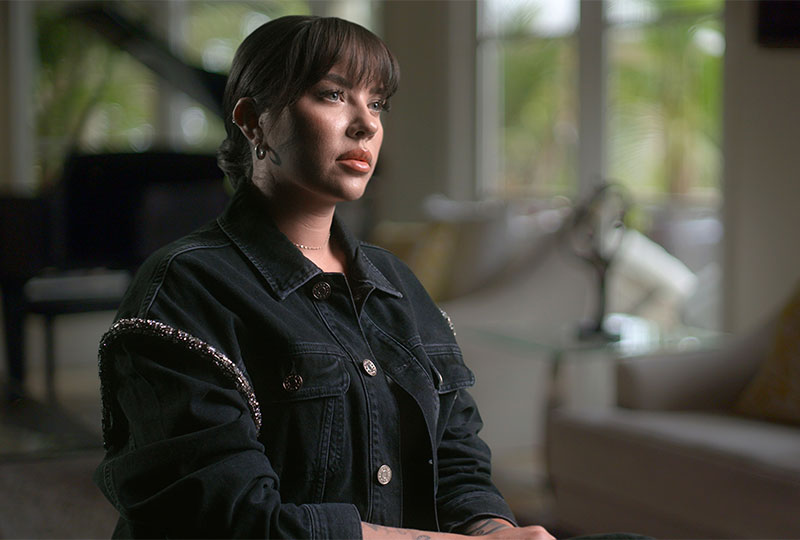
Prugo said he went through a rough patch in his life during his early teen years. He struggled to come to terms with his own sexuality and appearance and suffered from newfound anxiety, which became so overwhelming that he stopped pursuing his passion for acting. To make matters worse, he and his family moved from the quiet, middle class neighborhood of San Fernando Valley to the wealthier Calabasas (which is home to celebrities like Justin Bieber, Selena Gomez, Drake and The Weeknd).
 
“Going to school, you would literally see Mercedes, Range Rovers, Porches, BMWs,” Prugo recalled. “My mom was dropping me off in a Honda. You feel like you’re sticking out, and not in a good way.”
 
Things seemingly got better when he met Rachel Lee, a girl at his new school who Prugo described as everything he wasn’t — Lee was incredibly confident, popular, social and pretty.
 
“She kind of took a shine to me,” he said. “She brought me out of my shell.” Similar to Prugo, Lee was fascinated by entertainment, celebrity culture, gossip and partying.
 
One night, the pair was leaving a party in the Valley when Lee broke into an unlocked car after playing with its door handle. They stole all the credit cards that were left inside and the following day, went on an extravagant shopping spree.
 
Prugo said he felt confident around Lee and continued helping her carry out vehicle thefts in order to maintain their friendship. After a night of partying, they would drive around Calabasas and search for unlocked cars to steal from. Prugo would drive while Lee, from the passengers seat, would discreetly stick her hand out to check the door handles.
 
On a separate night, Lee came across an unlocked car with the keys still inside the vehicle. She stole the keys and the car, later replacing its license plate and driving the vehicle to school.
02
Neiers’ sticky family situation
The Real Bling Ring: Hollywood HeistAlexis Neiers from “The Real Bling Ring: Hollywood Heist” (Netflix)Alexis Neiers from “The Real Bling Ring: Hollywood Heist” (Netflix)
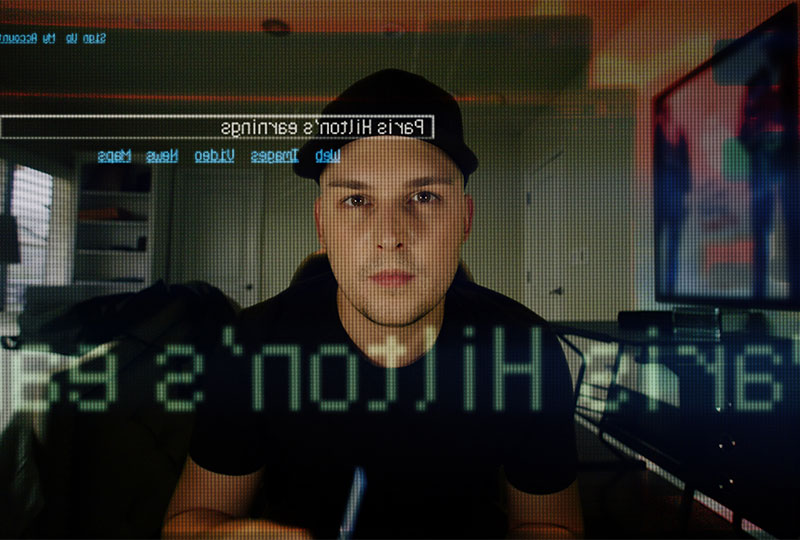
Unlike Prugo, Neiers grew up in an affluent household with her father Michael, who worked as the director of photography on “Friends;” her mother Andrea, a former Playboy model turned actress; and her sister Gabbie.
 
Neiers’ parents were heavy drinkers and partiers and her mother also used cocaine for years, even following her birth.
 
“But when she was having kids, my mom was kind of ready to grow up, and my dad was not,” Neiers said. Andrea and Michael split after the latter was caught cheating.
 
“After the divorce, we probably moved nine times,” Neiers continued. “I was like a needy, broken, damaged kid at that point. And I was angry.”
 
Neiers, Andrea and Gabbie quickly fell into debt because of Andrea’s extravagant purchases. Although the family didn’t have a steady income, thousands of dollars would be spent on expensive beauty treatments and procedures.
 
“My mom had a cellulite machine that cost like $30,000,” Gabbie recalled. “We had different facial infrared light machines. Everything was [centered] around beauty and weight loss.”
 
The family eventually filed for bankruptcy and to make up for their lack of money, Andrea became a minister at the Church of Religious Science, which was said to be a cross between Buddhism and witchcraft. The church preached the importance of using one’s thoughts and emotions to create their desired life — also known as the Law of Attraction — which Andrea embraced wholeheartedly. She created a vision board covered with magazine clippings, family photos and, oddly, a single million-dollar bill in hopes of successfully “attracting” careers for herself and her family in the entertainment industry.
   
Andrea also wrote a lengthy affirmation for her family to recite daily. Every morning, they would gather in a circle, hold hands and recite their affirmation.
 
“My mom really dove into that church specifically because she wanted to believe that she could think away her problems,” Neiers said.
03
Prugo and Lee break into their first house
The Real Bling Ring: Hollywood HeistNicholas Prugo from “The Real Bling Ring: Hollywood Heist” (Netflix)Nicholas Prugo from “The Real Bling Ring: Hollywood Heist” (Netflix)

The pair eventually ran out of cars to steal from and began breaking into and robbing homes. Their first victim was an old acquaintance of Prugo who announced online that he was traveling to Jamaica for 11 days. Both Prugo and Lee broke into his house via the back door, which was left unlocked, and stole a case filled with $8,000 in cash.
 
“It was like, you know, the angel on one shoulder and the devil on the other,” Prugo said. “This was different than stealing cars. This felt more personal.”
 
Thus far, Prugo and Lee had not been caught for their crimes which encouraged them to move onto bigger, more risky endeavors — robbing celebrity homes. 
04
Neiers’ exploitative modeling gig
The Real Bling Ring: Hollywood HeistAlexis Neiers from “The Real Bling Ring: Hollywood Heist” (Netflix)Alexis Neiers from “The Real Bling Ring: Hollywood Heist” (Netflix)
During her teen years, Neiers’ childhood best friend, Tess Taylor, moved in with her and her family. According to Neiers, they both spent most of their time smoking weed and doing drugs until Andrea encouraged the girls to find a job. Together, they pursued careers in modeling and per Andrea’s request, Neiers and Taylor worked as pin-up models.
 
“It’s everything I had been doing my entire life from the time I was 14, using my looks and my personality to earn money,” said Andrea, who also claimed in the documentary that her daughter willingly chose her profession. “And they started to have some success.”
 
At just 17 years of age, the girls starred as background dancers in Marilyn Manson’s music video for “Arma-goddamn-motherf**kin-geddon,” where they appeared naked behind a thin sheet of cloth next to Manson. Neiers said she and Taylor had also been drinking pretty heavily and that the set felt like a “night-long party.”
 
“I liked the rush and the excitement. It was unlike anything that I had experienced,” Neiers recalled. “And I remember just thinking to myself, like, ‘Wow. If I can just party like that and get paid, we are golden. This is all that I need for the rest of my life.”
 
She added, “You sell your soul to the devil.”
05
Prugo and Lee break into Paris Hilton’s house
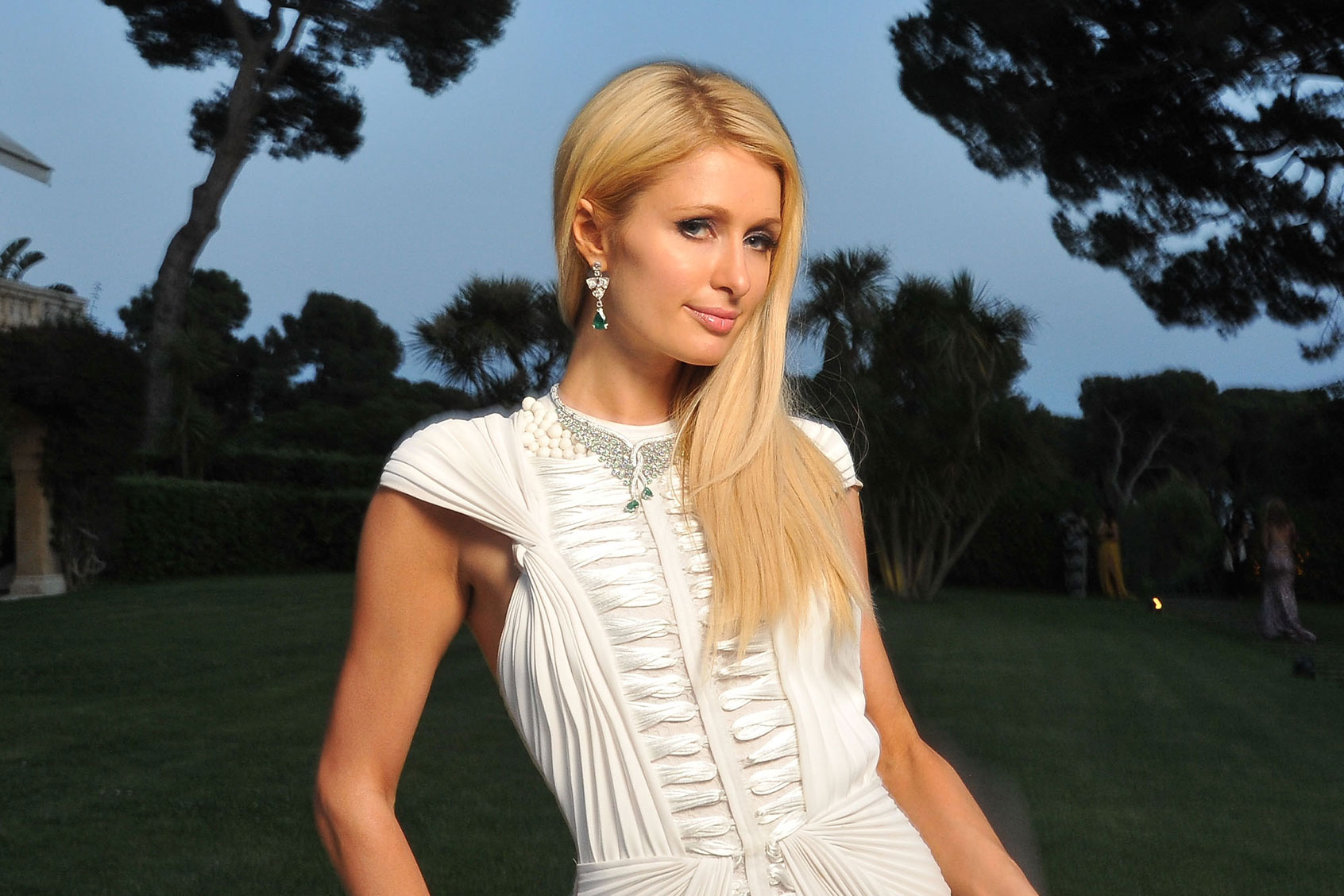
Paris HiltonParis Hilton (Pascal Le Segretain/amfAR12/Getty Images for amfAR)
The duo settled on Paris Hilton as their first celebrity victim after they learned from several gossip sites that Hilton was on vacation in Miami. Per Prugo, Hilton gave off a stereotypical dumb blonde persona which made her “more prone to leaving something unlocked.”
 
Prugo also came across a website that included a list of celebrities’ home addresses. The pair used Google Maps to scope out the surrounding trail and terrain of Hilton’s house before breaking and entering via the front door, which was left unlocked. Prugo recalled that Hilton’s house was obscenely large and had multiple photographs of herself in each room. Lee and Prugo spent most of their time in Hilton’s closets, stealing her valuables, clothes, jewelry, shoes, sunglasses, spare change and luxury attire. Collectively, the pair stole an estimated $50,000 worth of Hilton’s property.
 
After the burglary, the pair went partying at a nearby club where they met Neiers and Taylor. In order to sustain this newfound friendship, Prugo said he and Lee continued robbing Hilton of more goods — kind of using Hilton as their “personal ATM machine.” Between the months of October and December, the pair broke into Hilton’s home an estimated four or five times.
 
During one of these break-ins, Prugo and Lee stole a bag of Hilton’s cocaine. “Her coke was like ‘Scarface’ coke,” Prugo enthusiastically recalled. “That was the best coke I’d ever done, I mean, just pure, like ‘F**k!’ you know?”
 
“We were doing Paris Hilton’s coke. Who the f**k can say that?”
 
Eventually, Prugo and Lee stole all of Hilton’s spare cash that was stashed in her purses and safe. Knowing that they would be caught once Hilton returned home and that the news would break out immediately, they enlisted Lee’s old friend — Courtney Ames’ coworker, Roy Lopez — and attempted to frame him for their crimes. Prugo gave Lopez the key to Hilton’s residence and he used it to steal two million dollars’ worth of Hilton’s jewelry. The following day, news of Hilton’s home burglary broke out with Lopez positioned as the main suspect.
06
Prugo, Lee and Neiers rob Orlando Bloom’s house
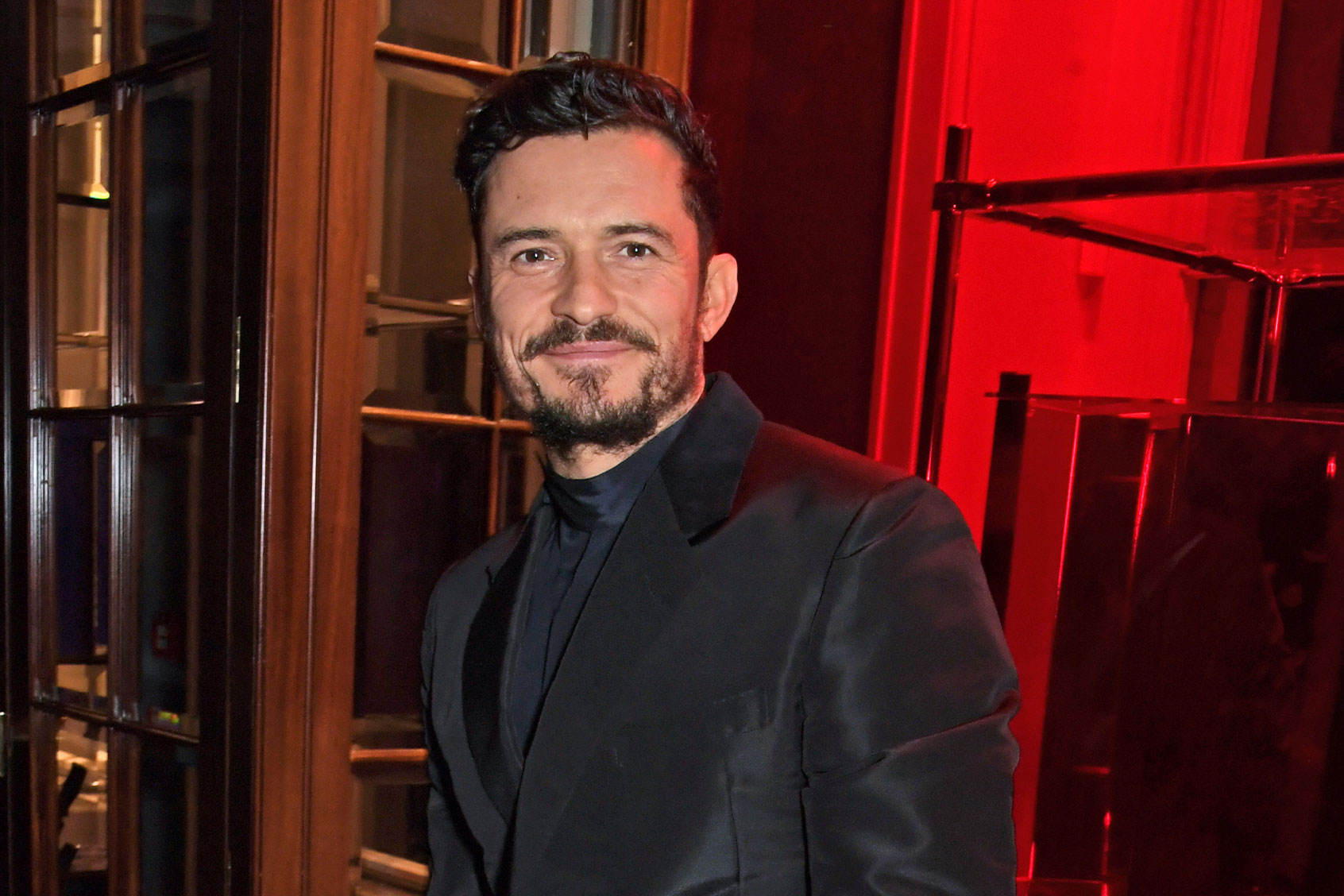
Orlando BloomOrlando Bloom (David M. Benett/Dave Benett/Getty Images)
Neiers eventually moved in with Prugo and per the latter, first expressed interest in joining Prugo and Lee.


“This was me and Rachel’s thing,” Prugo said in the documentary. “I didn’t really want to expand the enterprise. I think I was smart enough to realize, you have to share more the more people that are there, it’s less of a profit. So it was on to the next.”


Their next victim was actor Orlando Bloom who, at the time, was working on a movie and away from his Los Angeles home. Prugo said he was initially planning on robbing Bloom’s house with Rachel, but Neiers had “begged” him to join. Neiers, however, refuted the claims, stating, “I wasn’t saying, ‘Hey, Nick, next time you rob a house, involve me.’ But I was open to the idea of robbing a house to get money for drugs.” She also said she was unaware that the trio were going to Bloom’s house, adding that she was under the influence of opiates and Benzodiazepine. But Prugo asserted she was aware and sober.


Prugo and Lee spent most of their time in Bloom’s closets, stealing his clothes, a Louis Vuitton computer bag, Rolex watches, cash and accessories. Neiers recalled feeling sick throughout the burglary while Prugo said she was enthusiastically stuffing her bag with stolen goods.


The following morning, Bloom’s home break-in became public news. Investigators also noted that the same group of teens who broke into Bloom’s house had also broken into Audrina Patridge’s home just a few months prior.


“We felt like criminals in the most chic way,” Prugo said. “We felt like we were these, like, maybe sexy bandits committing these intelligent cat burglaries…We wanted to be our own celebrity, just using other people’s shit.”


Prugo said he continued committing these burglaries alongside Lee to promote a lavish lifestyle he concocted on social media. On August 23, 2009, the duo, alongside their classmate, Diana Tamayo, broke into Lindsay Lohan’s Hollywood Hills residence and stole approximately $130,000 worth of clothes and jewelry. Unfortunately, Lohan’s security cameras were able to provide clear footage of the perpetrators’ facial features. Prugo and Lee were eventually arrested after Neiers and Taylor called the Hollywood Police Department and turned them in.

07
The subsequent criminal proceedings
Nicholas Frank Prugo and Courtney Ames flank Prugo's lawyer Sean ErenstoftNicholas Frank Prugo (R) and Courtney Ames (L) flank Prugo’s lawyer Sean Erenstoft (C) as he speaks at the arraignment of Prugo and Ames at criminal court in Los Angeles, California on December 2, 2009. (ROBYN BECK/AFP via Getty Images)

Following his arrest, Prugo confessed that he and Lee were planning on stealing from more celebrities, which prompted the Los Angeles Police Department to issue search warrants for the accompanying Bling Ring members. Neiers and Tamayo were eventually arrested after police found that they were in possession of stolen goods.
 
Neiers’ court proceedings were publicly documented on her family’s reality television show, “Pretty Wild,” which she described as being an incredibly traumatic experience. Amidst the hoopla, Neiers said that the show’s producers made her reenact and sensationalize key moments from her arrest which greatly took a toll on her mentally and fueled her heroin addiction.
 
“By the time I got to jail, I had nothing,” Neiers said in the documentary. “The show was over. At that point, my addiction was really bad and I was literally losing my mind. I just wanted to die. I was done.”
 
Neiers pleaded no contest to residential burglary and was officially sentenced on May 10, 2010 to three years of formal probation and 180 days in county jail; in addition to owing $600,000 in restitution to Bloom. She was released after serving 30 days of her sentence. Currently she has been sober for 11 years, has two children and works as an advocate for people recovering from substance abuse.
  
As for Prugo, he dropped his initial attorney, Sean Erenstoft, for attorney Markus Mueller-Dombois and was officially sentenced to two years in prison on April 15, 2013 after pleading no contest to the residential burglaries of both Patridge and Lohan.
 
Per the documentary, Prugo is currently applying for a certificate of rehabilitation and a Governor’s pardon. He also runs an online business with his husband of five years. 

“The Real Bling Ring: Hollywood Heist” is available for streaming on Netflix. Watch a trailer below, via YouTube:


BF.7 could be the next dominant COVID variant. Here’s what that would mean

As autumn bleeds into winter, public health officials are anticipating another wave of COVID infections, just like the two years previous — with some experts anticipating as many as 100 million infections this time around.

In spite of evidence to the contrary, President Joseph Biden recently declared that the COVID pandemic is “over,” before walking back those comments. What Biden allegedly meant to say is that we’re not in the same situation we were before, which is mostly true. Compared to the start of the pandemic, we have far more tools to fight COVID than ever before — especially the vaccines, but also antiviral drugs and monoclonal antibodies. And of course, masks still work at preventing infection.

Even the World Health Organization (WHO) seems to think these defenses will be enough in the coming months.

“We have never been in a better position to end the pandemic. We are not there yet, but the end is in sight,” Dr. Tedros Adhanom Ghebreyesus, the WHO’s director-general, said in a September 14th press conference. “We can see the finish line. We are in a winning position but now is the worst time to stop running.”

Of course, all of this optimism could be erased overnight if another brutal COVID variant emerges, not unlike what happened with the delta and omicron variants. In both cases, the loosening of pandemic restrictions turned out to be premature, followed by surges in infections, deaths and the disabling condition known as long COVID.

But whether a new variant will emerge remains an open question. SARS-CoV-2, the virus responsible for COVID, is constantly mutating. Every new infection gives the pathogen new opportunities to evolve evasive maneuvers against vaccines and medications or immunity acquired from past infections.

Right now, the most dominant strain of SARS-CoV-2 is BA.5, a lineage of omicron that emerged last April and has made up the majority of cases through late spring and summer. As of September 17, BA.5 was responsible for about 85 percent of cases, according to the Centers for Disease Control and Prevention (CDC).


Want more health and science stories in your inbox? Subscribe to Salon’s weekly newsletter The Vulgar Scientist.


There’s a lot we still don’t know about BA.5, but it is considered the most contagious version of the virus yet known — and also the most contagious virus to ever exist by most metrics, according to scientists. Compared to other strains, so far BA.5 seems to be less likely to trigger hospitalization or death, although the risk is still very real. Developing long COVID is also a substantial risk, especially in the unvaccinated or following multiple infections.

Could a new variant dethrone BA.5? It’s possible, but we don’t know just yet. However, scientists are keeping a watchful eye out for what may emerge.

One of these omicron subvariants is called BA.2.75, but that name was a little overlong, so it was dubbed “Centaurus” by Twitter folks and the media ran with it. Concerned by its ability to evade immunity, making vaccines and prior COVID infections less protective, the WHO began tracking Centaurus in July. But now it seems to have all but fizzled out (only accounting for 1.3 percent of infections, as of Sept 17) and Centaurus is no longer considered a major threat. For now.

However, attention has shifted to one of Centaurus’ kids. An off-shoot called BA.2.75.2 is now causing concern among health experts because it exhibits “extensive escape” from neutralizing antibodies. BA.2.75.2 is “the most neutralization resistant variant evaluated to date,” according to a study that hasn’t yet been peer-reviewed, but is still alarming many experts.

BA.2.75.2 (perhaps we should call it Centaurus 2) features a spike protein that binds to human cells more tightly than any other variant so far, Dr. Raj Rajnarayanan, assistant dean of research and associate professor at the New York Institute of Technology campus in Jonesboro, Arkansas, told Fortune.

Health officials are also monitoring BA.5.2.1.7, a strain that is often shortened to just BF.7, which is currently spreading in multiple countries across Europe. In Belgium alone, BF.7 makes up 25 percent of cases. While only 1.7 percent of cases in the U.S. are linked to BF.7, that still makes up 12 percent of the global total. And the evidence from other nations suggests the U.S. may be next to see a comparable increase.

“The same growth advantage in multiple countries makes it reasonable to think that BF.7 is gaining a foothold,” Dr. Stuart Ray, vice chair of medicine for data integrity and analytics at Johns Hopkins Department of Medicine, told Fortune.

So far, the most prevalent strain after BA.5 is BA.4.6, which accounts for 10.3 percent of cases in the U.S. and is also spreading in the U.K. While there are only seven amino acid differences throughout the entire genome between the two viruses, even small alterations like this can have a big impact. Notably, BA.4.6 carries a mutation to the spike protein called R346T that, in other COVID viruses, has been found to help it escape immunity. But we won’t know how well our defenses do against it until more time passes.

“We will not know the potential impact of BA.4.6 for some time,” William Haseltine, president of ACCESS Health International, wrote in Forbes. “It may fade into relative inconsequence along with many variants that have come before it, but it may also emerge as the newest variant of concern. As such, we must prepare for the latter, continuing to identify and develop treatments that can neutralize the variant.”

It’s hard to rank which subvariant could be the most concerning. BF.7, Centaurus 2, BA.4.6 or even a yet-to-be-discovered variant could dominate COVID cases this year, but until we have more data, it’s difficult to forecast what this winter will look like. And it may be getting harder to predict where the next variant could come from or how dangerous it could be. The World Health Organization on Thursday said it was tracking about 200 omicron lineages, but warned that it was losing the ability to identify and track new COVID variants as many countries roll back testing and surveillance measures.

So while we clearly have the tools to monitor and prevent COVID infections, they aren’t any good unless we use them. Right now, it’s not clear how the new booster vaccines will fare against emerging COVID variants. That means that even if the President wants to say this pandemic is over, it wouldn’t take much to land us close to where we started.

A new report shines a light on the seafood fraud rampant across the US

How much should Americans care about the fish on their plates? Namely, whether the type of seafood they’ve ordered — red snapper at a sushi restaurant, sea bass at a supermarket counter, tuna on a Subway sandwich — is actually the type of fish they’re served?

A lot, argue researchers of a new report on seafood fraud from the Vermont Law School’s Center for Agriculture and Food Systems (CAFS). Due to the complexity and opacity of global seafood supply chains, and challenges for NGOs and scientists to examine them comprehensively, estimates of fraud vary wildly, from 16.5 to 75% of all fish imported into the U.S. Nevertheless, “Seafood is an industry where we really see the problem of food fraud occurring on a wide scale,” says Emily Spiegel, the report’s co-author.

Those occurrences can result in host of serious impacts. For example, seafood fraud threatens ocean biodiversity, when species of concern are harvested and passed off as something else. It might hide labor violations, when ethics claims about who caught your fish and under what conditions are erroneous. It can present a danger to human health, when unsafe-to-eat fish or potentially harmful processing methods are mislabeled or covered up.

With the exception of the brouhaha over sandwich chain Subway’s tuna, though, in which DNA tests allegedly showed some of their fishy sandwich innards to be “not tuna,” there’s been very little consumer flap about the potential for eating seafood that isn’t what it claims to be.

“There was greater public outrage about the horsemeat scandal in Europe than the seafood [fraud] within our country,” Spiegel says. But since “[f]ishing is one of the primary means by which human activity affects the health of ocean ecosystems,” among other concerns, as the report puts it, Spiegel and her fellow researchers hope a growing awareness will help change that. It has already led to some legislator calls for better oversight and regulation.

What is seafood fraud?

As much as 85% of the seafood we eat in this country is imported. It comes to us via a complicated network of supply chains that span continents. A pollock may be caught in Russian waters, sent to China for processing, then shipped back to the U.S. for sale.

It’s a system that offers opportunities for fraud at almost every step of the way: when fish is harvested from the sea by any one of 4.5 million commercial fishing vessels in the world, or transferred from one of those vessels to another, for aggregating; when it’s sent off to be processed into filets, or canned, or breaded and frozen; when it’s distributed into a country’s wholesale market; and when it’s put on sale in shops and restaurants.

Almost all fraud allows bad actors to garner higher prices for their catch, or to avoid the cost of doing business legally and ethically. Ironically, some of this fraud is driven by consumers trying to do the right, and sustainable, thing by avoiding overfished species. “There might not be an adequate population of a particular species of fish or a specific type of production, and that creates incentives to fill that void with something that is not the food that it’s advertised to be,” Spiegel explains.

As the CAFS report defines it, fraud falls under five different categories. First, there’s fish of a lower value (say, tilapia or sometimes allergenic escolar) that’s mislabeled as fish of a higher value (red snapper or tuna). Tuna is one of the most frequently frauded fish out there. Since it’s a keystone species that helps to structure food webs, it’s “also the most highly managed fish species in the world and when you can’t catch them or you can’t meet the regulations to have them imported, it’s easy to label something that looks like tuna, maybe smells like tuna, tastes a little bit like tuna, as tuna,” says Marla Valentine, illegal fishing and transparency campaign director at Oceana. (Oceana released its own seafood fraud studies, about Canadian seafood in 2021 and U.S. seafood in 2019, and discovered many parallels to CAFS’ findings.)

A second kind of fish fraud occurs with fish that’s treated with too much water in order to make it heavier (and more expensive) at the point of sale, or with undeclared additives, like coloring agents to mimic the hue of a more desirable species.

There’s fish whose label might obscure where it came from — such as farmed Atlantic salmon touted as more desirable wild Pacific salmon. Some instances of this kind of fraud can have serious consequences. According to Valentine, each year in the U.S., 260,000 people get sick from eating fish, some of it a mislabeled lower-value product containing high amounts of mercury and harvested (possibly illegally) from known high-mercury areas of the ocean. “That’s why knowing where your fish is from is so important,” Valentine says.

There are labels that claim workers along the supply chain were treated humanely when they were subjected to slave labor conditions; or that tuna was caught without the use of fish aggregative devices (FADs) that ensnare animals like dolphins, when FADs were in fact employed.

Finally, there’s fraud that relates to illegal, unreported, and unregulated, or IUU, fishing. Fraud here might be used to cover up undersized fish, or a catch that exceeded a fishery’s quota. In 2019 alone, the U.S. imported $2.4 billion worth of seafood that was identified as IUU, which was 11% of all our seafood imports that year.

How to reduce fraud

There are a number of ways to cut down on seafood fraud, according to the CAFS researchers. These include making penalties for fraud steeper, as a deterrence; making it harder to commit fraud in the first place, by using monitoring devices on vessels and in processing plants for better seafood traceability — although the U.S. does not require this sort of full-system traceability; and ramping up inspections of seafood imports.

But curtailing seafood fraud in the U.S. is an uphill battle and part of the reason is that there’s no one legal definition of what seafood fraud is, or one agency in particular that oversees it.  There is a patchwork of existing laws under which management of seafood fraud falls, and a web of federal agencies tasked with various bits of that management. For example, Customs and Border Control (CBP) is authorized to inspect food imports. So is the Food and Drug Administration (FDA), under 1938’s Federal Food, Drug, and Cosmetic Act, as well as 2011’s Food Safety Modernization Act (FSMA).

Although, “FDA doesn’t regularly inspect imported seafood,” says Valentine. “From 2010 to 2015, the FDA only investigated about 4% of [registered] seafood importers, which means so much seafood is coming into the US without proper traceability documentation.” To this end, legislators recently asked FDA to increase its oversight of seafood under FSMA. Whether it can take on this additional oversight without Congress giving it more money for enforcement is an open question, says Spiegel.

Another measure that would help, according to Spiegel, is better information sharing among FDA, CBP, NOAA, which is one of 14 agencies tasked with curbing IUU fishing (although Valentine points out that currently, they’re monitoring a mere 13 fish species) — and among industry as well. “Especially big retailers who are able to exert some control over their supply chain,” she says. More hopefully, “We’re at a point in time where technological advances have made increased traceability and better testing of seafood products, for example, more enriched than they have been for a long time. In the next few years, we might see some really meaningful action.”

Meanwhile, Valentine offers a few tips for decreasing the likelihood of purchasing fraudulent seafood, although she admits they come with a learning curve: buy whole fish, in season, from local fishers or fishmongers. With some effort and education, “You really can make better choices,” she says.

Sarah Michelle Gellar kicks off her big return to acting with “Do Revenge”

Early in the pandemic, we went through the entire run of “Buffy the Vampire Slayer” at home, my child and partner having their first-ever experience with the series. 

While watching “Do Revenge,” the new Netflix film which features the vampire slayer herself, Sarah Michelle Gellar, along with the charismatic Maya Hawke of “Stranger Things,” Camila Mendes of “Riverdale” and an all too-brief appearance by Sophie Turner, my tween walked into the room. Taking the opportunity to call-back to our Buffy binge, I told him that the star of “Buffy” is in this film about high schoolers. Scanning the screen eagerly he asked, “Which student is she?”

Nope. She’s the Headmaster. Gellar is back in school but this time, she’s in charge.

Buffy is forever. Kind of. As more and more revelations about the alleged abusive behavior of the TV adaptation’s creator, Joss Whedon, have been made public, it’s hard to view the show in exactly the same way. But its central character, reluctant tamer of dark forces and avid wearer of leather pants, Buffy Summers, is timeless.

It’s hard to get out of Sunnydale. It’s harder to avoid typecasting.

Except time moves on. And it did without Gellar. Despite early roles in successful films like “Cruel Intentions,” “I Know What You Did Last Summer” and “The Grudge,” some of Gellar’s movies did not do so well. Remember “The Return” or “Simply Irresistible”? Maybe not. Most of her parts, even in “Scooby-Doo,” were horror-tinged or scary-adjacent, further and forever linking her with the Hellmouth. It’s hard to get out of Sunnydale. It’s harder to avoid typecasting. 

In 2013, 10 years after the series finale of “Buffy the Vampire Slayer,” Gellar starred alongside Robin Williams in a David E. Kelly series called “The Crazy Ones.” That series was canceled after only a year. It would be the great Williams’ last role. In August 2014, Williams, who it was later revealed had Lewy Body Dementia, died by suicide. And everything changed for Gellar. She told People, “I just said, ‘I need to take a break’ . . . I need to be here for these early formative years of my kids’ life . . . I needed that break to be the parent that I wanted to be.”

Do RevengeCamila Mendes as Drea and Sarah Michelle Gellar as ‘The Headmaster’ in “Do Revenge” (Kim Simms/Netflix)Eight years have gone by, and Gellar is back. And importantly, she’s back in a role that is different enough from her previous ones as to make it feel fresh; but similar in ways that hearken back to her role as the slayer in “Buffy” and Kathryn Merteuil in “Cruel Intentions.”

“Do Revenge” seems like the clear heir to Amy Heckerling’s “Clueless,” though it was apparently based more on Alfred Hitchcock’s film “Strangers on a Train” with Patricia Highsmith’s original novel thrown in for seasoning (“The Price of Salt,” get it?). In “Do Revenge,” high schoolers at a tony, private school, Drea (Mendes) and Eleanor (Hawke) become unlikely allies when they swear a pact to get revenge on each other’s enemies. It’s a difficult movie to summarize because it’s actually much more twisty than that. 

“Channel that anger into getting what you want,” she advises, like a girlboss cross stitch.

What isn’t complicated is Gellar’s role. As the Headmaster at Rosehill Country Day School, Gellar’s character goes only by her title. In her first appearance, she spins around and takes a beat as if to say, yeah we know. We know this entrance is a stunner. We know Gellar looks fantastic in the Headmaster’s pure white power suits, understated jewelry and neutral heels. Her office wouldn’t be out of place in “Emily in Paris” with its elaborate, gold curlicued desk and bone-colored couches. She has a bar cart in her office with a china tea service on top and what appears pretty much to be whisky on the lower shelf. Her fresh flowers are white. 

TV Tropes describes this monochromatic touch as “The Rich Have White Stuff,” playing upon the archaic idea that only the very wealthy could afford to keep their clothes and possessions pristine. Having briefly taught high school, I can’t think of a worse color for school furniture, but in a world where the uniforms look like sherbet-colored outfits from “Madeline,” why not? 

Do RevengeMaya Hawke as Eleanor in “Do Revenge” (Kim Simms/Netflix)And no one would dare mess up this Headmaster’s couch or her suit. She doesn’t have a hair or jewel out of place when she strides into the kitchen of a school function in a satin pantsuit with a bowed train on the back like a unicorn tail, or shines a flashlight into a greenhouse, “X-Files”-style. She prunes her bonsai tree when she’s “especially vexed.” She hates being wrong. 

The Headmaster manages to be an authority figure who commands not only respect, but adoration. She’s aloof but still aspirational, more glamorous than Miss Minchin or my personal favorite, Katherine Brooke of “Anne of Green Gables.” She makes school administration look cool. Sexy. And easy. 

The Headmaster only directly talks with scholarship student Drea, both reprimanding, advising and showing her grudging admiration for the girl. Although the Headmaster’s background is not delved into, it is clear that they have both survived. “Channel that anger into getting what you want,” she advises, like a girlboss cross stitch.


Want a daily wrap-up of all the news and commentary Salon has to offer? Subscribe to our morning newsletter, Crash Course.


In an interview with Entertainment Weekly, “Do Revenge” director Jennifer Kaytin Robinson says she wrote Gellar’s Headmaster role with her previous one as Kathryn in “Cruel Intentions” very much in mind.

“I just heard her and sat there and literally thought about Kathryn from ‘Cruel Intentions,'” Robinson said to EW. “Like, if she was the headmaster of the school, what advice would she give?” 

Gellar does a lot with very little, the part (created for her with her input) more cameo than character. But what a cameo it is. And the film, which gives us phrases certain to live on in campy history like “revenge mommy,” also gives dark humor to the Headmaster. She muses on her gift for nurturing young talent: “Well, maybe not directly nurture, but, you know, I can see it, and then I delegate the nurturing.”

Gellar was always the strongest in offbeat comedy like this, flashes of humor that made her Buffy role one for the ages, no matter what Whedon did or does. Perhaps this will herald a new era for her; she has a lead role on the Paramount+ show “Wolf Pack,” where she will also executive produce, something she has learned to do with her projects in order to have more control. Perhaps she will speak openly about the past (or perhaps not; as she told The New York Times: “I don’t win by telling my stories, emotionally, for me. I look at people that tell their stories, and I’m so impressed. But in this world where people get torn apart, and victim blaming and shaming, I just keep my stories in here.”). But Gellar is here in our high school again, battle-hardened, grown.

“We all have hard truths to contend with,” the Headmaster counsels Drea, and Gellar could be advising her younger self too.

Tax law expert: $250 million NY lawsuit against Donald Trump is the beginning, not end, of this case

New York Attorney General Letitia James hit former president Donald Trump with a US$250 million lawsuit on Sept. 21, 2022, citing “staggering” amounts of falsified business information and fraud.

The civil lawsuit alleges that Trump, his company – the Trump Organization – and three of his children lied to lenders and insurers about billions of dollars’ worth of assets. This follows a three-year investigation into Trump’s New York-based real estate business.

The Conversation spoke with Bridget J. Crawford, an expert on tax and property law at Pace University, to help navigate the various dimensions and the potentially broader, criminal implications of this lawsuit.

What are Trump and his children accused of in the lawsuit?

The complaint is over 200 pages long and contains many specific claims. But, at its heart, the complaint says the Trump Organization made false financial or business statements in order to get loans or to keep those loans on favorable terms, in a way that was dishonest or fraudulent.

Trump didn’t allegedly overestimate the cost of buildings, which is a technical term, but rather he is accused of inflating the value of certain businesses and properties.

How does overstating the value of properties help Trump?

Banks want to make loans to people who are likely to be able to repay them. And how does the bank measure whether someone is likely to repay? It’s knowing the recipient of a loan has enough collateral to satisfy the bank’s concerns. Trump said he had collateral worth a certain amount. James is saying that the values are really wrong, and really wrong over a period of years, in multiple different filings. Moreover, the lawsuit says this is not just a mistake, or an, ‘Oops I got it wrong.’ Rather, the attorney general alleges a systematic pattern of fraud.

What should we make of this being a civil, not criminal, action?

James is bringing a lawsuit regarding the Trump Organization’s compliance with New York’s civil laws, meaning business and lending laws and the like – hence it is a civil suit.

That said, James made clear that she has also referred certain matters to both the IRS and to the federal prosecutors in the Southern District of New York for criminal investigation.

So this being a civil lawsuit does not mean we won’t potentially see criminal charges further down the line. Just, at this point, the New York attorney general is focused on the civil law violations.

In other words, this could be just the beginning of a longer story.

What does the lawsuit demand in way of relief?

This is where it gets interesting, I believe. James is calling for very dramatic relief, including permanently preventing Trump, along with three of his children – Donald Trump Jr., Eric Trump and Ivanka Trump – from serving as a director or officer of any corporation conducting business activities in New York. It could preclude them from having any formal business ties in New York. This would be a severe blow to the family’s business interests.

How would an IRS investigation differ from the New York one?

It would be about federal tax laws, in particular. The IRS will be looking for an answer to this question: “Did Trump overstate the valuation of any property he gave to charity?” The New York attorney general is concerned that he did.

The possible overvaluation relates to two different properties in Westchester, a county outside of New York City, and in Florida. What is at issue for the IRS is whether Trump correctly claimed the proper deduction, or whether he overstated, in a fraudulent way, the value of what he gave to charity. An overstatement of what he gave away would mean that the former president took a bigger income tax deduction than the one he was entitled to. Again, this is not just a matter of, “Oops, I made a mistake.” The attorney general alleges a widespread and longstanding pattern of misrepresentation of business values.

By handing this part of the investigation over to the IRS, the New York attorney general is signaling that she intends to stay in her lane, so to speak. James is basically saying, “I am talking about fair business practices in New York. If there is a tax issue, I am referring it over to the IRS.”

But all of the issues grow out of the same core set of facts and practices – how is the Trump family valuing its businesses and properties, and is it being done in a way that is honest?

Does the lawsuit increase the chances of criminal charges?

It certainly increases the possibility there might be criminal charges in the future. It also fans the flames that Trump continues to stoke in claiming that he is being unfairly targeted, which appears to be part of his attempt to discredit the American legal system. In fact, he is being asked to play by the same rules that apply to everyone else.

I will be very interested to see whether and how the IRS responds – the IRS strives to be an apolitical organization, but unfortunately, anything involving this particular former president is treated by a vocal minority as inherently political.

How common is it for this type of lawsuit to happen?

It is very unusual. There would have had to be evidence of an egregious pattern of fraud for any attorney general, of any political party, to file a complaint of this sort. In fact, the whole investigation, from the length of time it has taken to the amount of money involved, makes this a very uncommon case.

What happens next?

The New York attorney general has asked for a variety of actions, including the removal of the current trustees of certain trusts holding Trump Organization assets.

Trump has already responded, calling it a witch hunt, which is consistent with the way he has responded to lawsuits in the past. I expect he will employ any available procedural tactics to delay answering this suit as long as he can. Eventually, he will be called to respond, and he will have to answer the claims put to him.

If he refuses to respond, the attorney general can act to protect the public, and the Trump family businesses would not be authorized to operate in New York. Ultimately, the state can shut the businesses down, if need be.


Bridget J. Crawford, Professor of Law, Pace University

This article is republished from The Conversation under a Creative Commons license. Read the original article.

“Siding with insurrectionists,” 203 House Republicans vote no on coup prevention bill

House Democrats on Wednesday took aim at the overwhelming majority of their Republican colleagues in the lower chamber who voted against proposed legislation that aims to prevent another attempt to use Congress to subvert presidential elections.

The Presidential Election Reform Act, written by Reps. Liz Cheney, R-Wyo., and Zoe Lofgren, D-Calif., seeks to prevent presidents from manipulating the Electoral Count Act like former President Donald Trump attempted to do as part of his effort to overturn the 2020 presidential election and prevent the peaceful transfer of power to President Joe Biden.

The measure passed by a vote of 229-203, with every House Democrat present voting in favor. Only nine House Republicans joined them. All nine are leaving Congress after this term, either because they lost primary challenges or are retiring.

In addition to Cheney, they are Reps. Anthony Gonzalez (Ohio), Jamie Herrera Beutler (Wash.), Chris Jacobs (N.Y.), John Katko (N.Y.), Adam Kinzinger (Ill.), Peter Meijer (Mich.), Tom Rice (S.C.), and Fred Upton (Mich.).

“To all those who oppose this legislation, I ask you, how could anyone vote against free and fair elections—the cornerstone of our constitution?” House Speaker Nancy Pelosi, D-Calif.,—who leads a party that has repeatedly fought to keep more progressive challengers off ballots and out of debates across the country—said Wednesday on the House floor.

“How could anyone vote against our founders’ vision: placing power in the hands of the people?” she added. “How could anyone vote against their own constituents, allowing radical politicians to rip away their say in our democracy?”

In a swipe at Sen. Ron Johnson, R-Wis., Rep. Marc Pocan, D-Wis., tweeted that the newly passed bill “eliminates loopholes insurrectionists tried to exploit on January 6th—even for those who only spent ‘a couple seconds’ trying to overthrow democracy.”

Speaking of his 203 GOP colleagues who voted against the bill, Rep. Jim McGovern, D-Mass., chair of the House Rules Committee, told Politico that “the idea that they’re siding with insurrectionists, they’re siding with people who are trying to undermine our democracy is really disgusting.”

Politico reports that some House Republicans could be open to supporting a Senate version of the legislation introduced in July by Sens. Joe Manchin, D-W.Va., and Shelley Moore Capito, R-W.Va., which might include provisions of the lower chamber’s bill.

Manchin’s office said Wednesday that his bill has 10 Republican co-sponsors—enough GOP votes for filibuster-free passage.

Alex Jones trial goes off the rails after he claims the “deep state” is behind Sandy Hook lawsuit

Conspiracy theorist Alex Jones testified to a court on Thursday that he believes the “deep state” is behind a defamation lawsuit over the Sandy Hook shooting.

After taking the stand for the first time in Connecticut, Jones was asked about claims made on his website that the FBI orchestrated a lawsuit brought by an agent who responded to the Sandy Hook shooting.

Attorney Chris Mattei quoted from Jones’ website: “FBI sues Alex Jones to destroy First Amendment.”

“You know the FBI hasn’t sued you?” Mattei asked.

“I mean, I think that’s a point of view,” Jones replied. “I actually agree with that.”

“Oh, you agree?” Mattei pressed. “The FBI is a plaintiff in this case that sued you here?”

“He’s an FBI agent and he’s up here in his capacity,” Jones argued.

“I asked you if it’s your testimony that the FBI is suing you in this case,” the attorney said. “Is that your testimony?”

“I mean, I think this is a deep state situation,” Jones insisted.

Although FBI agent Bill Aldenberg is also a plaintiff in this case against Jones, the U.S. government is not a party to the suit.

Watch the video clip below.

MAGA and the “incels”: Latest Jan. 6 arrests show how fascists target insecure young men

Last week, with the help of online detectives who have spent the past year and a half painstakingly tracking the identities of participants in the Jan. 6 insurrection, the FBI arrested five members of the group America First for their role in the Capitol riot. Using video footage the insurrectionists had taken themselves, along with news photos and social media clues contributed by internet sleuths, the FBI submitted an affidavit charging that these five young men helped trash House Speaker Nancy Pelosi’s office and assault Capitol police officers.

The affidavit blandly describes America First, an ardently pro-Trump group, as motivated by “a belief that they are defending against the demographic and cultural changes in America.” The deeper truth is this group — whose members call themselves “groypers” — is among the most shamelessly fascist of the many far-right gangs that invaded the Capitol that day. Their leader, Nick Fuentes, has declared that “Trump was awesome because he was racist,” engaged in Holocaust denialism and heaped praise on various historical dictators, including like Joseph Stalin and Adolf Hitler. Indeed, he did the latter at a conference attended by Republican Reps. Marjorie Taylor Greene of Georgia and Paul Gosar of Arizona, signaling how far Fuentes’ fascist worldview has crept into the Republican Party. 


Want more Amanda Marcotte on politics? Subscribe to her newsletter Standing Room Only.


When you read the arrest record, what is truly distressing is how young these five men are: All are between 21 and 23. They were barely out of their teens — and in some cases still in them — when they decided to storm the Capitol. But that’s exactly what America First specializes in: recruiting high school and college-age boys and young men by appealing to adolescent insecurities and convincing them that the cure for the entirely normal mix of emotions they’re feeling can be found in embracing a fascist movement. This is part of a much larger trend, in which authoritarians exploit garden-variety teenage-male anxieties, especially around sex and dating, to seduce young men into far-right ideology. 

Last year, Ben Lorber, a research analyst at Political Research Associates, told Salon that Fuentes — who is himself only 24 — targets “right-wing college students in order to further radicalize the next generation of conservative leaders.” He goes to young Republican events — especially conferences held by groups like Turning Point USA, which dabble in racist rhetoric while seeking to remain adjacent to “mainstream” conservative opinion — seeking out young men who may already harbor bigoted opinions, in hopes of “red-pilling” them, or converting them into full-on white nationalists. But Fuentes really excels at targeting young men who believe themselves to be failing in the world of sex and dating, and using that insecurity to radicalize them. 

It’s not just that Fuentes and other groypers identify as “incels,” a nickname for the virulently misogynist online movement of “involuntary celibates.” Fuentes has tried to reinvent “incel” as an aspirational identity, telling his followers that pursuing sex with women is degrading and will only distract groypers from their true calling as warriors for the brand of white nationalism (mixed with far-right “trad” Catholicism) he’s peddling. As Tess Owen at Vice reported in July, “Fuentes has called himself a ‘proud incel,’ urged his supporters to abstain from sex, and made bizarre assertions like ‘all sex is gay.'”

No, seriously, this is his argument for why heterosexual sex is “gay”: “Think about it this way: What’s gayer than being like ‘I need cuddles. I need kisses … I need to spend time with a woman.’ That’s a little sus.”

For most people, especially adults, that sounds so ridiculous you have to laugh. But it’s possible to understand the appeal this might have for insecure young men who are already caught up in the “incel” discourse. It recasts what they imagine as a personal failing as a point of pride. It’s those other guys, the ones who are actually getting laid, who are the real losers, right? (Never mind that incels tend to dramatically overestimate the amount of sex other people their age are having.) Fuentes has adamantly insisted on the importance of celibacy for him and his followers, and had to backtrack vigorously after once signaling at a hypothetical former girlfriend:

Andy Campbell, author of “We Are Proud Boys,” recently told Salon that alienation from sex and dating is woven into the culture of many different authoritarian groups. Even the Proud Boys, who claim to be virile ladykillers, are in practice mostly pretty awkward, he said, because the male-only nature of their gang means they “essentially aren’t allowed to be around women,” and “just don’t know what to do with themselves” when faced with living members of the opposite sex.

As the Southern Poverty Law Center reported over the summer, America First has endured some prominent defections recently, including “sidekick personality Jaden McNeil and techie Simon Dickerman, two key players in Fuentes’ coalition.” As usual when these groups have crack-ups, there were a bunch of accusations about money and power. But one central element of the split appears to be that Fuentes was furious that McNeil got a girlfriend. 

“McNeil specifically claimed that Fuentes opposed his having a girlfriend and boasted about searching his furniture with a blacklight to look for semen stains,” the SPLC reports. As Nick Martin of the Informant reported, this fight followed another public rift between Fuentes and groyper Carson Wolf, which seems to have started when Wolf dared to question the ideology of celibacy. 

All this is playing out online, of course, which means these young men are leaving behind a robust public record of their involvement with overt racism and fascism. McNeil, in particular, seems to be feeling pangs of regret over this. As Owen writes, during a podcast appearance, “McNeil said his years as a loyal foot soldier to Fuentes have left him with a ‘Hatewatch’ profile on the Southern Poverty Law Center’s website, no money, no friends, and no prospects.”

That may be a bad situation for that particular young man, but Trumpism and allied far-right movements certainly benefit from a situation that offers no easy escape. Alienating young people from a normal social life, including dating and sexual relationships, is a classic tactic of cult control. If a person has friends or potential romantic partners outside the group, they’re more easily distracted from the group and its ideology. They also have something to lose, which makes it a lot harder to talk yourself into risky and foolish actions — such as attacking the U.S. Capitol, just for instance. That’s why so many authoritarians target very young men, and often teenage boys. The deeply malicious strategy here is to get them in deep before they have a chance to make genuine human connections to the larger world, which are likely to lure them away from radical ideologies. Once in, with nowhere else to turn and an online public record of espousing hate, they’re a lot easier to turn into soldiers willing to risk injury or arrest on behalf of the Trumpist cause — or even something worse.

MAGA Republicans are now accusing their own party of election fraud after losing primaries

According to a report from the Daily Beast, more than a few Republican Party primary losers are refusing to take their losses gracefully and are taking a page out of Donald Trump’s playbook and complaining about election theft.

With the GOP leadership trying to focus on the midterm elections which are now less than 60 days away, they are also having to deal with disgruntled far-right candidates who are casting doubt on the primary victors — which could come back to haunt the party when the voters go to the polls in November.

As the Beast’s Kelly Weill wrote, “From Colorado to Florida, a new cohort of Republican primary candidates have adopted a local version of Donald Trump’s election denial, refusing to accept their losses, even if it means accusing their own party of election tampering ahead of the general election.”

Case in point, she wrote, is Tina Peters who lost her bid to be the Republican nominee for secretary of state in Colorado as she was buffeted by an indictment on 10 counts related to election equipment tampering by a grand jury.

As Weill wrote, Peters is not acknowledging her loss to eventual winner Pam Anderson by a substantial margin — even after an expensive recount — keep her from alleging fraud and roiling the waters.

“Anderson said she wasn’t surprised by Peters’ refusal to accept the primary results. As a former executive director of the Colorado County Clerks Association, Anderson has previously worked with Peters, including when Peters’ office forgot to count hundreds of ballots in a 2019 election,” the Beast report states with Anderson explaining, “So I was pretty familiar with Tina’s style and approach. And I certainly saw a lot of the rhetoric that was coming out of Mesa County. I read all the reports that were coming in, and it was one of the reasons that I decided to run.”

According to Colorado’s Anderson, losing candidates like Peters can hurt the GOP at the ballot box.

“It’s important to me to be able to stand up in this campaign and say, this sort of polarizing rhetoric just throws fuel on the fire and undercuts that larger group of people that can be influenced by false rhetoric,” she explained. “We need to restore that more professional, ethical approach to these offices.”

You can read more here.

“Donald has the right to remain silent”: Experts say Trump’s bonkers Fox interview could be evidence

Legal experts on Wednesday rejected former President Donald Trump’s claim that he could declassify secret national security documents with his mind.

Trump in an interview with Fox News host Sean Hannity made a series of claims entirely untethered from reality while defending himself amid an FBI criminal investigation into classified documents seized from his Mar-a-Lago residence.

Trump suggested that last month’s FBI search of the property may have actually been in search of Hillary Clinton’s deleted emails.

“There’s also a lot of speculation, because of what they did, the severity of the FBI coming in, raiding Mar-a-Lago, were they looking for the Hillary Clinton emails that were deleted — but they are around someplace,” Trump said.

“Wait, you’re not saying you had it?” Hannity interjected.

“No, no, they may be saying — they may have thought that it was in there,” Trump replied. “And a lot of people said that the only thing that would give the kind of severity that they showed by actually coming in and raiding with many, many people is the Hillary Clinton deal, the Russia stuff, or the spying on the campaign.”

There is no evidence that the investigation into classified documents Trump took home has anything to do with Hillary Clinton, who was investigated by the FBI and cleared of any wrongdoing, the Russia probe, or Trump’s claim that his campaign was spied on.

Trump during the interview also attempted a novel defense in the growing documents scandal, arguing that he could telepathically declassify documents.

“There doesn’t have to be a process as I understand it,” Trump said. “If you’re the president of the United States, you can declassify just by saying, ‘It’s declassified,’ even by thinking about it because you’re sending it to Mar-a-Lago or wherever you’re sending it. And there doesn’t have to be a process. There can be a process but there doesn’t have to be. You’re the president. You make that decision. So when you send it, it’s declassified. I declassified everything.”

There is no evidence that Trump declassified documents that were seized by the FBI and multiple former Trump administration officials have rejected his claim. Trump’s lawyers refused to provide evidence of his claim that he declassified any of the documents in response to a request from the special master they sought in the case earlier this week. The 11th Circuit Court of Appeals on Wednesday likewise rejected Trump’s claims, writing that he has “not even attempted to show” that he had the right to have the documents and refused to provide evidence to the special master.

Some legal experts warned that Trump could be further hurting his case by making outlandish claims in the media.

“Oh wow,” former U.S. Attorney Harry Litman said in response to Trump’s claim. “Please let him out that in a declaration.”

Once again, “Trump imperils Trump,” wrote conservative attorney George Conway.

“Omg he’s actually invoking the Secret Telepathic Unilateral Preemptive Irreversible Declassification (S.T.U.P.I.D.) defense,” quipped Asha Rangappa, a former FBI agent and attorney.

“Donald has the right to remain silent. Anything he says can and will be used against him in a court of law,” tweeted national security attorney Bradley Moss.


Want a daily wrap-up of all the news and commentary Salon has to offer? Subscribe to our morning newsletter, Crash Course.


Moss explained on CNN that despite Trump’s claims that there is no process, “that’s not how it works.”

“Thinking it in his head to declassify it? That would be an obscenely reckless way to handle declassification because no one else in the government would know that these records, this information is suddenly declassified,” he said. “I get he’s not a details guy but these processes are what have to be followed. This is not a defense his lawyers are going to actually try to put up — they have to try and put up something competent and coherent.”

Conway on Twitter highlighted that it does not even matter if the documents were, in fact, declassified. Trump is under investigation for mishandling national security documents, which does not require that the documents be classified in order to prosecute a defendant. Trump is also under investigation for obstruction.

“All that matters is whether he concealed or lied about documents covered by the subpoena—documents bearing classified *markings,*” he wrote. “Doesn’t matter whether the docs were declassified or even classified properly in the first place.”

Some legal observers have wondered why Trump took the documents in the first place and what he might have done with them. Former FBI official Peter Strzok raised concerns over a different part of Trump’s interview with Hannity.

“Don’t focus on the crazy start of this. Focus on the end,” he wrote, pointing to Trump’s argument it was fine “sending it to Mar-a-Lago or wherever you’re sending it.”

“So,” Strzok wrote, “where else did you send it?”

Even centrist Dems are coming out against Manchin deal: “Shameless handout to fossil fuel industry”

Frontline communities and climate campaigners on Wednesday reiterated their opposition to U.S. Sen. Joe Manchin’s “dirty deal” after the West Virginia Democrat unveiled the full text of his proposal to overhaul federal permitting for energy projects.

Since Manchin and Senate Majority Leader Chuck Schumer, D-N.Y., agreed to force through the previously unreleased permitting legislation after passing the Inflation Reduction Act, climate and environmental justice advocates have joined with progressive lawmakers to sound the alarm.

“Manchin’s new legislation is even more reckless and dangerous than previous drafts,” declared Collin Rees, United States program manager at Oil Change International. “The bill would devastate communities and the climate while making a mockery of Congress and the Biden administration’s commitments to environmental justice.”

“‘Permitting reform’ that drastically reduces public input and regulation is an attack on bedrock environmental laws and critical protections. This entire exercise is a vehicle for Manchin and his fossil fuel donors to lock in new fossil fuel infrastructure and force through a massive gas pipeline,” Rees added, referring to the Mountain Valley Pipeline (MVP).

Noting that residents of West Virginia and Virginia have “tirelessly fought” against the MVP for the past eight years, Mountain Valley Watch coordinator Russell Chisholm said that “Manchin’s dirty pipeline deal is an insult to his constituents and furthers a fossil-fueled death sentence to many people and the planet.”

In addition to specifically endorsing the MVP, the Energy Independence and Security Act put forth by Manchin—chair of the Senate Energy and Natural Resources Committee—would accelerate reviews of proposed energy infrastructure, prioritize projects of “strategic national importance,” and update portions of existing permitting law.

“Sen. Manchin’s so-called permitting reform bill is little more than a shameless handout to the fossil fuel industry—a green light for oil and gas companies to keep on digging, drilling, fracking, and polluting,” warned Food & Water Watch executive director Wenonah Hauter. “At a time when frontline communities and the entire planet are crying out for climate action and clean energy, this dirty backroom deal would drive us deeper into fossil fuel dependence for decades to come.”

“It should come as no surprise that a corporate coal baron like Joe Manchin would push a fossil fuel bonanza under the guise of bureaucratic reform,” she continued. “For the sake of countless communities suffering air and water pollution today, and a livable climate for generations to come, this dirty permitting deal must be rendered dead on arrival.”

Earthworks policy director Lauren Pagel, who also slammed the bill, stressed that “the transition to clean energy cannot be built on irresponsible development that pollutes the water and fouls the air of nearby communities,” and urged Schumer and the White House to “take a hard stand against the exploitation of frontline communities.”

Brett Hartl, government affairs director at the Center for Biological Diversity, pushed back against claims by Manchin and others that the proposal would benefit renewable energy along with fossil fuel projects.

“We don’t need to gut the Clean Water Act and other bedrock environmental laws to build out wind and solar energy,” he said. “Any member of Congress who claims this disastrous legislation is vital for ramping up renewables either doesn’t understand or is ignoring the enormous fossil fuel giveaways at stake. This measure cuts off communities’ rights to voice concerns about dangerous projects.”

While Schumer had made clear that he intends to pair a permitting bill with a continuing resolution that lawmakers must pass before the end of the month to prevent a government shutdown, a growing number of progressives in Congress are calling on Democratic leadership to hold separate votes.

“To no one’s surprise, this side deal looks just as dirty as it did when it was leaked last month—except without the American Petroleum Institute’s watermark on it this time. But you can still see fossil fuel’s fingerprints all over the text,” asserted House Natural Resources Committee Chair Raúl Grijalva, D-Ariz. “And now they’ve added the Mountain Valley Pipeline approval as the rotten cherry on top of the pile.”

“The very fact that this fossil fuel brainchild is being force-fed into must-pass government funding speaks to its unpopularity. My colleagues and I don’t want this,” said Grijalva, who last week led a related letter to House Democratic leaders. “I urge leadership to listen to the many members asking to keep this out of a continuing resolution and avoid a shutdown standoff this country doesn’t need.”

“We won’t be backed into a corner with deceptive political maneuvering which aims to ram his bill through as part of funding the government,” May Boeve, executive director of 350.org, said Wednesday. “Congress should take on Manchin’s bill separately and stop putting our communities in the position of either having the government funded or having their livelihoods destroyed through fossil fuel permitting.”

While some campaigners have highlighted the flaws of the Inflation Reduction Act, Earthjustice president Abigail Dillen on Wednesday pointed out that Manchin’s bill would undo some of the progress made with Democrats’ historic package, which President Joe Biden signed into law last month.

“With the passage of the Inflation Reduction Act, Congress gave over $1 billion to federal agencies to conduct comprehensive environmental reviews on the large-scale projects needed for our energy transition,” she noted. “This proposal will undercut that progress, fast-track dangerous polluting projects, and rob people of the opportunity to have a say in the projects built in their backyards.”

“Congress must instead pass the Environmental Justice For All Act,” she said. “In sharp contrast to the permitting side deal, this legislation was crafted in direct consultation with communities and creates a public engagement framework that would provide certainty to project sponsors and ensure our clean energy transition proceeds in a just and equitable way. Adding the permitting side deal to must-pass funding is a poison pill, and we urge Democratic leadership to decouple them and allow the deal to stand on its own merits.”

Republicans, meanwhile, are backing an alternate permit reform bill introduced earlier this month by Sen. Shelley Moore Capito, R-W.Va., ranking member of the Senate Environment and Public Works Committee.