Spring Sale: Get 1 Year, Save 58%

Climate change is causing “mass die-offs” of animals

With a vast portion of the U.S. experiencing record high heat indexes, climate change is taking a toll on many other parts of the world as well, with a deadly impact on humans and animals alike. 

Graeme Taylor, principal science adviser at the New Zealand Department of Conservation, recently spoke to NBC News about recent “mass die-offs” of the flightless little blue penguin, which is native to that area. According to Taylor, hundreds of the birds have washed up dead on New Zealand beaches since May.

“All the birds were at least half the normal weight, they had no fat on them at all and their muscle tissue had wasted away,” Taylor said. Tests were performed on the birds to rule out disease and biotoxins, and it was determined that the birds died from starvation. 

While it’s not unusual for animals like the little blue penguin to die from severe weather, the fact that they’re now dying this frequently, and in this high of number, is what’s alarming. Taylor points out that mass deaths of this size usually happen around once a decade, not three times in six years.

RELATED: Scientists say Yellowstone flood is a climate change red flag

“Rising temperatures lower many species survival rates due to changes that lead to less food, less successful reproduction, and interfering with the environment for native wildlife,” according to the National Park Service. “Increased precipitation from climate change is contributing to more frequent and extreme weather events such as flooding. The higher frequency of flooding has detrimental effects on wildlife because they can destroy key pieces of ecosystems and habitats.” 


Want a daily wrap-up of all the news and commentary Salon has to offer? Subscribe to our morning newsletter, Crash Course.


The U.S. has witnessed similar “mass die-offs” in recent months. Earlier this week it was reported that thousands of cattle died from extreme heat stress in feedlots in southwestern Kansas, according to CBS News

“This was a true weather event — it was isolated to a specific region in southwestern Kansas,” said A.J. Tarpoff, a cattle veterinarian with Kansas State University. “Yes, temperatures rose, but the more important reason why it was injurious was that we had a huge spike in humidity … and at the same time wind speeds actually dropped substantially, which is rare for western Kansas.”

Morgan Tingley, an associate professor of ecology and evolutionary biology at the University of California Los Angeles gave insight to these deaths telling ABC News that species usually adapt to severe weather in one of three ways: “They shift their distribution, change spaces or move from one place to another when the region gets too hot (either to a cooler region to higher altitudes)”

“Climate change is like this global killer,” Maria Paniw, an ecologist at the Doñana Biological Station told ABC News. “In effect, it often makes all the other risks that animals face much worse.”

Read more:

Could the pope visit Saudi Arabia? The unlikely religious breakthrough no one noticed

Although the Western media barely noticed this against the backdrop of Russia’s invasion of Ukraine, political turmoil and worsening inflation in both the U.S. and Europe, and the global climate crisis, Saudi Arabia recently hosted the first-ever conference of its kind, bringing together prominent Muslims, Jews, Roman Catholics, Orthodox Christians, evangelical Protestants, Hindus and Buddhists from around the world.

Jewish News, which describes itself as “Britain’s Biggest Jewish Newspaper,” published a report on the conference under the headline, “Fueled by Kosher food, leading rabbi joins landmark Saudi Arabia interfaith summit.” That report highlighted the remarks of David Rosen, the former chief rabbi of Ireland and currently the American Jewish Committee’s international director of interreligious affairs, who called the event a “breakthrough.”

The conference was sponsored by the Mecca-based Muslim World League (MWL), a 60-year-old NGO largely funded by the Saudi government that promotes a moderate form of Islam and “interfaith dialogue, religious tolerance, and peaceful coexistence with global religious authorities,” in the words of a recent State Department report. This conference can certainly be understood as an effort by the Saudi monarchy to burnish its global image in the face of widespread criticism over its human rights record, and also to weaken or undermine the more extreme doctrines of Wahhabism long associated with the kingdom. 

RELATED: Why doesn’t the Arab world break with Putin? Consider Sudan’s example

There is little doubt, however, that MWL Secretary General Mohammad Al-Issa has become one of the leading voices of moderation in the Muslim world, and has done extensive outreach to Jewish and Christian leaders. He has repeatedly denounced Holocaust denial, for instance, and in January 2020 led a delegation of Islamic scholars to visit the site of the Auschwitz concentration camp in Poland. 

Orthodox rabbis at the conference were fed from a kosher kitchen provided by the Muslim World League. That would have been unimaginable in Saudi Arabia only a few years ago.


Jewish News described the MWL conference as “a massive step forward in a country whose identity is built around strict religious observance,” noting that 10 members of the Jewish delegation were Orthodox rabbis, fed from a kosher kitchen set up for the event “compliments of the MWL.” Such a gesture would have been impossible to imagine in Saudi Arabia until very recently.

“It is a breakthrough to be here for the first time,” Rabbi Rosen told the Jewish News. “Saudi Arabia is the bedrock of Islam and has always sought to portray itself in the purity of that faith — so for them to advance pluralistic approach is amazing and shows how far they have come.”

The Times of India, the largest-circulation English-language newspaper in the world, also covered the conference, noting that a Hindu religious leader from Goa, Brahmeshanand Acharya Swami, would deliver a keynote address. Another Indian newspaper, the Ahmedabad Mirror, called the Saudi conference the second historical opening of Hindu leaders to the outside world, 125 years after Swami Vivekananda represented India and Hinduism at an interfaith conference in Chicago.

A Sri Lankan newspaper, The Island, highlighted the “first-ever visit of Buddhist and Hindu priests from Sri Lanka to Saudi Arabia,” in a delegation led by the Most Venerable Banagala Upatissa Thera, president of the Mahabodi Society of Sri Lanka. Clad in the traditional flowing saffron robe, Thera “focused his attention on the similarity of teaching of Lord Buddha and teaching and practices in the Islamic faith,” according to the report. He told attendees, “Many people would be shocked to think of Islam and Buddhism being comparable in any way, and yet if you look closely at their teachings, and their efforts towards peace, they are more similar than one may suspect.”

Vatican News, the official portal of the Holy See, reported on the presence of Cardinal Pietro Parolin, the Vatican secretary of state, using language that could be interpreted as both praise and criticism for the Saudi regime. Among the issues covered were “the fundamental role of religion for society, the spiritual basis for fundamental human rights, and the rejection of a vision of an ‘inevitable clash of civilizations’ due to religious issues,” the outlet reported. It also mentioned the need “to protect the integrity of the family and the upbringing of children,” an ambiguous phrase perhaps designed not to offend traditionalists of any faith.


Want a daily wrap-up of all the news and commentary Salon has to offer? Subscribe to our morning newsletter, Crash Course.


Interestingly, given the war in Ukraine and tensions between the branches of Orthodox Christianity, leading representatives from both the Orthodox Church of Ukraine and the Moscow Orthodox Patriarchate were present. The conflict was apparently not mentioned, either at the conference itself or in statements issued afterward by Orthodox authorities. 

Archbishop Thomas Paul Schirrmacher, secretary-general of the World Evangelical Alliance, published about 20 photos from the Saudi conference on his Instagram account, including his meetings with leaders of many different denominations and images of Muslims in prayer. (Although the WEA represents some 600 million evangelical Protestants around the world, many conservative evangelical churches, especially in the U.S., are not affiliates.)

This moment of detente between the major branches of Christianity and the Islamic world may represent an overdue reckoning with the 7th century. That was when the Roman Catholic Church designated Islam as a heresy, a view that remained widespread among Christians for a millennium and has certainly not disappeared altogether. Muhammad was often described in Christian theology as a perverted, false prophet or a man possessed by demons, and Muslims were often called “Mohammedans,” an insulting term because Muslims believe that Muhammad was a messenger from God, not himself divine.

In the 13th century, Thomas Aquinas wrote that Muhammad “did not bring forth any signs produced in a supernatural way.” A century later, in Dante’s “Divine Comedy,” Muhammad was portrayed being tortured as a heresiarch, with his body split open and his entrails hanging out.

It wasn’t until the 20th century that the Vatican recognized Islam as a legitimate religion — but even in this century Pope Benedict quoted a Byzantine emperor calling Muhammad “evil and inhuman.”


It was not until the 20th century that the Vatican issued statements recognizing Islam as a legitimate world religion, but controversies continued over Christian-Muslim dialogue, whether Islam was a religion or a political system and the fraught issue of intermarriage. As recently as 2006, Pope Benedict XVI quoted a Byzantine emperor of the 14th century saying: “Show me just what Muhammad brought that was new and there you will find things only evil and inhuman, such as his command to spread by the sword the faith he preached.”

Perhaps that unfortunate quotation, which the pope later said he regretted, and which led to condemnation from Muslim governments and attacks on Christians in Muslim countries, was in some sense a blessing in disguise.

Prominent Muslim religious leaders, academics and government officials sent two letters to the pope, the first with 100 signatures and the second with 138. The second one, entitled “A Common Word Between Us and You” (a quotation from the Quran) helped open the way for an unprecedented exchange of opinions and visits.

In 2007, King Abdullah of Saudi Arabia visited the Vatican and met Pope Benedict, although media in the West and the Muslim world reported that historic event quite differently. Western news reports highlighted Benedict’s concern for the tiny Christian minority in Saudi Arabia, whereas the meeting was presented to Saudi audiences as a moment of immense pride for the land of Mecca, to which Muslims all over the world pray. 

Abdul-Rahman Al-Rashed, a prominent Saudi journalist who can be understood as close to the views of the monarchy, criticized Pope Benedict for “hearing about terrorist acts by Muslims, and listening to their tapes that exalt their actions as part of Islam,” saying that “he should know better,” and that such actions do not represent Islam.

Things have changed so much in the last 16 years that Pope Francis, who has already visited a few Muslim countries, has said virtually the same thing: “It’s not right to identify Islam with violence. It’s not right and it’s not true. … If I speak of Islamic violence, then I have to speak of Catholic violence.” Al-Rashed not only praised Pope Francis for his 2019 visit to the United Arab Emirates, but strongly criticized those Muslims who opposed the visit. It would be a major political and theological undertaking for the pope to visit Saudi Arabia — but it is beginning to seem possible.

Read more of Salon’s coverage of religion:

Wind power is (finally) having a moment

Wind sweeps across the plains of north-central Oklahoma, spinning the blades of 356 turbines at the Traverse Wind Energy Center. The 998-megawatt facility — the largest wind project built all at one time in North America — came online in March.

It’s a sign of the times, as wind power continues to grow across middle America.

Last year wind was the fourth largest source of electricity generation in the United States — following gas, coal and nuclear — and the largest source of renewable energy. On March 29 it even briefly shot into second place behind gas.

Onshore wind dominates … for now. Texas leads the nation in wind and produces 20% of its generated electricity. In Iowa wind generates 57% of the state’s electricity, with Kansas (44%) and Oklahoma (36%) following.

The pandemic didn’t slow wind development much. The past two years have seen record-breaking installation. In 2020 turbine capacity increased 14.2 gigawatts, with another 17 gigawatts following in 2021. This year 7.6 gigawatts are expected to come online — with half of that capacity coming from Texas.

Utility-scale facilities like Traverse steal the headlines, but much like rooftop solar, there’s also big promise with small-scale, distributed projects. A report from the National Renewable Energy Laboratory found that projects ranging from a 1-kilowatt off-grid turbine to a 10-megawatt community-scale project could make a big contribution to the country’s energy needs. In fact half of our annual electricity consumption could come from smaller, distributed wind capacity, especially when paired with solar or battery storage.

Right now, though, the biggest focus is on large projects — in the water.

Offshore Potential

Last year President Joe Biden announced a U.S. goal of adding 30 gigawatts of offshore wind power capacity — enough to power 10 million homes — by 2030.

After decades when offshore wind stagnated in permitting and political tangles, the Biden administration approved the first two commercial-scale offshore wind projects — Vineyard Wind off Massachusetts and South Fork in the waters between Rhode Island and New York. Nearly a dozen more projects are moving through the permitting pipeline.

Northeast states have jumped to the forefront of the push. New York announced plans to build 9 gigawatts of offshore wind capacity by 2035, and about half of that is already under development.

The densely populated region is likely to be a hotspot for wind development.

An auction in February drew $4.37 billion in bids for wind development rights off New York and New Jersey in an area known as the New York Bight. “That is more than three times the revenue received from all U.S. offshore oil and gas lease auctions over the past five years,” reported Reuters.

There’s interest farther south, too.

In May TotalEnergies and Duke had the winning bids of a combined $315 million for two lease areas in federal water off the Carolinas. If fully developed, the projects could generate 1.3 gigawatts of offshore wind energy.

The Gulf of Mexico, where thousands of oil platforms dot the waters, may soon be home to offshore wind turbines as the Biden administration reviews 30 million acres of Gulf waters off Texas and Louisiana for possible wind projects.

The Interior Department’s Bureau of Ocean Energy Management is expected to release a draft environmental assessment this summer on how offshore wind development would affect the region. Offshore wind jobs are also touted by the administration as a “just transition” for oil and gas workers in the Gulf who are already experienced working on offshore platforms.

Louisiana Gov. John Bel Edwards obviously expects good news from BOEM: He’s pushing to add 5 gigawatts of offshore wind by 2035.

Floating Turbines

In California wind generates 7% of the state’s electricity. That all comes from turbines on land, but in May the California Energy Commission recommended building 3 gigawatts of offshore wind by 2030 — and growing that to 10 to 15 gigawatts by 2045.

The federal government has also taken a step toward a lease sale in federal waters off California. Expected in the fall, it would be the first along the Pacific Coast. At the end of May the Department of the Interior issued a proposed sale notice for three possible areas of offshore wind development — one in the Morro Bay Wind Energy Area off central California and two in the Humboldt Wind Energy Area off Northern California.

This opens a 60-day public comment period on the proposed lease areas. If they’re approved their eventual auction could lead to projects that generate 4.5 gigawatts of offshore wind energy — enough to power 1.5 million homes.

Offshore wind development in the Pacific will look different than in much of the Atlantic. Because the waters are much deeper, turbines off California will be floating instead of fixed to the ocean floor. The technology is new to the United States but has been in use in European waters for years.

It’s likely to catch on. Oregon officials plan to announce a goal of 3 gigawatts of floating turbines, and Washington could add 2 gigawatts.

It’s not just the West Coast; Maine hopes to explore the possibilities, too. The state has submitted an application to the Bureau of Ocean Energy Management for a 15-square-mile floating offshore wind research site to refine the technology in the deep waters of the Gulf of Maine.

The Road Ahead

Wind’s progress over recent years is likely to face some speed bumps that could slow — but not halt — the pace of development. Projects will need to be cited and managed to minimize environmental harm. Migratory birds are a particular concern with the development of offshore facilities; so are marine mammals that could become entangled in cables from floating turbines. Other ocean users — like fishers — have pushed back against coastal offshore wind projects.

Supply chain disruptions, rising interest rates and economic unease could also affect growing clean energy companies. But experts say renewables are in a better position now than ever before to ward off a downturn.

What could help ensure favorable winds, though, would be strong policy supporting clean energy — something Congress has yet to deliver. Of particular concern is the fate of the Build Back Better Act, which has been stalled by holdout Democratic Sen. Joe Manchin (and a slew of Republicans). If passed, though, it would extend wind and other production tax credits for another decade and help support manufacturing credits for components like wind blades and offshore foundations. That would add more fuel to the fire.

“If it is somehow revived, the clean energy tax title contained in the stalled ‘Build Back Better Act’ would represent one of the largest investments in low carbon and carbon-free energy deployment in the nation’s history,” reported E&E News.

Democrats haven’t given up on the effort yet. If successful, it would give a big boost to the wind industry at a time when the United States desperately needs to make up ground in the climate fight.

As does the rest of the planet. The Global Wind Energy Council — which projects that the world will add more than 110 gigawatts of wind installations each year through 2026 — warns that growth still needs to triple if we hope to avoid climate catastrophe.

That growth could be on its way. The European Union expects to add a record amount of offshore wind this year, while Chile signed a deal in April for three offshore wind developments and a new wind one just started construction in Japan. Meanwhile Taiwan’s biggest offshore wind facility went online April 21, and the first in the Mediterranean started generating electricity the same day.

Those are favorable winds. Whether they’re strong enough remains to be seen.

GOP splinters over effort to crack down on Big Tech

In America’s current political climate, there are a vanishingly small number of issues on which Democrats and Republicans in Congress can make common cause. But if there is one area of policy where the political willpower exists for significant bipartisan legislation, that area is without a doubt Big Tech. Over the years, lawmakers on both sides of the aisle have repeatedly railed against the oligopolistic tendencies of Apple, Amazon, Google, and Facebook, arguing that all four behemoths violate antitrust laws designed to promote competition and protect consumers from being exploited. This shared grievance has brought together some of the most unlikely allies in Congress who can, at the very least, agree that too few companies in the tech world have too much power. 

One reason these odd alliances have materialized is because Big Tech does not map squarely onto traditional left-and-right lines. The technologies that undergird Big Tech, such as cloud-computing and algorithmic sorting, are nearly impossible for the average person to understand, leaving lawmakers with very little material to push a clear political agenda. Some conservatives have dubiously alleged that Big Tech “censors” right-wing voices. But even then, there is significant disagreement amongst Republicans around whether the problem of “censorship” would be actually remedied by heightened antitrust laws.

This point was brought into sharp relief on Tuesday in a Fox News op-ed published by Sen. Rand Paul, R-Ky., a libertarian conservative known for his relatively unorthodox political views. In it, Paul casts doubt over the economic prudence of breaking up the Big Four and calls on his fellow Republicans to stand by the free-market ideals that the party is known for.

“While many of my colleagues share my anger with big tech companies [over censorship], they do not share my free-market principles. Instead, the bipartisan zeal for vengeance inspired an antitrust crusade against Amazon, Facebook, Google, and Twitter,” he writes. “But these proposals to ostensibly cut the tech giants down to size would, instead, perpetuate the dominant position of these companies and deprive consumers of the technological innovation that only free-market competition can provide.”  

RELATED: Amazon, Facebook and other tech giants paid almost $100B less in taxes than they claimed: analysis

To make his case, Paul argues that consumers benefit from a popular business tactic in Big Tech called “vertical integration,” where a company streamlines and cheapens its operations by owning multiple stages of production. As an example, Paul cites Apple: “Apple not only manufactures the iPhone, but also acquired AuthenTec, which developed the fingerprint ID sensor to unlock the device. Apple also sells its products through its own retail stores. Like McDonald’s, Apple’s use of vertical integration allows it to ensure the quality of its product and pass along savings to consumers.”


Want a daily wrap-up of all the news and commentary Salon has to offer? Subscribe to our morning newsletter, Crash Course.


At first blush, it’s easy to see why vertical integration might benefit consumers: They don’t have to go through the arduous task of independently purchasing all of the constituent products and services that come with the iPhone. But many of Paul’s Republican colleagues would like to make Apple’s model much harder to sustain, arguing that it engages in anticompetitive practices by simply buying out smaller tech firms and incorporating their innovations into its own product line. 

Sen. Josh Hawley, R-Mo., has introduced the “Trust-Busting for the Twenty-First Century Act,” a bill that would “ban all mergers and acquisitions by companies with market capitalization exceeding $100 billion.” Hawley’s measure specifically prohibits “vertical” mergers and would impact over 150 major corporations, including Apple and Amazon. “Amazon should be broken up,” he said in a press release last year. “No one company should be able to control e-commerce AND privilege its own products on the same platform AND control the cloud.”

RELATED: Not all corporations are “woke”: In Big Tech, the boss wants you to shut up about politics

Hawley’s bill is animated by a reigning belief amongst antitrust advocates: Competition is good because it forces companies to continually improve their products and, in the process, maximize consumer welfare. 

“Fundamentally, it’s about a consumer’s ability to choose another option if they’re not happy with a particular product,” Charlotte Slaiman, Competition Policy Director at Public Knowledge, told Salon in an interview. “[Companies] want to do better in order to keep customers. If they see that they’re losing customers, they’re going to change their behavior to provide a better product.”

To Paul, that general sentiment might be true. But increasing government oversight, he argues, will harm the innovations that might arise out of contentious buyouts. “Yesterday’s innovations would likely have been prevented by today’s antitrust proposals,” he writes. “For example, Microsoft purchased Forethought, which allowed it to improve PowerPoint. In 2005, Google purchased a failed dating website called YouTube and helped transform it into a video sharing platform visited by over 2 billion users every month. Had the threat of antitrust litigation been stronger, these acquisitions – and innovations – may never have been made.”

To be sure, there is vigorous debate amongst experts around whether mergers and acquisitions in tech lead to innovation. But as that debate rages on, many Republicans in Congress are already gunning for a crackdown of epic proportion.

RELATED: Personal data isn’t the “new oil,” it’s a way to manipulate capitalism

This January, the Senate Judiciary Committee advanced the “American Innovation and Choice Online Act,” a non-discrimination bill that would prevent companies like Google and Facebook from using their platforms to disadvantage their competitors’ products or services. The measure, supported by Sens. Chuck Grassley, R-Iowa, and Cynthia Lummis, R-Wy., would cover at least 50 major companies in the tech industry. In February, that same committee passed the “Open App Markets Act,” a narrower tagalong bill, co-sponsored by Sen. Marsha Blackburn, R-Tenn., that would restrict companies like Apple and Google from giving preferential treatment to their own apps. 

That being said, the GOP is not fully in sync on which bills, if any, should ultimately reach the president’s desk. 

Last June, during a bipartisan push to advance a spate of anti-tech bills through the lower chamber, House Republicans splintered over whether the bills took the right approach. 

“The premise that big is bad, or that we should have legislation that defines companies being treated differently simply because they’ve grown to a certain value, I think that’s inherently bad legislation,” as Rep. Darrell Issa, R-Calif., told The Hill at the time. “And I looked forward to a markup where I think that we should insist on some of that being changed.”

RELATED: Both the GOP and the Democrats want to break up Big Tech. Could it really happen?

Meanwhile, House Minority Leader Kevin McCarthy, R-Calif, and Rep. Jim Jordan, R-Ohio, bashed the legislative package as a Democratic power-grab that failed to address concerns around “censorship.”

“The House Republican plan to confront big tech won’t be influenced by anything other than the commitment to free speech and free enterprise,” Mark Bednar, a spokesman for McCarthy, told The Wall Street Journal.

Adam Kovacevich, CEO of the Chamber of Progress, a center-left coalition of technology firms, said that Republicans generally fall into two camps on Big Tech. 

“One is Rand Paul saying, ‘Let’s go to Parler and Truth Social and create our own things’ – and that competition will solve things. The free market response,” he said in an interview with Salon. “And then the other is … essentially: Let’s use our political power to require the tech companies to make … policies that are aligned with our cultural values.”

Still, there remains a separate contingent of Republicans who appear to be more concerned about the sheer size of Big Tech as a problem in and of itself. The main challenge for that group, Kovacevich suggested, will be locating the “point of pain” on the consumer’s end.  

“We don’t see that in tech,” he told Salon. “For example, Big Tech antitrust bills around non-discrimination are mostly driven by [concerns around] companies that would benefit from [discrimination],” he said. “But it’s not driven by a voter looking at this and saying, ‘I’m demanding that something change here.’ And that’s really important.”

RELATED: Trump is starting his own social media platform called “TRUTH Social”

Trump enraged that Trump Jr. might go down with him

Former President Donald Trump lashed out at Rep. Adam Schiff (D-CA) on Friday during a speech at a Faith and Freedom event in Nashville, Tennessee.

“For the radical left, politics has become their religion,” Trump said. “It has warped their sense of right and wrong. They don’t have a sense of right and wrong, true and false, good and evil. You saw the Russia, Russia hoax that we all went through for 2.5 years. I watched this Adam Schiff the other day. Shifty Schiff, this guy is nothing. He’s nothing — we call him watermelon head.”

“I’ll never forget when this guy, he knew it was a fake story,” the former president continued. “I’ll never forget when he stood up at the microphone and said Donald Trump Jr. will go to prison. Think of this. Donald Trump Jr. will go to prison for what he has done to our country and for his relationship with Russia. And I said, what the hell is going on?”

During the 2016 election, Trump’s campaign had numerous contacts with Russia. Aides sought to arrange a meeting between Trump and Putin. Russian ambassador Sergey Kislyak met Trump briefly in a campaign event and met other advisers during the July Republican convention.

Some campaign associates communicated with WikiLeaks over its publication of damaging Democratic communications allegedly hacked by Russian intelligence.

Campaign chairman Paul Manafort offered to brief oligarch Oleg Deripaska, a Putin ally, on the election, and gave campaign polling data to a Russian business associate with intelligence ties.

And top campaign officials met a Russian lawyer who had offered them dirt on Clinton. Later both sides insisted they only discussed Putin’s ban on American adoptions of Russian orphans.

“The meeting, which took place at Trump Tower in New York City on June 9, 2016 was pitched to Trump Jr. as the opportunity for members of Trump’s presidential campaign to receive damaging information about Democratic nominee Hillary Clinton from Russian lawyer Natalia Veselnitskaya,” NBC News reporeted.

After Trump’s election victory, in back-channel talks with Kislyak, his future national security advisor Michael Flynn allegedly promised Moscow that Trump would lift sanctions after he takes office despite Russia’s election meddling.

Watch video below:

Lindsey Graham says he was afraid of Trump

United States Senator Lindsey Graham (R-South Carolina) spoke at the Faith and Freedom Coalition conference in Nashville, Tennessee on Friday and shared his thoughts about what life was like under former President Donald Trump.

“You know what I liked about Trump? Everybody was afraid of him, including me,” said Graham, who during the 2016 campaign cycle repeatedly criticized Trump and insisted that he should never be elected.

“If we nominate Trump, we will get destroyed…….and we will deserve it,” Graham tweeted on May 3rd, 2016.

But once Trump became the commander in chief, Graham’s tune changed, a fact upon which he touched in his speech.

“The Chinese ambassador came in and said, ‘we’re trying to figure out Trump,'” Graham continued, recalling, “I said, ‘take a number and get in line.”

Graham then added, “but here’s one thing I can tell you about him. Don’t cross him. Don’t you miss that? Don’t you miss an America that people respected and were a little bit afraid of?”

Watch below via The Recount:

Responses to Graham’s rhetorical questions added up to a resounding ‘no,’ and users on social media were quick to note that the Republican Party has almost entirely succumbed to Trump’s influence.

Graham, meanwhile, very openly admitted the “quiet part out loud.”

How (not) to do Juneteenth, from freedom panties to horrifying video game cosmetics

Like so many corporate PR nightmares, 343 Industries’ Juneteenth-related debacle was the product of cluelessness. The video game developers behind “Halo Infinite” offered its players an in-game opportunity to observe the recently recognized federal holiday in the form of a nameplate palette consisting of black, red, and green stripes, the colors of the Pan-African flag, along with a small emblem featuring those colors and gold.

Its nickname was Bonobo, the same as a species of great ape. A barrage of tweets alerted Microsoft and 343 to the problem, and the title was changed within an hour of going live to “Freedom,” at first, and before landing on “Juneteenth.” All better!

The apologies flew forth at a slightly slower pace than the response, with studio head Bonnie Ross tweeting, “We were made aware of a palette option for our Juneteenth emblem that contained a term that was offensive and hurtful. The team immediately addressed this issue via an update. We are a studio and franchise that is committed to inclusivity where everyone is welcome and supported to be their true self. On behalf of 343, I apologize for making a celebrated moment a hurtful moment.”

RELATED: Juneteenth soul food festival canceled in Arkansas after all-white panel of hosts revealed

Another manager also shared on Twitter that the skin drew its name from that of a toolset used within the company, confirmed by a streamer who posted screenshots – all proof, as they say, that no harm was intended.

There’s no reason to disbelieve the folks at 343 when they say this was a mistake. Or Walmart, which quietly disappeared from its shelves its swirled red velvet and cheesecake flavored Juneteenth ice cream, its carton bedecked with an illustration of high-fiving brown hands.

The “Juneteenth holiday marks a celebration of freedom and independence,” observed the official Walmart statement of the obvious, “However, we received feedback that a few items caused concern for some of our customers and we sincerely apologize.”

The American corporate tendency to commodify major holidays was always going to be stymied by the reality of what Juneteenth is.

Somehow it’s easier to believe The Children’s Museum of Indianapolis was acting in good faith when it introduced a Juneteenth-themed watermelon salad to its cafeteria options for reasons I’ll explain in a bit. But it also received complaints, removed the salad, and apologized.

The American corporate tendency to commodify major holidays was always going to be stymied by the reality of what Juneteenth is. Even now, one year from its official establishment as a federal holiday, the shortened explanation of Juneteenth is that it commemorates the emancipation of enslaved Black Americans and celebrates our resilience.

While this is accurate, it glosses over the very real fact that the date represents a two-and-a-half-year delay for hundreds of thousands of Black people to live the freedom declared by President Abraham Lincoln’s signing of the Emancipation Proclamation in 1863.

Among the theories of why it took so long for the news to reach them is one surmising that some federal troops allowed slave owners to get in one more cotton harvest before the law was to be enforced. In any case, Union Army general Gordon Granger proclaimed the state’s 250,000 enslaved people to be free as of June 19, 1865, under General Order No. 3.

“The people of Texas are informed that, in accordance with a proclamation from the Executive of the United States, all slaves are free,” the order reads. “This involves an absolute equality of personal rights and rights of property between former masters and slaves, and the connection heretofore existing between them becomes that between employer and hired labor.”

Everybody loves that part of the order. But the section that gets less attention is the second paragraph: 

“The freedmen are advised to remain quietly at their present homes and work for wages. They are informed that they will not be allowed to collect at military posts and that they will not be supported in idleness either there or elsewhere.” Construct the logic puzzle implied by those lines and you may conclude that the most of white people who enslaved Black people did not accept the order with great cheer.

History tells us that the earliest Juneteenth celebrations were joyful, but they took place under threat of violence – which also made celebrating the holiday an act of defiance. Surely our ancestors dreamed of many of the freedoms and opportunities Black folks take for granted today.

One of those visions probably didn’t involve Lane Bryant marketing red drawers with the ridiculously anodyne phrase “Peace. Love. Juneteenth.” The inappropriate holiday-themed panties became a comedy punchline once comic  Roy Wood Jr. got hold of Lane Bryant’s catalog listing: “First of all, Juneteenth Panties should be $16.19,” he quipped. The underwear disappeared from its website soon afterward. However, as this photo that Rene Dugar shared with Salon shows, it was still available and prominently featured in at least one Louisiana shop as of June 7.

Juneteenth themed underwearJuneteenth themed underwear (Photo by René Dugar)As I’ve written previously, getting Juneteenth to be a federal holiday is the result of decades of work by community organizers around the country, including 94-year-old Opal Lee, the grandmother who walked from her home in Fort Worth, Texas, to Washington D.C. to rally attention to the cause.

What this country doesn’t excel at is observing holidays with culturally-specific origins in ways that aren’t appropriative, disrespectful, or aim to make money off of marginalized people’s pain.

Those same folks likely know that Americans are excellent at ignoring the unpleasant roots of their good time traditions. They’re even better at forgetting or burying the contributions Black people have made to the betterment of their lives. Indeed, Juneteenth isn’t the second day off brought to you by Black folks after Martin Luther King, Jr. Day; look up the origins of Memorial Day.

What this country doesn’t excel at is observing holidays with culturally specific origins in ways that aren’t appropriative, disrespectful, or aim to make money off of marginalized people’s pain. And Juneteenth poses a special challenge for anyone who wants to celebrate respectfully without angering people.

The Children’s Museum of Indianapolis is a perfect example of this because, indeed, watermelon is considered to be a traditional Juneteenth food, along with other red refreshments such as hibiscus tea, red punch, and strawberry soda.

The prominence of red in Juneteenth cuisine is said to acknowledge the blood sacrifice of the Black people who languished and perished in bondage. Among the enslaved brought to North America from West African nations, red is also a color associated with strength, spirit, and sacrifice.  

All of which is to say that the Children’s Museum may have had the right idea but failed to present its salad with contextualizing information. Whereas Walmart was just trying to make a buck.


Want a daily wrap-up of all the news and commentary Salon has to offer? Subscribe to our morning newsletter, Crash Course.


So how can one celebrate Juneteenth without turning into, say, Craig the Optometrist from “Atlanta”? There are many answers. Corporations like Microsoft, Walmart, and Lane Bryant Inc. might use their respective mortifying teachable moments to make efforts to cultivate and hire Black professionals who might have advised against releasing such inappropriate products.

Other people might look within their local Black communities and enjoy one of the many celebrations hosted by local organizations and businesses happy to have more people share in this tradition that’s still not widely understood. You could use your day off as a day of service, support a Black business, or expand your knowledge of the history and throw a cookout with a traditional menu created with each dish’s significance in mind.

You could simply remember that the Juneteenth day off you’re enjoying probably isn’t possible for millions who don’t have white-collar jobs, many of whom are descendants of the people in whose name this holiday was created.

Because one day, if trends and habits hold, Juneteenth will become just another holiday everywhere outside of Texas – and plenty of towns inside that state too. Maybe the best we can do is use that day to pause, commit its true history and origins to memory, and be inspired by its significance to do better on that day and the 364 others. And by all means, enjoy that slice of red velvet cake to the fullest.

More stories like this:

“The Winds of Winter”: George R.R. Martin “wrestling with Jaime and Brienne” chapters

“A Song of Ice and Fire” fans have been waiting for George R.R. Martin to finish writing “The Winds of Winter” for over a decade now; the last book in the series, “A Dance with Dragons,” came out in 2011, the same year that “Game of Thrones” premiered on HBO.

At this point, the book has almost become a legend in its own time, an unfinished totem that lives in the imagination. But Martin is himself still working on it, and is confident enough that he’s publishing little updates on his blog. “Finally finished a clutch of Cersei chapters that were giving me fits,” he wrote the other day. “Now I am wrestling with Jaime and Brienne. The work proceeds, though not as fast as many of you would like.”

You don’t say.

George R.R. Martin is coming to San Diego Comic-Con 2022

Martin also confirmed that he has “only left home once since January 2020” owing to the pandemic. Some fans figured this time in isolation might help him write the book faster, but isolation is a double-edged sword, as many people discovered during lockdown. Sure, it might inspire you to buckle down and work on your projects, but it can also sap you of your energy.

In any case, Martin revealed that he plans to travel to this year’s San Diego Comic-Con, which runs from July 21-24. He’s getting out there more recently to promote the HBO’s upcoming “Game of Thrones” prequel show “House of the Dragon,” although it also gives the public more opportunities to grill him about Winds.

And who knows? Maybe during one of these appearances Martin will whip out the finished manuscript for “The Winds of Winter” and reveal that it’ll be on shelves by the end of the year . . . although the realist in me tends to doubt it.

Drinks for dad: The ultimate Father’s Day bourbon gift guide

Coming of drinking age in Kentucky definitely shaped the kinds of gifts I give. House warming? You get a bottle of bourbon. Wedding? Two bottles of bourbon. Holiday party? Bourbon balls it is.

To those unfamiliar with the spirit, bourbon can seem more monolithic in style than, say, wine. However, if the ongoing Bourbon Boom has done anything, it has resulted in endless expressions of the spirit, meaning there’s quite literally a bottle for everyone — including the dads in your life

Related: Have we hit peak canned cocktail? A ready-to-drink Jack & Coke is here to usher in Low-Effort Summer

With Father’s Day coming up, here’s a short guide to getting dad the bourbon that best fits his personality:

For the dad who’s into the classics 

Your dad’s style hasn’t changed much in the last 20 years — but why should it? Classics only get better with age. He’s not the type to be seduced by the cocktail of the moment made with artisanal syrups and adaptogenic tonic water. No, he just wants the classics. Help him make a good Old Fashioned with the equally traditional Four Roses Single Barrel. Its hearty rye and stone fruit flavors practically blossom when this bourbon hits ice. 

For the dad who loves to camp 

For a taste that mimics the charred oak smokiness of a roaring campfire, grab a bottle of Michter’s Toasted Barrel Finish. The contents of this $70 bottle are double-aged, meaning there’s been plenty of time for juicy cherry and caramel notes to develop, as well as more time for the whiskey itself to absorb some of the natural flavors of the barrels. Consider pairing this with a sturdy flask — I like this classic one from REI — to prepare dad for a weekend in the wild. 

For the dad who’s most comfortable behind a barbecue

Let’s say the dad in your life has reached the place where he’s made barbecuing a key tenant of his personality. I’m talking pithy smoked meat-themed aprons, very strong thoughts on marbling and smoke, the whole nine yards. You’re going to want to choose a bourbon that complements the flavors of the dishes he spends hours making, such as smoked brisket and ribs, without overpowering them. Buffalo Trace Kentucky Straight Bourbon is strong, but not too strong — and its burnt brown sugar notes go perfectly with barbecue sauce

For the history buff 

If your dad can most often be found with a World War II history book in hand — or plunging into the depths of Wikipedia to confirm some obscure fact from an event that transpired 72 years ago — he’s likely a man who likes his bourbon to come with a good story. Give dad something to read about with a bottle of Castle & Key Small-Batch Bourbon Whiskey.

Castle & Key Distillery was resurrected in 2016 on the grounds that used to be Old Taylor Distillery, which was built in the early 20th century by Colonel Edmond Haynes “E.H.” Taylor, Jr. Taylor was an early bourbon pioneer who fought for bottled-in-bond regulations that are still applied today. The restoration of the property was a real success story for preserving bourbon history. 

For the new dad (or the dad who’s new to bourbon) 

When you become a new parent, you begin to think about things your brain didn’t previously make space for. Is the diaper bag packed? Is this a choking hazard? How much screen time is too much screen time? You don’t want a drink that you have to academically consider — the same is true if you’re new to bourbon. My go-to recommendation for beginners is Old Forester 1920. It’s got a smooth maple syrup undercurrent with little crescendos of green peppercorn and tart apple. It’s easy to drink straight, but it mixes beautifully, as well. 


Want more great food writing and recipes? Subscribe to “The Bite,” Salon Food’s newsletter.


Is your dad more of a beer guy? Check out these stories from Salon Food instead: 

“Thor: Love and Thunder” is the shortest Marvel film in years

In but a few short weeks, the God of Thunder will return to zap moviegoers with his trademark charm and humor . . . but we’ll be seeing less of him than you might expect. While “Thor: Love and Thunder” is the fourth movie for Chris Hemsworth’s Norse hero, meaning he has more solo movies than any other Marvel hero, it looks like the studio is taking a slightly more streamlined approach to this one.

Marvel recently revealed the runtime for “Thor: Love and Thunder,” and it’s surprisingly short. At 119 minutes, the fourth Thor film is just under two hours long, making it the shortest movie Marvel has released since 2018’s “Ant-Man and the Wasp,” which clocked in at 118 minutes, per HypeBeast.

This isn’t necessarily a bad thing or indicative of anything about the film itself, but it is fascinating to note that it goes against the trend Marvel movies have been following since we hit “Avengers: Infinity War.” Even seemingly standalone Marvel films like “Eternals” clocked in at a whopping 157 minutes, so it’s surprising to see the fourth film in a long-running series like Thor get a shorter run time. For reference, the first three Thor movies ran 114, 112, and 130 minutes respectively.

But honestly, maybe it’s for the best. “Thor: Love and Thunder” sees Taika Waititi (“Thor: Ragnarok”) return to the director’s chair, and he’s great at keeping things funny and brisk. Until we hear otherwise, we’re just going to take this bit of news as a sign that “Thor: Love and Thunder” could be an even more focused affair than we’ve come to expect from Marvel.

“Thor: Love and Thunder” is due out in theaters on July 8. The movie stars Chris Hemsworth as Thor, Christian Bale as the villainous Gorr the God Butcher, Natalie Portman as Jane Foster/the Mighty Thor, and Tessa Thompson as Valkyrie.

7 recipes to make for new parents

Feeding yourself takes a back seat to feeding (and burping and changing and soothing) a new baby, leaving mere slivers of time for wolfing down food, let alone for whipping up meals, elaborate or otherwise. Which is why cooking for a new parent is an act of love. Dropping off soup, casseroles, or meatballs — all easy to make in big batches, freeze, and reheat — can help sustain parents in those first few weeks of navigating life with a newborn. (Or if you’re expecting yourself, many of these are easy to make and tuck away in the freezer a month ahead of time.) From savory hand pies to vegan enchiladas, read on for seven recipes that will elicit tears of joy from a new parent in your life.

Chicken Meatball Sub with Gobs of Fresh Mozzarella

Meatballs are a supremely versatile gift — perfect to add protein to a big bowl of spaghetti, eat alone with tomato sauce, or add to a roll for a simple, fork-free meal. Elevate the humble sandwich with Food52 resident baker Erin Jeanne McDowell’s chicken meatball sub with gobs of gooey mozzarella. “While you don’t have to use fresh mozzarella for a melty, gooey sandwich like this, it really makes it so much better,” she writes. Drop off a big batch of meatballs in sauce, along with some sliced rolls, fresh mozzarella, and a box of bucatini to give the gift of several meals.

Last Minute Fall Handpies

Hand pies are a platonically perfect new-parent meal — they’re easy to make and freeze. They reheat well, and you can eat them with one hand. (The other will be busy holding or feeding or cleaning a baby.) The best part is you can add whatever fillings the parents like, from lentils to roasted vegetables and goat cheese to crumbled up hamburger meat. Whip up a big batch for your favorite new parent’s freezer, with reheating instructions — about seconds in the microwave does the trick. And for an added treat, add a batch of  Sweet Cherry Hand Pies, too.

Zucchini Verde Vegan Enchiladas

Whip up a dish of bright, delicious enchiladas from Jeanine Donofrio’s cookbook Love & Lemons Every Day: More than 100 Bright, Plant-Forward Recipes for Every Meal, and deliver with the quick baking instructions. (Just 20 minutes!) As Food52’s director of content Brinda Ayer notes, these enchiladas, “come together quickly (thanks, speedy summer standby, zucchini!), they’re super hearty (that’s because of the crumbled tofu and tender black beans), and they’re positively bursting with flavor (cumin, coriander, and a zesty tomatillo salsa verde, reporting for duty).” They’re also gluten-free and vegan — the creamy texture comes from avocados and a generous drizzle of lime cashew cream. Great news for parents who prefer plant-based eating, or for breastfeeding moms who have to steer clear of dairy for a bit.

Birthday Lasagna

There’s a reason why lasagna is a go-to meal to make for new parents — it’s pure, divine comfort food you can eat for lunch, dinner, or in a pinch, breakfast. (Time is meaningless in those first few weeks, after all). “This meat lasagna doesn’t have any ricotta — instead, it employs a bechamel for creaminess,” notes Merrill Stubbs, Food52 co-founder. All the more rich and filling to power parents through an endless string of night feedings. Even better: Double the recipe and give one lasagna to eat right away and one to freeze.

Turkish Red Lentil Soup

This deceptively filling red lentil soup from Food52 contributor ieatthepeach is ready in less than an hour, with only a quarter of that time requiring hands-on attention. Good news for the new parents in your life who are destined to fall in love with the comforting, smoky flavor and will want to make their own batches once things, you know, settle down a little. Pair a batch with a loaf of store-bought bread and good butter, plus lemon slices for squeezing on a final burst of flavor.

Slow-Cooker Carolina Pulled Pork Barbecue

If you appreciated the Instant Pot pre-parenthood, prepare for a full-fledged love fest when the baby arrives. The beauty is in the set-it-and-forget-it ease — the minimal effort with, depending on the recipe, maximum results. “This recipe gives you fork-tender pulled pork barbecue with just 10 minutes of effort,” writes the Food52 team of Ivy Manning’s no-fuss formula from her cookbook Instant Pot Miracle 6 Ingredients or Less. It’s so simple and hands-off, even a new parent could pull this off. But they’ll appreciate you doing it anyway. Send along a tub of sweet-and-smoky pulled pork with hamburger buns, cole slaw, and sautéed greens, and dinner is served.

Sheet Pan Broccoli Cheese Rice Casserole

Recipe developer and former Food52 columnist Eric Kim calls his broccoli cheese casserole “the best kind of dish” — it’s comfort food that also covers a handful of food groups, including vegetables, protein, dairy, and carbs. The recipe calls for frozen broccoli florets, and with only 15 minutes of hands-on prep-time, it’s an easy one to make and reheat for days afterward. Pre-cut generous portions to make heating and eating even easier.

This post contains products independently chosen (and loved) by Food52 editors and writers. As an Amazon Associate, Food52 earns an affiliate commission on qualifying purchases of the products we link to.

28 Father’s Day breakfast recipes the whole family will love

Father’s Day can feel like a hard one to get right. Do you plan a full schedule of activities? Do you let Dad relax? Do you take him out for dinner? Or do you cook him a nice meal? And what about a gift? Does he really need another grilling set? How about a salami bouquet? The options are at once completely overwhelming and totally limiting. Lucky for you, we’ve got some good news. As it turns out, all dads really wants is a great breakfast. 

Here are 28 never-fail morning meals to whip up for the father figure in your life this Father’s Day — from apple and pork sausage (with a side of eggs, of course) to the perfect waffles and pancakes. Serving a homemade card alongside never hurts, either. 

1. Cinnamon Rolls

Dads with a sweet tooth will absolutely love these ooey-gooey cinnamon rolls slathered in frosting, especially with a cup of fresh-brewed coffee on the side.  

2. Waffles

These waffles — with a moist, tender inside and golden-crisp exterior — are the kind you (and your dad) dream about, and they’re an excellent alternative to the overnight yeasted kind (meaning you can make ’em morning-of).  

3. Pancakes

If your dad’s more of a pancake person, make him a super-fluffy stack with this whole-wheat recipe (and don’t forget to warm up the maple syrup). 

4. Breakfast Tacos

It’s hard to go wrong with these riff-able breakfast tacos — they call for just a few ingredients, but you can add as many toppings as you like. Or better yet, set out a lineup of all sorts of extras and let your dad mix and match. 

5. Breakfast Fried Rice

This contest-winning breakfast fried rice couldn’t be simpler to make, but there is one suggestion we’ll make: double up the bacon (you can’t go wrong). 

6.  Speculoos Breakfast Cake

For more of a dessert-for-breakfast vibe, bake this easy speculoos cake (if you’ve ever tasted Trader Joe’s Cookie Butter, that’s the flavor of speculoos cookies). This moist sheet cake, which tastes like rich, warm spices, thanks to the Cookie Butter in the batter, pairs perfectly with a hot cup of coffee or an ice cold brew

7. Apple and Pork Breakfast Sausage

Your dad will be oh-so-impressed that you made this sweet-yet-savory sausage all by yourself (you know, instead of just picking up a package from the store). Made with tart apples, plenty of herbs, Dijon mustard, and ground pork, this sausage can be made days ahead of the holiday and heated up the morning of. Our favorite way to serve it: alongside creamy scrambled eggs — with a bit of ketchup or hot sauce.

8. Shakshuka with Grains and Feta

This spicy, hearty shakshuka is the best way to kick off any Father’s Day festivities. As a bonus, it’s extra easy to make. The grains, tomato-y stew, and perfectly poached eggs all come together in one skillet, which means you’ll spend less time doing the dishes and more time hanging out with dad.

9. Sharp Cheddar and Mustardy Greens Breakfast Sandwich

This isn’t your average breakfast sandwich of dry scrambled eggs and floppy bread. This flavor-packed number gets its star power from Swiss chard — cooked until soft and tangy in mustard and heavy cream — along with sharp cheddar, perfect fried eggs, and fluffy biscuits.

10. Tofu Breakfast Scramble

This tasty tofu breakfast scramble is for all of you out there with vegan dads. It’s packed with flavor thanks to garlic, nutritional yeast, and lots of spices, and still maintains that egg-y texture using a combination of extra-firm tofu and chopped vegetables. If you’re feeling really ambitious, turn it into a breakfast burrito with tempeh bacon and fresh avocado.

11. Carla Hall’s Flaky Buttermilk Biscuits

These are fluffy, flaky biscuits anyone (even first-timers!) can pull off, thanks to endlessly helpful tricks and tips from chef, and cookbook author, Carla Hall

12. Spinach Quiche

This spinach quiche is definitely a project — everything is carefully made from scratch, including the crust — but we can’t think of a better (edible) gift to wake up to on Father’s Day. 

13. Egg Sandwich with Mayo and Chile Paste

This five-ingredient egg sandwich might seem simple, but it’s packed with flavor, thanks to a Calabrian chile-infused mayo, toasty bread, and runny fried eggs. We pretty much guarantee you’ll be asked to serve up seconds. 

14. Spaghetti Carbonara Frittata

Pasta for breakfast? We can’t think of anything better. “Have it hot, warm, at room temperature, or straight from the fridge the next day,” says Big Little Recipes columnist Emma Laperruque, “(if a leftover pasta frittata sandwich with chile mayo is wrong, I don’t want to be right).”

15. Banana Bread Scones from Samantha Seneviratne

This Genius recipe from cookbook author and food stylist Samantha Seneviratne is the best of both worlds. “Think: all the comforts of banana bread, with more crunchy-sweet edges and fluffy, chocolate-spiked middles — and ready in, oh, about half the time.”

16. Smashed Potatoes with Bacon and Eggs

Nickel & Dine columnist Rebecca Firkser takes a bacon and eggs breakfast to a whole new level with this recipe, featuring crispy smashed baked potatoes, a spicy-creamy sauce, and greens for good luck. Plus, it’ll feed a family of four for less than $10.  

17. Breakfast Casserole

“You’ve heard of breakfast for dinner, but have you met dinner for breakfast?” asks recipe developer Ella Quittner. “If not, allow me to formally introduce you to a morning-friendly dish that’s got the structure and heartiness of a proper casserole, with your favorite parts of breakfast.” This breakfast casserole is built like a lasagna, but has all the fillings of a breakfast plate (sausage, eggs, cheese, hash browns). Need we go on? Didn’t think so.

18. Latke, Egg, and Cheese Sandwich 

This latke, egg, and cheese sandwich — which feels like it was practically made to please hungry dads — was actually born from a collaboration between the Manhattan restaurant B&H Dairy and Lawrence Weibman, also known as @nycfoodguy on Instagram. Whatever you do, don’t skip a generous drizzle of hot sauce and ketchup before eating.

19. Ham and Cheese Quiche with a Cheese Cracker Crust 

This ham and cheese quiche (with a Cheez-It crust!) is an ideal morning meal — because you can make the whole dang thing the day before. In fact, it’s actually better after it has time to rest. Get creative with the ham and cheese options if you’re feeling it: swap the Taylor Ham for crispy-salty bacon or even chopped prosciutto; and if Gruyere isn’t your thing, try cheddar, Gouda, or Monterey Jack instead.

20. Toast Frittata 

Another Nickel & Dine recipe, assigning editor Rebecca Firkser’s toast frittata is perfect for those lazy Sunday morning brunches: It takes just 15 minutes to put together and bakes while you’re brewing coffee. Bonus points: it’s just as good warm as it is cold, so there’s no pressure to serve it immediately after it comes out of the oven. As is always the case with this column, it’ll serve four, for just $10.

21. Cream Cheese Omelet with Everything Seasoning

Give Dad the best of both worlds — the flavor of an everything bagel with the luxury of a tender omelet — with this cheesy recipe.

22. Deviled Eggs with Crackly Bacon

Even if Dad isn’t much of a brunch guy, this mid-morning holiday staple has his name written all over it. Classic deviled eggs are each topped with a crispy strip of bacon, making us wonder why we haven’t been serving them this way all along.

23. Double-Streusel Coffee Cake

Father’s Day calls for a better-than-average coffee cake. This one has an extra layer of streusel in the middle. It’ll convert every dad who insists that he doesn’t have a sweet tooth.

24. Baked Challah French Toast

If Father’s Day is a full-blown affair in your house, a crowd-friendly breakfast recipe is in order. That’s where this French toast casserole comes in. “Topped with fresh berries and a drizzle of maple syrup, the sweet strata makes a gorgeous centerpiece for any brunch gathering,” writes recipe developer Leah Koenig.

25. Caramelized Cream Eggs

Dad deserves more than an ordinary serving of fried eggs for Father’s Day breakfast. Enter: these silky skillet eggs. Instead of frying eggs in oil or butter, they sizzle a puddle of heavy cream until the cream caramelizes and the whites are set.

26. Avocado Toast

If Dad intends to spend Father’s Day going for a long hike or 30-mile bike ride, he might be thankful when you serve him something on the lighter side for breakfast, like this absolutely perfect slice of avocado toast. Use really good crusty seeded bread for the best bite.

27. Sweet and Spicy Sausage, Egg, and Cheese

Want to make the father figure in your life feel really special? Make him a sausage, egg, and cheese sandwich. But here’s the real kicker: The sausage is entirely made from scratch using ground pork, fresh rosemary, ground allspice, garlic, and red chile flakes.

28. Crispy Potato, Egg, and Cheese Tacos

Complete an early morning feast with hash browns, which instantly make any recipe here — from a sausage and egg sandwich to French toast — feel like a total holiday win. Here, eggs are cracked directly into the cheesy hash browns.

What are you making Dad (or the father figure in your life!) for breakfast this Father’s Day? Tell us in the comments below!

Penélope Cruz dominates in “Official Competition,” a delightful satire about ego and filmmaking

A satire about egos and moviemaking, “Official Competition” is a fun film about various characters manipulating things for their own, selfish agendas. Directed by Argentinian filmmakers, Mariano Cohn and Gastón Duprat (both of whom cowrote it with Gastón’s brother, Andrés), this wily comedy is set in Spain where the wealthy Humberto Suárez (José Luis Gómez) as just celebrated his 80th birthday. Reflecting on his legacy, Humberto wants to be remembered “by something that lasts — like a bridge, or a movie!” He decides to produce a great film and buys “Rivalry,” a Nobel prize-winning novel for the esteemed filmmaker, Lola Cuevas (Penélope Cruz), to direct. 

Humberto has not read the book, so Lola spellbindingly recounts its knotty plot about Manuel, who sends his brother Pedro to jail for killing their parents in a drunk driving accident. While Pedro is in jail, Manuel has a romance with Lucy, a prostitute. However, when Pedro is released, he falls in love with Lucy which causes more tension between the brothers. Lola is going to adapt this story “loosely,” and confirms that she will hire the master actor Iván Torres (Oscar Martinez) to play Manuel, and movie star Félix Rivero (Antonio Banderas) for Pedro. The two actors, who have never performed together, hate each other. A rivalry, indeed, ensues.

RELATED: “I decide with my heart”: Penélope Cruz on her marriage, career and working with Pedro Almodóvar

Banderas gives a sly, knowing performance that shows he knows exactly how vainglorious Félix can be …

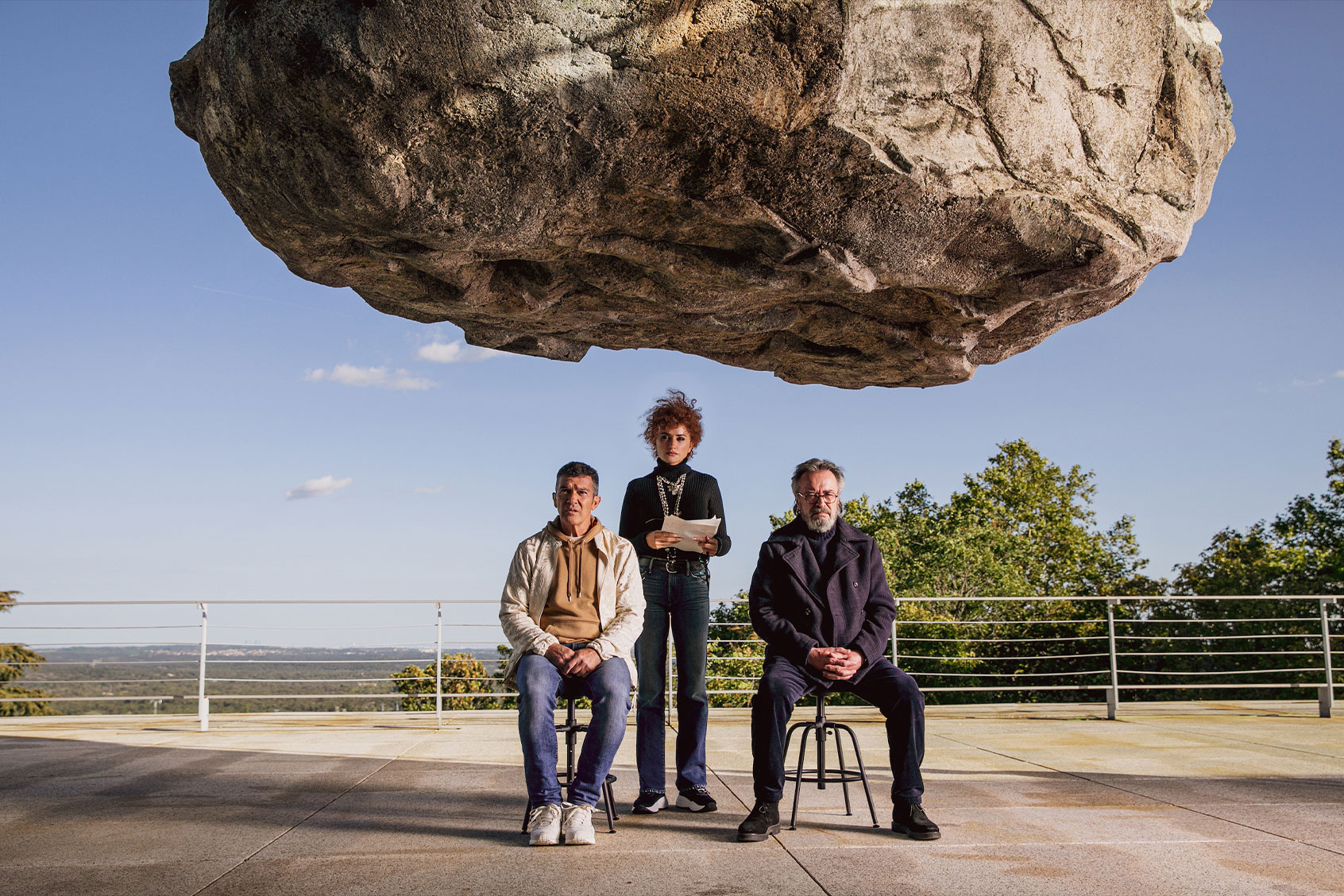
The juiciness of “Official Competition” is in the way Iván and Félix try to one-up the other with passive-aggressive behavior — like making the other wait — or aggressive-aggressive behavior, as when they literally fight. One name-calling sequence is amusing, but it turns out to be an acting exercise Lola uses to prepare them for an intense scene. Lola has unorthodox methods and exercises for her actors. One involves them having to perform a scene under a giant boulder dangling above their heads “to feel the weight” of the emotions. Another has them literally tied up together “to lose all autonomy” and “be as one,” while something drastic happens. As the rehearsals and experiments continue, both actors are not opposed to lying to prove that they are the better performer. And if they humiliate the other in the process — even better.  


Want a daily wrap-up of all the news and commentary Salon has to offer? Subscribe to our morning newsletter, Crash Course.


Cohn and Duprat are deliberately, deliciously playing into this discussion of talent vs. fame, by having these two men in an extended (and heated) d**k-measuring contest. They represent high and low art and compete about everything from their pay to the number of awards they have received. In one of the funniest macho-posturing sequences, both men have to kiss Diana (Irene Escolar), Humberto’s daughter, who has been cast as Lucy, their mutual love interest in the film within a film. Félix goes first, and crassly apologizes to her for “either having an erection, or not having one,” as he smooches her passionately. Iván follows with a more romantic lip lock. But, of course, it is Lola who shows both of these men how to make Lucy swoon. That Humberto must excuse himself during this demonstration is especially funny. 

Official CompetitionOfficial Competition (AccuSoft Inc. / IFC Films)

“Official Competition” does not hold many narrative surprises — each scene or episode practically telegraphs its point before it makes it, but that is not a drawback. Nor is the fact that the film is hitting for the very broad targets it aims at, such as Félix’s specific demands about the food he will eat — e.g., it must be made in Spain. Likewise, when Iván and his wife, Violeta (Pilar Castro) are listening to an avant-garde recording, he asks, “Can you hear the dirt in the background?” it is quite amusing, and the scene goes on to further puncture his pretentiousness. 

Neither man can compete with Penélope Cruz who is a pure delight as Lola.


The casting of the celebrated Argentinian Martínez (who starred in the directors’ 2016 film, “The Distinguished Citizen”) against the Hollywoodized Banderas is part of the film’s joke. Iván is principled, and Martínez is dryly funny making a pointed comment that he doesn’t want to be the Latino who put a bit of color into Hollywood (read: Banderas) — even practicing his speech rejecting an Academy Award in front of a mirror.

Banderas gives a sly, knowing performance that shows he knows exactly how vainglorious Félix can be, without going too far. (He wisely never gets winky-winky). His flashy clothes provide fun character details, and Banderas is a hoot as Félix does his “method” prep work, which annoys Iván no end. Even better is Banderas’ eyeing Lola with lust when she soothes a cut on his cheek during a rehearsal. The actor is clearly enjoying his role, especially during a confessional moment where he appears in closeup on a screen behind him as he is emoting.

But as with the aforementioned kiss, neither man can compete with Penélope Cruz who is a pure delight as Lola. Coiffed with big, busy hair, and sporting fabulous designer costumes, she dominates every scene, even if she is only playing the actors (and their egos) off each other — and developing contempt for them both in the process. At one point, Lola is seen flossing in her hotel room as a way of releasing stress, a completely superfluous moment, but one that is welcome, nonetheless. (It, along with another dance scene, are likely nods to the directors’ fantastic documentary, “Living Stars” which features ordinary folks dancing on camera.) 

“Official Competition” also features a wonderfully minimalist set in Humberto’s headquarters, which adds to the film’s glossy style and commentary about superficiality and ego.

Near the end of the film, a character poses the question, “When we think a film is good, is it good?” which forces viewers to confront their thoughts on the meta-movie, “Official Competition.” Cohn and Duprat’s film is very good indeed.

“Official Competition” is now in theaters. Watch a trailer, via YouTube.

More stories to read: 

Ted Cruz accuses Chuck Schumer of an attempted hit on Brett Kavanaugh

Sen. Ted Cruz (R-Texas) is accusing Senate Majority Leader Chuck Schumer (D-N.Y.) of attempting to put a hit on U.S. Supreme Court Justice Brett Kavanaugh.

Speaking to Fox News’ Sean Hannity, the Texas Republican lawmaker blamed the Democratic Party for recent attacks on lawmakers, jurists, and other activists advocating for a ban on abortion. Cruz’s remarks came during Hannity’s report on a pro-abortion group known as Jane’s Revenge. The group had reportedly declared “‘open season’ on pro-life groups and crisis pregnancy centers,” according to Mediaite.

Describing the incidents as acts of “domestic terrorism,” Hannity asked Cruz to weigh in on their declaration. Cruz not only criticized the group, but also condemned Democrats.

“These radicals claim to be pro-woman but they don’t want to help a mom who is pregnant with a child, actually give birth to the child, and deliver the child into this world so they’re going to firebomb the clinic or the hospital she would go to,” Cruz said.

u201cThe Biden White House encouraged left-wing radicals to go to Brett Kavanaughu2019s home.u201d

— Ted Cruz (@Ted Cruz) 1655389260

Hannity went on to cite remarks made by Schumer back in 2020 which he claimed were threatening toward Kavanaugh and U.S. Supreme Court Justice Neil Gorsuch. The Fox host asked, “Was that a threat,” to which Cruz said, “Absolutely, yes.”

Cosigning Hannity’s remarks, Cruz said, “Schumer knew what he was saying when he said you ‘unleash the whirlwind.’ He was unleashing the radicals.”

u201cDid Senate Democrat leader Schumer just threaten two conservative justices? Where is the media? nnu201cI want to tell you Justice Kavanaugh and Justice Gorsuch: You have unleashed a whirlwind, and you will pay the priceu201dnhttps://t.co/MellytNNp5u201d

— Mark Meadows (@Mark Meadows) 1583347741

The Texas senator also pointed the finger at the White House saying:

A week ago, we saw a Supreme Court justice, Justice Brett Kavanaugh, threaten and a man arrested for attempted murder. Why? Because the left wing radicals knew where his home was and the White House was encouraging those radicals to go to his home where they were threatening his children. It’s been a week, and Joe Biden still has not condemned the attempted murder of a sitting Supreme Court justice.

Cruz concluded with a baseless accusation alleging that Democratic lawmakers are prepared to carry out “an insurrection” against the U.S. Supreme Court. He said, “It is shameless, and it is also a violation of criminal law.”

It’s time to rethink “born this way,” a phrase that’s been key to LGBTQ acceptance

The HBO show “Real Time with Bill Maher” recently ran a segment called “Along for the Pride,” which raised alarm about the gradual rise in people identifying as LGBTQ over the last century — from 1% of the Silent Generation to 20% of Generation Z. At one point, Maher quips, “If we follow this trajectory, we will all be gay in 2053.” The segment is a hodgepodge of statistics, anecdotes, misinformation, and genital jokes, but the message it sent was clear: This apparent rise in LGBTQ prevalence cannot possibly be “natural.”

The same premise — that LGBTQ identities are spreading “unnaturally” — was also the underlying rationale behind Florida’s “Don’t Say Gay” law and copycat bills introduced in other states, which restrict or prohibit discussions of sexual orientation and gender identity in schools. The sponsor of Florida’s legislation, Republican state Senator Dennis Baxley, has made numerous remarks espousing his belief that there are too many LGBTQ kids nowadays and that his bill would counter that trend. Another Republican state Senator who voted for the bill, Ileana Garcia, argued, “Gay is not a permanent thing. LGBT is not a permanent thing.”

RELATED: Florida’s “don’t say gay” bill is just the beginning: Republicans want to claw back all gay rights

Conservative New York Times opinion columnist Ross Douthat described this line of thinking held by many on the political right: “What we’re seeing today isn’t just a continuation of the gay rights revolution; it’s a form of social contagion which our educational and medical institutions are encouraging and accelerating.”

When I was growing up in the 1970s and 1980s, people would often treat the revelation that someone they knew was LGBTQ as though it were a potential contamination event.

While these might seem like new developments, the notion that LGBTQ identities are “contagious” is actually quite old. Late 19th-century sexologists, who coined the term “invert” to describe people that we would now call LGBTQ, believed that it was largely an acquired condition, often the result of being “seduced” by other inverts. This idea — that queerness can spread from person to person much like a disease—provided the rationale for criminalizing and institutionalizing LGBTQ people during this time period. In her 2000 article “Homosexuality as Contagion: From ‘The Well of Loneliness’ to the Boy Scouts,” law professor Nancy J. Knauer chronicled how this idea continued to persist throughout much of the twentieth century.

When I was growing up in the 1970s and 1980s, people would often treat the revelation that someone they knew was LGBTQ as though it were a potential contamination event: They might distance themselves from the individual thereafter, or worry that their past association (especially if there was any romantic interest or intimacy) might “taint” or “compromise” their own gender and sexuality. Part of the reason why I kept quiet about my trans-related feelings as a child was that I knew the disclosure would implicate everybody close to me — my family and friends would all be affected (or perhaps “infected”) by my queerness. You could say that I was “closeted” back then, but to me, it felt more like self-imposed quarantine.

In subsequent decades, there has been growing acceptance of LGBTQ people, much of it hinging on the public understanding that we are “born this way.” Within LGBTQ communities, that phrase evokes mixed reactions. Some feel that it accurately captures their experience of knowing from childhood that they were different, and finding that there was nothing they could do to make those feelings go away. But others have critiqued “born this way” for its failure to account for their later-in-life shifts in identity, their experiences with gender or sexual fluidity, and/or that the phrase gives the impression that LGBTQ people have suffered some kind of “birth defect.”

After all, if LGBTQ people are “born this way,” it means that straight people can’t “catch” it from us.

While I agree that “born this way” oversimplifies gender and sexual diversity, these critiques seem to overlook the primary reason why this slogan has been so successful: its ability to placate fears about queerness supposedly being “contagious.” After all, if LGBTQ people are “born this way,” it means that straight people can’t “catch” it from us.

RELATED: I was one of the lawyers who helped win marriage equality. And yes, the GOP can take it away

Because of its success, anti-LGBTQ campaigners have worked hard to upend the “born this way” narrative. This is why they have long flaunted “ex-gays,” and more recently, people who detransition, as though the existence of such individuals disproves the authenticity and longevity of all of our identities. And now, they are citing the growing LGBTQ population as supposed evidence that our identities are merely “trendy” (in the words of Maher), or worse, the result of “social engineering” (in the words of Baxley).

In other words, they are trying to revive the idea that queerness is “contagious.”

But there are less sinister explanations for these shifts. Gary J. Gates, a well-regarded expert on LGBTQ demographics, attributed the aforementioned increases to “reduced social stigma and accompanying advancements in legal equality.”

Back in 2017, in response to then novel claims (originating from anti-trans parent websites, and since refuted by multiple prominent professional healthcare associations) that transgender identities are now spreading among children via “social contagion,” I highlighted the parallels between this phenomenon and the gradual increase in left-handedness that occurred in Western countries during the twentieth century. Specifically, the prevalence of left-handedness rose from roughly two percent of the population to thirteen percent. And it is generally agreed that this shift was due to a reduction in stigma against left-handedness, and the cessation of forcing young children into being right-handed.

There is no “queer contagion” sweeping the nation. What we are witnessing is simply a new era of openness and possibilities.

There is no “queer contagion” sweeping the nation. What we are witnessing is simply a new era of openness and possibilities. Young people who in the past never had the words to describe their feelings, or who knew what they were but felt coerced into remaining closeted (or worse), are now more able to freely express themselves. People who have had same-sex experiences on occasion — who have always outnumbered people who exclusively identify as gay or lesbian — are now more comfortable explicitly calling themselves bisexual (or some similar label). People who in the past would have felt too afraid to experiment with their gender or sexuality for fear of the stigma that might entail may now be more willing to explore those potentialities.

Like the gradual increase in left-handedness, there is nothing threatening about any of these developments. Unless, of course, you believe that LGBTQ identities are inherently immoral, or feel uncomfortable living in a world where you can no longer presume that everyone you meet is straight by default. This lack of serious negative ramifications explains why so much of this “social contagion” discourse has been squarely directed at trans kids, where moral-panic-inducing memes about “experimenting on children” and “rushing children into hormones and surgery” (both of which are not true) can be used to scare people into believing that we must put the proverbial “LGBTQ genie” back into the bottle.

LGBTQ people simply are. And when there are two or more of us in the same space, that isn’t a sign of “trendiness” or “social contagion”; sometimes it’s just happenstance. Other times, we seek each other out due to our mutual interests and circumstances, especially given the anti-LGBTQ stigma we routinely face. We must recognize the “queer contagiousness” myth for what it really is: an attempt to separate us from one another, to silence our collective voices and perspectives. In a word, it is an attempt to quarantine us.

Too many people seem to view that phrase through a lens of strict biological determinism, or presume that it means the number of LGBTQ people must be permanently fixed and static.

In addition to debunking this myth, we should consider the possibility that “born this way” may no longer be the most effective way to counter it. Too many people seem to view that phrase through a lens of strict biological determinism, or presume that it means the number of LGBTQ people must be permanently fixed and static. Perhaps new language might circumvent these misconceptions moving forward.

In my own writings, I often describe gender and sexual diversity as being intrinsic and inexplicable. By inexplicable, I mean that none of us can precisely say for sure why we turned out to be gay, or trans, or otherwise. Nor can we say why some people come to this self-understanding as children, others during adolescence, and still others as adults. Like handedness, sexual orientation and gender identity have no singular easy-to-point-to cause; they are complex traits that naturally vary in the population.

By intrinsic, I mean that our sexual orientations and gender identities typically arise in an unconscious manner, are deeply felt, and are not readily repressed or ignored. While language and culture may influence how we make sense of, or act upon, those forces, they do not create them out of whole cloth, nor are they capable of entirely purging them from our persons (which is why conversion therapies are widely considered both ineffective and unethical). Just as you cannot readily change my orientation and identity, I do not have the power to change your sexual orientation and gender identity either.

LGBTQ identities and experiences are no more “ephemeral” or “contagious” than heterosexual and cisgender ones. Those who suggest otherwise are not merely incorrect, but they are often pushing an agenda to isolate and silence us.


Want a daily wrap-up of all the news and commentary Salon has to offer? Subscribe to our morning newsletter, Crash Course.


More stories about the assault on LGBTQ rights: 

Michigan Republican behind election probe rages at Jan. 6 testimony request: “I don’t work for you!”

On Thursday, The Detroit News reported that Michigan state Sen. Ed McBroom, who ran a state investigation disproving many Trump supporters’ election fraud claims in the state, is publicly refusing to come before the House Select Committee investigating the January 6 attack on the U.S. Capitol.

McBroom has answered questions submitted by the committee, according to the report — but draws the line at giving public testimony.

“In a speech on the Senate floor, McBroom of Vulcan said the U.S. House’s Select Committee to Investigate the January 6th Attack on the United States Capitol had “demanded” he participate in a public hearing under oath,” said the report. “‘Every member of this body should take offense to this notion that we should be expected to present our work to the federal government,’ McBroom told his Senate colleagues Thursday morning. ‘I don’t work for you,’ the senator added, referring to the U.S. Congress. ‘I work for and only answer to the Michigan Senate and the people of the sovereign state of Michigan.'”

“McBroom is chairman of the Senate Oversight Committee, which released a report in June 2021, finding ‘no evidence of widespread or systematic fraud’ in the 2020 presidential election,” noted the report. “The panel’s findings refuted many unproven claims that were advanced by supporters of former President Donald Trump to try to discount the election’s result in the battleground state. Democrat Joe Biden won Michigan by more than 154,000 votes or nearly 3 percentage points.”

McBroom is one of many Republicans in Michigan sought by the committee for information. “In February 2020, the committee issued a subpoena to former Michigan Republican Party Chairwoman Laura Cox,” noted the report. “A month earlier, in January, the committee issued subpoenas to two of the 16 Michigan Republicans, Kathy Berden and Mayra Rodriguez, who signed and submitted a false certificate claiming to be the state’s official presidential electors.”

Michigan has been the focus of many Republicans’ efforts to overturn the 2020 presidential election. Rudy Giuliani brought Mellissa Carone, a controversial “star witness” to alleged voter fraud, to testify publicly, which resulted in humiliation. Carone was later booted off the ballot in her bid for state Senate.

Trump’s insurrection stole the strategies of Black Lives Matter

Donald Trump never gave a direct order to hang Mike Pence. In fact, Trump didn’t even come up with the specific idea of hanging, but when the insurrectionist mob he sent to the Capitol developed this idea on their own, he was only to happy to roll with it. As Rep. Liz Cheney, R-Wyo., said during the first night of hearings, Trump responded to the chants of “hang Mike Pence” by saying the rioters “had the right idea” and that Pence “deserves it.” 

The “hang Mike Pence” moment became the centerpiece of Thursday’s hearing of the House select committee investigating the Capitol riot. The third televised probe focused on the pressure campaign Trump waged against his own vice president to overturn the results of the 2020 election. The committee revealed that, once Trump realized how close the mob he had sent to the Capitol was to Pence, he sent out a tweet to egg them on. As video footage from the riot shows, the message was received, as insurrectionists read the tweet out loud and redoubled their efforts to find and execute the man they were falsely told could steal the election for them but wouldn’t. 

RELATED: Trump defends supporters’ threats to “hang Mike Pence” in new audio: “People were very angry”

The timeline is important for the committee’s work of establishing Trump’s mindset and how he very much was using the mob’s violence as a weapon to pressure Pence and other power players in D.C. to give him what he wanted: illegal control over the White House. But it also underscores one of the most frustrating aspects of this entire investigation.

Social media technologies are remaking what we think of as “organizing” an event.

Trump was remarkably skilled at using public communications — speeches, and crucially tweets — to convey his wishes to his followers without coming right and giving direct orders to commit crimes. It’s a strategy that works to shield Trump from legal consequences, as he can always pretend that he was “merely” criticizing Pence or “merely” promising that Jan. 6 would be “wild,” and that how people reacted was all on them and not what he intended at all. It’s a strategy that wouldn’t work, however, without the feedback loop made possible by the internet. Trump was able to receive feedback on how his followers were receiving his communications and react in real-time by feeding more communications to them through social media.

Trumpism is very much a top-down movement, with Trump as the leader. But the way it is organized and the strategies it uses borrow heavily from leaderless movements on the left like Occupy Wall Street and Black Lives Matter, both of which have long used social media to organize on the fly, without relying on the traditional top-down decision-making models. 


Want more Amanda Marcotte on politics? Subscribe to her newsletter Standing Room Only.


Social media helps facilitate decision-making by ecosystems. It can be chaotic, but it also means that activists can react swiftly to changing circumstances, instead of getting dragged down by bureaucratic decision-making. A lot of the Black Lives Matter protests were hastily assembled after George Floyd’s murder by people throwing out ideas for places and times to assemble. The result sometimes was three or four protests in any given city at once. That chaos ended up being a strength. Here in Philadelphia, the protests spilled out in every direction, with marchers converging and diverging all over town, making it significantly harder for authorities to blunt the impact of the march by shepherding it to a part of town where it could be easily ignored. 

An elaborate and secretive conspiracy for the insurrection itself was not necessary because Trump and his allies could communicate publicly through social media.

As Heather “Digby” Parton noted Friday at Salon, it appears that the original idea behind the Capitol riot was very different. It seems that Trump and his allies were thinking more that a violent riot — especially if it was met with resistance from the left — would give Trump a pretense to invoke the Insurrection Act and seize power with military force. But when it became clear that wasn’t going to work, Trump and the mob were able to shift strategies on the fly, focusing on shutting down the electoral vote count by force. That kind of flexibility in goals and tactics is a real asset, one that leaderless movements have been using for years. Now Trump has adopted it for his fascist agenda. 

RELATED: Trump wanted a different insurrection: Jan. 6 hearing reveals violent intent behind Pence plot

While the committee has hinted that there may be evidence of direct coordination between Trump and the Proud Boys to make the Capitol insurrection happen, what is an even scarier realization is that the plan could have gone off without any such direct communication. Instead, what happened evolved the way protests and other actions have developed among Black Lives Matter, Occupy Wall Street, and other leaderless lefty movements: via online chatter.

The idea of stopping the electoral count evolved in large part through people sharing conspiracy theories and spreading documents online. Trump was just as much an audience for these conspiracy theories as he was a leader. An elaborate and secretive conspiracy for the insurrection itself was not necessary because Trump and his allies could communicate publicly through social media. The goal, the place, and the time were established through these public channels. Trump could trust that groups like the Proud Boys and Oathkeepers knew what he wanted from them, without having to say so directly. Trump was well aware that there were rising groups of right-wing thugs who wanted to commit violence. His role was more of a traffic director than traditional general giving orders. He was, in many ways, reacting as much to what his followers were signaling they wanted to do as he was telling them what to do. 


Want more Amanda Marcotte on politics? Subscribe to her newsletter Standing Room Only.


Of course, when people organize a Black Lives Matter protest or an underground rave, they aren’t engaging in a criminal conspiracy to overthrow the government. But it all goes to show that social media technologies are remaking what we think of as “organizing” an event. Increasingly, it’s not about leaders setting an agenda, but about collective groups formulating a plan together by talking online. In most cases, that’s a good thing (such as with Black Lives Matter protests) or largely harmless (underground raves). But there can be no doubt that the far-right, with Trump right in the middle, has figured out how to co-opt these same strategies.

Just last weekend, authorities arrested 31 members of Patriot Front for what appears to be a plot to attack a Pride event in Idaho. As with Jan. 6, it seems the plot evolved and formed from the swamp of online chatter. We can expect to see more violence like this, especially as January 6 really demonstrated to the larger American right the power of plugging into these online channels. Law enforcement needs to adapt quickly and find ways to prosecute people for these new-fangled methods of criminal conspiracy, or this situation will just get worse. The place to start is with Trump. Merrick Garland must charge him based on all the evidence of criminal intent developed by the January 6 committee. 

“I got it on my phone — his hands were up”: Video shows Chicago cop shoot unarmed Black 13-year-old

New surveillance footage has unveiled the harrowing scene that unfolded when a 13-year-old boy was gunned down by a law enforcement officer with the Chicago Police Department.

The footage, which was obtained by The Daily Beast, shows the moments leading up to the shooting. Per the news outlet: “In the video, the teen—known only by his initials A.G.—ran off the sidewalk and into the light of a gas station parking lot with his hands raised in the air before turning around to his right.”

After the shooting occurred, the officers are said to have moved the teen to a different location carrying him “by only two legs and a piece of clothing as his arm briefly dragged on the pavement.” Their action is one that Chicago Police Superintendent David Brown previously attempted to defend as he claimed it was done to “avoid harm from an explosion at the gas pump following the shooting.”

However, Brown’s remarks were contradicted by the series of events that followed. Another officer responding to the incident reportedly “careened into the gas station and crashed into the station’s sign.” At that point, most of the officers turned their attention toward the officer instead of focusing on the teen.

The shooting has led to a lawsuit being filed by the teen’s family. The legal team representing the family argues that the teen had “complied with the officer’s instructions, and that while A.G. survived, ‘he has been permanently and catastrophically injured.'”

“CPD officers did not render immediate aide to A.G., but instead callously dragged him across the pavement and then turned their attention to an uninjured officer who crashed into a sign at the gas station while arriving on scene,” read the complaint.

Speaking to The Beast, the family’s lawyer Andrew M. Stroth confirmed that the teen, who is currently housed at the Shirley Ryan Ability Lab, suffered severe wounds to his esophagus and still has a piece of a bullet lodged in his back.

“His wishes are to get healthy, his wishes are to walk, his wishes are to play basketball, his wishes are to ride his bike,” said Stroth.

“You got yet another Black young person shot in the back in a city that is under a federal consent decree, in a city that has not enacted a new foot pursuit policy that preserves and respects the sanctity of life.”

Stroth’s remarks follow a press conference held by the Chicago Police Department where Superintendent Brown would not confirm whether or not the teen had his hands up. However, an eyewitness did.

“They said, ‘Put your hands up, put your hands up!’ The boy’s hands were up. There’s other people out there that seen it. I got it all on my phone—his hands were up. He didn’t have a gun. They shot him for no reason,” the eyewitness told “ABC7”.

The teen has not been charged with a crime. No officers have been fired and the police department did not recover the weapon used in the shooting.

“We enforce our policies equally for everyone”: YouTube removes Jan. 6 committee hearing video

YouTube has deleted a video of a public congressional hearing of the House Select Committee Investigating the Jan. 6 Attack on the U.S. Capitol.

“The House select committee investigating the Jan. 6 riot has been trying to draw more eyes to its televised hearings by uploading clips of the proceedings online. But YouTube has removed one of those videos from its platform, saying the committee was advancing election misinformation,” The New York Times reported Thursday. “The excerpt, which was uploaded June 14, included recorded testimony from former Attorney General William P. Barr. But the problem for YouTube was that the video also included a clip of former President Donald J. Trump sharing lies about the election on the Fox Business channel.”

In the clip, Trump lied when he said, “we had glitches where they moved thousands of votes from my account to Biden’s account.”

YouTube spokeswoman Ivy Choi defended the company’s action.

“Our election integrity policy prohibits content advancing false claims that widespread fraud, errors or glitches changed the outcome of the 2020 U.S. presidential election, if it does not provide sufficient context,” Choi said in a statement. “We enforce our policies equally for everyone, and have removed the video uploaded by the Jan. 6 committee channel.”

The select committee’s video of Thursday’s complete hearing is still available to watch on YouTube.

Watch below or at this link.

Mitch McConnell vs. MAGA: Why Kimberly Guilfoyle is going after the GOP leader

Kimerly Guilfoyle, Donald Trump Jr.’s fiancé, on Thursday accused Senate Minority Leader Mitch McConnell, R-Ky., of waging a “smear campaign” against former Missouri governor Eric Greitens, who is running to represent the state in the U.S. Senate. 

The attack came this week in an email blast by Guilfoyle, Greitens’ campaign chair, who alleged that the Senate Minority Leader “made a backdoor deal to try and have [Greitens] REMOVED.”

“[McConnell has] gone to unimaginable lengths to keep a MAGA warrior like Eric from winning the 1 SEAT we need to take back the 50-50 Senate,” she exclaimed. “He even launched a smear campaign targeting Eric’s children. When the RINO establishment employs the exact same tactics as the radical Left, enough is enough!”

RELATED: Missouri GOP candidate Eric Greitens’ wife submits photos and evidence backing physical abuse claims

Guilfoyle’s remarks are the latest in a broader response to claims that Greitens subjected his ex-wife, Sheena Greitens, and their kids to physical abuse during their time together. Those abuse allegations were first levelled back in April 2020, shortly after the couple divorced. 

Eric Greitens, for his part, has adamantly denied his ex-wife’s account, arguing that if he had been abusive, the two would not have arranged a divorce settlement granting him joint physical custody of the children. Greitens has also alleged that his ex-wife’s allegations, which were outlined in a signed affidavit, are part of a coordinated smear campaign waged by McConnell and GOP operative Karl Rove. 


Want a daily wrap-up of all the news and commentary Salon has to offer? Subscribe to our morning newsletter, Crash Course.


“I want to tell you directly, Karl Rove and Mitch McConnell,” Greitens tweeted back in March. “Hear me now. You are disgusting cowards. And we are coming for you. We are no longer going to allow you to attack me and attack my kids and to destroy this country.”

To support that claim, Greitens has cited a report by right-wing news site Breitbart alleging that Rove had forehand knowledge of Sheena Greitens’ abuse allegations. The article also reported that Sheena Greitens’ sister is employed by McConnell at the three different political consulting firms. Neither of these details clearly suggest that both McConnell and Rove mounted a coordinated attack against Eric Greitens’ Senate campaign. 

RELATED: Missouri’s GOP lawmakers turn on Gov. Eric Greitens — but Republican voters still support him

Both Rove and Sheena Greitens have denied conspiring against the former Missouri governor. Still, Breitbart has continued to suggest such involvement, most recently reporting on claims by Missouri Republican Rep. Billy Long that McConnell meddled in the GOP Senate primary by pressuring Long to drop out of the race. 

“McConnell’s efforts to get Long to drop out of the race could be an attempt to take away votes from former Missouri Gov. Eric Greitens, the frontrunner in the race,” the outlet suggested. “McConnell has a vested interest in stopping Greitens candidacy as the former Missouri governor has campaigned on voting against McConnell as Republican Senate leader.”

Eric Greitens is currently coming out on top in the Senate primary, according to a recent poll by The Hill and Emerson College. The Senate candidate is the only one in the race to boast double-digit support. 

For the most part, the former governor has attempted to align himself with MAGA values, even though he was reportedly reluctant to back Donald Trump in the 2016 election, according to Politico. Still, Eric Greitens has not yet received an official imprimatur from the former president.

A Texas abortion clinic survived decades of restrictions. SCOTUS may finally put it out of business

SAN ANTONIO — As the frosted-glass window slides open, a dozen heads pop up, all with the same anxious, expectant look. One by one, women are called up to the desk at Alamo Women’s Reproductive Services to learn whether and when they can get an abortion.

For months, the clinic has had to be the bearer of bad news, telling clients that they were too far along to terminate their pregnancies in Texas. It doesn’t get any easier, employees said, explaining again and again that the state has banned abortions after about six weeks, a point at which many don’t even know they are pregnant.

But recently, the clinic has had to flip that script. Many of the women who were seen for an initial appointment on a recent Tuesday weren’t too late for an abortion — they were too early.

One patient said she took two pregnancy tests, one positive, one negative, so she decided to come in just to be safe. Nothing showed up on her ultrasound, so clinic staff told her to take another test in a week and come back.

She leaned in, twisting her paperwork in her hands.

“Can I just take the [abortion] pill to be sure?”

Many patients are taking daily pregnancy tests, clinic director Andrea Gallegos said, and coming in at — or before — the first sign of pregnancy, terrified that they’re going to miss the six-week window.

“There’s some patients we see two, three times for sonograms before we actually see evidence and before we can give the pill,” Gallegos said. “But at least we catch it before six weeks.”

It’s far from perfect — the clinic is still having to turn away patients who are beyond the legal limit, and Gallegos worries most of all about the patients who know they’re beyond six weeks and don’t even make an appointment.

But over the last nine months, abortion clinics, and the patients they treat, have started to adapt to life under the new law.

This is what abortion clinics in Texas have done for decades. They add waiting periods and read the mandated script. They force patients to listen to a description of the fetus from the required sonogram. They fight new laws in court, and at the same time, race to comply with them, always bobbing and weaving to ensure they’re still able to provide abortions.

But any day now, the U.S. Supreme Court may deliver the knockout punch these clinics have feared for decades.

“If we can’t do abortions, then these clinics will no longer exist,” Gallegos said. “For the first time, I think we all just feel really helpless.”

Andrea Gallegos, executive administrator of Alamo Women's Reproductive Services in San Antonio, stands outside the facility for a portrait on June 14, 2022.

Andrea Gallegos, executive administrator of Alamo Women’s Reproductive Services in San Antonio, stands outside the facility for a portrait on June 14, 2022. Credit: Kylie Cooper/The Texas Tribune

After the bans

Last week, Gallegos sat at the front desk of Tulsa Women’s Clinic, the sister clinic to Alamo Women’s Reproductive Services, looking out at the waiting room. For months, every chair had been occupied as women poured over the state line, seeking abortions they couldn’t get in Texas.

But in late May, Oklahoma passed a law banning abortion from the moment of fertilization, and ever since, the room has been empty.

Early on, the clinic fielded a lot of phone calls and encouraged callers to come in for a sonogram, to see how far along they were and learn about their options, limited as they might be. The clinic can help connect patients with funding to help them travel out of state, and provide follow-up care when they return.

A few people who came in were less than six weeks pregnant, so in a role reversal, staff sent them to clinics in Texas for abortion care.

“A lot of people who come to our clinics, this is the first time they’ve seen a physician about their pregnancy,” Gallegos said. “This is their first sonogram. They may decide they want to continue the pregnancy, but they don’t have an established OB, so we give referrals for that. We’re a line of support, no matter what they decide.”

But as word has spread about the new law, the phone has stopped ringing.

“It’s really scary,” Gallegos said.

The clinic is keeping the lights on and the staff employed for the time being, but in the long term, it can’t operate an abortion clinic in a state that doesn’t allow abortions.

And soon, it won’t just be Oklahoma. In the coming weeks, the U.S. Supreme Court will rule on a case that is expected to overturn Roe v. Wade, the landmark 1973 decision that established a constitutional protection for abortion early in pregnancy.

If the final ruling aligns with a draft version that was leaked in early May, it will be up to each state to set its own laws around abortion. More than half of all states, including Texas and Oklahoma, are expected to outlaw the procedure.

After decades of fighting to stay open, abortion clinics in those states will likely have to close their doors. But as the last nine months — and the last few decades — in Texas have shown, the demand for abortion care won’t disappear quite as easily.

A staff member wears a shirt in support of Dr. Alan Braid at Alamo Women's Reproductive Services in San Antonio on June 14, 2022.

Credit: Kylie Cooper/The Texas Tribune

Dr. Alan Braid, abortion provider and owner of Alamo Women's Reproductive Services in San Antonio, sits in his office for a portrait on June 14, 2022.

Credit: Kylie Cooper/The Texas Tribune

First: A staff member at Alamo Women’s Reproductive Services wears a shirt in support of Dr. Alan Braid. Last: “We’ve always been ready for whatever comes our way,” says Braid, the clinic’s owner and an abortion provider. Credit: Kylie Cooper/The Texas Tribune

50 years of fighting

As a young medical resident in San Antonio, Dr. Alan Braid was called on to treat a 16-year-old girl who’d arrived at the emergency room after a botched, illegal abortion. She was in sepsis, her vagina packed with rags, the smell of infection so overpowering that Braid backed out of the room, gagging.

She died a few days later.

This was 1973, a few months after the U.S. Supreme Court ruled on Roe v. Wade. Abortion clinics were not yet widespread, and many women continued to seek illegal abortions. Braid couldn’t stomach the idea that women were dying over what should have been, even at that time, a simple and safe medical procedure.

Braid started working part time providing abortions at a clinic in the area. Eventually, he took over ownership of Alamo Women’s Reproductive Services and Tulsa Women’s Clinic.

The San Antonio clinic is a testament to the hoops Braid has had to jump through to continue to provide abortions. In 2013, the state passed an omnibus abortion law that, in part, required clinics to comply with onerous building requirements.

Braid joined a legal challenge seeking to overturn parts of the law, but he also spent $3 million building a new clinic that complied with the new requirements. It opened on the same day the U.S. Supreme Court blocked the law from being enforced.

“We were ready, though, in case the ruling didn’t come down our way,” he said. “And I never regretted it, because we’ve been able to treat more patients and more serious cases.”

When state lawmakers passed Senate Bill 8 in 2021, which banned abortions after about six weeks, Braid was the only provider in Texas to openly violate the law, hoping to generate a lawsuit that would get it overturned. He was sued three times, but more than nine months later, those cases are stalled and the law remains in effect.

In hindsight, he regrets performing one abortion in violation of the law. He wishes, instead, he had performed many, more more.

“It would have been risky, but I’m more and more convinced that the law would have been done in a month if I’d just kept providing abortions as usual,” Braid said.

Now, once again, he’s considering his next move. If the Supreme Court overturns Roe v. Wade, the clinics in Oklahoma and Texas will close. He’s considered relocating to New Mexico or Colorado, or finding a Native American tribe that would let him open a clinic on tribal lands. A friend suggested commandeering a ship and heading for international waters.

But he’s in his late 70s now, and starting over is easier said than done. There was a time, in the early days after Roe v. Wade, when he and colleagues believed abortions might become a commonplace medical procedure that you could access at your OB-GYN’s office.

The state’s crusade to eliminate abortion access has only provided Braid with more and more evidence that this kind of care is a necessity. Women drive hours to make their appointments. They come back, again and again, until they can get treated. They bring their kids, and miss work. They sit in his exam room, wracked with sobs, when they’re turned away.

Women sit in the waiting room after their appointments at Alamo Women's Reproductive Services in San Antonio on June 14, 2022.

Women sat in the waiting room Tuesday after their appointments at Alamo Women’s Reproductive Services in San Antonio. Credit: Kylie Cooper/The Texas Tribune

Unbidden, they tell him their stories. They’re in abusive marriages. They’ve been raped. They’re on their way to college. They’re already struggling to feed the kids they have. They’re undocumented and can’t leave the state.

These women are often desperate and always resourceful, so he’s certain they’ll continue to find ways to access abortion care. Some will leave the state, or the country. Some will obtain abortion-inducing medication online. Some will turn to more desperate measures.

For decades, abortion clinics have been just as resilient as the patients they serve.

“We’ve always been ready for whatever comes our way,” Braid said. “It’s never been easy. But I also never, ever, ever thought Roe would be overturned. Ever.”


Join us Sept. 22-24 in person in downtown Austin for The Texas Tribune Festival and experience 100+ conversation events featuring big names you know and others you should from the worlds of politics, public policy, the media and tech — all curated by The Texas Tribune’s award-winning journalists. Buy tickets.

This article originally appeared in The Texas Tribune at https://www.texastribune.org/2022/06/17/dobbs-supreme-court-abortion-texas/.

The Texas Tribune is a member-supported, nonpartisan newsroom informing and engaging Texans on state politics and policy. Learn more at texastribune.org.

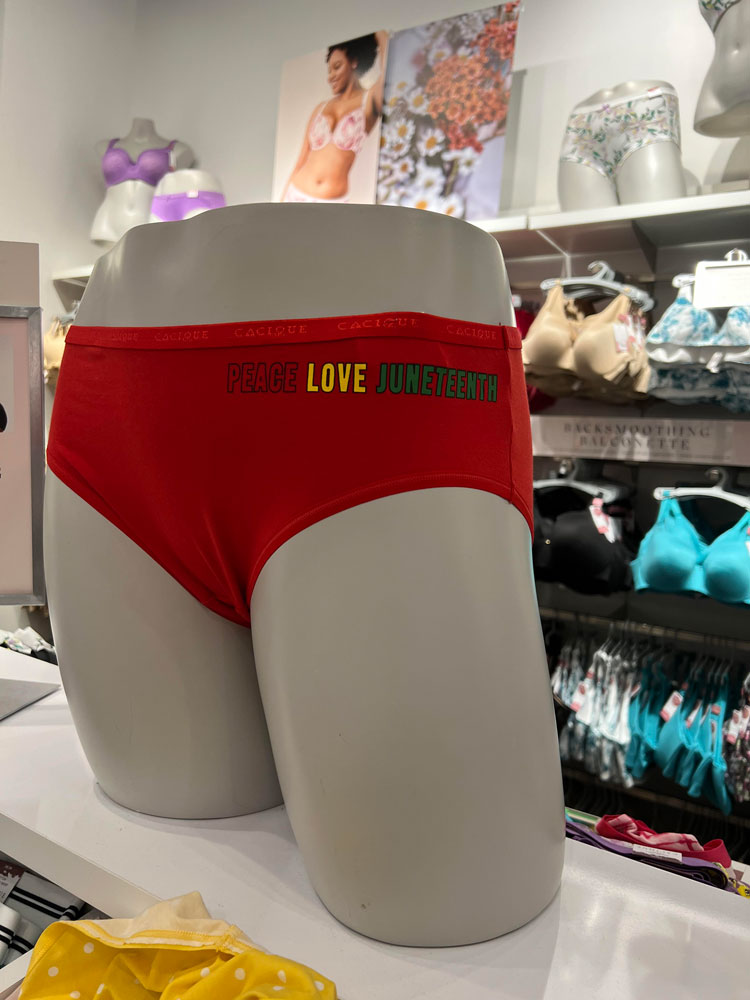
Ted Cruz loses it over “lesbian toys” and Disney’s new “Lightyear” film

During a segment on his podcast The Verdict, Texas GOP Sen. Ted Cruz lamented “woke Disney” for what he says is its promotion gay characters, namely the “lesbian toys” featured in the new Buzz Lightyear movie.

“Now, never mind that the last time I checked, most toys are kinda androgynous — they’re usually without genitalia … ” Cruz told his co-host, conservative commentator Michael Knowles, adding that the movie has “now been banned in 14 countries,” including possibly China.

“I gotta say, it’s a wild twist when Hollywood has been willing to grovel to China and let China censor its movies, to embrace anti-Americanism, to avoid any criticism of China because they want to get access to the Chinese movie market, but when it comes to their culture agenda, apparently now they’ve suddenly discovered, ‘Alright, give up the money because lesbian toys are more important.”

RELATED: Republicans hijack Pride month: A celebration turns to harassing, abusing, and trolling LGBTQ people

More than a dozen Muslim-majority countries have refused to show “Lightyear” — a sci-fi spin-off from the Pixar classic “Toy Story”, set for global release on Friday — in opposition to the marriage between two female side characters.

“We had been warned this would be a likely outcome,” producer Galyn Susman told AFP in a Zoom interview.

“We weren’t going to change the movie we wanted to make just because of a few countries with — for a lack of a better term — backward beliefs,” she said.

Although many reports have focused on a supposed “lesbian kiss” in the film, the scene in question is actually more of a brief peck between two long-married characters who have a child.

Director Angus MacLane said no efforts were made to alter the film to please censors.

“We made our movie and they didn’t want to watch it, so fine,” he told AFP.

Watch the video below:

With additional reporting by AFP

Biodiversity solutions also fight climate change

Mass extinction lurks beneath the surface of the sea. That was the dire message from a study published in April in the journal “Science”, which found that continuing to emit greenhouse gases unchecked could trigger a mass die-off of ocean animals that rivals the worst extinction events in Earth’s history.

The findings serve as just the latest reminder that climate change and biodiversity loss are interconnected crises — even if they’re rarely addressed in tandem by policymakers.

Toward that point, the “Science” study came with a dose of hopeful news: Action to curb greenhouse gas emissions and keep warming below 2 degrees Celsius could cut that extinction risk by 70%.

Additional research published in “Global Change Biology” offers another encouraging finding. The study, by an international team of scientists, found that not only can we do better at addressing biodiversity issues — we can do it while also targeting climate change.

“Many instances of conservation actions intended to slow, halt or reverse biodiversity loss can simultaneously slow anthropogenic climate change,” the researchers wrote in the study.

Their work looked at 21 proposed action targets for biodiversity that will be the focus of this fall’s international convening of the Convention on Biological Diversity in Kunming, China — a meeting delayed two years by the COVID-19 pandemic. The researchers found that two-thirds of those biodiversity targets also support climate change mitigation, even though they weren’t explicitly designed for that goal.

The best opportunities to work on these crises together were actions to avoid deforestation and restore degraded ecosystems. Of particular focus, the study found, should be coastal ecosystems such as mangroves, seagrass and salt marshes, which can store large amounts of carbon and support a diversity of animals.

Also important is restoring forests and woodlands, but doing so with native species is critical. Planting monocultures of nonnative trees won’t boost biodiversity, the researchers point out, despite such endeavors being incentivized as a climate change solution.

Another target is reducing runoff into rivers, lakes and coastal waters from excess nutrients — including nitrogen and phosphorus — that cause algal blooms and oxygen-depleted waters. This eutrophication, combined with warming, may increase greenhouse gas emissions in freshwater bodies, in addition to harming fish and other animals.

Expanding and connecting the network of protected areas is another mutualistic target. Globally, we’ve protected about 15% of land and 7% of marine habitats. But we need to bump those numbers up considerably. As the researchers behind the “Global Change Biology” study put it, “There is a substantial overlap of 92% between areas that require reversing biodiversity loss and the areas needing protection for enhancing carbon storage and drawdown.”

Working on these issues in tandem can help boost the benefits.

We’re also spending large sums of money in all the wrong places. The study lists the reduction or elimination of subsidies that are harmful to biodiversity and the climate as “one of the most important and urgent reforms.”

We spend 10 times more on subsidies for environmentally harmful practices than on biodiversity conservation, the researchers note. Brazil, for example, spends 88 times more on subsidizing activities linked to deforestation than on those that may help stop it.

Other target areas to boost biodiversity and climate work include recovering and conserving wild species; greening urban areas; eliminating overfishing; reducing food and agricultural waste; and shifting diets to include more plant-based foods and less meat and dairy.

And, the researchers say, we need to “mainstream” the issues together — embedding both climate and biodiversity targets and metrics into policy, business and consumer practices.

Understanding these issues should start early, too. A study of school curricula in 46 countries found that fewer than half addressed climate change, and a paltry one-fifth referenced biodiversity. Both these subjects should be covered more and integrated together, the researchers say.

It’s not possible, after all, to tackle one crisis without addressing the other.

To fight climate change, we need fully functioning ecosystems with healthy populations of native plants and animals.

“And climate change is damaging this capacity,” said Hans-Otto Pörtner, a study coauthor and climate researcher at the Alfred Wegener Institute, Helmholtz Centre for Polar and Marine Research. “Only when we succeed in drastically reducing emissions from fossil fuels can nature help us to stabilize the climate.”

Trump wanted a different insurrection: Jan. 6 hearing reveals violent intent behind Pence plot

Over the many months of revelations about Donald Trump’s attempted coup, one lingering question has rarely been asked: What would have come next if Vice President Mike Pence had done what they asked?

A collective “Oh well, I guess Trump is president for another four years after all” from the country sounds unlikely, to say the least. And if the courts had become involved, it’s hard to imagine that Trump’s followers would have been any less angry than they already were. So, what was the plan?

Thursday’s January 6th Committee hearing finally addressed that question, at least obliquely, through testimony by Donald Trump’s staff and Mike Pence’s inner circle. The answer was not comforting.

RELATED: Jan. 6 bombshell: Author of plot to have Mike Pence overturn the election sought pardon from Trump

This third hearing discussed the campaign to pressure Pence, then the vice president, into overturning the election — and what a campaign it was. The main player in this scheme was Republican lawyer John Eastman, who appears to have been a Trump true believer (as well as a highly credentialed, conservative, constitutional scholar) who offered his services to serve Trump’s pre-fabricated conspiracy theory that the election had been stolen. Trump was apparently pleased with his devotion to the Big Lie and Eastman quickly became the primary January 6th coup plotter.

It is pretty clear that Eastman knew there was a good chance for serious bloodshed if Pence overturned the election.

The hearings showed that Eastman was relentless, throwing out one argument after another to get Pence to go along with the program. His and Trump’s entreaties were met with furious pushback from the White House counsel’s office and Pence’s own lawyers who argued that it was illegal, unconstitutional and wrong over and over again. Eastman was so obsessive about his crusade to overturn the election, however, that even after the insurrection on Jan. 6th he came back to one of the White House lawyers who said what is no doubt going to be one of the most famous quotes of this scandal: “I’m going to give you the best free legal advice you’re ever getting in your life. Get a great f-ing criminal defense lawyer. You’re going to need it.” A few days later Eastman emailed Trump’s other attorney Rudy Giuliani asking to be on the “pardon list.”


Want a daily wrap-up of all the news and commentary Salon has to offer? Subscribe to our morning newsletter, Crash Course.


The pressure on Pence was immense. But on Jan. 6th, Pence refused to do his boss’s bidding even after Trump insulted him on the phone by calling him a “pussy.” Pence refused to leave the Capitol complex that day despite the danger presented by the mob Trump had incited. The hearing showed that at one point rioters were only 40 feet away and there is evidence some of the Proud Boys intended to kill Pence.

Stipulating that Pence did the right thing and showed courage on that day, the narrative set forth in the witness testimony that Pence was “steely and determined” from the beginning, telling Trump he didn’t have the authority to do what they were asking, is belied by the fact that Pence never said a word in public to that effect and sought the guidance of both legal and political advisers about what he should do. The New York Times reported on January 5th that he was still trying to find some middle ground, even suggesting that while he couldn’t overturn the election, he could make a statement supporting Trump’s contention that the election was fraudulent. Like so many others in Trump’s orbit, Pence could have taken action much earlier.

RELATED: Trump lawyers hoped Jan. 6 “chaos” could pressure SCOTUS on election amid Ginni Thomas talks

The second hearing earlier this week made the case that Trump knew the election was legitimate and lied about it anyway. The upshot of the third hearing was that Trump and his lawyers knew their plot to overturn the election was illegal and unconstitutional and pushed it anyway. It was an act of sheer partisan power, perfectly illustrated by this comment:

Eastman and Trump thought they could bully their way through and get their way. And the testimony strongly suggests that they were well prepared for, perhaps even anticipating, violence as a result of their actions. But it’s not clear at all that they anticipated their own supporters would storm the Capitol before the vote was even taken. They assumed there would be violence in the streets after Pence did their bidding.

Like so many others in Trump’s orbit, Pence could have taken action much earlier.

Greg Jacob, a former advisor to Pence, relayed a conversation with Eastman in which the two discussed the possible reaction. Jacob said the whole gambit would be kicked out of court and Eastman claimed that the Supreme Court would invoke the “political question doctrine” and refuse to take the case. Jacob pointed out that that would lead to “an unprecedented constitutional jump ball situation with that stand off and as I expressed to him, that issue might well have to be decided in the streets.

Eric Hershmann, from the White House counsels office had a similar conversation with Eastman:

I said you’re going to turn around and tell 78-plus million people in this country that your theory is — this is how you’re going to invalidate their votes, because you think the election was stolen? And I said they’re not going to tolerate that. I said you’re going to cause riots in the streets. And he said words to the effect of there has been violence in the history of our country, Eric, to protect the democracy or protect the republic.

It is pretty clear that Eastman knew there was a good chance for serious bloodshed if Pence overturned the election. And I think it’s fair to say that Trump knew that too. In fact, he was probably welcoming it. It would give him the chance to do what he’d been wanting to do for ages: invoke the Insurrection Act.

Former acting Defense Secretary Chris Miller told Congress over a year ago that Trump had ordered him to have the National Guard ready to protect his supporters on January 6th. Chairman of the Joint Chiefs of Staff General Mark Milley and Defense Secretary Mark Esper both said Trump had to be talked out of using the Insurrection Act to put down the George Floyd protests and former Homeland Security official Miles Taylor tweeted that Trump “mused about invoking the Insurrection Act YEARS before Jan 6 — calling it a ‘magic power’ — in convos I witnessed & was briefed on.”

Taylor thinks Trump purposefully incited the mob of January 6th for that purpose but Thursday’s testimony is far more suggestive of a plan to invoke the act after Pence overturned the election, inciting expected street protests from the people whose votes had just been discarded and whose democracy had just been incinerated. This would have given Trump the excuse he needed to solidify his coup with a classic military intervention.

Trump and his henchmen may very well have known their actions would incite an insurrection. They just planned for a different one than they got. When the mob stormed the Capitol, Trump was left with the choice to call out the National Guard on his own supporters or let them try to overturn the election by force. We all know which path he chose to take.