Spring Sale: Get 1 Year, Save 58%

Trump gets laughs from Obama, snubbed by Republicans in Carter funeral visit

President-elect Donald Trump did not garner a universally warm welcome at the state funeral for former President Jimmy Carter.

All five living presidents and former presidents attended the funeral, but the list of people who gave the Carter critic the cold shoulder and those with open arms did not follow party lines.

Former Vice President Mike Pence greeted the president-elect in one of the pair’s only public interactions since Trump’s supporters called for Pence’s death during the Jan. 6 attacks, briefly shaking his hand. But other Republican mourners were less friendly.

Pence's wife, Karen, declined to acknowledge Donald or Melania Trump at the service. She stayed seated as they greeted the row. She had previously said that Trump "puts himself above the Constitution" and was unfit for office. That was before a court filing revealed that Trump responded, “So what?” to reports of a mob threatening former Vice President Pence’s life during the storming of the Capitol.

Former President George Bush also coasted past President-elect Trump without a greeting, instead giving President Barack Obama a belly tap. Bush declined to throw his support behind the ostensible leader of the Republican Party during the presidential election, offering no endorsement for any candidate.

President Joe Biden delivered a eulogy for Carter, highlighting the former president’s character in the address while subtly condemning abuses of presidential power.

“We have an obligation to give hate no safe harbor and to stand up to what my dad used to say is the greatest sin of all, the abuse of power,” Biden said in a seeming nod at President-elect Trump.

twitter.com/Acyn/status/1877395574670110997

Biden previously told reporters that the president-elect could learn “decency” from Carter.

Attending the ceremony without former First Lady Michelle Obama, former President Obama acted chummy while sitting with Trump and was caught on camera laughing with the president-elect.

twitter.com/Acyn/status/1877369365609460005

Bad Bunny’s “Debí Tirar Más Fotos” is a rejection of an Americanized Puerto Rico

For international superstar Bad Bunny, his island, Puerto Rico, is a fruitful well of inspiration.

The musician, whose real name is Benito Antonio Martínez Ocasio, was born and raised less than an hour from San Juan in the neighborhood of Vega Baja in Almirante Sur. In his sixth studio album, "Debí Tirar Más Fotos" or in English, "I Should Have Taken More Photos," Bad Bunny travels back to his barrio's roots.

The album, released on Jan. 5, is an expansive and vulnerable mediation on Puerto Rico's rich musical influences, experimenting with genres like plena, bomba, salsa, dembow and reggaeton while simultaneously dissecting the territory's complex socio-political issues.

Critics have hailed the album "a love letter" to Puerto Rico," and that's true, but "Debí Tirar Más Fotos" also sheds a harsh light on the plight of everyday Puerto Ricans and the ever-changing landscape that locals are so desperately attempting to hold onto. 

The issues plaguing Puerto Rico

"Debí Tirar Más Fotos'" release couldn't have come at a more pertinent time for Puerto Rico. Just a week ago, a massive blackout hit the island, leaving nearly all of its 3.2 million residents in the dark on New Year's Eve. Island-wide blackouts have plagued Puerto Rico for years, especially after the devastation caused by numerous hurricanes, pummeling the territory's crumbling infrastructure, The Associated Press reported

The island has also been targeted by the U.S.'s polarizing political figures and discourse. Last fall, during a rally for President-elect Donald Trump, comedian Tony Hinchcliffe referred to Puerto Rico as a "floating island of garbage," and enforced stereotypes about Latinos. After those comments, Puerto Rico's most visible figures like Jennifer Lopez and Bad Bunny condemned Trump and Hinchcliffe while emphasizing their support for Vice President Kamala Harris. In an interview with the New York Times, Bad Bunny said he was "angry" at the comment, reiterating "It wasn’t funny.”

But most of all, the territory's pressing issue has always been statehood. The former Spanish colony was annexed by the U.S. in 1898 and has abided by the U.S. Consitution since the '50s, becoming an "unincorporated organized territory," Le Monde reported. Statehood would change Puerto Ricans' voting rights in the U.S. general election.

A majority of Puerto Ricans, about 59 percent, have voted to move towards becoming the U.S.'s 51st state. However, there is a growing movement led by the youth-led, progressive group, called the Alliance, that has called for the end of America's colonial influence on Puerto Rico and the territory's complete and total independence, NPR reported. A November referendum showed that the independence movement has expanded, garnering 29 percent of the vote.

Bad Bunny's music adamantly rejects and critiques statehood  

This anti-colonial movement has caught momentum with high-profile figures like Bad Bunny, who in the past has condemned Puerto Rican statehood and the ruling party supporting the initiative. In "Debí Tirar Más Fotos," Bad Bunny calls for a halt to gentrification and the island's cultural erosion at the hands of American intervention. 

In an interview with TIME Magazine, the musician explained, "Tourists come here to enjoy the beautiful places, and then they leave and they don't have to deal with the problems that Puerto Ricans have to deal with day-to-day."

He said the album translates "that analogy to a romance." In romantic relationships, people "only see the best part of you, the most beautiful part of you,” he said. “And they leave. They couldn't see that part of each one of us: the defects, the trauma, the worries, the pains, the wounds of the past. It's like they were a tourist in your life.”

The essence of this criticism is illuminated in the breakout song "Lo que le pasó a Hawaii" or in English, "What Happened to Hawaii?" In the three-minute track, Bad Bunny prophesizes a haunting portrait of the Puerto Rico that he loves vanishing in front of his eyes. 

Against the stripped-back instrumentals and the strumming of a guitar, Bad Bunny slowly sings, "You hear the jíbaro (countryside person) crying, another one who's left/He didn't want to go to Orlando, but the corrupt ones pushed him out."

In the intimate track, he draws a deeply resonant connection between Puerto Rico's embattled identity and the U.S.'s 50th state, Hawaii. 

He sings, "They want to take my river and my bеach too/They want my neighborhood and grandma to leave/No, don't let go of the flag nor forget the lelolai (folk sayings)/'Cause I don't want them to do to you what they did to Hawaii." 

Hawaii's Native population also similarly faced cultural decimation and social and economic marginalization as Puerto Rico after the U.S. staged a coup in 1893 against the sovereign country and annexed Hawaii in 1898. Since its statehood in 1959, Hawaii has become highly Americanized but now Native Hawaiians have been steadfast in preserving their fading cultural norms and traditions, reports said.

Ultimately, in "Lo que le pasó a Hawaii," Bad Bunny urges Puerto Ricans to hold on tightly to their folk songs, traditions, family and land. He sings, "No, don't let go of the flag nor forget the lelolai/'Cause I don't want them to do to you."

Watch the album's short film starring Puerto Rican filmmaker Jacobo Morale here


Food Is Medicine: the inextricable link between food and health

In the 1960s, Dr. Jack Geiger and a group of health professionals started a community health center in the Mississippi Delta, where children were dying from infectious diarrhea and malnutrition. Geiger and company began writing prescriptions for healthy food — patients would buy the prescribed food at a grocery store that would charge the clinic for the cost. When Geiger caught flack for prescribing food instead of drugs, he replied, “The last time I looked at my textbooks, the most specific therapy for malnutrition was food.”

Poor diet and poor health: A clear connection

Decades later, many Americans still struggle to access and eat healthy food. Despite the well-understood connection between diet and health and a clear understanding of the components of a healthy diet, approximately 90% of Americans eat less than the recommended amount of fruits and vegetables. Moreover, the typical American diet increasingly places meat at the center of the plate, and gets a majority of its calories from ultraprocessed foods — which, despite the widespread use of health-focused marketing, are usually less nutrient dense than whole foods. The result of this nutritionally deficient, empty-caloried glut is often disease. As the World Health Organization notes: “Unhealthy diet is one of the leading risks for the global burden of disease, mainly for noncommunicable diseases such as cardiovascular diseases, diabetes, and cancer.” It’s this understanding of diet at the basis of health that underpins the modern Food Is Medicine (FIM) movement, which works to insert nutrition as an intervention into hospitals and healthcare settings on both population and individual levels.

The crux of FIM is the provision of healthy food to treat diet-related diseases. As Ronit Ridberg, a research assistant professor at Tufts University’s Food Is Medicine Institute, explains, the critical link lies within healthcare. “It’s a referral from your primary care provider or another healthcare provider, and it’s really tied to a health condition that’s related to diet,” Ridberg says.  FIM interventions entail the distribution or subsidizing of healthy food to patients, some of whom may not otherwise have access. While there are some overlaps with direct hunger- and access-based efforts, FIM is distinct in that it uses healthy food to treat health conditions specifically. The thinking behind FIM is “more about food and nutrition support being tied to the health system,” Ridberg adds.

There’s a place for the FIM movement in Western healthcare because little has changed since Geiger’s community health clinic days. Our medical system, driven by the pharmaceutical industry, is still anchored in medication as the answer. Even hospitals themselves fail to prioritize nutrition, offering junk food-filled meals to patients and lining their hallways with vending machines.

How a Food Is Medicine initiative works will vary from organization to organization and state to state. Some programs offer vouchers to buy produce at farmers markets or grocery stores while others offer individual heat-and-eat meals to help treat medical conditions from diabetes to hypertension, or to support health issues associated with pregnancy. Food Is Medicine efforts also often include nutrition-focused counseling and educational elements, especially the programs that focus on grocery provision. “In an ideal situation, you’re getting groceries plus some support and help around what to do with the groceries,” Ridberg says. “The most effective programs are the ones that have support or education alongside the food itself.”

A modern campaign with historic and traditional roots

While the contemporary FIM movement’s roots stretch back decades, it’s hardly a new concept. When the Reagan administration did little to recognize, much less address, the HIV/AIDS epidemic that was ravaging marginalized communities in the 1980s, community members organized to care for the sick themselves. Organizations across the country — from Boston’s Community Servings to San Francisco’s Open Hand — began providing nutritional support to those dying from the virus, thus marking the beginning of the modern FIM movement in the United States.

Of course, the understanding that food is medicine, that our health is centrally impacted by the food we eat, has been at the heart of traditional and Indigenous ways of knowing and being for millennia. Indeed, failing to acknowledge that connection is a form of erasure. As weight-inclusive public health dietitian Anjali Prasertong explains in her Substack newsletter, Antiracist Dietitian, “proclaiming ‘food isn’t medicine’ denies the reality of cultural traditions that have always viewed food as a source of healing, for thousands of years before medicine became synonymous with pharmaceuticals.”

Dana Thompson, co-founder of North American Traditional Indigenous Food Systems and founder of Heti, a social impact brand focused on health and wealth in Indigenous communities, explains further: “Only eating gas station food is obviously different than going out into the world and hunting and being with nature, collecting mushrooms and different things to process through natural means like sun drying and wind drying. All these different ways that Indigenous communities process foods is so much better for you.” In contrast to the ultraprocessed foods that saturate the U.S. food market — and which are linked to 32 health conditions from mental health disorders to heart disease — Indigenous traditions are focused on eating foods that are seasonal, whole and as close to their natural state as possible.

The modern Food Is Medicine movement is still a far cry from the Indigenous and traditional understandings that healthy food is critical for everyone — regardless of health condition. But “the reason this is a conversation to be had now is because we’re 150 years into this industrialized food system, and all of the inflammatory diseases [associated with] the onset of packaged foods and moving away from processing food with your community,” Thompson says.

Acknowledging food as cause and cure

Cate Hensley is the manager of policy and projects for the Food Is Medicine Coalition (FIMC), a national coalition of FIM providers that’s currently accrediting the movement’s nutrition standards. She ties the recent interest in FIM — from the White House’s 2022 Conference on Hunger, Nutrition, and Health to the Aspen Institute’s 2022 publishing of its first Food Is Medicine Research Action Plan, which it updated earlier this year — in part to a growing body of research.

Studies show that dietary patterns have been linked to a reduced risk of obesity and hypertension, that diet can both prevent and treat type 2 diabetes, and that it can help maintain cognitive and kidney function as well as a healthy gut microbiome. One study found that providing medically tailored meals to patients with diet-sensitive conditions, if implemented across the country, could help avert 1.6 million hospitalizations while offering insurers a net cost savings of $13.6 billion a year. Over the course of a decade, this could amount to spending $185.1 billion less on healthcare and averting almost 18.3 million hospitalizations.

“The COVID-19 pandemic was another big reckoning moment of how important the role of food and nutrition service providers are in our nation,” explains Hensley, speaking about those who became frontline workers. It “really led to that galvanizing moment in the White House Conference on Hunger, Nutrition, and Health, … [which] has led to this incredible renewed interest in providing quality nutrition on a truly broad-reaching scale across the country.” Federal efforts to ramp up the conversation continue today. Just two weeks ago, the Senate Health, Education, Labor and Pensions (HELP) Committee held a hearing titled: “What Is the FDA Doing to Reduce the Diabetes and Obesity Epidemics in America and Take on the Greed of the Food and Beverage Industry?”

Challenges remain

Still, Hensley is under no illusion that the broader systems surrounding the FIM movement are where they need to be. Doctors in the United States don’t get rigorous, evidence-based nutrition education as a part of their medical education. Plus, as Ridberg notes, so many healthcare providers are simply overburdened — they have a narrow window of time with patients as is, are already screening for issues like food insecurity, and generally struggle to make space for yet another intervention. At the same time, “any physicians or healthcare providers who I’ve heard speak or have interviewed … are so excited to have a real, tangible resource to give their patients” in the form of Food Is Medicine, she says. What a medically tailored meal program or a produce prescription service offers is the opportunity for physicians to provide an actionable solution to their patients rather than just advice to eat more fruits and vegetables; such advice falls flat without addressing the access and information barriers that stand in the way.

“We can’t close our eyes and pretend that the food system does not deeply, deeply impact our work in Food Is Medicine.”

CATE HENSLEY, manager of policy and projects, Food Is Medicine Coalition (FIMC) 

Hensley adds that the FIMC also works to advocate for policy solutions that are designed to increase reimbursement for FIM services, which are “often spearheaded or funded by hospitals and health systems, government agencies, insurers and philanthropic entities,” according to the American Hospital Association. The FIMC aims to support its colleagues who are endeavoring to better nutrition policy and programs, from SNAP and WIC to school meals. “We’re cheering those folks on as loudly as we can, but with our mission and vision we’re really orienting our work around the healthcare piece,” she says. And that is, in some ways, where FIM faces challenges.

As the Food Is Medicine movement works toward universal coverage for its initiatives by insurance companies, there is an understanding that it probably won’t be enough. “Even if universal reimbursement is achieved tomorrow, there will always be a need for our agencies,” Hensley says. “Folks will always be uninsured or underinsured, undocumented — the list goes on.” And with insurance companies prioritizing profit above all else, there will still be a need for significant regulatory and industrial overhaul.

FIM remains necessary because our food system is often a source of disease, and our healthcare system focuses primarily on treatment rather than prevention — and those are the systems within which FIM operates. “We can’t close our eyes and pretend that the food system does not deeply, deeply impact our work in Food Is Medicine,” Hensley says. The need for FIM will persist so long as our current food and healthcare systems remain largely unchanged.

“To the best, most fabulous next chapter”: Ina Garten whips up a special cocktail for Hoda Kotb

Ina Garten shared some kind words — and a boozy beverage — to celebrate Hoda Kotb’s decades-long stint on TODAY. Kotb, who is leaving the show on Jan. 10, will be replaced by Craig Melvin as the co-anchor of TODAY beginning Jan. 13.    

On Thursday’s episode of the show, Garten joined Kotb along with fellow TODAY co-hosts Willie Geist, Savannah Guthrie and Al Roker to share her take on a classic French 75 cocktail. The drink, also called a 75 cocktail, is traditionally made from gin, champagne, lemon juice, lemon zest and sugar.

“To Hoda,” Garten said before she and the co-hosts took a sip from their drinks. “To the best, most fabulous next chapter.”

Garten continued her praises, describing Kotb’s accomplishments as “amazing” and calling her an “extraordinary” person. Kotb, in response, extended a few kind words to Garten.

“You were inspiring before I read your book, but after we read your book, and just got to hear you talk about your life and what you did and what you accomplished. And here you are! You’re like the queen of repotting, reinvention, all the things, right?” Kotb said.

“And I got to tell you, of all the celebs who come through here, the one person who people universally say they can’t wait to talk to, including everybody, is you,” she continued. “But that’s the way it rolls and we know why so I’m honored you came in. Cheers to you.”

“No one is my gatekeeper”: Fetterman to visit Trump at Mar-a-Lago

Senator John Fetterman, D-Pa., will be the first sitting Democratic senator to visit President-elect Donald Trump at Mar-a-Lago.

Fetterman told CBS News that he planned to “have a conversation” with Trump at his Florida home, saying he didn’t see an issue with speaking to the soon-to-be president.

“I think it's pretty reasonable that if the president would like to have a conversation — or invite someone to have a conversation — to have it. And no one is my gatekeeper,” Fetterman said.

Neither Fetterman’s office nor the Trump transition team have confirmed a date for the meeting.

The plans to stop by Trump's resort and residence come after Fetterman shared a willingness to support GOP goals. Fetterman was among Senate Democrats who indicated their willingness to work with Trump on his plan to deport millions during his second term. He signed on as a co-sponsor of the Laken Riley Act, a proposal that would compel authorities to detain and potentially deport undocumented individuals accused of certain nonviolent crimes.

Fetterman ran on a progressive slate of policy positions in 2022 but toned down his stances after winning his seat. He could be an important vote in the chamber for Trump, as he fights to pass legislation with narrow majorities in the House and Senate.

The Pennsylvania senator has said he's open to Trump’s expansionist plan to purchase Greenland, slamming colleagues for their “freakout” over the suggestion in a Fox News interview.

“It's a responsible conversation if they were open to acquiring it and, you know, whether just buying it outright,” Fetterman told Bret Baier in a Tuesday episode of “Special Report,” comparing the potential deal to the Louisiana Purchase.

Asked if he would discuss the Greenland plan with Trump, Fetterman told CBS he planned to.

“I have no idea what's going to exactly come up. So, I mean, regardless of whatever comes up, that's going to be part of the conversation,” he said.

Olive oil is healthy. Turns out olive leaf extract may be good for us too

Olive oil is synonymous with the Mediterranean diet, and the health benefits of both are well documented.

Olive oil reduces the risk of heart disease, cancer, diabetes and premature death. Olives also contain numerous healthy nutrients.

Now evidence is mounting about the health benefits of olive leaves, including from studies in a recent review.

Here's what's in olive leaves and who might benefit from taking olive leaf extract.

What's in olive leaves?

Olive leaves have traditionally been brewed as a tea in the Mediterranean and drunk to treat fever and malaria.

The leaves contain high levels of a type of antioxidant called oleuropein. Olives and olive oil contain this too, but at lower levels.

Generally, the greener the leaf (the less yellowish) the more oleuropein it contains. Leaves picked in spring also have higher levels compared to ones picked in autumn, indicating levels of oleuropein reduce as the leaves get older.

Olive leaves also contain other antioxidants such as hydroxytyrosol, luteolin, apigenin and verbascoside.

Antioxidants work by reducing the oxidative stress in the body. Oxidative stress causes damage to our DNA, cell membranes and tissues, which can lead to chronic diseases such as cancer and heart disease.

Are olive leaves healthy?

One review and analysis combined data from 12 experimental studies with 819 participants in total. Overall, olive leaf extract improved risk factors for heart disease. This included healthier blood lipids (fats) and lowering blood pressure.

The effect was greater for people who already had high blood pressure.

Most studies in this review gave olive leaf extract as a capsule, with daily doses of 500 milligrams to 5 grams for six to 48 weeks.

Another review and analysis published late last year looked at data from 12 experimental studies, with a total of 703 people. Some of these studies involved people with high blood lipids, people with high blood pressure, people who were overweight or obese, and some involved healthy people.

Daily doses were 250-1,000mg taken as tablets or baked into bread.

Individual studies in the review showed significant benefits in improving blood glucose (sugar) control, blood lipid levels and reducing blood pressure. But when all the data was combined, there were no significant health effects. We'll explain why this may be the case shortly.

Another review looked at people who took oleuropein and hydroxytyrosol (the antioxidants in olive leaves). This found significant improvement in body weight, blood lipid profiles, glucose metabolism and improvements in bones, joints and cognitive function.

The individual studies included tested either the two antioxidants or olive leaf incorporated into foods such as bread and cooking oils (but not olive oil). The doses were 6-500mg per day of olive leaf extract.

So what can we make of these studies overall? They show olive leaf extract may help reduce blood pressure, improve blood lipids and help our bodies handle glucose.

But these studies show inconsistent results. This is likely due to differences in the way people took olive leaf extract, how much they took and how long for. This type of inconsistency normally tells us we need some more research to clarify the health effects of olive leaves.

Can you eat olive leaves?

Olive leaves can be brewed into a tea, or the leaves added to salads. Others report grinding olive leaves into smoothies.

However the leaves are bitter, because of the antioxidants, which can make them hard to eat, or the tea unpalatable.

Olive leaf extract has also been added to bread and other baked goods. Researchers find this improves the level of antioxidants in these products and people say the foods tasted better.

Is olive leaf extract toxic?

No, there seem to be no reported toxic effects of eating or drinking olive leaf extract.

It appears safe up to 1g a day, according to studies that have used olive leaf extract. However, there are no official guidelines about how much is safe to consume.

There have been reports of potential toxicity if taken over 85mg/kg of body weight per day. For an 80kg adult, this would mean 6.8g a day, well above the dose used in the studies mentioned in this article.

Pregnant and breastfeeding women are recommended not to consume it as we don't know if it's safe for them.

What should I do?

If you have high blood pressure, diabetes or raised blood lipids you may see some benefit from taking olive leaf extract. But it is important you discuss this with your doctor first and not change any medications or start taking olive leaf extract until you have spoken to them.

But there are plenty of antioxidants in all plant foods, and you should try to eat a wide variety of different coloured plant foods. This will allow you to get a range of nutrients and antioxidants.

Olive leaf and its extract is not going to be a panacea for your health if you're not eating a healthy diet and following other health advice.

Evangeline Mantzioris, Program Director of Nutrition and Food Sciences, Accredited Practising Dietitian, University of South Australia

This article is republished from The Conversation under a Creative Commons license. Read the original article.

Long live “The Traitors,” a killer distillation of American reality TV psychological games

Unscripted TV’s ubiquity means a person doesn’t need to have seen a single episode of “Vanderpump Rules” to understand why casting Tom Sandoval in Season 3 of “The Traitors” is an evil genius move. You only have to know what he’s semi-famous for.

Even if you don’t, here’s a primer: Early in the 10th season run of “Vanderpump Rules," news broke that Sandoval had been cheating on his longtime girlfriend Ariana Madix with her "best friend" Raquel (née Rachel) Leviss off-camera. Both were his fellow castmates.

Cumming and the producers know they’re playing with people who love being the center of attention and love winning — and manipulate their pridefulness to reduce them to wrecks.

Madix, understandably, was heartbroken. You might not have known that if you only watched the show and somehow existed apart from social media feeds and gossip rag headlines screaming forth in your grocery store’s checkout aisle. Every new “Vanderpump Rules” episode was behind the real-time dirt-slinging, affording the public the chance to watch reality slap across the face of unscripted artificiality.

#Scandoval was such a phenomenon that even non-Vanderpumpers couldn’t completely shut it out, guaranteeing Sandoval’s infamy. But his very public loss of esteem is the “Traitors” audience’s gain since its divinely clever host Alan Cumming can’t resist taking a swipe. 

Everyone arrives at Ardross Castle with the desire to be either a Faithful or a Traitor and makes their case to Cumming’s devious nobleman. Reacting to Sandoval’s strong feelings about which camp he wants to be in, the host asks his prey whether he’d feel betrayed if he goes against his desire. Then, shrugging, Cumming coos to Sandoval, “Doesn’t feel so nice, does it?”

Ah “Traitors.” How we’ve missed you. The betrayal! The overacting! The secret killers shedding crocodile tears over breakfast of smoked salmon! Few pleasures make cold cruelty warm the soul quite as well, because few look at the genre with such a knowing blend of appreciation and haughtiness.

Cumming and the producers know they’re playing with people who love being the center of attention and love winning — and manipulate their pridefulness to reduce them to wrecks. It is also familiar, since “Traitors” is essentially a party game that follows similar rules to Mafia or Werewolf.  

The show leans hard into the game’s murder mystery literary underpinnings, and Cummings’ guests embrace their situation’s theatricality while taking each development a bit too personally.  

This is a show for people who think they’re too good for reality TV but aren’t above enjoying the moral vices and virtues of its players.

In the opening episode, Cumming’s flamboyant laird secretly taps a certain number of players to be secret Traitors while the rest play as Faithfuls. Each day, they compete in challenges to build up a jackpot that could be worth up to $250,000.

Every night they hold a roundtable where they banish someone by majority vote. As that person departs, they reveal whether they’re a Faithful or Traitor. Then, when everyone goes to sleep, the Traitors get to work, murdering someone else.

The Faithfuls want to banish the Traitors among them because if any make it to the final round, they’ll claim the winnings and the good guys get nothing. This time around, in addition to eliminating the requirement for players to reveal whether they are Traitors or Faithfuls in the final, the producers cast people with past beef or who have reputations for playing dirty on their shows — or in life.  

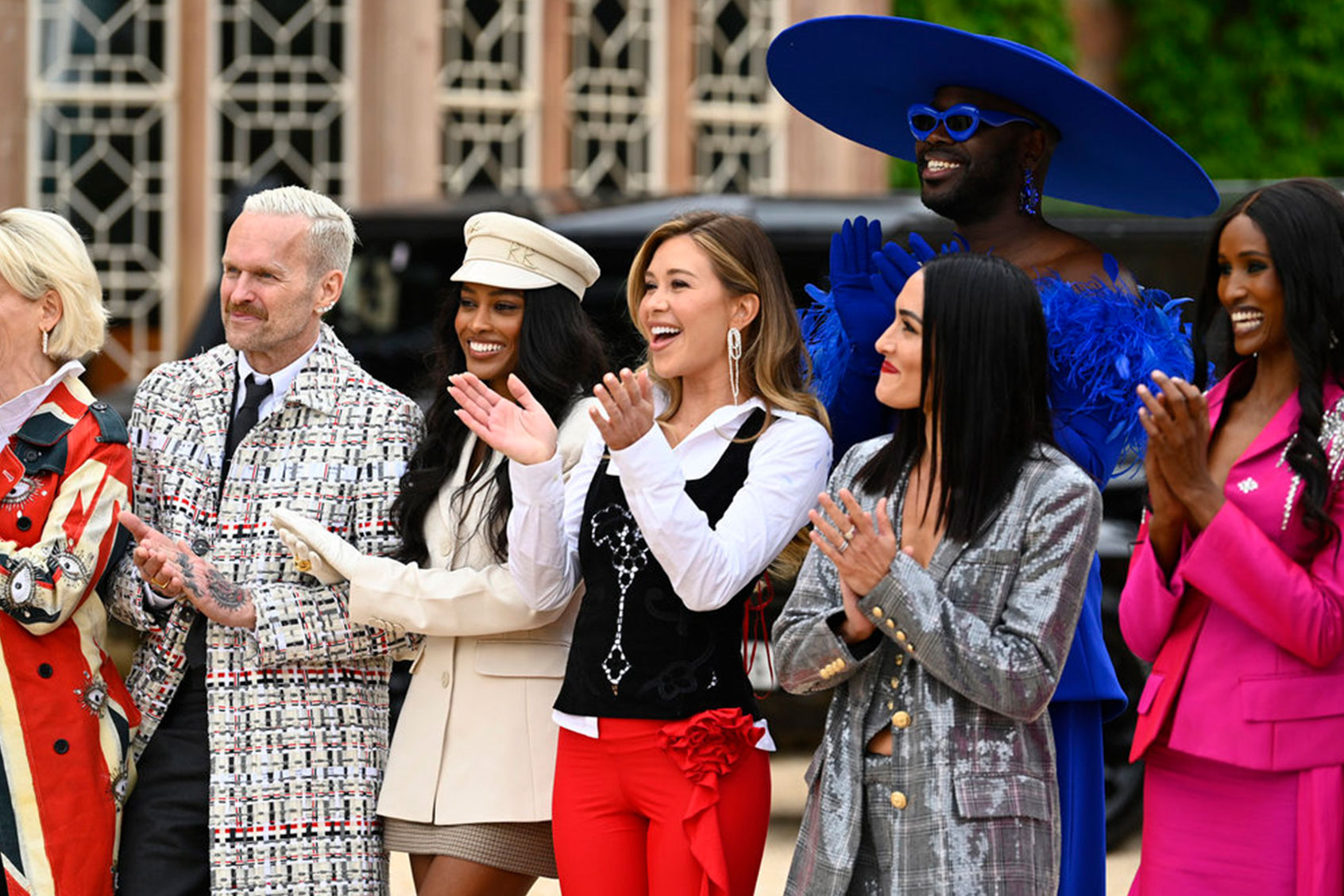
The TraitorsBob Harper, Ciara Miller, Gabby Windey, Bob The Drag Queen, Nikki Garcia and Chanel Ayan in "The Traitors" (Euan Cherry/Peacock)

“The Traitors” has made it on the watchlists of many discriminating viewers because the show understands its role in the broader genre. This is a show for people who think they’re too good for reality TV but aren’t above enjoying the moral vices and virtues of its players.

Reality mines human drama – sometimes realistically, often with artificiality. Unscripted’s universe also comprises various spheres of fame and influence. People who audition for network reality shows are regular folks who go back to their jobs and families, whereas so-called Bravo-lebrities live their jobs even if they rent the mansions they allegedly live in from season to season.

Smush the most colossal personalities from these subgroups together into one place and dangle the threat of cash or murder over their heads, and quickly the energy quavers with paranoia and ridiculousness.  

But the game also sorts personalities along intriguing boundaries. Some players see themselves as, say, grandparents or firefighters given another opportunity to compete for a boon their family could use. Some are Andy Cohen Housewives who never turn off their performance.

We need your help to stay independent

In the quarter-century since “Survivor” debuted, many reality competitions have described themselves as a social experiment. Only a few live up to the label, and often only in the first season or two. Eventually whatever honesty is present is ruined by the world watching, judging, and elevating a few to lasting stardom.

“The Traitors” keeps its behavioral study crisp and unpredictable, evolving ever so slightly in Season 3. Its core makeup is unchanged from its second season when the show stuffed its Scottish Highlands manor with nothing but reality stars. This was a shift from the first season which, like the UK original, divided its contestant pool between everyday people and celebrities.

The new season includes four “Real Housewives” contenders; four “Survivor” alumni; two refugees from “The Bachelorette”; two former “Big Brother” housemates, the nice trainer from “The Biggest Loser”; a cast member from “Selling Sunset” and another from “Summer House”; and a retired WWE wrestler.

A royal cousin mainly recognizable by his “nice last name,” Mountbatten, is about as unknown as this cast gets. Beside him in the “who’s that guy” corner is Britney Spears’s ex-husband Sam Asghari and Zac Efron’s brother Dylan.

“Traitors” may be the most meta game on TV, in that every competitor has watched at least some of their rivals’ shows and bases suppositions about their trustworthiness off their franchises.

Tom Sandoval sits somewhere between these camps on the social value scale; as a threat factor, he’s nothing compared to genre all-star “Boston” Rob Mariano. Lots are watching out for those two and rooting, probably, for “RuPaul’s Drag Race” champion and “We’re Here” co-host Bob the Drag Queen.

I haven’t named most of “The Traitors” third-season challengers because there are more than 20 of them, but the game’s psychology relies on typecasting on the part of players and viewers.  

“Traitors” may be the most meta game on TV, in that every competitor has watched at least some of their rivals’ shows and bases suppositions about their trustworthiness off their franchises.

Personality-driven Bravo celebrities stick together on the assumption that they hold certain virtues in common, like loyalty. (This ignores that the most lethal player in Season 2 was Phaedra Parks, formerly of “The Real Housewives of Atlanta.”) Veterans of CBS ("Survivor," "Big Brother") and MTV ("The Challenge") competitions tend to crew up and pick them off. Everyone else scrambles to align with the herd that has the best odds for survival. Dating show alumni don't thrive in this cold Scottish clime.

Meanwhile, Bob the Drag Queen — loved by all — exists in his own sphere. Among all the players announced this season, the including of dear Caldwell Tidicue mustered the most excitement. His showing does not disappoint, especially when he counsels one of his housemates, “I am a lot. You’re probably not used to a lot of people like me.”


Want a daily wrap-up of all the news and commentary Salon has to offer? Subscribe to our morning newsletter, Crash Course.


Last year’s “Drag Race” representative, Peppermint, was the first to be banished. When you jam a gaggle of people whose main talent is being themselves into a home for the highborn, jockeying for camera time is inevitable, and the larger people are in life, the bigger the target.

This leaves the lesser-known Efron and model/famous ex-husband somewhat out in the cold, whereas Lord Ivar Mountbatten can take some comfort in being adjacent to the Crown and "The Crown."

The American “Traitors” has taken a few knocks for scrubbing non-celebrities from its version. Handily the UK edition’s latest season overlaps with ours. A tech-savvy viewer could watch both to study the contrasts. One of them is that the British “Traitors” surfaces social class as its dominant subtext, whereas Cumming’s game shows American snobbery manifesting in fame, not skill, being a major determinant of worth and worthiness. The joy of our version is its chaotic unpredictability; I never would have guessed the second season’s winners in that round’s first three episodes.

The same is true this time, starting with the spot-on pack of Traitors Cummings selects at the start. Long may their terror and confusion reign, especially if it translates to many more seasons.

"The Traitors" premieres with three episodes at 6pm PT/9pm ET Thursday, Jan. 9 on Peacock. New episodes stream on Thursdays.

“Every Little Thing” captures the fierce grace of hummingbirds and their heroic healer

Hummingbirds are described as “sweet warriors” by Terry Masear, a hummingbird rehabber in Los Angeles. She runs a center for the tiny, injured birds, and explains that while the smallest birds in the world are sweet, they are also fierce. Hummingbirds can flap their wings 50 times a second and fly vertically, backward and upside-down, but they will also fight to the death in nature. 

Director Sally Aitken’s informative and irresistible documentary, “Every Little Thing,” chronicles the spring and summer hummingbird season of 2022 as Masear practices her unique brand of catch, rehabilitate and release. The film is both inspiring and beautiful. Visually, Aitken captures the hummingbirds in slow motion as well as in real-time as the injured ones try to jump from perch to perch as part of their physical therapy. Aitken also captures the emotional work as Masear uses her skills to save an injured bird, like Sugar Baby, whose wings are deteriorating because of human abuse. 

The lessons the hummingbirds impart on Masear about struggle, death and success teach us humans about patience, hope and compassion. And Masear’s kindness — she is, after all, a volunteer — is an act of greatness. 

While Masear’s efforts are heroic, the hummingbirds are the real stars of “Every Little Thing” as Jimmy, Cactus, Raisin, Mikhail and Alexa will steal viewers’ hearts with their grace and glory.

Aitken spoke with Salon about making her documentary, and what she learned about hummingbirds. 

What prompted you to make a documentary about Terry’s life and work?

I pretty much think there are stories wherever you look. I can get excited about a paper bag [Laughs]. Initially, I was sent a review of Terry’s book and I thought, that’s unusual — how quirky, how curious! There’s a dedicated hotline for hummingbirds, really? What happened was, after I read the book and after we engaged with Terry, Bettina — the producer — and Terry connected over some shared trauma. Suddenly [we had] this opportunity to make a film about healing and resilience through trauma and finding our way back to ourselves.

A woman came up to me at a screening and she had a beautiful tattoo on her forearm. She started to tell her story that she believes hummingbirds are messengers to remind us of the resilience we have within us. She perfectly encapsulated the film. 

There are some fun facts sprinkled throughout “Every Little Thing,” such as that the hummingbirds decorate their nests with paint chips from houses, or that love between species is unlikely. You did not know much about hummingbirds prior to making the film. What did you learn and how did it impact you?

"If we allow it, we can be taught all sorts of things by all manner of life’s cornucopia of beauty and strangeness."

I learned that there is such power in small things. My algorithm on Instagram is full of insects and attention-seeking — notice the small things. It was a beautiful experience making this film. I actually really didn’t know that we were going to pull it off. On the surface, it’s not exactly the stuff of grand cinema. There’s a woman. She’s alone. She looks after birds. That’s it [Laughs]. But something happened in the making of the film — the ability to really pay attention. That’s a gift in the story. It’s not like the hummingbird says, “Slow down.” They move like an insect and have a figure-8 wing pattern. 

The most profound thing I learned making the film was this idea of taking stock and paying attention and that beauty is all around us. I wouldn’t say I’m a bird lover, but I love attention and the idea of witness. If we allow it, we can be taught all sorts of things by all manner of life’s cornucopia of beauty and strangeness. What a lesson there might be in that. 

We follow some birds — like Cactus, who has an injured wing  over time and only briefly meet others, like the Wild Boys. What decisions did you make about which case studies to include?

One of the things that was so challenging about the film is that you have to document everything. The calls you get, the finders who bring wounded [birds] in, and the journey of the rehabilitation itself. To whittle it down — I thought about the emotional parallels with our own species, humans. Some birds encapsulated different aspects of our humanity, so unrequited love with Alexa and Mikhail, or Jimmy who belongs in his own sitcom, or Cactus with her precarious journey. There is something in each of these tiny characters' stories [that makes them] feel like superheroes. Also, it was the way Terry sees them. Hopefully, you start to see the hummingbirds like she sees them. Initially, I thought — surely that bird is going to make it; it doesn’t look that injured. That was the dialogue in my head. Then, as we filmed, my seasoned eye realized that birds are really precarious. Just like us, their lives can be suddenly hit by a disaster not of their own doing, and how to survive that or do you survive that is just as profound as you watch that through a tiny bird’s adventure.

You capture the birds hovering, in flight, trapped in a skylight or doing physical therapy. You have a bird’s-eye view in some scenes. Can you talk about approaching the film visually? There are observational scenes as well as hummingbird porn moments.

One of the most compelling aspects of this story for me was the visual opportunity. I was completely enamored with the idea of this tiny bird set against Los Angeles, this giant metropolis. I’ve never seen a film seen through this lens. The microscopic against the macro. How amazing we can be up close and then have soaring aerials using the drone and effectively use a snap cut. One thing I workshopped was this idea, "How do we enter the hummingbird world in this otherworldly way?" If we are up close, we can use macro lenses and can slow things down, that could be a very special effect. We found Ann Johnson Prum, who is a specialist wildlife cinematographer with a particular experience

"I became a real bird nerd!"

filming hummingbirds, along with two other cinematographers, Dan Freene and Nathan Barlow, both of whom are Australian. For all of us who do not live in the U.S., it was extraordinary to see the hummingbirds because they are so magical. We looked at a combination of different lenses but all the slow-motion beautiful shots of the graceful flight of the hummingbirds was Ann’s photography. Tania Nehme, the editor, honored that by not cutting it fast and finding the right balance between being in a moment that was so slow but not stationary. We mixed the frame rates a little bit. Because the birds hover, it meant if they were in the right focal length we would be able to capture their gorgeous iridescent gorget, which is what their throat feathers are called; gorget is the name of the area of the bird. I became a real bird nerd! The feathers are not actually blue or green. They have an iridescent quality. If the bird turns their head in one direction, it will look one color, and if they turn it in the other direction, it will look the other color. It’s pretty amazing. The filming was a combination of those cameras and lenses and classic observational filming where we have no idea what is about to happen next. 

Terry is knowledgeable about the birds and the situations she encounters and is realistic about the life expectancy of the birds she treats. Where did she come to learn about hummingbirds and devote her life to them? 

She will say, and I believe it to be true, that the hummingbirds found her. It requires an extraordinary person to do what she does. It’s not like she woke up one morning and thought, “I am going to be a hummingbird rehabilitator.” She always loved animals and grew up in the Midwest and was very involved in nature. It is an amazing story that was too big for the film, of firsthand knowledge that has been passed down in a matrilineal way. Terry learned from another woman, Jean, who herself learned from another woman, Helen, going back 50 years. The wooden cages come from Helen, the hummingbird rehabilitator “grandmother.” It’s all in a way self-taught, but Terry was mentored by Jean. 

Another thing I could not get in the film is that Terry has cats. She keeps them indoors and is particular about cat ownership. Many years ago, her cat had escaped and came back with a hummingbird nestling. Terry phoned around to find a vet and couldn’t and eventually found Jean who managed to save the bird. Then, a year to the day later, a hummingbird had nested outside Terry’s house, and it washed out in a storm, and Terry called Jean again, and Jean said to Terry, “Will you help me?” So, Terry says the hummingbirds found her via the cat. 

Terry is a volunteer, yes? How does she support her rescue/rehab center? 

If people feel like making donations, she will take them to afford the equipment and food. But she is entirely volunteer. 

You show how Terry’s life mirrors the birds in a sense — that she suffered trauma, found love and developed the ability to fly on her own. Can you talk about telling her story alongside the birds she cares for?

In her book, she only deals with her life as a rehabber. She doesn’t tell her personal story. I didn’t know any of that going into the film. We developed an intense relationship built on trust and faith and goodwill and shared sense of adventure. Terry just came out with [her trauma] one day and I realized it all made sense to me that there was this underlying ability to empathize with the birds because she had come from a chaotic and traumatic start. 

One of the things I appreciate most about the film was Terry’s remark about our attitudes towards nature illustrating a lack of respect. Can you talk about this idea and how hummingbirds teach us life lessons on empathy?

So many people have this incredibly emotional reaction to the film. I think it is because the film reminds us of kindness. It’s really simple and we all have the ability to do it, and we never see it writ large. The idea that what we are seeing in this film is our own humanity reflected back to us, it’s such a profound thing. When you see our ability to care and nurture and be kind and careful and attentive and all these things that we just never scream loudly. That is the balm to so much of the chaos and the difficulty of war and greed and all of these things that become our daily messages. When you see a film like this and are reminded that this is a small part of the human experience and that there is a much grander story to tell, that is profound.

Terry says that Jimmy was “born for the camera.” What bird in the film did you bond with? 

I always said from the beginning that I loved Jimmy because of this comic personality he has. But of course, how could you not bond with and cheer for Cactus? But I love all the birds for different reasons. 

“Every Little Thing” opens January 10 in New York City and January 17 in Los Angeles, with national rollout to follow.

Key Senate Democrats come out in favor of “Laken Riley” bill that could enable mass deportations

Senate Democrats are facing an early test on how much to cooperate with President-elect Donald Trump and his new GOP majority with the so-called Laken Riley Act, which would mandate that the Department of Homeland Security detain and potentially deport undocumented immigrants accused — but not necessarily convicted — of nonviolent crimes such as trespassing and theft.

A version of the legislation has already passed the House after 48 Democrats voted with the entire Republican caucus in support of it.

At least nine Democrats in the upper chamber, including co-sponsors Sens. John Fetterman, D-Penn., and Ruben Gallego, D-Ariz., have already announced support for the bill. Most hail from swing states that voted for President Joe Biden in 2020 and then flipped to Trump in 2024.

Senate Minority Leader Chuck Schumer, D-N.Y., has privately allowed members to negotiate amendments to the bill with their GOP counterparts, sources from a Tuesday caucus meeting told Axios. According to The New Republic, he will likely announce that the bill has sufficient Democratic support to move to debate.

The Laken Riley Act is named after a college student who was murdered last February by a Venezuelan immigrant who had previously been arrested for shoplifting and then paroled. Trump's comprehensive electoral college victory after a long campaign railing against the alleged chaos unleashed by immigration has apparently convinced many Democrats that supporting parts of his agenda is the only way to regain the trust of the American people.

“If we can’t get at least seven [votes] out of 47… then that’s a reason why we lost,” Fetterman told Fox News on Wednesday. “That’s one of why we lost, in part.”

One Democratic aide told NBC News that some lawmakers are done listening immigrant rights advocacy groups and opposing mass deportations. "This past election showed that’s not where a majority of Americans are at, and that Dems need to be clear they are against criminals — even if that means deporting an undocumented immigrant who committed a crime," the aide said.

Less obliging Democrats have warned that the legislation could muddle federal immigration policy while expediting mass deportations, noting that it sets a mere accusation as the standard for Department of Homeland Security detention — eliminating due process — and gives state attorneys general the power to sue the federal government over immigration policy.

"This bill would upend 28 years of mandatory immigration detention policy by requiring that any undocumented immigrant arrested for theft, larceny, or shoplifting be detained, even if they are never convicted or even charged with a crime," said Rep. Jamie Raskin, D-Md., calling it a "radical departure from the current law."

Elvia Díaz, chief of the Arizona Republic's editorial team, wrote that the strategy is designed to "terrorize undocumented immigrants and root them out" by allowing local authorities to "stop them for anything, including a broken taillight, and turn them over to immigration."

Insurers began leaving California years before latest wildfire

As wildfires in California have worsened in recent years, some insurers have said they're done covering the damage.

State Farm and Allstate said in 2023 and 2022 they would stop writing new policies in California due to fears of massive losses from wildfires and other natural disasters, NBC Bay Area reported. The Hartford said last year it would stop selling new fire insurance policies. Liberty Mutual said it would stop offering condo and rental insurance in 2025 and would begin dropping coverage for existing clients in 2026.

AccuWeather estimates $52 billion to $57 billion in preliminary damage and economic loss from the Los Angeles wildfires that began this week.

State Farm, California's largest insurer, has not written new homeowner policies there since May 2023. The company said last March it would drop 72,000 property polices across the state, with 30,000 of those covering homes, the Los Angeles Times reported

The decision affected properties in some of Los Angeles' richest neighborhoods, including 1,600 homes in Pacific Palisades, one of the areas that has been hardest hit by the fires. State Farm executives blamed rate hikes approved by the state and high inflation.

"When insurance companies face higher losses or payouts, they typically respond in two ways: raise premium prices and stop renewing policies or writing new policies," Dave Jones, California's former insurance commissioner and the current director of the Center for Law, Energy & the Environment at the University of California, Berkeley, said in September. "California insurers are doing both."

In 2019, Grist.org reported that insurance companies dropped more than 340,000 California homeowners from wildfire-prone areas in just four years. Between 2015 and 2018, the 10 California counties with the most homes in flammable forests saw a 177% increase in homeowners turning to an expensive state-backed insurance program because they could not find private insurance.

A new rule set to take effect this year will require home insurers to offer coverage in areas at high risk of fire, The Associated Press reported. The rule was announced days before the Los Angeles fires broke out.

“The Fall of Diddy”: Diddy’s accusers come forward about alleged abuse in new ID doc

A new Investigation Discovery documentary is set to uncover the long-standing allegations of rape, violence and abuse leveled against former hip-hop mogul Sean "Diddy" Combs.

“The Fall of Diddy,” a four-part docuseries, aims to shed light on "unheard accounts from survivors and insiders” from more than 30 interviews with Combs' former friends, employees and accusers, a statement Investigation Discovery released Thursday said.

In the newly released trailer, the docuseries' interviewees share "deeply disturbing accounts of their encounters with Combs." Investigation Discovery also said there will be accounts from new voices in the docuseries. 

Former Danity Kane member, D. Woods, opens up for the first time about her experiences with Combs while she was in the best-selling girl band. Another accuser, Thalia Graves, who alleges that Combs sexually assaulted and silenced her, also shares her experience with Combs.

“I always believed that I was the only victim,” Graves says in the trailer. 

“[There are] a lot of people like Puffy in the music business,” another Combs accuser, Rodney ‘Lil Rod’ Jones, said in the trailer. “Exposing Puffy means exposing them.”

Combs was arrested last year after a federal raid was conducted on his properties in Miami and Los Angeles. Ultimately, he was charged with sex trafficking and racketeering last fall and currently is in jail awaiting a criminal trial in May. Combs has denied all allegations of wrongdoing and has pleaded not guilty to all federal charges.

“The Fall of Diddy,” will premiere on ID on Jan. 27 at 9 p.m. ET and will be available to stream on Max

“Clearly, they expect something in return”: The corporate costs of inaugurating Trump

It's not new for big businesses and wealthy individuals to contribute to a president's inauguration festivities. There are no legal limits on how much they can give, and the incoming president largely determines what kinds of donations to accept and how much. 

But Donald Trump's massive fundraising haul for his second swearing-in is unprecedented in the modern era, experts say, and underscores the degree to which powerful corporate interests are now willing to court his favor. 

The New York Times reported Tuesday that Trump has raised more than $170 million for the inaugural committee that oversees parades, balls and other events. The final numbers won't be known until 90 days after the Jan. 20 event, when the committee is required under law to disclose the names and amounts of all donations over $200. Trump set the previous record for inaugural fundraising in 2017, at $107 million

Corporations like Ford, Toyota, Intuit, AT&T and General Motors have chipped in this time around, despite previous vows to rethink donations following the Jan. 6, 2021 attack on the U.S. Capitol. Some of the world’s biggest tech companies are also on the donor list: Amazon, Uber, Google and Meta have each pledged at least $1 million. Amazon will stream the ceremony on Prime Video, the value of which The Associated Press reported as being another $1 million

Representatives of Bank of America and Goldman Sachs said the banks plan to donate but haven’t landed on a figure. OpenAI’s Sam Altman plans to personally contribute $1 million.

Cryptocurrency companies and investing platforms like Coinbase, Robinhood, Kraken and Ondo Finance Inc. have made $1 million pledges. Ripple plans to donate $5 million in the form of its own digital token. 

Apple CEO Tim Cook, who's giving $1 million, "believes the inauguration is a great American tradition, and is donating to the inauguration in the spirit of unity," sources close to him told Axios

We need your help to stay independent

Adam Lichtman, a political historian and presidential election forecaster, framed it differently: "Bribery is legal in the United States through political donations. That's what we're seeing with the donations to the inauguration."

"Clearly, they expect something in return for their money. Whether they get it or not is another question."

What companies want

Companies in the crypto space are hoping for a law that provides a clear governing framework for digital currency, as well as a friendlier watchdog. They're likely to get it — Trump has nominated crypto ally Paul Atkins to lead the Securities and Exchange Commission, the federal agency that led a crackdown under the Biden administration.

Other corporate donors simply seem eager to stay out of Trump's crosshairs. The president-elect attacked Big Tech throughout much of his first term; after Facebook and Twitter (now X) banned him from their platforms following the Capitol attack, Trump called it "a horrible thing for our country." Last March, he called Facebook "an enemy of the people." 

Trump has named a trifecta of Big Tech critics to take top positions in the Federal Communications Commission, the Federal Trade Commission and the Department of Justice’s antitrust division. Brendan Carr, formerly the top Republican at the FCC, vowed to “dismantle the censorship cartel” as the agency’s new leader in a post on X. Andrew Ferguson, a former FTC commissioner chosen by Trump to lead the agency, made a similar post: "At the FTC, we will end Big Tech’s vendetta against competition and free speech." 

Trump signaled late last year that he wouldn’t rule out antitrust enforcement — a particularly sore spot for Google, which donated $1 million to the inauguration committee on Monday, CNBC reported.

Meta's Mark Zuckerberg and Amazon's Jeff Bezos — two of the world's richest men who clashed with Trump in recent years — have traveled to Mar-a-Lago since his reelection and made Trump-friendly adjustments to their businesses.

"Trump is someone who is openly vindictive, who has openly pronounced that he is going to go after his enemies," Lichtman told Salon. "Even supposedly liberal Silicon Valley CEOs don't want to face retribution from Trump."

"A new standard"

President George W. Bush raised $40 million and $42 million for his first and second inauguration, respectively. President Barack Obama banned corporate contributions as he raised $53 million for his first; he collected $43 million and agreed to accept corporate money for his second. AT&T, Chevron and Bank of America were among the donors for each president.

President Joe Biden hauled in just under $62 million for his 2021 swearing-in, with help from health care, aerospace, defense contractors, banks and big tech companies.

But Trump's $107 million inauguration in 2017 “set a new standard for big donations from supportive corporations and individuals, and those who hope to get benefits from government,” Lichtman told Salon. 

"It seems like most major corporations are racing to make sure that they're in OK standing with the future president," Michael Koncewicz, a political historian and associate director of New York University’s Institute for Public Knowledge, told Salon.

Survey: 41% of companies worldwide plan to downsize and use AI

Artificial intelligence is expected to replace more positions over the next five years, a new survey says, as 41% of employers worldwide plan to downsize and automate certain tasks.

The World Economic Forum asked hundreds of large companies about their goals. In its latest report, released Wednesday, 77% said they were planning to reskill and upskill their existing workers between 2025 and 2030 to work alongside AI, CNN reported.

But unlike in previous years, the report did not say that most technologies, including AI, were expected to be “a net positive” for job numbers, per CNN.

“Advances in AI and renewable energy are reshaping the (labor) market — driving an increase in demand for many technology or specialist roles while driving a decline for others, such as graphic designers,” the WEF said in a news release.

Other positions expected to be cut in the coming years include postal service clerks, executive secretaries and payroll clerks. 

There is more demand for AI skills. Nearly 70% of companies are planning to hire new workers with skills to design AI tools and enhancements, the survey said, and 62% plan to recruit more people with skills to better work alongside AI.

AI allows machines to perform tasks that humans have typically handled. Voice assistants like Siri and Alexa are more recent examples of AI. 

The fear that AI poses a threat to some categories of jobs isn't unfounded, The Associated Press reported. But the White House Council of Economic Advisers said last August it found “little evidence that AI will negatively impact overall employment.’’ 

Nick Bunker, an economist at the Indeed Hiring Lab, told The Associated Press he thinks AI “will affect many, many jobs — maybe every job indirectly to some extent. But I don’t think it’s going to lead to, say, mass unemployment."

"We have seen other big technological events in our history, and those didn’t lead to a large rise in unemployment," Bunker said. "Technology destroys but also creates. There will be new jobs that come about.’’

Los Angeles fires halt Hollywood productions like “Abbott Elementary,” “Hacks” and “Fallout”

The entertainment industry has come to a grinding work stoppage, as the destructive Los Angeles-area wildfires plow through the city.

Major studios like NBCUniversal, Warner Bros., Amazon, CBS and Disney suspended production of some of their most popular shows like "Hacks," "Fallout," "NCIS," "Grey's Anatomy," "Jimmy Kimmel Live!" and "Abbott Elementary," Variety reported.

FilmLA, the agency that approves film and television shoots in Los Angeles, said in a statement that the L.A. fire department has "instructed that all permits issued for filming in the communities of Altadena, La Crescenta, La Canada/Flintridge and unincorporated Pasadena are withdrawn."

The original Palisades fire has now spread throughout Los Angeles, catching wind in the Hollywood Hills near some of the city's biggest tourist attractions. The multiple fires have left rubble and ashes in their path of destruction.

Roughly 27,000 acres of land and thousands of buildings were completely incinerated, marking this as among the most destructive wildfires in Los Angeles history, leaving thousands of people unhoused and taking temporary refuge in shelters.

The destruction has even hit some of Los Angeles' most affluent celebrity residents like Adam Brody, Leighton Meester, Anna Faris, Billy Crystal, Mandy Moore and Paris Hilton, Variety said.

Hilton shared on Instagram, “Heartbroken beyond words. Sitting with my family, watching the news, and seeing our home in Malibu burn to the ground on live TV is something no one should ever have to experience."

Crystal, who has been living in the Palisades for 46 years with his wife, gave a heartwrenching statement to People Magazine on his now-gone home.

"Janice and I lived in our home since 1979. We raised our children and grandchildren here. Every inch of our house was filled with love," Crystal said. "Beautiful memories that can't be taken away. We are heartbroken of course but with the love of our children and friends we will get through this."

Hollywood premieres and events have either been postponed or canceled like the AFI Awards luncheon, the BAFTA Tea and the Critics Choice Awards.

But "Hacks" star and recent Golden Globe winner, Jean Smartpleaded with networks to cancel upcoming awards shows and instead donate to the victims of the wildfires and firefighters.

“With ALL due respect, during Hollywood’s season of celebration, I hope any of the networks televising the upcoming awards will seriously consider NOT televising them and donating the revenue they would have garnered to victims of the fires and the firefighters,” she said on Instagram.

Due to the fires, Oscar nominations have been postponed and voting has been extended until Tuesday, Jan. 14. The nominations are set to be announced on Sunday, Jan. 19, the Los Angeles Times reported.

Wildfires rage across Los Angeles, forcing more than 130,000 evacuations

Firefighters are battling to contain at least five different conflagrations in the Los Angeles area, according to California fire officials speaking early Thursday. The largest of those fires erupted in the Palisades neighborhood in western Los Angeles on Tuesday and now covers more than 17,000 acres, while another raging through Eaton in the north has scorched 10,600 acres.

So far, five people have been reported dead and over 130,000 evacuated.

Prolonged drought, powerful winds and an exceptionally dry winter — extreme and unpredictable factors that the scientific consensus says is the result of climate change caused by human activity — have set the conditions for a wildfire that is perhaps the most destructive in state history. Homes, businesses, schools, local landmarks and, with them, people's livelihoods and cherished memories, have been wiped off the map.

More than 250,000 homes and businesses are now without power, and several neighborhoods near the fires have received "do not drink" orders for fear that tap water may have been contaminated by "debris and elevated turbidity."

According to California Gov. Gavin Newsom, more than 7,500 state, city and federal personnel are working to contain the disaster. Many of the frontline firefighters are prison inmates who work for a wage of just over $1 hour, at most. Winds howling at over 80 mph have caused fires to spread much faster than firefighters could handle through Tuesday and Wednesday.

With the wind calming slightly on Thursday morning, a battalion chief with Cal Fire told news outlets that his firefighters are using the window of opportunity to “start to build some containment"; due to the high winds on Tuesday and Wednesday, even minimal containment had been impossible. The winds are expected to pick up speed again in the afternoon, with renewed fire growth a distinct possibility.

Many Los Angeles residents are criticizing Mayor Karen Bass for not canceling a diplomatic trip to Ghana despite the National Weather Service in Los Angeles warning of "extreme fire weather conditions" since last Thursday. She returned to the city on Wednesday afternoon.

President-elect Donald Trump, for his part, blamed Newsom for the fires, writing on Truth Social that "one of the best and most beautiful parts of the United States of America is burning down to the ground," and that "this is all his fault!!!" due to inefficient water policies. Newsom responded by accusing Trump of "playing politics," while fact-checks and water management experts say that reports of firefighters running out of water are the result of a system put under strain by a disaster unprecedented in magnitude and scale rather than any state policy.

While Trump is also claiming that the "Green New Scam" (which was never made into law) is draining money away from relief and containment efforts, a range of critics from climate scientists to journalists say that policies to curb greenhouse gas emissions and regulate billion-dollar energy corporations are precisely what's needed to prevent even worse disasters in the future. They've been issuing the same warnings for the the greater part of the last decade now, as each year seems to promise even more danger than the last.

“Trump’s protector-in-chief”: Experts say Aileen Cannon has no right to block Jack Smith’s reports

Judge Aileen Cannon this week decided to block the release of special counsel Jack Smith’s reports on his investigation into Donald Trump, drawing praise from the president-elect's allies and scorn from legal experts who say that the Trump appointee lacks jurisdiction over the matter.

Although Smith dropped the classified documents case against Trump after he won re-election, the case has continued against Trump’s co-defendants, Walt Nauta and Carlos de Oliveira. On Monday, attorneys for those remaining defendants asked Cannon to block the release of Smith’s final report on the matter, arguing that Smith was unconstitutionally appointed. 

Cannon soon granted the defendants’ request and blocked the Justice Department from “releasing, sharing, or transmitting the Final Report or any drafts of such Report outside the Department of Justice” until three days after the Eleventh Circuit weighs in on a separate request from Nauta and De Oliveira to block the release of the report.

According to Nauta and De Oliveira releasing the report, which likely contains information about their alleged efforts to help Trump and obstruct justice, could influence their trial.

In response to Cannon’s order, the Justice Department on Wednesday said that it plans to release its report on Trump in multiple volumes and that it would only make the sections concerning Trump’s hoarding of classified documents at his estate at Mar-a-Lago available to the chairmen and ranking members of the House and Senate Judiciary Committees, at least as long as the trial in Florida is ongoing. The ranking member of the House Oversight Committee, Rep. Gerald Connolly, D-Va., has already made a request to review both volumes of the report.

It is not clear from the filing when the Justice Department plans on releasing materials related to Trump’s efforts to overturn the result of the 2020 election or the attack on the Capitol on January 6 but they have said they will set a timeline after the 11th Circuit rules on Cannon's order. Normally, a special counsel submits a final report to the attorney general when they are finished with their investigation and then the attorney general decides whether or not to release it.

We need your help to stay independent

Cannon’s decision to block the release of Jack Smith’s report has raised eyebrows among legal experts. Former federal prosecutor Sarah Krissoff told Salon that the matter is beyond her jurisdiction.

“Judge Cannon does not have the jurisdiction to unilaterally block Jack Smith’s report. She’s already dismissed the case and the propriety of that dismissal, at least to the remaining two defendants, is on appeal. The 11th Circuit is going to need to weigh in,” Krissoff said. 

Krissoff noted that the Justice Department has already told the 11th Circuit that it plans to only release information related to election interference, which she said was “appropriate” given the ongoing case against Nauta and De Oliveira.

“I suspect the 11th Circuit is going to say that they have no jurisdiction over what the DOJ does with the portions of the report that relate to the election interference case,” Krissoff said.

Bennet Gerhsam, a former New York prosecutor and a law professor at Pace University, characterized Cannon as “Trump’s protector-in-chief,” and agreed with Krissoff that Cannon lacked the authority to block the special counsel’s report.

“Her conduct throughout the litigation involving the criminal charges against Trump — for secreting highly sensitive and classified documents in bathrooms and ballrooms at Mar-a-Lago — is replete with examples of her astonishing bias: allowing unconscionable delays sought by Trump’s lawyers; chastising the prosecutors for baseless reasons;  and finally dismissing the charges against Trump,” Gershman said. “Cannon has demonstrated beyond any doubt that she should have been removed from the case long ago for manifest bias.”

Gershman added that “virtually every fact contained in the report is likely already in the public domain” and said that the “idea that releasing the report will prejudice codefendants is hokum.” Gershamn also said that “it is clear to anybody watching Cannon’s shenanigans that Trump is trying to run out the clock with the assistance of a very friendly umpire.”

David Schoen, who represented Trump during the second impeachment trial, disagrees. He told Salon that Cannon "did exactly the right thing” given the pending appeal on the issue at the 11th Circuit and the need to protect "the integrity of a pending criminal case." He also said that, if the Supreme Court decides that Smith’s appointment to investigate Trump was unconstitutional, “the office could be a nullity” and the normal regulations on a special counsel’s report may not apply.

America in his image: A nation suffers whiplash between Biden and Trump

As Camero Poe, played by Nicholas Cage, looks out of the rear of the cargo plane in the film “Con Air” and spots a Corvette Stingray tethered to the plane flying several hundred feet in the air, he turns and says to a friend, “On any other day, that might seem strange.” That’s exactly the stance taken by many reporters witnessing the current changeover from Joe Biden’s presidency back to an unfettered, unmanageable and unintelligent Donald Trump. You could also say the exact same thing about President Biden’s cross-country trip this week which began with a stop to console terror attack victims in New Orleans and ended in the smoke-filled streets of Los Angeles.

Biden left on a mission to provide comfort to the victims of mass murder in New Orleans and scored points by staying focused and reminding everyone what compassion from a leader intent on helping others can do for us all. Meanwhile Donald Trump, still not officially the president, is acting like not only is the job already his but that he’s ready to kill to prove it. He recently threatened to attack the Panama Canal, Greenland, annex Mexico, bomb Hamas and open up a McDonalds in the White House. Well, maybe not the last one.

Then on Tuesday, wildfires erupted in Los Angeles; rumors to the contrary, it had nothing to do with rebooting the Road Warrior franchise nor was it a sequel to “2012” (I checked.) Also on Tuesday, Trump told us he wants the Supreme Court to get his back and stop his sentencing for his 34 felony convictions in New York. Rudolph Giuliani was smacked with a contempt charge while Trump reminded us in a news conference from Mar-a-Lago that violence definitely is not off the table in his bid to expand the great American Empire! He even wants to rename the Gulf of Mexico, the Gulf of America. “It has a great sound.” The best sound. America the Greatest. 

Sure he may remind some of the Roman Emperor Commodus who in 192 renamed Rome “Colony of Commodus,” but Commodus ended up strangled to death by a gladiator. I am not suggesting such fate will befall Trump. I don’t think he can wrestle — although he loves a good smackdown. I’m sure Trump would love to rename all the months of the year to match his names and the names of his closest kin. Can’t wait to take a vacation during the month of Ivanka. The month of Melania would probably be steamy. The Month of Eric will be shortest, while Donald Jr. probably won’t get a month. His dad will just rename the Santa Ana winds, the “Juniors.” Trump will next rename the Senate the “Trumpian Fortunate Senate”, he’ll rename the White House “Trumpland” and all Americans “Trumplicans." From there he’ll carve his own face on Mount Rushmore. Jan. 6 will be renamed “Trump Day," the Navy will be renamed the “Trumpy Navy," the Army will be “Trumpians” and the U.S. Air Force will be “Air Trumps." 

Well, I suppose at least we should be grateful he still gives news conferences.

Some time after Trump again threatened our allies, Biden, fresh off of scoring points in New Orleans, headed to Los Angeles. Reporters weren’t sure why at first and the administration didn’t say. Worse, because of an alleged problem with the White House email server, dozens if not hundreds of reporters were dumped and could not receive updates news outlets need to cover the president. “There was some concern that this was a concession to Donald Trump,” a member of the WHCA shared privately. “Biden has said he wants the transition to go smoothly and several of us thought this was Trump’s way of seeing who noticed and requested to be brought back on board. You know ‘only the real reporters’ type of thing.”

This final presidential trip serves as a microcosm of everything that went wrong during the Biden years. He began with a bang and ended with a whimper.

But that wasn’t the only problem Biden had. No one was really sure why Biden would skip eulogizing former President Jimmy Carter, who was lying in state at the Capitol. Biden knew him well, and while Vice President Kamala Harris did a yeoman’s job delivering a heartfelt send-off, outlining his many achievements and ending with saying, “May his life be a lesson for the ages and a beacon for the future,” why wouldn’t Biden deliver it? It looked awkward and it didn’t seem reasonable for Biden to skip the somber occasion unless, “he’s trying to set her up for another presidential run in 2028,” a Democratic operative offered me. 

But that didn’t make much sense either – particularly after Biden came out in an exclusive interview with USA Today this week and said he could have won re-election, though he doubted he could make it all the way through another four years in office. He’s obviously still sore after being kicked to the curb by his own party and apparently can’t accept it.

Eventually, we were told Biden was going to “designate two new national monuments” in Box Canyon near Coachella CA. Why? What? Out in the middle of nowhere? Sure, Joe. That’ll draw a crowd.

We need your help to stay independent

Almost immediately on Tuesday morning, the effort fell apart. The first pool report of the day told us of a delay. About an hour later, the White House told us, “Due to weather issues, the President will not travel to Thermal, CA. The previously scheduled remarks will be delivered in Los Angeles, CA. Additional details to follow.” No details ever followed.

What were the remarks about? What were the monuments? Was it an open press event? Well, if you were kicked off the email list you had no idea what was going on, and if you were on the list, you were confused as Hell about what was going on. 

An hour later the White House issued this statement: “Today’s event will be rescheduled for next week at the White House so that key stakeholders can attend.” Who were the stakeholders? Now what was going on? Take a guess. Very frustrating.

We were also told that a “lunch lid” had been called and would last about two hours. Four hours later the White House then told us “The President has been briefed on the wildfires in Los Angeles and at his direction his team is in contact with state and local officials to offer any federal assistance as needed. In response to the governor’s request, FEMA has just approved a Fire Management Assistance Grant to support the impacted community and help reimburse California for firefighting costs.”

He had to be briefed? OK. You’d think he could just look out a window and see the smoke and flames, but again, maybe he was waiting for statistics. I can understand that. But why was he still in Los Angeles, if the event in which he ostensibly was there to participate had been canceled? What was going on? No one knew. Seems like there was much more going on in the world than watching a wildfire — though for the thousands fleeing their homes there was nothing more immediately important.

On any other day, this might seem strange. But while that was going on, we’re dealing with the first death from bird flu, and a Green Beret who used AI to plot his suicide in front of Trump Tower in Las Vegas. The DOJ is apparently going to release some of the Trump report, and with all this going on, wasn’t it a little odd for the president to watch Dante’s Inferno from a nice hotel room in Los Angeles?

Without saying anything else, the press was given guidance Tuesday night for Biden’s departure from Los Angeles at 2 p.m. on Wednesday. What was he going to do from 9 p.m. Tuesday until he left Wednesday afternoon? Hell if I, or most members of the press knew. Maybe he wanted to roast marshmallows by a fire, take in a movie, or just chill. Some suspected he was going to “visit a specialist” for a not-so-secret condition.

Bright and early Wednesday morning, while LA continued to burn, “a few miles away” from the president, the White House called an early gather time, said POTUS was in touch with local officials about the fire and to “remain vigilant.” I think those close to the fire were already vigilant — what with all kinds of emergency warnings being incessantly broadcast across television, radio and everyone’s phone. And, of course, the actual sight of the countryside and homes engulfed in flames and explosions should be sufficient to keep those closest “vigilant” to say the least — if not panic-stricken. But who am I to second-guess the president?

A half an hour later, the White House told us, “This morning the President received a briefing from his team on the latest developments of the Palisades wildfire overnight. Soon, the President will receive a briefing from CalFire officials on the Palisades wildfire at a Santa Monica Fire Station. Then, the President and the First Lady will depart Los Angeles, California and return to the White House.” So, now the President was in town to see the devastation of a wildfire that hadn’t occurred when he made his plans to travel to California? Some of us were just a bit skeptical.

An hour after that we were informed that Biden had spoken with California Governor Gavin Newsom by phone “to receive the latest updates” on the fires that Biden could see himself from his hotel room. Trump, of course, thinking that Newsom is somehow omnipotent, blamed him for the fires — and later also blamed Biden. The reason doesn’t matter. It’s typical Trump garbage.


Want a daily wrap-up of all the news and commentary Salon has to offer? Subscribe to our morning newsletter, Crash Course.


And then, we found out 20 minutes later that “The President and First Lady are stopping by Cedars-Sinai Hospital for the birth of their great-grandchild.” His granddaughter Naomi had scheduled a C-section. Scheduled. The pool report ended with “a thick pall of smoke is covering much of the sky,” as they drove to the hospital.

Maybe it was from all the smoke the president had blown up our collective behinds in the last two days telling us why he came to California. It makes sense that you would blow off eulogizing a president you admired for the birth of a great-grandchild, particularly if you were upset about losing a chance to run for re-election and quit caring about the job months ago.

Biden has done some great things. He came in with a bang and for a year and a half was on a roll. Getting the infrastructure bill passed, guiding us through the COVID pandemic, righting the ship of state and creating a robust economy would get your average POTUS re-elected. But Biden couldn’t do it, and this final presidential trip serves as a microcosm of everything that went wrong during the Biden years. He began with a bang and ended with a whimper. He simply imploded.

After spending 40 minutes with his great-grandchild, Biden showed up at a Santa Monica fire station saying, “It’s astounding what’s happening.” Astounding? Congress passing a bill is astounding. Five wildfires displacing thousands and killing some in the LA area I believe is best described differently, but I’ll reserve criticism.

After that Biden added, “The good news is I’m a great grandfather as of today… A 10-pound baby girl… baby boy.”  The pooler noted that Biden “clearly appeared to correct himself at the end but it’s not clear which version is correct. Seeking clarification.” Gee, I’m glad he got good news. Wish most of those who lost their homes because of a wildfire could say the same.

That’s been the story of the Biden administration. Confusion, clarification, and now more than ever it appears Biden has just lost all interest in anything other than using public funds to travel to Los Angeles to see his great-grandchild born. . . and his son lose a home to fire.

At the end of his meeting at the firehouse, the president packed it up, headed to LAX and while the fires roared from several locations and the smoke rose thousands of feet over the LA metropolitan area, smelling like a firepit from the Gulf War, Joe Biden left early from Los Angeles – stranding some of us who had gathered to witness his exit and hoped to shout questions at him as he boarded Air Force One.

I never even got to wave goodbye.

Like I said, on any other day, that might seem strange.

But not today. 

For many rural women, finding maternity care outweighs concerns about abortion access

BAKER CITY, Ore. — In what has become a routine event in rural America, a hospital maternity ward closed in 2023 in this small Oregon town about an hour from the Idaho border.

For Shyanne McCoy, 23, that meant the closest hospital with an obstetrician on staff when she was pregnant was a 45-mile drive away over a mountain pass.

When McCoy developed symptoms of preeclampsia last January, she felt she had the best chance of getting the care she needed at a larger hospital in Boise, Idaho, two hours away. She spent the final week of her pregnancy there, too far from home to risk leaving, before giving birth to her daughter.

Six months later, she said it seems clear to her that the health care needs of rural young women like her are largely ignored.

For McCoy and others, figuring out how to obtain adequate care to safely have a baby in Baker City has quickly eclipsed concerns about another medical service lacking in the area: abortion. But in Oregon and elsewhere in the country, progressive lawmakers’ attempts to expand abortion access sometimes clash with rural constituencies.

Oregon is considered one of the most protective states in the country when it comes to abortion. There are no legal limits on when someone can receive an abortion in the state, and the service is covered by its Medicaid system. Still, efforts to expand access in the rural, largely conservative areas that cover most of the state have encountered resistance and incredulity.

It’s a divide that has played out in elections in such states as Nevada, where voters passed a ballot measure in November that seeks to codify abortion protections in the state constitution. Residents in several rural counties opposed the measure.

In Oregon, during the months just before the Baker City closure was announced, Democratic state lawmakers were focused on a proposed pilot program that would launch two mobile reproductive health care clinics in rural areas. The bill specified that the van-based clinics would include abortion services.

State Rep. Christine Goodwin, a Republican from a southwestern Oregon district, called the proposal the “latest example” of urban legislators telling rural leaders what their communities need.

The mobile health clinic pilot was eventually removed from the bill that was under discussion. That means no new abortion options in Oregon’s Baker County — and no new state-funded maternity care either.

“I think if you expanded rural access in this community to abortions before you extended access to maternal health care, you would have an uprising on your hands,” said Paige Witham, 27, a member of the Baker County health care steering committee and the mother of two children, including an infant born in October.

Paige Witham in Baker City, OregonPaige Witham, seen in Baker City, Oregon, in July, is the mom to two young children and a member of the Baker County health care steering committee. (Lillian Mongeau Hughes for KFF Health News)
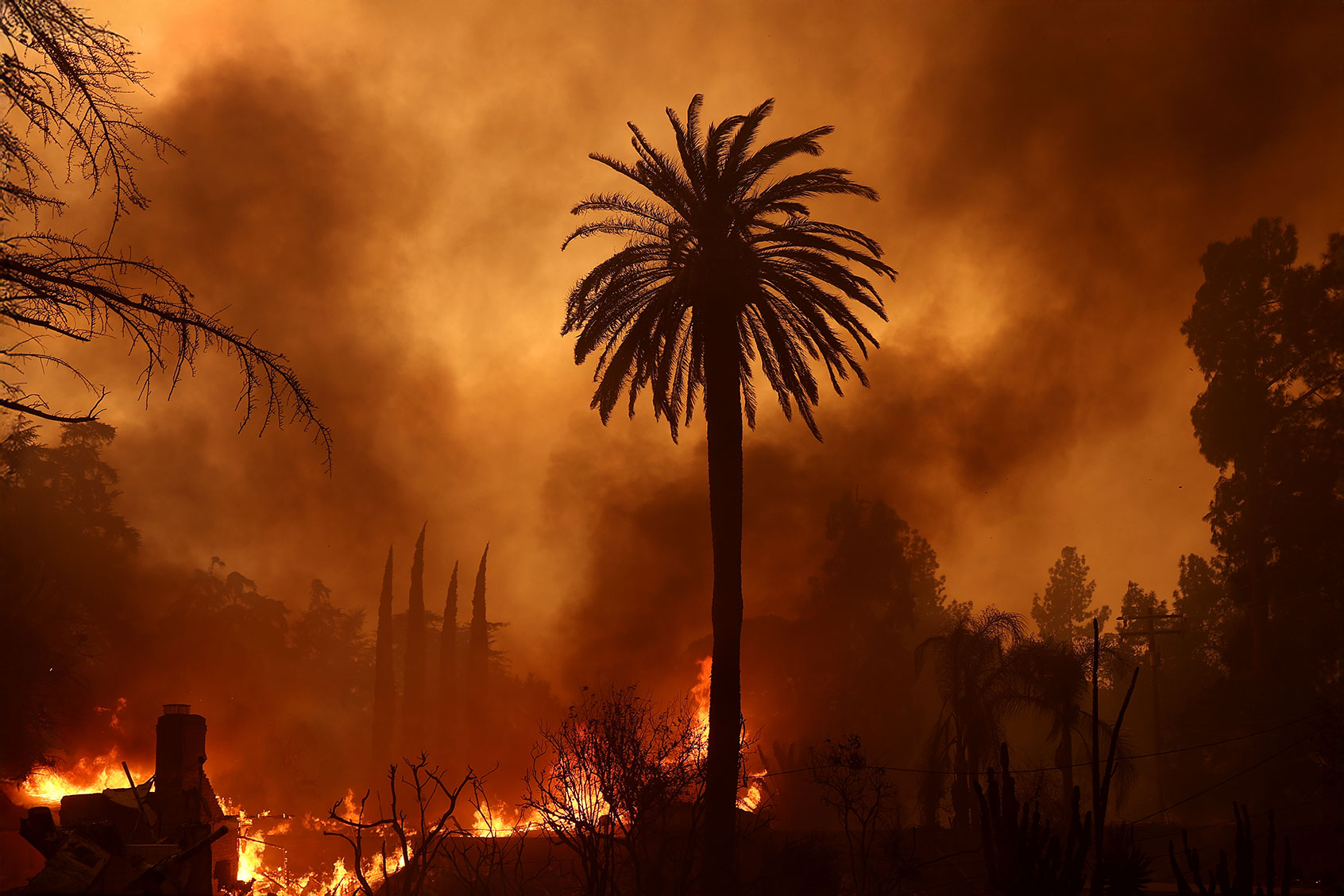
A study published in JAMA in early December that examined nearly 5,000 acute care hospitals found that by 2022, 52% of rural hospitals lacked obstetrics care after more than a decade of unit closures. The health implications of those closures for young women, the population most likely to need pregnancy care, and their babies can be significant. Research has shown that added distance between a patient and obstetric care increases the likelihood the baby will be admitted to a neonatal intensive care unit, or NICU.

Witham said that while she does not support abortion, she believes the government should not “legislate it away completely.” She said that unless the government provides far more support for young families, like free child care and better mental health care, abortion should remain legal.

Conversations with a liberal school board member, a moderate owner of a timber company, members of Baker City’s Republican Party chapter, a local doula, several pregnant women, and the director of the Baker County Health Department — many of whom were not rigidly opposed to abortion — all turned up the same answer: No mobile clinics offering abortions here, please.

Kelle Osborn, a nurse supervisor for the Baker County Health Department, loved the idea of a mobile clinic that would provide education and birth control services to people in outlying areas. She was less thrilled about including abortion services in a clinic on wheels.

“It’s not something that should just be handed out from a mobile van,” she said of abortion services. She said people in her conservative rural county would probably avoid using the clinics for anything if they were understood to provide abortion services.

Both Osborn and Meghan Chancey, the health department’s director, said they would rank many health care priorities higher, including the need for a general surgeon, an ICU, and a dialysis clinic.

Nationally, reproductive health care services of all types tend to be limited for people in rural areas, even within states that protect abortion access. More than two-thirds of people in “maternity care deserts” — all of which are in rural counties — must drive more than a half-hour to get obstetric care, according to a 2024 March of Dimes report. For people in the Southern states where lawmakers installed abortion bans, abortion care can be up to 700 miles away, according to a data analysis by Axios.

Nathan Defrees grew up in Baker City and has practiced medicine here since 2017. He works for a family medicine clinic. If a patient asks about abortion, he provides information about where and how one can be obtained, but he doesn’t offer abortions himself.

“There’s not a lot of anonymity in small towns for physicians who provide that care,” he said. “Many of us aren’t willing to sacrifice the rest of our career for that.”

He also pointed to the small number of patients requesting the service locally. Just six people living in Baker County had an abortion in 2023, according to data from the Oregon Department of Public Health. Meanwhile, 125 residents had a baby that year.

A doctor with obstetric training living in another rural part of the state has chosen to quietly provide early-stage abortions when asked. The doctor, concerned for their family’s safety in the small, conservative town where they live, asked not to be identified.

The idea that better access to abortion is not needed in rural areas seems naive, the doctor said. People most in need of abortion often don’t have access to any medical service not already available in town, the doctor pointed out. The first patient the doctor provided an abortion for at the clinic was a meth user with no resources to travel or to manage an at-home medication abortion.

“It seemed entirely inappropriate for me to turn her away for care I had the training and the tools to do,” the doctor said.

Defrees said it has been easier for Baker County residents to get an abortion since the U.S. Supreme Court overturned Roe v. Wade.

A new Planned Parenthood clinic in Ontario, Oregon, 70 miles away in neighboring Malheur County, was built primarily to provide services to people from the Boise metro area, but it also created an option for many living in rural eastern Oregon.

Idaho is one of the 16 states with near-total bans on abortion. Like many states with bans, Idaho has struggled to maintain its already small fleet of fetal medicine doctors. The loss of regional expertise touches Baker City, too, Defrees said.

For example, he said, the treatment plan for women who have a desired pregnancy but need a termination for medical reasons is now far less clear. “It used to be those folks could go to Boise,” he said. “Now they can’t. That does put us in a bind.”

Portland is the next closest option for that type of care, and that means a 300-mile drive along a set of highways that can be treacherous in winter.

“It’s a lot scarier to be pregnant now in Baker City than it ever has been,” Defrees said.

KFF Health News is a national newsroom that produces in-depth journalism about health issues and is one of the core operating programs at KFF—an independent source of health policy research, polling, and journalism. Learn more about KFF.

Subscribe to KFF Health News' free Morning Briefing.

This article first appeared on KFF Health News and is republished here under a Creative Commons license.

How Jimmy Carter’s so-called betrayal of evangelicals led to MAGA

Today's funeral for former President Jimmy Carter follows nearly two weeks of reminiscence about the legacy of the Georgia Democrat who held the White House for one term in the late '70s. Some of it has been hagiographic, especially in light of the dramatic contrast between Carter's genuine faith decency and Donald Trump's sociopathy and obviously fake Christianity. But much of the remembrance has been refreshingly nuanced, reflecting both on Carter's failures in office alongside his many accomplishments, many in his post-presidency. One of the most important legacies he'll leave behind is a complex one, though it is rooted in one of Carter's best traits, his commitment to anti-racism. During his presidency, Carter inadvertently revealed a fundamental truth about white evangelical culture: its guiding star is not faith or morality, but racism. 

Hard as it may be to believe, Carter won the majority of evangelical voters in 1976. Being a white evangelical Christian from the South, he read to many as one of theirs. Things shifted in 1978, however, over an issue that seems obscure now, but was a big deal to white evangelicals at the time: school desegregation.

The lies about Carter and the IRS had traction with white evangelicals because they touched on a larger truth: he was opposed to racial segregation and white supremacy.

In January 1976, the IRS revoked the tax-exempt status of Bob Jones University, a Christian school that banned Black students. In 1978, the IRS tried to expand this by proposing a rule that would strip schools of tax-exempt status if they didn't meet very conservative criteria for including students of color. Careful readers have likely already picked up on the fact that Carter wasn't involved in any meaningful way in these IRS moves. Gerald Ford was still president when Bob Jones University was penalized, the policy being enforced was developed during Richard Nixon's administration. In 1978, Carter wasn't aware that IRS leadership was upping enforcement against segregation academies. These were the countless private — often religious — schools that opened after Brown v. Board of Education to recreate the whites-only education environment racist parents preferred.

But it didn't matter. Evangelical leaders hated Carter because he was publicly anti-racist and supported gay rights and women's equality. They used the school segregation issue to turn white evangelical voters against Carter.


Want more Amanda Marcotte on politics? Subscribe to her newsletter Standing Room Only.


As historian Randall Balmer explained at Religion News Service, the sleight of hand regarding the timeline was only the beginning of the mendacity religious right leaders brought to their campaign against Carter. Jerry Falwell openly invented an exchange between himself and Carter that never happened:

Falwell began recounting to various audiences and political rallies across the country how he had asked Carter why “practicing homosexuals” served on the White House staff. Carter, according to Falwell, replied, “I am president of all the American people and I believe I should represent everyone.” Falwell’s rejoinder: “Why don’t you have some murderers and bank robbers and so forth to represent?”

As a tape recording of the White House gathering demonstrated, however, the president made no such comment. Falwell, in fact, had fabricated the entire exchange in an apparent attempt to discredit Carter in the eyes of evangelicals.

In this, we can see the seeds of the modern, MAGA-infused religious right, where lying is treated as an honorable weapon against Democrats, who are routinely painted as a demonic force. But it's also telling that, while Falwell and fellow Christian right leaders swiftly pivoted attention to gender and sexuality issues, the initial hook to get evangelical voters to hate Carter started with outrage over school desegregation.

The lies about Carter and the IRS had traction with white evangelicals because they touched on a larger truth: he was opposed to racial segregation and white supremacy. He gave a speech on the 25th anniversary of Brown v. Board where he acknowledged that "racial segregation still exists in our schools, and so does discrimination in housing and in other aspects of human life," but also called on the audience to "be even more determined" to fight for racial equality. Carter also made a lot of high-profile moves to welcome Black people into American leadership, such as appointing Black civil rights leader Andrew Young to be the United Nations ambassador and appointing the first Black woman, Amalya Kearse, to be an appellate judge. 

In 1980, Ronald Reagan beat Carter with a campaign that may seem subtle by Trumpian standards but winked heavily at those who were still bitter over the end of Jim Crow. He kicked off his campaign by giving a "states rights" speech near the location of an infamous Mississippi murder of three civil rights activists 16 years before. He noted that the state had been mostly Democratic and "I was a Democrat most of my life myself, but then decided that there were things that needed to be changed." He didn't mention what had sent so many white people from the Democratic to the Republican party, but he didn't need to. Everyone knew it was outrage over Democrats passing the Civil Rights Act of 1964. With these winks at white supremacy, Reagan won over evangelical voters and they've been loyal Republicans ever since. 

In the past few decades, there's been a great forgetting in much of the media over how central racism was to the evangelical shift from left to right in those years. A new story was written, which made it less about race and more about gender and "family values." So many in the press started to believe the myth of the "moral" Christian right that they were genuinely shocked when white evangelicals turned out to be Trump's most stalwart supporters. After all, Trump is a chronic adulterer who laughs at religious believers behind their backs, but Christian right leaders regard him as close to a messiah figure.

This decades-ago history is clarifying. White evangelicalism has never been about morality or even really faith, but identity — specifically Whiteness. By conflating religious and racial identity, white evangelicals have put a moral gloss on a deeply immoral desire for white supremacy. That's why the election of Barack Obama as president was regarded as an apocalyptic event in the white evangelical community, giving rise to hysterical claims that Christians are being "persecuted." Racism underpins their escalating claims that they must "take back" the country by any means necessary, which includes regular nods to violence. There was a protesting-too-much quality when Jerry Falwell named his 1979 anti-Carter group "Moral Majority." When that movement became the backbone of MAGA 37 years later, it proved there was never anything moral about it. 

The week Donald Trump became a great man of history

2024 belonged to Donald Trump. He survived multiple assassination attempts and MAGA turned him into a religious-political icon supposedly chosen by God to take back the White House. The Supreme Court declared him a de facto king who is above the law. The professional smart people and other such establishment political observers repeatedly declared that Trump’s presidential campaign was “doomed,” and that President Biden (and then Vice President Harris) would defeat him — perhaps with relative ease. Many of these same public voices also repeatedly declared that “the walls were closing in” on Trump because of his multiple criminal trials. Of course, that did not happen. On Election Day, he won both the popular vote and the Electoral College. The MAGA Republicans also took control of the House of Representatives and the Senate. He smashed the fabled “blue wall” and increased his support among the Democratic Party’s base voters, most notably Hispanics. The Democratic Party’s leaders and consultant class are still shell-shocked by how Trump and the MAGA movement so easily ran over them. 

On Monday, four years since Trump’s followers attacked the Capitol in an attempt to nullify the results of the presidential election, Trump was officially certified as the winner of the 2024 election. Kamala Harris fulfilled her ceremonial role as vice president and presided over the ceremony. The Democrats did not object or otherwise disrupt the certification of the Electoral College votes. Harris was gracious in defeat; she must have also felt humiliated. The Republicans, as is their way, behaved badly. Rep. Norma Torres, D-Calif., told Axios that “Seeing the attitudes of Republicans sitting across the aisle from me, smirking — this was a serious ceremony. They were acting like juveniles.”

In a new essay at Slate about Trump officially becoming the next president and the events of Jan. 6, Aymann Ismail writes, "Most people who I watched trample the Capitol must think they’ve been vindicated today, within their rights to flip the table when they didn’t get their way, destined to be remembered as heroic by history."

By the end of the nearly 30-minute session, Harris’ demeanor was hard to read. She called out the totals: 312 electoral votes for Trump, and her own 226. The Republicans in Congress cheered Trump’s win, while Democrats remained silent. I found something unsettling in their quiet acquiescence: It seemed less like a demonstration of higher principles and more like an act of submission. The political party that had helped stage and enable an insurrection didn’t learn any lessons; the one that didn’t had no real response left in the chamber.

I remain convinced that no Democrat would likely have been able to defeat Trump and his MAGA movement in this social and political moment of fake populism and global rage against the elites and the system. The chances were even more diminished because of the many tactical and strategic errors the Democrats and their surrogates and agents made during the campaign and in the years (and decades) that preceded it. Ultimately, the Democrats did not give enough people a compelling reason to vote for them, and not Donald Trump and the MAGAfied Republican Party.

Time Magazine correctly judged Donald Trump to be its 2024 Person of the Year. Here is their explanation:

For 97 years, the editors of TIME have been picking the Person of the Year: the individual who, for better or for worse, did the most to shape the world and the headlines over the past 12 months. In many years, that choice is a difficult one. In 2024, it was not.

Since he began running for President in 2015, perhaps no single individual has played a larger role in changing the course of politics and history than Trump. He shocked many by winning the White House in 2016, then led the U.S. through a chaotic term that included the first year of a pandemic as well as a period of nationwide protest, and that ended with his losing the election by 7 million votes and provoking the violent attack on the U.S. Capitol on Jan. 6, 2021. The smart money wagered that we had witnessed the end of Trump.

If that moment marked Trump’s nadir, today we are witnessing his apotheosis. On the cusp of his second presidency, all of us—from his most fanatical supporters to his most fervent critics—are living in the Age of Trump.

Sitting with TIME three weeks after the election, Trump was more subdued than when we visited him at Mar-a-Lago in March. He is happiest to be in a fight, and now that he has won, he sounded almost wistful, recognizing that he had run for office for the final time. “It’s sad in a way. It will never ­happen again,” Trump told us. And while he is thinking about how that chapter has ended, for Americans and for the world, it is also the beginning of a new one. Trump is once again at the center of the world, and in as strong a position as he has ever been.

Although the following observation will pain and upset the sensibilities of many people, Trump is something more: he is a great man of history. This is not a normative claim; it is an evidence-based assessment of Trump’s impact on American society and the world and its historical trajectory.

We need your help to stay independent

During a conversation with me several years ago, one of Donald Trump’s biographers explained his seductive power and ability to dominate the media and politics in the following way: Trump is the main character and hero in a story that he himself is writing in real time.

I reflected on that insight as I watched Ali Abbasi's recent film “The Apprentice," which explores Donald Trump’s tutelage under the infamous political operative Roy Cohn during the 1970s and 1980s in New York. I fell asleep at some point during the film and was jarred awake when I heard someone snoring loudly. I was prepared to tell them to be quiet but then I realized I was the snoring man. I then let out a laugh as I came to the horrible realization that this is Trump’s world on the screen but we “the Americans” are all trapped in it and cannot easily escape. As David Bell presciently observed in a 2016 article in the Financial Times, “Donald Trump’s personality could assume, difficult as it is to apply these words to him, world-historical importance.”

The next four years may also belong to Donald Trump and his MAGA people and the larger antidemocracy movement. The degree to which that is true will depend on what resistance and opposition looks like and how effective it is in protecting an American democracy and civil society under assault and then revitalizing it for the future.

“Kiss and capture”: New theory explains how Pluto captured its biggest moon

Pluto, considered the ninth planet in our solar system until it was reclassified to dwarf planet status in 2006, is thought to have undergone an impact that broke off the largest of its five moons, Charon. Because Charon is just over half the size of Pluto, the two bodies then began orbiting each other in a cosmic dance in the Kuiper Belt beyond Neptune’s orbit.

However, a recent study in Nature Geoscience suggests a different origin story for Charon. Using simulations that took into account parameters like the size and composition of the bodies, along with the strength at which they collided, researchers reported that in the early stages of formation Charon and Pluto came together and orbited as one, swapping some materials before separating. They call this cosmic dance a “kiss and capture” event, which could indicate Charon and Pluto are roughly the same age.

“Because Pluto is rotating rapidly prior to the collision, and because Charon lies mostly outside of their corotation zone, it is able to ‘push’ Charon off, and Charon starts to slowly migrate out,” first author Dr. Adeene Denton, a planetary scientist from the University of Arizona, told The Guardian.

Denton’s team plans to conduct future research that examines how this formation impacted Pluto’s evolution and how the force of the tides on Pluto changed as a result of the separation. Additionally, 80% of the largest objects in the Kuiper Belt have a large object rotating them like the Pluto-Charon dynamic, and "kiss and capture" events could have occurred in this region in other places, too. 

"We're particularly interested in understanding how this initial configuration affects Pluto's geological evolution," Denton said in a press release. "The heat from the impact and subsequent tidal forces could have played a crucial role in shaping the features we see on Pluto's surface today."

California wildfires show we are not prepared for climate change

I spent most of the evening on January 7, a Christmas Day celebrated by Orthodox Christians around the world, monitoring local news and emergency apps for evacuation alerts for the Los Angeles area. The horrific images of the Pacific Palisades fires were only the start, the city officials warned. Our neighborhood areas were advised to stay put, shelter in place as the night winds were picking up. As the night progressed, the fiery circle around us was getting closer and closer.

What many people outside LA don’t realize is that it’s not one big city. It’s many sizable cities, with their own budgets and mayors encompassing 29 separate fire departments; Beverly Hills, Glendale and Pasadena–LA County is vast. And it was surreal to watch the metro area, with so many resources, still struggling to find enough firefighters and water to contain the fire that was raging through neighborhoods, engulfing entire homes, forcing thousands to flee, going so far inland into the city that few predicted.

The scope and speed of the fires left the city’s richest people feeling powerless.

“There’s no water in the fire hydrants. The firefighters are there, and there's nothing they can do," billionaire real estate developer Rick Caruso said, as reported by the Los Angeles Times. "We've got neighborhoods burning, homes burning, and businesses burning. It should never happen."

We are all just one weather calamity away from becoming displaced.

What the sensationalized news coverage of the fire doesn’t capture is that this is not a freak event — this is the new normal. Scientists have been predicting these deadly conditions for decades. As one writer pointed out on X on Tuesday night, “this is how people turn into climate refugees.”

As Salon has previously reported, nowhere will be safe from the effects of global heating. We are all just one weather calamity away from becoming displaced.

While I previously covered several war zones in Somalia, Egypt and Ukraine, I never had to pack a “go bag” before. As I Googled a list of recommended items to pack, my husband was prepping our car in case we had to evacuate our toddler, a dog and two cats in the middle of the night.

This is already one of the biggest windstorms LA has seen in over a decade, with the extent of devastation just coming into focus. At least five people have died, 1,100 structures destroyed across 15,000 acres burned and tens of thousands evacuated.


Want more health and science stories in your inbox? Subscribe to Salon's weekly newsletter Lab Notes.


As California Gov. Gavin Newsom noted in his remarks earlier in the evening on Tuesday and has been saying for years, there are no more fire seasons: The wildfire risk is year-round, a result of rampant fossil fuel use that is cooking our planet.

“The fires in Los Angeles are a stark reminder of how extreme weather increases fire risk. It is likely that heavy rains from El Niño last year fuelled vegetation growth, which has since dried out during the recent prolonged dry spell and, along with strong winds, creating perfect conditions for wildfires to spread,” Dr. Maria Lucia Ferreira Barbosa, a wildfire scientist at the U.K. Centre for Ecology and Hydrology, explained for the Science Media Centre. “There is projected to be a global increase of extreme fires of up to 14 per cent by 2030, 30 per cent by 2050 and 50 per cent by the end of the century.”

Eaton Fire Altadena CaliforniaThe Eaton Fire burns through a neighborhood on January 08, 2025 in Altadena, California. (Justin Sullivan/Getty Images)The Santa Ana winds, some reaching 90 miles per hour, coupled with dry conditions and LA’s mountainous terrain made containment that much more difficult. They also exposed gaps in the city’s infrastructure and disaster preparedness.

By Wednesday morning, the winds started to calm down, but five fires were still raging.

I opened the door to get the morning paper, and could see gray smoke clouds all hovering around us. The coverage on social media made it look like we woke up in Pompeii after the volcanic eruption.

With parts of Los Angeles still burning and entire neighborhoods like Pacific Palisades completely torched, social media is flooded with examples of people dealing with the fires and their aftermath while struggling to get any help.

“Power lines sparking against trees. Neighbor and I have been trying to call 911 and Fire Department for 45 min with no answer (as instructed by Power Company),” Kyle Zink posted on X Tuesday night. “Yes, a lot is going on, but the city is failing us.”

And Los Angeles is supposed to be one of the cities better prepared for climate disasters. To the city governments’ credit, the number of casualties to date have been limited given the radius of the fires and the amount of damage inflicted.

But it did not feel like we were well prepared Tuesday night.

We need your help to stay independent

And less than half of major U.S. cities with populations over 300,000 had climate adaptation plans, as of May 2020. A recent study by Zurich Insurance Group and Economist Impact found that globally 80% of respondents think that cities are not prepared to handle climate change.

The political blame games have begun, with the incoming president already accusing Newsom for failing to pump more water.

“The chronic under-investment in the city of Los Angeles in our public infrastructure and our public safety partners was evident and on full display over the last 24 hours,” Los Angeles City Councilmember Traci Park, who represents Pacific Palisades, said at a Wednesday news conference, as reported by the Los Angeles Times.

On Wednesday night, another fire broke out in the Hollywood Hills, prompting more evacuations. We may be tired of political debates or doomsday scenarios from climate scientists, but the impacts from a changed climate are real and they're here now, not in some distant future. When it comes to critical issues like access to water, safe infrastructure and disaster preparedness, it’s time to put our political differences aside and get to work.

The Senate parliamentarian could block some of Trump’s agenda — and be a scapegoat for Republicans

As Republicans make plans for how to get President-elect Donald Trump’s one “big beautiful bill” through Congress, both the political and procedural challenges of enacting an agenda through budget reconciliation are coming into focus.

As it stands, congressional Republicans are debating whether to pursue a one or two-bill strategy for Trump’s agenda. The president-elect has said he prefers one bill — addressing border policy, energy policy, manufacturing and taxes— but recently told conservative radio host Hugh Hewitt that he will “do whatever needs to be done to get it passed." Senate Republicans have indicated that they might favor a two-bill approach. 

Either way, the Republican legislative agenda rests on budget reconciliation in the Senate, a process designed to allow the upper chamber to bypass the normal 60-vote threshold for passing legislation, instead allowing it to pass a budget with a simple 51-seat majority. Given the incoming GOP majority will only control 53 seats, this will be the main vehicle for passing major legislation without Democratic support in a closely divided Senate.

The GOP's slim margin has thrust the byzantine rules around budget reconciliation to the forefront of political discussion once again. The bill that created the budget reconciliation process, the Congressional Budget Act of 1974, requires that reconciliation measures concern themselves with taxation, spending or the debt limit; they are not supposed to include provisions that do not impact either spending or revenue. 

This later point is known as the Byrd Rule, named for the late Sen. Robert Byrd, D-W.V. It was formally adopted in the Congressional Budget Act of 1990 in order to prevent reconciliation bills from being packed with measures that are unrelated or, in the act’s words, “merely incidental” to the budget.

According to Richard Kogan, who served as a senior adviser at the Office of Management and Budget in President Barack Obama’s first term, the application of the Byrd Rule comes down to the interpretation of the phrase “merely incidental” by the Senate parliamentarian.

“What does ‘merely incidental’ mean? What we have discovered is that 'merely incidental' does not mean ‘really small,’” Kogan told Salon. “Senate parliamentarians are put in an impossible position because ‘merely incidental’ is inherently a judgment call.”

The current Senate parliamentarian, Elizabeth MacDonough, ruled in 2021 that a provision to raise the federal minimum wage to $15 an hour couldn’t be passed via reconciliation, despite the fact that such a change would have dramatic effects on the federal budget. 

The rules of budget reconciliation are also why the Inflation Reduction Act made liberal use of tax incentives to enact climate policy: that was what was available through reconciliation. Republicans will face a similar, roundabout procedural challenge in enacting their own agenda.

In other areas, like the question of the debt limit, MacDonough and other parliamentarians have acted more as literalists, according to Kogan. For example, MacDonough has said that the debt limit can be raised via reconciliation, but cannot be suspended because the 1974 Budget Act does not specifically mention suspending the debt limit but does mention raising it. The other issue facing Republicans are the rules around what can and cannot be included in a reconciliation bill according to a Senate rule known as the Byrd Rule, which the parliamentarian is in charge of interpreting for the purposes of making recommendations.

The Byrd Rules are not actually enforced by the parliamentarian but rather enforced by the presiding officer of the Senate, which is either the president of the Senate or the president pro tempore of the Senate. That means either Vice President-elect JD Vance or Sen. Chuck Grassley, R-Iowa, will be in charge of enforcement.

Seth Barrett Tillman, a professor at Maynooth University School of Law and Criminology and expert on the legislative process, told Salon that this gets to a deeper issue of whether or not Republicans plan to respect what are called “entrenched” rules in the Senate. 

“The issue is how entrenched are the rules and how willing are the Republicans to change those rules?” Tillman said. “I don't think the Republicans really want to start this Congress breaking well-pedigreed rules, but maybe they do.”

We need your help to stay independent

Though it has never happened before, there is in practical terms nothing stopping the presiding officer of the Senate from ignoring the recommendations of the parliamentarian, or preventing a majority of senators from voting to overturn a parliamentarian’s ruling. This issue also came up in the 2021 minimum wage fight, when Vice President Kamala Harris and the Democratic Senate were pressured to overrule the parliamentarian to raise the minimum wage.

Tillman said that while there may not be a legal cost to breaking precedent in the Senate, there may be a political cost in that “it makes them look like people that don’t follow rules.” At the same time, he noted, there could be a benefit to a dogged pursuit of policy goals, especially because “some people don’t think these rules are binding anyways.” 

Also, while simply ignoring the parliamentarian would be a dramatic step, Republicans have ousted a parliamentarian before, most recently after former parliamentarian Robert Dove issued a series of rulings that obstructed portions of former President George W. Bush’s tax cuts in 2001. 

At the time, The Washington Post reported that Democrats complained that rulings from Dove — who was first appointed by Republicans in 1981, dismissed by Democrats in 1987 and reappointed by Republicans in 1995 — tended to lean towards the GOP. While MacDonough has served during both Republican and Democratic majorities, she was first appointed to her position under the late Sen. Harry Reid’s, D-Nev., leadership.

For Senate Majority Leader John Thune’s, R-N.D., part, he has already signaled that he intends to heed the advice of the parliamentarian, telling Punchbowl News that overruling the parliamentarian is “akin to killing the filibuster.”

“We can’t go there,” Thune said. “People need to understand that.”

While Thune has said he plans on respecting the opinion of the parliamentarian, his comments on the topic appear to demonstrate that he is expecting pressure on the issue, whether it be from inside the Senate or from the White House.

Molly Reynolds, a senior fellow at the Brookings Institution, told Salon that, as she sees it, the parliamentarian is also a convenient person for senators to scapegoat if and when they might not want to take a particular vote. Reynolds said that the Senate procedures are very "really important" and do constrain the sorts of things that are supposed to be allowed in a reconciliation bill. However, she also cautioned discussing procedure "abstracted" from the actual bills being considered, because senators have often leaned on procedural hurdles as an excuse for doing or not doing something according to their own preferences. 

“Why have senators listened to the parliamentarian in the way they have for so long? It can be very useful for senators to blame the parliamentarian for saying no to something that they don’t want to vote for in the first place,” Reynolds said. 

CORRECTION: An earlier version of this article incorrectly referred to John Thune as president pro tempore of the U.S. Senate. The current office holder is Chuck Grassley.

“We did not discuss that”: Trump spoke to Alito before asking SCOTUS to intervene in hush money case

Supreme Court Justice Samuel Alito spoke with Donald Trump mere hours before he filed a request for the court to intervene in his New York hush-money case. 

The president-elect's legal team filed an emergency application to the highest court on Wednesday, asking the justices to intervene ahead of Trump's upcoming sentencing hearing. The filing asked the court to act to "prevent grave injustice and harm to the institution of the Presidency." Though Alito admitted to speaking with the president-elect on Tuesday, he said they did not discuss his case. 

"William Levi, one of my former law clerks, asked me to take a call from President-elect Trump regarding his qualifications to serve in a government position," Alito told ABC News. "We did not discuss the emergency application he filed today, and indeed, I was not even aware at the time of our conversation that such an application would be filed… We also did not discuss any other matter that is pending or might in the future come before the Supreme Court or any past Supreme Court decisions involving the president-elect."

Trump was found guilty of 34 felony counts of falsifying business records in May of last year. After several months of delays, Trump was ordered to a sentencing hearing by New York Supreme Court Justice Juan Merchan. Barring intervention from other courts, Trump will be sentenced on Jan. 10. 

Merchan has telegraphed that he has no intention of sentencing Trump to jail time or fines. In his order, he shared that the court would not "impose any sentence of incarceration" and floated the idea of an "unconditional discharge," a sentence that comes with no consequences. That did not stop Trump from raging against Merchan and calling for him to be disbarred.

"There has never been a President who was so evilly and illegally treated as I. Corrupt Democrat judges and prosecutors have gone against a political opponent of a President, ME, at levels of injustice never seen before," he wrote on Truth Social earlier this month. "Corrupt judges or judges so blinded by their hatred of me … are making a mockery of the United States Judicial System, and the World is watching in disgust."