Spring Sale: Get 1 Year, Save 58%

In Brazil’s successful vaccine campaign, a lesson for the U.S.

As the Covid-19 vaccine campaign gained steam in the United States last spring, I was locked down in my apartment in Rio de Janeiro, trying to avoid being infected with the virus. Brazil — then, as now, second only to the U.S. in coronavirus deaths — seemed to have the world’s slowest immunization program rollout. Brazilian cities had started vaccinating locals in January, but there just weren’t enough doses to go around.

As the pace of vaccinations in the U.S. soared, Brazilians were debating the merits of lockdowns and liberally taking medications with no evidence that they were effective against the coronavirus. I watched with envy as my American friends posted “I’m vaccinated!” photos on my social media feeds. So in June I left Rio de Janeiro, and returned to my hometown of Chicago where I received my first dose the day I landed.

Since then, however, the tables have turned. The vaccination rate has ramped up considerably in Brazil and stalled in the U.S. According to data compiled by The New York Times, as of Oct. 14, about 73 percent of Brazilians have received at least one dose — compared with just 66 percent in the U.S. The U.S. still comes out on top in terms of its fully vaccinated population, with 57 percent versus 47 percent in Brazil. But this gap between Brazil’s fully and partially vaccinated seems poised to close: A July survey showed that 94 percent of Brazilians plan to get the coronavirus vaccine.

What happened? Despite rampant misinformation, political infighting, and failures of leadership at the highest levels, Brazil’s vaccination campaign has succeeded because the country has one thing the U.S. does not: an unbreakable vaccine culture.

As Gilberto Hochman, a public health researcher at Casa de Oswaldo Cruz, a part of Brazil’s Oswaldo Cruz Foundation, has previously written, Brazil’s vaccination culture has rocky origins. In 1904, when the young republic was attempting to eradicate smallpox and yellow fever in Rio de Janeiro, health officials invaded the houses of the city’s impoverished residents and forcefully vaccinated them. The residents countered with what has come to be known as the “Vaccine Revolt,” a week-long street rebellion that left 30 people dead and ultimately brought an end to mandatory vaccination. The revolt is so ingrained in the public memory that a Rio de Janeiro carnival group pays homage every year to one of the revolt’s leaders, an Afro-Brazilian named Horácio José da Silva, also known as Prata Preta, or “Black Silver.”

In the late 1960s, with smallpox still circulating in the country, the then-ruling military dictatorship established the guiding characteristics that would shape Brazilian vaccine campaigns for decades to come. In a renewed effort to eradicate the disease, the government tapped community leaders — local politicians, religious leaders, athletes — and a variety of communication channels, including newspapers, loudspeakers, and films screened on school campuses, to get their message out. In large cities, mass vaccinations took place in iconic public spaces. Popular festivals, processions, religious services, fairs, and artistic performances became vaccination sites. Vaccines even reached distant countryside towns. Hochman explained that by the end of the campaign, 84 percent of Brazilians were inoculated, smallpox had been eradicated, and the country’s citizens had come to view vaccinations as a public good from the state. The military dictatorship doubled down on those efforts when it created the National Immunization Program in 1973.

A decade and a half later, with the country back under civilian rule, Brazil established what is now the largest universal public health system in the world, the Unified Health System. Although it isn’t perfect, it has established the government as a trusted provider of basic free health care to the communities who need it most. Anyone in Brazil can walk into a public clinic and receive any of more than 20 vaccinations for free.

When Covid-19 vaccines developed by AstraZeneca and Pfizer became widely available in Brazil this summer — augmenting the existing Sinovac-CoronaVac stockpile — municipalities followed a familiar playbook. During the weekend of Aug. 14, São Paulo mounted a citywide effort — “Vaccine Turnaround” — to vaccinate every 18- to 21-year-old. More than 600 vaccine locations dotted the megacity, and 16 locations remained open for 34 hours straight, from Saturday morning until early Sunday evening. Masked people arrived at vaccine drive-through and walk-up sites that had all the elements of a festival — music, dancers, decorations — even throngs of people waiting in line. (There were also no promises of money or lottery entries, as have become common in the U.S.)

By all measures, São Paulo’s event was an incredible success. Tired of waiting a year and a half for salvation from the coronavirus, more than 500,000 young Brazilians answered the call to be vaccinated. They did as their parents and grandparents had done in the preceding weeks and months.

The event helped São Paulo, a city of 12.4 million residents, reach a Covid-19 vaccination milestone that no American city seems likely to ever reach: 99 percent of its residents 18 and older have now received at least one vaccination dose. Even Seattle’s King County, which in June became the first large U.S. county to vaccinate 70 percent of its eligible residents, has administered a first vaccine dose to just 88 percent of residents aged 16 and older.

Moreover, any attempt to replicate the success of the massive São Paulo vaccination event in a major U.S. city would probably fail: We Americans love our personal independence and civil liberties, and we don’t expect much of the government when it comes to health care.

Brazil’s vaccination campaign is succeeding despite its president’s efforts to undermine it. Jair Bolsonaro, the “Trump of the Tropics,” refused at least 14 times to pre-order Covid-19 vaccines in 2020 and early 2021. A misguided policy that prioritized unproven treatments over vaccines arguably contributed to the Covid-19 deaths of more than 600,000 Brazilians — 400,000 of them after vaccines had become available in other parts of the world. Still today, Bolsonaro has only tepidly promoted the coronavirus vaccine, telling people it’s their choice whether or not to get vaccinated and recently announcing that he had decided against vaccination for himself. But Brazilians have largely ignored their president, thrown individuality out the door, and gotten vaccinated.

In August, my Brazilian friend Lucas Fontainha, a 27-year-old veterinarian, summed up this culture in one tweet: “Fortunately Brazilians love vaccines, they fight for vaccines, they throw vaccine festivals, they kiss all the babies in the line waiting for vaccines, they camp overnight at the clinic to get a vaccine … even the anti-vaccination Brazilians vaccinate in secret. I love this.”

Brazil’s strong vaccination culture will likely make it one of the most vaccinated countries in the world by the end of the year. But that culture wasn’t created overnight — it took decades of building residents’ trust and forging community relationships and, of course, the creation of a universal health care system. Perhaps the U.S. could learn a thing or two.

* * *

Kiratiana Freelon is an independent journalist based in Rio de Janeiro, Brazil. Her reporting focuses on social injustice, Afro-Brazilian communities, and Brazil’s dynamic economic and political landscape. A Harvard graduate, she has worked for the New York Times, and her work has appeared in The Washington Post, Essence Magazine, and New York Magazine, among others.

This article was originally published on Undark. Read the original article.

Matt Gaetz, MTG’s PAC has blown through all of its money in last six months: report

According to a report from Mother Jones, the PAC created by Reps. Matt Gaetz (R-FL) and Marjorie Taylor Greene (R-GA) with great fanfare and a national tour has already blown through what money it had and now is close to broke.

As Russ Choma reports, the publicity-seeking lawmakers started up the Put America First PAC and then launched what turned into a troubled “America First” tour — that saw events canceled or moved multiple times due to problems securing venues — which, in turn, burned through their early cash donations.

According to Choma, “Marjorie Taylor Greene and Matt Gaetz both have a knack for ginning up outrage and stealing headlines. All this sound and fury is assumed to hoover up dollars from the riled up grassroots, but that’s not true, according to the most recent campaign finance filings, ” adding, “Despite the two spending the summer barnstorming the country on a grand fundraising swing they dubbed the America First tour, (the moniker adopted after scraping the “Anglo-Saxon” caucus), neither Greene nor Gaetz lived up to expectations on the fundraising end. And, just six months after founding it, the joint fundraising committee they launched to drive their tour is nearly broke.”


Want a daily wrap-up of all the news and commentary Salon has to offer? Subscribe to our morning newsletter, Crash Course.


As the report details, the two lawmakers’ PAC raised $360,000 initially but donations dropped off and a recent filing shows a meager $13,000 on hand.

Choma reports that Greene is having her own fundraising issues as well.

“While Greene is definitely more successful—in her short Congressional career she’s raised more than $8.8 million—the most recent numbers filed by her own campaign show her fundraising totals are increasingly eaten up by the costs of chasing donors and paying off the operatives and professional fundraising consultants and vendors that she hires,” he reported.

As for Gaetz… “Gaetz campaign’s latest filing shows that his fundraising has all but dried up. He raised just $527,000 from July 1 to September 30. He spent far more—$627,000—trying to raise that money. In another parallel to Greene, Gaetz’s biggest expenses are direct mail and paying fundraising consulting costs to his vendors. In fact, those two things ate up more than 60 percent of his donations,” Choma reported.

You can read more here.

There may be plastic in your meat — and there is definitely plastic in your body

Despite being a work of fiction, Upton Sinclair’s 1906 novel “The Jungle” evoked a real-world complex of meat factories in which vermin ran rampant, foul odors could make you gag and workers falling into rendering tanks were ground up with other animal parts and served to unsuspecting consumers. His book was so vivid and graphic that President Theodore Roosevelt, despite personally despising Sinclair, felt obligated to investigate the matter. After confirming many of Sinclair’s depictions, Roosevelt pushed for the successful passage of the Meat Inspection Act and the Pure Food and Drug Act, the latter of which eventually established the Food and Drug Administration. 

All in all, “The Jungle” ranks alongside Harriet Beecher Stowe’s 1852 anti-slavery novel “Uncle Tom’s Cabin” as one of the most politically influential works of literature in American history. Yet in the 21st century, where visual media is on-par with the written word in terms of reach, could a moving image have the same effect today as a novel did then?

Perhaps, even, a TikTok video? 

Indeed, if one viral TikTok video is to be believed, the people who feed us our meat may still be acting in ways akin to those that once made Sinclair, Roosevelt and other early 20th century Americans feel like vomiting.


Want more health and science stories in your inbox? Subscribe to Salon’s weekly newsletter The Vulgar Scientist.


That, at least, is the assertion made by a person who identifies as Kash Moore, who in June began posting stomach-churning TikTok videos. Moore, who identifies himself as a farm worker, shows the process by which pig feed is manufactured. The videos show old grocery store food, including breads and packaged food, being ground up and mixed in with the feed — with the plastic wrappings still intact as the processed food is ground up. Moore insinuates that plastic and paper products are being fed directly to farm pigs. The most damning video seems to show workers leaving plastic wrapping on bread before sending it off to be consumed. The creator eventually claimed to have been fired for uploading the videos, though Salon could not confirm the authenticity of the claims. (Salon reached out to Moore through his GoFundMe page, and has not heard back at the time of this writing.)

In any case, the problem of plastic contamination in meat is somewhat of an open secret in the industry.

“Plastic ends up in our food more often than many would suspect, in fact I’d say that almost everything that one eats has traces of plastics,” Jane Muncke of the Food Packaging Forum, a nonprofit foundation that studies chemicals in all food packaging materials and their impacts on health, told Salon by email. “This is either tiny bits of microplastics or plastic chemicals. Both can originate from plastic food packaging, or food processing equipment or, sadly, from environmental pollution. Plastics are everywhere and they are persistent. And so they get into food and we ingest them.”

Although she does not have experience working in the meat production industry, she added that it is “credible” to be concerned about the possibility “that waste human food is repurposed to animal feed, and that no effort is made to unwrap that food waste — as this would require human labor which can be too expensive.”

John Hocevar, Oceans Campaign Director at Greenpeace USA and someone who specializes in plastic entering our bodies, wrote to Salon that a big part of the problem is that we simply do not have good options for disposing of plastic waste. Trillions of throwaway plastic items are produced each year, and they exist long after we have finished using them for a few seconds or minutes.

“We have put so much plastic into the environment that it is now in the food we eat, the water we drink, and the air we breathe,” Hocevar explained. “There is so much plastic in the ocean that these days plastic is nearly always present in sea salt. Plastic particles are raining out of the sky, and being absorbed into plant root systems through the soil.” Right now, most of us have “several million tiny bits of plastic in our bodies” because plastic is so commonly used in packaging for food and drinks, and is poorly regulated.

Plastic pollution poses a serious threat to humanity, as chemicals in plastic products have been linked to dropping male fertility rates, cancer and other serious health ailments. Plastic pollution is also destroying the environment, with wildlife being entangled in abandoned fishing gear, sea turtles getting plastic straws up their noses and whales being beached with bellies full of junk. These are problems that exist independently of the meat industry – although, as Moore’s videos attest, that industry has labor and pollution issues of its own.

As The Washington Post reported last year, meatpacking workers have seen their wages plummet by 50 percent since 1975, with median earnings in 2020 lingering at $14 per hour. With this decline in their livelihoods, there has also been a decline in working conditions. President Donald Trump closely aligned himself with meat manufacturers, successfully allowing for fewer inspectors and faster line speeds for poultry. The pork industry, not coincidentally, was also deregulated. Between these trends and the continued consolidation of the meat industry into a few large companies, it has become effectively impossible to guarantee that our meat is produced in a hygienic fashion. The COVID-19 pandemic has only made matters worse, with Trump compelling meat production factories to remain open to prevent supply chain disruptions as workers became sick. Climate change is also putting the meat industry under a microscope, as the majority of greenhouse gases created by food production come from the meat industry.

Trisha Yearwood and Garth Brooks both love a late breakfast. This lasagna ticks all the yummy boxes

At home, Garth Brooks loves to dream up ideas for new recipes and ask Trisha Yearwood if she can figure them out. Luckily, as Yearwood writes in her new cookbook, she’s “always up for the challenge.” 

One such dish is “Garth’s Breakfast Lasagna,” and it’s a standout from the 125 new recipes in Yearwood’s latest cookbook. In this reimagined version of a comfort staple, bacon, sausage and cheese are layered between oven-ready lasagna noodles. Brooks likes sage-flavored sausage, but Yearwood says it’s easy to “change things up” with either maple-flavored or spicy sausage. 

On a recent episode of “Salon Talks,” Yearwood recalled developing “Garth’s Breakfast Lasagna” for Trisha’s Kitchen,” a darn good book of comfort food recipes that also includes family stories and photos. As it turns out, breakfast lasagna is a great way to sneak some veggies onto Brook’s plate. Oh, and it’s a great choice for supper, too! 

“There are breakfast lasagnas out there. Most of them are a casserole, but he was like, ‘I want the noodles. I want you to really think about the layering.’ And I’m like, ‘All right,'” Yearwood told Salon Food. “So, my mother used to make a cheese sauce that she would basically — this is embarrassing to say — but she would put it on broccoli to get us to eat our vegetables. We would eat anything with cheese sauce on it. Instead of red sauce, I made that cheese sauce to use in the layers. And then it’s got pork, and it’s got sausage, and bacon and eggs, of course, and cheese and then the noodles.”

“And then I threw in some spinach and some pimentos, ” Yearwood continued. “And it’s funny, I made this recently, and Garth said, ‘I don’t think there was spinach in mine.’ And I’m like, ‘Well, we needed some green. We need some color in there.’ It was all beige, but he loved it. It’s really good.”

RELATED: Trisha Yearwood on family recipes and the power of love

When Yearwood recently appeared on “Salon Talks,” we talked about her new cookbook, the importance of family, the joys of southern cooking and the secret ingredient that fuels her kitchen. You’re going to want to invite your friends over for brunch next weekend after you hear about these exciting new recipes. To learn more, watch our conversation on Youtube or read our conversation here.

***

“A lot of my new recipes come from conversations I have with Garth. He usually dreams up some idea and asks if I can figure out how to make it, and I’m always up for the challenge. We both love a late breakfast, and this lasagna ticks all the yummy boxes (and it’s good for supper, too!) The cool thing about this concoction is that you can make it your own using your favorite breakfast meats, greens, and different kinds of veggies and cheeses.” — Trisha Yearwood

***

Recipe: Garth’s Breakfast Lasagna

Serves 8

Ingredients: 

  • Nonstick cooking spray
  • 1 (12-ounce) package center-cut bacon
  • 2 tablespoons olive oil
  • 1 pound bulk sage flavored sausage
  • 1 shallot, diced
  • 1 (10-ounce) package frozen chopped spinach, thawed
  • 1 (4-ounce) jar diced pimentos, drained
  • 4 cups grated cheddar cheese
  • 1 1/2 cups grated Gruyère cheese
  • 1/4 cup all-purpose flour
  • 2 cups whole milk
  • Kosher salt and freshly
  • ground black pepper
  • 9 oven-ready lasagna noodles
  • 6 large eggs, whisked

Directions: 

1. Preheat the oven to 350°F. Spray a 9 x 13-inch baking pan with cooking spray.

2. Using kitchen shears, cut the bacon into small pieces, dropping them into a medium saucepot. Cook the bacon over medium heat until crispy, 5 to 7 minutes. Drain on a paper towel, and reserve 1/4 cup of the drippings in the pot.

3. In a medium skillet, heat the oil over medium heat. Add the sausage and cook, breaking it up with a wooden spoon, until browned, 7 to 8 minutes. Remove the sausage with a slotted spoon and transfer to a medium bowl. Add the shallots to the skillet with the sausage drippings and cook for 1 to 2 minutes, until the shallots soften a bit. Stir in the spinach and pimentos and cook for 2 to 3 minutes, until heated through. Add the sausage and bacon to the spinach mixture and toss to combine. Set aside. 

4. Mix the cheddar and Gruyère in a large bowl. Return the pot with the bacon drippings to medium heat. Whisk in the flour and cook, whisking, until slightly browned, about 2 minutes. Add the milk and continue whisking until slightly thickened, about 5 minutes. Remove the pan from the heat and add 3 cups of the grated cheeses. Stir until the cheese has melted, 1 to 2 minutes. Season with 1/2 teaspoon salt and 1/4 teaspoon pepper.

5. Spread 3/4 cup of the cheese sauce over the bottom of the prepared pan. Layer 3 noodles over the sauce. Top with one-third of the bacon sausage mixture, one-quarter of the remaining grated cheeses, and one-third (about a heaping 1/2 cup) of the cheese sauce. Repeat the layers two more times, making sure all the top noodles are covered with the sauce.

6. Add 1 teaspoon salt and 1/2 teaspoon pepper to the whisked eggs and pour over the lasagna. Top with the remaining grated cheeses.

7. Bake for 40 to 45 minutes, until the cheese is golden brown and bubbling and the eggs are set. Remove from the oven and let rest for at least 15 minutes before serving.

Trisha’s Tips: I use sage-flavored sausage for Garth, but change things up by trying spicy or maple-flavored sausage.


Want more great food writing and recipes? Subscribe to Salon Food’s newsletter.


Read more:

Virginia GOP candidate Glenn Youngkin forced to boot white nationalist supporter from campaign event

MANASSAS, Virginia — A routine campaign stop for Virginia gubernatorial candidate Glenn Youngkin turned chaotic on Saturday night after the candidate’s team was forced to boot a local Republican leader and apparent white nationalist from the event, causing a scene that a spokesperson called “antithetical” to the Republican hopeful’s message.

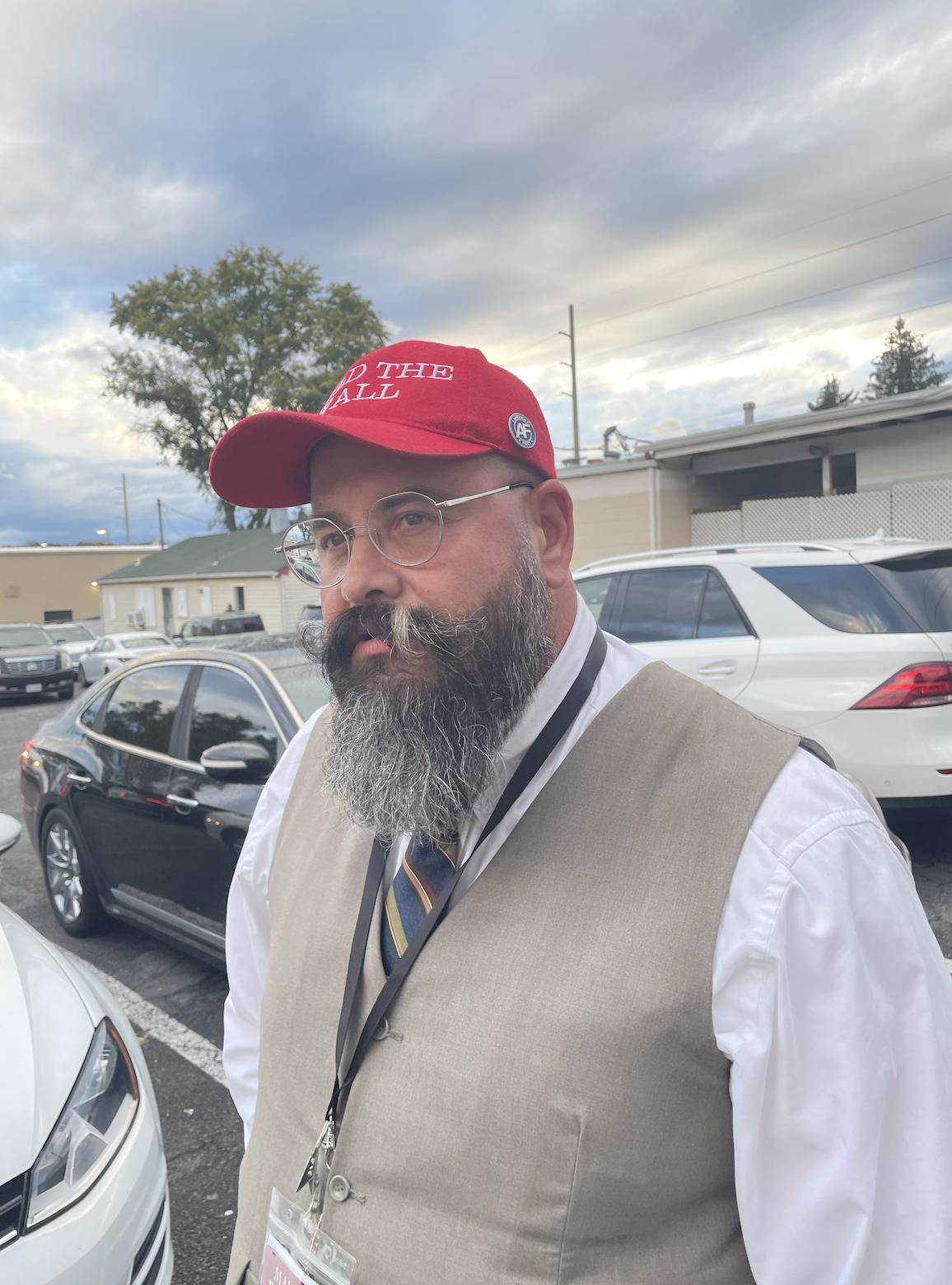
The incident happened just before Youngkin was slated to give a stump speech to a crowd of “Latinos for Youngkin” at a local restaurant, when campaign officials approached a man, named Fredy Burgos, who was wearing both a red pro-Trump hat emblazoned with “Build the Wall” and a pin promoting white nationalist and Unite the Right rally attendee Nicholas Fuentes

Burgos is a longtime far-right activist and former local Republican party official who made waves during the Trump years with a series of bombastic statements that earned him plenty of enemies in local conservative circles. The Washington Post, reporting on a 2018 drive to oust him from his post on the Fairfax County Republican Party committee, wrote that he was a “verbal bomb-thrower whose attacks against Muslims, immigrants and others have turned off moderates.”

He even appeared alongside several of Fuentes’ white nationalist followers — known online as Groypers — at a Loudoun County School Board meeting recently, which has become a local flashpoint in the nationwide right-wing campaign to ban anti-racist lessons in public schools.

As Saturday’s Youngkin event was getting underway, Burgos, who sported a thick mustache and vintage suit vest for the occasion, made a short-lived walk around the inside of the venue, only to be forced out after Salon inquired about his pin and associations.


Want a daily wrap-up of all the news and commentary Salon has to offer? Subscribe to our morning newsletter, Crash Course.


Notably, Burgos said he only became a Youngkin supporter recently, after Virginia state Senator-turned-“toxic [Youngkin] surrogate” Amanda Chase lost her bid to Youngkin. Prior to the loss, she had taken to calling herself “Trump in heels.” 

(Zachary Petrizzo/Salon)

Despite Burgos being booted from the event Saturday, he told Salon he remains a steadfast supporter of the candidate and that he hopes to appear at future rallies. 

“I’m a supporter of the ticket,” Burgos told Salon after being removed from the “Latinos for Youngkin” event. “They are concerned about the [Build the Wall] hat. I think that they have a problem thinking that other people may have a problem with the hat.” 

(Zachary Petrizzo/Salon)

Asked about his white nationalist pin, Burgos added, “I support the America First movement.”

“I believe that we need to put the interest of the American people and America First on every issue.” 

In a subsequent statement to Salon, a Youngkin campaign spokesperson said Burgos, who told Salon he has attended numerous other campaign events without incident, espoused beliefs “antithetical” to the candidate’s message of unity.

“At today’s Latinos for Youngkin event, a Salon reporter informed a staffer of an attendee’s pin that associated the attendee with [an] element of the white nationalist movement. The white nationalist movement and those associated with it are entirely antithetical to tonight’s event — to celebrate the end of Hispanic Heritage Month and the Latinos for Youngkin efforts — and Glenn’s message to unite ALL Virginians, so the attendee was asked to leave,” Youngkin spokeswoman Macaulay Porter told Salon in a statement. “There will never be room for white nationalism or any form of hatred or bigotry on this campaign.”

It’s not the first run-in with right-wing extremism for the Youngkin campaign, either: the candidate himself has appeared on former Trump official Sebastian Gorka’s radio show. Notably, Gorka found himself in hot water after wearing the pin of a Nazi-linked group to Trump’s inaugural ball.

Last week Youngkin also found himself the recipient of high praise from the former president himself during an event in which attendees pledged allegiance to an American flag that supposedly flew over a rally that preceded the Jan. 6 insurrection — a bizarre show of support for the rioters who attempted to stop the certification of President Joe Biden’s electoral victory over Trump. 

Youngkin later tried to distance himself from the gathering, and the former commander-in-chief, by calling the incident “weird.”

It’s a delicate needle Youngkin is attempting to thread on the campaign trail — appealing to hardcore Trump supporters by embracing election conspiracies and anti-vaccine sentiments, while simultaneously claiming to hold moderate beliefs.

“Here is what Glenn Youngkin has done, which is brilliant. He doesn’t go around talking about November 3rd, but here’s what he’s done,” right-wing radio host John Fredricks, the organizer of last week’s flag incident, said during a Thursday morning appearance on Bannon’s “War Room” podcast.

“Glenn Youngkin has put together the greatest voting integrity infrastructure in the history of Virgina. He’s got the RNC behind it; they have lawyers, they have a hotline, they have this whole thing.”

“Obviously, Glenn Younkin believes that the election in 2020 got stolen,” Fredricks added.

It’s these beliefs that Burgos cited as the reason he plans to continue supporting Youngkin despite being booted from the campaign event Saturday. He even said he planned on attending another Youngkin event later that evening in Northern Virginia.

The controversial 2013 Republican candidate for Virginia House of Delegates did say he might have to leave his hat at home from now on.

No surrender: Progressives must not compromise on tax hikes for the rich

Sen. Kyrsten Sinema of Arizona was recently confronted at an airport by a group of protesters questioning her about her opposition to President Biden’s Build Back Better Agenda. Despite many in the media parroting the idea that Sinema’s opposition to Biden’s plan is rooted in “centrism,” in truth, Sinema is part of a group of ideologues on the fringes of the Democratic Party’s congressional delegation who are threatening to blow up the president’s agenda unless they get exactly what they want. This group is pushing an overwhelmingly unpopular agenda in order to please supporters out of step with the majority of voters, and endangering their party’s electoral success in 2022 in the process.

Far more out of sync with mainstream Democrats than the supposedly radical progressive wing of the party, Sinema, Sen. Joe Manchin of West Virginia and a small group of House Democrats led by Rep. Josh Gottheimer of New Jersey are threatening to tank President Biden’s agenda unless Congress first passes an inadequate, poorly designed bipartisan infrastructure bill funded (in part) by selling off our strategic oil reserves rather than raising taxes on billionaires, who have added $1.8 trillion to their collective net worth during the pandemic. The Pandora Papers leak has showcased exactly how the rich and powerful manipulate tax policies and financial systems to avoid taxes. Democrats who refuse to hold them accountable are culpable — and they and the Democratic Party will pay the cost at the ballot box in 2022.

It’s time for Democrats to get serious about exorcising the rot from the heart of their party, and to stand up to these legislative hostage-takers. At this pivotal moment, the best and only way for Democrats to stand for the voters who put them in office is to stand publicly against the members of their caucus who are only looking out for wealthy investors and corporations. 

It’s time for progressive Democrats to back up their criticisms of the Wall Street wing of the Democratic Party with action — by embracing a long-overdue public showdown for the soul of the party. If Democrats ever want to win another election, they must make it clear that politicians who are willing to kill trillions of dollars of much-needed aid for American families to preserve low tax rates for their donors have no place in the Democratic Party. This is not a moment for progressives to come to a compromise with their corporate-backed peers — it’s time to defeat them and reclaim the Democratic Party.

The two-bill process already agreed to — that is, splitting Biden’s Build Back Better Agenda into a bipartisan infrastructure bill and a budget reconciliation bill — was a concession. The original plan was to pass the entire Biden agenda in one package. But Democrats like Manchin and Sinema refused, and successfully split the package in two based on the understanding that the two bills would proceed together. Having already gotten what they wanted, they’re now demanding more. This will continue until progressives do something to stop them — until they go on the offensive. 

Progressive Democrats have been doing the right thing by refusing to vote for the bipartisan infrastructure bill unless it’s paired with a full $3.5 trillion reconciliation package, but they can and should do more. Each member of Congress has a significant public platform they can use to educate their constituents and the American people about what exactly is at stake. In this battle for the soul of the Democratic Party. They must use those platforms to get personal. This is a fight, and it’s time for progressives to act like it. 

Take Sen. Sinema, for example. There are five Democratic House members from Arizona, including two members of the Progressive Caucus. Rather than stand by and watch as Sinema blocks Medicare from negotiating drug prices and refuses to fund universal pre-K for Arizona children, those five members should make sure that every one of their voters knows exactly what their senator is doing. Call her out by name, and make her own her unpopular positions.

This kind of public confrontation is uncomfortable for politicians who value their relationships with their peers, but it’s necessary. Legislating is a full-contact sport, and without significant public pressure, these Wall Street Democrats feel no need to answer to anyone except their wealthy donors and corporate lobbyists.

This is a fight progressives can and should win. The president of the United States is with them, and so are the vast majority of the American people and the bulk of Democratic primary voters. The shoe is on the other foot, at last. It’s time for progressives to act with confidence and courage.

How to give your slow cooker the deep clean it needs

Slow cookers are a godsend for busy families, bustling professionals, and anyone who loves having a low-effort, perfectly cooked meal waiting for them at the end of a long day — so, all of us. This set-it-and-forget-it style of cooking couldn’t be more comforting (or stress-free); find evidence of this in our roundups on warm and nourishing soups, another filled with all the most in-season produce for fall, and another still on the cookers themselves.

But, while pulling together one of these slow-cooked meals is as easy as pushing a button, cleanup still requires some effort. Everything from scorched BBQ sauces and glazes to rings of crusted, stuck-on food emerge after hours of simmering — and their ceramic interior bowls require specific precautions before scrubbing commences.

That’s where we come in. There are a couple of different ways to go about it, and we’re going to walk you through the two best, depending on the extent of the mess you’re trying to tackle: one from the OG slow cooker brand, Crock-Pot, and the other, a tried-and-true home remedy. Read on for step-by-step instructions for the easiest, fastest ways to clean a slow cooker.

* * *

The way your grandma does it

Some of our (my) grandmothers have cleaned their slow cookers for decades without having to leave their homes for any fancy equipment or harsh chemicals. Most slow cookers have a ceramic bowl that is dishwasher safe — an easy move for an average mess, but if what you’re dealing with is more caked on, you’ll need a bit of elbow grease and pantry items.

  1. Cut a lemon in half, squeeze out the juice and remove the pits (save the extra for a cocktail reward once the scrubbing is done!).
  2. Add enough salt to the lemon juice to make a paste when stirred together.
  3. Grab the coarse side of a sponge or a dish brush and turn the slow cooker on its side or, if the messy part is on the bottom, leave it standing up.
  4. Pour the mixture onto the stuck-on food or stain and scrub for a minute or two.
  5. Let the mixture stand for five minutes, then rinse it all away.

* * *

The way Crock-Pot does it

Crock-Pot agrees that it doesn’t take brand-name cleaners to get the job done. But of you need a recipe for the deepest clean possible, the brand says to take the following steps:

  1. Fill the ceramic bowl with water above the food line.
  2. For a three-quart cooker, add 1/2 cup distilled white vinegar. Add a full cup to a six-quart cooker.
  3. Carefully — it will start to bubble — add 1/2 cup baking soda (or a full cup for a larger cooker), wait for the bubbling to subside, then add a few more tablespoons.
  4. Cover, plug it in and turn it on low for an hour.
  5. After an hour, turn the slow cooker off, unplug it and wait until the water is cool enough to touch and scrub with a soft sponge.
  6. Allow the ceramic to cool, rinse it thoroughly under warm water and set it aside to dry

Going through the steps of deep cleaning your slow cooker might take a little bit of time, but if you use the countertop appliance regularly, it’s worth the extra steps to keep it in tip-top shape. For a Crock-Pot or other brand of slow cooker, many consider using liners that help prevent burning and the hard-to-clean messes that comes with it. However, like most things, liners come with some pros and cons. They can help you get through post-dinner cleanup (much) faster, but because they’re single-use plastic or nylon, they’re not a great choice for the environment, because of the amount of energy they take to make. These plastics and nylons also can’t be reused or recycled and aren’t biodegradable, meaning they’ll likely stick around in a landfill somewhere for an infinite amount of time, too.

It’s likely no surprise, then, that our advice is to follow the tips we outlined above for the quickest and easiest way to work through the mess. Taking these steps every now and then will keep your slow-cooking wonder in top shape, and get you back even more of your time to enjoy the things you actually like to do.

Forget “Ted Lasso” – give me a “Bend It Like Beckham” TV show

With more and more reboots, revivals, and adaptations being announced all the time, there’s an argument to be had about the current state of pop culture and what appears to be a dearth of originality. But sometimes an idea is just so good and so timeless that one can’t help but want to see it revisited. And that’s the case for 2002’s “Bend It Like Beckham.” 

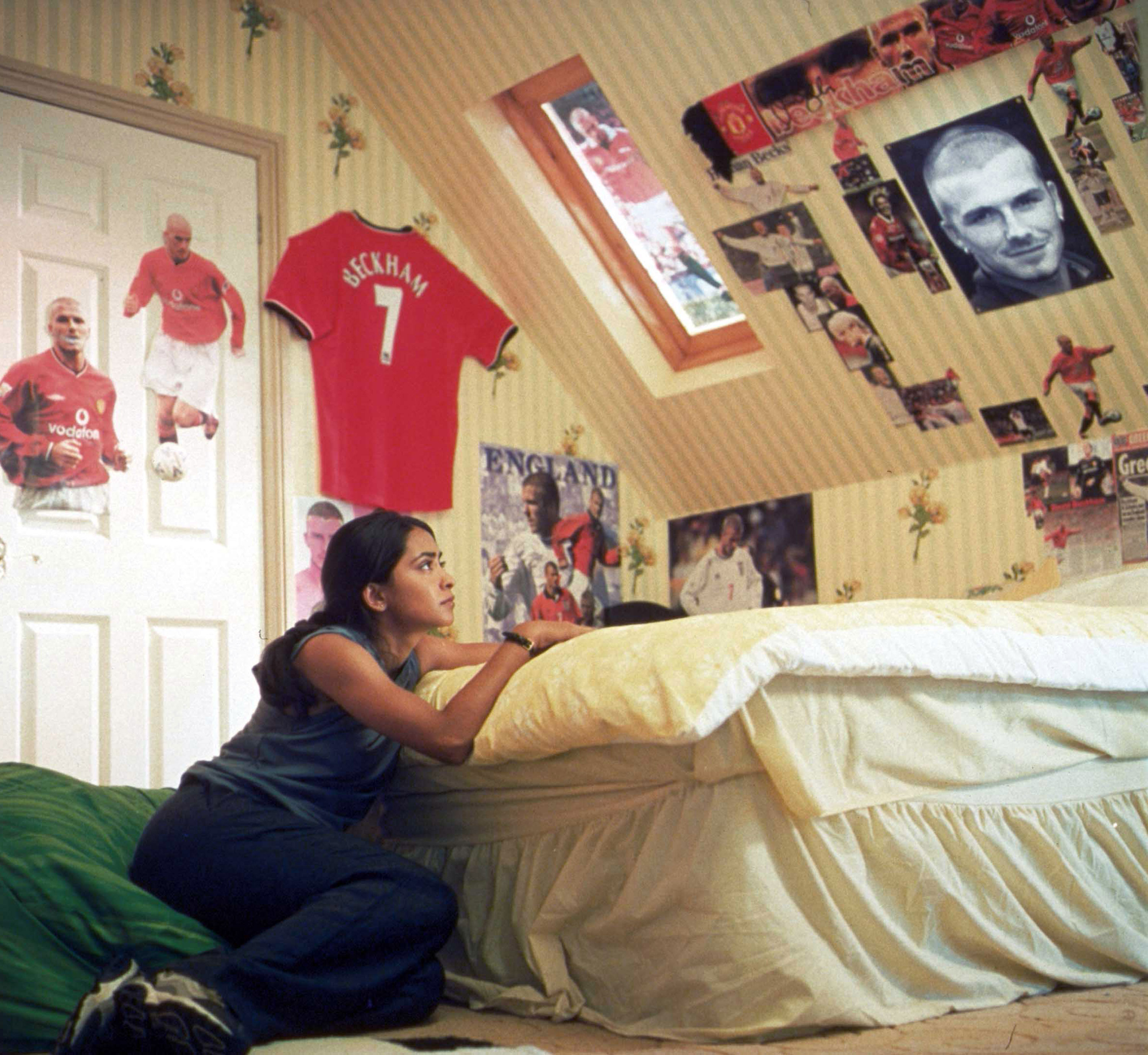
A sports-centric romantic comedy written and directed by Gurinder Chadha (“Blinded by the Light”), the film stars Parminder Nagra as Jesminder “Jess” Bhamra, an 18-year-old British Indian woman whose desire to play soccer puts her at odds with her conservative Sikh parents. While they want her to follow a more traditional path toward marriage and indulge in hobbies they believe to be more fitting for young women, Jess would prefer to follow in the footsteps of famous footballer David Beckham. So when she’s recruited by Keira Knightley‘s Jules to play for a local amateur women’s team, Jess must find a way to balance her cultural and religious identity with her ambition in the process.


Want a daily wrap-up of all the news and commentary Salon has to offer? Subscribe to our morning newsletter, Crash Course.


The movie, which draws its title from Beckham’s trademark ability to bend free-kicks, has endured for nearly two decades in part because of the way it skillfully blends cultures and bends social norms in the name of progress and acceptance. But it’s also remembered for its sense of humor, a charming romance between Jess and Johnathan Rhys Meyers‘ Joe, an unimpeachable love of the game and an exploration of how sports can not only bring people together but also help people find themselves.

If there were ever going to be a TV adaptation of the film, now would be the perfect time for it to happen, as “Ted Lasso” — an Emmy-winning comedy about an American college football coach (Jason Sudeikis) who takes over as the manager of an English Premier League team — has captured the zeitgeist at a time when American interest in the sport is also on the rise.

Based on a character created for a series of promos in the early 2010s when NBC acquired the U.S. broadcasting rights to the Premier League, “Ted Lasso” debuted in the summer of 2020. It was a pleasant surprise, not just because it was the first Apple TV+ series to break through to the masses, but because it was a charming, good-natured and much-needed escape from the anxieties and dread caused by the pandemic. But for all of the appeal of “Ted Lasso,” a “Bend It Like Beckham” TV show could do something not even the all-mighty Ted could do: highlight diversity and multiculturalism, explore the global appeal of soccer, and put women and women’s sports in the spotlight. 

Although AFC Richmond, the team at the center of “Ted Lasso,” features players from around the world, the unfortunate reality of the situation is that we don’t know much about them. The one exception is Sam Obisanya (Toheeb Jimoh), a rising star from Nigeria whose integrity leads him to protest the shady dealings of the team’s biggest sponsor early in Season 2 and is even recruited by a billionaire from Ghana (Sam Richardson) to play for an African team later on. But the show hasn’t done much to truly develop Sam. It feels like the only reason he’s been given storylines is because he’s been paired off romantically with Rebecca despite an inappropriate power imbalance the show has no real interest in exploring. 

It’s not even immediately clear what position Sam plays. You can argue the point of “Ted Lasso” isn’t the minutiae of the game or the outcome of the matches, and you’d be right because it’s a workplace comedy and not a show about the game of soccer itself. But small details help to define characters and make them more than just faces in a locker room. The finer points of the sport tend to get lost in the weeds on “Ted Lasso” when they could give insight into these men and their relationships with one another, not to mention make us care a bit about their growth as players and the outcome of the matches we do briefly see. Even “Friday Night Lights,” which is the gold standard of shows-about-sports-that-aren’t-really-about-sports, made it clear what positions certain characters played, giving viewers a sense of their role on the team.

So in actuality, “Ted Lasso” has done little to develop or investigate its team or the larger world of soccer, which is the only sport with a truly global fanbase. The series spends more time on Ted being a fish out of water and the perceived culture clash between Americans and Brits than digging into the international players whose cultures and experiences as part of an English team would no doubt be more interesting, more personal, and add more depth to the narrative. Yes, the show is for American audiences, and yes, the show is called “Ted Lasso,” but there is little reason it can’t dig into the players more. The one time the show does attempt to highlight the fact the team has players from Mexico, Nigeria, Jamaica, the Netherlands and Canada — Season 2’s Christmas episode — it also relies on jokes about colonization and not eating goats.

A “Bend It Like Beckham” TV show would be the perfect answer to this as its story naturally stretches across cultural and religious boundaries while exploring hybrid identities as a core part of its narrative. Its setup also creates space to engage in uncomfortable but necessary discussions about the real-world racism many players face. It’s a topic that comes up in the film but “Ted Lasso” side-steps in the name of being upbeat, whimsical and funny. And in Season 1 these conversations might have felt out of place, but as the show has expanded in Season 2 and grown more topical amidst explorations of mental health, there is more room for the show to engage in deeper discussions of the sport at its center. “Bend It Like Beckham” does all of this very well in less than two hours in addition to being compassionate in its approach to navigating familial expectations, career ambitions and personal desires, especially as a woman. And it’s that last point — the one about being a woman — that separates the movie from nearly all other sports films and TV shows and makes it truly worthwhile.

Bend It Like BeckhamParminder K. Nagra in “Bend It Like Beckham” (Getty Images/Sundance/WireImage)

Contrary to what American media would have you believe, women’s sports are not a myth. Women play at every level even if it might not appear that way. The Women’s National Basketball Association (WNBA) and the National Women’s Soccer League (NWSL) exist and have fans. Their games are even broadcast on television (wild, I know). What’s more, the U.S. women’s national soccer team has actually outperformed its male counterpart, which hasn’t competed at the Olympics since 2008 and failed to qualify for the 2018 World Cup, but the women have historically been paid much less (luckily, that could change soon).

It’s not often female athletes can break out and become synonymous with greatness the way men so regularly do. And it’s certainly harder for women of color to do it. They have to reach the heights of Venus and Serena Williams or Simone Biles to even be taken seriously as an athlete, and then that level of exposure and pressure can lead to problems of its own. But women all over the world participate in sports of all kinds. And despite this, women’s sports still tend to be ignored or left out of the conversation in America unless it’s an Olympic year or something damning happens (see: the Larry Nassar abuse scandal or the recent allegations of sexual coercion that led to the firing of former North Carolina Courage coach Paul Riley). 

“Bend It Like Beckham” reminds us all that women are not second-tier athletes (or citizens) and can be just as good, if not better, than men. And it does this while managing to have universal appeal. The movie brought in more than $76 million at the global box office (on a $6 million budget) and remains the highest-grossing sports film focused on the sport of soccer. That’s a good starting point to talk about its overall viability as an ongoing property, but regardless of its ability to appeal to viewers, it also tells an inspiring story that puts a positive spotlight on women athletes and the unique challenges they face, which remains undercovered by the media. It’s for this reason that Alex Morgan, Sue Bird, Chloe Kim, and Simone Manuel formed Togethxr, a new media company whose mission is to give women a platform of their own and the exposure they need to inspire the next generation of young girls.

It’s upsetting that four of the world’s best athletes had to form their own media company just to have their voices heard. And yet, it’s not all that surprising either. Women have been forced to do it for themselves since the beginning of time. Billie Jean King established the Women’s Sport Foundation in 1974 to promote gender equality and opportunities for women in sports. And in a 2003 interview, “Bend It Like Beckham” writer and director Gurinder Chadha said Beckham’s ability to bend the ball was “a great metaphor for a lot of us, especially girls. We can see our goal but instead of going straight there, we too have to twist and bend the rules sometimes to get what we want.” 

While the women of “Ted Lasso” — Hannah Waddingham’s Rebecca Welton and Juno Temple’s Keeley Jones — appear to have fared better in that regard, they are still forced to play supporting roles in what is arguably a (white) man’s story. And there’s no need for women to be in this position in 2021.

So, if anyone out there is looking for a well-regarded piece of intellectual property to adapt for TV, please take a closer look at “Bend It Like Beckham” and the inherent lessons within its story. Even now, nearly 20 years later, the film remains relevant, compelling and heartfelt as it digs into the complexity of family, following one’s dreams, discovering a cultural identity and prioritizing women’s sports. You’d be hard-pressed to find something better or more worthy of being adapted and updated in the current TV climate. Someone just needs to take a chance on it the way Jules took a chance on Jess in the park nearly 20 years ago.

“Bend It Like Beckham” is available to stream on HBO Max. “Ted Lasso” streams on Apple TV+.

People I’m close to have COVID. I tested negative, but have symptoms. Could the test be wrong?

Dear Pandemic Problems,

I’m freaking out about possibly coming down with COVID, despite being vaccinated and boosted. I work as a nanny to two young children. Over the weekend, one of the kids came down with standard cold symptoms; so I was not surprised when I got a mild runny nose on Monday, which alone would not be a reason for concern.

Then, the parents of the children whom I nanny told me that the five-year-old was going to be quarantined because one of her classmates had tested positive for COVID. I started wondering if my runny nose was actually COVID. I went and got tested yesterday.

Then, this morning, the parents of the child called me and said their daughter had indeed tested positive for COVID.

But then I got my test result back — from the test I took yesterday — and it came back negative.

At this point I assumed I got COVID from the kid that tested positive — luckily with mild symptoms thanks to getting a booster a month ago. I spend a lot of time around this child, after all.

So I have trouble believing my test result, frankly. What are the chances that I get a persistent runny nose and very mild cough, and then it turns out that the little girl I nanny is COVID-positive and I’m not? It just seems weird.

I don’t know what do to now. Do I believe what seems like an unlikely result? Do I get tested again? What are the chances that I have a false negative? Are there other types of tests I could get? (This test was a PCR).

Right now, my insurance will not authorize another test so soon but I feel strongly that I should get another test ASAP. How will I know when I can stop quarantining, if at all?

Sincerely,

Not Positive I’m Negative

Dear Positive I’m Negative,

I’m so sorry this is happening to you. This certainly sounds like a confusing and stressful situation. It’s frustrating that we are 19 months into this pandemic, and we still have to worry about being exposed to COVID-19 and the possibility of getting false negative tests. I’d be a bit disoriented, too, if I were you — particularly given that you are vaccinated, and got a booster. Ugh!

And yet, this is where many of us find ourselves in the pandemic right now. The good news is that the Biden administration recently purchased 65 million pediatric doses of the Pfizer/BioNTech vaccine, which is enough to vaccinate an estimated 28 million children between the ages 5 to 11— pending the Food and Drug Administration’s approval, of course. This means the five-year-old you care for will finally be able to get vaccinated, providing even more protection for you at your job. I’m sorry it didn’t happen earlier.

I have to be honest with you, Not Positive I’m Negative, that I haven’t answered a pandemic problem in a few months. Partly because I haven’t received any questions that I thought I could answer, and partly because whenever I write about vaccines, I receive a bunch of hate mail. But I was intrigued by your email because I think there is a lot of confusion around what vaccinated (and boostered) people are supposed to do when exposed to COVID-19— so let’s dive in.

First, let’s start with the facts. You, a vaccinated person, who was exposed to COVID-19. Here’s what the Centers for Disease Control and Prevention (CDC) advises on that:

“If you’ve had close contact with someone who has COVID-19, you should get tested 3-5 days after your exposure, even if you don’t have symptoms. You should also wear a mask indoors in public for 14 days following exposure or until your test result is negative. You should isolate for 10 days if your test result is positive.”

OK, so you did the right thing by getting a COVID-19 test, but it came back negative. I am wondering if the timing of the test has something to do with your result. When I asked Dr. Amesh Adalja, an emergency medicine physician, about your situation, he said: “The validity of the test result depends on how long post-exposure the test was performed.”

“Post-exposure testing should be 3-5 days after the exposure,” Adalja said. “If a person is not symptomatic and is vaccinated and tested negative 3-5 days post exposure, I would not recommend a retest. If the exposed person is not vaccinated and has no symptoms, a negative test at day 5 would be sufficient.”

Adalja added that many exposures don’t result in transmission of the coronavirus, which was the case “even in the pre-vaccine era,” he said.

“Lastly, if the person who was exposed was vaccinated, transmission risk would be blunted as well,” Adalja said.

OK, but you’re having symptoms. Since I don’t know the exact timing, it could be possible that you tested too early and it might be wise to retest — especially if your symptoms worsen. But as you asked, what are the chances that you get a persistent runny nose and very mild cough, after being exposed to a positive COVID-19 case?

It’s estimated that adults have an average of 2-3 colds per year; children have even more. So it could be that you have a cold, or you tested too early. If it’s the latter, perhaps consider retesting.

I know you said your insurance won’t authorize another test, but is it possible that you can go to a nearby community testing site — where you don’t need to provide insurance or pay for a test? The United States Department of Health and Human Services has a list here. You could also do an at-home Binaxnow test, which costs $23 (though it should be free).

I hope this helps, Not Positive I’m Negative. I know it’s a frustrating time, but I’m positive that you will weather this storm.

Sincerely,

Pandemic Problems

“Pandemic Problems” is a periodic advice column that answers readers’ pandemic questions — often with help from public health data, professors and therapists — who weigh in on readers’ dilemmas.  Do you have a pandemic problem? Email Nicole Karlis at nkarlis@salon.com.

To study Zika, they offered their kids. Then they were forgotten

Rochelle dos Santos learned that her daughter would probably be born with microcephaly — a condition where a baby’s head is much smaller than expected — when she was seven months pregnant. It was 2016 and Brazil was going through an unprecedented microcephaly outbreak associated with the mosquito-borne virus Zika. After the baby was born and the diagnosis of congenital Zika syndrome was confirmed, several researchers approached dos Santos to see if she’d join relevant clinical studies. Eager to understand her daughter’s condition, she agreed.

Dos Santos says she was surprised to learn through a social media post last year that an international study that she participated in had been published in the journal Brain & Development. The study took over a year to be completed, and dos Santos had taken her daughter multiple times to the hospital for evaluations. As the head of an association for families of children affected by Zika in Goiás state in midwest Brazil, dos Santos wanted to share the findings with the other caregivers. She says she had to reach out directly to Hélio van der Linden, a neurologist at the Dr. Henrique Santillo State Center for Rehabilitation and Readaptation who authored the study in partnership with researchers in Brazil and the United States, to ask that a copy be shared with her. But she says he told her there was no point because it was written in English.

“Of course, we get upset,” she recalled in her native Portuguese. “We want to have this feedback and better understand this situation that is new for everyone.” Dos Santos — who noted that while she speaks only a little English, her husband reads and speaks English capably — said she feels used and that many other families share the same sentiment. “We know that Covid is now the priority,” dos Santos adds, “but our children are still here, they still have needs.”

The study’s author sent her the article, and dos Santos says her husband translated it for her — though she adds that she was also asked by van der Linden not to share it. (Van der Linden told Undark by email that while he did point out to dos Santos that the article was written in English, his main concern was running afoul of the journal’s publishing rules. His request not to share it, he added, was for social media posts. “There was no problem in sharing the article with other mothers,” he wrote, “but I believe this wasn’t clear to the mother of the patient.”)

Children with congenital Zika syndrome face numerous health issues, all originating from the peculiar way in which Zika attacks the developing brain. In addition to the condition’s most pronounced feature — reduced head size — many have rigid muscles, difficulty swallowing and breathing, and problems with the retina and optic nerve, as well as other symptoms that are emerging as the children grow. “The doctors say that only time will tell how our children will be tomorrow,” dos Santos says, “because there are no adults with this syndrome.”

Dos Santos is not the only caregiver who felt left behind by scientists. Family groups like the one she heads have sprung up across the country, and members are increasingly at odds with the scientists who have used their children for research. The grandmother and caretaker of a boy with congenital Zika syndrome, Alessandra Hora dos Santos (no relation to Rochelle), launched one of these associations in Alagoas state in northeast Brazil in 2017. She says that lately she has been declining requests to participate in new studies — although such invitations are becoming rare because there haven’t been new outbreaks of the syndrome since 2016 — and she noticed that other families are doing the same.

Scientists who conducted the studies on Zika during the peak and the aftermath of the outbreak admit that communicating the results to families is not always effective, and that it was not the top priority during the Zika crisis. In the rush to collect data, not all researchers took the time to explain in detail what their projects were about and set clear expectations. Busy caretakers, on the other hand, were hardly able to carefully read the informed consent forms they were signing to authorize investigators to collect data from their children. Over the last few years, these families have demanded to participate more actively in the scientific discussion around Zika.

“We feel diminished,” says Alessandra Hora dos Santos. “It’s like we were lab rats. They come in nicely, collect information, collect exams on the child, and in the end we don’t know of any results. It’s like we are being used without even knowing why that is being done.”

Rochelle dos Santos helps her daughter with physical therapy. Many children with congenital Zika disorder are physically disabled.
Due to difficulties swallowing, dos Santos’ daughter uses a feeding tube, which is attached to her wheelchair.
Dos Santos’ daughter uses leg braces to help her stand. Other symptoms of the disorder are emerging as children grow.
Dos Santos guides her daughter to create a finger painting. “Our children are still here, they still have needs,” she says.

* * *

By the time physicians started to notice a surge in microcephaly in Brazil in mid-2015, researchers had to scramble to design studies, get funding, and conduct analyses. Eventually, scientists from multiple institutions coalesced in the Microcephaly Epidemic Research Group (MERG). They began the research efforts even before the link with Zika had been established and had a crucial role in guiding public health strategies to tackle the epidemic. “There was a lot of pressure coming from the media and the health ministry,” says infectious disease expert Demócrito de Barros Miranda-Filho, a member of MERG and a professor at the University of Pernambuco. “We had to develop all the projects from scratch and submit them to the ethics committees within a deadline,” he says, adding that there was also pressure to give answers to the families.

One of the group’s concerns was to immediately share individual results of tests and clinical evaluations that could directly impact the child’s treatment. But when it comes to the general findings at the end of the study, says Miranda-Filho, the researchers didn’t properly communicate them to the participants.

“It is very complex to decode biological questions and put them into a more understandable language,” says Thália Velho Barreto de Araújo, an epidemiologist at the Federal University of Pernambuco and a member of MERG. “We haven’t figured out a way to do that yet, and we would need research resources to get advice for transforming technical language into something palatable.” Ricardo Arraes de Alencar Ximenes, an epidemiologist at both the University of Pernambuco and the Federal University of Pernambuco, notes that one of the obstacles to develop well-thought-out communication strategies is getting dedicated funding.

Physician Camila Ventura, one of the coordinators of an ambitious project with the goal of evaluating the neurodevelopment of about 200 children with congenital Zika syndrome over five years, says she is familiar with the families’ demands and agrees with them. But, there are other obstacles beyond adequate funding, she says. For example, with funding from the United States National Institutes of Health, the project is being developed at the Altino Ventura Foundation, a Brazilian health nonprofit, in partnership with the U.S. research organization RTI International. Because the project is done in partnership with other organizations, Ventura says it’s not solely up to her to provide this feedback.

“This criticism applies to our own institution and I try my best to push for these answers” from our research partners, says Ventura. “The mothers see that we’re collecting data and they want to know: What about my kid?” she adds. “Is he getting better?”

Van der Linden wrote that when he invites a family to participate in a study, he tries to make it clear that the goal is to better understand the condition and that the findings might not benefit the participants themselves. “I explain that, after the study is done, there won’t be a ‘result’. Sincerely, I don’t offer or promise to call each one to explain the details, etc. I always make it clear that it is for science,” he wrote to Undark by email. “I believe there might have been an over-expectation, or an unrealistic expectation of something that was never promised.”

Soraya Fleischer, an anthropologist at the University of Brasília who coordinates a research project on the impact of Zika on the lives of families, says it’s also important to consider what these mothers mean when they ask for study results. “For the researchers, the result is what is published in a well qualified scientific journal or goes into their resume,” she says. But for the families, says Fleischer, sometimes the result is a simple blood test that confirms that the child’s disabilities were caused by Zika — an important document that grants access to certain social benefits reserved for children with the syndrome, which can be difficult to get via the public health system.

Not every parent has had a bad experience with Zika researchers. Jaqueline Silva de Oliveira, the mother of a 5-year-old girl with congenital Zika syndrome, says that whenever she needs these types of reports in order to claim social benefits, she reaches out to the scientist who enrolled her family in a genetics study. The girl’s twin brother was not affected by Zika, which caught the attention of a group at the Human Genome and Stem Cell Research Center at the University of São Paulo that wanted to try to identify potential protective genes.

“I participated to be able to help prevent other children from having microcephaly,” says de Oliveira. She says she can’t explain in her words what the results of the study were and she didn’t receive a document describing them. But overall, she thinks having participated in the study was a positive experience. She continues to have a connection with the researchers, and they helped her find a neurologist, one of the best in the state, she says, who managed to control her daughter’s epilepsy crises. “I helped the researcher on the study,” she says, “and when I needed it, she helped me.”


During the initial 2015 Zika outbreak and the years that followed, participation in the Brazilian Zika studies could be difficult. Luciana Lira, a medical anthropologist at the Federal University of Pernambuco, recalls accompanying two mothers to an event in 2018 in Recife, in Pernambuco state, one of the epicenters of the congenital Zika syndrome outbreak. The event was organized by a local university and an association for families of children with rare diseases. While the other mothers attended talks and participated in conversation circles, the mothers of children with congenital Zika syndrome were directed to a hall where researchers organized a task force to collect blood for a research project.

On that occasion, Lira says she watched while a nurse approached a mother to participate in the study. The mother “was so agitated that, when the nurse approached her and started explaining the study, she clearly wasn’t paying full attention because there were more urgent things to deal with. Her daughter was having a crying fit, she had to fix her feeding tube, all of that,” says Lira. “Then she agreed to participate, signed a paper and that’s it. This type of situation has become very commonplace.”

The researcher behind the project was Nilson Antonio de Assunção, a chemistry professor at the Federal University of São Paulo who was then studying the biochemical characteristics of blood among children with Zika. The study hasn’t been published yet, de Assunção says, adding that he is aware that some families don’t fully understand the purpose of his research when they agree to participate. “They get nervous because they are at an event, these are humble people, their children are crying and they end up not understanding very well what we’re explaining.”

De Assunção says there isn’t much to be done about creating better strategies to communicate with families of children participating in studies. “I have been noticing this distrust in families,” he says, “but those who end up losing are the families themselves.” He says that he has previously tried to explain and educate the population about his work. “No matter what you do,” he adds, “there will always be this distrust.”

Lira and her colleagues have been observing the relationship between caregivers of children with Zika and biomedical scientists in Recife. Silvana Matos, also an anthropologist at the Federal University of Pernambuco, says that initially the caregivers welcomed the attention from scientists because they wanted to understand what had happened to their children. “The thing they complained the most about, right after this initial period,” she says, “was that the test results never came back to them and the researchers, from Brazil or abroad, never reached out again to tell them what happened.”

The families’ experiences with the medical trials made them wary of researchers more broadly. By the time the anthropologists started working with the families in late 2016, they had to redesign their work to deal with this research fatigue and gain trust, says Lira. The families “had been overwhelmed both by scientists trying to collect organic samples, and by journalists and researchers wanting to interview them,” says Fleischer. “There was an eagerness to learn what was happening” among the scientists and journalists, she adds, and the families “were the source.”

Lira spent several months following caregivers around before doing any interviews. Fleischer, who is not based in Recife, decided to come back to the city several times over the years to revisit the families and show them what had been produced with the data they had collected before — for example, an article or a newspaper story. Realizing that the caretakers were too busy to read long articles, Fleischer’s group created a blog to publish short stories about life with Zika that they would print out and distribute to the participants during their visits. The fact that the researchers kept coming back and reporting what they were doing made the families feel respected, according to Fleischer, and it was essential to build trust.

Rochelle dos Santos with her daughters. Dos Santos says she feels used and that many other families share the same sentiment. Medical anthropologist Luciana Lira says the families became overwhelmed by scientists and journalists, and that she had to change her approach to gain the families’ trust.

* * *

In Brazil, the ethical and legal framework for research involving human subjects was established in 1996 through a resolution by the Brazilian National Council of Health. To conduct a study involving human subjects in Brazil, researchers have to submit their proposal to a research ethics committee, much like in the U.S. Every research organization may constitute its own committee, which responds to the National Commission for Research Ethics (CONEP, by its Portuguese acronym).

Before entering a study, participants must sign a free and informed consent form, a document that describes the study, its goals, and possible risks and benefits of participating. According to the commission, the document should be written in clear and accessible language.

The need to share the findings with participants, which is at the core of the caregivers’ complaints, is not directly covered by the 1996 resolution. But the current ethical norms, in force since 2012, do state that research findings should be communicated to the community if there’s a potential to benefit the population, notes biologist Maria Mercedes Bendati, who retired from the municipal health department of Porto Alegre, in southern Brazil, in 2017 and is a CONEP member. “It already says that it is important to give this feedback,” she says. The next step, she adds, is to implement the requirement “and make it very clear in the academic education of the researchers that they should fulfill their social role, and know that the research implies giving these answers to the participants.”

Bendati participated in the Pan American Health Organization Zika Ethics Consultation in April 2016, which originated an ethics guidance on key issues raised by the Zika outbreak.

Florencia Luna, the chair of the Zika Ethics Consultation, says the goal of the guidance was precisely to prevent situations like the ones the caregivers described. “We were very concerned about doing this research at that moment in the middle of the outbreak. So it’s a little bit like now, with Covid,” she says. “Even if you want to do [research] fast and quick, and you should do it like that, that doesn’t mean you have to avoid ethical standards.”

Luna, who is also the director of the bioethics program at the Latin American Faculty of Social Sciences in Argentina, believes that returning to the participants with the results is an ethical obligation. “Personally, I do think it is very important to come back and tell the good or the bad news,” she says, especially with Zika, which involves mothers and babies with health conditions. “At least to send them a letter, to call them on the phone,” she adds. “Maybe not to make them go to the clinic because it would be too burdensome for them, but there are other ways where you can communicate nowadays, with smartphones, with the internet.”

According to the International Ethical Guidelines for Health-related Research Involving Humans, a 2016 document prepared by the Council for International Organizations of Medical Sciences in collaboration with the World Health Organization, researchers “should engage potential participants and communities in a meaningful participatory process” which includes the dissemination of the study’s results.

Despite such guidelines, not communicating results to participants is seen by some researchers as business as usual. Carl Elliott, an expert in bioethics and a professor of philosophy at the University of Minnesota, says the situation narrated by Rochelle dos Santos, where the investigator hesitated to send her the study for which her daughter had collaborated, didn’t surprise him.

“If I were the research subject or the mother of the research subject, it would offend me and I think justifiably,” he says. “That said, I think the vast majority of research subjects don’t do that sort of follow-up. They don’t ask or are not even particularly interested in the papers.” Elliot says he doesn’t think the investigator gave the right response, but he imagines he was probably surprised by the request.

In any case, Elliott says he believes that, if a participant actively asks, the researcher must provide the results: “It’s shameful that it takes so much effort, and often money, for the public to get access to the results of scientific studies published in the medical literature.”

Bioethics expert Carl Elliot says that the situation Rochelle dos Santos (pictured) described, where the investigator hesitated to send her the study for which her daughter had collaborated, didn’t surprise him.

* * *

In September 2018, the Brazilian caregivers’ discontent culminated at the annual Congress of the Brazilian Society of Tropical Medicine in Recife. That year, the program included several sessions about congenital Zika syndrome. According to a paper written by Lira, none of the families’ associations had been invited.

During one of the sessions on the main stage, Germana Soares, the mother of a boy with congenital Zika syndrome and the president of one of the largest family associations, requested to speak. She read aloud a letter to the event’s organizers. “We believe there is a lack of empathy and sensitivity to our reality, and a lack of respect in the fact that we were underestimated. As if we — the mothers, relatives, and caretakers — would lack the understanding to participate in a technical event to discuss a topic that is of our biggest interest,” the letter stated. “Are we mothers so ignorant, without the least bit of education, that we cannot understand a scientific article or a lecture. Or should the researchers be the ones to use a language that is more comprehensible? Are we totally wrong to demand a discussion about ethics in biomedical research? Are we just numbers?”

The organizers were apparently caught by surprise, as Soares’s speech wasn’t in the program. One of the speakers at the session called Sinval Pinto Brandão Filho, the president of the Society, to ask him what to do about it. He advised him to let Soares speak. “Our organization welcomes this debate with great satisfaction because we study the tropical diseases, in terms of controlling them” he says, adding that every year the Brazilian Society of Tropical Medicine invites patients of neglected diseases to a public forum during the congress to discuss the problems they face. “I see this as something specific that was immediately recognized that it should be more sensitively incorporated into the tribute session.”


Today, only sporadic cases of congenital Zika syndrome still occur, which makes it difficult to get funding for research, scientists say. The research focus has shifted to Covid-19, but the Zika health emergency might have left a legacy when it comes to research ethics.

“My personal reflection about the Zika experience in ethics committees is that perhaps there should have been a dialogue with the researchers to ask them how the findings would be shared with the participants,” says Bendati. “When it comes to Covid-19, the CONEP is now being very clear on the need for a proposal of feedback to be given to participants.” Learning from the mistakes of Zika might have contributed to this evolution, Bendati adds.

Luna says she’s aware that sometimes ethics are viewed as an obstacle to science. Tracking down the participants can be difficult, and researchers who might have moved on to another project often lack the time and the energy to pursue it. “But it’s part of what we have to do in order to build trust, to continue working,” she says. “If not, these women will not collaborate in any other research in their lives because they were disappointed.”

* * *

Mariana Lenharo is a science and health journalist whose writing has appeared in Scientific American, Mother Jones, Elemental, BBC News Brasil, among other publications. She is currently based in São Paulo, Brazil.

All photos by Ueslei Marcelino.

This article was originally published on Undark. Read the original article.

Netflix’s serial killer thriller “You” poses a pregnant question about personhood

“Why don’t you love me anymore?! You know why and just won’t say it!”

Love Quinn (Victoria Pedretti) screams her anger and frustration at her partner Joe (Penn Badgley) in the new season of Netflix’s psychological thriller “You.” The couple of serial killers, now parents to newborn Henry, are burying yet another body together, as such couples do, in the rain. 

The explosive exchange takes place months after the events of the previous season when the couple first met and fell for each other in Los Angeles. Fast-forward to the finale, and it’s revealed that like Joe, Love is a serial killer. Despite their shared bloodthirst, Joe became enraged when he learned that she had targeted his neighbor, and is on the brink of killing her in turn.

It’s the kind of thing you don’t forget . . . or let go of, as we see Love dredge up the past.

“You had a f**king hook to my throat, and then I said I was pregnant!” Love exclaims, on the brink of tears. “Then we just went on, pretended like it didn’t happen.”

Although Joe makes an attempt to downplay and dismiss that almost-homicidal moment with his baby mama, Love isn’t receptive.

“You act all pure and noble, like you have reasons for what you do, but when I do it, I’m crazy, I’m some manic nutjob,” she says. “Oh wait, oh wait! ‘She’s a mom now! I guess I can’t slit her throat!’ [Henry] is the only reason I’m alive. How do you think that makes me feel? I can’t trust you!”

Of course, as an exasperated Joe points out, neither of them can trust each other. Their body counts — and in this case, I do not mean sexual partners — speak for themselves. But for a serial killer who would put an axe in another woman’s head for merely attracting Joe’s interest, Love actually makes sense in this exchange. 


Want a daily wrap-up of all the news and commentary Salon has to offer? Subscribe to our morning newsletter, Crash Course.


Despite the couple’s charade of suburban, marital bliss, Love knows the one and only reason her husband didn’t kill her was her pregnancy. Now, all that’s stopping him from killing and disposing of her is their shared child.

As with all facets of the show, it’s a wildly extreme, but in some ways realistic, example of how women who become pregnant or become mothers are no longer treated as individuals, but as a dual being with their fetus or born child. 

In Love’s case, her pregnancy saved her life. But her frustration toward Joe’s behavior extends from a greater societal issue: the dehumanization of pregnant people and mothers, whose pregnancies, culturally and politically, take on a life of their own.

It was only a few years ago that an Oklahoma lawmaker introducing a bill that required the consent of the father of the fetus for someone to have an abortion, broke the internet for declaring pregnant people are just “hosts.”

“I understand that they feel like that is their body,” state Rep. Justin Humphrey said. “I feel like it is a separate — what I call them is, is ‘You’re a host.’ And you know when you enter into a relationship, you’re going to be that host, and so, you know . . . then take all precautions and don’t get pregnant.”

Love’s paranoias and insecurities, which drive her to commit literal murder, revolve around the question of whether Joe spared her life as the woman he loves or as the “host” of their then-unborn child. 

The premise of pregnant people as “hosts” sounds like a line from a particularly sexist alien movie, but it’s a premise that’s become deeply embedded in our politics. Beyond Oklahoma Rep. Humphrey saying the quiet part embarrassingly loud, other states have tried to enact laws that treat pregnant people as “hosts,” with similar requirements that the father of the fetus consent to someone’s abortion. 

And in 2019, an Alabama judge allowed a man to sue an abortion clinic on behalf of a woman’s aborted fetus, as the father of the fetus. At the heart of the ultimately unsuccessful lawsuit lay a fundamental question of personhood, and how legal and cultural recognition of an unborn fetus’ personhood comes at the cost of the pregnant individual’s.

Notably, if Joe had killed Love while she was pregnant all those months ago, her murder would be one of many pregnant people — the leading cause of death for pregnant people is murder, often from an intimate partner. Endemic violence, and especially domestic violence, against pregnant people led to the rise of feticide laws in 38 states, written with the intention of protecting pregnant women from domestic violence by hitting those who kill pregnant women with additional charges and prison time. 

Love may be mentally unbalanced for a number of reasons, not the least of which include murdering and kidnapping anyone who wrongs her. But questioning whether Joe even perceives her as a human being in her own right, and not just the mother and vessel of his child, isn’t inconceivable at all given their history. 

She’s also right about the latent sexism in how Joe perceives his murders versus hers. The couple’s penchants for brutal killing present an extreme example of the double standards in how we treat men and women’s rash decisions: Joe sees his horrific murders as passionate and romantic acts, while he deems Love’s motivations as crazy. 

They’re both — and this cannot be stressed enough — psychopathic, wildly dangerous people. But the vastly different ways that they understand their equally crazy behaviors are applicable to plenty of more appropriate situations in which women are treated as irrational and unstable for performing acts we celebrate or romanticize in men.

Joe and Love are ultimately successful in doing away with the corpse, despite their scream-sesh in the pouring rain. They even go on to work things out in couple’s therapy, at least for a time, as their clueless therapist assures them “50% of my married couples want to kill each other.”

But Love’s fears of the husband who spared her life solely because of her pregnancy persist — and her paranoia ultimately propels “You” into its most shocking season finale yet.

“You” Seasons 1-3 are now streaming on Netflix.

Joe Biden’s Nixon moment: A policy agenda that could change history — and the media yawns

American media, and especially the political press corps, has a history of failure when it comes to explaining the policies that could change people’s lives. Last week, House Speaker Nancy Pelosi raised eyebrows when she blamed the media for failing to do enough to “sell” Biden’s Build Back Better legislation. Although that may have been an unwise choice of words, Pelosi’s underlying point was valid. Senate Budget Committee Chairman Bernie Sanders echoed her remarks a few days later, stating that “the mainstream media has done an exceptionally poor job” of focusing on what matters in the bill. Observing that the battle over the legislation is covered like a Machiavellian saga out of “Game of Thrones” or “House of Cards,” Sanders added that the press offers “very limited coverage as to what the provisions of the bill are and the crises for working people that they address.”

This is of course nothing new. The press corps prefers to cover politics in the same way it covers the World Series or the Super Bowl. When it comes to the actual substance of policy-making, too many in the news media avoid it entirely, or convey that it’s complicated, boring and almost superficial, like the color of a team’s uniforms, rather than the central issue.

To better understand what is happening to Biden’s agenda right now, it may be instructive  to look at a similar moment in history, not terribly long ago. It’s been 50 years since Richard Nixon (of all presidents) attempted to launch a “New American Revolution,” one that could have saved millions of lives and perhaps prevented or forestalled the Republican Party’s lurch to the far right. But the media didn’t consider that an interesting story, and the Democrats who controlled Congress didn’t want Nixon to score a political win, so most Americans had no idea it was happening. Nixon’s ambitious agenda largely went nowhere, and we are all worse off for it.

Introduced during his 1971 State of the Union, Nixon’s “six great goals” were designed to “change the framework of government itself” and “to reform the entire structure of American government so we can make it again fully responsive to the needs and the wishes of the American people.” It combined an authentic desire to realize policy objectives like combatting poverty with a conservative emphasis on empowering local governments. Four of the six priorities were a Family Assistance Plan that would have providing a guaranteed base income and job training to poor working families; a health care reform agenda more ambitious than Obamacare, that would have subsidized coverage for lower-income Americans while mandating private insurance for most employed people; environmental regulations that would have expanded the national park system and imposed new limits on pollution; and an innovative plan to streamline the federal bureaucracy.

None of those were enacted at the time, although some were passed later, in indirect or watered-down form. Nixon did succeed in reviving America’s economy by ending the gold standard, imposing new taxes on foreign cars and implementing temporary wage and price freezes. But most of his ambitious vision never materialized. Even more striking, the American people largely had no idea that Nixon was sincerely trying to implement plans that could have ameliorated poverty and helped save the planet.

Journalist Theodore H. White chronicled Nixon’s frustration in “The Making of the President —1972”:

… after six days of desultory attention, the media abandoned discussion of Nixon’s revolution — his proposals were too detailed, too technical, to sustain vivid political writing. Governmental housekeeping was a subject to be dismissed to Congress, where the New American Revolution was to die in committee and partisan debate.

More important, probably, was the effect of the reception on the President himself as the year wore on. Whatever he proposed to do “to make things work” (which was one of his favorite phrases) was apparently not to be taken seriously or was considered too boring or too particular for the great national debate in which he might, in his own imagination, appear as Solon.

Consider these events in the context of Nixon’s presidency. Elected in the tumultuous year of 1968 by a slim plurality, Nixon spent his first term largely focused on foreign policy endeavors. These mostly succeeded: Nixon ended the Vietnam War, opened arms-control negotiations with the Soviet Union and opened up with relations with China. His domestic agenda was anemic by comparison, pinioned between a Democratic Congress and a Republican Party split between conservative and moderate wings. Nixon certainly pandered to the right by launching a “War on Drugs” and cracking down on anti-war protesters, but that kind of red meat would only get him so far. To get reelected, Nixon had to expand the Republican coalition to include moderate Democrats. That would be challenging if he wanted to avoid alienating conservative Republicans (many of whom were appalled at this 1971 agenda), but Nixon considered it to be worth the risk.

Democrats did not agree. They certainly didn’t want Nixon to go into the 1972 election with a record of reducing poverty, expanding access to health care and improving environmental protection, all policies the Democrats wanted for themselves. Instead of considering that Nixon’s program was the right thing for the country and the world, they viewed it as a threat to their political dominance. As things turned out, of course, this strategy was a failure at both ends: Democrats sank Nixon’s agenda, but he was re-elected anyway, in one of the biggest landslides in history.

It is also useful to remember that this was an era when the Republican Party was not necessarily entranced by laissez-faire economics, which Nixon and other GOP leaders saw as both bad politics and bad policy.

As Richard D. Wolff, professor emeritus of economics at the University of Massachusetts Amherst, told me recently, the Great Depression had exposed capitalism’s structural weaknesses, and American politicians arrived at a bipartisan consensus that markets needed to be regulated and workers protected. There was political disagreement about the extent of such regulation, but for the middle portion of the 20th century, both parties understood that the best way to preserve capitalism was to offer ordinary people had a degree of economic security.

This “wasn’t a critique of underlying capitalism, not at all,” Wolff explained, but rather “a statement that it has some problems, things it doesn’t do all that well and that can get you into trouble.” Nixon himself acknowledged this by declaring, “We are all Keynesians now,” a reference to the liberal economist John Maynard Keynes, who saw government intervention as a central element in market economies. So while Nixon’s six goals were ambitious, they were well within the confines of mainstream politics at the time. It would be impossible to propose anything like his New American Revolution today, let alone pass it. But in 1971, it was at least conceivable — or would have been, if the media and the public had even paid attention. 

Except for the politics wonks, though, none ever did. This brings us back to the Biden era.


Want more Amanda Marcotte on politics? Subscribe to her newsletter Standing Room Only.


When Pelosi blamed the media for not “selling” Biden’s package, she was answering a reporter’s question about why Democrats haven’t been able to persuade the public to support the bill. Conservative outlets have insinuated that Pelosi wants the media to be her political allies, but in fact it’s the media’s job to inform Americans about policies that could help or hurt them. One can delve into policy details without either endorsing or opposing them. There is a crucial difference between taking sides in a political fight and simply making sure that the human stakes of the battle are sufficiently well understood.

Biden’s whopping legislative package pertains to matters that directly impact the federal budget (this makes it filibuster-proof) and would pay for itself through raising taxes on corporations and the wealthy. Operating within these narrow parameters, the bill expands access to health care, provides financial assistance to parents, invests in job creation, bolsters green energy and in other ways fights climate change. The stakes could not be higher, as recent years of increasingly apocalyptic weather patterns have made clear. And even with the COVID-19 pandemic apparently beginning to fade at last, the economic recovery has been weak and progressive policy reforms are essential.

Yet the media rarely, if ever, frames the debate in these terms. Instead it has been obsessed with the drama around Joe Manchin and Kyrsten Sinema threatening to derail Biden’s agenda and possibly define him as a “failed” president. It breathlessly covers every Republican attack, and every panicked Democratic attempt to save Biden’s legacy. Polls show that the main policies in Biden’s bill are very popular with the public, but most Americans don’t even know that the legislation would achieve widely desired goals like lowering prescription drug costs and expanding Medicare coverage.

They also don’t realize that moderate Democrats, by holding the legislation hostage to their capricious whims, may wind up forcing legislators to drop provisions that are essential to people’s lives. A child tax credit that shrinks child poverty by half, pre-K subsidies, prescription drug pricing reform and comprehensive climate change protection may all be watered down or jettisoned to meet seemingly arbitrary spending limits (or to appease big donors). Biden has already hinted that free community college will probably be dropped, and infrastructure investment may be reduced to avoid tax hikes on the rich, which will inevitably mean that fewer jobs get created. Children may starve, workers may struggle, sick people may die and the world may literally go up in flames, but the media does not consider these potential consequences even newsworthy. 

Because conservatives have effectively gaslit millions into believing that the media has a liberal bias, it has become difficult to explain that the truth is literally the opposite. I do not attribute the media’s failure here to a sinister conspiracy or to a conscious ideological slant. Biden’s agenda is far less ambitious than the big bills passed under Franklin D. Roosevelt or Lyndon Johnson. Those presidents enacted major reforms to capitalism, government and civil rights; Biden is merely trying to patch some of the most glaring holes in American society. Yet because drama sells more copy than policy, even this vital nuance is lost in the mainstream conversation. So when Biden’s programs are cast as socialist, most voters won’t know enough to see that as an entirely ludicrous characterization — or understand how damaging those lies can be.

Fifty years after the egregious coverage of Nixon’s agenda, the media has evidently learned nothing from its mistakes. This time, the consequences will be even worse.

Texas school calling for “opposing” perspective on Holocaust is just tip of confusion over new law

A new Texas law designed to limit how race-related subjects are taught in public schools comes with so little guidance, the on-the-ground application is already tying educators up in semantic knots as they try to follow the Legislature’s intent.

In the most striking instance so far, a North Texas administrator informed teachers last week at a training session on House Bill 3979 that they had to provide materials that presented an “opposing” perspective of the Holocaust. A recording of the Oct. 8 training at Carroll Independent School District in Southlake, obtained by NBC News, has reignited the debate over the so-called “critical race theory law.”

“Just try to remember the concepts of [House Bill] 3979,” Gina Peddy, Carroll ISD ‘s executive director of curriculum and instruction, is heard telling teachers on that recording. “And make sure that if you have a book on the Holocaust, that you have one that has an opposing — that has other perspectives.”

It’s not the first time the Carroll school district in Southlake — the affluent suburb that sits between Fort Worth and Dallas — has made news with its interpretation of the new law, which is an attempt to keep critical race theory, or CRT, an academic discipline usually taught at the university level, out of schools. Critical race theory’s central idea is that racism is not something restricted to individuals. Instead, the theory contends that bias is something embedded in policies and legal systems.

Two weeks ago, the Carroll school board voted 3-2 to reprimand a fourth grade teacher who had an anti-racist book in her classroom after a parent complained about it last year. And Southlake’s earlier struggles with a school diversity and inclusion plan — as well as how parents opposed to the plan started a political movement there — were the subject of a seven-part NBC podcast released earlier this year.


Want a daily wrap-up of all the news and commentary Salon has to offer? Subscribe to our morning newsletter, Crash Course.


The Texas law states a teacher cannot “require or make part of a course” a series of race-related concepts, including the ideas that “one race or sex is inherently superior to another race or sex,” or that someone is “inherently racist, sexist, or oppressive” based on their race or sex.

Since Texas Gov. Greg Abbott signed the anti-critical race theory bill into law June 15, reports of schools struggling to comply with it have surfaced, most notably in Southlake.

Since then, one Carroll teacher covered a classroom library with yellow “DO NOT ENTER” tape. Last week, NBC reported that teachers there have been given scoring tools known as rubrics. Those scoring sheets, also obtained by The Texas Tribune, ask teachers to move through a complicated chart to evaluate library offerings to make sure they are in compliance with the new state law.

The cards ask teachers to consider whether an author of each book has provided multiple perspectives. If an author “provides balanced information by providing multiple perspectives,” the book is given a maximum of two points. A book may get zero points if the “author perspective/bias distorts content, making the material inappropriate for use with students.”

In one email sent to teachers, also obtained by the Tribune, Carroll ISD administrators told teachers that classroom libraries could not be used until they have been vetted, using the rubrics.

“We want your staff to know that the classroom libraries will continue to be available for students, but we will continue to vet the material in those libraries for the remainder of the semester,” an email sent to teachers read.

After news surfaced this week about Southlake’s Holocaust guidance to teachers, state Sen. José Menéndez, D-San Antonio, wrote a letter Thursday to Mike Morath, the Texas Education Agency commissioner, requesting a review of how school districts are implementing the law to “refute hateful and racist rhetoric in our Texas public schools.”

“When this bill passed legislators warned that racist attacks would occur. It is our job to take every step possible to ensure an open and diverse forum, without subjecting our children to racism and hateful rhetoric,” Menéndez wrote.

State Sen. Kelly Hancock, R-North Richland Hills, tweeted Thursday simply that “Southlake just got it wrong.”

He added, “School administrators should know the difference between factual historical events and fiction. … No legislation is suggesting the action this administrator is promoting.”

Paul Tapp, attorney with the Association of Texas Professional Educators, said his organization has received questions from teachers because they don’t know what they can teach. A biology teacher asked if they should give equal time to creationism and evolution.

“These are two good examples of what the dangers of this kind of law are,” Tapp said. “The point of public education is to introduce the world to students. It’s not there to protect students from the world.”

Carroll ISD Superintendent Lane Ledbetter quickly clarified late Thursday that the comments made in the training “were in no way to convey that the Holocaust was anything less than a terrible event in history.”

“As we continue to work through implementation of HB3979, we also understand this bill does not require an opposing viewpoint on historical facts,” Ledbetter said.

Still, Carroll is not the only district in the state struggling with how to conform to the new law.

In Katy Independent School District earlier this month, administrators postponed an event by critically acclaimed author Jerry Craft after parents claimed his books “New Kid” and “Class Act” promoted critical race theory. The district removed the books, reversed itself and rescheduled the author event after a review committee deemed the books did not contain offensive material.

​Katy ISD did not respond to an interview request.

In June, in what seemed to be the first application of HB 3979, McKinney school officials ended their students’ participation in the nationwide Youth and Government class. A McKinney social studies curriculum coordinator wrote to educators that “in light of” the new law’s ban on political activism and policy advocacy, “we will no longer be allowed [to] offer Youth & Government as an elective course for credit.”

The cancellation of the elective course appeared to be a misapplication and one of the first instances that resulted in educators trying hard to understand the new law. So far, the law only applies to required social studies classes, not electives like the McKinney class. State Rep. Steve Toth, R-The Woodlands, the bill’s author, said in June that the Youth and Government elective “doesn’t have anything to do with lobbying members, so there is no reason [McKinney] would have to cancel it.”

Following the Legislature’s intent may get even more complicated for schools, teachers and parents in the coming months. This December, Senate Bill 3, authored by state Sen. Bryan Hughes, R-Mineola, and passed in the state’s second special session in August, will place more restrictions on a school’s curriculum.

SB 3 says that at least one teacher and one campus administrator at each school must undergo a civics training program. Also, it says teachers cannot be forced to discuss current controversial topics in the classroom, regardless of whether in a social studies class or not. If they do, they must not show any political bias, the law says.

“What I would hope most of all is that school districts will actually read the law, and apply the law as written and not go beyond what the law actually requires them to do,” Tapp said. “As soon as I read the bills, I expected that this would be the result of it, and I don’t think we’ve heard the last of it.”

Disclosure: The Association of Texas Professional Educators has been a financial supporter of The Texas Tribune, a nonprofit, nonpartisan news organization that is funded in part by donations from members, foundations and corporate sponsors. Financial supporters play no role in the Tribune’s journalism. Find a complete list of them here.

Former Trump officials’ new career ventures suggest very little changed after leaving White House

Now that former President Donald Trump’s reign is over, the members of his administration have been forced to take their careers in different directions. So, where are the members of the Trump administration now? According to The Intelligencer, many are doing an array of different things; some of which are synonymous with the questionable activities that long-haunted the Trump Administration.

Here’s where the top Trump White House officials are now:

1. Former Central Intelligence Agency (CIA) director and U.S. Secretary of State Mike Pompeo is still trying to distance himself from the kidnapping of Julian Assange. According to Pompeo, he had nothing to do with it.

Pompeo is adamantly denying any involvement in the plot to kidnap Assange. A report published by Yahoo! News back in September, suggested that Pompeo was livid when he learned Assange divulged U.S. national-security secrets. In fact, the report also claimed that he participated in discussions with members of the Trump administration on how to get retribution.

However, Pompeo is still suggesting the reports are not true. “There’s pieces of it that are true,” Pompeo said during an appearance on The Megyn Kelly Show. “We tried to protect American information from Julian Assange and WikiLeaks, absolutely, yes … We’re not permitted by U.S. law to conduct assassinations. We never acted in a way that was inconsistent with that.”


Want a daily wrap-up of all the news and commentary Salon has to offer? Subscribe to our morning newsletter, Crash Course.


2. Former U.S. Treasury Secretary Steve Mnuchin has been milking his access to the Secret Service.

Thanks to Trump’s order extending the use of the Secret Service to members of his administration, Mnuchin has used the professional perk to his benefit. The publication reports that in his first six months out of office, Mnuchin has racked up the highest Secret Service tab. The Washington Post detailed how Mnuchin managed to rack up more than $150,000 in Secret Service expenses:

The receipts showed that agents spent $114,000 over the six months to rent rooms at a W Hotel in Los Angeles, where Mnuchin has a home. They also followed Mnuchin on three trips to the Middle East, where Mnuchin is reportedly seeking to raise money from sovereign wealth funds for a new venture called Liberty Strategic Capital…

Mnuchin’s travels with the Secret Service weren’t all business, however. Over the six months, the records show three separate trips to Cabo San Lucas — the Mexican resort, where Mnuchin had also vacationed during Trump’s presidency.

To guard Mnuchin during those three trips, the records show, the Secret Service paid $56,000 for hotel rooms and $2,000 to rent golf carts.

According to The Hollywood Reporter, Mnuchin is planning to use the $2.5 billion he has raised traveling so he can invest in technology and cybersecurity investments, along with “new forms of content.” It remains unclear what Mnuchin specifically describes as “new forms of content” but “many big tech companies are pushing virtual- and augmented-reality hardware and content products and digital gaming.”

3. Wilbur Ross is reportedly fantasizing about putting “Trump condos on the moon.”

Back in February after the Trump administration transitioned out of the White House, Ross spoke with Bloomberg and shared his upcoming post-government plans; which involve “Trump condos on the moon.”

On this particular afternoon, he’s sitting in the living room of his 80-year-old home filled with Magrittes and Picassos, sipping a cappuccino, dressed in cashmere sweater, slacks and velvet slippers embroidered with octopuses.

Ironically, it’s while ensconced in this paradise of earthly delights that Ross is gearing up to invest in space, among other possibilities. He sees opportunity in extraterrestrial tourism, manufacturing, research and habitation.

Habitation? When asked whether space would be a gold-plated real estate opportunity for Trump, Ross didn’t disagree.

“Why not Trump condos on the moon?” he quipped back.

Ross’ remarks came just months after the U.S. Commerce Department’s inspector general released a scathing report about the former Trump official’s behavior. According to The Washington Post, the IG’s report “concluded that Ross had made many inaccurate statements to federal officials about his assets before taking office, though he did not willfully violate conflict-of-interest laws.”

4. Ben Carson is launching a venture similar to Boy Scouts of America.

After departing Washington, D.C., Ben Carson —the former Housing and Urban Development Secretary— launched an organization called the American Cornerstone Institute. Carson’s new think tank reportedly places an emphasis on discovering “commonsense solutions to some of our nation’s biggest problems.”

Carson has also created the Little Patriots program, which is described as a partisan organization for children. Speaking to The Washington Post, Carson explained the organization’s initiative. “It will be something like the Boy Scouts,” Carson told the publication. “But heavily exposed to the real history of America.

“You probably notice when ISIS goes into a place, they destroy the history, they destroy the monuments,” Carson explained. “History is what gives you identity.”

5. Elaine Chao contributed to calls for Kroger to be boycotted.

Chao —wife of Senate Minority Leader Mitch McConnell (R-Ky.) and former transportation secretary— worked for several of the country’s top corporations prior to her role with the Trump administration. But Intelligencer reports that “she and other Trump Cabinet alums were having a hard time finding cushy landing spots after exiting the administration. ‘The feedback was ‘It’s too soon,’ said one of the headhunters involved in an unsuccessful effort to find companies willing to work with Chao.”

Despite her struggles to re-enter the corporate world, Chao was appointed to Kroger’s board of directors. But given her history of abusing her power and position with the government, social media users quickly expressed outrage and urged Kroger to drop the former Trump cabinet member from its board.

6. Alex Azar is reportedly conspiring against his former colleagues.

Former Health and Human Services Secretary Alex Azar is at odds with many of his former colleagues. In fact, several of them including —former FDA commissioner Stephen Hahn, former Centers for Disease Control and Prevention (CDC) director Robert Redfield, former Medicare chief Seema Verma, and former White House COVID coordinator Deborah Birx— have reportedly joined forces to prepare their statements regarding the Trump administration’s handling of COVID-19.

According to Politico, they’ve done so out of caution and concern about Azar possibly using them as “scapegoats” to clear themselves.

“I know the way this goes — everyone has a different perspective,” Hahn said in an interview. “I wanted to tell what it was that happened and why it happened and the perspective that we had.”

In calls and text messages, members of the group have swapped notes, compared recollections, and sent updates on media requests and interview opportunities, four people with knowledge of the matter said …

And in a nod to their individual battles with Azar, some have jokingly referred to the group in private as “AAA,” or Alex Azar Anonymous, according to a person in direct contact with multiple members.

From the looks of it, many Trump administration officials are still conducting shady business as they did while in office.

California’s health care gaps skyrocketed along racial lines in 2020

When directors at the UCLA Center for Health Policy Research first studied the results of the center’s 2020 health survey in California, they weren’t shocked. It had been a pandemic year, after all; it wasn’t surprising to learn that a lot of people had avoided things like routine check-ups as they tried to stay away from clinic and hospital settings in the midst of COVID-19.

But looking more closely at the survey, true disparities quickly emerged. Despite a record number of Californians carrying health insurance last year, the percentage of Black residents who said they didn’t have a regular place to go for health care or advice skyrocketed. When it came to explaining why they didn’t seek care in 2020, a full 40% of Latino respondents cited the cost — or lack of insurance — as a primary factor.

Both Black and Asian residents, meanwhile, reported experiencing unfair health care treatment based on their race or ethnicity, at percentages that were multiples beyond the state average. And adults who experienced such treatment were vastly more likely than others to have had thoughts of suicide, the researchers found.

“Not a surprising finding, but the most alarming finding we shared was the mental health distress observed for those who experienced unfair treatment due to race,” Todd Hughes, director of the center’s California Health Interview Survey (CHIS), said in response to a question from Capital & Main during a recent presentation of the survey’s results.

“Whether it was marked increases in suicide ideation or severe psychological distress, it really demonstrates the importance of addressing this unfair treatment due to race in our country,” Hughes added.

Race and ethnicity based disparities in health care coverage are not a new topic in California, but they took on added urgency in 2020. The COVID-19 crisis revealed deep inequities for communities of color when it came to accessing tests, medical advice and care, and vaccination.

According to the most recent data collected by the Kaiser Family Foundation, Latinos in California, who make up 40% of the state’s population, have accounted for 61% of all COVID cases and 47% of virus-related deaths. Yet of all the vaccines administered in California, Latinos have received only 31% of the doses.

Black residents of Los Angeles County, meanwhile, have the highest rate of COVID-related hospitalizations among all racial and ethnic groups there, the Los Angeles Times reported. At a news briefing, the paper said, County Public Health Director Barbara Ferrer attributed that result to “a long history of inadequate access to the essential resources that support optimal health.”

“Our trend lines validate this deplorable reality, which continues to contribute to the higher rates of hospitalizations and deaths from COVID experienced by our Black residents,” said Ferrer.

The story is part of a larger pattern of imbalanced health care in the state, one underscored by the results of the CHIS, which is the largest state health survey in the nation. More than 22,000 California households were included in 2020, with 21,949 adults, 1,365 adolescents and 3,548 children taking part, according to UCLA senior public administration analyst Sean Tan.

* * *

Among the survey’s findings:

Medical uncertainty rose among Black Californians.

About 11% of Black residents reported that they did not have a regular place to go when they felt ill or wanted medical advice in 2020, a 36% increase from the year before. Of those in that group, 27.5% were age 17 or younger. This occurred, Tan said, despite the fact that almost 90% of Black respondents said they had some form of medical insurance.

In all, a record number of Californians, 94%, said they had health insurance last year. The UCLA researchers suggested that the increase in coverage had to do with federal and state responses to the pandemic, including new flexibilities in the Medi-Cal program that retained enrollees and a directive by the state Department of Insurance that all health providers grant at least a 60-day grace period to those who owed premiums.

Essential workers were more likely to say they had COVID, but less likely to get vaccinated.

The survey found that 15.1% of essential workers either had or thought they had the virus last year, compared to 12.1% of nonessential workers. But among essential workers, only 73.6% said they would get the COVID-19 vaccine, compared to 76.7% of nonessential workers.

Since early last year, essential workers — those in food preparation and delivery, health care workers, first responders, grocery employees — have been at outsized risk for COVID. Data compiled by the University of California, Merced, found that workers in 10 essential industries in the state had more than a 30% increase in deaths during the first 10 months of the pandemic.

Californians delayed or skipped routine medical care at their highest rates since 2013.

Among respondents, 67.9% said they’d completed a preventive care visit in the past 12 months. That was a dramatic drop from the 2019 figure of 71.1% in 2019, the researchers said.

In addition, 13.8% said they had delayed medical care that they needed. When asked why they’d done so, 40% of Latino residents cited cost, lack of insurance or “other insurance related reasons” for having done so — a figure starkly higher than for Black (31.9%), Asian (30.0%) or white (28.1%) residents of the state.

About 2.3 million people in California remained uninsured in 2020, Tan said. According to a Latino Community Foundation report released earlier this year, 63% of that group is Latino, a total that includes those whose immigration status prevents them from accessing care.

Black and Asian adults reported relatively high levels of unfair health treatment.

At 6.4%, Black adults were more than three times as likely as the state average (1.9%) to report being treated unfairly because of their race or ethnicity. Asian adults (4.2%) were more than twice as likely.

Adults who reported unfair treatment, meanwhile, were far more likely to say they had thoughts of suicide than those who said they did not experience such treatment — 19.3% vs. 12.1%, the survey found. That is functionally a compounding concern, since patients dealing with ongoing post-COVID symptoms, or “long COVID,” already may be at elevated suicide risk, according to a study published earlier this year by the National Institutes of Health.

* * *

The researchers said they shared much of their data on an earlier schedule than usual due to the nature of the public health crisis. Ninez Ponce, director of the UCLA Center for Health Policy Research, said, “Because the targeted data can be acted on, it enables those in power to determine which Californians most need help.”

Ponce noted during the presentation that while overall hardship increased during the COVID year of 2020, food insecurity in California actually went down — a strong endorsement, she said, of some of the public safety net programs that have been put in place.

“It did show the power of public investment during this difficult time, and that we need to continue to do this,” Ponce said in response to a question from Capital & Main. “We need to ensure that Californians don’t slip into further pain, especially during a pandemic.”

Copyright 2021 Capital & Main

Drug search in the Panama Canal: How my high school adventure at sea almost ended

Sweat slid down my neck in the tropical sun as I stood at attention with 50 other students on the foredeck of our square-rigged sailing ship, en route to study biology in the Galapagos Islands. All we wanted to do was pass through the Panama Canal. When we heard the boats approach, kids near the railing peered down and shouted up to us: “Machine guns and a shitload of armed soldiers!” Our captain, in full uniform, waved them back and gestured to us to be silent.

My belly clenched as I heard the rumbling engines idle on both sides of our ship. Officials streamed up the gangway: a pack of dark-suited lawyers and the ship’s secretive owners, 15 uniformed Panamanian soldiers with rifles, a military commander. But no dogs. Thank god. So this was a drug search at sea. I tried to take a full breath but couldn’t. I glanced at my best friend Kim. As usual, I was scared and she glowered furiously, her dirty blond curls held down with a red bandana. 

The Oceanics School offered a journey of a lifetime that spring of 1972 on the Sea Cloud, a historic windjammer designed by heiress Marjorie Merriweather Post and hailed as the greatest sailing yacht ever built. We were an international group of high school students, ranging in age from 14 to 19 — 45 boys and six girls. Some had been kicked out of the best prep academies while others struggled at their local high schools; sons of famous TV and theater actresses mixed with wealthy corporate kids, naïve Midwestern kids, stoners, rural Native Americans and suburbanites. Our 10 teachers were young, mostly in their 20s. At 18, I was the school librarian.

Stephanie, our fast-talking, constantly fundraising, charismatic school director was nearly as clueless about ships as we were when we started. None of us knew she was only 25. But no matter how hot and dirty the rest of us were, she was always fresh and styled in her collection of matching dresses and flats, cool sunglasses, her long black hair brushed and glossy and pulled back. I adored her.

The ship, with all its glorious history, turned out to be in disastrous shape when our motley group of kids boarded in October of 1971. Rotten rigging, no engines working, barnacles on the bottom a foot thick. The list of what was wrong was endless and it seemed we’d never sail. But after five months, both the ship and its crew of kids were transformed. Twenty-two canvas sails were lashed into place on the yardarms above us. The masts were rigged with miles of lines we’d replaced. The hull of the ship glowed white from dry dock. The wooden decks were scrubbed clean, the mahogany cabins and trim freshly varnished. Our fucking hard work. After the ship got out of dry dock in Veracruz, finally ready to sail, we heard the owners of the ship bragged they were going to do whatever it took to kick us off the ship. After all the work we’d done? This drug search looked like a pretty nasty way to do it.

We’d sailed into the harbor that night before, anchored near the city of Cristobal, where we would be cleared for proceeding through the canal. After dinner our Swedish captain called an evening muster and we stood in formation. The ship’s whistle had to be blown several times before everyone settled down. Stephanie looked somber as she stood next to the captain, who spoke to us sternly.

“We have been informed by the Panamanian government that our ship will be searched tomorrow. This is most likely a drug search.”

He paused when some students giggled. “I must impress upon you this is very serious. There must be nothing found.”

Scanning our faces, he chose his next words carefully.

“If anyone knows of any drugs that are on board, it is essential that they are disposed of tonight,” the captain said. “Tomorrow, dress in your cleanest work clothes and stand at attention at 0745 to receive our guests.”

I could see how sad and worried he was. I glared at the kids who were smirking.

“Our safe departure for the canal depends on each of you,” he said. “If you can’t take this seriously, you must know that if they find any drugs, they could remove my captain’s license. They could impound the ship. They could put you in jail. Our ship and the school’s fate is in your hands.” 

He turned abruptly and walked off to his cabin.

My legs felt wobbly. I felt stunned, my throat dry. But some kids clustered around Stephanie, like it was all a big joke.

 “So hey, Steph, is this for real?”

“He sure was uptight!”

Stephanie’s face pinched with worry, her voice tremulous.

“Please throw anything you have overboard,” she begged the students. “We could lose the ship.”


Want a daily wrap-up of all the news and commentary Salon has to offer? Subscribe to our morning newsletter, Crash Course.


“We better see if there’s any drugs on board,” kids joked, their voices dripping with sarcasm. Soon, pot smoke drifted up from the boys’ bunkroom.

I wasn’t laughing. I was shocked and hurt by their cavalier attitude. Months ago we’d been told about the dangers of sailing with drugs aboard. I was always so naïve, so stupid. I didn’t know kids were still getting stoned.

It was a strange night on board. The deck lights stayed off, as if we were hiding on this ship that was longer than a football field. Kim and I paced down the deck to the stern and then back toward the bow. We couldn’t settle, not knowing what would come in the morning. We leaned on the rail to watch the city lights across the water. A shadowy parade of container ships headed for the canal, while other ships emerged in a steady stream from the canal heading out to the gulf. 

We cast frustrated glances at the stoned kids. Our safety depended on their following orders. Could we trust them to take this seriously? Would they get rid of their stash or try to hide it? A heavy miserable pall came over us. Our journey was at risk — and not from a storm, but from what felt like a betrayal by some of our own students.

Finally, I told Kim we needed to get some sleep, and we went below to our cabin to grab our sleeping bags and pillows for sleeping on deck as we had all year. All over the decks and below, kids were settling down for the night. We all had our regular spots. But lying there, looking up into the masts and rigging above us, I didn’t feel cozy and at home as I had for months. Moored in this active harbor, I felt exposed. 

The bosun’s whistle came early, jolting us into fear. Without saying a word, everyone rushed to pick up their bedding and store it on their bunks. Kim and I got dressed and made our gear look shipshape. In the crew mess, we shoveled down a quick breakfast of stale cold cereal and lumpy dried milk. Food was running low. Stephanie had promised we’ll take on fresh food and milk and water soon.

We stood at attention as well as 50 teenagers could, in jeans and blue shirts with our long hair held back in ponytails. We watched the officials play out a kind of theater, as our captain in his white uniform and Stephanie in her red dress greeted the men who boarded the ship. We scanned their faces as conversations grew more heated. What we students didn’t know then is that the Panamanian officials informed the Captain the drug search would include what they called “the cavities” of the women students and teachers on his ship. Our 60-year-old captain, a father of five girls, with Stephanie at his side, furiously refused to comply. We had no idea he was fighting for our safety. The ship’s owners and their lawyers, on the other hand, stood by making no protest. The Panamanians conferred, gestured with their arms, and eventually dropped that plan.

“Students and teachers, you are to remain on board in my sight,” the captain ordered, and the soldiers descended into the ship.

Boots stomped down the metal ladders into the crew quarters. Kim and I grasped each other’s hands, moving our heads like antennae to search for sounds from belowdecks. Were they ransacking our things? Where were they? I imagined them in the galley, mess halls, companionways, sail locker, engine room. We heard metal doors slam, the vibration of muffled steps through the ship. Then a mate led a group of soldiers toward the stern to the girls’ quarters.

We girls clustered, silent and waiting. I swallowed; my mouth parched. Sweat streaking down our faces in the sweltering heat, we met each other’s eyes, caught fingers, and leaned shoulder to shoulder. I leaned back and looked up at the rope ladders of ratlines climbing the masts. I’d been such a chicken-shit nerdy girl when I came aboard. The first time I climbed the rigging to the second platform, a hundred feet above deck, I’d grabbed on the metal stays and frozen up there, whimpering that I couldn’t get down. But over the months I’d grown brave and strong. As we’d sailed here, I’d been up there, out on the yardarm hauling up a sail. It was the coolest thing imaginable to sail this ship, to stand at the wheel and steer our course, to watch the stars as I fell asleep on deck every night. We had to keep sailing.

A few soldiers came up on deck with a prescription bottle and asked whose locker was number 34. Rick, a shy and really good kid, stepped forward, gulping. “The pills are antibiotics the ship’s doctor prescribed for a bad cold.”

“We’ll see,” the officer said, pocketing the pills. 

I glanced at the officers, owners, and lawyers as they talked with the captain and Stephanie, moving papers in and out of briefcases, while we wondered what was going on. We learned later that the owners had demanded and taken the ship’s papers from the captain. 

But then a strange thing happened. The drug search ended abruptly. The soldiers returned, shrugging their shoulders. They started to smile at us, and suddenly it all felt like a joke the Panamanian soldiers had just played on the American owners, who had really seemed to want to kick the student crew off the ship. By the time the angry owners and lawyers moved down the gangway, the Panamanian officials were laughing with the captain and offering cigarettes to our crew. As they gunned the engine of the launch, the soldiers waved the peace sign to us long-haired kids as we gathered along the railing, staring down at them. The other two boats followed the launch, machine guns no longer pointing our way.

Our scuba teacher Karl was retired Air Force, and he nodded toward the military boats. “PT boats from World War II.”

“They were guarding us with World War II boats?” one kid joked. “Oh, gee, I’m scared.”

Karl flashed him a look. “Those boats are no joke.”

We looked at each other and at our captain and Stephanie.

“Did we pass the drug search?”


Want a daily wrap-up of all the news and commentary Salon has to offer? Subscribe to our morning newsletter, Crash Course.


“Were they really looking as hard as they could’ve?”

A shiver of relief spread through the students, a strange elation. We were going to be OK. Then we started laughing, goofing around — even the more serious students like me, all of us releasing our pent-up fear. There was a strange sense of disorientation. What do we do now? Someone yelled out, ‘We’ve got to check out our quarters!”

We girls ran to the stern, dashed down the ladder into our quarters. It wasn’t terrible. Clothes and sleeping bags were scattered on the floor. The weirdest thing was that all the tubes of toothpaste were squeezed out.

One girl repeated what Stephanie had said to the captain, ‘”Thank god they didn’t plant drugs on the ship and get us for that.'” This brought a new wave of fear through my body. What could have happened now scared me more than what actually happened. We’d dodged a bullet I hadn’t even considered.

A kid shouted down into our quarters. “Stephanie says we’re going to have a party!” All our faces lit up. By the time we raced up on deck, the crew had lowered our small launch. 

Stephanie, still in her red dress, gathered a team of kids. “Who speaks Spanish?” Kim rushed down the gangway, crowding in next to Stephanie to go to town. 

I joined students and teachers to haul folding tables to the fantail, spread out white tablecloths, cake plates, and silverware. The shore team was back faster than we expected, waving like returning heroes. We set up a chain of students to haul coolers filled with boxes of ice cream, soft drinks, and ice up the gangway. At the fantail, we opened the lid of a box that held an enormous cake decorated with flowers and butterflies. 


From all over the ship — the bridge, engine room, kitchen, and all quarters — everyone came. Over 75 people crowded around the curving stern of the ship: the captain, the oiler man, students and teachers and crew, the radio officer in his sarong, the new doctor and his wife, all stood around the jigger mast in the golden late afternoon while massive cargo ships moved by in their steady march toward and away from the canal.

I cut the cake into enough pieces to feed everyone. Kim liberated boxes of melting ice cream from the coolers and passed them out along with handfuls of spoons. Kim scooped out a big bite of strawberry ice cream and offered the spoonful to one of the younger boys. “This is what I do with my little sisters at home,” she explained.

All around the deck, people scooped a spoonful and fed the bite to someone else. It became a game everyone played. I grabbed a box of ice cream and spoons and went up to kids I didn’t know, an officer I’d never talked to, an engineer in a blue jumpsuit, and fed them bites of ice cream. I’d never laughed so hard. Had I ever looked this many people directly in the face before?

I went up to the captain, and he accepted my spoon of ice cream. I remembered him standing on deck surrounded by soldiers. I started to tear up. “Thank you, Captain.” 

He looked at me kindly, and patted my back. “We’re safe now.”

I stepped back to watch the crowd. Stephanie, still fresh and unwrinkled in her red dress, black hair smooth, sunglasses pushed up on her head, chatted in the midst of all of us, the weight of the day lifting. She could finally enjoy this crazy school she’d created.

It dawned on me that we were all sober. No one was zoned out. We were high on feeding each other. Over the months of working together, we hadn’t had a moment of unified connection like this. Finally, after all the long meetings about community spirit, feeding each other became a kind of communion, a salve to our spirits. We were sure this was the beginning of everything. The canal and the Pacific were ahead of us. We had no idea that it was the last happy time we’d have on the ship.

Two days later, when Stephanie went ashore to demand answers at the American Embassy, she was arrested and put in jail in Colon. Two Panamanian Navy PT boats pulled up alongside our ship, uncovered their machine guns, and made sure we didn’t try to escape.

Trisha Yearwood on family recipes and the power of love

Trisha Yearwood is someone who needs no introduction. In addition to being a three-time Grammy Award winner, she’s also an Emmy Award winner for her beloved cooking show. The 17th season of “Trisha’s Southern Kitchen” is now airing on Food Network.

Yearwood’s latest project is Trisha’s Kitchen,” a brand-new cookbook of 125 comfort food recipes that includes family stories and photographs. When I found out that I’d have the honor of interviewing her, I was ready. As a student of her music, I felt as though I’d secretly been prepping my whole life. 

I have such fond memories of singing along to 95 WKSJ with my mom from the back of her minivan as she drove me to school each morning. On those otherwise routine trips, we’d escape in songs like Yearwood’s “XXX’s and OOO’s (An American Girl)” and “She’s in Love with the Boy.” After all, Katie and Tommy were the ultimate power couple until Yearwood and (her now husband) Garth Brooks came along. (You better believe we listened to a lot of his music, too.)

When I sat down to prepare my questions, I recalled a time shortly after I got my first car. I had recently turned 16 years old, and I was still living in Alabama. I went to the public library, and I rented a copy of Yearwood’s latest CD, “Inside Out.” (To the kids at home, before Spotify, we listened to music on these things called compact discs.) I eagerly popped that album into my CD player, and I rode around belting the lead single at the top of my lungs. I didn’t yet know the meaning of heartache, but I knew that “I Would’ve Loved You Anyway” was it. It turns out that was only one of the many truths about love that I’d learn from Yearwood.

About 15 years later, I learned the ultimate heartbreak: losing my mom to cancer — to be exact, two types of cancer, leukemia and ovarian — at an all-too-young age. As mom was passing from this earth, I asked her to pen me a hand-written note for me to read when the going got tough. She didn’t have the strength. 

Flash forward three more years, and I find myself reading “Trisha’s Kitchen” in my New York City apartment with “Inside Out” streaming in the background. You can take the boy out of the South, but you can’t take the South out of the boy. As I lost myself in the deliciousness of new southern classics like Pimento Cheese and Bacon Grits, I wasn’t ready for the profound lesson about the power of love that was tucked away inside.

RELATED: Click here to purchase a copy of “Trisha’s Kitchen” from a beloved local bookstore

In a memorable passage about her mom, Yearwood writes, “[My sister] Beth and I have enjoyed going through our mom’s shoebox full of recipes over the years. So many of these little gems were handwritten on the backs of napkins in our mom’s perfect penmanship or on faded pages in our Grandma Paulk’s elegant soft cursive.” 

Suddenly, I remembered that my mom’s wooden box with the word “recipes” written on it was now sitting on my kitchen counter. I saw it anew for the first time after it went untouched for so long, sealed by a powerful force called grief. I opened the box of recipes, and as I started thumbing through them, I realized that my mom had left me not one but dozens of hand-written notes. Only the format — recipe cards — wasn’t exactly how I had expected to receive them.

Yearwood’s mom, Gwen, also left us after a long battle with cancer. “I’m sorry,” she told me when we finally sat down to talk. “It’s not a good club to be in.” (For the record, the last concert my mom saw before she passed away was Brooks and Yearwood, and we sang “The River” at her funeral mass.)


Want more great food writing and recipes? Subscribe to Salon Food’s newsletter.


“I’m getting ready to go past the date that I lost my mom . .  . I really truly believe that my mom and dad are with me,” Yearwood told me. “I don’t believe they’re gone. I believe they are on my shoulder, and I believe they’re looking down and seeing everything that we’re doing. And I believe — well, hopefully not everything that we’re doing — but I believe that they are with us.”

“My dad’s handwriting was terrible. He looked like he should have been a doctor. You can hardly read anything he wrote. My mother had perfect penmanship,” she continued. “And I’ll still come across a little note. My dad was a local banker, and so when I was in college if I needed cash, which was a lot, I would call home and say, ‘Can you put a couple hundred dollars in my account?'”

“And since he was my banker, when he would send me the deposit slip, he would write a note and it would usually just be, ‘I love you dad,’ or something like that. Well, I have those. And so just like you said — just to see those kinds of things in their handwriting keeps them alive. And food evokes such memory because of smell and taste — those senses are so important. And I think you can smell something that your mom and dad made, and it takes you right back to a memory. And the same with taste — it’s everything. And if you’re family-oriented like we are, those are the things that give you comfort.”

Treat your family recipes with reverence. Write them down before it’s too late. These handwritten treasures all use the single most important ingredient in the kitchen — love. They have the power to transport us through time and space to remind us how it feels to be loved and be loved in return.

***

When Yearwood recently appeared on “Salon Talks,” we talked about her new cookbook, the importance of family, the joys of southern cooking and the secret ingredient that fuels her kitchen. You’re going to want to invite your friends over for brunch next weekend after you hear about these exciting new recipes. To learn more, watch our conversation on Youtube or read our conversation below.

This transcript has been lightly edited for clarity and length.

You write about memories in your book. You talk about watching Julia Child on TV, and your parents were home chefs, as well. What was it like growing up in a culinary family where you were surrounded by food?

It was just kind of the way it was — you know how all of us have our experience, and we think everybody else lives like we do until we get out in the world a little bit and realize that we all have a different experience. My reality was growing up in a family — not a big family, I just had one sister, Beth — but my grandparents and aunts and uncles, everybody cooked. In the South, there’s a family reunion every week, and there’s something at church every Sunday night. So, there were a lot of occasions to get together, and somebody would bring a dish. That was just always what happened.

My dad was really probably more of an entertainer than my mom, as far as cooking for people. He liked to cook for a crowd. He always overcooked because he didn’t want there to be anybody that didn’t get enough, so there was always leftover food. It was a small town, so everybody knew if you needed a wedding cake that was going to be really beautiful and was going to get done and was going to taste great to call Gwen Yearwood — that’s who you wanted to do the cake. It really was a family affair, and food was the center of attention because it’s what brought us all together.

You learned how to come from your parents. Your father passed away just before you wrote your first cookbook, and then sadly, you lost your mother just before your Food Network show debuted. However, you continue to share with their recipes with your audience — those family recipes that they perfected over time. You write in your book that that gives you comfort. Is that the meaning of comfort food?

You don’t know the grief of losing a parent and the memories and how important they’re going to be until they’re gone. When my dad passed, writing the first book with my mother and my sister was a way for us to work through our grief and loss because my dad was a great cook. We got to honor him in that book and make his recipes, and we dedicated the book to him. And I don’t know that we even knew how much it was going to help us get to the next place.

My mom got to be a big part of the cookbook’s success, and then when we lost her. It was right before the show. Beth and I, my sister and I, talk a lot about how the show was such a godsend for us because it really allowed us to keep their memories alive through their food and share that with everybody. Now, for us, when somebody says, “Oh, I make your dad’s biscuits every Saturday morning,” it makes us so happy. Things that are so personal and special to us are now becoming special in other families — and that’s just the ultimate compliment.

I want to read this quote from the book because I think it perfectly highlights what we’re talking about. You write, “Beth and I have enjoyed going through our mom’s shoebox full of recipes over the years. So many of these little gems were handwritten on the backs of napkins in our mom’s perfect penmanship or on faded pages and our grandma’s elegant soft cursive.”

You made me realize something really profound when I read this passage. I also lost my mom a few years back from cancer, as well.

I’m sorry. It’s not a good club to be in.

Thank you. I asked my mom when she was passing if she could write me a handwritten note, so I could have it to pull out when times got tough. She just didn’t have the strength to do it. After reading this passage in your book, I suddenly realized that my mom’s recipe box was sitting right in front of me. I opened it up, and I started to pull out all of these hand-written recipes. In a way, these are letters that my mom wrote to me, right?

One hundred percent — they are.

What do you think is so special about family recipes? How do recipes connect us to our memories?

Well, you just recounted that yourself. The way you feel, as personal as it is to you, is something that we all share. I’m getting ready to go past the date that I lost my mom — and that date, as you know, is not a date that you don’t wait all year and dread the date. And even on that day, now 10 years later, I don’t sit here and — I don’t know, maybe I will wallow in it. I’m not sure yet, but it’s just there. You know that date is just there.

I really truly believe that my mom and dad are with me. I don’t believe they’re gone. I believe they are on my shoulder, and I believe they’re looking down and seeing everything that we’re doing. And I believe — well, hopefully not everything that we’re doing — but I believe that they are with us.

My dad’s handwriting was terrible. He looked like he should have been a doctor. You can hardly read anything he wrote. My mother had perfect penmanship, and I’ll still come across a little note. My dad was a local banker and so when I was in college if I needed cash, which was a lot, I would call home and say, “Can you put a couple hundred dollars in my account?”

Since he was my banker, when he would send me the deposit slip, he would write a note and it would usually just be, “I love you dad,” or something like that. Well, I have those. And so just like you said — just to see those kinds of things in their handwriting keeps them alive. And food evokes such memory because of smell and taste — those senses are so important. And I think you can smell something that your mom and dad made, and it takes you right back to a memory. And the same with taste — it’s everything. And if you’re family-oriented like we are, those are the things that give you comfort.

Garth says your cooking is a tradition that your house and future are built upon. Sometimes, recipes get lost, or we never stop to write them down. In the book, you talk about your mom helped recreate a lost recipe from your dad’s family. What advice do you have for others who find themselves in the same boat and want to try to recreate a family recipe?

We named the recipe that you’re talking about “Jack’s Fried Pies.” We found a handwritten recipe from my grandmother Yearwood, but the amounts — we didn’t really know exactly what amounts of everything, so we had to figure it out.

First of all, if you can’t figure it out, you have to let it go and move on. But, also, there’s probably somebody I could have called in my hometown and said, “I need your fried pie recipe.” Just get as much information — do your research — and then kind of compare and figure it out, and then taste and try for yourself.

My grandmother’s cornbread dressing that we have every Thanksgiving was never written down, and it’s my favorite thing on the table. My mom, when we were doing the first book, she said, “Well, I just put some cornbread and some breadcrumbs.” I’m like, “No. ‘Some’ is not a number. We have to figure this out. You have to measure the next time you make it.” I’m so grateful for that because now I have it in a book, and I make it every year — and it tastes like hers.

So, give yourself a break, but also if it’s a common thing that a lot of people made — you’d be surprised at how many people have a biscuit recipe that’s close to your dad’s or a pie recipe that’s close to your grandma’s. You can figure it out.

Garth writes that cooking is a form of therapy for you, and in one memorable passage you also write that “cooking is working out thoughts in my head while I’m working on a homemade pastry crust.” Is cooking healing for you?

It is because it’s very calming for me. I mentioned the pie crust because when you have your hands in something, you’re focused on that. It really doesn’t allow you to focus on other things, and sometimes it’s almost like taking a walk. You didn’t know you needed a walk, but after a walk, suddenly something that you didn’t even know you needed to think about has fixed itself or you know the solution. I think we need to do more of that because I think we get so busy and we get so focused on other things that distract us, like our cell phones, or computers or TV. I also do all that, but just getting out of your own head for a minute will help you have clarity when you come back to yourself.

And I think that’s one of the reasons actually that I wrote the cookbook during this time was because I was home. The first couple of months I did what everybody did. I sat on the couch with a cup of coffee and went down the rabbit hole of depression. “What is happening? What are we doing?” Then I realized this is what I can do that is really good for me and for my soul and will help me navigate. And it was probably why this was my favorite book is because it felt so focused and it did heal. It did give me a lot of clarity, I guess.

I ask everybody who comes on Salon Talks the same, simple question. Why do you cook?

I don’t think I love myself as much as I love others because cooking is an act of love. For me, it’s kind of like, “Eh, I’ll eat a leftover. I’ll have saltine crackers and cheese. I’m fine.” Sometimes, it’s kind of eat to live, but if there’s somebody else in the house, I want to show that love to them. Whether it’s just myself and Garth or whether I’m having a big Thanksgiving dinner — whatever it is — at the end of the day, I do it because I love it. It’s selfish. I do love it for myself, but I really, really love to cook for other people.

I think I’m the same way. I just love having people over for a dinner party. I think that’s the Southerner in me, right? But there’s just something about cooking that connects me to my most basic being and memories of childhood, whether it’s sitting in my grandmother’s kitchen or cooking with my mom. That’s powerful.

Now that I know you’re in New York — you’re telling me that I have an Alabama connection that I can have a home-cooked meal in New York? You might want to watch out! I could be knocking on your door . . .

Well, you’re always welcome! My door is always open.

In closing, I wanted to ask you about what’s next. We’re in season 17 of the show, which is mind-blowing. How do you continue to reinvent yourself? At this point, you’ve made a lot of your family recipes, right? How do you keep things exciting and new?

I don’t know. It took five years to get this book done. I really started it in the pandemic, so it really didn’t take five years. But I think that this one just feels like such a labor of love in a good way that I just want to enjoy it for a while. And I keep thinking that I sat home and didn’t do anything during the pandemic, but we did write a book. I launched a pet line, and I’m really excited about that because I’m a big pet rescuer. So, that’s going toward hopefully helping rescue animals. We’re getting that up and running, and the new season of the show is fun. We’ve only seen one episode so far, but this might be my favorite season yet. I think it’s because we were all home, so when we all got back together as a crew, we just had so much joy. I think it comes across the screen. It’s a real loose, fun season.

Then I’m going to dial down for the holidays and really just enjoy my family. I always kind of like to not think about the future. I’m not really the five-year plan girl, but in January, I’ll be like, “All right, now what are we going to do?” So it’s going to be good. Looking for the bright side in a hard year for everybody, I’m just grateful. I’m grateful for my health. I’m grateful for my family and getting ready to go into the holidays.

I’m a home chef like you. I work with a team of home chefs here at Salon Food. Is there anything you haven’t mastered yet in the kitchen that you want to work on?

What I really would love to do is go to culinary school. I don’t want to mess up what I know, but I also want to know all the stuff. I would love to know as much as my chef friends know because they can reference a spice, or they can think of something that might be good that wouldn’t even be in my wheelhouse.

I think my biggest thing would be in the first cookbook, my favorite cake is a chocolate cake with a caramel frosting. It’s a cooked caramel frosting. It’s very reliant on humidity, what’s happening outside, how much time, the window on the thermometer and how much you beat it in the mixer to whether it’s going to pour on the cake or not be able to go on the cake at all. It’s very iffy for me every time I make it. It’s always good, but I would love for it to be pretty. So, I would like to master the caramel icing, and I’d like to master decorating those decorated cakes. My cakes taste good, but I don’t think they’re bake-sale worthy. They need to be pretty.

I’m the same way. I can make a good cake, but it’s hard to do the decorating part, right? However, your Mary Berry-inspired cake in the book — that cake is a pretty cake.

I was pretty proud of that one.

Biden admits $3.5 trillion budget bill is likely to shrink after nasty Sanders-Manchin spat

There’s not much love lost between Sens. Joe Manchin, D-W.V., and Bernie Sanders, I-Vt., even during normal times — and these are not normal times. 

The pair’s war of words escalated this week with dueling public statements over their differences of opinion on a $3.5 trillion budget reconciliation bill. Negotiations on the legislation have seemingly stalled out after high-profile opposition from Manchin and Sen. Kyrsten Sinema, D-Ariz., angering both the White House and progressive lawmakers in both chambers.

Sanders fired the latest shot in the form of an op-ed on Friday in Manchin’s home-state paper, the Charleston Gazette-Mail, blasting the moderate for obstructing the bill, which has polled extremely well across almost every demographic

“Poll after poll shows overwhelming support for this legislation. Yet, the political problem we face is that in a 50-50 Senate we need every Democratic senator to vote ‘yes,’ We now have only 48. Two Democratic senators remain in opposition, including Sen. Joe Manchin,” Sanders wrote.

“This is a pivotal moment in modern American history. We now have a historic opportunity to support the working families of West Virginia, Vermont and the entire country and create policy which works for all, not just the few.”


Want a daily wrap-up of all the news and commentary Salon has to offer? Subscribe to our morning newsletter, Crash Course.


It wasn’t long before Manchin started taking potshots of his own, writing in a statement, “This isn’t the first time an out-of-stater has tried to tell West Virginians what is best for them.”

“Senator Sanders’ answer is to throw more money on an already overheated economy while 52 other senators have grave concerns about this approach,” he added. “I will not vote for a reckless expansion of government programs. No op-ed from a self-declared Independent socialist is going to change that.”

Due to the quirks of an evenly split Senate, Manchin and Sinema have outsize power over the legislative branch’s ability to function.

The pair was part of a bipartisan group that negotiated a $1.5 trillion infrastructure bill, which was immediately paired with the budget bill and negotiated in tandem across chambers. 

But now, the pair of recalcitrant moderates have decided to abandon that approach and seemingly the entire budget bill, citing the measure’s large price tag. Both insist that they remain in talks with the White House, though Sinema in particular seems uninterested in the negotiations, jetting first to Arizona and then to Europe for fundraising events. 

Following Manchin and Sanders’ spat, Biden finally said that the $3.5 trillion top line was likely to shrink in the coming weeks, and seemed especially defeated after admitting that his favored two-years-free community college plan was on the chopping block after opposition from the West Virginia moderate. 

The plan also includes measures like an expansion of Medicare, lowering prescription drug prices, universal preschool, an expansion of food stamps, clean energy programs and incentives for adopting electric vehicles, among other things. It remains unclear which provisions Manchin and Sinema would prefer to cut.

“To be honest with you, we’re probably not going to get $3.5 trillion this year,” Biden said during an appearance in Hartford, Connecticut. “We’re going to get something less than that. But I’m going to negotiate, I’m going to get it done.”

The seasonal joy of “The Great British Baking Show”

We are not where we once thought we would be. As 2021 wanes, the pandemic lingers along with conspiracy junkies. (You could even say because of them.) Many people remain in a quarantine mindset, reluctant to subject ourselves to large crowds and enclosed public spaces. Factor in the frustrating political gridlock and our culture’s sustained divisiveness, and it’s no wonder that everyone’s feeling tired.

We’ve traded last year’s existential tension for this fall’s situational depression.

Then again, this week, “The Great British Baking Showtaught me what aquafaba is. I had no clue the chickpea-based egg white substitute existed until 19-year-old contestant Freya busted it out to make a beautiful pavlova. Freya is committed to competing in this round of the so-called “GBBO” (an acronym of its U.K. title “Great British Bake Off”) using only vegan ingredients, which is noble, fascinating, and something I may never do.

Doesn’t matter. Challenging the audience to do anything seen on “The Great British Baking Show” is never the point of it. The shows inspires people — otherwise we wouldn’t be heading into the show’s 12th season. But it doesn’t necessarily move us, the viewers, to do anything more than appreciate a domestic pursuit underappreciated or even deemed unnecessary by some in our age of store-bought breads and desserts.

For this reason, my loyalty to TV’s sweetest thing remains firm. Last year’s national obsession with mixing up quick breads and sourdough may have waned, but the delicate, bright theme of “GBBO” still floods the system with serotonin like a sturdy feel-good treat should.


Want a daily wrap-up of all the news and commentary Salon has to offer? Subscribe to our morning newsletter, Crash Course.


“The Great British Baking Show” may be unique in that regard, but it is by no means a one-of-a-kind show. Netflix has a few showstoppers starring cooking and crafting, with its newest addition being “Baking Impossible.”  

“Baking Impossible” is not a spinoff, although it builds a bridge to “GBBO” audiences by way of recruiting 2016 finalist Andrew Smyth as one of its judges. Otherwise, it is closer in resemblance to Food Network’s competition classics, with a color saturated set reminiscent of “Nailed It.” This new show doesn’t revel in disaster, though. It seeks innovation. Bakers pair up with engineers to create “bakineer” teams challenged to create delicious and functional confections.

By sparking the brain and enticing the stomach, “Baking Impossible” is already a slice above “Baker’s Dozen,” another recent entry (on Hulu) that knocks off the “GBBO” baking tent and mixes it with American muchness. Each episode welcomes 13 bakers, some pros, some hobbyists. Each episode crowns a winner, with new sets of contenders arriving in the next segment.

You may already understand why that doesn’t work, but let’s allow that to rest so we can further sift through the virtues of “Baking Impossible.”

In episode one the duos collaborate on boats have to sail as well as prove irresistible to the palate. From there it’s a step up to robots rendered in motorized cake, frosting and fondant. Combining the mechanical and edible creates a fascinating level of unpredictability. You never can tell if the prettiest things are going to be practical, or if a geared and wired creation also passes the experts’ taste test.

Joining Smyth at the judges table are chef Joanne Chang and Dr. Hakeem Oluseyi, an astrophysicist. They’re all delightful, supportive and as generous with their plaudits as they are gentle in conveying disappointment.  

Those same qualities allow me to further appreciate the impeccable layers “Great British Bake Off” judges Paul Hollywood and Prue Leith bring to that show, alongside hosts Noel Fielding and Matt Lucas. “Baking Impossible” episodes get the viewer’s intellectual gears going, while “GBBO” is all heart. You watch it to get out of your head and into the radiant warmth of feeling.

We connect with these contestants, getting to know each of them as the pool steadily shrinks from 12 capable people who bake for the love of it down to three. This is a key ingredient “Baker’s Dozen” fails to capitalize upon; it isn’t enough that it mixes professional chefs with self-taught hobbyists. If we wanted that, we could watch any baking show on the Food Network or Discovery’s streaming service.

None of this is new, but in 2021 “The Great British Baking Show” reminds me of the endless appeal of classics and the grace of relaxing into our mistakes. A contestant named Maggie deserves credit for reminding us of those qualities. This irrepressibly light-hearted retired midwife is a staunch fan of traditional bakes and laughs off every single failure. She’s as genuinely delighted to be there as we are to watch her.

She’s also just one competitor who touches a place within that is, as Prue describes one successful treat, familiar, comforting and lovely.

This is true even for people who have never touched a mixer; or, if you’re like me, are well-acquainted with the oven, but too exhausted these days to rise to any occasion requiring one to turn it on. Watching the show’s bakers strive to pull off gravity-defying cakes and coax forth extraordinary feats in fondant and food coloring is enough. When they succeed, it’s magic. When they don’t hit the mark, the world doesn’t end. It’s simply an unfortunate bake. There’s a calming lesson in that.

“Baking Impossible” is impressive, certainly. But the inviting spirit of “The Great British Baking Show” is a consistent pleasure at the end of the week, uplifting the joy and warmth we can discover within our own spaces. You may not have the energy or desire to create that pandemic masterpiece each of us was supposed to bang out by now, but honestly: who cares?

Connecting to the universal generosity of baking and the pursuit of sweetness is much more accessible. You can do it by mixing flour, sugar, flavors and binders in the right proportions or, even better, you can watch others indulge in that activity for you … without judgment.

New episodes of “The Great British Baking Show” debut Fridays on Netflix. “Baking Impossible” also streams on Netflix. “Baker’s Dozen” is available on Hulu.

25 great rockumentaries every music (and movie) fan should see

More people are watching documentaries these days, which likely means that more people are watching rockumentaries. Far from Ken Burns’s soothing tones, these music-filled docs demand amplification and an unseemly amount of perspiration.

Rock documentaries are tricky beasts. Though they often have the built-in advantage of following famous people around, they aren’t immune to boredom and eye-rolling faux depth. Keeping it simple by showcasing the music can be good, but it’s no way to be great. The best music documentaries manage to deliver a stellar soundscape, offer a backstage pass to the real humans who make it, and hold our ears even if we aren’t already devoted fans. If a little history gets made in the process, even better.

Grab a seat next to Penny Lane on the bus. Here are 25 of the best documentaries that every music—and movie—fan should add to their must-watch list.

1. “What’s Happening! the Beatles in the U.S.A.” (1964)

A singular piece of filmmaking where nonfiction talent met transcendent musical genius on the threshold of gargantuan stardom, this is the best Beatles documentary ever produced. Directed by legendary documentarians Albert and David Maysles, the film captures the band’s first frivolous jaunt through America, where they raised the screaming decibel level in “The Ed Sullivan Show” theater and goofed off in hotel rooms. It’s an explosion of youth before they changed music forever. In 1990, the original 1964 film was re-edited and re-released as “The Beatles: The First U.S. Visit.”

2. “The T.A.M.I. Show” (1964)

This concert film is just plain cool. “Teen Age Music International” packed the Santa Monica Civic Auditorium with screaming youths wielding free tickets and clamoring for a glimpse of pop royalty, and the film is a no-frills playlist of every 1964 hit that didn’t involve The Beatles. Chuck Berry, Beach Boys, The Supremes, The Rolling Stones, and many more roll through their most-loved songs in front of a friendly, seat-swaying audience. Perfect for putting on in the background or for reeling in the years through the styles, sounds, and stage presence of the biggest names of the era.

3. Don’t Look Back (1967)

Another marriage of style, skill, and subject, Don’t Look Back helped shape how the rockumentary genre could provide insights into the people who shape our popular culture. That so many iconic moments emerged from D.A. Pennebaker’s watershed work, which strolled with Bob Dylan through England in 1965, is a testament to the legendary musician’s infinite magnetism. The cue cards, singing with Joan Baez in a hotel room on the edge of breaking up, the Mississippi voter registration rally, and on and on. Since it portrayed fame’s effect on the artist, the art, and the audience, most every other rock doc has been chasing its brilliance.

4. “Gimme Shelter” (1970)

The rockumentary has evolved to be as diverse as the sonic landscape itself, which is why “Popstar: Never Stop Never Stopping” can send up the current scene just like “This Is Spinal Tap!” did in the 1980s. Still, 1970 feels like the year that defined the rockumentary. Another Maysles joint, this profound doc captured The Rolling Stones touring at a time when they were one of the biggest bands in the world and only getting bigger. The music is powerful and immediate, and the film closes with their appearance at the Altamont Free Concert, which turned deadly when. After a day of skirmishes between concertgoers and the Hell’s Angels, who were acting as security, a fan with a gun was stabbed to death when he tried to get on stage during “Under My Thumb.”

5. Woodstock (1970)

The other 1970 film that helped define the genre allowed thousands to claim they’d been to the biggest concert event of the generation without actually going. If rock ‘n’ roll emerged from unruly teenage years into conflicted young adulthood in the 1960s, nothing stamped that image in henna ink better than Woodstock and the documentary that accompanied it. The bands that appear are legendary: Crosby, Stills & Nash; The Who; Joe Cocker singing The Beatles; Janis JoplinJimi Hendrix; and many more. It’s a fly-by of the three days of peace, love, and music that you could play on repeat with summery ease.

6. “Wattstax” (1973)

Dubbed “Black Woodstock” by some cultural critics, the benefit concert marking the seventh anniversary of the 1965 Watts riots featured a vivid tapestry of gospel, funk, and R&B artists interwoven with speeches from Jesse Jackson, Fred Williams, and Melvin Van Peebles. It was only recently recognized by the Library of Congress with its 2020 inclusion in the National Film Registry, securing a well-earned spot in history for a film noted for its intensity of purpose and musical fervor. It’s an amazing slice of history, made even more impressive by the gargantuan effort that made it possible: the concert itself only had one night to set up and one night to tear down so as not to jar the NFL schedule at the Los Angeles Coliseum, and the audience couldn’t be seated near the stage for fear that it might mar the field (they stormed it anyway to do The Funky Chicken). Against these limitations, symbolic in their own right, Stax Records pulled off an incredible day of music, headlined soulfully by Isaac Hayes and captured impeccably in this film.

7. “Ziggy Stardust and the Spiders from Mars” (1973)

Rock doc royalty D.A. Pennebaker captured David Bowie‘s final performance in his red-domed sci-fi persona at London’s Hammersmith Odeon with a flair that captures the frenetic energy of the room. The crowd is as much a part of the moment as the band is, as the camera places you in the middle of a transitional moment in music history. To see Bowie that close up now is a wonder. And, naturally, the music is out of this world.

8. “The Decline of Western Civilization” (1981)

Instead of following the famous, Penelope Spheeris’s debut dug its nails deep into the Los Angeles punk scene at the turn of the decade. Black Flag, The Circle Jerks, and other bands your parents have never heard of perform mosh pit-sparking anthems and show off their living conditions like a grungy proto-version of “MTV Cribs.” There’s a purity here missing from most music docs — a chronicle of people whose passion far, far outweighs their paychecks, and a screening that led the LAPD to request that the movie never be shown in Los Angeles again.

9. “Urgh! A Music War” (1981)

This surreal concert film is as straightforward as it gets, delivering performance after performance without narration, context, or any of that messy getting-to-know-the-band stuff. It’s also as weird as it gets, populated by the 1980s drama pop goodness of Gary Numan, Klaus Nomi, and Oingo Boingo with a sprinkling of The Police and Joan Jett for mainstream appeal. The lengthy list of performers creates a bridge between punk and post-punk with a bit of garage rock and new wave presented with both stripped-down and over-the-top stage dressings. Its stylistic whiplash places The Go-Gos against The Dead Kennedys, and fans of the COVID lockdown guilty pleasure “Toyah and Robert’s Sunday Lunch” will recognize new wave icon Toyah Willcox in some of the earliest footage of her solo career.

10. “Stop Making Sense” (1984)

There’s little left to say about the concert film perfection of Jonathan Demme capturing The Talking Heads over four nights at the Pantages Theater in Hollywood. It’s a glorious exploration of the band’s strange and deeply human stage show that flowed through their funky series of great songs while lead singer David Byrne rocked his iconic oversized suit. It’s a masterclass in theatricality, and a booster shot of joy. Get the VHS or Laserdisc if you can because there’s even more music to love on them.

11. “Sign ‘o the Times” (1987)

Having Prince at the center of your concert doc is a shortcut to ensuring that it’s one of the best of all time. There’s the music, of course. Hits like “Little Red Corvette” and “U Got the Look,” and Sheila E. beating the hell out of her drum kit. There’s also The Purple One’s inexhaustible energy and stage presence. As a bonus, the film jumps between concert footage and (instead of candid hotel conversations) a sci-fi narrative where we get to go to Prince Planet. It’s a rocky, disorienting experience that could have only been held so tightly together by a master showman.

12. “Madonna: Truth or Dare” (1991)

It might be hard to explain to a younger audience just how dominant Madonna was as an artist coming out of the 1980s or the kind of landmark event this film represented because of her status. The travelogue of her Blonde Ambition Tour was like peeking into the insane world of the ultra-famous—not least because Madonna was dating Warren Beatty at the time and part of the film involves her hanging out with Al Pacino, Lionel Richie, and more. There are threats that the Canadian police will arrest her for simulating masturbation in her show, the Pope trying to get the tour canceled in Italy, and a slightly awkward return home to see family. All par for the course for someone whose personal life was carved up for public consumption.

13. “Rhyme & Reason” (1997)

An unparalleled look into the lyricism and lifestyle of rap musicians from the genre’s rise through its global domination of the 1990s, the concert and party footage is fantastic, and the number of interviews is staggering. Director Peter Spirer spoke with more than 80 rap and hip-hop artists to craft a snapshot of what life was like for a group of musicians who discovered their voices could echo across the world as well as those who followed after to even greater success. Instead of going deep on one person behind the music, it’s a historical document of the culture itself as seen through the eyes of those at its very center.

14. “Meeting People is Easy” (1998)

Director Grant Gee described his intimate documentary of Radiohead‘s 1997 OK Computer world tour as “Radiohead Big Brother” because of the static cameras he placed in their dressing rooms. But the most striking elements of the film act as an antidote to happy sound-bite journalism. Viewers may want to watch an interview with their favorite musician before diving in to see the haggard, depressingly exhausted faces of Radiohead’s members as they endure days filled with repetitive interview questions. Documentaries like this tend to sell “the real” person behind the music, but almost no film does it in as thoroughly unfiltered a way as this.

15. “Metallica: Some Kind of Monste”r (2004)

If you’ve ever wanted to see a heavy metal band go through couple’s therapy, this is probably your only chance. Metallica was at the top of a very high mountain in 2000, having sustained and grown their popularity through the 1990s into the rarified mainstream air of Grammy Awards and blockbuster movie soundtracks. Then the mountain crumbled beneath them, and they attempt a last-ditch effort to stay together (after bassist Jason Newsted’s exit) by spending time exploring their emotions and group dynamic with a performance enhancement coach. Through their lawsuit against file-sharing program Napster to the search for a new bassist, we get to witness thrash metal royalty dig into their childhood abandonment issues and scream obscenities in each other’s faces until crawling out the other side as a very different beast.

16. “Dave Chappelle’s Block Party” (2005)

In the summer of 2004, at the height of his stardom and a few months before walking away from it all, Dave Chappelle invited some bands to play in Brooklyn. He also invited random fans from around the country and the not-as-random Michel Gondry to film it all. The result is a wondrously carefree blend of amazing music (Erykah Badu, Kanye West, The Roots, Common, Mos Def, and a Fugees reunion), Chappelle’s loudly affable charm, and the quirky personalities of the people in the crowd. It’s a unique, head-bobbing delight.

17. “The Devil and Daniel Johnston” (2005)

For those who don’t know Daniel Johnston’s music, this doc is a crash course not only in its stripped-down, anti-folk vibes, but the head it all comes spilling out of. Instead of romanticizing or ignoring his bipolar disorder, Jeff Feuerzeig’s movie engages with it directly, drawing beautiful gems from a troubled mind. An absolute masterpiece, it’s less a vision of a musician giving glimpses into his real life than it is a vision of a human being who makes music.

18. “Awesome; I F*ckin’ Shot That!” (2006)

Rockumentaries follow two major formats: the raw concert doc that’s like a ticket to a show you couldn’t attend, and the profile where artists drop quotables in between performances. They’re safe and familiar, which is probably why the Beastie Boys gave both styles the middle finger in favor of a grand experiment. A year before YouTube launched, the rap trio gave 50 fans in their Madison Square Garden audience camcorders to capture the concert. The result is a genuine, fans’-eye-view of the experience, and a chaotic mashup of perspectives.

19. “Soul Power” (2009)

Jeff Levy-Hinte’s bold and high-spirited film highlights the once-in-a-lifetime concert that accompanied Muhammad Ali and George Foreman’s 1974 Rumble in the Jungle. Miriam Makeba, The Spinners, B.B. King, and other all-stars take center stage alongside the Pembe Dance Troupe for an hour of dancing, singing, and celebration capped off by an electric James Brown performance. Off-stage, it’s one of the most privileged hangouts of all time, offering us the incomparable opportunity to spend time with legends as they get philosophical about Black Power, performing in then-Zaire, and the nature of freedom.

20. “Beats, Rhymes & life: The Travels of a Tribe Called Quest” (2011)

It’s clear that director Michael Rapaport is a big fan of this pioneering rap group, aiming equally for a celebration of their music and handwringing consideration of why they can’t seem to steadily stay together (or apart). Q-Tip and Phife Dawg’s opposing personalities create incredible friction within the scope of smooth hip-hop vibes. Magnetically engaging, this film is the best example of sweet music creating a counterpart for the messy psychological dissection.

21. “A Band Called Death” (2012)

Emerging from the Motown scene of the 1960s, Death’s punk-before-punk was shut out of a nationwide platform and relegated to an attic until finding popularity nearly four decades after the master tapes were first laid down. David, Bobby, and Dannis Hackney obliterated the accepted racial norms of the time by playing heavy rock instead of crooning Motown soul, acting as a link between Marvin Gaye and the Misfits, and their music stands as a fascinating artifact of what might have been if major record labels had understood (and allowed for) the tectonic shift Death was offering. This documentary from Mark Christopher Covino and Jeff Howlett celebrates and chronicles a vital, almost-lost band, punctuated by the happy shock of Bobby’s son making sense of his father’s badass status.

22. “The Punk Singer” (2013)

It’s astonishing how much time and ground Sini Anderson’s portrait of Bikini Kill leader Kathleen Hanna covers. It’s so much that labeling her Bikini Kill’s leader is woefully reductive. Artist, pioneer, feminist, activist, and a dozen other titles swirl around Hanna’s sweat-covered brow as we get to know her both as an artist and as a person. It’s also a punk fever dream of riot grrrl greatness, featuring incendiary archival footage and excellent talks with members of Le Tigre, Bikini Kill, and Julie Ruin, as well as Carrie Brownstein and Beastie Boy Adam Horovitz (who is also Hanna’s husband).

23. “Sound City” (2013)

Directed by Dave Grohl of Nirvana and Foo Fighters fame, this film is an exploration of a building that’s an indelible part of rock history. Sound City Studios was the birthplace for a staggering amount of world-changing music—from Neil Young to Grateful Dead to Tom Petty to Nine Inch Nails to a hundred other legendary names—but it was a victim of digital technology and a shifting recording landscape that ditched massive analog consoles for the synthetic ease of computer editing. Packed with interviews from the most famous musicians in the world, Grohl acts as the protector of the studio’s legacy, both by sharing its story and by saving its equipment so that future generations can achieve that sought-after sound.

24. “Janis: Little Girl Blue” (2015)

Amy J. Berg’s doc is a stirring tour of archival footage of gravel-throated songstress Janis Joplin. Narrated by musician Cat Power, instead of losing perspective to the fog of history, a blend of modern conversations and ghosts from the past offer fresh eyes and ears to create a heartsick celebration of one of music history’s most beloved artists, whose career was cut woefully short.

25. “Amy” (2015)

The Oscar-winning biography following Amy Winehouse‘s reluctant rise to fame and her death at the height of her acclaim is both an earnest exploration of the person behind the music as well as a condemnation of the public digestive tract that demands the world of some celebrities before discarding them. Director Asif Kapadia took his world-class lens and extensive interviews (over 100) to the difficult task of creating a portrait of a human being whose public image was already profoundly flattened in spite of (or because of) her towering success. It’s essential viewing that will forever make you miss Winehouse’s sublime contralto voice and retro-magic songwriting genius.

Kyrsten Sinema pads campaign coffers with even more Big Pharma funds, new FEC filing shows

U.S. Sen. Kyrsten Sinema, the right-wing Arizona Democrat obstructing her party’s $3.5 trillion Build Back Better bill, is the recent beneficiary of six-figure largesse from pharma- and finance-linked donors apparently rewarding her opposition to the flagship social and climate investment legislation, according to campaign finance disclosures filed Friday.

Politico and The Daily Poster report that Sinema raised over $1.1 million between July and September, with 90% of the campaign donations coming from outside Arizona. At least $100,000 of those contributions came from individuals or entities linked to the pharmaceutical and financial services industries.

According to Politico, Sinema has “raised more campaign money in the last three months than in any quarter since she became a senator.”

Politico reports:

Her individual donors… included a who’s-who of powerful people in the pharmaceutical industry. Top donors included the pharma giant Gilead’s CEO, Daniel O’Day, who gave $5,000 this past quarter. Another $2,900 came in from Eli Lilly CEO David Ricks. The executive chair of Merck’s board, Kenneth C. Frazier, also gave $2,900, as did the chair and CEO of Bristol Myers Squibb, Giovanni Caforio.

The CEO of Genentech, Alexander Hardy, gave $2,500. Meanwhile, the Pharmaceutical Research and Manufacturers of America’s executive vice president for policy and research, Jennifer Bryant, senior vice president for federal advocacy Anne Esposito, and executive vice president for public affairs Debra DeShong, each gave $1,000.

The Daily Poster adds that Sinema also received approximately $47,000 from executives at Welsh, Carson, Anderson & Stowe, a private equity firm that owns a large stake in Abzena, a company providing “outsourced research, development, and manufacturing services… to biopharmaceutical companies.”

Former U.S. Labor Secretary Robert Reich noted earlier this week that Sinema has received over $750,000 from Big Pharma throughout her career.

While Sinema campaigned on a promise to “lower prescription drug prices,” she has been one of the staunchest congressional opponents of allowing Medicare to leverage its tremendous purchasing power to negotiate lower medication prices.

Among Sinema’s biggest financial services industry donors disclosed in the new filing are Goldman Sachs president John Waldron, who gave the maximum allowable amount of $5,800; Blackstone senior managing directors Giovanni Cutaia and Eli Nagler, who donated a combined $5,700; and Facebook co-founders Cameron and Tyler Winklevoss, who both gave the maximum amount. The Winklevoss twins have amassed a multi-billion-dollar cryptocurrency empire; Sinema is a member of the Senate subcommittee charged with regulating digital currencies.

The new disclosures came as Sinema traveled to Europe to raise more campaign cash, and as the head of an advocacy group linked to the billionaire-backed Koch network urged her to “stay strong” in her efforts to torpedo her party’s budget reconciliation package.

Responding to the new reports, musician and environmental activist Bill Madden tweeted, “This is what someone who’s bought and paid for looks like.”

My grandmom’s potato chip cookies are just as quirky as she was

Good food is worth a thousand words — sometimes more. In My Family Recipe, a writer shares the story of a single dish that’s meaningful to them and their loved ones.

* * *

The first time my grandmother asked me to help her make a batch of potato chip cookies, I thought she was nuts. At 10 years old, I had only ever eaten chips straight out of the bag, as a snack. “Potato chips in cookies?” I asked. “But . . . aren’t cookies meant to be sweet?”

She cracked a high-pitch laugh and handed me a 1-gallon Ziploc bag and a family-size bag of Lay’s potato chips. “Here, crush them up real good,” she said. “It’s fun!”

This was just months after my parents had announced they were divorcing. We had been living in the Cayman Islands for the past two years, where my dad was overseeing a project building hurricane-proof substations. At first, our family of four enjoyed our weekend routines filled with beach days, snorkeling, and scuba diving, but eventually, the cracks in my parents’ marriage began to show. And while our aunts and uncles, cousins and grandparents periodically flew down to visit, things became harder with the absence of our support network of family.

When my mom and dad split up, it meant we would need to return home to the States, though it wasn’t clear where we’d ultimately end up. My little sister and I went on to spend that summer with our grandparents at their home in Pennsylvania while our mom worked on resettling our family. As she commuted two hours each way to her new job as a risk analyst for an electrical company in New Jersey, our Mom-Mom filled our days with activities, many of which involved cooking.

Mom-Mom was a quirky, loud woman who loved to tell stories and entertain, and whose days revolved around feeding the ones she loved most. She was always cooking, and always involved us grandkids in the process — from fetching fresh ingredients from the farmers market down the street to dicing vegetables, stirring, and flipping food on her electric cooktop. It had a vent that rose up out of the countertop like a little elevator, and we’d constantly hit the button to move it up and down, sometimes even letting our Beanie Babies ride on top of it. That silly game made cooking in her kitchen even more fun.

What I didn’t realize then was that the seeds that would one day blossom into my future career as a food writer were being planted in that kitchen. Although my mom cooked at home, she rotated through the same meals much of the time, making repeat versions of eggplant parm, lasagna, shepherd’s pie, meatloaf, and chicken enchiladas. As a mom who worked full-time, she mostly cooked by herself in order to get dinner on the table quickly. At Mom-Mom’s, however, we seemed to have all the time in the world. In her kitchen, I learned how to dice an onion, use a meat thermometer, and chop up ingredients using a food processor. She wasn’t afraid to let us make a mess of her countertops — or ourselves.

Occasionally, Mom-Mom’s recipes were too eccentric for our tastes. There were some questionable casseroles and strange Jell-O salads that she first acquired knowledge of as a Navy wife in the 1960s. But there were also plenty of recipes we’d ask her to make again and again, like persimmon bread, pierogi, and pumpkin pie.

So, when she pulled out that index card with the potato chip cookie recipe she’d typed up herself on her typewriter, I thought it was just another kooky Mom-Mom creation. Eager to please her, I did as she asked and grabbed the Ziploc full of chips and got to work crushing them between my small hands. Beside us, my sister Lindsay steered the hand mixer over softened sticks of butter and sugar, to which I added a big heap of the hand-crushed Lay’s potato chips.

An hour later, the potato chip cookies emerged from the oven. They looked a little like lumpy sugar cookies, but without any of the icing or sprinkles we were used to decorating them with. And they smelled a lot different from the chocolate chip cookies that were my favorite. The potato chip cookies filled the kitchen with vanilla and nutty scents. Once they cooled, I took my first bite, still quite skeptical of the flavor combination. A little bit sweet, a little bit savory, with crunchy bits of potato chips in each fluffy bite of cookie, they were so much better than I had imagined they’d be. The three of us devoured the salty, sugary rounds.

After that, potato chip cookies became our go-to recipe anytime a classroom potluck required us to bring something to school — and they never failed to generate a discussion. I made them for my college roommates, who questioned the concept of potato chip cookies just as I had doubted Mom-Mom a decade earlier. “Just try one,” I pleaded. “I swear they’re better than they sound.” They each tried a cookie, and then another, and by the end of the evening they were all gone. I found out later that Mom-Mom used to make potato chip cookies and mail them to my aunts and uncles while they were at college, where their friends had similar reactions.

I know Mom-Mom didn’t create the recipe for potato chip cookies. Surely, she clipped it out of the newspaper, as she did so many other recipes, or copied it off the back of a bag of Lay’s potato chips at some point. But it was so uniquely offbeat, much like her, that they’ll forever be linked in my mind.

Last year, I got to taste potato chip cookies again for the first time in years. It was late April 2020, still the early days of the coronavirus pandemic, when we were all so desperate for comfort. A week earlier, Mom-Mom had died from natural causes in the assisted living center where she lived. Per the state’s social distancing guidelines, only 10 family members were allowed to attend her funeral.

On the evening before Mom-Mom’s funeral service, my sister and I made the pilgrimage to her hometown, where our aunt and cousin still live. We gathered as safely as possible, hesitant to give each other the hugs we all craved. Lindsay had driven 500 miles with all the pantry ingredients needed to make Mom-Mom’s famous potato chip cookies: all-purpose flour, sugar, vanilla extract, and, of course, plain potato chips. We took an egg and sticks of butter from our cousin’s fridge to complete the ingredient list.

As we shared our favorite stories of our beloved grandmother seated in our cousin’s kitchen, Lindsay and I got to work making the cookies just as we did dozens of summers ago — me crushing the chips, her mixing the cookie dough — and the grieving process began. It was a strange time to be mourning a personal loss during a time of such widespread devastation, but baking, and then eating, those quirky cookies helped bring some sense of comfort and normalcy.

A month later, when we gathered again to go through Mom-Mom’s lifetime of belongings before putting her home up for sale, we found her collection of recipes printed and typed on index cards. I flipped through them, looking for old hits that I might like to re-create myself. That’s when I found the well-worn card with the potato chip cookies recipe, the very card Mom-Mom had referenced again and again as she made the cookies for generations of family members. I decided to keep it.

That index card is now framed and hangs in my kitchen above the area where I prep and cook meals. It serves as a reminder to take risks with uncharted ingredient combinations, and to always reward myself with cookies when needed. Above all, it’s a marker of the greatest gift Mom-Mom gave me: a love for food and feeding the ones I love most.

***

Recipe: Mom-Mom’s Potato Chip Cookies

Prep time: 1 hour 30 minutes
Cook time: 15 minutes
Makes: about 25 cookies

Ingredients:

  • 2 cups potato chips (preferably Lay’s Classic)
  • 2 sticks unsalted butter, softened
  • 1 cup granulated sugar
  • 1 egg yolk
  • 1 tablespoon vanilla extract
  • 2 cups all-purpose flour

Directions:

  1. Add the potato chips to a Ziploc bag and crush with your hands until they’re small and flaky. Set aside.
  2. Using either a stand mixer or a hand mixer, cream the butter and sugar together until light and fluffy. Add the egg yolk and vanilla and beat on medium speed until fully incorporated. Add the flour in small amounts to the mixture, blending well. Add 1 cup of crushed potato chips and gently mix until incorporated into cookie dough. Cover and let the dough chill for 1 hour in the refrigerator.
  3. Heat the oven to 350°F. Line 2 cookie sheets with parchment paper; do not add oil or grease. Form the dough into 1-inch balls and place on the ungreased sheets. Bake for 15 to 20 minutes, until the cookies begin to get golden around the edges. They will look light in color and still be soft when you remove them from the oven, but they will get firmer as they cool.
  4. Let the cookies cool completely before enjoying. They can be stored in an airtight container for up to 5 days.

It’s not even Halloween, and Republicans are already claiming Biden is “stealing” Christmas

Christmas is still more than two months away — but that hasn’t stopped President Joe Biden from ruining the holiday, at least in the minds of Republican lawmakers and right-wing pundits.

“This is the guys who is trying to steal Christmas,” the House Republican caucus tweeted this week, typo and all, alongside a strangely framed picture of Biden’s back as he walked away from a podium. “Americans are NOT going to let that happen.”

This sort of holiday culture war sentiment is, of course, nothing new for high-profile conservatives. The “War on Christmas” as a rhetorical concept dates back to at least 2005, with the release of a book written by the right-wing radio host, John Gibson, appropriately titled, “The War on Christmas: How the Liberal Plot to Ban the Sacred Christian Holiday Is Worse Than You Thought.”

Since then, it has become an annual yuletide tradition of sorts for Americans to debate whether the country is sufficiently deferential to the plurality of its citizens who celebrate the Christian holiday, and a favorite topic for conservative-leaning news outlets like Fox News as the end-of-year news cycle slows. But this year’s histrionics are notable for one reason, at least — they’re starting months earlier than normal. 

The outrage du jour this time around is centered around rising inflation and a growing supply-chain crisis, which is causing a number of shipping bottlenecks that have slowed the modern economy’s system of just-in-time delivery and threaten to roll back the dizzying array of consumer choices Americans have come to expect around the holidays.

Though there are myriad issues causing the current snarls — with an ongoing pandemic deserving most of the blame for all of them — Fox News and other right-wing outlets have seized on the idea that Biden’s policies are what’s causing the situation. It’s not exactly an unpopular opinion, with an October Quinnipiac poll showing that just 29% of Americans think the economy is in “good” condition.


Want a daily wrap-up of all the news and commentary Salon has to offer? Subscribe to our morning newsletter, Crash Course.


But some outlets have taken the argument a step further, seeming to suggest that Biden and in some cases public health health authorities are actively conspiring to stifle Christmas celebrations for some reason.

The “War on Christmas” rhetoric began this year on Oct. 4, to be exact, with a segment on Fox & Friends that also managed to work in a shot on right-wing boogeyman Dr. Anthony Fauci, the White House COVID-19 adviser under both Biden and former President Donald Trump.

“No wonder Dr. [Anthony] Fauci is about to cancel Christmas,” host Brian Kilmeade lamented, apparently referring to a statement of caution Fauci had made weeks earlier about planning large family gatherings in light of the ongoing COVID-19 pandemic. “We’re not going to have any presents anyway, so it’s going to really work out,” Kilmeade added. 

The segment was full of these sentiments, from host Greg Gutfeld calling 2021 America a “dystopia” to Dana Perino’s insistence that the Biden Administration was entering a “crisis of confidence danger zone” over his handling of the situation.

Over the last week, it has quickly become a Republican talking point that Biden is “stealing” or “ruining” Christmas — even Trump got in on the action, blasting out a mass email through “Save America,” his PAC, dubbing this year’s holiday “Biden’s Blue Christmas.”

The House Republican caucus even tweeted out a picture Thursday of Biden’s face superimposed on Dr. Suess’ iconic Christmas-hating character “The Grinch.”

The Biden White House, for its part, doesn’t dispute that things like slow shipping and marginally higher prices for consumer goods are happening. Instead, officials have taken to pointing out that a lot of the problems impacting the economy right now began last year while Trump was president, and have defied the easy solutions championed by Republicans, like ending enhanced pandemic-era unemployment insurance.

The Biden Administration this week announced it would move several California ports to a 24-7 schedule that will hopefully speed up supply chain delays, though it remains to be seen whether the effort will have an impact.

“There will be things that people can’t get,” a senior White House official told Reuters this week when asked about holiday shipping. “At the same time, a lot of these goods are hopefully substitutable by other things.”

“I don’t think there’s any real reason to be panicked, but we all feel the frustration and there’s a certain need for patience to help get through a relatively short period of time.”

The World Health Organization has formed a new team to investigate COVID-19’s origins

Last year, the World Health Organization assembled a superteam of scientists to investigate the origins of COVID-19. These experts were to work hand-in-hand with Chinese officials to determine exactly how the SARS-CoV-2 virus first entered society and began its lethal spread. But their findings, published in a 313-page report earlier this year, were largely dismissed by the scientific community as hasty and superficial: only four pages were dedicated to the possibility that the virus had spread through a laboratory accident, a theory that, while still speculative, has continued to gain momentum.

Now, the WHO is trying again. On Wednesday, the international agency announced the founding of a new, permanent committee. Named the Scientific Advisory Group for the Origins of Novel Pathogens, or SAGO, the group will be dedicated to “developing a framework to define comprehensive studies on the origins [of] pathogens, including SARS-CoV-2.”

SAGO is composed of 26 experts from 26 countries, selected from a pool of more than 700 applicants. They include virologists, geneticists, security specialists and animal experts. Their range of backgrounds and expertise was, explained Maria Van Kerkhove, the WHO’s COVID-19 technical lead, vital to its mission. The organization wanted to snuff out any hint of political bias or potential conflicts of interest, which haunted the previous investigation and cast suspicion on their findings.

“Especially in light of the politicization,” she told the New York Times in an interview, “[we] want to take this back to the science, take this back to our mandate as an organization to bring together the world’s best minds to outline what needs to be done.”

The United States’ representative is Dr. Inger Damon, a researcher at the Center for Disease Control and Prevention and current director of the Division of High Consequence Pathogens and Pathology. Dr. Damon’s Chinese counterpart is Dr. Yungui Yang, a deputy director at the Beijing Institute of Genomics at the Chinese Academy of Sciences. The experts will gather with their colleagues in two weeks’ time, following a routine public comment period.

In a letter co-authored to Science, the WHO’s director-general, Tedro Adhanom Ghebreyesus, outlined SAGO’s immediate mandate.

“…SAGO will quickly assess the status of SARS-CoV-2 origin studies and advise WHO on what is known, the outstanding gaps, and the next steps,” the authors wrote, adding that, “All hypotheses must continue to be examined and, as WHO has said from the outset, a fully open and transparent scientific process is essential.”

Later in the letter, the authors pointed to some of the “outstanding gaps” that undermined the previous WHO investigation. The most pressing involved information regarding suspected early COVID-19 cases in China before December 2019, which could potentially be gleaned through blood samples and mortality data from hospitals in Wuhan — the city in Hubei province where the first cluster of COVID-19 cases was identified. But without full cooperation from the Chinese government, which no one is expecting, those key pieces of the puzzle may remain hidden. 

The mystery surrounding COVID-19’s origins, almost two years into the pandemic, has been a source of deep frustration for public health experts and scientists worldwide. Many blame the Chinese government’s lack of transparency, which was a key theme in a debate hosted by Science on September 30th between four leading COVID-19 researchers. The debate represented the first public, face-to-face discussion between proponents of the “lab leak” theory and researchers who favor the prevailing zoonotic spillover scenario.  

While the scientists differed in their interpretation of the evidence, three of the four agreed that without more information, a definitive answer about the origins of COVID-19 is unlikely to be reached.

Thus, SAGO’s investigation may represent a final opportunity to gather sufficient evidence.  

“Globally, at least 4.8 million people have died from COVID-19,” the WHO authors wrote in their letter. “They and their families are owed answers as to where and how the virus originated.”